The moment Ms. Jeannie saw this picture, was the moment she loved it…
Vintage travel photo
Can’t you just feel the excitement of the people as they watch the plane sail by? Even though we can’t see their faces, you can tell by their posture that they are captivated. Ms. Jeannie loves the composition of it too… how you can see the silhouette of the hats and hairbows, the angle of the treeline and the plane just about to leave the picture.
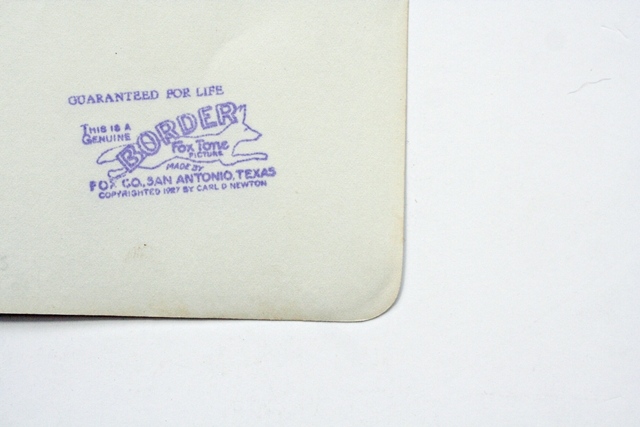
On the reverse side of the photo it was stamped with this information…
Fox Tone photo processing information
The copyright year was dated 1927… the place… San Antonio, Texas. The 1920’s was the time of early aviation when figures like Amelia Earhart and Charles Lindbergh were flying about the skies conquering goals and testing limits. It was an exhilarating time in history – full of promise and potential. The aeronautical industry was on the cusp of blooming, and travelers were about to witness a whole new sense of freedom and independence. This got Ms. Jeannie to thinking about what a unique little gem she was holding on to. That perhaps there might be an interesting story behind this photograph. So she put her research hat on and got to work.
As it turns out, 1927 was the year that Charles Lindbergh flew from New York to Paris in the Spirit of St. Louis. He was only 25 at the time – and many people doubted that such an attempt could be successful.
photo courtesy of thisdayinaviation.com
Could the plane in Ms. Jeannie’s photograph be involved in such a tremendous way? Ms. Jeannie started down that research road next, comparing a bunch of Spirit of St. Louis photos to her photograph to see if they were similar.
A side view of the Spirit of St. Louis. Photo courtesy of wikipedia.Aerial view of S.O.S.L. This photo is AMAZING!Up in the air view…photo courtesy of barewalls.com
They do look similar to Ms. Jeannie’s airplane, don’t they?
Closeup of Ms. Jeannie’s photograph. You can see similarities in the overall shape, the wing span and the wheels.
At this point, Ms. Jeannie thinks these two planes resemble each other close enough to start assuming that it could be the Spirit of St. Louis. She has one other clue that might aid in her investigation. If you remember, the photo processing mark on the back was stamped San Antonio, Texas, so now she needed to figure out why the Spirit of St. Louis would have been in Texas.
As it turns out, (thanks to charleslindbergh.com) after Lindbergh returned home from Paris, he embarked on a nationwide victory tour sponsored by aviation enthusiast /businessman Harry Guggenheim.
Harry Guggenheim (1890-1971)
Many people had doubted that one man could pull off such an endeavor, Harry Guggenheim included. Needless to say, when Charles was successful in his 33 hour flight, there was much fanfare and celebration. Charles became world famous overnight! Suddenly everybody wanted to see, know and hear from this magnanimous man.
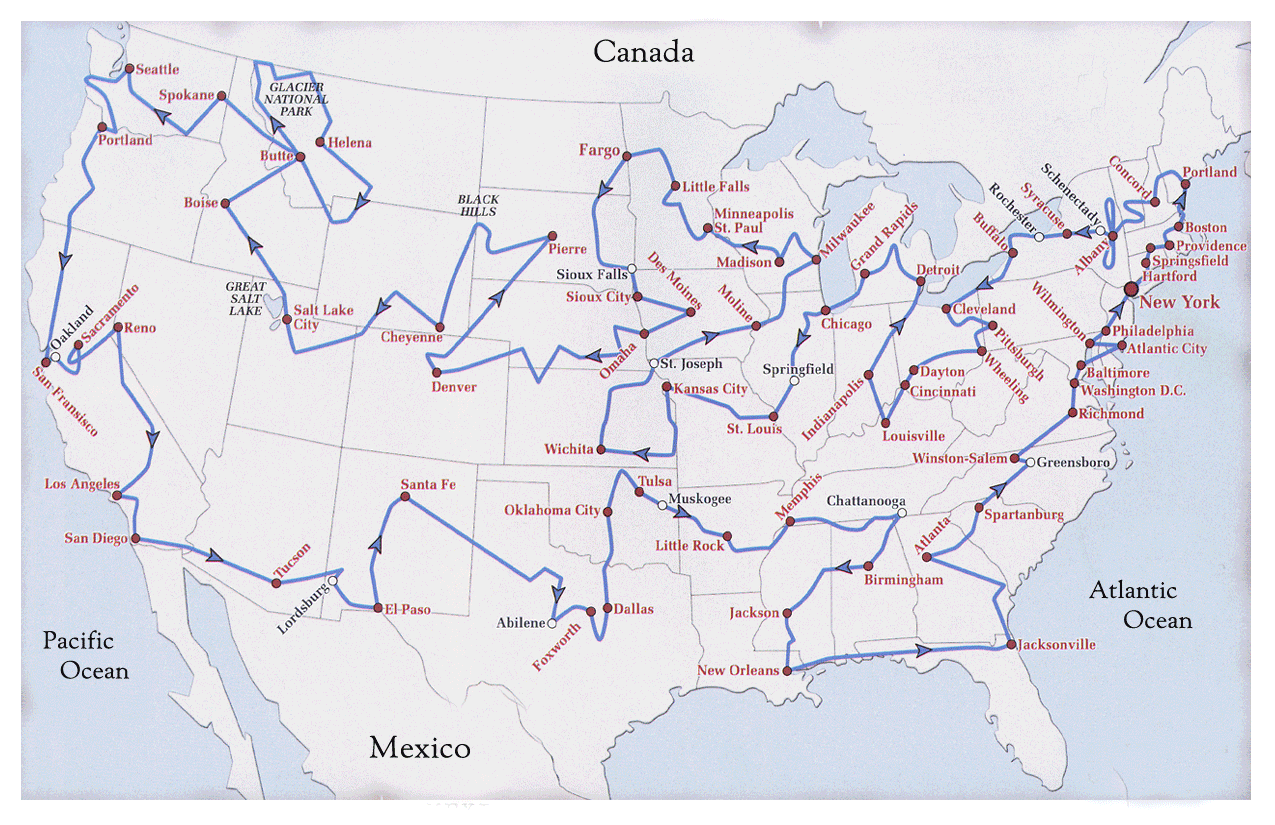
With the help of the Guggenheims – America got to do just that. Paid for by a fund set up by Harry and his father to promote aviation research and education, Lindbergh aboard the Spirit of St. Louis, visited 48 states and 92 cities on what became known as the 3 month long Guggenheim Tour (aka the US Victory Tour).
Stops along the US Victory Tour. Photo courtesy of charleslindbergh.com
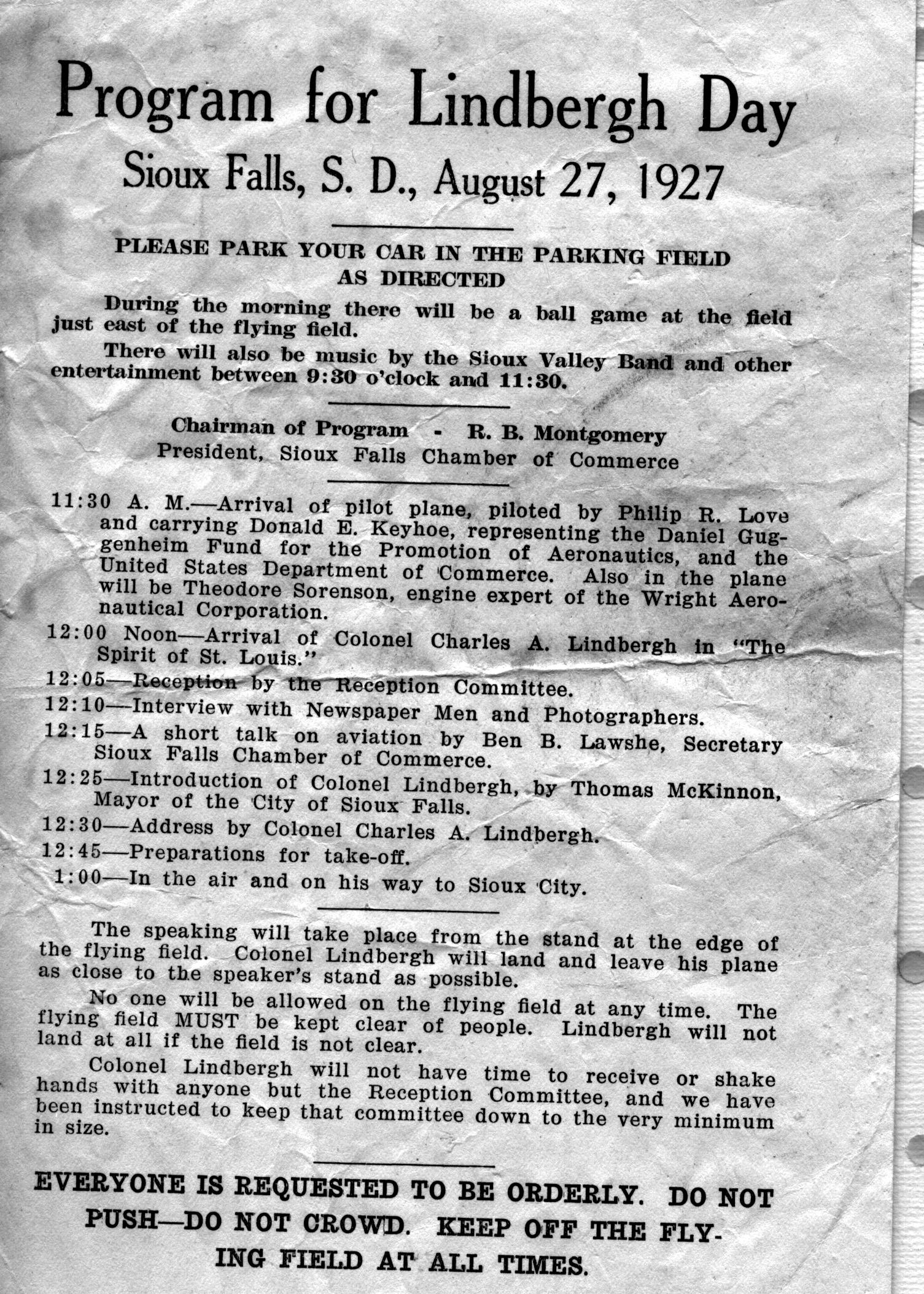
While in each city, Lindbergh gave speeches detailing his flying adventures. Here’s a program from his stopover in Sioux Falls, South Dakota on August 27th, 1927. You can get a good sense of the level of pomp and circumstance involved in the tour.
Lindbergh Day in Sioux Falls, South Dakota – August 27, 1927
Along the tour, Lindbergh spent three days in Texas – September 26th – September 28th, 1927, stopping in Abilene, Fort Worth, and Dallas and flew over the following cities: Crosbyton, Stamford, Roaring Springs, Jacksboro, Bridgeport, Alvarado, Hillsboro, Waxahachie and Denton. Ms. Jeannie’s photograph could have been taken at any one of those places, with the film then being developed in San Antonio.
Now that Ms. Jeannie had a plausible situation surrounding her photograph, she contacted the charleslindbergh.com website about her theory and included a picture of the photograph. A few days later, a consultant for the Lindbergh family contacted Ms. Jeannie with verification that her photograph was indeed a picture of the the Spirit of St. Louis flying over Texas on the Victory Tour. How exciting!!!
Ms. Jeannie loves that even after almost 100 years, Lindbergh is still surprising people! See more of Ms. Jeannie’s historic photograph in her Etsy shop here. Do you have any stories about Lindbergh in your family? If so, please comment with your stories! And if you are not familiar with the charleslindbergh.com site – stop by and have a visit – it’s a wealth of information and photos!
Ms. Jeannie’s true travel adventure into the land of discovery!
One of the things that Ms. Jeannie appreciates most about antique items is there ability to hold up.
Maybe it’s because we live in such a throwaway society now, where things are made flimsier and not meant to withstand decades upon decades of use. But antique items were built to last. Generally she finds them to be more sturdy, more durable or perhaps it could be that they were just better taken care of.
Just this week, Ms. Jeannie added two paper items to her shop, which are both around the 100 year age mark…
Early 1900’s Lowney’s Chocolate and Bonbons Paper BoxOriginal May 3rd, 1912 Virginian Pilot Newspaper
These two are just amazing to Ms. Jeannie… century old paper that is still usable in one form or fashion today!
Let’s take a closer look at the newspaper. Fascinating on many different levels but possibly most enjoyably relevant now that we are coming up on the 100th anniversary of the sinking of Titanic on April 14th, 2012. This newspaper edition came out just 3 weeks following the epic diseaster. Having never learned about the Titanic in school, Ms. Jeannie gained knowledge of the event, primarily from two cultural arts experiences.
The first was a play, called the Unsinkable Molly Brown…
The Unsinkable Molly Brown Broadway play poster
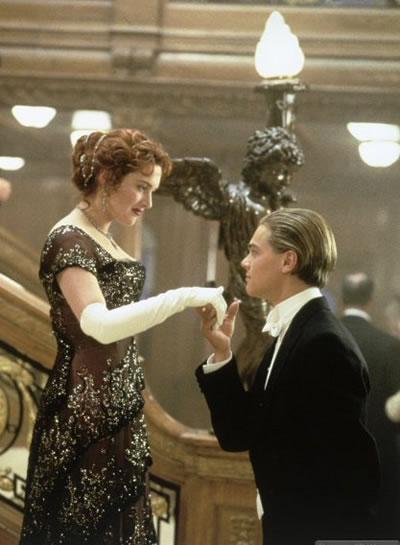
And the second was, of course, the movie starring Leo & Kate. Somewhat sheepishly, Ms. Jeannie admits to seeing this movie five times in the theater.
One of Ms. Jeannie’s favorite scenes from the movie.
Each time, she enjoyed it for something different… the costumes, the acting, the history, the romance, the weight of the drama. But let’s face it, Ms. Jeannie is a loyal romantic and when something moves her… she’s committed.
Years following the movie, Ms. Jeannie attended a lecture at her local library presented by one of the divers who helped unearth Titanic artifacts from the ocean floor. The artifacts went on tour as part of the traveling Titanic exhibit.
In the lecture, the diver talked about the physical aspects of the job…the long hours…the tedious technical process… the beaurocratic red tape that had to be sorted through just in order to be able to dive)… the excitement of meeting and working with James Cameron…and the vast amount of state of the art equipment they were able to use to explore the site.
He also discussed the emotional impact the dive had on him. The most surprising aspect for him was the amount of shoes that he saw down there in the sand. Hundreds upon hundreds. Mens, womens, childrens. Party shoes, work books, slippers. These turned out to be taboo items. It was agreed by all parties involved, that the shoes should remain at the bottom of the ocean. Somehow they seemed too personal, too human, to bring to light again.
After the lecture, Ms. Jeannie dove into lots of research regarding Titanic, learning the whole story from construction to destruction. Having been on one luxury cruise liner as a teenager, herself (The Queen Elizabeth 2, which also sailed from New York to Southampton, England) Ms. Jeannie could really understand the excitement behind the whole cruise experience. The QE2 was not quite as opulent as Titanic, but it was a pretty luxurious experience all the same.
The Queen Elizabeth 2, considered to be one of the last great transatlantic ocean liners.
It was one thing to read about the Titanic as an event that happened in the past, with the ability afforded of 100 years of condensed research. But it is something entirely different to read about the events surrounding Titanic as they were occuring.
The articles from Ms. Jeannie’s original Virginian Pilot newspaper add a personal glimpse of the aftermath as events were unfolding. In this edition, light is shed on the lives of six people involved with Titanic that rarely get mentioned, with the exception of one, in regular news features.
There are primarily five articles that reference the Titanic in this edition, which was published, May 3rd, 1912, just three weeks after the sinking.
Two articles appear on the front page. The first one is in relation to a memorial service for Major Archibald Butt that was attended by President Taft.
President William Taft
Archibald Butt (1865-1912) was a military aide to both President Taft and Theodore Roosevelt.
Major Archibald Butt
He also held a career in journalism and was in the Spanish American War. He died on the Titanic at the age of 46, along with his partner, painter Frances Davis Millet.
Francis Davis Millet
Francis’ body was recovered from the wreck site but Archibald’s never was. In 1913, a memorial fountain was constructed for both Francis and Archibald in President’s Park, the gardens that surround the White House.
The article in the newspaper…
THERE WERE TEARS IN TAFT’S EYES AS HE PAID TRIBUTE TO MAJ. BUTT Guest of Honor at Augusta on Occasion of City’s Memorial Service to Memory of Victim of the Titanic Disaster
Self Sacrifice A Part of His Nature
Augusta, Ga., May 2 – Coming as a friend to pay tribute to the memory of a friend President Taft spent today in Augusta as the guest of honor for the occassion of the city’s memorial service to the memory of Major Archibald Butt, one of the victims of the Titanic diseaster of April 14.
The memorial services were followed by an informal reception at the commercial club, where Taft met many of his old friends and afterward the President was entertained at the home of Landon Thomas. He left on his return to Washington at 3:50 p.m.
Tears in His Eyes
The President was visibly affected by the tributes paid to Major Butt. There were tears in his eyes as he called upon memories of the man who was his aide ever since he entered the White House and who had traveled thousands of miles with him.
Mr. Taft made only a short speech but he came near breaking down twice. ‘Never did I know how much he was to me until he was dead,” said the President. “Lacking nothing of self – respect and giving up nothing he owed to himself, he conducted himself with a singleness of purpose and to the happiness and comfort of the President who was his chief. To many fine qualities he added loyalty and when he became one of my famoily (typo) he was as a son or brother.”
Why He Never Married
Mr. Taft told how he met Major Butt, first in the Phillipines and later as aide to President Roosevelt. He dwelt on Maj. Butt’s devotion to Mr. (frayed edges along the fold marks make this part of the article difficult to read)…
…President “that Archie never married because he loved his mother so. The greatest sorrow of his life was when she left him.”
Mr. Taft concluded with a word more as to Mr. Butt’s spirit of self-sacrifice. “Self sacrifice,” he said “had become part of his nature. If Archie could have selected his time to die he would have selected the one God gave him.”
The second mention of Titanic… a photo, clip and article about Guglielmo Marconi, the inventor of the of the wireless telegraph used to transmit messages from the Carpathia regarding the details of the Titanic sinking.
Guglielmo Marconi
Guglielmo Marconi (1874-1937) was an Italian born inventor and winner of the Nobel Prize in Physics. In 1897, he founded the Wireless Telephone and Signal Company, (later renamed Marconi’s Wireless Telegraph Company) which set off a string of events that led to his pivotal connection with Titanic. It was his wireless telegraph system that allowed for outbound ship communication to land-based wireless stations. Also, it was his Marconi employees that operated the radio equipment aboard Titanic and his equipment that sent the distress signals.
Underneath his picture in the newspaper, begins the following caption:
“G. Marconi, the noted wireless telegraphy inventor. He posed for the above photograph just before sailing for Europe on the Kaiser Wilhelm III., after having testified before the Senatorial Committee regarding the conduct of the Marconi wireless stations during the attempts that were made to secure definite information from the rescue ship Carpathia regarding the details of the Titanic tragedy…” This caption is followed by an in-depth article of speculation surrounding Marconi’s involvement in the distress messages sent from the ship.
To read Marconi’s full testimony before the United States Senate, along with other key characters, visit the fascinating Titanic Inquiry Project here
A third article on the front page (tied into the senate hearing details surrounding Marconi) titled “The Search for Bodies Abandoned at Present” details how the Western Union Cable ship, Minia, would be returning to Halifax with 15 bodies after searching the waters around Titanic.
Western Union Cable Steamer, Minia. photo courtesy of MaritimeQuest.com
Here is the article in full:
THE SEARCH FOR BODIES ABANDONED FOR PRESENT Minia En Route to Halifax with Fifteen of Dead — New York Investigation Yesterday Failed to Reveal New Facts
New York, May 2 – The Western Union cable steamer Minia which has been searching the scene of the Titanic wreck for bodies is returning to Halifax with 15 bodies and will dock Monday, according to a wireless message received here this afternoon by the White Star Line. This means, officials of the line state, that the search for bodies has been abandoned for the present and may be postponed indefinietly.
The message states that the Minia found the bodies widely scattered over a great area, so that search became daily more difficult.
Most of the bodies now on the Minia it is believed are those of members of the Titanic’s crew.
Seven dead bodies buoyed up by life belts together with parts of the wreckage of the Titanic were passed on April 26 in latitude 41.13 and longitude 49.34 by the steamer Gibraltar, which arrived today from Middlesboro. When the bodies were sighted the Gibraltor was stopped but no signs of a living person could be seen and the steamer proceeded.
May Abandon Search
Halifax, N.S., – May 2 – White Star Line officials here had a lengthy conference today with Captain Lardner of the Mackey-Bennett, discussing the utility of a proposal to send out a third steamer, the Seal, to search for further bodies of Titanic victims. Captain Lardner expressed the conviction that it would not be possible to find any more. The idea, it is likely, will be abandoned.
The bodies of the fifty-nine unidentified victims, seven of them women will be buried tomorrow. Fifty-six will be placed in one common grave in Fair View cemetery and three, who were Catholics, will be interred in Mount Olivet. Twenty-seven have been shipped to friends. Eleven more will go tomorrow. This will leave ninety-three bodies still at the morgue, claims for which a majority of which have been sent in. Some of these will likely be buried in Halifax.
At the funeral services tomorrow 100 seamen from the Niobe will assist in the services.
Here is a photo of Captain Lardner and his crew…
Captain Lardner is in the second row, third from the left. Photo courtesy of MaritimeQuest.com
According to an interior article in the newspaper, funeral arrangements were also being made for John Jacob Astor who was the wealthiest person on the Titanic to perish. His body was recovered on April 22nd, by the Mackey-Bennettt crew. His pregnant wife, Madeleine survived.
John Jacob Astor IV (1864-1912)Madeleine Astor (1893-1940)
From the newspaper…
COLONEL ASTOR’S BODY ARRIVES AT FERNCLIFFE
Rhinebeck, N.Y. , May 2 – The body of Colonel John Jacob Astor arrived at Ferncliffe, the Astor estate near this village, this afternoon and funeral services will be held here from the Church of the Messiah of which Colonel Astor was a warden, at 12′ o’clock Saturday.
Every f lag in the village was at half mast, when the body arrived, accompanied by Vincent Astor. The services will be conducted by the Rev. Ernest Saunders, pastor of the Church. A special train will bring a large funeral party from New York.
Ferncliffe, later renamed Astor Courts. Photo courtesy of movato.com
On a side note, Astor Courts, was the venue for Chelsea Clinton’s recent wedding.
Underneath Astor’s funeral notice is a photo of Natalie Harris Hammond, wife of John Jays Hammond, who was a prominent mining engineer, diplomat and philanthropist. Natalie was appointed secretary of the committee of prominent capital women organized to raise funds for a Titanic memorial.
Natalie Harris Hammond, wife of John Jay Hammond
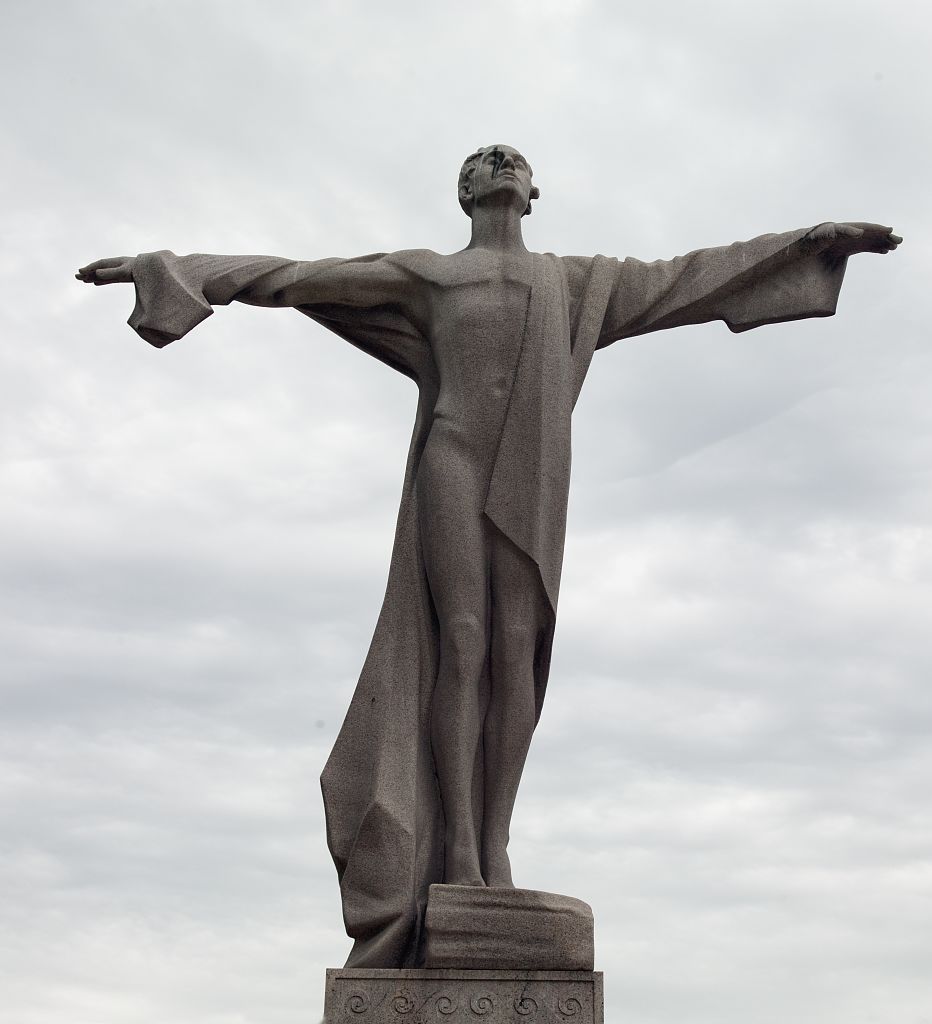
Not much is written about Natalie Harris Hammond, except what Ms. Jeannie found in the newspaper above. There was a monument erected in 1931 in honor of the men who gave their lives so that women and children could escape in lifeboats, but there is no specific mention of Natalie Harris Hammond’s name in association with the sculpture or memorial. Most likely this is the cause that Natalie was appointed to. The memorial was made possible through donations given by women across the country, usually in small denominations, $1.00 or $2.00 at a time.
Here’s a photo of the memorial, which was designed by Gertrude Vanderbilt Whitney and sculpted by John Harrigan.
Women’s Titanic Memorial in Washington DC made possible by the Women’s Titanic Memorial Association
It is lovely to see how just a little bits of contribution can turn into something remarkable.
The last mention of Titanic in this newspaper edition is that of Mrs. Louise Robins, wife of Victor Robins who was manservant to John Jacob Astor aboard Titanic.
From the paper:
FIRST DAMAGE SUIT AGAINST WHITE STAR
New York, May 2 – Papers in the first suit for damages brough (typo) by a relative of a Titanic victim were filed in the Federal District Court here today. The suit, in admiralty, is brought by Mrs. Louise Robins, a widow of Victor Robins, Col. John Jacob Astor’s valet, and is the suit in which the testimony of J. Bruce Ismay and officers of the sunken steamer is desired. It charges negligence on the part of the Oceanic Steam Navigation Company and asks for $50,000 damages and costs.
Ms. Jeannie couldn’t find any follow-up info on this lawsuit, but she is still searching. .. if anyone has any info they would like to provide, please send it along!
If you would like to purchase Ms. Jeannie’s original May 3rd, 1912 Virginian Pilot newspaper, and read all these above mentioned articles in person, you can do so by clicking on the picture below…
Oaxaca, Mexico has been in the news a lot this week because of the earthquake that struck the region on Tuesday. It measured 7.4 magnitude on the Richter scale and has damaged close to 1,000 homes in the area.
Ms. Jeannie was saddened to hear this news, because ever since discovering that the black clay pottery listed in her Etsy shop (pictured below) came from that area, she has been learning quite a lot about Oaxaca.
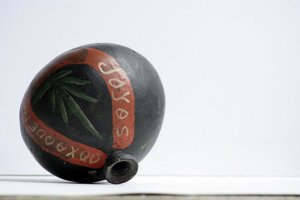
Mid-Century Black Clay Mexican Pottery from MsJeannieOlogy
This type of earthenware vessel, also called barro negro which means black clay, is handmade using ancient traditions indigenous to the Mexican culture in this area.
Primarily formed into utilitarian objects like jars and pots, Mexican artisans have been working with the black clay for centuries. And surprisingly, you can feel that somehow when you touch it.
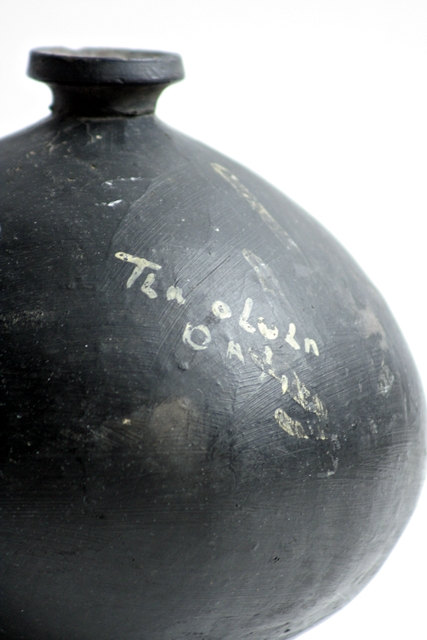
In this close-up of the vessel you can see how smooth the texture is…
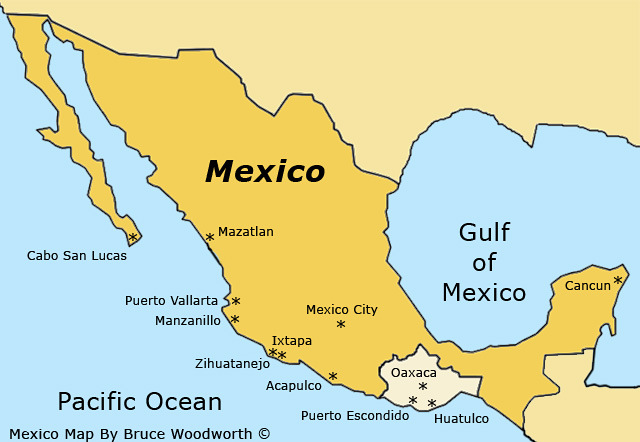
The only place in the world to find this black clay is in the rugged mountainous terrain of Oaxaca, which is located in the Central Valley area of Southwestern Mexico.
Map of Mexico
Since there are are no navigable rivers in the region, Oaxaca is an isolated community, which, while limiting at times, it is also the reason why the Mexican-Mayan culture, languages and traditions have been able to survive.
In this fascinating and soothingly hypnotic video below, watch Oaxacan women demonstrate how they make tamales using traditional methods. Ms. Jeannie loves watching these kinds of videos because you not only get to see how regional food is prepared but you also see how local people dress, interact and communicate with another. It’s like an 8 minute mini anthropology vacation to Mexico!
Ms. Jeannie really likes the cotton dresses and skirts these ladies are wearing too! They remind her of these, that she recently saw on Etsy.
Cotton Aline Skirt from ellainaboutiqueButtercream Triangle Sun Dress from SparrowCollective
There are also beautiful more traditional Mexican embroidery style clothing on Etsy too. Like these two examples. It’s folk art that you can wear!
Embroidered Party Maxi Dress by AidaCoronadoLa Bandida Mexican Folk Art Top from mybonny
The movie Frida starring Selma Hayak and Alfred Molina also offers a beautifully cinematic look into the life of Mexico and it’s artisians, particularly folk artist Frida Kahlo. The movie came out in 2002, but if you missed it, here’s the trailer:
In 2008, a traveling exhibit of Frida’s work went on tour…
Ms. Jeannie went to the exhibit with her sister at the Philadelphia Art Museum. It featured about a quarter of Frida’s painting collection and her never seen before personal photograph collection, which was a really intimate glimpse into her life. Of course all her photos were in black in white but after viewing her paintings, Ms. Jeannie could imagine all the colors of mid-century Mexico.
This is Ms. Jeannie’s favorite Frida Kahlo painting. She likes it for many reasons, but primarily because every time she looks at it she gets something different from it. Also, Ms. Jeannie has a black cat that looks just like this one!
Frida’s inspiration was really born out of a life of crippling health problems. Artistic achievement seemed to be one of the few ways she could emotionally and physically deal with her broken body. In expressing herself in that way, she had a positive effect on millions of other artists and collectors of her work.
To Ms. Jeannie, Frida Kahlo is a genuine example of making the best of your situation and focusing on your strengths instead of your weaknesses.
In that way she is similar to the clay artisians of Oaxaca. They may be limited because of their location and their lifestyle but those very limits are actually their gifts. And that is what sets them apart from everyone else.
Mexican folk art is a personal favorite of Ms. Jeannie’s. She likes the bright color combinations and the symbolism behind the art. She also likes how it acts as an emotional bridge between artist and audience in a demanding way that says “pay attention to me now.”
Ms. Jeannie especially likes the following:
Angel Retablo Tropical Alta from CristinaAcosta
Christina provided some history behind retablos that was so fascinating. She thought it was rather lengthy in description, but Ms. Jeannie enjoyed it so much she included it all…
“Retablos (or altarpiece in Spanish) are a traditional sacred art form with roots that pre-date Christianity, with roots in the Mediterranean areas that include part of what is now Italy. The art form of the retablo first came to North America with the Spanish settlers and artisans that followed the Conquistadors to the North American continent to settle what is now Mexico and the United States.
There are two types of Retablos, the Santos and the Ex-Voto. The Santos style of retablo is either a Saint (from the Roman Catholic Christian tradition) or a member of the Holy Family. Similar in concept to the art form of the Byzantine and/or European Orthodox Catholic icon, the Santos is painted in accordance with strict liturgical rules that define how the central figure of Saint or Holy Family member is represented. The counterpoint to the Santos is the Ex-voto, a no-rules, personal vision that is created to commemorate a blessing received or when a prayer has been answered.
The Ex-voto retablo is the art form I focus on. I love it! This retablo art form gives me a way to connect with the religion of my childhood, without having to get into any personal struggles with a dogma that doesn’t always jibe with who I am now.
When I was a child, my abuelita (paternal grandmother), Catalina Maria Ortiz Acosta would tell me about the ancestors we shared. They were goldsmiths, soldiers and settlers who had first come to North America in the 1500’s, eventually settling in what are now the towns of Santa Fe, Taos and Abiquiu in New Mexico and Ortiz, Colorado. Though she was born in Los Angeles, she held her New Mexican roots close to her heart, importing New Mexican chilis to her home by the beach in Playa del Rey. (I updated her recipe for Red Chili Sauce, if you’d like to try it.)
I paint my retablos to express and explore my gratitude for the blessings of my life. My favorite subject is the Divine Feminine which I interpret as Madonna / Female Creator images. Because my Spanish/Mexican ancestors migrated to North America in the 1500’s, I also include American Indian symbols, as that heritage is sure to be part of my mix.
Along with the visual symbols of my work, the materials I use have personal meaning. My Ortiz ancestors where famous goldsmiths. Thin sheets of 22kt. gold leaf, copper and sterling silver glisten under and over layers of oil paint and evoke the presence of those ancestors. The antique ceramic tile mosaic is glazed with 24kt. Gold and is from a now shuttered ceramic factory in the same area of Southern California where I grew up. The wood panels are built by an artisan wood worker and mostly include re-worked lumber siding from razed timber mill buildings in Bend.
I finish each Retablo with a blessing, usually on the back of the image. In the old tradition of territorial New Mexico, the Retablo often became the spiritual focus in the home when travel was dangerous and people could not attend church. Centuries of isolation in New Mexico led to the unique form of the Ex-Voto often painted on tin, leather or wood panels.
Artists were commissioned to paint retablos that often became symbols of a family’s spiritual life. In that tradition I offer myself to paint commissions of a Retablo for you that commemorates your blessings.” – Cristina Acosta
Side Note: To see more of Cristina’s work or to get your house color coordinated by her (very cool!) visit her website
Love Shrine Mexican Folk Art by calaverasycorazonesMexican Folk Art Easter Egg from LatrouvailleFrida Kahlo Art Print Poster by HeatherGallerArtTropical Accent Pillow from arribachica
Kimberly of arribachica was inspired by Mexican culture as a child living in Los Angeles and San Diego. Frequent trips across the border, family cultural activities and her artistic folk artist grandmother fueled a passion to study art in the colonial city of San Miguel de Allende.
Side note: A portion of the proceeds from Kimberly’s exquisite pillows benefit two Mexican organizations that empower and support young children. Visit her blog for more information http://www.kimberlymaier.blogspot.com/
Vintage Tin Mexican Folk Art from Bittersweets13Vintage Mexican Folk Art Bird from TimelessFindsVintagePurple/Blue Folk Art Box from mimexart
Miriam of mimiexart had this to say about the inspiration behind her Mexican Folk Art Boxes.
“I’m a Mexican artist and since I leave my Mexico first to go to the Caribbean now in England. It has been difficult to be far away from home, family, friends, my city and all my culture but for some great reason now I understand why Mexico is so rich country so to cure my nostalgia I started to take back my memories of colour, images, people, places and paint- as an artist- is my first tool to communicate to the world.. so this is how I started to make this little boxes and become no just a therapy for my heart is also helping people to have a piece of Mexican love-art in their home and sometimes just inspire people to create similar things.This boxes are made to keep love-secrets, treasuries, jewelry, letters……… anything that you want to be safe and away from wrong hands.”
Side note: In addition to hand-painted boxes, Miriam also makes earrings and adorned mesh market bags. Stop by her website to learn more about this wonderfully talented artist, world traveler and teacher.
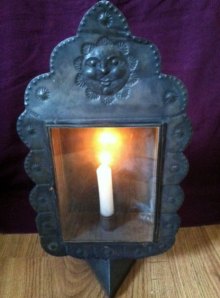
Vintage Wooden Virgin Mary Shadow Box from theVirginRose
And most importantly, Ms. Jeannie likes that folk art tells stories. Stories of it’s creators, stories of it’s history and stories of universal bonds that tie us all together.
“I used to think I was the strangest person in the world but then I thought there are so many people in the world, there must be someone just like me who feels bizarre and flawed in the same ways I do. I would imagine her, and imagine that she must be out there thinking of me too. Well, I hope that if you are out there and read this and know that, yes, it’s true I’m here, and I’m just as strange as you.” – Frida Kahlo



















 In the Vintage Kitchen: Where History Comes To Eat