If you have read her blog bio, you will know one of the things that Ms. Jeannie loves most in life is havin’ a laugh.
She loves stumbling upon things that are unexpectedly funny, which is exactly what occurred, when she set out to interview one of her favorite fellow Etsy shop owners, Frick and Frack Scraps.
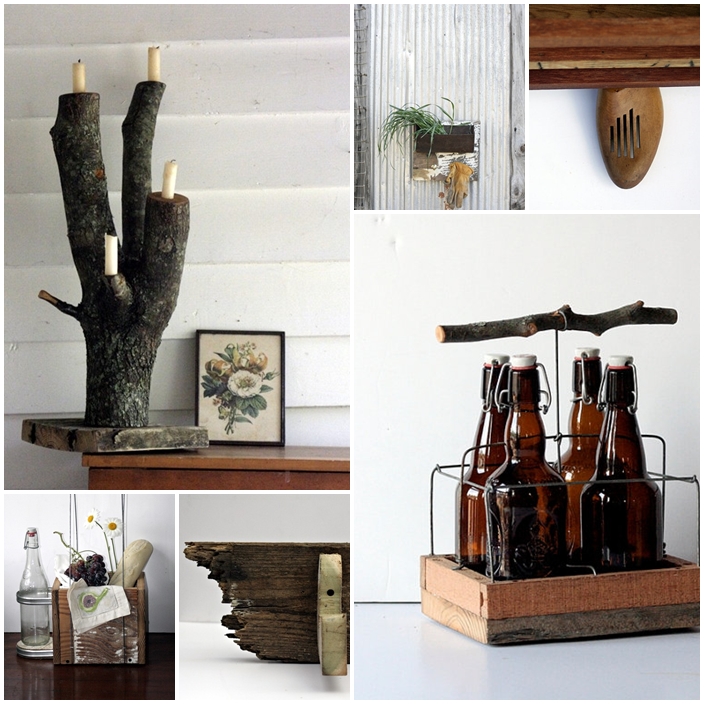
Frick and Frack Scraps builds some of the most wonderfully whimsical yet fully functional home decor items. They are rustic, provincial, aged, weathered, repurposed, re-salvaged and entirely original in all aspects. Here is a sampling of items from their shop…
Sampling of Items from Frick & Frack Scraps
Naturally she was thrilled to discover the funny designer behind the fun shop…
Ms Jeannie: I love the rustically provincial/whimsically repurposed theme of your shop! Please explain a little about your design inspirations.
Frick & Frack Scraps: Well, thank you, firstly, for the compliment and the interview. Your blog is so unique. I get inspiration for my projects from leftover scrap laying around. My father was an architect and an armchair engineer. He used things differently and saw potential in lots of things that most people would not see. I think I got a little of that from him. And also from beer.
MJ: Do you think a lot of people are inspired by beer?
FFS: Two words, Ms. Jeannie. Benjamin Franklin. Enough said.
MJ: You have sold a lot of one of a kind items in your shop. Currently there are 11 items for sale. Are you concepting new ideas now?
FFS: Well, don’t you do your homework?! I have been busy, in the non-Etsy world, with other work, so right now I am on sort of a break, but I always look for things to use for when I am back in the saddle on my saw horse.
MJ: What designers inspire your work?
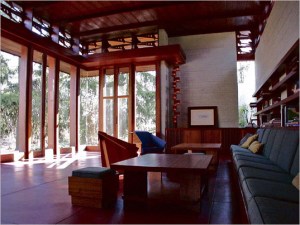
FFS: Well, I think of things in very straight terms. Not a big fan of curves, so I think that makes Mission and Prairie designers my gut inspiration. O.K. I will admit it. I have posters of Stickley and Wright on my bedroom walls.
An example of Mission style furniture. Photo courtesy of 4interior-design.comAn example of Usonian style furniture. Photo courtesy of inhabitat.com
Prairie Style Table Centerpiece from Frick & Frack Scraps
MJ: What is your most favorite type of material to work with?
FFS: Wood and steel and beer cans.
MJ: Do you ever worry about running out of scraps to work with?
FFS: Not while I live in the United States. It is funny how some people see things as useless and others see a winerack. There is more than enough.
MJ: Explain a little about your design process. How do you get started on each piece?
FFS: Since it is all scraps to start with there is a bit of a limitation at the beginning. I can not go into something thinking “table” when I only have enough scrap for a box. Once I have stuff in front of me, it is a very simple, no holds barred process. The real upshot is if I make a “mistake” it just goes into a bin until it can be used on something else.
MJ: While you are working on each creation, do you ever think about where they might end up? What style of house it will go to? Or what sort of person would buy it?
FFS: Absolutley! There is a lady on Etsy, Jacksonofalltrades, that wanted some Frick & Frack for a birthday party at a dude ranch. I never thought of my pieces that way but I think it will look good. So I have that going for me, which is nice.
MJ: At what point in life did you realize you were destined to build things?
FFS: I have always built things as far back as I can remember. “Destined” is such a big word. I think it should only be used when referring to superheros.
MJ: Speaking of superheros…who is yours?
FFS: My pal, Thom Zelenka. If he were a real superhero he would be Always OK Man. He never seems to get rattled, always has a nice or kind word and has always been the same guy – from the day I met him to decades later. Pretty damn cool.
MJ: What is it that lures people towards your items?
FFS: I am not sure. I made the four pack out of parts that were left over, after a six pack I had made that sold pretty quickly. I am sooo glad I am able to find similar materials for the four pack ’cause WOW have I had to make alot of them. But I digress, I think people like the price, the FUNctional part, and also I make alot of things that hold or incorporate alcoholic beverages so it could be that these buyers are all fun drunks.
The Four Pack & The Six Pack from Frick & Frack Scraps
MJ: What is your most favorite item in your shop right now and why?
FFS: By far, the Fire Box Humidor. My pal, Tommy and I, made that and I am so proud of the re-use of that fire box. It is so outside the box. See what I did there?
1950’s Fire Box Humidor from Frick & Frack Scraps
MJ: Is there one item that you are constantly striving towards building for your own personal collection?
FFS: I use my wife’s style as a guide to things I build for our house, so that there is no conflict. I once bought a table at an auction for like 200 bucks and she called it the “UGLIEST TABLE IN THE WORLD” two years later I sold the original Gustav Stickley drum top table for 1500 bucks. I still smile about that. But I still do not get to pick out what I like. Ah love!
MJ: If you could build props for any tv or movie set, past or present, which would you choose?
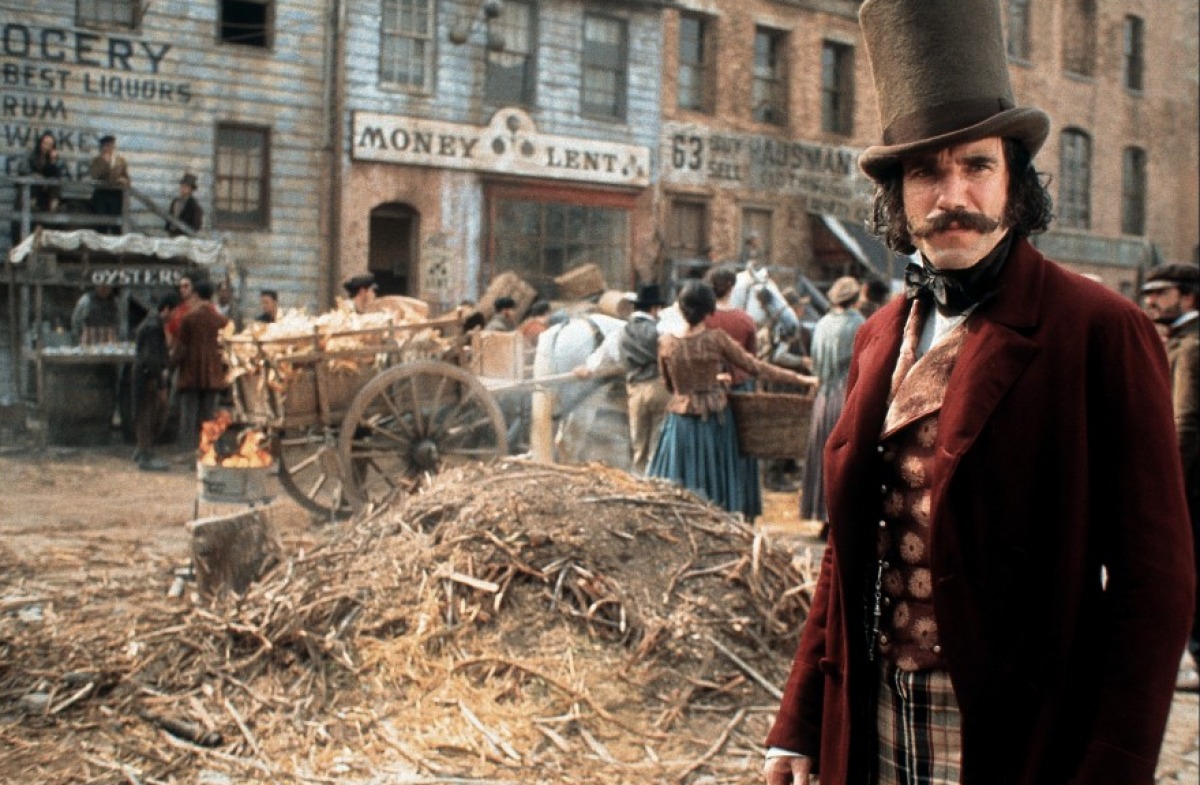
FFS: Gangs of New York, There Will be Blood and A Good Year in the movie department for sure. I think there would be no challenge for me to get it right the first time.
Gangs of New York setThere Will Be Blood movie setA Good Year film set
MJ: Two of the three movies you mentioned, star Daniel Day Lewis. Do you think he would be a fan of Frick & Frack?
FFS: I think so. He is very unique himself and he lives in a castle pretty much so he’s certainly got the money to “drink my milkshake”.
Side note: If this reference confuses you, check out the “milkshake” scene from There Will Be Blood
MJ: Also, two of the three movies you mentioned are period dramas and the third is a contemporary drama set in provincial France. It is easy to picture Frick & Frack in both these worlds. What inspires you about the look of these films?
FFS: There is a utilitarian feel to everything old to me. Not much design just use in mind when they were made in the old days. That has beauty to me. I like that.
MJ: What one type of item is a consistent seller in your shop? What seems to be the slowest to sell?
FFS: The Four Pack is a runaway success. The Fire Box Humidor and the Coat racks are the slugs but I looked at other Etsy shops that have coat racks and mine should be sold as firewood compared to others! There is such cool stuff on Etsy.
Large Coat Rack & Small Coat Rack from Frick & Frack Scraps
MJ: What type of environment (besides the fireplace!) would your coat racks look best?
FFS: I dont know. The ones with the wooden “sleigh” shaped hooks would be great in a rustic cabin in Montana. Like a River Runs Through It house that Ikea just re-decorated.
MJ: What are some of the challenges of being a handmade seller?
FFS: I think people’s expectations. I make things rustic. I am not a finish carpenter. I send items out that might give you splinters. Really. I have not had any problems but that is the part that makes it hard.You just never know how someone will react when they get an item in hand having based their purchase on three or four pictures and a description.
MJ: Do you think if you heard more feedback from buyers that you would build different items?
FFS: I am not sure. I listen to my head when I build. There is not much more room in there for other people.
MJ: What’s your shop’s greatest success story?
FFS: Well, all of the coverage I have gotten for sure! I think when Urban Outfitters emailed me to be a vendor for their outdoor center in PA, that was pretty cool. Nothing ever came of it, in the end, but just think about how that one email could have really changed things. And the ONLY reason is due to Etsy and all of their hard work.
MJ: If you could spend one day, building Frick & Frack alongside anybody famous, living or dead, who would you choose?
FFS: Frankie Wright. (that’s what his friends call him)
Architect and designer, Frank Lloyd Wright (1867-1959), father of organic architecture and leader of the Prairie School Movement.
MJ: What does your studio space look like? What would your ideal space look like?
FFS: I build most everything thus far at my pal, Tommy’s, old mill building. It is old, dusty, and full of great equipment. My ideal space would be a 1/2 indoor 1/2 outdoor space, maybe an old barn.
MJ: What’s next on the Frick & Frack horizon?
FFS: I have no clue. Some days I think if I could just do this full time, life would be alot more simple and rewarding. I think I will try to get some wholesale clients that want lots of four packs. Maybe a cool brewery like Dog Fish Head or Victory Brewing Company could find my work and fall madly in love with it. And then I will be the hero that made their beer sales skyrocket and there would be a movie made about my life and how I changed the corporate culture of beer packaging. I would become a household name and then retire in Ireland to golf until I die. Who knows? It is amazing what a minute can do.
MJ: What would the title be to that movie be?
FFS: I think it would be: Luck. I have had alot of it in my life.
POST UPDATE (10/10/2012): Frick and Frack Scraps has just entered the blogging world! If you are in need of a laugh (or 20!) stop by and visit their aptly named blog, Out of Hand.
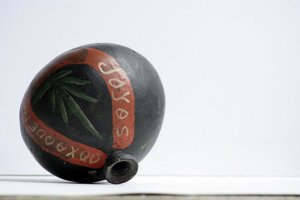
Oaxaca, Mexico has been in the news a lot this week because of the earthquake that struck the region on Tuesday. It measured 7.4 magnitude on the Richter scale and has damaged close to 1,000 homes in the area.
Ms. Jeannie was saddened to hear this news, because ever since discovering that the black clay pottery listed in her Etsy shop (pictured below) came from that area, she has been learning quite a lot about Oaxaca.
Mid-Century Black Clay Mexican Pottery from MsJeannieOlogy
This type of earthenware vessel, also called barro negro which means black clay, is handmade using ancient traditions indigenous to the Mexican culture in this area.
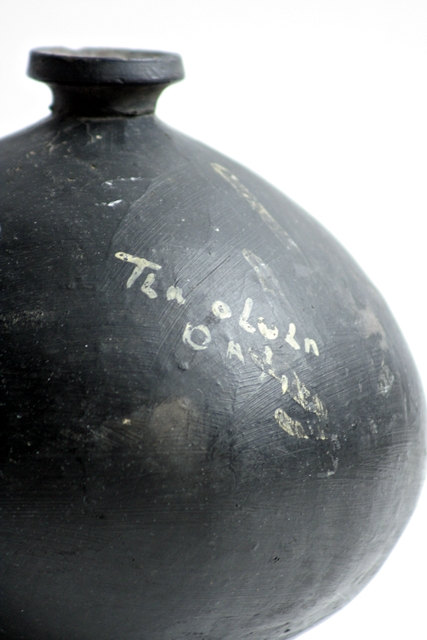
Primarily formed into utilitarian objects like jars and pots, Mexican artisans have been working with the black clay for centuries. And surprisingly, you can feel that somehow when you touch it.
In this close-up of the vessel you can see how smooth the texture is…
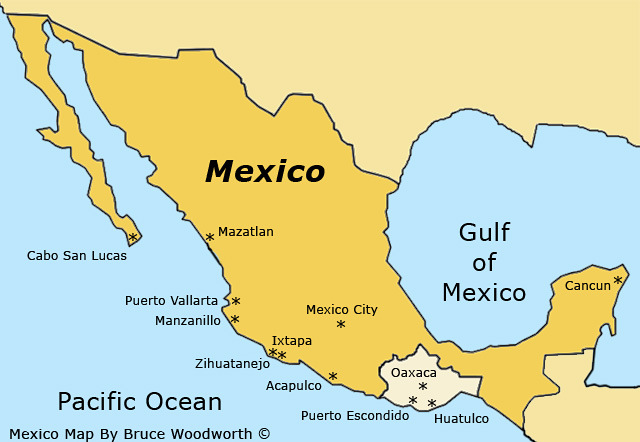
The only place in the world to find this black clay is in the rugged mountainous terrain of Oaxaca, which is located in the Central Valley area of Southwestern Mexico.
Map of Mexico
Since there are are no navigable rivers in the region, Oaxaca is an isolated community, which, while limiting at times, it is also the reason why the Mexican-Mayan culture, languages and traditions have been able to survive.
In this fascinating and soothingly hypnotic video below, watch Oaxacan women demonstrate how they make tamales using traditional methods. Ms. Jeannie loves watching these kinds of videos because you not only get to see how regional food is prepared but you also see how local people dress, interact and communicate with another. It’s like an 8 minute mini anthropology vacation to Mexico!
Ms. Jeannie really likes the cotton dresses and skirts these ladies are wearing too! They remind her of these, that she recently saw on Etsy.
Cotton Aline Skirt from ellainaboutiqueButtercream Triangle Sun Dress from SparrowCollective
There are also beautiful more traditional Mexican embroidery style clothing on Etsy too. Like these two examples. It’s folk art that you can wear!
Embroidered Party Maxi Dress by AidaCoronadoLa Bandida Mexican Folk Art Top from mybonny
The movie Frida starring Selma Hayak and Alfred Molina also offers a beautifully cinematic look into the life of Mexico and it’s artisians, particularly folk artist Frida Kahlo. The movie came out in 2002, but if you missed it, here’s the trailer:
In 2008, a traveling exhibit of Frida’s work went on tour…
Ms. Jeannie went to the exhibit with her sister at the Philadelphia Art Museum. It featured about a quarter of Frida’s painting collection and her never seen before personal photograph collection, which was a really intimate glimpse into her life. Of course all her photos were in black in white but after viewing her paintings, Ms. Jeannie could imagine all the colors of mid-century Mexico.
This is Ms. Jeannie’s favorite Frida Kahlo painting. She likes it for many reasons, but primarily because every time she looks at it she gets something different from it. Also, Ms. Jeannie has a black cat that looks just like this one!
Frida’s inspiration was really born out of a life of crippling health problems. Artistic achievement seemed to be one of the few ways she could emotionally and physically deal with her broken body. In expressing herself in that way, she had a positive effect on millions of other artists and collectors of her work.
To Ms. Jeannie, Frida Kahlo is a genuine example of making the best of your situation and focusing on your strengths instead of your weaknesses.
In that way she is similar to the clay artisians of Oaxaca. They may be limited because of their location and their lifestyle but those very limits are actually their gifts. And that is what sets them apart from everyone else.
Mexican folk art is a personal favorite of Ms. Jeannie’s. She likes the bright color combinations and the symbolism behind the art. She also likes how it acts as an emotional bridge between artist and audience in a demanding way that says “pay attention to me now.”
Ms. Jeannie especially likes the following:
Angel Retablo Tropical Alta from CristinaAcosta
Christina provided some history behind retablos that was so fascinating. She thought it was rather lengthy in description, but Ms. Jeannie enjoyed it so much she included it all…
“Retablos (or altarpiece in Spanish) are a traditional sacred art form with roots that pre-date Christianity, with roots in the Mediterranean areas that include part of what is now Italy. The art form of the retablo first came to North America with the Spanish settlers and artisans that followed the Conquistadors to the North American continent to settle what is now Mexico and the United States.
There are two types of Retablos, the Santos and the Ex-Voto. The Santos style of retablo is either a Saint (from the Roman Catholic Christian tradition) or a member of the Holy Family. Similar in concept to the art form of the Byzantine and/or European Orthodox Catholic icon, the Santos is painted in accordance with strict liturgical rules that define how the central figure of Saint or Holy Family member is represented. The counterpoint to the Santos is the Ex-voto, a no-rules, personal vision that is created to commemorate a blessing received or when a prayer has been answered.
The Ex-voto retablo is the art form I focus on. I love it! This retablo art form gives me a way to connect with the religion of my childhood, without having to get into any personal struggles with a dogma that doesn’t always jibe with who I am now.
When I was a child, my abuelita (paternal grandmother), Catalina Maria Ortiz Acosta would tell me about the ancestors we shared. They were goldsmiths, soldiers and settlers who had first come to North America in the 1500’s, eventually settling in what are now the towns of Santa Fe, Taos and Abiquiu in New Mexico and Ortiz, Colorado. Though she was born in Los Angeles, she held her New Mexican roots close to her heart, importing New Mexican chilis to her home by the beach in Playa del Rey. (I updated her recipe for Red Chili Sauce, if you’d like to try it.)
I paint my retablos to express and explore my gratitude for the blessings of my life. My favorite subject is the Divine Feminine which I interpret as Madonna / Female Creator images. Because my Spanish/Mexican ancestors migrated to North America in the 1500’s, I also include American Indian symbols, as that heritage is sure to be part of my mix.
Along with the visual symbols of my work, the materials I use have personal meaning. My Ortiz ancestors where famous goldsmiths. Thin sheets of 22kt. gold leaf, copper and sterling silver glisten under and over layers of oil paint and evoke the presence of those ancestors. The antique ceramic tile mosaic is glazed with 24kt. Gold and is from a now shuttered ceramic factory in the same area of Southern California where I grew up. The wood panels are built by an artisan wood worker and mostly include re-worked lumber siding from razed timber mill buildings in Bend.
I finish each Retablo with a blessing, usually on the back of the image. In the old tradition of territorial New Mexico, the Retablo often became the spiritual focus in the home when travel was dangerous and people could not attend church. Centuries of isolation in New Mexico led to the unique form of the Ex-Voto often painted on tin, leather or wood panels.
Artists were commissioned to paint retablos that often became symbols of a family’s spiritual life. In that tradition I offer myself to paint commissions of a Retablo for you that commemorates your blessings.” – Cristina Acosta
Side Note: To see more of Cristina’s work or to get your house color coordinated by her (very cool!) visit her website
Love Shrine Mexican Folk Art by calaverasycorazonesMexican Folk Art Easter Egg from LatrouvailleFrida Kahlo Art Print Poster by HeatherGallerArtTropical Accent Pillow from arribachica
Kimberly of arribachica was inspired by Mexican culture as a child living in Los Angeles and San Diego. Frequent trips across the border, family cultural activities and her artistic folk artist grandmother fueled a passion to study art in the colonial city of San Miguel de Allende.
Side note: A portion of the proceeds from Kimberly’s exquisite pillows benefit two Mexican organizations that empower and support young children. Visit her blog for more information http://www.kimberlymaier.blogspot.com/
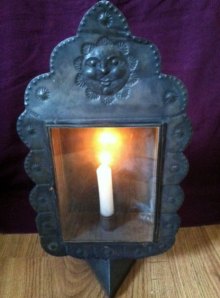
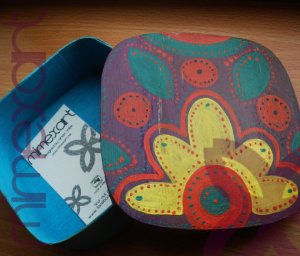
Vintage Tin Mexican Folk Art from Bittersweets13Vintage Mexican Folk Art Bird from TimelessFindsVintagePurple/Blue Folk Art Box from mimexart
Miriam of mimiexart had this to say about the inspiration behind her Mexican Folk Art Boxes.
“I’m a Mexican artist and since I leave my Mexico first to go to the Caribbean now in England. It has been difficult to be far away from home, family, friends, my city and all my culture but for some great reason now I understand why Mexico is so rich country so to cure my nostalgia I started to take back my memories of colour, images, people, places and paint- as an artist- is my first tool to communicate to the world.. so this is how I started to make this little boxes and become no just a therapy for my heart is also helping people to have a piece of Mexican love-art in their home and sometimes just inspire people to create similar things.This boxes are made to keep love-secrets, treasuries, jewelry, letters……… anything that you want to be safe and away from wrong hands.”
Side note: In addition to hand-painted boxes, Miriam also makes earrings and adorned mesh market bags. Stop by her website to learn more about this wonderfully talented artist, world traveler and teacher.
Vintage Wooden Virgin Mary Shadow Box from theVirginRose
And most importantly, Ms. Jeannie likes that folk art tells stories. Stories of it’s creators, stories of it’s history and stories of universal bonds that tie us all together.
“I used to think I was the strangest person in the world but then I thought there are so many people in the world, there must be someone just like me who feels bizarre and flawed in the same ways I do. I would imagine her, and imagine that she must be out there thinking of me too. Well, I hope that if you are out there and read this and know that, yes, it’s true I’m here, and I’m just as strange as you.” – Frida Kahlo











 In the Vintage Kitchen: Where History Comes To Eat