Like the thrill and excitement of watching those horses speed around the track during the Kentucky Derby two Saturdays ago so was my trip racing around Washington D.C.. To follow-up from the post before this one, we did make it to D.C. just in time (with about 3 minutes to spare!) to meet up with friends, watch the Derby AND drink a mint julep. Perfect timing!
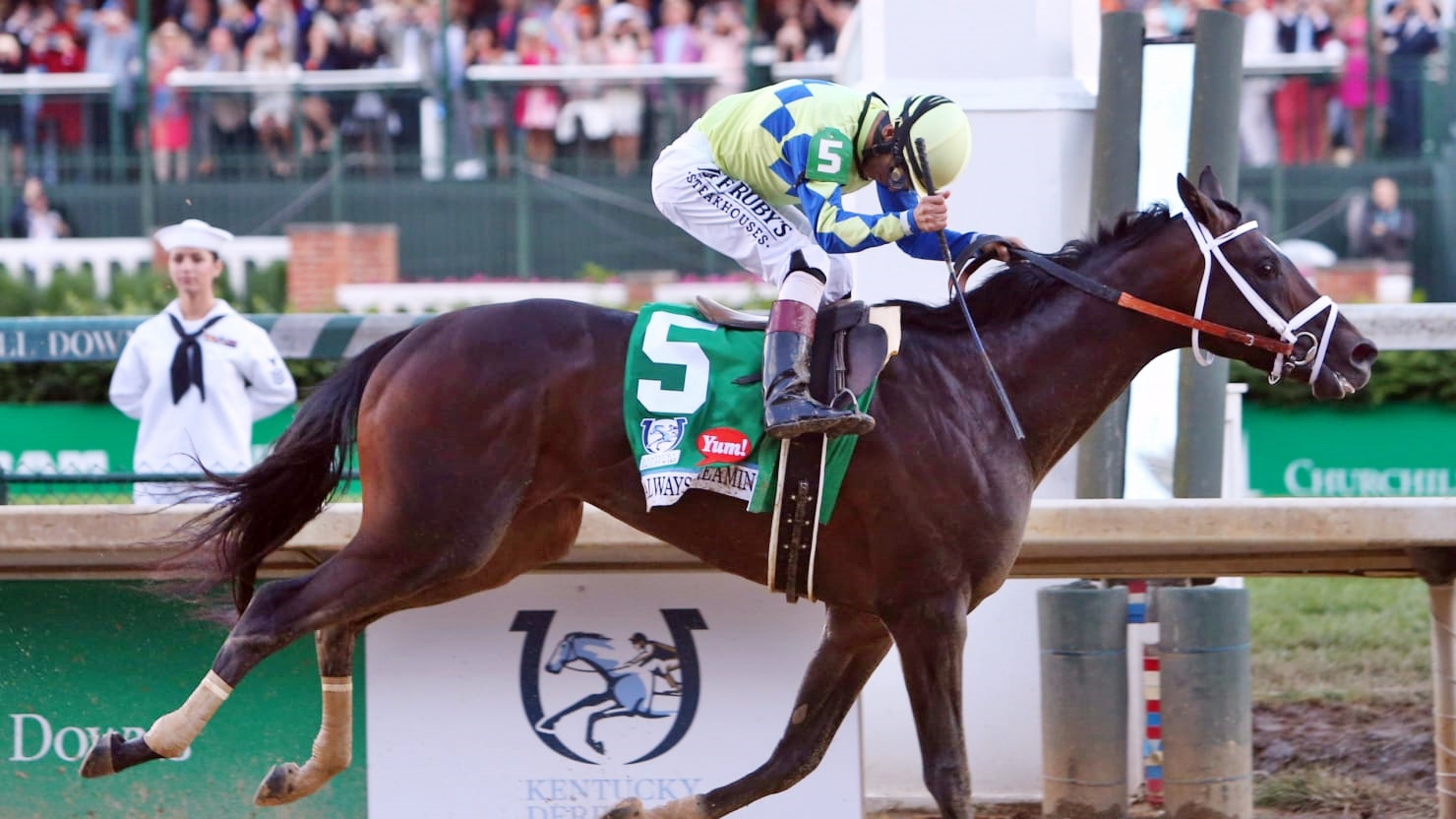
If you missed the race Always Dreaming was the big Derby winner, leading the whole entire way from start to finish on a very muddy track. It was definitely a well deserved victory although I was really rooting for Patch the whole way, who wound up coming in 14th. It appears as if no one else was dreaming about Always Dreaming as the first-to-line finisher in our blog contest either so the festivities continue on through the Preakness (this Saturday!) and into the Belmont (on June 10th). Stay tuned this weekend to see if Always Dreaming wins part two of the Triple Crown!
Meanwhile, back in Washington the week fell in three parts…art, Julia and Virginia. The last time I spent more than a day in Washington D.C. I was 10 years old and visiting my oldest sister who lived and worked right in the heart of downtown. This time around I was staying on the Maryland side of the metro D.C. area.
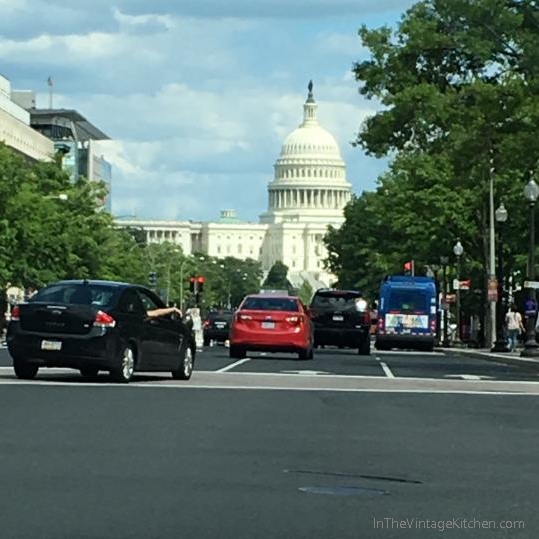
With a view that began and ended each day like this…
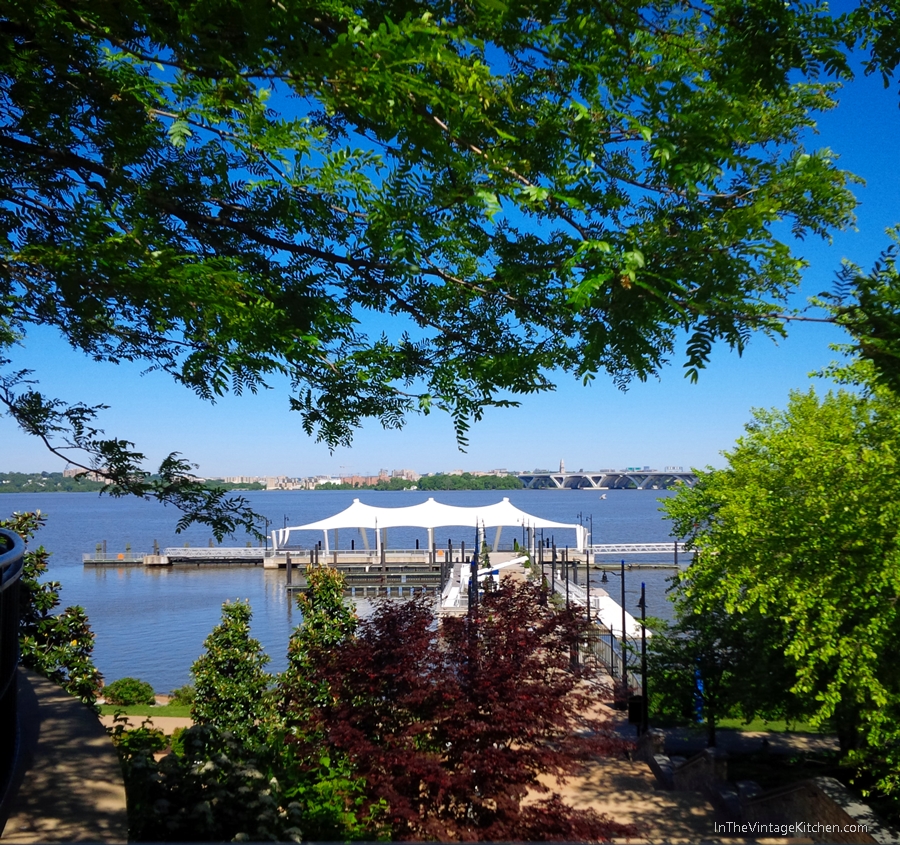

it was hard to go wrong from the beginning. Add in the welcome committee…

quaking their way through news of the D.C. day… and it was lovely from day one.
Staying in such close proximity to the Capitol, I had mighty plans to see about 10 different sites throughout the city on this visit which included five museums, the Botanical Gardens, the Library of Congress, the Franciscan Monastery, the National Archives and the Basilica of the National Shrine of the Immaculate Conception. I realize now on my return that this was totally ambitious, but I thought in my pre-trip planning days that if I was fast on my feet and spent only an hour or two at each place I might be able to fit it all in during a three day stretch. After all Charles Dickens did nickname this metropolis the City of Magnificent Intentions. Technically I was right on track.
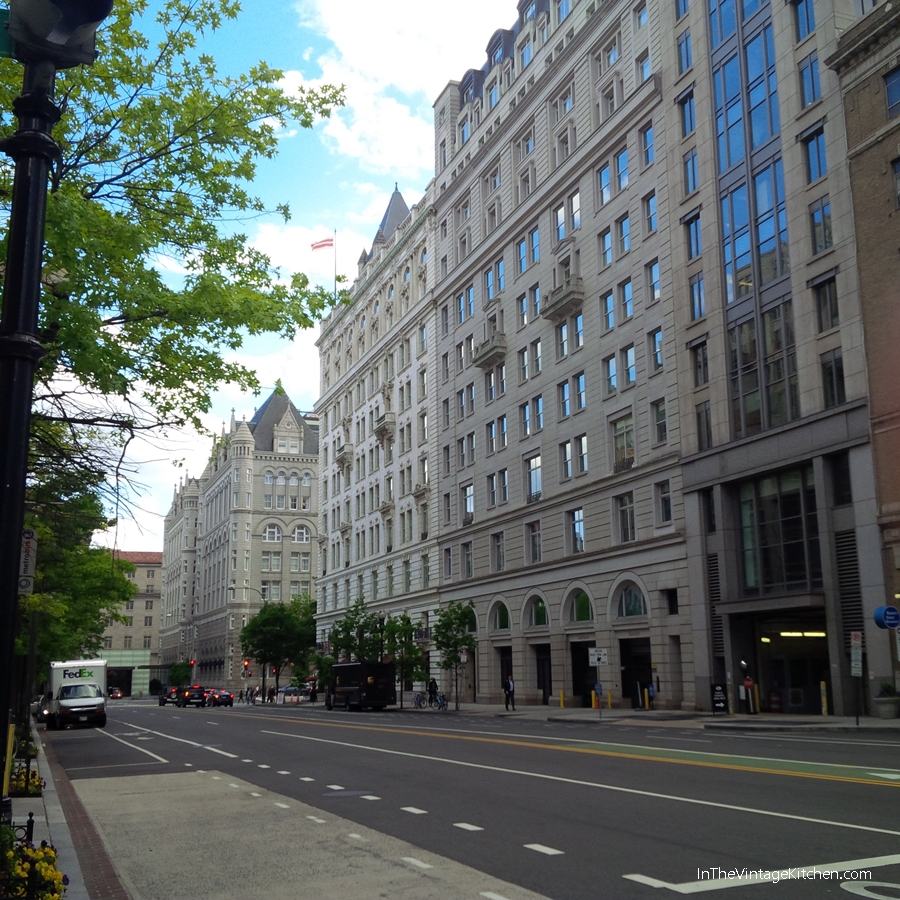
Of course once I stepped through my first museum and saw all the intriguing things that lay ahead of me I realized that I would never be able to keep up with such a strict and rigorous time schedule. It only took me one museum to realize that Washington D.C. is best digested slow.

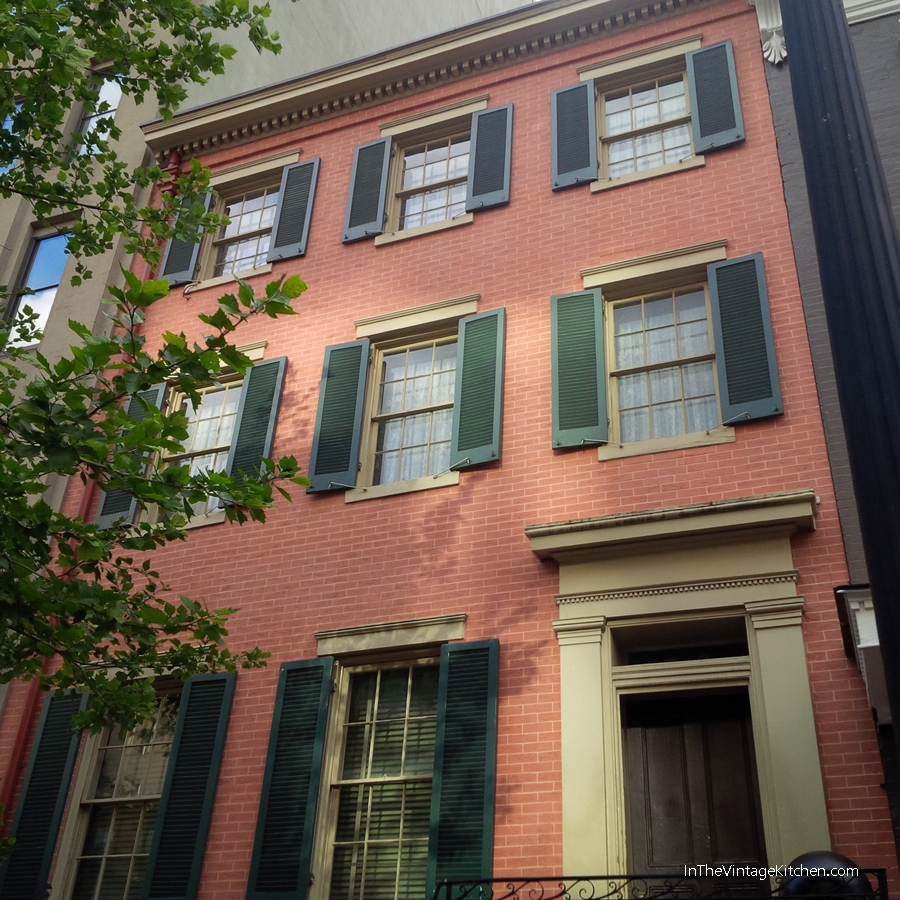
There is no room for frenzied pace setting or shy glances in this historic environment. From street to sky, everything in D.C. is fascinating whether you are walking on centuries old cobblestone in Alexandria or admiring architecture on Pennsylvania Avenue time is what you need plenty of in order to ingest the experiences of our past presidents.
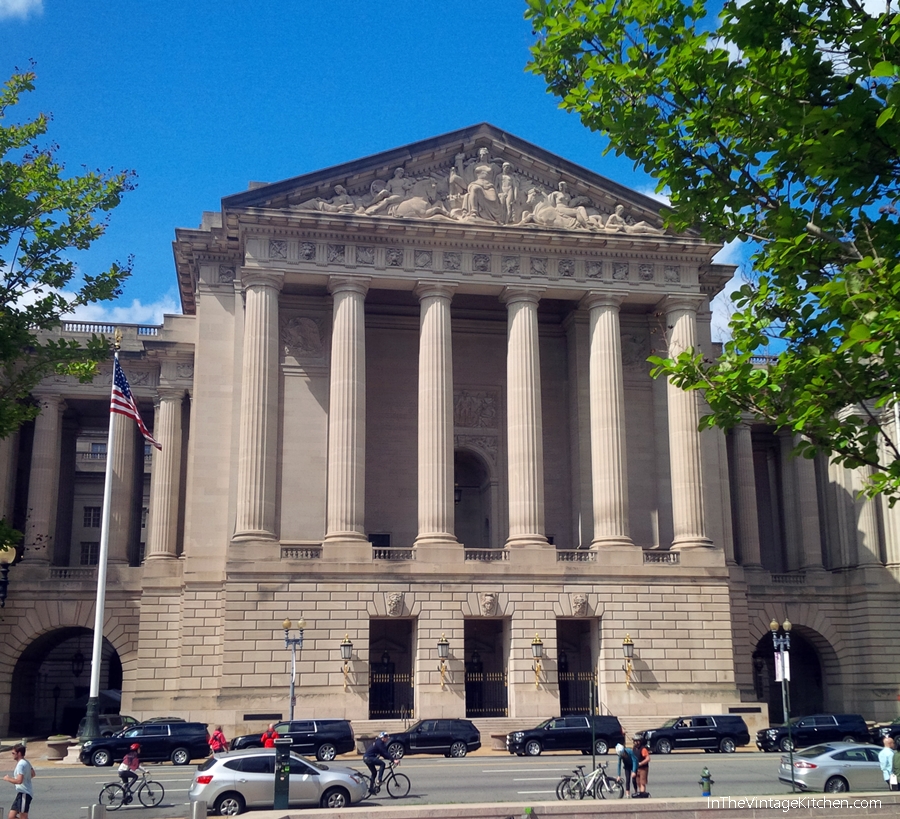
So that’s exactly what I did. I took some time. I abandoned my wish list of seeing everything fast, and focused on seeing a few things slowly. Highlights from the three museums I managed to get through are as follows…
At the National Portrait Gallery…
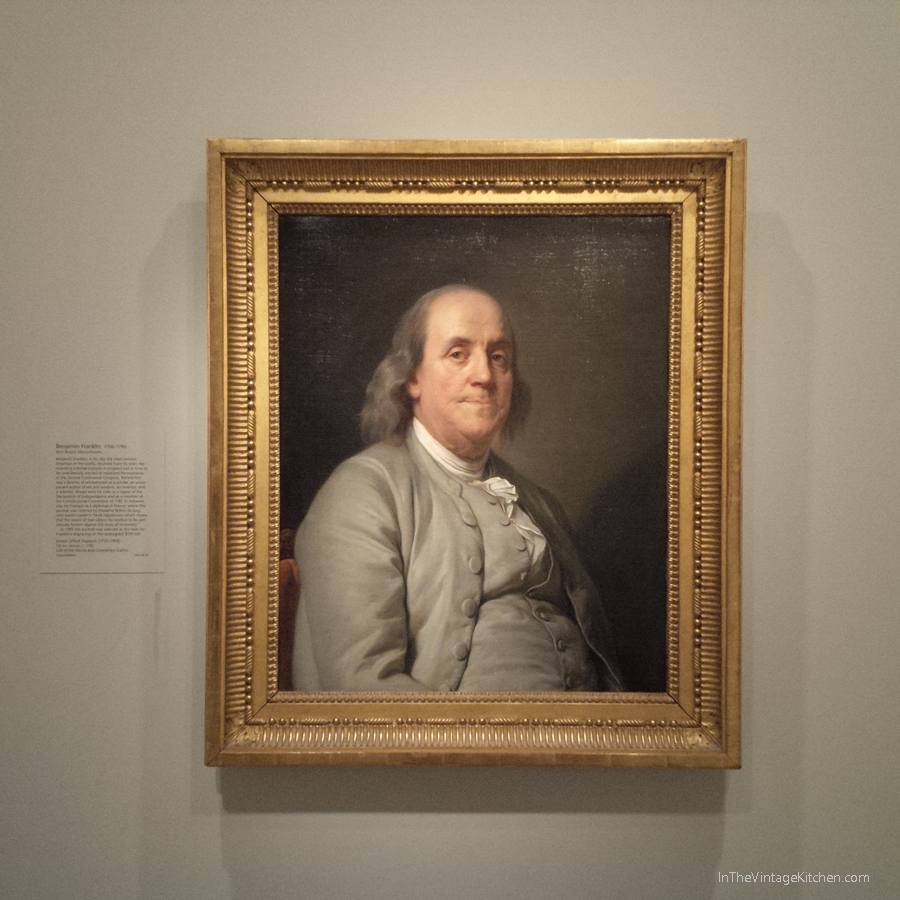
This famous portrait of Benjamin Franklin painted in 1785 hangs in the National Portrait Gallery. Because I had seen this picture a zillion times in books and all over the internet I thought I’d pop by, say hi and be on my way. But Ben had other plans. He was a wise 79 years old when he sat for this painting. And you can tell Ben’s got things to say from the second you see him.
The artist, Joseph-Siffred Duplessis translated an expression in Ben’s face that reads “Hey there, I have some interesting stories for you. Stay for a minute and I’ll explain.” And so I did, lured in by a magic painting spell. All the achievements he accomplished, the foresight he had, the contributions he made to the forming of our country, swirled around in those eyes and that smile, ready to break at any moment. He was captivating in all the right ways.
That experience with Benjamin Franklin reinforced the fact that I couldn’t zoom past everything and expect anything to have an impact. There was so much significance in the air around me that I was going to have to slow down in order to appreciate it all.
The Smithsonian American Art Museum and the National Portrait Gallery are both connected in the same building so you can cross over long hallways from the art museum to the portrait gallery in just a few steps. On the art museum side I found these favorites in the painting department…golden framed beauties covering two centuries including a large scale John James Audubon bird painting from 1836…

Downstairs on the ground floor I discovered colorful cafeteria art of the 1940’s…

which was from a series by Gertrude Goodrich titled Scenes from American Life (Beach) and which originally hung in the cafeteria of the city’s Social Security Building. I loved the bright colors and all the commotion going on – each figure in the painting has their own personality. Here are some up close snippets..
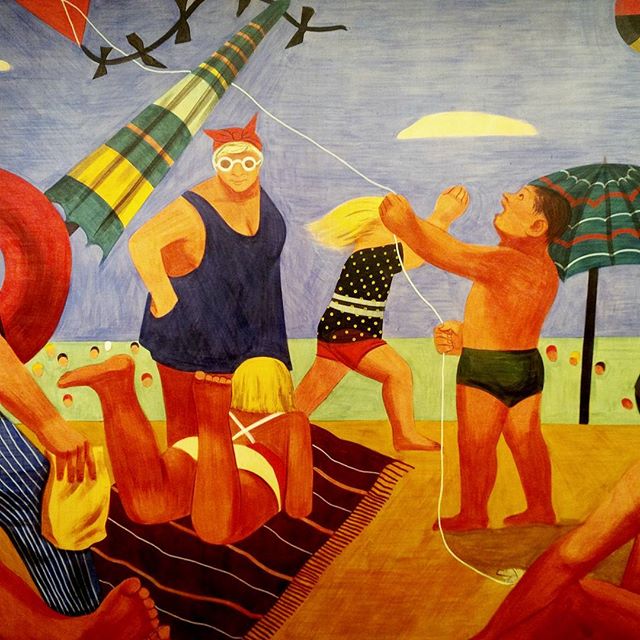
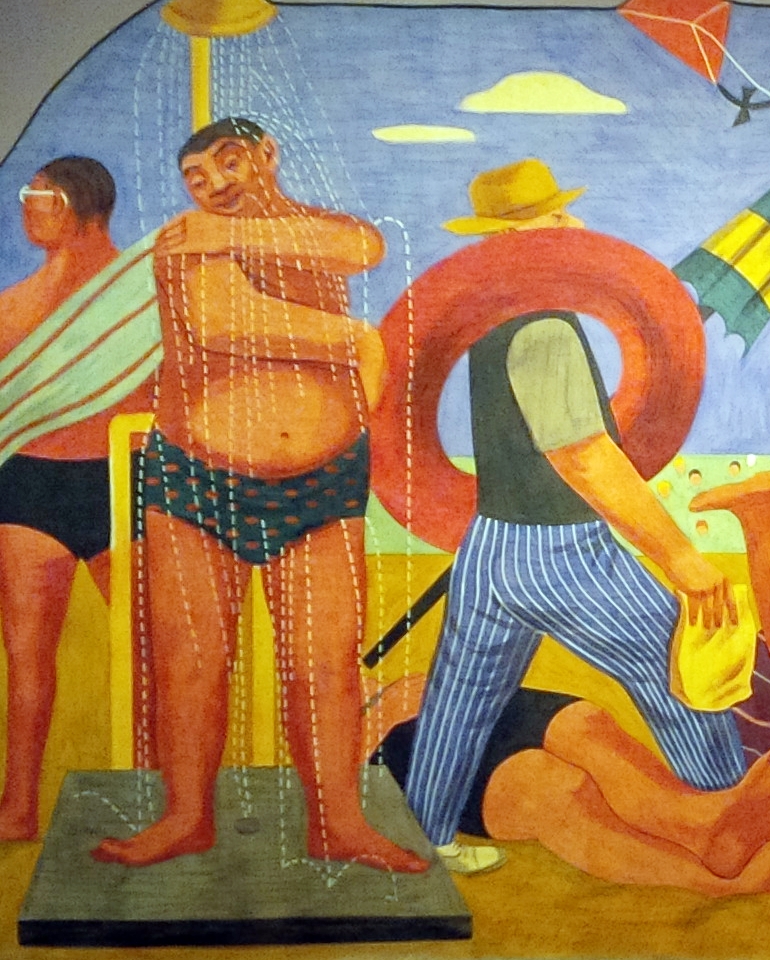
It really is a lively improvement from the food diagrams and nutrition charts found in most cafeterias today, don’t you think?
At the National Portrait Gallery –
Just like my time spent with Ben, I was equally captivated by an exhibit called The Face of Battle: Americans at War from 9/11 to Now which featured intimate glimpses into soldier’s lives… black and white leisure portraits taken in camp, paintings of wounded soldiers in full uniform, photographs of deceased soldiers home-based bedrooms, a creative video piece of a casket returning stateside. As you can imagine it was really moving and very sad. One of the exhibits inside the exhibit was a 5,000+ piece collection of small wallet sized pencil drawings of American servicemen and women who have died in Iraq and Afghanistan. This installation was completely hand-drawn by the American artist, Emily Prince. It took up three walls of one gallery and from a distance looked like a big Scrabble board. This is a snippet of one wall…

And upon color inspection…

And an even closer view below. This is just one example of the thousands Emily has hand-drawn. The exhibit is titled American servicemen and women who have died in Iraq and Afghanistan, but not including the wounded, nor the Iraqis, nor the Afghans. Read more about Emily and the project here.

We were visiting D.C. during the start of Police Week so uniformed men and women from all over the world were everywhere. At the airport, teams of officers six or eight to a group met flights as they came in containing passengers whose family had died protecting the country. The officers stood across from each other with arms raised in salute as people walked off each flight. The officers recognized the families they were meeting either by Hero t-shirts or by camera phones recording the walk from the plane to the gate. It was bittersweet. Sad that people had died but wonderful that the military and our protective services were still honoring their contributions.
On a cheerier note…
at the Museum of American History…
a very special face was also on display. I was definitely determined not to leave Washington until I saw this lady and her famous kitchen…
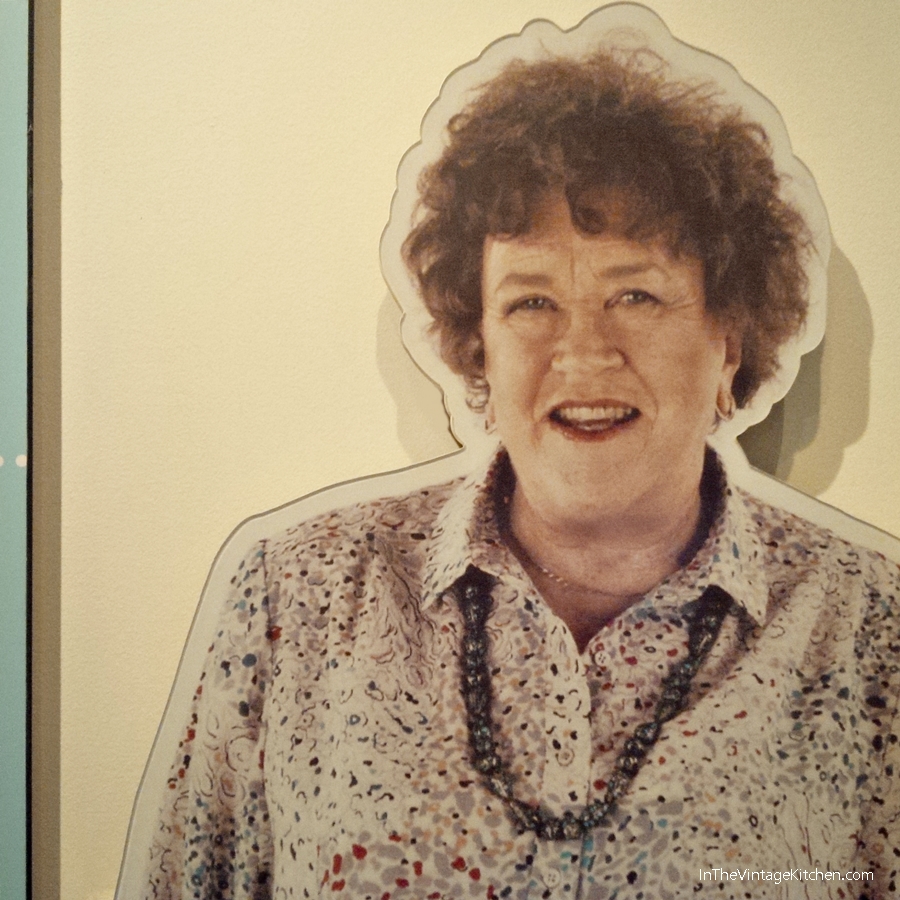
In an exhibit detailing the transformation of American food from the 1950’s to the 2000’s, Julia Child’s kitchen from her house in Cambridge, Massachusetts sat front and center.
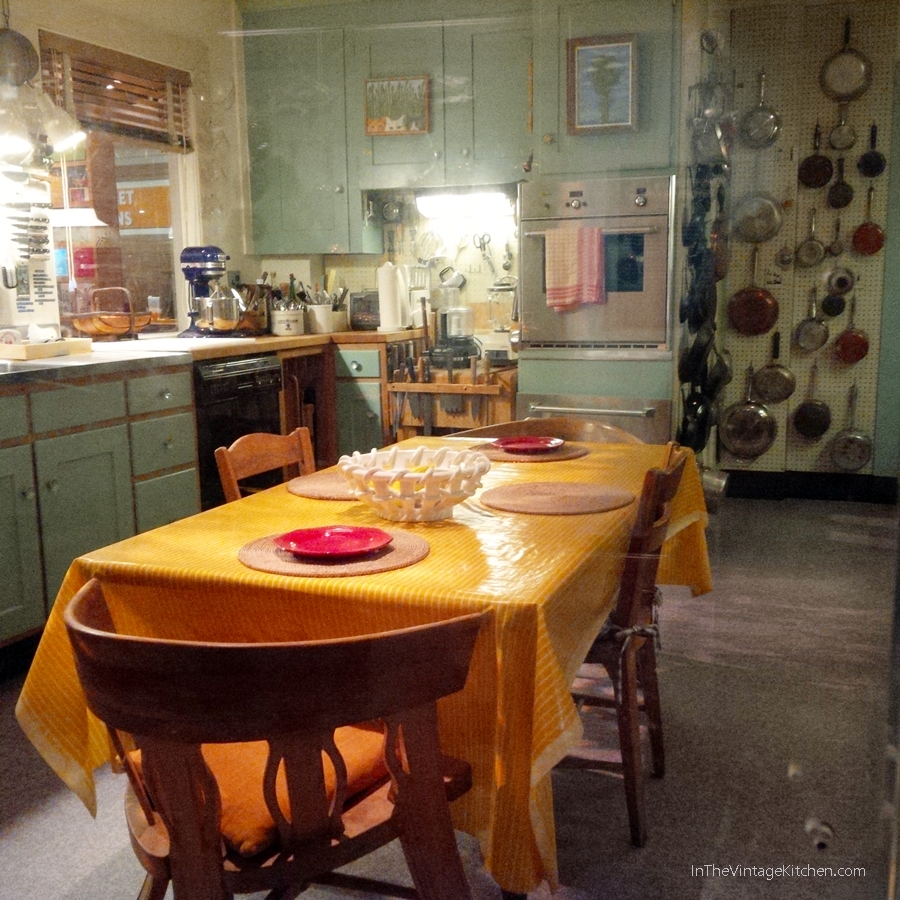
It’s a little tricky to get good photos of it because the whole kitchen itself is sealed in. Small cut-outs covered in plexi-glass serve as viewing stations, so there is a little battle to be fought with glare from the plexi-glass and the fellow visitors who squish in to see. But you can get the idea of a 360 view (in parts!) from the following…
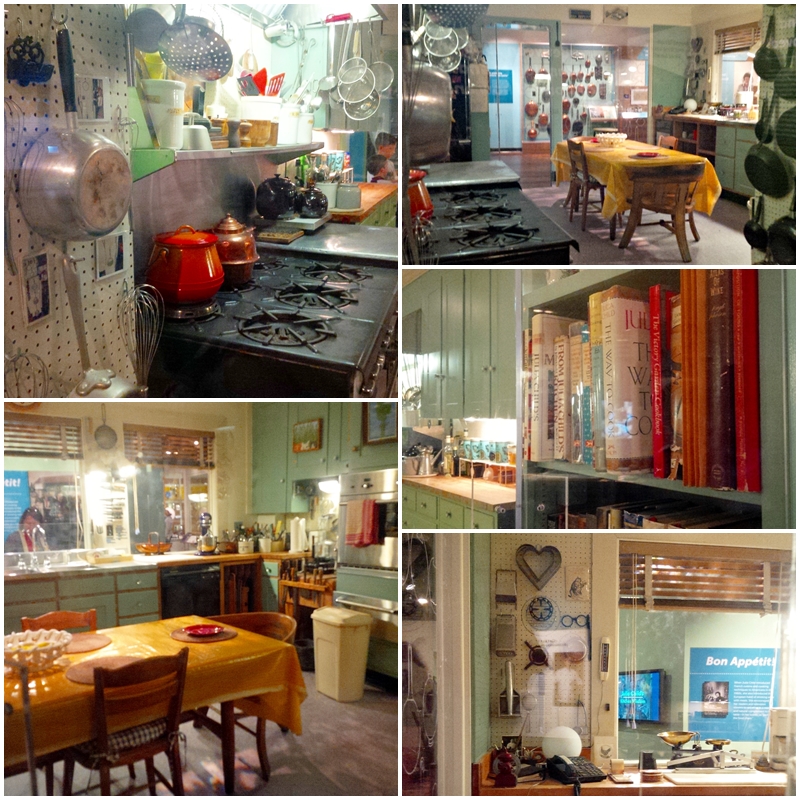
Everything in the kitchen is as Julia left it when she donated the entire room and all its contents to the Museum in 2001. It was full of surprising little details including lots of cat art, a fridge full of magnets (she was was a fan of the King Arthur flour brand!), family photographs, a rubix cube tucked behind a telephone and all the little odds and ends that you can find in anybody’s kitchen famous or not. She had a junk drawer. She labeled things with masking tape and handwriting. She hung onto favorite pieces of equipment outdated or not.
As revered as Julia had become it is easy to see in this exhibit how normal and ordinary a person she actually was. Her kitchen reflected that. It wasn’t photo-shoot ready. It wasn’t glamorous. Not everything had a place. Her cookbooks were used. Her counter tops were messy. But it was functional for the way she liked to cook. It was a fun play space for her and in turn it was a fun exhibit for me. I think that is what still makes Julia Child so admired. She was an unpretentious lover of food and of cooking and her kitchen reiterates all that. The manner in which it is displayed there at the Smithsonian you can easily imagine that she just popped over into another room of the house, perhaps to fetch something for her husband Paul and that in any second she was going to come right back and get to cooking. Aided by video monitors playing clips from her cooking shows around the exhibit, your imagination does not have to stretch far to picture her standing at the sink peeling potatoes or at the stove flipping omelettes.
There is a fun 5 minute video on youtube that explains how the museum staff takes care of her kitchen. It also gives you some up close behind-the-scenes info on specific items within the display.
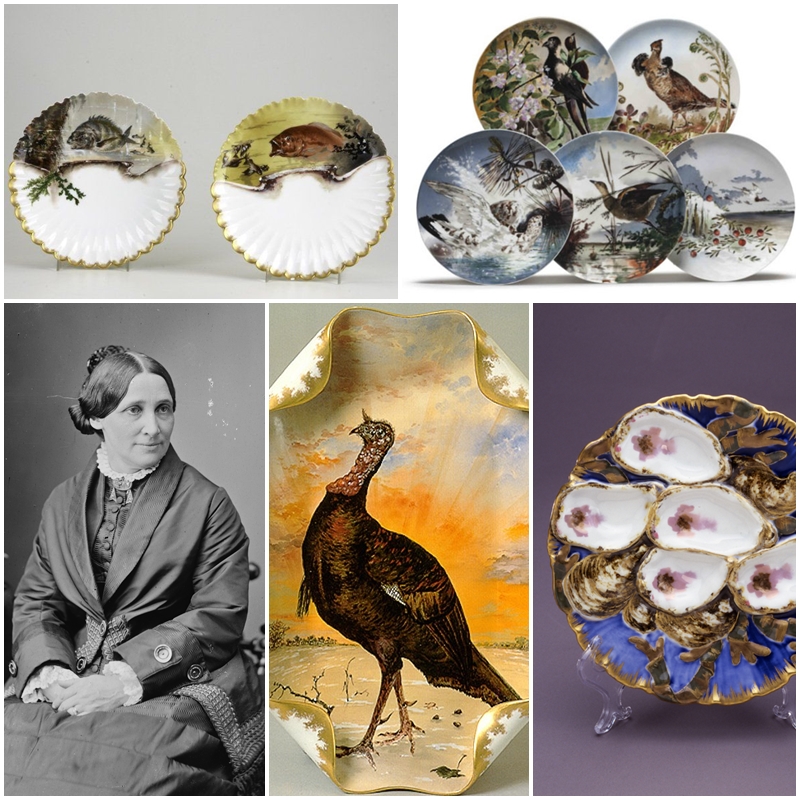
Also in the History Museum was an interesting exhibit on the clothing worn by the First Ladies (mostly during inaugural balls or welcome receptions) and the china patterns that each selected for their White House term. The oldest in the collection of both dress and dish belongs, of course, to Martha Washington…

Most of the china patterns were variations on a theme… gold bands/eagles/jewel tone colors, etc. but Lucy Webb Hayes, wife of President Rutherford B. Hayes commissioned an artist in the 1870’s to design a set of china that incorporated the flora and fauna of the United States. To this day, Lucy’s china pattern still remains the most creative of all the administrations.
I may not have made it to the Botanical Gardens on this trip but to serious surprise and complete excitement equal to that of seeing Julia Child’s kitchen, I stumbled into this big beauty in the gardens of the Natural History museum next door…
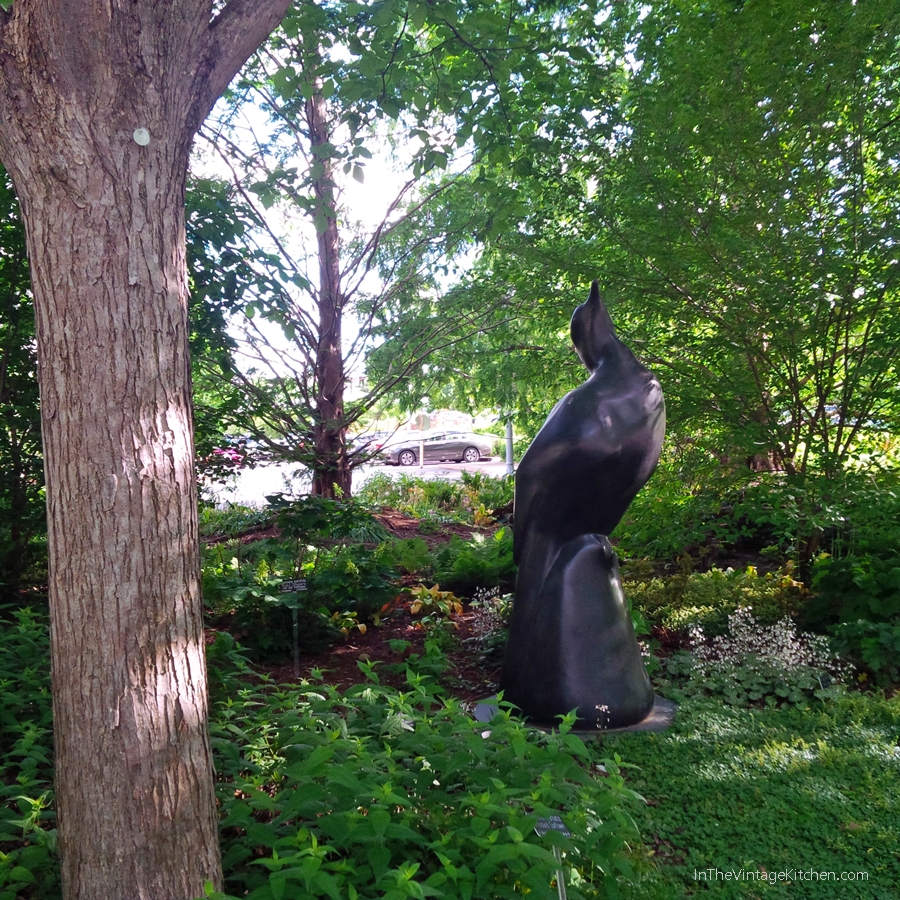
the passenger pigeon sculpture by Todd McGrain from the Lost Bird Project that we wrote about in 2013! She’s tucked inside a walled garden just off the street so I almost walked right by her. In the busy world of modern day urban life, she sits surrounded in the museum’s Bird Garden by flowers and real-life bird flocks flapping their wings here and there so she’s in a great spot. If you missed the post about the Lost Bird project and Todd’s mission to memorialize extinct birds catch up here.
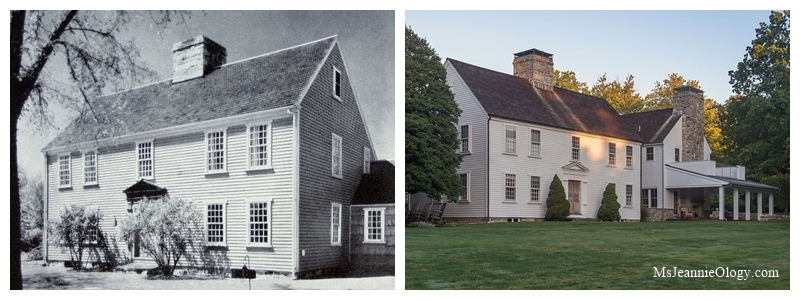
Moving on from museums and spending time waterside in the fresh spring air, the charmer on top of our whole trip was spending half a day in Alexandria, Virginia. We had lunch on the wharf…

and then spent the afternoon walking around town in George Washington’s footsteps.

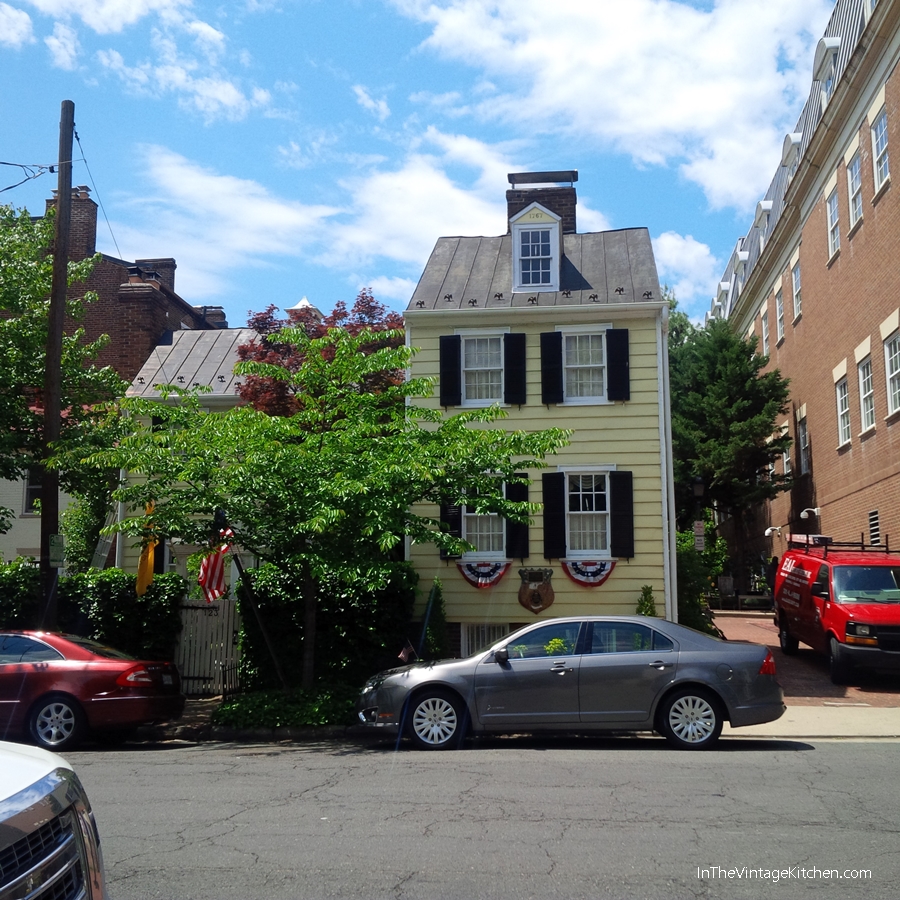
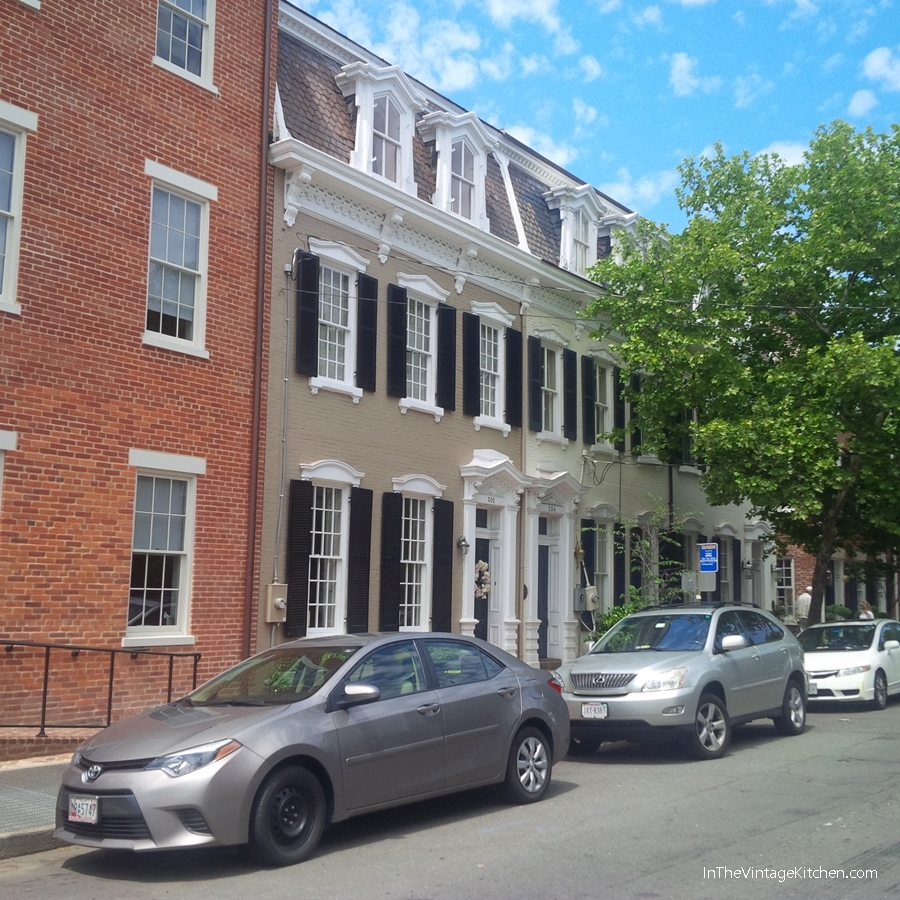

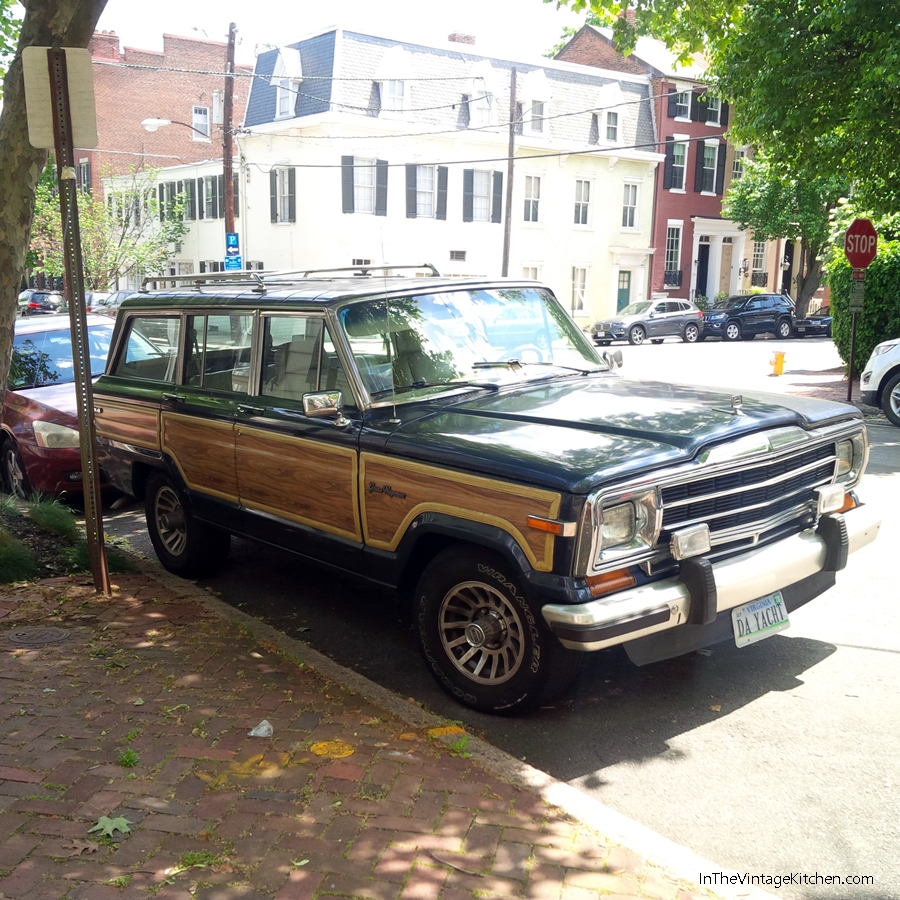
Every street was cuter than the last. I definitely could have picked any one of those houses to live in. I even found my ideal car…


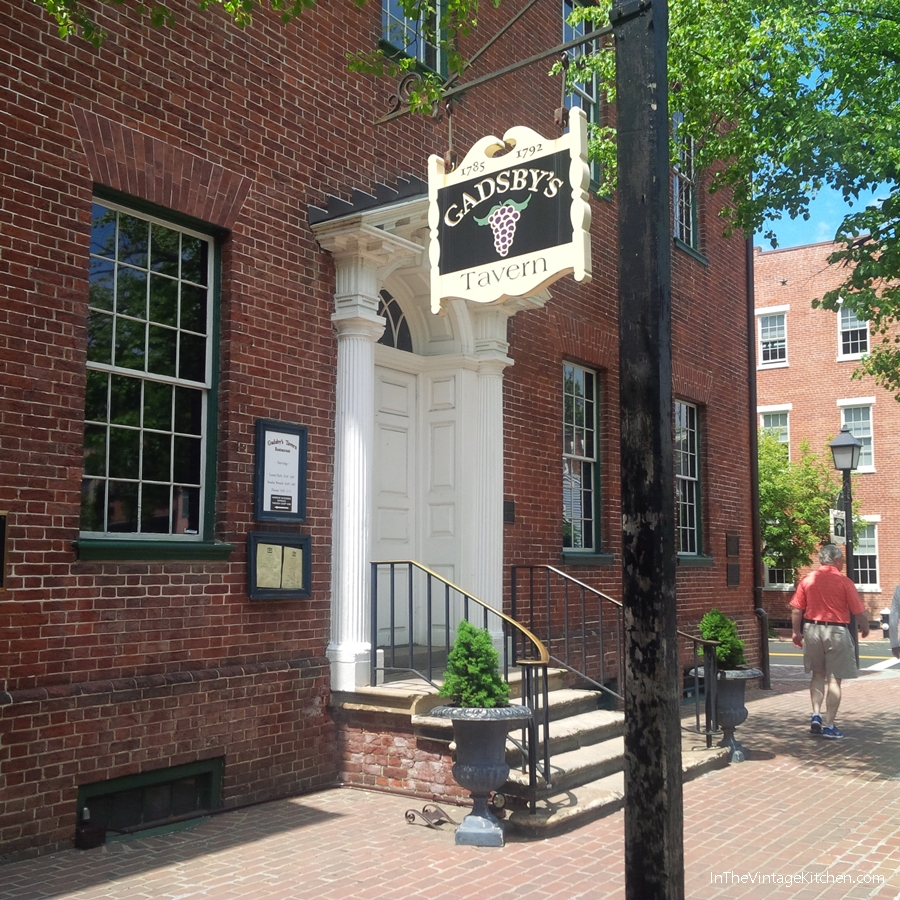


We stopped into a local pub and met a local (imagine that!) who gave us a little verbal history tour through his town.

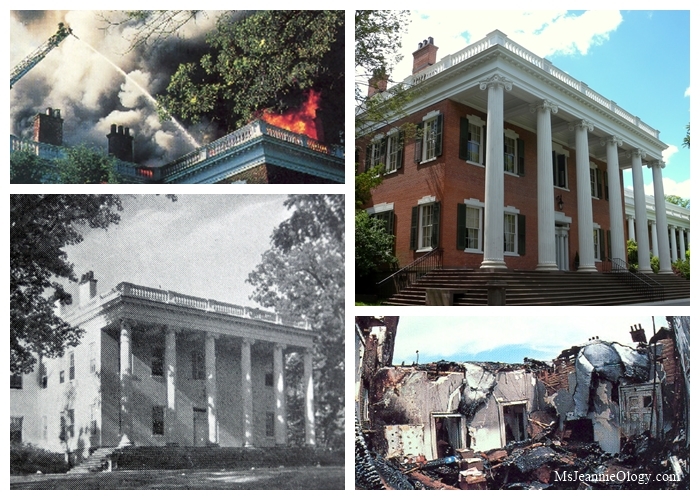
and we found the house where they filmed scenes from the PBS show Mercy Street…

So pretty! You can access Alexandria by car or ferry – both just a quick trip from D.C.. Like easily imagining Julia in her kitchen it is very easy to picture George and Martha Washington or Ben Franklin or any other early colonials walking down the historic streets. Everything is all brick and cobblestone, clapboard and flower boxes. History plaques make a self guided walking tour easy and your camera won’t stop clicking for all the pretty photo opportunities.

Since I didn’t make it to all the places on my original list that still leaves so much to do on future trips back to the D.C. area. I think you could live in this section of our country for two dozen years and still not see everything! But that’s what’s marvelous about Washington – it’s a never-ending series of new (old) places to discover upon every return.
Cheers to that! Or huzzah as our noble men Ben and George liked to say!