How very exciting this week has been for snow lovers around the U.S.! With all this winter white floating and flying around the country, February is chalking itself up to be one of prettiest winter months on record. Sadly there has been no snowy weather to report from Ms. Jeannie’s city but that’s okay because today snow scenes are not hard to come by as we travel back in time to some of the biggest snowstorms of the 19th and 20th centuries.
This post is all about the beauty of the blizzard as experienced from all sides of the States, north to south, east to west. We are also introducing two new (but actually old) snow songs that every once in a while get lumped into Christmas song rotation but actually have nothing to do with the holiday itself. Instead, these two whimsical melodies express all the hap-hap-happy joy found in a good day of snow. So grab your mug of hot chocolate, turn up the volume and enjoy the snowstorms to come…
Suzy Snowflake debuted in 1951 and quickly became a popular hit for Rosemary Clooney for the next three decades.
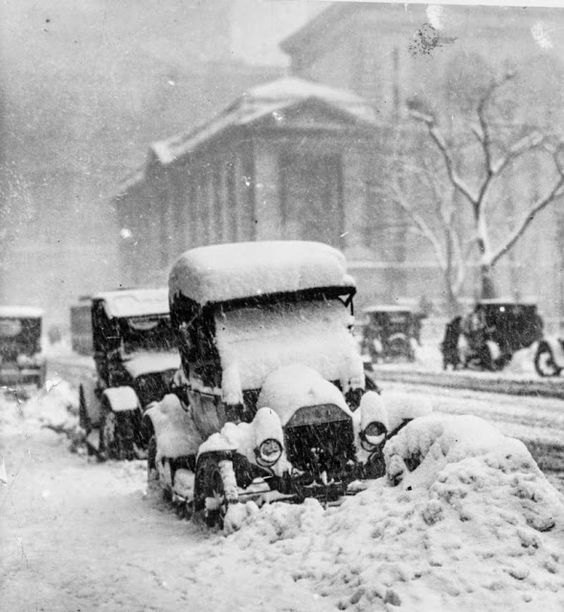
New York City, 1917
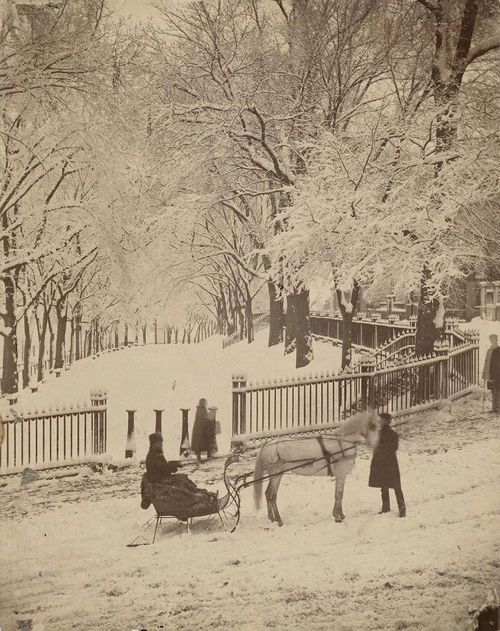
Boston, 1875
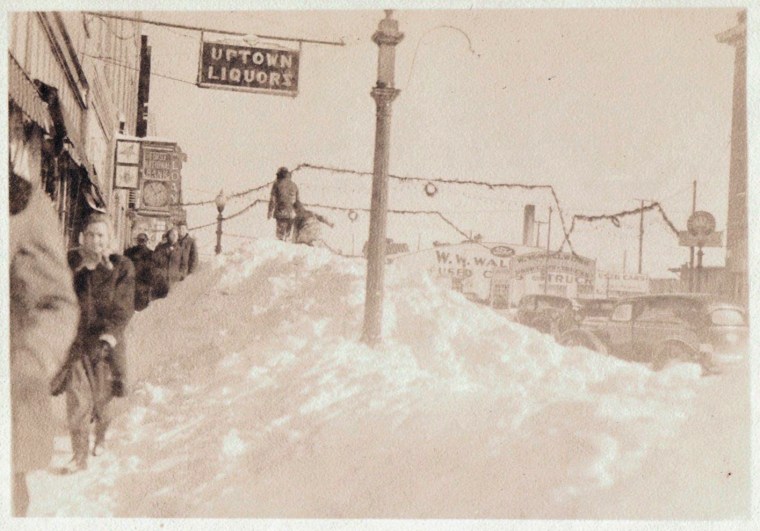
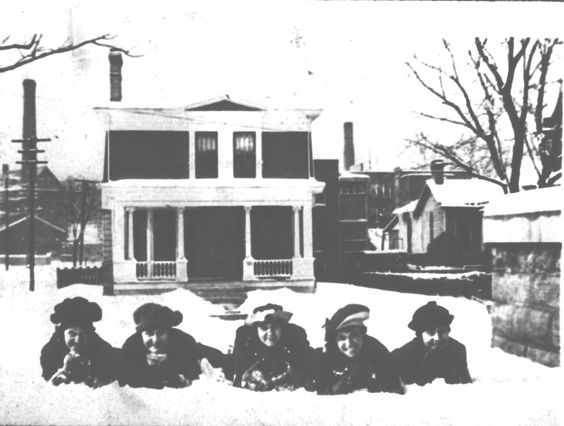
Detroit, early 1900’s
Possibly this is Suzy Snowflake herself circa 1963!
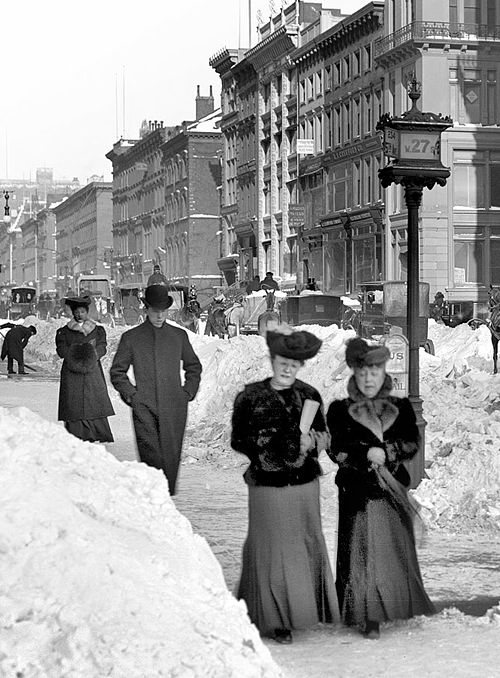
New York City, 1892
Minnesota, 1940’s
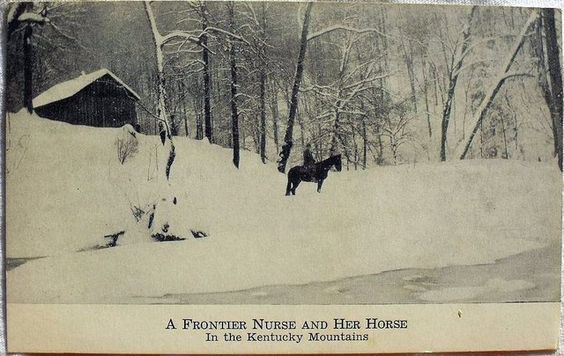
Kentucky Mountains – early 19th century
Chicago, 1956
Eagle River, Wisconsin, 1911
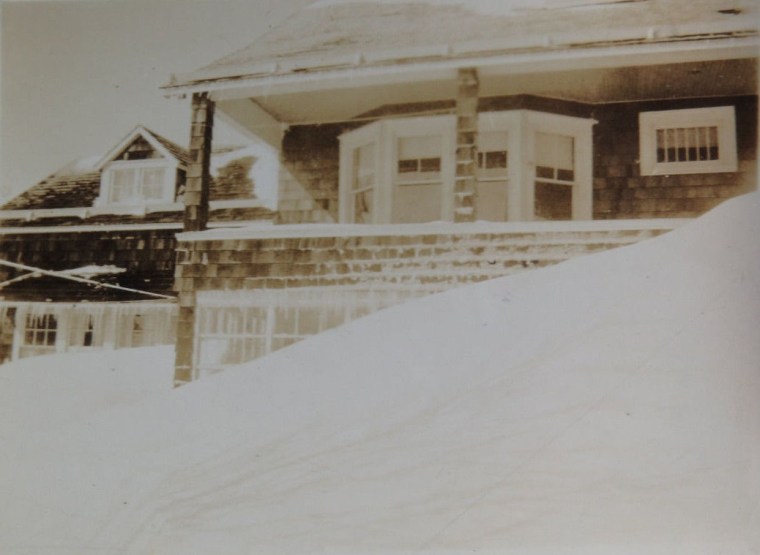
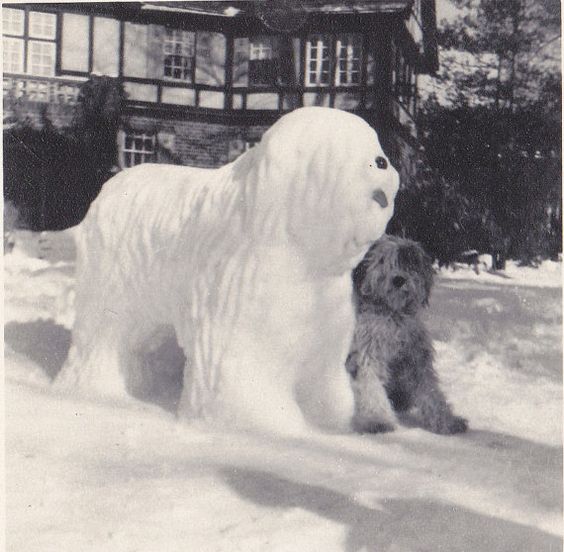
Belfast, Maine, 1952
Chicago, 1908
New Jersey, 1926
New York City, 1905
Seattle, 1916
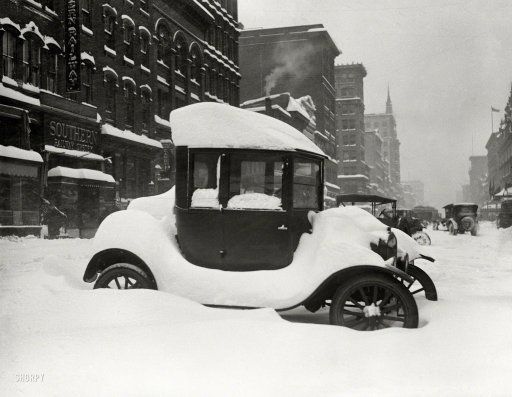
Washington DC, 1922
Mckenzie Pass, Oregon, 1929
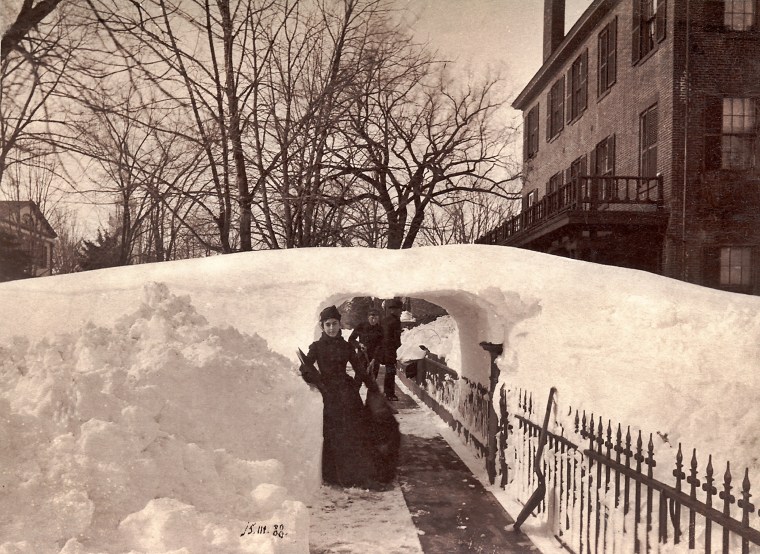
Connecticut, 1888
It’s A Marshmallow World was first recorded in 1949 and was performed by Bing Crosby. This version (Ms. Jeannie’s favorite!) by Brenda Lee debuted in 1964.
Wisconsin, 1925
Vermont, 1940
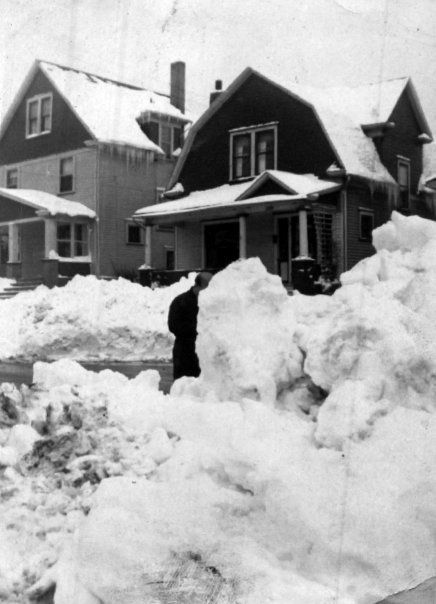
Ohio 1952
Colorado, 1906
1950’s
Alaska, 1910
Tennessee 1918
Buffalo, New York 1977
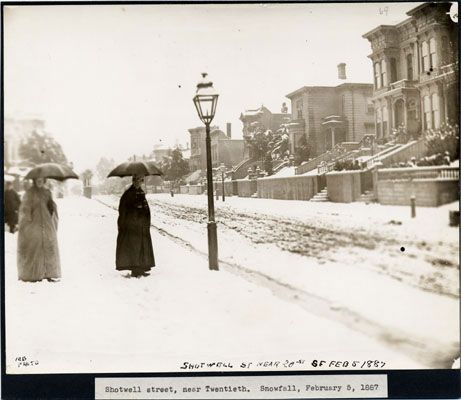
San Francisco, CA 1887
Harrisburg, PA circa early 1940’s
Cheers to happy snowmen and winter site-seers! May your snow day, however you are experiencing it, be merry and bright!
All photos courtesy of pinterest and ebay. Click on each for more detailed info.
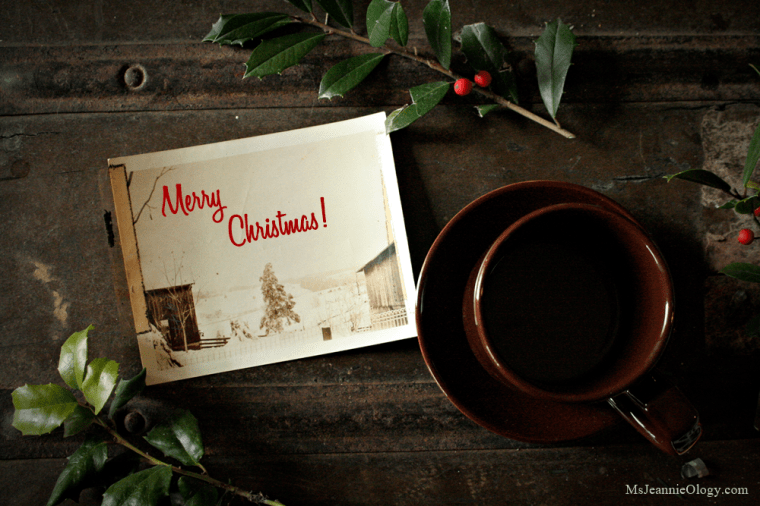
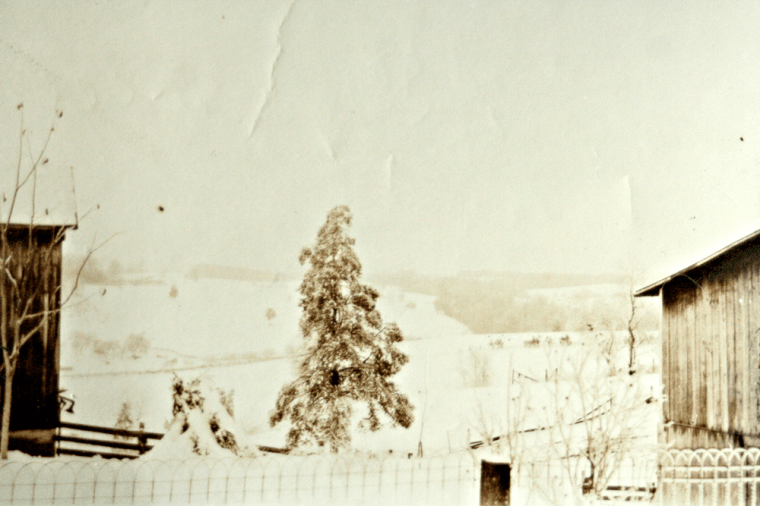
Merry Christmas dear readers! This holiday post comes with a (snow) plow full of good wishes for a wonderful holiday packed with unexpected surprises and delights. Ms. Jeannie happened upon this vintage snow photograph in an antique store in the middle of July during one of the hottest days of the year. A cool landscape on that sultry summer day, she knew immediately it was perfect for this season’s holiday post. You can practically hear the sleigh bells jingling.
Taken by William M. Forwood in 1941 in Chestnut Hill, Maryland, this well-balanced barn scene with that Charlie Brown spruce tree reminded Ms. Jeannie so much of the winters spent in picturesque Pennsylvania. It also gave her hope that she might anticipate an equally snowy scene in her own new city this December.
Alas, fast forward five months to today and our Christmas Day forecast scheduled for Sunday is holding steady at an unseasonably 70 degrees. So the possibility of being wrapped up in a winter wonderland is most probably not going to be our fate this year but that’s okay. We have a whole two months of winter left to go and magic occurs when you least expect it.
Here’s to hoping that your holidays are equally as breezy, and that you keep your eyes out for the unanticipated moments that make this time of year especially inspiring. Cheers to hopeful hearts and happy holidays! And a big thank you to William M. for bringing the snow to this Southern party seventy five years later.
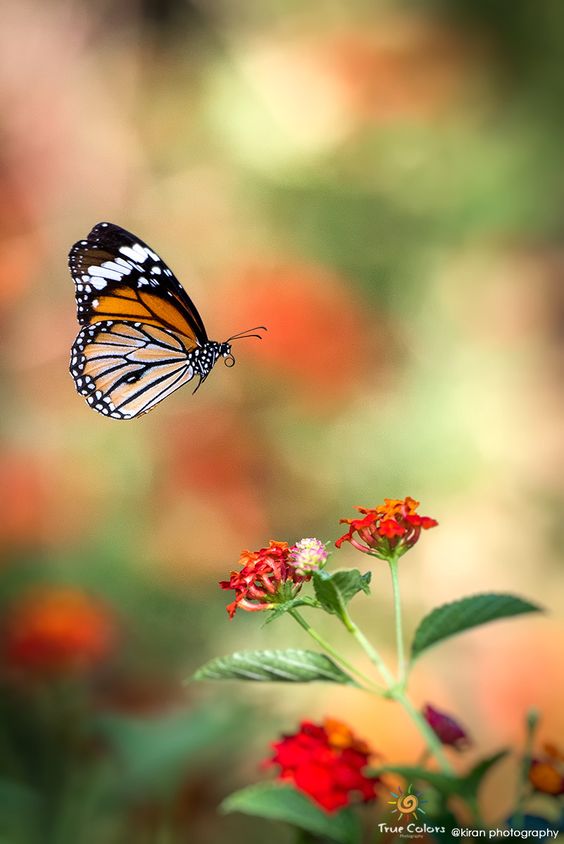
Last year Ms. Jeannie traveled approximately 13,000 miles via car over the course of 52 weeks. Last year the North American monarch butterfly traveled 3,000 miles via wing over the course of nine weeks. Ms. Jeannie mainly drove around her neighborhood and her city with a few side trips around the state. Butterfly flew halfway across the North American continent, traveling through at least six United States, one Canadian province, and half of Mexico.
On average last year Ms. Jeannie traveled about 39 miles a day via car. On average last year, Butterfly traveled 47 miles per day via wing on her two and half month road trip. Ms. Jeannie’s car runs on gasoline which brought her to the fill-up station about 120 times over the course of the year. Butterfly runs on nectar which brought her to the fill-up station about eight times during the course of her journey.
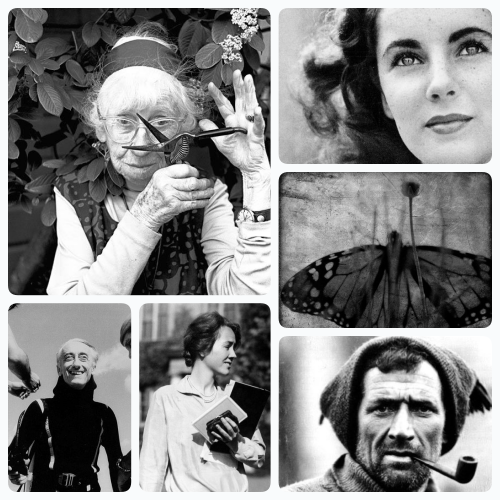
Ms. Jeannie’s car is an incredible piece of machinery able to get her from here to there on a whim’s notice. But Ms. Jeannie’s car is nothing compared to the flying machine that encapsulates the strength and stamina of a migrating monarch. Butterfly’s migration is one of nature’s most epic adventures, which is why you’ll find a photo of her pinned to Ms. Jeannie’s true adventurers board on Pinterest. That’s the place where all of history’s great travelers and outside-of-the-box thinkers congregate and where Ms. Jeannie heads when she needs a little inspiration.
A partial list of true adventurers… clockwise from top left: photographer Imogen Cunningham, actress Elizabeth Taylor, epic traveler Monarch Butterfly, explorer Tom Crean, aviator Anne Morrow Lindbergh and explorer Jacques Cousteau. To visit Ms. Jeannie’s board and see all the adventurers click the photo.
Along with all icons who undertake brave and unbelievable feats there is almost always a strong support system behind them. Julia Child had her husband Paul, Jacques Cousteau had a research foundation, Anne Frank had her diary. And so it goes with butterflies. Monarch has the milkweed.
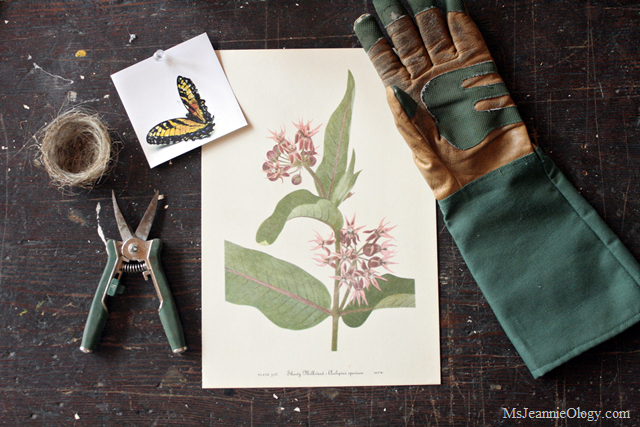
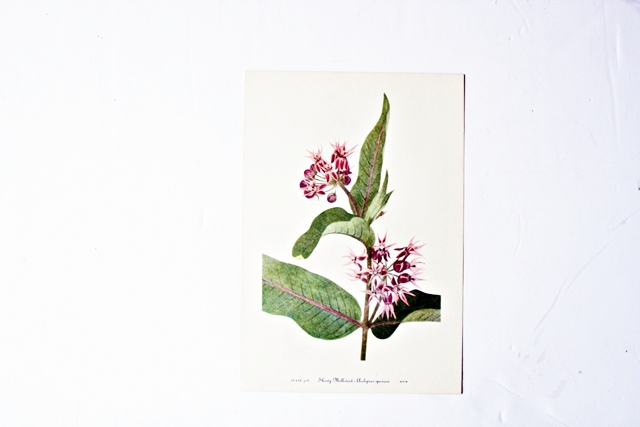
This vintage 1953 botanical print of the showy milkweed painted by Mary Vaux Walcott is availiable in Ms. Jeannie’s shop.
Bright, beautiful and stately in size (up to 6 feet tall!), the milkweed plant is where Butterfly takes refuge. It’s the one place that not only offers a safe and idyllic spot to lay her eggs but it also offers the only source of nourishment to her babies in the form of a food when the wee ones are in the larval stage.
It’s the fill-up station for the winged world delicates! There used to be billions of monarch butterflies floating around our skies, but now there are only millions. Their significant decline in numbers is due in part to the disappearance of the milkweed plant. Commercial farming and urbanization has cleared the earth in important areas along the migratory trail of the butterflies and the resting spots where they congregate making it increasingly more difficult for monarch butterflies to reach maturity.
Not having enough milkweed plants to butterflies is like not having enough gas stations for cars. Each needs the other and each won’t operate without the help of the other. So this is where you come in… as a cheerleader, support staffer, tribe member and all around champion of the mighty monarch you can make an immediate difference in the life of a winged wonder by planting milkweed seeds in your garden or your balcony flower pots or by scattering seeds in grass lots around your neighborhood. It doesn’t matter if you live in California, or New York, Arizona or Maine all milkweed plantings in all states help one cause. You’ll be sustaining the lives of migrating butterflies as well as assisting other pollinators that bring so much benefit to so many other creatures both in and out of the garden.
There’s also an added bonus to being helpful. Milkweed flowers are beautiful! Available in a range of colors from red orange to pink to pale peach they are named after the milk colored latex coursing through their stems (a defense mechanism), which makes them unattractive to chewing worms.
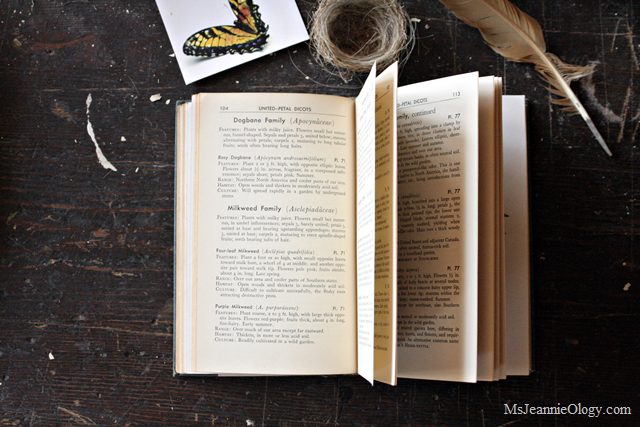
There was lots of interesting milkweed information in this vintage wildflower guide published in 1948 by Edgar T. Wherry. Read more about this book here.
Much prettier than any gas station or rest stop area for cars, these fill-up stations for butterflies have been around since the 17th century and contain over 140 different varieties. As a family they are known as Asclepias with a petal layout complexity most closely associated to that of orchids. As one of nature’s most intricate flowers they are made up of a collection of petals on a spray of delicate stems that eventually meet in one main stalk – sort of like the flower head of Queen Anne’s Lace or a loose version of the flowering garlic bulb. Leaves also range in color depending on the variety from silver green to dark emerald.
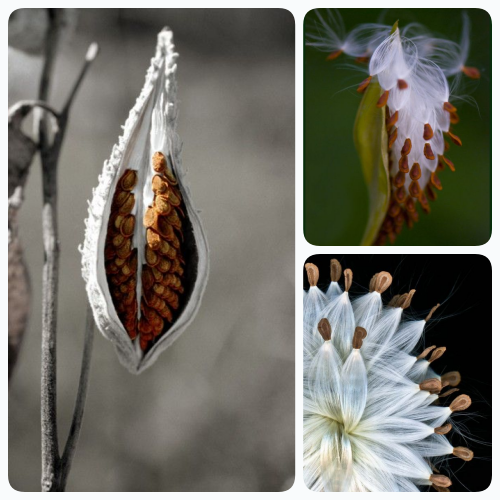
When the milkweed goes to seed it forms a pod of white silky hairlike plumes that launch on a breezy day, spreading seed around the neighborhood like pin-sized snowdrops. Imagine a whole gigantic field blowing in the wind at once – it would a veritable summer storm of beauty!
Easy to grow and care for, you can find seeds for under $2.00 a pack at Botanical Interests (Ms. Jeannie’s favorite seed company) or at your local garden center. March – May are perfect times to plant Milkweed in time for fall harvest and fall migration.
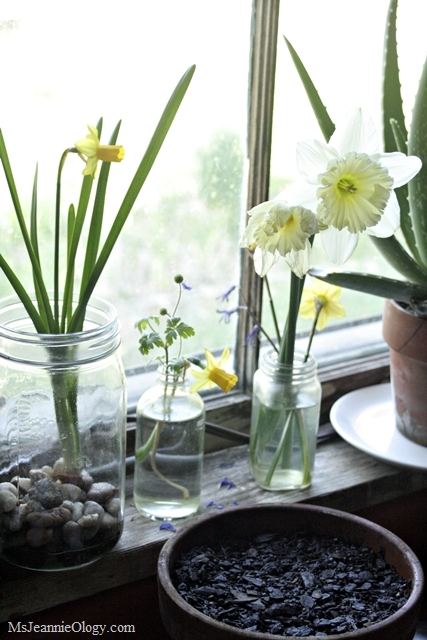
Seed starting indoors!
If you are a travel lover like Ms. Jeannie, you’ll appreciate the need to help our fellow flying friends get to where they need to go. Road trippers need to look out for one another on the highways of life, so Ms. Jeannie hopes that you will join her this summer in the great garden challenge – Milkweed for the Monarchs! Throughout the spring and summer she’ll be keeping you updated on her butterfly garden’s progress. It would be incredible if you did too:)
To see just how exciting it is to help and host butterflies, visit Ms. Jeannie’s 2013 archives when the season of the swallowtails unfolded week by week right here on the blog.
In 1960, John Hay spent the month of November on the coast of Massachusetts.
John Hay
In 2015, Ms. Jeannie spent the month of November on the coast of Florida.
John Hay was writing a book about the seasonal evolution of life on Cape Cod – a month by month collection of observations he would publish in 1961 under the title Nature’s Year: The Seasons of Cape Cod.
In November 2015, Ms. Jeannie was navigating a bevy of hospital hallways and doctors offices with her sick dad.
John escaped to the beach to think about life. Ms. Jeannie escaped to the beach for a brief break from life. Both John and Ms. Jeannie found solace on the shores of November.
55 years, 1300 miles and 11 states separated John from Ms. Jeannie. Does that matter? Does the seasonal effect of nature change so emotionally at sea? Fundamentally month by month are we more different than alike? Ms. Jeannie thought about these questions while she walked the beach and tried to make sense of the medical mysteries surrounding her father. Decades earlier John thought about these same questions while he walked the beach and tried to make sense of the natural mysteries surrounding humankind.
In this post we’ll be looking at one month from two sets of eyes to see how the natural world compares and contrasts between decades, between states, between regions and between people. Just how different is November from one place to another?
” The clouds cover the sky like gun smoke and the air feels cold and restricting.” – John Hay, Cape Cod, November 1960
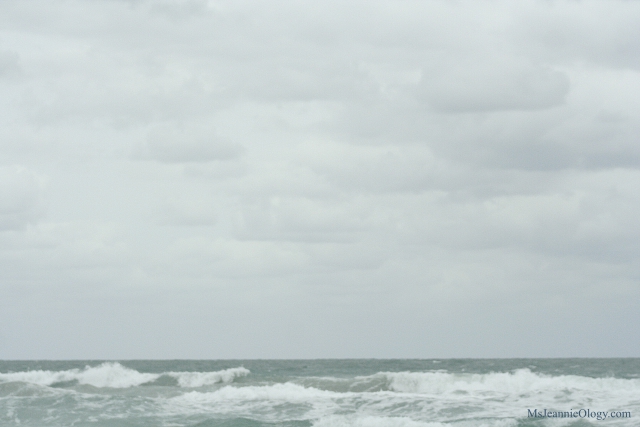
In November 2015 in Florida, the clouds also covered the sky like gun smoke but instead of being cold and restricting the air was oven hot and heavy with humidity.
“November rolls into view with cool, solemn, formal consistency…daylight diminishes. The summer no longer pounds at our temples. The fall color is gone. There is nothing to look at and very little to hear… to a city lover it is silent and deadly dull.” John Hay, Cape Cod, November 1960
In Florida in 2015, November rolled into view on the body of a heatwave. Temperatures hovered for most of the month in the mid-90’s. The air felt consistently relaxed and languid. If Ms. Jeannie was blind-folded and asked to guess the month she would have said August by the sticky feel of things around her. Summer was holding strong.
“Out on the bay the low waves look as if they have a harder push and pull to make, imbued with new heaviness.”- John Hay, Cape Cod, November 1960
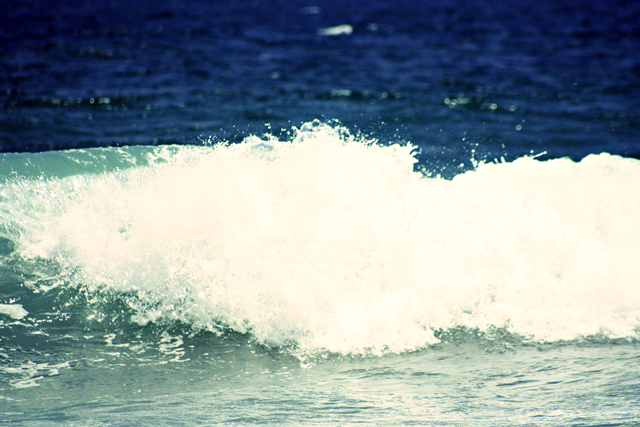
In Florida in November 2015, the waves are not low. They are tall and fat and strong. So full of energy and life, their crashing chorus’ take up all the audible room in Ms. Jeannie’s eardrums.
“There is a kind of ice sludge being nudged in by the tides along the shore and through rippling purple waters of tidal inlets.” – John Hay, Cape Cod, November 1960
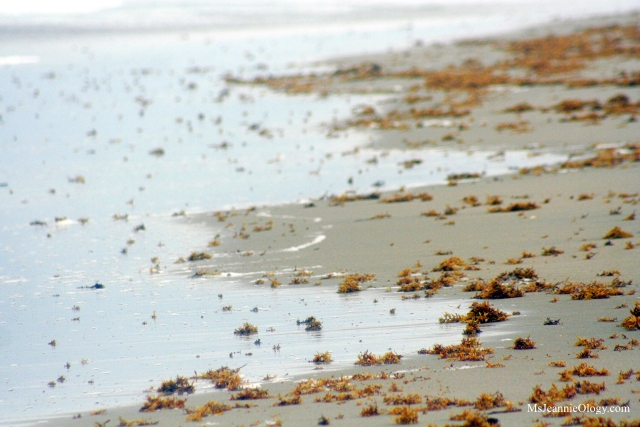
In Florida in November 2015, the tide drags ashore signs of autumn color in the form of clumpy pumpkin-tinted seaweed that stretches the entire length of the beach.
“Seeds, on grasses and weeds now grow thinner, drier, more colorless, are not only rich in generation on their own account but they provide beyond themselves. The simplest food chain suggests the links in many others. The time for persistence is coming, when those grasses we take so much for granted will hold our earth together.” – John Hay, Cape Cod, November 1960
In Florida in November 2015 as a whole it is easy to overlook the wild greenery in excitement to get to the water. The waves have a way of calling all attention.
But nature s running its course and Ms. Jeannie sees that the Florida beach grasses are also going to seed. Look closely below and you can see a little lizard scampering around the stalks.
Southern beach grasses wave hello and goodbye all at once as they share their seeds with beachcombers of both the two and flour-legged variety.
“The oaks are monumentally persistent. Cut them down fifty times and they will sprout back from the roots. This is their chosen land. The late fall wind makes their leaves rustle and stir…the whole year is full of the collaborative music of air and trees. ” – John Hay, Cape Cod, November 1960
In Florida in November 2015 there are no oak trees. In fact, surprisingly on the stretch of beach Ms. Jeannie visited there were very few palm trees. But what there was in great succession was a thick barricade wall of sea grape trees. Like an enchanted garden, they formed natural vestibules to and from the street to the beach and the beach to the street. Those are the trees in Florida that have made choices. Those are the ones who will continue to fight for life whether they are cut down fifty times or 1500 times.
“Since Cape Cod is surrounded by the sea it has another depth, another range, were other populations roam while the rest of us wait and shiver.” – John Hay, Cape Cod, November 1960
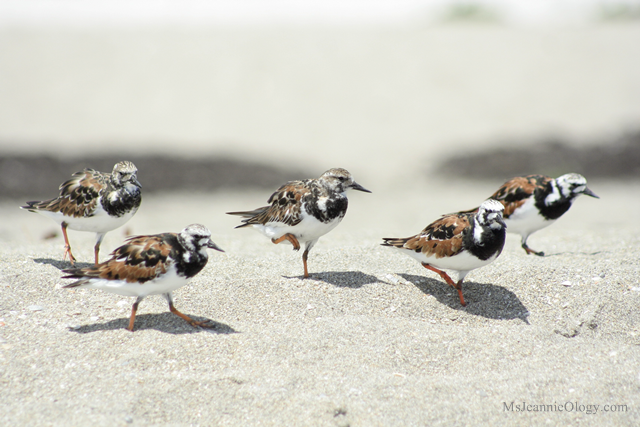
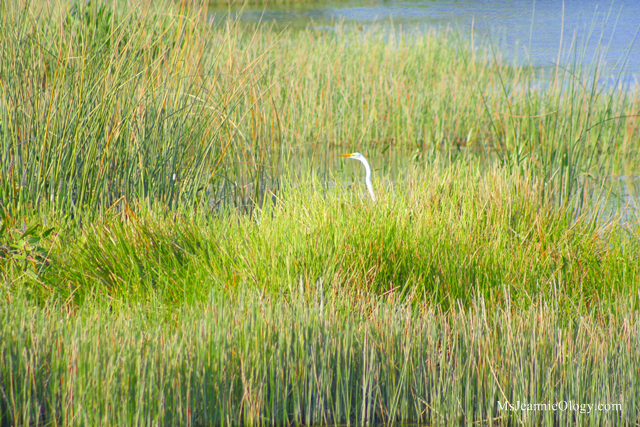
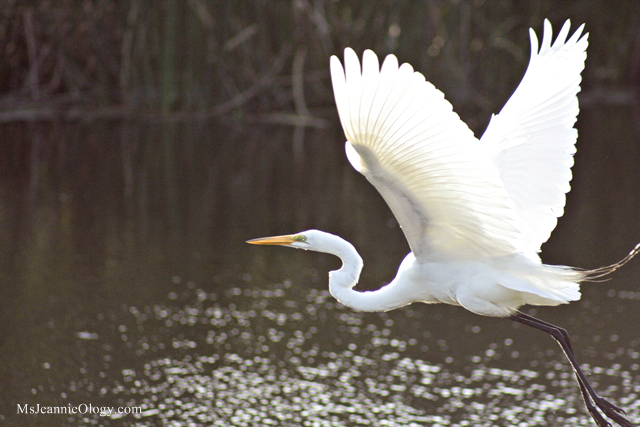
In Florida in November 2015 the most interesting and immediate animal life to observe was the multitude of shore birds. They provided beauty…
and comic relief…
intrique and mystery…
and even the threat of tragedy…
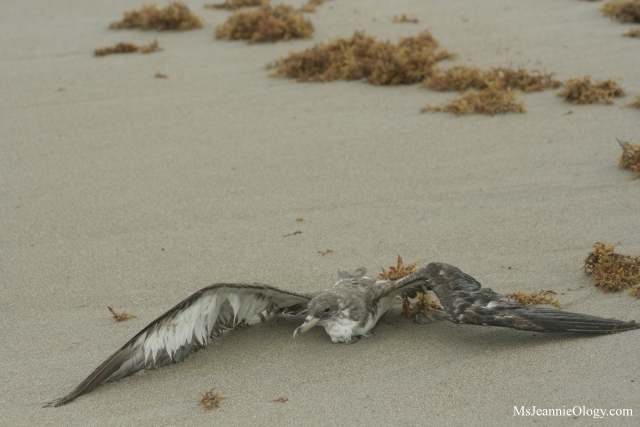
After a consult with the lifeguard and a call into animal wildlife patrol, Ms. Jeannie was happy to hear that this bird was no sick or injured creature who seemed helplessly hopeless clinging to the sand when she spotted him. Instead he was a just a baby learning how to fly…
“In fact there is no fundamental separation anywhere in this common world of life, despite the greatly various environments of water and and what we use to help us differentiate between the species. Winds blow through. Tides lap over. Each plant and animal is proof of general contact and association.” – John Hay, Cape Cod, November 1960
After seeing the baby gull and running through the gamut of emotions and feelings of wanting at first to observe him, then protect him, then help him, then understand him, Ms. Jeannie realized whole-heartedly that there is no real difference in the Novembers between years and states and places and faces.
Sure the typography changes and the climate varies but similarities are equally as present. We all just want to survive in the place where we are rooted. November is as much a natural state of mind as it is a calendar month, and although the landscapes may vary from North to South and East to West, fundamentally we are all the same at heart. We are all the little gull plopped down on the sand, learning how to fly. learning how to survive. learning how to make it from one day to the next. We are all the little gull trying to make our way in the big world.
Do you have any natural wonder stories from the month of November – something that surprised you dear readers? If so, please contribute your thoughts in the comment section below. In the meantime, if you’d like to see what John Hay has to say about the 11 other months of life on Cape Cod in 1960, you can find him in Ms. Jeannie’s shop here.
For your palm tree fill, visit Ms. Jeannie on Instagram!
Cheers to the new month of December! May it be equally as enlightening:)
This past weekend Ms. Jeannie went to a party. It was one of those unforgettable, over-the-top affairs where the guest list was filled with fancy names and all the faces were beautiful. The venue itself was without fault and so impressive it almost seemed fake. Top all that with a symphonic orchestra that played ceaselessly without one break for hours and it was pretty much the most sublime evening Ms Jeannie has had in months.
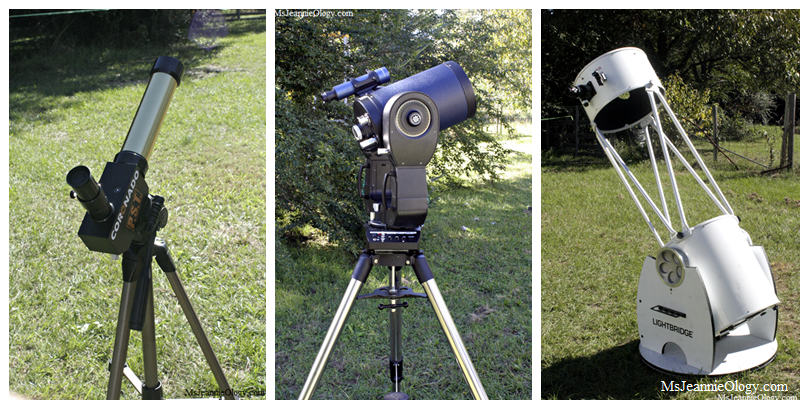
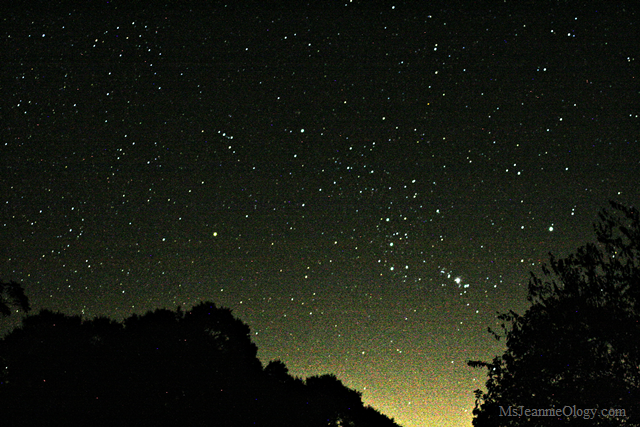
The purpose of the party was to welcome three distinguished guests who were visiting from a nearby university. These are the handsome trio…
With a combined net worth of over $12.000.00 these three lit up the room with their high-fashion style and expensive demeanors. Mysterious, intimidating and slightly aloof at first, once Ms. Jeannie looked them in the eye…
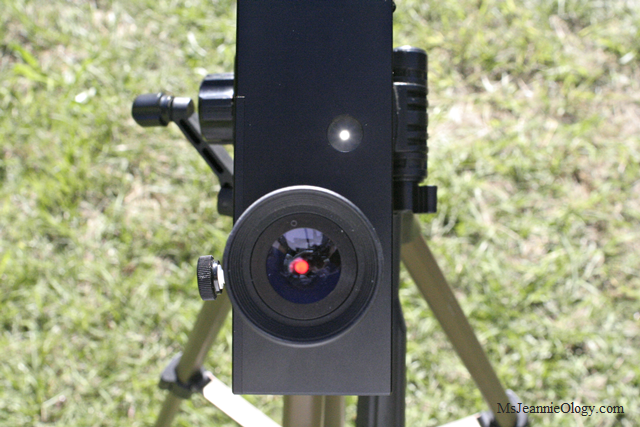
she was smitten. Navigating past the awkward introductions and the stumbling blocks of trying to find common ground in conversation, these three honorees opened up a whole new world to Ms. Jeannie. Conversation started small with a red-dot introduction to the sun…
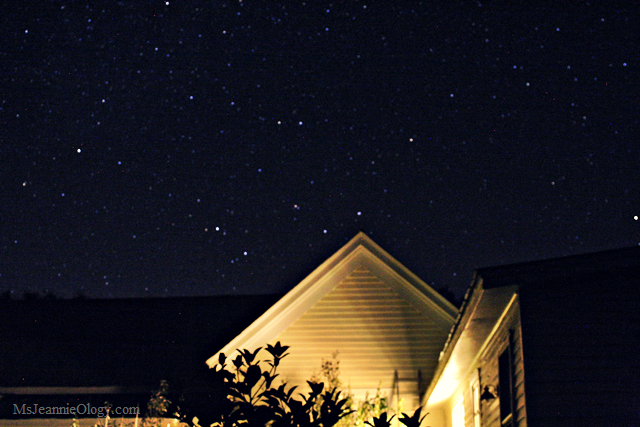
but as the night progressed and the hour grew later topics of conversation grew bigger and brighter…
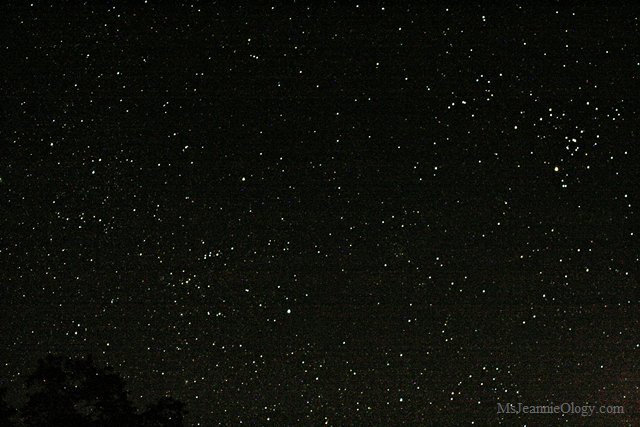
You see dear readers, our three distinguished honorees knew lots of guests at this party and they were each happy to take Ms. Jeannie’s arm and introduce her around. Thanks to them, Ms. Jeannie met a boatload of fascinating characters – Pegasus, Cepheus, Draco…Delphinus, Equules, Andromeda…
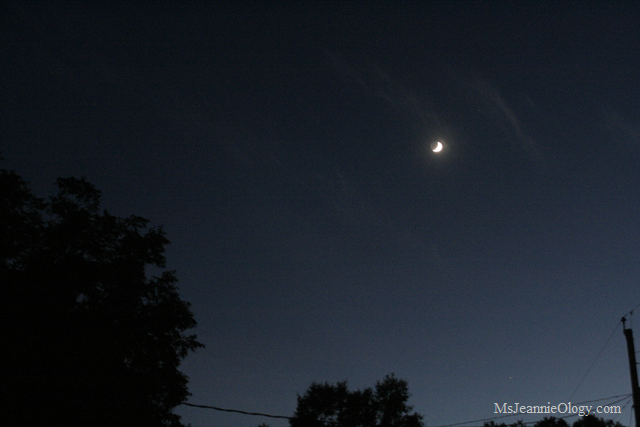
There were shooting stars and globular clusters, constellations and galaxies. Some of these party-goers were bright, vivacious twinklers and others were shy, smudgy wallflowers but each of them dazzled in their own way. Some were familiar faces and old acquaintances that Ms. Jeannie shamefully admitted she hadn’t been in touch with for quite some time. When she eventually made her way over to the moon…
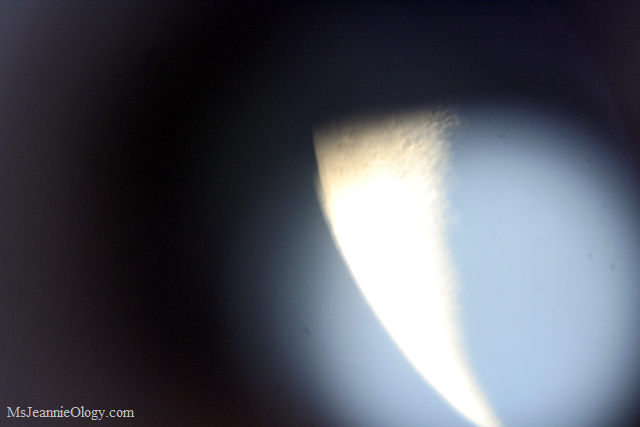
she had some apologizing to do. It had been a long time since she had looked up her old friend. But lucky for her, the moon was as gracious and as easy-going as ever. And immediately it felt like no time had passed since they’d last been in touch. Up close, Ms. Jeannie did notice some new things about Moon though. Like how his face seemed more delicate – more crepe-paper like…
And there was a glow about him that, although hard to define ….
was mesmerizing none-the-less. Ms. Jeannie felt re-invigorated spending time with him again. As an endlessly fascinating entertainer, Moon was also showing off his many faces. Some were dark and dramatic….
some were light and dreamy…
Depending on the orchestral songs of the late summer field crickets, the moods of the moon seemed to change with the melodies of the moment.
The same could be said for the glittering guests as well.
Once the moon left the scene, the party started to die down. Ms. Jeannie didn’t want to leave and that’s when she knew it was the best time to leave. That’s the sign of a good party – just like a good vacation – when you are enjoying yourself so much that you don’t want to go home. With a so-long to the stars and a thank you to the honored guests Ms. Jeannie headed home to fill her dreams with scenes from the star party and all the colorful characters dancing around the darkest darks of the natural night sky.
If you are in the mood to attend your own unforgettable party you might be interested in this vintage primer from Ms. Jeannie’s shop to help get you on your way…
Vintage 1960’s Children Book – The How & Why Wonder Book of the Stars
It’s full of your old friends, including Mr. Moon and contains star charts of what you’ll see in each month of the sky. It’s perfectly fascinating entertainment on these cool and crisp Fall nights. Happy star-gazing dear readers!
Fresh off of NYC’s Fall Fashion week and with a cool nip in the September air, this week’s post is all about sweater weather and a certain style that has gone to the dogs (literally!). This week’s spotlight is on the Samoyed…
photo via pinterest
one of the world’s oldest breed of dogs, originating from the snowy lands of Siberia.
Long prized for their happy faces, jovial personalities, strong fortitude and loyal devotion, the Samoyed is often depicted throughout history as members of working sled dog teams and instrumental aides of snow-peaked mountain search and rescue organizations. But they are also famous for one additional factor…
Photo via pinterest.
…their mountains and mountains of dog hair! Named after the Samoyed tribe of the Artic region of Northern Russia and Siberia…
Photograph courtesy of icecrownsamoyans.com
the hair of Samoyed dogs is as fluffy as a snow bank and as a dense as a thicket. With the ability to insulate in the winter but also keep dogs cool in the summer, and aided by the massive amount that can be procured from regular brushing, Samoyed hair has been a useful, if somewhat selective component in fiber arts for hundreds of years. One of the most common uses for this type of angora-like hair is sweaters, as seen on this handsome chap from Ireland…
Man, man’s best friend and a sweater made from this pup’s hair. Photo via pinterest
which can of course be knitted in a variety of different patterns and styles like these two examples found on a unique fiber knitting forum…
This sweater was made with 50% samoyed hair and 50% merino wool.
A host of dog hair knitting projects can also extend past sweaters into a slew of other wonders. In 1942, The Samoyed Club of America presented a large display of articles made from their dog’s hair at the Women’s International Exhibit in New York City. Among the many diverse pieces were socks, blankets, gloves, scarves and sweaters.
Of course, using dog hair is not a far stretch from the more traditional fibers like cashmere taken from goats…
photo via pinterest
or merino wool from sheep…
photo via pinterest
but dogs somehow seem a little to close to home somehow for Ms. Jeannie. What do you think dear readers? Is it creepy or cuddly, this dog sweater style? Is the face of your next fall fashion piece?
photo via pinterest
This blog post was inspired by the 1954 book, Dogs and People by George and Helen Papashvily, which is coming soon to Ms. Jeannie’s shop. For other vintage dog-themed books available now, including a marvelously beautiful antique book about a sled-dog named Hector, please stop by and browse a bit here.
Nepal! Kashmir! Siberia! Kenai! Travel in the early days of the 20th century was fraught with drama, romance and the unknown. No other American family traveled with such gusto to the most magical of places quite like the Roosevelts. Pursuers of big-game hunting, scouts for museum science collections and recordings of natural history carried both male and female members of the family around the world seeking exotic experience.
Theodore & Edith Roosevelt
Following the death of Theodore Roosevelt in 1919, his wife, Edith, escaped her grief and memories wafting around their Sagamore Hill house on Long Island, NY by traveling abroad to the most exotic of destinations. A collection of her travel experiences along with the equally thrilling escapades of other family members dating between 1920 and 1926 were collected in this now rare book…
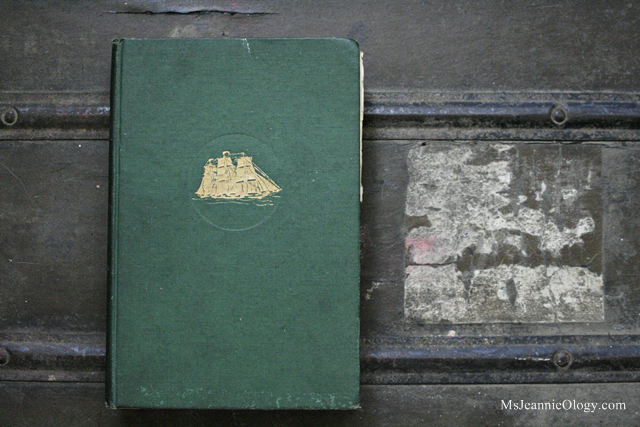
Cleared For Strange Ports published in 1927.
Today we are going to take an intimate look into the journal-style writings of four members of the Roosevelt family who dared to travel to the farthest of far-off places. So grab your pith helmets and your binoculars dear readers, as we head back 90 years to see first-hand what it was like to ride an elephant in India, chase a tiger in Bhadravati and travel across frozen ground in Siberia.
“There was so much to see and think about – so many impressions to seize and try to hold forever, as the minutes raced by, all crammed with new sights. I prayed that passing years would not blur the brightness of memory, and that this wayside magic would remain with me a treasure-store, vivid and keen, for the years ‘when we are old and gray and full of sleep.’ “ – Belle Willard Roosevelt, 1926
Belle Wyatt Willard and Kermit Roosevelt
Heiress Belle Wyatt Willard married Theodore and Edith’s son, Kermit. In 1926, she traveled to Kashmir with Kermit, her sister-in-law Ethel and Ethel’s husband Richard Derby. She wrote Ms. Jeannie’s most favorite entry in the book entitled: The Land Where The Elephants Are…
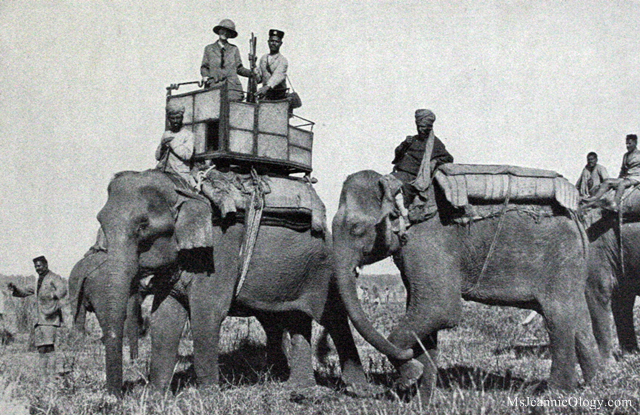
Belle Wyatt Roosevelt on her Howdah Elephant
” The long-line of elephants in solemn procession were a source of never-failing joy. There was always their preposterous conformation to ponder over; the enormous flapping ears and the ridiculous minute inquiring eyes; the strange toothless leer of the tusk-less ones; the great loose knees which turned outward with a baggy shuffle and the delightful incredible toe-nails. The whole massive gray bulk finished off by a spindle-tail with a thorny end gave such an inconsequential air to an otherwise dignified creature. The huge lumbered beasts stepped ever so carefully, a long trunk poked and felt about investigating every propitious spot before each foot was placed gently, softly with exact precision.” – B. W. Roosevelt, 1926
“Silently, alert and rigid, in anticipation we started off in single file, elephant behind elephant, in long line. The giant jungle grasses in many places waved some eight to ten feet above our heads as we stood upright in the howdahs. Below was a dense mass of lineas and thicket through which the elephants mowed their way, uprooting and tearing aside with their trunks any serious obstruction.” B.W. Roosevelt, 1926
Kermit Roosevelt (1889-1943)
Tragically Belle’s husband Kermit committed suicide in 1943, seventeen years after they traveled by the elephant train pictured above. An explorer from the very beginning, Kermit was a passionate hunter determined to understand the natural movements and motivations of animals, the environments they existed in and the impact they had upon culture. Nowadays, with conservation hot and heavy on everyone’s mind, it seems almost impossible to understand how anyone could shoot a tiger or a bear, chase down a wild pig or hunt game birds but thanks to the explorations of men (and women!) like the Roosevelts our knowledge of the natural world grew far beyond our own backyards.
“We were eager to get for the Field Museum as a representative a collection of Indian fauna as the limited time of our disposal would permit….These early morning stalks, although they netted us but little for the collection, were always a delight. You never knew what you might come across, as you slipped through the underbrush to pause at the edge of some forest-glade. The dewfall was heavy and in a half-hour you were drenched to the waist. We wore shorts so that there were no soggy trousers to cling to your knees and impede your going.” – Kermit Roosevelt, Balharshah, India 1925
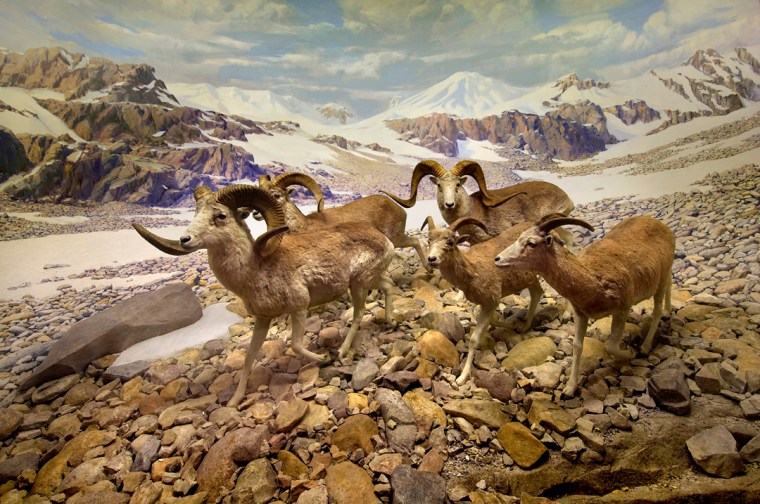
The Roosevelts collected specimens for the Field Museum in Chicago which were incorporated into many exhibits within the museum including dioramas, many of which can still be seen on display today.
The Field Museum of Chicago’s Ovis Poli diorama currently on display at the museum. These specimens were brought back by Theodore Roosevelt Jr. Photo via the Field Museum.
Its important to note that all the animals hunted during these trips were killed for scientific collections and studies. Nothing was wasted or killed in vain and if hides were all that were needed to take home than meat of the animals was given to local villagers as food source.
“To a student of “The Jungle Books,” the native nomenclature of the animals offered no difficulties, and we all felt at home chatting about Baloo the bear and bandars that swung through the trees ahead of the beaters; even Ming the bat was among those present.” – K. Roosevelt, India 1925
The Roosevelts were as well-read as they were well-traveled. Book references are mentioned over a dozen times within Cleared For Strange Ports showcasing how a good book can be just as thrilling an adventure as travel itself. Books even served as travel companions. Among the belongings of one Roosevelt safari was a 60 volume set of leather skinned classics that the Roosevelts were hoping would acquire a little bit of weathered patina upon their journey!
Safari camp set-up was explained by Belle…
“Our quarters were luxurious, a large double tent: two bathrooms for each couple; a dining tent, and a living-tent opening onto the great log fire, around which we sat after dinner under the stars.” – B. Roosevelt, India 1926
Ethel Carow Roosevelt & Richard Derby
Surgeon Richard Derby married Ethel Carow Roosevelt (Kermit’s sister). When Richard traveled he not only took time to write down his thoughts on his surroundings but he also spent equal time photographing the landscape. One of the cameras he used during his travels was an Akeley motion picture camera, developed by Carl Akeley who traveled with Richard’s father-in-law Theodore Roosevelt in Africa. Richard contributed a gorgeous piece of writing in Cleared For Strange Ports about seeing Alaska in 1925…
Mountain range and moose sightings by Richard Derby
“…and I saw the real Alaska – a country which lays its iron hand upon strong willed men and holds them in everlasting fealty, a country whose beauty and natural resources are so stupendous that man obeys its beckon and becomes its slave. Not a slavery of the soul, however, for Alaska only attracts the high-spirited romantic, developing his individuality and self reliance, and cultivating those traits which are only born of an eternal matching of wits with nature.” – Richard Derby, 1925 written on an Alaskan liner bound for Seward
Of course transportation wasn’t without its trials in these remote places. Kermit writes of his experience aboard the Trans-Siberian in 1925…
The Roosevelts in Siberia
“The wash room was frozen solid, but our porter was well used to such conditions, and came in brandishing a four-foot iron poker, with its end-heated red hot. This he rammed down the pipes and circulation was temporarily restored.” – K. Roosevelt, 1923, aboard the Trans-Siberian Railway
The weather in Siberia in the winter often times reaches in the -minus 60’s to 80′ s. Indeed it was a cold January when Kermit was there…
Edith Roosevelt in Harbin
“It is true that the Russian bundles himself up well in furs, but even so it made us shiver to see the men and women sitting chattering on the benches along the streets, apparently as comfortably and unconcernedly as if they were enjoying a bock in front of Cafe de la Pain in July.” – K. Roosevelt, Harbin, 1924
In warmer climates like India it was the locals as much as the wildlife that made quite an impression…
Water Carriers in India
“The women from near-by villages came swinging along with their brass water-bowls on their heads; when they had filled these and departed, the monkeys trooped down to drink, chasing away the lean pariah dogs who retired snarling. In the trees the gaudy peacocks screamed.” – K. Roosevelt, 1925
Paraguyan Market Posados, 1926
“And we stepped into a new life which I supposed was not to be found outside of books or cinema…” – Edith, Posados, Buenos Aires, 1927
In her passage about elephants Belle described riding through jungle as mythical, extraordinary and startling. There was no telling all at once what was scurrying, slithering or silently sitting in all that lush vegetation. The jungle unfolded around her scent by scent, step by step and sight by sight.
This is exactly what Ms. Jeannie experienced reading Cleared For Strange Ports. Endlessly fascinating her Roosevelt writers explained it all – the exotic travel experience unfolded page by page in poetic prose and incredible imagery.
The Roosevelts being fellow book lovers themselves would approve of this volume in particular. It contains the best of weathered patina – loose pages, foxing, an errant ink stain, that wonderful old book smell and various smudge stained paper. It’s lived a thrilling life – just like the Roosevelts!
If you are interested in reading Cleared For Strange Ports, please visit Ms. Jeannie’s shop here. And if any readers have visited the Field Museum in Chicago, we’d love to hear your thoughts on the Roosevelt collections!
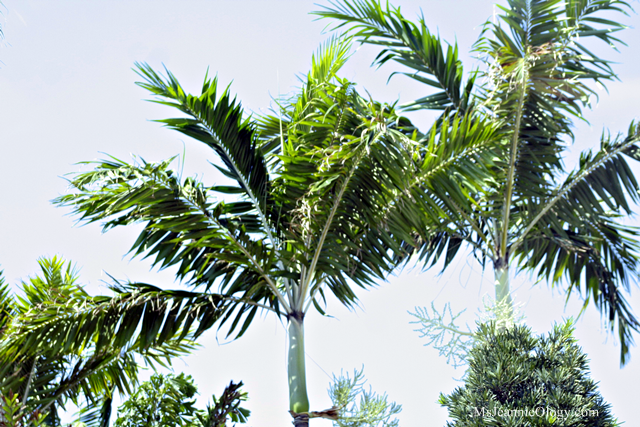
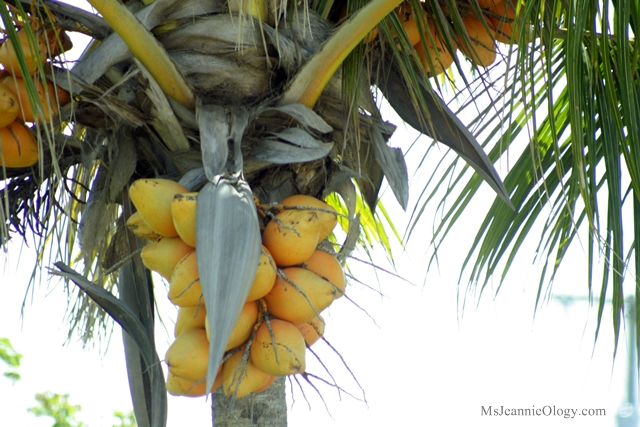
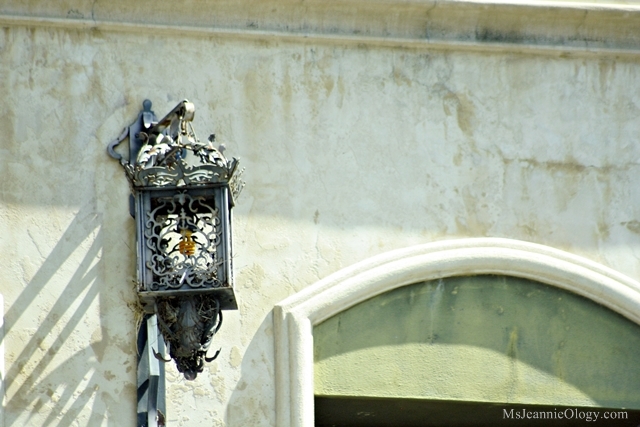
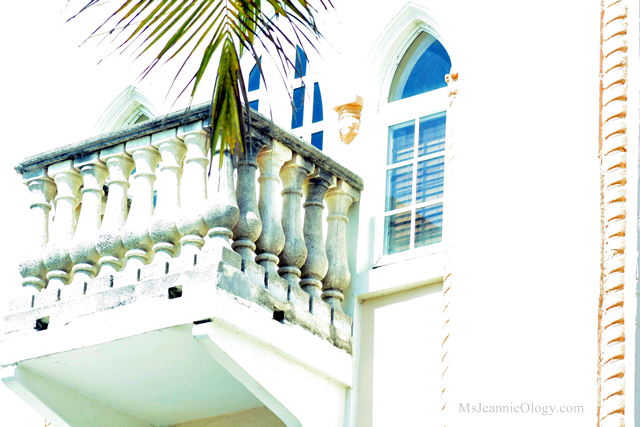
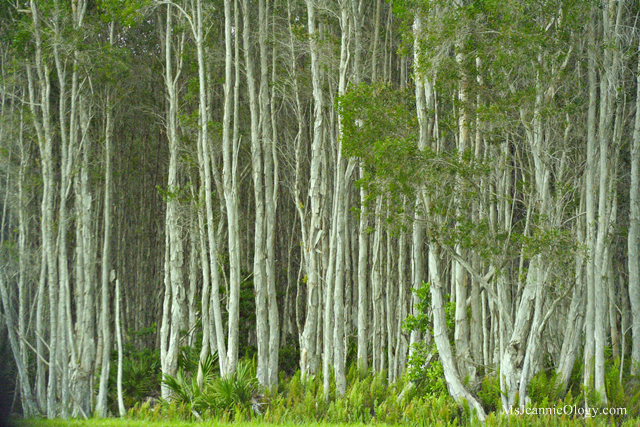
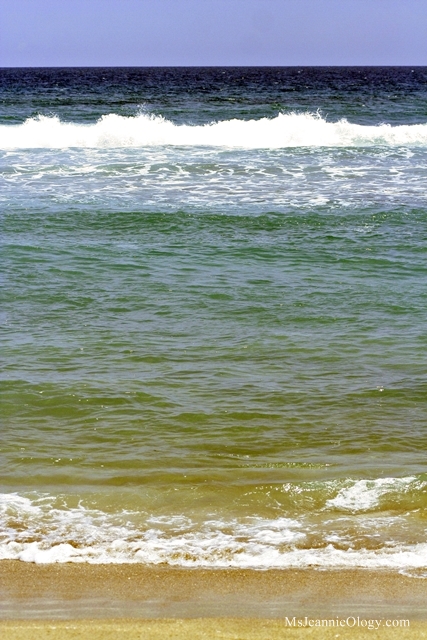
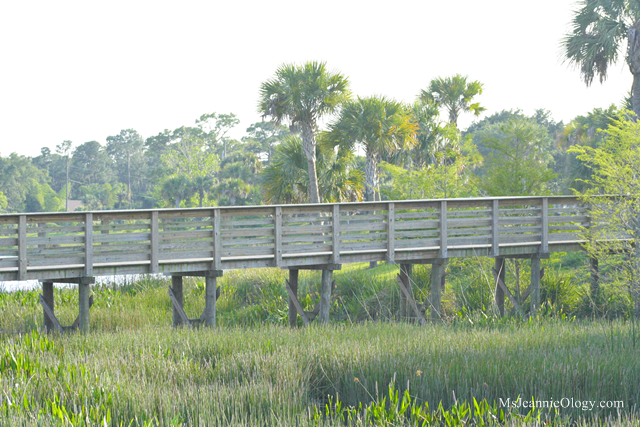
In April, Ms. Jeannie went on a little getaway to the shore. Her destination was the southern east coast of Florida which contained the most lovely balance between city life and wild tropics. Here’s her photo scrapbook… a blog post not in words but pictures…
Cheers to the start of summer travels, dear readers! Are you going any place fun in the next few months?
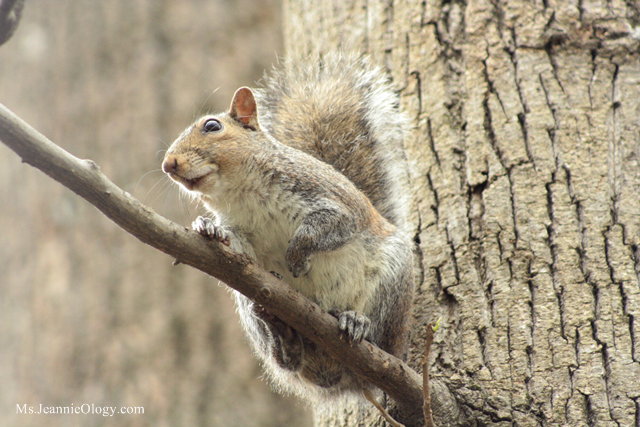
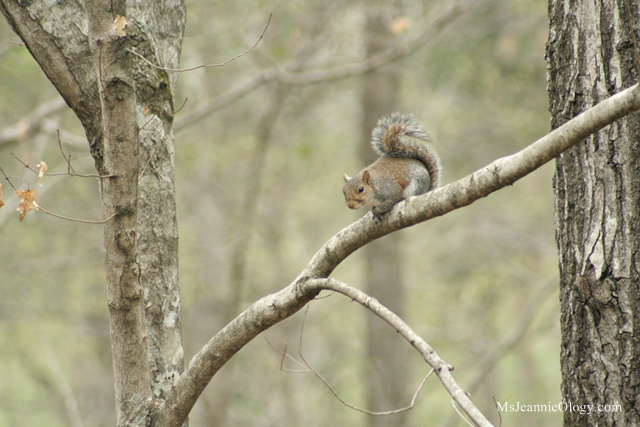
Spring has got to be the best time of year to be a squirrel. The weather is warm. The ground is soft. All the trees are in bloom. Ms. Jeannie was thinking about this the other day on her walk when she was joined by this guy chattering in the trees…
It was as-if he had shown up just to agree with Ms. Jeannie! “You’re right, Ms. Jeannie, the season is sublime!”
Indeed, these days must be a fairy tale wonderland to him.
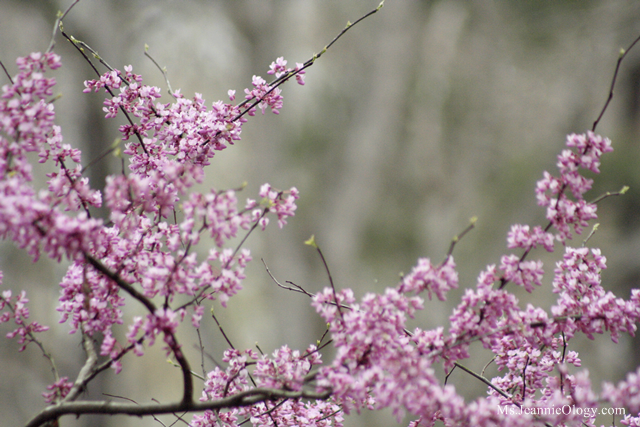
Imagine living among shoots of blooming branches that are the size of your kitchen table…
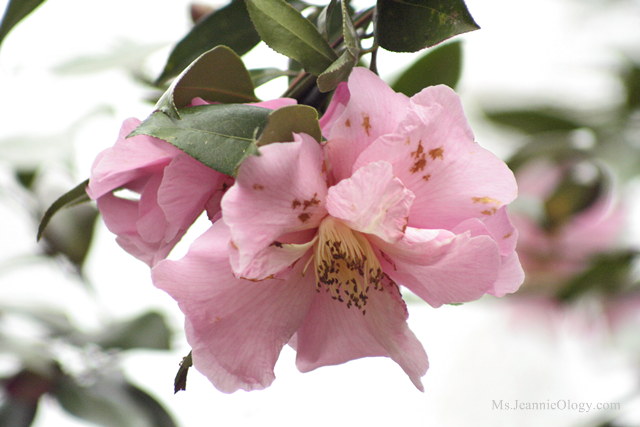
or cuddling up for a nap in the base of a blooming bush with flowers four times as big as your head…
For a spring-time squirrel, every new day must be marvelous, especially with a playground that includes equipment like this…
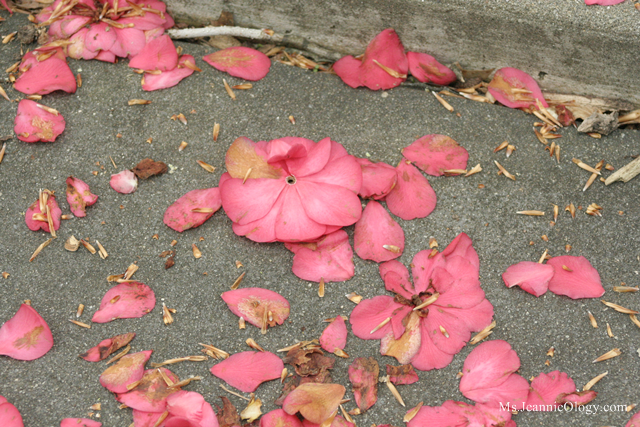
and red carpet runways that look like this…
In February, their thoroughfare to fun was grey and bare…
one month later it looked like magic!
Surely that must be breathtaking if you are an acrobat of the air. Did you know that most squirrels can run up to 20 miles an hour? At such speeds their vantage points must resemble the essence of dreams…
…what a dizzying collection of sights and smells both gauzy and clear.
And how about those birds…
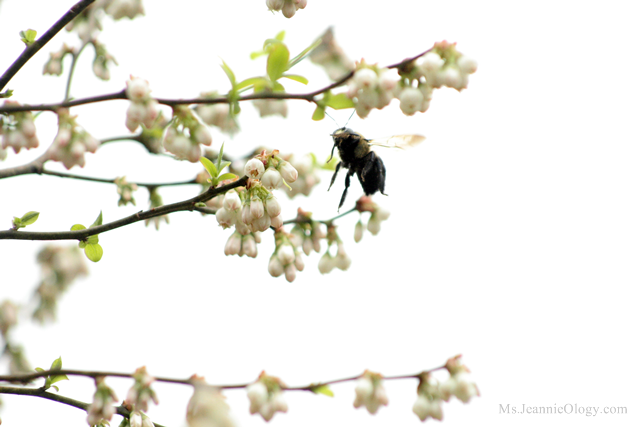
and those bees…
they too, must surely share in the squirrel’s enthusiasm for the change in climate. Whether the view is opulent…
or odd…
simple…
or scattered…
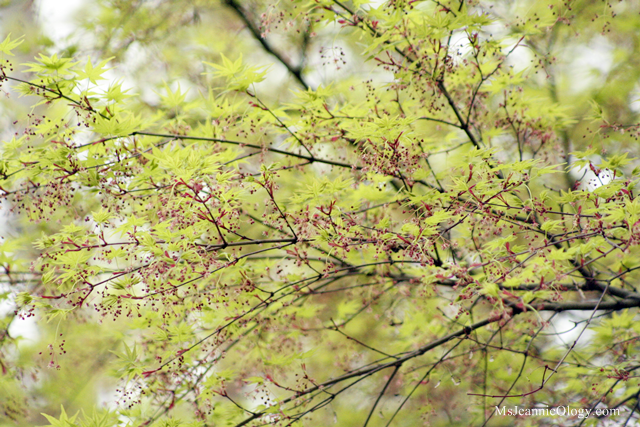
every little aspect of the whole production must be incredible from the eye of a squirrel. With masterpieces presenting themselves everywhere…
dear readers, Ms. Jeannie hopes your season is starting off beautifully!
And that the squirrels in your neck of the woods are having a marvelous March:)
On this day 68 years ago, Edgar T. Wherry, a well renowned mineralogist was celebrating an accomplishment with a certain bouquet of flowers that had just come into bloom. March 11th, 1948 was publication day for his springtime book…
At the time of publication, Edgar was living in Philadelphia and teaching botany at UPenn. The weather that day was cloudy and cool, with temperatures only reaching the mid 40’s. Not rainy but not sunny either, it was another grey day in a long stretch of grey days that would mark March the cloudiest month of the entire year in Philadelphia. Daylight savings time wouldn’t arrive until April 25th, 1948; which means the light was weak, the landscape was heavy and the overall climate was dreary. Edgar, like his contemporaries today, was tired of the winter snow, the freezing rains, the ice covered sidewalks. Spring couldn’t come soon enough.
Edgar at work. Photo courtesy of American Mineralogist
But finally a mental break came for all Northerners on March 11th, when this gem of a treasure hit bookshelves for the first time. Bright and beautiful, it lightened spirits everywhere in the form of color plates and caring words. Flowers were blooming if not in the garden at least on the page.
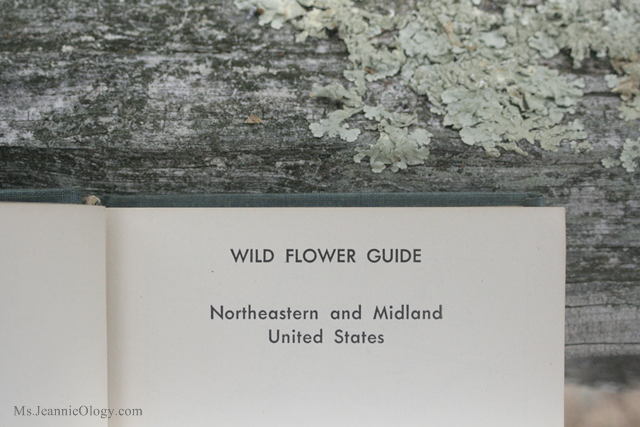
In his book, Wild Flower Guide: Northeastern and Midland United States, Edgar compiled hundreds of different types of wild flowers native to these two regions in an effort to highlight their importance in the natural landscape. Mixed in with descriptions of each flower were both color plates and black and white illustrations describing shape and size and color. Edgar wanted to make it as easy as possible to help identify, propagate and encourage long-lasting growth of species facing possible extinction.
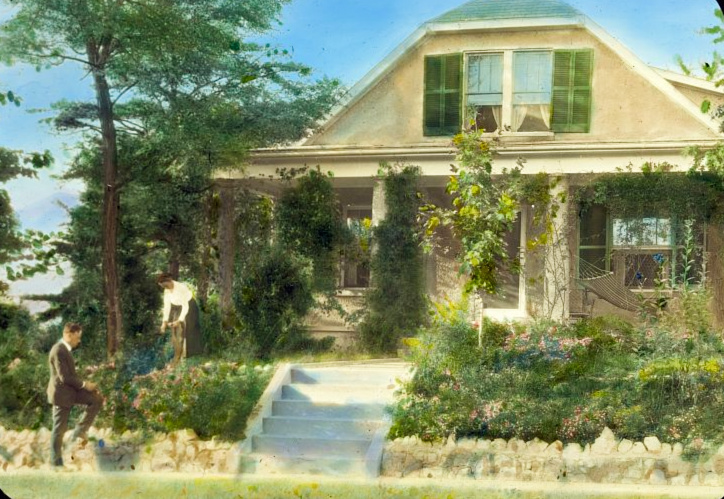
Edgar T. Wherry at home in his garden alongside his wife, Gertrude. Chevy Chase, MD circa 1921. Photo: Library of Congress
As an ecologist and a nature lover, Edgar like many mid-century conservationists, was concerned that urbanization and lack of attention to natural green space was going to eradicate many of the flowers that make the varied North American landscape one of the most beautiful and diverse in the world.
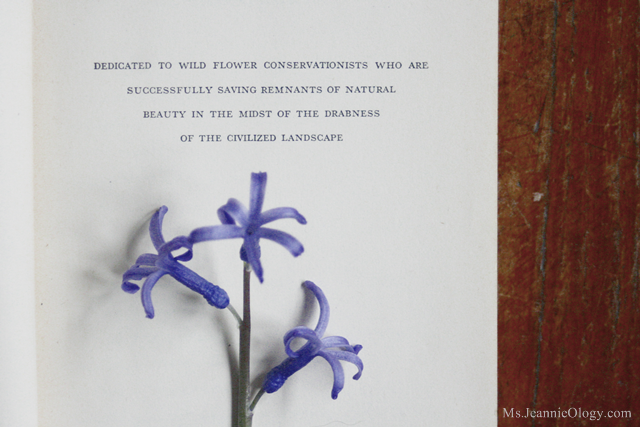
His dedication in the opening pages of the book praises efforts made on behalf of the flowers …
Considered a visionary for his forward thinking about protecting what some people considered “weeds,” Wherry was determined to educate people about the importance of incorporating native plants into garden design. 1948 was the perfect time to launch his book. Victory gardens established during the war years introduced a whole new wave of home horticulture enthusiasts. Excitement revolving around the concept of building backyard vegetable gardens was proud patriotism at its best and captured the hearts of all ages from the young to the old.
Victory gardeners. Photo via pinterest
Edgar rode the wave of people’s interest in making even the smallest garden a productive one. Benefits for people and plants abounded. Edgar teamed up with illustrator Tabea Hofmann to show readers just how pretty a weed could be and how useful it was to the big garden picture. Edgar’s book is chock-full of interesting fun facts about plants including special notes that inform and entertain. Here he explains how the touch-me-not flower helps soothe poison ivy.
Edgar managed to combine both practicality and dreaminess in one volume. With names like Golden Alexander, Star Violet, Queen of the Prairie, Fairyslipper, and Rosybells, he seduced people in 1948. This book of botany was, and still is, pretty scintillating stuff for anyone who has just come through the freezing month of February. It doesn’t matter if it was 60 years ago or six minutes ago, Edgar still has the ability to soothes us, to inspire us, to teach us. Spring will come. The cold air will warm. The flowers will bloom. And what a sight it will be.
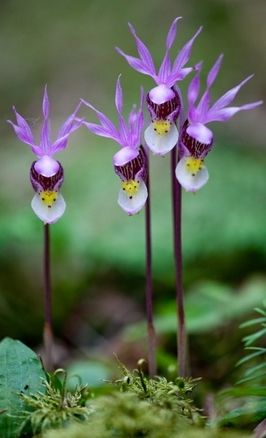
The fanciful fairyslipper!
This post is dedicated to all our readers who live in colder climates and just can’t bear one more day of winter. Hang tight! Spring is coming! The flowers are stirring! Edgar said so.


































































 In the Vintage Kitchen: Where History Comes To Eat