Today Ms. Jeannie started planting her summer garden.
Bed of sunflower seeds all planted!
It’s been a very mild winter this year in the South, so she could have started much earlier, but every once in a while, a folklorish sounding thing called blackberry winter hits our region, which sort of fools you into thinking that spring has sprung. But then a wicked Mr. Frost comes calling, and knocks out all the early garden preparations. Usually this happens around Eastertime, if it occurs at all, but this year Ms. Jeannie is throwing caution to the wind and planting early. Hopefully it will all work out.
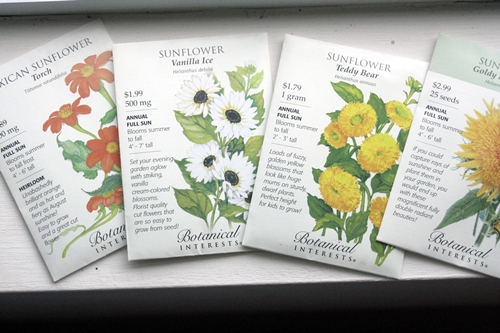
Ms. Jeannie likes to order seeds from her favorite company, Botantical Interests. They have a lot of heirloom varieties, organic mixtures and seeds that always sprout. Plus they have marvelous looking seed packets that contain all sorts of fun growing information. They contain drawings of what the seedlings should look like too, which is helpful if you have a weed prone garden or aren’t quite sure what is what!
Pretty packaging!…and informative too!
This year Ms. Jeannie is keeping things simple by just planting sunflowers and herbs. She will leave her vegetable growing to the local farmers and just shop for them at market each week.
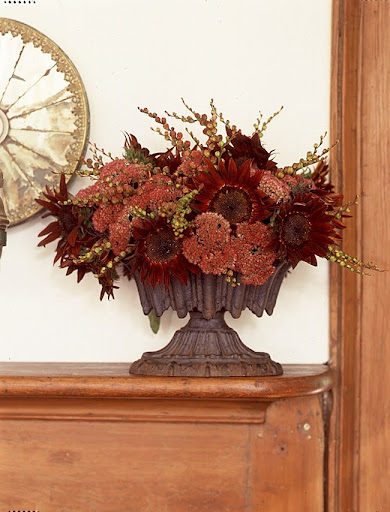
Ms. Jeannie always likes to be a little out of the ordinary, so she has ordered 4 different varieties of red sunflowers, two fuzzy yellow sunflowers and one white sunflower. Ms. Jeannie finds red sunflowers to be most elegant in a bouquet and since many people aren’t familiar with them, she enjoys a bit of the surprise element!
Martha Stewart put together this beautiful bouquet.
Urn style planters serve as great vases for sunflowers. Their tall yet curvaceous lines balance the bold roundness of the sunflower face. Urns are usually heavier too, which is good, because some mammoth varieties can reach heights up to 9′ feet tall!
The botanical name for sunflower is Helianthus, which comes from the Greek word “helios” which means “sun” and “anthos” which means “flower.” Although native to North America, sunflowers were first discovered by European explorers in South America, but Native American tribes had been growing, cultivating and defining them from the beginning. Native American tribes used the flower petals for dye, the seeds for food, the oil for ceremonial body painting and the stalks for fiber.
Explorers brought seeds back to their native countries, so that by the late 1500’s sunflowers were a common site throughout Europe.
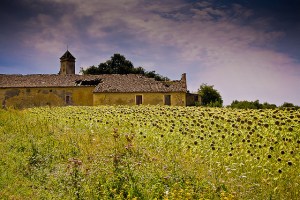
Sunflower Field – Bordeaux, France. Photo by robsound
By the 18th century though that Europeans began cooking with sunflower oil. If you have never cooked with sunflower oil, it is supposed to contain the highest levels of Vitamin E, of all the cooking oils. It is light in taste and color. and is low in saturated fat. Learn more here.
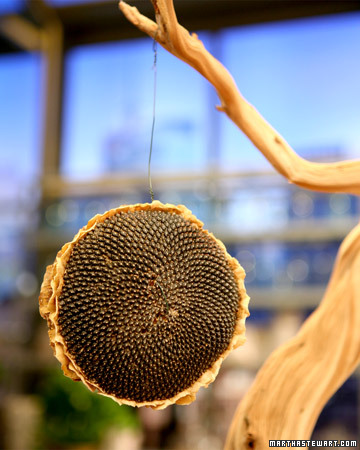
Sunflowers can even be used as birdfeeders! Thanks again crafty Martha for supplying us with this pretty feeder idea:
To make your own birdfeeder like this one click here.
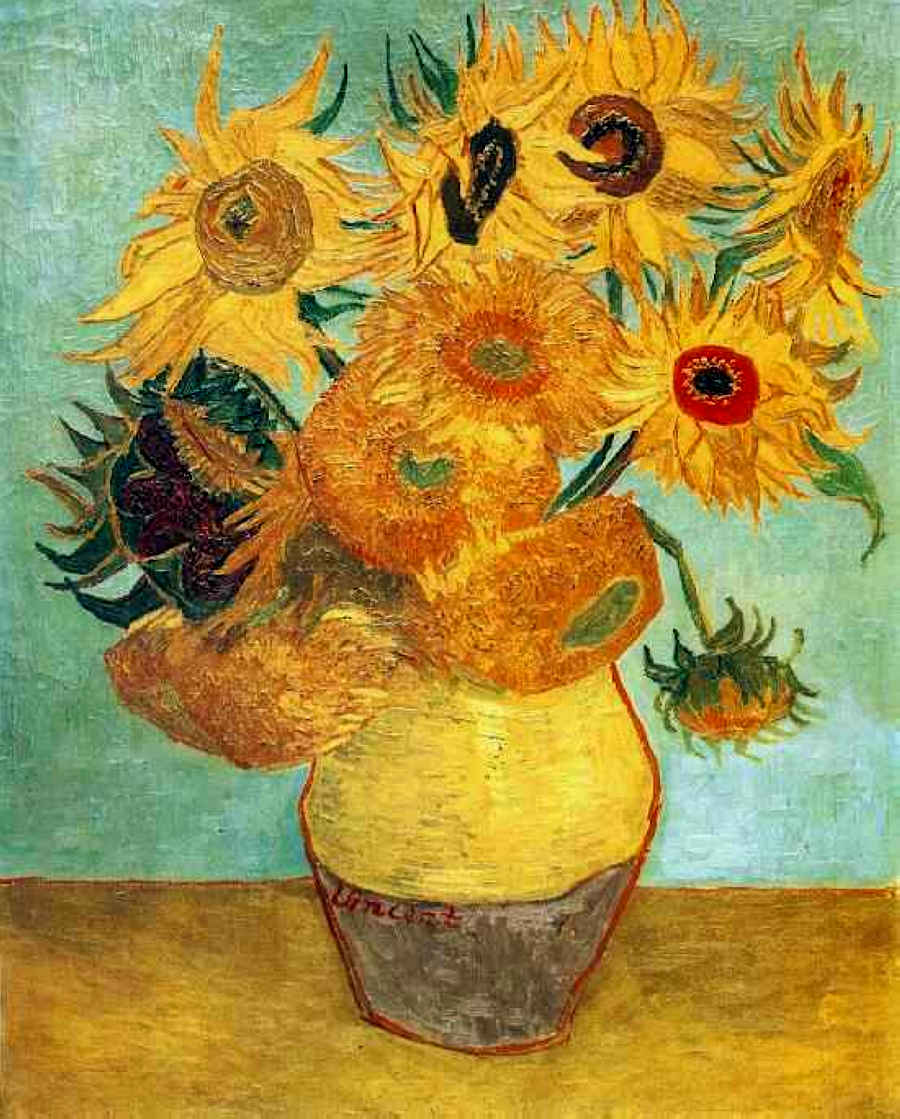
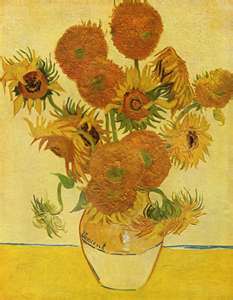
Because of their warm, cheerful coloring and their dramatic size and shape, sunflowers have been a subject for artistic study for centuries. Probably, the most recognized paintings of sunflowers would be those of Vincent Van Gogh:
While Ms. Jeannie does love all these paintings, she does wish that Van Gogh had painted more red sunflowers! As a gift recently, she did receive the new Vincent Van Gogh biography by Steven Naifeh and Gregory Smith…
Book Cover
…perhaps she will learn more about the inspiration behind all those sunflower portraits! Maybe he’ll even address the red ones! If anyone has already read this book, please let Ms. Jeannie know what you thought of it. She always enjoys a good book review.
On Etsy, there is a glorious amount of sunflower-related items, but red sunflower items are a little more niche. Ms. Jeannie was happy to come across these items:
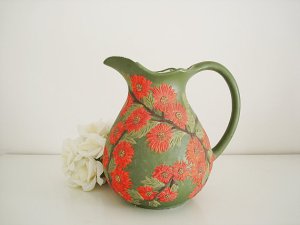
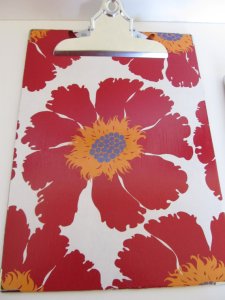
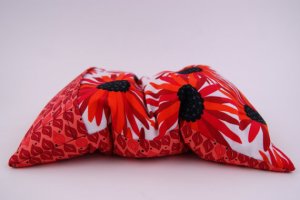
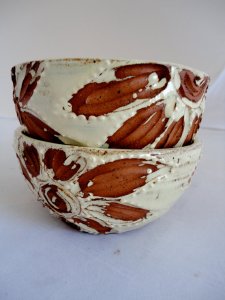
1970’s Ceramic pitcher from VintagalityDuralee Red Sunflower Pillow by PopOColorRed Sunflower Card from TeroldegoandtomatoesLarge Decorative Clipboard from ConfettiStyleDesignsThe Kernal Kozi from HollyWorksGlowing Golden Sunflower Pendant from Bella GrethelSunflower Bowl from betsybpottery
Ms. Jeannie couldn’t resist these yellow sunflower items either:
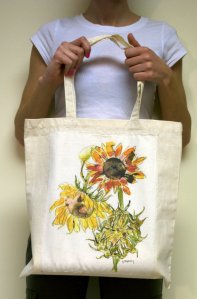
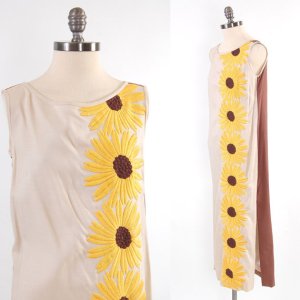
Sun King – 11×17 Fine Art Photography from sintwisterSunflower Tote Bag from jjmillistrationVintage 1960s Sunflower Tunic Dress from digVintageClothingReverse Me Dotty Apron in Sunflowers & Paisley from bdoodles
Ok, garden. Ms. Jeannie can’t wait to see your pretty faces. So start GROWING!
“Turn your face to the sun and the shadows follow behind you.”
~ Maori Proverb
Get Low movie posterTwo years ago, there was an open casting call for extras for the film, Get Low, which starred Robert Duvall, Sissy Spacek, Bill Murray and Lucas Black.
Two years ago, there was an open casting call for extras for the film, Get Low, which starred Robert Duvall, Sissy Spacek, Bill Murray and Lucas Black. Ms. Jeannie had never been an extra, so she signed up with excitement for her moment in the movies. She thought it might be a fun way to spend an afternoon, but it actually turned out to be a two full days of activity!
Day 1 involved a trip to “wardrobe” which was actually one of the film sets, Gaither Plantation, located near Atlanta.
Gaither Plantation’s main house served as the exterior of Sissy Spacek’s house in the movie.
It was a gorgeous location!
Ms. Jeannie was on set for only ten minutes before she saw Sissy Spacek, coming out of her trailer, just feet away! While on set, the extras were asked not to bring any camera or video equipment and also asked NOT to get autographs from any of the actors.
Wardrobe was set up in one of the outbuildings on the plantation.
The log cabin (on the far left) was the site of wardrobe.
There, Ms. Jeannie met no-nonesense costume designer Julie Weiss, who has worked on a ton of movies including The Time Traveler’s Wife, Secretariat, Frida (see past post about this movie here), American Beauty, Steal Magnolias, Honeymoon in Vegas…so many movies that Ms. Jeannie loves!
Get Low was set in 1930’s Tennessee, so all the extras had to be authentically dressed in period clothing, makeup and hair. Julie was no exchanger of pleasantries, she was on a serious mission to get everyone in and out and dressed appropriately.
For Ms. Jeannie, Julie choose a red and navy pattern print dress, a red, navy and white plaid coat and a funny looking navy and white hat. Ms. Jeannie managed to sneak a few photos of her outfit up close. Shhh..don’t tell Julie!
Lots of pattern mixing going on!
Ms. Jeannie also wore gloves and nylons. And because she wore a pair of vintage looking black loafer type shoes to her wardrobe appointment, Julie gave the thumbs up that they could worn for the movie. You can kind of see them in this picture…
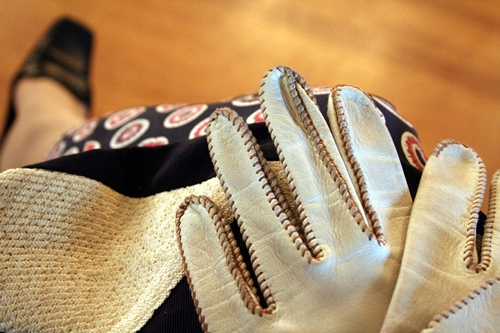
The 1930’s woman always wore gloves. Even in rural Tennessee!
After Ms. Jeannie’s outfit satisfied Julie, it was off to be photographed by costume department staff for the continuity files. Clothes were then hung up on hangers with names attached for next day’s shoot.
Day 2:
All the extras had to be on set at 4:30am in Crawfordville, GA which meant a super early morning drive for Ms. Jeannie.
Crawfordville is located about 2 hours east of Atlanta, and is as tiny a town as towns can get. Surprisingly, many movies have been filmed there including Sweet Home Alabama starring Reese Witherspoon.
Apparently movie companies like to film there because it’s historic main street is easily adaptable. The town is so small (population under 800) that film crews can pretty much do whatever they like, set-wise, without displacing a lot of locals.
Here are pictures of Crawfordville’s main street as it looks today…
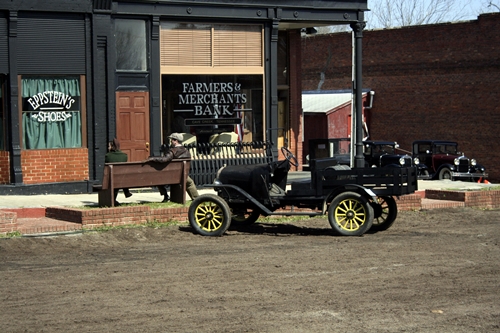
And here is how it was transformed for the movie. Again Ms. Jeannie was a little sneaky on set with her camera!
Dirt was brought in to cover the roads.Fake building facades were installed on one side of the street, but all the other buildings are real store fronts.
That’s Lucas Black sitting on the bench below. The Farmers & Merchant Bank is the actual real bank in Crawfordville.
Old cars really helped give it that 1930’s feel.More cars!
Many of the cars were loaned for the movie were from an antique car collector that lived nearby. Also, in the photo above, you can see a Panavision movie camera peeking out underneath the awning. Very Hollywood!
Ms. Jeannie’s role in the movie was to walk across the street carrying paper wrapped packages. Here, the crew is preparing for the busy street scene, where Ms. Jeannie will appear.
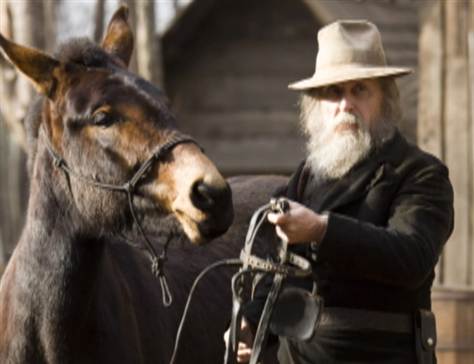
That’s Robert Duvall standing next to the cart. It’s hard to see, so here’s a close-up. He’s the one with the full beard.
In this scene, Ms. Jeannie crosses the road in front of Robert Duvall, whose hermit character has come to town for the first time in 20 years. The cart is driven by Hollywood’s famous trick mule Grace, who indeed was quite professional! Read more about her many talents here.
Grace and Robert Duvall on set.
Ms. Jeannie had a walking partner too – a fellow extra who has made a professional career out of being an extra for the past 15 years. You can see her in the grey and green below. And that’s Robert Duvall! Up close!
It was nice to have a walking partner for company, because this one scene took about 7 hours to film. Ms. Jeannie and her partner criscrossed the street from every possible angle. It was also super windy that day, so that made some elements tricky for the crew. Julie was on set to keep everyone’s hats secured.
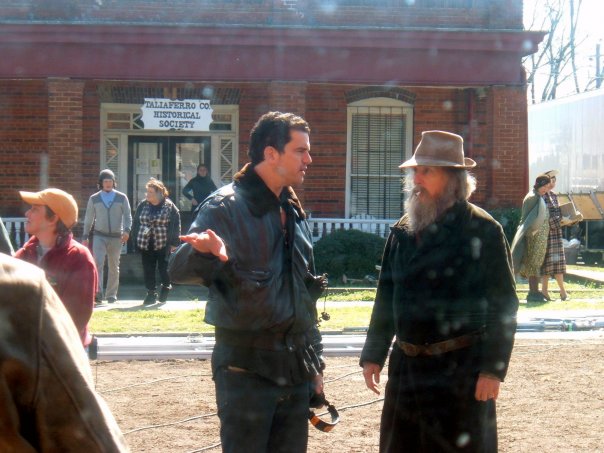
Pictured above is the director, Aaron Schneider talking to Robert Duval. There’s costume designer Julie, in the back left wearing the checkered sweater.
Finally, the scene was shot, and we were all off to the catering hall for dinner.
Bill Murray was the only major actor that ate with the extras. He sat, by himself, but close enough to Ms. Jeannie to make her sort of nervous. She wanted to talk to him, but she suddenly felt speechless. So, much to her disappointment, she lost all her nerve to chat. That was when it struck Ms. Jeannie…it was as awkward for Bill Murray to eat with a room full of strangers as it was for a room full of strangers to eat with Bill Murray. Ms. Jeannie could understand how it could be lonely, on the road, for an actor.
Hours later, in-between scenes, Ms. Jeannie got to personally meet Bill Murray, along with a bunch of other extras. He shook her hand and commented on what an unusual hat she was wearing. He was wearing a super tight suit. Ms. Jeannie wanted to joke about that – but she refrained!
This is the outfit Bill Murray was wearing when Ms. Jeannie met him.
Now that they had established a repoire, Ms. Jeannie was hoping that she might get up her nerve to talk with him again, but unfortunately, he had left for the airport to hop a flight to California, so he could play in a golf tournament at Pebble Beach.
So Ms. Jeannie’s days spent with celebrities came to an end. After a long but magical day on set, she headed home, with the new found appreciation for actors and all those millions of unnamed extras. Weeks later, she received a $100.00 check in the mail – her day rate as an official movie extra!
Many months after that, the trailer was released…
And then the movie. And Ms. Jeannie saw that her scene actually made it in!
Robert Duvall, Ms. Jeannie and professional extra.
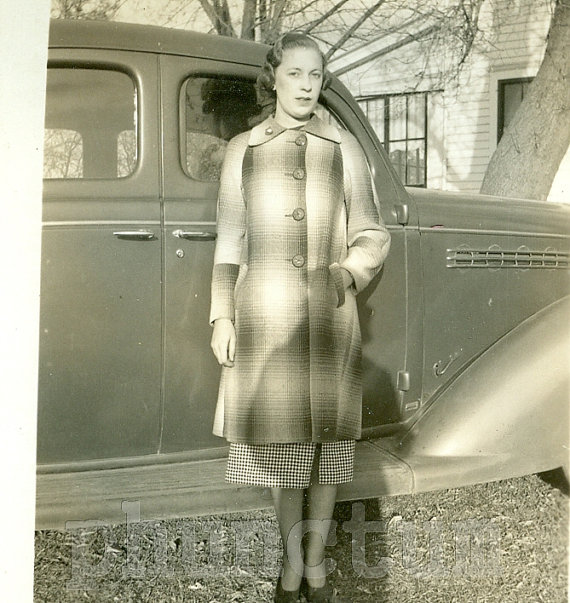
To Ms. Jeannie’s surprise, costume designer Julie recreated outfits with a lot of pattern. For some reason, Ms. Jeannie thought in the 1930’s that women wore mostly solid colors. Not so! Ms. Jeannie discovered on Etsy that women in the 1930’s like this one wore a lot of pattern together. Check out her coat and dress…
Vintage Photo from phunctum.
Thanks to the fabulous vintage shops on Etsy, anyone could recreate Ms. Jeannie’s movie costume with the following items…
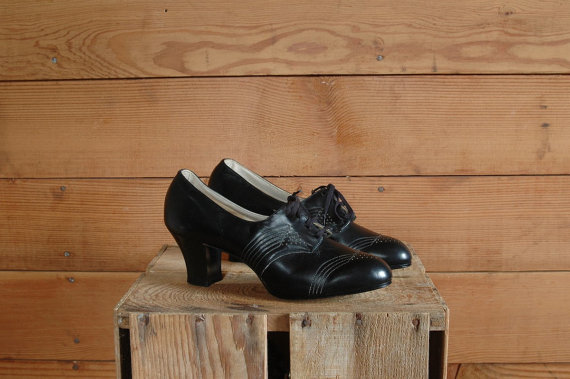
Vintage Black & White Plaid Coat from MarcellasExcessVintage 1930’s Dress from Revolving Styles1930s Oxford Style Shoes from honeytalkvintage30’s Leather Riding Gloves from Freestyle Collection
The hat that Ms. Jeannie wore in the movie was really unusual. It was shaped like this one below, but it had a big white bow that ran across the front and was floppy in back like a beret. No wonder Bill Murray commented on it!
1940’s High Hat from poppycockvintage
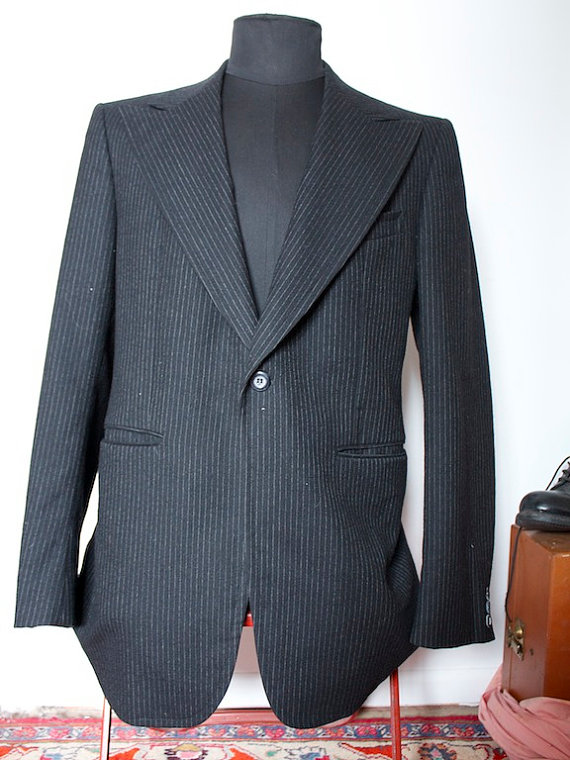
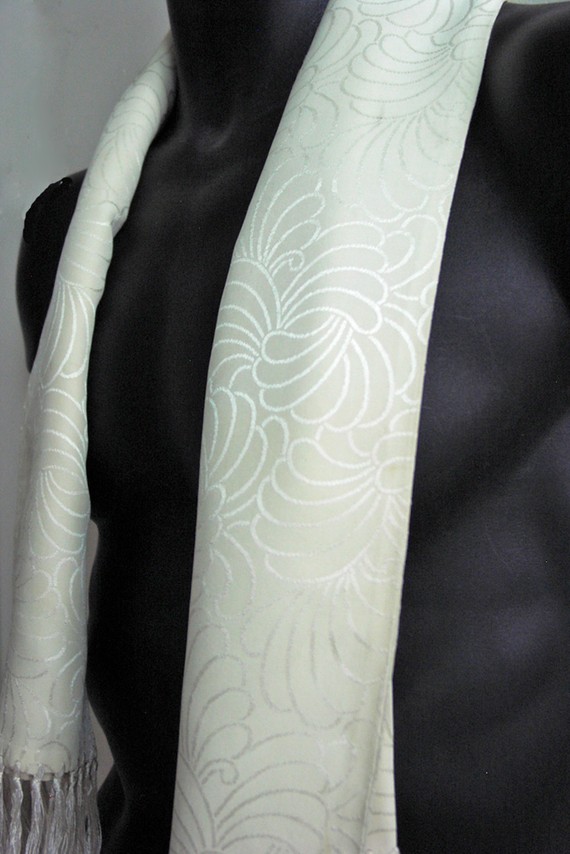
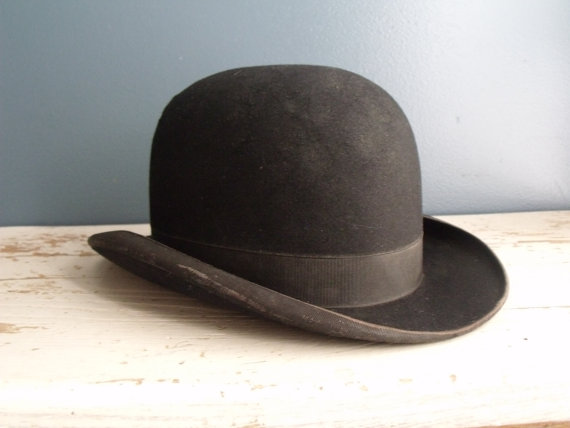
Get Bill Murray’s funeral director look:
Vintage Pinstripe Suit Jacket from TrueValueVintageMen’s 1930’s/1940’s Fringed Scarf from fifisfinds1939-1949 Men’s Brown Wool Coat from Lins Vintage BoutiqueVintage Stetson Hat Felted Derby Wool Bowler from KTsAttic
It’s been a long wait for all of us Mad Men fans! Ms. Jeannie can’t wait to see what’s in store for Don Draper.
We left off in Season 4 with Don proposing to his secretarial pool girlfriend/nanny Megan..if you need a refresher of the final episode, watch here…
If you missed the Mad Men season trailer 5, watch this one. Although it’s not really a trailer, but a show recap of the past 4 seasons. But it’s still got a few of those “oh yeah, I forgot about that” moments…
Want to throw a Mad Men party in honor of the tonight’s big 2 hour premiere? Here’s an authentic mid-century menu:
Cocktails & Hors d’ouevres
Martinis (of course!)
Spicy Smoked Peanuts
Carmelized Onion Dip with Cilantro Garlic Pita Chips
Main Course
Beef Wellington
Creamed Spinach
Golden Potato Gratin
Dessert:
Baked Alaska
All the recipes for this menu are available on epicurious.com by clicking here
Oaxaca, Mexico has been in the news a lot this week because of the earthquake that struck the region on Tuesday. It measured 7.4 magnitude on the Richter scale and has damaged close to 1,000 homes in the area.
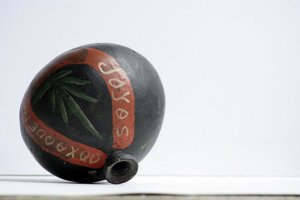
Ms. Jeannie was saddened to hear this news, because ever since discovering that the black clay pottery listed in her Etsy shop (pictured below) came from that area, she has been learning quite a lot about Oaxaca.
Mid-Century Black Clay Mexican Pottery from MsJeannieOlogy
This type of earthenware vessel, also called barro negro which means black clay, is handmade using ancient traditions indigenous to the Mexican culture in this area.
Primarily formed into utilitarian objects like jars and pots, Mexican artisans have been working with the black clay for centuries. And surprisingly, you can feel that somehow when you touch it.
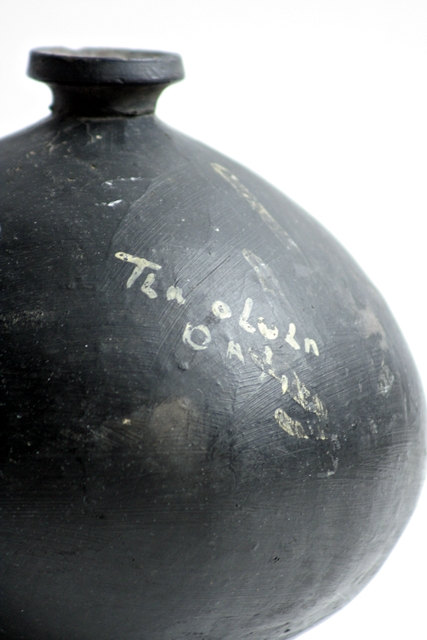
In this close-up of the vessel you can see how smooth the texture is…
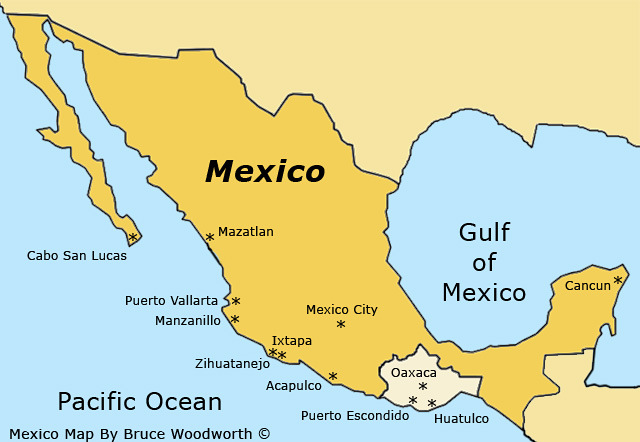
The only place in the world to find this black clay is in the rugged mountainous terrain of Oaxaca, which is located in the Central Valley area of Southwestern Mexico.
Map of Mexico
Since there are are no navigable rivers in the region, Oaxaca is an isolated community, which, while limiting at times, it is also the reason why the Mexican-Mayan culture, languages and traditions have been able to survive.
In this fascinating and soothingly hypnotic video below, watch Oaxacan women demonstrate how they make tamales using traditional methods. Ms. Jeannie loves watching these kinds of videos because you not only get to see how regional food is prepared but you also see how local people dress, interact and communicate with another. It’s like an 8 minute mini anthropology vacation to Mexico!
Ms. Jeannie really likes the cotton dresses and skirts these ladies are wearing too! They remind her of these, that she recently saw on Etsy.
Cotton Aline Skirt from ellainaboutiqueButtercream Triangle Sun Dress from SparrowCollective
There are also beautiful more traditional Mexican embroidery style clothing on Etsy too. Like these two examples. It’s folk art that you can wear!
Embroidered Party Maxi Dress by AidaCoronadoLa Bandida Mexican Folk Art Top from mybonny
The movie Frida starring Selma Hayak and Alfred Molina also offers a beautifully cinematic look into the life of Mexico and it’s artisians, particularly folk artist Frida Kahlo. The movie came out in 2002, but if you missed it, here’s the trailer:
In 2008, a traveling exhibit of Frida’s work went on tour…
Ms. Jeannie went to the exhibit with her sister at the Philadelphia Art Museum. It featured about a quarter of Frida’s painting collection and her never seen before personal photograph collection, which was a really intimate glimpse into her life. Of course all her photos were in black in white but after viewing her paintings, Ms. Jeannie could imagine all the colors of mid-century Mexico.
This is Ms. Jeannie’s favorite Frida Kahlo painting. She likes it for many reasons, but primarily because every time she looks at it she gets something different from it. Also, Ms. Jeannie has a black cat that looks just like this one!
Frida’s inspiration was really born out of a life of crippling health problems. Artistic achievement seemed to be one of the few ways she could emotionally and physically deal with her broken body. In expressing herself in that way, she had a positive effect on millions of other artists and collectors of her work.
To Ms. Jeannie, Frida Kahlo is a genuine example of making the best of your situation and focusing on your strengths instead of your weaknesses.
In that way she is similar to the clay artisians of Oaxaca. They may be limited because of their location and their lifestyle but those very limits are actually their gifts. And that is what sets them apart from everyone else.
Mexican folk art is a personal favorite of Ms. Jeannie’s. She likes the bright color combinations and the symbolism behind the art. She also likes how it acts as an emotional bridge between artist and audience in a demanding way that says “pay attention to me now.”
Ms. Jeannie especially likes the following:
Angel Retablo Tropical Alta from CristinaAcosta
Christina provided some history behind retablos that was so fascinating. She thought it was rather lengthy in description, but Ms. Jeannie enjoyed it so much she included it all…
“Retablos (or altarpiece in Spanish) are a traditional sacred art form with roots that pre-date Christianity, with roots in the Mediterranean areas that include part of what is now Italy. The art form of the retablo first came to North America with the Spanish settlers and artisans that followed the Conquistadors to the North American continent to settle what is now Mexico and the United States.
There are two types of Retablos, the Santos and the Ex-Voto. The Santos style of retablo is either a Saint (from the Roman Catholic Christian tradition) or a member of the Holy Family. Similar in concept to the art form of the Byzantine and/or European Orthodox Catholic icon, the Santos is painted in accordance with strict liturgical rules that define how the central figure of Saint or Holy Family member is represented. The counterpoint to the Santos is the Ex-voto, a no-rules, personal vision that is created to commemorate a blessing received or when a prayer has been answered.
The Ex-voto retablo is the art form I focus on. I love it! This retablo art form gives me a way to connect with the religion of my childhood, without having to get into any personal struggles with a dogma that doesn’t always jibe with who I am now.
When I was a child, my abuelita (paternal grandmother), Catalina Maria Ortiz Acosta would tell me about the ancestors we shared. They were goldsmiths, soldiers and settlers who had first come to North America in the 1500’s, eventually settling in what are now the towns of Santa Fe, Taos and Abiquiu in New Mexico and Ortiz, Colorado. Though she was born in Los Angeles, she held her New Mexican roots close to her heart, importing New Mexican chilis to her home by the beach in Playa del Rey. (I updated her recipe for Red Chili Sauce, if you’d like to try it.)
I paint my retablos to express and explore my gratitude for the blessings of my life. My favorite subject is the Divine Feminine which I interpret as Madonna / Female Creator images. Because my Spanish/Mexican ancestors migrated to North America in the 1500’s, I also include American Indian symbols, as that heritage is sure to be part of my mix.
Along with the visual symbols of my work, the materials I use have personal meaning. My Ortiz ancestors where famous goldsmiths. Thin sheets of 22kt. gold leaf, copper and sterling silver glisten under and over layers of oil paint and evoke the presence of those ancestors. The antique ceramic tile mosaic is glazed with 24kt. Gold and is from a now shuttered ceramic factory in the same area of Southern California where I grew up. The wood panels are built by an artisan wood worker and mostly include re-worked lumber siding from razed timber mill buildings in Bend.
I finish each Retablo with a blessing, usually on the back of the image. In the old tradition of territorial New Mexico, the Retablo often became the spiritual focus in the home when travel was dangerous and people could not attend church. Centuries of isolation in New Mexico led to the unique form of the Ex-Voto often painted on tin, leather or wood panels.
Artists were commissioned to paint retablos that often became symbols of a family’s spiritual life. In that tradition I offer myself to paint commissions of a Retablo for you that commemorates your blessings.” – Cristina Acosta
Side Note: To see more of Cristina’s work or to get your house color coordinated by her (very cool!) visit her website
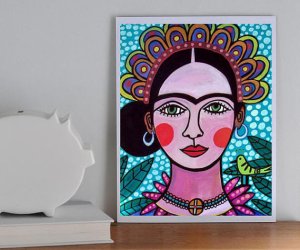
Love Shrine Mexican Folk Art by calaverasycorazonesMexican Folk Art Easter Egg from LatrouvailleFrida Kahlo Art Print Poster by HeatherGallerArtTropical Accent Pillow from arribachica
Kimberly of arribachica was inspired by Mexican culture as a child living in Los Angeles and San Diego. Frequent trips across the border, family cultural activities and her artistic folk artist grandmother fueled a passion to study art in the colonial city of San Miguel de Allende.
Side note: A portion of the proceeds from Kimberly’s exquisite pillows benefit two Mexican organizations that empower and support young children. Visit her blog for more information http://www.kimberlymaier.blogspot.com/
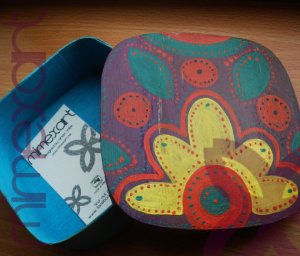
Vintage Tin Mexican Folk Art from Bittersweets13Vintage Mexican Folk Art Bird from TimelessFindsVintagePurple/Blue Folk Art Box from mimexart
Miriam of mimiexart had this to say about the inspiration behind her Mexican Folk Art Boxes.
“I’m a Mexican artist and since I leave my Mexico first to go to the Caribbean now in England. It has been difficult to be far away from home, family, friends, my city and all my culture but for some great reason now I understand why Mexico is so rich country so to cure my nostalgia I started to take back my memories of colour, images, people, places and paint- as an artist- is my first tool to communicate to the world.. so this is how I started to make this little boxes and become no just a therapy for my heart is also helping people to have a piece of Mexican love-art in their home and sometimes just inspire people to create similar things.This boxes are made to keep love-secrets, treasuries, jewelry, letters……… anything that you want to be safe and away from wrong hands.”
Side note: In addition to hand-painted boxes, Miriam also makes earrings and adorned mesh market bags. Stop by her website to learn more about this wonderfully talented artist, world traveler and teacher.
Vintage Wooden Virgin Mary Shadow Box from theVirginRose
And most importantly, Ms. Jeannie likes that folk art tells stories. Stories of it’s creators, stories of it’s history and stories of universal bonds that tie us all together.
“I used to think I was the strangest person in the world but then I thought there are so many people in the world, there must be someone just like me who feels bizarre and flawed in the same ways I do. I would imagine her, and imagine that she must be out there thinking of me too. Well, I hope that if you are out there and read this and know that, yes, it’s true I’m here, and I’m just as strange as you.” – Frida Kahlo
This weekend, Ms. Jeannie was invited to a semi-annual cattle round-up at her friend’s organic farm. She had never been to a cattle-round up before. It all sounded very exciting!
On this farm, the round up occurs twice a year, once in the spring and once in the fall. The purpose is to take inventory of the herd, worm all the cows and castrate the baby boy bulls that have been born between roundups.
Being somewhat of a city slicker herself, Ms. Jeannie was excited to put on her rubber boots and spend a day romping around the farm. She brought along her camera to document the experience.
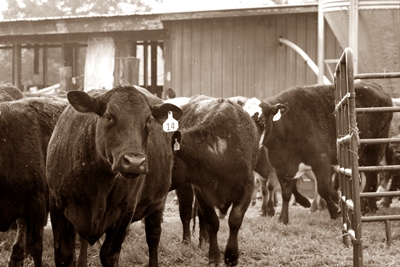
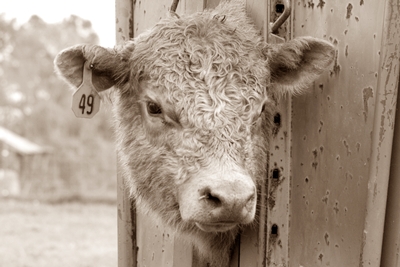
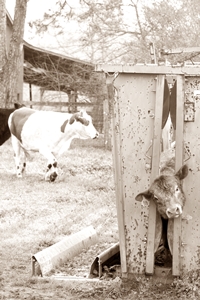
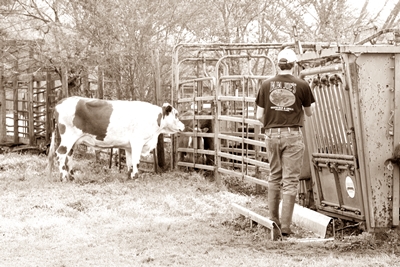
Starting at day break (which is farmers speak for bright and early 6:30am) it took about fours hours from start to finish to move 100 cows through a head gate shoot, where they would be quickly examined,wormed and castrated. The cows on this farm are 100% free range over many acres, so first, they had to be herded together.
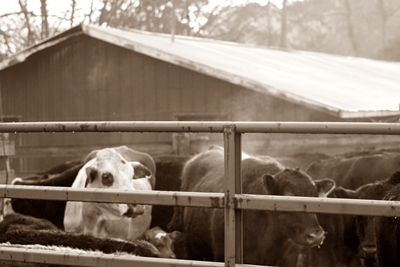
Once corraled into one paddock they keep moving into smaller and smaller fenced areas.
For most cows, this is a routine procedure, sort of like a doctor’s check-up for us. They don’t love it – but they endure it just fine. Waiting at the holding gate is like waiting in a doctor’s office. Everyone is antsy to get their examination over with.
While the cows were cueing up Ms. Jeannie spotted the smallest cow in the herd…
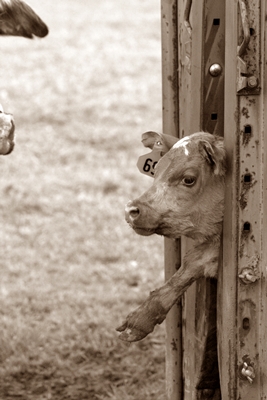
…a baby born just 3 weeks ago! You can see see him in this picture with the little white spot on his side.
To keep the cows organized right before they line up for the shoot, they are broken into groups according to size.Which meant Mama and Baby had to be seperated. Baby went to the holding pen with all the other calves to wait
his turn while Mama lined up with the heifers in the shoot.
They both called for each other when they were separated, which pulled at Ms. Jeannie’s heart.
The older cows traveled through the shoot relatively easily. Here is one getting wormed. Which looks like a giant tube of toothpaste that gets spread onto their back.
Almost done…
Some look even downright content like this one…
but the babies are a little more rambunctious since it is their first time in such a confined area. This one below kept trying to figure out how to get her head unstuck.
Mama went through the shoot, was vaccinated and wormed. Her whole procedure took about four minutes.
Ms. Jeannie was surprised to see that when each cow is released from the shoot – they sort of spring out of the gate, sort of half jumping like a bunny rabbit. Free at last! When Mama was released she stood off to the side, just feet away to wait for her baby who was about 60 cows in…way in the back of the calf group. Mama is looking for Baby here in this photo…
Waiting on Baby…
Alas! Mama spots him through the fence!
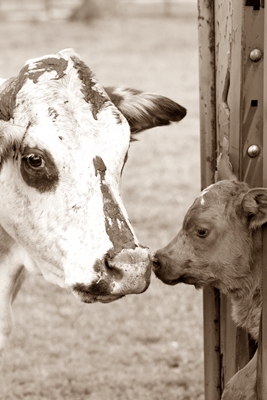
When he got close enough in line, Mama reassured him that everything was going to be fine and gave him a kiss for good luck!
A kiss for good luck!
Finally it was his turn in the shoot. His head was collared in place for his exam.
This may look like it hurts, but it doesn’t. Holding them in like this protects the cows from getting over excited and from breaking a leg or hitting their head against the metal rails.
Mama waited next to him the whole time. She touched noses for extra support…
Baby wanted to put his own spin on this whole head lock thing, by throwing a leg out. He was such a little guy – there was a bit of extra space in the holding collar. Why not air out a leg while you have the chance. It’s one step closer to freedom afterall!
Mama advised that this was probably not a good idea.
Stick your leg back in baby!
Moments later, the collar let him go and he was out! Mom and baby headed off together to mull over the whole experience.
Ms. Jeannie was struck by what a wonderful and encouraging mama this cow was. And how Baby really depended on her for moral support. Seeing the two of them interact together was the highlight of Ms. Jeannie’s day!
Etsy is full of whimsical items that celebrate the wonderful relationship between animal moms and their babies. If you need some inspiration this Mother’s Day, take a look…
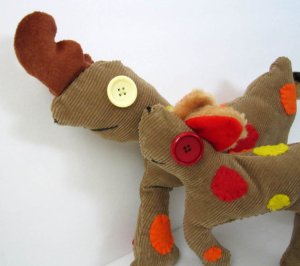
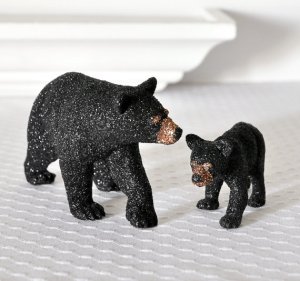
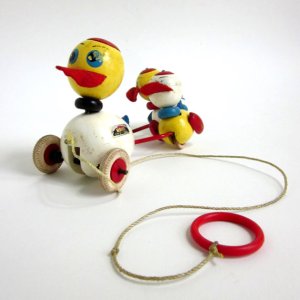
Plush Animal Mom and Baby Snuffalo from cuteandcreepyBlackBears Mom and Baby from wishdaisyNursery Wall Decal Mom and Baby Giraffe from LeoLittleLionVintage Mama and Baby Ducks Pull Toy from OopseeDaisiesDuck Dish from AutumnAlways
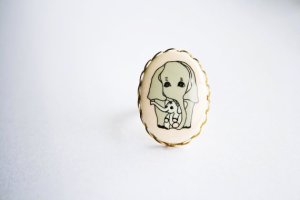
Hummingbird Babies Metallic Photograph from LD PhotographyMama & Baby Elephant Vintage Ring from bigGreengiraffeLe Mama & Baby Dust Bunny Totems from leanimale
The fun thing about adding vintage pieces to your wardrobe is the variety in how you can wear them. But sometimes this seemingly fun game of match and go can also be challenging. Don’t fret my dears, Ms. Jeannie is here to help advise.
It’s bright color, cableknit accents and short sleeves make it a versatile piece to wear in multiple seasons and situations. The belt and buttons lend to its classcly tailored lines, which means that it would look great with the following…
Brighten it up even more with an elegant silk blouse…
Orange Silk Blouse from EllaLai
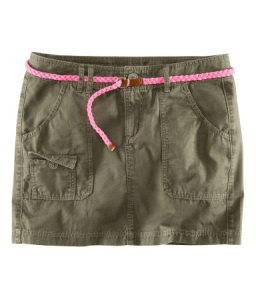
If you have great legs, pair it with a twill skirt from H & M
Twill Skirt from H&M in khaki green
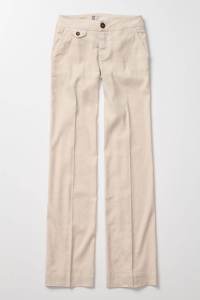
For an office look, wear it with Jones Wide Leg trousers from Anthropologie
Jones Wide Leg Pants from Anthropologie
Or on cool summer nights…
Season Staple Shorts from Anthropologie
For office-in-to-evening outfits, this Jersey Tea Dress from Boden in taupe would be effortless…
Jersey Tea Dress from Boden
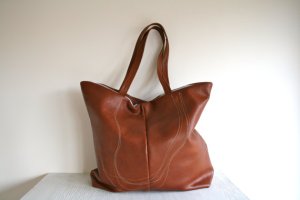
Sometimes all it takes is a great accessory like this Italian leather handmade tote to make a vintage sweater look even greater!
Handmade Italian Tote from babiesandbabes
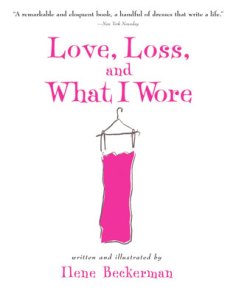
A fun romp through one woman’s experiences with (now vintage!) clothing is the book called Love, Loss and What I Wore by Ilene Beckerman.
Love, Loss and What I Wore by Ilene Beckerman
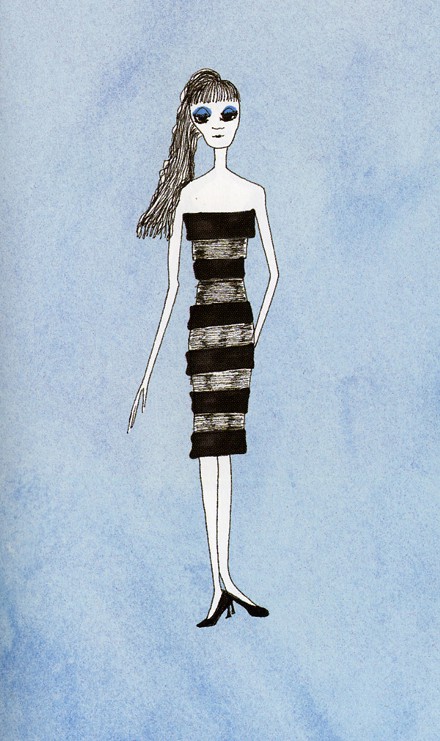
This funny, poignant story details the critical clothing choices Ilene made during pivotal moments in her life. Each story is accompanied by delightful illustrations such as this one…
Illustration from Love, Loss and What I Wore
Ilene had no intention of publishing her experiences. She wrote down and illustrated her memories as a momento for her grandchildren and assembled them in a binder.
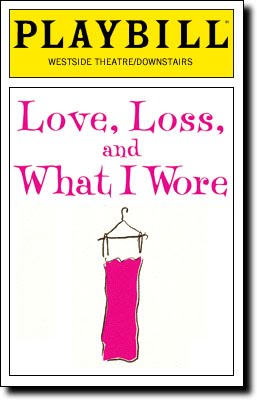
In 1995, her book was published, much to Ilene’s surprise. In 2010, the book was adapted by Nora Ephron and Delia Ephron as an Off-Broadway play.
Playbill Cover
It’s on it’s second year run at the Westside Theater, but will be closing at the end of March 2012 after over 1,000 perfomances. Here’s a picture of the final cast…
Final Cast Members of Love, Loss and What I Wore, The Play
Over 30 different casts have participated in the play. Each cast performed for 4 weeks. Members included: Jane Lynch, Alexis Bleidel, Rita Wilson, Janeane Garofalo, Rosie O’Donnell, Kristen Chenowith and Samantha Manthis just to name a few.
Imagine the 1960’s vintage red belted sweater making it all the way to Broadway! Or at least it imagine it sparking some great memories in your life that could be passed down to other generations.
For a time, when Ms.Jeannie was small, she thought she was Asian.
She recalls a story, her mother was telling at the dining room table one night about her great grandparents, the Wongs. Certainly Ms. Jeannie didn’t look Asian, with her dark blond hair and green eyes, nor did any of her family members look Asian. But Ms. Jeannie had a wonderful imagination as a child and of course, she was a subscriber to National Geographic.
She could picture the Far East with it’s geishas, it’s red paper dragons, it’s rice fields….the silk brocades, the fishing villages, the serene gardens. She could here the gonging of the metal.
As the dinner conversation continued, Ms. Jeannie learned from her mother that in fact the Wong ancestors were not really Asian at all. They were Norwegian actually. Their named just happened to both look and sound Asian.
Well, from that moment Ms. Jeannie was hooked. She peppered her mother with questions about her Asian sounding now Norwegian ancestors. But Ms. Jeannie’s mother knew very little, so the questions went unanswered, and the spark laid dorment for a time.
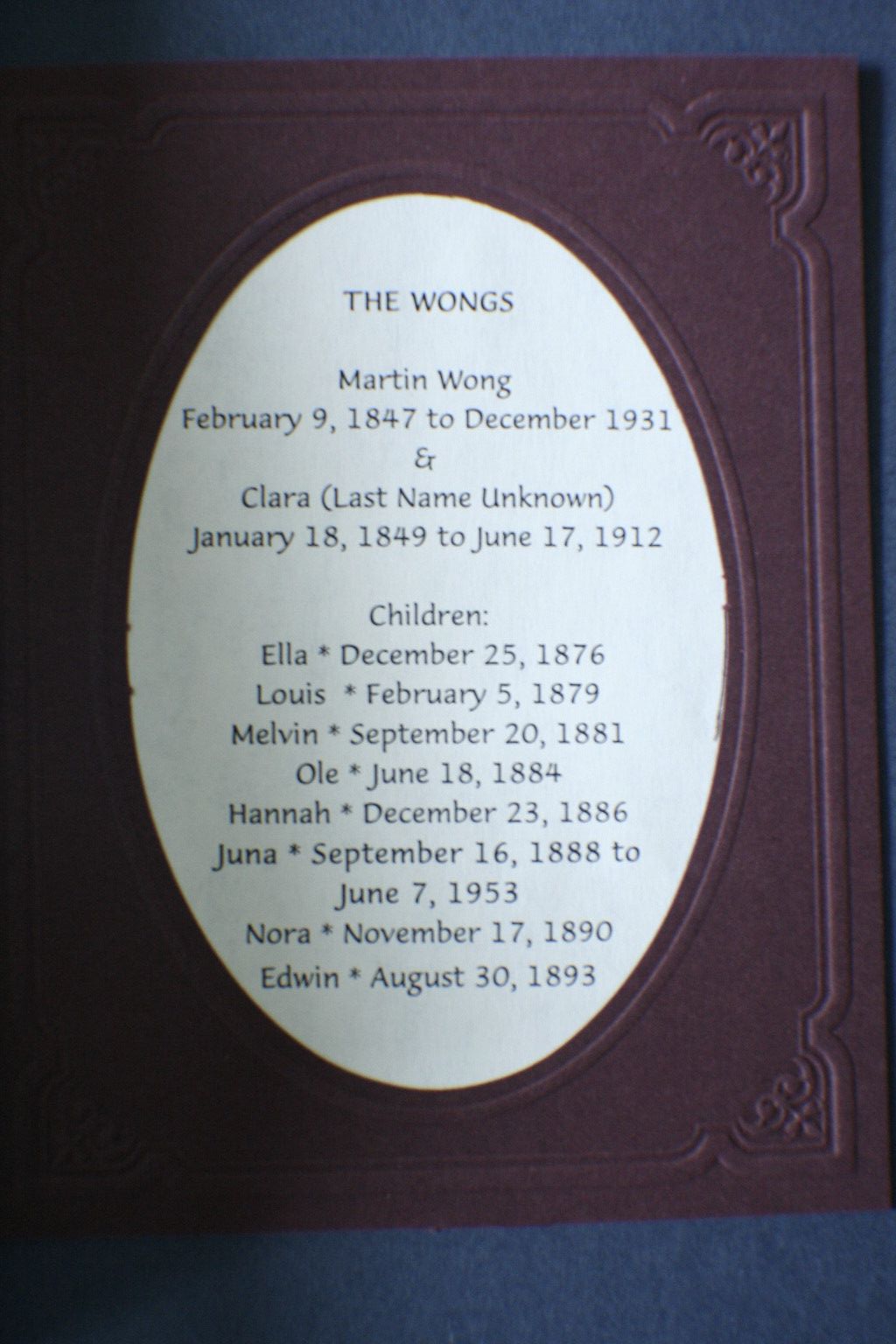
Years later, taking matters into her own hands, Ms. Jeannie emabarked on a mision to find out just who these Nordic people were. She started with this information from her mother…which turned out to be the only things that her family knew about the Wongs at that time.
So she knew that Martin & Clara had eight children and she knew there birthdates & the parents death dates. It was a mystery where they were born, where they lived, the last name of mother Clara and what happened to all the kids.
So the research began! Through careful study, the process of eliminaton and millions of census records, the mystery of the Wongs started to unravel.
Ms. Jeannie learned the Wong name was really spelled Wang (and pronounced Vang) so out the door the Asian culture theories flew! Now that Ms. Jeannie had the correct spelling, her search got much simpler.
She narrowed it down to households containing the name Martin & Clara and all the children. There were only two families with similiar names, one in North Dakota and on in Wisconsin. Ms. Jeannie’s grandmother was born in Wisconsin, so she started researching that family. Luckily she was on the right track! Through ancestry.com she found a few records for Martin Wang and a picture of he and Clara…
Martin & Clara Wang
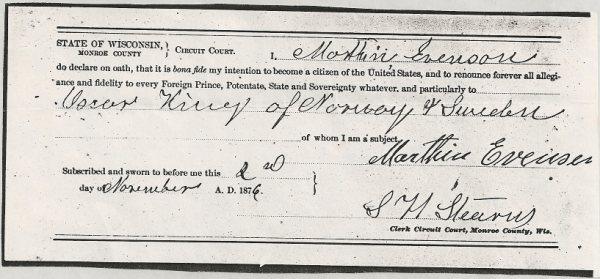
Exciting! Through the information provided in the census, Ms. Jeannie learned that Martin & Clara were from Ostre Toten Norway and Hurdal, Norway respectively. And Clara’s last name was Erickskillet. Martin applied for American citizenship in 1876 as determined by this document:
Martin Wang’s citizenship card
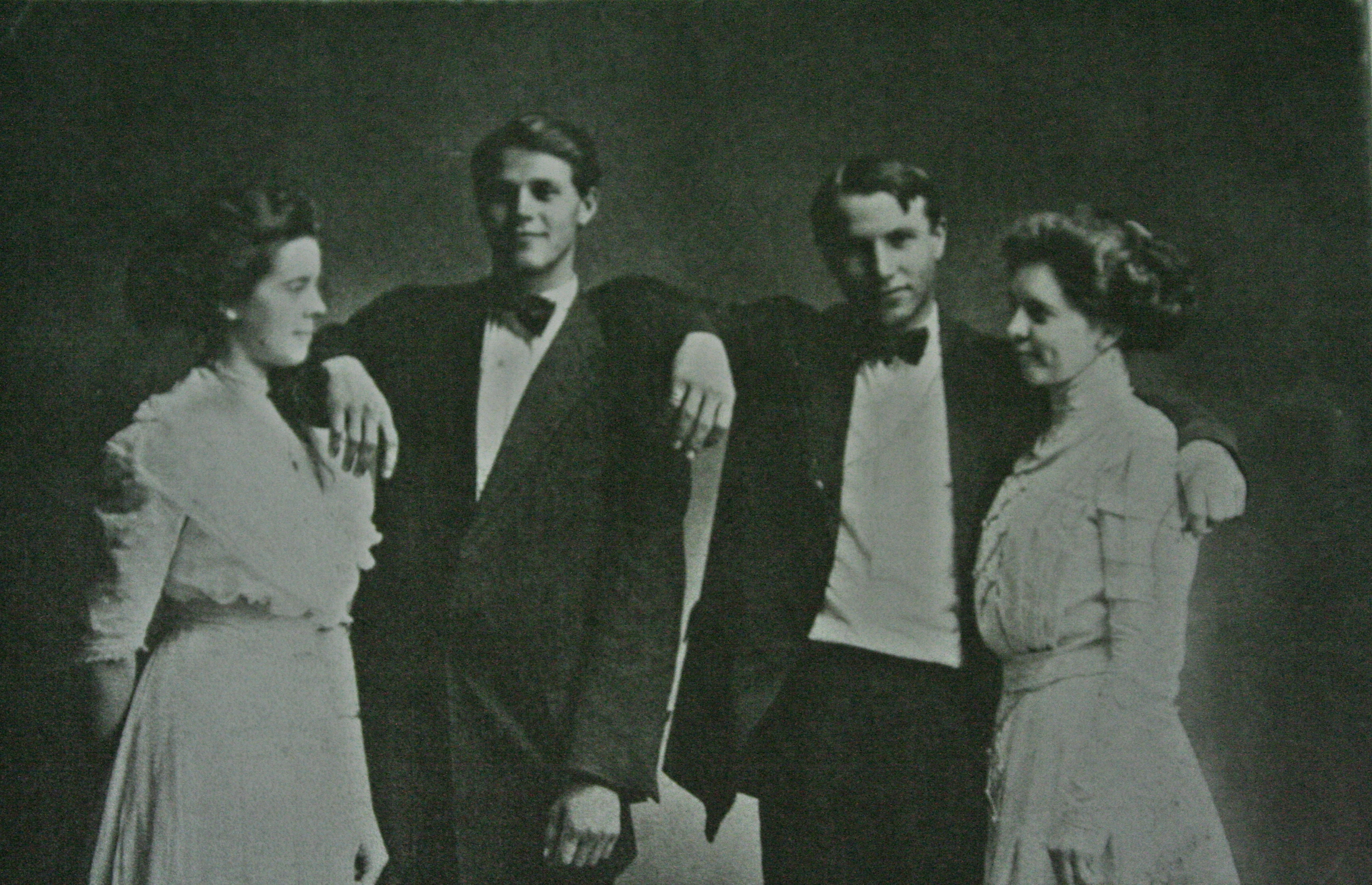
Martin & Clara actually had nine children. J. William Wang died when he was 12 years old. Ms. Jeannie uncovered this picture of the Wang family taken at J. William’s funeral. Everybody looks sad, especially little Edwin (the one holding the frame)…
Ms. Jeannie was on a role now – gathering various bits and pieces of information. Martin had a glass eye. He was a cabinet maker. They lived on a farm.
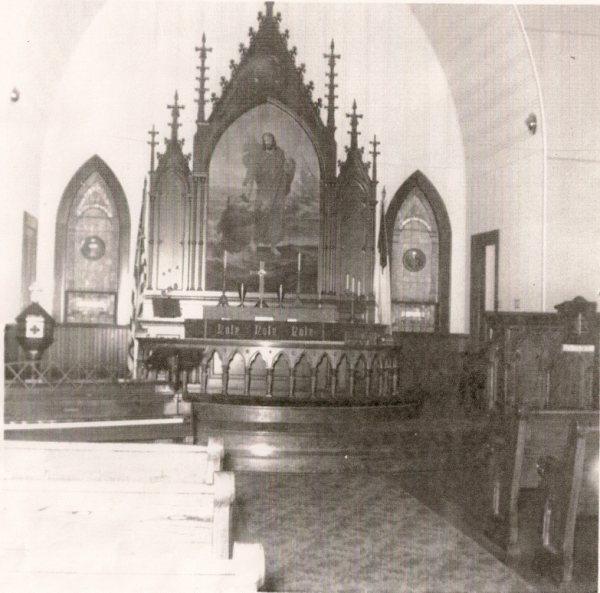
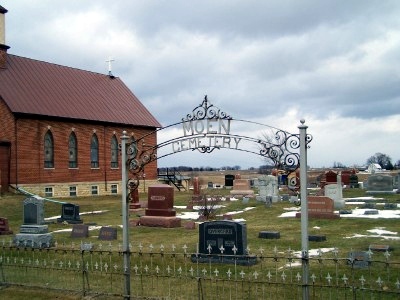
Martin built a church in Wisconsin:
The church that Martin builtInterior view of the church.Contemporary picture of the church.. It’s still there!
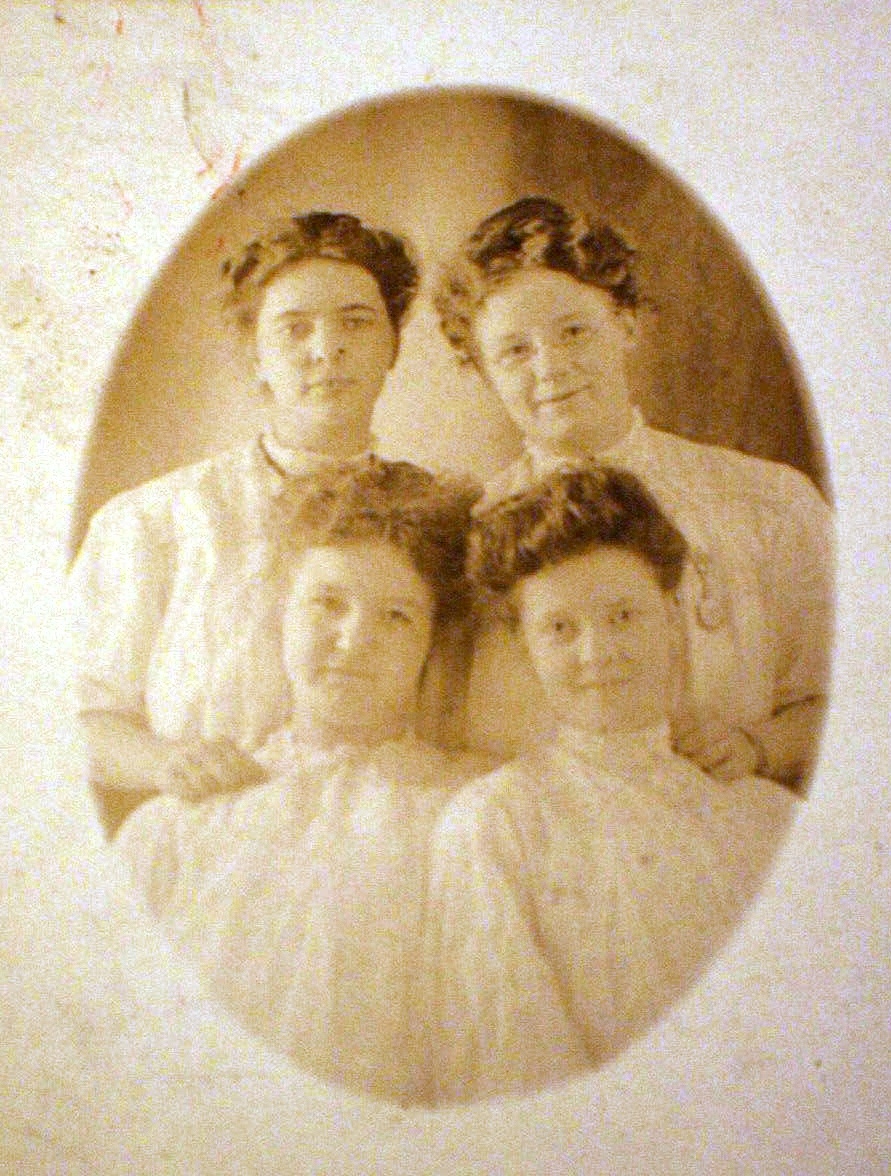
Ms. Jeannie’s mother found a box with some old unmarked family photos and now they could add names to faces…
Wang Family PortraitJuna Wang.
Originally everybody thought this was Nora Wang – Juna’s sister. But extra research put the right name with the right face.
Juna and her sisters.Juna and her sister. Unidentified men -pPossibly her brothers.
Meeting other Wang family relatives on ancestry.com led to the sharing of this picture of Clara Wang in her senior years. She sure looks like a hard worker.
Seeing this picture, Ms. Jeannie’s mother realized she had this picture of Clara that was taken with Clara’s granddaughter.:
Clara Wang with grandaughter.
Ms. Jeannie’s mother now recalled stories of Clara not being able to speak any English. The census lists the family as speaking Norwegian in their household. Possibly Martin spoke English and Norwegian, in order to conduct business in America.
Ms. Jeannie has now learned quite a bit about of information about the Wang Family. She has all their birth & death dates and places, information about all the children, who they married, where they lived and died, etc.
It’s exciting to see that Ms. Jeannie started here:
And wound up here:
Custom Ancestry Chart by msjeannieology
If you’d like help tracing your family stories and photographs, send Ms.Jeannie a message! She would love to spark your interest in genealogy!
Want to learn more stories? Watch celebrities trace their roots on Who Do You Think You Are on NBC every Friday at 8:00pm. They are already in their third season!
Here’s a clip from one of Ms. Jeannie’s favorite episodes from season 1 featuring Lisa Kudrow:
Search for amazing Norwegian antiques on etsy.com. You never know…you might find something that once belonged to your relatives!
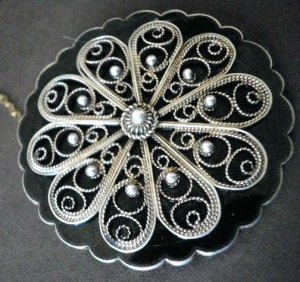
Antique Scandinavian Oval Wedding Box from mustncAntique Norwegian Baptismal Spoon from davidjp19271879 Norwegian Psalm Book from Bill1927 Map of Norway & Sweden from ImSoVintageAntique Photo Card – Lady in Norwegian Uniform from christmasangelMiniature Norwegian Folk Art Chair from BlackRoosterVintage1920’s Norwegian Christmas Card from BurtsFirstRodeo1920’s Ivar T. Holt Brooch from ZoesGems
Ms. Jeannie embarked on a road trip recently to the Southern town of Juliette, Georgia where they filmed the movie Fried Green Tomatoes.
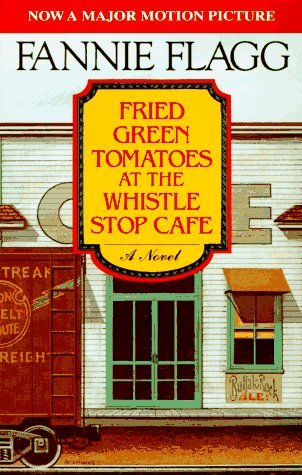
Movie Poster – Fried Green Tomatoes
If you aren’t familiar with the storyline it is about a middle aged woman, Eveyln Couch, (Kathy Bates) who is stuck in a rut and on the verge of a mid-life crisis. She befriends a senior citizen, Mrs. Threadgoode ( Jessica Tandy) who shares stories from her past which eventually provide all the life lessons, hope and inspiration that Evelyn needs to get out of her rut. This movie was based on the bestselling book Fried Green Tomatoes at the Whistle Stop Cafe, by Fannie Flag.
The story switches between present day and 1920’s Alabama, but as you can see below Juliette, Georgia worked just fine in capturing the era. The historical aspect of the story centers around Whistle Stop, the train depot cafe and two women who run it; Idgy & Ruth.
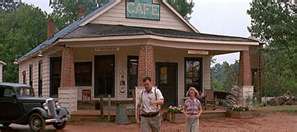
Sets were built in Juliette for the movie and never taken down. Now they are used in the city’s tourism promotion. Ms. Jeannie was thrilled to see that the Whistle Stop Cafe in real life looks exactly like it did in the movie (minus the contemporary cars of course!):
The Whistle Stop Cafe as seen in the movieThe Whistle Stop Cafe as it looks today
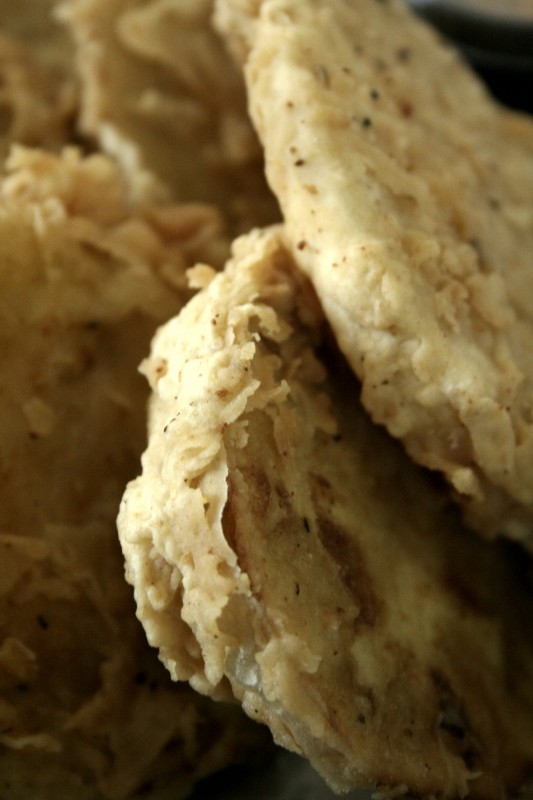
Ms. Jeannie had lunch at the cafe. Of course, she ordered fried green tomatoes!
Fried Green Tomatoes at the Whistle Stop Cafe!Close-up view! A meal in itself!
If you’ve never eaten this before – you are in for a treat. Like most famous recipes, everyone has their own techniques but this recipe posted by busterbucks on hub pages is great because it explains the process step-by step and has lots of pictures.
A friend of Ms. Jeannie’s prepares a lot of Southern recipes using this cookbook from 1939. You might be able to find a fried green tomato recipe (or two!) in there!
Fine Old Dixie Cookbook from LittleBeachDesigns
After lunch Ms. Jeannie walked around town. Juliette is tiny and is just comprised really of one main street and a few side streets:
There are little nods to the movie all around town.
Juliette is able to sustain itself just from tourism related to the movie. That is marvelous for a small town like this, which would have become a ghost town had Hollywood not come callin’. It was bustling the day Ms. Jeannie visited. There was even an hour and a half wait for lunch at the cafe. Ms. Jeannie took the time to poke around town.
This is the famous barbeque in back of the cafe:
This is the barbeque scene from the movie.
This is Smokey Lonesome’s house which is the little shack you can see pictured above – just beyond the barbeque pit.
These are the falls Ruth (Mary Louise Parker) walks across at the beginning of the movie.
This is the scene from the movie.
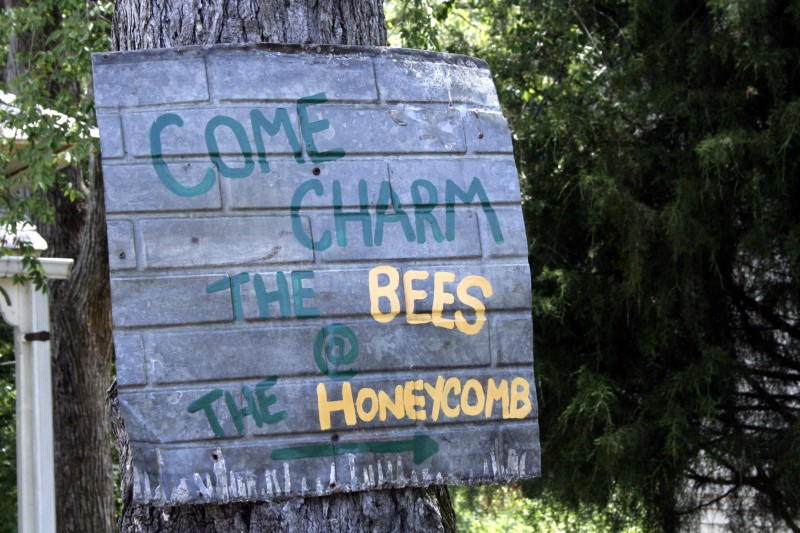
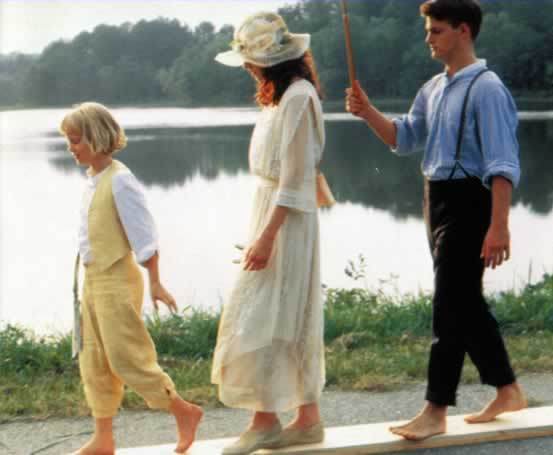
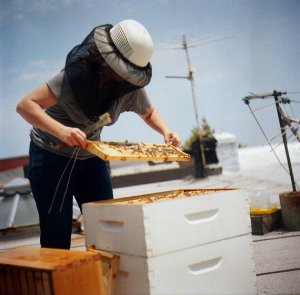
After first seeing Fried Green Tomatoes, Ms. Jeannie became interested in beekeeping. She has yet to own any bees of her own but she has quite a growing list of beekeeping related items in her Etsy favorites folder…
Straw Beekeeping Hat from honeybeefarmerAntique Beekeeper’s Hand Bellow from DailyMemorandomBeekeeping Bee Hive from toughtimbers
Ms. Jeannie could definietly use a few lessons from pros like these:
Online Urban Beekeeping 101 from brooklynhoney
Until she gets her beekeeping operation up and running, she will shop locally for organic honey…
Did you know that people derive the most health benefits from honey that was produced within a 15 mile radius of their home? Support your local farmers and your local bees at localharvest.org
Ms. Jeannie is perplexed. As of late, there seems to be a lot of hillbilly happening in the contemporary sporting culture. TV is packed with shows about guns, shows about catfish noodling, shows about 800 ways to camouflage your hunt.
Cut-off jean shorts and dirty t-shirts, duck-tapped boots and grungy attitudes are running rampant. All which got Ms. Jeannie wondering…whatever happened to the days of the elegant sportsman?
The Brad Pitt’s In A River Runs Through It
Scene from A River Runs Through It starring Brad Pitt
or the Henry Fonda’s of On Golden Pond?
On Golden Pond – Starring Henry Fonda
Or the Robert Redford’s in Out of Africa?
Out of Africa – Starring Robert Redford
The classic styles, the hats, the wool and the tweed, the velvet and the linen? Has refinement gotten lost somewhere down the long and dusty road of men’s sporting clothes?
Let’s take a peek at some examples…
Ms. Jeannie was reminded about an invitation she received recently to a fox hunt in the Pennsylvania countryside. Never having been before, she was impressed that everyone participating looked like they had just stepped out of a 19th century painting like this one from Henry Thomas Alken’s…
Fox Hunting by Henry Thomas Alken
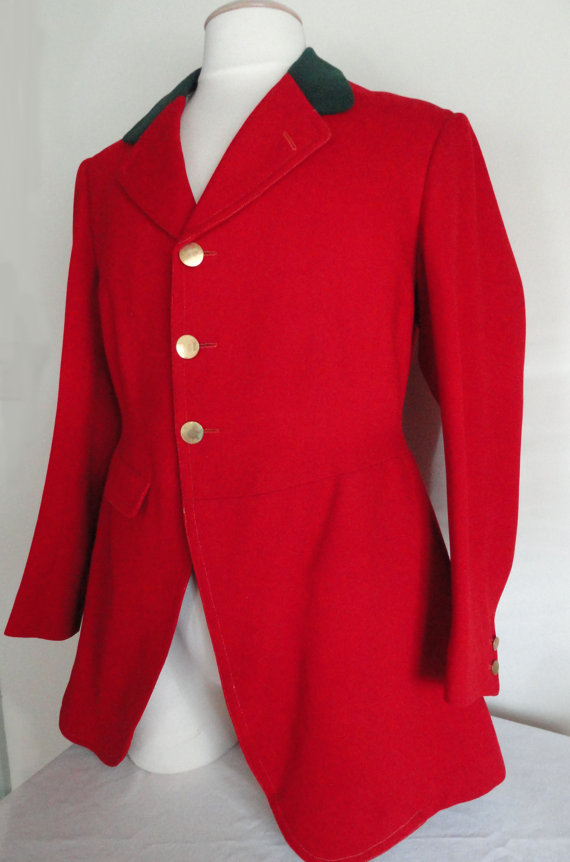
Bright red coats, top hats, tan riding britches. Hound dogs underfoot, horses brushed, braided and polished to a shine. Now this was a spectacle of elegance. There was even a ceremonial pre-hunt cocktail served in silver cups… while on horseback, we might add. It was decandant. It was old-fashioned. It was magical. Grand animals in a grand setting. Well done fox hunters for keeping the spirit of the sport alive…
Sport their same look with these items, available on Etsy…
60’s Wool Mens Fox Hunting Pants from GreatGuyGiftsAntique Beaver Top Hat from ThreadsandpinsVintage English Riding Jacket from eldonhill
Likewise, the fisherman of yesteryear, seemed to do it right. Wool sweaters, corduroy pants, tweed hats… check out this 1924 advertisement for fishing tackle. He’s wearing an Oxford style shirt and a belt!
1924 Winchester Fishing Tackle Poster
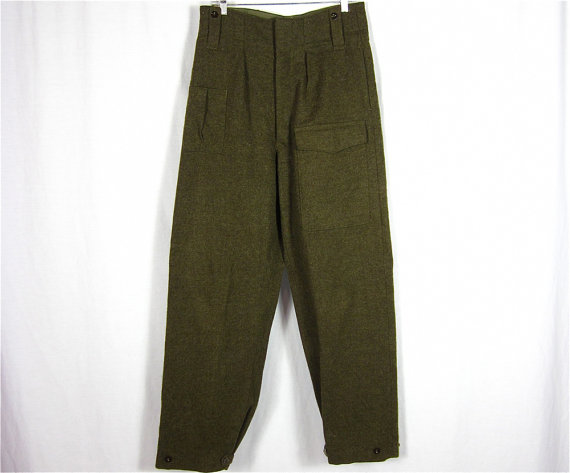
Get this same look with the following items:
Antique Fly Fishing Creel from NuvegrizKhaki Work Shirt from lookinglasshouseMens German Made Olive Wool Pants from FireflyVintage
Boating never looked more picturesque than in this 1917 ad of a captain and his dog, proving that boating can still be fun even if you are wearing a bow tie!
1917 National Sportsmans’s Magazine from LastChanceAntiques
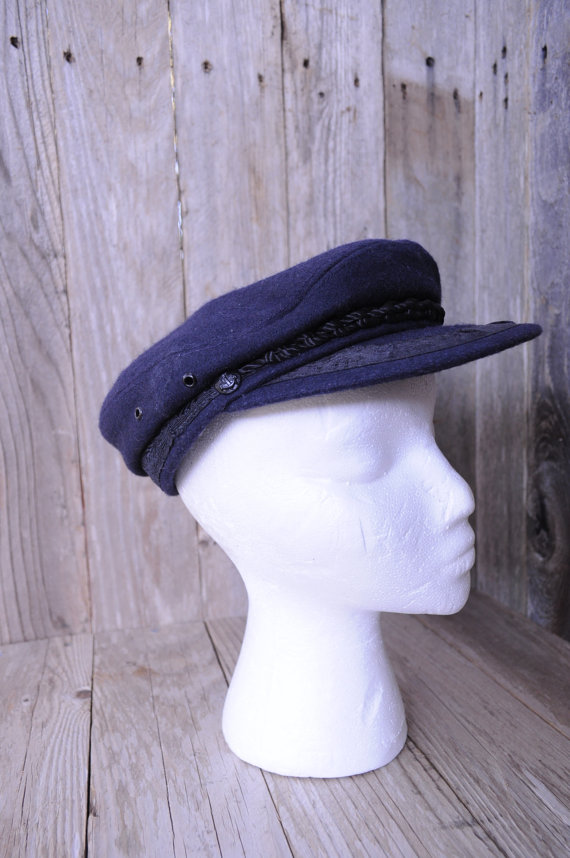
Next time you are on the water, trying wearing this…
Greek Fisherman’s Cap from PoisonPuddingFaireDark Blue Denimn Bowtie from Bowtie CompanyWoolrich Grey Long Sleeved Shirt from CairoVintage1960s Vintage Mens Sweater Vest from VimVigorVintage
You’ll notice in these examples that all the men pictured are wearing hats. Hats stopped being worn by men around the 1950’s. Some attribute it to JFK and his own vanity. Apparently he liked his hair and wanted to show it off! Hence no need for a hat. As a trendsetter, others took note and the hat slowly started to fade out of popularity.
This is an interesting article on the history of the fedora…
Ms. Jeannie wants to launch a campaign to help bring the Fedora back!!! How could you resist such handsome ones as these:
Vintage Houndstooth Fedora from BasyaberkmanMen’s Vintage Brown Fedora from tangerinestyleThe Don Draper from ReroManVintageGreen Fedora Hat from kalaidascopesVintage Straw Men’s Fedora Hat from Marvita13
Help the cause! If you wear Fedora’s send a picture to Ms. Jeannie and she’ll post it on the blog.
For years now, Ms.Jeannie has been collecting bits and pieces of antique china to use alongside her everyday dishes. These everyday dishes are as basic as basic can be: white, plain, unadorned. The only bit of flair they possess is that they were made by an Italian plateware company. This makes the plates oval shaped instead of round and the coffee cup saucers are offset to accomodate a slice of biscotti alongside your coffee cup. Other than that they are strictly ordinary.
Having said that Ms. Jeannie discovered one day, while cleaning out her china cabinet, that when she paired these ordinary day plates with her vintage china treasures, her whole table setting instantly hummed with it’s own sort of individuality and surprise. The ordinary looked extraordinary and the mis-matched patterns looked marvelous next to each other because they contained a lot of similar colors.
So Ms. Jeannie started experimenting and was delighted to discover a very broad range of different decorating options when it came to pairing vintage with contemporary.
This is an example of how you can set a contemporary vintage table by combining contemporary dishes with vintage china.
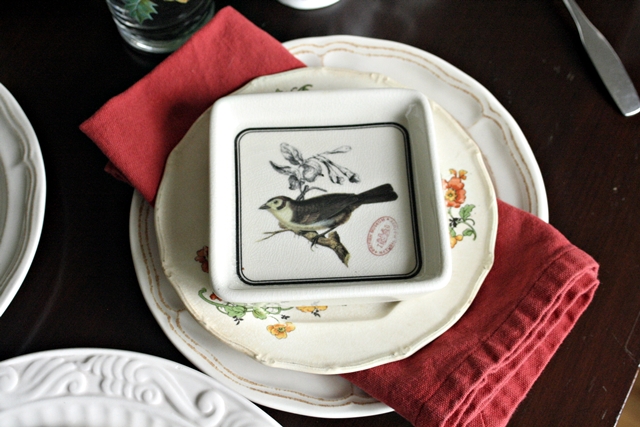
If you look closely there are 10 different plate patterns/designs in this setting. They all work together because they have two themes tying them together: birds and green leaves.
The unexpected vermillion color in the napkin also helps tie together all the warm colors without looking forced or too matchy matchy.
The square bird dish is actually a contempoary soap dish, but has been repurposed to act as a small bread plate or a drink coaster here. It also matches the colors of the black and white toile-looking hunt plate as well as the antique orange, black and green floral bread plate from the 1930’s.
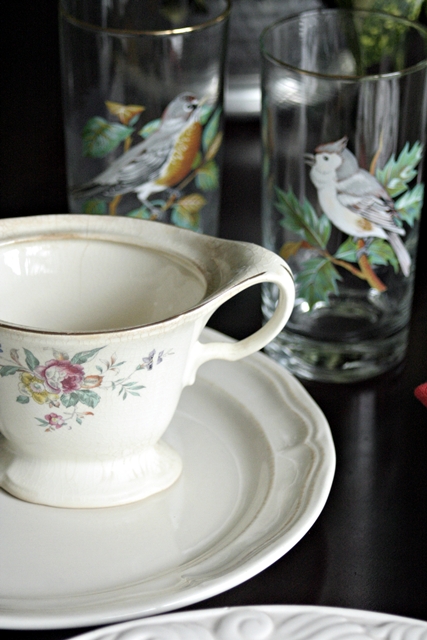
The colors in the antique sugar bowl match the colors found on the vintage bird water glasses. The crazing on the sugar bowl also matches the faux antique patina on the contemporary white salad plate from the Todd English Collection.
You can see here just by adding or subtracting pieces you can get different effects from your table display:
Ms. Jeannie is drawn to three things when it comes to scouting vintage china. She loves anything made out of old English ironstone, anything that contains the color green in its design and anything that contains crackling or crazing marks. So her collection has thousands of ways that it could displayed together since they have those three characteristics in common. You can start your own vintage china collection based on color, shape, time period or region for your own unique look.
This table arrangement was made up of the following pieces:

















































































 In the Vintage Kitchen: Where History Comes To Eat