
The Magical Second Life of Samuel Gottscho and a Locally Inspired Recipe to Match

When Samuel Gottscho began his professional photography career at the age of 50, it was a leap of faith and a vast change from the garment industry salesman job he had known all his adult life. By this point, as he entered into his fifth decade, he was a husband and a father with a young daughter to raise and a long-time reputation in the industry that provided a steady paycheck and reliable consistency. But after twenty-five years of a job that both he and his father did before him, Samuel’s heart was no longer wrapped up in the lace and the fabric and the embroidery that he peddled around the city. Instead, it was his camera – his weekend hobby since the age of 20, his faithful muse, his constant companion – that began nudging him to move in another direction away from the professional life he had always known.

The Rochester Optical Camera with Tripod – Samuel’s first camera circa 1900. Photo courtesy of the Missouri History Museum.

The year Samuel turned 50, it was 1925. New York was thriving. Museums were opening. New buildings and storefronts were being constructed. Model T’s were zipping around the city just like Babe Ruth was zipping around the bases.
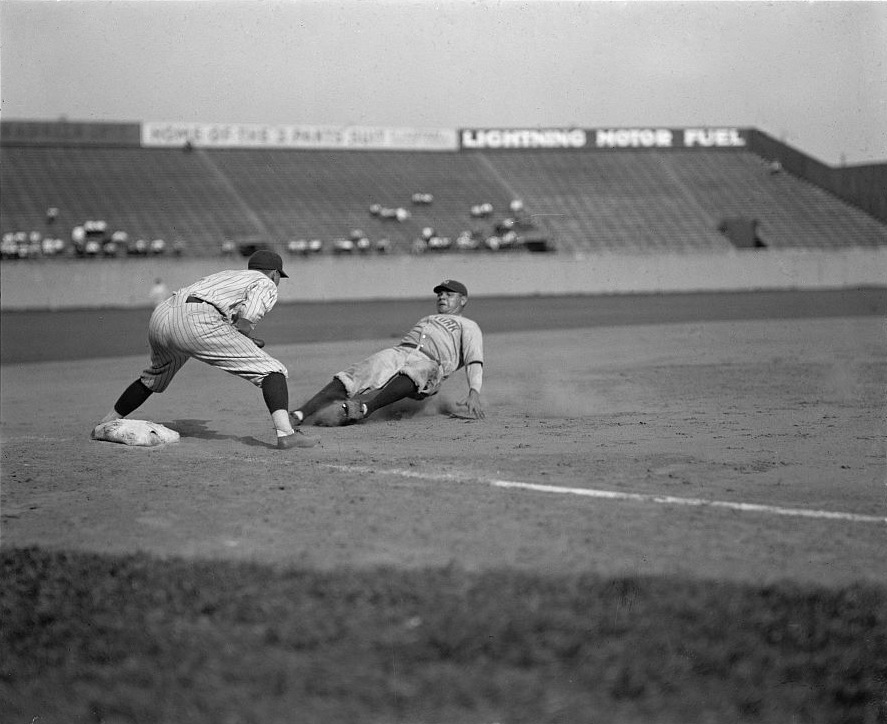
Babe Ruth safe at third base in a game against the Senators on June 23, 1925.

In the 1920s. the average life expectancy for American men hovered between 53-60 years old. Realizing Samuel was just a few years away from possibly the end of his life, he questioned how he wanted to finish things up… by lugging around a fabric sample case or by adventuring out in the world with his camera? There was a lot to weigh between practicality and passion. Between case and camera. Between settling and jumping.

Ultimately, Samuel had the support of his encouraging wife, Rosalind, and an optimistic attitude. That, as it turns out, was all he needed.

Samuel Gottscho. The Financial District in the 1930s.

Starting in New York City among the skyscrapers and the night lights, it didn’t take long for people to notice that Samuel had talent. His photographs captured the epitome of 1930s architectural elegance and that beguiling sense of power and opportunity that New York City stood for. Every day a story unfolded in the dramas of the big city skyline. Samuel captured them one by one in the morning mist rolling in off the East River and in the twinkling lights that turned the city into a glowing lacework of lanterns…
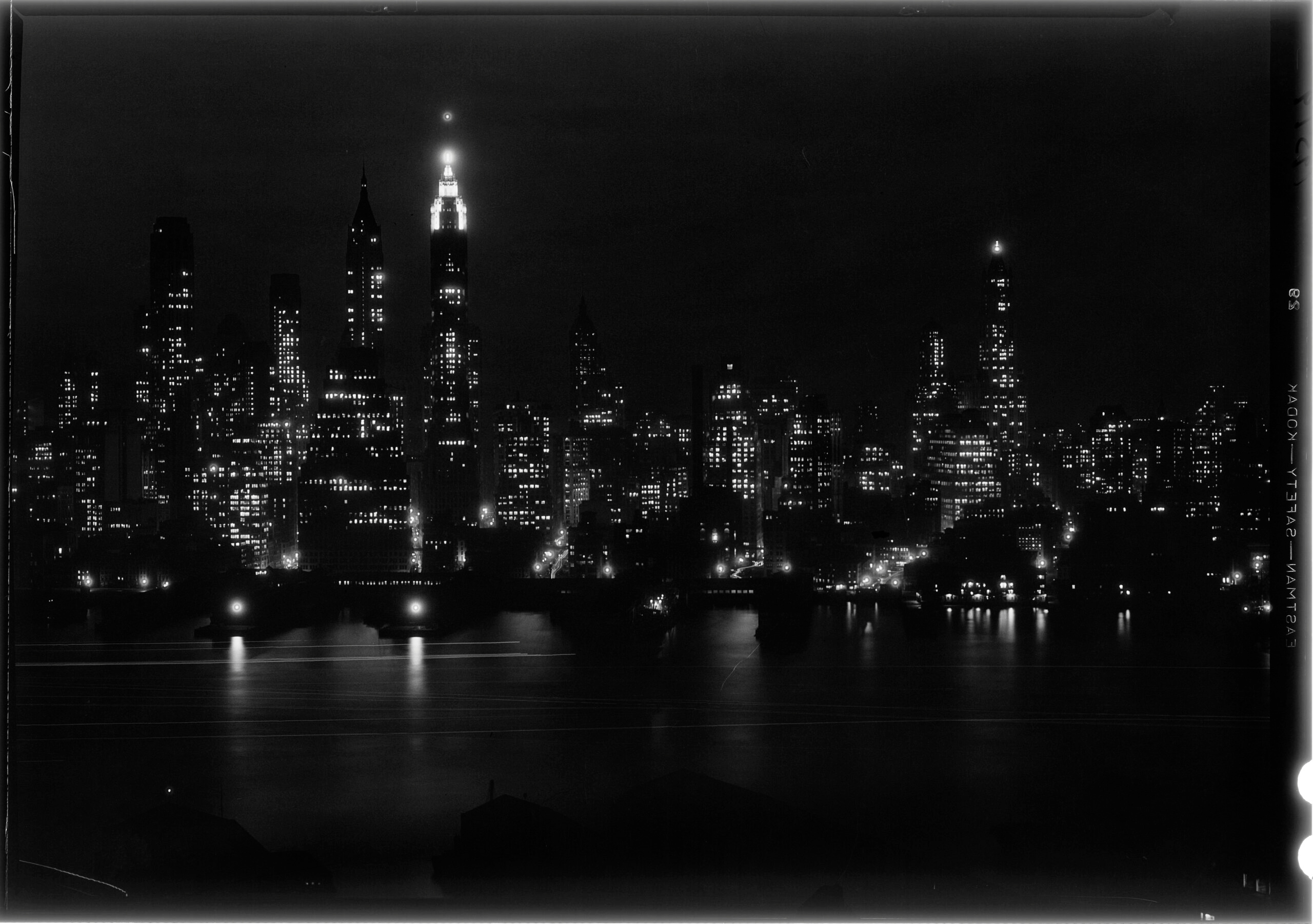
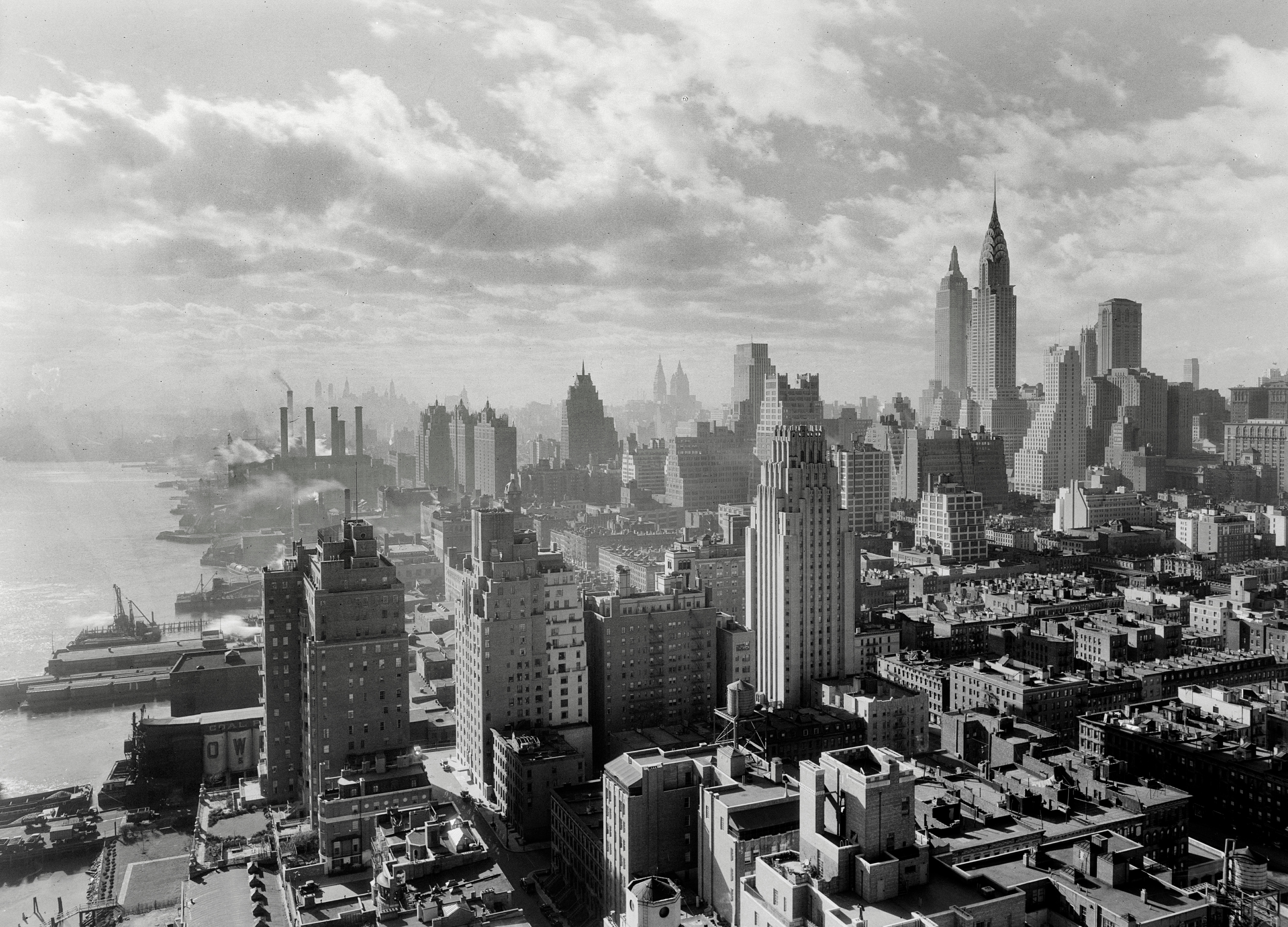
Samuel Gottscho. New York City Views from the St. George Hotel. 1933.

Samuel Gottscho. 52nd Street & the East River, New York City. 1931

Samuel Gottscho. New York City. 1933

Samuel Gottscho. Rockefeller Center. December 1933. Library of Congress.

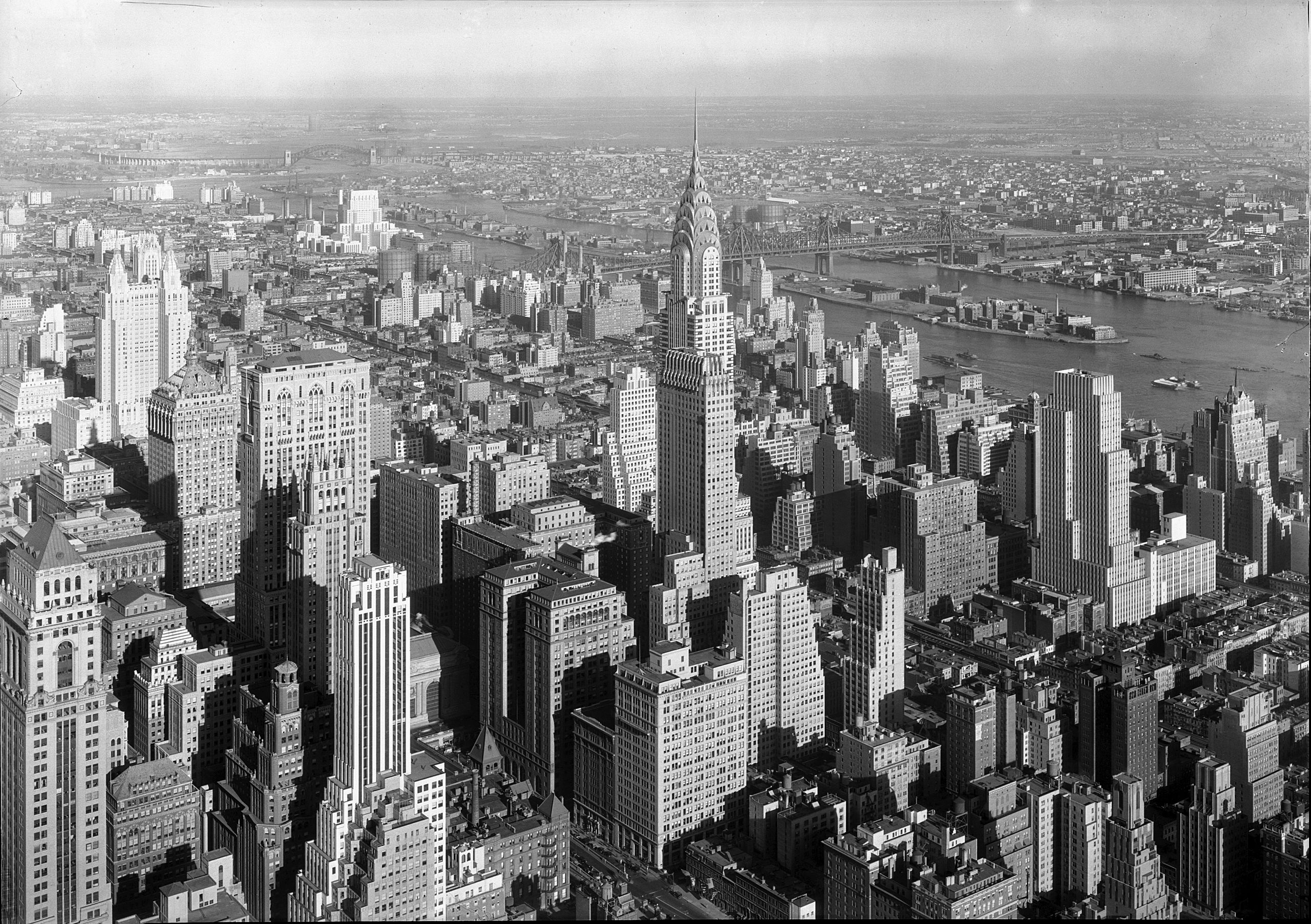
Samuel Gottscho. Chrysler Building and Midtown Manhattan, 1932.

Exterior photoshoots commissioned by local architects led to interior photoshoots commissioned by designers, builders, and business owners…

Samuel Gottscho. Roxy Theater at 49th Street circa 1932. Photo courtesy of the Library of Congress.

Samuel Gottscho. 33 Beekman Place, New York City. 1928.

Samuel Gottscho. Huntington, Long Island, NY. 1933

Those led to house and garden portraits for landscape designers and homeowners…

Samuel Gottscho. Ashland Farm. Warrenton Virginia. 1930

Samuel Gottscho. Wilmington, Delaware. 1932

and then to wildflower portraits pursued at first for his own interests…

Samuel Gottscho. Common Evening Primrose from The Pocket Guide to the Wildflowers. 1951

but then later for clients, book publishers, and magazine editors.

Samuel Gottscho. The Pocket Guide To The Wildflowers. 1951.

At first, Samuel’s introduction to the wildflowers were daily hikes around the upstate New York hotel where he and his wife and daughter summered every year in the Adirondacks. When the gas rations were in effect in the 1940s, it wasn’t feasible to explore the countryside with the car and driver Samuel previously employed in the city. Foot travel replaced the car, his young daughter, Doris replaced the driver and the two would tottle off together to explore the woods any chance they got.

Samuel’s daughter, Doris. Photo courtesy of the Library of Congress via Familysearch.org

Noting the curious array of flowers that dotted the roadsides and the woodlands and how they all fit together into the broader landscape made Samuel appreciate the composition of each and every flower in a new, more visual, more vital way. As he learned, Queen Anne’s Lace or feathery petaled Bergamot or the large craggy, canopied trees found in these upstate New York hideaways were just as stately, just as visually spectacular, just as unique, as the Chrysler Building towering above Manhattan.

Enchanted with the light, the subject matter, the shape and the composition of the flower fields, Samuel found them to be little cities in their own way. Tall, short, fluffy, sparse. Each one added pops of color, variety, and form to the overall canvas that was the natural wilderness. Eventually, Samuel’s Adirondack wildflower summers were replaced with Sound-side summers spent on Long Island, New York’s North Fork.

The North Flork is located at the far right of the island in the green section. The Hamptons lies in the bottom right corner in the blue section. Queens and New York City are at the far left of the map.

Known as its own agricultural wonderland bordered on one side by the Long Island Sound and the other side by the Atlantic Ocean, this island surrounded by lighthouses and studded with sailboats was first inhabited by the Corchaug, Algonquin and Montauk tribes. Boasting its own never-ending supply of native wildflowers, it delighted the eye with all sorts of natural splendors highlighted by backdrops of the water, beaches, pine groves, pasturelands and marshes. Samuel photographed every bit of it.

Photo of Samuel Gottscho by Edward Dart courtesy of Newsday. April 1970

No stranger to wild things and naturally picturesque vistas, the North Fork was home to New York State’s first farms and first English and European families. Dating all the way back to the 17th century, Southold, the town where Samuel spent his Sound-side summers was settled in 1640 by farmers, tradespeople and clergymen from England and Europe by way of Connecticut.

Barnabus was a baker and the town overseer of Southold. Photo courtesy of the Art & Architecture Quarterly

A fishing and farming community long before the Island ever became a residential extension of New York City, this stretch of Long Island from the tip of Orient Point to the mid-section of the island never lost its agricultural roots. Full of sprawling vineyards, seaside homes, stretches of pebble-studded beaches, open meadows and working farms that produce every sort of market delight you could ever want, it’s a food lover’s paradise from flowers to honey to wine to grass-fed beef.

Croteaux Vineyards is the only winery in the US to focus solely on making rose wine.

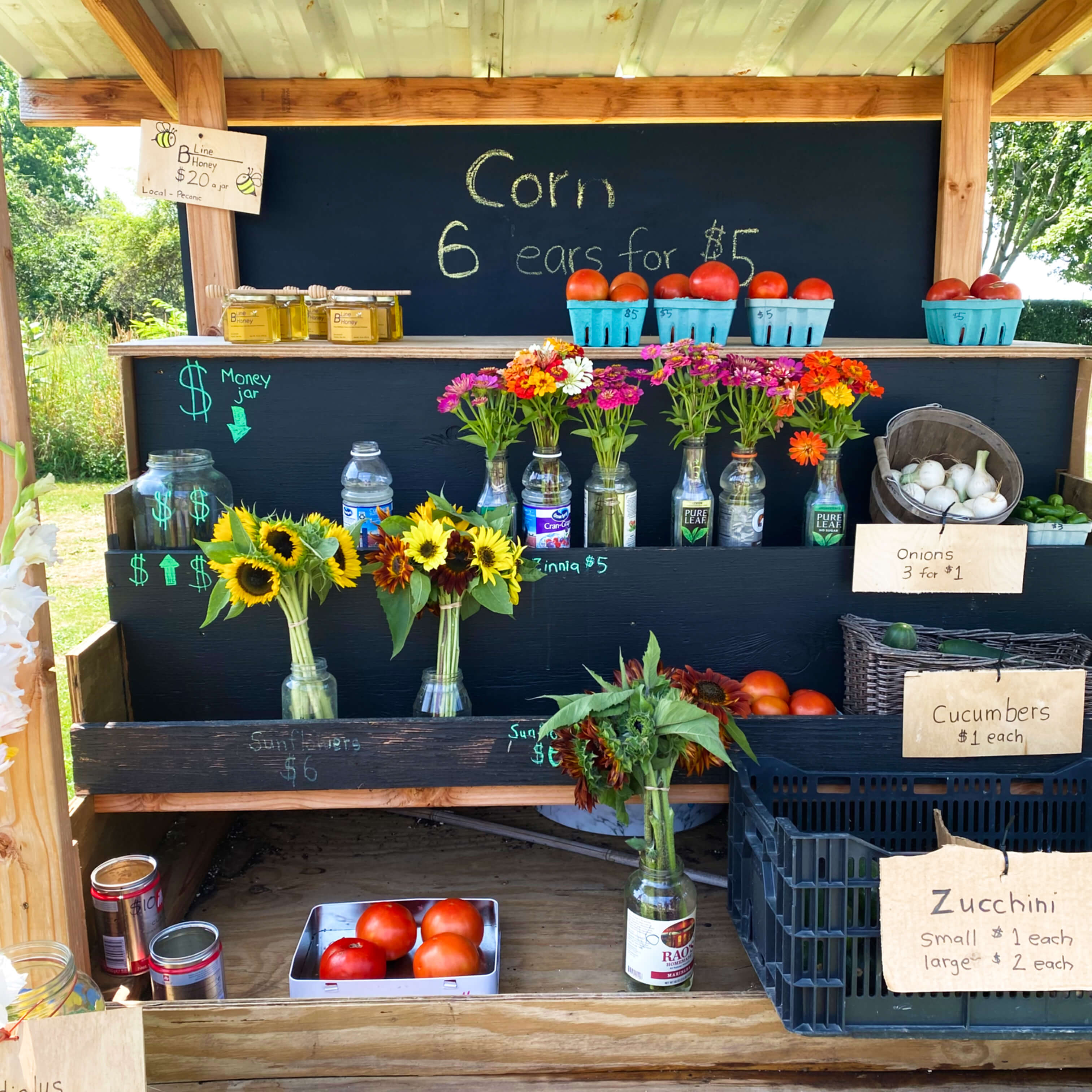
Fresh farm stands are everywhere around the North Fork.

Open pasture lands with views of the Sound.

Wildflower settings just like this inspired Samuel throughout the 20th century.

Celebrating this area’s centuries-old agricultural history, in today’s post, we are featuring a recipe made using grass-fed beef from cows raised and pastured on Long Island’s Acabonac Farms. Just a short drive down the coast from where Samuel summered in Southold, Acabonac Farms works in tandem with the natural landscape just like Long Island’s first settlers did back in the 1600s.
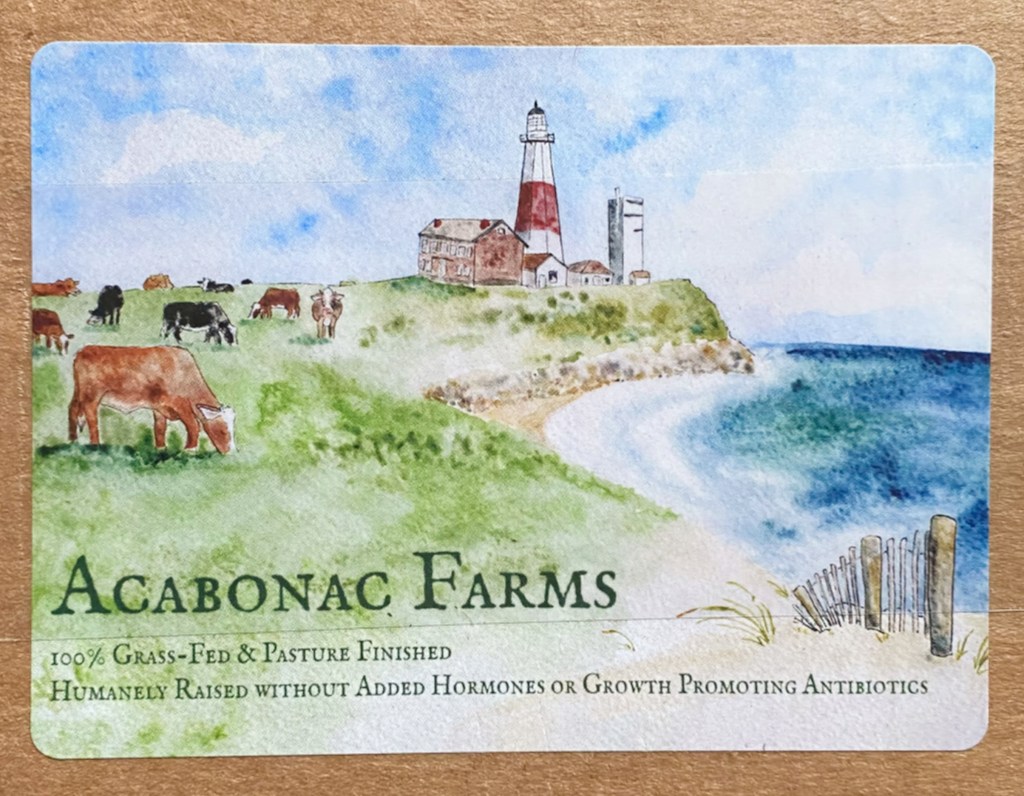
See how Acabonac Farms’ watercolor illustration was made here.

By embracing the unique nutrient-dense soil that makes it one of the best terrains in the state, combined with the salty sea air, the continuously circulating breezes blowing in off the water, and the well-draining composition of the soil, it’s a trifecta of a location historically known for growing good grass which in turn grows good grass-fed cows.

Throughout his second career, Samuel’s photographs appeared in publications all over the country, but none may have been more proud of Samuel’s work than his hometown newspaper, The New York Times, where he was regularly featured. In keeping that joyful relationship intact, our featured recipe for this post comes from the 1961 New York Times Cookbook and combines Acabonac Farms grass-fed sirloin steak with an unusual 24-hour marinade to create picnic-toting steak sandwiches fit to fuel any wildflower photographer’s wanderings.

Named after the patron saint of hunting, this recipe called Steak St. Hubert, can be made with venison or beef using round or sirloin cuts depending on your preference. Originally, it was meant to be enjoyed as a single cut of meat – a steak dinner complete with a red current jelly reduction sauce – but I decided to turn the steak into sandwiches so we could pack it along with potato salad and refrigerator pickles for a summer picnic getaway to see the land that so inspired Samuel.

Consisting of a unique menagerie of ingredients, this marinade contains no cane sugar and no salt but does include carrots, wine, and apple cider vinegar, which I found to be a pretty intriguing mix. A bit like Annie’s Wine Baked Brisket and Santiago Pork Roast, this is a two-day, three-part recipe to prepare but well worth the time.

Although this is a local post featuring Long Island, Acabonac Farms beef is available to any home cook no matter where you live. If you haven’t had the experience of ordering meat via mail before, the process couldn’t be easier. You simply place your order online and it shows up at your door two days later in a box packed with dry ice and the individually frozen, vacuum-packed cuts you requested.

From the farm in Long Island to the front door of 1750 House.

Beef that arrives by mail can be thawed in the fridge overnight (in its original packaging) or stored in the freezer for use at a later date. For this recipe, the three packages of steaks we ordered went into the fridge for 12 hours before they were added (completely thawed) to the marinade and then returned to the fridge for another 24 hours.

The marinade is easy to put together. The original 1961 recipe called for a big bowl as the marinade vessel but I found that a two-gallon Ziploc bag worked just as great and made it easier to store in the fridge. Other than that note, the marinade recipe comes together just like this…

Steak St. Hubert Sandwiches (serves 10-12)

For the marinade:

3 16 oz .sirloin steaks cut 1/2-3/4″ inch thick

2 shallots, chopped

2 carrots, sliced

2 onions, sliced

1 clove garlic, chopped

2 sprigs of fresh thyme

2 bay leaves

1/3 teaspoon freshly ground black pepper

1 small pinch of ground cloves

2 cups dry white wine

3/4 cup apple cider vinegar + 1/4 cup water, mixed together

1/2 cup olive oil

For the pan:

Salt

Pepper

6 tablespoons butter

For the sandwiches:

Portuguese rolls (or any soft and pillowy sandwich roll that has a crusty exterior and an airy interior)

lettuce

red onion, sliced in thin rings

Condiments (cherry jam, horseradish, mayonnaise, dijon mustard or any others you might prefer)
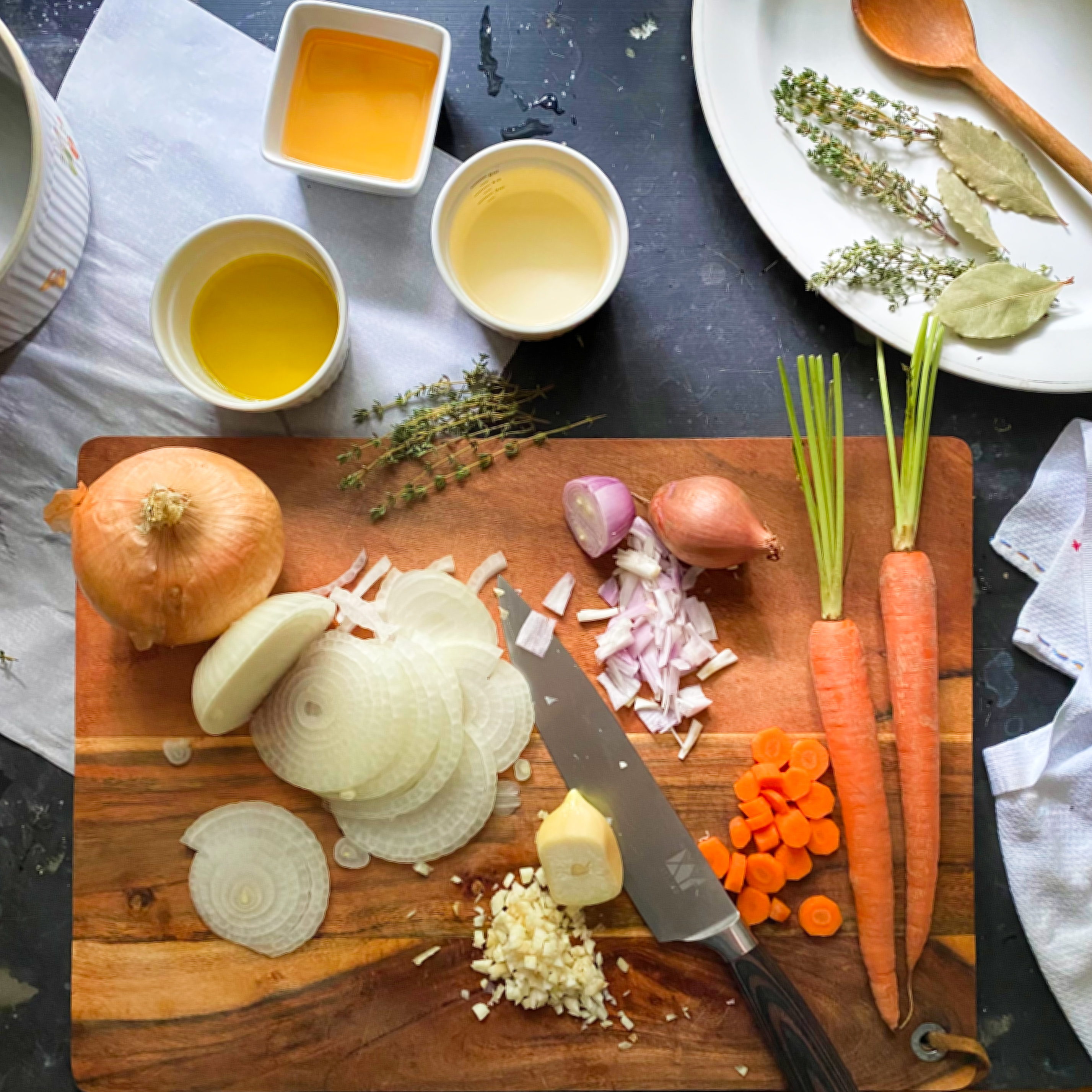
In a large bowl, mix all the ingredients together minus the steaks. Add the steaks and toss the mixture again.

Remove the steaks to a large (2-gallon size) Ziploc bag. Pour the marinade mixture from the bowl into the bag, covering the steaks completely. Seal the bag and store it in the fridge for 24 hours.

After 24 hours have passed, remove the steaks from the marinade bag to a large plate or casserole dish and let them warm up to room temperature while you prepare your cooking pan (about 15-20 minutes.

Salt and pepper both sides of each steak. In a large cast iron or heavy-bottomed pan, working individually, melt two tablespoons of butter over medium-high heat, cooking each steak one at a time for 7-10 minutes per side to achieve a medium rare center. Repeat with the following two steaks.

Transfer each steak as it comes off the heat to a parchment-lined piece of foil. Wrap each steak in the foil and let them rest until completely cool (about 30-45 minutes).

If you are planning to take these sandwiches on the road, the whole steaks can be refrigerated before slicing for up to 12 hours once cooled. When you are ready to prepare your sandwiches, slice each steak into thin ribbons.

Tuck the thin slices of beef between two slices of bread and call it divine or you could adventure even further and stretch your palate to include a train of condiment flavor pairings. Mustard, horseradish, mayonnaise. Maple syrup, cherry jam or hot sauce. Top the beef with a layer of blue cheese or fresh pineapple or a ring of red onions and you have a custom sandwich built just for you. Originally, the recipe called for a red current reduction sauce (an element that might not travel well), so I toted along a jar of French cherry jam in addition to the other above-mentioned condiments. A dollop of jam on top of the steak and between the layers of onion and lettuce was a magical combination of the sweet, savory kind that I would highly recommend.

A complete delight of a recipe from start to finish, the sirloin was full of flavor but not in a way that you could easily detect by the marinade ingredients alone. Most steak marinades I’ve ever tried in the past make the meat taste like the ingredients it was marinated in. Teriyaki steak for example tastes like soy sauce. A honey mustard marinade makes everything taste like honey and mustard. But this marinade was different. There was not one ingredient that overpowered the other. Instead, it combined a symphony of subtleties that left room to taste the flavor of the grass-fed beef. It made such a tender, succulent sandwich, it can best be described as pure, at every step, and every bite. Perhaps that is the magic of the salt, sea and sun of Acabonac Farms’ location. A delicious alternative to burgers and a great travel food for tailgate parties, fall leaf-peeping adventures and family football games, St Hubert steak sandwiches offer the best of New York’s local food that also happens to be accessible to everyone around the country no matter where you live.

Samuel Gottscho in 1956. Photo courtesy of the Museum of the City of New York.

As for Samuel and his Long Island escapades among the wildflowers, he had no worry about that average life expectancy marker in the 1920s. Samuel may have been fifty years old when he left his salesman job and professionally embarked on his new career, but it kept him engaged and enthralled for the next forty-five years of his life. When Samuel passed away in January 1971, he was 95 years old. Up until a week before his death, he was out in the field capturing the wild winter landscape, fulfilling client commissions, and working on his own personal archive that exceeded 40,000 images. What was Samuel’s secret to such a fulfilling life?

“It’s never losing the inquiring and enthusiastic spirit of the amateur,” he once told a reporter.

By the time, Samuel passed away, he was the recipient of numerous distinguished awards and accolades in the fields of architecture, horticulture, and landscape design. He was published in architectural digests, home design magazines, photography manuals, and newspapers around the country. Occasionally he would give a lecture or a presentation to a garden club or a photography circle. He was an expert for sure but he never had the bravado of one. Those accomplishments were nice, but that’s not what drove Samuel. His heart fired up at the sight of light, of composition, of shape. His heart fired up at photography and anything leading to it.

Just like the accessibility to Acabonac Farm’s grass-fed beef, you don’t have to live in the vicinity of New York City or Long Island to view more of Samuel’s work. Upon his death, he donated his entire photographic collection to the Museum of the City of New York and the Avery Architectural and Fine Arts Library at Columbia University. Over 2/3rds of his collection has also been digitally archived at the Library of Congress. More of Samuel’s work has been published in a gorgeous 2005 coffee-table book, The Mythic City, focusing on his New York architecture portraits spanning the 1920s-1940s. And last but not least, there are his wildflower photos published in the petite 1951 Pocket Guide to the Wildflowers, which is how I came to be introduced to Samuel’s life and work.

See more examples of Samuel’s wildflower work from this book in the shop here.

Just like the camera was Samuel’s gateway to an entirely new life, Samuel’s life became my gateway to an entirely new area of the world and an entirely new vintage recipe. I’m so happy to share his story with you here on the blog in hopes that it inspires something new in you too.

View from the Cross Sound Ferry at Orient Point, NY

Cheers to Samuel for not letting age be a factor in following his passion and for the incredible volume of work that he left for everyone to enjoy. Cheers to Acabonac Farms for sponsoring this post and for contributing the delicious grass-fed beef for this recipe. And finally cheers to the farmers of Long Island who work day in and day out to keep the agricultural history of the region alive and thriving.

A Rare Look at a Halloween Sweet Treat from the 1960s

Happy Halloween! In today’s post, we are starting off your holiday with a rare treat – a little something sweet from the files of food history.

In 1960, a bit of marketing magic happened to a specific sector of the food industry that no one ever saw coming. It didn’t burst onto the scene with immediate stardom but it was fresh and fun and set the stage for something much bigger down the road. This initial marketing campaign didn’t debut at Halloween, but it did get caught up in the fervor of the holiday and all the potential that trick or treating offered.

In celebration of this sweet treat day, in today’s post, I thought it would be fun to feature a vintage advertising campaign that centers around a very rare piece of Halloween ephemera that was almost lost to history. This one piece of found paper tells the story of a food, an industry, a holiday, and one group of clever individuals who had an unfailing love for one very specific product.

It all starts with the advertising campaign that began rolling out in 1960. This was a campaign that was not promoting a food or a recipe or a meal that was rare or coveted or exotic. It was actually the opposite. It was spotlighting a food that was quite humble and ordinary and pretty unremarkable in the appearance department. It was one of those foods that lies under the radar. Helpful, necessary, enjoyable, but not exactly glamorous, it wasn’t until a certain advisory board formed that this food’s reputation got a total makeover in the likeability department. Through clever ads, product placement, and innovative promotions, this group grabbed attention and shook things up. Eventually, two decades later the food they promoted would become a pop culture icon known by millions of people around the world. By then, it would be forever linked with a catchy theme song and a field of merchandise that stretched way beyond anything to do with kitchens and cooking. The Smithsonian Museum even took note and acquired it for their collection.

So what is it you ask? What is this magical food that went from simple to superstar over the latter half of the 20th century? Here’s a clue… it’s brown and wrinkly. It comes in petite boxes and big canisters. It’s used in baking and cooking. It’s sweet and small, mini and meaty. Can you guess what it might be?

It’s a raisin.

The group of individuals responsible for bringing the raisin into the limelight was the California Raisin Advisory Board, based in Fresno. Founded in the 1950s, the Board was crazy for raisins and wanted to share their joy of this dehydrated fruit with eaters everywhere. Their enthusiasm was backed by noble intent too. They wanted to help draw attention to the local raisin growers who were struggling to make a profit in mid-20th century California.

Typically, when you hear the words “advisory board” you don’t automatically think of whimsy and fun but the California Raisin Advisory Board (also ironically known as C.R.A.B.) proposed a marketing campaign that was full of joy from beginning to end. Their mission was to produce effective advertisements that targeted the heart of the home – the kitchen – and all the ways in which raisins could become a household favorite and a sustainable staple, cherished enough to support the industry that grew them.

This is still life painted by Clara Peeters in 1615 featuring a bowl of raisins and almonds.

Raisins of course had been an ingredient in cooking and baking since the 1600s, so in the 1960s they were not a new food, but the industry was struggling and the Advisory Board wanted to step in to help. They wanted to take the raisin out of the cabinet of yesteryear, dust off its stodgy patina, and give it some zing. With centuries worth of material to work with there was no shortage of ideas when it came to inspiration, but the Advisory Board wanted to focus on a fresh approach and universal appeal. So where did they start?

With bread. As in raisin bread. A sweet, studded cinnamon-laced loaf often enjoyed at breakfast, this baker’s delight was centuries old too, just like the fruit it featured. But in the 1920s, raisin bread received some new interest when it was deemed a “health food” by dieticians and nutritionists. Sugar aside, raisins hold a lot of vitamins and minerals in their puckered little shape including magnesium, potassium, and fiber. Added to the protein found in bread, the combination formed a magical collaboration of a seemingly decadent eating experience paired with a hearty dose of healthy goodness. That gave the Advisory Board a lot of angles to play with when it came to promotion. Raisin bread was nutritious. It was affordable. It could be store-bought or home-baked. It smelled like heaven when toasted. And it appealed to both kids and adults. Paired with some clever writing and marketing during National Raisin Bread Month (November), the Advisory Board launched a raisin campaign full of plucky personality…

A cookie campaign followed suit…

The Advisory Board was off and running. Throughout the 1960s, the Advisory Board launched a flurry of seasonal promotions that included National Raisin Week in April, summer picnic season in July, back-to-school snack packs in September, and the Raisins for Happy Holidays campaign in December. In-store grocery taste tests, advertisements, sweepstakes and giveaways encouraged repeat buyers and kept the noble raisin front of mind.

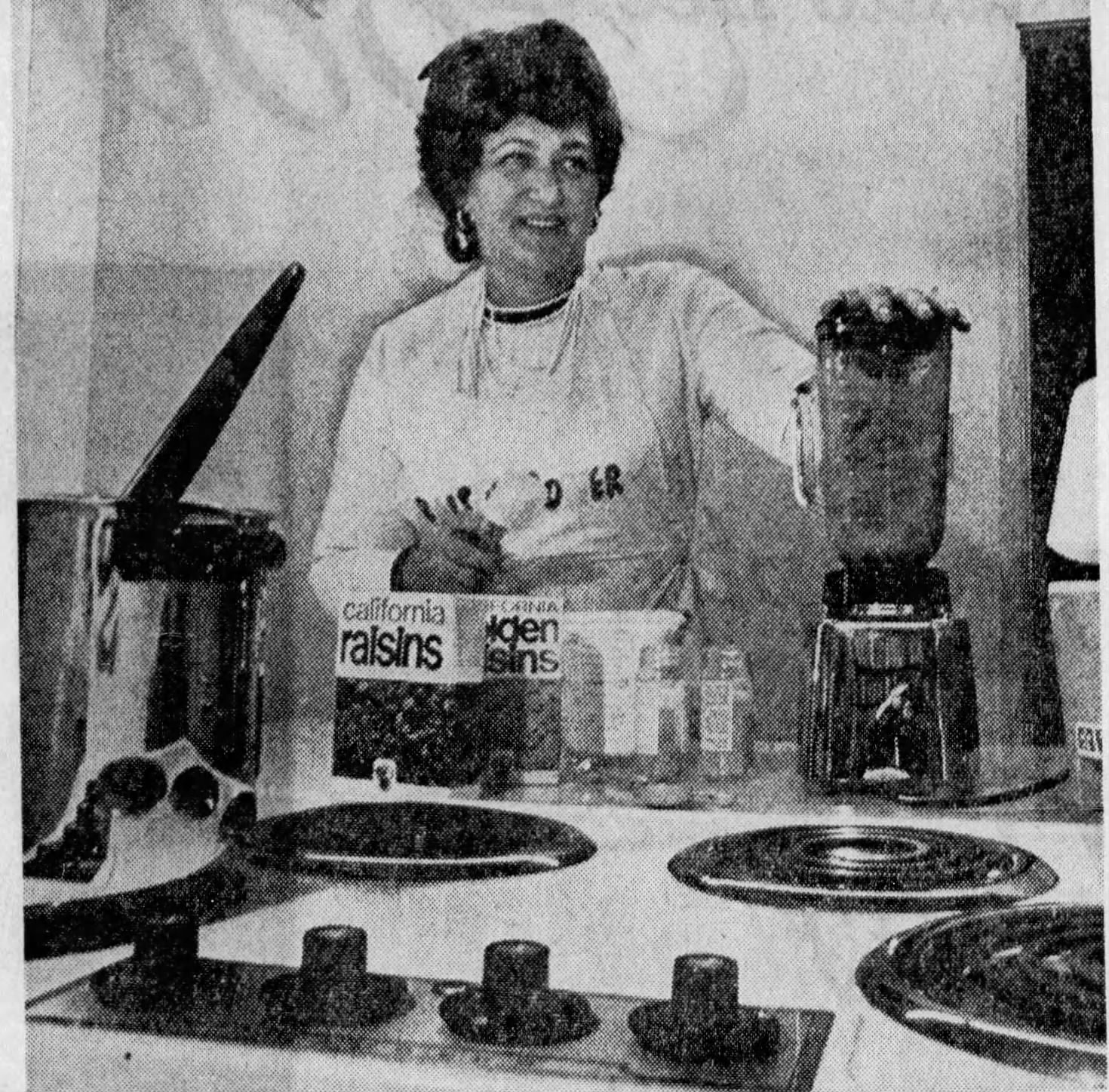
The California Raisin Advisory Board also churned out raisin recipes year-round for newspaper columns from their test kitchen. Photo courtesy of the Sacramento Bee, 1970.

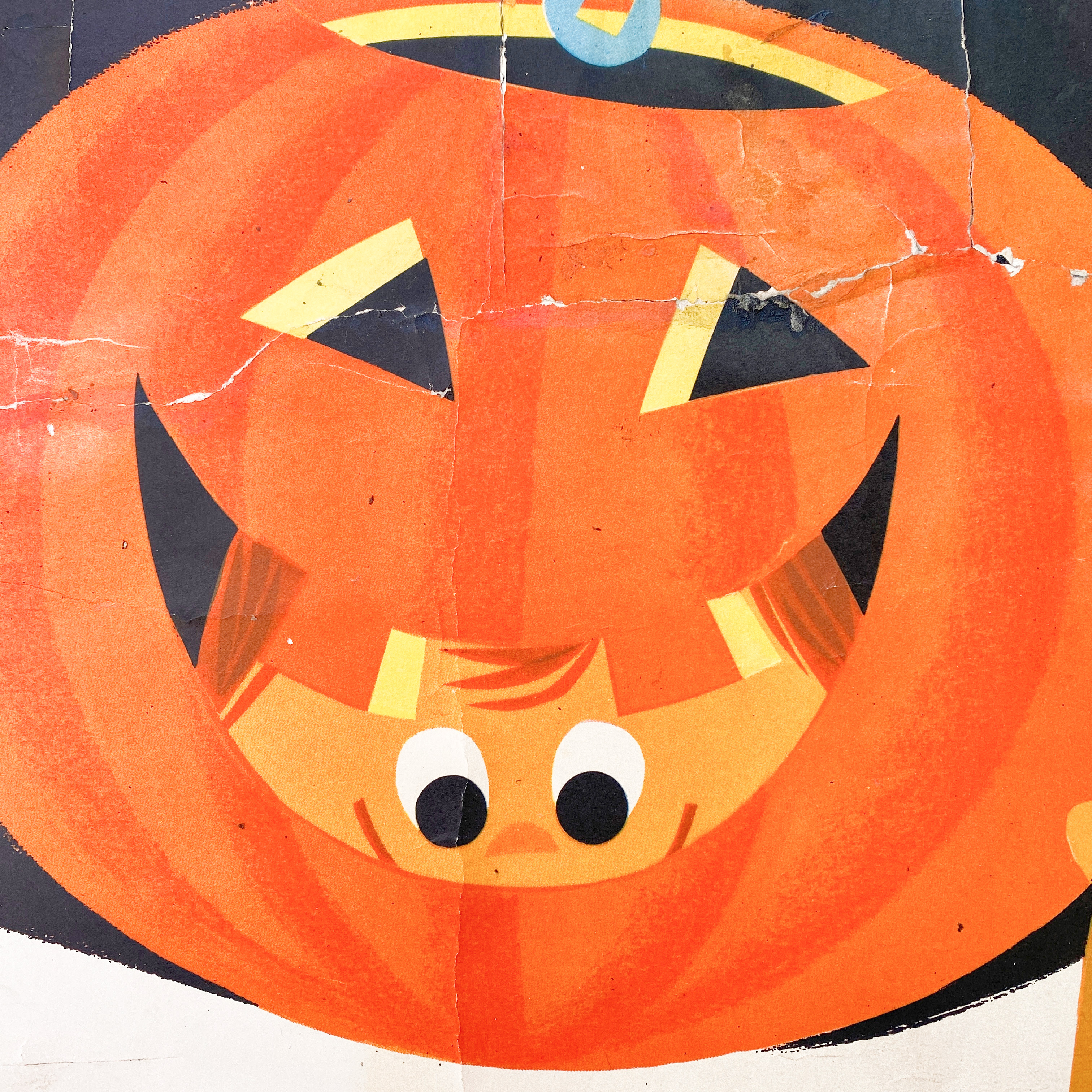
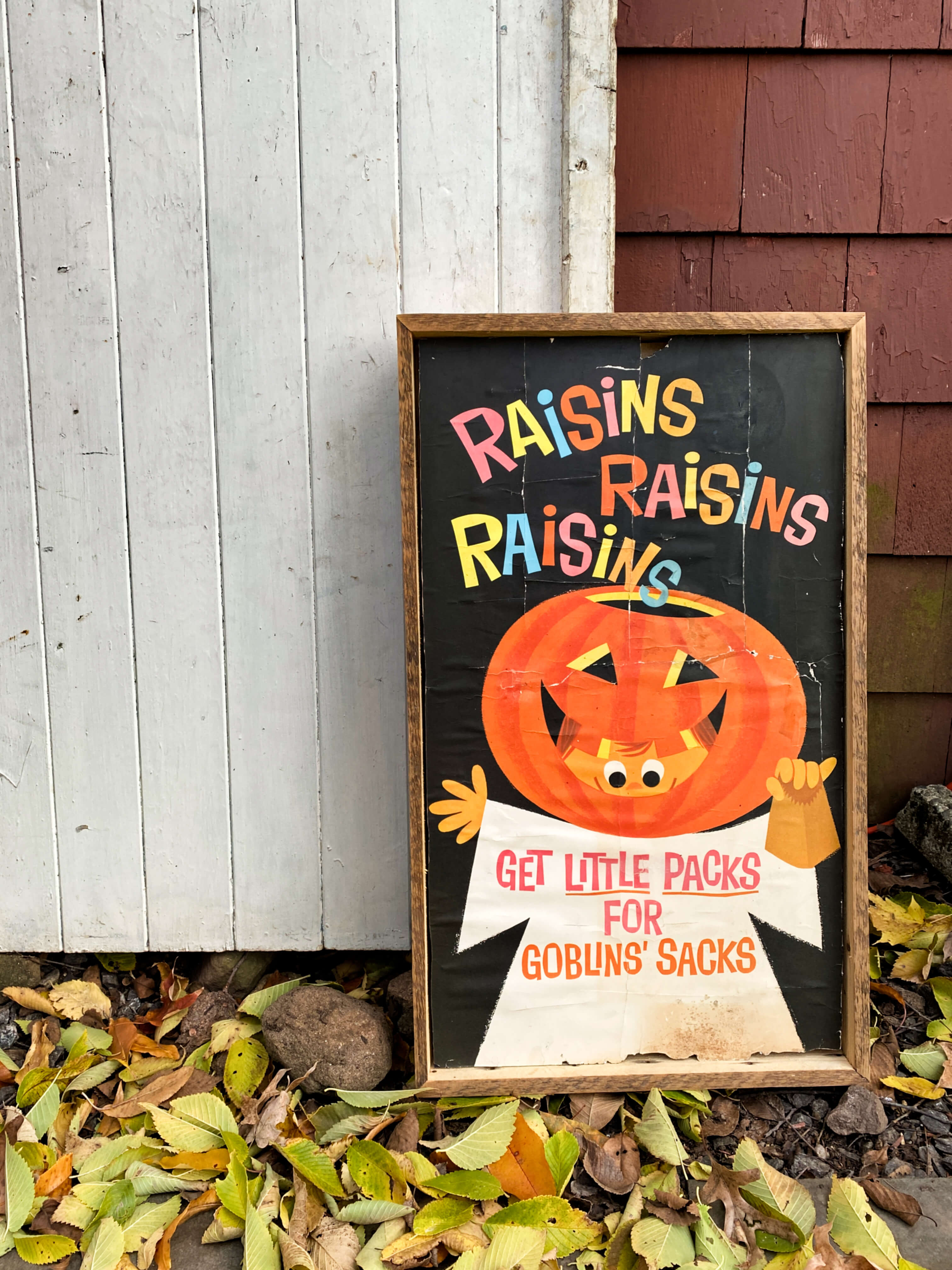
When Halloween time rolled around each year, the holiday provided an additional opportunity to remind parents and kids how sweet a treat, a raisin was. Just like traditional Halloween candy, albeit healthier, during the month of October, the Advisory Board promoted the fact that raisins came in small boxes – a handy size for trick-or-treaters. Posters made for grocery stores and food shops hinted at Halloween excitement. This is an example of a very rare original grocery store poster featuring the California Raisins Advisory Board…

Measuring 25″ inches x 14.25″ inches it is a true survivor of history and a real-life example of the Advisory Board’s cute and colorful messaging. Most food store advertising was discarded in the trash promptly after a promotion ended to make way for new advertising in its place. Printed on thin, inexpensive paper these eye-catching advertisements were not made to last more than 60 days let alone six decades. Oftentimes, they were hung in store windows exposed to heat, sun,, humidity, and temperature changes which would cause them to crinkle and fade over time. When I found this one, it was in fragile and brittle shape and was held together only by hope and a dehydrated rubber band. Ripped and torn in so many places it was impossible to unravel it without it completely breaking apart. A quick peek down the interior of its rolled-up shape, yielded the image of a pumpkin face smiling back. How fun! Home to the Kitchen it came for further investigation and repair.

Carefully rolling out the paper, rehydrating it with a warm, ever-so-moist-paper towel, and then gluing it to acid-free archival poster board took a couple days of attention. Each time a ripped section was flattened out and smoothed over it was a small victory in revealing the bigger picture. Little by little, inch by inch, the poster’s overall image went from bits and pieces to one whole poster.

Finally put back together, for a year, the poster sat just like that – attached to the thick archival poster board with a big wide border surrounding it. Waiting to see if it would stay secured, retain its bright colors and not disintegrate, it was wonderful to see that 360 days later the poster looked exactly the same. Removing the excess matting by cutting it down to its original size, a wood frame was built for it using antique wood remnants from the 1750 House. Floating the poster inside the wood frame allows for all the imperfections along the top nad bottom edge of the poster to show – a visual record of its fragile history. The poster, although greatly improved from its original found state, still bears its wounds in Frankensteinish patchwork.

But what I love most about this poster now, is how despite all its rough and tumble elements, it still manages to radiate joy and a sense of enthusiasm. That was the power of the Advisory Board’s campaign. Raisins are fun.

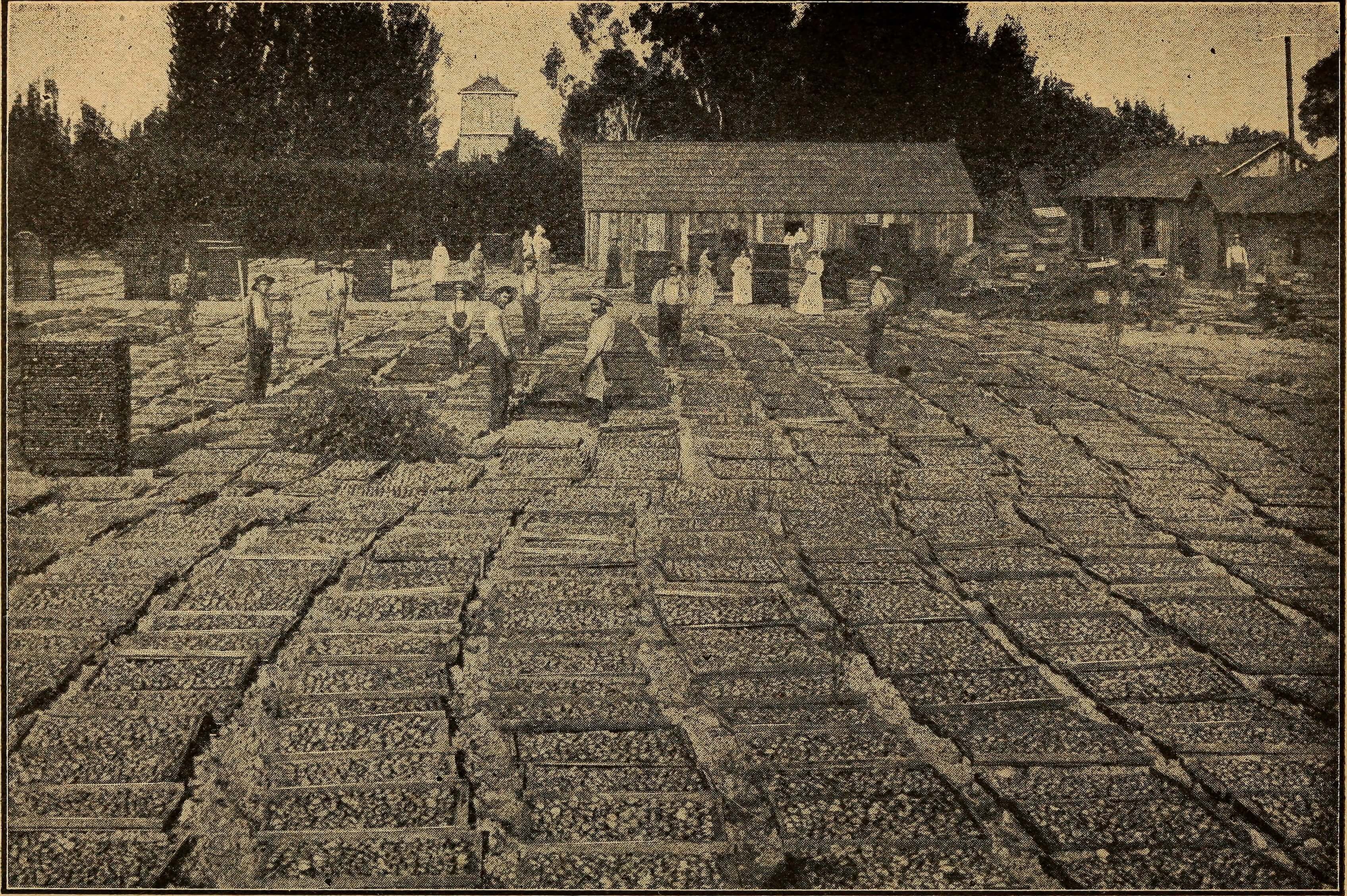
Raisin drying racks. Fresno, CA. 1901. Image courtesy of the Library of Congress

The first raisin farms in Fresno were started by a group of female schoolteachers in 1876. They decided to set aside four acres out of one hundred acres that they purchased so that they could grow grapes for a raisin harvest. Two years later, the first batch (30 boxes) was ready for market and a West Coast industry began.

In the early 1900s, Raisin growers in Fresno would make anywhere from $50-$125.00 per harvested acre.

By the 1960s, the US produced 250,000 tons a year, mostly from farms in the Fresno area. Foreign competition was tough though and the raisin growers were struggling to keep afloat. That’s when the Advisory Board stepped in with their breads and their cookies and their sweet, colorful, clever campaigns declaring raisins raisins raisins a wonderful thing.

As cute as the pumpkin goblin face was on the poster, it was not the imagery that launched the raisins to worldwide fame. That would happen in the mid-1980s when the Advisory Board approved an idea from a Foote, Cone, and Belding advertising executive who pitched an idea about raisins and a band and a signature song.

The California Raisins, singing Marvin Gaye’s 1968 Motown hit, Heard It Through The Grapevine was born. Indicative of the Advisory Board’s continuous efforts to pitch their product in clever ways, the California Raisins soaked into the fabric of mainstream society like no other fruit campaign had done before. This is the first commercial that started the success…

Making up a whole world of claymation figures and storytelling, the California Raisin band was an immediate hit and could be seen everywhere – on tv, in print ads, and on cross-promotional advertising products across grocery store shelves. This was the kind of big-splash notoriety that the Advisory Board was after in the 1960s. With more and more customers buying raisins in the 1980s and 1990s, thanks to the singing sensations, the Advisory Board was fulfilling its mission.

Photo courtesy of Crazy for Costumes.

In 1986, the California Raisin became the most popular Halloween costume of the year. The Raisin band members were reproduced in figurine form and Heard it Through the Grapevine reached the top 100 song charts. When the Smithsonian acquired the original California raisin claymation figures in 1991, it firmly sealed the success of the Raisin Advisory Board. Their singularly beloved product was now beloved by all.

Unfortunately, the sweet taste of success didn’t yield the type of monetary compensation that was hoped for when it came to the raisin growers. The Advisory Board disbanded in 1994 after struggling to balance the costs between promoting the raisins and keeping the growers profitable. Creativity can be harsh that way. Sometimes clever doesn’t equal capitalism. But in this case, it sure did produce some fun art and a new way to look at the world, even if it was discovered decades later than intended.

Cheers to joyful advertising, loving what you love completely, and to our little rescued poster whose celebrating its 60th Halloween this year! Hope it added a little something sweet to your holiday. Happy Halloween!

The Lost Art of Paula Peck: Egg & Mashed Potato Pizza circa 1966

In 1966, these words described her cooking… creative, imaginative, inventive, eclectic, beautifully presented, and internationally inspired. Craig Claiborne, the New York Times food editor and a beloved favorite here in the Vintage Kitchen, said “anyone who truly cares about cooking is fortunate indeed that such a talent as hers can be shared on the printed page.” James Beard called her “the finest cook I know.” Newspaper columnist Elizabeth de Sylva deemed her the “free spirit of cooking,” and food writer Gaynor Maddox labeled her “one of the most exciting, competent, and delightful guides to better dining.”

Today, here in the Vintage Kitchen, we are featuring a thoroughly modern-minded yet vintage recipe from the culinary repertoire of Paula Peck (1927-1972), who was a phenomenal but now forgotten cook popular during the mid-20th century. I use the word forgotten carefully. Since professional chefs today consider her cookbooks classics and since she still has a quiet army of devoted fans, she’s not lost to a select group, but Paula is definitely, surprisingly not part of mainstream cooking conversations like other famous names that traveled in her circle. Why is that? Was she overshadowed by bigger personalities like Julia Child or James Beard? Did her culinary prowess get dismissed over time? Her recipes simply forgotten?

In order to try to figure out why Paula Peck is not a household name today, we need to start at the beginning and explore the details of how she came to be the topic of conversation in mid-20th century kitchens.

It all started with her spouse.

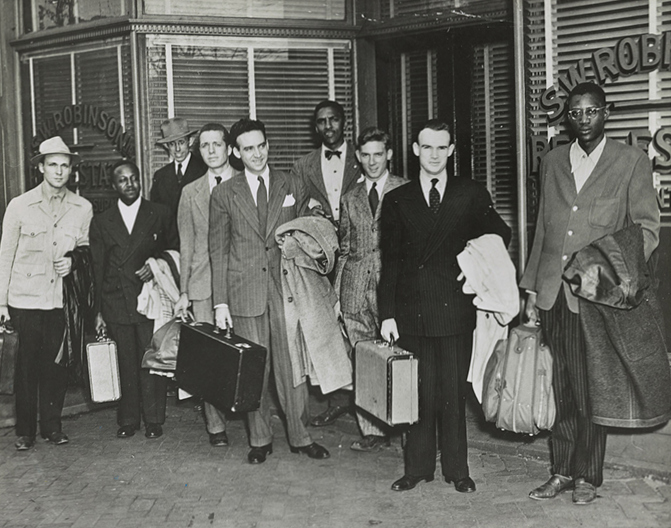
Among the many causes he supported, James Peck participated in the Freedom Rides in 1961, which protested the segregation of African Americans on public transportation. He was attacked and badly beaten for his involvement, but continued to defend the civil rights of African Americans. He is pictured here, fourth from left. Learn more about this experience in a 1979 interview here.

Paula’s husband, James Peck, known as Jim, was a newsworthy civil rights activist who worked his entire life trying to bring people together for noble and decent causes. Involved with the War Resistance League, the American Civil Liberties Union, and the Congress of Racial Equality among others, it was Jim who first inspired Paula to dive into the world of cooking after they were married in 1950. Up until that point, Paula knew little about how to create a meal. This was a bit of a tricky situation since she married a foodie. Unless she wanted to lose her husband to the local eateries of New York City night after night, she knew she was going to need to learn to cook. So as a young bride of 23, she set out on a mission to tempt her husband and his adventurous gourmet palate away from the restaurant scene, which he adored, and into the kitchen of his own home.

Paula Peck in her kitchen in December 1966. Photo: Newsday

As Paula started experimenting with food, she fell more and more and more in love with cooking. In trying to appeal to her husband’s enjoyment of international cuisine, in particular, she studied foods from all around the globe. She began collecting cookbooks, keeping track of recipes in a file box and gathering ideas about food preparation with friends. With every passing bite, Jim encouraged her explorations. Eventually, she gathered enough courage to take a cooking class with one of the country’s most celebrated gourmands, James Beard. From there, her culinary star rose bright and shiny, as the two struck up a friendship. One opportunity led to another. Paula became James’ apprentice and then his teaching partner. And then she went on to teach her own cooking classes.

Eleven years into her culinary journey, she published her first cookbook The Art of Fine Baking in 1961. After that, she was hired to work on the baking portion of the mega Time-Life Foods of the World cookbook series along with a host of respected chefs, food writers, and culinary experts. In 1966, she published a second cookbook, The Art of Good Cooking, in which she espoused the physical beauty of the kitchen, of quality ingredients, of simple equipment, of the breath-of-fresh-air joy that became her signature cooking style.

Her recipes began to appear with frequency in newspaper columns nationwide. She did live in-person cooking demonstrations for various events. She conducted interviews. The industry was achatter with news about Paula, about her recipes, about her unique approach to food. By 1970, Paula, the twenty-something girl who was not so skilled in cooking two decades earlier, arrived in the form of an accomplished, confident culinary teacher. Swathed in accolades, with nothing but a field of potential and possibility in front of her, surrounded by skilled peers and influential connections, Paula’s trajectory was on course for iconic status. And then something terrible happened. Paula died. Sadly, she was just 45.

In the 1960s, Paula circulated in the culinary world a bit differently than her comrades. Unlike most well-known cooks of her day, she wasn’t necessarily focused on age-old techniques. She questioned things. She wondered about established facts of cooking, curious if there were other ways or reasons to approach techniques beyond the traditional. She wasn’t concerned as much with how things were done, had been done, or should be done. Instead, she gave herself, and then her students, permission to experiment with food intuitively and to play around with taste, texture, and time.

Taking little bits and pieces from other cuisines, from other places and adapting them in ways that were unique and interesting, Paula worked with food from the foundation up, building a recipe like an artist builds up a scene in a painting. Taking into account, color, subject matter, texture, time, origin, flavor, and the relationship between one ingredient to another, her food was dotted with elements of surprise and flourish. It was those bits of unexpected detail that wound up setting her apart from all the gastronomes of her day. And I think it was those bits of detail that make her food still very relevant today.

Take pizza for example. Everybody knows the age-old basic pie with its flour crust, tomato sauce, a sprinkling of cheese, and perhaps a topping or two. But in Paula’s midcentury mind, the word pizza could mean something else entirely too. It could look something like this…

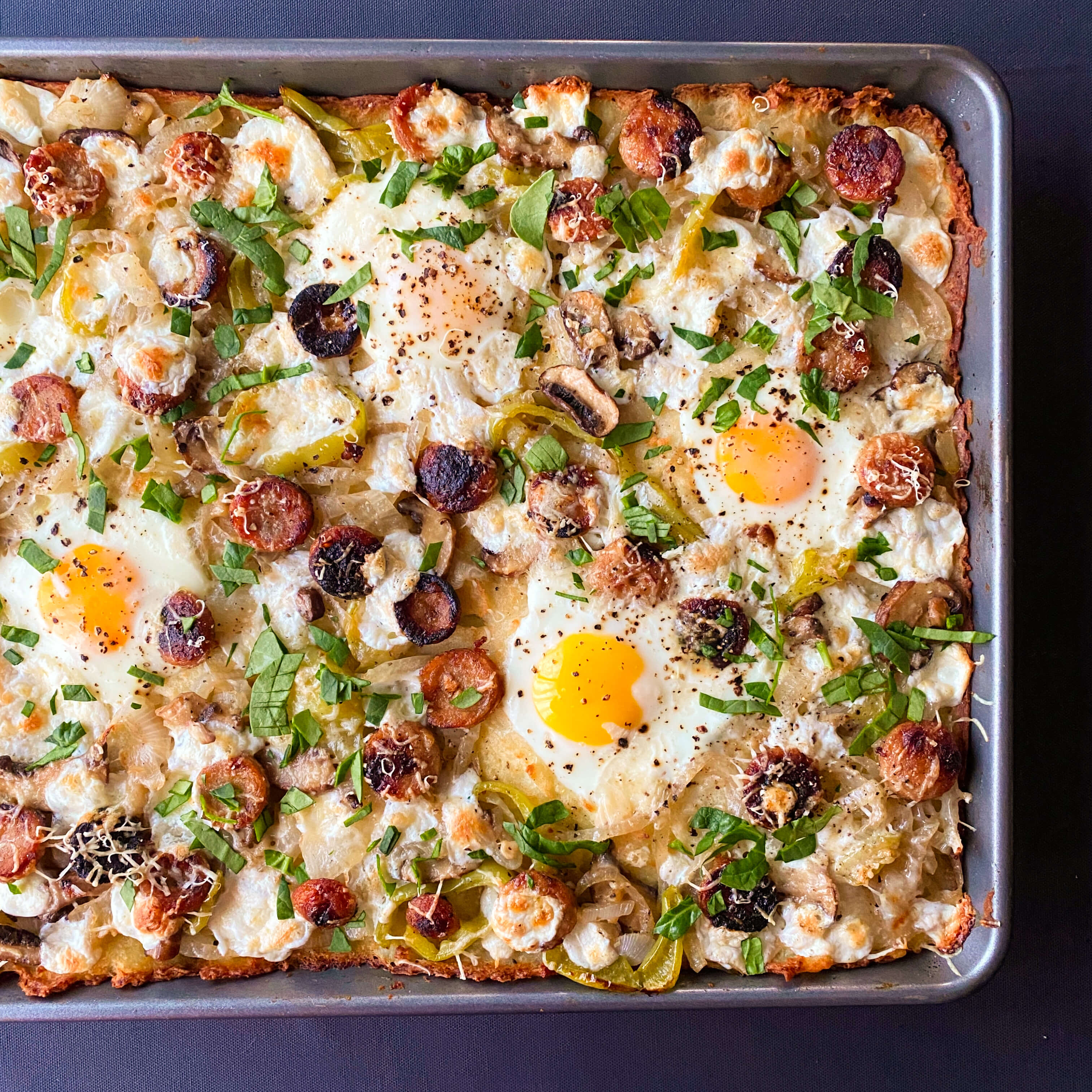
Paula Peck’s Egg & Potato Pizza

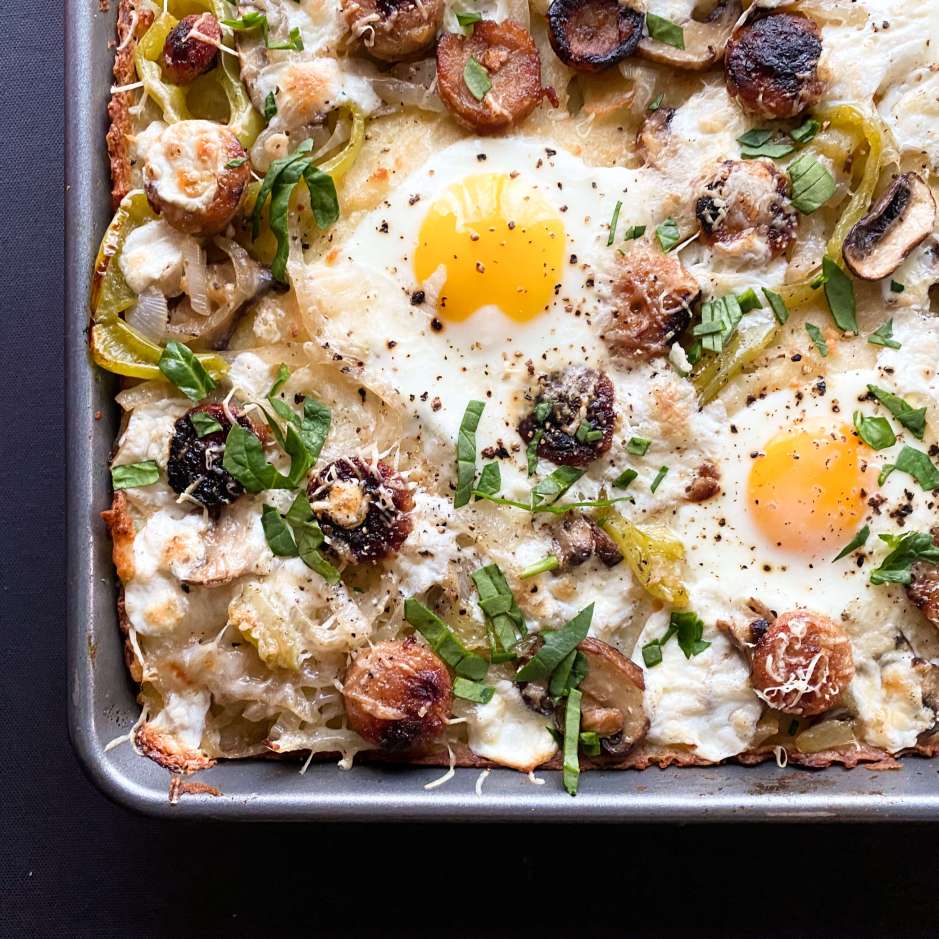
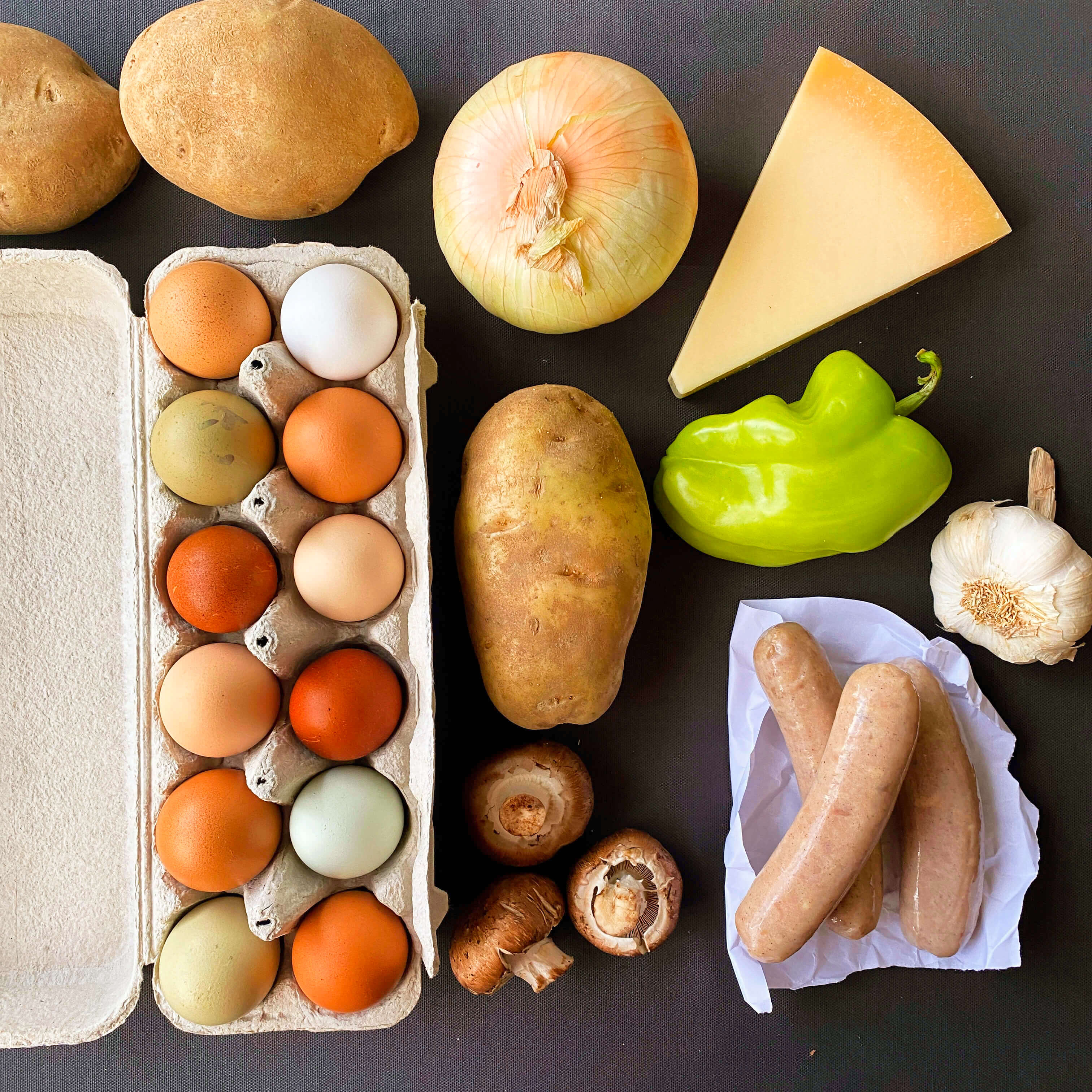
As a prime example of Paula’s creativity in the kitchen, it is her recipe for Egg & Potato Pizza from her 1966 book, The Art of Good Cooking, that is being featured here today. Using mashed potatoes as a base, sauteed onions, peppers, garlic, and mushrooms in place of a tomato sauce, and sausage and two kinds of cheese as toppers, this entire dish is polka-dotted with raw eggs and then popped into the oven for a brief bake. Surprise, whimsy, and a delicious combination of flavors are the result.

In a decade when casseroles were king of the dining table, the presentation alone of this recipe most definitely must have felt like a delightful break from the ordinary in 1960s America. More like a popular modern-day sheet pan meal than a traditional pizza, this fun-to-make any-time-of-day appropriate dish has contemporary comfort food written all over it. Made with simple ingredients and easily prepared, it feeds six people, is satisfyingly filling, and is fun to present table-side. In other words, it contains all the hallmarks of a perfect Paula dining experience.

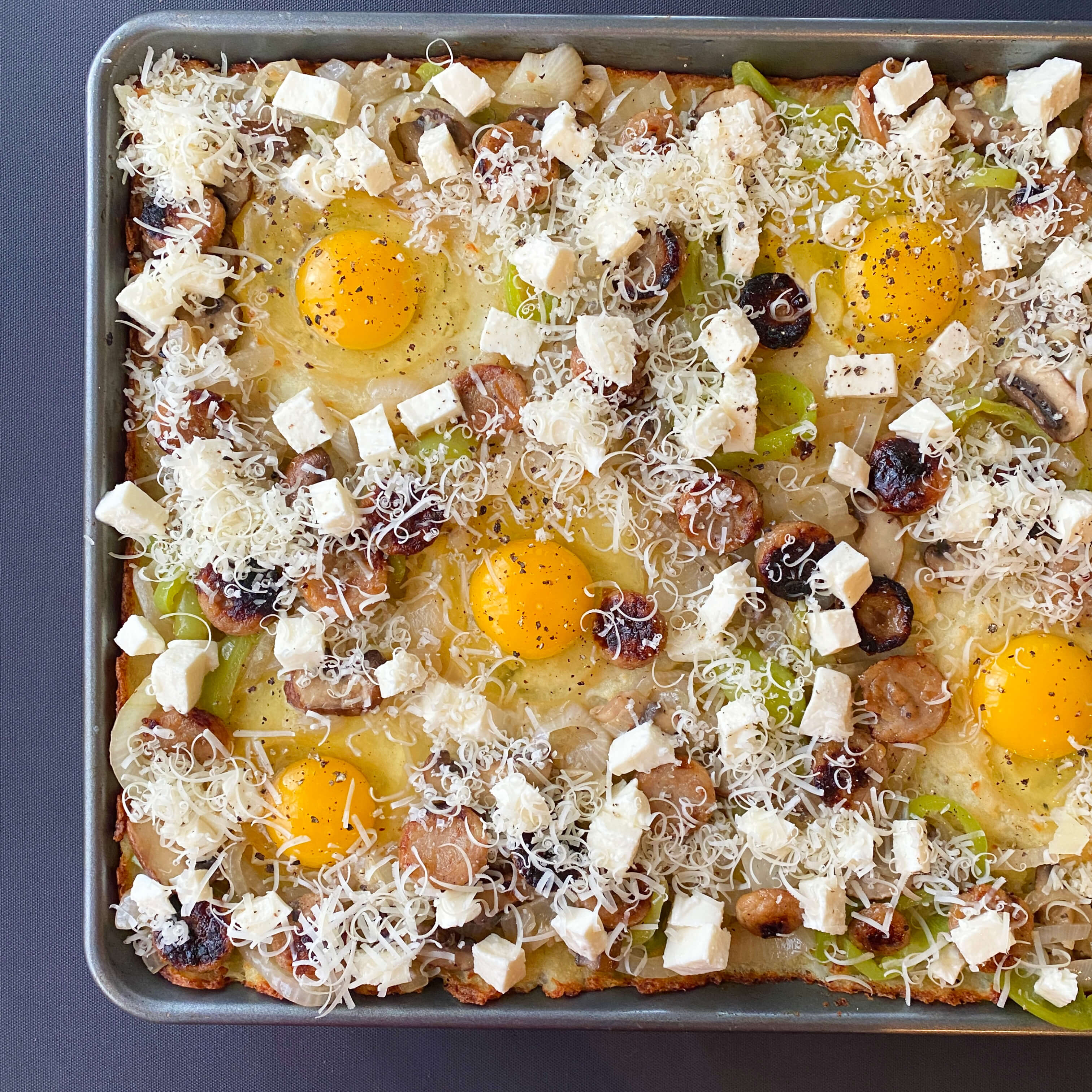
I made this recipe as-is except I substituted chicken sausage for Italian sausage. And one thing to note before you begin… this recipe is best served immediately when it comes out of the oven. If you leave it to sit for a minute or two the eggs will continue to cook to a hard-boiled consistency and will eventually turn rubbery, if you wait to serve it much longer after that. If you like your eggs runny, cook the potatoes and toppings minus the eggs just until the cheese begins to melt (about 17 minutes) and then crack your eggs in their allotted divots and stick the whole tray back in the oven for about 3 minutes.

Paula Peck’s Egg & Potato Pizza

Serves 6

1/2 cup olive oil

3 cups well seasoned mashed potatoes

1 large onion, peeled and sliced

2 cloves garlic, minced

2 cups mushrooms

1 green pepper, seeded and sliced

4 cooked sweet or hot Italian sausages (I used maple-glazed chicken sausage)

6 eggs

1/4 cup grated Parmesan cheese

2/3 cup diced mozzarella cheese

Freshly chopped spinach for garnish (optional)

Preheat the oven to 400 degrees. Grease a large flat baking tray generously with olive oil. Spread the mashed potatoes evenly covering the entire pan. With the back of a spoon, make six indentions in the potatoes for the eggs which will be added later.

Bake the potato-lined pan in an oven for 30-40 minutes or until the potatoes seem slightly crisp on the bottom. Remove from oven.

While the potatoes are baking, slice sausages 1/4 inch thick and brown them in a pan on the stovetop. Set aside. Next, saute onion, garlic, mushrooms, and green pepper in remaining olive oil until soft.

After the potatoes have been removed from the oven, spread top of it with the sauteed mixture and sliced sausage, leaving indentations clear.

Break eggs into each of the indentations. Sprinkle with Parmesan cheese and dot with pieces of mozzarella cheese.

Return to oven. Bake for 20 minutes or until eggs are set and the cheese is bubbly.

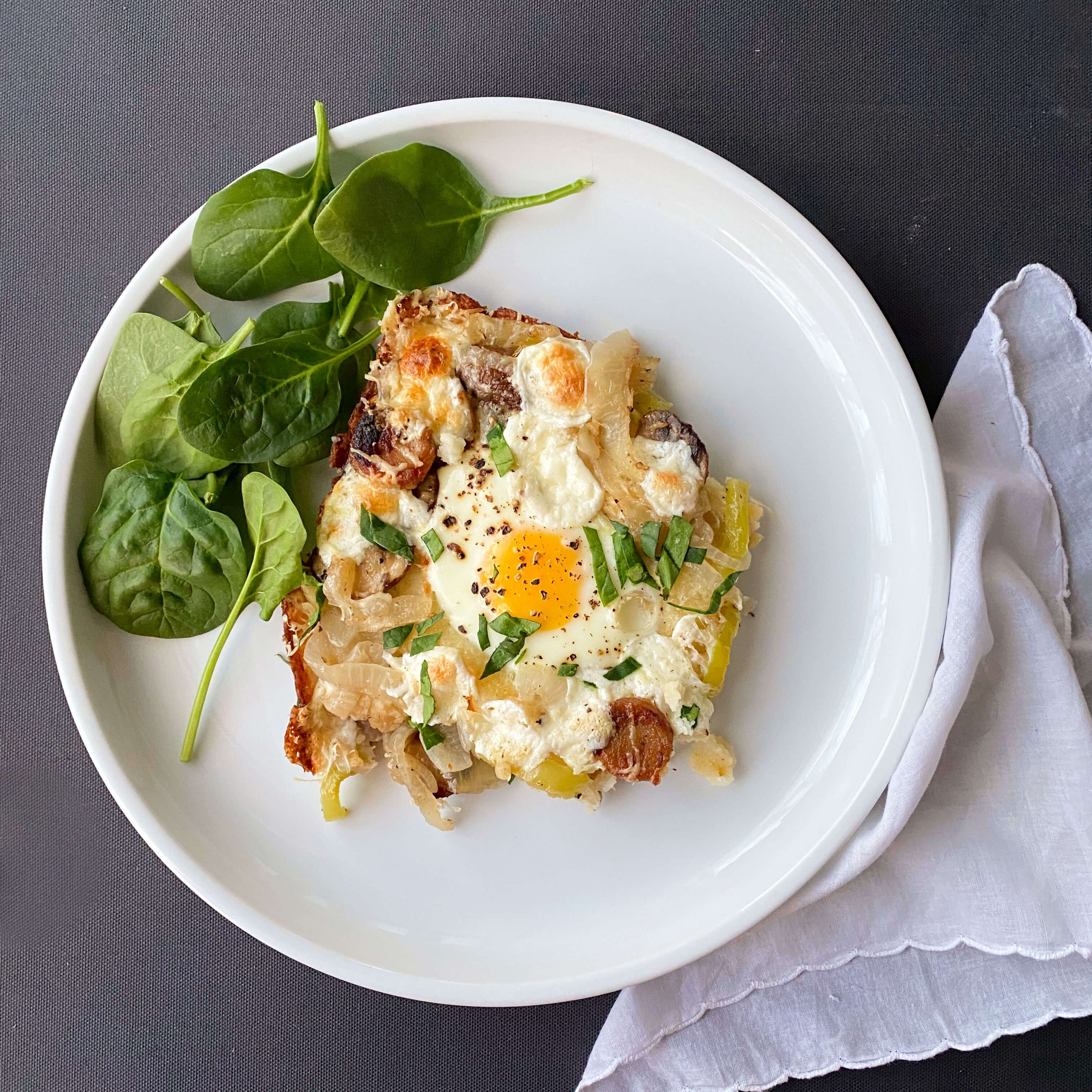
Cut the pizza up into squares or wedges and serve immediately. Paula recommended a green salad as a side dish which is a great choice if you are making this for brunch or dinner especially.

Ideal for upcoming spring holiday breakfasts like St. Patrick’s Day, Easter or Mother’s Day, when onions and spinach are in season, this egg and potato pizza is a blank slate for your creative interpretations too. Add purple onions in place of yellow onions for additional color. Garnish with fresh herbs or scallions on top in place of spinach. Replace Italian sausage with prosciutto or smoked salmon. Serve it for breakfast, for brunch, for lunch, for dinner. Call it a pizza or a sheet pan meal or a one-dish wonder. Paula would be the first one to tell you to take this recipe and run with it till your heart is content. Interpret it as you like. That’s what cooking was all about in the Peck family kitchen.

“My belief is that tradition should not hamper us if we find a better way of doing things,” Paula wrote in 1966. Perhaps that very attitude is what has kept Paula’s recipes out of the widely circulated limelight of modern-day kitchen conversations. Instead of being stubborn, restrictive, and definitive about only one be-all-end-all way to approach food preparation, Paula encouraged exploration. She encouraged hands-on learning. And she encouraged continual education.

That type of exploration and freedom tends to breed a sense of confidence that builds over time through experience. A new cook might start out making one of Paula’s recipes exactly as she described, but then over time, feeling secure at the eventual mastery would adopt Paula’s methods of questioning and discovering. The recipe would get tweaked, augmented, adapted, enhanced. As it evolved, it would take on new forms, new ingredients, new flavors, a new identity. Attribution back to its original source, over time, would get muddied, fuzzy, forgotten, and then lost to history completely. I think that’s what happened to Paula and her creative approach.

In modern-day multi-cultural fusion cooking, in outside-of-the-box presentation, and in the pairing of unusual yet complementary flavors, I think today signs of Paula’s style of cooking are all over our culinary landscape. We just don’t realize that she was the source from which it all began. Paula Peck by name might not be on the tip of everyone’s tongue these days, but her inspiring style of cooking still is.

I hope you enjoy this recipe as much as we did. If you decide to add your own flourish to this dish please send us a message or a photo of your finished affair. We’d love to learn how Paula inspired you!

Cheers to creativity in the kitchen! And to Paula for showing us what fun cooking can be when you add a little splash of imagination.