

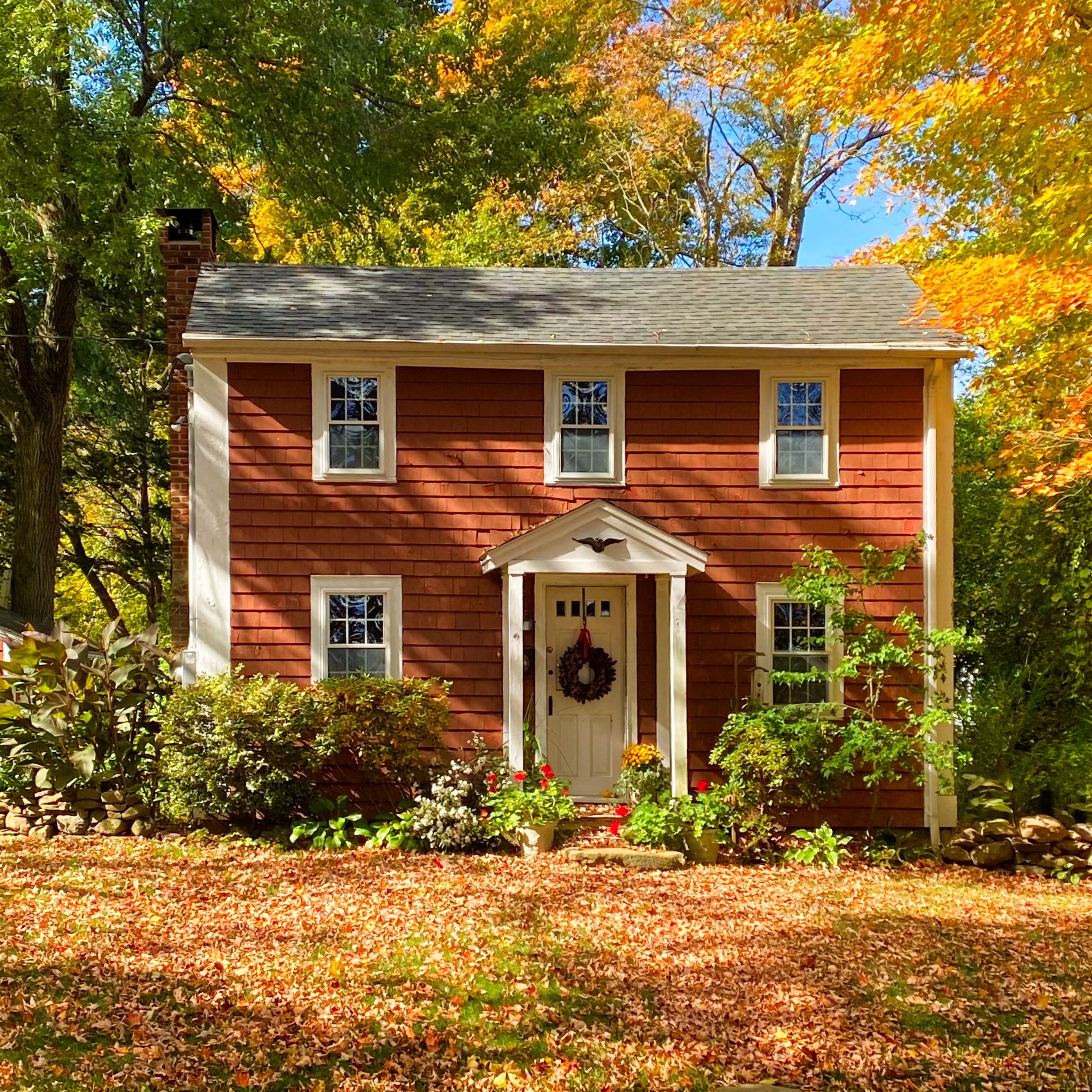
Outside the kitchen window, fall is here. It’s blown into New England this year slowly, on warm breezes scented with cider doughnuts and sunshine. Our prettiest one yet, milder-than-usual temperatures have prolonged the season, rolling it out like a colorful ribbon one yard at a time.

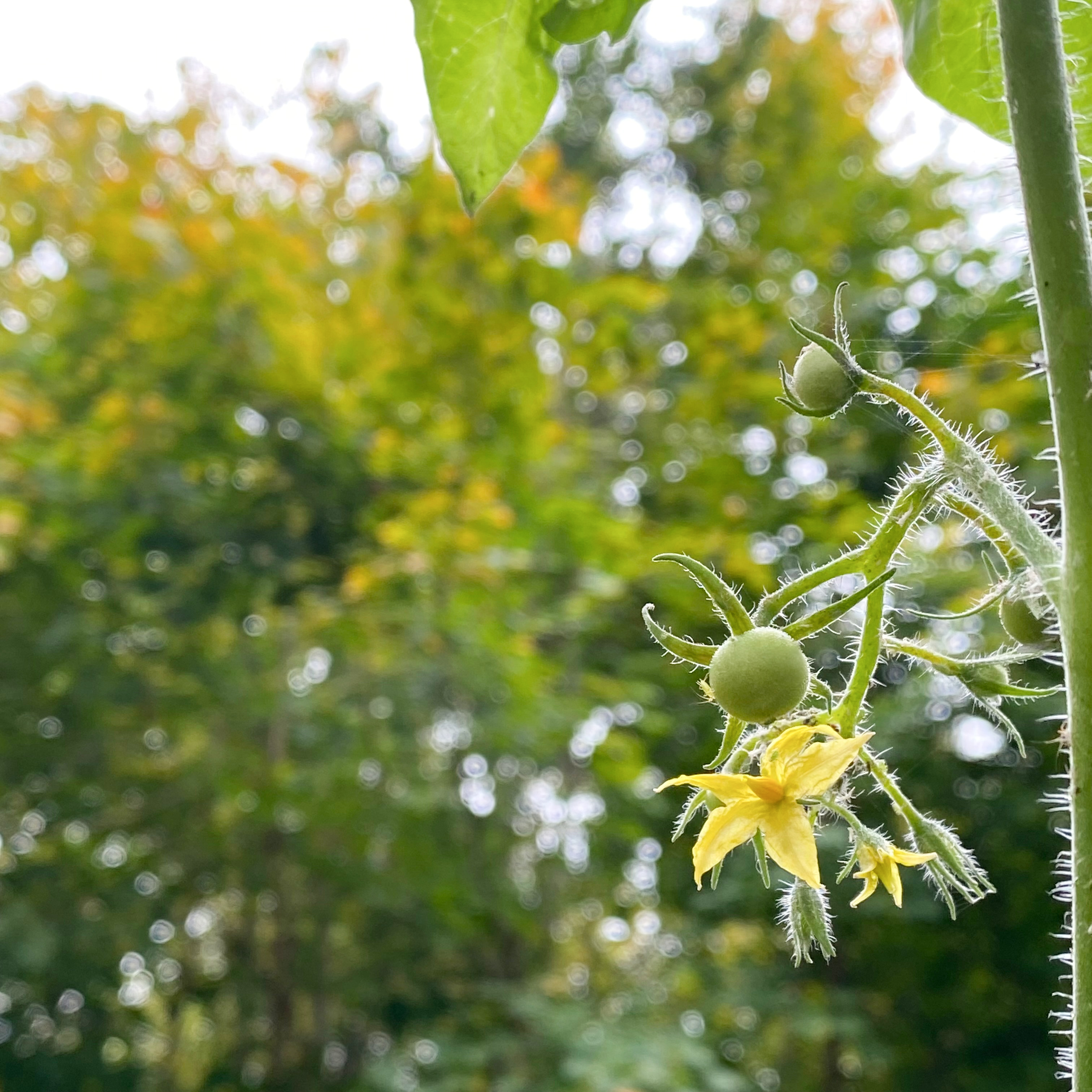
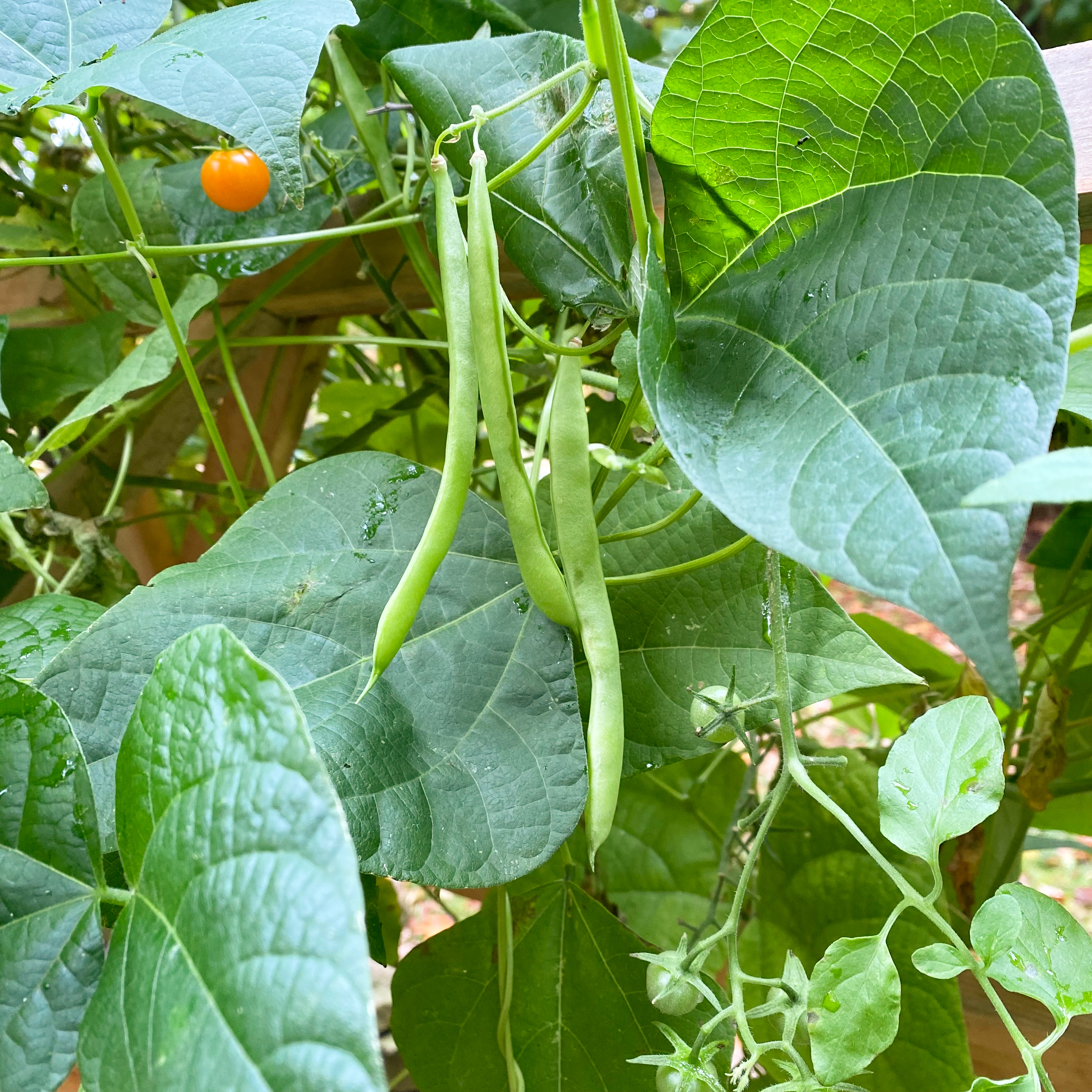
While the days may have lacked that traditional chill that signals a sincere change in seasons, there is something definitely delightful about a warm weather fall. Our string of 70-degree days and 50-degree nights means that much of the summer garden at 1750 House is still hanging on. There are clusters of tomatoes ripening on the vine, summer corn continuing to grow tall in the raised bed, and green beans still putting out at least a dozen pods a day. It may be mid-October, and leaves may be blanketing the garden beds, but the nasturtiums, zinnias, and geraniums are still flowering like it’s July. The novelist David James Duncan once called this Indian summer time of year “a state of serene confusion.” I can see why.

Since so many pollinators are still coming to the flowers, we’ve decided to leave all the summer vegetables up for as long as we can so that they can get all the nourishment they need.

Around the neighborhood though, tradition is not indulging this unusual weather that’s been caught between the beauty of two seasons. Despite the fact that many a summer flowerpot is still wholeheartedly blooming, pumpkins are on porches, dried corn stalks decorate lamp posts, twig wreaths hang on front doors, and the leaves… the magical leaves of a New England autumn… are floating and fluttering in shades of cinnamon, olive, mustard, and mahogany. There is color and flowers and fall foliage everywhere.


Autumn has come to the shop too…

And that means that our annual shop sale is right around the corner. If you are new to the blog, every year, November 2nd marks 40% off everything in the Vintage Kitchen shop for one day only. We call it the All Souls Day sale, not for the Catholic holiday that it shares the day with, but for the heirloom history that it encompasses.

All Souls Day is the only communal holiday in the calendar year that celebrates and remembers all deceased ancestors, and to us, that seems like the perfect time to celebrate vintage and antique heirlooms too. None of our shop items would be here today if they had not traveled through time, cherished and cared for in the hands of the people before us.

It’s up to us to curate the shop, but the heirlooms do all of the storytelling. Each year, they share new insights into the past that help shed light on things in the present. Since no two items in the shop are ever exactly alike, no sale from year to year is ever exactly the same either.

Stories float in and out of the shop every day offering glimpses into kitchen and garden life that occurred a few decades ago or a few centuries ago. Just like stories posted to the blog, every heirloom in the shop comes with its own unique tale marking its place in time. Hidden histories are everywhere. Here are some of the unique stories you’ll find in this year’s sale…

The 1940s Oxnard Lemon Crate
Highlighting Mexican-American history in California’s Port Of Hueneme, this 1940s-era lemon crate tells the story of how Sunkist lemons were brought in from local farms and sorted at an Oxnard packing house before being transported to retail storefronts around the world. Most of this packing was done by women who were skilled experts in sorting, grading and packaging the lemons for distribution. At the height of production, over four million crates were packed per year totaling half a billion lemons. Fruit and vegetable crates were never meant to withstand time and travel for longer than a few months, so it’s always exciting to discover one that has survived much longer than intended. The only part that is left of this original eighty-year-old packing crate is the front panel, now mounted like a piece of art to showcase its original label.

Beyond New England Thresholds
Focusing solely on the importance of the fireplace hearth in early American homes, this 1937 photography book by Samuel Chamberlain explores the country’s first “kitchens” in over two dozen New England homes that date back to the 17th and 18th centuries. The photos progress as the hearth progresses from primitive cook space to home heating source to decorative fixture, illustrating not only how far cooking has come since the early days, but how home interiors and design have evolved as well.

Perdita
Voted one of the best restaurants in the country by Holiday Magazine in the 1950s, Perdita’s of Charleston, SC and Macon, GA was known for its elegant French-inspired fare highlighting local seafood and steak. The restaurant was named after actress Mary Robinson (1758-1800) whose most famous role was playing Perdita in Shakespeare’s A Winter’s Tale.

Mary had a reputation for being very enchanting and seductive, especially when it came to the amorous attention of men. On a trip to Charleston in the late 1700s, she was caught up in a local romantic scandal that forever made a mark on Charleston’s colorful history, and subsequently inspired the vibe and aesthetic of one of the city’s most famous restaurants.

The Neo-Classical Candleholders
Made for the Metropolitan Museum of Art gift shop, the design of these four petite candleholders is based on antique furniture mounts from a French secretary in the Museum’s collection. The secretary dates to 1787 and is believed to have belonged in the apartments of Marie Antoinette during her time at Versailles. This is the furniture that inspired the candlesticks including a detail shot of the mounts themselves…


Notice how the candlesticks are almost an exact replication of the mounts, fruit included.
The Peruvian Pottery Bowl
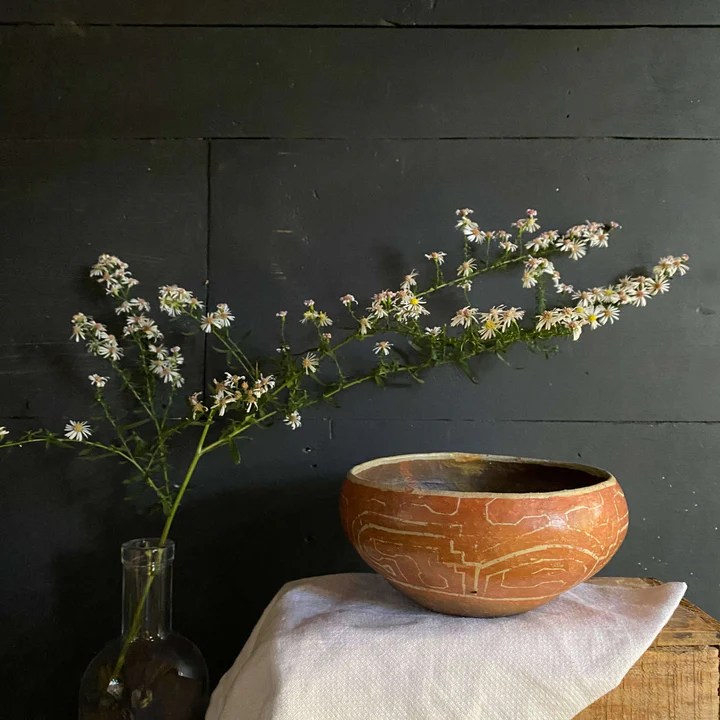
Handmade in the Amazonian jungle of Peru, this style of clay bowl has been made for centuries by local Indigenous women of the Shipibo-Conibo tribe using skills and techniques passed down from generation to generation. Highly personal and reflective of each specific woman who makes them, the bowls are entirely formed by hand and then painted with brushes fashioned from twigs and their own human hair. The markings, like the bowls themselves, are one-of-a-kind… trails of paint inspired by each woman’s dreams and visions combined with traditional cultural symbols celebrated by generations of women that came before her.

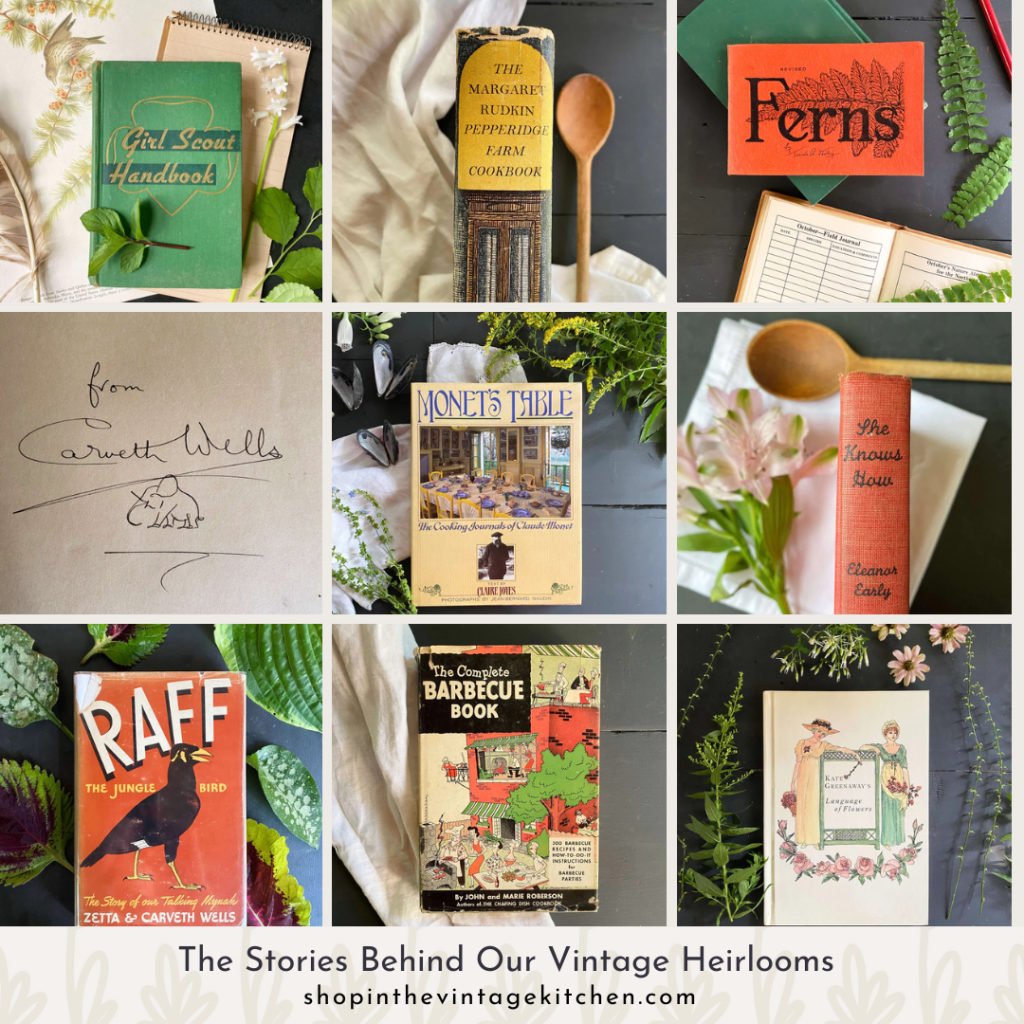
Every year, new faces from history emerge too. This year, we met Juliette, Margaret, Farida, Eleanor, Kate, John, Marie, Raffles, Zetta, Carveth and Claude…

Each of them had interesting stories to tell. Juliette Gordon Low started the Girl Scouts in Savannah, GA in 1912. Kate Greenaway forever changed the way we felt about blooms and blossoms in her bestseller, The Language of Flowers. Farida Wiley taught nature classes at NYC’s Museum of Natural History for 60 years. And we all know Claude Monet from his famous impressionist paintings, but did you know that he was also a devout foodie too? There’s a cookbook full of his recipes to prove it. All of those faces above created all these pieces of history below…
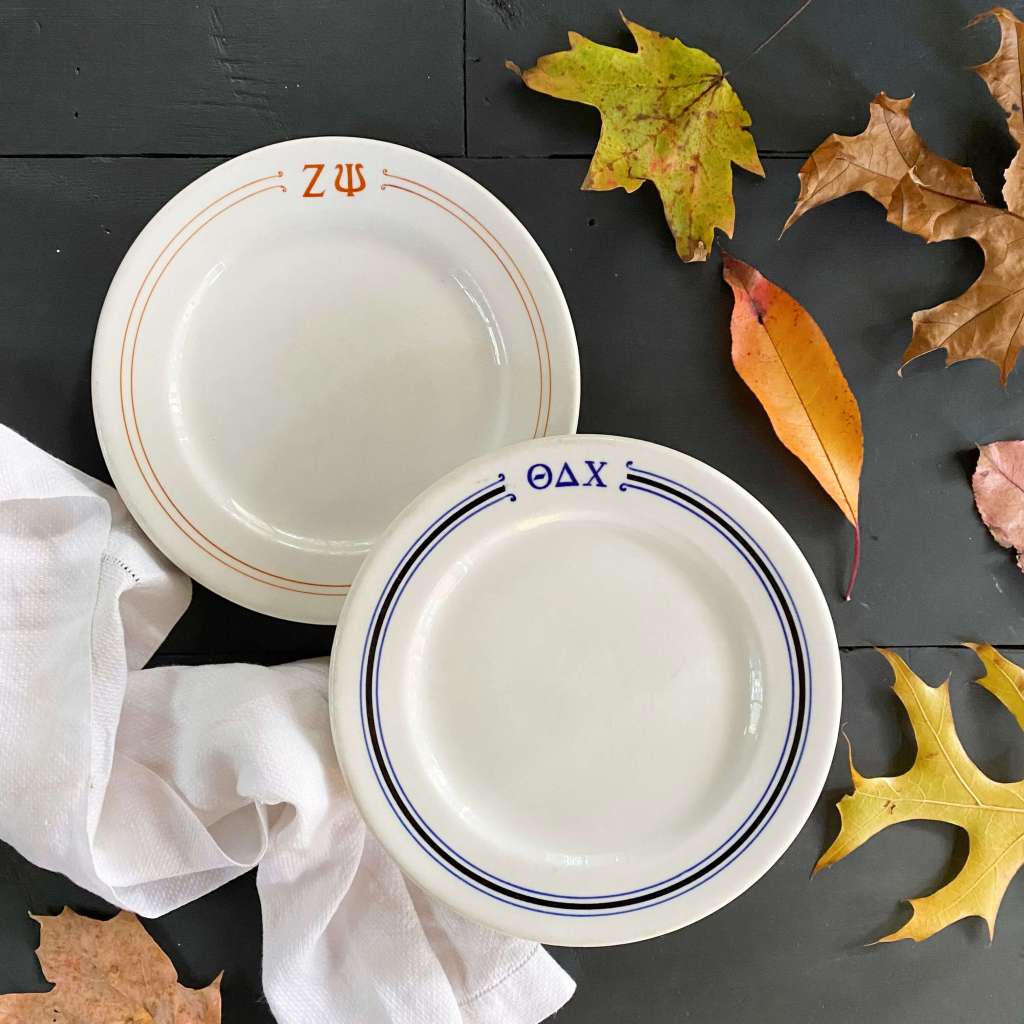
In the shop, a plate is never just a plate. It’s a rare glimpse into dining hall life at a 1930s fraternity house…
In the shop, a teapot is not just a teapot. It’s the oldest antique of the year. This one dates to 1838…

In the shop, a cookbook is never just a collection of recipes. It’s stories about life and heritage and inspiration in a myriad of ways. It’s Canadian Leslie Forbes (1953-2016), who was not only a charismatic travel journalist, a fiction writer, and a cookbook author but an illustrator too…


It’s the talented way-ahead-of-her-time Paula Peck (1927-1972), who died at the age of 45, but not before leaving a handful of books that turned professional cooking and baking on its side in the mid-20th century, by bucking traditional techniques and inventing creative, approachable food…


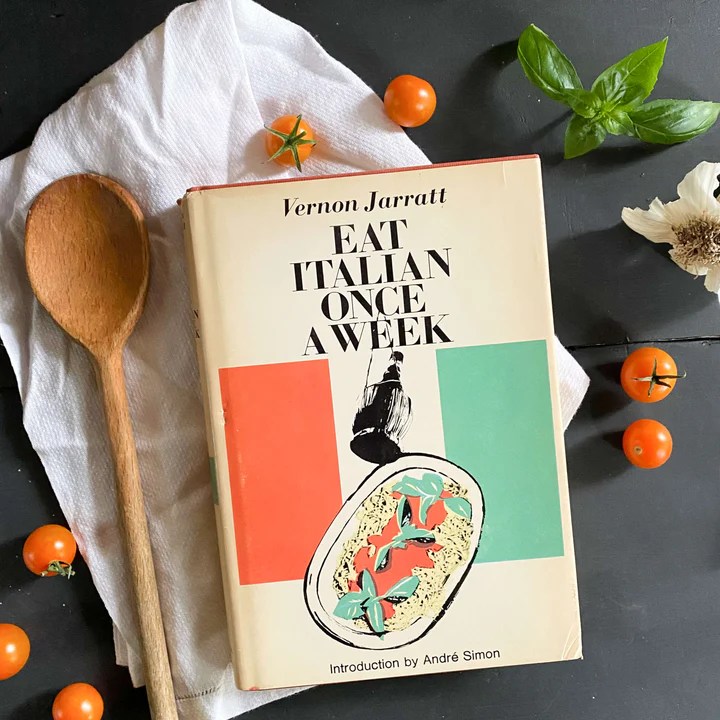
It’s British ex-pat Vernon Jarratt who married an Italian countess and went on to live a La Dolce Vita life in Italy as an intrepid gourmand and restauranteur…
In the shop, a vintage coffee tin is not just a nostalgic vessel to store modern-day items. It’s the lifeblood of immigrant brothers from Scotland who sought fortune and flavor in America’s coffee trade in the late 1800s.

And in the shop, coasters aren’t just little mats to set your drinks on. They are mini works of art by revered French botanical painters of the early 1800s…

These are just a few examples of the people, places, and stories that find their way into the Vintage Kitchen shop on a daily basis. I hope at this year’s sale you discover an heirloom that captivates your attention, that steals your heart away to another time or another country, and that inspires new creativity from history’s forgotten muses.
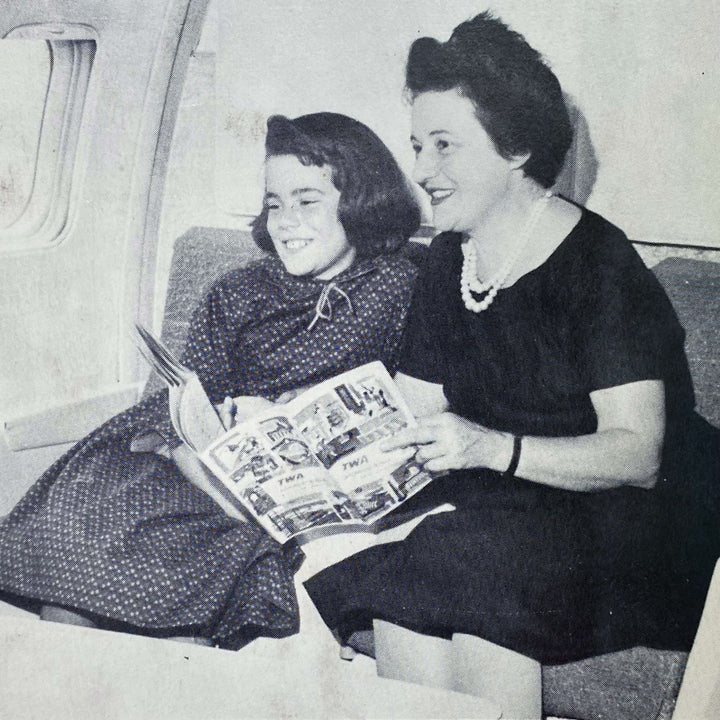
Perhaps you’ll travel with engaging journalist and war correspondent, Betty Wason and her daughter, Ellen through the regional cuisines of Spain…
or fall in love with the fish-out-of-water escapades of French Clementine as she navigates the ins and outs of cooking in an American kitchen in the 1940s…

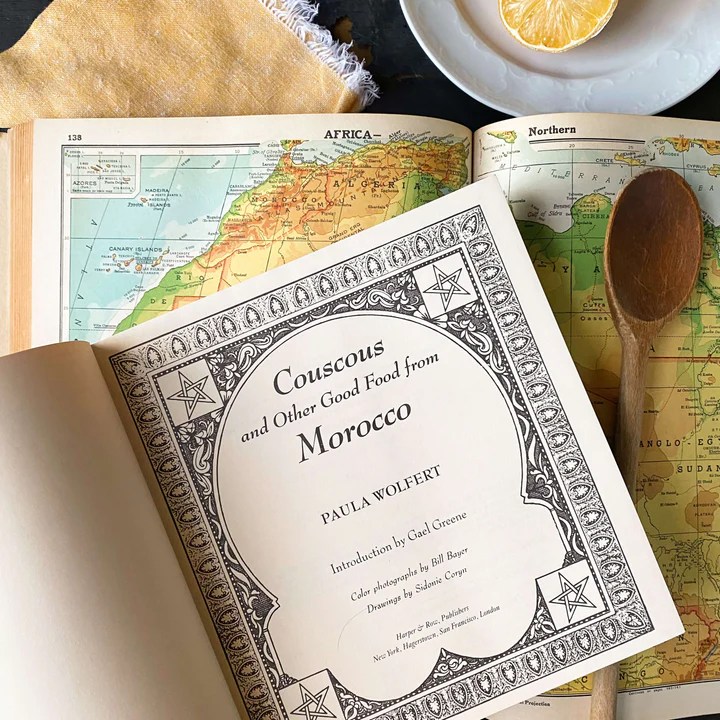
or maybe you’ll wind your way around the exotic Moroccan spice markets with Paula Wolfert as your educational guide.
At this year’s sale, you’ll notice that some cookbooks sport a festive yellow banner in the listing photos. Those banners signify a new donation program that we’ve just recently launched. Any cookbook that you see in the shop that says This Book Gives Back qualifies for a 20% donation to Feeding America, a nationwide non-profit network of food banks, food pantries and local meal programs dedicated to providing nutritious meals to food-insecure communities around the United States. Not all cookbooks qualify for this program, so be sure to look for the yellow banner if you would like to participate.

The sale begins at 12:00am (EST) on Saturday, November 2nd, 2024 and runs through 11:59pm that same night. Discounts are automatically tallied upon checkout, so there is no need to enter any coupon codes or discount phrases to receive 40% off.
New vintage and antique heirlooms continue to be added to the shop daily, so stop by for fresh finds leading all the way up to the sale. And, as always, if you are looking for something that we no longer have in stock, please send us a message. We’ll be happy to add your name and needs to our waitlist.

Whether you are interested in experimenting with a new cuisine, looking for a new favorite vintage dish pattern, or starting a collection that recalls memories of a happy time from your past, I hope you find something in the shop that calls to your heart and adds extra delight to your kitchen.

Cheers to all the old souls that inspire the shop each and every day. Cheers to all the heirlooms that they have been passed on to us to love and cherish just as much. And cheers to the kitchen for being the one spot in the house where everyone is always welcome.

Happy shopping!










 In the Vintage Kitchen: Where History Comes To Eat