Ladies and gentlemen, the race has been won. And the contest almost was too! If you missed the Kentucky Derby on Saturday, here’s a two-minute replay of the race…
It was an exciting experience right up unto the finish line this year with Nyquist and Exaggerator storming down the track with just mere inches between them and the win. Which is exactly what happened in Ms. Jeannie’s Derby contest also. While no one picked Nyquist as a winner, there were two readers who both placed favorites on Exaggerator as the horse to beat. How exciting, because he almost was!
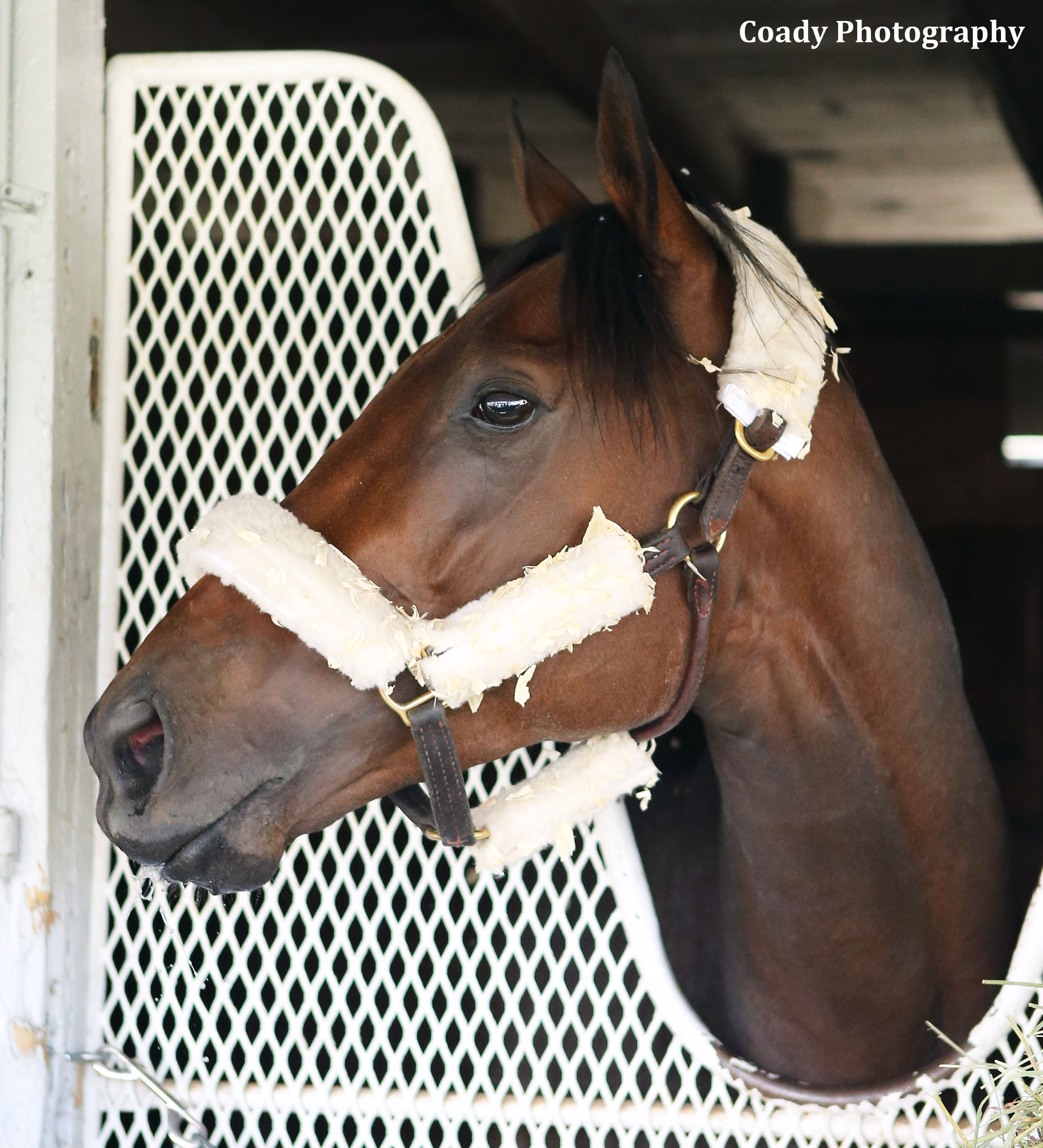
Official 2016 Derby placers: Nyquist (1st) Exaggerator -pictured above (2nd) and Gun Runner (3rd).
Since there was no official winner, in the land of Ms. Jeannie, prizes selected for this year’s blog contest will carry over to next year, where we can all try again guessing for glory. In the meantime, a big congrats goes out to blog readers Amanda and Renee for both selecting Exaggerator. Will they be able to duel it out next year for permanent status in the winner’s circle? Anticipation is already building and we are still 360 days away from the next Derby date! Oh my.
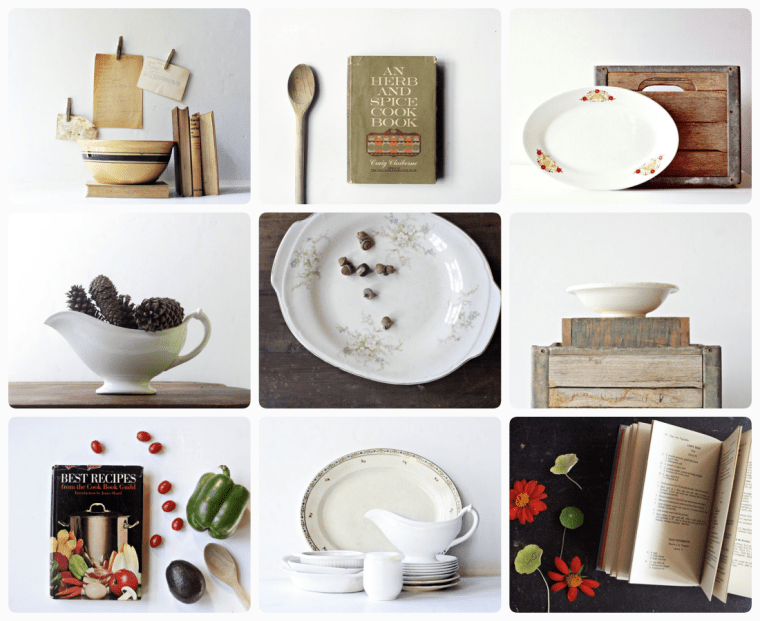
Outside of the racetrack, a horse of a different sort leads the pack of new items that just galloped their way into the bookshop. Browse a bit here…
This collection of items is all about easy, effortless living and decorating. As we gear up for farmer’s market season, the vintage cookbooks provide new inspiration in the kitchen while the wall and bookshelf art provide instant (ready to hang!) style.
If something catches your eye click on the corresponding link below the picture for more info or reply to this post and Ms. Jeanne will be happy to place it on reserve for you.
A big, big thank you to everyone who participated in this year’s Derby contest and for taking the time to pop-in and cast your vote. Cheers to you for keeping life fun and interesting!
It’s Kentucky Derby time dear readers! As you know from past years, this is always a fun and festive time in the land of Ms. Jeannie. The roses are blooming, the mint is growing and the party planning is underway. Post time for the big race is Saturday (May 7th) at 6:34pm, where 20 horses will compete in the 142nd run for the roses. As of this (blog) post publication time, the field is large this year with 26 entrants in possible contention, which means six names will drop off before Saturday.
It’s a big guess as to who will make the final list and who will win the Derby. Anything is possible in horse racing and nothing can be left up to certainty until hooves pass the finish line, which is one of the elements that make this Saturday so exciting. In honor of such spirited sportsmanship, Ms. Jeannie is hosting a little competition of her own right here on the blog. Post the name of the winner in the comments section between now and 5:45pm on Saturday and you’ll win a very cool vintage prize that will be mailed out to you on Monday.
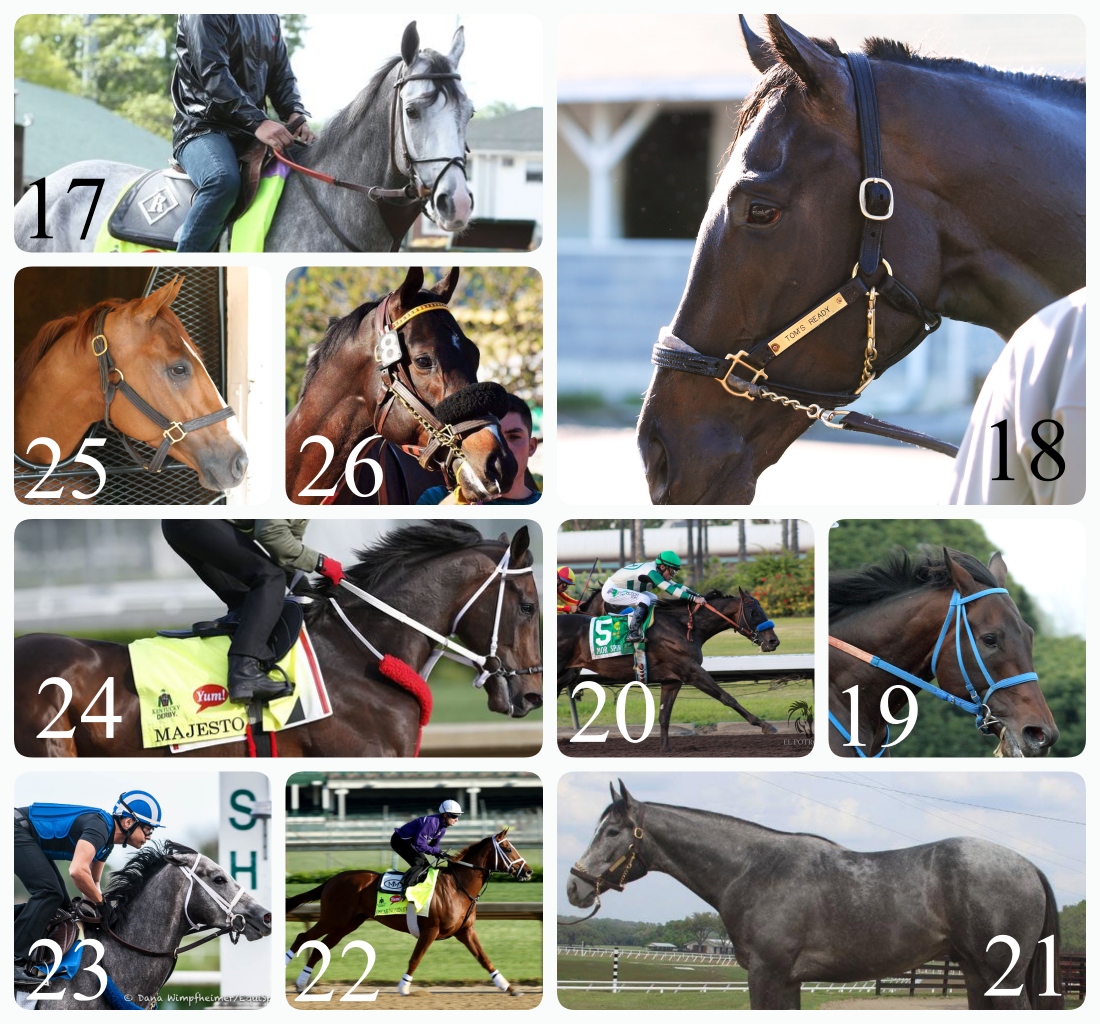
Here are all 26 entrants compiled in three sets in random order. Pick your favorite, type their name in the comments section below this post and Ms. Jeannie will be in touch if you (lucky you!) have chosen the winner!
You can only enter once, so make your selection count!
8. Dazzling Gem 9. Mo Tom 10. My Man Sam 11. Creator 12. Adventist 13. Shagaf 14. Fellowship 15. Trojan Nation 16. Exaggerator
You can be easy breezy about this whole contest by picking a horse by name or face value or you can read up on each of the entrants on kentuckyderby.com
Good luck dear readers and happy guessing! Contest winner will be announced early next week!!!
Catch up on past Derby Day festivities here. Photo credits of all racers in this post courtesy of: ladyandthetrack.com, coady photography, thisishorseracing.com, dylan buell, el porto roberto, horse racing nation, kentuckyderb.com, clb photography
This week Ms. Jeannie was in the kitchen with two famous figures: Richard Nixon and James Beard. Richard assisted in the artwork (that’s his face on that vintage 1974 newspaper!) and James provided the recipe, which is a spin on an iconic food hailing from coastal Maryland.
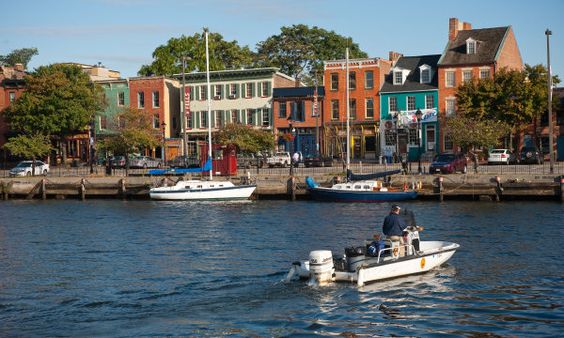
The beautiful view from Baltimore, Maryland!
In 1959 celebrated American chef James Beard published his second cookbook simply titled The James Beard Cookbook.
The James Beard Cookbook 1959 edition
In 1970 he revised it and in 1980 he had intentions of revising it again. By this point in his career he was five decades into cooking, writing and teaching people about good food and how to prepare it. He had written 18 cookbooks and he had traveled the world in search of good taste. He also had twenty five years under his belt as a teacher in his brownstone cooking school in New York City.
The Beard House … still enticing cooks world-wide!
But for all the things he did have by this point in his illustrious career, there was one thing he was sorely missing. Enthusiasm. The energy to refine recipes that felt satisfying in 1959 felt forced by 1980. As he was embarking on the third revision of his 21 year old cookbook, James was 77 years old and his palette had changed. The way he wanted to prepare food had changed. He was less interested in salt, kitchen gadgets, and formulaic steps. He was more interested in whimsicality, natural selection and on-the-spot innovation. From the 1930’s-1970’s James Beard taught America how to cook. By 1981, with the publication of The New James Beard, he gave America courage to cook for themselves.
First edition of The New James Beard, 1981.
To play around with a semblance of recipes that could be altered to suit your taste, budget, time constraints and party plans was the essence of his new cookbook and his new approach to confident culinary creativity.
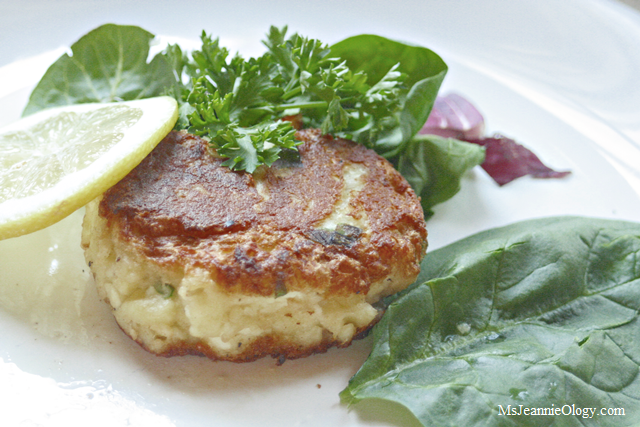
Which brings us to today’s recipe and that famous food hailing from Maryland – crab cakes. Only we are not making crab cakes exactly because James Beard gave us confidence to think outside the box (or the cake if you like a fun pun!). This week Ms. Jeannie is in the kitchen with Richard Nixon and James Beard making Cod Cakes – a simple easy to prepare dinner capitalizing on fresh flavors, inexpensive ingredients and easy preparation.
This is a three step recipe broken down in order of the three P’s – potatoes, poaching, patty-ing for efficient preparation. Intended to serve eight, you can easily cut the recipe in half at all steps if you are feeding less people or make the full recipe and freeze the leftover cakes for a future dinner. Let’s begin with the potatoes…
Step One: POTATOES
2 large potatoes (enough to make 2 cups of mashed potatoes)
3 tablespoons butter
water
Peel and cube potatoes. Place in medium size pot with enough water to cover and boil until potatoes are tender when poked with a fork. Remove from heat and drain. Mix potatoes with butter in a medium size bowl with a hand mixer until fully mashed. Set aside.
Step Two: POACH
White Wine Court Bouillon
2 quarts water
2 cups dry white wine
1 onion stuck with two cloves
1 rib celery
1 clove garlic
1 tablespoon salt
1 strip lemon peel
2 sprigs parsley
4 pounds cod filets, whole or chunked
Preheat oven to 170 degrees and place an empty covered dish in the oven to warm. Make sure the dish is large enough to hold all the fish you are preparing. Combine all ingredients (minus the fish) in a large saute pan, and bring to a boil before reducing the heat and simmering for 20 minutes. Add the fish and poach gently for 10 minutes for each measured inch of thickness. (So if your filet measures 2 inches at its thickest part, poach for 20 minutes, if it is 1 inch poach for 10, 3 inches for 30 etc.). Once the fish is cooked through, remove your covered casserole dish from the oven, place the fish inside, cover it and leave on top of the stove to keep warm while you prepare the next set of ingredients.
Step Three: Patty
Codfish Cakes
2 cups flaked poached codfish
2 cups mashed potato mixture
1 egg
1 egg yolk
1/2 teaspoon freshly ground black pepper
4 tablespoons butter
Chopped parsley for garnish
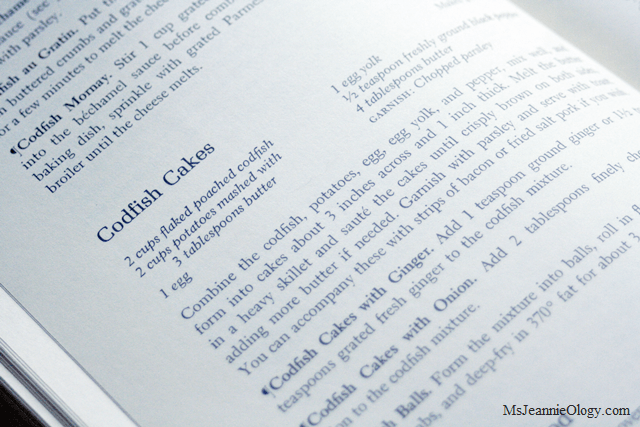
Combine the codfish, potatoes, egg, egg yolk and pepper in a large bowl. Mix well and form into cakes about 3 inches across and 1 inch thick. Melt the butter in a heavy skillet and saute the cakes until crispy brown on both sides. Add more butter if needed. Garnish with parsley and serve immediately on top of a bed of mixed lettuce or wilted spinach.
James Beard’s Cod Cakes recipe from The New James Beard, 1981
In the spirit of creativity that this cookbook encourages, James also recommends mixing other ingredients into your cod cakes. If you like try mixing in fresh ginger, onions, bacon or salt pork. Swap the butter for olive oil if you are so inclined. Bake your cakes in the oven instead of on the stovetop. Go a more traditional route and serve your cod cakes with fresh lemon slices and homemade tarter sauce or on top of a bed of smashed peas or alongside a lemon, dill and onion salad. The sky is the limit with this recipe because that’s half the fun of cooking – inventing new twists as you go along:)
According to former White House cooking staff, Richard Nixon’s favorite foods were fruit, cottage cheese with ketchup and a weekly splurge of meatloaf (half ground pork/half ground beef). There’s no mention that he was necessarily a huge fish fan, but Ms. Jeannie guesses that these cod cakes would A-Okay in his book, because he rarely refused any type of food. James would have given Richard a thumbs up on the ketchup and cottage cheese combo not because this necessarily sounds appetizing but because Richard himself thought it was, and really that’s all that matters when it comes to cooking. If James Beard taught us anything with TheNew James Beard cookbook, it was to please your palette first and then please your dinner companions next.
So mix things up, change your tactics, refine your techniques. Explore and experiment and have fun dear readers! The vintage kitchen awaits! If you need a little more inspiration to get you going, perk up your palette with this vintage kitchen items and see what possibilities await…
{Special note: This is the second installment of a two part story. If you missed part one, catch up here.}
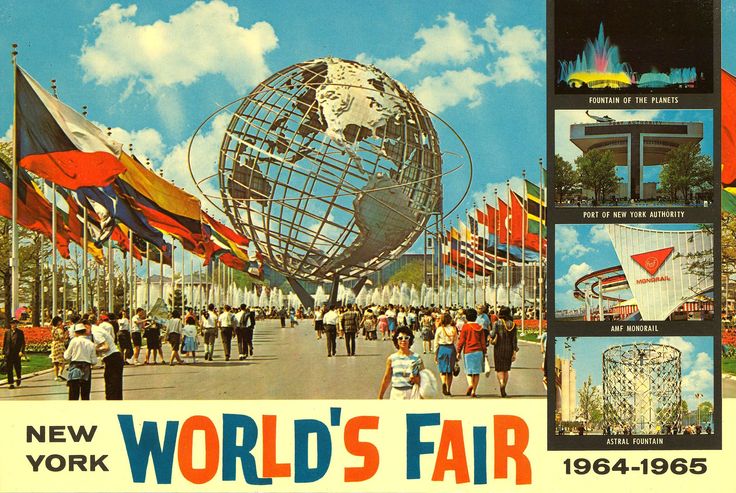
The date is April 27th, 1964. You are standing among the crowd in front of the Unisphere, the largest globe ever built by man. It contains 470 tons of stainless steel and is considered “one of the most outstanding achievements in structural sculpture in the past decade.” The New York World’s Fair has you dizzy with excitement!
It is Day 5 of your travel adventure and you marvel at just about everything you set your eyes on. There is an edge and an urgency to see, taste, hear and explore all the situations around you. You are bouncing from exhibit to exhibit on a natural high, guided by curiosity and surprise. Part New York frenetic energy and part endorphin rush you are bombarded in the best possible way with ideas that are new and thrilling and coming at you from all directions.
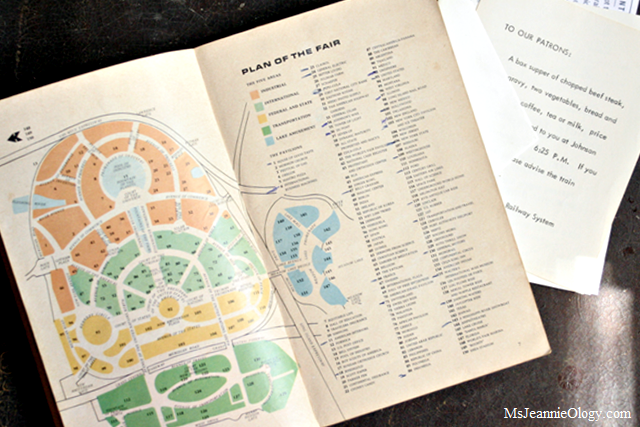
If you wanted to see all 150 pavilions and attractions at the Fair it would take 30 full days of sightseeing. But you only have a week so you have to make a list. With your trusty 300 page fair guide…
purchased for $1.00 at the concession stand you highlight the specific places and pavilions you want to see first.
Among your not-to-miss moments are the: House of Good Taste, the Rheingold, Walter’s International Wax Museum, the Clariol Hair Color Exhibit, the Avis Antique Card Ride, the Transportation and Travel Hall, France, Switzerland, Indonesia, Africa, the Space Park, the Garden of Meditation and the Pool of Industry plus 27 others. It’s an ambitious schedule but you are determined to make the most of it.
While so many exhibits are enormous, some in particular really catch you off-guard by their sheer size. Sinclair’s Dinoland for example, has nine life-size replicas of dinosaurs that hover high above the heads of fair-goers.
It is one of the most popular spots for photographs so you have to squeeze in quickly to get a few snaps. The dinosaurs were made by artists in upstate New York and were in fact so big they couldn’t be transported by truck or trailer, so they had to be floated down the Hudson River via barge. In the anticipation leading up to your trip, your friend Gene took a photo of the big guys heading down river and sent it off to you in the mail…
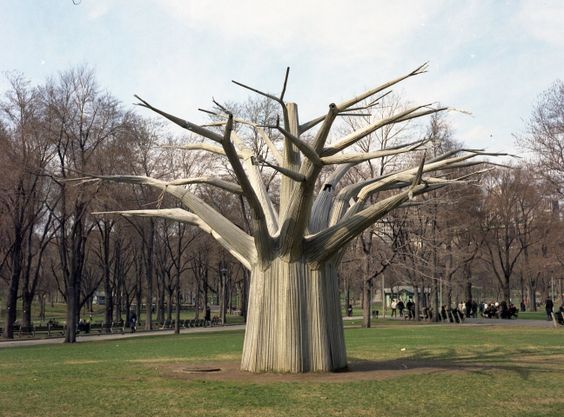
Other incredible sightings so far have included the steel and plastic Liberty Tree with leaves made of historic documents in the New England pavilion…
…and the scale model of New York City, which measures in total 180′ feet x 100′ feet. Each building is scaled at 1 inch to 100 feet which means that the Empire State building is 15″ inches tall. Amazingly, this model includes every building in Manhattan.
You soak up all the sun and and all the fun at the very first live Porpoise show courtesy of the Florida State Exhibit…
before heading over to the Hollywood Pavilion where you soak up celebrity and have your autograph book signed by Joan Crawford and Kirk Douglas.
With heart pounding, you fly like a bird through the air courtesy of the Monorail, the Observation Towers, the Brass Rail Snack Bar, the giant Royal Tire ride and the Parachute Jump…
Part of the reason why you are feeling so giddy and alive is because there is so much positivity and potential floating around. Words and wonders like Carousel of Progress, Futurama and Tomorrowland greet you both in person and in print at every turn…
and you can’t help but feel a sense of overwhelming optimism for the progress that is sure to come in the next 5, 10, 15 and 20 years.
You have been at the fair for five days. You have traveled 1000 miles from New Orleans to New York City to get here. But in reality you have gone much further. You have circumnavigated the globe. You have seen zebras in Africa, enjoyed coffee in Lebanon and arranged flowers in Japan. You have explored planets in outer space and dived deep into the inky depths of the sea. You feel like a true globetrotter, a jet-setter and a time traveler all wrapped into one. You are crossing continents and centuries in the blink of an eye. This is by far one of the most exciting vacations of your life. You don’t want to leave but you also can’t wait to share your trip with all your friends back home. You mail off a litany of postcards every day… your words running off the cards because there is just so much to say.
You look for a souvenir that can encapsulate this experience of a lifetime in one item. You search through many stands and stalls before it hits you…
You find a book that symbolizes all the magic of the moment that is the World’s Fair. You purchase a souvenir copy of the story of Michelangelo’s Pieta, which is on display in the Italian pavilion. The 15th century sculpture stands 6′ feet tall by 5.5′ feet long and contains three different elevated viewing platforms. You walk onto each one to gather a sense of the sculpture’s size and scope.
The sculpture fills you with emotion. It is a combination of history, stone and craftsmanship. It contains story, self-expressionism and symbolism. It conveys love and tenderness, majesty and gift-giving. It is passion magnified in a portrait of faith and future. It represents past accomplishment and future hope. It is the New York World’s Fair personified. This art, this souvenir book, this incredible Fair represents a moment in time, in life, in history destined not to be forgotten.
The year is 1964. The day is April 22. Your alarm clock goes off…
It’s 6:10am and you jump out of bed with excitement. Today you are going on a trip! You have less than an hour to get ready, so you hurry because you cannot (CANNOT!) be late.
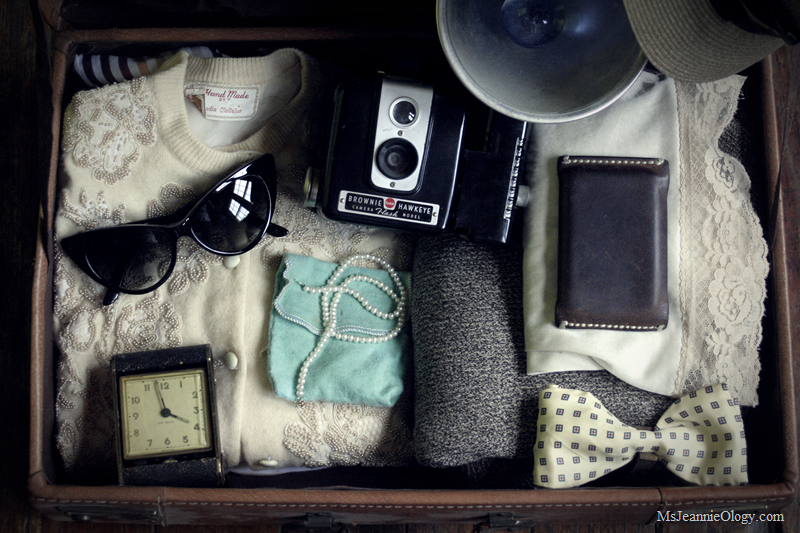
Your bags have been packed for days but you make one final check to make sure you’ve got everything…
It’s all there! A perfect assembly of his and her items all packed with care. It contains her beaded cashmere sweater for those chilly Spring nights, his fedora hat, the Brownie Hawkeye, two dozens rolls of film, her favorite lace slip, his go-with-anything bow-tie, her sunglasses, his pullover, her special occasion pearls, the leather travel clock he’s carried for the past twenty years, the bestselling book that everyone’s been talking about, the shoes, the sundries, the little incidentals…all set!
You head to the kitchen and drink a glass of Ovaltine. You are too excited to even consider eating a full breakfast.
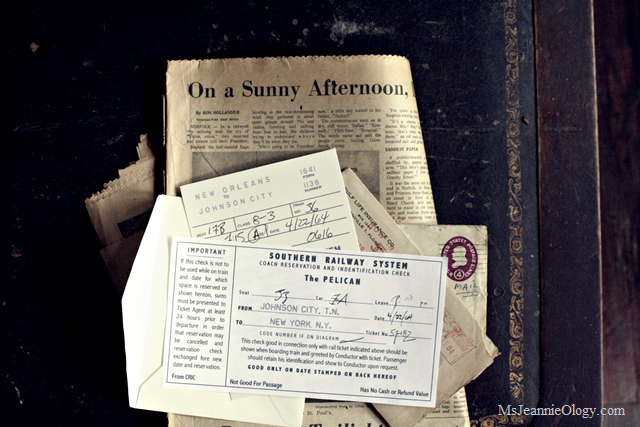
You head out the door but then turn right back around. You left the tickets with yesterday’s mail on the coffee table. Phew! Good thing you remembered before you headed downtown.
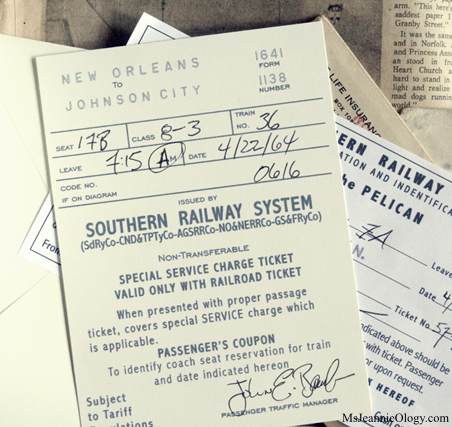
You pull into the New Orleans train depot with 15 minutes to spare. You’ve booked your rail travel with Southern Railway which has been running passengers all over the East Coast for 70 years. Today, you are headed northeast to the small mountain town of Johnson City, Tennessee. From there you’ll connect with Southern Railway’s luxury pullman train, named the “Pelican” and chug further north to your final destination.
Once settled into your seat, you show the conductor your ticket for stamping…
It’s a three and a half hour trip to Johnson City most of which you spend lost in literature. The book you are reading, The Burnt Ones by Patrick White is a series of short stories about
people burnt by society, via various avenues like love, neurosis, natural elements, independence etc.. The poetic and passionate writing makes you understand why the New York Times just recently referred to White’s writing as spell binding and radiant. By the time you pull into Johnson City just before noon, you are half-way through the 308 page book.
Before getting off the train in Tennessee to stretch your legs, the conductor comes by asking for your reservation documentation on the Pelican. You hand him your identification check…
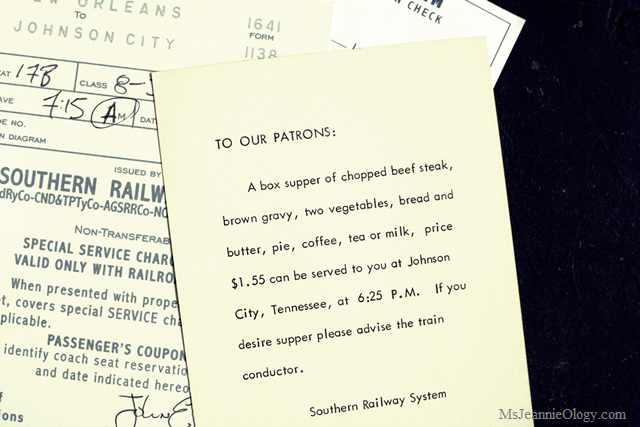
and he, in return hands you the dinner menu for that night’s journey…
It has been a long time since you’ve eaten beef steak but the Ovaltine has long worn off and a big dinner sounds perfect. You spend the afternoon hours walking around Johnson City’s historic downtown taking photos and people watching.
Back at the depot at 5:40pm the Pelican is just pulling in to the station…
and you board for the second leg of your journey. There are 24 hours left to go. By this time tomorrow night you’ll be in the most exciting city in the world, attending one of the most talked about events of the year.
As a Southerner you are pretty lucky to be going at all. Most people attending this event live within a 60 mile radius and indeed you are the only ones among your friend set that are making the journey. When you read some pre-press months ago, it described the whole spectacle as “a circus, a classroom, a voyage, a time capsule and a futuristic peepshow all wrapped up in one.” That’s when you knew you had to go see it all for yourself.
You pass the time as paitiently as possible on a speeding train. The dinner hour comes and goes, you eat your chopped beef steak and your two vegetables (peas and carrots), your bread with butter and your apple pie. You watch each town pass by until the sun sets and darkness fills your window. Even though you had coffee after dinner, you feel sleepy. You close your eyes and dream about city lights.
The next morning, you wake to coffee and a breakfast tray of fruit and toast. The hours pass quickly. You daydream, you play cards, you read, you watch town after town after town roll by.
Lunch comes and goes, afternoon tea comes and goes, an evening glass of wine amplifies your giddiness as the hand on your watch finally marks the the last hour. You are so close! You begin preparing for your arrival. You pick up and pack up and then finally…
…after a 36 hour journey from New Orleans to New York, the Pelican pulls into Penn Station passing dozens of trains coming and going in the process…
You step out into the hustle and bustle of commuter territory. You breathe in the electric air. Everything feels fast around you.. the walking, the talking. The atmosphere is lively, festive, fun. You are swept up in the sea of passengers disembarking. You hurry along with them, suitcases in hand. As you climb the stairs from the tracks to the terminal, your eyes catch on a poster pasted to a metal beam. It says…
…and you smile from cheek to cheek. You have traveled from the Big Easy to the Big Apple to experience a big event. It is the start of the New York World’s Fair and you are on your way there!
Read more about all the sensational sights and scenes from the Fair in Part Two.
It’s not every day that a woman receives a castle for Christmas, but indeed that is just exactly what happened to Ms. Jeannie last December. That’s right dear readers, a castle! It might as well have been a box full of magic that’s how excited Ms. Jeannie was with her gift!
Gold, glittery and delicate, Ms. Jeannie hung her magical manor house on a nail above her kitchen doorframe, where it remains year–round as a symbol for whimsy, wonder and unexpected surprises. Passing underneath it every day, she is inspired by the stories it symbolizes and by the possibilities of passion. Without Julian Fellowes interest in history and his love of storytelling we would have never known Downton Abbey and in turn we would have never known this blog post.
This week Ms. Jeannie is featuring a twist on a recipe from the 2014 coffee table book, A Year In the Life of Downton Abbey by Jessica Fellowes (Julian’s niece!). This is one of several Downton Abbey coffee table books that has been released throughout the series, but by far this is Ms. Jeannie’s favorite. It breaks down Season 5 specifically month by month as far as story lines and contains a lot of behind the scenes info on costumes, hair and makeup and cast/crew interviews. It also contains recipes of the types of fare that the Crawley family would have enjoyed with each passing season.
On page 132 in the middle of the month of May, you’ll find this elegant recipe…
tucked amidst the stories swirling around Rose’s coming out season. Her presentation at Court signifies her debutante status for the season, and the chapter is filled with the proper attire, mannerisms and preoccupations that such a lady would have experienced during this exciting time in the mid-1920’s. In all its behind-the-scenes glory, the chapter is also filled with the challenges the crew faced in filming the stand-in location for Buckingham Palace (which was actually Lancaster House in London) and the massive undertaking of outfitting and making up the large ensemble cast of extras at the debutante ball.
While the scenes in the book (and on film!) were quite elaborate for the month of May, the recipe was quite simple… Asparagus Tart. Ideal in the eating seasonably chart, asparagus is at its peek of flavor in late Spring and can be enjoyed in any dish ranging from breakfast to dinner. It is also party perfect because of its straight-lined style and a lovely way of being quite adaptable to artistic displays of culinary wonder.
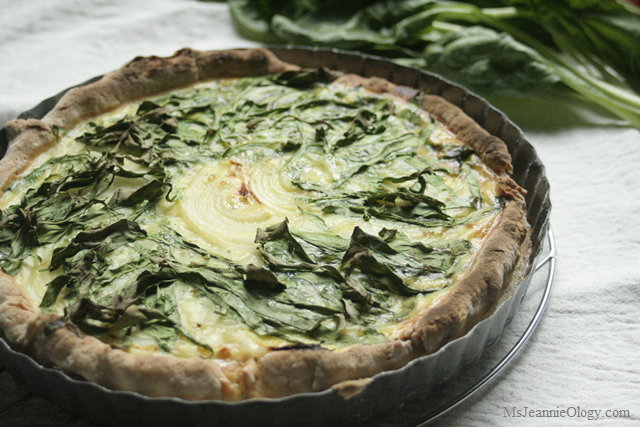
There was only one slight problem with all this. After discovering the recipe, Ms. Jeannie had just returned from market with a basketful of two other shooting stars of the spring season – sweet onions and spinach and sadly, no asparagus. So she improvised, playing a little game of surprise with Mrs. Patmore. By switching out some ingredients for others but retaining the same tart crust and the same measurements of additional ingredients, Ms. Jeannie made a similar tart that would have served all party-goers just as well during the season. This is what she made…
Spinach, Sweet Onion & Camembert Tart
1 1/2 cups all purpose flour, plus extra for dusting
Salt and Pepper to taste
5 tablespoons butter
1/4th cup ice water
A handful of fresh spinach
½ of a large sweet onion, very thinly sliced
4 eggs
1 1/4th cups organic vanilla soy milk (or light cream if you prefer)
4 tablespoons of chopped Camembert cheese
One pinch of nutmeg
Preheat the oven to 350 degrees.
Sift the flour in a mixing bowl with a large pinch of salt. Cut up the butter in small chunks and incorporate it into the flour until you get a crumb-like texture. Add the ice water and mix together with your hands until you can form a ball of dough.
Dust your workspace with flour and roll dough out in all directions so that it becomes large enough to fill an 8”inch tart pan. Place the dough in the pan, trim the extra edges with a knife and prick the dough all over with a fork. Insert baking beans into the tart shell and place in oven for 20 minutes. If you don’t have baking beans, which help weight down the dough and keep it from puffing up, you can place a pan on top of the dough – just make sure that the pan is oven friendly and fits the entire inside dimension of the tart.
While the crust is baking, rinse the spinach and thinly slice the onions (so thin that they are almost transparent!). Set both ingredients aside.
In a bowl beat together the eggs, milk and nutmeg. Season with salt and pepper. Set aside.
Remove the tart crust from the oven. Remove the baking beans or the weighted pan and return the tart crust back to the oven for 5 more minutes.
Remove the tart crust from the oven and fill it with the egg mixture until it is about ¾ full. You might have extra egg left over. Evenly sprinkle the cheese in the egg mixture. Gently float the onions in a circular pattern on top of the eggs and cheese. Then add the spinach on top of the onions in the same circular fashion. Bake in the oven for 40-50 minutes checking often to make sure that the tart is not bubbling over or browning too quickly. Serve immediately right out of the oven!
Depending on the time of day that you enjoy this tart, additional accompaniments that would work great alongside it include: a mixed fruit/berry sampler or a vegetable salad, potato pancakes, buttered rolls with jam compote, a juice smoothie or sliced chicken for a more protein packed affair. Or just embrace your inner purist and serve it as is!
Just like the pretty presentation of Rose’s debut, this tart also makes perfectly wonderful party food for modern day May. Whether you are surprising Mom with brunch on Mother’s Day, hosting a bridal shower for your best friend or just getting together for an informal event, this recipe promises easy and effortless entertaining.
*If you’d like to make the asparagus version simply omit the spinach, onion and camembert and replace them with 8-10 stalks of asparagus, 4 tablespoons of parmesan cheese and a sprinkling of fresh thyme.
Cheers and happy Downton daydreaming!
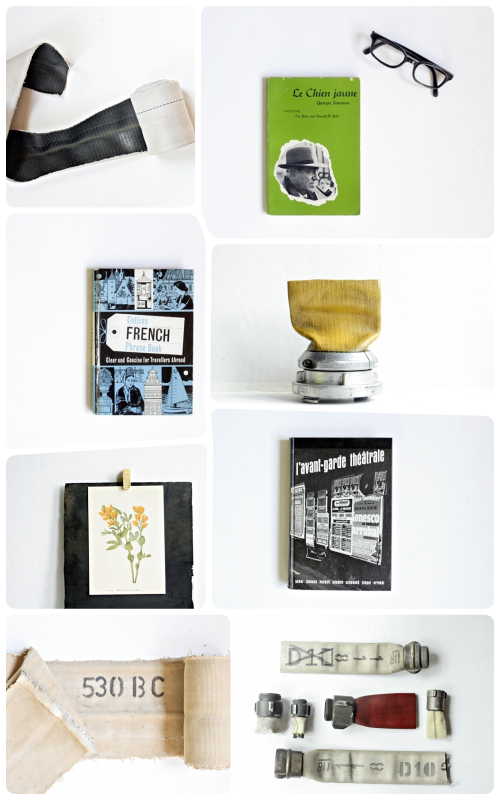
And as a final side note: new items were added to the shop last week all with an “F’ theme: french books, fire hoses and florals! Stop by for a peek!
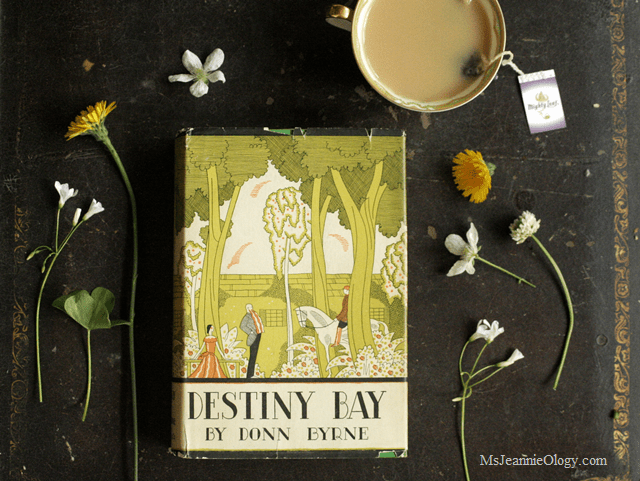
It is not often that Ms. Jeannie will tell you to judge a book by its cover, but in the case of Destiny Bay, a vintage fiction novel recently listed in her shop, she wholeheartedly recommends it. In an on-going conversation about book collections and what fuels them, we’ve talked about book batches centered around a favorite author (F. Scott Fitzgerald!) or a common theme (Africa!). Today’s post is all about the first impressions that draw us in and keep us going – the face of the book. A book’s aesthetic is often one of the key motivations in amassing a collection. Some people collect books with eye-catching covers for their color arrangement…
or for their stunning graphic layout and design…
Book covers from the 1920’s, 1930’s and 1940’s
Collections can be built around books from a specific time period, like this antique collection…
This is an antique collection with gorgeous decorated book spines.
or for the artist behind the image like these contemporary book covers designed by Chip Kidd…
In the case of Destiny Bay, there are a lot of things going for it in the pretty presentation department. By far, it is one of the most attractive books that has ever come across Ms. Jeannie’s bookshelves.
From its whimsical illustration, complimentary color palette and stylish graphics this edition of Destiny Bay fires on all cylinders in the book cover department.
The story, originally published in 1925 by Irish American writer Donn Bryne, centers around the MacFarlane family of Ulster County, Ireland and combines romance, comedy and tragedy. The story is set against the sweeping Irish countryside with its beautiful topography, exiting horse race tracks, and idyllic country estates and features an eccentric cast of characters including blind Aunt Jenepher, gypsy Lady Clontarf, butler James Carabine and red-blooded Uncle Valentino to name a few. Combining the themes and characters of the book California artist Frank McIntosh (1901-1985) illustrated a cover that symbolizes the bright green landscape of Ireland and the colorful personalities of the family.
The stylized dust jacket via font and graphics are a nod towards art deco – the 1920’s style that was popular when the book first debuted. The colors are a compliment in opposites with bright spring greens and tangerine oranges each elegantly outlined in black ink. An overall dramatic and glamorous aesthetic that always seems to be in vogue no matter what the decade!
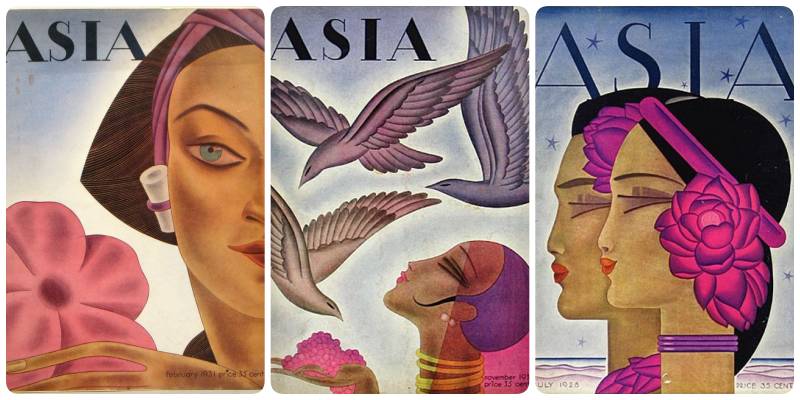
McIntosh built quite a career utilizing the sleek lines and sophisticated detailings that became so iconic of his work. He came of age in the 1920’s which no doubt left quite an impression on him and he carried that passion throughout his design career. Taking him from California all the way around the world to Paris and back again, he traveled in both commercial art circles and fine art circles. These are three of his beautiful covers for Asia Magazine…
We know from Destiny Bay, he was also a book designer and most of his work in the publishing world carried the same delicate disposition…
A robust career in advertising and freelance illustration left time to exhibit independently as well and kept his title of working artist relevant throughout most of the 20th century. Examples of his work in popular poster form are all so highly collectible now…
That makes Mr. Frank McIntosh a superstar in Ms. Jeannie’s world! His books look stunning on a shelf and his posters look equally amazing next to the shelf! So go ahead dear readers appreciate Destiny Bay for face value, and in doing so you’ll be pleased to discover that the story is equally beautiful as well! A gem of vintage book collecting all wrapped up in pretty package! Find the book here.
Open up more discussion on why you like to collect books by adding your thoughts in the comments section below!
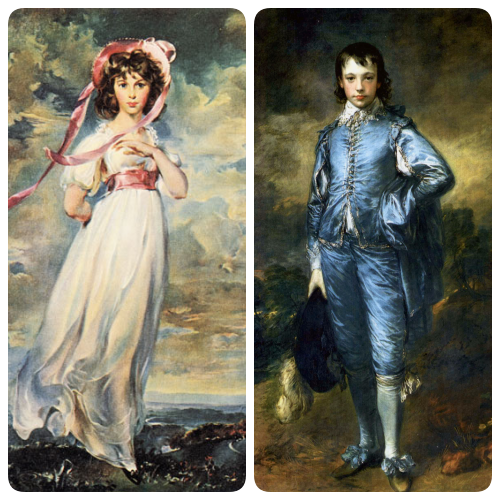
She stands poised and serene on the sea rocks underneath a blustery sky. He stands confident and bold, like a fashionable Fauntleroy against the backdrop of a golden grey garden. At first glance, they are similar in subject, stance and appearance. They are similar in color palette, context and composition, in attitude and affluence. But their sameness doesn’t stop there. Embedded beneath the patina of paint and brushstroke runs a strange series of coincidences and ironies that bind both painters and subjects together in an unusual web of wonder.
If you walk into just about any antique shop today, you’ll most undoubtedly see the 18th century images of Pinkie and The Blue Boy reproduced in an assortment of different ways. Most commonly they peek out from behind matching frames of varying ages and styles like this…
Two Large Framed Prints of Pinkie and The Blue Boy from Happy Go Vintage
but they also appear on a variety of creative endeavors from ceramic vases to needlepoint pillows from coffee mugs to calendars and most collectibles in-between.
As two of the art world’s most commonly printed masterpieces, they are almost always presented as a pair… a portrait of teenagers on the cusp of an adult world. A nod to young love, first love, new love and a symbol of tenderness, confidence, potential and optimism.
But you can’t always judge a painting by its presentation. Pinkie and The Blue Boy as a couple are the result of time-worn perception and assumption. Painted by two different artists in two different decades, Pinkie and Blue were never meant to be together.
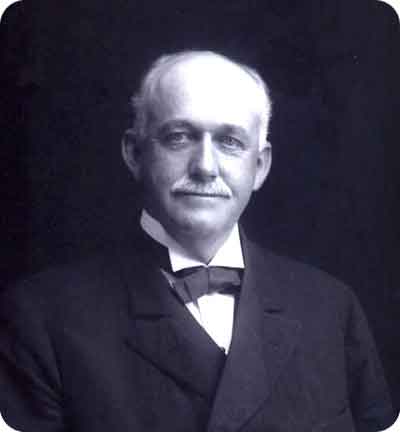
It wasn’t until the 1920s, roughly 150 years after they were painted, that this romantic perception took hold thanks to American railroad tycoon and enthusiastic art collecto,r Henry Edwards Huntington. Purchased in England during the American heyday of British portraiture, Huntington brought these two paintings across the ocean to California where he placed them in his library opposite one another.
Henry Edwards Huntington
The general public was then invited to come and take a look. From that moment forward Pinkie and The Blue Boy became associated as a couple forever linked by free association.
But oddly enough had Pinkie and Blue met in real-life and lived during the same time frame, they most likely could have been an actual real couple. They had so many similarities in common that relating to each other would have been as breezy as their painted backgrounds.
The linking of back stories between not only Pinkie and Blue, but also their painters and their collector is equally strong. Here are five people entwined in a strange sort of web that is made of parallels in all directions.
Let’s look at the links….
THE CONNECTION BETWEEN PINKIE & BLUE: Personal Lives
Painted somewhere around 1770, by famed British artist Thomas Gainsborough (1727-1788), The Blue Boy, is thought to be the commissioned portrait of Jonathan Buttall, who came from a wealthy English iron-trading family.
Jonathan Buttall
At the time the portrait was completed, Jonathan was about 18 years old. His father had died two years earlier leaving Jonathan to run the retail iron business and attend to the massive fortune it procured.
Pinkie, the nickname of Sarah Goodin Barrett Moulton, sat for her portrait with equally esteemed English artist Thomas Lawrence in 1794. At the time of the painting she was eleven years old, and also without a father, who had abandoned her family several years earlier.
Like Jonathan, Sarah also came from wealthy stock. The Moultons made their fortune in the lucrative business of exporting rum and sugar from Jamaica. At the time of this portrait, Pinkie was two years into a stay in England – a dramatic move made for educational purposes that took her far away from her home country of Jamaica. Just like Jonathan adjusting to a new business environment, Pinkie was adjusting to a new living environment. They were both wealthy, young, fatherless and undergoing challenging transitions.
THE CONNECTION BETWEEN JONATHAN & THOMAS LAWRENCE: Debt
Although affable and kind-hearted, Jonathan did not turn out to have quite the same knack for financial business savvy that his father possessed. After two decades Jonathan was so loaded down in debt he was forced to file bankruptcy and auction off his belongings including his own portrait.
Thomas Lawrence (the painter of Pinkie) was one of the most popular portrait artists of his day and a favorite of the royal courts. He worked constantly and consistently, but to the puzzlement of those around him, was always in debt. Throughout his career he continually relied on financial support from benefactors and loans from his friends and left little fortune when he died.
THE CONNECTION BETWEEN JONATHAN AND THOMAS GAINSBOROUGH: Music
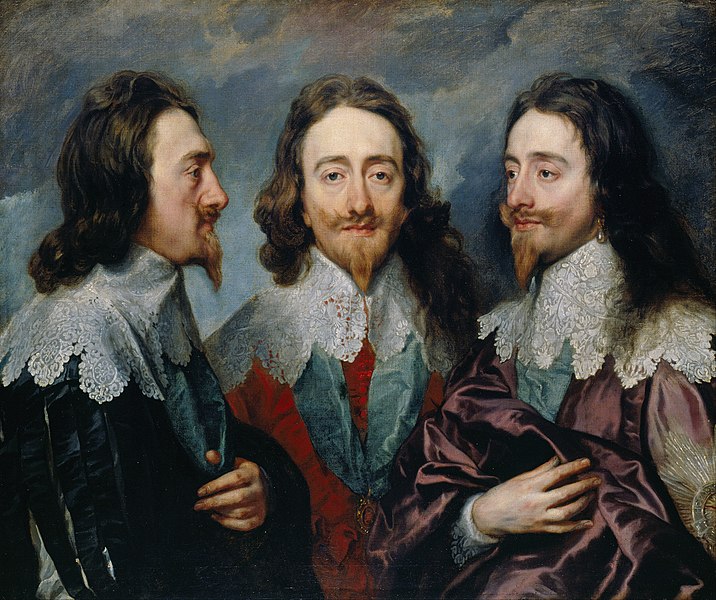
Gainsborough, at the time that he was commissioned to paint The Blue Boy, was looking to break into the theatrical art set of creative London. He appreciated the city’s cultured manner, their love of music and drama and their acceptance of artistic endeavors. But in order to fall in seamlessly with this crowd, he felt he had to step up his game as far as skill-level and painting technique. So he studied the style that he most admired, Flemish painter Anthony van Dyck…
Anthony Van Dyck’s portrait of Charles I of England, painted in in 1635.
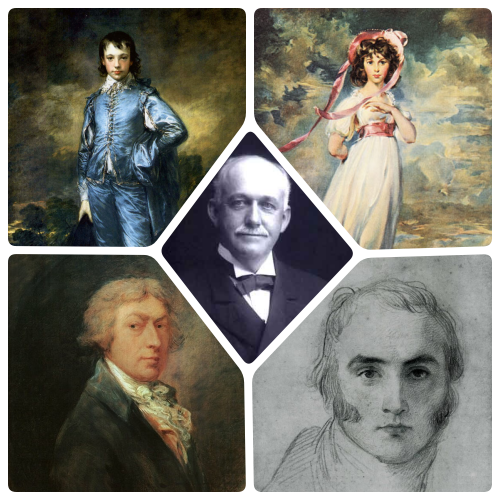
Through Gainsborough’s own evolution of painting style that was directly influenced by the work of Van Dyck, you can see what an impression the one artist had on the other…
Gainsborough’s evolution of style: (left to right) Before studying Van Dyck, Sketching like Van Dyck, Painting like Van Dyck
When Gainsborough met and became friends with the Buttall family he took a particular interest in young Jonathan who enjoyed a similar love of music. Gainsborough introduced his refined painting style (modeled after Van Dyck’s work) in his portrait of Jonathan, which became one of England’s most treasured paintings and Gainsborough’s most notable work. Gainsborough treasured his friendship with Jonathan for the rest of his life.
THE CONNECTION BETWEEN THOMAS GAINSBOROUGH & THOMAS LAWRENCE: The Royal Academy of Arts
Aside from the obvious facts that they were both portrait artists, both named Thomas, and both incredibly talented, the two Thomas’ were also big-time supporters of their trade. Separated by a generation in age, Thomas Gainsborough, the elder of the two, was a founding member in The Royal Academy of Arts which opened in London in 1768 as an exhibition venue and an educational support center for artists. Thomas Lawrence became its 4th president in 1820. While it is known that Lawrence was an admirer of Gainsborough’s work, it is uncertain if the two ever met.
The Royal Academy of Arts in London. Photo by Davis Landscape Architecture.
THE CONNECTION BETWEEN PINKIE AND THOMAS LAWRENCE: Early Death
Tragically, Pinkie never made it to adulthood. She died a year after her portrait was painted possibly from complications of an upper respiratory infection. Her painter, Thomas Lawrence also died unexpectedly from a heart attack at the age of 60.
THE CONNECTION BETWEEN THEM ALL: Love
In all its varied forms, from the passions of collecting, to the comfort of friendship, to the dedication of career, and to the lofty assumptions of amorous awakenings, Pinkie and The Blue Boy connected not only these five people but also millions of people around the world with one word: love.
Art is wonderful in uniting individuals, spawning ideas, energizing imaginations and recording place and time. Antique paintings like Pinkie and The Blue Boy serve not only as intimate proof of two young lives lived centuries ago, but they also serve as a playground for creative thought, intuitive whimsy and a universal need to understand and draw connections. And even though their association is not entirely based in accuracy, the fact that they were blended together in the 1920s and remain blended together today is a wonderful example of our human race’s need to connect and associate.
Sometimes making up a story is more unifying than defining an actual reality. That’s the beauty of art. That’s the beauty of Pinkie and the Blue Boy.
Interested in learning about more vintage art? Check out these two art history books here.
Ms. Jeannie is hard at work on a new art related blog post that will be coming out shortly. In the meantime, she wanted to share the new batch of old items that have just arrived in her shop. In this mix you’ll find:
The fun thing about this mix is that they are all hand-touched. From the choice of colors on the magnificent horse head bust to the choice of beads in the gracefully delicate sweater, each piece has been crafted with an artist’s eye and close attention has been paid to detail.
They also make for unique decorating and festive conversations! The decanter set is ready for a little outdoor entertaining, the antique basket is ready for a little garden gathering and nothing says rest and relaxation like a pot of tea and a good book. A new season is here and new stories are now unfolding!
If you like being kept abreast of new shop items in this fashion, please let Ms. Jeannie know in the comments section. Some new changes are coming to the blog over the next month and Ms. Jeannie wants to be sure to include all your favorite topics.
Cheers to a wonderful weekend ahead and Happy April!
As a vintage bookseller, Ms. Jeannie often comes into contact with various bits and pieces of paper tucked inside old books. Sometimes they are just blank scraps acting as an impromptu bookmark or place holder and other times they are incredible finds worthy of their own story like the White House letter Ms. Jeannie found tucked away in a vintage art book last year.
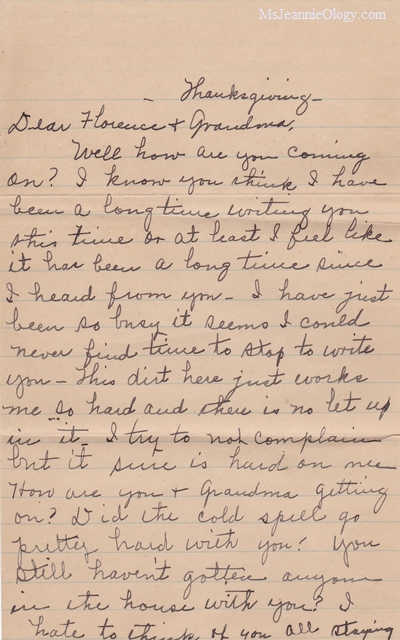
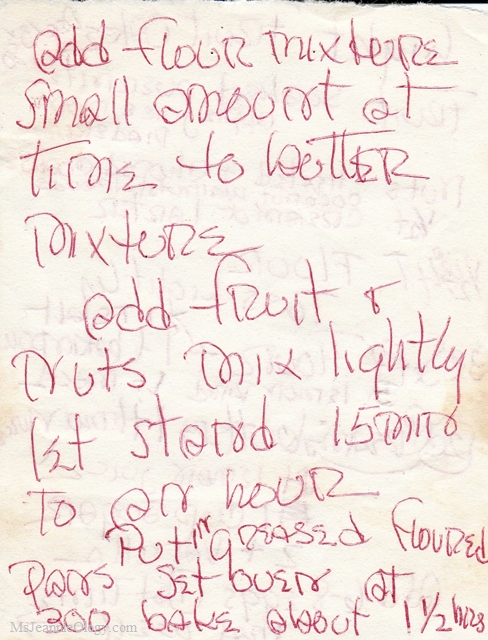
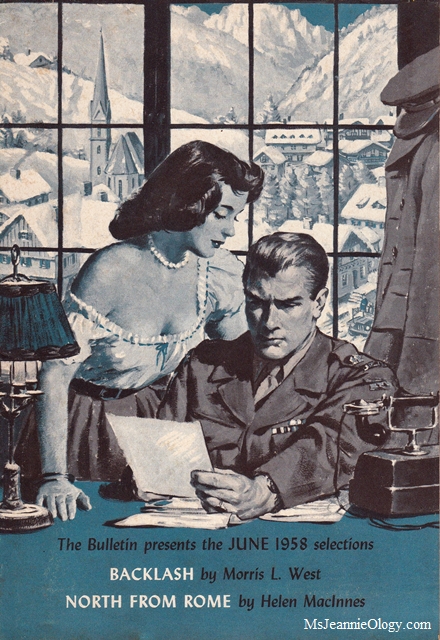
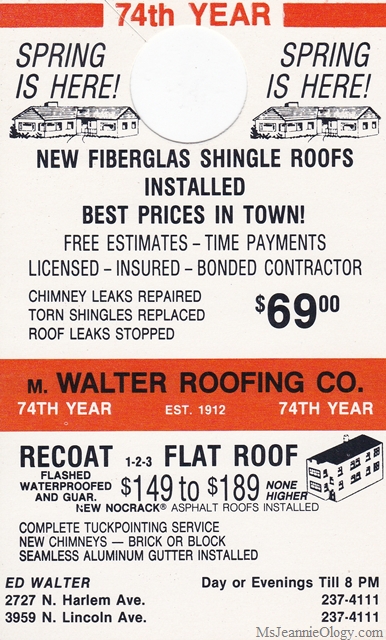
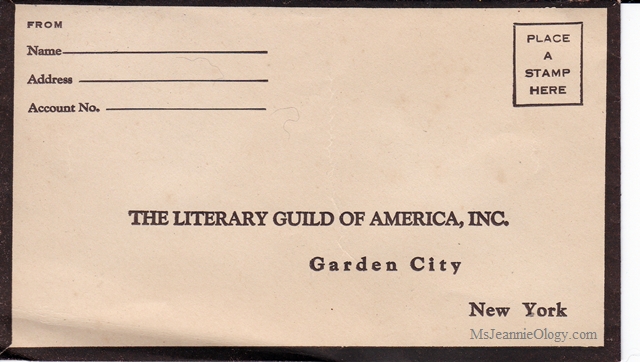
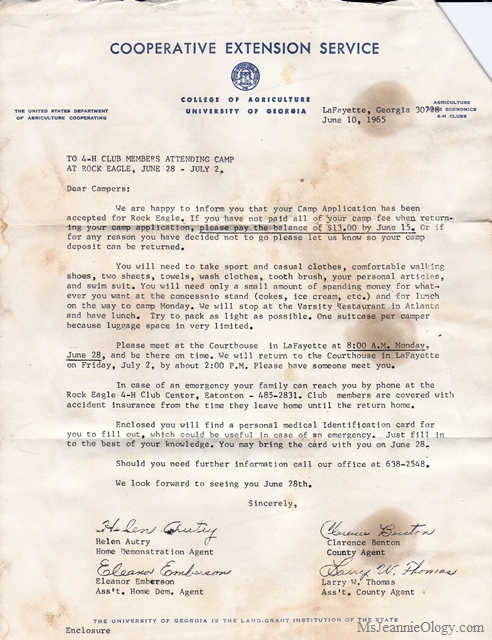
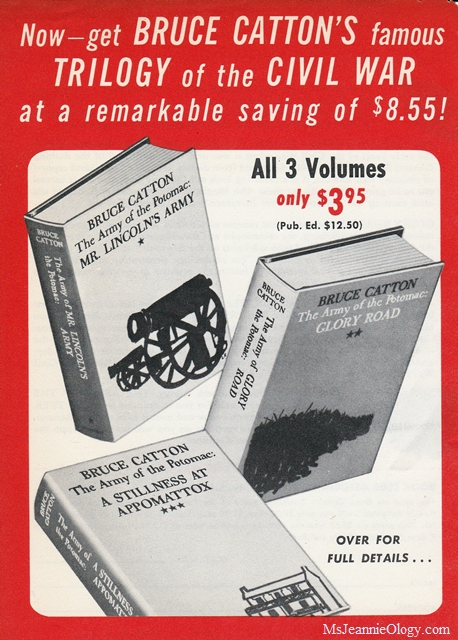
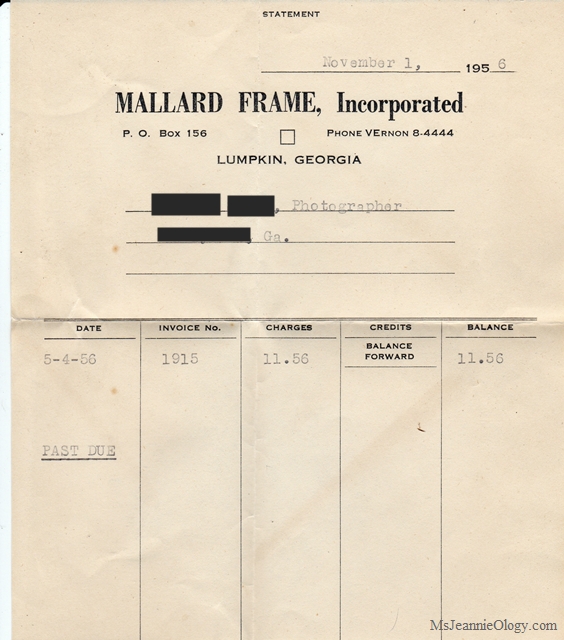
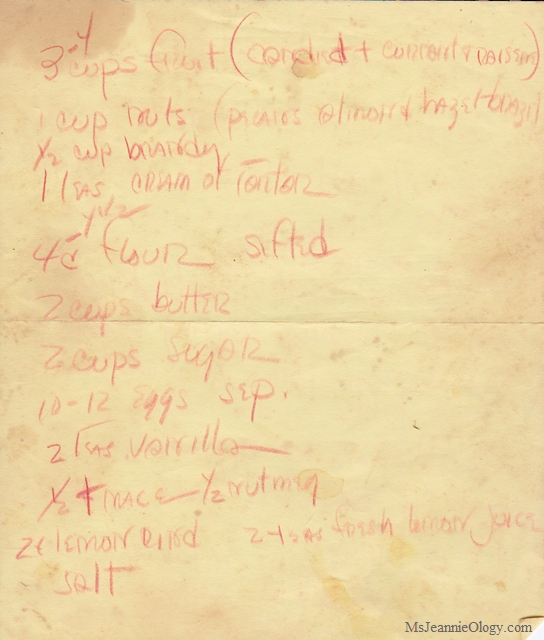
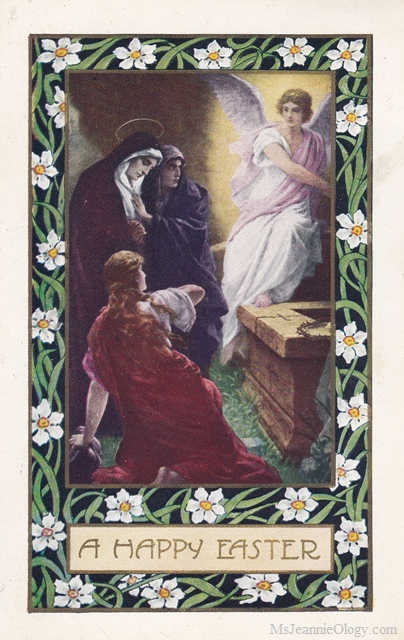
Today’s picture post is all about the pieces of paper ephemera that Ms. Jeannie has found in vintage books over the past few years. Each tells their own story about past readers, past events and past importance. They range from the commonplace (names, numbers and business cards) to the intimate (photographs, holiday cards, a letter to family that mentions Hitler and the war in Europe); from the topical (advertisements, recipes, lists) to the nostalgic (a letter detailing what to pack for camp) and from the unusual (a receipt from a cat breeder) to the campy (travel postcards). All these pieces of paper came from books published before 1970 but they cover a wide time span of the last century. The oldest is a scrap of paper dating to the late 1800’s and the most current is a handwritten recipe from 1980. Because they offer glimpses into past lives, Ms. Jeannie has blocked out any personal info that might still be traceable today so you’ll notice a few have some blocked out parts, but other than that they are unaltered. Let’s look..
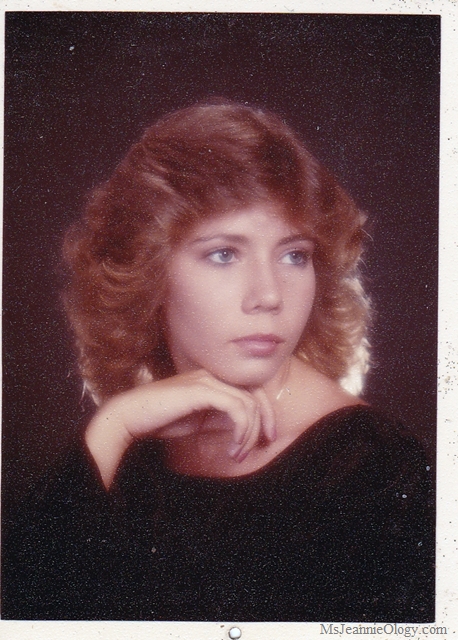
Photographs are especially interesting. Was this woman below someone’s sweetheart? A sister, a friend, a reminder not to be forgotten?
In the swoop of a cursive letter or the fold of an envelope or the mark of a typewriter key each piece denotes a moment in someone’s life that ties us to humanity. From the 1950’s photographer who was late on his bills to the woman “enduring life as it comes” to the first time camper getting ready to spend a summer week away, these moments of tangible history are compelling in a timeless way. Just like vintage books! Endlessly fascinating, a book is not only a story between two boards but also a holder of life between two worlds.
This is just Part One of the paper collection. Look for Part Two coming soon later this season…