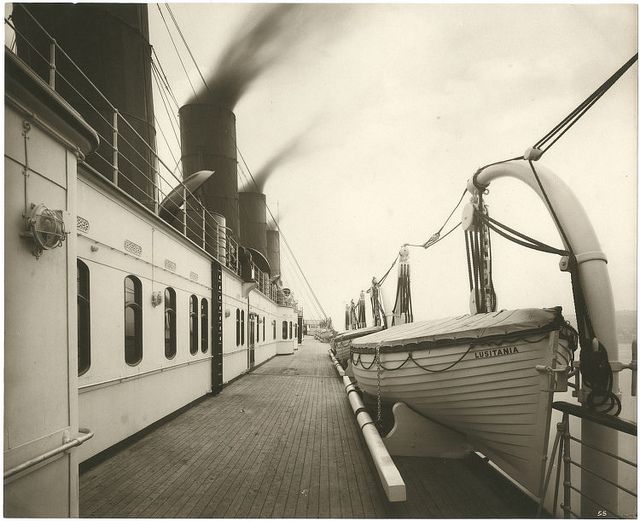

On this day, May 7th, exactly 100 years ago a handsome American writer was traveling by boat to London for what he hoped to be a successful theater run of his first play. The writer was 39 year-old Justus Miles Forman and the play was The Hyphen which had just debuted at the Knickerbocker Theatre on Broadway one month earlier.
The Knickerbocker Theater 1893-1930
Already a successful short story writer and novelist, Justus was ready to jump into the performing arts with both feet and believed he had a winning ticket with his WWI melodrama centered around German-Americans and the very big subject of the little hyphen in between. It was funny, it was dramatic, it was poignant and Justus was proud.
But New York reviewers were not quite so smitten. A total of sixteen performances were presented before the box office was shuttered and signage taken off the marquis. Justus’ friends and the general public loved The Hyphen more than the critics but if Justus wanted to make an impressive splash as a new playwright he was going to have to drum up some interest across the pond.
Influential American theater producer Charles Frohman
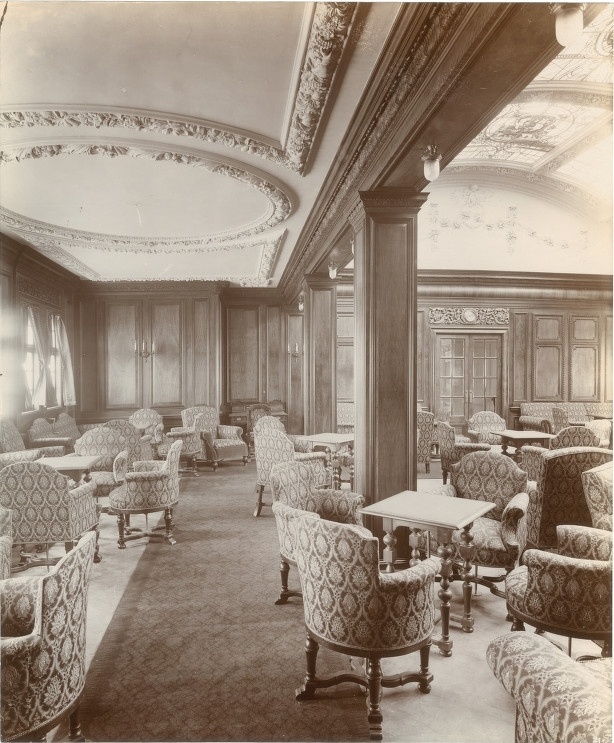
So on May 1st, 1915, Justus left New York Harbor with the play’s producer Charles Frohman traveling on the world’s largest passenger ship. A seven day crossing, with the ultimate destination being Liverpool, the trip was to be an exciting adventure full of glamorous potential just like the writer himself.
On board, Justus mingled with fellow writers and actors and party-hopped around the ship in first class style.
With the chiseled good looks of a movie star, Justus was one of the most eligible bachelors aboard the 1200 passenger boat. Charming women with both his winsome personality and his words, he enjoyed the ideal lifestyle for a novelist at that time. He was well-paid and well-received on both continents, living six months out of the year in New York City (where he did a majority of his writing) and the rest of the year was spent traveling to locations near and far, international and domestic, drumming up story ideas, writing travel pieces and occasionally acting as a news correspondent.
By the time of this 1915 trans-Atlantic crossing, Justus was the the author of nine successful novels. Writing what was mostly categorized as romance adventures, his work was as much elegant as it was dramatic. He had a flair for combining intriguing story plots with glamorous characters like his 1909 novel Jason…
which was a love story and a detective novel all in one about the disappearance of a rich young American and the two men in love with his sister who went in search for him.
Ironically in a strange twist of fate, the life of Justus Miles Forman would mirror his writing. The ship that Justus and his producer friend Charles Frohman were traveling on was the Lusitania. Just hours before reaching Liverpool, on May 7th, 1915 the ship was torpedoed by a German U-boat and sunk off the coast of Ireland. Justus was among the 1100 casualities, his body never recovered.
Unlike his character in Jason, there was no happy ending for our enigmatic hero. No men came in swashbuckling search for the return of his live body. He was not married, he left no wife or children behind. But what he did leave behind was a collection of work that marks the beauty of literature which in turn marks the beauty of a life.
On this day 100 years ago the world felt a terrible loss. And in remembering the lives that were sent to the sea and the great ship that sunk below the surface, we are reminded how fragile life is and how truly important it is to appreciate every moment as we live and breathe it.
Ms. Jeannie feels privileged to be able to help keep the work of Justus Miles Forman circulating in our contemporary world with the offering of a first edition volume of Jason published in 1909.
This volume, in addition to bearing wonderful illustration plates throughout bears a beautiful inscription on the inside front endpapers…
which reads: May blessings be upon the head of Caxton – or whoever it was that invented books – and gave us dear friends to enjoy them – To Emmalyn – July 18-09
It is a beautiful story, presented in a beautiful book, written by a beautiful writer. A piece of history.
And peace to the history of the life of dear Justus Miles Forman and all those that perished in the sinking of the Lusitania.
In April, Ms. Jeannie went on a little getaway to the shore. Her destination was the southern east coast of Florida which contained the most lovely balance between city life and wild tropics. Here’s her photo scrapbook… a blog post not in words but pictures…
Cheers to the start of summer travels, dear readers! Are you going any place fun in the next few months?
Spring has got to be the best time of year to be a squirrel. The weather is warm. The ground is soft. All the trees are in bloom. Ms. Jeannie was thinking about this the other day on her walk when she was joined by this guy chattering in the trees…
It was as-if he had shown up just to agree with Ms. Jeannie! “You’re right, Ms. Jeannie, the season is sublime!”
Indeed, these days must be a fairy tale wonderland to him.
Imagine living among shoots of blooming branches that are the size of your kitchen table…
or cuddling up for a nap in the base of a blooming bush with flowers four times as big as your head…
For a spring-time squirrel, every new day must be marvelous, especially with a playground that includes equipment like this…
and red carpet runways that look like this…
In February, their thoroughfare to fun was grey and bare…
one month later it looked like magic!
Surely that must be breathtaking if you are an acrobat of the air. Did you know that most squirrels can run up to 20 miles an hour? At such speeds their vantage points must resemble the essence of dreams…
…what a dizzying collection of sights and smells both gauzy and clear.
And how about those birds…
and those bees…
they too, must surely share in the squirrel’s enthusiasm for the change in climate. Whether the view is opulent…
or odd…
simple…
or scattered…
every little aspect of the whole production must be incredible from the eye of a squirrel. With masterpieces presenting themselves everywhere…
dear readers, Ms. Jeannie hopes your season is starting off beautifully!
And that the squirrels in your neck of the woods are having a marvelous March:)
Shhh… don’t tell Julia, we’ve got another favorite French chef!
Julia & Jacques
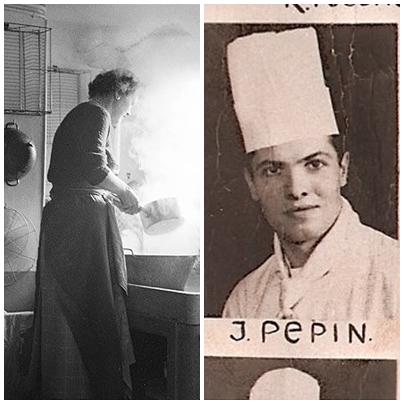
Practically equivalent in the incredibly delicious food category, the culinary wonders of Jacques Pepin are a constant source of inspiration when it comes to time spent well in the kitchen. In a lot of ways he’s the opposite of Julia Child. She was an American who moved to France. He was a Frenchman who moved to America. Julia learned the classics of French cooking. Jacques created original recipes. She developed her interest in cooking later in life while Jacques grew up in his family’s restaurant in Lyon. But for all their opposites, they shared many things in common – their passion for food and fun being two.
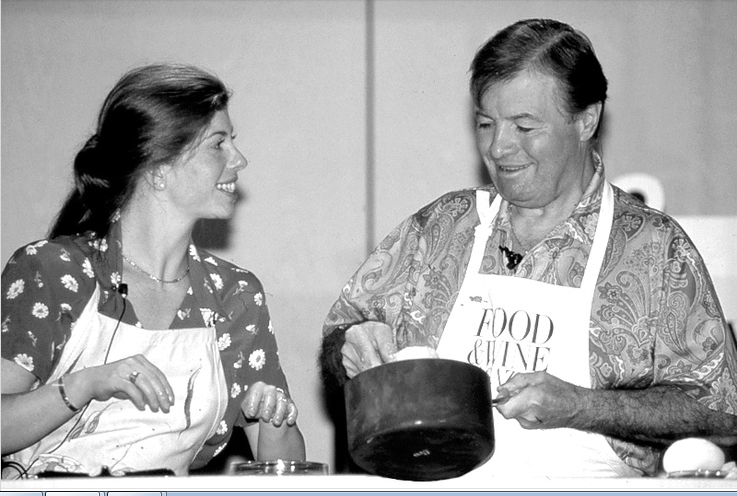
Claudine & Jacques in 1994.
Like Julia, Jacques had his own cooking show on PBS which aired every Sunday afternoon in the late 1990s. Jacques was not only fabulous in the kitchen but he was funny too. The whole precipice of the show was him trying to teach his adult daughter, Claudine, how to cook. Claudine was an everyman (everywoman?!) in the kitchen, and although she was the daughter of an FFC (famous French chef) she didn’t know much about cooking.
For her, techniques were troublesome, flavor pairings were confusing and certain preparations were downright intimidating. But In Cooking with Claudine, Jacques was there to teach and Claudine was there to learn, sort of. They were cute together. She’d make her own shortcuts, he’d quibble with her about the proper way to cut an onion or smash some garlic. Often times she’d humor him and then do it her own way. They laughed with each other and in the end they both learned from each other. Dad and daughter cooking up some fun. This camaraderie turned into quite a few television appearances over the years. If you are lucky you can still catch dad and daughter whipping up something delightful at a food festival or a special event.
Here they are sharpening knives in Aspen in 2012…
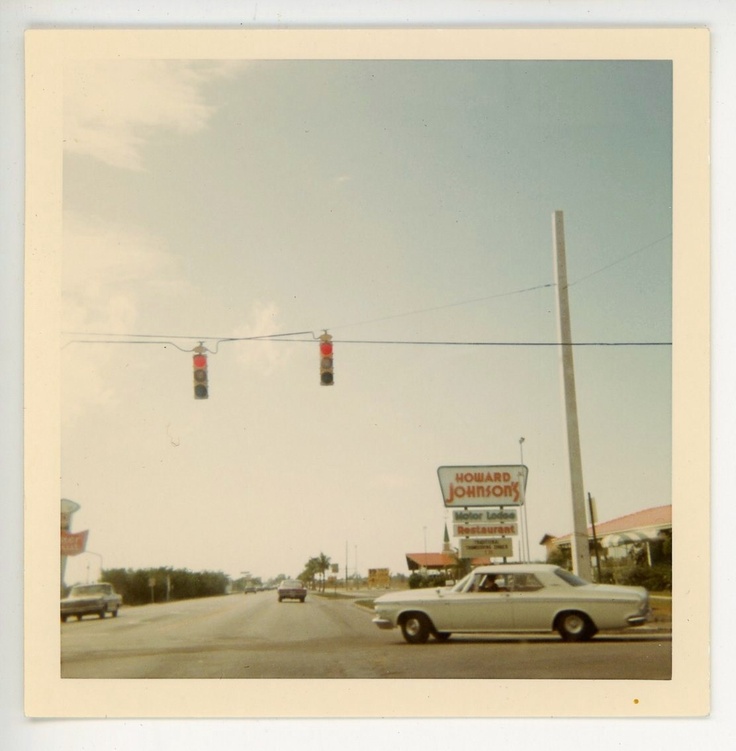
Jacques may be French by birth but his heart and home are here with us in the States. He has surrounded himself with American culture and cuisine since he first came to the U.S. in the 1950s. And guess where one of his first jobs was? Before earning his Master’s degree at Columbia University, Jacques helped develop menus for the restaurant of this famous mid-century travel icon…
Howard Johnson’s Motor Lodge and Restaurant circa 1960’s!
Immersed in the everyday palate of the American culture, Jacques’ recipes pull from cultures around the world. They may have French foundations, but they are built with various cuisines which make for unique arrangements in the flavor department.
Hominy, Cilantro and Cumin Stew
One recipe we tried recently featured an international concoction of ingredients. Pulling from Mexican, Mediterranean, and Middle-Eastern staples, this springtime stew is perfect for the hot/cold/hot/cold temperatures of March. When the weather is as indecisive as your appetite and you can’t choose between something warm, light, fresh, or hearty – Jacques’ Hominy, Cilantro and Cumin stew is the way to go.
It utilizes three springtime ingredients – onions and herbs – yet is packed with the warm, smoky flavor that suits a sweater and a scarf. It also involves this mysterious ingredient…
—
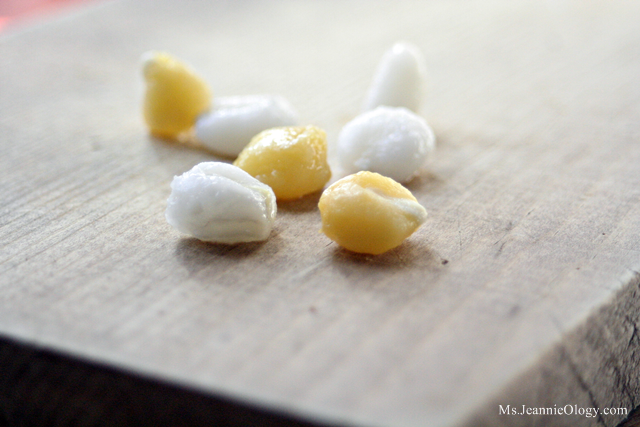
Before we made this recipe, we thought this was the same thing as polenta which is the same thing as grits – a Southern staple here in the South. But not so, dear readers. Hominy is actually a corn kernel plumped up to the size of a chickpea and sold in cans. So nothing at all like its flour sacked cousins. A whole lesson was to be had at the grocery store. Polenta and grits are the same thing. Hominy is an entirely different matter altogether. Same family, different form.
Hominy comes in two varieties – white and yellow. And as you can see from this picture – when compared to a popcorn kernel it is quite plump. The recipe calls for both colors which gives it an attractive color palette.
Because of its distinct flavor, there is not a lot of variety when it comes to cooking with hominy. We were surprised to find just a few different types of recipes online. Jacques loves to cook with these little corn puffs, and now thanks to his delicious recipe, we do too!
Hominy, Cilantro and Cumin Stew
(serves 6)
2 tablespoons canola oil (we used olive oil)
1 medium onion
6-8 scallions – washed, trimmed and chopped
2 small zucchini – washed, trimmed and diced
5-6 medium mushrooms – washed and chopped
5-6 cloves of garlic – peeled, crushed and finely chopped
1 1/2 teaspoons ground cumin
1/4 teaspoon crushed red pepper
1 can (15.5 oz) white hominy
1 can (15.5 oz) yellow hominy
1 medium tomato, peeled, seeded and chopped (because it is not tomato season here yet we used 7 oz. of canned diced tomatoes)
1 cup loosely packed fresh cilantro leaves, chopped
Heat the oil in a large pan. When it is hot, saute the onions and scallions for one minute. Then add zucchini, mushrooms, garlic, cumin and pepper flakes: cook for 3-4 minutes.
Add the hominy (with liquid from can) to the pan and bring mixture to a full boil. Reduce heat to low, cover and simmer for 10 minutes. Check the consistency after 10 – you don’t want it to be soupy, nor do you want it to be dry. If it is too liquidy – let it simmer until mixture is just moist. If it is too dry add a few tablespoons of water.
Stir in tomatoes and cilantro, and let the mixture come to a boil again. Let it cook for one more minute before ladling into serving bowls.
Jacques makes this as a side dish but you could also have it on its own as a vegetarian lunch or dinner, which is what we did here. Serving it with a few tostadas gives it a nice bit of crunch but also it would be great with poached chicken or a simple white fish. You could even serve it as a chunky dip for your Cinco de Mayo party!
Happy hominy dear readers! If you have any great recipes featuring this flavorful fella please post it in the comments below.
PS. If you are loyal fan to Julia Child, find one of her vintage cookbooks for sale in her shop. Click the photo for more info!
On this day 68 years ago, Edgar T. Wherry, a well renowned mineralogist was celebrating an accomplishment with a certain bouquet of flowers that had just come into bloom. March 11th, 1948 was publication day for his springtime book…
At the time of publication, Edgar was living in Philadelphia and teaching botany at UPenn. The weather that day was cloudy and cool, with temperatures only reaching the mid 40’s. Not rainy but not sunny either, it was another grey day in a long stretch of grey days that would mark March the cloudiest month of the entire year in Philadelphia. Daylight savings time wouldn’t arrive until April 25th, 1948; which means the light was weak, the landscape was heavy and the overall climate was dreary. Edgar, like his contemporaries today, was tired of the winter snow, the freezing rains, the ice covered sidewalks. Spring couldn’t come soon enough.
Edgar at work. Photo courtesy of American Mineralogist
But finally a mental break came for all Northerners on March 11th, when this gem of a treasure hit bookshelves for the first time. Bright and beautiful, it lightened spirits everywhere in the form of color plates and caring words. Flowers were blooming if not in the garden at least on the page.
In his book, Wild Flower Guide: Northeastern and Midland United States, Edgar compiled hundreds of different types of wild flowers native to these two regions in an effort to highlight their importance in the natural landscape. Mixed in with descriptions of each flower were both color plates and black and white illustrations describing shape and size and color. Edgar wanted to make it as easy as possible to help identify, propagate and encourage long-lasting growth of species facing possible extinction.
Edgar T. Wherry at home in his garden alongside his wife, Gertrude. Chevy Chase, MD circa 1921. Photo: Library of Congress
As an ecologist and a nature lover, Edgar like many mid-century conservationists, was concerned that urbanization and lack of attention to natural green space was going to eradicate many of the flowers that make the varied North American landscape one of the most beautiful and diverse in the world.
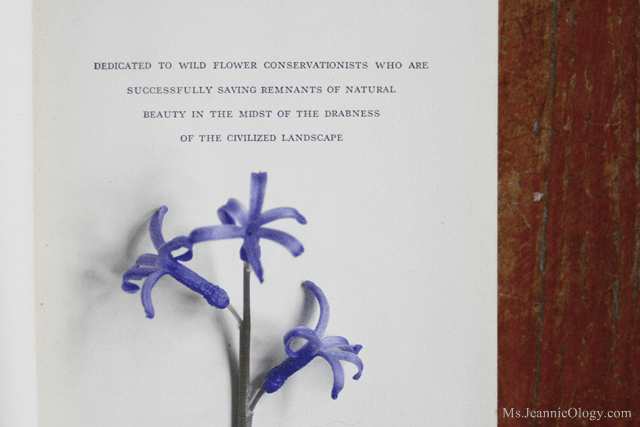
His dedication in the opening pages of the book praises efforts made on behalf of the flowers …
Considered a visionary for his forward thinking about protecting what some people considered “weeds,” Wherry was determined to educate people about the importance of incorporating native plants into garden design. 1948 was the perfect time to launch his book. Victory gardens established during the war years introduced a whole new wave of home horticulture enthusiasts. Excitement revolving around the concept of building backyard vegetable gardens was proud patriotism at its best and captured the hearts of all ages from the young to the old.
Victory gardeners. Photo via pinterest
Edgar rode the wave of people’s interest in making even the smallest garden a productive one. Benefits for people and plants abounded. Edgar teamed up with illustrator Tabea Hofmann to show readers just how pretty a weed could be and how useful it was to the big garden picture. Edgar’s book is chock-full of interesting fun facts about plants including special notes that inform and entertain. Here he explains how the touch-me-not flower helps soothe poison ivy.
Edgar managed to combine both practicality and dreaminess in one volume. With names like Golden Alexander, Star Violet, Queen of the Prairie, Fairyslipper, and Rosybells, he seduced people in 1948. This book of botany was, and still is, pretty scintillating stuff for anyone who has just come through the freezing month of February. It doesn’t matter if it was 60 years ago or six minutes ago, Edgar still has the ability to soothes us, to inspire us, to teach us. Spring will come. The cold air will warm. The flowers will bloom. And what a sight it will be.
The fanciful fairyslipper!
This post is dedicated to all our readers who live in colder climates and just can’t bear one more day of winter. Hang tight! Spring is coming! The flowers are stirring! Edgar said so.
One of the most fun and inspiring reads of 2014 was Paris Letters by the effortlessly engaging Janice MacLeod. If you are unfamiliar with this book (now #7 on the New York Times bestseller list!) it is the ultimate manifesto for the creative spirit. A true, real-life story about how one woman dared to dream and then dared herself to really live that dream.
In Janice’s case, the dream was quitting a corporate job in California and traveling abroad to find fresh perspective and a renewed zest for life. Not unlike Elizabeth Gilbert’s Eat Pray Love,Paris Letters is an inspiring memoir of a spiritual journey that transformed one life in a 360 degree manner, but unlike Elizabeth, Janice isn’t hashing out her past along her journey – she’s finding her future – and detailing it one small step at a time.
Literally, by book’s end, you know how Janice got from point A to point P (Paris!) because she tells you specifically in 258 pages of detail how she did it with a satisfying and surprising one-thing-leads-to-another trajectory of events. Paris Letters is part serendipity, part planning, part passion and part blind-faith. Along the way, you’ll laugh, you’ll sympathize, you’ll understand. As you begin the last third of the book you’ll begin telling yourself that you know how the book is going to end and you’ll feel happy that Janice found what she was looking for. But this is a real-life story and real-life endings never dissolve into the sunset in the same tidy way they to do in a movie. Paris doesn’t become Janice’s be-all end-all, there are new adventures to be had and she eludes to the possibilities of a new life in Canada in a city that Christophe (her Parisian/Polish love!) became smitten with in the same way that Janice was smitten with Paris.
And so a move was made! This is where Ms. Jeannie picks up the story. What’s life like now for Janice post-Paris Letters, post Parisian romance, post France?
MS. JEANNIE: At the end of Paris Letters you imagine a life in Canada… a house, a lake, a garden, little Janice’s and Christophe’s… now that you are living there is your daydream still the same?
JANICE MACLEOD: Before Paris, I had BIG dreams of exploring Europe. Right now my daydreams are smaller and seasonal in theme. For example, in the autumn I dreamed of hiking along paths of golden autumn leaves. Did it! Then I dreamed of having a gorgeous Christmas tree. Did it! Now I’ve got dreams of spring and gardening on my mind. I’m starting to drool over seed catalogs.
It may not be the historic streets of Paris but, as the seasons kiss in Calgary, you can sense just as much romance in the landscape! Photo via pinterest
MJ: How has your move to Calgary broadened your point of view?
JML: I’ve been pondering the idea of the pilgrimage. Life in Paris was a sort of pilgrimage because 1) I did a lot of walking and wandering 2) Everything was more difficult. Language, administration, maps… EVERYTHING. Now that I’m in Canada, everything should be simple but really the pilgrimage has just become more of an internal exploration. The outer may be easier but more intense inner work is beginning. I’m still on that pilgrimage.
Traveling the roads of calgary via pinterest
MJ: For those of us who have never been to Calgary can you sum up your new city in a sentence?
JML: Four seasons of splendor inhabited by shiny, chatty people.
Janice and Christophe!
MJ: What are you most attracted to about life in Calgary? Has Christophe found his Paris?!
JML: Definitely the four distinct seasons is the most attractive quality of Calgary for me. Calgarians like to play in all seasons, too. They don’t huddle up in winter. They hit the slopes and polish off their skates. I’ve revisited skating. Oh how I adore skating. And I’m delighted to announce that Christophe has found his Paris! He loves the wide open spaces here. It’s big sky country. Very different from Europe which, in his view, is more cramped.
Paintings of Janice’s adventures in Paris are available here
MJ: Do you think you will ever live in Paris again?
JML: Never say never. Though for now, my intention is to flourish in Canada. Now that we are settled in, it’s time to let the flourishing begin.
The recently discovered 1920s Paris flat that was left untouched for almost 100 years. Read the amazing story here. Photo courtesy of thedailybeast.com
MJ: Recently on your blog you posted the news article about the 1920s Paris apartment discovery. If someone came across a time capsule of your space in Calgary what might they find?
JML: HA! They would find thousands of photos and paintings of Paris. I’m currently sifting through all the art I did in Paris and will be posting it to my shop. It’s a big Parisian whirlwind here in my Calgary home.
Capturing the essence of Paris. A scene from the St. Paul Metro fresh from Janice’s blog.
MJ: What inspires you about the view from Calgary?
JML: I live along a river here in Calgary so I spent a lot of time just staring at the river. It’s an open-eye meditation. If you’re not moved by nature you’ve got problems. Then when you drive half an hour west BOOM! There are the Rocky Mountains. Those mountains were here long before I arrived and will be here long after I leave. Knowing that helps me not sweat the small stuff and to just be grateful to behold them here now.
MJ: Do you feel as strong a need to share with people about your daily life in Canada? Is there a sense that life there is as equally entertaining as life in Paris?
First scenes from Calgary! Photo via Janice’s blog.
JML: I haven’t shared much about Calgary simply because so much of it has been administration-focused. Do people want to know about me changing my drivers license and health card? Do they want to know about my visit to the dentist? The doctor? It’s not quite as difficult or funny as it was in France. I spent my first season here just settling in. Plus, my brain went quiet after writing and promoting PARIS LETTERS. It will take some time to restart that part of my brain and then we will be back on, entertaining the masses one blog post and letter at a time.
Subscribe to Janice’s beautiful Paris letters project for one month, six months or 12 months here
MJ: One of the most inspiring things about both your book and your blog is your confidence in pursuing whimsical endeavors. Is that something you find you must continuously develop and encourage or is it just a part of your natural makeup?
JML: Ah yes, I’m sure there will be some whimsical moments as I attempt to become outdoorsy here in western Canada. I write to amuse myself, so that’s likely to continue. Then if it’s good writing I share with the world via my letters, books or blog posts.
MJ: Of all the attention you have received from the Paris Letters journey, what is one of the most surprising experiences that has stemmed from the project?
JML: Two things. First, my book, the travel memoir PARIS LETTERS made it on the New York Times Best Seller list this month. I didn’t expect it at all. Total delightful surprise. Second, people who write me telling me the letter I sent them made their day. There is a lot of tough stuff out there to deal with in this world. The letter in the mail helps ease some of those burdens. I love when that happens and someone feels compelled to sent me a note in thanks.
Each letter is prettier than the next!
MJ: If you were the recipient of a painted letter from anywhere in the world, past or present, where would it hail from and who would be the author?
JML: I would hope to get a painted letter from Percy Kelly, whom I learned about when I traveled through the UK. It was his painted letters that inspired my project. To get a letter from him would be dreamy, but he passed away years ago, so it would also be super weird.
MJ: What’s the next day dream?
JML: Sharing my photos and paintings. I created so much art in Paris but didn’t share it since I was busy making it. Now is my time to curate, edit, refine and share. It’s going to be great! I’m so excited to share it. There is a lot of pretty Paris art in my collection.
MJ: Just out of curiosity, did you ever meet up with Mary in Canada? [Note: Mary was a Paris Letters recipient who turned out to become penpal to Janice. She’s mentioned throughout the book.]
JML: Not yet. She still lives as far from me as my friends in California. Canada is a big country. But one day I’m confident it will happen. As fate would have it, her son goes to my mom’s dental office. Can you believe that? So I’m sure at some point we will be in the same town at the same time. If not, I might just have to make a pilgrimage to Massey, Ontario, to see for myself where all her letters to me are written.
—
Perhaps that meeting with Mary will launch a blog post or launch a chapter in a new book! You just never know! But there is two things that Ms. Jeannie does know for certain – However Janice chooses to document Calgary, whether it be through photographs or paintings, words or wisdom it will be beautiful and it will be entertaining just like the lady herself!
In the meantime, read Paris Letters! You will love it!
Other fascinating interviews with fabulously talented individuals can be found in the interview section on Ms. Jeannie’s blog. Stop by and take a peek here!
**** UPDATE 6/28/2017 **** Janice just published a new book all about her Paris adventures. It’s called A Paris Year and this one includes zillions of Janice’s photographs and paintings of magical, marvelous Paris . Read about it here. And grab your copy of the book here.
Today Mr. Jeannie surprised Ms. Jeannie with this love poem. 17 lines. 67 words. 2 people. 1 romance. Ms. Jeannie is ever grateful to be ever in love with this giant heart of a man who matters so much. On this happy day of love dear readers, may your words be equally as prized by others, whether it be for a spouse or a sibling, a friend or a furry four-leggeder – never underestimate the power of the alphabet:)

Happy Valentine’s Day! Cheers to making the feeling last all year through!
A bright, bold color palette burst into the grey, chilly landscape of Ms. Jeannie’s winter the other day when she went to view an exhibit devoted to the career of Italian fashion designer Emilio Pucci (1914-1992).
All photos via pinterest
Thoroughly modern back then and still incredibly wearable today, Ms. Jeannie most loved his wrinkle- free derby dresses designed specifically for the globe-trotting woman.
photo via pinterest
With beautiful, bold patterns and feminine drape, Pucci was best known for his clean lines, carefully tailored silhouettes and what he called his ” fresh but violent” color pairings. He was creator behind the iconic “Italian look” for his most favorite body-type – the curvaceous American figure. Lucky us!
The exhibit showcased pretty dress after pretty dress before segueing into his collection designed specifically for Braniff Airlines flight attendants…
Photo via pinterest
Cleverly coined the “Air Strip” collection – these transformative uniforms were designed as layered pieces so that the flight attendants could go from outside meet and greet situations on the tarmac to several different versions of uniform depending on the task at hand once inside the cabin. There was an outfit change for cocktail hour, one for dinner service and one for post-dinner refreshments.
In case of inclement weather, the flight attendants even had special hats…
A plastic bubble helmet, inspired by the astronauts, to protect from rain or snow!
The innovative marketing concept rolled out in 1965 and was the brainchild of real-life MadWoman ad executive Mary Wells who titled the advertising campaign “The End of the Plain Plane.” Peggy Olson would have been proud!
Considering that this was the look of 195o’s flight attendants…
photo via pinterest
which carried through up until 1964 as seen here in this ad for Delta airlines…
Delta Airlines ad circa 1964
You can see how Pucci’s Braniff girls really spiced things up a notch…
When presenting her marketing campaign ideas to Braniff, Mary Wells reasoned that tired businessmen deserved something pretty to look at. Oh my! And while this sort of ideaology sets the womens lib movement back by miles, you can sort of understand what Mary was going for and what Pucci delivered…
excitement and glamour in the air! Sure the skirts were pretty short, and the idea of flight attendants being required to go through wardrobe change not once but several times on a trip across the country seems silly, there is still something validating about women being encouraged to dress like women.
Now most of our air service crew across all major airlines dress like this…
photo via pinterest
… androgynous corporate America, at its best speaks of neither fun nor glamour.
Of course ever since 9/11 airplane travel has become serious and suspicious. You can’t fault airlines for just trying to focus on the major task at hand – getting passengers from point A to point B safely. But back in the 60’s they had that same task too and managed to both make flying feel enjoyable and exciting.
It would be nice of some of these shiny bells and whistles returned to the sky, even if it was just a relaunch of brightly colored uniforms for flight attendants today. Never underestimate the power of color to help change mood and alleviate anxiety, Ms. Jeannie always says! And that simple adjustment just might work wonders in bringing a bit of enjoyment back to sky-bound travel today.
Pucci never underestimated the power and beauty of natural curves. Mary Wells never underestimated the power of pretty presentation. And jet-setters never underestimated the allure of the travel experience. By bringing back a bit of showmanship to the skies, it might encourage people to experience more of our vastly interesting planet.
What do you think, dear readers? Do you think the 1960’s travel campaign is sexist? Would you like to see a return to the excitement and glamour of the golden age of travel or are you happy with the current state of shuttling to and from that is our contemporary state of air affairs? Please comment below! Ms. Jeannie would love to hear your thoughts!
In this week’s culinary adventure, Ms. Jeannie is focusing on something delicious for canine-minded readers of the blog: organic flaxseed dog treats! Or biscuits, if you’d like to correctly call them.
Around “officially” for over 150 years, specialty biscuits for dogs were created by this enterprising American electrician…
Photo courtesy of chestofbooks.com
James Spratt, who patented Spratt’s Meat Fribrine Dog Cakes, after he noticed a pack of dogs chewing on hardtack biscuits in the street. The city of London became his manufacturing mecca of choice in the 1870’s where his dog treats became quite a big British hit.
Before long, exclusivity was compromised and the Bennett Brothers of New York City took note of the popular Spratt product and brought the concept home to America.
The Bennett Biscuit Company was established in the NYC’s Lower East Side in the early 1900’s, making Maltoid’s – milk, mineral and meat dog treats. Later Bennett’s biscuit company would be bought by National Biscuit Company (know known as Nabisco) and their production of Milk-Bone dog biscuits would become a household name by the 1940’s.
But because Indie has some food allergies and has to therefore exclude most grains from her diet (and unfortunately most over-the-counter dog treats like Milk-Bones), Ms. Jeannie is always on the lookout for a good recipe that won’t give Indie a rash.
Ms. Jeannie has found a favorite in this organic recipe and as you can see Indie is quite an enthusiastic kitchen helper when these are on the baking menu!
Simple, easy to make and abundant in quantity you start out by combining yeast, warm water, chicken broth, maple syrup, dry parsley and an egg in a large mixing bowl…
Then you add ground flaxseed meal until it forms a stiff dough…
Next, roll the dough into a ball and knead for a few minutes…
Then you are ready to roll the dough out in a thin layer and cut out the shapes. Ms. Jeannie lost her cookie cutters in the move somewhere so she improvised using the openings of two different sized glass jars…
Once you have all shapes cut out – place them on an un-greased cookie sheet and bake them in a 350 degree oven for 30 minutes. Turn them over and bake for an additional 15 minutes. Once finished in the oven, let them cool on a rack for an hour.
Depending on the thickness of your dough – you can make chubby treats or paper thin treats. Ms. Jeannie likes to do a mixture of both. On the days when Indie does something really good or listens really well – she’ll get a chubby treat:)
By the time you get to this stage you’ll have several dozen homemade dog treats and one anxious sampler at your feet.
If you’d like to share your treats, it is fun to package them up and give them as little gifts to the extra-special creatures in your life. They make fun hostess gifts, thank you gifts and special holiday gifts. Or if there is a secret canine valentine in your life…
… you’ll win their heart by giving them these:)
Here’s the complete recipe breakdown once more…
Organic Flaxseed Dog Treats
2 teaspoons dry yeast
1/2 cup lukewarm water
2 tablespoons dry parsley
1.5 cups chicken broth
3 tablespoons maple syrup (or honey)
1 egg
5 cups ground flaxseed meal
Preheat oven to 350. Dissolve yeast in lukewarm water in a large mixing bowl. Add parsley, broth, syrup, and egg and stir to combine. Slowly mix in the flaxseed meal until it forms a stiff dough. Form dough into a ball and transfer it to a flat surface (you can sprinkle some additional flaxseed and parsley on the surface so that the dough will not stick) and knead for a few minutes.
Roll dough out into a thin layer (about 1/4″ inch for thin crispy treats or about 1/2″ inch for chubby chewy treats) and cut out shapes with cookie cutter. Place treats on an un-greased cookie sheet and bake for 30 minutes. then turn each treat over and bake for an additional 15 minutes. Place cooked treats on a cooling rake for 30 minutes.
Happy New Year dear readers! Ms. Jeannie has missed you, missed you, missed you! It has been several months since the last post in October, and in that interim between then and now, a flurry of behind-the-scenes activity has been occurring in the land of Ms. Jeannie Ology.
Indie was quite the little helper!
Most notably, there was a move to a new house and a new town.
As Ms. Jeannie said goodbye to the garden and the greenhouse, and the friends she made of the birds and the butterflies and the bald-faced hornets of the last few years, she said hello to a history-soaked house and a bustling university town.
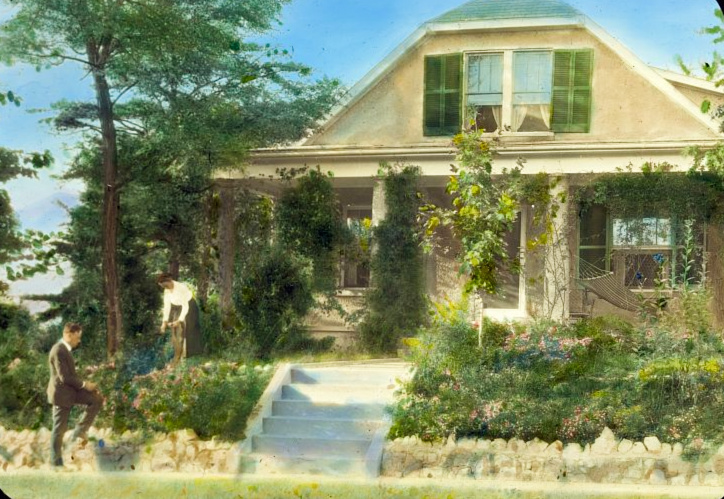
This was not a move to just any old house – with luck as a tour guide, Ms. Jeannie found a converted two room schoolhouse built in the 1930’s. Here’s a vintage picture of her new abode…
Not too much has changed in appearance from that picture to today, except maybe the yard is a little more tame:) All the character and all the history are still exactly where they are supposed to be and that is pretty fantastic.
Originally part of one of the largest cotton plantations in the County, the schoolhouse was built along with a church and a commissary building for the plantation slaves. There is still quite a bit of farmland surrounding the house, especially across the street, so it is not hard to imagine what the scenery might have looked like 100 years ago…
Replace the wheat fields above with acres and acres of cotton and knock down most of the trees and that would be the agricultural landscape here of the 1800 and 1900’s. While the church still remains open and active next door, the original schoolhouse caught fire and burned down completely. In 1936 it was rebuilt and continued to be operated as a public school for black children up until the 1960’s when desegregation put it out of commission entirely.
Ms. Mary Willingham was a former student of the school house…
Photo courtesy of the WPA Federal Writers’ Project Interviews
In 1939 she granted an interview about her life for the WPA Federal Writers Project. When asked about her education in the schoolhouse, in particular, this is what she had to say…
“So it’s my schoolin’ you wants to know about now?” she asked. “I got as far as the second grade. That’s how come I can’t talk proper now; I didn’t have enough schoolin’… us chillun went to school there during the week, and to church and Sunday school there on Sundays. That’s the way colored folks done in them days.”
While it is unclear why Mary had to leave school after second grade, we do know that the process of educating black children in the rural South both before and after the Civil War was not an easy task on many fronts. Back in the 20th century the original schoolhouse was considered primitive by many standards. By 1915, the children still had no desks or even a cloak room to hang their coats and they would have just sat on benches lining the wall. Black teachers made 1/3 of the salary of white teachers, which meant their monthly take home pay was about $25.00 and if white teachers were teaching black children, they would have had to tolerate a lot of ridicule from the white community for their professional choices.
All this seems pretty unfair from both sides, but this schoolhouse, in particular, was actually considered pretty great back in its day because it was in a good location, had ample grounds for playing and the exterior was painted and therefore not subject to rot and mildew.
Inside, the school house is laid out like this…
Thanks to Mr. Jannie Ology for providing the drawing:) Little nods to the buildings history are everywhere from the “house” key…
little nods to the buildings history are everywhere from the house key…
to the all-wood walls…
to the giant 4′ foot by 5′ foot chalkboard in the kitchen…
6′ foot tall windows line both the front and back of the house and 11′ foot ceilings make all 1300 sqf feel large and airy. Two pot-bellied stoves serve as heat…
exactly what did the job way back in 1936. A few massive pieces of furniture have also been left behind from classroom days which now serve as bookshelves for Ms. Jeannie’s vintage book club…
It seems fitting to be surrounded by so many books and to be managing a book club while living in a historic schoolhouse. It makes Ms. Jeannie thankful that access to education and to books and to higher learning for all is so much more accessible today than it was in the 1800 and 1900’s. Living in such a space that encouraged minds to build more intelligent futures is very inspirational – whether it be a 7 year old Mary or twenty-something year old school teacher or an eventual history-loving book club tenant. Education continues…
Boyo quite agrees. He has learned a lot himself moving from the wild back yard that introduced him to Ms. Jeannie in the first place and settling in to his new post as babysitter of the books in the new house…
As you can see education extends to all here:) Ms. Jeannie is really looking forward to sharing a variety of new adventures with you in the new year… in her new house… in her new town. Happy January dear readers, Ms. Jeannie’s glad to be back with you all:)