All That Was Learned in a Season of Herb Gardening

Adelma did not let us down. In her 1964 book, Herb Gardening in Five Seasons, she assured readers that certain types of herbs would grow in sun-dappled shade gardens. And she was not wrong. Herbs did grow. Flowers did form. And I did clip and cook my way through the summer. Just not quite in the way that I had anticipated.

If you are joining us for the first time, this post is part of a series started back in January 2025, about building an herb garden from scratch inspired by the horticultural wisdom of New England herbalist, Adelma Grenier Simmons (1903-1997). Catch up here for a proper introduction to Adelma and the inspiring gardens that she built at her Connecticut home, Caprilands over the course of the 20th century.

In January, when planning and preparations were underway for the start of our first-ever herb garden at 1750 House, I had visions. As I sketched out the location map of what herbs would go where and which companion plants would best be suited side-by-side, in my mind, the herb garden of summer 2025 would be eye-high. Right in step with the 5-foot tall foxglove success story of past gardening endeavors.
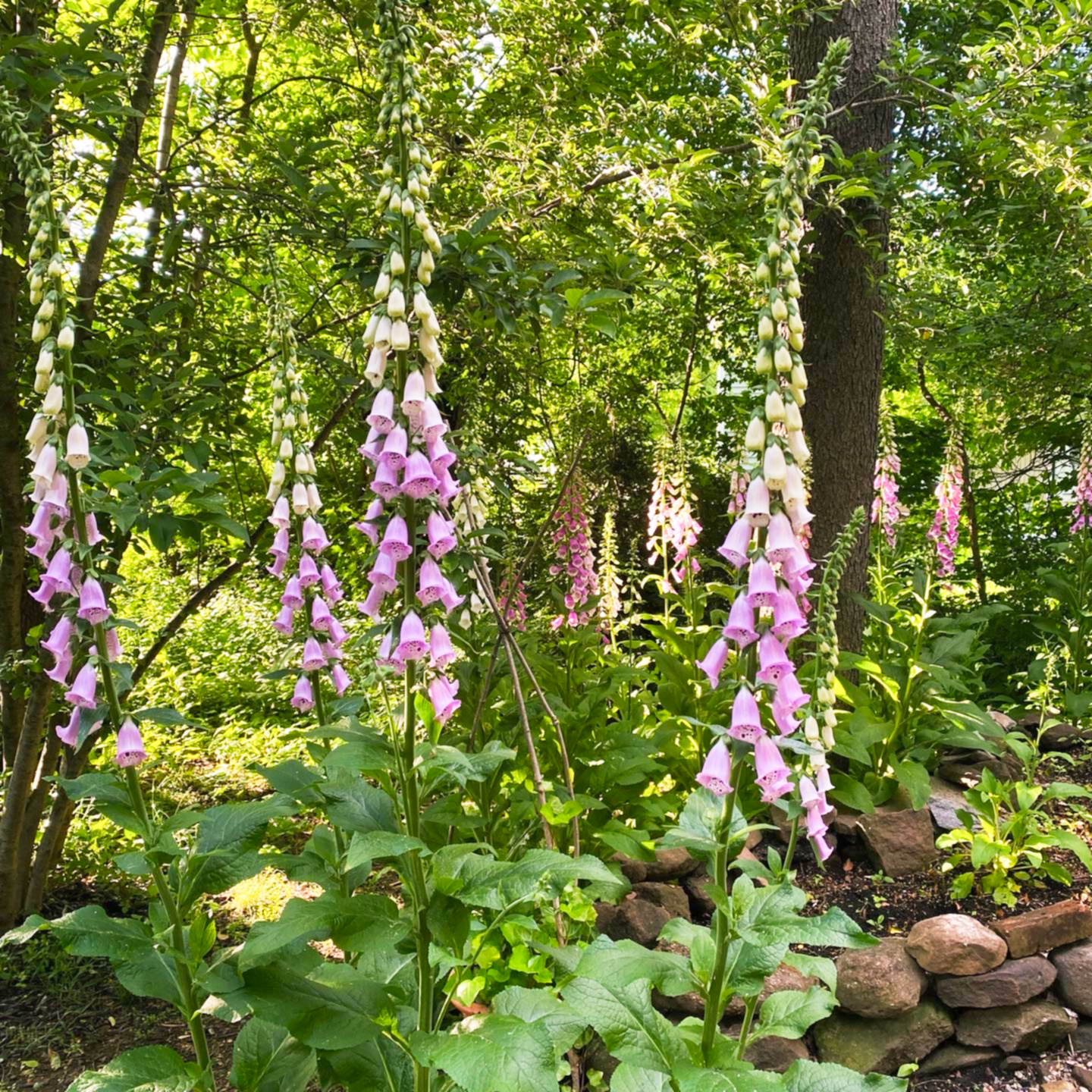
Foxgloves from the 2023 -2024 garden.

Emboldened by those towering giants of the woodlands that had been grown in the greenhouse from the smallest of seeds, I had visions that the herbs would grow equally tall. I had visions of their delicate petals swaying in the breeze. Of their foliage tinted in all the greens. I had visions that they’d make a home in and around the foxglove and create an undulating palette of soft colors. A cottage collection. A fully filled out bed.

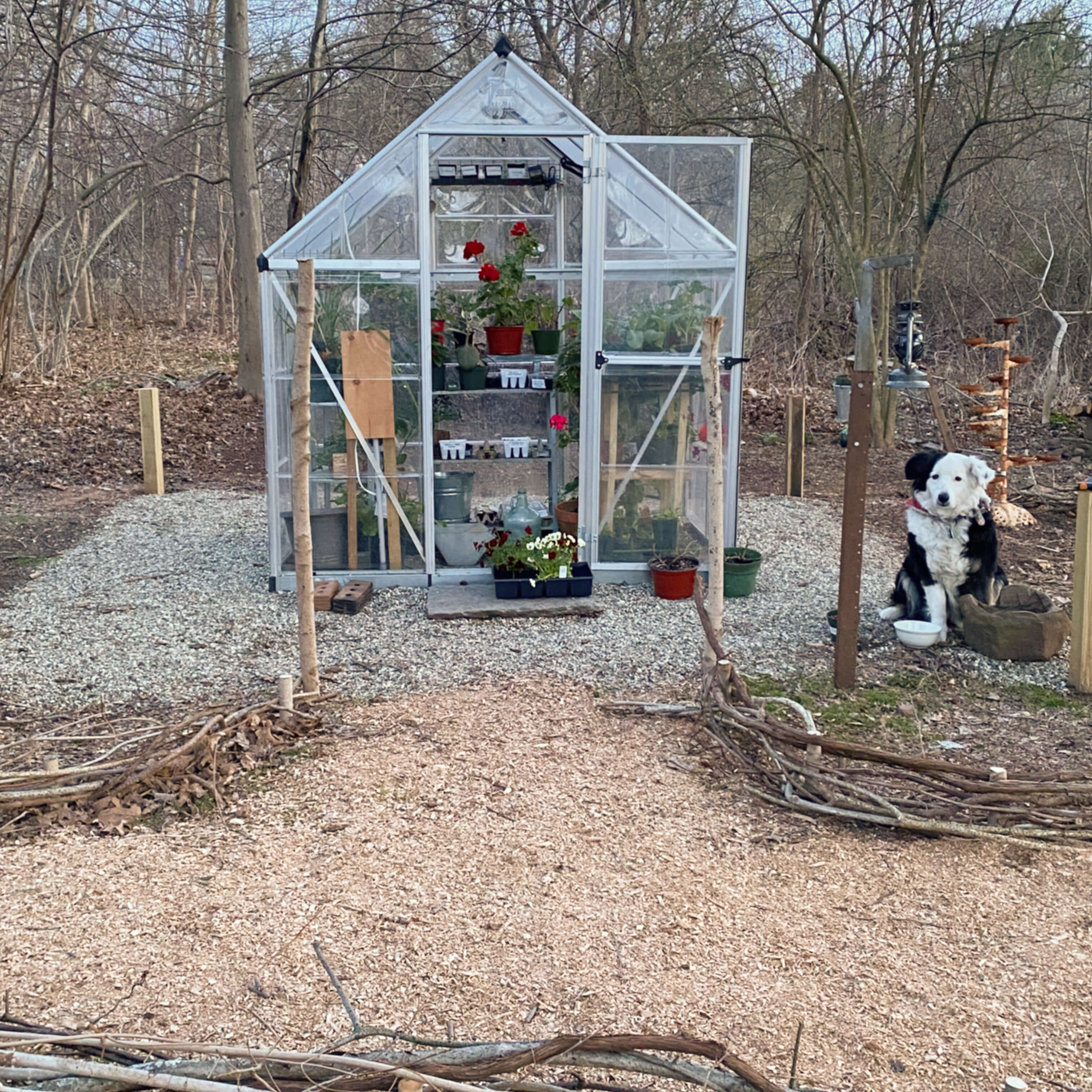
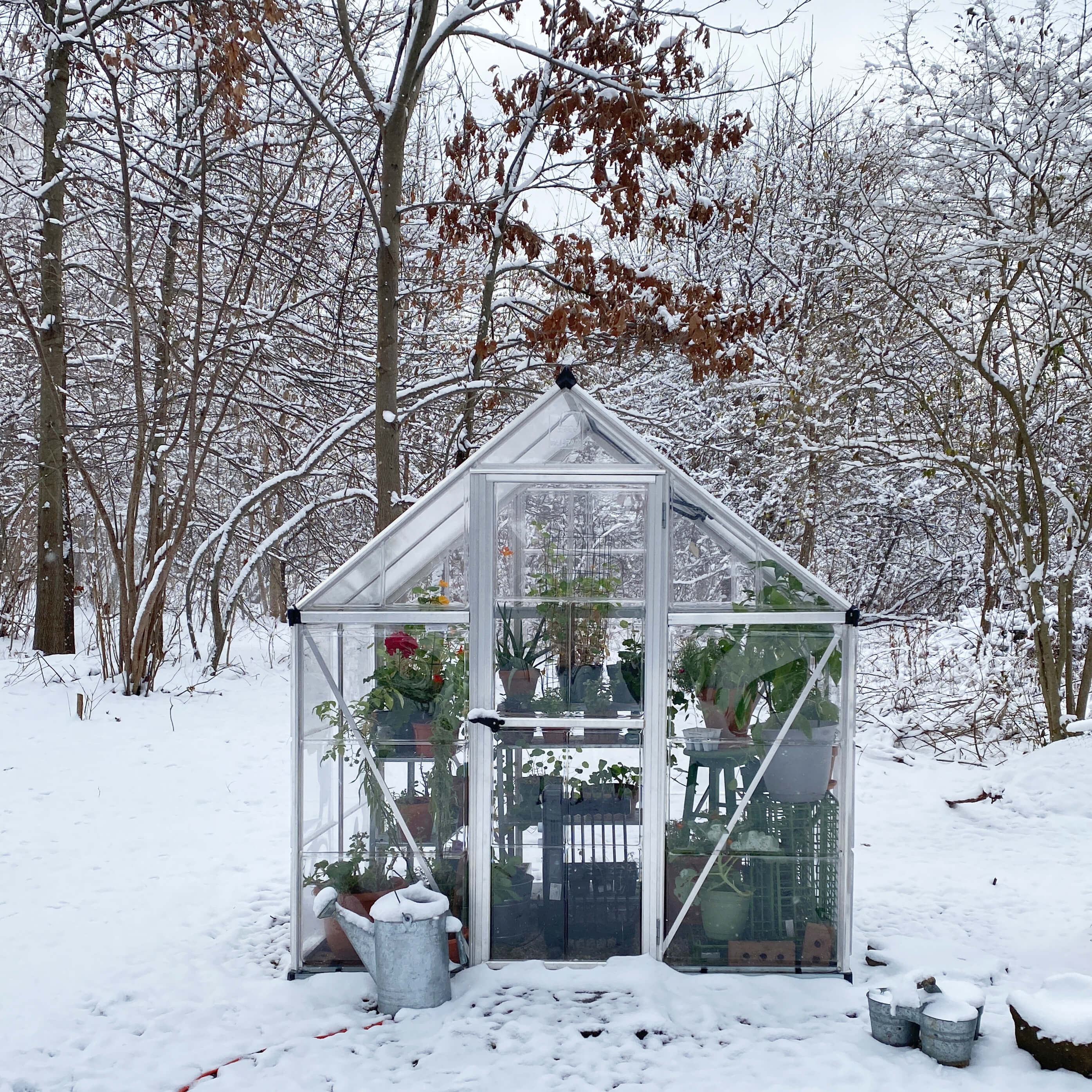
The snow-covered greenhouse in January 2025

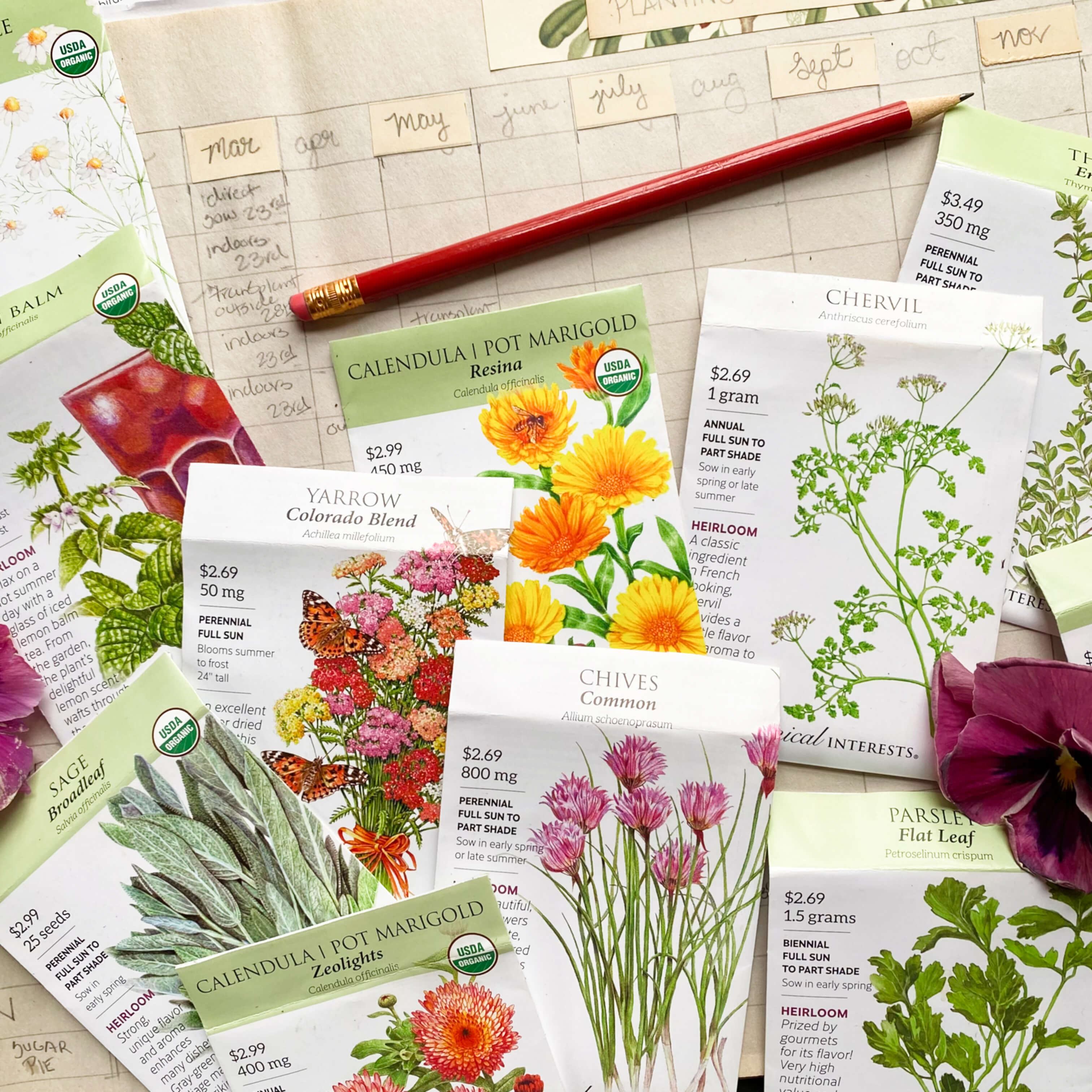
While the ground was still frozen and snow-covered, I could see a full garden, busy with birds and bees and butterflies floating here and there. I could see the feathery chervil, the wave of parsley, the white petaled chamomile, the flax, the forget-me-nots, the dill, the lavender, the calendula. When the garden was covered under an ice-slick snow sheet, and I was starting seeds indoors, I had visions of deep summer in the herb garden. Hazy light, hot temperatures, the greenhouse surrounded by a vibrant and verdant utopia racing skyward to meet its peaks. I could see the bee balm on the right, the nasturtiums climbing a trellis on the left, and the foxgloves trying to out-stretch them both. I could see the savory, the sage, the oregano, the thyme creeping and heaping their way around the garden floor. As I collected seed packets in my garden tote in the weak light of winter, I imagined, months later, collecting herbs in a kitchen basket slated for summer meals made possible by the summer garden.
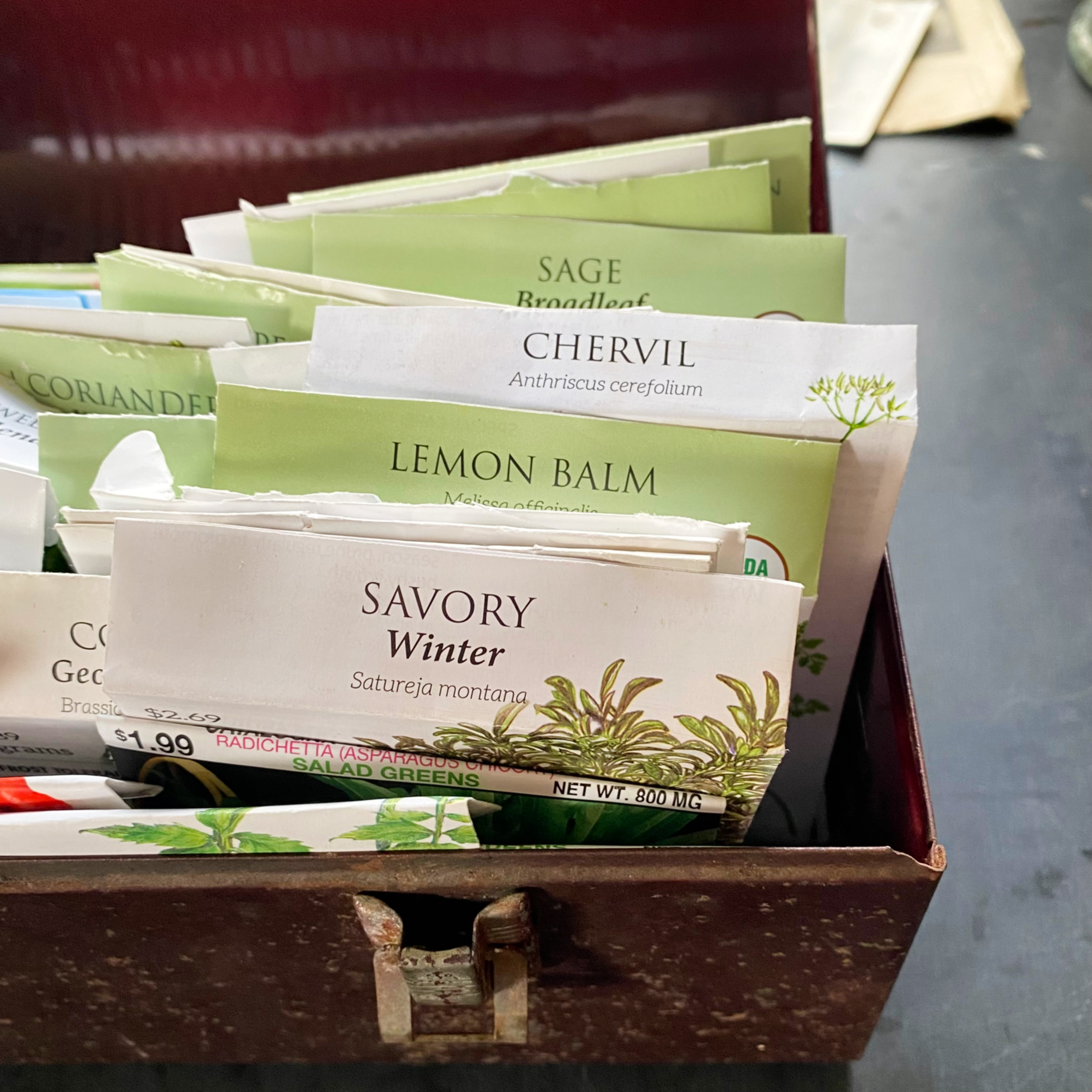

Back in January, bundled up in sweaters and scarves, I could anticipate the warm-weather blog posts. The recording of each new herb as it is unfurled week by week, month by month, all summer long. The sharing of what things looked like, smelled like, tasted like. The chamomile, the dill, the calendula. The mint, the basil, the cumin, the thyme. The unfolding of each new flower, each new leaf, day by day. They’d be blog posts that would practically write themselves, not because of AI (something I never use here on the blog) but because the herbs made it easy under Adelma’s experienced guidance and thoughtful instruction. I had visions.

Wrapping up eight months of gardening experience in one blog post is a lot to ask of a reader’s attention. So, in order not to make this post eighty miles long, I’m going to truncate a lot of what happened during the growing season. This is not an attempt to skirt over the challenges, of which there were many, and only to shine light on the successes. But building an herb garden, as I have learned this summer, is a bit like watching a tree grow minute by minute. Not a lot happens. And to be completely honest, not a lot happened for months.

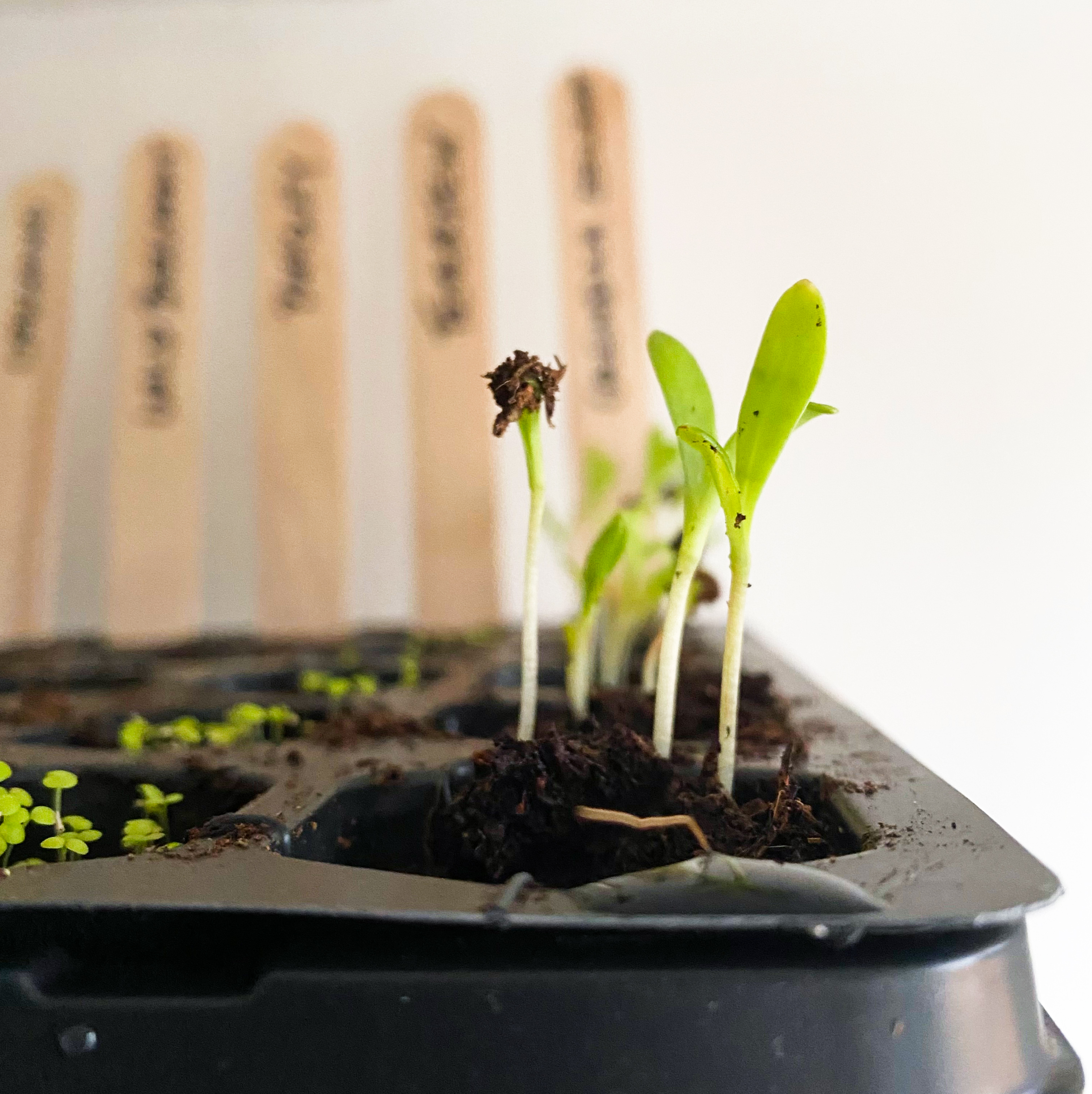
When the seedlings grew strong and hearty indoors all through cold, snowy, rainy February and March and April, I knew they were off to a good start. The calendula was spilling over the sides of the seed tray on one end, while chamomile was mounding so full and lush on the other end, it was difficult to see the individual cell blocks from which they sprouted.

Calendula and feverfew seedings

In May, everything headed out for planting. Optimism was high as all the seedlings were tucked into their pre-planned beds alongside their pre-planned companions. The summer garden visions were swirling with each dip of the spade into the soil. The cilantro next to the parsley, the flax next to the nasturtiums, the bergamot behind the feverfew, the oregano in front of the coleus, the echinacea before the fence. On and on, the digging and planting went all the way around the greenhouse. Three full sides layered in seedlings that would reach graduated heights of up to 5′ feet to match the foxglove. The shortest in front and the tallest in back.
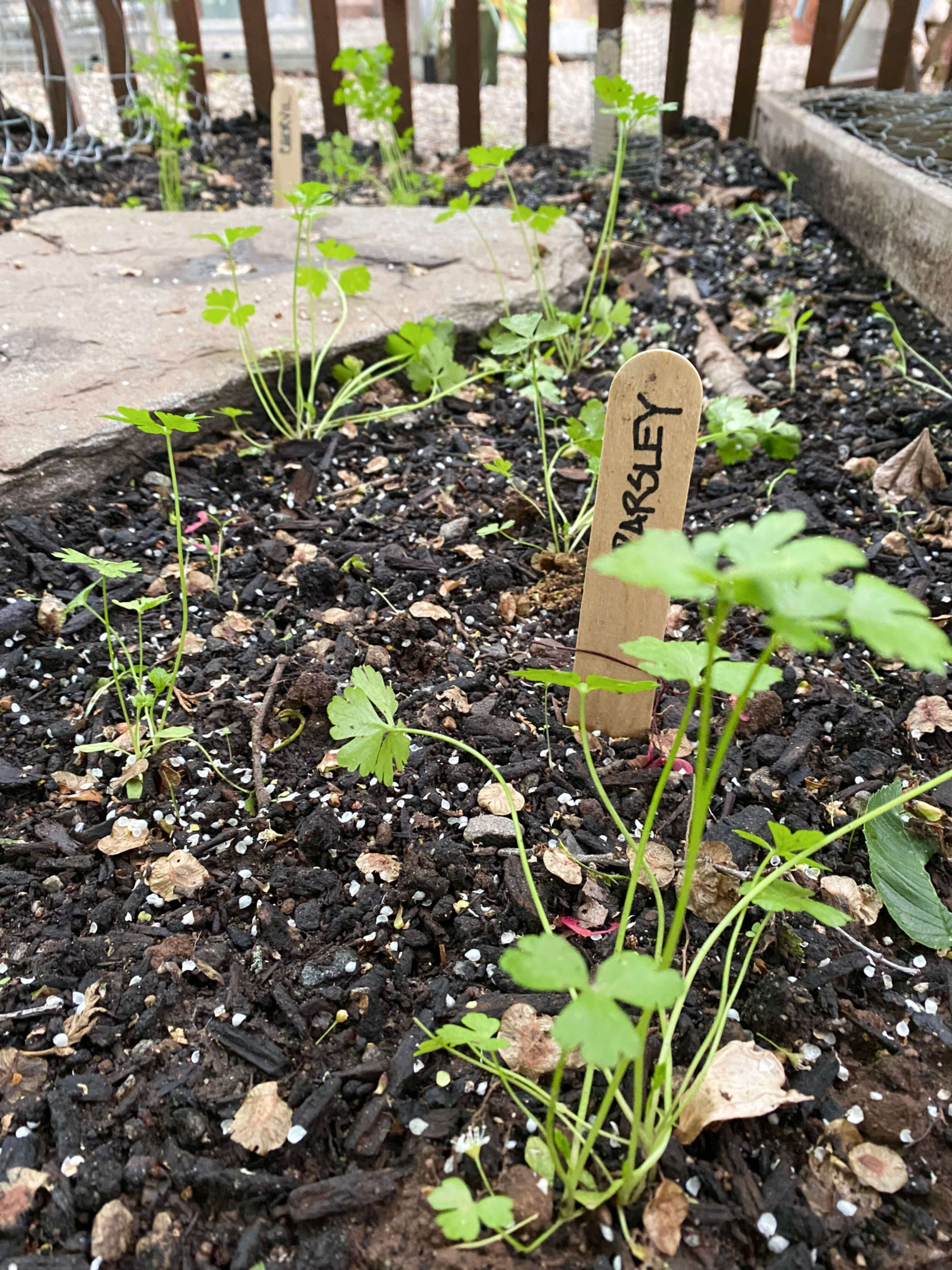
Parsley seedlings adjusting to their new bed.


Once planted, every seedling got its own individually made wire cage for protection from rabbits, deer, squirrels, and other wild creatures that might find a newly planted herb garden especially enticing. For about a week, things were good. The herbs settled in and seemed to be happy in their new spots. The branches of the trees overhead were leafing out, and the sun was doing its dappled dance. The visions were coming to life.

Then the cold snap came. The weather turned wet and winter-like for weeks. Memorial Day weekend was rained out with a nor’easter, not bringing snow, but rain and high winds and 40 degree days. By Mid-June, I was still doing gardening chores wearing a wool turtleneck sweater and jeans.

Despite the unusually cool start to spring, the 22-foot tall Japanese maple unfolded in its normal fashion, but instead of last year’s canopy, it reached an extra 24″ inches in length this year. This sent branches half-way across the greenhouse on one side and further into the front yard on the other side.

This spring… the growth-spurt of the red japanese maple in the top left corner.

By July, a deep shade took over the whole left side of the greenhouse. The seedlings in that bed were the first to disappear. The nasturtiums, long and leggy already at just a month old, were eaten down to the ground in an afternoon’s timeframe. The cilantro, parsley, chives, and flax were next. All consumed by some mysterious creature, neither rabbit nor deer, but something smaller that could fit through the wire cages and snack away. My guess was that it was most likely the work of slugs, cut worms, and caterpillars who had made their presence known in other beds in years past, and who like to eat in the off hours when no one is watching. By the end of July, what was once a tender patch of steadily growing seedlings was now a framework of protective cages and bare dirt, with not an herb in sight.

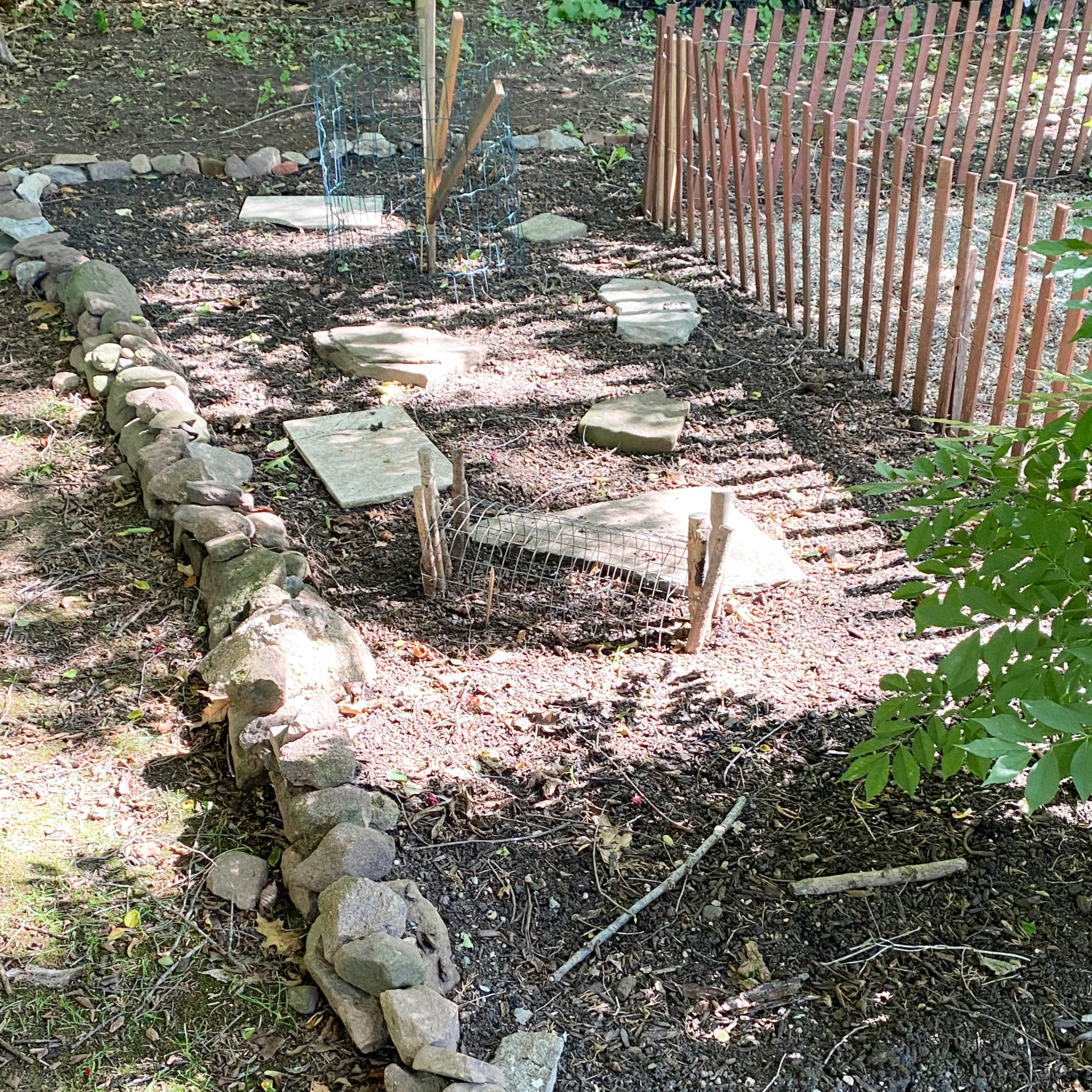
Luckily though, as an experimental year, I planted herbs in several places around the garden, not just the greenhouse, so that we could see in which areas they grew best with varying lights of shade vs. sun. The reliable foxgloves in the front bed of the greenhouse grew to 5 feet and bloomed in shades of pink, purple, and white.

The foxglove seedlings in the back behind the greenhouse were squashed and trampled over by squirrels enroute to the birdfeeder and eventually were crushed to a papery pulp. The herbs on the right-hand side of the greenhouse (with lighter shade and much more sun-dappled conditions) fared far better but remained short and seedling size for months.

Although this photo above was taken in late June, the plants never really got much bigger than this over the next 60 days. Each formed their own little clump, but never branched out enough for one to meet the other, which was my initial idea in order to create a full garden. The mystery pest got the best of the herbs on the far edges of this bed too… the echinacea, the bergamot, the chives, and the chervil, but left the lemon balm, the oregano, and the feverfew alone. As an herb that symbolizes protection and new beginnings, I immediately loved the fortitude of the feverfew. Planted all around our pup Indie’s headstone, as a way to safeguard her spirit and to mark a new chapter, it was encouraging to see that it was now protecting the neighboring herbs too.

Feverfew

Every week, I kept waiting for something spectacular to happen: for something to catch a growth spurt and shoot up tall. But throughout the entire summer, all the seedlings that had been planted in early spring remained short and compact. Despite the organic compost laid in a thick blanket, despite the weekly waterings, and despite the regular fertilizer feedings, the herbs kept to a mercifully slow schedule. Meanwhile, the rest of the vegetable and flower gardens all around 1750 House flourished.

A small portion of the backyard vegetable garden in late July. This photo includes tomatoes, peppers, basil, corn, nasturtiums, winter squash, melons, beans, kale, artichokes, and collard greens.


In Adelma’s summer chapter of Herb Gardening in Five Seasons, she recommended two options in regard to feeding herbs: a commercially available (mid-20th century) fertilizer containing a 23-21-17 ratio and a homemade version of manure tea. While there are several horse and cow farms in our surrounding area, I have yet to see if any of these farms offer organic manure for sale, so I opted for the latter. The exact makeup of the commercial fertilizer that Adelma had recommended, is no longer available in that specific configuration anymore. I wound up making my own fertilizer combination comprised of organic seaweed, bone meal and banana peel water which was the closest I could get to mirroring her nitrogen-phosphorus-potassium ratio.
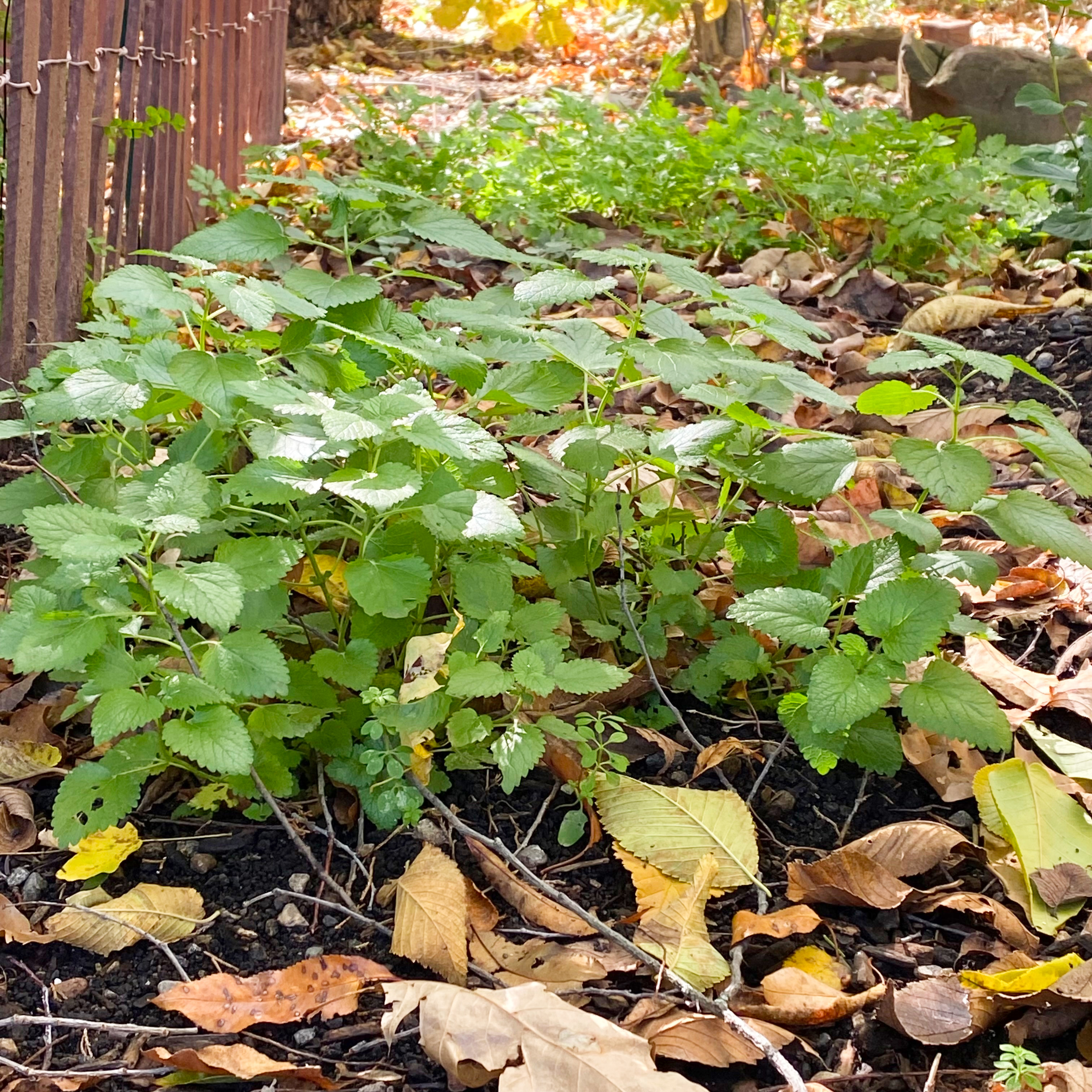
Lemon balm in early September

Finally, when the end of August approached, a growth spurt occurred. The herbs in the greenhouse bed started spreading out wide, but not high. The tallest herb was the lemon balm, measuring in at 5 1/2 inches in height, about 19″ inches shorter than what it should typically be. So you can see that things were not exactly ideal in this area of the garden, but they were at least improving slightly.
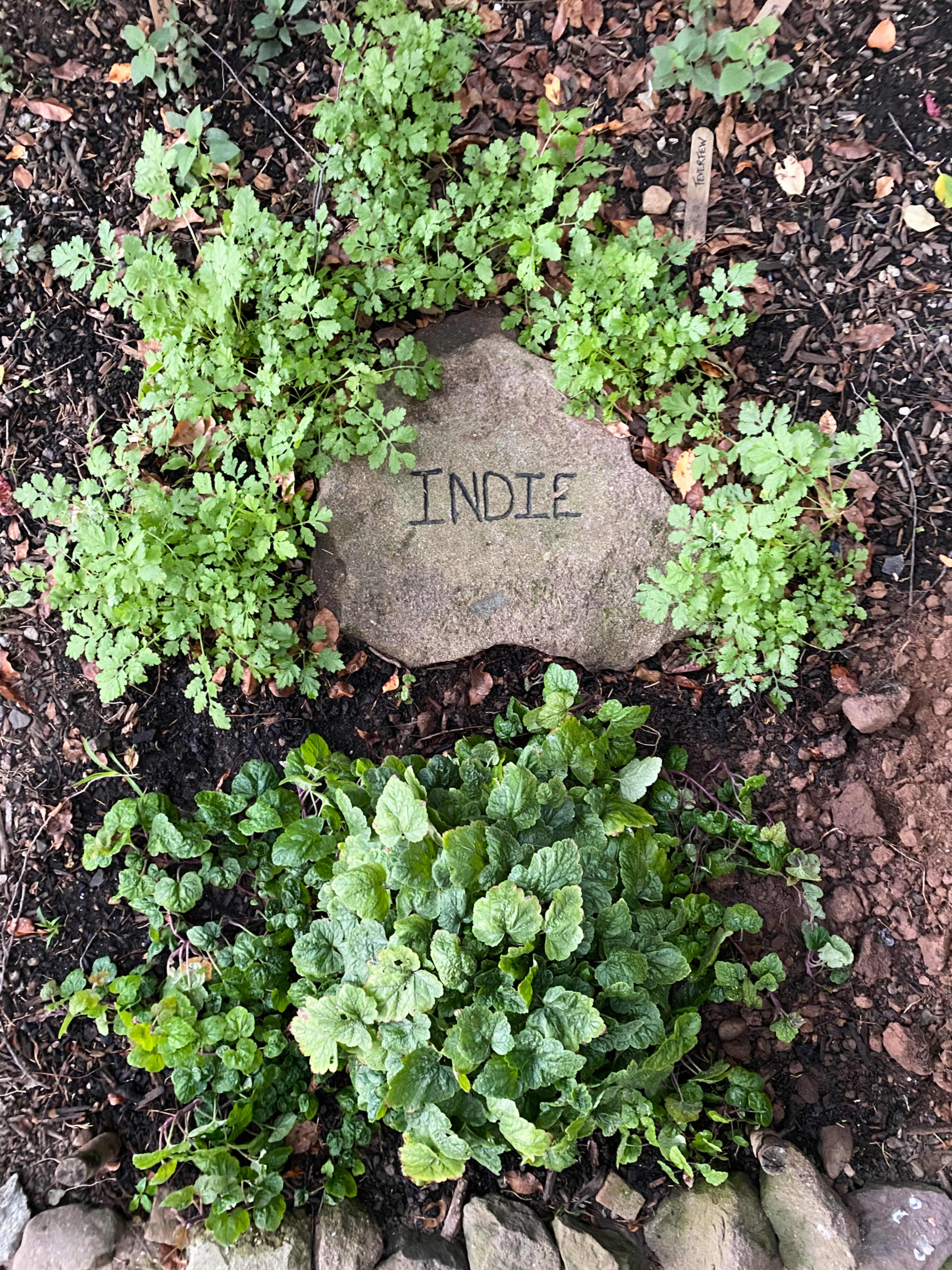
At the end of summer, the feverfew filled out and a perennial foam flower plant was added to replace the forget-me-nots.

Just as the lemon balm and feverfew started fluffing out, the tiniest of forget-me-nots bloomed. It was one single flower of dainty proportions and the the prettiest shade of blue, a color not that common in the garden beds here. As a spreading perennial, it was a hopeful sign that they were establishing themselves. That the herb garden might be turning a corner towards long-lasting success. The photo is not so great, but the flowers really were lovely.


Later in the week, bunnies ate the anemone. The mystery pest came back too and ate the forget-me-nots, flower and all, and then ate the bergamot for dessert.

As a true experimental garden, I didn’t interfere with any of the plants, but just observed their progress, keeping notes, and taking photos on what survived and what didn’t and in what location with what amount of sun. When I sketched out the garden in January, I paired all the seedlings with their most ideal companion plantings based on compatibility, size, structural composition, and color so that everything harmonized and flowed together. When companion planting, there’s the added benefit that these specific pairings “help” one another, whether it’s underground adding additional nutrition via their roots or above ground adding protection or distraction from various pests. This step of the planning process is pretty intensive because many things can’t be planted next to each for lots of varied reasons. Add in additional factors like water, soil, and sun requirements, and this placement-of-the-herbs exercise turns into a puzzle on paper best executed with a pencil and a sizable eraser. It took many days to get the garden plan correctly mapped out over winter. What I didn’t plan for though was Santiago.

Santiago, the twenty-one-year-old wonder cat this summer.

In early September, on a beautiful sunny Sunday, Santiago, our 21-year-old cat, said a peaceful goodbye to life at 1750 House. Maybe nature worked in our favor over the summer leading up to the moment when we laid Santi to rest in the spot in the greenhouse garden where the anemone once stood. It was an ideal new home for Santi. Near his favorite rock with the hollowed out middle that became his outdoor water bowl, it was also close to his pal, Indie, with full view of the bird feeder and the woodlands and all the wild creatures that sparked his curiosity each and every day since he arrived a southern cat in a northern land.

Back in January, penciled in around the anemone were pink and white echinacea, foxglove, lemon balm, parsley, mint, chives, and oregano. Now in reality, in September, Santiago’s inclusion in the garden inspired something different. A new vision. One that transformed this side of the greenhouse into a brand-new kind of garden altogether. Instead of an entire bed filled with herbs with a foxglove end cap, a new celebration garden was coming into light. One that represented joyful memories in the form of plants. One that captured the engaging spirits of our long friendships with a ten pound cat and the most enthusiastic pup on the planet. The foxglove, feverfew, and lemon balm will stay, but in place of adding other herbs, next spring, I’ll be adding flowers and shrubs suited to shade that carry reminders of Indie and Santiago. Instead of a bed for scented herbs, it will become a bed of sentiment, which is not unlike how colonial gardens were built in America in the first place.

Always a helper in the greenhouse.

Faced with not much time left in the growing season to start something new, the winter offers the opportunity to think about the perfect plant to represent Santiago, this marvelous little friend we’ve known for two decades. I don’t know quite yet what companion will join him, but I do know that it will be a dramatic standout flower amongst the herbs, just like Santiago was a dramatic standout kitty amongst cats.
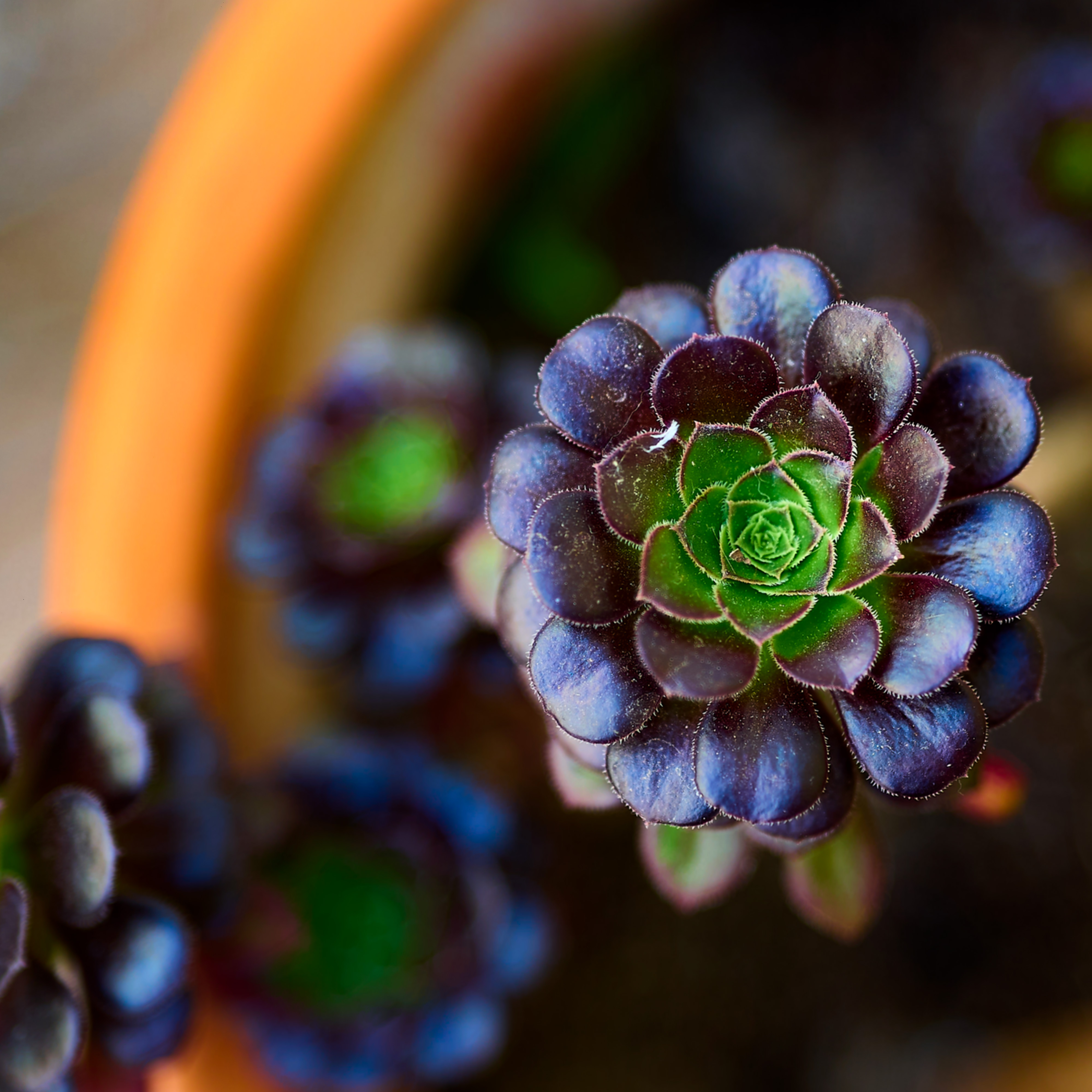
Two ideas I’m considering at the moment… black peppermint and the black aeonium called Zwartkop, pictured above.

In the other experimental herb garden beds, challenges and triumphs ebbed and flowed with the swell of the season. The second location was a full-sun bed in the front yard that surrounds a 100-year-old maple tree.

The bed was vacant when we moved in, except for three clumps of rusty-red daylilies planted years ago by a previous owner.

The daylilies – a gardener’s joy at 1750 House from year’s past.

To celebrate the full sun location and to compliment the color palette of the daylilies, I planted the whole bed in shades of yellow and orange with a touch of pale pink. Calendula, yarrow, and blackberry lily seedlings were planted between coral bells, sweet potato vines, cosmos, and zinnias.
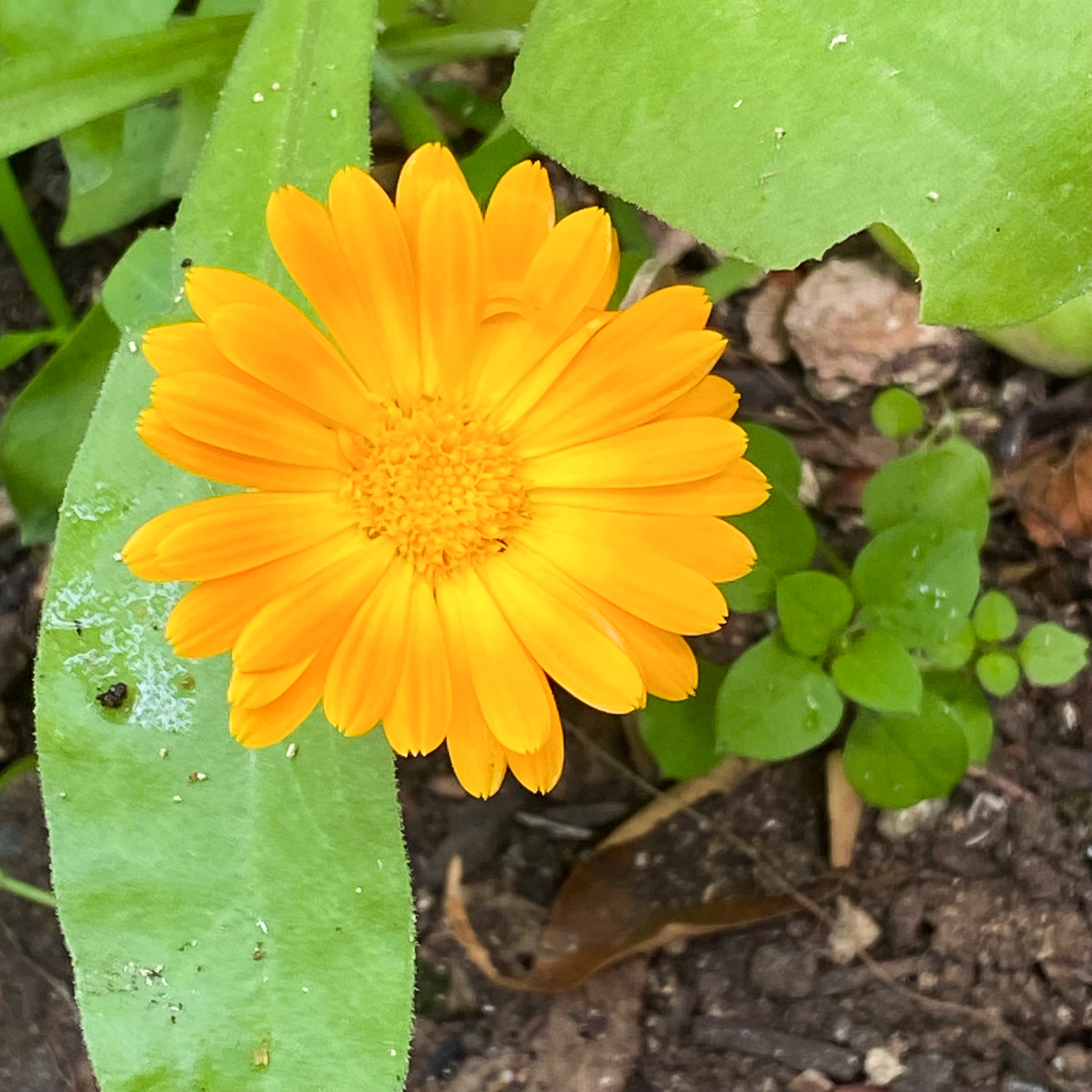
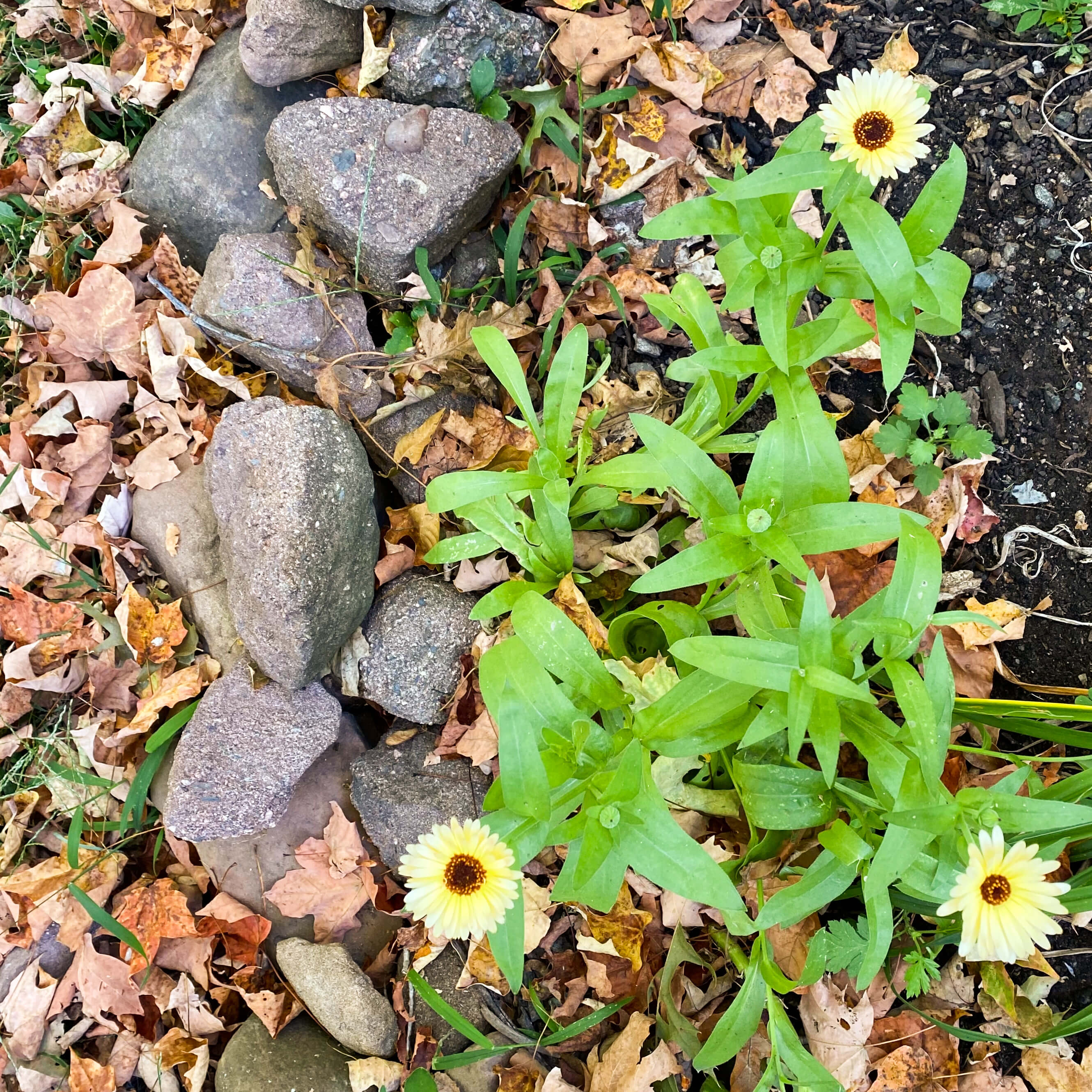
The calendula were the winners in this bed since they made it to full flower and kept flowering along with the cosmos and zinnia from June to November. The calendula formed little bushes of sticky leaves and multiple flower shoots. Had I planted about twice as many, they would have filled out all the bare spots in the bed completely. The yarrow and blackberry lily took the whole summer to establish themselves, but by September they both sported long leaves, so I’m hoping they’ll over winter with healthy vigor and really take off next year.

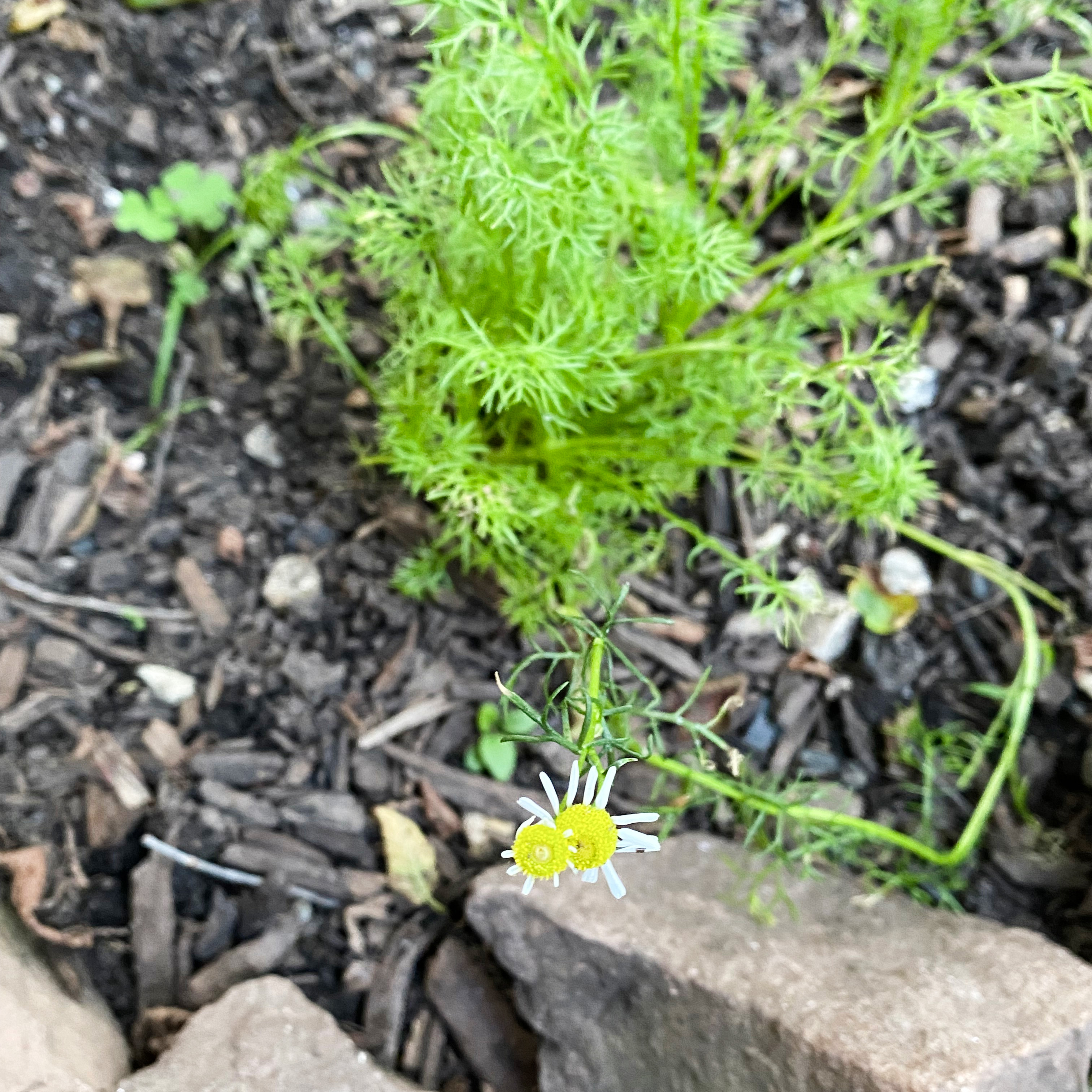
The third bed was also planted in full sun, but because of this year’s extending tree canopy, it turned out to be covered by partial shade once all the leaves unfurled in early summer. Since this bed, tends to dry out more quickly, it was the ideal spot for the Mediterranean herbs (lavender, rosemary, thyme, oregano, cumin, and sage) along with winter savory, dill, garlic, chamomile and one brussels sprout added for encouragement and nitrogen sharing. Most everything did well in this bed, except for the garlic which grew lovely, long green leaves but never formed actual bulbs, and the cumin which flopped over in the cold weather of spring and never really rallied after that. Like the greenhouse beds, everything planted here remained small and compact but looked healthy and happy. In August, the chamomile flowered for the first time, sending up two fragile little blossoms. Days later, in the early morning when I came out to water, all eight of the chamomile mounds and the dill were eaten down to nubs.
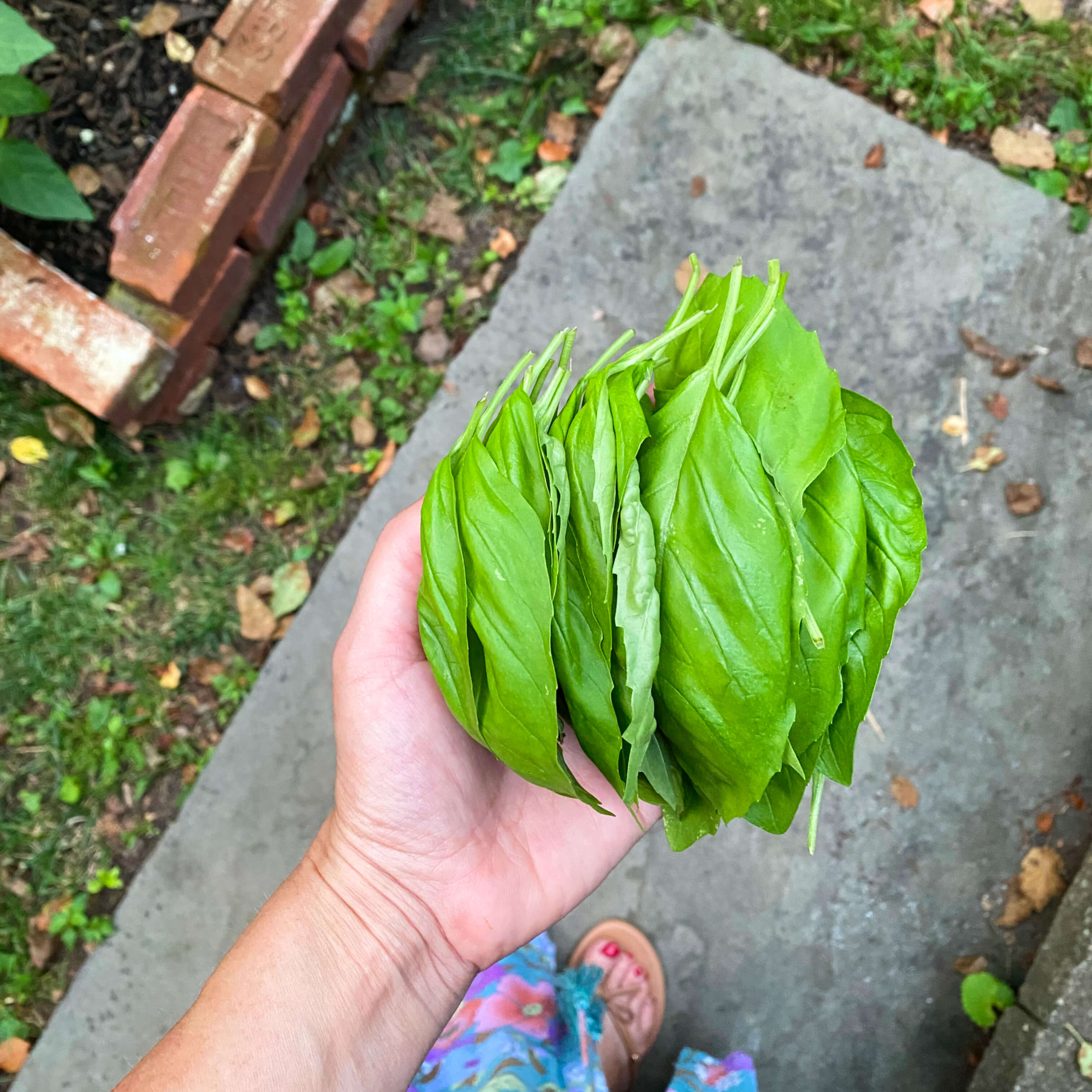
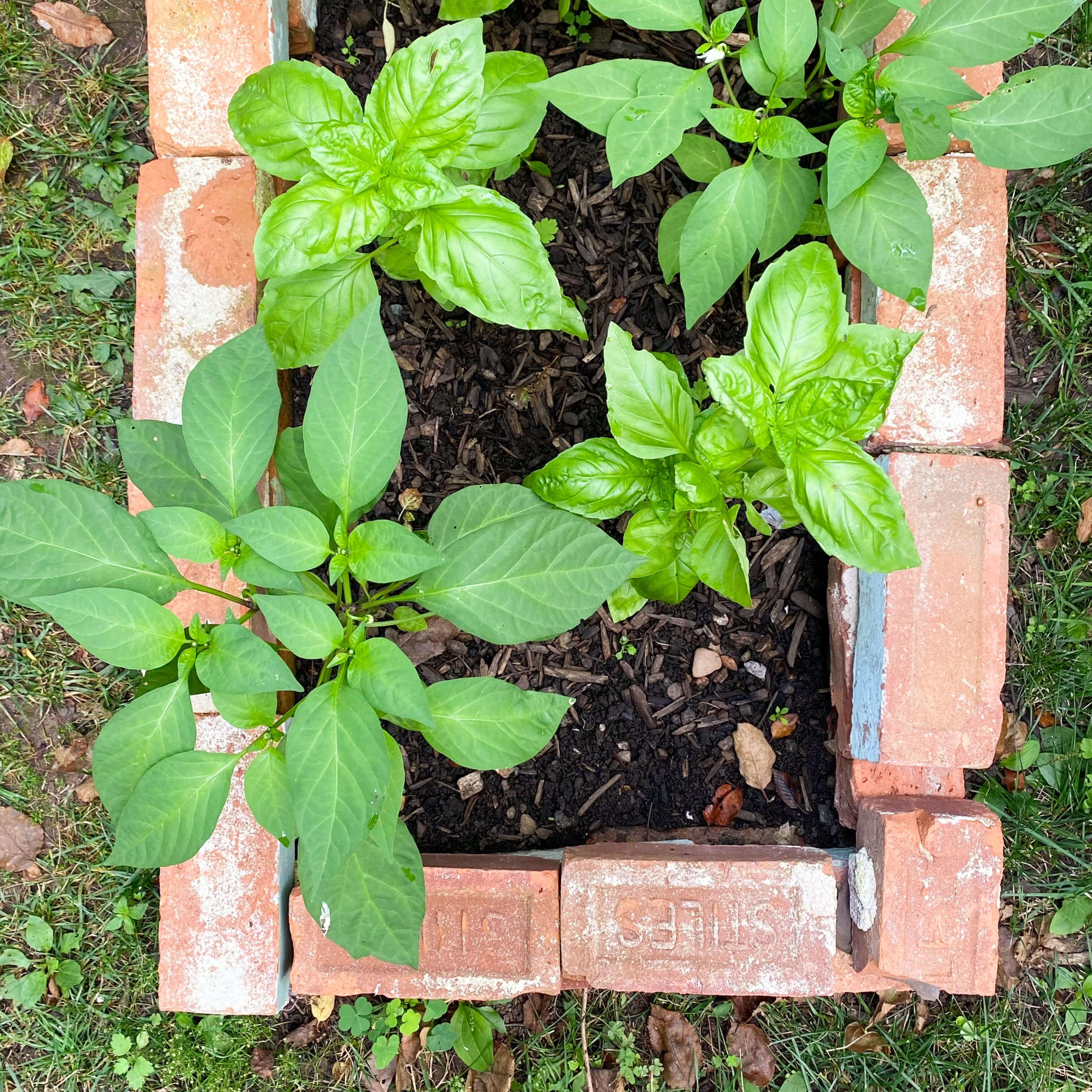
The last of the herb beds, located on the other end of the backyard from the greenhouse, contained basil and and another batch of nasturtiums. These beds were in partial shade last year, but turned out to be in full sun this year, due to a large tree that fell far back in the woods last autumn. That opened up a bit of a sun spot in the tree canopy overhead that was fortuitously in the direct path of our vegetable beds. Planting seedlings in spring when the trees were still bare, I had no idea this sun spot was going to be available, but it made it a banner year for everything growing in that section of the yard, basil included. Racing right alongside the pepper plants, the basil grew over two feet tall and produced leaves as big as my hand.

The nasturtiums, a reliable favorite for the past four years, thrived in the same way. Grown from seeds I collected from last year’s nasturtium harvest, this was the first time I had tried growing new flowers from the previous year’s stock, a recommendation from my fellow New England Instagram gardening friend, Karen. The vigor of the nasturtiums in this sunny bed, which bloomed and crawled for a full seven months, more than made up for the nasturtiums that were eaten by the mystery pest on the left side of the greenhouse in early spring.

This photo was taken early on in the season, but by October the nasturtiums were climbing all over the squash trellis, our lemon tree, the floxglove, the bush beans and the pea trellis

Their enthusiasm inspired more seed saving adventures. Not only from the nasturtiums again, but also from vegetables we grew this summer and from two native herbs, Joe Pye and Queen Anne’s Lace, collected from a neighborhood park. It’s going to be fun to see how (and if) these will grow here at 1750 House next spring.

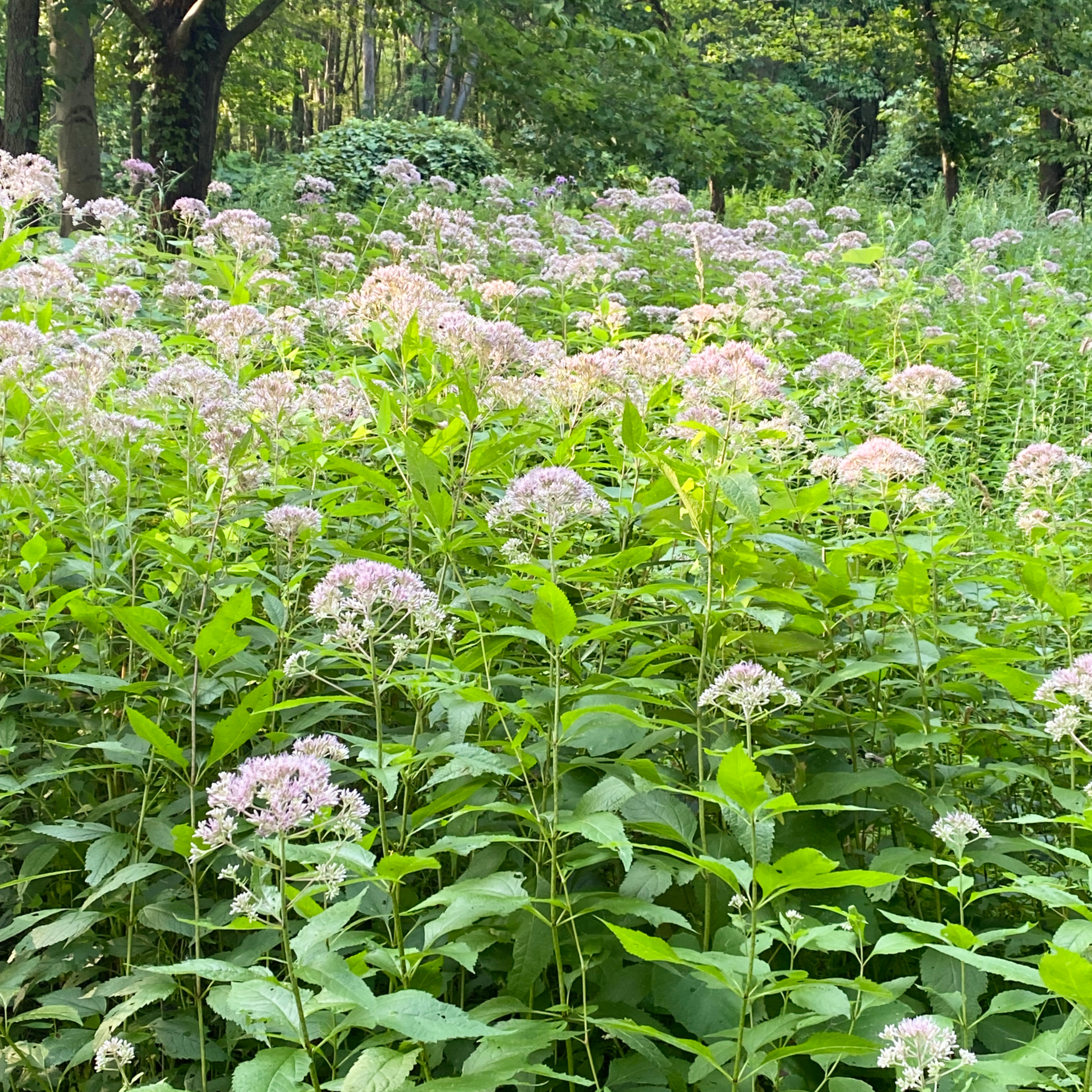
Queen Anne’s Lace at our neighborhood park

A field of dreams… hundreds of Joe Pye not far from the Q.A. Lace

The final gardening trial in my experimental year involved starting four different types of herbs again in early September. This time, seeds were started in individual pots and in a raised bed, both placed in full sun locations in the back yard. I chose chervil, parsley, dill, and cilantro to experiment with since these are all cool weather lovers and since all four never made it to maturity in other in-ground areas of the garden. The chervil and parsley were planted separately in small pots, one plastic and one terracotta. The cilantro, dill, and a second batch of chervil were planted side by side in a raised bed that had previously been home to lettuce and mini melons, both of which thrived over the course of the summer.

Container experiment

I was interested to see if these containers and bins made a difference in the overall vigor of the plants and also interested to see what challenges might affect the herbs in this new arrangement. Within a week, all the herbs had sprouted from seed. The chervil in the garden pot made it to flowering stage, but still remained much shorter than its traditionally intended size. The parsley filled out its pot. The trio in the raised bed grew quickly too. All three spread out and up but the chervil and dill remained short and low. The cilantro grew taller and fanned out beautifully, like a bouquet. None of the herbs in the pots or the raised bed were affected by pests.

Raised bed with dill (left), chervil (center), and cilantro (right).

As of this first week in December… there are still green herbs in the garden: in every bed from the greenhouse to the front yard to the backyard. Already tucked in to their winter blankets (aka mounds of leaf mulch surrounding them but not covering them) they made it through their first snow/sleet/ice storm on Tuesday and look just as happy as they did on the days when the temperatures were 50 degrees and sunny. This makes me so hopeful that in starting an herb garden in 2025 with Adelma’s guidance, enough healthy groundwork has been laid for many of these herbs to overwinter and start anew again in 2026.


This experimental year proved to be so valuable in so many ways. Not only did I learn first-hand about the growing conditions for herbs at 1750 House, but I learned about how our landscape changes year by year. I learned that shade is good but sun is better. That parts of the garden need more protection from wildlife. That a sizable list of herbs will have a permanent home in the gardens here going forward. And I was reminded that gardening is a journey. That it takes not just one year, but many years and lots of patience and practice to establish a full, lush and vibrant herb garden.

This project also extended itself way beyond the landscape at 1750 House too. Throughout the course of the year, I connected with several new blog readers from around the globe who are also interested in herb gardening. I visited a very inspiring large-scale herb garden that’s about to celebrate its 30th birthday, and I received a lovely invitation to visit the Coventry Historical Society in Coventry, Connecticut, which houses a small collection of herbs from Adelma’s gardens along with some of her personal artifacts.

So while my winter time visions of early 2025 did not come to life in the exact way I thought they might, the herb garden bloomed in many other ways. Because this was just the starting point of what I hope will become a long-standing garden feature here at 1750 House, stories about Adelma and the herb garden adventures will be continuing on the blog throughout 2026 too. There’s so much more to discuss, including notes on caring for a batch of herbs that were brought indoors to overwinter, recipes from Adelma’s kitchen, a recipe for a homemade salve made from the calendula flowers that grew in the front bed, the neighborhood seed saving experiments, and features on both a trip to the Coventry Historical Society and the 30 year old herb garden. All these stories and more will be coming to the blog over the course of 2026.

In the meantime, our herbal education continues.

Cheers to Adelma for making this garden experience feel like a real experiment. Cheers to all the herbs for teaching us everything we needed to know when it comes to growing new life at 1750 House. And most importantly, cheers to Santiago, who gave us far more than just a mere 21 years together. Long live the garden you’ve inspired.

Mid-June in the Vegetable Garden

Lily

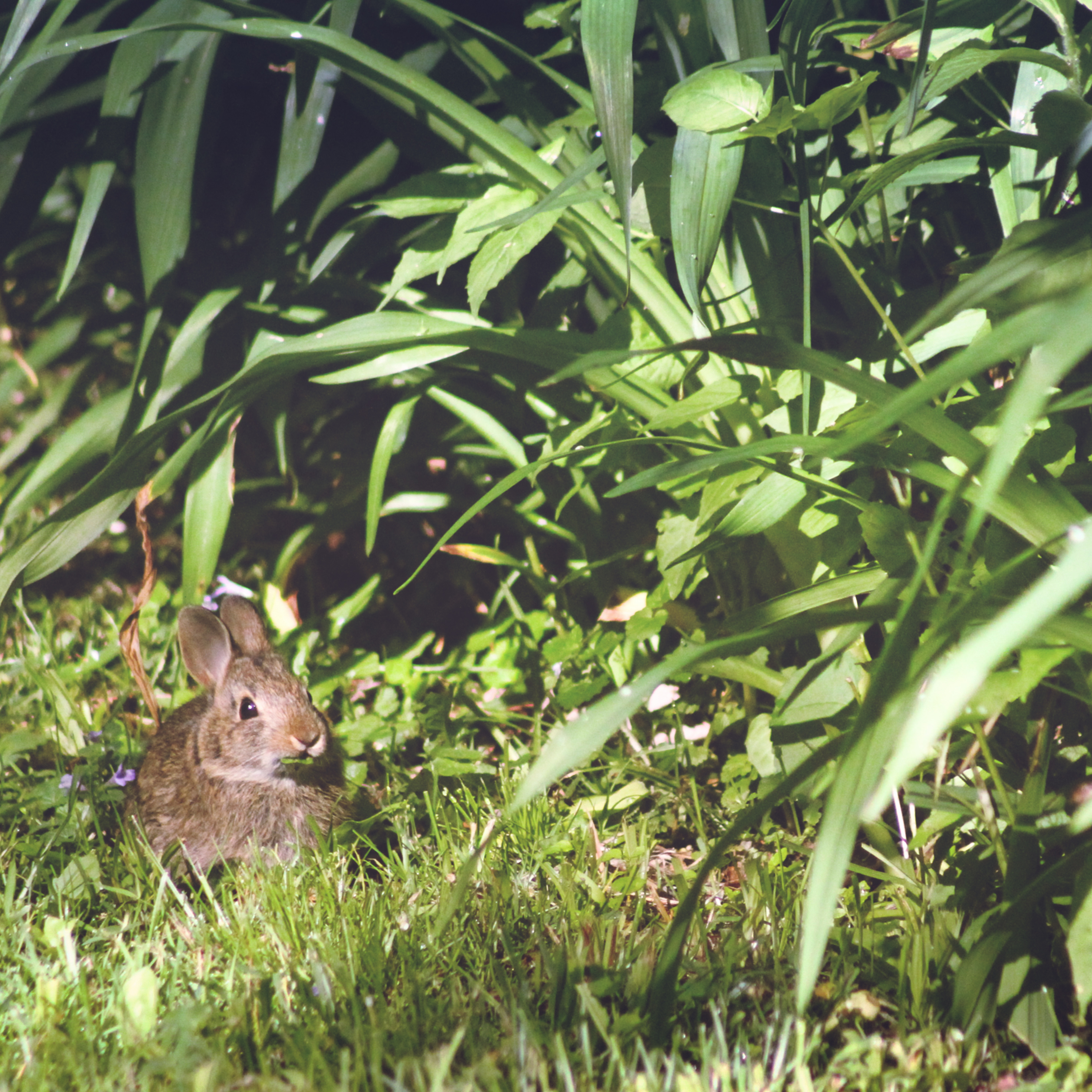
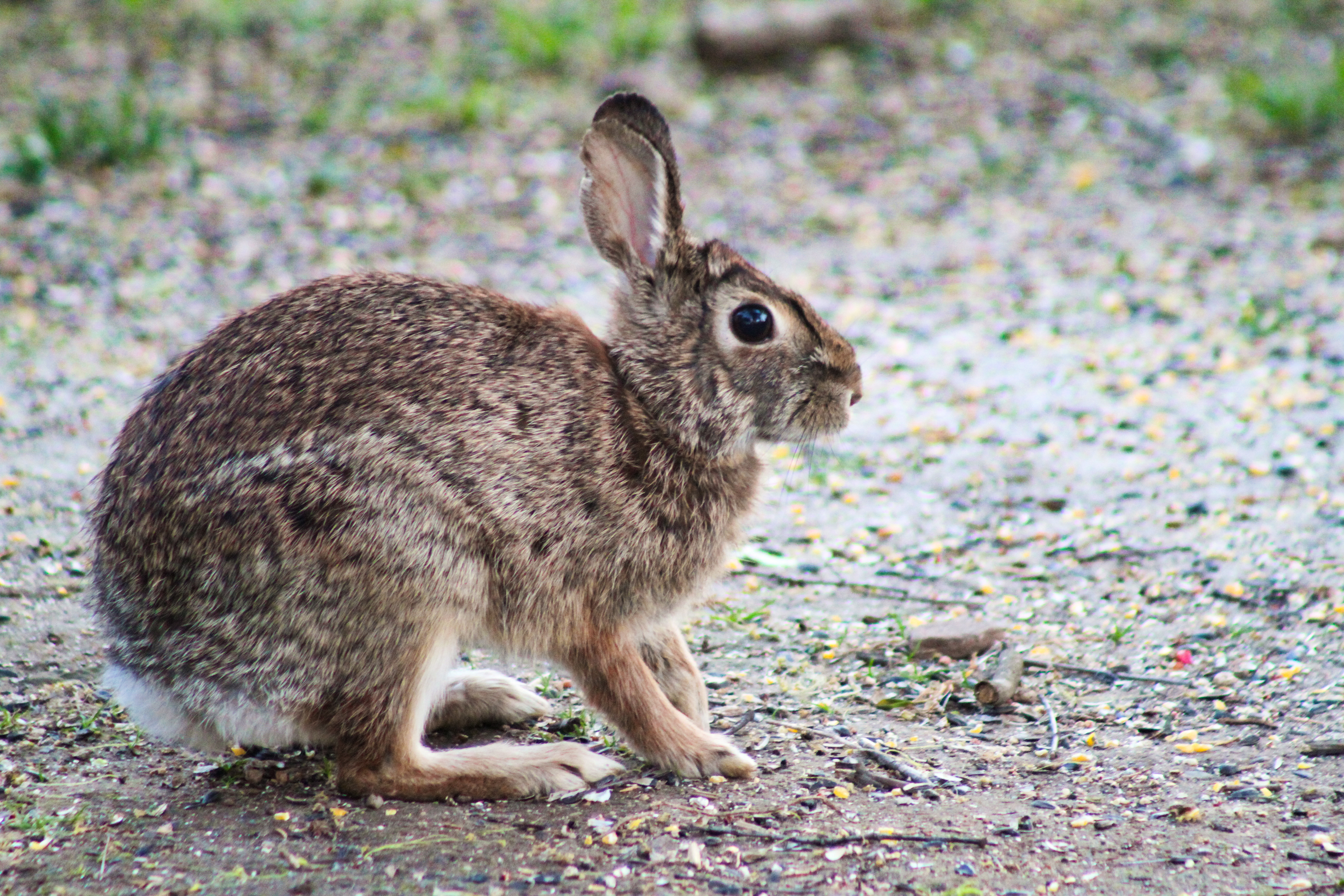
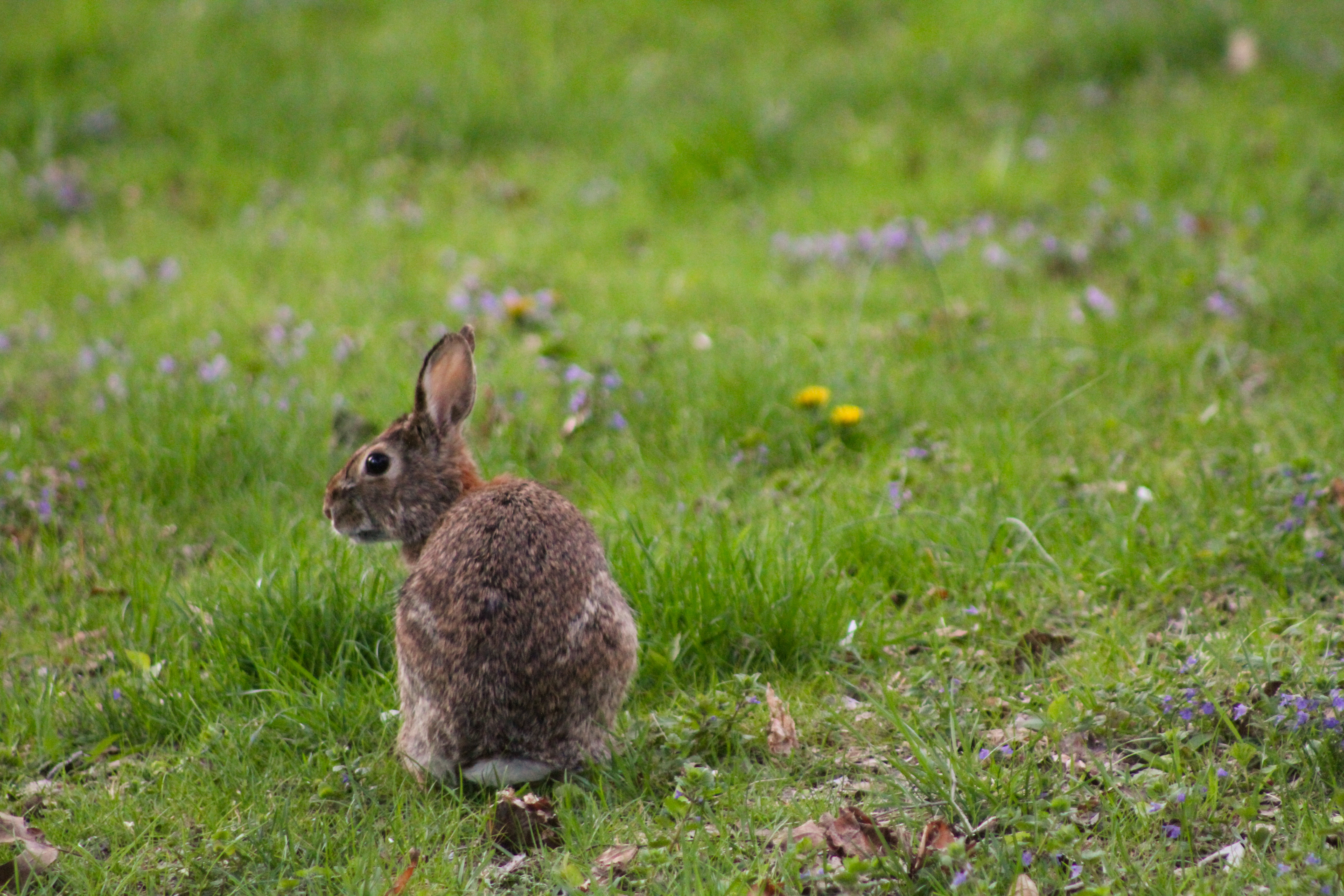
If I walk out of the back door very quietly on these early, almost-summer mornings, I can usually spot Lily eating grass at the edge of a way too overgrown decades-old daylily bed. Lily, as we came to call her due to her preference for this area of the yard, is a baby rabbit about the size of a teacup. She was born to Lefty, a wild cottontail that lives in our woods.

Lefty

Lefty came by her name because she holds her left paw in the air whenever she is at rest. Whether that is some sort of injury or just her natural proclivity, we don’t really know, but she gets around great regardless, seemingly unfazed by what, if anything, troubles that part of her leg. Originally, we thought Lefty was a boy bunny because of her big size, but once we realized that Lefty made Lily, we started calling her Lefty Lucy after that sing-song mechanical phrase, righty tighty lefty loosey about tightening screws and bolts. Obviously, Lefty Lucy is not running around the yard with carpentry tools, but she is an important component and a key contributor to the natural health, vitality, and inner workings of the woodlands that back up to our property, so Lefty Lucy seemed fitting in more than one way.

A mix of mid-June salad greens

Every year, spring seems to bring on a new set of circumstances and situations to be considered when it comes to how, what, where, and why we are growing food here at 1750 House. Year one, it was learning the capabilities of the greenhouse. Year two, it was tackling the slugs. Year three, it was increasing perennials. Year four, we are learning the wilds.

This is our first spring without Indie chasing all the squirrels, corraling all the chipmunks, and defending us from turkeys and deer, coyotes and foxes, and that one time glimpse of a bear. Indie was not a classically trained working dog, but she had the super smart instincts of her collie/shepherd breeding and was pretty skilled at keeping everything wild at the far perimeter of the property and away from all the garden beds.

Indie!

When we first moved to 1750 House, in an effort to co-exist in happy harmony with the surrounding wildlife, we taught Indie some loose boundaries. We established an imaginary border for her that separated the yard from the woods and it took her no time at all to understand that the yard was her territory and the woods belonged to the wild animals. This worked pretty well, on both the wild creatures’ side and Indie’s. During the day, the wildlife mostly kept to the woods and the treetops and Indie mostly kept to the yard. At night though, our garden camera showed a different story. While Indie was asleep in the house, the yard was full of critter traffic. This proved both Indie’s effectiveness at day patrol and also nature’s clever way of working around our silly ideas about confined borders. Now, without Indie this spring, I wondered how our property would change when there was no presence of a pup. What would happen to the imaginary boundary? Would the wild creatures reclaim the yard as their own?

Our parade of deer.

As it turns out, wholeheartedly yes. To say that the backyard bloomed with critters and creatures is an understatement. Our woodland deer sightings have tripled in size from two to seven. A pheasant, which in the past was just a one-day-a-year passer-through, spent days in early spring wandering the woods. Last month, a female turkey took up residence in the long grass near the bird feeder for a week. A pair of hawks has chosen a nest spot midway through the woods. Lefty and Lily set up home. And a veritable city of chipmunks and squirrels now keep the yard in a continuous state of rustle and bustle from treetop to underbrush, morning to night.

Turkey sighting to the left of the tree trunk

Not realizing how impactful something is until after it’s no longer there, Indie’s absence raised a question. How exactly will her not being here affect the garden this spring? Will the deer feel free to eat every last tomato? Every last flower? Will the squirrels and the chippies destroy the plantings? Will all of our hard work and time spent seed-starting and sowing, building, and bed designing be in vain?

The vegetable garden, almost fully planted out by the first of May, stopped and started, struggled and rallied, round and round again as temperatures jumped between the low 40s and the high 50s in seesaw fashion all the way into early June. Almost everything that we planted was cool-weather hardy and tolerated the damp, sunless days. But my optimism in planting out the tomato, cantaloupe, and squash seedlings proved to be a bit too ambitious. Not fans of cold, wet weather, all three vegetables succumbed to early blight, root rot and/or a general overall malaise that caused yellowing leaves and drooping stems.

The wildlife didn’t seem to mind the wet weather at all, nor the absence of Indie. Whipping up their own kind of fun, a particularly rambunctious set of squirrel siblings made joyful use of the yard unencumbered by a patrol pup. They chased each other through the canna beds, knocking off fragile tips of newly emerging sprouts. They dug holes all over the garden looking for nuts. They upset roots in the pea patch, the corn plot, the bean bed. With their acrobatic leaps and bounds, dangles and dives, they beheaded sunflower starts, dropped tree limbs onto fragile seedlings from overhead, romped through the wildflower bed, and knocked over many a wire cage protecting nerbs and flowers, fruits and vegetables.

The chipmunks celebrated spring in the garden in their own way. Keen on building subterranean housing, they endeavored to make entry and exit tunnels all over the yard and the garden beds. So far they’ve dug golf-ball-sized holes by the Mediterranean herbs, by the witch hazel tree, by the evergreen saplings, by the Hosta plants.

All this energetic play and home building aside though, surprisingly, so far at least, the deer, the squirrels, the chippies, and the bunnies have been very respectful of the actual garden plantings themselves. The deer win the award for best behaviour and for keeping within their boundaries. But the squirrels and the chippies can’t be scolded simply for playing andf home building. Apart from the antics that uprooted the corn and topped off some of the cannas, I’m happy to say that none of our wildlife neighbors have nibbled or rearranged or broken any of the plants or emerging fruits and vegetables in the garden. As it turns out, Indie might have trained them just enough. Either that or it’s the daily birdseed buffet that keeps everyone full and satisfied enough to leave the vegetables alone.

Despite all the cold, rainy weather and the spirited playground, the late spring garden, although not quite as grown up as last year, is starting to finally make some headway. Here are some photos taken in the last few days…

Oregon Sugar Pod Snow Peas

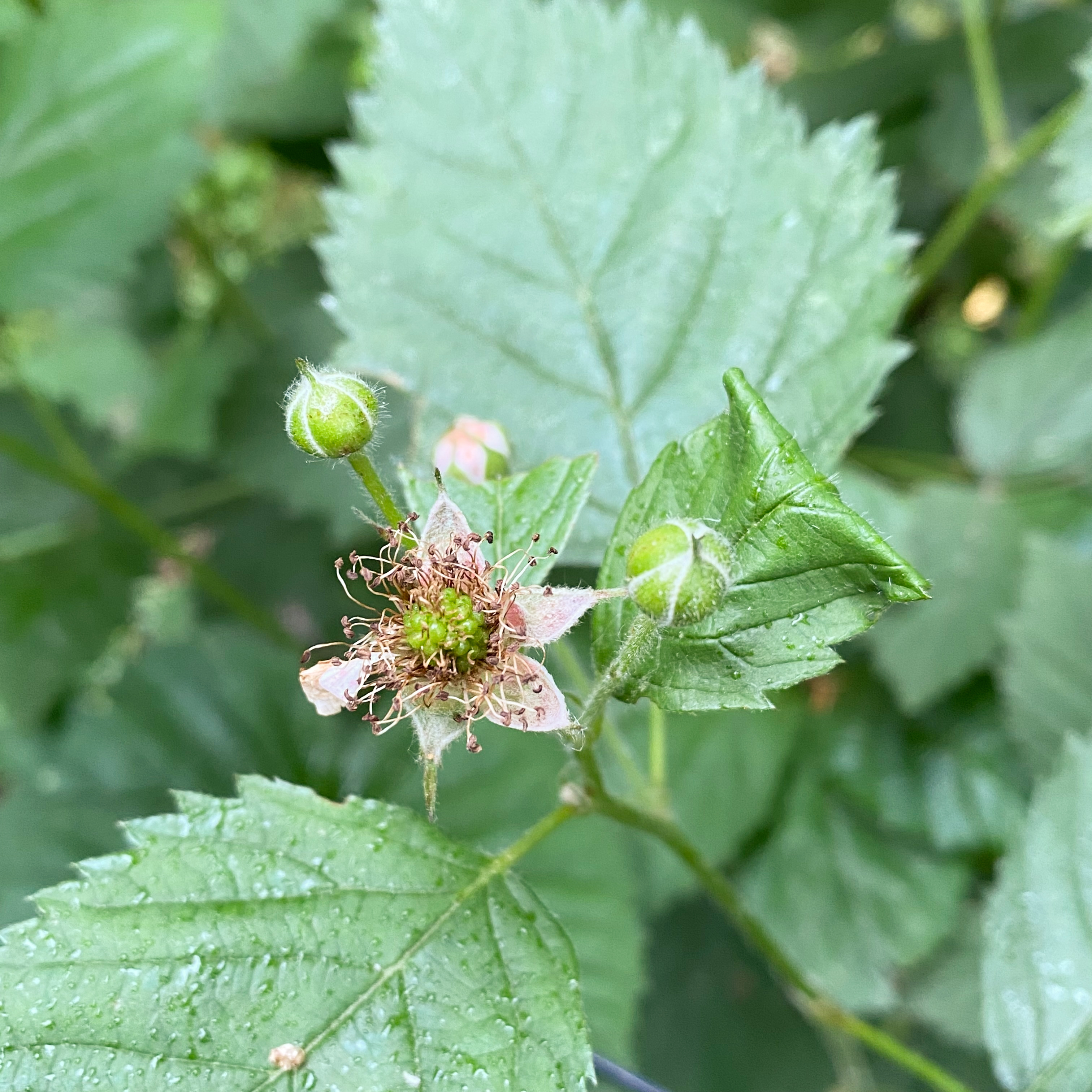
Blackberry bush…

…with blackberries emerging!

Windsor fava beans in front and Scarlet Emperor pole beans climbing the wire panel in back.

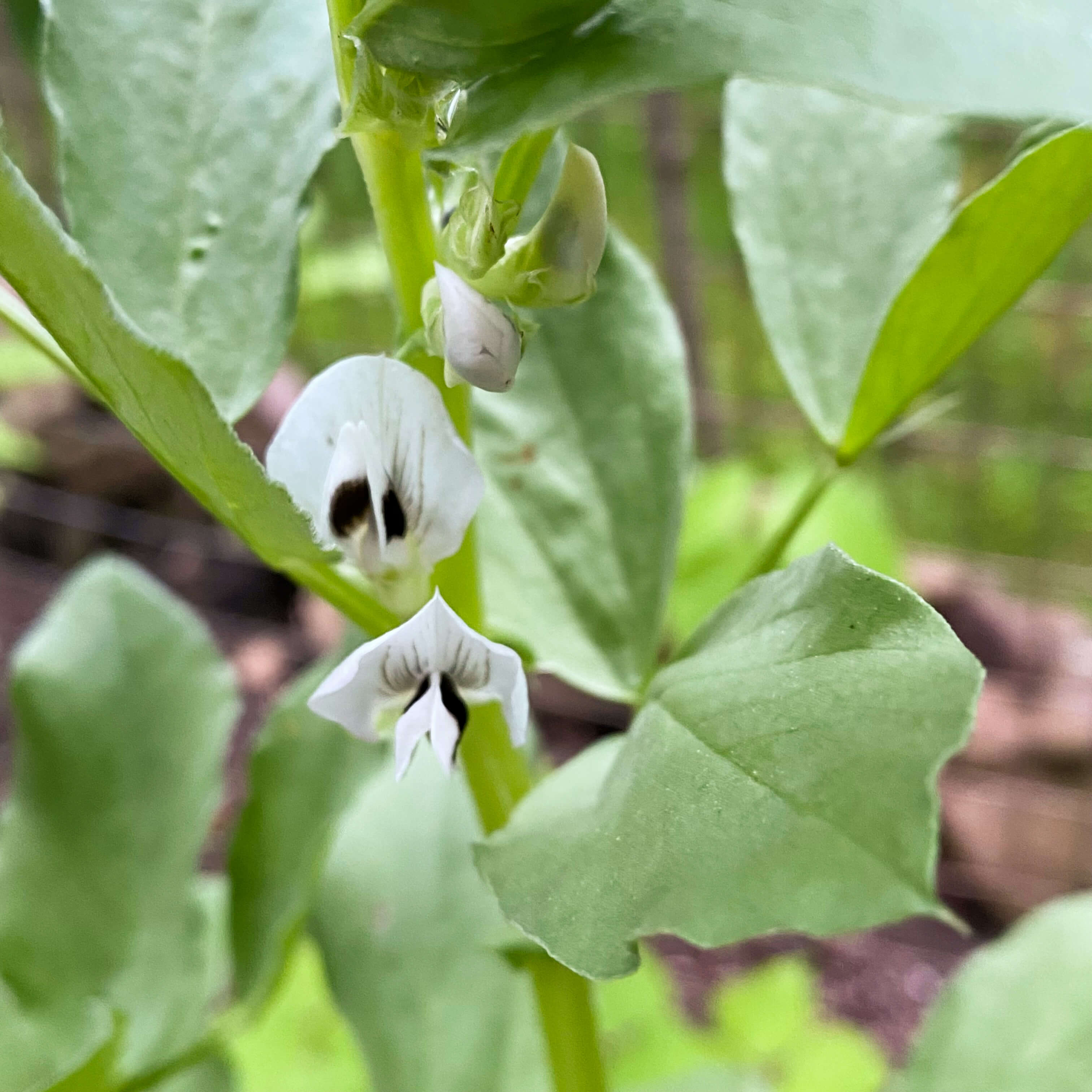
Fava bean flowers

Fava beans!

Buttercrunch lettuce in front and dandelion greens in back.

First pea flower

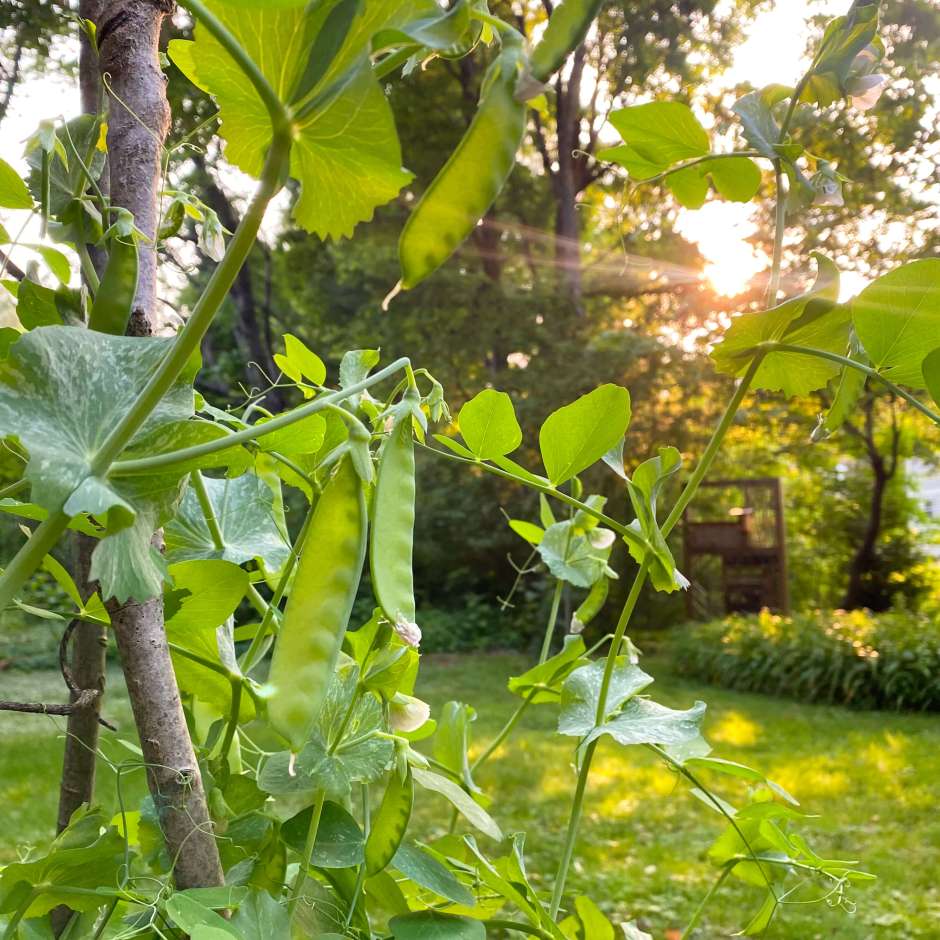
First pea pod!

Onions & leeks

Silver Queen corn – 2nd sewing. This time in pots to sidestep the squirrels.

Dinosaur kale. Currently at 18″ inches in height, this is the tallest kale plant we have ever been able to grow so far.

Overhead view of the tall kale. Also, the first kale plant that has ever escaped caterpillar and slug damage.

Shin Kuroda carrots

Green Globe Artichokes – currently 23″ inches tall.

Provider Beans

Nasturtiums grown from seed harvested from last year’s flowers

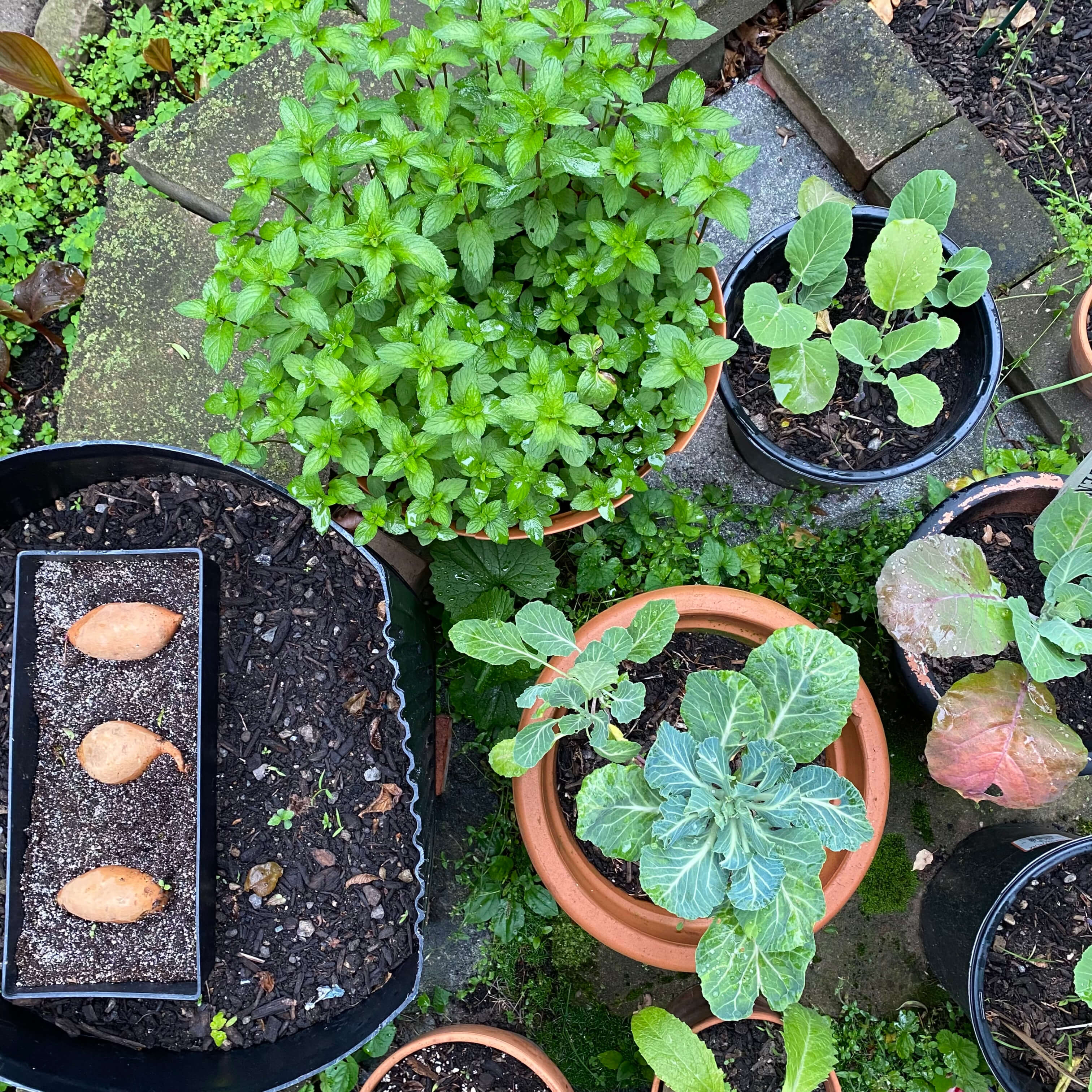
Experimental porch pots – mint, sweet potato slips, collard greens and artichokes. The collard green leaves on the right are turning pink from too much rain.

Foxglove – these four self-seeded from last year’s blooms.

More foxglove by the greenhouse.

The tallest foxglove this year reached 4′ feet 5″inches, about a foot shorter than last year. Maybe the lack of sun and heat made them a little smaller.

Foxglove at the greenhouse.

Other veggies not yet quite photo-ready include eggplant, pepper plants and the second sowings of tomatoes, honeynut squash, cucumbers, and cantalope. There is lots of information to share about the herb garden growing up too, but in order not to make this post a million miles long, details on that project will come in a separate post later this month.

Lefty

Even though it is a bittersweet spring due to the absence of Indie, it is lovely to be surrounded by our new menagerie of wild animals. They each bring such personality and interest to the day and to the garden. Nature is a remarkable healer.

From all of us at 1750 House, cheers to the growing season and all the surprises it brings.

Advice from Adelma: How to Create an Herb Garden in Partial Shade

In the words of New England herbalist Adelma Grenier Simmons (1903-1997), “the most difficult garden to maintain is an unplanned one.” If you are joining us on this year’s Greenhouse Diaries adventures, you’ll recall that Adelma is our horticultural teacher, creative muse, and gardening inspiration for 2025 as we embrace her expertise in building and establishing an herb garden here at 1750 House.

Calendula seedlings.

Although I’ve never met Adelma, she passed away in 1997, and I’ve never had a chance to visit her beloved Caprilands Herb Farm, I do have several things in common with her that makes me feel like we are kindred spirits. We both purchased 18th-century houses in Connecticut that needed an extra bit of care and attention. We both embraced a desire to create heirloom gardens made from scratch. And we have both indulged our passions for history, cooking, and hands-on gardening.

Adelma’s 18th-century Connecticut home – Caprilands.

Ever since my husband and I moved into 1750 House, I’ve had my mind set on building a proper kitchen garden that includes plentiful bouquets of vegetables, fruit, herbs, and edible flowers. I laid out our initial plans in a 2022 post about colonial kitchen gardens, but as we keep digging and discovering, growing and gathering, year by year, we keep refining and expanding plans to fit our abilities, interests, lifestyle, and landscape. Every year, the garden design plans seem to get better and better.

Adelma Grenier Simmons circa 1935. Photo courtesy of the Hartford Courant, Aug 01, 1935

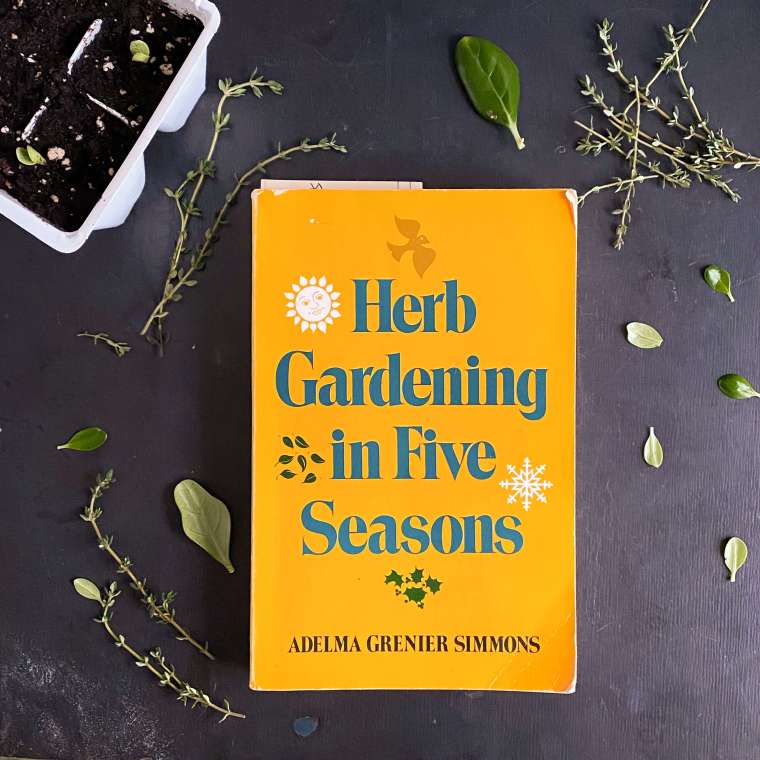
Always interested in tips and techniques that will make my endeavors more successful, when I first discovered Adelma’s book at a local library book sale last year, I had a feeling I was going to be in the good hands of an expert gardener. This is the 1964 book that inspired the project…

Read more about Adelma and her contributions to horticulture in our first post here.

In Herb Gardening in Five Seasons, Adelma lays out how to build, cultivate, create, design, grow, and care for an herb garden utilizing decades of practical, hands-on knowledge learned over her long, enthusiastic career as a gardener, herbalist, lecturer, and horticultural scholar.

Throughout the entirety of 2025, season by season, I’m taking her words to task and building an herb garden from scratch that I hope will continue to remain a stalwart and sustainable feature of the landscape at 1750 House for years to come. Since this is new gardening territory for me, both literally and figuratively, I thought it would be fun to share, along with my experiences, Adelma’s advice, in case you, too, might be interested in building an herb garden of your own. This way we can all experiment together.

In our first Greenhouse Diaries post of 2025, I introduced Adelma and her gardens at Caprilands, which attracted botanical enthusiasts from all over the world. The info I’ll be sharing here in the series this year, although based on my own Connecticut garden, will hopefully prove useful to all of our ITVK readers around the globe, too, who might face similar challenges when it comes to limited sunlight and space constraints. I’m excited to see how successful we can be using gardening knowledge from a 62-year-old book, and I’m also very interested to see just how bountiful a partial-shade herb garden can be.

There’s no way to find out unless we start, so here it goes. Advice from Adelma back then put into practice by me today.

Step One: Choose A Design and Figure Out What You’d Like to Grow…

Thoughts from Adelma: Whether the herb garden is small or large, it needs to be exquisitely neat and weedless, with wide paths and compact borders, the same plant often repeated to make a good showing. (Page 3)

In keeping with Adelma’s advice, I spent most nights in February and March studying stacks upon stacks of gardening books, in addition to hers, to gather ideas and inspiration from real-life examples – all so that our garden here at 1750 House would not fall into that aforementioned “difficult,” “unplanned” territory. Through the winter, I learned about prairie gardens, dry gardens, meditation gardens, bog gardens, dooryard gardens, shade gardens, kitchen gardens, formal gardens, cottage gardens, cutting gardens, woodland gardens, and native gardens in pursuit of coming up with some interesting layouts. What I kept admiring over and over again in book after book was a traditional square garden with pathways, some sort of architectural feature in the middle, and herbs arranged in a balanced fashion around the edges. A timeless design, I liked its simple and tidy scale, which is very much in keeping with our simple 18th-century colonial farmhouse.

In Herb Gardening in Five Seasons, Adelma also offered a variety of her own designs specifically tailored to herb gardens. There were eight in total, each ranging in theme and aesthetic. Had I the space and the sunlight, I would have replicated this one exactly…

Culinary and Knot Garden Design Layout – Adelma Grenier Simmons, 1964

The one challenge that presents itself at 1750 House is a limited amount of full sun spaces. Basically, we have two areas that receive about eight hours of sun a day and the rest is made up of dappled shade or towards the very back, deep shade of the woodland variety. Not every part of the full-sun area is appropriate for garden beds, so our limited sunshine spots are reserved strictly for growing vegetables and flowers in those areas.

One of our full sun spots is a raised bed that we built from rocks collected from around the property. Pictured growing here are peas, tomatoes, pole beans, zucchini, basil, and spinach from the summer 2023 garden.

While a shady garden is a challenge for growing many types of plants, the thing that first drew me to Adelma’s book last year was that she included a long list of herbs (29 of them) that grow well in sun-filtered shade. This was inspiration enough to start thinking about a new gardening experiment in 2025 to see what was possible in the way of a partial-shade garden using her expert advice.

The only compromise to a somewhat shady garden, Adelma noted in her book, is that some of the herbs might grow taller than they would normally in a sunny location, and that they might not be 100% as flavorful as their sun-bathed counterparts. Tall plants are my favorite kind, and while I am growing these herbs for cooking and, of course, would want them to be as flavorful as possible, I figure it’s best to understand their growing conditions and flavor intensity first in order to see what we can improve later.

Step Two: Determine The Location

Thoughts from Adelma: I think of the “perfect” herb garden as about 12 x 18 feet. Well organized, it will not require back-breaking labor once the soil has been prepared, walks laid, a center motif clearly stated, and borders planted with favorite but often miscellaneous plants set out in orderly beauty. (page 4)

The location of the 2025 perennial herb garden

Eight hours of full sun is ideal for herb gardens, but if that amount of sunlight is not possible when it comes to choosing a site, Adelma at least recommends situating your garden in a well-drained location with a slight slope so that plant roots are not swimming in puddles long after it rains or the garden is watered.

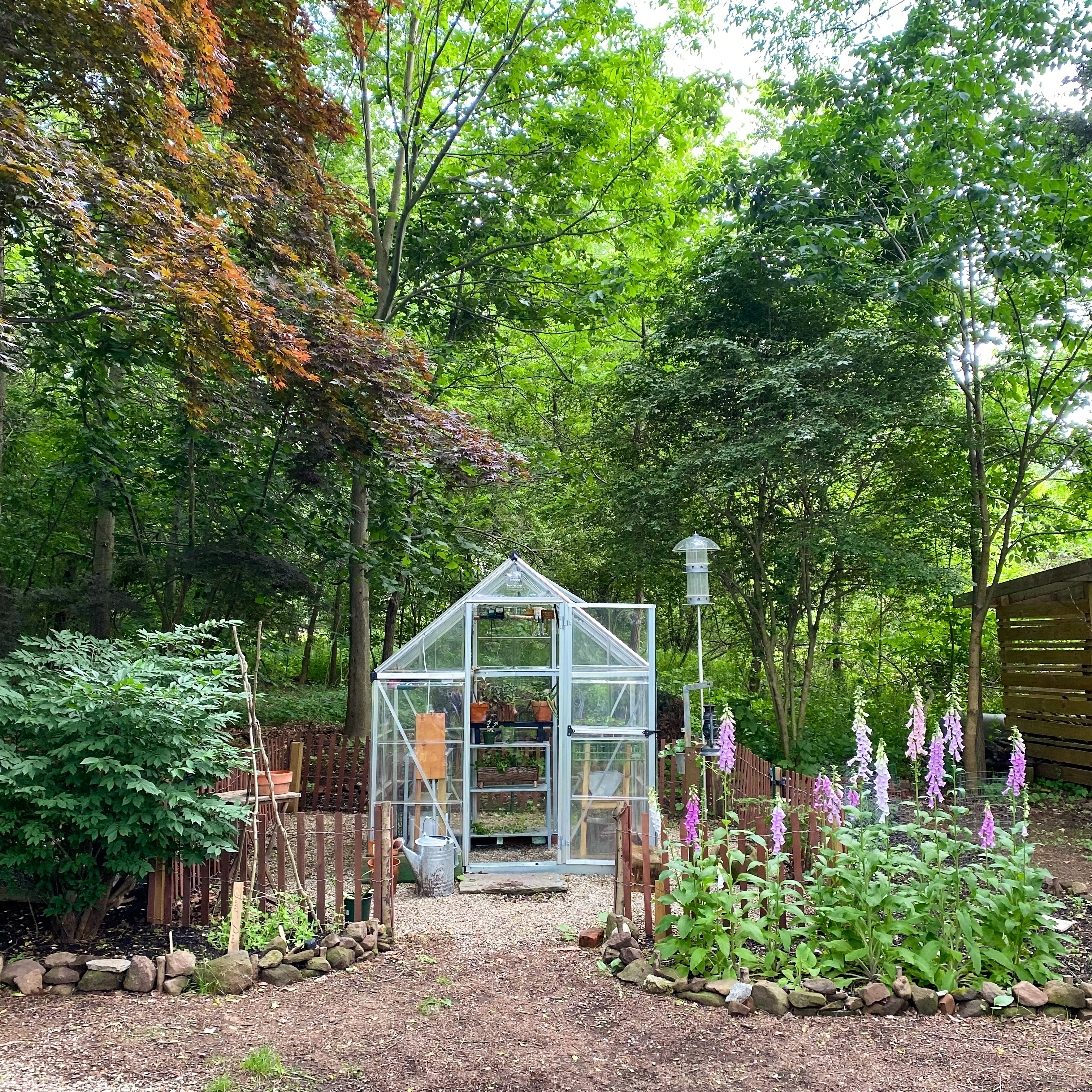
Our greenhouse sits in a southwesterly quadrant in the side yard on a natural slope. It’s bathed in sunlight from October through the end of May, but then, due to tree cover becomes partly shady in the summer. This is not ideal for sun-loving Mediterranean herbs like thyme, oregano, and basil, so they’ll have a designated bed near the veggies up front in full sunlight. But this area around the greenhouse gets all sorts of dappled light throughout the day, and I’ve always envisioned the garden beds in this spot to be full of flowers and native plants.

The 2023/2024 foxgloves on the opposite side of the yard measured between 3′ – 5.5′ feet tall.

There are already a few permanent residents in-ground at the greenhouse – last year’s foxglove starts, two Windflower anemones, a newly established hydrangea, and a burning bush. The burning bush was here when we moved in, and the hydrangea was propagated last summer via a clipping from a friend’s garden. Given how well the foxglove seeds grew on the opposite side of the yard throughout 2023-2024, they’ll be a mainstay in the herb garden too to help attract pollinators and add some overall height to this rather flat patch of ground. Otherwise, it’s a blank canvas to cultivate.

Step Three: Decide What To Plant and Gather Your Seeds…

Thoughts From Adelma: For you, herbs will be green medicines, fragrances, seasoning magic, soft tones and muted colors, textures pleasant to the touch, and names that are good to hear and bear much repeating. (page vi)

Location and personal preference will determine your selection of seeds, of course, and climate will determine your timing of when to plant what where. Since we are focusing on a larger shady herb garden with a much smaller full-sun patch and generally would like to grow herbs for cooking and drying, I followed Adelma’s list for shade-tolerant varieties.

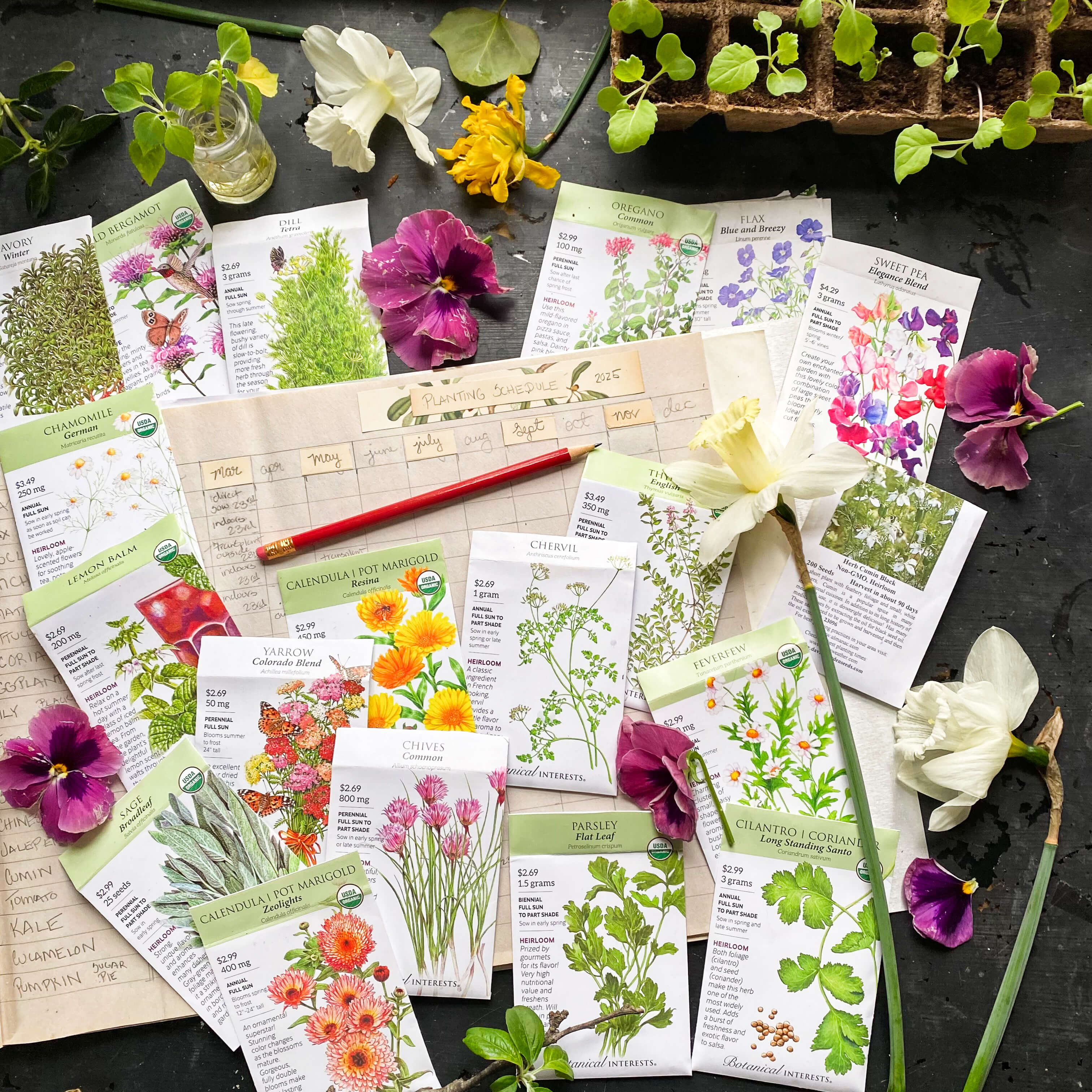
This year our herb garden will include forget-me-nots, feverfew, wild bergamot, lemon balm, flax, dill, basil, nasturtiums, chervil, cilantro, parsley, oregano, echinacea, winter savory, English thyme, German chamomile, sweet peas, chives, sage, rosemary, yarrow, lavender, phlox and two different varieties of calendula. Everything highlighted in bold will go in the shade garden, the rest will be tucked into the full sun spots in the garden bed up front. Half of this list is a new, first-time growing experience for me, which makes this gardening project an exciting one on all fronts.

Step Four: Create a Planting Map

Thoughts from Adelma: Let the herb garden throughout look old, peaceful and nostalgic with quiet colors and soft textures. (page 17)

When it comes to the planting decisions of what goes where, I recommend sketching all this out on paper with a pencil. At this stage, there is a lot of penciling in and erasing out, second-guessing and revising, dreaming and deciding. Color, size, height, light, and soil requirements are all things to be considered as well as companion plant pairings and general overall garden aesthetic, plus any decorative items or accessories you may want to include. After months of fiddling on paper, my garden layout finally came together. Adelma can rest assured now. I have a plan.

Ideally, I’m striving for a cottage-style herb garden that is full, colorful, and graduated in size. The greenhouse will act as the central focal point, the pea gravel between the fence and the greenhouse will act as a pathway and giant field stones will become stepping stones in the garden beds. To make it visually interesting beyond texture and flower shape, I’ve selected varieties in the pink, purple, blue, white and yellow families to create a unifying color palette that ties in shades from the front gardens as well as a bit of symbolism.

In addition to practical how-to instruction, one of the most interesting aspects of Herb Gardening in Five Seasons is that it is also peppered with stories about folklore and symbolism surrounding herbs throughout history. If you communicated in the language of flowers, it is entirely possible to grow a garden full of patience (chamomile), virtue (mint), everlasting love (baby’s breath), good wishes (basil), humility (bluebell), courage (edelweiss), and ambition (hollyhock). For a complete list of flower symbolism, visit here.

This year, I’m incorporating a specific symbol in the garden – several patches of perennial forget-me-nots for one special reason. They are the flowers that symbolize memories of enduring love, lasting love, tender love. They will be planted all around our pup, Indie, who was buried in one of the beds next to the greenhouse last September. Her unexpected death left a big hole in our lives and in our hearts for sure. I still find myself looking down one of the long paths towards the woods, thinking that she’ll come around the corner any minute like she did a thousand times before after a good chase with a squirrel or two. She was such a big presence here at 1750 House, especially in the yard, we wanted to make sure she was forever a part of the property’s history.

Covered in seed pods after a romp in the woods.

It’s so strange to think that exactly one year ago, on a warm spring evening, not unlike the ones we have been experiencing lately, long before we added the wooden fence around the greenhouse, we were experimenting with building a wattle fence. Indie kept us company all evening that night, watching over our endeavors, sitting pretty much in the same spot where she would come to be buried four months later. I like to think that she is still sitting there just like in the photo, watching over us and the greenhouse and the garden. If I learned anything about colonial gardening in America in the 17th and 18th centuries, it was that American garden design is rooted in nostalgia and a longing for what once was. Like Indie, the forget-me-nots will forever be woven into the fabric of the garden from here on out, self-seeding our little secret language of love and friendship year after year.

Step Five: Start Your Seeds

Thoughts from Adelma: The business of planting seeds should be a simple process, as natural as nature. (page 58)

Adelma recommends seed starting outdoors when the weather is appropriately suited, but she also understands the rush and excitement of trying to get a head start indoors or in a greenhouse. Either way, she’s a fan of keeping the germination stage on the slightly cooler side with nighttime temps between 50-60 degrees. She also recommends as much time outdoors in the fresh air as possible to encourage strong, healthy growth.

Since our experiments of trying to grow cool weather crops in an unheated greenhouse this past winter flopped, instead of pulling out the greenhouse’s winter coat of plastic and outfitting it with a heater rather late in the season, I opted to start everything indoors in a closet that has a lot of natural light and a fair amount of sun thanks to a big window in a small space. I kept the room temperature between 55-65 degrees during the whole germination process, and all the seeds sprouted like the magical little champions that they are. For the past month, almost daily (depending on the outdoor temperature), I transported all the seedlings out to the greenhouse where they could capture the light and a little extra balmy warmth generated by the sun before bringing them back in when the temp dropped below 55.

Calendula and feverfew seedlings

Now that our last frost date has just passed on Wednesday, most of these seedlings will be heading out to the garden within the next week or two. They are a bit smaller in size than if I had started them in the greenhouse over winter with the heater, but like Adelma suggested, this cooler germination method might make them a bit more resilient to fluctuating temperatures as the season gradually warms up and we round the corner into May.

Step Six: Prepare the Garden Beds

Thoughts from Adelma: Work up the soil to a depth of 12 inches using a rototiller or a spade. I recommend three rotillings or diggings: the first to remove the sticks and stones; the second to incorporate well-rotted compost or well-decayed cow manure in soil lacking humus; the third to mix in the garden lime spread on top until the ground is nearly white. (page 55-56)

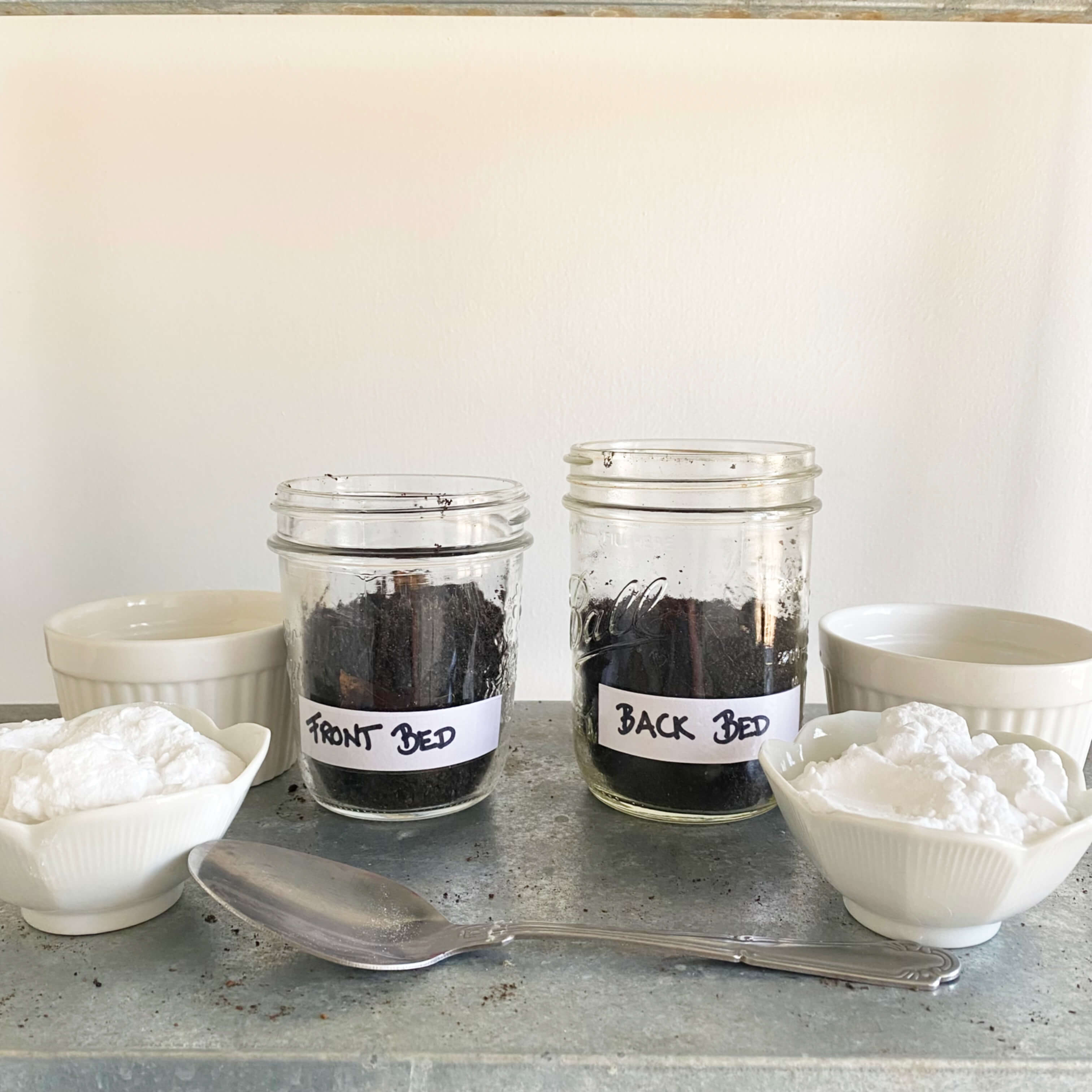
Home soil acidity test using the baking soda/ vinegar method

It’s important to know the acidity level of the soil you are working with since that will determine if you are going to blend in any additives. Adelma recommends turning over the dirt no less than three times and removing all the sticks and rocks that might be present. If your garden beds need some amending, lime and compost are two great additives that will improve the growth of your herbs and strengthen the soil. Compost can be added anytime of year, but Adelma recommends adding lime in the fall otherwise, it could stunt the growth of the plants if added in spring.

Back in mid-March, I did a home soil acidity test recommended by The Spruce, utilizing the baking soda/vinegar method. I’m not sure how accurate this test is, but apparently, if you have acidic soil, the combination of baking soda, vinegar, distilled water, and dirt will cause the samples to really bubble up. Not much happened during my test…

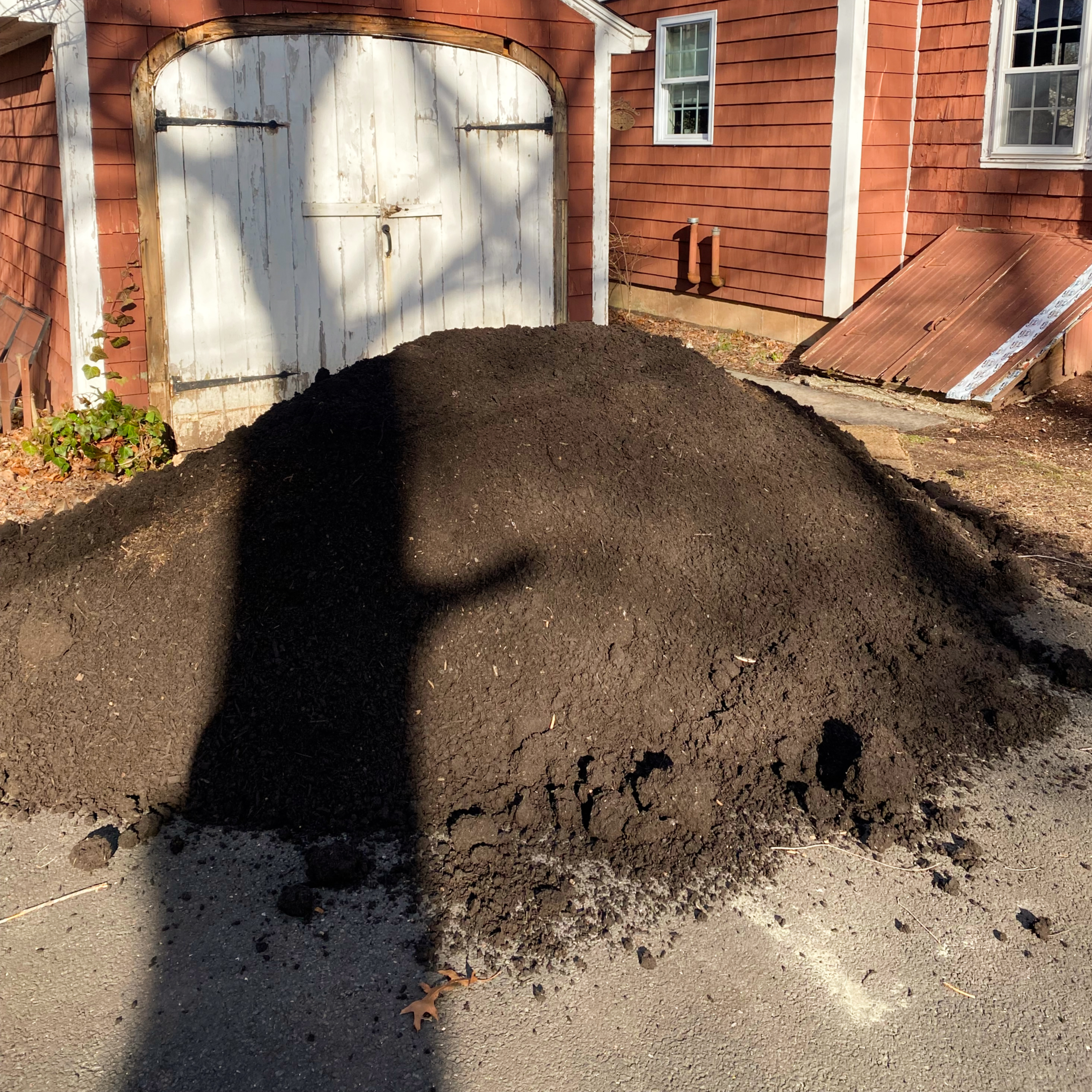
From what I’ve gathered so far, our soil at 1750 House is fairly neutral and, if anything, leans toward a slight acidity, which most plants love. So I’m not adding lime this year. But we did order four yards of organic compost from a local nursery.

Each garden bed received four inches of fresh compost. I’m hoping that will be enough nutrients to start the seedlings off on a good footing. Later in the season, depending on how well everything grows up, I might also add in a seaweed fertilizer and some bone meal. But for now, we’ll see how everything grows in this next month or two before anything else is added.

Step Seven: Enlist Your Helpers

Thoughts from Adelma: “A pleasant summer sound is the hum of bees above a flowering bank of thyme. It is truly the bee’s plant…” (page 67)

Other than a few mentions here and there, Adelma doesn’t discuss the benefits of wildlife much in Herb Gardening in Five Seasons, but as I learned from reading all those gardening books over winter, pollinators depend on all sorts of herbs to help get them through their seasonal travels. Likewise, the herbs depend on them to grow and thrive.

The same goes for the birds. I read recently that the best pest control you can have for your garden is an ample assortment of wild birds. A pair of nesting sparrows alone can eat up to 30,000 insects a week. Just the kind of appetites you want to encourage to help eradicate an overabundance of aphids, scale, beetles, grubs, and a whole host of other winged things that would normally munch on your plants.

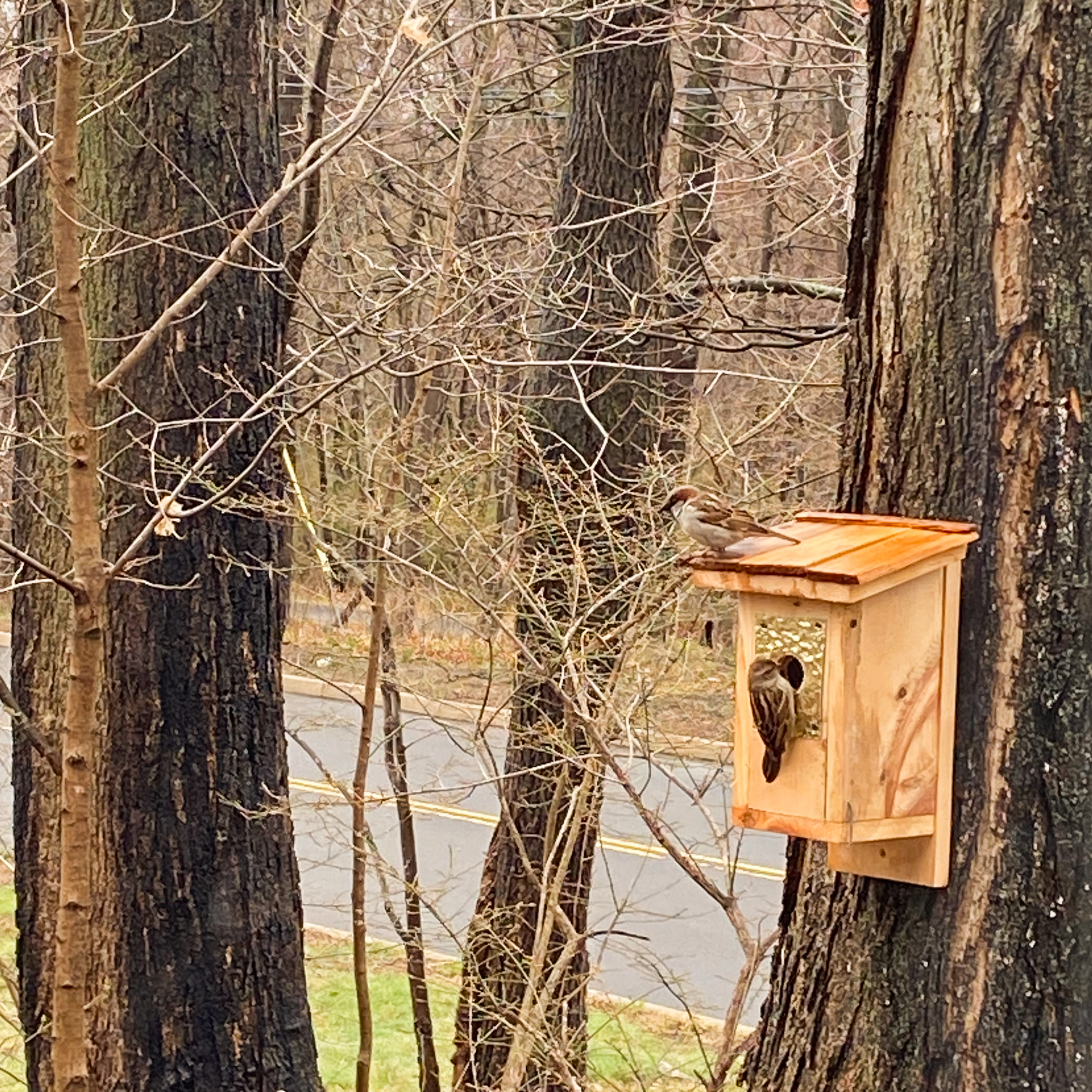
We’ve been feeding the birds ever since 2022 here at 1750 House, but last fall we added two new bird feeders and built three new nest boxes this spring to keep encouraging our wild flock. Within a week of putting the nest boxes up, all three houses were occupied by sparrows. It’s so fun to watch them claim their new homes and poke their heads out of the entry holes each morning.

Besides the sparrows, our yard has quite an active bunch of cardinals, mourning doves, chickadees, blue jays, woodpeckers, titmice, nuthatches, bluebirds, juncos, robins, hawks, crows, and occasionally a wild turkey or two. In a future post, later this summer I’ll introduce you to Red, our most sociable cardinal who waits every morning at the feeder for me along with Audi, the one-eared squirrel.

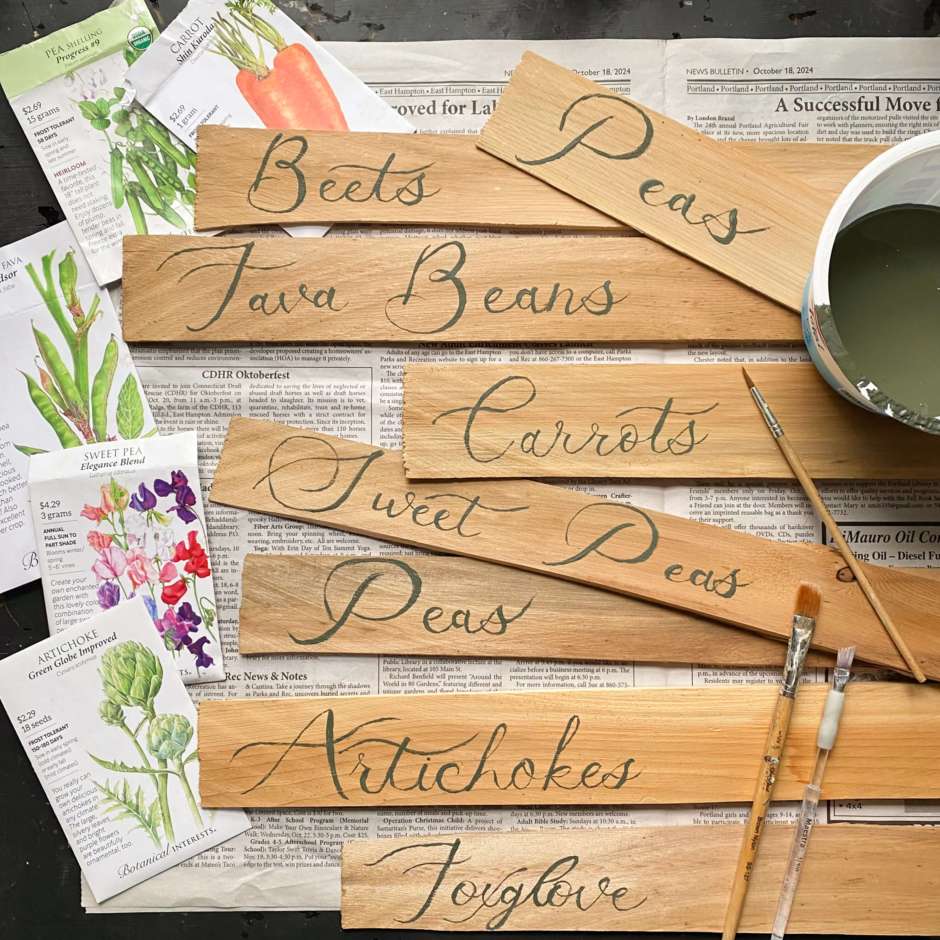
A new batch of hand-painted garden signs to welcome the 2025 season

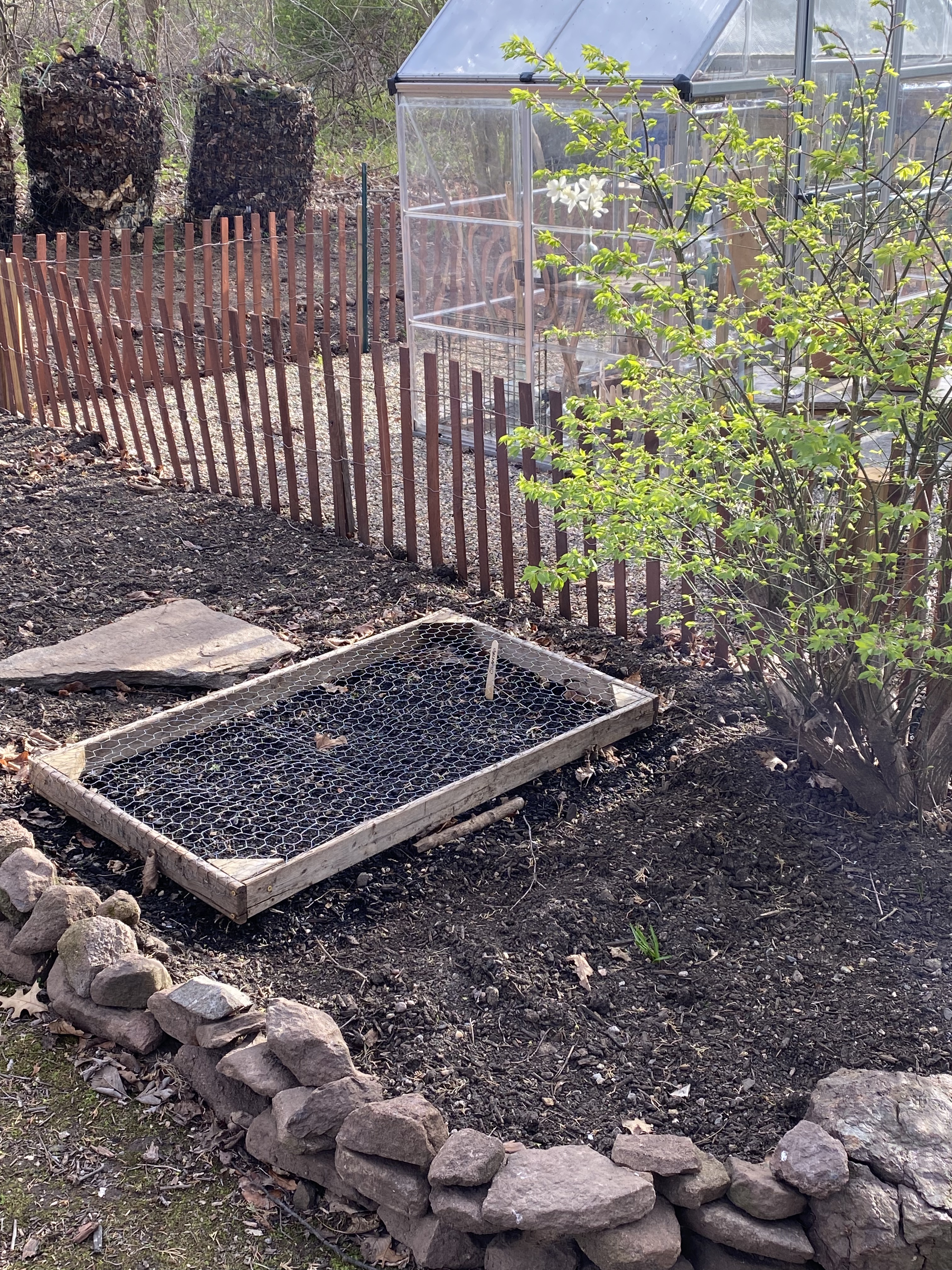
As of today… the sweet peas are up, the nasturtiums have been transplanted, and the cilantro and echinecea seeds are just starting to sprout under their protective wire covers. My husband built an array of these wire covers in all different sizes and shapes to keep the birds and squirrels from eating the seeds that are directly sown. So far so good.
The preface of Herb Gardening in Five Seasons is titled Herbs are Forever – And For All. I love that turn of phrase. It is such a fitting way to describe the appeal, universality and allure of these tried and true garden reliables. No matter where you go in the world, you can find an herb garden and someone who tends it. Perhaps that is why they are such enduring components to the garden landscape. In the same way, Adelma’s mark on herb gardening has endured too. Long after her death, memories of the beautiful gardens she created at Caprilands still find a place in contemporary conversation. I hope our little herb garden at 1750 House has such a lasting effect. A 275-year-old house deserves the pretty partnership of a timeless garden to travel the years with.
Adelma Grenier Simmons in her later years, as happy as can be amongst her garden paradise.

“Fortunately, the study of herbs touches all aspects of our lives, at all ages, under all conditions. What was rigorous physical experience in youth and middle age may become an absorbing study for the armchair gardener, who halted in activities by age or physical handicap, can still enjoy a fascinating world of legend and history.” Adelma Grenier Simmons, 1964

In the next installment of the Greenhouse Diaries, we will make a spring recipe straight from Adelma’s own kitchen and check in on the seedlings to see how they are growing. In the meantime, cheers to Adelma, to her helpful guidance, and to the act and art of growing a garden.

The Greenhouse Diaries Entry #3: Snow and Bell Peppers

current outside temperature: 33 degrees, greenhouse temp: 61.2 degrees

Last week, we left off with two cliffhangers… an impending snowstorm and an outbreak of powdery mildew. Did the greenhouse stay warm during our first storm? Have the sage and the tarragon recovered? Let’s see…

The total accumulation last Sunday night was 2.5″ inches. The greenhouse didn’t blow away or collapse (a victory!) and nothing was frost covered inside. We didn’t get the haybales purchased and placed before the storm for two reasons… 1) we wanted to see how the greenhouse would do on its own and 2) perhaps there might be a better alternative.

In theory, haybales placed around the outside base of the greenhouse act as insulation. They cover any vulnerable seams or crevices from drafts as well as act like a barrier against cold winter winds. Our greenhouse was never meant to be air-tight in its design. There are tiny exposed airways around some connector pieces and screws, which is good for ventilation. I hesitated about the bale method of winterization because there are about a dozen plants in our greenhouse that draw light from the bottom sidewalls and the hay bales once placed around the base would block their access to light from that direction. Of course, that would probably only encourage the plants to grow taller, to reach for the light above the bales and towards the roof but the idea of covering up this beautifully airy space with something heavy and dense didn’t seem quite right. In honor of light, we chose to wait and see.

So the snow came and the greenhouse experienced it sans haybales and everything was fine, except for the temperature. The coldest the greenhouse has ever been, even with the heater going at level 3 (the maximum setting) was that night. 43 degrees. Not cold enough for frost to appear but more than twenty degrees away from ideal interior temperatures. This first snowfall was such a good test. We definitely needed to protect it more.

My husband came up with the great idea of a plastic sheet covering the door frame from the peak all the way down to the base. The plastic at the roof was held down with two leftover 2 x 6 pieces of lumber, one on each side of the peak with the board ends resting in the gutters to help hold it all in place. Three treated 4x4s weighted down the plastic at the base. Essentially, he made a makeshift curtain panel for the front door that looked like this…

By covering the greenhouse in this way, it eliminated the draft that comes in around the door while still allowing lots of light to come through. Once this new plastic panel was added, the interior temp went right back up to 65 degrees within an hour. Success!

Until the next night.

Wind got a hold of the plastic and carried the curtain across the yard at some point in the middle of the night. The internal greenhouse temp plummeted straight back down to the low 40s.

Not entirely deterred, my husband set out for a second attempt. This time he stapled the plastic to the treated wood at the base, nailed two shorter boards together to form a wooden peak for the top that mimicked the pitch of the roofline, and then stapled the top end of the plastic to the wooden frame…

And that turned out to make all the difference. For the rest of the week, the plastic has stayed in place and the greenhouse is warm and draft free. To gain entry, we just take the wooden peak down and set the treated wood off to the side and then put it all back in place once we’re done inside. So simple.

Temperatures fluctuations and winter weather aside, luckily the greenhouse plants didn’t seem to be affected by all these up-and-down changes. The sage and tarragon were still flocked with powdery mildew so they got a second spray of the organic fungicide. The tarragon responded to this extra care and attention by slowly unraveling its first flower…

The marigolds have been thinning themselves out one by one since they arrived in the greenhouse, so they got repotted to a smaller container. If I had to peg any of the summer flowers that I thought would do best in the greenhouse it was the marigolds. They were such hardy growers in the garden from spring to fall, so I was surprised to see them losing leaves, drying out and getting long and leggy in the greenhouse. Hopefully, this new home will encourage them to fill out more around the middle.

On the growth spurt front, the geranium leaves tripled in size…

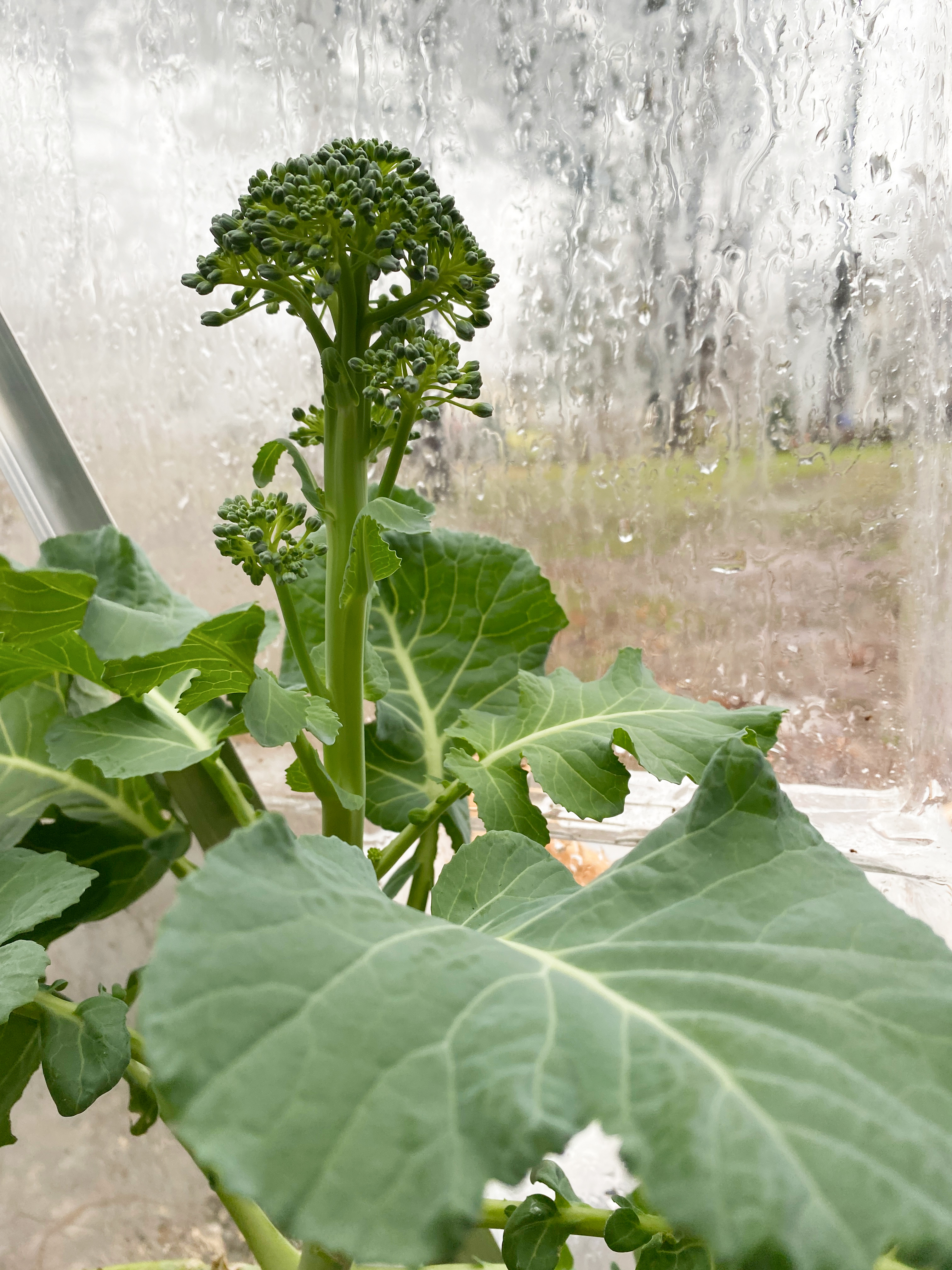
the broccoli grew by another inch…

the spicy Santaka pepper seedlings put out a whole new layer of leaves…

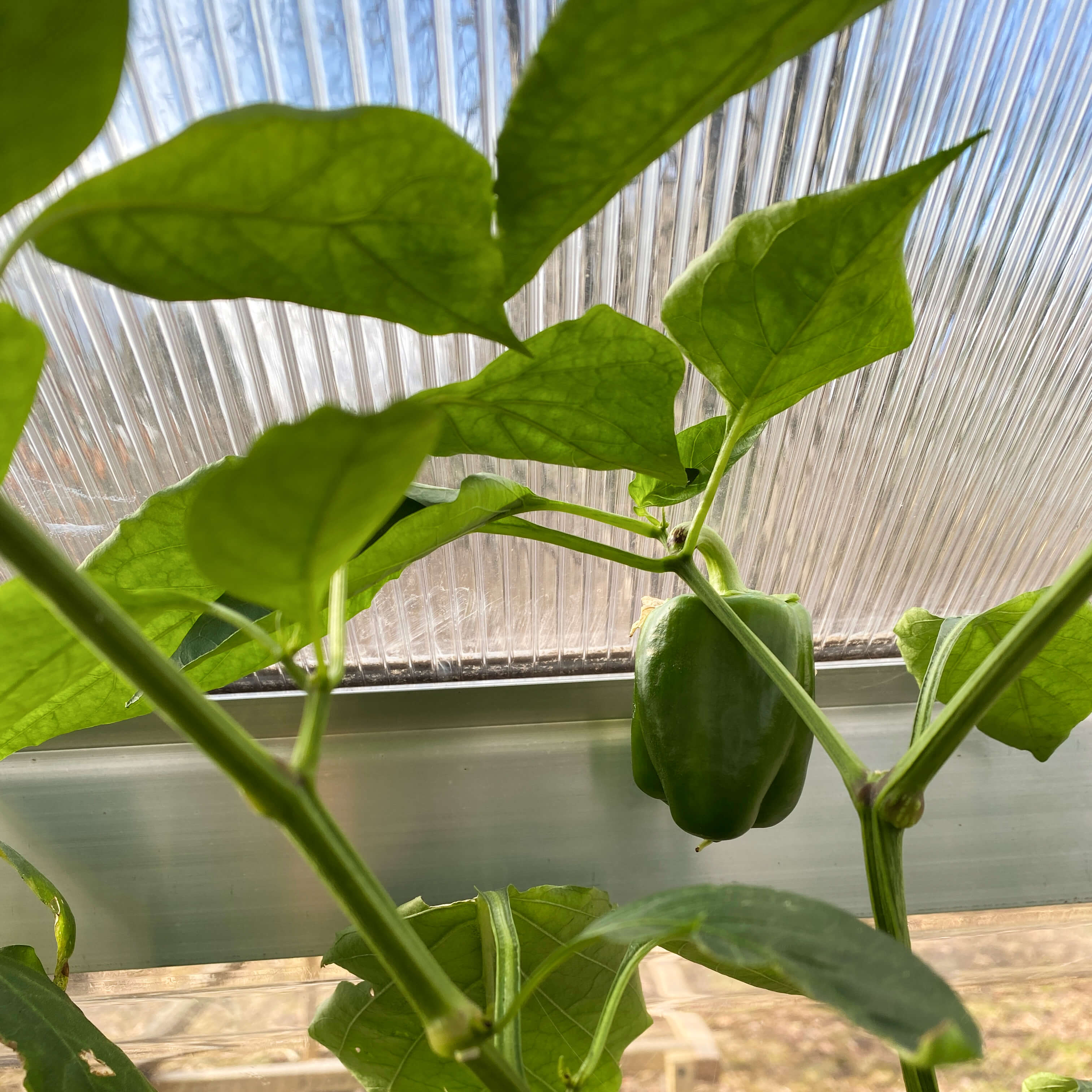
and our lone bell pepper seems to grow bigger by the minute…

Between seeing the greenhouse outlined in snow early in the week and then hearing the tinkling of raindrops on the roof at the end of the week, I can understand now why Philip Johnson built and loved his Glass House so much.

The Glass House in New Canaan, CT designed by Philip Johnson in 1945 and built in 1949.

While working on that and the neighboring Brick House, Philip mentioned being overtaken by waves of emotion for certain details during the design process. He was talking about archways and vantage points and shapes that felt like hugs, but I loved that he used the word overtaken to describe his attraction to the space and his ideas in it. That’s exactly what it feels like to stand in the greenhouse. To be overtaken by nature, by light, by warmth, by possibility, by protection. It’s no wonder plants thrive in such an environment.

Ivy-Leaf Geranium

As we work through renovations on the 1750 House during these fall and winter months, oftentimes the greenhouse is the warmest, quietest, calmest place to be. The polycarbonate walls muffle man-made sounds from the environment but oddly amplify the sounds of surrounding nature like birds singing in the trees or leaves whirling around on the ground. The bright light, even when the sky is cloudy and threatening with rain or snow, illuminates all the details on every leaf, on every petal. Possessed of an ever-evolving scent similar to warm tea the whole space changes aromatically day by day depending on what’s in bloom. And the heater – that warm little hug of a heater wraps everything up like a cozy sweater on the coldest of days. I used to think The Glass House was such a vulnerable piece of art, exposed, and unsettling in its lack of privacy. But now I see that what Philip created there was a love letter to the senses. This greenhouse is much the same. Plastic curtain panels and all.