The City of Lighters and Other Paris Fun Facts

Everyone knows that French food is one of the most well-crafted and esteemed cuisines in the world, but not many people know why or how it came to be. In David Downie’s new book, A Taste of Paris, he dives into the history behind the food with a researcher’s wild abandon for discovery and a humourist’s eye for fun.

Last time we were reading about the City of Light here on the blog, we were exploring it through the paintings and photographs of writer Janice MacLeod in her book, A Paris Year.

Janice and her Paris Year!

This time around, we are deep in the archive vaults of Parisian history alongside author David Downie as he takes us on an epicurean tour of the food that made France famous. Magically, in just 280 pages, David manages to condense centuries worth of feasting into a tidy timeline that begins in 53 B.C. and ends in present day.

“What is thrilling at least to me,” David declares in the starter portion of the book, “is to speculate on how in modified and sometimes-hard-to-recognize forms many foods and food-related habits have survived the ravages of time, the invasions and massacres and floods and fires, the plagues and changes in religion or political and economic systems, and live on in Paris today.”

It is with that keen interest that David dissects how, when, where and why the French have cooked, created, dined and dallied their way to the top of the menu board. Along the way, we learn about colorful characters like…

Queen Caterina de Medici – wife of King Henry II (1519-1589)

Queen Caterina, wife of King Henri II who chewed tobacco leaves to relieve her headaches which started French women’s universal love affair with nicotine.

We also learn about the histories behind an assortment of interesting neighborhoods, buildings, and restaurants that all contributed to the food scene both ancient and modern…

Clockwise from top left: Le Marais historic district, Palace de Versailles, Hotel de Cluny dating to the 1300’s, Verjus restaurant

…and we learn fun facts galore on a myriad of kitchen topics like these…

  1. Butter knives were invented so that people couldn’t pick their teeth at table.
  2. During the Middle Ages, long before the invention of plates,  bread was baked in cutting board shapes and used to hold piles of food for individual eaters. Once the food on top of the bread was consumed, the bread was given to peasants or animals to eat.
  3. Artichokes are considered an aphrodisiac, especially in Italy.
  4. One in three French people smoke (hence the city of lighters!)
  5. In-home cooking spaces in most French houses didn’t exist until the late 18th century.
  6. Below is one of President Obama’s favorite restaurants near the Eiffel Tower…
La Fontaine De Mars

Paris is a city continuously simmering in centuries of tradition. A delightfully unique aspect of David’s book is that he shifts back and forth between present day and the past, so you absorb plenty of history along the way but you also directly understand the correlation between what’s changed and what hasn’t.

While you don’t need to be a European history scholar or a devout foodie in order to tuck into this culinary aspect of the city, it helps if you have a special interest in old world events and a basic understanding of the fine-tuned culture of the Parisian lifestyle because David presents so much interesting, thoughtful information.  You’ll want to marinate in his chapters for a bit instead of rushing through them in one quick read. I was lucky enough to receive this advance copy of the book several months ago. One of the fun aspects of reading it over the summer was keeping Pinterest close-by so that I could look up the people and places of Paris while I was learning about them through David’s eyes.

With a wonderfully engaging voice and an ability to colorfully (and often times humorously) describe a building or a banquet, David treks you around town with insight and intimation. One of my favorite lines in the book came forty pages in when he writes about the 3rd-century Roman bath complex at Cluny as “a charming jumble that looks like a mouthful of broken molars repaired with elaborate fretwork crowns.” Admittedly, I had no idea what the Cluny bath house looked like, but thanks to David’s description I could get a pretty good impression of it.

Other intriguing sections in the book included the eating habits of Versailles’ residents, the symbolic imagery found in The Lady and the Unicorn tapestry,  and the gregarious life surrounding French food writer, Maurice Edmond Sailland a.k.a Curnonsky (1872-1956).
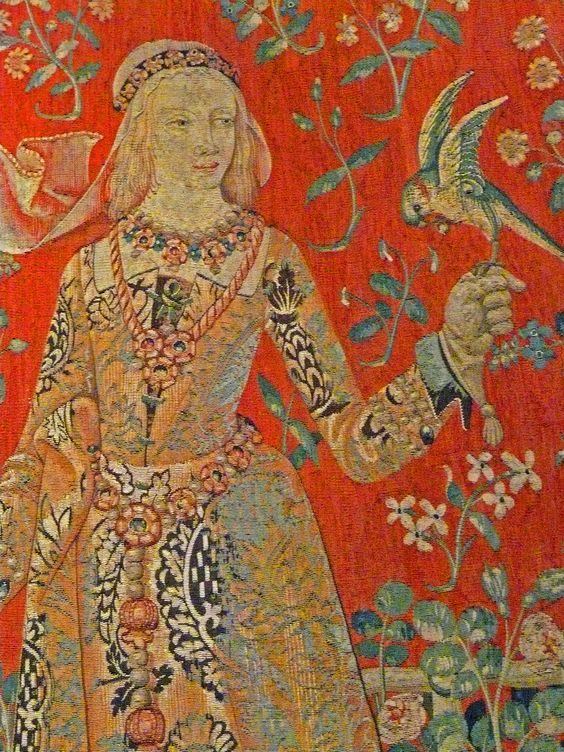
A snippet from the Taste panel of the Lady and the Unicorn tapestry created in 1500.

But not everything is champagne and caviar and easily expressed. Amidst all of these fascinating history lessons, David also dives into his own food experience which began in Paris in the 1970’s. With his modern eyes, he retraces his food steps taken four decades ago to see how, and if, the landscape he once personally adored still holds up to the memories he stored. He also talks about the future of French food among the booming explosion of other newly exalted food scenes in other cities. Can Paris hold up to the competition?
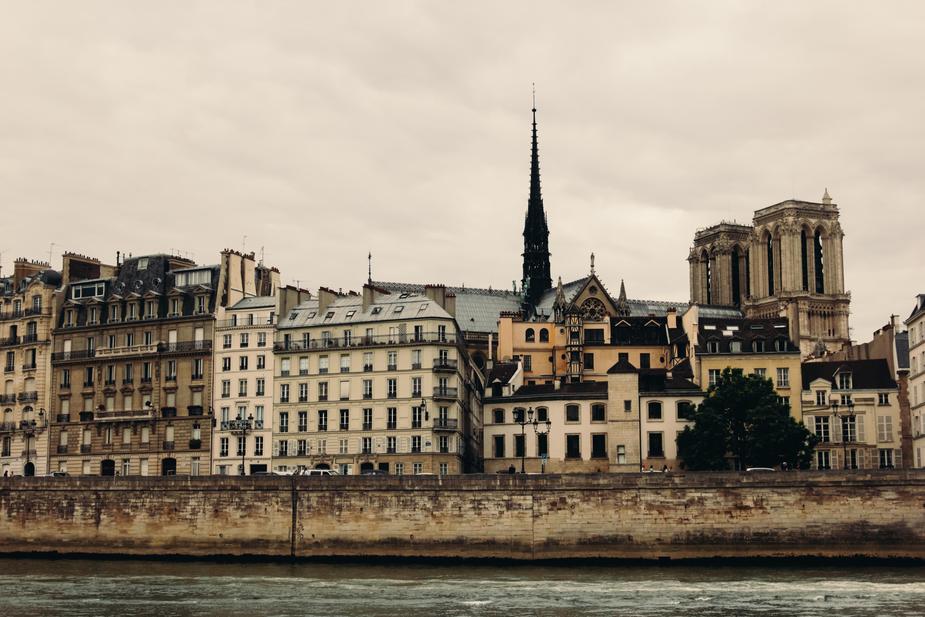
Described best as  part guidebook, part history class and part personal memoir, A Taste of Paris pushes you to make notes, take notes, look for more, explore more… which brought me to quickly wish for two things that the book did not have – detailed maps of the areas where David traveled and an index for quick reference.  Then I discovered, as I finished the last page that David does offer both maps and an index of sorts. He and his wife offer walking tours of Paris through his website where they take you on all sorts of off-the-beaten-path adventures. That’s ten times better than a paper map and a list of page numbers! You get the guy (and the guide) in person, all to your yourself!

While we often don’t even think about the fact that millions of people have experienced both good and terrible situations treading upon the very ground we also walk upon so nonchalantly every single day,  David reminds us that the veins of history are deeply wound up in the practices and procedures of our modern lives. That flaky croissant, that steaming cup of hot chocolate, that celebratory pop of champagne were all born a long time ago yet they continue to intrinsically impact us as we move towards the future. In detailing the anatomy of a cuisine, David dissected a city whose culture has influenced a collective conscious of eaters around the world and that is pretty remarkable.
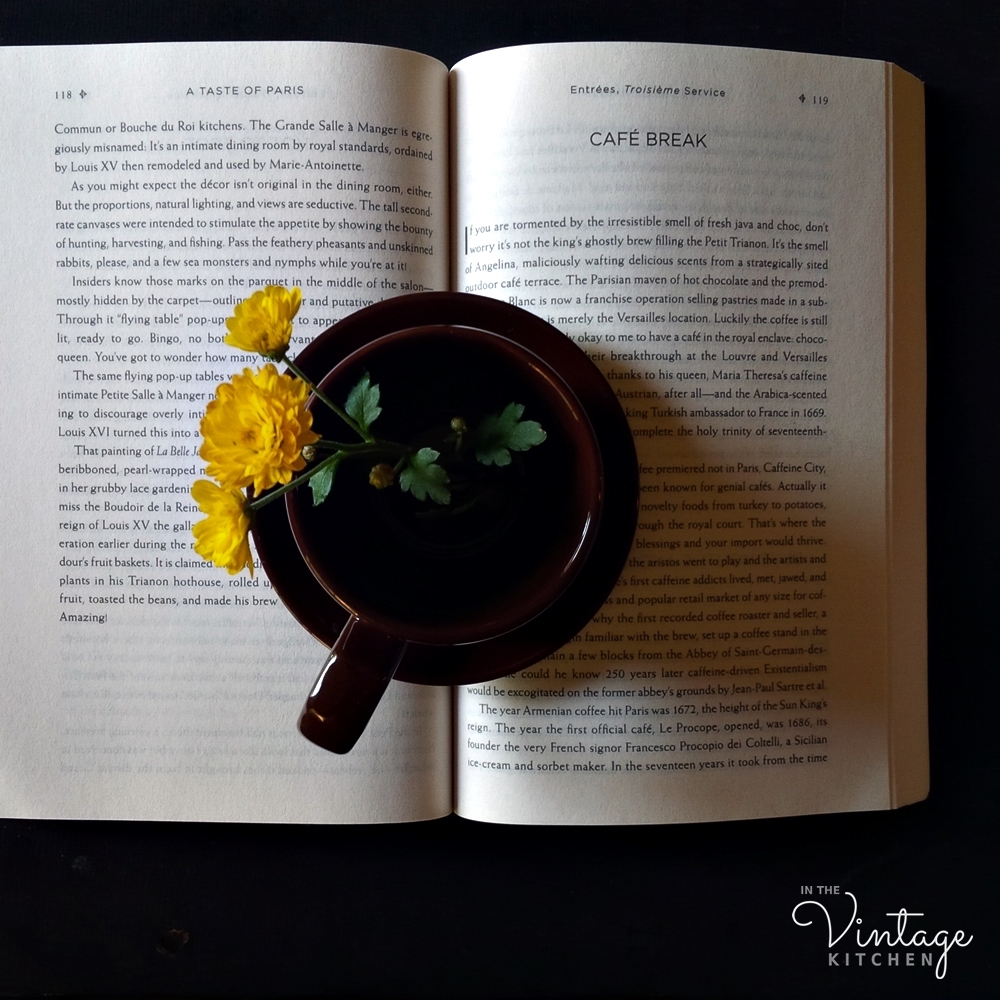
Whether you get the chance to meet up with David in Paris and peruse the food scene together or you simply read about his city in your city, A Taste of Paris is as satisfying as falling in love with a new museum exhibit. It will broaden your point of view, make you think, ask questions, ponder your own country’s evolution of food practices and ultimately make you appreciate how far we have come, as a civilization, from the days of heaping breadboards and kitchen-less houses.

Cheers to David for peeling back the layers of French food culture in such an interesting way!

Find A Taste of Paris available here. Learn more about David and his other Paris based books here. And if you find yourself in the City of Light(ers) take David’s tour and watch the book unfold before your eyes.


Family Drama: The Havilands of America, France and Germany

In the 1800s, there was an American family named the Havilands who owned a china shop in New York City. The family was made up of four brothers David, Edmond, Daniel, and Robert all of who participated in the dishware business in one way or another whether it was through trading, importing, exporting, or physical operation of the William Street storefront.

A 19th-century view of William Street where the Havilands worked. Photo courtesy of the New York Public Library Digital Collection.

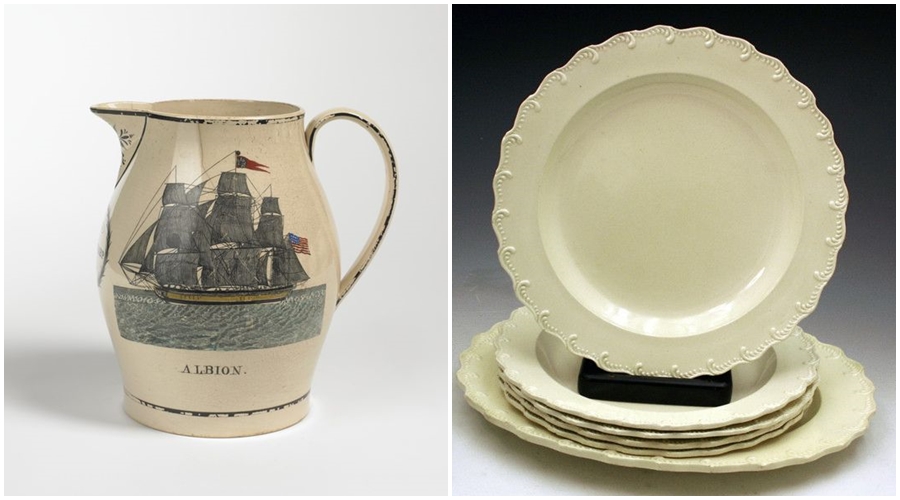
Selling dishes in New York City in the 19th century was a competitive business. China merchants were located all around town, utilizing the bustling harbor to import dishes from faraway countries. The Haviland inventory came from England and France in the form of creamware…

Early 1800’s English creamware

that came off the Pearl Street docks just a few blocks from the Haviland’s shop. Constantly trying to improve their offerings and find lucrative ways to stay afloat while supplying the city with serving pieces, the Haviland’s also offered china repair services. Legend states that a broken teacup made of a beautiful white clay brought in by a customer, led one brother, David, to hunt down the source of this stunning bright, light material.

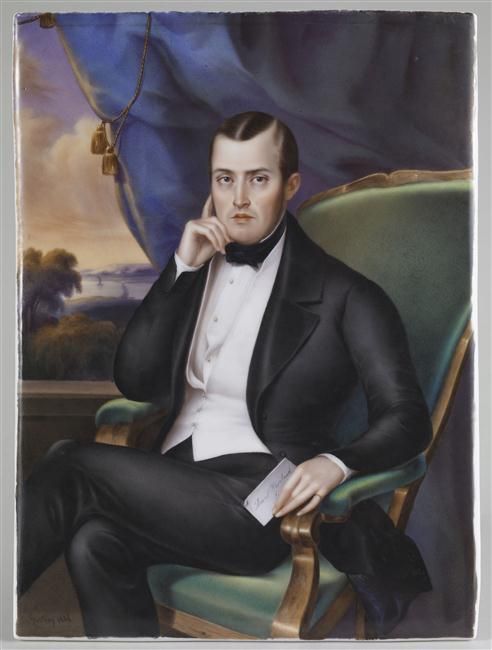
Portrait of David Haviland painted in 1848 by Fortin

The search for discovery led him all the way to Limoges, France where factories had been producing porcelain dishes made from local kaolin clay since the 1700s. Beholding the beauty of this delicate but strong material, the enterprising David picked up his wife and young son from America and moved to Limoges with plans of opening his own porcelain factory. From there, he would send all of its creations back to America for sale.

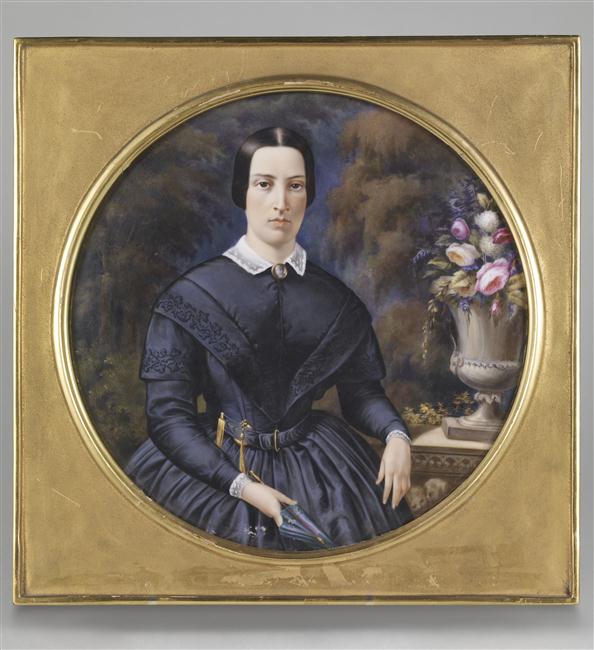
David’s wife, Mary Miller Haviland

In France in the 1800s, pottery manufacturing and pottery design were two separate businesses. First, the pottery was made in a factory, then it was shipped to artisans who painted or applied decorative imagery to the blank pieces. David Haviland saw a faster, more efficient process. When he opened his china manufacturing plant in Limoges, he hired local artists to hand-paint colorful designs on his porcelain pieces in-factory, thus eliminating the extra steps of sending china blanks out to be finished.

David’s European business venture quickly set him apart from other local French potters. His faster production time allowed more shipments and greater volumes to be exported. Plus, his new oval-shaped dishes, the artistic renderings of realistic-looking hand-painted flowers, and the bright white glow of the porcelain material delighted American buyers. Quickly word spread and a prestigious reputation of fine china manufacturing followed. Havilland Limoges became the must-have item. Even U.S. presidents were smitten. An elegant, artistic brand bearing the Haviland name was established.

Haviland Limoges china circa 1870
Back in France, David’s two sons Charles and Theodore grew up in the family business. Both went on to make life-long careers of the industry, each adding their own unique style, design aesthetic, and innovation to the Haviland brand. But even though the company enjoyed worldwide notoriety, staying at the top of their game was still a constant balancing act. The competition was fierce both inside the industry and inside the family.

Upon their dad’s death in 1879, Charles and Theodore couldn’t agree on similar ways to move the company forward so they broke it in two.  Both brothers, now operating at the helm of their own separate companies, incorporated the family name and waged a war against each other for top spot in the market.

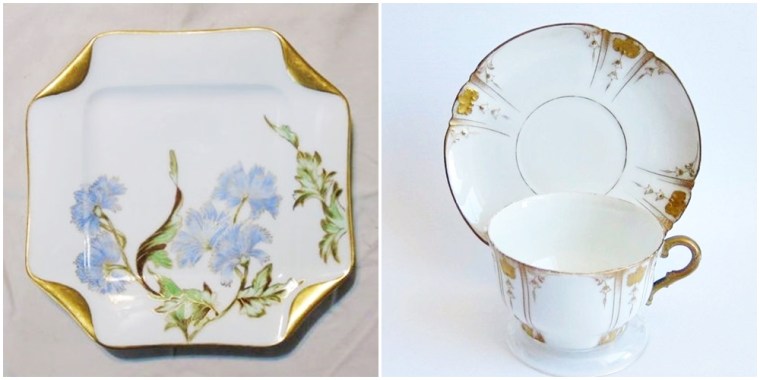
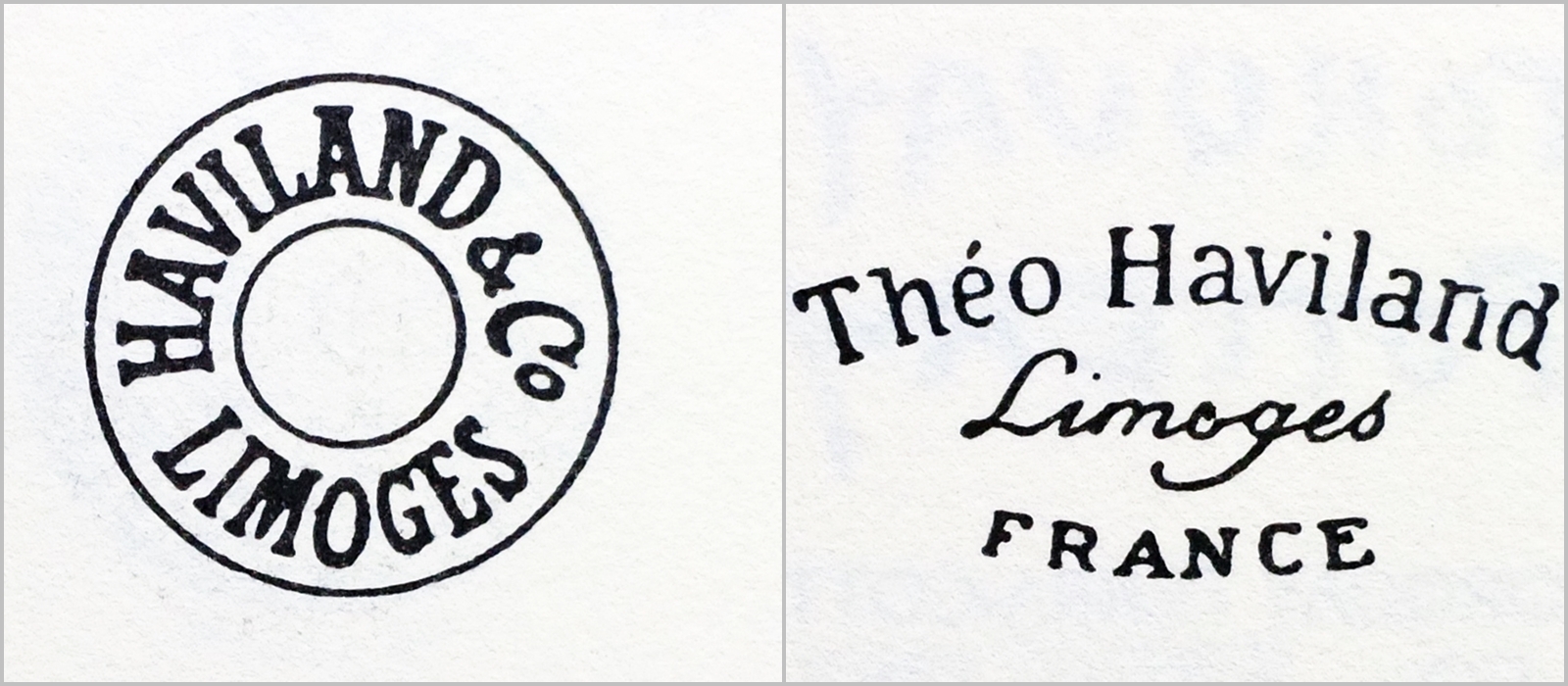
Charles’s pottery mark on the left, Theodore’s pottery mark on the right, circa 1880s/1890s. Marks courtesy of Kovels.

The stable of original in-house French artists that their dad, David, had gathered and that had turned the Haviland dishes into beautiful works of art became pawns between the two son’s companies. There was in-fighting and backstabbing. The brothers competed with each other on all levels from design to pricing. When a set of Theodore Haviland China went on sale, Charles would reduce a similar set of his own even more. If Charles offered a 15-piece set of china for a certain price, Theodore would offer a 25-piece set for the same price. And so it went back and forth between the two.

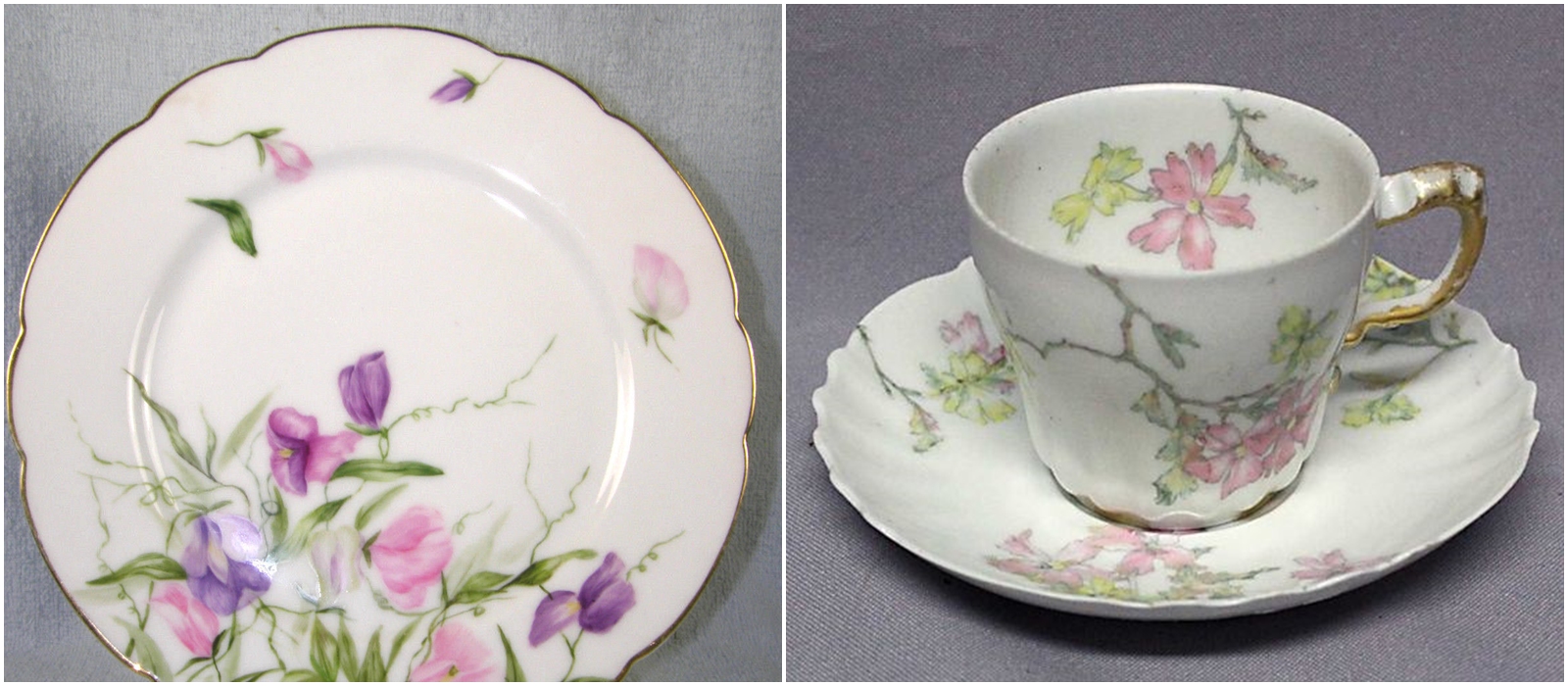
Charles Haviland china plate on the left,. Theodore Haviland cup and saucer on the right.

Charles had a son named Jean, who was born in France and like his dad grew up in the china business. But unlike Charles’s childhood,  Jean didn’t grow up in the hard-work-pays-off environment experienced by his smart, industrious grandfather, David. Instead, Jean saw his dad, Charles, bear the exhausting burden of constantly competing in a business that relentlessly beat back. Brother warred against brother for ultimate superiority and control of the prestigious Haviland name.

Young Jean loved dishes just like his father and his grandfather but he didn’t see a place for himself amidst the family feuding. When Jean became of age, he moved to Germany, changed his name to John, and opened up his own pottery factory in Bavaria under the name Johann Haviland.

Jean’s desire was to produce simple, affordable serving pieces and dish sets for everyday American households as well as strong, sturdy constant-use sets for hotels and restaurants. Even though his dishes bared the Haviland name, their simple designs and more economical price point were seen as somehow inferior to the exquisite detail and artistic merit associated with David Haviland’s original dynasty.  Jean stayed in business only a few years before his company was bought by another pottery company. From there, the Johann Haviland brand changed ownership again and again until it was finally discontinued in the 1970s.

Of the two warring brothers, Charles and Theodore,  and the fate of their warring companies, ultimate success was achieved by Theodore whose family line continued the Haviland tradition of fine quality craftsmanship and exquisite design that still continues today…

Jean Haviland’s pieces under the Johann Haviland brand might be snubbed today by serious Haviland collectors, but they still hold up in both form and function. The simple elegance of this Johann Haviland platter is effortless in design and ability. It matches everything, accommodates a plentiful array of food, and contains the history of a man who dared to do things without the drama.

Perhaps there was a bitter taste in Jean’s mouth when he witnessed his family’s ultimate fight for prestige over passion.  Even though Jean who became John and then traded under the name Johann, knew all the formulas for success in order to produce high-quality dishware he did not succumb to the mercilessly competitive nature of his father and uncle, which seems like a character trait that would have made his grandfather David proud. Jean might not have put his personal mark on the china industry for as long as other family members but he did manage to break away from the feudal family climate and follow his own more peaceful rhythm.

Find the smartly stylish Johann Haviland platter listed in the shop here. It looks outstanding with every other dish in the shop so if you are looking for a grouping of serving pieces then this is your easy-breezy match-all mate.