Today Mr. Jeannie surprised Ms. Jeannie with this love poem. 17 lines. 67 words. 2 people. 1 romance. Ms. Jeannie is ever grateful to be ever in love with this giant heart of a man who matters so much. On this happy day of love dear readers, may your words be equally as prized by others, whether it be for a spouse or a sibling, a friend or a furry four-leggeder – never underestimate the power of the alphabet:)
Happy Valentine’s Day! Cheers to making the feeling last all year through!
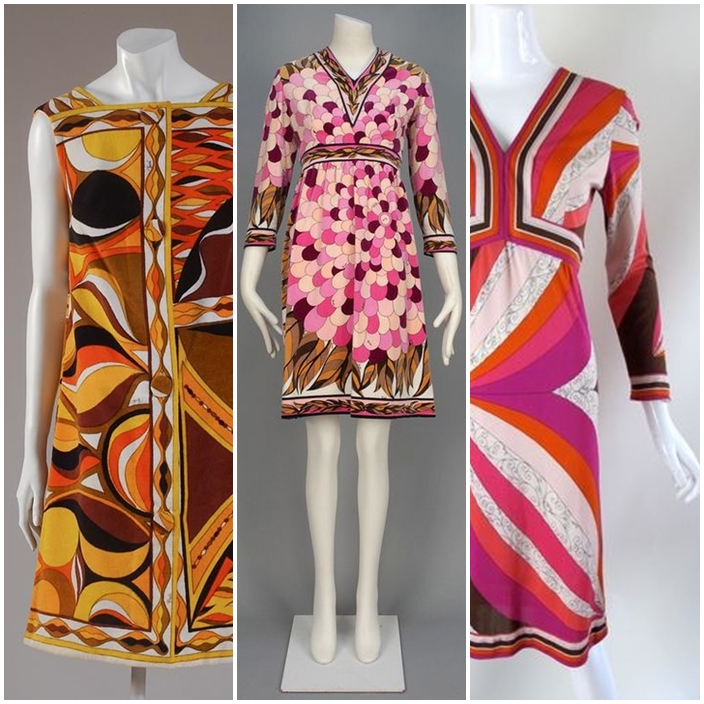
A bright, bold color palette burst into the grey, chilly landscape of Ms. Jeannie’s winter the other day when she went to view an exhibit devoted to the career of Italian fashion designer Emilio Pucci (1914-1992).
All photos via pinterest
Thoroughly modern back then and still incredibly wearable today, Ms. Jeannie most loved his wrinkle- free derby dresses designed specifically for the globe-trotting woman.
photo via pinterest
With beautiful, bold patterns and feminine drape, Pucci was best known for his clean lines, carefully tailored silhouettes and what he called his ” fresh but violent” color pairings. He was creator behind the iconic “Italian look” for his most favorite body-type – the curvaceous American figure. Lucky us!
The exhibit showcased pretty dress after pretty dress before segueing into his collection designed specifically for Braniff Airlines flight attendants…
Photo via pinterest
Cleverly coined the “Air Strip” collection – these transformative uniforms were designed as layered pieces so that the flight attendants could go from outside meet and greet situations on the tarmac to several different versions of uniform depending on the task at hand once inside the cabin. There was an outfit change for cocktail hour, one for dinner service and one for post-dinner refreshments.
In case of inclement weather, the flight attendants even had special hats…
A plastic bubble helmet, inspired by the astronauts, to protect from rain or snow!
The innovative marketing concept rolled out in 1965 and was the brainchild of real-life MadWoman ad executive Mary Wells who titled the advertising campaign “The End of the Plain Plane.” Peggy Olson would have been proud!
Considering that this was the look of 195o’s flight attendants…
photo via pinterest
which carried through up until 1964 as seen here in this ad for Delta airlines…
Delta Airlines ad circa 1964
You can see how Pucci’s Braniff girls really spiced things up a notch…
When presenting her marketing campaign ideas to Braniff, Mary Wells reasoned that tired businessmen deserved something pretty to look at. Oh my! And while this sort of ideaology sets the womens lib movement back by miles, you can sort of understand what Mary was going for and what Pucci delivered…
excitement and glamour in the air! Sure the skirts were pretty short, and the idea of flight attendants being required to go through wardrobe change not once but several times on a trip across the country seems silly, there is still something validating about women being encouraged to dress like women.
Now most of our air service crew across all major airlines dress like this…
photo via pinterest
… androgynous corporate America, at its best speaks of neither fun nor glamour.
Of course ever since 9/11 airplane travel has become serious and suspicious. You can’t fault airlines for just trying to focus on the major task at hand – getting passengers from point A to point B safely. But back in the 60’s they had that same task too and managed to both make flying feel enjoyable and exciting.
It would be nice of some of these shiny bells and whistles returned to the sky, even if it was just a relaunch of brightly colored uniforms for flight attendants today. Never underestimate the power of color to help change mood and alleviate anxiety, Ms. Jeannie always says! And that simple adjustment just might work wonders in bringing a bit of enjoyment back to sky-bound travel today.
Pucci never underestimated the power and beauty of natural curves. Mary Wells never underestimated the power of pretty presentation. And jet-setters never underestimated the allure of the travel experience. By bringing back a bit of showmanship to the skies, it might encourage people to experience more of our vastly interesting planet.
What do you think, dear readers? Do you think the 1960’s travel campaign is sexist? Would you like to see a return to the excitement and glamour of the golden age of travel or are you happy with the current state of shuttling to and from that is our contemporary state of air affairs? Please comment below! Ms. Jeannie would love to hear your thoughts!
In this week’s culinary adventure, Ms. Jeannie is focusing on something delicious for canine-minded readers of the blog: organic flaxseed dog treats! Or biscuits, if you’d like to correctly call them.
Around “officially” for over 150 years, specialty biscuits for dogs were created by this enterprising American electrician…
Photo courtesy of chestofbooks.com
James Spratt, who patented Spratt’s Meat Fribrine Dog Cakes, after he noticed a pack of dogs chewing on hardtack biscuits in the street. The city of London became his manufacturing mecca of choice in the 1870’s where his dog treats became quite a big British hit.
Before long, exclusivity was compromised and the Bennett Brothers of New York City took note of the popular Spratt product and brought the concept home to America.
The Bennett Biscuit Company was established in the NYC’s Lower East Side in the early 1900’s, making Maltoid’s – milk, mineral and meat dog treats. Later Bennett’s biscuit company would be bought by National Biscuit Company (know known as Nabisco) and their production of Milk-Bone dog biscuits would become a household name by the 1940’s.
But because Indie has some food allergies and has to therefore exclude most grains from her diet (and unfortunately most over-the-counter dog treats like Milk-Bones), Ms. Jeannie is always on the lookout for a good recipe that won’t give Indie a rash.
Ms. Jeannie has found a favorite in this organic recipe and as you can see Indie is quite an enthusiastic kitchen helper when these are on the baking menu!
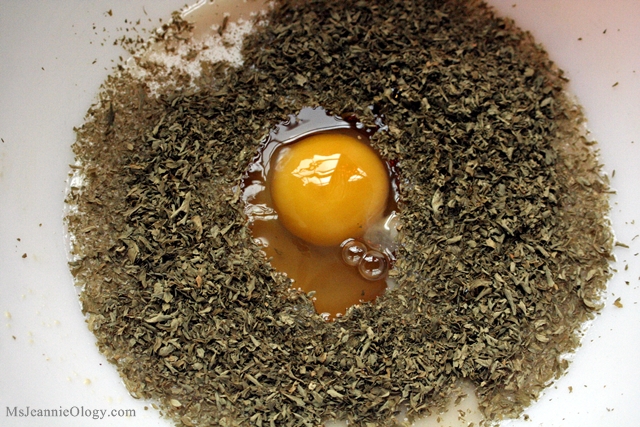
Simple, easy to make and abundant in quantity you start out by combining yeast, warm water, chicken broth, maple syrup, dry parsley and an egg in a large mixing bowl…
Then you add ground flaxseed meal until it forms a stiff dough…
Next, roll the dough into a ball and knead for a few minutes…
Then you are ready to roll the dough out in a thin layer and cut out the shapes. Ms. Jeannie lost her cookie cutters in the move somewhere so she improvised using the openings of two different sized glass jars…
Once you have all shapes cut out – place them on an un-greased cookie sheet and bake them in a 350 degree oven for 30 minutes. Turn them over and bake for an additional 15 minutes. Once finished in the oven, let them cool on a rack for an hour.
Depending on the thickness of your dough – you can make chubby treats or paper thin treats. Ms. Jeannie likes to do a mixture of both. On the days when Indie does something really good or listens really well – she’ll get a chubby treat:)
By the time you get to this stage you’ll have several dozen homemade dog treats and one anxious sampler at your feet.
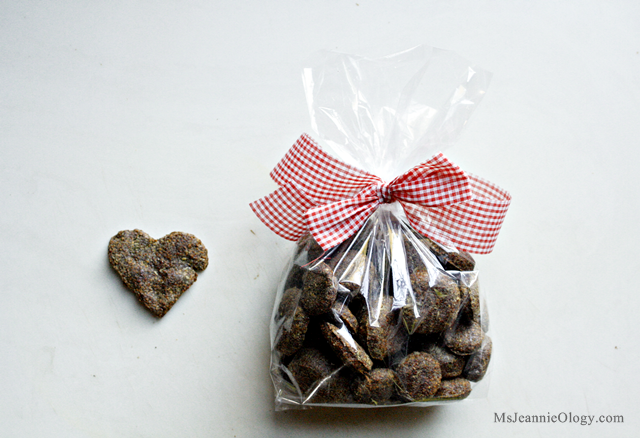
If you’d like to share your treats, it is fun to package them up and give them as little gifts to the extra-special creatures in your life. They make fun hostess gifts, thank you gifts and special holiday gifts. Or if there is a secret canine valentine in your life…
… you’ll win their heart by giving them these:)
Here’s the complete recipe breakdown once more…
Organic Flaxseed Dog Treats
2 teaspoons dry yeast
1/2 cup lukewarm water
2 tablespoons dry parsley
1.5 cups chicken broth
3 tablespoons maple syrup (or honey)
1 egg
5 cups ground flaxseed meal
Preheat oven to 350. Dissolve yeast in lukewarm water in a large mixing bowl. Add parsley, broth, syrup, and egg and stir to combine. Slowly mix in the flaxseed meal until it forms a stiff dough. Form dough into a ball and transfer it to a flat surface (you can sprinkle some additional flaxseed and parsley on the surface so that the dough will not stick) and knead for a few minutes.
Roll dough out into a thin layer (about 1/4″ inch for thin crispy treats or about 1/2″ inch for chubby chewy treats) and cut out shapes with cookie cutter. Place treats on an un-greased cookie sheet and bake for 30 minutes. then turn each treat over and bake for an additional 15 minutes. Place cooked treats on a cooling rake for 30 minutes.
Happy New Year dear readers! Ms. Jeannie has missed you, missed you, missed you! It has been several months since the last post in October, and in that interim between then and now, a flurry of behind-the-scenes activity has been occurring in the land of Ms. Jeannie Ology.
Indie was quite the little helper!
Most notably, there was a move to a new house and a new town.
As Ms. Jeannie said goodbye to the garden and the greenhouse, and the friends she made of the birds and the butterflies and the bald-faced hornets of the last few years, she said hello to a history-soaked house and a bustling university town.
This was not a move to just any old house – with luck as a tour guide, Ms. Jeannie found a converted two room schoolhouse built in the 1930’s. Here’s a vintage picture of her new abode…
Not too much has changed in appearance from that picture to today, except maybe the yard is a little more tame:) All the character and all the history are still exactly where they are supposed to be and that is pretty fantastic.
Originally part of one of the largest cotton plantations in the County, the schoolhouse was built along with a church and a commissary building for the plantation slaves. There is still quite a bit of farmland surrounding the house, especially across the street, so it is not hard to imagine what the scenery might have looked like 100 years ago…
Replace the wheat fields above with acres and acres of cotton and knock down most of the trees and that would be the agricultural landscape here of the 1800 and 1900’s. While the church still remains open and active next door, the original schoolhouse caught fire and burned down completely. In 1936 it was rebuilt and continued to be operated as a public school for black children up until the 1960’s when desegregation put it out of commission entirely.
Ms. Mary Willingham was a former student of the school house…
Photo courtesy of the WPA Federal Writers’ Project Interviews
In 1939 she granted an interview about her life for the WPA Federal Writers Project. When asked about her education in the schoolhouse, in particular, this is what she had to say…
“So it’s my schoolin’ you wants to know about now?” she asked. “I got as far as the second grade. That’s how come I can’t talk proper now; I didn’t have enough schoolin’… us chillun went to school there during the week, and to church and Sunday school there on Sundays. That’s the way colored folks done in them days.”
While it is unclear why Mary had to leave school after second grade, we do know that the process of educating black children in the rural South both before and after the Civil War was not an easy task on many fronts. Back in the 20th century the original schoolhouse was considered primitive by many standards. By 1915, the children still had no desks or even a cloak room to hang their coats and they would have just sat on benches lining the wall. Black teachers made 1/3 of the salary of white teachers, which meant their monthly take home pay was about $25.00 and if white teachers were teaching black children, they would have had to tolerate a lot of ridicule from the white community for their professional choices.
All this seems pretty unfair from both sides, but this schoolhouse, in particular, was actually considered pretty great back in its day because it was in a good location, had ample grounds for playing and the exterior was painted and therefore not subject to rot and mildew.
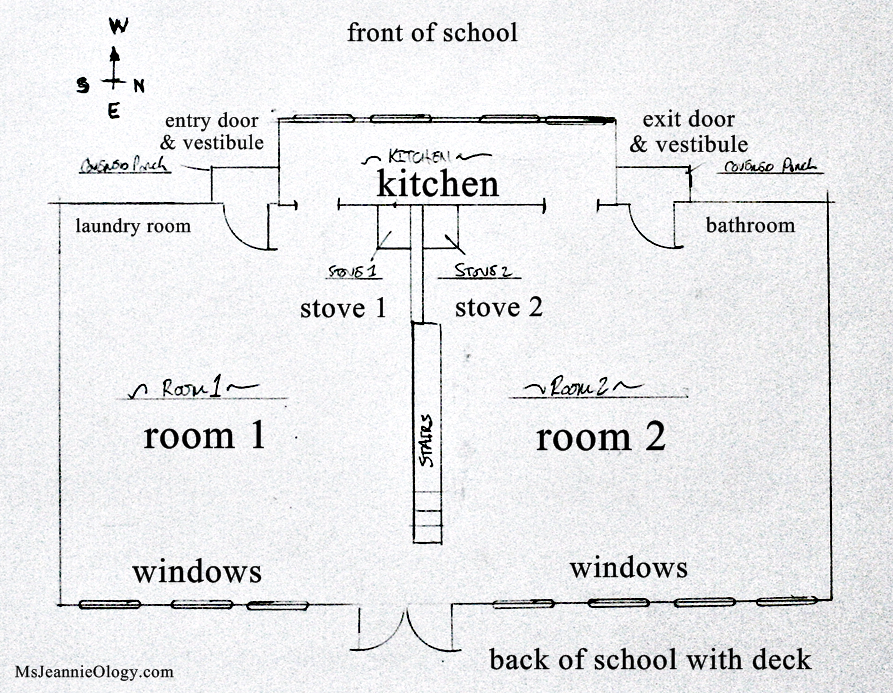
Inside, the school house is laid out like this…
Thanks to Mr. Jannie Ology for providing the drawing:) Little nods to the buildings history are everywhere from the “house” key…
little nods to the buildings history are everywhere from the house key…
to the all-wood walls…
to the giant 4′ foot by 5′ foot chalkboard in the kitchen…
6′ foot tall windows line both the front and back of the house and 11′ foot ceilings make all 1300 sqf feel large and airy. Two pot-bellied stoves serve as heat…
exactly what did the job way back in 1936. A few massive pieces of furniture have also been left behind from classroom days which now serve as bookshelves for Ms. Jeannie’s vintage book club…
It seems fitting to be surrounded by so many books and to be managing a book club while living in a historic schoolhouse. It makes Ms. Jeannie thankful that access to education and to books and to higher learning for all is so much more accessible today than it was in the 1800 and 1900’s. Living in such a space that encouraged minds to build more intelligent futures is very inspirational – whether it be a 7 year old Mary or twenty-something year old school teacher or an eventual history-loving book club tenant. Education continues…
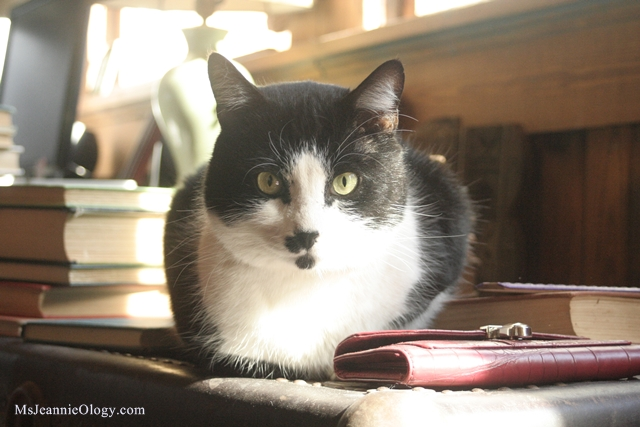
Boyo quite agrees. He has learned a lot himself moving from the wild back yard that introduced him to Ms. Jeannie in the first place and settling in to his new post as babysitter of the books in the new house…
As you can see education extends to all here:) Ms. Jeannie is really looking forward to sharing a variety of new adventures with you in the new year… in her new house… in her new town. Happy January dear readers, Ms. Jeannie’s glad to be back with you all:)
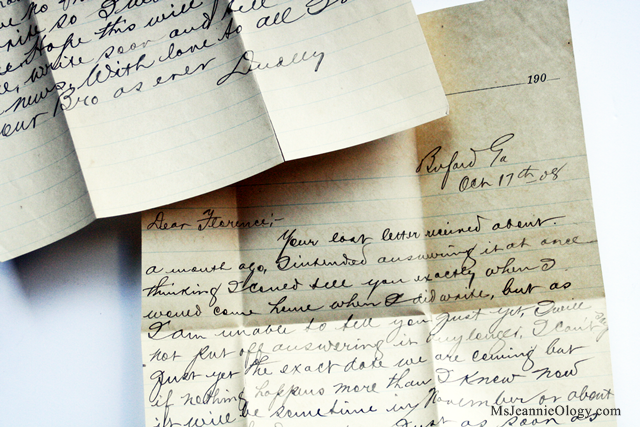
A letter postmarked 106 years ago to the very day!
How mysteriously wonderful is this dear readers? Ms. Jeannie has been running around so crazy this week she barely has had a moment to breathe let alone time to stop and smell the roses. Thank goodness she took care of that last week! But then, just when she thought she was going to spin herself silly, Dudley stepped into her life like a little angel with a message. Dudley, is Florence’s brother, as in Miss Florence Taylor of New Berlin, NC. Ms. Jeannie became reacquainted with the two siblings when she discovered this old letter tucked away in an even older box that she had not looked through in quite a few years.
The correspondence is a typical brother/sister conversation… not much new here…sorry I haven’t written… the weather is fine…looking forward to coming home for a break…send my love to everyone…etc, etc, etc. But what struck Ms. Jeannie as most exceptional about this letter was not the contents, dear readers, but the date! Postmarked exactly 106 years ago today – October 19th, 1908! Imagine that! That’s Dudley’s message to Ms. Jeannie – to take time for a break so that you can see the details in life instead of just pushing past with productivity.
Thank you Dudley!
So in the spirit of Ms. Jeannie’s wise pen-pal, she is taking a moment to stop and share some lovely new treasures with you that will soon be added to the shop. It’s like a little preview show dedicated to details! If anything catches your heart, leave a message in the comments section and Ms. Jeannie will be happy to reserve the item in your name.
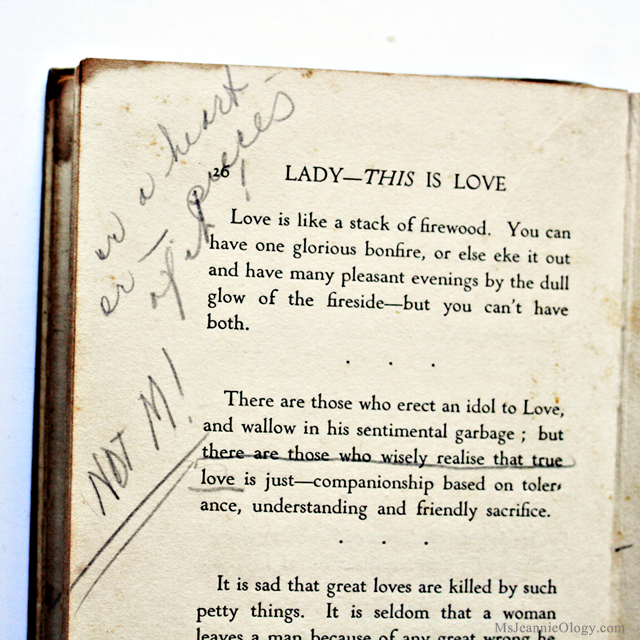
Vintage 1930’s First Edition book – Lady – This is Love – $25.00
A rare first edition book published in 1930 looks at the humorous side of love from feminist author Irene Bueno de Mesquita. Great cover typography makes this a wonderful coffee table book or eye-catching wall art if you are so inclined to frame it. Interesting details include handwritten notes from a previous owner who has her own attitude on love…
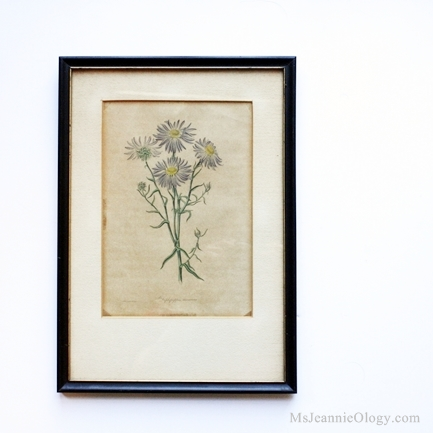
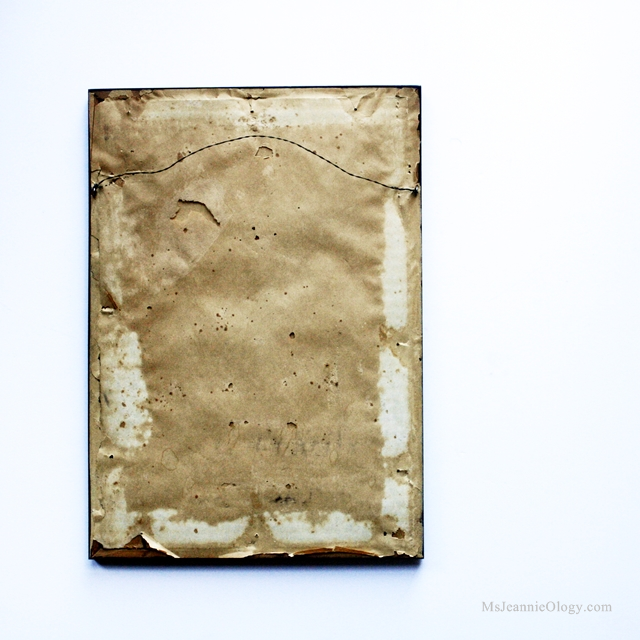
A beautiful 9.5″ inch x 13.5″ inch vintage framed botanical print in all its elegant shades of beige, black, lavender and green comes to the vintage home decor section of the shop. Botanical prints are one of the prettiest ways to showcase your love of flowers. Especially in winter when it becomes difficult to remember what the summer landscape looked like buried under all that snow. This print works well in all seasons because it contains both light and dark colors and a natural, aged vignette which helps add a layer of warmth and dimension.
It is as pretty on one side as it is handsome on the other. A whole completely different story is written in the compromised papering of the back…
Call Ms. Jeannie crazy but she finds a lot of beauty in the backsides of antique art. Their subtle color shades, the thin delicate wire hangings, the marks of time and place…
It’s dramatic and different while being subtle and soothing at the same time! Sometimes it’s just nice to let your imagination create its own picture.
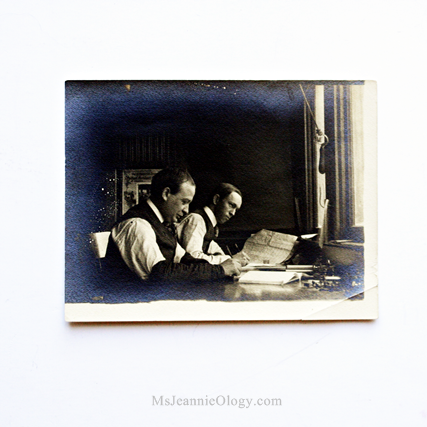
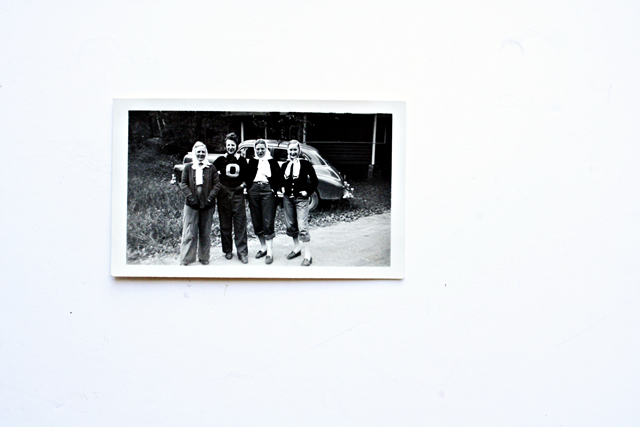
And speaking of pictures, three new vintage photographs are coming! Each of them contain fun and whimsical details about life lived long ago…
Little Carola on haystack circa 1957. $6.00 Love her shoes!
Men at Work – $9.00. Love the slight smile on the foreground face. It’s not all serious in this office!
The Road Trip – $8.00 Love the head scarves and the school sweater! Circa 1950’s.
Of course Ms. Jeannie will be telling some stories surrounding this trio of scenes as she likes to do with all the old photographs in her shop.
If you follow Ms. Jeannie on Twitter or on Facebook (which she just joined!) then you will receive a message when all of these above items have been listed in her shop. Look for these and more fun treasures coming soon! Hope you are having just as much fun during your weekend as these ladies above had during their road trip!
The award-winning writer and gardener Sydney Eddison once said that gardens were a form of autobiography. How true! You pick your favorite plants and flowers, you prune and pluck or you let it go and grow, you decide neatly clipped and ordered or wild and whimsical, you choose colors, height, dimensions, you choose careful maintenance or natural ease. Essentially you write a love story with your landscape.
Ms. Jeannie was thinking about all this the other day when she finally (after many months of waylaid attempts) managed to visit the rose garden at Fernbank, Atlanta’s natural history museum.
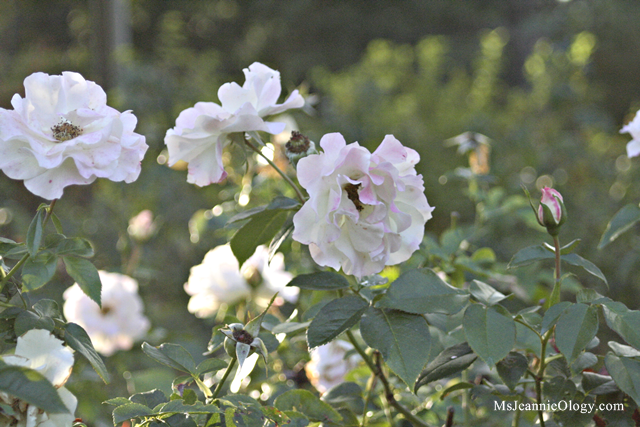
Blooms aflutter in all directions.
What a gorgeous marvel this site was! Named in honor of Robert L. Staton, a local gardening enthusiast, Robert built this story of a garden in the 1980s to not only explore his own passion of cultivating an incredible flower but also to provide an educational tool for rose enthusiasts around the world. Autobiography is right, dear readers!
The Fernbank rose garden is one of only three gardens in the United States that serves as a testing ground for rose varietals in accordance with the American Rose Society, which makes it an intriguing platform for experts and novice hobbyists as well as a place of beauty for the community.
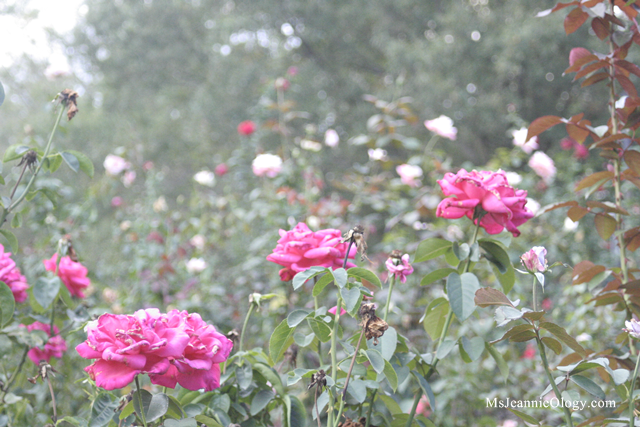
Laid out on two sides of a big lawn joined by a paved walkway, over 1,300 rose bushes live in long raised beds, bordered by bricks and grass alleyways. Being that it is now mid-October, Ms Jeannie didn’t know what she was in for in the bloom department. She thought she might be missing the season entirely, but was so happy to be proven wrong. At every turn there was something lovely to look at…
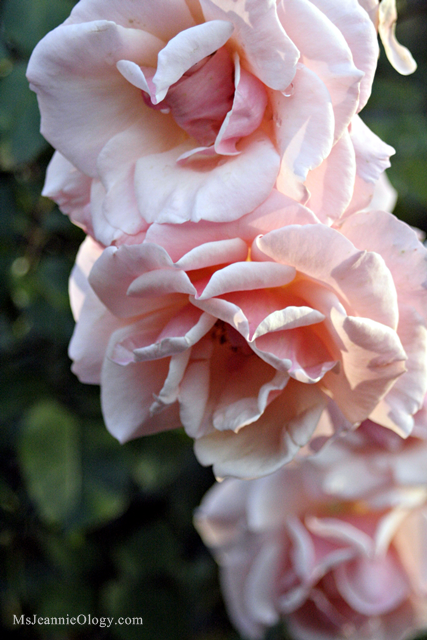
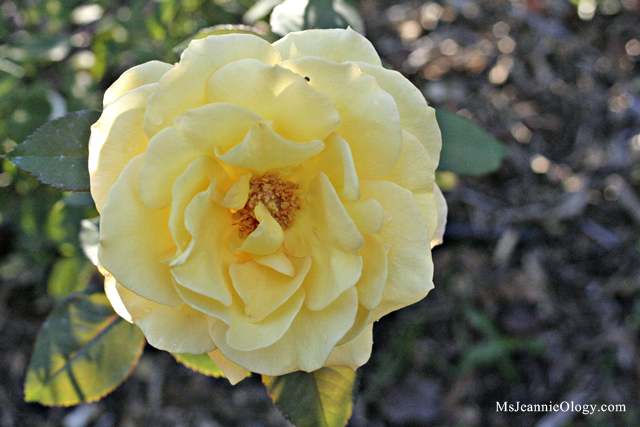
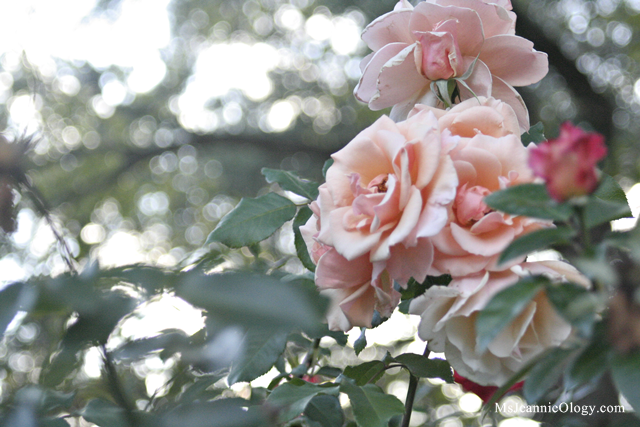
Roses came in a rainbow of colors and caught the light in all sorts of dramatic ways…
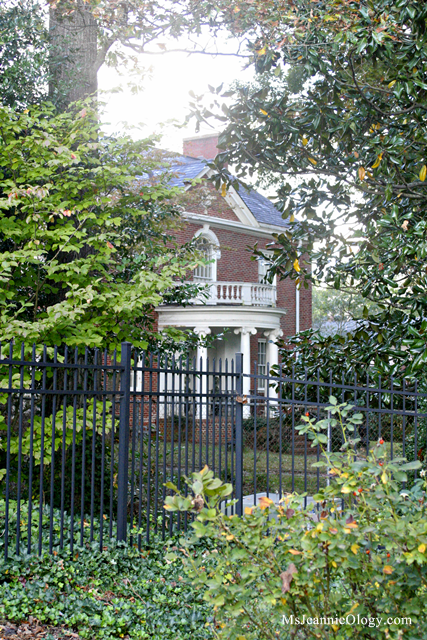
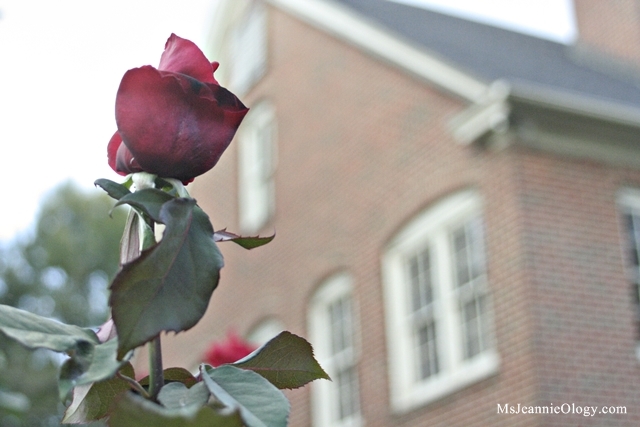
Such a visual feast for the eyes! Stately buildings belonging to the museum and a view of the neighbor’s house next-door were tucked into the landscape and lent a fairy tale magic to the whole setting.
Even Indie, Ms. Jeannie’s travel companion, was overwhelmed with the spectacle of it all. Not only was this her first walk-around trip in Atlanta but it was also an exercise on how to behave in a city environment. She was a good little pup through it all despite the enticing distractions (so many squirrels!) and the fast moving cars. But it also was a trip not without its perils…
Thorn in the paw!
Oh poor thing! Some quick attention and one freshly dug hole later…
(Oops! Sorry Fernbank!)
and she was back on the trail again.
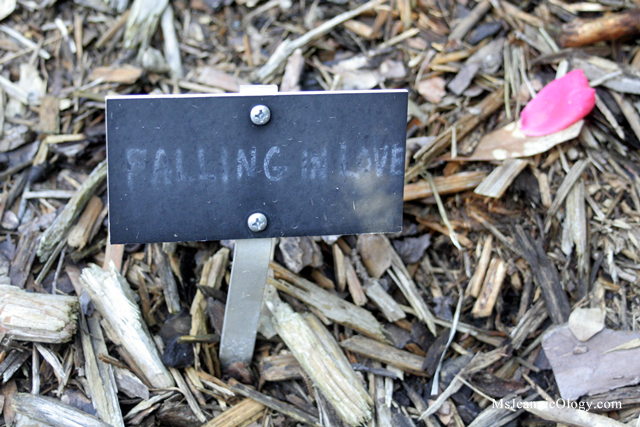
Rumor has it that many a marriage proposal has occurred in the garden, and Ms. Jeannie can definitely understand why. Clearly Robert Staton was a romantic on a mission. The garden seduces you at every chance. From varietal signs…
to traditional symbolism…
petals pull at your heart from all directions.
And now Ms. Jeannie is so thoroughly inspired to start her own assorted rose garden she can barely stop daydreaming about it all. More to come on that front soon!
In the meantime, in honor of such a magical place Ms. Jeannie is having a little sale just for her blog readers on anything floral (including all things photographed with flowers!) in her Etsy shop. Stop by and have a look here. Use coupon code FLOWERSFORALL to receive a 25% off discount.
Mail is fun – especially at Christmas! photo via pinterest
Last week we looked at incorporating heirloom lace and crochet into pottery. This week, in Ms. Jeannie’s unique Holiday Gift guide that aims to combine the old with the new, she is highlighting handwriting and all the magical ways you can incorporate the penmanship of ancestors into a contemporary gift.
Idea No. 2 – Handwritten Gifts
The gift of a word can hold profound meaning. And when you see those words written in their owner’s own unique way it adds an entirely new level of depth and emotion to a gift. A custom necklace that replicates the exact handwriting of an ancestor makes for incredibly sentimental presentation and keeps loved ones close at heart…
Custom Handwriting Necklace made by BrittanyLeighJewelry – $205.00
Everybody who enjoys cooking knows that family recipes are the source of stories and memories just as much as they are the source of good food. If you are looking for a special host or hostess gift for your best gourmet, this one combines a treasured handwritten family recipe with a very useful kitchen apron. This is a gift they can be used every day of the year!
Custom Recipes in Custom Handwriting on an Apron made by LindsayBurckDesigns – $31.00
Enlarge a piece of beautifully scripted mail, a journal entry or an antique love letter for a unique piece of wall art…
Photo via pinterest
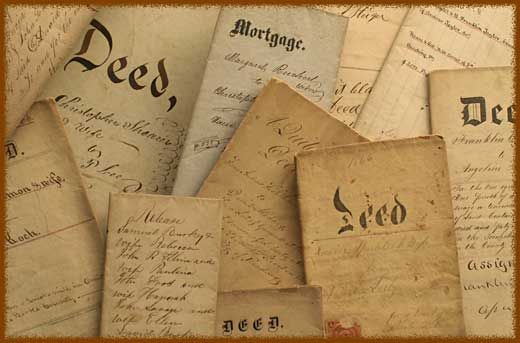
Or enlarge an old family land deed or immigration document like these below. Old plats, sales receipts, contracts and assorted paper ephemera from the 1700’s and 1800’s are gorgeous in all their weathered glory with scripted fonts, aged paper and range of neutral colors. No two look alike!
photo via pinterest
Old documents pertaining to family history can be found online at ancestry.com or on file at local libraries and historical foundations. These make especially great gifts for anyone who has recently moved into a new house, started a new business venture or just needs a little visual reminder that great things are possible.
Photo via pinterest
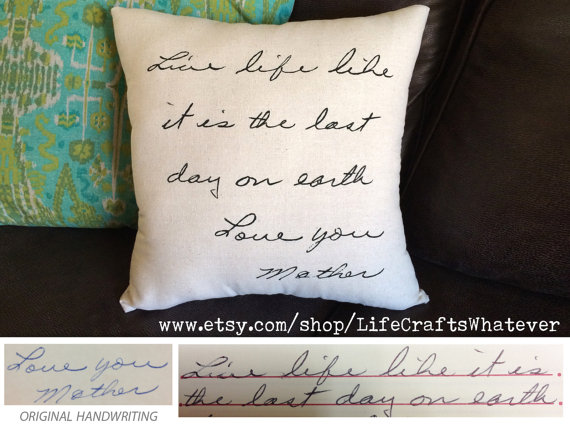
When looking through old cards or letters, if a poetic sentence jumps out at you or if one of your family members was always known to say a certain phrase, or lend certain words of encouragement, pay tribute to their mindeset by keeping their thoughts alive, in their own handwriting, on a decorative pillow that can be incorporated into a variety of different decor situations…
Handwritten signature pillow made by LifeCraftsWhatever – $47.00
With these handwritten gift ideas, you’ll only be the bearer of good news this holiday season! And just like gift idea No. 1 your recipient will be able to enjoy these items the whole year through. It’s the 12 week holiday countdown – stay tuned next week for gift idea No. 3 🙂
As the outside temperatures start leaning towards Autumn, Ms. Jeannie starts dreaming about soup in all its different variations. Undoubtedly one of her most favorite things to make in the cold months, she was practically giddy today in anticipation of inaugurating the season with one of her very favorites…Sopa de Fuba, a native recipe to this gorgeous place…
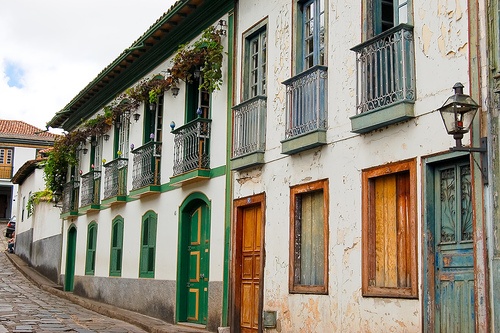
Photo via pinterest.
Can you guess where in the world this picture was taken? If you guessed Brazil then you are right! To be more particular it is Minas Gerais – the fourth largest state in Brazil, known for it’s precious gem, diamond and gold mines, its historic colonial charm and a certain something special in the warm and hearty soup department.
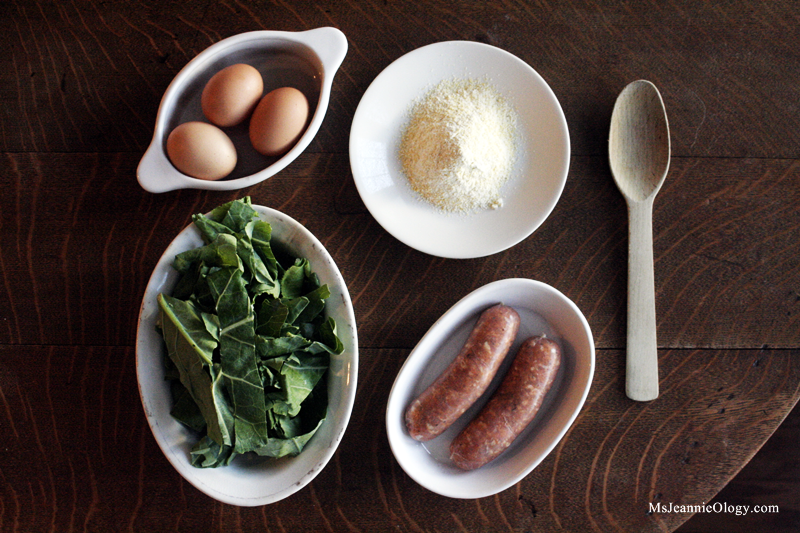
Sopa de Fuba combines just a few simple ingredients in an unusual manner which makes it fun to cook and a bit out of the ordinary to serve.
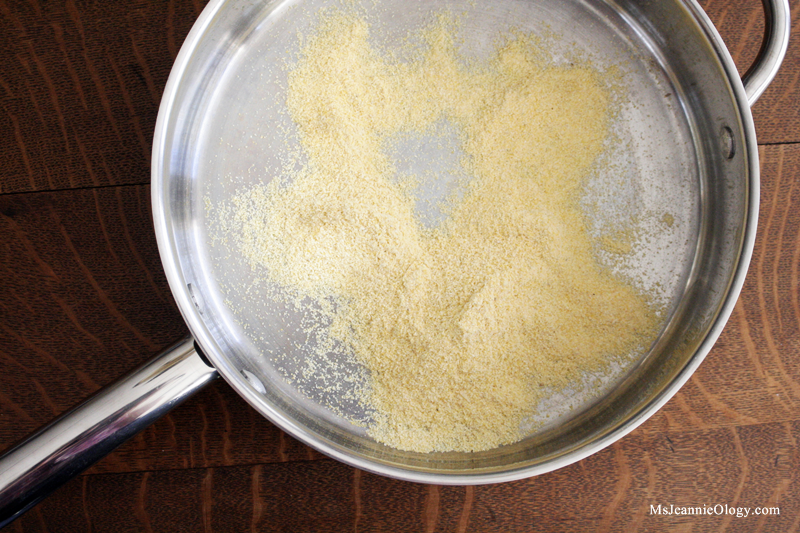
It starts with the browning of cornmeal on the stove…
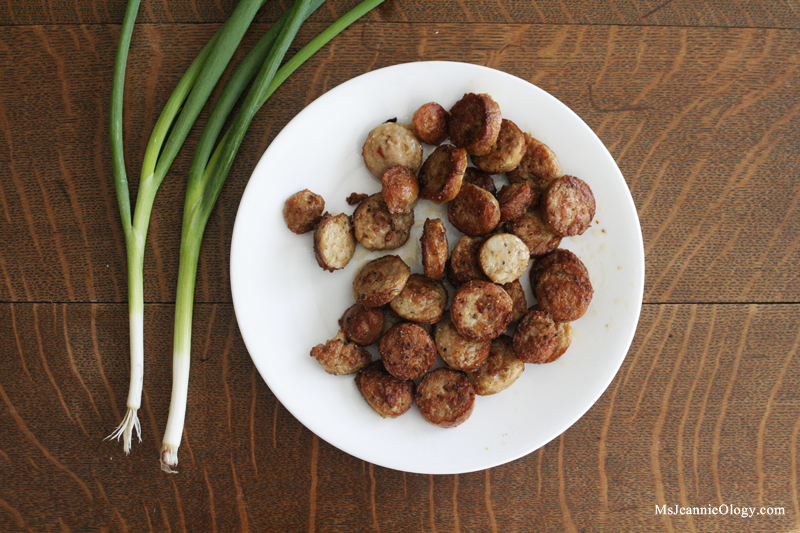
And then the sauteing of sausage…
You can use any variety of sausage from kielbasa to ground from pork to turkey depending on what you prefer. In this case Ms. Jeannie used organic hot Italian chicken sausage. Eventually you will wind up with slices or crumbles…
The trickiest part of the whole production is when you incorporate one cup full of cornmeal broth to two lightly beaten eggs…
The slower you whisk the hot broth into the cold eggs the better so as not to curddle the eggs. By drizzling instead of pouring and whisking quickly with a fork its easier to incorporate the two and makes for a nice, thick, creamy looking mixture instead of thin and runny with floating flaky egg bits.
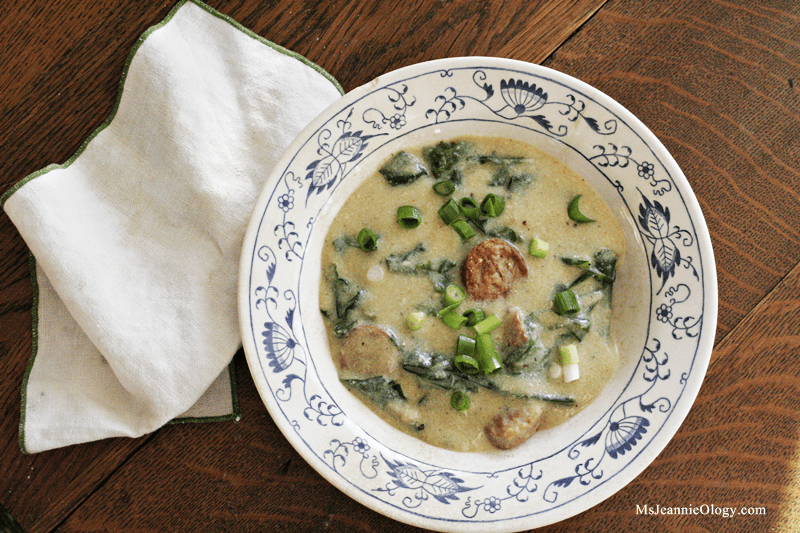
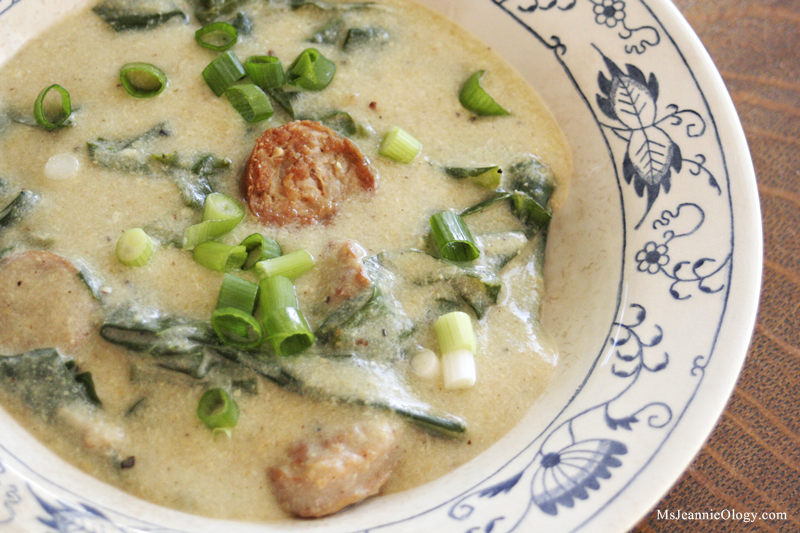
In the very end you wind up with this dreamy concotion that tastes like it has been cooking for days and feels like you have sweatered your insides in something soft and warm like cashmere.
Taking about 90 minutes from prep to table, it is a robust rainy day recipe that makes you feel like you have spent some satisfying time in the kitchen yet doesn’t take all day nor the use of every dish. Pair it with a nice glass of wine and some crusty bread or a warm dressing salad and you’ll be fortified for hours when it comes to the task of raking leaves, shoveling snow, or hiking mountains to find that one perfect Griswold worthy Christmas tree:) It also freezes well so make a big batch if you are so inclined and dinner will be taken care of down the winter road.
Here’s the recipe breakdown from start to finish. Ms. Jeannie adapted this just slightly from the original saveaur.com recipe. Her alterations are in italics.
Sopa de Fuba
SERVES 6
INGREDIENTS
½ cup yellow cornmeal
2 tbsp. canola oil (Ms. Jeannie uses olive oil)
6 oz. kielbasa sausage, cut diagonally into ¼”-thick slices (you can use any kind of sausage here ina ny style from pork to turkey to chicken from italian sausage style to ground!)
7 cups chicken stock (you can also use beef broth, turkey stock or veal broth)
4 oz. collard greens, stemmed and thinly sliced crosswise
2 eggs, lightly beaten
Kosher salt and freshly ground black pepper, to taste
2 scallions, thinly sliced
INSTRUCTIONS
1. Heat cornmeal in a 10″ skillet over medium-high heat and cook, swirling pan constantly, until lightly toasted and fragrant, about 3–4 minutes. Transfer cornmeal to a bowl; set aside. Heat oil in skillet and add sausages; cook, turning occasionally, until browned and cooked through, about 10 minutes. Transfer to a plate and set aside.
2. Bring chicken stock to a boil in a 6-qt. pot over high heat. Whisk in reserved cornmeal, reduce heat to medium-low, and cook, whisking often, until cornmeal is tender, about 40 minutes. Stir in reserved sausages and collards and cook, stirring occasionally, until collards wilt, 15 minutes. Place eggs in a medium bowl and add 1 cup cornmeal mixture; whisk until smooth. Return mixture to pot and stir until incorporated; cook for 1 minute more and season with salt and pepper. Ladle soup into 6 serving bowls and garnish with scallions; serve hot.
And that dear readers is Sopa de Fuba! Fun to say and delicious to eat;) If you feel the winter blues coming on – make a batch of this, picture yourself here and you’ll feel instantly restored. Like a mini vacation to an ancient city…
photo via pinterestphoto via pinterestphoto via pinterestphoto via pinterest
This week in the garden there has been a lot of activity in the creepy crawly department. As it turns out Mother Nature was holding early auditions for her haunted garden tour that she’s hosting at the end of October. Naturally you have to pick the baddest of the bad and the most wicked of the wicked, and while there were a lot (a whole yard full) of entrants who came to try out, in the end it came to four who really made an everlasting impression. Here’s the cast of the 2014 Haunted Hollow Garden tour…
Most Haunting:
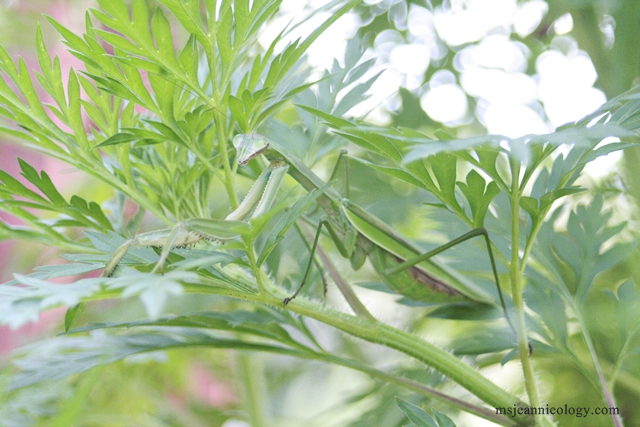
Camouflage of the most intellectual kind;)
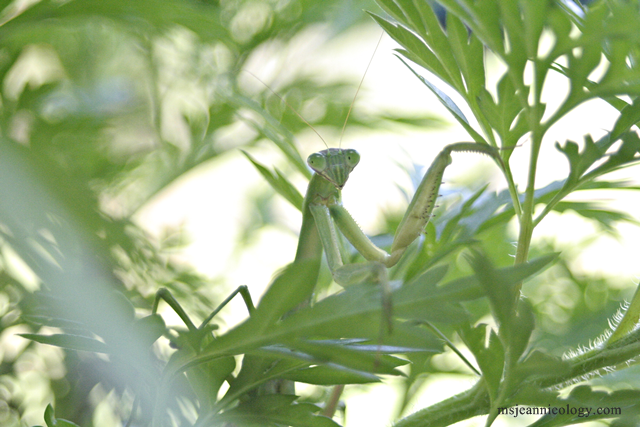
…goes to Melvina, a 6″ inch long praying mantis. Six inches dear readers! That’s as long as Ms. Jeannie’s hand!
Most Scary
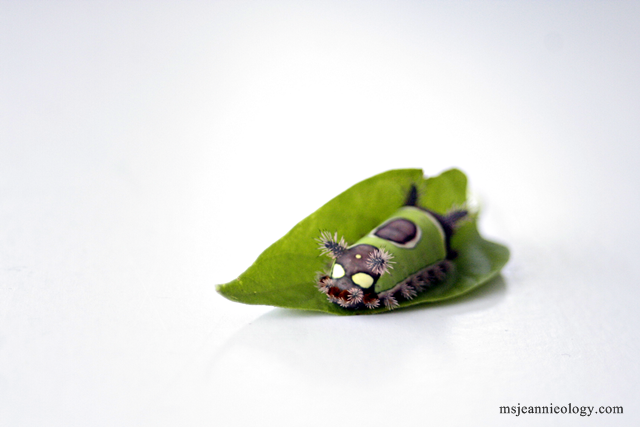
…goes to Pistachio, the poisonous saddleback caterpillar who auditioned with a hot pepper plant prop. Pistachio was quite cute in all his ferocity with a costume that looked like a cross between a scrub brush and a diseased finger.
If Frankenstein had a pet he may choose something like this!
If you come in physical contact with him Pistachio will not hesitate to sting you with his bristles – which then causes a welted rash for days. Luckily Ms. Jeannie does not know this from experience! While everything about him from his pudgy belly color to his markings makes you want to touch him – it’s his “eyes” looking at you from all directions that warn against it.
Most Creative…
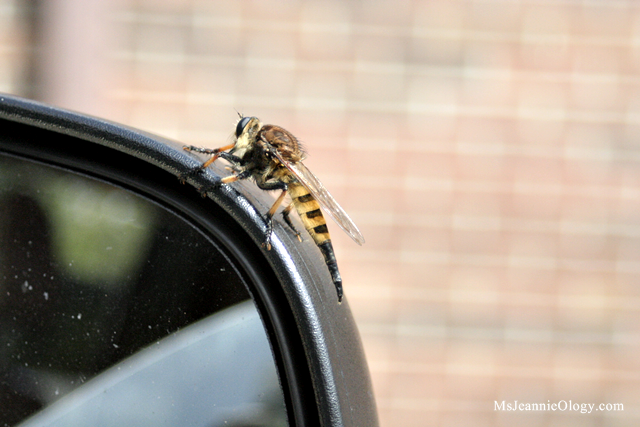
goes to Roberto the red footed cannibalfly for his cool name and his cool conglomeration of costumes. Roberto couldn’t decide on which bug he wanted to be for Halloween so he decided to incorporate elements from all four of his favorites for a really spooky creation…part bumblebee and part beetle with fly eyes and dragonfly wings…
There’s a lot of time and energy that when into concepting this costume!
Roberto was sure to incorporate the best features from each bug. He even threw in some spiky hair and extra long legs for added panache:)
And last but not least, the winner of the…
Most Creepy (but somewhat cute) category…
A family portrait!
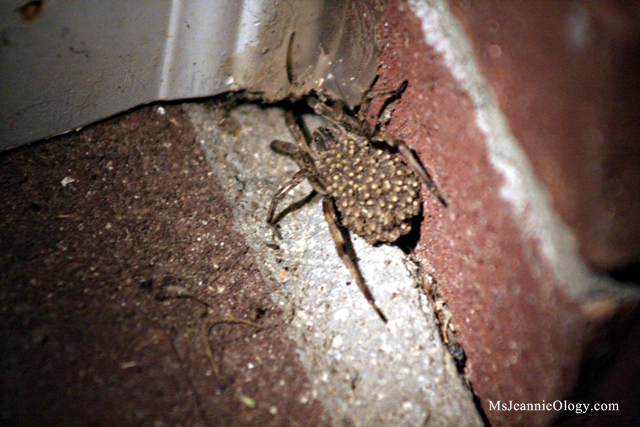
…goes to Wilomena the Wolf Spider and her four dozen back-pack babies! That’s right gang, all those little dots on her back are the kiddos. There was no holds barred when it came to Wilomena’s costume – this year, she was involving the whole family. Nothing like bringing your 57 kids along to make an everlasting impression:)
That’s a lot of eyes looking at you!
Wolf spiders are the only spiders that carry their kids around like this.
Here’s a close-up if you really want to see how that whole baby carriage works…
photo via pinterest
This picture gives Ms. Jeannie goosebumps every time!
Is Mother Nature holding auditions for a Haunted Hollow tour in your neck of the woods too? If so, You have to let Ms. Jeannie know who your winners are. Maybe next year the whole cast of characters can hit the road and go on a country-wide tour!
We are just moments away from October and that means the countdown to Christmas is officially on! Don’t panic though, dear readers, Ms. Jeannie is here to help you shop. With just 12 and a half weeks until the big holiday, she’s excited to launch her holiday gift guide – a contemporary vintage suggestion gift list that incorporates the old with the new for one completely memorable gift giving experience.
Whether you are looking for a simple hostess gift for your friend’s party, a unique treasure for Aunt Sarah who has everything or a nostalgic gift for your closest family member, Ms. Jeannie will be highlighting a dozen items over the next three months that combine meaning and memory with a modern twist…
So grab a cup of hot chocolate, put on your favorite Christmas songs and let’s start shopping…
Idea No. 1: Lace Patterned Stoneware
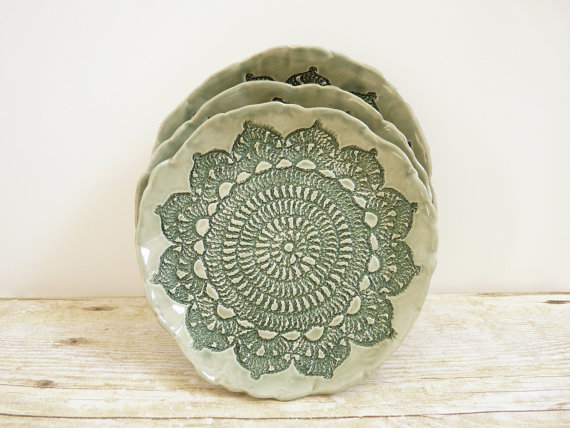
Ceramic lace plate made by My mother’s Garden – $16.00
Embossed with vintage lace and crochet patterns, these stoneware dishes and serving pieces combine the prior popularity of the doily with a fully functional and modern shaped piece of pottery.
Blue Ceramic Tapas Dish made by Blue Butterfly Crafts – $15.00
The doily has been around since the 1700’s and was intended to protect wood and cloth surfaces from dirt and scratches. Many (so many!) for centuries were used on tabletops to protect expensive wood and on couches and chairs to prevent dirt and oil from seeping into the fabric. (You’ll notice one on the back of the chair in the Christmas photo above!).
Mostly, these cloth buffers were hand-crocheted – fine examples of a seamstress’ sewing abilities, a love of hobby and a stunning example of utilitarian purpose. But with the advent of modern cleaning products their usefulness has fallen out of favor in the home decorating market. What used to be an example of pride and beauty and function, now no longer seems quite so stylish in our contemporary lives. Which leaves a bit of a sentimental conundrum. What to do with all those family heirloom sewing pieces?
In Ms. Jeannie’s case, both her grandmother, great grandmother and great great grandmother were all sewers – which means a fair amount of crocheted doiles have been left behind in their wake.
You may recall seeing Grandma Dorothy’s tablecloth once before on the blog back in February 2013…
It’s a big swatch of a tablecloth full of round flowers and intricate webbing. Thanks to Ms. Jeannie’s artistic pottery friend Sloan, Grandma Dorothy’s tablecloth is also a now a pretty platter…
Ms. Jeannie sent this platter to her mom as a Mother’s Day gift, which made it a three generation gift. A nod to the past and also to the present!
Since the design is rolled out onto the clay and then lifted before firing, the heirloom fabric does not need to be sacrificed for a project such as this. Ms. Jeannie was able to choose the shape, dimension and colors of the piece as well for a completely custom gift.
Sloan also, as a little surprise, made three pottery birds (one for Ms. Jeannie and both of her sisters) to use as tree ornaments or a petite wall hanging.
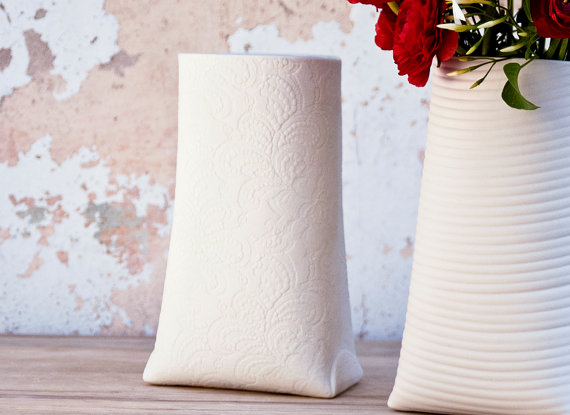
Of course the sky is the limit in the customization department. If you do a search on Etsy for lace patterned pottery, you’ll find a bevy of pretty examples from subtle vases…
Porcelain lace vase made by wapa – $105.00
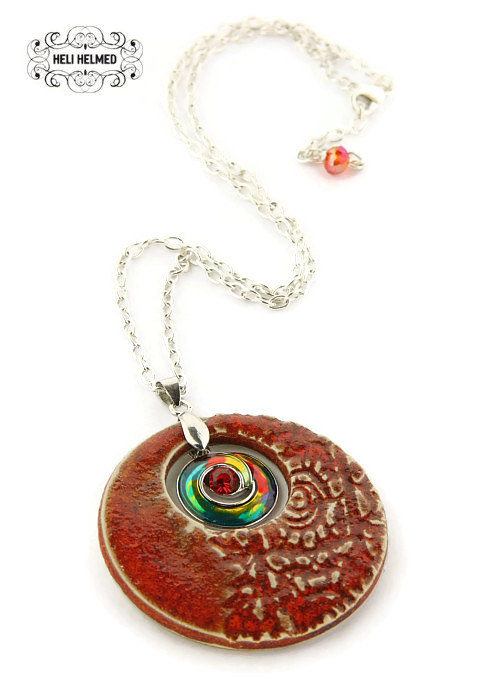
to dramatic jewelry…
Ceramic Necklace Pendant made by Helihelmed – $18.26
By incorporating lace from a bridal dress or veil you could also transform this idea into a custom wedding or anniversary gift. Imagine what a pretty object this dress could turn into…
Lace Wedding Dress by elikadesigns –
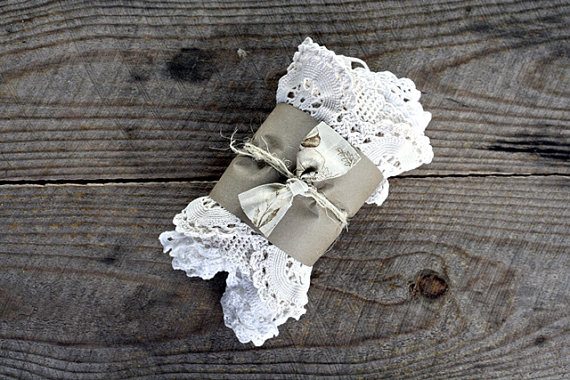
If you love this idea, but do not have any crocheted family heirlooms in your treasure trove to call your own – don’t worry Ms. Jeannie’s got you handled in that department also. She has a (non-family!) doily bundle available in her shop here…
Two artists meeting many years apart to form one special gift for your one special person – it’s going to be one memorable holiday:) Stay tuned for Idea no. 2 next week!

















































 In the Vintage Kitchen: Where History Comes To Eat