
Nostalgia, Comfort, Tradition: An Interview With Alicia Freile About the Vintage Cookbook That Continues to Resonate Sixty Years Later

From the portfolio “Folk Art of Rural Pennsylvania”, c. 1939. The National Gallery of Art

Who’s to know when a recipe is created or a cookbook is compiled, how far it will travel? Who’s to know how many decades it will resonate? How many generations it will engage? And how many people it will connect?

Not even the best book editors in the world or the most sophisticated algorithms could predict such specific trajectories at the time a cookbook makes its publishing debut.  Sure, there are generalizations and speculations, assumptions, and averages of how many people might be reached and might be interested and might purchase, but no one can predict fate, especially when it comes to food. And certainly no one, human or machine, can accurately pinpoint the moment of magical alchemy when a cook connects with a recipe in such a way that they continue to make it for days and decades after.  

Great recipes travel far. We all know that. But what happens when an old cookbook long forgotten by many but still lovingly remembered by one goes out of print? Does its ability to travel far and wide end? Do the recipes fade away into oblivion? Are the foods forgotten and the memories of them reduced to a murky and muddled sense of time remembered long ago?

In today’s blog post, we are discussing the trajectory of one regional American cookbook published in 1962, and how it was brought back to life in 2025 by a woman living on the opposite side of the world. You’ll learn the midcentury story behind the original cookbook, the type of food that made it a treasured cuisine in America, and the motivations that brought it back into the spotlight again today so that a new generation can experience and enjoy it. 

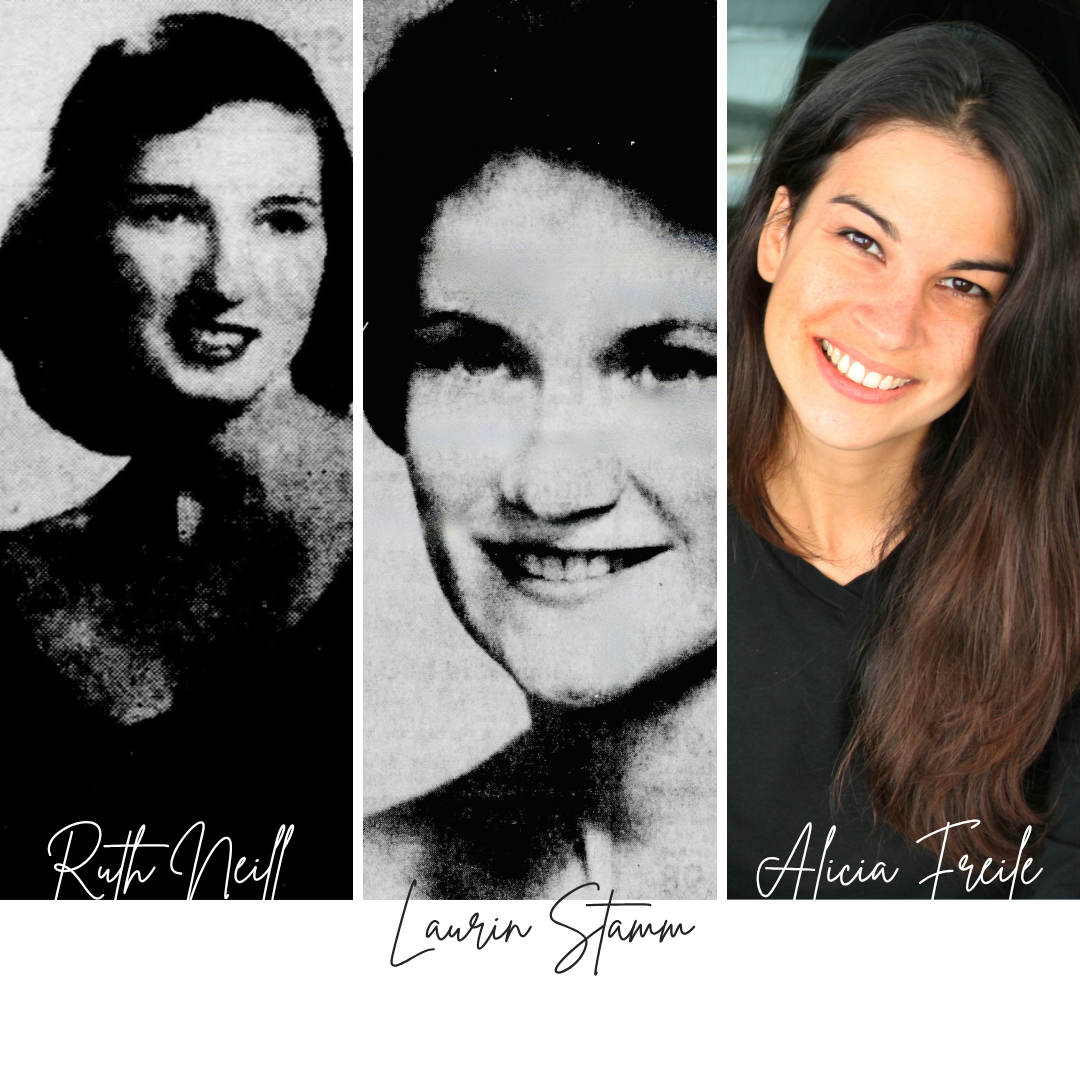
At the heart of this story, you’ll meet Ruth and Laurin and Alicia, three women separated by six states, three continents, and sixty years of life, but all equally responsible for the legacy of one long-ago book and the recipes in it.
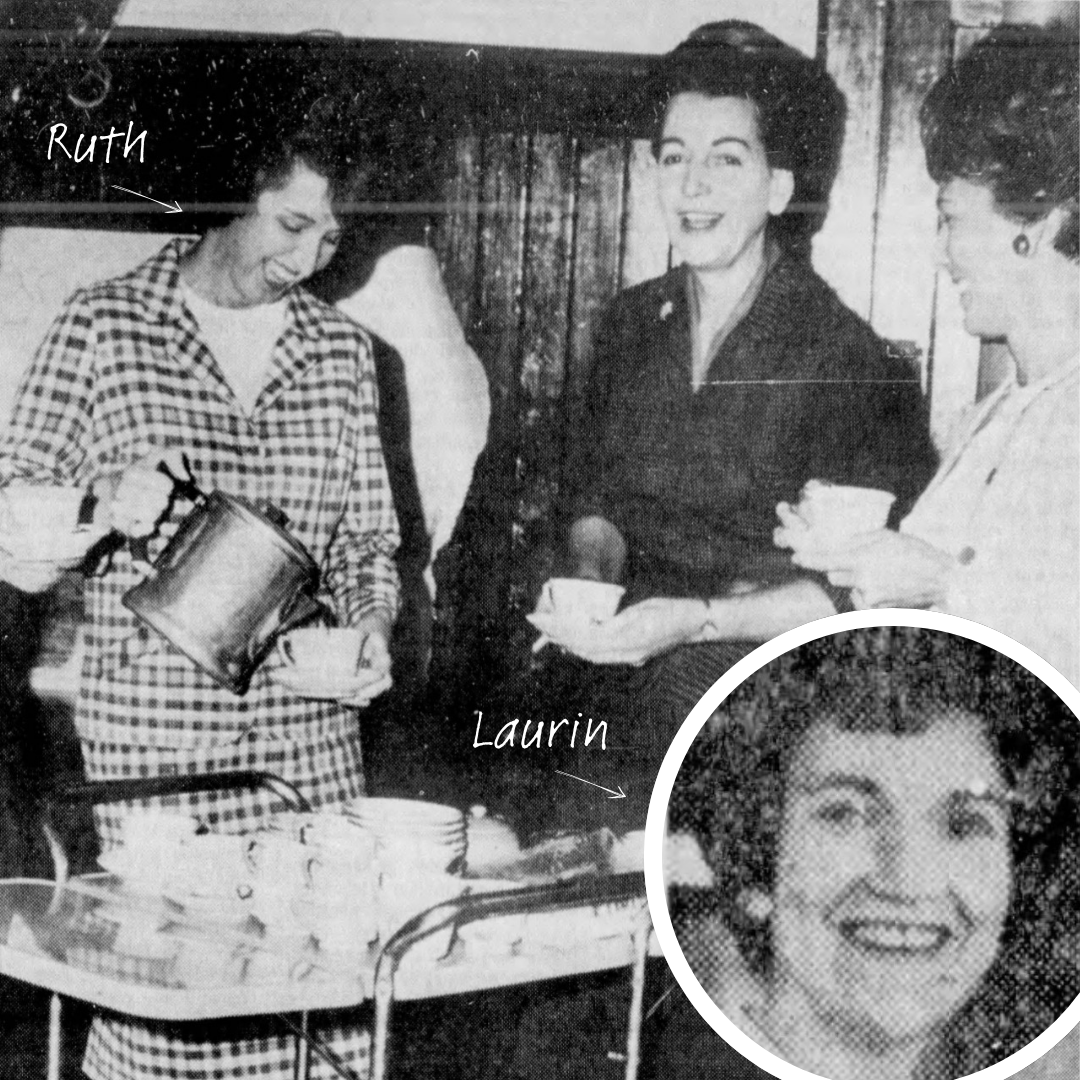
Photo courtesy of The Vicksburg Post, November 10th, 1966

It all starts in the mid-20th century in the American South, when Ruth Neill and Laurin Stamm got together in Vicksburg, Mississippi, in 1962 to create a cookbook. The book was for a holiday bazaar fundraiser held at a local church the week after Thanksgiving. Close in age at the time, thirty-year-old Ruth and twenty-nine-year-old Laurin had a lot in common. They were both college-educated with creative majors in design (Ruth) and journalism (Laurin). Both had young families to care for. And both shared an enthusiastic love of food and their Vicksburg community.

No strangers to cookbook committees throughout their lives, when the theme for the 1962 Holy Trinity Episcopal Church Holiday Bazaar was selected as Pennsylvania Dutch, the two women joined forces to organize a fitting cookbook for the event. With recipes collected from Ruth’s Philadelphia friends and their respective families, along with three dozen recipes included from local Vicksburg kitchens, Ruth and Laurin’s cookbook, simply titled Pennsylvania Dutch Cooking, was ready for the festivities. With a limited print run of 100 copies, it contained all the traditional favorites that represented this regional style of cooking. 
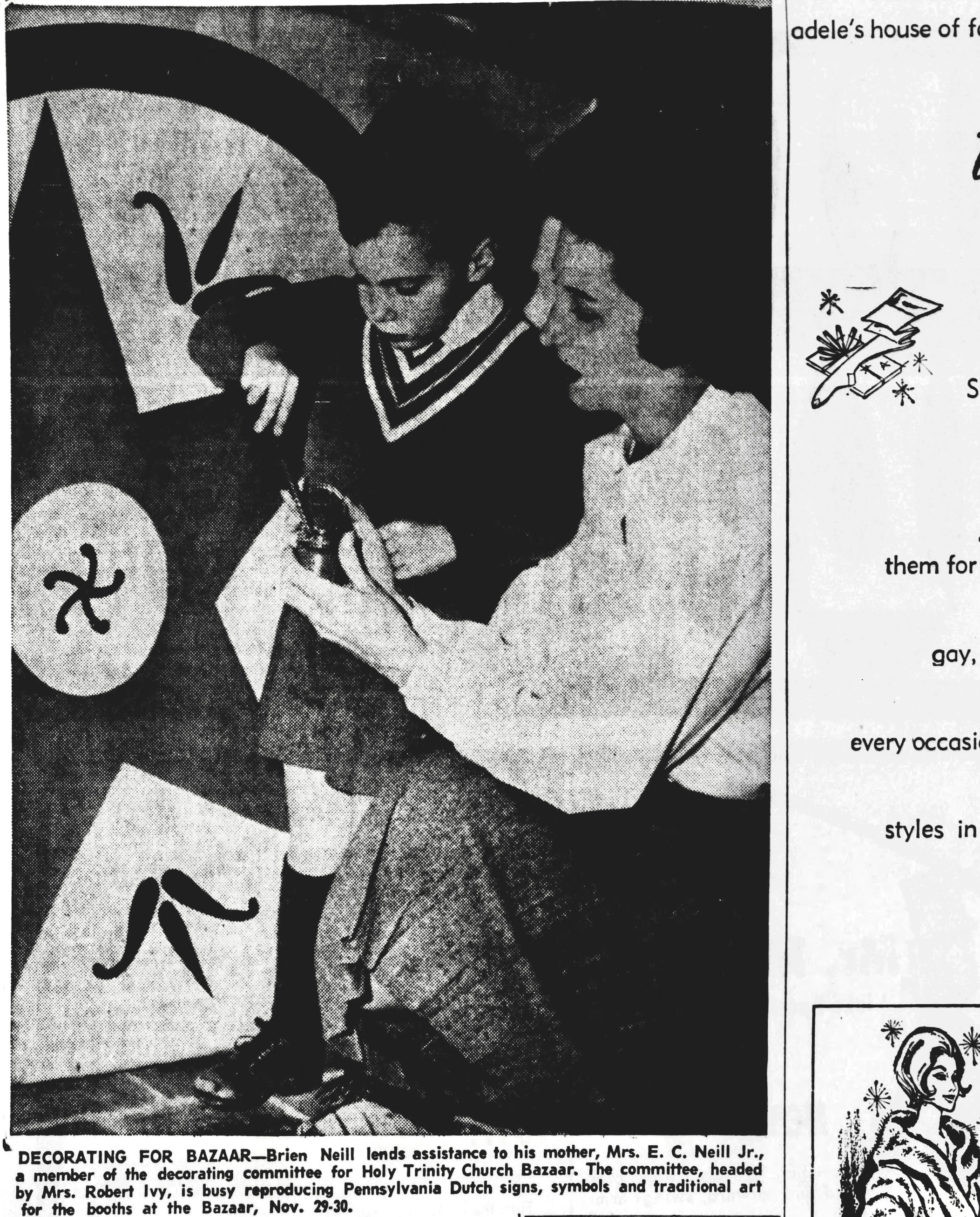
Image courtesy of the Vicksburg Post, November 1962

Both Laurin and Ruth were well-known socially in the Vicksburg community. Laurin was the food editor of the Vicksburg Post, a position she would hold for 58 years before finally retiring in 2011. Ruth was a celebrated hostess and interior decorator known for her gourmet flair, sociable personality, and active participation in community events. The recipes they collected for their book reflected their combined love for food and culture, and featured all the traditional old-world favorites popular in the Lancaster County and Lehigh Valley regions of Pennsylvania. Heritage recipes that were brought from Switzerland and Germany as immigrants settled the area, Pennsylvania Dutch food became inextricably connected with the local Amish and Mennonite communities who were faithful to the culinary roots of their homeland and made from-scratch desserts, breads, jams, jellies, and other sweets for the tourist trade in Lancaster.
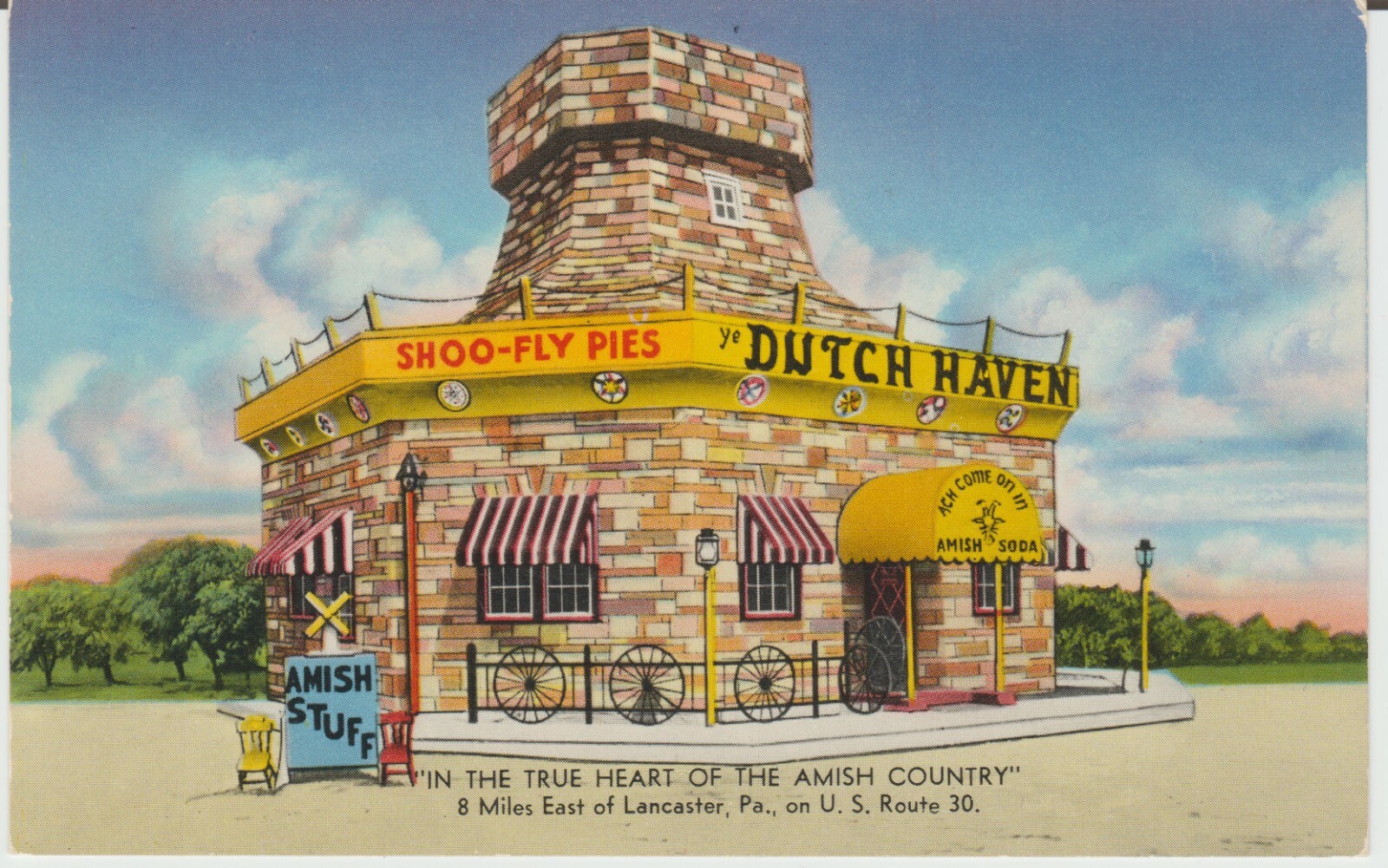
A vintage postcard from Lancaster, Pennsylvania circa 1959

To fit with the Bazaar’s theme, Pennsylvania Dutch hex signs and traditionally costumed characters and sayings (kissen wears out… cookin’ don’t) decorated the cookbook’s cover and the interior pages. Classic Pennsylvania Dutch recipes included Shoo-fly Pie, Pepper Pot, Sauerbraten, all types of fritters, coffee cake, doughnuts, and an assortment of pickled vegetables and relishes. Exotic foods like Hog Maw, Liver Noodles, Scrapple, and Souse introduced Vicksburg locals at the Bazaar to the lesser-known delicacies of Pennsylvania Dutch cooking and illustrated the cuisine’s underlying waste-free thriftiness in using all parts of the animal. Just a few days before the Bazaar opened, an article in The Vicksburg Post encouraged locals to purchase the cookbooks early, due to limited supply.
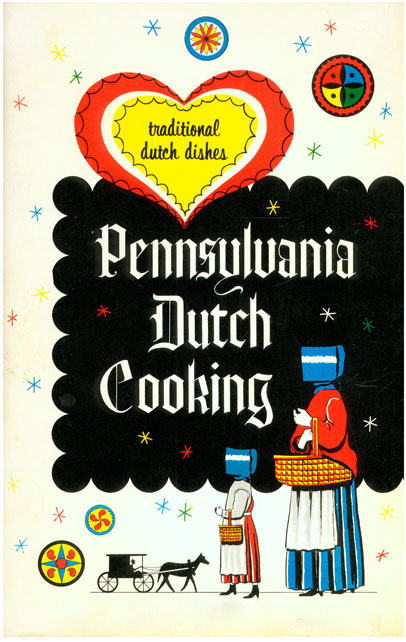
The original cover of Pennsylvania Dutch Cooking circa 1962

Published by Dutchcraft Company in Gettysburg, Pennsylvania, a printing house that specialized in local PA Dutch memorabilia and paper ephemera including postcards and recipe booklets, Ruth and Laurin’s cookbook exuded a humble, homemade sensibility. Made solely for sale at the 1962 bazaar, it didn’t include all the traditional publishing hallmarks that would easily identify its history in later decades. There were no author’s names or copyright dates. Laurin and Ruth’s names did not appear anywhere in the book, nor was credit given to Ruth’s friend, Carl Shaffer, who supplied some brief history on Pennsylvania Dutch culture and cooking for the introduction. There was no publication date listed nor any mention of the Holy Trinity Church or the holiday bazaar in Vicksburg, Mississippi. It was simply, as stated on the title page, a collection of “Proven Recipes for Traditional Pennsylvania Dutch Foods.” Accolades and recognition were not included.

Meet Alicia!

Several decades later, several states away, in a second-hand book stall at a flea market in her hometown of Lancaster, Pennsylvania, teenager Alicia Freile spotted Laurin and Ruth’s 1962 cookbook. Not knowing then that this slim book would come to hold significant meaning for her decades later, it wasn’t until Alicia moved halfway around the world that Pennsylvania Dutch Cooking became synonymous in her mind with childhood memories and hometown nostalgia. So much so that in 2025, working as a design director at a publishing company in Australia, herself an enthusiastic baker, married, and the mother of a young son, she decided to reprint it.

Over the summer, I caught up with Alicia via interview to discuss the cookbook in detail and her reasons for introducing it back into the culinary landscape once again.
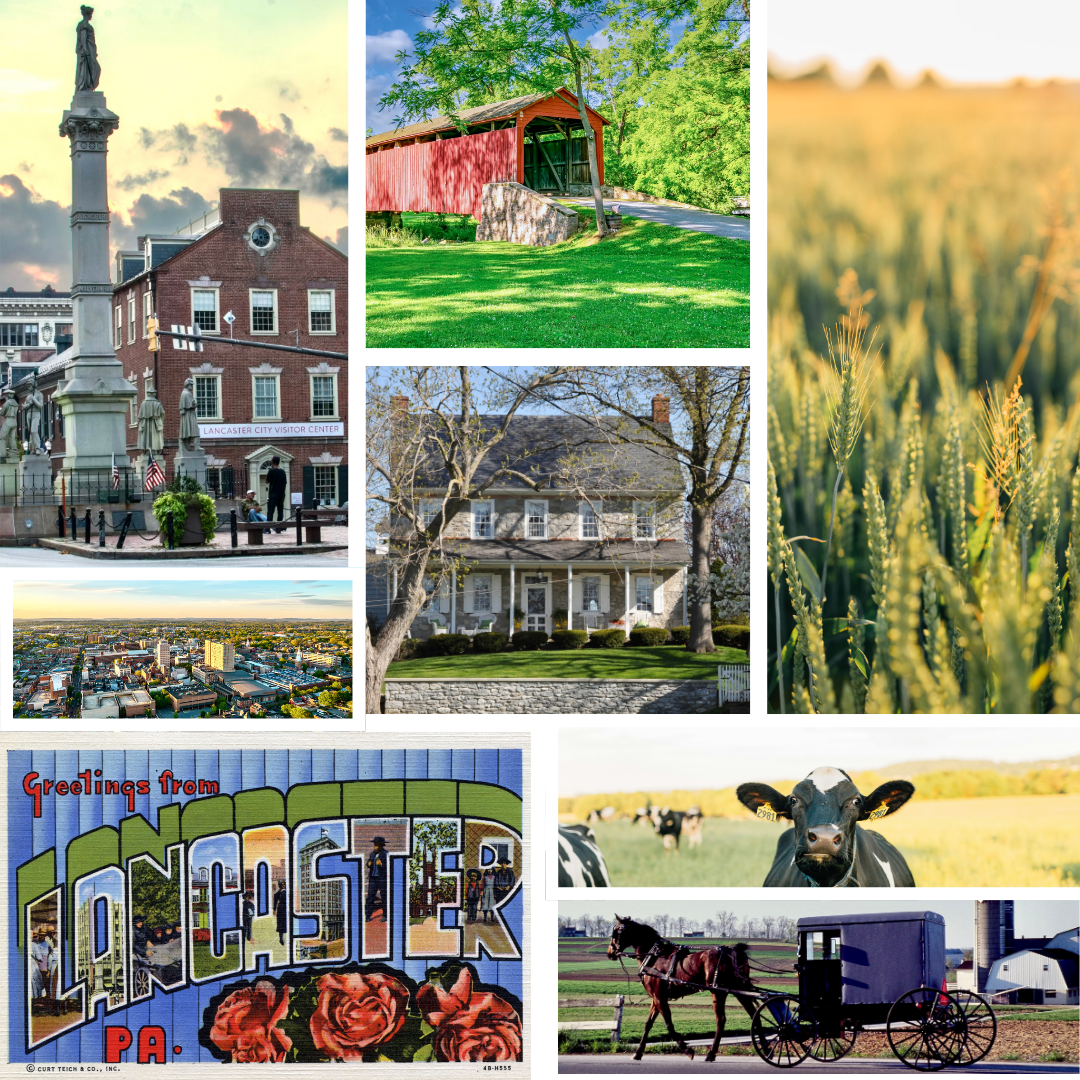
Sights around Lancaster include picturesque cityscapes and farmlands. Photos courtesy of Bryce Webster, Benjamin R., Stephen Crane, Kristyn Lapp, Jerrye & Roy Klotz. and Carol M. Highsmith.

ITVK: Tell us a little bit about how you came to know the cookbook, Pennsylvania Dutch Cooking, and why you decided to reprint it?

AF: When I was a teenager in Lancaster, PA, I worked at a touristy flea market right in the heart of the Amish Country. My job was basically selling junk to tourists!  I got to know various stall holders… some were Amish and sold handmade brooms or baked goods. Some were retirees who wanted to fill their time, and they sold second-hand books about the Pennsylvania German region. I remember seeing this little book and loving the cover illustrations. (I have a big love for folk art!) 

Fast forward to 2025, and I happened upon the book’s manuscript online, and it sparked that memory of my teen years. I searched the book and found a few copies on eBay, but it was clear the book was out of print. Out of curiosity, I looked up the book on Amazon and saw several copies for sale. I clicked on each one, and none of them were properly designed! Being a long-time book designer, I could tell they simply dumped the entire manuscript into the file and hit ‘publish’.

This sweet little book deserved better than that. So I decided to create a new, annotated version of this lovely cookbook. I replicated the original design (almost) exactly, retained the fun illustrations, and kept the original text as it was. But I added some things too! I added annotations that would be helpful to modern cooks, included tips about best options for ingredients, and I created measurement conversion tables and a glossary at the back of the book. All these things are intended to make using the cookbook easier.
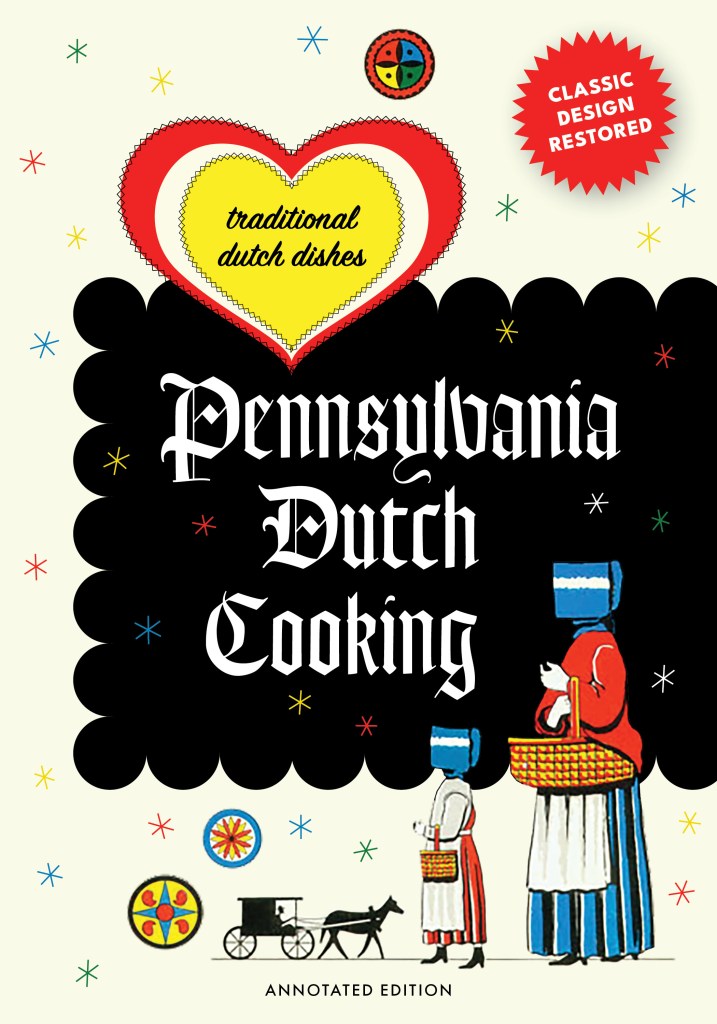
Alicia Freile’s 2025 reprint of Pennsylvania Dutch Cooking

ITVK; If you could describe Pennsylvania Dutch cooking in just three words, what would you say?

AF: Nostalgia. Comfort. Tradition.

ITVK: Why do you think Pennsylvania Dutch cooking has remained largely local to the mid-Atlantic region instead of spreading across the country in a more universal fashion like Tex-Mex or Southern food?

AF: Hmmm, that’s a good question. I think people, outside of Pennsylvania, often regard this type of cooking as tourist food. As in, what you eat when you tour the Pennsylvania German region. A few years ago, I lived in Tennessee and I was really happy to find Lebanon Bologna and Scrapple in the local supermarket. (Lebanon Bologna is not in the book. It’s a spiced, peppery lunch meat that is wonderful with cheese on toast. Scrapple is in the book, and quite popular across the Philadelphia area too.)

ITVK: What is your most favorite recipe in the cookbook and why?

AF: I love baking and anything apple-flavored so it’s got to be the Apple Dumplings. I love the recipe because it is simple, with few ingredients, easy enough to make, and is the ultimate comfort food.

ITVK: Are there any misconceptions about Pennsylvania Dutch cooking that you’d like to address?

AF: Yes! That it’s way more than just Shoo-Fly Pie and Whoopie Pies. So many sweets and lovely baked goods, but some nice savories too.
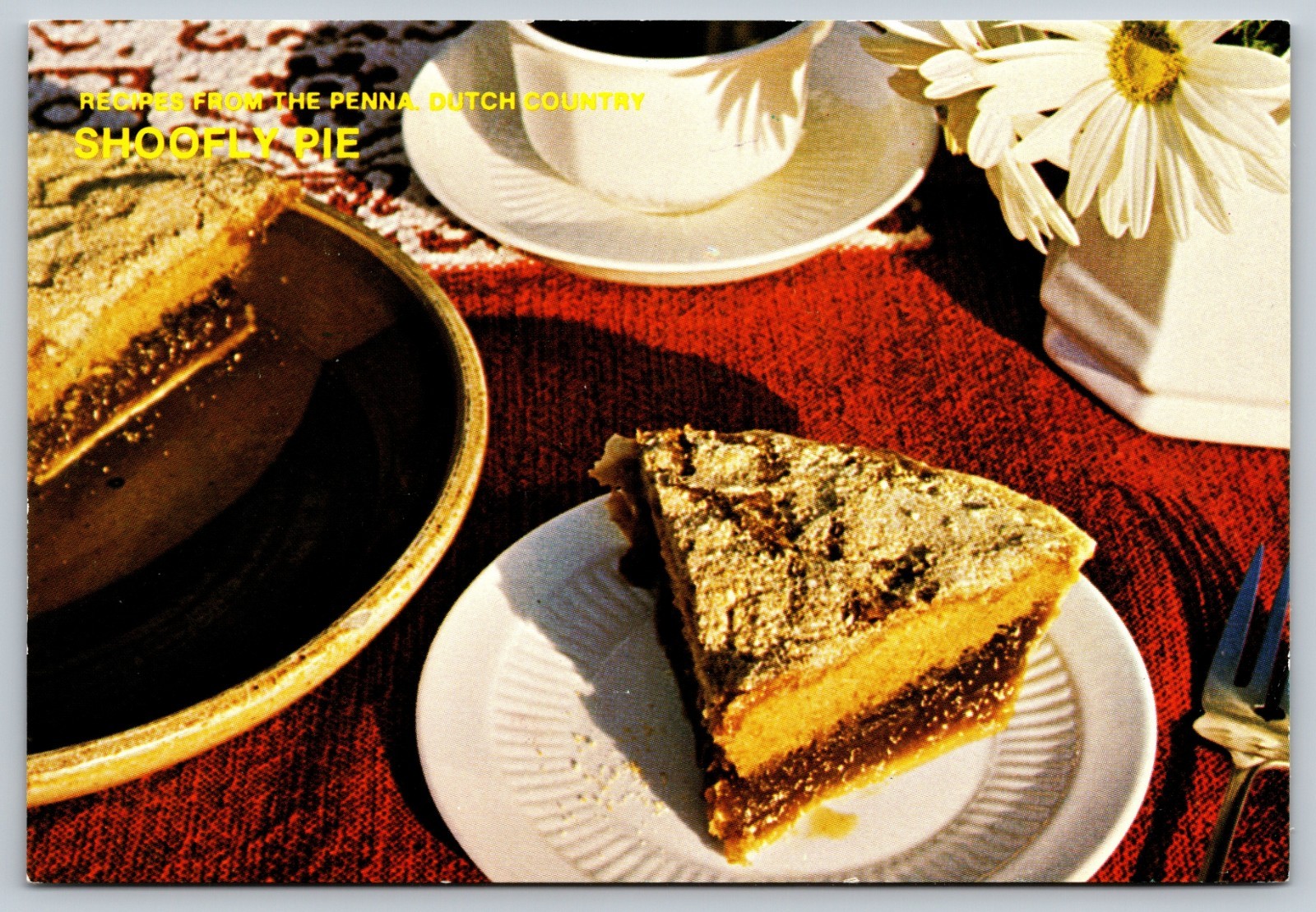
A vintage postcard featuring Shoofly Pie

ITVK: What recipe would you recommend trying first for a home cook new to this style of cooking?

AF: It’s a toss-up between the Corn Pudding and the Apple Butter. They are both easy and have minimal ingredients. Corn Pudding is so nice to have with Thanksgiving or Christmas dinner. We’re getting into Winter here in Australia, and I plan to make it for my family. A nice warmer when it’s chilly out!

The Apple Butter is also a winner. And sadly, that is the one I would struggle to make here because it calls for Apple Cider, which isn’t available here. 

ITVK: Given that the cookbook is 65 years old, are there any recipes in the book that no longer seem to fit or relate to our modern palates? 

AF: Hmmmm, maybe the Liver Noodles. Eating liver now just isn’t as popular as it was in the 1960s. 

ITVK: Did you encounter any challenges or surprises while recreating the recipes from the book?

AF: In designing them, no. But in reading through the cookbook’s text, I quickly realized many recipe details really needed to be clarified for anyone using this book. For example, there is a recipe for Carrot Marmalade and it contains nuts. But the original recipe doesn’t say what kind of nuts. I wanted to keep the recipe text authentic to the original edition, so I added an annotation for that recipe advising the nuts traditionally used in this recipe are walnuts or almonds. There are lots of annotations in the book like this… little notes to help clarify an ingredient, a cooking time, etc. Oh, and I was really surprised that Shoo-Fly Pie was in the Doughnuts Chapter, when there is a whole Pies chapter that it could be in. But staying true to the book, I left it where it was and made sure I included an index for easy reference.

ITVK: How did you arrive at the decision not to include photos of the recipes in your cookbook? 

AF: There were a couple factors that went into my decision not to add photos to the book. First, I really wanted to keep this book as authentic as possible. When I think of an intended reader, I’m envisioning someone who maybe came across this book earlier in life and remembers it. I wanted to ensure the book I make available to that person is as authentic as possible to the original book, which didn’t include photos.

Second, I wanted to keep this little book affordable for readers. Adding photographs would have required full-color printing and therefore would have increased the price point. 

ITVK: Is this style of cooking part of your family heritage? If so, do you hope it will continue into future generations of your family?

AF: It is. And you know what, I didn’t really realize that so many of the dishes my mom made were actually Pennsylvania Dutch dishes. I guess I just thought they were standard American foods. My mom’s side of the family are German descent and they have been in Pennsylvania a very long time, so it makes sense these dishes would be on our table. 

As for cooking these dishes into the future for my family, I will continue the tradition with some of them. Particularly the baked goods as my whole family has a sweet tooth. But I don’t see myself preparing something like Souse, which calls for pigs feet in this cookbook. And I definitely don’t see my kid eating it!

ITVK: Do you have a favorite family memory surrounding one of the recipes in the book?

AF: Yes, the Pennsylvania Dutch Sour Cherry Pie. I remember going cherry picking in Lancaster County with my mom, sister and grandfather. It was especially exciting because I was allowed to climb the ladder to pick the cherries, and I loved climbing anything as a child. I recall eating one of the cherries off the tree and being surprised at how tart it was. But then they are baked into a lovely pie (thanks to quite a bit of sugar — and my mom added butter too), and it was delicious.
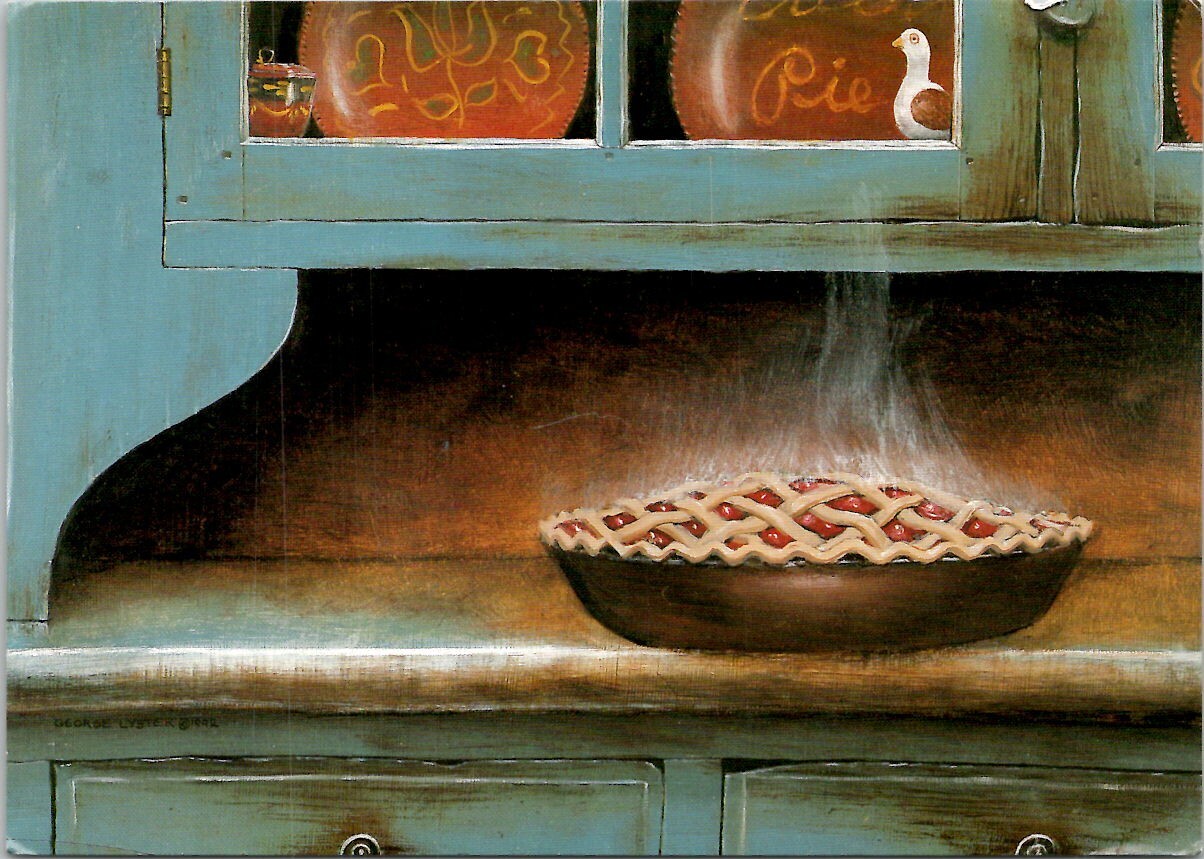
Vintage Pennsylvania Dutch cherry pie postcard circa 1992

ITVK: Tell us a little bit about your cooking style/journey. Who taught you how to cook? Have Pennsylvania Dutch-style recipes influenced the meals you make or the way in which you like to cook today for your friends and family? And if so, how? 

AF: I have to say that I’m more of a baker than I am a cook. There is something very relaxing about the process of baking a cake, cookies, pie, bread, etc. It’s sort of my Zen. And I learned how to bake from my mom, who made wonderful pies: apple, peach, sour cherry, and blueberry. 

I think the Pennsylvania Dutch-style recipes have influenced my cooking a little bit, but not hugely. I love making some of the soup recipes on a cold winter day. Or the Apple Dumplings for a special treat for my family. To me, that is one of the iconic Lancaster County recipes.

ITVK: Tell us a little bit about growing up in Lancaster, what brought you to Australia, and how do food, life, and cooking differ between the US and Australia. 

AF: Lancaster was a very special place when I was a child. It’s gotten more developed over the years and many of the family farms that existed when I was a child are now filled with new houses or shopping malls. Our house had a family farm right behind it, and the farmer grew feed corn. I remember watching the stalks grow over the months, from my bedroom window. That cornfield is now a large office complex… that was a sad change. 
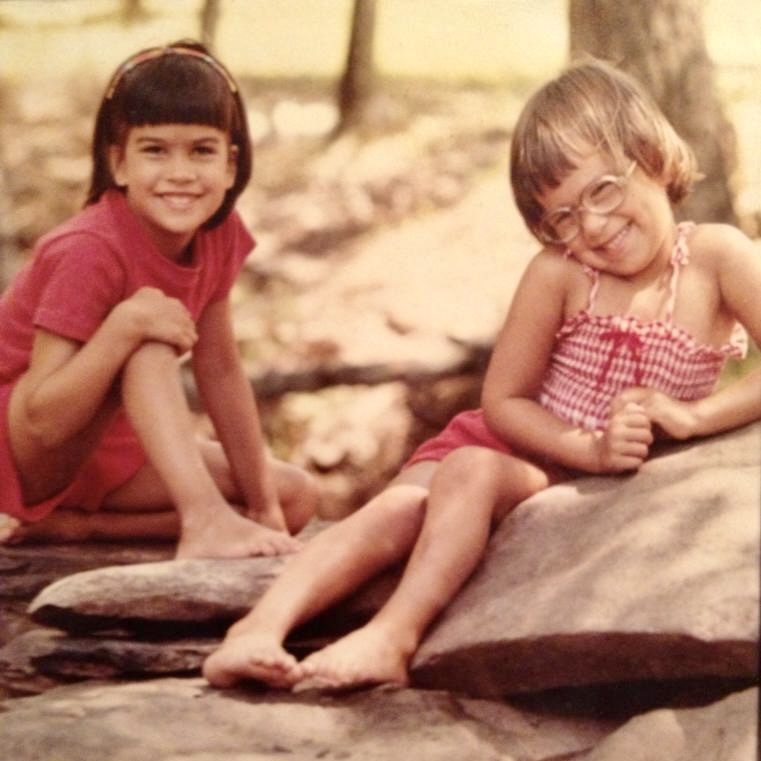
Alicia with her sister

Being in Lancaster back then, we all were acquainted with the Amish. We would sometimes buy ears of corn from an Amish farm, and many of my mom’s friends had Amish cleaning ladies. Apparently they were cheaper than a non-Amish cleaning lady… you just had to drive them to and from your house. 

Our local shopping center had hitching posts for any Amish customers who arrived in their horse and buggies. And today, Lancaster’s Costco has hitching posts too!

As for moving to Australia… it happened because I was in England first, actually. In college, I did a semester abroad in the UK and I loved it. I made it a mission to go back there and live, which wasn’t easy to organize. The best I could do was a sixth-month student visa after I graduated from college. So I did that and worked at a soccer-themed restaurant in London. And several Australians worked there too and I became friends with them. So then, I just had to see Australia!

Love blooms in The Land Down Under

I visited Australia for a 3-week vacation and loved it. So when it was time to apply to graduate schools, Australia was top of the list. I moved to Sydney almost 20 years ago to get my masters, and ended up meeting my (Australian) husband there. And in addition to Sydney, I’ve gotten to live in Canberra (the capitol) and Brisbane, where I am now. 

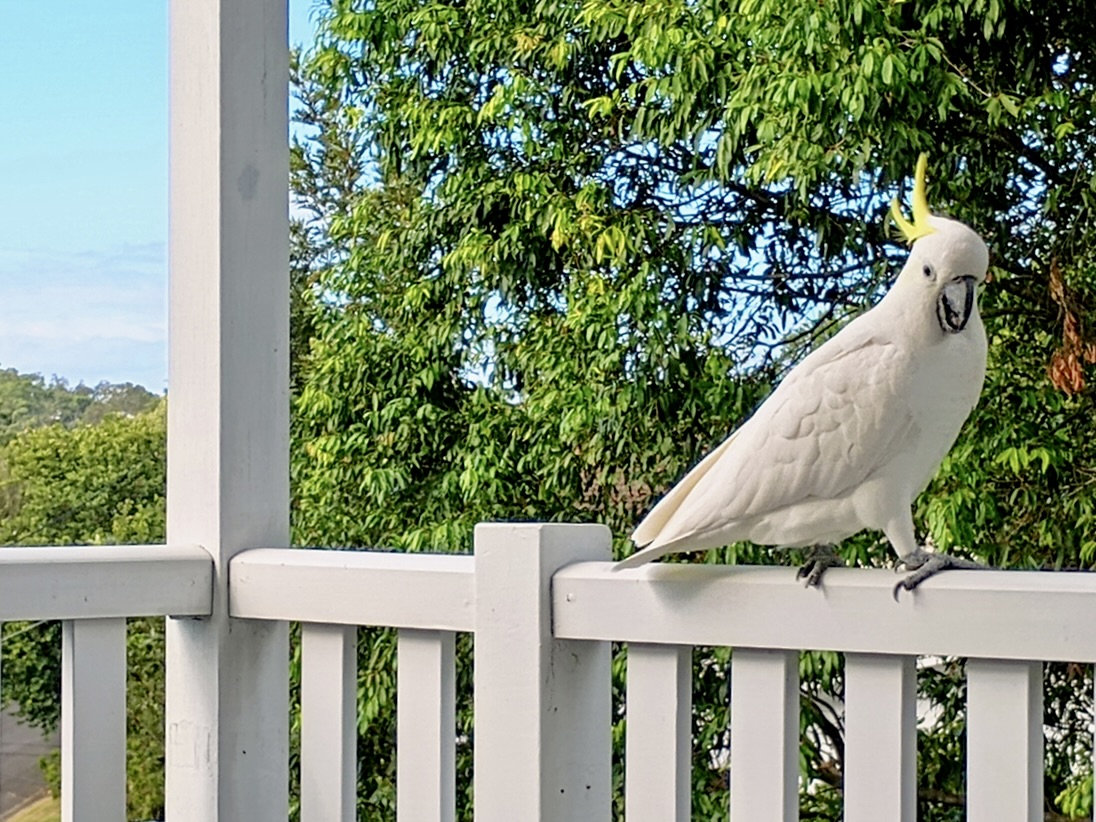
View from Alicia’s balcony, where wild parrots come to visit!

Life does differ a bit between the US and Australia. Most Australians live in the big cities, whereas Americans live in big cities and small towns. But much of Australia is desert and it wouldn’t be easy living there. It also means we have limited supply of space for homes, so house prices are quite high here. Australia has a bigger part-time working culture, and this is especially appreciated by parents. We also have 4 weeks of vacation time, if you work at a salaried job. The US doesn’t really align with this.

Life as a family is different too. The school year is broken up into 4 terms and there is a 2 week break between each term. Which means all the parents need to scramble to find something to keep their kids occupied in the 2 weeks. My son plays Cricket and Aussie Rules Football. If we were in the US, he would probably be playing baseball. For us, Friday Night Lights mean the Friday evening cricket match, surrounded by palm trees. Very different to Lancaster County, where I grew up!

Food! Well, the fruits and veggies are so fresh since they’re mainly grown here. Lots of crops are up in Queensland, where I live. However, if there is a cyclone that damages crops one season, it’s really expensive and difficult to buy that fruit or vegetable. This happened when I was first in Australia. Bananas cost a fortune due to a cyclone causing crop loss. I promised to make someone banana bread, and I followed through, but that was the most expensive banana bread I ever made!
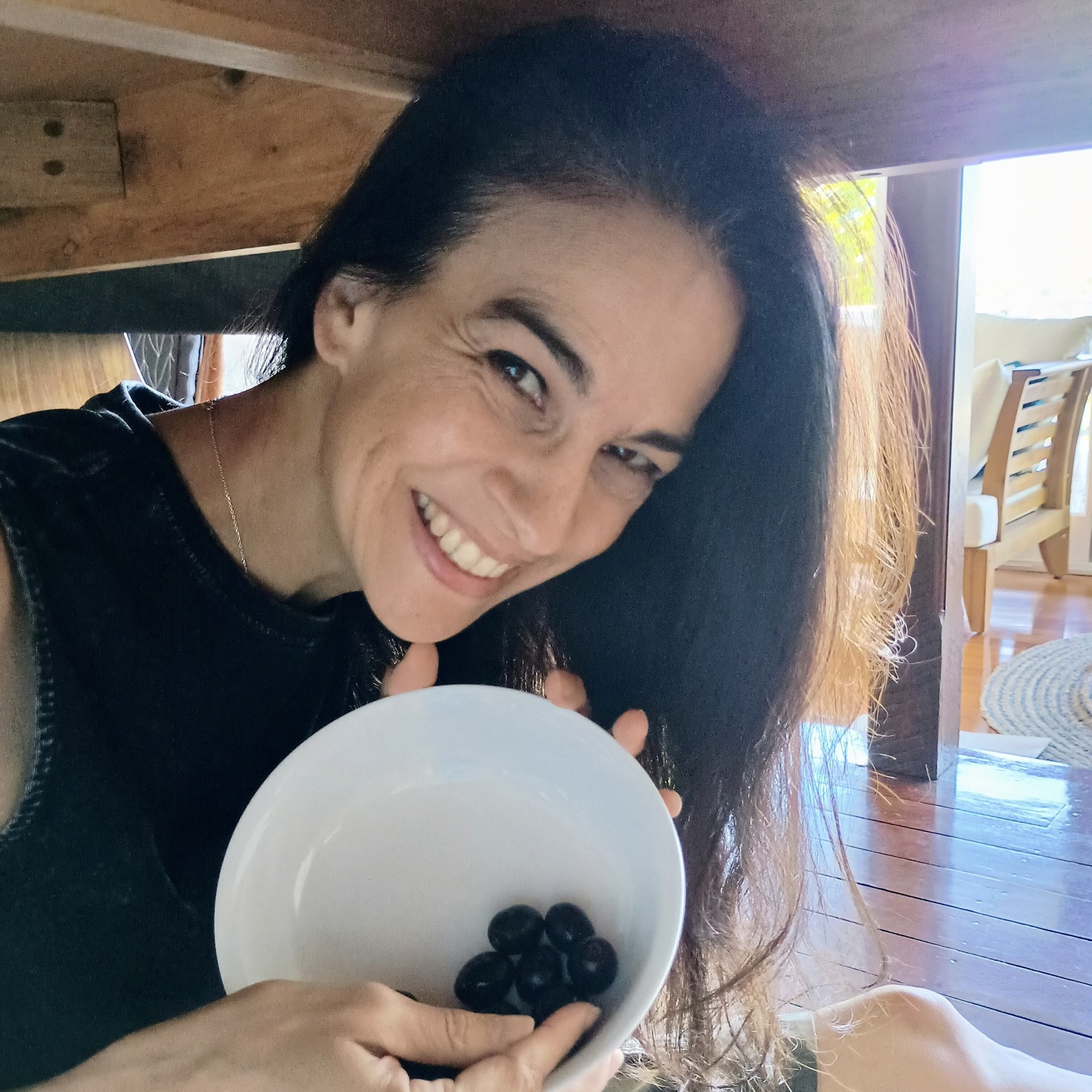
A food lover on all fronts, in this photo Alicia is celebrating the Spanish tradition of eating twelve grapes on New Year’s Eve.

Other differences: Australians put a slice of beetroot / beets on their burgers. Every suburb has a local butcher and a fruit and veg shop. And the butcher carries a wonderful selection of sausages, which are meant for lunch and dinner. Breakfast sausage isn’t really a thing here. Peanut butter isn’t very popular here, but lots of people like Vegemite on their bread or toast. (Vegemite is a thick, dark brown spread made from leftover brewer’s yeast. And it’s meant to be used VERY sparingly!)

ITVK: In Australia today, is there an avid interest in Pennsylvania Dutch recipes or in American recipes in general?

AF: Yes, definitely an interest in American recipes. I’ve designed cookbooks for the Australian market and have seen so many recipes that pay homage to American dishes. As for Pennsylvania Dutch cooking, I’d say that is less well-known here in Australia. Though I do recall a few years ago Whoopie Pies were all the rage here!

ITVK: Why was it important to you to reprint an old cookbook?

AF: I love old things. And I want other people to be able to enjoy them too. For this book in particular, I knew it was out of print so if someone wanted it, they had to look at a used bookstore, or eBay, maybe a local thrift store if they were lucky. But there aren’t a heap of copies around. I wanted anyone who wanted an authentic copy to be able to easily get one. This version is the closest one you’ll find to the original. And I’m proud of that.

ITVK: If you could travel back in time and meet the women who wrote the original cookbook, what would you like to know about them?

AF: Oh, what a treat that would be! I would ask them what other cookbooks and recipes are their favorites. The 1960s had some really wild recipes. (So many unexpected things molded into gelatin, for example!) I would love to know what other cookbooks they had on their shelves.

ITVK: Do you have any future plans to reprint other vintage or antique cookbooks?

AF: Yes, I have a few additional cookbooks I’m considering. The cookbooks I choose need to have plenty of recipes that will appeal to modern cooks. (And eaters!) And I’m always aiming for that nostalgia factor… a cookbook that brings back good childhood memories.
An illustration from Alicia’s annotated edition of Pennsylvania Dutch Cooking.

When it comes to the complete life story of a vintage cookbook, I think this one is remarkable. That it has traveled over 8600 miles in six decades is a feat in and of itself. That it has engaged at least three generations from then to now and connected three women across sixty-four years is noteworthy in the most delightful of ways. That Alicia didn’t veer from its original content and layout in order to keep its nostalgic aesthetic intact is admirable.

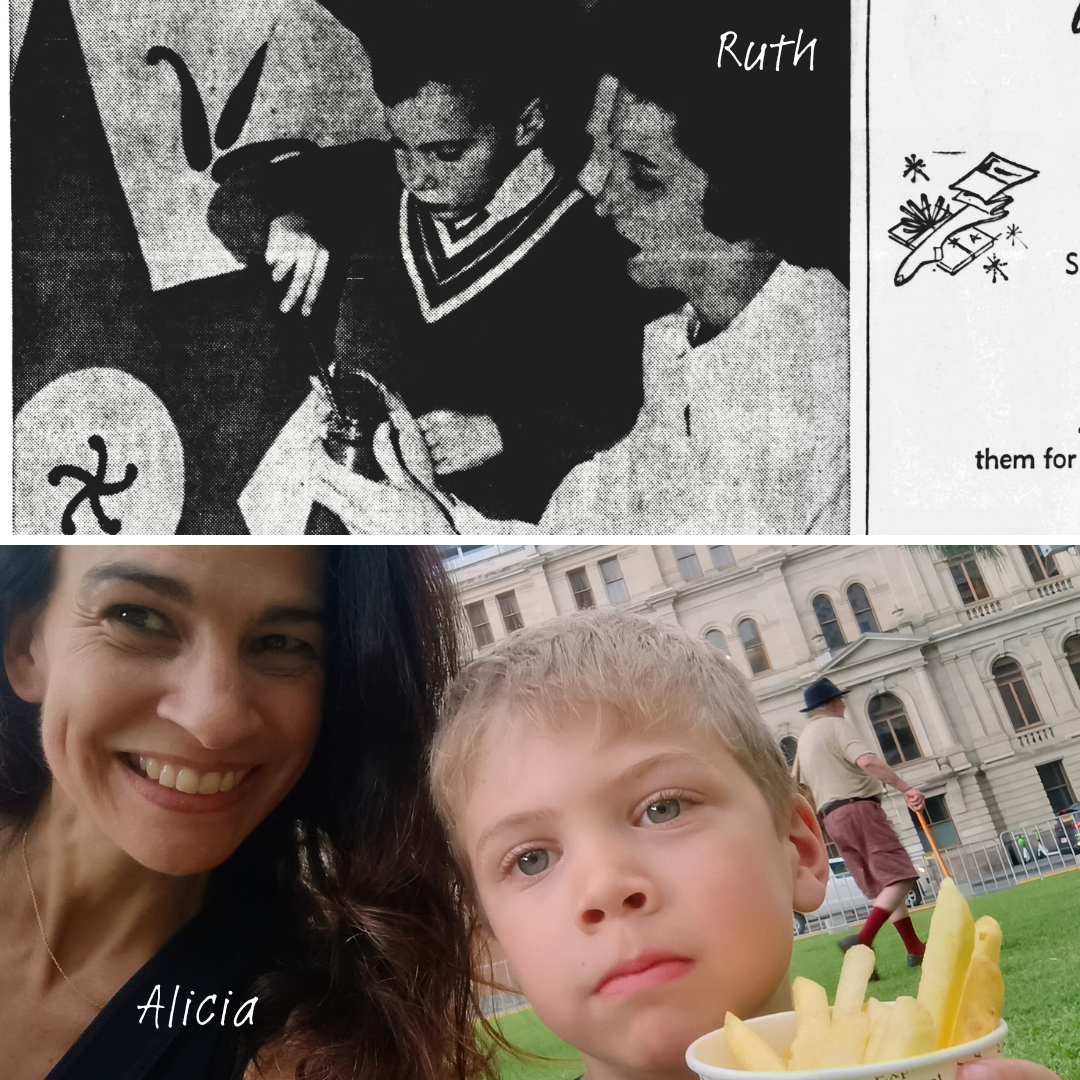
The parallels between all these women of the cookbook are magical too. Laurin and Alicia are both tied to jobs in the publishing industry. Ruth and Alicia share a combined study of art and design. Ruth was photographed in the local Vicksburg newspaper in 1962 alongside her young son as he helped decorate for the Holiday Bazaar. Alicia, not knowing anything about Ruth and her boy, sent a photo of herself pictured with her young son enjoying a cup of French fries.
And the final cherry on this similarity cake of a cookbook… Ruth and Laurin published Pennsylvania Dutch Cooking just in time for the holiday bazaar held on November 29th, 1962. Alicia published her annotated reprint of the cookbook just before Christmas on December 23rd, 2025. Both books debuted during the holiday season, almost exactly 63 years apart. Alicia didn’t know all this backstory about the original authors of the cookbook. She didn’t know about Laurin or Ruth, Carl or Vicksburg, Mississippi. When she re-discovered the book in 2025, it was in the public domain, and all it said next to the copyright information was that the author and the publication date were unknown.

And yet here they all are. Ruth, Laurin, Alicia. All three, now knowingly connected in more ways than one. 

Ruth eventually left Vicksburg and opened a wine and cheese shop in Ocean Springs, Mississippi, while also pursuing an interior design career. The mother of two children, she later remarried and became a stepmom to four more kids before eventually moving to Washington State, where she lived for the rest of her life. She passed away in July 2021, at the age of 89.
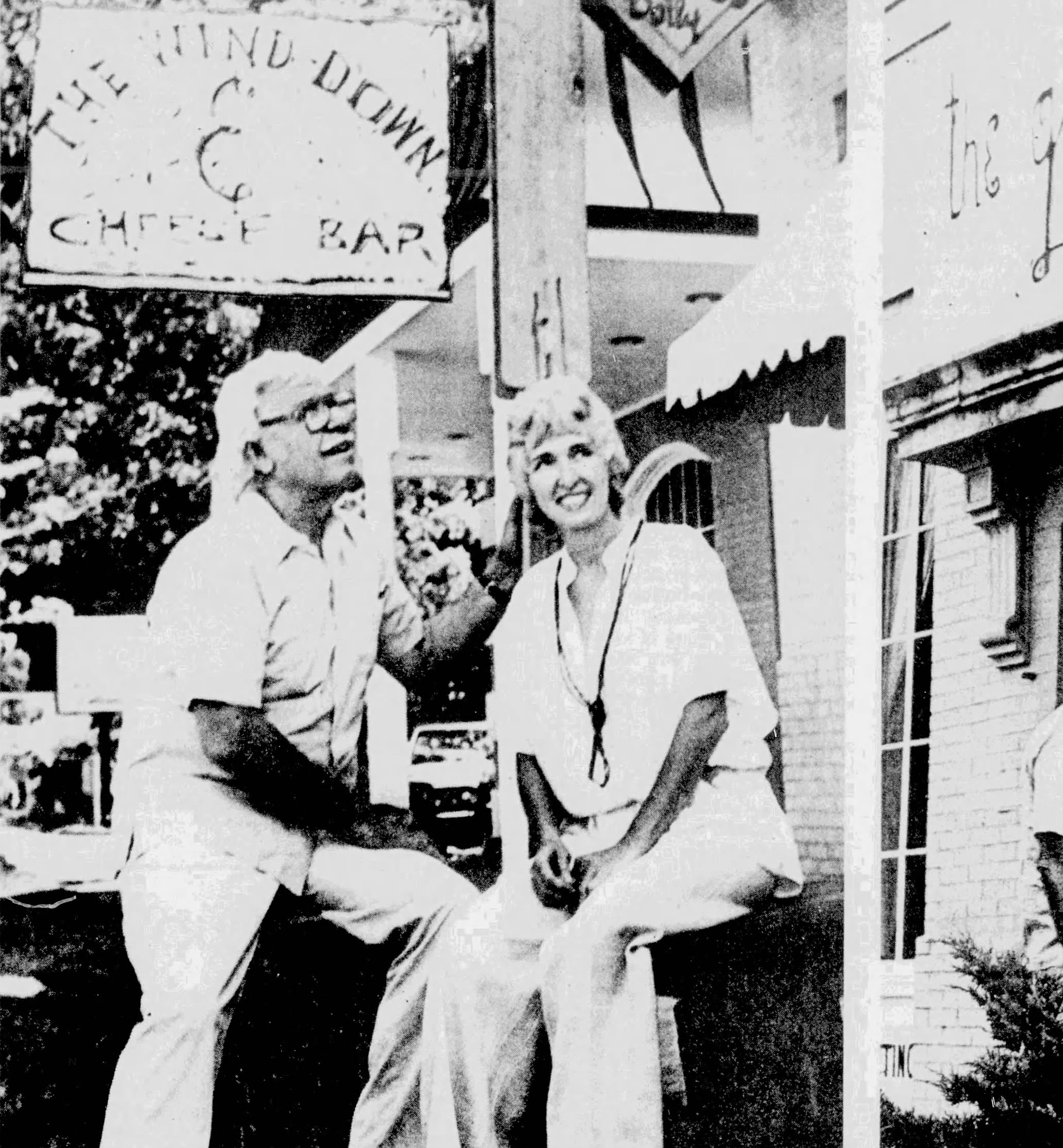
Ruth outside of her wine and cheese shop with business partner, Bill Allen. Photo courtesy of The Vicksburg Post, June 28, 1978.

Laurin remained the food editor at the Vicksburg Post for 58 years, never once missing her weekly column despite raising five kids and remaining very active in her community. Upon leaving the Vicksburg Post, she published a cookbook of favorite recipes from her newspaper days. Just a few years after Laurin retired, she passed away from Alzheimer’s in 2016 at the age of 83. 
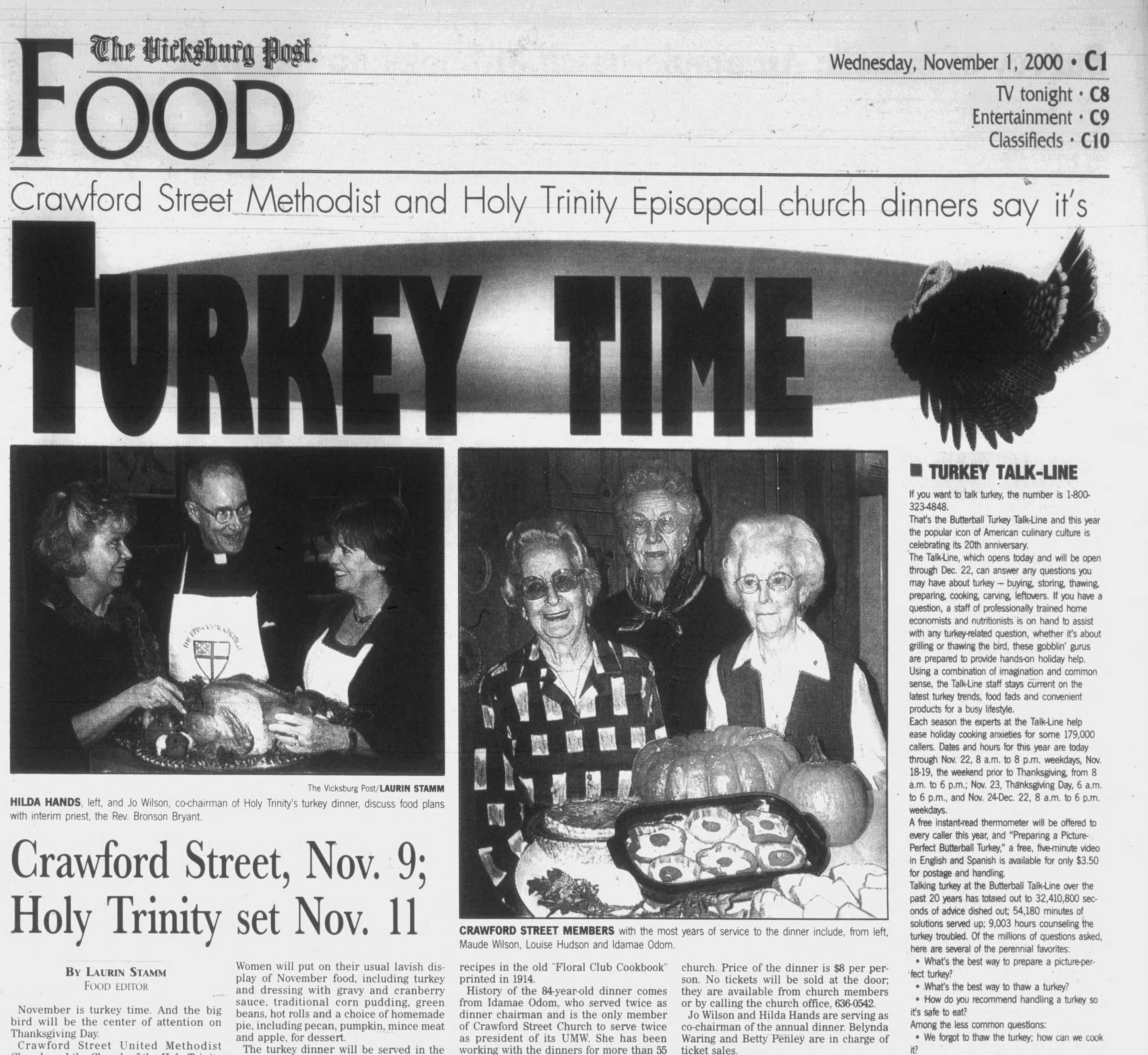
Laurin still writing the food column in 2000 and still writing about holiday events at Holy Trinity Church.

So now we know. 

When it comes to the questions… who’s to know when a recipe is created or a cookbook is compiled, how far it will travel? Who’s to know how many decades it will resonate? How many generations it will engage? And how many people it will connect? We can say, in this case, we have all the answers. It’s over 8,651 miles; it’s six decades; it’s three generations; and it’s at least four women. 

From the portfolio “Folk Art of Rural Pennsylvania”, c. 1939. The National Gallery of Art.

When I discovered this Pennsylvania folk art image by chance in the archives of the National Gallery of Art while putting this post together, I was immediately struck by the similarity between the painting and the story of the Pennsylvania Dutch Cooking book. In the birds, I saw Ruth and Laurin in 1962 on the left and I saw Alicia in 2025 in the bird on the right. I noticed how the birds looked at one another, face to face, like equals with the shared heart between them. If Ruth and Laurin and Alicia could all meet together today, I bet they’d look at each other in exactly the same way. Eye to eye. Heart to heart. The only thing that separates the birds in the painting is the infinity symbol. But that’s not a separator at all. An infinity symbol is a continuous loop, and that’s what the cookbook and this whole story represent – a continuous loop of regional recipes that wind their way around history. A continuous loop that connects three women to one cookbook. That connects Lancaster, Pennsylvania to Vicksburg, Mississippi to Brisbane, Australia. That connects the past to the present.

All this is thanks to Alicia and her commitment to remain true to the book’s original contents. In doing so, she remained true to the tradition of Pennsylvania Dutch cooking, to the comfort of familiar family recipes passed down through generations, and to nostalgia itself, that wonderful feeling that never requires any modern-day alterations.

Cheers to Laurin and Ruth for creating a local cookbook that unintentionally grew international legs, to Alicia for printing her passion and keeping these regional Pennsylvania Dutch recipes afloat for a new generation to experience, and to the cooking community at large for sharing stories and traditional recipes that last a lifetime. And longer.
Learn more about Alicia on her website here. Find her cookbook available here. And sign up for our weekly In The Vintage Kitchen shop newsletter here to receive a complimentary recipe from Pennsylvania Dutch Cooking coming soon.

A Celebration for Australia: Queen Mother’s Cake & The Royal Lady Who Inspired It

Hello and welcome to Week Two of the International Vintage Recipe Tour 2020! This week’s cooking adventure takes us 7,200 miles away from the lamb-stuffed food of Armenia to the beautiful land of Australia, the only stop on our Recipe Tour this year, that is both a country and a continent.
As you all know, Australia has been in the news quite a bit these days due to the devastating wildfires burning throughout the country. In an effort to help the recovery process and because this is our featured destination of the week, 50% of all Vintage Kitchen shop sales made between January 15th-January 22nd will be donated to the Kangaroo Island Wildlife Park. There people are working tirelessly to save the koalas, kangaroos and other wildlife harmed by the fires that burnt a large portion of their natural habitat. This donation will help feed, shelter and supply the island’s animals with much-needed medical care and attention. I selected Kangaroo Island Wildlife Park because they specifically addressed through social media, the need for food supplies for the animals, all of whom are national icons and unique treasures of the country.  If you wish to donate to Kangaroo Island Wildlife Park directly, please visit their donation page here.

A koala undergoing care at Kangaroo Island Wildlife Park

Because we are visiting countries alphabetically via the kitchen on this Recipe Tour, (a decision made last summer when the whole international idea first came about), it just so happened that we landed on Australia during an environmental crisis.  At times like this, when an area of the world is going through a major upset, it seems trivial and unnecessarily indulgent to draw attention to something like dessert.

But one thing I learned after experiencing 9/11 while living in New York City, is the significance of small pleasures. Familiar experiences like watching a favorite tv show or listening to music or eating a favorite food during a time of disaster can bring a much-needed sense of comfort and temporary joy. Even if it’s just a mild distraction in a day full of struggle. Our featured recipe this week is a homemade cake. Usually cake is most defined as a celebratory food – one that draws people together, raises spirits and commemorates life, new beginnings or accomplishments. It is one of the most optimistic and joyful foods we eat. One of the few that can automatically bring people together and instantly raise spirits. So it is with that in mind, that I focus this post. For the days and weeks and months ahead for Australia, I wish endless amounts of cake and all the symbolism that such a sweet treat stands for… love, support, community, optimism and comfort.

In this week’s post, we’ll be making an Australian favorite – Queen Mother’s Cake, a flourless chocolate cake that reflects a cosmopolitan cross-cultural heritage. We’ll also learn more about the vivacious English woman behind the recipe’s name, including her special connection to the Land Down Under.

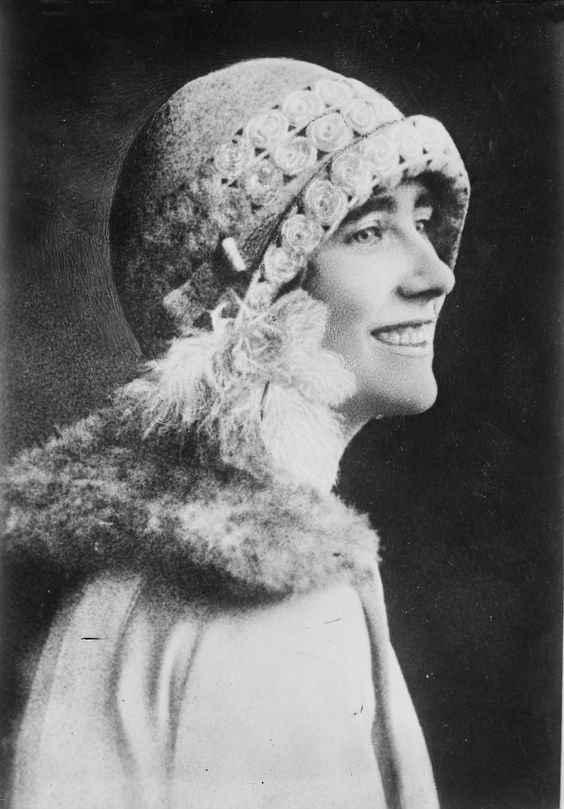
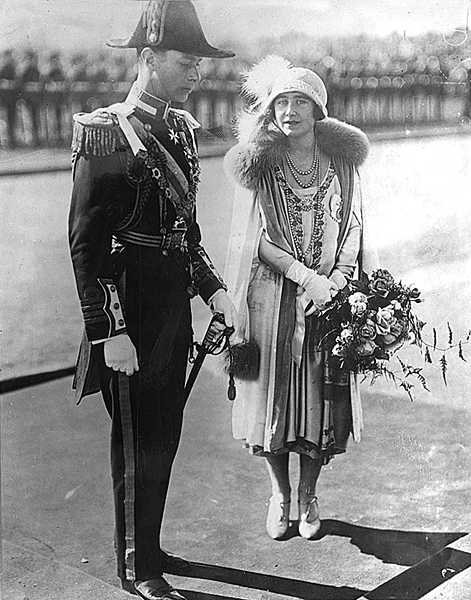
Do you recognize her? Long before Kate Middleton and Meghan Markle captured headlines, this famous royal woman dazzled the world with her vivacious spirit and warm personality. If you guessed that she was a lady, a duchess or a queen you’d be right on all three fronts. She is Lady Elizabeth Bowes Lyon, also known as the Duchess of York, Queen Elizabeth and the Queen Mother. If you were intimately involved with the royals during her lifetime, you’d know her by one more moniker too – her family nickname “Cake” which was earned because of her sheer delight and interest in anything resembling a cake-like dessert. This was Elizabeth on her wedding day, the start of her journey towards eventually becoming Queen Mother…

Elizabeth on wedding day in April 1923.

and this was her elaborate wedding cake…

Photo courtesy of royal.uk

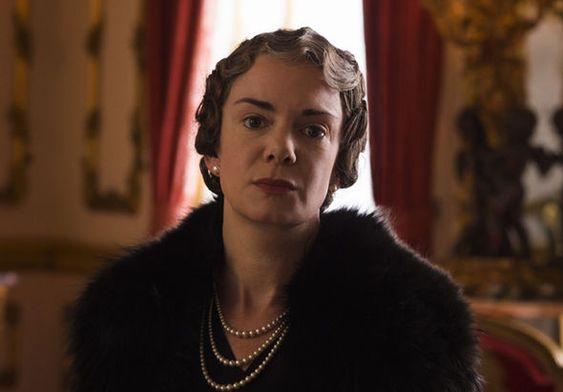
On the Netflix show, The Crown, you’ll see Elizabeth portrayed by Victoria Hamilton on screen, a supporting character to Claire Foy’s Queen Elizabeth II …

Victoria Hamilton as Queen Elizabeth L in the Netflix show, The Crown

but in real life, for much of her life, Elizabeth the Queen Mother, was the star of her own spectacular show. A glittering jewel in the Royal Family, she was beloved for her warm demeanor, her cheerful personality and her ability to relate to people, most especially working-class women.

A world traveler throughout her life, she loved trying new things and surprising people with her authenticity, integrity, capability and willingness to be involved. If she went camping, she would set up her own tent. If she went fishing, she would catch her own dinner. If she wanted a new dress, she’d work out the initial designs herself. Witty, stylish, observational and fun to be around, Elizabeth was one of the most popular members of the Royal family from the time she stepped into the limelight as the bride of King George VI to the time of her death at the age of 101.

She visited Australia several times throughout her life, but her first impression of it in the 1920’s sealed her fondness for it for the rest of her life. In a letter home to her mother, in 1927 she wrote…

“It is most lovely country… The climate is marvellous – very hot sun and cool breezes, and we have both enjoyed ourselves up here in Queensland. The people are so nice & friendly, & the distances are so vast that it keeps them simple.”

Queen Elizabeth _ Canberra, Queensland Australia 1927. Photo courtesy of the National Archives of Australia

As the previous constitutional monarch of Australia (up until 1952), it’s easy to understand how Queen Mother’s Cake could be linked to Aussie history. But the origin story of this confectionary creation doesn’t start or stop there. Legend states that the cake was introduced to the Queen via a Polish pianist named Jan Smeterlin (1892-1967)…

who had first tasted the cake in Austria. Jan, in addition to being a talented piano player, was also a talented cook. It is unclear whether he brought the Austrian recipe home with him or if he created it from memory in his own kitchen, but either way , the story goes that he made the cake for the Queen one day while she was visiting him in the early 1950’s.  So in love with it did she fall that Queen Elizabeth requested a copy of the recipe from Jan and started baking it herself at the palace. Taking on new significance and a new name – Queen Mother’s Cake – it became the favorite cake that Elizabeth liked to offer to guests and it was the only cake that she insisted on making herself each time an occasion called for it.

With its glossy chocolate frosting, simple ingredients and fluffy, moist consistency, it is easy to see why this cake became a favorite, not only with the Queen and Jan Smeterlin, but also with all of England and Australia too.

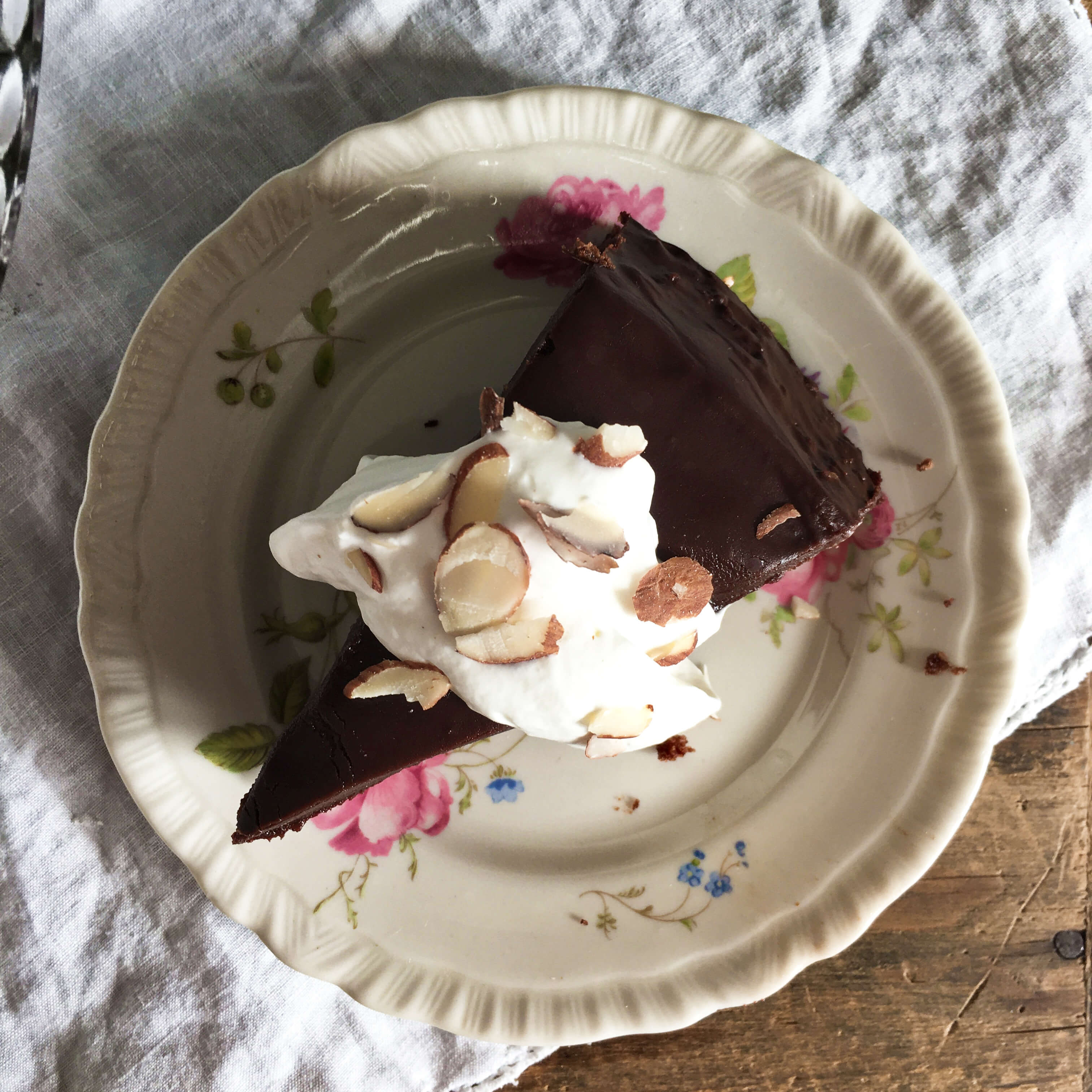
So delicious, so easy to make and so fast to assemble, Queen Mother’s Cake tastes like a fudge frosted brownie but without the heft and density normally associated with a traditional flour-filled brownie. A dash of powdered instant coffee in the frosting gives a slight tangy contrast to the sweet cake and a dollop of freshly whipped cream perfectly unites all the flavors.

I’m always a fan of a cake that allows you a little creativity in the decorating department. Apparently many Australian bakers from earlier generations learned their pastry and confectionery skills from English artisans during the Victorian era which focused heavily on beautifully presented cakes and exquisite designs.  This stylized influence and interest in gorgeously crafted cakes has remained within the country over the past century, making Australians some of the most highly skilled cake decorators in the world.

The Queen Mother’s Cake is sort of a blank canvas of creativity though when it comes to the presentation department. Like the woman it was named after it is very amenable and open to all sorts of different design interpretations and embellishments.  This recipe just calls for a simple, smoothly frosted cake with no particular adornment though. In wanting to stay authentic to the recipe, I left my cake unadorned as well, but I couldn’t help adding some whip cream and a sprinkle of sliced almonds on each slice. There is something to be said about a good simple cake that requires minimal effort, but next time, it might be fun to experiment with a little extra design on top too.

Queen Mother’s Cake

(serves 12)

For the cake:

Fine bread crumbs

6 oz. fine quality sweet chocolate ( I used German baking chocolate that contained 48% cocoa)

3/4 cup sweet butter

3/4 cup granulated sugar

6 eggs, seperated

6 oz. finely grated almonds

Pinch of salt

Icing

For the icing:

1/2 cup heavy cream

1 rounded teaspoon decaffeinated instant coffee (I used Starbucks Via)

8 oz. fine-quality sweet chocolate, broken into pieces ( I used German baking chocolate that contained 48% cocoa)

Preheat oven to 375 degrees.

Butter a 9″ inch spring-form pan. Line the butter with waxed paper (parchment paper) and butter the paper. Dust the sides and bottom with fine bread crumbs. Set aside.

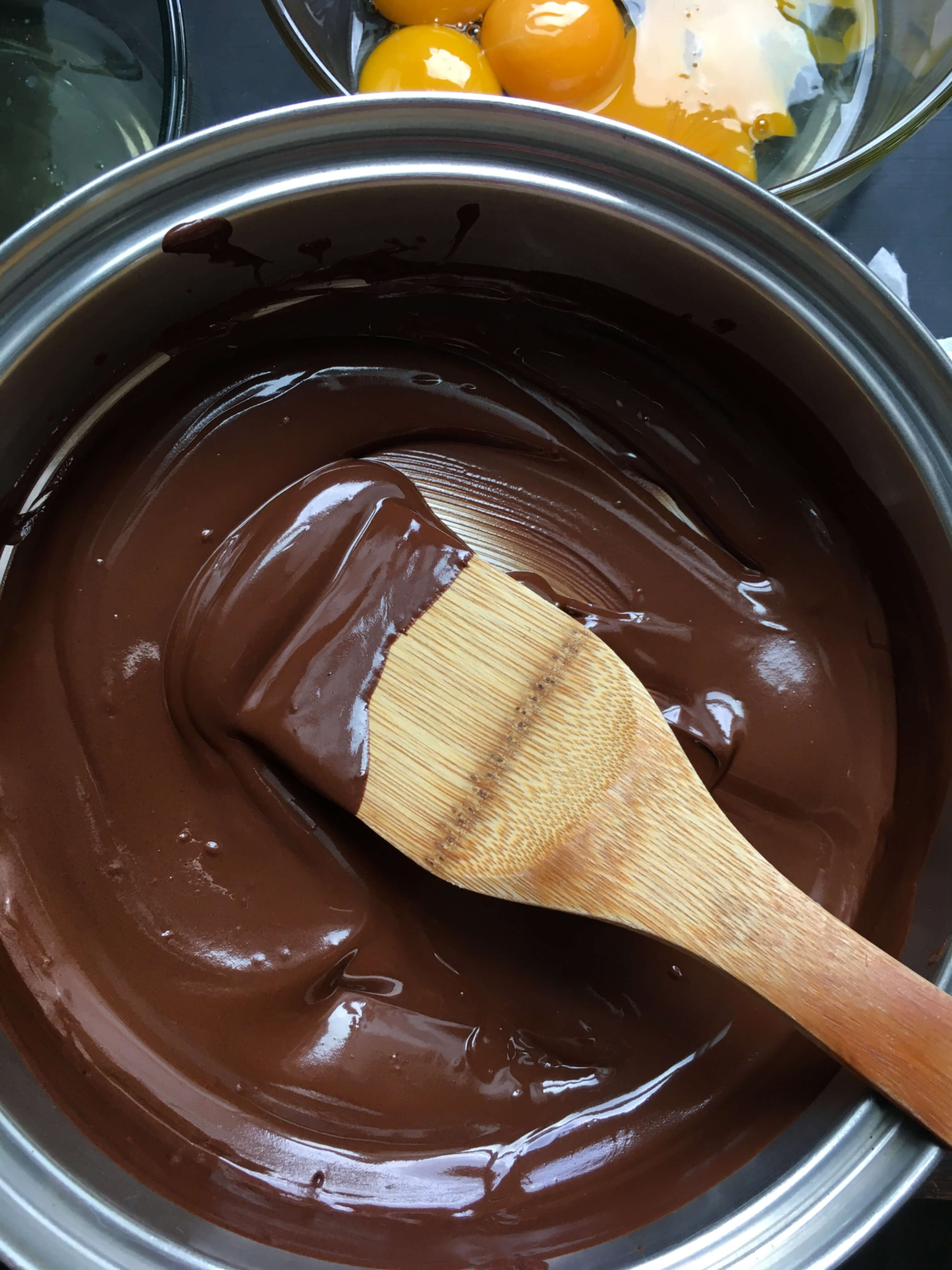
Melt the chocolate in the top of a double-boiler. Remove the heat and cool.

Cream the butter and sugar very well. Add the egg yolks one at a time, and beat until smooth. Stir in the cooled chocolate and almonds.

Beat the egg whites with the salt until stiff but not dry. Adding one-third of the egg-whites at a time, fold carefully into the chocolate mixture.

Pour into the prepared pan…

and bake twenty minutes. Reduce the oven temperature to 350 degrees and bake 45 minutes longer . Remove from the oven, place on a wet towel, and cool.

When cool, remove the cake from the pan. If the top is uneven, level it with a thin sharp knife. Place the cake on waxed paper (or parchment)…

Next make the icing. Heat the cream in a heavy saucepan until it just barely begins to boil. Add the instant coffee and stir to dissolve…

then add the chocolate. After a minute or two, remove the saucepan from the heat and stir constantly until the chocolate is completely melted.

Let cool a few minutes until just barely tepid. Poor icing over the top of cake.  Using a spatula, completely cover the top and sides.

Let stand at room temperature until the icing sets, then transfer to a cake platter. Gather up all your friends and your family, your co-workers, your neighbors, your party-goers, your joy-seekers. Then, get to celebrating. Raise a fork to Australia and to all that they have managed to achieve in the face of adversity. Raise a fork to optimism and to courage, to comfort and support. To cake. And to carrying on towards a brighter day.

Join us next Wednesday, Week Three of the International Vintage Recipe Tour 2020, as we head out on our next epicurean adventure… Austria, where we will be making a saucy recipe and discussing all things food and travel with a modern-day local. Stay tuned!

Classic Style – A Glamorous Conversation with The Vintage Hat Shop

Funny enough, this is Ms. Jeannie’s second post dedicated to hats and her fifth mention of them in previous fashion related posts. You see, dear readers, Ms. Jeannie has a great love affair with hats, which she is just now realizing.

She only owns three herself: a bright green celery colored garden hat, a wide brim, floppy, shoulder to shoulder straw beach hat and a fancy derby hat which she recycles every year through the magic of ebay – hardly the dynamic collection of a hat lover!

But what Ms. Jeannie has come to realize is that the thing she might just love most about a hat is the ability to subtly express oneself through a color, an adornment, a slight placement of angle. Whether you want to hide from the sun under your big brim or show off your flamboyant style in an eye-catching fascinator  – a hat can speak volumes about its wearer without her having to say anything at all. Magical!   So when Ms. Jeannie came upon this quote by Martha Sliter – she could completely relate:

“A hat is a flag, a shield, a bit of armor, and the badge of femininity. A hat is the difference between wearing clothing and wearing a costume; it’s the difference between being dressed and being dressed up; it’s the difference between looking adequate and looking your best. A hat is to be stylish in, to glow under, to flirt beneath, to make all others seem jealous over, and to make all men feel masculine about. A piece of magic is a hat.”

Well said Martha! A piece of magic is a hat! This got Ms. Jeannie to thinking about the past – back to nostalgic times when women (and men!) wore hats everyday and millinery shops lined the streets of every city. Now those physical brick and morter shops are few and far between but thanks to Etsy, we can still enjoy vintage hat shopping in our new and modern way – online!

Vintage Hat Forms – photo courtesy of Greg Lang via pinterest

Lucky for us – one of Ms. Jeannie’s readers is Cindy – the dynamo behind The Vintage Hat Shop on Etsy. With over 100 hats currently for sale and over 700 hats sold in just over two years, who better to sit down with to discuss the state of the hat union than her?!  Enjoy this stroll through fashion history as Cindy gives us all a glimpse behind the curtain of a true vintage hat shop….

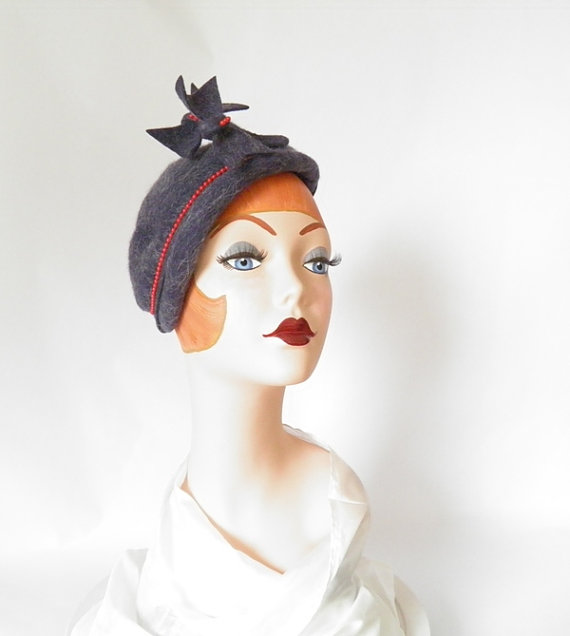
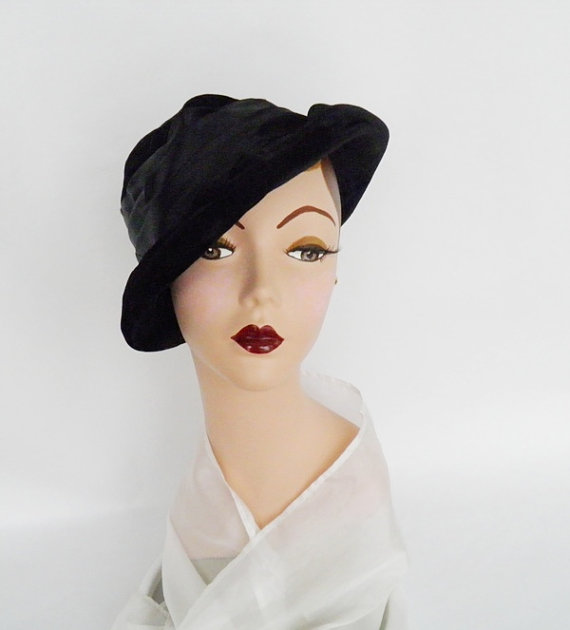
Vintage 1940s Tilt Hat in Gray with Bows from theVintageHatShop

Ms. Jeannie:  How did your Etsy shop come about?

Cindy from The Vintage Hat Shop: I get asked that question a lot. I knew that when I opened a shop on Etsy I wanted to concentrate on just one item. Hats just seemed to work for me—they are unique, ship easily, and I like the types of folks that buy hats. I love hunting for unusual and stylish hats.

1930’s Halo Hat Clamshell Turban from theVintageHatShop

MJ:  Explain a little bit about sourcing your hats – do you have to do a lot of mending and cleaning to do or do you look for hats that are only in pristine condition?

TVHS: I have my own certain criteria for hats—I won’t buy a hat that has a foul smell, is soiled or needs a lot of repair. I do replace elastic back bands, remove veils, do a bit of minor mending. I iron a lot of ribbons. And I go through many lint rollers.

MJ: Your shop spans many decades – do you have a most favorite time period? 

TVHS: I like the ’40s hats myself. I just think it was such an interesting era and the hats are a reflection of the times. The styles were rather “gutsy” and dramatic. So many supplies were in short supply during the war and innovation was the key. I admire and respect that. Such a variety of fashion styles are available from that time period.

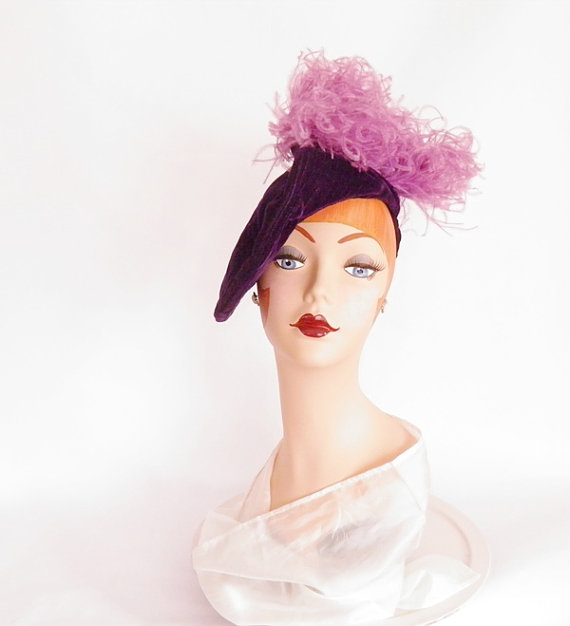
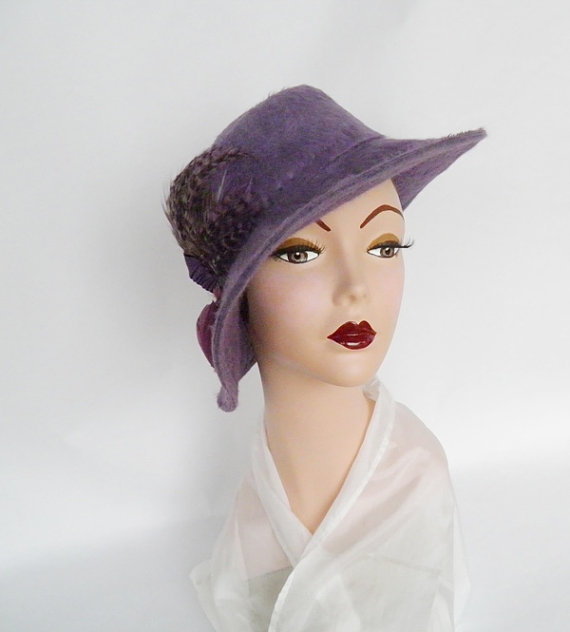
1940’s Tilt Slouch Hat in Lavender with Ostrich Feathers from theVintageHatShop

MJ:  Are you just as interested in hat related paraphernalia, like hat pins, hat boxes, etc as you are hats?

TVHS: I am interested in hat related items but I seldom buy them. I have too many interests and I make myself concentrate on just hats. The hat pins that I have were passed on to me by family members.

Miniature Dobbs Hatbox – from theVintageHatShop

MJ:  Kate Middleton seems to have brought some new attention to the hat industry, are most of your clients from the U.S. or overseas?

Some of Kate Middleton’s hat collection. Photos (clockwise) courtesy of: marieclaire.co.uk, graziadaily.co.uk, allhatnocattle.net, zimbio.com, hatsca.com

TVHS: I have clients all over the world. I have sold hats to folks in 27 countries—(yes, I keep a list!) About a third of my sales are international. I have hat dealers in 3 countries that buy from me for their shops. Australia is the country to which I ship the most hats.

MJ: If you could put one of your hats on any famous head, living or dead, who would you choose?

TVHS: Some of my hats would look great on Lady Diana. Can you imagine!

Actually Cindy – Ms. Jeannie can imagine this! She thinks Diana looks splendid in your 1960’s sequined pillbox hat!

MJ:  What is your most popular selling style of hat? And most popular decade?

TVHS: That’s a good question, but I haven’t quite figured out the answer yet! There doesn’t seem to be one decade that is consistently popular. Right now I am selling 1960’s cloches that look like they came from the 1920’s. For awhile 1940’s tilts were very popular. The tilt/slouch look from the 1930’s consistently sells well.

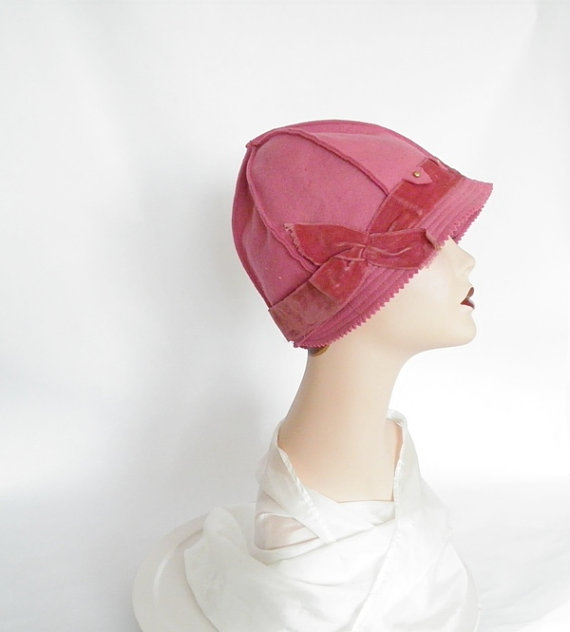
Vintage cloche hat with 1920’s style (one of Ms. Jeannie’s favortes!) fromtheVintageHatShop

1940’s Vintage Saks Fifth Ave Forward Tilt Hat from theVintageHatShop

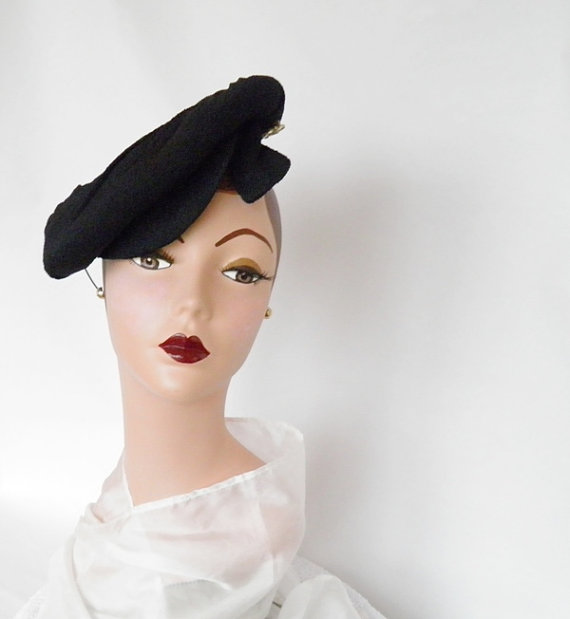
1930’s Tilt Slouch Hat from theVintageHatShop

MJ: At the moment, there seems to be just a few men’s hats in your shop – is it harder to find men’s hats then women’s, do they sell more quickly or do you just have a natural affinity for a more feminine style?

Men’s Newsboy Cap from theVintageHatShop

TVHS: I like men’s hats but I don’t seek them out. Men want their dress hats to fit exactly and it is very hard to size them. Most of the fedoras that I find are a small size. So I rarely list them anymore. I do sell newsboy caps which can be worn by either men or women.

MJ:  In your shop bio, it reads that one of your buyers was Polo Ralph Lauren – how exciting! Have you seen your hats in any of their campaigns?

TVHS: No, but I haven’t been looking . Guess I should check that out.

MJ: What is your most favorite hat currently available in your shop?

I like the 1930s maroon tilt slouch hat. I like the quiet simplicity with a touch of classy style. But my favorite changes often.

1930’s Maroon Slouch Tilt Hat from TheVintageHatShop

MJ: Tell us a fun hat buying story in regards to one of your customers…

TVHS: Last week I sold two hats to Loretta Young’s daughter-in-law. Loretta Young loved Lilly Dache’ hats and one of the hats purchased was a black velvet Dachette turban. The hats will be used at a Loretta Young 100th anniversary exhibit at the Hollywood Museum in LA that runs from December through April. She even encouraged me to attend!

Loretta Young (1913-2000) was an American, award winning film and television actress. Photo courtesy of fanpop.com

Cindy’s hats are la-la bound! See them on display at the Hollywood Museum. How very glamorous! Photo courtesy of thehollywoodmuseum.com. Click the photo for more info.

Two of my 40s hats were purchased to be worn by extras in the movie “42”, the Jackie Robinson story starring Harrison Ford now being filmed in Macon, GA. You can bet I will be going to see that movie!

Movie Poster for 42

Many of my hats have been purchased for vintage weddings, theatrical productions, professional photo shoots and to women that like to dress in a vintage style. Today I sent a hat to a woman that is going to a Gatsby themed wedding and wanted a vintage cloche. You just never know! That’s what makes it so fun.

MJ:  Do you have a favorite “hat” movie? “Hat” actress? “Hat” actor?

TVHS: I like the 40s movies and actresses—Bette Davis, Katherine Hepburn, Ingrid Bergman. I can’t pick out a favorite hat movie! What guy wears a hat better than Frank Sinatra?

Clockwise from left: Bette, Katharine, Frank and Ingrid (okay Bogie – you too!)

MJ: Why do you think women’s hats fell out of fashion as a regular, everyday accessory?

TVHS: A lot of people attribute the demise of hat wearing to hairspray! When women get their hair all “dolled up” and put on hairspray so it stays in place. They don’t want to ruin their “do” with a hat. I know on the days when I go hat shopping by the end of the day I have “hat hair”. It isn’t pretty.

MJ:  What do you look for in a vintage hat?

TVHS: I look for a hat with class and style. Sometimes I buy hats I don’t like because I know there is a market for them. But usually if I just don’t like a hat at first sight, I don’t buy it. And I love most any hat that tilts.

MJ: Do you wear hats yourself?

TVHS: Now you would think so, wouldn’t you? But in reality I seldom wear hats. They just aren’t in fashion in this area. (Which makes them available for hat buyers!!). But I do come home and try on every one that I buy. Shhhh. Don’t tell the family, they already think I am hat possessed.

MJ:   Can you tell us something a little “extra” about these 5 hats from your shop (Ms. Jeannie’s favorites!)… 

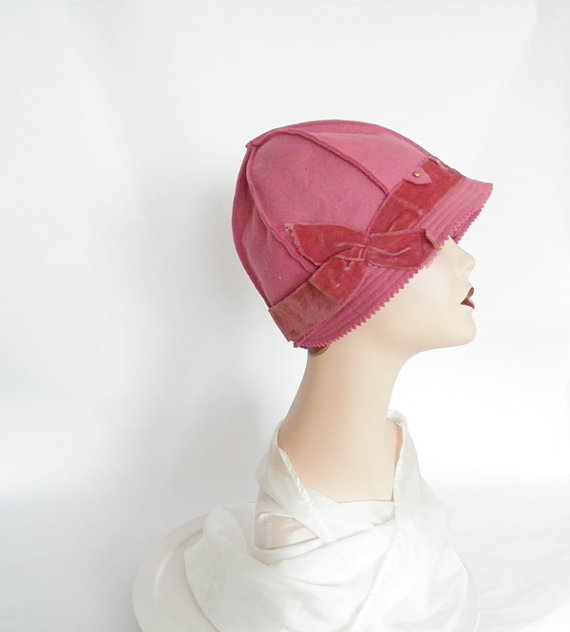
Favorite #1: Vintage 1960’s velvet cloche with 1920’s style from theVintageHatShop

This hat has a great memory. I purchased it on a trip to see my family. We had such a terrific time that day. Now it is off to London.

Favorite #2: 1960’s Bucket Tilt with Coralie Faux Fur from theVintageHatShop

 I purchased this hat because the color was unusual. And the feather looked like a bird!

Favorite #3: Vintage Cloche Hat with 1920’s Style from theVintageHatShop

There is an antique shop that I stop at often, they don’t know my name, they just call me “The Hat Lady”. I found this hat there. Could anyone pass up a 1920s cloche in this condition?!!

Favorite #4: Vintage 1950’s Turban Style Hat from theVintageHatShop

Turbans are very popular right now and this is such a great color. It has more of a structured shape than other turbans that I sell.

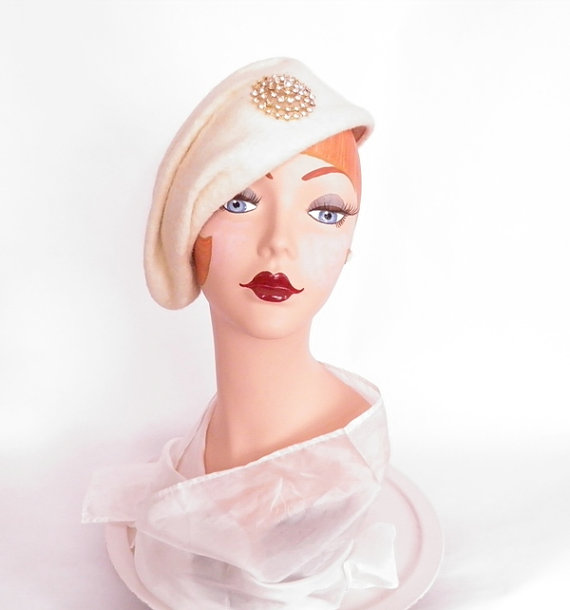
Vintage 1960’s Tilt Slouch, Beret Style with Rhinestone Pin from TheVintageHatShop

What a classy way to do a winter hat! That beading adds just the right touch of interest.

MJ:  What was your most exciting hat acquisition story?

TVHS: Last summer I went to a local estate sale. A widow had died 15 years ago at age 90 and her nephew was just cleaning out her home. She was meticulous about her belongings. Her hats were exquisite! I got some from each decade 1910s-1950s. One of her hats was made by a local milliner, that will go to our county museum. I have two of her hats that I just can’t quite bring myself to list. I am a sentimentalist at heart. I had such a great time that day! And I was so honored to pass her hats on to collectors that would also treasure them.

MJ: You have lovely models in your shop! Tell us a little about them.

Meet the Vintage Hat Shop models…Jo & Jo!

TVHS: I had searched for months for a new mannequin. I had been to antique shows, and every shop in our area but just couldn’t find a mannequin that suited my style. I had decided to order a new one on line and just make it work. My husband and I decided to go out to a small town for a Friday night dinner and parked next to a tiny gift/antique shop. The mannequin gal with the dark brown hair was in the window! The shop was closed for the night and the next day was the last day for the season. You can bet that I took another trip back to that store early the next morn and purchased her. I went to the same shop again this spring and bought the redhead. Oh, and of course many hats, too!
It makes me happy each time I use them. I have named them both Jo—after a classy aunt.( yes, she wore hats and loved them!)

MJ:  What style advice would you give to the first time vintage hat buyer?

TVHS: Buy hats you love of course. But the real secret is to give your hat a good tilt. For the “oo-la-la” factor.

—

Other interesting tid-bits from Cindy’s world:

Currently on her bookshelf: 

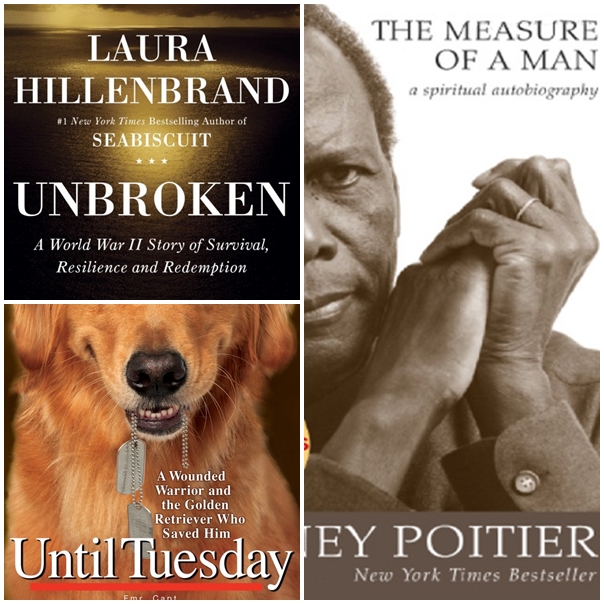
Recommended Books from Cindy: Unbroken by Laura Hillenbrand, Until Tuesday by Luis Carlos Montalvan, and The Measure of A Man by Sidney Poitier

Currently listening to:  Country music on the radio. 

If she could luncheon with anyone famous living or dead, she’d choose: Eleanor Roosevelt 

Eleanor Roosevelt (1884-1962) – First Lady of the United States from 1933-1945, civil rights activist, author and public speaker.

Of course Eleanor would be the one in the hat!

—

This interview is part of an ongoing interview series that Ms. Jeannie is orchestrating about artists, writers and musicians and their inspirations. To read other interviews in this series, simply click here.


A Visit From Belle and the Evolution of A Heeler

Ms. Jeannie’s neighbor has a lovable little dog named Belle who has taken, on her own accord,  to come visiting Ms. Jeannie everyday.

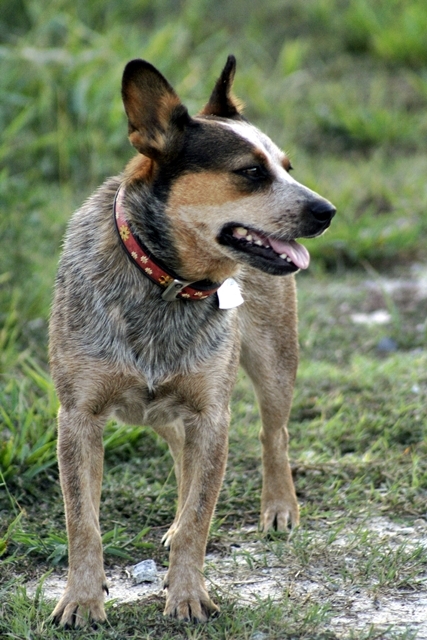
Belle

Ms. Jeannie loves seeing her furry little face at the door in the morning, especially because Ms. Jeannie’s beloved border collie passed away this winter, and she has been dogless since.

Coming to say hello!

Belle is a blue heeler, which means she is incredibly smart, just like Ms. Jeannie’s border collie was. She is a herder by nature, so Ms. Jeannie’s two cats  now get a little more exercise than they did before!

Ms. Jeannie can’t help but wonder… was Belle brought into her life to help “heal” the sense of sadness Ms. Jeannie felt over losing her border collie? Ironies like this in life seem like lovely reminders that, perhaps, everything does happen for a reason!

Ms. Jeannie’s garden company!

Belle likes to lay in the sunshine next to Ms. Jeannie’s garden and keep her company while Ms. Jeannie weeds and putters about. Ms. Jeannie always keeps a couple dog treats in her pocket too – you know, in case Belle gets a little snacky.

Belle lives with two other dogs, both boys, so Ms. Jeannie thinks she likes to come over to get a little girl time in. Like a mini vacation layered in peanut butter.

Ready for a fun adventure!

Blue heelers, also known as a Australian Cattle Dogs were originally bred by homesteaders in the Australian outback. They needed a durable type of dog that could withstand harsh weather conditions and austere environments.

Their first attempt at creating such a bred was to cross the  Smithfield collie with an Australian dingo to see if that would produce good durable offspring.

A typical Smithfield dog looks like this…

Photo courtesy of wolfweb.com

And an Australian dingo looks like this…

Australian dingo with pups

Unfortunately this match produced red pups that were a little overzealous in the biting department and wound up killing their herds instead of just rounding them up.

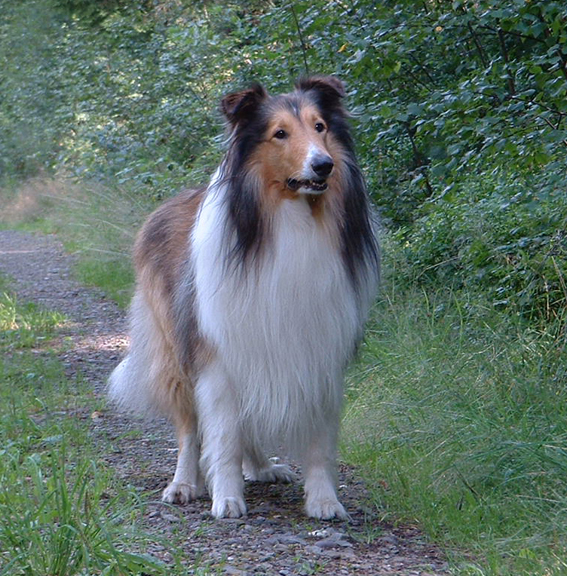
The next attempt was to cross a rough coated collie (the Lassie dogs!) with the dingo…

Rough Coated Collie

But this union just produced dogs that barked so much they stressed the cattle to the point where cows were losing weight instead of gaining weight.

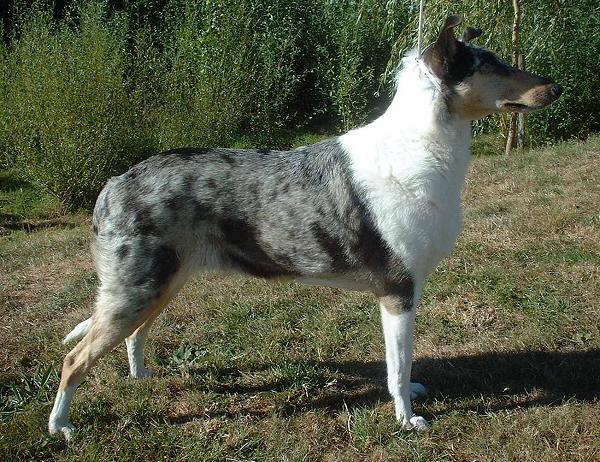
In 1840,  Englishman Thomas Hall bred a blue smooth coated collie with a dingo and deemed it a success, naming his breed Hall’s Heelers.

Blue Smooth Coated Collie

But brothers Jack & Harry Bagust thought that they could still improve upon the Thomas Hall’s creation, so they bred a Hall’s Heeler with a dalmation.

Hall’s Heeler

Dalmation

This turned out not to be quite  the right mix either, as the dalamtion/heeler mix lacked a level of skillmanship that the original breeds had.  So next they bred a Heeler with a Kelpie …

Australian Kelpie. Photo courtesy of Robyn and Tony’s Pet Sitting Service.

A little more breeding with dingos produced the blue heeler and the red heeler we see today.

Traditional Blue Heeler

Traditional Red Heeler

Ms. Jeannie suspects Belle might contain a little Welsh Corgi also. They have similiar markings and a long body shape, and while Belle is taller then a typical Corgi – Ms. Jeannie thinks their faces are similiar. What do you think?

Welsh Corgi

All in all, at the end of the day, Belle’s genealogy looks a lot like Ms. Jeannie’s, a little bit of everything from here and there!

Blue Heelers have there own presence on Etsy too. The following are some of Ms. Jeannie’s favorites. Click on each picture to find more Heeler themed items from each artists shop!

Blue Heeler & Pasture Photograph by Pony Creek Photography

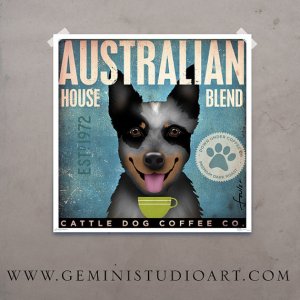
Australian Cattle Dog Print by geministudio

Australian Cattle Dog Rising Moon Print by Tom Young Art

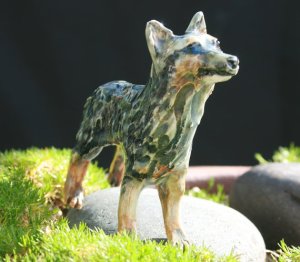
Australian Blue Heeler Porcelain Animal from songandbranch

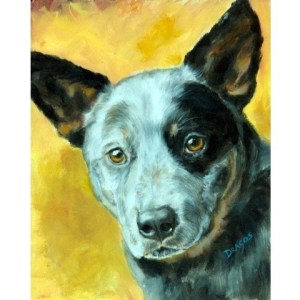
Blue Heeler Dog Art by Dottie Dracos

Smile Photograph by sknights

Australian Cattle Dog Print by dogartstudio