
The Greenhouse Diaries 2025 : Meet Herbalist Adelma Grenier Simmons – Our Inspiration for the Year

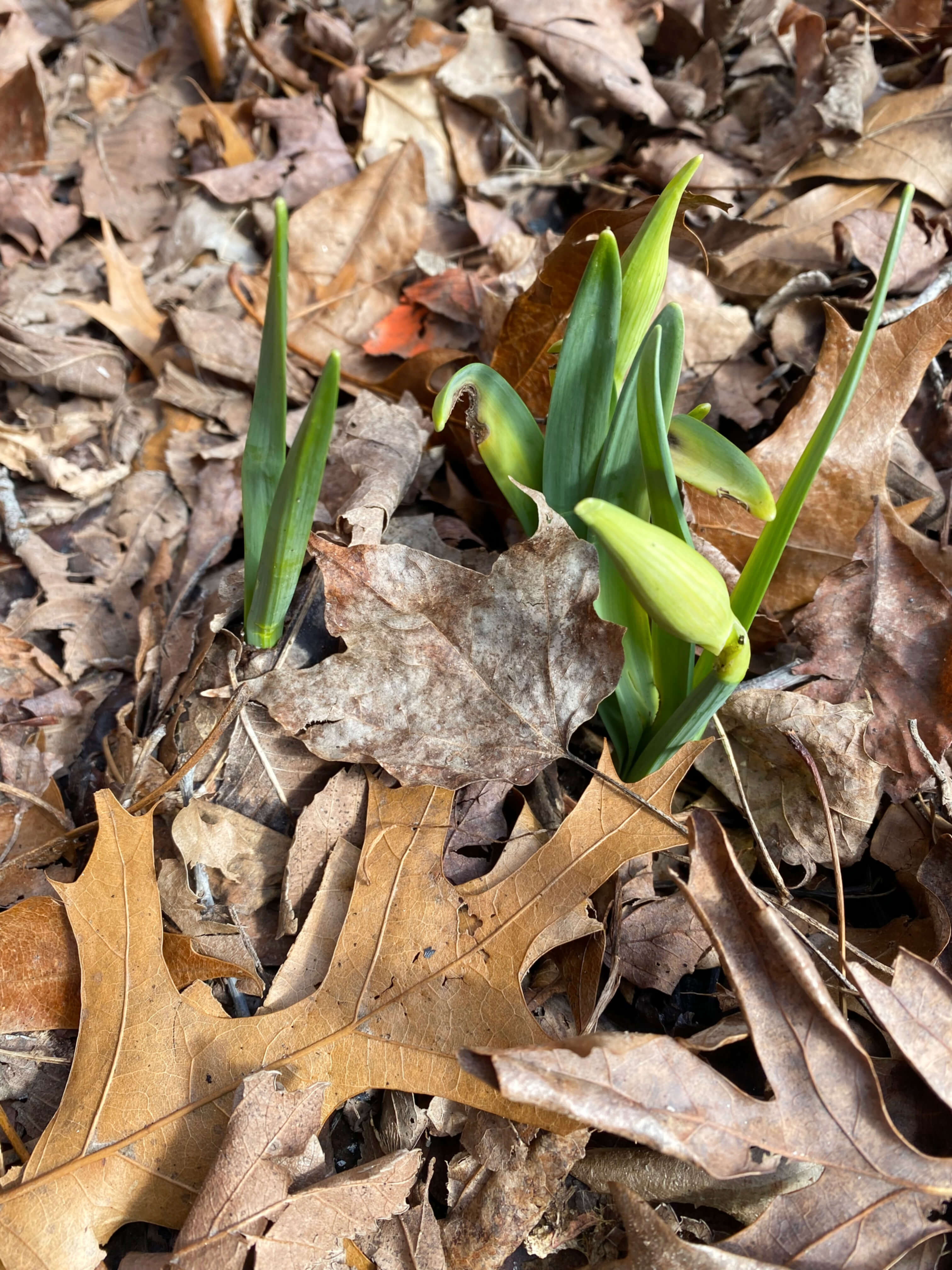
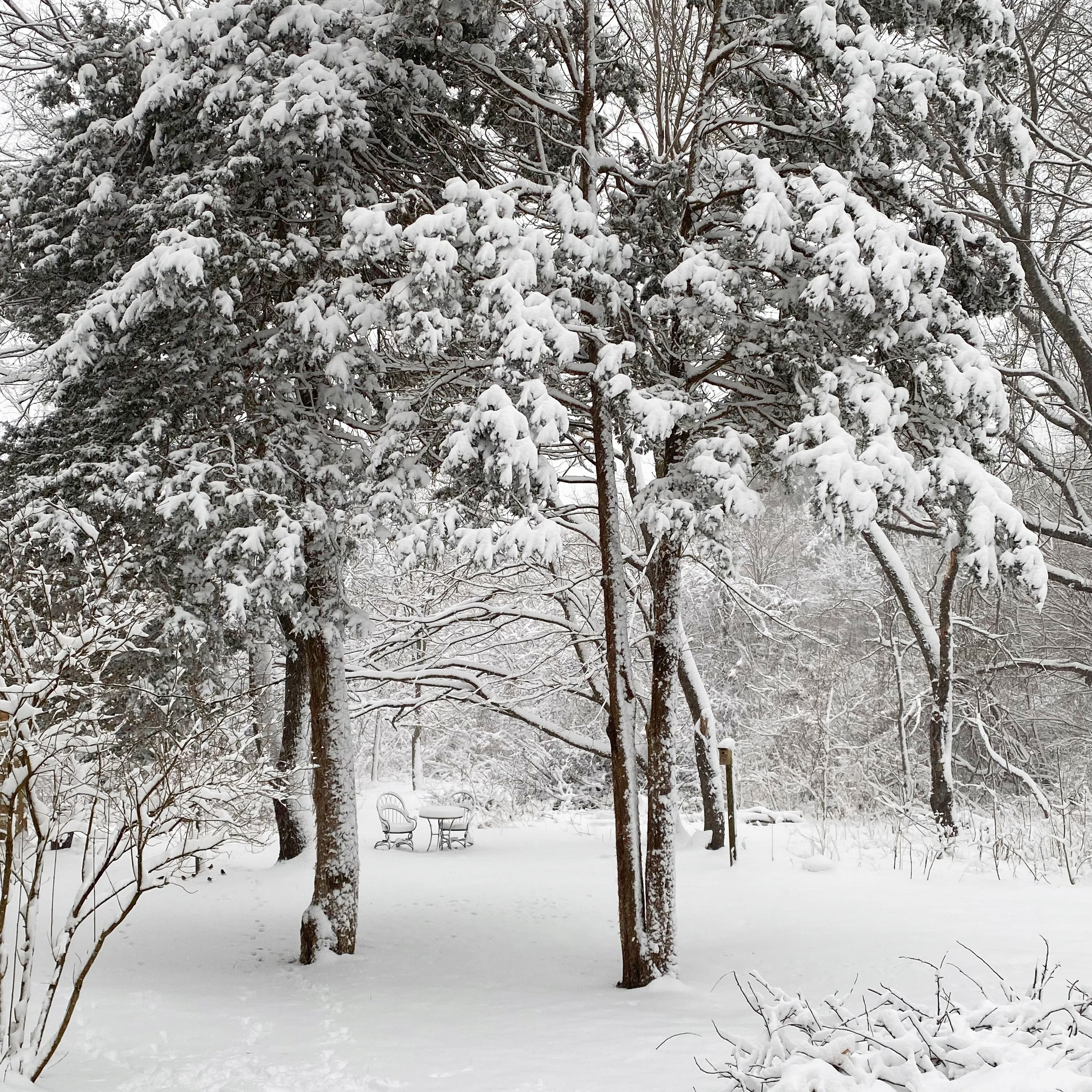
Snow is on the ground, freezing rain is in the forecast, and our first seedlings have just sprouted. It is officially time. The Greenhouse Diaries are back for a whole new year of growing adventures, experimental gardening, and wit and wisdom from some of the most interesting gardeners of the past three centuries.

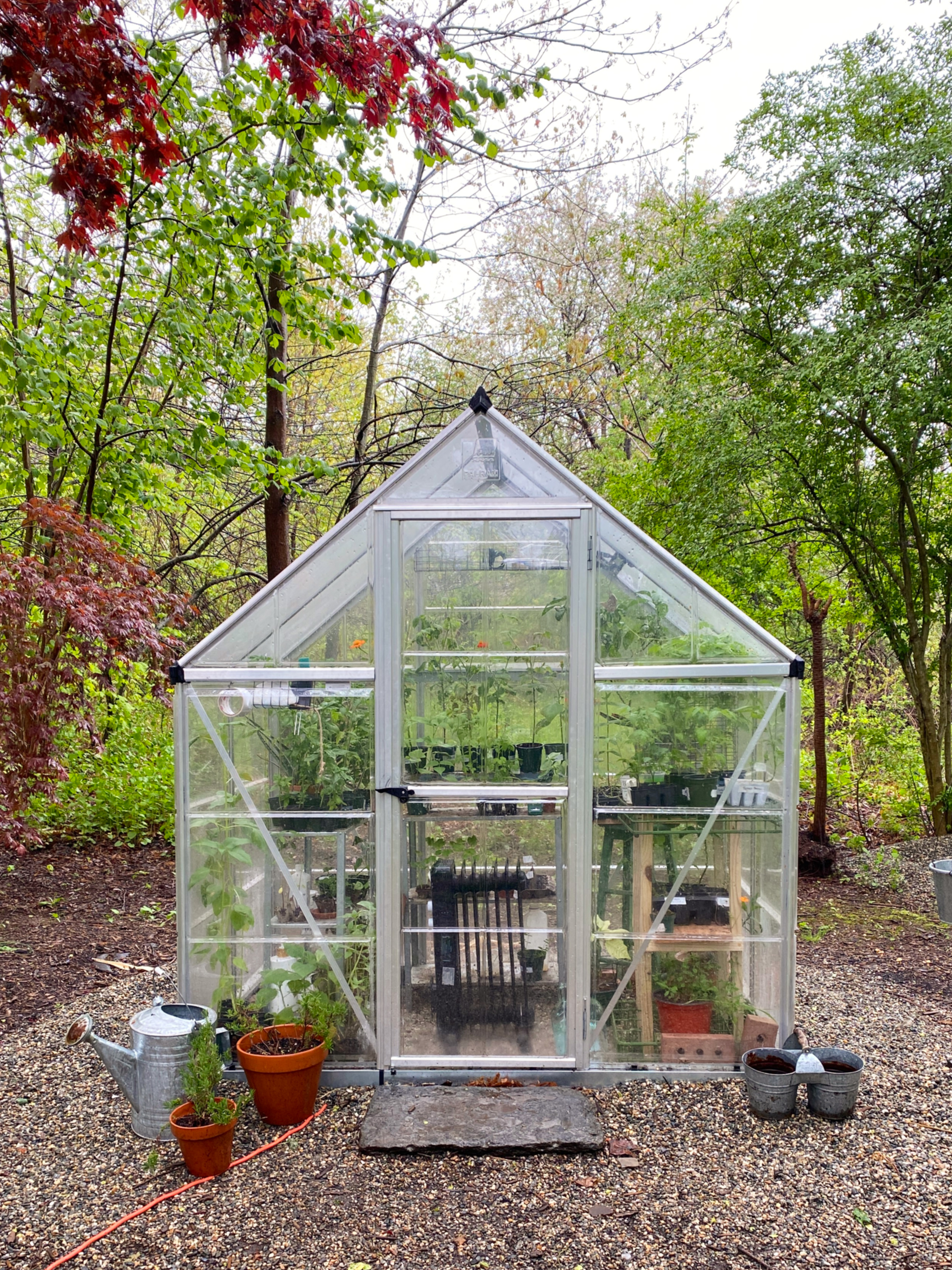
If you are new to the blog, this series started in December 2022 as a way to chronicle our horticultural endeavors as we build up the heirloom gardens surrounding 1750 House with the help of our 4’x6′ polycarb greenhouse.

December 2022 in the greenhouse

With two full growing years behind us and lots of trial and error, we are now at the stage where we pretty much understand the general garden design and layout we want to achieve, the capabilities we are working within, the location of beds, the soil, the sun, the shadows cast by the tree canopies, and the wildlife that both helps and hinders some of our ultimate goals.

Each year, we establish a theme in January based on inspiration from a vintage garden book that helps set the direction for the next twelve months and organizes the project list. While the overall garden plan has changed quite dramatically since we first moved in in the spring of 2022, the Diaries have helped define and redefine expectations, capabilities and desires.
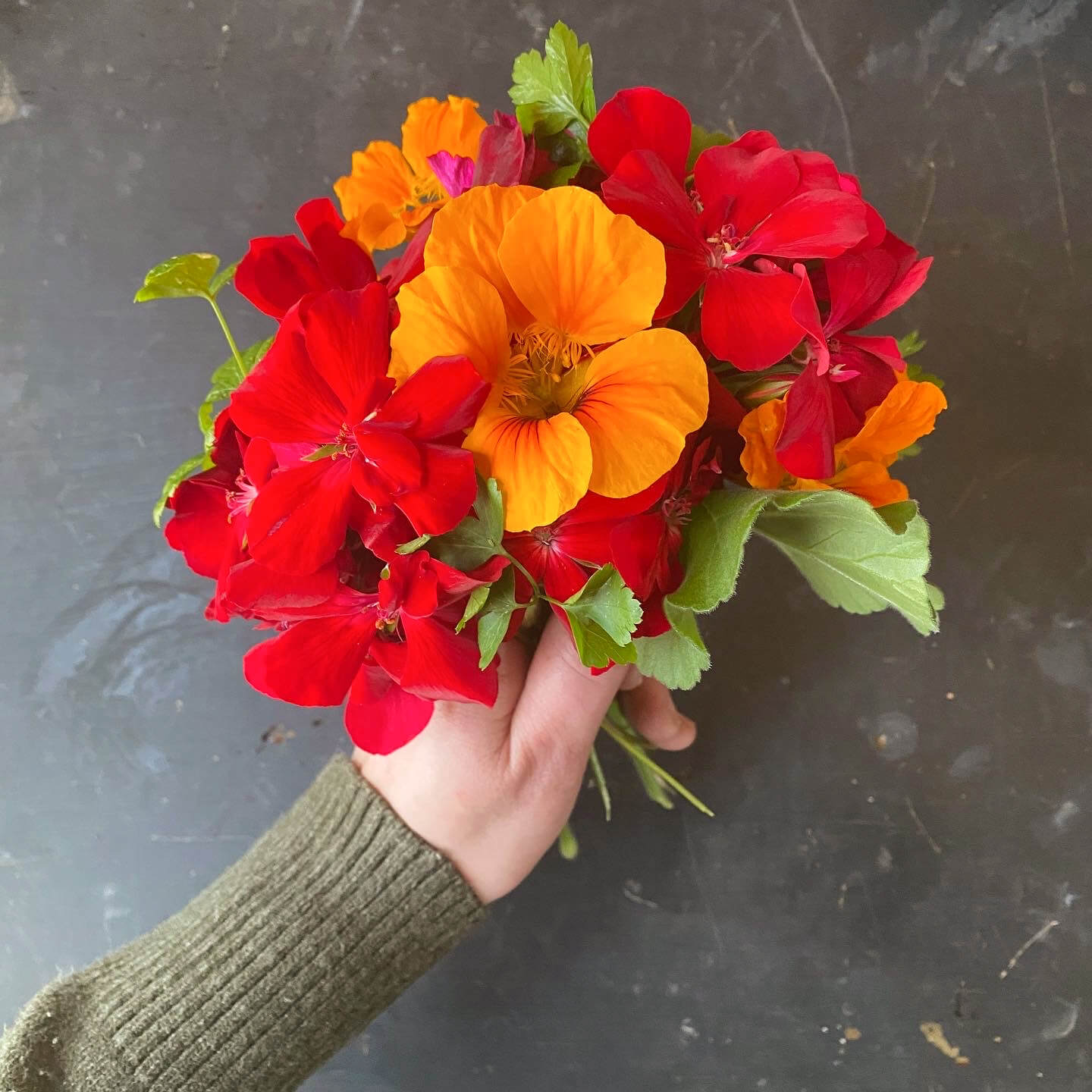
First bouquet from the greenhouse – winter 2023.

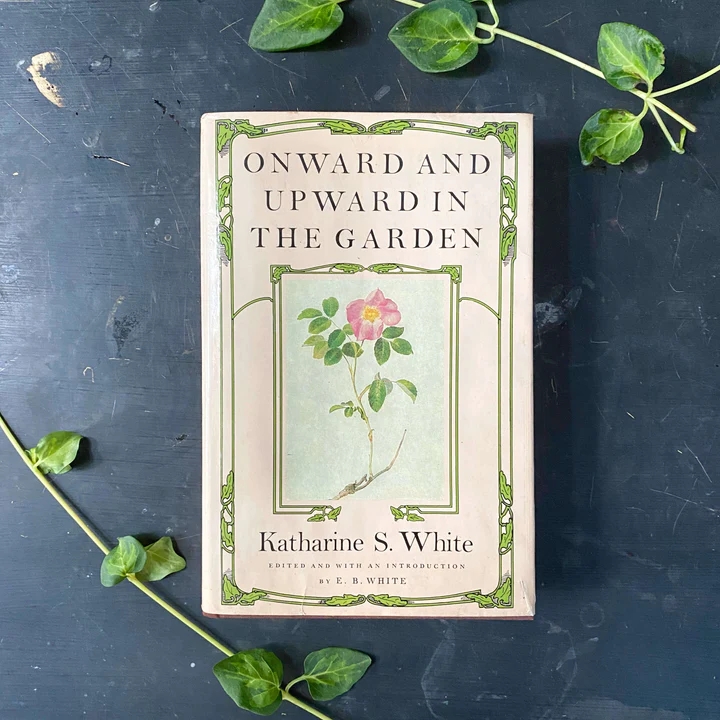
In Year One, hot off the trail of sixteen years of city and country gardening in the hot and humid South, we were keen on testing the greenhouse’s ability to grow an array of vegetables, herbs, and flowers during our first New England winter, all inspired by the writings of Katharine Sergeant Angell White and her 1977 book Onward and Upward in the Garden.
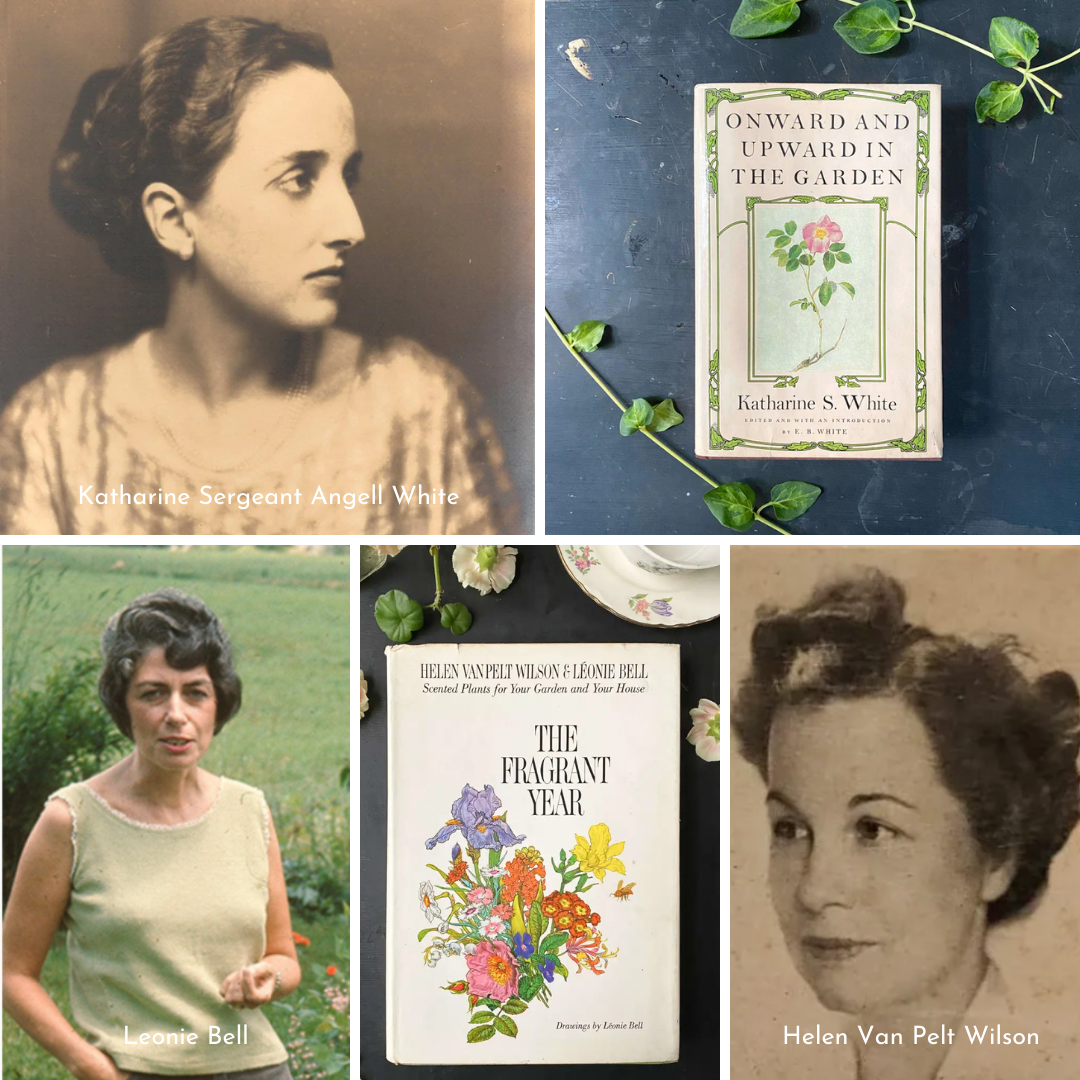
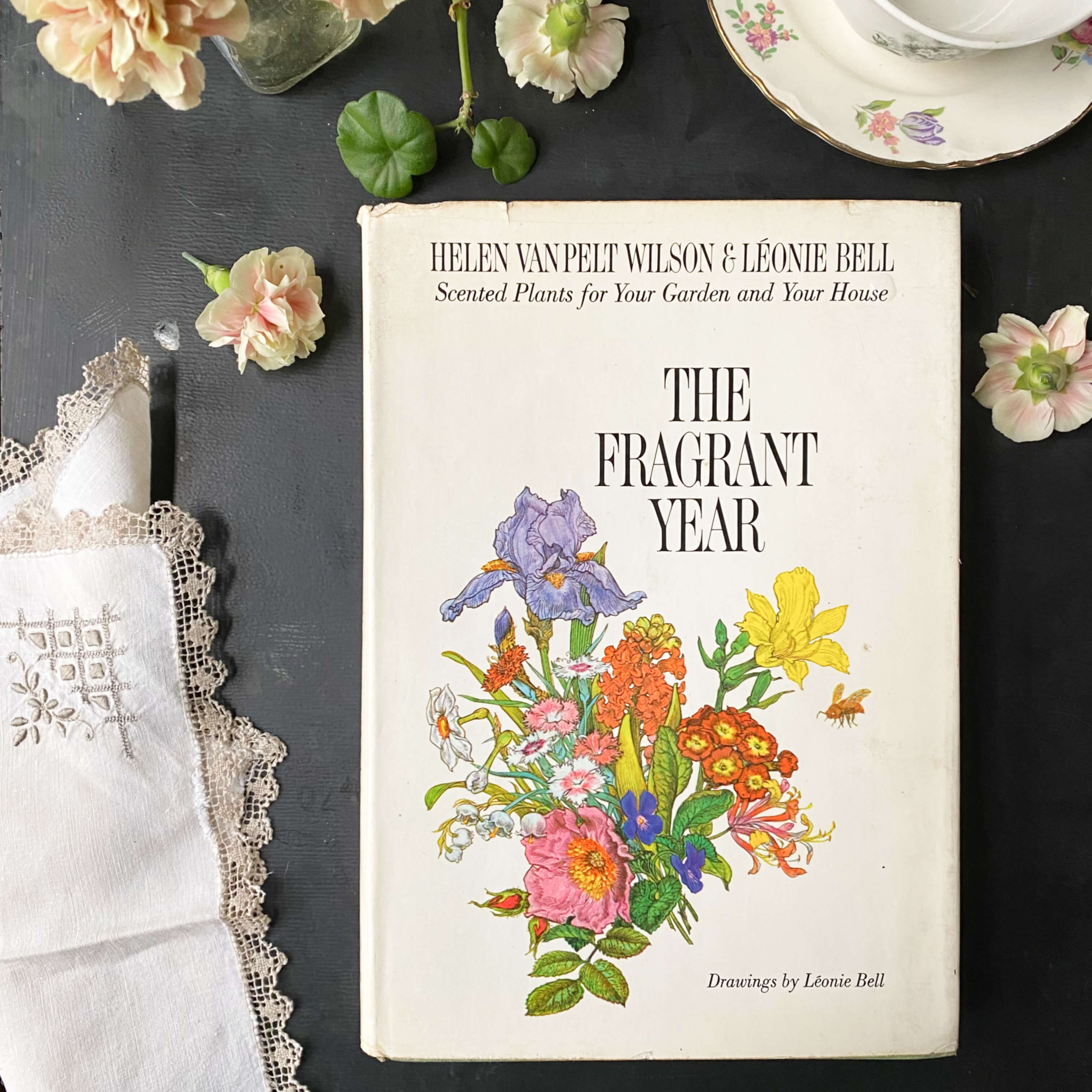
In Year Two, we embraced perennials native to the East Coast that would provide a pleasant aromatic scent to the garden across all four seasons, thanks to the 1977 book The Fragrant Year by Helen Van Pelt Wilson and Leonie Bell.

While we gleaned valuable information in both years and grew the garden successfully in many exciting directions, last year’s theme presented so many challenges that it made us rethink the perfumed garden altogether. In place of twelve new additions to the garden, we only added five… three bare-root witch hazel trees, a patch of perennial viola flowers, and a pot of Nemessia on the porch that slugs eventually enjoyed all the way down to tiny little nubs. The idea of planting an aromatic garden, while fun in theory taught us a lot about the realities of working within the confines of a Northeastern landscape. As we have come to learn, gardening successfully in New England means recognizing and embracing the seasonality of the landscape. And that means in winter, the natural world rests.

January 2025

While it is not a problem to acquire twelve aromatic plants in a year, it was difficult to acquire them on a month-by-month basis in keeping with the Diaries’ month-by-month writing/gardening schedule. We discovered last year that most growers with aromatic inventory won’t ship to our neck of the woods until late spring or after early fall to ensure a successful growing experience. Our own favorite local nursery closes down completely from the end of December to mid-March and larger garden retailers in our area start to remove outdoor plant inventory by the end of July.

This left a limited window of opportunity to plant a dozen new varieties which didn’t match up well with a month-by-month writing schedule. That being said, The Fragrant Year was set aside a third of the way through 2024 and the greenhouse became a holder for a hodge podge of succulents, herbs and experimental seedlings for the rest of the year. Too fun of an idea to let it go, we haven’t seen the last of the Fragrant Year project though. It will come back with a more appropriate planting schedule at some point in the next few years. In the meantime, the now-established witch hazels and violas planted last spring will represent the scented garden for now as we turn our attention to our new, much more accessible garden project for 2025.
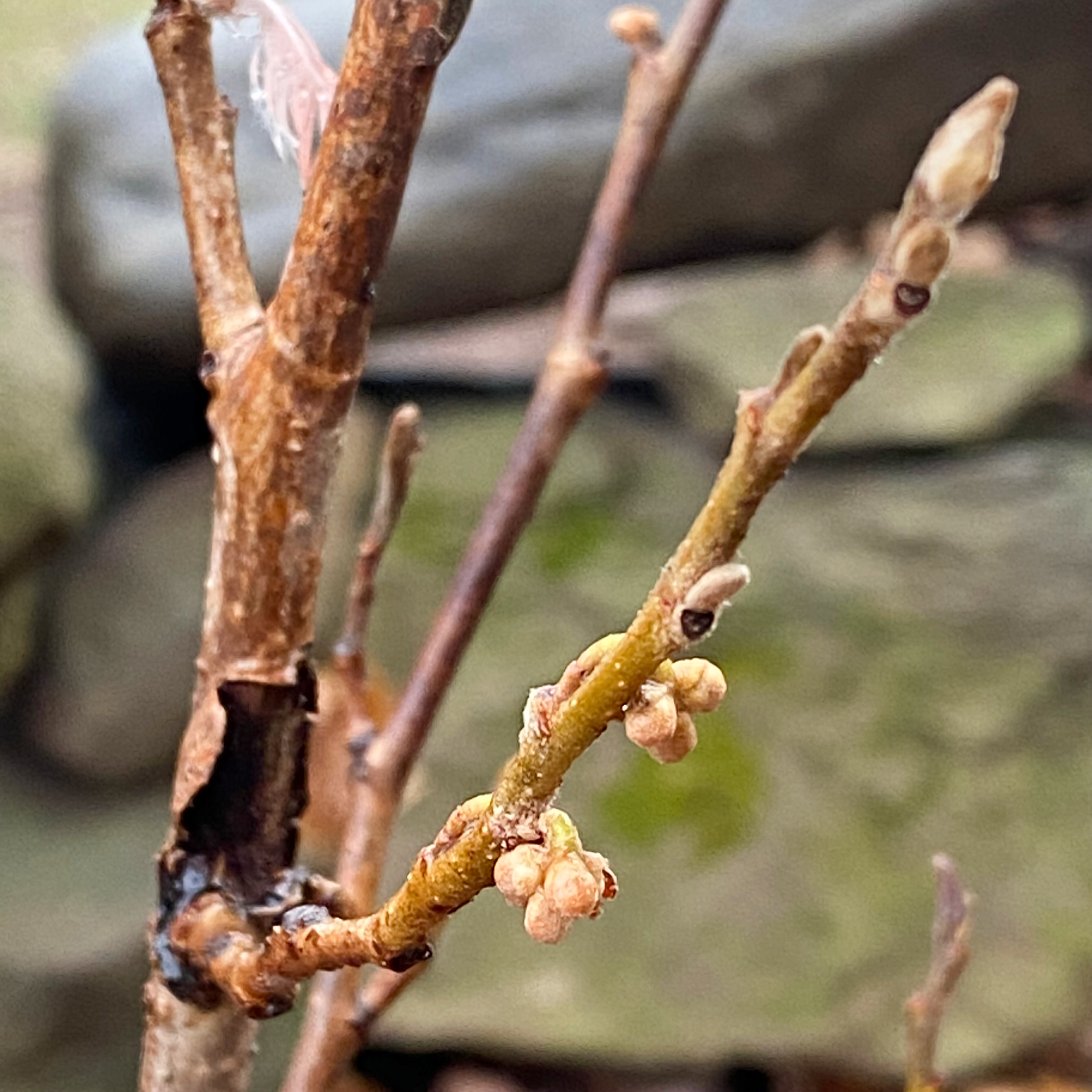
January 2025 flower buds on the witch hazel

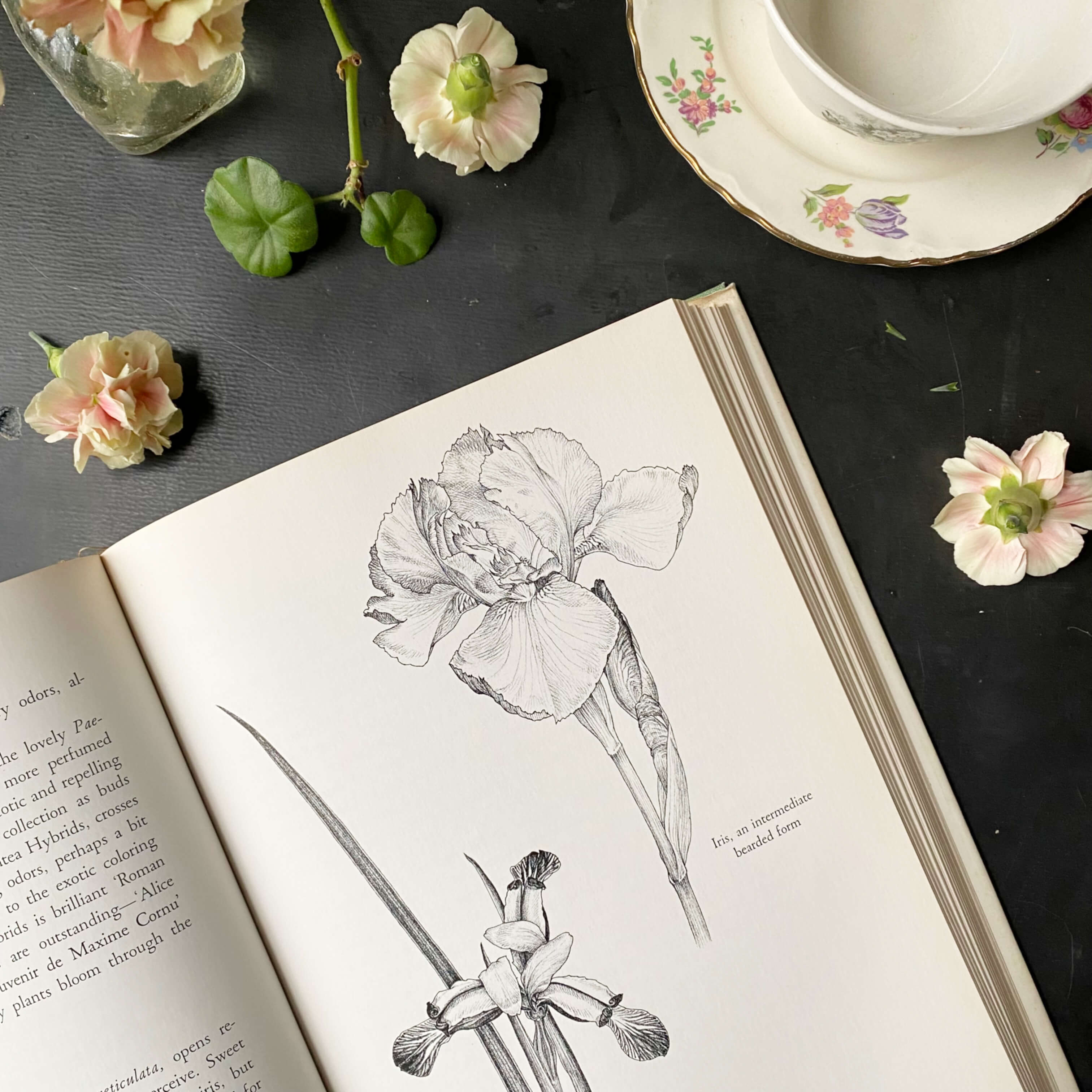
This year, our gardening endeavors involve building a perennial herb garden with the help of Adelma Grenier Simmons (1903-1997) and her book Herb Gardening in Five Seasons published in 1964.

Adelma was considered a definitive authority on herb gardening in the United States during the mid-to-late 20th century. A Vermonter by birth, in 1929 at the age of 26, Adelma purchased a rundown 18th-century farmhouse on fifty acres in Coventry, Connecticut with the idea that she and her parents would start a dairy farm selling cheese and butter made from their own herds of cowsa and goats. She called the farm Caprilands, which literally means goatlands in Latin.

Adelma Grenier Simmons in 1935. Photo courtesy of the Hartford Courant August 01, 1935. Photo by John Haley

Soon discovering that running a dairy while also maintaining a full-time job as an international buyer for a Massachusetts department store left little time to do both jobs well. Adelma began to rethink her farming dreams. Inspired one day by a walk up to a rocky hill on her land, feeling the sun’s warmth on her face and watching it move across a patch of scrubby terrain, Adelma’s thoughts turned to recollections of earlier travels to Europe and the beautiful herb gardens that decorated a similar landscape. An idea struck.

By the early 1950s, the Caprilands Herb Farm was well established and Adelma was on her way to becoming the foremost authority on herb gardening in America. Welcoming visitors from around the world, Adelma gave tours of the grounds and the gardens. She also taught classes, organized workshops, and hosted teas and luncheons at Caprilands for anyone interested in learning more about growing, cultivating, cooking, and collecting these multi-faceted plants.
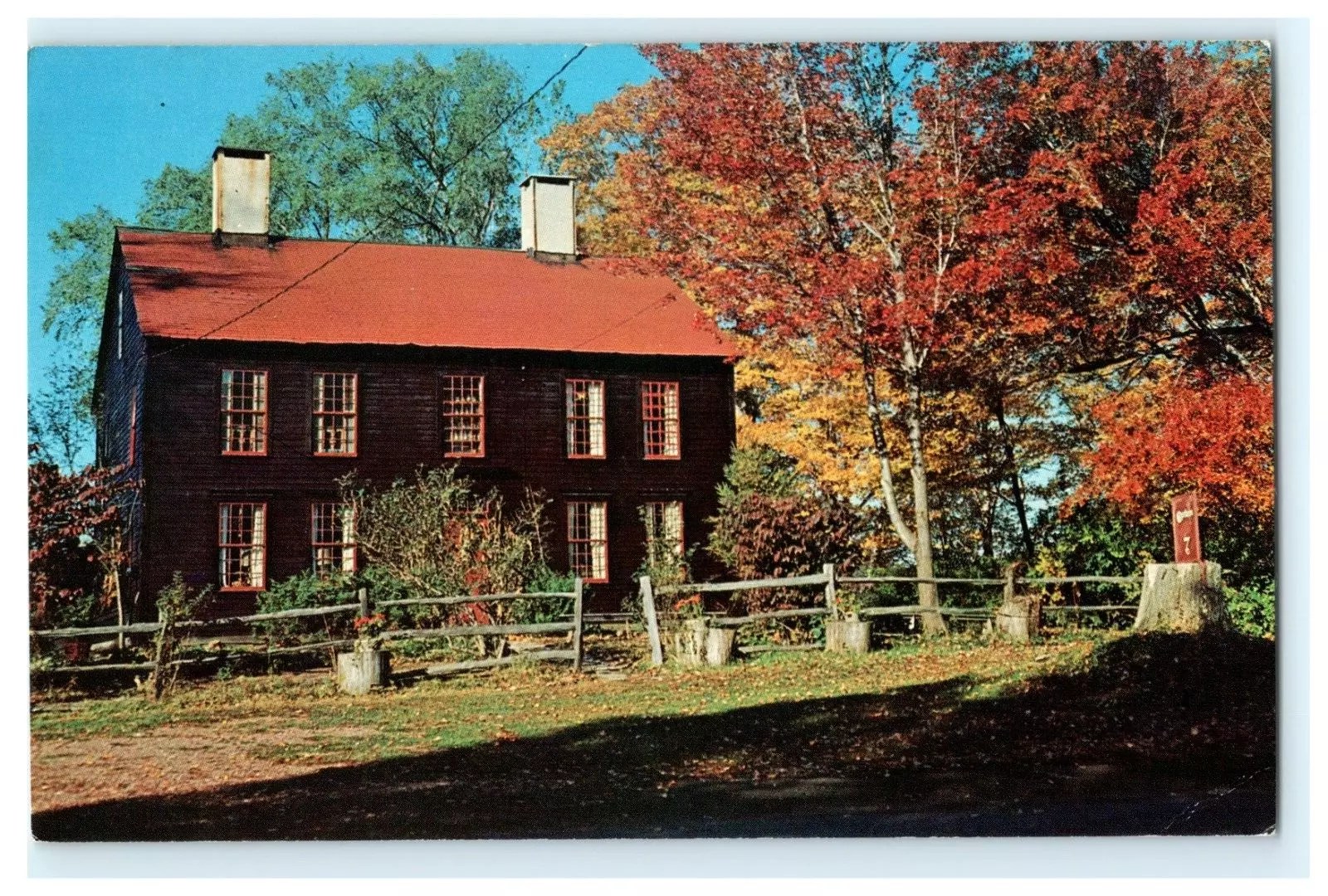
1970s postcard of Adelma’s 18th century Connecticut home – Caprilands

Eventually, Adelma became known as America’s “First Lady of Herbs” and was credited with igniting the country’s interest in herb gardens. In addition to educating the public at home, Adelma also lectured extensively around the country, into her late 80s, inspiring generations of gardeners with her knowledge of herbal horticulture, history, and symbolism. The gardens at Caprilands contained between 200-300 different varieties of herbs at any given time and from them, Adelma preserved stems and stalks in dried bouquets and living wreaths, saved seeds, seasoned food, and wrote extensively on their presence in horticulture, history, cooking and decorating. Her farm became both a learning center and a bustling business spreading the joy of herb gardening around the world.

Adelma Grenier Simmons photographed in October 1984 by Don Heiny. Photo courtesy of Find A Grave.

When she passed away in 1997 at the age of 93, Adelma’s estate went into probate and got tangled up in legal matters preventing her ultimate wishes of turning the property into an educational resource center permanently open to the public. The legal battles, which lasted over two decades, eventually resulted in Adelma’s house being sold, dismantled, and relocated to upstate New York where it was rebuilt for a private buyer.
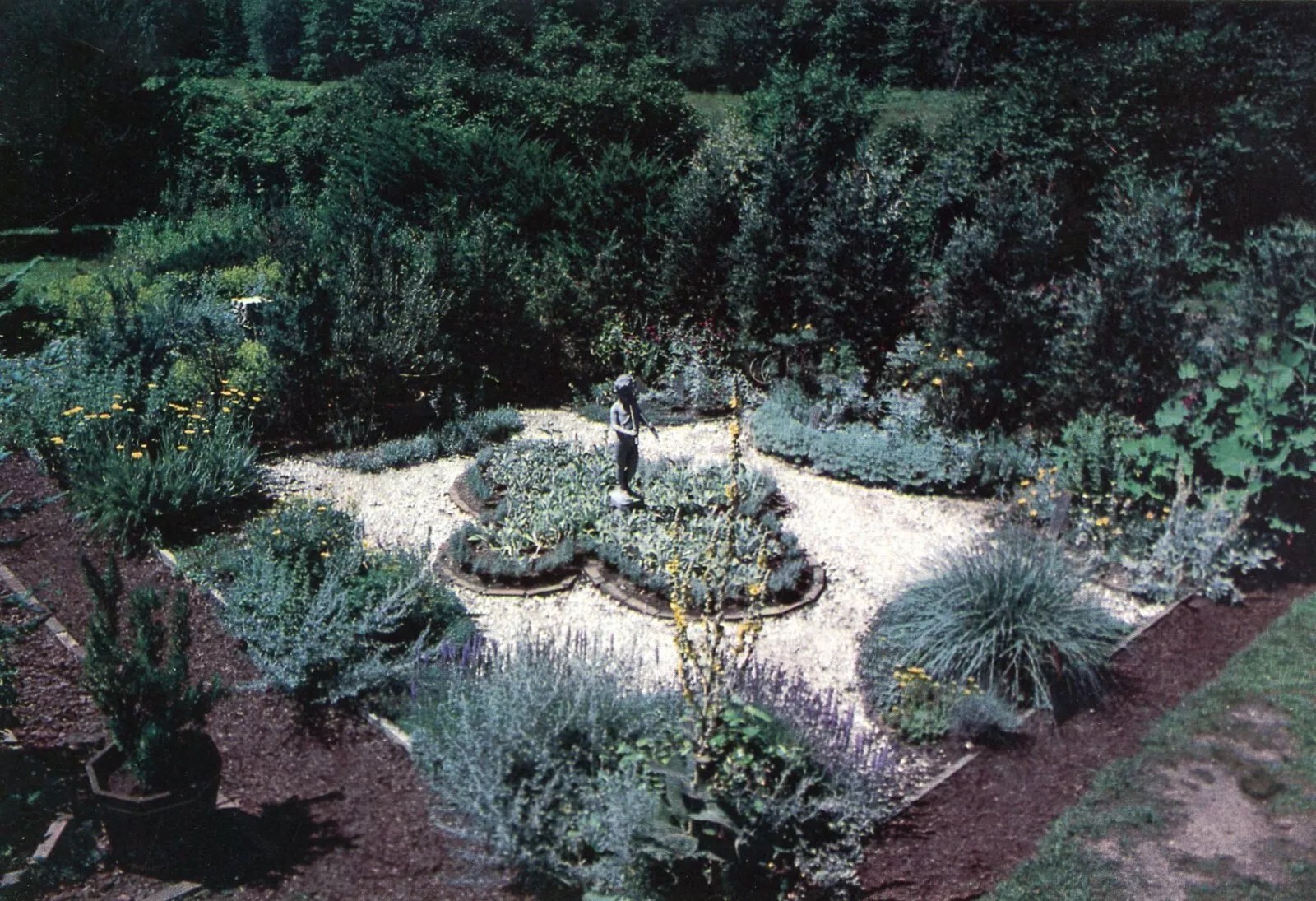
1970s postcard of one of the 30 different herb gardens at Caprilands

While Caprilands and the incredible herb gardens that surrounded it are now a thing of the past, thankfully Adelma was a prolific writer who shared much of her knowledge and enthusiasm for herbs in over four dozen books and innumerable pamphlets. In the 1960s, Herb Gardening in Five Seasons, kicked off her writing career. Covering spring, summer, fall, winter, and Christmas (the fifth season), Adelma’s book tackles just about every bit of information you would need to start, maintain, and build upon an herb garden of your own.

Garden layouts, botanical drawings, black and white photographs, recipes, and poetry fill the pages of Herb Gardening in Five Seasons while also providing detailed information on seventy-seven different plants, an herbal dictionary, and a pronunciation guide. One of the things I love most about Adelma’s book are the lists in the back that organize groupings of herbs by name according to specific situations… Herbs for Bees, Herbs for Dry Soil, Herbs for a Meditation Garden, Herbs to Grow as Hedges, Herbs for Tall Accent, Herbs for Sun-Filtered Shade, etc. It’s that latter list that interests me most since the majority of the garden spaces at 1750 House are bathed in partial shade throughout most of the peak growing months.

When I first discovered Herb Gardening in Five Seasons at a local book sale, a woman next to me asked if I had heard of Adelma. When I said that I had not, she proceeded to tell me a story about the time she went to a luncheon at Caprilands and about how Adelma had served the biggest salad bowl she had ever seen stuffed to overflowing with nasturtium flowers freshly picked just hours earlier. The woman said it was the prettiest salad she had ever seen, let alone eaten. Right then, I knew the book was bound for life and library at 1750 House. Thinking about how well the nasturtiums have grown each summer in the gardens here and the fact that her book includes not only gardening advice but also recipes too, it seemed like Adelma was the perfect teacher to assist us this year in our efforts to create a permanent herb garden.

It wasn’t until after I was home that I noticed that Adelma had inscribed the book to a previous owner. To Carol, it reads… May herbs enrich your life and bring you joy for all seasons. Adelma Grenier Simmons.

Here it was. The final nudge from Adelma to get the garden growing. Over the next twelve months, I cannot wait to share her insight, wisdom, and instruction through our herb gardening adventure. In the next Greenhouse Diaries post, I’ll share the layout and location of the herb garden and the list of herbs that will get us started, courtesy of Adelma’s helpful garden guide and companion planting lists.

In addition to Adelma’s final wishes to turn Caprilands into a teaching facility and an educational resource, she also fancied the idea of creating a network of other herb farms around the country that shared a like-minded enthusiasm for herbal outreach and education. Since Adelma’s wishes for her beloved gardens at Caprilands never came to fruition, it is nice to be able to honor her here in our herb garden adventure at 1750 House. Perhaps in our own small way, it’s part of the start of the cross-country garden network that she envisioned so long ago.

Cheers to a whole new year of gardening, to Adelma for sharing her knowledge of herbs, and to the greenhouse who is proving to be a wonderful teacher herself.

Growing a Fragrant Year: February’s Helpful Hazel and the Greenhouse Diaries

Witch hazel illustration by Leonie Bell circa 1960s

With a scent ranging from sweet yeasted bread to bubblegum, the centuries-old Hamamelis virginiana (aka the common witch hazel) kicks off Month #1 in this year’s Greenhouse Diaries series. In case you missed our introductory post last month, our theme for 2024 is a Fragrant Year, where we’ll be sharing twelve months of perfumed plants, flowers, and trees that have the power to add a calming, aromatic atmosphere to gardens big and small.

Inspired by the 1967 book, The Fragrant Year by Helen Van Pelt Wilson and Leonie Bell and their idea that planting a scented garden benefits not only one garden but many surrounding it, it’s an exciting project that I hope will bring some discussions and awareness about the power of plants and the perfume they provide.

Acting as guinea pigs and testing fields, the greenhouse and gardens of 1750 House are the experiment stations to see how Helen and Leonie’s suggestions work in our northern landscape. Although we are gardening in New England (Zone 6) and striving for a natural and historical outdoor environment appropriate to the history of the house, it’s my goal with this series to feature fragrant specimens that will grow in other parts of the country too, in case you are looking to augment your own green space with some pretty aromatics.

As I write this, the last of our 11″ inches of snow has just melted and signs of spring are stirring in the daffodils poking through in the front corner bed. Planted long before we ever moved in, I’ve come to rely on those flowers as little time clocks signaling that a new season is close at hand even though nighttime temps are still in the 20s and 30s. Spring, indeed, is happening. Soon.

In the beginning chapters of The Fragrant Year, Helen and Leonie write about the “optimistically planned” winter garden, which if done correctly should “offer us flowers with various shrubs to brighten the dull months.” One of their suggestions for wintertime color and scent is one of the oldest medicinal plants in the New World and a resident of the entire eastern half of the country from Canada to Florida.

Although technically considered a shrub or a small tree, when left to its own devices, common witch hazel can grow up to 30 feet tall, and is one of just a few plants that blooms in the dormant stages of winter. Brightening up the landscape with fringe-like ribbons of golden flowers, it adds bright color to the garden, shelter for birds, and a food source for winter pollinators like the dagger moth that shivers and shudders its way through the cold season.

The common witch hazel in winter. Photo courtesy of TN Nursery

Requiring moist soil, sun to partial shade, and an acidic to neutral PH level, witch hazel is an easy-going, practically carefree planting that grows one to two feet in height each year. Ideal for sunny spots, woodland edges or sloping hills where soil erosion is a concern, the helpful hazel compliments a variety of different landscapes in a variety of different states.

Last year, we had to make the tough decision to bring a tree service in to cut down two trees that were precariously leaning in the backyard. The salve for having to cut down two old trees was knowing that we would plant at least two new ones in their place.

February 2023 tree cutting

Surrounded by woodlands on two sides and facing a community garden in front, 1750 House is tucked in between acres of beautiful naturally-kept trees, including five elms and two cedars that are over 100 years old. While we have no shortage of very tall trees, we do have a bit of haphazard mid-range tree coverage that reflects over 270 years of garden endeavors executed by previous 1750 House residents. Privet, fruit trees, ornamental shrubs, wild natives, ornamental grasses and a few invasive species all compete for attention to the eye. We are on a mission to corral all these growers into a more cohesive vista so that they can work together to provide interesting layers at different heights to create a unique blend of shapes and colors throughout the year.

The appeal of planting a witch hazel shrub in the backyard is the pretty array of color it will add at eye level in the winter when most of the woodlands boast shades of grey, snowy whites, evergreen, berry reds and blacks. I also love the medicinal factor that witch hazel offers and the future opportunities it will bring later down the road to explore some homeopathic recipes.

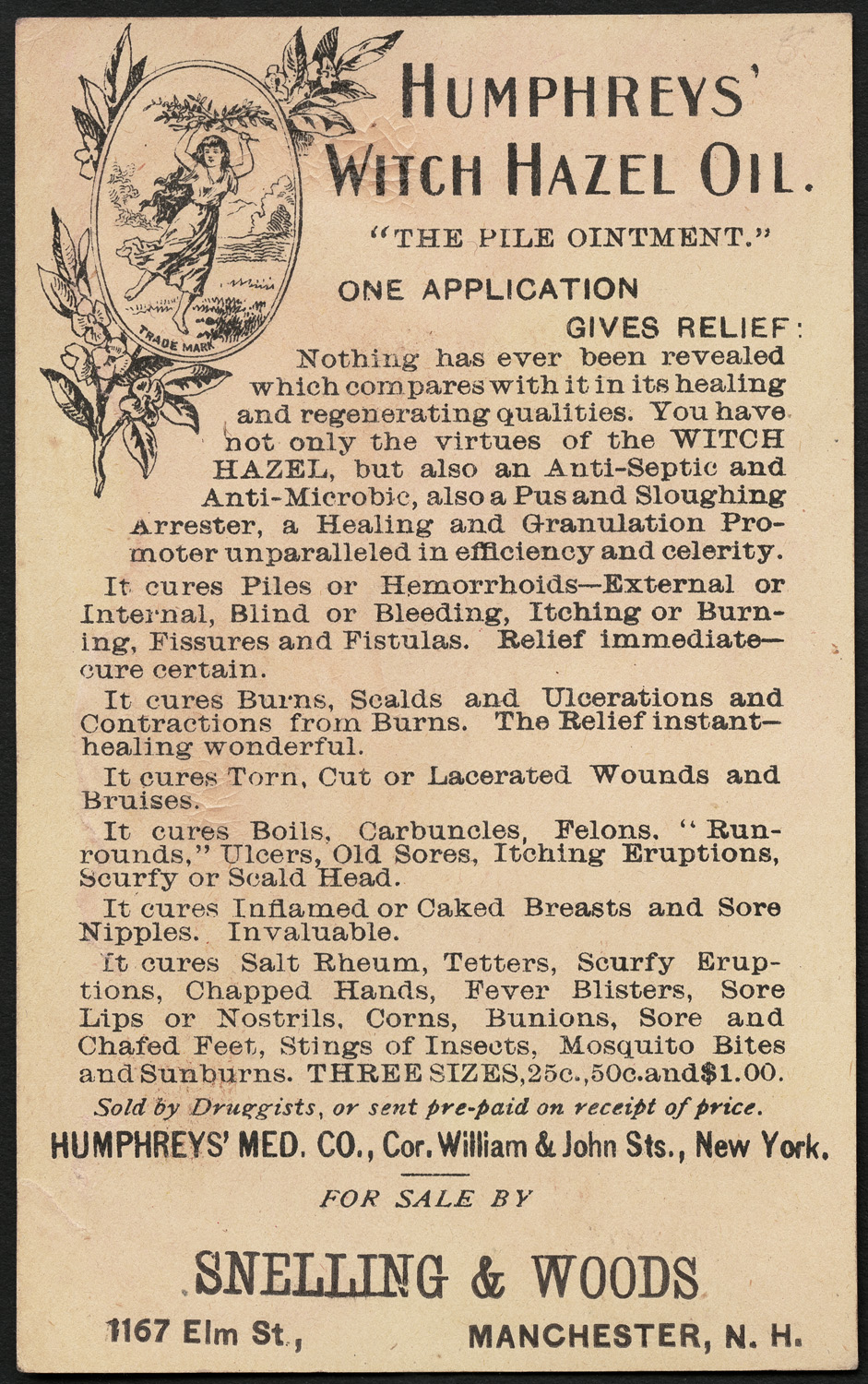
Humphrey’s Witch Hazel Oil was made in New Hampshire in the 1870s. Image courtesy of the Boston Public Library.

Befitting a proper and useful kitchen garden of a house built in the 18th century, witch hazel in all its forms, from leaf to stem to flower, has been cultivated for hundreds of years for use in poultices, anti-inflammatory salves, and skincare maintenance. In New England, we have the area’s indigenous tribes to thank for teaching early settlers how to boil the bark for medicinal tinctures to heal coughs, colds, and inflammatory ailments. The leaves were used in wound care. The wood for making bows for hunting. By the 19th century, witch hazel became a key ingredient in the first mass-marketed skincare product – Pond’s Cold Cream – which debuted in 1846 under the name Golden Treasure.

Helen and Leonie offered another use too… clipping a few branches of witch hazel in winter and adding them to a vase along with some balsam sprigs for some invigorating indoor aromatherapy. Even though it can take up to six years for the first blooms of witch hazel to appear, I can already imagine such a bouquet.

Young fruit of the witch hazel shrub. Photo: Katja Schulz

While I have ordered plenty of garden seeds online before, ordering a shrub off the internet was an entirely new experience. As I learned, live agricultural specimens like this one are shipped in timing with the appropriate planting season. So the witch-hazel shrub I selected from Tenesssee won’t arrive until spring even though it was ordered in late winter. That’s a handy system that sets you up for success from the beginning.

So the first month of our Fragrant Year series starts off with a to-be continued. We’ll check back in on our witch hazel planting adventures in spring when the shrubling arrives. In the meantime, if anyone else has any experience working with witch hazel, your thoughts are greatly appreciated. Please share them in the comments section.

Cheers to Helen and Leonie for their advice on adding winter color to the landscape and for the aromatic start to showcasing historic plants in the gardens at 1750 House. Until next month, happy gardening.

Other sights from the February greenhouse…

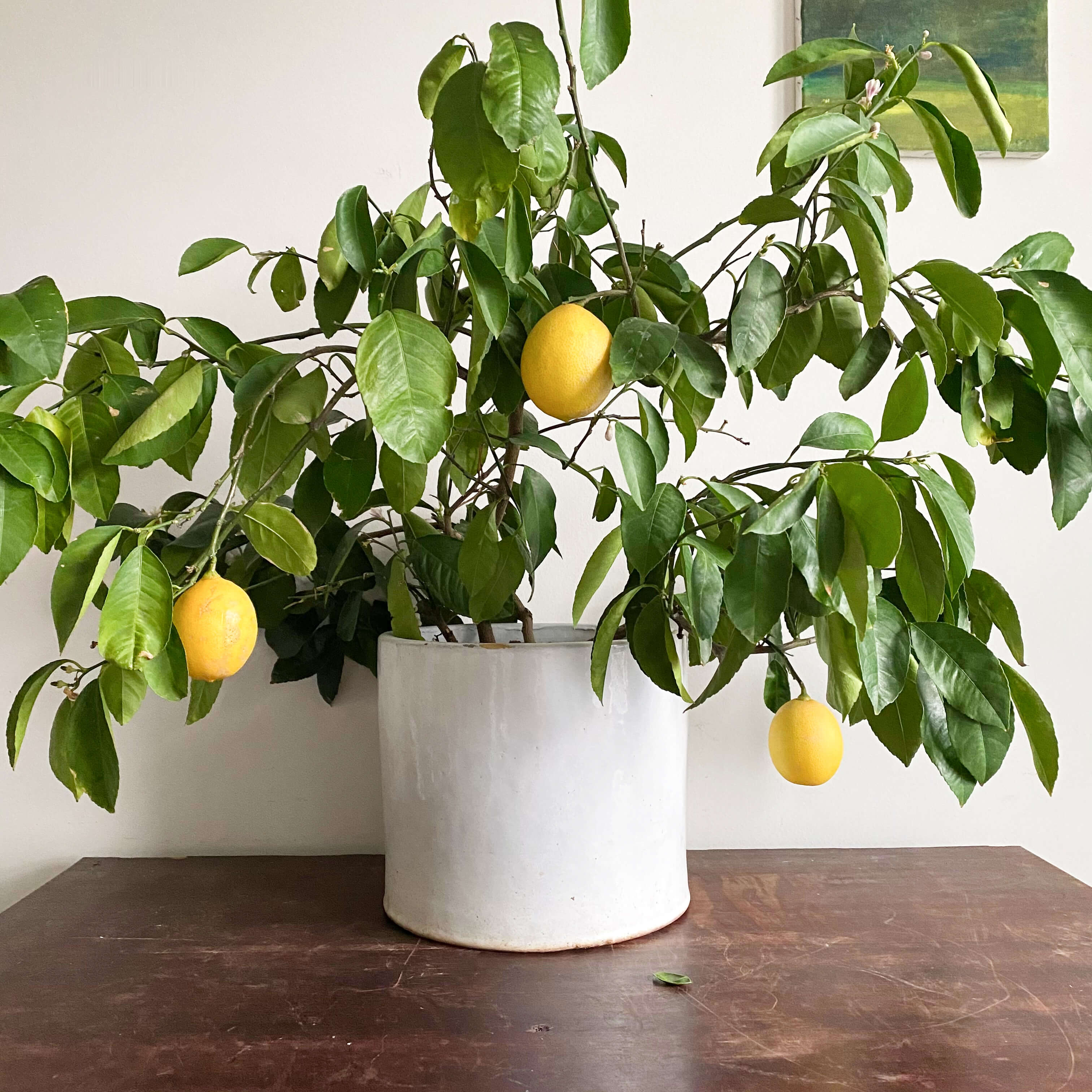
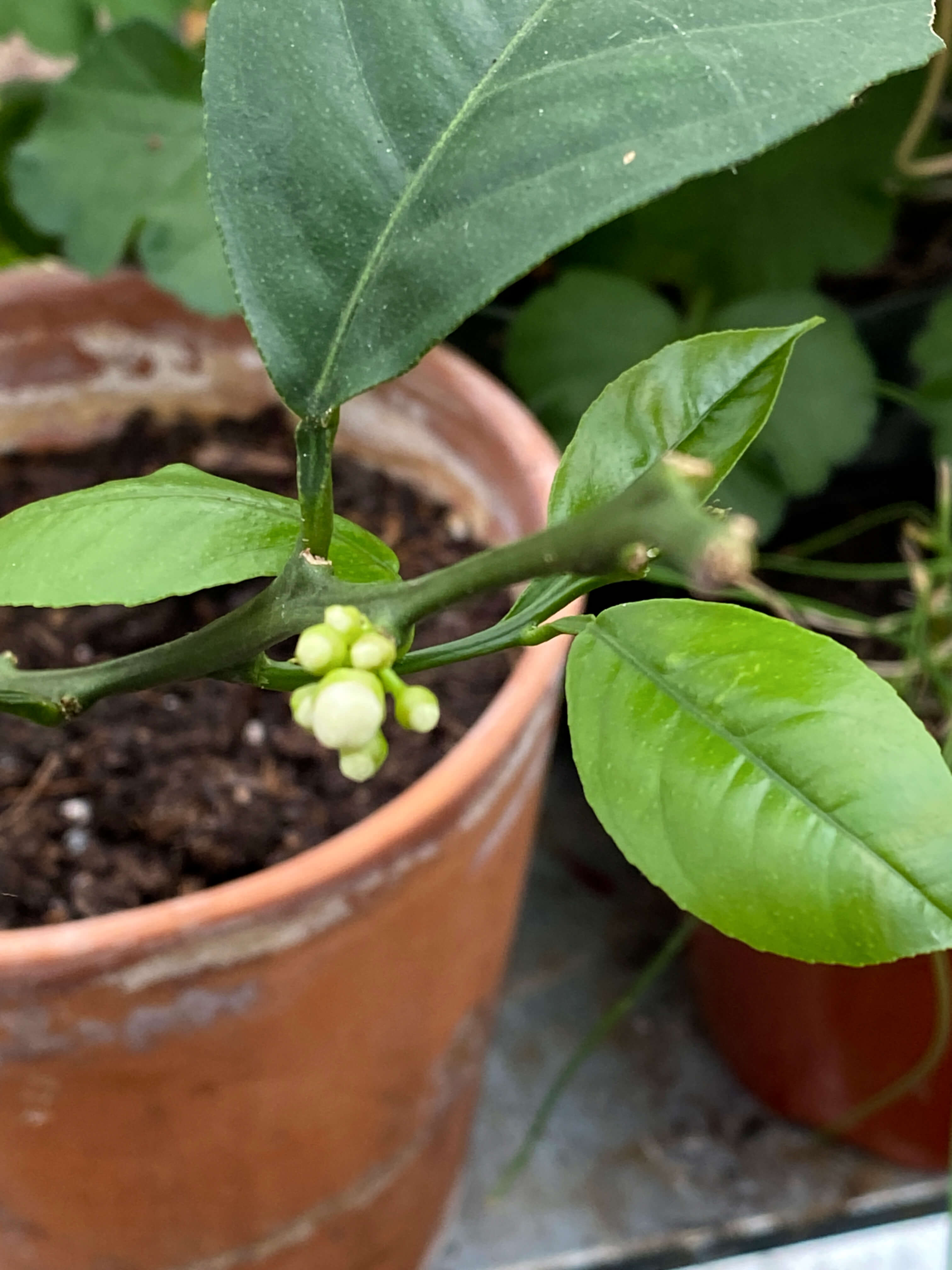
Not to be upstaged by the witch hazel, and just in time for our first Fragrant Year post, Liz Lemon is blooming and filling the greenhouse with her lovely citrus scents.

New seedlings sprouted this month.

Welcome To A Fragrant Year: The Greenhouse Diaries Return for New Growing Adventures

The Greenhouse Diaries are back with new inspirations and a whole new year of growing adventures to explore and discover. Like last year, these new diary entries center around what can be grown in a petite 4×6 greenhouse in our four-season New England climate, but starting this month there is a brand new theme, different from last year, that is guiding our gardening goals in 2024.

Our mighty, mini greenhouse in 2023

Last year, our first year as greenhouse owners and New England residents, we focused on winter gardening from December through May and all the possibilities that a warm greenhouse could offer in a cold landscape. We drew inspiration from Katharine Sergeant Angell White, a lifelong lover of the natural world who also happened to be a marvelous writer, a founding editor of the New Yorker magazine, and the beloved wife of E.B White.

Katharine Sergeant Angell White (1892-1977)

Her 1977 book Onward & Upward in the Garden, featured a collection of horticultural essays that highlighted her ability to embrace challenges by finding joy and solace in the certain uncertainties. Something that all gardeners must face when it comes to designing a pleasing landscape, in Katharine’s case, it was the long Maine winters that were a struggle for her spirit which yearned to be out in the garden digging and clipping, pruning, and propagating. She also had much to say about the confusing advice of garden experts and her own thoughtful attempts of trying to create the garden of her dreams. Her writing was full of spirit, humor and opinion when it came to detailing plans, recommending books and seed catalogs, and offering advice on growing plants and flowers both indoors and out. She was inspiration enough for us to start experimenting with our first winter growing season. Cold weather aside, we had Katharine on our side, lending a unique empathy and encouragement that fueled our desire to get out and grow things regardless of the weather, our experience level or the unseasonability of what we most wanted to achieve.

Our plan last year was to get a head start on establishing garden beds for 1750 House, so we focused mainly on forcing seeds and plants to sprout, bud and bloom early. Using 33 different plants, flowers and herbs as trial-run guinea pigs, we accomplished our goals with a fair amount of success and a few setbacks as we tested the physical capabilities of the greenhouse and grew our garden knowledge.

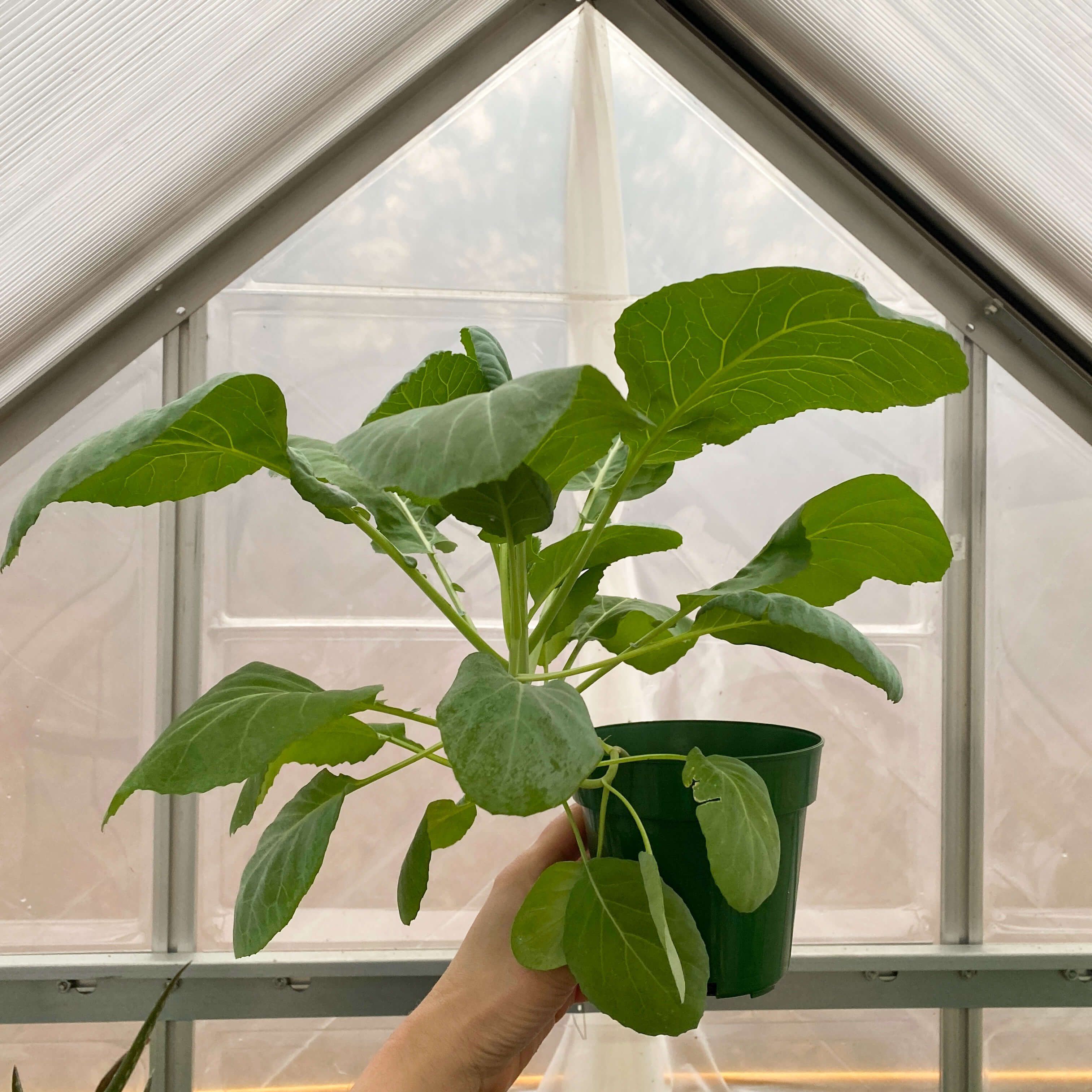
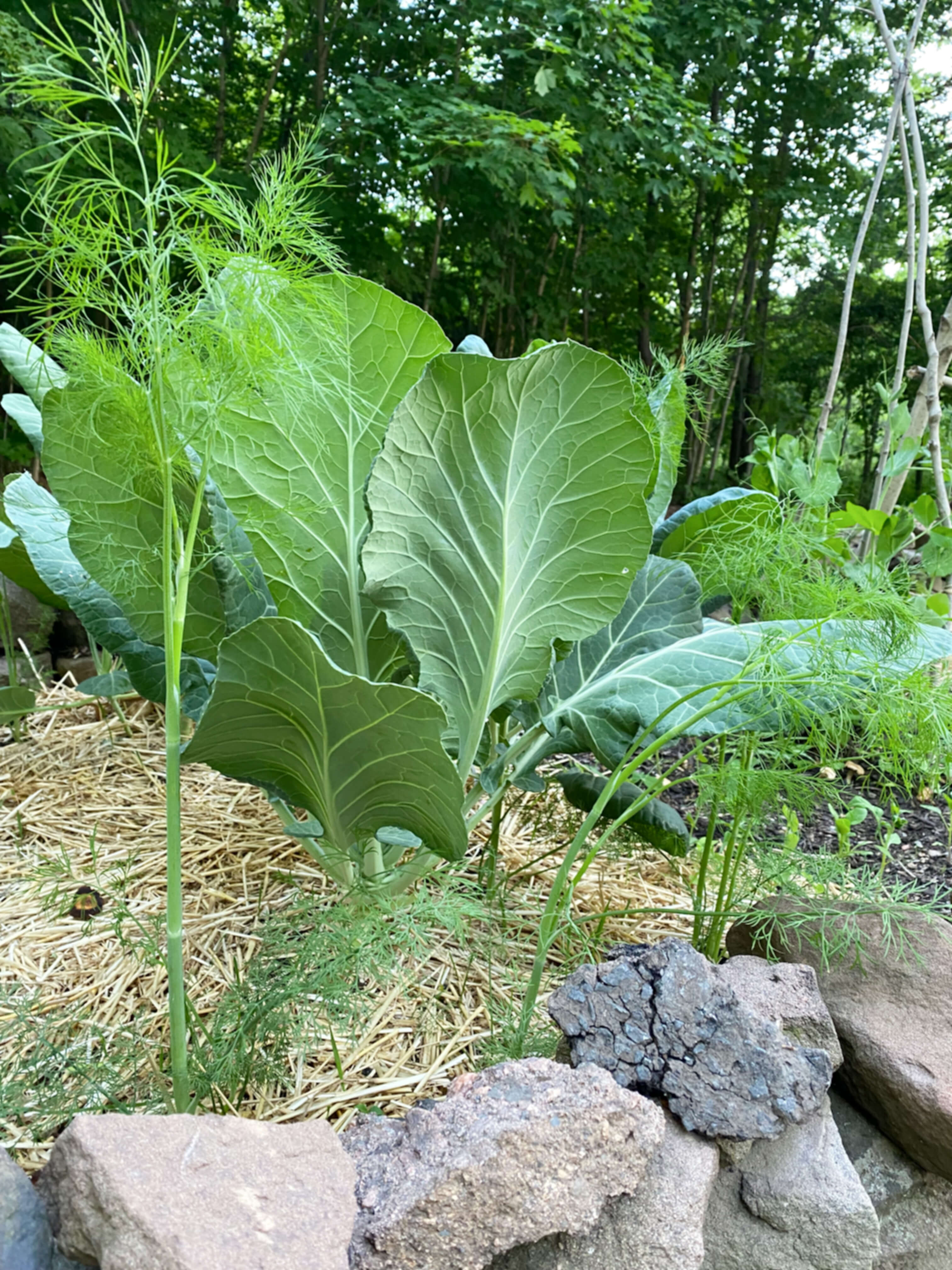
A greenhouse success – the joy of growing collard greens in 2023

This time, a year wiser, we are reducing the number of overall plants in the greenhouse to just focus on the proven winners that grew well both in the greenhouse and in the garden beds last spring, summer and fall. And to keep things interesting, we are launching a new experiment. This year, we are leaving extra room in the greenhouse to try our hand at growing a new type of perennial garden for year-round enjoyment… a landscape full of plants, flowers and trees that carry a scent.

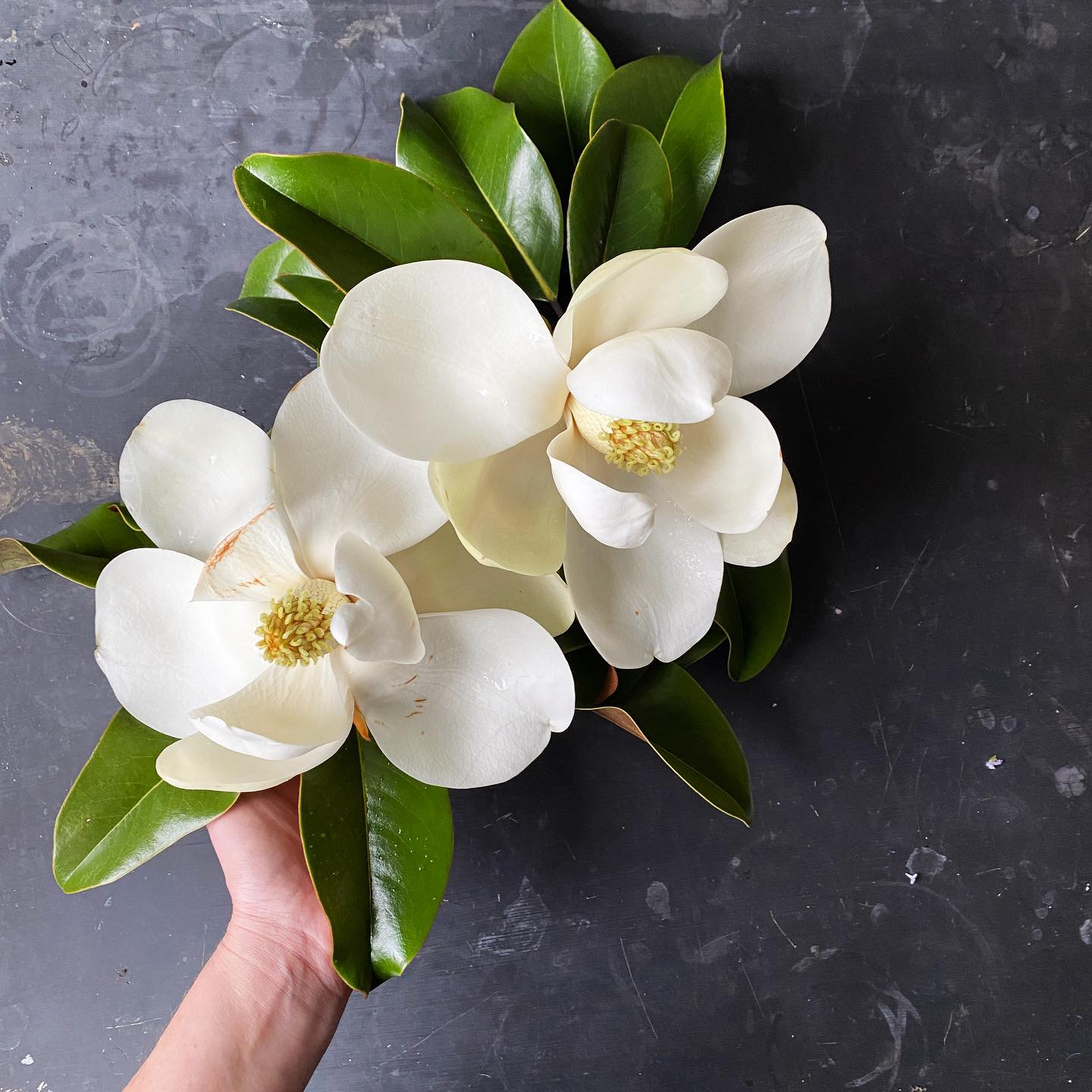
Marvelously scented magnolia blossoms dotted our landscape down South.

When we lived in the South, we were surrounded by a wide variety of aromatic flowers that made our time there all the more memorable because of the beautiful perfume that continuously lingered in the air. The scent of night-blooming gardenias and fragrant magnolias swirled around our dinner parties. The heat of summer brought heavy humidity but also the delicate, sweet aromas of climbing Carolina jessamine. Roses in every scent and shade toppled and tumbled over hedgerows and brick walls. It was a lovely layer of landscape design that I had never really thought about until we had experienced it firsthand. Of course, we won’t be able to recreate an exact aromatic Southern garden here in New England since it’s a very different climate from there to here, but there are plenty of other options in the Northeast to explore for similar effect thanks to our new inspiration.

Here to guide the 2024 Greenhouse Diaries in our aromatic endeavors is the 1967 book, The Fragrant Year by Helen Van Pelt Wilson and Leonie Bell. Month by month, in words and drawings this book details how to grow specific types of plants and flowers that will continuously unfold new scents in the garden season by season, even in the winter months.

Praised for being the first of its modern kind, The Fragrant Year was lauded both for its scope and its practical application, as well as its healthful benefits. In the opening chapter Helen writes… “if our gardens today were more often planned as fragrant retreats and our rooms were frequently perfumed with bowls of spicy pinks, bunches of aromatic herbs, vases of fragrant roses, and jars of potpourri, perhaps we would not have to depend so much on tranquilizers to hold us together in this frantic, fast-paced world.”

Helen wrote that in 1967 but it is still so applicable today. The world is still frantic and fast-paced. People still look to medicine to calm their nerves. But we think Helen’s theory is pretty wise – there is something much more natural, more gentle, more joyful in tackling frantic nerves and fast paces with this sort of approach instead. It is lovely to think that by selecting a few handfuls of scented botanicals and thoughtfully adding them to the landscape we might not only help create a more calm environment for ourselves but also for the community around us. Who knows what sort of impact that small gesture could have on a greater world.

Helen Van Pelt Wilson (1901-2003)

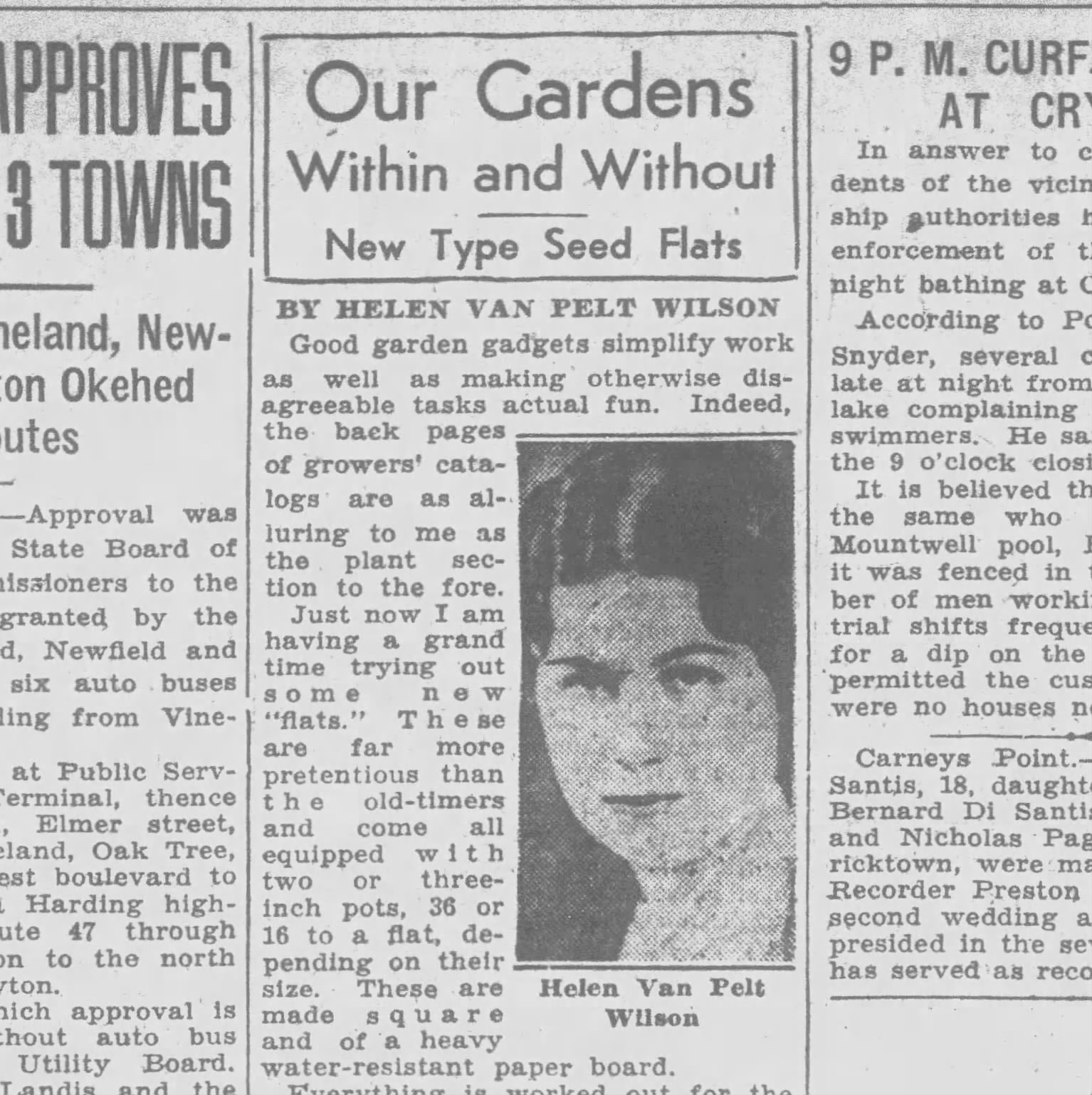
A prolific writer of gardening books throughout the 20th century, Helen was no stranger to the power of plants. Along with penning a newspaper column titled Our Gardens Within and Without during the 1920s and 1930s, she also wrote for all the well-known women’s magazines including House & Garden, Cosmopolitan, Better Homes & Gardens, and House Beautiful. In between all that she wrote/edited over fifty books on various gardening topics throughout her long and lengthy career.

The Courier Post – July 30th, 1935

Born in New Jersey, Helen spent the majority of her life in Philadelphia, PA and Westport, CT where she experimented with gardening projects of all sorts both indoors and out. Her most well-known book was one on caring for African violets published in the 1940s but she was a beloved and trusted authority on a variety of horticultural topics throughout her life. Working with Leonie on several different projects, it was in the 1950s that they learned they shared a mutual love of aromatic botanicals. Upon discovering this, the idea for The Fragrant Year was quick to spark but it took Helen and Leonie ten years of dedicated research and trial-and-error gardening experiments before their book was finally published.

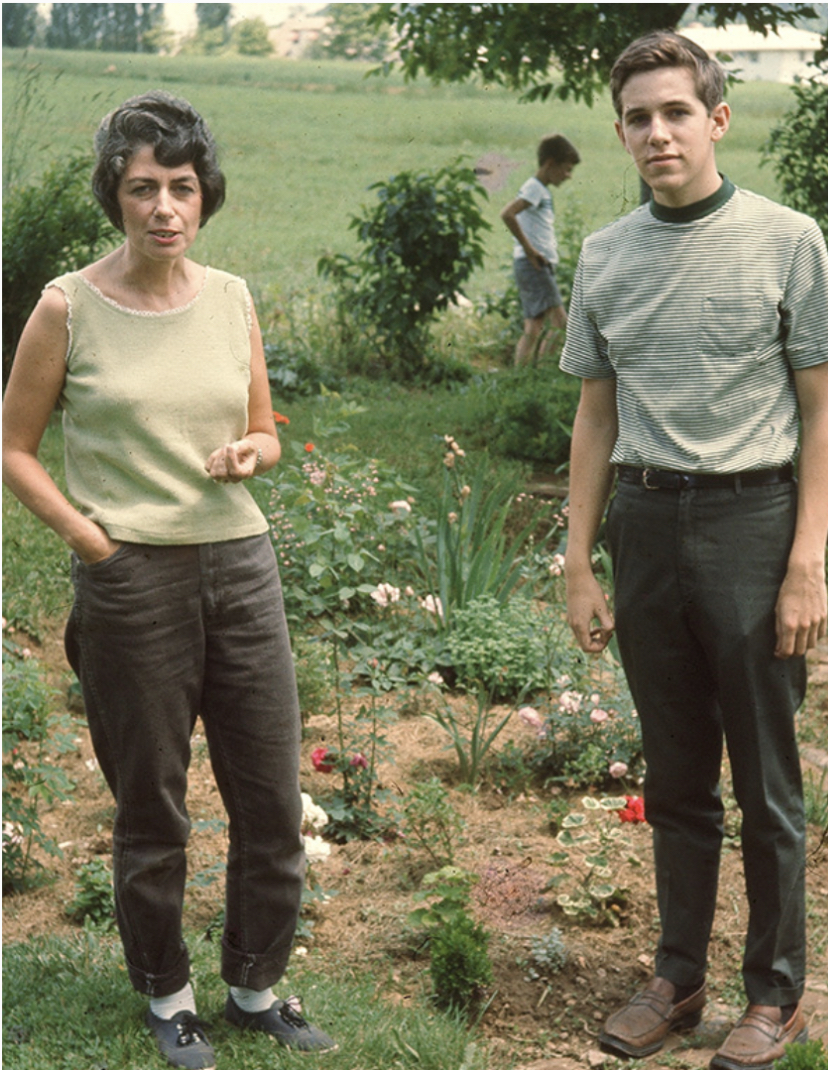
Leonie Bell in the garden. Photograph courtesy of monticello.org by way of Rev. Douglas T. Seidel

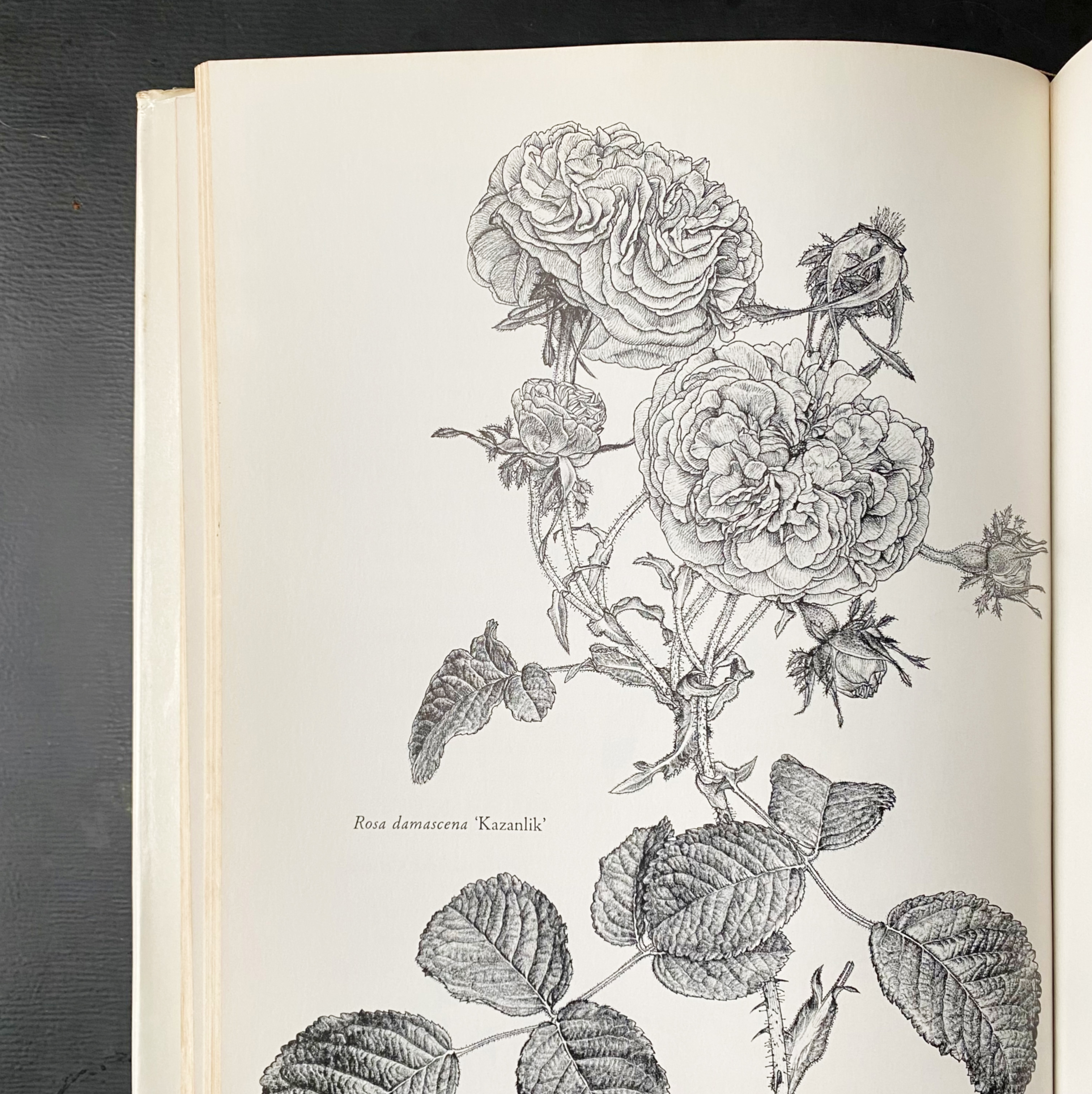
Like Helen, Leonie Bell (1924-1996) lived and gardened in suburban Philadelphia. In addition to being a well-respected botanical illustrator, she was also known as a rose expert. Contributing her expertise to several rose garden books published during the 20th century, Leonie was often referred to as a rose genealogist since she had a knack for discovering/uncovering heirloom roses from the past that had been misnamed or believed to be no longer in existence. At one point, her own personal garden contained over 200 different types of roses, most of them old-fashioned heirloom varieties.

If you are ever in Virginia, you can see the impact Leonie made at the Leonie Bell Rose Garden at Thomas Jeffferson’s Tufton Farm, which features a tribute to both Leonie’s legacy and the history of North American rose breeding.

Much sought after in the world of botanical illustration, what’s interesting about Leonie’s art is that she was self-taught. Her intrinsic knowledge of the anatomy of plants combined with her studies at the School of Horticulture in Ambler, PA led her to closely look at botanical subjects from all angles. That well-rounded vantage point carried through to her drawings which shine with scientific detail but also personality.

Excited to share a year full of fragrance here on the blog, each month we’ll feature a new scented flower or plant recommended by Helen and Leonie and detail our gardening experiences as we incorporate twelve new aromatic additions into the landscape at 1750 House. Hopefully, you’ll find this information equally inspiring and insightful too. It would be lovely if we could all experience the calming nature of a scented garden together.

Our next Greenhouse Diaries post will introduce our first fragrant botanical, but in the meantime, here’s a quick update on improvements we made to the greenhouse over the summer and a current list of what’s growing in the greenhouse now…

January color in the greenhouse

Current Occupants

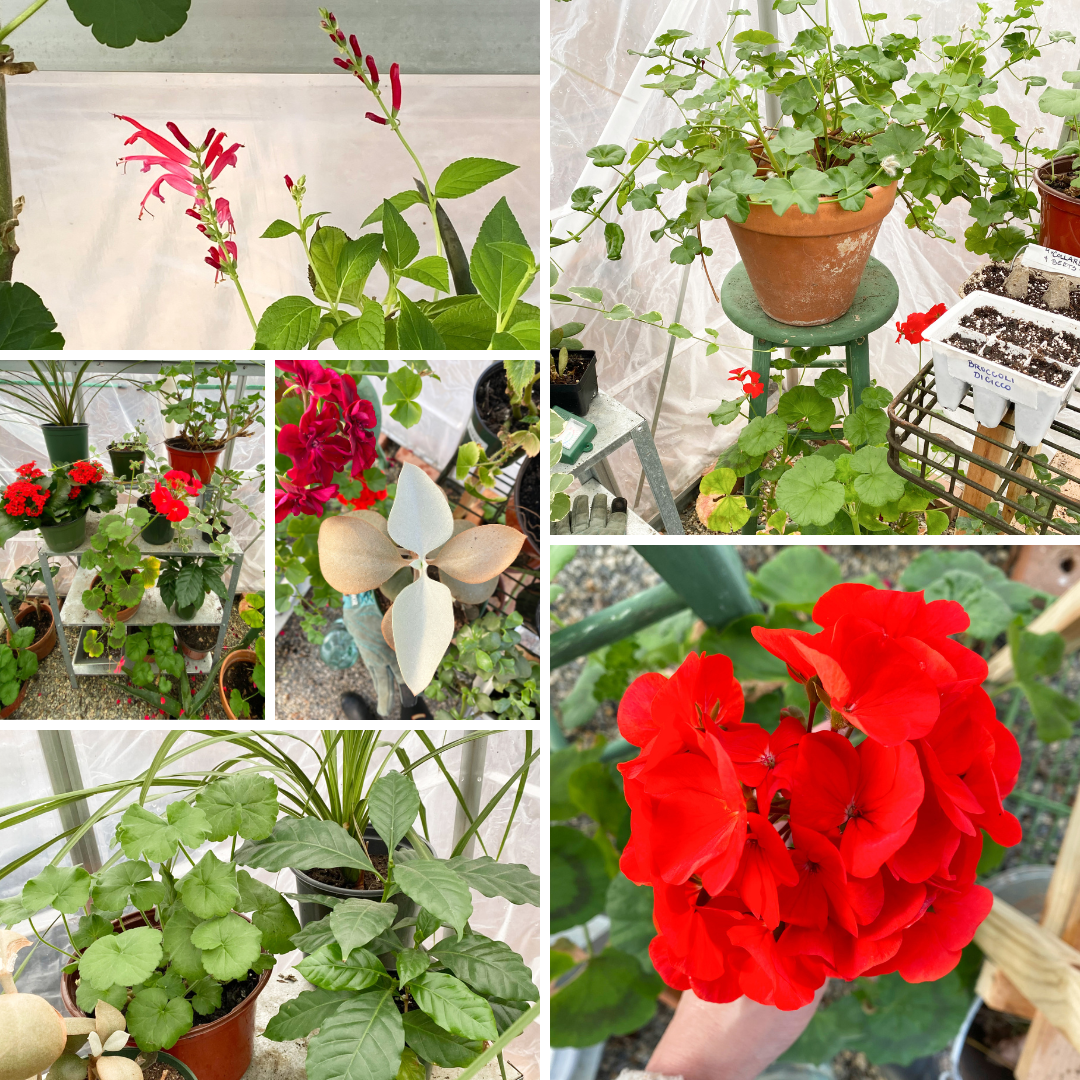
As of mid-January, the greenhouse is halfway full with overwintering geraniums, vinca vine, and dracaena spikes from the summer garden. Six different types of succulents, a coffee plant, a pineapple sage cutting from our summer plantings, and Liz Lemon (our six-year-old lemon tree) fill out the rest of the space alongside a batch of newly started seeds… collards, broccoli, beets and four different types of salad greens.

Winter Plastic Wrap

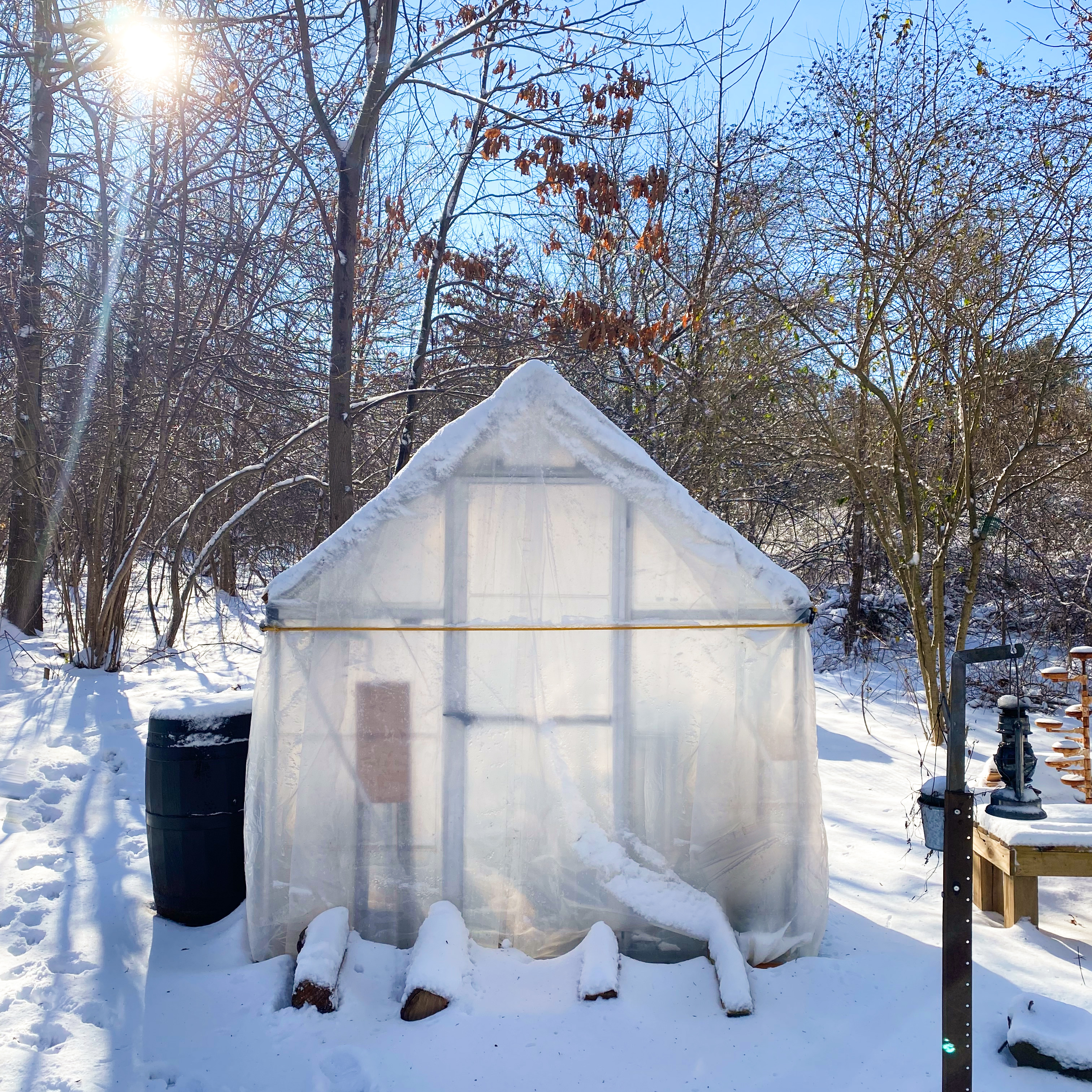
This isn’t a new improvement, but we are on Year No. 2 of dressing the greenhouse in a winter coat – aka wrapping it entirely in a layer of thick plastic – to keep the heat in and protect the plants from drafts during rain, sleet, and snowstorms. The plastic, a temporary solution for the coldest months gets removed in early spring, folded up, and stored in the basement. Once the temperatures drop below 45 in the fall, we put the plastic back on for the season. Aesthetically, it’s not the prettiest site but it gets the job done and keeps our overwintering plants and new seedlings happy and warm. We weren’t sure how the plastic was going to hold up from year to year, but so far it’s nice to see that it is still working just as well. To learn more about this winterization system, see last year’s post here.

Thanks to the plastic wrap, everything stayed warm and dry inside during our most recent January 2024 snowstorm.

New Electrical

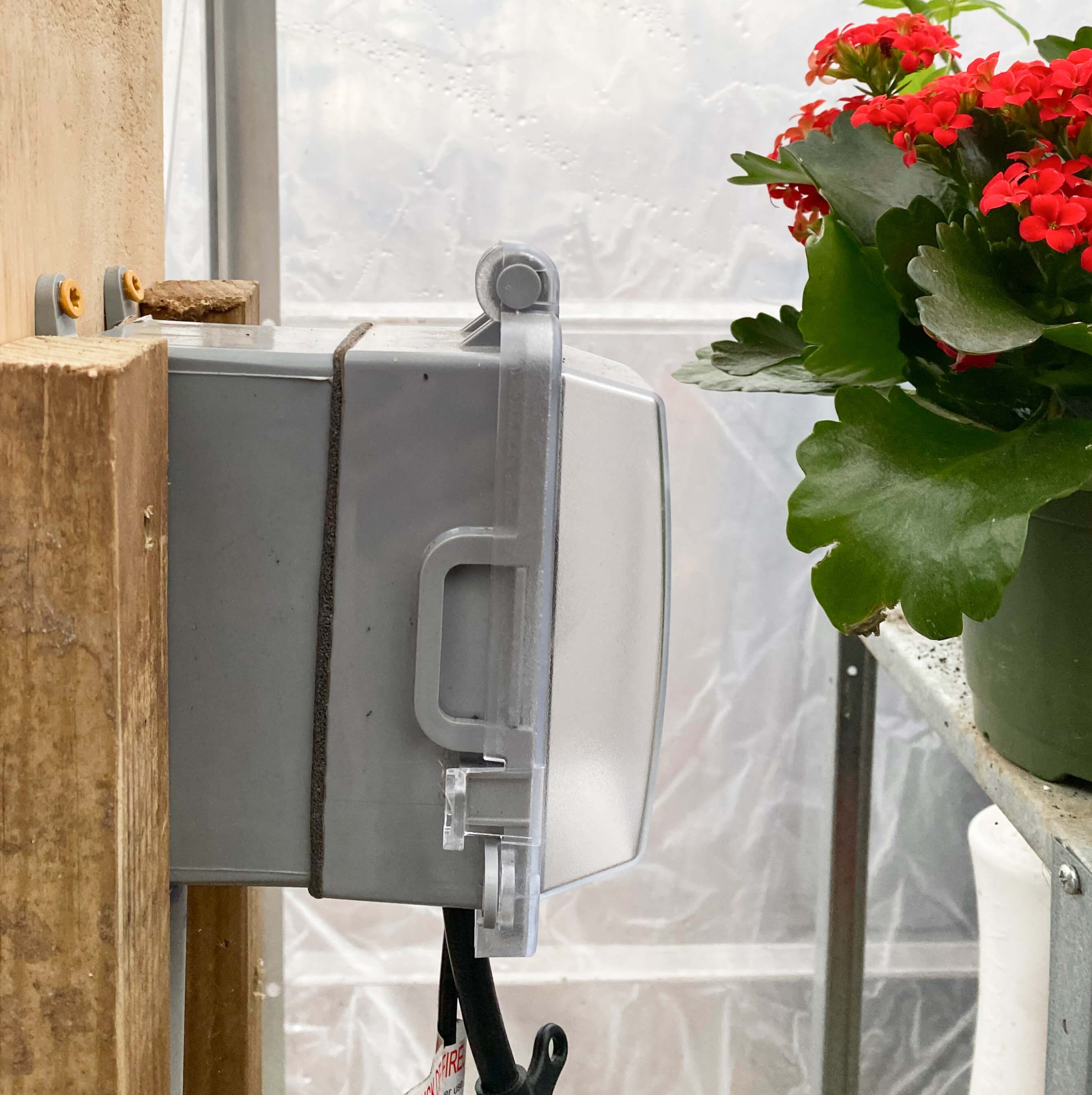
Over the summer we added an electrical outlet inside the greenhouse and buried the wiring underground. This was a big (and much safer) improvement from running an extension cord across the yard between the greenhouse and the workshop, which is how we handled things last winter. This new addition is an outdoor-rated 110V 15 amp circuit box which is just what we need to power the heater and lights.

A New Heater

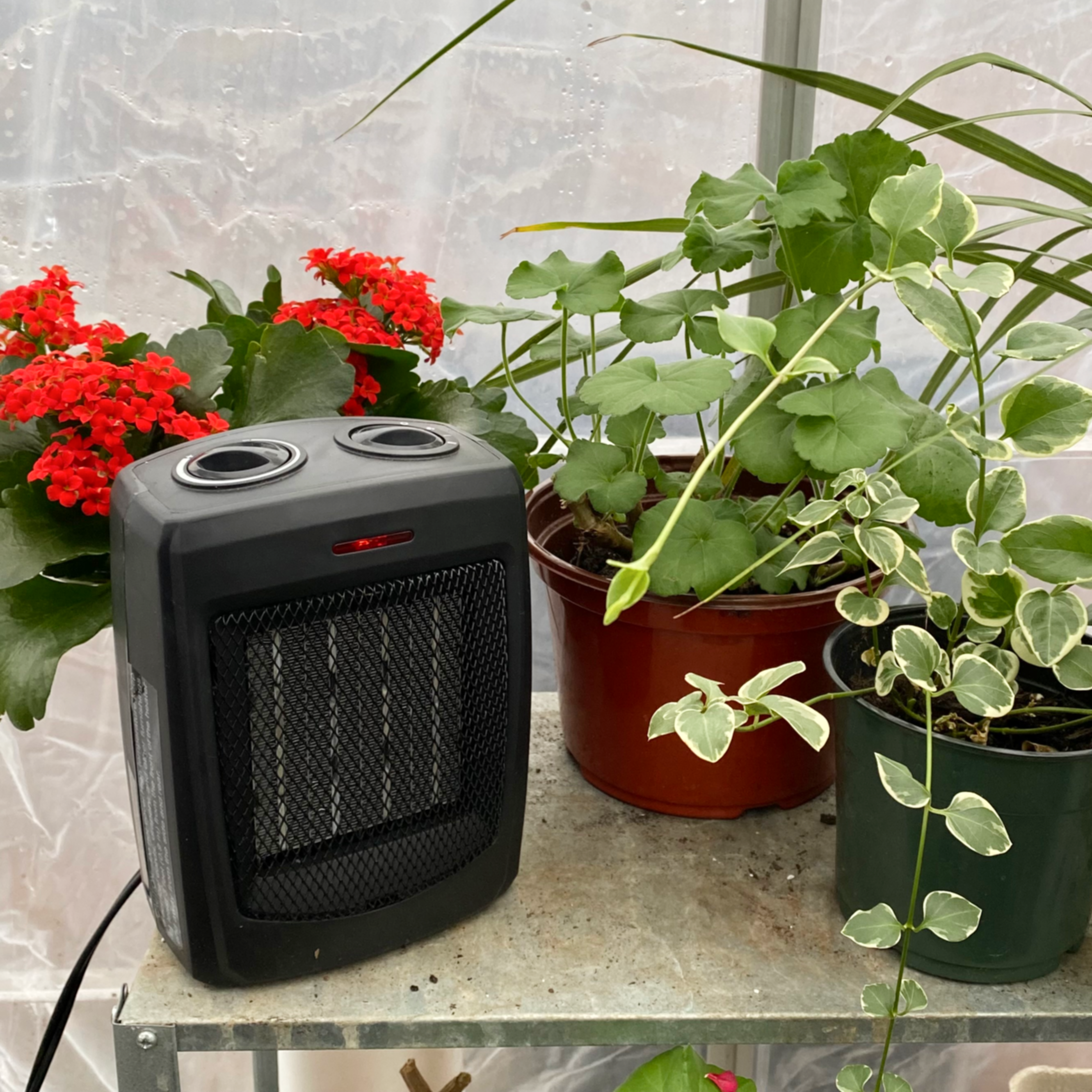
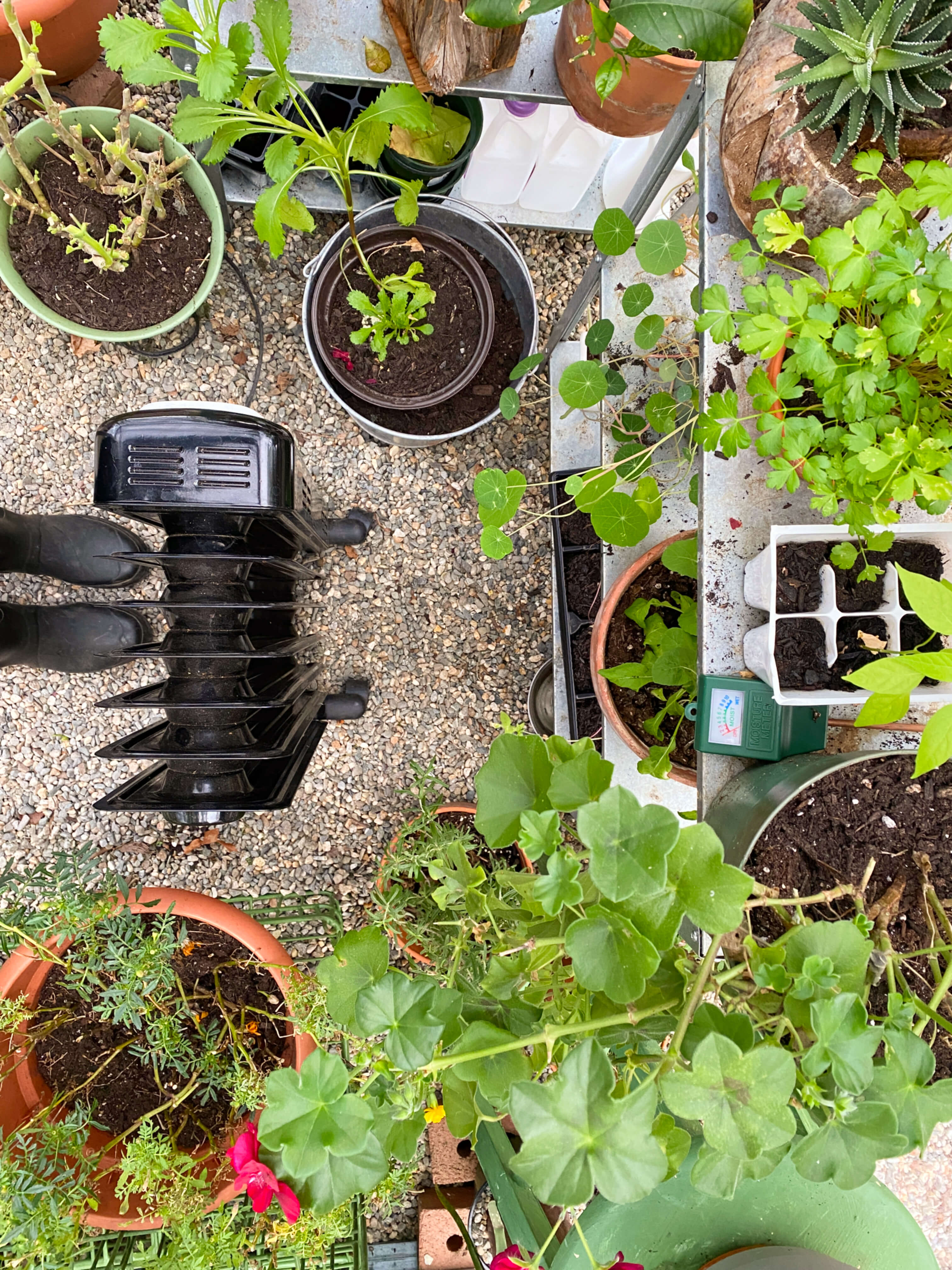
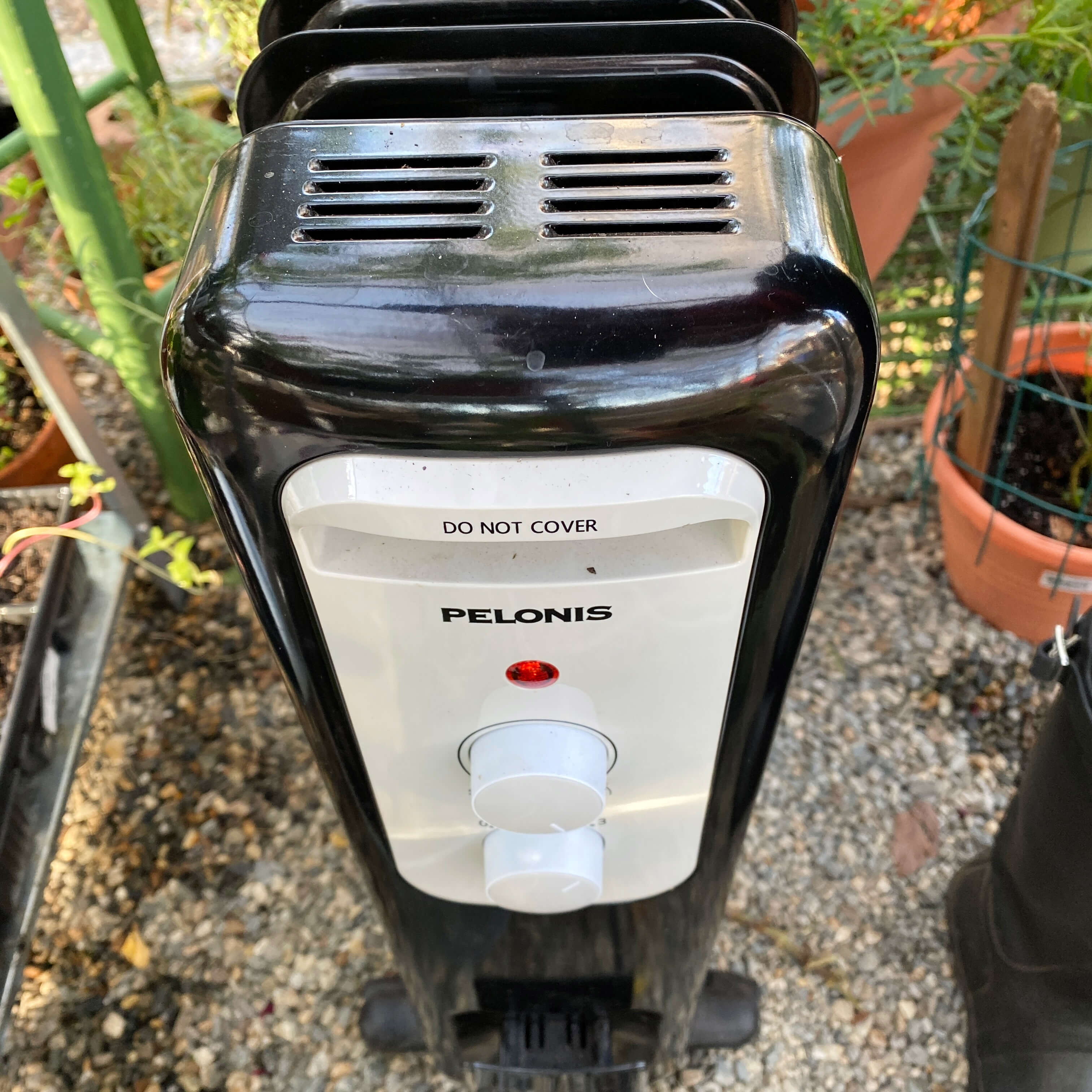
A new mini space heater replaced the tall radiator-style heater used last winter. This smaller size opens up more room to move around the greenhouse and fits nicely on a bottom shelf tucked out of the way when not in use. It has a safety feature that turns the heater off automatically if it tipples over or if any excess moisture drips inside. When the greenhouse reaches a certain temperature, it also automatically turns off to save energy and to keep the plants from overheating.

Normally the heater sits on the pea gravel floor of the greenhouse so that it efficiently heats all areas from bottom to top, but to photo it for this post I put it on one of the higher shelves for a better view. Please note: your greenhouse heater should never be this close to any plants as the proximity to the heat will cause the leaves to shrivel and could become a fire hazard. Any greenhouse heater should have a wide radius that is completely free and clear of other objects.

By using this smaller unit, we don’t have to run out and adjust the heat as the temperature changes over the course of the day, like we had to do last year. Also, we readjusted our required heat temperature in the greenhouse. Instead of keeping it in the mid-70s like last year, we lowered it to 55 degrees, in hopes that the cooler temp will keep spider mites at bay. We learned first-hand last winter how much they just adore a hot greenhouse. The new heater also blows warm air around the space instead of radiating it, so we have continual air movement swirling around inside this year, which I also hope will help with any pests. The final great benefit of this small little worker is that it has an additional fan option too, so in summer we’ll be able to grow our herbs inside the greenhouse without the temperature getting too hot or the air too stagnant.

New Lights

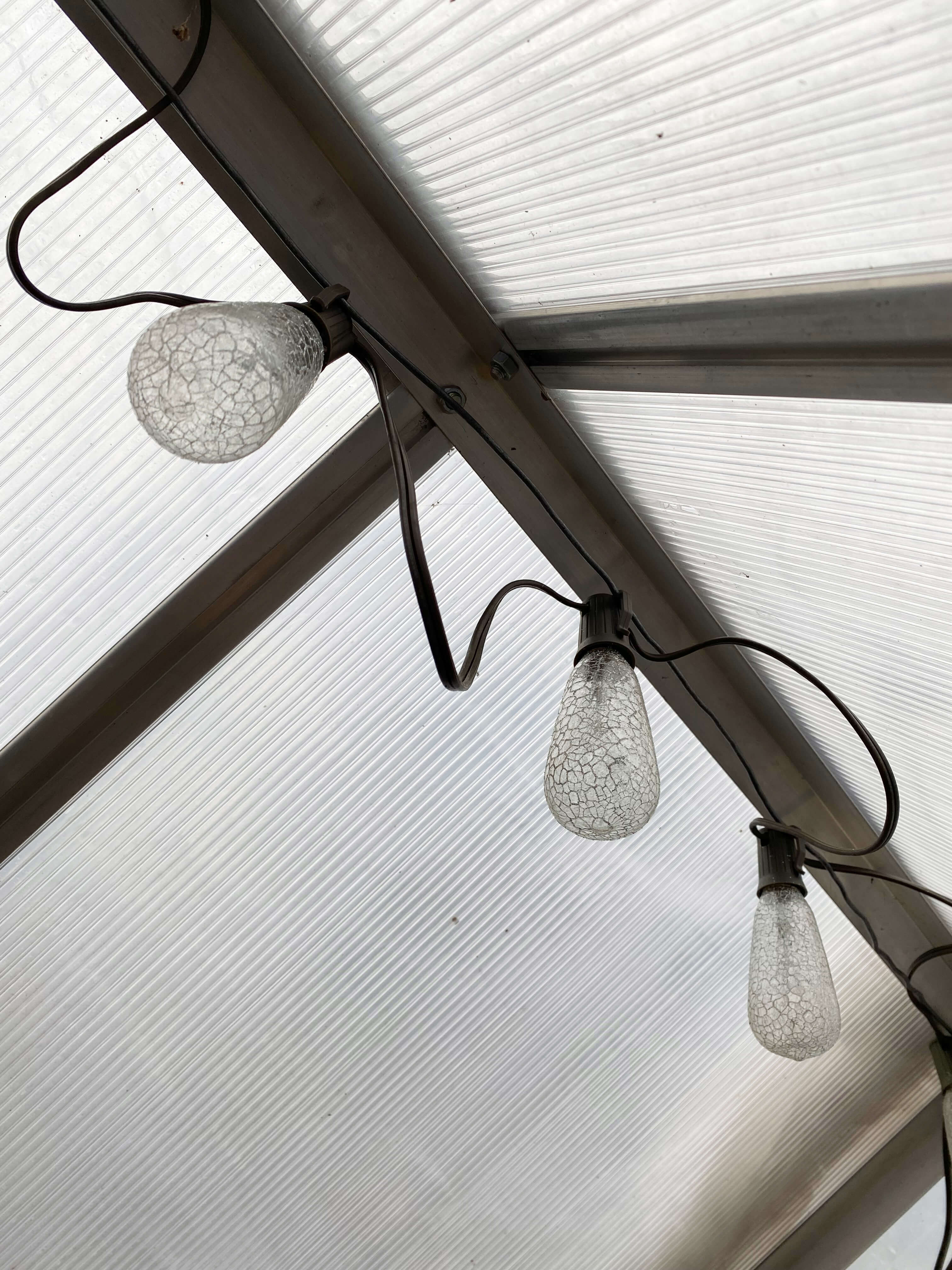
My most favorite new enhancement to the greenhouse came this fall when we added bulb lights to the interior roofline. The lights make it so much easier to work at night, especially in the winter when it can get dark as early as 3:30pm if we have an especially cloudy or rainy weather day. 

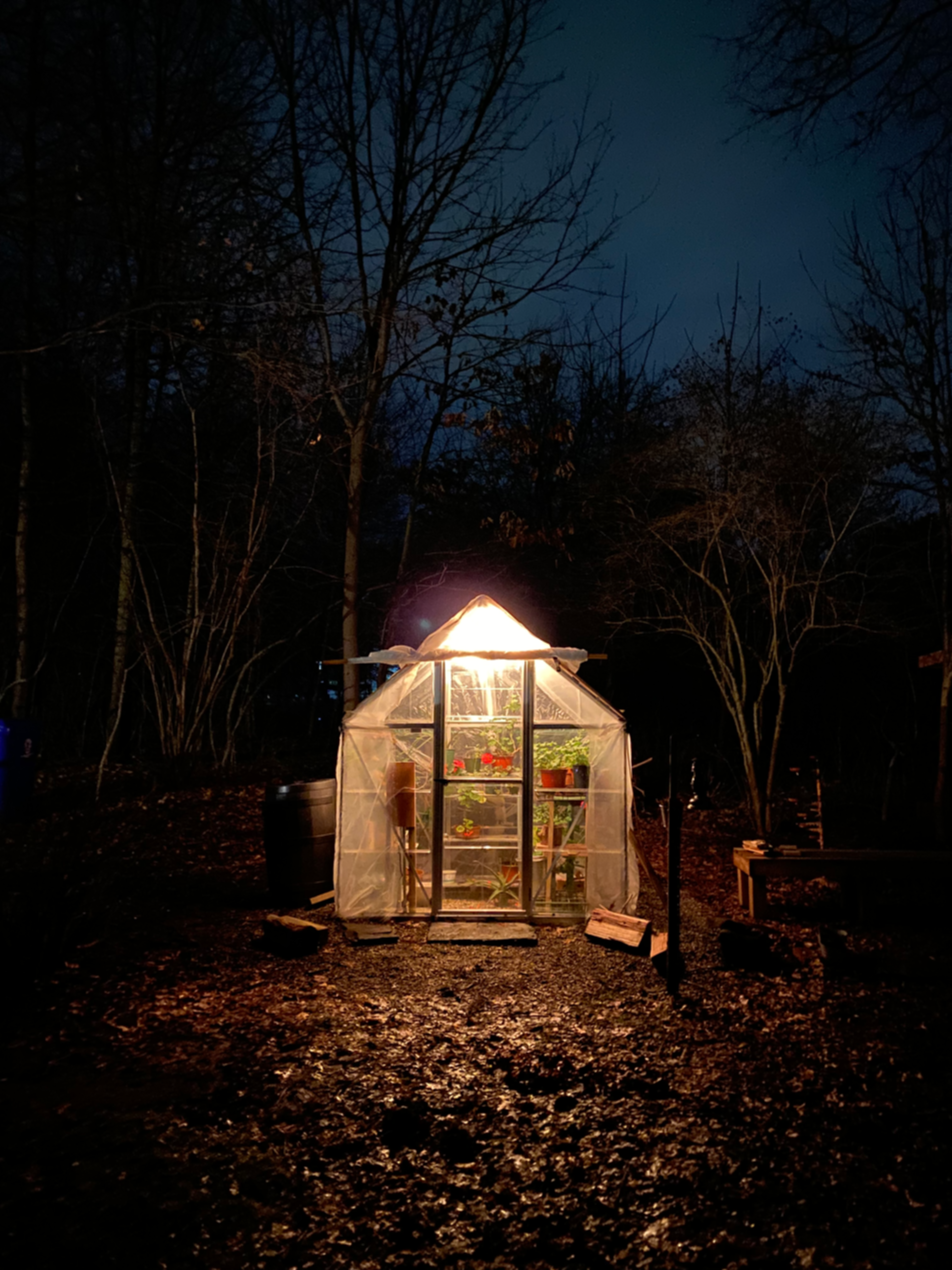
These bulb lights are a tad too big for the space, so they’ll be swapped out for something a bit more petite this spring, but we had these already on hand and wanted to make sure we liked the light idea before we committed to several sets. At night it looks especially festive. Once all the landscaping is in place around the greenhouse, it will provide a nice light source for outdoor dining during the warm weather days. By then we’ll be at least five months into the fragrant year and the garden will hopefully be on its way to becoming a perfumed paradise. Just dreaming about it now, I can see and smell the summer already.

If you’d like to catch up on the trials and tribulations of our first year of greenhouse gardening start at entry #1 here. Otherwise, it’s on to 2024 and all the delightful aromas that await each new season.

Cheers to ever-evolving garden adventures, to a scent-sational year ahead and to Helen and Leonie for inspiring this new set of diary entries centered around the life and times of one mighty but mini New England greenhouse.

Highlights from the Summer Garden & A Big-Time Surprise Visitor

A visit from the deer we call Juna in June.

Before summer ends officially on September 23rd, I didn’t want the season to go by without a garden update on how the seedlings fared once they left the greenhouse in spring. Given the late date, this is sort of like a summer wrap-up post told mostly in images – a view of our New England garden from June to mid-September. Don’t miss the real garden surprise (visitor) all the way at the end!

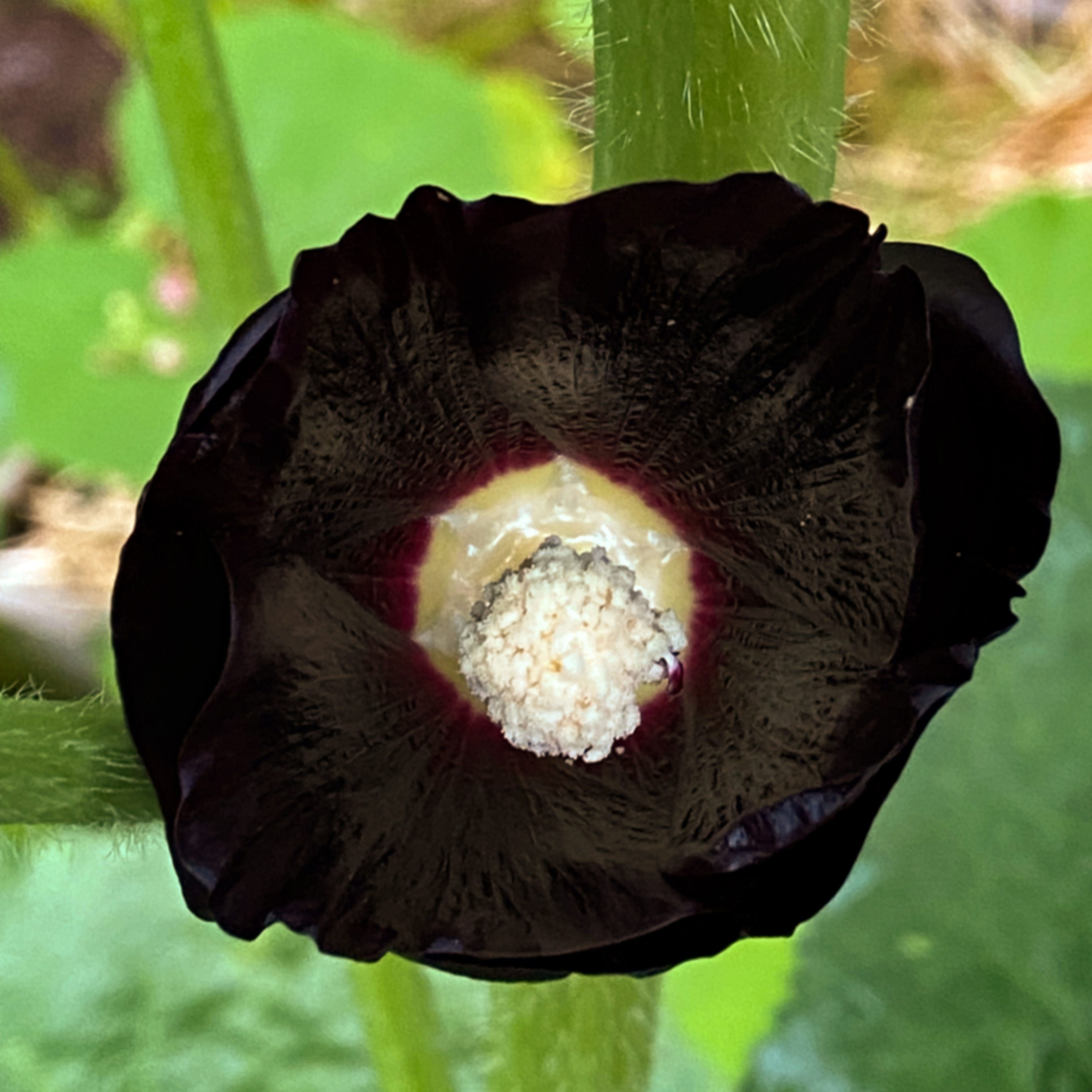
Heirloom Flower: The Watchman Hollyhock grown from seed started last year.

The Watchman Hollyhock starts out with a bloom as black as night but slowly turns a deep purple the longer it says on the stalk.
From black to eggplant to deep plums and bright purples – the hollyhock came to symbolize the enture garden as it grew and changed over the summer months.

Collard greens at the start of summer.
Broccoli raab
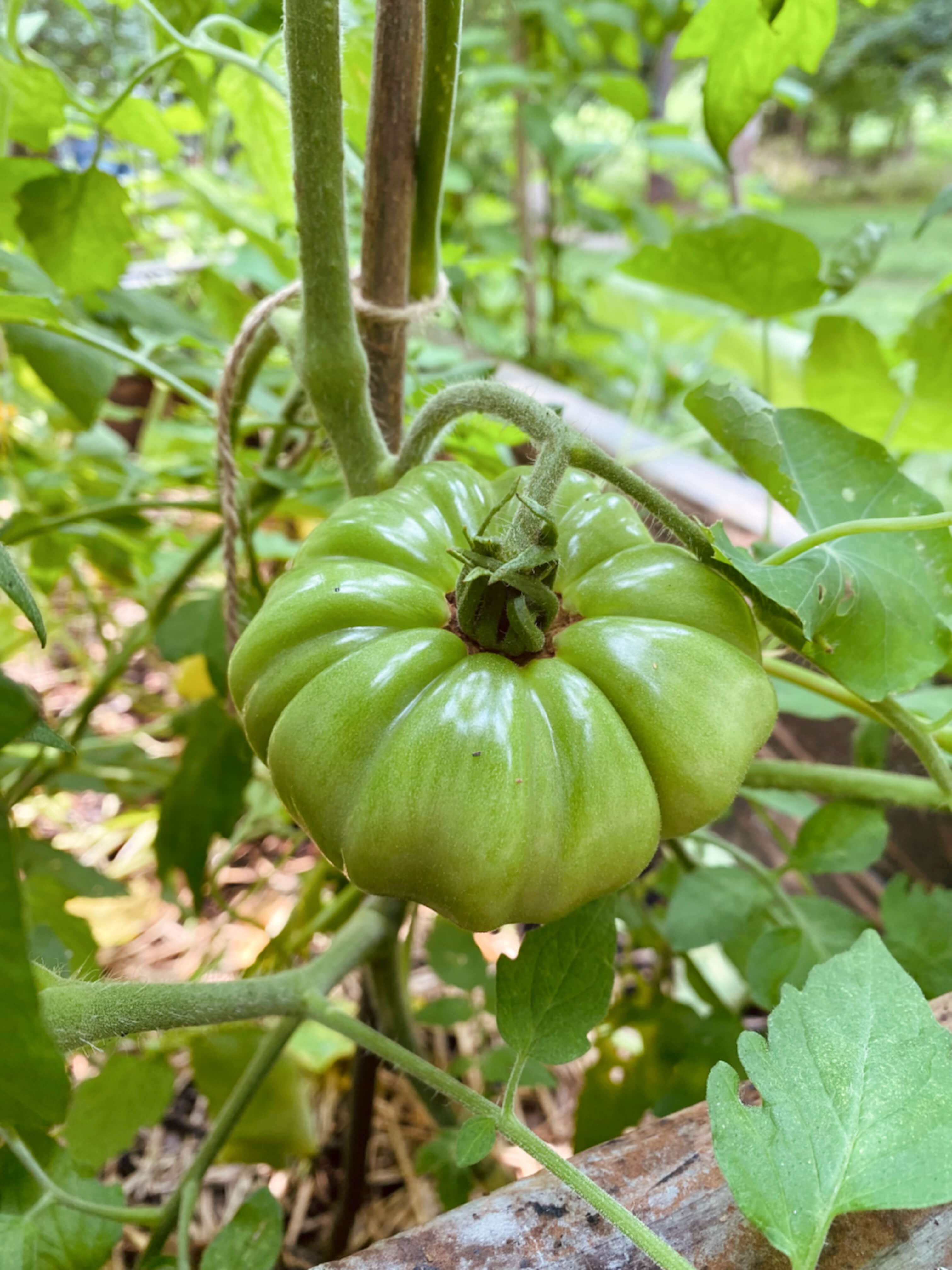
Brussels Sprouts with a companion planting of dill and volunteer tomatoes – stowaways from last year’s crop.

French Marigolds

First firefly!

OUR 2023 BEST GROWERS

This year, we were most successful in growing the following list from seed. Everything here but the pole beans, zucchini, and peas were started in the greenhouse in winter or early spring. The rest were started from seeds sown directly in the raised beds. Further down in the post, you’ll find the list of flowers and vegetables that we struggled with along with the various reasons. Hopefully, other New England gardeners will be able to share their insights as to why or what may have caused the challenges. But for now, here is our list of winners this year…

  • Tomatoes (Brandywine, Sungold Cherry, Sweetie Pole Cherry and Pineapple)
  • Cucumbers (Marketmore)
  • Collard Greens (Georgia Southern)
  • Hot Peppers: Lemon Jalapenos, Santaka Chile, and Padron Peppers
  • Rapini
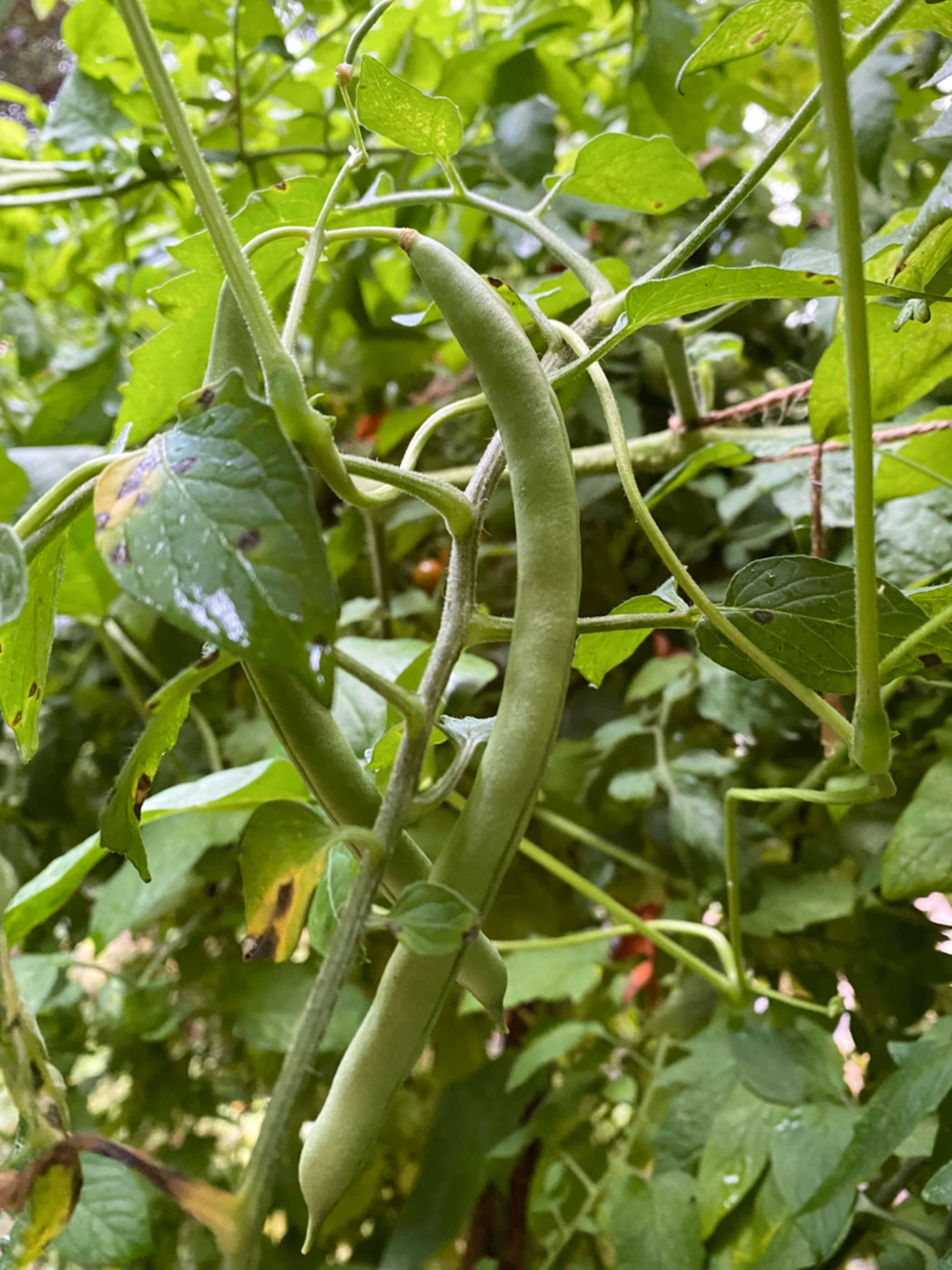
  • Pole Beans (Blue Lake)
  • Flowers: Foxglove, Snapdragons, Hollyhocks, Mexican Sunflowers, French Marigolds, Zinnia, Geraniums
  • Mint
  • Lettuce (Rouge D’Hiver, Farmers Market Blend, Arugula, Salad Bowl Blend)
  • Cascadia Peas
  • Mexican Sunflowers
  • Jarrahdale Pumpkins
  • Black Beauty Zucchini (partially successful, more on that further on in the post).
  • Cucamelons

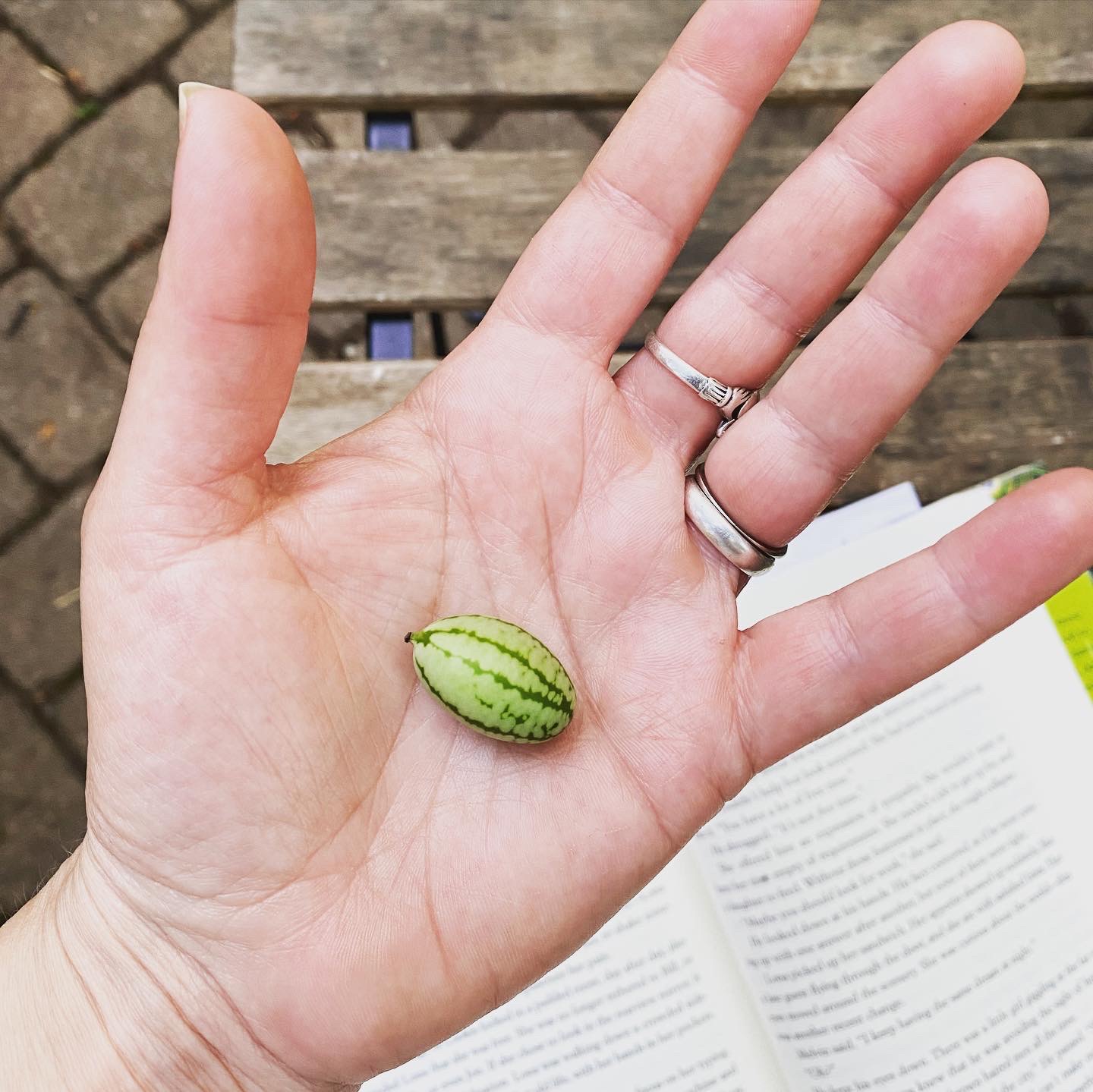
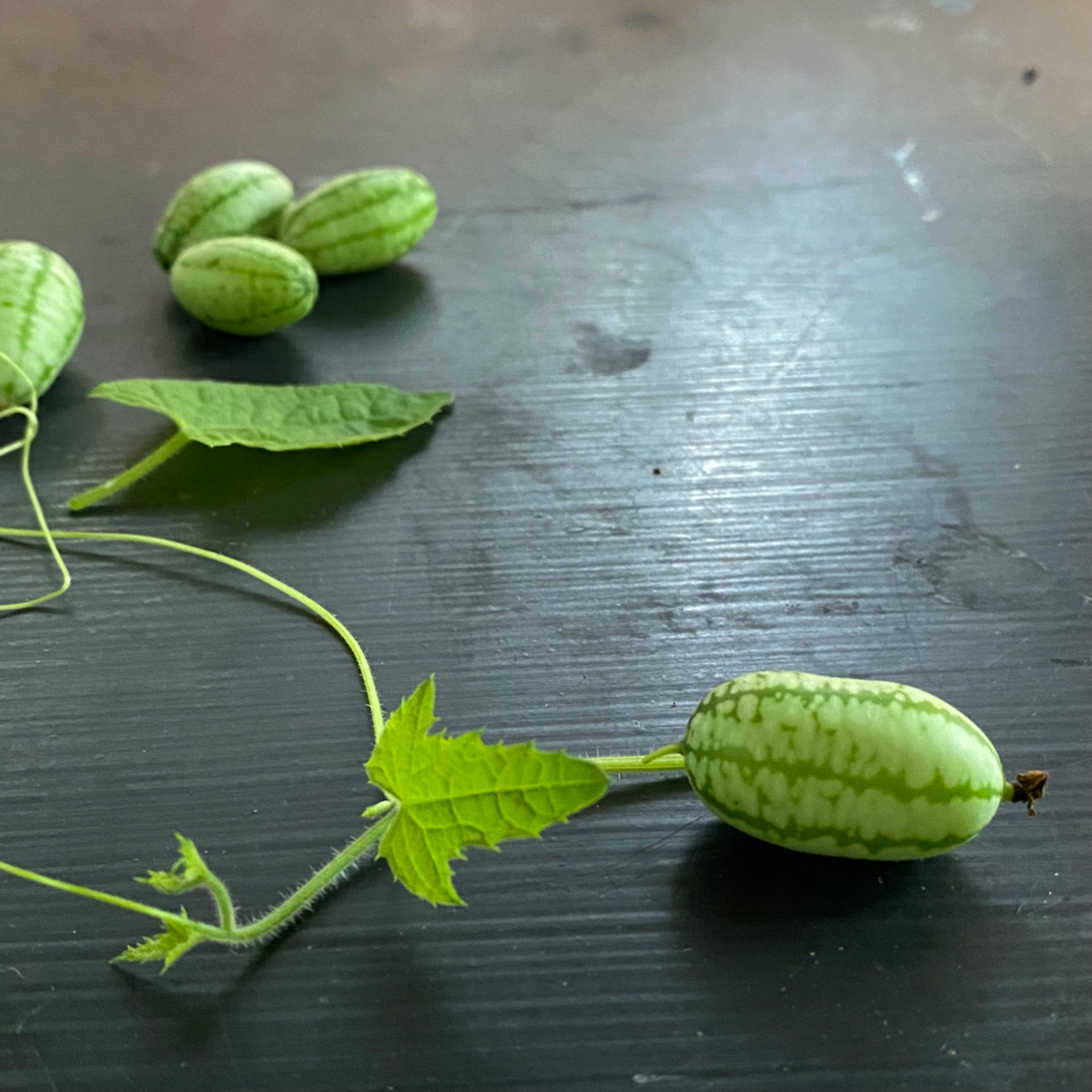
The cucamelons were one of our most enthusiastic growers this year. If you are unfamiliar with these little charmers, they are native to Mexico and look like miniature watermelons but taste like lemony cucumbers.

Our cucamelon plant literally vined its way to double in size in less than a month. At mid-September, it’s now over 9′ feet tall and still climbing. Its current destination is the upper echelons of the crab apple tree above it.

Cucamelon on the vine. They dangle like plump pearl earrings when they are ready to be picked.

Cucamelons are tiny (about 1 inch in length) but full of fresh summer flavor.

We loved the cucamelons so much that they inspired a new 1750 House summer cocktail – the Cucamelon Gin and Tonic.

So much new information has been learned about how to proceed this fall. What worked, what didn’t, what we can improve on and what we can forget, what we can nurture now and what we can save for another day or another year. A lot of surprises ensued. What worked great last year didn’t necessarily work as well this year. One thing that drastically improved though was the soil (thanks to a year of composting and leaf mold, and we didn’t overwater thanks to the miracle moisture meter reader. The garden was definitely much more lush and vibrant and full this year.

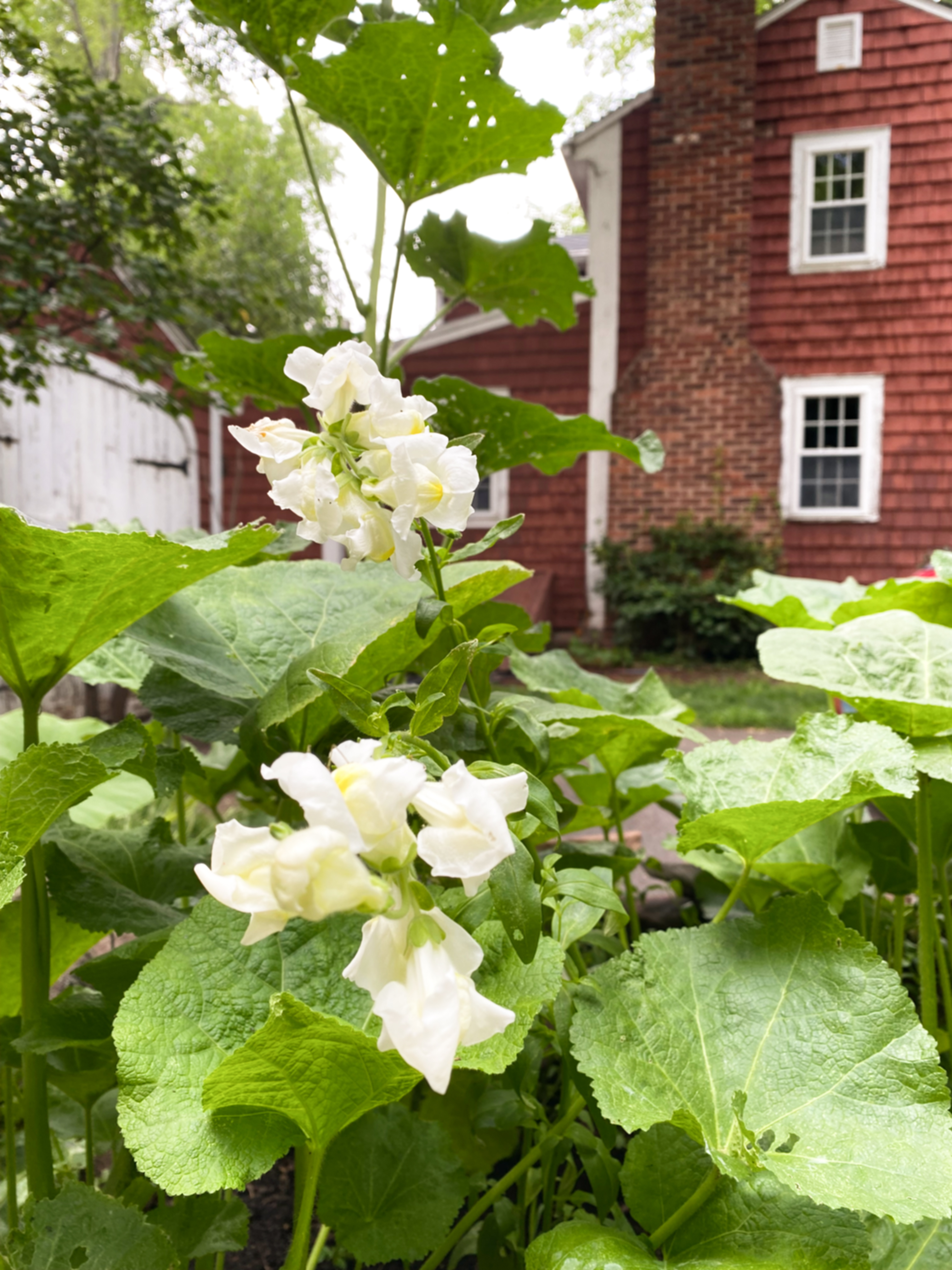
Snapdragons

First Pineapple tomato!

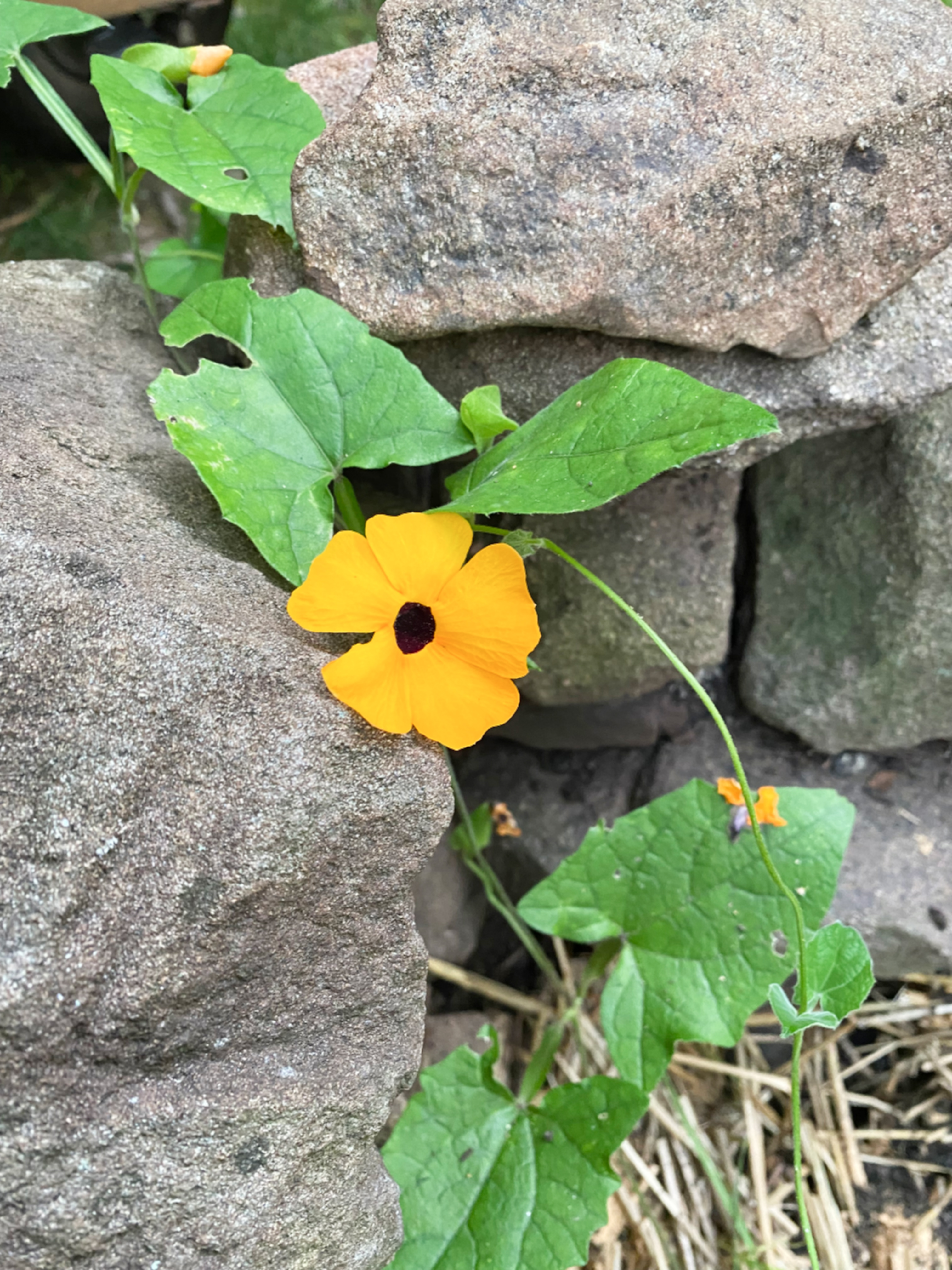
Black-Eyed Susan Vine.

One of the surprises of the season were the Black-Eyed Susan vines. We almost gave up on these guys completely since they grew so slowly for so long. We figured they weren’t happy in the bed or the inground mound where we planted them. It took five months from seed to first flower (and our forgetting about them), but once they got to the bloom stage they really took off and haven’t stopped since. Now they are happily climbing all over the sides of the rock-walled raised beds and are producing lots of pretty little flowers. I learned from our local nursery, that they have the best luck propagating these flowers from clippings, so we are going to try that method this fall.

A sparrow nest in our bird box

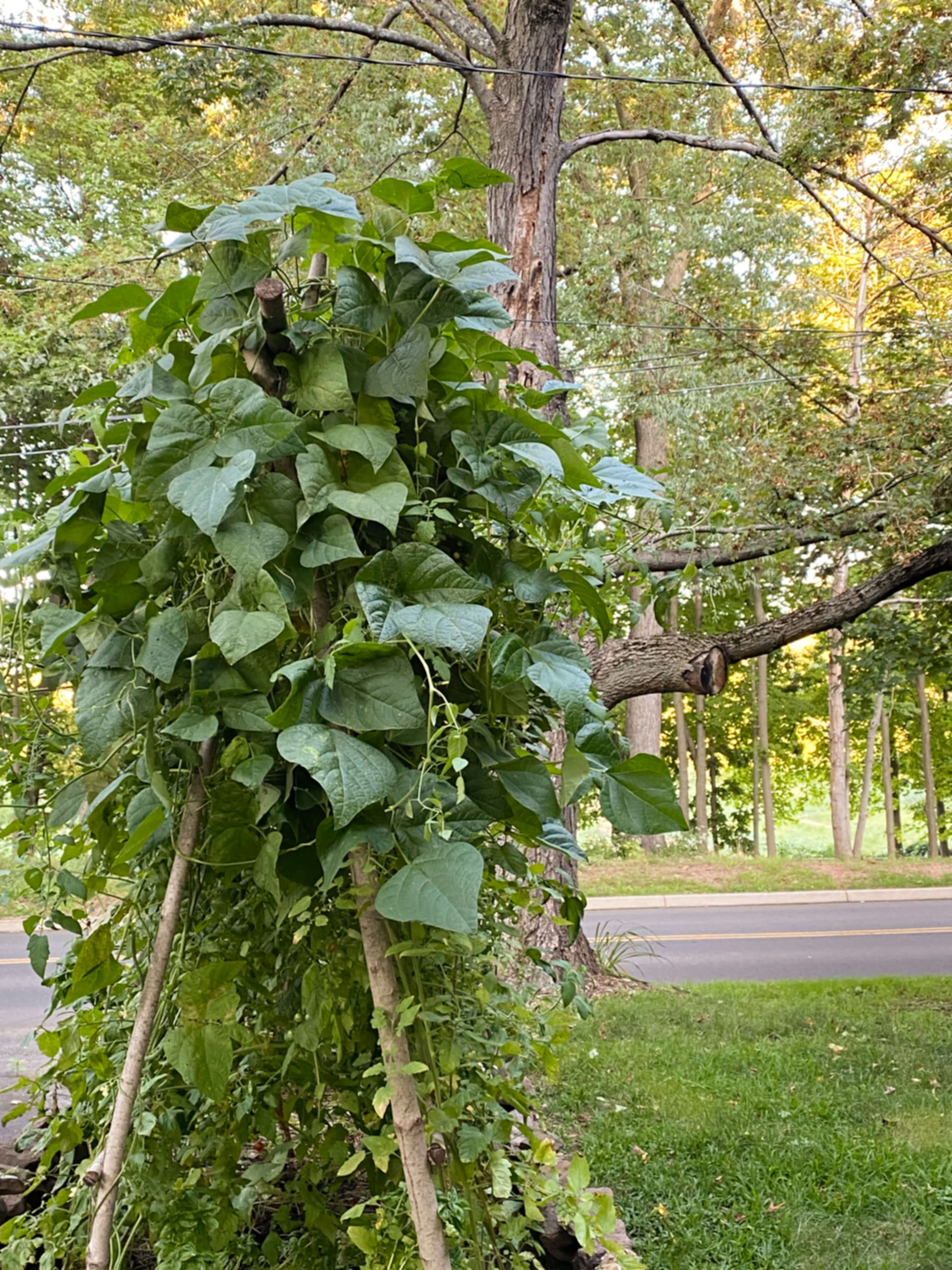
Tomatoes and pole beans climbing their way to the sky. This top rung of the trellis is 9″feet tall. We have to get on a ladder to pick the top tier!

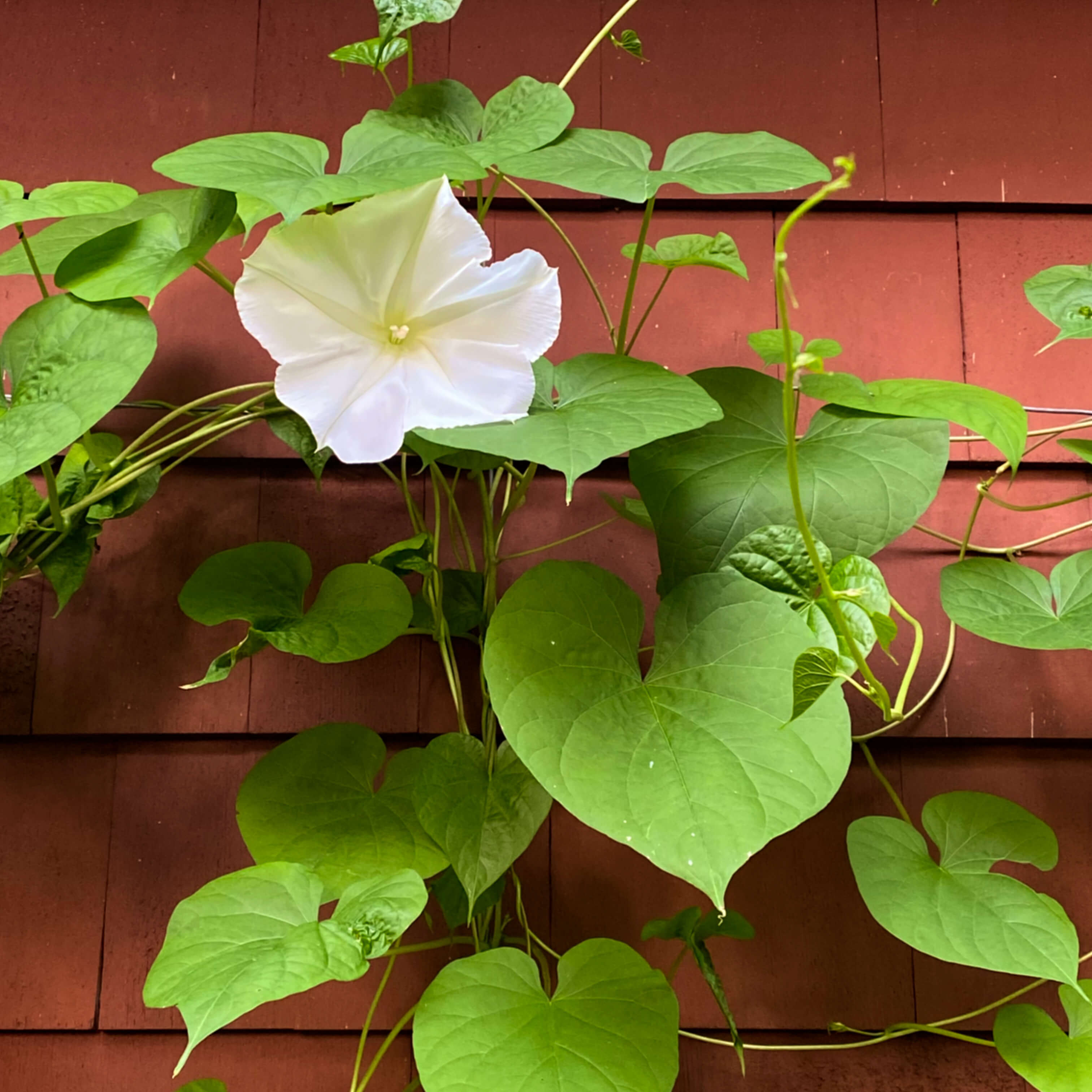
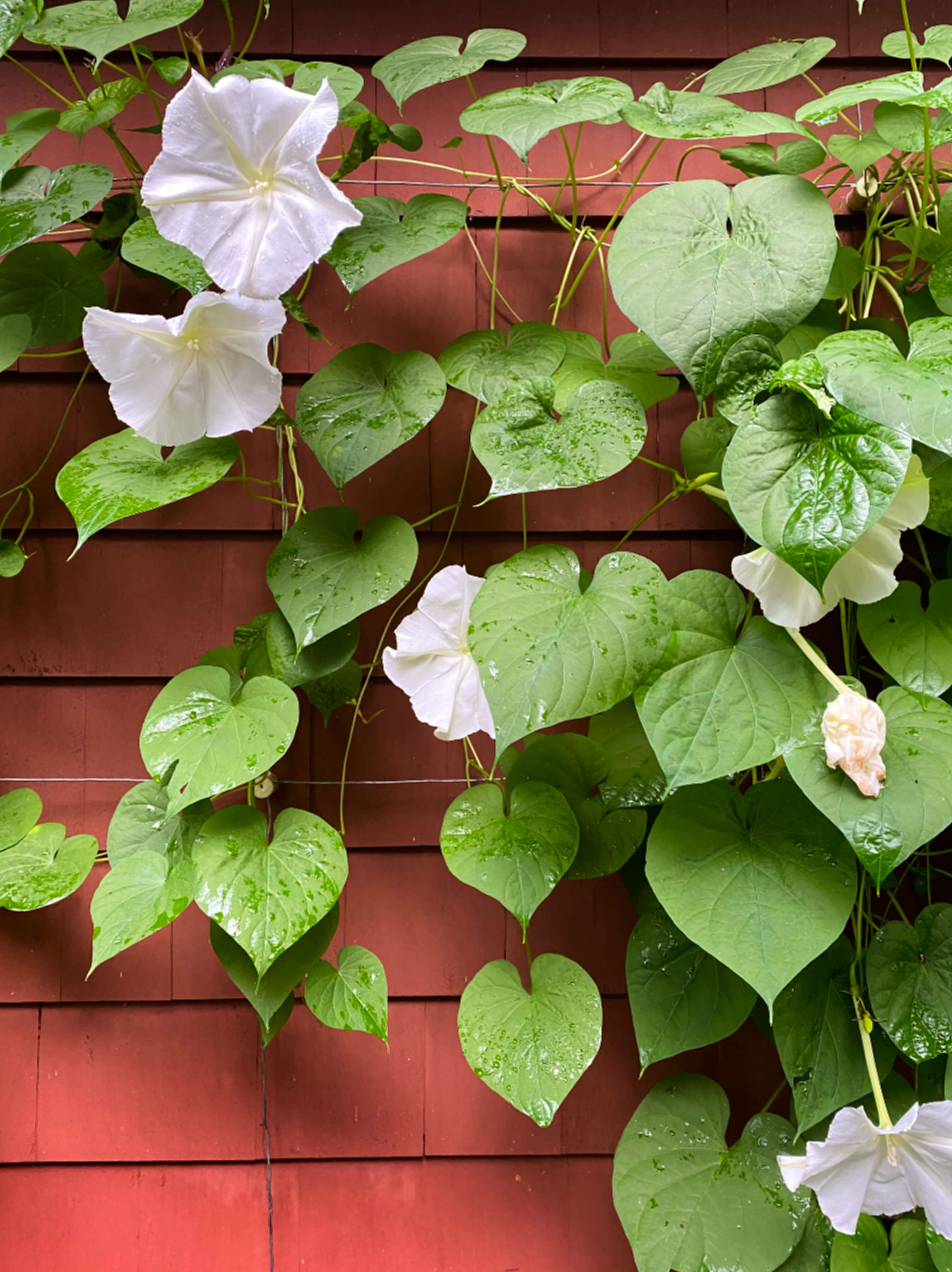
Moonflower vines.

The moonflower vines were a placeholder and an experiment to see if we liked a living wall on one part of the back of 1750 House. As it turns out we do! Next year, that wall will be covered in English ivy, which has already been planted at the base of the moonflowers. The moonflower seedlings were purchased from our local nursery, but we will definitely grow them again somewhere else in the garden next spring, this time from seed. They are fast growers and produce big beautiful white flowers, the size of your hand.

Our Biggest 2023 Garden Challenge: SLUGS

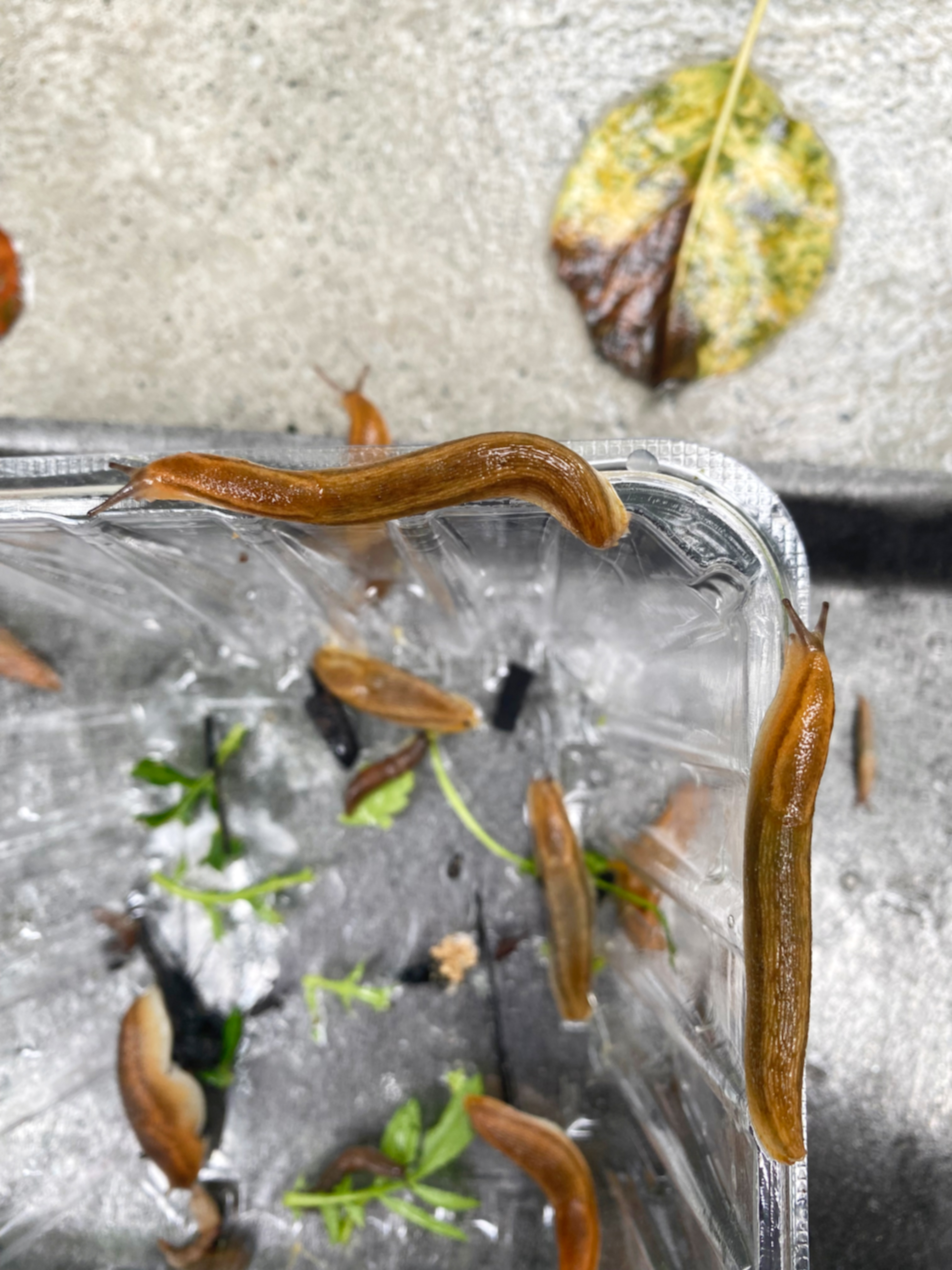
Oh the slugs. They slithered, they slimed, they feasted their way through the broccoli patch, the herb garden, the marigolds, the nasturtiums, the lettuce, the pepper plants (leaves only), the colleus and the cosmos. We tried all sorts of ways to deter them – sand barriers, chili powder sprinklings, tin foil, beer traps, nightly hand-picking.

Slugs aplenty.

We were most successful with the beer traps – sinking a small container in the garden soil filled with about 1/4 cup of beer. The beer attracts them to take a swim and then they depart this life in one big vat of boozy revelry. The other thing that worked well was handpicking (we relocated all the slugs to the woods each evening to carry on life there), but this was a never-ending task – every single one we picked was replaced with a new slug the next night. Plus, this hand-picking was a pretty unappealing and slimy exercise. Our buckets each night were filled with at least 30-40 slugs. Interestingly, they left all other plants in the garden alone, which is why we had such great success with everything else. Next year, we are going to try growing all of these feast-worthy plants in the greenhouse over the summer to hopefully keep them slug-proof.
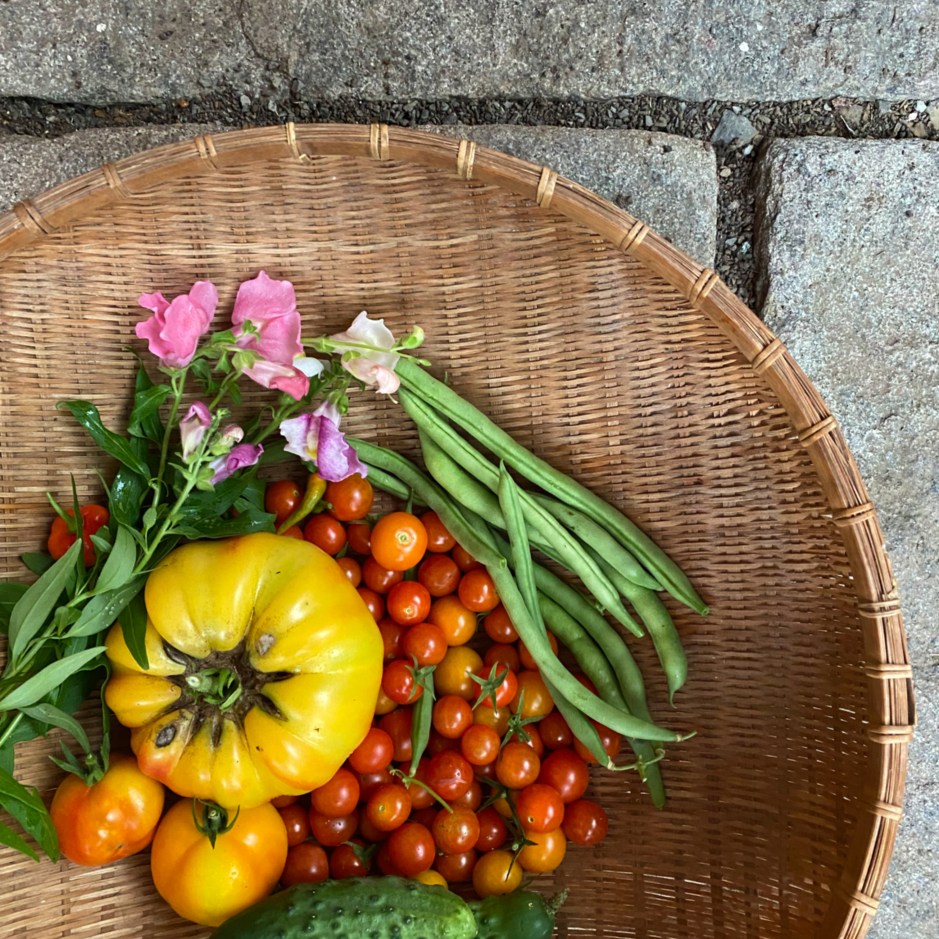
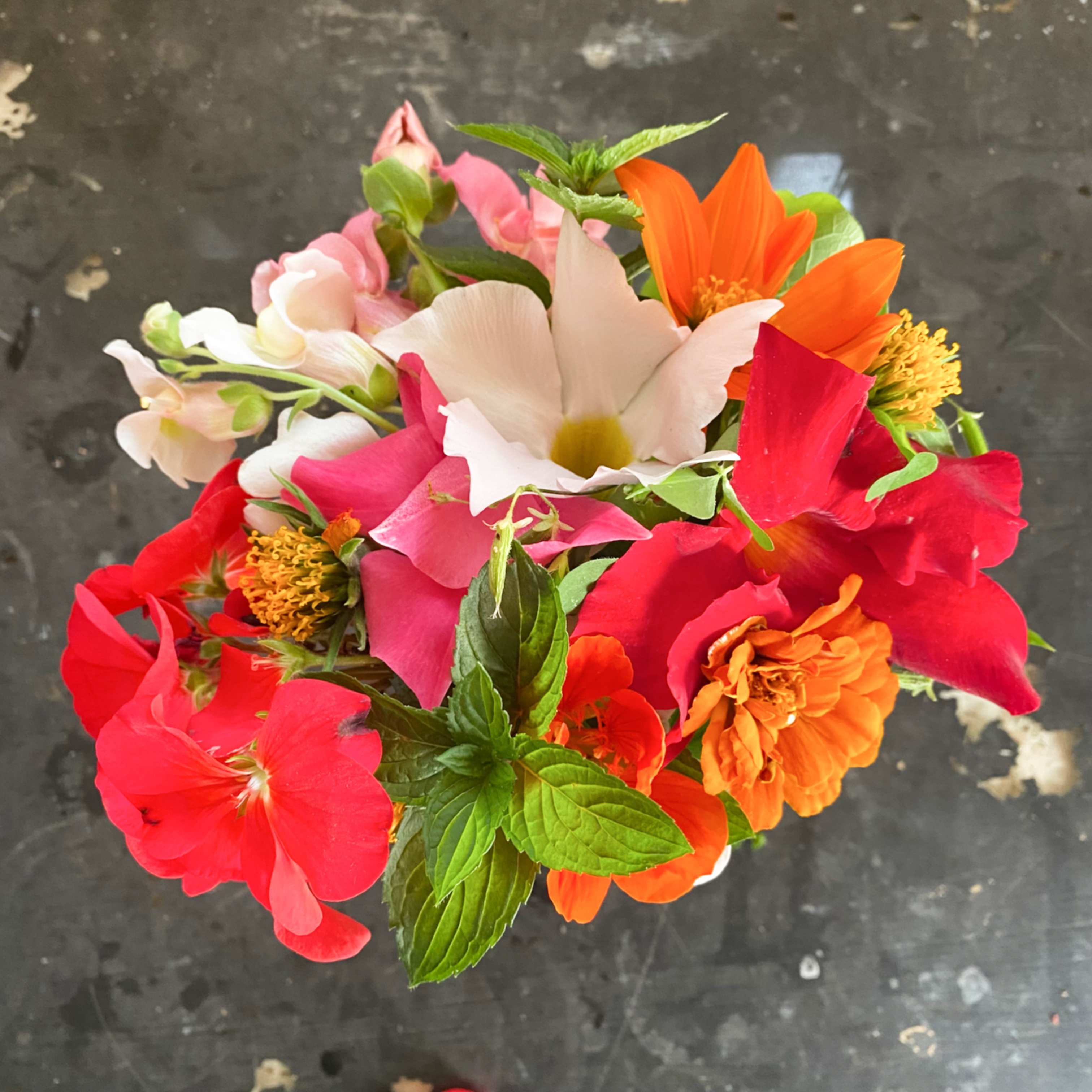
Impromptu bouquet – snapdragons and phlox

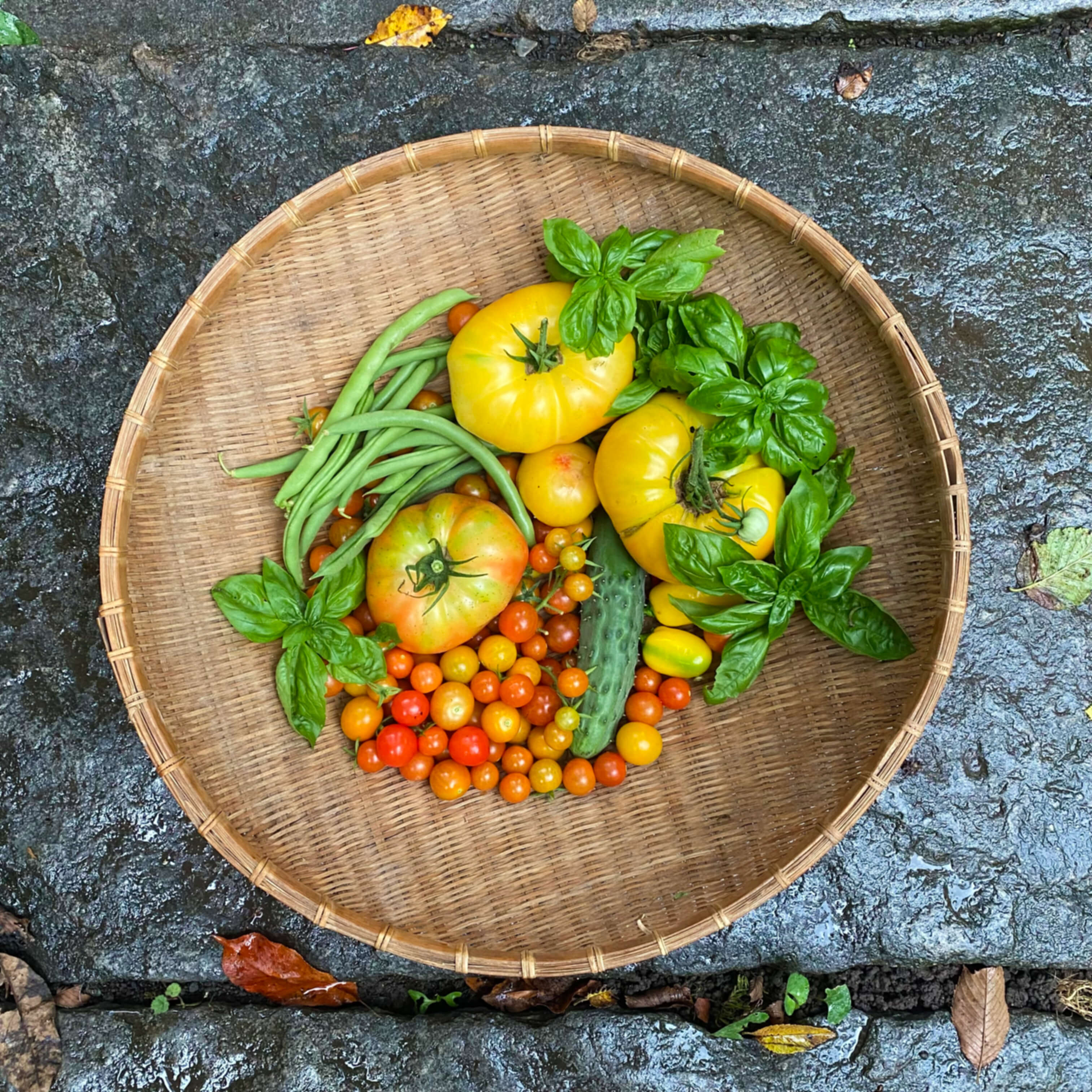
First summer gathering basket: nasturtiums, zucchini, cucamelons, mint, Mandeville flowers, cherry tomatoes, pineapple tomatoes, Santaka chile peppers

Things That Didn’t Grow Well in the Garden This Year…

  • Zucchini (Black Beauty) – while they did grow big and lovely and flowered every day pretty much throughout the summer, two plants only produced three zucchini. Three was a definite improvement from last year’s crop which was zero, so we are moving in the right direction but this was also the second year they eventually became overcome by powdery mildew, even though we tried two different treatments: baking soda and neem oil

  • French Melons (powdery mildew victim #2)
  • All the herbs – parsley, basil, chives, sage, and thyme (The work of the mighty slugs! The only herb they left alone was the rosemary).
  • Cosmos – our second year in a row trying to grow these. (They produce a few flowers but then the plants dry up and die off)
  • Bush Beans – we rotated them to a different bed this year underneath the tomato plants and they did not like it. Maybe it was not enough sun for them once the tomatoes really started growing.
  • Broccoli (DiCiceo) – we harvested one broccoli head harvest before the slugs arrived for the season
  • Straw mulch – The intention was to use this as mulch to help with the slug situation but, as you can see from the list above, it had no effect and turned out to look really messy in the garden. Aesthetically it wasn’t our favorite.
  • Sunflowers – also our second year trying to grow these. Starting them in the greenhouse this year helped but they were weak and spindly and mostly fell over before July started.

Back to happier stories…

Cucumbers growing like crazy!

Our first big pineapple tomato weighing in at 1.7lbs

The big goal for 2023 was to create a pollinator-friendly garden. Success!

Pole beans and cucumbers joined the weekly gathering basket in August.

This year, the tomato’s best friend was the pole bean. Both still growing strong, they’ve become their own support system at the top tier keeping everything nice and tidy all on their own.

Pole beans!

Impromptu bouquet: mint, Mandevilla, marigolds, Mexican sunflowers, snapdragons

The first time the gathering basket weighed over 4 lbs with all its produce was the first of September.

One nasturtium plant managed to outsmart the slugs. How? We aren’t exactly sure, but for some reason, they left this one alone.

All things considered, this year’s garden was definitely an improvement upon last year’s just as far as soil health, pollination count and bird and frog activity. Last year we had more voles and chipmunks but this year we had more slugs. Last year we had more heat but this year more humidity. Last year we had barely any flowers, and this year, we enjoyed ample bouquets all summer long. That’s the joy of gardening though I think. It’s always changing. Always engaging us.

Although the temperatures are still in the 80s, and there are still a couple weeks of summer left to go, Autumn is definitely beginning to cast her spell over the garden. Our first pumpkin just formed, the paradise apples are falling and our first sighting of a Spotted Orbweaver joined us overhead on the patio chandelier one night at dinner. Fall is coming.

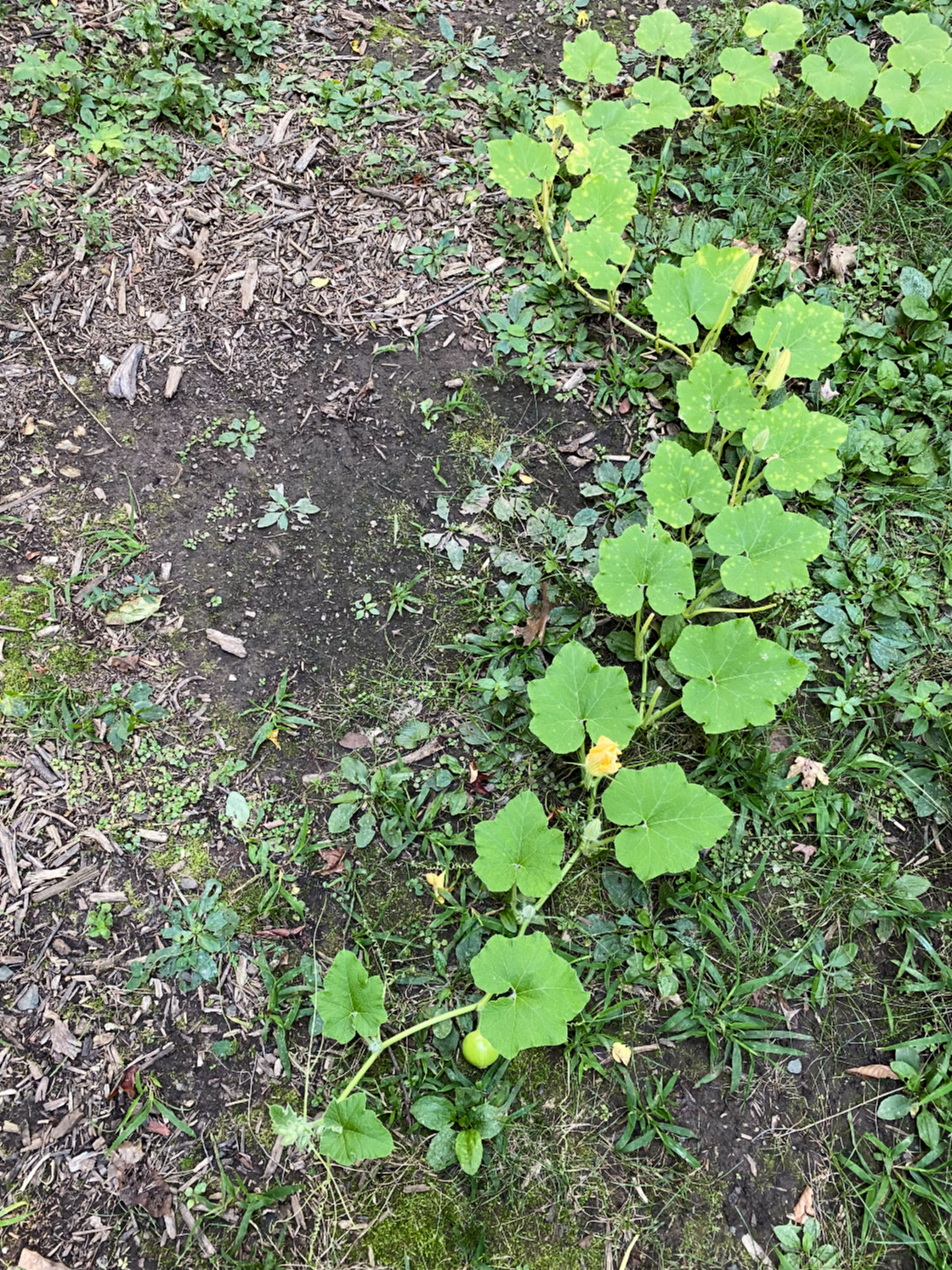
The pumpkin vines are making “S” curves all over the sideyard.

The first Jarrahdale pumpkin!

Paradise apple

Spiders, slugs, birds, bees, and Juna aren’t the only things that came to visit the garden this summer. Recently, we installed an outdoor trail camera to see what sort of wildlife came to visit in the night. Our most frequent sightings so far have been the wild rabbits (hop over to Instagram to see our favorite little bunnies zooming around the yard), along with the occasional raccoon, and opossum, two coyotes and a pine marten not to mention a bevy of early morning birds and squirrels. But our most dramatic guest so far is this guy…

A bobcat! He passed right through the yard with no incidents and thank goodness no bunnies. It’s pretty magical that such an extensive amount of wildlife lives while we sleep, carries on while we dream, travels about while we stay put for hours on end. We can’t wait to see what shows up this winter.

Last, but not least in this highlight of summer pos , we have two exciting sneak peeks of two very big 1750 House outdoor projects about to be unveiled soon…

Sneak peak #1

Sneak peek #2

We can’t wait to share them with you! Stay tuned!

In the meantime, cheers to summer 2023, to all we learned and all we reveled in, and to Lady Nature for continuing to be our biggest mentor and our guide. We’d love to hear how your gardening adventures fared this year. Please tell us all about it in the comments section. It’s so important to share the highs and lows, regardless of what part of the world we live in so that we can all learn together. The more gardening joy the better.

The Greenhouse Diaries Entry #2: Surprise and Circulation

The chronicling of the greenhouse is underway. If you are new to the blog this week, catch up with our new gardening series in Entry #1 here. For everyone else who is all caught up let’s carry on to week two of news from the growing greenhouse.

It’s only been seven days since our last post but already there is much to discuss on both the good and bad fronts. First off, we’ll start with the food portion since that was a big reason to build a greenhouse to begin with.

We harvested our first bowl of arugula last Sunday and ever since, it and the nasturtiums have been adorning our plates all week long. Here, they were a part of last Sunday’s brunch of eggs cooked in foccacia bread pockets…

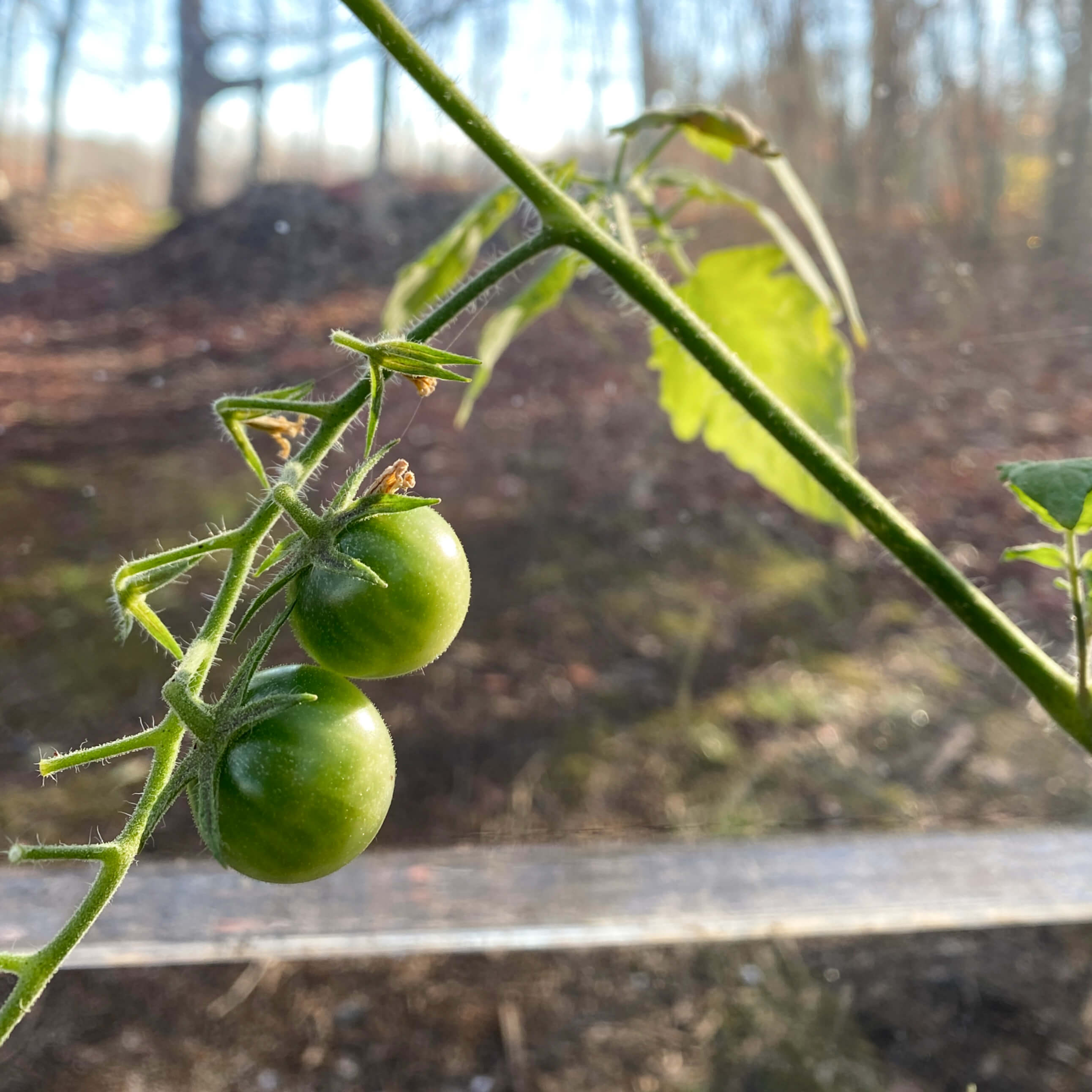
The tomatoes ripened! In just one week they went from a zesty shade of green apple to sunny golden orange. We were curious to see if these indoor growers would taste the same as the ones we enjoyed in the garden all summer, and much to our delight I’m happy to say they tasted equivalent. Which means they tasted fantastic. Sweet, soft yet slightly firm, and just as juicy as their summer counterparts, these two beauties ended the week on a sweet note.

Grown from seed purchased from our favorite seed company (A true review! They are not a blog sponsor.) these tomatoes were determined to grow regardless. Producing fruit the size of large marbles, we grew eight plants of the Sun Gold Cherry varietal this summer. Some reached monster heights of over 10′ feet tall and they produced a couple of big handfuls every other day from August-October. The branch grown in the greenhouse was from a stem cutting. It was our first experiment to see if the cutting would root in water, which it did, and then immediately it went to flower. A little bit of hand-pollinating with a paintbrush, and two weeks later these two tomatoes started forming. They grew so quickly, we never even had a chance to plant the cutting in actual soil. These are just growing and flowering in a jar of water. Isn’t nature amazing?

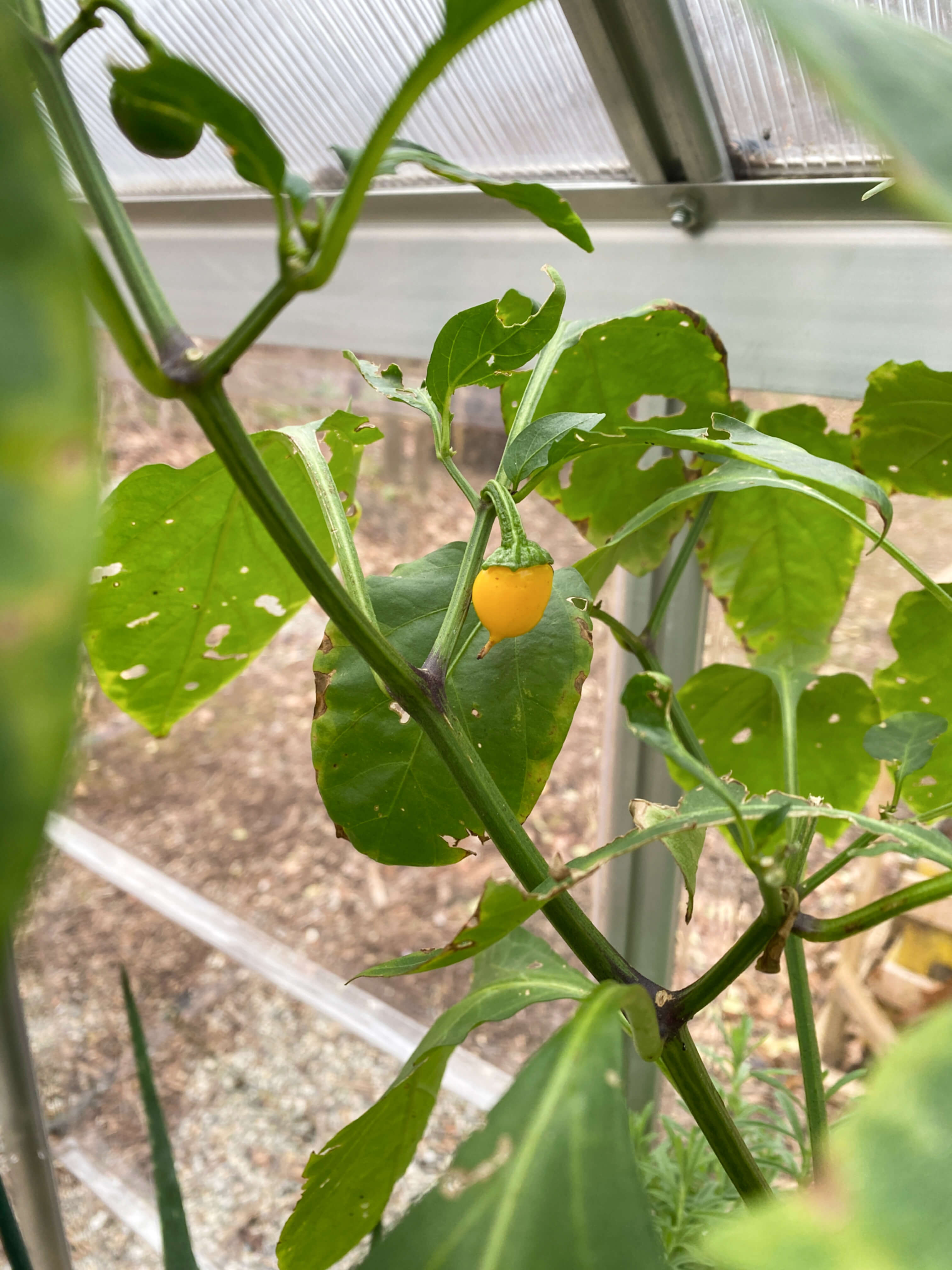
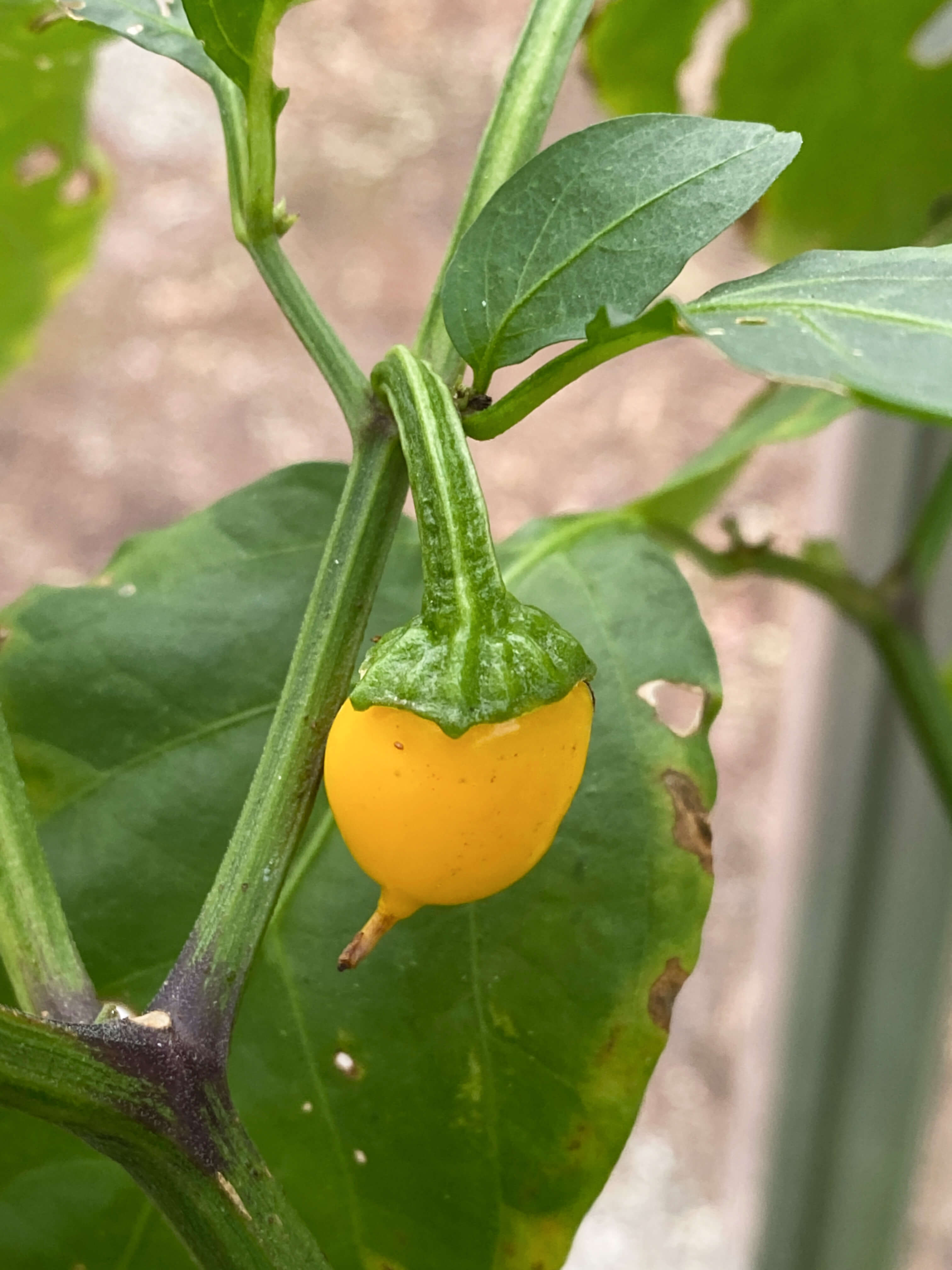
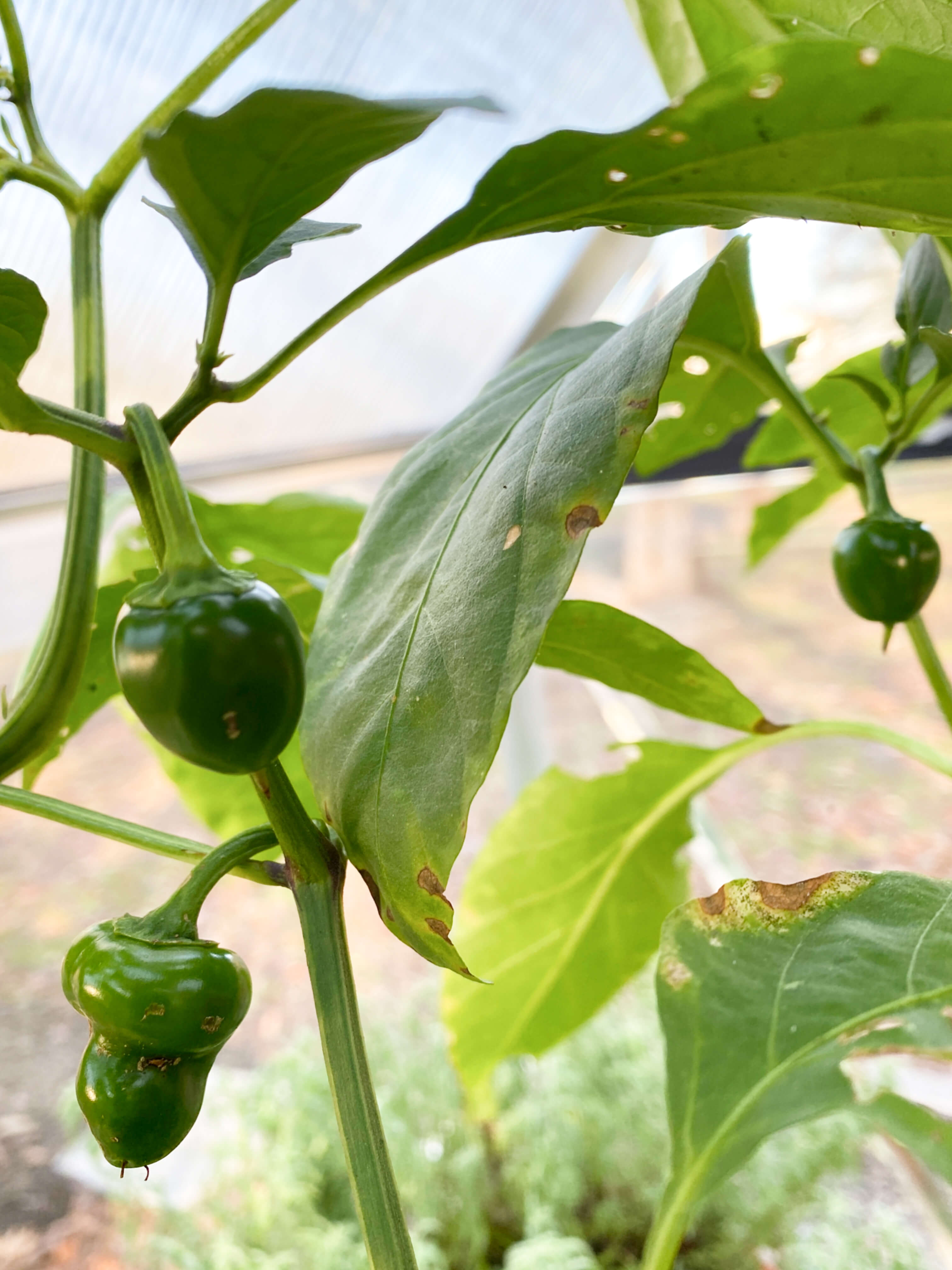
Next in the ripening department is the Numex Lemon Jalapeno pepper. Because of the timing last spring of when we moved to 1750 House, we started our seeds and our garden beds pretty late in the season. The pepper plants didn’t have a full chance to grow, bloom and then produce mature peppers before the cold autumn weather settled in, so we pulled the three strongest from the ground and potted them for the greenhouse.

This summer, we had a big struggle with slugs in the garden beds so you can see the leaves are quite chewed through, but the plants continued to flower and persevere regardless. In the greenhouse, they look a little raggedy, but they are still growing so we are encouraged. Unintentionally, we may have stunted them a bit when we moved them to the greenhouse during their early post-flower days as they are now producing smaller fruit. But nevertheless, one pepper so far has turned yellow, which means in theory, it is ready for picking even though it’s just a little pip of a pepper. I’m going to leave it on the plant for a few more days to see if it grows any bigger – otherwise, we’ll pull it and see how it tastes.

Our last vegetable of the week that’s really taken off is the broccoli. It sits closest to the door, which is the coldest part of the greenhouse and since broccoli prefers cooler weather, this seems like an ideal location. From last week to this week, the floret has grown taller and wider by about an inch in both directions and has a new companion shoot growing up next to it. Like the peppers, the broccoli also suffered through slug season, but for every leaf that the slugs ate, a new leaf grew in its place. All summer I loved the broccoli’s optimism. In the face of slug defeats, it was the ever-present cheerleader that kept encouraging us to keep going.

On the flower front, the highlight of the week was Liz Lemon. For long-time readers of the blog, you’ll remember Liz from her indoor orchard stories. The last time we checked in with her on the blog was in November of 2020, when she was a Southerner living in the city and looked like this…

A little while after that photo was taken, she showered us in lemons (three!)…

But things took a bleak turn when we moved north. The indoor orchard, cultivated over six years of Southern city living, had many casualties. Avi the Avocado (age 6), Grace the Grapefruit (age 4). Jools the Date Palm (age 2). By the time, we loaded up the truck and moved a thousand miles away from the southern sun, we were down to two plants – Liz Lemon and Pappy the Papaya. Neither were thrilled at leaving the heat and humidity of the South. To put it lightly, Liz especially was NOT a fan of the new 20-degree weather, or the weekly snowfalls or the five months spent in a cottage on a lake in wintertime Pennsylvania. She lost every single leaf but three and was down to two twigs – just a skeleton of a body.

When we finally found the 1750 House in spring and became official New Englanders, I thought a summer spent in the warm air and sunny backyard garden would be Liz’s cureall. But nothing happened there either. All around her pots of daisies bloomed, the okra headed skyward, the tomatoes blushed rosy red and gold. Even Pappy flourished and became so content with New England life that he sported his first flower in August…

But Liz was not following suit. Out of ideas as to how to fix her, a repot and a move to the greenhouse seemed like the final attempt at revival. There, for more than two months, she just sat there on the shelf with nothing changing. And then this week, magic happened. At long last, Liz has come around. She sprouted five new leaves and two sets of flower buds. Just like that. Practically overnight.

Like an early Christmas gift, I was so excited, I took her inside for a portrait. Holiday magic comes in all sorts of shapes and sizes around here. And it is never what I think it might be. Two years ago, we had holiday magic in the form of a lost cookie recipe found thanks to Ken and Cindy. Last year, it was a bevy of snowstorms one right after the other. This year, our holiday magic comes with lemons.

The other happy campers these days are the geraniums, which are growing more and more leaves each day. Here’s the growth spurt from last week to this week…

But for all this growth and joy and magic of this second week in December, there has been a challenge to contend with in the greenhouse too. The sage came down with it first. And then the tarragon. Powdery mildew.

This can happen when there is not enough air circulation in the greenhouse. Along with winterizing the greenhouse, I also should be adding a small fan just to move the air around. When the daytime temperatures are warm enough (above 60 degrees) of which we, surprisingly, have had a few recently, the heater can be shut off and the greenhouse window vent opened, and that usually allows for adequate air circulation.

But now it’s too chilly to open the vent. Ideally, I’m trying to keep the daytime temps in the greenhouse between 70-75 degrees and the nightime temperature between 55-65. There are only three settings on the heater 1, 2 & 3 with 3 being the warmest. Depending on the daytime temperatures outside and the amount of sun on each particular day, there is usually a bit of fiddling around with the heat settings once or twice a day to keep things balanced. The warmer it gets in the greenhouse, the higher the humidity gets which then welcomes pesky problems like powdery mildew, scale bugs and funguses. Just like life in the outside world, life in the greenhouse is a continuous adjustment of care and considerations. I treated the sage and tarragon with an organic garden-friendly fungicide, so hopefully, that will clear things up. More on that next week.

Today there is a possibility of 2-4 inches of snow. Although we have had two nights of flurries already this month, the storm tonight will be our first accumulation of the season. Like sending a baby out into the world for the first time, I’m anxious and excited to see how the greenhouse will manage when enshrouded in a snow blanket. Will it remain warm and cozy and fragrant with the scent of honeyed perfume all season long or will it be too delicate of a creature to stand up to a strong New England winter?

Katharine with her husband E.B White and one of their furry friends.

I looked to the garden writer, Katharine White who inspired this series, for advice. She lived in Maine and was used to snow and winter and caring for flowers and plants in the off-season. “Outdoors, nature is apt to take over and save you from many a stupidity, but indoors you are strictly on your own,” wrote Katharine. It was not exactly the reassurance I was looking for.

When you move into a new (old) house in a new state with a new agriculture zone, there’s a lot of waiting and seeing and observing and guessing all buoyed by optimism. Next year at this time, we’ll know a lot more about the capabilities of the greenhouse in cold weather. But for now, here’s to hoping that the wild and willful nature present inside the greenhouse at the moment will suffice enough to save us from any serious stupidities of our own doing, at least in this first snowstorm. More on that, next week.

In the meantime, cheers to the Christmas magic of Liz Lemon, to the nasturtiums who look like little kids lined up at the window waiting on the first flurries, and to our first impending snowstorm. Hope your week brings some unexpected joys this week too.

The Greenhouse Diaries: Entry #1

Inspired by the writings of Katharine Sergeant Angell White, there’s a new series coming to the blog called The Greenhouse Diaries. A week-by-week account of growing flowers, food and ornamentals in a 4′ x 6′ greenhouse in New England, it’s a work-in-progress series that chronicles our adventures as we build the gardens of 1750 House and grow ingredients for our vintage recipe posts.

Katharine Sergeant Angell White (1892-1977)

If you are unfamiliar with Katharine, she was a longtime editor of The New Yorker magazine, working there from its infancy to the mid-20th century. She was also the wife of E.B. White, who wrote Charlotte’s Web, Stuart Little and other fantastic works that delighted the imaginations of both kids and adults.

Katharine and E.B.’s home in Brooklin, Maine. Image courtesy of maineaneducation.org

In the 1950s, when Katharine and E.B. left their New York City apartment to take up permanent residence in their vacation house in Maine, Katharine embarked on a writing career. After decades of working around some of the best literary talents of her generation including her own husband, you might suppose she would turn to writing things she was accustomed to reading at the magazine – fiction or poetry or short stories or perhaps some reminiscences about life in the publishing world that she had known so well for so long. Not so. Instead, Katharine was inspired by the thing that grew around her in Maine – her garden and all that it entailed. From planning and plotting to cultivating and researching, she fell in love with horticulture from all angles. On index cards, in diary pages, and in letters to friends, for two decades she enthusiastically documented her successes and failures, her insights and observations, the learned histories, and the passed-along advice relating to gardening as hobby, art, and food source.

Katharine’s expertise grew by trial and error, by curiosity, and by a passion that captured her attention year-round despite the cold winds that blew off the Atlantic, the snow that inevitably piled up in winter, and the wild, rugged landscape that made growing anything in Maine both a challenge and a reward. Her published pieces eventually led to a book of collected works on gardening compiled by E.B. after Katharine’s death in 1977. Lauded for her fresh perspective and interesting subject matters (like one essay that reviewed the writers of garden catalogs), she had a unique voice that resonated with other gardening enthusiasts around the country. Even E.B. was surprised at his wife’s candor and affection for her subject matter.

Katharine’s book of collected garden writing published in 1977.

As you might recall from previous posts, we have big plans for the heirloom gardens that will envelop 1750 House just like they would have done one hundred, two hundred or almost three hundred years earlier. Having spent most of the spring, summer and fall building and establishing garden beds and planning out landscaping details for the front and back yards, we will be ready for Phase Two of our landscape design by next spring, which means putting the greenhouse to full use this winter. Just like Katharine approached gardening in Maine with continual curiosity and enthusiasm, I thought it would be fun to share our progress of winter gardening as it unfolds. Since we are new to gardening in New England and also new to greenhouse gardening in general, this weekly diary will be an adventure in unknown outcomes. Nature is rarely predictable. Surprises can be encountered at every turn. It’s my hope that by discussing both challenges and successes, this series will help attract and connect fellow greenhouse gardeners so that we can all learn together by sharing tips and techniques discovered along the way.

So let’s get going and growing. The Greenhouse Diaries await…

First and foremost, a formal introduction to our workspace.

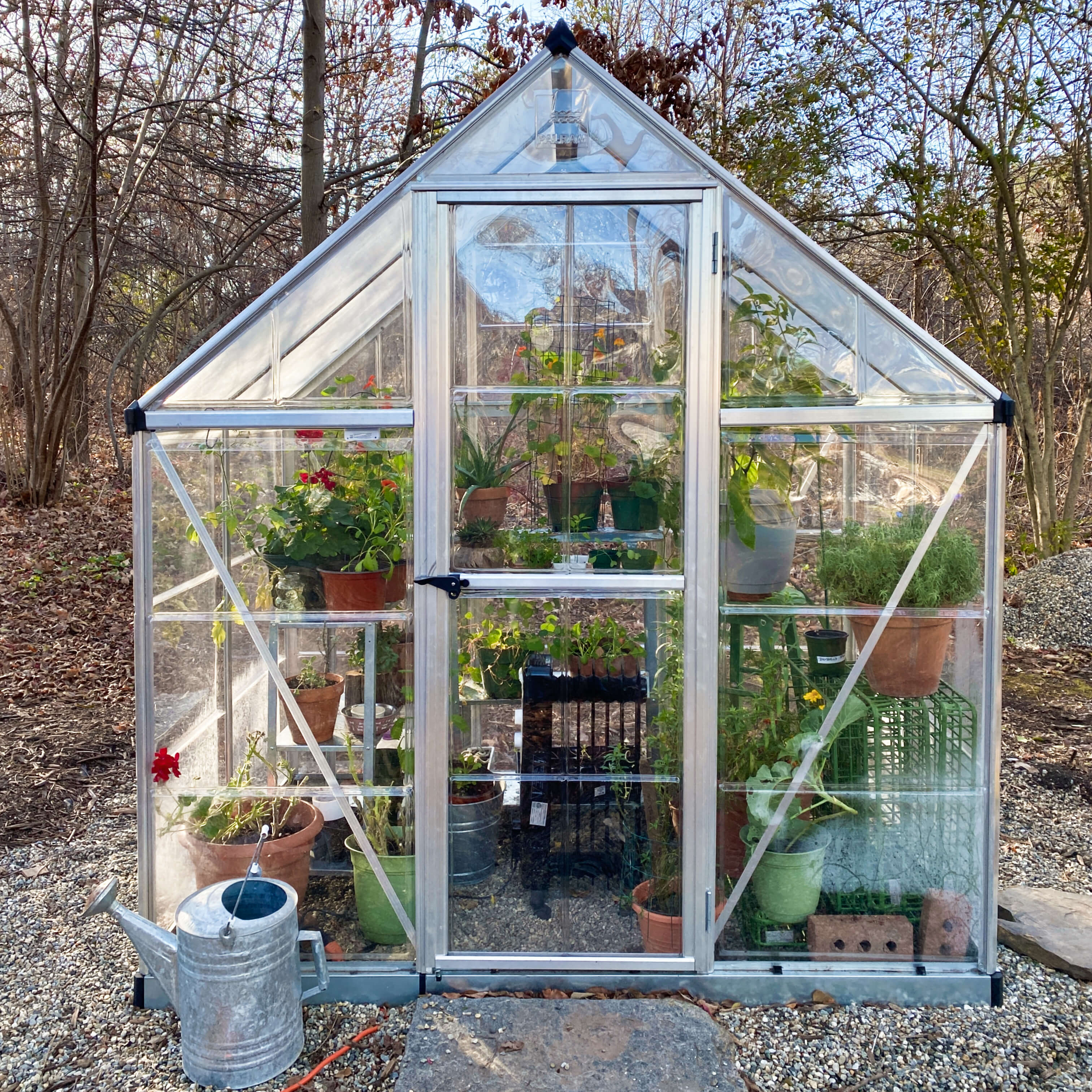
Our greenhouse measures 4’x6′. It has a steel base, aluminum framing, a pea gravel floor, a door with a secure handle, an adjustable roof vent, and clear polycarbonate walls. Inside, there is room enough for two metal shelving units, a wooden stool, 33 pots of varying sizes, one galvanized bucket, two water jugs, a hand soap station, and a portable heater. Tucked in between all that, is a little extra space for standing and potting.

We assembled the greenhouse in the late spring in the sunniest spot in the backyard. During the warm months, it held trays of seed starts and some plants that preferred to be out of the direct path of slugs and cutworms. But once autumn came and the threat of the first frost hovered, we turned it into an experiment station. Curious to see what we could keep alive from the summer garden, we potted our most successful growers and crossed our fingers. So far so good. Everything but the oregano and one pot of marigolds have taken well to the location change.

The nasturtiums in particular really like their new spot. Blooming at a rate of three to four new flowers a day, they keep the greenhouse bright with color and the air sweetly scented like honeyed perfume.

Currently, the greenhouse is uninsulated, an issue that will need to be addressed as the daytime temperatures fall into the 20s and 30s. But for now, we have found success in creating a summer climate using a portable electric heater that was put into service as soon as the outdoor temperatures began to repeatedly fall below 50 degrees.

With just the help of the heater and the sun, the greenhouse right now averages temperatures that are 20-35 degrees above the outdoor temperature. Once we get our insulation plan in place, it should become even warmer. For now though, all the plants seem happy with this cozy climate.

I read once that a single geranium plant can live up to 50 years if properly cared for season by season. That’s my goal for the four pots that are overwintering now.

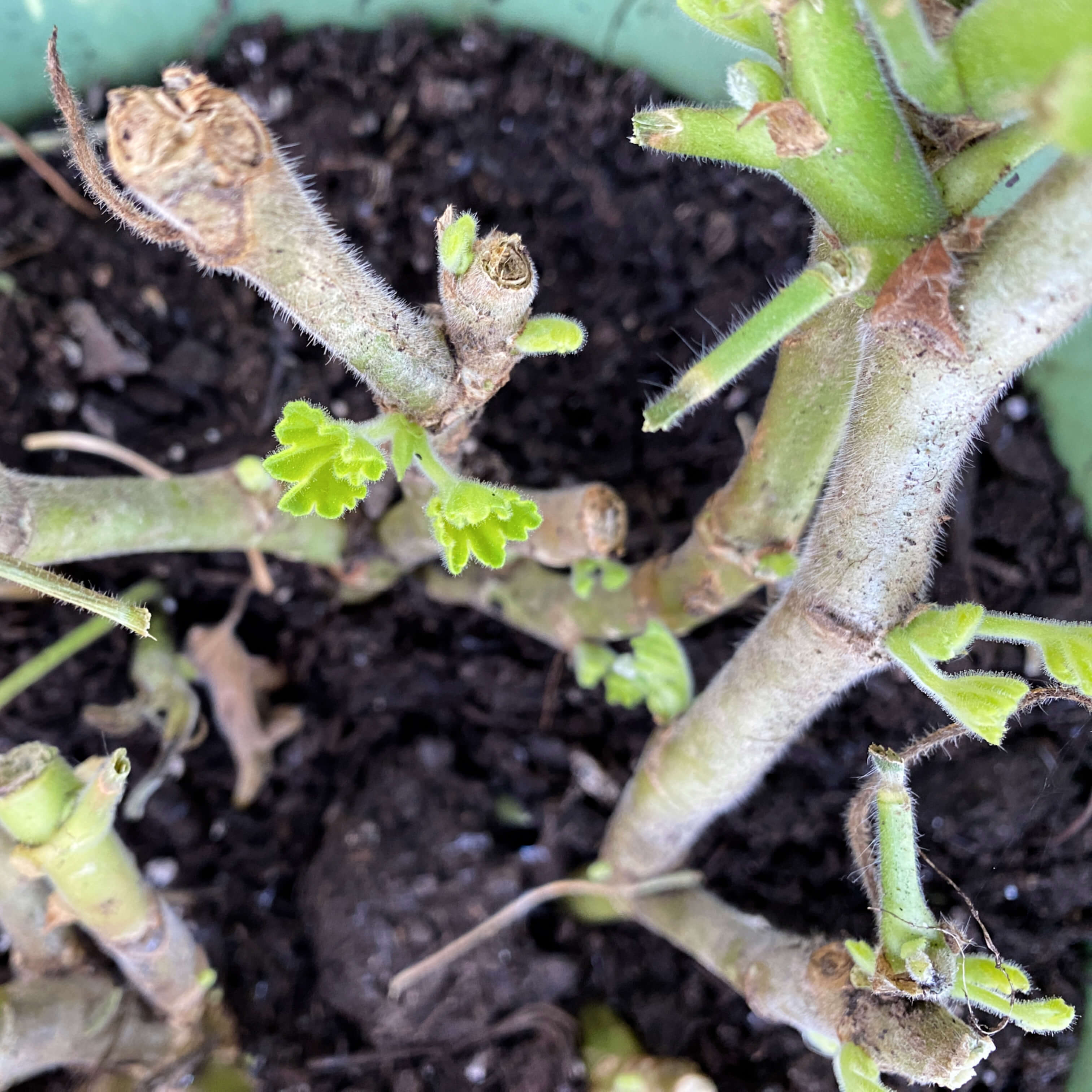
Accidently overlooked, two of the four geranium pots experienced the first frost in mid-November before they made it into the greenhouse. Wilted and weepy-looking, I cut off all the affected leaves and stalks and brought them into the greenhouse, hoping that the warmth might help them recover and encourage new growth. Yesterday, they started sprouting new leaves…

The other companions that make up this house full of green are…

  • lavender
  • tarragon
  • mint
  • parsley
  • rosemary
  • broccoli
  • basil
  • succulents
  • sage
  • tomato
  • peppers
  • thyme
  • arugula
  • zinnia
  • pincushions
  • lemon tree
  • collard greens
  • chives
  • aloe
  • bunny ear cactus
  • brussels sprouts
Lavender

The peppers, tomatoes, and broccoli are all sporting fruit these days. I’m not sure how long they will take to grow and ripen but if we could manage a small harvest in the dead of winter that would be exciting.

Lemon jalapenos
Cherry tomatoes
Broccoli

The winter crops that we are trying out this year – broccoli, arugula, collard greens and Brussels sprouts – hopefully, will reach maturity and harvest time by late February. We run the chance of running out of room if these guys get really big, but a full house is better than none at all, so we’ll take it one week at a time and see what happens.

Arugula

In one of her essays, Katharine wrote.. “from December through March, there are for many of us three gardens – the garden outdoors, the garden of pots and bowls in the house, and the garden of the mind’s eye.” Gardening in a greenhouse in winter gives us the ability to experience all three – to create, to grow, and to dream during a time of year that the outside world reserves for dormancy and hibernation. Our small structure set in pea gravel with a portable heater and a steel base, aluminum framing, and metal shelves shelters big, colorful dreams – ones both realized and yet to be imagined. We can’t wait to see what blooms.

Cheers to Katharine for inspiring this new series, to the greenhouse for holding all our hopes and to nature for feeding our brains and our bellies.

Fernbank in Autumn: A Trip to the Rose Garden

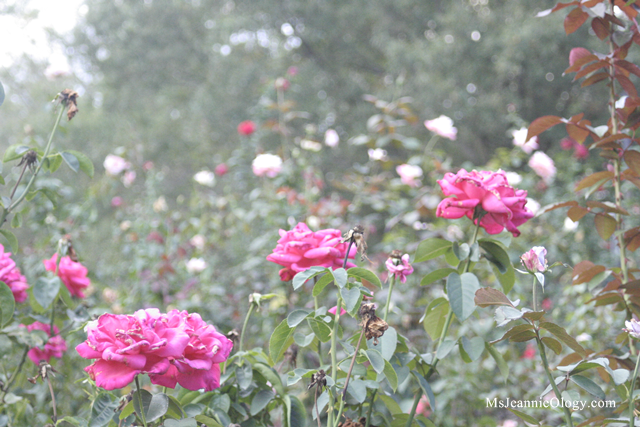
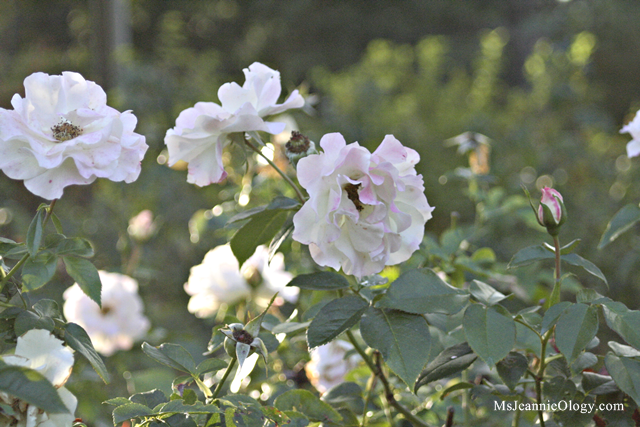
A magical visit to the rose garden at Fernbank.

The award-winning writer and gardener Sydney Eddison once said that gardens were a form of autobiography. How true! You pick your favorite plants and flowers, you prune and pluck or you let it go and grow, you decide neatly clipped and ordered or wild and whimsical, you choose colors, height, dimensions, you choose careful maintenance or natural ease. Essentially you write a love story with your landscape.

Ms. Jeannie was thinking about all this the other day when she finally (after many months of waylaid attempts) managed to visit the rose garden at Fernbank,  Atlanta’s natural history museum.

Blooms aflutter in all directions.

What a gorgeous marvel this site was! Named in honor of Robert L. Staton, a local gardening enthusiast,  Robert built this story of a garden in the 1980s to not only explore his own passion of cultivating an incredible flower but also to provide an educational tool for rose enthusiasts around the world. Autobiography is right, dear readers!

r43_l

The Fernbank rose garden is one of only three gardens in the United States that serves as a testing ground for rose varietals in accordance with the American Rose Society, which makes it an intriguing platform for experts and novice hobbyists as well as a place of beauty for the community.

r46_l

Laid out on two sides of a big lawn joined by a paved walkway, over 1,300 rose bushes live in long raised beds, bordered by bricks and grass alleyways.  Being that it is now mid-October, Ms Jeannie didn’t know what she was in for in the bloom department. She thought she might be missing the season entirely, but was so happy to be proven wrong. At every turn there was something lovely to look at…

r44_u

r47_u

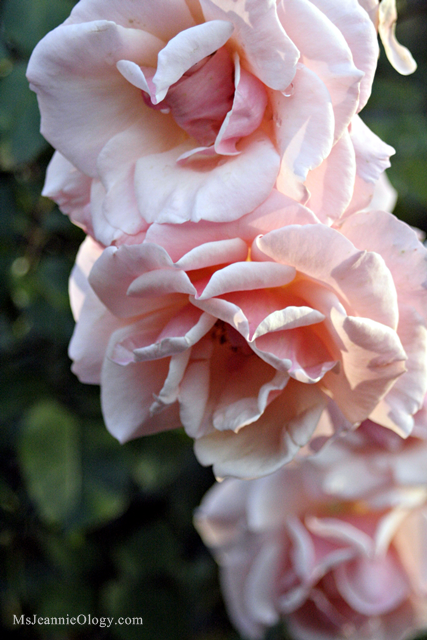
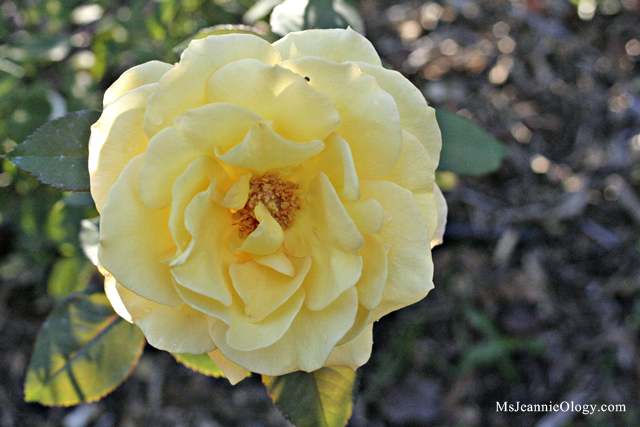
Roses came in a rainbow of colors and caught the light in all sorts of dramatic ways…

r6_u

r16_u

r45_u

r29_u-pumpkin

r49_u

Such a visual feast for the eyes!  Stately buildings belonging to the museum and a view of the neighbor’s house next-door were tucked into the landscape and lent a fairy tale magic to the whole setting.

r9_b

r8_b

Even Indie, Ms. Jeannie’s travel companion, was overwhelmed with the spectacle of it all.  Not only was this her first walk-around trip in Atlanta but it was also an exercise on how to behave in a city environment.  She was a good little pup through it all despite the enticing distractions (so many squirrels!) and the fast moving cars.  But it also was a trip not without its perils…

Dog down. Thorn in the paw!
Thorn in the paw!

Oh poor thing! Some quick attention and one freshly dug hole later…

(Oops! Sorry Fernbank!)

and she was back on the trail again.

Rumor has it that many a marriage proposal has occurred in the garden, and Ms. Jeannie can definitely understand why.  Clearly Robert Staton was a romantic on a mission.  The garden seduces you at every chance.  From varietal signs…

r13_s

to traditional symbolism…

r41_u_png

petals pull at your heart from all directions.

r48_u

And now Ms. Jeannie is so thoroughly inspired to start her own assorted rose garden she can barely stop daydreaming about it all. More to come on that front soon!

In the meantime, in honor of such a magical place Ms. Jeannie is having a little sale just for her blog readers on anything floral (including all things photographed with flowers!) in her Etsy shop. Stop by and have a look here. Use coupon code FLOWERSFORALL to receive a 25% off discount.