In 2008, Kim Sunee published a memoir called Trail of Crumbs. It’s the captivating true story about the first 28 years of her life as she moves in the world from being a three-year-old toddler abandoned by her mother in a Korean marketplace to being the adopted daughter of an American family living in New Orleans to becoming an independent, international traveler wandering the world in search of home and self.
I discovered Trail of Crumbs just this fall and found it so interesting that I included it in my list of favorite books to recommed for 2024. Full of compelling questions about cultural identity, the long-term effects of abandonment, and the universal desire to find a place that naturally feels like home, Kim’s memoir is full of luck, loss and the awkawrdness of becoming your true self. The recommended book list post has a much more in-depth review of Kim’s journey, so if you’d like to learn more about the book catch up here first.
In addition to sharing her coming-of-age story, Kim also includes a collection of recipes peppered throughout Trail of Crumbs that represent her international identity. Korean Kimchi Soup, Swedish Potato Temptation, French Fry Po-Boys with Horseradish Creme Fraiche, Croque-Madame Sandwiches, Whispery Eggs with Crabmeat and Herbs, Peaches Poached in Lillet Blanc and Lemon Verbena are just a few examples. In her book, food, acts like a second storyteller defining the way in which Kim moves about the world. These recipes are her confidence, her calling card and also her comfort blanket.
I tagged about ten different recipes in Kim’s book that I can’t wait to try. Given the winter weather, the merry season, the busy time of year when easy dinners are appreciated, and the larger crowds that come to the table for holiday celebrations, I thought it would be ideal to highlight her recipe for Chicken Thighs with Cinnamon and Dates. It’s easy to make, feeds up to eight people and fills the kitchen with tantalizing aromas.
This chicken recipe with its fruit and its spices appears in the middle of the book when Kim is living in France and is involved in a passionate love affair with the French founder of a well-known cosmetics company. Just like the recipe itself, this European romance is sweet, tender, and stuffed full of exotic appeal but it’s also very complex with lots of moving parts, outside influences and Kim’s own internal stops and starts. It winds up defining her life in ways she couldn’t have anticipated. This love affair is central to the whole entire book, so in case you haven’t already read Trail of Crumbs, I won’t say anything more so as not to spoil the story for you. Instead, we’ll begin our own little romance with this lovely recipe. Let’s get to cooking.
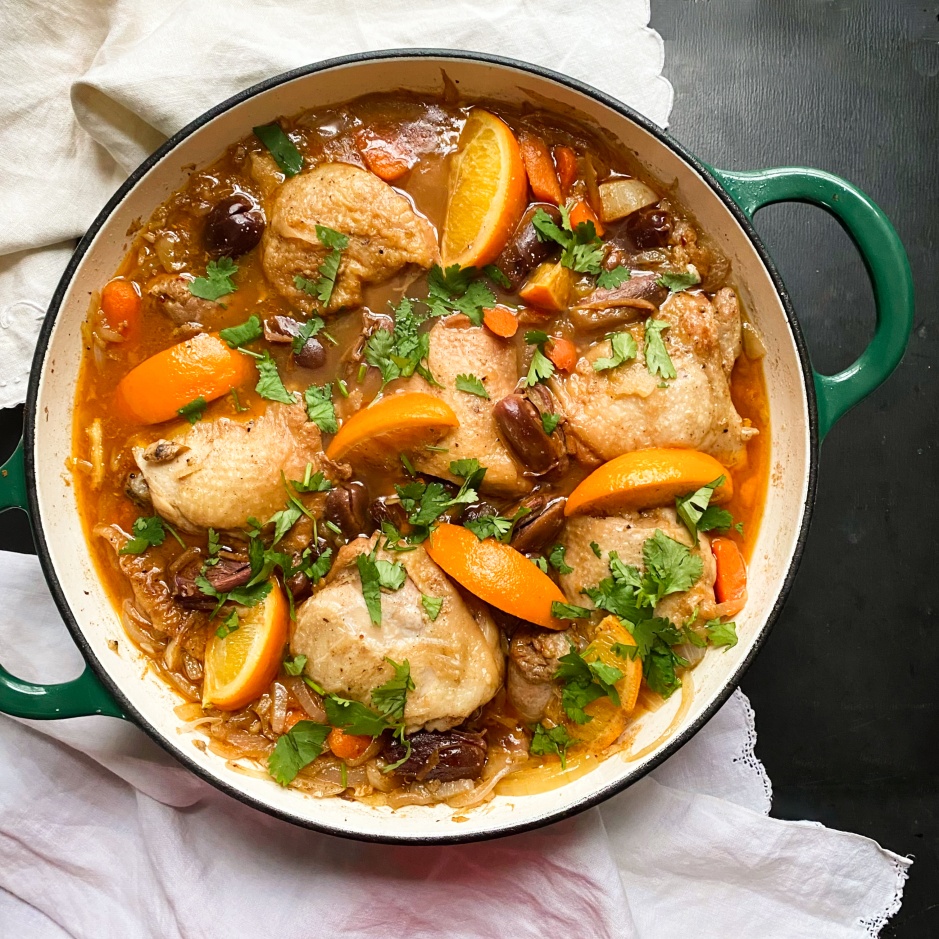
An easy, spice-infused one-pot meal that slow simmers for an hour and a half, Chicken Thighs with Cinnamon and Dates is a cozy and colorful recipe perfectly paired for the wind-chilled winter months. With its aromatic combination of oranges, onions, cinnamon, cumin, ginger, cilantro, paprika and garlic plus two proteins, it is a flavorful ensemble fit for a feast. Once the onions start swimming in the olive oil and the spices are incorporated one by one, the kitchen warms with the scent of holiday cooking. Similar to a wonderful recipe my mom used to make when I was growing up, one that she simply called Israeli Chicken, Kim’s recipe is a savory blend of Middle Eastern and North African flavors punctuated with a bit of Indian spice. For added convienence and a bit of trans-continental flair, in addition to cooking it in the oven, this recipe can also be made in a tagine or in a large pot on the stovetop slow simmered over medium heat.
Before we dive into the recipe, just a quick note. I followed Kim’s ingredient list exactly as written with the exception of a few minor substitutions based on local availability. I used skin-on chicken thighs in place of skinless and purple raisins in place of golden. I used a locally made spicy Italian pork sausage, and Dole brand whole pitted dates. In the last step, just before the chicken heads into the oven, I used homemade chicken broth. Other than that, this recipe was made as is, and it came together beautifully. Here, I’ve posted Kim’s original recipe as published in her book so that you’ll have the first-hand ingredient list that she intended.
Chicken Thighs with Cinnamon and Dates
from Trail of Crumbs by Kim Sunee
serves 6-8
1 teaspoon olive oil
2 sausage links (such as Merguez, spicy Italian pork, or lamb) about 1/2 lb.
6-8 skinless chicken thighs
1 1/4 teaspoonssalt, divided
3/4 teaspoon fresh-ground black pepper
1 large onion, thinly sliced
3 garlic cloves, smashed and coarsely chopped
1 tablespoon fresh grated ginger
1 teaspoon ground cinnamon
1/2 teaspoon ground cumin
1/2 teaspoon hot paprika
1 1/2 cups low-sodium chicken broth or water
1/2 cup fresh orange juice
1/3 cup golden raisins or currants
2-3 carrots cut lengthwise and halved on the bias
1 large orange cut into eight wedges
12 to 15 dates (preferable Medjool) pitted or 12 to 15 large prunes, pitted
2 to 3 tablespoons chopped fresh cilantro
Garnish of fresh cilantro, toasted almonds, or pine nuts
Heat olive oil over medium-high heat in a large ovenproof pan or Dutch oven. Cut sausage links in halves or thirds, depending on length, remove casings if desired. Add sausage and chicken to pot in one layer. Sprinkle with half of the salt and pepper. Let cook about 5 minutes. Turn meat over, season with remaining salt and pepper and cook 5 more minutes. Remove chicken to a plate.
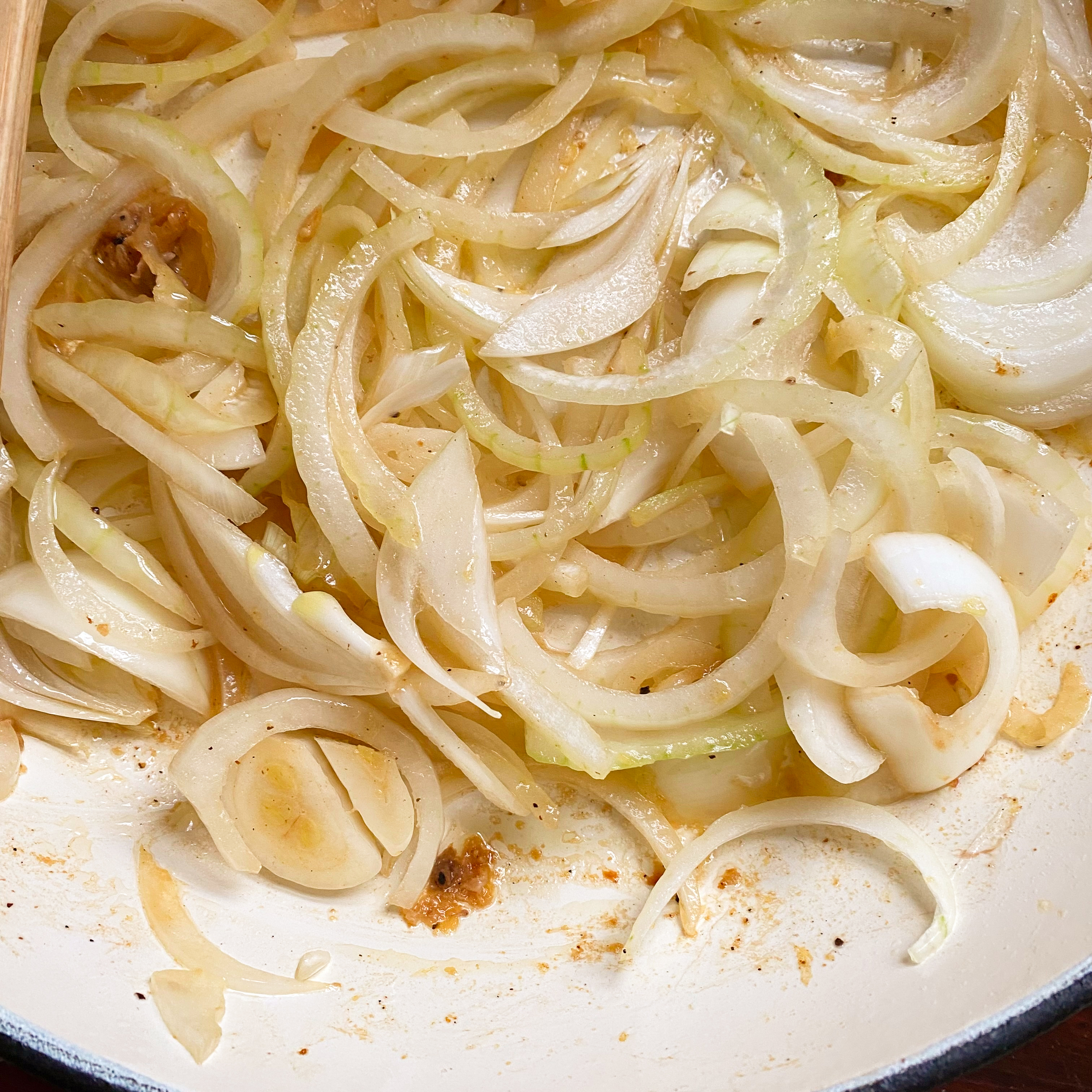
Add onion to pot (if brown bits are stuck to bottom, add about 1 tablespoon white wine, water or orange juice, scraping to loosen bits) and let cook about 5 minutes.
Add garlic, ginger cinnamon, cumin and paprika. Stir and let cook about three minutes.
Add chicken broth and orange juice, raisins and carrots and stir. Place chicken and sausage back in pot. Add orange wedges and dates.
Stir, cover and bake at 350 degrees for about 1 hour and 30 minutes or until chicken and carrots are fork tender. Taste sauce and adjust seasoning as needed. Top with cilantro and serve.
Kim recommended serving this dish with hot buttered couscous, but since it was so saucy I served it with a batch of plain white rice flavored with just a pinch of salt. Warm and hearty, there was something new and delicious to discover in every bite. The dates took on the flavor of the orange juice. The garlic found its way to the raisins and formed little pockets of savory sweet pillows. The carrots were tender but not mushy. The onions and spices soaked into the chicken, which fell off the bone at the slightest nudge of the fork. All of it was lovely and very delicious.
I’d highly recommend this recipe for both everyday dining as well as special occasion dinner party fare. Its vibrant color palette, layered flavors and long cooking time offer plenty of opportunity to set a pretty table, socialize with friends and family, or read a few chapters from Kim’s book while you wait for it to finish.
If you have a small household and think six to eight chicken thighs is too much, make them all anyway. This recipe lasts in the fridge for several days so you’ll have leftovers. Like any good casserole, curry or homemade sauce, it only gets better the longer it sits.
Cheers to Kim for sharing her story and this wonderful recipe. Hope you love it just as much.
To learn more about Kim Sunee and her cookbooks visit her website here.
Undoubtedly the most well-known food to come out of Mystic, Connecticut is pizza, thanks to the 1988 movie Mystic Pizza starring Julia Roberts…
The real-life pizza shop that inspired the film is still serving up hot pies every day in this beautiful, bustling, historic port city, but there’s a long-standing tradition of other delicious New England fare that has made Mystic, CT a go-to source for memorable cuisine too. The recipe featured here today might not be the star of a feature film but it definitely will be a star on your holiday table. Today’s post comes from The Mystic Seaport Cookbook, a collection of historic New England recipes first published in 1970 by Lilian Langseth-Christensen…
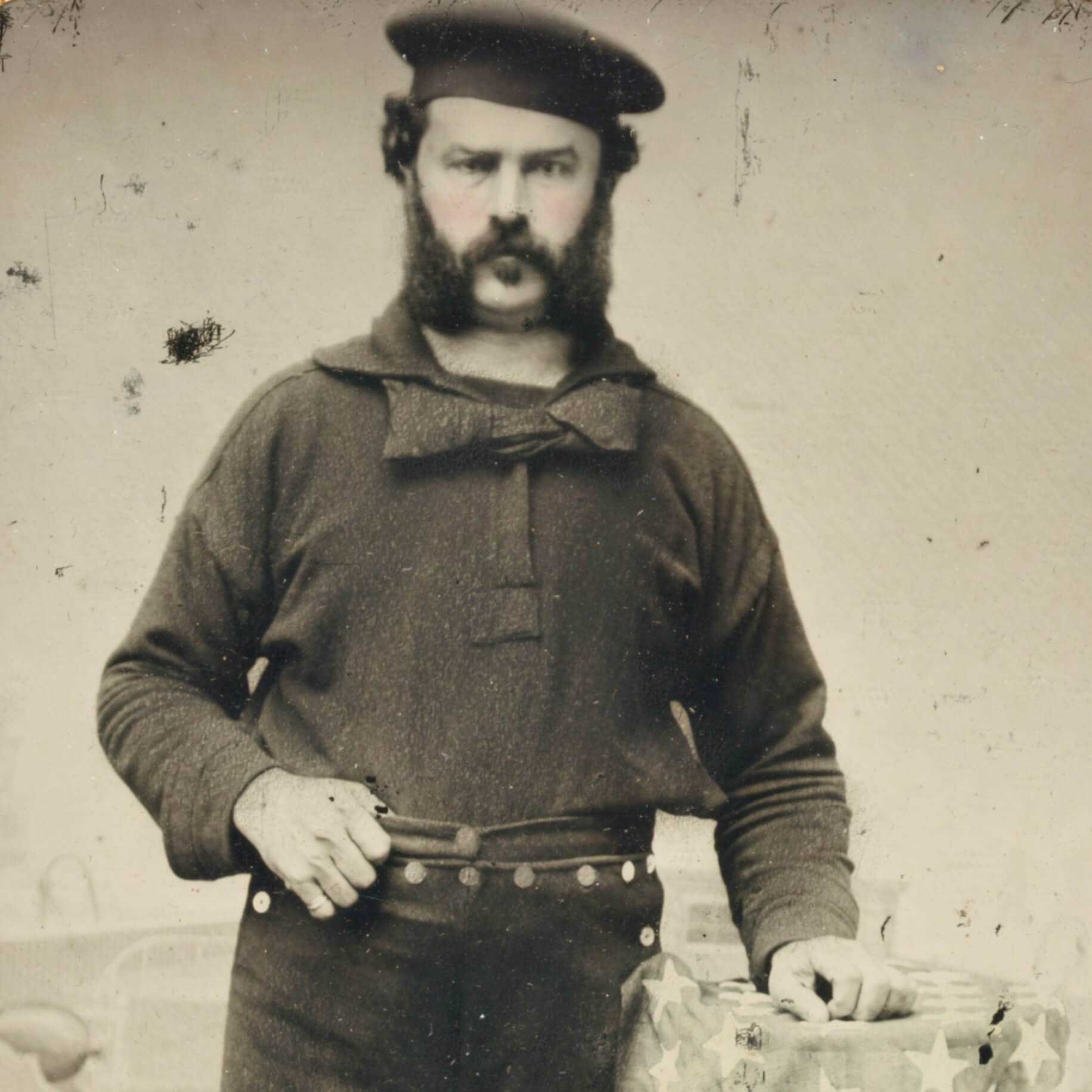
You might remember this cookbook from last Spring when we featured a hot rum toddy and a story about sailors and life on the high seas.
This guy was the star of our hot toddy post.Hot Grog – Mystic Seaport style
The recipe we are featuring here today isn’t quite as dramatic as that one, but it is equally delicious. Simply called Cranberry Relish, it’s an ideal alternative to canned cranberry sauce at Thanksgiving and travels the rest of the holiday season with tantalizing appeal. Post-Turkey Day, this simple New England cranberry relish becomes a crimson-colored companion to all sorts of festive Christmas party hors d’oeuvres, holiday-themed sandwiches, and cozy winter snacks.
A 19th-century cranberry farm located in Mansfield CT. Image courtesy of the Mansfield Historical Museum and Library.
Back in the 19th century, Connecticut was home to a number of cranberry farms, but it isn’t known for its commercial cranberry bogs anymore. In New England, that’s left up to the neighboring state of Massachusetts now, where they harvest over two million pounds of cranberries per year. Some farms in the Bay State have been run by generations of families that stretch back over 150 years. Thanks to modern machinery, cranberry farming is an easier endeavor but back then it was considered one of the hardest crops to farm and was done entirely by hand with wooden scoops combed through the cranberry bushes. No one was spared the arduous task of collecting cranberries, not even kids.
Cranberry harvesters on Cape Cod circa 1909.Cranberry Farm – Pemberton, NJ circa 1910. Photo by Lewis Wickes Hine.A wooden cranberry scoop, also sometimes referred to as a cranberry rake. Image courtesy of a 1940s-era American Cranberry Exchange recipe booklet.
In Connecticut, there is just one remaining cranberry farm in the state left, but cranberry relish has been a part of the New England diet and therefore, the Connecticut diet, since colonial days when indigenous tribes taught early settlers how to pound them into pastes and sauces.
Harvested during the autumn months of September and October, by the time they make an appearance on the Thanksgiving table in the form of relishes, jellies, jams, compotes, sauces, and innumerable baked goods, cranberries add bright color, dimension, and acidic flavor to a holiday meal mostly recognized by its earthy brown and beige shades.
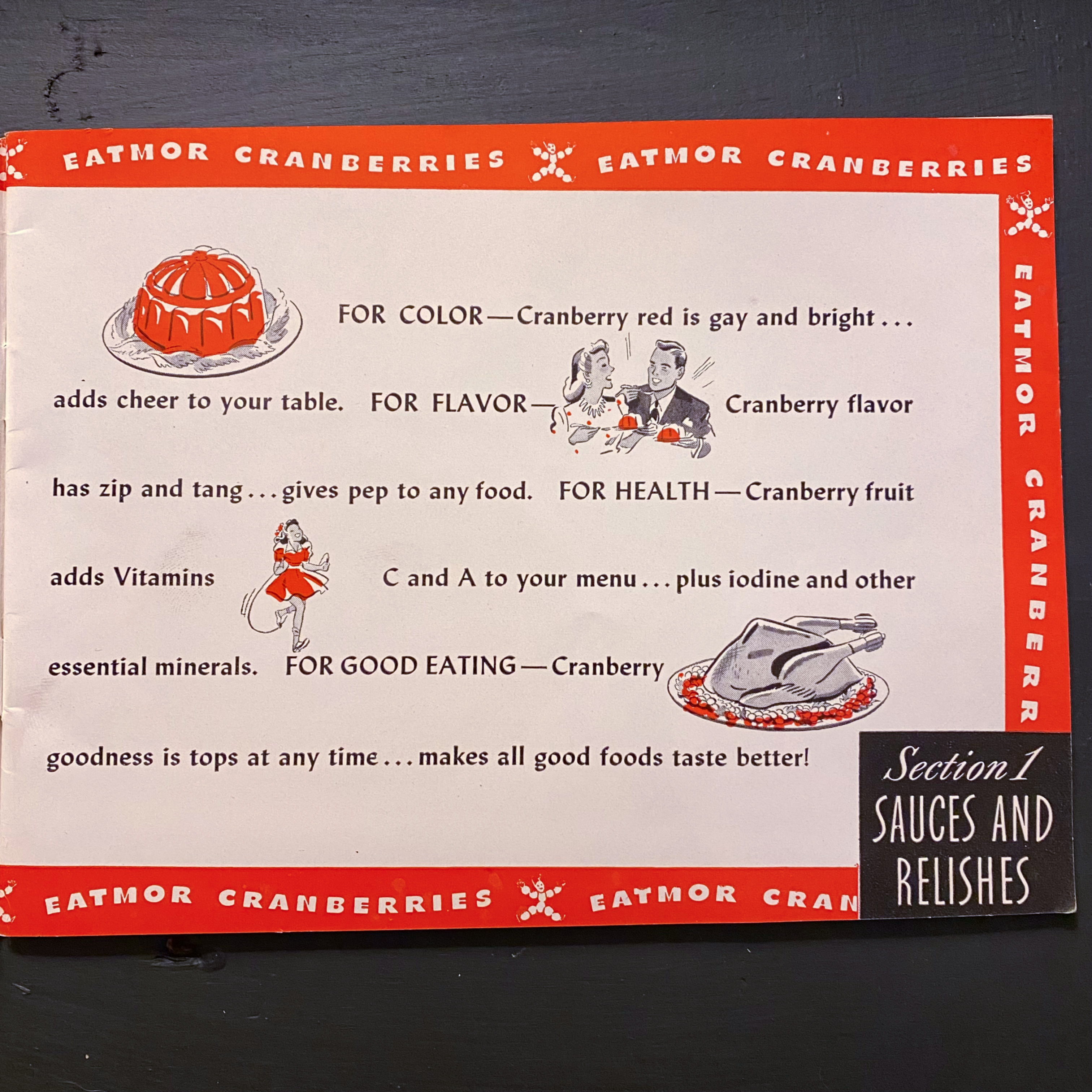
A cranberry recipe cooking booklet courtesy of the American Cranberry Exchange, headquartered at 90 West Broadway, New York, NY. The A.C.E. was a cranberry cooperative that operated between 1907 and 1957 among several US states including Massachusetts, Wisconsin, Oregon, Washington, and New Jersey.
Pick up any New England cookbook, and the author will have their own preferred method of making this holiday side dish, but there will always be some ingredients that everyone agrees on. Technically, what differentiates cranberry sauce from cranberry relish is the cooking process. Cranberry sauce generally tends to be cooked on the stovetop – boiled down with sugar to a sweetened consistency that is thin and syrupy or thick and gelatinous depending on the amount of cooking time. Relish, on the other hand, more often than not, is mixed together in a blender and served chunky and raw with the addition of just a bit of sugar and some other aromatics including spices and citrus. The recipe featured here today is a cross between both. It’s cooked on the stove and includes citrus, raisins, and nuts for a more chutney-like consistency. The chunky texture and quick cooking method, make this Mystic recipe easy and versatile – ideal for all sorts of applications long after the Thanksgiving meal has been enjoyed.
First, we will look at the cooking method and then we’ll dive into the number of different ways to serve this version of cranberry relish. You’ll notice at the end, that this recipe offers a canning suggestion for storage but we just made one big batch and stored it in the fridge where it lasted for over a week and a half.
Cranberry Relish
From the Mystic Seaport Cookbook circa 1970
Makes 6 pints
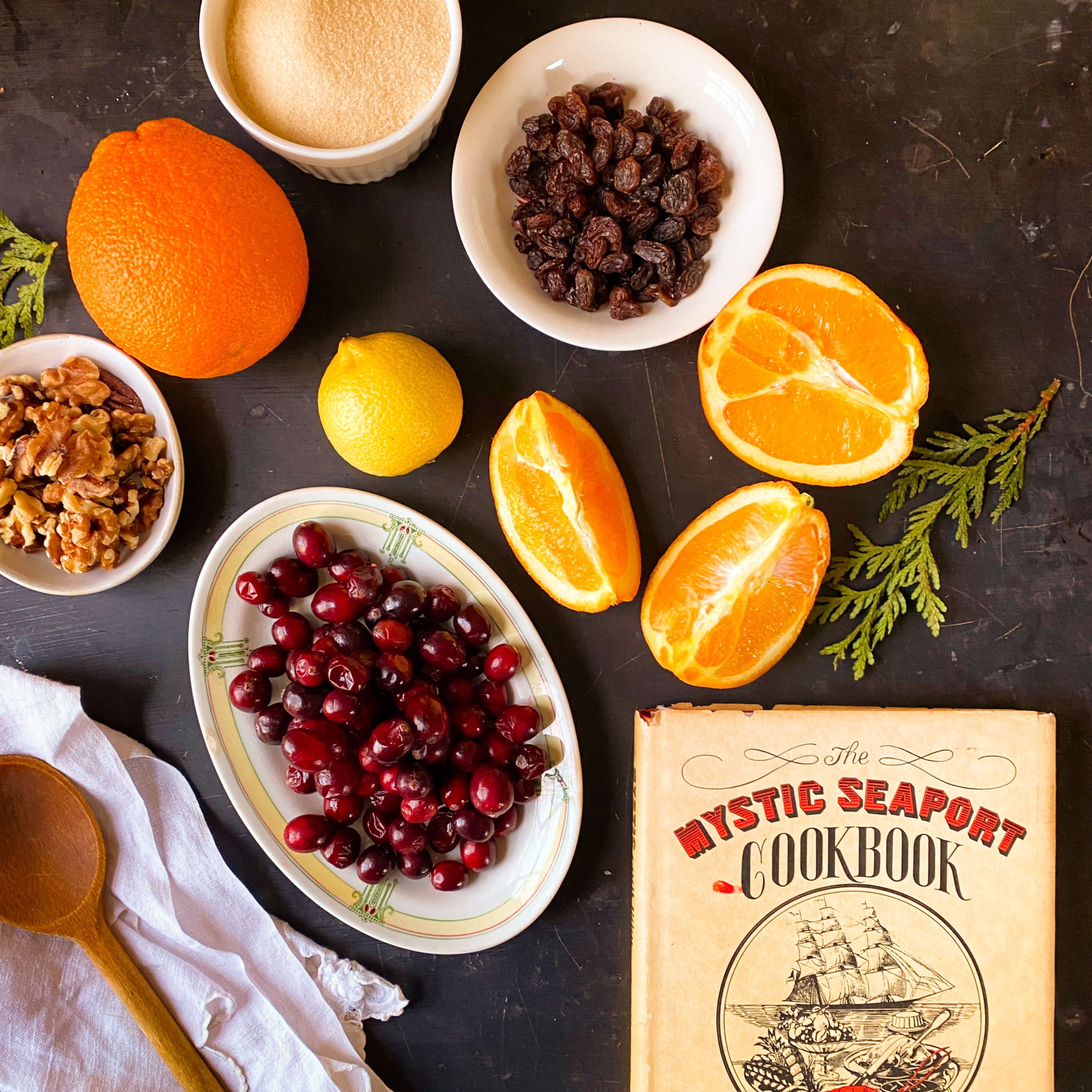
6 cups fresh cranberries
1 cup cold water
1 cup boiling water
1 1/2 cup raisins
1 1/2 cups chopped walnuts
2 large oranges
4 cups sugar
Grated rind of 1 lemon
Wash the cranberries and pick out any remaining debris (stems, leaves, etc). Boil them in a cup of cold water until the skins pop and the berries become soft.
Blend them into a puree using a hand-held immersion blender…
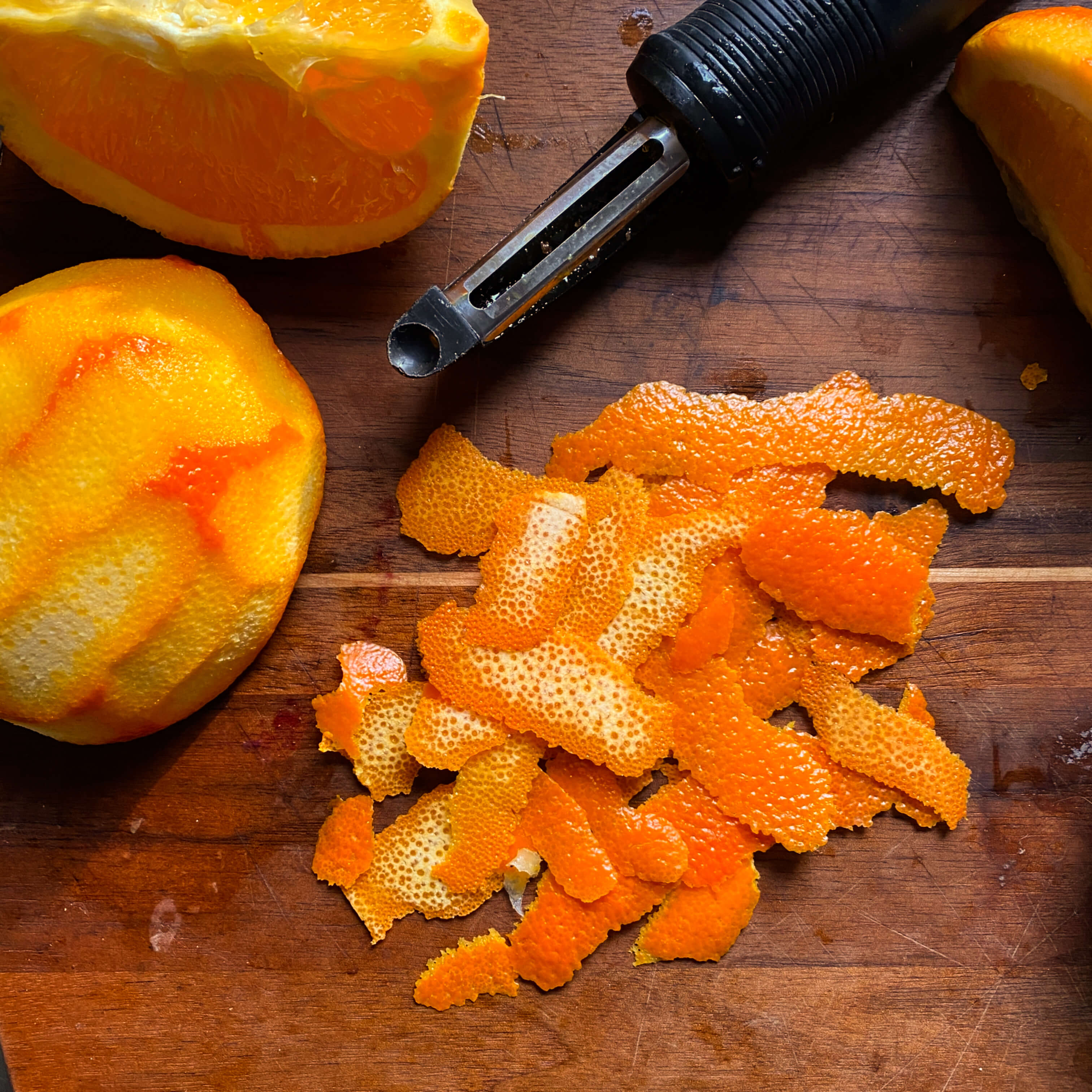
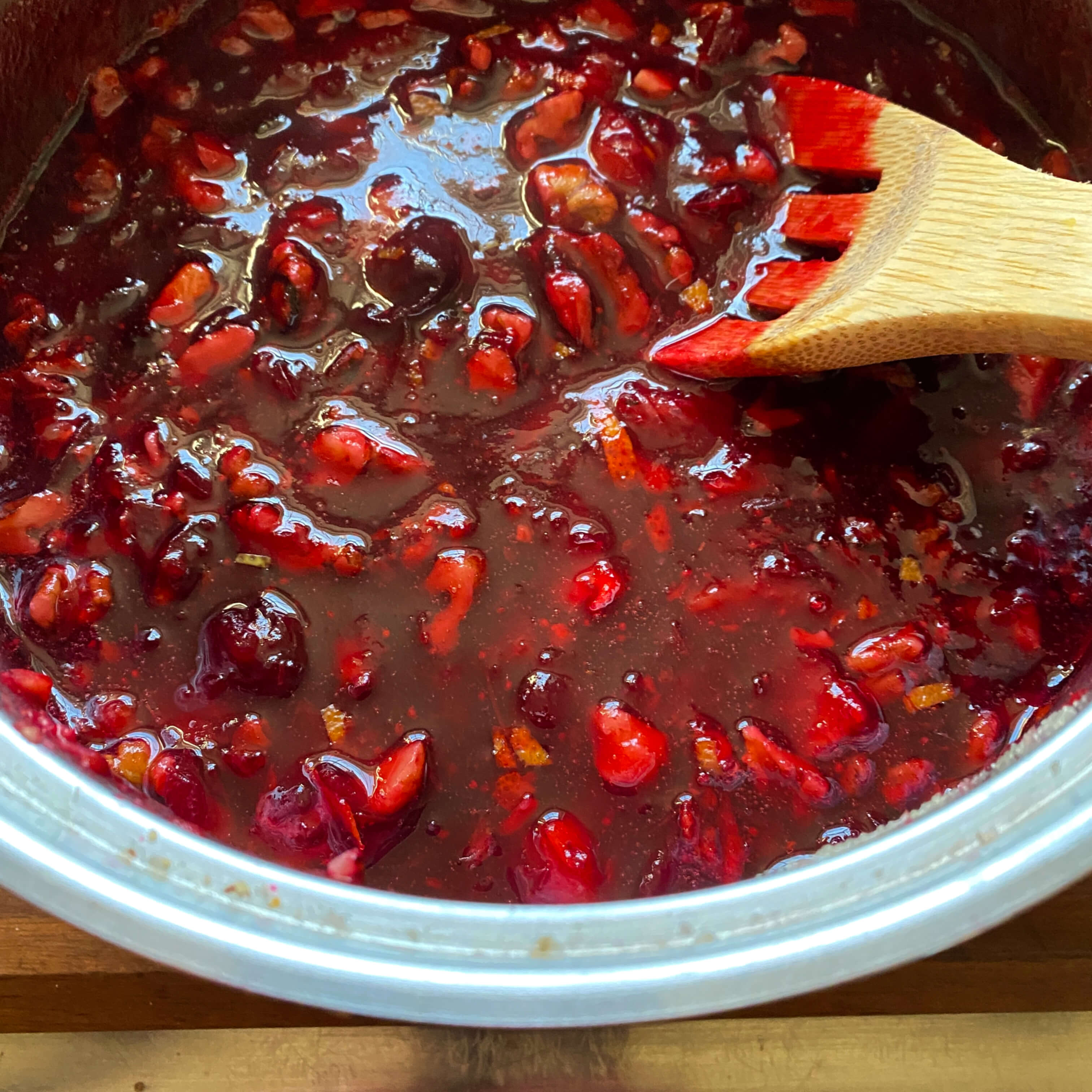
and then add the boiling water, raisins, walnuts, and sugar. Peel the oranges and dice the pulp. Scrap any white pith off the orange rinds, discard the pith, and dice the orange rinds. Add the rind to the mixture.
Next, stir in the grated lemon rind, and cool the relish.
Transfer relish to a bowl and serve or store in an airtight container in the fridge or pour into jars. If storing in jars, seal the jars with melted paraffin wax and shelve for a later date.
A lovely addition to the holiday table, this cranberry recipe contains the best of both worlds when it comes to sauce and relish. It’s syrupy but also chunky. It’s sweet but also tangy. The walnuts give it a satisfying dose of substance and protein. The citrus adds a burst of flavor that keeps the palate notes fresh and bright.
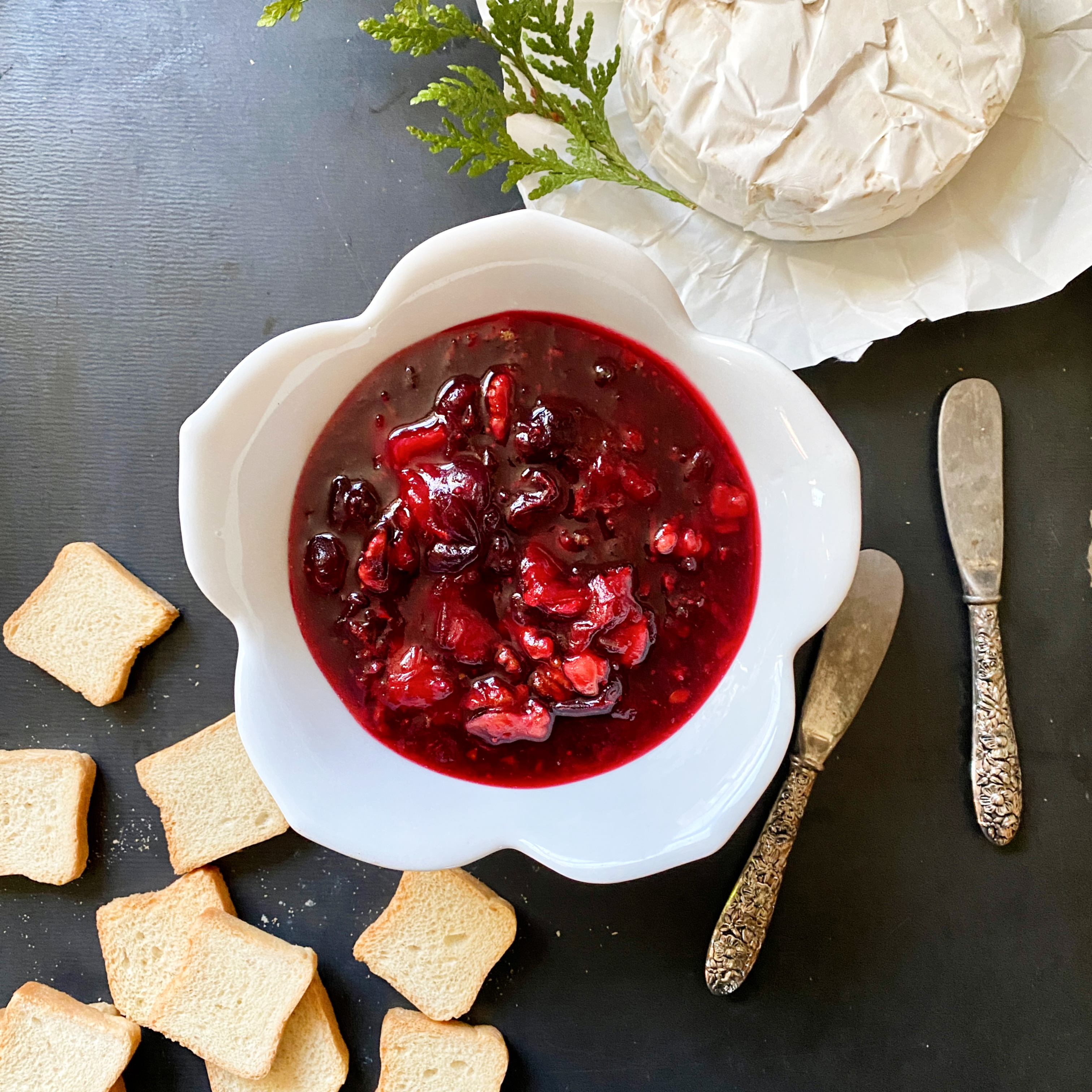
One of our favorite ways to serve Cranberry Relish is poured over a wedge of Brie cheese.
Naturally, it pairs well with turkey, mashed potatoes and gravy but we also love it when it is heated up and spread piping hot over Brie cheese and served alongside an assortment of crackers. Post-Thanksgiving, we like to spread this relish on bread just like mayonnaise for turkey sandwiches. Add it to the filling of turkey pot pie and the dish becomes more savory in an instant. Spread it on leftover Thanksgiving dinner rolls and serve it alongside eggs for breakfast or add it as a topper to oatmeal or yogurt. It’s also great on grilled burgers – beef, chicken, turkey or vegetarian. Basically, any place where you might like a little dollop of a sweet condiment, this one works wonders.
There’s no end to the zillion ways you can incorporate Thanksgiving leftovers into new and creative foods. That’s really the beauty of the holiday after all, isn’t it? All that cooking done days ahead of time allows a rest post-holiday with minimal meal-making effort required, except for quick reheats of the feast that keeps on giving. That leaves plenty of time to relax, read a book, enjoy your friends and family, play games, go for a walk, watch a movie. Perhaps after reading this post, Mystic Pizza will be on the viewing schedule. And maybe, depending on how adventurous you are in the kitchen, this cranberry relish might just inspire a new type of pizza topping too – Mystic style.
If you are looking for more vintage recipes to augment your Thanksgiving menu, we also recommend colonial-style Corn Pudding from the Williamsburg Cookbook and Homemade Citrus Cider from the 1989 Southern cookbook, Wild About Texas.
Hope you find this recipe just as delicious as we did. If you have any favorite cranberry sauce recipes, please feel free to include yours in the comments section. Cheers to the cranberries and all the cooking creativity they inspire.
A 1930s advertisement for Eatmor Cranberries from the American Cranberry Exchange.
Two days ago I woke up to a surprise. Snow flakes. Floating and falling and flying just outside the kitchen window, finally, it felt like winter at last. For the first time all season the outside weather matched the inside holiday spirit.
We don’t get snow very often in Nashville but when we do it’s a call for extra special cooking adventures. The last time, we had a good dose of white winter weather, I prepared a Ruth Reichl recipe – slow simmered Chicken Fricassee from her 2015 cookbook, My Kitchen Year. That cookbook centered around Ruth’s rejuvenation of herself and her spirit via her kitchen in upstate New York. This year, inspired by the snow day, we are taking a little trip too, but not to New York. In this post we are headed to Paris to highlight a winter recipe that is famous throughout the city.
On the stove there’s a warm, rich pot of homemade hot chocolate derived from a recipe that was originally born in the kitchen of a beautiful historic hotel located at 10 Place de la Concorde, just steps away from the Champs Elysee. This isn’t your everyday, ordinary hotel and this isn’t your everyday, ordinary batch of hot chocolate. This cup of cocoa doesn’t involve powdered substances, paper envelopes, or hot water. It doesn’t include high fructose corn syrup, artificial sweeteners, or a long list of ingredients. You can’t go buy it prepackaged in a store and pour it into a cup at home for convenience. This recipe is unique, prized, and unavailable online. It tastes like magic. And for me, it tastes like memories. I am very pleased to introduce you to the Hotel de Crillon and the most esteemed cup of hot chocolate in all of Paris.
In my growing up years, the Crillon was our home away from home anytime my family and I visited the City of Light. From the time I was 6 months old to the time I was 16, stays at the hotel were part of the fabric of my childhood. We had a very good family friend with a beautiful sing-songy name – Michele de la Clergerie – who was the VP of Public Relations at the Crillon. Because of that friendship and all the business my dad’s company did with her company, the Crillon turned into a natural home base for us whenever we visited Paris. Sometimes we were just there for a few days as a stopover on the way to the South of France or to Switzerland or to Africa or some other destination, but oftentimes we stayed for a week or more, taking up two suites in this dazzling building.
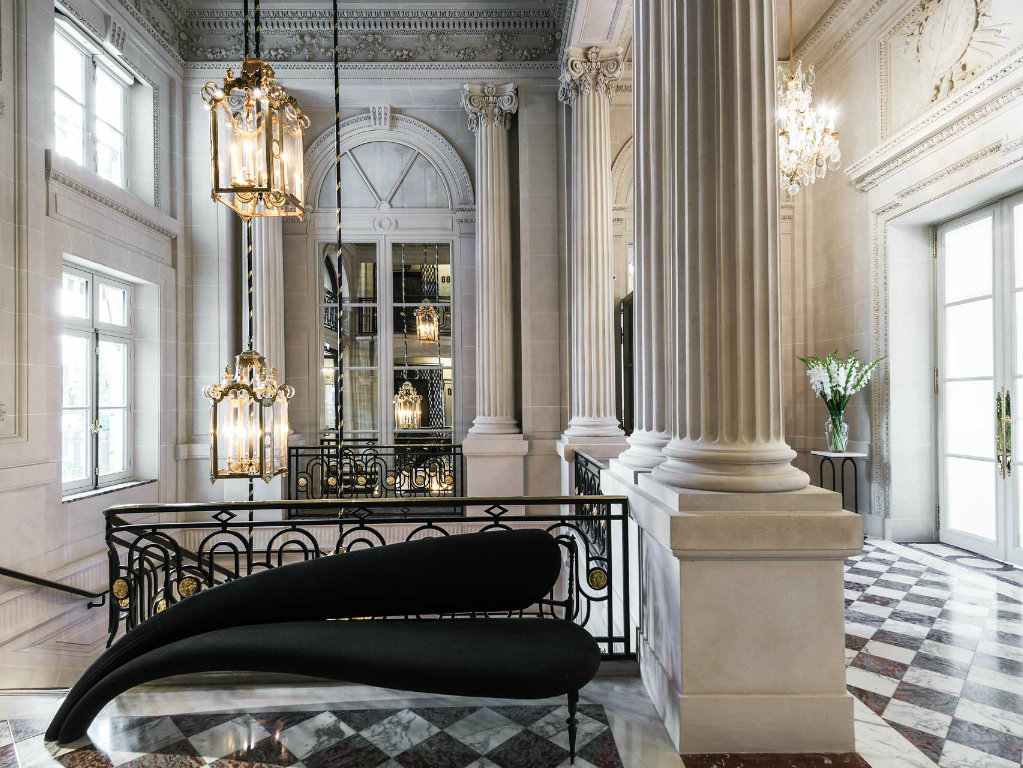
Photo courtesy of jetsetter.com
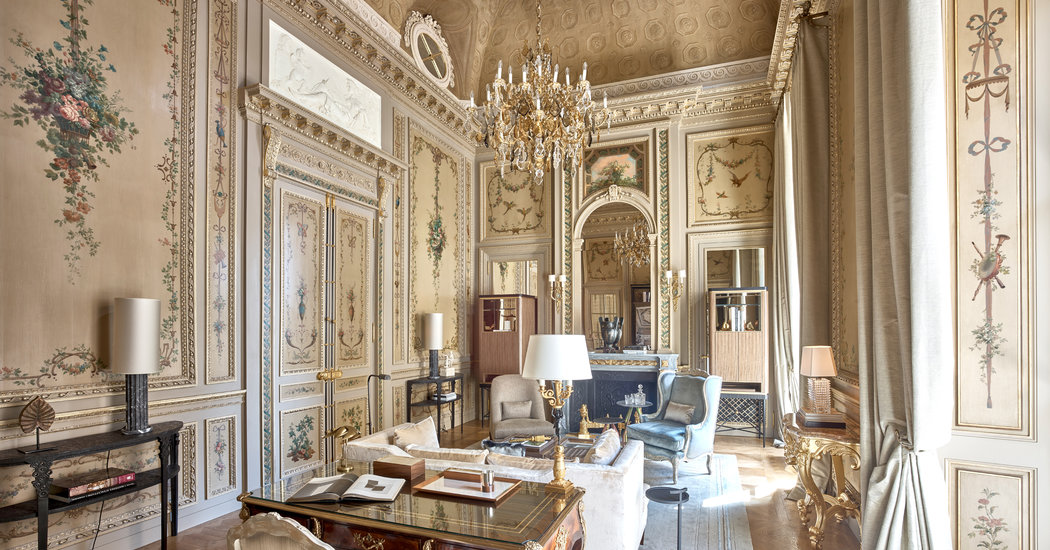
Photo courtesy of crillon.com
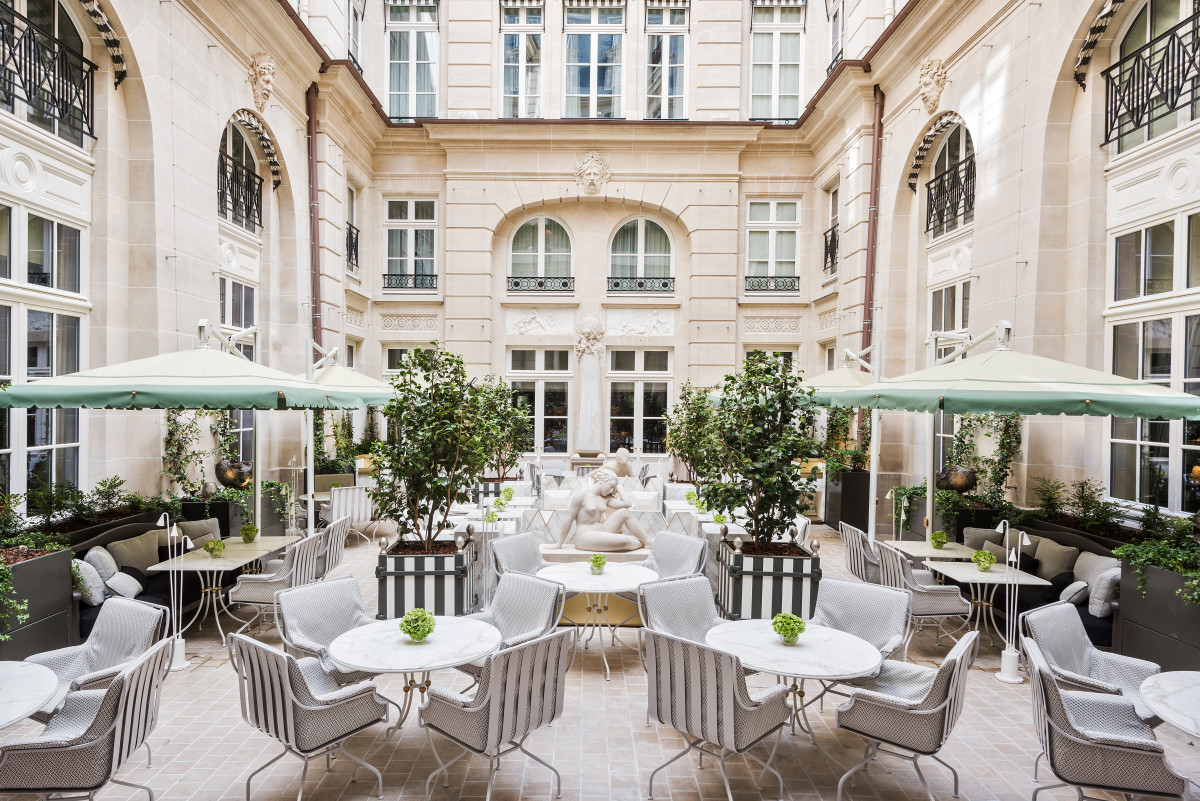
The hotel has recently gone through a renovation which has included a more modern update of the furniture and decor, so it doesn’t look exactly like it did when we stayed there in the 1980s and 90s – but many of the hallmarks (the black and white checkered marble floors, the gold detailing, the big, sashed curtains, the outdoor dining patio, the lavish breakfast room, the en-suite balconies and baths, the beautiful French doors and of course the exterior of the building itself) all remain exactly as I remember.
When I look at pictures of this beautiful hotel now, as an adult, and then recall the experiences my family and I had there while I was growing up, it all seems like a fairy tale. Some sort of far-off, fanciful, other life escapade… gauzy, romantic, and lush… with a level of luxury fit for make-believe or movie sets or circumstances beyond reality.
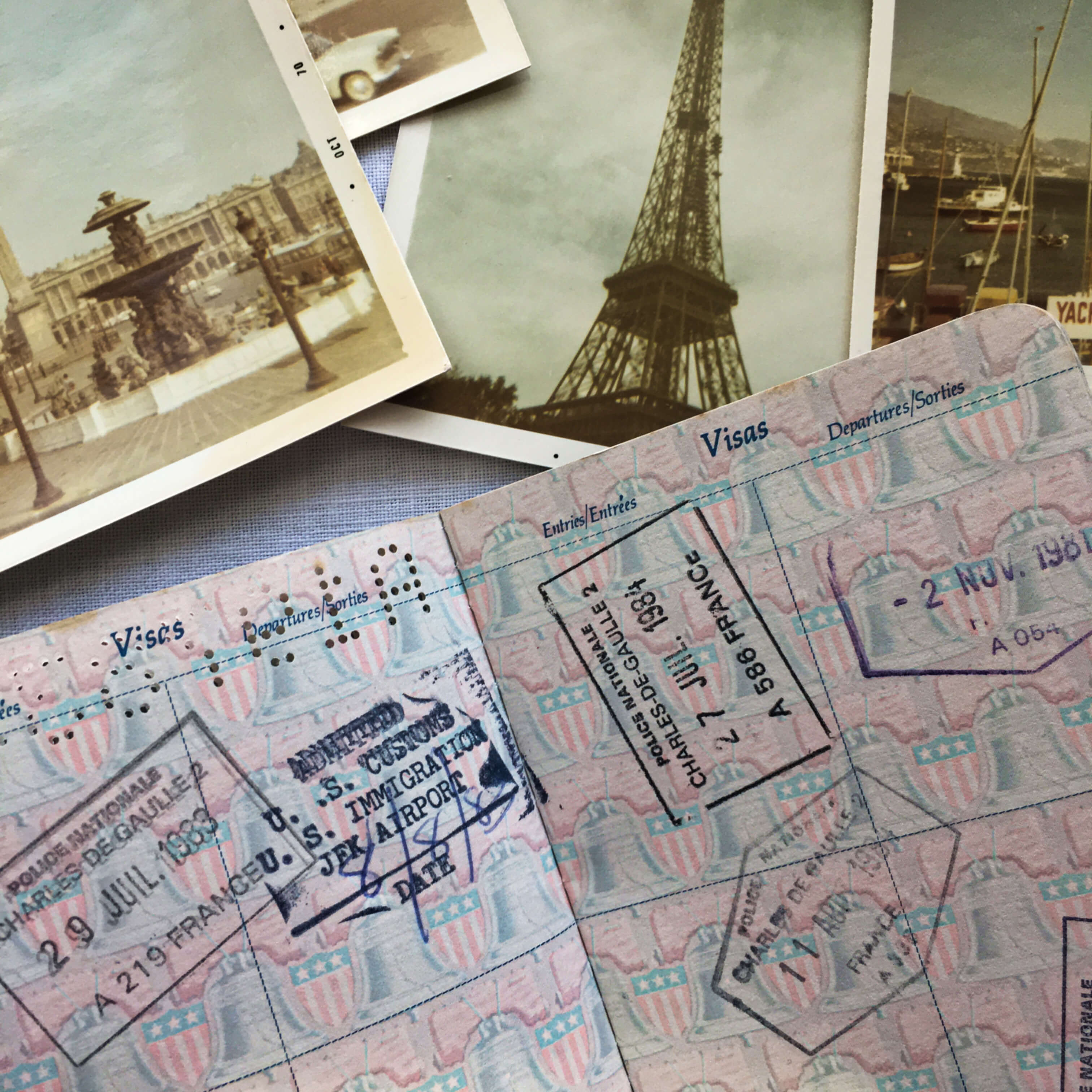
My passport photo – age 3:)
But real it all actually was. Thanks to my dad’s career with a French airline, by the time I was three, I was an experienced international traveler, already well on my way to filling up stamps in my second government-issued passport…
During those first years of life, I traveled with my own luggage, my doll, my favorite book of the moment, and my best friend, my sister, who was only a year and a half older than me.
Growing up with my sister and traveling all around the world felt a lot of the time like riding a lion… exciting, unusual and wild. That’s me on the right (age 2), my sister on the left (age 3 1/2).
Our permanent home address was New York, but really it felt like we lived all over the globe due to the amount of traveling we did as a family. My mom kept our suitcases in the bottom of our closet, standing ready to fill at a moment’s notice. My sister and I had two wardrobes – a regular kid wardrobe and then a traveling wardrobe. The latter, our traveling wardrobe, was mostly made up of dresses and cardigan sweaters and shiny shoes. These were clothes that were light in weight, packed well, were suitable for most occasions, and ultimately subscribed to my dad’s fashion philosophy of “it’s better to be overdressed than underdressed.”
A family photo on the Mediterranean Sea circa 1983. My parents are on the left. Family friends are standing behind my sister and I. That’s me on the left and my sister on the right.
It wasn’t unusual for my mom to wake us up from an afternoon nap with a greeting that ran along the lines of “Surprise, we are going to Hawaii – we leave in an hour,” or for my dad to come home from a day at the office and announce a family trip to Switzerland or the Bahamas or London with just a few day’s notice.
In the 1980s the tourism industry was riddled with perks and freebies and gifts and complimentary tickets and special passes and personal invitations. For the most part, the industry overall was gregarious, charming, hospitable, convivial, and fun. Mainly everyone who was lucky enough to be a part of it was just out for a good time and an interesting story. Because of my dad and his job connections, we always flew first class, stayed in luxury hotels, and dined in celebrated restaurants. This made us witnesses, as a family, to a pretty glamorous side of travel. One that allowed us to experience all the thrills of a high-end lifestyle without having to worry so much about how to pay for it all.
This is a photo from the family albums which captures the chaotic color and life and excitement of traveling when I was small. Lots going on, always and never in a language that I could easily read:)
Growing up as kids in this high-flying airline industry afforded my sister and I lots of special experiences and taught us so many life lessons it would take a year to write them all down. But the most important thing it taught us from the very beginning was how to be nimble. My dad always loved to tell a story about how discombobulated I could become as a kid when we traveled. Especially after waking up from a nap, opening my eyes for the first time in a new city or a new country where I didn’t know the language or understand the culture. We’d be in Hawaii and I’d wake up at the age of 3 or 4 asking if we were in Monte Carlo or Germany or was it the beach in Bermuda?
This whirlwind collage of first cities and first countries, and travel via cars and planes and boats and trains, in such frequent rotation quickly led my sister and I to associate certain small details with certain cities. Lake Geneva became known as the hotel with the herd of wild deer in back. Monte Carlo had the balconies that hung over the sea. The hotel in Abidjan had floor-to-ceiling green wallpaper. Hawaii had birds in the lobby. Morocco had a walled garden and clay squash courts. And Paris had the beautiful, welcoming Hotel de Crillon. But my sister and I didn’t call it that. We called it the hotel with the great hot chocolate and also the place without the pool. Oh my.
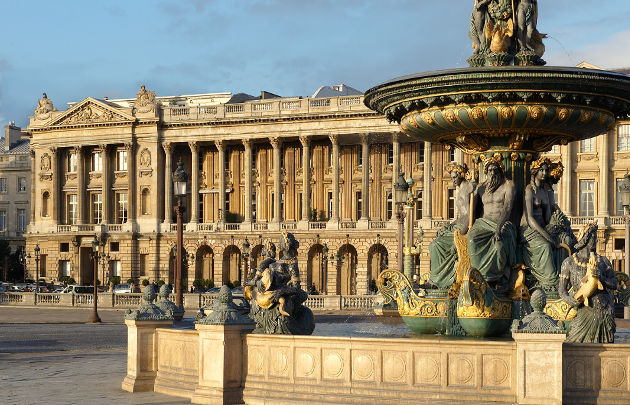
The Hotel de Crillon pictured with the Fountain of River Commerce and Navigation. Photo by Eric-Cuvillier. Courtesy of the Paris Tourist Office.
The Hotel de Crillon was originally a palace built in the late 1700s for King Louis XV – who was nicknamed the Beloved King. It was originally built to be an office building but throughout its existence seemed to beckon more like a siren than a bureaucrat, attracting a menagerie of artistic, colorful, and creative inhabitants during the 18th, 19th, and 20th centuries. Visitors and residents included Benjamin Franklin, Marie Antoinette, King Louis XVI, Theodore Roosevelt, Winston Churchill, and countless celebrities. One of its owners, the eventual hotel’s namesake, was the Crillon family. They were descendants of an 18th-century duke revered in the French Army for not only his courageous spirit but also his chivalrous demeanor. The Crillon family lived in the palace during the entire 1800s until it was sold in 1909 and turned into a hotel. By the time I came to know it in the latter half of the 20th century, as a little blond baby barely walking, the building contained so many exquisite historical attributes it was easy to imagine life as a real princess.
Photo courtesy of Artelia Group.
Embarrassing to admit now, I didn’t fully appreciate the spectacular beauty of the hotel then nor understand its cultural and architectural significance even during my teenage years. Marie Antoinette was beheaded right out front. The building itself was caught up in the middle of the French Revolution. Dignitaries, heads of state, presidents, kings, queens, and movie stars from all eras of history have stayed in the very rooms that we’d stayed in and walked the very floors (that oh so beautiful black and white marble) that we walked. Fashion shows, photo shoots, film crews, and artists from last century to this one have crawled all over the hotel property documenting and decorating it for countless creative pursuits.
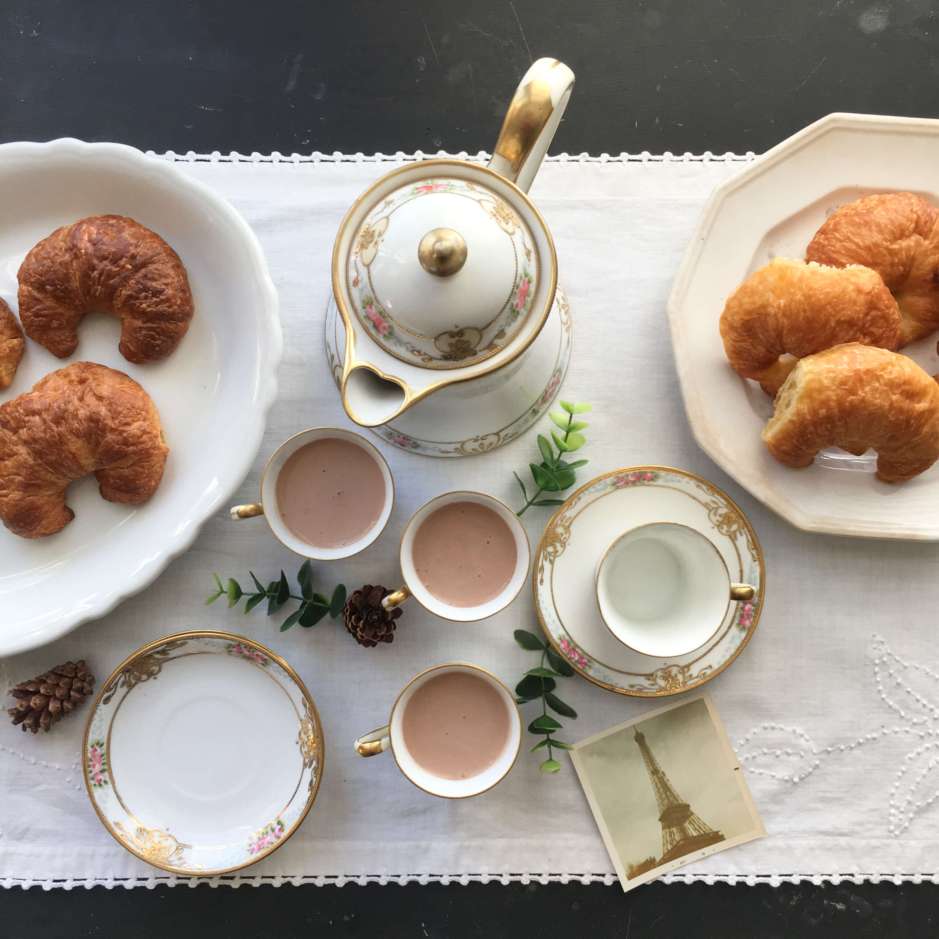
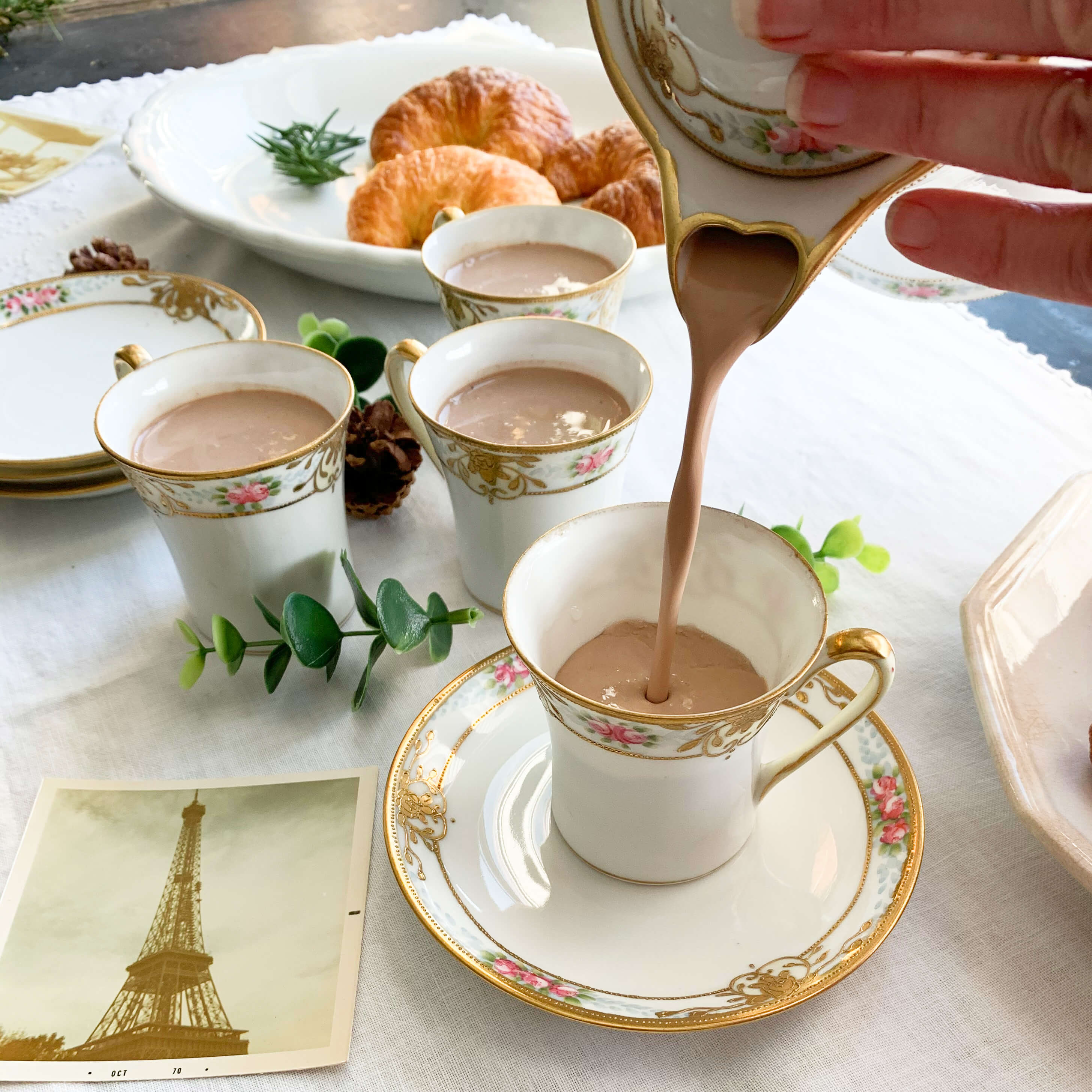
But for all the incredible circumstances, situations, and events that have happened in and around the Hotel de Crillon since its beginnings, the one element that I can never forget about this special place, has nothing to do with famous faces or elaborate decorating or stories from past centuries. It has to do with food. A simple cup of house hot chocolate. When we were little girls, it usually arrived via room service on a breakfast cart, served by an attendant, and poured from a silver pot. As I got older and grew into my teenage years, my sister and I would take our hot chocolate at a table on the outdoor patio before heading out to explore the city. Hearty, restorative, and decadent, it was practically a meal in itself. But my dad taught us a little foodie secret before we even learned how to talk. The perfect accompaniment to a cup of hot chocolate is a croissant. As we discovered, these two foods made up a perfect pairing of flavors and forged an unforgettably indulgent tradition that we looked forward to with each visit. To this day my family still agrees. No other cup of hot chocolate, wherever we traveled in the world, or attempted to recreate at home, ever tasted as good as the hot chocolate served at the Crillon.
We weren’t alone in thinking this. The hotel’s flagship beverage has been revered in Paris by both tourists and locals for decades. Mentions on the internet still to this day deem it one of the best, if not the best hot chocolate in the entire city. It is so beloved, it is difficult to come across an article about the Crillon that does not mention a more enjoyable cup.
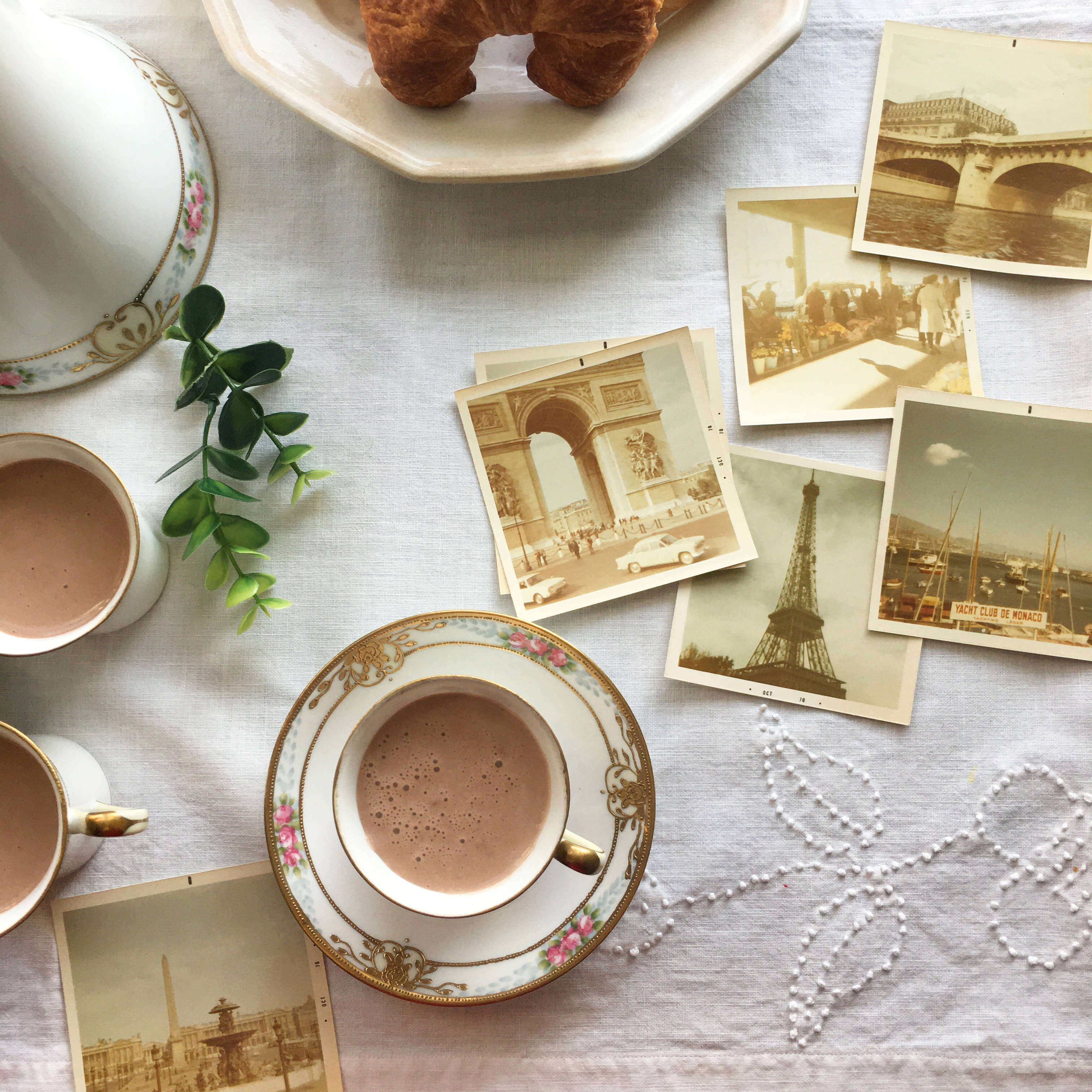
Last January, I came into possession of an antique Nippon porcelain chocolate pot and a set of four matching cups and saucers. When I saw it, I immediately thought of Paris and the Hotel de Crillon and the delicious hot chocolate from decades ago. The hand-painted set was made in Japan at the turn of the 1900s – about the same time that the Crillon was turned into a hotel. As if fate had stepped in and lined up all the details, I knew that this chocolate set was the perfect match to pair a story and a recipe from the vintage family archives.
Just a few years ago, my sister mentioned that she had seen the Crillon hot chocolate recipe posted on their website. But when I went to look, it was no longer there. The website had changed to reflect the hotel’s new style and new renovations. I wasn’t disappointed though because surely I thought, in our modern age, with all sorts of travel writers and food makers covering all aspects of Paris, on the internet, there would be someone out there who would have shared the hotel’s hot chocolate recipe via an article or a cooking blog. Surprisingly, such was not the case. So I contacted the hotel directly and explained the whole story about when I was young and my family’s experiences and the memorable hot chocolate. Right away, being the lovely and gracious hoteliers that they are, they promptly emailed the recipe over for use in the blog post. How wonderfully exciting.
I am so very happy to share this recipe with you. Nothing is more fun or festive, especially around the holidays, than making a big pot of hot chocolate fit for a crowd. This recipe is thick, rich, and not overly sugared. It’s filling and hearty and by the time you finish the last drop you’ll feel delightfully satisfied. And if you live in one of those states where it snows and snow and snows all winter long – this recipe will keep you fortified as you shovel and frolic your way through the season.
The recipe sent from the Crillon is in hotel-size volume and contains French measurements, so I’m including the original French recipe (see photo), which makes 30 cups of hot chocolate, as well as the converted American measurements version (which also makes 30 cups) and then further breakdowns of the American recipe into smaller quantities (15 cups and 7-8 cups) if you are entertaining a more petite crowd.
And a final note, it was tricky to find 66% dark chocolate, at least in my neck of the woods. In order to keep this recipe user-friendly for all readers, I wanted to use chocolate that could be found easily in all grocery stores, so I combined two common percentages (56% and 100%) which are pretty standard here in the States when it comes to dark chocolate ratios. But for our European readers, you’ll probably be able to find, more easily, the percentages the Crillon uses, so I’d recommend that.
The Hotel de Crillon’s Hot Chocolate Recipe
(American conversion) Makes 30 cups
15 cups heavy cream
15 cups whole milk
3 oz sugar
8oz 56% semi-sweet chocolate (56% cacao)
4 oz. 100% unsweetened chocolate (100% cacao)
4 1/2 oz. milk chocolate (3/4 cup)
For 15 cups:
7 1/2 cups heavy cream
7 1/2 cups whole milk
1.5 oz of sugar
4 oz 56% semi-sweet chocolate (56% cacao)
2 oz 100% unsweetened chocolate (100% cacao)
2 1/4 oz milk chocolate
For 7-8 cups:
3 3/4 cups heavy cream
3 3/4 cups whole milk
.75 oz of sugar
2 oz 56% semi-sweet chocolate (56% cacao)
1 oz 100% unsweetened chocolate (100% cacao)
1 1/8 oz milk chocolate
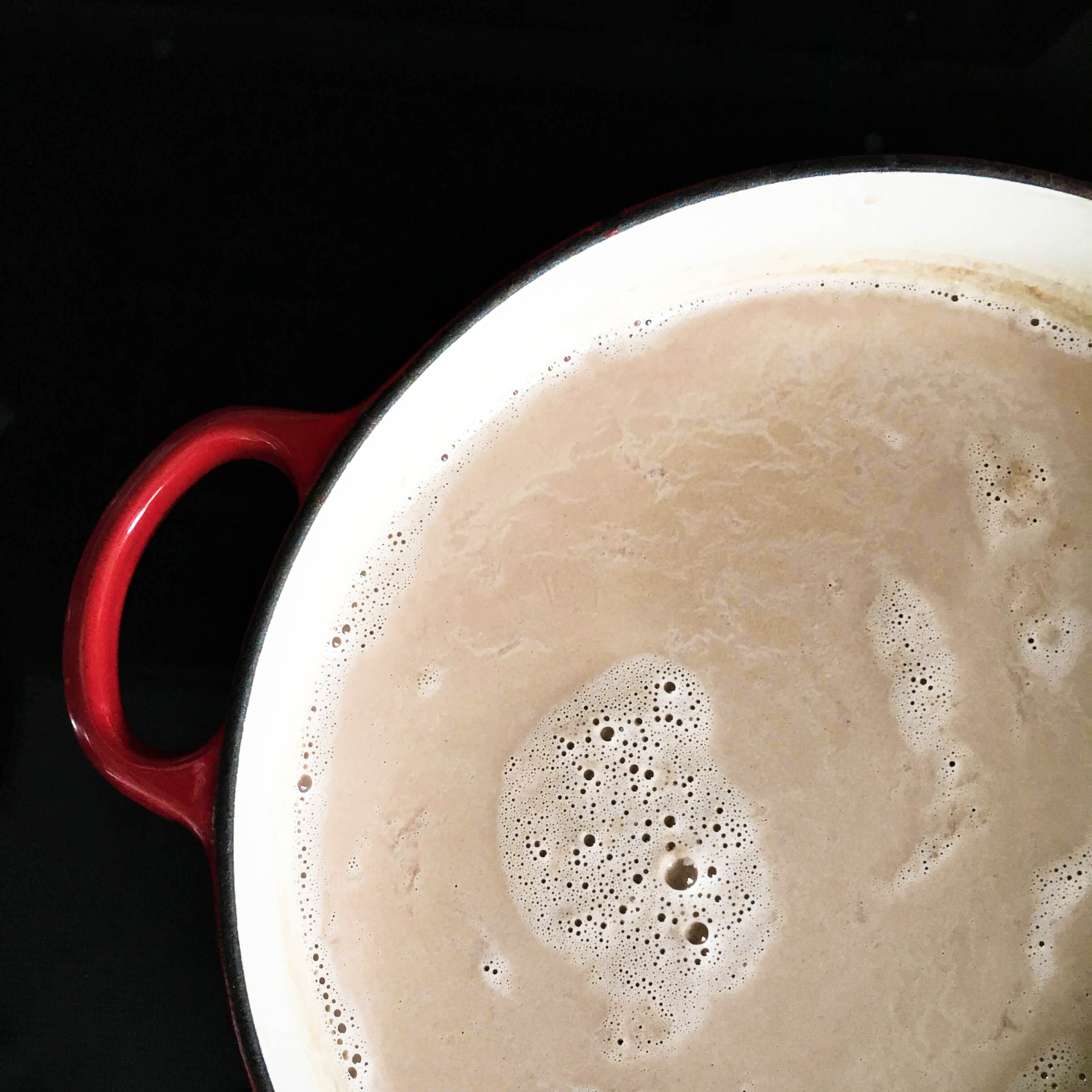
In a large pot, combine the cream and the milk over medium heat, stirring frequently until just beginning to boil. Remove from heat, cover with a tight fitting lid and set aside.
In a double boiler, melt all the chocolate together. And then add in the sugar and stir to combine.
Pour the melted chocolate into a medium-sized bowl. Add one cup of the hot milk/cream mixture to the chocolate and whisk to combine until the texture resembles soft whipped cream.
Gradually incorporate the chocolate mixture into the big pot of milk and cream, whisking until well combined.
Warm the hot chocolate over medium heat for 5-10 minutes until it reaches a temperature warm enough to your liking. It is best served right away. If you have any leftover (which will probably not be likely) you can refrigerate it and slowly reheat it the next day or simply enjoy it cold, like a glass of chocolate milk.
I love this hot chocolate just as it is without any adornment. But feel free to add some marshmallows or a peppermint stick, some flavored liqueur, or a dash of whiskey, if you want to jazz it up in your own way. And definitely serve it alongside a basket of fresh croissants. (Side note: for anyone who does not live near a French bakery, Trader Joe’s sells wonderful frozen croissants that you can heat up at home in the oven).
After my dad retired in the mid-1990s, we rarely traveled to such glamorous locales or on such a glamorous scale as our childhood days. Instead, we explored our hometown more (the great city of New York) and traveled around the United States, of which we didn’t know nearly as well as Europe. My sister and I grew into our adult selves, got married, explored careers, and forged ahead into lives of our own making. The flutter of those early travel experiences, and the decadence with which we enjoyed them, became cherished parts of our past… wonderful memories to be tucked away in our hearts and our minds.
I grew up in the time before Instagram and iPhones and the modern desire to record every moment of every situation at a whim. There are no day-by-day, detail-by-detail photo streams of all my sister and I saw and did in the first half of our lives. Just a few handfuls of random pictures taken on the run from one place to another. But what we do have are our memories swirling around in our heads. Even though some of those are now slightly hazy and somewhat dim due to time, I’ll never forget the Hotel de Crillon and its majestic building and gorgeous hospitality. And now, thanks to their graciousness in sharing this treasured recipe, I’ll never forget the taste of their hot chocolate either.
The next time you are in Paris, I hope you get a chance to visit the Hotel de Crillon, if not to stay, then at least just to peek inside and treat yourself to a cup of their house hot chocolate.
It has been over 20 years since I last visited the Crillon, but if I could partake in some sort of magical time travel, my 2019 self would meet up with my 1980s self in the foyer of the hotel and whisper into that little girl’s ear… “Chin up, they have a pool now.”
A big cheers and a big thank you to Sofie, Elcie and Victoria at the Hotel de Crillon for sharing this memorable recipe. Cheers to my dad for all the adventures, big and small, to my mom for always letting us go, and to my sister, my forever travel pal, without whom these trips would not nearly have been as fun.
If you’d like to learn more about the antique chocolate pot, find it in the shop here. If you’d like to learn more about the hotel, please their website here. And finally, if you try this recipe, please let me know what you think in the comments below. I hope it becomes a new wintertime favorite for you too. Cheers!
























 In the Vintage Kitchen: Where History Comes To Eat