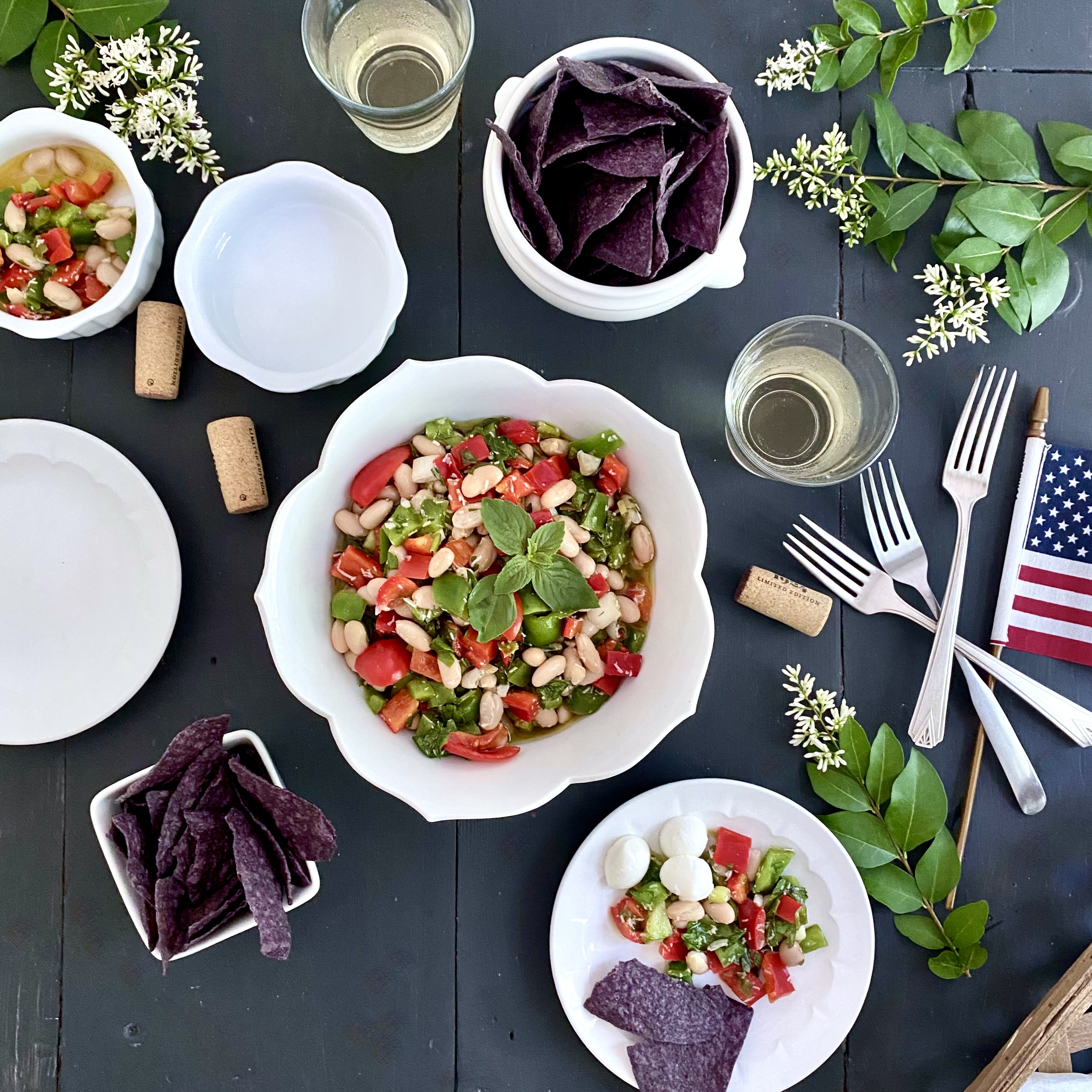
Marinated White Beans: A Cold Vegetarian Summer Salad Fit for a Holiday Heatwave

Here we are on the eve of the Fourth of July and America’s big birthday. The outdoor temps have risen to the occasion. 97 degrees with a feels-like temp of 100 can be an intimidating atmosphere for any cook in any decade, let alone any century, but a short-term heat spell doesn’t mean that you have to shy away from cooking something festive for the hot holiday weekend ahead.

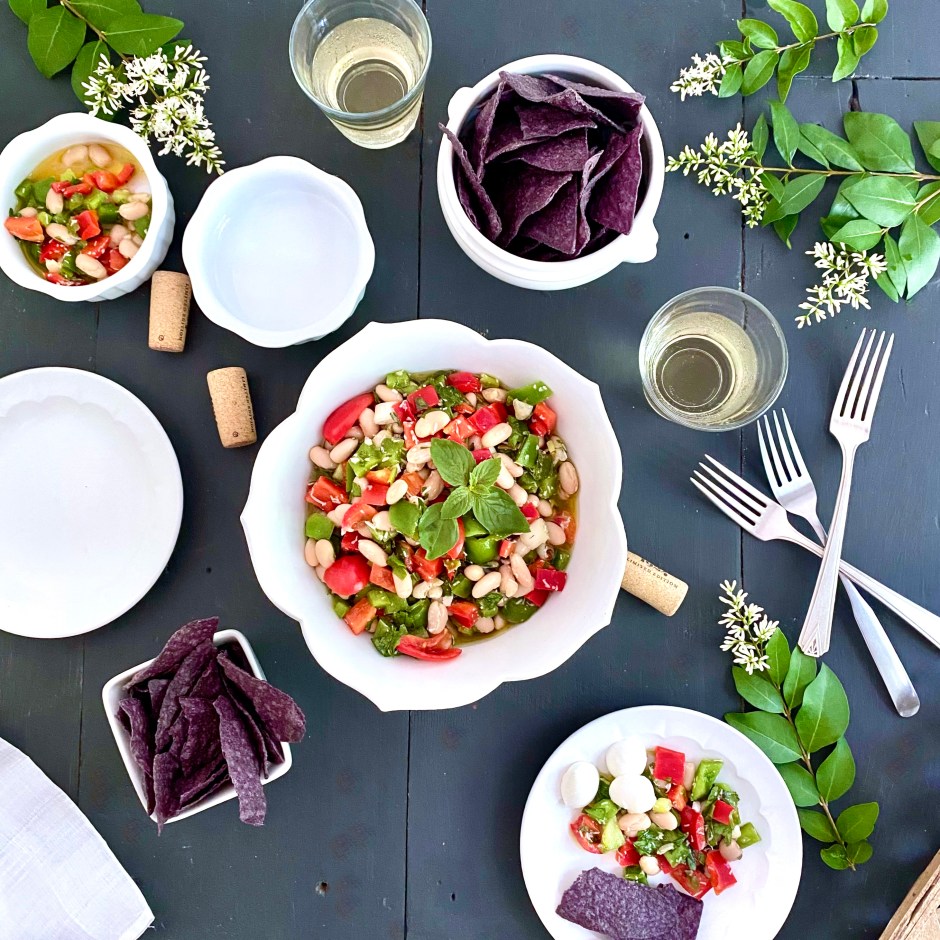
Today’s post features a 1970s vegetarian summer salad that’s been marinating in the fridge for the past two days. Loaded with garden vegetables and fresh herbs, it’s a quintessential easy breezy summer salad packed full of flavor, protein, and color. Light yet filling, it offers the opportunity to serve it in a handful of different ways and in a handful of different situations. From backyard barbeques and potluck parties to beach picnics and road trip car fare, it’s the type of recipe that packs easily, presents well, and only gets better the longer it marinates. On the menu for this hot holiday weekend, it’s Marinated White Beans, a colorful cold salad of chopped vegetables, Great Northern beans, and fresh herbs tossed in a zesty lemony vinaigrette. The recipe comes courtesy of Martha Rose Shulman’s first cookbook, The Vegetarian Feast, published in 1979.
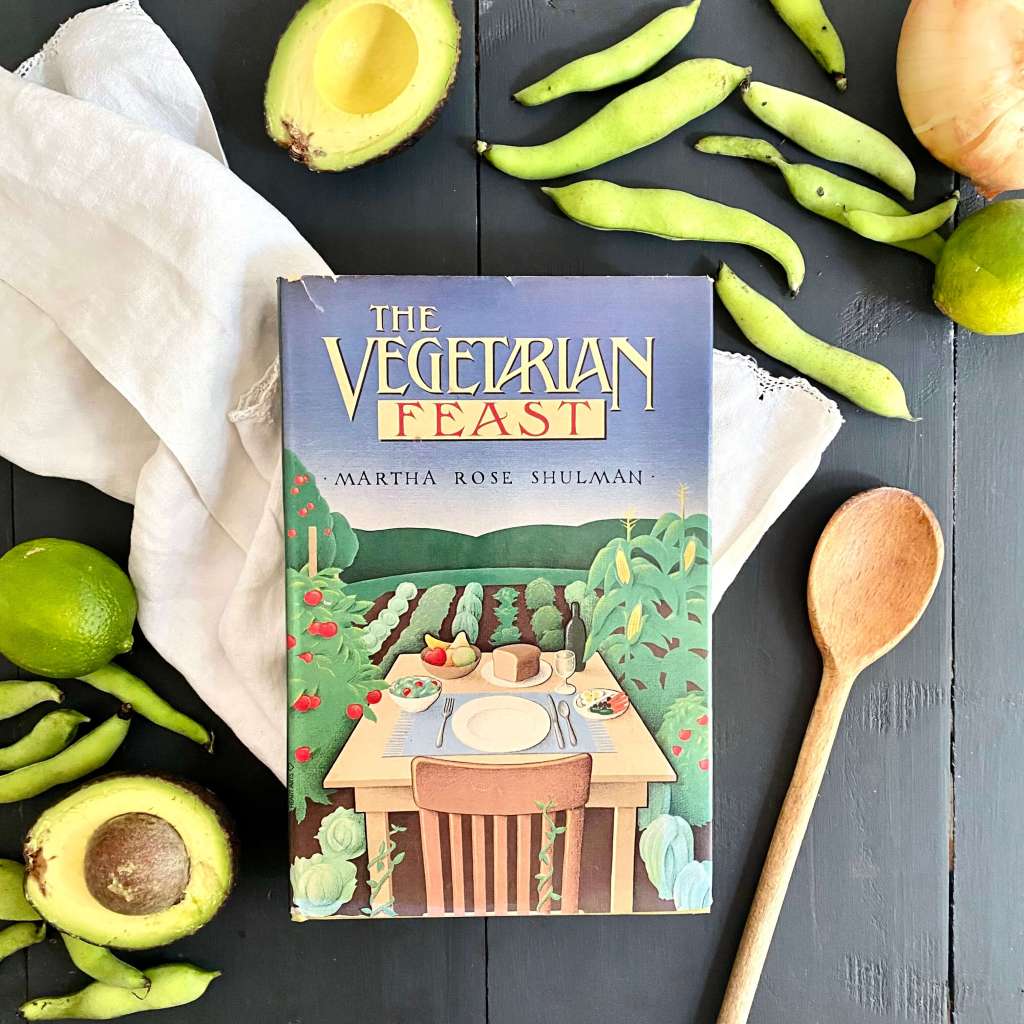
You might already be familiar with Martha’s name today. She’s written over 25 cookbooks and contributed over 1500 recipes to the New York Times Cooking section, mostly on vegetarian cuisine. But before all that, back in the very beginning of her career, Martha found her footing in the landscape of Austin. Texas, in the 1970s, where she was running a catering company and a supper club, teaching vegetarian cooking classes, and writing a food column for the Austin American-Statesman. At the time, she was in her late 20s, nurturing a love of cooking that she first fully embraced as a teenager growing up in New England.
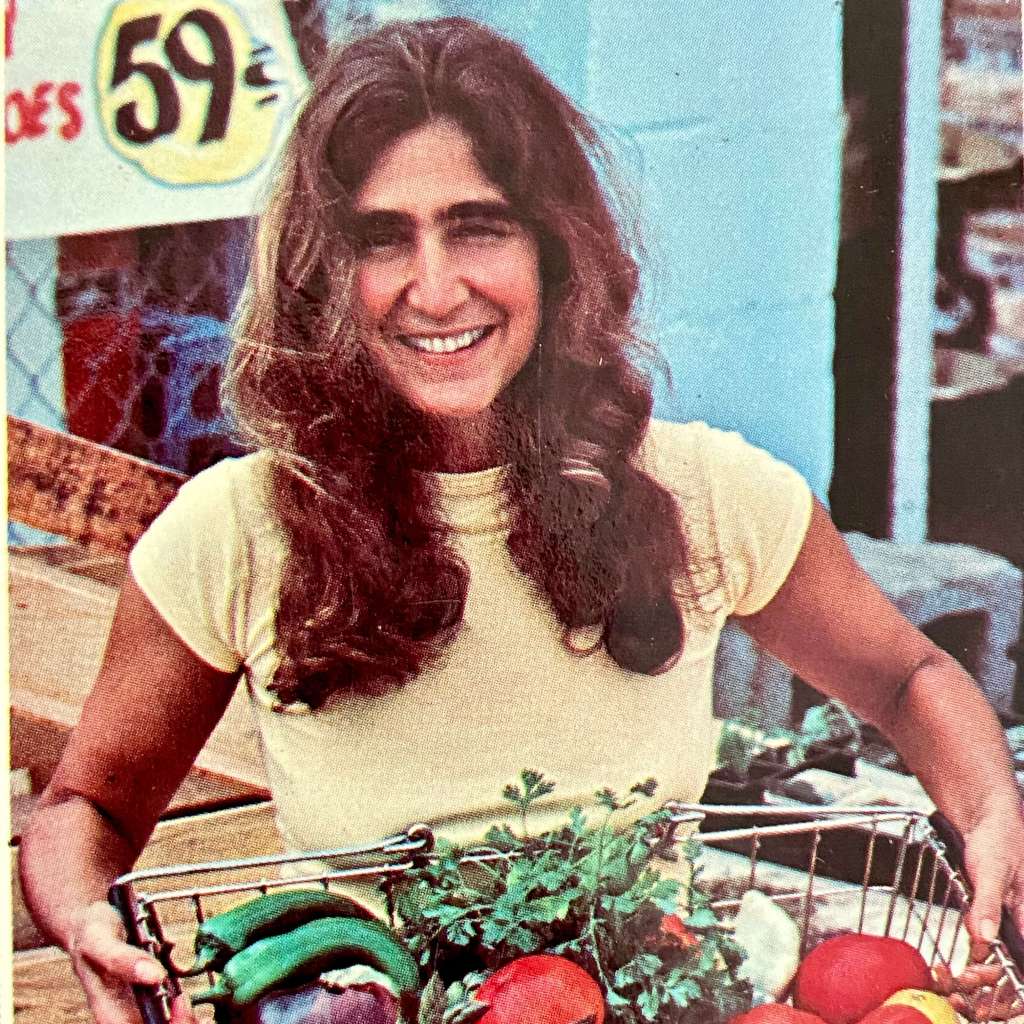
Attune to the early vibrations of the fresh food movement that was just beginning to bubble up in the 1970s, Martha, although not strictly a vegetarian herself, preferred a vegetable-laden diet and a style of cooking that combined fresh local produce with her two favorite international cuisines – Mexican and Mediterranean. As a self-described “chubby child,” she appreciated the health benefits that a plant-based diet yielded in her adult years, but she was too interested in all kinds of food to limit herself to a strictly vegetarian diet. She also liked to socialize and connect with people over meals, preferences aside. If that meant being invited to someone’s house for dinner where steak was on the menu, she’d happily eat it. Such experiences were fuel for her kitchen and her creativity.

As the host, creator, and cook of a supper club, Martha naturally loved to entertain and surprise her guests with unexpected vegetarian dishes that traditionally might have included meat, fish, or poultry. It was this sort of intriguing exercise that tantalized the appetites of her guests and eventually formed the basis of her cookbook. Needless to say, the supper club was booked for two years straight, and Martha had a keen audience happily willing to try out her new recipe creations.

Upon debut, The Vegetarian Feast won the Tastemaker Award (an equivalent to a James Beard Award today) and set Martha on the path to a lifetime career talking, writing, and teaching her three favorite things… vegetables, Mexican food, and Mediterranean cuisine.

I love that Martha never veered from her favorite types of food and, in doing so, has engineered thousands of recipes throughout the past 40 years, all blended into her signature trifecta of cooking styles. It’s a testament not only to her creativity but also to the wide array of possibilities that a vegetarian diet enhanced by flavors and ingredients from other global cuisines offers. Over the course of her career, she has dispelled two common myths over and over again. One being that vegetarian food is bland and unappetizing-looking. And the other being that vegetarian recipes are chock-full of unusual, hard-to-find ingredients that tend to get used once and then go to waste. What is wonderful about Martha’s recipes is that they are primarily simple, elegant affairs containing ingredients that are both visually appealing and easily accessible via the grocery store, the farmers market, or your own garden. The marinated summer salad featured here is a lovely example. It’s uncomplicated, easy to make, and full of classic summer vegetables and herbs.
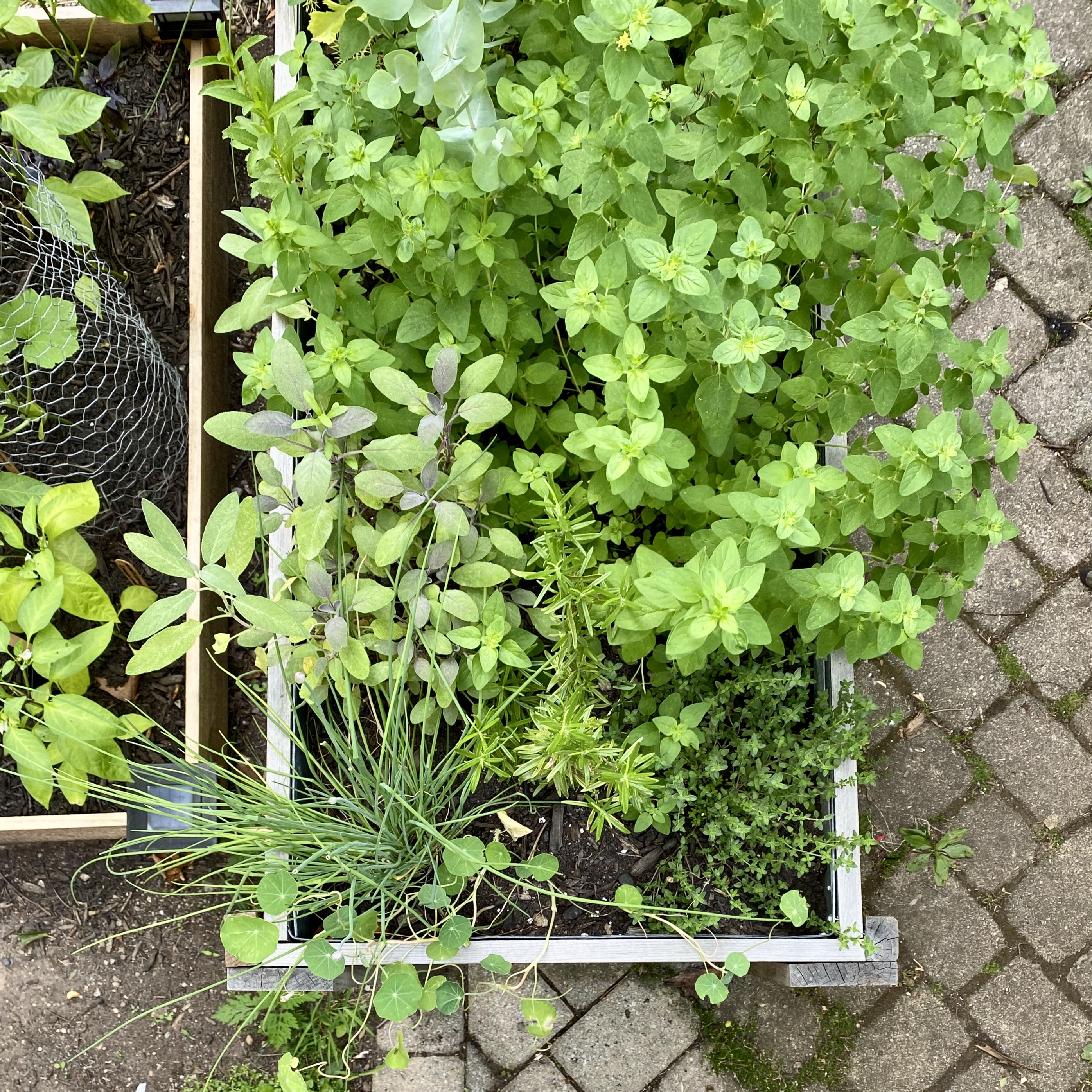
Five herbs for this recipe were picked right from the garden.

Featuring fourteen ingredients in a three-step process, it might seem like a lot of work at first glance of the recipe, but don’t be dissuaded. Once the beans are cooked, the whole salad comes together in less than 30 minutes and marinates in the fridge for a few hours or overnight if you want to plan ahead. And if you don’t have time to soak and cook dried beans, you can skip that whole step and substitute canned beans instead.
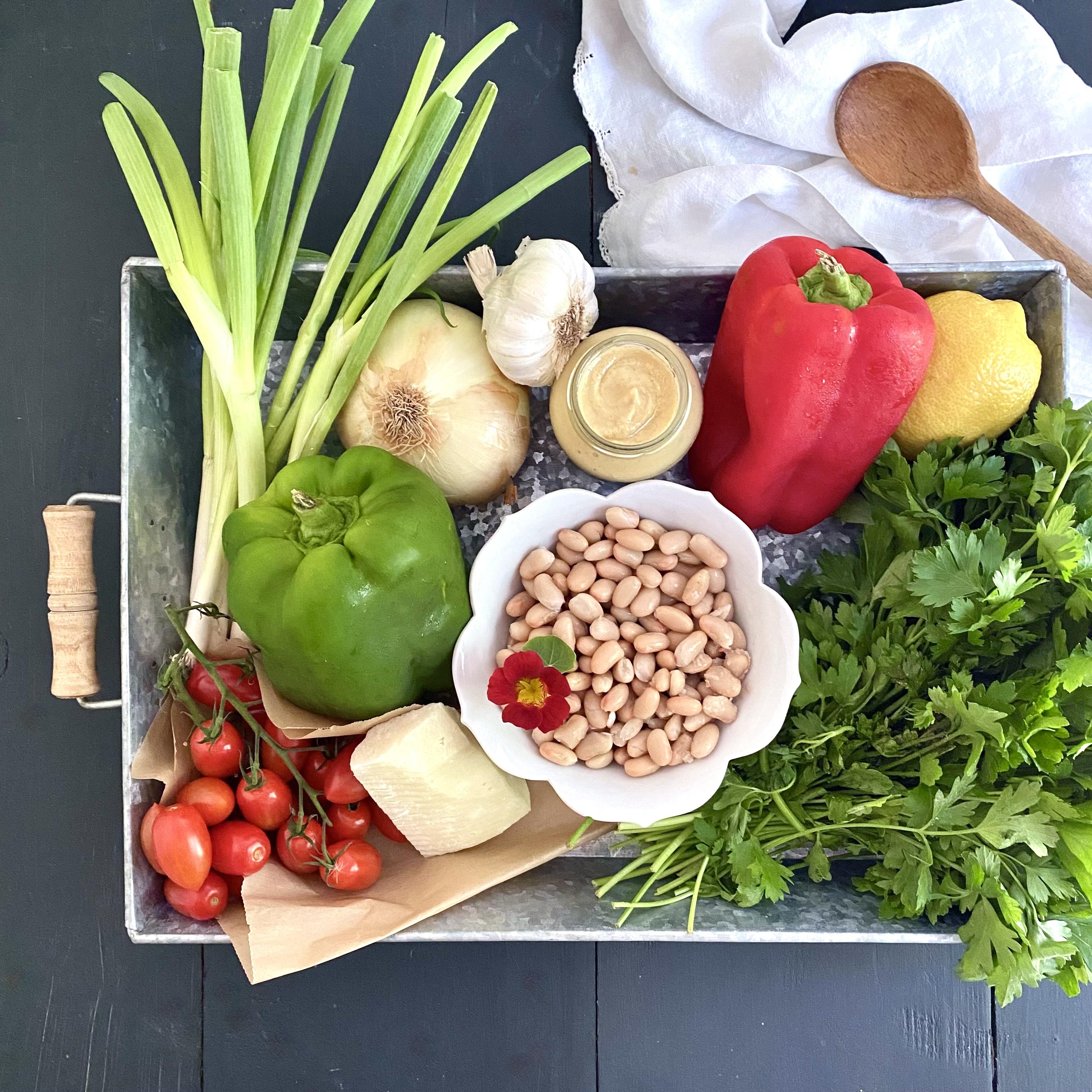
Marinated White Beans

from The Vegetarian Feast by Martha Rose Shulman, 1979

Serves 6-8

For the Beans:

2 cups small dried white beans (ex., Navy beans or Great Northern beans)

1 1/2 quarts water

2 tablespoons olive oil

1 onion chopped

3 cloves garlic, minced

1 bay leaf

1 teaspoon sea salt

Or – eliminate all of the above and substitute two 15 oz cans of Great Northern beans or Navy beans, rinsed

For the Salad:

1/4 -1/2 cup choppd fresh parsley

4 green onions including white and green parts, sliced

2 tablespoons fresh herbs (basil, marjoram, thyme, fennel, chives)

1 green pepper, seeded and chopped into bite size pieces

1 red pepper, seeded and chopped into bite size pieces

1/4 cup freshly and finely grated parmesean cheese

Cherry tomatoes (optional)

For the Marinade:

Juice of 1 lemon

1/4 cup vinegar

1 clove garlic

1 teaspoon Dijon mustard

1/2 teaspoon oregano

1 teaspoon chopped fresh basil or 1/2 teaspoon dried

1/4 teaspoon drid tarragon or 1 teaspoon fresh tarragon

Sea salt and freshly ground pepper to taste

3/4 cup olive oil

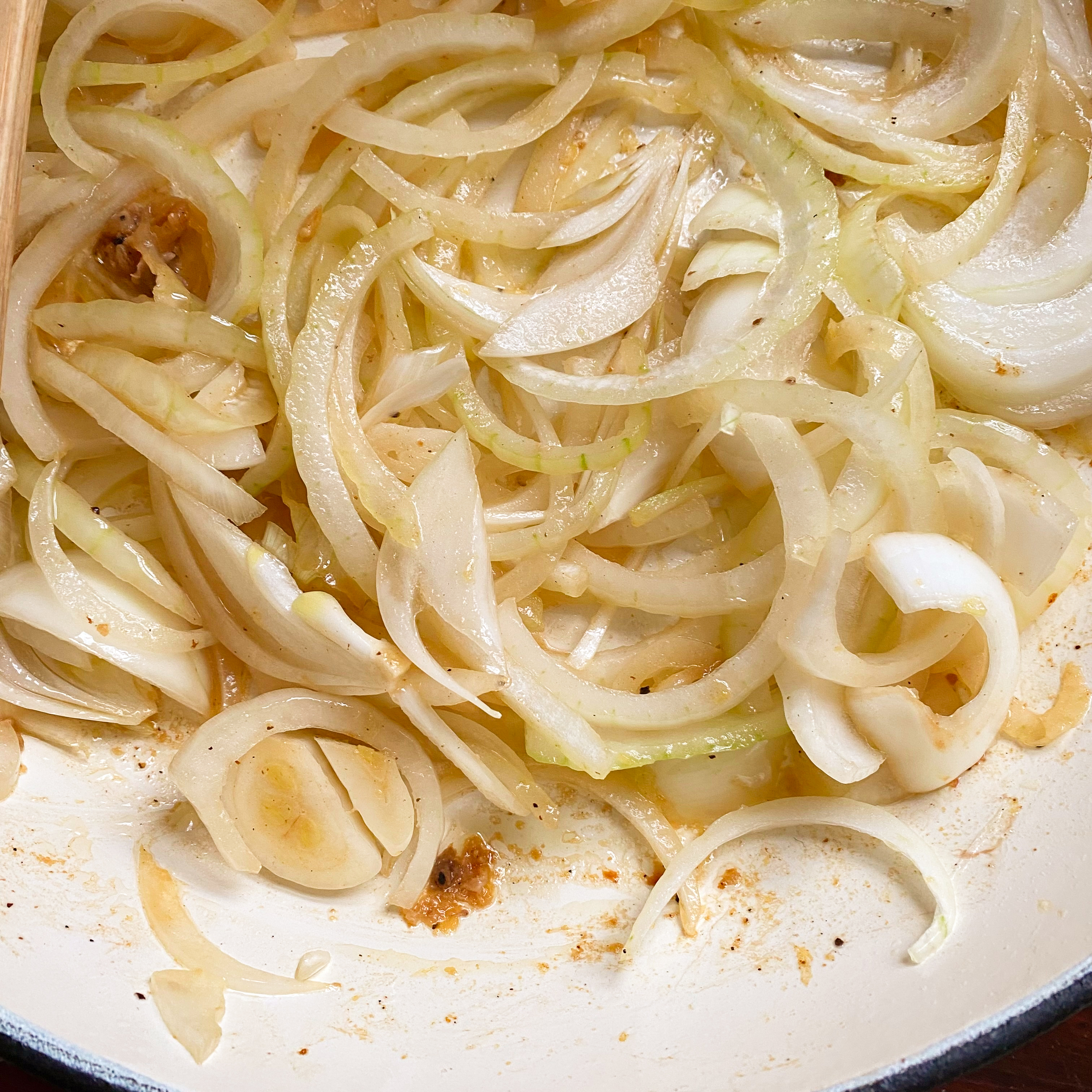
If using dried beans… wash the beans and soak in water overnight. In a heavy-bottomed flameproof bean pot or Dutch oven, heat the olive oil and sauté the onion and garlic until the onion is tender. Add the beans, water, bay leaf, and salt. Bring to a boil, then cover, reduce the heat, and cook for one to two hours until the beans are tender but still firm. Remove from the heat, drain, and remove the bay leaf.

If using canned beans…. rinse beans in a colander or strainer and set aside.
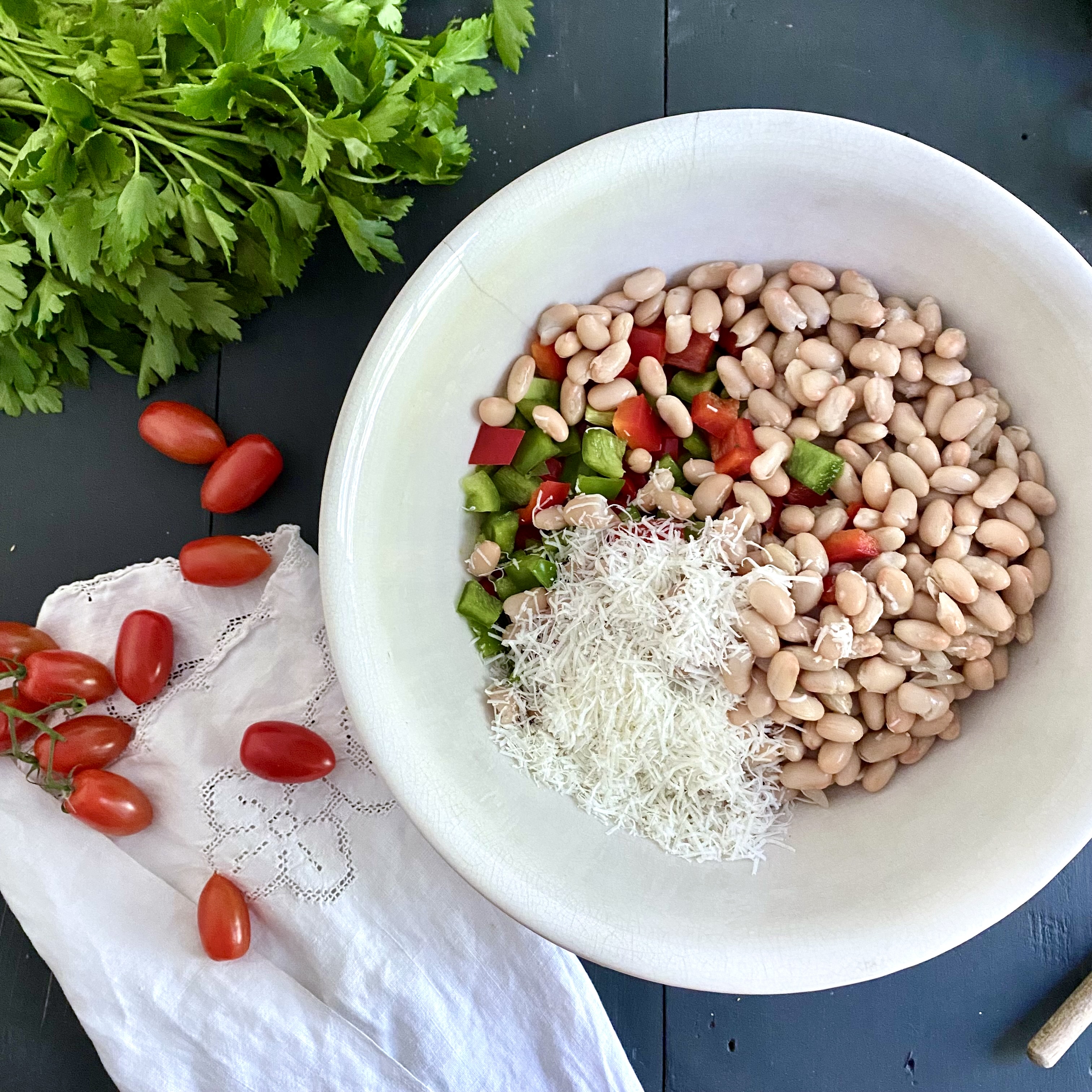
In a large mixing bowl, combine the parsley, green onions, herbs, green and red peppers, and the Parmesan cheese. Mix together. Add the beans and lightly combine so that the beans don’t get crushed or broken. Set aside.
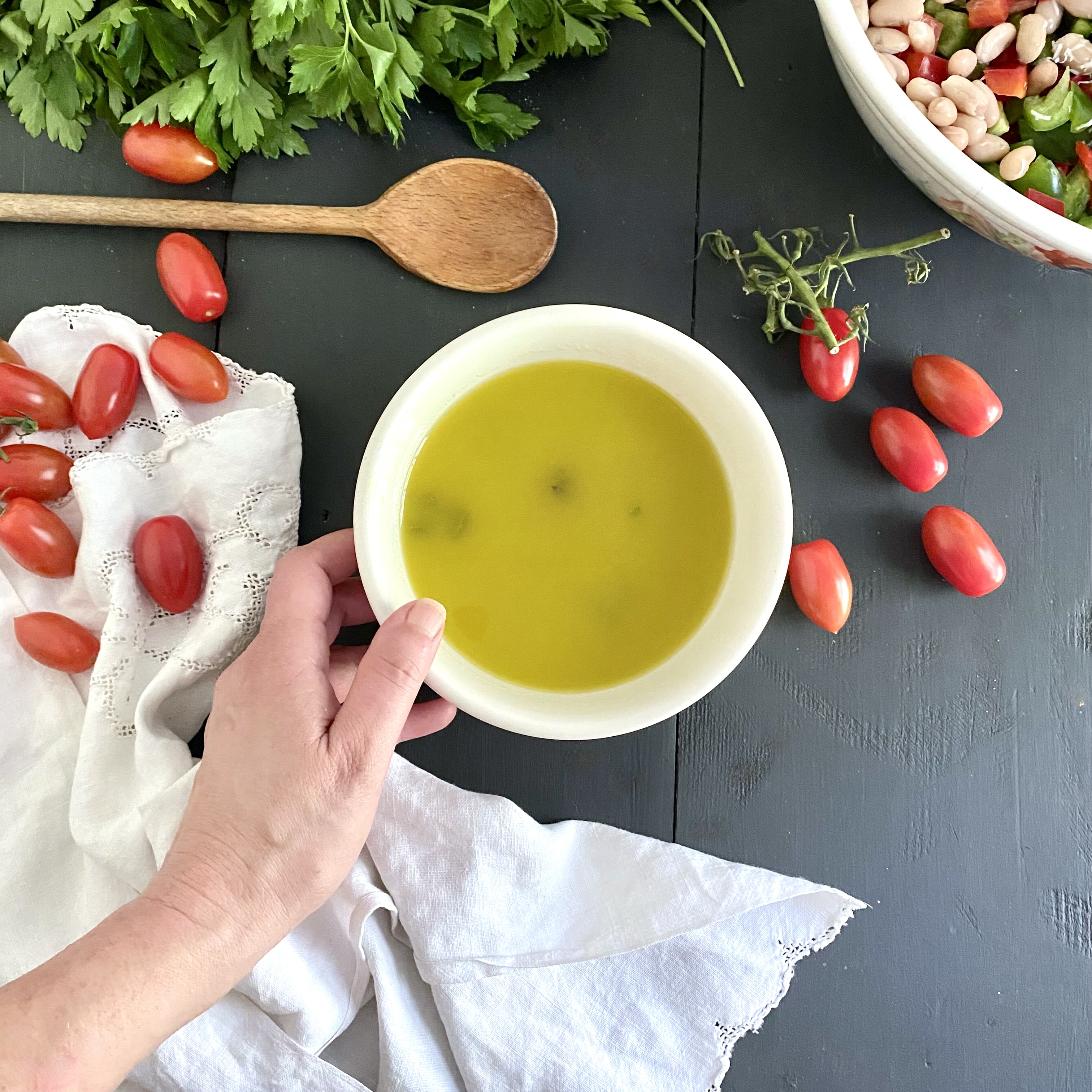
In a small bowl, combine the lemon juice, vinegar, garlic, mustard, and the seasonings. Stir in the olive oil, then toss with the bean mixture and refrigerate for several hours or overnight.
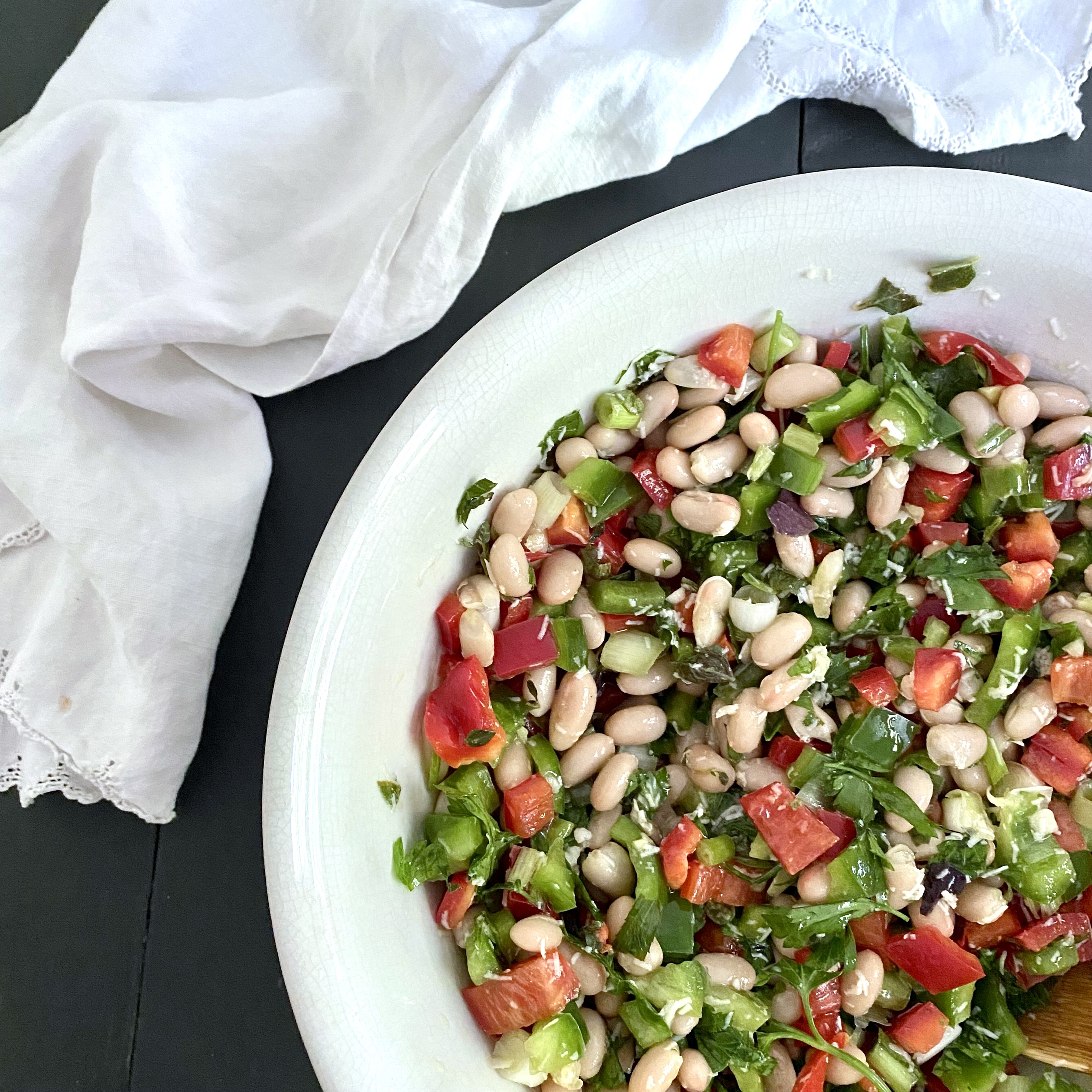
Just before serving remove the salad from the fridge and let it stand at room temperature for a few minutes to loosen the olive oil. Toss once more before garnishing with fresh cherry tomatoes and a basil sprig or two.
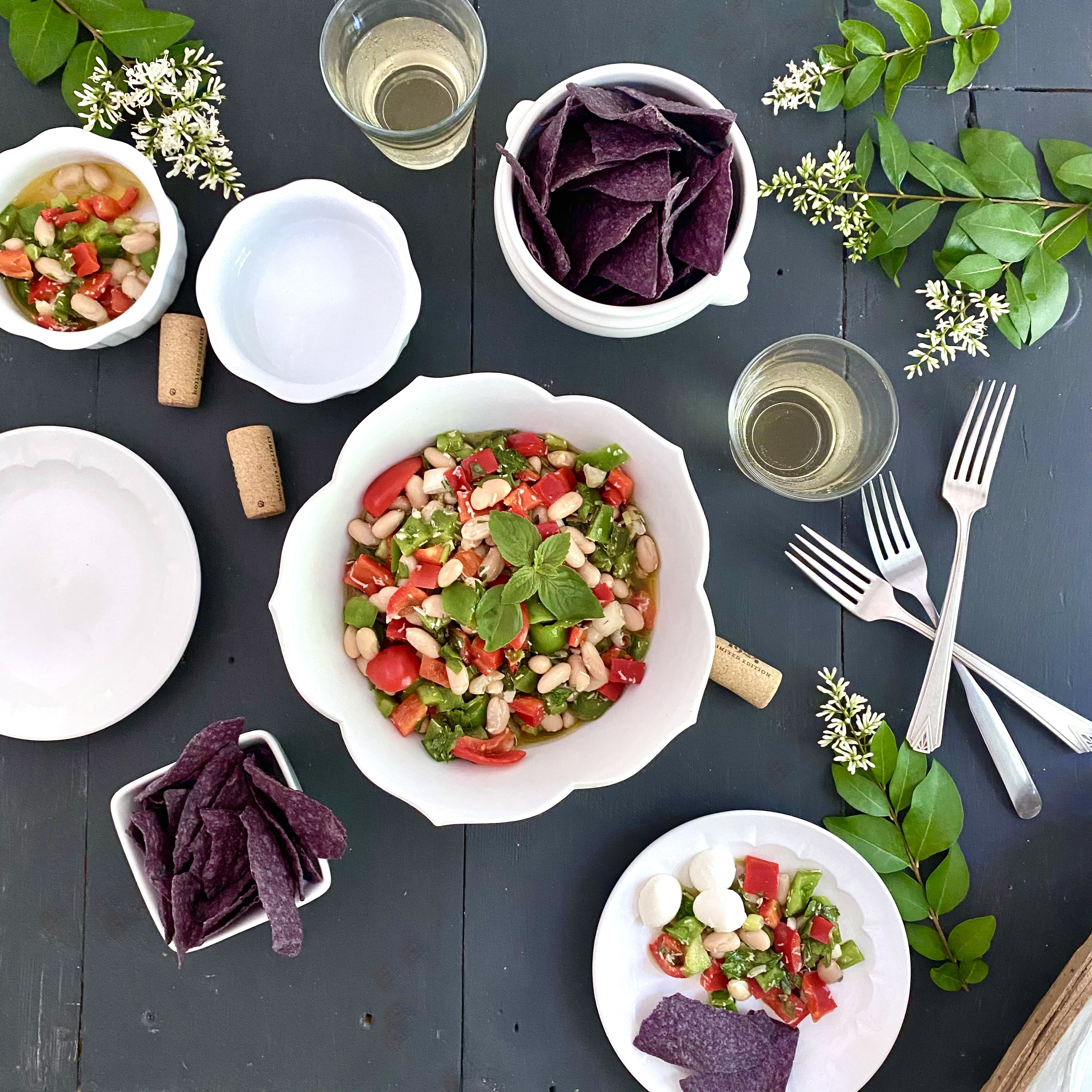
Bright, colorful, and full of flavor, this salad is a lovely meal on its own or a zesty side dish that complements a wide array of other foods, including all the traditional holiday grill favorites… chicken, fish, sausages, and burgers. Many of Martha’s recipes in The Vegetarian Feast are foundational building blocks ready to let your own culinary creativity shine.

The green and red peppers add a lovely crunch while the lemony mustard vinaigrette offers an extra bit of dressing that could be soaked up with additional toppings of diced chicken, homemade croutons, sliced avocado, or hard-boiled eggs. Other complimentary sides include grilled corn, hummus and pita chips, guacamole, fish tacos, cheese quesadillas, slices of peasant bread or baguettes, tortellini, devilled eggs, BLT sandwiches… you get the idea.

If you wanted to add a bit of Fourth of July flair to this recipe, serve it with blue corn chips and bite size mozzerrella balls for a red, white, and blue palette that celebrates the colors of the day.
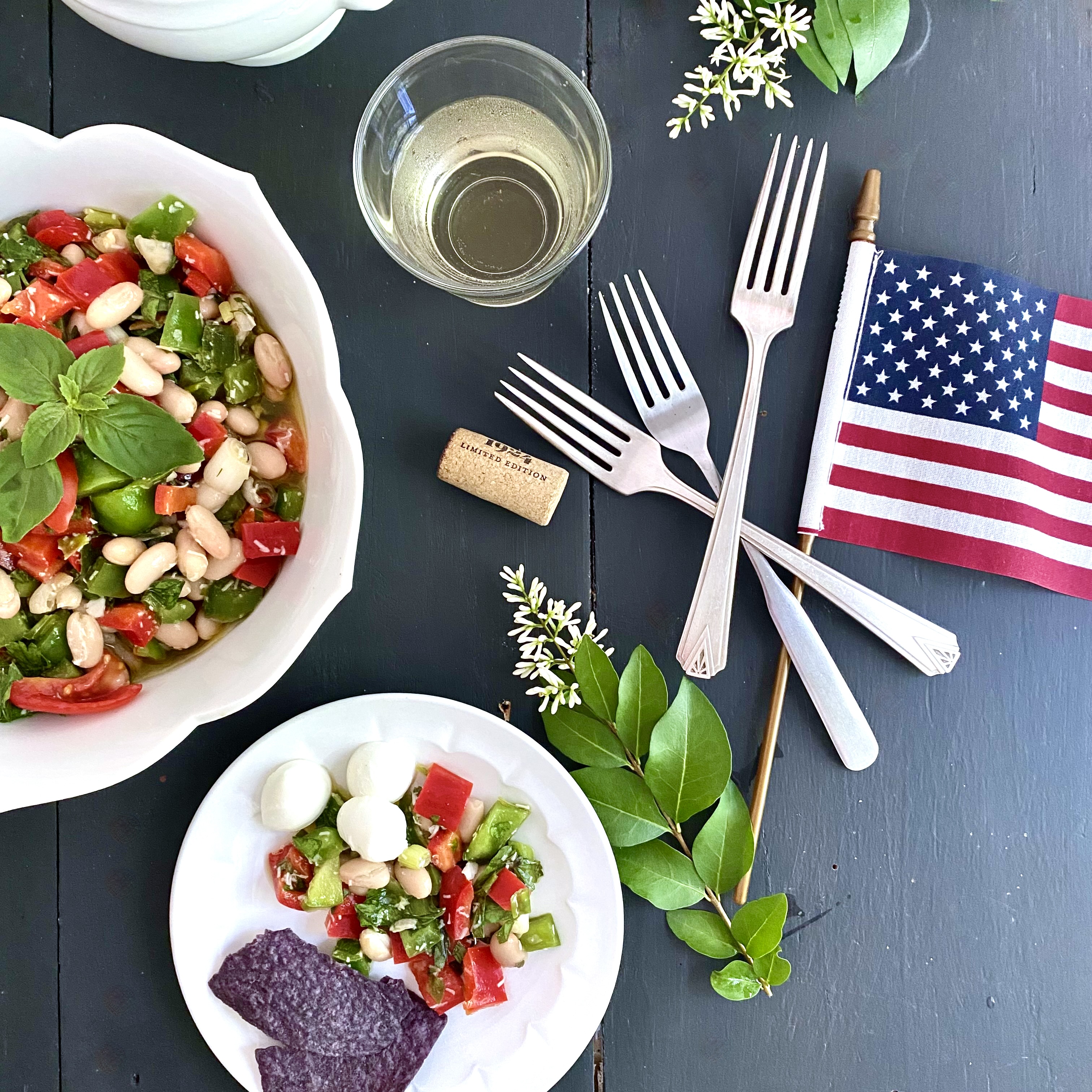
Lovely served as part of your holiday hors d’oeuvres table, as an appetizer, or as a main dish, it’s a refreshing snack as much as a picnic component or the main meal of the party. Whether you are staying home or traveling around the country, this salad is easy to pack up and tote along on any sort of summertime adventure. It also stores well in the fridge in an airtight container for up to five days.

When it comes to the history of the United States and food, Martha is a prime example of our country’s dynamic and diverse culinary landscape, one that has been influenced by a wide range of cultures. She was born in Connecticut and educated in Massachusetts. She started her career in Texas, traveled extensively throughout Mexico, lived in Paris for a dozen years, and currently resides in California, where she continues to cook in her beloved Mediterranean, Mexican, and vegetarian style. All along the way, she’s espoused the value of sourcing fresh, local fruit, vegetables, and herbs that are so abundant in our country. That’s something to celebrate. For every American cook, there’s a story. And for every American recipe, there’s an influence inspired by someone else, somewhere else. Good food brings us altogether.

Cheers to simple summer cooking, to the heatwave that inspired this post, to Martha for sharing four decades worth of recipes, and to America on turning 250.

Find more Fourth of July recipes on the blog here… Lady Liberty Cheesecake, Americano Cocktail, Belle’s Star Spangled Cheese Straws, Homemade Blueberry Tart, and Colonial-Themed Blackberry Sally Lunn Cake.

Celebrating Mom: Homemade Chocolate Sauce & The Power of Passed Down Recipes

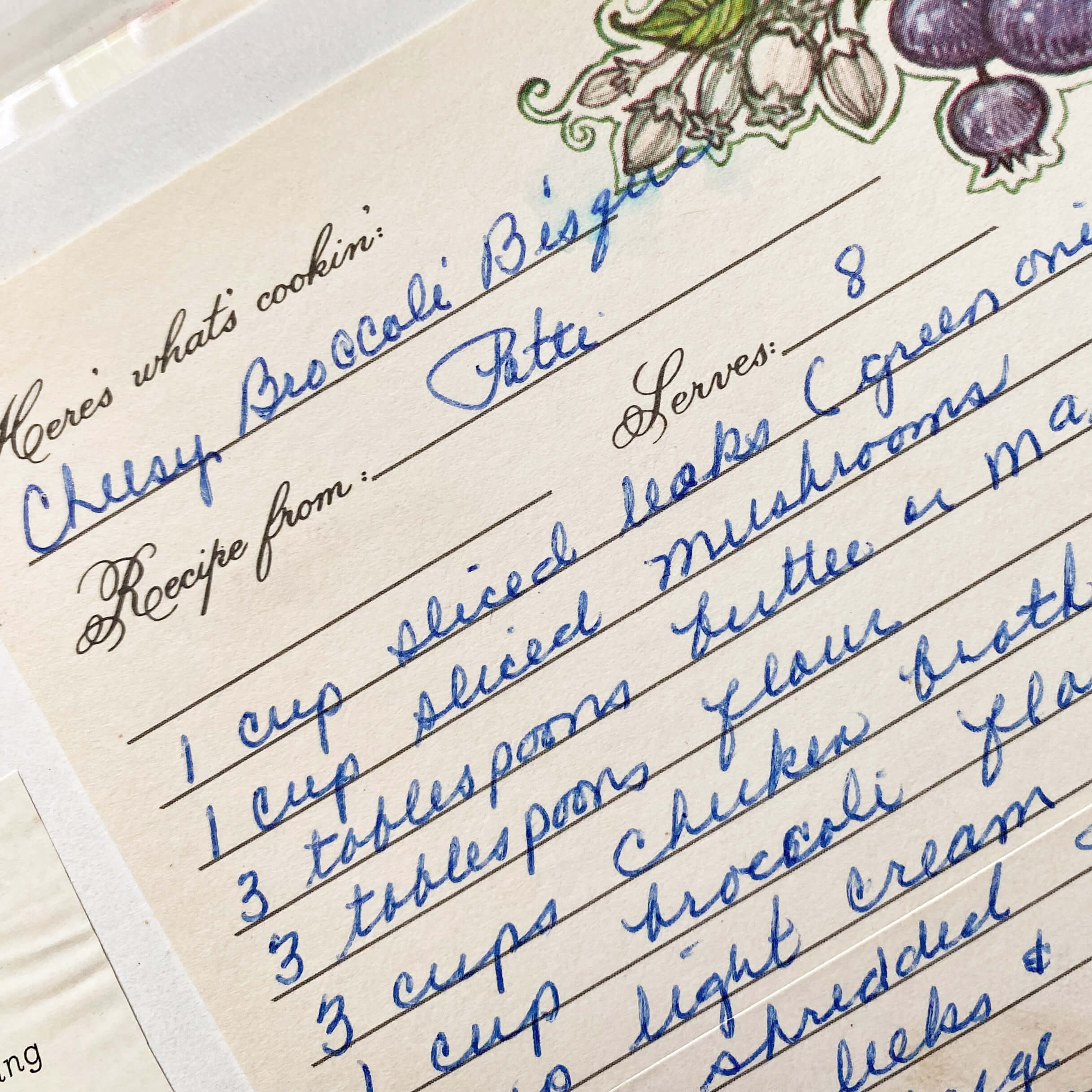
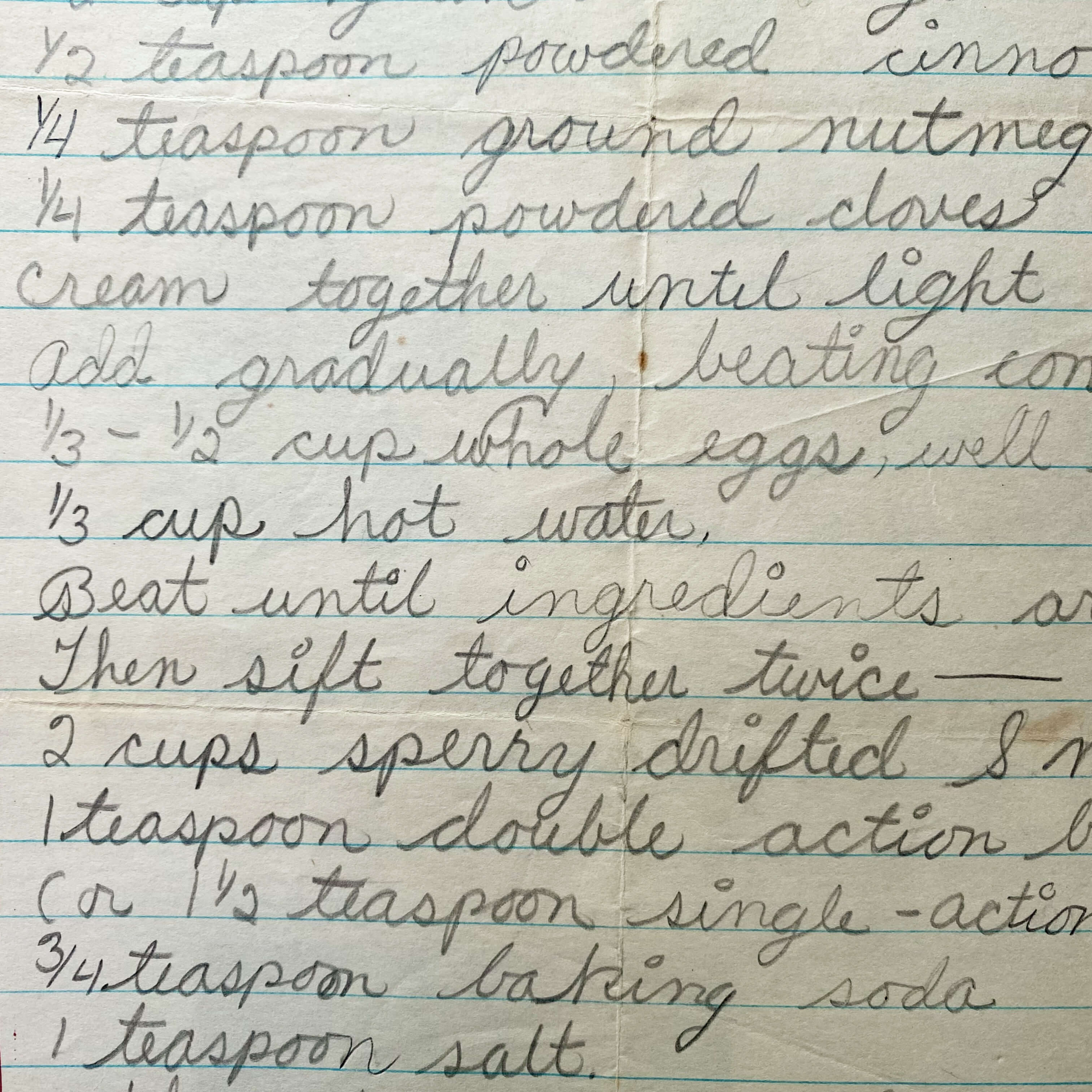
There it is. In all the swoops and swirls, the dips, the flourishes, the misspellings, the slanted letters, the shaky hand. There’s the story and the memory. There’s the cook. There’s the guy, the gal, the friend, the aunt, the spouse, the sister, the dad, the mom. There’s the he, the her, the who, the what, the when. There’s the life.

Handwritten recipe cards and cooking scrapbooks are the heartbeat of the kitchen. They are the record keepers of culinary explorations. The physical testaments of good times and good food. The guardians of memories that ensure that loved ones long gone remain present and that favorites stay afloat.

On a handwritten recipe card, no one ever dies or moves away or leaves the friendship or the family. With every dot of an i, cross of a t, loop of an o, handwritten measurements, ingredient lists, and instruction guidelines pass over illnesses and arguments, ignore long distances and intermittent communications, rise above world events and traumatic upsets. They defy decades and borders, cities and languages, personality clashes and cultures. Hands down, there is no better way, and definitely no more delicious way, to get closer to a memory or a person than through food made from a recipe that has been passed down from one cook to another.

Whip up Aunt Louisa’s banana bread, Grandpa Gordon’s hot fudge cake or Cousin Camilla’s corn chowder soup. Put on a pot of Paula’s poblano chili or Theresa’s heirloom tomato sauce. Mix up a casserole of Betty’s baked brown rice or Sarah’s cheesy egg souffle, and these cooks suddenly appear in exactly the way you remember them. It doesn’t matter if the recipe is two years old, 28 years old, or 200 years old; magic still surrounds the very foods that once made the making of them so memorable.

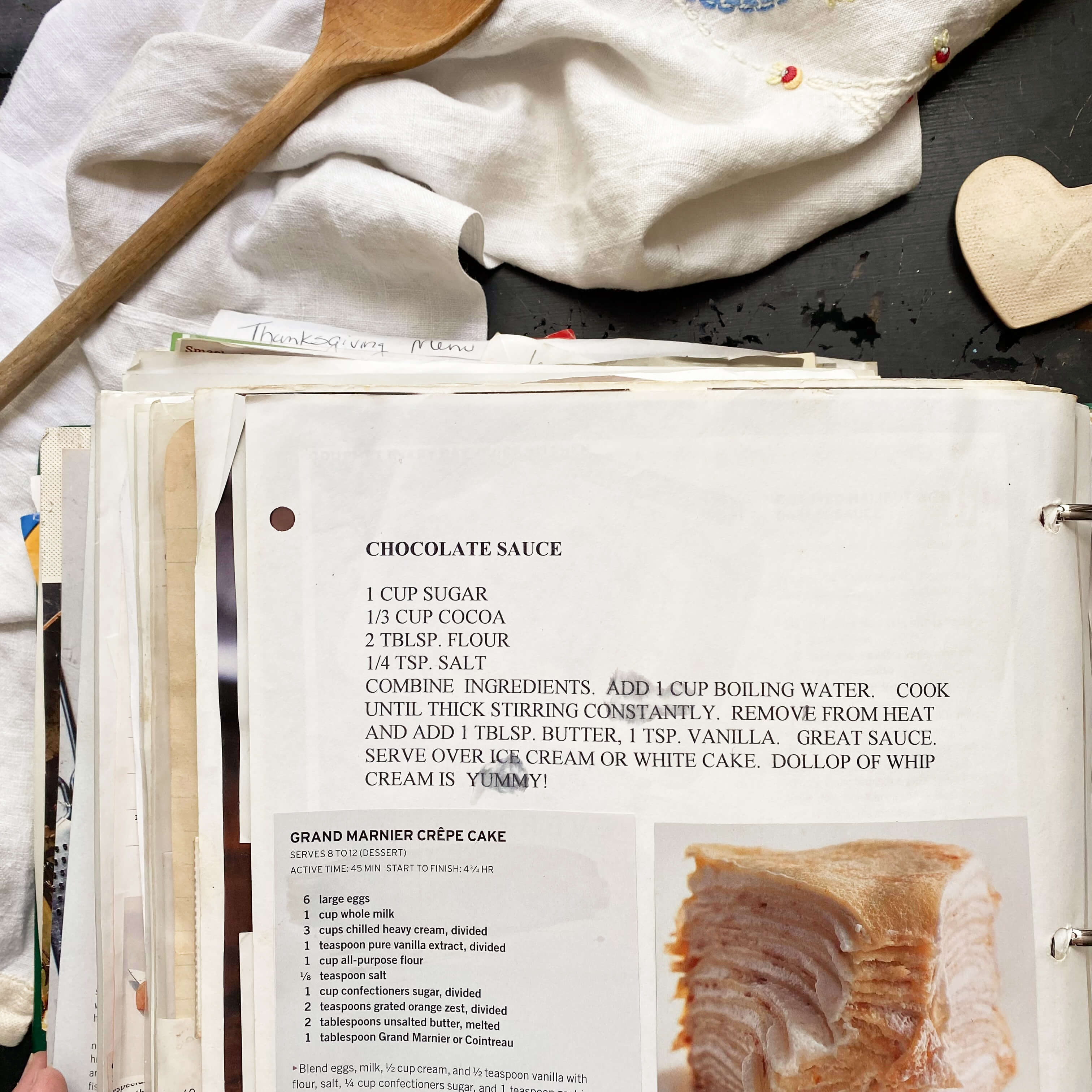
In the late 1990s, my mom made a slim binder for each of her kids filled with all of our favorite family recipes. At the time, she was just learning how to use a computer, so instead of handwriting each one, which she normally would have done if there wasn’t so many recipes and four sets of copies to be made, she typed them out page by page, category by category, and printed them out. One copy for each binder.

I don’t recall how long it took her to type these recipes into the computer, nor exactly how many she included, but I do remember the excitement that I felt when the binder arrived. My mom grew up in a small town in the Pacific Northwest during the 1940s and was raised on food she often describes as wholesome and nutritional. Her parents valued hard work, resourcefulness, outdoor activities, and homemade food always made from scratch.

My mom and grandmother.

My grandmother would be the first to say that she did not think of herself as a great cook, but everything she ever made that I remember was delicious. Pot roast, twice-baked potatoes, homemade bread… those were some of her specialties. My mom learned the basics of cooking not so much from her mom but from her home ec class in school. When my mom became a mom herself and moved to California, my oldest sister remembers simple recipes and a lot of health food coming from the kitchen while she was growing up in that same from-scratch manner that my grandmother championed too. Fifteen years later, when I came along and the whole family was living in New York, my mom was traveling the world with my dad, courtesy of his airline executive career. Her culinary palate and pursuits expanded to include more international cuisine from the places she was often visiting. France, Italy, Germany, Egypt, Greece, Africa, Asia, the Mediterranean all influenced what she was making at home in one way or another.

My mom in Monte Carlo in the 1980s, shortly before we enjoyed a spectacular dinner of homemade risotto aboard our friend’s boat. Sadly, much to my whole family’s disappointment, we never collected that recipe to share.

Like my grandmother, my mom wouldn’t openly boast that she herself is a great cook. Even though the food she prepares has always been, and still is, undoubtedly delicious, and she’s well known among her friends and family for making lovely meals. But what she lacks in confidence or personal recognition, she more than makes up for in wholeheartedly promoting a good recipe when she sees one.

While I was growing up she was a devout reader of magazines like Sunset, Food & Wine, Bon Appetit, and Gourmet. My parents entertained quite a bit, often treating their NYC restaurant-regular-eating friends to a home-cooked meal at our family house located in a sleepy suburb along the Hudson River. And because my dad did a lot of dinnertime/cocktail party networking, my mom was always trying out new recipes on us kids that would be suitable for party fare or hosting my dad’s European colleagues.

So when her slim binder arrived in the mail just after I finished with college and was ready to start throwing my own dinner parties, it felt like the best, most dependable gift in the world. Thanks to her binder, I had all the good recipes in hand. The ones that always brought comfort, the ones that always received rave reviews, the ones that traveled well for potlucks and picnics, and the ones that looked especially pretty on a plate. The ones that came from her sister’s kitchen (also a wonderful cook) and the ones that came from her mom and dad and their parents. And the ones that my mom had perfected over years of revisions. In the binder were all my favorites… Thanksgiving stuffing, Grandma’s casserole, all the fruit pie recipes, the Israeli chicken, Aunt Patti’s chocolate layer cake, the tortellini summer salad, the three bean casserole, the German-style chicken with the creamy noodle sauce, the much-loved potato salad.

Not long after the binder arrived, my grandmother passed away at the age of 97. One of the things I asked my mom if I could have was some of my grandmother’s handwritten recipes from her recipe box. Back home, I taped each one, a little over two dozen in total, into the blank areas that separated one typed recipe from another in the binder. Those early additions of Grandma’s recipes led to further cutting and pasting inclusions as I, too, discovered and collected recipes from various sources. Friends, food magazines, newspapers, on-loan cookbooks, my brother and sisters, their spouses, their families, my husband, his family and a whole host of people I’ve had the joy of sharing a meal with along the way over these past decades all have a presence via a recipe or two or twenty in the binder.

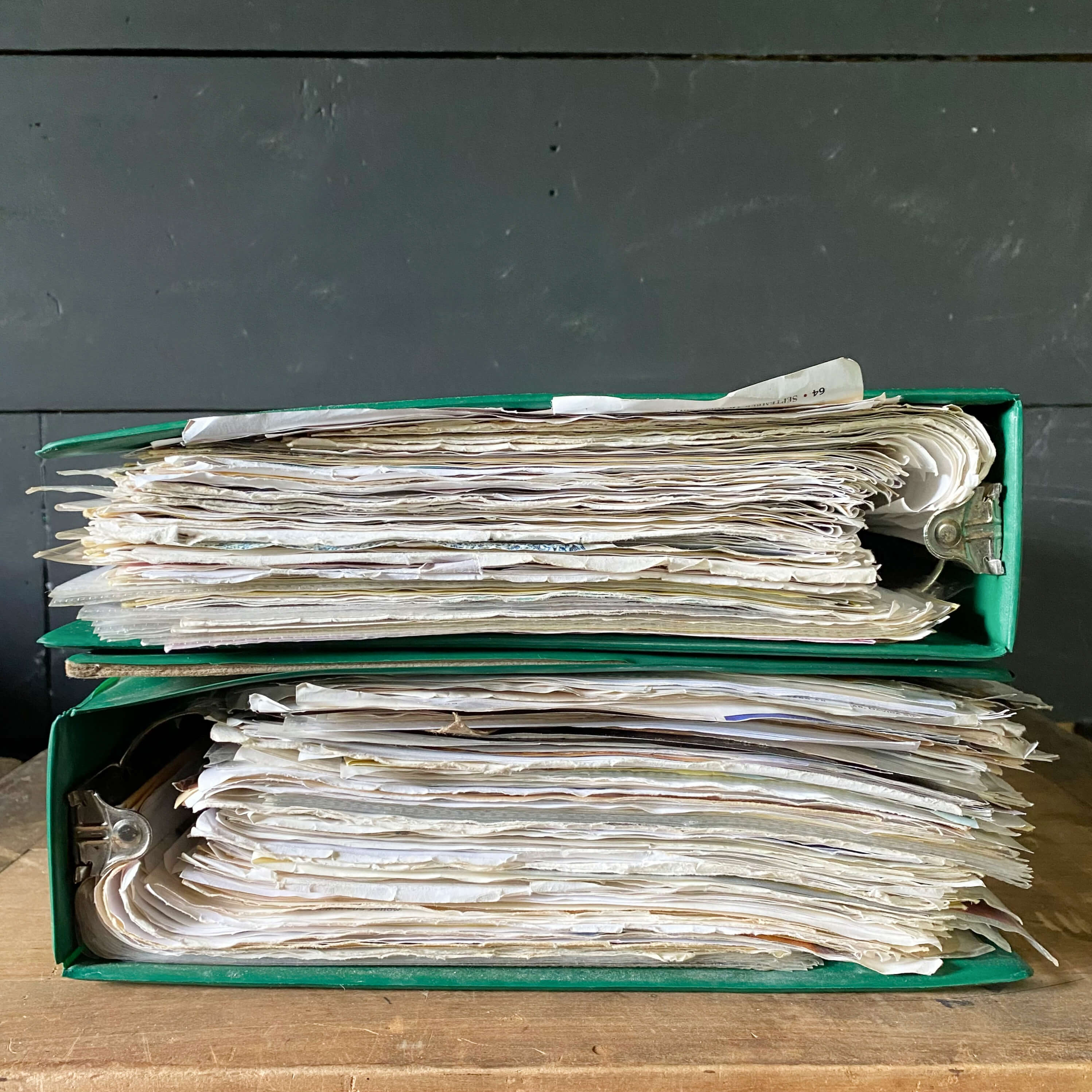
With each new recipe addition, my enthusiasm for cooking grew and grew. The binder grew and grew too. Eventually, it outgrew the slim size that my mom initially packaged the favorites in, and I transferred everything to an extra-large 3-inch binder. Quickly enough, that one filled up and overflowed, too. So a second extra-large 3-inch binder was acquired, and I divided half of my mom’s original categories into one binder and the other half into the second binder, thinking that I had arrived at the ultimate storage solution. But my enthusiasm for cooking and recipe collecting has yet to calm down, and the two binders are now stuffed full to bursting once again.

Despite their stuffed sausage appearance, now when I flip through these two binders, I see nothing but joy in years and years of memories. I see my mom’s handwriting in the original recipe category tabs.

I see my husband’s handwritten recipes for his pork pie inventions.

I see my sister-in-law’s slightly charred recipe card for baking powder biscuits that accidentally got stuck to the bottom of the baking sheet and cooked right along with the biscuits. I see the handwriting of my dearest friend, whom I’ve known since kindergarten, on a recipe for oven-roasted leeks that marks the first Thanksgiving that we cooked together.

There’s a recipe from my dad’s ex-wife written on his airline office stationery taped into the casserole section. There’s my grandmother’s delicate and lacy penmanship, my aunt’s large and loopy handwriting, midcentury recipe cards, tanned newspaper clippings from up-and-coming chefs featured in the New York Times, and hundreds of hand-cut recipes from all the great cooking magazines before they went online, before they created paywalls to access them, or before they folded for good. Recipes from Saveur, Bon Appetit, Gourmet, Southern Living, Cooking Light, Martha Stewart Living, Food & Wine all fill these binder pages, making them like my own homemade version of epicurious.com

The gift that my mom gave me years ago is the gift that has literally and figuratively kept on giving day in and day out. And it just keeps on encouraging more cooking and more collecting. That’s the power of a good passed-down recipe. I have my mom to thank for all this collecting and curiosity. For my love of old recipes and the memories they represent. My mom and I don’t always see eye to eye on everything, but when it comes to cooking, we have a shared interest and a mutual understanding surrounding food and meal-making that can always bring us together.

A lot of people inspire me when it comes to cooking, but it’s my mom’s slender binder of a book that was the original muse that started all this recipe collecting to begin with. I don’t think she could have known the depths to which I would eventually come to love her gift while she was typing away at those recipes on the computer all those years ago. How much her act of recording them would come to mean so much to my culinary journey. But now those recipes are among my most prized treasures. So it’s with a sincere heart on this Mother’s Day, that I wanted to say thank you to my mom for the joy she created in passing down our family favorites.

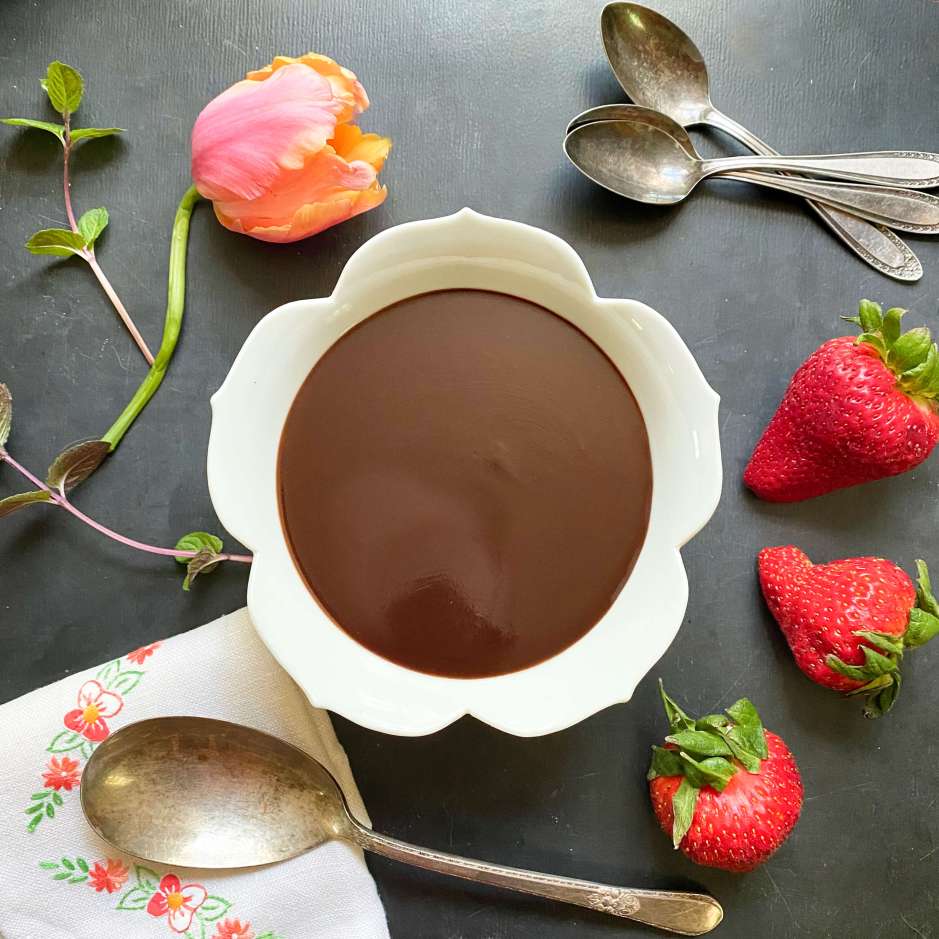
To celebrate the day and the occasion, I’m so happy to share one of the recipes from my mom’s family favorites collection. The recipe is for homemade chocolate sauce. A sweet treat companion that both inspires and complements so many other desserts.

Quick to make (less than 15 minutes) and lovely for all sorts of foods, it is thicker than syrup, yet thinner than frosting in consistency. It can be poured over ice cream like a hot fudge sundae, drizzled over a simple sheet cake like frosting, layered in clear glass stemware for parfaits, or served like a dipping sauce for fresh fruit.

Always a winner in my book, I have made this recipe so many times for so many different holidays from Valentine’s Day to Christmas and every season in between. I’m not sure where my mom got the recipe from – if it was truly a family recipe that was passed down to her or if it was just a favorite that she picked up somewhere along her culinary adventures. I could Google these ingredients and probably find the source pretty quickly, but for once, the provenance doesn’t interest me. I’ll always think of it as my mom’s homemade chocolate sauce. And in turn, whenever I make it, I always think of my mom and her gift of good food. Tried and true.

Chocolate Sauce

Makes 2 cups

1 cup sugar
1/3 cup unsweetened cocoa powder
2 tablespoons flour
1/4 tsp salt
1 cup boiling water
1 tablespoon butter
1 teaspoon vanilla

Mix together the sugar, cocoa powder, flour, and salt in a medium saucepan.

Add in 1 cup of boiling water and stir constantly over medium-high heat while the mixture comes to a slow boil.

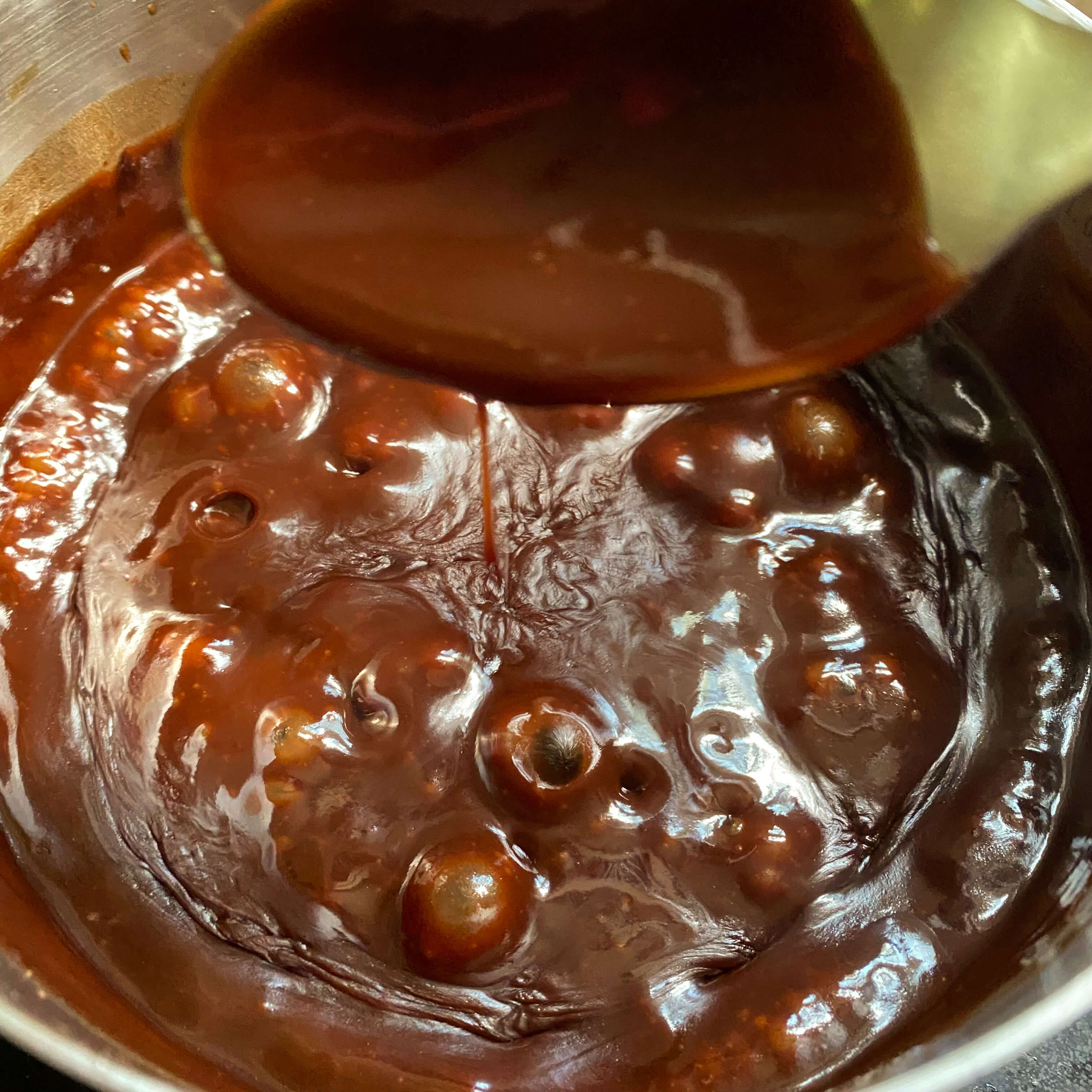
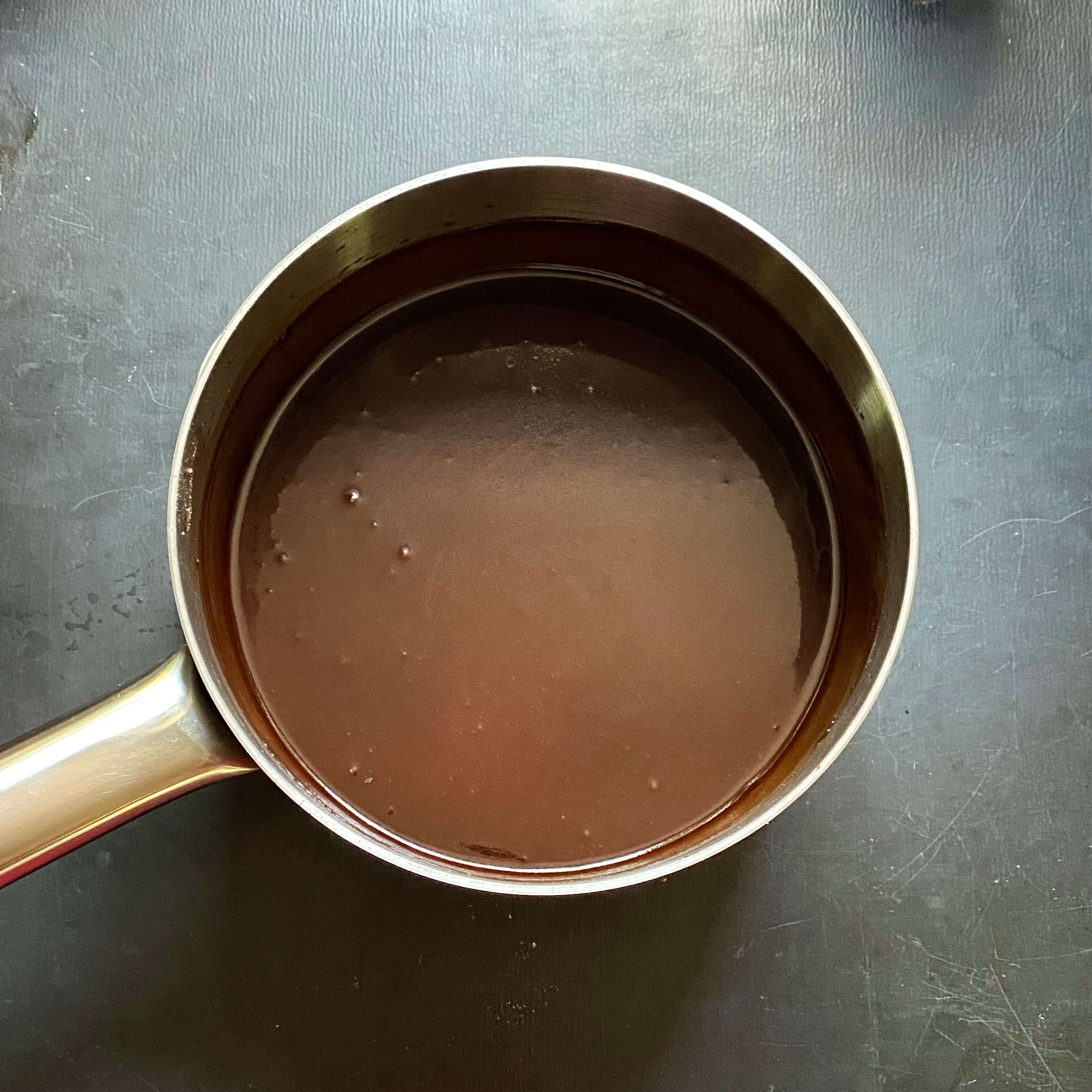
When the consistency thickens enough to coat a spoon but still drips off the spoon in a slow, steady stream, drop by drop, it’s ready to be removed from the heat. This consistency level usually takes about five minutes to achieve. Stir in the butter and vanilla. Serve hot or let cool to room temperature. If you have any leftovers, it stores well in the fridge in an air-tight glass jar for up to five days.

If you serve this as a dipping sauce with fruit, in a parfait, or over ice cream, let it cool to room temperature. If you are serving it over cake, serve it hot. There’s also room to add your own additional accompaniments too in the form of chopped nuts, coconut flakes, or a dollop of whipped cream as my mom suggested in her original recipe. However you choose to enjoy it, I hope it becomes a new favorite family recipe in your kitchen too.

Happy Mother’s Day to all the moms out there who inspire kitchen adventures in more ways than one. And cheers to my mom, for every single home-cooked meal, every single shared recipe, and every single family favorite that was recorded in the marvelous, magical gift that has now become my most treasured memory-keeper in the kitchen.

Chicken Thighs with Cinnamon and Dates From Kim Sunee’s Memoir Trail of Crumbs

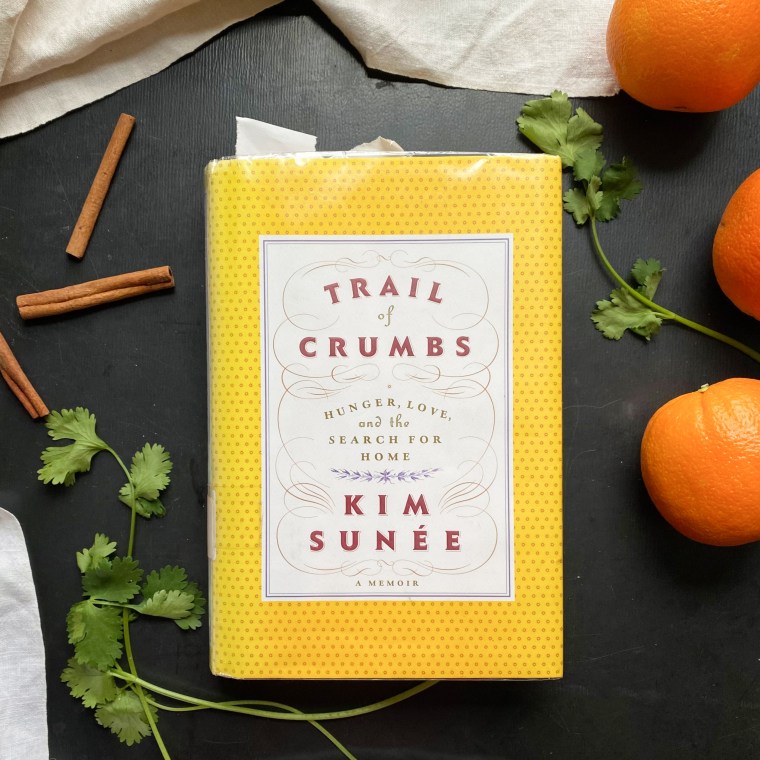
In 2008, Kim Sunee published a memoir called Trail of Crumbs. It’s the captivating true story about the first 28 years of her life as she moves in the world from being a three-year-old toddler abandoned by her mother in a Korean marketplace to being the adopted daughter of an American family living in New Orleans to becoming an independent, international traveler wandering the world in search of home and self.

I discovered Trail of Crumbs just this fall and found it so interesting that I included it in my list of favorite books to recommed for 2024. Full of compelling questions about cultural identity, the long-term effects of abandonment, and the universal desire to find a place that naturally feels like home, Kim’s memoir is full of luck, loss and the awkawrdness of becoming your true self. The recommended book list post has a much more in-depth review of Kim’s journey, so if you’d like to learn more about the book catch up here first.

In addition to sharing her coming-of-age story, Kim also includes a collection of recipes peppered throughout Trail of Crumbs that represent her international identity. Korean Kimchi Soup, Swedish Potato Temptation, French Fry Po-Boys with Horseradish Creme Fraiche, Croque-Madame Sandwiches, Whispery Eggs with Crabmeat and Herbs, Peaches Poached in Lillet Blanc and Lemon Verbena are just a few examples. In her book, food, acts like a second storyteller defining the way in which Kim moves about the world. These recipes are her confidence, her calling card and also her comfort blanket.

I tagged about ten different recipes in Kim’s book that I can’t wait to try. Given the winter weather, the merry season, the busy time of year when easy dinners are appreciated, and the larger crowds that come to the table for holiday celebrations, I thought it would be ideal to highlight her recipe for Chicken Thighs with Cinnamon and Dates. It’s easy to make, feeds up to eight people and fills the kitchen with tantalizing aromas.

This chicken recipe with its fruit and its spices appears in the middle of the book when Kim is living in France and is involved in a passionate love affair with the French founder of a well-known cosmetics company. Just like the recipe itself, this European romance is sweet, tender, and stuffed full of exotic appeal but it’s also very complex with lots of moving parts, outside influences and Kim’s own internal stops and starts. It winds up defining her life in ways she couldn’t have anticipated. This love affair is central to the whole entire book, so in case you haven’t already read Trail of Crumbs, I won’t say anything more so as not to spoil the story for you. Instead, we’ll begin our own little romance with this lovely recipe. Let’s get to cooking.

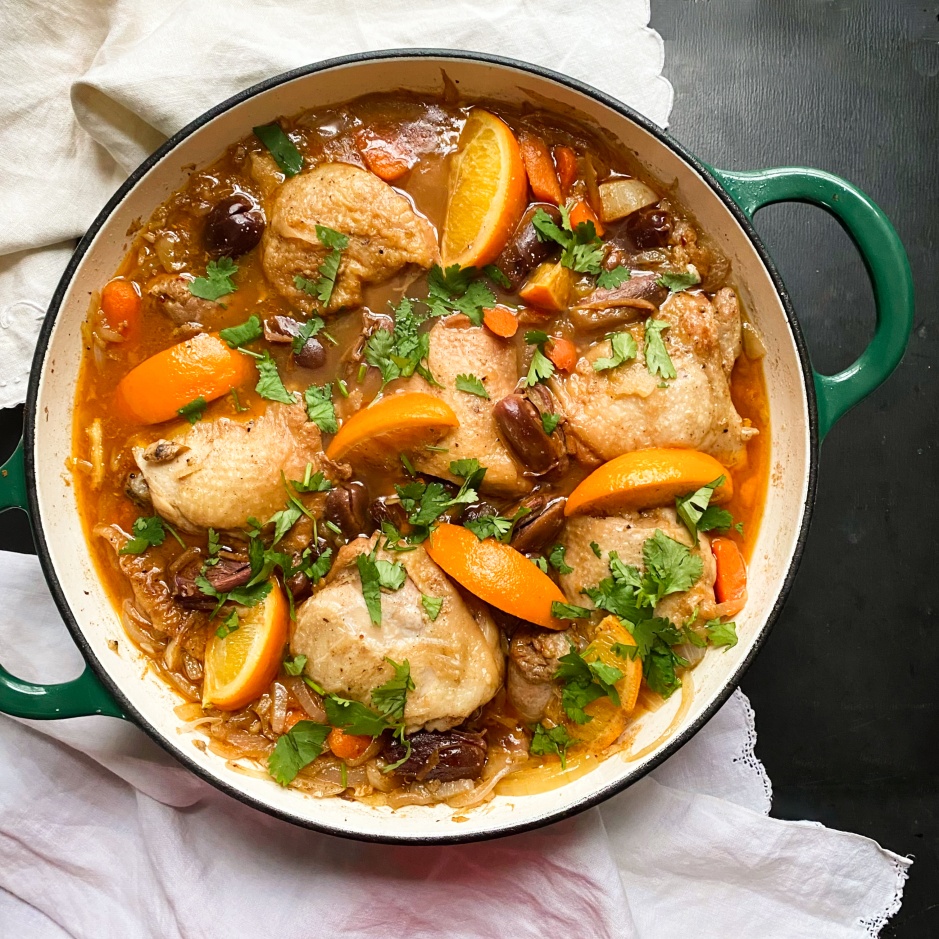
An easy, spice-infused one-pot meal that slow simmers for an hour and a half, Chicken Thighs with Cinnamon and Dates is a cozy and colorful recipe perfectly paired for the wind-chilled winter months. With its aromatic combination of oranges, onions, cinnamon, cumin, ginger, cilantro, paprika and garlic plus two proteins, it is a flavorful ensemble fit for a feast. Once the onions start swimming in the olive oil and the spices are incorporated one by one, the kitchen warms with the scent of holiday cooking. Similar to a wonderful recipe my mom used to make when I was growing up, one that she simply called Israeli Chicken, Kim’s recipe is a savory blend of Middle Eastern and North African flavors punctuated with a bit of Indian spice. For added convienence and a bit of trans-continental flair, in addition to cooking it in the oven, this recipe can also be made in a tagine or in a large pot on the stovetop slow simmered over medium heat.

Before we dive into the recipe, just a quick note. I followed Kim’s ingredient list exactly as written with the exception of a few minor substitutions based on local availability. I used skin-on chicken thighs in place of skinless and purple raisins in place of golden. I used a locally made spicy Italian pork sausage, and Dole brand whole pitted dates. In the last step, just before the chicken heads into the oven, I used homemade chicken broth. Other than that, this recipe was made as is, and it came together beautifully. Here, I’ve posted Kim’s original recipe as published in her book so that you’ll have the first-hand ingredient list that she intended.

Chicken Thighs with Cinnamon and Dates

from Trail of Crumbs by Kim Sunee

serves 6-8

1 teaspoon olive oil

2 sausage links (such as Merguez, spicy Italian pork, or lamb) about 1/2 lb.

6-8 skinless chicken thighs

1 1/4 teaspoonssalt, divided

3/4 teaspoon fresh-ground black pepper

1 large onion, thinly sliced

3 garlic cloves, smashed and coarsely chopped

1 tablespoon fresh grated ginger

1 teaspoon ground cinnamon

1/2 teaspoon ground cumin

1/2 teaspoon hot paprika

1 1/2 cups low-sodium chicken broth or water

1/2 cup fresh orange juice

1/3 cup golden raisins or currants

2-3 carrots cut lengthwise and halved on the bias

1 large orange cut into eight wedges

12 to 15 dates (preferable Medjool) pitted or 12 to 15 large prunes, pitted

2 to 3 tablespoons chopped fresh cilantro

Garnish of fresh cilantro, toasted almonds, or pine nuts

Heat olive oil over medium-high heat in a large ovenproof pan or Dutch oven. Cut sausage links in halves or thirds, depending on length, remove casings if desired. Add sausage and chicken to pot in one layer. Sprinkle with half of the salt and pepper. Let cook about 5 minutes. Turn meat over, season with remaining salt and pepper and cook 5 more minutes. Remove chicken to a plate.

Add onion to pot (if brown bits are stuck to bottom, add about 1 tablespoon white wine, water or orange juice, scraping to loosen bits) and let cook about 5 minutes.

Add garlic, ginger cinnamon, cumin and paprika. Stir and let cook about three minutes.

Add chicken broth and orange juice, raisins and carrots and stir. Place chicken and sausage back in pot. Add orange wedges and dates.

Stir, cover and bake at 350 degrees for about 1 hour and 30 minutes or until chicken and carrots are fork tender. Taste sauce and adjust seasoning as needed. Top with cilantro and serve.

Kim recommended serving this dish with hot buttered couscous, but since it was so saucy I served it with a batch of plain white rice flavored with just a pinch of salt. Warm and hearty, there was something new and delicious to discover in every bite. The dates took on the flavor of the orange juice. The garlic found its way to the raisins and formed little pockets of savory sweet pillows. The carrots were tender but not mushy. The onions and spices soaked into the chicken, which fell off the bone at the slightest nudge of the fork. All of it was lovely and very delicious.

I’d highly recommend this recipe for both everyday dining as well as special occasion dinner party fare. Its vibrant color palette, layered flavors and long cooking time offer plenty of opportunity to set a pretty table, socialize with friends and family, or read a few chapters from Kim’s book while you wait for it to finish.

If you have a small household and think six to eight chicken thighs is too much, make them all anyway. This recipe lasts in the fridge for several days so you’ll have leftovers. Like any good casserole, curry or homemade sauce, it only gets better the longer it sits.

Cheers to Kim for sharing her story and this wonderful recipe. Hope you love it just as much.

To learn more about Kim Sunee and her cookbooks visit her website here.

The Flavor of Catching Up and a Vintage Homemade Ketchup Recipe

One minute it was mid-April. The witch hazel had just arrived in the mail. A newly planted pot of Nemesia was fluffing out on the front porch, ready for its photo shoot and its spotlight feature in the Fragrant Year series. The collard greens, beets, peas, and kale were growing up in the garden. The second-year foxglove was throwing out layer after layer of leaves, mounding up like bushes. The shop was a flurry of activity – filling and emptying, filling and emptying with stories, heirlooms, and recipes, from kitchens, cooks, and history past.

The next minute it’s the 4th of July. I’m making a vintage summer recipe for the blog. The humidity has set in and the slugs have returned. The witch hazel has grown 6″ inches. Tomatoes and corn have replaced the kale and collards in the garden. The Nemesia has outgrown its pot twice. The summer vegetable garden has been planted. The autumn pumpkin seedlings have started to flower. And the shop is filling and emptying, filling and emptying again with a season’s worth of new old stories.

How did three months pass so quickly? How did we go so fast from collards at the end of one season to corn at the beginning of another? How did all the trees leaf out, and the wildflowers bloom on the side of the road, and the strawberries appear and then disappear? How did Mother’s Day, Memorial Day, Father’s Day, and Fourth of July fireworks pass without a single reflective moment to stop and share here on the blog?

So many interesting stories, gardening adventures, and heirloom gatherings have filled up those past three months. So many things I wanted to share, slated to share, photographed to share. But somehow, the days whizzed by. One by one, ten by twenty, thirty by sixty. All to wind up here at ninety days with nothing new but last April’s post.

Long stretches of absence like this are rare here on the blog and it can be challenging to start back up again after such an extended time away. Fortunately, after much stewing about how to return and what to say, Eleanor Roosevelt breezed into the Vintage Kitchen last week and offered up a bit of wisdom.

“If life were predictable, it would cease to be life, and be without flavor.” – Eleanor Roosevelt

This quote is attributed to Eleanor’s 1937 autobiography, This is My Story, which is now included on my list of books to read. Somehow Eleanor’s wise words wound up describing the very circumstance that defined the last three months. It was unpredictable. It was full of flavor.

The greenhouse got a fence. The hollyhocks bloomed. The 1750 House cupola was rebuilt. The vegetable garden was harvested for spring. And then it was re-planted for summer. The holidays were celebrated. The tomatoes climbed. Tulip bulbs were ordered for fall. Vegetable seeds were exchanged. A wild pheasant stopped by to say hello. Friends and family came to visit. Recipes were cooked. Heirlooms were collected. And after a two year wait, the foxgloves flowered for the first time.

The activities were plentiful, and each day different in routine and rhythm. Just like Eleanor said… they were full. In that spirit of busy activity, I thought it would be fun to do a quick recap via photos of what’s been going on in the kitchen, the garden, and the shop over the past three months so that we could wind our way back towards the present to share a new vintage recipe so perfectly suited for the mood and the moment. This is a catch-up post of the past three months with a 1960s recipe for homemade ketchup attached at the end. Catching up with ketchup, if you will.

A Look Back…

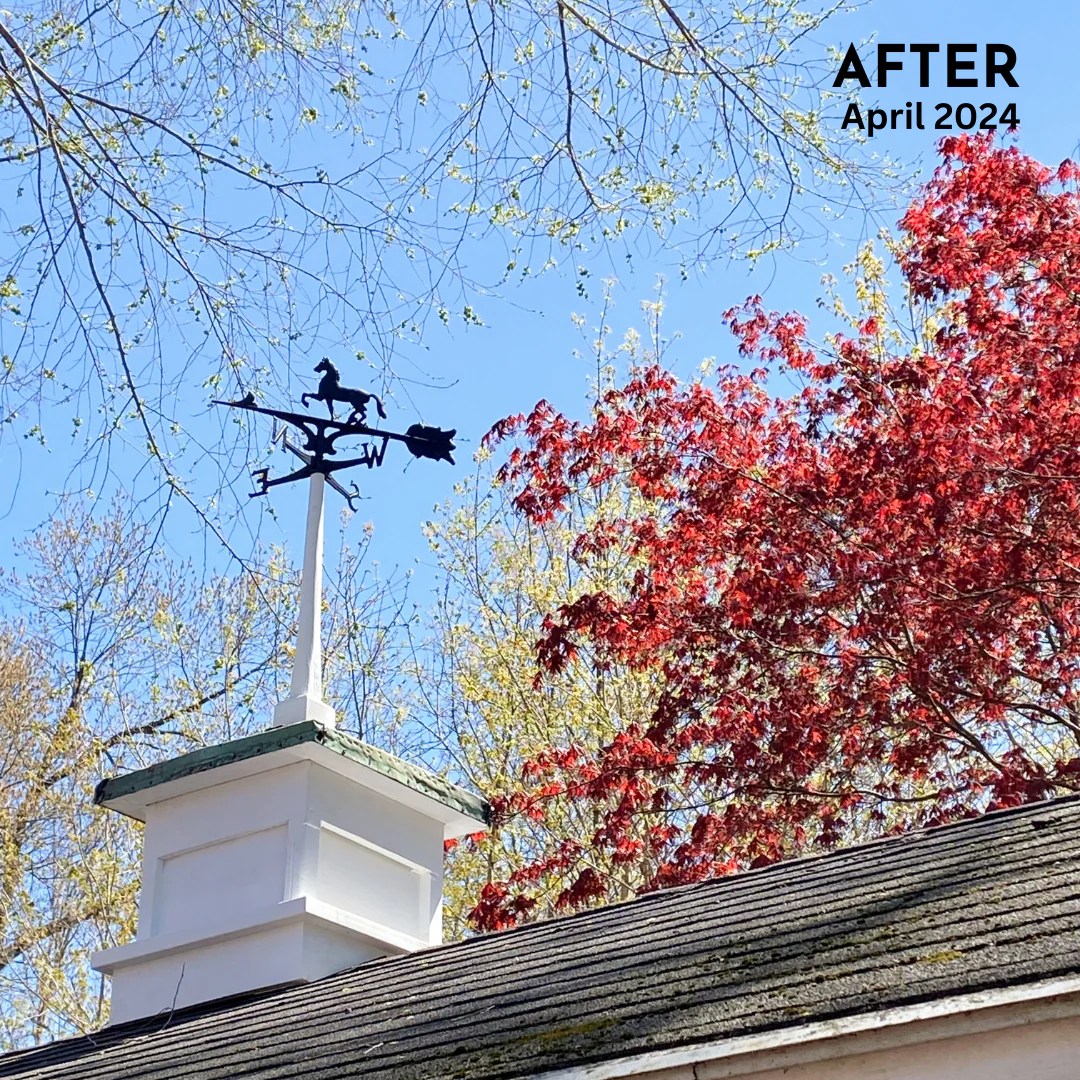
Two of the most exciting 1750 House renovation projects were the rebuilding of the 1930s cupola which had been chewed to pieces by squirrels long before we moved in, and the addition of a long-awaited fence around the greenhouse. The cupola was rebuilt using old tools and old techniques and squirrel-proofed so that the weathervane horse could freely run with the wind once again…

The greenhouse fence adds some dimension to the side yard and forms the backdrop for a cottage garden that will eventually include shrubs, perennials, climbing flowers, and a permanent herb garden.

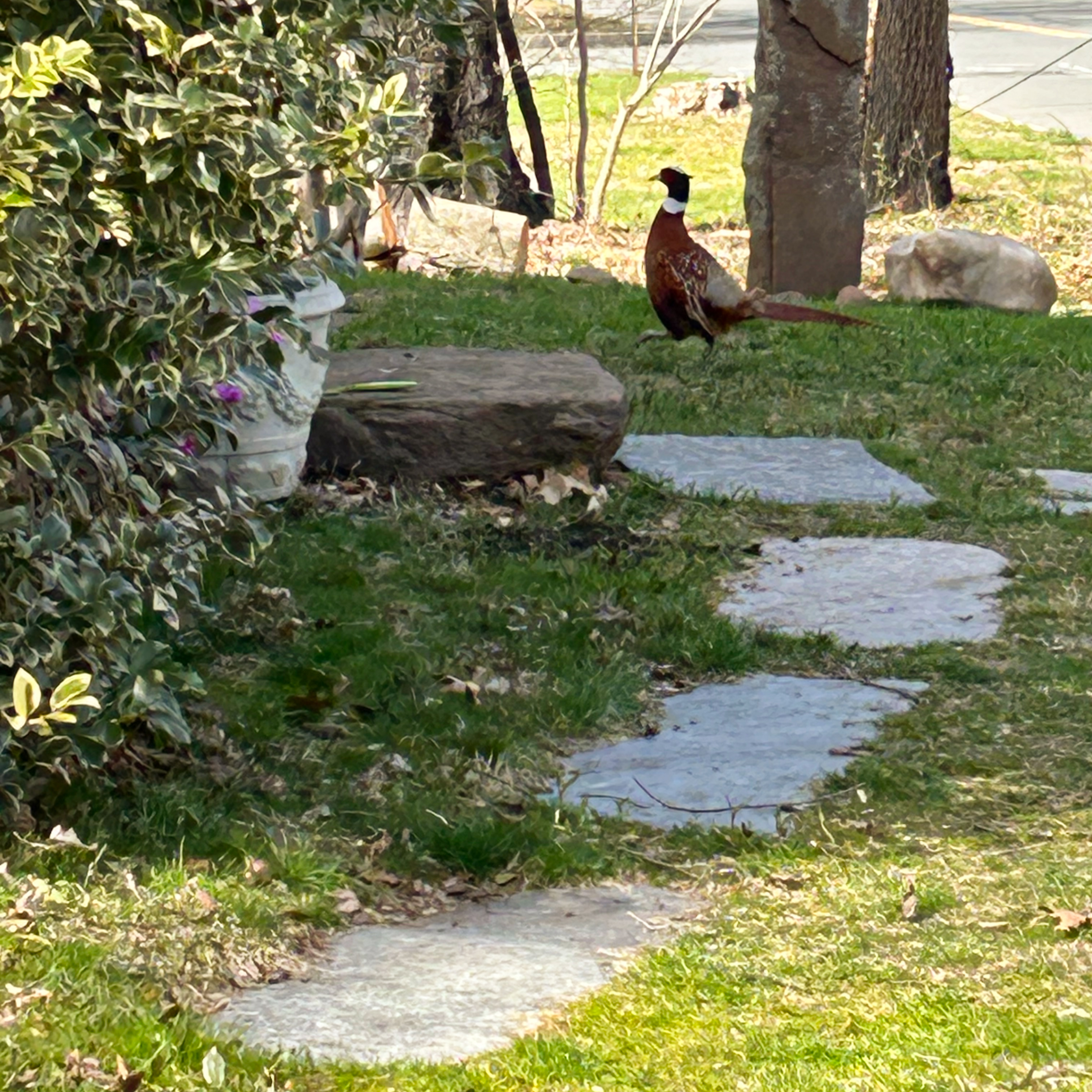
In early May, a wild pheasant came to visit…

In early June, a prehistoric-looking Dobson fly appeared one morning in the greenhouse…

And at the end of June, we saw our first butterfly of the season, a Red-Spotted Purple dipping and diving around the garden path and raised beds.

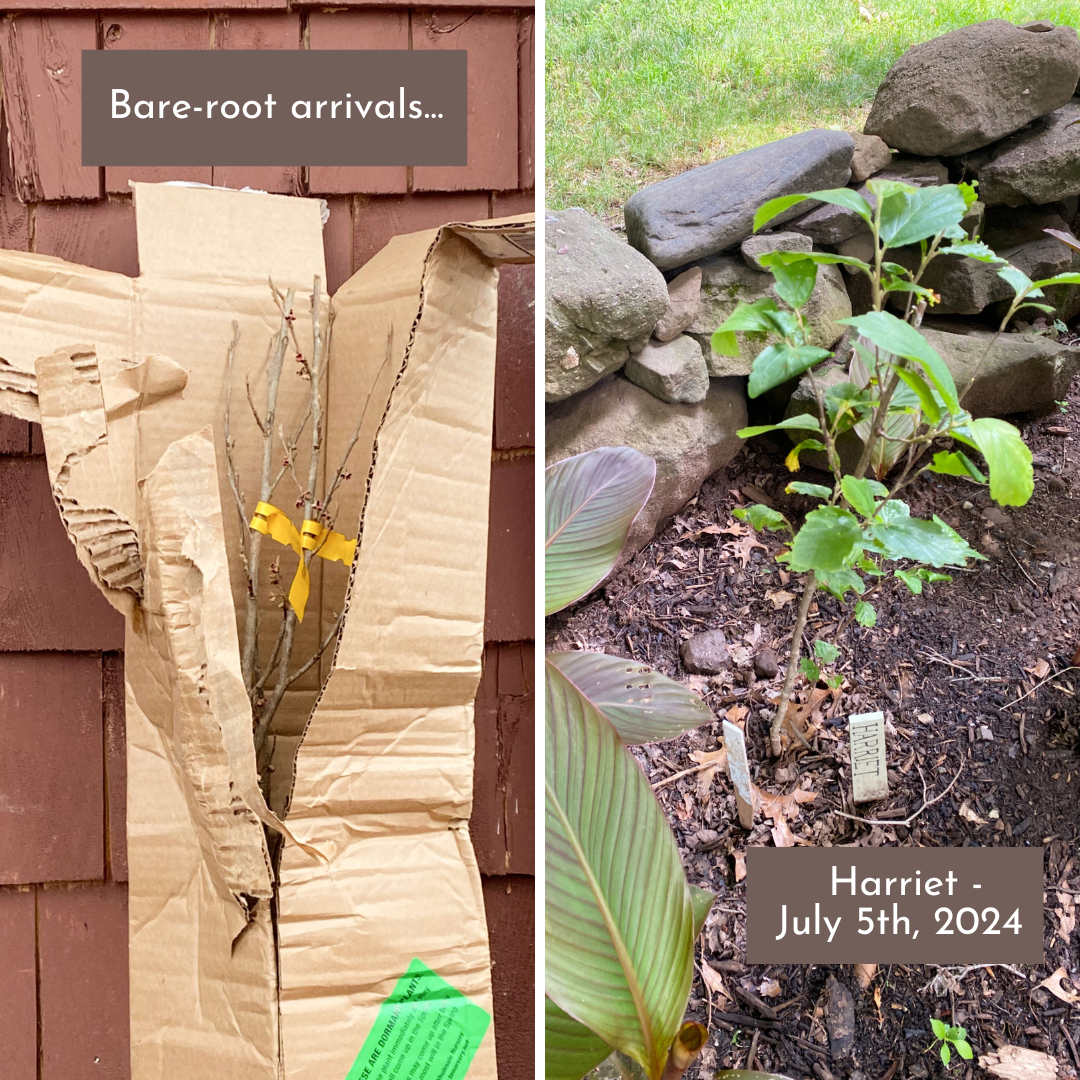
The witch hazel, from February’s Fragrant Year post, arrived in the mail in mid-April with not one bare root specimen but three, even though I just ordered one. All three trees were planted and named (Hazel, Harriet and Hilda – a nod to the original H-hinges inside 1750 House) so that I can track and record each one’s progress. All was well for a couple of months with each leafing out and growing taller, but sadly, Hazel got some sort of blight and lost all her leaves. I’ve left her in the ground in hopes that she recovers, so we’ll wait and see what happens over the next few months. In the meantime, Hilda and Harriet are doing great. In three months, they’ve each grown 6″ inches and have sprouted numerous sets of leaves. If they keep that growth rate up through the fall, by the end of 2024 they should be reaching about four feet in height.

Scenes From The Garden…

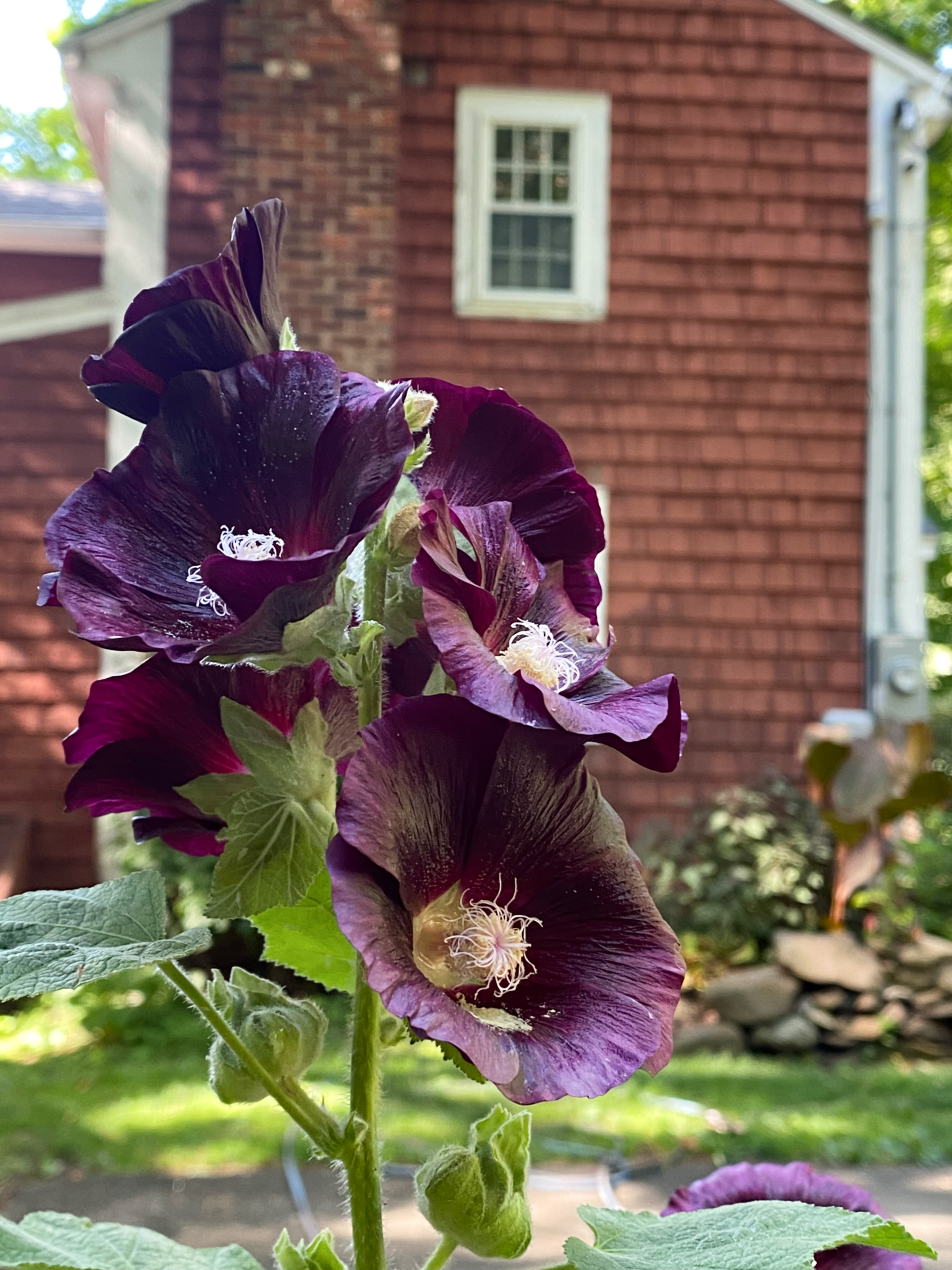
Hollyhocks (Variety: The Watchman)

Peas (Variety: Cascadia)

First garden harvest – early June.

Nasturtiums (Variety: Jewel Blend)

Cucamelons on the arch

Cherry Tomatoes (Variety: Sun Gold Pole)

The start of the wildflower bed

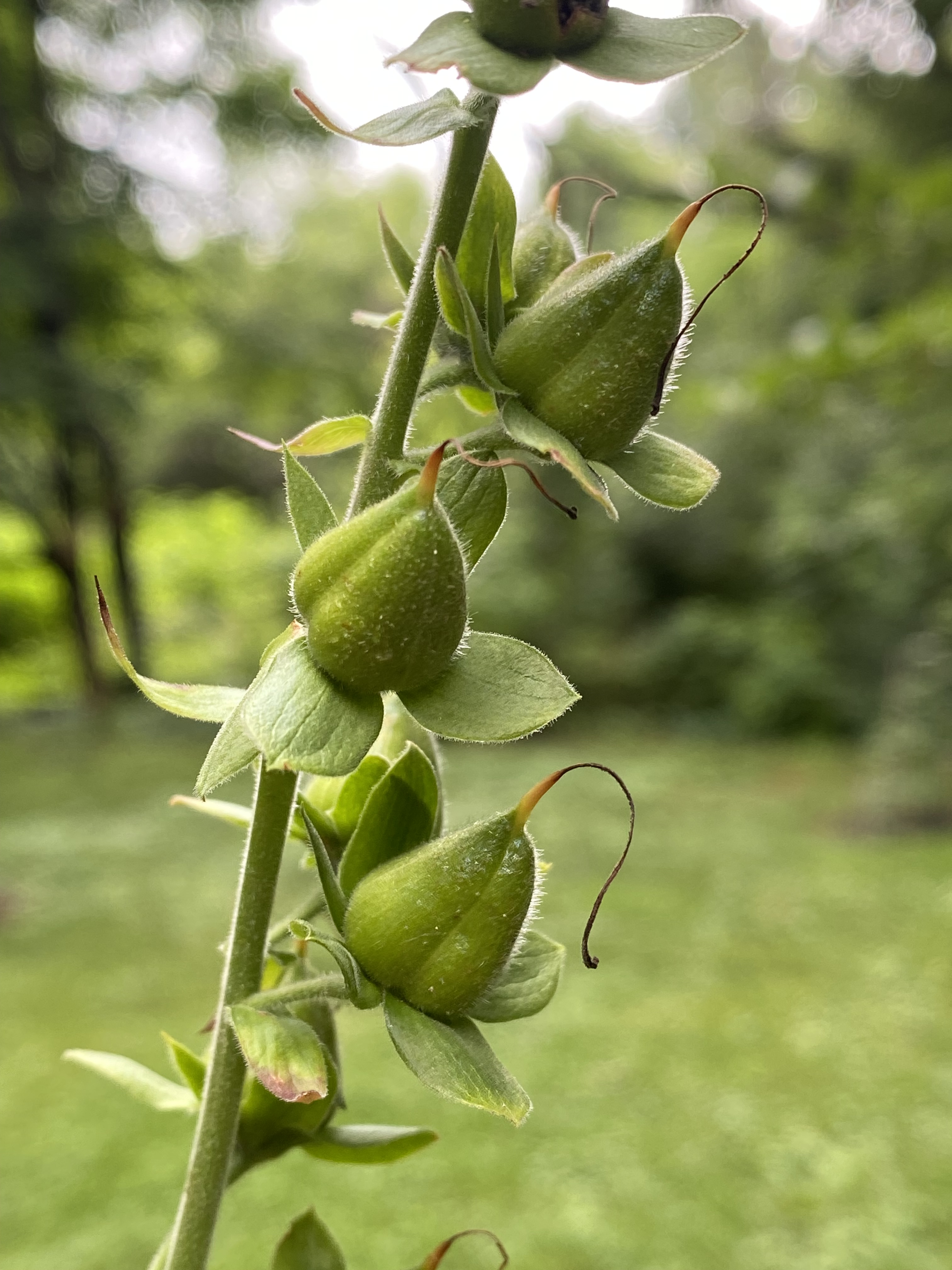
Foxglove seed pods

Summer Squash (Variety: Black Beauty)

Corn (Variety: Silver Queen White)

Stonecrop

Overwintered Pineapple Sage

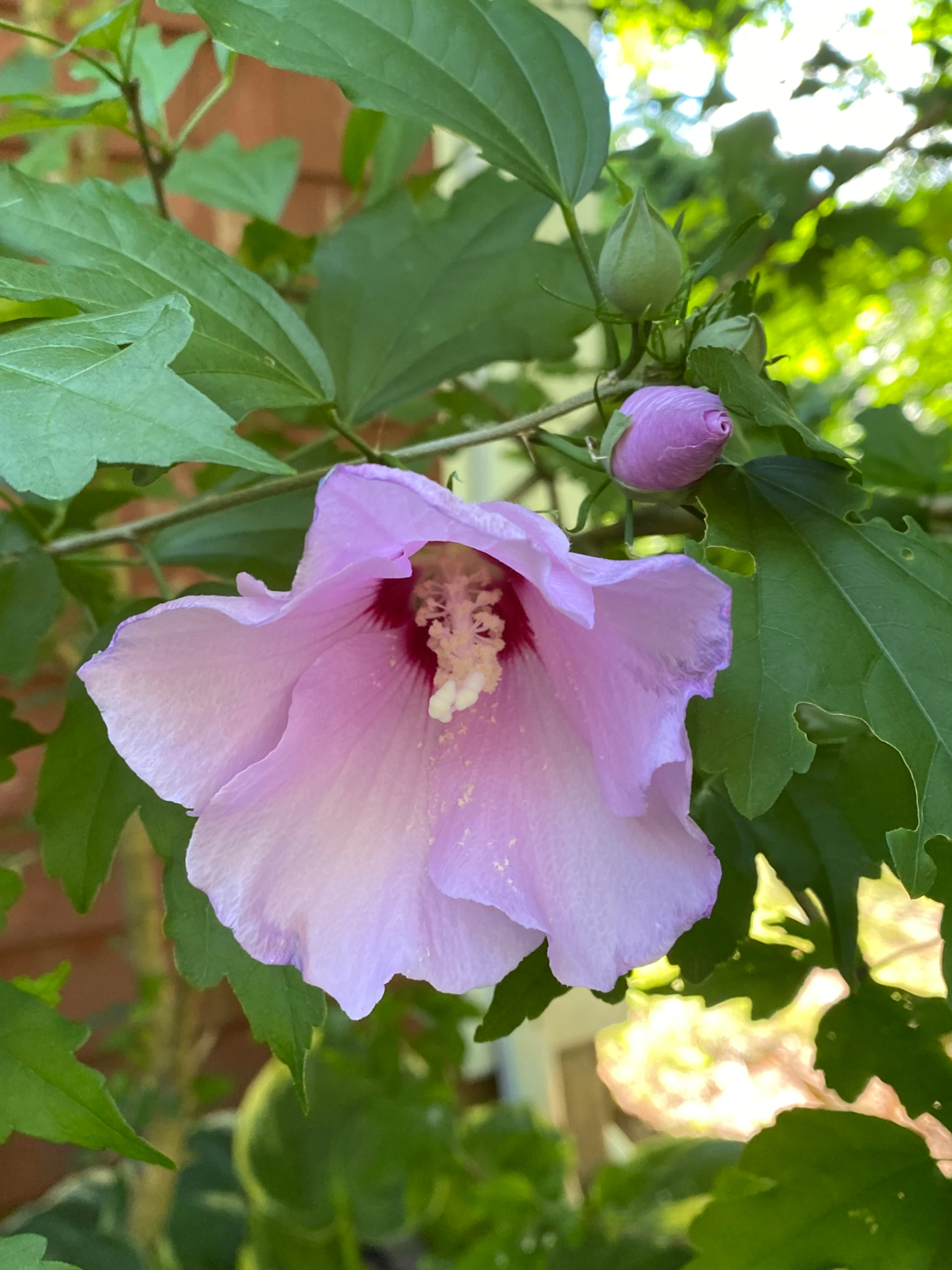
Rose of Sharon

Stories From The Shop…

Every bit of kitchen history is always interesting, but every season there are a few stand-out stories that capture quite a bit of attention. These are some of the latest encountered over the past three months. Clicking on the photos will take you directly to the shop item that inspired further storytelling…

The lives and adventures of early 20th-century husband and wife explorer team – Zetta and Carveth Wells

Long Island’s Roosevelt Raceway, a horse racing mecca from the 1940s-1980

.

The prize-winning pattern of a 1943 amateur design contest held by the Vogue Mercantile Institute in collaboration with Homer Laughlin.

The story of Perdita and the Charleston restaurant she inspired.

The 1930s baking invention of Cale Schneider.

Just last week, we debuted our own custom-designed ITVK gift wrap. The floral pattern was inspired by a vintage print that I found in a South Carolina antique shop in 2003. That print, along with an antique platter also found that day, launched a passion for collecting vintage and antique heirlooms and laid the groundwork for what would eventually become In The Vintage Kitchen.

This was a packaging project I first started dreaming about during the 2020 COVID lockdown. I picked the colors in the bouquet to represent the brand colors of the Vintage Kitchen long before I ever knew that a red house built in 1750 and surrounded by garden beds of orange lilies awaited in my future. The floral bouquet was resized, recolored, and brightened up to give it a more modern feel by a wonderfully talented graphic designer based in Austria. I think it’s the perfect blend of history, sentiment and fate. All purchases from the shop are wrapped, and complimentary, so if you find an heirloom you love, it will arrive packaged up in this…

That Was Then, This Is Now…

Now that we are all caught up, let’s ketchup. This recipe comes from the 1961 New York Times Cookbook, edited by one of our favorite Vintage Kitchen cooks, Craig Claiborne. Since it’s condiment season I thought this would be a fun one to feature for a couple of reasons.

Just like mayonnaise, I have always heard that a homemade version is much tastier than any store-bought variety. And since there aren’t really that many different types of ketchup available at the market, this recipe will add a little something unique and unexpected to your summer cookouts. Also, at some point in the summer when harvests are abundant and overwhelming, I always find it helpful to have a collection of recipes at the ready that require big batches of tomatoes so that nothing goes to waste. This recipe definitely calls for that.

This week we are making Spicy Tomato Ketchup from scratch using garden ingredients and a handful of pantry staples. The spice in the title comes from a small amount of cayenne pepper which can be omitted completely if you don’t like a little extra zip. But just to clarify this is a true ketchup, not a hot sauce, so if you are not a lover of hot and spicy foods, don’t worry, it won’t set your mouth on fire. Milder than Tabasco sauce, I’d rate the spice factor of this ketchup at about a 3 on a scale of 1 to 10 with 10 being the hot, hot, hot side.

The recipe calls for 12 pounds of tomatoes which yields about 6-8 pints of ketchup. When writing the cookbook, Craig Claiborne assumed that you would make a big batch, seal everything in sterile jars, and add it to your pantry collection for later consumption. Clearly, 8 pints is a lot of ketchup and not everyone is a home canner, myself included. I cut the recipe in half and then in half again and wound up with about 1 cup of ketchup after starting with 3 lbs of tomatoes. That size batch is shelf-stable in the fridge and is just the right amount for a few servings, and a few slatherings. Having said that, I’m posting the original recipe in case you are a ketchup lover and a canner too. This way, the measurements and portion sizes can be customized to your own needs. As for timing and difficulty, it takes a few hours to make this recipe, but it’s a very easy process. The bulk of the cooking time is hands-off while you wait for the tomato puree to reduce to a ketchup-like consistency.

Spicy Tomato Ketchup

Recipe from 1961 edition of The New York Times Cook Book. Makes 6-8 pints

12 pounds ripe tomatoes

1 cup chopped onion ( I used Vidalia onions)

1 tablespoon salt

1 cup sugar

1 teaspoon black pepper

1/2 teaspoon celery seed

1 teaspoon mustard seed

1 tablespoon whole cloves

1 stick cinnamon, broken

1 1/2 cups vinegar

1/4 teaspoon cayenne pepper

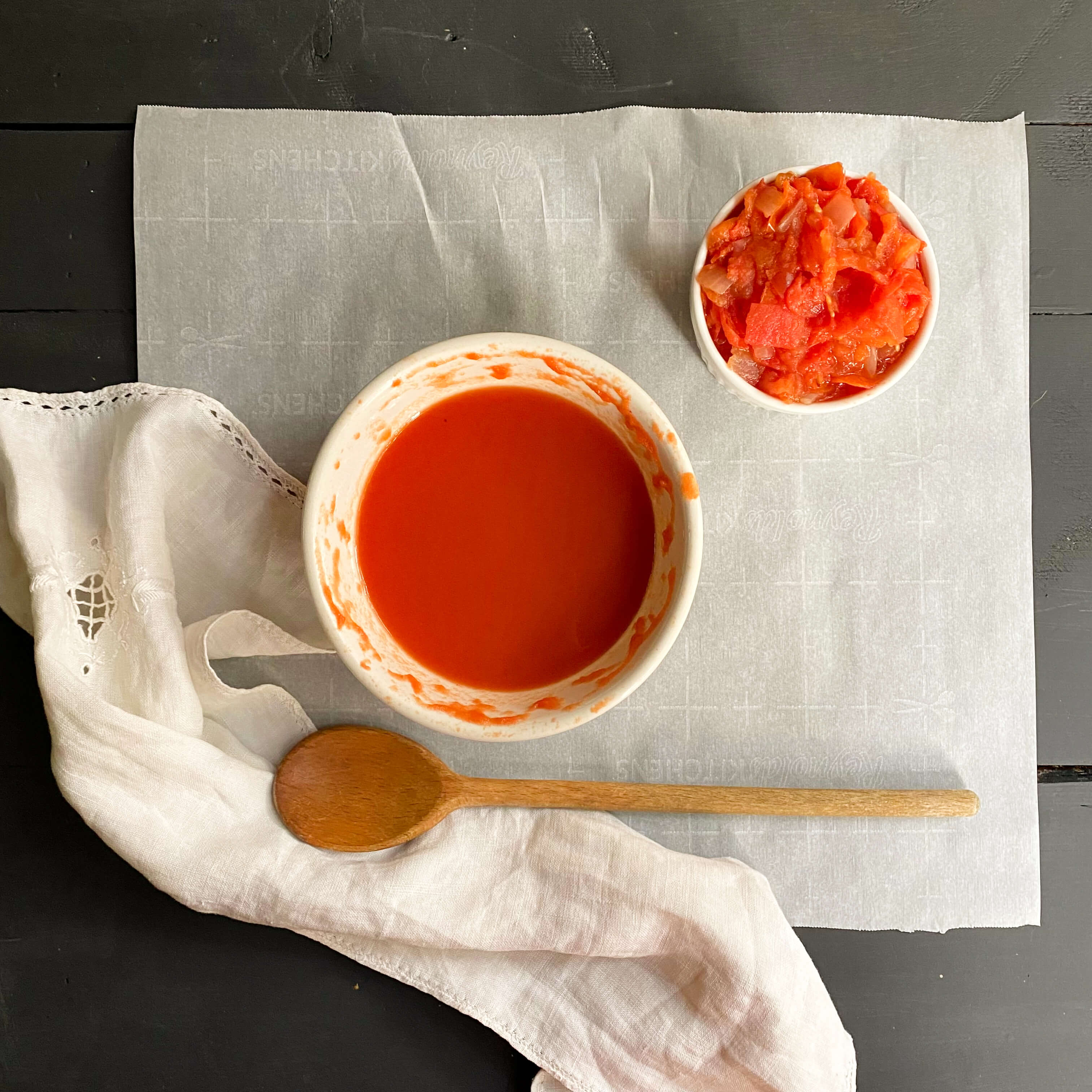
Remove the seeds before you cook the tomatoes.

Core and chop the tomatoes. Cook the tomatoes and onions together until soft (about 20-30 minutes) and then press the mixture through a fine sieve.

The cooked tomato and onion mixture before it is pressed through the sieve.

The tomato and onion mixture after it has been pressed through the sieve (large bowl).

Return puree to heat and cook until reduced by one-half, stirring occasionally. Combine spices in cheesecloth or a tea strainer and set in the puree. Add the rest of the ingredients and stir.

Continue cooking uncovered to desired consistency (about 2-4 hours depending on the amount of tomatoes used). Remove the spice bag. Seal ketchup in hot sterilized jars or refrigerate in an air-tight container if making a smaller batch.

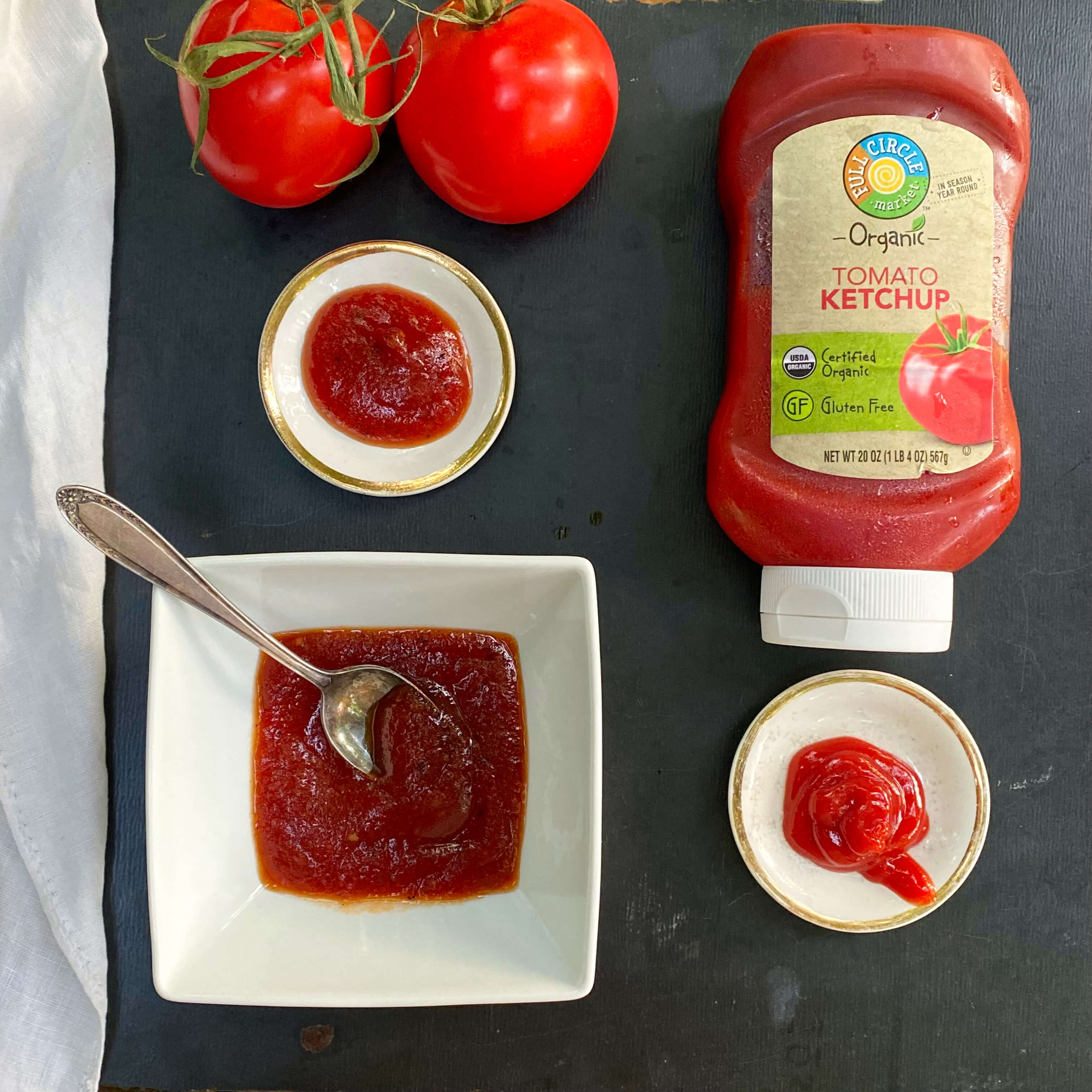
With a thick consistency, a sweet taste and a peppery bite this homemade ketchup was full of delicious, tangy flavor. A little bit darker in color than our usual brand of store-bought ketchup, the best way to describe the difference between these versions is to compare them side by side.

The store-bought ketchup was not as sweet and it tasted tinny like canned tomatoes with a mineral undertone. The homemade ketchup was sweeter, brighter, and more evenly balanced in flavor. The store-bought version was candy-apple red in color and smoother in consistency. The homemade version, although not thin, was more sauce-like in texture, similar to a steak sauce or a barbeque sauce, and slightly more opaque. The last defining difference between the two was the spice factor, which of course was the unique ingredient in the homemade version.

Interestingly, the store-bought ketchup contained very similar ingredients to the homemade version… organic tomato concentrate, organic sugar, organic vinegar, salt, organic spices, and organic onion powder – not too different from the ingredients we used. But like anything made from scratch in small batches, as opposed to something made en masse in a factory, you can’t beat fresh, homemade, whole-food flavor.

You might suspect that ketchup would have an origin story that begins in Italy, given the country’s love of homegrown tomatoes and homemade sauce. But actually, ketchup is steeped in centuries of Chinese food culture and dates all the way back to the 1700s when it was first used as a way to ferment and preserve fish. At that point in time, there were no tomatoes involved and it was not red in color. It was thin and watery and looked more like soy sauce. It wasn’t until the early 1800s in America that tomatoes in ketchup made their debut.

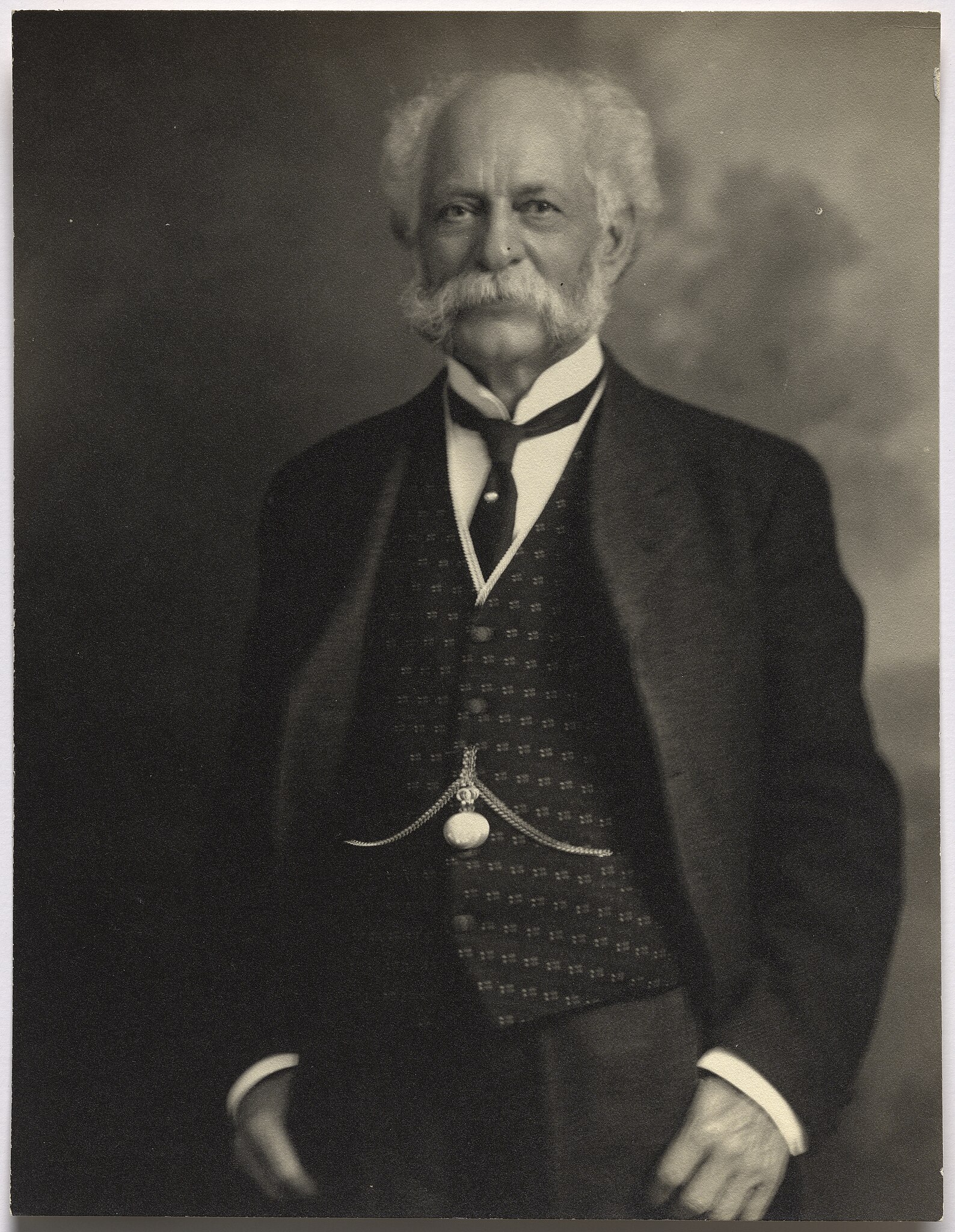
Henry John Heinz

Henry John Heinz (1844-1919) made ketchup a famous American condiment in the 1870s after years spent first experimenting with horseradish. By the 1960s, when this Spicy Tomato Ketchup recipe was published in The New York Times Cook Book, Heinz Ketchup was a worldwide favorite bringing in over $300 million dollars a year in global sales.

1960s advertisement for Heinz Ketchup

It’s interesting to think that in the dawn of convenience foods (aka the mid-20th century), when saving time in the kitchen was important to busy families, and the exciting novelty of pre-packaged foods was all the rage, that Craig Claiborne was still interested in adding a homemade ketchup recipe to his cookbook. When 1960s home cooks could have easily run out and purchased an already prepared bottle of trusted, reliable Heinz Ketchup and called the day done for a lot less time and expense, it’s interesting that the New York Times treated this ordinary, taken-for-granted, always-around condiment with a little more reverence.

In preparing this recipe, I now understand that ketchup is an elevated culinary sauce, perfected over centuries. It’s not just something you slather on your burger or your hot dog or dip your french fries into without thinking. It shouldn’t be something you buy in bulk at the grocery store with the same level of enthusiasm as buying a roll of paper towels. Homemade ketchup requires time and a unique blend of ingredients to bring out all the flavors. It’s a condiment worthy of attention and of appreciation. When it is homemade, it offers a gourmet flourish to your summer grill menu and adds a bit of zesty flavor to your palate and your plate. There is also something freeing about knowing that, should we ever run across The Great Tomato Ketchup Shortage of 2021 again, we could easily whip up a batch ourselves if we needed to. I guess this means that I need to learn how to can. So that I can go ahead and make those eight pints and have a reserve in my pantry. This homemade recipe will spoil you in that way. It will turn your attention away from all those other commercial ketchups. There is truth in the saying. Yes, homemade ketchup tastes better than a store-bought version.

I hope you love this ketchup recipe just as much. As always, if you make it please share your thoughts in the comment section below. And if you’d like to experiment with another homemade condiment, try this wonderful Danish mustard recipe here.

Cheers to Craig, Eleanor and tomato growers all over the globe for adding so much flavor to our summer days.