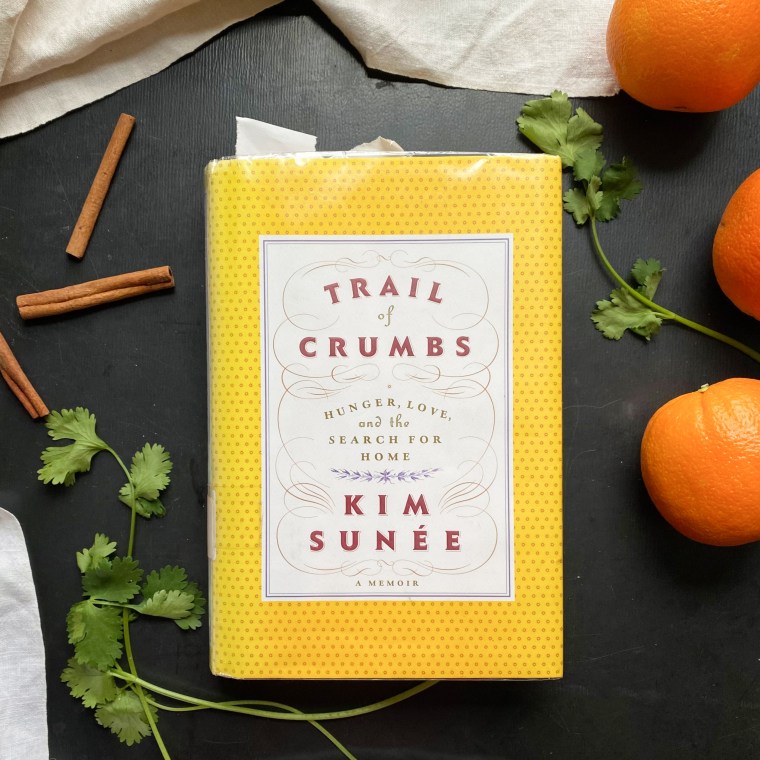
In 2008, Kim Sunee published a memoir called Trail of Crumbs. It’s the captivating true story about the first 28 years of her life as she moves in the world from being a three-year-old toddler abandoned by her mother in a Korean marketplace to being the adopted daughter of an American family living in New Orleans to becoming an independent, international traveler wandering the world in search of home and self.
I discovered Trail of Crumbs just this fall and found it so interesting that I included it in my list of favorite books to recommed for 2024. Full of compelling questions about cultural identity, the long-term effects of abandonment, and the universal desire to find a place that naturally feels like home, Kim’s memoir is full of luck, loss and the awkawrdness of becoming your true self. The recommended book list post has a much more in-depth review of Kim’s journey, so if you’d like to learn more about the book catch up here first.
In addition to sharing her coming-of-age story, Kim also includes a collection of recipes peppered throughout Trail of Crumbs that represent her international identity. Korean Kimchi Soup, Swedish Potato Temptation, French Fry Po-Boys with Horseradish Creme Fraiche, Croque-Madame Sandwiches, Whispery Eggs with Crabmeat and Herbs, Peaches Poached in Lillet Blanc and Lemon Verbena are just a few examples. In her book, food, acts like a second storyteller defining the way in which Kim moves about the world. These recipes are her confidence, her calling card and also her comfort blanket.
I tagged about ten different recipes in Kim’s book that I can’t wait to try. Given the winter weather, the merry season, the busy time of year when easy dinners are appreciated, and the larger crowds that come to the table for holiday celebrations, I thought it would be ideal to highlight her recipe for Chicken Thighs with Cinnamon and Dates. It’s easy to make, feeds up to eight people and fills the kitchen with tantalizing aromas.
This chicken recipe with its fruit and its spices appears in the middle of the book when Kim is living in France and is involved in a passionate love affair with the French founder of a well-known cosmetics company. Just like the recipe itself, this European romance is sweet, tender, and stuffed full of exotic appeal but it’s also very complex with lots of moving parts, outside influences and Kim’s own internal stops and starts. It winds up defining her life in ways she couldn’t have anticipated. This love affair is central to the whole entire book, so in case you haven’t already read Trail of Crumbs, I won’t say anything more so as not to spoil the story for you. Instead, we’ll begin our own little romance with this lovely recipe. Let’s get to cooking.
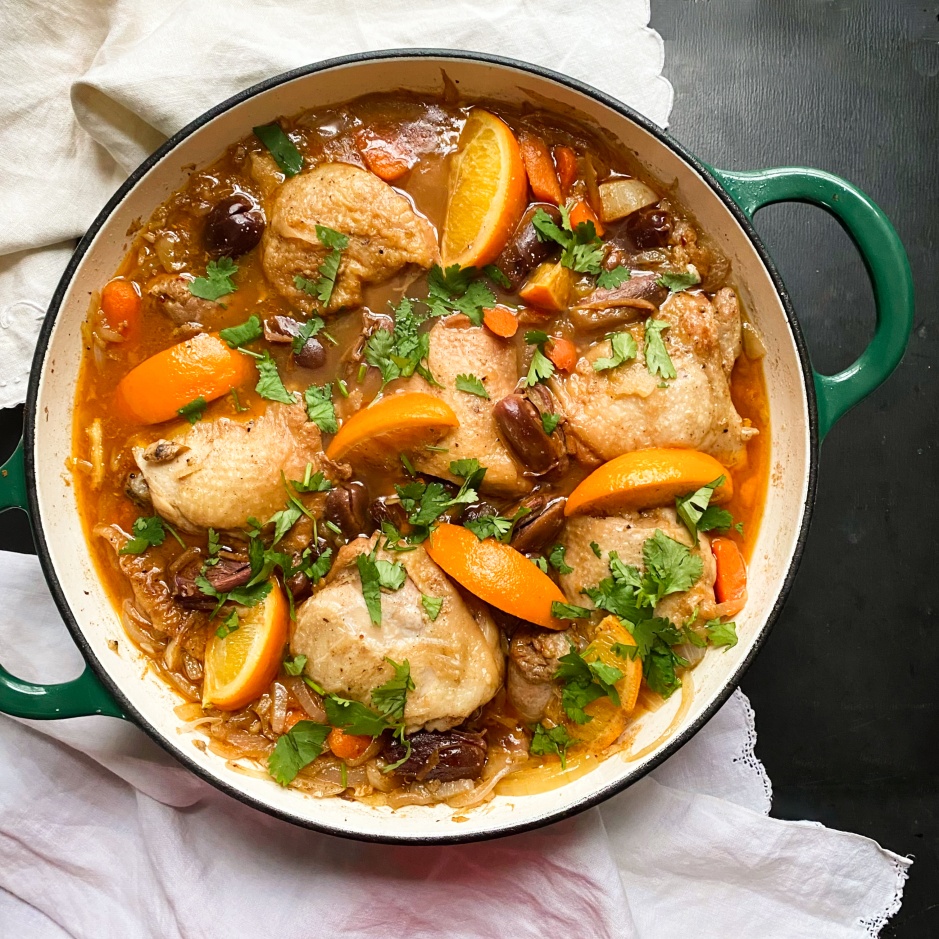
An easy, spice-infused one-pot meal that slow simmers for an hour and a half, Chicken Thighs with Cinnamon and Dates is a cozy and colorful recipe perfectly paired for the wind-chilled winter months. With its aromatic combination of oranges, onions, cinnamon, cumin, ginger, cilantro, paprika and garlic plus two proteins, it is a flavorful ensemble fit for a feast. Once the onions start swimming in the olive oil and the spices are incorporated one by one, the kitchen warms with the scent of holiday cooking. Similar to a wonderful recipe my mom used to make when I was growing up, one that she simply called Israeli Chicken, Kim’s recipe is a savory blend of Middle Eastern and North African flavors punctuated with a bit of Indian spice. For added convienence and a bit of trans-continental flair, in addition to cooking it in the oven, this recipe can also be made in a tagine or in a large pot on the stovetop slow simmered over medium heat.
Before we dive into the recipe, just a quick note. I followed Kim’s ingredient list exactly as written with the exception of a few minor substitutions based on local availability. I used skin-on chicken thighs in place of skinless and purple raisins in place of golden. I used a locally made spicy Italian pork sausage, and Dole brand whole pitted dates. In the last step, just before the chicken heads into the oven, I used homemade chicken broth. Other than that, this recipe was made as is, and it came together beautifully. Here, I’ve posted Kim’s original recipe as published in her book so that you’ll have the first-hand ingredient list that she intended.
Chicken Thighs with Cinnamon and Dates
from Trail of Crumbs by Kim Sunee
serves 6-8
1 teaspoon olive oil
2 sausage links (such as Merguez, spicy Italian pork, or lamb) about 1/2 lb.
6-8 skinless chicken thighs
1 1/4 teaspoonssalt, divided
3/4 teaspoon fresh-ground black pepper
1 large onion, thinly sliced
3 garlic cloves, smashed and coarsely chopped
1 tablespoon fresh grated ginger
1 teaspoon ground cinnamon
1/2 teaspoon ground cumin
1/2 teaspoon hot paprika
1 1/2 cups low-sodium chicken broth or water
1/2 cup fresh orange juice
1/3 cup golden raisins or currants
2-3 carrots cut lengthwise and halved on the bias
1 large orange cut into eight wedges
12 to 15 dates (preferable Medjool) pitted or 12 to 15 large prunes, pitted
2 to 3 tablespoons chopped fresh cilantro
Garnish of fresh cilantro, toasted almonds, or pine nuts
Heat olive oil over medium-high heat in a large ovenproof pan or Dutch oven. Cut sausage links in halves or thirds, depending on length, remove casings if desired. Add sausage and chicken to pot in one layer. Sprinkle with half of the salt and pepper. Let cook about 5 minutes. Turn meat over, season with remaining salt and pepper and cook 5 more minutes. Remove chicken to a plate.
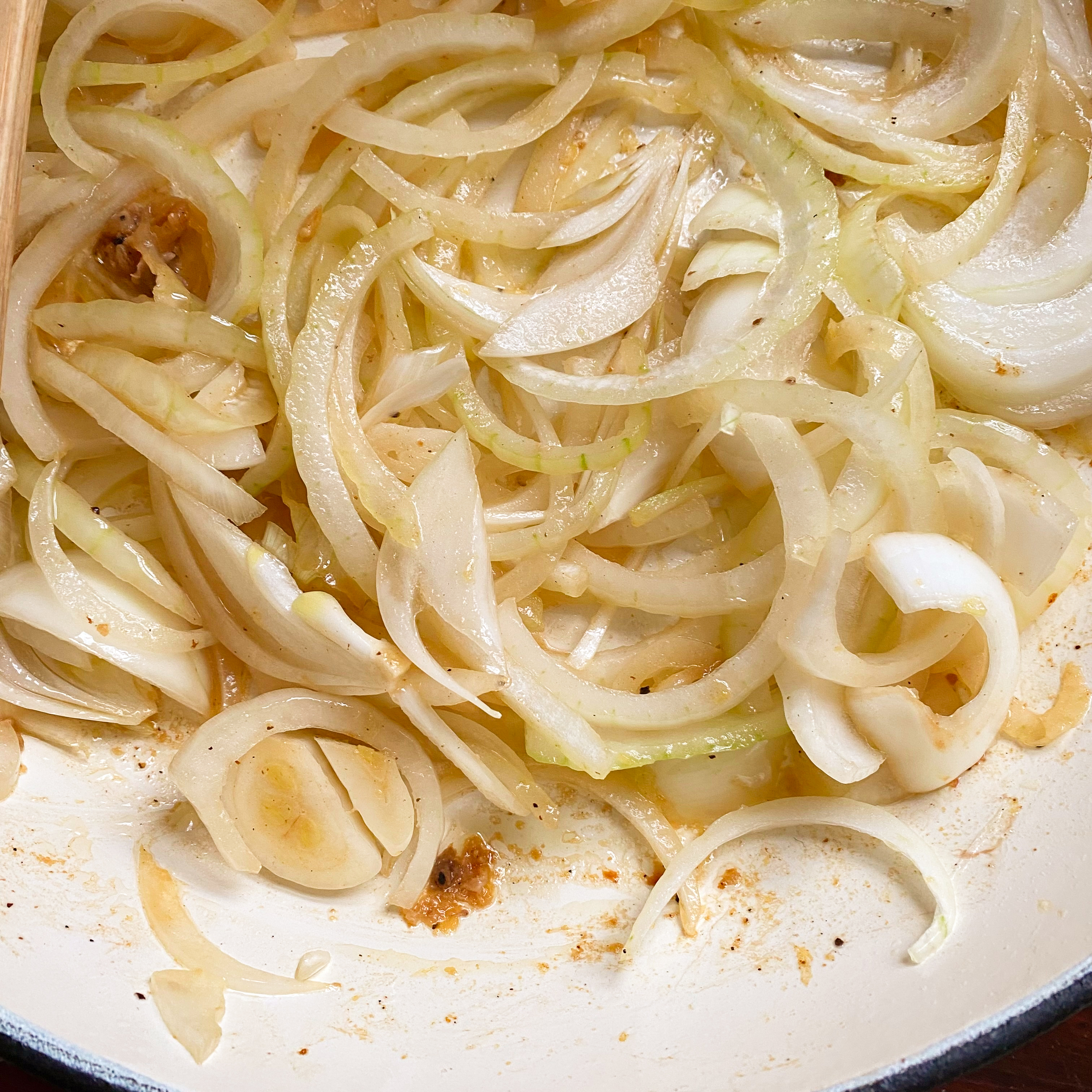
Add onion to pot (if brown bits are stuck to bottom, add about 1 tablespoon white wine, water or orange juice, scraping to loosen bits) and let cook about 5 minutes.
Add garlic, ginger cinnamon, cumin and paprika. Stir and let cook about three minutes.
Add chicken broth and orange juice, raisins and carrots and stir. Place chicken and sausage back in pot. Add orange wedges and dates.
Stir, cover and bake at 350 degrees for about 1 hour and 30 minutes or until chicken and carrots are fork tender. Taste sauce and adjust seasoning as needed. Top with cilantro and serve.
Kim recommended serving this dish with hot buttered couscous, but since it was so saucy I served it with a batch of plain white rice flavored with just a pinch of salt. Warm and hearty, there was something new and delicious to discover in every bite. The dates took on the flavor of the orange juice. The garlic found its way to the raisins and formed little pockets of savory sweet pillows. The carrots were tender but not mushy. The onions and spices soaked into the chicken, which fell off the bone at the slightest nudge of the fork. All of it was lovely and very delicious.
I’d highly recommend this recipe for both everyday dining as well as special occasion dinner party fare. Its vibrant color palette, layered flavors and long cooking time offer plenty of opportunity to set a pretty table, socialize with friends and family, or read a few chapters from Kim’s book while you wait for it to finish.
If you have a small household and think six to eight chicken thighs is too much, make them all anyway. This recipe lasts in the fridge for several days so you’ll have leftovers. Like any good casserole, curry or homemade sauce, it only gets better the longer it sits.
Cheers to Kim for sharing her story and this wonderful recipe. Hope you love it just as much.
To learn more about Kim Sunee and her cookbooks visit her website here.
When December comes around every year, I always love compiling the book list. This month marks the end of 2024, and also the start of the wintertime reading season with the release of the annual Vintage Kitchen recommended book list. Blog stories were a bit sparse this year due to many unanticipated factors, but I’m happy to say that they haven’t hindered this annual tradition of posting a collection of favorite books discovered throughout the year.
If you are a long-time reader of the blog, you already know that these lists are made up of books that were serendipitously found over the course of the year while doing research for Vintage Kitchen blog posts, shop stories and recipes. Every year, they cover a range of subject matters and time periods, and span a range of publication dates from new releases to books written decades or even centuries ago. As an avid reader, averaging about 30 books a year, I save the most beloved ones for this list. The ones that left an indelible mark, or sparked some new inspiration, or offered a different perspective on a subject matter already familiar. These are the books I couldn’t put down. The ones that I still continue to think about long after the last page is read.
This year’s selection is varied in content but they do have an underlying connective theme of gratitude and appreciation. There’s a book about nature, a book about a summer vacation house, and a book about American life lived three hundred years ago. Three of the books this year are memoirs, one book contains recipes, and unlike last year’s list, all five of these books are non-fiction. They tell bittersweet stories of friendship, of being present in time and place, of establishing traditions, and of searching for meaning in everyday life. These five take us around the world from coastal Massachusetts to New Orleans to New York City to Paris, Stockholm, South America, and to our own backyards. One book even helped solve a mystery about the floorboards of 1750 House. Interesting adventures await on all fronts.
Let’s look…
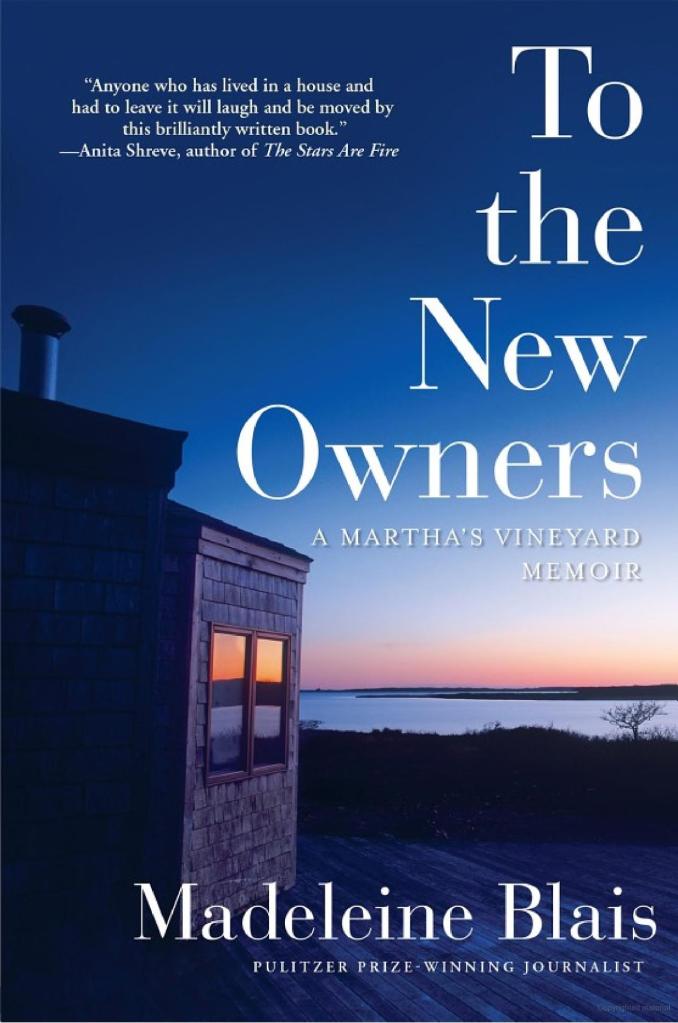
To The New Owners – Madeleine Blais (2017)
A love story to summer. To family. To a seasonal beach house on the shore of Martha’s Vineyard. To the New Owners is one long anticipated string of summer sequels highlighting vacation life spent in coastal Massachusetts. Written by Pulitzer prize-winning journalist Madeleine Blais, who married into the enigmatic and literary Katezenbach family, this memoir starts off with news that the beloved beach house, the family vacation compound for five decades, is going up for sale.
You might suspect with a topic like this that what could follow is a sappy cliche. A backward look at a family home where frivolity, relaxation, and low expectations were the driving force behind each summer. A book chock-full of events and experiences only interesting to the people who actually experienced it. That’s not the case here.
While there is certainly sentimentality and a true loyalty to the land and its residents, both seasonal and year-round, this memoir reads like an engaging conversation shared over a lengthy dinner party. It is full of quirky characters, funny stories, interesting history, and an undying love of the written word.
From record-keeping log books to island newspaper articles to Madeleine’s own accounts of house repairs, family dinners, environmental changes, historical events, and all the people and pups that marked their time on the island, this is a memoir of Martha’s Vineyard not from the glitzy, multi-million dollar mansion perspective, although there is mention of that too, but from a rowdy, vivacious, thrifty, unpretentious contemporary family viewpoint. The type of living that represents the true spirit of the island and its origins. And in the case of the Katezenbach family, a lifestyle that respected the power of words over the power of the pocketbook.
Gay Head Cliffs – Moshup Public Beach – Martha’s Vineyard – Boston – USA.
When she first shows up to the Vineyard, Madeleine doesn’t exactly know what to expect. She knows nothing of the island, or the people she’s going to stay with, or the type of lifestyle that requires a summer residence and a winter residence. But she does have an imagination. And what she pictures in her mind on the way to her first visit to the summer house is not the almost dilapidated shack that she encounters. Rustic is what her husband called it, a far cry from the multi-million dollar estates that dot much of the M.V. coastline. Intrigued by the island’s humble roots and the glamour it was later associated with, Madeleine explores the history of the island, her new family, and the literary-loving community that it reflected all through the lens of the summer house.
Martha’s Vineyard in the 1800s
Funny, wise, poetic, and relatable whether you’ve ever had the experience of summer beach house living or not, Madeleine’s memoir is about love, loyalty, nature, pride of place, and acceptance of what is, as it is. A look at an island that boasts extremes from all directions including wealth, prestige, celebrity, notoriety, and eccentricity, but also sandy kitchen floors, wet dogs, leaky roofs, fishless-fishing trips, thwarted dinner invitations, spectacular sunsets, faulty wiring, stunning beaches and the whole mess with the nearby pond that affected everybody.
At the heart of the story are the log books – the fortuitously started notebooks that hold random journal entries of all the small, everyday details that make up life at the beach house for fifty summers. Sporadic and eclectic, with contributions by family members and visiting guests, the log books were available to anyone staying at the house who wanted to note something, anything. The first log book started what would become a tradition and then ultimately a treasure trove of notes and musings on recipes, house improvements, weather, linguistic games, family health, poems, housecleaning tips, recommended book lists, pet antics, children’s drawings, island events, and conversational interactions with town locals. No one particularly thought that the first log book was going to turn into something special, but when it was full and there were no pages left to record anything else, another book was ordered and filled again, and over and over it went for five decades.
Having that kind of family detail available helped Madeleine paint such an intimate look at life on Martha’s Vineyard that by book’s end you’ll feel like a local yourself. What’s particularly lovely is how everyone truly appreciated the house, the parcel of land it sat on, and the exposure to nature that it provided them. Across all the fifty years, any one guest, family member or otherwise, who couldn’t appreciate this slice of paradise or didn’t see the charm of it all wasn’t invited back the following year. So the summer house became a club-like haven of love and joy and appreciation and fulfillment even on the leaky roof and the fishless fishing trip days. It chronicled the years of a couple’s marriage and embraced the outpouring of their offspring. It sheltered three generations, countless friends, family pets, and invited guests. And then the inevitable happened. Life changed. And with it, the bittersweet goodbye to fifty years of what once was.
Grief Is For People – Sloane Crosley (2024)
Just as there are many stages of grief there are many things in the world to grieve. In this book, Sloane Crosley grieves two real-life events simultaneously… the suicide of her best friend and the theft of family jewelry from her NYC apartment. Both incidences occurred within 30 days of each other. Both were a shock to the system. And both left Sloane at a loss confronting major thoughts and feelings about each situation.
You might suspect that the death of her dear friend would take precedence over the theft of jewelry she inherited from a grandmother that no one really liked, but Sloane is an incredible storyteller and manages to give equal emotional weight to both scenarios while also offering an interesting behind the scenes look at the publishing industry that she and her friend were very much a part of for over two decades.
Grief Is For People is, yes, a book about grieving but it’s also a memoir of a specific time period in Sloane’s publishing career, a portrait of a friendship, a writer’s coming-of-age in the big city of New York, and the emotional value of inherited objects. It’s humorous and insightful, smart and sincere. It’s full of grit and determination to right the wrong of burglary while also bravely sorting through what it means to love, rely on, appreciate, and remember someone who was here one minute and gone the next.
Sloane shares this story in a captivating timeline of events. So as not to spoil the pacing, I won’t say anymore other than that if you are new to Sloane Crosley and her work, I’d also highly recommend her 2008 book of essays I Was Told There’d Be Cake.
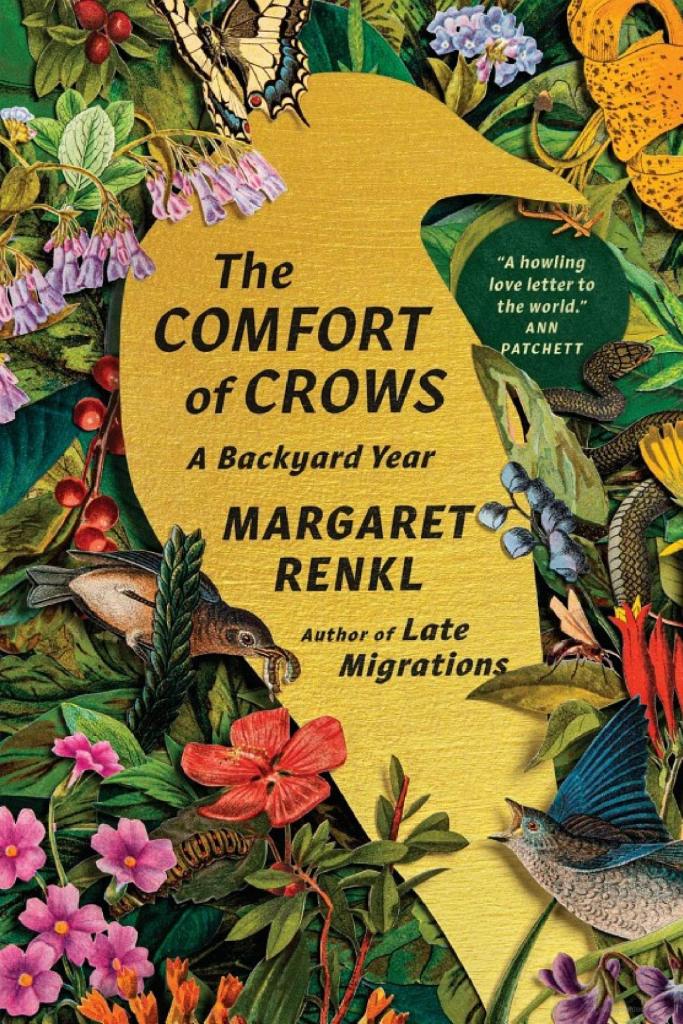
The Comfort of Crows – Margaret Renkl (2023)
Stop and look. Those are the first three words of Margaret Renkl’s ruminations on nature and her year-long accounting of it in The Comfort of Crows. Written from the vantage point of her backyard in Nashville, TN and a friend’s nearby vacation cabin in the mountains, Margaret writes about the sights and sounds of nature witnessed firsthand over the course of a calendar year. In brief vignettes accompanied by her brother’s beautiful illustrations, Margaret draws attention to common occurrences happening with the birds and the squirrels, the trees and the bees, the plants and the pollinators, week by week, while also reflecting on her own life and the parallels these natural encounters draw.
Part nature study, part memoir, part call to action, I would recommend The Comfort of Crows to anyone who wants to unplug from the outside world for a weekend, a week, a month, a year. If you need a break from social media, the news, the what-ifs, and the how-to’s, this book is easy to fall into. Calming, thought-provoking, and comforting, it offers a gentle reminder that in nature there’s a plan, a purpose, and a resourcefulness that is indefatigable, adaptable, and inspiring.
Stop and look. Stop and listen. Stop. Look. Listen. See. Hear. These are simple words that yield powerful insight into the dramas, destinies, and determinations going on in everyday life around us. Whether it’s the backyard, the city park, the country meadow, the forest, the beach, or the planting strip in the parking lot of your local grocery store, there’s insight to be gained from the creatures that inhabit these parcels of place.
Starting on Week One, the first of January, Margaret shares in her lovely, poetic voice how nothing is actually dead even in the dead of winter. “Everything that waits is also preparing itself to move,” she notes. “The brown bud is waiting for its true self to unfold: a beginning that in sleep has already begun.”
I can’t really describe this book as anything other than an experience. It’s heartwarming and serene, playful and curious, sentimental and sad. It is fun facts and first-hand observations. It’s a love letter to what is and a longing to change what might become. It’s a book. It’s short stories. It’s prose and it’s poetry.
Conscious of global warming and human impact on the natural world, Margaret is hopeful that we can right the ship and learn how to cohabitate with plants and trees, insects, and animals in order to encourage a beneficial landscape for all instead of just some. In acknowledging that we have collective work to do in that regard, this book carries its own bittersweet narrative – an appreciation of what is here now but a realization that it might it not be here in the same way tomorrow. That viewpoint automatically sets the tone for awareness which is the overall theme of Margaret’s year. To be aware of one’s natural surroundings. To be aware of what is in one’s natural surroundings. To be aware of the wild in the world. It’s that recognition that Margaret hopes will propel you out into the greenspaces of your life. To look and to see. To hear and to help. All, so that we can continue to hope.
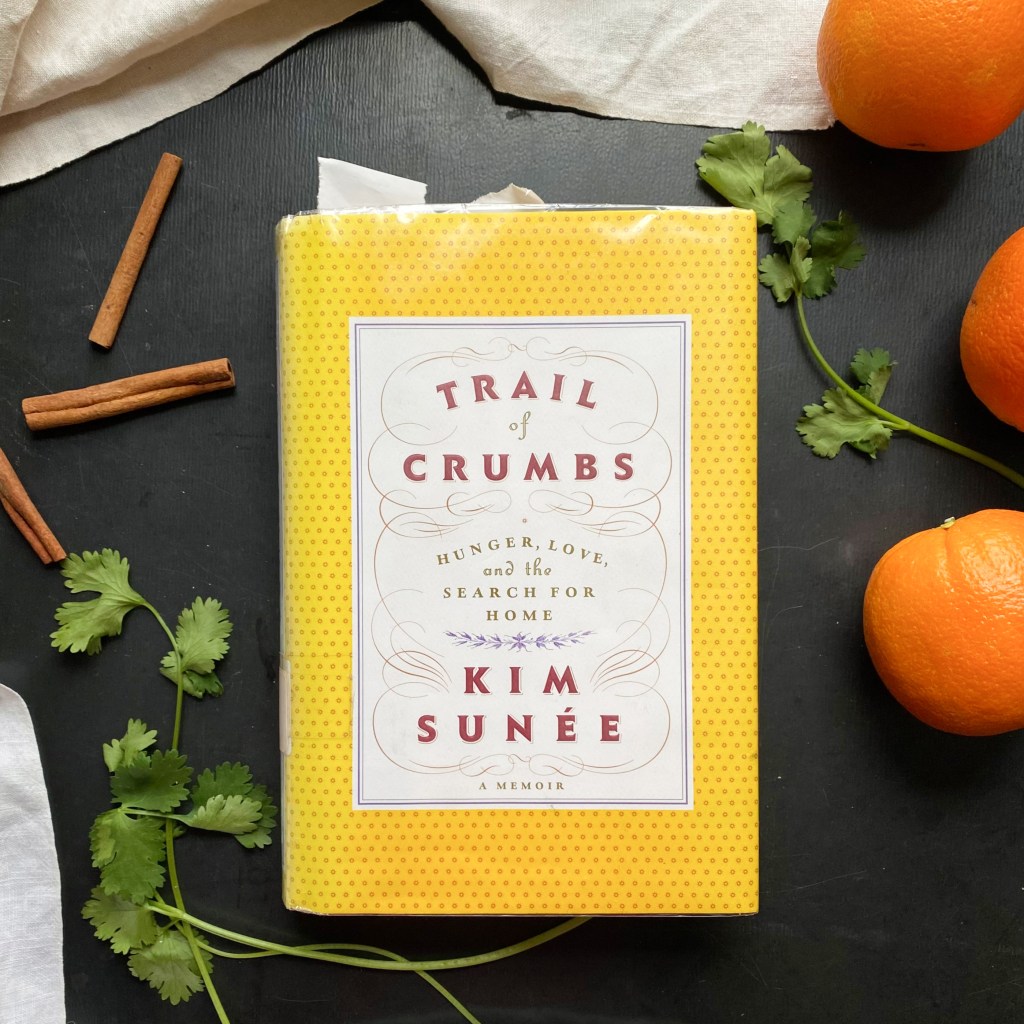
Trail of Crumbs – Kim Sunee (2008)
Abandoned in a Korean marketplace when she was three years old, Trail of Crumbs follows the real-life of Kim Sunee from toddlerhood through her late twenties via place, people, and passion. Adopted into a well-meaning American family and taken to live in New Orleans, Kim’s presence in the world from the beginning never quite clicks. Seesawing between feelings of gratitude and abandonment, she grows up out of place as an Asian American in the Deep South. Carrying the emotional baggage of a person who has been left behind, Kim is too young to put words to her lost person emotions.
As a child, the only place she finds real comfort is in her grandfather’s kitchen, watching him and helping him cook an array of Southern specialties. This early introduction to the internal power of food becomes Kim’s barometer, her measurement of what feels right and wrong in her life, of what is fitting and falling apart around her. Cooking becomes the bridge that connects her with a cast of characters that come in and out of her life, leading her around the globe over twenty years in search of the definition of home, both internal and external.
With every new person she meets, every new relationship she begins, her life pivots. She makes friends with artists and writers. She teaches English classes to foreign children. She writes poetry. She translates business brochures. She runs a bookshop. All the while searching for her true self.
In all these people, all these places, all these jobs, Kim tries to move on from being left behind. She tries to make peace with her past and the mother who left her on a bench in a market with just a fistful of crackers. She goes to Paris. To Sweden. To South America. She eats, drinks, and cooks in new kitchens of new friends, new lovers, new neighbors. In France, she meets and falls in love with a high-profile businessman who is determined to give her everything she ever wanted. For a time, this romance is ideal. A fairy tale in the making with affable rom-com pacing. She’s finally met someone who is ready to unclasp her fingers from the tight grip that carries her emotional suitcases. He wants to give her everything she never had. A fresh start. A new life. Her own making.
But as much as they love each other, and as passionate as their relationship is, it’s also fraught with complications. Kim questions this knight-in-shining-armor and her worthiness of him. She wears the invisible letter L for leaveable like a badge that defines her. And in believing that she’s leaveable she can’t ever truly stay anywhere. That creates a restlessness that no amount of kindness, no amount of money, no amount of love, or attention, or security can cure until she learns to love herself for herself.
Along with this search for peace and family, Kim’s memoir is dotted with recipes throughout, each one representing a different aspect of her physical and emotional journey from childhood to adulthood. There are recipes that reflect her Korean heritage, her Southern upbringing, and her love of French food. There are recipes for snacks, comfort foods, fancy dinner parties and elegant desserts. Each one, a place marker of her growth and development. They represent comfort in times of unease and joy in times of safety and security. There are so many truly lovely-sounding recipes in Kim’s book that I practically tagged each and every one. In the next blog post, we’ll be delving into one of her recipes from Trail of Crumbs – Chicken Thighs with Cinnamon and Dates – which appears about halfway through her story when she’s in the middle of her French love affair. Stay tuned for that post coming shortly.
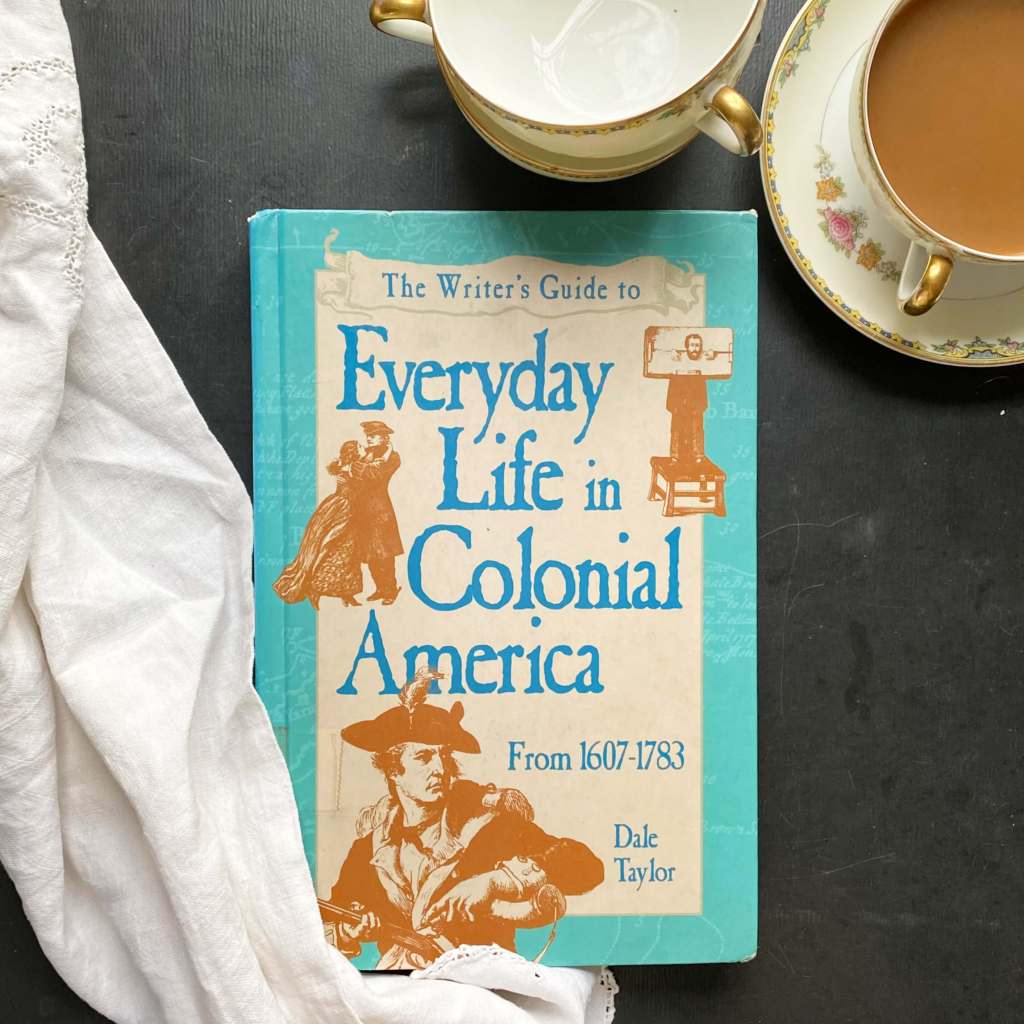
The Writer’s Guide to Everyday Life in Colonial America from 1607-1783 – Dale Taylor (1997)
This is pretty niche reading, and I realize not everyone may be as curious about colonial life as we are here at 1750 House, but this book provides so much interesting, little-known information on domesticity in the 17th and 18th centuries, it will appeal to history lovers of all sorts on all levels. Covering architecture, clothing, occupations, gender roles, homekeeping, agriculture, professions, education, religion, and government, I came to this book initially interested in reading the chapter on architecture in hopes of learning some new information about 1750 House, but the whole book turned out to be captivating and I flew right through it.
Brimming with all sorts of very fun fun facts, historical interpreter Dale Taylor wrote this book specifically for writers so that they would have an accurate understanding of the all details that made up real life in the colonial era. With that audience in mind, Dale includes an array of anecdotes that help bring history alive in a relatable way. It’s also a great resource when solving floorboard mysteries.
Wide plank floors upstairs
Upstairs in 1750 House, the original wide plank wood floorboards which are made of solid 3″ inch thick chestnut, measure between 9.5″-15″ inches in width per board. But downstairs, the wood floors are much narrower in width, about 3.5″ inches on average.
Narrow-width floorboards downstairs
This has always led to curious conversations about why the floorboards aren’t the same on each floor. We suspected that the downstairs floors were replaced at some point later in time, possibly in the mid-1800s when the kitchen room was added. But come to find out, according to Dale, in colonial days, wide plank boards were less expensive to mill, so they were often used for flooring in the more private rooms of the house, which tended to be on the second floor or at the back of the house on the first floor. The narrow-width floorboards were laid in the front of the house on the first floor in the parlor rooms. These narrow boards acted as a status symbol letting visitors know that the family who lived there could afford such luxury. In the case of 1750 House in particular, this newly learned information makes a lot of sense.
Not long after we moved in, we learned about the architectural significance of the front door, which is also original to the house. In the photo below, you’ll notice four small windows that are built in at the top of the door. During the colonial era, that was another bit of luxury – to be able to afford glass in your front door. The panes not only allowed extra light to illuminate the interior but there was also religious symbolism attached to them too. Religious colonists believed that by installing windows at the top of the door, it allowed God a peek down from the heavens to make sure there was nothing improper going on indoors. Just like the original H-Hinges found throughout, it’s another little bit of unique symbolism that lives here. And thanks to Dale’s book, it now gives us a better understanding of the economic status of the original owners of the house.
Windows on the original front door c. 1750
Architecture notes aside, other types of fun facts that can be found in Dale’s book include these little marvels…
Pets during the colonial era included dogs and cats, but not birds. Birds would not be kept animals until the Victorian era. However, squirrels and deer were also common pets in colonial days and the deer were allowed free reign both inside and outside the house.
Bearskin rugs were the first indoor fire alarms. In the 17th and 18th centuries, they were laid out in front of the fireplace in case an errant ember flew or a log rolled out into the room. At night, after the household had gone to bed, if an ember sparked or a log rolled out, the rug was the first point of contact. It would begin to smolder, emitting the smell of burnt hair. That smell would awaken people in the house and signal that there was a fire near the fireplace which could be easily and quickly be put out because of the rug.
25% of women’s deaths in colonial days were due to life-threatening burns caused by cooking in an open fireplace. That led women to start hoisting up their skirts and tucking them into the waistband of their dresses in order to avoid catching the hems on fire. From that point forward, the kitchen was viewed as an indecent place to spend time and the staff that worked in them were viewed as having low repute.
Since cloth was one of the costliest items in colonial America dresses were made to last for 15 years which means that some women owned only about 2-3 dresses in their lifetime.
Wigs were commonplace for men and women in colonial times, but the super tall and lofty wigs were only worn by women in big cities like Philadelphia. These wigs were so elaborate in design, style, and augmentation that they were often worn even at night while sleeping. This full-time, overnight headress necessitated arrangement in such a way to accommodate mouse traps since they were made of natural nesting materials.
In 1752, the celebration of the new year was moved from March 25th to January 1st, which of course, has stayed the same ever since.
Reading is so subjective when it comes to personal preference. Everyone has their own favorite styles, writers, and genres, but I hope by sharing my list of favorites, you’ll discover some new favorite ones too. Stay tuned for a recipe I just made from Kim Sunee’s memoir coming up next on the blog. It’s an aromatic, cozy, wintertime dinner that is absolutely lovely for the holidays. Here’s a sneak peek…
Chicken Thighs with Cinnamon and Dates from A Trail of Crumbs by Kim Sunee
Until then, happy reading! And a big cheers to Madeleine, Sloane, Kim, Margaret, and Dale for making 2024 such an interesting one.
Paris, family, food writing and strong women. Complicated relationships, historical drama, and artistic personalities. That’s the scope of what we loved best in the reading department in 2017. This past year, we explored an old city with new eyes thanks to David, Janice, Julia and Jessie. We soul searched with India and Diane, cooked with Clementine and Norah, climbed the symbolic lime tree and walked through the literal golden house.
Every year, we keep track of what we read and watch so that we can share our best-of list here on the blog in the hopes that you’ll discover something new yourself. They aren’t all necessarily new books or movies that came out this year, but they all are things that were newly introduced to us within the past 12 months and they follow a common theme of history in some form or another. The oldest one in this batch dates to the 1940’s (Clementine in the Kitchen) but remains as fresh and engaging as this morning’s breakfast. The youngest in the batch was published just three months ago (The Golden House) but reads like an old-fashioned classic.
Let’s look…
1. Mrs. Bridge – Evan S. Connell (1959)
If you have ever wondered what the everyday inner workings of a mid-century suburban American house were like then you will love Mrs. Bridge. Told in brief vignettes, it is the story of India Bridge… wife… mother… mid-westerner… who is wanting and watching for something more, anything more, extraordinary to happen to her static, routine life. In-between family meals, housecleaning, entertaining and her own thinly executed attempts to make life interesting, India shares her thoughts on all the details that make up her society prescribed and approved life. No moment goes unnoticed from how she sets her table, wears her gloves, communicates with her friends, chooses her clothing and handles her family. It is an intimate look into the mind of a woman processing the boundaries of a life selected for her but necessarily by her. We loved it because it is peppered with familiar 1940s/50’s decorating trends and brand references that we come in contact with a lot in the Vintage Kitchen and because India is an interesting character – conforming whole-heartedly to her boxed-in life while questioning a large lot of it.
2. The Woman I Wanted To Be – Diane Von Furstenberg (2015)
Diane Von Furstenberg invented the wrap dress in the 1970’s which launched her into iconic status in the fashion industry because it is the dress, the only dress, that looks flattering on any and every female body shape regardless of height, weight, age or ethnicity. But before Diane became famous in the American fashion industry she was an everywoman, born in Belgium with artistic interests and a desire to build an authentic life. She didn’t know what she wanted to do or how to go about doing it, so she followed intuition, using her natural abilities and talents, likes and dislikes as a guide to figure out her skillset and herself. She didn’t always get things right but every experience, good or bad led to fine-tuning and deeper understanding.
Diane (center) in 1976 in wearing her famous wrap dress.
The Woman I Wanted To Be spans seven decades of her life but pays particular attention to the years she struggled to define herself – the years before she designed the famous dress and the years after she designed the famous dress. She talks about how lifestyle choices and personal circumstances led to the actual physical creation of her famous piece of clothing, she talks about launching an American business as a foreign woman, she talks about the emptiness she felt as a creative artist following the success of the dress and she talks about being true to herself in an industry that prefers cookie-cutter beauty and constant re-invention.
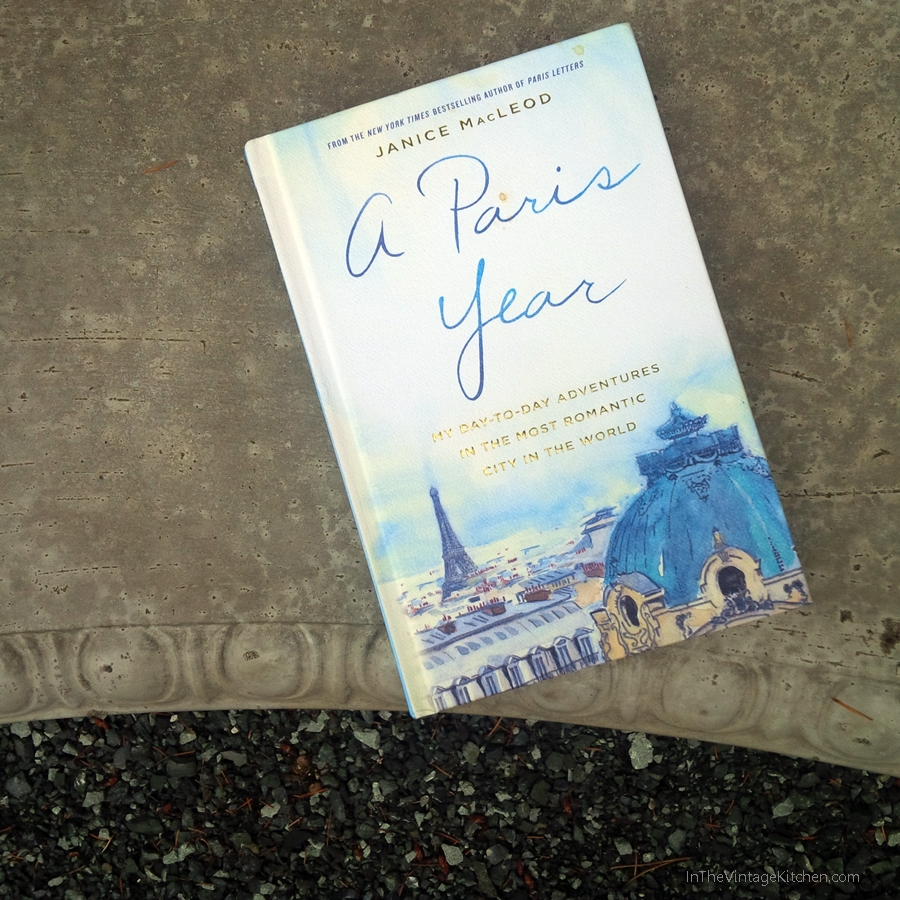
3. A Paris Year – Janice Macleod (2017)
Newly arrived… A Paris Year
You can never have too much Paris or too much Janice. In her second book about the beautiful city, writer and painter Janice MacLeod takes us on a daily artistic tour of everything that makes Paris perfect from the food to the culture to the climate. Not unlike Diane Von Furstenberg, Janice followed her own inklings of intuition by leaving her unfulfilling corporate life in California and moving to Paris solely based on the hunch that she just might love it. That was the subject of her first book Paris Letters, which details how she made the big move step-by-step. The follow-up, A Paris Year shows us in pictures and words how rewarding that big move proved to be. In June, we wrote an in-depth post about the book, including pictures and artwork from the book. If you are new to the blog, catch up on that post here.
4. A Taste of Paris – David Downie (2017)
Author David Downie wrote a whole entire book about the history of food in France. We featured his phenomenal work here.
We were on a real Paris kick this past year and were lucky enough to be able to review two books about the great city. After reading A Taste of Paris, we were completely blown away by its scope of content and enormous subject matter – the history of food in Paris. Such a noble undertaking! David Downie has an incredible ability to boil this big subject down into an interesting and engaging timeline that will keep you captivated from beginning to end. Covering the cuisine, the culture and the characters that have contributed to the French food scene since the very beginning, reading this book felt like taking a master history class peppered with fascinating foodie fun facts. Last September, we discussed our favorite parts of the book. If you missed that post, catch up here.
5. The Golden House – Salman Rushdie (2017)
We aren’t quite finished with this book yet – but we loved it so much we included it here because it is a marvelous treat for any fiction lover. Centering around a New York City neighborhood and the arrival of a mysterious foreign family – Nero Golden and his three grown sons – The Golden House begins with the neighbors’ speculation on all aspects of the newcomers’ lives. Salman’s writing style is in incredible, particularly the way in which he describes his characters…
“He dressed expensively but there was a loud, animal quality to him which made one think of the Beast of folktale, uneasy in human finery.”
Some critics have compared the character of Nero Golden to F. Scott Fitzgerald’s Jay Gatsby as a misunderstood modern day man attempting to reinvent himself in a new environment. We’ll come back to this thought once we finish, but in the meantime, if you have a few days off and want to dive into a meaty read, beautifully told and full of layered storylines and fresh characters than this is the book for you. You’ll be enthralled from the first page, we promise!
6. Lime Tree Can’t Bear Orange – Amanda Smyth (2009)
In part due to its gorgeous title and exotic tropical setting (the Caribbean island of Tobago), Lime Tree Can’t Bear Orange is the fictional story of Celia and her entanglement with three men each of whom dramatically alter the course of her life. Poetic, lyrical and lush in detail, Amanda Smyth blends together seductive elements of nature writing with romantic storytelling for a perfect mid-winter read that will make you feel like you’ve visited the Caribbean without ever leaving home. Similiar to Love In The Time of Cholera, it is packed full of symbolism and romantic themes, so if you like Gabriel Garcia Marquez, you’ll enjoy Amanda Smyth as well.
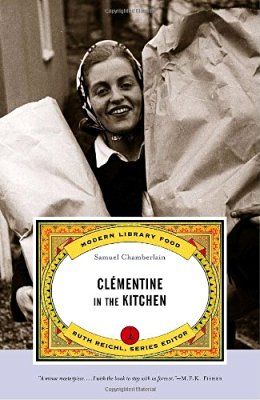
7. Clementine In The Kitchen – Samuel Chamberlain (1943)
First published in 1943 under the pen name Phineas Beck, Clementine in the Kitchen tells the true story of the Chamberlain family’s French cook, Clementine, whom the family first meets while living in a small village just outside of Paris. When the Chamberlain’s get transferred to Massachusetts, Clementine is invited to move with them – a big decision for the petite woman who has never left her birthplace. Clementine is a natural in the kitchen in France and the family cannot help but rave about her cuisine to everyone they know. In America though, she is a fish out of water, not understanding the language or the shopping style of her new country. Ingredients are different, convenience foods are popular and daily outdoor market shopping is replaced with weekly trips to that strange place called the indoor supermarket.
How does Clementine cope with all this change? We don’t want to spoil it for you, so you have to read it to find out. But what we can say is that this book is funny and charming and filled with recipes. The surprise ending, cinematic storyline and ever engaging character of Clementine makes it seem like a perfect candidate for movie adaptation and it offers the added benefit of learning some of the basics of French cooking. All around an engaging and highly original read that we thoroughly enjoyed. Later this year, we will be featuring a few recipes from this book, so stay tuned.
8. Bon Appetit – Jessie Hartland (2012)
Joie de vivre is a term often associated with the French culture that defines their eternal zest and enthusiasm for life. If ever a book captured that phrase, it would be this one, Bon Appetit by Jessie Hartland. At first glance, you’ll think this is a kids book meant just for the enjoyment of little ones. But don’t be fooled. It is wonderfully inspiring and whimsical for adults as well. Detailing the entire life story of Julia Child in just 45 pages of colorful illustrations and clever text, Jessie Hartland has managed to capture the enigmatic and infectious personality of America’s best-loved cook. You’ll read the whole thing in a jiffy but its infectious positivity will stick with you forever.
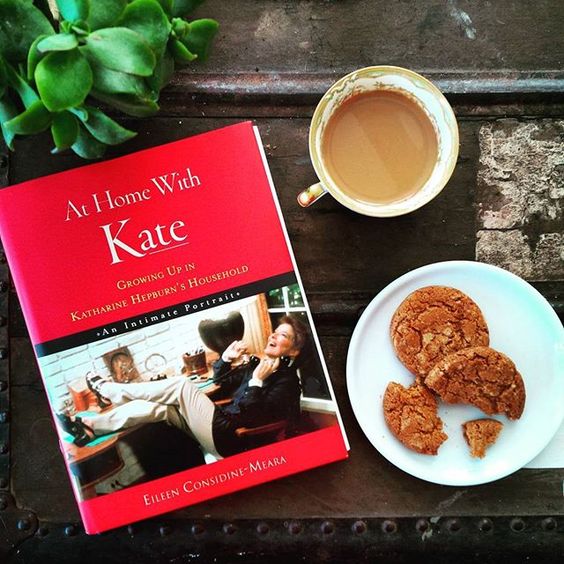
9. At Home With Kate – Eileen Considine-Meara (2007)
Norah Considine was Katharine Hepburn’s cook, friend and all around helper for 30 years. At Home with Kateshares, the intimate details of day-to-day life in Kate’s household as Norah prepared meals and planned parties in both her NYC residence and the Hepburn family compound in Connecticut during the last three decades of Kate’s life. Written by Norah’s daughter, Eileen, who first met Kate when she was a teenager helping her mom serve meals during Kate’s dinner parties, At Home with Kate is an entertaining conglomeration of memoir, biographical sketch and thoughtful retrospection on three women who shared an extraordinary experience.
Norah with her celebrity crush – Robert Wagner, taken in the kitchen of Kate’s Manhattan townhouse. Photo from At Home with Kate by Eileen Considine-Meara.
For all the glamour, independence and mystery surrounding the Old Hollywood film star, Eileen shows us that Katharine Hepburn, in real-life, was a thrifty homebody with a taste for simple foods and quiet dinner parties. We loved that it contained a handful of Kate’s recipes along with the memories too. It was interesting to see that the dishes Kate enjoyed most reflected her unfussy philosophy towards food – meatloaf, brownies, stew, rum cake, steak and a variety of soups. And it was interesting to learn that it wasn’t all about cooking for Norah – her responsibilities ran the gamut as far as tasks required of her (errands, gardening, cleaning and on-loan cook for some of Kate’s friends, as well) all while Norah was raising five kids of her own and working a minimum of 10 hours a day at Kate’s. In October, we featured Kate’s famous lace cookies, the recipe most often requested by house guests and always kept in constant supply in Kate’s kitchen. Find that recipe here.
—
Each of the books we listed above have nourished us in one way or another whether it be through imagination, introspection or edibles. Hope our reading while eating selections prove to be equally engaging for you as well. If you have discovered some new favorite books from last year too, please share them with us in the comments section below. We are always on the lookout for something fun to read.
In the meantime, cheers to cozy winter days and culinary creativity!
















 In the Vintage Kitchen: Where History Comes To Eat