Welcome To A Fragrant Year: The Greenhouse Diaries Return for New Growing Adventures

The Greenhouse Diaries are back with new inspirations and a whole new year of growing adventures to explore and discover. Like last year, these new diary entries center around what can be grown in a petite 4×6 greenhouse in our four-season New England climate, but starting this month there is a brand new theme, different from last year, that is guiding our gardening goals in 2024.
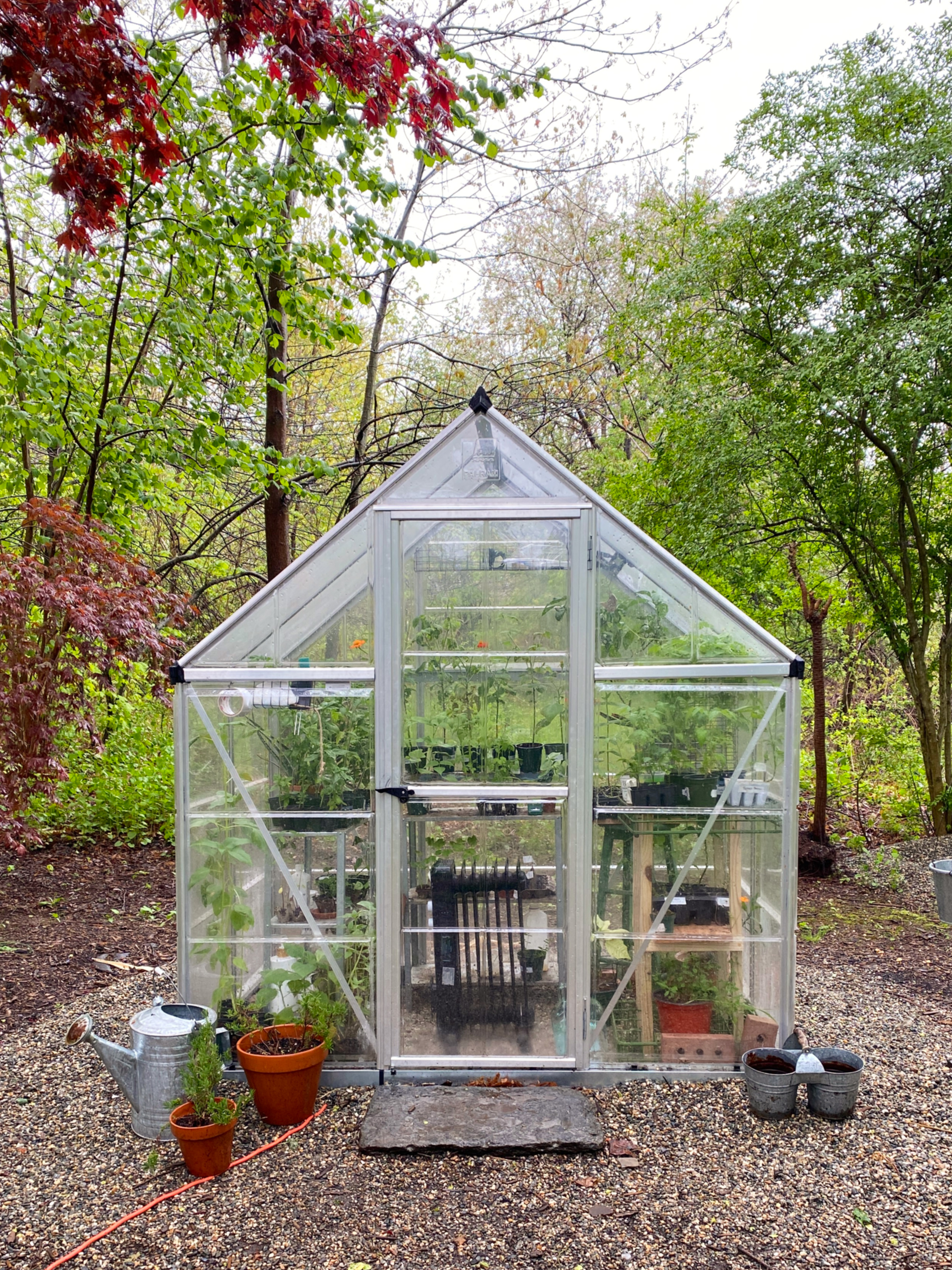
Our mighty, mini greenhouse in 2023

Last year, our first year as greenhouse owners and New England residents, we focused on winter gardening from December through May and all the possibilities that a warm greenhouse could offer in a cold landscape. We drew inspiration from Katharine Sergeant Angell White, a lifelong lover of the natural world who also happened to be a marvelous writer, a founding editor of the New Yorker magazine, and the beloved wife of E.B White.
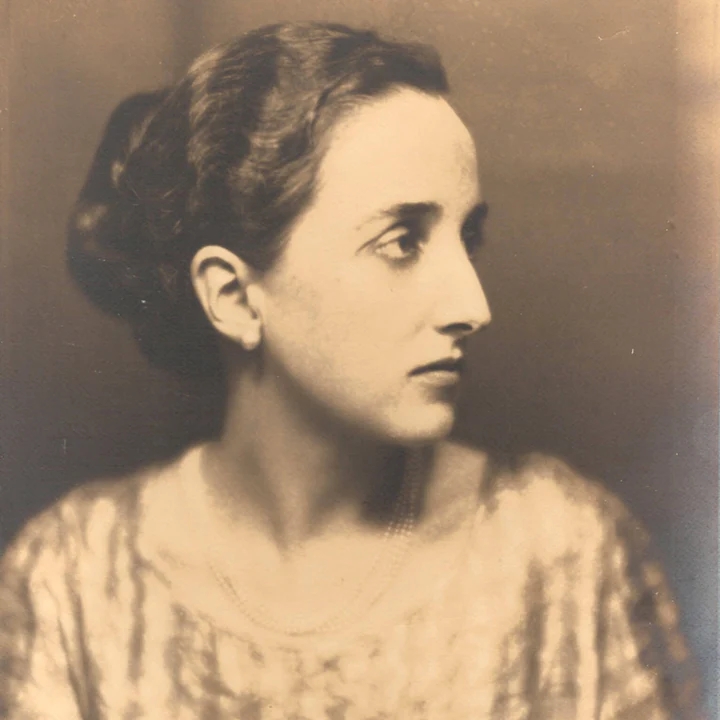
Katharine Sergeant Angell White (1892-1977)

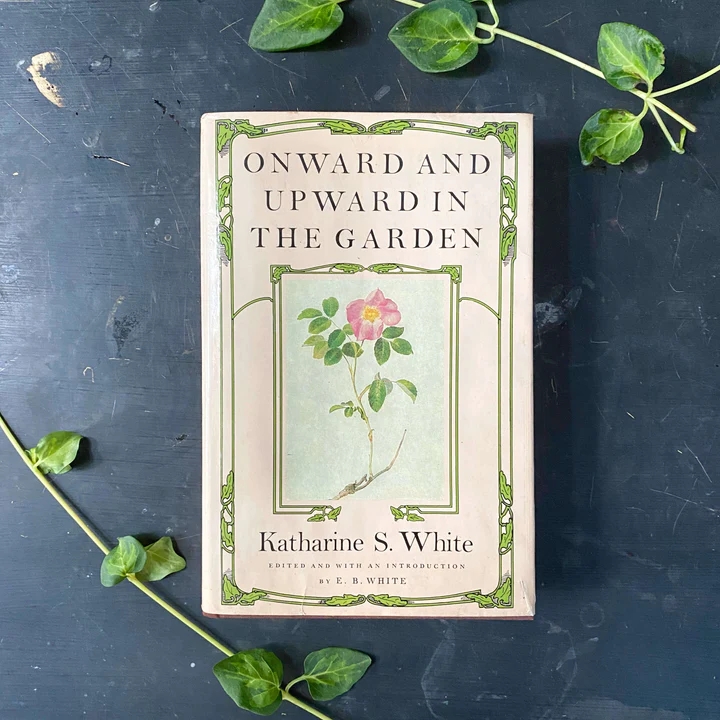
Her 1977 book Onward & Upward in the Garden, featured a collection of horticultural essays that highlighted her ability to embrace challenges by finding joy and solace in the certain uncertainties. Something that all gardeners must face when it comes to designing a pleasing landscape, in Katharine’s case, it was the long Maine winters that were a struggle for her spirit which yearned to be out in the garden digging and clipping, pruning, and propagating. She also had much to say about the confusing advice of garden experts and her own thoughtful attempts of trying to create the garden of her dreams. Her writing was full of spirit, humor and opinion when it came to detailing plans, recommending books and seed catalogs, and offering advice on growing plants and flowers both indoors and out. She was inspiration enough for us to start experimenting with our first winter growing season. Cold weather aside, we had Katharine on our side, lending a unique empathy and encouragement that fueled our desire to get out and grow things regardless of the weather, our experience level or the unseasonability of what we most wanted to achieve.
Our plan last year was to get a head start on establishing garden beds for 1750 House, so we focused mainly on forcing seeds and plants to sprout, bud and bloom early. Using 33 different plants, flowers and herbs as trial-run guinea pigs, we accomplished our goals with a fair amount of success and a few setbacks as we tested the physical capabilities of the greenhouse and grew our garden knowledge.
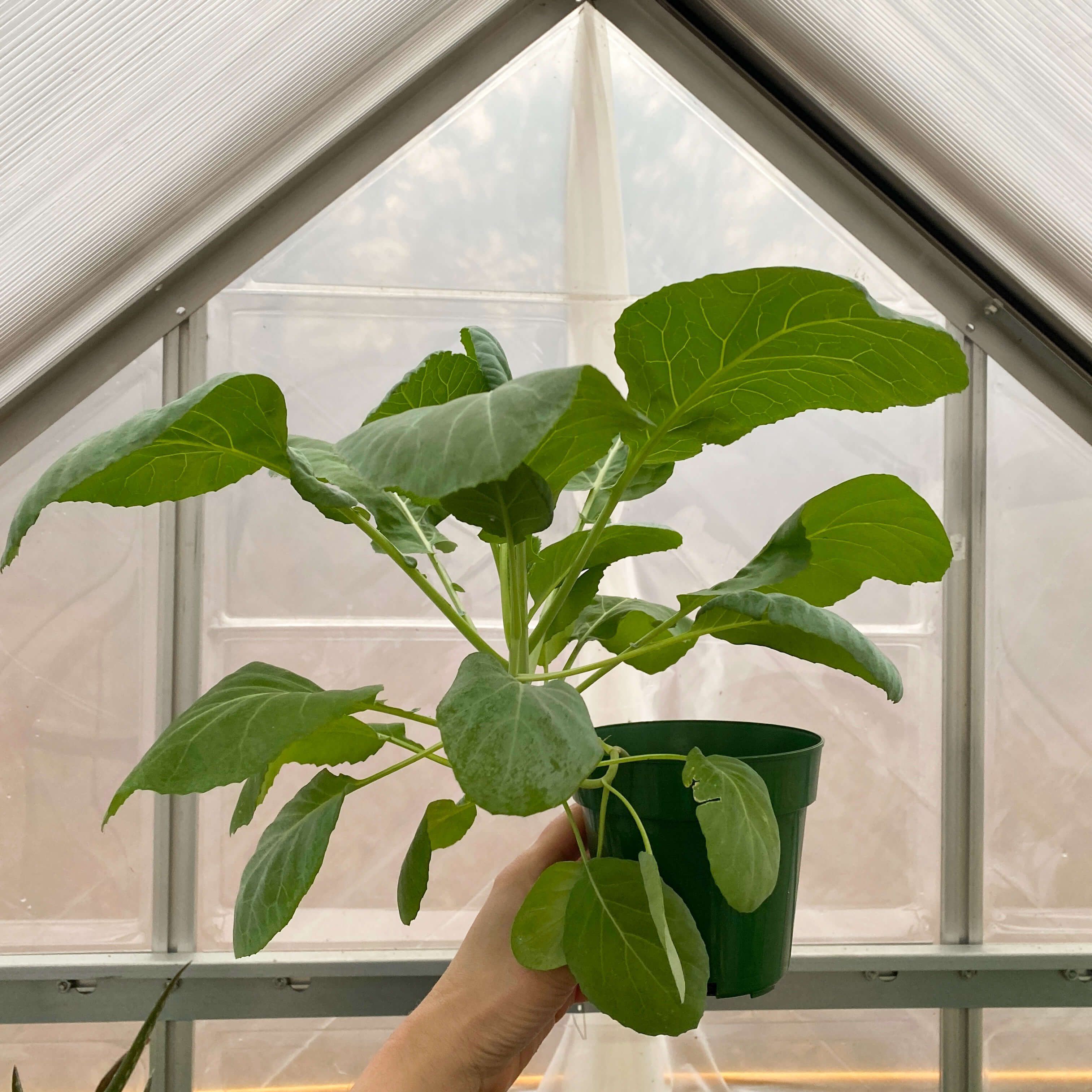
A greenhouse success – the joy of growing collard greens in 2023

This time, a year wiser, we are reducing the number of overall plants in the greenhouse to just focus on the proven winners that grew well both in the greenhouse and in the garden beds last spring, summer and fall. And to keep things interesting, we are launching a new experiment. This year, we are leaving extra room in the greenhouse to try our hand at growing a new type of perennial garden for year-round enjoyment… a landscape full of plants, flowers and trees that carry a scent.
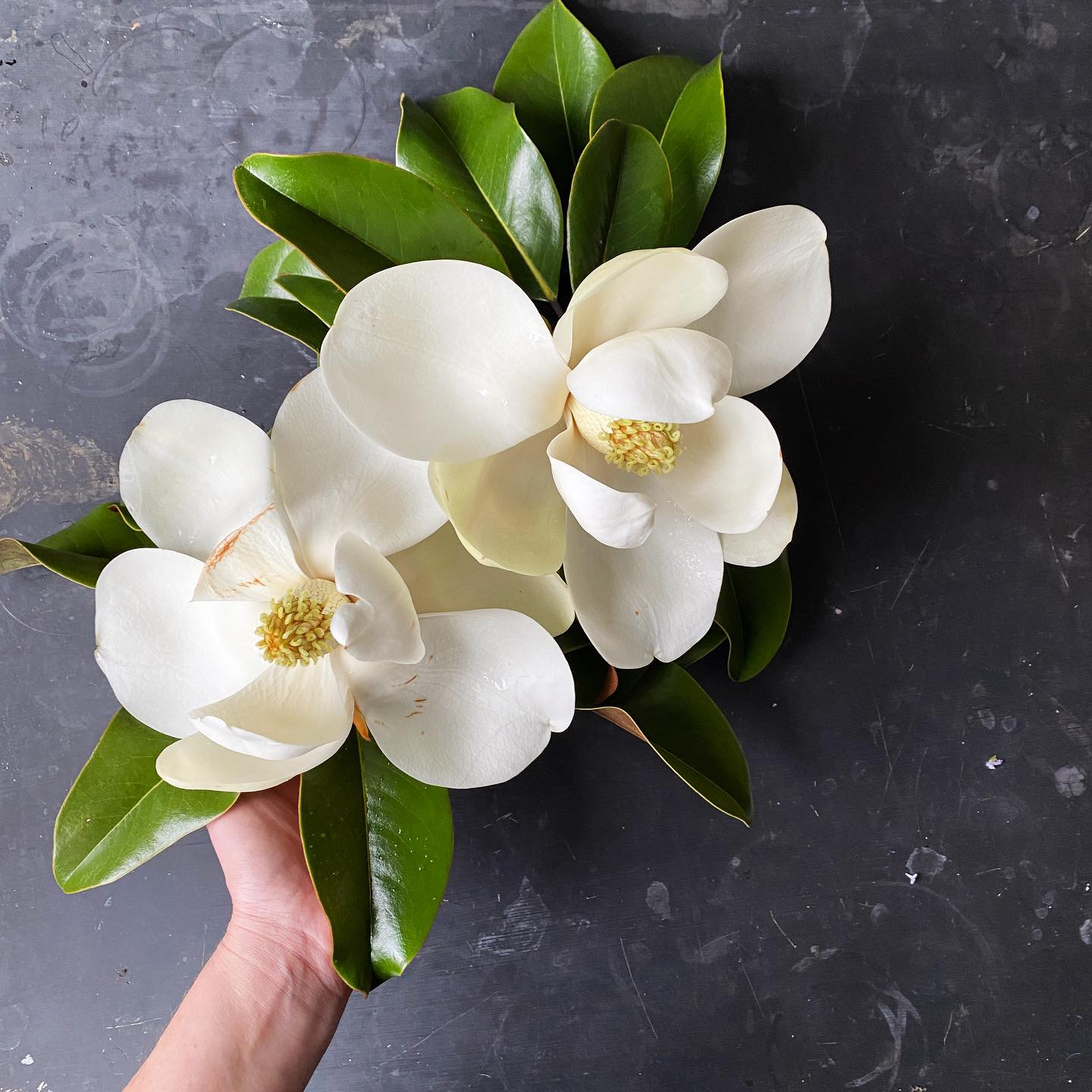
Marvelously scented magnolia blossoms dotted our landscape down South.

When we lived in the South, we were surrounded by a wide variety of aromatic flowers that made our time there all the more memorable because of the beautiful perfume that continuously lingered in the air. The scent of night-blooming gardenias and fragrant magnolias swirled around our dinner parties. The heat of summer brought heavy humidity but also the delicate, sweet aromas of climbing Carolina jessamine. Roses in every scent and shade toppled and tumbled over hedgerows and brick walls. It was a lovely layer of landscape design that I had never really thought about until we had experienced it firsthand. Of course, we won’t be able to recreate an exact aromatic Southern garden here in New England since it’s a very different climate from there to here, but there are plenty of other options in the Northeast to explore for similar effect thanks to our new inspiration.
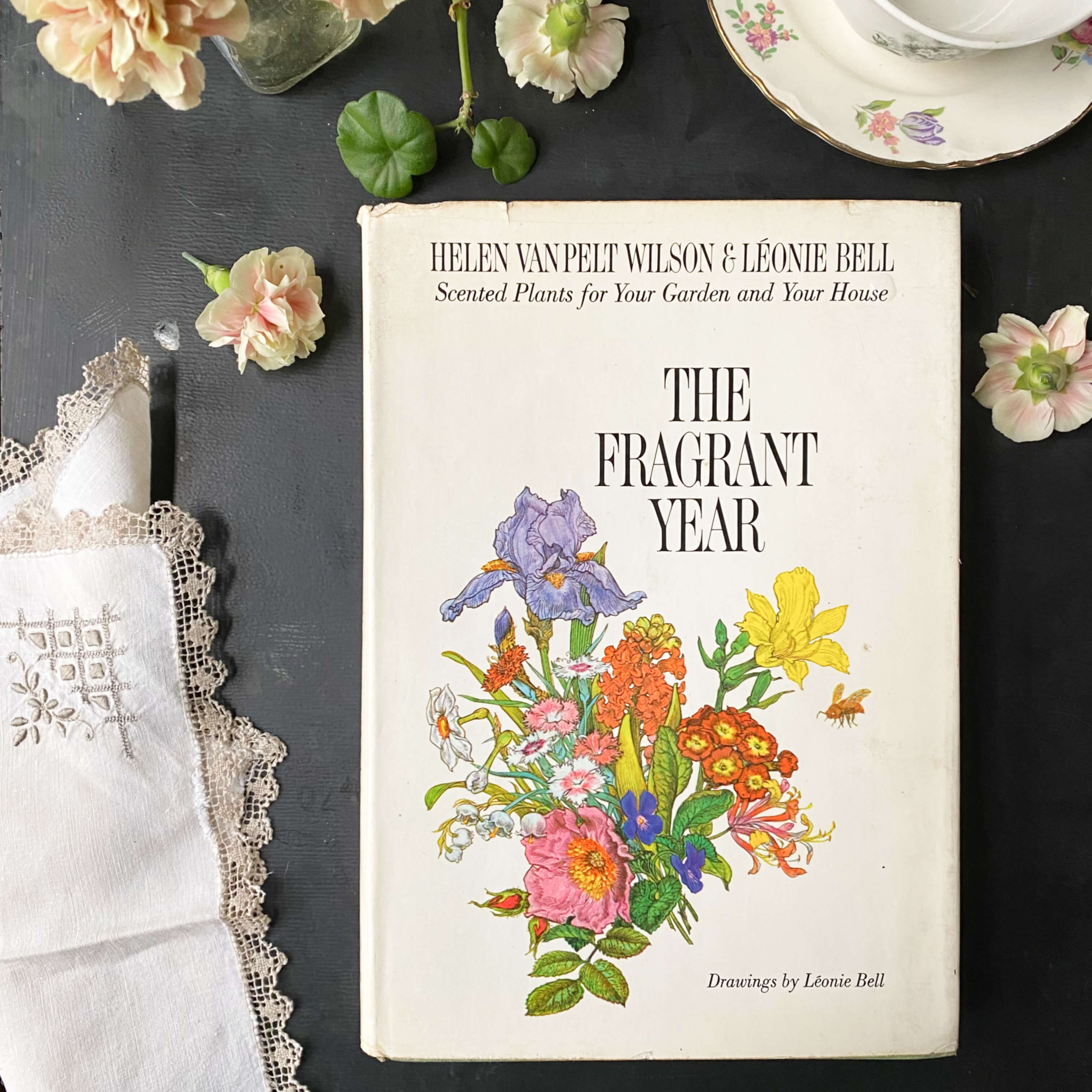
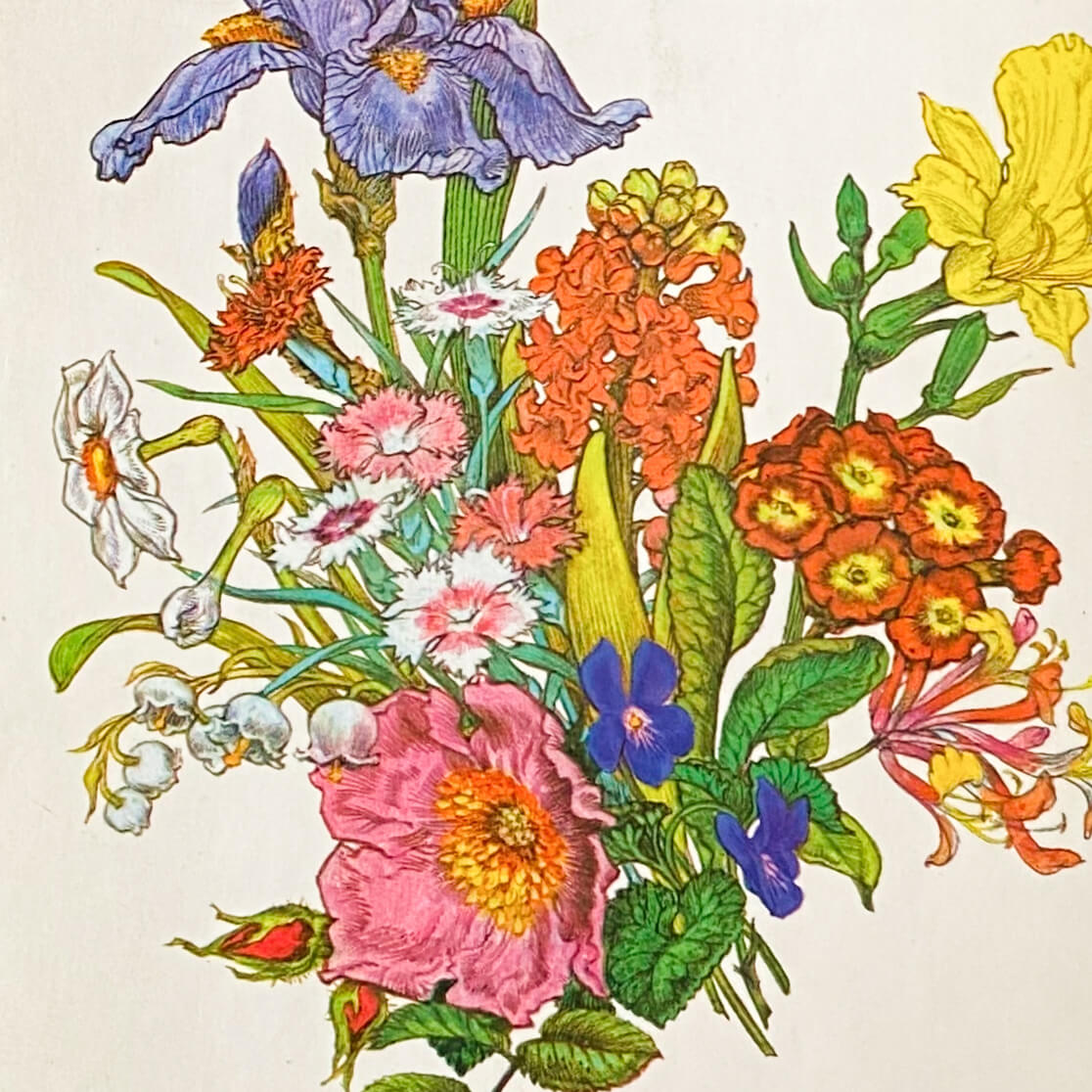
Here to guide the 2024 Greenhouse Diaries in our aromatic endeavors is the 1967 book, The Fragrant Year by Helen Van Pelt Wilson and Leonie Bell. Month by month, in words and drawings this book details how to grow specific types of plants and flowers that will continuously unfold new scents in the garden season by season, even in the winter months.

Praised for being the first of its modern kind, The Fragrant Year was lauded both for its scope and its practical application, as well as its healthful benefits. In the opening chapter Helen writes… “if our gardens today were more often planned as fragrant retreats and our rooms were frequently perfumed with bowls of spicy pinks, bunches of aromatic herbs, vases of fragrant roses, and jars of potpourri, perhaps we would not have to depend so much on tranquilizers to hold us together in this frantic, fast-paced world.”

Helen wrote that in 1967 but it is still so applicable today. The world is still frantic and fast-paced. People still look to medicine to calm their nerves. But we think Helen’s theory is pretty wise – there is something much more natural, more gentle, more joyful in tackling frantic nerves and fast paces with this sort of approach instead. It is lovely to think that by selecting a few handfuls of scented botanicals and thoughtfully adding them to the landscape we might not only help create a more calm environment for ourselves but also for the community around us. Who knows what sort of impact that small gesture could have on a greater world.

Helen Van Pelt Wilson (1901-2003)

A prolific writer of gardening books throughout the 20th century, Helen was no stranger to the power of plants. Along with penning a newspaper column titled Our Gardens Within and Without during the 1920s and 1930s, she also wrote for all the well-known women’s magazines including House & Garden, Cosmopolitan, Better Homes & Gardens, and House Beautiful. In between all that she wrote/edited over fifty books on various gardening topics throughout her long and lengthy career.
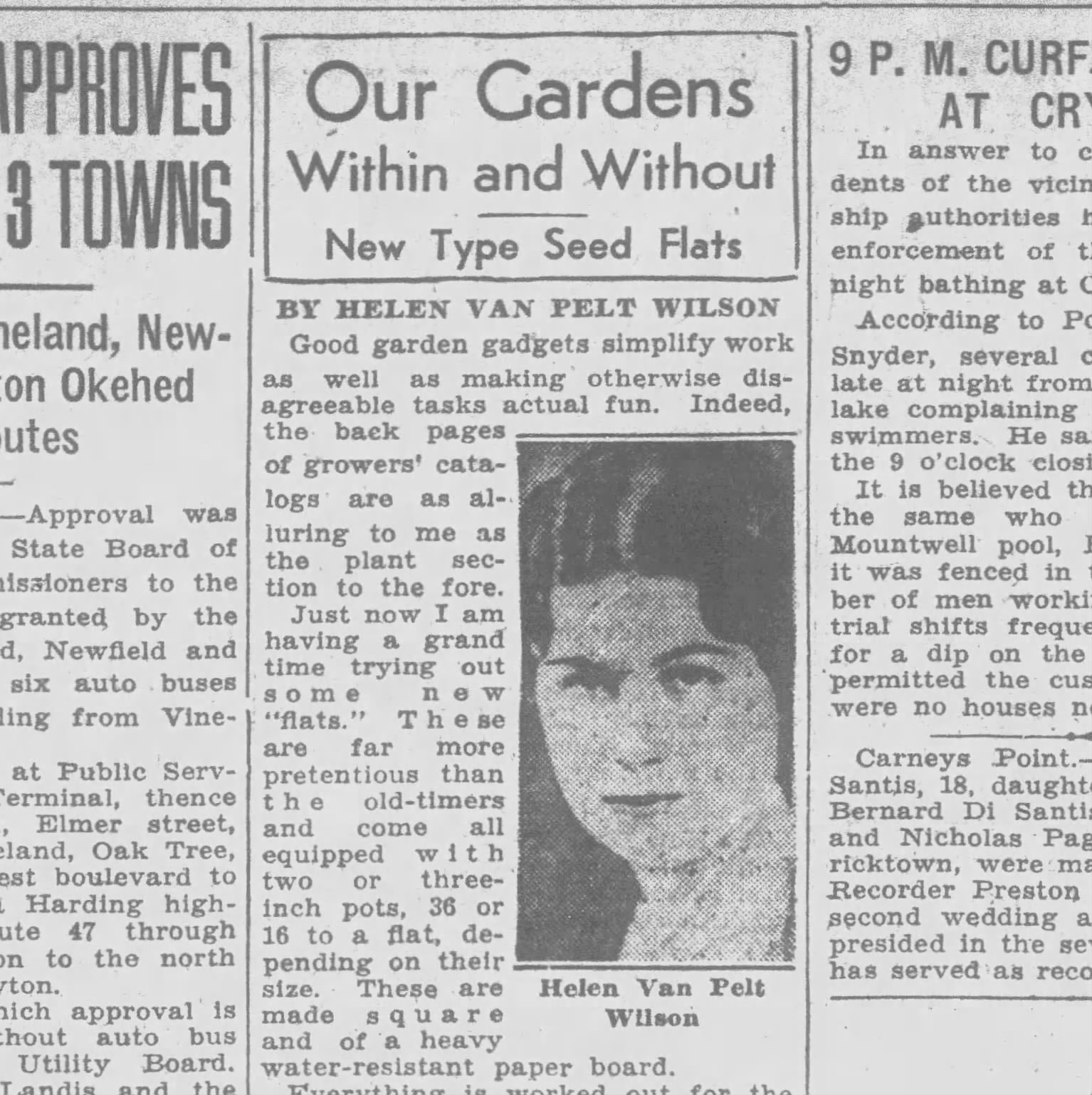
The Courier Post – July 30th, 1935

Born in New Jersey, Helen spent the majority of her life in Philadelphia, PA and Westport, CT where she experimented with gardening projects of all sorts both indoors and out. Her most well-known book was one on caring for African violets published in the 1940s but she was a beloved and trusted authority on a variety of horticultural topics throughout her life. Working with Leonie on several different projects, it was in the 1950s that they learned they shared a mutual love of aromatic botanicals. Upon discovering this, the idea for The Fragrant Year was quick to spark but it took Helen and Leonie ten years of dedicated research and trial-and-error gardening experiments before their book was finally published.
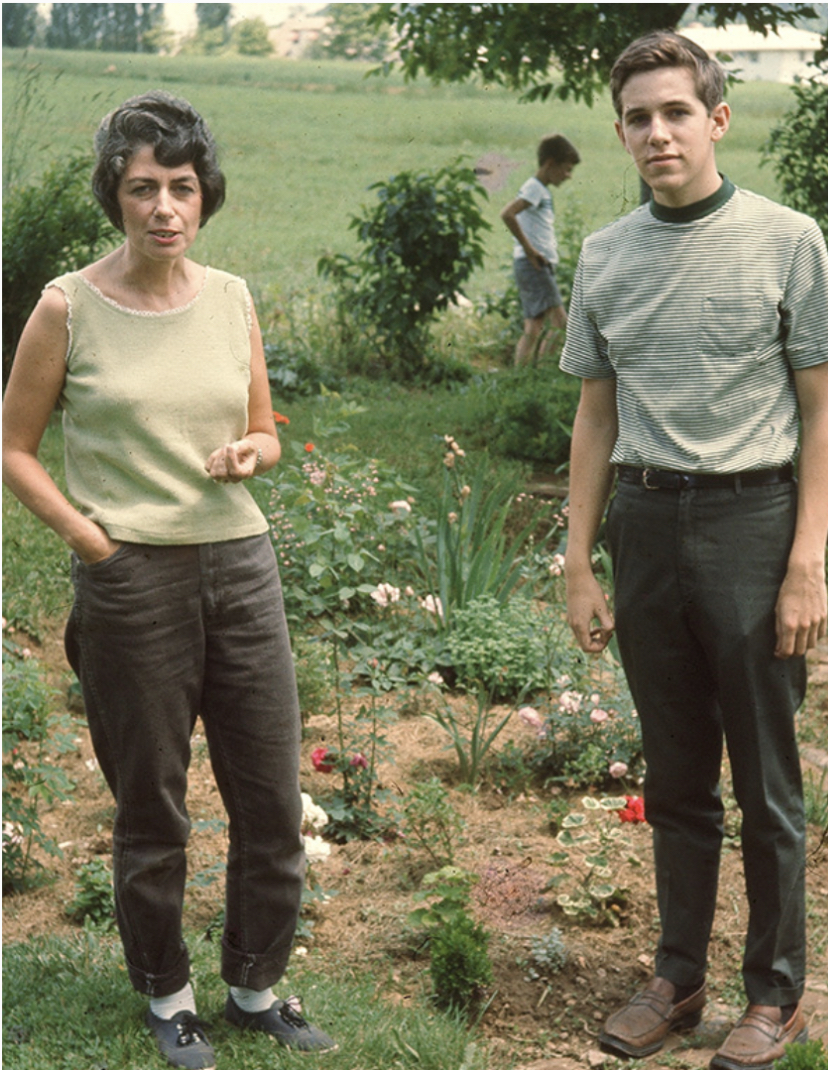
Leonie Bell in the garden. Photograph courtesy of monticello.org by way of Rev. Douglas T. Seidel

Like Helen, Leonie Bell (1924-1996) lived and gardened in suburban Philadelphia. In addition to being a well-respected botanical illustrator, she was also known as a rose expert. Contributing her expertise to several rose garden books published during the 20th century, Leonie was often referred to as a rose genealogist since she had a knack for discovering/uncovering heirloom roses from the past that had been misnamed or believed to be no longer in existence. At one point, her own personal garden contained over 200 different types of roses, most of them old-fashioned heirloom varieties.
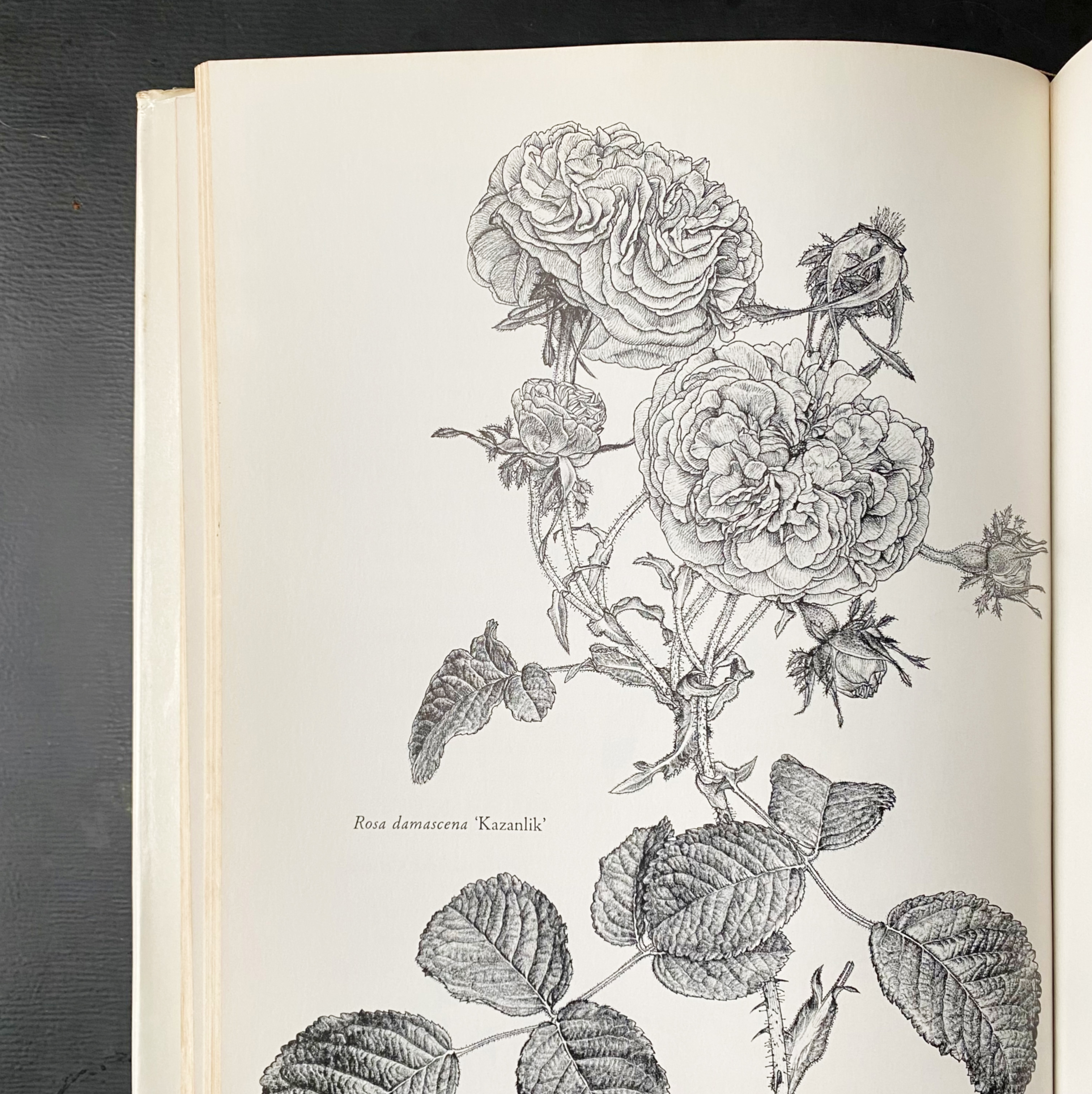
If you are ever in Virginia, you can see the impact Leonie made at the Leonie Bell Rose Garden at Thomas Jeffferson’s Tufton Farm, which features a tribute to both Leonie’s legacy and the history of North American rose breeding.

Much sought after in the world of botanical illustration, what’s interesting about Leonie’s art is that she was self-taught. Her intrinsic knowledge of the anatomy of plants combined with her studies at the School of Horticulture in Ambler, PA led her to closely look at botanical subjects from all angles. That well-rounded vantage point carried through to her drawings which shine with scientific detail but also personality.
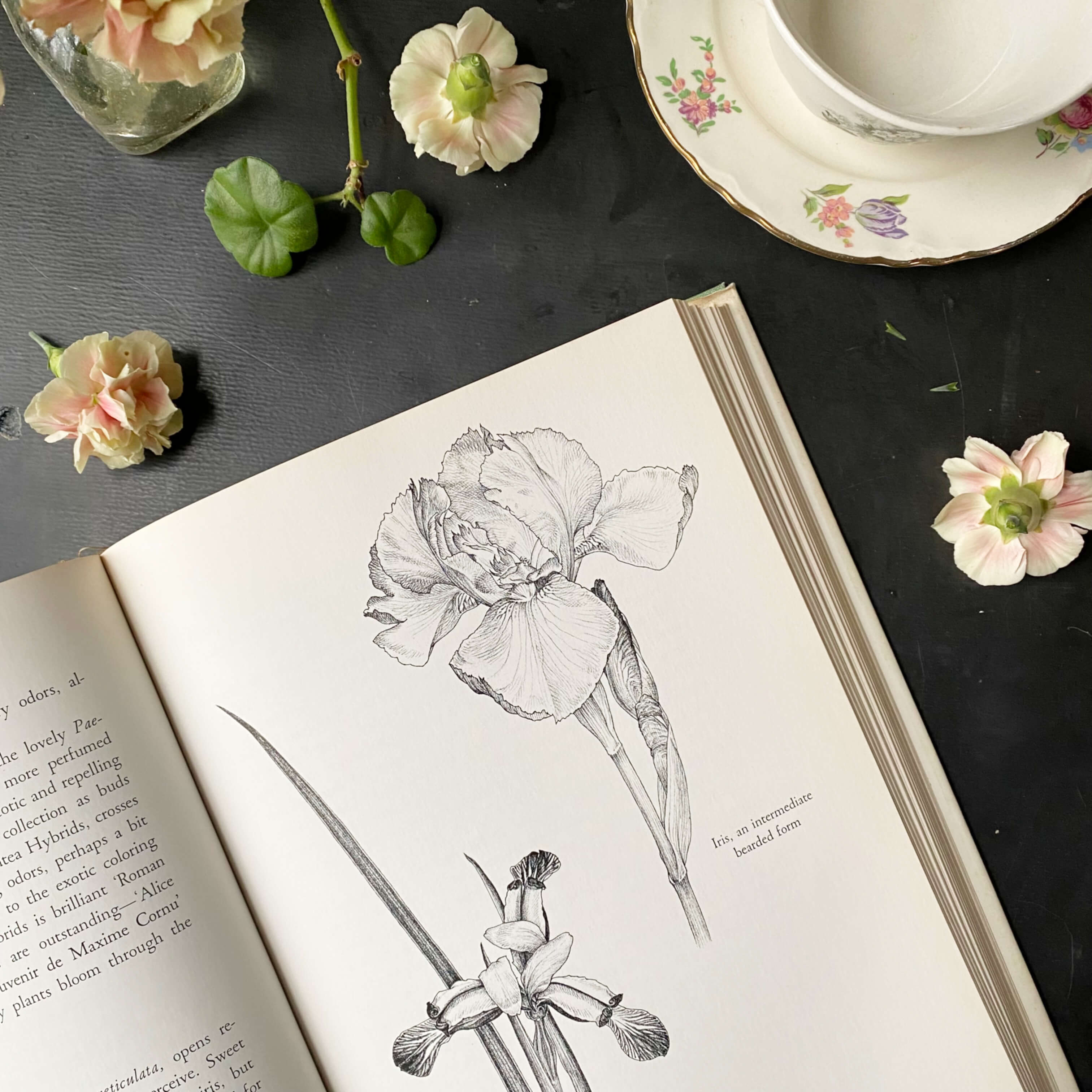
Excited to share a year full of fragrance here on the blog, each month we’ll feature a new scented flower or plant recommended by Helen and Leonie and detail our gardening experiences as we incorporate twelve new aromatic additions into the landscape at 1750 House. Hopefully, you’ll find this information equally inspiring and insightful too. It would be lovely if we could all experience the calming nature of a scented garden together.

Our next Greenhouse Diaries post will introduce our first fragrant botanical, but in the meantime, here’s a quick update on improvements we made to the greenhouse over the summer and a current list of what’s growing in the greenhouse now…
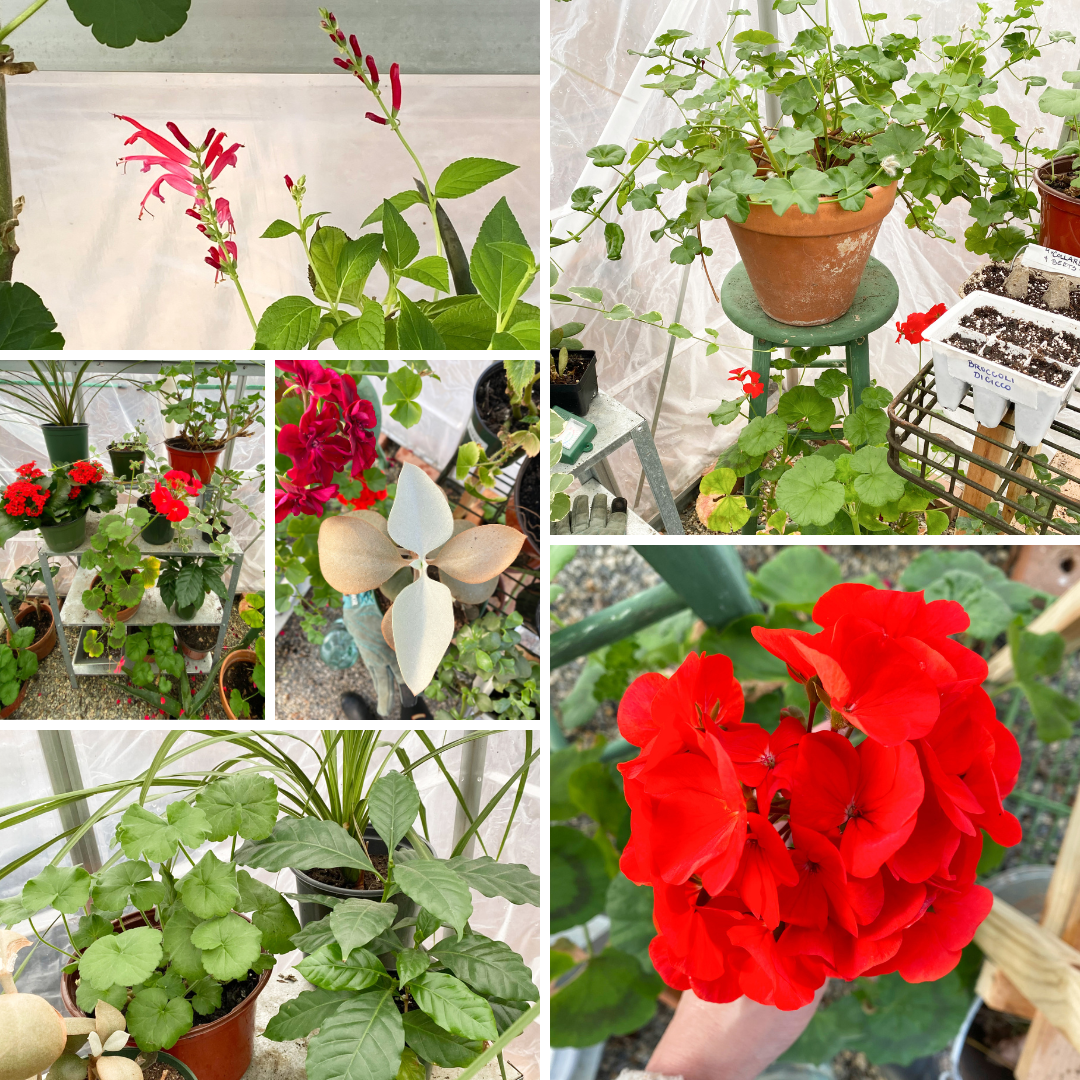
January color in the greenhouse

Current Occupants

As of mid-January, the greenhouse is halfway full with overwintering geraniums, vinca vine, and dracaena spikes from the summer garden. Six different types of succulents, a coffee plant, a pineapple sage cutting from our summer plantings, and Liz Lemon (our six-year-old lemon tree) fill out the rest of the space alongside a batch of newly started seeds… collards, broccoli, beets and four different types of salad greens.

Winter Plastic Wrap

This isn’t a new improvement, but we are on Year No. 2 of dressing the greenhouse in a winter coat – aka wrapping it entirely in a layer of thick plastic – to keep the heat in and protect the plants from drafts during rain, sleet, and snowstorms. The plastic, a temporary solution for the coldest months gets removed in early spring, folded up, and stored in the basement. Once the temperatures drop below 45 in the fall, we put the plastic back on for the season. Aesthetically, it’s not the prettiest site but it gets the job done and keeps our overwintering plants and new seedlings happy and warm. We weren’t sure how the plastic was going to hold up from year to year, but so far it’s nice to see that it is still working just as well. To learn more about this winterization system, see last year’s post here.
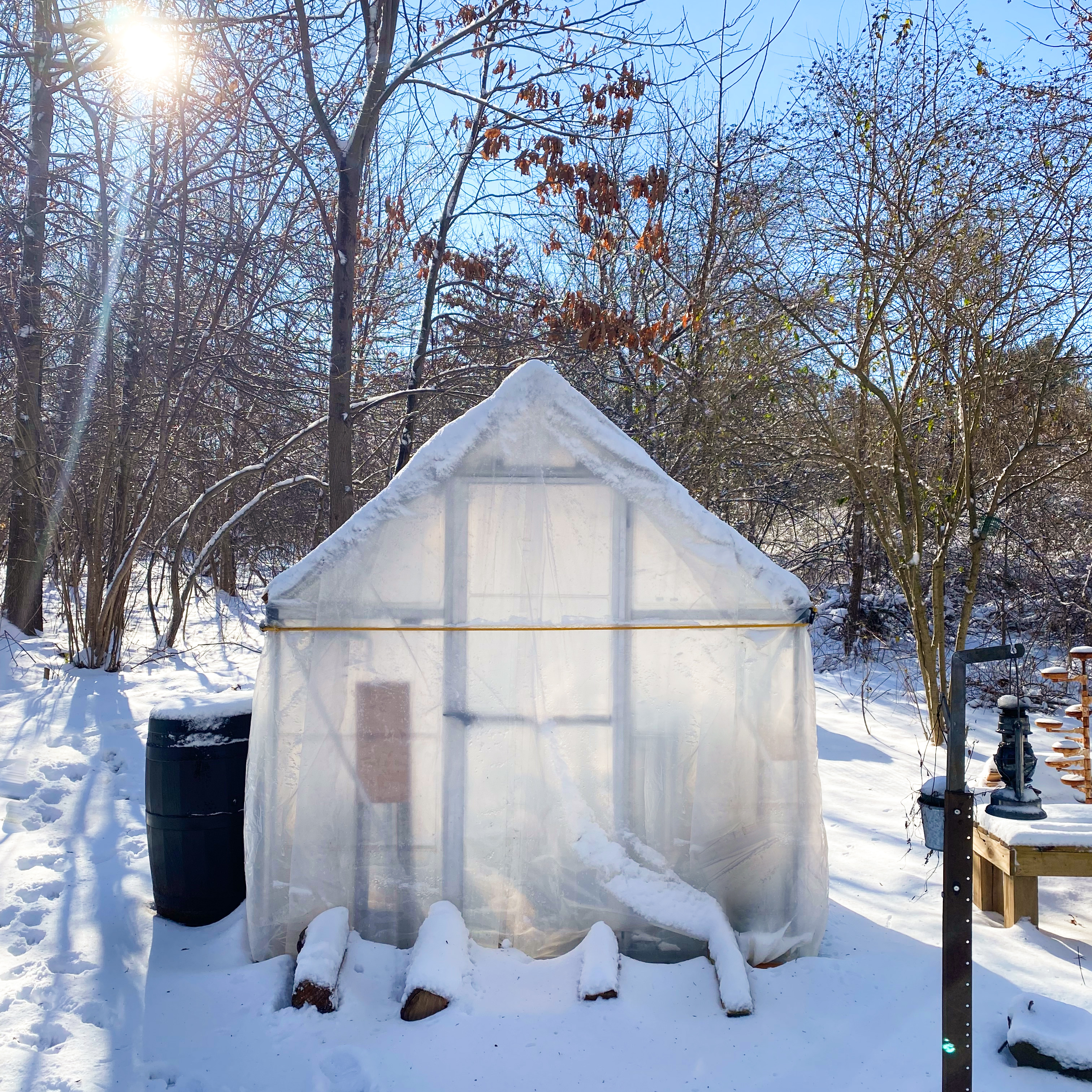
Thanks to the plastic wrap, everything stayed warm and dry inside during our most recent January 2024 snowstorm.

New Electrical

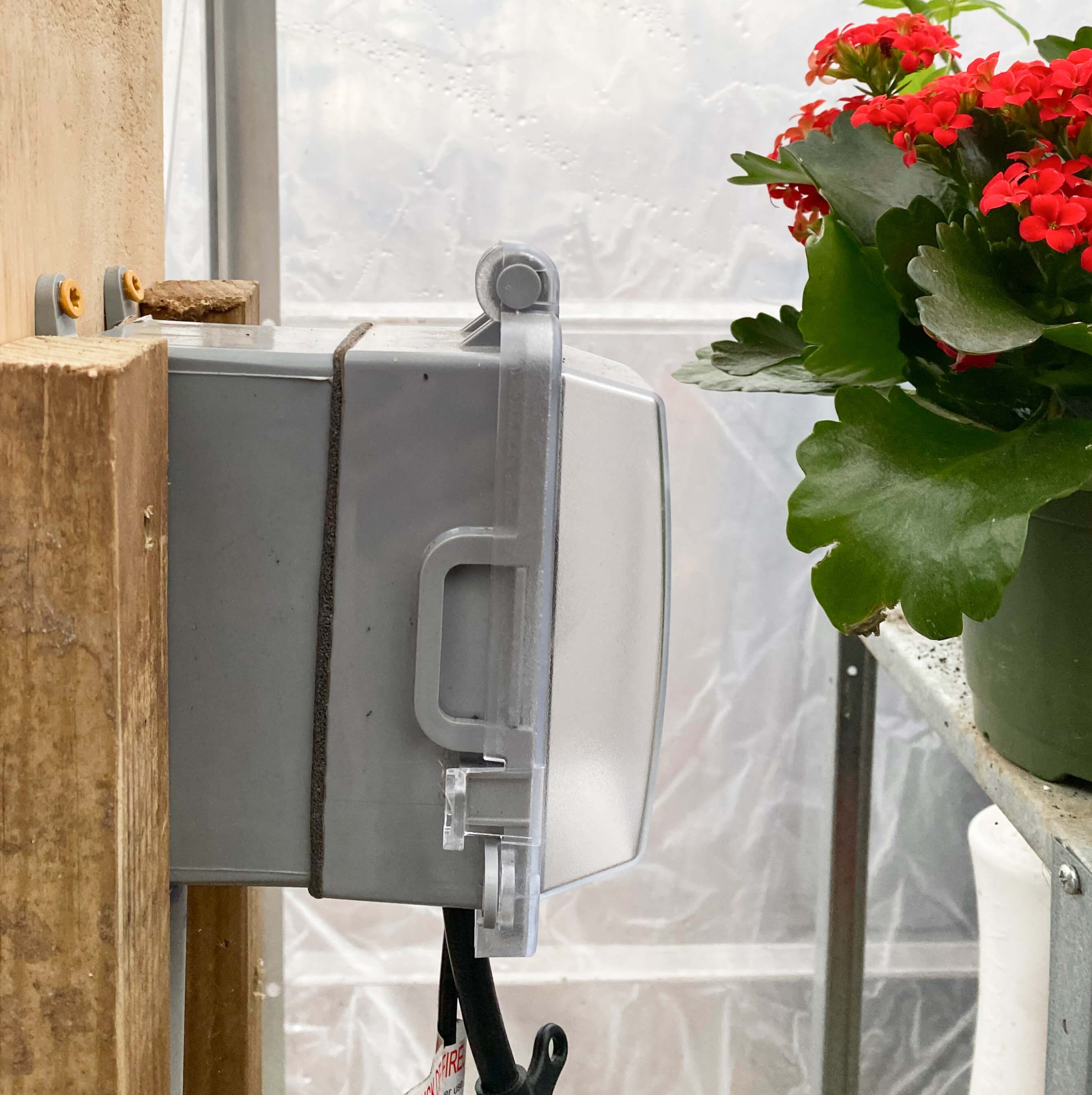
Over the summer we added an electrical outlet inside the greenhouse and buried the wiring underground. This was a big (and much safer) improvement from running an extension cord across the yard between the greenhouse and the workshop, which is how we handled things last winter. This new addition is an outdoor-rated 110V 15 amp circuit box which is just what we need to power the heater and lights.
A New Heater

A new mini space heater replaced the tall radiator-style heater used last winter. This smaller size opens up more room to move around the greenhouse and fits nicely on a bottom shelf tucked out of the way when not in use. It has a safety feature that turns the heater off automatically if it tipples over or if any excess moisture drips inside. When the greenhouse reaches a certain temperature, it also automatically turns off to save energy and to keep the plants from overheating.
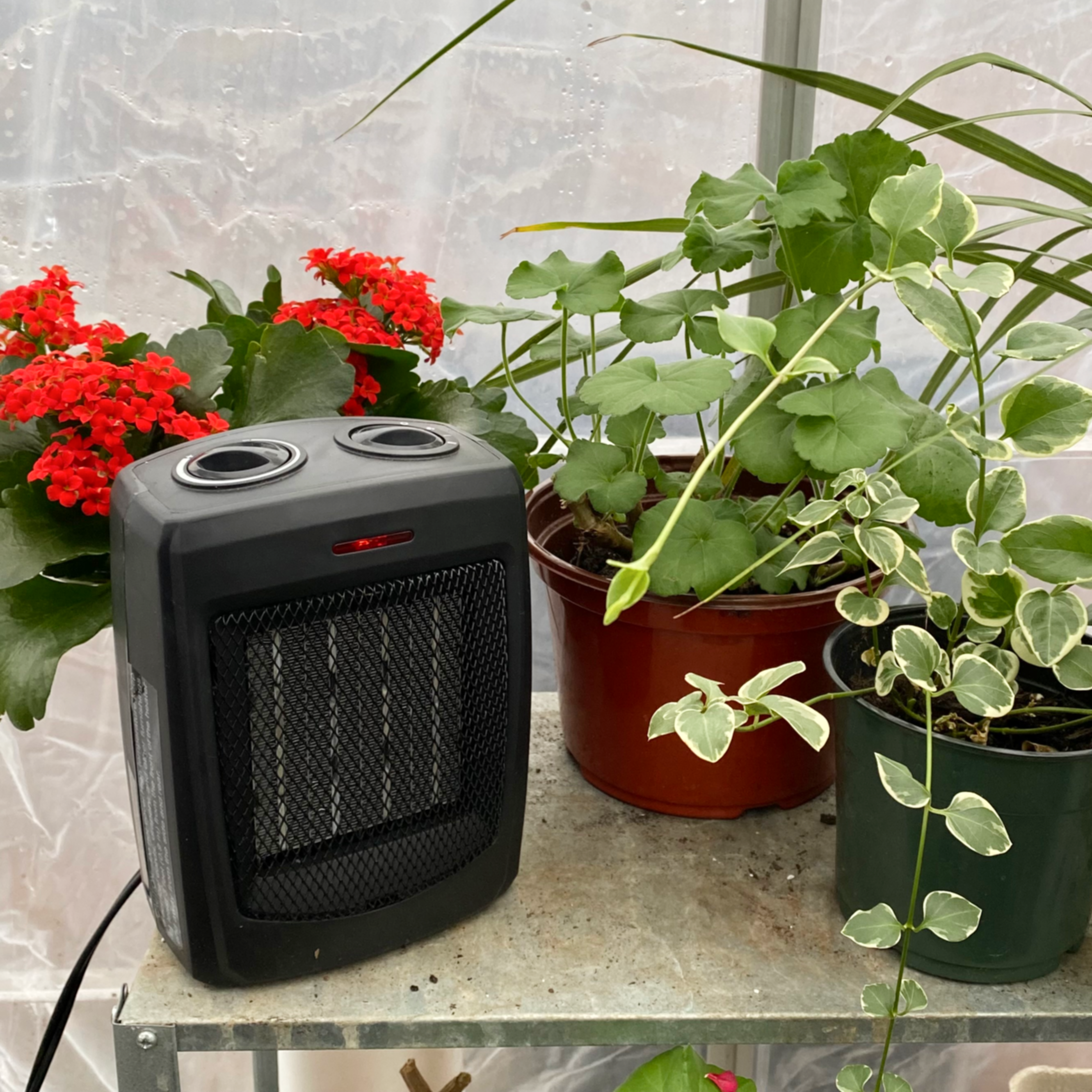
Normally the heater sits on the pea gravel floor of the greenhouse so that it efficiently heats all areas from bottom to top, but to photo it for this post I put it on one of the higher shelves for a better view. Please note: your greenhouse heater should never be this close to any plants as the proximity to the heat will cause the leaves to shrivel and could become a fire hazard. Any greenhouse heater should have a wide radius that is completely free and clear of other objects.

By using this smaller unit, we don’t have to run out and adjust the heat as the temperature changes over the course of the day, like we had to do last year. Also, we readjusted our required heat temperature in the greenhouse. Instead of keeping it in the mid-70s like last year, we lowered it to 55 degrees, in hopes that the cooler temp will keep spider mites at bay. We learned first-hand last winter how much they just adore a hot greenhouse. The new heater also blows warm air around the space instead of radiating it, so we have continual air movement swirling around inside this year, which I also hope will help with any pests. The final great benefit of this small little worker is that it has an additional fan option too, so in summer we’ll be able to grow our herbs inside the greenhouse without the temperature getting too hot or the air too stagnant.

New Lights

My most favorite new enhancement to the greenhouse came this fall when we added bulb lights to the interior roofline. The lights make it so much easier to work at night, especially in the winter when it can get dark as early as 3:30pm if we have an especially cloudy or rainy weather day. 
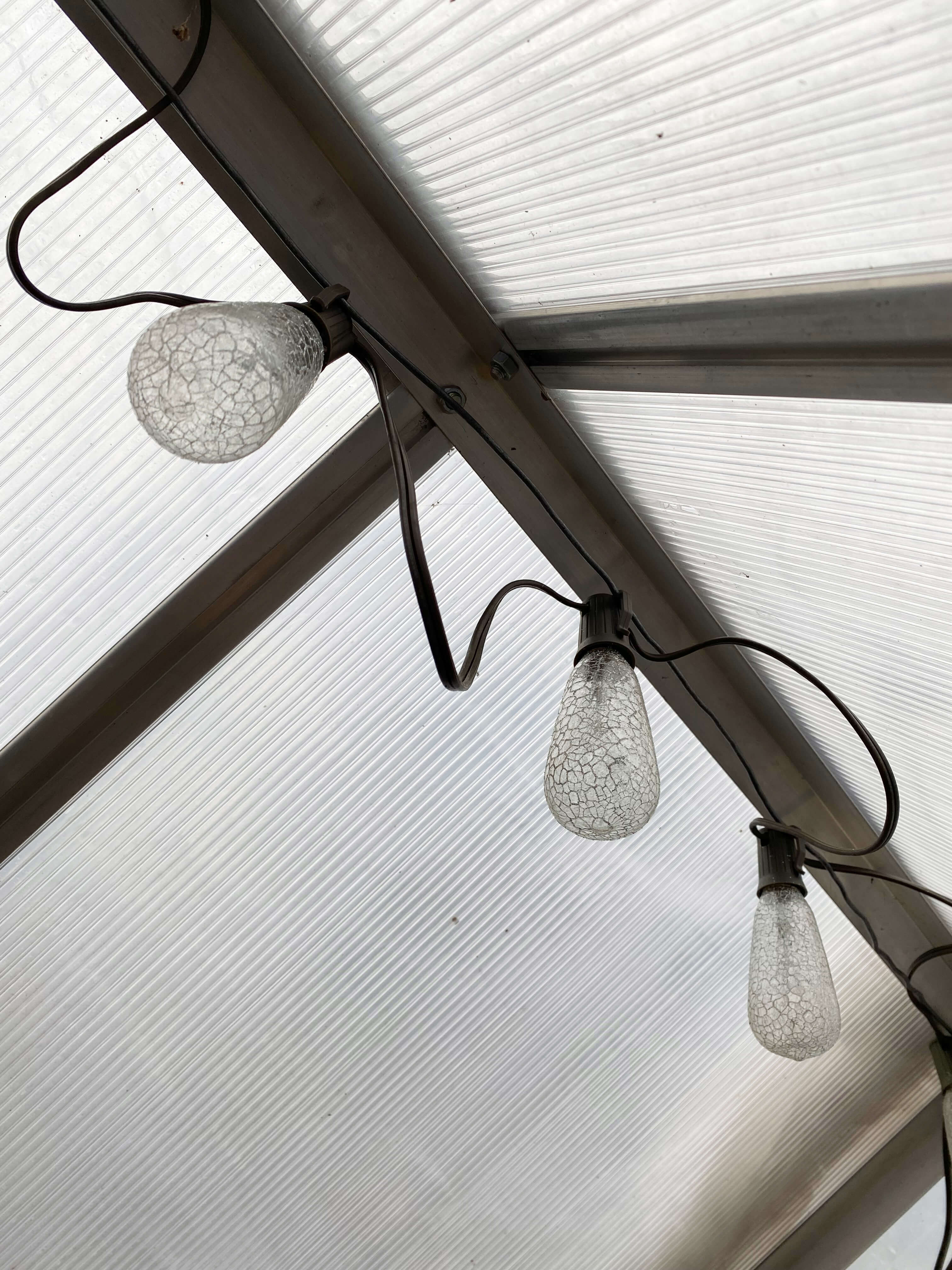
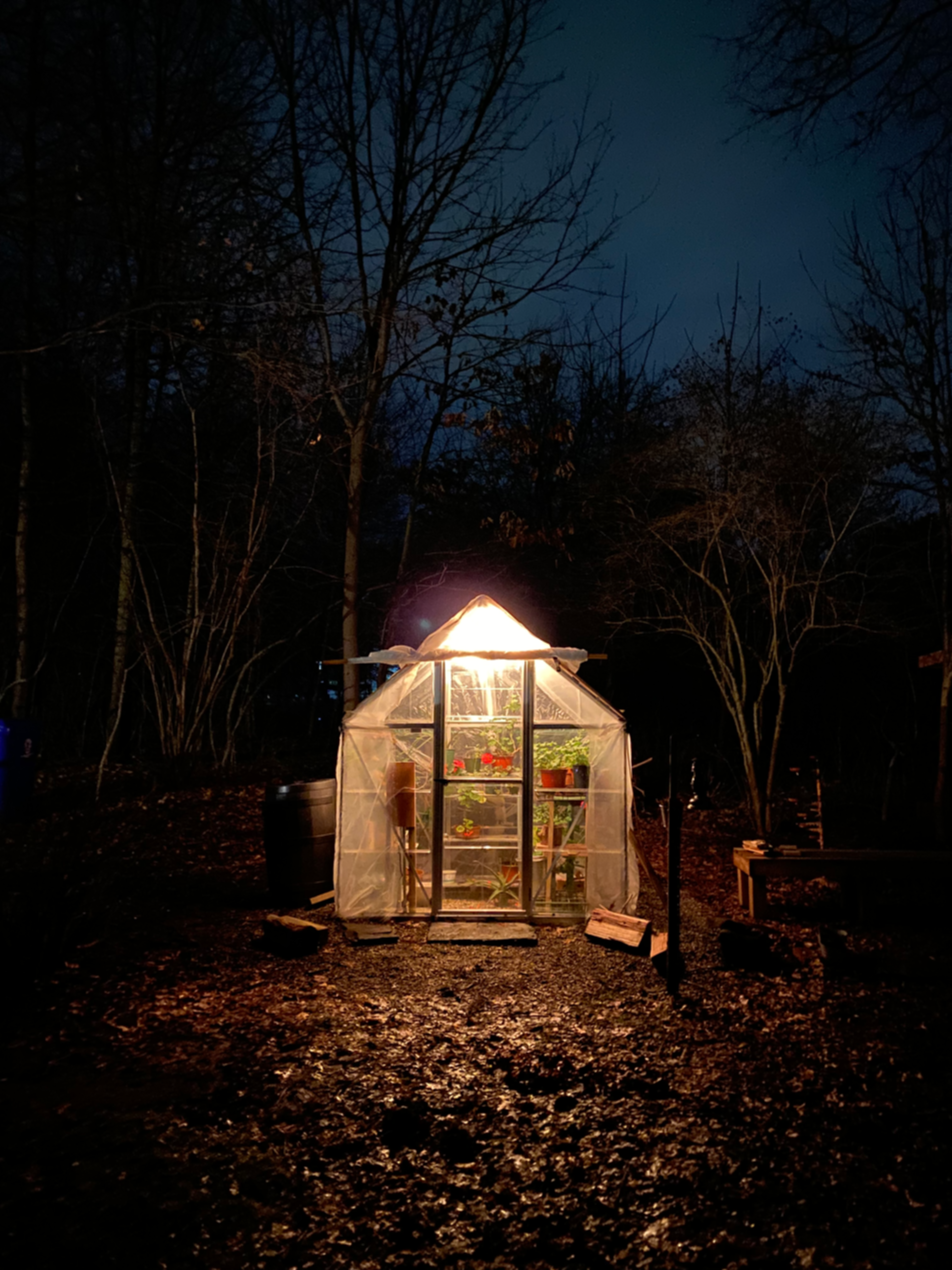
These bulb lights are a tad too big for the space, so they’ll be swapped out for something a bit more petite this spring, but we had these already on hand and wanted to make sure we liked the light idea before we committed to several sets. At night it looks especially festive. Once all the landscaping is in place around the greenhouse, it will provide a nice light source for outdoor dining during the warm weather days. By then we’ll be at least five months into the fragrant year and the garden will hopefully be on its way to becoming a perfumed paradise. Just dreaming about it now, I can see and smell the summer already.
If you’d like to catch up on the trials and tribulations of our first year of greenhouse gardening start at entry #1 here. Otherwise, it’s on to 2024 and all the delightful aromas that await each new season.

Cheers to ever-evolving garden adventures, to a scent-sational year ahead and to Helen and Leonie for inspiring this new set of diary entries centered around the life and times of one mighty but mini New England greenhouse.

Market Bags, Mother’s Day & Some Newsy Bits

Happy May! Hope everyone’s new month is off to a lovely start. Around here, all the trees are proudly sporting their leafy greens and the city flowers are unfurling so many colorful shades each day brings a new sight of delight in the neighborhood. These long waited pops of color remind me of Janice in her book, A Paris Year, when she walked around the City of Light scouting out items of a specific color to photograph. Starting out at the onset of each journey, Janice would pick a particular color, say red or yellow or turquoise, and then look for things to photograph that were made up primarily of that hue during her walk. This past weekend, I did the same thing when I walked to the farmers market. Before I started out I decided on the color peach. This is what I saw along the way…

It’s too early for peaches at the market so there were no color-themed fruits to photograph in that department quite yet, but while we wait for summer crops and our next blog post coming out this week (a special Mother’s Day themed story and interview!) I wanted to share, in the meantime, some new changes that are occuring in the Vintage Kitchen, so that you can be kept abreast of all the latest news.

New Products

Most excitedly, the Vintage Kitchen is growing! Over the next few months, we’ll be expanding our vintage product range in the shop to include some newly made yet very classic kitchen essentials all based on historic designs or nostalgic stories that have been personally tried and tested for years. This is in an effort to introduce fun and unique finds to your space that will not only augment your love of the vintage aesthetic, but will also be of very helpful assistence in the kitchen. The first of these new products arrived in the shop this past week…

Introducing the French market bag! Imported from Europe, this is the best way I have found to tote vegetables home from the farmers market.

The bags, made of handwoven palm leaves, are light-weight yet very durable. The long leather straps rest comfortably on your shoulder and the funnel shaped design (wider at the top than it is at the base) allows for longer and more fragile items to be stowed away securely without being crushed or tossed about. No more broken baguettes or decapitated flowers with this beauty!

There are two different styles of the market bag available in the shop. One has long leather shoulder straps (pictured above) and the other has hand-held rolled leather handles (pictured below). Both are convenient for grabbing and going and they are both the same size as far as bag capacity. The preference, of course, is totally up to you, but I recommend the shoulder strap version if you generally tend to walk to your market or live in a more urban environment where you gather your groceries primarily on foot. It’s such a comfortable way to tote your items around town. The hand-held bag…

… I would recommend for shoppers who drive to their market since the bag sits up right on its own and stows away really well in the car. Tucked into the back seat or the trunk it does not topple over easily, and will keep all your market finds secure while you drive home.

In addition to being helpful, these market bags also bring a bit of Parisian style and joie de vivre to your shopping experience. Each bag holds quite a bit of items, so if you get carried away at the market, your bag will be able to handle all your whims. For example all this fits in one bag with plenty of room to spare…

I have used my market bag (the very same one with the long straps) for over 4 years now. It has become so indispensable, it adventures with me on a daily basis. At this point, it feels not only like a bag but also like a true and cherished companion! I can’t say enough wonderful things about it. I hope you will love the bags just as much too. There are limited supplies of each style and they are selling quickly, so if they strike your fancy don’t hesitate. You can find them in the shop here and here.

Email Newsletters

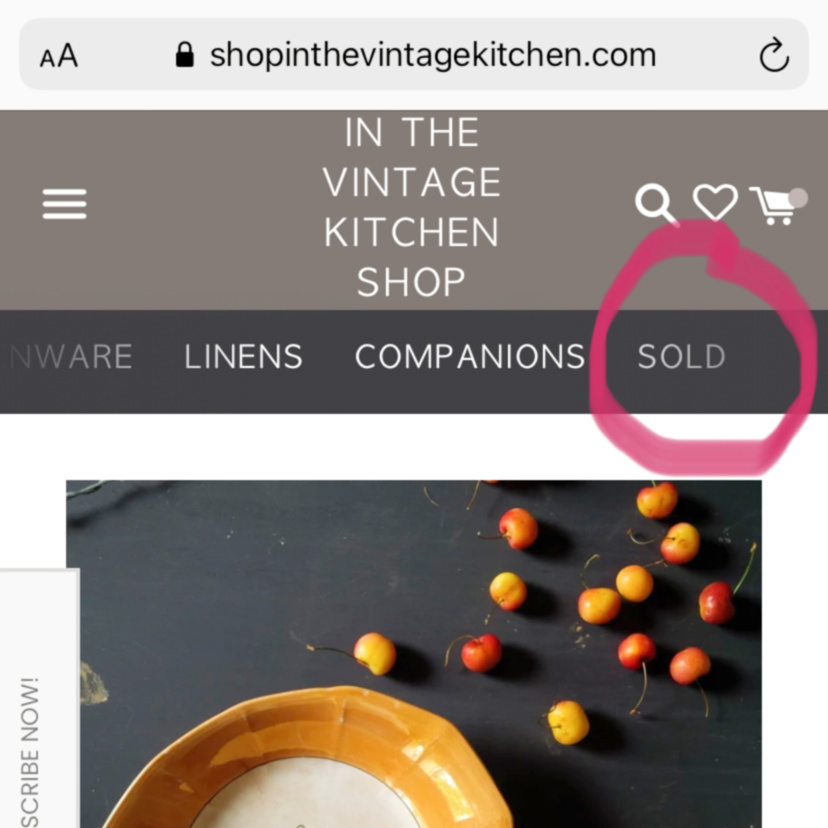
If you would like to be made aware of new items listed in the shop each week, along with special promotions and added seasonal content, then please sign up for our new email newsletter which will be going out once a week (starting next Friday). Unlike many of these blog posts, this newsletter is designed to be a quick read, featuring mainly photographs and a few links to some fun content. In response to many shoppers asking how they can be kept aware of new items coming to the Vintage Kitchen, and after testing out many avenues over the past few weeks, I’m excited to finally have a good solution that will help collectors find what they love quickly. Sign up for the email newsletter by clicking the subscribe now button on the left-hand side of the shop’s home page here. It looks like this…

Sold Items in the Shop

Another improvement for the shop this past week came in the form of relocating sold items to a new category all their own. This transfer, which removed all listings that were sold out from the general inventory of available items, came at the request of a few shoppers who were frustrated in not being able to easily navigate around the site to see what was actually available to purchase. But with many historians and researchers accessing the shop for informational purposes (due to all the history we include with each item’s listing) I didn’t want these sold items to be completely removed from the shop all together. In an effort to make it a pleasant experience for everyone spending time in the shop, I hope this new solution will help. From here on out, see all the sold items in this category (found in the header section) here…

Mother’s Day

I hope you’ll come back to the blog this week to read our upcoming Mother’s day inspired post about a talented seamstress in Minnesota who led a really an interesting and dynamic life. Through an interview with her daughter, who generously shared family photographs, their family linen collection, and many stories about her mom (including a recipe!) we’ll learn how one spirited woman lived a passion fueled life and defied many stereotypes that tend to be attached to women of the mid-20th century.

Until then, of you are looking for any last-minute Mother’s Day gifts, there’s still time left to find something just as unique and treasured as Mom is. From the shop, I recommend these items…

From top left: Vintage 1950s Maurice Urtillo Art Print, Antique 19th Century Steamship Chairs, Embroidered 1950s Pillowcases, Vintage Peacock Wall Pocket Planter, French Market Basket

What makes these particular items so wonderful for mom? All of the mothers in our lives deserve to spoiled on their special day. These carefully selected items will add a little dose of symbolic beauty to her every day, while also presenting her with a unique bit of history. French artist Maurice Utrillo (1883-1955) learned to appreciate the beauty of flowers from his mother, Suzanne Valadon who was also a painter. The his & hers set of antique steamship chairs signifed luxury and comfort aboard cruise liners of the late 1800s. Breakfast in bed never looked prettier in the 1950s than with a pair of embroidered pillowcases, which were often gifted as wedding presents. Peacocks throughout history have been considered the most beautiful bird in the avian kingdom and signifies power, protection and elegance. And finally, the market bag will add chic Parisian style and a little extra joie de vivre to each and every one of her days.

Find each one in the shop here print, chairs, embroidery, peacock, market bag. Hope they offer a little extra inspiration should you need it.

Until the next post… cheers to celebrating May, new growth and vintage-inspired joy! Hope you have a great rest of the weekend!

Stories & Souvenirs from Ancient Sparta: Enter to Win Olive Oil & Oregano from Greece!

Hello from Sparta, Greece!

There’s a passage from Homer’s The Iliad that reads:

“Like the generations of leaves, the lives of mortal men. Now the wind scatters the old leaves across the earth, now the living timber bursts with the new buds and spring comes round again. And so with men: as one generation comes to life, another dies away.”

This is not only a great quote for Autumn, as the leaves color and float and fall to the ground reminding us all that change is natural and seasonality vital, but it is also a great introduction to the guiding principles behind our next interview.

In today’s post we are traveling 5,000 miles away crossing over Homer’s “roaring seas and many a dark mountain range” to the country of Greece to the historic city of Sparta where we are chatting for a bit underneath the olive trees with Jehny and George from The Spartan Table. Purveyors and producers of an assortment of agricultural delights in this Mediterranean section of the world, Jehny and George come from a small town that is very BIG on  ancient history.

jehny7

First having discovered these two by way of Etsy, I fell in love with the sights and sounds of Sparta on a field walk with Jehny and her family as they described picking herbs in the Taygetus Mountains via their newsletter…

“The talk stops and for the next couple of hours, we ‘re “lost” in a green and white sea” of wild oregano together with thousands of bees and relative insects. We ‘re all busy to get as much as we can from this amazing plant. We stop for few minutes from time to time just to lay our eyes on the surrounding mountainsides while the sun has starting to set. There  are so much peace and beauty and even some sounds of some sheep somewhere around echoing like an old song from the distance…”

It was a combination of their descriptive writing, their enthusiasm for the job at hand, their accented words, the beauty of their landscape and their deep-rooted love for their country that caught my heart.  As part of the American culture’s ideals of constantly being on the move, always next-best-thinging our way through life, it was refreshing to read about people who were so settled into their sense of place and so appreciative of their natural surroundings. And then there was their national pride. Read further to understand this.

View of the Taygetus Mountains

We all know that Greece has had their hardships, most recently with the economy – but as you learn through Jehny’s newsletters the detailed account of her family’s history over the last one hundred years and that of the olive grove that she now cultivates, we begin to understand this extraordinary set of determined people passionate about seeking and seeing the positive, progressive side of life. “To plant an olive tree is to proclaim a faith in the future, for it will be the following generations that will benefit, will reap no matter drought or storm, dictator or revolution, once the olive has made its home,” said Jehny in her February 1st, 2016 newsletter.

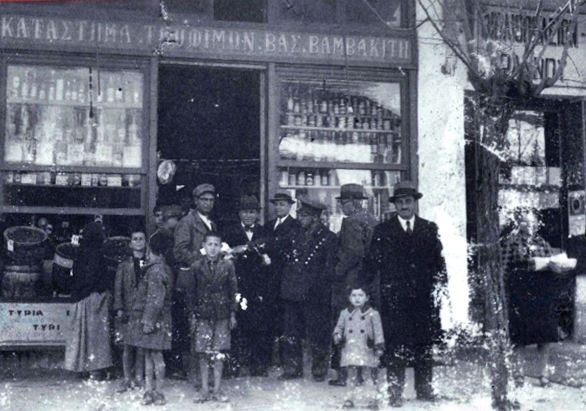
Jehny's family photographed in the 1930's
Jehny’s family photographed in the 1930’s

The Spartan Table was born in 2013 after Jehny left behind an unfulfilling corporate job and discovered by way of a small series of realizations that her passions leaned more towards olives than offices. In the early days of shop-keeping, she first offered a selection of local wild herbs cultivated from the mountains around her.  Quickly her shop grew to include olives, olive oil and olive paste from her family’s olive trees. Each year added a new series of local products and a new level of ancient history to back it up. Today you can find an increasingly interesting array of Greek products in her shop including sea salt dried on the sun soaked rocks of Mani, traditional sweet treats baked in Jehny’s kitchen, honey from beekeeper Bill, handmade soap and cutting boards (from the olive trees!) all made and/or procured by Jehny, her family and her friends in their local environment.

spartanshop_collage
A sampling of treasures from The Spartan Table!

How does she do it all you wonder? Can one woman’s love of her country and culture sustain a life worth living? You bet! Get to know more about Jehny and George and their storybook landscape in their interview here and then sign up below for a chance to win a complimentary souvenir from Sparta courtesy of Jehny and The Spartan Table.

Experience the flavor of Greece for yourself with these two special treats from The Spartan Table.

Your location in Sparta is gorgeous! In your bio, you mention that it is your family’s region and that you have lived there a long time. In the United States families move around A LOT. So I am intrigued by your permanent sense of place in Sparta. What keeps (or has kept) your family there for all these generations?

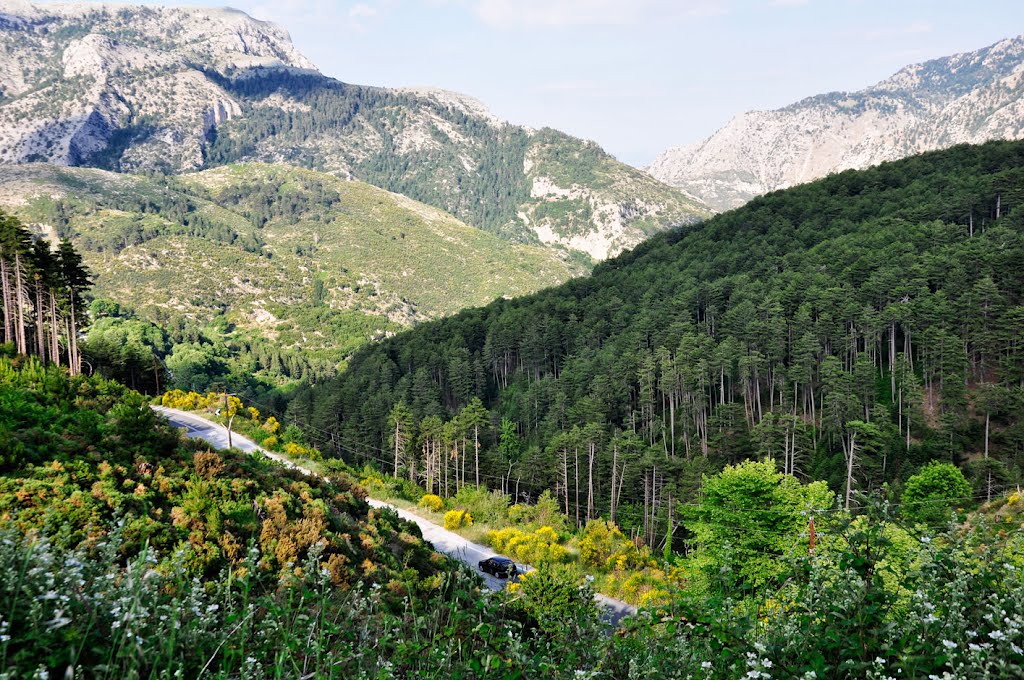
Sparta is our homeland. It’s a mythical land with – perhaps – the most know Greek Ancient city (With Athens) The landscape is just beautiful. If you could see, even for a moment what we see every morning, the magnificent mountain Taygetus and the Spartan valley, you’d fell immediately in love with the place. Living in a place which great people once lived in, makes us feel truly blessed.

Sparti, Peloponnese, Greece. Photo courtesy of scout.com
Sparti, Peloponnese, Greece.

Tell us little bit about daily life in Sparta. Do you live in a farmhouse in the country or do you live in the city center in a more urban type dwelling?

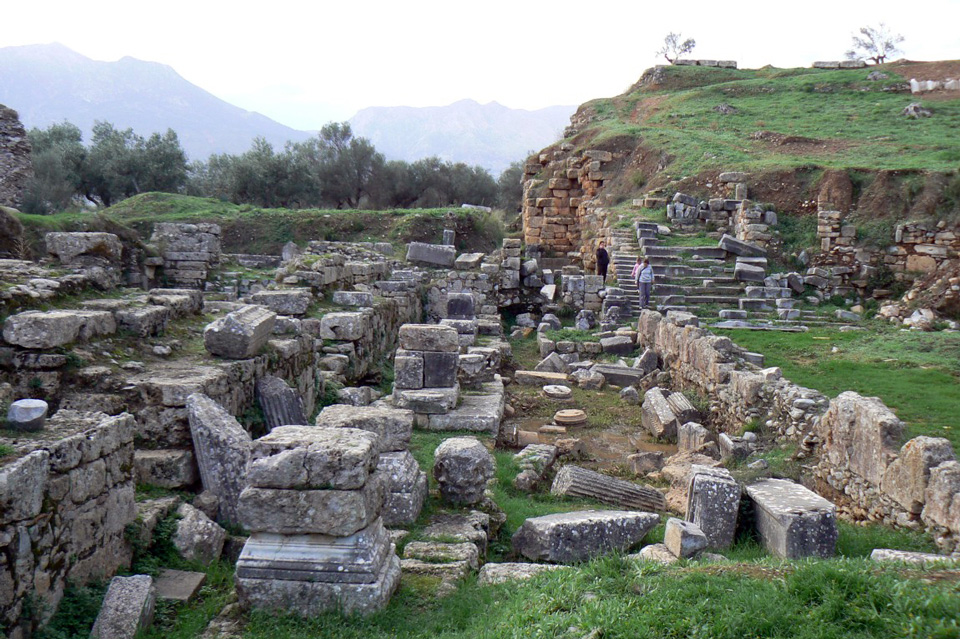
Today the “modern Sparta” which has built in 1836, is a small town with near 20.000 inhabitants. We live just few blocks from the center and beside the Ancient Acropolis & Theater. Just 100 meters from our home, there are hundreds of very old olive trees amongst the Ancient ruins.

The ancient acroplis
The Acropolis in Ancient Sparta.

If we were to visit you in Sparta where are the first three places you would take us?

The Acropolis and the Ancient Theater. The Mystras Byzantine castle city, where the last emperor left to save the Konstantinople. (Like King Leonidas, the last emperor went to fight into a war, knowing in advance that everything had being lost). And the museum of the Olive Oil, which is unique in Greece.

sparta_collage
Clockwise from left to right: The Museum of Olive Oil, the Mystras Byzantine Castle City and the Ancient Theater.

So many people in life don’t appreciate the environment around them which is what makes The Spartan Table and all your lovely newsletters so refreshing. Your national pride is wonderful. What keeps you excited about your culture on an everyday basis?

As we mentioned before, living in a land of heroes, it’s impossible not to feel the “vibes” of their acts despite that hundreds of years have passed. We feel that we have to make something for the next generations and keep the spirit of dignity, pride and freedom alive.

King Leonides, Byzantine Church, Mystras
King Leonidas, the gorgeous indoor and outdoor architecture of Byzantine Church and Mystras.

From harvesting olives to farming sea salt to collecting herbs and honey and making soap – are you involved in all these endeavors personally or do you have a big team that helps you gather items for your shop?

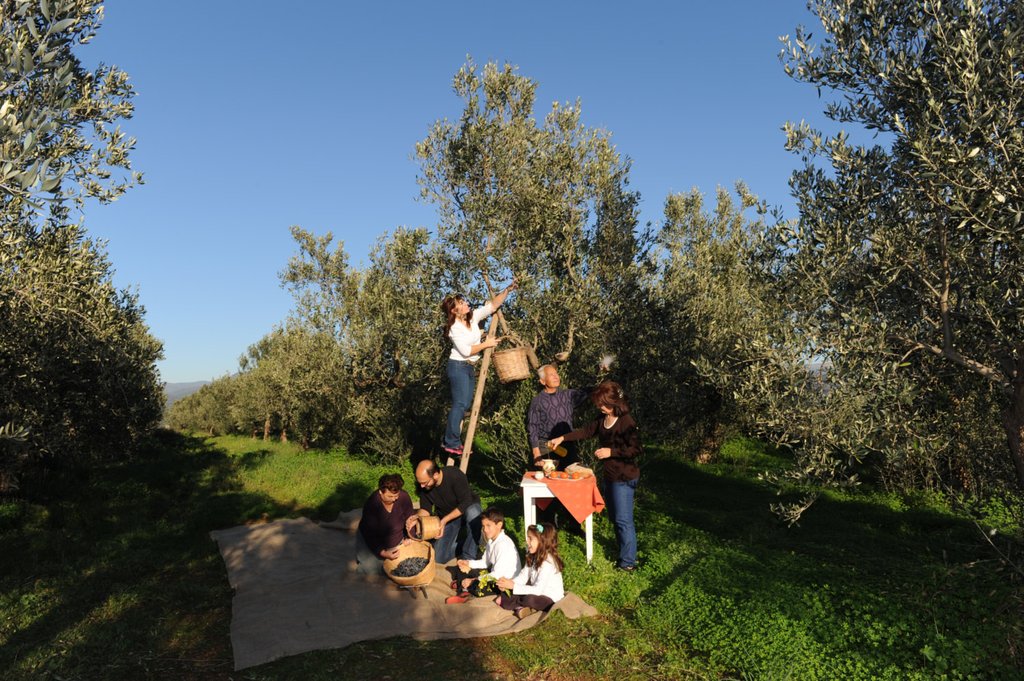
Since we started from the scratch – after a stressed corporate life- we tried to make everything with our hands and our small team (our Family). Getting some big inquiries and interest about our humble treasures, we decided to add some more People in our small team. These are people with great passion and love about what they do and we are honored and proud having them with us!

In the olives!
In the olives!

Of all the items in your shop right now, which is your most favorite?

Jehny: wild walnuts with honey from wild flowers and herbs.

George: Sheperd’s tea with honey from wild flowers and herbs.

favorites_collage
Jehny’s favorite on the left, George’s on the right.

What are the differences between Greek olive oil and Italian olive oil? Do they contain different olive varieties or are they harvested in a different way? Does the different geographic landscape/environment affect the taste of olive oil?

First of all, remember that Greece is the 3rd biggest olive oil producer in the world with an average of 350.000tn annually. Italy is at 600.000 tons (when their internal consumption is 800.000tn – think about it) And Spain is more than 1.200.000tn. Greece produces mostly extra virgin olive oil (which Italy and Spain does not) Laconia, our regions produces ONLY extra virgin olive oil and it’s one of the 3 biggest producer regions in Greece. “Koroneiki” is one of the best and most well know varieties of Greece but we have one more unique one: “Athinoelia” (the tree of Goddess Athena). This is an exquisite EVOO and it’s the “first extra virgin olive oil” in Greece every year. This EVOO has a strong and spicy taste and almost all of the yearly production is going to abroad every year. It’ s the EVOO that everyone must try even for once in life!

oliveoil1
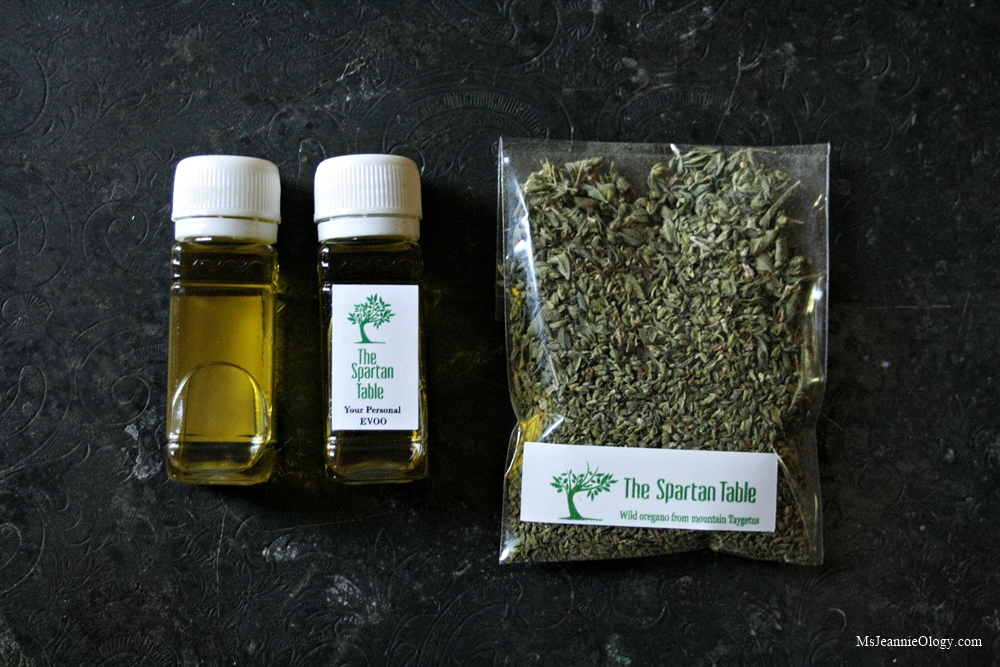
Extra virgin olive oil from The Spartan Table .

Which country do you ship your products to the most?

Mostly to U.S and secondly to Canada. We’ve met wonderful people in these first 3 years and we hope that one day we’ll have the honor and pleasure to welcome them in our home.

Soap handmade by Jehny's mom!
Soap handmade by Jehny’s mom!

You mention in your olive oil listings that you can also use the oil as part of your beauty regiment. How would you recommend using it?

Simply by putting on the skin (massage). Or make “oil with herbs”.

Handmade Olive Paste

What is one thing that has really surprised you this past year in regards to your business?

As we said before, through these 3 years since we started, we met wonderful people which not only supported us as with all their hearts but also shared few lines and messages with their beloved ones. This led to warm feedback and to a genuine interest from a company from Netherlands which asked for a big project for Christmas. Upon our first contact and we asked how they found us , they simply answered : “We read your story and every feedback about you”. Then we understood that the love and support of our Friends in the States (mostly), “drove” them to our door!

If you could invite five famous people (dead or alive) to dinner at your house whom would you choose and why?

Well, we can’t really choose. There are a lot of people which we’d love to invite. So instead of this option, we want to invite as many people as we can to share our table. You know, “common people” like us.

Coasters
A recent addition to the Jehny’s shop – Olive Wood Drink Coasters!

What is your most favorite meal to make in your kitchen?

Greek Salad (and many another kind of salads) and Meat (pork, chicken in the oven with EVOO, herbs, and different vegetables).

When you are not cooking or harvesting or collecting for business what hobbies do you enjoy? Reading and sharing moments with family and friends (and sometimes trying to get some decent sleep – cause we miss it often!)

On George's bookshelf...
On George’s bookshelf…

What book are you currently reading? What music are you currently listening to? Jehny : Reading books and articles about decorations (special events and weddings). Greek pop music. George: “I contain Multitudes” & “The secret life of plants”. Old Rock and classical music.

Do you ever dream about living somewhere else in the world? If so, where would you choose and why?

No, but we love to travel and meet new friends. Unfortunately due to the heavy crisis in Greece, we can’t afford to any trips but we hope that one day we ‘ll start traveling again.

What inspires you about your business?

The superb landscape. You can’t be “unaffected” when You see the mountains and the valley every morning!

View from the olive groves!

Understandably so, with a  view like that! Throughout history, the olive branch has been a symbol of peace the world over.  Although they lead busy lives as blooming entrepreneurs, you can see how the olive trees have brought peace and fulfillment to the lives of Jehny and George. And you can taste it too. In the aromatic flavor of their olive oil, which is fresh and raw like newly cut grass. In the sweet, earthy smell of their wild mountain oregano. To breathe these two cooking staples in, is to breathe all the myths and legends and stories of a thousand centuries. It is to breathe in the sun and the sky and the windswept air of Sparta, where great men and women have dared to accomplish great feats.  But maybe most importantly you are breathing in generations of a country’s faith in itself and in it’s future.

giveaway from The Spartan Table

Jehny and I are so excited to offer three lucky readers the opportunity to sample the wild oregano cultivated from the Taygetus Mountains and the extra virgin olive oil from the family groves of The Spartan Table. Three winners will each receive one complimentary packet of oregano and two mini bottles of olive oil to test and to try, to experiment and to explore.

All you need to do is fill in the comment box below with your name and email address (so we can let you know who won!) and then answer the question: Who is your favorite author? in the comment box, so we can avoid spam messages. Winners will be picked at random and will be announced both here on the blog, on Instagram and via email on Monday morning, November 21st, so please enter for your chance to win by midnight (11:59pm) on Sunday (11/20). Enter as many times as you like and please spread the word to fellow culinary lovers.

Go back

Your message has been sent

Warning
Warning
Warning
Warning

Warning.

Please note, the Vintage Kitchen totally respects your privacy. Your contact information will not be sold or shared and is simply used here for contest purposes only. If you are reading this post on your phone you may have trouble seeing the actual contact form box. Please visit inthevintagekitchen.com to access the private and secure form which will send your entry directly to a private email account. Any troubles beyond this, please comment on the blog post and we will help you ASAP!

While you wait to find out if you are the lucky recipient of a Sparta souvenir peruse the lovely offerings of  The Spartan Table here .

{After a long nap in the question and answer department, the interview series is back in full swing, bringing you face to face with real-life creatives from around the globe. If you missed last week’s interview with museum director  Louise Van Tartwijk, from Washington, Connecticut’s Gunn Historical Museum find it here. If you are new to this series, catch up on a bevy of previous interviews here.}

Until Monday, cheers and good luck!

Photo credits: The Spartan Table, maranghuset.se