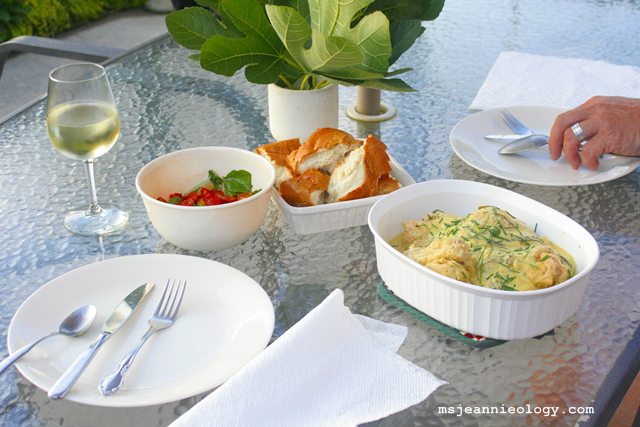
In the Vintage Kitchen: Sage Smothered Chicken with Polenta

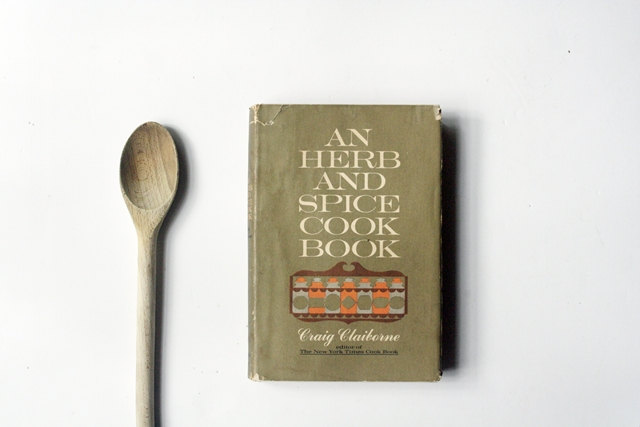
An Herb and Spice Cookbook

This week in the vintage kitchen we are celebrating the wonders of the summer herb garden with a vintage recipe that has absolutely antique roots.

If you are a regular reader of the blog, you’ll recognize the name and face of the recipe writer…

craigclaiborne2

…celebrated New York Times food critic and cook Craig Claiborne. Back in February Ms. Jeannie shared his recipe for Eggplant Pizza from his 1963 Herb and Spice Cook Book – a complete gem of a compendium organized by herb and spice for quick reference.  In that post, oregano was the featured herb and Ms. Jeannie gave all the credit to Craig for his imaginative and most delicious creation.

pizza6
Eggplant Pizza! Find the recipe here.

But while Craig was the chef in the kitchen, the writer of the words and the name attached to the dust jacket, there was another face behind the flavor of the book – a muse of intellectual imagination that inspired Craig and enhanced his cook book.

Hilda Layel (1880-1957)
Hilda Leyel (1880-1957)

Her name was Hilda Leyel and she was the woman behind the crusade to bring back the herb.

For centuries herb gardening has been considered a feminine endeavor and a maternal skill –  a salve for the sick, a staple for the diet and a component in clean living. But with the introduction of doctors and hospitals and modern medicine, and the dawn of the industrial revolution, herbs and herb gardening fell out of fashion by the early part of the 20th century. Then Hilda came along.

A life long lover of gardens, a student of medicine, and an appreciator of fine food, good wine and natural living Hilda published several books on the importance of herbs, opened Culpepers, the first herbal-only shop in England (which offered herbal remedies, food, makeup and holistic products) and founded the still-going strong  Herb Society all within a decade between the 1920’s and 1930’s.  The efforts of this one woman single-handedly revitalized the popularity of herbs in gardening, cooking and personal product choices for not only the citizens of England but also of the world at large.
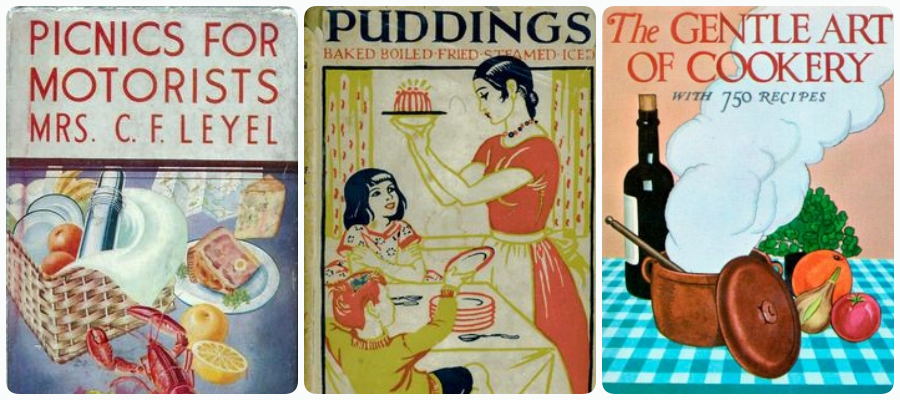
Three of Hilda's cookbooks.
Three of Hilda’s cookbooks.

It was Hilda’s passion, promotion and sheer love that inspired Craig with his Herb and Spice cookbook. Her detailed research and botanical understanding of each of the 54 herbs and spices featured in his cookbook tell of the history, symbolism and importance of each plant. Which makes the two of them a great team. She tells why herbs are important and he shows how they taste great.

It is wonderful to see that Hilda’s efforts had numerous and lasting effects decades after her death in 1957.  To honor Hilda’s magnificent determination, it is only fitting to feature a recipe from the sage section of the Herb and Spice Cook Book which comes from the botanical name salvio, meaning to “save” since Hilda in her own way saved the herbs from obscurity. Cheers to Hilda!

This week we are making Sage Smothered Chicken with Polenta, which is on the heavier side of summer cooking but features so many garden ingredients that its hard to resist. If you want to make a lighter (aka cooler) dinner during this hot season, just omit the polenta and serve the chicken alongside a fresh garden salad. It’s delicious either way!

sage3

Sage Chicken with Polenta

(serves 4-6)

1 4lb. chicken cut into serving pieces

Salt and freshly ground Pepper

1/4 cup olive oil

1/2 cup onion, chopped

1 clove garlic, minced

2 1/2 cups diced tomatoes (canned if your garden tomatoes aren’t ready yet!)

1 six-ounce can tomato paste

1/2 teaspoon ground sage

A small bunch of fresh sage leaves (for garnish)

4 cups water

1 teaspoon salt

1 cup yellow or white corn meal

Sprinkle the chicken pieces with one teaspoon salt and one quarter teaspoon black pepper. Heat the oil and brown the chicken, onion and garlic lightly. Add the tomatoes, paste, sage and pepper (about 1/4 teaspoon pepper or more to taste).

sage2

Cover and simmer until chicken is tender, about 50 minutes or so. While chicken is cooking prepare the polenta by bringing two and a half cups water to boil. Add 1 teaspoon salt. In a separate bowl mix the cornmeal with one and a half cups water until combined. Add cornmeal mixture to the boiling water and stir until pot comes to a boil. Reduce heat to low, cover and cook, stirring occasionally for 45 minutes.

Place the polenta on a large platter. Arrange the chicken on top and spoon the sauce over it. Garnish the platter with fresh sage leaves for presentation. Serve hot.

sage4_1

You will most likely have extra sauce left over with this recipe, which you can freeze for later use as a homemade tomato sauce for pasta or pizza. Delicious and helpful! A big cheers to Hilda for inspiring Craig who then inspired Ms. Jeannie.

Find the Herb and Spice cookbook for sale in Ms. Jeannie’s book shop here. 

Happy cooking dear readers!


Indonesian Inspiration: It’s Summer in the Vintage Kitchen!

Roedjack Manis

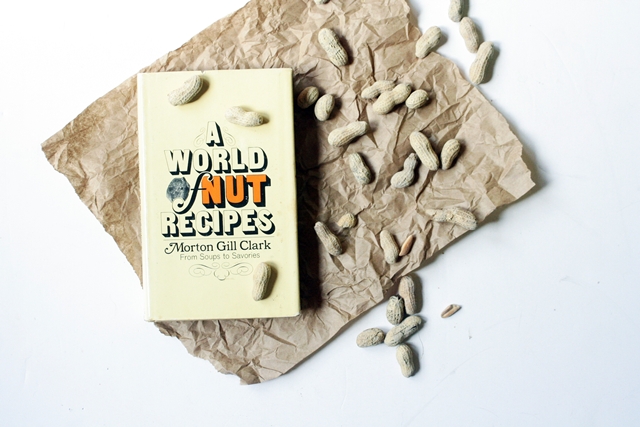
This week in the vintage kitchen we are traveling culinary style to the exotic locale of Indonesia with a flavorful summer salad recipe that capitalizes on the best of fresh garden vegetables. The recipe, Roedjak Manis, hails from the vintage 1967 cookbook A World of Nuts by Morton Gill Clark...

A World of Nuts Cookbook by Morton Gill Clark

and features one of the South’s most prolific crops – the peanut. Poor peanuts have gotten a bad rap in recent years due to all the nut allergy problems, but if you don’t suffer from any such malady than this recipe might just become your most favorite salad of the season.

As colorful as Indonesia’s  floating marketplace in Lok Baintan Kalimantan…

indonesia1

this coleslaw like salad is bursting with a bright bouquet of garden goodness that not only makes it delicious in the flavor department but also pretty on the plate.

Roedjack Manis

And unlike some international recipes, if your garden isn’t yielding this type of produce just yet, no worries, you can find all these ingredients easily at the farmers market or the grocery.

Before we dive into the recipe, let’s look at the place where our salad hails from…

indonesia_collage

Home to over 6,000 islands, Indonesia is an epicenter of culture and cuisine combining Chinese, Indian, European and Middle Eastern nationalities. This unique blend of heritage paired with it’s lush tropical environment provide the platform for some of the most flavorful cuisine in the world. 

Morton Gill Clark, traveled around the world gathering inspiration for his nut cookbook, picking up recipes that not only were not only indigenous of the places he visited but also easily adaptable for American cooks and kitchens. As a mid-century food journalist for Gourmet Magazine and Vogue, he had a refined palette for good, clean food that was easy to prepare and interesting to play around with. His recipe for Roedjak Manis is a shining example of both. Loaded with vitamins, nutrients and healthy fats, it offers a variety of serving options – a side salad, an appetizer, a snack, a unique hors d’ouevre – it is literally a feast for your imagination and for your belly.

If your summer scrapbook doesn’t include a trip to the idyllic islands of Indonesia, don’t fret, your senses will transport you on a trip of a lifetime with this culinary kitchen adventure. Are you ready dear readers? Let’s go!

Roedjak Manis (serves 4-6)

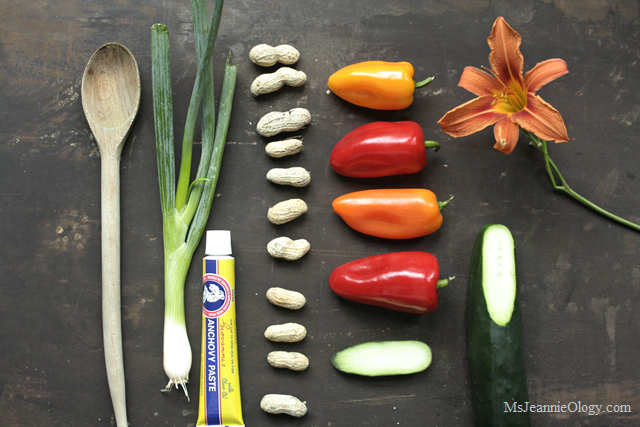
2 sweet red peppers or 8 mini bell peppers in assorted colors, seeded

1 cup peanuts

1 tblsp. brown sugar

1 tsp anchovy paste

1/4 cup lemon juice

1 1/4 cups finely shredded green cabbage

1 cup finely shredded lettuce (spring salad mix, romaine, etc)

1 cup thinly sliced bamboo shoots

1/4 cup slivered scallions

1/3 cup whole toasted peanuts

1 medium cucumber, peeled and thinly sliced

1 hard-boiled egg, chopped

A quick note on ingredients: Ms. Jeannie purchased a bag of dry roasted, salted peanuts in the shell, which she then de-shelled for this recipe. If you don’t have this extra few minutes you can use a jar of already shelled peanuts. Bamboo shoots come in cans packed with water and can be found in the Asian section of the grocery.   

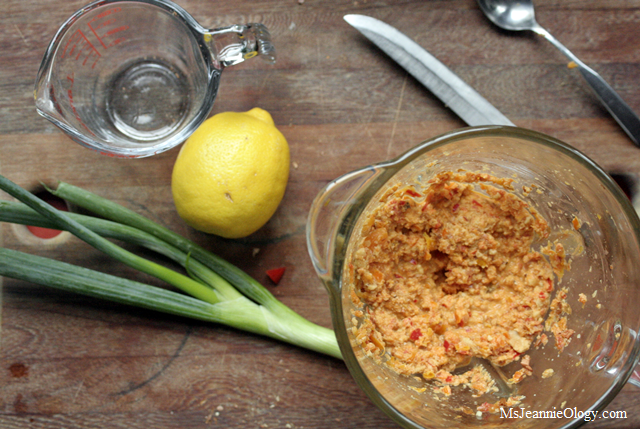
Roughly chop the peppers. Combine peppers and peanuts in a blender and pulse until they form a creamy paste similar to hummus. Depending on the water content of your peppers you might need to add a few squeezes of lemon juice to get the appropriate consistency. After a few minutes in the blender, peanuts and peppers should look like this…

Roedjack Manis

Next, add the sugar, anchovy paste and lemon juice to the pepper mixture and blend until combined. Set aside.

Thinly slice the cabbage, lettuce and bamboo shoots and toss together in a large mixing bowl.

Roedjack Manis

Then add the pepper mixture, whole peanuts and scallions with the lettuce and toss. It’s easiest to use your hands for this process since the pepper mixture is thick.

Roedjack Manis

Once all the ingredients are combined, set salad aside while you chop the egg and slice the cucumber. You can serve these last two ingredients either on top of the salad or on the side depending on your preference. Ms. Jeannie served her egg/cucumber on the side and put the salad in a big bowl, family-style so her dinner mates could serve themselves.

Roedjack Manis

Because this salad is packed with peanut protein, you could make this a meat-free meal or it would also be delicious with simple sautéed or poached chicken breasts, carrot chips or steamed rice. Like the summer season itself, it is easy breezy in the adaptability department and transports well as a picnic component.

Find more nut-based recipes in Morton’s cookbook here.  And find more around-the-world inspiration in the vintage kitchen with these previous cooking related posts.

Cheers and happy cooking!


Oh My Cod: It’s Friday in the Vintage Kitchen!

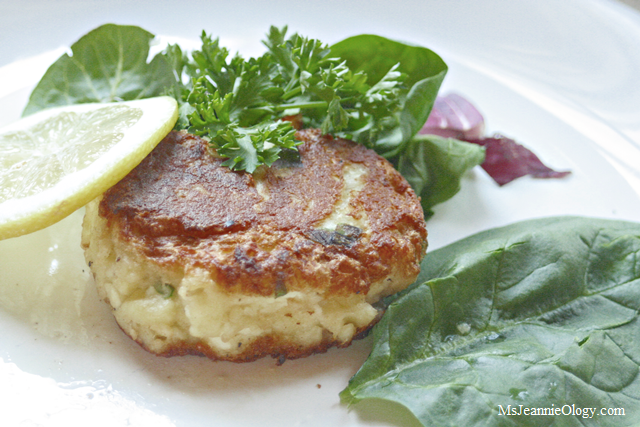
Cod Cakes!

This week Ms. Jeannie was in the kitchen with two famous figures: Richard Nixon and James Beard. Richard assisted in the artwork (that’s his face on that vintage 1974 newspaper!) and James provided the recipe, which is a spin on an iconic food hailing from coastal Maryland.

baltimore
The beautiful view from Baltimore, Maryland!

In 1959 celebrated American chef James Beard published his second cookbook simply titled The James Beard Cookbook.

beard5
The James Beard Cookbook 1959 edition

In 1970 he revised it and in 1980 he had intentions of revising it again. By this point in his career he was five decades into cooking, writing and teaching people about good food and how to prepare it. He had written 18 cookbooks and he had traveled the world in search of good taste. He also had twenty five years under his belt as a teacher in his brownstone cooking school in New York City.

beard3
The Beard House … still enticing cooks world-wide!

But  for all the things he did have by this point in his illustrious career, there was one thing he was sorely missing. Enthusiasm. The energy to refine recipes that felt satisfying in 1959 felt forced by 1980.  As he was embarking on the third revision of his 21 year old cookbook, James was 77 years old and his palette had changed. The way he wanted to prepare food had changed. He was less interested in salt, kitchen gadgets, and formulaic steps. He was more interested in whimsicality, natural selection and on-the-spot innovation. From the 1930’s-1970’s James Beard taught America how to cook. By 1981, with the publication of The New James Beard, he gave America courage to cook for themselves.

beard7
First edition of The New James Beard, 1981.

To play around with a semblance of recipes that could be altered to suit your taste, budget, time constraints and party plans was the essence of his new cookbook and his new approach to confident culinary creativity.

Which brings us to today’s recipe and that famous food hailing from Maryland – crab cakes. Only we are not making crab cakes exactly because James Beard gave us confidence to think outside the box (or the cake if you like a fun pun!). This week Ms. Jeannie is in the kitchen with Richard Nixon and James Beard making Cod Cakes – a simple easy to prepare dinner capitalizing on fresh flavors, inexpensive ingredients and easy preparation.

cakes8

This is a three step recipe broken down in order of the three P’s – potatoes, poaching, patty-ing for efficient preparation.  Intended to serve eight, you can easily cut the recipe in half at all steps if you are feeding less people or make the full recipe and freeze the leftover cakes for a future dinner. Let’s begin with the potatoes…

Step One: POTATOES

2 large potatoes (enough to make 2 cups of mashed potatoes)

3 tablespoons butter

water

Peel and cube potatoes. Place in medium size pot with enough water to cover and boil until potatoes are tender when poked with a fork. Remove from heat and drain. Mix potatoes with butter in a medium size bowl with a hand mixer until fully mashed. Set aside.

Step Two: POACH

White Wine Court Bouillon

2 quarts water

2 cups dry white wine

1 onion stuck with two cloves

1 rib celery

1 clove garlic

1 tablespoon salt

1 strip lemon peel

2 sprigs parsley

4 pounds cod filets, whole or chunked

Preheat oven to 170 degrees and place an empty covered dish in the oven to warm. Make sure the dish is large enough to hold all the fish you are preparing. Combine all ingredients (minus the fish) in a large saute pan, and bring to a boil before reducing the heat and simmering for 20 minutes. Add the fish and poach gently for 10 minutes for each measured inch of thickness. (So if your filet measures 2 inches at its thickest part, poach for 20 minutes, if it is 1 inch poach for 10, 3 inches for 30 etc.). Once the fish is cooked through, remove your covered casserole dish from the oven, place the fish inside, cover it and leave on top of the stove to keep warm while you prepare the next set of ingredients.

Step Three: Patty

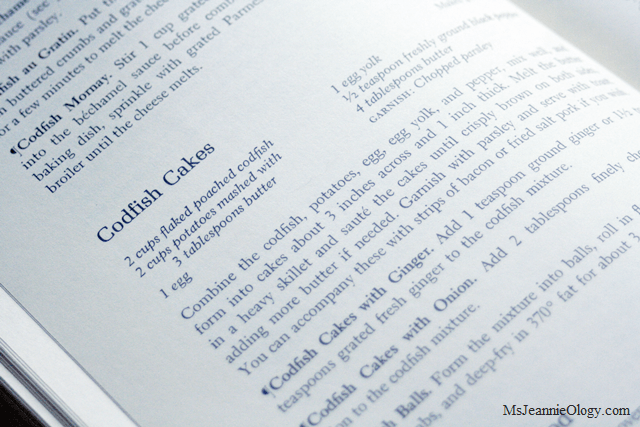
Codfish Cakes

2 cups flaked poached codfish

2 cups mashed potato mixture

1 egg

1 egg yolk

1/2 teaspoon freshly ground black pepper

4 tablespoons butter

Chopped parsley for garnish

Combine the codfish, potatoes, egg, egg yolk and pepper in a large bowl. Mix well and form into cakes about 3 inches across and 1 inch thick. Melt the butter in a heavy skillet and saute the cakes until crispy brown on both sides. Add more butter if needed. Garnish with parsley and serve immediately on top of a bed of mixed lettuce or wilted spinach.

James Beard's Cod Cakes recipe from The New James Beard, 1981
James Beard’s Cod Cakes recipe from The New James Beard, 1981

In the spirit of creativity that this cookbook encourages, James also recommends mixing other ingredients into your cod cakes. If you like try mixing in fresh ginger, onions, bacon or salt pork. Swap the butter for olive oil if you are so inclined. Bake your cakes in the oven instead of on the stovetop. Go a more traditional route and serve your cod cakes with fresh lemon slices and homemade tarter sauce or on top of a bed of smashed peas or alongside a lemon, dill and onion salad. The sky is the limit with this recipe because that’s half the fun of cooking – inventing new twists as you go along:)

cakes7

According to former White House cooking staff, Richard Nixon’s favorite foods were fruit, cottage cheese with ketchup and a weekly splurge of meatloaf (half ground pork/half ground beef). There’s no mention that he was necessarily a huge fish fan, but Ms. Jeannie guesses that these cod cakes would A-Okay in his book, because he rarely refused any type of food. James would have given Richard a thumbs up on the ketchup and cottage cheese combo not because this necessarily sounds appetizing but because Richard himself thought it was, and really that’s all that matters when it comes to cooking. If James Beard taught us anything with The New James Beard cookbook, it was to please your palette first and then please your dinner companions next.

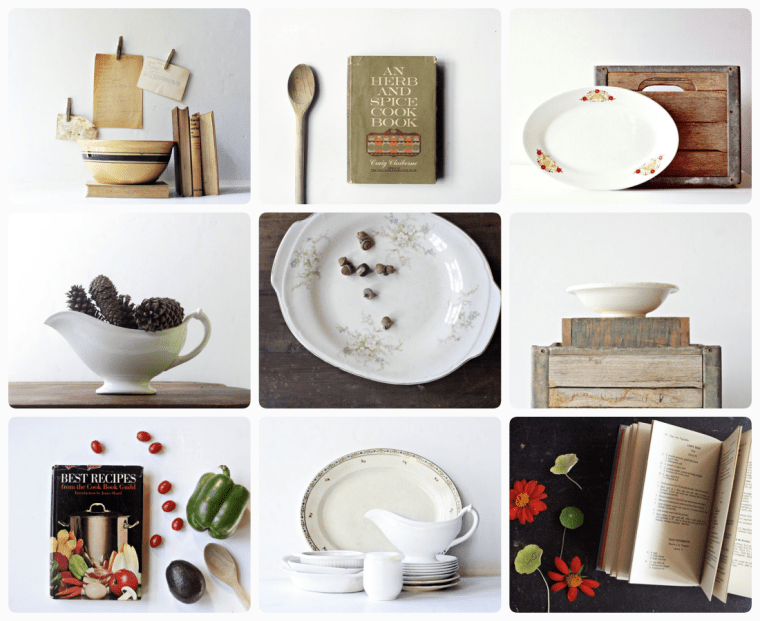
So mix things up, change your tactics, refine your techniques. Explore and experiment and have fun dear readers! The vintage kitchen awaits! If you need a little more inspiration to get you going, perk up your palette with this vintage kitchen items and see what possibilities await…

Clockwise left to right starting at the top:
Clockwise left to right starting at the top: Striped 1940’s mixing bowl1960’s Herb & Spice Cook Book, Vintage Red Floral Platter, Vintage White Serving Bowl, Vintage 1960s Caribbean Cookbook , Antique English Platter, Vintage 1970s Best Recipes Cook Book, Antique Porcelain Gravy Boat, 1930’s French Floral Platter

With love from Richard and James and Ms. Jeannie.


Tahiti Bound: An Exotic Adventure in the Vintage Kitchen!

Vintage Tahiti travel poster.

This week in the Vintage Kitchen we are going on an exotic adventure to the beautiful beachy, balmy enclave of Papeete on the French Polynesian island of Tahiti. The weather in Ms. Jeannie’s world recently has been crazy. She’s seen it all – frost, snow, heat, humidity, rain, strong winds, fog, sleet, hail, and tornado warnings all just within the past 14 days. And while the air and temperatures of the past few weeks have been very unsettled,  Ms. Jeannie is excited because all of this wacky end-of-winter weather means that sunny Spring will be here very very soon!

While she waits for Mother Nature to get her schedule sorted out, Ms. Jeannie has been daydreaming of tropical island breezes thanks to the help of Mr. Victor Bergeron and his 1968 Pacific Island Cookbook. 

tv7

If you are unfamiliar with Victor’s full name, you might know him by his more casual moniker, Trader Vic, the king of 20th-century hospitality. A worldwide traveler and an enigmatic restaurateur Victor founded the world’s first highly successful string of polynesian-themed restaurants.

Victor Bergeron (1903-1984) the founder of Trader Vic’s restaurant chain.

First opened in the 1950s in California, the still growing Trader Vic’s restaurant brand was a re-invention of Bergeron’s first attempt in the food industry with his humble lodge-style eatery and bar called Hinky Dink’s which he opened in 1934.

Victor smiles for a photoshoot in a 1951 issue of Holiday magazine.
Victor smiles for a photo shoot in a 1951 issue of Holiday magazine.

Learning the ropes in the food industry taught him a lot those first twenty years, so by the time Trader Vic’s (the restaurant) launched, Victor was a skilled businessman with a big flair for entertaining and fine-tuned instincts as to what people wanted in a dining experience. As a lover of Cantonese-style cooking, Bergeron married exceptional storytelling, authentic exotic antique decorations, and traditional South Seas recipes with a festive dining atmosphere to create a unique brand of restaurant chemistry that appealed to the adventure seeker and jet-setter of mid-century America. It was the rise of all things terrifically tiki.

Victor Bergeron mixing it up!

Victor’s travel experiences are all colorfully detailed in his cookbook making it a sort of fun travel journal and kitchen cooking primer in one. And then there are the drinks!  In addition to cooking, Victor was also a mixologist creating a slew of enticing cocktails, like the first Mai Tai, which launched a wave of tropical drink requests for bartenders from then on out. Escapism never tasted so sweet!

luau6

Which gets us back to Ms. Jeannie’s island getaway in the kitchen this February day. With 30-degree temperatures chilling the air outside, Ms. Jeannie cracked open coconuts, peeled ginger, poured a rum cocktail, and got down to cooking all the while pretending she was beach-side in Papeete where the view looks like this…

tahiti3
Vintage Tahitian postcard of Papeete.

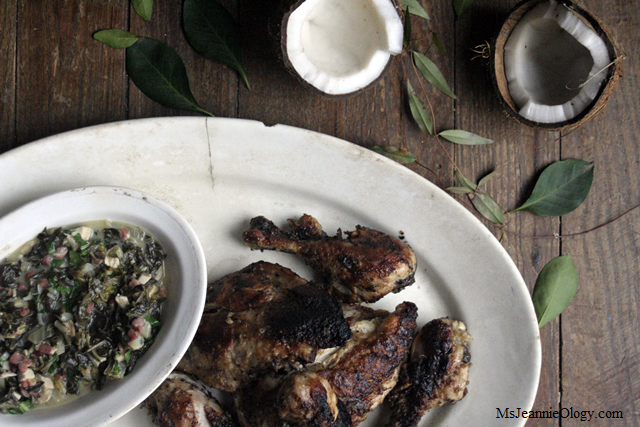
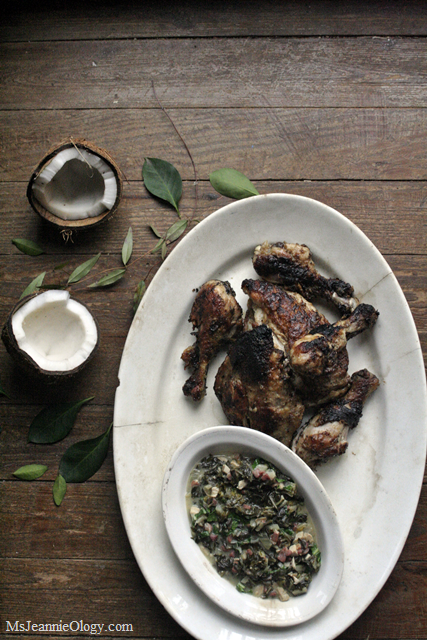
Cheers to Victor! It’s Pota on the menu tonight served alongside steamed rice and chicken sauced with coconut ginger.

Pota with Chicken and Ginger

Pota

4 tablespoons diced salt pork

1/2 cup chopped cooked chicken

5 cups coarsely chopped Bok Choy

4 tablespoons chopped green onions (scallions)

1/2 cup chicken stock

Salt & Pepper to taste

Juice of 1/2 lemon

4 tablespoons coconut milk

2 teaspoons cornstarch mixed with 1/4 cup water

  1. Saute salt pork until brown in large skillet. Add chicken, chard and green onion.
  2. Stir in chicken stock, seasonings and lemon juice. Simmer until chard is tender.
  3. Add coconut milk, bring to a boil but just barely. Thicken with cornstarch, stirring constantly, adding just enough to thicken the mixture.
  4. Serve immediately or keep warm over low heat until chicken and rice are ready.

Chicken with Ginger

1 whole chicken, 5 lbs

1/2 cup flour seasoned with salt and pepper

2-3 tablespoons olive oil

1 piece fresh ginger root (about the length of your thumb finger), grated

1/4 cup coconut milk

  1. Preheat oven to 350 degrees.
  2. Cut chicken in pieces. Do not remove the skin.
  3. Place chicken, flour and salt and paper in a paper bag and shake until all chicken pieces are well-coated.
  4. Heat the oil in a large pan on the stovetop and then saute the chicken, turning only once, until thoroughly cooked on each side (internal temperature should be 180).
  5. Remove chicken from heat and place in oven-proof dish.
  6. In a separate bowl mix together coconut milk and ginger. Pour over chicken and place dish in the oven for 5 minutes until the coconut sauce melts.

Serve alongside Pota and steamed rice and a fun fruity cocktail! Perhaps a homemade Mai Tai or two in Victor’s honor. He’d be as pleased as (rum) punch!

A Tahitian Dinner: Pote and Chicken with GInger
A Tahitian Dinner: Pote and Chicken with Ginger

This is a surefire recipe to chase away those end-of-winter blues. Satisfying for the spirit and for the belly! Find more Trader Vic recipes here. And more tropical cookbooks here. Manuia!

In the Vintage Kitchen: Eggplant Pizza

Eggplant Pizza

Pizza has been a favorite in the U.S. since the early 1900’s with the first of its kind debuting in New York City in 1905. Popular right from the start, pizza wars started popping up all over the city, then the region then the country as Italian immigrants spread across America with their claims of making the best pizza in town.

G. Lombardi's the trendsetter on the american (pizza) frontier.
G. Lombardi’s on Spring Street in New York City was the trendsetter on the American (pizza) frontier.

And while bravado and traditional recipes may have fueled the pizza craze initially, creativity, with its variations on a theme, has kept it going ever since.

Strolling through 19th century pizza signs
A walk through 20th century pizza signs…

By the 1960’s American home chefs were experimenting with the complimentary trifecta of tomato sauce, bread and cheese in new and spectacular ways.  By thinking beyond the boundaries of size, shape and similarity, pizza was elevated to a nouveau cuisine that could incorporate a host of  ingredients from the humble to the exotic appealing to palates both simple and sophisticated.

One such experimenter determined to add a new twist to the traditional pizza pie was food editor, critic and chef Craig Claiborne.

craigclaiborne2

In his 1963 Herb and Spice Cookbook, he capitalized on the subtle yet dynamic flavor pairings of basil, oregano and garlic and came up with a dough-less version of eggplant pizza.

An Herb And Spice Cookbook by Craig Claiborne

Craig was no slouch in the cooking department. He knew his way around a home kitchen just as much as he did a commercial kitchen and he knew what and how people liked to eat. As the The New York Times food and restaurant critic for 29 years from 1957-1986, he pretty much pioneered food journalism in the Unites States at a time in the mid-1950’s when such editorial posts were primarily held by women for the female homemaker audience. But Craig was different, he was interested in casting wider nets, reaching more diverse audiences and bridging a relationship between restaurants, patrons and cultures.

craigclaiborne1

The author of over twenty cookbooks throughout his career, Craig’s Herb and Spice Cook Book is marvelous in both content and presentation. Organized alphabetically by spice or herb name it is a great reference cookbook when you have ten pounds of basil ready to harvest in your garden or you are craving a specific spice like curry or cinnamon… or marjoram!

marjoram

The eggplant pizza recipe fell under the oregano section which included recipes for Eggplant Antipasto, Chicken Napolitana, Herb-Broiled Swordfish and Creole Cabbage among four others. Excited by the possibility of giving her indoor oregano plant a hair-cut, Ms. Jeannie was happy to try this new version of pizza which turned out to be really delicious.

pizza1

It is a fun recipe for a few different reasons: 1} you make a quick version of homemade tomato sauce that takes little time and tastes great; 2} the “pizzas” can range in a variety of customizable sizes depending on the girth of your eggplant… if you have a skinnier eggplant you could serve those as appetizers or hors d’ouevres  for a party (maybe this weekend’s Super Bowl?!) or if you have a more rubenesque eggplant that would be a perfect size for dinner entrees; and 3} the breadcrumbs add a fabulous bit of crunch to the whole package just like a traditional pizza dough would.

So without further ado, here’s the recipe…Ms. Jeannie hopes you love this magical version of pizza just as much as the tradtional.

Eggplant Pizza (serves 6)

2 tablespoons cooking oil (Ms. Jeannie used olive oil)

1 small clove of garlic, minced

3/4 cup finely chopped onion

3/4 cup finely chopped green pepper

4 1/2 tablespoons tomato paste

3 tablespoons water

1 teaspoon oregano

3/4 teaspoon basil leaves

3/4 teaspoon sugar

2 3/4 teaspoons salt* (Ms. Jeannie thinks this might be a typo as it seems like a lot of salt for this size recipe so please use caution and your own sensibilities with this ingredient. And remember you an always add more salt but never take it away.  Ms.Jeannie used about 1 teaspoon total but you might adjust that according to your taste).

1 medium eggplant

1 egg

1 tablespoon milk

1/2 cup bread crumbs (Ms. Jeannie used plain panko-style bread crumbs)

1/4 cup freshly grated Parmesean cheese

1/4 teaspoon freshly ground pepper

flour for dredging

Oil for frying (Ms. Jeannie used olive oil)

Toppings of your choice: whatever  you normally like on a pizza ie: mozzarella cheese, fresh basil, olives, etc.

Directions:

1. Heat the oil in a one quart saucepan. Add the garlic, onion and green pepper. Cook, stirring, three minutes or until the onions and green pepper are limp.

pizza3

2. Add the tomato paste and water. Cover and cook, stirring frequently, over low heat until very thick, about ten minutes Add the oregano, basil, sugar and 1/2 teaspoon of salt* before the end of cooking time. *Salt to taste here. If you think the sauce needs more add a little bit, just keep in mind you’ll be adding salty parmesean cheese and possibly salty toppings later).

3. Remove sauce from heat and set aside while preparing the eggplant.

4. Wash, peel and cut eggplant into cross-wise slices one half inch thick.

5. Beat the egg with the milk and set aside. Mix bread crumbs with the remaining cheese, 1/2 teaspoon salt and the pepper.

6. Dip the eggplant slices in the flour, then in the beaten egg, then in the seasoned bread crumbs.

7. Saute the eggplant in the hot oil until golden, turning to brown on both sides. Remove from the pan and drain on paper towels. Repeat until all eggplants are cooked.

pizza4

8. Place the cooked eggplant slices on a cookie sheet and spread them with the cooked tomato sauce. Top with mozzarella cheese and your desired toppings . Place under a broiler until the cheese has melted and is lightly browned. Serve immediately.

pizza6

Ms. Jeannie kept her pizzas simple and just topped them with mozzarella, capers, basil and garlic but other ideas include prosciutto, pineapple, mushrooms, pepperoni, olives, figs, etc. So many possibilities!

Happy experimenting dear readers! With love from Ms. Jeannie and Craig Claiborne

You can find Craig Claiborne’s Herb and Spice Cook Book here and a host of other vintage recipes Ms. Jeannie has blogged about previously here.

Want to know what it is like to run a real-life modern day pizza kitchen? Check out the recently published book Delancey by Molly Wizenberg – it is completely entertaining. And if you are not craving pizza by the end of all this, you are extraordinary:)

mollywizenberg


In the Vintage Kitchen: How To Make Healthy Refried Beans From Scratch

beans1

Happy New Year dear readers! Ms. Jeannie is sending you bucketfuls (it’s been raining a lot here) of good wishes, good fortune and good health for this new year.

This week we are back in the vintage kitchen with a healthy recipe that features a food staple held high in the luck department for January. Beans! They also made the news this past week as something we Americans should be eating more of (poor unfortunate sugar just got the worst rap) so we are conquering two bright and shiny wish you well tidings with one post here – good health and good luck.

If you are anything like Ms. Jeannie you might never have thought much about refried beans…how they are made, what exactly they are made with and how you might possibly make your own better version at home. In the store they come canned in two varieties, vegetarian and traditional and most contain hydrogenated oils and preservatives which are not the healthiest of options. But refried beans are great on tacos, burritos and nachos and are a great source of protein so Ms. Jeannie was excited to come across a from-scratch recipe in this vintage cookbook recently listed in her shop

bestrecipes1
Best Recipes from the Cook Book Guild published in 1972

Published in 1972, The Best Recipes from the Cook Book Guild is actually a compilation book of hundreds of recipes from other note-worthy cookbooks published between the 1940’s and the 1960’s. Each recipe comes with source notes and sometimes a story about where the recipe came from and who made it originally, which of course opens the door to a myriad of culinary adventures to pursue.


mexicancooking

The refried bean recipe came from the 1967 edition of The Complete Book of Mexican Cooking by Elisabeth Lambert Ortiz (1915-2003), who was an award-winning  British food writer and the wife of Mexican diplomat Cesar Ortiz Tenoco.

elisabethlambertortiz

Through extensive travels in South America (and perhaps a few helpful lessons from Cesar’s family!) Elisabeth became an expert at preparing and instructing others on the art of Mexican cooking. The author of numerous international cookbooks, she is credited primarily with introducing Latin American cuisine to home cooks in both the U.S. and her native England during the 1960’s singing it’s flavor-packed praises in the forms of books and articles for Gourmet magazine and various food-related periodicals.  So what we have here dear readers is a fresh approach to an ethnic recipe from  a woman who learned her way through the culture. In Ms. Jeannie’s opinion, this is the best kind of cooking – learning through curiosity, love and experience .

Part One: Cooking the Beans

Refried Beans (Frijoles Refritos) serves 6

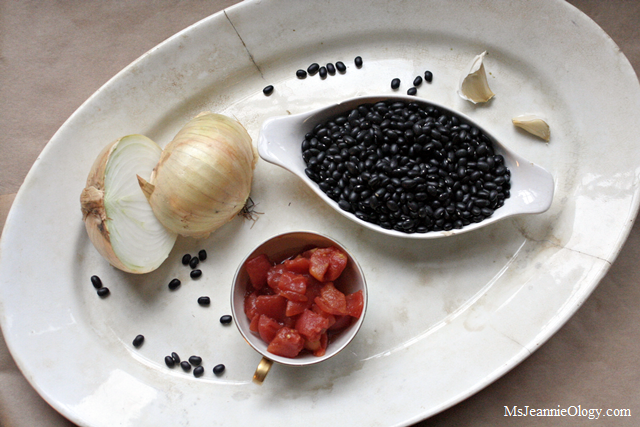
2 cups dried pinto, black or red kidney beans (Ms. Jeannie used black beans for her recipe)

cold water

2 onions, chopped

2 cloves garlic, chopped

1 bay leaf

2 serrano chiles, chopped or 1 teaspoon dried chilis, crumbled (Ms. Jeannie used one teaspoon red pepper flakes since fresh chiles aren’t in season yet here in the South)

11 tablespoons lard or oil (Ms. Jeannie used olive oil)

salt

freshly ground pepper

1 tomato, peeled, seeded and chopped ( if tomatoes aren’t in season yet you can substitute 1 can of diced tomatoes, drained of juice)

  1. Wash the beans and place in a saucepan, without soaking, with enough cold water to cover, 1 of the chopped onions, 1 of the garlic cloves, the bay leaf and the chiles.
  2. Cover, bring to a boil, reduce heat; and simmer gently , adding more boiling water as it evaporates from the pan. {Note: Using black beans, this process took about one hour and 30 minutes with about a cup of additional boiling water added halfway through.}
  3. When the beans begin to wrinkle (or become sift as in the case of the black beans) add one tablespoon of lard or oil and continue to cook for an additional 30 minutes over the same heat. Do not add anymore water.
  4. Heat the remaining lard or oil in a skillet, and saute the remaining onion and garlic until limp. Add the tomato and cook for an additional 2 minutes.
  5. Remove the pan from the heat and working in small batches add beans to the onion/garlic mixture mashing them together to form a paste. Repeat this step until all beans have mashed with the onion and garlic.
  6. Heat 2 tablespoons of lard or oil in a large skillet, add the beans in small batches and mash over low heat, forming a creamy heavy paste. Add two additional tablespoons of lard or oil intermittently throughout this process.
  7. Repeat step six again with the last 4 tablespoons of oil, once the beans have all been initially pureed. (This is the re-fried part in the name refried beans!) It should look like this when finished…
Homemade Refried Beans
Part Two: Mashing and Frying the Beans

This recipe is a great one because, once you understand the principles of refried beans  you can really change things up and add your own flair if you like. Spice it up, experiment with different herbs or chopped vegetables like leeks or scallions or different types of cheese.  If you like your refried beans a little bit more loose, you can add a little water to the pan after step 7 and mix it into the beans until you get the desired consistency. Likewise you can use the beans as part of lots of different dinner options from hors d’oeuvres to appetizers to main courses.

beans5

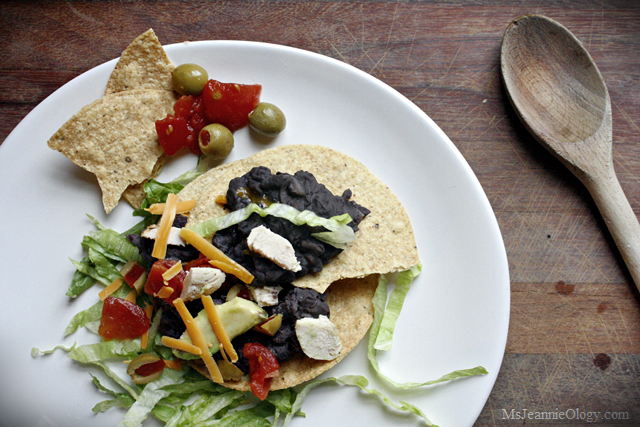
Ms. Jeannie made chicken tostados with her refried beans.  Quick and easy, she prepared them with the same whimsical, spur-of-the-moment method she uses for making tacos.  This one featured layers of tostado with chicken breast, green olives, lettuce, onion, avocado, cheddar cheese, tomatoes and the warm refried beans.

There are so many beans left over, Ms. Jeannie’s already hatching new recipes in her head about how else she can use them in her cooking this week ahead.  It looks like luck will continue spilling forth across many days this week in the kitchen department. If you want to save your luck for another day store it in an air-tight container and freeze it for later use:)

To embark on more culinary adventures using The Best Recipes from The Cookbook Guild as your spring board, please visit here. And as always, you can access dozens of other delicious vintage recipes on Ms. Jeannie’s blog using this link.

Happy cooking dear readers!


Taco Tuesday: In the Vintage Kitchen

mex1

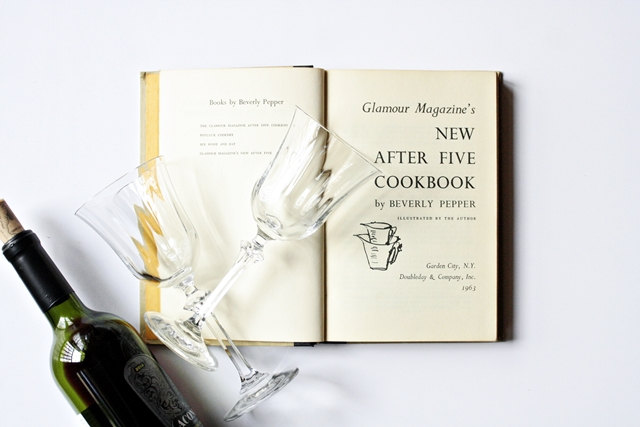
In 1963, a new edition of a popular 12 year old cookbook was published by Beverly Pepper.

glamour magazine's after five cookbook

The cookbook was Glamour Magazine’s New After Five Cookbook containing a year’s worth of dinner recipes designed for the young modern woman who didn’t have a lot of extra time to sit down and menu plan. With an audience comprised primarily of busy career girls, new mothers, college grads, young marrieds and the over extended singleton…

photo via pinterest
photo via pinterest

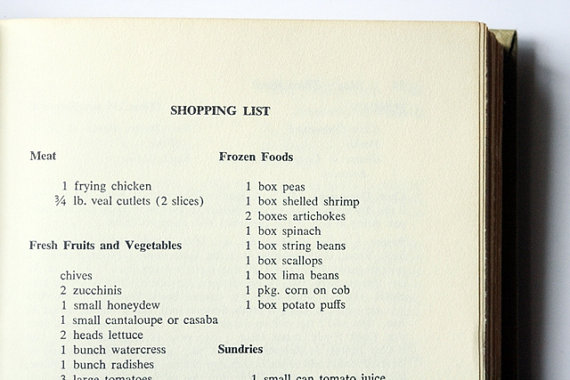
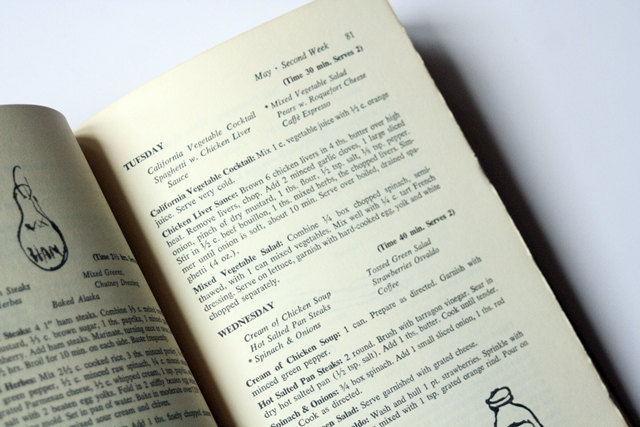
the After Five Cookbook was a dream come true. Broken down by month and then further by week, each section begins with a pantry staple list needed for the month followed by a weekly shopping list of all ingredients needed over the next six days..

recipe2

The recipes are laid out from from Sunday to Friday of each week with Saturday of course left out, assuming either a night off, a party engagement or better yet, a dinner date out.

recipe1

The last twenty pages contain special large-scale menus ideal for holidays or house parties when ladies were cooking for a crowd.

photo via pinterest
photo via pinterest

This is the section where Ms. Jeannie found the recipe for this blog post – a feast of flavor (or a gourmet gangfest as Beverley Pepper liked to call it) that serves eight but could easily be doubled or tripled to feed the proverbial army. Time is always short-handed in December so while this recipe does take two hours to prepare, it freezes wonderfully, sits well in a chafing dish, makes excellent leftovers and transports easily if you are tailgating or pot-lucking your way through the month.

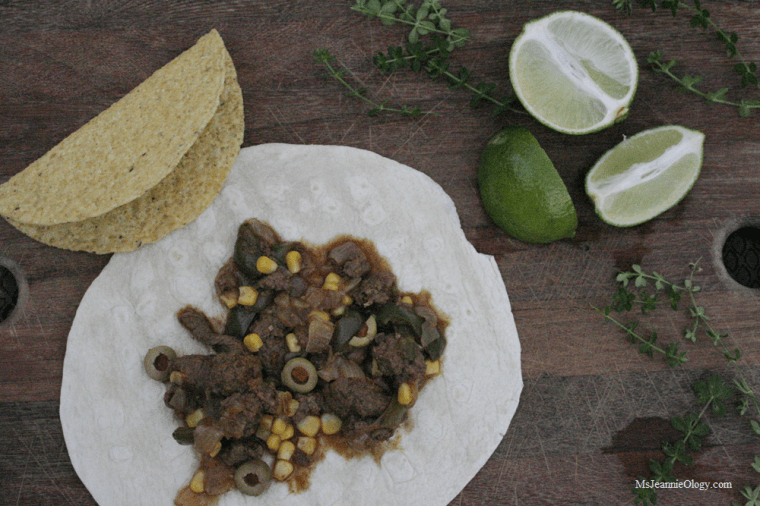
Mexican Beef with Olives

Mexican Beef with Olives (serves 6-8)

3 lbs. cubed grass-fed stew beef

4 tablespoons olive oil

1/2 lb. ground grass-fed beef

2 minced garlic cloves

3 green peppers, cut in 1″inch strips

6 onions, chopped

2 tblsp. tomato paste

6 dashes Tabasco sauce (or equivalent hot sauce)

3 tblsp. chili powder

3 cups chicken broth

2 cans corn kernels, drained but reserve the liquid

1 cup spanish olives, sliced

salt and pepper (to taste)

  1. In a large pan, brown the stew beef, ground beef, garlic, peppers and onions in the olive oil over medium high heat until the beef is browned and the onions begin to caramelize.
  2. Add the tomato paste, tabasco, chili powder, salt and pepper to the pan and mix well.
  3. Add the chicken broth, reduce heat to medium, cover and simmer for one hour.
  4. Add the corn kernals and simmer uncovered for an additional 30-45 minutes until most of the liquid is consumed.
  5. The mixture at this point should be thick and saucy, if it looks too liquidy or thin let it simmer longer, if it looks too dry add some of the reserved liquid from the drained corn kernels. Once the mixture reaches the desired consistency, add the olives and stir thoroughly over medium heat for 4 minutes.
  6. If you prepare this dish ahead of time add the olives just before reheating.
  7. Serve with rice, soft tortillas, hard tacos and lime wedges.

Mexican Beef with Olives

Ms. Jeannie served her tacos with white rice that was lightly tossed with freshly squeezed lime juice (half of a lime), a touch of salt and a few dashes of cumin.  Other serving options that would be equally delicious include: sour cream, cheddar cheese, cilantro, and/or sliced mango.

Fun for family and friends, this recipe only gets better as it sits in the fridge making leftovers and quick dinner reheats fast and easy throughout the week. A fun gift for food bloggers, kitchen experimenters and vintage cookbook lovers, the After Five Cookbook is available here.

Happy cooking dear readers!


Israel, India and the International Dinner Night – A Vintage Rosh Hashana Recipe

Authentic India-based Chicken Curry circa 1964

Happy New Year dear readers! This coming Sunday marks the two day festival of Rosh Hashana, which celebrates the creation of Adam and Eve and mankind’s role in the world.  Although Ms. Jeannie, herself is not Jewish, she thought it would be fun to mark the day with an international dinner night featuring a holiday approved (and kosher certified!) meal which brings together the unique and diverse flavors of the Holy Land.

Many cultural influences make up the demographic food map of Israel, including Indian, Greek, Arabic, Italian and French offering unexpected and interesting food combinations and flavor pairings. In this vintage Isreali cookbook, published in 1964…

The Israeli Cook Book by Molly Lyons Bar-David

author and culinary advisor to El-Al Airlines, Molly Lyons Bar-David compiled hundreds of authentic, local recipes from over 70 regions within the country. Many of the recipes had been passed down from generations bringing with them their own unique stories, folklore and legends which Molly also shares in the cookbook.

An alley in the Jewish Quarter in the old city of Jerusalem, Israel. Photo via pinterest.

Her intention for this culinary project was to serve true Israeli food on board mid-century El-Al airlines flights as a gateway experience for incoming passengers.

Vintage 1960s El-Al airlines travel poster. Via pinterest

But as Molly got deeper and deeper into the collection process, interviewing literally hundreds of locals, she learned that the diverse food scene was just as dynamic and layered as the centuries old history and faith long associated with Israel.

Cochin, India. Photo via pinterest

To honor the historical holiday, Ms. Jeannie chose an ancient chicken curry recipe that stems from the spice markets of Cochin, India as brought by the “Cochin Jews”  who were believed to have emigrated from Palestine after the second destruction of the Temple.

A Jewish family from Cochin , India circa 1880. Photo via pinterest.

Molly writes in her introduction to the recipe…

“Although their culture, (including a caste system) and even their skin coloring has become indistinguishable from that of their Hindu neighbors, they never forsook their Jewish heritage. Their food, chiefly rice and curries, is like that of the Indians, except that they strictly maintain the kosher laws.” 

Ms. Jeannie is a big fan of curry, and has made countless variations taken from recipe books, magazine articles, online sources and foodie recommendations, but this by far was the best (THE BEST!) curry recipe she has found to date. Full of flavor both subtle and bright, it makes a ton and keeps getting better day after day in the leftover department.

It is simple and easy to make and contains basic ingredients that are easy to gather. So if you are looking for a bit of the edible exotic to ring in the New Year or celebrate the history of a culture other than your own this is a fabulously delicious recipe! You can also omit the chicken and make it strictly a vegetable curry if you prefer. Ms. Jeannie served it on top of a bed of Jasmine rice with a side of warm Naan bread.

Cochin Curry
Cochin Curry

Chicken Curry (serves 4)

1 2lb chicken, cut in parts (do not de-bone)

5 tablespoons olive oil

3.5 cups water

5 large onions, chopped

2 cloves garlic, mashed

4 large tomatoes, chopped (or one large can of diced tomatoes)

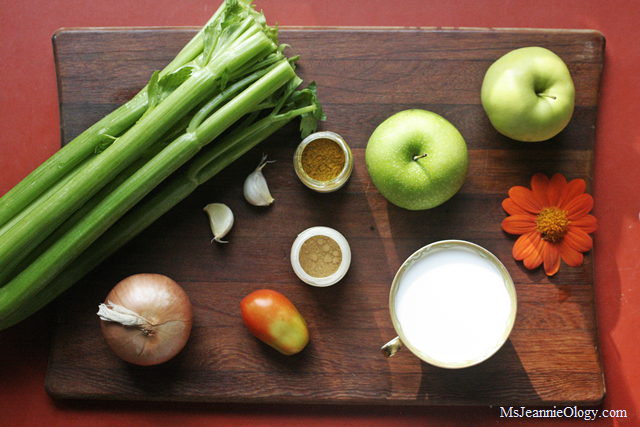
1 cup celery, chopped

2 apples, peeled and cubed

2 tablespoons sugar

1 teaspoon ground ginger

1 tablespoon (or more!) curry powder (as a big fan, Ms. Jeannie used 2.5 tablespoons!)

1.5 tablespoons flour

3 cups coconut milk

2 tablespoons grated coconut (optional)

1.5 teaspoons salt

cayenne pepper (to taste)

c3

  1. Fry the chicken in 3 tablespoons of olive oil until lightly browned on all sides (about 10-12 minutes total or 5 minutes on each side). Remove from the pan and set aside.
  2. Add the water to a large stock pot and bring to a boil. Add the chicken and simmer uncovered for 30 minutes on medium low heat. c4
  3.  In a new large pan, heat the remaining 2 tablespoons olive oil and add all the chopped vegetables and spices (onions, garlic, tomatoes, celery, apples, sugar, ginger and curry powder). Mix to combine.  Sprinkle on the flour.  Mix well again and then add the coconut milk and seasonings, and simmer. Once the chicken is ready, transfer all pieces to the curried vegetables and cook 10-20 minutes more.
  4. Serve hot with rice and Naan bread if you like.* (Ms. Jeannie loves the Naan bread made by Stonefire Flatbreads which is available in most grocery stores in the fresh bakery section.)

Enjoy dear readers! If you’d like to learn about more authentic recipes from the Israeli Cook Book, the Jewish holidays they correspond with and the history behind them, please visit Ms. Jeannie’s shop here. And if you are celebrating the holiday this weekend, Happy Happy New Year:)
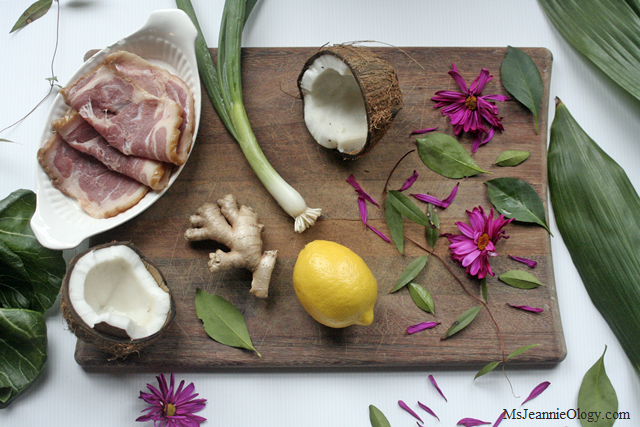
Authentic India-based Chicken Curry circa 1964
Authentic Indian Chicken Curry circa 1964 as prepared from The Israeli Cook Book by Molly Lyons Bar-David

Between Seasons with Jacques: Hominy, Cilantro and Cumin Stew

Shhh… don’t tell Julia, we’ve got another favorite French chef!

Julia & Jacques
Julia & Jacques

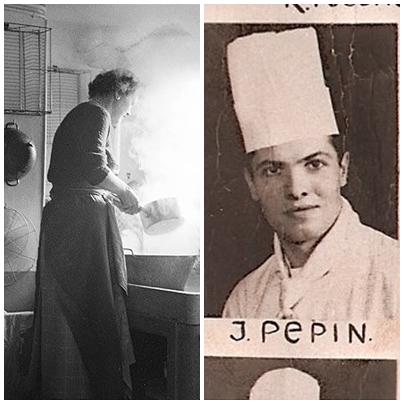
Practically equivalent in the incredibly delicious food category, the culinary wonders of Jacques Pepin are a constant source of inspiration when it comes to time spent well in the kitchen. In a lot of ways he’s the opposite of Julia Child. She was an American who moved to France. He was a Frenchman who moved to America. Julia learned the classics of French cooking. Jacques created original recipes. She developed her interest in cooking later in life while Jacques grew up in his family’s restaurant in Lyon. But for all their opposites, they shared many things in common – their passion for food and fun being two.

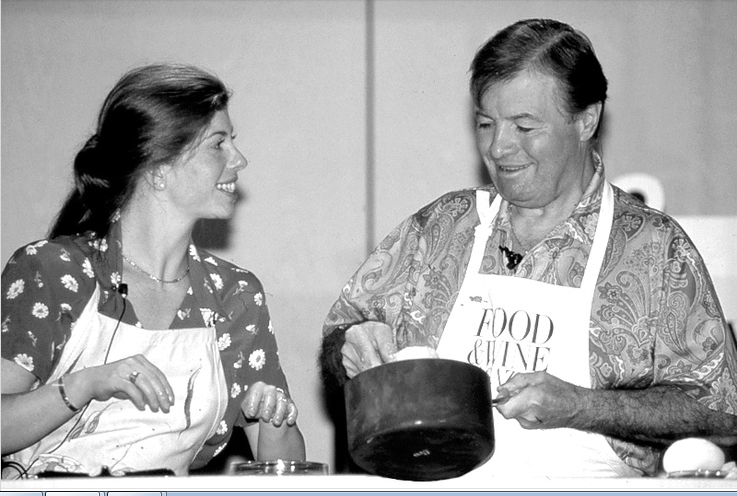
Claudine & Jacques in 1994.

Like Julia, Jacques had his own cooking show on PBS which aired every Sunday afternoon in the late 1990s. Jacques was not only fabulous in the kitchen but he was funny too. The whole precipice of the show was him trying to teach his adult daughter, Claudine, how to cook. Claudine was an everyman (everywoman?!) in the kitchen, and although she was the daughter of an FFC (famous French chef) she didn’t know much about cooking.

For her, techniques were troublesome, flavor pairings were confusing and certain preparations were downright intimidating. But In Cooking with Claudine, Jacques was there to teach and Claudine was there to learn, sort of. They were cute together. She’d make her own shortcuts, he’d quibble with her about the proper way to cut an onion or smash some garlic. Often times she’d humor him and then do it her own way. They laughed with each other and in the end they both learned from each other. Dad and daughter cooking up some fun. This camaraderie turned into quite a few television appearances over the years. If you are lucky you can still catch dad and daughter whipping up something delightful at a food festival or a special event.

Here they are sharpening knives in Aspen in 2012…

Jacques may be French by birth but his heart and home are here with us in the States.  He has surrounded himself with American culture and cuisine since he first came to the U.S. in the 1950s. And guess where one of his first jobs was? Before earning his Master’s degree at Columbia University, Jacques helped develop menus for the restaurant of this famous mid-century travel icon…

Howard Johnson's
Howard Johnson’s Motor Lodge and Restaurant circa 1960’s!

Immersed in the everyday palate of the American culture, Jacques’ recipes pull from cultures around the world. They may have French foundations, but they are built with various cuisines which make for unique arrangements in the flavor department.

hominy1
Hominy, Cilantro and Cumin Stew

One recipe we tried recently featured an international concoction of ingredients. Pulling from Mexican, Mediterranean, and Middle-Eastern staples, this springtime stew is perfect for the hot/cold/hot/cold temperatures of March. When the weather is as indecisive as your appetite and you can’t choose between something warm, light, fresh, or hearty –  Jacques’ Hominy, Cilantro and Cumin stew is the way to go.

hominy1

It utilizes three springtime ingredients – onions and herbs – yet is packed with the warm, smoky flavor that suits a sweater and a scarf. It also involves this mysterious ingredient…

--

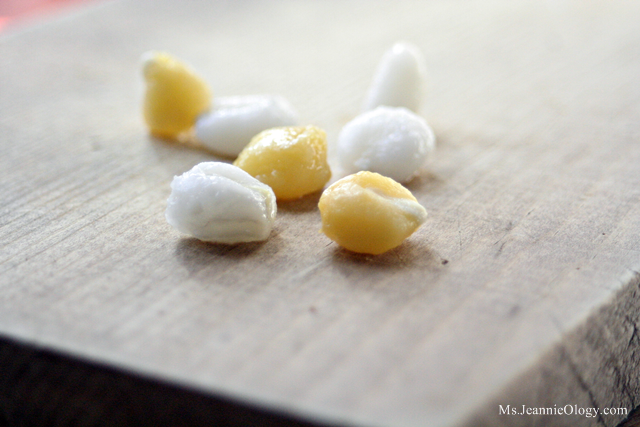
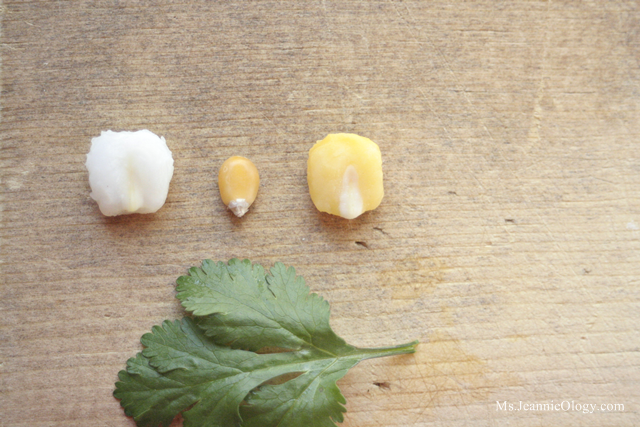
Before we made this recipe, we thought this was the same thing as polenta which is the same thing as grits – a Southern staple here in the South. But not so, dear readers. Hominy is actually a corn kernel plumped up to the size of a chickpea and sold in cans. So nothing at all like its flour sacked cousins.  A whole lesson was to be had at the grocery store. Polenta and grits are the same thing. Hominy is an entirely different matter altogether. Same family, different form.

Hominy comes in two varieties – white and yellow. And as you can see from this picture – when compared to a popcorn kernel it is quite plump. The recipe calls for both colors which gives it an attractive color palette.

hominy4

Because of its distinct flavor, there is not a lot of variety when it comes to cooking with hominy. We were surprised to find just a few different types of recipes online. Jacques loves to cook with these little corn puffs, and now thanks to his delicious recipe, we do too!

Hominy, Cilantro and Cumin Stew

(serves 6)

2 tablespoons canola oil (we used olive oil)

1 medium onion

6-8 scallions – washed, trimmed and chopped

2 small zucchini – washed, trimmed and diced

5-6 medium mushrooms – washed and chopped

5-6 cloves of garlic – peeled, crushed and finely chopped

1 1/2 teaspoons ground cumin

1/4 teaspoon crushed red pepper

1 can (15.5 oz) white hominy

1 can (15.5 oz) yellow hominy

1 medium tomato, peeled, seeded and chopped (because it is not tomato season here yet we used 7 oz. of canned diced tomatoes)

1 cup loosely packed fresh cilantro leaves, chopped

hominy5

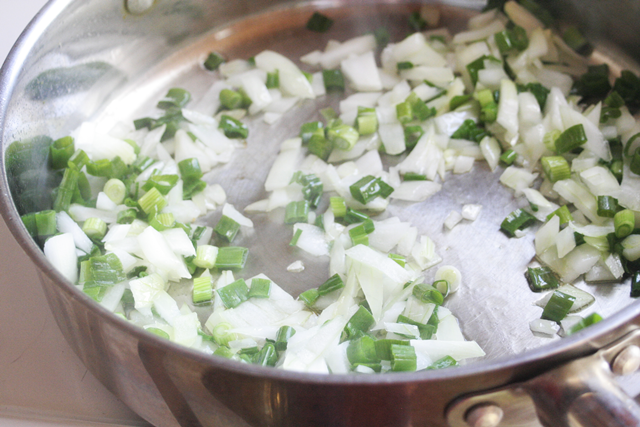
Heat the oil in a large pan. When it is hot, saute the onions and scallions for one minute. Then add zucchini, mushrooms, garlic, cumin and pepper flakes: cook for 3-4 minutes.

hominy9

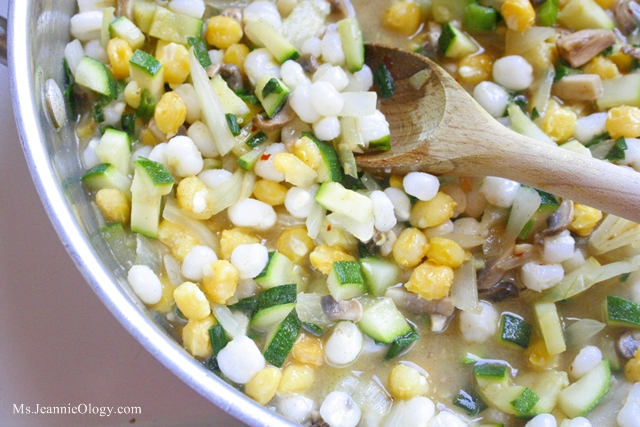
Add the hominy (with liquid from can) to the pan and bring mixture to a full boil. Reduce heat to low, cover and simmer for 10 minutes. Check the consistency after 10 – you don’t want it to be soupy, nor do you want it to be dry. If it is too liquidy – let it simmer until mixture is just moist. If it is too dry add a few tablespoons of water.

Stir in tomatoes and cilantro, and let the mixture come to a boil again. Let it cook for one more minute before ladling into serving bowls.

hominy2

Jacques makes this as a side dish but you could also have it on its own as a vegetarian lunch or dinner, which is what we did here. Serving it with a few tostadas gives it a nice bit of crunch but also it would be great with poached chicken or a simple white fish. You could even serve it as a chunky dip for your Cinco de Mayo party!

Happy hominy dear readers! If you have any great recipes featuring this flavorful fella please post it in the comments below.

PS. If you are loyal fan to Julia Child, find one of her vintage cookbooks for sale in her shop. Click the photo for more info!

julia_french

Tuesday In the Kitchen – The Art of Greek Cookery

Opa! It's international dinner night!
Opa! It’s international dinner night!

Today, dear readers, we are going on a wonderful culinary adventure that is taking us from Greece to Long Island, New York  to Ms. Jeannie’s kitchen in Georgia.  The subject of our adventure is a recipe from this Greek cookbook…

The Art of Greek Cookery circa 1963

The recipes in The Art of Greek Cookery were compiled in 1958, by 16 first generation Greek women who lived in Hempstead, New York and were part of the congregation of St. Paul’s Greek Orthodox Church.

St. Paul's Greek Orthodox Church, Hempstead, NYPhoto courtesy of rohlfstudio.com
St. Paul’s Greek Orthodox Church, Hempstead, NYPhoto courtesy of rohlfstudio.com

The Church, which was formed in 1944, needed to expand as their congregation grew, so the ladies of the Church formed a recipe committee, which was a segment of the church’s social organization, the Mr. & Mrs. Club (so cute!). The intention of the recipe committee was to gather traditional recipes from their homeland into a book for American cooks and then to sell the books as a fundraiser for the new building construction. In true Julia Child spirit,  these ladies got to work gathering, testing and and adapting hundreds of recipes that were representatives of their Greek culture.  This is a picture of some of the original members of the recipe club…

Photo courtesy of stpaulhempstead.org

After two and half years of laboring,  they published a simple spiral bound cookbook entitled, The Grecian Gourmet, which turned out to be a runaway success. Both the The New York Times and the New York Tribune published articles about the women and their book project, which caught the attention of people all across the country and book orders poured in.

The recipe committee was humbled and amazed that their little cookbook had become such a sensation.

“It was a book that had immense appeal for all food conscious people. For gourmets and experimental cooks of all kinds; for tourists who upon returning from Greece, wished to duplicate  in their own kitchens some of the interesting and exciting dishes they had tasted in Greece on the Grecian islands. It was a work of love and a great pleasure for all of us.” – Theodora Lourekas, Chairmen of the Recipe Committee, 1963.

The cookbook also caught the attention of New York publishing giant Doubleday and Company, who wanted to republish it under their “Art of ” cookbook series. And so the Art of Greek Cookery was born in 1963.

greek9

Containing a wealth of recipes ranging from appetizers to desserts, the cookbook also contains information on Greek wines, traditional feast days, customs, traditions, suggested menus and a lovely forward by the then pastor, Father George Papadeas. To say that he was not only proud but impressed by the hard work and determination of these women was an understatement.  Just by reading the forward, preface and introduction of this cookbook you can tell that so much love and good cheer was behind this project.

100% of the proceeds from the book sales went into the church construction fund, which provided them with more than enough money to undertake the expansion.  Both the Church and the recipe club are still going strong today!

So in true spirit, Ms. Jeannie embarked on a new cooking challenge and made one of the recipes from the book. Ideally, she would have liked to have chosen a lamb recipe, since that is so traditional, but Ms. Jeannie feels bad for the little lambs and doesn’t know of a local, ethically sourced lamb company, so she chose a chicken dish instead. It had five ingredients and was ready within an hour. And it was DELICIOUS (with a big capital D!). Here’s the recipe…

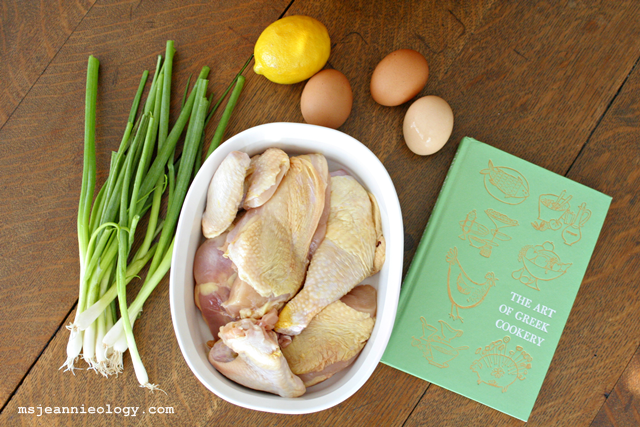
All the ingredients you will need!
The ingredients!

Chicken with Scallions (also known as Kotopoulo me Kremidakia Freska)

3-4 lb. organic chicken, cut into 6 pieces

5 tablespoons butter

Salt & Pepper to taste

1 cup hot water

6 bunches organic scallions, rinsed and ends trimmed

3 organic eggs

1 lemon, juice of

Rinse chicken pieces and pat dry with paper towels. In a Dutch oven (or you can use a large soup pot) melt the butter, add the chicken pieces and brown until golden on all sides. Sprinkle with salt and pepper. *Add hot water and scallions. Cover and cook over low-heat for one hour.

In a medium bowl, beat eggs. Incorporate lemon juice slowly into egg mixture while constantly stirring to prevent curdling. Add some broth from the pan (about 1/2 cup), again constantly stirring to prevent curdling. Stir actively for about a minute.

Remove chicken from pan and place on a plate. Add the egg mixture to the pan broth and stir constantly for another minute to avoid curdling. Add the chicken back into the pot to soak up the sauce. The heat under the pan must be on low and the sauce must not be allowed to boil. Let the chicken rest in the sauce fora few minutes before removing from heat and serving.

* Special note – Ms. Jeannie doesn’t have a Dutch oven so she used a large soup pot. After she browned the chicken and before she added the water and scallions, she de-glazed the pan with 1/4 cup of white wine just because her pot tends to burn easily. If you are using a Dutch oven you might not need to add that step at all.

.. cook2

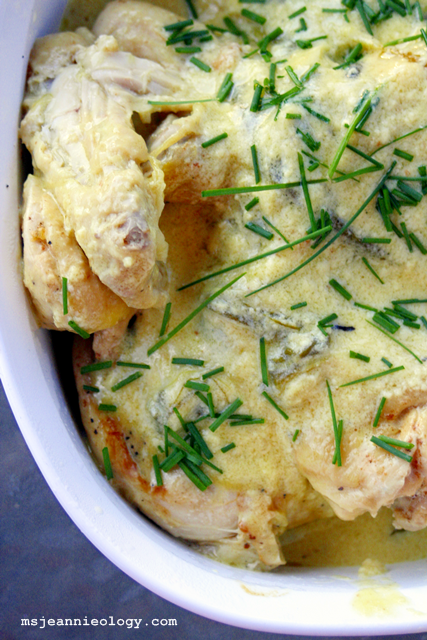
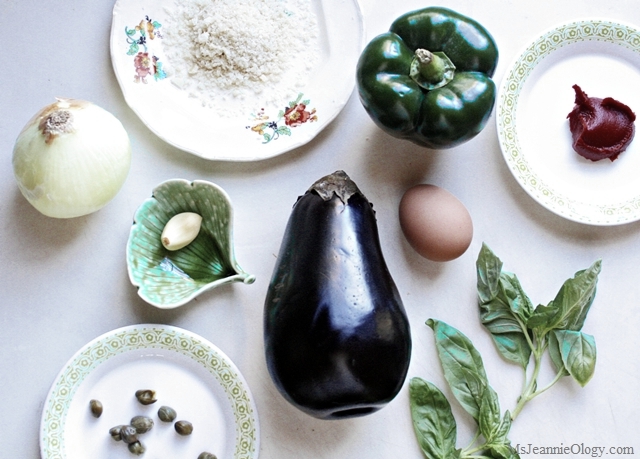
Once Ms. Jeannie placed the chicken and sauce in a serving dish she sprinkled it with some chives from her garden. This of course is optional. She served the chicken with a simple homegrown tomato basil salad which was marinated in olive oil and garlic for an hour, a crusty baguette and a glass of sauvignon blanc. Enjoying an authentic Greek dinner outside on the patio with Mr. Jeannie Ology made Ms. Jeannie feel like she was on a little vacation!
cook3

It is armchair traveling at its best and most delicious! Cheers or Opa (as they like to say in Greece)!