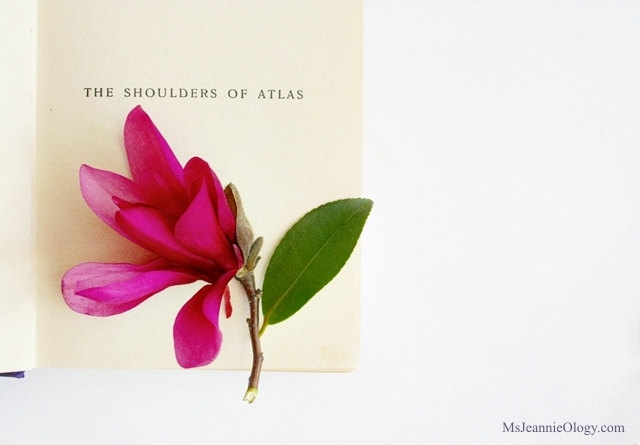
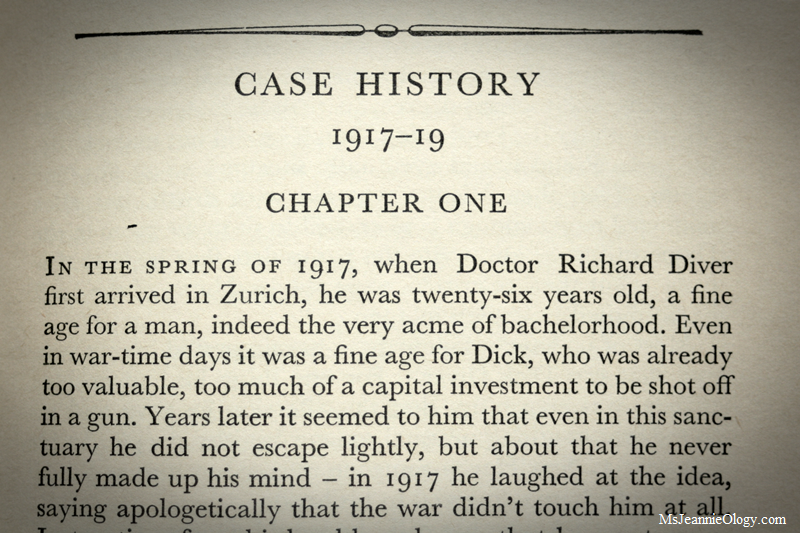
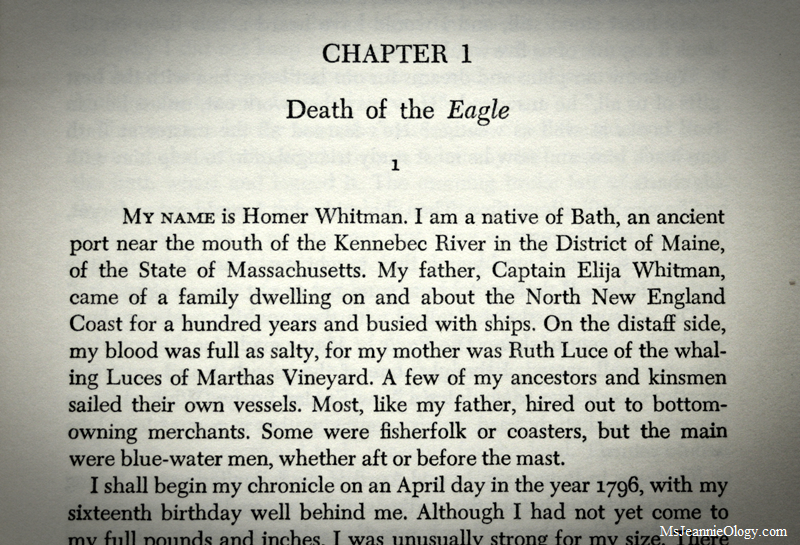
Happy Spring dear readers! It seems only fitting that the season so well-known for new beginnings and fresh starts would spill over into the world of books as well. In Spring, the words “chapter one” are both literal and figurative. Ms. Jeannie thought it would be fun to look at the variety of one season as it traveled through a century of books and affected a century’s worth of readers. Words are blooming on the vintage bookshelf! Let’s take in the view…
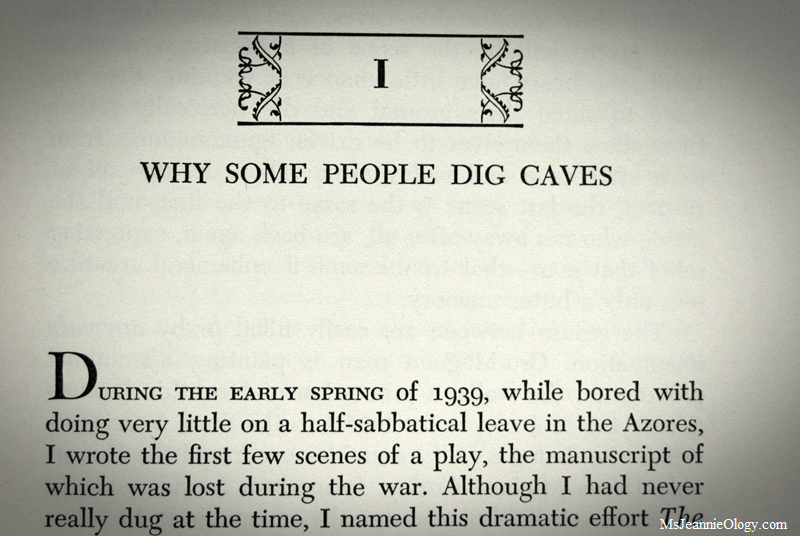
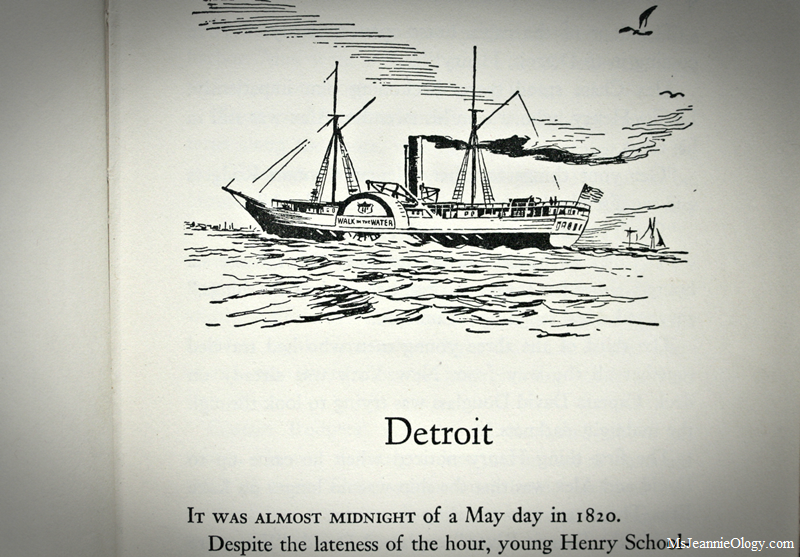
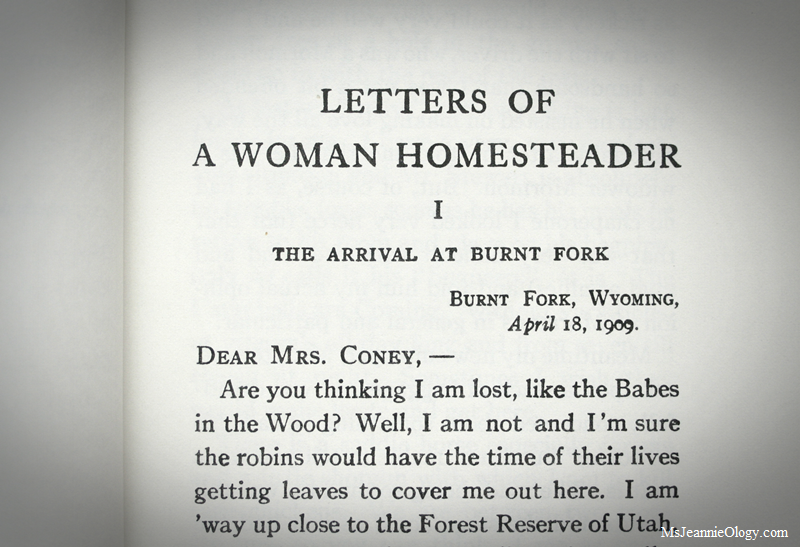
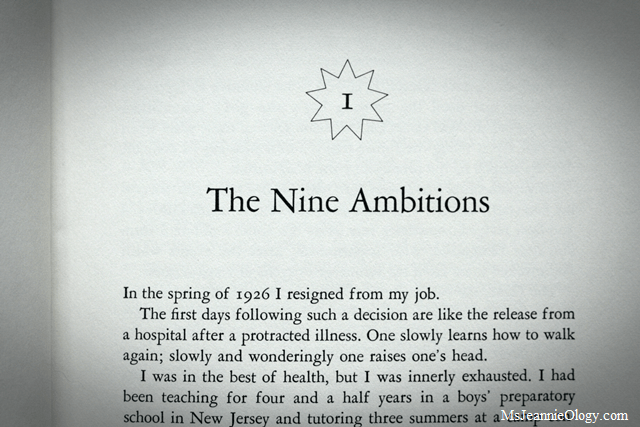
#1. Tender Is the Night – F. Scott Fitzgerald, 1939#2. We Were There with Lewis and Clark – James Munves, 1959#3. The Confidence-Man – Herman Melville, 1857#4. American Captan – Edson Marshall , 1954#5. The Royal Road to Romance – Richard Halliburton, 1925#6. On Golden Pond – Ernest Thompson , 1979#7. The Diary of Anais Nin: Volume Four 1944-1947 – Anais Nin , 1971#8. The Seven Caves – Carleton S. Coon, 1957#9. Land of Sky-Blue Waters – August Derleth, 1955#10. Letters of a Woman Homesteader – Elinore Pruitt Stewart, 1914#11. The Friendly Road – David Grayson, 1913#12. Theophilus North – Thornton Wilder, 1973#13. The Shoulders of Atlas – Mary E. Wilkins Freeman, 1908#14. I’d Rather Be Flying – Frank Kingston Smith , 1962#15. The Roosevelt Myth – John T. Flynn, 1948
That’s 122 years of Spring in one blog post! In keeping with tradition, this is the first post in a series about book collections that centers around a common theme. Lots of people collect books for lots of different reasons which makes for a big variety of interesting bookshelves. Ms. Jeannie collects books on travel writing, Africa and F. Scott Fitzgerald. Mr. Jeannie collects books on inventors, big ideas and Frank Lloyd Wright. Some people collect books by color or by cover, by title or by theme, by genre or design. Bookshelves are extensions of ourselves and how we choose to see the world. What kinds of books do you collect? Share your thoughts in the comments section below!
*** To celebrate the new season, Ms. Jeannie is having a book sale! Take 15% off your next book purchase thru March 20th using coupon code SPRINGBLOG15 upon checkout. Book #3, #5,#12 and #13 are available in Ms. Jeannie’s shop along with a bevy of others here. ***
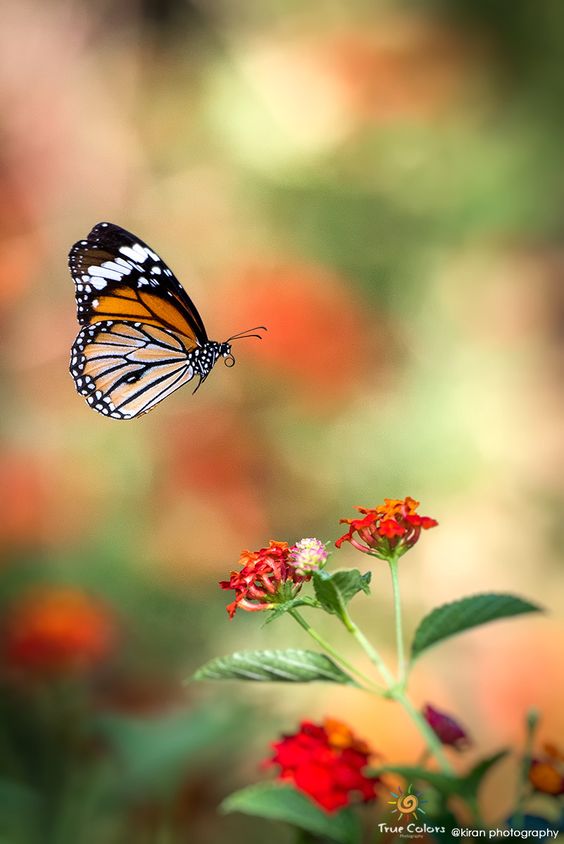
Last year Ms. Jeannie traveled approximately 13,000 miles via car over the course of 52 weeks. Last year the North American monarch butterfly traveled 3,000 miles via wing over the course of nine weeks. Ms. Jeannie mainly drove around her neighborhood and her city with a few side trips around the state. Butterfly flew halfway across the North American continent, traveling through at least six United States, one Canadian province, and half of Mexico.
On average last year Ms. Jeannie traveled about 39 miles a day via car. On average last year, Butterfly traveled 47 miles per day via wing on her two and half month road trip. Ms. Jeannie’s car runs on gasoline which brought her to the fill-up station about 120 times over the course of the year. Butterfly runs on nectar which brought her to the fill-up station about eight times during the course of her journey.
Ms. Jeannie’s car is an incredible piece of machinery able to get her from here to there on a whim’s notice. But Ms. Jeannie’s car is nothing compared to the flying machine that encapsulates the strength and stamina of a migrating monarch. Butterfly’s migration is one of nature’s most epic adventures, which is why you’ll find a photo of her pinned to Ms. Jeannie’s true adventurers board on Pinterest. That’s the place where all of history’s great travelers and outside-of-the-box thinkers congregate and where Ms. Jeannie heads when she needs a little inspiration.
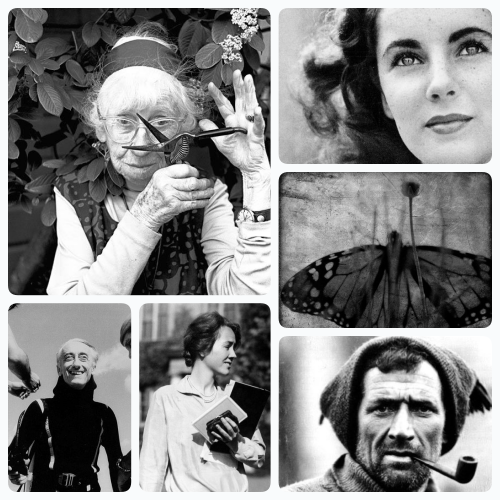
A partial list of true adventurers… clockwise from top left: photographer Imogen Cunningham, actress Elizabeth Taylor, epic traveler Monarch Butterfly, explorer Tom Crean, aviator Anne Morrow Lindbergh and explorer Jacques Cousteau. To visit Ms. Jeannie’s board and see all the adventurers click the photo.
Along with all icons who undertake brave and unbelievable feats there is almost always a strong support system behind them. Julia Child had her husband Paul, Jacques Cousteau had a research foundation, Anne Frank had her diary. And so it goes with butterflies. Monarch has the milkweed.
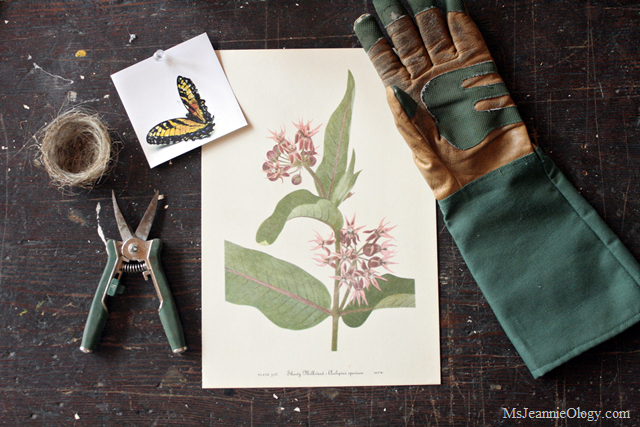
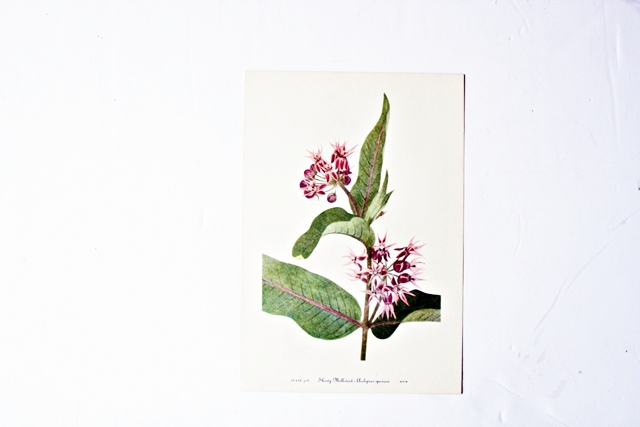
This vintage 1953 botanical print of the showy milkweed painted by Mary Vaux Walcott is availiable in Ms. Jeannie’s shop.
Bright, beautiful and stately in size (up to 6 feet tall!), the milkweed plant is where Butterfly takes refuge. It’s the one place that not only offers a safe and idyllic spot to lay her eggs but it also offers the only source of nourishment to her babies in the form of a food when the wee ones are in the larval stage.
It’s the fill-up station for the winged world delicates! There used to be billions of monarch butterflies floating around our skies, but now there are only millions. Their significant decline in numbers is due in part to the disappearance of the milkweed plant. Commercial farming and urbanization has cleared the earth in important areas along the migratory trail of the butterflies and the resting spots where they congregate making it increasingly more difficult for monarch butterflies to reach maturity.
Not having enough milkweed plants to butterflies is like not having enough gas stations for cars. Each needs the other and each won’t operate without the help of the other. So this is where you come in… as a cheerleader, support staffer, tribe member and all around champion of the mighty monarch you can make an immediate difference in the life of a winged wonder by planting milkweed seeds in your garden or your balcony flower pots or by scattering seeds in grass lots around your neighborhood. It doesn’t matter if you live in California, or New York, Arizona or Maine all milkweed plantings in all states help one cause. You’ll be sustaining the lives of migrating butterflies as well as assisting other pollinators that bring so much benefit to so many other creatures both in and out of the garden.
There’s also an added bonus to being helpful. Milkweed flowers are beautiful! Available in a range of colors from red orange to pink to pale peach they are named after the milk colored latex coursing through their stems (a defense mechanism), which makes them unattractive to chewing worms.
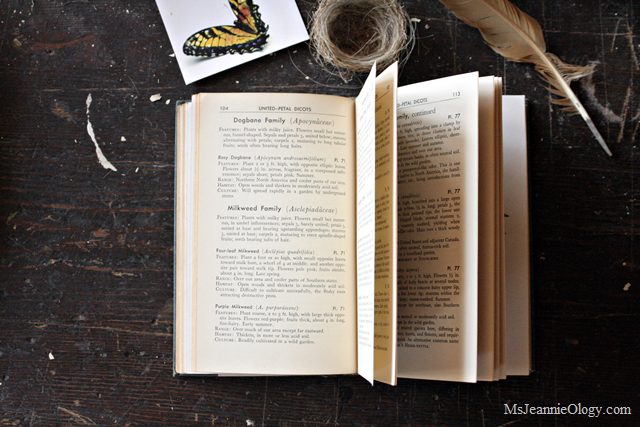
There was lots of interesting milkweed information in this vintage wildflower guide published in 1948 by Edgar T. Wherry. Read more about this book here.
Much prettier than any gas station or rest stop area for cars, these fill-up stations for butterflies have been around since the 17th century and contain over 140 different varieties. As a family they are known as Asclepias with a petal layout complexity most closely associated to that of orchids. As one of nature’s most intricate flowers they are made up of a collection of petals on a spray of delicate stems that eventually meet in one main stalk – sort of like the flower head of Queen Anne’s Lace or a loose version of the flowering garlic bulb. Leaves also range in color depending on the variety from silver green to dark emerald.
When the milkweed goes to seed it forms a pod of white silky hairlike plumes that launch on a breezy day, spreading seed around the neighborhood like pin-sized snowdrops. Imagine a whole gigantic field blowing in the wind at once – it would a veritable summer storm of beauty!
Easy to grow and care for, you can find seeds for under $2.00 a pack at Botanical Interests (Ms. Jeannie’s favorite seed company) or at your local garden center. March – May are perfect times to plant Milkweed in time for fall harvest and fall migration.
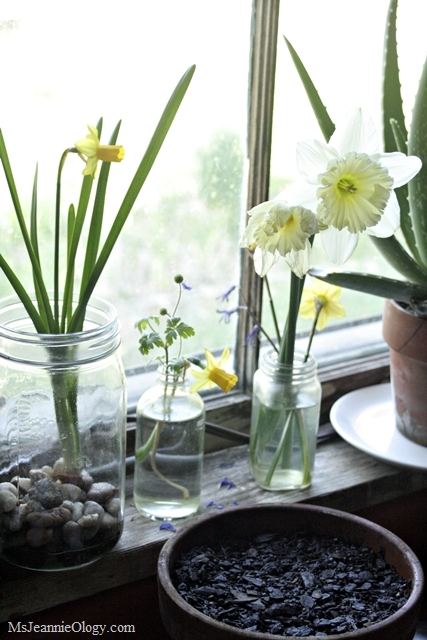
Seed starting indoors!
If you are a travel lover like Ms. Jeannie, you’ll appreciate the need to help our fellow flying friends get to where they need to go. Road trippers need to look out for one another on the highways of life, so Ms. Jeannie hopes that you will join her this summer in the great garden challenge – Milkweed for the Monarchs! Throughout the spring and summer she’ll be keeping you updated on her butterfly garden’s progress. It would be incredible if you did too:)
To see just how exciting it is to help and host butterflies, visit Ms. Jeannie’s 2013 archives when the season of the swallowtails unfolded week by week right here on the blog.
This week in the Vintage Kitchen we are going on an exotic adventure to the beautiful beachy, balmy enclave of Papeete on the French Polynesian island of Tahiti. The weather in Ms. Jeannie’s world recently has been crazy. She’s seen it all – frost, snow, heat, humidity, rain, strong winds, fog, sleet, hail, and tornado warnings all just within the past 14 days. And while the air and temperatures of the past few weeks have been very unsettled, Ms. Jeannie is excited because all of this wacky end-of-winter weather means that sunny Spring will be here very very soon!
While she waits for Mother Nature to get her schedule sorted out, Ms. Jeannie has been daydreaming of tropical island breezes thanks to the help of Mr. Victor Bergeron and his 1968 Pacific Island Cookbook.
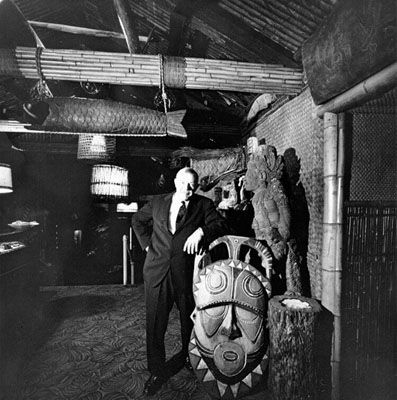
If you are unfamiliar with Victor’s full name, you might know him by his more casual moniker, Trader Vic, the king of 20th-century hospitality. A worldwide traveler and an enigmatic restaurateur Victor founded the world’s first highly successful string of polynesian-themed restaurants.
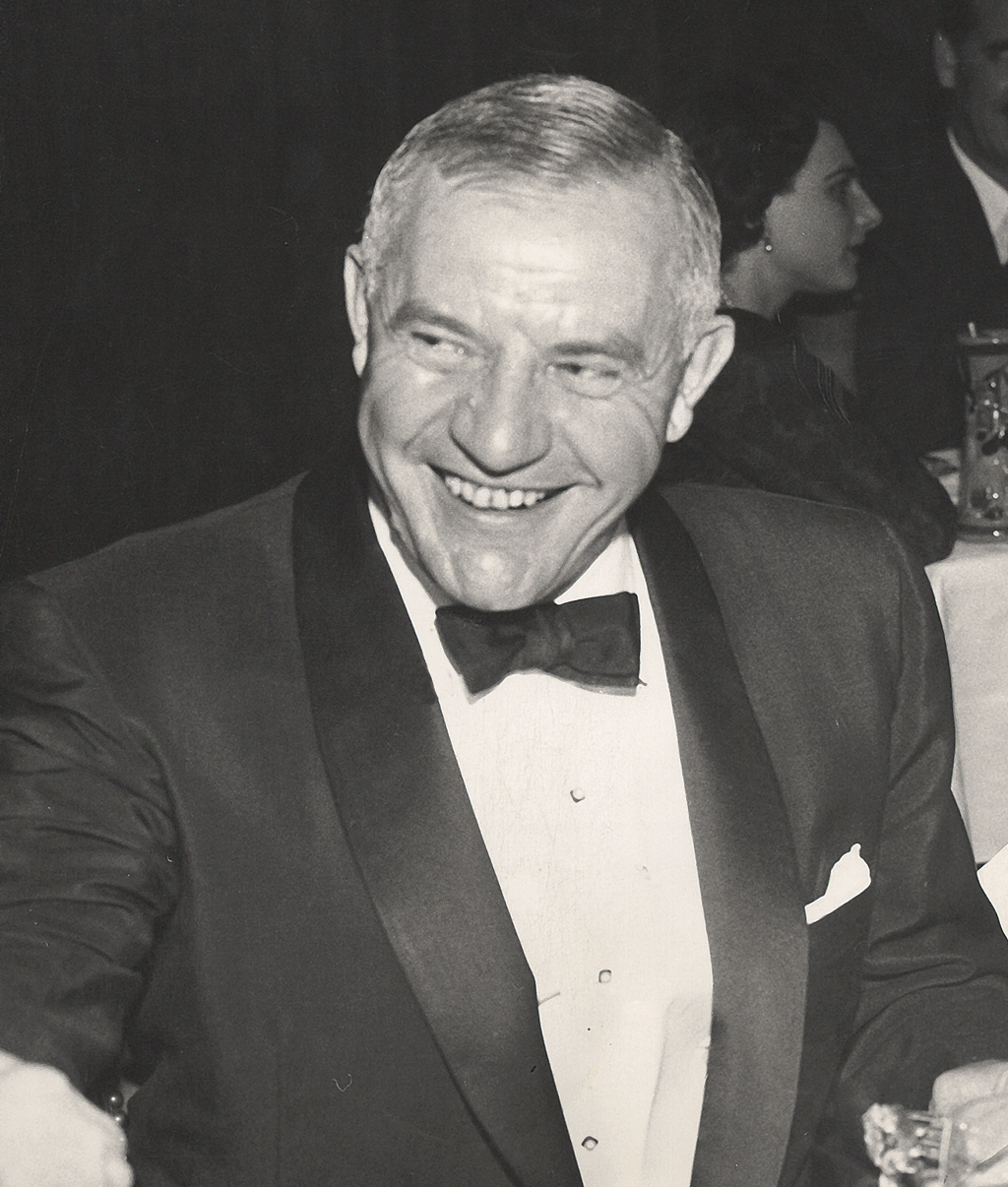
Victor Bergeron (1903-1984) the founder of Trader Vic’s restaurant chain.
First opened in the 1950s in California, the still growing Trader Vic’s restaurant brand was a re-invention of Bergeron’s first attempt in the food industry with his humble lodge-style eatery and bar called Hinky Dink’s which he opened in 1934.
Victor smiles for a photo shoot in a 1951 issue of Holiday magazine.
Learning the ropes in the food industry taught him a lot those first twenty years, so by the time Trader Vic’s (the restaurant) launched, Victor was a skilled businessman with a big flair for entertaining and fine-tuned instincts as to what people wanted in a dining experience. As a lover of Cantonese-style cooking, Bergeron married exceptional storytelling, authentic exotic antique decorations, and traditional South Seas recipes with a festive dining atmosphere to create a unique brand of restaurant chemistry that appealed to the adventure seeker and jet-setter of mid-century America. It was the rise of all things terrifically tiki.
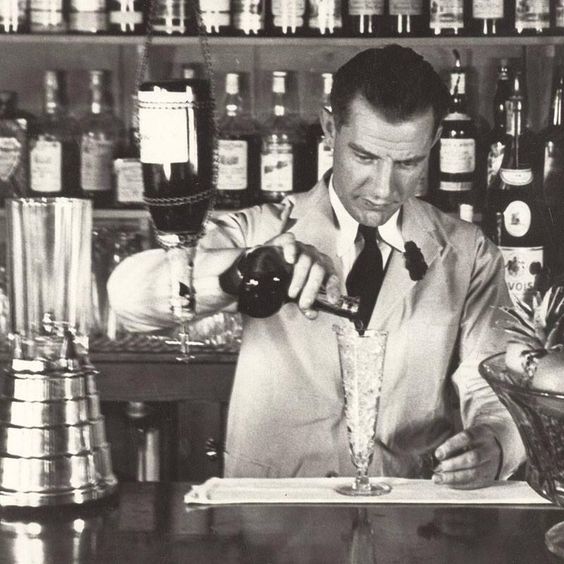
Victor’s travel experiences are all colorfully detailed in his cookbook making it a sort of fun travel journal and kitchen cooking primer in one. And then there are the drinks! In addition to cooking, Victor was also a mixologist creating a slew of enticing cocktails, like the first Mai Tai, which launched a wave of tropical drink requests for bartenders from then on out. Escapism never tasted so sweet!
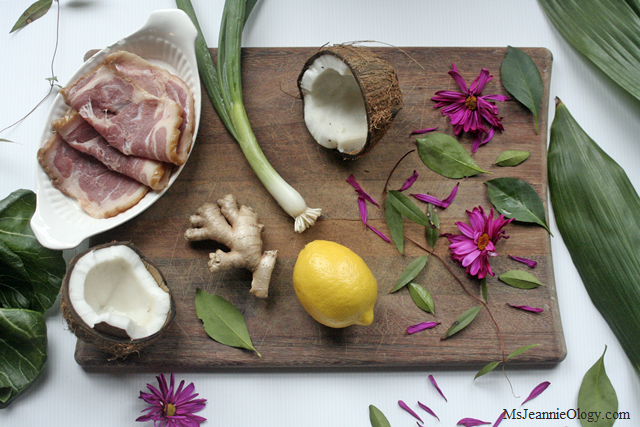
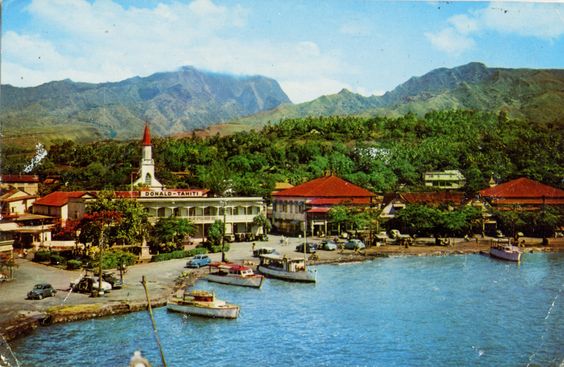
Which gets us back to Ms. Jeannie’s island getaway in the kitchen this February day. With 30-degree temperatures chilling the air outside, Ms. Jeannie cracked open coconuts, peeled ginger, poured a rum cocktail, and got down to cooking all the while pretending she was beach-side in Papeete where the view looks like this…
Vintage Tahitian postcard of Papeete.
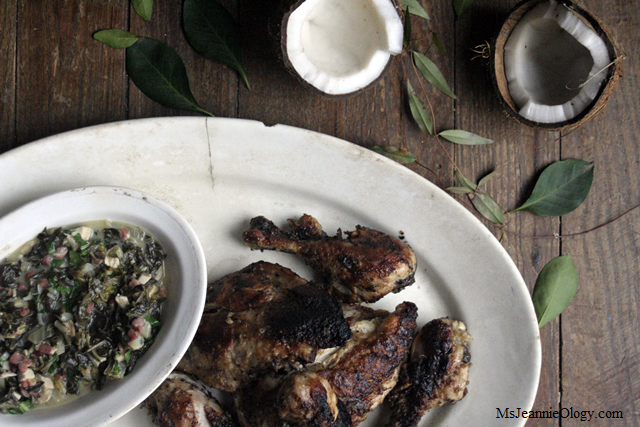
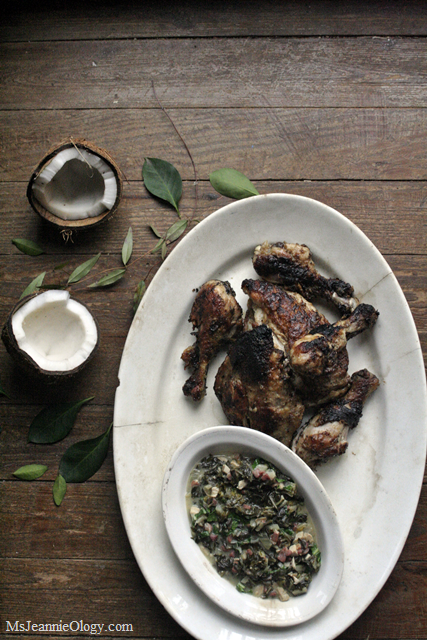
Cheers to Victor! It’s Pota on the menu tonight served alongside steamed rice and chicken sauced with coconut ginger.
Pota with Chicken and Ginger
Pota
4 tablespoons diced salt pork
1/2 cup chopped cooked chicken
5 cups coarsely chopped Bok Choy
4 tablespoons chopped green onions (scallions)
1/2 cup chicken stock
Salt & Pepper to taste
Juice of 1/2 lemon
4 tablespoons coconut milk
2 teaspoons cornstarch mixed with 1/4 cup water
Saute salt pork until brown in large skillet. Add chicken, chard and green onion.
Stir in chicken stock, seasonings and lemon juice. Simmer until chard is tender.
Add coconut milk, bring to a boil but just barely. Thicken with cornstarch, stirring constantly, adding just enough to thicken the mixture.
Serve immediately or keep warm over low heat until chicken and rice are ready.
Chicken with Ginger
1 whole chicken, 5 lbs
1/2 cup flour seasoned with salt and pepper
2-3 tablespoons olive oil
1 piece fresh ginger root (about the length of your thumb finger), grated
1/4 cup coconut milk
Preheat oven to 350 degrees.
Cut chicken in pieces. Do not remove the skin.
Place chicken, flour and salt and paper in a paper bag and shake until all chicken pieces are well-coated.
Heat the oil in a large pan on the stovetop and then saute the chicken, turning only once, until thoroughly cooked on each side (internal temperature should be 180).
Remove chicken from heat and place in oven-proof dish.
In a separate bowl mix together coconut milk and ginger. Pour over chicken and place dish in the oven for 5 minutes until the coconut sauce melts.
Serve alongside Pota and steamed rice and a fun fruity cocktail! Perhaps a homemade Mai Tai or two in Victor’s honor. He’d be as pleased as (rum) punch!
A Tahitian Dinner: Pote and Chicken with Ginger
This is a surefire recipe to chase away those end-of-winter blues. Satisfying for the spirit and for the belly! Find more Trader Vic recipes here. And more tropical cookbooks here. Manuia!
Boring. Irrelevant. Out of touch. Those are three of the most common misconceptions Ms. Jeannie encounters when discussing vintage books. How could something written 50, 100 or even 200 years ago still be compelling in today’s modern world? Thanks to the lovely marriage between film and books Ms. Jeannie is going to show you how with these 20 examples of old books that made fabulous modern films. Movie trailers are linked to each picture, so click on any and all to get a feel for story lines. Chances are if you like the movie (or in this case, the trailer) than you’ll love the book even more!
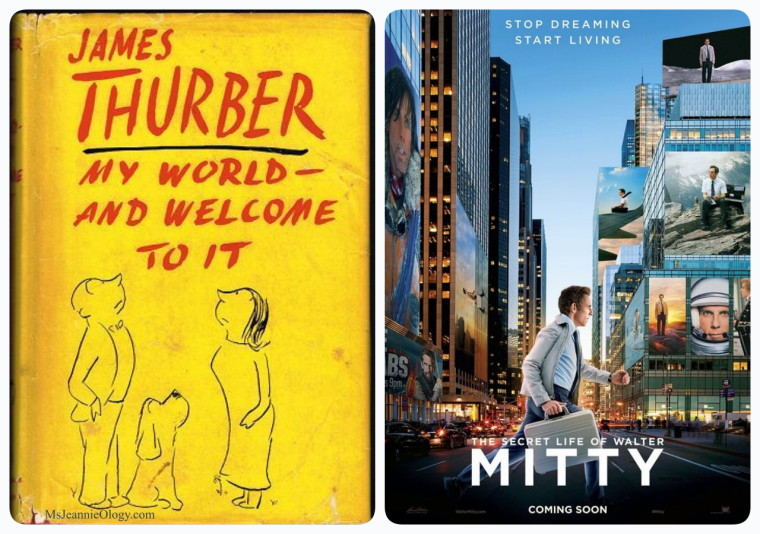
The Secret Life of Walter Mitty was a short story written by James Thurber in 1942 and published in a collection of his short works, My World and Welcome To It that same year. The movie, starring Ben Stiller was released in 2013.
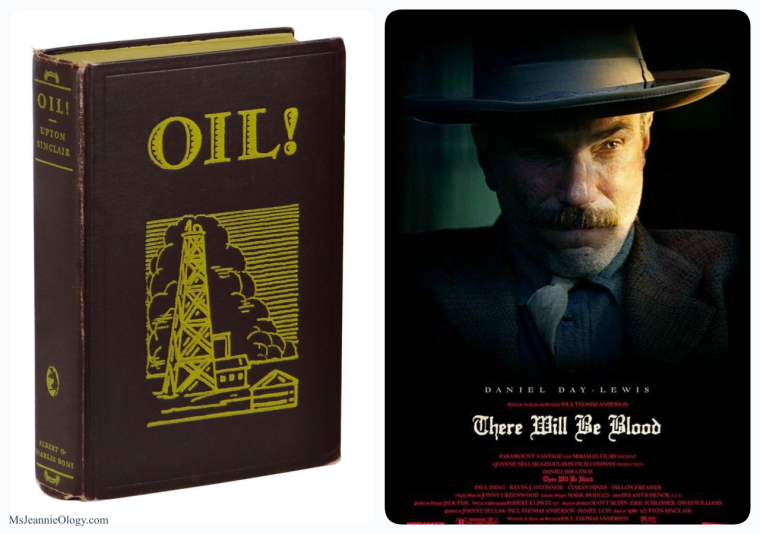
There Will Be Blood was based on the book, Oil by Upton Sinclair which was published in 1927. The Academy Award-winning movie, starring Daniel Day-Lewis was released in 2007.
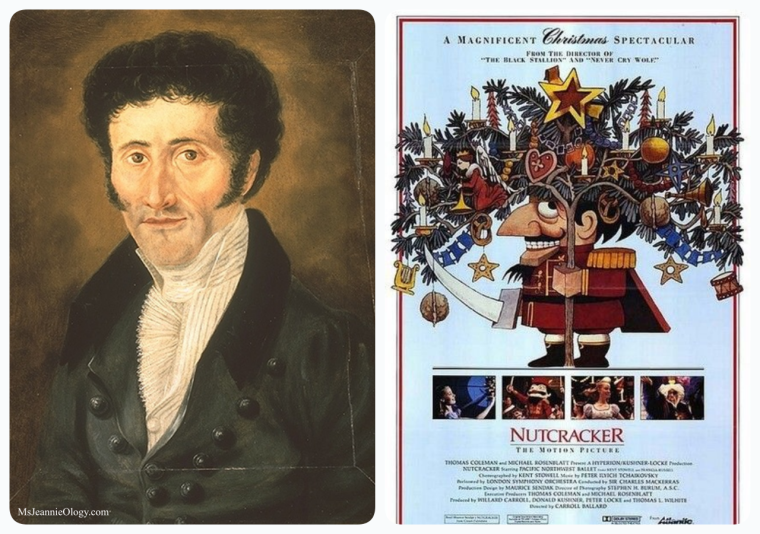
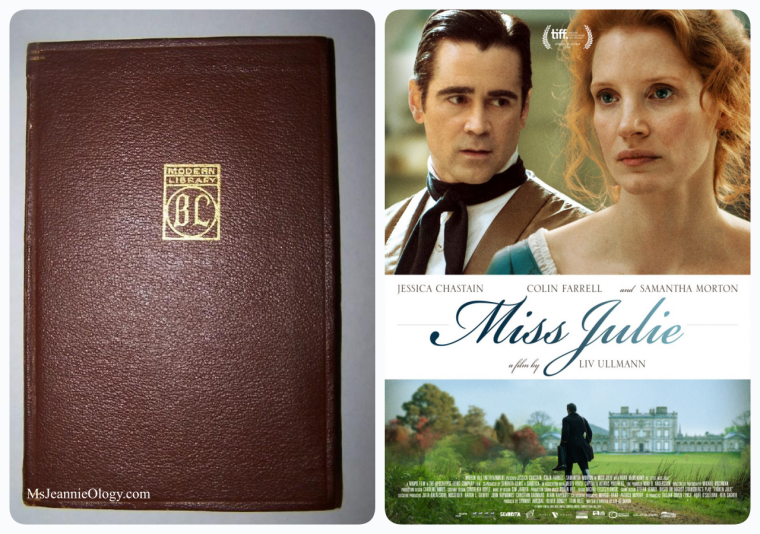
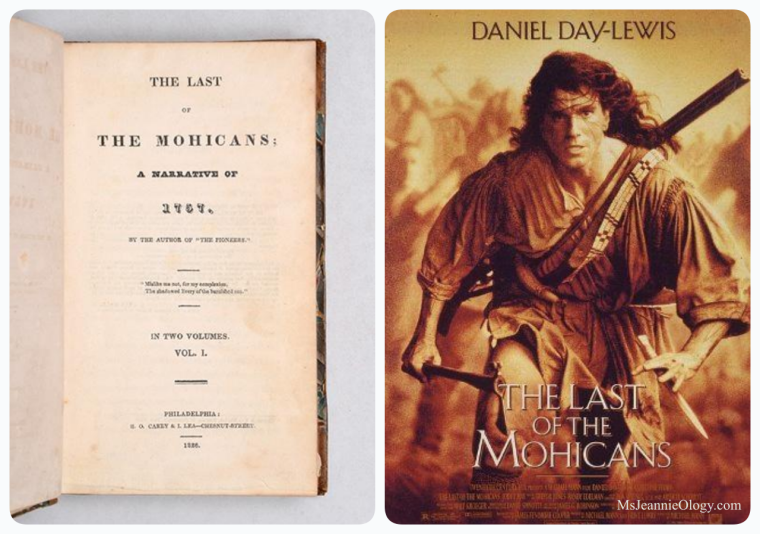
The Nutcracker ballet was based on a novella written by E.T.A. Hoffmann in 1816. The movie version of the ballet starring Macaulay Culkin was released in 1993.Miss Julie was a play written by Swedish author August Strindberg in 1888. It was made into a beautifully filmed movie starring Jessica Chastain and Colin Farrell in 2014.The Last of the Mohicans was a book written by James Fenimore Cooper in 1826. Daniel Day-Lewis starred in the film version in 1992.
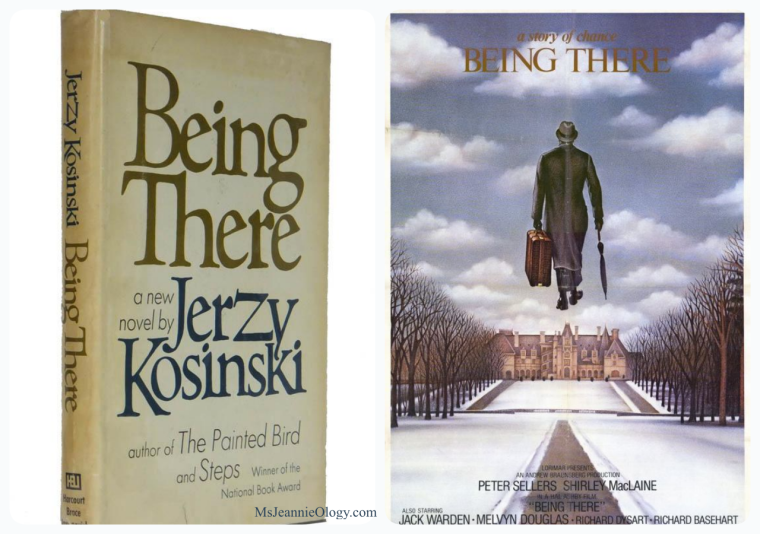
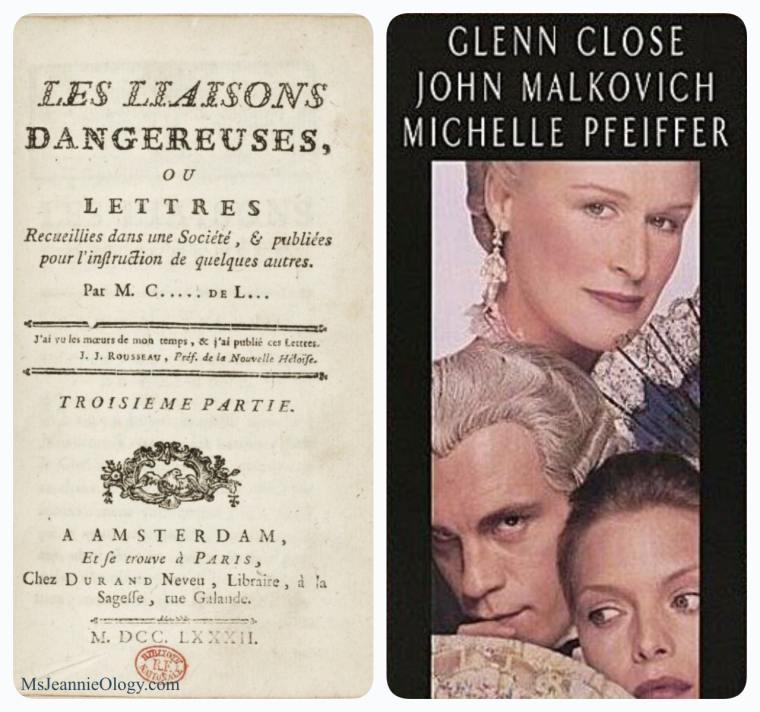
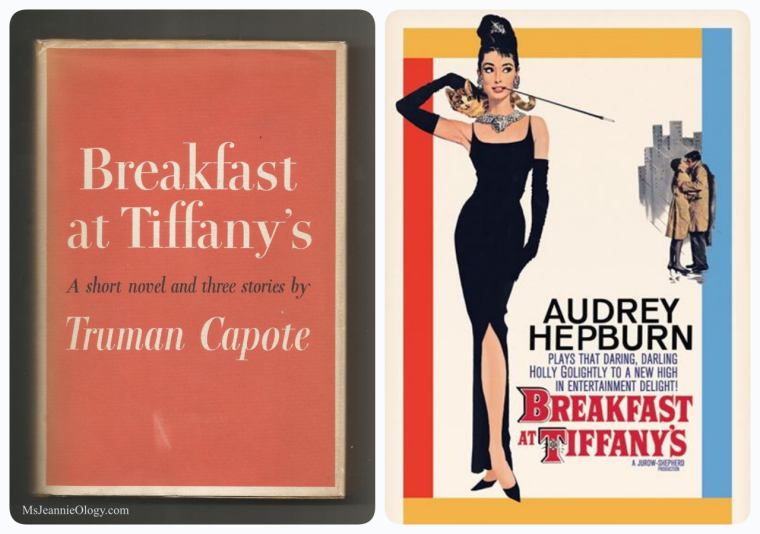
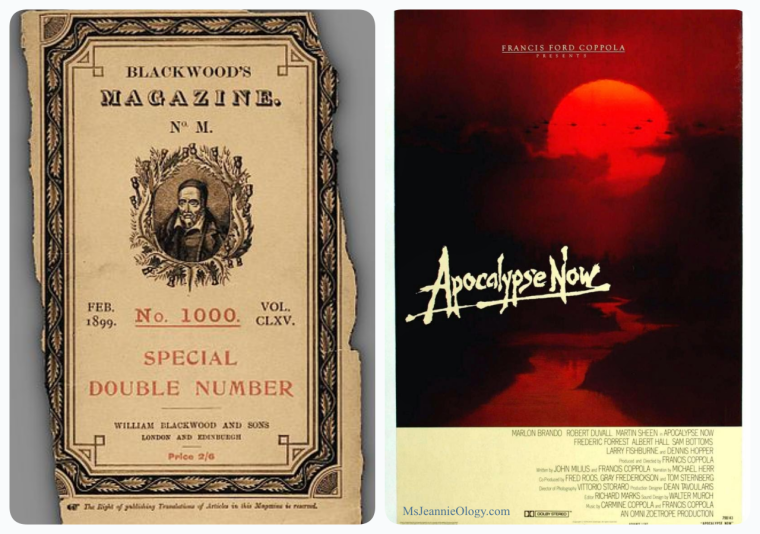
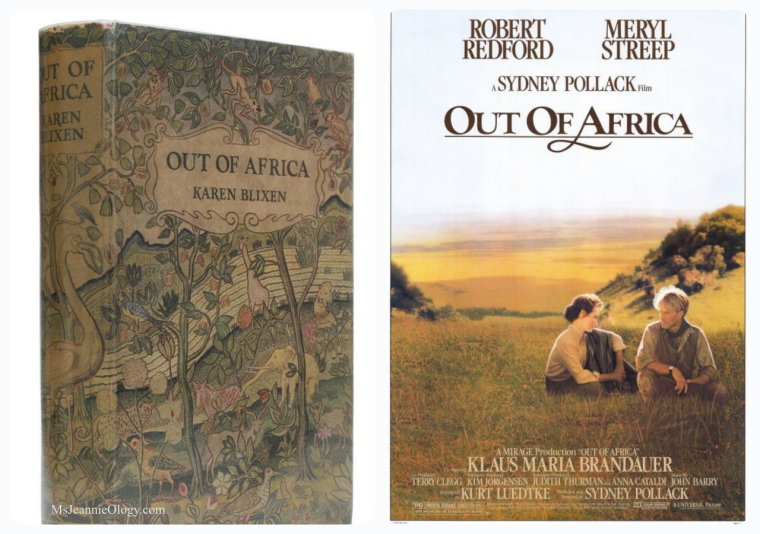
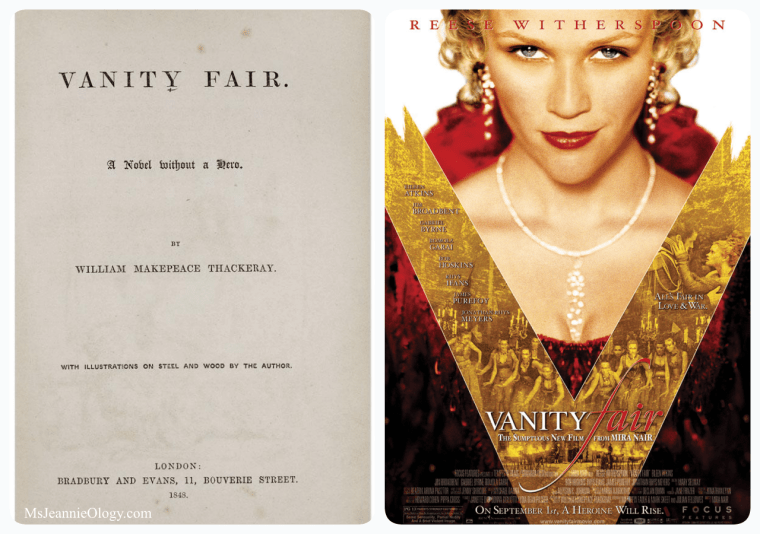
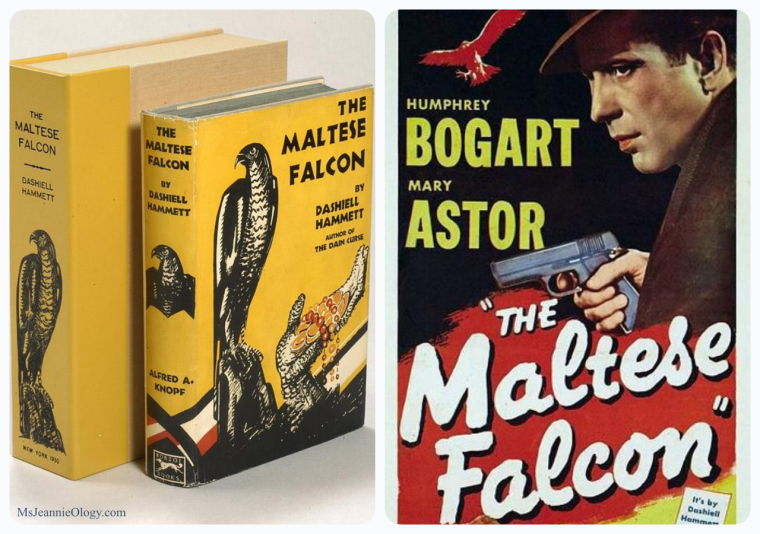
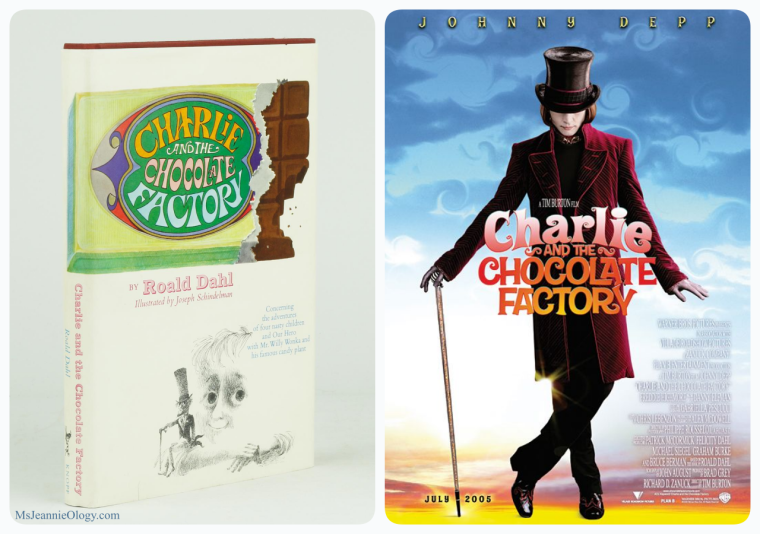
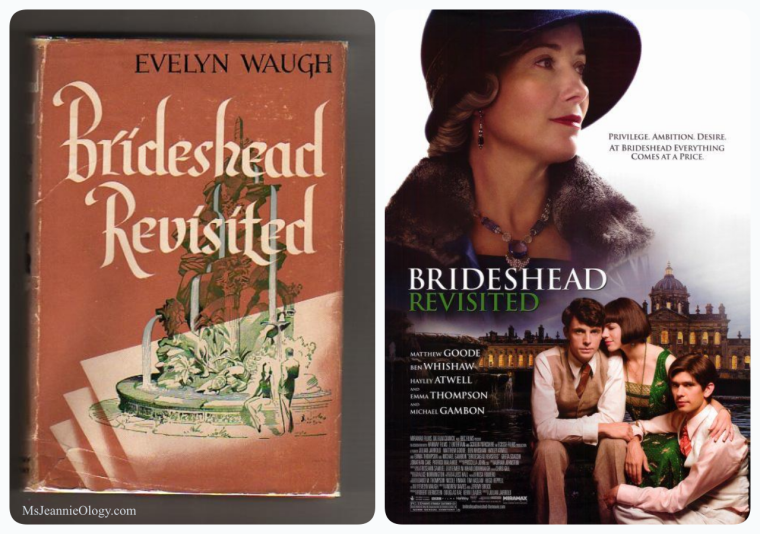
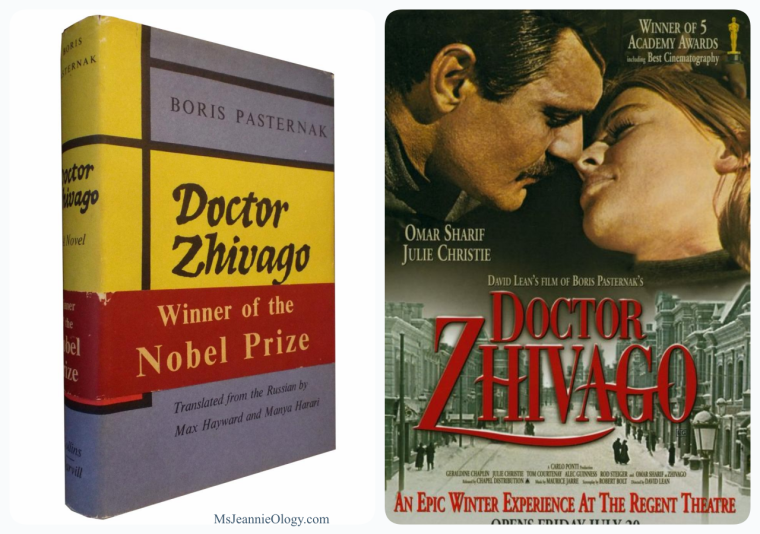
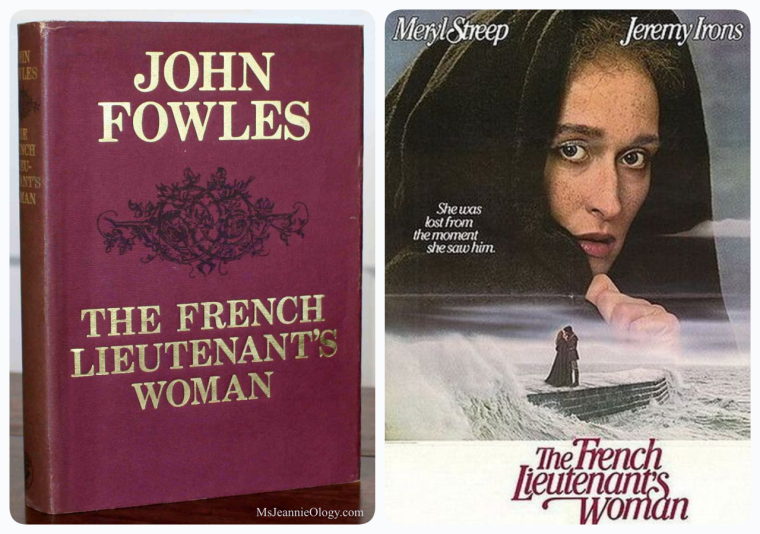
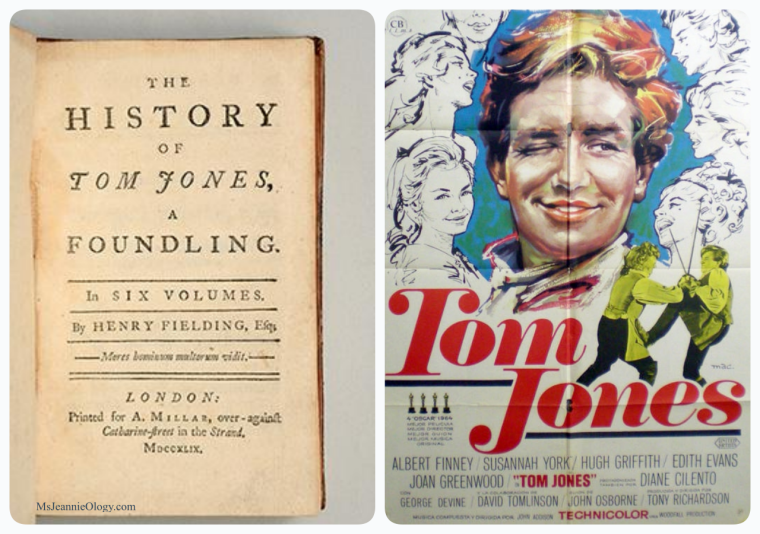
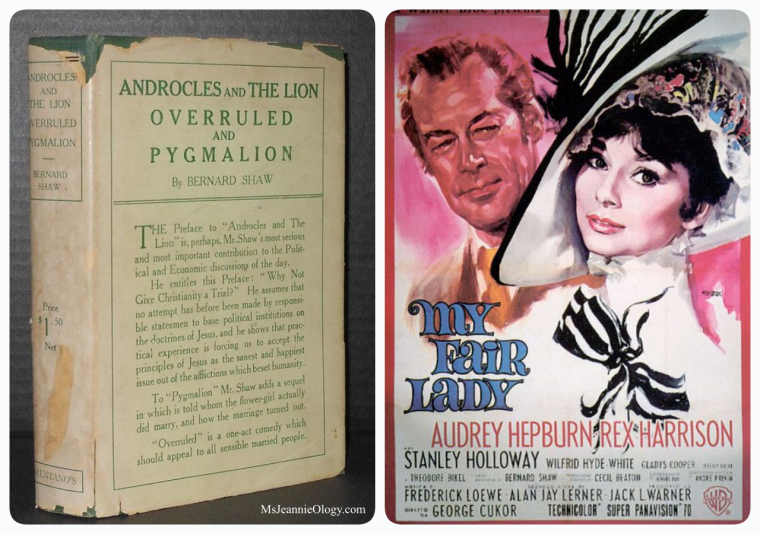
Jerzy Kosinski published Being There in 1971. Peter Sellers starred in the film adaptation in 1979.In 1782 French author Pierre Choderlos de Laclos wrote Les Liaisons Dangereuses. Two hundred years later, in 1988, Glenn, John and Michelle starred in the film version.Truman Capote created flawed heroine Holly Golightly in 1958. Audrey Hepburn made her famous in the film adaptation in 1961.Joseph Conrad wrote the book Heart of Darkness which was first serialized in Blackwood’s Magazine in 1899. The story became the inspiration for Francis Ford Coppola’s legendary film Apocalypse Now in 1979.Karen Blixen published her memoirs, Out of Africa, about life on an African coffee plantation under the name Isak Dinesen in 1937. Meryl Streep brought her to life on the big screen in 1985.The king of science fiction writing, Philip K. Dick wrote the magically titled novel Do Androids Dream of Electric Sheep? in 1968. The story was adapted for film in 1982 and re-titled Blade Runner.Vanity Fair was written in 1848 by William Makepeace Thackeray. Mira Nair adapted it beautifully to film in 2004 starring Reese Witherspoon.In the late 1940’s Thor Heyerdahl defied all logic by following the path of KonTiki across the ocean on a primitive sailing vessel. He published his account of the experience in 1953. In 2012 a group of Scandinavian filmmakers brought the nail-biting, edge of your seat adventure to the big screen.Dashiell Hammett wrote The Maltese Falcon in 1930. It became a popular film-noir in 1941 thanks to Humphrey Bogart.Before Gene Wilder (1971) and Johnny Depp (2005) entertained us as Willy Wonka in Charlie and the Chocolate Factory, author Roald Dahl created a candy-coated world for kids in his 1964 confectionary.Evelyn Waugh wowed the world with his literary wonder Brideshead Revisited in 1945. In 2008 Matthew Goode turned out a handsome performance in the beautifully captured film adaptation.Doctor Zhivago swept the histrical romance world thanks to writer Boris Pasternak in 1958. Seven years later it became a Hollywood giant starring Omar Sherif and Julie Christie.In 1969, English author John Fowles published The French Lieutenant’s Woman. Twelve years later, in 1981 Meryl Streep portrayed her on film.Henry Fielding created the adventures of Tom Jones in 1749, two centuries later Albert Finney charmed the world with his charismatic portrayal of the title character when the film premiered in 1963.Before My Fair Lady was the darling of stage and screen it was a play called Pygmalion written by George Bernard Shaw in 1913.
These are of course just a few examples of the themes timeless books lend to our lives. More examples will come in a future blog post, but for now Ms. Jeannie will leave you in the good hands of these good characters. Go right ahead and fall in love with Tom Jones, even though he’s 200 years old. Feel the confident energy of Thor Heyerdahl even though his adventure occurred six decades ago. Relate to Holly’s vulnerability and Karen’s isolation. Get revved up by Chance’s take-life-as-it-comes attitude and Walter’s grab-life-by-the-horns manifesto. Fun things never age and fun books are no exception!
Need help finding a good book? Ms. Jeannie’s your gal. Post a message in the comments section and she’ll be in touch!
Last year over on instagram Ms. Jeannie posted some pictures of some tremendously tall titan-esque palm trees and noted how their origins dated all the way back to Mesopotamian times. A few days ago another curious character popped up from that same timeline in history. But this guy was neither tall nor stately. He was rather small and round.
How strangely exciting! Just like the age old tropical trees this opossum (of the Virginia variety) hasn’t changed at all in sixty five thousand years. He looks exactly the same as when John James Audubon painted him in the 1800’s…
… has retained the same trademark characteristics that Captain John Smith used to describe him upon first sight in the wilds of 1600’s America..
and looks exactly like his ancestors pal-ing around with the big guys in the age of the dinosaurs…
Illustration courtesy of Science Daily
All this makes our modern day visitor quite a marvelous wonder. Preferring to scurry about in the safety of night, opposums are predominately nocturnal, but every once in a while you’ll catch one out and about in the daylight like this guy saying a happy good morning to Ms. Jeannie at 9:00am.
As the only North American marsupial opossums have barreled through these centuries at an incredible pace. With a lifespan of only two years they were on the fast-track from the beginning.
Born the size of a grain of rice in a litter usually made up of 9-15 siblings they grow in their mom’s pouch for three months until they are big enough to hang out (literally!) on her body…
before heading off and making their own babies at the age of six months or so.
Pregnant for only 13 days opossums usually have two liters a year which makes them great multipliers in both number of babies and speed of pregnancy. But by the age of two they have completed their duties and off they go to more heavenly pastures.
Researchers have cited their environmental adaptability in regards to being able to survive for all this time. They eat almost anything, but their greatest love in modern life is cat food. When that’s not available they eat a lot of other delights too like snakes and bugs and bird eggs and rotting vegetation and things run over in the road. Basically they look at life like a buffet, everything is available for the taking and it all looks appetizing. Yay for yum!
Another attribute that favors the opossum is their funny little knack of playing dead when they are scared – a chemical defense reaction that their brains have no control over and lucky for them leaves predators completely perplexed and un-enchanted. A lot of people think that opossums are clever and play dead on purpose but this is a myth. Their bodies just react like that – not from any mental dexterity efforts but just pure chemical reactions from being scared.
Not dead – just pretending!
While they are not known among the smart-set of the animal kingdom, they should win awards for being members of the speed-set. There is no time to think up ways to outsmart a predator while being chased around the bushes. They’ve got to get busy having those babies and Hoover-ing up the backyard from all those fallen fruits and nuts and seeds and things. As one of nature’s great pacifists they see the inherent value in just falling over, pretending to be dead and waiting for the storm to pass. Which actually seems pretty smart in the long run, even if they didn’t technically think it up themselves.
Ms. Jeannie was hoping that her opposum was going to stick around for a few days and show off a wife and a family of babies, but she hasn’t seen him since the initial photos. Perhaps he was just passing through, on his way to a cat food diner:)
But his appearence does bring up an interesting question for you dear readers… do you see opossums in your neck of the woods? Traditionally they are most associated with the American South, and Australia has their own variety, but due to global warming they have migrated to the northern U.S. in some areas. It would be fun to figure out where exactly, so if you leave a comment be sure to include your state (or country!) so we can forge a peaceable possum trail.
In the meantime if you’d like to read up some more on the dinosaurs, check out this link here...
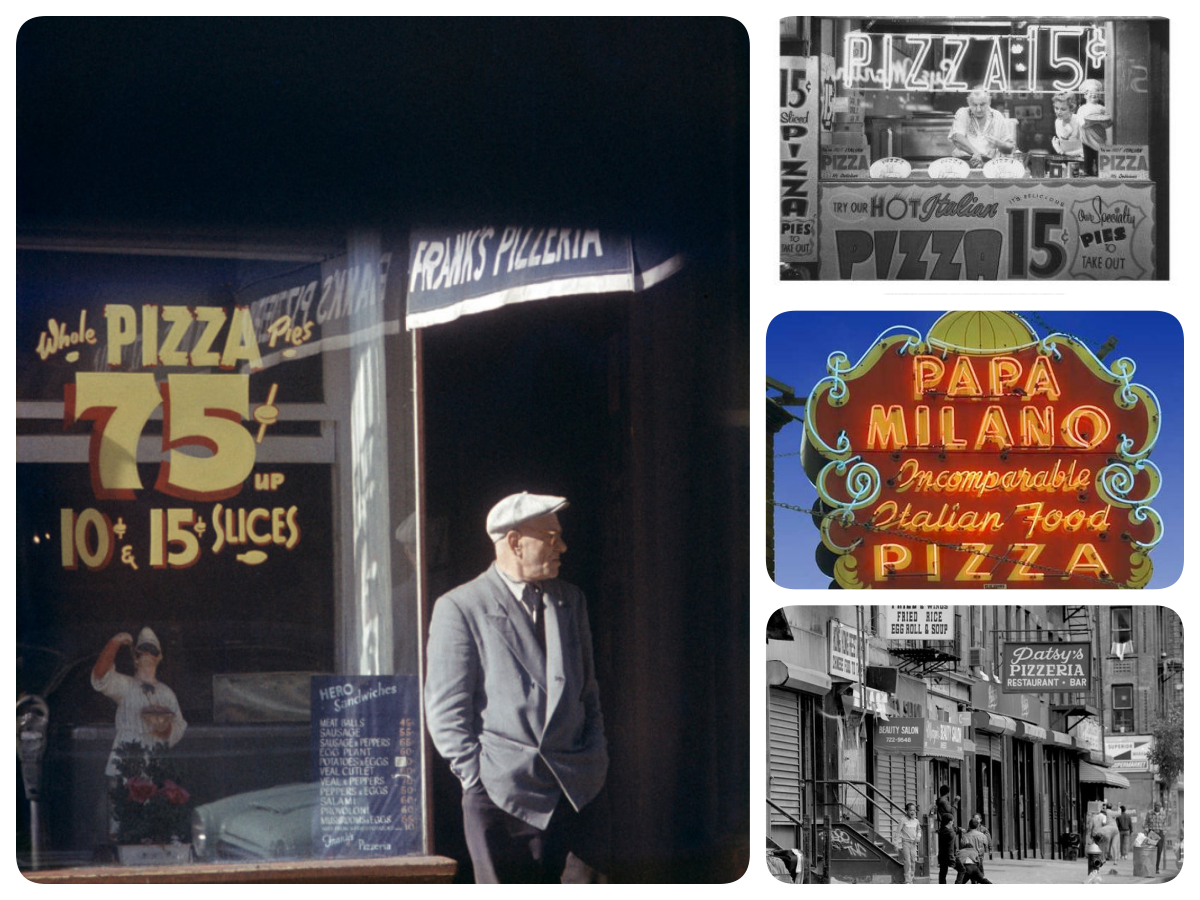
Pizza has been a favorite in the U.S. since the early 1900’s with the first of its kind debuting in New York City in 1905. Popular right from the start, pizza wars started popping up all over the city, then the region then the country as Italian immigrants spread across America with their claims of making the best pizza in town.
G. Lombardi’s on Spring Street in New York City was the trendsetter on the American (pizza) frontier.
And while bravado and traditional recipes may have fueled the pizza craze initially, creativity, with its variations on a theme, has kept it going ever since.
A walk through 20th century pizza signs…
By the 1960’s American home chefs were experimenting with the complimentary trifecta of tomato sauce, bread and cheese in new and spectacular ways. By thinking beyond the boundaries of size, shape and similarity, pizza was elevated to a nouveau cuisine that could incorporate a host of ingredients from the humble to the exotic appealing to palates both simple and sophisticated.
One such experimenter determined to add a new twist to the traditional pizza pie was food editor, critic and chef Craig Claiborne.
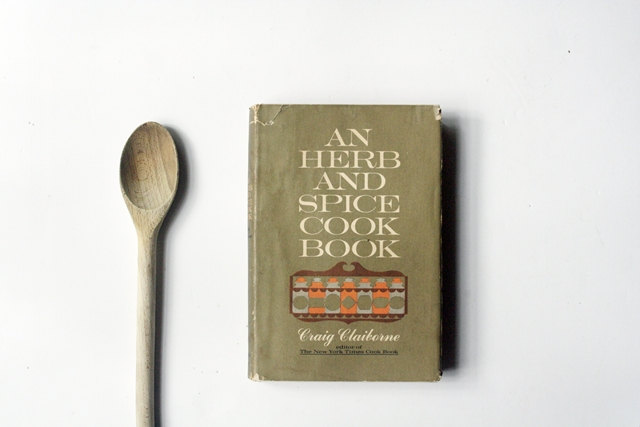
In his 1963 Herb and Spice Cookbook, he capitalized on the subtle yet dynamic flavor pairings of basil, oregano and garlic and came up with a dough-less version of eggplant pizza.
Craig was no slouch in the cooking department. He knew his way around a home kitchen just as much as he did a commercial kitchen and he knew what and how people liked to eat. As the The New York Times food and restaurant critic for 29 years from 1957-1986, he pretty much pioneered food journalism in the Unites States at a time in the mid-1950’s when such editorial posts were primarily held by women for the female homemaker audience. But Craig was different, he was interested in casting wider nets, reaching more diverse audiences and bridging a relationship between restaurants, patrons and cultures.
The author of over twenty cookbooks throughout his career, Craig’s Herb and Spice Cook Book is marvelous in both content and presentation. Organized alphabetically by spice or herb name it is a great reference cookbook when you have ten pounds of basil ready to harvest in your garden or you are craving a specific spice like curry or cinnamon… or marjoram!
The eggplant pizza recipe fell under the oregano section which included recipes for Eggplant Antipasto, Chicken Napolitana, Herb-Broiled Swordfish and Creole Cabbage among four others. Excited by the possibility of giving her indoor oregano plant a hair-cut, Ms. Jeannie was happy to try this new version of pizza which turned out to be really delicious.
It is a fun recipe for a few different reasons: 1} you make a quick version of homemade tomato sauce that takes little time and tastes great; 2} the “pizzas” can range in a variety of customizable sizes depending on the girth of your eggplant… if you have a skinnier eggplant you could serve those as appetizers or hors d’ouevres for a party (maybe this weekend’s Super Bowl?!) or if you have a more rubenesque eggplant that would be a perfect size for dinner entrees; and 3} the breadcrumbs add a fabulous bit of crunch to the whole package just like a traditional pizza dough would.
So without further ado, here’s the recipe…Ms. Jeannie hopes you love this magical version of pizza just as much as the tradtional.
Eggplant Pizza (serves 6)
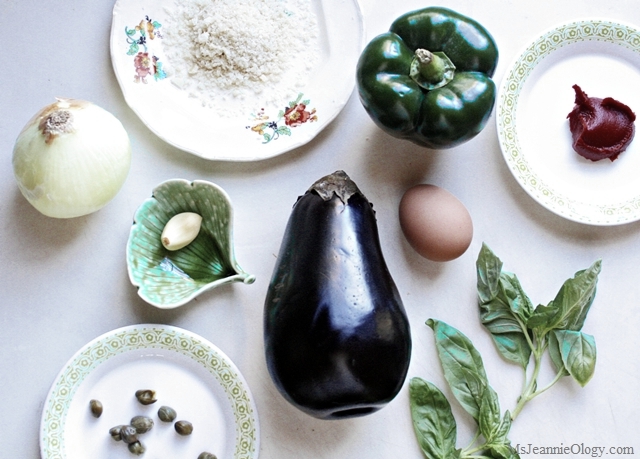
2 tablespoons cooking oil (Ms. Jeannie used olive oil)
1 small clove of garlic, minced
3/4 cup finely chopped onion
3/4 cup finely chopped green pepper
4 1/2 tablespoons tomato paste
3 tablespoons water
1 teaspoon oregano
3/4 teaspoon basil leaves
3/4 teaspoon sugar
2 3/4 teaspoons salt* (Ms. Jeannie thinks this might be a typo as it seems like a lot of salt for this size recipe so please use caution and your own sensibilities with this ingredient. And remember you an always add more salt but never take it away. Ms.Jeannie used about 1 teaspoon total but you might adjust that according to your taste).
1 medium eggplant
1 egg
1 tablespoon milk
1/2 cup bread crumbs (Ms. Jeannie used plain panko-style bread crumbs)
1/4 cup freshly grated Parmesean cheese
1/4 teaspoon freshly ground pepper
flour for dredging
Oil for frying (Ms. Jeannie used olive oil)
Toppings of your choice: whatever you normally like on a pizza ie: mozzarella cheese, fresh basil, olives, etc.
Directions:
1. Heat the oil in a one quart saucepan. Add the garlic, onion and green pepper. Cook, stirring, three minutes or until the onions and green pepper are limp.
2. Add the tomato paste and water. Cover and cook, stirring frequently, over low heat until very thick, about ten minutes Add the oregano, basil, sugar and 1/2 teaspoon of salt* before the end of cooking time. *Salt to taste here. If you think the sauce needs more add a little bit, just keep in mind you’ll be adding salty parmesean cheese and possibly salty toppings later).
3. Remove sauce from heat and set aside while preparing the eggplant.
4. Wash, peel and cut eggplant into cross-wise slices one half inch thick.
5. Beat the egg with the milk and set aside. Mix bread crumbs with the remaining cheese, 1/2 teaspoon salt and the pepper.
6. Dip the eggplant slices in the flour, then in the beaten egg, then in the seasoned bread crumbs.
7. Saute the eggplant in the hot oil until golden, turning to brown on both sides. Remove from the pan and drain on paper towels. Repeat until all eggplants are cooked.
8. Place the cooked eggplant slices on a cookie sheet and spread them with the cooked tomato sauce. Top with mozzarella cheese and your desired toppings . Place under a broiler until the cheese has melted and is lightly browned. Serve immediately.
Ms. Jeannie kept her pizzas simple and just topped them with mozzarella, capers, basil and garlic but other ideas include prosciutto, pineapple, mushrooms, pepperoni, olives, figs, etc. So many possibilities!
Happy experimenting dear readers! With love from Ms. Jeannie and Craig Claiborne
You can find Craig Claiborne’s Herb and Spice Cook Book here and a host of other vintage recipes Ms. Jeannie has blogged about previously here.
Want to know what it is like to run a real-life modern day pizza kitchen? Check out the recently published book Delancey by Molly Wizenberg – it is completely entertaining. And if you are not craving pizza by the end of all this, you are extraordinary:)
Olga Celeste on set with Neissa. Photo courtesy of Click magazine, 1938.
Seventy-eight Februarys ago (that’s 1938, if you struggle with math!) Katharine Hepburn and Cary Grant were lighting up the silver screen with funny situations in their second movie together, Bringing Up Baby.
They shared the comedic spotlight in this movie with two more co-stars – non-traditional sidekicks that were a bit out of the ordinary even for Hollywood standards…
Olga Celeste and her leopard Neissa. Photo courtesy of Click Magazine, February 1938.
Meet Olga Celeste, an early Hollywood animal trainer and her favorite Indian leopard Neissa. Olga was born in Sweden in the late 1880s and began working with animals at the age of 11. By 1938, she had taken her talent all the way to Burbank, California where she held court as the only female leopard trainer in the world.
Ms. Jeannie loves this photo below – you can see Olga’s excitement in working with her students.
Olga at work. Photo curtesy of Click Magazine 1938
Part of the Vaudeville circuit, she was also an actress and stunt double but her true passion lied in leopards. Using the art of conversation, rather than physical brut power, Olga trained her leopards by talking to them, using the power of her confident personality to gain control of the cats instead of using fear tactics and force.
The 1920’s Luna Park Zoo brochure which features Olga on the very far right. Brochure photograph courtesy of lincolnheightsla.com
Employed by the Luna Park Zoo in Los Angeles, Olga worked with and trained a handful of leopards but her favorite was Neissa, whom she considered nothing more than a large house cat. Because Neissa was such a joy to have around, Olga often took her home with her after a long day on the set. Like any person passionate about their profession, Olga’s home reflected her life with leopards in both the decor and the wall art, which was made up of signed photographs of all the actors she had worked with in Hollywood.
At home with Neissa. Photo courtesy of Click Magazine, February 1938.
Sweet and docile for the most part Neissa did have a precocious side. As a lover of perfume (like all pretty ladies!) Neissa was soothed, comforted and drawn to anything that smelled fragrant, so Olga used perfume as her main training technique.
In Bringing Up Baby, the very first scene shot for the movie featured Katharine Hepburn walking around her bedroom and talking on the phone wearing a gorgeous floating dressing gown.
True professionals…Neissa and Katharine in action.
Perfume was sprinkled on the cloth near Katharine’s knee so that Neissa in the scene would rub up against Katharine’s leg in affectionate greeting.
“I must add that I didn’t have enough brains to be scared, so I did a lot of scenes with the leopard just roaming around.” – Katharine Hepburn, on interacting with her feline co-star
Neissa’s character, Baby, was portrayed as a sweet and affectionate cat with a touch of wild precociousness. Like her real-life self, Neissa was also sweet and affectionate and wildly precocious.
Promotional still for Bringing Up Baby featuring Katharine and Neissa.
Katharine worked with Neissa at ease up until the point the innocent clinking of wardrobe weights on one particular skirt irritated Neissa so much so that she spontaneously lunged for Katharine’s hemline. Luckily Olga stepped in at just the right moment before anything unfortunate happened but it did cause fearless Kate to readjust her casual relationship with Neissa.
Olga, always quick on her feet had the strength and ability to lift up to 200 pounds, so she was capable of protecting all actors on-set should something go awry but Cary Grant wasn’t reassured by Olga’s presence just off-camera. He was so terrified of Neissa that the director Howard Hawkes had to come up with creative shots so that Cary and Neissa never actually acted together in any one scene.
This was one of the scenes that had to be patched together so that Neissa and Cary Grant didn’t have to be in the car at the same time together.
Olga understood that leopards weren’t for everyone but hoped through training demonstrations and film performances that people would come to understand how truly intelligent and extraordinary these exotic creatures were. Working well into her 60’s, Olga’s last film with her leopards was the 1950’s blockbuster The Ten Commandments, but a lover never truly stops loving, so she continued to stay engaged, interested and informed with all matters animal throughout her retirement. After more than seven decades in the film and animal training industries, Olga passed away at the age of 81 in Burbank.
Olga and Neissa, pals for life. Photo courtesy of Click Magazine. February 1938.
Olga is a fantastic role model for the month of February… this follow-your-heart time of year that is synonymous with love, passion, romance and taking chances. Olga made a lifetime career out of pursuing her interests, living fearlessly and having fun in the process. She fell in love with leopards at a young age and managed to stretch that interest across two continents, eight decades, one wild kingdom and millions of people.
Although initially under-appreciated, Bringing Up Baby is now regarded as one of the best comedic movies of all-time and consistently lands on the ten best list of Katharine Hepburn’s greatest performances. If there was never an Olga, there would never have been a Neissa. And if there was never a Neissa there might never have been a comfortable Kate and if there was never a comfortable Kate there would never have been a successfully comedic Baby. And if there was never a Baby there would be a few less laughs in the world. And the thought of that dear readers is an absolute tragedy.
Cheers to Olga and to living life with a heart full of love!
{A little side note: Photographs for this blog post came from a feature article in the debut issue of Click Magazine published in February 1938, which was recently for sale in Ms. Jeannie’s shop. As so happens sometimes with almost antique paper, this vintage magazine is starting to show signs of wear and tear so in order to preserve its contents Ms. Jeannie will be framing it behind glass and featuring it in an upcoming blog post on decorating. Stay tuned!}
It’s the middle of January. It is the middle of winter and the middle of a cold snap hitting Ms. Jeannie’s section of the woods. It’s in the twenties at night and the wood stove in the schoolhouse is working overtime. To everyone else it is freezing, but in the mind of Ms. Jeannie it is Spring. That’s right dear readers, a new season has arrived and it looks like this…
and this…
and this…
If you have visited Ms. Jeannie’s shop within the last week you’ll have noticed that a bevy of botanical flower prints have appeared – a hopeful little nod to warmer weather and all the beauty that is silently stirring under ground while everyone else is shivering above.
The flower prints are botanical bookplates that comprise wild flowers in America circa 1953. Printed watercolor portraits of over 400 different varieties, these beauties represent some of the most common and most exotic flowers that graced our mid-century American landscape from Alaska to Maine, from Canada to Mexico and from each and every state in-between.
Colorful, simple and classically stylish, these botanicals offer a bounty of decorating options from bright and bold to subtle and soothing. Today we are going to take a look at how you might decorate with such beauties to bring some fresh color into your space or use them as springboards to choose a room’s color palette.
You can go the traditional route and frame them in simple wood frames to liven up an accent wall like this balanced collage:
You could create your own garden cottage wallpaper…
You could pull colors together in a room with these guys as your green anchor:
You could think outside the frame and tape them up on a wall in a casual combination of beautifully messy:
Or you could incorporate them into a found object vignette like this one that represents all your favorite things…
When grouped together in a large collection, vintage botanicals help brighten up a dark space like this one…
And they help add a pop of color on a wall that is all white like this one…
They can help carry a theme of color and shape, like this arrangement…
Or help carry a vibe like this soft and soothing space…
Anyway, you look at them, from the traditional to the thought-provoking, vintage botanicals have the ability to instantly and effortlessly add personality to a room and a wall. Warm yourself up with some flowers in red and and orange. Or calm yourself down with flowers in white and green. There’s something for everyone in a wild flower whether you are looking for pretty petals or dramatic grasses, wild flowers never disappoint.
Oh and there is an added bonus too…instant mood brighteners on these chilly-willy days of winter when all seems icy grey and white.
To peruse the collections in Ms. Jeannie’s shop (which include vintage Menaboni bird botanicals too!) please click here.
Cheers to sunny days ahead! Happy day dreaming and happy decorating!
Happy New Year dear readers! Ms. Jeannie is sending you bucketfuls (it’s been raining a lot here) of good wishes, good fortune and good health for this new year.
This week we are back in the vintage kitchen with a healthy recipe that features a food staple held high in the luck department for January. Beans! They also made the news this past week as something we Americans should be eating more of (poor unfortunate sugar just got the worst rap) so we are conquering two bright and shiny wish you well tidings with one post here – good health and good luck.
If you are anything like Ms. Jeannie you might never have thought much about refried beans…how they are made, what exactly they are made with and how you might possibly make your own better version at home. In the store they come canned in two varieties, vegetarian and traditional and most contain hydrogenated oils and preservatives which are not the healthiest of options. But refried beans are great on tacos, burritos and nachos and are a great source of protein so Ms. Jeannie was excited to come across a from-scratch recipe in this vintage cookbook recently listed in her shop…
Best Recipes from the Cook Book Guild published in 1972
Published in 1972, The Best Recipes from the Cook Book Guild is actually a compilation book of hundreds of recipes from other note-worthy cookbooks published between the 1940’s and the 1960’s. Each recipe comes with source notes and sometimes a story about where the recipe came from and who made it originally, which of course opens the door to a myriad of culinary adventures to pursue.
The refried bean recipe came from the 1967 edition of The Complete Book of Mexican Cooking by Elisabeth Lambert Ortiz (1915-2003), who was an award-winning British food writer and the wife of Mexican diplomat Cesar Ortiz Tenoco.
Through extensive travels in South America (and perhaps a few helpful lessons from Cesar’s family!) Elisabeth became an expert at preparing and instructing others on the art of Mexican cooking. The author of numerous international cookbooks, she is credited primarily with introducing Latin American cuisine to home cooks in both the U.S. and her native England during the 1960’s singing it’s flavor-packed praises in the forms of books and articles for Gourmet magazine and various food-related periodicals. So what we have here dear readers is a fresh approach to an ethnic recipe from a woman who learned her way through the culture. In Ms. Jeannie’s opinion, this is the best kind of cooking – learning through curiosity, love and experience .
Part One: Cooking the Beans
Refried Beans (Frijoles Refritos) serves 6
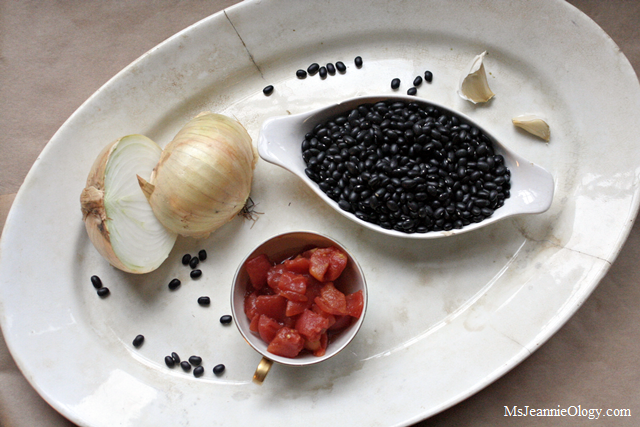
2 cups dried pinto, black or red kidney beans (Ms. Jeannie used black beans for her recipe)
cold water
2 onions, chopped
2 cloves garlic, chopped
1 bay leaf
2 serrano chiles, chopped or 1 teaspoon dried chilis, crumbled (Ms. Jeannie used one teaspoon red pepper flakes since fresh chiles aren’t in season yet here in the South)
11 tablespoons lard or oil (Ms. Jeannie used olive oil)
salt
freshly ground pepper
1 tomato, peeled, seeded and chopped ( if tomatoes aren’t in season yet you can substitute 1 can of diced tomatoes, drained of juice)
Wash the beans and place in a saucepan, without soaking, with enough cold water to cover, 1 of the chopped onions, 1 of the garlic cloves, the bay leaf and the chiles.
Cover, bring to a boil, reduce heat; and simmer gently , adding more boiling water as it evaporates from the pan. {Note: Using black beans, this process took about one hour and 30 minutes with about a cup of additional boiling water added halfway through.}
When the beans begin to wrinkle (or become sift as in the case of the black beans) add one tablespoon of lard or oil and continue to cook for an additional 30 minutes over the same heat. Do not add anymore water.
Heat the remaining lard or oil in a skillet, and saute the remaining onion and garlic until limp. Add the tomato and cook for an additional 2 minutes.
Remove the pan from the heat and working in small batches add beans to the onion/garlic mixture mashing them together to form a paste. Repeat this step until all beans have mashed with the onion and garlic.
Heat 2 tablespoons of lard or oil in a large skillet, add the beans in small batches and mash over low heat, forming a creamy heavy paste. Add two additional tablespoons of lard or oil intermittently throughout this process.
Repeat step six again with the last 4 tablespoons of oil, once the beans have all been initially pureed. (This is the re-fried part in the name refried beans!) It should look like this when finished…
Part Two: Mashing and Frying the Beans
This recipe is a great one because, once you understand the principles of refried beans you can really change things up and add your own flair if you like. Spice it up, experiment with different herbs or chopped vegetables like leeks or scallions or different types of cheese. If you like your refried beans a little bit more loose, you can add a little water to the pan after step 7 and mix it into the beans until you get the desired consistency. Likewise you can use the beans as part of lots of different dinner options from hors d’oeuvres to appetizers to main courses.
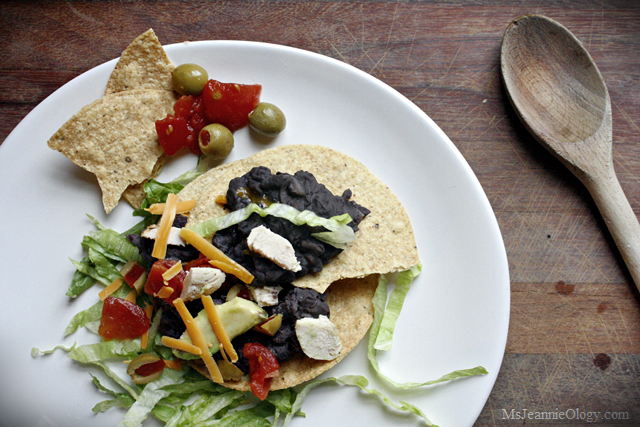
Ms. Jeannie made chicken tostados with her refried beans. Quick and easy, she prepared them with the same whimsical, spur-of-the-moment method she uses for making tacos. This one featured layers of tostado with chicken breast, green olives, lettuce, onion, avocado, cheddar cheese, tomatoes and the warm refried beans.
There are so many beans left over, Ms. Jeannie’s already hatching new recipes in her head about how else she can use them in her cooking this week ahead. It looks like luck will continue spilling forth across many days this week in the kitchen department. If you want to save your luck for another day store it in an air-tight container and freeze it for later use:)
To embark on more culinary adventures using The Best Recipes from The Cookbook Guildas your spring board, please visit here. And as always, you can access dozens of other delicious vintage recipes on Ms. Jeannie’s blog using this link.
Here we are dear readers rounding the corner to the finish line of Holiday Season 2015. You made it! You conquered all that hustle bustle, you cooked and cleaned and partied and pulled yourself through the merriest of months like a champion.
And by now, Ms. Jeannie bets you are ready for a little rest, a little relaxation or perhaps just some good old fashioned recovery time spent laying low. Ms. Jeannie has just the right thing for you… a suggestion list of the most entertaining books and movies she’s encountered throughout 2015.
Not all these suggestions came out, brand new, this year, some are a few years old and some are fifty years old but each of them carries the theme of history in a most interesting way, and each one will keep you entertained from start to finish.
Let’s take a look….
In the watching department, Ms. Jeannie fell in love with the following mini-series, movies and documentaries…
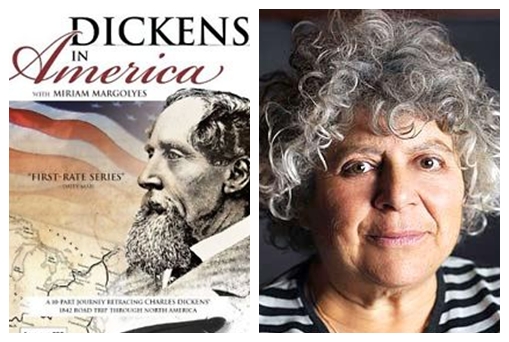
1. Dickens in America with Miriam Margoyles
Dickens on the left, Miriam on the right:)
The retracing of Charles Dickens’ 1842 travels to the United States, this documentary series sent famed British actress Miriam Margoyles (perhaps the biggest fan of Charles Dickens ever!) to a variety of cities located throughout the Eastern US. Visiting all the places Dickens traveled to… Boston, NYC, Washington DC, Philadelphia, Virginia, Ohio, Illinois and Canada, Miriam also attempts to eat the same sorts of foods, stay in the same hotels and travel the cities in the same way he did. The fun thing about this series is Miriam herself – a plug of energy, enthusiasm and quirky personality, she mirrors her contemporary viewpoints and attitudes alongside Dickens in all that was seen and experienced. She laughs, she cries, she compares and contrasts, she’s the ultimate fan and because of her devotion you can’t help but get caught up in her love affair as well. Here’s a clip from one segment…
2. Miss Fishers Murder Mysteries
How Ms. Jeannie escaped hearing about this Australian tv show that has been airing since 2013 is a wonder. Set in 1920s/1930’s Melbourne, Miss Fisher’s Murder Mysteries centers around thoroughly modern lady detective Phryne Fisher and the bevy of strange and unusual cases she solves. Beautifully filmed, along the same glamorous lines as Downtown Abbey, Miss Phryne Fisher is progressive in all things thought and action. The writing is smart, the wardrobes incredible and the cases always intriguing. Currently, in its third season now with new episodes beginning in January, Ms. Jeannie recommends watching it from the very beginning because story lines do carry over from season to season.
This is the trailer for season one…
3. Mona Lisa is Missing
The inspiration for this documentary came from one line in a book (aha!) discovered during the 1970s:
In 1911, the Mona Lisa was stolen from the Louvre by an Italian immigrant named Vincenzo Perugia.
Filmmmaker Joe Medieros became so obsessed with this one line and the story behind it that it took him the next 30 years to properly figure out what exactly happened to the world’s most famous painting. The result of his research is this fast-paced, funny and touching documentary stretching from New York all the way to Italy where he meets modern-day relatives of the thief who stole the painting, scours international archives, pursues all possible theories and does a re-enactment of how the whole situation went down at the Louvre step-by-step. The winner of practically a gazillion film festivals around the world, Mona Lisa is Missing is so creatively put together using a mixture of paper cut outs, film footage and moving pictures it is as whimsical in presentation as it is in story.
4. Finding Vivian Maier
Another equally fascinating real-life story, Finding Vivian Maier is a documentary about a thrifty collector who purchased a few boxes of old photographs at an auction. When he realizes upon returning home that the collection is quite extraordinary, he embarks on a vintage sleuthing escapade to uncover who exactly this photographer is, the influence of her art upon mid-century America and the unusual life she led in pursuit of her passion. So incredible, Ms. Jeannie will not say anything more about what happens because the pacing of this documentary and all that it reveals is fantastic. By the end of it – you’ll be a fan. Ms. Jeannie promises!
In the book department…
5. West of Sunset by Stewart O’Nan (published 2015)
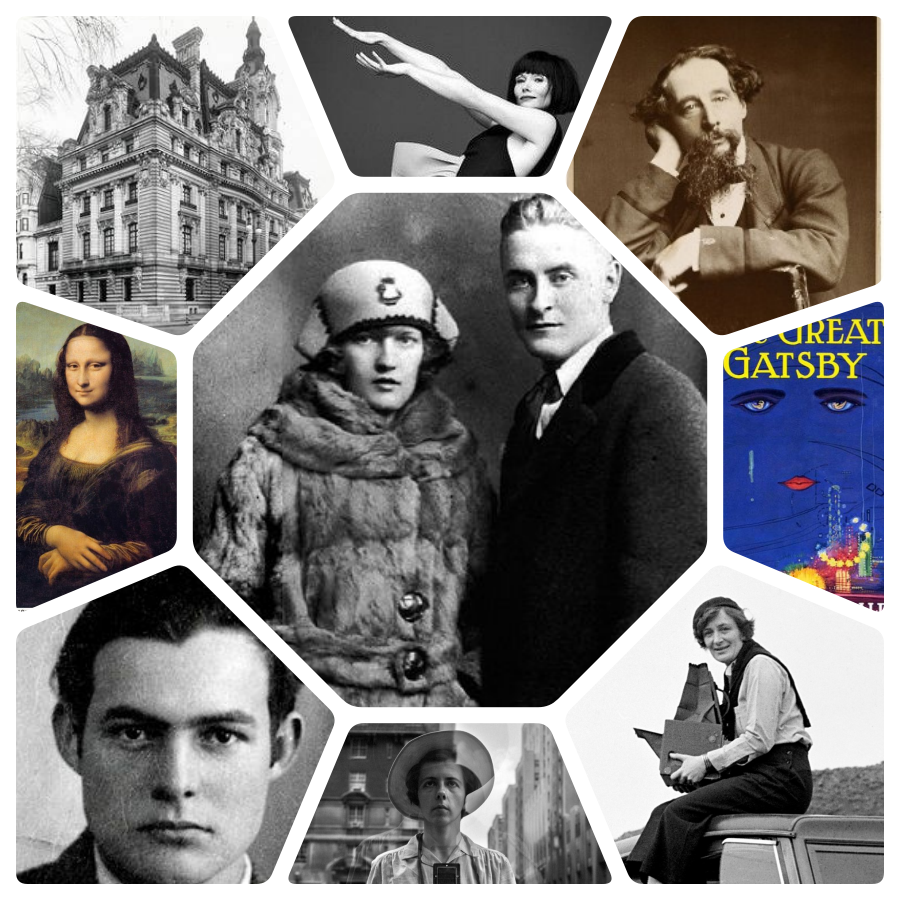
When Ms. Jeannie traveled to Florida to take care of her sick dad in November, she spent the entire eleven hour drive each way listening to one audio book – West of Sunset by Stewart O’Nan. As you know by now, (if you happen to be a regular reader of the blog) like Miriam Margoyles and her Dickens, Ms. Jeannie has a slight obsession with anything F. Scott Fitzgerald, so she was super excited to discover this newly released novel which centers around the last three years of F. Scott’s life.
F. Scott & Zelda Fitzgerald
This was the point in his story (the late 1930’s) when his wife, Zelda was receiving care in a mental hospital in North Carolina and he was on the opposite coast, in Hollywood writing scripts to try to drum up enough money to live. Throughout Stewart O’Nan’s novel, F. Scott travels between life in the make-believe city of Los Angeles where he spends time with Bogart and Hemingway, Deitrich and Cukor and real-life in North Carolina where Zelda is loosing teeth and losing touch. F. Scott tries to maintain a sense of marital stability, loyalty and companionship to Zelda but this hospitalized woman is someone he no longer recognizes, a child-like version of the dynamic and vivacious woman she once was. By this time, The Great Gatsby has already been published but it is not nearly the revered literary work that is today so F. Scott in Stewart’s world is old and tired and struggling, plodding day by day at his typewriter, driven by his love of words and his desire to string a noteworthy line.
F. Scott & Zelda around the time of the book’s setting.
Thanks to Stewart O’Nan’s humanistic approach to the end of F. Scott’s life we understand how difficult it must have been to keep up with costs to support Zelda’s mental health care, to keep his teenage daughter Scottie’s school tuition afloat and to also just be able to maintain his day to day living expenses in California while also dealing with the mental ups and downs of an unreliable creative enterprise like movie-making in California. You might know F. Scott as an alcoholic, a child of Jazz age decadence and of day to day living without future thought but Stewart O’Nan paints a highly researched depiction of this great writer in his final flawed years when he was trying – really trying- excruciatingly trying – to not drink so much, to keep his career current and to take care of his family. This is what makes this book fantastic. In our modern way of seeing success so easily promoted via social media it is easy to forget about struggle, about building, about putting in the time in so that success can happen. Stewart O’ Nan deals with all that – the unglamorous, every day side to F. Scott which made him real and likable and ultimately relateable. And there are also some very cool scenes filled with glamorous Hollywood parties and celebrity encounters that make your imagination fly:)
6. So We Read On – Maureen Corrigan (published 2014)
NPR book critic Maureen Corrigan shared her love of all things Gatsby in So We Read On, determining why and how F. Scott Fitzgerald’s book, The Great Gatsby is still so relevant and so important in today’s world. Covering all aspects of the book, from its writer to its subject to its themes and its reception both then and now, Maureen examines Gatsby from all sides (literally and figuratively). She even travels all the way back to her high school where she first read Gatsby and where kids now in the 2000’s are still required to read it in order to see what the modern day perception of the nearly 100 year old novel is today. How could a book written in 1925 still be so universally relevant 90 years later? You don’t have to be a superfan to understand Maureen’s book, it is wonderfully written as a quasi-memoir and interpretation of one woman’s love of reading and the impact that one particular book made upon her life.
7. A Moveable Feast – Ernest Hemingway (published 1964)
Ms. Jeannie most highly recommends reading this book aloud, because there is a little magic that happens when you both speak and hear the lines of someone else’s memoir. The subject becomes much more intimate and much more consuming.
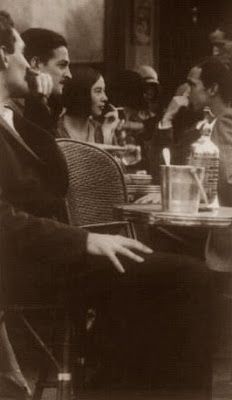
The true story of Ernest Hemingway’s experience of living and writing in Paris at the very start of his career, A Moveable Feast will transport you immediately out of your current situation and deposit you in the cafe scene that is Paris of the 1930’s. You’ll hear first-hand, in his own voice, how Ernest struggled to build the sentences that would build his career and how he would struggle to understand the people that moved in and out of his life, including his own wife who was a marvel of odd and exotic understanding.
Ernest amid the 1920’s Parisian cafe scene.
You’ll learn how he plodded every day though the mud that is the creative writing field, while also experiencing the commonplace genius and artistic camaraderie that would make this time in Paris legendary. And most importantly you’ll see probably the most vulnerable side of Ernest, in his own words, before he was confident and comfortable in his own writing skin, while he was struggling to make enough money to buy dinner for his wife and baby, to buy a book from Shakespeare & Company or to buy a hot coffee to keep warm while he wrote on a cold day. This is Ernest at the very beginning, a keen observer of the situation before him.
8. Empty Mansions – Bill Dedman (published 2015)
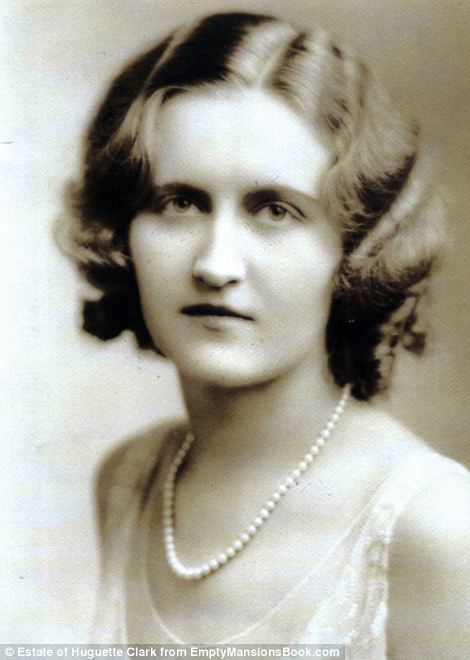
Changing gears completely from Jazz Age Paris to contemporary New York high society, Empty Mansions is the true story of Huguette Clark of New York City and the story of her family’s fortune which spans the 18th, 19th and 20th centuries as it spreads from Colorado to Arizona to New York City’s Fifth Avenue.
Huguette Clark (1906-2011)
Now rumored to be in consideration for film adaptation, Ms. Jeannie can completely understand because the book opens with the reclusive story of Huguette, a once beautiful debutante, now aged and afraid to show her face in public due to a cancer causing facial disfigurement. From the opening pages you try to decide if Hugettte is an eccentric reclusive like the Edie Beales of Grey Gardens or if she is just extremely shy and private trying to live a life away from the press.
As the book continues and the story unfolds you wonder if she is prey to the strange health care system that plagues our country and to the managers of her welfare or if she is an indomitable force that controls her own destiny living life on her terms and her terms only.
New York’s famed 5th Avenue where the Clark family lived alongside other tycoon neighbors like the Vanderbilts and Rockefellers
Providing back story to Huguette’s unusual lifestyle, you learn about her family’s genealogy and the American dream fantasy of hard work, risky decisions and big rewards that built their fortune and made them a formidable impression on the New York business scene of Victorian metropolitan life. You learn about the tragedies that befell the family as well as the triumphs, how they rose to fame and slowly withdrew from it, and how all those moments one by one compiled themselves onto the outlook and attitude of Huguette and shaped a century of life.
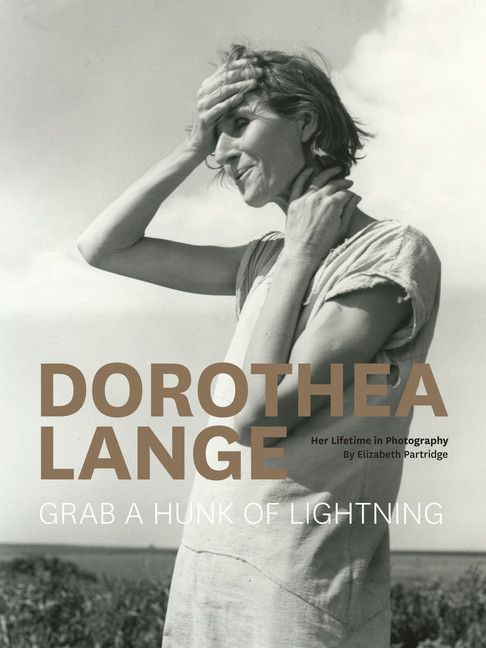
9. Dorothea Lange: Grab a Hunk of Lightning – Elizabeth Partridge (published 2013)
Both a book and a PBS documentary, Grab A Hunk of Lightning tells the whole story of famed photographer Dorothea Lange from how she started as an awkward teenager first learning how to use a camera through experimentation and expression to how she turned into a trained eye that would make her one of the most famous photographers of the 20th century.
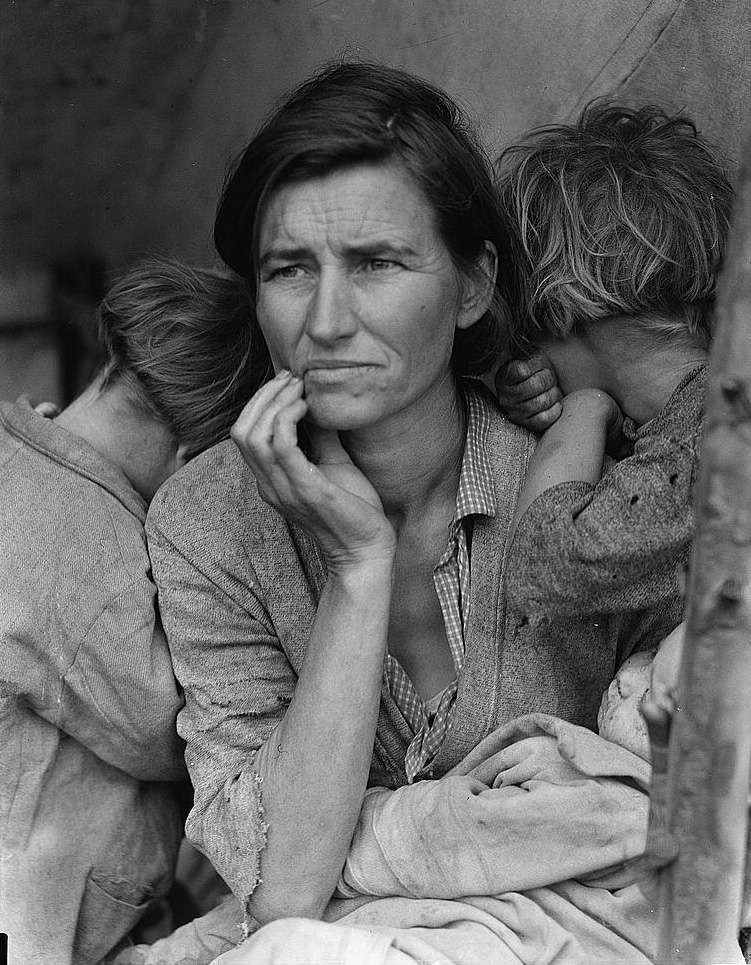
Dorothea Lange’s most well-known photograph, The Migrant Mother, taken in 1936
Beautifully laid out in folio style, Grab A Hunk of Lightening, written by Dorothea’s god-daughter, gives insight into the production and story behind her personal life and her professional photographs. And it also tells the story, again like Ernest Hemingway in A Moveable Feast and F. Scott Fitzgerald in West of Sunset how one thing led to another in terms of career and creativity. Dorothea was a working artist trying to pay bills all the while attempting to build a style, a career and a vision that was uniquely hers. Despite difficult circumstances, marriage, children, house moves, illness and lack of confidence, Dorothea humbly went about pursuing her craft every day of her life, putting one foot in front of another.
Hope you find some new and exiting material here dear readers! If you had any extra special favorites in the book and movie department this year please share your thoughts in the comments section!
May the rest of your 2015 be lazy and lovely. Cheers and happy Happy New Year’s dear readers!!!












































 In the Vintage Kitchen: Where History Comes To Eat