It’s the middle of January. It is the middle of winter and the middle of a cold snap hitting Ms. Jeannie’s section of the woods. It’s in the twenties at night and the wood stove in the schoolhouse is working overtime. To everyone else it is freezing, but in the mind of Ms. Jeannie it is Spring. That’s right dear readers, a new season has arrived and it looks like this…
and this…
and this…
If you have visited Ms. Jeannie’s shop within the last week you’ll have noticed that a bevy of botanical flower prints have appeared – a hopeful little nod to warmer weather and all the beauty that is silently stirring under ground while everyone else is shivering above.
The flower prints are botanical bookplates that comprise wild flowers in America circa 1953. Printed watercolor portraits of over 400 different varieties, these beauties represent some of the most common and most exotic flowers that graced our mid-century American landscape from Alaska to Maine, from Canada to Mexico and from each and every state in-between.
Colorful, simple and classically stylish, these botanicals offer a bounty of decorating options from bright and bold to subtle and soothing. Today we are going to take a look at how you might decorate with such beauties to bring some fresh color into your space or use them as springboards to choose a room’s color palette.
You can go the traditional route and frame them in simple wood frames to liven up an accent wall like this balanced collage:
You could create your own garden cottage wallpaper…
You could pull colors together in a room with these guys as your green anchor:
You could think outside the frame and tape them up on a wall in a casual combination of beautifully messy:
Or you could incorporate them into a found object vignette like this one that represents all your favorite things…
When grouped together in a large collection, vintage botanicals help brighten up a dark space like this one…
And they help add a pop of color on a wall that is all white like this one…
They can help carry a theme of color and shape, like this arrangement…
Or help carry a vibe like this soft and soothing space…
Anyway, you look at them, from the traditional to the thought-provoking, vintage botanicals have the ability to instantly and effortlessly add personality to a room and a wall. Warm yourself up with some flowers in red and and orange. Or calm yourself down with flowers in white and green. There’s something for everyone in a wild flower whether you are looking for pretty petals or dramatic grasses, wild flowers never disappoint.
Oh and there is an added bonus too…instant mood brighteners on these chilly-willy days of winter when all seems icy grey and white.
To peruse the collections in Ms. Jeannie’s shop (which include vintage Menaboni bird botanicals too!) please click here.
Cheers to sunny days ahead! Happy day dreaming and happy decorating!
Happy New Year dear readers! Ms. Jeannie is sending you bucketfuls (it’s been raining a lot here) of good wishes, good fortune and good health for this new year.
This week we are back in the vintage kitchen with a healthy recipe that features a food staple held high in the luck department for January. Beans! They also made the news this past week as something we Americans should be eating more of (poor unfortunate sugar just got the worst rap) so we are conquering two bright and shiny wish you well tidings with one post here – good health and good luck.
If you are anything like Ms. Jeannie you might never have thought much about refried beans…how they are made, what exactly they are made with and how you might possibly make your own better version at home. In the store they come canned in two varieties, vegetarian and traditional and most contain hydrogenated oils and preservatives which are not the healthiest of options. But refried beans are great on tacos, burritos and nachos and are a great source of protein so Ms. Jeannie was excited to come across a from-scratch recipe in this vintage cookbook recently listed in her shop…
Best Recipes from the Cook Book Guild published in 1972
Published in 1972, The Best Recipes from the Cook Book Guild is actually a compilation book of hundreds of recipes from other note-worthy cookbooks published between the 1940’s and the 1960’s. Each recipe comes with source notes and sometimes a story about where the recipe came from and who made it originally, which of course opens the door to a myriad of culinary adventures to pursue.
The refried bean recipe came from the 1967 edition of The Complete Book of Mexican Cooking by Elisabeth Lambert Ortiz (1915-2003), who was an award-winning British food writer and the wife of Mexican diplomat Cesar Ortiz Tenoco.
Through extensive travels in South America (and perhaps a few helpful lessons from Cesar’s family!) Elisabeth became an expert at preparing and instructing others on the art of Mexican cooking. The author of numerous international cookbooks, she is credited primarily with introducing Latin American cuisine to home cooks in both the U.S. and her native England during the 1960’s singing it’s flavor-packed praises in the forms of books and articles for Gourmet magazine and various food-related periodicals. So what we have here dear readers is a fresh approach to an ethnic recipe from a woman who learned her way through the culture. In Ms. Jeannie’s opinion, this is the best kind of cooking – learning through curiosity, love and experience .
Part One: Cooking the Beans
Refried Beans (Frijoles Refritos) serves 6
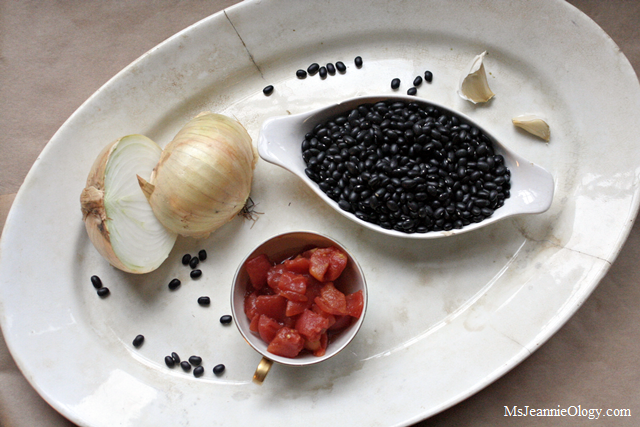
2 cups dried pinto, black or red kidney beans (Ms. Jeannie used black beans for her recipe)
cold water
2 onions, chopped
2 cloves garlic, chopped
1 bay leaf
2 serrano chiles, chopped or 1 teaspoon dried chilis, crumbled (Ms. Jeannie used one teaspoon red pepper flakes since fresh chiles aren’t in season yet here in the South)
11 tablespoons lard or oil (Ms. Jeannie used olive oil)
salt
freshly ground pepper
1 tomato, peeled, seeded and chopped ( if tomatoes aren’t in season yet you can substitute 1 can of diced tomatoes, drained of juice)
Wash the beans and place in a saucepan, without soaking, with enough cold water to cover, 1 of the chopped onions, 1 of the garlic cloves, the bay leaf and the chiles.
Cover, bring to a boil, reduce heat; and simmer gently , adding more boiling water as it evaporates from the pan. {Note: Using black beans, this process took about one hour and 30 minutes with about a cup of additional boiling water added halfway through.}
When the beans begin to wrinkle (or become sift as in the case of the black beans) add one tablespoon of lard or oil and continue to cook for an additional 30 minutes over the same heat. Do not add anymore water.
Heat the remaining lard or oil in a skillet, and saute the remaining onion and garlic until limp. Add the tomato and cook for an additional 2 minutes.
Remove the pan from the heat and working in small batches add beans to the onion/garlic mixture mashing them together to form a paste. Repeat this step until all beans have mashed with the onion and garlic.
Heat 2 tablespoons of lard or oil in a large skillet, add the beans in small batches and mash over low heat, forming a creamy heavy paste. Add two additional tablespoons of lard or oil intermittently throughout this process.
Repeat step six again with the last 4 tablespoons of oil, once the beans have all been initially pureed. (This is the re-fried part in the name refried beans!) It should look like this when finished…
Part Two: Mashing and Frying the Beans
This recipe is a great one because, once you understand the principles of refried beans you can really change things up and add your own flair if you like. Spice it up, experiment with different herbs or chopped vegetables like leeks or scallions or different types of cheese. If you like your refried beans a little bit more loose, you can add a little water to the pan after step 7 and mix it into the beans until you get the desired consistency. Likewise you can use the beans as part of lots of different dinner options from hors d’oeuvres to appetizers to main courses.
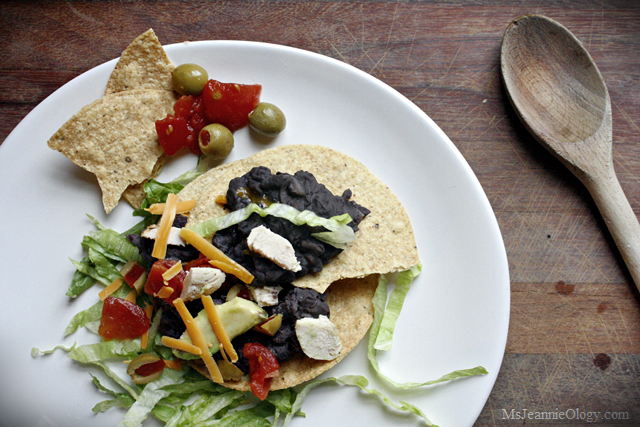
Ms. Jeannie made chicken tostados with her refried beans. Quick and easy, she prepared them with the same whimsical, spur-of-the-moment method she uses for making tacos. This one featured layers of tostado with chicken breast, green olives, lettuce, onion, avocado, cheddar cheese, tomatoes and the warm refried beans.
There are so many beans left over, Ms. Jeannie’s already hatching new recipes in her head about how else she can use them in her cooking this week ahead. It looks like luck will continue spilling forth across many days this week in the kitchen department. If you want to save your luck for another day store it in an air-tight container and freeze it for later use:)
To embark on more culinary adventures using The Best Recipes from The Cookbook Guildas your spring board, please visit here. And as always, you can access dozens of other delicious vintage recipes on Ms. Jeannie’s blog using this link.
Here we are dear readers rounding the corner to the finish line of Holiday Season 2015. You made it! You conquered all that hustle bustle, you cooked and cleaned and partied and pulled yourself through the merriest of months like a champion.
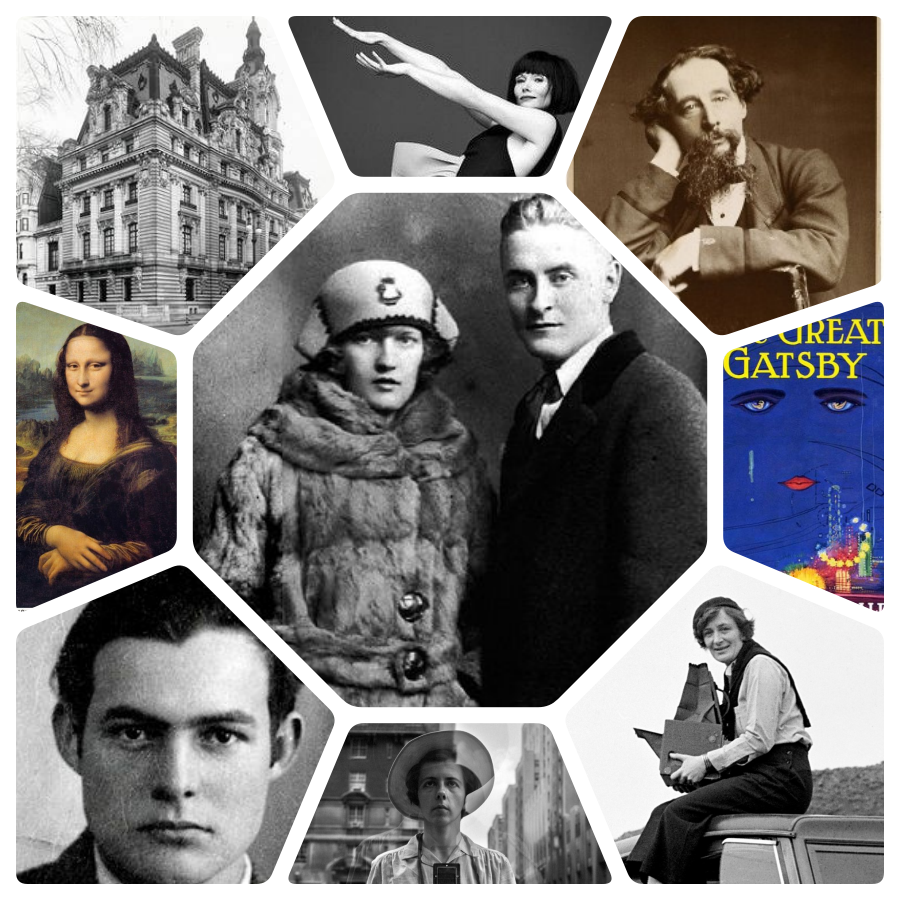
And by now, Ms. Jeannie bets you are ready for a little rest, a little relaxation or perhaps just some good old fashioned recovery time spent laying low. Ms. Jeannie has just the right thing for you… a suggestion list of the most entertaining books and movies she’s encountered throughout 2015.
Not all these suggestions came out, brand new, this year, some are a few years old and some are fifty years old but each of them carries the theme of history in a most interesting way, and each one will keep you entertained from start to finish.
Let’s take a look….
In the watching department, Ms. Jeannie fell in love with the following mini-series, movies and documentaries…
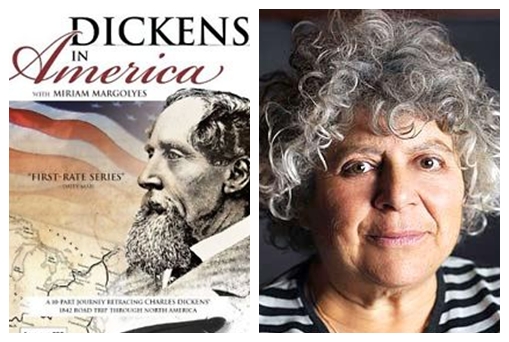
1. Dickens in America with Miriam Margoyles
Dickens on the left, Miriam on the right:)
The retracing of Charles Dickens’ 1842 travels to the United States, this documentary series sent famed British actress Miriam Margoyles (perhaps the biggest fan of Charles Dickens ever!) to a variety of cities located throughout the Eastern US. Visiting all the places Dickens traveled to… Boston, NYC, Washington DC, Philadelphia, Virginia, Ohio, Illinois and Canada, Miriam also attempts to eat the same sorts of foods, stay in the same hotels and travel the cities in the same way he did. The fun thing about this series is Miriam herself – a plug of energy, enthusiasm and quirky personality, she mirrors her contemporary viewpoints and attitudes alongside Dickens in all that was seen and experienced. She laughs, she cries, she compares and contrasts, she’s the ultimate fan and because of her devotion you can’t help but get caught up in her love affair as well. Here’s a clip from one segment…
2. Miss Fishers Murder Mysteries
How Ms. Jeannie escaped hearing about this Australian tv show that has been airing since 2013 is a wonder. Set in 1920s/1930’s Melbourne, Miss Fisher’s Murder Mysteries centers around thoroughly modern lady detective Phryne Fisher and the bevy of strange and unusual cases she solves. Beautifully filmed, along the same glamorous lines as Downtown Abbey, Miss Phryne Fisher is progressive in all things thought and action. The writing is smart, the wardrobes incredible and the cases always intriguing. Currently, in its third season now with new episodes beginning in January, Ms. Jeannie recommends watching it from the very beginning because story lines do carry over from season to season.
This is the trailer for season one…
3. Mona Lisa is Missing
The inspiration for this documentary came from one line in a book (aha!) discovered during the 1970s:
In 1911, the Mona Lisa was stolen from the Louvre by an Italian immigrant named Vincenzo Perugia.
Filmmmaker Joe Medieros became so obsessed with this one line and the story behind it that it took him the next 30 years to properly figure out what exactly happened to the world’s most famous painting. The result of his research is this fast-paced, funny and touching documentary stretching from New York all the way to Italy where he meets modern-day relatives of the thief who stole the painting, scours international archives, pursues all possible theories and does a re-enactment of how the whole situation went down at the Louvre step-by-step. The winner of practically a gazillion film festivals around the world, Mona Lisa is Missing is so creatively put together using a mixture of paper cut outs, film footage and moving pictures it is as whimsical in presentation as it is in story.
4. Finding Vivian Maier
Another equally fascinating real-life story, Finding Vivian Maier is a documentary about a thrifty collector who purchased a few boxes of old photographs at an auction. When he realizes upon returning home that the collection is quite extraordinary, he embarks on a vintage sleuthing escapade to uncover who exactly this photographer is, the influence of her art upon mid-century America and the unusual life she led in pursuit of her passion. So incredible, Ms. Jeannie will not say anything more about what happens because the pacing of this documentary and all that it reveals is fantastic. By the end of it – you’ll be a fan. Ms. Jeannie promises!
In the book department…
5. West of Sunset by Stewart O’Nan (published 2015)
When Ms. Jeannie traveled to Florida to take care of her sick dad in November, she spent the entire eleven hour drive each way listening to one audio book – West of Sunset by Stewart O’Nan. As you know by now, (if you happen to be a regular reader of the blog) like Miriam Margoyles and her Dickens, Ms. Jeannie has a slight obsession with anything F. Scott Fitzgerald, so she was super excited to discover this newly released novel which centers around the last three years of F. Scott’s life.
F. Scott & Zelda Fitzgerald
This was the point in his story (the late 1930’s) when his wife, Zelda was receiving care in a mental hospital in North Carolina and he was on the opposite coast, in Hollywood writing scripts to try to drum up enough money to live. Throughout Stewart O’Nan’s novel, F. Scott travels between life in the make-believe city of Los Angeles where he spends time with Bogart and Hemingway, Deitrich and Cukor and real-life in North Carolina where Zelda is loosing teeth and losing touch. F. Scott tries to maintain a sense of marital stability, loyalty and companionship to Zelda but this hospitalized woman is someone he no longer recognizes, a child-like version of the dynamic and vivacious woman she once was. By this time, The Great Gatsby has already been published but it is not nearly the revered literary work that is today so F. Scott in Stewart’s world is old and tired and struggling, plodding day by day at his typewriter, driven by his love of words and his desire to string a noteworthy line.
F. Scott & Zelda around the time of the book’s setting.
Thanks to Stewart O’Nan’s humanistic approach to the end of F. Scott’s life we understand how difficult it must have been to keep up with costs to support Zelda’s mental health care, to keep his teenage daughter Scottie’s school tuition afloat and to also just be able to maintain his day to day living expenses in California while also dealing with the mental ups and downs of an unreliable creative enterprise like movie-making in California. You might know F. Scott as an alcoholic, a child of Jazz age decadence and of day to day living without future thought but Stewart O’Nan paints a highly researched depiction of this great writer in his final flawed years when he was trying – really trying- excruciatingly trying – to not drink so much, to keep his career current and to take care of his family. This is what makes this book fantastic. In our modern way of seeing success so easily promoted via social media it is easy to forget about struggle, about building, about putting in the time in so that success can happen. Stewart O’ Nan deals with all that – the unglamorous, every day side to F. Scott which made him real and likable and ultimately relateable. And there are also some very cool scenes filled with glamorous Hollywood parties and celebrity encounters that make your imagination fly:)
6. So We Read On – Maureen Corrigan (published 2014)
NPR book critic Maureen Corrigan shared her love of all things Gatsby in So We Read On, determining why and how F. Scott Fitzgerald’s book, The Great Gatsby is still so relevant and so important in today’s world. Covering all aspects of the book, from its writer to its subject to its themes and its reception both then and now, Maureen examines Gatsby from all sides (literally and figuratively). She even travels all the way back to her high school where she first read Gatsby and where kids now in the 2000’s are still required to read it in order to see what the modern day perception of the nearly 100 year old novel is today. How could a book written in 1925 still be so universally relevant 90 years later? You don’t have to be a superfan to understand Maureen’s book, it is wonderfully written as a quasi-memoir and interpretation of one woman’s love of reading and the impact that one particular book made upon her life.
7. A Moveable Feast – Ernest Hemingway (published 1964)
Ms. Jeannie most highly recommends reading this book aloud, because there is a little magic that happens when you both speak and hear the lines of someone else’s memoir. The subject becomes much more intimate and much more consuming.
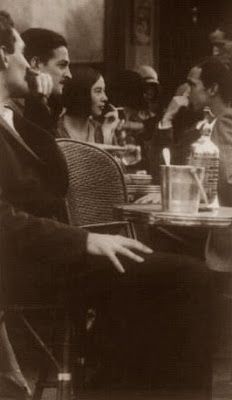
The true story of Ernest Hemingway’s experience of living and writing in Paris at the very start of his career, A Moveable Feast will transport you immediately out of your current situation and deposit you in the cafe scene that is Paris of the 1930’s. You’ll hear first-hand, in his own voice, how Ernest struggled to build the sentences that would build his career and how he would struggle to understand the people that moved in and out of his life, including his own wife who was a marvel of odd and exotic understanding.
Ernest amid the 1920’s Parisian cafe scene.
You’ll learn how he plodded every day though the mud that is the creative writing field, while also experiencing the commonplace genius and artistic camaraderie that would make this time in Paris legendary. And most importantly you’ll see probably the most vulnerable side of Ernest, in his own words, before he was confident and comfortable in his own writing skin, while he was struggling to make enough money to buy dinner for his wife and baby, to buy a book from Shakespeare & Company or to buy a hot coffee to keep warm while he wrote on a cold day. This is Ernest at the very beginning, a keen observer of the situation before him.
8. Empty Mansions – Bill Dedman (published 2015)
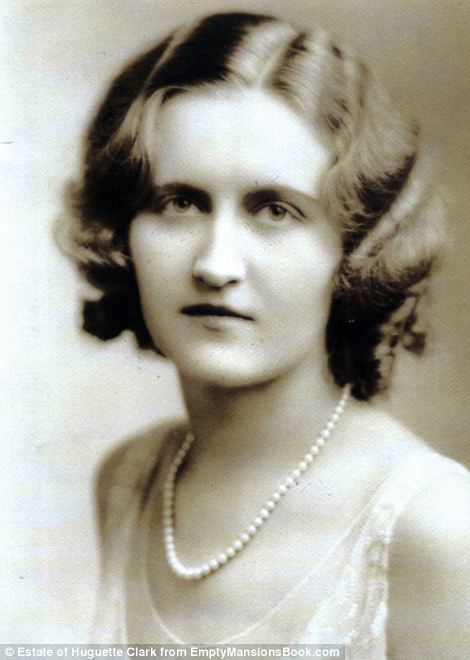
Changing gears completely from Jazz Age Paris to contemporary New York high society, Empty Mansions is the true story of Huguette Clark of New York City and the story of her family’s fortune which spans the 18th, 19th and 20th centuries as it spreads from Colorado to Arizona to New York City’s Fifth Avenue.
Huguette Clark (1906-2011)
Now rumored to be in consideration for film adaptation, Ms. Jeannie can completely understand because the book opens with the reclusive story of Huguette, a once beautiful debutante, now aged and afraid to show her face in public due to a cancer causing facial disfigurement. From the opening pages you try to decide if Hugettte is an eccentric reclusive like the Edie Beales of Grey Gardens or if she is just extremely shy and private trying to live a life away from the press.
As the book continues and the story unfolds you wonder if she is prey to the strange health care system that plagues our country and to the managers of her welfare or if she is an indomitable force that controls her own destiny living life on her terms and her terms only.
New York’s famed 5th Avenue where the Clark family lived alongside other tycoon neighbors like the Vanderbilts and Rockefellers
Providing back story to Huguette’s unusual lifestyle, you learn about her family’s genealogy and the American dream fantasy of hard work, risky decisions and big rewards that built their fortune and made them a formidable impression on the New York business scene of Victorian metropolitan life. You learn about the tragedies that befell the family as well as the triumphs, how they rose to fame and slowly withdrew from it, and how all those moments one by one compiled themselves onto the outlook and attitude of Huguette and shaped a century of life.
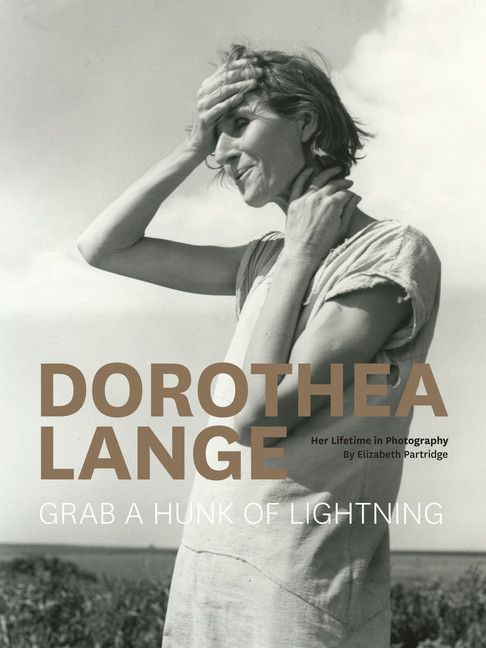
9. Dorothea Lange: Grab a Hunk of Lightning – Elizabeth Partridge (published 2013)
Both a book and a PBS documentary, Grab A Hunk of Lightning tells the whole story of famed photographer Dorothea Lange from how she started as an awkward teenager first learning how to use a camera through experimentation and expression to how she turned into a trained eye that would make her one of the most famous photographers of the 20th century.
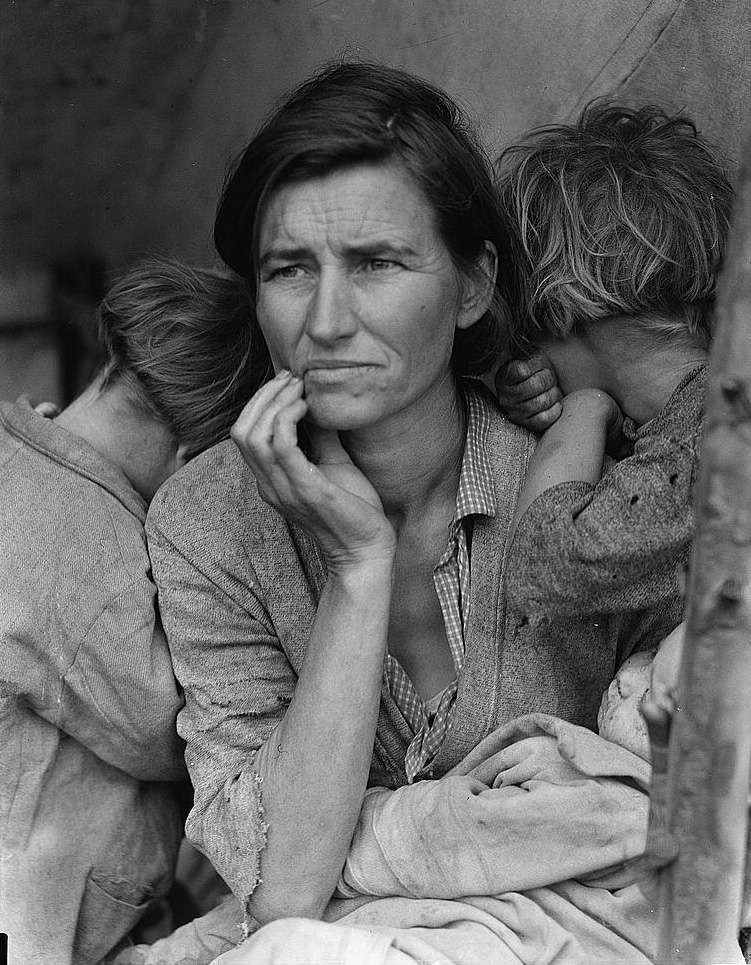
Dorothea Lange’s most well-known photograph, The Migrant Mother, taken in 1936
Beautifully laid out in folio style, Grab A Hunk of Lightening, written by Dorothea’s god-daughter, gives insight into the production and story behind her personal life and her professional photographs. And it also tells the story, again like Ernest Hemingway in A Moveable Feast and F. Scott Fitzgerald in West of Sunset how one thing led to another in terms of career and creativity. Dorothea was a working artist trying to pay bills all the while attempting to build a style, a career and a vision that was uniquely hers. Despite difficult circumstances, marriage, children, house moves, illness and lack of confidence, Dorothea humbly went about pursuing her craft every day of her life, putting one foot in front of another.
Hope you find some new and exiting material here dear readers! If you had any extra special favorites in the book and movie department this year please share your thoughts in the comments section!
May the rest of your 2015 be lazy and lovely. Cheers and happy Happy New Year’s dear readers!!!
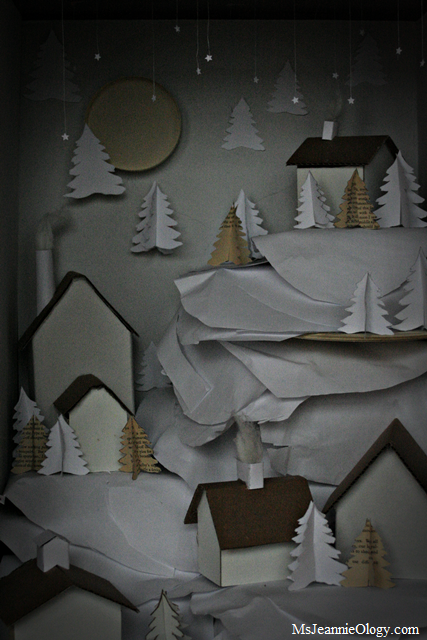
Almost every year Ms. Jeannie makes a paper village for Christmas. Sometimes she gives them away to friends and sometimes she incorporates them into her space. Sometimes they reflect little details of things that happened during the year and other times they act as little totems for what she might like to see happen in her life in the new year. Regardless of the theme it is always fun to make them – a little stress-relief project in the middle of a busy month.
This year Ms. Jeannie built her Christmas village into her bookshelf. As you all know books swirled around her life left and right this year, and although there was a lot of unexpected events and occurrences that happened in 2015, books helped keep her hopeful. So it seemed fitting to build her paper village among the stacks of paper that so inspire her.
Mr. Jeannie pitched the roofs and lent his talents in the chimney smoke department. Ms. Jeannie hung stars and made alpine trees out of vintage book paper. It was a family affair like all good holiday projects should be with lots of love and laughter to hold up her little cut-out community.
The same can be said of this community of readers – you dear wonders – who continue to make Ms. Jeannie smile with all the love and support you give on a such a regular basis. Thank you so much for keeping in touch and contributing all your thoughts – with each kind word you lift Ms. Jeannie higher each and every day.
There are big plans for 2016 and many fun surprises in-store. Ms. Jeannie hopes with all her merry might that yourplans for the new year are just as big and just as bright and that 2016 is going to be the best year yet.
Wishing you a very Merry Christmas and the most cheerful of New Years!
Here we are just a week away from the big holiday dear readers! If your month has been a flurry of activity like Ms. Jeannie’s and you find yourself flustered about what to give whom, then you’ll her find her last minute sale for last minute shoppers a true treasure.
For two days only – December 18th and 19th, take 50% off your order using the coupon code fifty2015 upon checkout.
If you have hard people to shop for a vintage book always makes a lasting impression, a thoughtful gift or a nice reminder of a shared experience. Find such favorites here. Or help your pal set up a perfectly appointed library with some 100% unique and one of a kind decorating pieces that add instant, effortless personality to any space. Find those marvels here.
Why just two days, you ask? Because that will give Ms. Jeannie enough time to gift wrap your item in pretty paper, tie it with a bow and pack it off in the mail in time for Christmas. Live outside of the Southern region of the continental U.S.? No problem just send Ms. Jeannie a message and she’ll add expedited shipping charges to hurry that package right along to you.
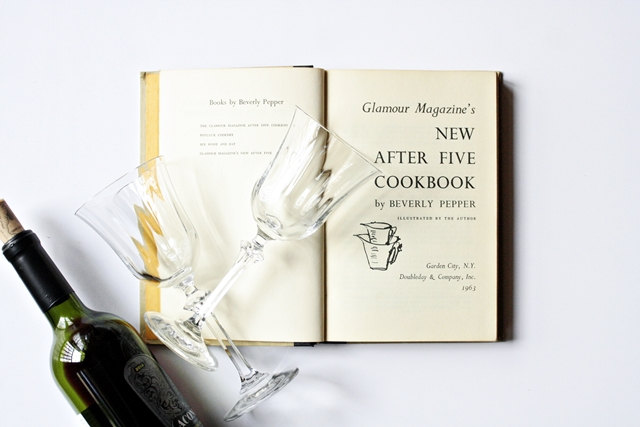
In 1963, a new edition of a popular 12 year old cookbook was published by Beverly Pepper.
The cookbook was Glamour Magazine’s New After Five Cookbook containing a year’s worth of dinner recipes designed for the young modern woman who didn’t have a lot of extra time to sit down and menu plan. With an audience comprised primarily of busy career girls, new mothers, college grads, young marrieds and the over extended singleton…
photo via pinterest
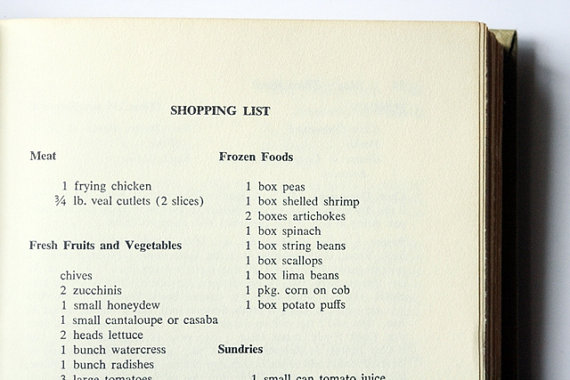
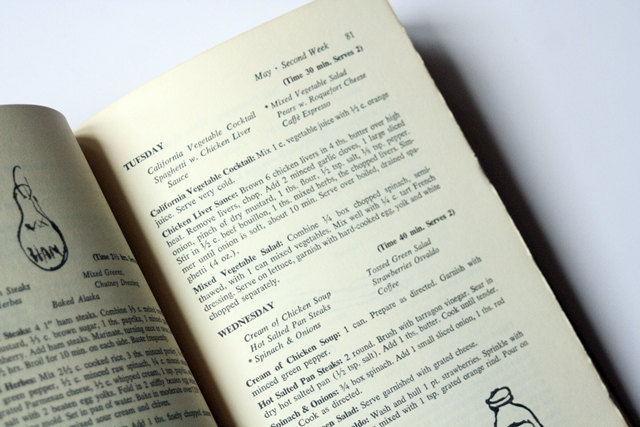
the After Five Cookbook was a dream come true. Broken down by month and then further by week, each section begins with a pantry staple list needed for the month followed by a weekly shopping list of all ingredients needed over the next six days..
The recipes are laid out from from Sunday to Friday of each week with Saturday of course left out, assuming either a night off, a party engagement or better yet, a dinner date out.
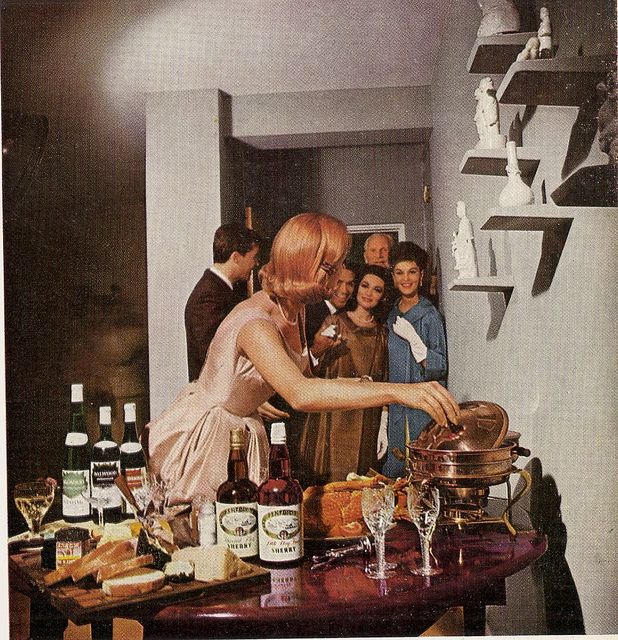
The last twenty pages contain special large-scale menus ideal for holidays or house parties when ladies were cooking for a crowd.
photo via pinterest
This is the section where Ms. Jeannie found the recipe for this blog post – a feast of flavor (or a gourmet gangfest as Beverley Pepper liked to call it) that serves eight but could easily be doubled or tripled to feed the proverbial army. Time is always short-handed in December so while this recipe does take two hours to prepare, it freezes wonderfully, sits well in a chafing dish, makes excellent leftovers and transports easily if you are tailgating or pot-lucking your way through the month.
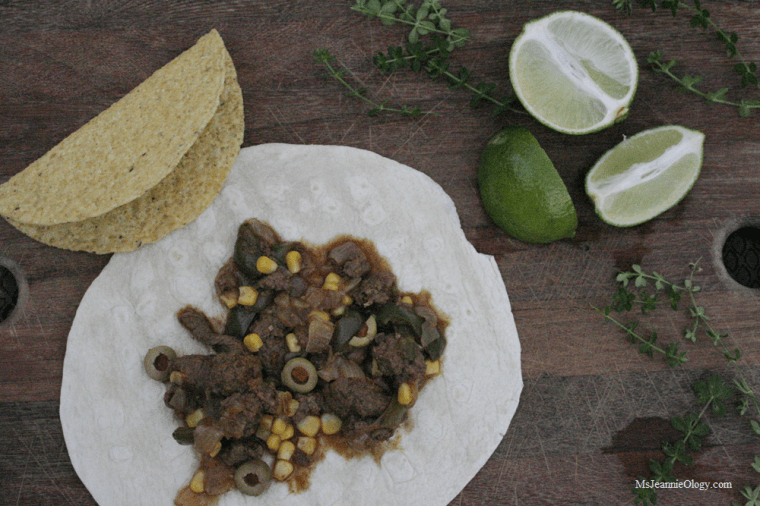
Mexican Beef with Olives (serves 6-8)
3 lbs. cubed grass-fed stew beef
4 tablespoons olive oil
1/2 lb. ground grass-fed beef
2 minced garlic cloves
3 green peppers, cut in 1″inch strips
6 onions, chopped
2 tblsp. tomato paste
6 dashes Tabasco sauce (or equivalent hot sauce)
3 tblsp. chili powder
3 cups chicken broth
2 cans corn kernels, drained but reserve the liquid
1 cup spanish olives, sliced
salt and pepper (to taste)
In a large pan, brown the stew beef, ground beef, garlic, peppers and onions in the olive oil over medium high heat until the beef is browned and the onions begin to caramelize.
Add the tomato paste, tabasco, chili powder, salt and pepper to the pan and mix well.
Add the chicken broth, reduce heat to medium, cover and simmer for one hour.
Add the corn kernals and simmer uncovered for an additional 30-45 minutes until most of the liquid is consumed.
The mixture at this point should be thick and saucy, if it looks too liquidy or thin let it simmer longer, if it looks too dry add some of the reserved liquid from the drained corn kernels. Once the mixture reaches the desired consistency, add the olives and stir thoroughly over medium heat for 4 minutes.
If you prepare this dish ahead of time add the olives just before reheating.
Serve with rice, soft tortillas, hard tacos and lime wedges.
Ms. Jeannie served her tacos with white rice that was lightly tossed with freshly squeezed lime juice (half of a lime), a touch of salt and a few dashes of cumin. Other serving options that would be equally delicious include: sour cream, cheddar cheese, cilantro, and/or sliced mango.
Fun for family and friends, this recipe only gets better as it sits in the fridge making leftovers and quick dinner reheats fast and easy throughout the week. A fun gift for food bloggers, kitchen experimenters and vintage cookbook lovers, the After Five Cookbook is available here.
In 1960, John Hay spent the month of November on the coast of Massachusetts.
John Hay
In 2015, Ms. Jeannie spent the month of November on the coast of Florida.
John Hay was writing a book about the seasonal evolution of life on Cape Cod – a month by month collection of observations he would publish in 1961 under the title Nature’s Year: The Seasons of Cape Cod.
In November 2015, Ms. Jeannie was navigating a bevy of hospital hallways and doctors offices with her sick dad.
John escaped to the beach to think about life. Ms. Jeannie escaped to the beach for a brief break from life. Both John and Ms. Jeannie found solace on the shores of November.
55 years, 1300 miles and 11 states separated John from Ms. Jeannie. Does that matter? Does the seasonal effect of nature change so emotionally at sea? Fundamentally month by month are we more different than alike? Ms. Jeannie thought about these questions while she walked the beach and tried to make sense of the medical mysteries surrounding her father. Decades earlier John thought about these same questions while he walked the beach and tried to make sense of the natural mysteries surrounding humankind.
In this post we’ll be looking at one month from two sets of eyes to see how the natural world compares and contrasts between decades, between states, between regions and between people. Just how different is November from one place to another?
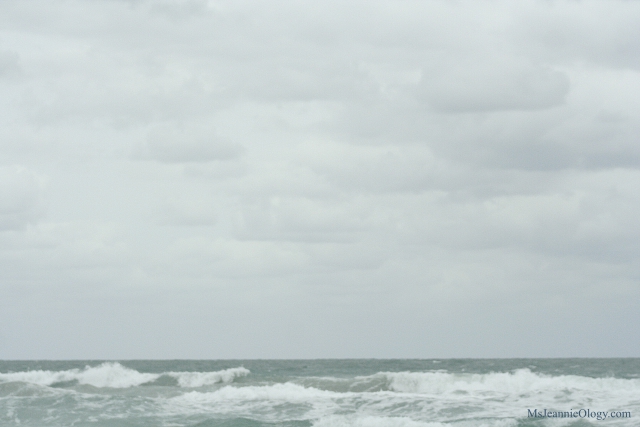
” The clouds cover the sky like gun smoke and the air feels cold and restricting.” – John Hay, Cape Cod, November 1960
In November 2015 in Florida, the clouds also covered the sky like gun smoke but instead of being cold and restricting the air was oven hot and heavy with humidity.
“November rolls into view with cool, solemn, formal consistency…daylight diminishes. The summer no longer pounds at our temples. The fall color is gone. There is nothing to look at and very little to hear… to a city lover it is silent and deadly dull.” John Hay, Cape Cod, November 1960
In Florida in 2015, November rolled into view on the body of a heatwave. Temperatures hovered for most of the month in the mid-90’s. The air felt consistently relaxed and languid. If Ms. Jeannie was blind-folded and asked to guess the month she would have said August by the sticky feel of things around her. Summer was holding strong.
“Out on the bay the low waves look as if they have a harder push and pull to make, imbued with new heaviness.”- John Hay, Cape Cod, November 1960
In Florida in November 2015, the waves are not low. They are tall and fat and strong. So full of energy and life, their crashing chorus’ take up all the audible room in Ms. Jeannie’s eardrums.
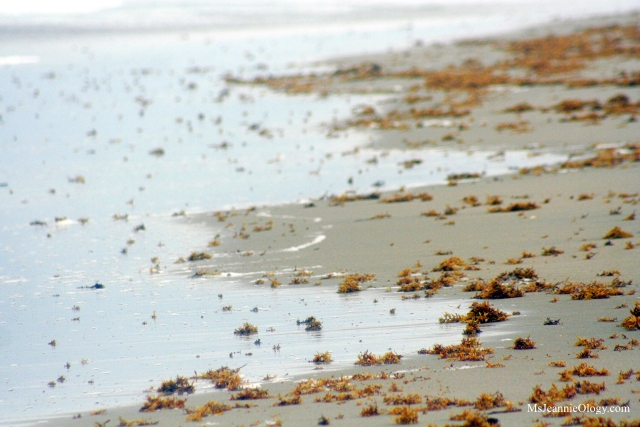
“There is a kind of ice sludge being nudged in by the tides along the shore and through rippling purple waters of tidal inlets.” – John Hay, Cape Cod, November 1960
In Florida in November 2015, the tide drags ashore signs of autumn color in the form of clumpy pumpkin-tinted seaweed that stretches the entire length of the beach.
“Seeds, on grasses and weeds now grow thinner, drier, more colorless, are not only rich in generation on their own account but they provide beyond themselves. The simplest food chain suggests the links in many others. The time for persistence is coming, when those grasses we take so much for granted will hold our earth together.” – John Hay, Cape Cod, November 1960
In Florida in November 2015 as a whole it is easy to overlook the wild greenery in excitement to get to the water. The waves have a way of calling all attention.
But nature s running its course and Ms. Jeannie sees that the Florida beach grasses are also going to seed. Look closely below and you can see a little lizard scampering around the stalks.
Southern beach grasses wave hello and goodbye all at once as they share their seeds with beachcombers of both the two and flour-legged variety.
“The oaks are monumentally persistent. Cut them down fifty times and they will sprout back from the roots. This is their chosen land. The late fall wind makes their leaves rustle and stir…the whole year is full of the collaborative music of air and trees. ” – John Hay, Cape Cod, November 1960
In Florida in November 2015 there are no oak trees. In fact, surprisingly on the stretch of beach Ms. Jeannie visited there were very few palm trees. But what there was in great succession was a thick barricade wall of sea grape trees. Like an enchanted garden, they formed natural vestibules to and from the street to the beach and the beach to the street. Those are the trees in Florida that have made choices. Those are the ones who will continue to fight for life whether they are cut down fifty times or 1500 times.
“Since Cape Cod is surrounded by the sea it has another depth, another range, were other populations roam while the rest of us wait and shiver.” – John Hay, Cape Cod, November 1960
In Florida in November 2015 the most interesting and immediate animal life to observe was the multitude of shore birds. They provided beauty…
and comic relief…
intrique and mystery…
and even the threat of tragedy…
After a consult with the lifeguard and a call into animal wildlife patrol, Ms. Jeannie was happy to hear that this bird was no sick or injured creature who seemed helplessly hopeless clinging to the sand when she spotted him. Instead he was a just a baby learning how to fly…
“In fact there is no fundamental separation anywhere in this common world of life, despite the greatly various environments of water and and what we use to help us differentiate between the species. Winds blow through. Tides lap over. Each plant and animal is proof of general contact and association.” – John Hay, Cape Cod, November 1960
After seeing the baby gull and running through the gamut of emotions and feelings of wanting at first to observe him, then protect him, then help him, then understand him, Ms. Jeannie realized whole-heartedly that there is no real difference in the Novembers between years and states and places and faces.
Sure the typography changes and the climate varies but similarities are equally as present. We all just want to survive in the place where we are rooted. November is as much a natural state of mind as it is a calendar month, and although the landscapes may vary from North to South and East to West, fundamentally we are all the same at heart. We are all the little gull plopped down on the sand, learning how to fly. learning how to survive. learning how to make it from one day to the next. We are all the little gull trying to make our way in the big world.
Do you have any natural wonder stories from the month of November – something that surprised you dear readers? If so, please contribute your thoughts in the comment section below. In the meantime, if you’d like to see what John Hay has to say about the 11 other months of life on Cape Cod in 1960, you can find him in Ms. Jeannie’s shop here.
For your palm tree fill, visit Ms. Jeannie on Instagram!
Cheers to the new month of December! May it be equally as enlightening:)
Adele’s flat above the This, That and the Other Store in West Norwood where she filmed the at home video of Someone Like You
Celebrity decorating. It is something of endless fascination to Ms. Jeannie, mostly because the sky is big as far as budget, space and service, which yields a million varied possibilities. But while some really incredible rooms can be put together when you combine a team of decorators, exotic materials and bold statement pieces, sometimes the overall effect, while pretty as a magazine cover lacks the personality and individualism of the dweller who lives there.
Famed 20th century decorator, Sister Parish often said “all good decorating is about memories.” That’s so true and so relevant to people who like to decorate with antiques. Today we are going to look at one sensational singer’s library and examine how she has mastered the perfect balance between style and sentiment.
Adele’s new album, 25 officially releases this week, but we are going to look at one of the videos from her past album, 21, which was filmed in her humble flat where she was living just as fame started flirting. The video gives a wonderfully intimate glimpse into her personal space and the style she calls her own. By utilizing a fireplace mantle, one bookshelf and the wall in-between, Adele manages to pack a lot of detail into a moderately sized space. Let’s look…
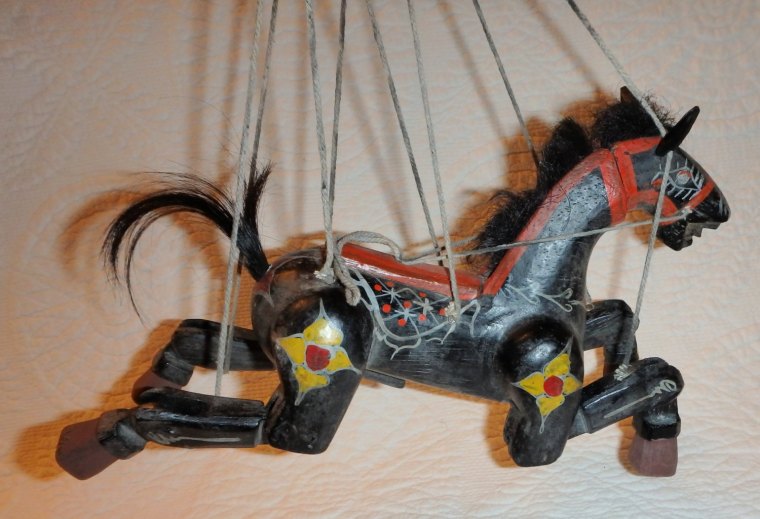
There are lots of odds and ends tucked into her shelves: pictures of her dog, a giant rubber band ball, a mini figurine of a man running, a horse marionette, sand art. Story and memory and intrigue wind their way up and down and across. The overall look is eclectic which makes it interesting, unique which makes it personal, and unfussy which makes it fresh. Sister Parish would have definitely approved!
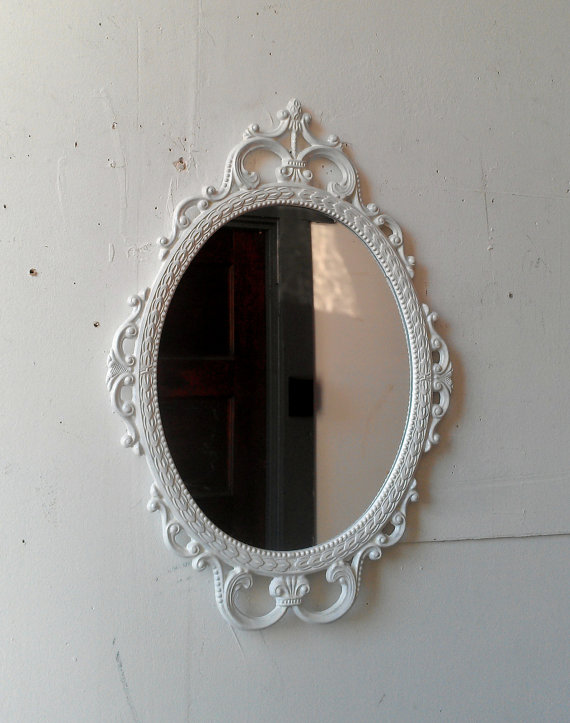
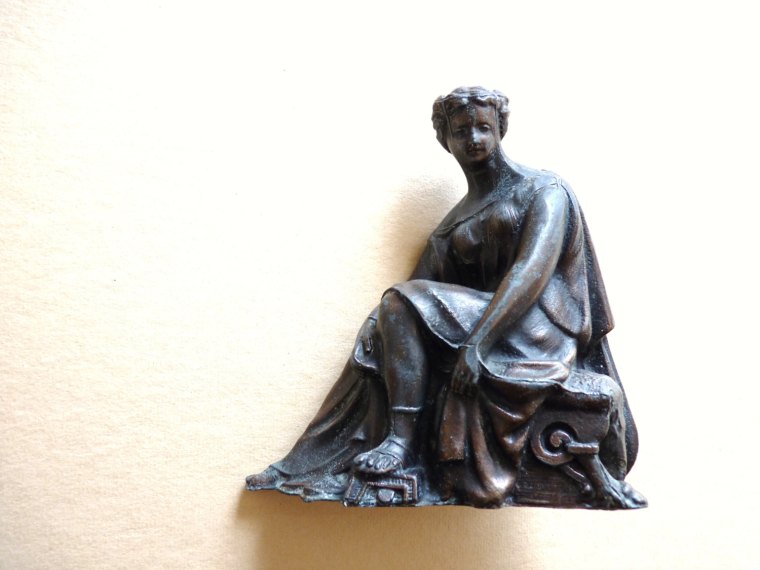
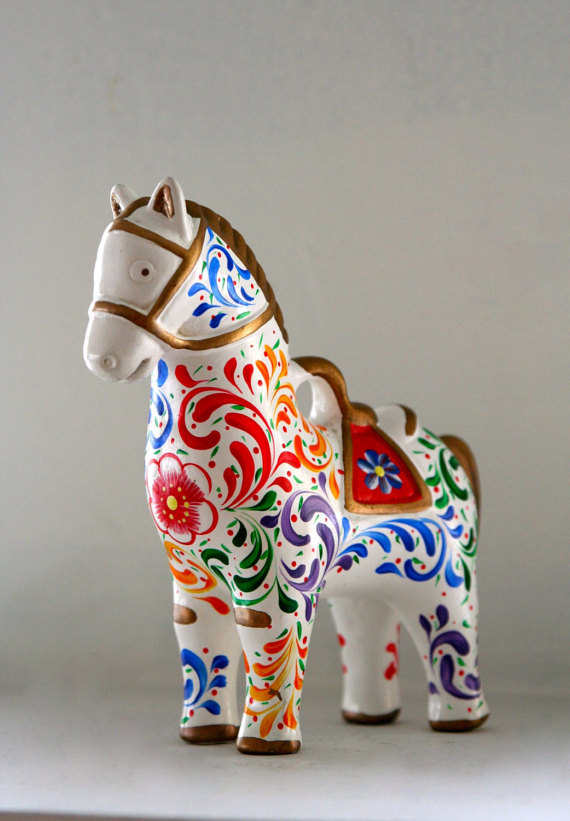
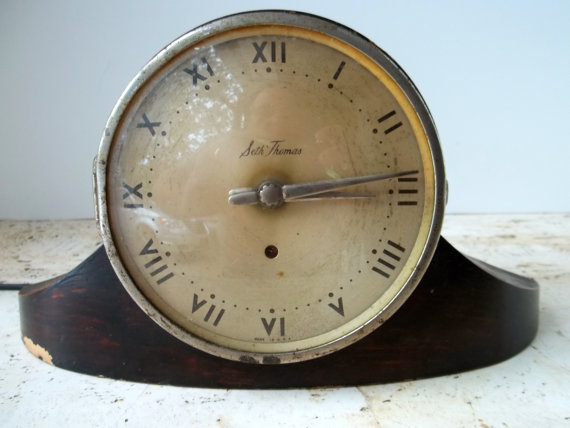
Using Etsy as her shopping source, Ms. Jeannie recreated Adele’s library look with these following items (click on each picture for more information)…
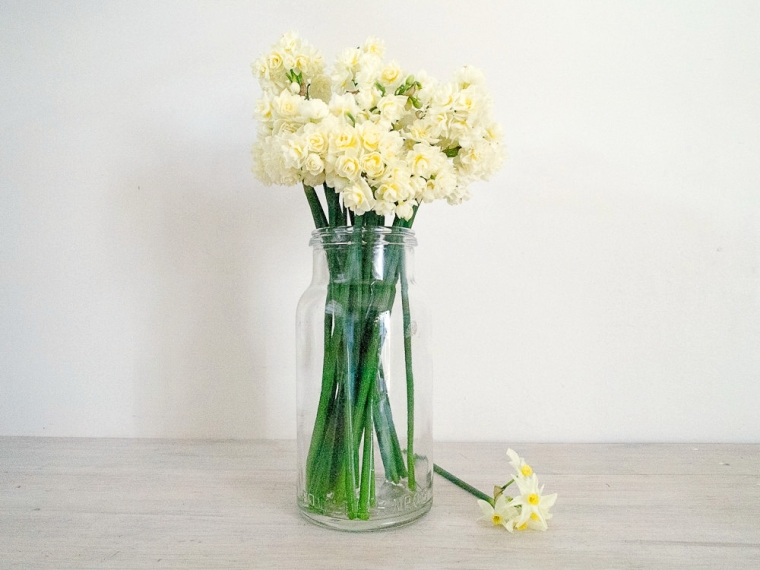
Vintage Fowler’s Preserving Jar from epochco, $25.58Cream Beethoven Bust made by mahzerandvee, $70Hand Carved Horse Marionette from Buddahagal, $28Mirror from SecretWindowMirrors, $76Antique Spelter Figurine from SquirrelMidden, $130.31Colorful Ceramic Horse from KukuliMarket, $38Puppy Love Photograph by Kalstek Photography, $33.00Colorful Rubber Band Balls by BeFashinoablyOnTime, $3.50Vintage Dachshund Figurine by VIntageGoofball, $9.95Antique Seth Thomas Wood Mantle Clock from OneReDunn, $149.99Ostrich Egg by BrocAndPop, $88.15
If decorating is a challenge for you, or you feel confused or uncertain as to where and how to begin to define your own interior style – take Adele’s lead and start with your book shelf. Like a mini room unto itself, bookshelves offer a vast amount of possibility when it comes to display and self expressionism. They can be changed and redecorated over and over again most easily. They offer a great blank canvas to play around with and they have the most effortless ability to really anchor a room as far as a focal point.
Ms. Jeannie encourages you to get beyond the typical effort of just lining up some books in a row and calling it done. Go and explore the little loves of your heart and watch your bookshelf come to life! And of course if you are looking for any books to fill out your shelves, there’s always Ms. Jeannie’s shop to help in that department.
On a side note, in 2013 Adele moved out of her cozy flat into this big beauty in Surrey. Ms. Jeannie imagines there’s a few more bookshelves there in need of her good style sense!
The flag of the United States of America in 1845 contained 27 stars.
Pomp and circumstance, stars and stripes, drum rolls and fifes, please! Election day celebrates its 175th birthday today!
Tucked in between Sunday and Wednesday, Congress chose the first Tuesday in November 1845 as the official day to declare this political event a national holiday. Ideal for voters who would have to make a day’s journey into the county seat to cast their vote (Monday) without disturbing the nation’s religious rest day (Sunday) or encroaching on merchant market day (Wednesday) Tuesday was the perfect day in the week to call upon the country to exercise it’s political powers.
In 2013, Ms. Jeannie’s mom sent a box of family treasures and interesting antiques that had been collected or used by various family members over a century ago. Contents included a civil war inkwell used by Ms. Jeannie’s great great grandfather Albert…
Albert’s inkwell that he carried with him throughout the Civil War.
and a silk scarf monogramed for Ms. Jeannie’s great, great grandmother Martha at the World’s Fair in 1893…
Silk Handkerchief Souvenir from the World’s Fair Chicago 1893
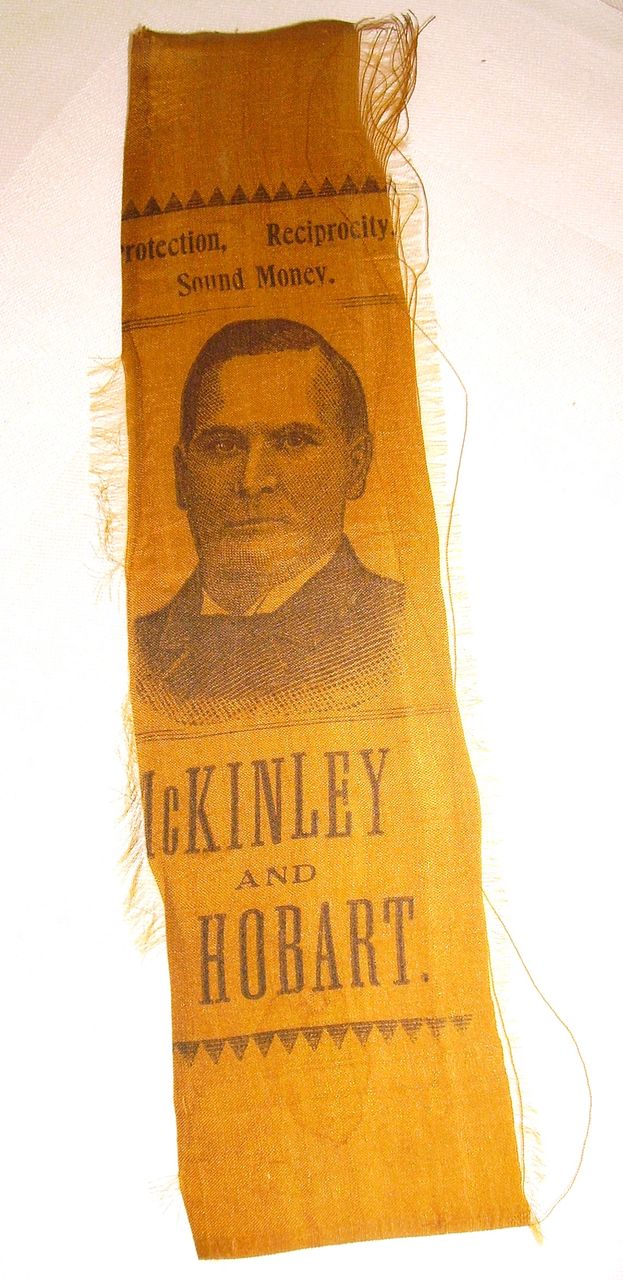
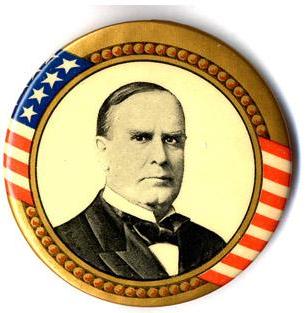
Another fantastic wonder included in the box was this pair of campaign buttons for Republican presidential nomination William McKinley and his vice presidential choice Garret Hobart.
Dating to 1896, the set is comprised of a 2″ inch round button badge and a 3″ inch tie clip encased in gold medal. McKinley was running on the platform of maintaining the gold standard as the foundation for the U.S. economy so almost all of his political swag included gold colors to communicate his cause.
There were gold campaign posters…
and gold bug pins…
There were gold campaign ribbons…
a bevy of gold buttons some featuring the pair, some just featuring McKinley…
and even a gold umbrella for rainy day rallies!
Donald Trump and his love of all things gold would definitely have approved of the McKinley/ Hobart campaign colors!
McKinley’s platforms of protection, sound money and reciprocity turned out to be winning tickets as he defeated Democratic hopeful William Jennings Bryant to become the 25th President of the United States with Garret Hobart at his side.
Get lost for just a minute in the patriotic spirit of the day with this footage from the National Archives as you take a walk along the parade route with spectators at McKinley’s inauguration in March 1897.
Striving for hope, opportunity and prosperity for citizens of the United States, McKinley barreled through his first two years as President before tragedy struck the White House in 1899 with the death of Hobart from a heart condition. McKinley, carrying on, campaigned and won a second term in office in 1901, this time with Theodore Roosevelt as his VP. But by 1901, McKinley himself would be dead – the third US President to be assassinated.
The last portrait photograph of President McKinley . Taken in Buffalo, eight days before he died. Photo courtesy of McMahan Gallery and Archive.
It is easy to get caught up in the hoopla of contemporary political campaigning and to forget the hundreds of campaigns that came before. In 1896 these two gentlemen, McKinley and Hobart were the dream team of the Republican party – riding high on their hopes and ideals for a better country and more golden skies ahead. Not much has changed in that department over the course of a century and half. Politicians still seek the same things – a better way of life for all. We are lucky in that way. To live in a country where we have the freedom to express our views, the encouragement to strive towards our dreams, and the support to accomplish our goals not only as individuals but also as Americans.
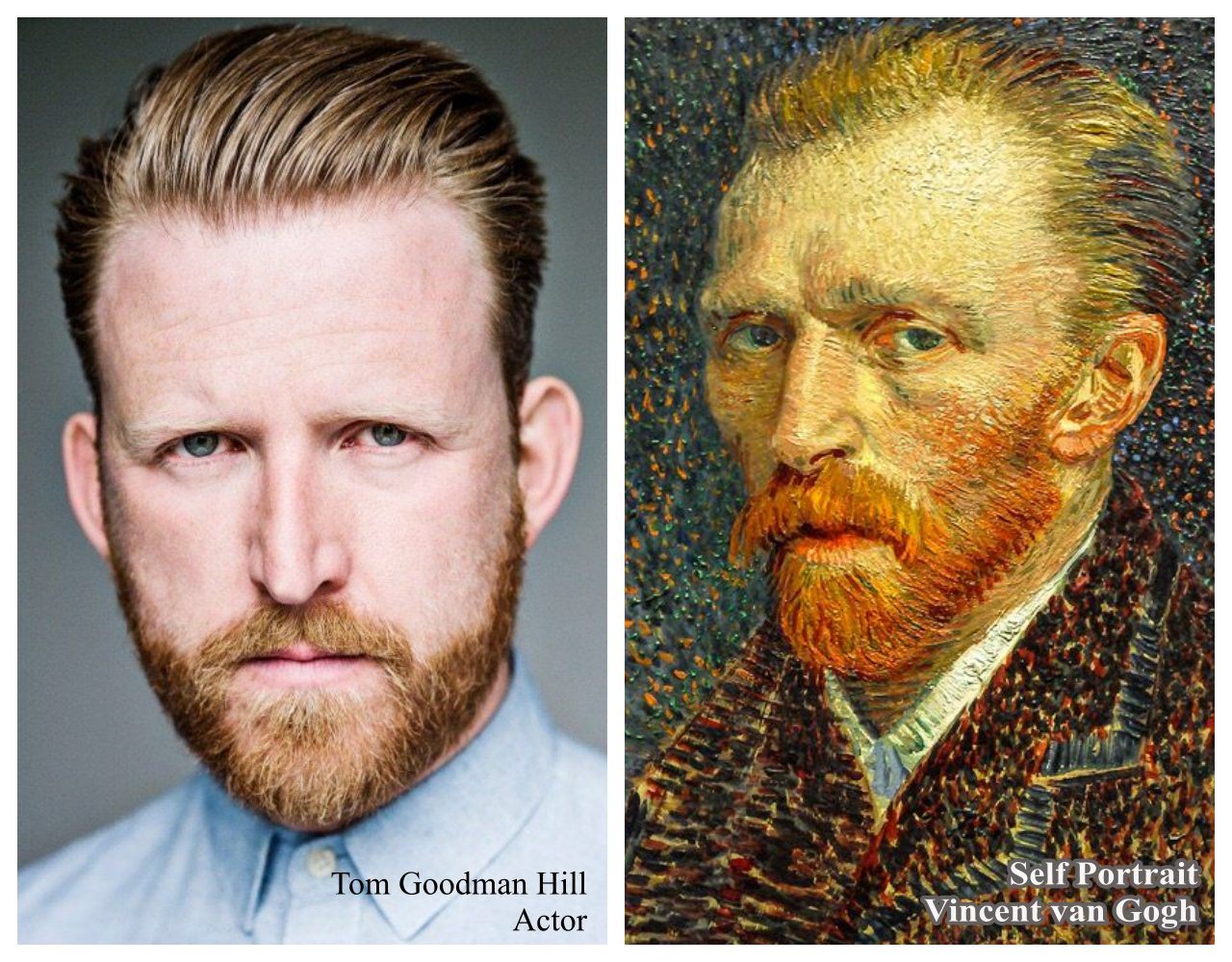
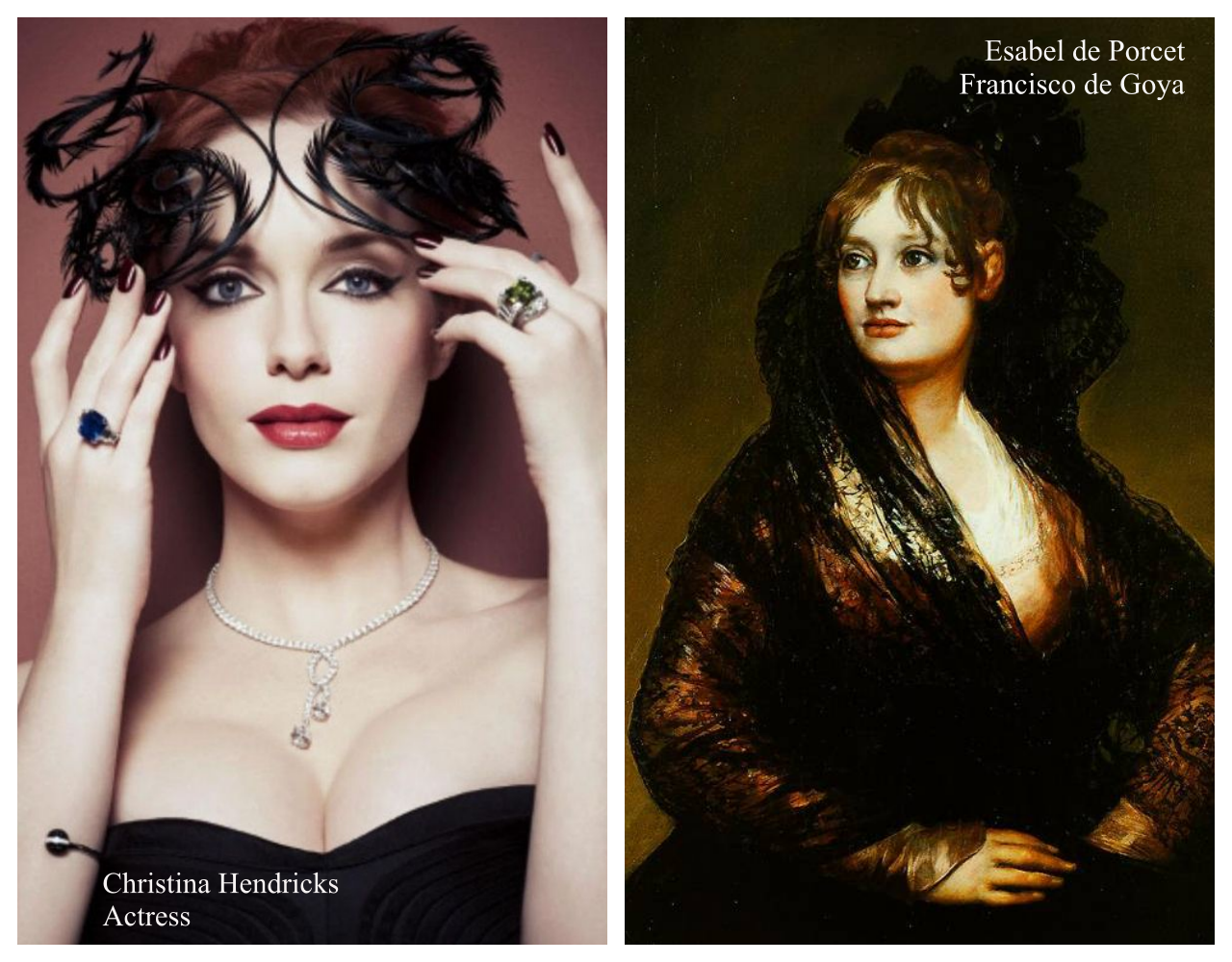
In celebration of the Halloween holiday weekend, Ms. Jeannie thought it would be fun to bring you part two of the celebrity doppelganger series – this time featuring famous modern-day celebrities who bare an eerie resemblance to portrait paintings that were created centuries ago. If ever these celebrities needed a creative costume for Halloween happenings then this would be their ticket to something dramatically different…(or should we say dramatically similiar!) …
Actor Tom Goodman Hill (from the PBS tv show Mr. Selfridge) and Vincent Van Gogh’s self portrait while painted in asylum in 1889Actress Christina Hendricks of most recent Mad Men fame and Francisco de Goya’s portrait of Esabel de Porcel painted in 1805.Actor Stanley Tucci and the portrait of Cardinal Don Fernando Nino de Guevara painted by Greek artist El Greco in 1600No bustle needed for curvy Kim Kardashian when it comes to mirroring George Seurat’s A Sunday Afternoon on La Grande Jatte painted in 1884!Film and television actor Amy Brennaman and the artistic muse Jane Burden featured here in Dante Gabriel Rosetti’s Day Dream painted in 1880Ethereal Actress Tilda Swinton and Joos Van Gent’s Adoration of the Maji painted in 1465Actor John Slattery (also of Mad Men fame) and Frank Blackwell Meyer’s 1858 painting titled Independence.Actress Saoirse Ronan and John Honore Fragonard’s The Billet Doux (meaning the love letter) painted in the 1770’sActor Jared Leto and Rembrandt’s portrait entitled The Head of Christ painted in 1648Back in the Kardashian camp, mom Kris Jenner and George Lepape’s fashion illustration for Paul Poiret titled Lassitude Dinner Dress was sketched and painted in the 1920’sRounding out the list is Michael Douglas and Giovanni Bellini’s portrait of Doge Leonardo Loredon painted in 1501
Looking for more celebrity doppelganger photos? Check out Ms. Jeannie’s modern day actors vs. vintage authors post here for more fun look-a-likes! In the meantime however (and whomever!) you choose to dress up as this Halloween, Ms. Jeannie hopes you take first prize in the costume contest:)






































 In the Vintage Kitchen: Where History Comes To Eat