
The Magical Second Life of Samuel Gottscho and a Locally Inspired Recipe to Match

When Samuel Gottscho began his professional photography career at the age of 50, it was a leap of faith and a vast change from the garment industry salesman job he had known all his adult life. By this point, as he entered into his fifth decade, he was a husband and a father with a young daughter to raise and a long-time reputation in the industry that provided a steady paycheck and reliable consistency. But after twenty-five years of a job that both he and his father did before him, Samuel’s heart was no longer wrapped up in the lace and the fabric and the embroidery that he peddled around the city. Instead, it was his camera – his weekend hobby since the age of 20, his faithful muse, his constant companion – that began nudging him to move in another direction away from the professional life he had always known.

The Rochester Optical Camera with Tripod – Samuel’s first camera circa 1900. Photo courtesy of the Missouri History Museum.

The year Samuel turned 50, it was 1925. New York was thriving. Museums were opening. New buildings and storefronts were being constructed. Model T’s were zipping around the city just like Babe Ruth was zipping around the bases.
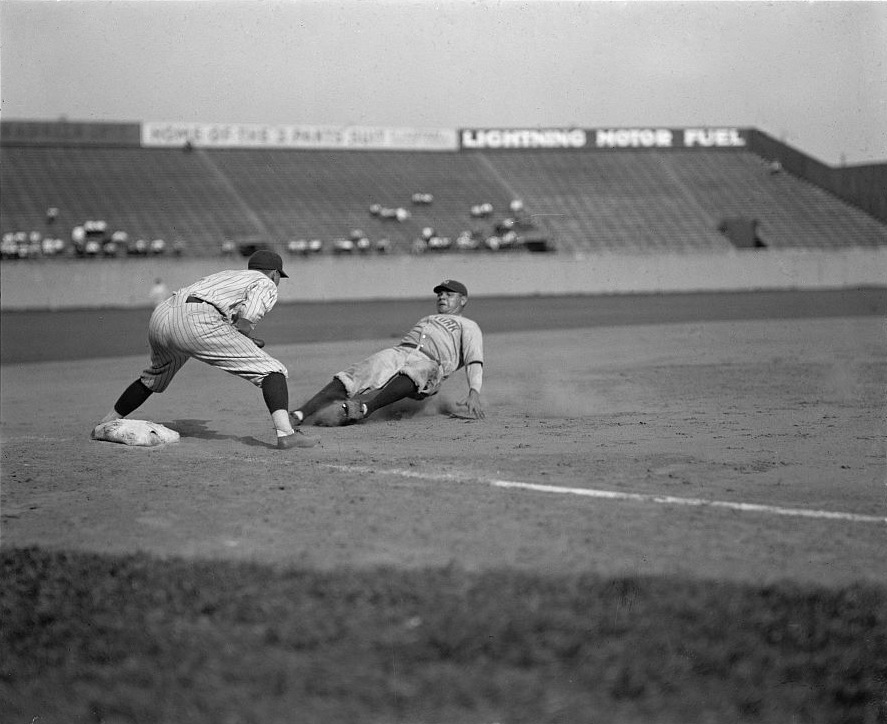
Babe Ruth safe at third base in a game against the Senators on June 23, 1925.

In the 1920s. the average life expectancy for American men hovered between 53-60 years old. Realizing Samuel was just a few years away from possibly the end of his life, he questioned how he wanted to finish things up… by lugging around a fabric sample case or by adventuring out in the world with his camera? There was a lot to weigh between practicality and passion. Between case and camera. Between settling and jumping.

Ultimately, Samuel had the support of his encouraging wife, Rosalind, and an optimistic attitude. That, as it turns out, was all he needed.

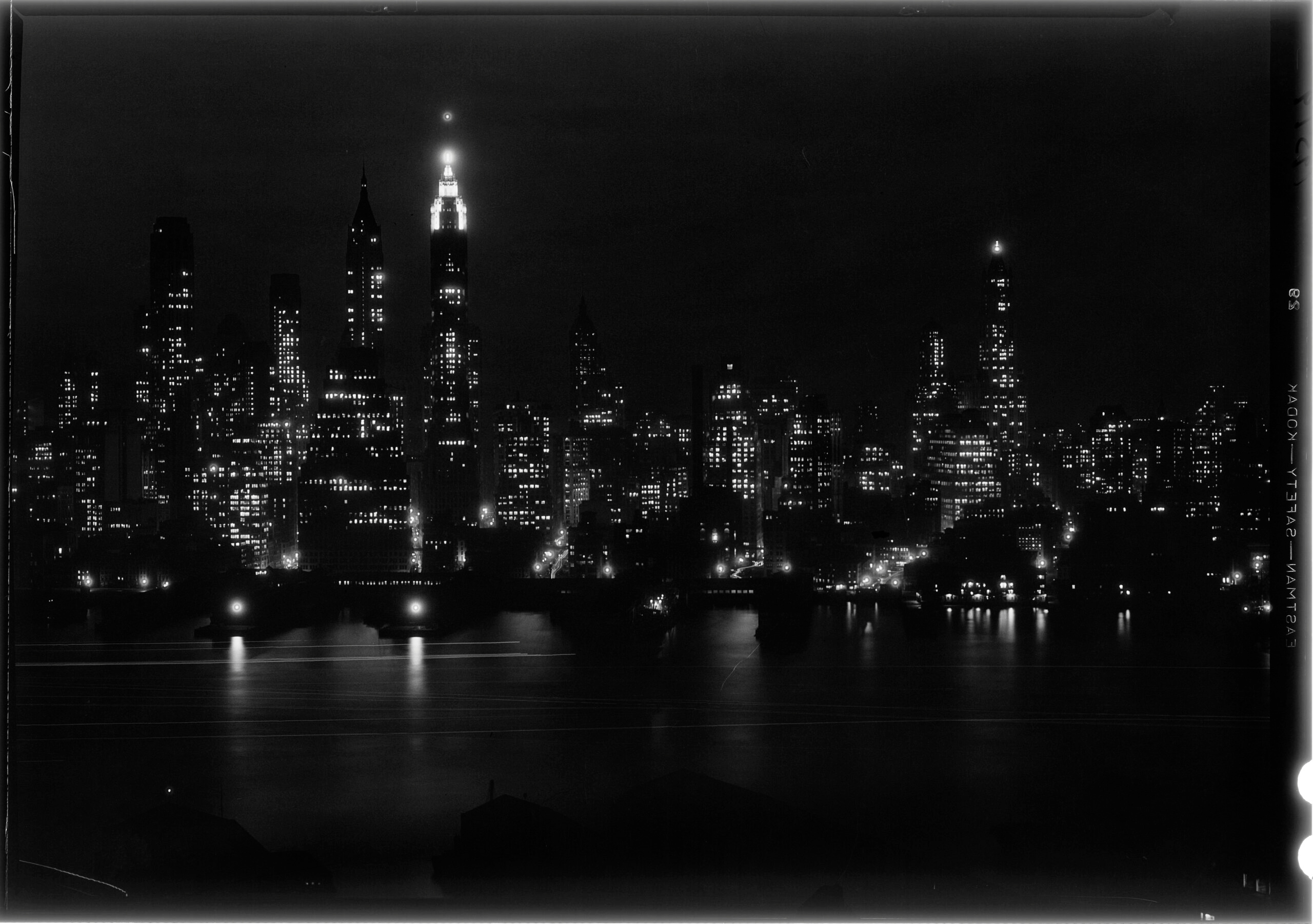
Samuel Gottscho. The Financial District in the 1930s.

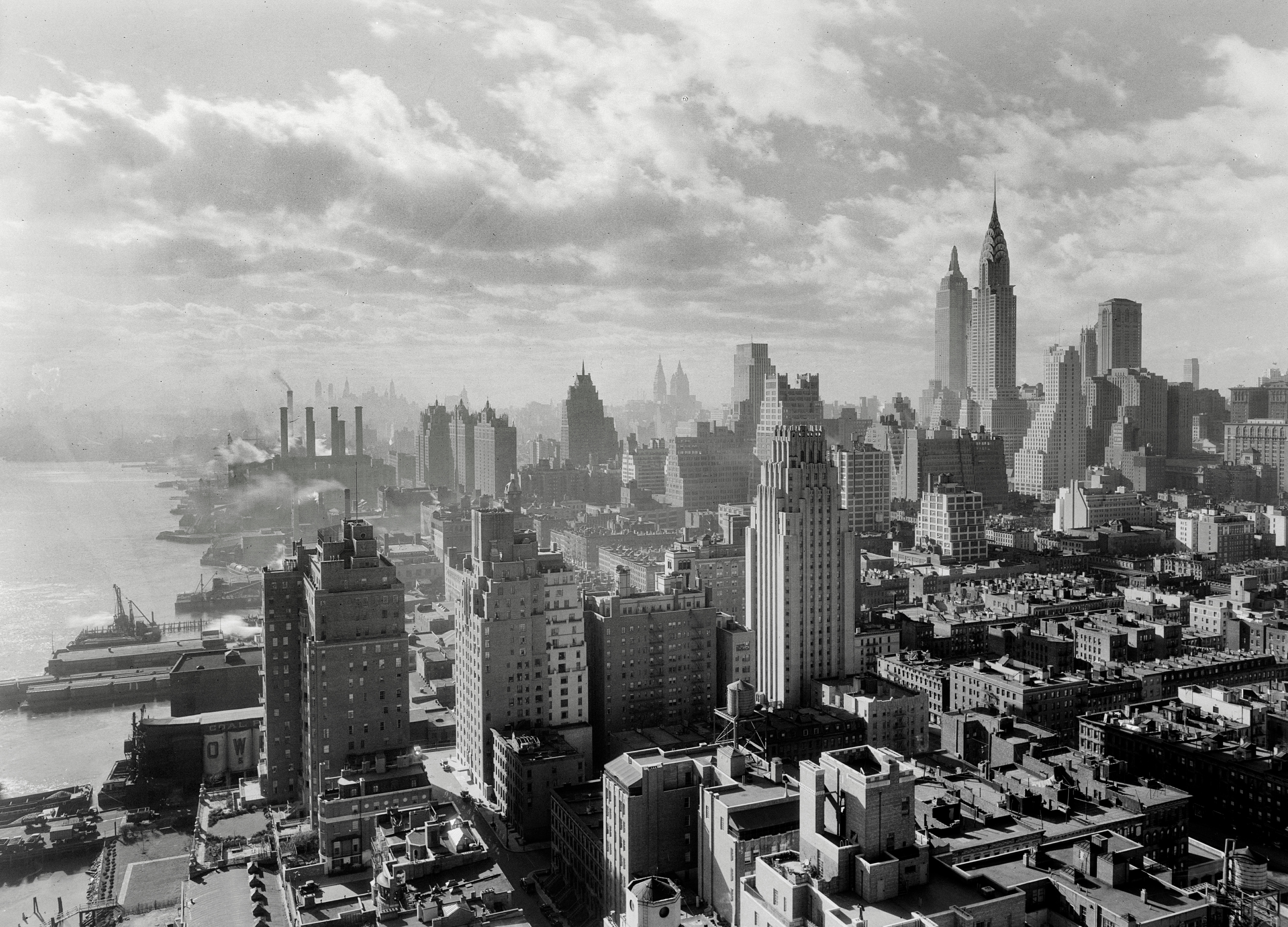
Starting in New York City among the skyscrapers and the night lights, it didn’t take long for people to notice that Samuel had talent. His photographs captured the epitome of 1930s architectural elegance and that beguiling sense of power and opportunity that New York City stood for. Every day a story unfolded in the dramas of the big city skyline. Samuel captured them one by one in the morning mist rolling in off the East River and in the twinkling lights that turned the city into a glowing lacework of lanterns…
Samuel Gottscho. New York City Views from the St. George Hotel. 1933.

Samuel Gottscho. 52nd Street & the East River, New York City. 1931

Samuel Gottscho. New York City. 1933

Samuel Gottscho. Rockefeller Center. December 1933. Library of Congress.

Samuel Gottscho. Chrysler Building and Midtown Manhattan, 1932.

Exterior photoshoots commissioned by local architects led to interior photoshoots commissioned by designers, builders, and business owners…

Samuel Gottscho. Roxy Theater at 49th Street circa 1932. Photo courtesy of the Library of Congress.

Samuel Gottscho. 33 Beekman Place, New York City. 1928.

Samuel Gottscho. Huntington, Long Island, NY. 1933

Those led to house and garden portraits for landscape designers and homeowners…

Samuel Gottscho. Ashland Farm. Warrenton Virginia. 1930

Samuel Gottscho. Wilmington, Delaware. 1932

and then to wildflower portraits pursued at first for his own interests…

Samuel Gottscho. Common Evening Primrose from The Pocket Guide to the Wildflowers. 1951

but then later for clients, book publishers, and magazine editors.

Samuel Gottscho. The Pocket Guide To The Wildflowers. 1951.

At first, Samuel’s introduction to the wildflowers were daily hikes around the upstate New York hotel where he and his wife and daughter summered every year in the Adirondacks. When the gas rations were in effect in the 1940s, it wasn’t feasible to explore the countryside with the car and driver Samuel previously employed in the city. Foot travel replaced the car, his young daughter, Doris replaced the driver and the two would tottle off together to explore the woods any chance they got.

Samuel’s daughter, Doris. Photo courtesy of the Library of Congress via Familysearch.org

Noting the curious array of flowers that dotted the roadsides and the woodlands and how they all fit together into the broader landscape made Samuel appreciate the composition of each and every flower in a new, more visual, more vital way. As he learned, Queen Anne’s Lace or feathery petaled Bergamot or the large craggy, canopied trees found in these upstate New York hideaways were just as stately, just as visually spectacular, just as unique, as the Chrysler Building towering above Manhattan.

Enchanted with the light, the subject matter, the shape and the composition of the flower fields, Samuel found them to be little cities in their own way. Tall, short, fluffy, sparse. Each one added pops of color, variety, and form to the overall canvas that was the natural wilderness. Eventually, Samuel’s Adirondack wildflower summers were replaced with Sound-side summers spent on Long Island, New York’s North Fork.

The North Flork is located at the far right of the island in the green section. The Hamptons lies in the bottom right corner in the blue section. Queens and New York City are at the far left of the map.

Known as its own agricultural wonderland bordered on one side by the Long Island Sound and the other side by the Atlantic Ocean, this island surrounded by lighthouses and studded with sailboats was first inhabited by the Corchaug, Algonquin and Montauk tribes. Boasting its own never-ending supply of native wildflowers, it delighted the eye with all sorts of natural splendors highlighted by backdrops of the water, beaches, pine groves, pasturelands and marshes. Samuel photographed every bit of it.

Photo of Samuel Gottscho by Edward Dart courtesy of Newsday. April 1970

No stranger to wild things and naturally picturesque vistas, the North Fork was home to New York State’s first farms and first English and European families. Dating all the way back to the 17th century, Southold, the town where Samuel spent his Sound-side summers was settled in 1640 by farmers, tradespeople and clergymen from England and Europe by way of Connecticut.

Barnabus was a baker and the town overseer of Southold. Photo courtesy of the Art & Architecture Quarterly

A fishing and farming community long before the Island ever became a residential extension of New York City, this stretch of Long Island from the tip of Orient Point to the mid-section of the island never lost its agricultural roots. Full of sprawling vineyards, seaside homes, stretches of pebble-studded beaches, open meadows and working farms that produce every sort of market delight you could ever want, it’s a food lover’s paradise from flowers to honey to wine to grass-fed beef.

Croteaux Vineyards is the only winery in the US to focus solely on making rose wine.

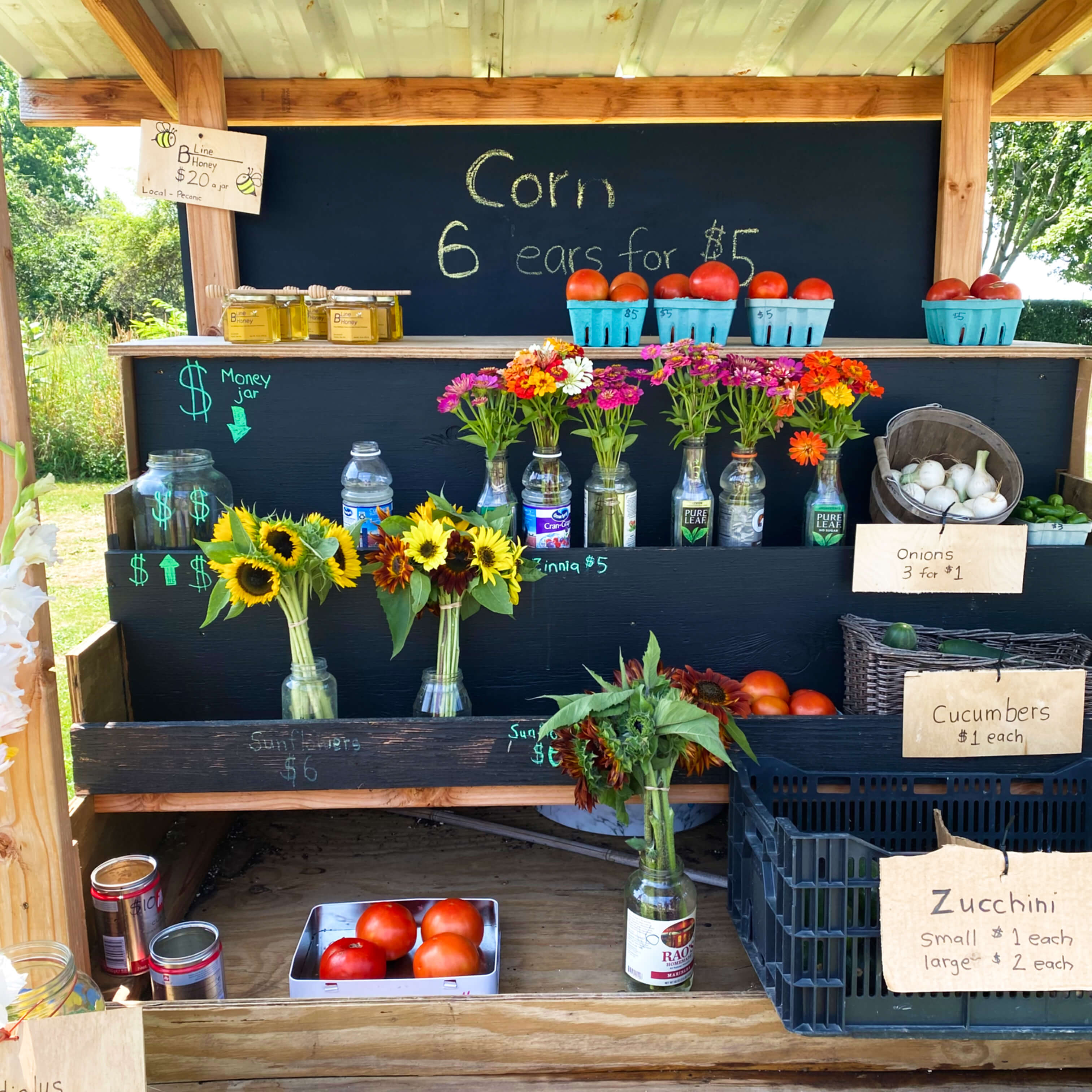
Fresh farm stands are everywhere around the North Fork.

Open pasture lands with views of the Sound.

Wildflower settings just like this inspired Samuel throughout the 20th century.

Celebrating this area’s centuries-old agricultural history, in today’s post, we are featuring a recipe made using grass-fed beef from cows raised and pastured on Long Island’s Acabonac Farms. Just a short drive down the coast from where Samuel summered in Southold, Acabonac Farms works in tandem with the natural landscape just like Long Island’s first settlers did back in the 1600s.
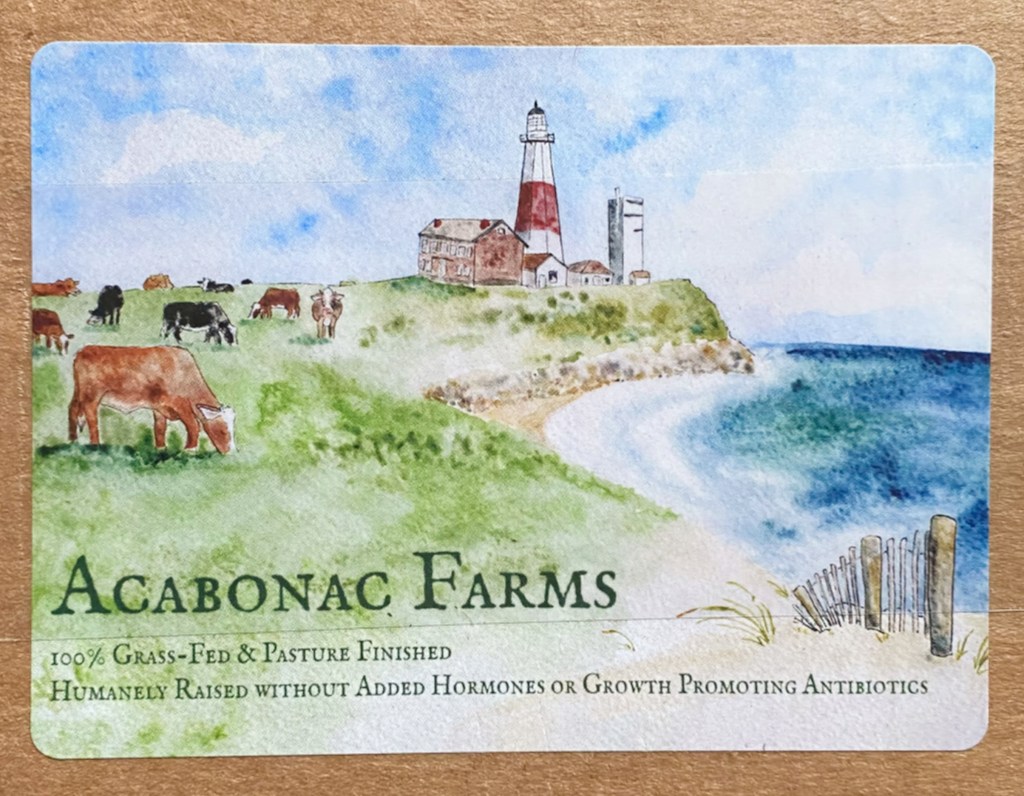
See how Acabonac Farms’ watercolor illustration was made here.

By embracing the unique nutrient-dense soil that makes it one of the best terrains in the state, combined with the salty sea air, the continuously circulating breezes blowing in off the water, and the well-draining composition of the soil, it’s a trifecta of a location historically known for growing good grass which in turn grows good grass-fed cows.

Throughout his second career, Samuel’s photographs appeared in publications all over the country, but none may have been more proud of Samuel’s work than his hometown newspaper, The New York Times, where he was regularly featured. In keeping that joyful relationship intact, our featured recipe for this post comes from the 1961 New York Times Cookbook and combines Acabonac Farms grass-fed sirloin steak with an unusual 24-hour marinade to create picnic-toting steak sandwiches fit to fuel any wildflower photographer’s wanderings.

Named after the patron saint of hunting, this recipe called Steak St. Hubert, can be made with venison or beef using round or sirloin cuts depending on your preference. Originally, it was meant to be enjoyed as a single cut of meat – a steak dinner complete with a red current jelly reduction sauce – but I decided to turn the steak into sandwiches so we could pack it along with potato salad and refrigerator pickles for a summer picnic getaway to see the land that so inspired Samuel.

Consisting of a unique menagerie of ingredients, this marinade contains no cane sugar and no salt but does include carrots, wine, and apple cider vinegar, which I found to be a pretty intriguing mix. A bit like Annie’s Wine Baked Brisket and Santiago Pork Roast, this is a two-day, three-part recipe to prepare but well worth the time.

Although this is a local post featuring Long Island, Acabonac Farms beef is available to any home cook no matter where you live. If you haven’t had the experience of ordering meat via mail before, the process couldn’t be easier. You simply place your order online and it shows up at your door two days later in a box packed with dry ice and the individually frozen, vacuum-packed cuts you requested.

From the farm in Long Island to the front door of 1750 House.

Beef that arrives by mail can be thawed in the fridge overnight (in its original packaging) or stored in the freezer for use at a later date. For this recipe, the three packages of steaks we ordered went into the fridge for 12 hours before they were added (completely thawed) to the marinade and then returned to the fridge for another 24 hours.

The marinade is easy to put together. The original 1961 recipe called for a big bowl as the marinade vessel but I found that a two-gallon Ziploc bag worked just as great and made it easier to store in the fridge. Other than that note, the marinade recipe comes together just like this…

Steak St. Hubert Sandwiches (serves 10-12)

For the marinade:

3 16 oz .sirloin steaks cut 1/2-3/4″ inch thick

2 shallots, chopped

2 carrots, sliced

2 onions, sliced

1 clove garlic, chopped

2 sprigs of fresh thyme

2 bay leaves

1/3 teaspoon freshly ground black pepper

1 small pinch of ground cloves

2 cups dry white wine

3/4 cup apple cider vinegar + 1/4 cup water, mixed together

1/2 cup olive oil

For the pan:

Salt

Pepper

6 tablespoons butter

For the sandwiches:

Portuguese rolls (or any soft and pillowy sandwich roll that has a crusty exterior and an airy interior)

lettuce

red onion, sliced in thin rings

Condiments (cherry jam, horseradish, mayonnaise, dijon mustard or any others you might prefer)
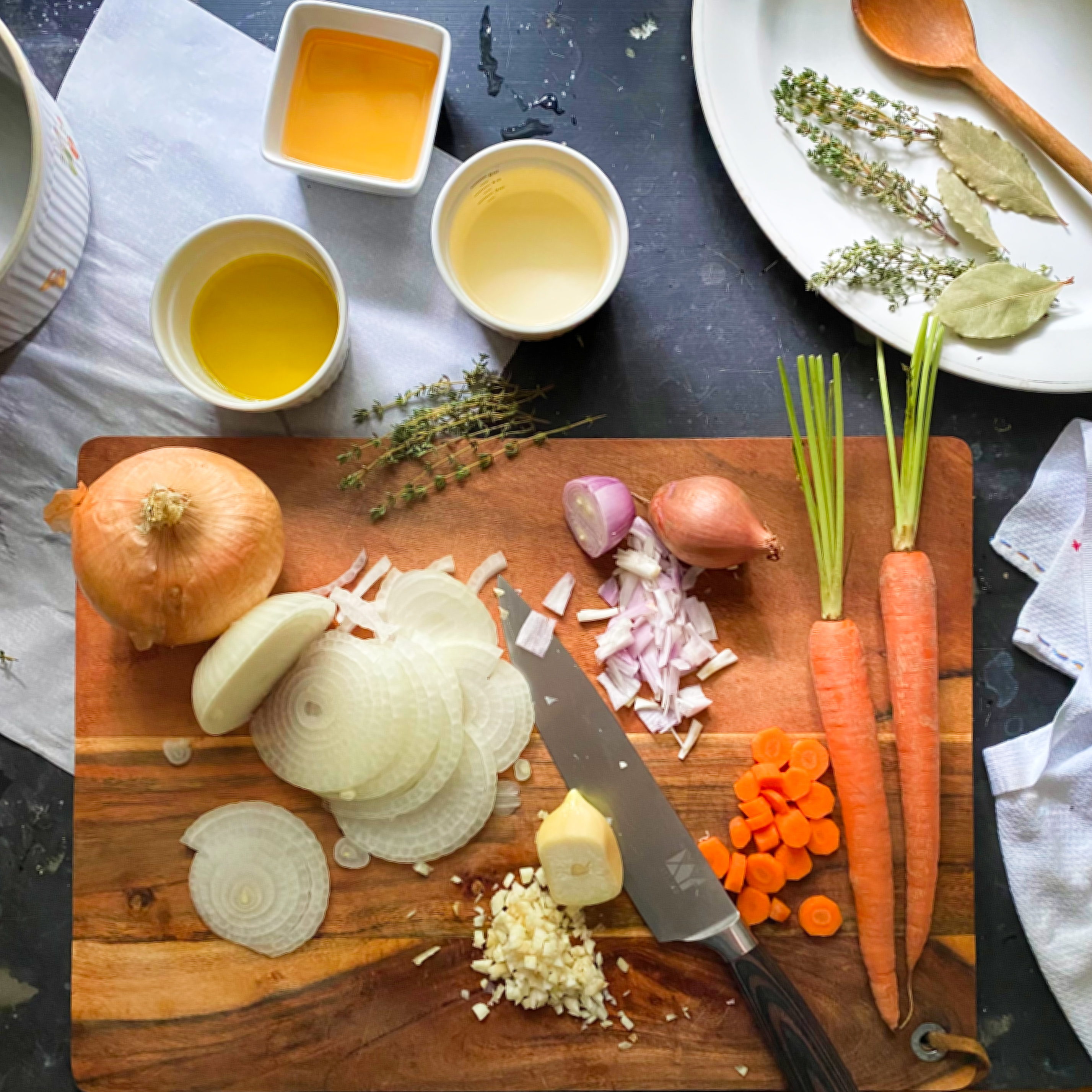
In a large bowl, mix all the ingredients together minus the steaks. Add the steaks and toss the mixture again.

Remove the steaks to a large (2-gallon size) Ziploc bag. Pour the marinade mixture from the bowl into the bag, covering the steaks completely. Seal the bag and store it in the fridge for 24 hours.

After 24 hours have passed, remove the steaks from the marinade bag to a large plate or casserole dish and let them warm up to room temperature while you prepare your cooking pan (about 15-20 minutes.

Salt and pepper both sides of each steak. In a large cast iron or heavy-bottomed pan, working individually, melt two tablespoons of butter over medium-high heat, cooking each steak one at a time for 7-10 minutes per side to achieve a medium rare center. Repeat with the following two steaks.

Transfer each steak as it comes off the heat to a parchment-lined piece of foil. Wrap each steak in the foil and let them rest until completely cool (about 30-45 minutes).

If you are planning to take these sandwiches on the road, the whole steaks can be refrigerated before slicing for up to 12 hours once cooled. When you are ready to prepare your sandwiches, slice each steak into thin ribbons.

Tuck the thin slices of beef between two slices of bread and call it divine or you could adventure even further and stretch your palate to include a train of condiment flavor pairings. Mustard, horseradish, mayonnaise. Maple syrup, cherry jam or hot sauce. Top the beef with a layer of blue cheese or fresh pineapple or a ring of red onions and you have a custom sandwich built just for you. Originally, the recipe called for a red current reduction sauce (an element that might not travel well), so I toted along a jar of French cherry jam in addition to the other above-mentioned condiments. A dollop of jam on top of the steak and between the layers of onion and lettuce was a magical combination of the sweet, savory kind that I would highly recommend.

A complete delight of a recipe from start to finish, the sirloin was full of flavor but not in a way that you could easily detect by the marinade ingredients alone. Most steak marinades I’ve ever tried in the past make the meat taste like the ingredients it was marinated in. Teriyaki steak for example tastes like soy sauce. A honey mustard marinade makes everything taste like honey and mustard. But this marinade was different. There was not one ingredient that overpowered the other. Instead, it combined a symphony of subtleties that left room to taste the flavor of the grass-fed beef. It made such a tender, succulent sandwich, it can best be described as pure, at every step, and every bite. Perhaps that is the magic of the salt, sea and sun of Acabonac Farms’ location. A delicious alternative to burgers and a great travel food for tailgate parties, fall leaf-peeping adventures and family football games, St Hubert steak sandwiches offer the best of New York’s local food that also happens to be accessible to everyone around the country no matter where you live.

Samuel Gottscho in 1956. Photo courtesy of the Museum of the City of New York.

As for Samuel and his Long Island escapades among the wildflowers, he had no worry about that average life expectancy marker in the 1920s. Samuel may have been fifty years old when he left his salesman job and professionally embarked on his new career, but it kept him engaged and enthralled for the next forty-five years of his life. When Samuel passed away in January 1971, he was 95 years old. Up until a week before his death, he was out in the field capturing the wild winter landscape, fulfilling client commissions, and working on his own personal archive that exceeded 40,000 images. What was Samuel’s secret to such a fulfilling life?

“It’s never losing the inquiring and enthusiastic spirit of the amateur,” he once told a reporter.

By the time, Samuel passed away, he was the recipient of numerous distinguished awards and accolades in the fields of architecture, horticulture, and landscape design. He was published in architectural digests, home design magazines, photography manuals, and newspapers around the country. Occasionally he would give a lecture or a presentation to a garden club or a photography circle. He was an expert for sure but he never had the bravado of one. Those accomplishments were nice, but that’s not what drove Samuel. His heart fired up at the sight of light, of composition, of shape. His heart fired up at photography and anything leading to it.

Just like the accessibility to Acabonac Farm’s grass-fed beef, you don’t have to live in the vicinity of New York City or Long Island to view more of Samuel’s work. Upon his death, he donated his entire photographic collection to the Museum of the City of New York and the Avery Architectural and Fine Arts Library at Columbia University. Over 2/3rds of his collection has also been digitally archived at the Library of Congress. More of Samuel’s work has been published in a gorgeous 2005 coffee-table book, The Mythic City, focusing on his New York architecture portraits spanning the 1920s-1940s. And last but not least, there are his wildflower photos published in the petite 1951 Pocket Guide to the Wildflowers, which is how I came to be introduced to Samuel’s life and work.

See more examples of Samuel’s wildflower work from this book in the shop here.

Just like the camera was Samuel’s gateway to an entirely new life, Samuel’s life became my gateway to an entirely new area of the world and an entirely new vintage recipe. I’m so happy to share his story with you here on the blog in hopes that it inspires something new in you too.

View from the Cross Sound Ferry at Orient Point, NY

Cheers to Samuel for not letting age be a factor in following his passion and for the incredible volume of work that he left for everyone to enjoy. Cheers to Acabonac Farms for sponsoring this post and for contributing the delicious grass-fed beef for this recipe. And finally cheers to the farmers of Long Island who work day in and day out to keep the agricultural history of the region alive and thriving.

Adelaida from Mexico & Her Lasting Impact on America {Plus Two of Her Recipes!}

Adelaida Cuellar photographed in 1901 with three of her children. photo courtesy of D Magazine.

In 1892, two young lovers crossed the border from Mexico into the United States and got married in Texas. They spoke no English but were very fluent in the language of love. They were dreamers yearning for better opportunities then their home country could provide, and they were determined to work hard to create a beautiful life that would bring them all  they desired.

The newlywed years of Macurio and Adelaida Cuellar led them through a myriad of jobs on ranches around the Texas countryside. For five years they moved about before they settled down in Kaufman, Texas, a suburb of Dallas, where Macurio started sharecropping and Adelaida started a family. As the seasons passed, their family grew, eventually producing twelve babies.

This is an unidentified farm photo from the Cuellar collection. It may have been the farm where Adelaida and Macurio raised their family. If not, it gives an interesting perspective on what farm life looks like in Texas during the time Adelaida and Macurio lived and worked there.  Image courtesy of the University of North Texas Digital library.

Ranch and farm work weren’t the most profitable of jobs, so Adelaida took a stall at the Kaufman County Fairgrounds in 1926 selling two things…  chili and tamales. It was her hope that her homemade recipes, so loved by her family, would bring in a little extra income to help support her children.  To her surprise, the food stand was an instant success.  The profits she made from her entrepreneurial endeavor were much larger than farm or ranch work earnings, so Adelaida kept at it, turning her stall into a tidy little family business.  Some of her children helped her cook while others formed a family band playing Mexican music to entertain the eaters.

During the 1920’s, Tex-Mex cuisine was a new style of cooking that combined traditional recipes from Mexico and Spain but with toned down spice factors which were more appealing to American palates. Adelaida’s chili and tamales debuted at just the right time – exotic enough for adventurous eaters and flavorful enough without being too spicy to dissuade repeat business. With every taste of tamale and every cup of chili, Adelaida’s reputation for preparing delicious Mexican food began growing.

Adelaida’s Cafe – simply called Cuellar Cafe – opened in  1928.  Image courtesy of the University of North Texas Digital library.

In her mid-fifties, Adelaida opened her own restaurant which did well until the Great Depression hit and she was forced to close due to the terrible economy.  Each of her grown boys inspired by their mother’s own entrepreneurial spirit opened their own independent Mexican restaurants in different cities throughout Texas, Oklahoma and Louisiana using the recipes that Adelaida made for them growing up.

Each of the sons, enamored with cooking just like their mom, quickly realized there was something missing from their independent ventures… family love and support. From the beginning, in the county fairground days, the Cuellar family was successful at the tamale and chili stand because they all worked together towards one common goal. But now the family was spread over many cities, and their restaurants couldn’t be as successful because they all weren’t working together.

This is one of the original porcelain neon signs from the first El Chico restaurant in Dallas. It’s now for sale on ebay here.

So in 1940, five of the brothers banded together to form one restaurant in Dallas, which they named El Chico. The entire family and extended family worked there together, each bringing their own unique talents.

Opening night of El Chico featured a Mariachi band to entertain the crowd. Image courtesy of the University of North Texas Digital library.

Everyone who worked at the restaurant was fluent in Adelaida’s style of perfection when it came to selecting quality ingredients and blending the spice mixtures in the correct way, so the food was authentic and consistent, which kept customers coming back. And the Cuellar family was proud of what they were accomplishing.  At the heart of their restaurant lay the heart of Adelaida and all that she stood for.  Her children wanted to extend that same level of love and devotion with all who dined at El Chico.

A popular dining place indeed! This photo was taken in 1945. Image courtesy of the University of North Texas Digital library.

Just like Adelaida’s chili and tamale stand, El Chico became phenomenally successful, making the Cuellar family and the El Chico brand one of the greatest American success stories. They went on to open more than 40 restaurants throughout the country, built a successful packaged food division for the retail market, and offered franchise opportunities for budding entrepreneurs. By the 1970s, they were the largest full-service Mexican food company in the world. They cooked for United States presidents at the White House, for princess Grace Kelly at her palace in Monaco and entertained movie stars like John Wayne in Dallas. The family stayed together through all these years and all this growth, never veering from what they knew – good food taught to them by Adelaida.

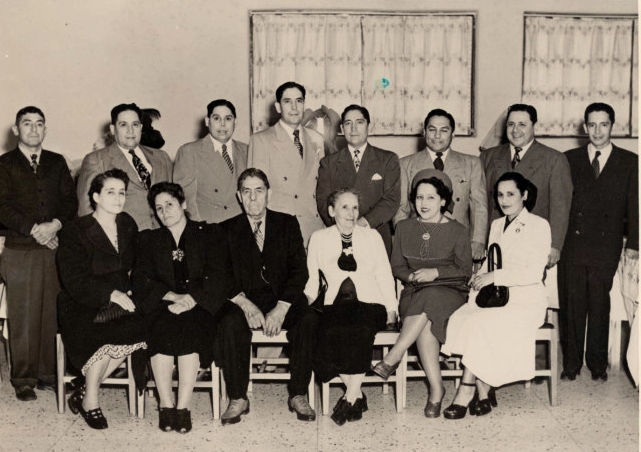
A Cuellar family portrait with Adelaida and Macurio in the front row center. Image courtesy of the University of North Texas Digital library.

Adelaida passed away in 1969 at the age of 97, not before experiencing the overwhelming success of her family and seeing how her humble tamale and chili stand at the Kaufman County fairgrounds grew into a multi-million dollar corporation over the course of forty years. The Cuellar children credit both their mom and their dad with teaching them about the value of working hard (and quickly) toward their goals and the importance of taking chances.

In 1970, El Chico published a small, spiral bound cookbook of some of the family recipes that they used in the restaurant, along with some others collected from their travels. Hailed as one of the most authentic Tex-Mex cookbooks ever published, it’s now a hard-to-find treasure.  It is in fact, so special and represents such an importantand  integral part of the ethnic American food landscape, that it’s held in special collection at the Smithsonian’s National Museum of American History. We are also very pleased to offer a copy in the kitchen shop. 

Since Cinco de Mayo is coming up this Saturday, on the same day as the Kentucky Derby, we thought it would fun to highlight two vintage recipes from the El Chico cookbook to ring in the festivities. A general crowdpleaser with a ton of creative toppings, these recipes are fun party foods so whether you are celebrating Mexico or Kentucky, or both this weekend, there will be something edible for everyone.

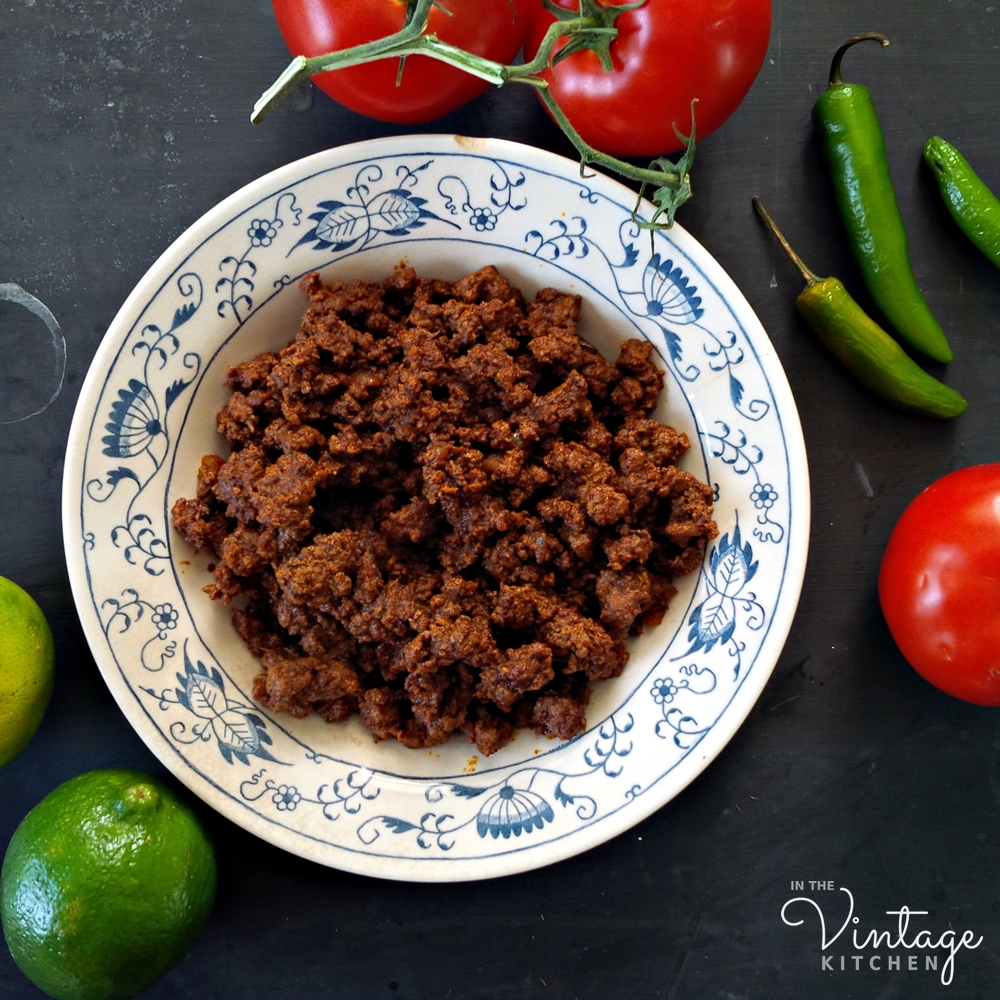
On the menu it’s El Chico’s Homemade Beef Burritos & Ranchera Sauce. Both are really easy to make. You’ll have the whole thing whipped up in under 30 minutes. Each recipe features fresh ingredients with generous amounts of spices, so you can skip buying the taco seasoning packages and the taco sauce at the grocery store. There’s plenty of flavor between the two recipes.  In addition to ground beef, you could also incorporate ground pork, turkey or chicken if you wanted to offer multiple variations.

What’s especially great about the Carne Mexicano recipe is that it includes vinegar which gives it a little bit of tang and de-greases the pan all at once so you don’t need a thickening agent like cornstarch or flour which is included in most commercial taco seasoning packets. As with many vintage recipes, we cut down the salt by 2/3rds, so we recommend starting with our measurement first and adding more to taste if you feel it needs it.

Carne Mexicano for Burritos

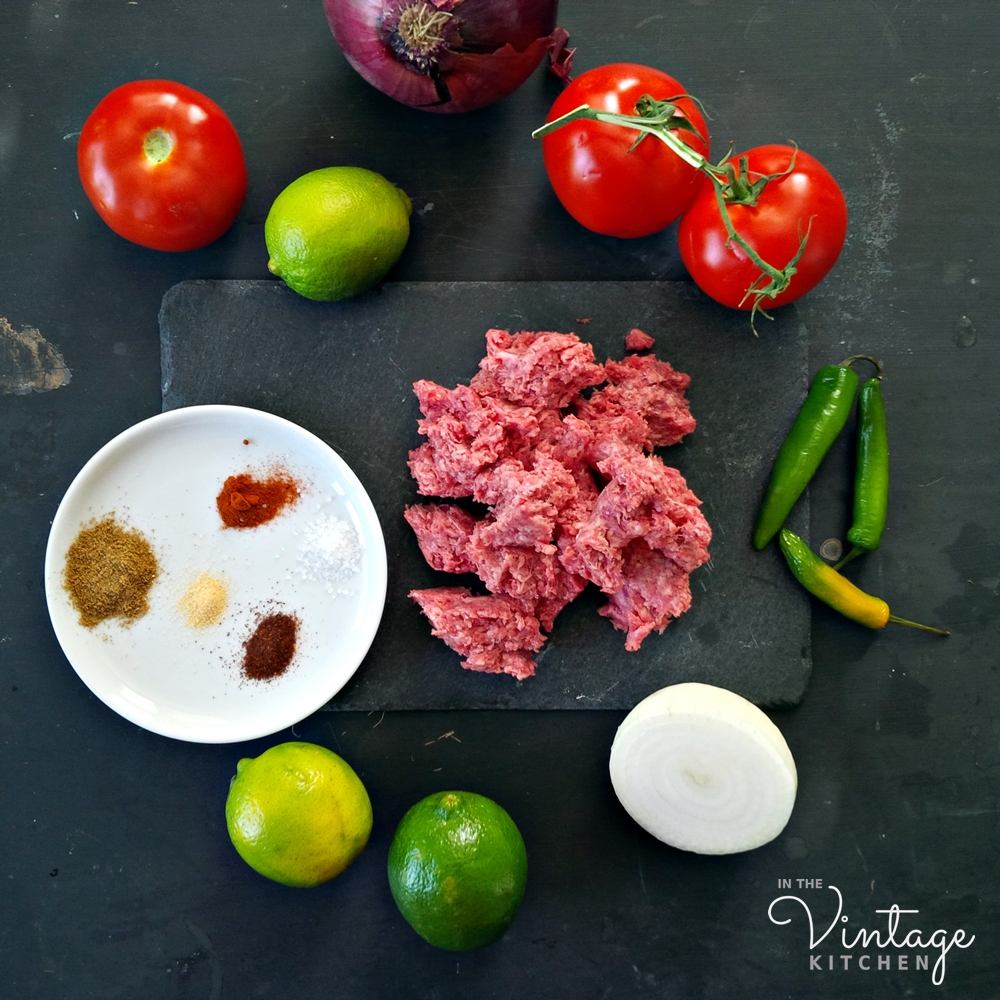
2 lbs. ground beef (we used grass-fed beef)

2 tablespoons chili powder

2 tablespoons paprika

2 tablespoons salt (we used only 2 teaspoons)

1 teaspoon garlic powder

1 teaspoon ground cumin

1/2 cup vinegar

1/4 cup chopped onion

In a cast-iron pan over medium-high heat brown the beef and onions until cooked through. Add the spices and cook for 1-2 more minutes. Add the vinegar, scraping the bottom of the pan to deglaze it. Remove from heat and serve immediately or store mixture in a covered dish and keep warm until ready to serve.

El Chico’s Ranchero Sauce (A La Caballero)

2 cups fresh chopped tomatoes

1/4 cup chopped onions

1/4 cup chopped hot green peppers (we used serrano peppers)

2 tablespoons shortening (we used olive oil)

Salt and Pepper to taste

Saute the onions and peppers in shortening (or olive oil). When the onions are translucent add the tomatoes and simmer over a low fire for five minutes.  Serve it immediately or at room temperature.

Obviously, the hotter your peppers, the spicer your sauce is going to be. This recipe makes about 1/2 cup of sauce so if you are cooking for a crowd you might want to double or triple the recipe. We used serrano peppers which were quite hot so a little bit spooned on top of your Carne Mexicano goes a long way!

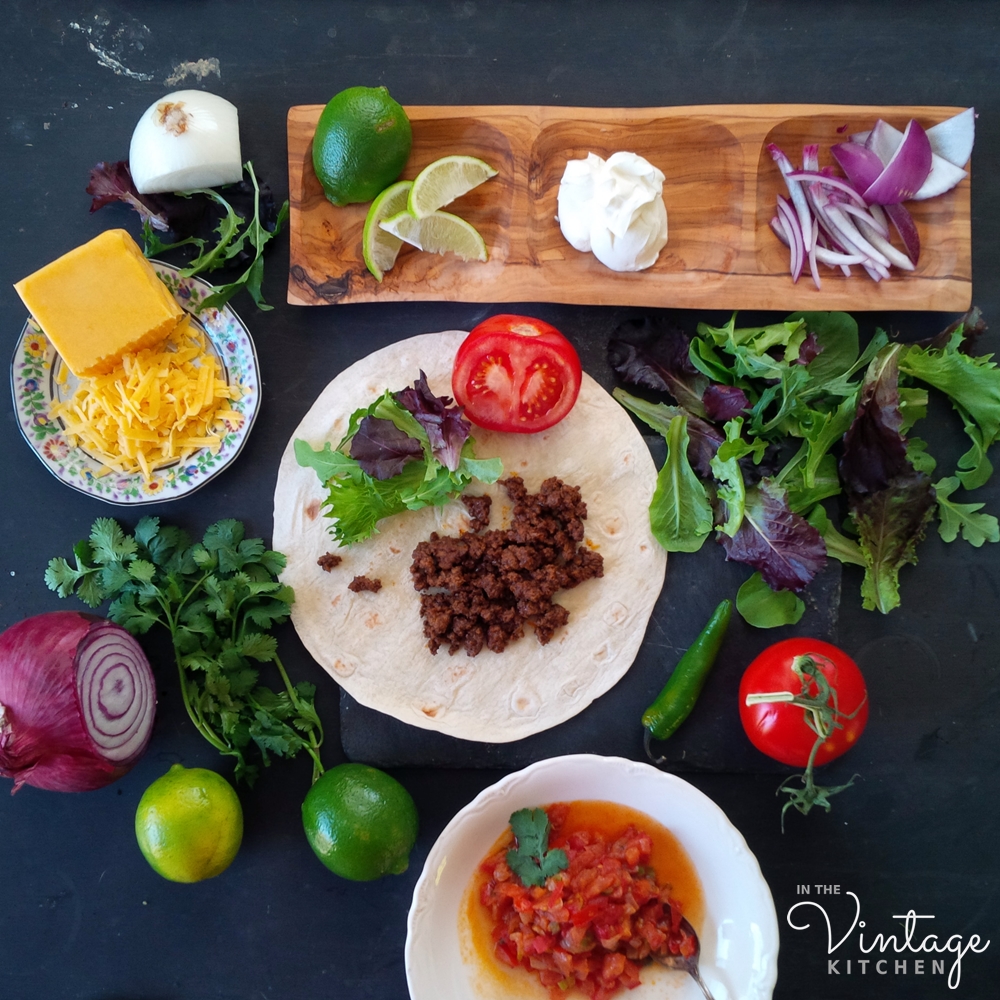
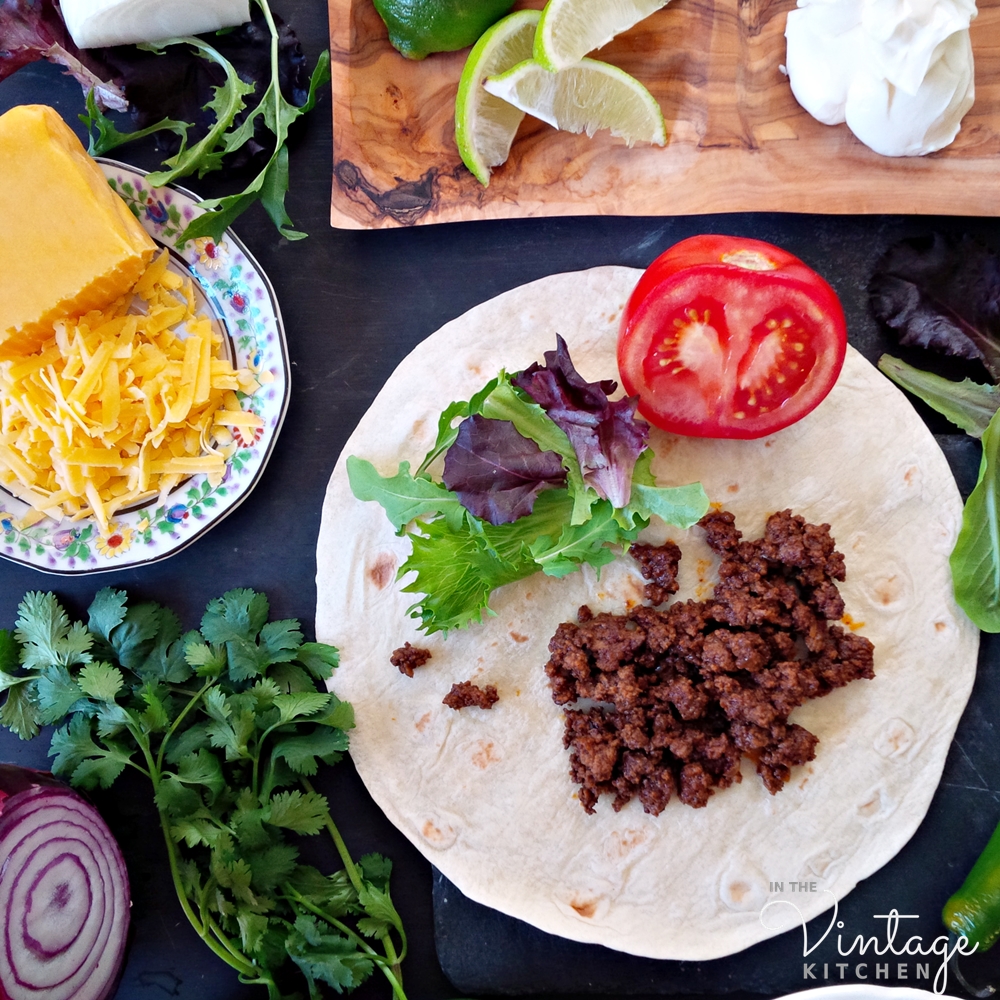
There are so many topping options when it comes to burritos, so your creativity can really shine here based on your preferences.  El Chico suggested that their burritos include only cheese, refried beans, Carne Mexicana and the Ranchero Sauce. But we added a bunch of our favorite toppings too which included sour cream, spring lettuce, red onion, mango, tomato, cilantro, avocado and lime juice.  Other possibilities re guacamole, green olives, rice, etc etc. The sky is the limit. Can your burrito ever really have too much stuff?

Coming up tomorrow on the blog, we’ll be sharing our picks for the Kentucky Derby winner, as well as our table decorations for the Derby Party, which tie together both the Mexican theme and the horse theme. If you are planning a party for either event, we’d love to hear how you are celebrating.

In the meantime, cheers to Adelaida and the Cuellar family for sharing their long-time favorite family recipes with all of us. We will definitely be sending a toast their way on Saturday!

Explore more information about the El Chico cookbook here. And learn more about the restaurant chain, still in operation, here. 

Summer Dinner with Sunset: Cold Roast Beef with Whipped Horseradish circa 1962

In 2018, a sunset celebrates its 120th birthday. No, it’s not the anniversary of the blushing pastel sky that shadows overhead just before night (that’s as old as time).  And it is not the commemoration of Billy Wilder’s movie Sunset Blvd (that was 1950) nor the anniversary of the actual naming of the boulevard known as Sunset (that was the early 1900’s).  Instead, we are talking about the kind of sunset that stacks up on your coffee table – Sunset Magazine – one of the oldest, longest running magazines in American publishing history.

For over a century, this West Coast-centric lifestyle publication has been entertaining readers with outdoor recreation, travel, home design, gardening and food-focused articles steeped in the natural beauty of the United States’ Pacific side. Originally produced in 1898 to dispel myths about wild, wooly California, Sunset magazine was created as a marketing and promotional piece for Southern Pacific Railways. Its goal was to encourage tourists to buy land in California so the railway could profit in transportation, tourism, and land ownership sales.  By highlighting the natural beauty of the scenic coastline, the agreeable climate and the sophisticated resort towns of Southern California, in particular, early readers were introduced to the artistic side of the state through nature photography, regional literature, and poetic musings.

Sunset Magazine then, in 1898 (first issue!) and now (the current issue July, 2017)

The up and down decades of the 20th century brought many changes to the magazine’s content, format, and layout but throughout its long life,  Sunset has always inspired readers to get outside and enjoy the natural landscape. The recipe we are featuring today involves just that – a nod towards a relaxed dinner geared for outdoor ease and feast enough for a dozen family members and friends.   It is a perfect packer for the picnic basket or a set-it-and-leave-it sort of arrangement that yields plenty of time for firefly watching or sprinkler swimming or whatever your favorite summer pastimes include.  It is a cold roast beef, cooked early in the amiable hours of the day,  and then put away to chill in the fridge until hungry appetites demand to be fed.

The recipe comes from the 1962 Dinner Party Cook Book compiled by the editorial staff of Sunset Magazine. This very cool collection features a wide assortment of party menu recipes that coincide with big and small occasions throughout the year. Birthday parties, graduations, theme night dinners, and holidays are all tackled with a wealth of ingenuity and imagination in the menu planning department. Our cold roast beef fell under the theme of an Easy Summer Dinner, combining a selection of dishes that were cool to the palate and required little heating (other than baking the roast).

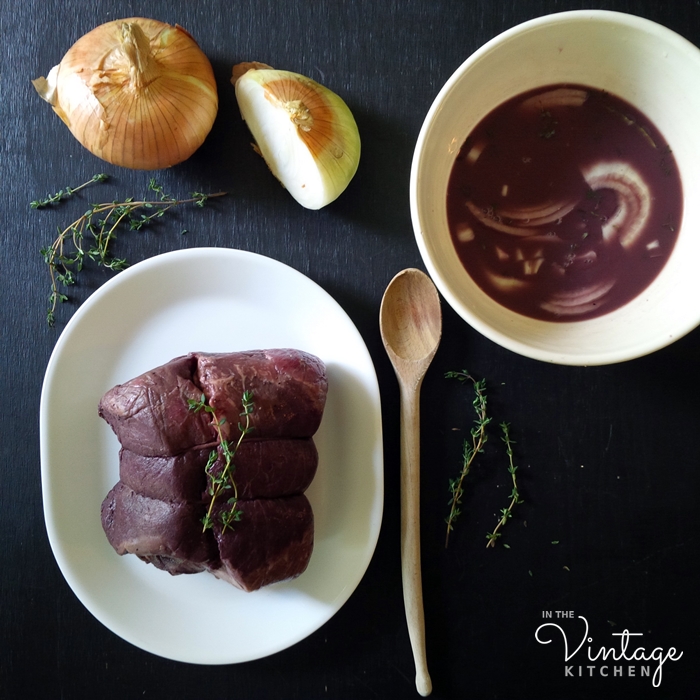
Temperatures have been heat-wavish here in the South reaching 100 degrees for the past week with even higher heat index numbers.  This Easy Summer Dinner was just what we needed. The ease comes in a 24-hour red wine, onion and herb marinade and then a quick pop into the oven for 2-3 hours of cooking. Once it comes out of the oven it cools on the counter before heading to the fridge where it chills until dinner time.  The benefits of this dish are many because the roast is large – big enough to feed up to 18 people – which means you could have a lot of leftovers depending on your party size. Here in the Vintage Kitchen, that meant practically a week of additional dinners plus extra for the freezer. From just one roast we made fajitas, beef pot pie, steak salad, stuffed peppers plus two extra nights of the actual recipe. Easy summer dinner indeed!

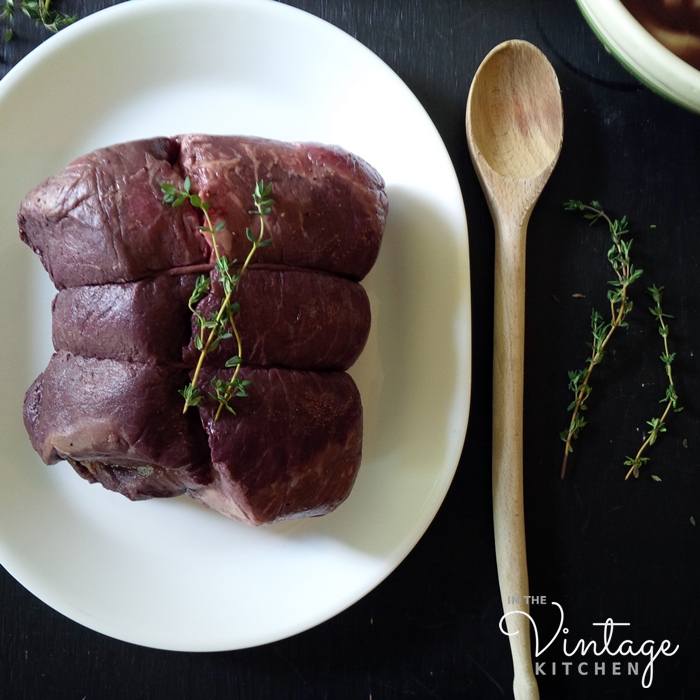
The recipe calls for a 5-6 lb rump roast which we substituted for a 4 lb. grass-fed beef rump roast.  We like grass-fed beef the best because it’s healthier for humans and because it is a better lifestyle for the cows who forage on open pastures eating only natural grasses instead of being lumped together on feedlots eating only grain. If you try this recipe and incorporate grass-fed beef too, there are a couple of factors that need to be altered. Grass-fed beef cooks faster since it is much leaner than grain-fed beef so it’s important to pay attention to the roasting time.  Instructions for both types of beef are included with the recipe here, depending on your own preferences. Other than that, this very easy dinner is as promised – very easy.  And the whipped horseradish is the perfect accompaniment so definitely don’t forget it.

Sunset’s Beef A La Mode

(serves 12-18)

5 – 6 lb. rump roast (or 5-6 lb. grass-fed beef rump roast)

2 cups dry red table wine

1 onion, sliced

1/2 teaspoon fresh thyme

1/4 teaspoon crushed whole black pepper

1 bay leaf

Flour seasoned with salt and pepper

1/4 cup beef fat, shortening or oil

1 cup tomato puree

1/2 cup sour cream

1/2 cup mayonnaise

1/4 cup grated horseradish

Place the roast in a large bowl and cover with the wine, onion, thyme, black pepper and bay leaf. Marinate for 24 hours in the fridge,  turning a few times throughout the marinade process.

After 24 hours, remove the meat from the marinade, setting the marinade aside for future use.  Let the beef warm up to room temperature before patting it dry and dusting it all over with the flour/salt/pepper mixture.

In a Dutch Oven brown meat on all sides in the beef fat, shortening or oil. If you are using grass-fed beef do this step in a hot skillet with 3 tablespoons of olive oil. Sear meat about a minute per side on all sides.

Seared on all sides and ready for the oven.

Pour the marinade and the tomato puree in the Dutch oven, cover and bake at 350 degrees for 3-4 hours or until fork-tender. If you are using grass-fed beef, after searing, place in Dutch oven or a large casserole dish, add the marinade and tomato puree and top the roast with three pats of butter. Cover and bake at 425 for 20 minutes then turn the oven off and keep the roast in there for two hours, being careful to not open the oven door for the entire time.

You want the internal temperature of your roast to be about 135 degrees when finished. Once your roast is done, remove it from the oven and let it rest at room temperature until it is cool. Refrigerate until ready to serve.

While your roast is cooling, in a small bowl, whip together the sour cream, mayonnaise, and horseradish in a bowl. Refrigerate until ready to serve.

Once dinner time arrives, thinly slice the roast beef, arrange on plates and drizzle with the horseradish mixture.

The original 1962 recipe included side dishes of hominy, watercress salad and sesame seed crusted toast points. While those sound lovely we skipped those dishes and served our grass fed roast beef with a simple side salad of mixed greens tossed in a homemade lime vinaigrette. It was simple and complimentary and easy. The words of the day!

If you time your dinner and your day right, you’ll be able to experience two sunsets at once. One a feast for your eyes, the other a feast for your belly. Hope you find this vintage recipe as effortless as we did.

Explore 61 other 1960’s themed menus in The Dinner Party Cook Book available in the Vintage Kitchen Shop here.

New to grass-fed beef cooking? Visit the website of our favorite grass-fed beef vendor at the Nashville Farmers Market and learn more.

Cheers to easy summer nights and to the good friends that fill them.

Taco Tuesday: In the Vintage Kitchen

mex1

In 1963, a new edition of a popular 12 year old cookbook was published by Beverly Pepper.

glamour magazine's after five cookbook

The cookbook was Glamour Magazine’s New After Five Cookbook containing a year’s worth of dinner recipes designed for the young modern woman who didn’t have a lot of extra time to sit down and menu plan. With an audience comprised primarily of busy career girls, new mothers, college grads, young marrieds and the over extended singleton…

photo via pinterest
photo via pinterest

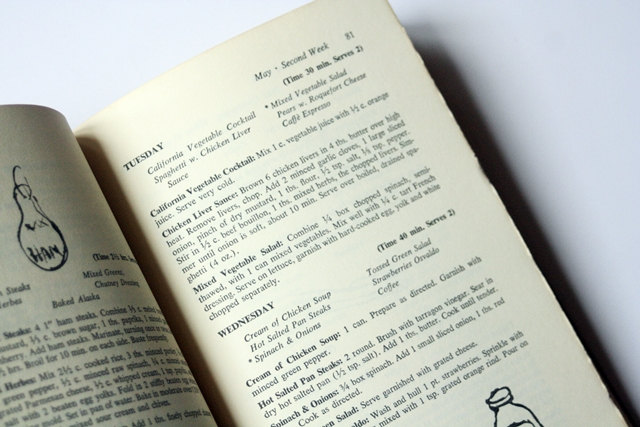
the After Five Cookbook was a dream come true. Broken down by month and then further by week, each section begins with a pantry staple list needed for the month followed by a weekly shopping list of all ingredients needed over the next six days..

recipe2

The recipes are laid out from from Sunday to Friday of each week with Saturday of course left out, assuming either a night off, a party engagement or better yet, a dinner date out.

recipe1

The last twenty pages contain special large-scale menus ideal for holidays or house parties when ladies were cooking for a crowd.

photo via pinterest
photo via pinterest

This is the section where Ms. Jeannie found the recipe for this blog post – a feast of flavor (or a gourmet gangfest as Beverley Pepper liked to call it) that serves eight but could easily be doubled or tripled to feed the proverbial army. Time is always short-handed in December so while this recipe does take two hours to prepare, it freezes wonderfully, sits well in a chafing dish, makes excellent leftovers and transports easily if you are tailgating or pot-lucking your way through the month.

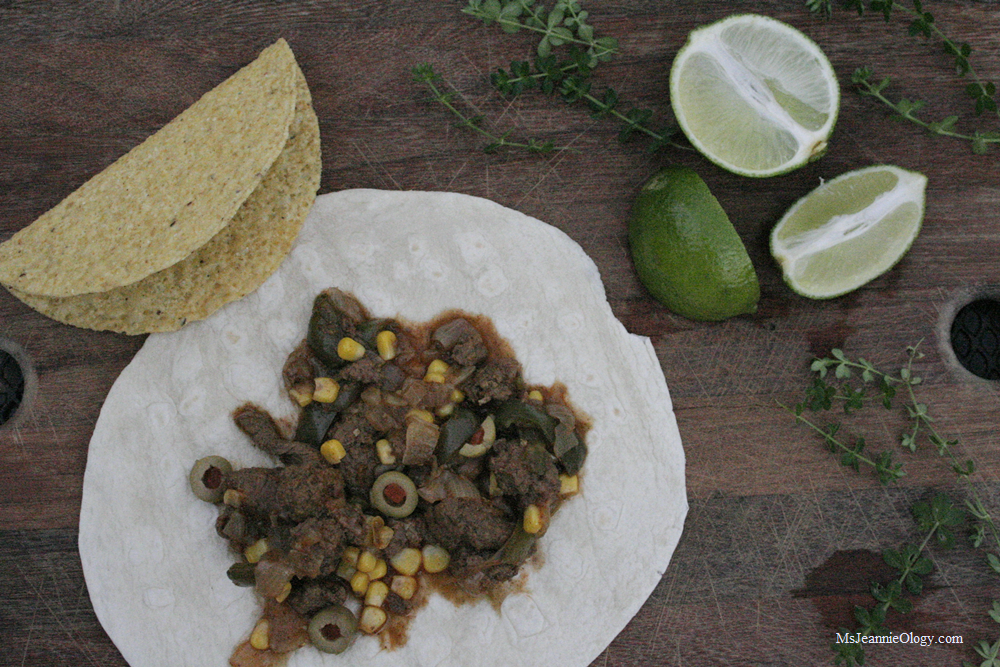
Mexican Beef with Olives

Mexican Beef with Olives (serves 6-8)

3 lbs. cubed grass-fed stew beef

4 tablespoons olive oil

1/2 lb. ground grass-fed beef

2 minced garlic cloves

3 green peppers, cut in 1″inch strips

6 onions, chopped

2 tblsp. tomato paste

6 dashes Tabasco sauce (or equivalent hot sauce)

3 tblsp. chili powder

3 cups chicken broth

2 cans corn kernels, drained but reserve the liquid

1 cup spanish olives, sliced

salt and pepper (to taste)

  1. In a large pan, brown the stew beef, ground beef, garlic, peppers and onions in the olive oil over medium high heat until the beef is browned and the onions begin to caramelize.
  2. Add the tomato paste, tabasco, chili powder, salt and pepper to the pan and mix well.
  3. Add the chicken broth, reduce heat to medium, cover and simmer for one hour.
  4. Add the corn kernals and simmer uncovered for an additional 30-45 minutes until most of the liquid is consumed.
  5. The mixture at this point should be thick and saucy, if it looks too liquidy or thin let it simmer longer, if it looks too dry add some of the reserved liquid from the drained corn kernels. Once the mixture reaches the desired consistency, add the olives and stir thoroughly over medium heat for 4 minutes.
  6. If you prepare this dish ahead of time add the olives just before reheating.
  7. Serve with rice, soft tortillas, hard tacos and lime wedges.

Mexican Beef with Olives

Ms. Jeannie served her tacos with white rice that was lightly tossed with freshly squeezed lime juice (half of a lime), a touch of salt and a few dashes of cumin.  Other serving options that would be equally delicious include: sour cream, cheddar cheese, cilantro, and/or sliced mango.

Fun for family and friends, this recipe only gets better as it sits in the fridge making leftovers and quick dinner reheats fast and easy throughout the week. A fun gift for food bloggers, kitchen experimenters and vintage cookbook lovers, the After Five Cookbook is available here.

Happy cooking dear readers!


The Post-Derby Post: A Minty Affair

The mint julep is always the star of the show at the Kentucky Derby in the drinks department.  But when Ms. Jeannie’s own party plans got significantly waylaid this year, she decided instead of going all the traditional routes she was going to mix things up a bit. Instead of the mint julep, she created the Minty Donberry…

wine1

Which was a glass of chardonnay with a spring of mint and a slice of strawberry. Like a mini sangria, it was light and refreshing and looked pretty from the side…

wine2

Instead of traditional red roses, she went white and peach and purple in the flower department…

f1

with bouquets of lilacs, snowballs, flowering dogwood and clematis.

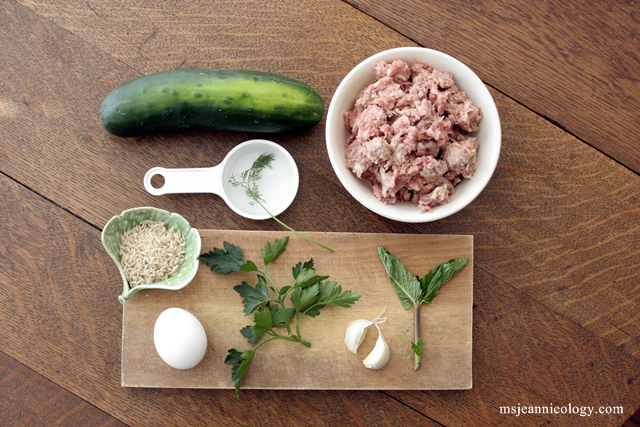
And instead of a formal sit-down dinner following the race she went with a smattering of appetizers for a more informal cocktail party-like atmosphere.  The favorite of the appetizers was a sausage and mint brown rice meatball accompanied by a cucumber mint raita sauce.  It was a nice match with the Minty Donberry, easy to prepare ahead of time and made a lot.  So even though there was no julep –  mint was still a main attraction!

Here’s the recipe…

dinner1


Sausage and Mint Brown Rice Meatballs with Minty Cucumber Raita Sauce…

For the Meatballs

1 lb. ground grass-fed organic sausage

1 cup cooked brown rice

1 cup fresh flat leaf parsley, chopped

1 egg, lightly beaten (preferably free range organic!)

2 cloves garlic, minced

1/2 cup milk

1 teaspoon salt

1/2 teaspoon pepper

1/4 teaspoon allspice

Prepare brown rice ahead of time and let cool. Add all ingredients together in a bowl and mix until well-combined. Cover bowl with plastic wrap and refrigerate for at least one hour (up to one day – if you want to prepare ahead). All ingredients should look evenly dispersed throughout the mixture, like this…

dinner2

Roll into 18 golf-ball sized meatballs or smaller if you want to make a miniature version. Bake at 425 for 15 minutes. Turn each meatball once and bake for another 10 to 15 minutes until the meatballs turn golden brown. This may require a little more or a little less cooking time depending on the size of your meatballs. Also, Ms. Jeannie broiled hers for the last couple of minutes to get a nice dark brown crust on each.


For the Minty Cucumber Raita…

1/2 large cucumber – peeled, seeds removed and then grated

1 cup sour cream

1/8 cup chopped fresh mint

1/2 teaspoon ground cumin

1/8 teaspoon cayenne

1 teaspoon honey mustard ( Ms. Jeannie used Inglehoffer’s which is a German mustard)

1 teaspoon apple cider vinegar

kosher salt and freshly ground pepper to taste

Place grated cucumbers in a paper towel and squeeze out all the extra liquid. Then combine all ingredients in a bowl until thoroughly mixed. Cover and refrigerate for at least one hour before serving.  Makes 2 cups of raita.
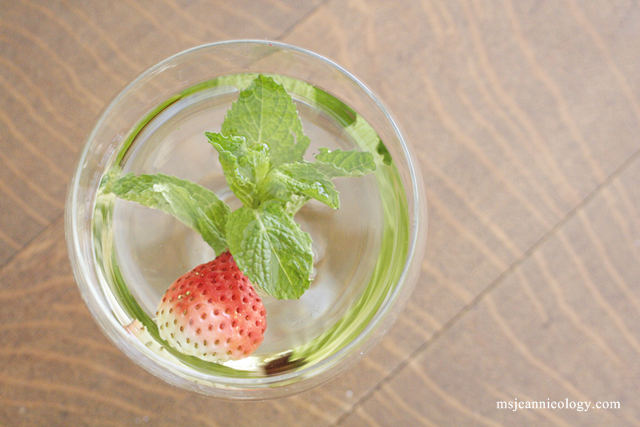
Arrange the meatballs on a platter alongside the raita. Ms. Jeannie served her sauce in her grandmother’s 1930’s teacup – which looked pretty! If you want to garnish the plate you can use (you guessed it) fresh mint or dill. But the meatballs don’t last long once out among the party crowd so you may not want to even bother!

dinner3

Ms. Jeannie was rooting for longshot Wildcat Red…

wildcat_red

and even though he didn’t win – it was still a great race! Now it is on to the Preakness to see if California Chrome will become a Triple Crown winner. Ms. Jeannie’s two best friends couldn’t make last night’s party so they’ve all decided to get together for round two on May 17th to watch the Preakness. It might just be a California themed event!