Reading While Eating in 2024: Five Recommended Books About Food, Friendship and Appreciation

When December comes around every year, I always love compiling the book list. This month marks the end of 2024, and also the start of the wintertime reading season with the release of the annual Vintage Kitchen recommended book list. Blog stories were a bit sparse this year due to many unanticipated factors, but I’m happy to say that they haven’t hindered this annual tradition of posting a collection of favorite books discovered throughout the year.

If you are a long-time reader of the blog, you already know that these lists are made up of books that were serendipitously found over the course of the year while doing research for Vintage Kitchen blog posts, shop stories and recipes. Every year, they cover a range of subject matters and time periods, and span a range of publication dates from new releases to books written decades or even centuries ago. As an avid reader, averaging about 30 books a year, I save the most beloved ones for this list. The ones that left an indelible mark, or sparked some new inspiration, or offered a different perspective on a subject matter already familiar. These are the books I couldn’t put down. The ones that I still continue to think about long after the last page is read.

This year’s selection is varied in content but they do have an underlying connective theme of gratitude and appreciation. There’s a book about nature, a book about a summer vacation house, and a book about American life lived three hundred years ago. Three of the books this year are memoirs, one book contains recipes, and unlike last year’s list, all five of these books are non-fiction. They tell bittersweet stories of friendship, of being present in time and place, of establishing traditions, and of searching for meaning in everyday life. These five take us around the world from coastal Massachusetts to New Orleans to New York City to Paris, Stockholm, South America, and to our own backyards. One book even helped solve a mystery about the floorboards of 1750 House. Interesting adventures await on all fronts.

Let’s look…

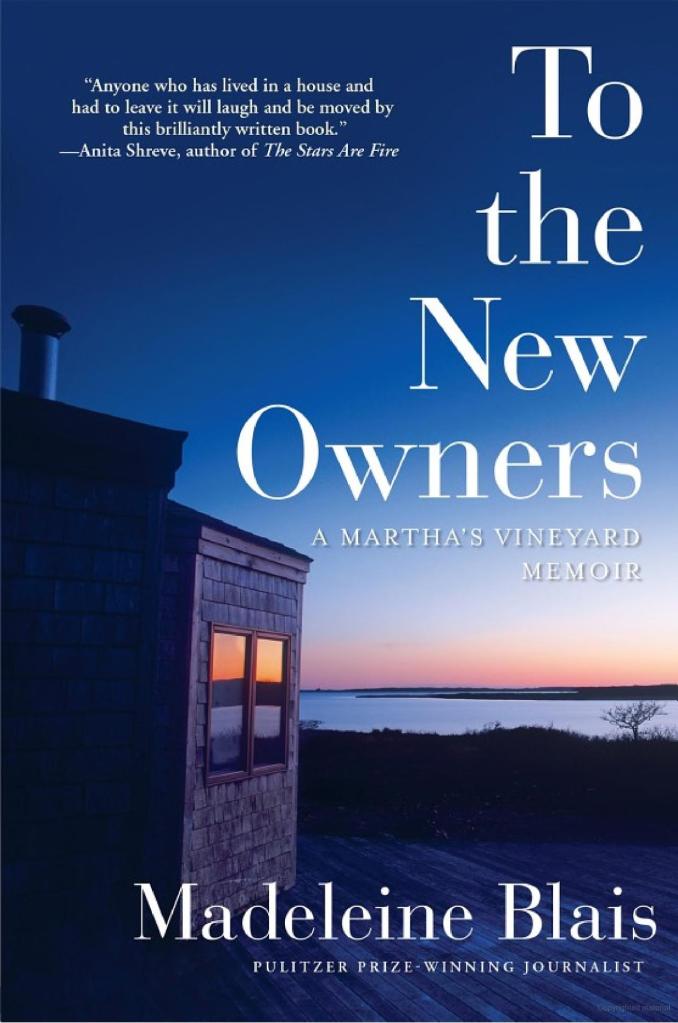
To The New Owners – Madeleine Blais (2017)

A love story to summer. To family. To a seasonal beach house on the shore of Martha’s Vineyard. To the New Owners is one long anticipated string of summer sequels highlighting vacation life spent in coastal Massachusetts. Written by Pulitzer prize-winning journalist Madeleine Blais, who married into the enigmatic and literary Katezenbach family, this memoir starts off with news that the beloved beach house, the family vacation compound for five decades, is going up for sale.

You might suspect with a topic like this that what could follow is a sappy cliche. A backward look at a family home where frivolity, relaxation, and low expectations were the driving force behind each summer. A book chock-full of events and experiences only interesting to the people who actually experienced it. That’s not the case here.

While there is certainly sentimentality and a true loyalty to the land and its residents, both seasonal and year-round, this memoir reads like an engaging conversation shared over a lengthy dinner party. It is full of quirky characters, funny stories, interesting history, and an undying love of the written word.

From record-keeping log books to island newspaper articles to Madeleine’s own accounts of house repairs, family dinners, environmental changes, historical events, and all the people and pups that marked their time on the island, this is a memoir of Martha’s Vineyard not from the glitzy, multi-million dollar mansion perspective, although there is mention of that too, but from a rowdy, vivacious, thrifty, unpretentious contemporary family viewpoint. The type of living that represents the true spirit of the island and its origins. And in the case of the Katezenbach family, a lifestyle that respected the power of words over the power of the pocketbook.

Gay Head Cliffs – Moshup Public Beach – Martha’s Vineyard – Boston – USA.

When she first shows up to the Vineyard, Madeleine doesn’t exactly know what to expect. She knows nothing of the island, or the people she’s going to stay with, or the type of lifestyle that requires a summer residence and a winter residence. But she does have an imagination. And what she pictures in her mind on the way to her first visit to the summer house is not the almost dilapidated shack that she encounters. Rustic is what her husband called it, a far cry from the multi-million dollar estates that dot much of the M.V. coastline. Intrigued by the island’s humble roots and the glamour it was later associated with, Madeleine explores the history of the island, her new family, and the literary-loving community that it reflected all through the lens of the summer house.

Martha’s Vineyard in the 1800s

Funny, wise, poetic, and relatable whether you’ve ever had the experience of summer beach house living or not, Madeleine’s memoir is about love, loyalty, nature, pride of place, and acceptance of what is, as it is. A look at an island that boasts extremes from all directions including wealth, prestige, celebrity, notoriety, and eccentricity, but also sandy kitchen floors, wet dogs, leaky roofs, fishless-fishing trips, thwarted dinner invitations, spectacular sunsets, faulty wiring, stunning beaches and the whole mess with the nearby pond that affected everybody.

At the heart of the story are the log books – the fortuitously started notebooks that hold random journal entries of all the small, everyday details that make up life at the beach house for fifty summers. Sporadic and eclectic, with contributions by family members and visiting guests, the log books were available to anyone staying at the house who wanted to note something, anything. The first log book started what would become a tradition and then ultimately a treasure trove of notes and musings on recipes, house improvements, weather, linguistic games, family health, poems, housecleaning tips, recommended book lists, pet antics, children’s drawings, island events, and conversational interactions with town locals. No one particularly thought that the first log book was going to turn into something special, but when it was full and there were no pages left to record anything else, another book was ordered and filled again, and over and over it went for five decades.

Having that kind of family detail available helped Madeleine paint such an intimate look at life on Martha’s Vineyard that by book’s end you’ll feel like a local yourself. What’s particularly lovely is how everyone truly appreciated the house, the parcel of land it sat on, and the exposure to nature that it provided them. Across all the fifty years, any one guest, family member or otherwise, who couldn’t appreciate this slice of paradise or didn’t see the charm of it all wasn’t invited back the following year. So the summer house became a club-like haven of love and joy and appreciation and fulfillment even on the leaky roof and the fishless fishing trip days. It chronicled the years of a couple’s marriage and embraced the outpouring of their offspring. It sheltered three generations, countless friends, family pets, and invited guests. And then the inevitable happened. Life changed. And with it, the bittersweet goodbye to fifty years of what once was.

Grief Is For People – Sloane Crosley (2024)

Just as there are many stages of grief there are many things in the world to grieve. In this book, Sloane Crosley grieves two real-life events simultaneously… the suicide of her best friend and the theft of family jewelry from her NYC apartment. Both incidences occurred within 30 days of each other. Both were a shock to the system. And both left Sloane at a loss confronting major thoughts and feelings about each situation.

You might suspect that the death of her dear friend would take precedence over the theft of jewelry she inherited from a grandmother that no one really liked, but Sloane is an incredible storyteller and manages to give equal emotional weight to both scenarios while also offering an interesting behind the scenes look at the publishing industry that she and her friend were very much a part of for over two decades.

Grief Is For People is, yes, a book about grieving but it’s also a memoir of a specific time period in Sloane’s publishing career, a portrait of a friendship, a writer’s coming-of-age in the big city of New York, and the emotional value of inherited objects. It’s humorous and insightful, smart and sincere. It’s full of grit and determination to right the wrong of burglary while also bravely sorting through what it means to love, rely on, appreciate, and remember someone who was here one minute and gone the next.

Sloane shares this story in a captivating timeline of events. So as not to spoil the pacing, I won’t say anymore other than that if you are new to Sloane Crosley and her work, I’d also highly recommend her 2008 book of essays I Was Told There’d Be Cake.

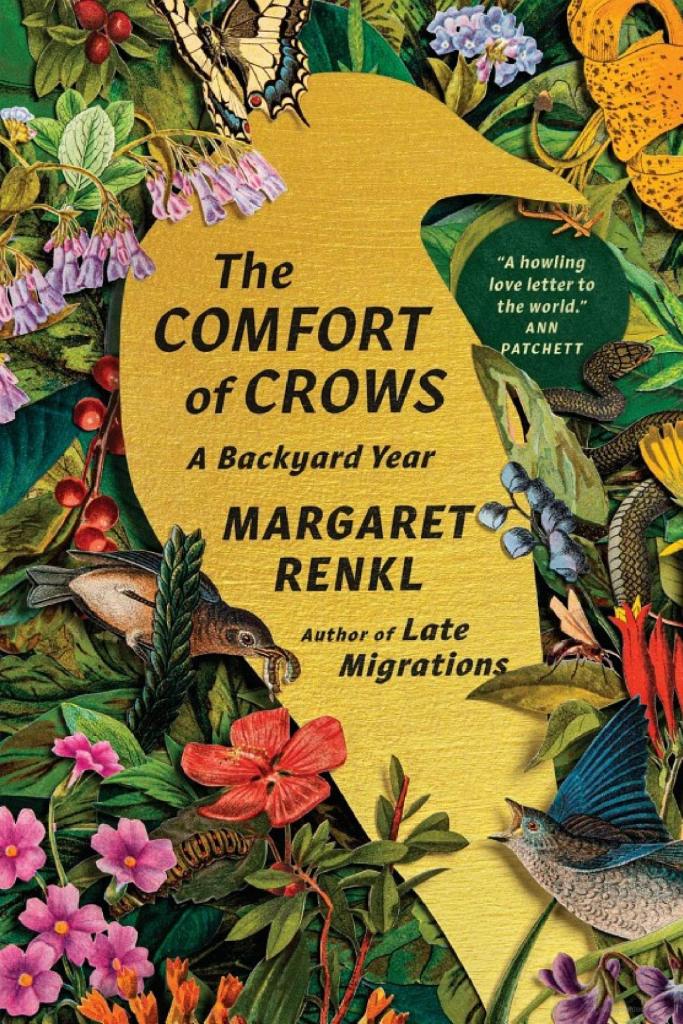
The Comfort of Crows – Margaret Renkl (2023)

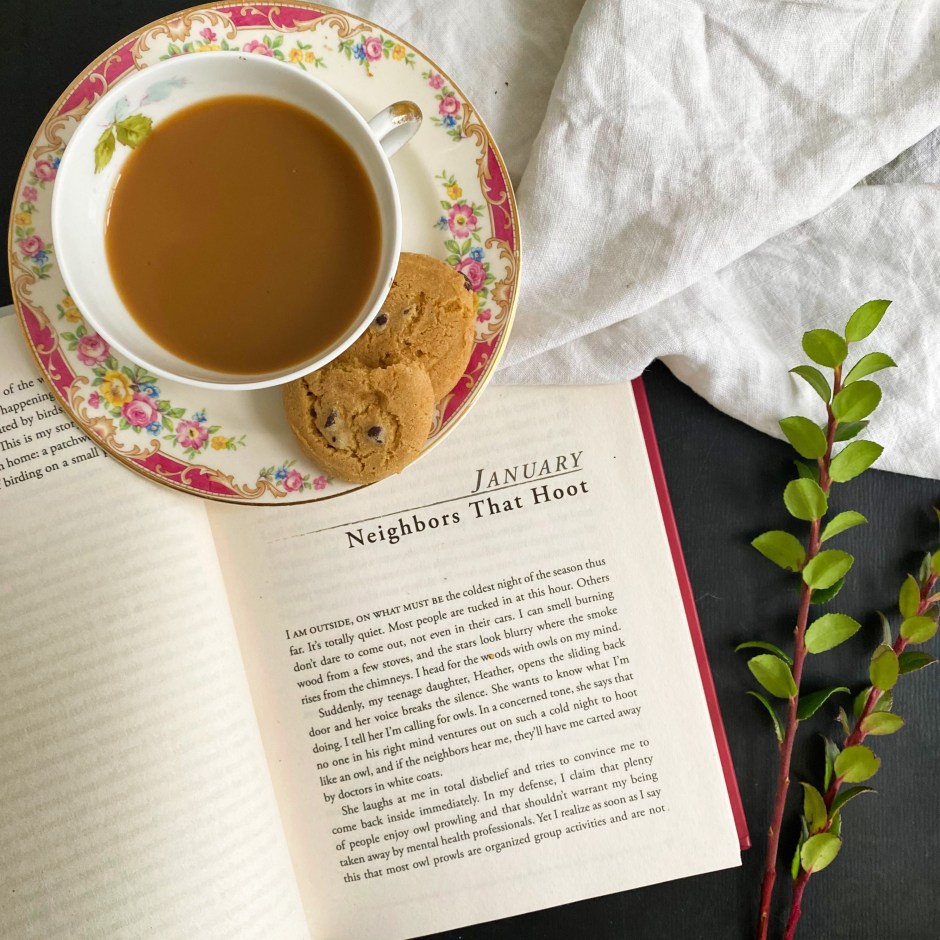
Stop and look. Those are the first three words of Margaret Renkl’s ruminations on nature and her year-long accounting of it in The Comfort of Crows. Written from the vantage point of her backyard in Nashville, TN and a friend’s nearby vacation cabin in the mountains, Margaret writes about the sights and sounds of nature witnessed firsthand over the course of a calendar year. In brief vignettes accompanied by her brother’s beautiful illustrations, Margaret draws attention to common occurrences happening with the birds and the squirrels, the trees and the bees, the plants and the pollinators, week by week, while also reflecting on her own life and the parallels these natural encounters draw.

Part nature study, part memoir, part call to action, I would recommend The Comfort of Crows to anyone who wants to unplug from the outside world for a weekend, a week, a month, a year. If you need a break from social media, the news, the what-ifs, and the how-to’s, this book is easy to fall into. Calming, thought-provoking, and comforting, it offers a gentle reminder that in nature there’s a plan, a purpose, and a resourcefulness that is indefatigable, adaptable, and inspiring.

Stop and look. Stop and listen. Stop. Look. Listen. See. Hear. These are simple words that yield powerful insight into the dramas, destinies, and determinations going on in everyday life around us. Whether it’s the backyard, the city park, the country meadow, the forest, the beach, or the planting strip in the parking lot of your local grocery store, there’s insight to be gained from the creatures that inhabit these parcels of place.

Starting on Week One, the first of January, Margaret shares in her lovely, poetic voice how nothing is actually dead even in the dead of winter. “Everything that waits is also preparing itself to move,” she notes. “The brown bud is waiting for its true self to unfold: a beginning that in sleep has already begun.”

I can’t really describe this book as anything other than an experience. It’s heartwarming and serene, playful and curious, sentimental and sad. It is fun facts and first-hand observations. It’s a love letter to what is and a longing to change what might become. It’s a book. It’s short stories. It’s prose and it’s poetry.

Conscious of global warming and human impact on the natural world, Margaret is hopeful that we can right the ship and learn how to cohabitate with plants and trees, insects, and animals in order to encourage a beneficial landscape for all instead of just some. In acknowledging that we have collective work to do in that regard, this book carries its own bittersweet narrative – an appreciation of what is here now but a realization that it might it not be here in the same way tomorrow. That viewpoint automatically sets the tone for awareness which is the overall theme of Margaret’s year. To be aware of one’s natural surroundings. To be aware of what is in one’s natural surroundings. To be aware of the wild in the world. It’s that recognition that Margaret hopes will propel you out into the greenspaces of your life. To look and to see. To hear and to help. All, so that we can continue to hope.

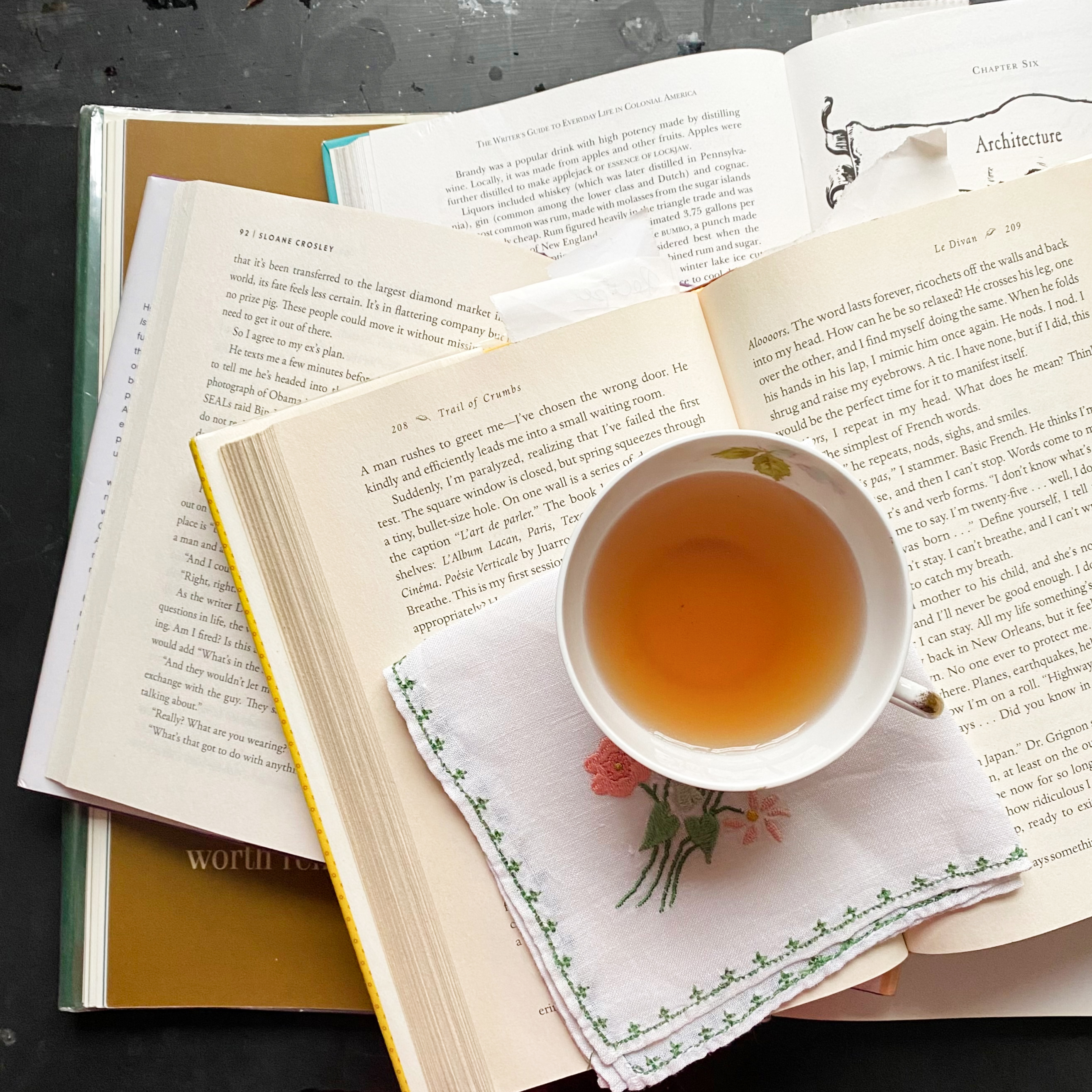
Trail of Crumbs – Kim Sunee (2008)

Abandoned in a Korean marketplace when she was three years old, Trail of Crumbs follows the real-life of Kim Sunee from toddlerhood through her late twenties via place, people, and passion. Adopted into a well-meaning American family and taken to live in New Orleans, Kim’s presence in the world from the beginning never quite clicks. Seesawing between feelings of gratitude and abandonment, she grows up out of place as an Asian American in the Deep South. Carrying the emotional baggage of a person who has been left behind, Kim is too young to put words to her lost person emotions.

As a child, the only place she finds real comfort is in her grandfather’s kitchen, watching him and helping him cook an array of Southern specialties. This early introduction to the internal power of food becomes Kim’s barometer, her measurement of what feels right and wrong in her life, of what is fitting and falling apart around her. Cooking becomes the bridge that connects her with a cast of characters that come in and out of her life, leading her around the globe over twenty years in search of the definition of home, both internal and external.

With every new person she meets, every new relationship she begins, her life pivots. She makes friends with artists and writers. She teaches English classes to foreign children. She writes poetry. She translates business brochures. She runs a bookshop. All the while searching for her true self.

In all these people, all these places, all these jobs, Kim tries to move on from being left behind. She tries to make peace with her past and the mother who left her on a bench in a market with just a fistful of crackers. She goes to Paris. To Sweden. To South America. She eats, drinks, and cooks in new kitchens of new friends, new lovers, new neighbors. In France, she meets and falls in love with a high-profile businessman who is determined to give her everything she ever wanted. For a time, this romance is ideal. A fairy tale in the making with affable rom-com pacing. She’s finally met someone who is ready to unclasp her fingers from the tight grip that carries her emotional suitcases. He wants to give her everything she never had. A fresh start. A new life. Her own making.

But as much as they love each other, and as passionate as their relationship is, it’s also fraught with complications. Kim questions this knight-in-shining-armor and her worthiness of him. She wears the invisible letter L for leaveable like a badge that defines her. And in believing that she’s leaveable she can’t ever truly stay anywhere. That creates a restlessness that no amount of kindness, no amount of money, no amount of love, or attention, or security can cure until she learns to love herself for herself.

Along with this search for peace and family, Kim’s memoir is dotted with recipes throughout, each one representing a different aspect of her physical and emotional journey from childhood to adulthood. There are recipes that reflect her Korean heritage, her Southern upbringing, and her love of French food. There are recipes for snacks, comfort foods, fancy dinner parties and elegant desserts. Each one, a place marker of her growth and development. They represent comfort in times of unease and joy in times of safety and security. There are so many truly lovely-sounding recipes in Kim’s book that I practically tagged each and every one. In the next blog post, we’ll be delving into one of her recipes from Trail of Crumbs – Chicken Thighs with Cinnamon and Dates – which appears about halfway through her story when she’s in the middle of her French love affair. Stay tuned for that post coming shortly.

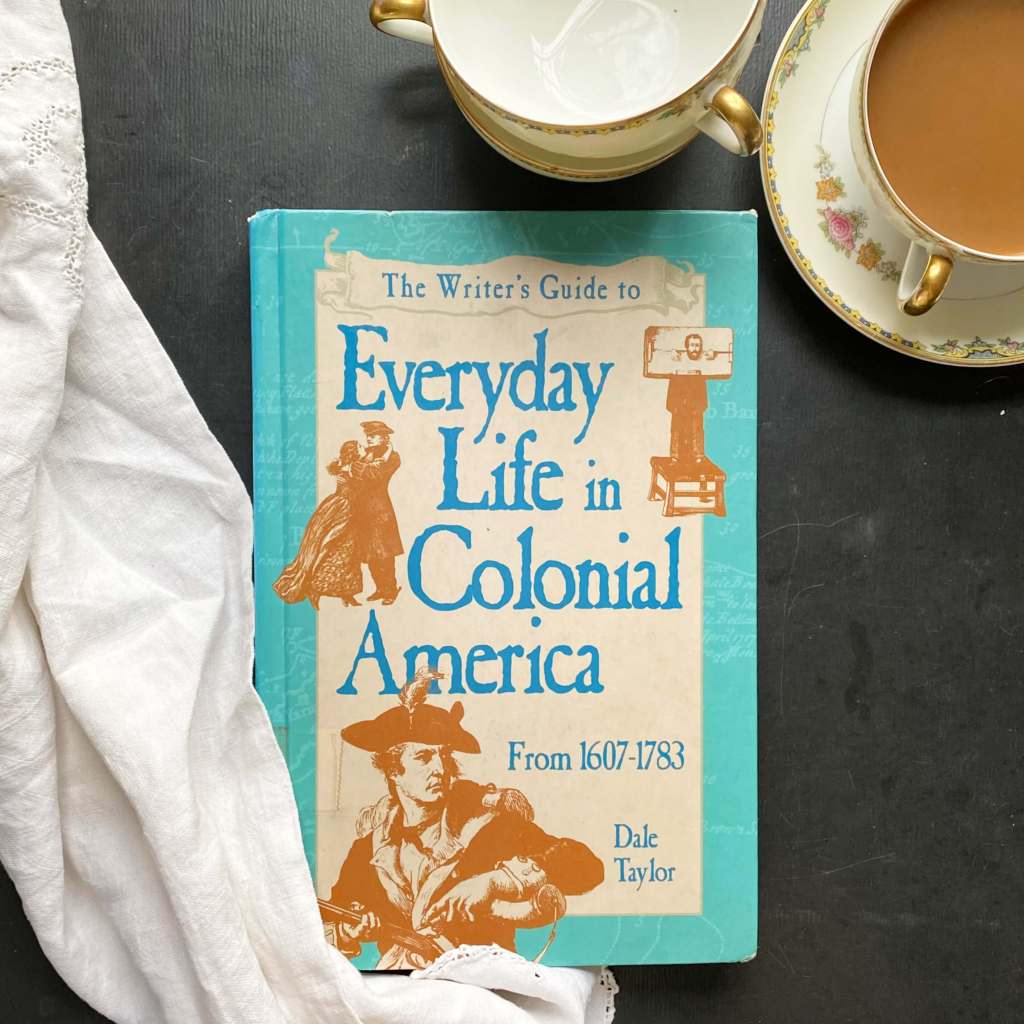
The Writer’s Guide to Everyday Life in Colonial America from 1607-1783 – Dale Taylor (1997)

This is pretty niche reading, and I realize not everyone may be as curious about colonial life as we are here at 1750 House, but this book provides so much interesting, little-known information on domesticity in the 17th and 18th centuries, it will appeal to history lovers of all sorts on all levels. Covering architecture, clothing, occupations, gender roles, homekeeping, agriculture, professions, education, religion, and government, I came to this book initially interested in reading the chapter on architecture in hopes of learning some new information about 1750 House, but the whole book turned out to be captivating and I flew right through it.

Brimming with all sorts of very fun fun facts, historical interpreter Dale Taylor wrote this book specifically for writers so that they would have an accurate understanding of the all details that made up real life in the colonial era. With that audience in mind, Dale includes an array of anecdotes that help bring history alive in a relatable way. It’s also a great resource when solving floorboard mysteries.

Wide plank floors upstairs

Upstairs in 1750 House, the original wide plank wood floorboards which are made of solid 3″ inch thick chestnut, measure between 9.5″-15″ inches in width per board. But downstairs, the wood floors are much narrower in width, about 3.5″ inches on average.

Narrow-width floorboards downstairs

This has always led to curious conversations about why the floorboards aren’t the same on each floor. We suspected that the downstairs floors were replaced at some point later in time, possibly in the mid-1800s when the kitchen room was added. But come to find out, according to Dale, in colonial days, wide plank boards were less expensive to mill, so they were often used for flooring in the more private rooms of the house, which tended to be on the second floor or at the back of the house on the first floor. The narrow-width floorboards were laid in the front of the house on the first floor in the parlor rooms. These narrow boards acted as a status symbol letting visitors know that the family who lived there could afford such luxury. In the case of 1750 House in particular, this newly learned information makes a lot of sense.

Not long after we moved in, we learned about the architectural significance of the front door, which is also original to the house. In the photo below, you’ll notice four small windows that are built in at the top of the door. During the colonial era, that was another bit of luxury – to be able to afford glass in your front door. The panes not only allowed extra light to illuminate the interior but there was also religious symbolism attached to them too. Religious colonists believed that by installing windows at the top of the door, it allowed God a peek down from the heavens to make sure there was nothing improper going on indoors. Just like the original H-Hinges found throughout, it’s another little bit of unique symbolism that lives here. And thanks to Dale’s book, it now gives us a better understanding of the economic status of the original owners of the house.

Windows on the original front door c. 1750

Architecture notes aside, other types of fun facts that can be found in Dale’s book include these little marvels…

  • Pets during the colonial era included dogs and cats, but not birds. Birds would not be kept animals until the Victorian era. However, squirrels and deer were also common pets in colonial days and the deer were allowed free reign both inside and outside the house.
  • Bearskin rugs were the first indoor fire alarms. In the 17th and 18th centuries, they were laid out in front of the fireplace in case an errant ember flew or a log rolled out into the room. At night, after the household had gone to bed, if an ember sparked or a log rolled out, the rug was the first point of contact. It would begin to smolder, emitting the smell of burnt hair. That smell would awaken people in the house and signal that there was a fire near the fireplace which could be easily and quickly be put out because of the rug.
  • 25% of women’s deaths in colonial days were due to life-threatening burns caused by cooking in an open fireplace. That led women to start hoisting up their skirts and tucking them into the waistband of their dresses in order to avoid catching the hems on fire. From that point forward, the kitchen was viewed as an indecent place to spend time and the staff that worked in them were viewed as having low repute.
  • Since cloth was one of the costliest items in colonial America dresses were made to last for 15 years which means that some women owned only about 2-3 dresses in their lifetime.
  • Wigs were commonplace for men and women in colonial times, but the super tall and lofty wigs were only worn by women in big cities like Philadelphia. These wigs were so elaborate in design, style, and augmentation that they were often worn even at night while sleeping. This full-time, overnight headress necessitated arrangement in such a way to accommodate mouse traps since they were made of natural nesting materials.
  • In 1752, the celebration of the new year was moved from March 25th to January 1st, which of course, has stayed the same ever since.

Reading is so subjective when it comes to personal preference. Everyone has their own favorite styles, writers, and genres, but I hope by sharing my list of favorites, you’ll discover some new favorite ones too. Stay tuned for a recipe I just made from Kim Sunee’s memoir coming up next on the blog. It’s an aromatic, cozy, wintertime dinner that is absolutely lovely for the holidays. Here’s a sneak peek…
Chicken Thighs with Cinnamon and Dates from A Trail of Crumbs by Kim Sunee

Until then, happy reading! And a big cheers to Madeleine, Sloane, Kim, Margaret, and Dale for making 2024 such an interesting one.

The Possibilities of Paris and the Ever After: A Novel Approach (and a Giveaway!)

“I need to burn it all in my memory banks. I need to remember that no matter where I end up, Paris will always go on and on. It will be here even if I am not. Eternal Paris. Paris ever after.” – A quote from the book, Paris Ever After by K.S.R. Burns

In many romantic stories about Paris, a move to the City of Light winds up being the final destination – the reward for hard work or self-realization or love newly understood. The place where it all makes sense.  But what happens when you move there in a fog of confusion about life, escaping a perfectly acceptable marriage back home in the States (for reasons you don’t even understand yet) only to discover that the magic spell of the city doesn’t instantly decide your future? What happens when you get there and feel comfortable and safe but have no direction and no support and your carrying along the biggest bit of baggage from your old life imaginable, a baby in your belly?

That’s the situation in which we are introduced to Amy Brodie, a food blogger, wife and newly pregnant mom from Phoenix, Arizona in the novel Paris Ever After. In the opening pages, we find Amy at a crossroads in her life,  processing the fact that she can move in any direction – forward to a new independent start in France or backward to the familiarity of Phoenix with her baby’s father. Both are viable options and she spends the book deciding between the two with both her head and her heart.

Other characters emerge… William, her husband left behind in Arizona… Manu, the Frenchmen who offers her a job in Paris… Margaret, the British ex-pat who offers her friendship… and Herve who offers her the ultimate place to stay when all her decisions start unraveling.  At the beginning of the book, Amy prefers the lifestyle of France over Phoenix and feels more in tune with herself there.  But as William comes to Paris looking for her, we learn more about Amy’s complicated relationship with him, both the good and the bad and her feeling of ease in the city starts to dissolve. She juggles the natural desire to have a father for her baby’s life and a romantic partnership for herself while fighting feelings of dread and despondency when thinking of her home back in Phoenix.

William’s got his own reasons for going in search of Amy though, carrying a secret with him that he’s not exactly rushing to share.  As the story progresses we learn that life going forward with him in the future would never be the same as what Amy knew of it in the past. Margaret and Manu and Herve also have their own dramas to contribute, each turning out to be not quite what they seemed in the beginning. As their peculiar situations evolve, Amy’s decision becomes more weighted. With her ultimate goal of choosing a lifestyle that is suited for both her and her baby, taking up residence in France isn’t necessarily the fairytale incubator it once seemed.

K.S.R. Burns (aka Karen), the author of Paris Ever After, takes readers on a twisting journey full of surprises as each new chapter unfolds. A pure escapist read for anyone who wants a break from their own complicated realities, Karen’s novel will whisk you away quickly into Amy’s dramatic world, where big decisions have to be made in a small amount of time before baby arrives and before Amy loses her total sense of self. Readers will be able to relate to the pressure she puts on herself to get things right – to make the best possible decision that ensures a successful new beginning for her and her family.

Can such a momentous feat be conquered in a matter of months?  I won’t say any more to spoil the story, nor to interrupt the flow of dramatic twists and turns, other than to say surprises abound and just when you think Amy has it finally all figured out, new obstacles arise to alter her course of direction.  In addition to surprising plot points, there is also a surprise recipe in the back of the book for Madeleines  – a very French dessert that offers comfort and satisfaction to Amy in the story.  It is a fun addition that will enable you to truly taste a little bit of France while you also read about it.

As part of a collaboration between Karen Burns and the Vintage Kitchen, we are very excited to announce a giveaway of a signed copy of Paris Ever After for one lucky reader. Enter for your chance to win by subscribing to our kitchen shop newsletter here before Wednesday, May 2nd at 12 noon (CST). One winner will be selected at random and will receive notification via email as well as here on the blog and on Instagram.

While you wait to hear the results of the contest, stop by Karen’s website. She is one of Amazon’s bestselling authors and has lots of stories to share including the prequel to Paris Ever Afer. 

Paris Ever After is a thoroughly complete book on its own, but it also happens to be part two to her 2016 novel The Paris Effect, which dives into the life of Amy’s friendship with her best friend Kat and offers backstory on Amy’s life in Arizona. Although you don’t need to read The Paris Effect in order to understand the characters of Paris Ever After, it’s a great opportunity to learn more about Amy’s foodie past and the decisions that drive her to seek refuge in France. Find out more about The Paris Effect here. 

Cheers to Karen on her new book launch! And cheers, good luck and bonne chance to all you readers!

Breakfast with Bette Davis and the Famous Three Minute Egg

You could assume a lot of things about Bette Davis. Perhaps you’ve watched her movies (all 100+ of them) and you know her characters… smart, complicated, dramatic… and you think, personally, she must have been like that too. Or maybe you’ve read her books and know that her life hasn’t always been charming or easy, and you might think she bravely dealt with a lot of disappointment. Or perhaps you’ve seen her past interviews on television or youtube and witnessed how funny and polished and magnetic she was even in the off hours of her professional life.

All those instances might lead you to assume things about Bette, making you define her as one thing more than another – brassy, smart, privileged, funny, vulnerable, demanding, narcissistic, intense, wise, melodramatic, sincere, even terrifying.  Thanks to Kathryn Sermak’s new book, Miss D & Me, we can put our assumptions aside and know first-hand that Bette was a little bit of all those things. And so much more.

It is always fascinating to me to read about the behind-the-scenes lives of people in the public eye. Especially those stories shared by people who worked closely with a celebrity on a daily, detailed basis. Mostly because it breaks down the perception barrier of thinking that famous lives are so much more different than our own. That somehow fame and notoriety have morphed them into other-worldly figures washed clean from weakness and frailties. We generally only get to see one side of a famous person’s life depending on which part the media chooses to focus on, but with behind-the-scenes stories, you are offered a glimpse into a much more diverse landscape than any two-minute news clip or ten-minute interview could provide.

Ordinary people that work alongside extraordinary people are witness to the three-dimensional side of stardom  – all the good and all the bad wrapped up in one experience.  Like the relationship between Katharine Hepburn and her cook Norah, or Frank Sinatra and his valet George Jacobs or Madonna and her brother Christopher we are offered the chance to understand that the lives of these seemingly mythical creatures are really just fellow human beings, both flawed and fabulous.

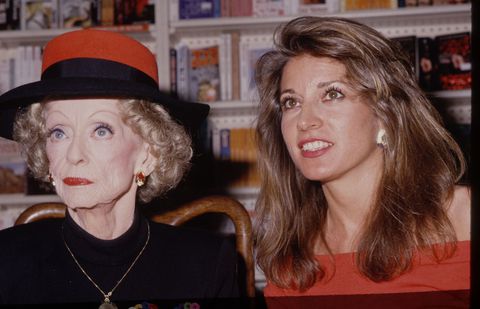
When Kathryn Sermak first came to work as Bette’s assistant in 1979, Kathryn was a young, carefree Californian who spelled her name the classic way – Catherine – and had just newly spelled out a dream of one day living in France. Bette was in her 70’s, still working and very much set in her ways. Kathryn thought she was taking a simple summer job that would enable her to fund her way to France – not even really aware of who Bette Davis actually was. In turn, Bette thought she was getting a competent, sophisticated assistant in Kathryn whom would be both professional and perfunctory. Both were in for a very big surprise.

In the early, uncertain days, Kathryn didn’t expect to eventually count Bette as one of her best friends and Bette absolutely never entertained the idea that Kathryn would become like a daughter to her. At first, everything was wrong for both women. On Bette’s side, Kathryn was not enough – she wasn’t cultured, she wasn’t able to anticipate needs, she wasn’t sophisticated, nor groomed for the level of lifestyle that Bette had grown into. On Kathryn’s side Bette was too much… too demanding, too overbearing and too controlling. Both thought they would never last the first week together.

The turn in their relationship from bad to better came down to one simple little thing – an egg. Bette’s breakfast most always consisted of a three-minute egg. The proper cooking of it was her litmus test as to the value of any good assistant’s worth. There’s not much to cooking a three-minute egg. It involves a pan of boiling water, an egg still in its shell and three minutes of simmering.   But Bette added a twist to this simple test. How do you cook a three-minute egg in a hotel room with no stove, no pots and pans and no kitchen? Perplexed, Kathryn had no idea until Bette motioned to the in-room coffee pot. Then hot water was brewed. The egg was placed in the glass coffee carafe and the time was monitored on a wristwatch for 3 minutes exactly. In this small test of skill, it wasn’t that Kathryn failed to quickly and cleverly assess the options of impromptu cooking in a kitchenless room, but instead, it was the trainability of her actions that caught Bette’s attention.

That was the beauty of their relationship and the bud that ultimately bonded them together. The fact that Kathryn was young, fresh and naive while Bette was experienced, opinionated and worldly proved a combination of character traits that formed a tight friendship that lasted the rest of Bette’s life. It wasn’t always easy for these two women learning about life and each other day by day, but by the end the experience was invaluable.

There were outlandish moments, like when Bette insisted Kathryn change the spelling of her name from Catherine to Kathryn so that she would be more memorable (which she did!). There were all the lessons Kathryn had to endure… etiquette, elocution, table manners,  how to walk properly, how to dress effectively, how to eat with decorum and how to hold court at a table full of strangers.

There were awkward moments, when Bette’s insistence on how to appropriately handle certain social situations was so outdated, that Kathryn would bear the brunt of the embarrassment.   This was especially apparent when Bette insisted on dressing Kathryn for a formal dance in Washington DC complete with fur coat, gloves, a designer dress, expensive jewelry and dance lessons only for Kathryn to encounter a room full of denim-clad twenty-somethings casually hanging out in a dance hall.

There were the vulnerable moments when Bette crumpled up in the face of public humiliation as her daughter wrote an unflattering tell-all book, or when Bette threw off her wig in the car one day and embarked on a temper tantrum that was heartbreakingly child-like.  There was oodles of advice about men and relationships and sticking up for oneself in the face of adversity. And there were the laughs and the conversations and the sweet letters that Bette would write to Kathryn expressing all the appreciation she felt for her darling assistant and her close friend. There were silent treatments and long work days, elegant cocktail hours and thoughtful gifts, tears and tenacity, laughter and luxury. There was life, with all its good and all its bad.

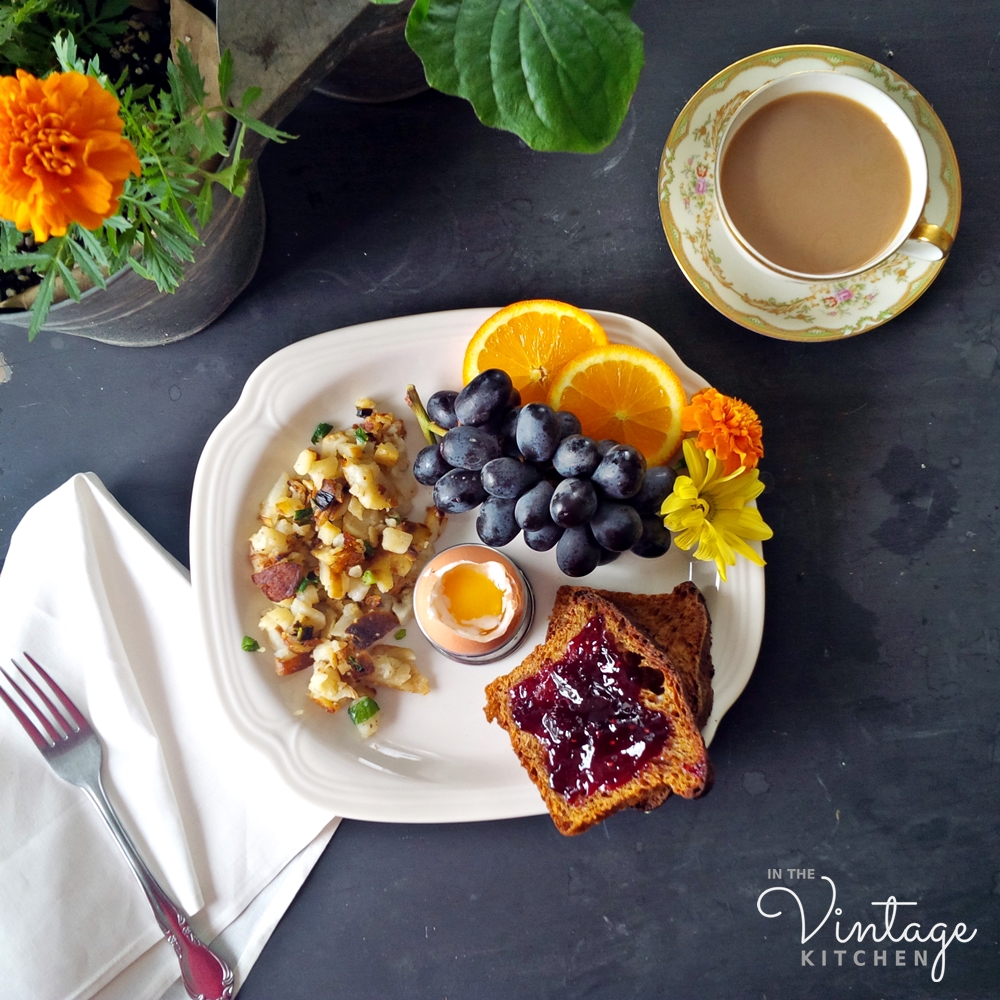
And there were eggs – lots of eggs. Bette and Kathryn traveled the world together and ate at many fine restaurants, but the food Bette would choose to make for herself or her family on days off was simple fare that harkened back to her New England roots. Homemade burgers, cucumber salad, cornish game hen, wine spritzers, clam bakes, fresh berries with cold cream… those are the foods that she liked to make. For this post, our breakfast menu inspired by Bette Davis includes the following:

A Bette Davis inspired breakfast!

It’s a simple menu symbolizing all that was Bette Davis – sweet, salty, fresh, traditional, colorful, warm, cool and classic. It takes just a few minutes to make and is so easy it doesn’t even require detailed instruction. Simply boil an egg for 3 minutes.  Slice some homemade bread and slather it with jam.  Bake a potato in the oven for an hour and then finely chop it up with some scallions and salt and pepper and add the mix to a pan with some olive oil and let it cook until it turns brown and crusty. Adorn the plate with fresh fruit. Tah-dah! Breakfast, Bette Davis style, is ready!

Kathryn would be the first person to tell you that life with Bette was extraordinary for her last ten years. That the talented movie star was never far from the actual woman. That there was a glamorous side to her, a practical side, a petulant side and a vulnerable side that made her interesting and unique and ultimately endearing. That she was far from perfect but perfectly real.

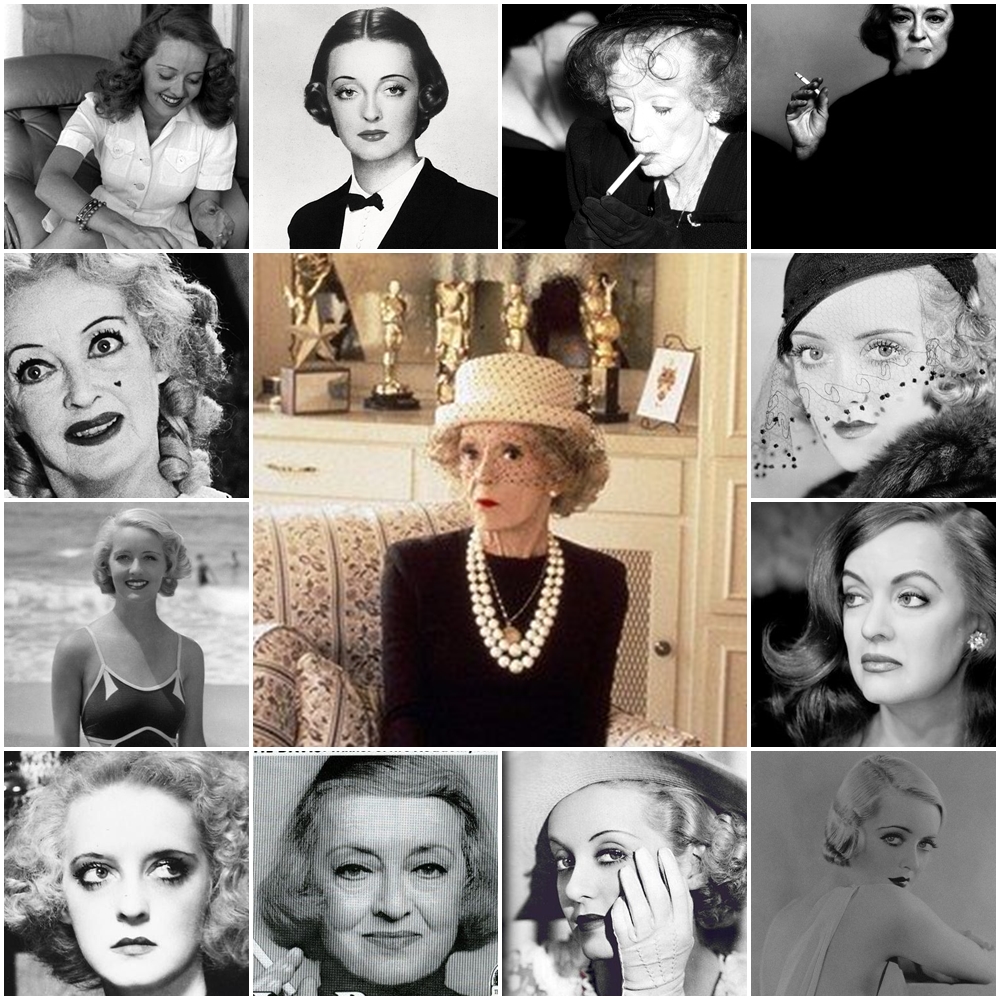
“That’s me: an old kazoo with some sparklers, ” Bette once said.

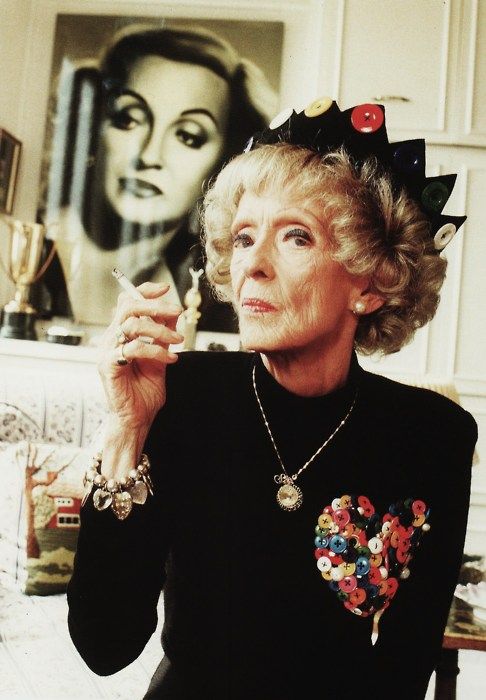
The many faces of Bette Davis throughout her 55-year career.

Cheers to Bette for tackling life head-on,  with grace and style and fortitude and being 100% unique about the whole affair until the very end. Cheers to Kathryn to giving us a very real look into the life of real woman and cheers to three-minute eggs – a new breakfast favorite here in the Vintage Kitchen!

This post is part of a blogathon hosted by In the Good Old Days of Classic Hollywood featuring the life and film Career of Bette Davis. Read more about this incredible woman and her work in a variety of posts contributed by a dozen different film bloggers here. 

Find the vintage cookbooks that contributed recipes to this post in the shop here.

Find the recipe for homemade brown bread from a previous post here.

Find out more about Kathryn Sermak and her book, Miss D & Me here.

The City of Lighters and Other Paris Fun Facts

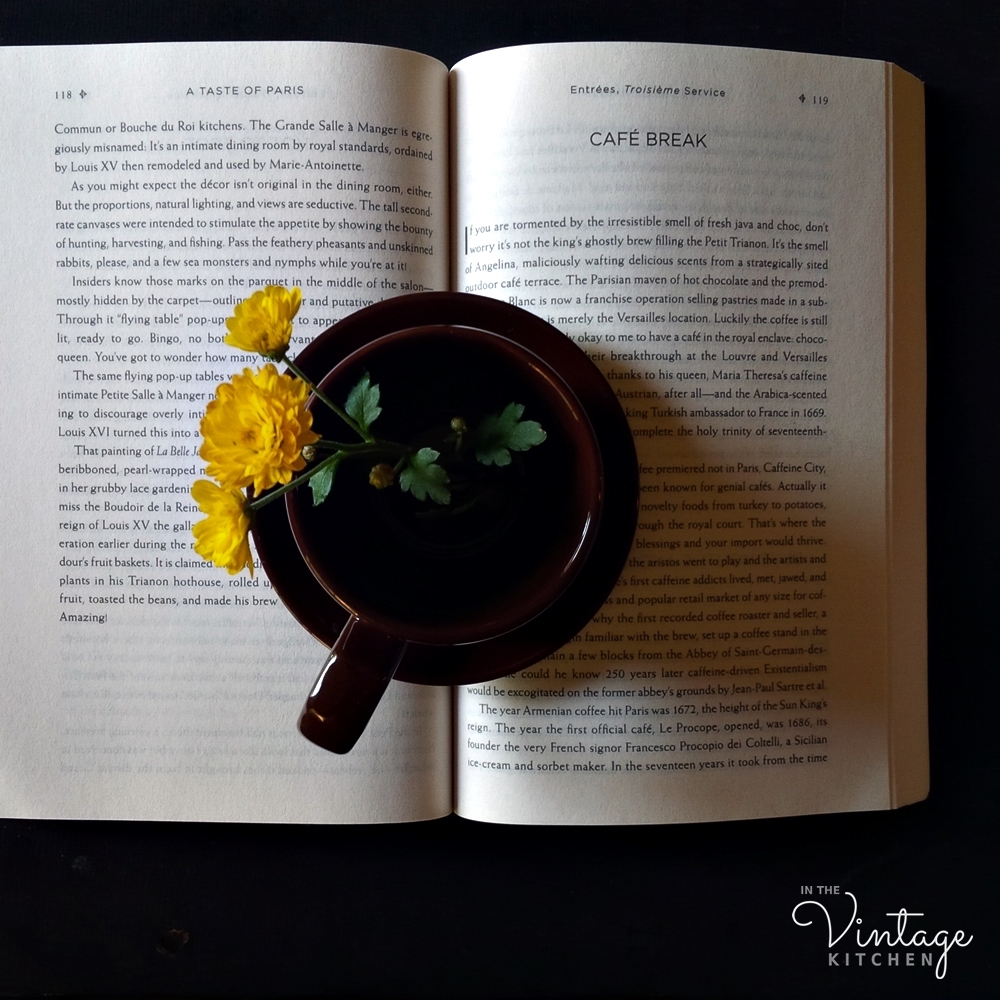
Everyone knows that French food is one of the most well-crafted and esteemed cuisines in the world, but not many people know why or how it came to be. In David Downie’s new book, A Taste of Paris, he dives into the history behind the food with a researcher’s wild abandon for discovery and a humourist’s eye for fun.

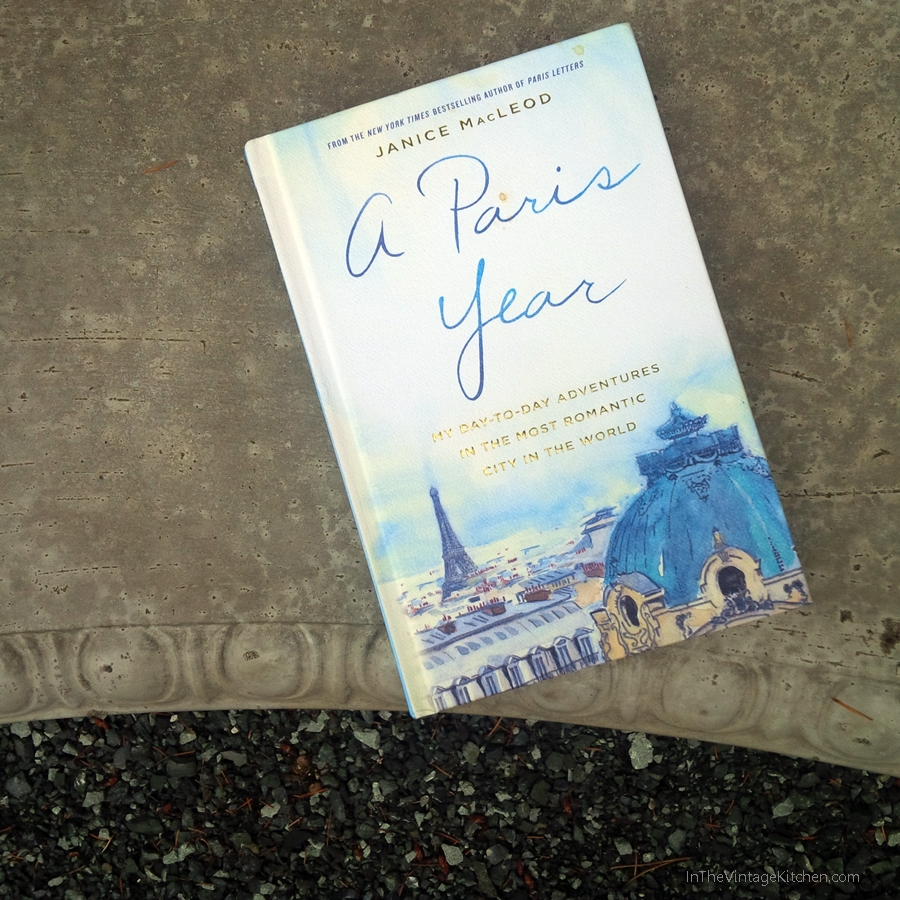
Last time we were reading about the City of Light here on the blog, we were exploring it through the paintings and photographs of writer Janice MacLeod in her book, A Paris Year.

Janice and her Paris Year!

This time around, we are deep in the archive vaults of Parisian history alongside author David Downie as he takes us on an epicurean tour of the food that made France famous. Magically, in just 280 pages, David manages to condense centuries worth of feasting into a tidy timeline that begins in 53 B.C. and ends in present day.

“What is thrilling at least to me,” David declares in the starter portion of the book, “is to speculate on how in modified and sometimes-hard-to-recognize forms many foods and food-related habits have survived the ravages of time, the invasions and massacres and floods and fires, the plagues and changes in religion or political and economic systems, and live on in Paris today.”

It is with that keen interest that David dissects how, when, where and why the French have cooked, created, dined and dallied their way to the top of the menu board. Along the way, we learn about colorful characters like…

Queen Caterina de Medici – wife of King Henry II (1519-1589)

Queen Caterina, wife of King Henri II who chewed tobacco leaves to relieve her headaches which started French women’s universal love affair with nicotine.

We also learn about the histories behind an assortment of interesting neighborhoods, buildings, and restaurants that all contributed to the food scene both ancient and modern…

Clockwise from top left: Le Marais historic district, Palace de Versailles, Hotel de Cluny dating to the 1300’s, Verjus restaurant

…and we learn fun facts galore on a myriad of kitchen topics like these…

  1. Butter knives were invented so that people couldn’t pick their teeth at table.
  2. During the Middle Ages, long before the invention of plates,  bread was baked in cutting board shapes and used to hold piles of food for individual eaters. Once the food on top of the bread was consumed, the bread was given to peasants or animals to eat.
  3. Artichokes are considered an aphrodisiac, especially in Italy.
  4. One in three French people smoke (hence the city of lighters!)
  5. In-home cooking spaces in most French houses didn’t exist until the late 18th century.
  6. Below is one of President Obama’s favorite restaurants near the Eiffel Tower…

La Fontaine De Mars

Paris is a city continuously simmering in centuries of tradition. A delightfully unique aspect of David’s book is that he shifts back and forth between present day and the past, so you absorb plenty of history along the way but you also directly understand the correlation between what’s changed and what hasn’t.

While you don’t need to be a European history scholar or a devout foodie in order to tuck into this culinary aspect of the city, it helps if you have a special interest in old world events and a basic understanding of the fine-tuned culture of the Parisian lifestyle because David presents so much interesting, thoughtful information.  You’ll want to marinate in his chapters for a bit instead of rushing through them in one quick read. I was lucky enough to receive this advance copy of the book several months ago. One of the fun aspects of reading it over the summer was keeping Pinterest close-by so that I could look up the people and places of Paris while I was learning about them through David’s eyes.

With a wonderfully engaging voice and an ability to colorfully (and often times humorously) describe a building or a banquet, David treks you around town with insight and intimation. One of my favorite lines in the book came forty pages in when he writes about the 3rd-century Roman bath complex at Cluny as “a charming jumble that looks like a mouthful of broken molars repaired with elaborate fretwork crowns.” Admittedly, I had no idea what the Cluny bath house looked like, but thanks to David’s description I could get a pretty good impression of it.

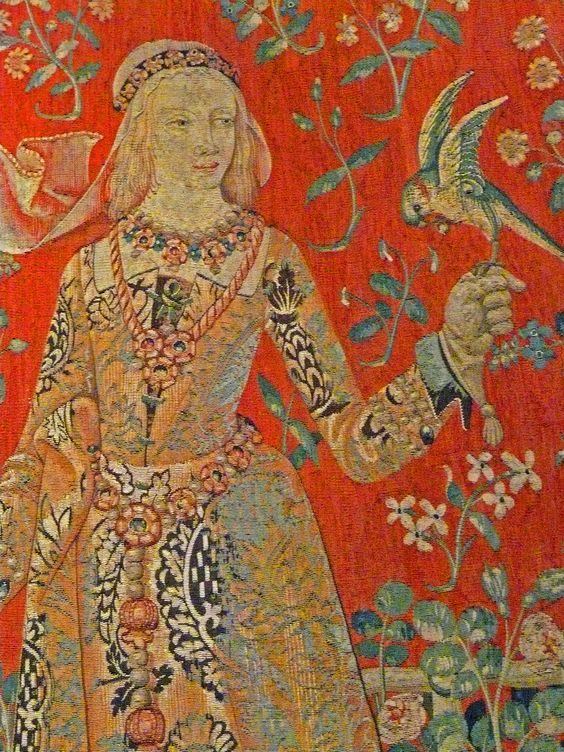
Other intriguing sections in the book included the eating habits of Versailles’ residents, the symbolic imagery found in The Lady and the Unicorn tapestry,  and the gregarious life surrounding French food writer, Maurice Edmond Sailland a.k.a Curnonsky (1872-1956).

A snippet from the Taste panel of the Lady and the Unicorn tapestry created in 1500.

But not everything is champagne and caviar and easily expressed. Amidst all of these fascinating history lessons, David also dives into his own food experience which began in Paris in the 1970’s. With his modern eyes, he retraces his food steps taken four decades ago to see how, and if, the landscape he once personally adored still holds up to the memories he stored. He also talks about the future of French food among the booming explosion of other newly exalted food scenes in other cities. Can Paris hold up to the competition?

Described best as  part guidebook, part history class and part personal memoir, A Taste of Paris pushes you to make notes, take notes, look for more, explore more… which brought me to quickly wish for two things that the book did not have – detailed maps of the areas where David traveled and an index for quick reference.  Then I discovered, as I finished the last page that David does offer both maps and an index of sorts. He and his wife offer walking tours of Paris through his website where they take you on all sorts of off-the-beaten-path adventures. That’s ten times better than a paper map and a list of page numbers! You get the guy (and the guide) in person, all to your yourself!

While we often don’t even think about the fact that millions of people have experienced both good and terrible situations treading upon the very ground we also walk upon so nonchalantly every single day,  David reminds us that the veins of history are deeply wound up in the practices and procedures of our modern lives. That flaky croissant, that steaming cup of hot chocolate, that celebratory pop of champagne were all born a long time ago yet they continue to intrinsically impact us as we move towards the future. In detailing the anatomy of a cuisine, David dissected a city whose culture has influenced a collective conscious of eaters around the world and that is pretty remarkable.

Whether you get the chance to meet up with David in Paris and peruse the food scene together or you simply read about his city in your city, A Taste of Paris is as satisfying as falling in love with a new museum exhibit. It will broaden your point of view, make you think, ask questions, ponder your own country’s evolution of food practices and ultimately make you appreciate how far we have come, as a civilization, from the days of heaping breadboards and kitchen-less houses.

Cheers to David for peeling back the layers of French food culture in such an interesting way!

Find A Taste of Paris available here. Learn more about David and his other Paris based books here. And if you find yourself in the City of Light(ers) take David’s tour and watch the book unfold before your eyes.


Lovers Who Can’t Quit: In Paris

Was all this so wonderful because it was brief and stolen?

Henry Miller wrote that line in a letter to Anais Nin on August 6th, 1932.  Janice MacLeod wrote that same line in her Paris journal on February 24th just a few years back. Eight decades ago Henry was talking about his love affair with a woman. More recently Janice was talking about her love affair with a city. Both refer to a passion that would and could never be quelled.

Janice!

Two years ago we had the pleasure of interviewing Janice here on the blog about her plans following the publication of her New York Times bestselling book Paris Letters.  When we left off with Janice back in March 2015, she was embarking on a new chapter in her life having just left Paris for Canada with her husband Christophe and a carefree sense of wild adventure in hand.  Calgary was clearly a whole different kettle of fish to tackle than France and Janice just wasn’t quite sure how it was all going to unfold now that she had left her dream city for a new frontier.

Newly arrived… A Paris Year

Fast forward two years and life in Canada for Janice produced a baby (Amelie!) and a new book (A Paris Year!).  Like a lover you can’t quit, Janice’s experiences in France ceased to be forgotten in her new surroundings.  The colors of the city, the  accordion lullabies, the memories of wine, cafes, neighborhood walks, market shopping and the speaking of a language she had almost mastered could never be set aside. Paris came to Canada in Janice’s suitcases, a secret house guest that absolutely refused to go home. Once an admirer always an admirer.

Paris Photography by Janice MacLeod

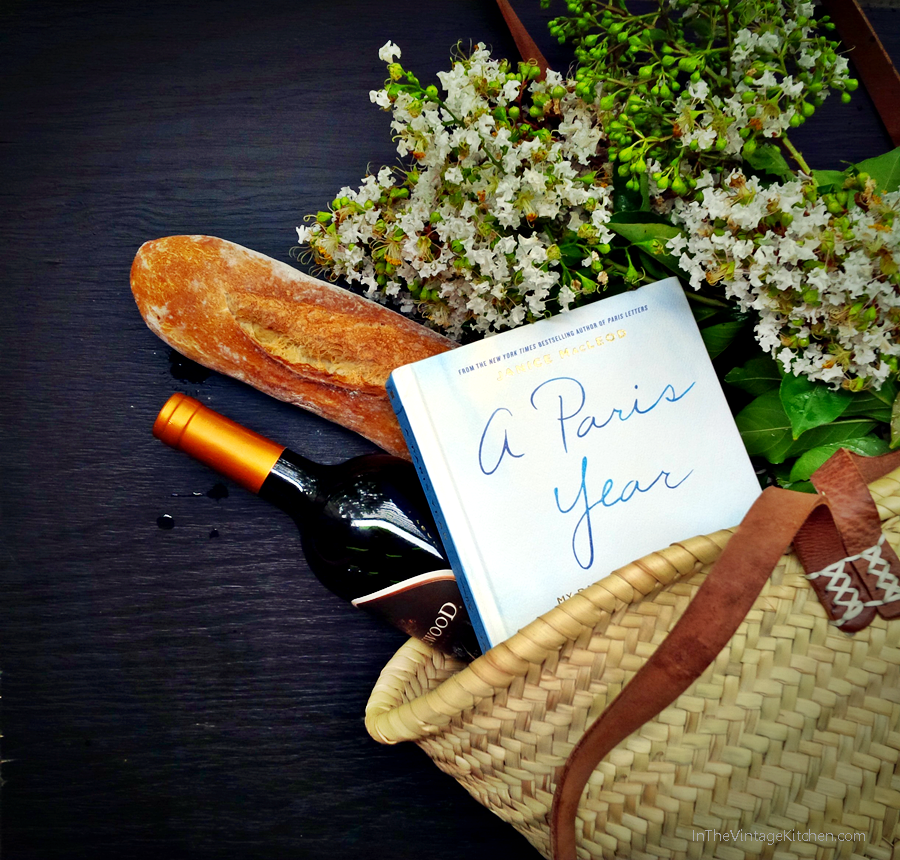
Lucky for us, Janice’s new book A Paris Year keeps the romance of her gorgeous adventure alive. Laid out like a day planner, A Paris Year tracks Janice’s whereabouts in the City of Light from January 1st to December 30th and includes her pretty paintings and feel-like-you-are-there photographs. Based on her actual journals kept while experiencing the city up-close and personal, Janice packs all sorts of interesting history, fun facts and traditions into the everyday observations that make up the charming lifestyle of French living.

Janice’s lively paintings of all things Parisian.

Part travel guide, part European history lesson, part art crawl and part early language primer, reading A Paris Year is as satisfying as hanging out with your best girl friend all afternoon. It’s interesting and vivacious and inspiring. There are funny moments like November 22nd when Janice truly thought she understood all the offerings on a French menu board only to realize it was written in English. There are sad moments (November 14th) which recognizes the anniversary of the 2015 Paris Attacks. And there are plenty of incredibly beautiful moments (February 2, March 4, May 11th, June 20th, practically the whole month of October, etc etc) that bring the heart of the city home to your doorstep.

There are new characters to meet like Antoine the Poet and Colin the ex-pat, both of whom offer intriguing little side stories that will leave you wondering and wanting.  And of course there all the famous French residents that you associate with the city – F.Scott & Zelda Fitzgerald, Madame Curie, Vincent Van Gogh, Colette, Edith Piaf, Gaston LeRoux, Sylvia Beach and the ever present star of the show, Ernest Hemingway. He weaves his way in and around Janice’s storytelling as she weaves her way in and around Paris, showing up every few pages in her thoughts and his haunts. The moveable feast still very much moving.

In Janice’s first book Paris Letters, she details step by step how she made the big leap from living an unfulfilling corporate life in California to living a creative life in Paris. That book was the story of an artist’s awakening to her true self. This book, A Paris Year is the full color party she threw to celebrate it. Paris Letters showed us how to make a big change. A Paris Year shows us how to enjoy it.

During some months in A Paris Year, Janice seeks out a specific color to photograph, as an hommage to Nichole Roberston’s book Paris in Color. During the month of May the shade in mind was green.

Janice’s story in both books has an interesting way of sticking around long after you read them. As a result of marinating in the visual artistry of A Paris Year I now walk around my own city looking at the sites before me with new eyes and a running dialogue on how I might best describe a building or a season, a person or a park.

Too pretty to end, the only thing I disliked about this book was that it actually had to end. I was super excited to receive an advance copy in the mail which I read just before leaving for Seattle and then re-read on the flight to Seattle and then once again when I returned back home. I loved it that much… three times over!  Like a daily devotional it offers the unique option of reading a page a day if you are looking for a quick shot of escapism, or you can read it cover to cover, as I did  or you can just pick up and read whatever page you want at random whenever the mood strikes. Janice made it so easy for us to experience her Paris.  Its a day planner and a day dream all wrapped up in one.

If you can’t afford the expense or the time to get to Paris personally this summer, don’t fret.  Spend a few hours with Janice in her book and you’ll feel like you’ve been there yourself. It may be a brief and stolen time, but as Henry Miller implies those are the most wonderful.

You can find Janice’s new book A Paris Year here. Her previous book, Paris Letters here and if you find yourself needing even more joie de vivre, subscribe to her Paris Letters mail service and receive a Parisian note from Janice via the postal service once a month.

The April 2016 edition of Paris Letters

Next time on the blog, we are tackling the city of Seattle and the search for Great-Grandma Mabel’s doughnut shop. Did we find it? Did we find it? Stay tuned!