Mark Your Calendars: Our Annual 40% Off Sale is Sunday, November 2nd!

Autumn 2025 comes to 1750 House in a blanket of color.

It’s hard to believe that our annual once-a-year shop sale is just two weeks away, especially since our last blog post left off with baking bread in the middle of a summer heatwave. And yet, now here are, firmly swaddled in a blanket of autumn leaves with the woodpeckers performing their yearly tap tap tapping on the shingles of 1750 House reminding us that seasonal celebrations are close at hand. Lots has happened between now and that day in July when the kind bread was rising as high as the humidity and the garden was growing right along with the shop stories.

The lemon balm… one of our star growers in the herb garden this year.

I’m very excited to catch up, especially when it comes to hashing out the happenings of the herb garden and the triumphs and tragedies it endured over our experimental summer. But before we get to all that, I wanted to give everyone a quick calendar reminder in this post about the shop sale since it’s coming up right around the bend.
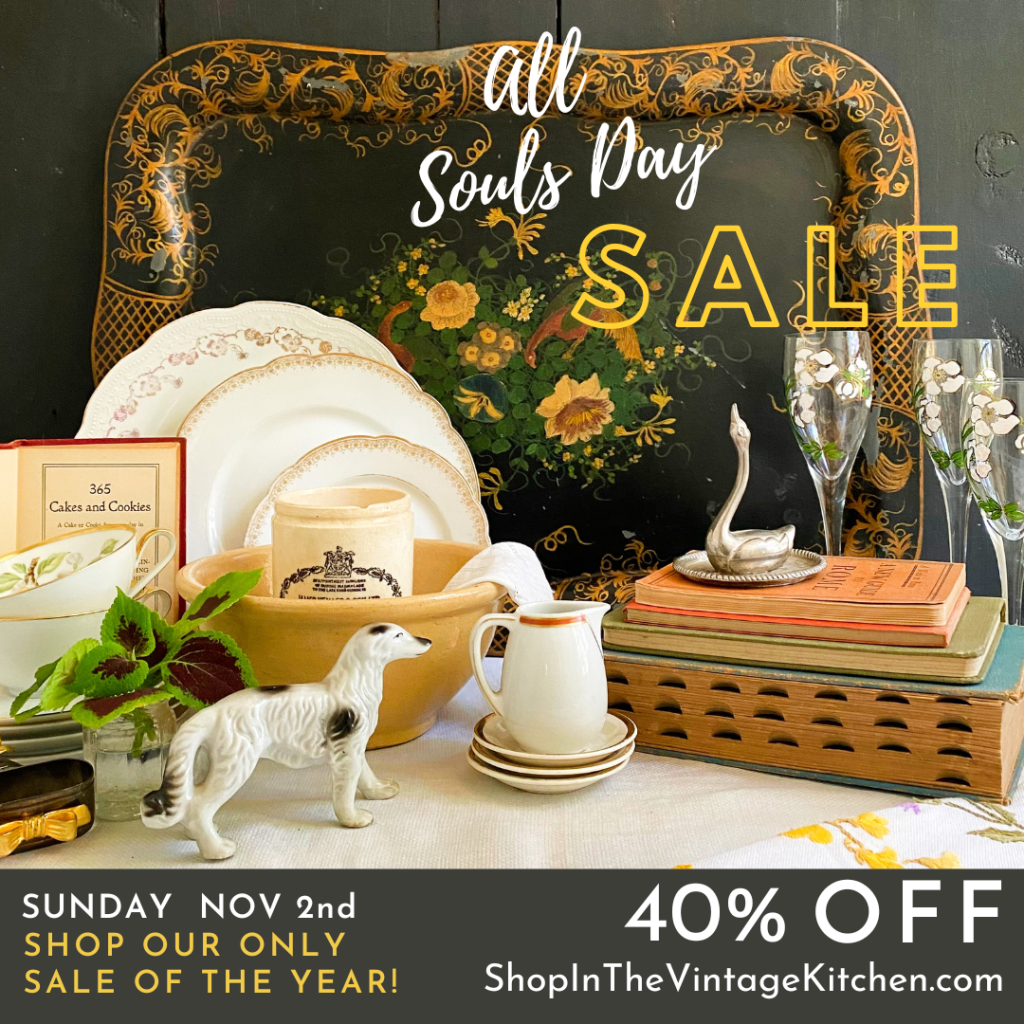
Two very exciting things are happening this year in regards to the sale. 2025 marks our 5th year of the sale, and it also happens to occur this year on the same day as daylight savings time, so you’ll be able to fall back and enjoy an extra hour of shopping should you so choose.

If you are a regular visitor to the shop, you’ll know that we adore a good floral and that the shop is forever covered in blooms no matter what the time of year. But when it comes to the change of seasons from summer to fall, the shop starts filling with heirlooms that embrace this cozy time of year by reflecting the colors in the landscape that help create autumn vibes in the kitchen and a beautiful feast for the Thanksgiving table. Whether its cookbooks, dishware, or decorative pieces, this year you’ll find some unique heirlooms that not only speak of history but of harvest time too…

If you are new to the All Souls Day sale, every year, November 2nd marks 40% off everything in the Vintage Kitchen shop for one day only. We call it the All Souls Day sale, not for the Catholic holiday that it shares the day with, but for the heirloom history that it encompasses.

All Souls Day is the only communal holiday in the calendar year that celebrates and remembers all deceased ancestors, and to us, that seems like the perfect time to celebrate vintage and antique heirlooms too. None of our shop items would be here today if they had not traveled through time, cherished and cared for in the hands of the people before us.

It’s up to the ITVK team to curate the shop, but the heirlooms do all of the storytelling. Each year, these heirlooms share new insights into the past that help shed light on things in the present. Since no two items in the shop are ever exactly alike, no sale from year to year is ever exactly the same either.

Just like the majority of one-of-a-kind heirlooms that can be found In The Vintage Kitchen, unique stories offer glimpses into culinary history and garden life that occurred decades ago or even centuries earlier. Hidden histories are everywhere and they tend to show up in ways that consistently surprise and delight. Just when you think a napkin is a napkin, a plate is a plate, a book is a book, a detail will jump out from in its history and take us on a marvelous trip through time to understand and explore other places and faces. These are some of the unique heirlooms you’ll find in this year’s sale…

A Rare Chesapeake & Ohio Railroad Luncheon Plate c. 1923
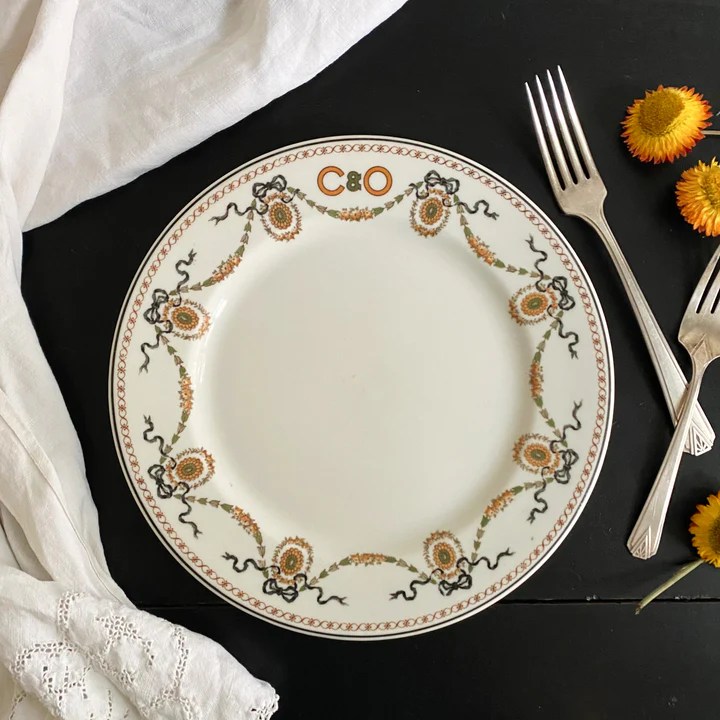
With its roots extending all the way back to canal transportation in the 1790s, the C&O Railroad has a long and winding history through the American landscape. Throughout most of its life, C&O trains hauled coal, agriculture, retail products, and travelers between Virginia, the Midwest, the Northeast, and parts of Canada up until the 1980s. In the 1920s, the decade in which this luncheon plate was made, the C & O trains looked like this…

Dining service aboard C&O started in 1899 and was only offered on their luxury lines. Signature menu items included shirred eggs, Saratoga chips, broiled sea fish, baked apples and cream, Spring lamb chops, and French toast with marmalade. 

A Signed First Edition of Alice’s Restaurant Cookbook circa 1969

Not every cookbook comes with it’s own theme song, but when Alice May Brock (1941-2024) befriended a young Arlo Guthrie, the whimsical world Alice lived in was all the inspiration Arlo needed to write a hit song called Alice’s Restaurant Massacree, which in turn inspired a cult classic film of the same title. The cookbook came after the song and the movie, but shares the recipes that made Alice a local legend in New England as the proprietor of three restaurants and a catering company. A free-spirit, an artist, and a lover of food and friends, this cookbook features some of the favorites served in her restaurants and at her famous home-hosted dinner parties. It also includes still photos from the movie, Alice’s illustrations, and photos of Arlo and their friends who made a good time out of every meal. Adding an extra layer of the joie-de-vivre she embodied, this particular book is also signed by Alice.

A Collection of Original Floral Feed & Flour Sacks circa 1930s-1940s

You can’t really get any closer to touching real-life history than these floral feed and flour sacks. Stitched into traditional sack shape, similar to a pillowcase, these bound together fabrics were once the commercial packaging that held a variety of pantry staples, including flour, sugar and grain. Made by the manufacturing industry in response to the financial burdens placed upon American families during the Great Depression, this cotton sack packaging was made solely for the purpose of recycling.
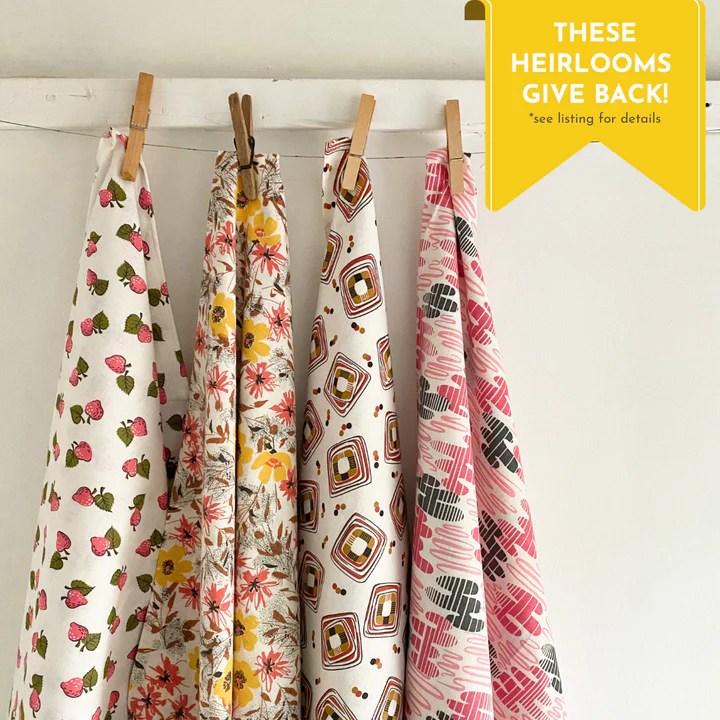
Knowing how thrifty and creative the American seamstress was, and knowing how tight household budgets were during the Great Depression and World War II years, grain and food manufacturers packaged their products in these floral cloths specifically so that women could repurpose them by turning the fabric into clothing, household linens, toys, rugs, curtains etc. It was a winning collaboration that not only responded to and eased economic stress, but also showed unwavering care, support and appreciation for customers during one of the most challenging times in American history. This batch in the shop came from a private collector and was so well-cared for across ninety years that each piece of fabric looks practically brand-new. Two of the sacks even retained traces of grain remnants hinting at the original products contained within.
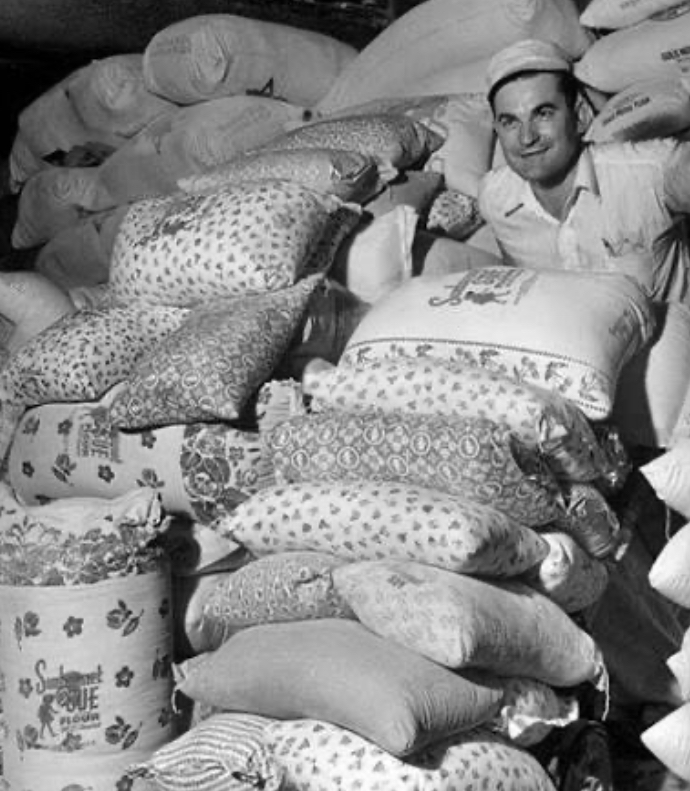
Cotton flour sacks full of flour featured in a 1940s photograph published in LIFE magazine

An Antique Basin Bowl & Wash Pitcher That Changed the American Plumbing Industry

It’s hard to imagine life without modern conveniences like indoor plumbing and bathrooms, but back in the 18th and 19th centuries, this wash basin and pitcher was your gateway to cleanliness, both literally and figurately. Made by Maddock’s Lamberton Works in Trenton, New Jersey, between 1888-1902, the British-born Maddock family were the first immigrants to realize that America needed their own sanitaryware pottery manufacturer. Up until they opened up shop, all basin bowls, wash pitchers, slop jars, chamber pots and grooming sets were imported from England. The Maddocks changed that by producing American chamber sets using local clays, and in doing so, revolutionized the plumbing industry in the process. Recognized as pioneers in the world of sanitary toiletry products, the Maddock family patented several plumbing innovations before they eventually sold the pottery in 1929 to American Radiator & Sanitary Corporation, who would go on to create our country’s indoor heating and plumbing infrastructure including radiators, sinks, bathtubs, and toilets for households across the country.  

An Intimate Glimpse into the Life of a Literary Hostess
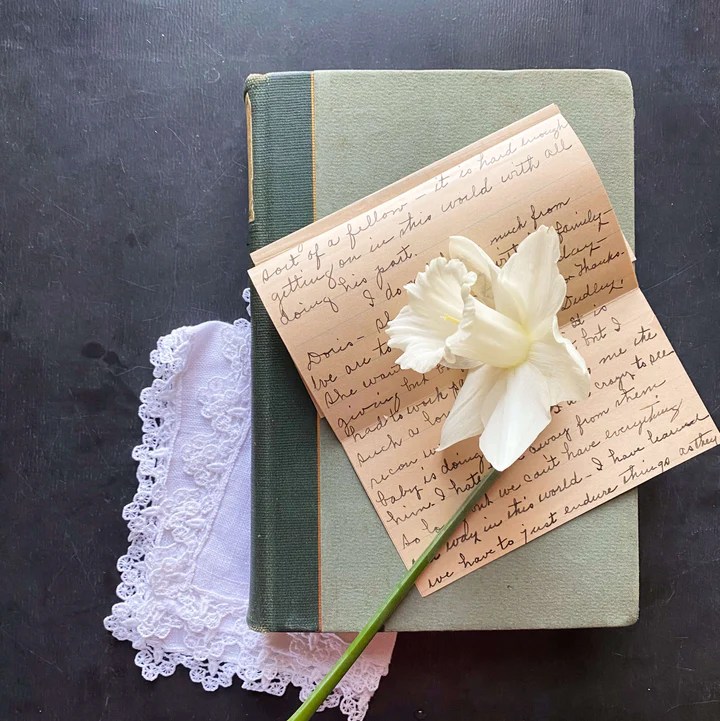
Guests at the Boston literary salon of Mr. James & Annie Fields were a veritable who’s who of prominent 19th-century writers. Mark Twain, Charles Dickens, Sarah Orne Jewett, Ralph Waldo Emerson, Henry Wadsworth Longfellow, Bret Harte, Henry James, Bronson Alcott, Nathaniel Hawthorne and Harriet Beecher Stowe, to name a few among were just some of the visitors that spent time in their home along with other notable painters, actors, musicians, and political activists. 

In addition to being a writer, activist and philanthropist herself, as well as the wife of distinguished Boston publisher James Fields, Annie Adams Fields (1834-1915) was also a charming, kind-hearted hostess and keen observer of conversation amongst her literary friends. Never interested in self-promotion, scandal or gossip, she regularly recorded bits and pieces of conversations among her friends in diaries that she kept throughout her life. Sketches of dialogue, character traits, pressing matters of the day, viewpoints on life and literature all freshly detailed the lives of extraordinary figures, painting them as humble, human, fallible beings tackling life, their passions and their creativity as anyone might. 

Before Annie passed away in 1915, she granted noted biographer Mark Antony DeWolfe Howe Jr. access to all her diaries in his pursuit to record the friendships enjoyed between the Fields and their artistic community. She had one caveat, though, in sharing her books. That Mark’s book not be about her but about the extraordinary friends whom she knew and loved so well. What resulted is this book, Memories of A Hostess: A Chronicle of Eminent Friendships, published in 1922.

Highlighting correspondence, diary entries, cultural events, and touchpoints from history for context, Mark Antony DeWolfe Howe pieced together an intimate glimpse into the lives of the 20th century’s greatest thinkers and artistic minds, courtesy of Annie and James’ record-keeping collection.

Annie’s husband, James Fields

Uncovering a portrait to attach to each heirloom’s story is one of our ultimate joys. In this year’s sale, you’ll also meet many new faces. This year, we shared stories of Attia, Alfredo, Pamela, Freddie, Doris, John, Judy, Miroslav, and Marjorie along with her daughters, Kate and Susan…
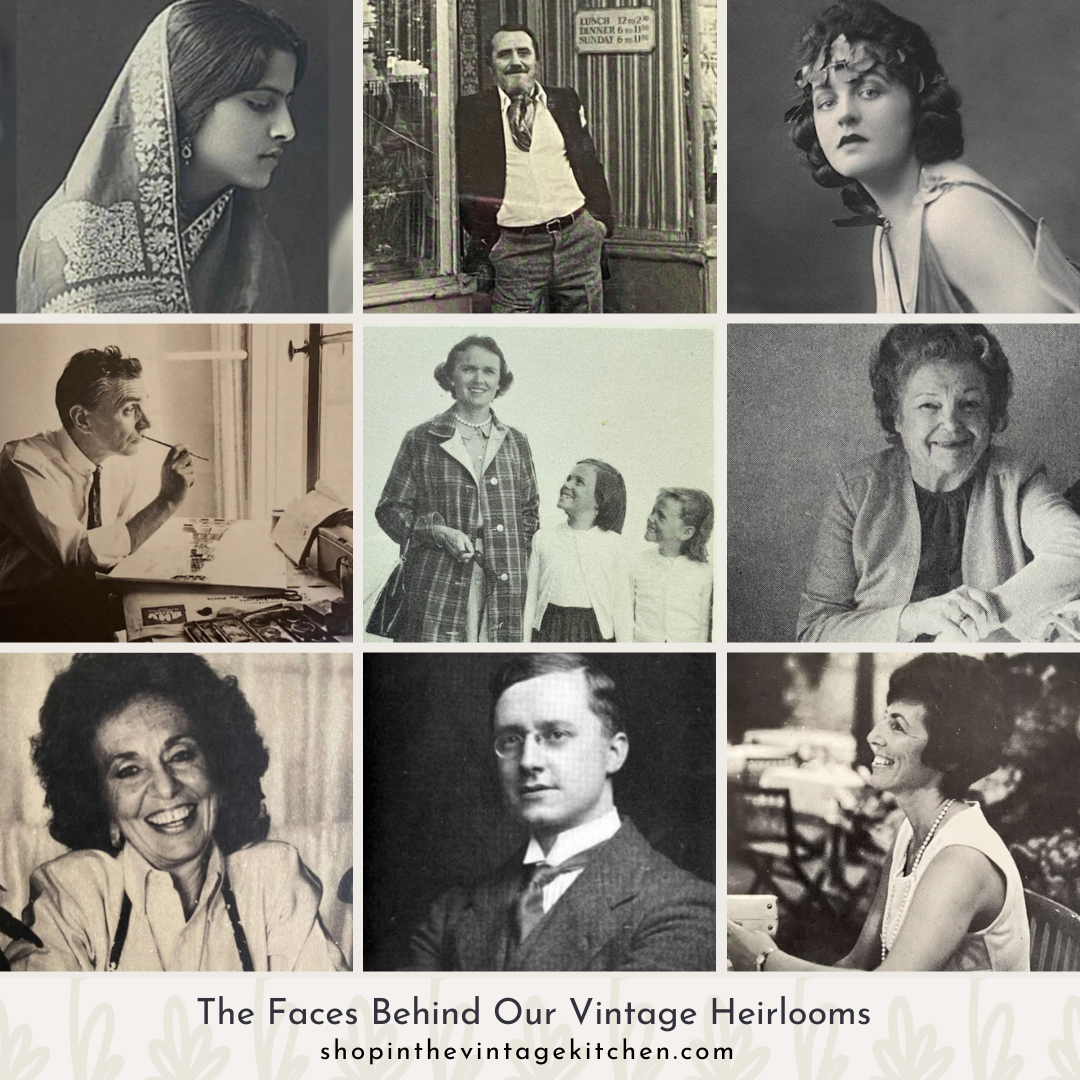
Clockwise from top left: Attia Hosain, Alfredo Viazzi, Pamela Lyndon Travers, Freddie Bailey, Doris Muscatine, John Ramsbottom, Judy Gethers, Miroslavo Sasek, Marjorie Winslow and daughters.

Each brought many new perspectives of history to life. Attia Hosain (1913-1998) was a writer, actor, cook, broadcast journalist and intellectual focusing on stories of India and British post-colonialism. Freddie Bailey (1904-1992) was famous in Mississippi for her hot pepper jelly along with other regional favorites that made her kitchen the epicenter of Southern food, flavor and hospitality. In the 1930s, Pamela Lyndon Travers (1899-1996) introduced the world to Mary Poppins, who still remains 90 years later, the globe’s most well-known and most beloved nanny. Alfredo Viazzi (1921-1987) was the proud owner of a popular Greenwich Village restaurant known for its convivial atmosphere, great food and reasonable prices. Judy, Doris, Marjorie and Miroslav shared their artistic talents via saucepan and sketchbook. British mycologist John Ramsbottom (1885-1974) taught gardening enthusiasts all about the fascinating world of fungi.

This year also introduced personal stories shared by readers and their families. One of our favorites is that of Beverly, whose collection of handwritten recipes is not just a set of random cards in a box. They are the story of her. Of one woman’s culinary journey as she grew from a young, inexperienced midwestern bride, who barely knew how to boil an egg, into a confident, seasoned California cook and recipe collector over the course of her entire adult life.

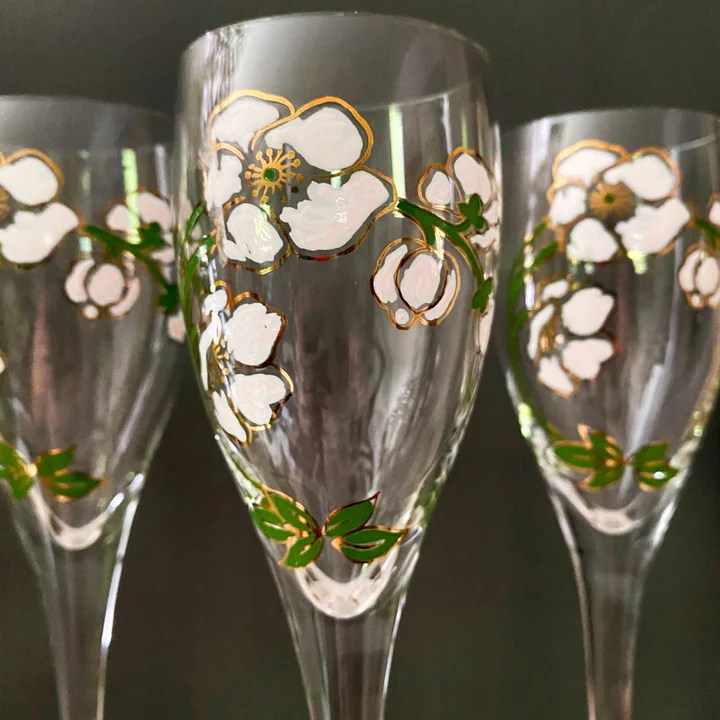
Familiar favorites can be spotted in the shop sale too, bringing with them their marvelous heritage stories that are worth retelling again and again. This stemware is the story of champagne, of “drinking the stars,” of a husband and wife couple, Pierre Perrier and Rose Jouet, who created the first true champagne made from the Chardonnay grapes in the Champagne region of France in the early 1800s. Together, with Rose in the vineyard and Pierre in the sales office, they launched Perrier-Jouet Champagne in 1814, a brand that still continues to enchant wine enthusiasts around the world today.
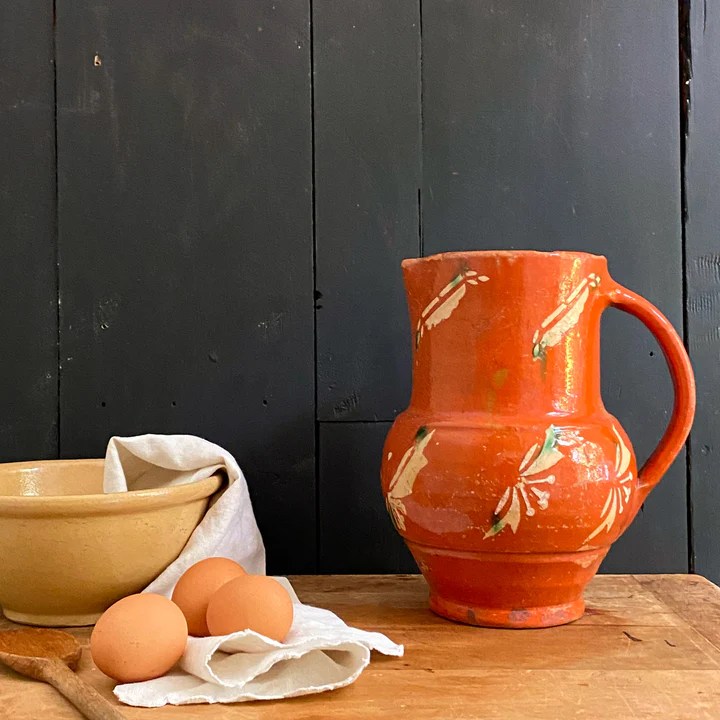
Every year we also like to spotlight the oldest antique in the sale. In this year’s case, it’s this French pottery water pitcher that dates to the 1850s…
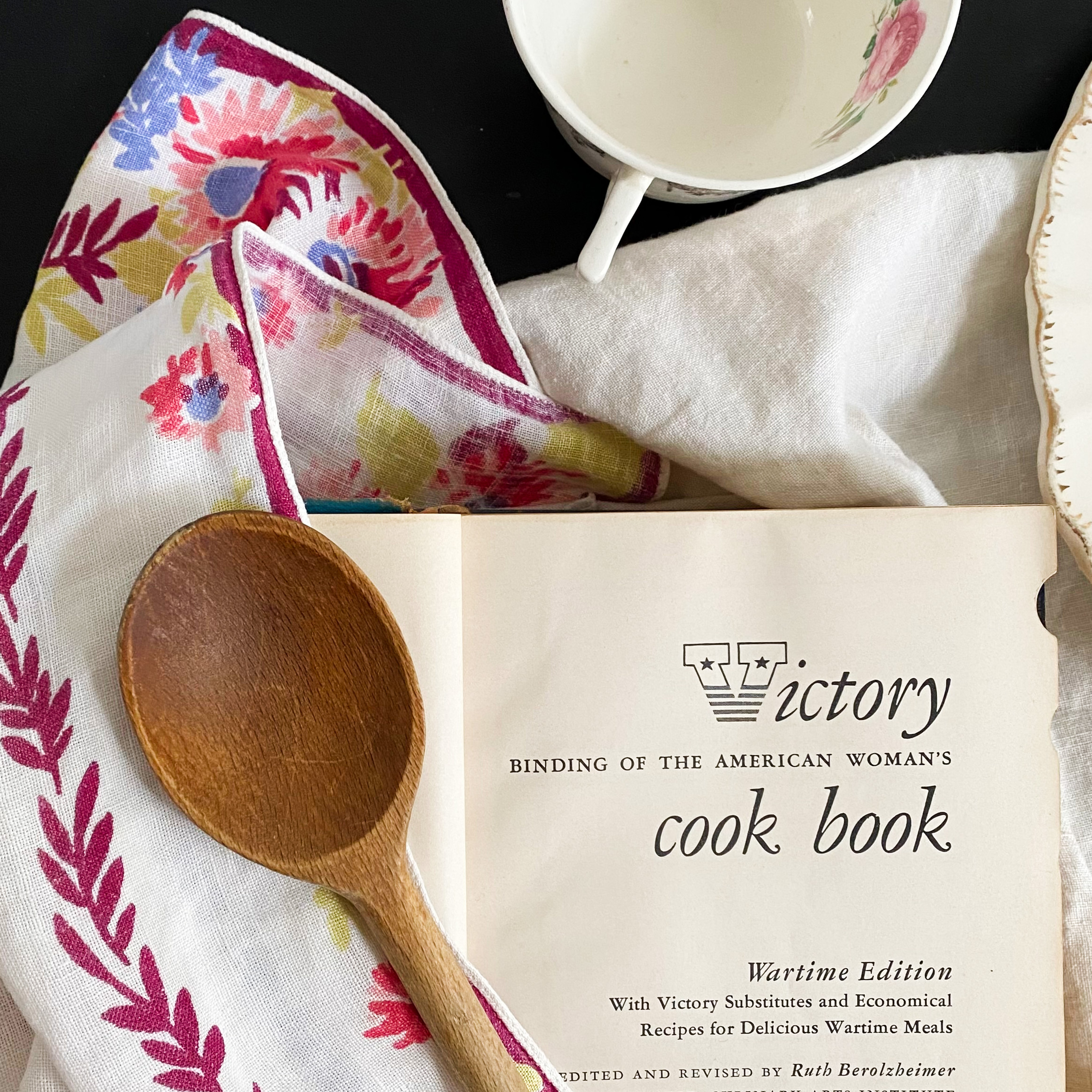
More history floats. More stories emerge. In the shop, a cookbook is never just a cookbook. It’s a tactile understanding of what WWII cooking really looked like for women in the 1940s. Its a story of how they had to portray strength, creativity, courage, ingenuity and optimism at every meal, every day while creating delicious, nutritious and interesting meals on limited war rations, tight budgets, and victory garden harvests.
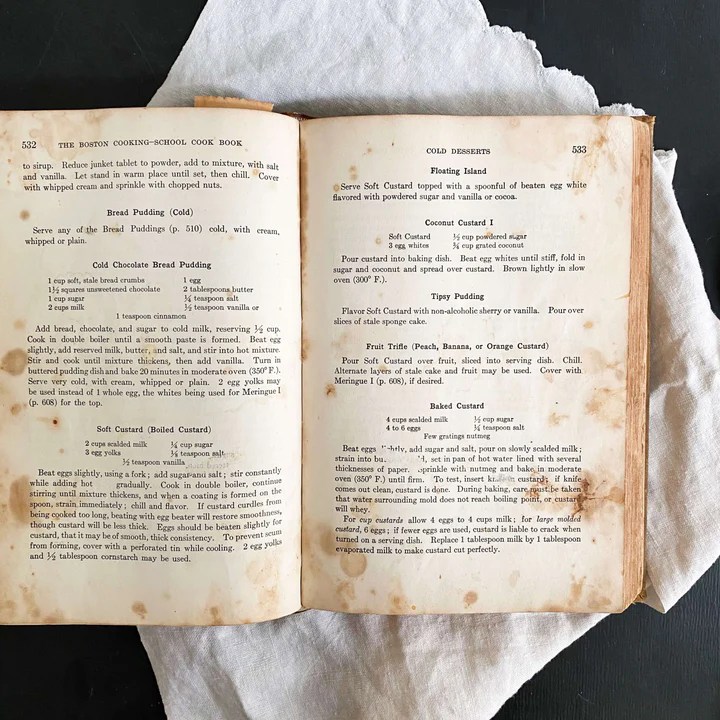
Cookbooks in the shop tell intimate stories not only of their authors but also their owners too. This 1931 edition of the Boston Cooking School Cook Book showcases the enduring legacy of Fannie Farmer (1857-1915), who not only raised generations of home cooks but shared recipes that still inform regional New England cuisine today. It also highlights, through a myriad of cooking splatters and stains, the adventures of a previous cook (or cooks) who cherished the recipes so much their culinary endeavors have turned into an artful aesthetic.
Also every year, there’s one stand out cook, who warrants days or sometimes even weeks of research thanks to a fascinating life lived. This year, it was Lois Burpee (1912-1984)…

who married into the Burpee Seed Company family in the 1930s and managed to carve out an incredible cooking, gardening, and philanthropic career that lasted her entire lifetime.

Other equally interesting cookbooks in the shop sale this year include two rare compendiums of culinary curiosity that offer suggestions on what to make and what to bake every day for a year…

Decorative pieces in this year’s sale highlight the handmade arts. An antique tole tray, a vintage hand-carved wooden swan, a vintage print of a tulip painting dating all the way back to 1827, a hand-embroidered linen…

These are just a few examples of the people, places, and stories that have found their way into the Vintage Kitchen shop in 2025. I hope at this year’s sale you discover an heirloom that captivates your attention, that steals your heart away to another time or another country, and that inspires new creativity from history’s forgotten muses.
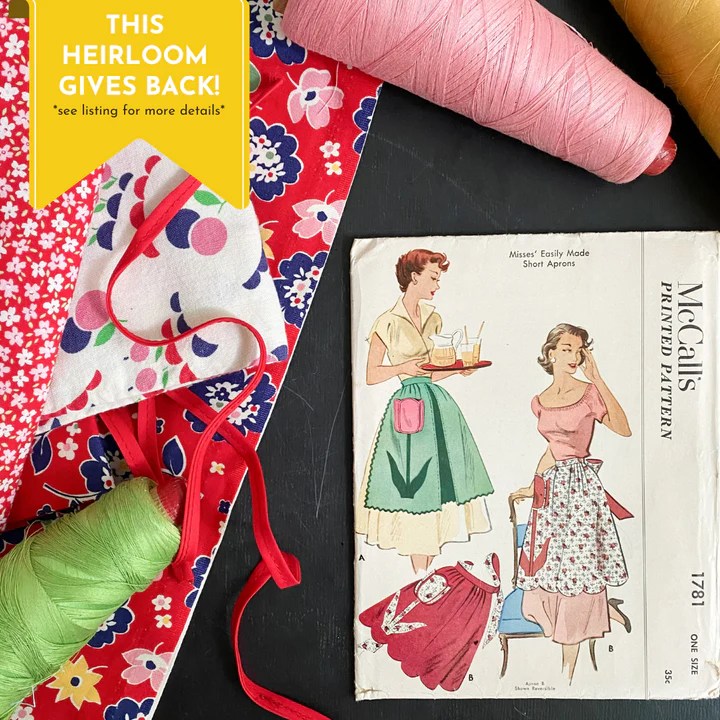
At this year’s sale, just like last year’s, you’ll notice that some heirlooms sport a festive yellow banner in their listing photos. Those banners signify a donation program that we launched in 2024. Any heirloom that you see in the shop that says This Heirloom Gives Back qualifies for a 20% donation to Feeding America, a nationwide non-profit network of food banks, food pantries and local meal programs dedicated to providing nutritious meals to food-insecure communities around the United States. Not all heirlooms in the shop qualify for this program, so be sure to look for the yellow banners if you would like to participate.

The sale begins at 12:00am (EST) on Sunday, November 2nd, 2025 and runs through 11:59pm that same night. Discounts are automatically tallied upon checkout, so there is no need to enter any coupon codes or discount phrases to receive 40% off.

New heirlooms continue to be added to the shop daily, so stop by for fresh vintage and antique finds leading all the way up to the sale. And, as always, if you are looking for something that we no longer have in stock, please send us a message. We’ll be happy to add your name and needs to our waitlist.

Whether you are interested in experimenting with a new cuisine, looking for a new favorite vintage dish pattern, or starting a collection that recalls memories of a happy time from your past, I hope you find something in the shop that calls to your heart and adds extra delight to your kitchen.

Cheers to all the old souls that inspire the shop each and every day. Cheers to all the heirlooms that they have been passed on to us to love and cherish just as much. And cheers to the kitchen for being the one spot in the house where everyone is always welcome.

The Recommendeds: Six Different Versions of Home Built Around Six Dreamy Settings

The ache for home lives in all of us, the safe place where we can go as we are and not be questioned. – Maya Angelou

Home. It’s a wonderful word isn’t it? Hard to define, but wonderful to say, it means so many different things to so many different people. Even the dictionary doesn’t quite know how to accurately and clearly define it. Depending on the context, home can mean anything from a shelter to a territory, an instinct to a direction, a feeling to a destination.  Such powerful concepts wrapped up in one short little word.

Recently, I’ve encountered a slew of interesting books and movies centered around the symbolic meaning of home. How the need for it is universal, like Maya Angelou said, but also how the journey to find it is completely personal and unique. The selections listed here, focus not only on the literal kind of house made of actual walls and roof-lines and windows, but also the figurative kind.  The place or the space where you feel most comfortable. For some in this list,  that home is their workspace- a place to dwell daily with a like-minded tribe of people. For others, it is a grass-is-greener dream of a city far away. For one woman in particular,  home is not a house at all, but a garden yet to be built.  For another, home is not only an actual house but also a palpable feeling – a place to connect and collect all that soothes and comforts. And for two others, home is a placeholder, a time keeper, a catalog of memories waiting to be recalled.

From the city of Paris to the beaches of the Bahamas; from the inner workings of America’s best loved museum to an artistic collection of everyday items discovered in a humble house; from a Riviera retreat to an English garden…  these are the six shining examples of people and places that tie together a universal and compelling need to identify our own environments.

Let’s look…

1. Museum – Danny Danziger (2007)


If you ever wanted to know all the nitty-gritty details of what’s it like to run a major museum than this is the book for you. On average, New York City’s  Metropolitan Museum of Art welcomes about 19,000 people a day through its front doors and houses over 26,000 pieces in its collection. Told in interview style,  Museum is a behind the scenes look at what it takes to keep one of the world’s most iconic landmarks up and running, day by day, from the perspective of 50 of its employees.  Covering all aspects of the building, and a wide range of jobs from maintenance to security, cafe operations to curatorships, the executive board to the gift shop sales team, it doesn’t take long to understand what a massive undertaking is required to keep America’s most favorite museum running smoothly.

Like most enterprises, the heart, soul and success of a business lies in the employees that represent it. And the Met is no different. Some people in this book lucked into their museum job having little experience, while others spent many years studying to become experts in their field. Others worked their way up from volunteer positions to eventually become part of upper level management and some were still just as happy fulfilling the same position they started decades ago. One thing they all have in common though, is their awe and appreciation of their workplace. To them, the Met serves as a refuge. A place that requires  protection and support and endless amounts of attention. But not in that needy way that eventually grinds you down. To all these workers, the museum is majestic  – an irreplaceable gift of history.

Very aware of their own pivotal role inside the bustling metropolis that is the Met, what I loved most about this book was everyone’s sense of pride in their appointed tasks. The floor buffers hold just as much respect for their workplace as the director of the Museum. The information desk clerks are just as excited to chat about art as the tour guides. The cafe waitstaff is just as devoted to their kitchen counters as the collection curators are to their galleries.  Everyone loves the Museum and wants to see it shine.  Of course there are days when not everything goes right or runs in tip-top fashion and that gets discussed too.  The highs and lows that come with real-life don’t stop at the museum doors, but for the people who work there, trivialities and minutia don’t hold a candle to the sheer magnificence of the place. Tucked in-between all these fresh voices, with their fresh perspectives are a plethora of fun facts and interesting details about how a museum really operates from the ground up.  Sure, the Met is home to priceless pieces of art, but it is also home to thousands of workers who feel like they belong there too, just as much as the art.

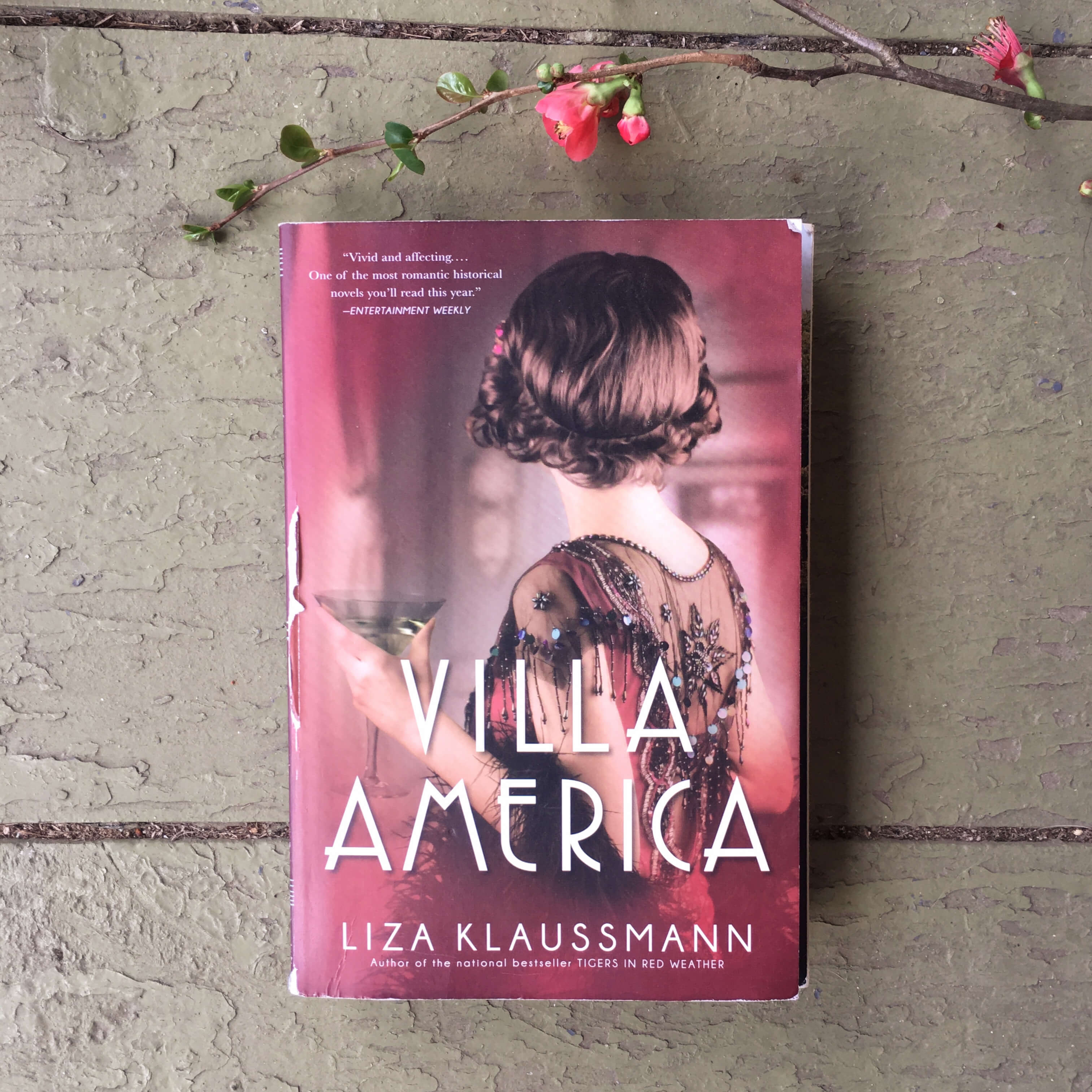
2. Villa America – Liza Klaussmann (2016)

villa-america-liza-klaussmann

If there is one enviable couple that gets referenced most in the circle of friends that included Hadley and Ernest Hemingway, F. Scott and Zelda Fitzgerald,  John Dos Passos, Pablo Picasso, Cole Porter, Dorothy Parker and many other icons of Paris’ golden age in the 1920’s and 30’s, it is Sara and Gerald Murphy.

Sara and Gerald Murphy

Mostly known for their stability within this eccentric group of writers and artists, Sara and Gerald were the enigmatic muses that inspired much of their friends work, including F. Scott’s main characters in Tender Is the Night.  Fun loving, family focused and inventive, Sara and Gerald’s relationship within their marriage was stuff of legend – so loyal, so strong, so well-connected it seemed as if nothing could or would tear them apart.

Villa America

Escaping the U.S. for Paris in the early 1920’s led them eventually to the French Riviera and a house they called Villa America.  There, the Murphy’s set out to create a carefree, whimsical paradise for their friends and family to enjoy year after year.  Villa America (the book) is a fictional account of the real-life circumstances wrapped around the Murphy’s idyllic, dream-like lifestyle. Weaving together stories of illuminating dinner parties, interesting friendships, and fanciful family outings,  a darker side to the Murphy’s and their circle of friends is also revealed. One that it is fraught with tragedy and misunderstandings, muddled moods and illicit intentions. Through it all, the house sits center stage, a witness to the people and events who come and go.

What is particularly fascinating about this book is Liza Klaussmann’s interpretation of characters and conversations surrounding  Ernest Hemingway and F. Scott Fitzgerald. Lots of known cliches and generalizations float around these two men – that F. Scott was dashing and amusing, a drinker and a romantic, and that Ernest was gregarious, rowdy and an ultra-masculine rough and tumbler. But in Liza’s book, you experience other sides of these two as well.  F. Scott, for all his charming ways is also difficult, overly dramatic, and high-maintenance. Ernest shows up as a ball of opposites –  egotistical but also compassionate, needy but reckless, dominating yet keenly aware of other people’s fragile vulnerabilities.

The environment is lush with details. F. Scott is trying to write his way through novels, gathering source material for his characters from the real friends around him. Like all the other men, he finds himself captivated by Sara, irrepressibly drawn to her emotional maturity and warmth – both appealing characteristics that seem lacking in his own wife.  Zelda, meanwhile,  spends her days romping around the Riviera trying to sort through her own desires. Signs of unusual behavior start to manifest. But no one yet realizes that this troubling behavior has much less to do with Zelda’s natural personality and much more with the start of her slow slide into mental collapse. Likewise, Gerald also escapes into the recesses of his mind, where he begins to question and explore feelings about his own sexuality that extend far beyond his loving marriage to Sara. On the verge of break-up themselves – Ernest, with his wandering eyes and Hadley with her general sense of unease in the glittering Riviera world – are awkwardly together trying to navigate the terrain of a not very well matched marriage.  Sara, sensing the unease of all of these situations silently swirling around her, tries to protect her friends and her family in the sheltered, safe space that she is determined to create at Villa America. But for all of Sara’s best efforts in trying to keep cruelty out of the compound, emotionally difficult situations sneak their way in raising questions about the true meaning of home, family and friendship.

3. Paris I Love You But You’re Bringing Me Down – Rosecrans Baldwin (2013)

paris-i-love-you-but-youre-bringing-me-down-rosecrans-baldwin

Staying on the topic of Paris but moving ahead a century, Paris I Love You But You’re Bringing Me Down is the memoir of a burnt-out New York City ad man who moves to France for a new job while simultaneously working on a new novel. Tired of the New York City grind, Rosecrans Baldwin is ready to find his paradise in Paris. He has a mood board already mandated for his life before he arrives… the wine, the food, the beautiful architecture, the beatnik lifestyle, the art, the cafes… all those lovely picturesque elements ready for the taking. But what he didn’t count on was what life would be like in reality as an American, not only living, but also working in France.

From day one, Rosecrans is a fish out of water. He finds that daily life in Paris is very different compared to daily life in New York City. When he takes a job at a French advertising agency, he discovers that the same could be said for office culture as well. The language is a problem (too fast), social interactions with his new co-workers are a problem (do you shake hands during first meetings or kiss on both cheeks?), lunch is a problem (never at your desk), even the fundamental pattern and processes of handling ad business is vastly different.  In New York, Rosecrans was used to working long pressure-filled hours, at a fast pace, developing ideas that had to consistently ring true and be brilliant. But when Rosecrans gets to Paris and his new workplace, he discovers many unusual circumstances.  People leave the office at 5:00pm whether their work is finished or not. Many of the office staff grab a glass of wine together after work before heading home.  Gift cards to local restaurants in the neighborhood are given to each employee to ensure that they take time for lunch. They work on one campaign at a time, for one client at a time. No one ever gets fired. No one is ever expected to come in early, skip lunch or stay late. It wasn’t like New York at all. No one lived at the office and just visited their home spaces. Rosecrans found himself navigating a strange, foreign land, both literally and figuratively.

The result of all these oddities and differences yields a hilarious look at real-life in Paris.  Most books written about Americans moving to France focus around their love affair with the city and a charming newly discovered lifestyle which they are eager to adapt quickly. Rosecrans’ book is the opposite. He voluntarily chose to move to Paris. But then, once he gets there, he constantly questions that choice as he moves through his daily “French dream.” He discovers that Paris is not quite the paradise he imagined. Fundamentally uncomfortable in a lifestyle he thought he would naturally love, Rosecrans paints a funny, bizarre and gritty picture of the everyday side of the city that often gets overlooked.  In his world, it was definitely not all views of the Eiffel Tower and beret clad artists. It was not all joie de vivre and buckets of baguettes and walks along the Seine. No, this was a different side of Paris altogether.

How does it all shake out for Rosecrans in the end? Does he stay in Paris, eventually embracing all the differences? Or, does he return back home to the New York, to the city he knows and learns to love again? You’ll have to read it to find out:)

4. Island Style – India Hicks (2015)

india-hicks-island-style

Being the daughter of famous 20th century British designer David Hicks and the goddaughter of Prince Charles might yield an intimidating presence. Especially when her natural born talent of interior decorating has made her a style expert in her own right. But nothing feels more down to earth when it comes to India Hicks and her beautifully bohemian decorating book simply titled Island Style. Here, she shares stories about how, over time,  she decorated her comfortable, casual Bahamian home, with a cacophony of elements meant to inspire more than impress.

Decades ago, a whim led her to the Bahamas, a place she never imagined that she would eventually call home. One thing led to another, years passed years, and India found herself still there. In these pages, she shares the journey that led ultimately to her island house, a sanctuary of memories she shares with her long-time partner, their five children and a menagerie of animals. India intimately discusses at length the art of decorating with sentiment versus cents and the importance of letting your interiors evolve in style as you evolve in life.  If something catches your eye or calls to your heart, take it home, she advises, there will be a place for it somewhere, always.

Thoughtful decorating, India illustrates, comes from storytelling. From gathering and displaying items that are important to you. This leads to personality-filled rooms and fresh perspectives. They become meaningful, nuanced, comfortable, appealing because  the backstory was brought in, in the form of a tale you naturally wanted to tell.  That’s when the magic happens… easily… effortlessly… style and colors and shapes and patterns combine in interesting ways that begin to inspire, remind, emote and invoke a feeling of home.

Mixed in between interior images of her house and collections, she writes beautifully about what it is like to live on an island in the Bahamas, well beyond the honeymoon phase. A period that in her experience lasted about two weeks, before  practicality and reality set-in as far as setting up a real life with real kids, and real pets in a real house.

Island life isn’t for everyone. The point of this book wasn’t to seduce readers with a show-off lifestyle and a get-here-as-fast-as-you-can attitude. The point was to simply demonstrate the impact of personal touch and taste upon a space.  The world is noisy but our interiors don’t have to be. Home is no place for a set of trends established by other people, living other lives in other places. Home is you not them. It speaks for us and of us when we don’t want to speak ourselves. India’s book reminds us of that.

5. 306 Hollywood (2018)

For over 60 years, Annette Ontell lived in this cute, white house at 306 Hollywood Avenue. There, she amassed all the ordinary tidbits that was required of daily life in New Jersey throughout six decades. When she passed away, her grandchildren, brother and sister filmmakers Elan and Jonathon Bogarin felt the weight of her spirit still very much present in all the stuff she left behind. So they set out to tell her story.

Color-coded collections of Annette’s things.

Through a style of art known as knolling, they organize and catalog her collection of ordinary household objects into groupings, to better understand what these objects meant to her life and ultimately what her life meant to them. Combining home movie footage, audio interviews and dynamic cinematography, Annette comes to life before our eyes.

Annette

We get genuine insight into Annette’s passions, pursuits, and philosophies. We fall in love with her affable personality.  We understand how the story of one seemingly ordinary woman actually turns out to be quite extraordinary.  We understand how a home becomes a heart, beating with life and necessity.  A true treasure trove for any vintage lover, this documentary is a colorful, nostalgic and sentimental look at the value of everyday objects, and their purpose over time. Get a glimpse of the magic that is 306 Hollywood by watching the trailer here…

6. Dare to Be Wild (2015)

Based on the true story of Mary Reynolds, the youngest woman ever to compete in the esteemed Chelsea Flower Show, Dare to Be Wild is the cinematic story of the journey that led her from dreamer to doer. From the start of her budding career (no pun intended!) Mary’s clients and employers want her to design gardenscapes within an acceptable box of sameness. But Mary has other ideas, wild ones, that don’t confine nature or ideas into typical proven displays that can be replicated over and over again.  Mary is keen on harnessing a feeling of home and harmony in her garden designs –  a certain sense of wonder and enchantment that she has felt her whole life whenever she steps out into the natural world.

But the Chelsea Flower Show is no easy quest. Paperwork, rules, formalities and finances tie her down at every turn. Her competitors are an intimidating array of past award winners, esteemed gardeners and British royalty. For every step forward, she winds up taking two steps back. Her journey is not easy on so many fronts, you begin to wonder if her plot of ground at the Flower Show is ever going to grow into the vision inside her head. But through all the uncertainty Mary stays true to the sounds that call her home… the wind rustling in the trees, the birds bright with song, the soothing noise of tall grass sweeping against stone.

Beautifully filmed and truly inspiring from the first five minutes, Dare to be Wild is a wonderful example of how the notion of home doesn’t have to be defined by typical, sedentary structures. Home is a feeling as much as it is a place.

Hope these selections have you thinking about your definitions of home and how’d you best describe it. Feel free to share your thoughts in the comments section below. And if you wind up reading or watching any of these books or movies, let us know. We’d love to keep these discussion going throughout the year.

Cheers to the word home and to all the places we call our own!