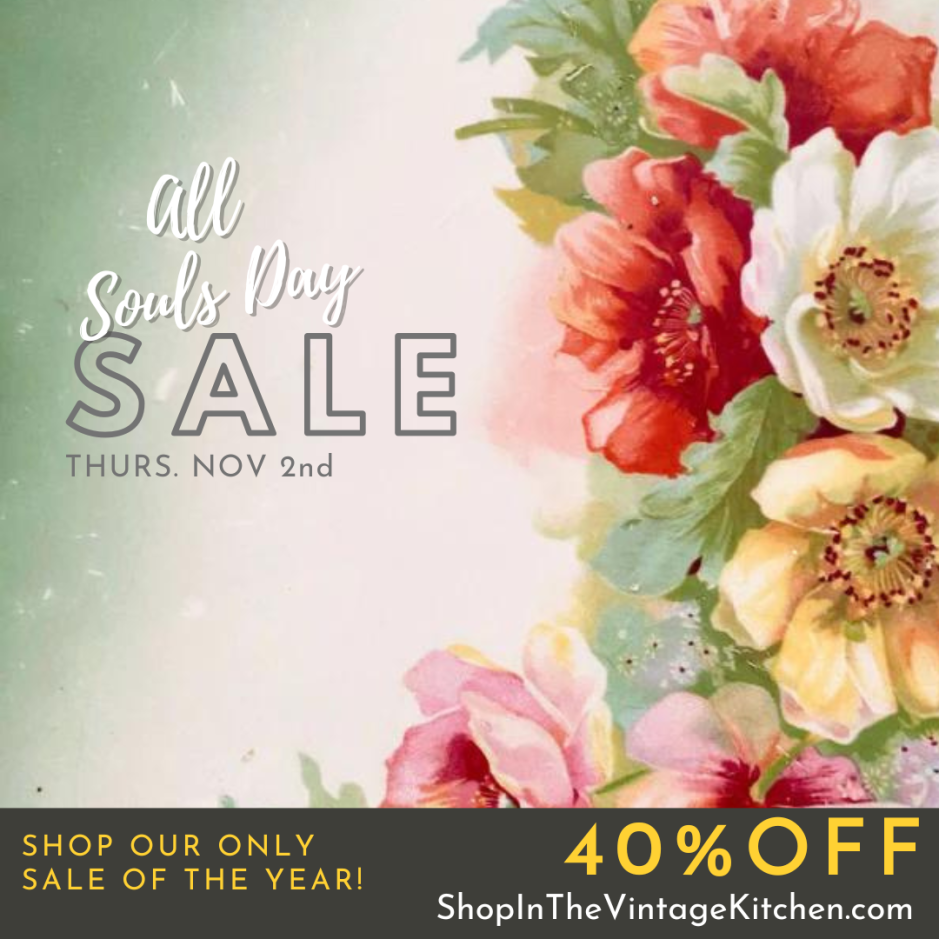
It only happens once a year and today it’s here! Our annual 40% off sale runs now through midnight (EST). Some highlights from the shop this year include these faces and features…
Feminist, cookbook author, and magazine editor, Sarah Field Splint (1883-1959) published The Art of Cooking and Serving in 1931.The oldest bowl in the shop is this one that dates to the 1830s. Over one hundred years ago, this is how you dried your wet laundry linens and clothing. The design of this 1940s vase was inspired by museum relics from the Chinese Imperial dynasty.These first-generation Greek immigrant women turned a collection of recipes for a humble church fundraiser into a bestselling cookbook in the 1950s.This is a very rare set of midcentury restaurant ware dessert plates.Henri Toulose-Lautrec was not only a talented French artist but a talented cook and a true gourmand in the kitchen too. This is a collection of his recipes and the colorful art that adorned his hand-drawn menus, which were given to all guests who came to dine at his table.A trip to North Carolina in the 1930s introduced Katharine Beecher to her first homemade butter mint. She fell so in love with them that she started making them herself. Less than a decade later she was the proud owner of a multi-million dollar candy company. This is a very rare 1920s children’s coloring and painting book by American artist Florence Notter (1884-1960). She was quiet and unassuming in personality but her art was bright, full of character and color and immensely beloved by children around the country.
These are just a few examples of the unique stories behind some of our heirlooms in the shop. Find many more as you explore our vintage and antique cookbooks, dishes, linens, decorative pieces and kitchenware.
Hope this year’s sale sparks something new and inspirational for you. Cheers, and happy shopping!
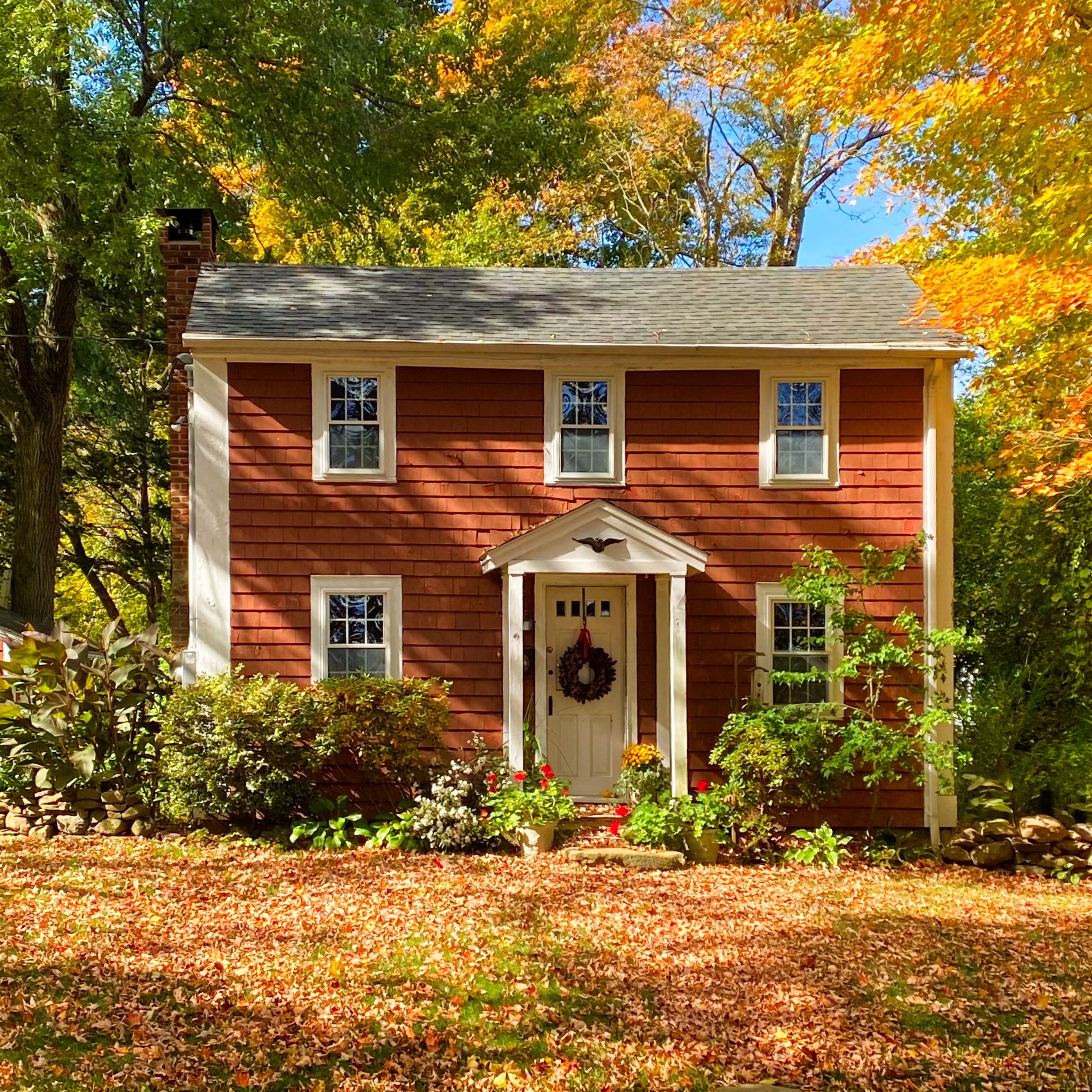
Outside the kitchen window, fall is here. It’s blown into New England this year slowly, on warm breezes scented with cider doughnuts and sunshine. Our prettiest one yet, milder-than-usual temperatures have prolonged the season, rolling it out like a colorful ribbon one yard at a time.
While the days may have lacked that traditional chill that signals a sincere change in seasons, there is something definitely delightful about a warm weather fall. Our string of 70-degree days and 50-degree nights means that much of the summer garden at 1750 House is still hanging on. There are clusters of tomatoes ripening on the vine, summer corn continuing to grow tall in the raised bed, and green beans still putting out at least a dozen pods a day. It may be mid-October, and leaves may be blanketing the garden beds, but the nasturtiums, zinnias, and geraniums are still flowering like it’s July. The novelist David James Duncan once called this Indian summer time of year “a state of serene confusion.” I can see why.
Since so many pollinators are still coming to the flowers, we’ve decided to leave all the summer vegetables up for as long as we can so that they can get all the nourishment they need.
Around the neighborhood though, tradition is not indulging this unusual weather that’s been caught between the beauty of two seasons. Despite the fact that many a summer flowerpot is still wholeheartedly blooming, pumpkins are on porches, dried corn stalks decorate lamp posts, twig wreaths hang on front doors, and the leaves… the magical leaves of a New England autumn… are floating and fluttering in shades of cinnamon, olive, mustard, and mahogany. There is color and flowers and fall foliage everywhere.
Autumn has come to the shop too…
And that means that our annual shop sale is right around the corner. If you are new to the blog, every year, November 2nd marks 40% off everything in the Vintage Kitchen shop for one day only. We call it the All Souls Day sale, not for the Catholic holiday that it shares the day with, but for the heirloom history that it encompasses.
All Souls Day is the only communal holiday in the calendar year that celebrates and remembers all deceased ancestors, and to us, that seems like the perfect time to celebrate vintage and antique heirlooms too. None of our shop items would be here today if they had not traveled through time, cherished and cared for in the hands of the people before us.
The Art of Chinese Cooking by the Benedictine Sisters of Peking – 1977 Edition 41st Printing
It’s up to us to curate the shop, but the heirlooms do all of the storytelling. Each year, they share new insights into the past that help shed light on things in the present. Since no two items in the shop are ever exactly alike, no sale from year to year is ever exactly the same either.
Stories float in and out of the shop every day offering glimpses into kitchen and garden life that occurred a few decades ago or a few centuries ago. Just like stories posted to the blog, every heirloom in the shop comes with its own unique tale marking its place in time. Hidden histories are everywhere. Here are some of the unique stories you’ll find in this year’s sale…
The 1940s Oxnard Lemon Crate
Highlighting Mexican-American history in California’s Port Of Hueneme, this 1940s-era lemon crate tells the story of how Sunkist lemons were brought in from local farms and sorted at an Oxnard packing house before being transported to retail storefronts around the world. Most of this packing was done by women who were skilled experts in sorting, grading and packaging the lemons for distribution. At the height of production, over four million crates were packed per year totaling half a billion lemons. Fruit and vegetable crates were never meant to withstand time and travel for longer than a few months, so it’s always exciting to discover one that has survived much longer than intended. The only part that is left of this original eighty-year-old packing crate is the front panel, now mounted like a piece of art to showcase its original label.
Beyond New England Thresholds
Focusing solely on the importance of the fireplace hearth in early American homes, this 1937 photography book by Samuel Chamberlain explores the country’s first “kitchens” in over two dozen New England homes that date back to the 17th and 18th centuries. The photos progress as the hearth progresses from primitive cook space to home heating source to decorative fixture, illustrating not only how far cooking has come since the early days, but how home interiors and design have evolved as well.
Perdita
Voted one of the best restaurants in the country by Holiday Magazine in the 1950s, Perdita’s of Charleston, SC and Macon, GA was known for its elegant French-inspired fare highlighting local seafood and steak. The restaurant was named after actress Mary Robinson (1758-1800) whose most famous role was playing Perdita in Shakespeare’s A Winter’s Tale.
The real-life Mary Robinson (1758-1800) in a portrait painted by Thomas Gainsborough circa 1781
Mary had a reputation for being very enchanting and seductive, especially when it came to the amorous attention of men. On a trip to Charleston in the late 1700s, she was caught up in a local romantic scandal that forever made a mark on Charleston’s colorful history, and subsequently inspired the vibe and aesthetic of one of the city’s most famous restaurants.
The Neo-Classical Candleholders
Made for the Metropolitan Museum of Art gift shop, the design of these four petite candleholders is based on antique furniture mounts from a French secretary in the Museum’s collection. The secretary dates to 1787 and is believed to have belonged in the apartments of Marie Antoinette during her time at Versailles. This is the furniture that inspired the candlesticks including a detail shot of the mounts themselves…
Notice how the candlesticks are almost an exact replication of the mounts, fruit included.
The Peruvian Pottery Bowl
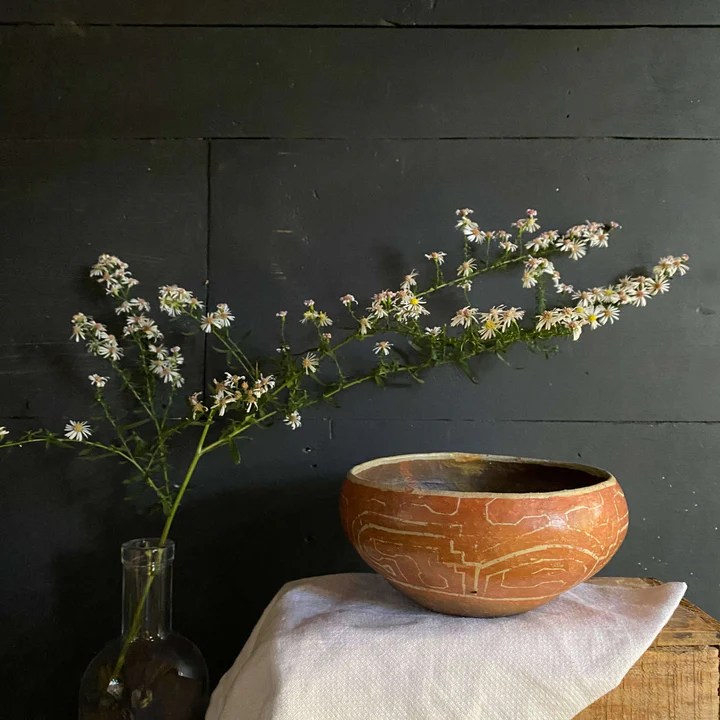
Handmade in the Amazonian jungle of Peru, this style of clay bowl has been made for centuries by local Indigenous women of the Shipibo-Conibo tribe using skills and techniques passed down from generation to generation. Highly personal and reflective of each specific woman who makes them, the bowls are entirely formed by hand and then painted with brushes fashioned from twigs and their own human hair. The markings, like the bowls themselves, are one-of-a-kind… trails of paint inspired by each woman’s dreams and visions combined with traditional cultural symbols celebrated by generations of women that came before her.
Photograph of four generations of Shipibo-Konibo women by David Diaz Gonzales
Every year, new faces from history emerge too. This year, we met Juliette, Margaret, Farida, Eleanor, Kate, John, Marie, Raffles, Zetta, Carveth and Claude…
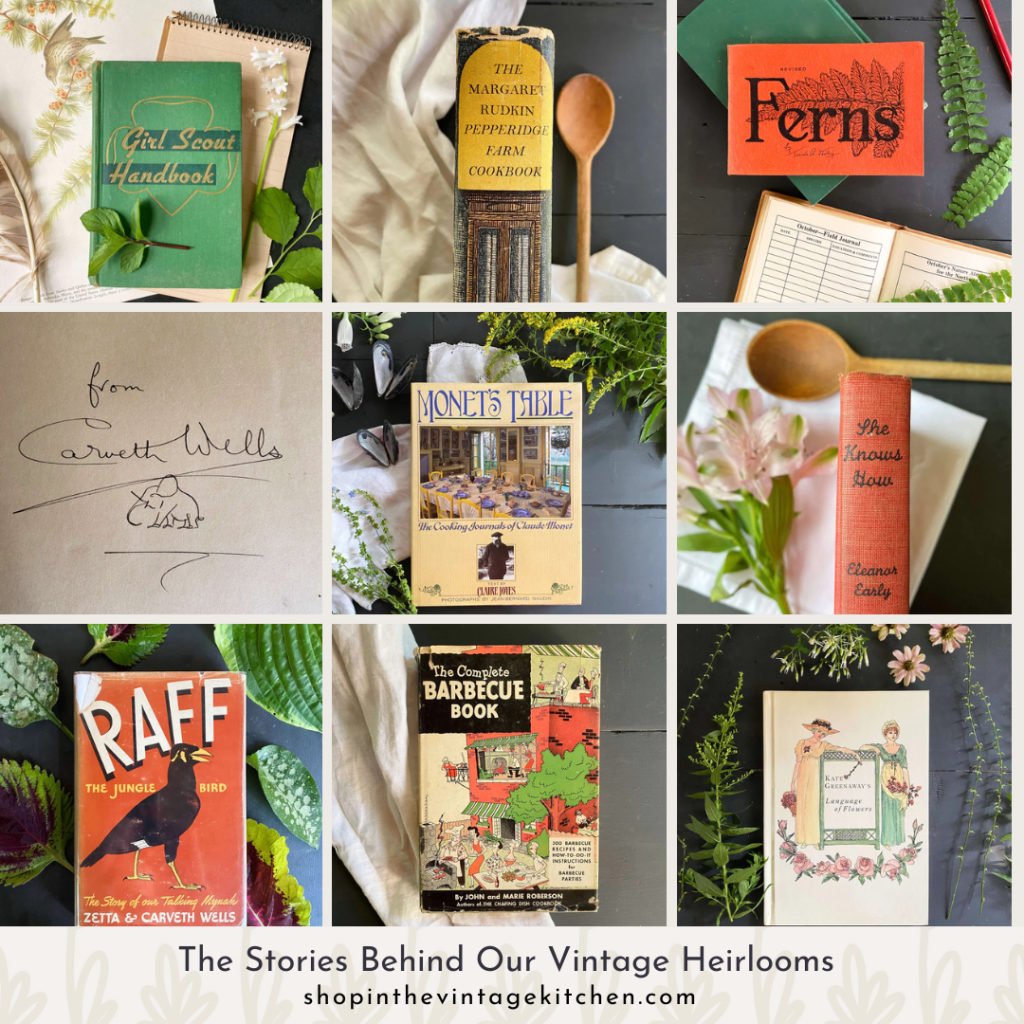
Clockwise from top left: Julia Gordon Low, Margaret Rudkin, Farida Wiley, Eleanor Early, Kate Greenaway, John & Marie Roberson, Raffles, Zetta & Carveth Wells, Claude Monet
Each of them had interesting stories to tell. Juliette Gordon Low started the Girl Scouts in Savannah, GA in 1912. Kate Greenaway forever changed the way we felt about blooms and blossoms in her bestseller, The Language of Flowers. Farida Wiley taught nature classes at NYC’s Museum of Natural History for 60 years. And we all know Claude Monet from his famous impressionist paintings, but did you know that he was also a devout foodie too? There’s a cookbook full of his recipes to prove it. All of those faces above created all these pieces of history below…
Clockwise from top left: The Girl Scout Handbook (1948), The Margaret Rudkin Pepperidge Farm Cookbook (1965), Ferns of the Northeastern United States by Farida Wiley (1948), She Knows Best By Eleanor Early (1946), Kate Greenaway’s Language of Flowers (1978), The Complete Barbecue Book by John and Marie Roberson (1951), Raff: The Jungle Bird by Zetta and Carveth Wells (1941), Monet’s Table (1989)
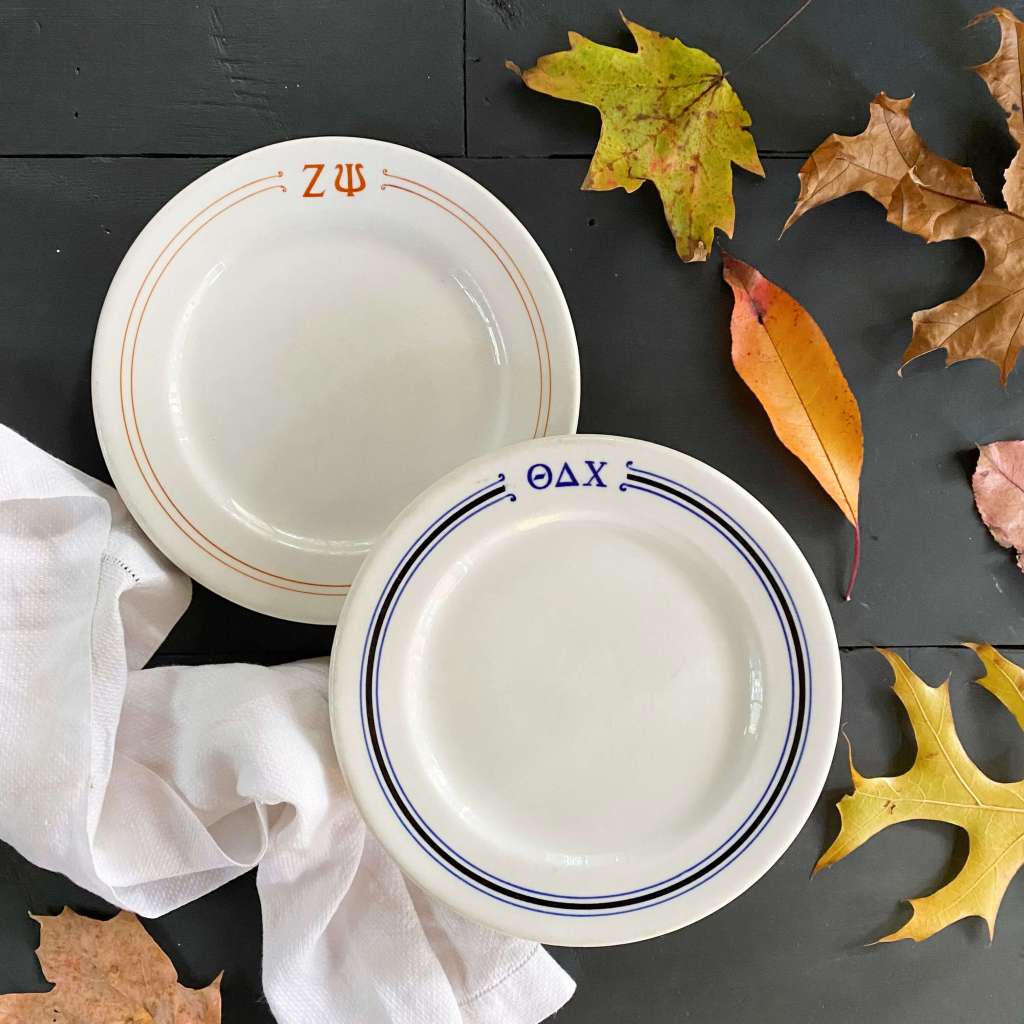
In the shop, a plate is never just a plate. It’s a rare glimpse into dining hall life at a 1930s fraternity house…
Rare Vintage 1930s Zeta Psi & Theta Delta Chi Fraternity Restaurant Ware Plates By Syracuse O.P.Co circa 1937
In the shop, a teapot is not just a teapot. It’s the oldest antique of the year. This one dates to 1838…
Antique Royal Vienna Tea Service Set – Gold and White Porcelain – circa 1838
In the shop, a cookbook is never just a collection of recipes. It’s stories about life and heritage and inspiration in a myriad of ways. It’s Canadian Leslie Forbes (1953-2016), who was not only a charismatic travel journalist, a fiction writer, and a cookbook author but an illustrator too…
A Taste of Provence by Leslie Forbes – 1987 First American Edition
It’s the talented way-ahead-of-her-time Paula Peck (1927-1972), who died at the age of 45, but not before leaving a handful of books that turned professional cooking and baking on its side in the mid-20th century, by bucking traditional techniques and inventing creative, approachable food…
The Art of Fine Baking by Paula Peck – 1961 Book Club EditionThe Art of Good Cooking by Paula Peck – 1966 Edition
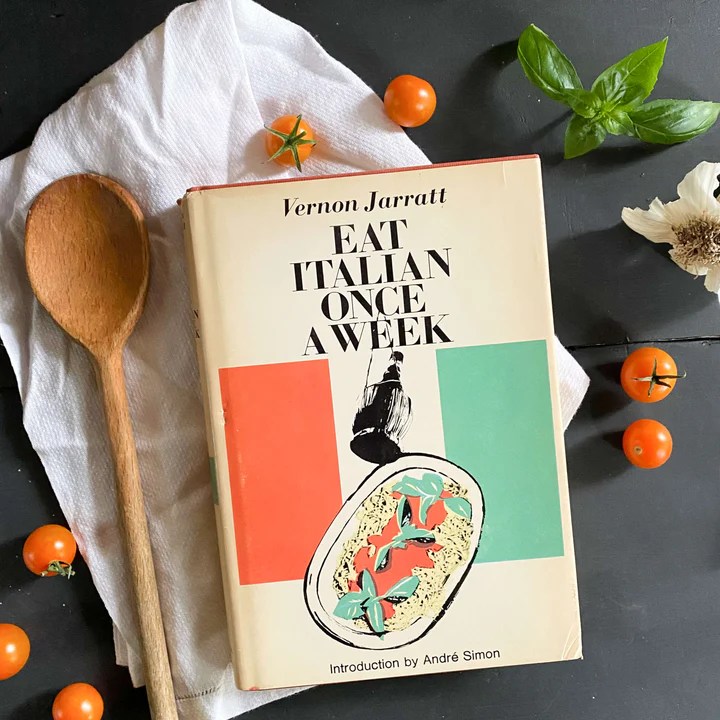
It’s British ex-pat Vernon Jarratt who married an Italian countess and went on to live a La Dolce Vita life in Italy as an intrepid gourmand and restauranteur…
Eat Italian Once A Week by Vernon Jarratt – 1967 Edition
In the shop, a vintage coffee tin is not just a nostalgic vessel to store modern-day items. It’s the lifeblood of immigrant brothers from Scotland who sought fortune and flavor in America’s coffee trade in the late 1800s.
Vintage Yuban & Bliss Coffee Tins circa 1920s-1940s
And in the shop, coasters aren’t just little mats to set your drinks on. They are mini works of art by revered French botanical painters of the early 1800s…
Vintage French Botanical Coasters with Cork Backing – Set of Four
These are just a few examples of the people, places, and stories that find their way into the Vintage Kitchen shop on a daily basis. I hope at this year’s sale you discover an heirloom that captivates your attention, that steals your heart away to another time or another country, and that inspires new creativity from history’s forgotten muses.
Perhaps you’ll travel with engaging journalist and war correspondent, Betty Wason and her daughter, Ellen through the regional cuisines of Spain…
The Art of Spanish Cooking by Betty Wason – 1963 First Edition
or fall in love with the fish-out-of-water escapades of French Clementine as she navigates the ins and outs of cooking in an American kitchen in the 1940s…
Clementine in the Kitchen by Phineas Beck (aka Samuel Chamberlain) – 1943 First Edition with Illustrations
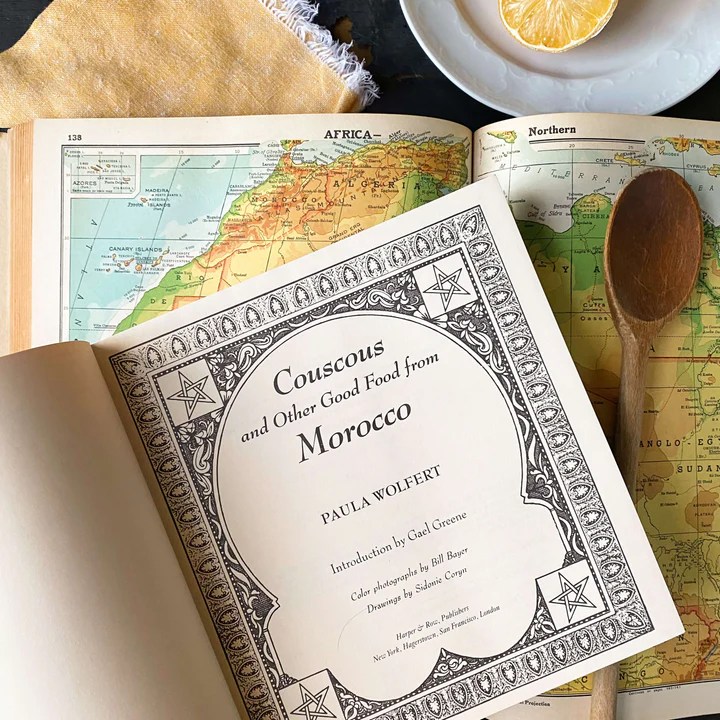
or maybe you’ll wind your way around the exotic Moroccan spice markets with Paula Wolfert as your educational guide.
Couscous and Other Good Food from Morocco by Paula Wolfert – 1973 Edition
At this year’s sale, you’ll notice that some cookbooks sport a festive yellow banner in the listing photos. Those banners signify a new donation program that we’ve just recently launched. Any cookbook that you see in the shop that says This Book Gives Back qualifies for a 20% donation to Feeding America, a nationwide non-profit network of food banks, food pantries and local meal programs dedicated to providing nutritious meals to food-insecure communities around the United States. Not all cookbooks qualify for this program, so be sure to look for the yellow banner if you would like to participate.
Joy of Cooking by Irma Rombauer and Marion Rombauer Becker – 1978 Edition 11th Printing
The sale begins at 12:00am (EST) on Saturday, November 2nd, 2024 and runs through 11:59pm that same night. Discounts are automatically tallied upon checkout, so there is no need to enter any coupon codes or discount phrases to receive 40% off.
New vintage and antique heirlooms continue to be added to the shop daily, so stop by for fresh finds leading all the way up to the sale. And, as always, if you are looking for something that we no longer have in stock, please send us a message. We’ll be happy to add your name and needs to our waitlist.
Whether you are interested in experimenting with a new cuisine, looking for a new favorite vintage dish pattern, or starting a collection that recalls memories of a happy time from your past, I hope you find something in the shop that calls to your heart and adds extra delight to your kitchen.
Haute Cuisine for Your Heart’s Delight by Carol Cutler – First Edition 1974 Fifth Printing
Cheers to all the old souls that inspire the shop each and every day. Cheers to all the heirlooms that they have been passed on to us to love and cherish just as much. And cheers to the kitchen for being the one spot in the house where everyone is always welcome.
Happy All Souls Day! Just wanted to pop in with a quick reminder for all our intrepid culinary adventurers and history-fueled home decorators… our annual one-day-only 40% off shop sale is today!
There are a bevy of new (old) heirlooms that have arrived in the shop recently, so if it’s been a bit of time since you last visited hop on over to the shop to see our latest collections. Some of our favorites include these charmers…
A collection of Poland’s authentic heritage recipes compiled by the Polanie Club of Minneapolis, Minnesota.Rare antique J.W. Pankhurst English ironstone dinner plates circa 1850.A porcelain enamelware floral bowl set by Kobe circa 1980sA 1930s-era packet of French postcards featuring the beautiful city of MarseillesAn antique crocheted tablecloth handmade at Ellis Island circa 1916. You might remember this one from our in-depth blog post about one woman’s Italian immigration story here.A vintage Dutch cookie tin featuring maritime art.A 1930s edition of a classic kitchen cookbook courtesy of Fannie Farmer, the woman responsible for creating our modern cooking measurement system. A vintage botanical art book featuring gorgeous illustrations of fruits, vegetables, and flowers.An antique handmade gathering basket from the early 1900sA vintage pair of cheerful yellow dinner napkins with embroidered dots fit for every season.
Interested in meeting some of the makers and collectors behind our shop’s beautiful heirlooms? Poke around each section and you’ll encounter these faces and the stories they tell about history and their place in it.
Hope you find a treasure that calls to your heart and adds an extra bit of joy to your home.
As always, the sale runs through midnight tonight and discounts are automatically applied at checkout. Thank you so much for traveling with us down these adventurous pathways of culinary history. Cheers to new inspiration and a day of happy shopping!
The last bouquet of summer included the final flourish of zinnias, dill, okra, daisies, cosmos and nasturiums.
The leaves are falling, the pumpkins are picked, the last of the summer tomatoes have been plucked. The zinnias were clipped for a final garden bouquet. The okra stalks were added to the compost pile. The herbs moved from the garden to the greenhouse and the rockery raised beds are full of autumn leaves. October is waving goodbye. And that means something exciting is just around the corner… our annual one-day-only 40% off sale.
If you are new to the blog or the shop, you might not know that we always host this sale on All Souls Day, which falls on November 2nd every year. Technically a Catholic holiday, we selected All Souls Day not for its religious connection, nor its aura of spookiness (being so close to Halloween), but for the sheer fact that it is one of the few holidays in the calendar year that pays tribute to deceased ancestors. We wouldn’t have a shop full of wonderful heirlooms had they not traveled through other people’s lives, other people’s hands for generations, collecting stories and memories along the way. To us, all Souls Day seems like the perfect day to celebrate vintage style.
It’s also a lovely time of year to start preparing not only for the holiday season but also for the winter ahead where cooking adventures, gift-giving, and craft time await. Autumn doesn’t officially end this year until December 21st. If you’d like to hang onto the season as long as possible you’ll find many fall-favored pieces in the shop that will carry you all the way through…
If you are ready to start gathering ideas for Thanksgiving, you’ll find an assortment of items ideally suited for Turkey Day 2022 and beyond…
Christmas in the Vintage Kitchen always comes in little details. Red and white restaurant ware, a mini Christmas tree, an antique green striped serving plate or a shimmery candelabra that we are sure has seen some magnificent parties in its day. In the shop, you’ll discover a sampling of festive treasures waiting to add a little sparkle to your celebrations…
The sale begins at 12:00am on Wednesday, November 2nd, and ends at 11:59pm that same day. All items in the shop will automatically receive the 40% discount at checkout, so there is no need to fuss with coupon codes or discount names. We encourage you to use the wishlist feature on our site if you have multiple items that have caught your eye. Just click on the heart under each listing title and it will automatically add the item to your favorites list where you can then add them directly to your cart.
Since it is our only sale of the year, shoppers in the past have been known to set their alarms for the moment the sale starts at midnight. If you have fallen completely in love with something in particular, please keep that in mind. New (old) items continue to be added to the shop daily, so stop by for fresh finds leading all the way up to the sale. One of the items coming to the shop today is this set of six vintage Czechoslovakian luncheon plates full of pink, purple and cranberry-colored flowers.
.
As always, if you are looking for something that we no longer have in stock or you can’t find in the shop, please send us a message. We’ll be happy to add your name and needs to our waitlist. Having said that, I hope on this year’s sale day you will find something truly magical that makes your heart sing with joy. Cheers to all the old souls. And to all the cherished items that they have left for us to enjoy. Happy shopping!
Little stories are popping up everywhere these days. Renovations on the kitchen are underway, but there is nothing flashy and exciting to show quite yet since it’s mostly been electrical work, beam support, plumbing upgrades, and insulation clean-up. Once the kitchen gets framed out and the walls go up, the tiles go on, and the appliances get installed then we’ll be ready for more exciting room photos.
In the meantime, during all this cleaning up, clearing out and repair work the kitchen is beginning to share some secrets. I haven’t had a chance to research the origin story of the house yet, but the following items and information we have discovered during the renovation of this room over the last couple of weeks definitely gives us some insight into the lives of previous owners.
Trapped in between layers of blown insulation in a west-facing kitchen wall we found these three objects on the same day in the same area…
a spoon, a bullet, and the shearing half of a pair of scissors. All from different eras of history, they each offer a glimpse into the domestic atmosphere of life lived centuries ago.
The Antique Teaspoon {exact age unknown}
This antique silverplate teaspoon has a really detailed pattern with wheat sprigs, a scroll (most likely where a monogram would have been placed) and a fleur-de-lis type embellishment. Well weathered, but in one whole piece, this spoon is really quite a work of art…
No easy teller of time and talent, it is, unfortunately, unmarked as to maker and manufacturer. After many hours pouring over antique silverplate patterns, I can’t seem to find any exact matches, but I suspect that it dates to somewhere around the late 1800s. It seems like quite a fancy spoon for a simple style house so it has piqued my interest as to who it belonged to and how it wound up stuffed inside the kitchen wall. I’ll keep researching it, but if any of you lovely readers recognize the pattern design please share your thoughts in the comment section.
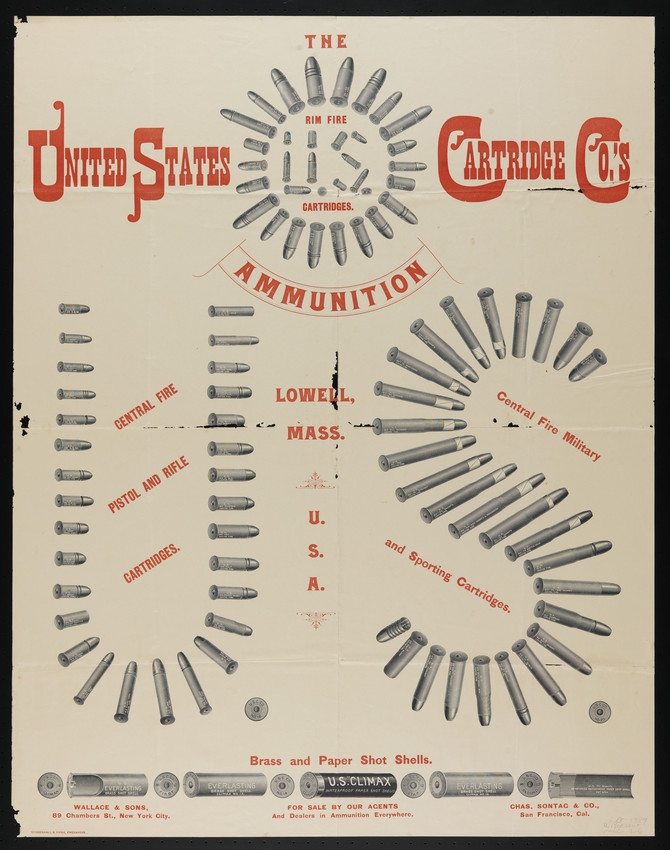
The Bullet {pre-1936}
Never having researched guns or ammunition before, this was a real deep dive into the world of historic firearms. This bullet, officially referred to as an ammunition cartridge, was made by The United States Cartridge Company. Located in Lowell, MA from 1869-1927, USCC was one of the largest suppliers of ammunition during WWI, and produced ammunition for both the military and civilian use. This type of ammunition in particular is called a rimfire cartridge, with gunpowder located in the middle section and the bullet located at the tip. The design is known as a pineapple (vintage kitchen theme approved!) because it explodes in multiple directions once it hits its intended target.
Rimfire was used in rifles and pistols mostly for small game-hunting, and marksmanship. A very popular style of ammunition during the late 1800s and early 1900s, it was even used by the Boy Scouts to garner merit badges in shooting.
After The United States Cartridge Company was purchased by Winchester Repeating Arms in 1927, production moved to New Haven, CT which is just 30 minutes down the road from the house. Geographically, it is fitting that a locally produced bullet would be found here, but there is no way to tell if this particular bullet was made in Massachusetts pre-1927 or in Connecticut. Either way, Winchester stopped making USCC branded ammunition in Connecticut in 1936.
Perhaps this was part of someone’s military memorabilia or maybe this one was part of a pack of similar cartridges that were used in hunting the land around here. So far in the yard, we have spotted one deer, five turkeys, several doves and a family of rabbits so I can only imagine what a diverse food source this area would have offered for hunters and gatherers.
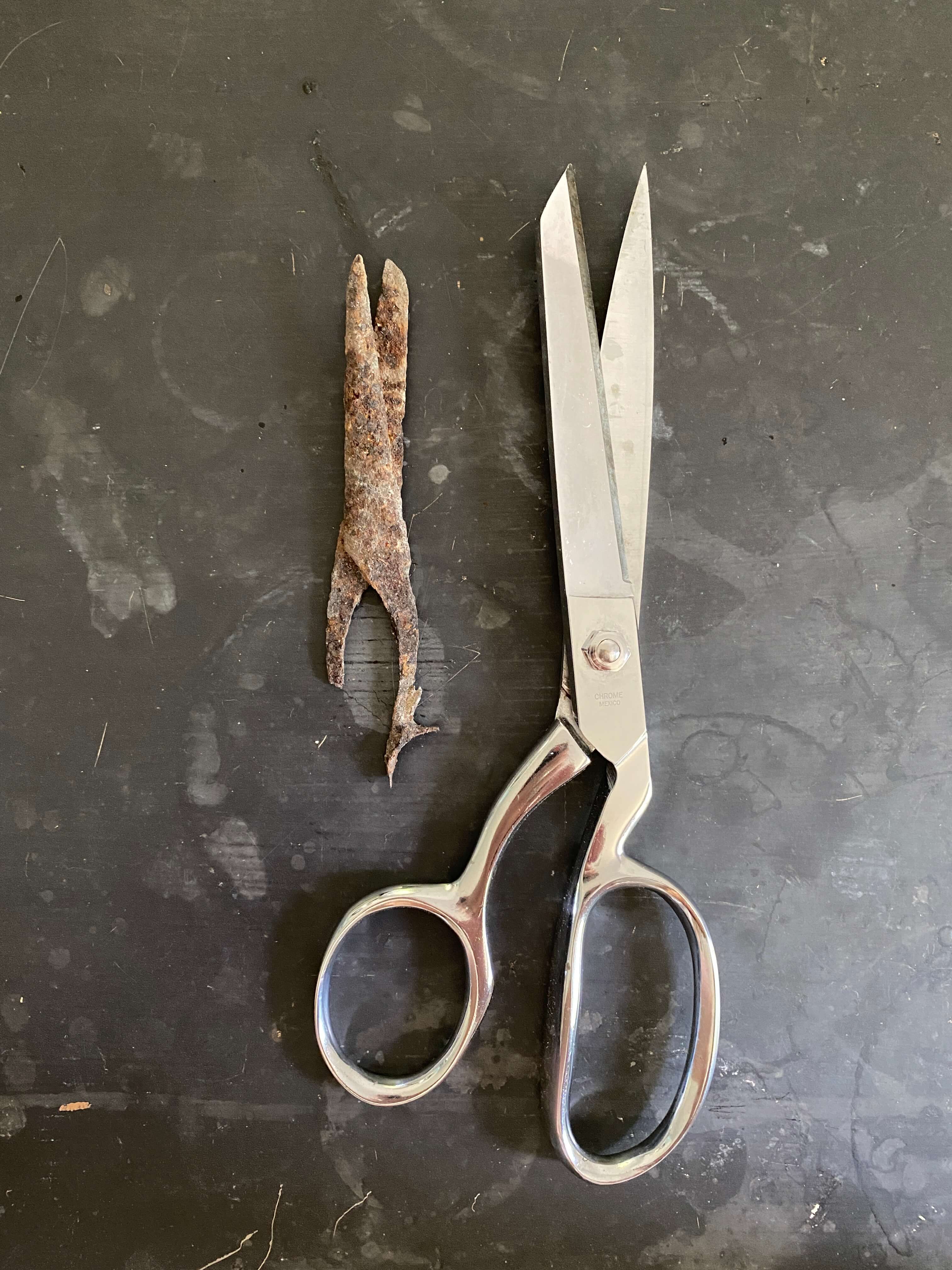
The Scissors {exact age unknown}
Although quite rusty, these primitive scissors look to be hand-forged and pretty old. Like the spoon, there are no marks or labels to help identify a maker or a year of manufacture but they are intact enough to see that they are short scissors, measuring just 4.5″ inches from the tip to the first turn of the handle. Here you can see them next to a pair of standard fabric sewing scissors to get an idea of size and shape.
Long considered a domestic industry, scissor-making encapsulates the design of over 150 different styles of scissors that run the gamut from small and delicate to large and mighty depending on the task at hand. Given the smaller, more fragile shape of these, I suspect they were made for more delicate tasks like sewing, bookbinding or papercrafts.
The Handforged Nails {circa 1800s} and The Wooden Pegs {circa 1750s}
Before nails held houses together there were wooden pegs that did the job. In the kitchen, we uncovered several areas in the rafters where you can see these wooden pegs. They date to 1750, the year the house was built.
If you recall from the previous post, we think the kitchen was added onto the back of the house sometime in the 1800s. That would explain the presence of antique nails in place of pegs found in the rest of the room. These three antique nails are square-cut box nails in 3″ inch and 1.25″ inch lengths. Known as a general, multi-purpose nail, square cuts were used for a variety of projects including flooring, framing and even box making.
We see them mostly in wall supports in the kitchen and plan on saving all of them for some future project. While doing all this cleaning and clearing it’s been fun thinking about who built this house and this kitchen addition. Was it a master carpenter? The original owner? A team of people or one family over many generations? I can’t wait to find out!
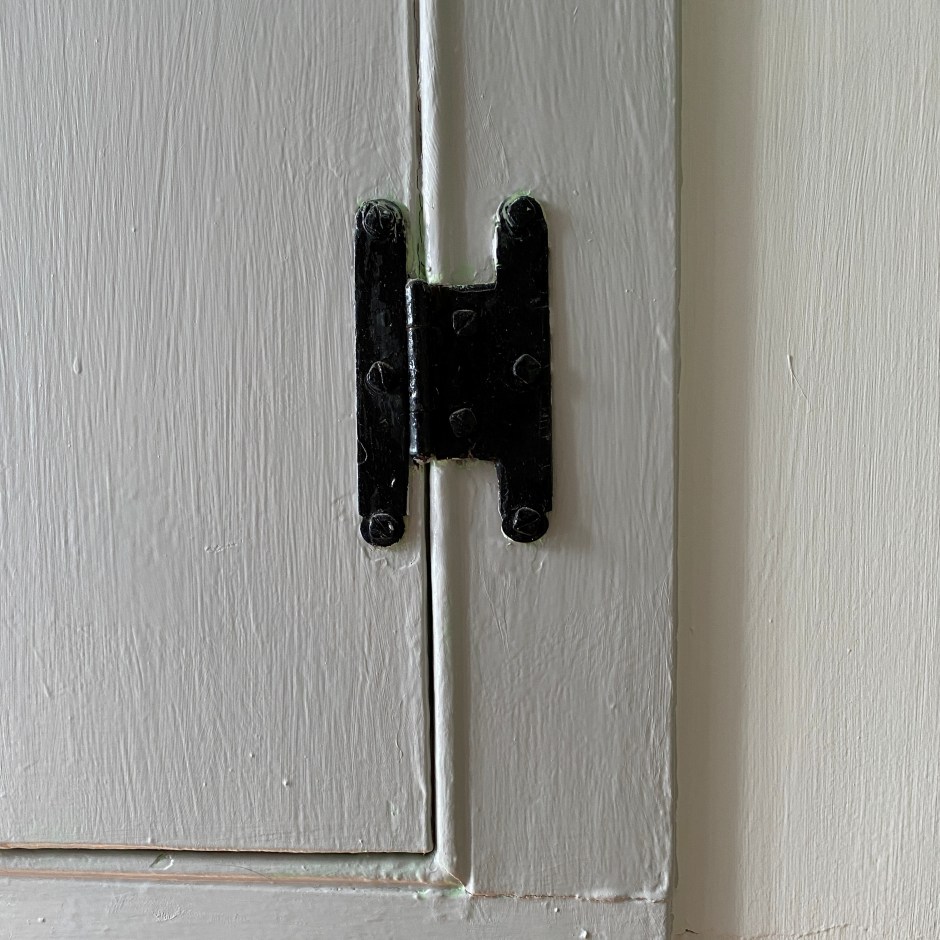
The H-Hinges {circa 1750}
All over the house, including the kitchen, original wrought iron hardware is fastened to original doors and cupboards. The type of hardware that holds it all together is called an H-Hinge. An incredibly popular style of hinged bracket used during colonial times, there is a bit of superstition wrapped up in its form and function that suggests why it was a favored domestic carpentry detail. According to legend, the H stood for holy and acted as a symbol of protection. Against witchcraft.
Don’t be nervous about all those paint splatters on the hinges – they haven’t been cleaned up in decades but we are up for the task!
Oh my. Once learning this info, I immediately refamiliarized myself with the Salem Witch Trials. They occurred in Salem, MA sixty years before our house was built but Connecticut also had their own similar witch trials that were held in Hartford from 1647 to 1663 and in Fairfield in 1692. The last recorded witch trial in Connecticut was conducted in 1697 – fifty-three years before the wooden pegs were hammered into place in our place. Hopefully, by now, any and all nefarious spirits have long been put to rest, but I’m glad to know the kitchen (and all the other rooms of the house!) will be safeguarded just in case the “possessed” happen to return:)
In addition to these items found inside, we have also found quite a few treasures out in the yard and garden too (more coming on that in a future post) that offer equally compelling glimpses into life once lived around here. It’s not enough to put a complete story together yet just based on what we have found so far, but it’s a start. With a little bit of luck and some dedicated research, more of a narrative will unfold. Cheers to history and to long-form storytelling!
A little preview at one of our outside discoveries – a rock named Hilda.
Hope you had a lovely and festive Thanksgiving holiday and are still enjoying lots of fun with friends and family. For all you post turkey shoppers, just a quick little note from the kitchen to let you know that there’s a 30% off sale in the shop starting today through Tuesday. If you’d like to get your gift gathering done early than this is the sale for you! It covers all categories and collections in the shop from linens to serving pieces, kitchenwares to cookbooks and everything in-between. And it is also the final sale of the year, so if you are looking for some unique gifts for yourself or others, now is the time to shop and save.
Whether you’ve been eyeing a set of antique French dishes from the 1800’s, a pretty little linen from the 1920’s or a cookbook filled with hundreds of recipes from the 1960’s, I hope the sale will inspire an extra dose of joy as we continue to party our way through the holiday season.
Please use coupon code HOLIDAYCHEER upon checkout to recieve 30% off your entire order.
Happy November! Isn’t it exciting to think that Thanksgiving is just 20 days away? All summer long the shop has been filling up with vintage and antique platters in anticipation of the big turkey day soon to arrive.
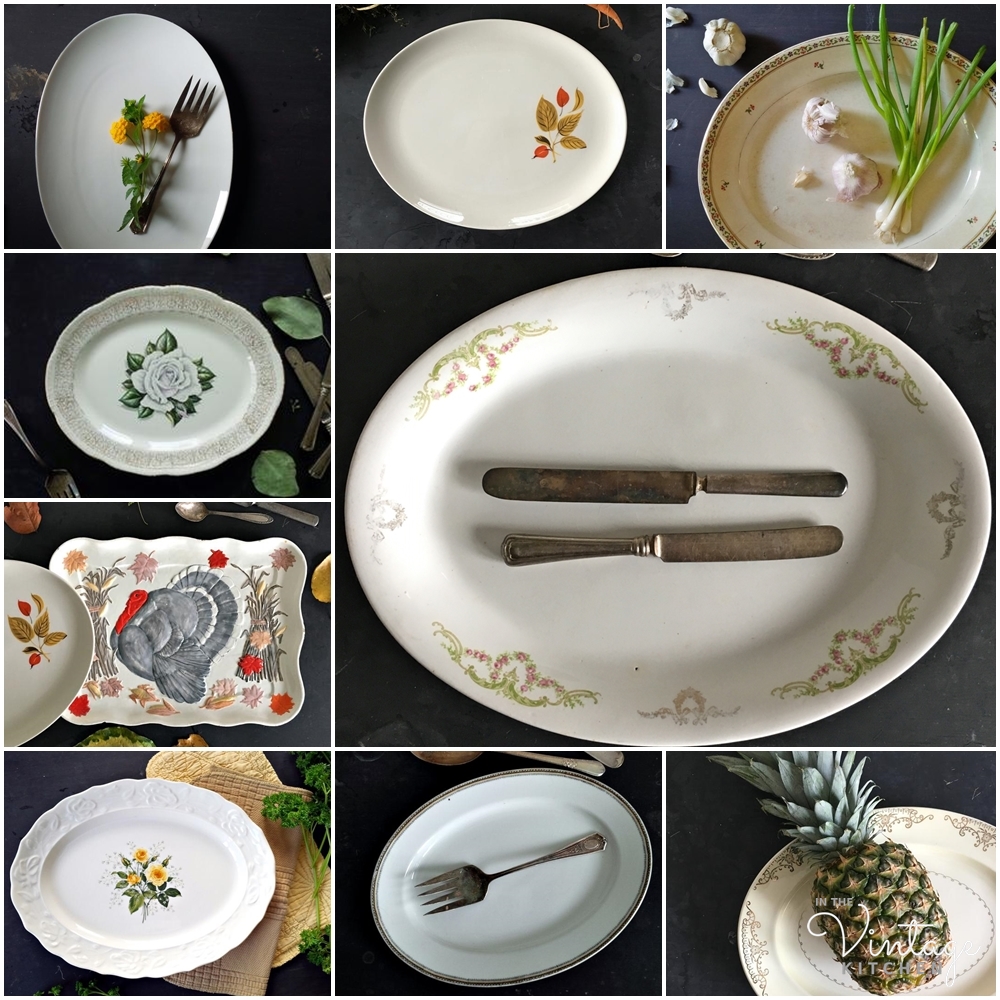
An array of antique and vintage platters available in the shop. They range in age from the early 1900s to the 1970s.
Unlike some other pieces of dishware in the kitchen, a large platter is pretty much essential when it comes to dealing with big food for a big crowd. Big plates are one of those items you can’t really skimp on or try to improvise with something else. I know because I’ve tried. Back in the day when I lived in several tiny apartments in New York City with either no room for a big dish or no extra room in the budget to buy a big dish, I tried all sorts of creative ways to present a turkey.
There was the year of the giant wood board, when the roasting juices ran all over the table. There was the year of serving it in a speckled enameled roasting pan, which I hoped was going to look wonderfully homey but instead looked wonderfully woebegone. There was the year we hoisted the turkey up on an elevated cooling rack, only to have it slip and slide around each time we attempted to carve it. That next year, the turkey was carved in the kitchen and separated out onto several dinner sized plates according to white meat and dark meat, but that lacked all the festive pomp and circumstance of bringing a big bird to the table. Then I found an antique platter on a weekend getaway trip in South Carolina and everything got a whole lot easier. Every Thanksgiving turkey since has come to rest on this two hundred year old dish that originally came from England…
It is my most prized treasure in the kitchen. The cracks and the crazing and the beautiful staining carry so many stories. It has a lovely decorative backstamp and a deep rim which is perfect for holding not only the turkey, but also all the herbs and the onions and the citrus fruit that go with it for presentation. I don’t have to worry about the juice running all over anymore or the bird slipping and sliding as we carve it.
I love this platter so much it gets used for non-holiday meals too like tacos, cheese and crackers, charcuterie, etc. Everytime I use it I think about how I’m adding another layer, another meal, to its 200 years of meals. And that feels exciting. I like to think about what the Victorian Englanders would say about their platter being used as a serving dish for 21st century tacos. I like to think about all the Thanksgiving turkeys that have been presented here on this very platter over the course of two centuries. And I like to imagine the people who used this dish and how they carried it and where they lived. I love that it is not only a platter but it’s also a piece of history from other people’s past lives.
More platters in the shop!
This summer I overheard a conversation between two women at an estate sale who were talking about tableware. One woman remarked on the fact that she had a different platter for every holiday. And that her collection, a mix of vintage pieces and contemporary pieces, acted as the anchor for her table decorating decisions every year. She went on to say how it made party planning easier because she knew what food looked good on which platter and what colors worked together and which didn’t. Her platters helped narrow down the choices of what to make and how to serve it.
Her friend responded by saying that she only owned three platters – all plain white and all in different sizes. She admitted that she used them but didn’t love them and certainly never thought of them as inspiration for her table decor.
The collector explained that it had taken over a decade to find just the right platters but now that her collection was complete and all the holidays were accounted for, she looked forward to celebrating each occasion, anticipating new memories while remembering old ones. The two friends went back and forth about holiday decorations, and other things not related, but the best part of this story comes when it circled back around to the platters and the collector who had one for each holiday. “Mine feel like old friends,” the collector said. “I look forward to seeing them every time I pull them from the cabinet.”
For four months that conversation has stuck in my head and I’ve thought of that woman, the collector, every time I’ve been out curating items for the shop. I think it is her, and all the like-minded dish lovers out that I have been shopping for all along. I love the fact that her platter collection is now a tradition and helps carry sentiment along with food and festivity.
I wanted to help bring that sense of nostalgia to your table too, in hopes that you would find a new friend and a new helper from history. One that would make your party planning and your table setting easier and more interesting at the same time. From now until November 9th, the kitchen shop is hosting a 20% off sale on all platters, antique and vintage. They run the gamut as far as styles and patterns from traditional to boho, plain to fancy, and small to large. A little something for everyone.
As with all the items in the kitchen shop, my greatest desire is to pair old pieces up with new people so that the stories of food and family and history can continue to thrive long into this century and many more beyond. Hope you find a platter that’s suited just for you!
To see a list of all the platters available in the shop click here or visit the serving pieces section here and hunt around yourself. All eligible pieces have already been marked down so you don’t need to worry about entering coupon codes or any additional sales info upon checkout.
Happy September, happy October and happy Autumn everyone! That’s three cheers, two months and one season that has happened since the last post. Oh my. The majority of September around the Vintage Kitchen was spent curating and collecting items for the shop and went by in such a hurry I officially coined it the hi/bye month because that’s exactly what it felt like. Here one minute, gone the next.
October started in the same way, with the same humid temperatures and the same busy schedule. Hot summer weather has hung around with gusto until just a few days ago, making this new season and curating for it, a bit of a challenge. My heart was wrapped up in the idea of Fall – all those colorful leaves and pumpkins and baking projects – but my head couldn’t quite get over the fact that it was still 90 degrees outside during the day and looked very much like August instead of October. New arrivals in the shop over the past 30 days reflect those dueling situations. Fall that feels like Summer.
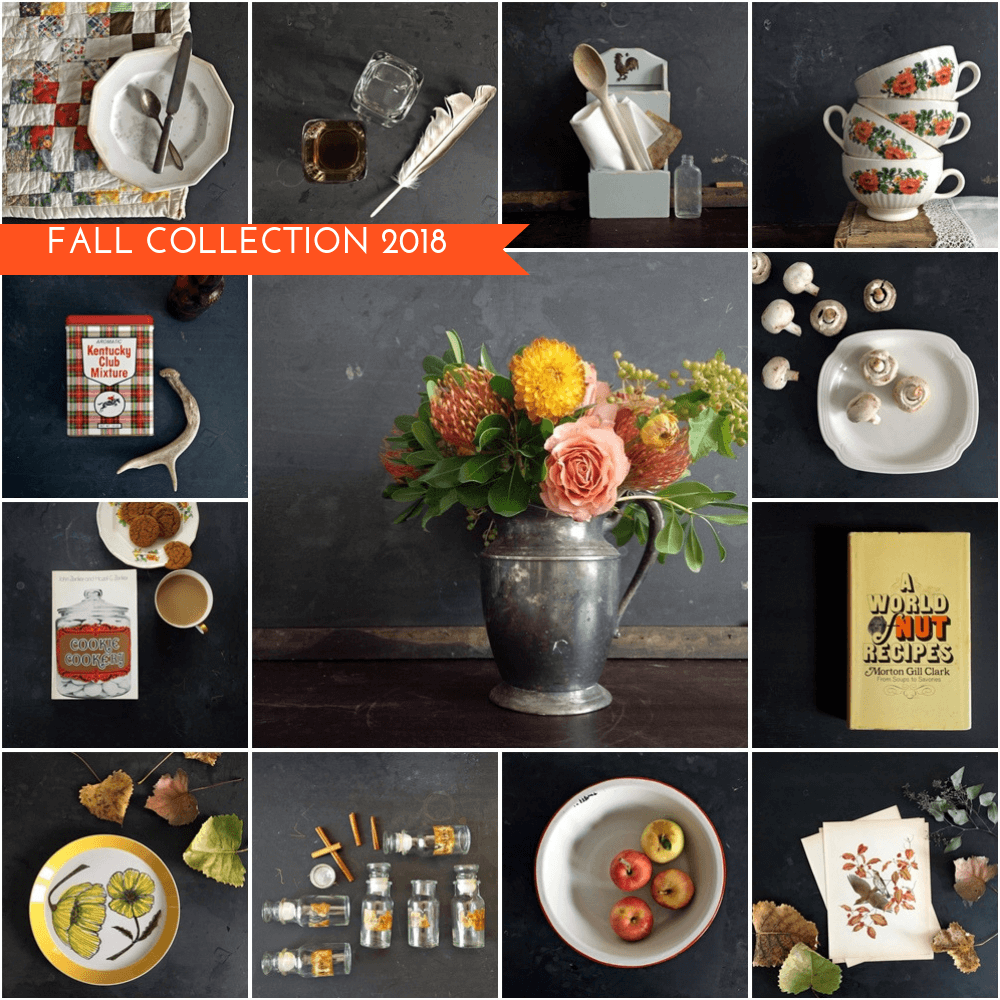
New (old) items that fit into the Fall 2018 Collection are wrapped up in all the traditional touchpoints that ignite sentimental feelings of nostalgia and embrace the cozy, crisp months to come…
Cozy is the name of the game around here. New Autumn inspired vintage (from top left): 1930’s feedsack quilt square; 1970’s Jack Daniels whiskey glasses; vintage wood pocket shelf; 1920’s National Ivory teacups; vintage restaurantware plate, 1960’s World of Nut Recipes cookbook; 1950’s botanical prints; vintage enamelware bowl; 1970’s glass spice jars; 1970’s Mikasa Duet pattern plate; 1960’s Cookie Cookery cookbook; 1960’s red plaid tin.
Vintage spice jars, whiskey glasses, quilt squares, mixing bowls, teacups and fall foliage art prints help set the mood for the season in your kitchen, while homemade cookie recipes, holiday menu guides, and nut-themed delicacies help satisfy the seasonal cravings in your belly.
Some highlights from this collection include this 1960’s whiskey decanter made by the Van Winkle family in Louisville, Kentucky – one of the few distillers legally able to operate during Prohibition…
This 1960’s dinner plate – one of the very last patterns made by Salem American Ironstone in 1967 just before their pottery closed its doors forever…
This vintage quilt square table topper made in the 1930’s from recycled feedsack materials…
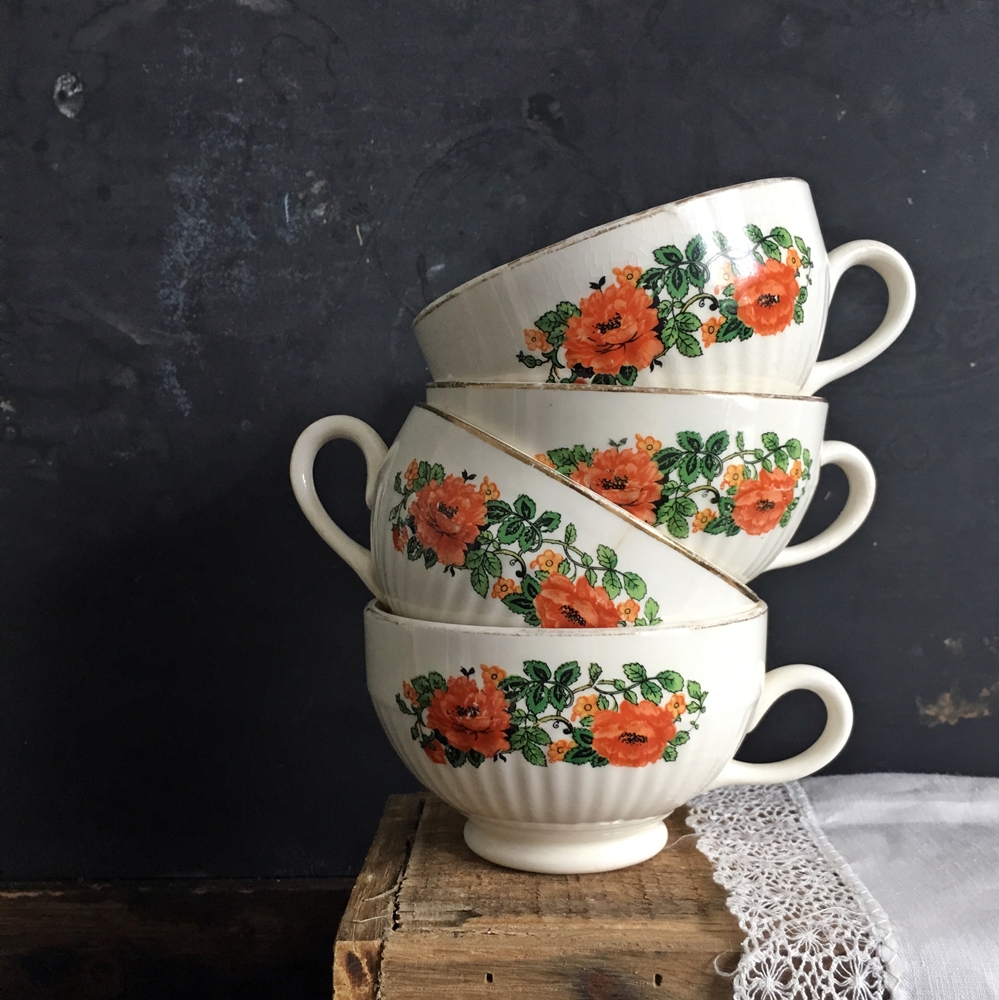
These National Ivory teacups made in the 1920’s during a similiar point in time when women’s roles, rights and liberties were also being redefined…
This 1970’s cookbook – the delicious work of internationally recognized pastry chefs/ husband and wife team, John and Hazel Zenker, who shared over 300 cookie recipes containing old-world charm and European heritage…
New arrivals in the shop that fell under the still-feels-like-summer category include this batch which I call September Skies…
…named for the matching colors found in the pretty sunsets that blushed over the city throughout September and October. They include floral serving pieces, ceramic planters, travel cookbooks and embroidered linens that bloom in thread. It is somewhat ironic how each piece in this collection speaks of all the pretty elements of this past summer but also really reflects the colors in the September/October sunsets…
Perhaps this was Lady Nature’s way of reminding me to be patient – that Autumn would come eventually because it always does one way or the other.
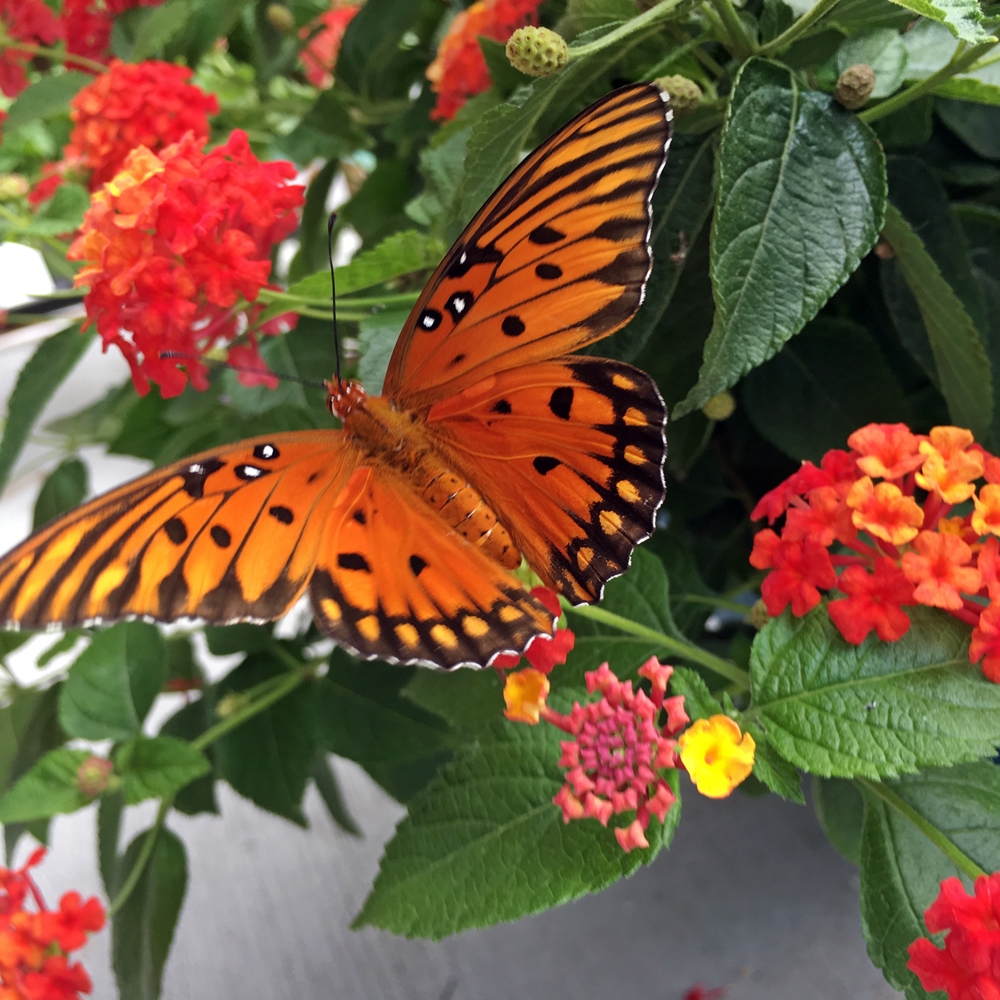
A new pal to the patio this week – butterfly dressed in Halloween colors but feasting on summer flowers!
Whatever weather you are experiencing in your neck of the woods this Autumn – hot, cold, crisp or humid, I hope you are having the happiest of Octobers. And that you are finding beauty in the season and celebrating it in style.
Fall in love with history and its many assorted faces in the shop here. Up next on the blog is a sweet treat recipe for Plum Cake circa 1963, from one of the most famous American cookbooks of all time. It’s a lovely Fall dessert that combines spices, baked fruit and a thin layer of cake that is light in constitution yet heavy in flavor. Stay tuned!
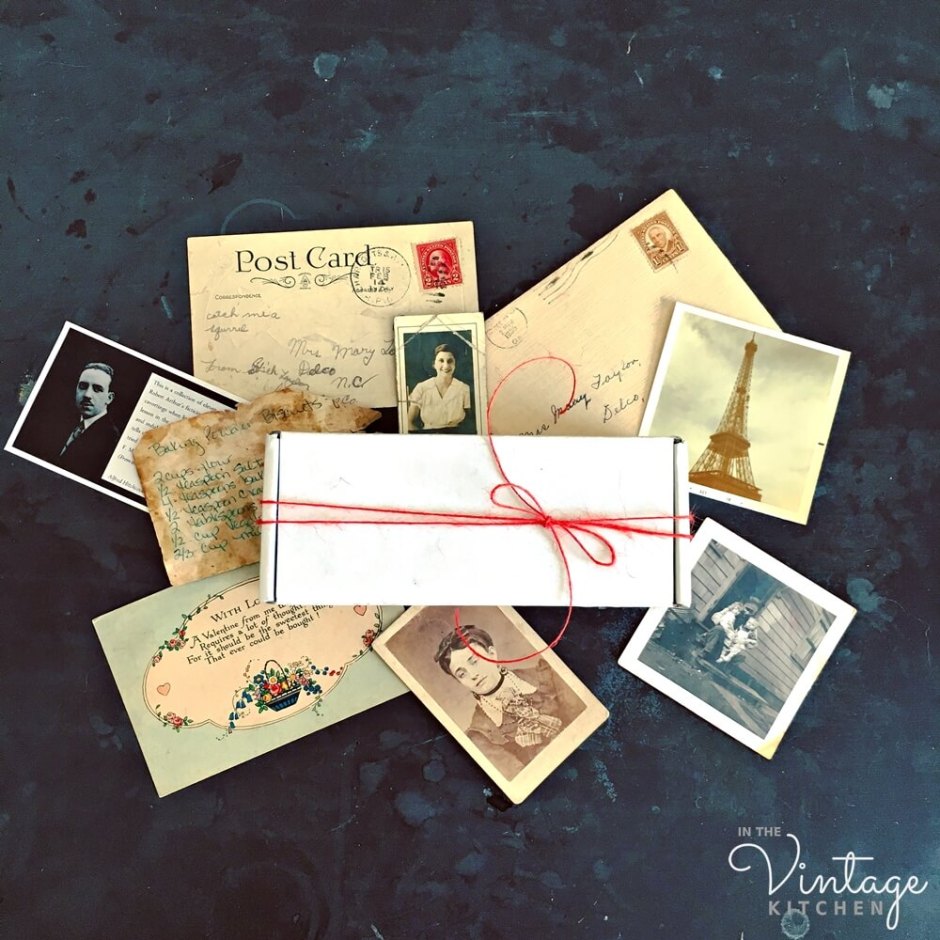
Hello dear readers! The Vintage Kitchen is very excited to announce a gorgeous gift giveaway from an incredible artist inside the white box pictured above! What could it be? What could it be? Here are a few hints…
It will last forever.
It’s made from history.
There is more than one inside.
It is meant for a specific item in your kitchen.
Back in the day, they were referred to as statement pieces – now they add sparkle to any space.
We will keep you stumped until tomorrow when we reveal the contents of the giveaway, which is tied into a lovely interview with the artist that will be up on the blog this week. Submit a guess today as to what’s in the box in the comments section below, and you’ll be automatically entered for your chance to win this magical prize. And please note, you do not have to correctly guess the contents in order to win. A winner will be selected at random from the pool of comments provided. The winner will be announced on Wednesday!
Good luck and happy guessing!
P.S. If you are new to the blog, giveaways in the past are all kitchen themed in one way or another. See what fun items we have given away in the past here and here.
Vintage 1950’s Kingfisher bird illustration by Athos Menaboni
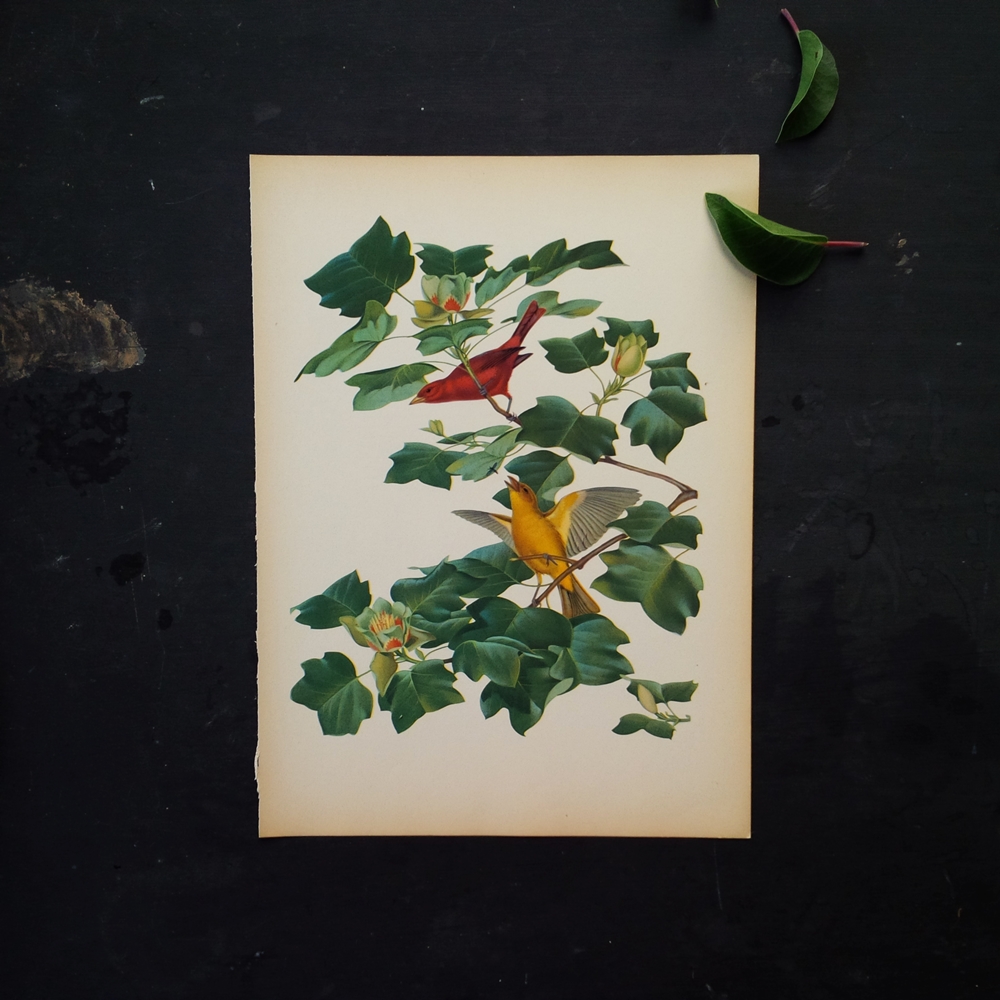
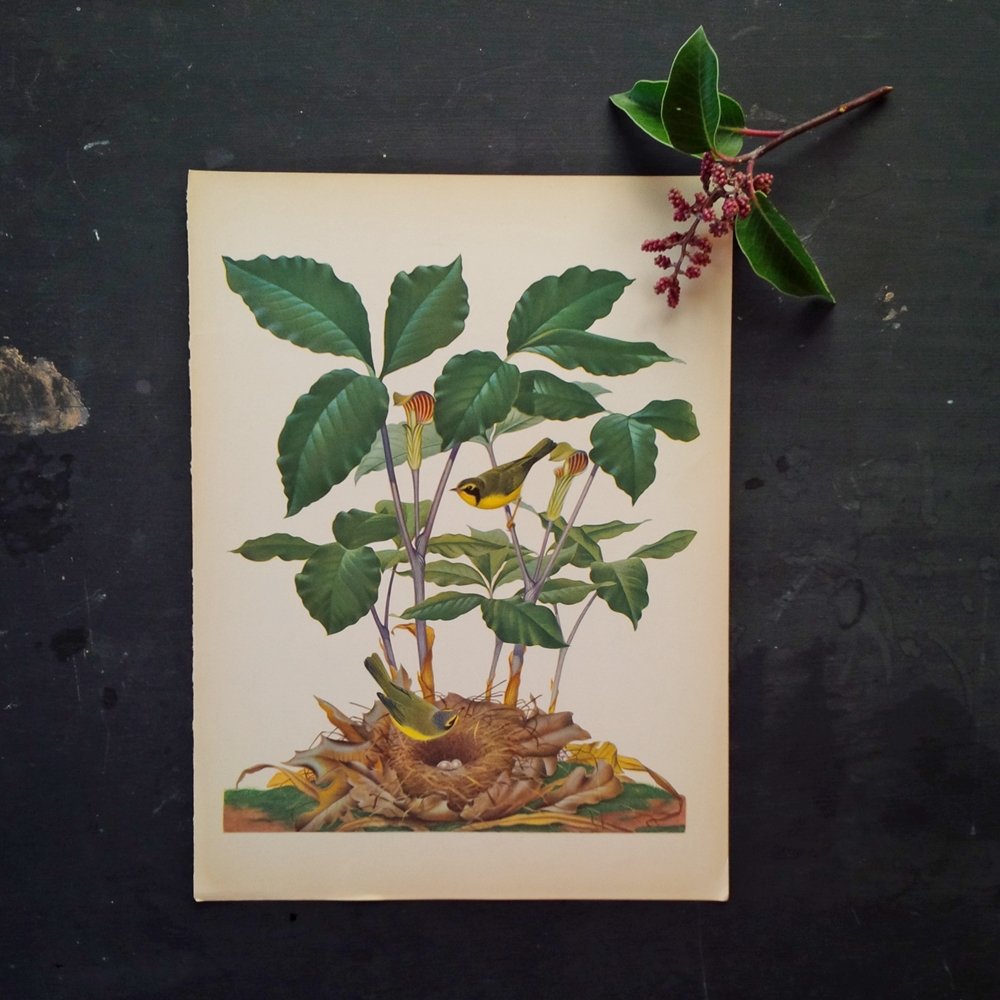
Some time ago, in a dusty section of an old antique shop, I found a broken down book full of beautiful portrait prints. The book was getting ready to be heaved into a rolling bin headed for the recycling center, along with many other books that had been damaged by a recent leak in the shop. Still on the shelf, but tagged for recycling, the fate of the bird book didn’t look good. On the outside, it didn’t have much going for it. The spine was shredded, the cover splotchy with water stains, the dust jacket missing. But on closer inspection, with a flip through its interior pages, a little miracle had occurred. The bird bookplates inside had somehow escaped the water leaks. The images were bright and colorful and perfectly preserved. The birds fluttering among the pages, each depicted in their own natural setting with their mates and their foliage, were too beautiful to be tossed away.
I liked their spiky head feathers immediately and thought they might be part of the woodpecker family. But I was wrong. Do you know what kind of birds they are? Here are a few hints…
They LOVE to fish.
They come from one of the few bird species where females are more colorful than males
A grouping of them is called is called a crown.
They have big heads and even bigger hairdos, not for vanity, but to accentuate their superior skills when diving for dinner.
Could you guess? Do You know it?! If you said the Eastern Belted Kingfisher then you are correct (and a wonderful birder). The kingfishers capabilities at mealtime know no equal. They are one of the best fishermen on the planet and can gather up enough aquatic life to get a fish fry started in a jiffy. Industrious, talented and always ready to get to work on planning the possibilities of their next meal, kingfishers are wonderful kitchen role models, happiest when engaged in the food options around them. See their expressive personality in this fun two-minute video…
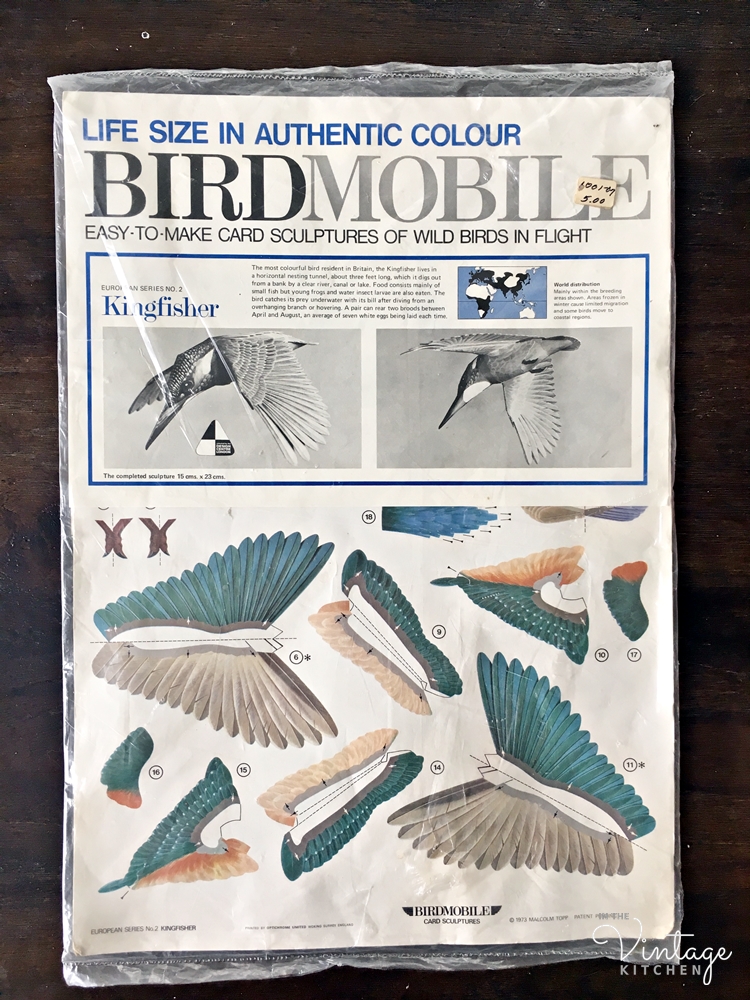
Ever since I learned about these remarkable little birds I have been on the lookout for more of their images and information. Serendipity came calling the other day when I found a vintage 1970’s paper bird model of a kingfisher that had never been assembled.
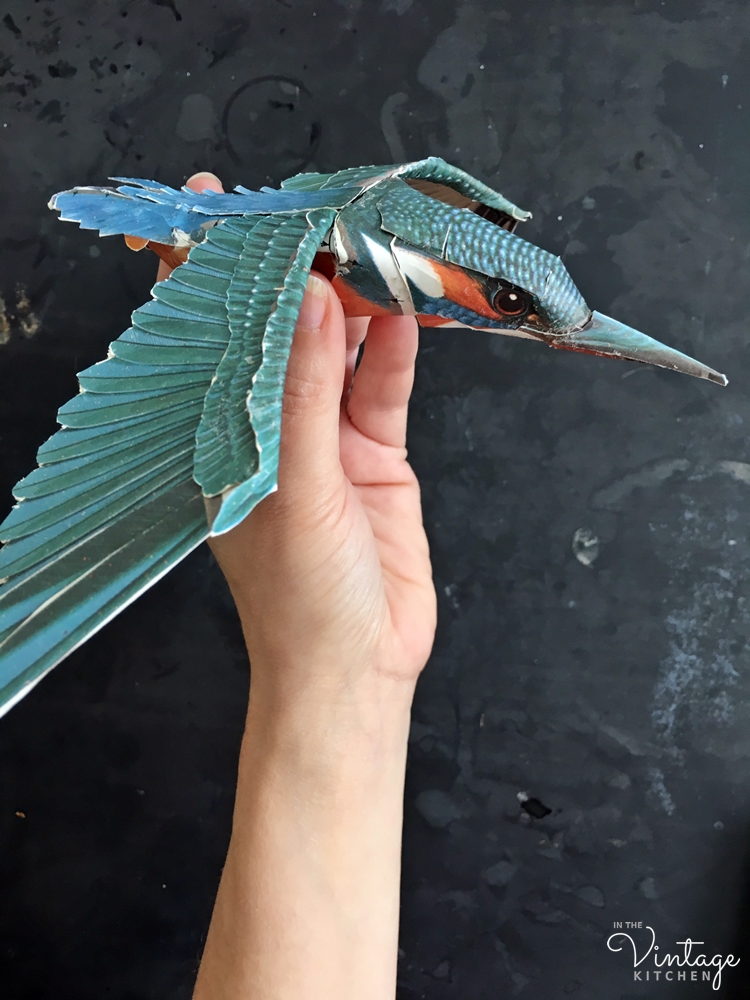
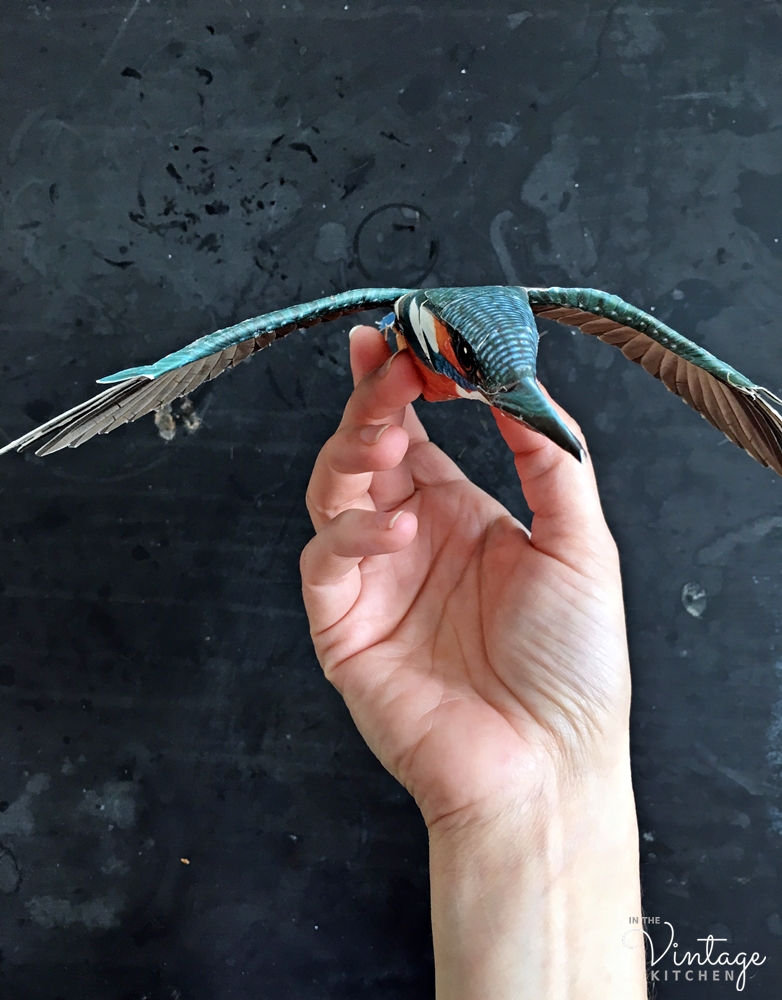
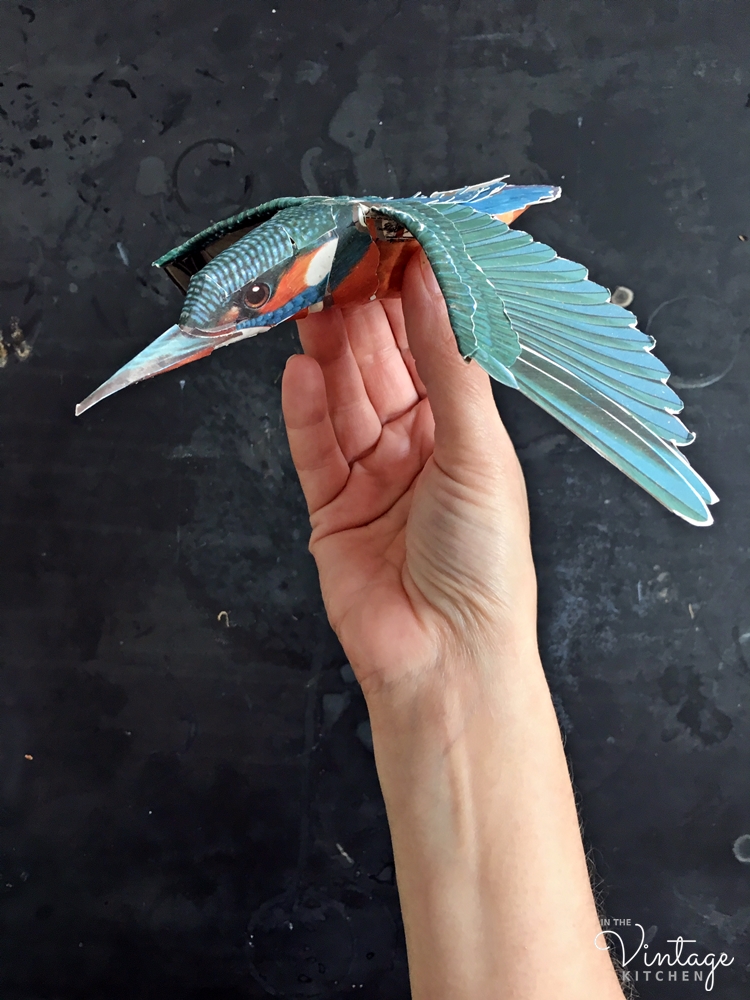
How exciting! A new craft project – our very own paper kingfisher for the kitchen. Last Sunday, Bradley, the Vintage Kitchen’s resident builder of all things fun and functional, got to work assembling the new paper bird. The whole thing took 4 hours to come to life, but we shortened all that time down to just a 27-second video so that you could see how it all came together too…
Now the Vintage Kitchen has its own little symbol of industry, talent and enthusiasm flying around the kitchen and watching over all our cooking endeavors.
Usually, the birds most symbolic of the kitchen are chickens, roosters, turkeys and pheasants but I recommend the kingfisher any day. Aesop once said it is not only fine feathers that make fine birds. The effervescent kingfisher proves just that. Even though they are beautiful their abilities are even more so.
Look for more kingfisher magic coming to the shop this fall and winter. In the meantime, find their botanical print here along with others from the rescued bird book here.
May your next cooking endeavor be as joyful and as enthusiastic as any kingfisher’s catch. Cheers to the birds who make our culinary spirits fly!
















































 In the Vintage Kitchen: Where History Comes To Eat