The Handmade Tablecloth: A 1916 Immigration Story

Every family has some tales when it comes to history and the lineage that connects us to ancestors who lived a long time ago. If we are lucky, they are long-winded stories full of color and detail and a relatable sentimentality that can carry our imaginations far across cities and centuries connecting us to relatives we never met.

Other times, there are family histories that are just one-liners. Snippets of stories punctuated with the sparest amount of context and detail. Enough to give you some ideas about who this or that ancestor might have been, or where they came from, or how they experienced life, but beyond that no other information is known. I’m always most intrigued by these slim snippets of genealogical detail. The ones that aren’t flushed out yet enough to form a complete story with a defined beginning, middle, and end. The ones that could have been recited so many times they are now legend tumbled and tossed through generations yet never gaining new insight or understanding. We have quite a few in my family – a great aunt who was a Rockette, a lost family fortune buried somewhere on the island of 18th century Manhattan, a doughnut shop in the Pacific Northwest still waiting to be found. Those quick glimpses into all types of family biography are ripe for more storytelling and a deeper understanding of the experiences that makes up the unique histories of American lives.

In today’s post, we are sharing a 100 year-old-family story brought to the Vintage Kitchen in the form of an heirloom. It did not come with one of the long-winded stories like we mentioned above, the ones full of color and life and detail. Instead, it falls into the latter category. The opposite one. This heirloom came with just a few facts. Vague yet weighty snippets of a story that lightly scratched the surface of a much larger experience.

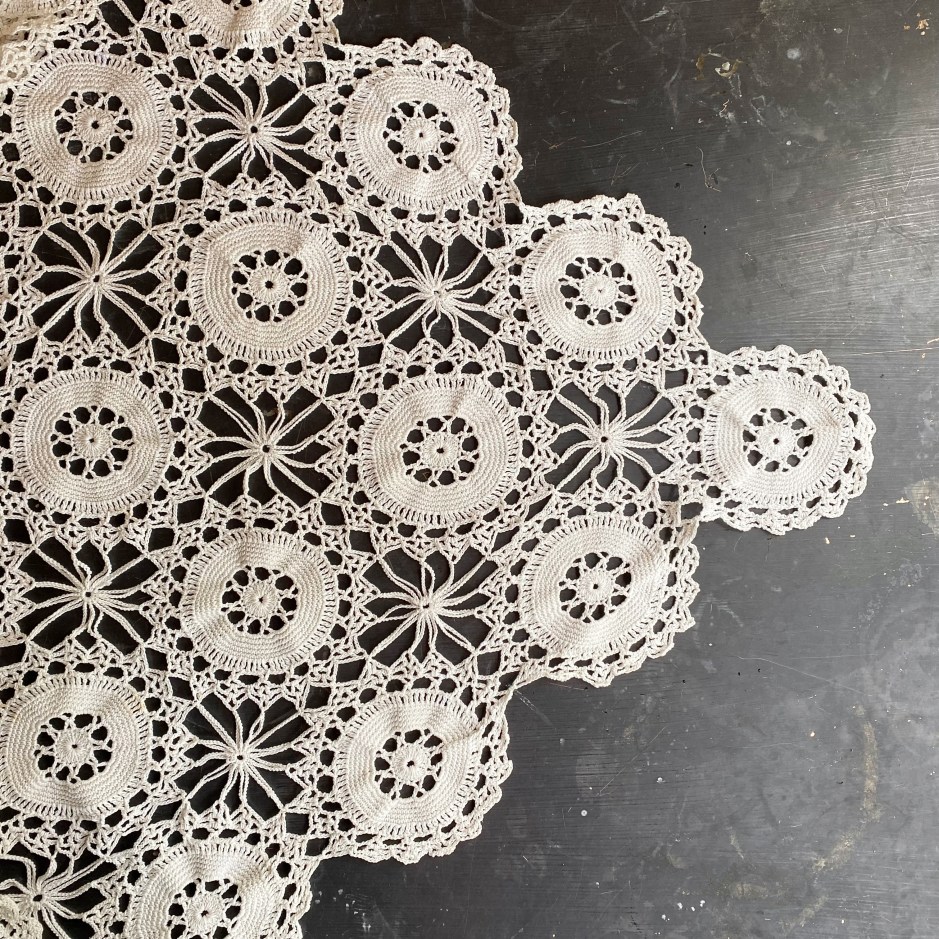
It starts with an antique tablecloth. Folded up it weighs just over a pound and a half. It’s delicate but also strong, with a heft to its weight like rope. Featuring a hand-crocheted pattern of circular medallions and spider-like stars, it’s executed in thread that is the color of bones. In appearance, it’s not unlike a lot of similar tablecloths that were popular during the 20th century, but this one tells a very specific American story that is very fitting for the 4th of July holiday.

Sent by a woman named Linda, who is a vintage collector in New Mexico, this tablecloth was a family heirloom belonging to Ann, her ex-mother-in-law. When passing down items from her life, Ann requested that this particular linen be handled with respect and appreciation. Although Linda admired the beauty of this tablecloth and the story it represented, she contacted the Vintage Kitchen to see if we might be able to give it a new home.

Arriving in the mail shortly after, the cloth came with a note detailing a few facts surrounding its history.

  • It belonged to Linda’s ex-husband’s mother, Ann who had recently passed at the age of 87
  • It was passed down through Ann’s family with the understanding that it came to America by way of an Italian ancestor named Catherine who had traveled by boat from Sicily to Ellis Island in the early 1900s and then went on to Chicago to settle.
  • According to family lore, the tablecloth was handmade while on the boat waiting to dock in the US

Even though I had a dozen more questions for Linda upon receipt of the cloth, and had requested a photo of it’s maker, unfortunately, Linda and I lost touch shortly after the package arrived. So here it was, this pretty antique tablecloth wrapped up in a handful of intriguing little story snippets just waiting for something more to be told about it.

After a bit of genealogy work and a hunt through Ellis Island immigration records, Linda’s ex-grandmother-in-law’s story burst into colorful life just like a 4th of July firework. It begins here on Ellis Island in March 1916…

Ferry boats carrying immigrants from transatlantic steamer ships that initially docked in lower Manhattan arrive here at Ellis Island’s Immigration Station where their paperwork was completed. Photo courtesy of the New York Public Library.

Even though it was the very first day of Spring, it was a chilly 34-degree March day when the Caserta arrived in New York Harbor. Carrying immigrants from Naples, Italy, the steamer ship coasted into the harbor on choppy waters passing the welcoming sight of the Statue of Liberty. Her torch was not yet electrified, it would be another nine months before that happened, but to the arriving immigrants, she signaled a bright future ahead regardless. Aboard the ship was 20-year-old rosy-cheeked, chestnut-haired Caterina from the seaside town of Bagheria, Sicily.

Caterina’s ship manifest.

Most Italian immigrants during the 1910s were fleeing to America to escape economic depravity in their home country. Depending on weather, war, quarantine, detainments, and ship reroutings, the voyage from Naples to New York could last anywhere from twenty-one days to three months. When Caterina came over it was the middle of WWI, and Italy was involved in the battle of Austria-Hungary. Traveling with her older sister Maddalena, we don’t know specifically why these two girls left Italy, but we do know that Caterina paid her own passage and carried $25.00 extra in her pocket along with a crochet needle and a bundle of thread.

Of medium height and good health, Caterina would have no trouble passing through the medical checkpoint before she was allowed access to her new country. Her $25 dollars in savings would not be an issue either as she brought an amount deemed substantial enough by the US government to successfully start afresh in the New World. With intentions to stay with her cousin, Filippo, in the Midwest, Caterina’s final destination was the bustling city of Chicago.

A 1916 map of Chicago IL courtesy of the Library of Congress

According to Linda’s family story, while waiting to dock in New York Harbor, Caterina took her crochet needle from her pocket and put her hands to work. She soothed her anxious nerves by crocheting this 82″ x 52″ inch delicately threaded tablecloth featuring a series of interlocking circles and stars.

I loved this part of Linda’s story for two reasons… 1) I didn’t realize that immigrants had to wait for any extended period of time to gain entry into the US. I assumed that most were docked and processed in the same day. So it was interesting to think that Caterina’s boat could have been detained for a significant amount of time – one in which an entire tablecloth could have been made by hand. 2) The other reason I loved Linda’s story was for the amount of comfort that this tablecloth must have brought. The calming effect of repetitive motion and the focus and attention to detail required to make a circle then a star, a circle then a star intertwining each until there was a cloth over 4′ feet long and 3″ feet wide.

I loved this artistic glimpse into one woman’s life and that I could hold in my hands a tangible item that combined thread with all the emotions of a new adventure – excitement, uncertainty, nervousness, fear, and awe experienced over 100 years ago. I wondered about Caterina, there on the boat, stuffed full with people from her home country all experiencing a cacophony of feelings while she sat calmly making this piece. Was she dreaming of the future table in which she would display her needlework? Did she think about it becoming not only a practical household item for her new home but also a tangible reminder of the journey that she chose to take? Did she know then, that it would eventually become an artifact proving that she, Caterina of Bagheria, Sicily and now of the United States had lived?

The closing of other U.S. ports, the rerouting of ships during WWI, and the threat of communicable diseases could have been some of several reasons why Caterina got hung up in New York Harbor long enough to hand-stitch a linen for her new life. After much research, I couldn’t find anything that would attribute to the delay around that date, but I did learn that four days later, the ship she arrived on, the Caserta, was on its way back to Italy loaded with war-time ammunition for the Italian government.

That led me to wonder if the details of Linda’s family story had gotten a little muddled over the past 100 years. Maybe, Caterina made the tablecloth on the voyage over and finished the last pieces of it while she was waiting to dock. Or maybe in fact, she was on a quarantined boat, arriving in New York days or weeks before the immigration officer officially stamped her papers with the date March 20, 1916. Or maybe she just happened to be a master, faster crocheter that indeed had plenty of ample hours in an ample amount of days to complete such a creative undertaking.

I can imagine that this waiting period at Ellis Island whether brief or lengthy, spent while you are between your old life and your new life, would be a pretty intense time. There is something incredibly marvelous and moving about Caterina documenting her stay in these New York waters under the reassuring gaze of Lady Liberty with her crochet needle and some Italian thread. A simple household item made during a magnificent moment with skill enough to make it last a lifetime. And then some.

Linda’s initial recount of the situation began and ended at Ellis Island, but a bit more research uncovered Caterina’s complete life story. She did make it to Chicago. There she became known as Catherine, the Anglicized version of Caterina, and a little over a year later she met and married Alberto, a fellow Sicilian who had immigrated to America just a few years before her.

Alberto was in the grocery business, successful enough to own three delis in the Chicago area during the early to mid-1900s. Catherine and Alberto had two boys – Anthony and Joseph. Joseph served in the US Air Force during WWII and Anthony in the US Navy. The deli trade was never far from Anthony’s heart and upon return from the war, Anthony followed in his dad’s footsteps and worked in the grocery industry for the rest of his life – first in Chicago and then in California where he opened a deli shop specializing strictly in Italian fare. After Anthony married Ann, a former customer of his dad’s shop back in Chicago, they also had two children – Albert and Diane. Albert a young groom in the 1960s, married Linda, the vintage collector who sent us the tablecloth.

Clockwise from top left: Linda, Albert, Anthony, and Ann. Photo courtesy of Pleasant Family Shopping blog

As for Caterina, she passed away in Los Angeles in 1987, at the age of 92. Living a majority of her life in the US made her geographically much more American than Italian, but she never ventured far from her Italian roots nor the chance to pass on her cultural pride to her boys who then passed it on to their families. A part of all that was this tablecloth. The heirloom made en route from old Italy to new America. The cloth that wove together two parts of one woman’s life. A woman who chose to settle in the United States, to become a citizen, to raise a family of boys who then fought for the US during WWII and then saw her children’s children grow the branches of their family trees in America all the while contributing to the vibrancy of our country’s dynamic landscape. Caterina’s story is a small leaf on the big tree of immigration, but I felt so honored to be able to tell her story and attach it to the tablecloth, her tablecloth, that still lives bright and beautiful in the world today.

I couldn’t ever find a photo of Caterina, so I wrapped her tablecloth around a mannequin and photographed the two together. It’s the closest I could get to visually communicating that the cloth was made by an actual person. Hopefully one day, I’ll come across a photograph of Caterina so that we can know her face. Until then, this portrait will have to do.

Cheers to celebrating all the immigration stories that make our country culturally vibrant this Independence Day. To slim snippets, that form big stories. And most importantly, cheers to Linda and to Ann and to Caterina for sharing their family’s American experience. Important stories lie in everyday objects.

However you choose to commemorate the 4th of July, we hope it’s a memorable one!

Special note: While researching this post, I came across two pieces of media that were especially insightful when it came to understanding the very human and very humbling experience of immigrating to America.

An oral history interview with Italian immigrant Filomena Latta…

https://heritage.statueofliberty.org/oral-history-library

A tour of the Ellis Island Immigration Museum with National Park Ranger Peter Urban…

Fourth of July Baking: A German Dessert of American Symbolism and Celebrity

In 1986, there was a recipe. In 1956, there was a woman related to the recipe. In 1886, there was a statue related to the woman who was related to the recipe. In 1870, there was a model related to the statue who was related to the woman and the recipe. In 1865, there was a sculptor who was related to the model who was related to the statue who was related to the woman who was related to the recipe.  And so begins the story of Week 18 in the International Vintage Recipe Tour 2020.  Herzlich Willkommen! Welcome to Germany!

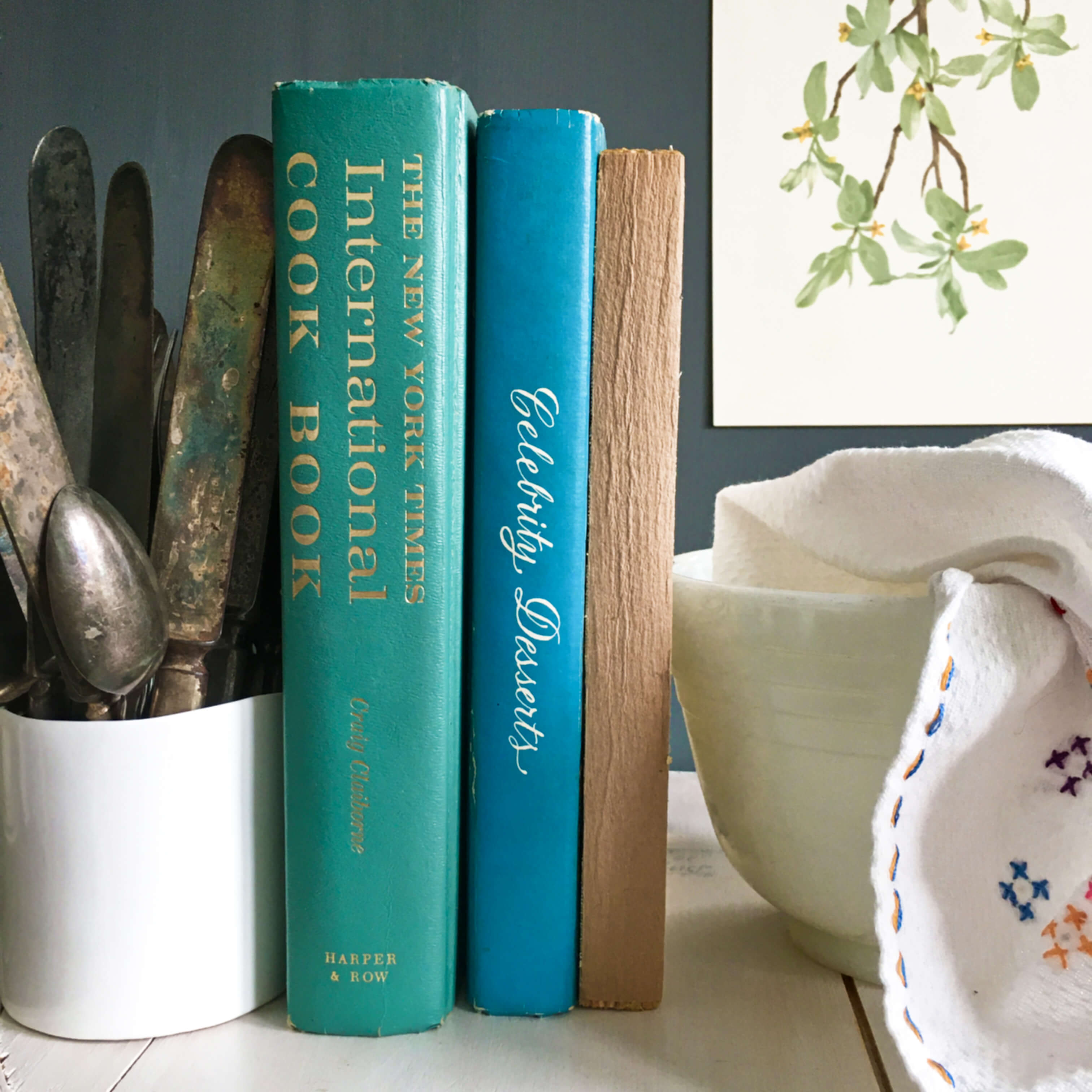
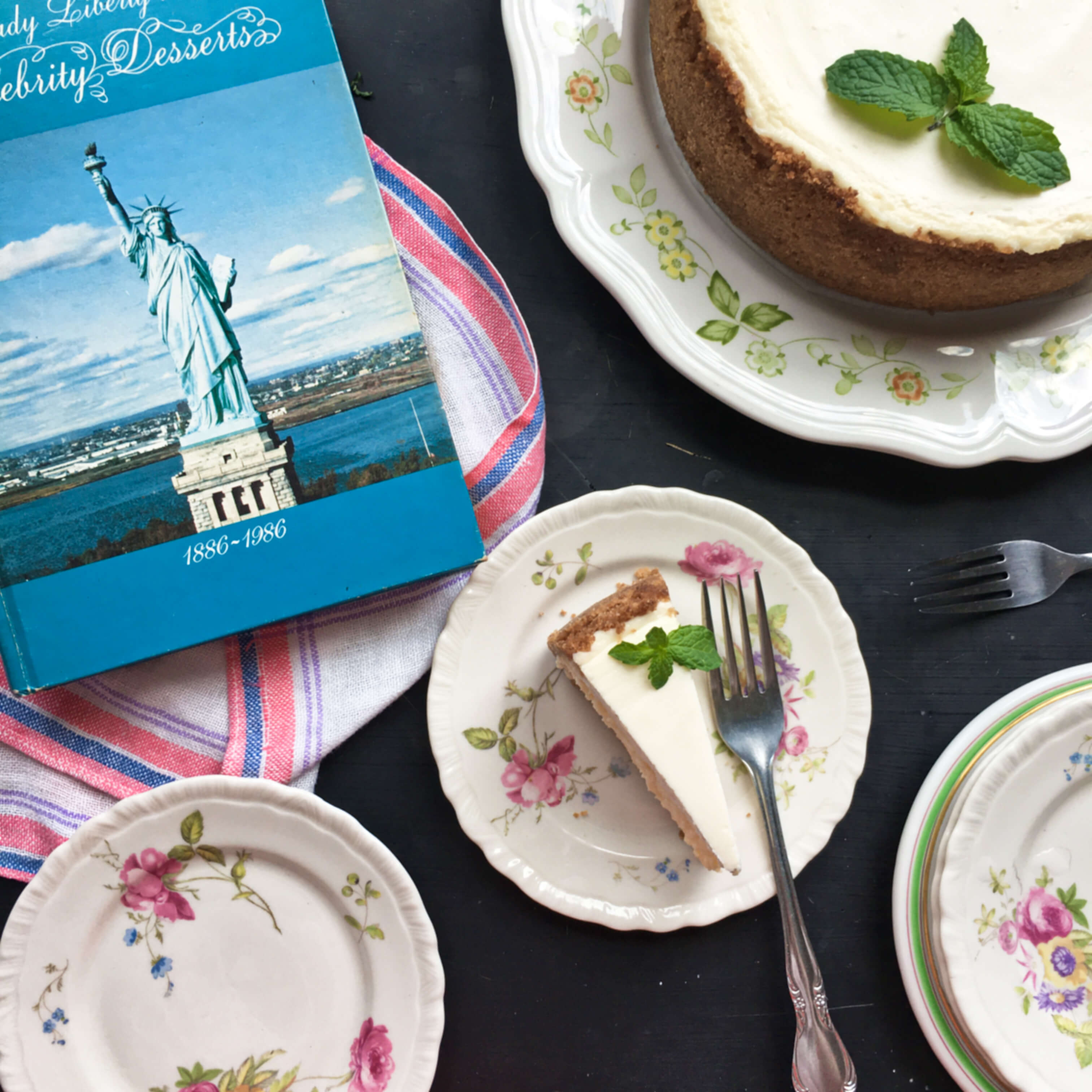
This week there is a little cooking surprise. In today’s post, we are diverting slightly from the original Tour plan and preparing a recipe, not from the New York Times International Cook Book, which we have been following since January, but from another vintage kitchen book altogether. This guest cookbook, Celebrity Desserts, was published in 1986 for a very particular reason and hails from the great state of New York just like our treasured International Tour cookbook. It also happens to fall right in line with this week’s featured destination of Germany and  the upcoming Fourth of July holiday.

All that being said we are off on quite a fun adventure today! It is a journey that involves not only German history but also French and American history too. It involves family cooking, patriotic holidays, and international icons of hope, opportunity, and hospitality -three things my family and I like to celebrate on the 4th of July. And then there’s the actual recipe itself. One that is luxurious without being fussy, a cool treat in hot weather, and so popular around the world that almost every country on the planet has their own particular version of it.

Initially, this trip to Germany via the kitchen was going to fill Week 18’s post with sights and stories of Sauerbraten,  an heirloom beef recipe that takes three days to prepare.  Excited to explore a very traditional method of making a famous German food, I hinted at things to come at the end of the Paris post. Unfortunately, I ran into some roadblocks.

In our unpredictable time of pandemic cooking, it seems that sourcing a grass-fed beef bottom roast that cost anything less than $50.00 and that was anything under 5lbs in size turned out to be a feat of great impossibilities.  Since the recipe only called for 3lbs of beef, both the size and the price suggested that maybe this lovely, long cooking project of authentic, homemade Sauerbraten might just be a bit too much to tackle at the moment. In an effort to remain flexible these days and simply go with the flow of what is available at the grocery and the market, the heirloom Sauerbraten will be rain checked for a later date. Hopefully, we can revisit this recipe again at some point further on in the year. By that time (fingers crossed) beef may be more plentiful and a bit more economical.

In the meantime, Celebrity Desserts called from the cookbook shelf.  Saving the day and the country fare by offering a wonderfully delicious creation of German heritage, the dessert we are making today, thanks to our guest cookbook, comes along with its own very unique history. One that embraces German, Italian, French, and American ancestry as well as celebrates a special lady we all know and love.  I’m so pleased to present our featured German dessert this week, Bavarian Cheesecake.

Cheesecake is a dessert uniquely prepared in a variety of ways depending on what part of the globe you call home. It is one of the few cakes that can be served baked or unbaked. It can be frozen, refrigerated, or served at room temperature. It can be made entirely of ricotta cheese or entirely of cream cheese. It can be slathered in sauce, dolloped with fruit, drizzled with chocolate, or dotted with nuts. It can be stuffed with spices, herbs, vegetables, or just about anything under the sun. And it runs the gamut as far as taste from sweet to savory to something in between. With such an opportunity for culinary creativity,  there’s no shortage of recipes when it comes to cheesecake. In just under .6 seconds Google will deliver over 215,000,000 cheesecake-related results. Narrow it down by specific ingredient and the field gets smaller but still contains hundreds of thousands of options. But the recipe we are making today stands out from all these others. This one has a very unique lineage that sets it apart from all the other cheesecakes and all the other variations.

As the cookbook title denotes, it involves a celebrity. But not one that you might suspect. This famous figure has never had her own cooking show, nor written a book, nor sang a song. She’s not the ruler of a country or a corporation (though her values would certainly be welcomed!). She didn’t invent a cure for a disease nor end world hunger nor paint a masterpiece. She wasn’t a dancer or a designer or a technology wizard. But she has been featured in her share of movies and she has been the subject of photographers for decades.  In order to get to the heart of this mystery woman’s famous roots, let’s begin at the ending, by tracing the recipe backwards.

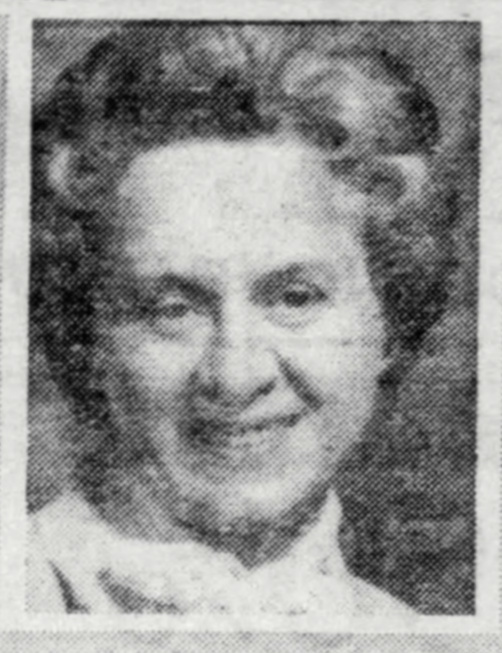
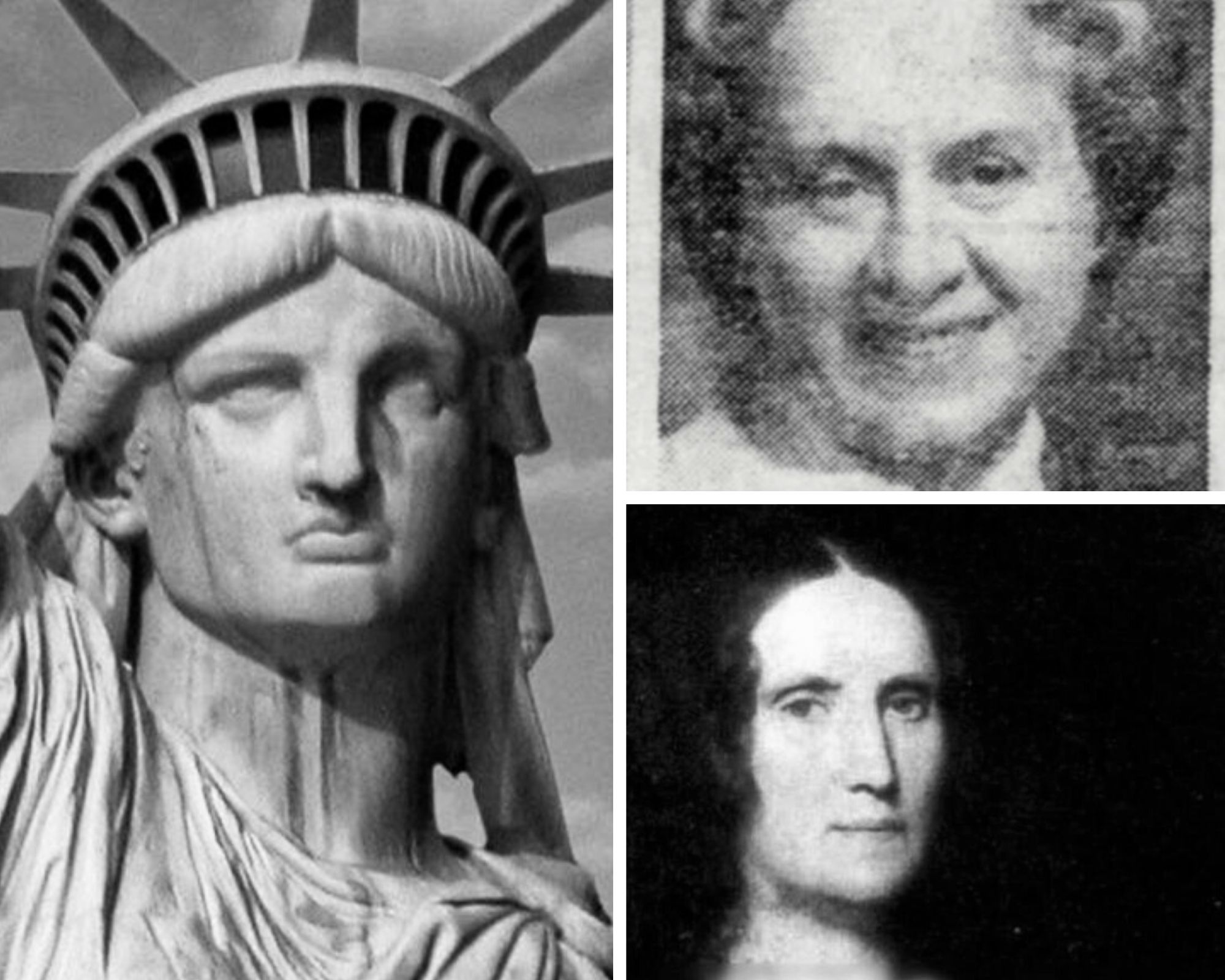
It all starts with this face…
Do you recognize her? Most likely, probably not. She’s a pretty obscure reference in regards to her famous connection. But maybe the following info will help spark your curiosity or at least ignite the musings of your mind. Her name is Dorothy.  This photo of Dorothy was taken in the 1980s, part of a follow-up story from the 1950s when she had first become the topic of newspaper headlines. At the time this photo was taken, Dorothy lived in Boise, Idaho but the event that made her newsworthy in the 1950s revolved around something that happened in New York City. Any guesses as to who she might be? If not, here’s another clue…

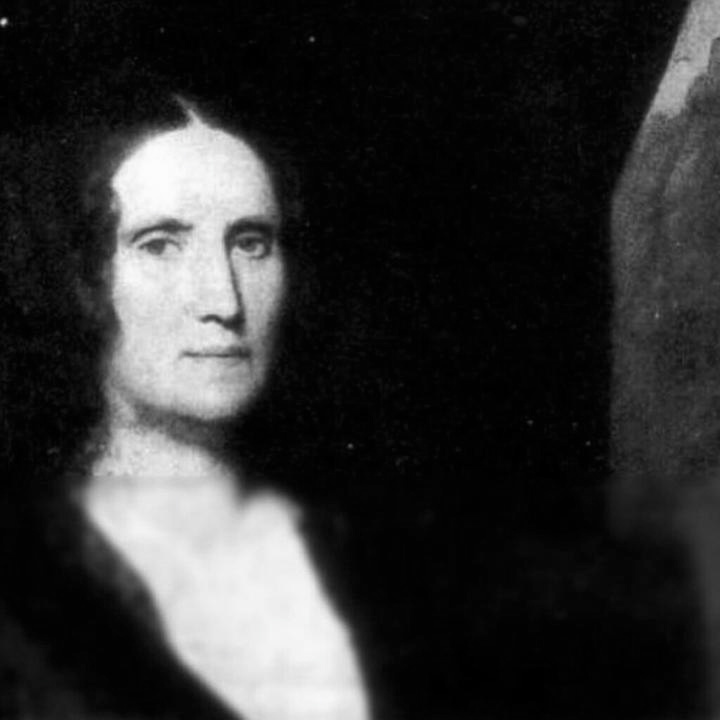
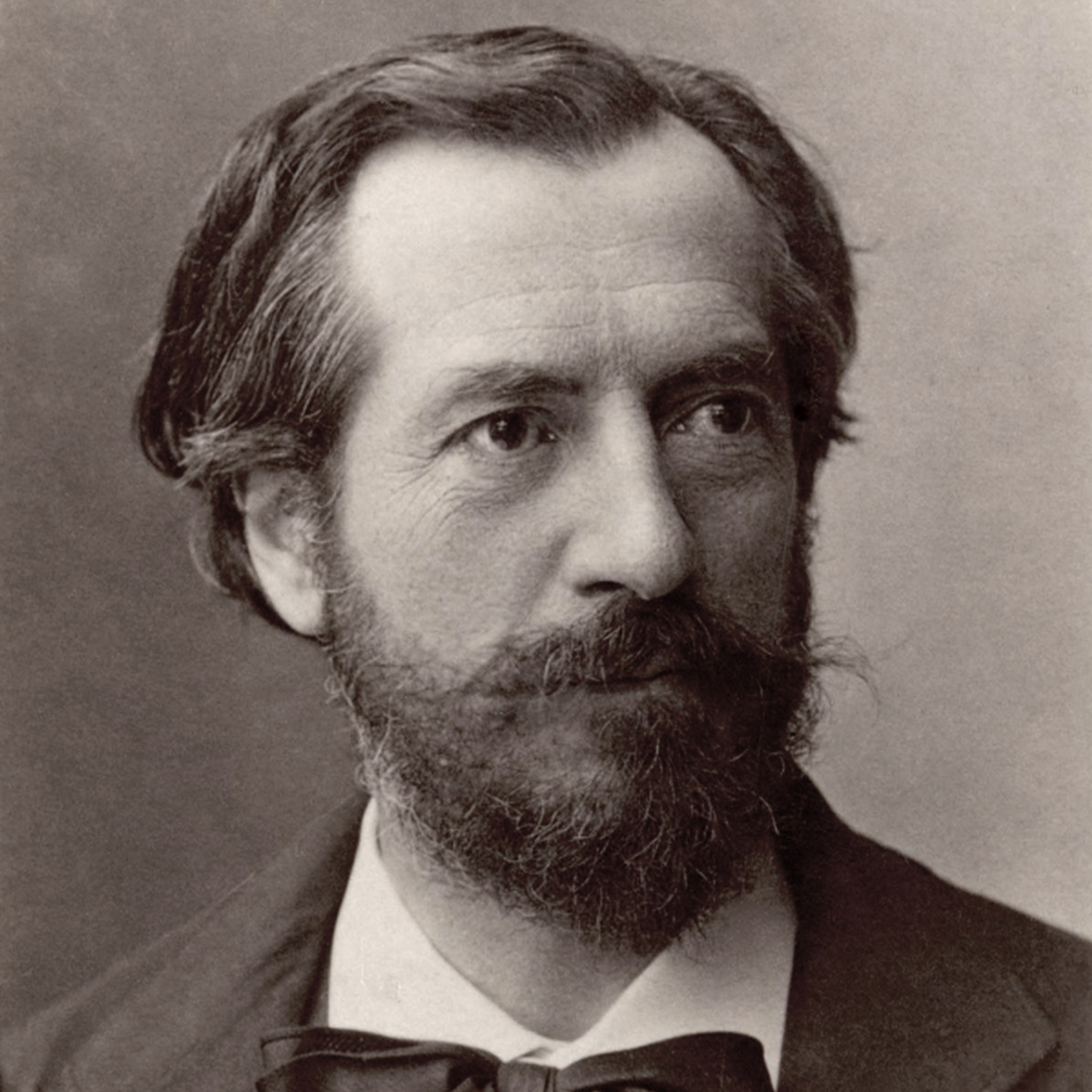
This is Charlotte. She is related to Dorothy. Can you see any resemblance?  Charlotte was born in 1801 in the Alsace region of northern France. She married into a French family with the last name of Bartholdi. Charlotte had a son named Frederic who became an artist. This is Frederic…

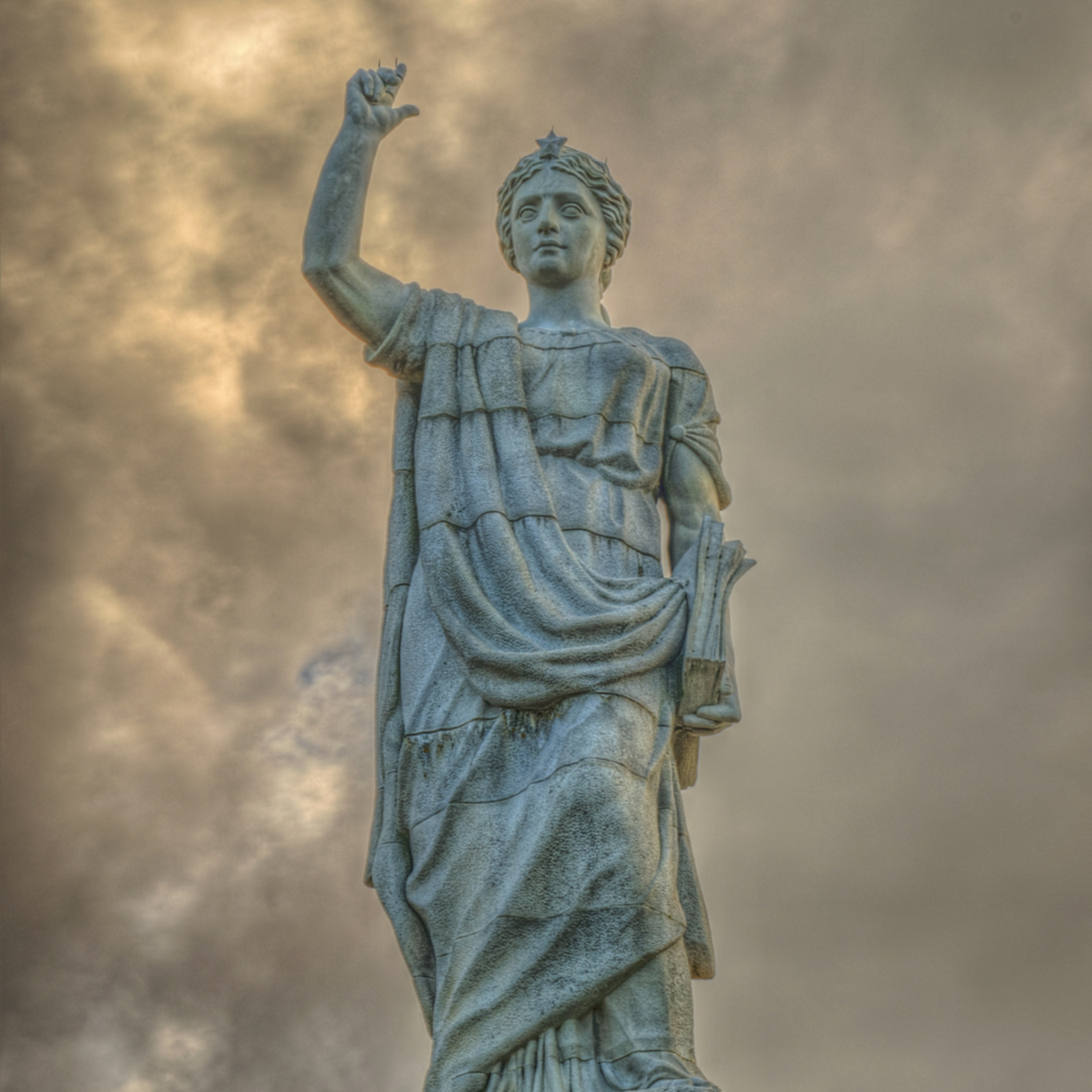
Frederic dreamed of designing an enormous statue. He wanted to build it in France, but display it in America. The statue was going to require a lot of money to build, so he came to the United States in the 1860s ready to talk up his idea and gather some investors. As it turns out, Frederic’s concept sounded an awful lot like another American statue that was already in the works and slated for display in Plymouth, Massachusetts. That statue would eventually be called the National Monument to the Forefathers and looked like this…

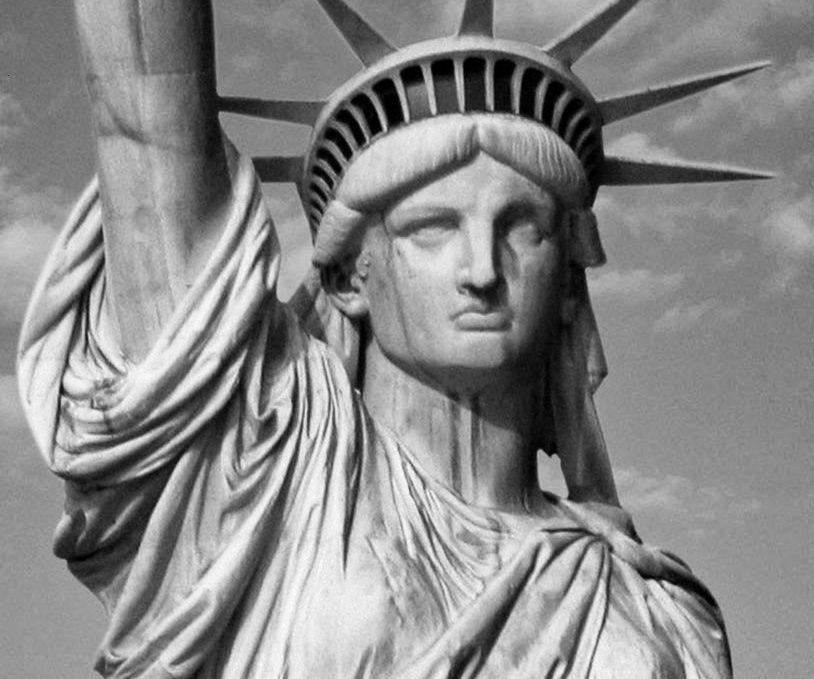
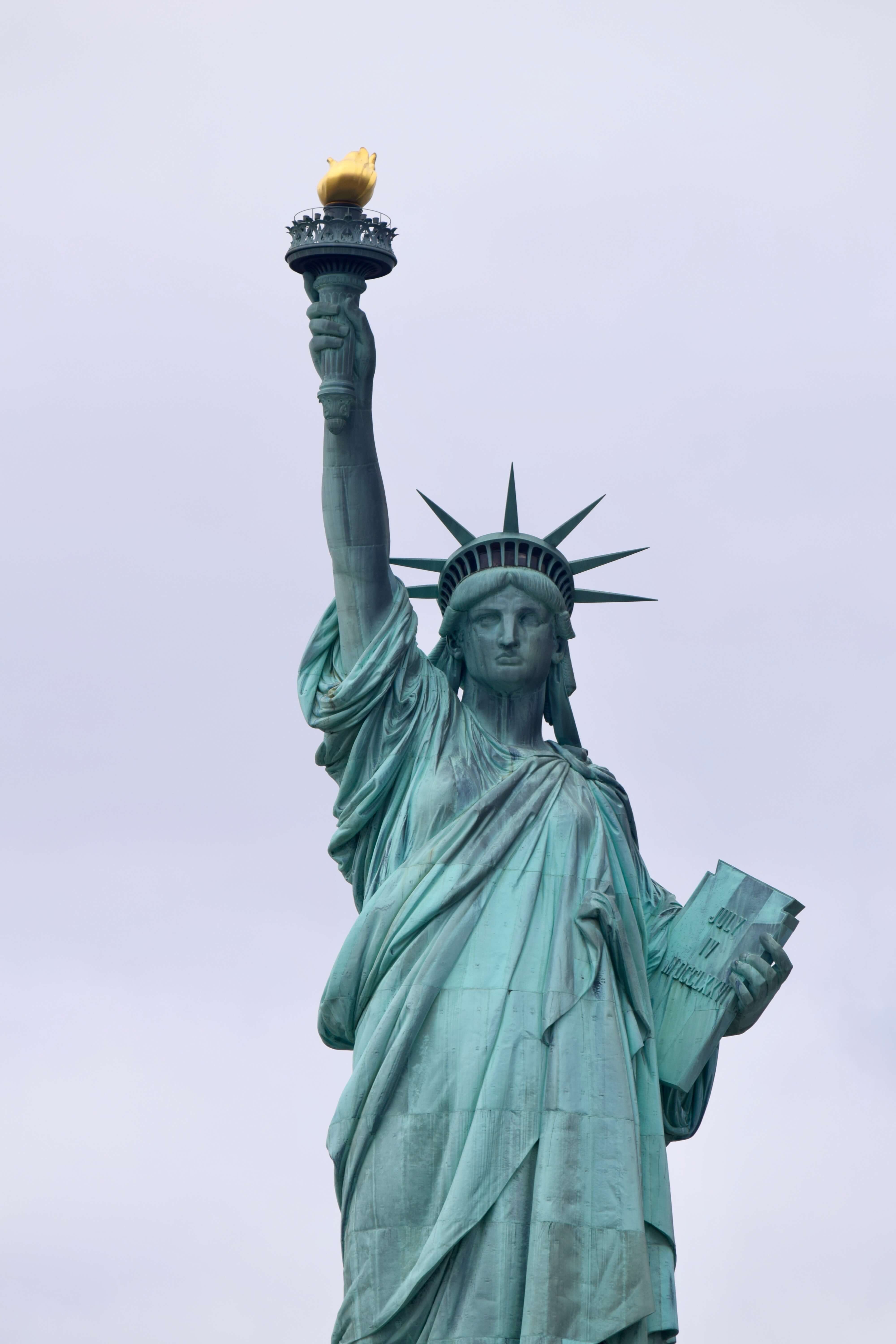
Undeterred by this similarity, Frederic went back home to France and carried on with his own statue anyway. He raised money in his own country with the help of his mother and the generosity of local French citizens including school children. Eventually, Frederic’s dream was realized and his statue came to fruition. Off on a boat, it went to America. This is what he created…

Now back to Dorothy and Charlotte. Charlotte, Frederic’s mother, was the model for the face of the Statue of Liberty. Dorothy is Charlotte’s great-great-granddaughter.

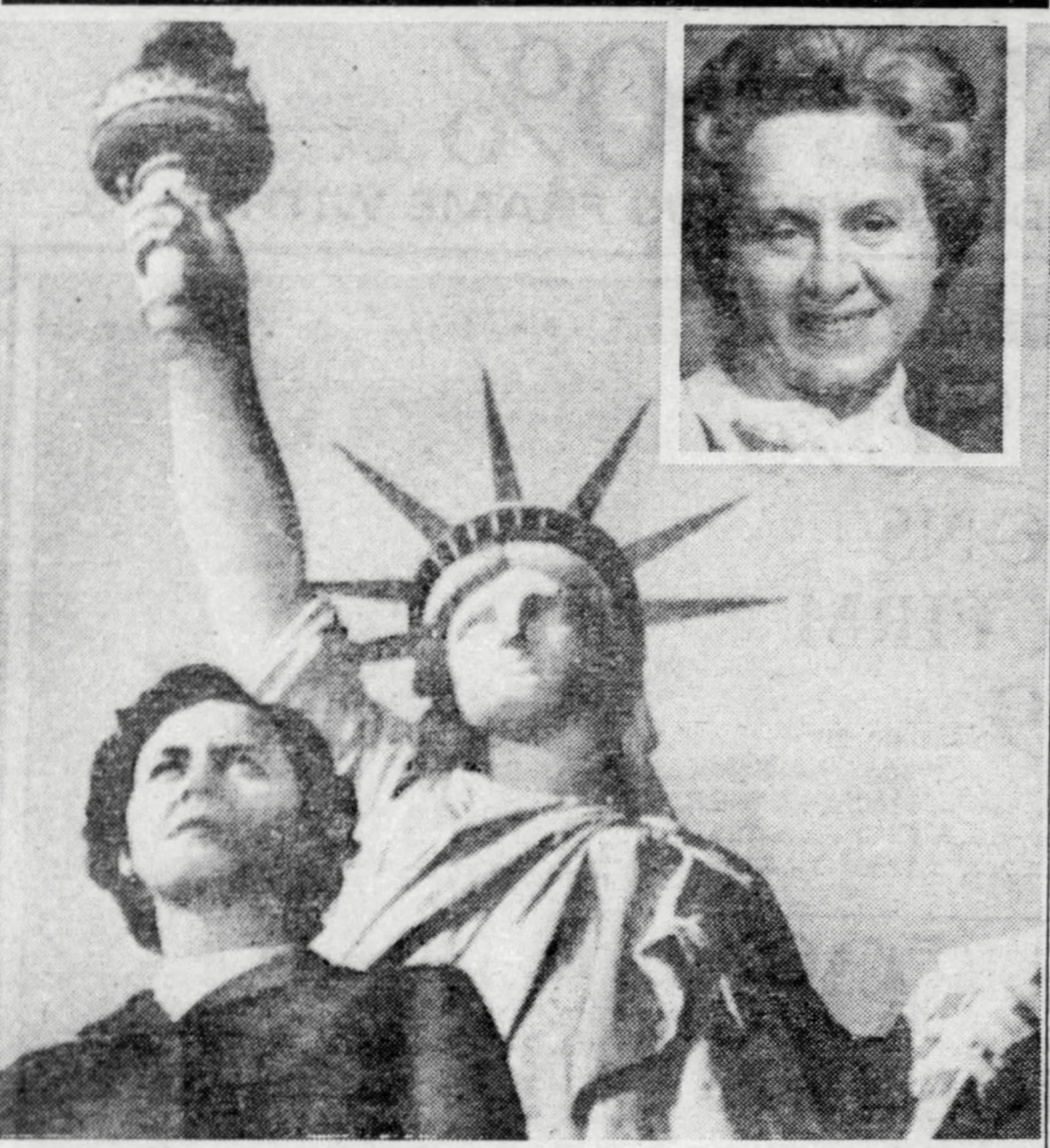
When Dorothy was photographed in New York Harbor in the 1950s in front of the Statue of Liberty, everyone remarked on their striking similarities…

Dorothy Franks photographed in 1956 with the Statue. The inset photo was taken in 1984. Images courtesy of the Daily News.

Dorothy was related to Charlotte both via direct lineage and also by marriage, as she married her second cousin who was also related to Charlotte by blood. Today’s recipe for Bavarian Cheesecake comes from Dorothy’s kitchen.

The recipe was submitted for inclusion in the Celebrity Desserts Cookbook in 1986 by Dorothy’s granddaughter Linda, who lived in Washington state (oddly enough, in the same small town where my mom grew up). The cookbook was compiled by the Albany NY Council of the Telephone Pioneers of America, a social service organization founded in 1911 that was inspired by Alexander Graham Bell’s invention of the telephone. The Pioneers produced this cookbook as a fundraiser campaign to raise money for much-needed repairs to the Statue of Liberty. The Council collected favorite recipes from a variety of kitchens all across the country including famous ones (a former First Lady, well-known figures in the performing arts, iconic hospitality venues, etc) as well as regular home cooks, Pioneer members, and telephone industry employees who had culinary crowd-pleasers to share.  Undoubtedly Linda’s recipe and the provenance from which it came must have been the icing on the cake (no pun intended!) when it came to the whole cookbook. With just five degrees of separation from Linda’s kitchen in Bothell, WA to the Statue of Liberty in New York Harbor, this cheesecake recipe instantly added a whole new dynamic element to the American food scene and to celebratory Fourth of July fare.

The lineage of this recipe doesn’t stop with the ladies though, nor the French nationality. It’s called Bavarian Cheesecake because it hails from Bavaria, the state located inside Germany that is known for its fairy tale castles, picturesque scenery, and a handful of typically traditional German foods including beer and sausages.

Charlotte’s family were German protestants in Alsace and Dorothy’s grandfather was born in Italy. So the Bartholdis themselves were a multicultural bunch, just like the immigrants who would come to meet Lady Liberty in New York.  Eventually, Dorothy’s grandfather left Italy and immigrated to America in the late 1890s. When he floated in on the steel grey waves of water in New York Harbor, he passed under the coppery gaze of his grandmother Charlotte. What a surreal experience that must have been. In a Daily News interview published in the 1980s, Charlotte said the family was very proud of their connection to Lady Liberty and that her dad, when she was a little girl would tell stories about Charlotte and Frederic’s connection to the statue.

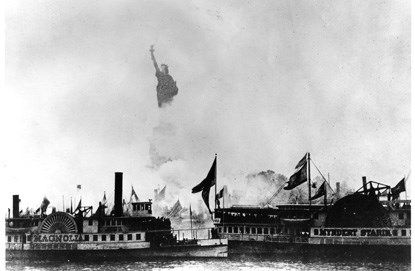
Dedication day !o The Statue of Liberty as photographed on October 28, 1886. Image courtesy of nps.org

Alongside Dorothy’s Italian grandfather, came boatloads of German immigrants. Of the 12 million people that came through Ellis Island from the 1890s – the 1950s, 1/12 of them were German. Because of that large influx from The Land of Poets and Thinkers (that is Germany’s nickname!), one in every four Americans today is connected via German ancestry.

I always think it is fascinating to learn about other people’s immigration stories. It’s so interesting to hear about the situations that brought them to America and to hear about what they encountered when they arrived, and where their dreams and aspirations took them. In Dorothy’s case, her Bartholdi ancestors immigrated to the U.S.  to work in the gold mines in Colorado and to set up shop as stone masons and funerary art designers. In a nutshell, that’s the story of how the Bartholdi family came to America. And how they made a new life for themselves, and made a family, and then made Dorothy and then Linda. And of course all that time they made the cheesecake.

If I could take poetic license with this recipe, I’d like to rename it  Bartholdi’s Bavarian Cheesecake, so that it never lost the lineage of the ladies and their connection to Liberty. Like the nervous anticipation of first-time immigrants to America, this was my first time ever making cheesecake. I must admit I was a little nervous. I had always thought that cheesecake was a very difficult thing to make  – something that took a long time and a lot of effort. Maybe some cheesecake versions are that way, but I’m happy to say that this recipe couldn’t have been easier. It did take a little bit of time – between the chilling of the crust and the two different oven bakes plus the cooling and the overnight rest in the fridge, but certainly, it wasn’t a three-day affair like the Sauerbraten would have been, and it wasn’t expensive to make.

Chalk it all up to the fact that it feeds a crowd, looks lovely on a plate, and lasts in the fridge for days and days and days, I think this Bavarian Cheesecake might just be the new favorite of the International Vintage Recipe Tour so far.  And that is really saying something. Australia’s Queen Mother’s Cake from Week 2 of the Tour is still receiving accolades by blog readers and eaters all these months later. So I’m especially excited to hear what you think of this latest addition to our culinary book of adventures. When we get to the end of the year and the end of the Tour, it will be fun to vote on the most favorite food made along the way. But for now, we have Bavaria and baking to get to…

Bartholdi’s Bavarian Cheesecake

Makes one 8″ inch cake or 12 Servings

For the crust:

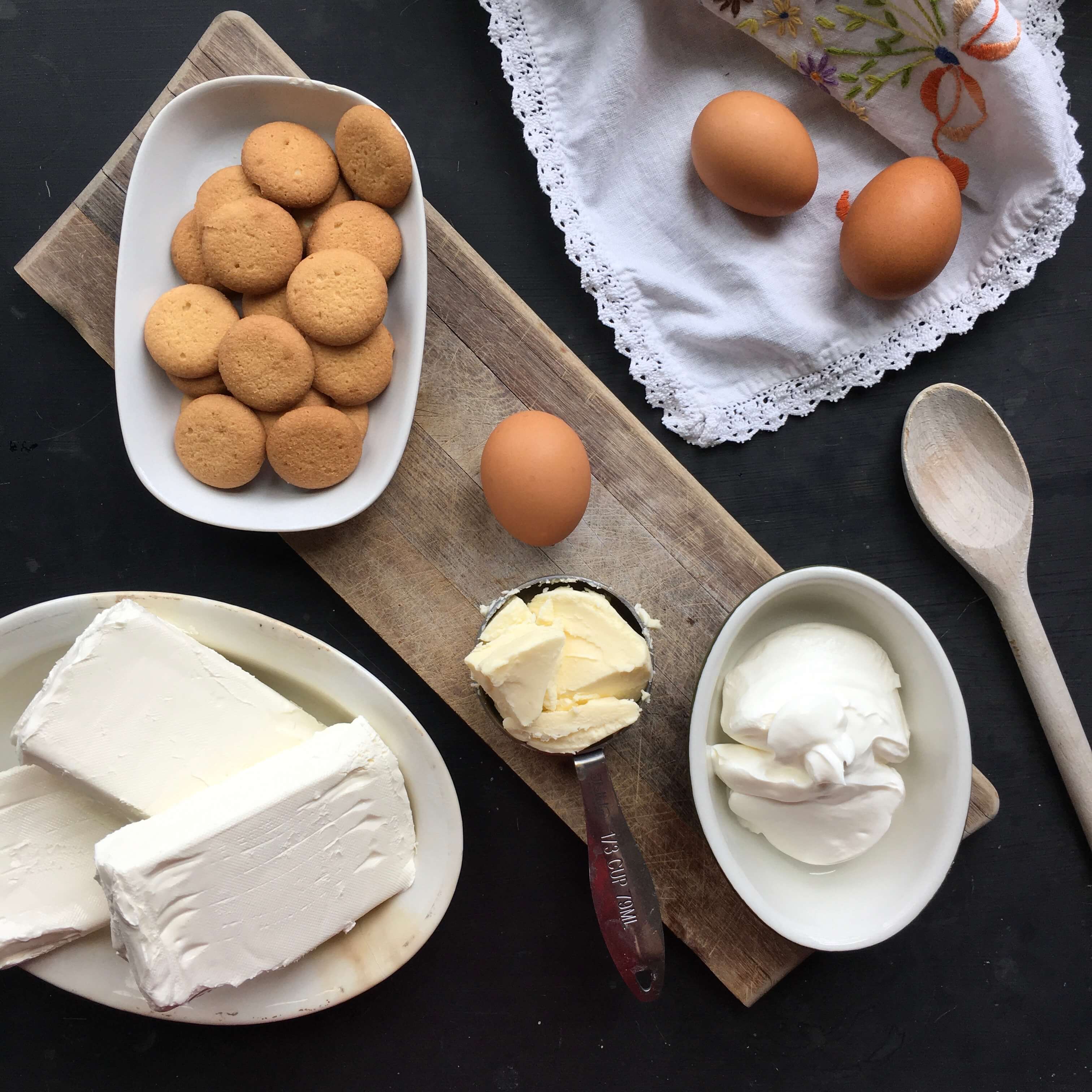
2 cups finely crushed vanilla wafer crumbs

2 tablespoons sugar

1 tsp cinnamon

1 1/2 teaspoon nutmeg

1/3 cup butter

For the filling:

1 1/2 lbs cream cheese (or three 8oz. packages), softened

1 cup sugar

3 eggs

1 tablespoon lemon juice

1 teaspoon grated lemon rind

1/2 teaspoon vanilla

For the top layer:

2 cups sour cream

3 tablespoons sugar

1 teaspoon vanilla

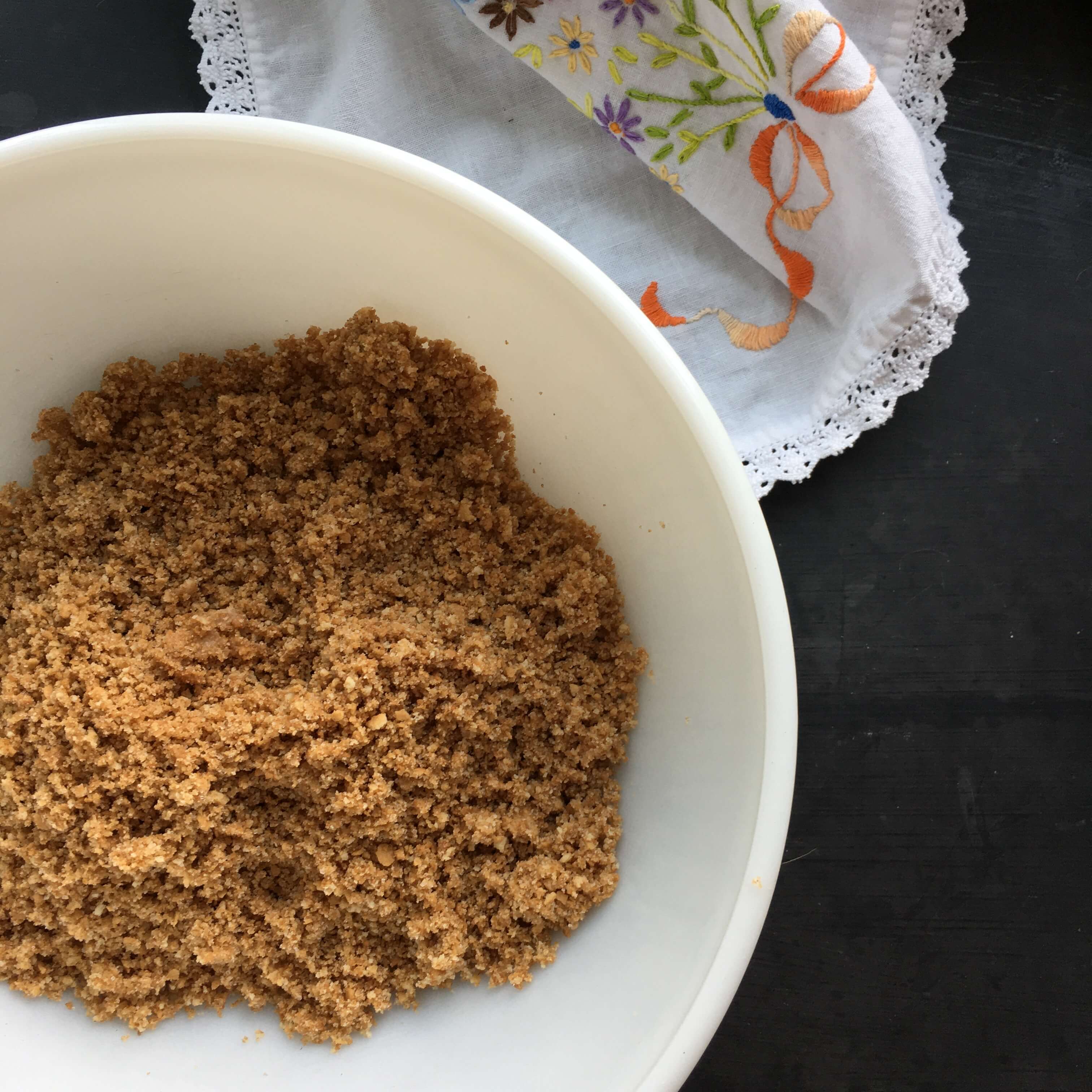
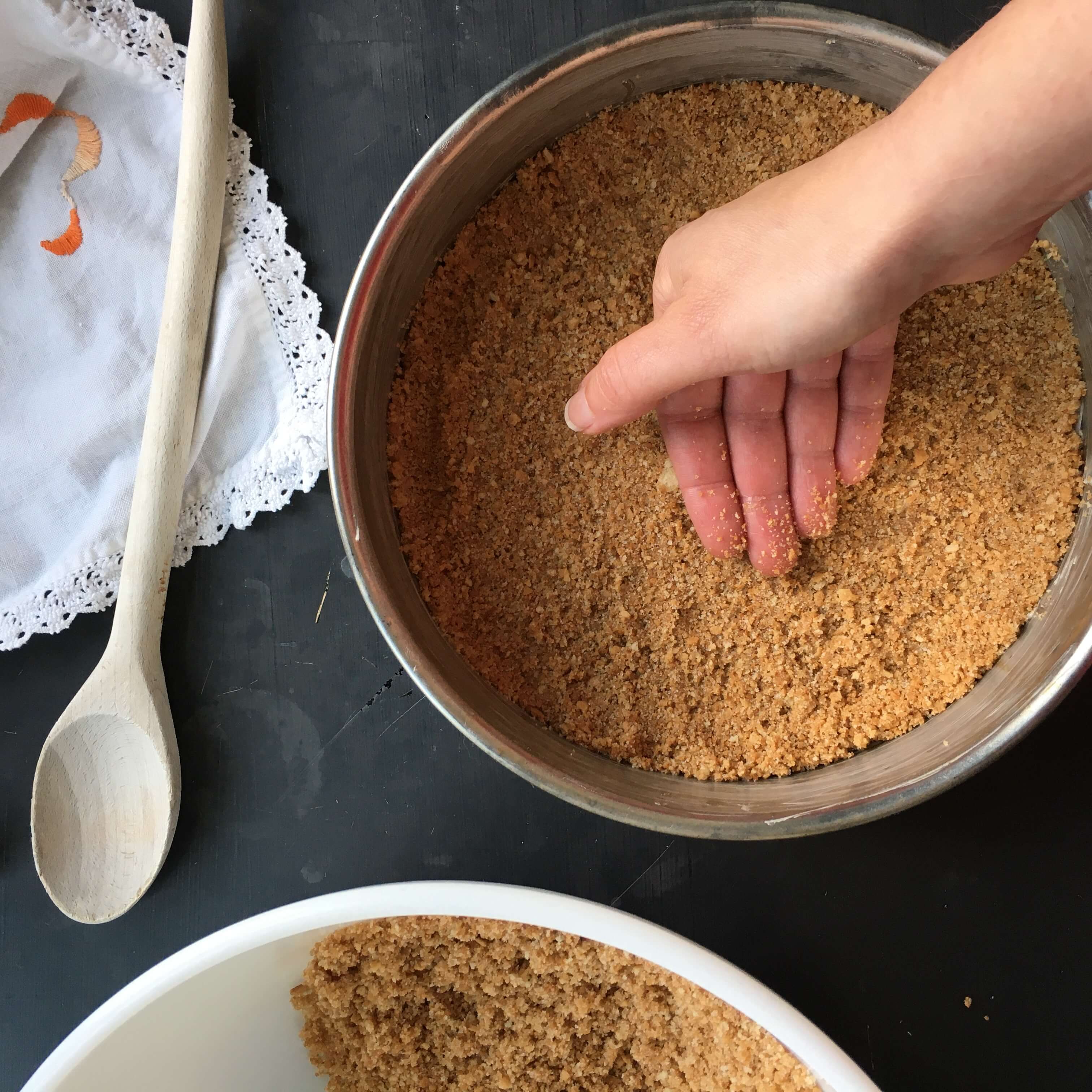
For the crust: Combine first five ingredients (wafers, sugar, cinnamon, nutmeg, butter) in a bowl. With a pastry blender, cut butter until thoroughly blended until it resembles course crumbs.

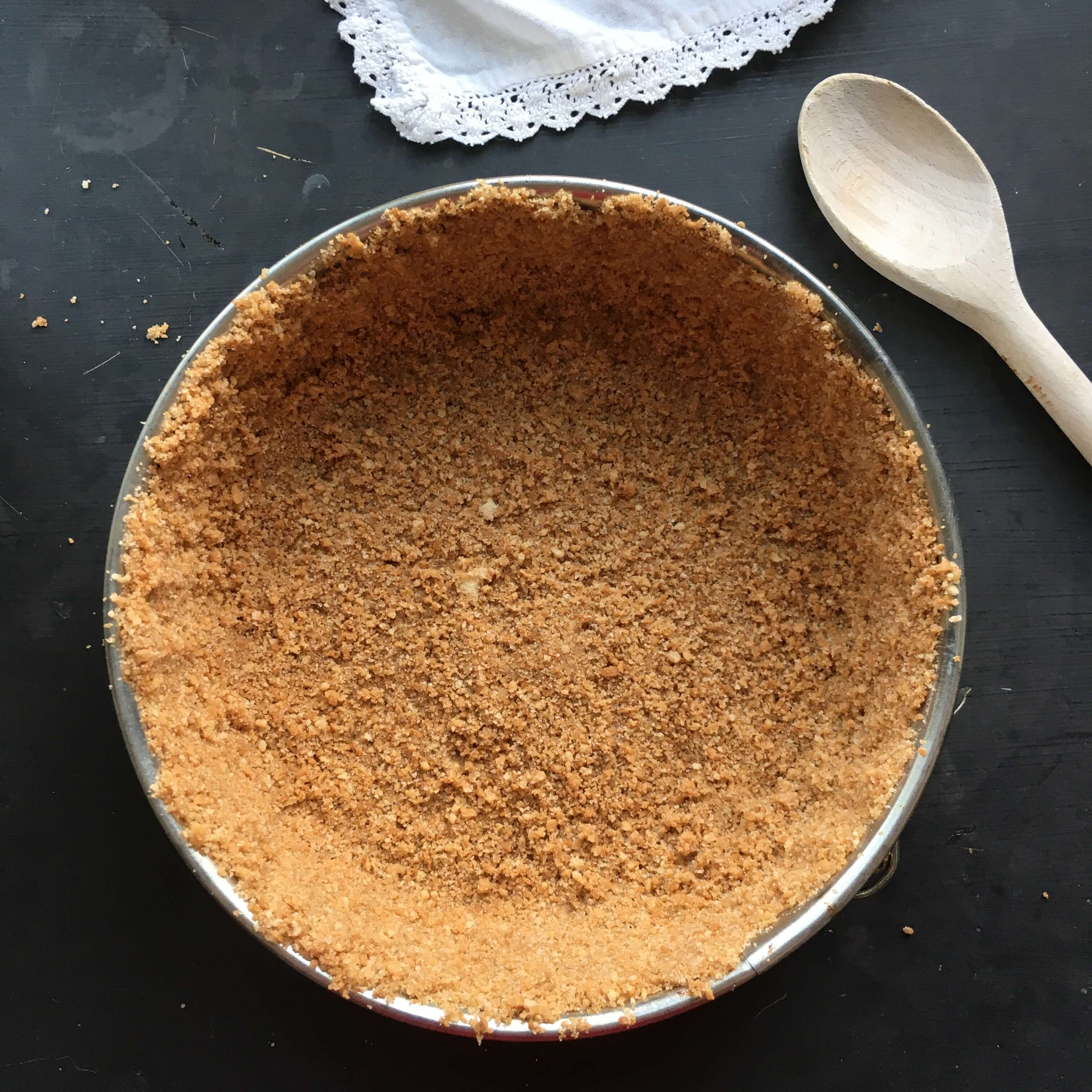
Press mixture firmly and evenly against bottom and sides of a lightly greased 8-inch spring form pan. (Note: I used an 8 1/2 inch pan and that worked totally fine too.)

Refrigerate 30 minutes.

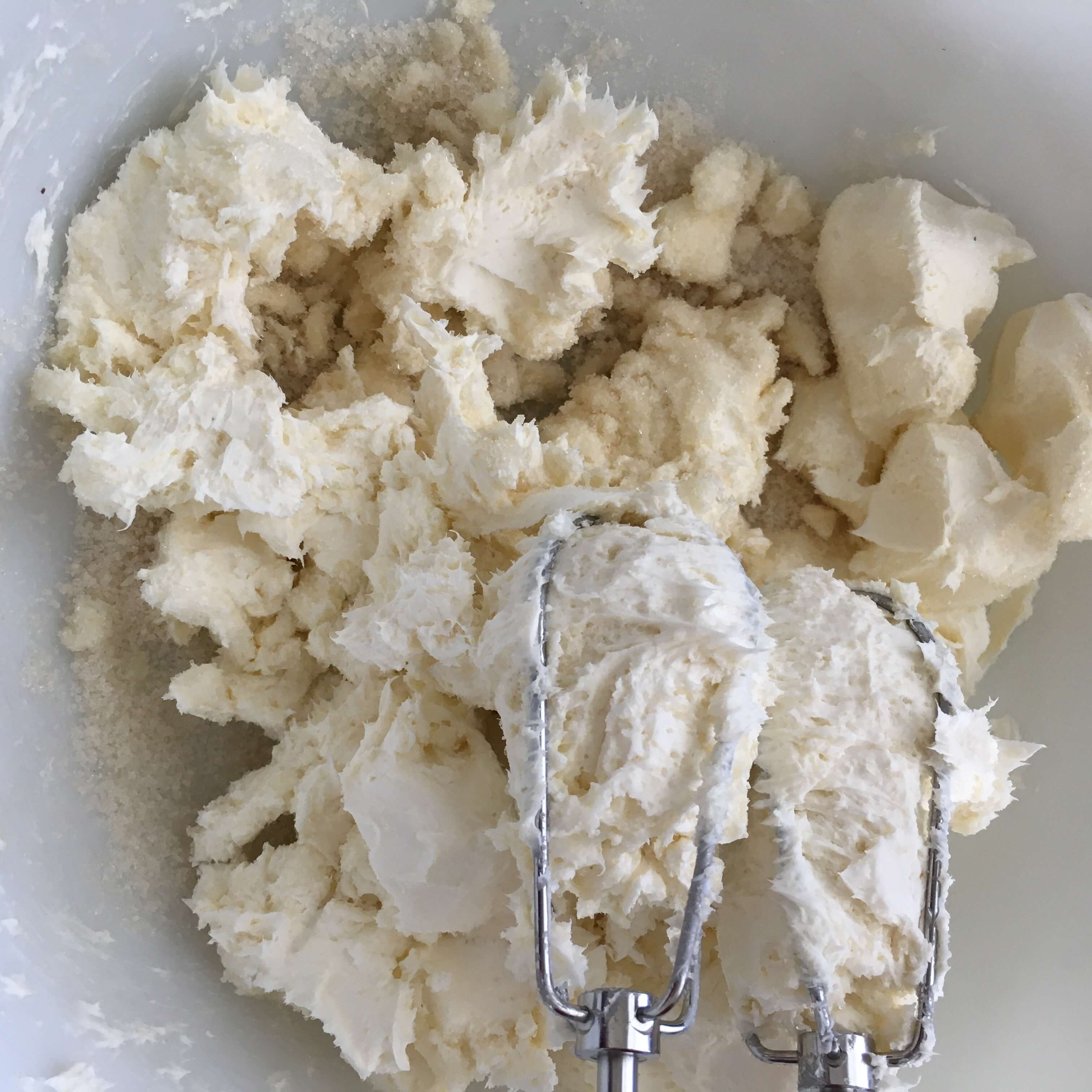
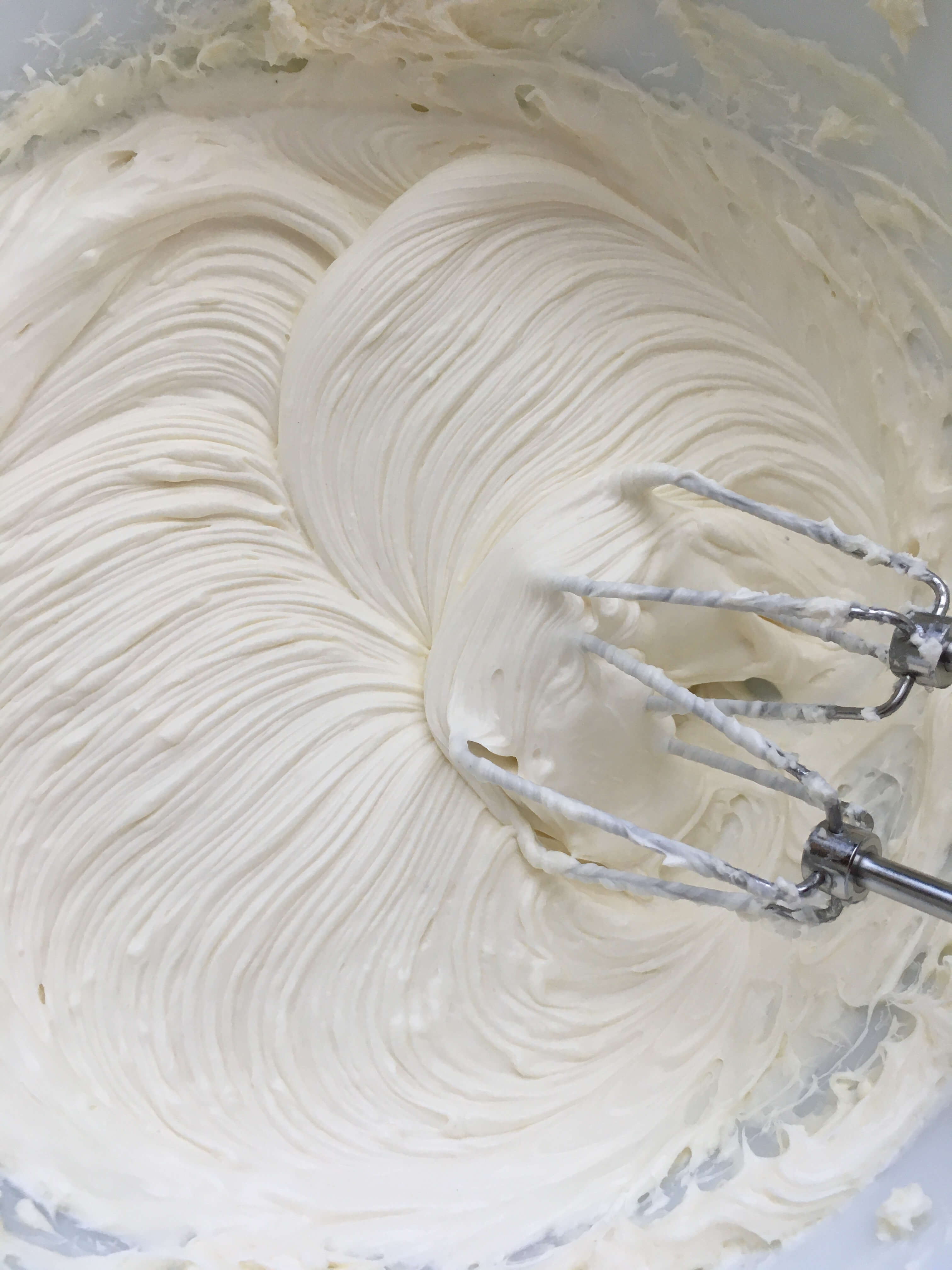
For the filling: Preheat the oven to 375 degrees. Cream cheese and sugar together in a large bowl until light and fluffy.

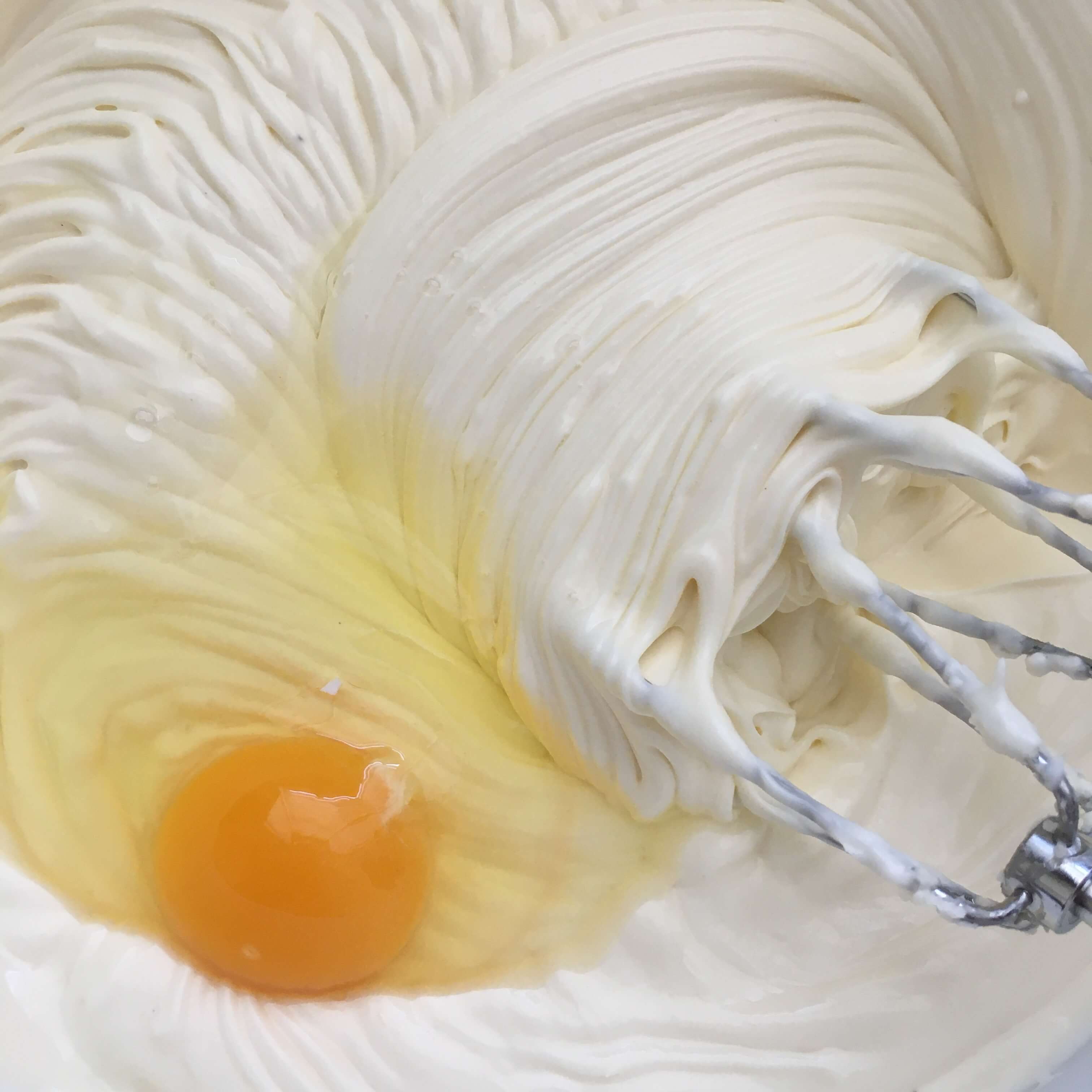
Add eggs one at a time, beating well after each addition.

Thoroughly blend in the lemon juice, lemon rind, and 1/2 teaspoon vanilla. Pour into chilled crumb crust.

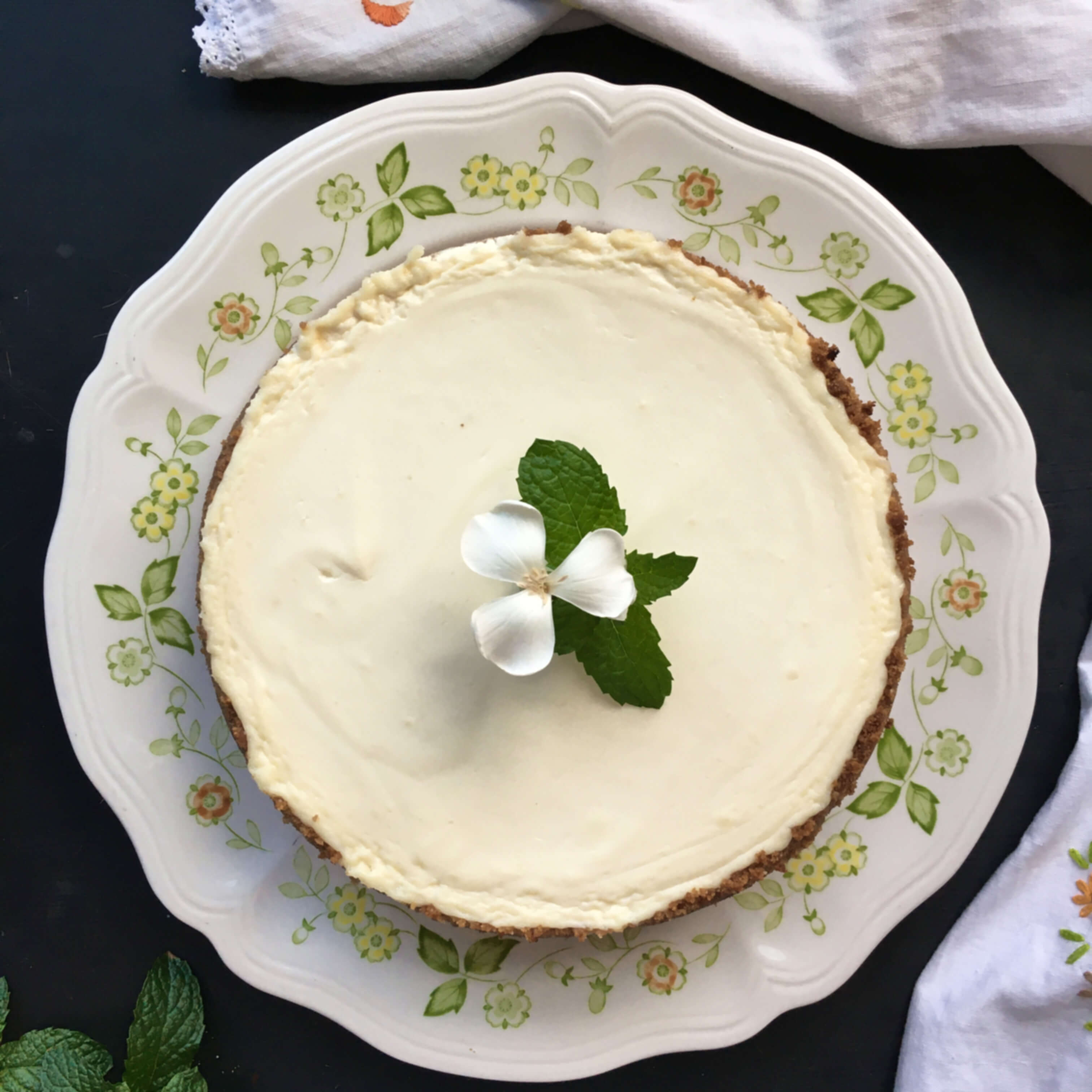
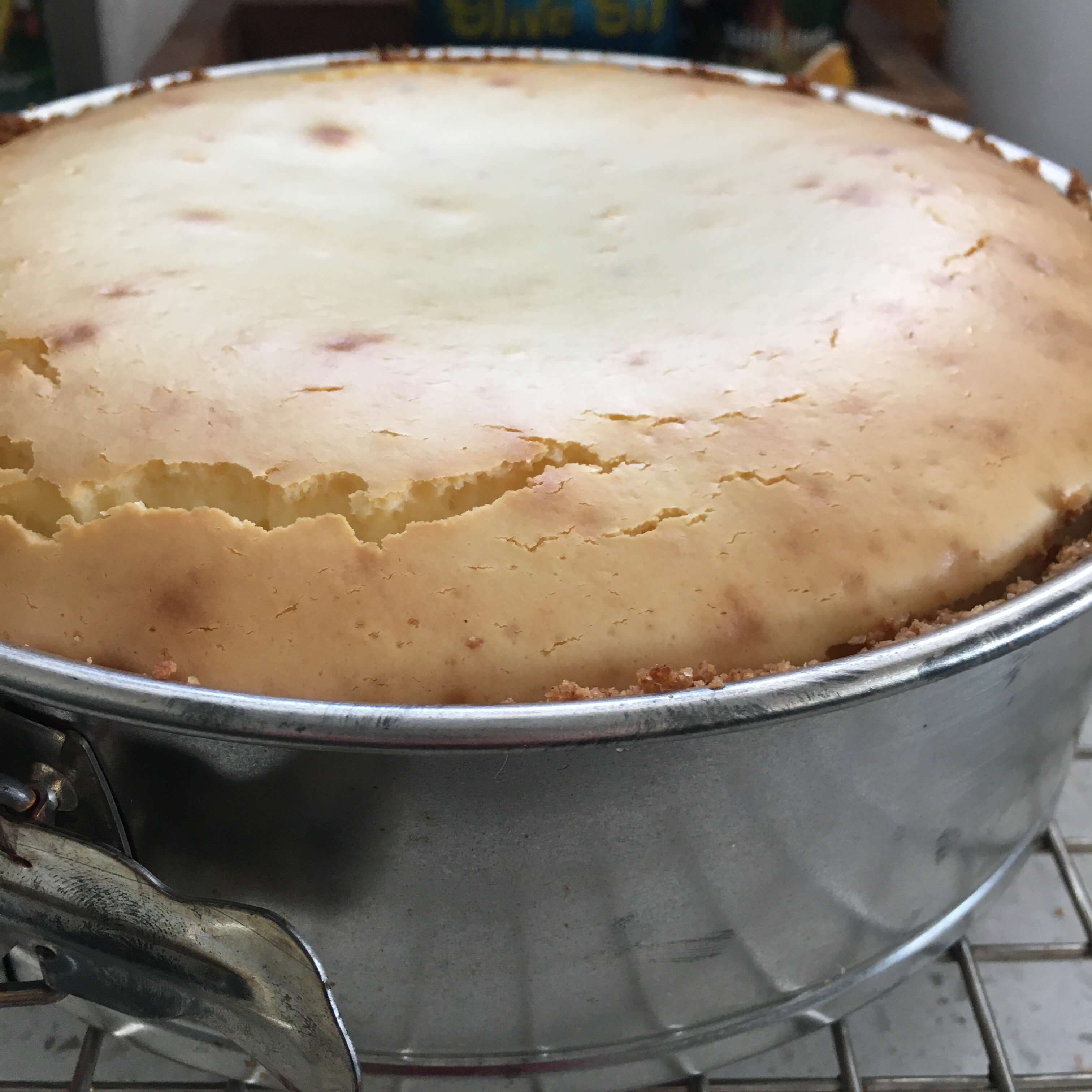
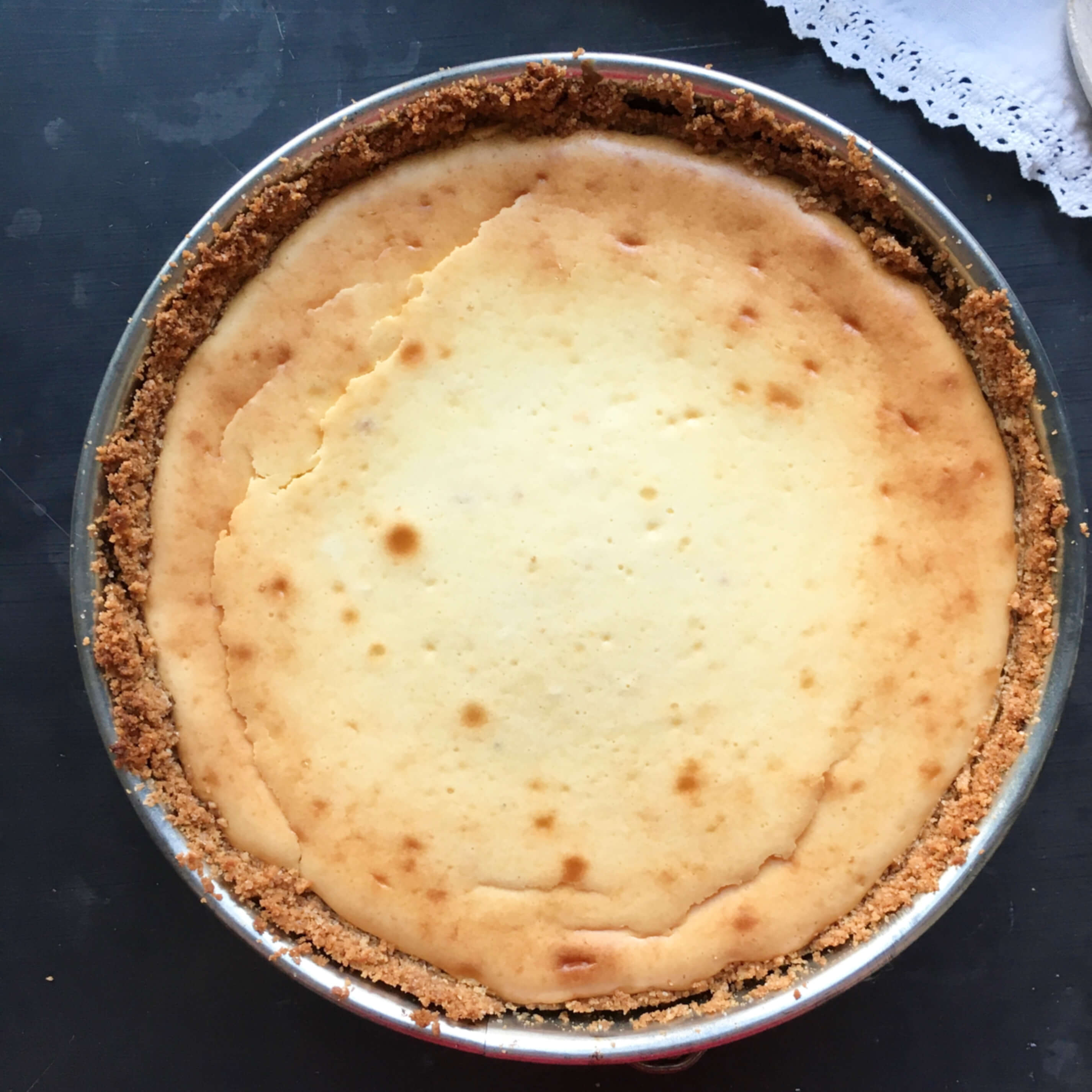
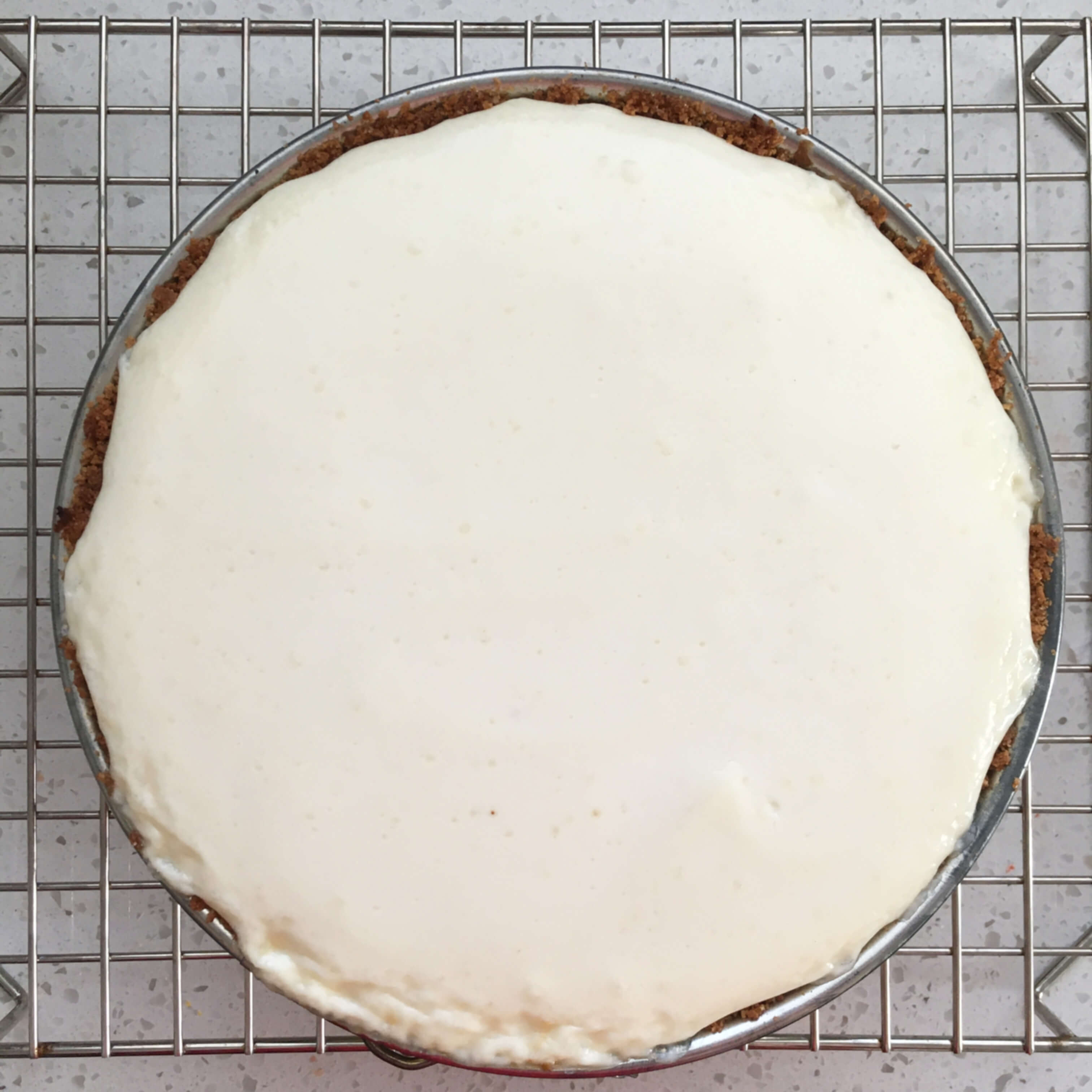
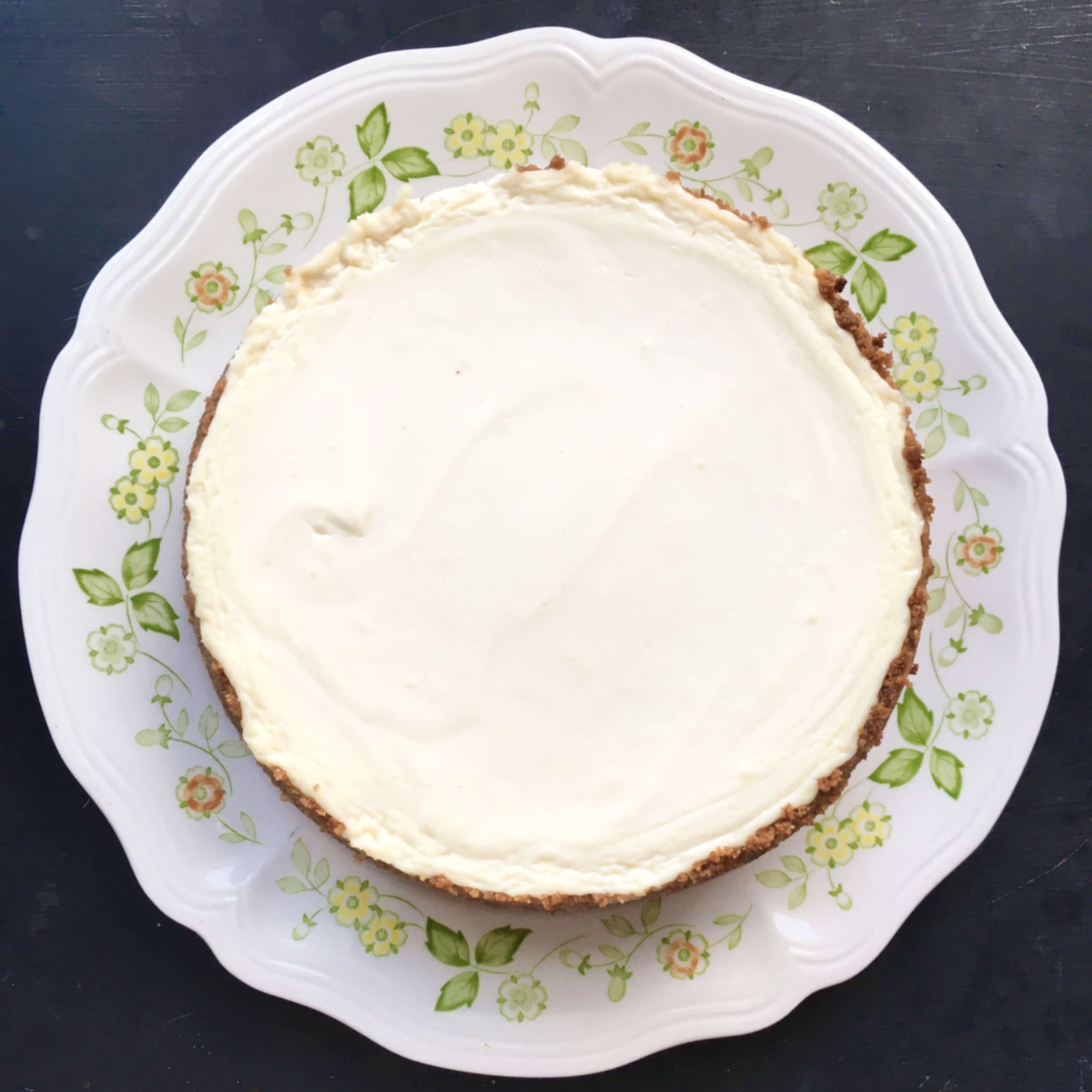
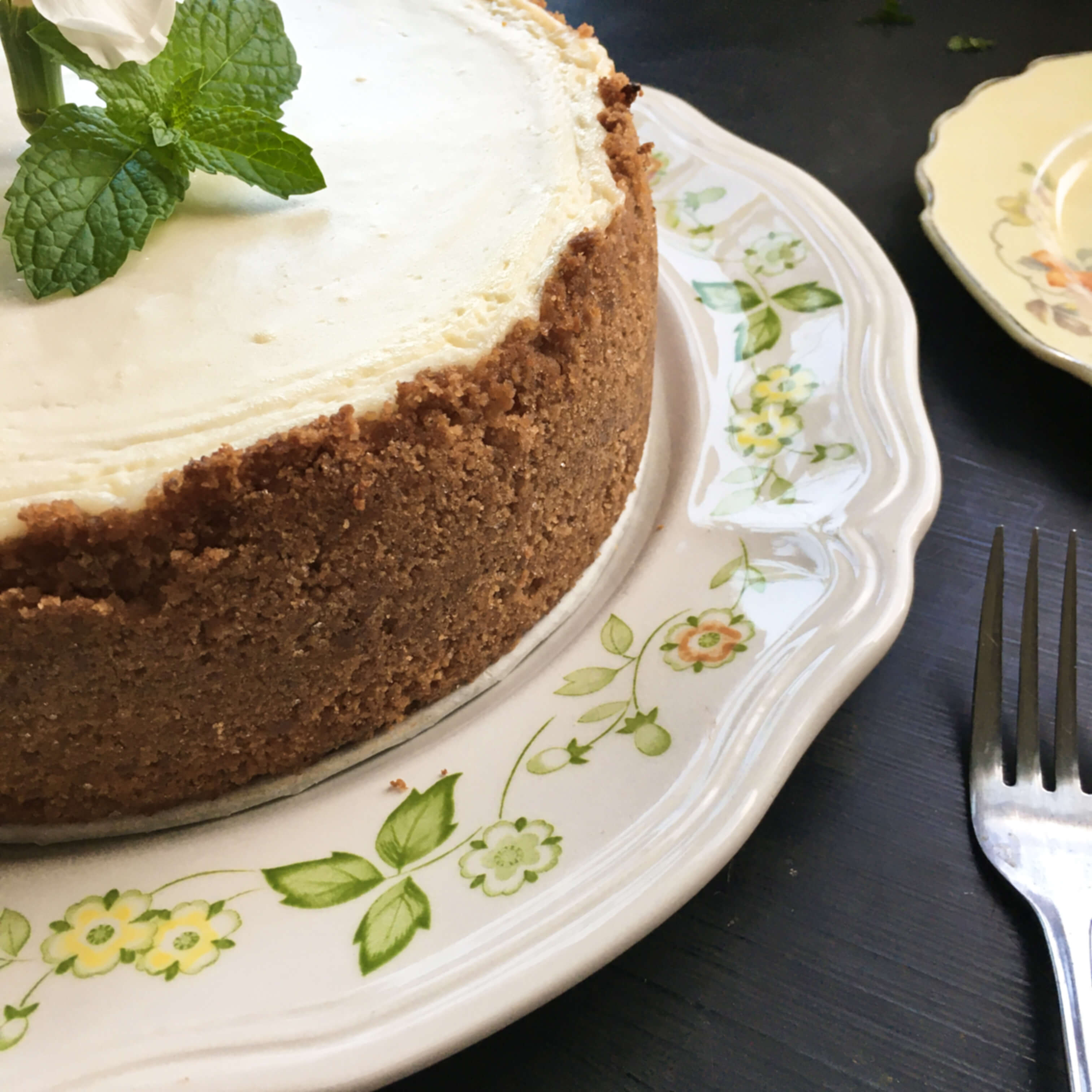
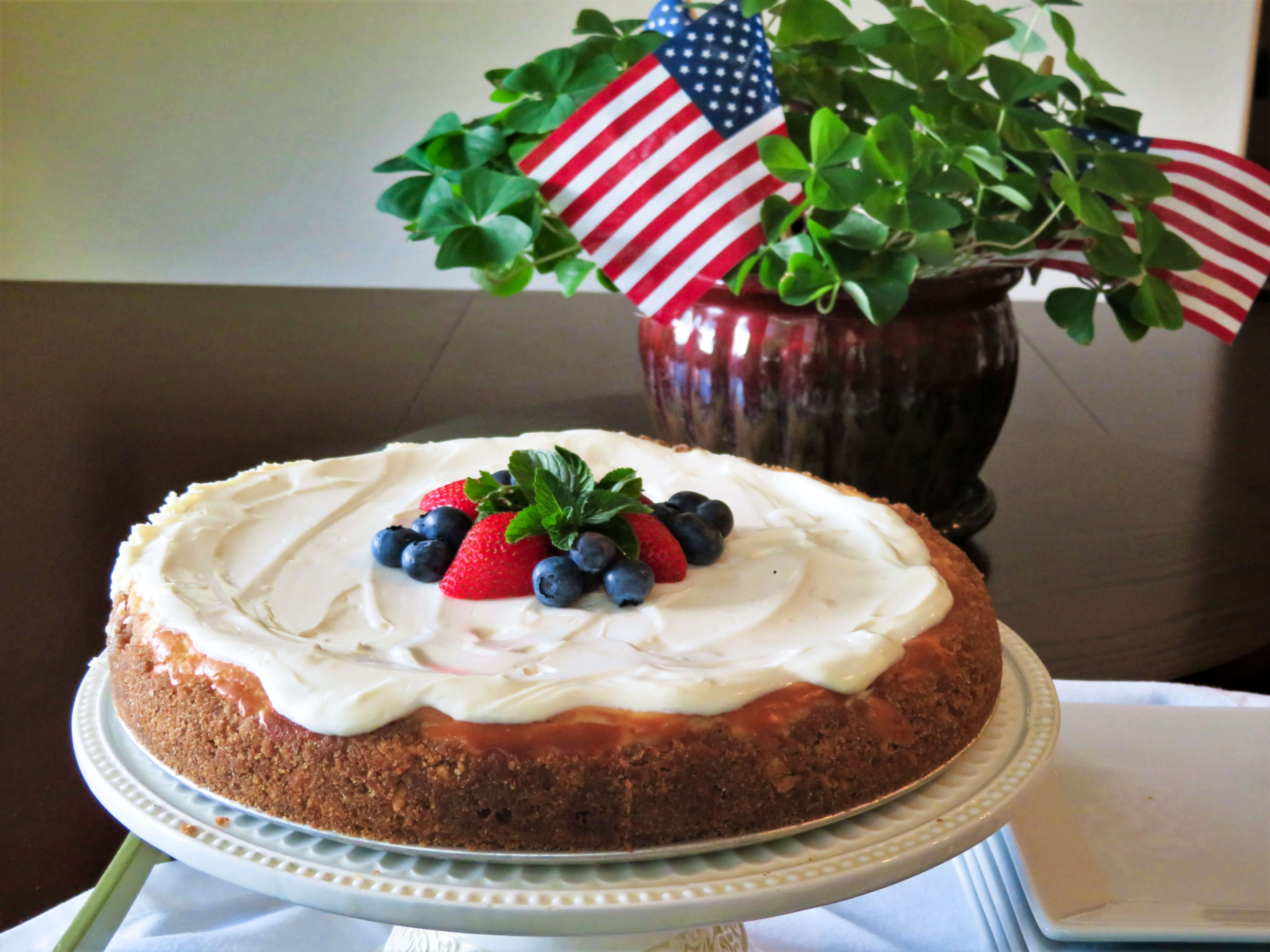
Bake for 45 minutes. Remove from oven and let cool at room temperature for 30 minutes. (Note: The cake will brown a little on the edges, as seen in the photos below, and may even crack a little bit on top. All that is totally fine.)

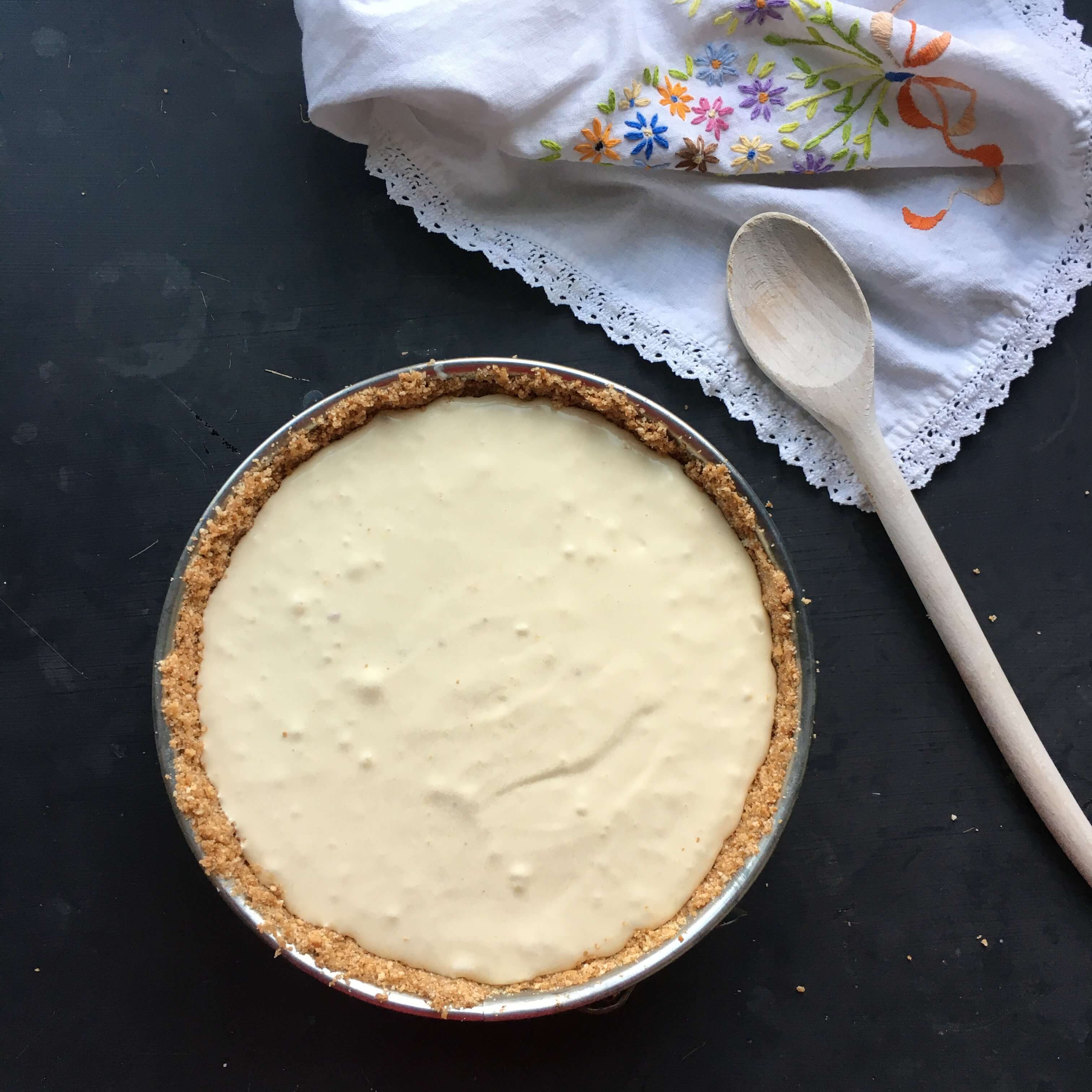
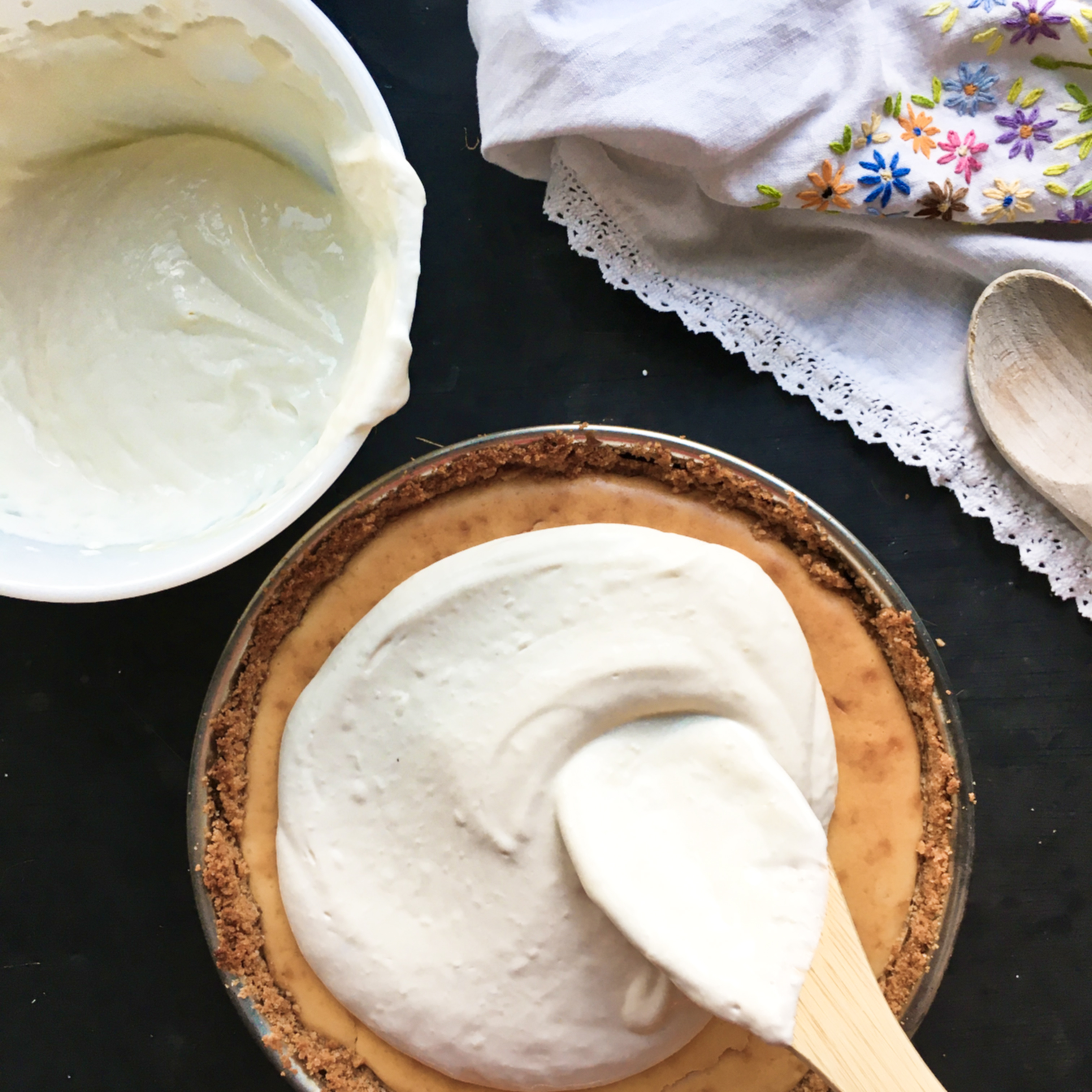
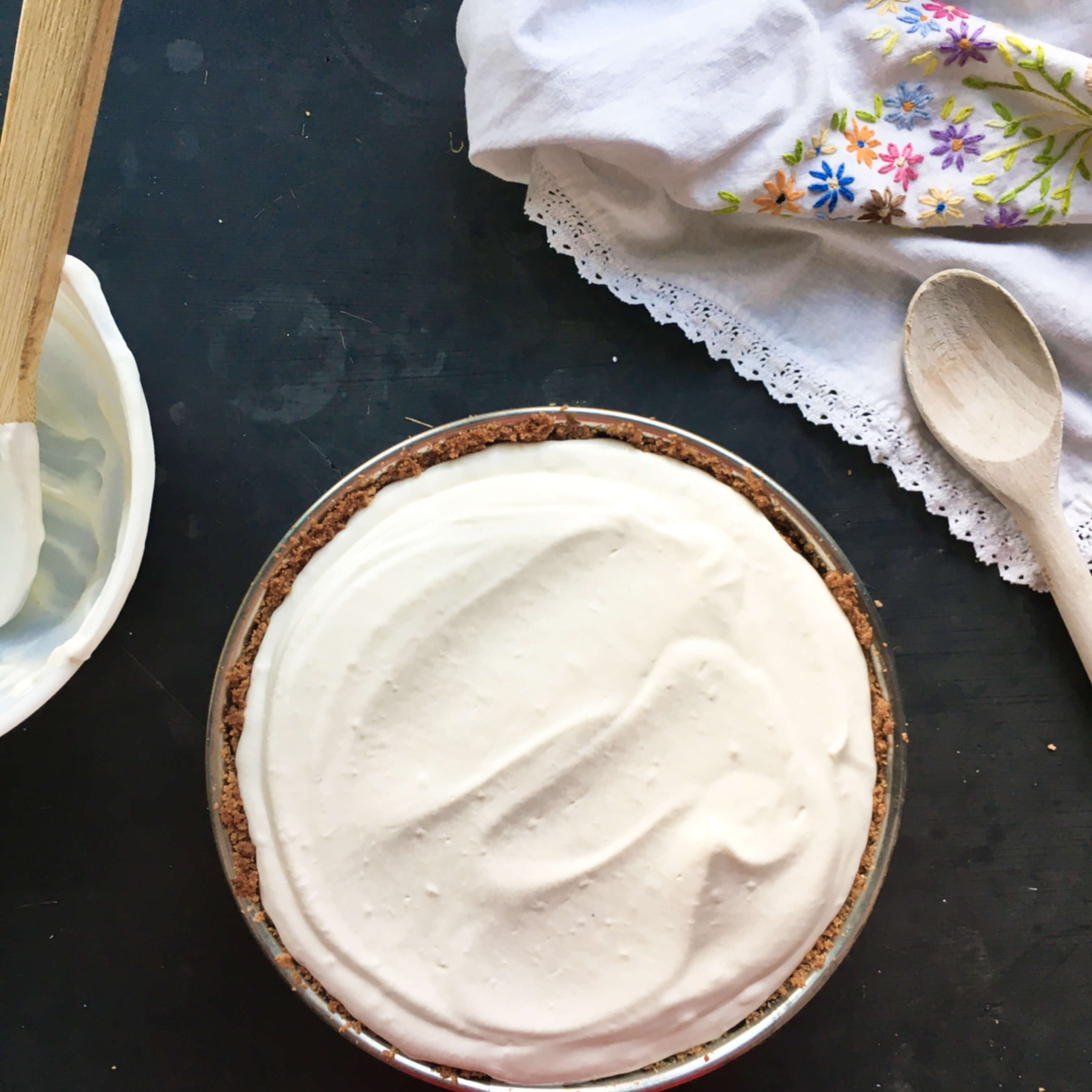
For the top layer: Preheat the oven to 500 degrees. Blend together the sour cream, sugar and vanilla. Carefully spread sour cream mixture over cooled cheese filling.

Bake in oven for 10 minutes. Cool.

Then refrigerate overnight before serving.

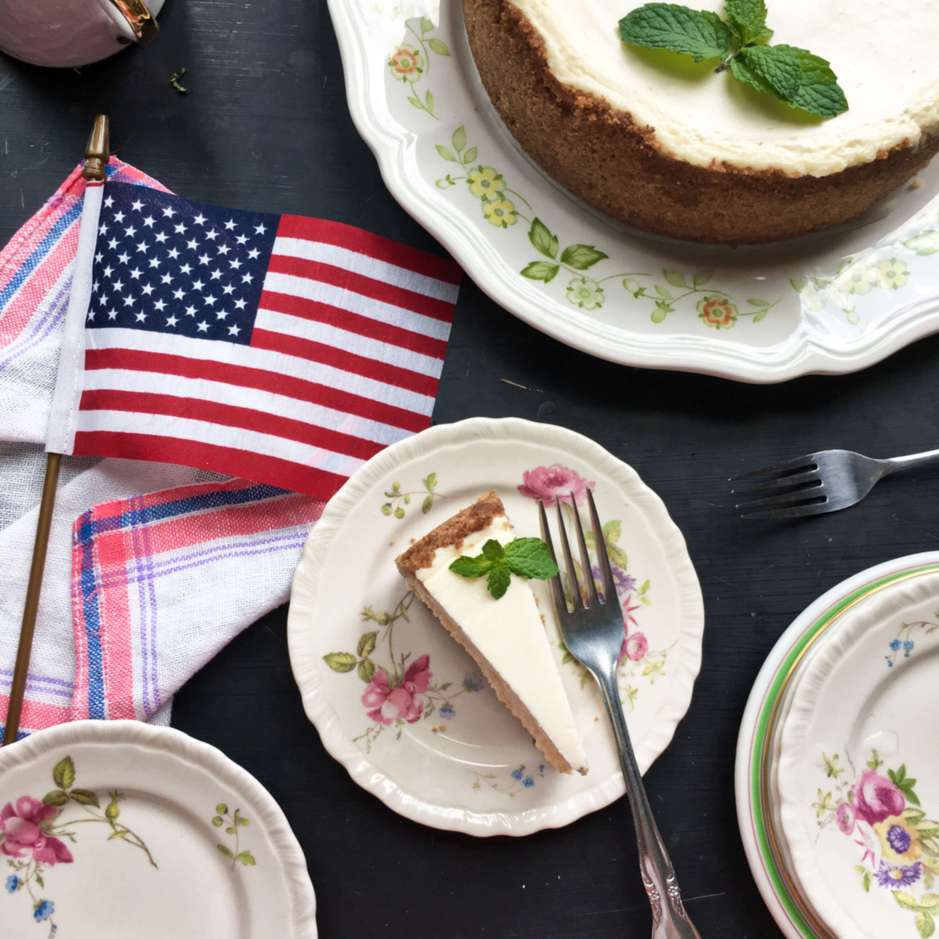
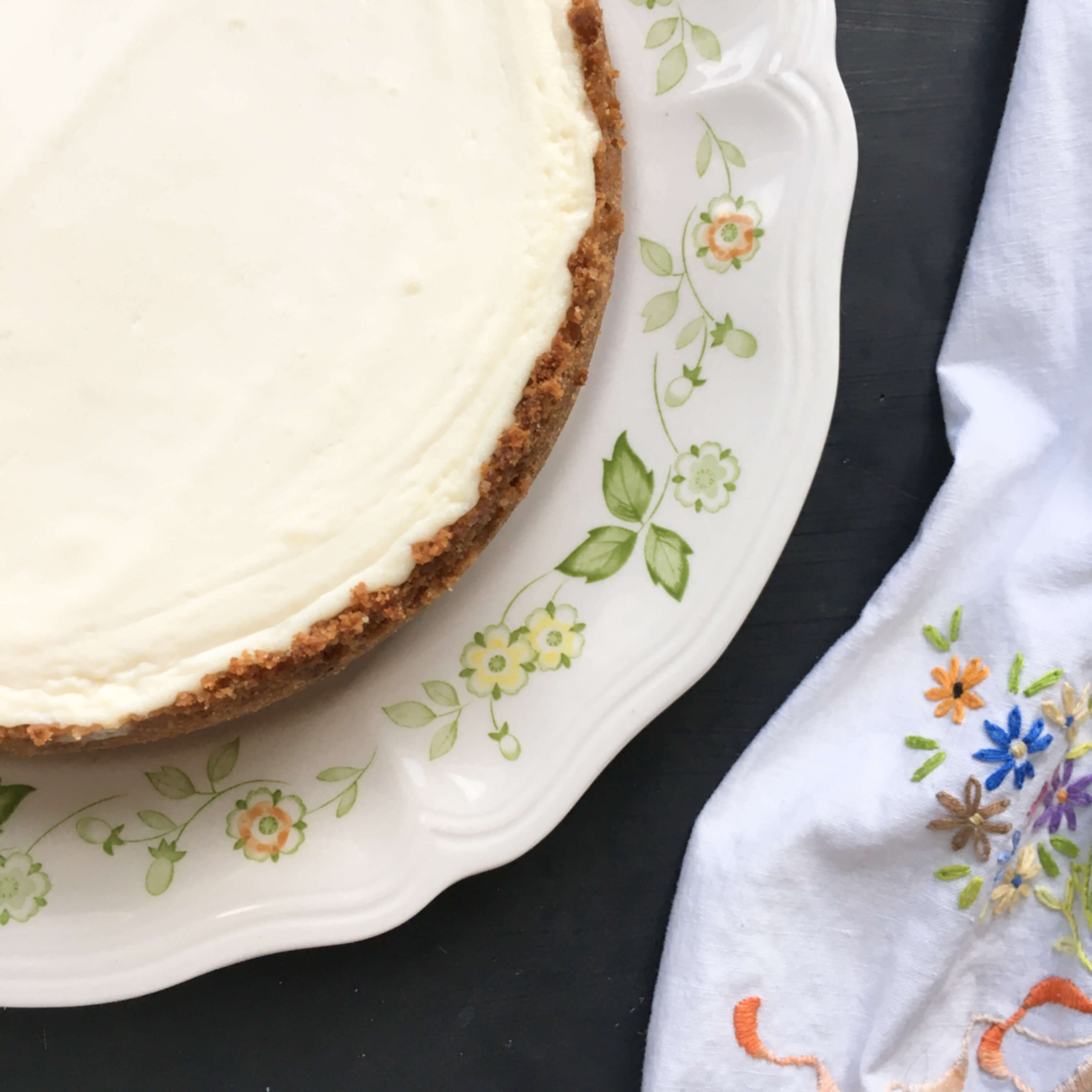
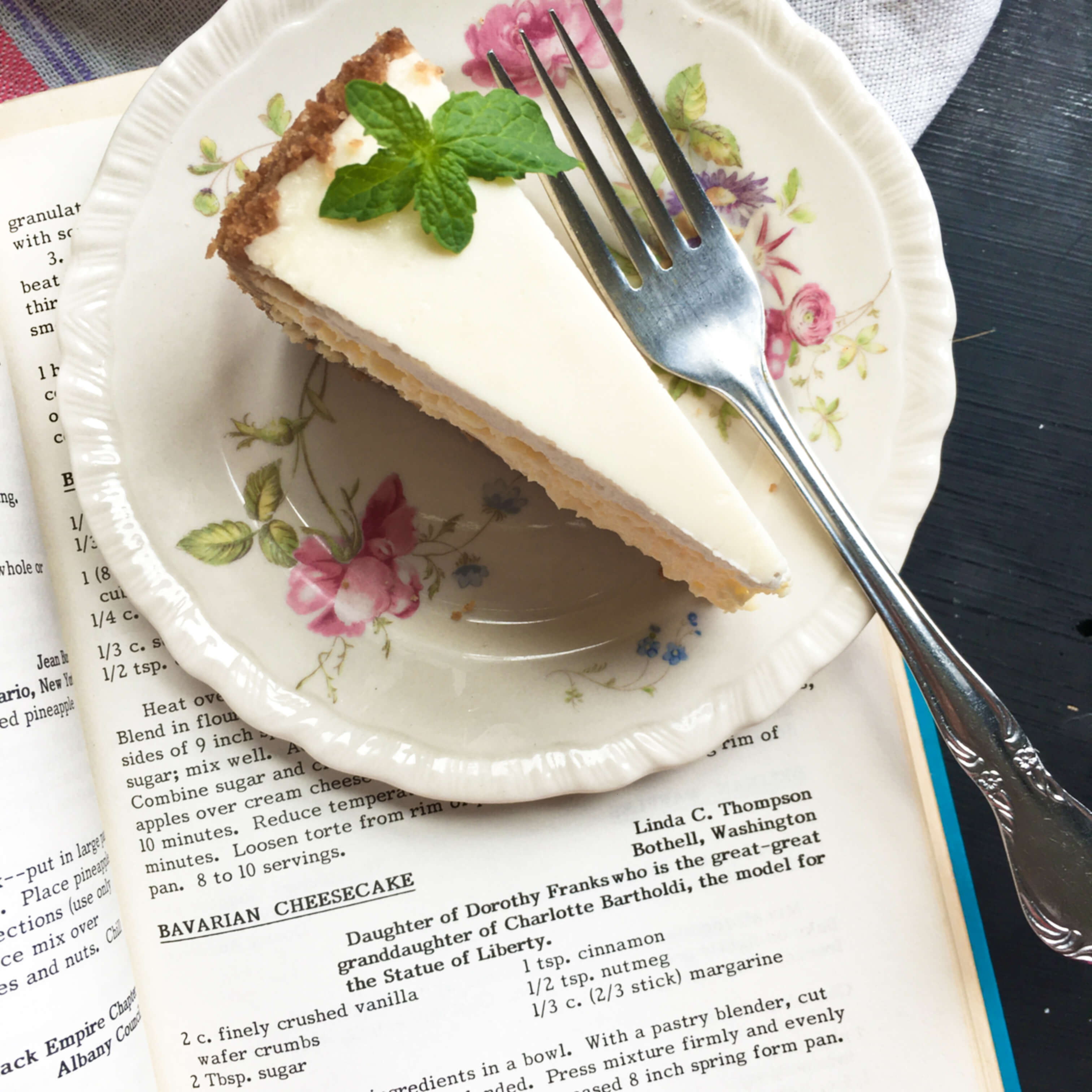
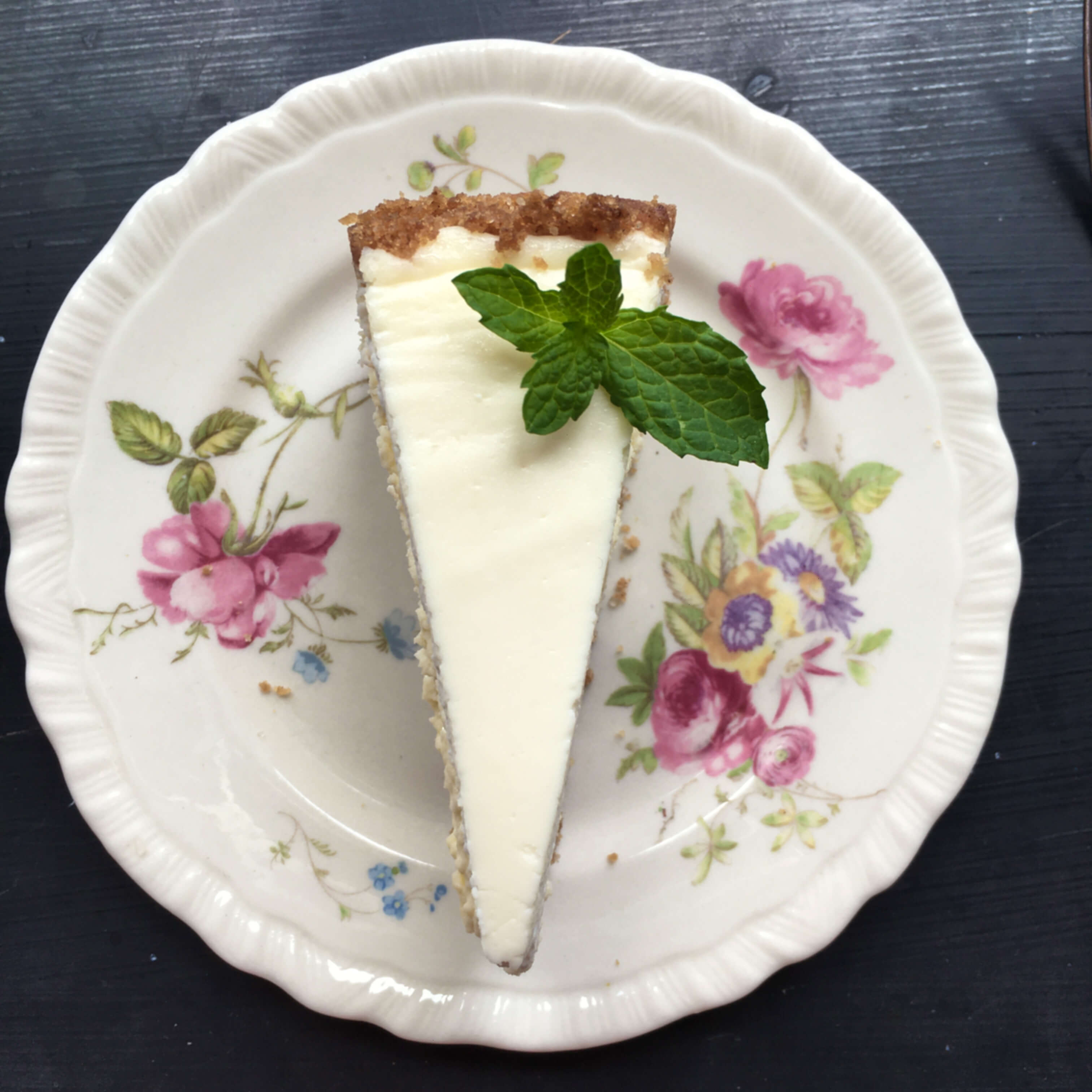
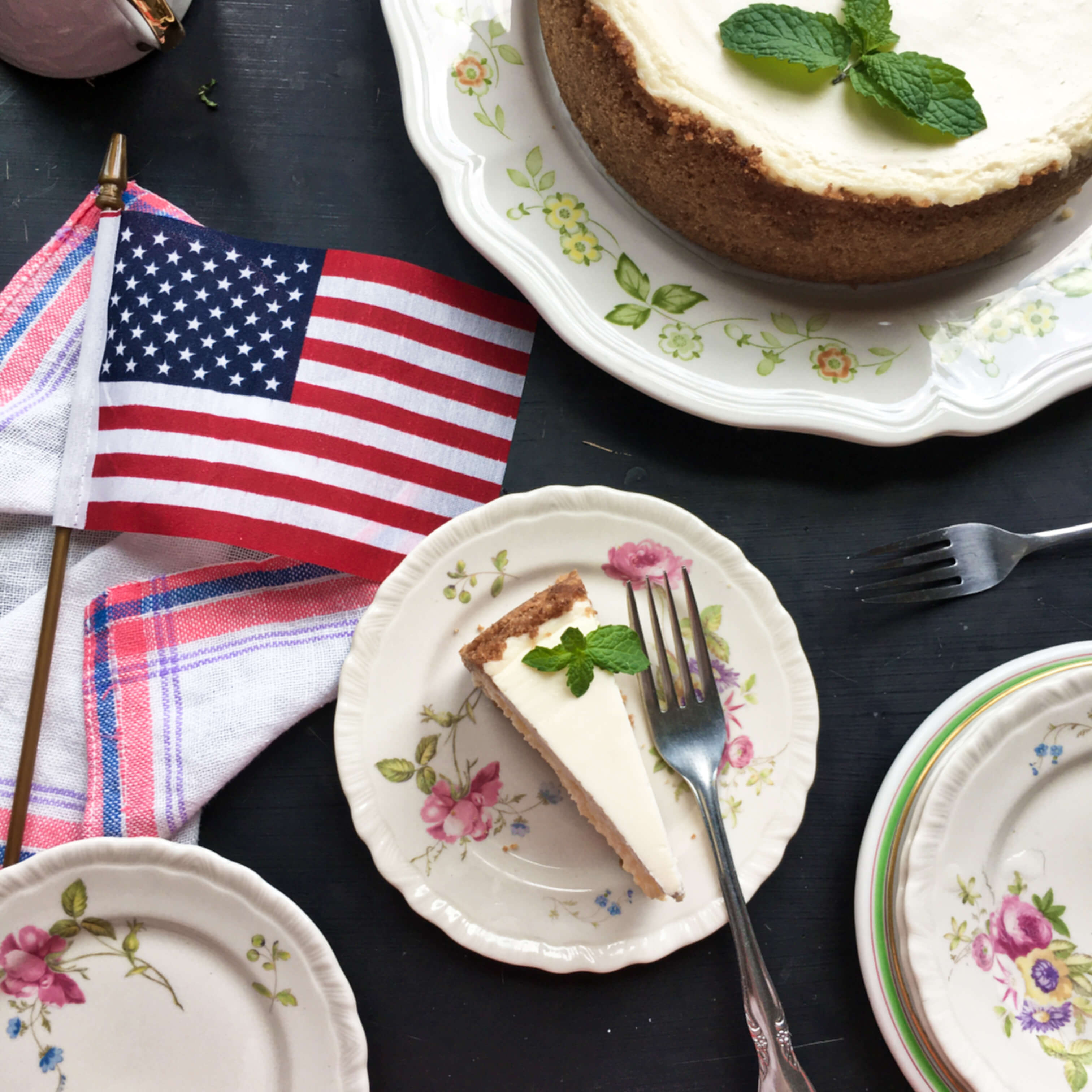
Once you’ve refrigerated the cheesecake overnight, the top layer will become firm. This makes it a lovely platform for decorating in all sorts of ways. Since this is a patriotic dessert, you might consider adding blueberries, strawberries, or raspberries to the top. Or perhaps some lemon rind twists or fresh herbs. I decorated mine very simply with a sprig of mint and a flower (a petal each for Dorothy, for Charlotte and for Lady Liberty!).  I wanted to see how it tasted unadorned, without any other ingredients changing the flavor composition.

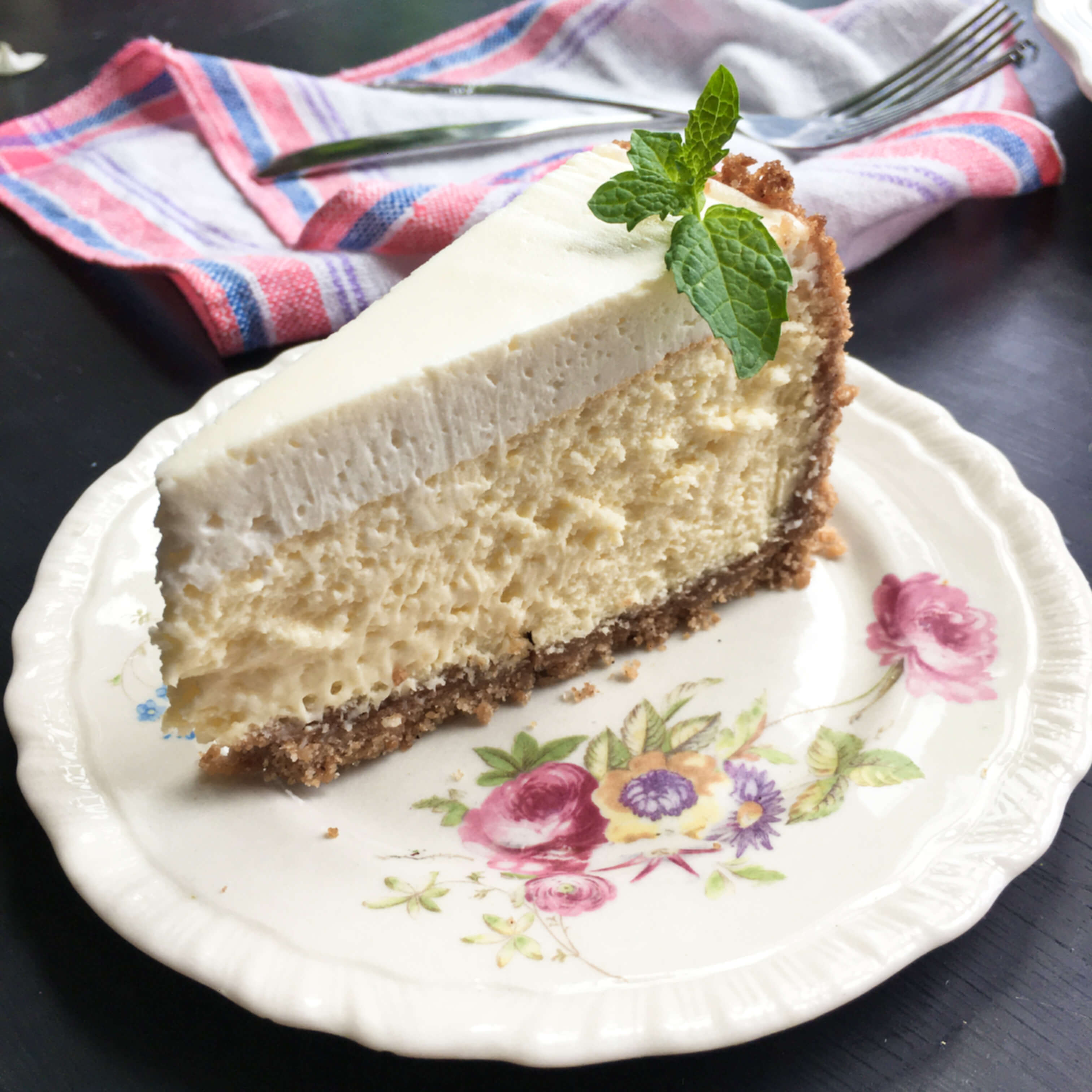
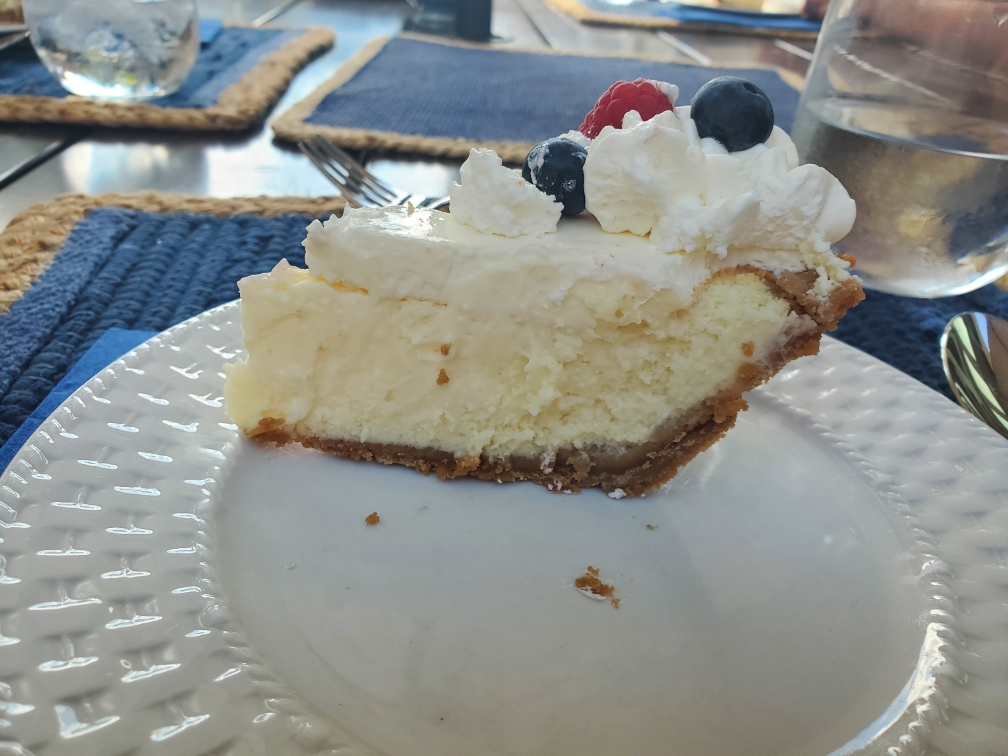
As it turns out, it tasted like a dream! I wasn’t sure if this was going to be a really dense cheesecake or if it was going to be more light and airy, but when I cut the first slice, the answer revealed itself…

The sour cream top layer had a taste and consistency exactly like the filling of cheese danish pastries. Sweet with a subtle creamy tang. The cream cheese layer had a consistency like very thick whip cream – pillowy but substantial without being hefty.

The crust held everything together so beautifully that each slice cut perfectly smooth and never fell apart when transferred to the individual serving plates.

What a joy this dessert turned out to be. Subtle and smooth, with hints of vanilla and lemon, it is a really lovely and really delicious dessert for summer. Especially if served cold straight from the fridge. An elegant alternative if you are tired of traditional Fourth of July flag cake, berry pies or fruit parfaits this dessert can be doled out in large slices or small and travels well. It also doesn’t mind hanging out in the fridge for hours while you party the day away.

Unlike a couple previous recipes from the Tour, there is absolutely nothing I would do to alter this recipe. I wouldn’t add anything, decorate it any differently or change the flavor components in any way. It is a true classic in all the best ways and absolutely perfect as is. Just like Lady Liberty herself:)

Cheers to Linda and Dorothy and Charlotte for providing a recipe with a really long family pedigree. And to Frederic for dreaming up a Statue that welcomed the world.

“Give me your tired, your poor, Your huddled masses yearning to breathe free, The wretched refuse of your teeming shore, Send these the homeless, tempest-tost to me. I lift my lamp beside the golden door.” – A portion of the poem, The New Colossus, by Emma Lazarus published in 1903 on a plaque at the base of the Statue of Liberty.

The lovely lady Liberty. Image credit: Juan Mayobre

The Statue of Liberty has been a sign of hope, potential and opportunity ever since her dedication on October 28, 1886. Except for the bald eagle, and the American flag she’s the most iconic symbol of our country that stands for everything we aspired to achieve as a nation. She’s artistic (thanks to Frederic), poetic (thanks to Emma Lazarus), strong (thanks to her copper cladding) and welcoming (thanks to Ellis Island). This has been one of the toughest years in American history to date, but I hope at the end of the day we can remember and focus on the qualities that Lady Liberty stands for. That we can shelter and accept and care for, with equal regard, all that come ashore.

Join me next time as our culinary adventures take us to Greece via the kitchen for Week 19 of the International Vintage Recipe Tour 2020!

UPDATE FROM OUR READERS!

If you find yourself without a springform pan for the cheesecake, rest assured, there are a couple of other pieces of dishware you can use as well, as noted by two of our readers…

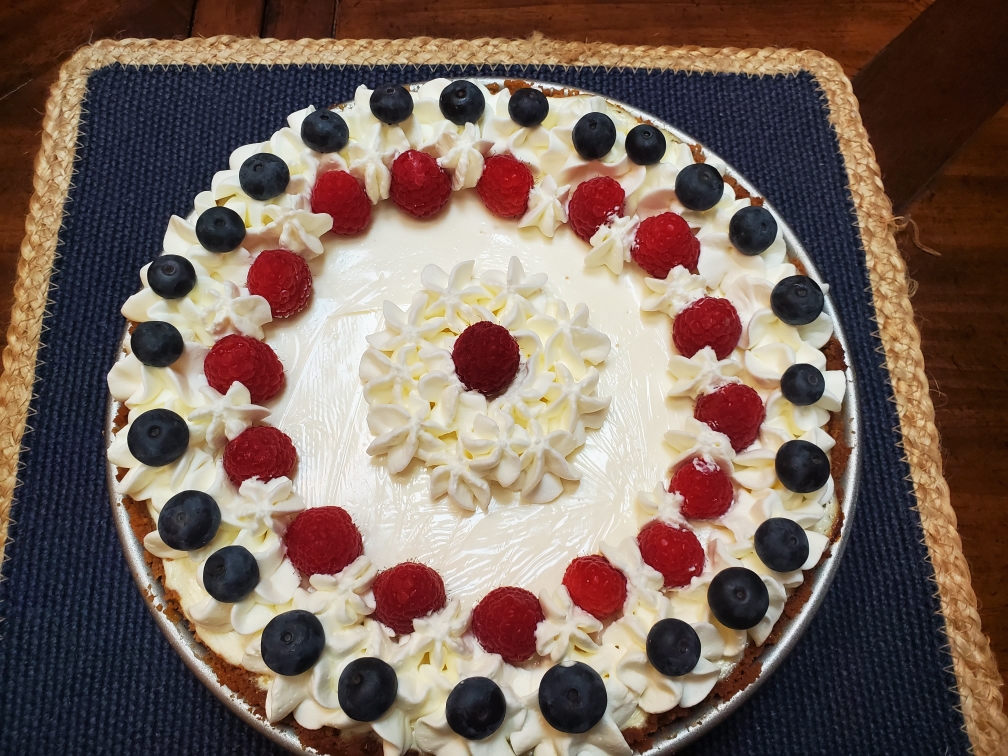
Marianne in Seattle used a deep-dish pie pan, and served the cheesecake right from the pan. A beauty in all directions!

“It was really good. We all liked it!”  Marianne also substituted lemon wafer cookies from Trader Joe’s in place of the vanilla wafers. “The lemon cookies make a nice crust,” she said.

Marilyn in Arizona used a 9″ inch tart pan and it turned out beautifully. She shared the following… “Going to create a fun game (questions and answers) to play with the blog post. Better than sitting around discussing the virus… you saved the day Katherine!” How nice!

If you discover any helpful hints after making this recipe or would like to share a photo of your decorated dessert, please comment below. A big thank you to Marianne and Marilyn for their helpful tips!