
All That Was Learned in a Season of Herb Gardening

Adelma did not let us down. In her 1964 book, Herb Gardening in Five Seasons, she assured readers that certain types of herbs would grow in sun-dappled shade gardens. And she was not wrong. Herbs did grow. Flowers did form. And I did clip and cook my way through the summer. Just not quite in the way that I had anticipated.

If you are joining us for the first time, this post is part of a series started back in January 2025, about building an herb garden from scratch inspired by the horticultural wisdom of New England herbalist, Adelma Grenier Simmons (1903-1997). Catch up here for a proper introduction to Adelma and the inspiring gardens that she built at her Connecticut home, Caprilands over the course of the 20th century.

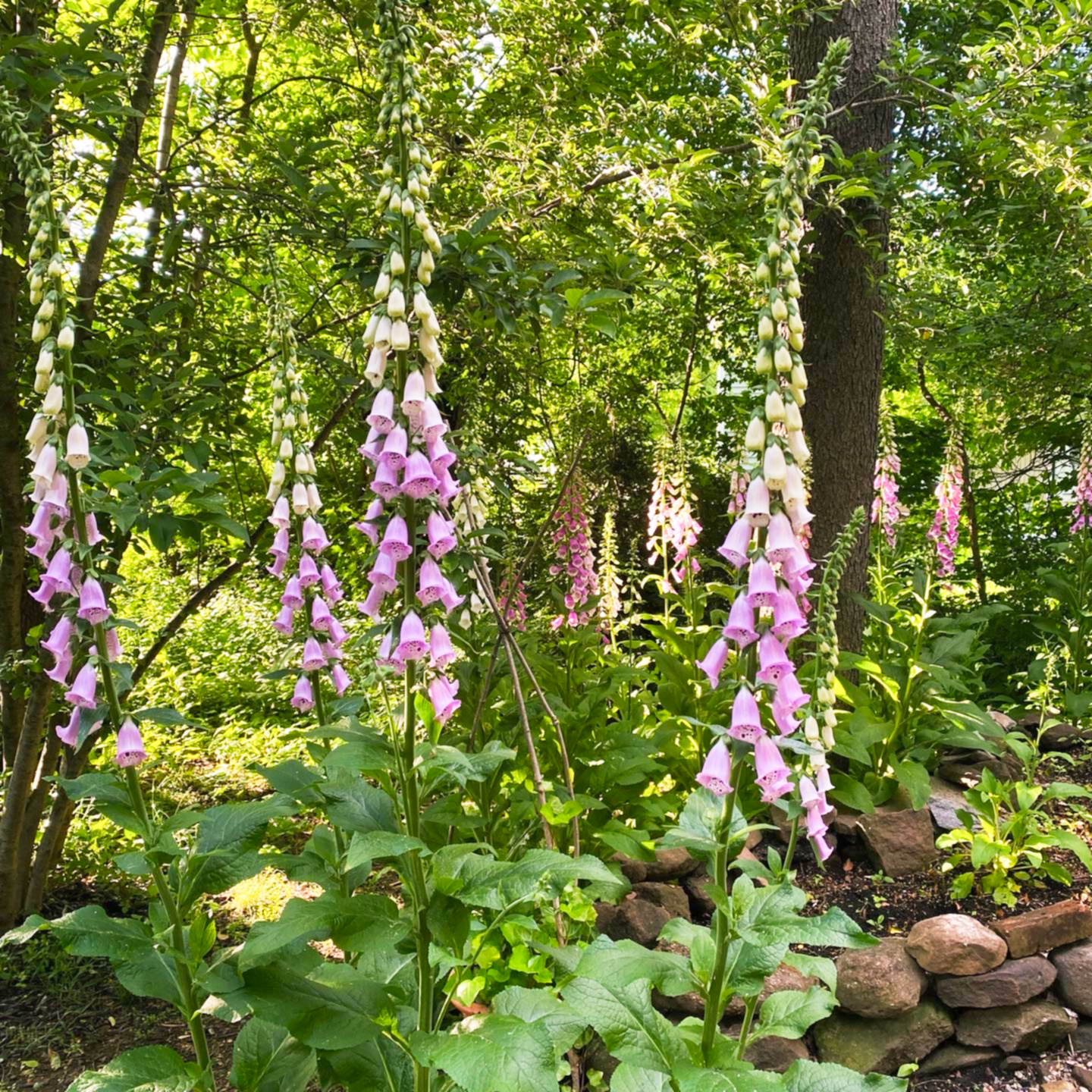
In January, when planning and preparations were underway for the start of our first-ever herb garden at 1750 House, I had visions. As I sketched out the location map of what herbs would go where and which companion plants would best be suited side-by-side, in my mind, the herb garden of summer 2025 would be eye-high. Right in step with the 5-foot tall foxglove success story of past gardening endeavors.

Foxgloves from the 2023 -2024 garden.

Emboldened by those towering giants of the woodlands that had been grown in the greenhouse from the smallest of seeds, I had visions that the herbs would grow equally tall. I had visions of their delicate petals swaying in the breeze. Of their foliage tinted in all the greens. I had visions that they’d make a home in and around the foxglove and create an undulating palette of soft colors. A cottage collection. A fully filled out bed.

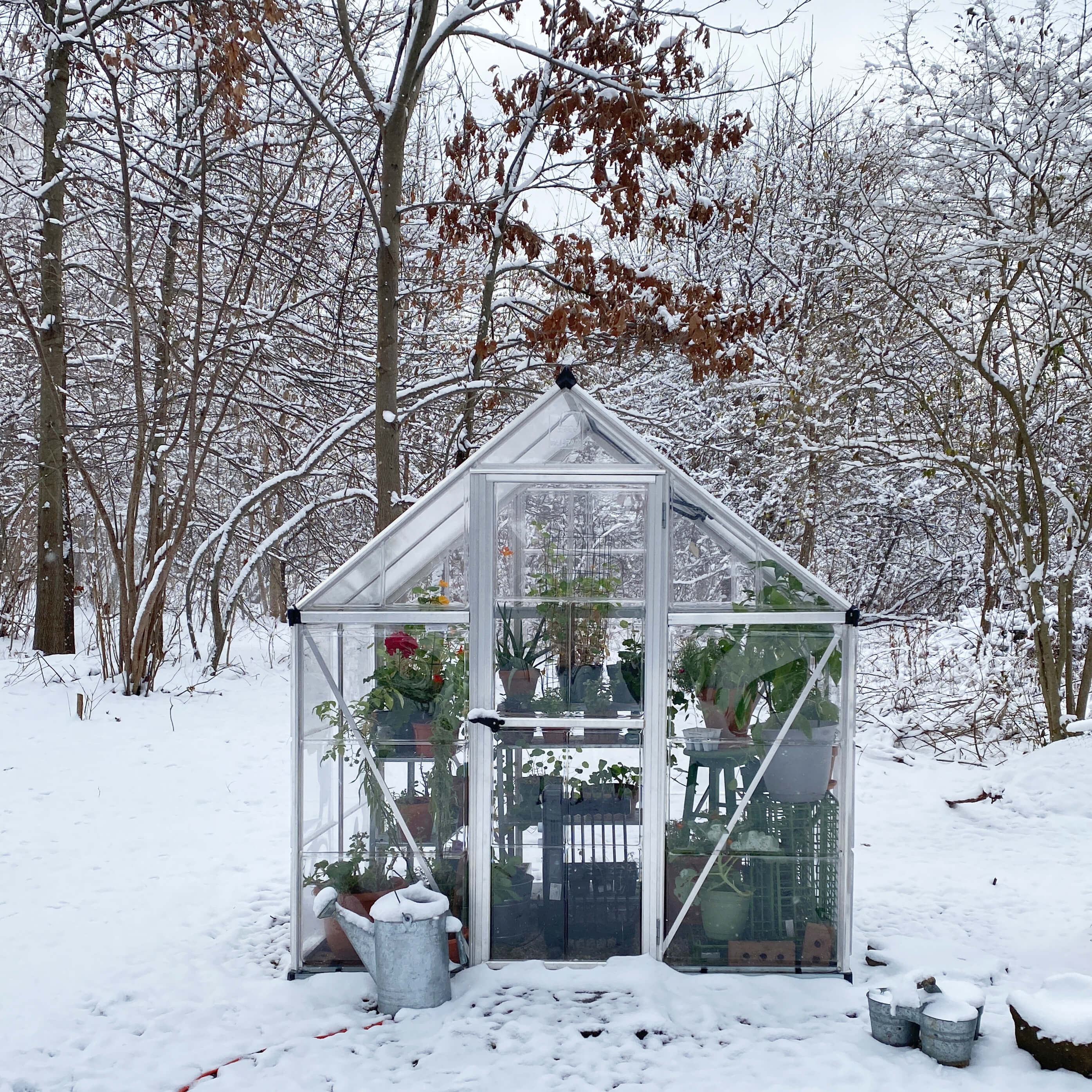
The snow-covered greenhouse in January 2025

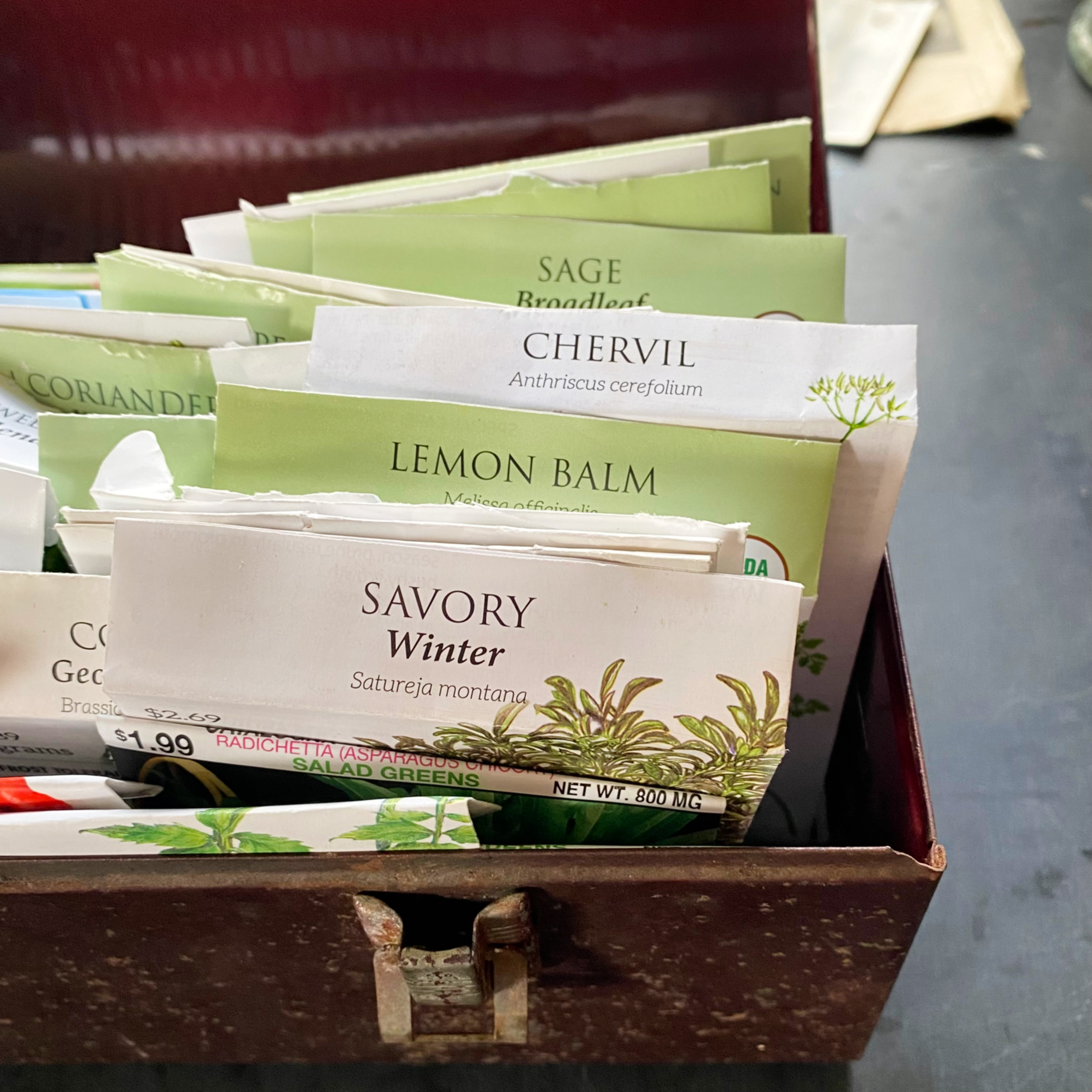
While the ground was still frozen and snow-covered, I could see a full garden, busy with birds and bees and butterflies floating here and there. I could see the feathery chervil, the wave of parsley, the white petaled chamomile, the flax, the forget-me-nots, the dill, the lavender, the calendula. When the garden was covered under an ice-slick snow sheet, and I was starting seeds indoors, I had visions of deep summer in the herb garden. Hazy light, hot temperatures, the greenhouse surrounded by a vibrant and verdant utopia racing skyward to meet its peaks. I could see the bee balm on the right, the nasturtiums climbing a trellis on the left, and the foxgloves trying to out-stretch them both. I could see the savory, the sage, the oregano, the thyme creeping and heaping their way around the garden floor. As I collected seed packets in my garden tote in the weak light of winter, I imagined, months later, collecting herbs in a kitchen basket slated for summer meals made possible by the summer garden.


Back in January, bundled up in sweaters and scarves, I could anticipate the warm-weather blog posts. The recording of each new herb as it is unfurled week by week, month by month, all summer long. The sharing of what things looked like, smelled like, tasted like. The chamomile, the dill, the calendula. The mint, the basil, the cumin, the thyme. The unfolding of each new flower, each new leaf, day by day. They’d be blog posts that would practically write themselves, not because of AI (something I never use here on the blog) but because the herbs made it easy under Adelma’s experienced guidance and thoughtful instruction. I had visions.

Wrapping up eight months of gardening experience in one blog post is a lot to ask of a reader’s attention. So, in order not to make this post eighty miles long, I’m going to truncate a lot of what happened during the growing season. This is not an attempt to skirt over the challenges, of which there were many, and only to shine light on the successes. But building an herb garden, as I have learned this summer, is a bit like watching a tree grow minute by minute. Not a lot happens. And to be completely honest, not a lot happened for months.

When the seedlings grew strong and hearty indoors all through cold, snowy, rainy February and March and April, I knew they were off to a good start. The calendula was spilling over the sides of the seed tray on one end, while chamomile was mounding so full and lush on the other end, it was difficult to see the individual cell blocks from which they sprouted.

Calendula and feverfew seedings

In May, everything headed out for planting. Optimism was high as all the seedlings were tucked into their pre-planned beds alongside their pre-planned companions. The summer garden visions were swirling with each dip of the spade into the soil. The cilantro next to the parsley, the flax next to the nasturtiums, the bergamot behind the feverfew, the oregano in front of the coleus, the echinacea before the fence. On and on, the digging and planting went all the way around the greenhouse. Three full sides layered in seedlings that would reach graduated heights of up to 5′ feet to match the foxglove. The shortest in front and the tallest in back.

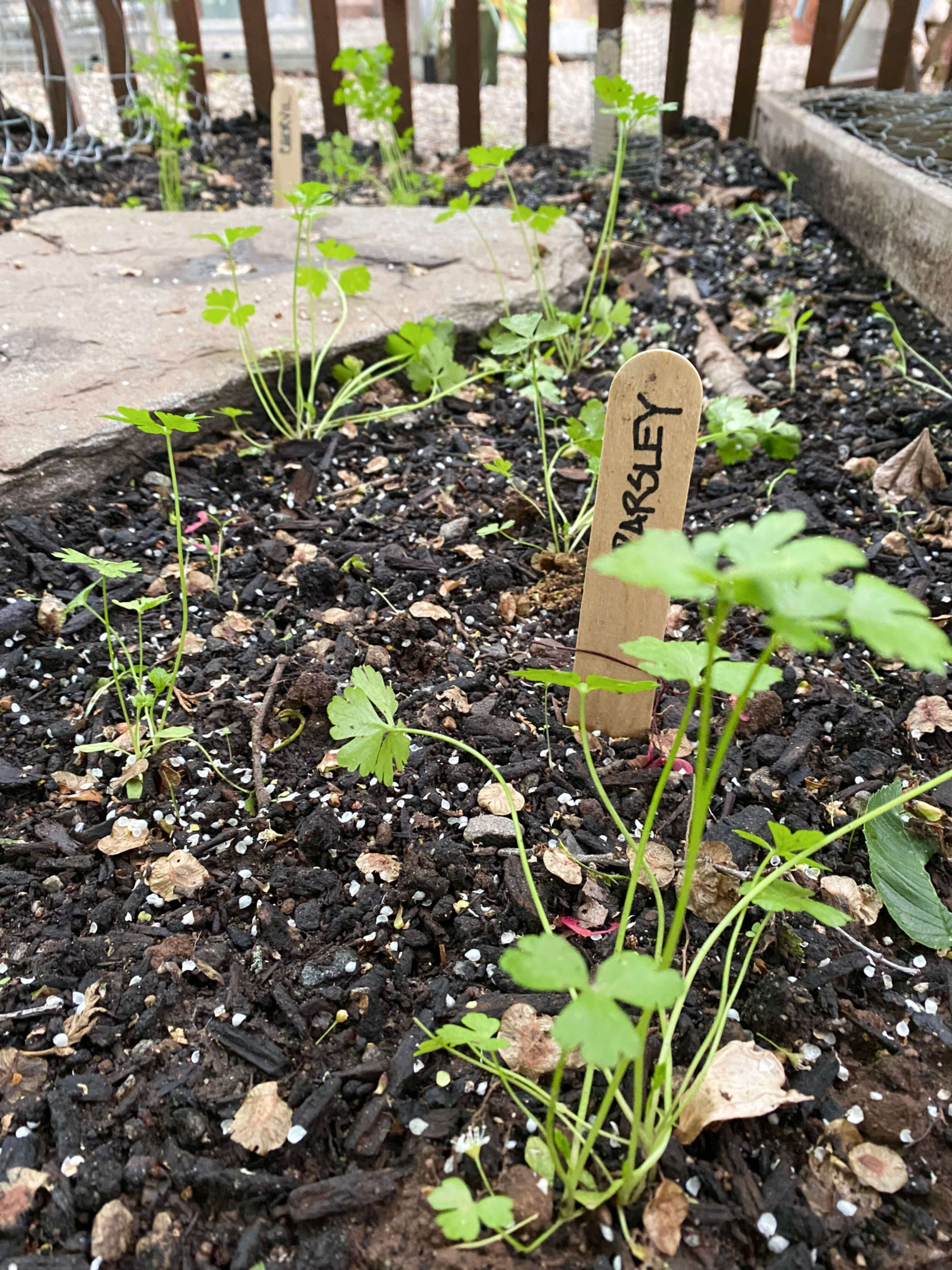
Parsley seedlings adjusting to their new bed.


Once planted, every seedling got its own individually made wire cage for protection from rabbits, deer, squirrels, and other wild creatures that might find a newly planted herb garden especially enticing. For about a week, things were good. The herbs settled in and seemed to be happy in their new spots. The branches of the trees overhead were leafing out, and the sun was doing its dappled dance. The visions were coming to life.

Then the cold snap came. The weather turned wet and winter-like for weeks. Memorial Day weekend was rained out with a nor’easter, not bringing snow, but rain and high winds and 40 degree days. By Mid-June, I was still doing gardening chores wearing a wool turtleneck sweater and jeans.

Despite the unusually cool start to spring, the 22-foot tall Japanese maple unfolded in its normal fashion, but instead of last year’s canopy, it reached an extra 24″ inches in length this year. This sent branches half-way across the greenhouse on one side and further into the front yard on the other side.

This spring… the growth-spurt of the red japanese maple in the top left corner.

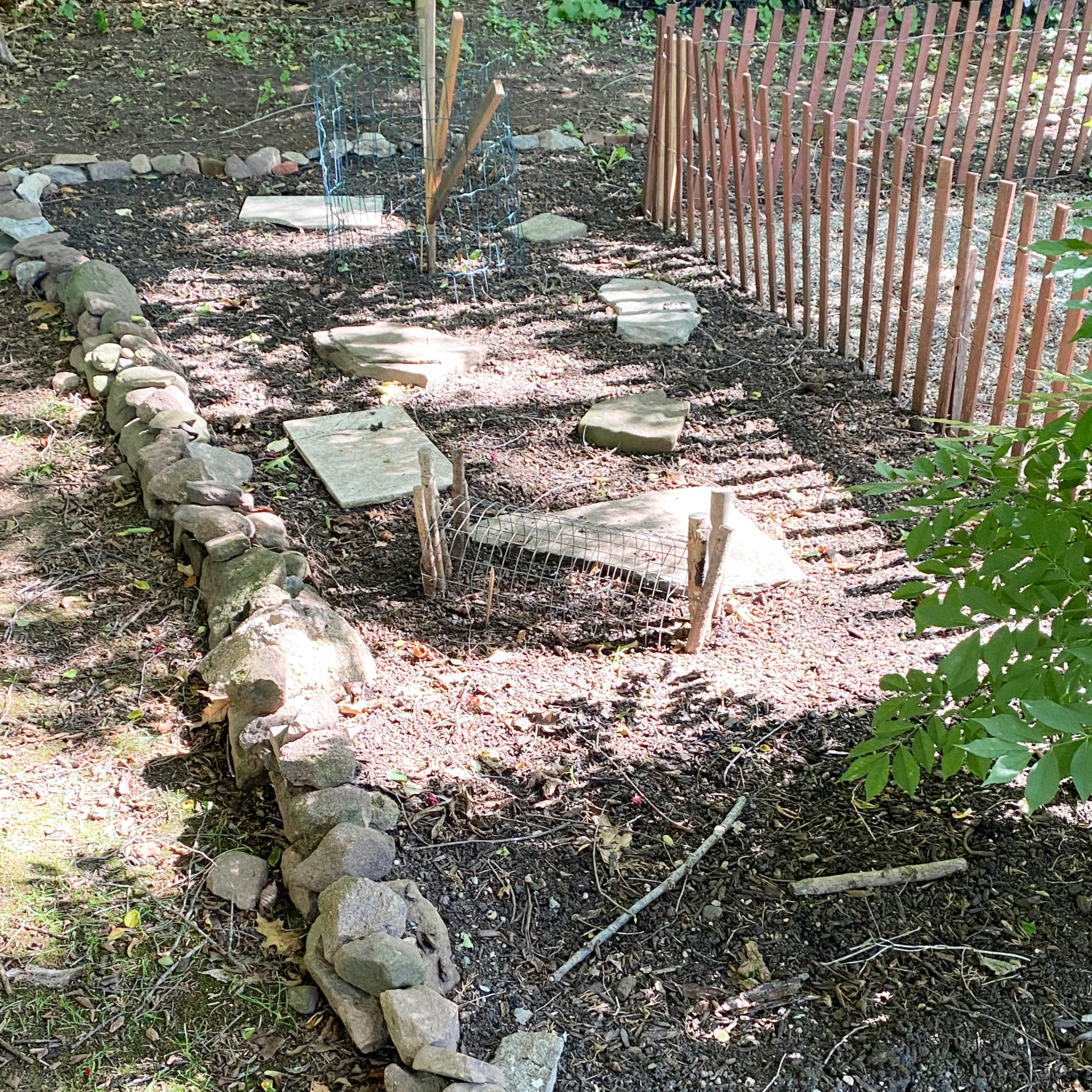
By July, a deep shade took over the whole left side of the greenhouse. The seedlings in that bed were the first to disappear. The nasturtiums, long and leggy already at just a month old, were eaten down to the ground in an afternoon’s timeframe. The cilantro, parsley, chives, and flax were next. All consumed by some mysterious creature, neither rabbit nor deer, but something smaller that could fit through the wire cages and snack away. My guess was that it was most likely the work of slugs, cut worms, and caterpillars who had made their presence known in other beds in years past, and who like to eat in the off hours when no one is watching. By the end of July, what was once a tender patch of steadily growing seedlings was now a framework of protective cages and bare dirt, with not an herb in sight.

Luckily though, as an experimental year, I planted herbs in several places around the garden, not just the greenhouse, so that we could see in which areas they grew best with varying lights of shade vs. sun. The reliable foxgloves in the front bed of the greenhouse grew to 5 feet and bloomed in shades of pink, purple, and white.

The foxglove seedlings in the back behind the greenhouse were squashed and trampled over by squirrels enroute to the birdfeeder and eventually were crushed to a papery pulp. The herbs on the right-hand side of the greenhouse (with lighter shade and much more sun-dappled conditions) fared far better but remained short and seedling size for months.

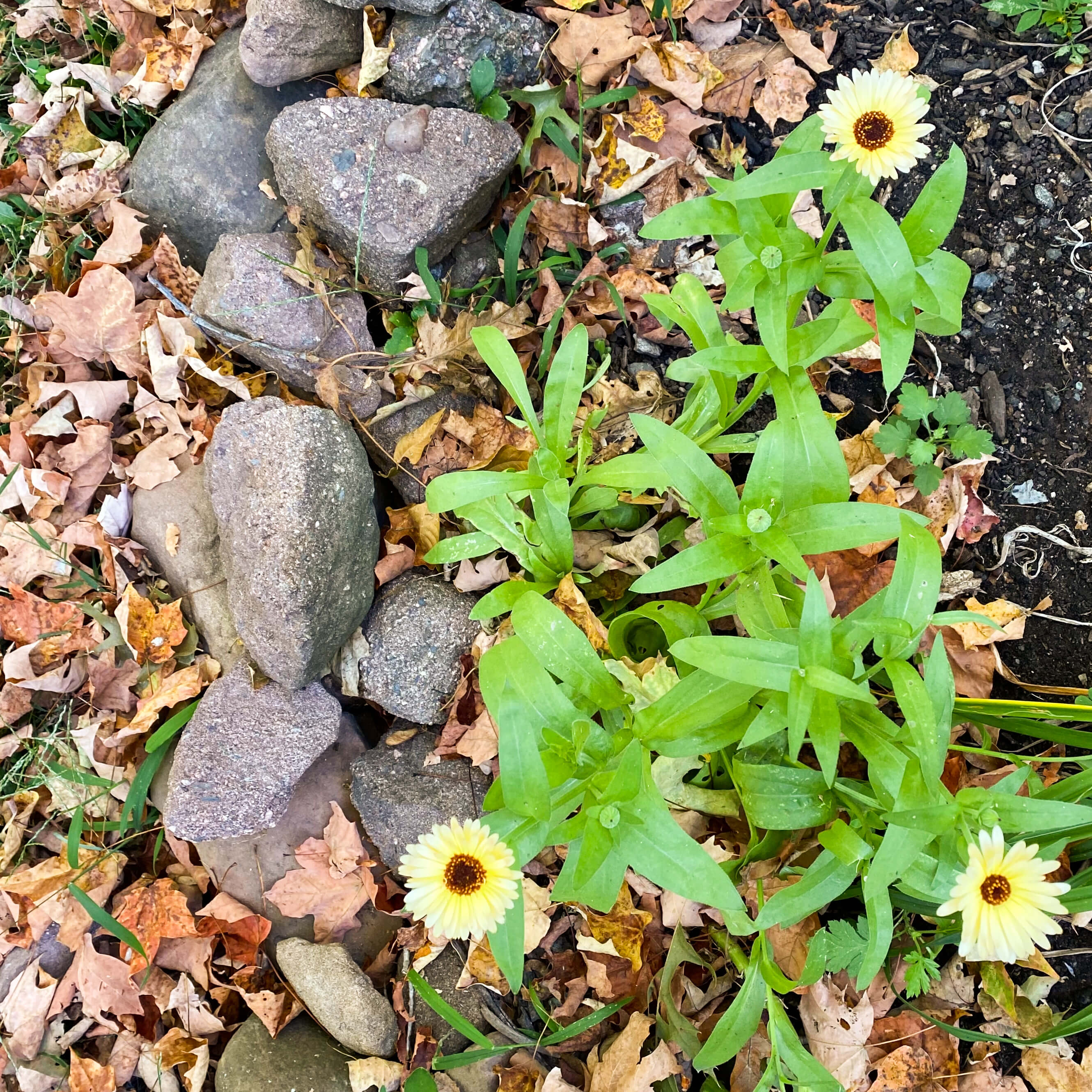
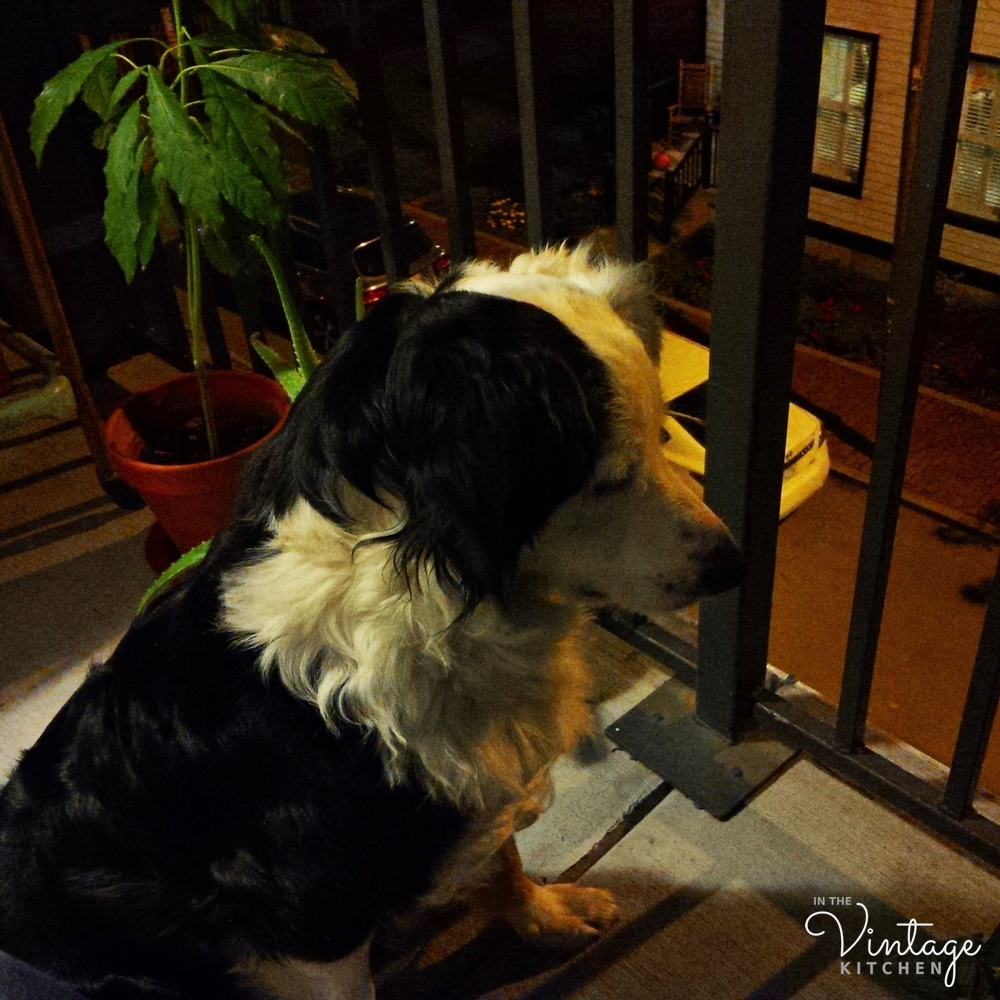
Although this photo above was taken in late June, the plants never really got much bigger than this over the next 60 days. Each formed their own little clump, but never branched out enough for one to meet the other, which was my initial idea in order to create a full garden. The mystery pest got the best of the herbs on the far edges of this bed too… the echinacea, the bergamot, the chives, and the chervil, but left the lemon balm, the oregano, and the feverfew alone. As an herb that symbolizes protection and new beginnings, I immediately loved the fortitude of the feverfew. Planted all around our pup Indie’s headstone, as a way to safeguard her spirit and to mark a new chapter, it was encouraging to see that it was now protecting the neighboring herbs too.
Feverfew

Every week, I kept waiting for something spectacular to happen: for something to catch a growth spurt and shoot up tall. But throughout the entire summer, all the seedlings that had been planted in early spring remained short and compact. Despite the organic compost laid in a thick blanket, despite the weekly waterings, and despite the regular fertilizer feedings, the herbs kept to a mercifully slow schedule. Meanwhile, the rest of the vegetable and flower gardens all around 1750 House flourished.

A small portion of the backyard vegetable garden in late July. This photo includes tomatoes, peppers, basil, corn, nasturtiums, winter squash, melons, beans, kale, artichokes, and collard greens.


In Adelma’s summer chapter of Herb Gardening in Five Seasons, she recommended two options in regard to feeding herbs: a commercially available (mid-20th century) fertilizer containing a 23-21-17 ratio and a homemade version of manure tea. While there are several horse and cow farms in our surrounding area, I have yet to see if any of these farms offer organic manure for sale, so I opted for the latter. The exact makeup of the commercial fertilizer that Adelma had recommended, is no longer available in that specific configuration anymore. I wound up making my own fertilizer combination comprised of organic seaweed, bone meal and banana peel water which was the closest I could get to mirroring her nitrogen-phosphorus-potassium ratio.

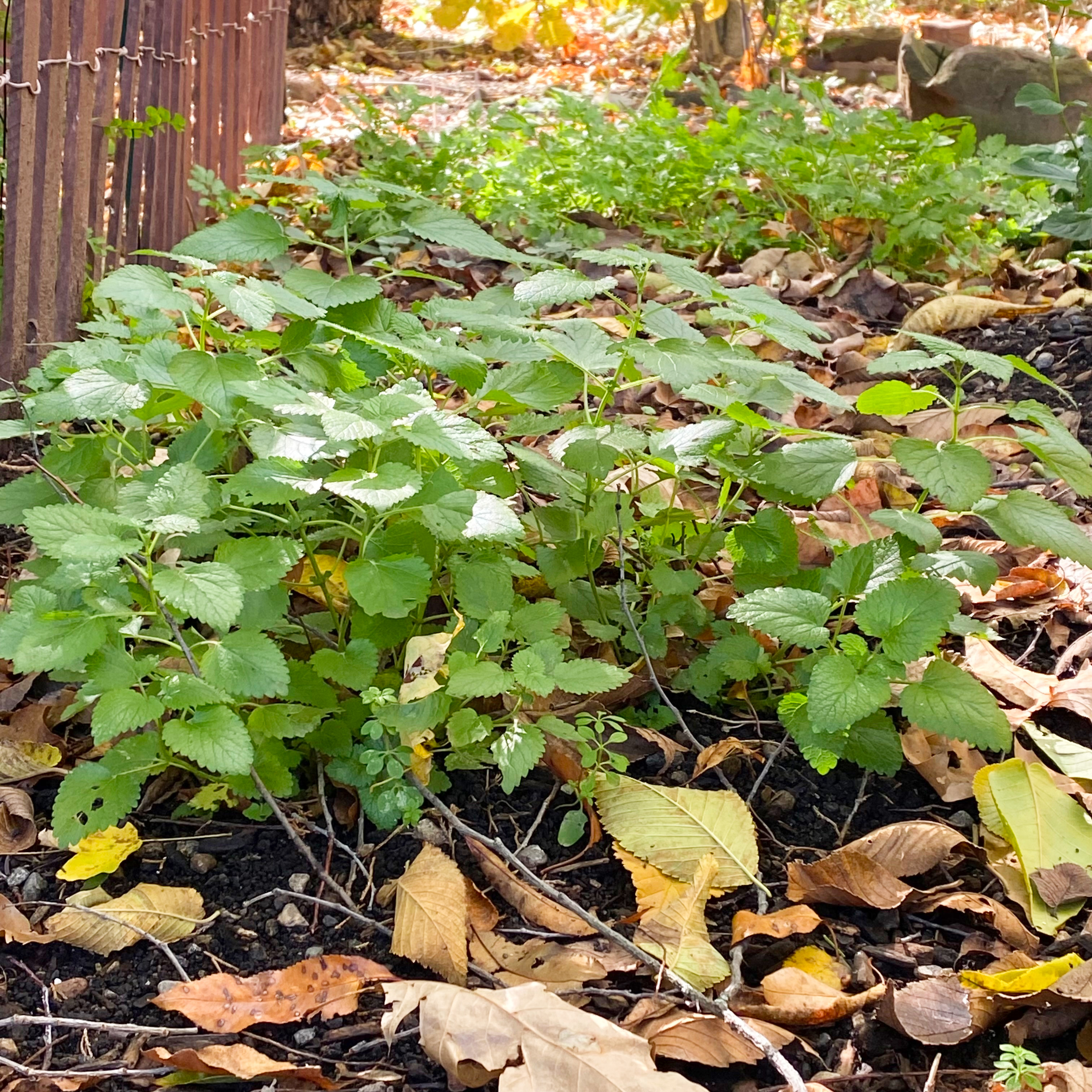
Lemon balm in early September

Finally, when the end of August approached, a growth spurt occurred. The herbs in the greenhouse bed started spreading out wide, but not high. The tallest herb was the lemon balm, measuring in at 5 1/2 inches in height, about 19″ inches shorter than what it should typically be. So you can see that things were not exactly ideal in this area of the garden, but they were at least improving slightly.

At the end of summer, the feverfew filled out and a perennial foam flower plant was added to replace the forget-me-nots.

Just as the lemon balm and feverfew started fluffing out, the tiniest of forget-me-nots bloomed. It was one single flower of dainty proportions and the the prettiest shade of blue, a color not that common in the garden beds here. As a spreading perennial, it was a hopeful sign that they were establishing themselves. That the herb garden might be turning a corner towards long-lasting success. The photo is not so great, but the flowers really were lovely.


Later in the week, bunnies ate the anemone. The mystery pest came back too and ate the forget-me-nots, flower and all, and then ate the bergamot for dessert.

As a true experimental garden, I didn’t interfere with any of the plants, but just observed their progress, keeping notes, and taking photos on what survived and what didn’t and in what location with what amount of sun. When I sketched out the garden in January, I paired all the seedlings with their most ideal companion plantings based on compatibility, size, structural composition, and color so that everything harmonized and flowed together. When companion planting, there’s the added benefit that these specific pairings “help” one another, whether it’s underground adding additional nutrition via their roots or above ground adding protection or distraction from various pests. This step of the planning process is pretty intensive because many things can’t be planted next to each for lots of varied reasons. Add in additional factors like water, soil, and sun requirements, and this placement-of-the-herbs exercise turns into a puzzle on paper best executed with a pencil and a sizable eraser. It took many days to get the garden plan correctly mapped out over winter. What I didn’t plan for though was Santiago.

Santiago, the twenty-one-year-old wonder cat this summer.

In early September, on a beautiful sunny Sunday, Santiago, our 21-year-old cat, said a peaceful goodbye to life at 1750 House. Maybe nature worked in our favor over the summer leading up to the moment when we laid Santi to rest in the spot in the greenhouse garden where the anemone once stood. It was an ideal new home for Santi. Near his favorite rock with the hollowed out middle that became his outdoor water bowl, it was also close to his pal, Indie, with full view of the bird feeder and the woodlands and all the wild creatures that sparked his curiosity each and every day since he arrived a southern cat in a northern land.

Back in January, penciled in around the anemone were pink and white echinacea, foxglove, lemon balm, parsley, mint, chives, and oregano. Now in reality, in September, Santiago’s inclusion in the garden inspired something different. A new vision. One that transformed this side of the greenhouse into a brand-new kind of garden altogether. Instead of an entire bed filled with herbs with a foxglove end cap, a new celebration garden was coming into light. One that represented joyful memories in the form of plants. One that captured the engaging spirits of our long friendships with a ten pound cat and the most enthusiastic pup on the planet. The foxglove, feverfew, and lemon balm will stay, but in place of adding other herbs, next spring, I’ll be adding flowers and shrubs suited to shade that carry reminders of Indie and Santiago. Instead of a bed for scented herbs, it will become a bed of sentiment, which is not unlike how colonial gardens were built in America in the first place.

Always a helper in the greenhouse.

Faced with not much time left in the growing season to start something new, the winter offers the opportunity to think about the perfect plant to represent Santiago, this marvelous little friend we’ve known for two decades. I don’t know quite yet what companion will join him, but I do know that it will be a dramatic standout flower amongst the herbs, just like Santiago was a dramatic standout kitty amongst cats.

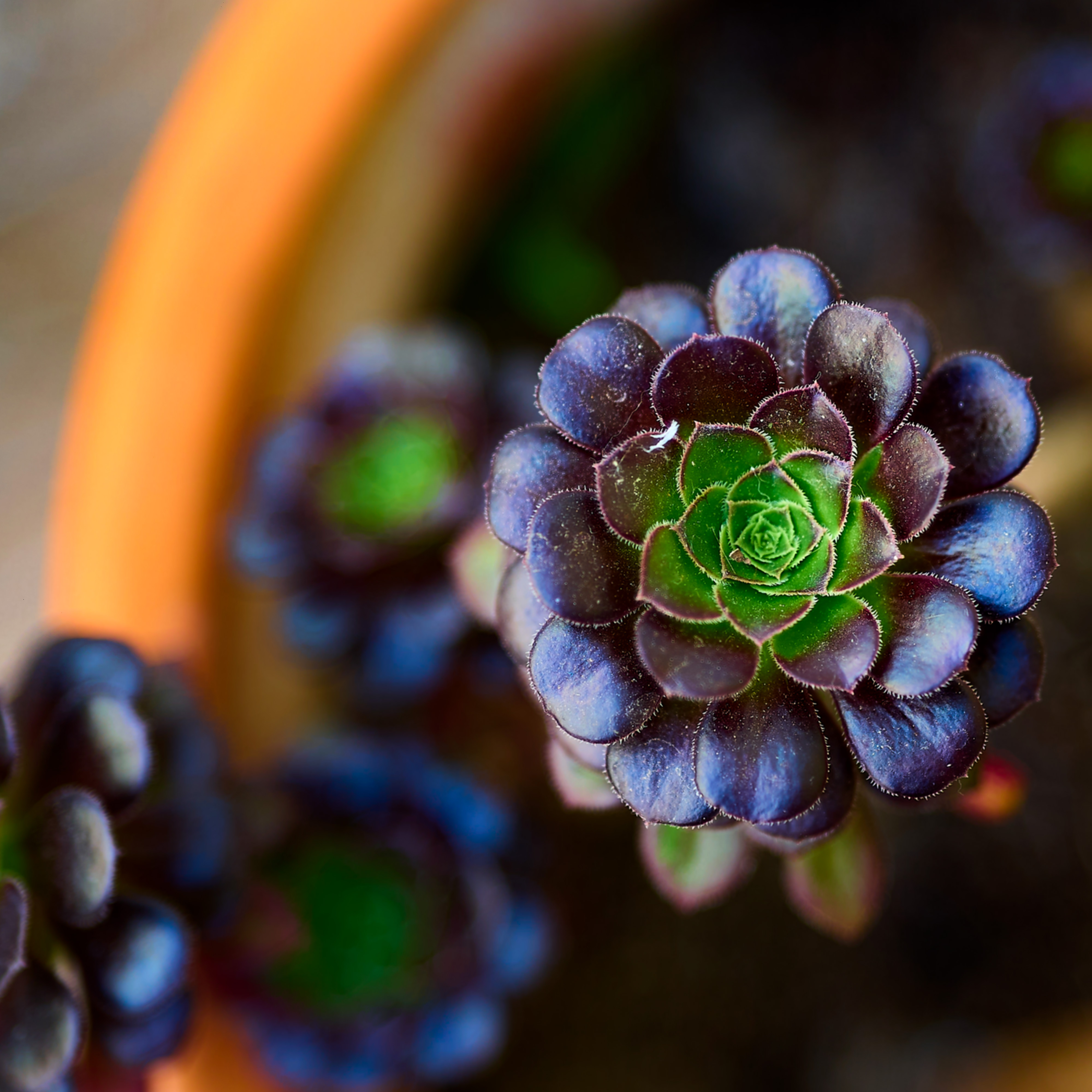
Two ideas I’m considering at the moment… black peppermint and the black aeonium called Zwartkop, pictured above.

In the other experimental herb garden beds, challenges and triumphs ebbed and flowed with the swell of the season. The second location was a full-sun bed in the front yard that surrounds a 100-year-old maple tree.

The bed was vacant when we moved in, except for three clumps of rusty-red daylilies planted years ago by a previous owner.

The daylilies – a gardener’s joy at 1750 House from year’s past.

To celebrate the full sun location and to compliment the color palette of the daylilies, I planted the whole bed in shades of yellow and orange with a touch of pale pink. Calendula, yarrow, and blackberry lily seedlings were planted between coral bells, sweet potato vines, cosmos, and zinnias.

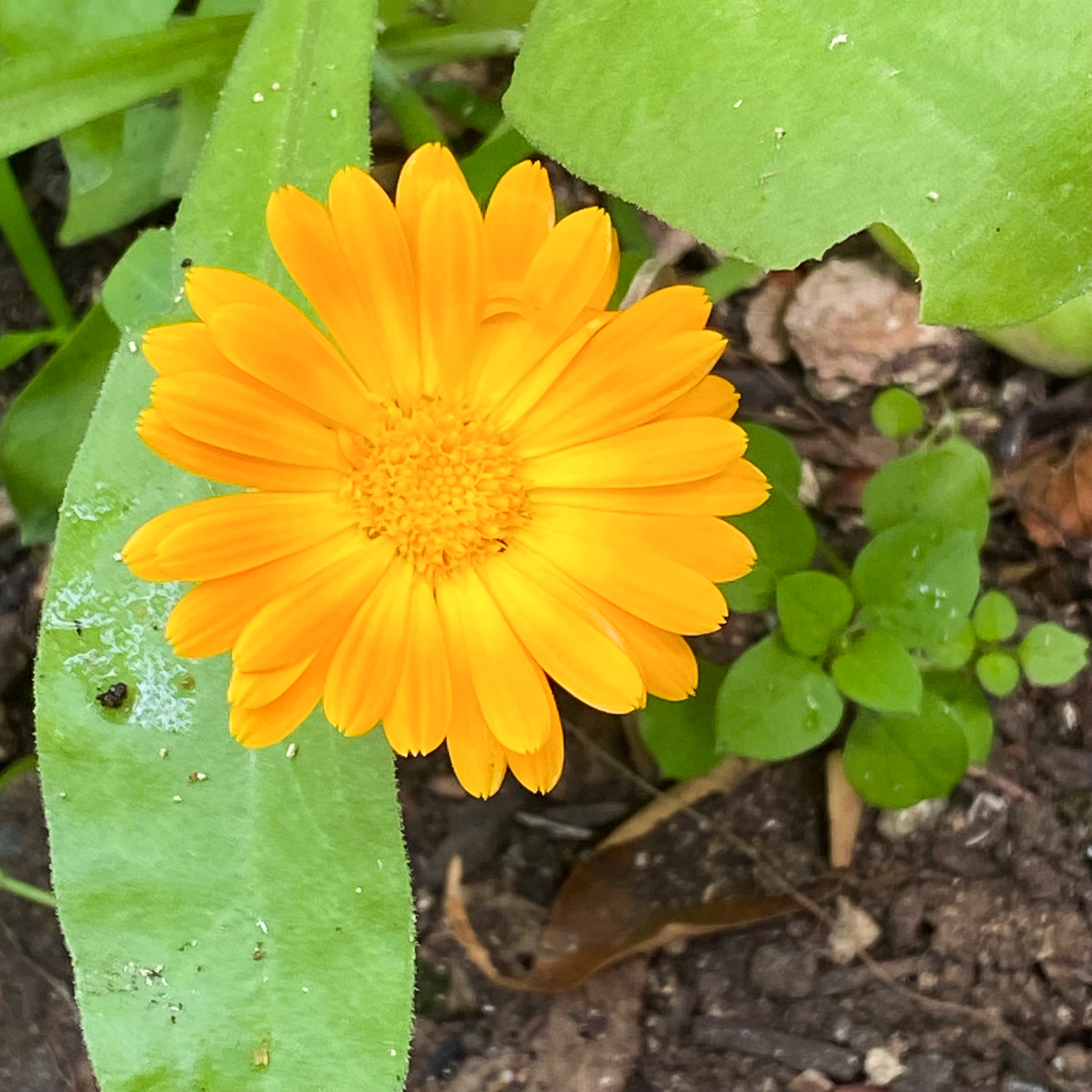
The calendula were the winners in this bed since they made it to full flower and kept flowering along with the cosmos and zinnia from June to November. The calendula formed little bushes of sticky leaves and multiple flower shoots. Had I planted about twice as many, they would have filled out all the bare spots in the bed completely. The yarrow and blackberry lily took the whole summer to establish themselves, but by September they both sported long leaves, so I’m hoping they’ll over winter with healthy vigor and really take off next year.

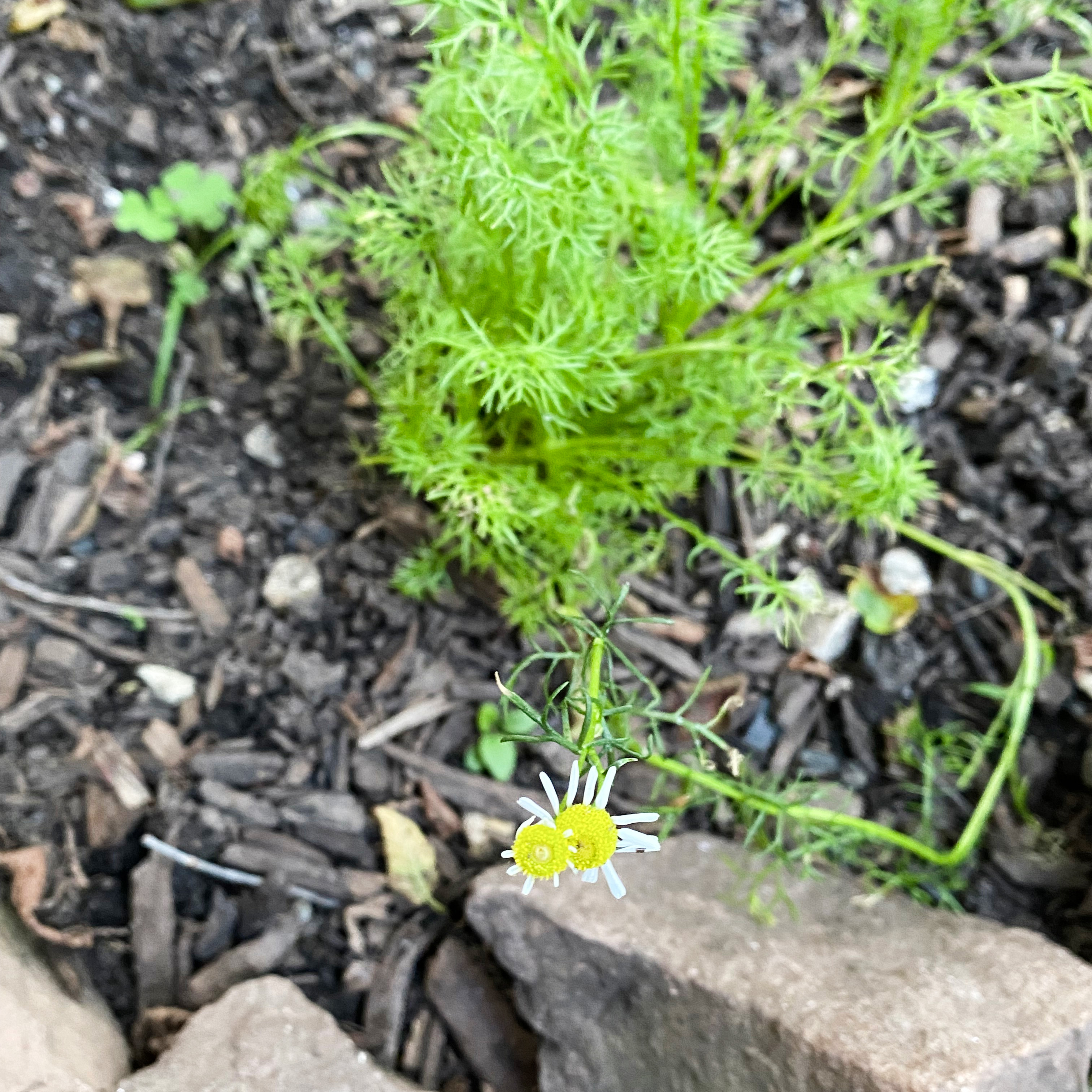
The third bed was also planted in full sun, but because of this year’s extending tree canopy, it turned out to be covered by partial shade once all the leaves unfurled in early summer. Since this bed, tends to dry out more quickly, it was the ideal spot for the Mediterranean herbs (lavender, rosemary, thyme, oregano, cumin, and sage) along with winter savory, dill, garlic, chamomile and one brussels sprout added for encouragement and nitrogen sharing. Most everything did well in this bed, except for the garlic which grew lovely, long green leaves but never formed actual bulbs, and the cumin which flopped over in the cold weather of spring and never really rallied after that. Like the greenhouse beds, everything planted here remained small and compact but looked healthy and happy. In August, the chamomile flowered for the first time, sending up two fragile little blossoms. Days later, in the early morning when I came out to water, all eight of the chamomile mounds and the dill were eaten down to nubs.

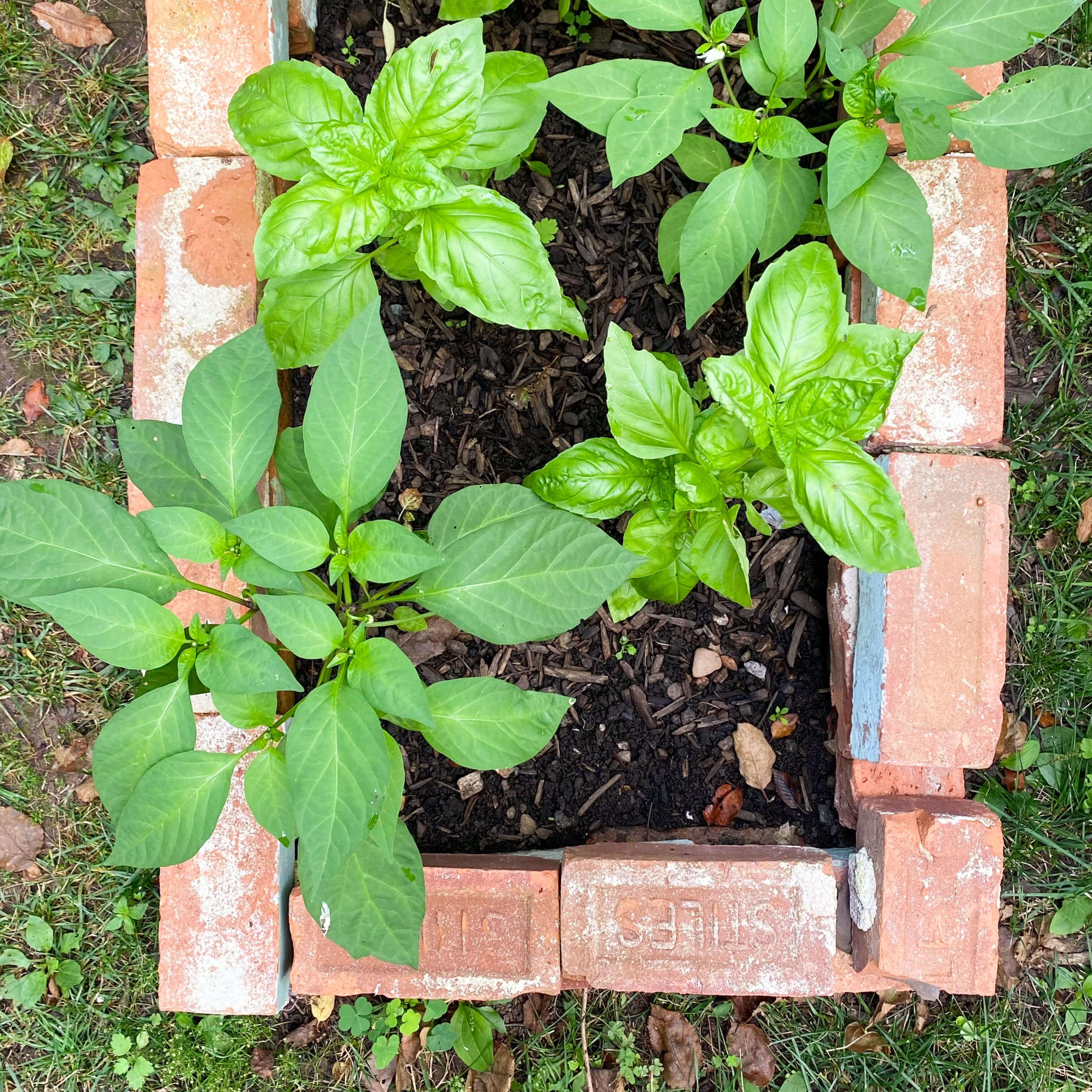
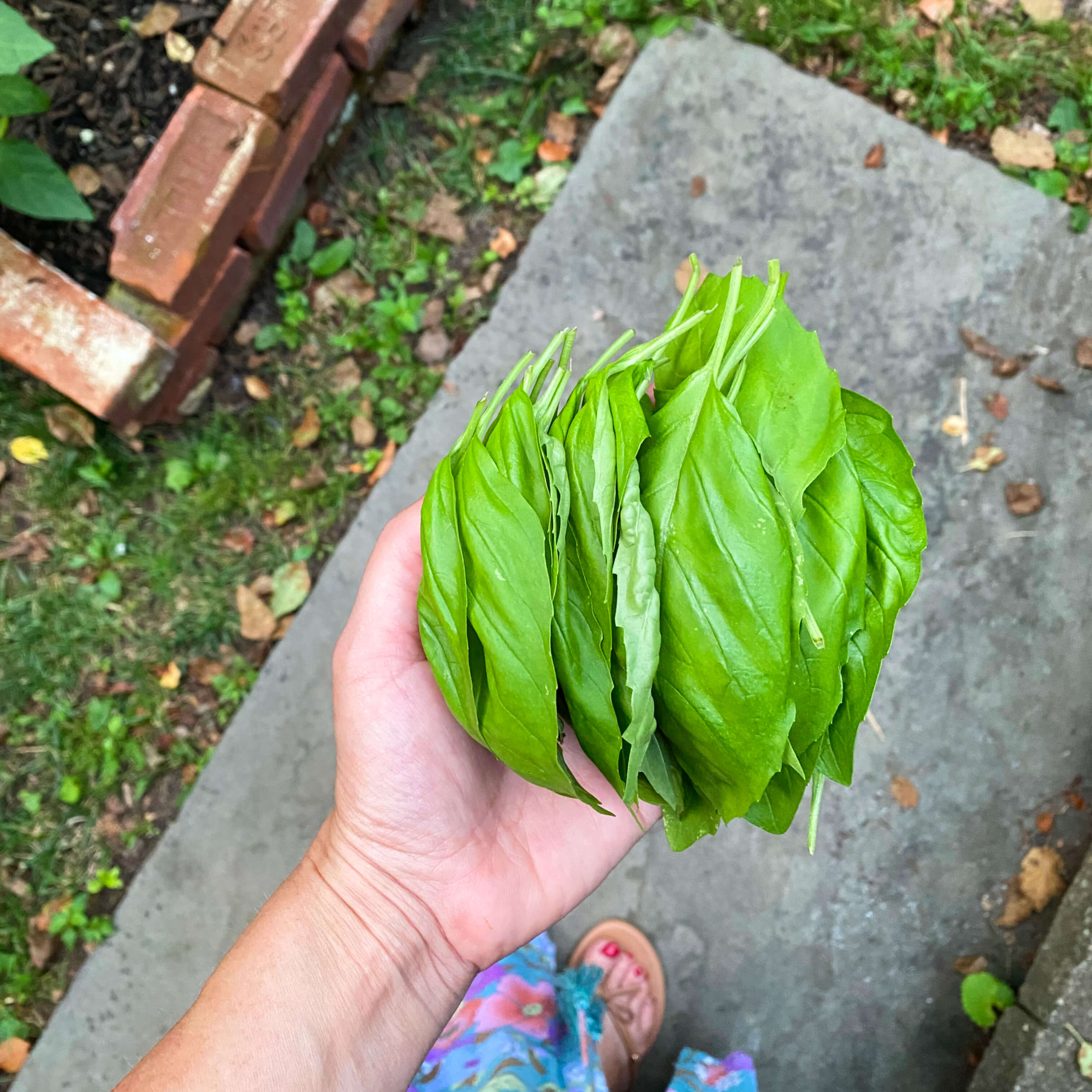
The last of the herb beds, located on the other end of the backyard from the greenhouse, contained basil and and another batch of nasturtiums. These beds were in partial shade last year, but turned out to be in full sun this year, due to a large tree that fell far back in the woods last autumn. That opened up a bit of a sun spot in the tree canopy overhead that was fortuitously in the direct path of our vegetable beds. Planting seedlings in spring when the trees were still bare, I had no idea this sun spot was going to be available, but it made it a banner year for everything growing in that section of the yard, basil included. Racing right alongside the pepper plants, the basil grew over two feet tall and produced leaves as big as my hand.

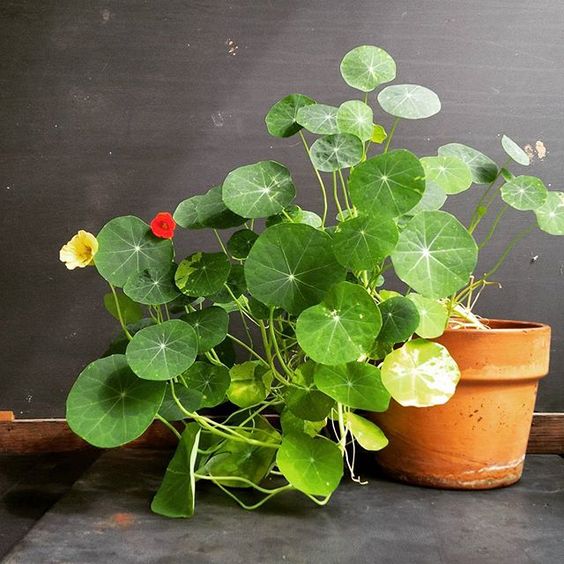
The nasturtiums, a reliable favorite for the past four years, thrived in the same way. Grown from seeds I collected from last year’s nasturtium harvest, this was the first time I had tried growing new flowers from the previous year’s stock, a recommendation from my fellow New England Instagram gardening friend, Karen. The vigor of the nasturtiums in this sunny bed, which bloomed and crawled for a full seven months, more than made up for the nasturtiums that were eaten by the mystery pest on the left side of the greenhouse in early spring.

This photo was taken early on in the season, but by October the nasturtiums were climbing all over the squash trellis, our lemon tree, the floxglove, the bush beans and the pea trellis

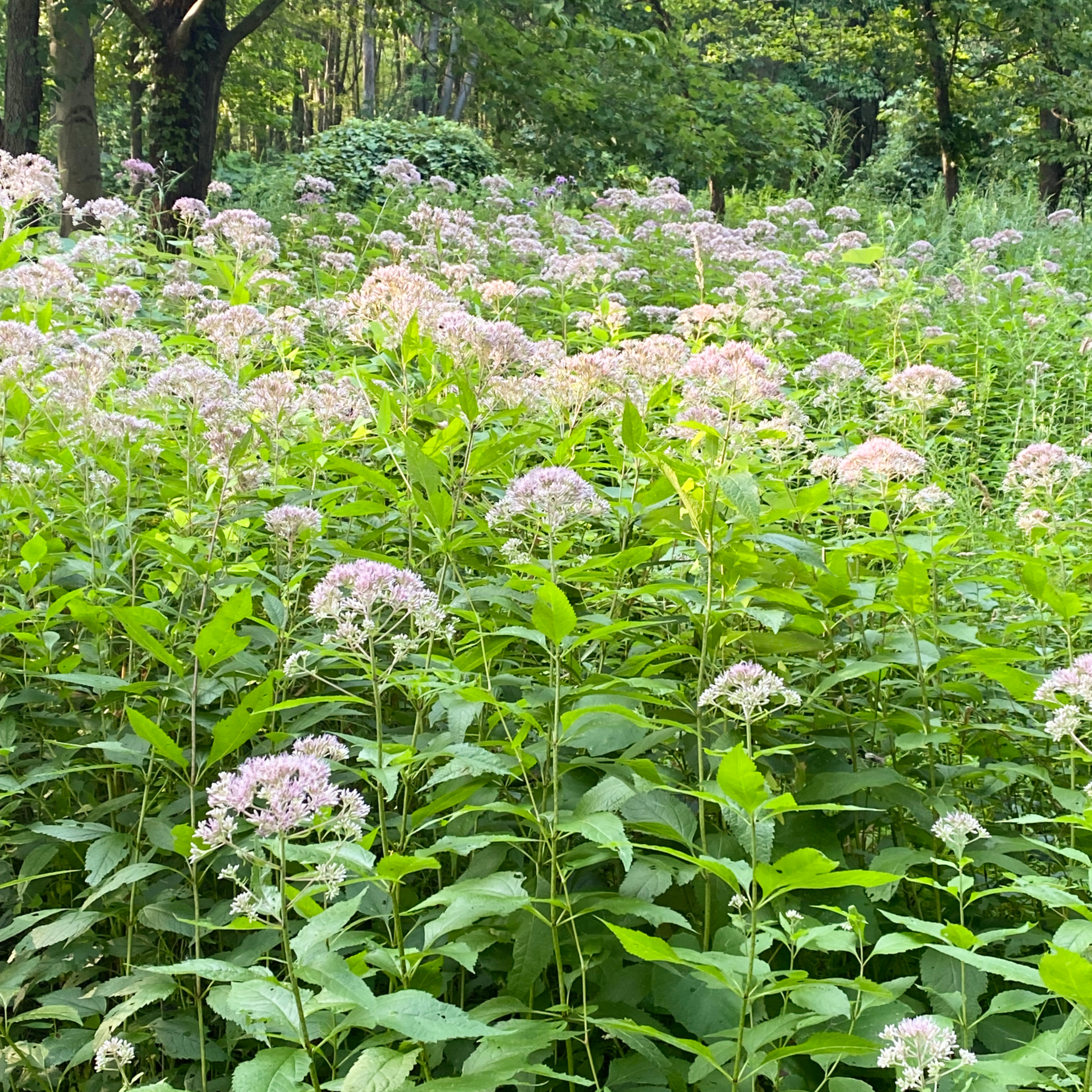
Their enthusiasm inspired more seed saving adventures. Not only from the nasturtiums again, but also from vegetables we grew this summer and from two native herbs, Joe Pye and Queen Anne’s Lace, collected from a neighborhood park. It’s going to be fun to see how (and if) these will grow here at 1750 House next spring.

Queen Anne’s Lace at our neighborhood park

A field of dreams… hundreds of Joe Pye not far from the Q.A. Lace

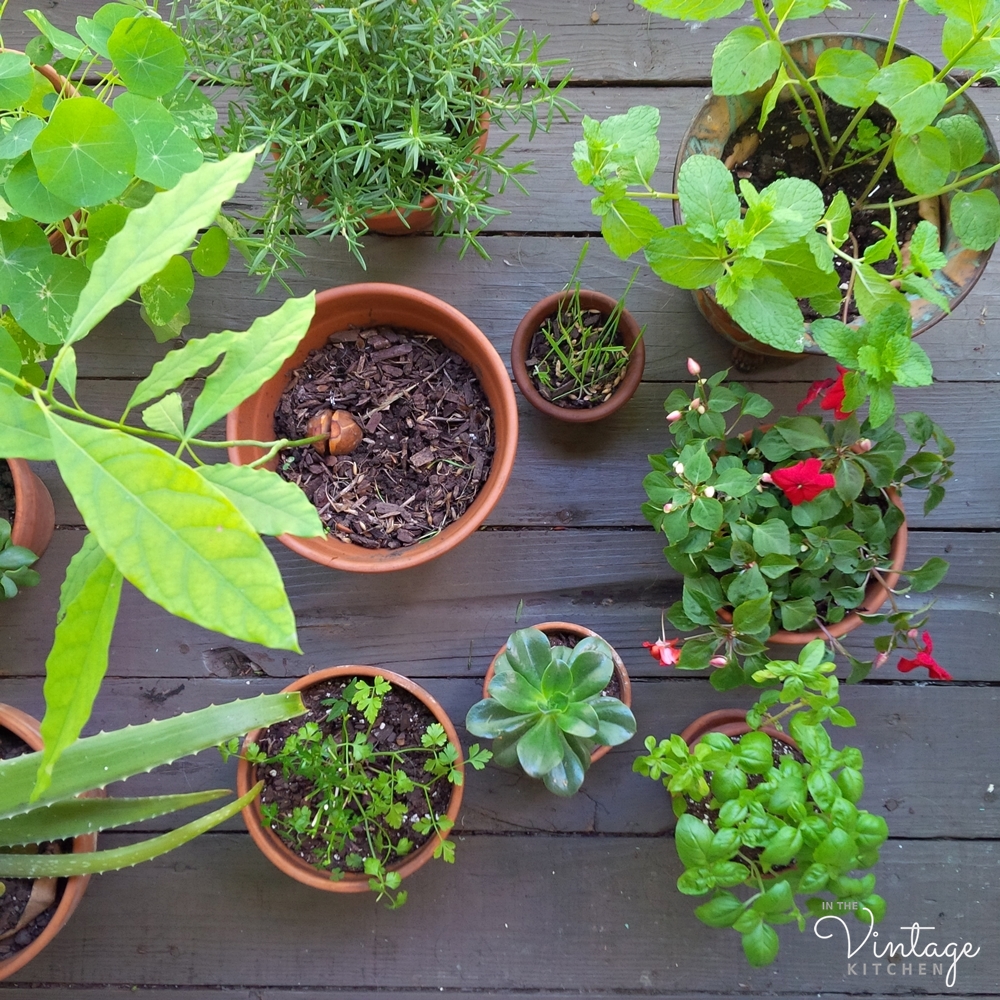
The final gardening trial in my experimental year involved starting four different types of herbs again in early September. This time, seeds were started in individual pots and in a raised bed, both placed in full sun locations in the back yard. I chose chervil, parsley, dill, and cilantro to experiment with since these are all cool weather lovers and since all four never made it to maturity in other in-ground areas of the garden. The chervil and parsley were planted separately in small pots, one plastic and one terracotta. The cilantro, dill, and a second batch of chervil were planted side by side in a raised bed that had previously been home to lettuce and mini melons, both of which thrived over the course of the summer.

Container experiment

I was interested to see if these containers and bins made a difference in the overall vigor of the plants and also interested to see what challenges might affect the herbs in this new arrangement. Within a week, all the herbs had sprouted from seed. The chervil in the garden pot made it to flowering stage, but still remained much shorter than its traditionally intended size. The parsley filled out its pot. The trio in the raised bed grew quickly too. All three spread out and up but the chervil and dill remained short and low. The cilantro grew taller and fanned out beautifully, like a bouquet. None of the herbs in the pots or the raised bed were affected by pests.

Raised bed with dill (left), chervil (center), and cilantro (right).

As of this first week in December… there are still green herbs in the garden: in every bed from the greenhouse to the front yard to the backyard. Already tucked in to their winter blankets (aka mounds of leaf mulch surrounding them but not covering them) they made it through their first snow/sleet/ice storm on Tuesday and look just as happy as they did on the days when the temperatures were 50 degrees and sunny. This makes me so hopeful that in starting an herb garden in 2025 with Adelma’s guidance, enough healthy groundwork has been laid for many of these herbs to overwinter and start anew again in 2026.


This experimental year proved to be so valuable in so many ways. Not only did I learn first-hand about the growing conditions for herbs at 1750 House, but I learned about how our landscape changes year by year. I learned that shade is good but sun is better. That parts of the garden need more protection from wildlife. That a sizable list of herbs will have a permanent home in the gardens here going forward. And I was reminded that gardening is a journey. That it takes not just one year, but many years and lots of patience and practice to establish a full, lush and vibrant herb garden.

This project also extended itself way beyond the landscape at 1750 House too. Throughout the course of the year, I connected with several new blog readers from around the globe who are also interested in herb gardening. I visited a very inspiring large-scale herb garden that’s about to celebrate its 30th birthday, and I received a lovely invitation to visit the Coventry Historical Society in Coventry, Connecticut, which houses a small collection of herbs from Adelma’s gardens along with some of her personal artifacts.

So while my winter time visions of early 2025 did not come to life in the exact way I thought they might, the herb garden bloomed in many other ways. Because this was just the starting point of what I hope will become a long-standing garden feature here at 1750 House, stories about Adelma and the herb garden adventures will be continuing on the blog throughout 2026 too. There’s so much more to discuss, including notes on caring for a batch of herbs that were brought indoors to overwinter, recipes from Adelma’s kitchen, a recipe for a homemade salve made from the calendula flowers that grew in the front bed, the neighborhood seed saving experiments, and features on both a trip to the Coventry Historical Society and the 30 year old herb garden. All these stories and more will be coming to the blog over the course of 2026.
In the meantime, our herbal education continues.

Cheers to Adelma for making this garden experience feel like a real experiment. Cheers to all the herbs for teaching us everything we needed to know when it comes to growing new life at 1750 House. And most importantly, cheers to Santiago, who gave us far more than just a mere 21 years together. Long live the garden you’ve inspired.

The Greenhouse Diaries 2025 : Meet Herbalist Adelma Grenier Simmons – Our Inspiration for the Year

Snow is on the ground, freezing rain is in the forecast, and our first seedlings have just sprouted. It is officially time. The Greenhouse Diaries are back for a whole new year of growing adventures, experimental gardening, and wit and wisdom from some of the most interesting gardeners of the past three centuries.

If you are new to the blog, this series started in December 2022 as a way to chronicle our horticultural endeavors as we build up the heirloom gardens surrounding 1750 House with the help of our 4’x6′ polycarb greenhouse.

December 2022 in the greenhouse

With two full growing years behind us and lots of trial and error, we are now at the stage where we pretty much understand the general garden design and layout we want to achieve, the capabilities we are working within, the location of beds, the soil, the sun, the shadows cast by the tree canopies, and the wildlife that both helps and hinders some of our ultimate goals.

Each year, we establish a theme in January based on inspiration from a vintage garden book that helps set the direction for the next twelve months and organizes the project list. While the overall garden plan has changed quite dramatically since we first moved in in the spring of 2022, the Diaries have helped define and redefine expectations, capabilities and desires.

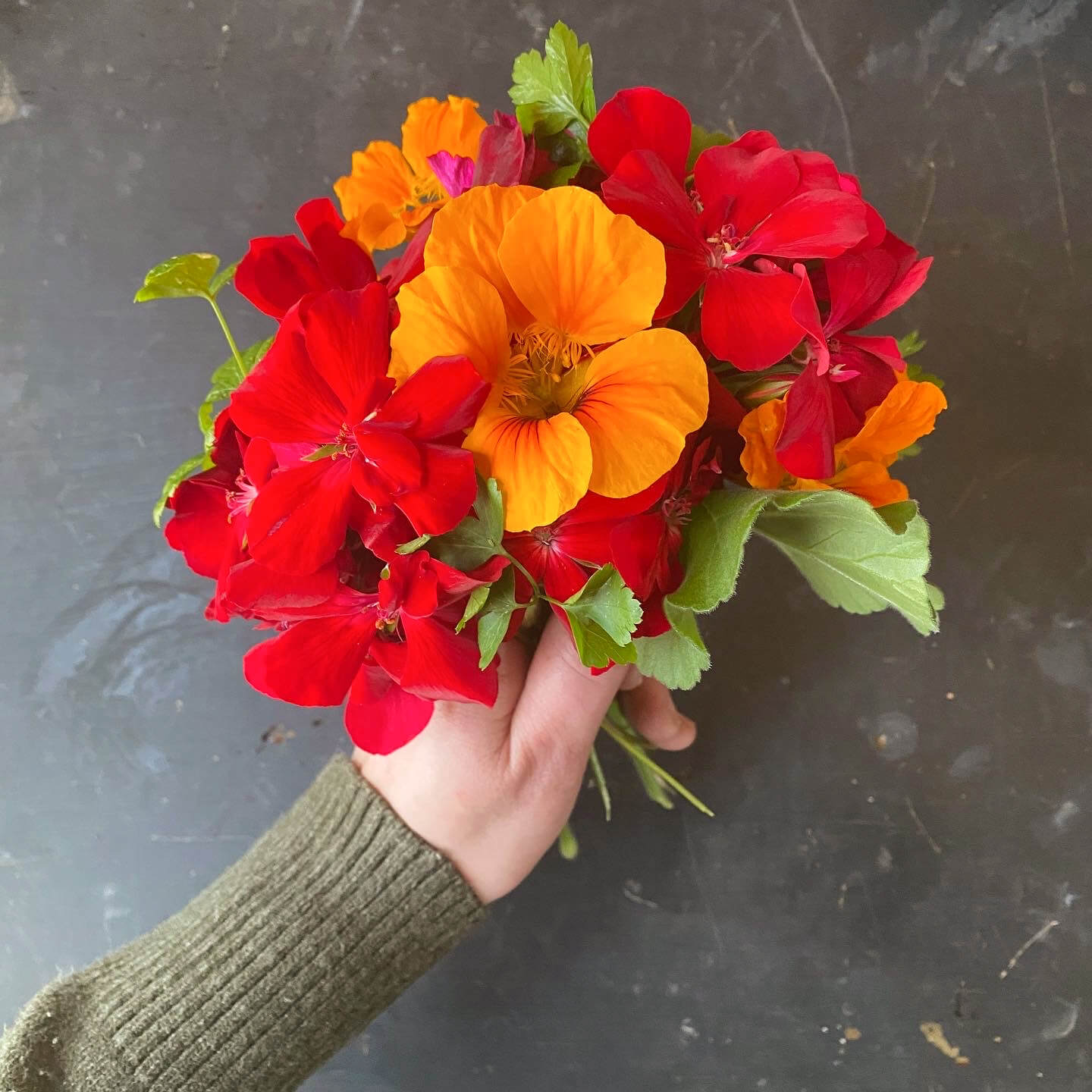
First bouquet from the greenhouse – winter 2023.

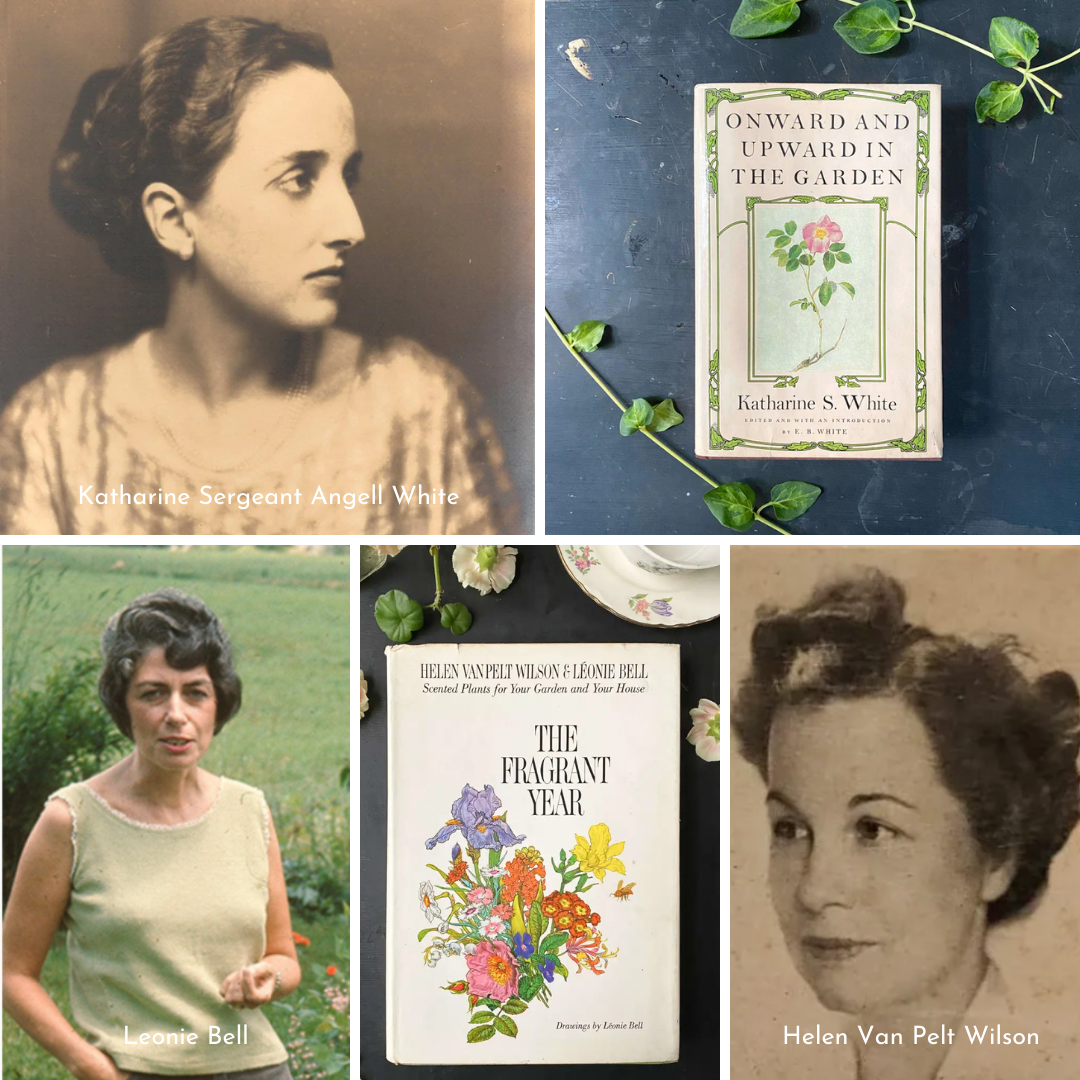
In Year One, hot off the trail of sixteen years of city and country gardening in the hot and humid South, we were keen on testing the greenhouse’s ability to grow an array of vegetables, herbs, and flowers during our first New England winter, all inspired by the writings of Katharine Sergeant Angell White and her 1977 book Onward and Upward in the Garden.

In Year Two, we embraced perennials native to the East Coast that would provide a pleasant aromatic scent to the garden across all four seasons, thanks to the 1977 book The Fragrant Year by Helen Van Pelt Wilson and Leonie Bell.

While we gleaned valuable information in both years and grew the garden successfully in many exciting directions, last year’s theme presented so many challenges that it made us rethink the perfumed garden altogether. In place of twelve new additions to the garden, we only added five… three bare-root witch hazel trees, a patch of perennial viola flowers, and a pot of Nemessia on the porch that slugs eventually enjoyed all the way down to tiny little nubs. The idea of planting an aromatic garden, while fun in theory taught us a lot about the realities of working within the confines of a Northeastern landscape. As we have come to learn, gardening successfully in New England means recognizing and embracing the seasonality of the landscape. And that means in winter, the natural world rests.

January 2025

While it is not a problem to acquire twelve aromatic plants in a year, it was difficult to acquire them on a month-by-month basis in keeping with the Diaries’ month-by-month writing/gardening schedule. We discovered last year that most growers with aromatic inventory won’t ship to our neck of the woods until late spring or after early fall to ensure a successful growing experience. Our own favorite local nursery closes down completely from the end of December to mid-March and larger garden retailers in our area start to remove outdoor plant inventory by the end of July.

This left a limited window of opportunity to plant a dozen new varieties which didn’t match up well with a month-by-month writing schedule. That being said, The Fragrant Year was set aside a third of the way through 2024 and the greenhouse became a holder for a hodge podge of succulents, herbs and experimental seedlings for the rest of the year. Too fun of an idea to let it go, we haven’t seen the last of the Fragrant Year project though. It will come back with a more appropriate planting schedule at some point in the next few years. In the meantime, the now-established witch hazels and violas planted last spring will represent the scented garden for now as we turn our attention to our new, much more accessible garden project for 2025.

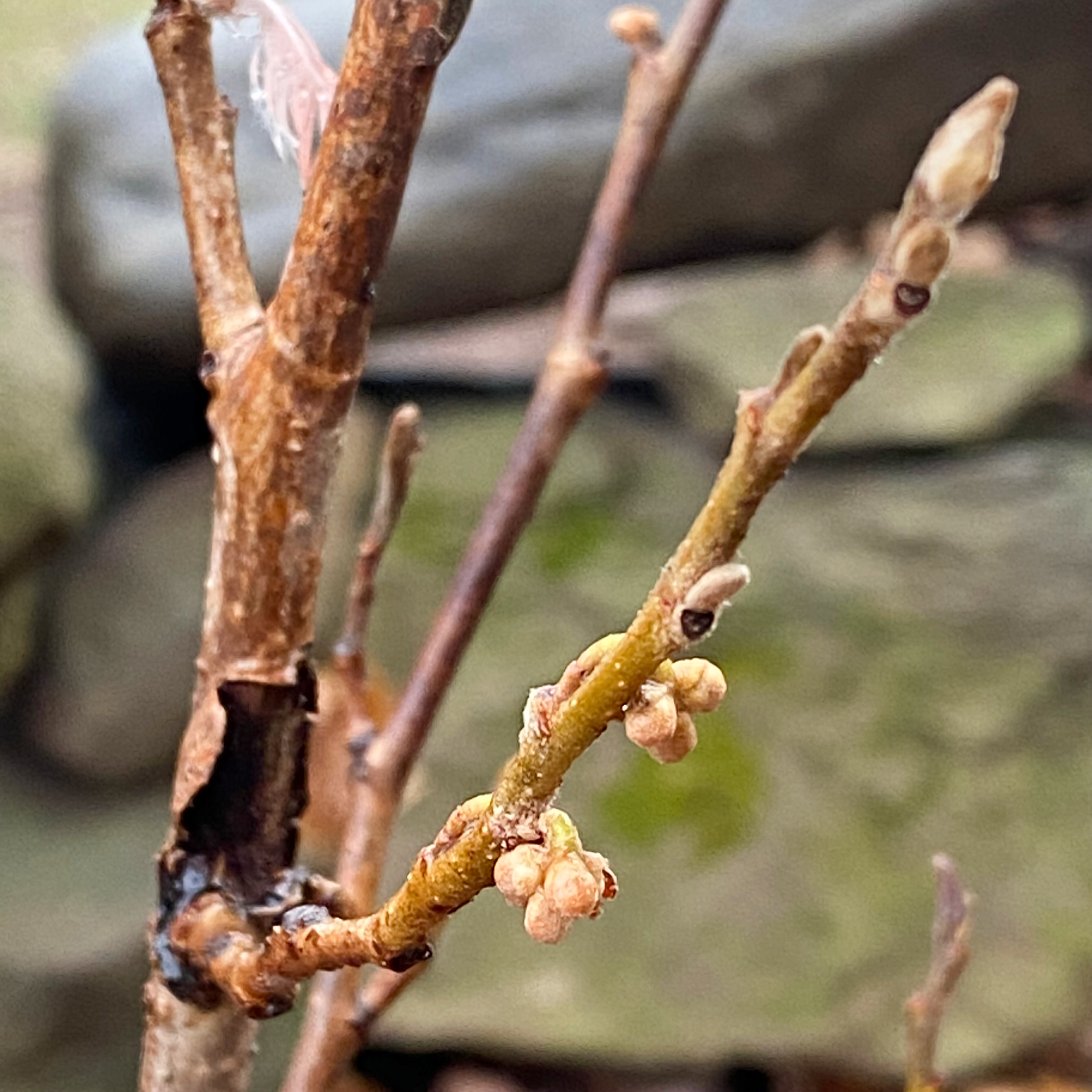
January 2025 flower buds on the witch hazel

This year, our gardening endeavors involve building a perennial herb garden with the help of Adelma Grenier Simmons (1903-1997) and her book Herb Gardening in Five Seasons published in 1964.

Adelma was considered a definitive authority on herb gardening in the United States during the mid-to-late 20th century. A Vermonter by birth, in 1929 at the age of 26, Adelma purchased a rundown 18th-century farmhouse on fifty acres in Coventry, Connecticut with the idea that she and her parents would start a dairy farm selling cheese and butter made from their own herds of cowsa and goats. She called the farm Caprilands, which literally means goatlands in Latin.

Adelma Grenier Simmons in 1935. Photo courtesy of the Hartford Courant August 01, 1935. Photo by John Haley

Soon discovering that running a dairy while also maintaining a full-time job as an international buyer for a Massachusetts department store left little time to do both jobs well. Adelma began to rethink her farming dreams. Inspired one day by a walk up to a rocky hill on her land, feeling the sun’s warmth on her face and watching it move across a patch of scrubby terrain, Adelma’s thoughts turned to recollections of earlier travels to Europe and the beautiful herb gardens that decorated a similar landscape. An idea struck.

By the early 1950s, the Caprilands Herb Farm was well established and Adelma was on her way to becoming the foremost authority on herb gardening in America. Welcoming visitors from around the world, Adelma gave tours of the grounds and the gardens. She also taught classes, organized workshops, and hosted teas and luncheons at Caprilands for anyone interested in learning more about growing, cultivating, cooking, and collecting these multi-faceted plants.

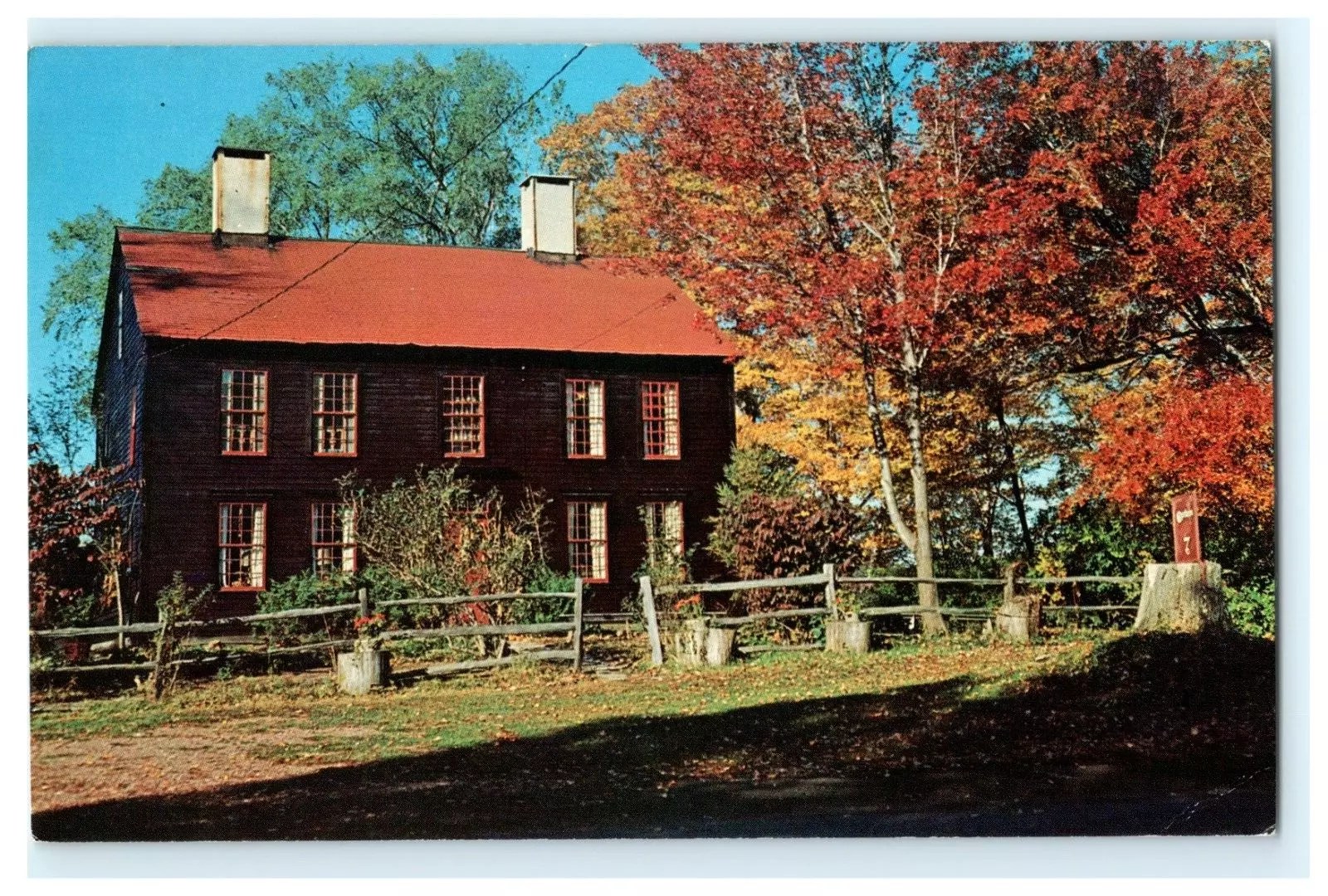
1970s postcard of Adelma’s 18th century Connecticut home – Caprilands

Eventually, Adelma became known as America’s “First Lady of Herbs” and was credited with igniting the country’s interest in herb gardens. In addition to educating the public at home, Adelma also lectured extensively around the country, into her late 80s, inspiring generations of gardeners with her knowledge of herbal horticulture, history, and symbolism. The gardens at Caprilands contained between 200-300 different varieties of herbs at any given time and from them, Adelma preserved stems and stalks in dried bouquets and living wreaths, saved seeds, seasoned food, and wrote extensively on their presence in horticulture, history, cooking and decorating. Her farm became both a learning center and a bustling business spreading the joy of herb gardening around the world.

Adelma Grenier Simmons photographed in October 1984 by Don Heiny. Photo courtesy of Find A Grave.

When she passed away in 1997 at the age of 93, Adelma’s estate went into probate and got tangled up in legal matters preventing her ultimate wishes of turning the property into an educational resource center permanently open to the public. The legal battles, which lasted over two decades, eventually resulted in Adelma’s house being sold, dismantled, and relocated to upstate New York where it was rebuilt for a private buyer.

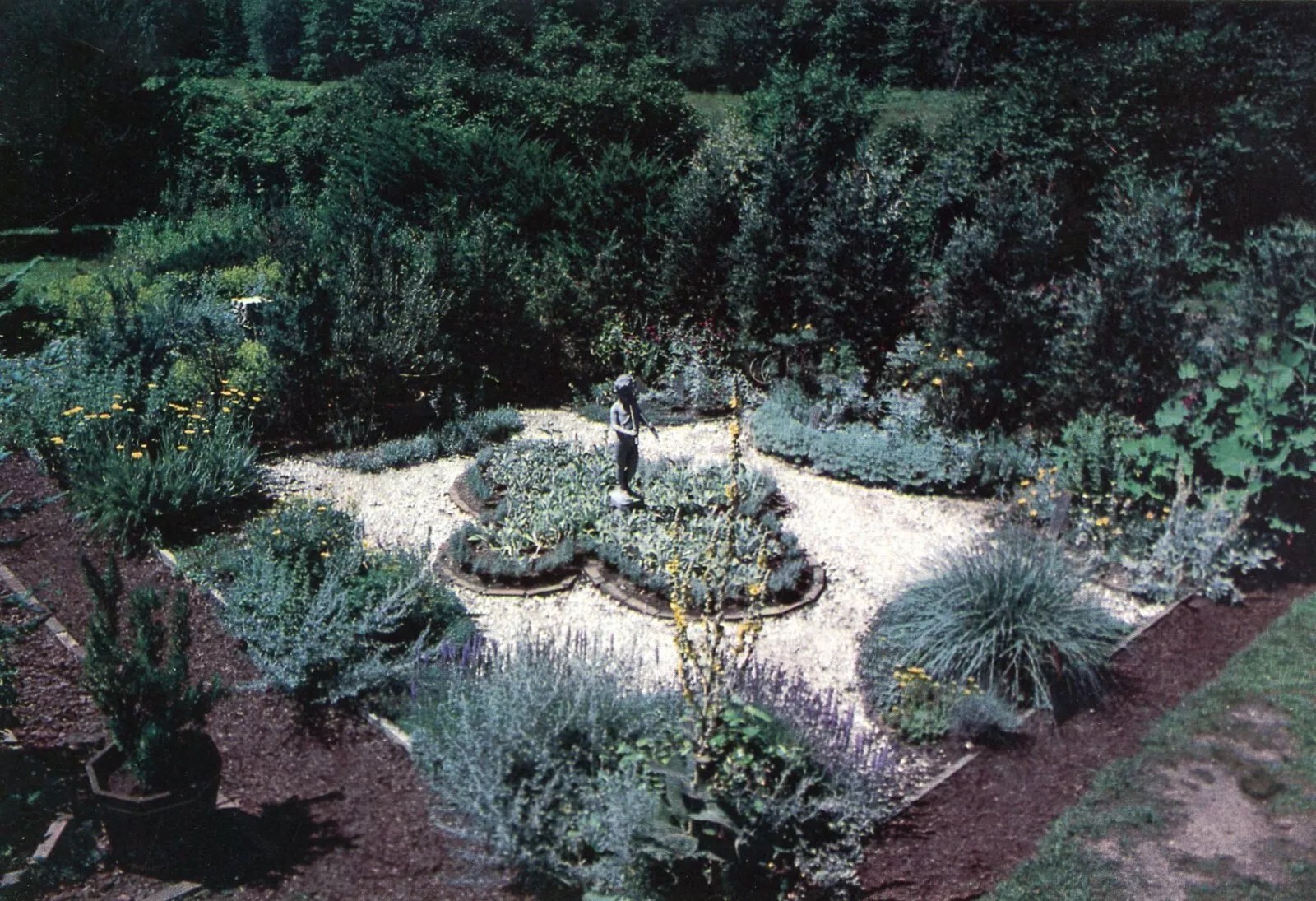
1970s postcard of one of the 30 different herb gardens at Caprilands

While Caprilands and the incredible herb gardens that surrounded it are now a thing of the past, thankfully Adelma was a prolific writer who shared much of her knowledge and enthusiasm for herbs in over four dozen books and innumerable pamphlets. In the 1960s, Herb Gardening in Five Seasons, kicked off her writing career. Covering spring, summer, fall, winter, and Christmas (the fifth season), Adelma’s book tackles just about every bit of information you would need to start, maintain, and build upon an herb garden of your own.

Garden layouts, botanical drawings, black and white photographs, recipes, and poetry fill the pages of Herb Gardening in Five Seasons while also providing detailed information on seventy-seven different plants, an herbal dictionary, and a pronunciation guide. One of the things I love most about Adelma’s book are the lists in the back that organize groupings of herbs by name according to specific situations… Herbs for Bees, Herbs for Dry Soil, Herbs for a Meditation Garden, Herbs to Grow as Hedges, Herbs for Tall Accent, Herbs for Sun-Filtered Shade, etc. It’s that latter list that interests me most since the majority of the garden spaces at 1750 House are bathed in partial shade throughout most of the peak growing months.

When I first discovered Herb Gardening in Five Seasons at a local book sale, a woman next to me asked if I had heard of Adelma. When I said that I had not, she proceeded to tell me a story about the time she went to a luncheon at Caprilands and about how Adelma had served the biggest salad bowl she had ever seen stuffed to overflowing with nasturtium flowers freshly picked just hours earlier. The woman said it was the prettiest salad she had ever seen, let alone eaten. Right then, I knew the book was bound for life and library at 1750 House. Thinking about how well the nasturtiums have grown each summer in the gardens here and the fact that her book includes not only gardening advice but also recipes too, it seemed like Adelma was the perfect teacher to assist us this year in our efforts to create a permanent herb garden.

It wasn’t until after I was home that I noticed that Adelma had inscribed the book to a previous owner. To Carol, it reads… May herbs enrich your life and bring you joy for all seasons. Adelma Grenier Simmons.

Here it was. The final nudge from Adelma to get the garden growing. Over the next twelve months, I cannot wait to share her insight, wisdom, and instruction through our herb gardening adventure. In the next Greenhouse Diaries post, I’ll share the layout and location of the herb garden and the list of herbs that will get us started, courtesy of Adelma’s helpful garden guide and companion planting lists.

In addition to Adelma’s final wishes to turn Caprilands into a teaching facility and an educational resource, she also fancied the idea of creating a network of other herb farms around the country that shared a like-minded enthusiasm for herbal outreach and education. Since Adelma’s wishes for her beloved gardens at Caprilands never came to fruition, it is nice to be able to honor her here in our herb garden adventure at 1750 House. Perhaps in our own small way, it’s part of the start of the cross-country garden network that she envisioned so long ago.

Cheers to a whole new year of gardening, to Adelma for sharing her knowledge of herbs, and to the greenhouse who is proving to be a wonderful teacher herself.

The Greenhouse Diaries Entry #4: Lessons in Highs and Lows, Triumphs and Tragedies

You might not suspect that a lot could occur in a greenhouse over a two-week period, but this time off for the Christmas break equaled quite a bit of unexpected change in our little house of wonder.

We had some pretty dramatic outdoor weather over the holiday with the lowest of lows being 6 degrees one night and the highest of highs being 58 during the day just this past Wednesday. It was a wide swing of weather for certain, but it provided a good fourteen days of observation to draw some enlightening information.

Frozen ground, ice streams and patchy snow covered our landscape during Christmas week.

First off, the few nights of single-digit weather created a bit of havoc. It also shed some new light on an ongoing topic. Do you remember the haybale conversation from The Greenhouse Diaries Entry #3?

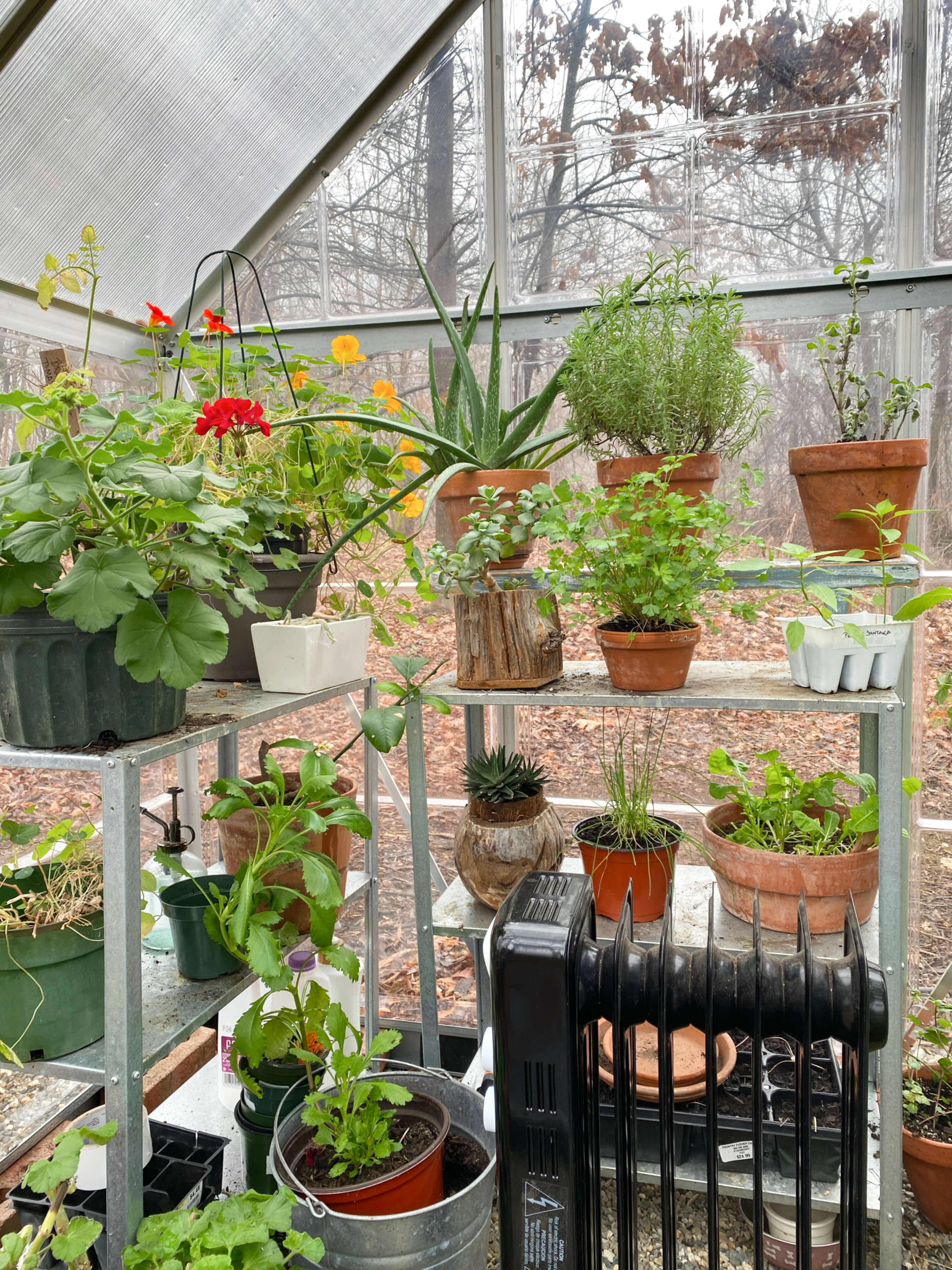
Well as it turns out, first-hand experience is an excellent advisor. I can see now how the haybales would have been helpful through the cold snap. Like everybody across the country during Christmas week, we experienced the freezing polar vortex temperatures with daily highs between 9-19 degrees and nightly lows between 6-12 degrees. The indoor temperatures in the greenhouse on these coldest nights, with the heater going full blast, hovered in the high 30s and low 40s, which was pretty good considering the chilly weather. The coldest area of the greenhouse was the pea gravel floor which is where the broccoli, marigolds, aloe, mint, thyme, tarragon, basil, rosemary and geranium pots sit.

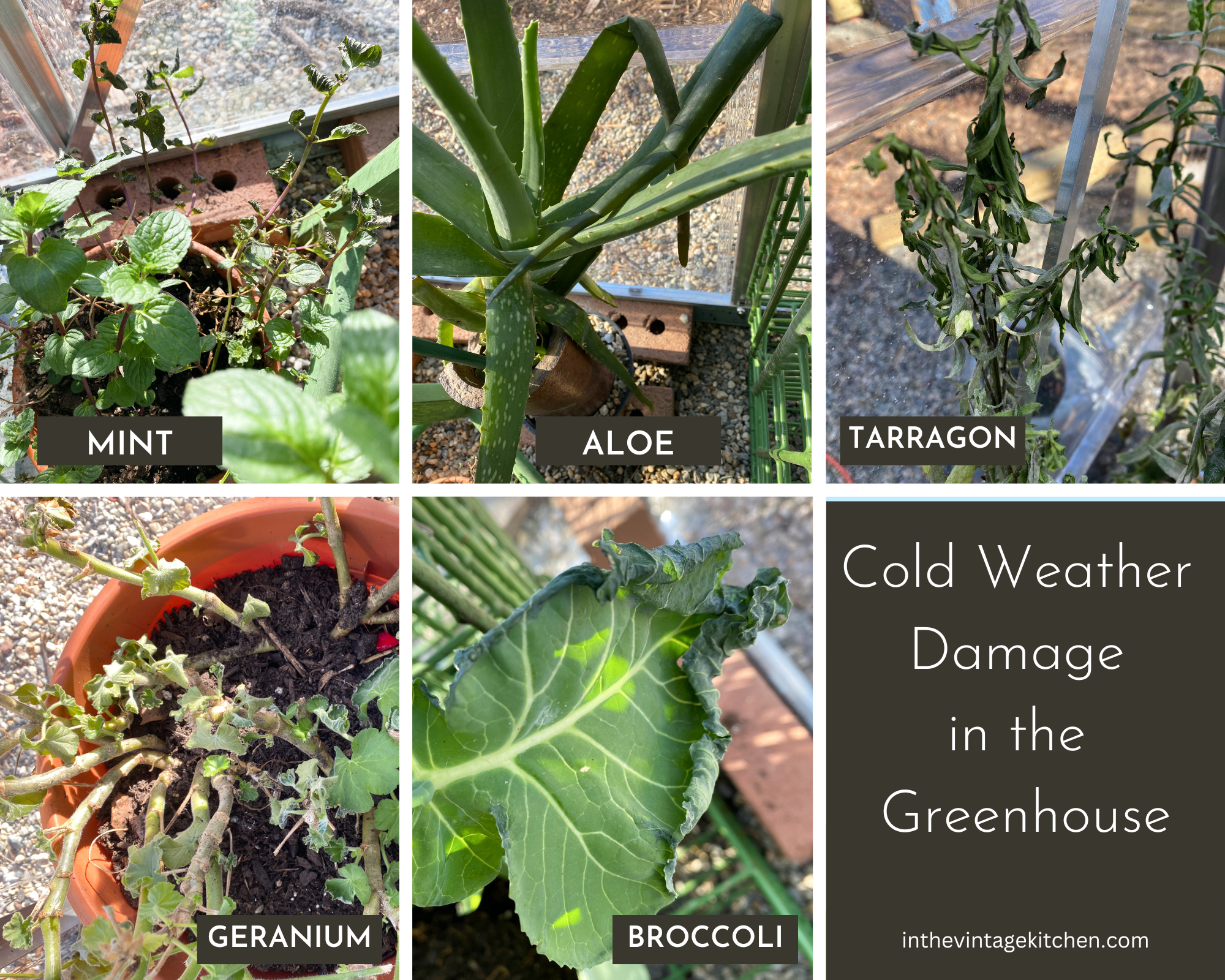
Although the sun came out on most of these single-digit days, one night in particular the wind picked up and grabbed hold of a small section of the plastic covering the door frame. It was a strong enough wind to open up a small gap between the plastic and the poly carb door, so that cold air could seep in through the greenhouses’s most vulnerable area. That night the windchill forced the outdoor temperature to sway between 0 and 1 degree. Inside, the greenhouse the temperature fell to 34 degrees – the danger zone. Some problems arose.

While there was never actually any frost inside the greenhouse, there were signs of distress on the leaves of the zinnias, broccoli, mint, thyme, geraniums, aloe, basil, marigolds and tarragon. Withered plants one shelf up from the pea gravel included the tomato, the Santaka pepper seedlings, the rabbit ear cactus, the pincushion flowers, and most unfortunate of all, Liz Lemon, who had made such great strides just the week before. Everything else located the next shelf up (about 2 1/2 feet off the ground) and higher was completely unaffected. Thankfully, heat rises.

The unhappy tomato.

Had the haybales been placed around the outside of the greenhouse, they might have added just enough insulation to protect the plants sitting at ground level. The other thing we could have done was just to put all the ground plants up higher in the air so they would be protected by the rising warmth from the heater. So two lessons were learned…

  1. Add haybales around the exterior during extreme weather dips or…
  2. Move the plants up higher in the greenhouse to capture the rising warmth.

Luckily, the extreme weather only lasted for a few days.

The trickiest part of greenhouse management so far, is that there is so much conflicting information online and so much variation between agricultural zones and particular weather situations each year that there seems to be no definitive right or wrong way to care for your own greenhouse. Except by watching and waiting and recording how your greenhouse acts in your particular environment. What is expert advice on one site is a disaster on another and vice versa. It’s never my intention to “sacrifice ” a plant but this time spent learning is proving to be really valuable in understanding not only how things grow, but also what things grow in a New England greenhouse in the middle of the winter.

In continuation of our year of waiting and watching, the withered plants were left alone to see if they might perk back up again as the weather warmed throughout the week. The severely affected plants on the floor level received a trim, removing all damaged leaves in hopes that they might heal themselves.

On the good news front, most of the plants bounced right back including the withery, weepy, unhappy tomato branch clipping who is now getting ready to offer up more cherry sized tomatoes…

But on the bad news side, three never recovered. We lost the basil, the zinnias and the marigolds, all plants that really crave that warm summer sun. As discouraging as it was to see these carefully tended plants go, not all was completely lost on them. Their stems and stalks were added to the leaf mold piles (another garden experiment started last fall) and will contribute to the joy and beauty of the garden come spring, just in a slightly different, more composted way now.

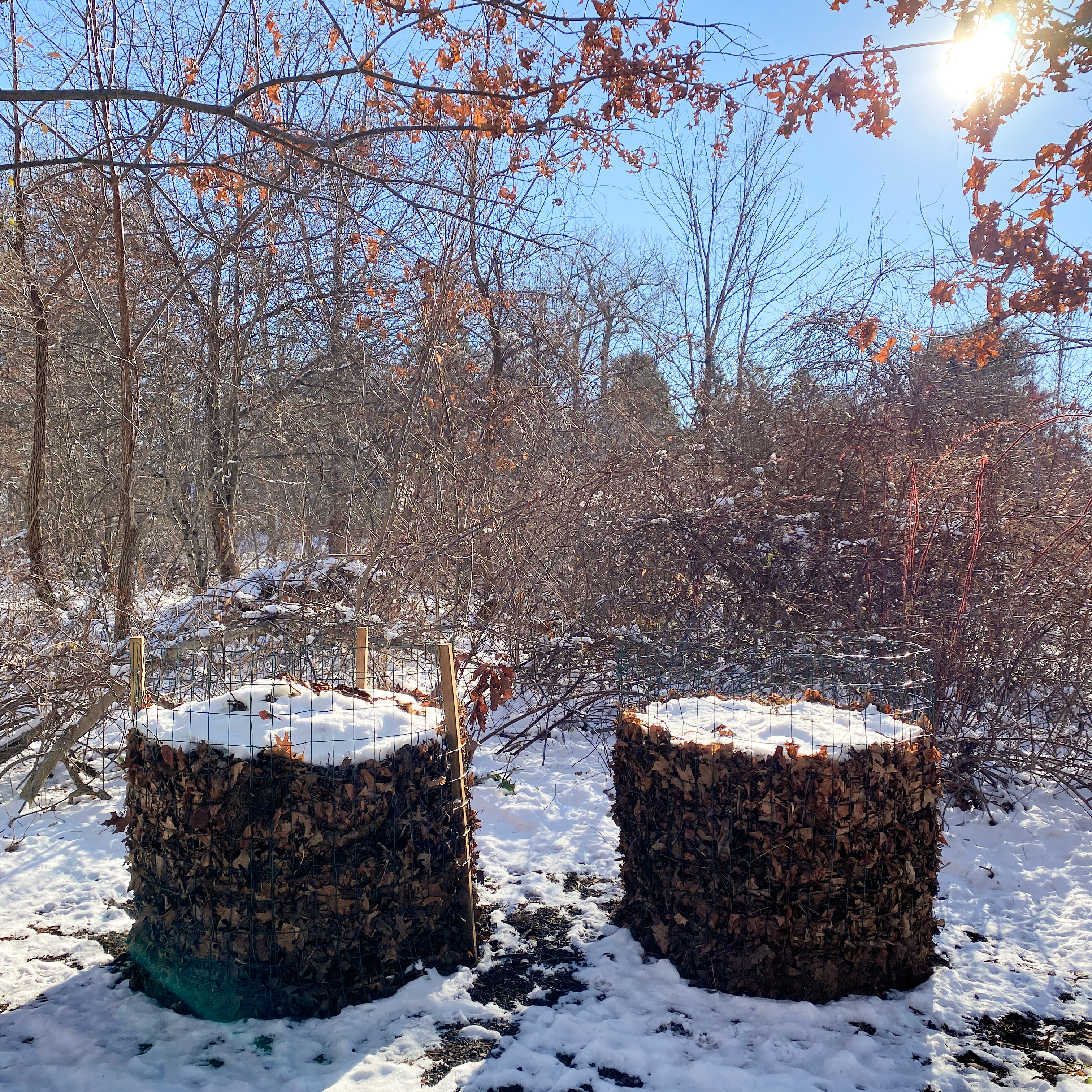
Layered leaf mold stacks – our soil amendment plan for the spring garden beds.

It was a good reminder that nothing lasts forever and that there is an ideal season for everything. Sometimes one just isn’t meant to meet the other. The great thing about nature though in times like this, is that it wastes no time moping. With the lost plants now removed from the greenhouse, there was more room for what was growing well to spread out in their vacant spots. As if to add some cheer to the atmosphere, everything that could send out a bloom between Christmas and New Year’s Day did…

Clockwise top to bottom: geranium, broccoli, nasturtium, lemon.

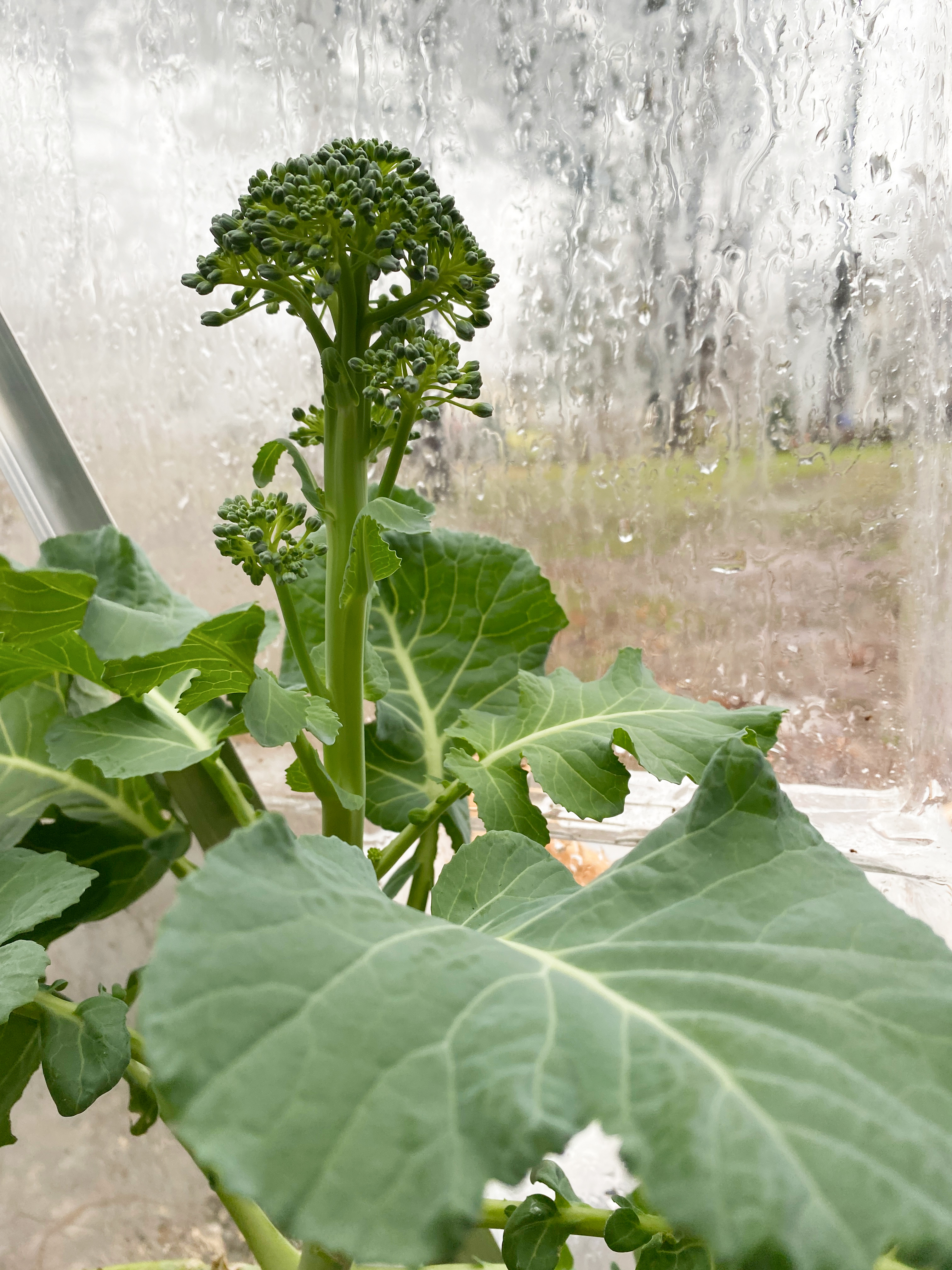
The broccoli infact was so quick to flower, it burst into bloom before I had a chance to harvest it for dinner one night. Exploding into a pom-pom of butter yellow flowers, it became a feast for the eyes instead of the belly. That’s fine by me. Broccoli produces one of the most beautiful, delicate flowers of all the garden vegetables, so it is a joy either way. The nice thing about broccoli also, is that its leaves are edible. We might not have enjoyed the spears but the leaves are next on the menu if the broccoli doesn’t send out any new shoots.

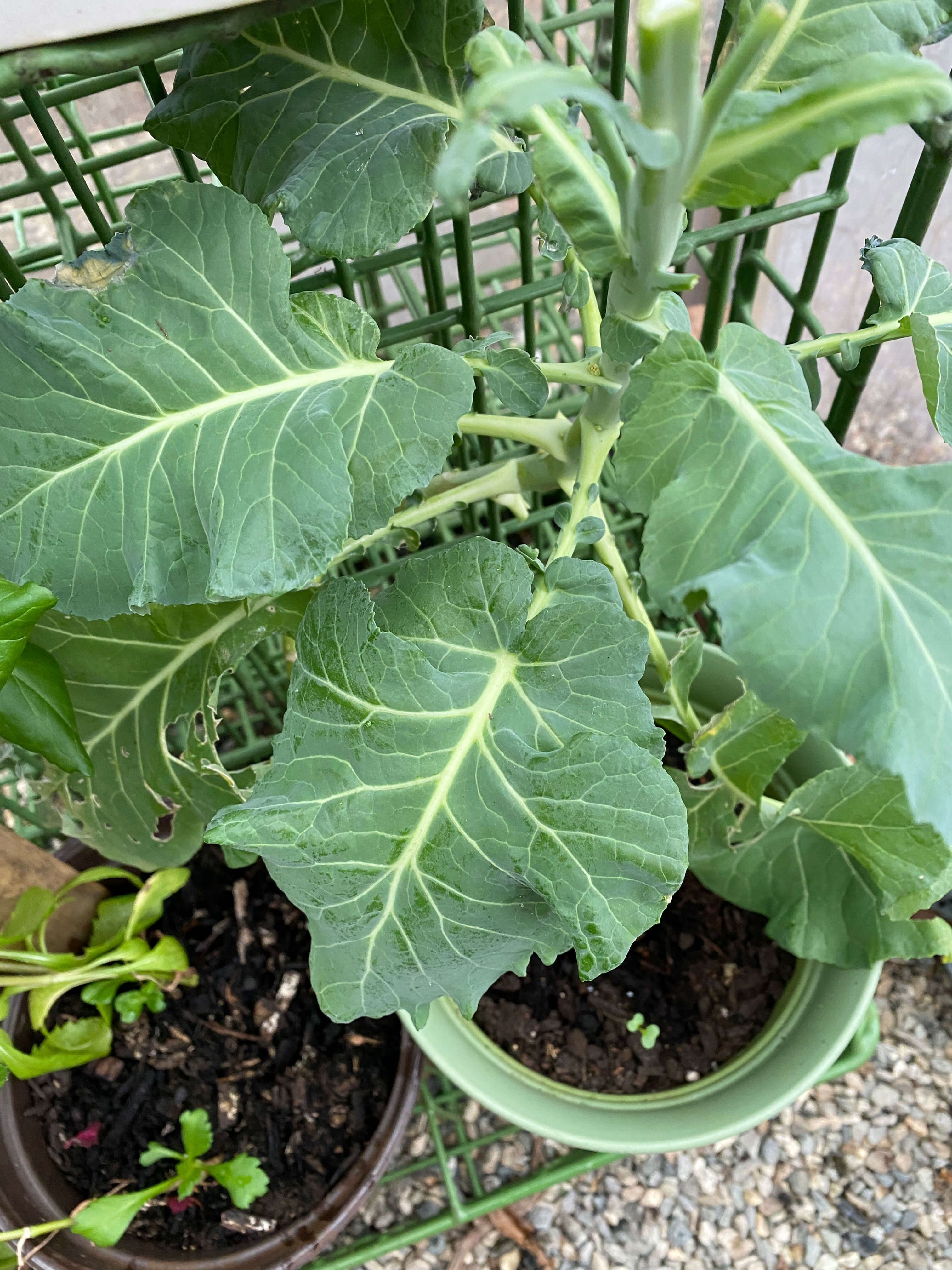
Broccoli leaves!

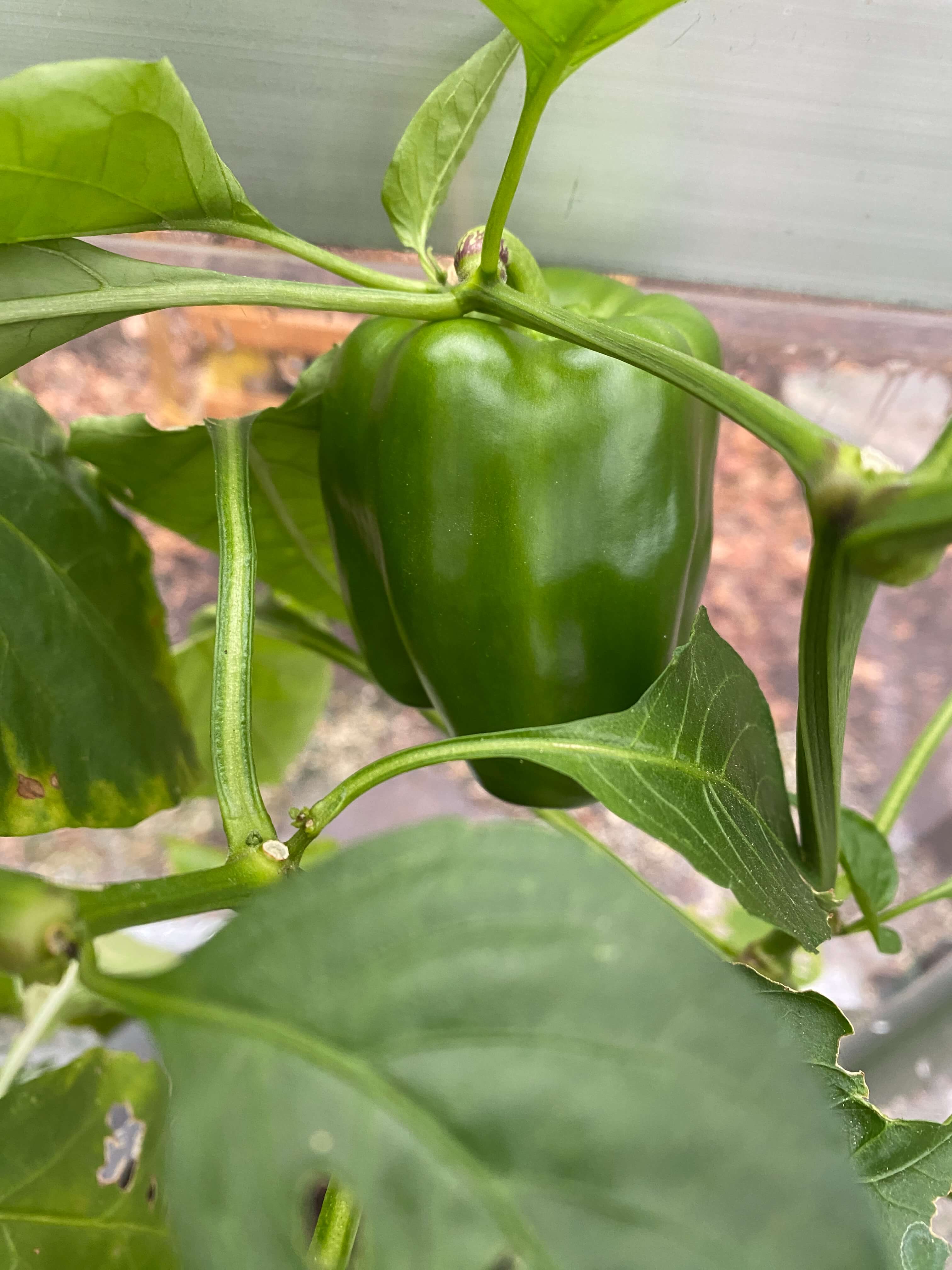
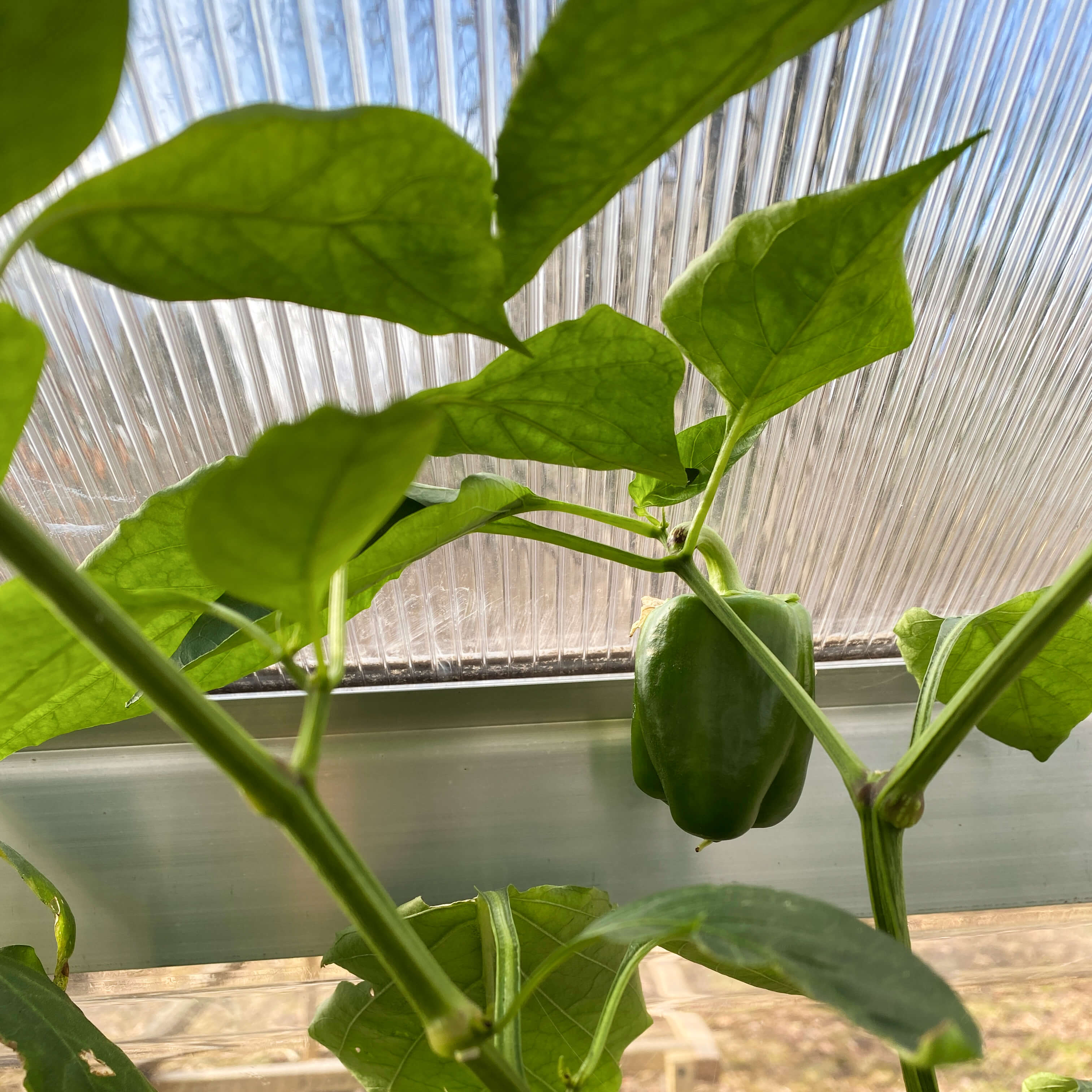
Also on the harvest list is the bell pepper. Currently, it’s measuring in at just under 4″ inches in length – close to mature size that makes it ready for picking soon. This pepper comes with an added dose of mystery included too. Last summer, we grew two varieties of bell peppers in the garden. Adored by slugs, bunnies and maybe a vole or two, the pepper beds were constantly being reseeded and defended all summer.

Out of time, but not yet fully grown, just before the fall frost I transplanted three of the strongest plants to see if they would continue growing in the greenhouse. Two of the three were hot pepper plants of the jalapeno and chile variety and then the third plant was a bell pepper. I thought I had transplanted an heirloom variety called California Wonder, which if not picked when green will ripen to a deep red shade. But based on its shape right now, it could be the other pepper plant we experimented with – Orange Sun – which will as its name suggests, turn a vibrant orange when ready for harvest. In both cases, the longer the pepper sits on the vine the sweeter it gets. So a surprise is in store as we wait to see what color it turns out to be…

The other green delight that really took off on a growing adventure these past two weeks was the parsley. With no extra help or amendments, it’s doubled in height since the last diary entry. The only way I can really rationalize this growth spurt is to say that we had a little help from the gods. The ancient Greeks believed that parsley was a sign of death and rebirth.

In mythology, it gets caught up in stories surrounding the baby, Archemorus, and the parsley that grew from his blood after he was killed. Later, the Romans believed that Persophone ( the Goddess of Spring, the Underworld, and of Vegetation) was in charge of guiding souls to their final resting place in the underworld. Parsley throughout Roman times adorned gravesites and funerary objects as a gift to Persephone so that she would take good care of those that perished.

Between the demise of the marigolds, zinnias, and basil and the growth of the parsley, the flowers, the bell pepper, and the broccoli, I can’t help but think that Archemorus and Persephone were at work, guiding the greenhouse through these past two weeks of dramatic winter weather. From death springs life. And parsley too.

Bottom right: Parsley full of joy!

Cheers to weather and what it teaches us, to plants that persevere in the face of difficulty, to Persophene and Archemorus, and to this brand new year full of possibilities. Hope your 2023 is off to a beautiful start!

{The Greenhouse Diaries is an ongoing series. if you are new to the blog, catch up here with Week #1, Week #2, and Week #3 here}

The Greenhouse Diaries Entry #3: Snow and Bell Peppers

current outside temperature: 33 degrees, greenhouse temp: 61.2 degrees

Last week, we left off with two cliffhangers… an impending snowstorm and an outbreak of powdery mildew. Did the greenhouse stay warm during our first storm? Have the sage and the tarragon recovered? Let’s see…

The total accumulation last Sunday night was 2.5″ inches. The greenhouse didn’t blow away or collapse (a victory!) and nothing was frost covered inside. We didn’t get the haybales purchased and placed before the storm for two reasons… 1) we wanted to see how the greenhouse would do on its own and 2) perhaps there might be a better alternative.

In theory, haybales placed around the outside base of the greenhouse act as insulation. They cover any vulnerable seams or crevices from drafts as well as act like a barrier against cold winter winds. Our greenhouse was never meant to be air-tight in its design. There are tiny exposed airways around some connector pieces and screws, which is good for ventilation. I hesitated about the bale method of winterization because there are about a dozen plants in our greenhouse that draw light from the bottom sidewalls and the hay bales once placed around the base would block their access to light from that direction. Of course, that would probably only encourage the plants to grow taller, to reach for the light above the bales and towards the roof but the idea of covering up this beautifully airy space with something heavy and dense didn’t seem quite right. In honor of light, we chose to wait and see.

So the snow came and the greenhouse experienced it sans haybales and everything was fine, except for the temperature. The coldest the greenhouse has ever been, even with the heater going at level 3 (the maximum setting) was that night. 43 degrees. Not cold enough for frost to appear but more than twenty degrees away from ideal interior temperatures. This first snowfall was such a good test. We definitely needed to protect it more.

My husband came up with the great idea of a plastic sheet covering the door frame from the peak all the way down to the base. The plastic at the roof was held down with two leftover 2 x 6 pieces of lumber, one on each side of the peak with the board ends resting in the gutters to help hold it all in place. Three treated 4x4s weighted down the plastic at the base. Essentially, he made a makeshift curtain panel for the front door that looked like this…

By covering the greenhouse in this way, it eliminated the draft that comes in around the door while still allowing lots of light to come through. Once this new plastic panel was added, the interior temp went right back up to 65 degrees within an hour. Success!

Until the next night.

Wind got a hold of the plastic and carried the curtain across the yard at some point in the middle of the night. The internal greenhouse temp plummeted straight back down to the low 40s.

Not entirely deterred, my husband set out for a second attempt. This time he stapled the plastic to the treated wood at the base, nailed two shorter boards together to form a wooden peak for the top that mimicked the pitch of the roofline, and then stapled the top end of the plastic to the wooden frame…

And that turned out to make all the difference. For the rest of the week, the plastic has stayed in place and the greenhouse is warm and draft free. To gain entry, we just take the wooden peak down and set the treated wood off to the side and then put it all back in place once we’re done inside. So simple.

Temperatures fluctuations and winter weather aside, luckily the greenhouse plants didn’t seem to be affected by all these up-and-down changes. The sage and tarragon were still flocked with powdery mildew so they got a second spray of the organic fungicide. The tarragon responded to this extra care and attention by slowly unraveling its first flower…

The marigolds have been thinning themselves out one by one since they arrived in the greenhouse, so they got repotted to a smaller container. If I had to peg any of the summer flowers that I thought would do best in the greenhouse it was the marigolds. They were such hardy growers in the garden from spring to fall, so I was surprised to see them losing leaves, drying out and getting long and leggy in the greenhouse. Hopefully, this new home will encourage them to fill out more around the middle.

On the growth spurt front, the geranium leaves tripled in size…

the broccoli grew by another inch…

the spicy Santaka pepper seedlings put out a whole new layer of leaves…

and our lone bell pepper seems to grow bigger by the minute…

Between seeing the greenhouse outlined in snow early in the week and then hearing the tinkling of raindrops on the roof at the end of the week, I can understand now why Philip Johnson built and loved his Glass House so much.

The Glass House in New Canaan, CT designed by Philip Johnson in 1945 and built in 1949.

While working on that and the neighboring Brick House, Philip mentioned being overtaken by waves of emotion for certain details during the design process. He was talking about archways and vantage points and shapes that felt like hugs, but I loved that he used the word overtaken to describe his attraction to the space and his ideas in it. That’s exactly what it feels like to stand in the greenhouse. To be overtaken by nature, by light, by warmth, by possibility, by protection. It’s no wonder plants thrive in such an environment.

Ivy-Leaf Geranium

As we work through renovations on the 1750 House during these fall and winter months, oftentimes the greenhouse is the warmest, quietest, calmest place to be. The polycarbonate walls muffle man-made sounds from the environment but oddly amplify the sounds of surrounding nature like birds singing in the trees or leaves whirling around on the ground. The bright light, even when the sky is cloudy and threatening with rain or snow, illuminates all the details on every leaf, on every petal. Possessed of an ever-evolving scent similar to warm tea the whole space changes aromatically day by day depending on what’s in bloom. And the heater – that warm little hug of a heater wraps everything up like a cozy sweater on the coldest of days. I used to think The Glass House was such a vulnerable piece of art, exposed, and unsettling in its lack of privacy. But now I see that what Philip created there was a love letter to the senses. This greenhouse is much the same. Plastic curtain panels and all.

Corfu For You: A Taste of Greece in Sights, Sounds and Grape Leaves

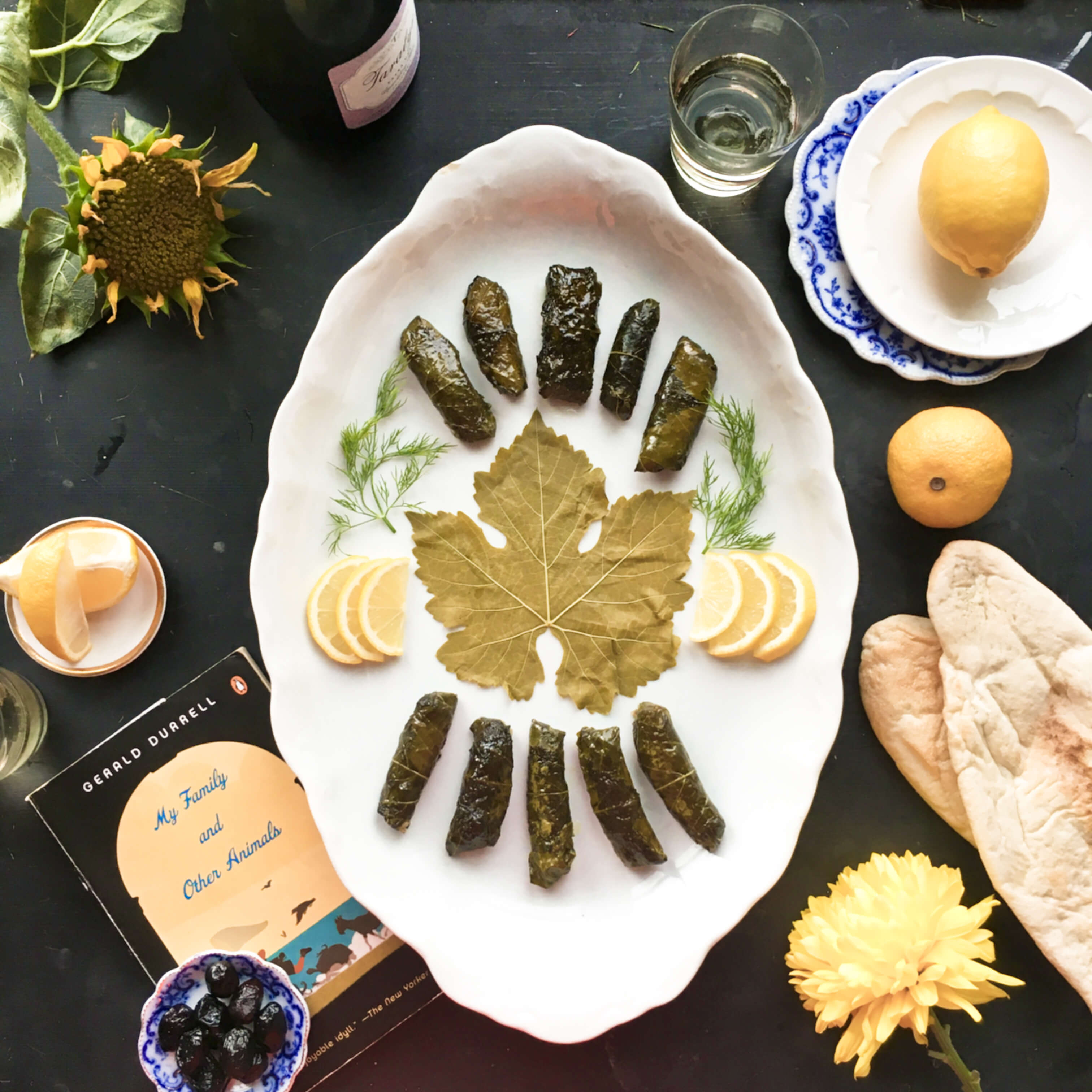
If you sat down and had a glass of wine with him during these last summer weeks of  August,  he’d tell you a story. It would be slim but impactful – a snippet of colorful life that was mostly true and partially painted with imagination. He’d tell you about his pet pelican, about his distaste for rules, about the lunchtime hospitality of his toothless neighbor. He’d tell you about a splendidly shabby house that overlooks the sea, and about the sounds of an orchard buzzing with bees. He’d tell you about a turtle and a magpie and his devoted dearheart Roger – the scrappy canine co-conspirator that was twin in both spirit and scouting.  He’d share stories about his sister Margo, vain and funny, about his brothers Larry and Leslie, who were the hunters of words and birds, and he’d tell you about his mother, Louisa, after his father died.  There would be mention of the houseguests that came to stay, the disapproving aunt that refused to leave, and the naturalist that taught him to care above all for every creature great and small. He’d tell you about the heat-haze, the green sea, the drunken olives, the magic garden, the flower-scented air. He’d tell you how he fell in love. How he came to know himself. If you sat down and had a  glass of wine with him he’d tell you his name was Gerald, and then he would tell you a captivating story. He’d tell you about Corfu.

Situated in the Ionian Sea, the small Greek island of Corfu shimmers like an emerald gem.

Welcome to the Vacation Edition of the International Vintage Recipe Tour 2020. Whose ready for an international adventure that involves a relaxing getaway, a Greek island, and all the stuffed grape leaves you can eat? Pull out your market bags dear kitcheners, this week we are taking a restorative trip to the Greek island of Corfu courtesy of Gerald Durrell and his entertaining, enigmatic English family.

Here we are in mid-August, just five weeks away from the first day of Autumn. This summer our passports aren’t stamped. Our road trips aren’t long. Our hotel rooms aren’t booked.  We may not be filling up our suitcases and hopping on airplanes this pandemic year but that doesn’t mean that we can’t explore the world in other ways that are equally engaging, and equally satisfying. Through a book, a television show and a cooking adventure, this post highlights a travel trip to an exotic destination that can be enjoyed without ever leaving home. Thanks to the captivating real-life story of Gerald Durrell who lived with his family on the Greek island of Corfu from 1935-1939, we are traveling to a beautiful location fit for summer fun. Like any good vacation, this story contains all the great hallmarks of an exciting new experience. There’s an exotic destination, a foreign language, a bevy of interesting people, a sense of escapism and authentic traditional food. It may not be an actual real-life trip to Greece but this experience offers the next best thing – a true mental break from the state of our current affairs.

Before Gerald became an influential 20th-century British conservationist, naturalist, author and zookeeper he was a small boy called Gerry, living on a remote island in the Ionian Sea with his mother, sister and two brothers. Having, on a whim, moved from England to escape a dreary, uninspired existence following the death of his father, Gerry and his family entered into a colorful world where the sea shines turquoise, the landscape is kissed by the sun and the air is clean, clear and curious. There his family discovers life, love and importance.

Gerald Durrell (1925-1995)

A Robinson Crusoe type experience, life on Corfu was rudimentary, wild, and sensational. Seducing the entire family, the spell of the island during those five years, comes to profoundly affect and mean something different to each member. To Gerald its the start of his wildlife career and it is through his eyes that we discover the magic of an island. In 1956, Gerald chose to publish his account of that pivotal time in a book titled My Family and Other Animals. In 2016, PBS released a televised version of the book called the Durrells in Corfu. The show aired for four seasons, finishing in May of 2019 and now all the episodes are available on Amazon Prime and PBS Masterpiece. Here’s a trailer from Season 1…

This show happened to not only be my introduction to the Durrell family but also to the island of Corfu. Located just off the west coast of Greece, Corfu sits close to the mainland in the Ionian Sea. It is nicknamed the Emerald Island because it has a large amount of green olive trees and lush vegetation. It is also home to the an array of interesting architecture. In the very first episode, I fell in love with the Durrells new (old) house…

which is perched on top of a ledge overlooking the sea.  I won’t share any details here about the storyline, so as not to spoil the characters and their adventures. But I will say the entire series is so beautifully produced and whimsically told that it is truly a vacation on its own. Pair it with the book and then an authentic Greek recipe and this becomes a break from the modern-day world that truly feels like a trip away.

The definition of the word vacation means a period of time spent in leisure and recreation, a temporary vacating of one’s mind and familiar surroundings. It doesn’t necessarily mean that you have to pack a bag, physically go somewhere else and stay away from your familiar comforts.  Each episode of the Durrells in Corfu is roughly 45 minutes long. With four seasons and 26 episodes in the entire series, that translates to roughly 20 hours of visual splendor set in Greece. If you were committed you could watch it all in a weekend. If you paired it with the book, which is 275 pages long, then you could stretch this Greek affair into an entire week. Add the recipe and you’d have a 10-day sojourn into Corfu life lived long ago and far away. Altogether this time spent with the Durrells is a trifecta  – a perfect cacophony – for a vacation state of mind.

The book follows a similar trajectory of the show, but there are descriptions that Gerry writes about that a camera could never convey with the same amount of vivacity…

“The goats poured out among the olives, uttering stammering cries to each other, the leader’s bell clonking rhythmically. The chaffinches tinkled excitedly. A robin puffed out his chest like a tangerine among the myrtles and gave a trickle of song. The island was drenched with dew, radiant with early morning sun, full of stirring life. Be happy. How could one be anything else in such a season.”

I can’t even begin to describe what it meant to read words like this during our unusual pandemic summer. In Corfu, it’s the 1930s, and there are no mentions of viruses or masks or political upset. There is no terrible, tragic news, no copious deaths, no bleak day to day uncertainty to digest. Instead, there is light, hope, optimism. There is a rambunctious family, a humble island, a wild world, all appreciated. Spending time with Gerald, in his childhood state, with his expressive descriptions and his curious words,  felt indeed like a true vacation. A flight of fancy flown far away from the state of struggles that currently enshrouds the world.

Food features quite a bit in the book and the show, with both Louisa showcasing her cooking skills and Gerry always searching to satisfy his belly. Seeing and reading about both the culture and the landscape of the area really offered up a unique appreciation when it came to the preparation of this week’s recipe.  On the menu we are making stuffed grape leaves also known as dolmadakias, a traditional lemon, onion and herb-infused rice wrapped inside a simmered grape leaf.

I struggled with scouting the main ingredient – the grape leaves – for close to a month.  I searched as far away as Sparta, Greece where the lovely Jehny of The Spartan Table, relayed the unfortunate improbability of getting fresh Greek grape leaves to the US in a timely fashion. I searched locally through two different friends that have vineyards in two different states, but the time of the year here (high summer) makes for a tougher, less tender leaf (FYI: spring is the ideal season for cooking leaves like this). I searched the grocery stores (four in my city) for a brined version that the recipe recommended. My only luck were tins, in the international aisles, of already made and stuffed grape leaves – the finished end result of this homecooked project. My last resort was to order them on Amazon where they were always available but never with an interesting story.  Luckily just before resigning to a mail-order shipment, I discovered a Greek market that was just a thirty minute drive away.  Here I found the prized treasure! Grape leaves, sitting pretty on shelves – all brined in a line in jars of mass consumption. Success at last!

Like both the book and the movie, shopping at the Greek grocer was a bit of an adventure. Most of the packaging was in other languages – Arabic, Greek, Turkish. There was an entire aisle devoted to rice, goat heads in the freezer, big blocks of feta cheese in the fridge, bulk quantities of spices, an array of dried citrus, and towards the back of the store, there were bags of homemade bread still warm and soft from the oven. I came home with bread, a box of chocolate cream-filled cookies (made in Croatia!), a jar of olives brined in olive oil,  and the prized grape leaves. Next time, I’ll shop for coffee, spices and rice.

In Corfu, the Durrells remark often about the languid air and the slower, more sleepy pace. This recipe felt very much the same. Nothing is rushed in preparation. The hands-on wrapping of the grape leaves can be done at whatever pace you choose. It also makes enough for a feast. But it’s one of those dishes that you don’t have to devour all in one sitting, as it can last for days in the fridge. I’m including the exact recipe here as it appeared in the New York Times International Cook Book, but I will forwarn you – this makes ALOT of grape leaves. I had half of the rice mixture leftover (which I wound up adding to a chicken soup later on) so you could still make two dozen grape leaves, as the recipe states, while cutting the rice mixture in half. Other than that, everything came together easily and with a sense of fun.

When the brine gets rinsed off the leaves once they are removed from the jar, they become cool and slippery to the touch yielding a fun tactile experience of folding, and rolling and wrapping. Over on Instagram, I demonstrate in a featured stories video how to wrap a grape leave, so if this is your first time too, visit this link (it will be the clip all the way at the end – Week 19!).

how to make homemade stuffed grape leaves dolmadakia

Dolmadakia (Stuffed Grape Leaves)

Makes about 2 dozen

1 cup olive oil

3 large onions, chopped

1 clove garlic, finely chopped

1 teaspoon salt

1/4 teaspoon freshly ground black pepper

1 cup uncooked rice

2 tablespoons fresh snipped dill

1/4 cup finely chopped Italian parsley

2 tablespoons pignoli (pine nuts)

6 green onions, finely chopped

1 cup lemon juice

3 cups water

1 8oz jar grape leaves in brine

Parsley and lemon wedges for garnish

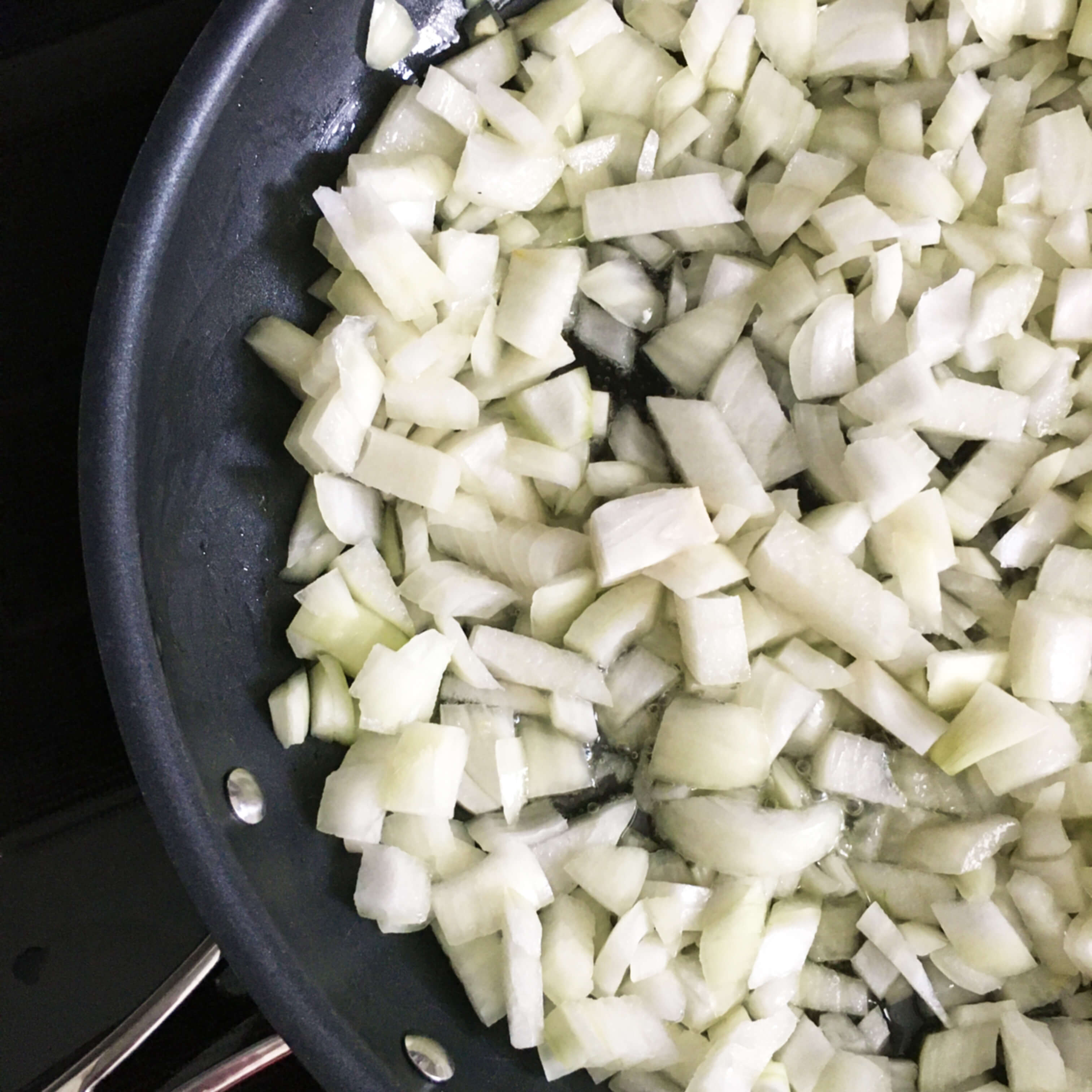
Heat 1/2 cup oil in  a skillet and saute the onions and garlic until tender but not browned. Add the salt, pepper, and rice and cook slowly for 10 minutes, stirring often.

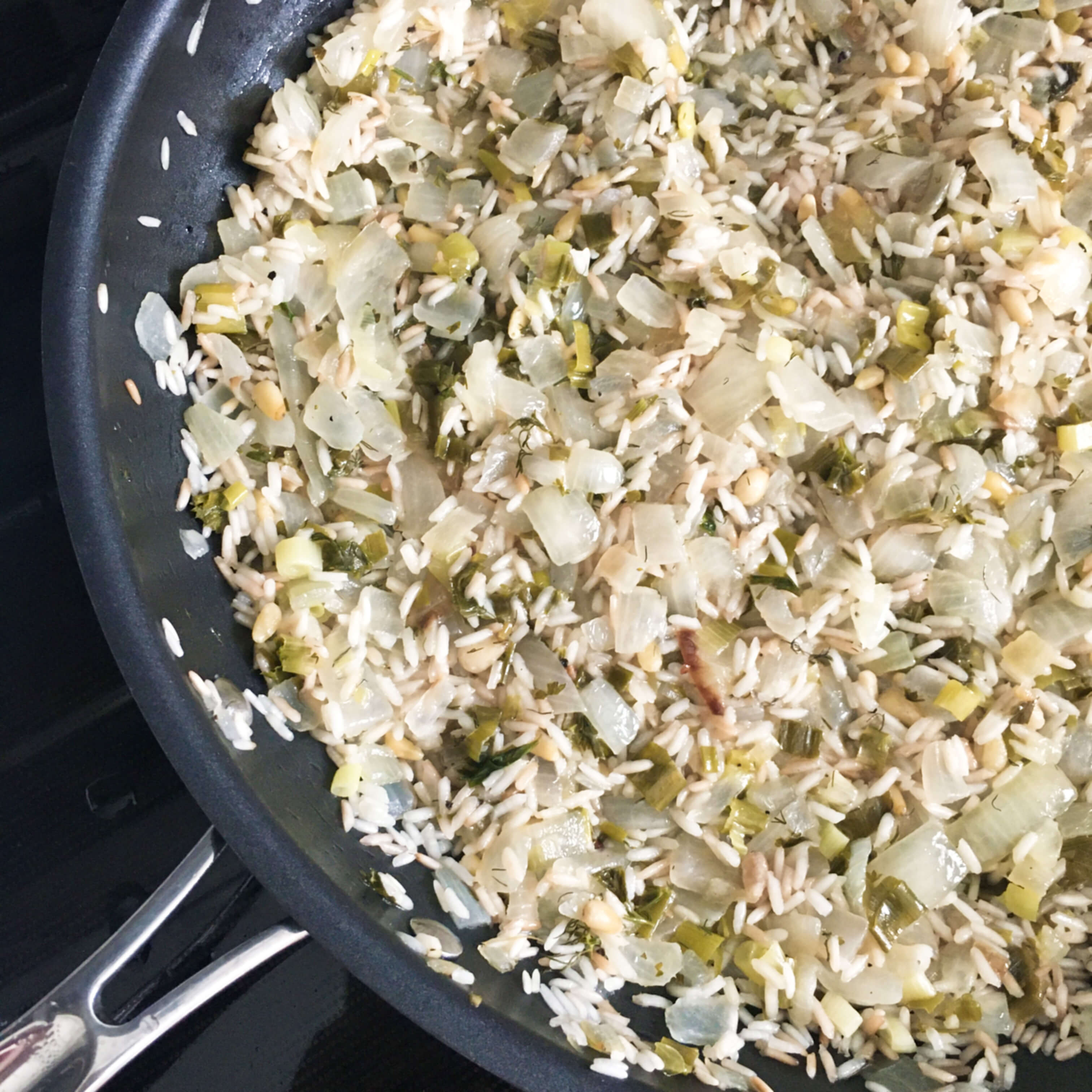
Add the dill, parsley, nuts, green onions, 1/2 cup of the lemon juice, and 1/2 cup of the water.

Stir to mix, cover and simmer gently until all the liquid has been absorbed, about 15 minutes.

Rinse the grape leaves under running water, separate and place shiny side down (aka backside of the leaf up) on a board. If the leaves are small, put two together. (Note: It’s easier to roll and wrap the leaves if they are wet. They’ll dry out fairly quickly, so if you want to go about this project leisurely I recommend stacking the leaves one on top of each other to keep them moist.) 

Place one teaspoon of the rice filling near the stem end of the leaves and roll up jelly-roll fashion, toward the tip, tucking in the edges to make a neat roll.

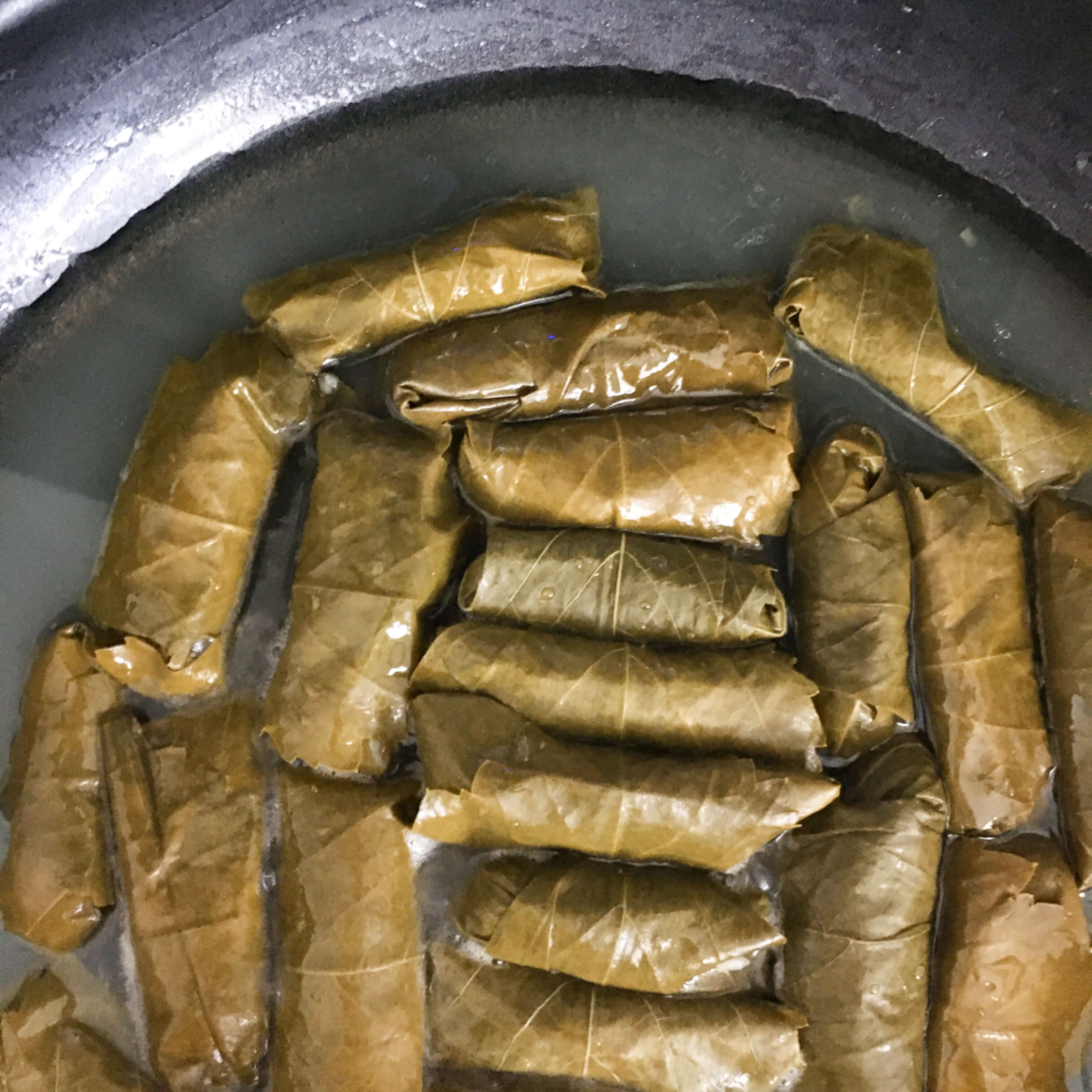
Place the remaining oil, lemon juice and one cup of water in a large skillet. Arrange the rolls in the pan.

Place a heavy plate or weight (I used the lid of my dutch oven) on top and simmer for 25 minutes.

Add the remaining water and cook about 10 minutes longer or until the rice is tender.

Cool and serve at room temperature with lemon wedges.

Tender, lemony and bright these stuffed grape leaves are like little gifts from the Greek gods. Delicious and surprisingly filling, they are light yet full of flavor, hitting all the taste bud notes between sweet, salty, sour, bitter, and umami. It is a refreshing, well-balanced dish that is ideally paired for this time of year. Traditionally, dolmadakias would be served with a whole table full of other Greek dishes, but I think it makes a lovely choice for a late afternoon snack with a glass of chilled white wine.

In the show, there’s a great tradition that the Durrells start in the heat of the summer. They carry their dining room table out into the shallow water of the sea and set up their mealtimes – a la ocean – with their feet swirling around in the water. I love this idea! If you don’t have access to a waterway like them, then perhaps you’ll enjoy these stuffed grape leaves with Gerry’s book as a companion or the show as your meal mate. All three options are festive and support the ideal vacation state of mind. After being immersed in Corfu for a few weeks, I came away from the whole experience feeling rested, relaxed and inspired by the aesthetic of Corfu and the interesting experiences of this fascinating family. If you are struggling with your summer vacation plans (or lack thereof ) too then I hope this post and its recommended activities cast a little spell over you as well.

Cheers to the Durrells, to Corfu and to the Greek grocery for making this staycation feel like an actual vacation. Fingers crossed, that by next year, the pandemic will be behind us and we’ll be able to hop that plane to Corfu where we can experience first-hand the heat-haze of summer, the drunken olives, the sunbleached landscape and that magnificent beauty of a turquoise sea.

In the meantime, catch up next time for Week 20 of the International Vintage Recipe Tour when we head to Haiti, via the kitchen, to make an attention-grabbing dessert and to discuss kitchen designs in the tropics. See you then!

Treats from a Tree: Welcome To Maple Country

Happy Wednesday! Welcome to Week 7 of the International Vintage Recipe Tour 2020. Tonight in the kitchen we are heading to Canada, the big, beautiful neighbor that sits right above us in the United States and offers up all sorts of creative inspiration for the artistic mindset.

On the famous front…  it’s the new home of Harry and Megan, it’s the birthplace of Lucy Maud Montgomery, it’s the creator of cheese curd covered french fries and it’s the film location star for over a dozen favorite movies (Titanic, Gorillas In the Mist, My Big Fat Greek Wedding, Seven Years in Tibet, Catch Me If You Can, Anne of Green Gables, Capote, Juno, Good Will Hunting, The Notebook, Legends of the Fall, A Christmas Story, The Time Traveler’s Wife, The Cutting Edge, and Fly Away Home to name just a few). It also shares an interesting fun fact with last week’s Recipe Tour destination, Brazil. Do you know what it might be? Here’s a clue…

Canada, as it turns out, is a natural leader when it comes to being a tree loving paradise. With over 318 billion on record (as of 2015), it boasts the second largest collection of trees in the world. In case you were wondering, Russia has the largest collection, then Canada, then Brazil and then the United States.  Among all those billions of trees lives one in particular that is so special it has its own name and a regular roster of visitors. Meet Comfort…

The Comfort Maple, Pelham, Ontario, Canada.

the oldest surviving sugar maple in all of Canada, possibly in all of the world. Named after the Comfort family of Pelham, Ontario who donated the tree and surrounding land to the Niagara Peninsula Conservation Authority in the 1960’s, the Comfort Maple is believed to be about 500 years old. Included in a land sale purchased by the Comfort family in 1816, this lucky sugar maple has survived more than five centuries thanks to a calm relationship with Mother Nature and years of thoughtful care from generations of the Comfort family. Standing 80′ feet tall and measuring 20′ feet in diameter at the trunk, it’s amazing to think about all the life that has occurred in and around this tree. Now a designated living monument to history, this majestic heirloom has become one of the most treasured icons in all of Canada with people from around the globe coming to picnic under its branches.


Like the Comfort tree, the Canadian recipe we are whipping up in the kitchen tonight is also a national favorite steeped in its own time laden history. On the menu, we are making Maple Walnut Tart, a sweet treat of a dessert that features a sugary pool of 100% pure maple syrup  that has been dotted with walnuts and then tucked between two layers of pie crust. Although, it is traditionally called a tart, it is much more of a thin, shallow pie.

Maple Walnut Tart

Born out of necessity and enterprise, Maple Walnut Tart is a Canadian manifestation of Tarte au Sucre (Sugar Pie) which was a popular dessert in France involving sugar, eggs and pastry dough. When the French started immigrating to Canada, sugar was an expensive, often unobtainable commodity. Luckily these new French Canadians had a local sweetener right in their own backyard – the sap of the maple tree. The sugar in their French pie was swapped for maple syrup and a new national dessert was born. Likewise, as a nod to further tweaks and adjustments, over the course of the past century, Maple Walnut Tart has taken on a menagerie of variations including additional ingredients. Eggs, butter, salt, cream, lemon peel, bread crumbs, granulated sugar, cinnamon, vanilla, chocolate and even other nuts create signature desserts that nowadays are almost always baked open- faced, without a top crust.

That makes the vintage recipe we are making in the Vintage Kitchen quite unusual now, since it has a traditional top and bottom crust and very few ingredients. Containing just seven in total, it is made of a collection of everyday essentials that you almost always have on hand. Because of its simplicity, it reminded me a lot of one of those homemade desserts you might whip up on the impromptu when you are craving something sweet but don’t have all the necessary ingredients on-hand to make anything remotely decadent like a chocolate layer cake or fancy cookies or a berry pie.

The star of the show and the highlight of this recipe is of course the maple syrup, one of Canada’s most well-known foods. Producing on average about 10 million gallons a year, Canada is the leader in maple syrup production in the world. Interestingly, most of it comes from one province in particular – Quebec – which means if you are a fall foliage lover with a sweet tooth that’s where you should head come Autumn!

I was excited to find 100% pure maple syrup from Quebec at Trader Joe’s. Most of the maple syrup at all the other markets or grocery stores in my neck of the woods seem to come from New York State or Vermont. At $16.00 a bottle it was a splurge for the Kitchen but after learning so much about maple syrup production for this post I have a new found appreciation for it.

Did you know that on average it takes one sugar maple between 30-50 days to produce 40 gallons of sap? That 40 gallons of sap yields just one gallon of retail-ready maple syrup. The bottle of maple syrup that I purchased for this recipe was 25 oz in total, which is just a little under a quarter of a gallon. Basically this means it took one tree, one full week to make my one bottle of maple syrup. What a feat! Although I only needed one cup for this recipe, it makes me appreciate every drop:)

This is the first recipe in the Tour that I’ve had mixed feelings about. I’ll get to the recipe first so that you can see what is involved and then I’ll follow up at the end…

Maple Walnut Tart

(serves 6-8)

1 cup pure maple syrup

1/2 cup water

3 tablespoons cornstarch

3 tablespoons water

2 tablespoons butter

1 cup shelled walnuts, coarsely chopped

Pastry for a two crust 8″ inch pie (I used my reliable family heirloom pie crust recipe which you can find here).

Preheat the oven to 400 degrees. Prepare the pastry and then set aside while the filling is being made.

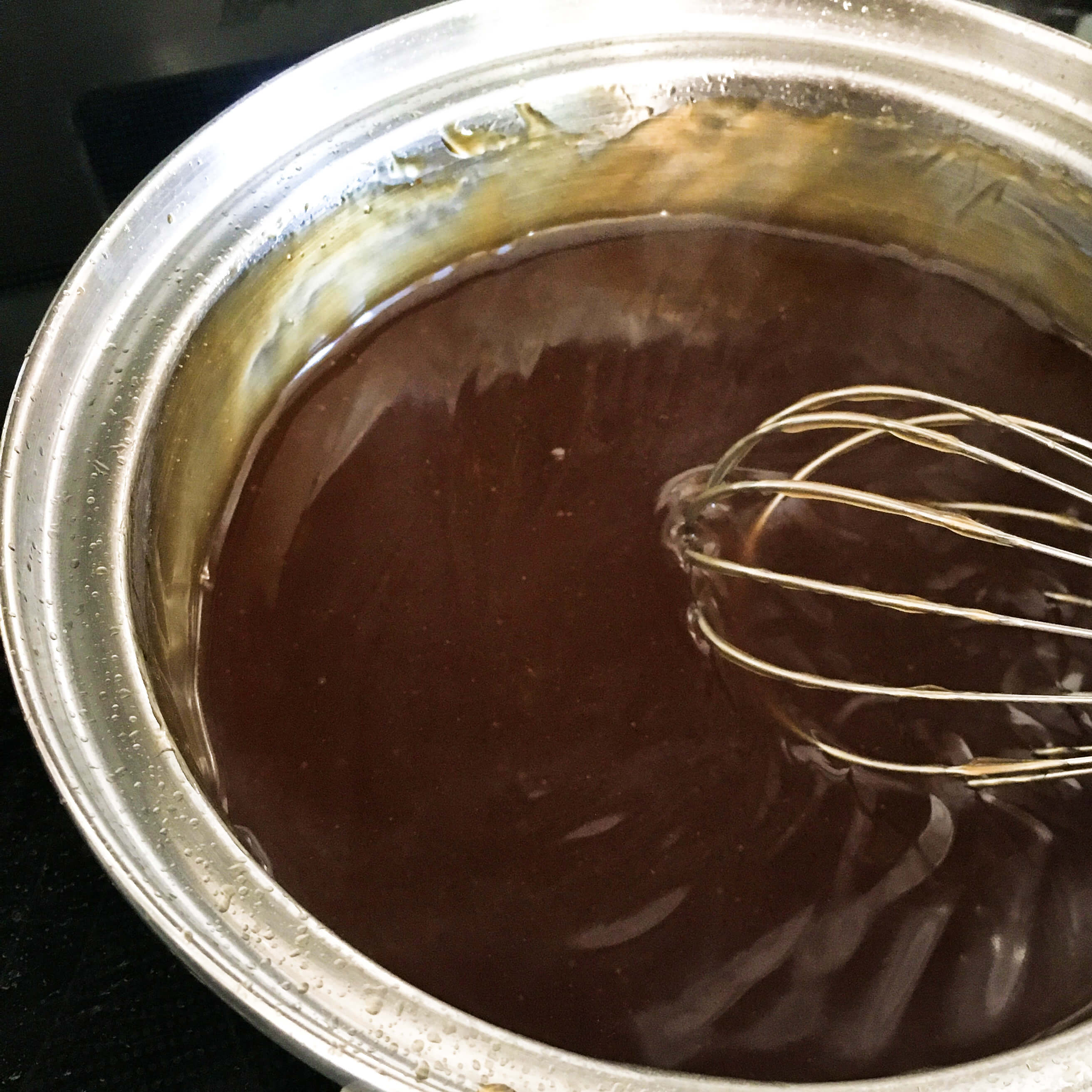
Bring the maple syrup and water to a boil in a small saucepan. Continue to boil for two minutes. Mix the cornstarch and water together in a small bowl and add to the boiling syrup., stirring constantly for about two minutes or until the mixture thickens. Remove from the heat, stir in the butter, and cool quickly by placing the pan in the refrigerator (about 10-15 minutes).

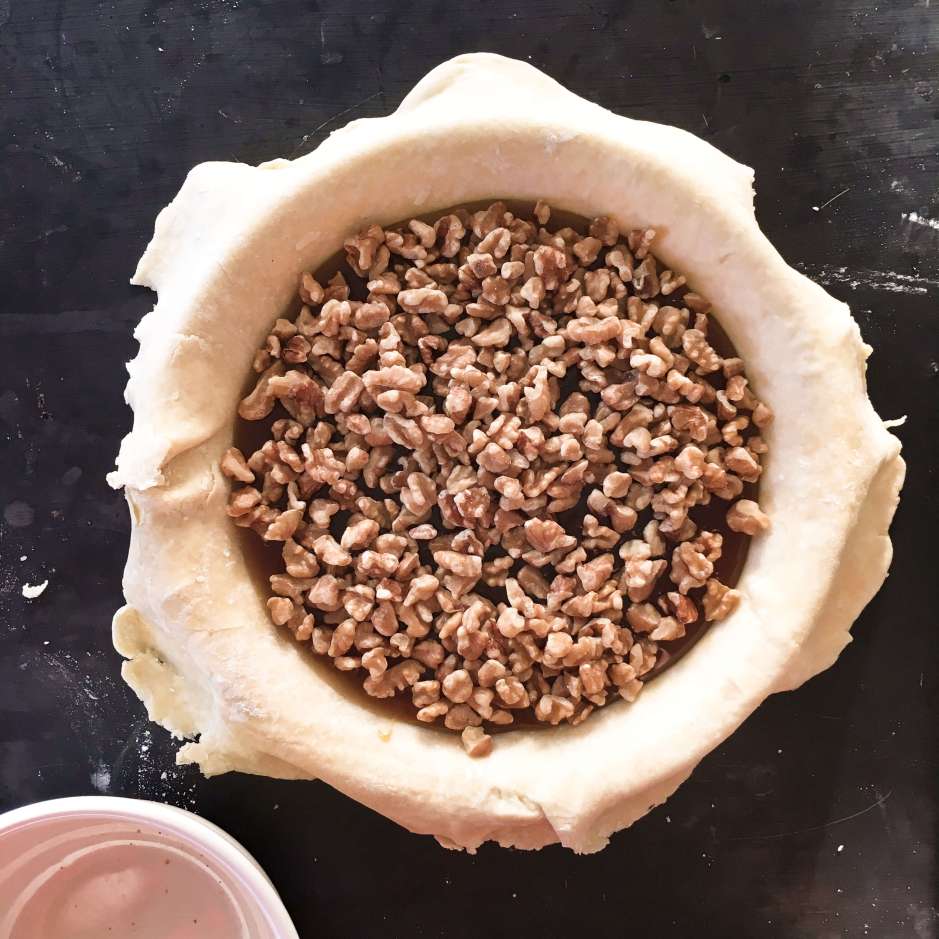
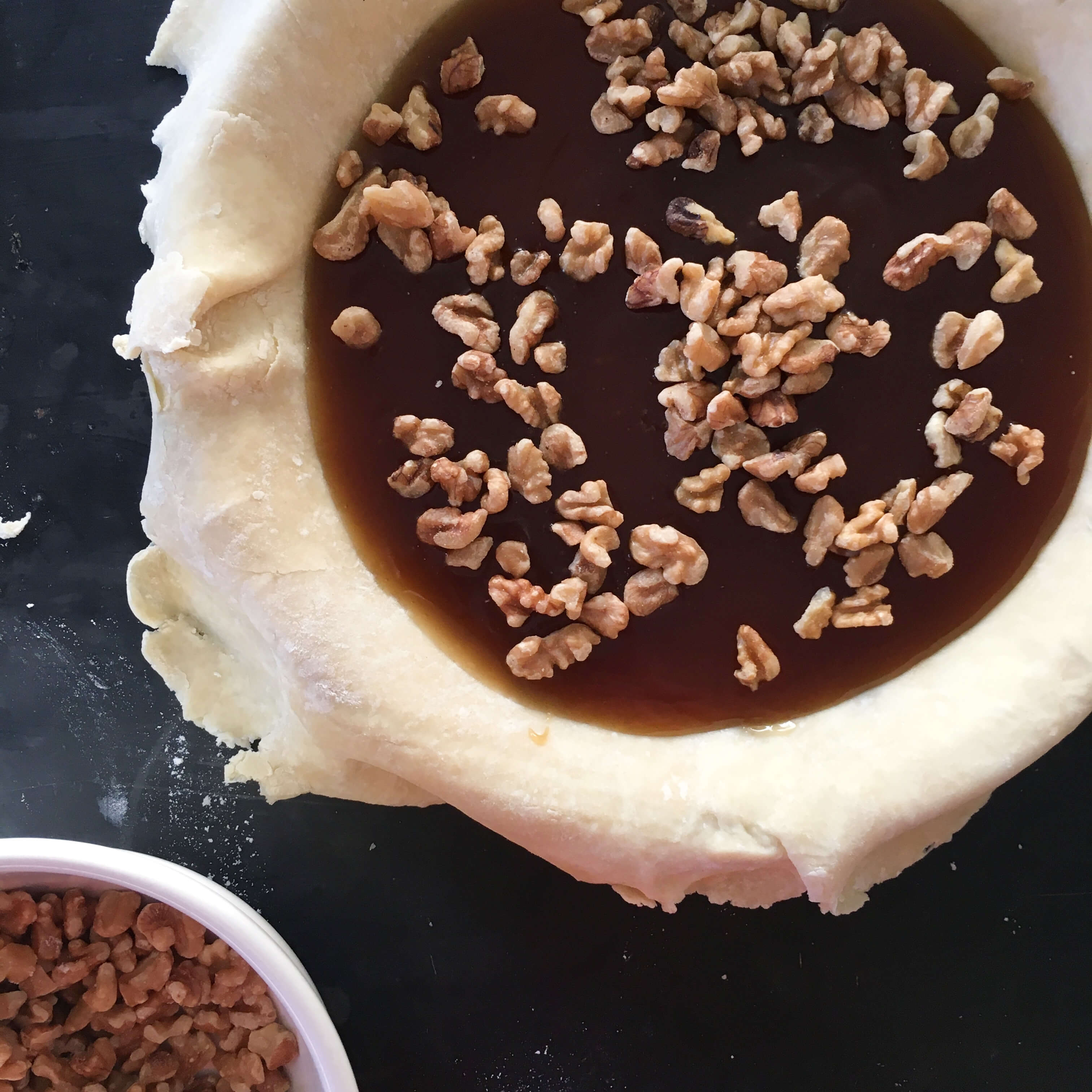
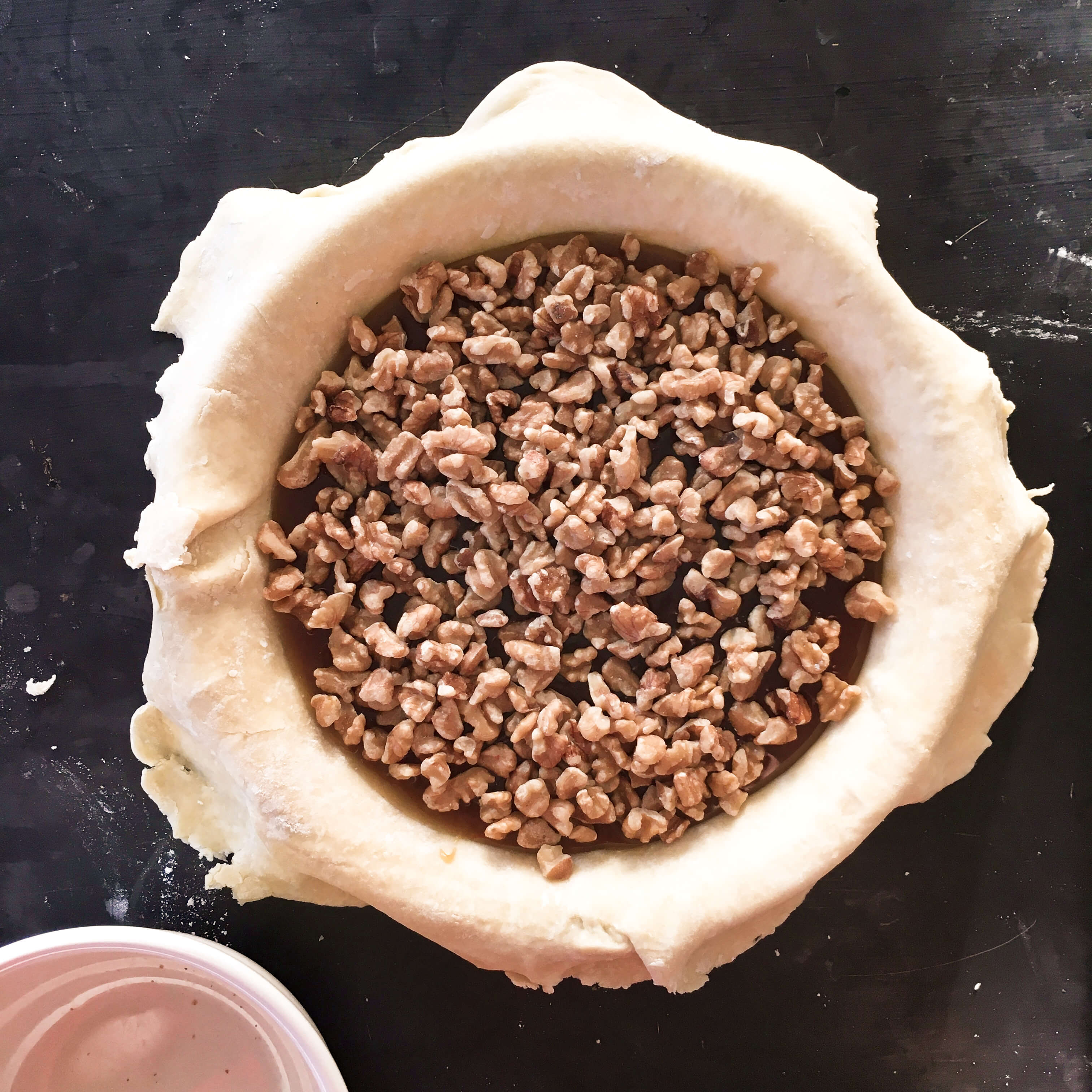
Line an 8″ inch pie pan with the pastry, pour in the cooled syrup and sprinkle the walnuts on top.

Cover with the top crust, crimping the edges to seal, and cut a few slashes in the center of the pastry to allow steam to escape.

Bake for thirty minutes in the center of the oven. Serve warm or at room temperature.

Originally at the onset of preparing this recipe, I thought the end result was going to be  more creamy and caramel-like in both consistency and taste.  In actuality though, it is much simpler – really just imagine walnuts drizzled in maple syrup and wrapped in pie dough and you pretty much have the general gist.

Needless to say, at first bite, the tart was pretty underwhelming. My first thought was there’s not enough ingredients (ie flavor components) to make this sensational. The maple was there but it mixed very soft and very subtle with the pie crust. The walnuts, didn’t really melt or dissolve when baked in the oven and therefore left a chunky consistency. This aspect actually  turned out to be a nice contrast though with the softer syrup.

I can understand now why different versions have been created with eggs and spices and additional flavor enhancers. Every modern day recipe for Maple Walnut Tart I looked at in comparison to this one included butter, eggs, milk, vanilla, brown sugar, etc in significant quantities. In full agreement, I think ultimately, what this recipe is lacking is a creamy fat component. Over the course of this next week, I’m going to experiment with some creamier accompaniments… a scoop of vanilla ice cream, a dollop of freshly whipped cream, a few slices of apple and brie and see if that might just be all the pizzazz you might need to create a more satisfying dessert. I’ll report back on those findings next week.

In the meantime, I’m excited and anxious for you guys to try this recipe and see what you think. In my opinion, it tastes better served at room temperature on the third day. I’m not sure if it’s because I have sampled it a few times in order to get an accurate understanding of the tart or if this dessert is actually starting to grow on me, but it seems to be one of those recipes like fruit cake that gets better with time. After discovering all the labor that went into making the maple syrup on the tree’s behalf, I really wanted this recipe to be phenomenal right away, but maybe that’s the spirit of the syrup.  After all, it took  one entire week out of one tree’s life to make the sap! Maybe this recipe is slow to bloom in more ways than one:)

Lucy Maude Montgomery’s most famous literary character, Anne Shirley said… “Maples are such sociable trees. They’re always rustling and whispering to you.”

Perhaps this vintage recipe is whispering to us too.

Cheers to maple trees and to the incredibly long life of Comfort and to sugary sweet contemplations in the kitchen. There is always something to think about around here.

Join us next week as we head to spicy Ceylon, a true time-traveler of a kitchen feat since the country doesn’t exist anymore:)


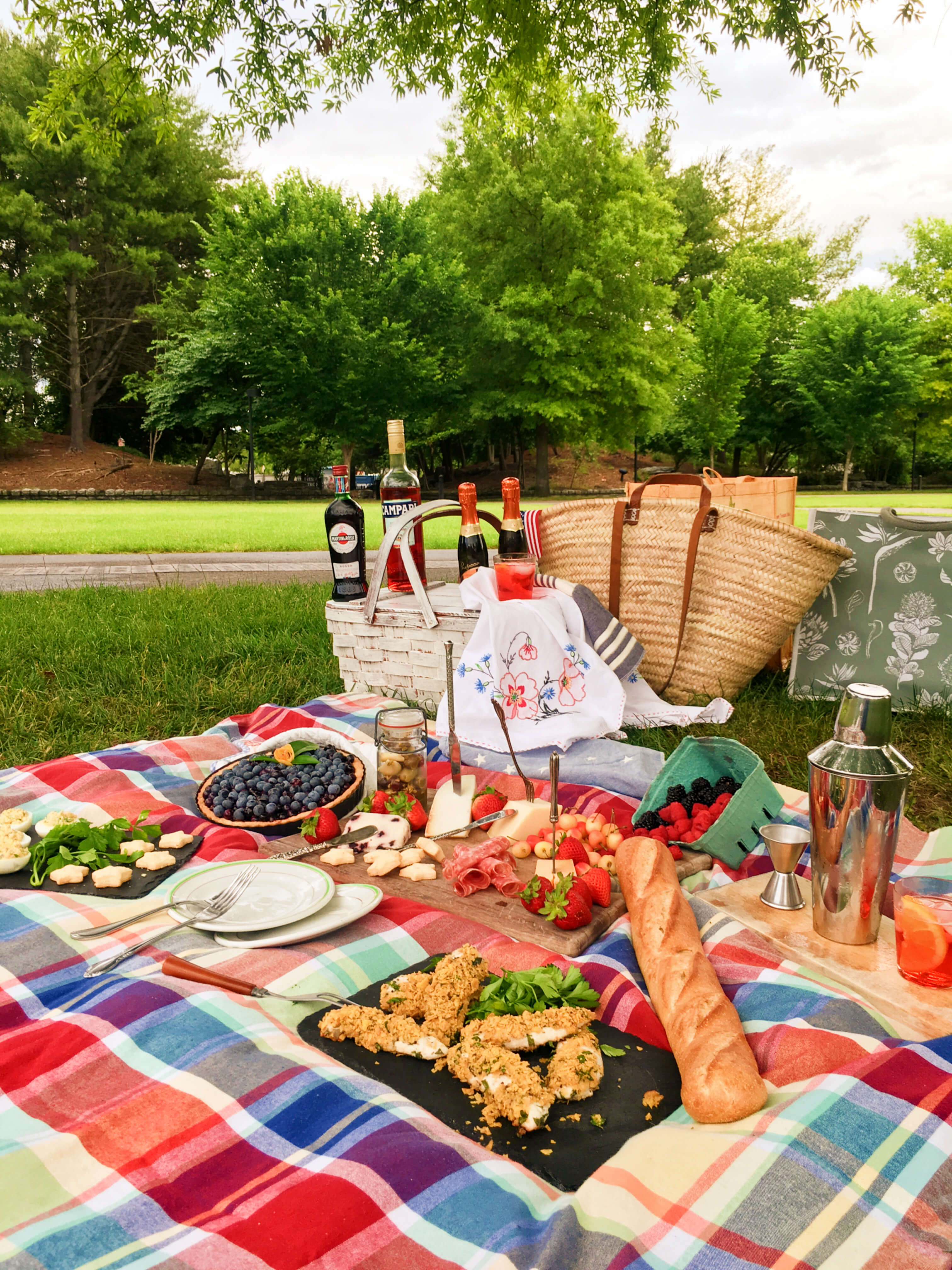
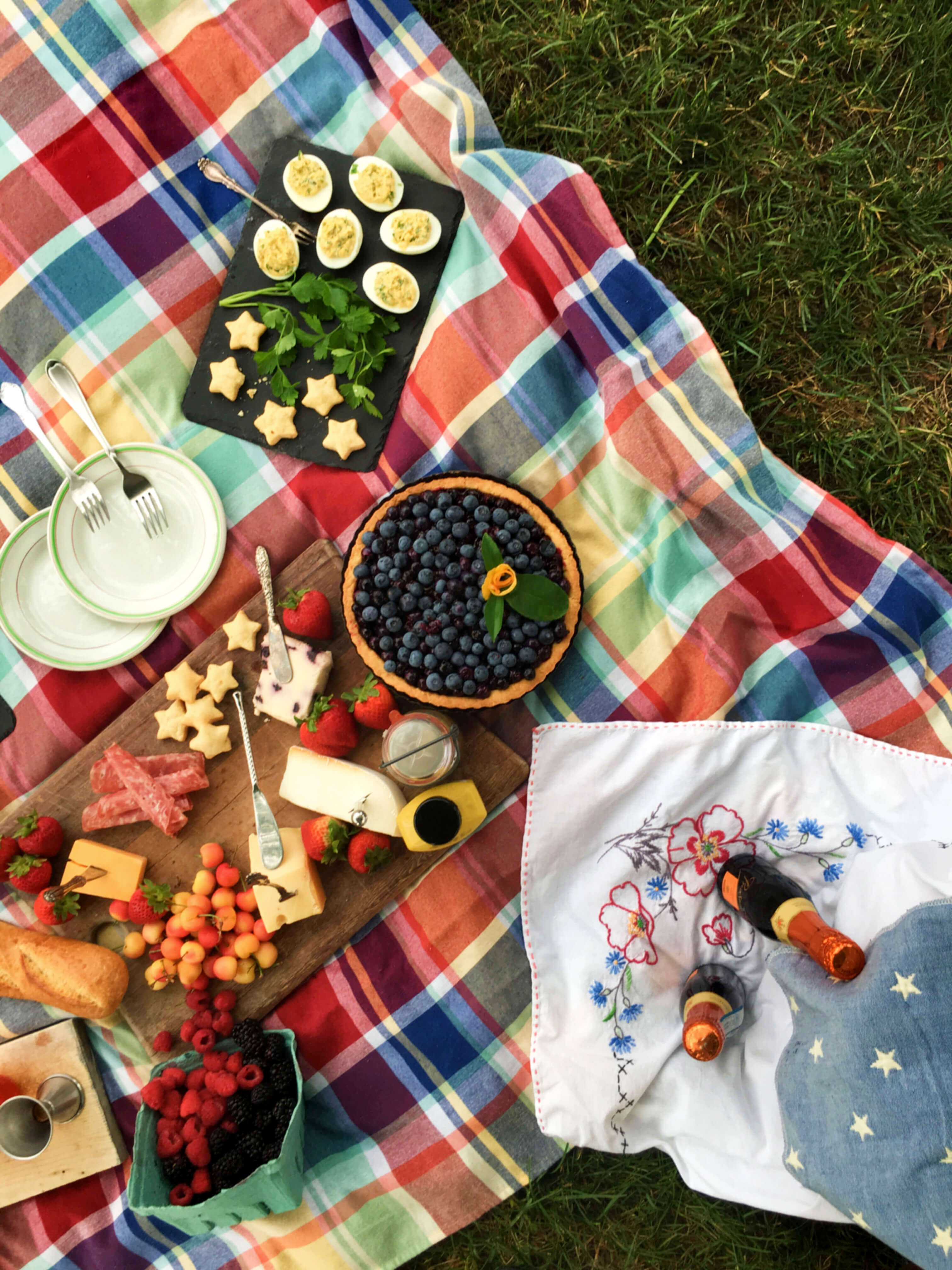
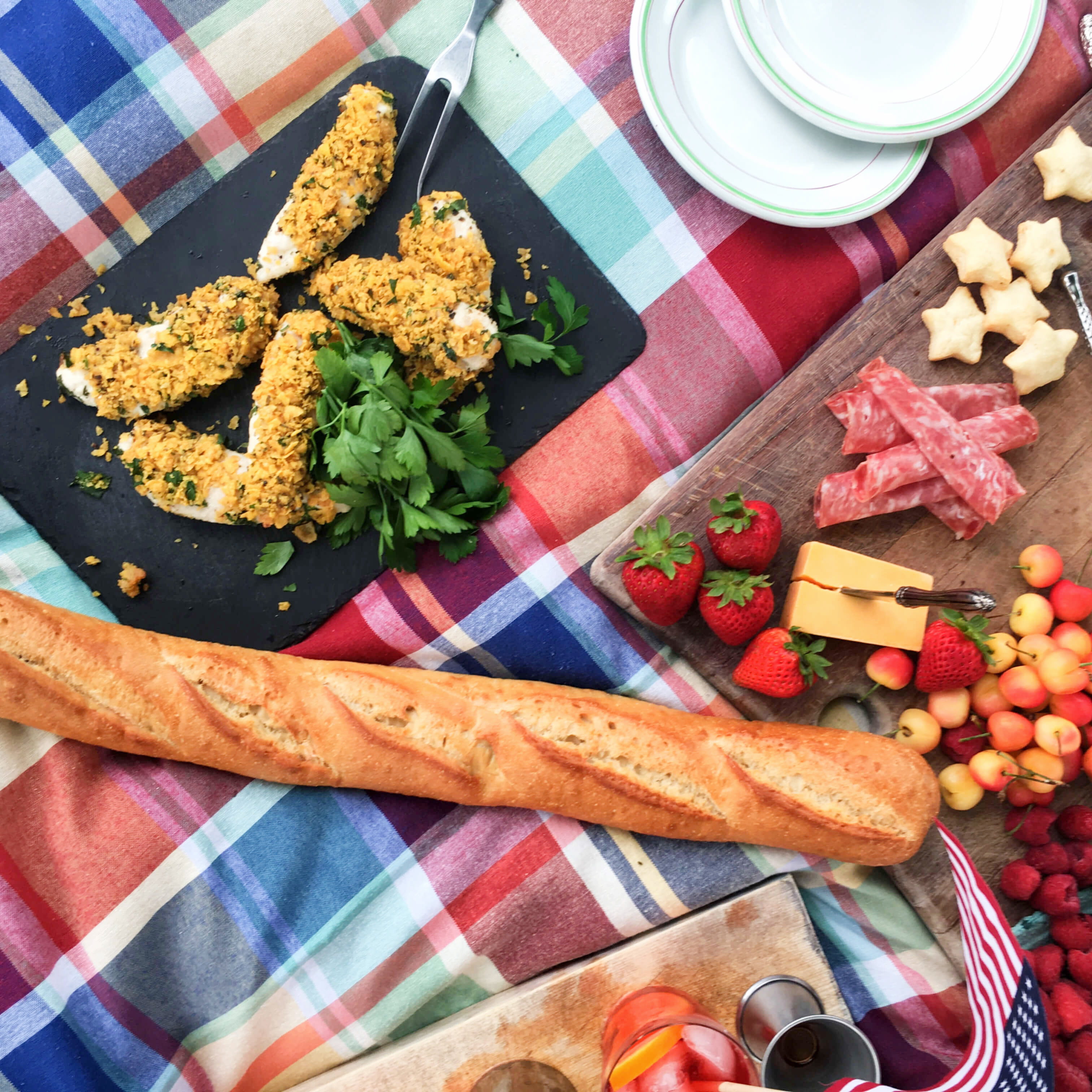
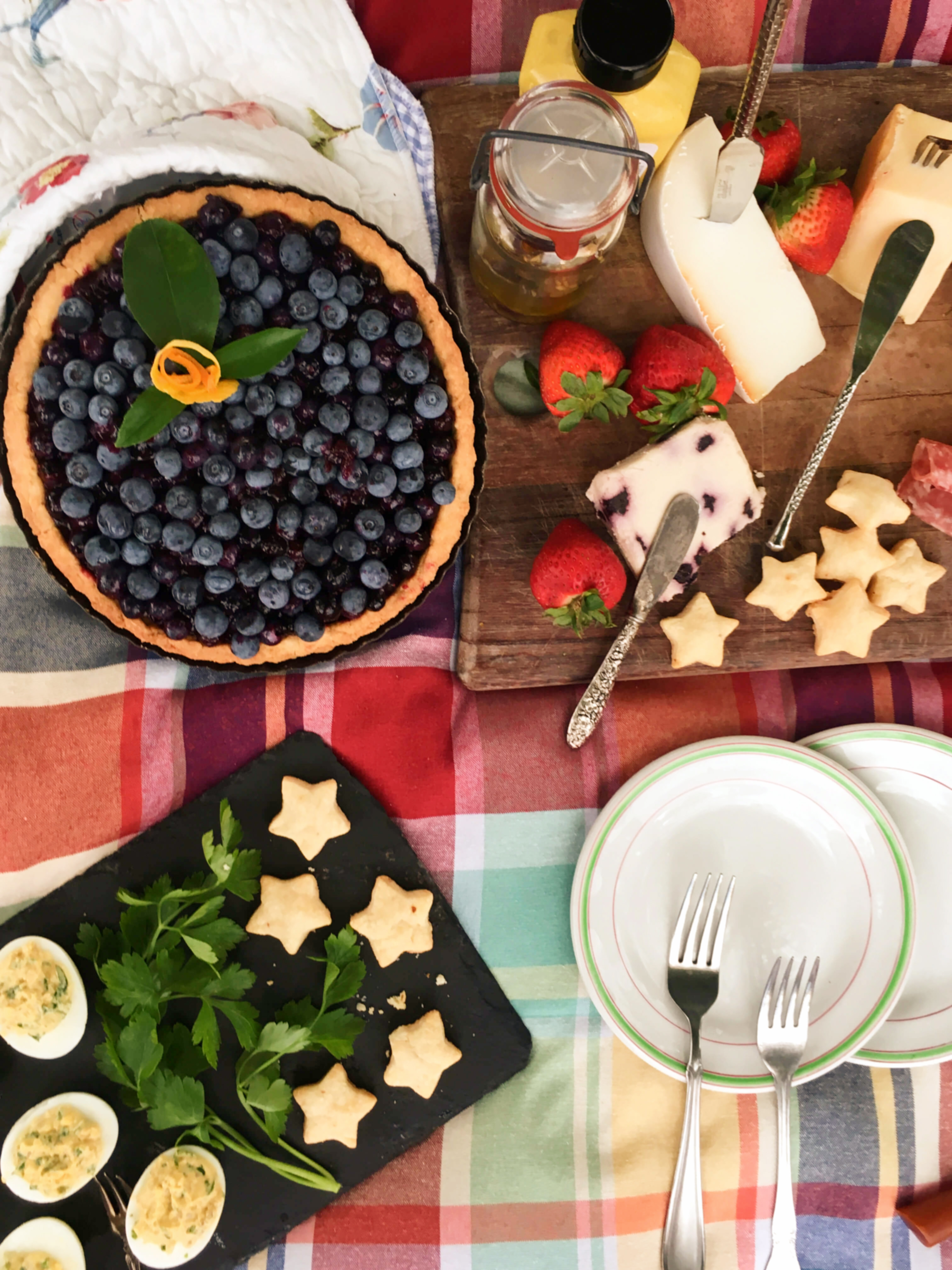
The Art of the Vintage Picnic

Happy August! As promised in the last post, here is the article written for Artisans List that highlights the beauty and joy of a vintage style picnic. We’ve got just six weeks left before Autumn officially starts, but rest assured that doesn’t mean that picnic season, as we most traditionally know it, is over. There are plenty of Fall foliage opportunities for all you Northerners intent on a day trip and a dine out in nature. If you happen to live in the Southern half of the hemisphere than lucky you – everyday is a good day for a picnic no matter what time of year. When we settle into the cooler months, I’ll also be featuring two outside of the box picnic ideas – the carpet picnic and the car picnic  – both which promise to hold as much fun as their summertime counterpart. So stayed tuned on that front. In the meantime, six full weeks of summer still await. From somewhere I can hear a basket calling your name…

Twentieth century foodie, gourmand and all around good cook, James Beard declared that “picnicking is one of the supreme pleasures of outdoor life.” Indeed. No other dining experience seems quite so decadent. The fresh air, the natural setting, the creative food choices, the deliciously idle intentions. Picnics have a wonderful way of engaging all of our senses in such a fantastic way. It’s almost overwhelming.

Those first few moments at picnic’s start – when you are dizzy with the view and the weather and the notion of doing nothing but relaxing and reveling in food and friends – is satisfaction enough. But then a truckload of simple delights follow one right after another. There is that liberating sensation of kicking off shoes and wiggling bare toes in soft grass.  The crisp, snapping action of the picnic blanket as it unfurls from containment, joyfully sailing on the breeze before floating to the ground. There is the laying out of the carefully wrapped food parcels and the first sip of a celebratory toast. The giddy laughter, the bird songs, the sound of leafy trees dancing on the breeze… suddenly you are aware of the musical vitality of nature and yourself in it.

On a picnic, the world shines newly bright with details mostly overlooked in the hustle bustle routine of everyday life. It is an activity that encourages you to stop and to breathe and to melt – into your surroundings, into your friends, into the food that makes up your lunch or your dinner or your breakfast time snack. Yes, picnics are a triumphant and pleasurable experience. And there’s no better season for them then right now. In today’s post, we will be discussing the art of of the vintage picnic – how it came to be, how it shaped us, and why we still need to celebrate it now. Highlighting a handful of old, but still very relevant recipes, this post also offers suggestions on how to build your own vintage picnic experience so that you too can succumb to the relaxing style of outdoor eating that our ancestors favored so long ago. It’s history in a most delicious form, unveiled, just as we are about to round the corner towards the 4th of July, the most popular picnic holiday of the year.

This idea of eating outdoors from a basket on a blanket is no trend. It has been around for centuries and has taken eaters on a plethora of picturesque adventures. But it wasn’t always a simple act. At first, outdoor dining began in grand style. Lavish entertaining in lavish settings. In the 1700’s, there were the hunting after-parties which made glorious outdoor feasts of animals bagged from the day’s sport. Garden gatherings in the 1800’s involved fine china, silverware and fancy dress. Plein air luncheons in the early 1900’s focused on seasonal foods, artistic creativity and exquisite manners. Today, picnics involve technology fueled cooling mechanisms, compartmentalized backpacks and fitted amenities made for details and devices. Needless to say, the desire to picnic has never been lost, but the way we eat outdoors has evolved quite a bit over time.

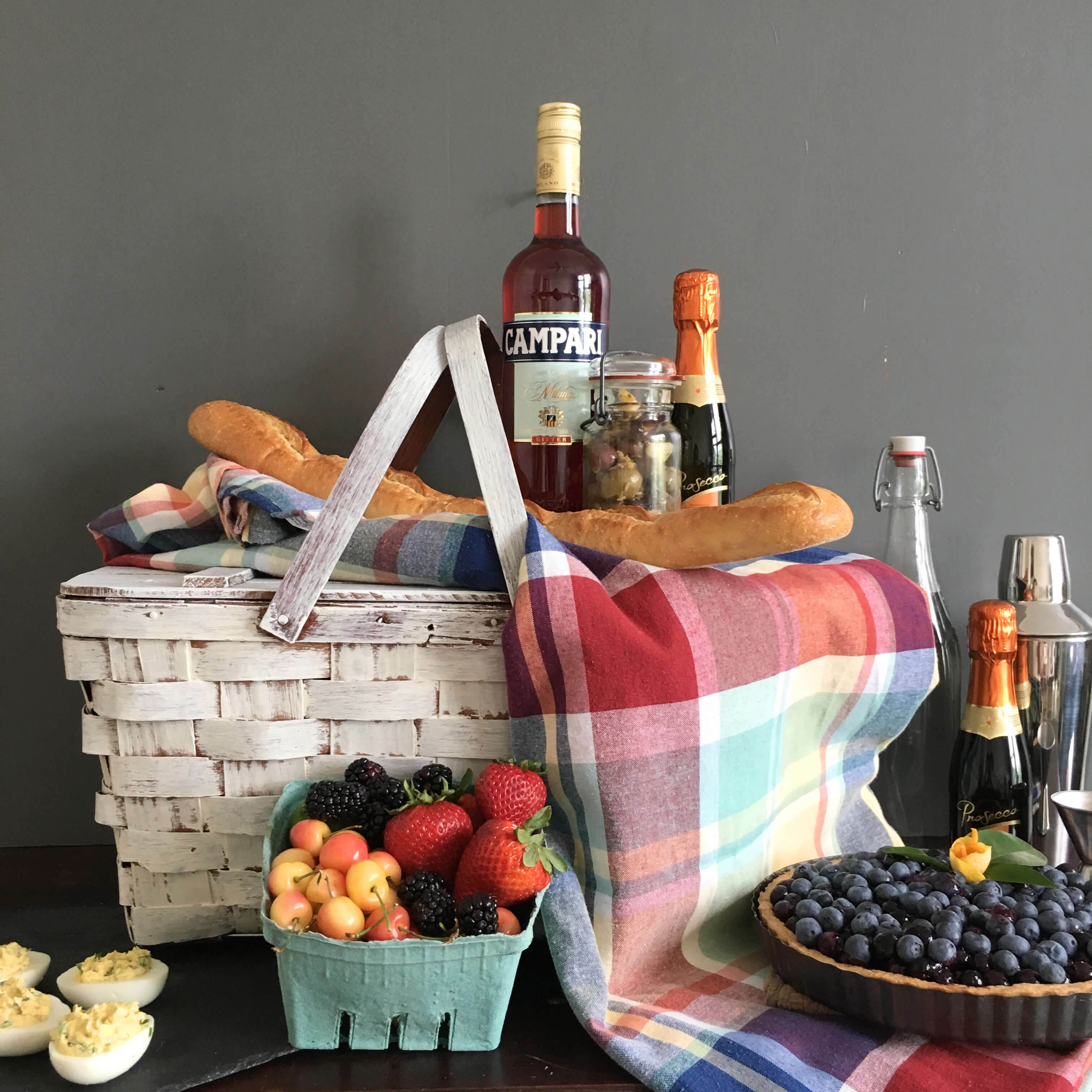
Nowadays, anything goes when it comes to picnic style and presentation.  An impromptu paper bag lunch for two in a city park can be just as engaging as a thoughtfully prepared country basket for six. But just like any activity worth doing, there is a certain art form to a well produced picnic that makes for a more pleasurable experience. The vintage-style picnic favors china plates and real glassware, classic cocktails and linen napkins, and most importantly, homemade food. It is the sort of affair that wraps you up in a long, restful lazy day adventure fueled with time-honored tradition and attention to detail. It discourages anything fast or obtuse- like technology and frenzied time schedules and plastic utensils. It champions a slower, simpler and more relaxing rhythm. The type of experience that not only feeds your appetite but also your senses, your spirit and your sanity. Basically, a vintage-style picnic is a big, long break in your day meant for resting, relaxing and restoring through small details… the time-worn touch of an old plate, the taste of an heirloom recipe, the time-out of technology, and the tune in to your natural surroundings.

Legend loosely states that the word picnic stemmed from the French pique-nique which derives from the action of picking and selecting small spots or things. Originally, pique-niques were more like potlucks, in that all invited guests were asked to contribute a little food or drink for the group to share together. But it was England, in the 19th century, not France who created the picnic in the modern sense that we know it as today. Both a mealtime and a leisure activity, the English made picnicking a deliciously long-term and lengthy event that could last all day and well into the night if done right. They played games, read books, plucked instruments, talked, sang, painted, swam, flew kites, played sports and generally just all around enjoyed themselves while snacking on small plates of assorted foods from wicker hampers and baskets.

Monet’s painting, Le Dejeuner Sur L’Herbe (Dinner on the Grass) was painted between 1865 and 1866.

In America, prior to the Civil War, there were no lackadaisical, carefree picnic outings. If any outdoor eating occurred before that time period, it was eating en masse – generally a large sociable event where whole communities of people turned out to enjoy a barbecue or a church social or a political rally. The Victorians ushered in more intimate, family-style picnic parties, rambling in close proximity to home, as their appreciation of nature and outdoor enthusiasm bloomed in the late 1800’s.  But the rise of the automobile, the building of the U.S. highway system, and the introduction of drive-up motor lodges and nationals parks all encouraged a whole new independence when it came to on-the-go eating as the 20th century began. Suddenly, the English style picnic took hold as Americans began exploring their more easy-to-navigate country. Economical, spontaneous and available to everyone, picnics naturally turned destinations into dining opportunities. All you needed was a basket, a blanket, a small collection of foodstuffs and an adventurous spirit. Outdoor eating euphoria had arrived!

A group of picnickers photographed in 1914 by Albert M. Price. Photo credit: Library of Congress

Back in earlier centuries, outdoor eating meant bountiful quantities and dramatic fare. Whole animals roasted over fire pits, multiple courses served by domestic staff, exotic ingredients, rich foods, elaborate presentation. But as outdoor dining began to evolve over time into smaller parties and simpler affairs, the food that accompanied it changed also. As serving staffs diminished and people became more independent, picnics and the baskets they represented, became simpler – filled with foods that could be easily made, easily transported and easily unpacked. By the time the mid-20th century rolled around, there was a definite type of picnic fare anticipated and defined by the activity. Fried chicken, salads and deviled eggs topped the favorites list, along with hot dogs, sandwiches, pies, cakes, bread and fruit.

The picnic basket spread out before you in this post highlights vintage recipes that capture that same essence of familiarity and practicality, while also providing a well-rounded balance of flavors and tastes. Vintage recipes include Sicilian-Style Marinated Olives, Oven-Fried Chicken, Deviled Eggs, Cheese Straws and Blueberry Tart. Americanos join the party as a refreshing aperitif to toast the season and the stars. 

Ranging from the 1960’s to the 1980’s, these recipes came from a handful of treasured vintage cookbooks. They pair gourmet creations from famous chefs like James Beard with regional favorites from lesser-known sources, like the ladies of the Junior League of Huntsville, Alabama. Covering all matters of taste from sweet to salty, savory to sour, they are considered traditional picnic foods, but each contains an unusual twist in the form of a cooking method or an ingredient pairing that makes them both interesting and innovative. Whether you make all of these recipes at once for your next outing or just focus on a dish or two to sample and try, you’ll discover that all of these options listed here are steeped in simplicity. Almost all of them can be made a day or two ahead of time, so that your restful day of picnicking doesn’t include you running around the kitchen like a crazed cook.  

And, just one more note before we get to the recipes. While food is obviously the main attraction in a picnic, the vintage-style picnic places just as much importance on the accessories that go along with it as well – a.k.a. the servingware.  While it is true that we may no longer entertain as formally as we did in centuries past, there is something lovely about incorporating some little niceties into your basket in the form of linen napkins, china plates and glass drinkware. These details add an elevated aesthetic to your picnic that reflects the elegant English versions of yesteryear, and really just makes for a nicer overall dining experience.  A cocktail enjoyed from a plastic cup or a homemade dessert pierced with a plastic fork is never quite the same experience as using real glass and real flatware. Even James Beard agreed about that point. “Skimp on all the other dishware if you have too – but never on the glassware for your cocktail,” he advised.

A few vintage items featured in this post are a handwoven picnic basket from the 1930’s, a matching set of W.H. Grindley hotelware salad plates made in England (also in the 1930’s) and a handful of embroidered vintage linens in various shapes and sizes. Vintage restaurantware dishes in general are a great choice for picnics because they are heavy duty and aren’t quite as fragile as delicate ceramic or porcelain dishes. Salad plates or bread and butter plates are also the perfect size for your small snack needs and aren’t as bulky to pack as dinner sized equivalents. Likewise, vintage tablecloths make ideal picnic blankets thanks to their soft fabrics (decades of washing and drying!), variety of sizes and nostalgic designs. As you build your vintage accessories collection, you’ll also notice that these elements have a fun way of engaging people in conversation too.  Each item in your basket expresses its own unique story.  When packing all these elements up I like to designate the sturdy picnic basket for fragile foods, a separate tote bag for the servingware and linens and an additional tote for drinks and ice. That way everything remains intact from the moment you leave your kitchen to the moment you arrive at your destination.

Americano (serves 1)

1 1/2 oz. Campari

1 1/2 oz. Sweet Vermouth

3 oz. Club Soda

Ice Cubes

Twist or Slice of lemon or orange for garnish

Add the Campari and vermouth to an old-fashioned glass. Add ice cubes and club soda. Stir to combine. Garnish with a slice or twist of lemon or orange.

Marinated Olives, Sicilian Style (from the Silver Palate Good Times Cookbook, 1985)

1 pound Ligurian, Nicoise or Greek Olives  or a combination, drained

8 cloves garlic, cut lengthwise in half

Zest of 1/2 orange

Zest of 1/2 lemon

2 tablespoons fennel seeds

1 tablespoon chopped fresh rosemary

1/2 cup fresh lemon juice (about 2 lemons)

3 tablespoons olive oil

Combine olives, garlic, citrus, fennel and rosemary in a large bowl. Drizzle with lemon juice and oil. Marinate, stirring occasionally at room temperature at least 24 hours.

Deviled Eggs (from James Beard’s Menus for Entertaining Cookbook, 1965)

8 hard boiled eggs, shells removed

1 small tin boneless skinless sardines

1 small onion, finely chopped

1/4 cup parsley, finely chopped

Mayonnaise

Cut the hard-boiled eggs in half and remove the yolks to a small bowl. Mash yolks with sardines, onion and parsley. Blend with mayonnaise until you reach ideal consistency then fill each egg half. Chill in fridge until ready to pack into your picnic basket. These can be made up to 24 hours in advance.  * If you don’t have a portable egg carrier, disposable muffin tins make a great alternative.

Oven-Fried Chicken (adapted from Better Homes & Gardens New Cook Book , 1965 Souvenir Edition)

1 lb. chicken cutlets

1/4 teaspoon garlic powder

1/4 teaspoon salt

1/4 teaspoon pepper

4 tablespoons Herbes de Provence

1/8 cup fresh parsley, finely chopped

1/3 cup butter, melted but cooled to room temperature

6 cups corn flakes, crushed

Preheat oven to 375 degrees. Combine the garlic, salt, pepper, herbs, parsley and melted butter in a shallow dish and mix thoroughly. In a separate shallow dish add the crushed cornflakes. Dredge each piece of chicken on both sides in the butter mixture and then coat them on each side in the cornflakes. Place the prepared chicken on a lightly greased cookie sheet and bake for 20 minutes or until chicken is golden brown and crispy. *Note: This chicken recipe will loose its crunch factor the longer it sits. So if you are picnicking, this should be the last dish you make before packing the picnic basket and heading out the door. That being said, it’s still wonderful hours later or even the next day, but the corn flake coating will have a more breaded consistency rather than a crispy crunch.

Belle’s Star-Spangled Cheese Straws (from the Huntsville Heritage Cookbook, 1967 Edition)

1 lb. New York State sharp cheese (or any sharp cheddar), grated

3/4 cup butter

2 cups flour

1 teaspoon salt

1/2 teaspoon red pepper

smoked paprika for garnish

Leave both the cheese and the butter out overnight on the counter to soften. The next morning, preheat the oven to 350 degrees. Mix all the ingredients together (except the smoked paprika)  in a medium bowl by hand. Knead the dough until it turns into a consistency like play-doh. Form into a ball shape. On a lightly floured pastry cloth, roll the dough out firmly to 1/4 inch thickness with a wooden rolling pin. By pressing it into the cloth with the rolling pin, you’ll be able to smooth out any crumbly or wrinkly areas as you work. Using a small star shaped cookie cutter, cut out the stars and place them on an ungreased cookie sheet. Bake for 12-14 minutes or until lightly golden in color. Let stars cool on a rack and dust with smoked paprika just before serving.

Homemade Blueberry Tart (recipes adapted from the Smitten Kitchen and Martha Stewart)

For the tart shell:

1 1/2 cups all-purpose flour

1/2 cup confectioner’s sugar

1/4 teaspoon salt

1/2 teaspoon cinnamon

9 tablespoons very cold (or frozen) butter, cut into small pieces

1 large egg

In a large bowl, mix the flour, sugar, salt and cinnamon together. Add the chopped butter pieces and blend with with a fork until the mixture resembles small bread crumbs in various sizes. Add the egg and mix until combined. Form the dough into a ball, wrap in plastic wrap and chill in the fridge for at least 2 hours.

Butter a 9-inch tart pan (the kind with a removable bottom). Place the chilled dough on a lightly floured pastry cloth and roll out to a size big enough to accommodate an extra 1/2 inch of dough in diameter when placed in the tart pan. Add dough to pan, trim any excess dough beyond the extra 1/2″inch that hangs over the sides. Fold the remaining  1/2″ inch of dough back into the tart pan, so that you are re-enforcing the side walls with an extra layer of dough. Pierce crust all over (bottom and sides) with a fork. Place tart pan in freezer for at least 45 minutes.

Preheat oven to 375 degrees. Remove tart pan from freezer and place directly in oven for 20-25 minutes or until the tart shell turns a soft golden brown. Remove from oven and let cool on a rack.

For the blueberry filling:

6 cups fresh blueberries

2/3 cup cane sugar

1/2 teaspoon cinnamon

1/2 teaspoon nutmeg

4 tablespoons all-purpose flour

3 tablespoons fresh lemon juice

pinch of salt

In a medium saucepan, bring 1/4 cup water and 1 1/2 cups blueberries to a boil over high heat. Reduce heat and let berries simmer, stirring occasionally for about 4 minutes.

In a small bowl mix the flour with 4 tablespoons of water until smooth and then add to the blueberries in the pan. Next, add the lemon juice, sugar, salt, cinnamon and nutmeg. Bring to a boil and then reduce heat. Let the mixture thicken for about 1 minute. Remove from heat and stir in 3 1/2 cups of blueberries. Immediately, add this hot blueberry mixture to the tart shell.

Sprinkle the remaining cup of fresh blueberries across the top of the hot mixture, gently pressing the berries down so that they stick into the hot mixture enough to bind them together. Place the tart in the fridge for at least 30 minutes or at most overnight.

Additional Picnic Companions

One of the joys of picnic fare is the ability to snack and nibble on little bits of food at whim throughout the day. Since the original pique-nique days, small has been the favored size and serving proportion. For that purpose, a wooden cutting board filled with fresh fruit, a sampling of cheeses, cured meats, fresh herbs and bread offer an infinite number of little edibles that can be combined in interesting ways with the food options listed above. From chicken baguette sandwiches to cheese and crackers to deviled egg wrapped prosciutto, variety runs the gamut. The picnic board here included rainier cherries, strawberries, blackberries, raspberries, goat’s milk Gouda, cave-aged cheddar, blueberry Stilton, herb stuffed salami, thinly sliced prosciutto, Genoa salami, a bouquet of fresh herbs and a French baguette.

Finally, when bellies are full and appetites satisfied, the vintage-style picnic experience celebrates and salutes the pursuit of leisurely activities. There’s no rushing to clean up or clear out once you finish eating.  The whole, blissful idea behind a vintage-style picnic is to stay awhile and relax into yourself and your surroundings. One of my most favorite picnic activities is bird watching and tree scouting. I usually tote along a couple of species guides and a pair of binoculars, so that I can identify what’s flying over and growing up around me. Other fun activity suggestions (depending on your setting) include painting, sketching, walking, kite flying, playing cards, reading, talking, napping, swimming, collecting and just appreciating the people and places that share your afternoon. 

The world is a beautiful place. Time is a priceless gift. Eating is a ceremonial act. The art of the vintage picnic reminds us of that. Just as it has in the past and will continue to do so in the future. Wherever your picnic adventures take you this summer, I hope they are magical and delicious. Cheers to dining out in nature. Hope it is your best meal yet!

A Year and 91 Days: The Life and Times of Avi the Avocado

Two days before Thanksgiving, not last year, but the year before, a sandwich was made and a seed was started. The sandwich was a smashed collaboration of avocado and sauteed kale, ricotta cheese and caramelized onions which turned out great and became a repeat recipe for awhile, but the real star of the show was the seed. On that day, November 22nd, 2016 a little life began.

Reminiscent of elementary school science classes, the avocado pit (actually called a berry) from the sandwich-making endeavor got cleaned up and pierced with toothpicks. Resting on the rim of a glass while partially submerged in water, it sat there half-hovering for days and then weeks and then months.  Absolutely nothing happened.  The holiday season came and went. We celebrated New Year’s and middle month birthdays and our first snow in the ending week of January.  But in the land of the avocado, nothing was changing except regular refills of water in the glass. It was such uneventful gardening I didn’t even take photographs.

Heading into the first week of February (week 9), I thought perhaps my avocado seed was a dud and was ready to abandon the project altogether. But magically, almost as if the little seed had read my thoughts, a crack in the pit opened up one morning. Something was happening, at long last! Days later a tap root started reaching out like a diver heading towards the bottom of the sea. And then things really escalated. Every day, it grew longer and longer until little root tentacles started filling the bottom of the glass.  Satisfied with itself, it turned its attention skyward and from the center of the pit, a long slender green shoot started reaching for the stars.

Drinking about a 1/4 cup of water a day, it grew almost a 1/2″ inch every morning. When it passed 12 inches” in height and grew its first set of leaves, I named this little guy growing with such gusto, Avi, and welcomed him into the family. For most of the Spring, Avi enjoyed his glass of water while taking in the river view from his perch in the window.

As the days grew longer and the temperatures warmed, I introduced to him to the outdoors for a little bit each day. When the hot, humid temperatures of summer in the South took over, he was transferred to a new garden pot filled with potting soil and joined the summer flowers on the balcony. You might remember seeing him from last summer’s post about how to make a mini-compost bin.

There’s Avi on the bottom right corner behind the nasturtiums!

In the lazy summer sun, Avi grew and grew and grew. Towering over the other plants, he looked like a king ruling over his court.

All summer he played a long-standing game with the nasturtiums to see who could climb the furthest.

Avi was the winner! When the seasons changed and the cool rains of Autumn scattered leaves on the balcony garden, Avi welcomed the wet weather.

But when we moved in mid-Fall trouble began. His first few nights went okay. He and Indie liked to watch the city lights come on from his new spot on the new balcony…

but during the day, when the sun was warm and bright, and the birds were floating overhead, Avi started doing peculiar things. Instead of carrying on with his growth spurt, he got limpy and lethargic. A week into his new surroundings, he developed brown spots and then white spots and then crinkly skin. Thinking he was not getting enough water, I doubled up. But soon after, he looked more like a loose umbrella than a young tree. His leaves turned from a colorful shade of lime to a dull blackish green. Tragedy was looming, we both knew it. A week before his first birthday I feared Avi might be on his last legs.

Signals from a troubling time of growing pains.

I brought him inside for a few days, consulted the internet and determined that he either had too much salt built up in his roots, ( a common side-effect of using regular tap water for daily watering) or he was getting too much sun on the new patio. I rinsed his roots in distilled water and gave him a new home in a bigger pot with fresh potting soil. Then he got a new vantage point – a sunny windowsill on top of a low bookshelf.

Avi’s second perch nestled in with pig and pineapple and Hedy Hatstand.

But for two weeks he still looked terrible. So he moved again, this time to a bright corner between two big windows – a spot that gets no direct sunlight but reflects light because of the white wall paint. It also happens to be right next to the kitchen, where I could keep a close eye on him.  To my happiness, Avi flourished once again!  Day by day, his leaves moved higher and higher until they went from vertical back to horizontal. And he started growing again.

Now he’s taller than dear Hudson and happy as a clam. As it turns out, all Avi ever wanted was to be close to the kitchen and out of the sun. Who can blame him?

Back to pretty green leaves and a happy disposition once again!

Today he measures 3′ feet 2″  inches tall and he’s just achieved his longest set of leaves at 12.5″ inches in length. Some gardening experts say that Avi will never produce avocados to eat, but that doesn’t matter, I like him just for the handsome plant that he is. And it’s fun to watch him grow. I hope to see him reach a height of 8-9 feet (maybe taller!), a little indoor arboretum in the making.

If you’d like to grow your own Avi, it’s really simple. Find step by step instructions here. You just need an extra dose of patience in the beginning until the berry cracks open and growing gets underway. Other than regular watering every couple days and eventual transplanting as it grows, avocado plants are easy to care for. Many garden sites say that avocados LOVE sun, but as we learned with Avi’s growing pains, too much sun is indeed, too much, so watch closely as your plant’s personality develops and see what he or she likes best.

On November 22nd, when Avi celebrates his second birthday, we’ll check back in to see how much he has grown in the nine months between now and then.  Maybe he’ll be up to the ceiling!

In the meantime, cheers to Avi and his ability to weather the rigors of adolescence. And cheers to indoor gardening – an activity that’s in-season all year round!

Compost! An Update on the Mini Bin for the Mini Balcony

Mini Compost Bin

“And above all, watch with glittering eyes the whole world around you because the greatest secrets are always hidden in the most unlikely places. Those who don’t believe in magic will never find it.” – Roald Dahl

Can you guess where my most unlikely place of  magical secrets was found this week?  In the dirt at the bottom of a plastic bin!

Lady Nature continues to impress and inspire. It’s been 28 days since the birth of the mini compost container and I’m happy to report that a tiny miracle has occurred. When I last wrote of this project it was the beginning… two bowls of kitchen scraps, two bowls of yard materials and one leftover 3lb. plastic container.

A few shakes, 1/4 cup of water and four weeks later we now have compost…

Well… almost! Since it has been up and down spring weather this past month with lots of rain and cooler temperatures, our compost needs maybe about another week or two of good hot sunny weather to fully break down and then it will be ready to feed the potted plants on the patio. Right now my compost looks like this…dark, moist but still a little chunky…

You’ll know when your compost is ready because you won’t be able to identify the original elements in the mixture. I can still see a little bit of egg shells and sticks in my mix, so there is still a some cooking left to be done.

If you remember from the previous post, I cut down all the elements that originally went into the compost in fairly small pieces, which helps break things down faster. I did leave some of the sticks in bigger chunks however for a little aeration but I think in my next batch they’ll get broken up into tiny pieces too.  The smaller the better in this case!

You can see the size difference in the bulk of the contents from Day 1 to Day 28 to understand just how much material was magically broken down…

The bin went from being 3/4 full to now being about 1/4 full – all entirely tended to by nature. Isn’t that amazing? The only help I offered in this month long experiment was to turn the mixture with an old camping spoon once a week which took about five seconds total. Lady Nature and her team of helpers did all the rest.

One of these helpers was a healthy batch of fruit flies (aka vinegar flies). These guys were naturally attracted to the compost bin through the air holes in the lid and made themselves at home within the first week. Tiny and fast flyers, they are tricky to photograph but the arrows point  to a few here…

Like anyone finding out about a cool new place to hang out, the fruit flies called all their friends, threw a bunch of parties and settled in for the month, which was very wonderful of them because they helped break down material too.  As the bin keeps cooking they will eventually leave when it gets too hot – a signal that the compost is ready at last. But for now they are conscientious little cleaner uppers, quiet merrymakers and very good neighbors. You’d never even know they were there. I’d take a fruit fly over a snake ANY day!
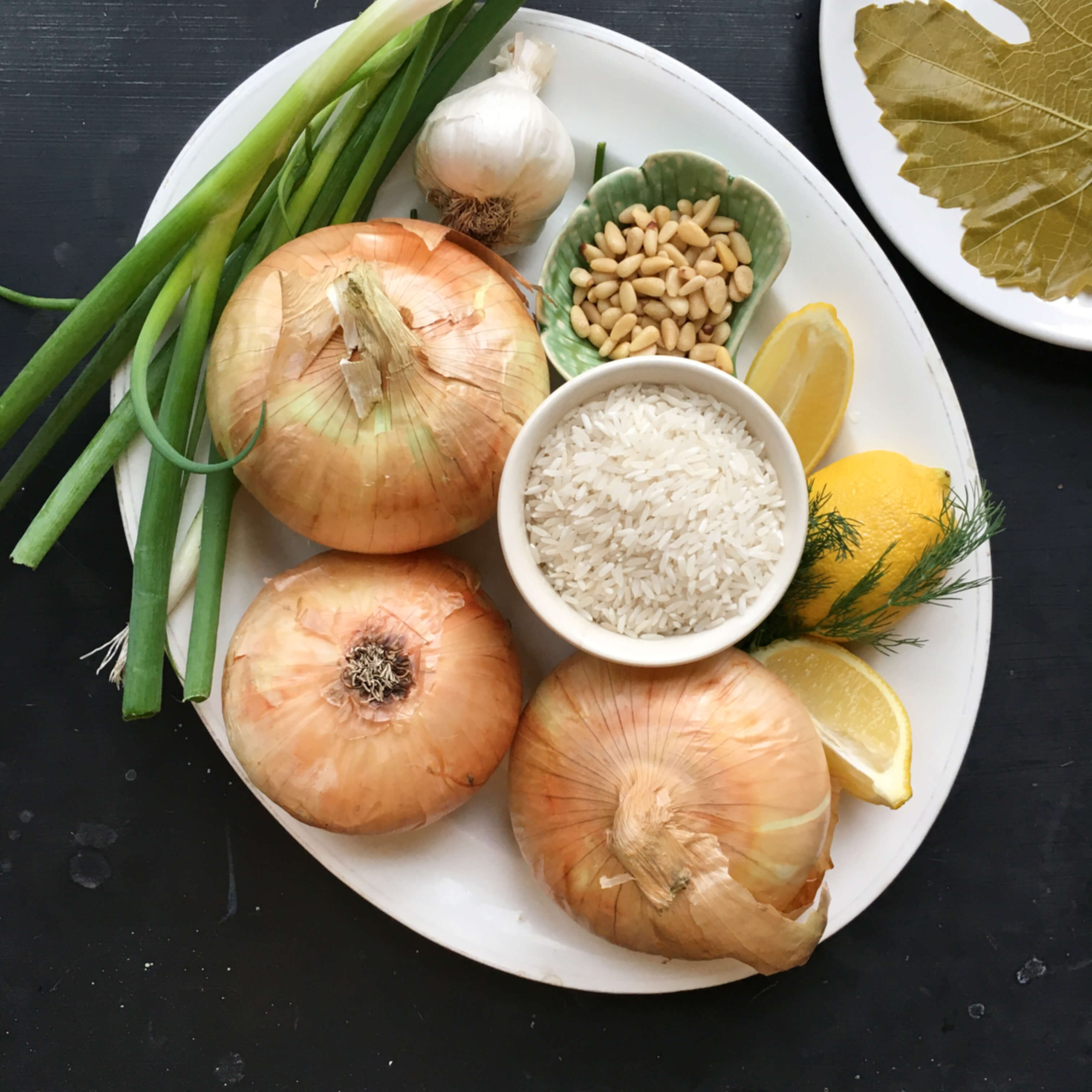
Smelling like the forest after a good, clean rain the compost mixture is earthy and rich and lies somewhere along the aromatic scale between a damp basement and a dusty book (which is what you want) not like old food or strong ammonia (which is what you don’t want).  If a particular odor smells too persistent or too strong than your bin is out of balance. But if you stick with the 50/50 method suggested in the original post then everything should be nicely evened out and pleasantly scented when it comes to kitchen and yard waste.

The forecast is scheduled to be hot and dry over the holiday weekend so that should give the bin some extra energy to breakdown the last of the chunkies. Then our compost will be ready to spread.  I’ll check back in next week with an update on the final consistency. Then it is onto batch two  and batch three and batch four and a regular routine of composting by bin and balcony.

If you missed the post on instagram, the nasturtiums started blooming this week in pretty shades of yellow and red. It’s beginning to feel a lot like like summer around here!

Cheers to finding hidden magic!


Suzy Snowflake and the Marshmallow World

Washington DC, 1922
Washington DC, 1922

How very exciting this week has been for snow lovers around the U.S.! With all this winter white floating and flying around the country, February is chalking itself up to be one of prettiest winter months on record. Sadly there has been no snowy weather to report from Ms. Jeannie’s city but that’s okay because today snow scenes are not hard to come by as we travel back in time to some of the biggest snowstorms of the 19th and 20th centuries.

This post is all about the beauty of the blizzard as experienced from all sides of the States, north to south, east to west. We are also introducing two new (but actually old) snow songs that every once in a while get lumped into Christmas song rotation but actually have nothing to do with the holiday itself. Instead, these two whimsical melodies express all the hap-hap-happy joy found in a good day of snow.  So grab your mug of hot chocolate, turn up the volume and enjoy the snowstorms to come…

Suzy Snowflake debuted in 1951 and quickly became a popular hit for Rosemary Clooney for the next three decades.

New York City circa 1917
New York City, 1917


Boston circa 1875
Boston, 1875


Detroit circa early 1900's
Detroit,  early 1900’s


snow-1950s
Possibly this is Suzy Snowflake herself circa 1963!


New York City, 1892
New York City, 1892


Minnesota, 1940's
Minnesota, 1940’s


Kentucky
Kentucky Mountains – early 19th century


Chicago 1956
Chicago, 1956


Eagle River, Wisconsin, 1911


Belfast Maine, 1952
Belfast, Maine, 1952


Chicago snowplows, 1908
Chicago, 1908


New Jersey, 1926
New Jersey, 1926


snow_nyc1905
New York City, 1905


Seattle 1916
Seattle, 1916


Washington DC, 1922
Washington DC, 1922


Mckenzie Pass, Oregon, 1929


Connecticut, 1888
Connecticut, 1888


It’s A Marshmallow World was first recorded in 1949 and was performed by Bing Crosby. This version (Ms. Jeannie’s favorite!) by Brenda Lee debuted in 1964.

Wisconsin, 1925
Wisconsin, 1925


Vermont, 1940
Vermont, 1940


Ohio 1952
Ohio 1952


Colorado, 1906
Colorado, 1906


1950's
1950’s


Alaska, 1910
Alaska, 1910


Tennessee 1918
Tennessee 1918


Buffalo, New York 1977


San Francisco, CA 1887


Harrisburg, PA circa early 1940's
Harrisburg, PA circa early 1940’s

Cheers to happy snowmen and winter site-seers! May your snow day, however you are experiencing it, be merry and bright!

All photos courtesy of pinterest and ebay. Click on each for more detailed info.