

To Tokyo with Truman & Millie, A 1950s Travel Scrapbook, and A Vintage Teriyaki Recipe

Truman packed his Dacron. Millie packed her day dresses. Together, they hauled over 60 pounds of luggage to the Portland International Airport, got on a plane, and flew to Hawaii. Destination number one of their 35-city tour around the world. The year was 1954. The month – February. Truman documented the entire trip in real-time, as it unfolded city by city, in a spiral-bound notebook clad in Japanese rice paper.
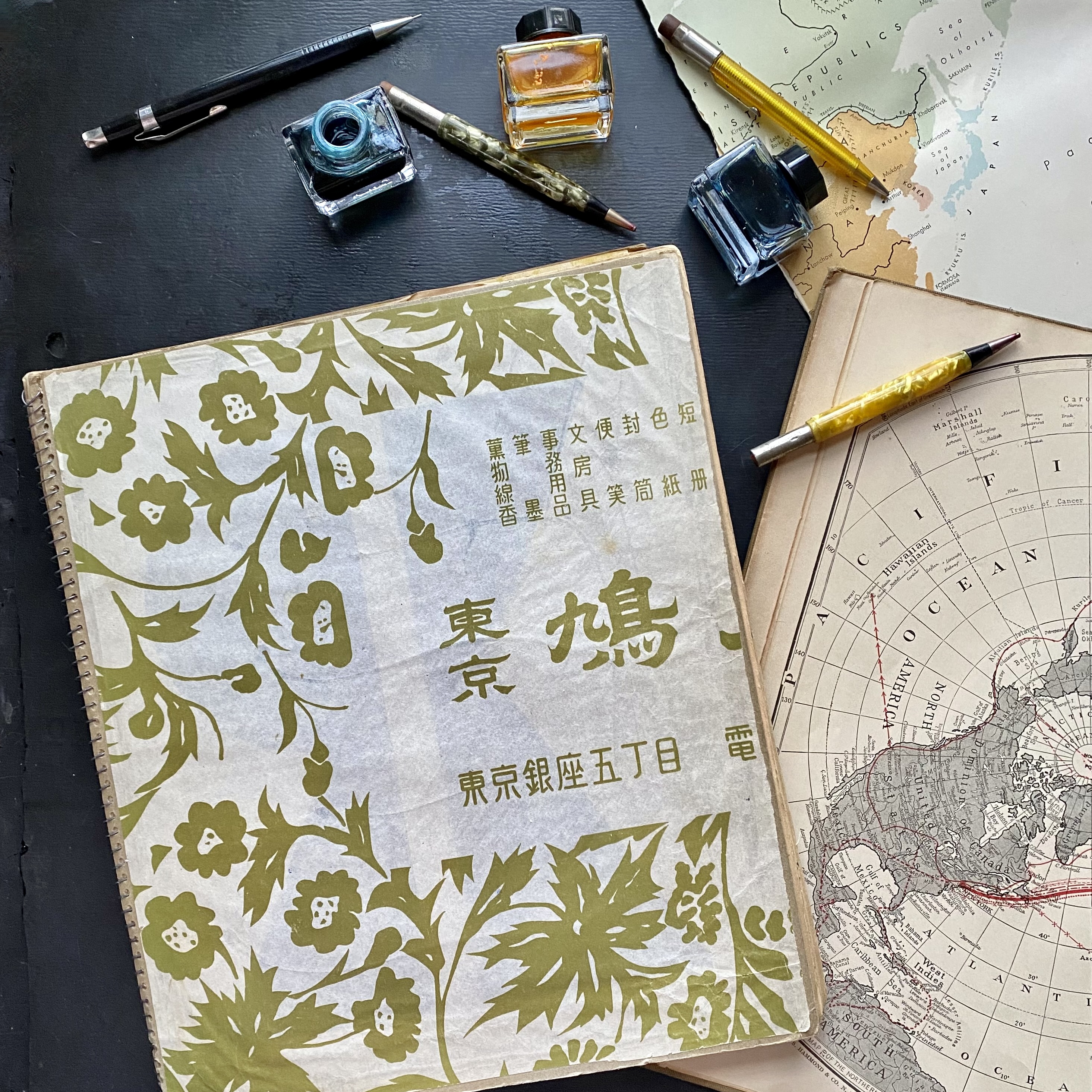
The notebook

I didn’t know Truman, and I didn’t know Millie, but their notebook showed up on my doorstep in late February. Exactly 72 years, almost to the day, that this jet-setting couple departed for Hawaii.

There’s no rhyme or reason as to how interesting stories from history find their way here to the blog or to the shop. I mention the word serendipitous an embarrassing amount of times in previous posts, but this is how things seem to go when it comes to storytelling around here. Timing is the key to my kitchen. Especially when linked to forgotten heirlooms from centuries past.

In the case of Millie and Truman, the notebook arrived courtesy of a blog reader named Candace in Oregon. She thought it might be of interest. This bound-together scrapbook with its magical assortment of midcentury travel history…
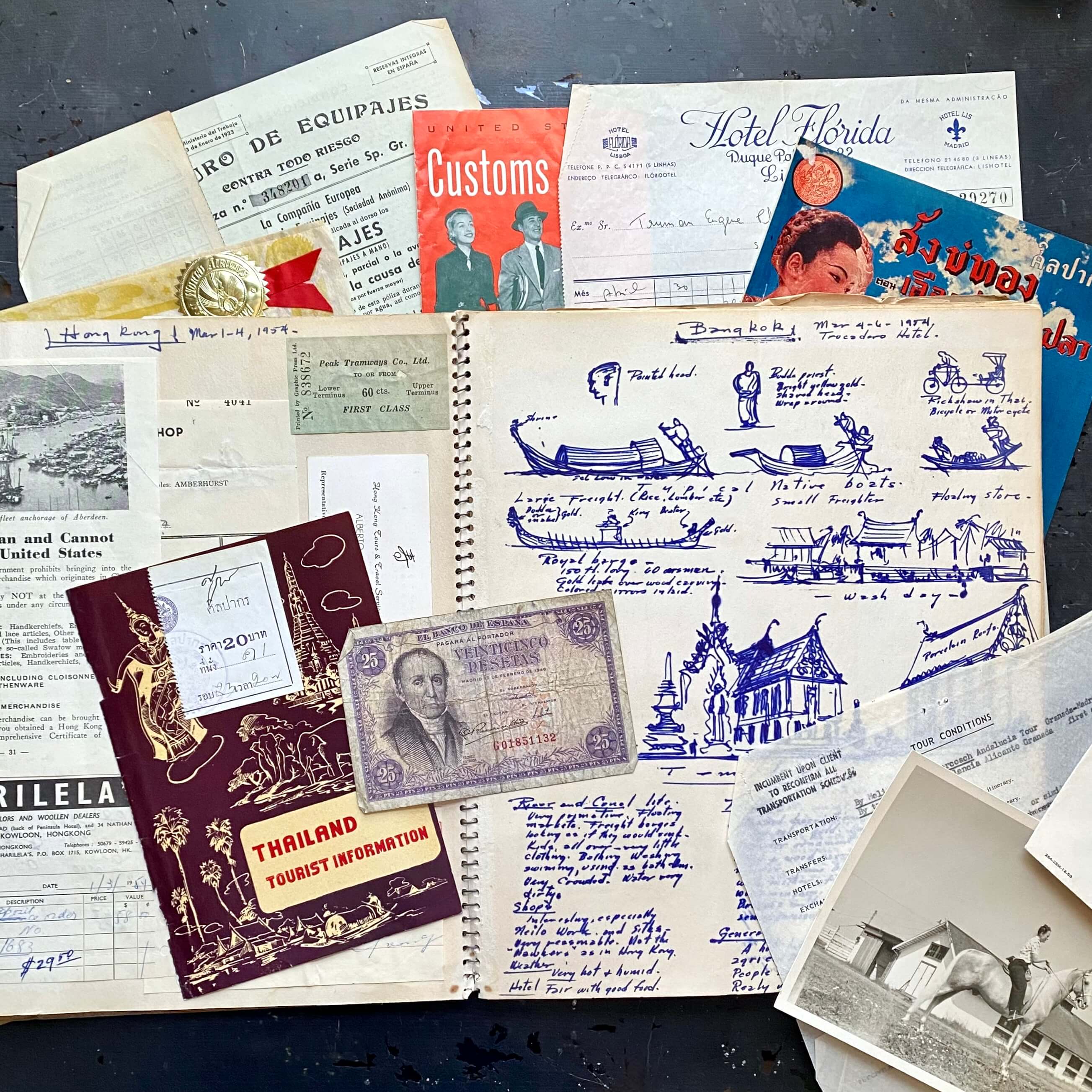
An interior glimpse of the contents of the scrapbook.

had been tucked away in Candace’s library for over 20 years. After striking up a lovely friendship with her via email over many months in 2025, and in the midst of downsizing her collection of Japanese antiques, Candace performed the most generous of acts. She passed the scrapbook along to me, a lover of vintage travel ephemera and a collector of vintage travel stories.

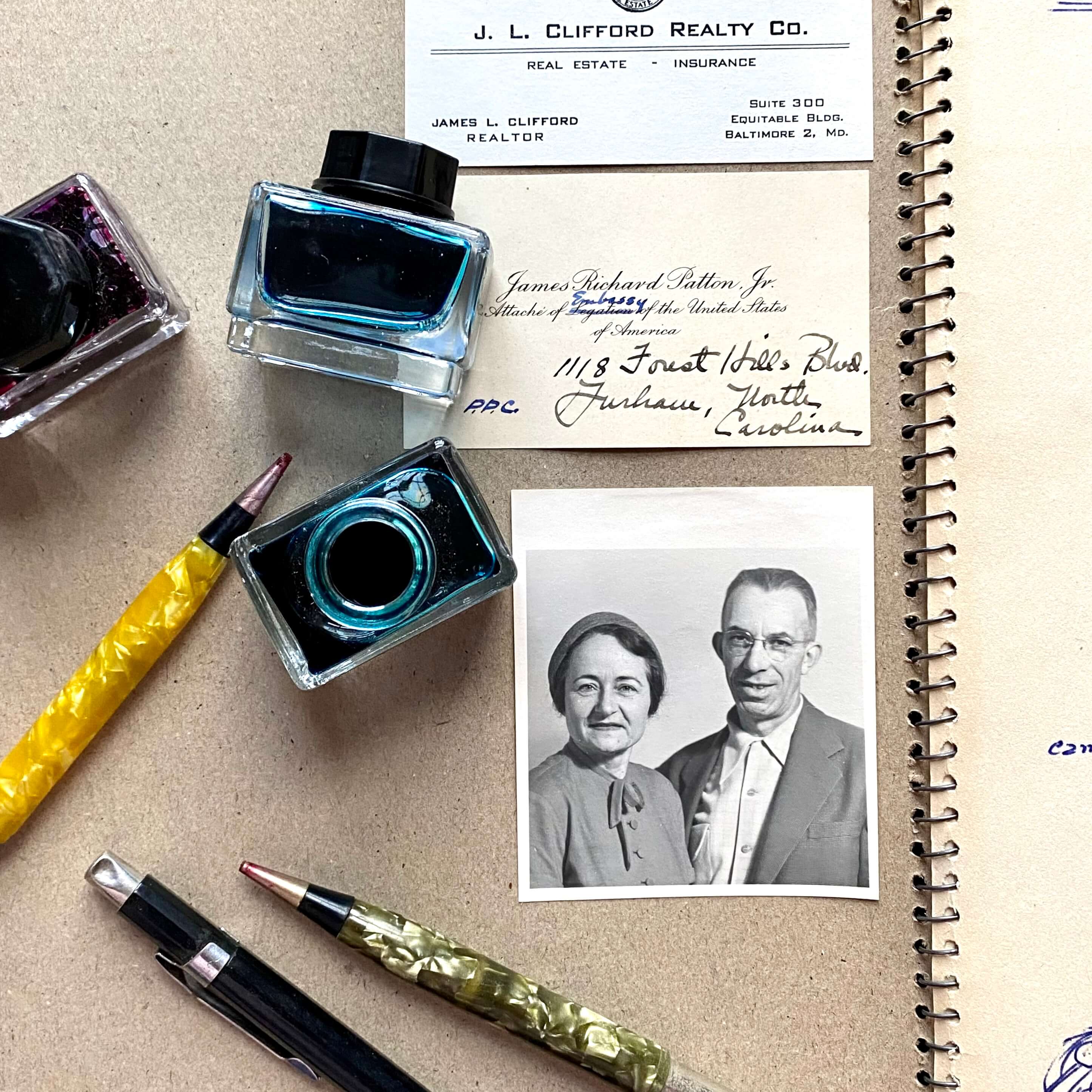
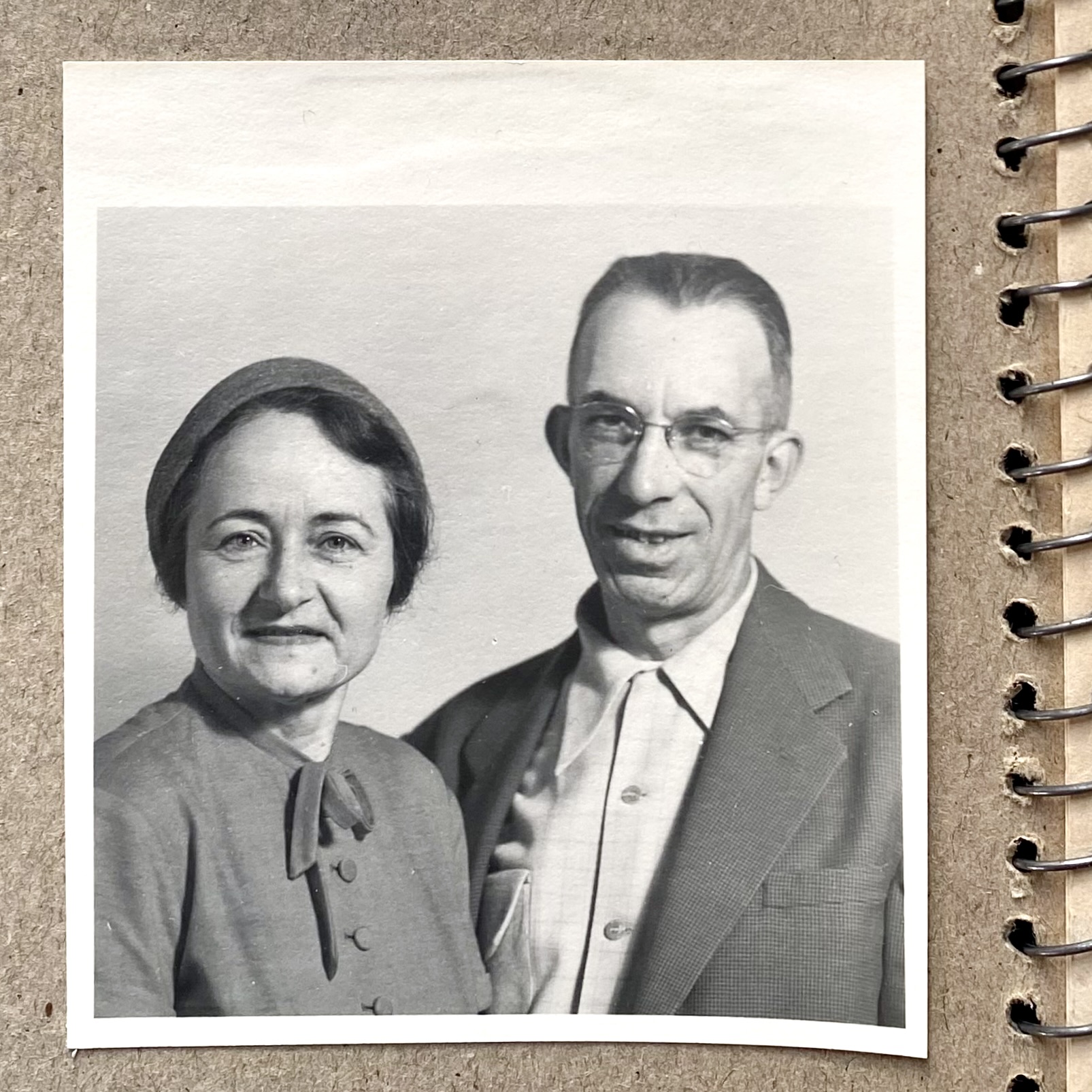
Candace didn’t know Truman or Millie either. She came to own their book via a box lot of Japanese sheet music that she had purchased from an Oregon antique auction in the late 1990s. The notebook, located at the very bottom of the box, was completely covered over by all the music and wasn’t discovered until she arrived home. When she opened the front cover, these two faces greeted her. Meet Truman and Millie.
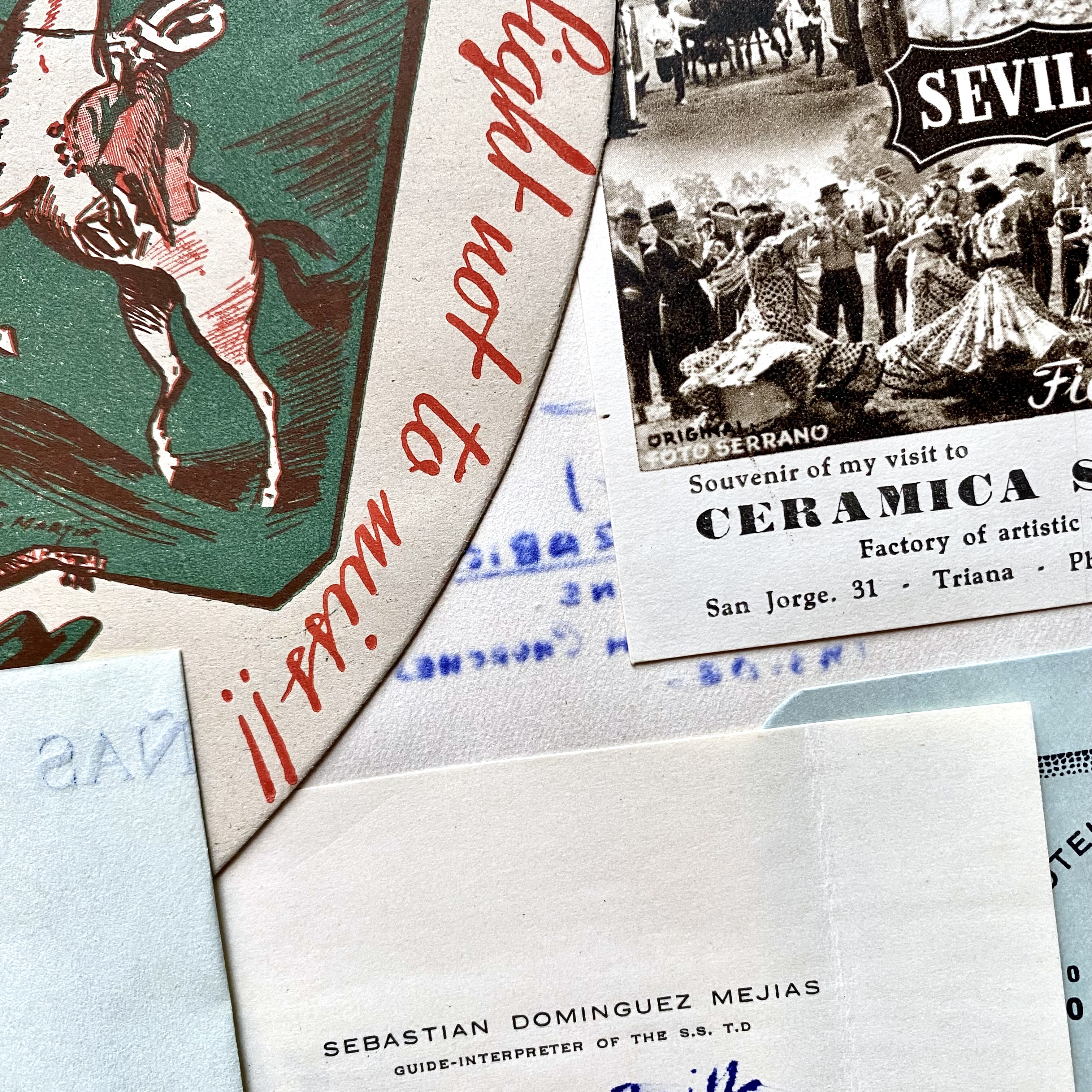
Although Candace didn’t know at the time, or actually ever for that matter, that these two people were named Millie and Truman, this is where the art of collecting takes an interesting and unique turn. Candace is a daydreamer with a wonderful imagination and a true passion and appreciation for Japanese culture. As she turned the pages of the scrapbook, she noted all the cities they visited. The finely detailed sketches of people and places, the pasted-in currency from each foreign country, and the paper ephemera that hinted at sites seen, people encountered, and menus, hotel tickets, and telegrams exchanged all along the way.
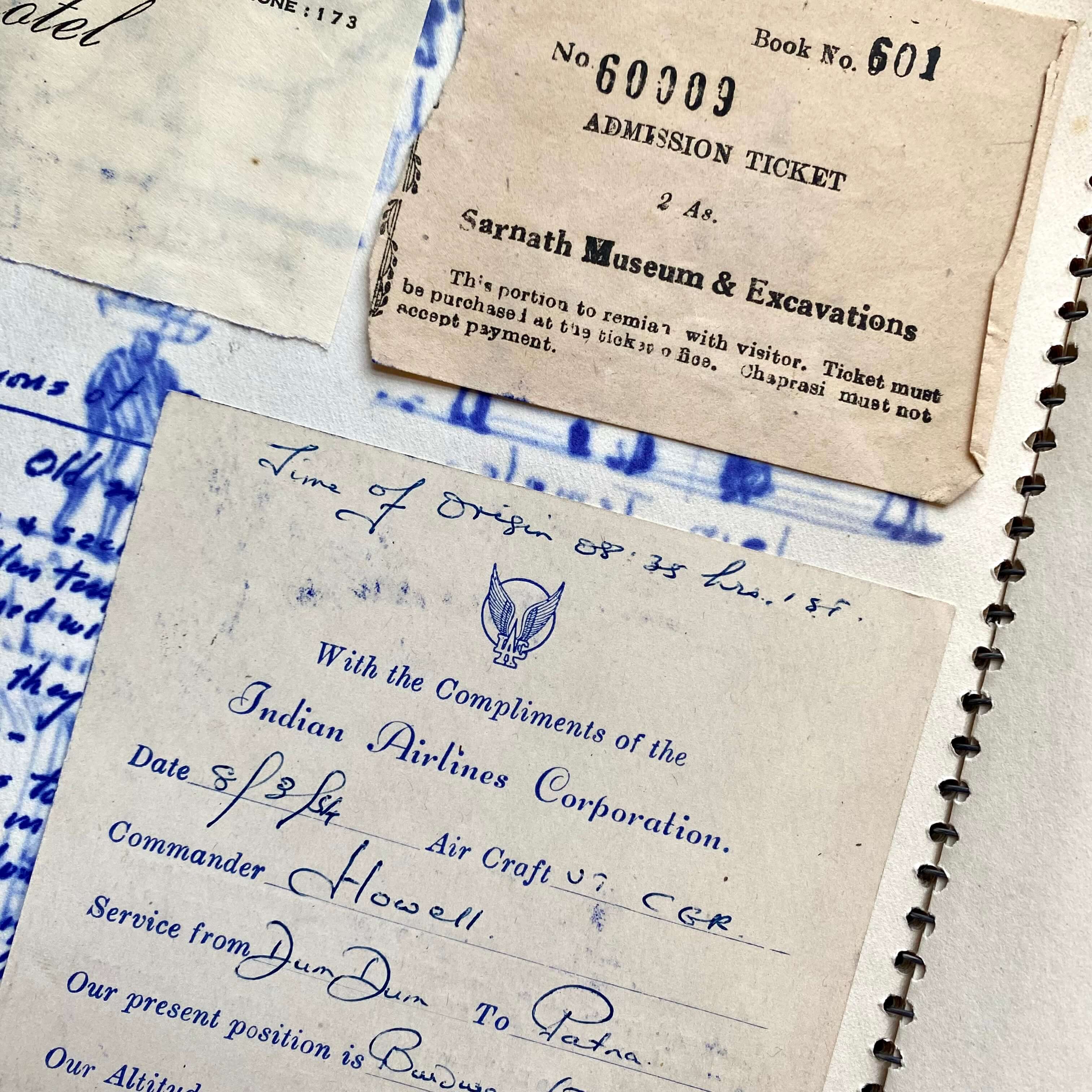
Putting together all these pieces of information, Candace’s imagination began working out a possible story. She made up her mind that this couple, with their friendly faces and middle-aged years, were galivanting around the globe on a once-in-a-lifetime trip. A splurge, perhaps, or a saved-up dream that cemented and celebrated a special milestone in their lives. Their scrapbook, in Candace’s mind, was the souvenir story of their adventure. And imagining this couple in that light was joy enough.
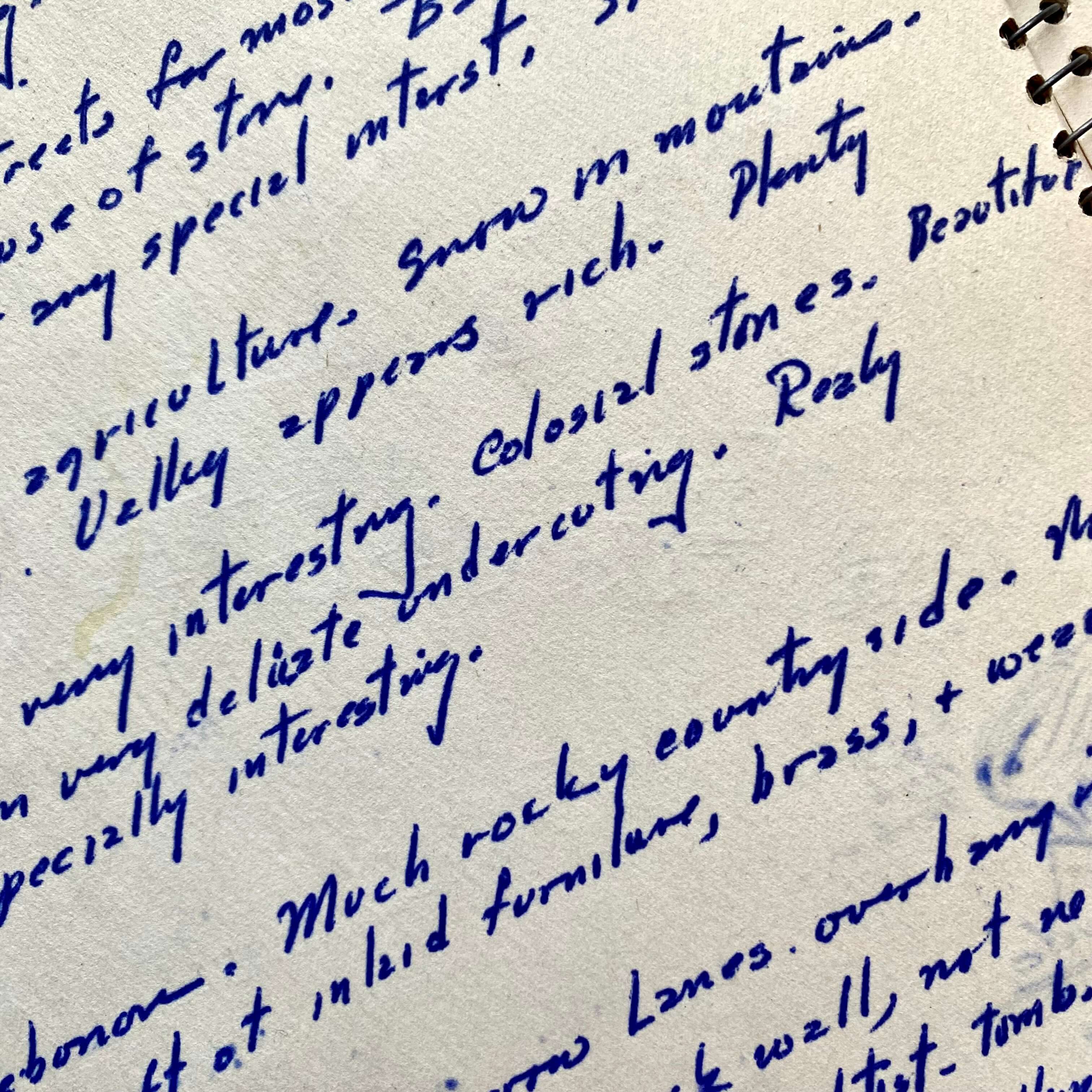
Truman Phillips’ handwritten notes on Lebanon, 1954

Like many antique collectors, myself included, Candace is a romantic who appreciates the creativity, the nostalgia, the sentimentality required to imagine the past life of an inanimate object and the people who may or may not have played a role in its making. Sometimes that simple act is more fulfilling than discovering an actual history.

When the scrapbook came to me, I could feel the weight of the trip in its pages. In the way the blue ink and fervent handwriting swept across the paper. Across cities. Across cultures. In the way the pages sounded as they turned. How the tissue-thin receipts and airmail itineraries crinkled and crackled, bonded with 70-year-old paste that was brittle and slow to waken. I could feel the weight of the trip in the sketches of buildings, faces, cars, animals. In the way the book was carefully organized, documented, and arranged in linear fashion for future consultation and consideration. I could feel the weight of a story underneath this story.
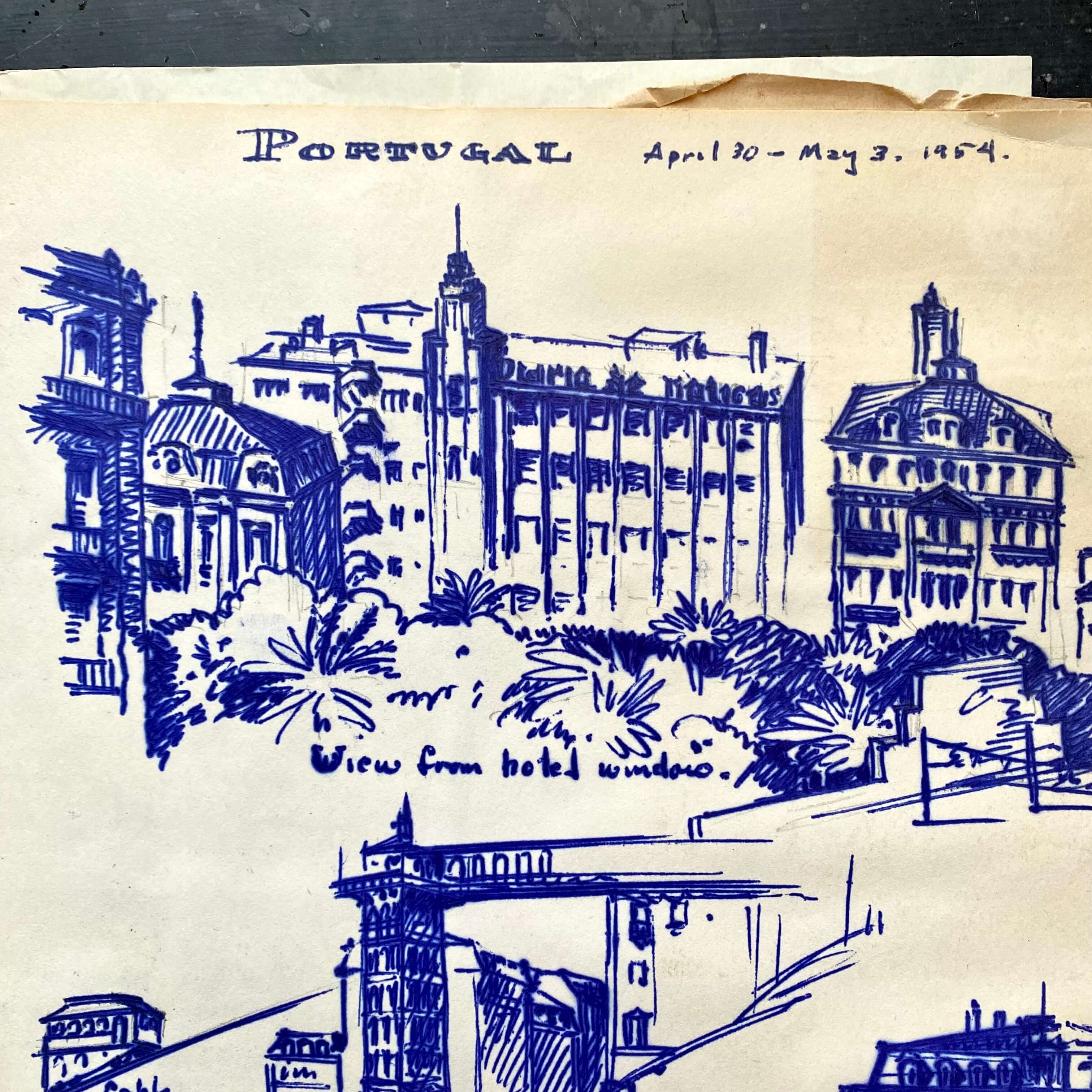
Architectural drawings of Portugal by Truman Phillips, 1954.

On first glance through the book, I didn’t know Candace’s theories yet about the couple and who they might be. She shared that in a later email. But like Candace, I had my own thoughts and speculations on who this couple could be and what this notebook might be all about.
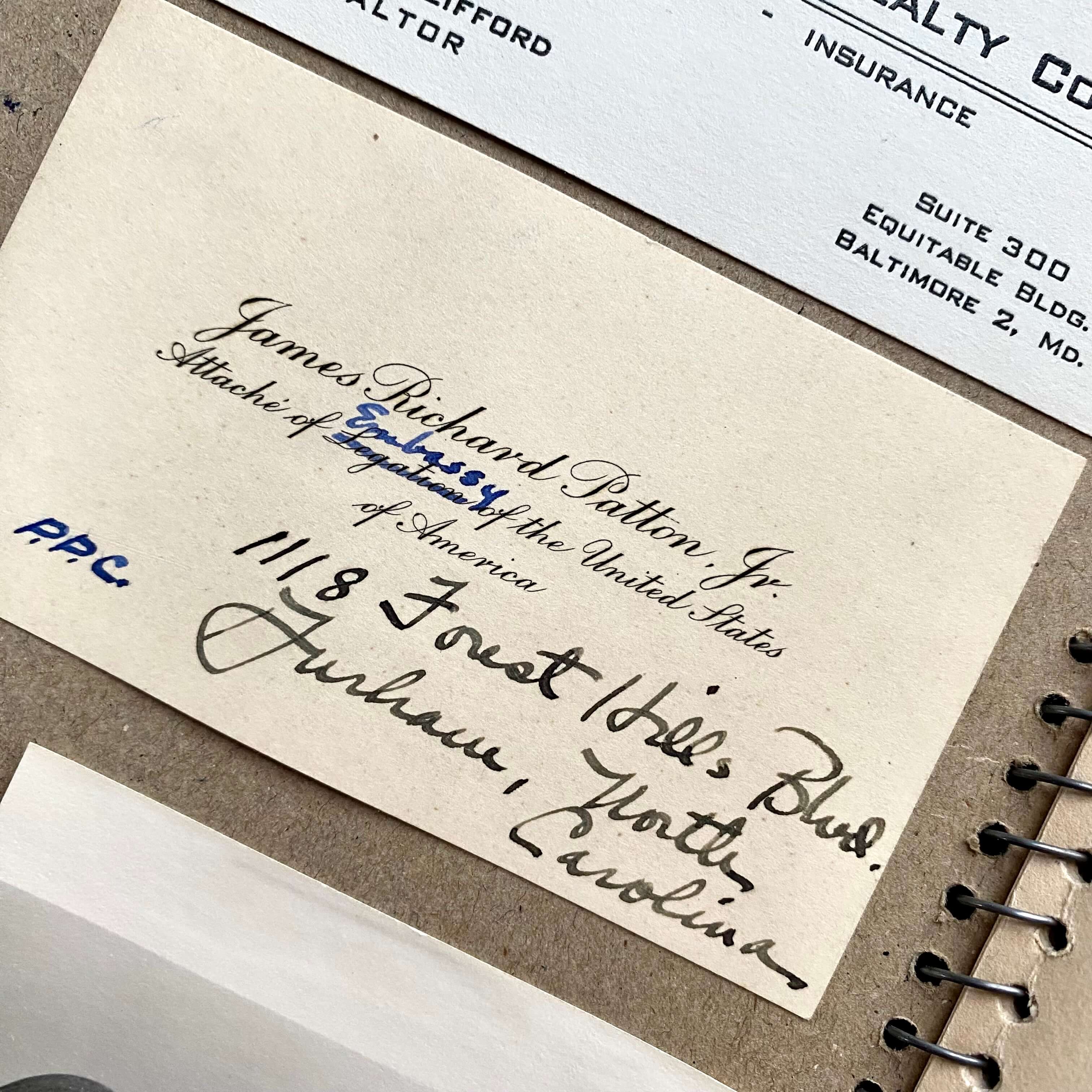
Pasted on the inside cover, a business card belonging to an American embassy attache was positioned above Truman and Millie’s photo. Spotting that first thing right after their portrait, I thought perhaps the couple and the Embassy attache were connected.
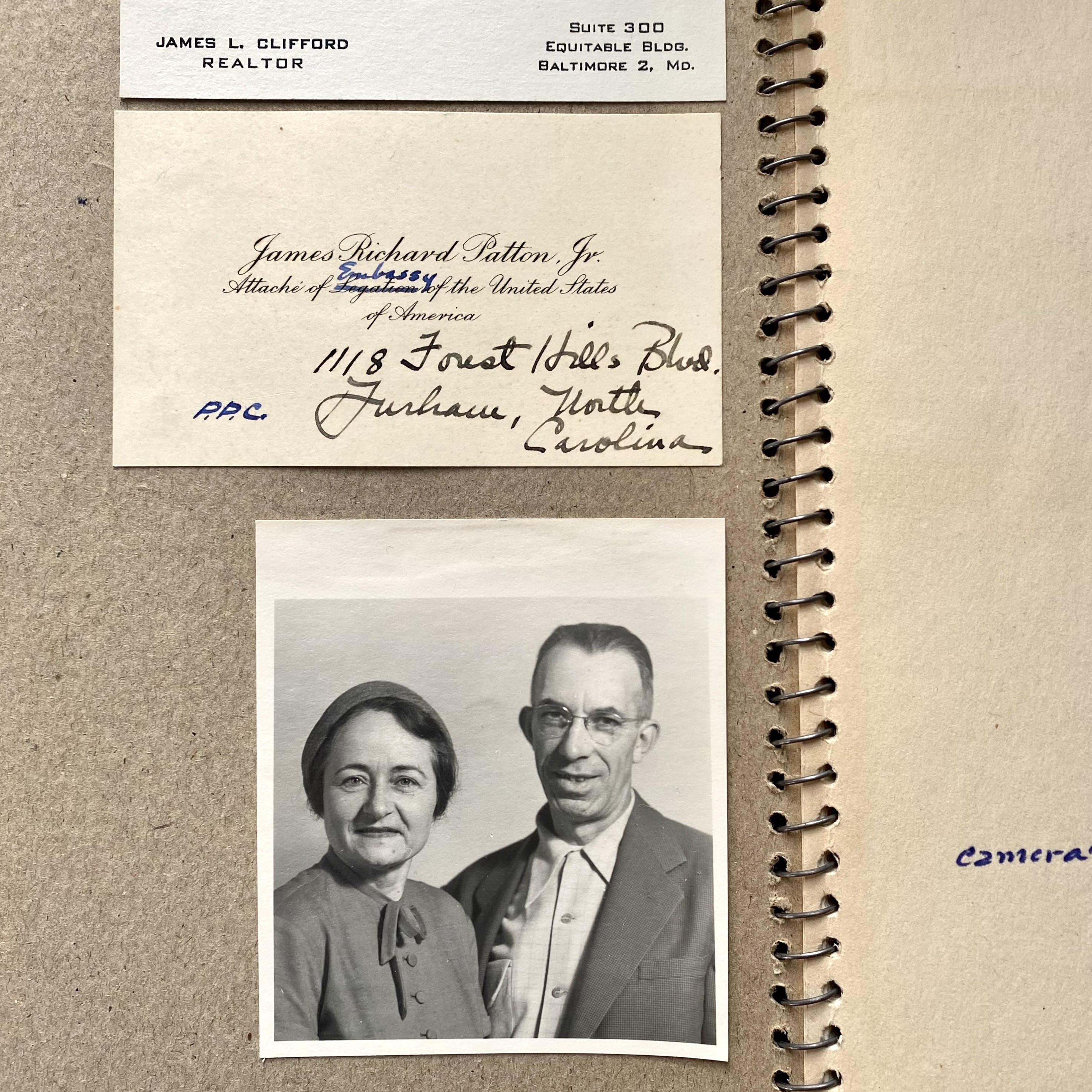
That these two smiling faces below the business card might have been diplomats or ambassadors on some sort of goodwill tour or perhaps building a cultural education program for the government. For a brief moment, I thought that perhaps Truman was the actual attache, James Richard Patton Jr, and that he had attached his business card in case he lost the notebook or left it behind somewhere along the journey.

But after seeing a different last name repeated many times on multiple receipts, I knew the photograph of the buttoned-up guy in glasses was not James Richard Patton Jr. I still liked the government idea, though. To me, that made sense of the careful note-taking, the candid observations, the sightseeing brochures, the drawings, the photographs, the business cards of hotel managers and travel representatives, of presidential tour guides and interpreters.
Unlike Candace, though, my mind couldn’t rest with this imagined life alone. Curiosity got the better of me. I had to know the real story about the couple in the photograph. Just exactly who were these two?
A few hours later, I found out that Candace and I were both wrong with our presumptions and assumptions.
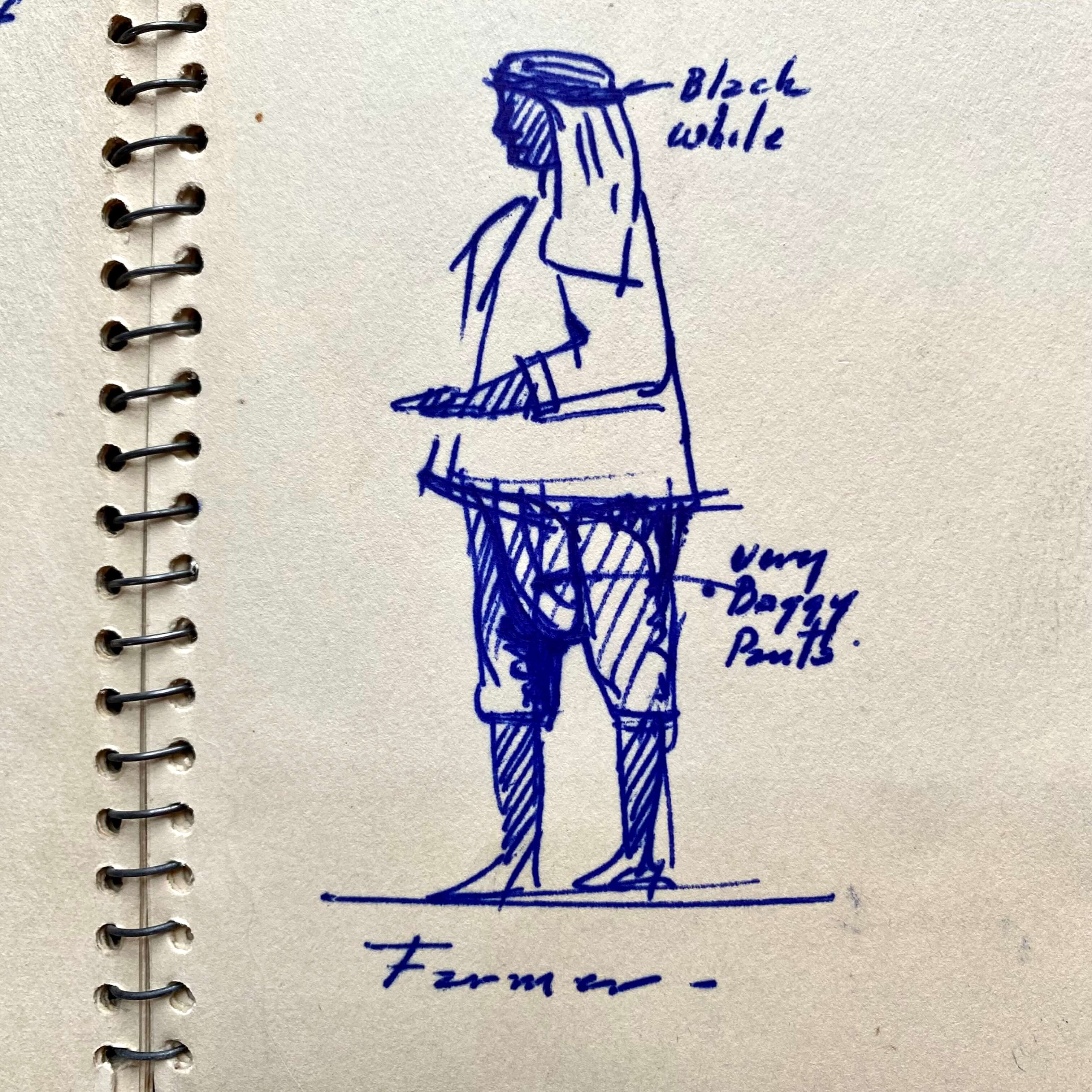
1950s sketch of Beirut farmer by Truman Phillips, 1954.

As it turns out, the names on the receipts, the ones that varied from The Phillips to Mr. & Mrs. T. E. Phillips to Wolff Zimmer & Phillips to Mr. Truman E. Phillips to Thomas Phillips to Sr. Truman Eugene Phillips to Phillip Truman to Mr. T all eventually led to Truman Eugene Phillips of Tigard, Oregon. As I came to learn, Truman was not a diplomat. He was not an ambassador. He was not a government worker. Truman was an architect. And a somewhat well-known one at that.
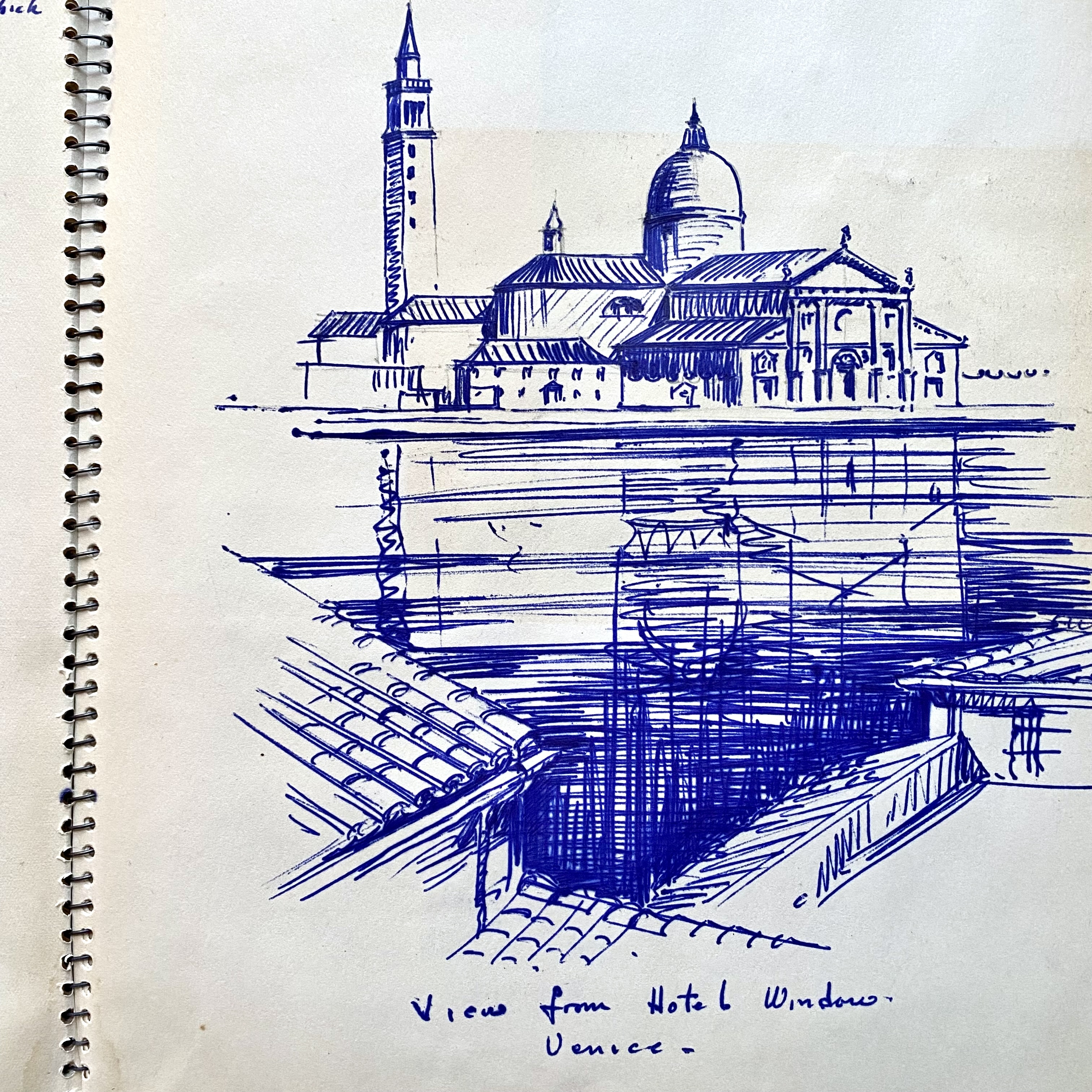
Truman’s sketch of Venice, Italy as seen through his hotel window.

Millie’s name would be discovered later on in the scrapbook in a tiny drawing of her reading a book on a hotel bed in Portugal, as sketched by Truman.
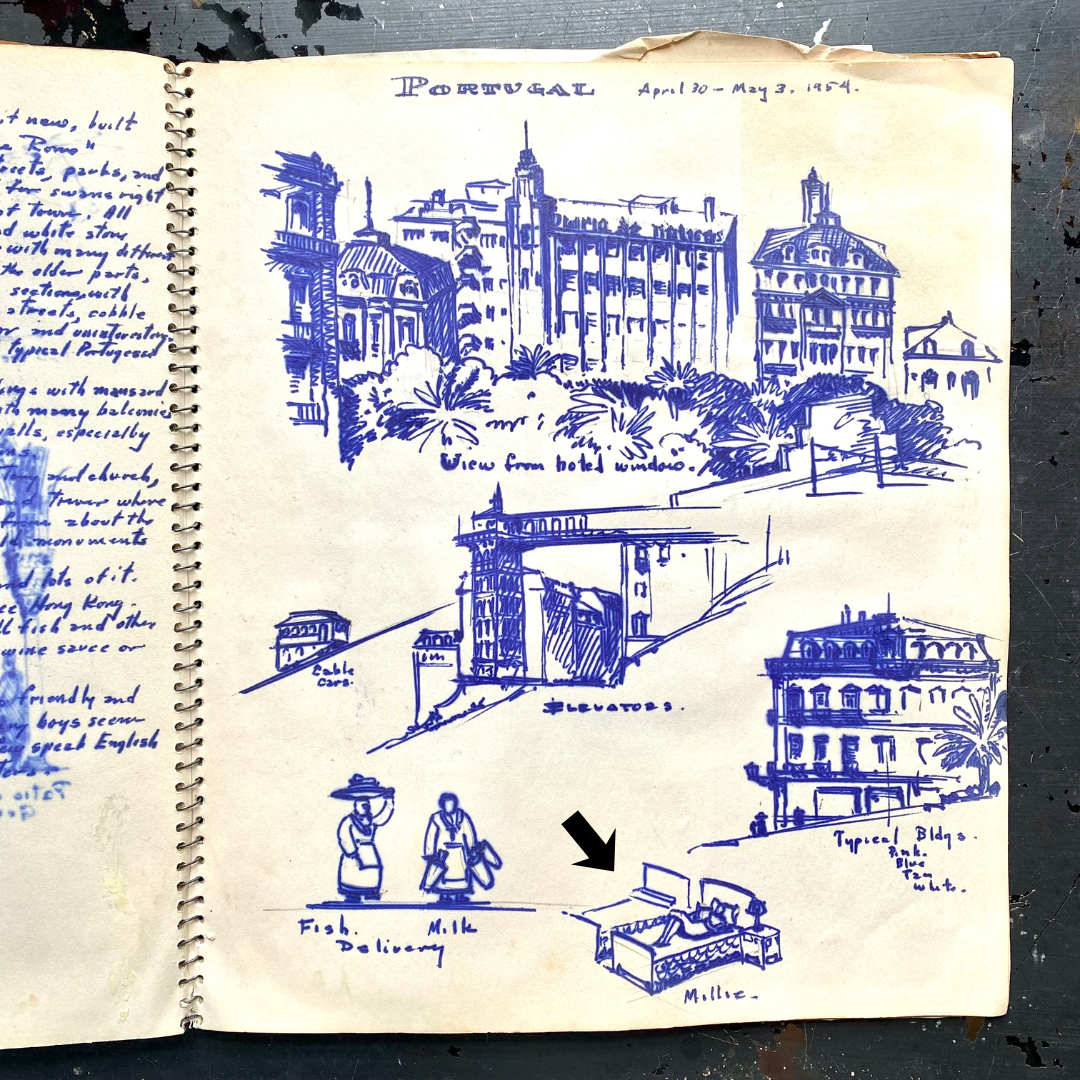
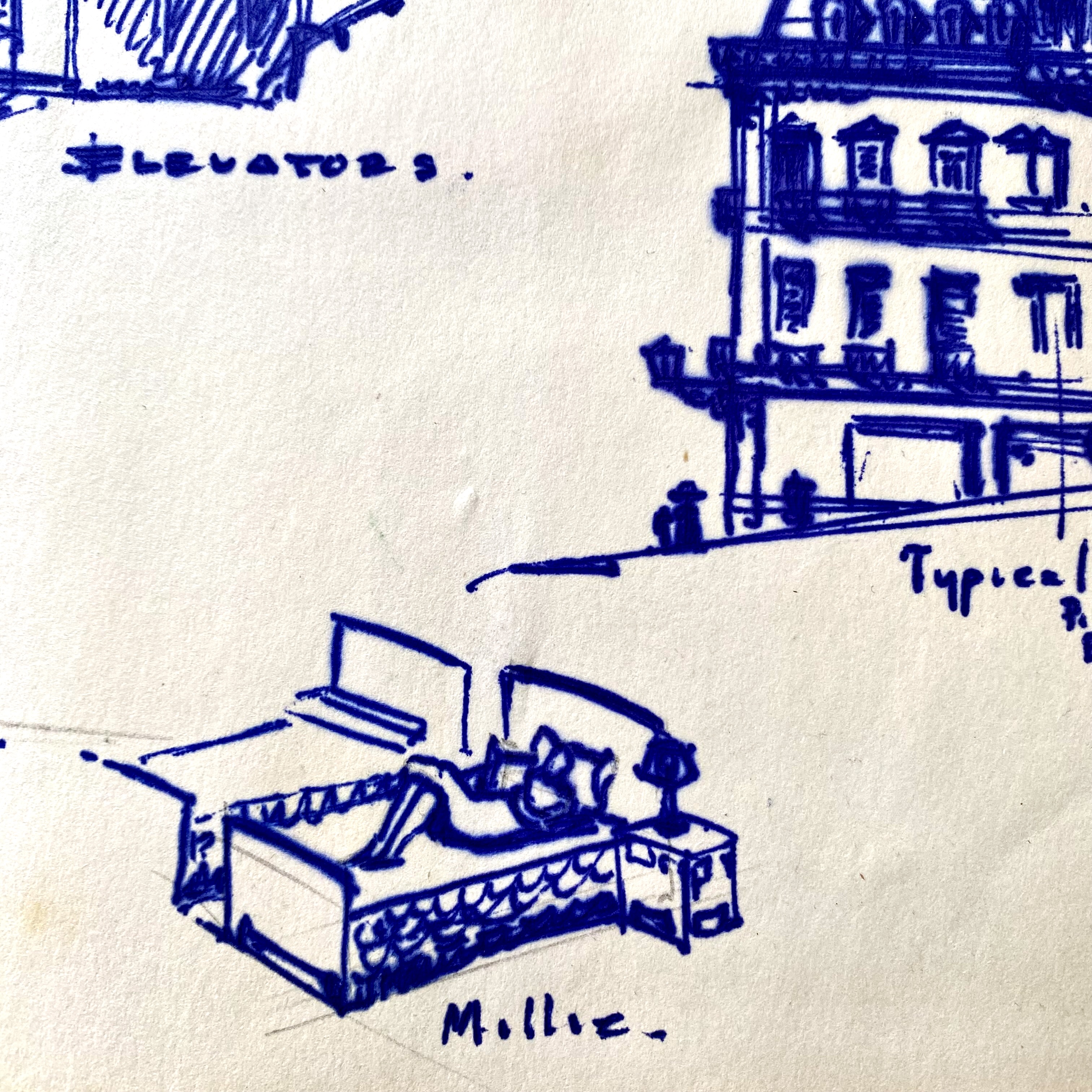
That was the only portrait of Millie in the book, and the only mention of her by actual name. Otherwise, it was “we” and she” in the travel notes. After doing some research online, I found a photo of Millie in a newspaper article connected to Truman, but it only referred to her as Mrs. Truman Phillips – no first name. Eventually, further research confirmed both her nickname, Millie, and her full maiden and married name, Mildred Strong Phillips.
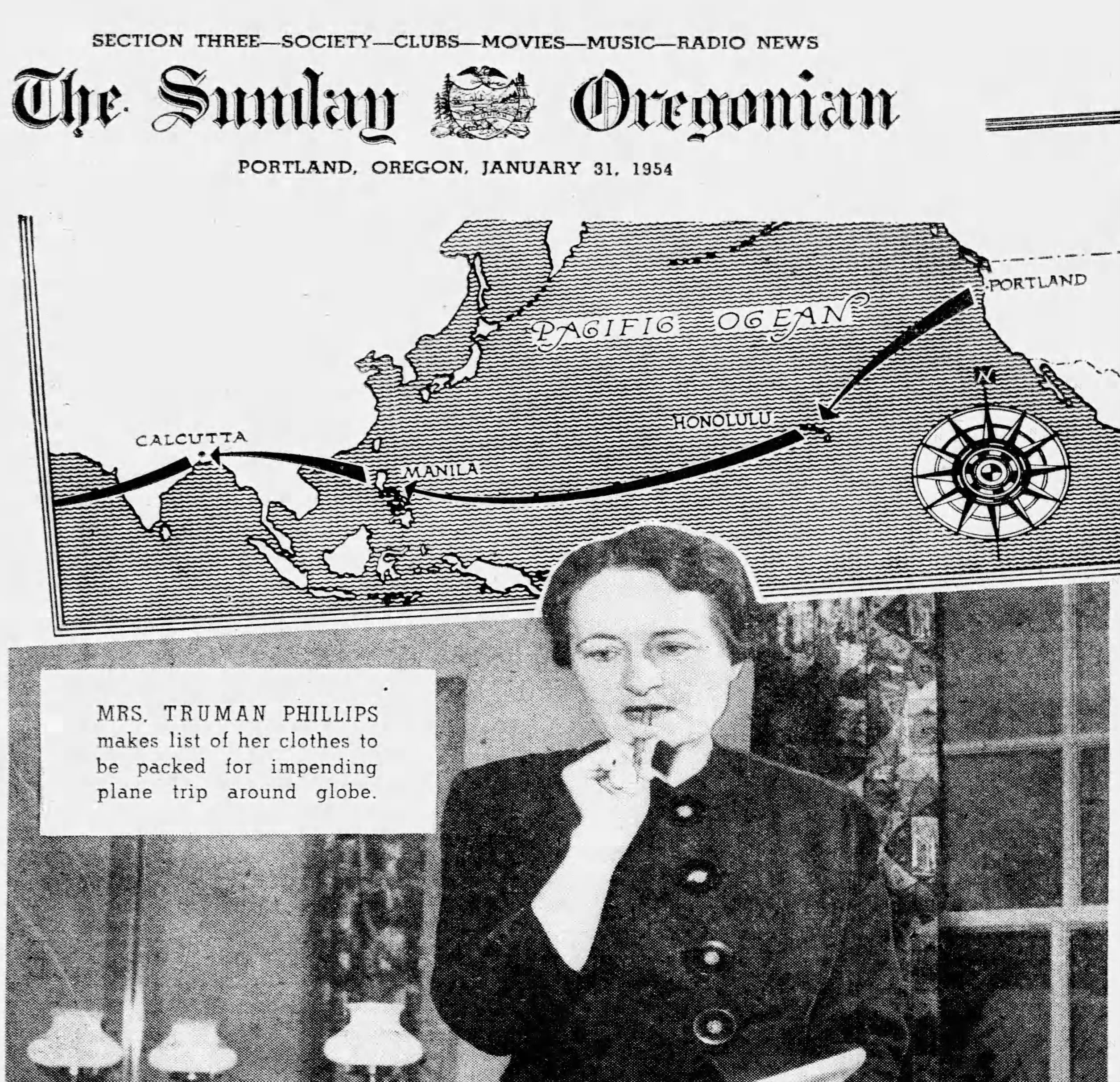
As is the fate of many women throughout history, there’s not much more info about Millie beyond that, with the exception of the newspaper article published in the January 31st, 1954 edition of The Sunday Oregonian. A full-page feature, complete with multiple photographs on the dynamics of how Millie and Truman were packing for their three-month-long international escapade, it turned out to be the perfect preface to the scrapbook. It detailed the clothing they were packing and how, and in what type of luggage. It mentioned the importance of each item’s weight and how that was both a critical and consequential factor in determining a well-packed bag. Photos included Truman washing a shirt in the sink, Millie fastening straps on a packed bag. Another set showed Truman fiddling with a movie camera he was bringing along, and Millie looking over a pile of clothes with her packing list in hand. It was such a personal piece, I thought for sure I would encounter at least one more follow-up article when Millie and Truman returned home to share how the trip went. But this was not the case. This pre-trip packing article was a one-time claim to fame, and Millie was never mentioned in the paper again until her obituary was printed in 1986.

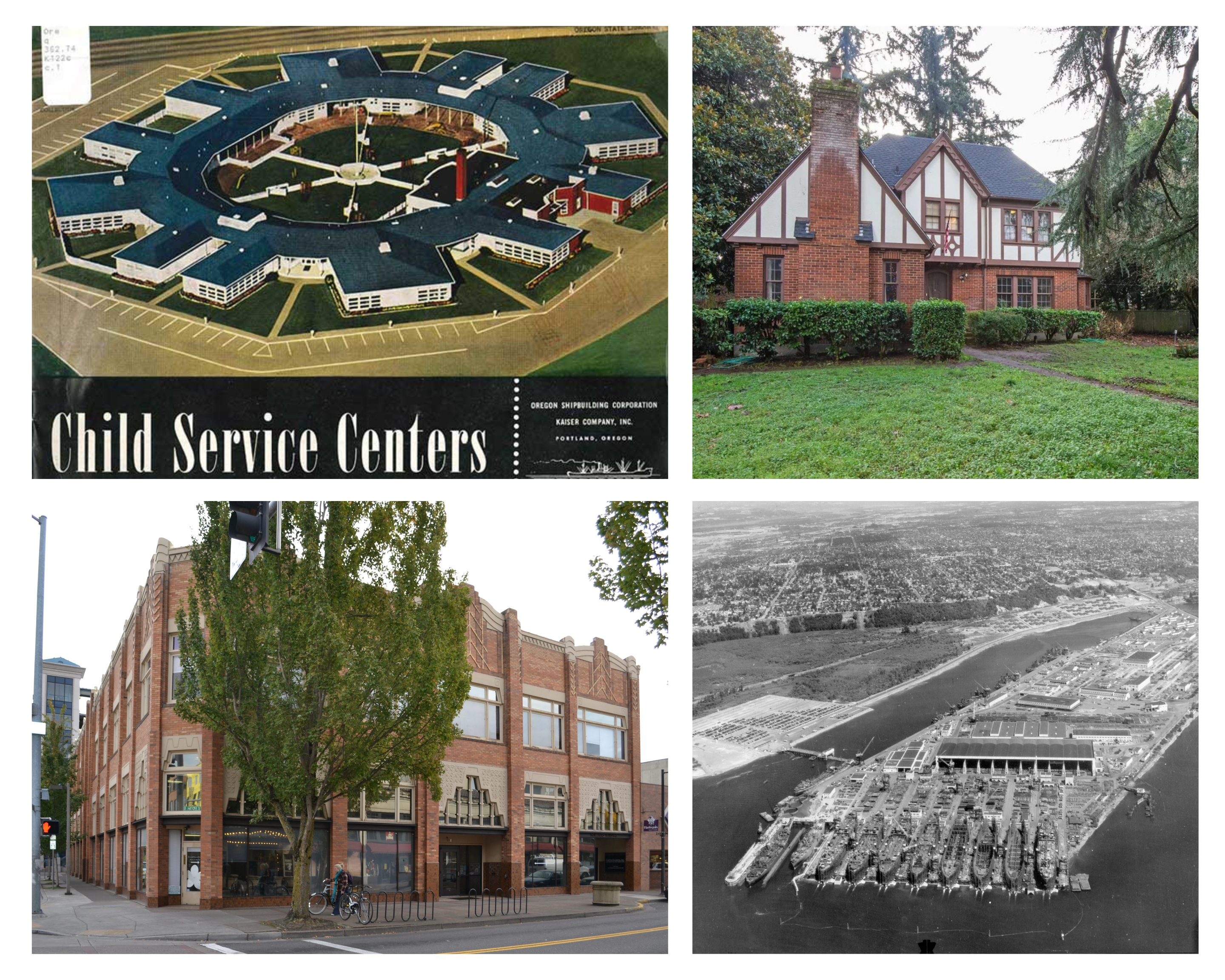
Truman, on the other hand, was well- documented. A Pacific Northwest native, in the 1920s, he was a noted architect on the rise, winning an international design competition in Buenos Aires while a student at the University of Oregon’s School of Architecture. He went on to lead a distinguished and productive career working on the West Coast, particularly in Oregon, where he designed hospitals and schools, corporate campuses and airfields, shipyards and maritime buildings, race tracks and residential homes, and a number of commercial office buildings in the Portland area. Working in the modernistic style, these are some of his designs…
At the same time the scrapbook arrived, I was working on writing the 27th blog post for the International Vintage Recipe Tour. The featured destination for this 27th post was Japan, a country that has so many incredible cultural touchpoints to discuss, I was finding it difficult to pick just one. If you are familiar with the Recipe Tour, you’ll already know that every Tour blog post includes a cultural tie-in to help give historical color and context to the featured country and the food being prepared. In Haiti, we discussed historic gingerbread architecture. In Dahomey, the cakewalk dance. In Armenia, the true story of one family’s local ancestry. In Canada, the Comfort Tree. In China, the Hungry Ghost Festival. In Australia, the role of the Queen Mother Elizabeth I and the cake she inspired. In Greece, the Durrells of Corfu.

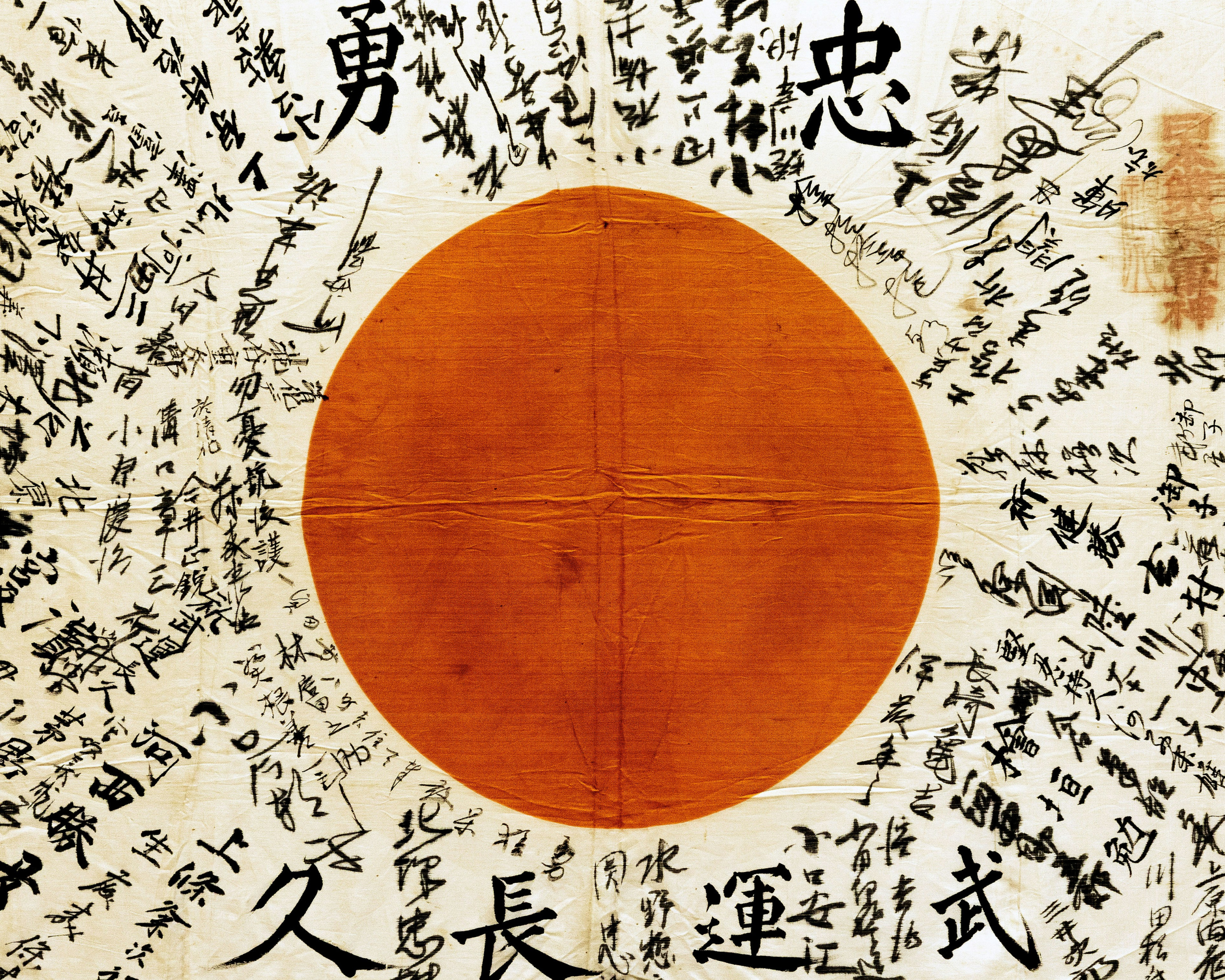
All throughout the holiday season of 2025, I scouted cultural tie-ins for Japan before finally settling on the symbolism of the Rising Sun, which in Japanese culture has long represented new beginnings. I thought this was a nice tie-in to kick off the first international recipe of the year. A simple sunrise, to highlight a simple teriyaki beef and rice dinner.
On New Year’s Day, I was going to head to the beach to photograph the sunrise – an annual Japanese tradition – known as Hatsuhinode – but a snowstorm and a cold prevented the 4:30am drive to the beach. Next, I attempted a craft project, making an origami sun with the thought of discussing this beautiful paper art form, but the origami version of the sun that I liked best and attempted to make four different times turned out to be pretty tricky to execute. It didn’t seem fun to start off the new year sharing a challenging craft project that might lead to frustration for our readers, too. So I went down the research road again to uncover all the different ways the sun is symbolic in Japan via food, art, and design.
But Millie and Truman had other ideas when they showed up at the door. In the scrapbook, after Truman packed his Dacron and Millie packed her day dresses, after they carried 60 pounds of luggage through the Portland International Airport, and after they flew to Hawaii, their next stop on their around-the-world tour was Tokyo, Japan.
In this post, to complement the traditional vintage Japanese recipe of Beef Teriyaki, our cultural tie-in features Truman and Millie’s visit to the Land of the Rising Sun in 1954. It’s a trip back in time to see how a midcentury American architect viewed the Far East with fresh eyes. What did Tokyo look like in the 1950s? Where did Truman and Millie stay? What did they eat? What did they do? Thanks to their unique one-of-a-kind scrapbook, we have the chance to experience a unique one-of-a-kind perspective of what Japan looked and felt like 70 years ago, all through the eyes of an artist who appreciated form, function, and first impressions.

THE 1954 ITINIERARY: Stop No. 2. Tokyo, Japan

DATE VISITED: February 22nd -26th, 1954
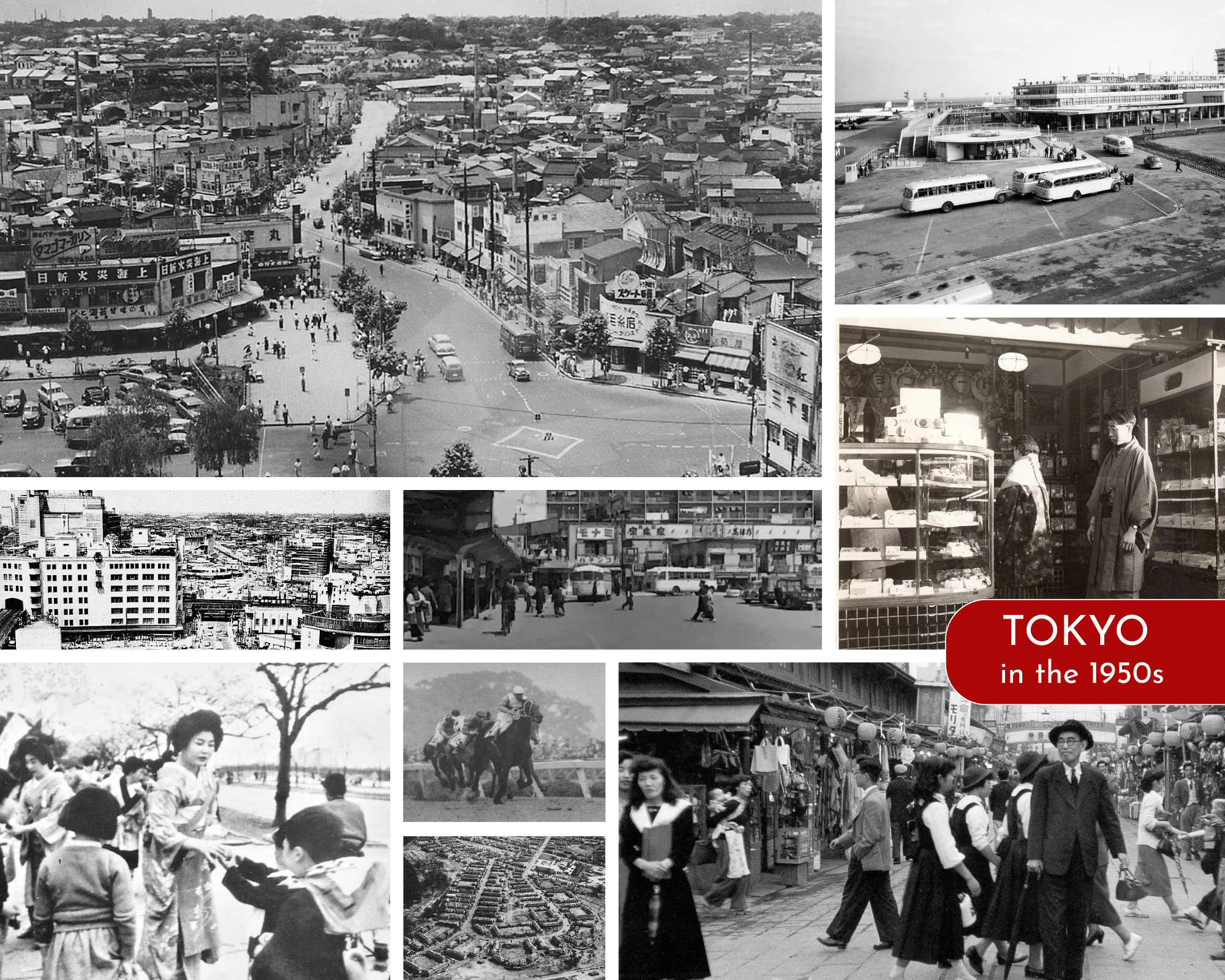
WEATHER

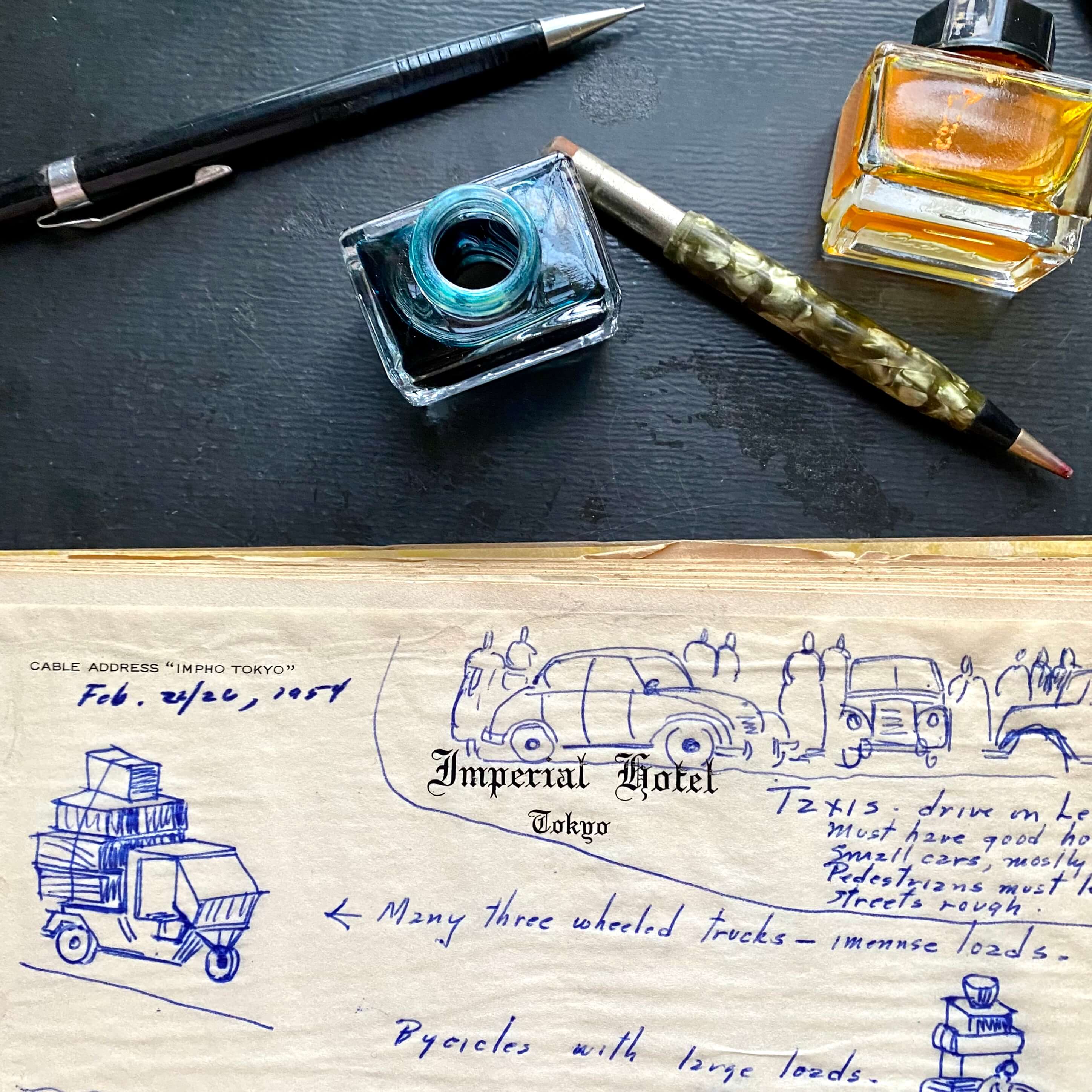
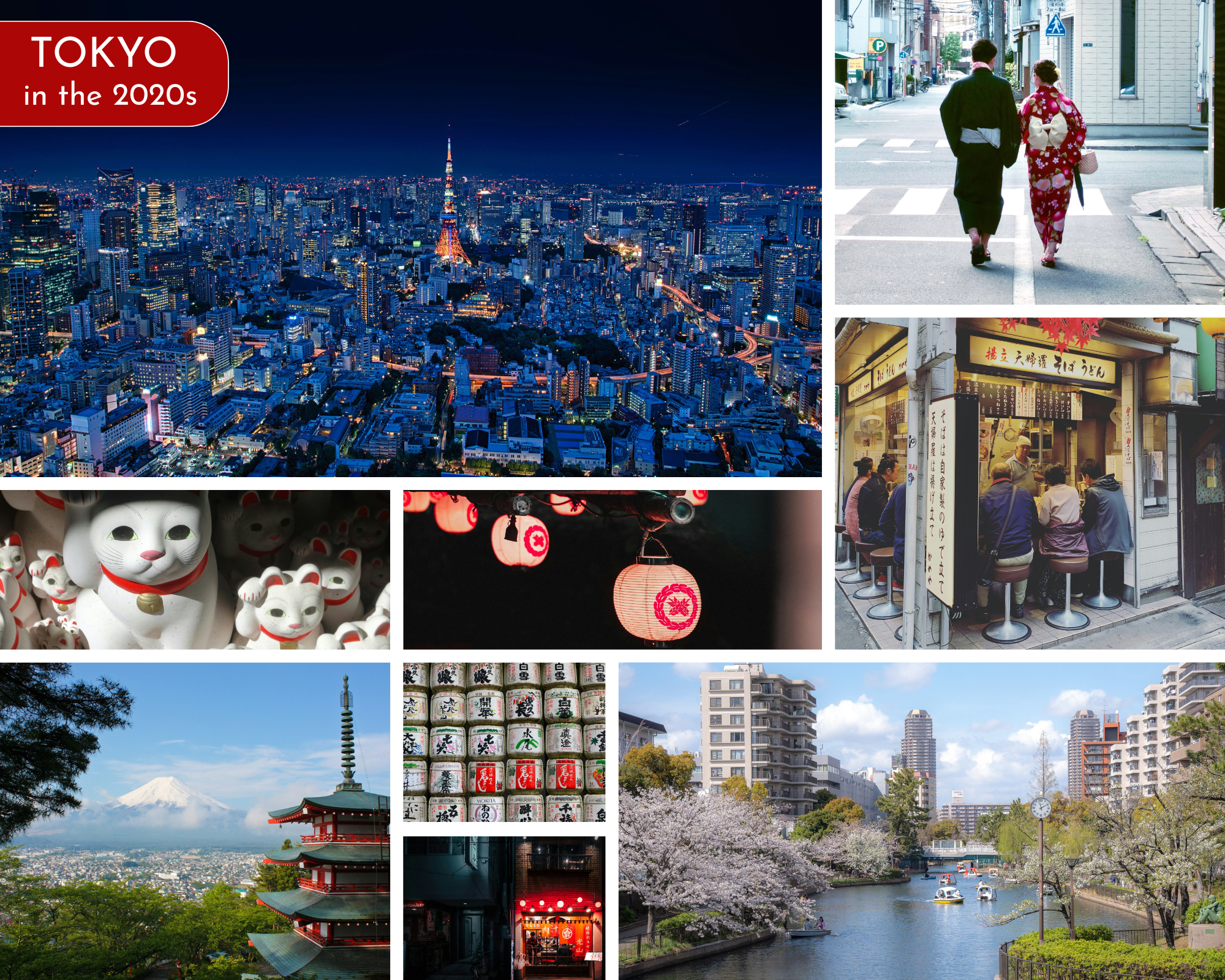
(In Truman’s words) Weather is cold but clear. Much outdoor living but must be used to it and warmly dressed. Very little heat except for tourist. The average temperature in Tokyo in February 1954 was 47 degrees during the day. Truman and Millie had just missed a very snowy January in the city, and they were visiting about a month and a half before the spring cherry blossoms would be in bloom. Truman used the word “colorless” four times in his description of the city and the people throughout the four pages featuring the Tokyo leg of the trip. Understandably so, considering that the city was in the final stretch of winter, Truman and Millie were seeing Tokyo at its most grey. It would be decades before technology lit up the skyscrapers year-round with a kaleidoscope of bright lights during the day and the night. Today, it is a vibrant city where contemporary life meets age-old traditions…
ACCOMMODATIONS: The Imperial Hotel, Tokyo

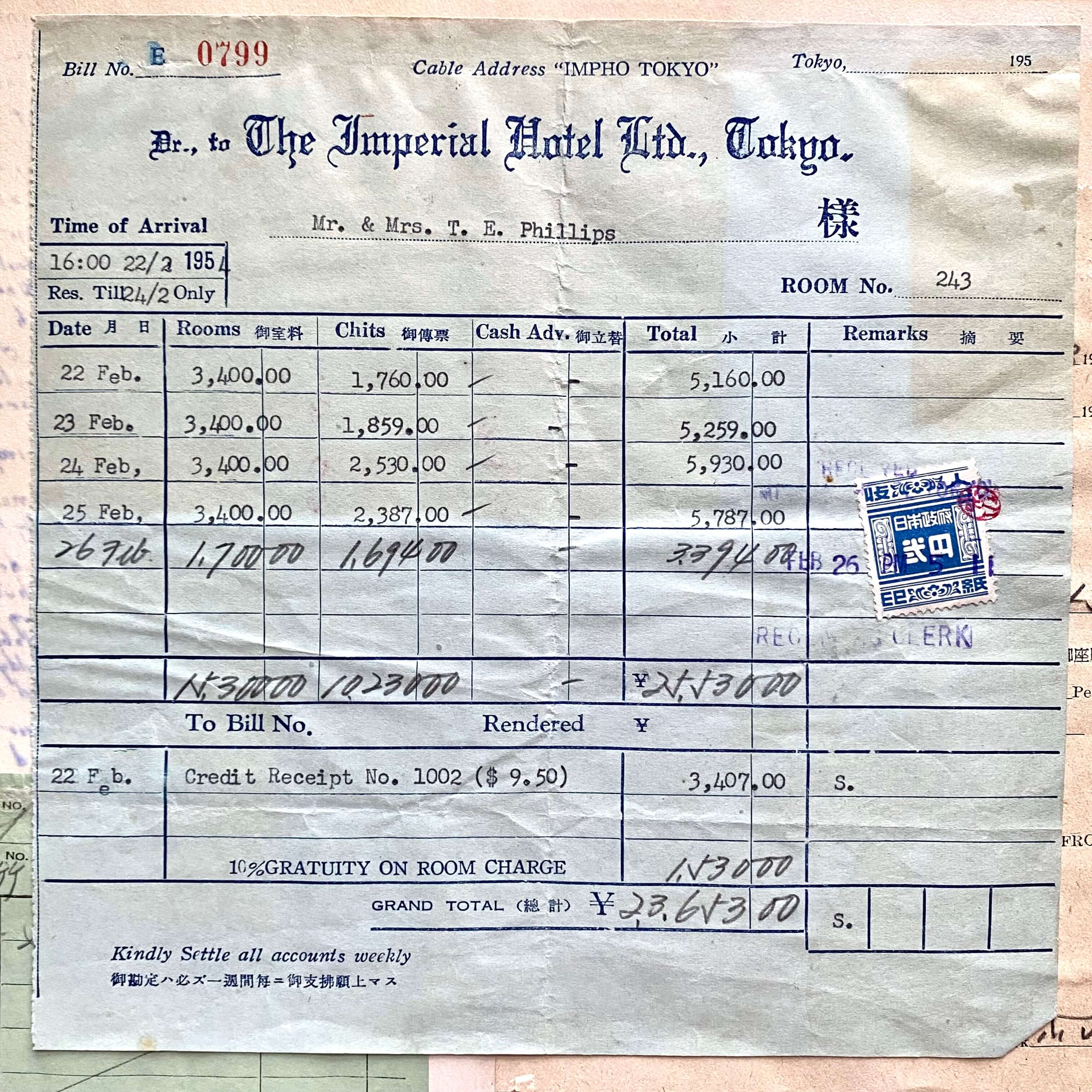
Truman didn’t record any impressions of the Imperial Hotel stay, but he did include a pale blue receipt and a linen postcard featuring its portrait. Built in the 1880s as a guest house for the government’s international travelers, this hotel, located in the Chiyoda ward of Tokyo, has long remained a bustling hospitality venue for the past 140 years.
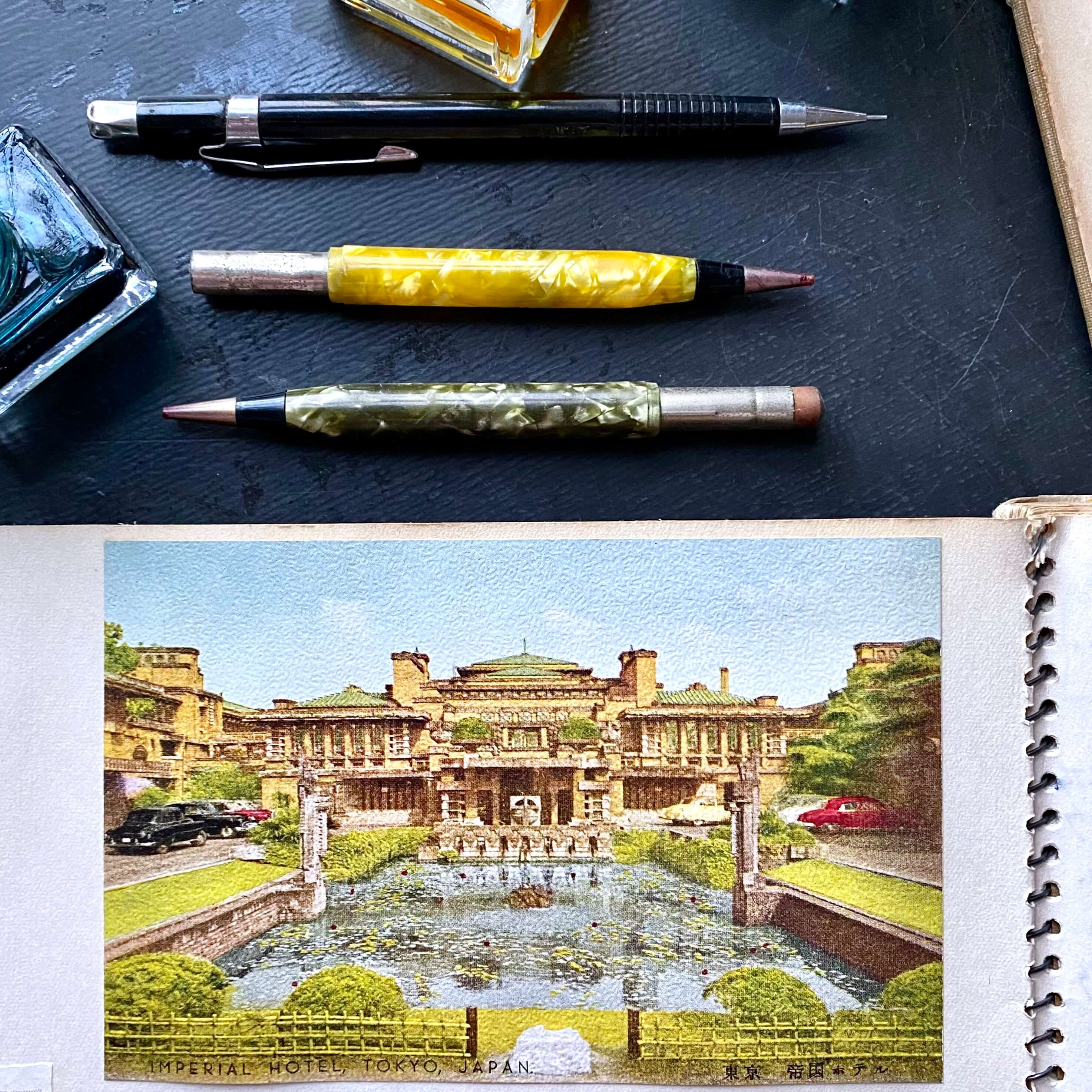
Still open today, the building was designed at various stages by architects Yuzrou Watanabe and Frank Lloyd Wright and has been altered over the course of a century to contend with earthquakes, modernization, and cultural shifts within the hospitality industry. In 1954, Truman and Millie stayed in room 243 for four nights at a total cost of 25, 530 yen (about $70.00 US dollars).
Two weeks prior to Truman and Millie checking in, famous guests at the hotel included Marilyn Monroe and Joe DiMaggio on their honeymoon.
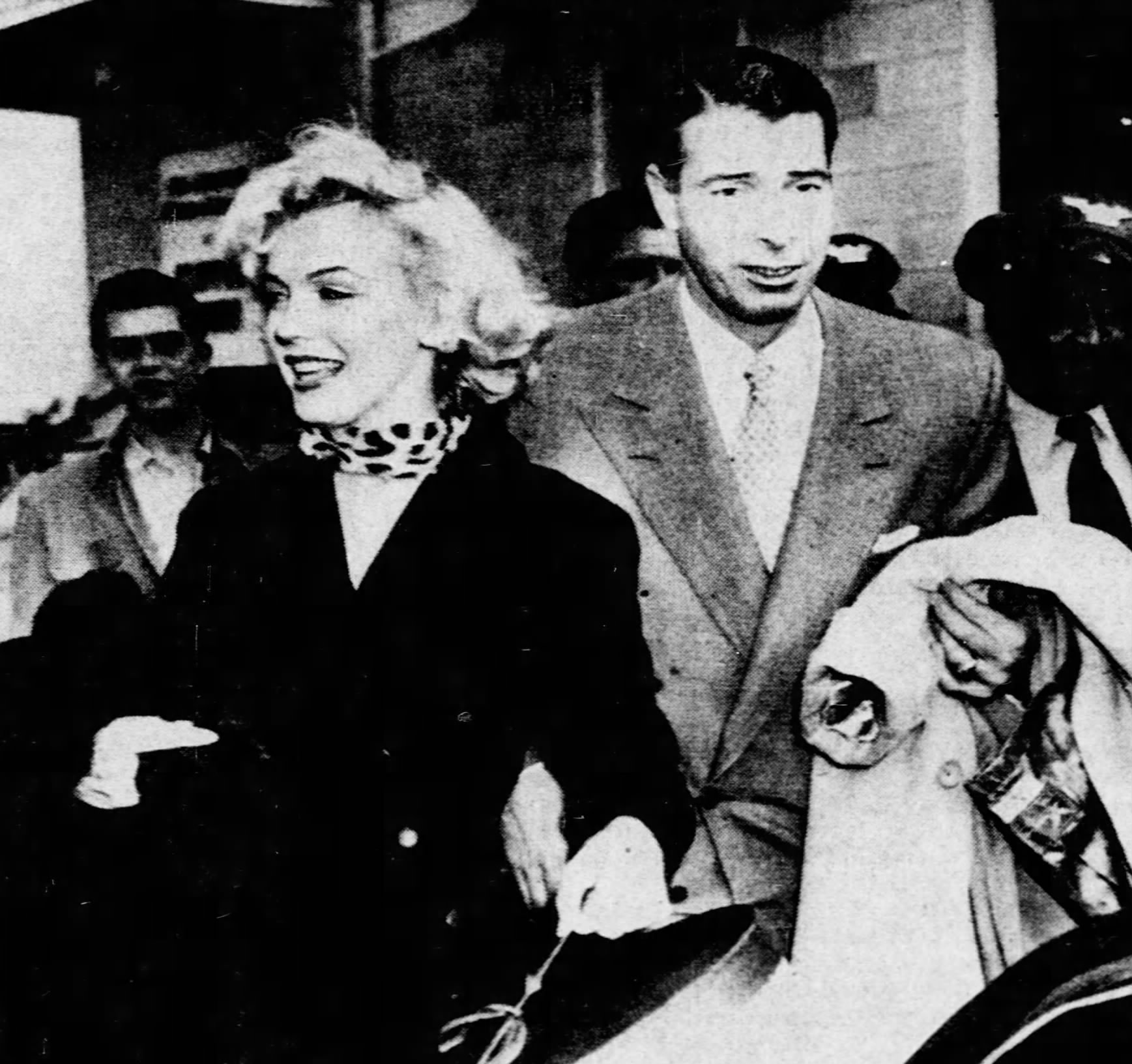
Marilyn & Joe leaving for the honeymoon stay at the Imperial Hotel, Tokyo. Photo courtesy of the San Bernardino County Sun, February 1954

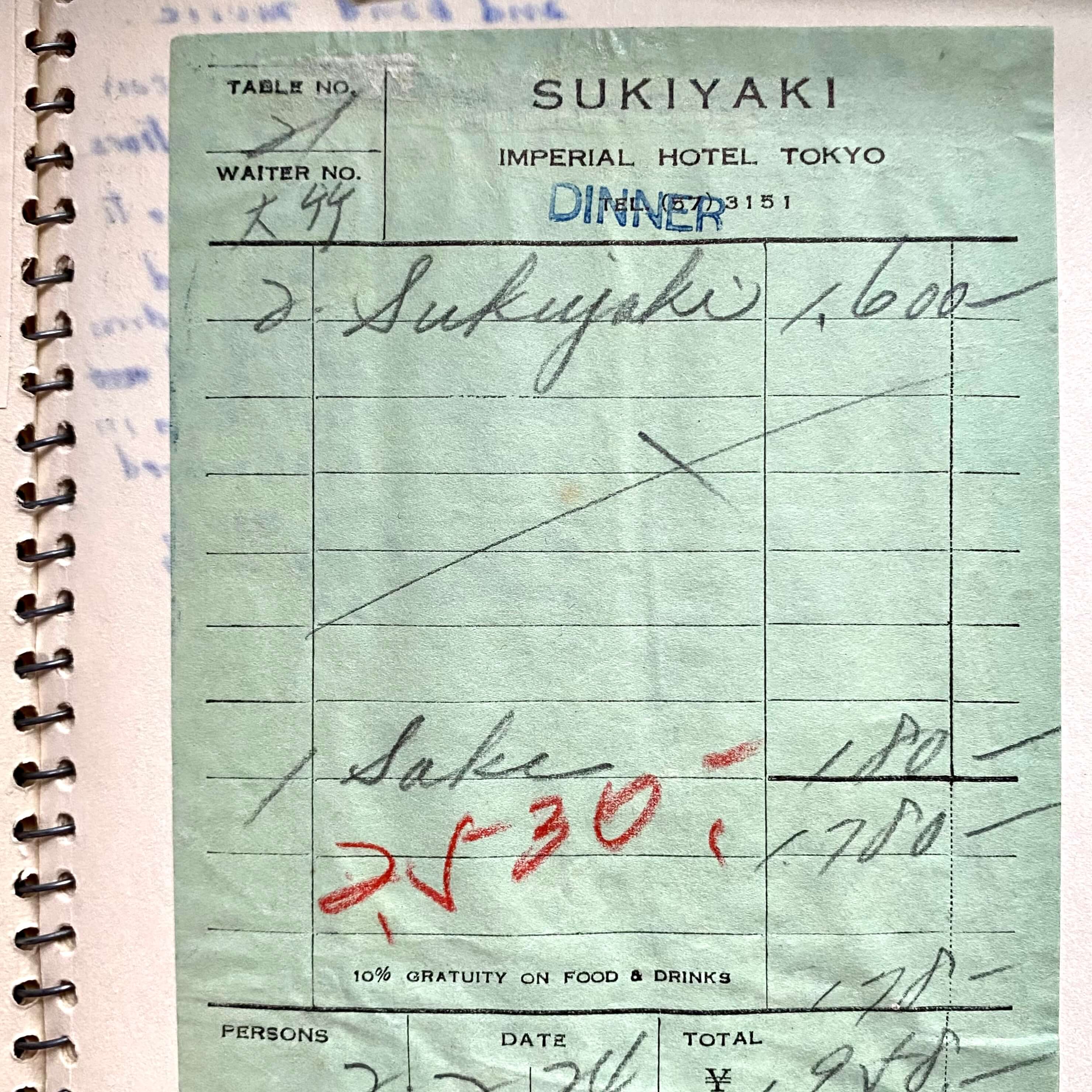
While there are no specific notes from Truman on their hotel stay, there is another receipt pasted under the hotel bill that documents a dinner at the hotel restaurant one night. There, Millie & Truman ordered sake and sukiyaki, a traditional beef and vegetable hot pot.
SITESEEING

Clipped from a brochure and pasted into the scrapbook…
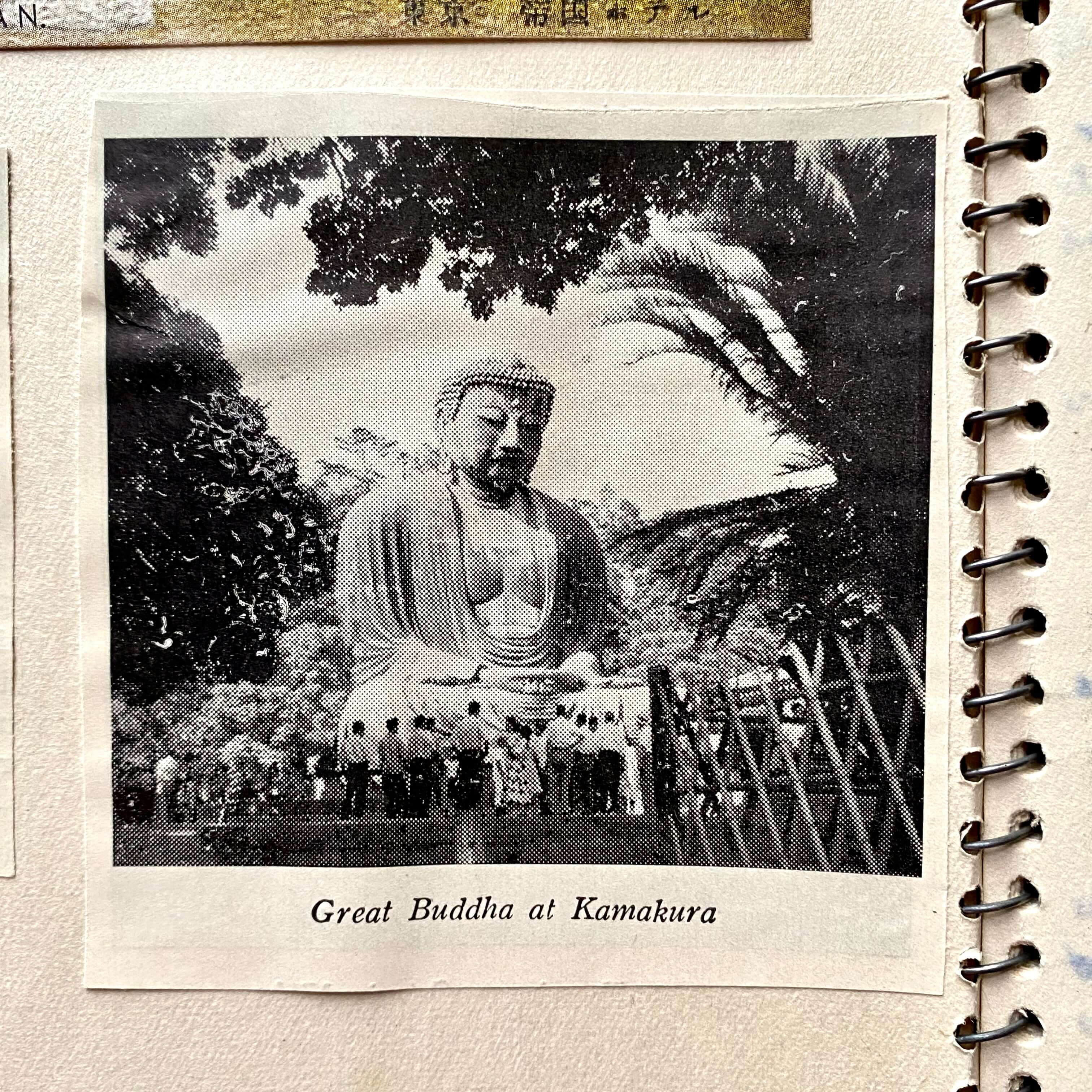
THE GREAT BUDDHA (Kamakura) About an hour outside of Tokyo, Truman and Millie visited The Great Buddha in Kamakura, which dates back to 1252 and is the second-tallest Buddha statue made of bronze in Japan. A longtime source of creativity, it is forever immortalized in the Rudyard Kipling poem Buddha at Kamakura. The statue, which still stands today, represents divine light, worldly wisdom, and compassion. In 1954, Truman noted that Kamakura was “a very interesting small city with a population of only 8,500 strictly Japanese residents.” Today, it boasts a population of 173,000.
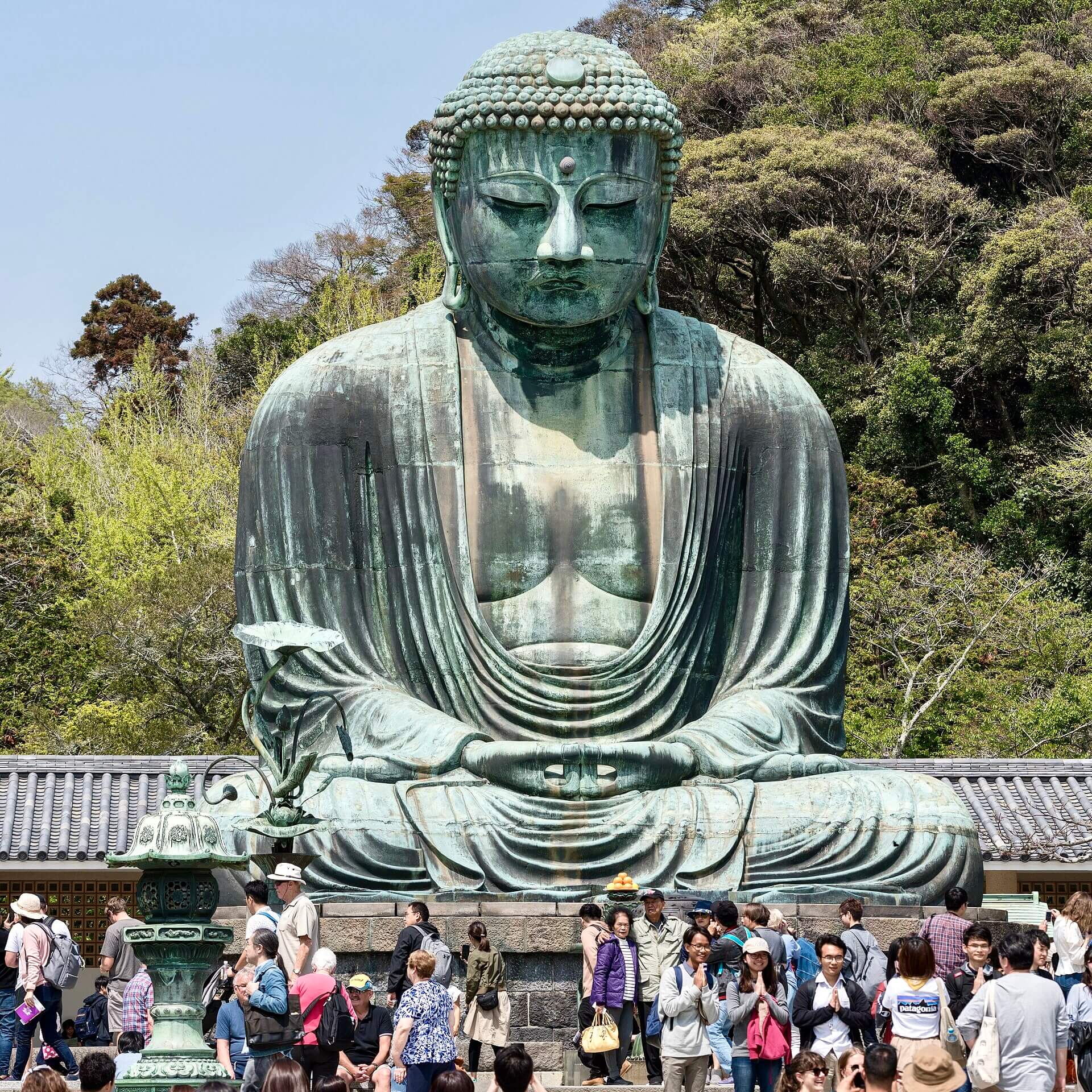
The Great Buddha photographed in 2019

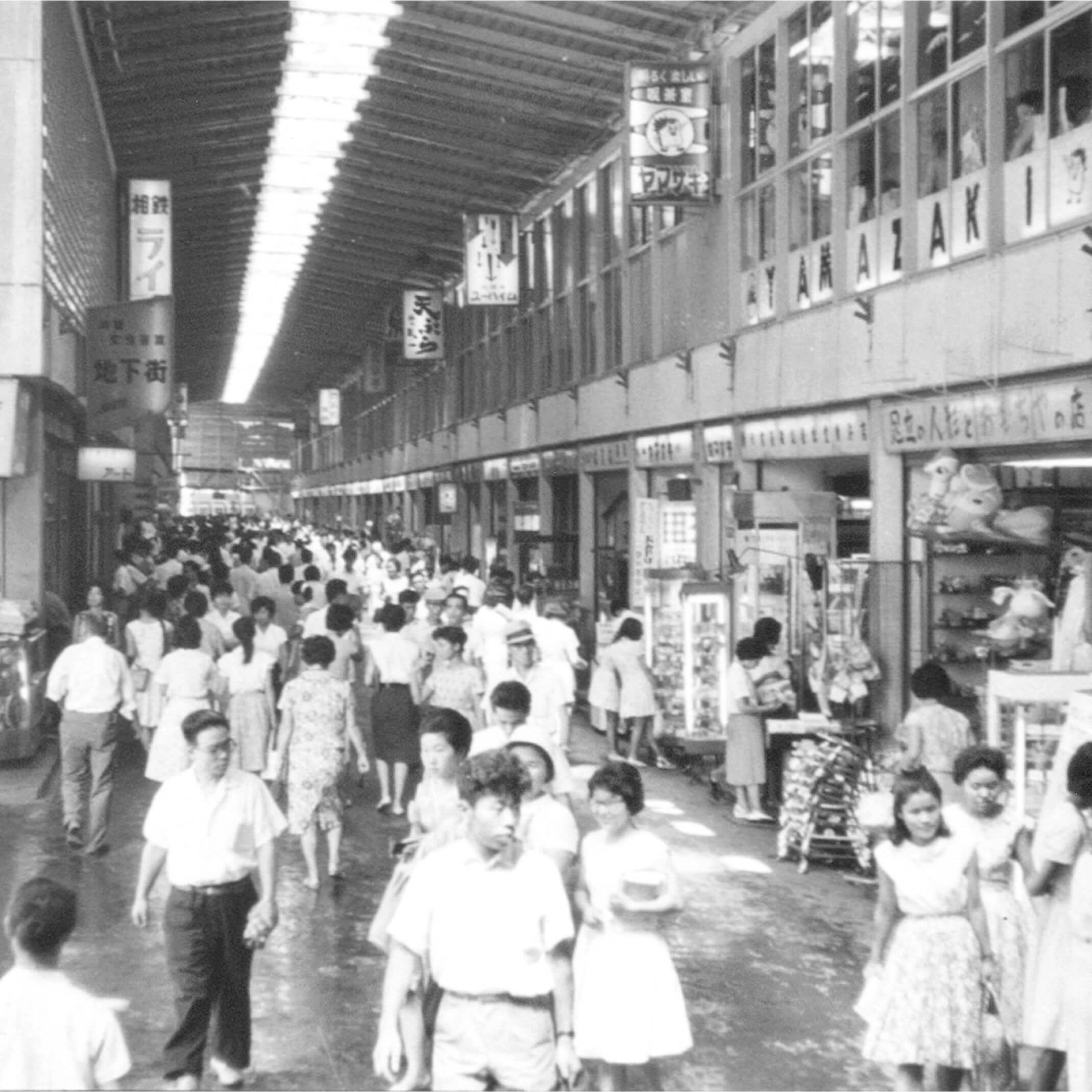
YOKOHAMA Located an hour south of Tokyo, Yokohama was the first major port town. It was established in the mid-1850s and remains an important industrial hub in the country to this day. Originally considered the gateway to Japan and the birthplace of the country’s first ice cream, Yokohama was heavily bombed during WWII. Truman and Millie were visiting while the city was in the early phases of reconstruction. Today, Yokohama is a bustling and energetic city boasting Japan’s second-largest population, and includes a popular Chinatown district. In 1954, Truman noted the “interesting streets, the amount of US occupation settlements, the open-air shops, the large import port, and the one Western hotel.

Yokohama Station shops circa 1950s

Three years after Truman and Millie’s visit, Yokohama would play an important role on America’s West Coast when it became a sister city to San Diego. Sister cities were created during President Eisenhower’s administration in an effort to build supportive relationships between countries by encouraging friendship, cultural understanding, and international camaraderie. This sister city relationship is still very much alive today, with active members participating in several clubs and organizations that celebrate this unique historical relationship between San Diego and Yokohama.
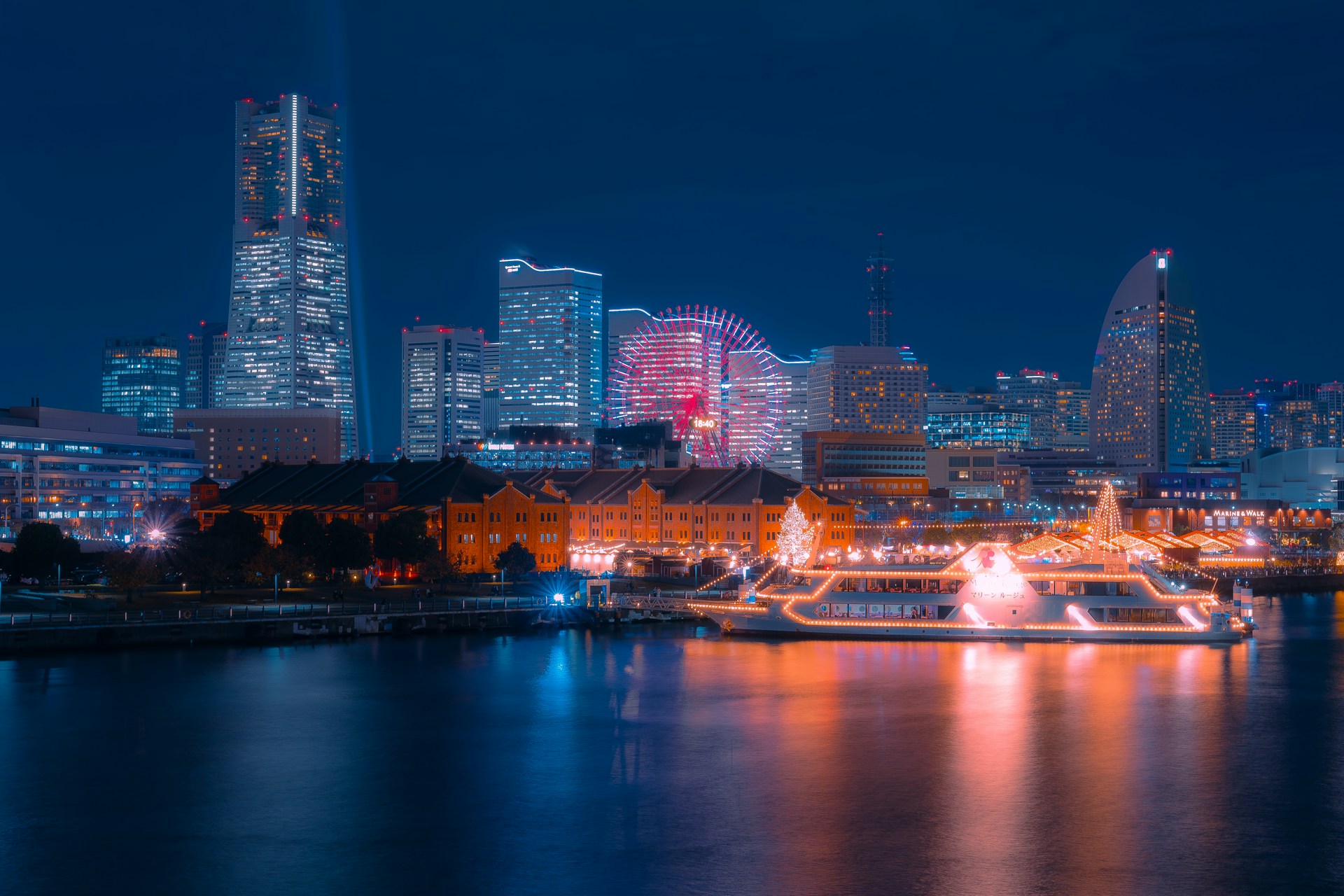
Yokohama in 2023. Photo courtesy of Mos Design.

EARTHQUAKE

On their second-to-last day in Tokyo, February 25th, 1954, the city experienced an earthquake at 8:45pm that lasted seven minutes and sent shockwaves to nearby neighborhoods Kanto, Tohaki, and Chabu. While it rattled doors and windows and shook buildings, luckily, there was no damage or casualties reported. Truman clipped a newspaper article detailing the event, but it didn’t seem to impact their trip in any way.

OTHER MISCELLANEOUS OBSERVATIONS FROM TRUMAN circa 1954
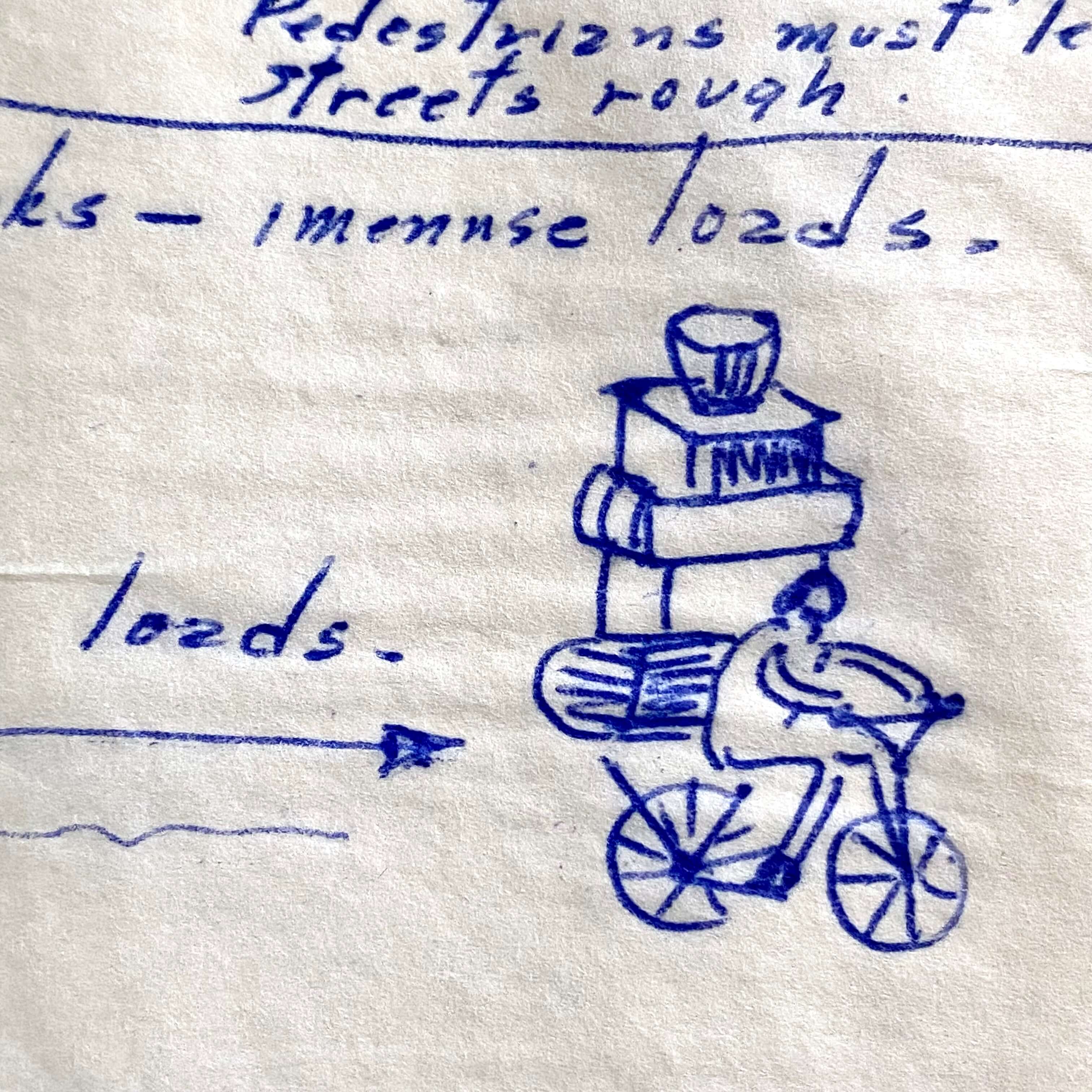
  • Autos & taxis drive on the left side of the street. Must have horn in usable order and is used.
  • Roads and streets are rough – pedestrians must be nimble to stay alive.
  • Very few stop lights.
  • Trucks are three-wheeled, and motorcycles, bicycles, put puts, and walkers carry immense loads mostly wrapped in matting or straw
  • The railroads were wonderful, speedy, and overcrowded.
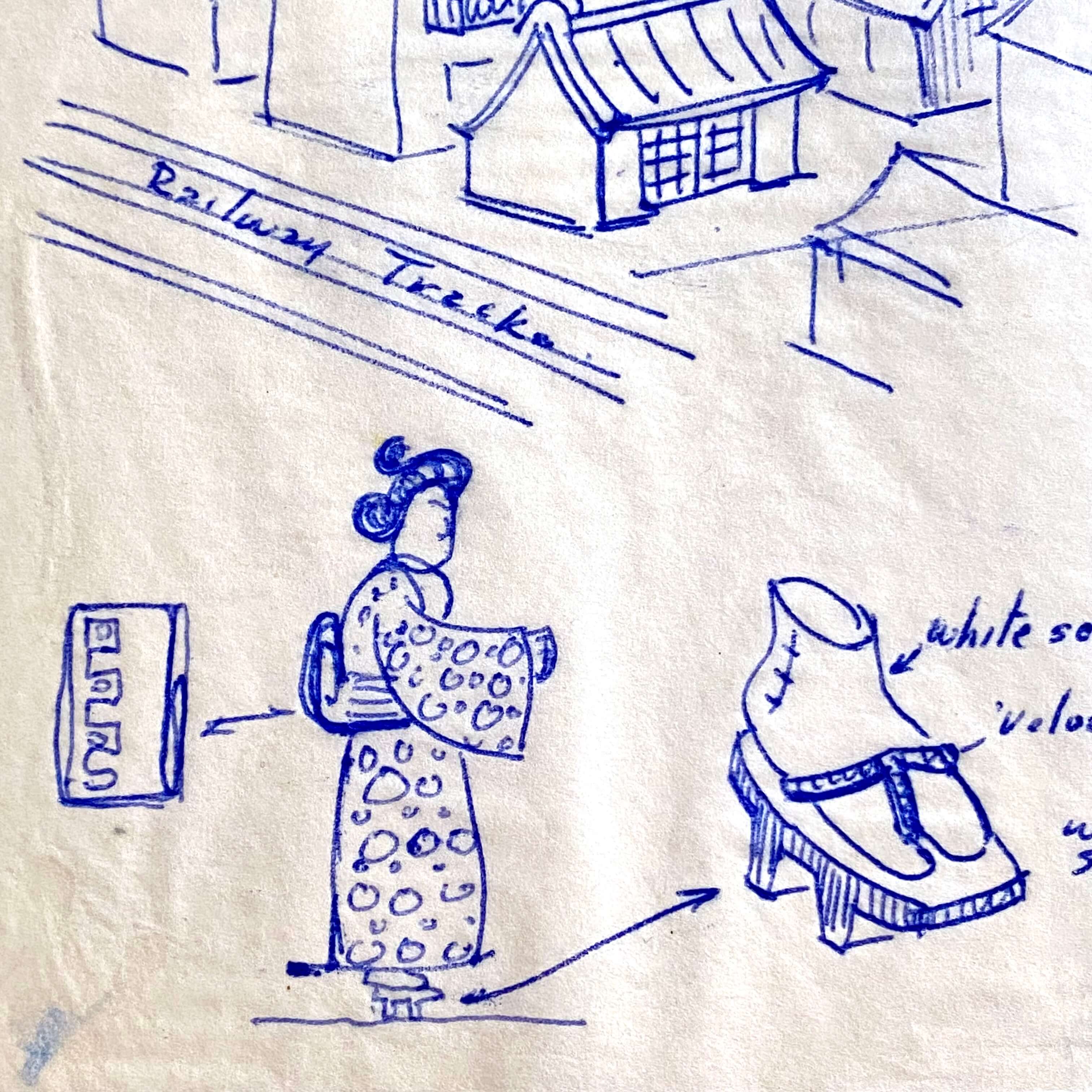
  • People: Small, overly polite to tourists. Only few speak English and those that do are hard to understand. Great imitators. The majority wear Western-style clothes. Typical Japan dress interesting and colorful. Geisha girl very polite , done up with wig and lots of powder – not vulgar or suggestive.
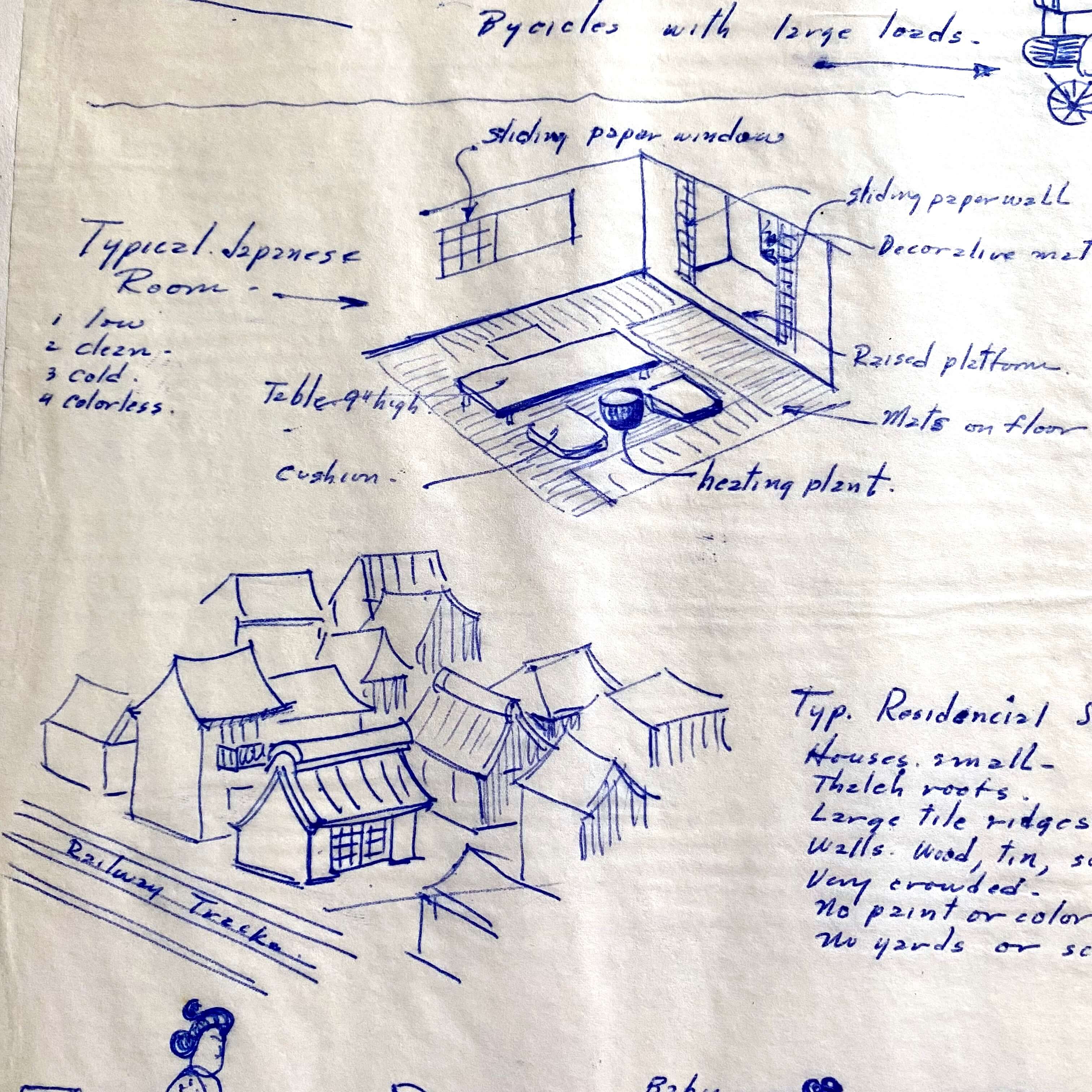
  • Countryside: Lots of signs. Many small factories. Houses very small and crowded. Lots of small farms – rice paddys – hills and usable ground covered with pine – some cedar.
  • Houses small. Thatch roofs. Large tile ridges. Walls: wood, tin, scraps of anything. Very crowded. No paint or color. No yards or shrubbery.
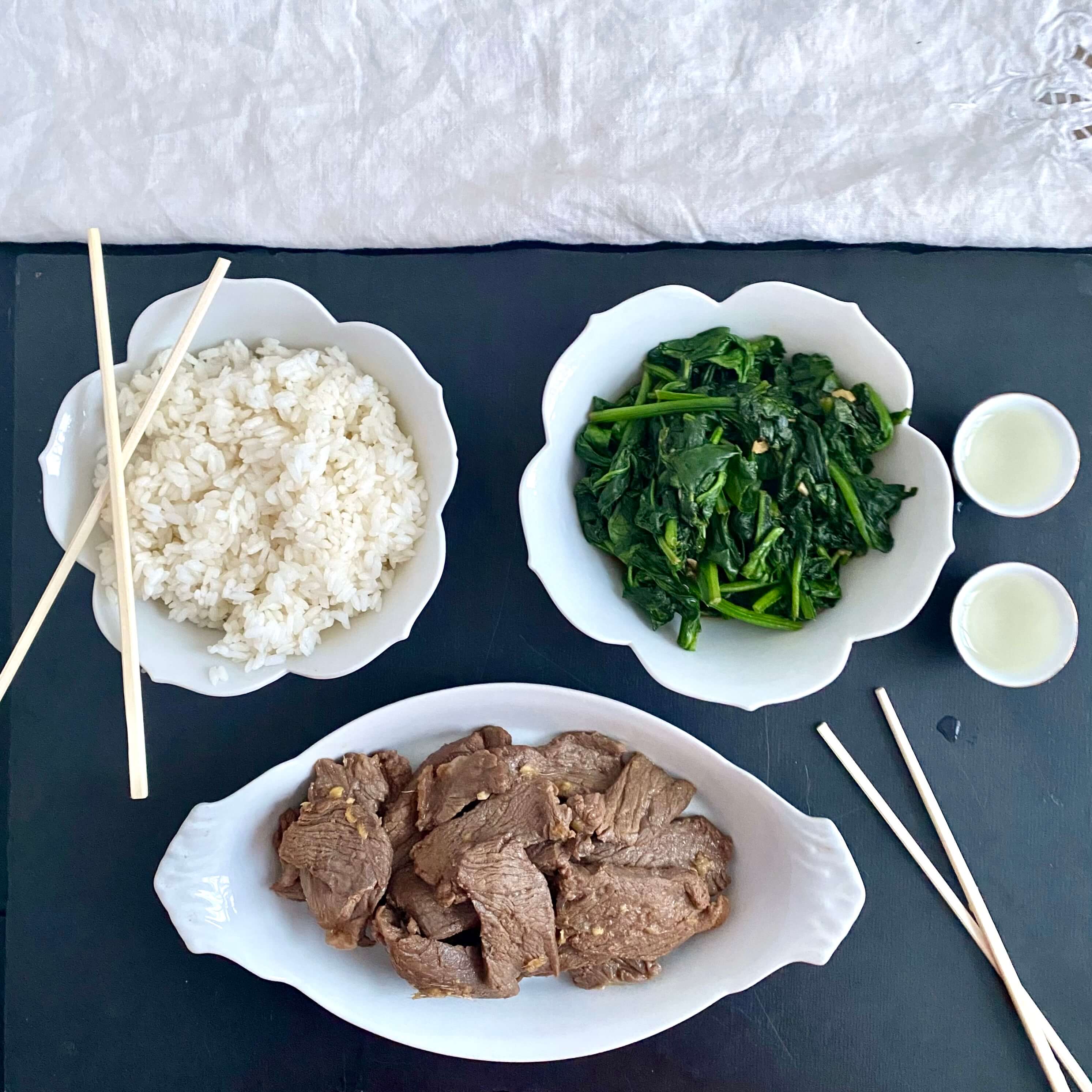
Truman didn’t document any thoughts or impressions about his sukiyaki and sake dinner at the hotel, but since he included the receipt for the meal, it must have been memorable in some way. Sukiyaki is a traditional recipe featuring slices of beef and vegetables simmered in a soy sauce broth. It differs from teriyaki in the manner of preparation. Sukiyaki is simmered while teriyaki is cooked quickly in a pan, grill, or broiler. Since both styles feature beef and soy sauce, the teriyaki recipe we are making in this post today is somewhat similar to what Truman and Millie would have enjoyed. It was fun to see how food bridged the distance between 1954 and 2026. Simple and easy to make, this recipe turned out to be one of my most favorites of the International Vintage Recipe Tour so far.
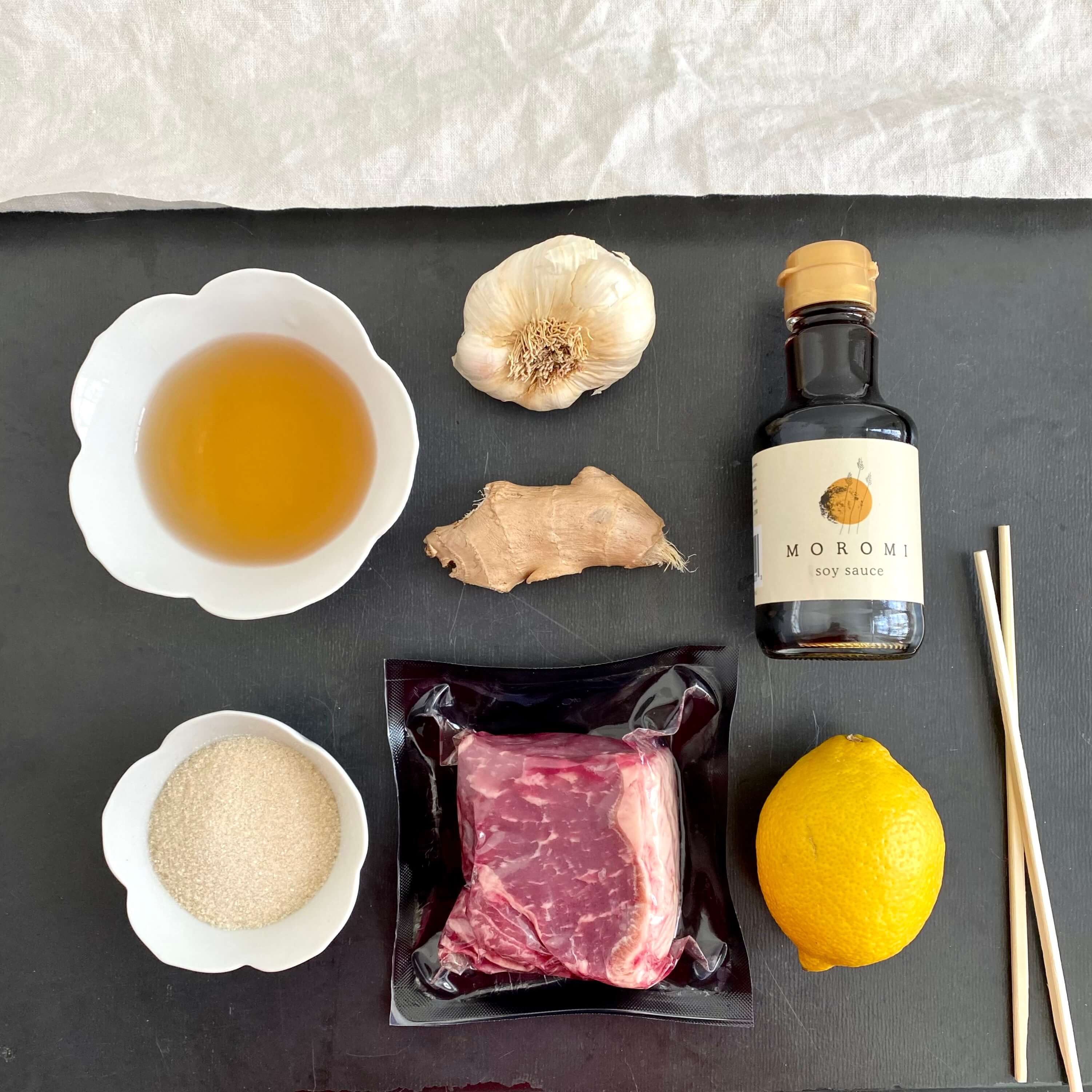
Containing just a handful of ingredients, a majority of the prep work is done in the fridge via a simple marinade that is very amenable to a variety of time schedules and constraints. The beef can be marinated in the fridge for as short as 15 minutes or as long as several hours, making it a great choice for quick weekday meals and also more relaxed weekend fare. I wound up marinating the beef for about three hours, which made it very tender and flavorful.

As is true with all memorable food thoroughly enjoyed while traveling, the more local the ingredients, the more delicious the meal. The same goes for home cooking, too. With just seven ingredients, this recipe, Beef Teriyaki I, as it is called in the 1971 edition of the New York Times International Cook Book, is easy to shop for, easy to prepare, and serves four.

Since the key ingredients are beef and soy sauce, if possible, I would recommend sourcing both as locally or as regionally as you can in order to create a dish with the most flavor. We are lucky here in Connecticut to have a locally made small-batch soy sauce producer, which I purchased for the first time specifically for this recipe. I also used a local grass-fed NY Strip steak, Sushi-grade rice, and locally grown spinach. Just like Truman and Millie in 1954, sake was the companion of choice to accompany this lovely meal.
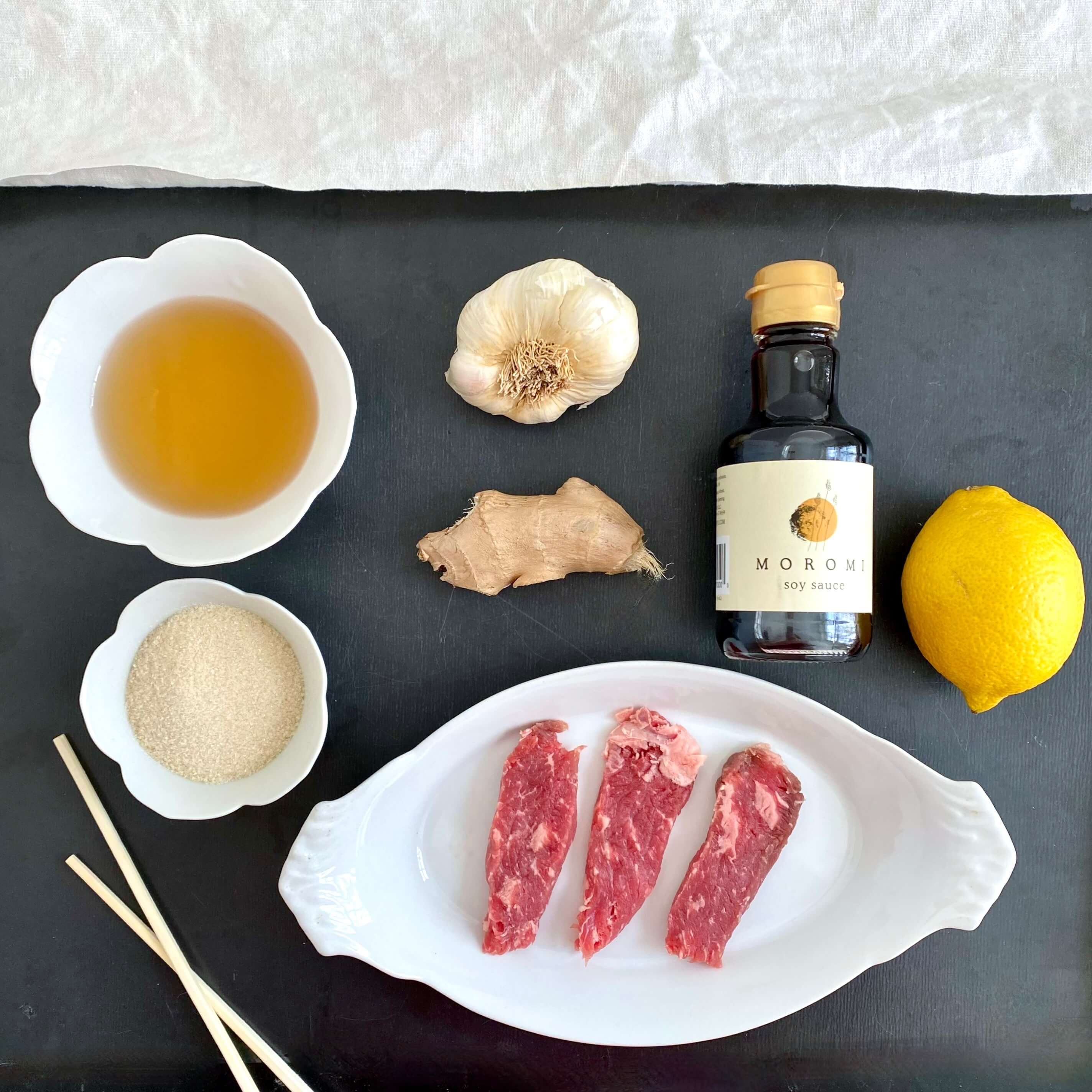
JAPANESE BEEF TERIYAKI I with SAUTED SPINACH & SUSHI RICE

Serves 4

1/3 cup sake or dry sherry

1/3 cup soy sauce

1/4 cup granulated sugar

1 teaspoon grated fresh ginger

1 clove garlic, finely minced

1/4 lemon finely sliced

1 pound lean beef, preferably shell steak or NY strip steak

20 oz of fresh spinach

2 gloves garlic, finely minced

2 tablespoons of water

1 splash of soy sauce

1 pinch of sugar

Sushi rice

Sake

This Beef Teriyaki I recipe originally appeared in the 1971 edition of the New York Times International Cook Book. The spinach and rice component was my own addition, brought together to make a traditional Japanese meal. If you would just like to prepare the teriyaki beef portion, all the ingredients for that part of the recipe are in bold type.

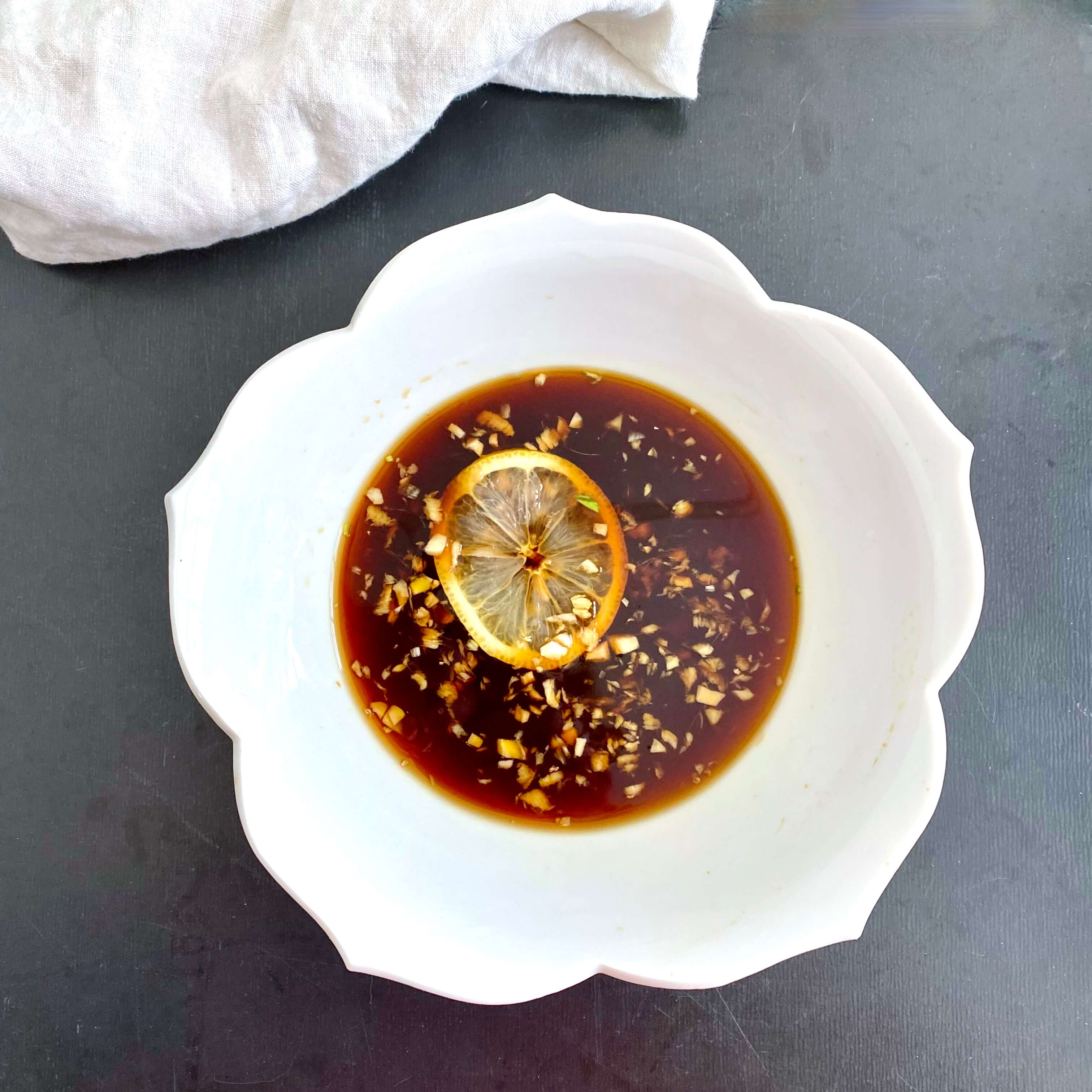
Combine the sake, soy sauce, sugar, ginger, garlic and lemon, in a medium bowl and stir until sugar dissolves.
Cut the meat into thin strips and add to the marinade.
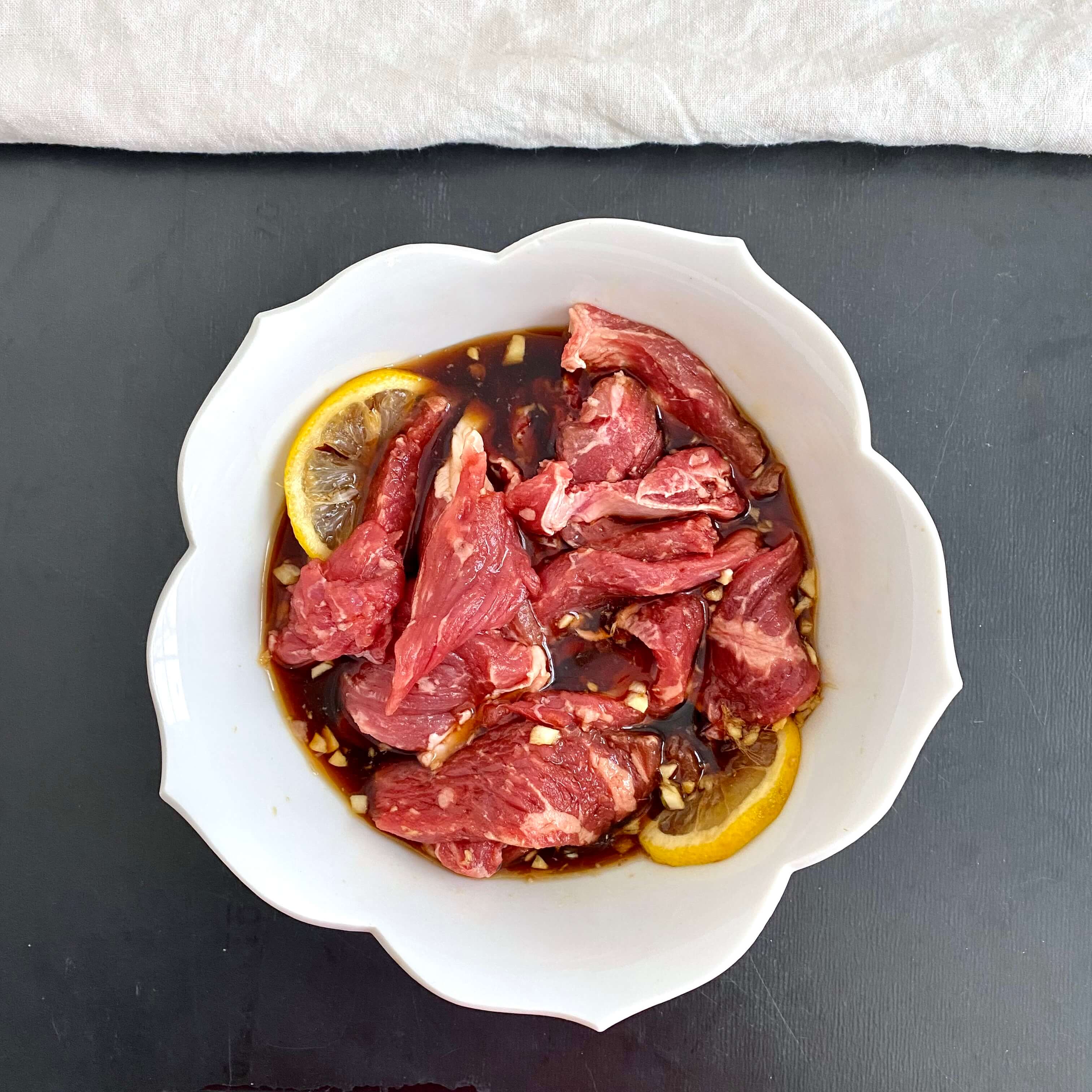
Marinate for 15 minutes or up to several hours.*Note: If you are marinating the beef for longer than 15 minutes, cover the bowl with plastic wrap and put it into the fridge. About 30 minutes before cooking, remove the bowl from the fridge to let the beef warm up to room temperature.

While the beef is marinating, make the rice according to package directions. Set aside and keep warm. About five minutes before you are going to cook the beef, combine the spinach, two cloves of minced garlic, and two tablespoons of water in a large saute pan over medium heat. When the water evaporates, add a splash of soy sauce and a pinch of sugar and toss the spinach. Once the spinach has just wilted, remove the pan from the heat, cover and keep warm.
Remove the beef from the marinade. In a large, hot saute pan over high heat, add the beef in a single layer and cook in a for about 3 minutes per side.
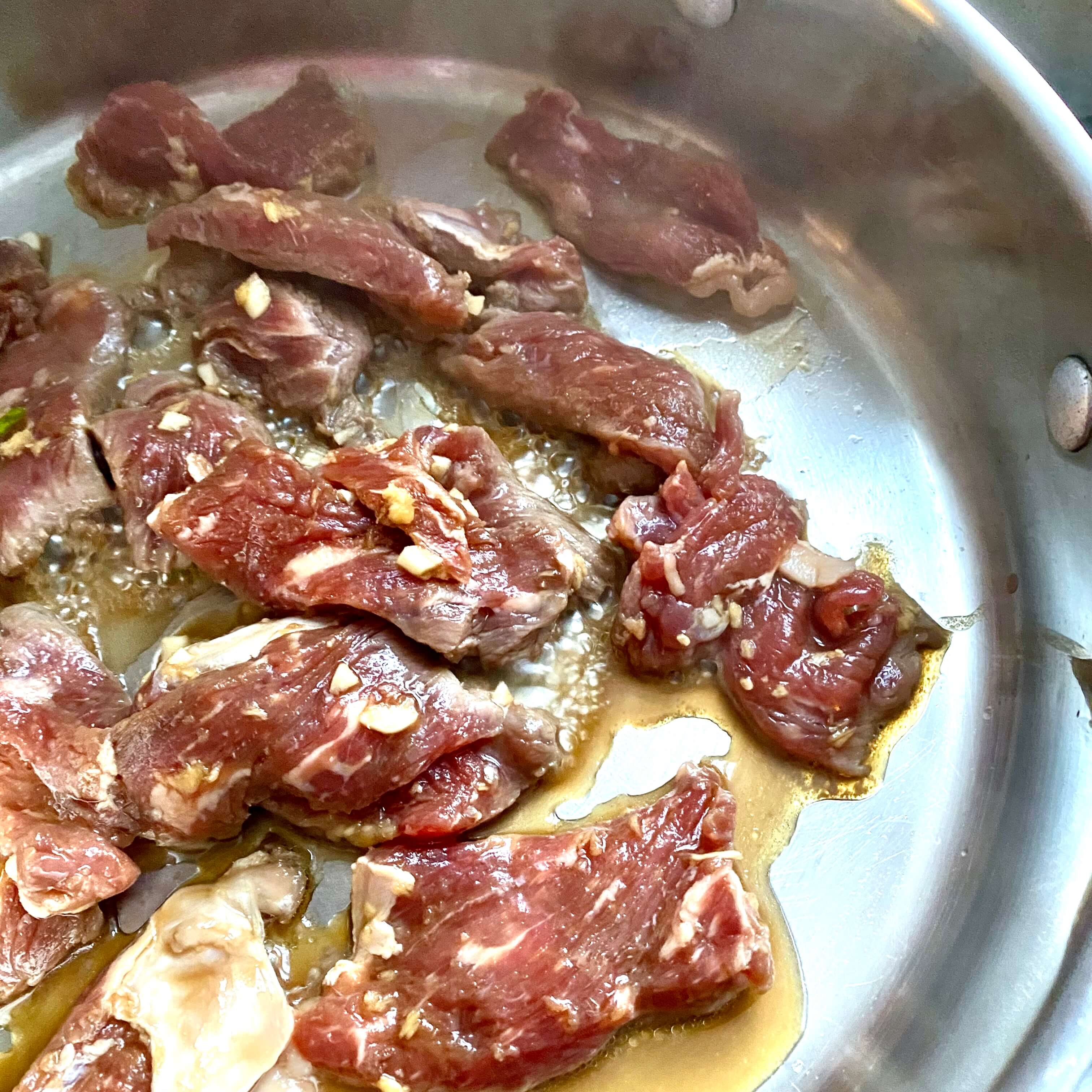
Only flip the beef once during the cooking process. Ideally, the beef should be slightly rare in the center. Remove from heat…
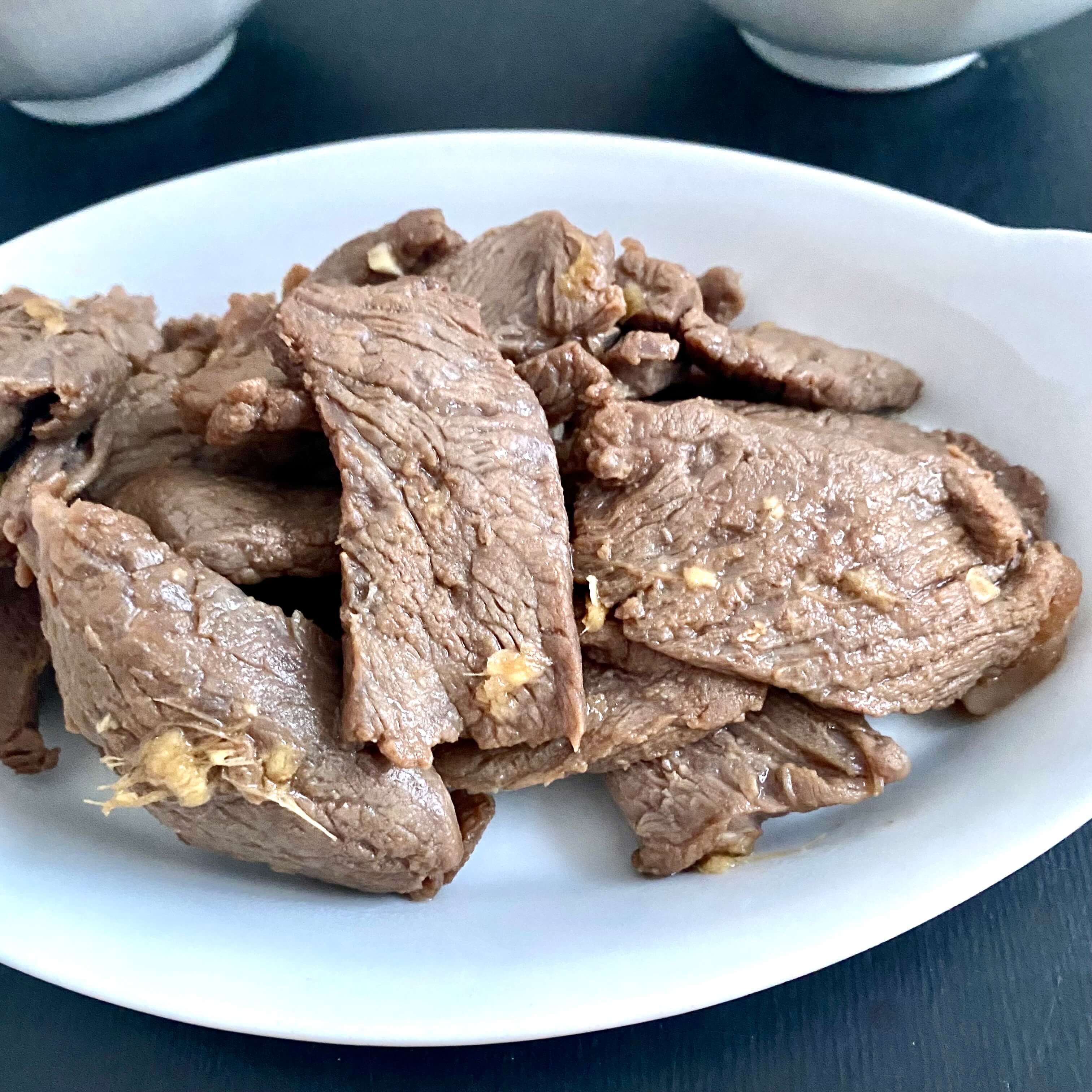
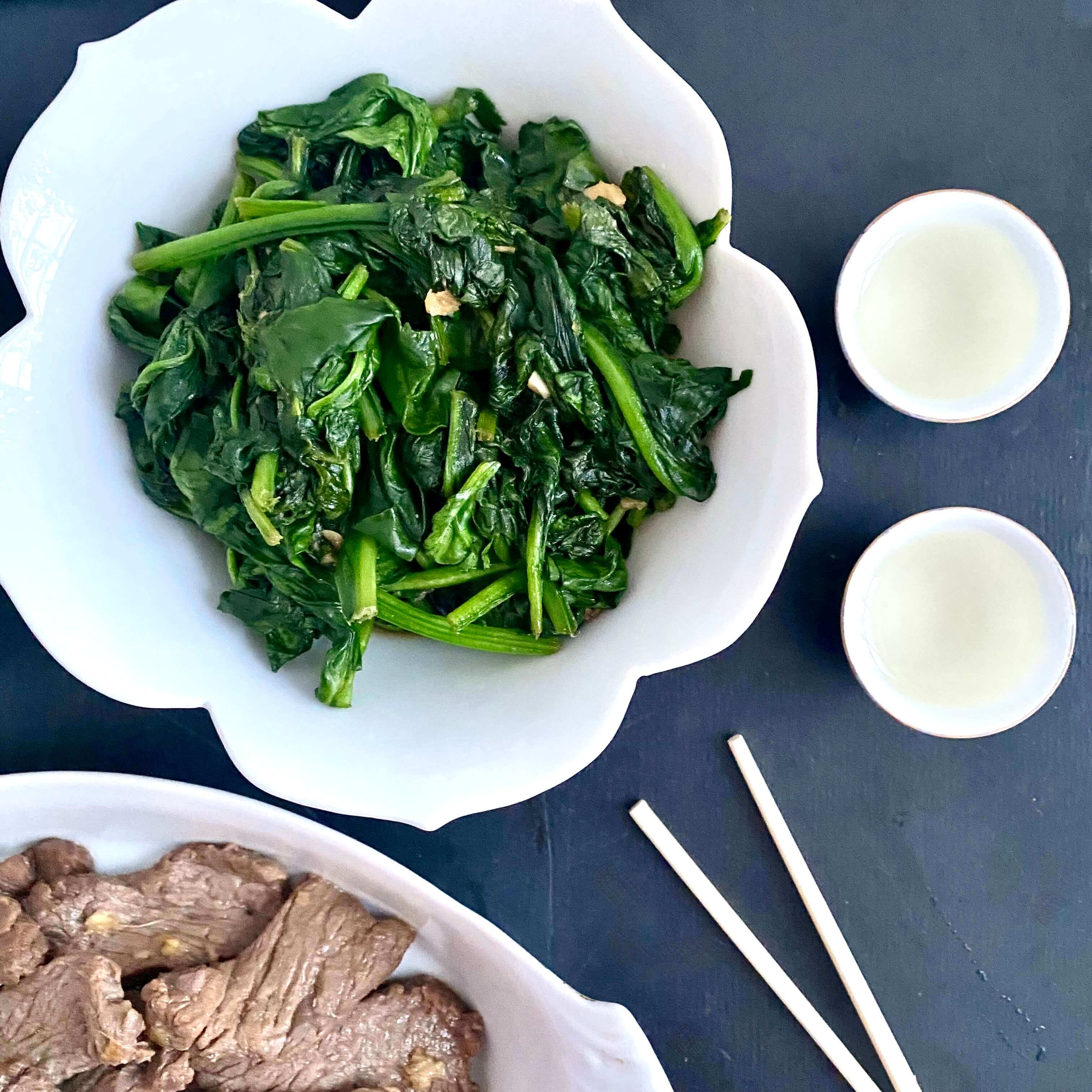
and serve immediately alongside the rice, spinach, and small servings of sake. For presentation, I recommend serving this meal family style on large platters. Or you can also serve it in individual bowls in a layered fashion, starting with rice at the bottom of the bowl, then spinach, then beef.
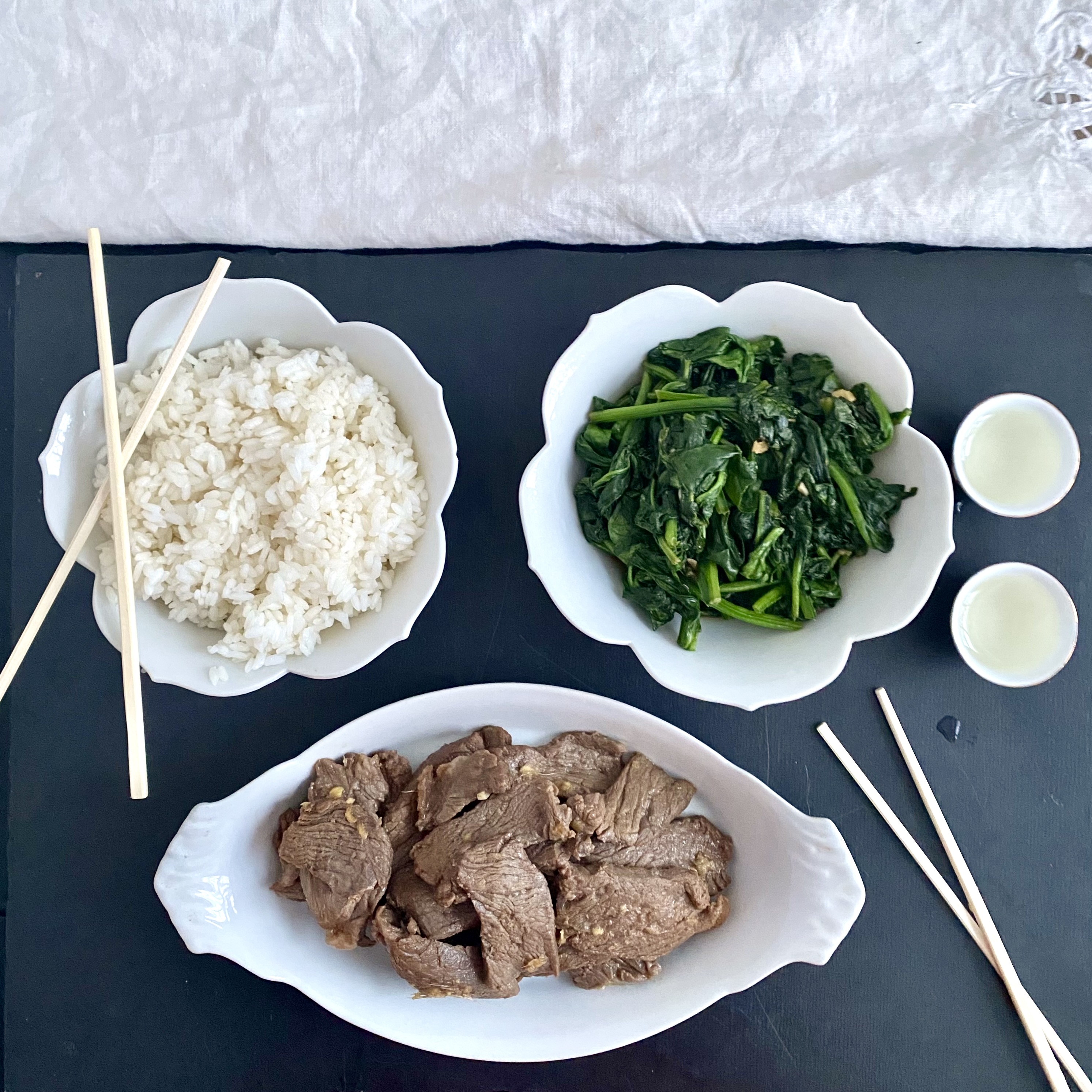
As I mentioned above, this turned out to be one of my most favorite recipes on the Tour so far. Tender, aromatic, and full of flavor, the marinade with its essences of ginger and lemon, soy, and sugar creates a lovely savory flavor that makes every bite a little bit sweet, a little bit salty. The spinach echoes a similar profile. There’s enough flavor in both beef and greens to leave the sushi rice unadorned, but if there is any extra juice left over from the pan after cooking the beef, pour it over the arranged layers and it will find its way down to the rice. Also, I highly recommend not skipping the sake with this meal. It wraps up and rounds out all the flavors in the most delightful of ways.

The portion size of this recipe may seem on the petite side at first, but I found it to be perfectly filling and satisfying by the time the last grain of rice was plucked from the bottom of the bowl. If you wanted to serve larger portions or are feeding a crowd, simply double or triple each part of the recipe, and you’ll have a feast in the making. Also, the spinach can be swapped out or enhanced with other vegetables, yielding plenty of future creativity in the kitchen.

In the case of leftovers, all three components (beef, spinach, rice) reheat beautifully the next day if kept in an airtight container in the fridge. The leftover beef on its own is also lovely served on a hard roll, sandwich-style, or added to a green salad.

There’s a term for fortuitous timing in Japanese called ii taimingu. It means perfect timing, good timing, right timing. And it seems that this whole blog post and all the characters in it depended on such a phrase. It was not that unusual for midcentury couples to take extended trips in the mid-20th century. And it was not unusual to create travel scrapbooks of the adventure. But what is unique about Truman’s scrapbook is the beautifully executed drawings combined with the handwritten travel notes and all the paper ephemera that create a complete story, a true time capsule of each city.
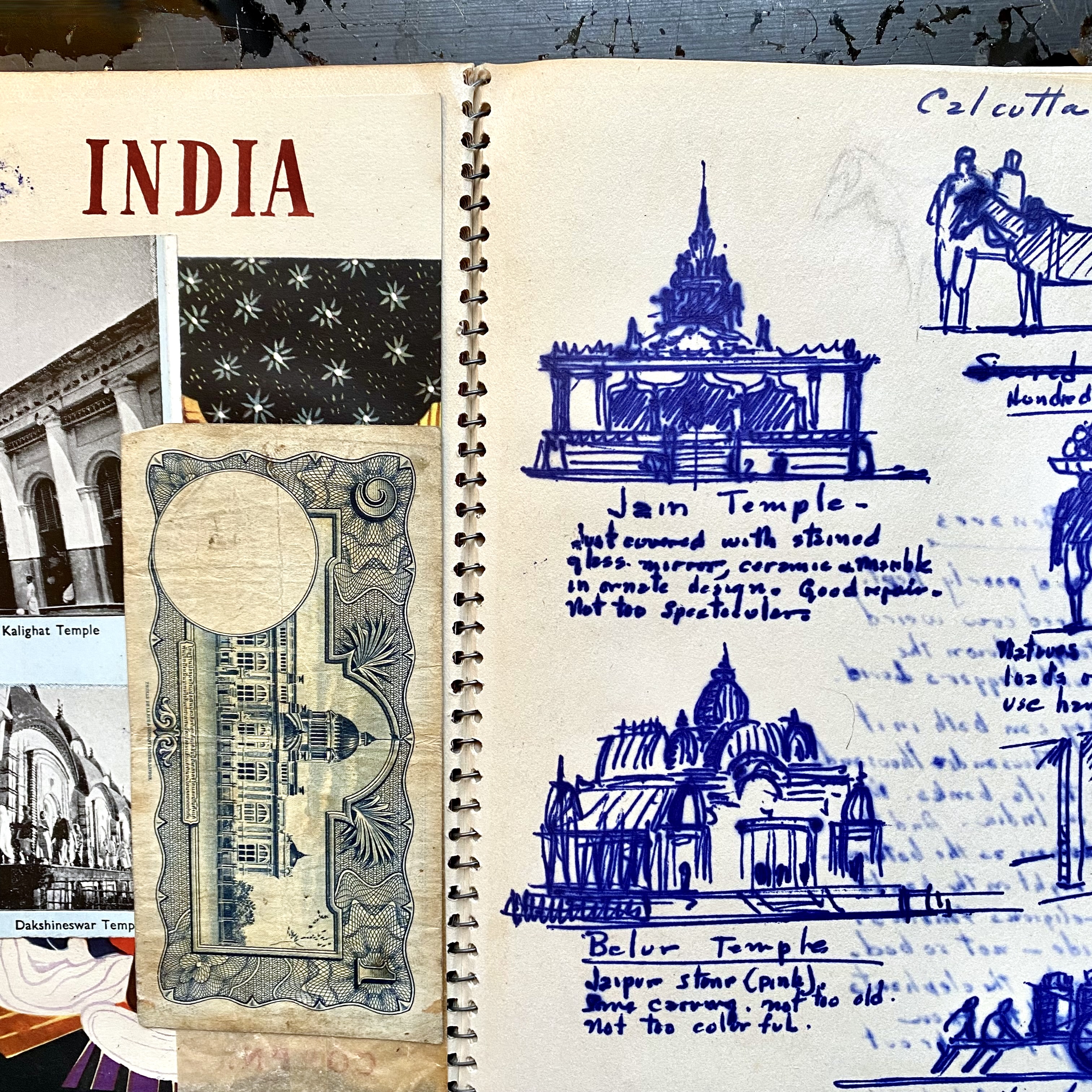
Had Candace never found this notebook, Truman’s artistry and his perspective on foreign architecture and design might have faded away or fallen into obscurity. Although he was influential in American architectural design during the 20th century, there is not much current conversation about Truman’s work, so this scrapbook serves as an intimate record of his thoughts, designs, and observations. That being said, it took 70 years to bring the story of Millie and Truman to my desk here at 1750 House. It took many months to grow a friendship between Candace and me, and an equally long time for local producers to grow the ingredients required for such a flavorful recipe. A batch of traditional Japanese soy sauce requires anywhere from six months to four years to make. Sake takes two months to mature. The recipe was published 55 years ago, and it took me, after a terrible bout of writer’s block, almost three months to put together this whole post. It literally took a community full of people, and a lot of ii taimingu to get this story and this recipe, launched into the world in the new year of 2026.

As far as I can tell in my research to this point, Truman and Millie never had any children, which is possibly one reason why their travel scrapbook wound up in an antique shop in the first place. Truman was two years into retirement when he and Millie went on their around-the-world adventure in 1954. He continued his creative pursuits in a new format in his later years, but I’ll share more about that in a future post. This won’t be the end of Truman and Millie and their adventures here on the blog. We’ll meet up with them again in five future International Vintage Recipe Tour posts to see what they have to say and see about those destinations. In the meantime, our next stop, number 28 on our culinary tour is Korea, where we’ll be learning about one Korean family’s ancestral food history and making a traditional shrimp dish.
Cheers to Candace for her incredible gift and her treasured friendship, to Truman and Millie for showing us such a personal glimpse into exotic travel history, and to all the local farmers and artisans who made this recipe absolutely delicious.

To catch up on previous International Vintage Recipe Tour posts, visit this link here.

Grilling with Friends: A 1955 Recipe for Savoy Potatoes

I wish there was a way to tally friendship in the kitchen. How many recipes were inspired throughout history by friends or for friends? How many meals were shared in convivial collaboration between one cook and another? How many dishes were dissected? Techniques taught? Secrets traded? How many hours were spent by friends, with friends, for friends tasting, touching, and talking about food?

I bet the number is in the billions. A billion hours. A billion recipes. A billion friends. I bet it is a safe assumption to say that friendship in the kitchen has been a major influence on the culinary world since the caveman days when everybody cooked, and then subsequently ate, together, around an open fire. Aside from health, friendship must surely be the foundation of food. The building block of life.

This weekend we are featuring a recipe that is friend friendly. It was created by two best pals – James Beard and Helen Evans Brown in 1955 and highlights the diverse possibilities of the outdoor grill. On the menu today, it’s Savoy Potatoes, a tipple topple stack of thinly sliced potatoes tucked between layers of cheese and dotted with herbs and butter. The recipe was part of the Frills for the Grill chapter from Helen and James’ Complete Book of Outdoor Cookery.

Frills for the grill indeed. The fun of this recipe, aside from its delectable composition and fancy presentation, is that it can be made entirely out of doors from start to finish. All you need is a prep table, a cutting board, a cast iron pan, a cheese grater, a bowl and a sharp knife. Grab a friend or two to help prepare everything, and the joy begins.

Of all the vegetables to be cooked on the grill, the noble potato oftentimes gets left behind. Understandably so. They are dense and big and take a long time to cook if left whole. If they do make it to the wire racks, most recipes are not that imaginative. There’s the baked potato wrapped in tin foil, the quartered potato steamed in paper, and the mini oval-shaped potatoes par-boiled and skewered for kebabs. But this recipe presents a whole new way to look at serving potatoes hot off the grill with an elegant twist.

Presentation-wise Savoy Potatoes is lovely, with thin layers of stacked slices browned by butter and melted cheese. Caramelization leaves the potatoes on the bottom layer crispy and golden while the top layer is tender like a casserole. Most similar to Scalloped Potatoes (a.k.a. Potatoes Gratin) minus the cream, it has a hearty consistency and flavorful yet subtle depth thanks to the two cheeses and the herbs. This recipe can be made in one large round cast iron pan or many mini cast irons, depending on your preference and your available pan options. Either way, it will be delicious.

When James and Helen finally got together to create a cookbook, it was a long-time dream come true. Both were busy, well-respected cooks and authors in their own right. Helen on the West Coast, and James on the East Coast.

A sampling of Helen’s cookbooks published between the 1950s and 1960s.

Supportive and encouraging of each other’s work, they each had their own unique way with food and writing, which meant there was no room for competition between them, just a sense of mutual respect, camaraderie and curiosity regarding the culinary industry they both loved.

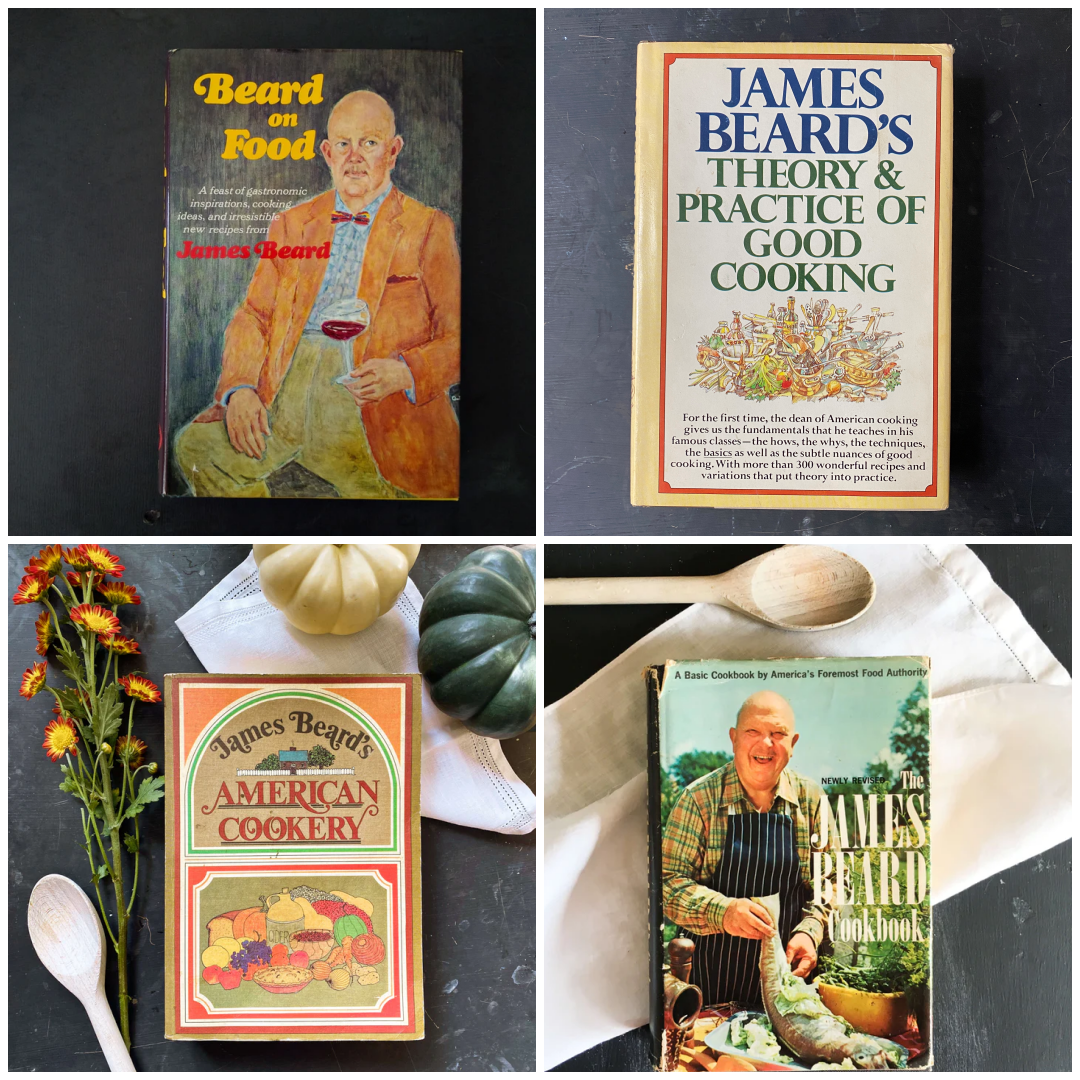
A sampling of James Beard’s cookbooks

Enamored with each other as most best friends are, their relationship was strictly platonic (Helen was married and James was gay) but they showered each other with affection and attention every chance they got. For years, they maintained an epistolary relationship where letters flew between coasts at a rapid-fire pace. In these letters, Helen and James exchanged recipes, cooking questions, industry gossip, travel adventures, menus, food samples, diets, and stories surrounding what they ate and with whom. A consistent topic of the letters were ideas bounced around about projects they could collaborate on together… a restaurant in the Hamptons, a snack shop in New York City, a kitchen store filled with books and antiques, a magazine for gourmands, a cooking school, a newspaper column. Time, distance, and scheduling made many of these ideas difficult to undertake when it came to reality, but of all the possibilities they dreamed up, a cookbook turned out to be the one idea that took shape. To their mutual excitement, in May of 1955, The Complete Book of Outdoor Cookery was published by Doubleday & Company.

Helen and James’ mission for the book was to cover recipes that included all methods of outdoor cooking equipment in one place. Grills, campfires, hibachis, spit-roasts, cooking on a boat, cooking from a trailer, cooking at the beach, along with defined roles for men and women in the art of creating a jovial outdoor dining experience. Helen and James suggested that women be in charge of menu planning, market shopping, and presentation, while the guys were in charge of the actual cooking. Helen called it a night off for the ladies (grab a cocktail and a lounge chair, she suggested) while James referred to the actual task of grilling as a man’s sport and the ultimate culinary proving ground. Both viewpoints may seem a bit boxed in today, but in the 1950s when almost every homecooked family meal in households across the country was made indoors by women, this idea of getting guys involved in the meal-making process was both novel and exciting. Cookbooks began springing up on shelves across the country about this adventurous way to prepare a meal.

1950s Barbeque books like this one – Better Homes and Gardens Barbeque Book – illustrated the sheer joy of outdoor cooking especially when it came to domestic family life.

Gender roles aside, Savoy Potatoes is best prepared by two people, if not more. There are herbs to gather from the garden, potatoes to chop, cheese to grate, and the grill to tend to, so multiple hands are encouraged not only for practicality but for fun too.

Note: We used a charcoal grill for this recipe. Cooking times and temps may vary if you are using a gas grill.

Savoy Potatoes

Serves 8

1/4 cup butter

6 medium potatoes

1 1/2 cups grated Gruyere cheese

1/2 cup grated Parmesan cheese

Salt & Pepper to taste

1 handful of fresh thyme, chopped (optional)

Butter cast iron skillet(s) generously to prevent the potatoes from sticking during the cooking process. Combine the two cheeses together into a medium-sized bowl. Leaving the skins on, thinly slice the potatoes into rounds. Arrange a layer of potatoes inside the bottom of the buttered pan, then add a layer of cheese. Season with salt and pepper and a dab of butter. Repeat the layers of potatoes, cheese, butter, and salt and pepper again. Top with a sprinkle of fresh thyme.

Cover skillet with foil and cook on the grill over medium heat (between 280-300 degrees) until the potatoes are tender when pierced with a fork and the cheese is thoroughly melted (about 25-30 minutes).

Remove from the grill, let cool for a few minutes and then flip the potatoes over onto a plate and serve.

At this point, the potatoes should come out of the pan in one solid piece. You don’t have to flip the potatoes over before serving them. They look appetizing on both ends, but the bottom has such a nice golden brown color and a crispy texture, it makes for a delicious first-bite introduction to this vintage recipe. The slightly smoky flavor from the grill mingles with the nuttiness of the cheese and the soft potatoes in the most tasty and aromatic of ways.

Helen and James recommended that Savoy Potatoes be served with roast beef, grilled fish, or poultry. During the hot days of summer, we liked it best as a vegetarian dinner served alongside a simple garden salad and a glass of chilled sauvignon blanc. In the cooler months when you crave something heartier, in addition to James and Helen’s suggestions we would recommend adding a fried egg on top and a sprinkle of chopped bacon, ham, or pancetta. A drizzle of maple syrup would add another level of interesting flavor.

Like good friends, this is a relaxed recipe. Not hard to make, it’s very accommodating when it comes to your own cooking creativity. Play around with different cheeses, and different toppings, or make it the foundation of a build-your-own-food bar and invite your friends to add their own custom toppings. Sour cream, chives, dill, smoked salmon, a variety of spices, sauteed spinach and onions, diced peppers and tomatoes, hot sauce… there are so many options that would pair equally as well with this dish.

When I asked my sister, who is one of James Beard’s biggest fans and one of my favorite people to exchange recipes with, what she liked most about his style of cooking, she shared that it was all about his universal love of food and friendship. “He felt that people could be unified through the experience of a meal no matter their country or culture.” In other words, he recognized food as the foundation of friendship. Cheers to that! Hope this recipe instigates an impromptu dinner party with your friends and family and that you love the whole experience of making it just as much as we did.

Cheers to James and Helen for this gorgeous recipe and the friendship that made it. I hope it inspires many more. If you’d like to learn more about these two culinary icons and their impact on American cooking, stop by the shop and peruse the cookbook shelf.

A Case Study of 1950’s Food Photography: Then and Now


There’s a topic of conversation that continuously cycles its way around the Vintage Kitchen. It involves disconcerting colors, one-dimensional shapes, and awkward arrangements. It combines presentation and food props and fussy table settings.  And it is the ultimate make-or-break factor in the exploration of a recipe or the selection of a cookbook.

In today’s post, we are diving into the world of 1950s food photography to figure why exactly that decade’s imagery has not translated well to our modern day sense of food aesthetic. Was the camera equipment to blame? Or the food styling? Or an outdated sense of table display? Not necessarily. Through the dissection of one color photograph on the cover of a cookbook published in 1950 and a little research into the field of vintage photography, we discovered one simple reason why food photos of the 50’s lack the luster to ignite our appetites today.

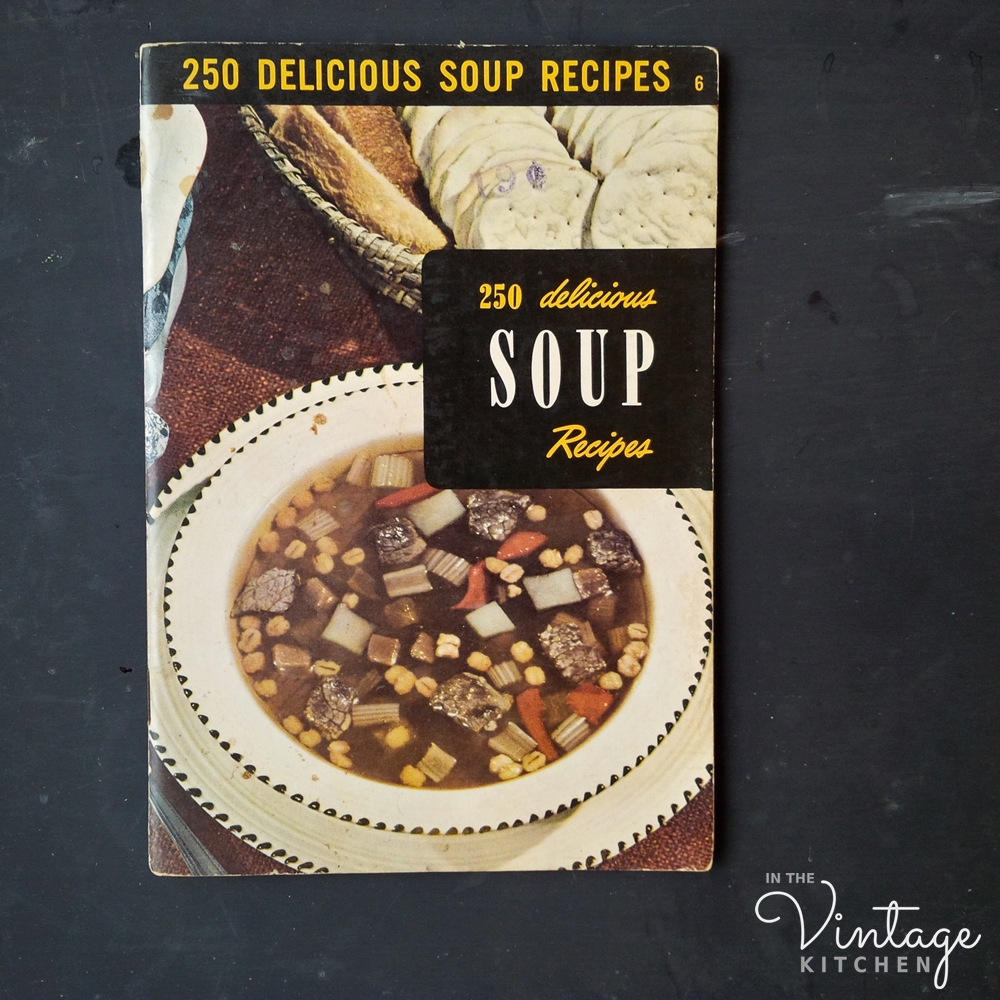
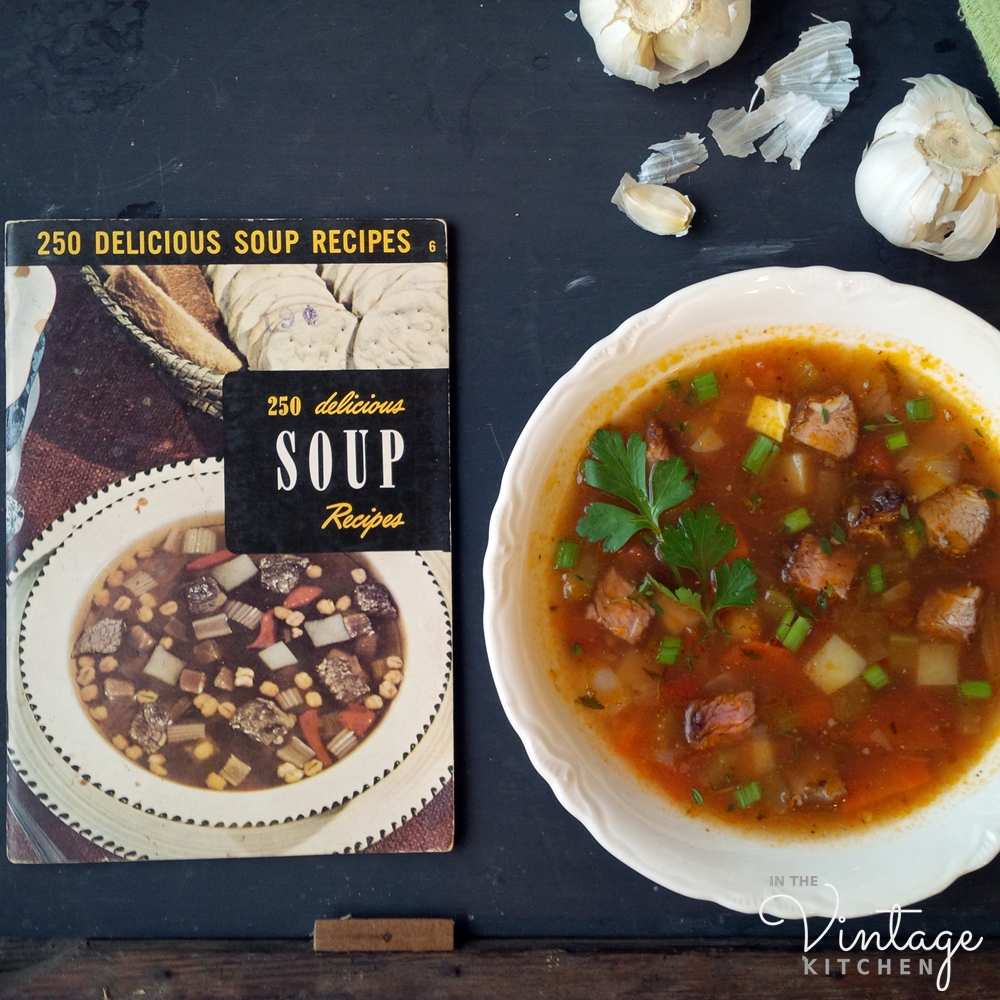
This is the photograph that spawned the conversation…

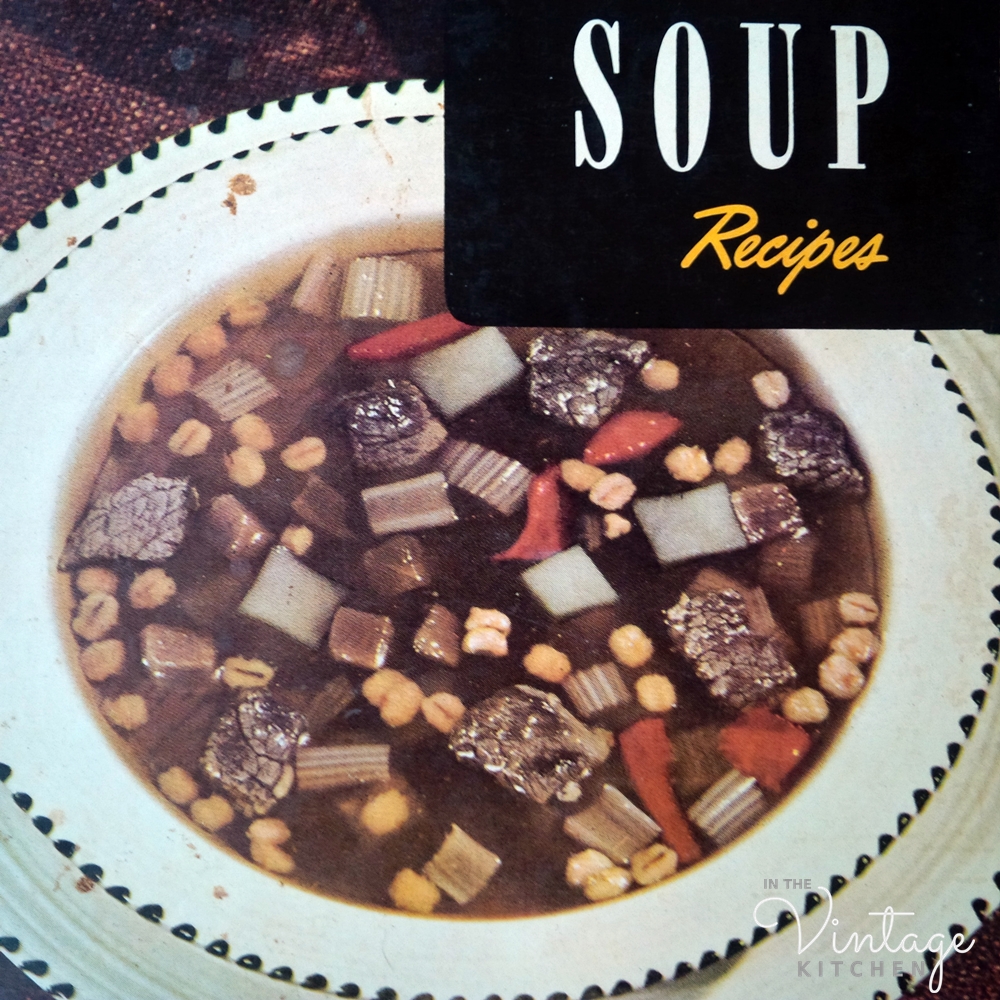
With it’s floating concoction of grey meat, beige celery, yellow corn (which actually turned out to be barley), cubed potatoes and a shapeless, unidentifiable rust-colored vegetable (are they carrots? or red peppers? or tomatoes?) this poor soup, the cover star of the cookbook, didn’t have much going for it in the boy-this-looks-delicious-department.

Published in 1950 by the Culinary Arts Institute, an organization devoted entirely to the science of better cookery, the 250 Delicious Soup Recipes Cookbook was edited by Ruth Berolzheimer, a woman who spent the majority of her life writing about food and experimenting with flavors and ingredients.  The recipe featured on the cover was a classic crowd-pleaser perfect for the winter kitchen – Beef and Barley Vegetable Soup – which combined homemade broth, and a variety of vegetables and herbs.

Technically, our cover star soup had everything going for it – complimentary ingredients, expert cooking knowledge and a trusted company to back it up. So how is it that it wound up looking like something you would never want to voluntary make or eat? Is this really what an actual bowl of beef and barley soup looked like at the dinner table in 1950? Further investigation was needed.

We began first with the physical appearance of the photograph, thinking that maybe it was the camera that yielded an unappealing portrait. Afterall, cameras weren’t as sophisticated back then as they are today, and photo editing software didn’t exist and the ability to capture compelling, exacting details in a crisp, clear way was much harder than it is now.  But then we remembered about the food photography of Edward Weston, who took pictures like this in the 1930’s…

Portrait of a Cabbage Leaf, 1931

and we realized that technical abilities of the vintage camera couldn’t be blamed. This cabbage photograph has plenty of compelling, exacting details and it was taken two decades before the beef and barley soup recipe ever came to fruition.

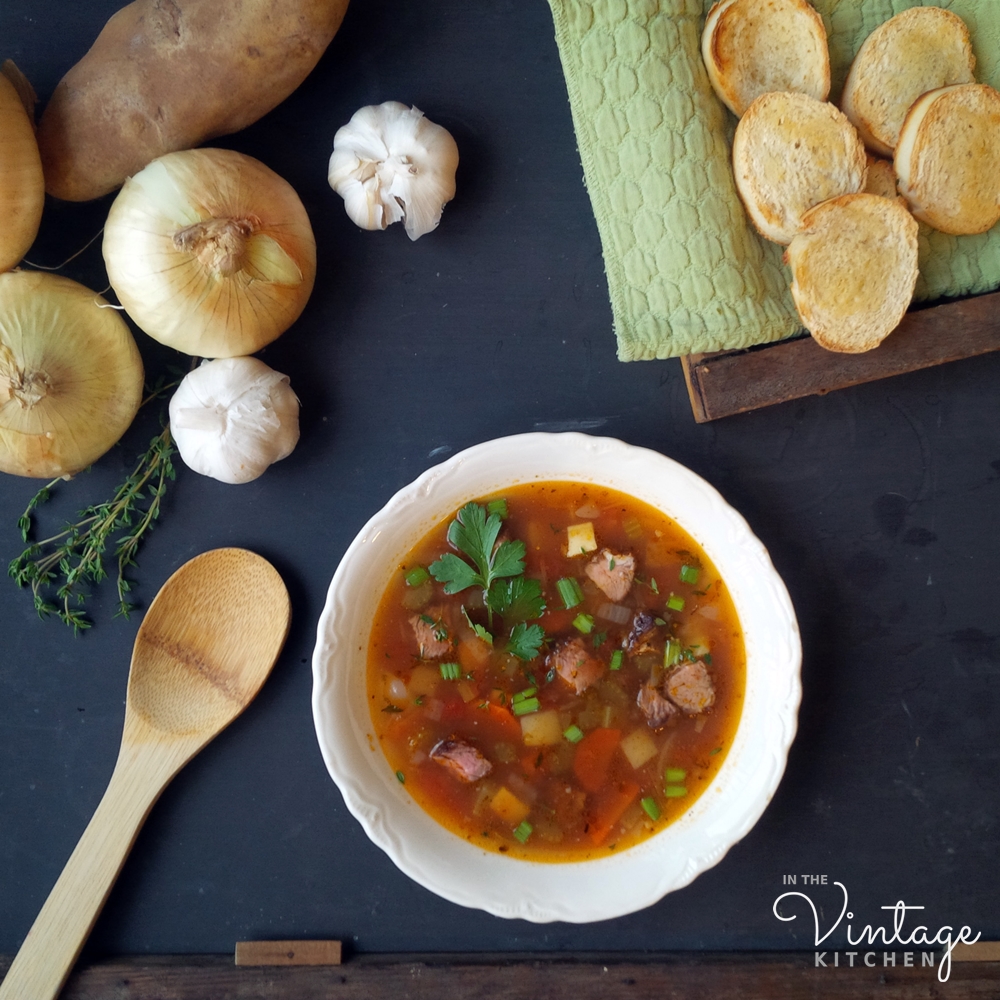
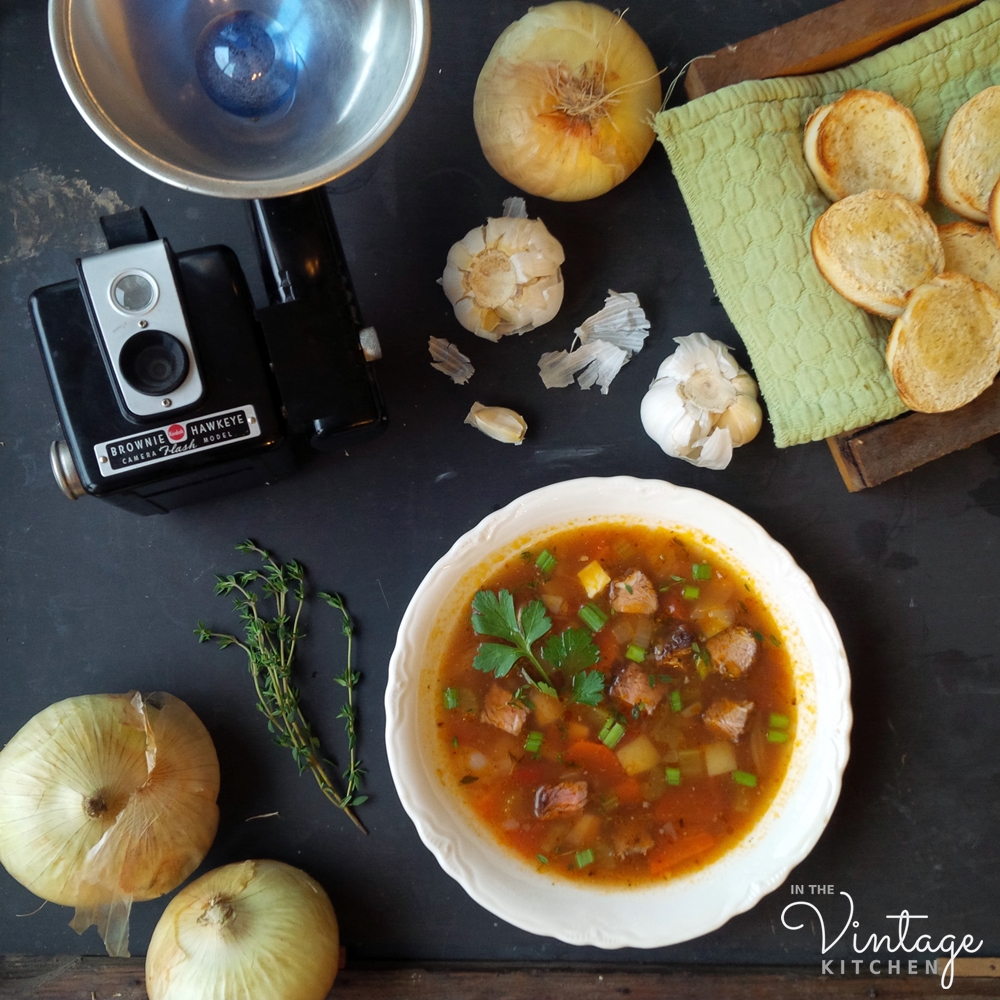
Next, we thought maybe it was the ingredients that doomed the soup’s ability to ever look pretty right from the very beginning.  So we prepared the same exact recipe with the beef and the barley and the rusty red vegetables (which turned out to be carrots and tomatoes). We added the celery, the potatoes, the onions and the fresh thyme and parsley the recipe called for.  It was all the same but it was different because our soup turned out looking this…

Not a grey lump in the batch and lots of color. The difference between the old photo and the new one instantly made us feel better for the soup eaters of 1950. Perhaps, they weren’t eating bland looking food after all.

So how could the same recipe look so different? How could one be grey and murky and the other be bright and vibrant? The answer is black and white, literally.

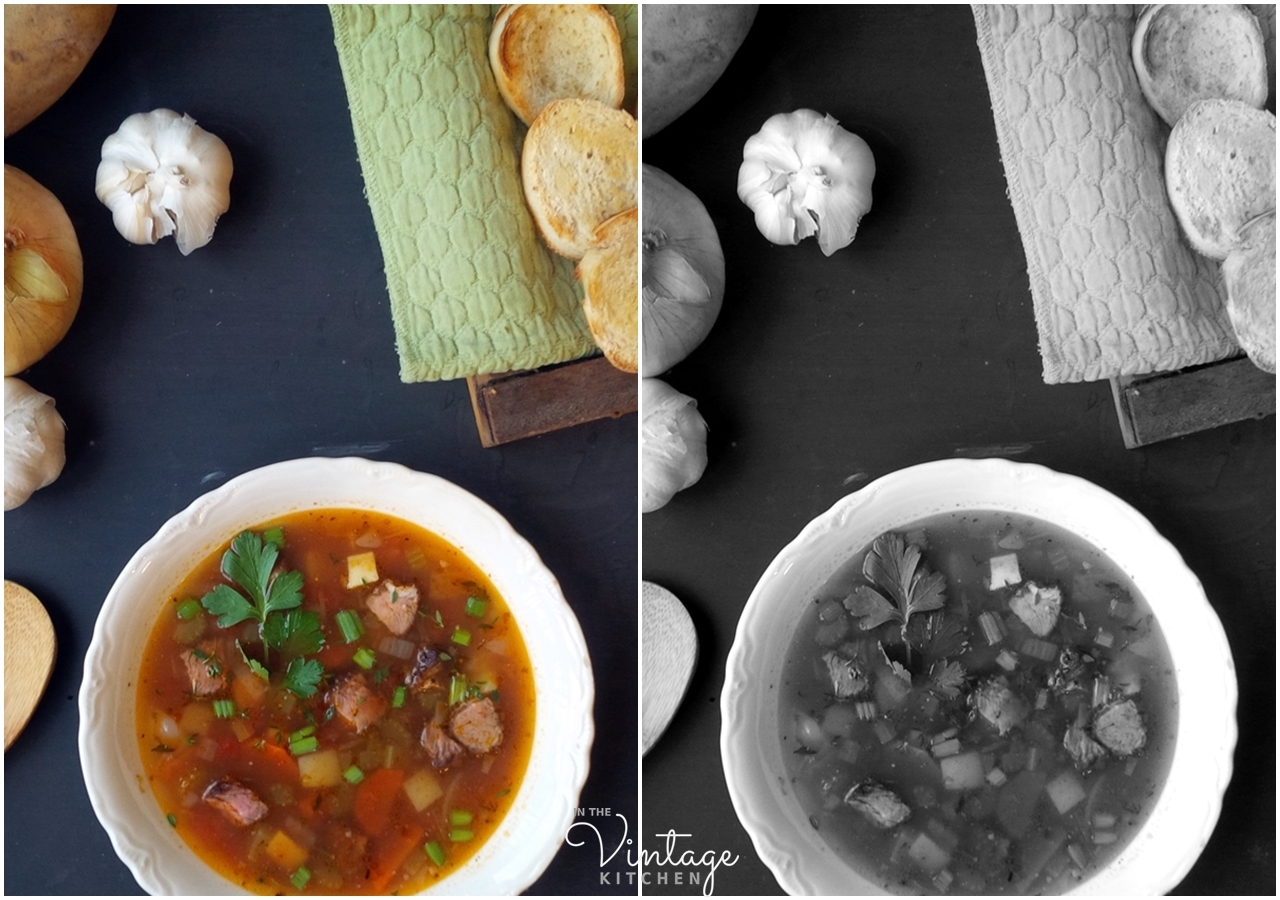
As it turns out 1950 was the decade when color photography was just beginning to become more affordable and more mainstream. Up until then, black and white film ruled the medium and photographers excelled at setting up shots that looked great in dramatic, colorless settings.  They relied on subjects and styles that would translate bold shapes and dramatic lighting and bring crisp clarity to their compositions in order to reproduce a striking image. This explains everything about our cookbook cover. When we changed the photograph from color to greyscale look how much more appealing the soup became…

Instead of focusing on the colors in the soup, you automatically focus more on the shapes floating in the broth and the overall symbiosis of the whole presentation. That means food stylists, or home economists as they were known up until the mid-1950’s, were used to thinking in the same black and white way as photographers when it came to styling food for the camera.

In the late 1940’s and early 1950’s, color was something new to learn about and adapt to. It was a baby in a glass shop, a wild dog on a leash, an uncharted course to explore. It was wild and exciting and sexy, but most people didn’t really know how to work with it right away in order to make incredible, indelible images. It required a creative and visual skill set much different from what was learned and achieved through black and white photography. It definitely took time to master.

The cover of this 1950 cookbook is a striking example of using an old mindset on a new medium. Photographers and stylists were used to their past ways of setting up shots for a black and white end result. They were relying on bold shapes, and dark contrasts to tell a black and white story in color.

In the same vein, the soup we made in the Vintage Kitchen doesn’t look nearly as appetizing in black and white as it does in color because our goal was always to reproduce an image in color. In the black and white example, our soup now looks murky and lacks depth and definition.

So this brings us to a fundamental point. Don’t judge a book by its cover or a recipe by its photo, especially when it comes to midcentury vintage cookbooks.  Food photography is an art form that grew into greatness over a long period of time but the recipes have always remained their humble selves.

Hopefully, if you are on the fence about old cookbooks this post will persuade you to give them another chance. The beef and barley vegetable soup may not have looked appetizing on the 1950 cover but it turned out to be delicious in our modern making of it, proving that looks can be deceiving even when it comes to cookbooks.

Cheers to kitchen surprises and food photographers!

Interested in more unexpected kitchen adventures? See what we learned when we explored the land of molded gelatin salads this past summer here.

Ready to experiment with some vintage recipes on your own? Find a bevy of vintage cookbooks in the shop here.

On This Day in 1930: A Behemoth Was Born

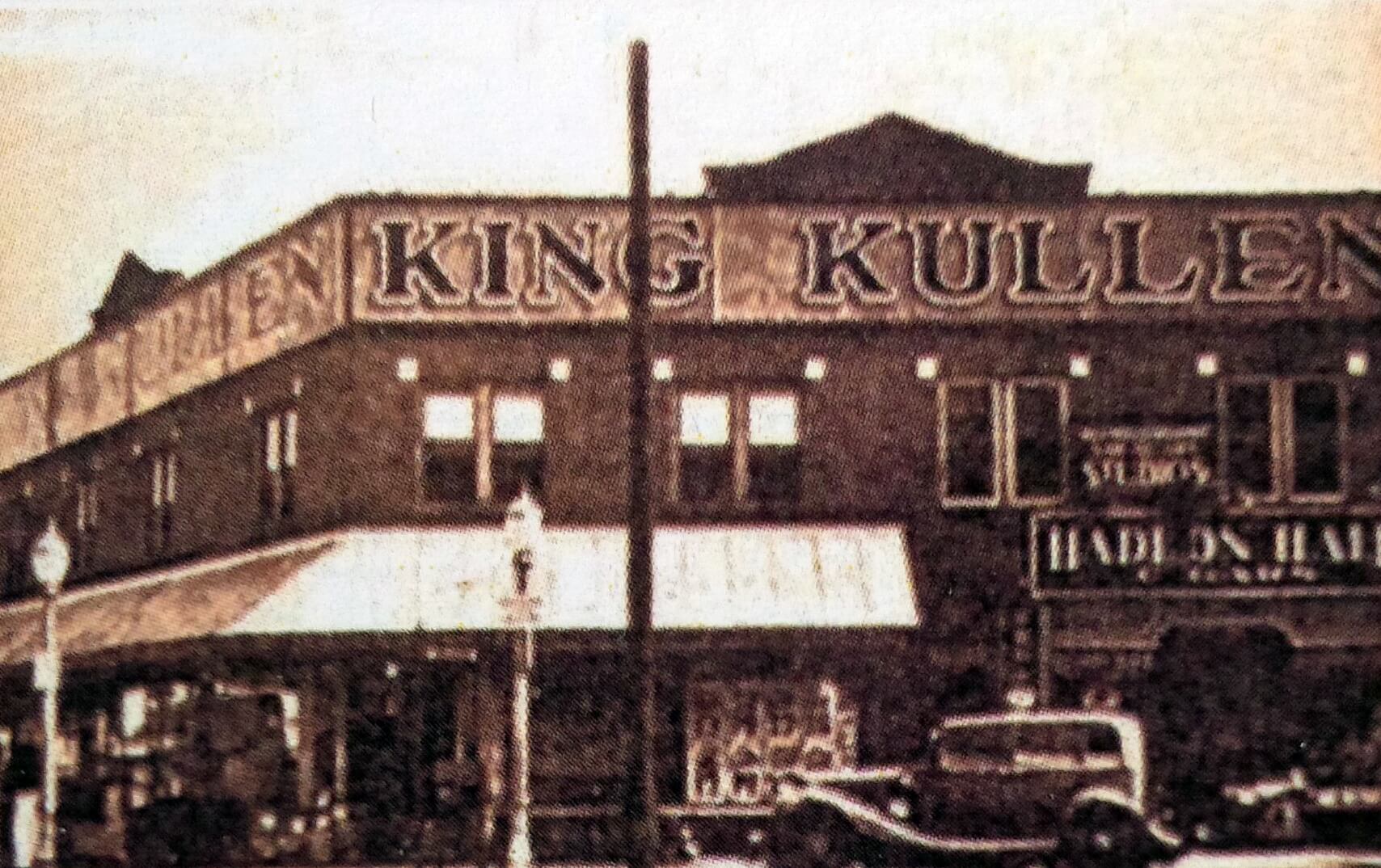
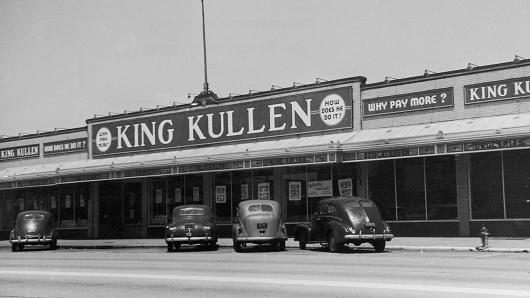
On this day – August 4th, 1930 –  a giant marvel of a masterpiece was unveiled on Jamaica Avenue in Queens, New York. It involved a big building, a big parking lot and a plethora of products that extended far beyond what anyone could have imagined before. Aptly named King Kullen, it was King Kong-ish in size and scope and quickly took over an industry in a way only a behemoth of a good idea could.  It was the birth of the super market – the very first large space grocery store that contained not only food items but also hardware, paint, automotive, cosmetics, shoe shine, kitchenware, confectionery and drug departments all under one roof.

Michael J. Cullen (1884-1936)

The brainchild of grocery store employee, Michael Cullen (who spent half of his adult career working at The Great Atlantic & Pacific Tea Company and then grocery retailer, Kroger) imagined a better, larger, less expensive shopping experience that would cut grocery prices in half for the customer and allow more space for the store to sell bulk items in mass quantity. Essentially it is the same concept that our modern American grocery stores still follow to this day.

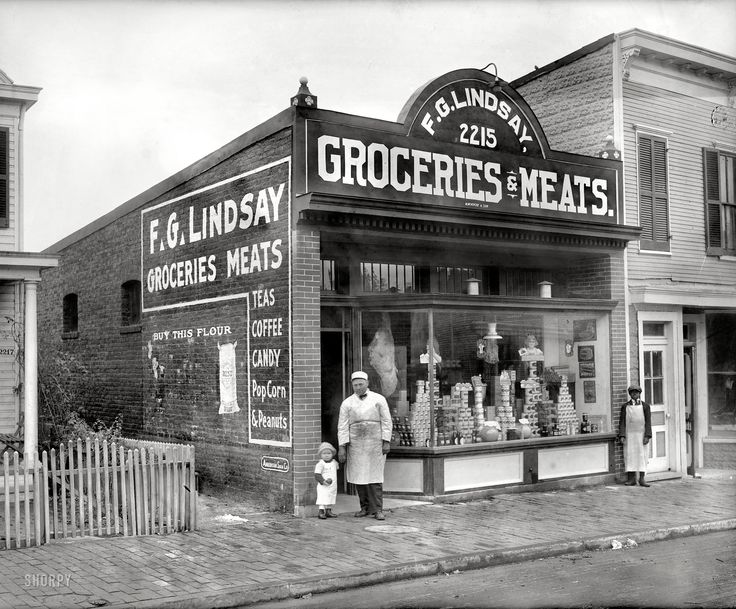
Before Michael and his big-brained idea came along, people grocery shopped in small pocket stores like this one photographed in the 1920s…

These independent stores definitely filled a need and were vital businesses to the community but they were also very limiting and not very private. Space was an issue for the store owners which meant that many items had to be special ordered for customers on a need-by-need basis,  extending the shopping transaction by days or sometimes even weeks.  Service was also an issue as items were frequently stored up high or behind counters making it necessary for grocery employees to gather specifically what was needed.

This one-on-one buying model may have helped develop customer relationships but it also created lengthy wait times for other shoppers while each order was filled.  Speculation and gossip seeped into the buying process too as the whole store could see (and hear!) what everyone was buying. Combined with the fact that meat was purchased from the butcher, bread from the baker, fish from the fish monger and specialty cans and shelf stable items from the grocery, meant that the whole shopping experience could take hours out of the day.

Refrigerators of the late 1920’s provided enough storage to stock foods for up to a week.

Michael took note of all these clunky patterns, accessed the growing rise of refrigerators popping up in American homes and started jotting down ideas for something easier and faster involving less commotion and less expense. While he flushed out his thoughts he was still working at Kroger. He brought up his ideas to his boss who didn’t give Michael’s thoughts any merit. So Michael left Kroger and opened King Kullen Grocery Company independently months later. Michael knew he had a great idea – the right concept at the right time. He had worked in the grocery business for 28 years at that point, long enough to see where the consumer experience needed improvement and how profits could be made.

By building a bigger store in a bigger space, King Kullen initiated the self-serve shopping concept where all products were in easy reach of the customer with a large quantity of the same item available. So you could zip in and out of the store much more quickly. No more waiting, no more special ordering, no more gossip.

King Kullen also eliminated the idea of credit registry systems, another time sucker, by only dealing with cash transactions. And they axed the local delivery system which for small, independent grocers meant additional employees and additional expense. Combining all these elements – bigger store, easy to reach items, large selection of product and a faster payment system was much more efficient and empowering to shoppers.  Independent groceries were old-fashioned and pokey where King Kullen, in 1930,  was up to the minute modern.

And then there was the significant pricing system. Upon opening, King Kullen boasted that they could reduce your average grocery bill by 10-50% which during the Great Depression years was a major attraction for struggling wage-earners. By offering everything from house paint to ham (the “super” market concept)  under one roof, King Kullen became a one-stop shop. You can see the price difference between Kroger in the 1920’s and King Kullen in the 1930’s in these advertisements…

Late 1920’s Kroger grocery advertisement on the left, 1933 King Kullen Advertisement on the right

Some of the significant savings included:

  • Tea –   $0.29 per 1/2lb at Kroger vs. $0.39/per 1lb at King Kullen
  • Boiled Ham – $0.33/lb at Kroger vs. $0.21/lb at King Kullen
  • Catsup – $0.15/bottle at Kroger vs. $0.10/bottle at King Kullen
  • Whole Chicken – $0.33/lb vs. $0.19/lb at King Kullen
  • Beans – 4 cans for $0.23 at Kroger vs. 6 cans for $0.25 at King Kullen

Finally, by providing a large parking lot able to accommodate a vast amount of cars, King Cullen changed how people shopped. Families went together, some traveling up to 100 miles away from home so they could fill their car with foodstuffs and stock their shelves for a lengthier period of time. The super market also hosted all sorts of product events and giveaways making each shopping trip to King Kullen unexpected and engaging. It was a seamless, adventuresome outing, easy to navigate and fun to participate in.

King Kullen caught like wildfire in the hearts of the American public. Thousands flocked to the new Jamaica Avenue store on opening day, leading a trend that other grocery stores (like Michael’s previous employer, Kroger) noted and then soon replicated. Throughout the 1930’s store after store opened under the King Kullen brand. Unfortunately in 1936 tragedy struck when Michael died just six years after debuting his first Jamaica Avenue store from complications following an appendectomy.

With the help of his wife and his sons, Michael’s legacy and the King Kullen brand continued to thrive. Today there are 32 King Kullen grocery stores still in operation, proving that Michael was a true visionary. The motto of the brand from the beginning was “We are here to stay and to please the public.”  Eighty-seven years later and still going strong, they have definitely accomplished their mission and in doing so affected change across the entire grocery industry.

Just listed in the shop this week is a cookbook published in 1955 celebrating the 25th anniversary of the supermarket. Titled the Silver Jubilee, it contains over 500 pages of recipes utilizing ingredients easily found at King Kullen-sized stores.

It is hard to imagine this being a novelty cookbook now but if you think about having to stop at 5-7 different food stores to pick up ingredients for one recipe you can understand how enormous this concept really was between the 1930’s – 1950’s. We take so much for granted now in the form of food buying and what we expect from the process. The Silver Jubilee really helps us understand the marvel behind the modern just like Michael helped us experience the efficiency behind the industry.

Cheers to Michael and his revolutionary idea and a happy birthday to King Kullen!

Later this month we will be featuring a few recipes from the Silver Jubilee cookbook in our first ever cross country cook-a-thon. Stay tuned for that!  In the meantime, find the celebratory Super Market Cook Book in the shop here.
10 Vintage Kitchen Trends of 1956

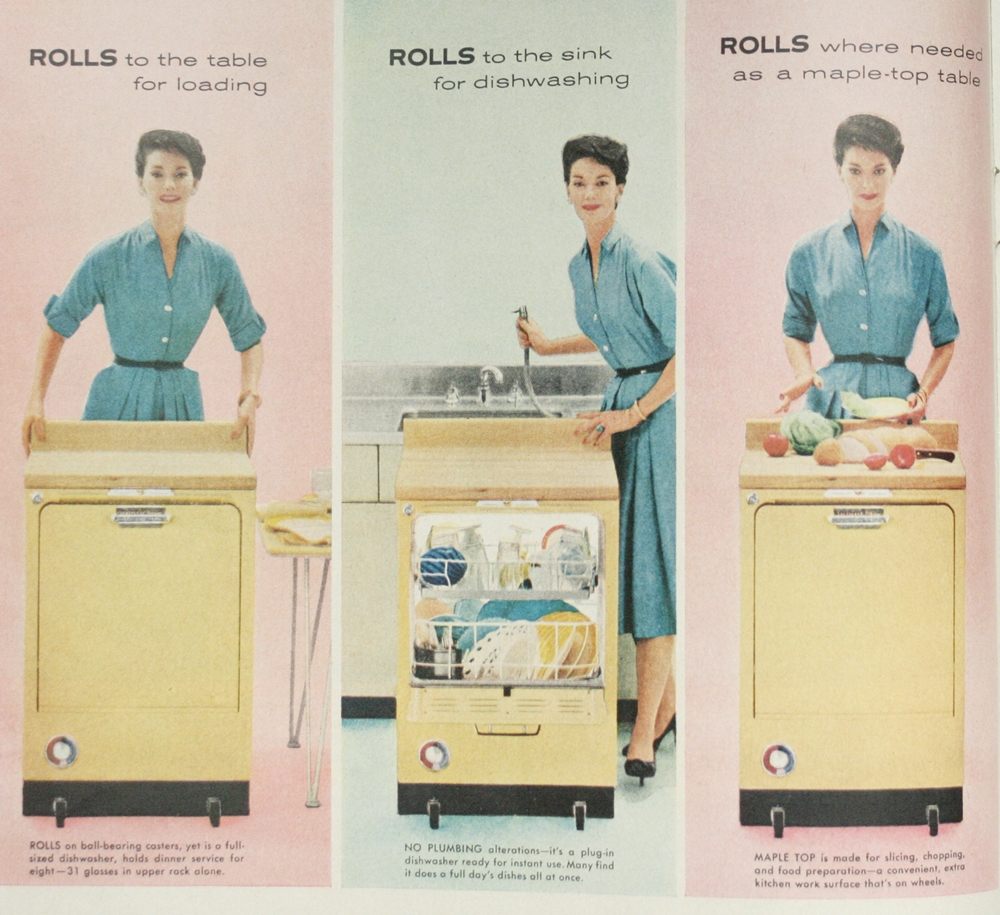
Hotpoint Mobile Dishwasher, 1956

1956 was quite a year for iconic pop-culture. Elvis was singing about his blue suede shoes, Norma Jean officially changed her name to Marilyn, the Yankees won the World Series,  Bob Barker stepped out onto his first televised game show set and Grace Kelly married a real-life prince.
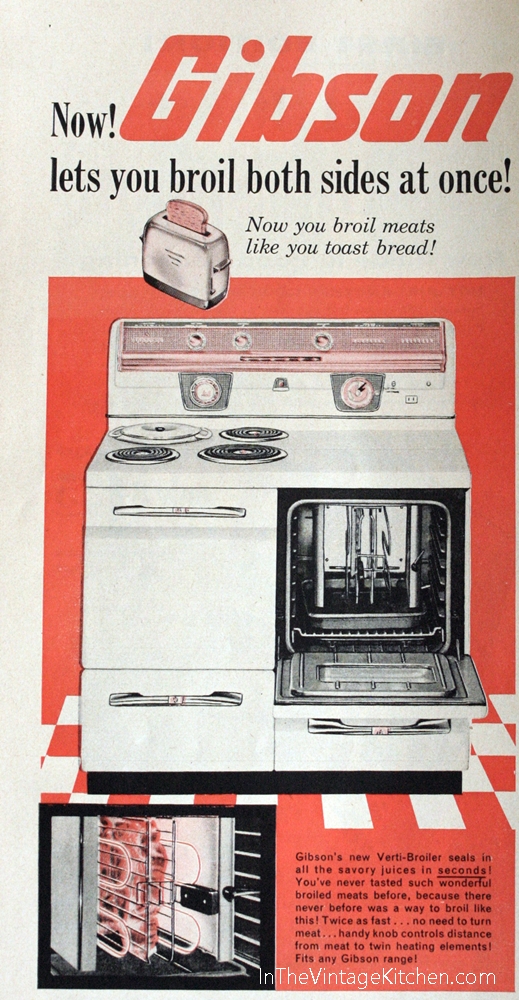
On the home front, the mid-1950’s kitchen was also going through some equally exciting and interesting design improvements in the convenience department. With more than 35% of women working outside the home by 1956 multi-tasking became “the” trend of new innovations promising both ease of use and the ability to conquer more than one job at a time. Some of these inventions were a bit quirky (like the oven insert that roasted meat like toast), some paved the way for modern mainstays that we use regularly today (the automatic Redi-Baker) and some (the mobile dishwasher) could totally make a comeback in our modern mini-home craze.
In today’s post we are heading back to the pastel wonderland of 1956 and all the mechanical marvels that hit the mid-century kitchen market with a flurry of magical appeal. Let’s look…

1. The Mobile Dishwasher

Hotpoint Mobile Dishwasher, 1956

Part cutting board, part dishwasher and all on rollers, this totally functional piece of kitchen equipment was meant to be wheeled around from prep counter to table and then back to the sink offering kitchen cleaner-uppers the ability to cut out some extra steps by loading dirty dishes right from the kitchen table. The new mid-1950’s concept of front loading baskets left room for a chopping board on top which was the ideal helper for any kitchen too tight on counter space. By throwing a cloth over the whole thing this handy appliance could even turn into a rolling hors d’oeuvres cart or impromptu bar area for entertaining, fulfilling three jobs in one – dishwasher, sous chef and butler. Completely functional, this seems like a piece of the vintage past that could definitely come gallivanting back into our world today, especially for city dwellers and tiny house lovers.

2. Separate Fridge and Freezer Units

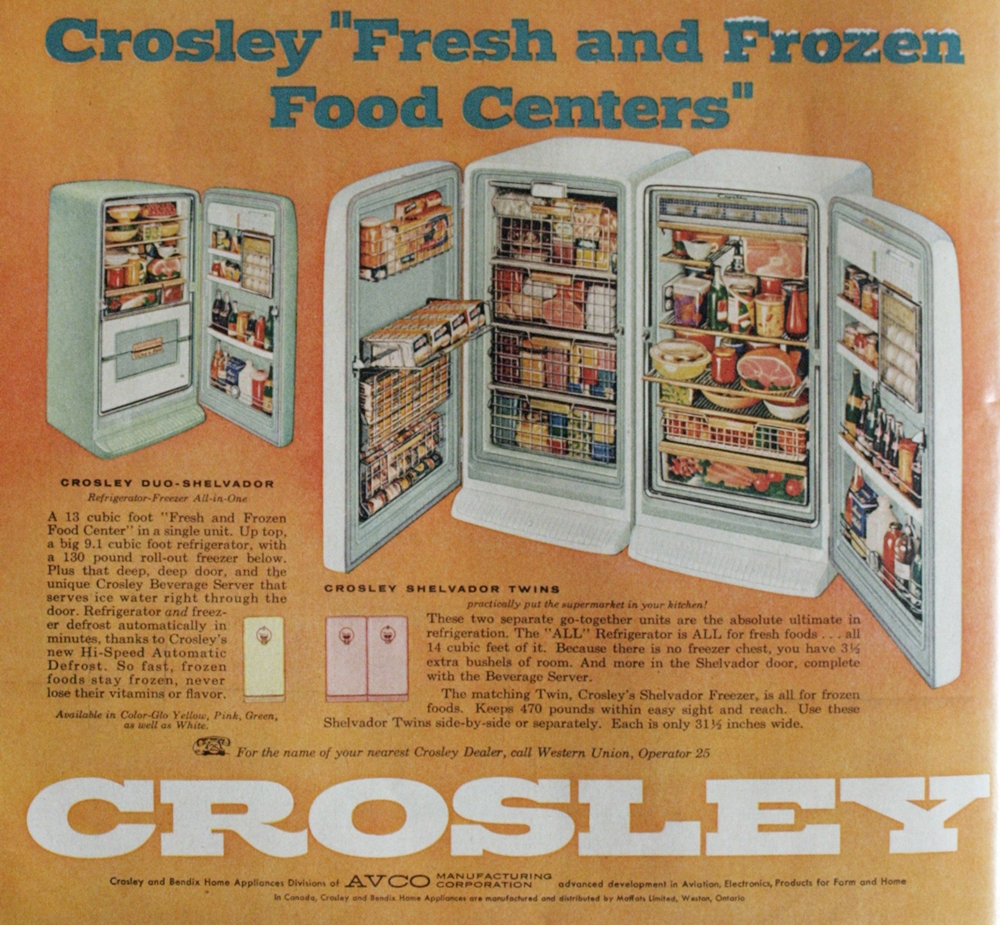
Crosley Presents their Fresh and Frozen Food Centers with Shelveador Twins

About the width of a standard contemporary bookcase, the 1956 Shelvador (shelf-in-a-door!)  Fresh and Frozen Food Center Twins by Crosley had the ability to hold up to 450 lbs of food and contain fresh and frozen assorted perishables in two completely separate unattached units. One for cold products, one for frozen products. Pitched as the “most convenient food-keeping service ever designed,” owning Shelvador Twins meant less frequent trips to the supermarket thanks to their large storage capacity. It also meant more creative kitchen design.  Offering two units for room balance and a series of mix and match colors opened up  of bevy of options in the decorating department. Crosley’s were a matter of  convenience and creativity.

3. Ultra-Organized Food Bins

Crosley was the company that first pioneered the idea of installing functional storage compartments in the doors of refrigerators and freezers back in the 1930’s, but their idea was so practical that all the major food storage manufacturers immediately began incorporating the compartment concept into their own designs as well.

In order to set everyone apart, individuality came to the design teams of all these manufacturers in the form of  unique arrangements within the compartmentalized cold cabinet. When the 1956 version of the Fabulous Foodarama by Kelvinator was unveiled it was the ultimate organizer’s dream. Offering a bevy of bins, boxes, trays and baskets it was like the Taj-Mahal of efficient food-keeping systems focusing on the nitty gritty details of good design.

Bacon, eggs and juice went into the Breakfast Bar section on the upper right side of the door. Waxed papers went into a non-refrigerated dispenser located in the freezer, ice cream got its own gallon-sized compartment specially regulated to keep it at the ideal consistency and bananas flew off the counter and into a room temperature bin just below the freezer papers. Separate spaces for vegetables, cheese, canned fruit and ice cube trays were all designated as well making the Foodarama distinct in its ability to put that there and this here.

4. Toaster-Like Cooking Devices

Gibson, who manufactured air conditioners, refrigerators freezers and electric ranges had a wonderful marketing team (or perhaps it was the design team) that came up with all sorts of colorful names to call the unique details of their stove-tops and ovens. The Thermatic Kookall, the Tel-O-Matic Light Source and the Verti-Broiler are just three examples that dazzled potential range buyers but mostly they were glitzy names for ordinary features that other popular ranges came with too.  Until the exclusive Gibson Verti-Brolier was born.

Inspired by the close heating elements of the common, everyday toaster the Verti-Broiler turned the meat industry on its side (literally) buy taking the same directional cooking concept as a slice of bread but exchanging it with a slice of beef. With the pronounced ability “to seal in savory juices in seconds” this proposed method was supposed to cut cooking time in half making it a helpful necessity for busy working men and women. In a future post we are going to experiment with this cooking method (steak on the vertical)  to see what happens. Stay tuned for more on that this summer.

5. Linen-Like Paper Napkins

It may seem a bit difficult nowadays to get excited about a paper napkin – but in 1956 they were indeed a source of novelty among meal planners. By giving women a plausible, non-guilty excuse for setting aside their traditional cloth napkins, these paper cousins eliminated the need for excess laundering and large linen closets. Thanks to the 1956 invention of the Scotkin – Scott Paper Company’s introduction of the super strong and absorbent 2-ply paper napkin, these elegant yet disposable damask designed napkins boosted all the beauty of linen without all the upkeep.  No more washing, starching, and ironing needed with a Scotkin – just use and toss out. They were available in two sizes – dinner and family and were destined to become an ever-useful staple paving the way for similar products still on the market today.

6. Washable Wall Canvas

Wall-Tex Washable Wall Canvas

The Columbus Coated Fabrics Corporation began introducing washable wall canvases in the early 1950’s but by 1956 they were hitting their stride and gaining such popularity that dozens of new designs were being unveiled each year under the Wall-Tex brand. Prized for their easy ability to wipe off grease, dirt and drawings (as seen above!) this durable wallpaper-like covering sped up housecleaning and allowed for a somewhat more relaxed atmosphere when it came to looking after the messy effects of energetic kids, pets and cooks.  Hung with paste just like traditional wallpaper, Wall-Tex canvases were baked with a layer of plasti-chrome that produced smooth, easy-to-clean surfaces ideal for kitchens,  bathrooms and play areas. Columbus Coated Fabrics Corporation and the Wall-Tex brand went out of business in 2001 but recently peel and stick wallpaper has come back into fashion again so perhaps we will head down the highway of washable wall canvases yet again.

8. Under the Sink Storage

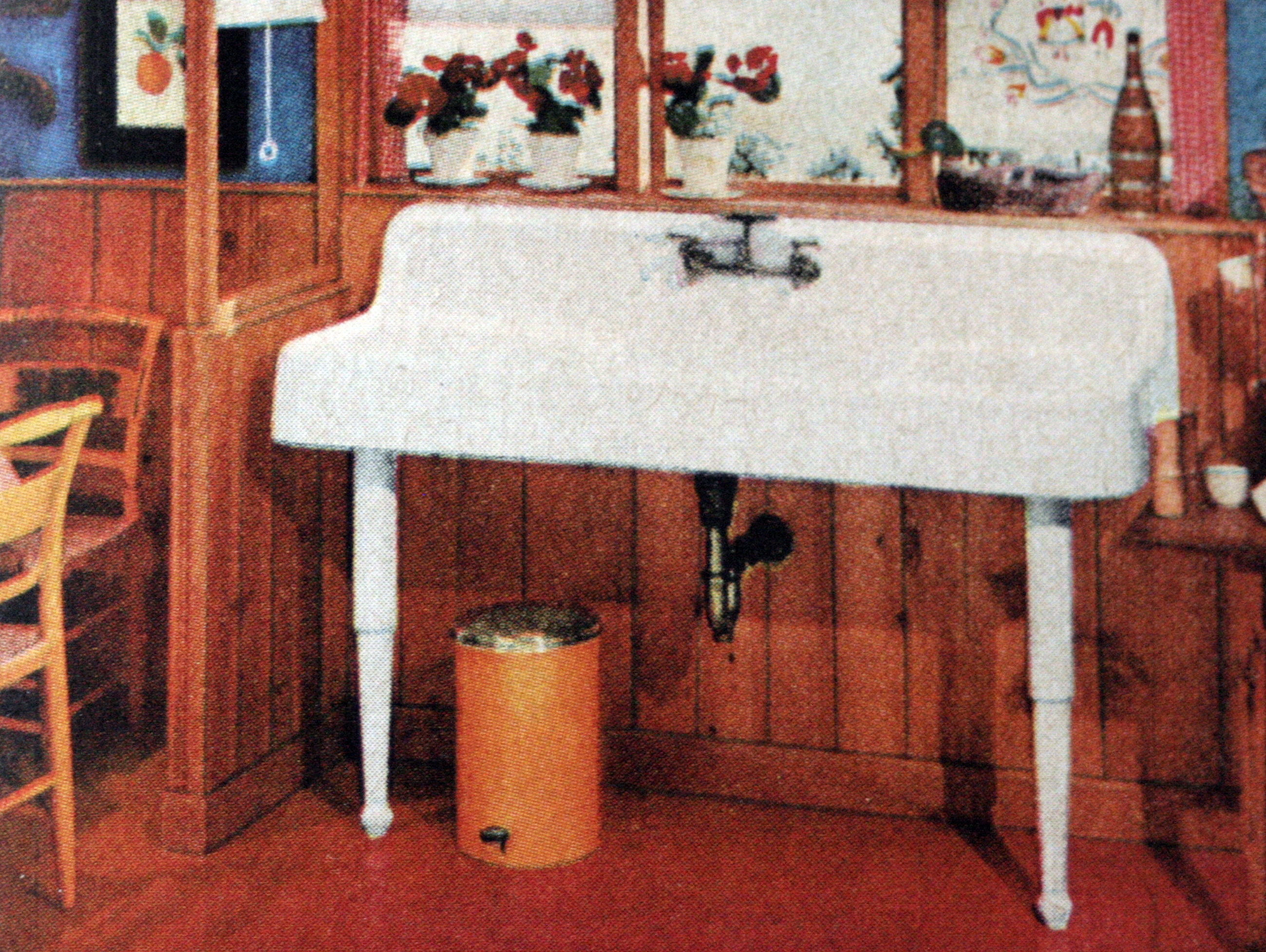
Kitchen cabinetry first debuted in the 1930’s, and was improving by functionality and appearance with each decade. If you wanted to keep pace with all the latest interior design trends in 1956 you would have most definitely upgraded your kitchen sink. Out went the old leggy farmhouse trough style…

…and in came the organized cabinets and drawers…

Popular Youngstown brand (the leader in mid-century cabinetry) hid the plumbing, added sleek steel drainboards, a garbage disposal and pull out drawers and shelving. Deluxe models even included two sinks, pull out cutting boards and a cutlery drawer transforming the ordinary sink into an extraordinary piece of furniture.

9. Mini Tabletop Ovens

A pre-cursor to our counter-top toaster ovens, the Knapp-Monarch Automatic Electric Redi-Baker was the mini oven you needed to bake small portions right at the kitchen table. As a cost-saving device you no longer needed to heat up the big main kitchen oven in order to enjoy single serving items like breakfast sausages or biscuits, and as a convenience measure you could tote it anywhere around the house as long as you had an available electric outlet. This essentially took baking out of the kitchen and into other rooms of your choosing or even to the patio. While a great idea at the time, the Redi-Baker was in competition with a lot of other emerging small appliances eventually becoming overshadowed by bigger, more well known brands.  It was out of the market altogether within the decade.

10. Built-in Big Pots

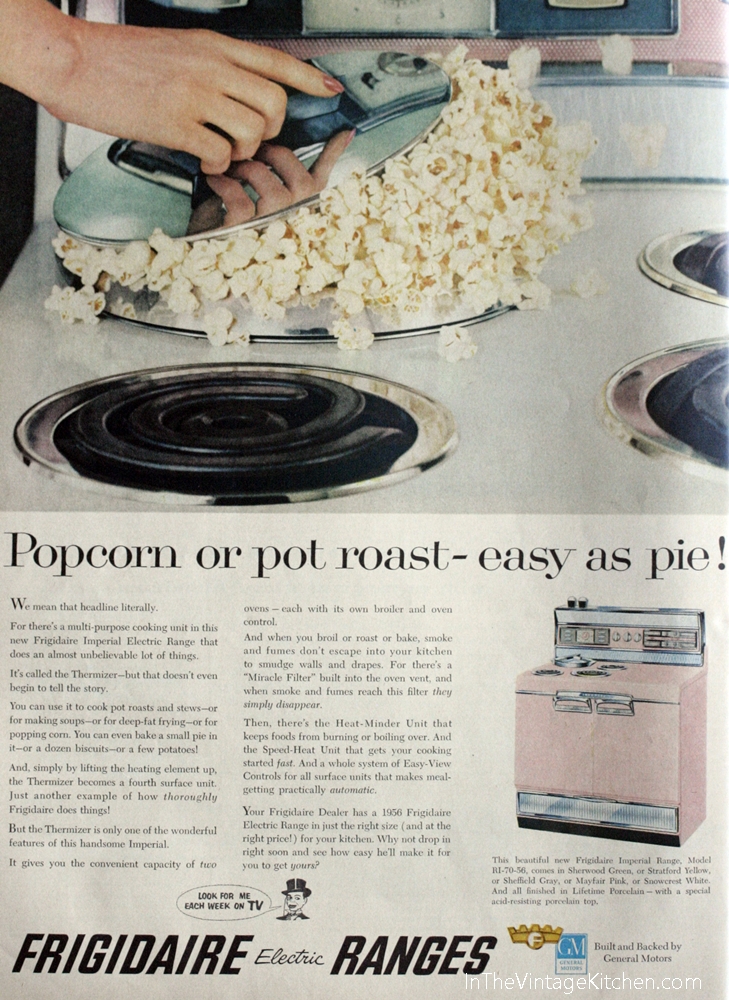
In the traditional place of four burners on a stove-top Frigidaire Electric Ranges introduced a new concept in cooking equipment with their 1956 unveiling of the Imperial Range… a built in Thermizer. Essentially it was like a big pot sunk into the stove that could be used to boil, roast, fry or slow-cook an assorted number of dishes from soups and sauces to pot roast, dumplings, desserts,  and even popcorn. With a removable 6 quart pot that fit inside the well of the Thermizer  you could even use it to sterilize canning jars, steam vegetables and bake small pies or individual sized desserts.  A true novelty in the productivity department, it helped cut down on the expense of heating large ovens for small projects while also giving home cooks the ability to prepare and pre-plan large meals effortlessly.

Italian designer Mossimo Vignelli (1931-2014) believed that good design was a language not a style. It is easy to forget that all the bells and whistles on what we consider to be normal kitchen equipment (fridge, freezer, stove, dishwasher, sink, cabinets, etc.) first started out as novelties and innovations. They were all experiments destined to stick or stink.

We’ve come a long way from the caveman days of cooking over open fires in the wild but in the 61 years that have passed between 1956 and today it is interesting to note that we are still requiring the the same sets of demands from our ideal kitchens – time saving shortcuts, multi-tasking equipment and maximum storage.  We are still a society juggling time. We are still a society talking about the most effective ways to produce a product and fulfill a specific need. And ultimately we are still trying to sort out our most efficient eating and cooking habits. Mossimo is right.  The good bones of functional kitchen design began to form fifty years ago but the conversation isn’t over yet and the language is still being translated.  Everyday ahead gets us one smidge closer to improving the landscape we learned about yesterday.

Would you like to see any of these vintage kitchen trends embrace our modern spaces today? If so, post a comment below!

In the meantime, cheers to past designers who  made their marks and to future innovators who sustain them!