The wonderfully rich colors and simple compositions of vintage photographs make stunning visual displays, if you allow yourself to think beyond the traditional picture frame.
A Guy Named Guy from msjeannieology
Ms. Jeannie likes to tuck old pictures here and there around the house, in unexpected places, so that when she happens upon them, its almost like she’s discovering them for the first time again. It is delightfully fresh decorating!
Below are some fun and creative ways to display your favorite photos (click on each photo for additional info)…
1. In a folding ruler:
In A Folding Ruler from havenvintage
2. On a metal rake…
Metal Rake from alifewelllived
3. In a mason jar…
Vintage Canning Jars from thevintaquarian
4. On an oil can…
Vintage Oil Can Collection from ThatsVintageBaby
5. In a toast rack…
Vintage Silver Toast Rack from ACreativeLifestyle
6. On a vintage receipt holder…
Vintage Receipt Holder from jollytimeone
7. On a hanger…
Metal Skirt Hanger from thisvintagething
8. In a flower frog…
Industrial Flower Frog from bluebell
9. In a record holder…
Vintage Record Holder from MyraMelinda
10. On a clipboard…
Vintage White Marble Clipboard from LittleSistersSecret
11. On a purse…
Upcycled Black Alligator Handbag Wall Hanging from SassyTrashAntiques
12. On an embroidery hoop-like display board…
Round Pin Photo Memory Board from ZanaProducts
13. In an open chest…
Antique Doll Chest from LuncheonetteVintage
14. In a cup holder…
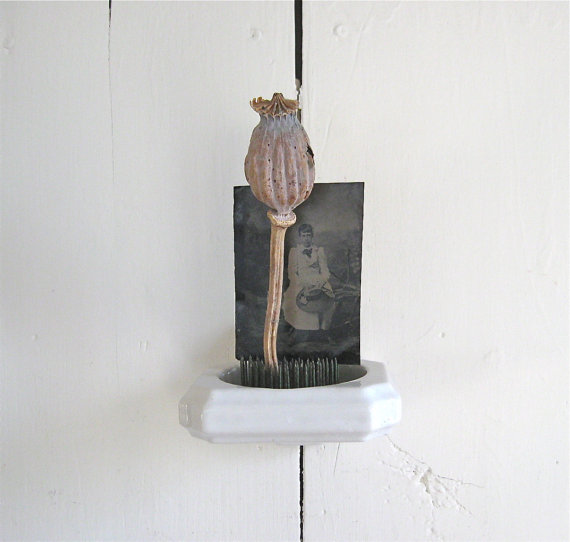
Vintage Porcelain Bathroom Fixture Cupholder from anythinggoeshere
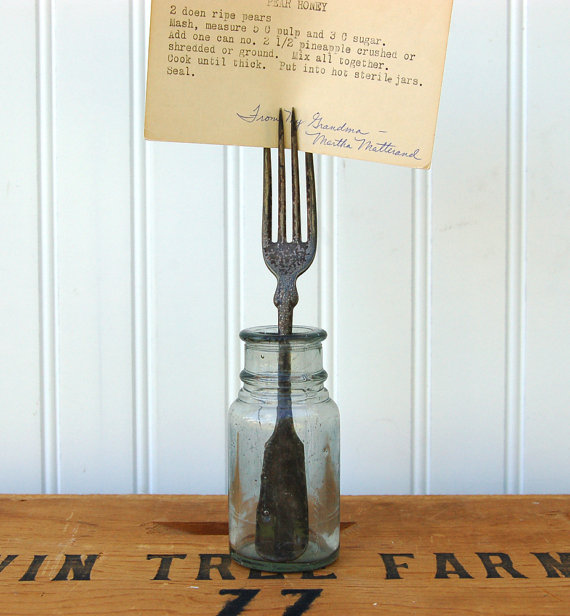
15. On a fork… (ok – this one isn’t a photo, but you get the idea)…
Farmhouse Recipe Holder from JennasBeachRetreat
If you have your own creative way of displaying vintage photographs, please share with us. Photos are welcome:)
Ms. Jeannie is thoroughly lucky to have come from a family of cooking adventurers. Her parents, her sisters, her husband all love to cook and enjoy experimenting with new flavors and diverse ingredients.
When she was small, Ms. Jeannie’s mother taught her the “old-fashioned” way of baking, with recipes handed down from generation to generation. Which meant everything, always, was made by scratch. Cookies, cakes, pies, puddings, chocolate sauce, whipped cream, every decadent delight was made by our hands with real, whole ingredients.
Ms. Jeannie’s great grandfather, William Earle aka Grandpa Bumpy, was an excellent baker. It’s his pie recipes that we still use today in our family.
As Ms. Jeannie grew and started her own experimenting, this love of building creations from the mixing bowl up stemmed out into other aspects of the palatte: homemade tomato sauce, chicken broth, pasta, salad dressings, soups, breads…it was thrilling to know that she could indeed make anything she wanted.
One of her most favorite things to make is pie crust. There is something about lumping a few, simple ingredients together in a bowl, mixing it about and then rolling it out into a delightful sheet of smooth paper-like dough.
There are challenges still though – even after all these years… like that wonderful flip of the thumb that makes a beautiful scalloped edge around the rim of the pie crust.Ms. Jeannie cannot seem to master this for the life of her. Instead she opts for the more rustic, “provincial” style of folding over the extra dough, which creates a very humble look.
Gorgeous scalloped pie crust (not made by Ms. Jeannie!). You’ll see Ms. Jeannie’s rustic style further down the blog. Apple Pie photograph by Summer Owens.
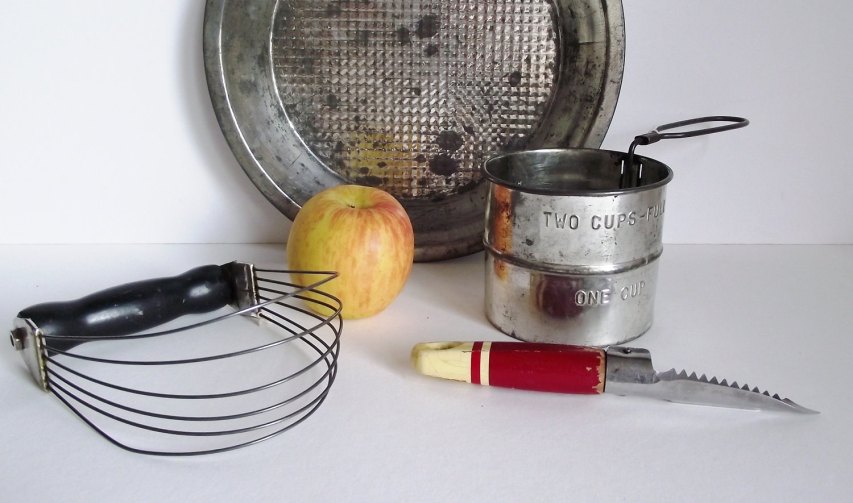
Ms. Jeannie was consistently taught by her mother that using good ingredients was just as important as using good equipment. Which meant having a good set of mixing bowls, rolling pins , flour sifters and a pastry cloth. Necessities. Each and every one of them.
Vintage Kitchen Tool Collection from JodysVintage
When Ms. Jeannie was off to college and on her own, she tried to cut a few corners in the equipment department. Using an empty wine bottle as a rolling pin, the wooden cutting board as a pastry cloth and a fork in place of a dough cutter, Ms. Jeannie was off and baking to somewhat satisfactory results. Sometimes the dough would be tough and difficult to work, flour would get all over everything (almost always on the floor!) and the dough never rolled out perfectly on the square cutting board – usually lopping off one side, making it thicker in that section then all the others.
For years she baked like this – improvising and substituting, working with what she had at hand instead of getting the proper tools. A pastry cloth – that is really what Ms. Jeannie desperately needed. But she always seemed to overlook this one neccessity when she was out shopping.
Until…two months ago! When she FINALLY she purchased a pastry cloth at the kitchen supply store. It cost $5.00. What are on earth was she waiting for all this time? It was indeed a jubilant and monumental day:)
Ms. Jeanne’s new kitchen darling!
Now, whatever Ms. Jeannie rolls out onto this magic carpet comes out lighter, flakier and more evenly consistent. It is completely marvelous! As it turns out – pastry cloths have been in use for over a century. Because they are made usually from unbleached cotton and/or oilcloth they provide a wonderful non-stick work environment. Seasoned with a little flour and carefully stored, pastry cloths can last for years. Marvelous, says Ms. Jeannie, since it took her years to acquire!
Here is Ms. Jeannie’s latest creation using her lovely kitchen helper… (note the rustic crust!)
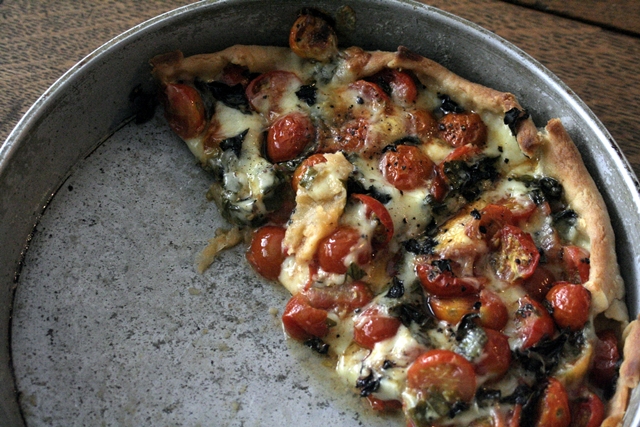
Ms. Jeannie’s Simple Tomato Basil Tart
Simple Tomato Basil Tart – Serves 4
1 cup flour
1/4 tsp. salt
6 tablespoons of vegetable shortening
1/4 cup ice cold water
1/2 lb. Farmer’s cheese
4 large handfuls of fresh basil, washed and torn in pieces
2 lbs. organic home-grown cherry tomatoes, washed and cut in half
3 tablespoons olive oil
Salt & Pepper to taste
1. Preheat the oven to 350 degrees. Place the halved tomatoes in a medium size bowl and toss in 3/4 of the fresh basil. Add the olive oil, salt and pepper and mix to combine. Set bowl aside and let tomatoes marinate while you make the dough.
2. Now onto the dough. In a large mixing bowl, combine the flour, salt and shortening. Using a dough cutter (or a fork – in Ms. Jeannie’s case) mash the shortening into the flour until it forms small crumb-like bits. Add the cold water and combine until dough forms. Knead it lightly into a ball with your hands. Just until it is no longer sticky. Be careful not to overwork the dough – then it will become tough.
3. Sprinkle a small handful of flour on your work surface (aka the pastry cloth!) and roll the dough out as thinly as possible. Place crust in a round cake pan and bake in oven just until the crust is firm but not brown. About 20-25 minutes.
4. Remove crust from oven, add the tomato/basil mixture. Take the farmers cheese and slice in thin chunks on top of the tomato mixture. Carefully mix cheese and tomatoes together with a spoon, making sure not to scrap a hole in the bottom crust. Top with the remaining 1/4 basil.
5. Return the tart to the oven and bake for 20 minutes. Broil for an additional 5-6 minutes until the cheese starts bubbling and turns golden brown.
6. Let rest for 10 minutes before serving.
Serve this with a simple side salad and a glass of white wine (Ms. Jeannie chose a Pinot Grigio) and you have a lovely, light, late-summer dinner!
Ms. Jeannie has this lovely friend Tuny who has lived one of those adventurous sorts of lives here and abroad. She’s fun to spend time with because she’s always got something interesting to say. Last time they got together they were talking about the royal wedding and trying to determine William’s last name. Tudor? Windsor? Wales? They were determined not to look it up online yet try to figure it out by going through the lineage of the royal family. They got about 20 minutes into that and then decided to consult Google. (In case you are interested it’s a hypenated name, Mount Batten – Windsor!)
Anyway, in trying to guess the right name, their conversation took all sorts of twists and turns. There were references to Tuny being engaged to a Spanish bullfighter, her years spent as a librarian, her travels, her books, her artistic endeavors and her love of cats.
Cats – yes most definitely. Tuny might just be one of the biggest collectors of cat art that Ms. Jeannie knows. Specifically she loves cat folk art, which Ms. Jeannie can understand since she is a big folk art lover herself!
Each August, Ms. Jeannie anticipates the Slotin Folk Art Festival held in Norcross, GA (this year it’s August 17th-19th). If you have never been – it is quite an experience of color and creativity – so much so – by the end of the day, Ms. Jeannie’s brain feels swimmy with pageantry. Tuny would love it here!
A glimpse into the festival. Photo courtesy of blackartinamerica.com
It just so happened that the first piece of folk art Ms. Jeannie ever bought was at the festival in 2008…a small 4×4 painting of a bird. Here’s a photo of it…
The start of Ms. Jeannie’s folk art collection.
Ms. Jeannie loved the flowers and the colors. The fact that it featured a bird made it even more perfect. It is by far the most colorful piece of art that Ms. Jeannie owns.
So thrilled, Ms. Jeannie was, of her new acquisition, the artist wrote a personal little note on the back and signed her name. Ms. Jeannie’s glad she bought it that day as she hasn’t seen this artist at the festival any years since and she can no longer read the name of the artist’s signature. It’s one of those long scratchy, crawly names that she wrote upside down with a faded marker pen. This makes Ms. Jeannie cherish her folk art bird even more so. A special memento from a special day. Periodically, Ms. Jeannie will move Bird about the house to spaces and places that need a little extra brightening. Bird is good at offering that extra bit of light. Art is good at offering at that extra bit of bright.
So when Ms. Jeannie chats about cats with Tuny she can understand how her love of all things feline plays such an important part in her life. Read on as Tuny sheds some light on what it means to be a collector …
Ms. Jeannie: What is it about cat art in particular that appeals to you?
Tuny: Well…partly it is that cats themselves appeal to me; I like being around them, interacting with them, learning about their individual personalities, and enjoying their appearance, which brings me to a second, and perhaps more important, part, in this context: It’s a cliche that some people can toss a scarf or throw onto a sofa and have it transform the sofa, as if an experienced interior designer had done it. Cats are so well designed that no matter what they’re doing, it’s art. They can sprawl, curl up, stretch out, etc., and always look as if it were deliberate, because they form a pattern. But even more than the above, I love them and want to celebrate them.
Ms. Jeannie: How did you discover Etsy?
If you are unfamiliar Etsy.com, it is an online international marketplace devoted to the sale of handmade crafts and vintage finds.
Tuny: MANY years ago, before I knew much about online activity, I must have been searching for “cat art” and came upon a kitty puppet that I wanted in the worst way–but it said to Sign in to Etsy, and I didn’t understand what Etsy was or how to go about that…especially as the only computer I had was my work computer, and I didn’t want to sign into anything on it. It wasn’t until several years later, when Etsy became better known, that I figured all this out.
Screen shot of the Etsy Home Page
MJ: What do you like best about Etsy? What do you like least?
T: Perusing Etsy’s like being let loose in a really cool art festival, in the comfort of my own house, where I have access to art from around the world–that’s the best. Least are two things: when searching for something, odd things that have no relevance often turn up in the results. I understand, in most cases, why this happens, but I wish there were a way to put in limiters, such as “no prints” or “no cat-eye beads.” The other thing isn’t a real dislike, but I wish one could purchase an Etsy gift certificate that would be good for a shop of the recipient’s choice.
MJ: How did your interest in art develop?
T: Because I come from a very talented family, I always thought that my own efforts in that direction weren’t worth the effort, as it were, but when I was in my late 20’s, living abroad in a country with a long tradition of leather book binding, I started making little illustrated books for a friend, and had them bound. When I discovered how much fun painting was, talent or not, I was hooked.
The bookbinding episode was in Portugal–I didn’t learn bookbinding; I went down to one of the binderies, which were small operations, and told them what I wanted to do, which was to paint some pictures and have them bound into a small book. They gave me the paper of the right size, and when I finished the paintings, I took them back and they bound them into a small leather book. I made several of those. What I did learn, also in Portugal, was to make what are called tapetes, or carpets, of Arraiolos, in a very simplified form…a sort of long-armed cross-stitch done in wool on a burlap-like background.
Antique Arraiolos Portuguese Embroidery Panel from Helena Alexio Glamour
MJ: What type or types of art appeal to you most?
T: Folk art and illustrations in children’s books
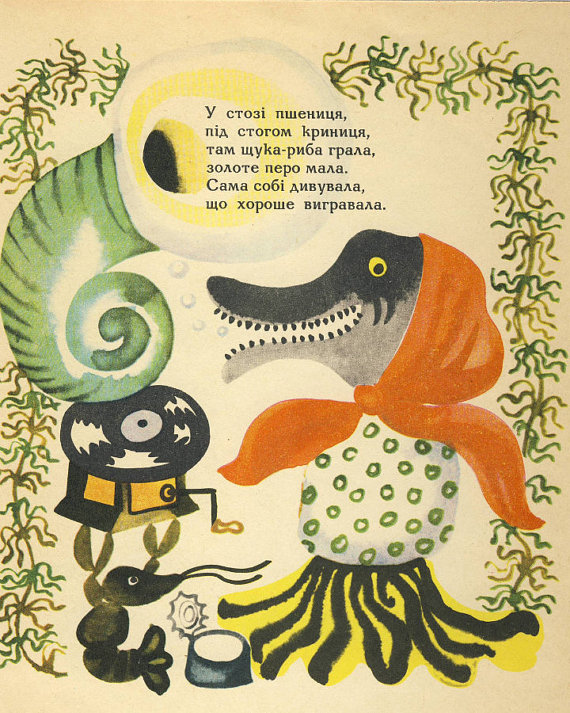
Playing House by hottamaleartVintage Children’s Book Illustration “Dali’s Russian Dream” from MissQuiteContrarySiamese Cat Folk Art Painting by 3crowsVintage Children’s Book Illustration Alphabet from nesstiquesGhostly Cat Halloween Clay Folk Art Ornament by KilkennyCatArtVintage 1950s Child’s Book Illustration from kelleystreetvintage
MJ: If you could sit down and have lunch with any famous artist, living or dead, who would you choose and why?
T: None; I prefer admiring from a distance.
Le Chat Noir Photo Cafe by Jessica and Holly
MJ: As a world traveler, exposed to many different cultures, how has travel affected your viewpoint on art?
T: Travel has enhanced my appreciation for indigenous/folk art of various countries.
The Traveling Cat Art Print by TheSmokingCat
MJ: What is your most favorite museum?
A. Honolulu Academy of Arts
Honolulu Academy of Arts (Honolulu, Hawaii) Exhibition Hall
and the Folk Art Museum in Lisbon.
Museu de Arte Popular in Lisbon, Portugal
MJ:As a painter yourself, what do you hope to express with your work?
T: As all I paint is cats, then, an appreciation for them.
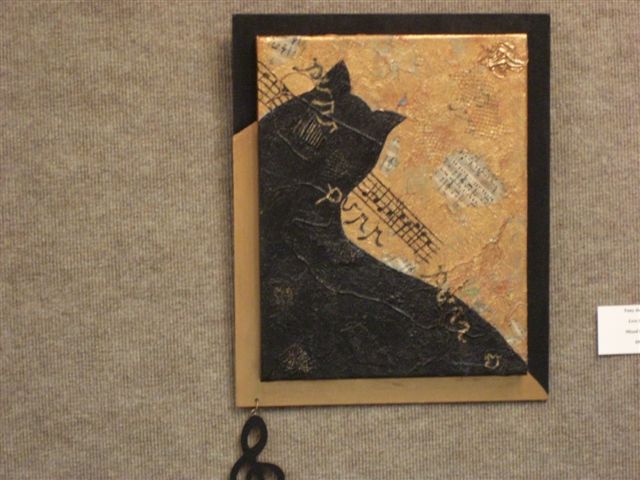
Love Song: Every Heart Has Its Song for Those Who Would Listen by Tuny
MJ: Explain your ideal art buying experience. Would you like to meet the artist face to face, get to know them, understand their motivations and their inspirations, their back story, or do you like to buy art and imagine your own stories surrounding a piece?
T: I enjoy meeting artists, particularly if I encounter them repeatedly at art shows, etc., but I like their work to speak for itself.
Irving Ponders the Nature of Consciousness by Matte Stephens
MJ: If money was no object, name 10 pieces of art that would be in your collection.
T: I enjoy looking at, experiencing, if you will, fine art, but my affinity is with folk art, most particularly cat folk art–so an unlimited collection of that would be lovely.
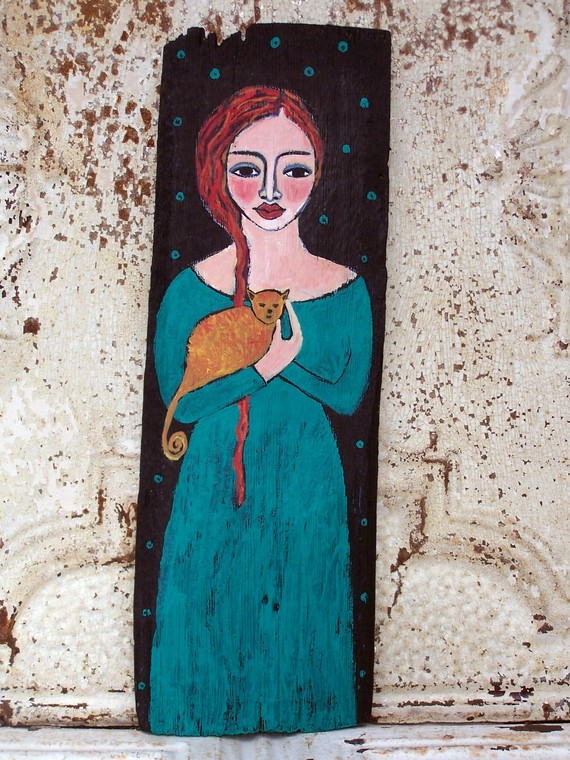
Original Folk Art Cat Woman Painting by LindaKellyArt
MJ: Who is the most interesting artist you have met so far?
T: Hard to answer, because they all have something interesting to contribute.
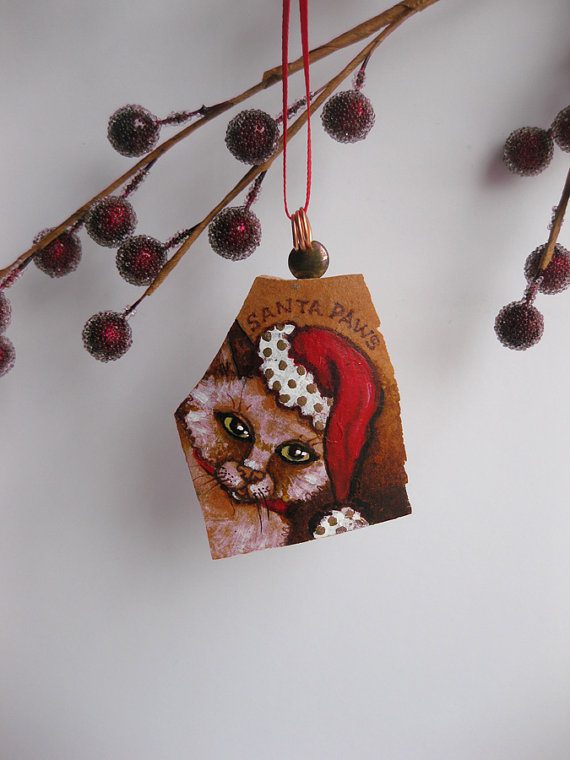
(Ms. Jeannie’s side note: Incidently, Tuny’s niece, Diana, has an Etsy shop dVineArt which combines two of Tuny’s favorite mediums: cats and illustration! This must run in the family!)
Santa Paws Christmas Pendant by dVineArt
MJ: As you transition through different stages in your life, do you find that your taste in art transitions with you or do you find yourself returning to the same artists, the same types of art, the same themes over and over again?
T: Basically I continue to like the same kind of art, see above, that I always have, but it’s exciting to see and learn about the many, many kinds of art that are out there. As I transition, I continue to meet different kinds of art, and it’s like stumbling on gold.
Nice Kitty Found Object Assemblage Sculpture by CastofCharacters23
14. What book are you currently reading? What is your most favorite book?
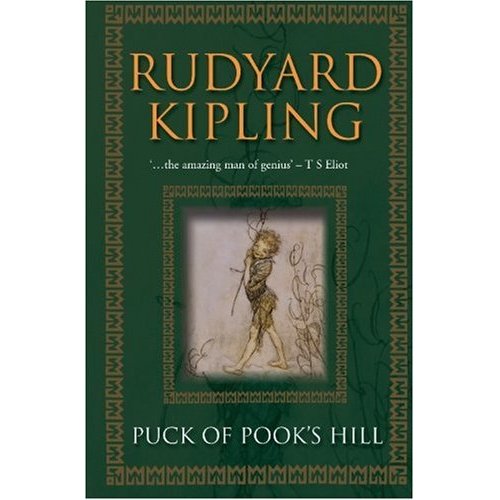
Currently re-reading Kipling’s Puck of Pook’s Hill;
Rudyard Kipling’s fabled tales about the hidden history of Old England
all-time favorite: Pride and Prejudice.
Jane Auston’s most popular novel and her most favorite. It has been adapted for both television and screen many times. One of the most cinematic versions is the 2005 Focus Features film version starring Keira Knightly.
MJ: As an avid reader, what art books would you most recommend?
T: Right now, my main interest in art reading is to learn how-to’s; I tend to review the myriad of books one can find by searching under “collage,” ” paper making,” or whatever, in Amazon, and then reading the reviews to see what’s worth pursuing, purchasing those that seem appropriate.
MJ: What is your favorite way to view art? Online? In a gallery? On the street? At a craft show? At a museum?
The Observing Cat by liatib
T: All of the above.
MJ: Explain a situation where art has directly affected your life.
T: When I retired, I joined one of our local art groups and have been busy ever since, volunteering, teaching, occasionally entering the art challenges–in effect, acquiring a whole new life.
MJ: What is one of the most interesting displays of creativity that you have seen in the last five years?
A. In our art group was a young man, an excellent artist, who had been in the group for some years before I came, and had, evidently, grown considerably in his talent during that time. By the time I came along, he was still developing, constantly experimenting and pushing himself, in all sorts of exciting directions. And then it was discovered, too late to do anything about it, that he had cancer. Yet he kept on with his art, pushing and experimenting, in the few months he had left.
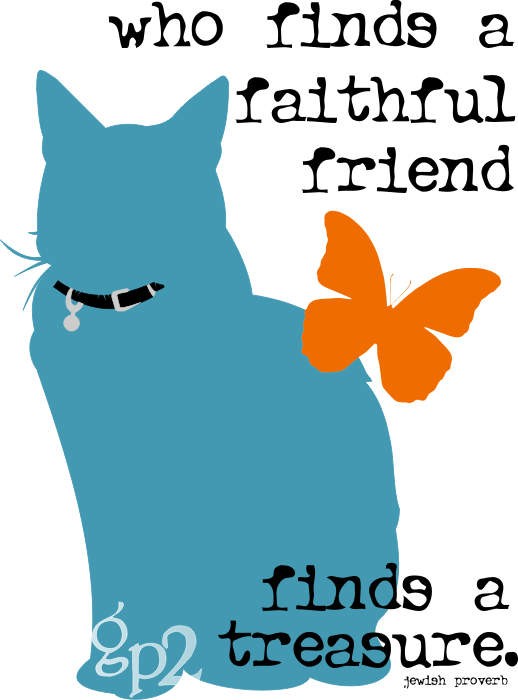
Cat Proverb Art Print by GoingPlaces2
MJ: If you could travel to any city on the globe, solely to view a piece of art what city and what piece of art would you choose?
T: The Terra Cotta Warriers!
The Terracotta Warriors
The Terracotta Warriors are indeed fascinating! Ms. Jeannie would like to see them for herself as well. To read more about how they were discovered by a Chinese farmer who was digging a well and to see more photos of the thousands of them in them unearthed and reassembled for display, click here. Ms. Jeannie wonders iof there are any warrior cats in there?! If so, I bet Tuny would find them!
—
This interview is part of an ongoing interview series, that Ms. Jeannie is orchestrating about artists, writers and musicians and their inspirations. To read other interviews in this series, simply click on the following links:
BLOG UPDATE: So it seems my dears, in one of these fabulous conversations with Tuny something went awry. There was no love of a Spanish bullfighter in her life – how could Ms. Jeannie have b4en so confused?! Although Tuny did have an experience with a bullfighter, as she tells here
“The closest I ever came to one, except at a bullfight, was on a train that did a night run between Madrid and Lisbon. Whilst in Lisbon, I went to Madrid to visit some friends, and on the return journey, established myself in one of the little compartments with facing seats. Shortly thereafter I was joined by two lower-echelon members of a torero’s entourage, and we dozed from Madrid to Lisbon.”
Okay so it’s not a Romeo and Juliet love affair but it’s interesting just the same:)
More family heirlooms arrived in the mail yesterday!
This time the package included two family quilts. One a small pink and white baby quilt handmade by Mable Edwards in the early 1940’s…
Handmade baby quilt circa 1942
After doing some research Ms. Jeannie discovered that this type of pattern is called a Dahlia design. It is one of the most complex and challenging quilt patterns, because the skill comes in making the flowers look three dimensional. Mable must have been an excellent sewer! Here are some close up shots…
Pretty scalloped edges!Look at all that stitchery!
The second quilt is believed to have been sewn by Mable’s mother Martha Jane Brewer, who was born in Greenwood, Indiana in 1846. Martha married Albert Edwards in the 1865 and the day after their wedding they set out in covered wagon for Iowa. Imagine that for your honeymoon! Martha was a trooper though. Her and Albert set up a life for themselves in Iowa on a farm, she had 11 babies and lived to be 82.
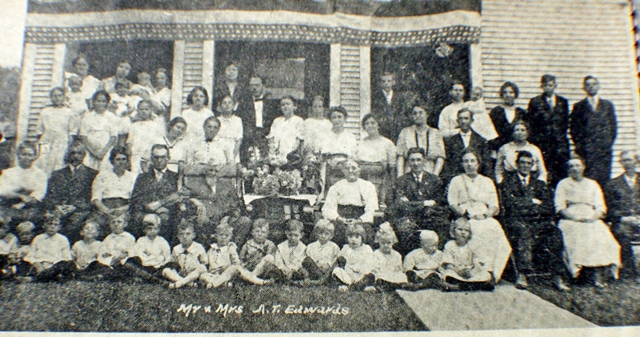
Here’s a picture of the Martha and Albert and all their kids, grand-kids and great grand-kids. This photograph was taken in August 1915 when Martha & Albert were celebrating their 50th wedding anniversary. Martha and Albert are seated in the center of the group.
Portrait of the Edwards Family of Vinton, Iowa. Taken on August 24th, 1915.
With all that activity it is hard to imagine that Martha even had time to sew! This is a picture of Martha’s quilt…
Martha’s handmade quilt circa late 1800’s
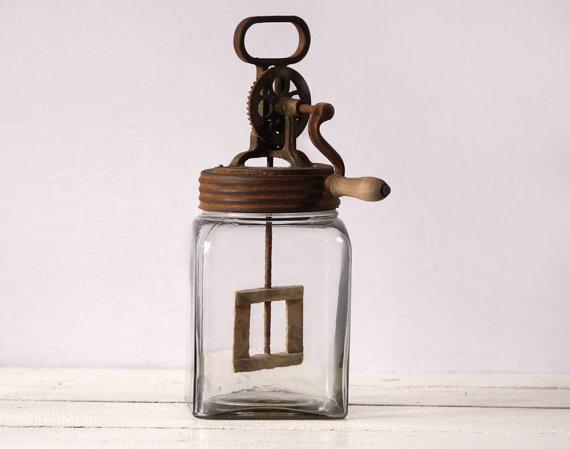
The quilt design is called Churn Dash named after the butter churn. Ms. Jeannie isn’t sure what kind of butter churn Martha used but you can see how the pattern developed from the these two churn styles found on Etsy. Check out the paddles of each…
Antique Butter Churn Pottery from TomLaurusVintage French Butter Churn from RueDesLouves
Ms. Jeannie couldn’t find any similar versions of a double churn dash style like the one Martha used, so perhaps this is a bit unusual.
Double churn dash design
The blue and white color combo was the most popular color combination used in quilts because it matched almost everything. Martha’s quilt as you can see is faded in some spots, but otherwise it is in great condition. It is large enough to cover a contemporary standard queen size bed.
According to research there are over 21 different variations of the churn dash style. It also is known as the Monkey Wrench and the Hole in the Barn Door (fun name!). Ms. Jeannie is impressed with all the tiny squares and the thousands of stiches that make up just one square. She wonders how long it took Martha to make this.
Tiny squares. Tiny stitches.
The churn dash pattern originated between 1800 and 1849 and represents the pioneer woman’s lifestyle which was centered around home and hearth. Certainly Martha churned a few pats of butter in her day – both literally from farm fresh milk and figuratively from her needle and thread.
Ms. Jeannie is still trying to date the quilt to a specific decade. It could have been made as early at the 1860’s for use just after her wedding as she & Albert traveled West. Or it could have been made as late as the 1920’s when Martha’s children were grown and she had more time to devote to needlework.
Ms. Jeannie found this really pretty contemporary version of a churn dash quilt on Etsy. She loves the colors and that they spelled out churn dash on the fabric. Very fun!
Churn Dash Revisted by OsageRiverQuilts
Here’s another view of it hanging on a wall. Love the off-center layout!
Ms. Jeannie would like to try to make her own quilt one day. She likes the patterns of the wedding ring designs with those big interlocking circles…
Antique Double Wedding Ring Quilt from SwankyTexasVintage
But she doesn’t own a sewing machine and would like the challenge (she thinks!) of making a quilt by hand. Perhaps she’ll undertake this project in the Fall. Maybe Mable and Martha will send her some inspiration!
In the meantime, Ms. Jeannie now realizes what effort when into the patchwork teddy bear listed in her shop…
Vintage Patchwork Teddy Bear from MsJeannieOlogy
Ms. Jeannie couldn’t imagine shaping all those patches into a recognizable bear shape!
Vintage Patchwork Teddy Bear from MsJeannieOlogy
The patches just give him so much personality!
Vintage Patchwork Teddy Bear
Maybe once Ms. Jeannie tackles the flat panels of a quilt, she can work on something more complicated like this charmer for a fun baby gift! We’ll see how the quilt goes first…keep posted!
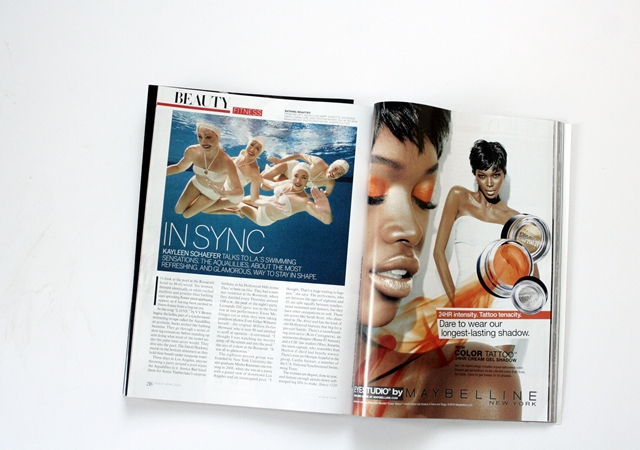
While catching up on her magazine reading this week, Ms. Jeannie was flipping through the pages of the April 2012 issue of Vogue Magazine and came upon an article about the Aqualillies…
In Sync – April 2012 Vogue Issue pg. 218 – Beauty Fitness
If you are unfamiliar with them – they are an L.A. based synchronized swim team that performs at parties and private events. They have held special “performances” at fashion shows, celebrity parties, hotel openings and they also made an appearence on the tv show, Glee.
Aqualillies impressive water ballet. Photo courtesy of Erin Hearts Court
The all-girl team carry the retro theme of their sport through classic swim costumes, 1940s makeup and nostalgic song choices but also combine modern acrobatics and dance movements to their routine, which makes it seem both timeless and contemporary all at the same time.
Here’s a quick clip of the ‘Lillies performing…
Doesn’t this look completely fun? Ms. Jeannie could definitively see this being the next big Vegas act!
In addition to performing the girls also teach classes at the Annenberg Community Beach House in Santa Monica. Ms. Jeannie is going to be in L.A. for a friend’s wedding next April so she’s going to take a class while she’s there! She’ll keep you posted on how it goes.
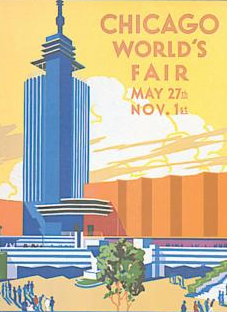
The origins of synchronized swimming are traced back to Berlin, Germany in the the late 1800’s but it wasn’t until the Chicago World’s Fair in the 1930’s that the sport gleamed international attention.
Chicago World Fair Poster – 1933
There Kathryn Curtis organized her show, The Modern Mermaids, which she referred to as rhythmetic swimming. In the 1940’s Esther Williams, a trained swimmer, brought water ballet to the big screen starring in such films as Bathing Beauty, Million Dollar Mermaids and On An Island with You.
Here’s the trailer for Bathing Beauty, which came out in 1944. You can see where the Aqualillies got their inspiration!
Synchronized swimming became an Olympic sport in 1984 and is only open to female qualifiers – no men allowed in this arena (or pool, as the case may be!) yet. With the Olympics scheduled to start in London in just a few days, Ms. Jeannie is excited to see how the US will fare in this category. Here’s a picture of the 2012 team.
2012 US Snychro National Team 1
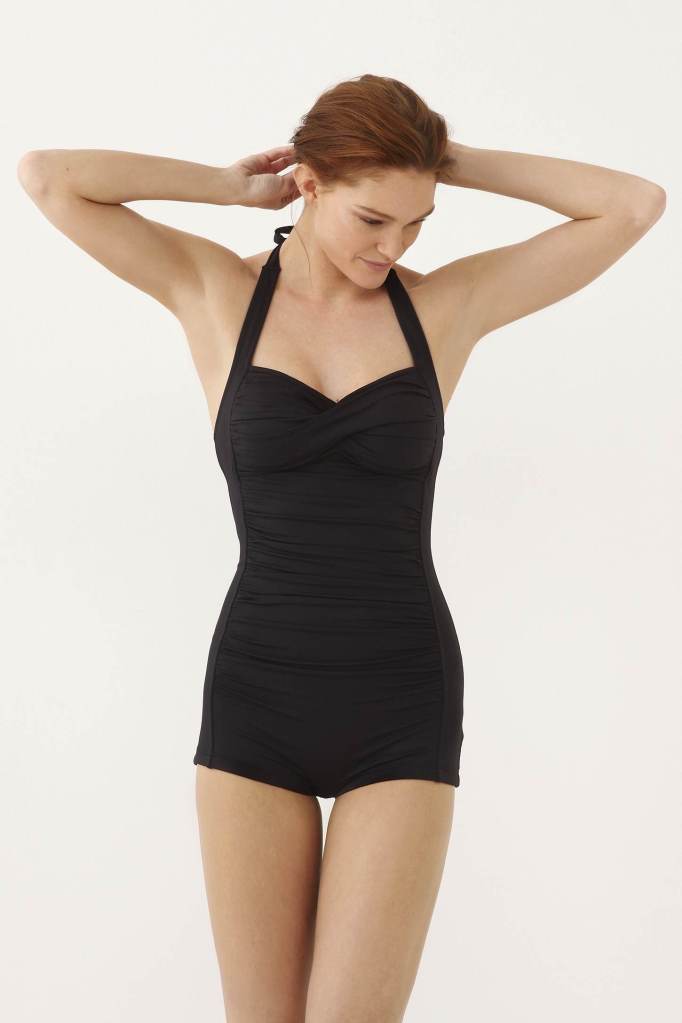
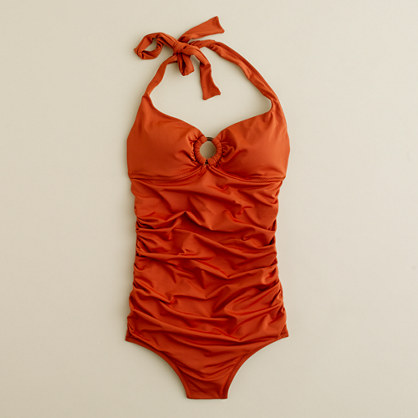
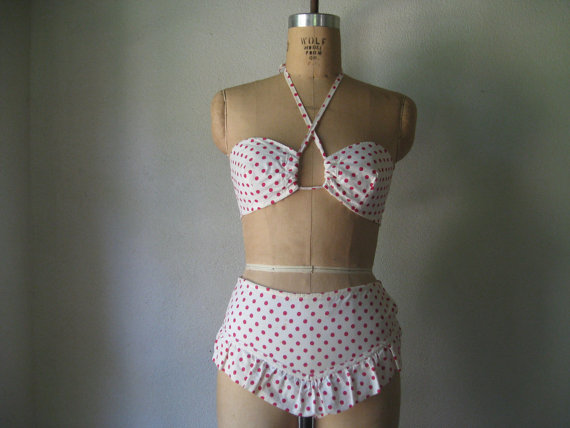
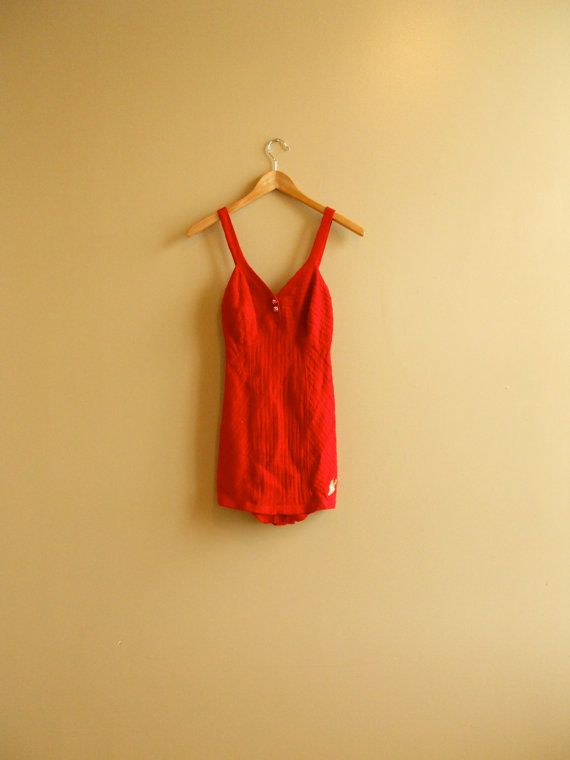
One of the things Ms. Jeannie loves most about the Aqualillies is their style. They scour old magazine ads, newspapers and movie footage for fun swimsuit ideas and makeup trends. Retro bathing suits are very popular this year too – so if you need to spruce up your beach attire, click on each of the photos below to learn more…
The Natalie – One Piece Bathing Suit from Anthropologie1940s/1950s Pinup Bathing Suite from MetricModLuxe Tortoise Keyhole Tank from JCrewVintage 1940s/1950s Swim Suit from SHESABETTIEBoutique1930s Swimsuit from brerrabbitvintage
Swim caps became popular in the 1920’s as a way for women to protect their hair from the chlorinated water and to keep stray hairs from clogging pool filters. Aviator styles like this one below dominated the 1920’s:
Vintage 1920s Swim Cap from lactoseintolerart
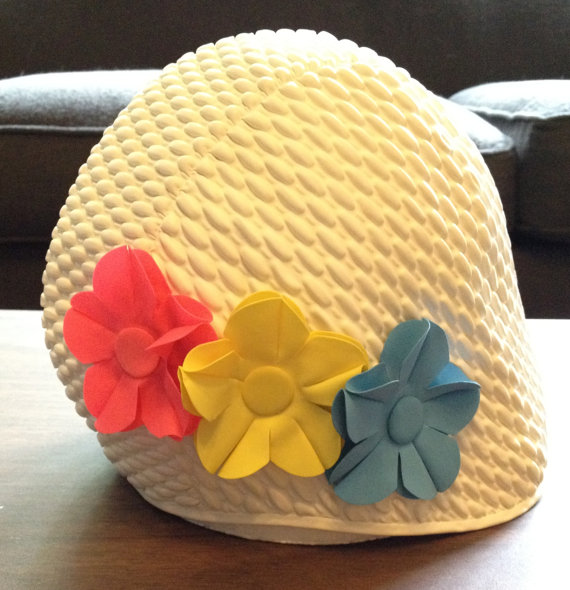
The 1950’s and 60’s brought about more colorful, stylized swim caps adorned with flowers and frillies like these…
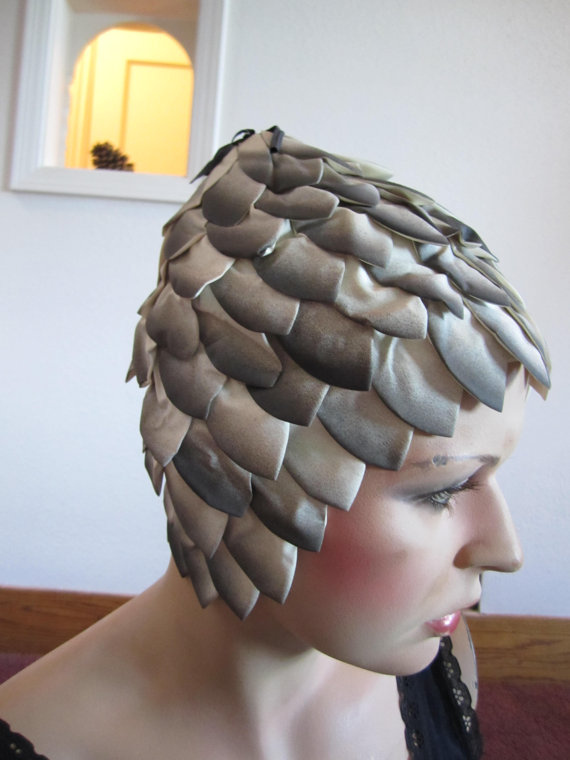
Vintage Swim Cap with Flowers from MommaBeeCollectionsVintage 1960s Swim Cap from plattermatterVintage 1960s Feathered Swim Cap
Pair any of these with some red lipstick and a classic hair style and you have one spectacular bathing beauty!
Happy swimming:)
Movie Poster for the 1944 film Bathing Beauty starring Esther Williams
Ms. Jeannie’s great grandmother, Mable, arrived by post yesterday. It had been quite a few years since Ms. Jeannie had spent any time with her, so as you can imagine, it was very exciting to see her lovely face again. It’s not often (in Ms. Jeannie’s case anyway!) that she gets a visit from an ancestor;) She couldn’t wait to get her all situated.
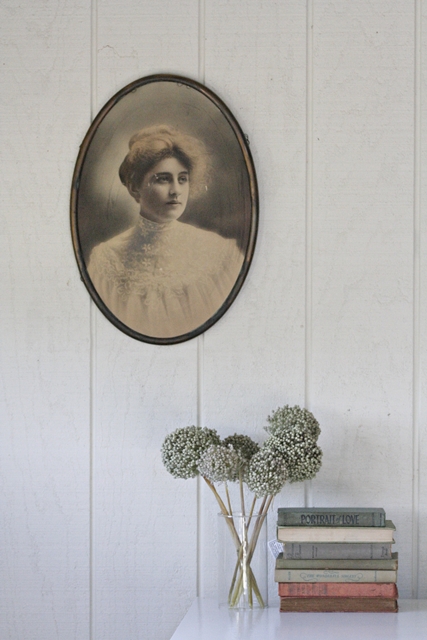
Tin portrait of Ms. Jeannie’s great grandmother, Mable Jeanette Edwards
Mable is one of the most photographed women of Ms. Jeannie’s family. She’s actually the only family member born before 1900 that has been photographed at all stages of her life from childhood to senior citizen. It’s nice to see the transition…
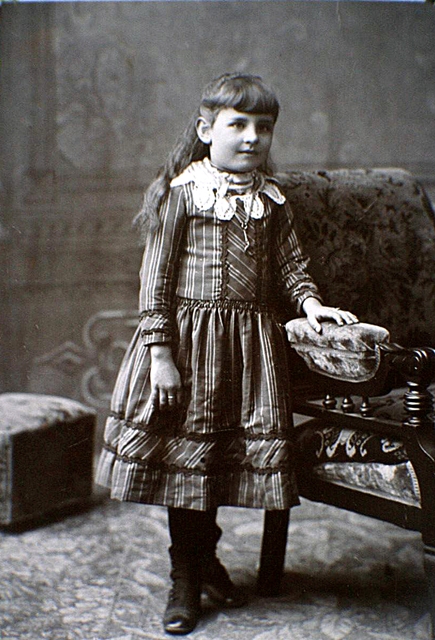
Mabel Jeanette Edwards circa 1890’s.
She was born in Benton County, Iowa in 1887 , the daughter of an Ohio civil war soldier, who suffered eye damage in the war. Her parents traveled by covered wagon from Indiana, the day after they were married, (some honeymoon!) to Iowa where they rented a farm and started a family. Mable had 10 brothers and sisters, but only eight of them lived to see their adult years. Mable carved out her own little place in the family’s heart. As the very last baby, she was the most spoiled, the most doted on, the most played with. Imagine all the attention from all those brothers and sisters!
Ms. Jeannie guesses that Mable is about 5 or 6 in this picture. She was such the Victorian poster child here, portraying all that was trendy and stylish just as the century as drawing to a close. As you can see, her hair is quite long and fringed, as was popular with any young miss at that time, and she is wearing quite a bit of jewelry ( two rings and a necklace pendant) which tells you that her family was doing well enough to be able to afford pretty non-necessities for their littlest member. She’s also wearing a detachable crocheted collar, possibly made my Mable’s mom or sisters. Everybody crocheted in the the late 1800’s. Doilies, tableclothes, blankets, collars – if it could be sewn it could be crocheted! Crocheted collars, in particular, were favorite accessories of both the Victorian and Edwardian eras because they could be mixed and matched with a bevy of different outfits. They also lent a bit of bright to the preferred somber colors of the time.
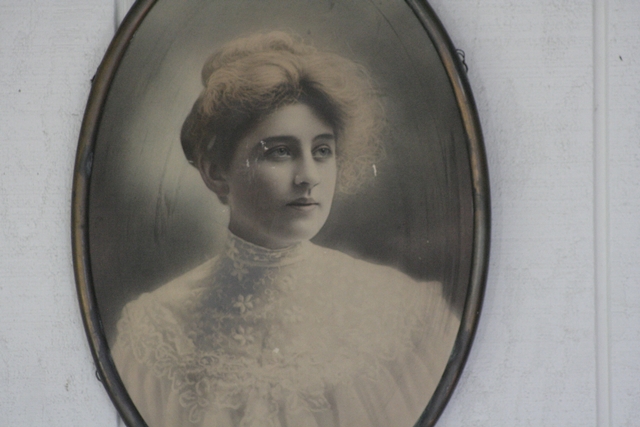
Here she is at the age of 15…
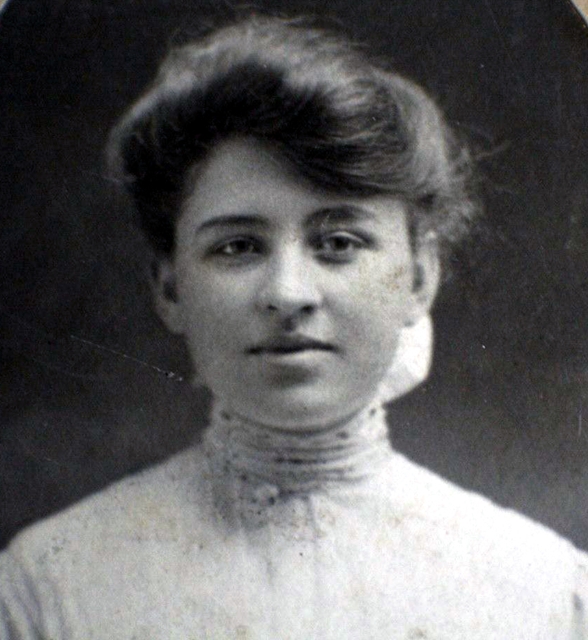
Mable Jeanette Edwards circa 1900
At the time of this picture she would have been almost finished with her schooling. By this age, her clothes have changed from the dark, heavy Victorian colors to the lighter, brighter colors and fabrics of the Edwardian era. Very Downton Abbey! Also as she is maturing her style is more feminine and delicate. This white eyelet blouse with its high color was also a very popular style in the early 1900’s. It seems Mable was quite trendy when it came to clothes! And you’ll note, that her hair was pinned up in place at the nape of her neck. This is the transition period between having hair hang down her back as a child, and having it pinned on top of her head as an adult. It s fascinating what you can learn just by a picture!
Mable Jeanette Edwards c. 1904
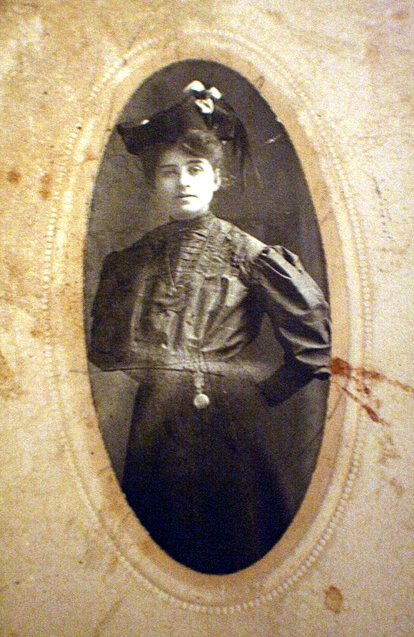
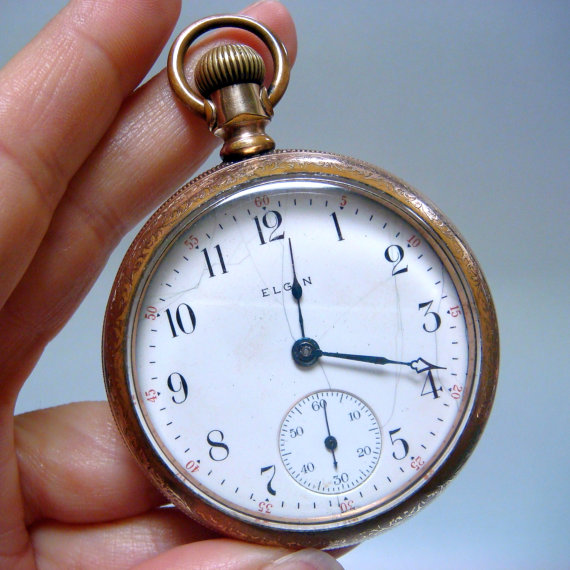
This next picture was taken just a couple of years later, after Mable finished school. She became a teacher and taught in a rural one room schoolhouse in Benton County, Iowa. Her pocket watch was most likely a staple of her school mistress attire.
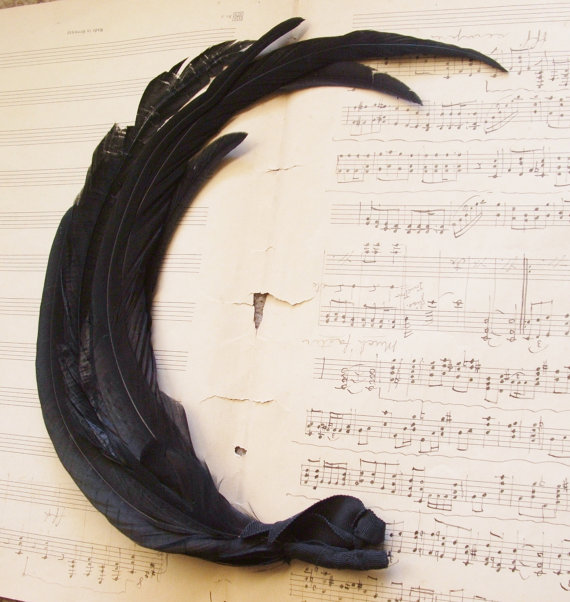
Now that Mable is an adult – her hair is pinned on top of her head. Also we can see she is wearing a winter outfit as noted by the dark colors. Her skirt and hat were most likely in the shades of dark brown – considered a very attractive winter color. And looks what’s on her head…a feather! This brings the Plume Trader blog post full circle! Ms. Jeannie suspects this might be a rooster tail feather in Mable’s hat.
Her blouse would have been either a moss green color or a lavender grey color to match her hat plume. These color combinations were very popular for the winter wardrobe of the stylish Edwardian lady.
Mable on her wedding day. November 18th, 1909.
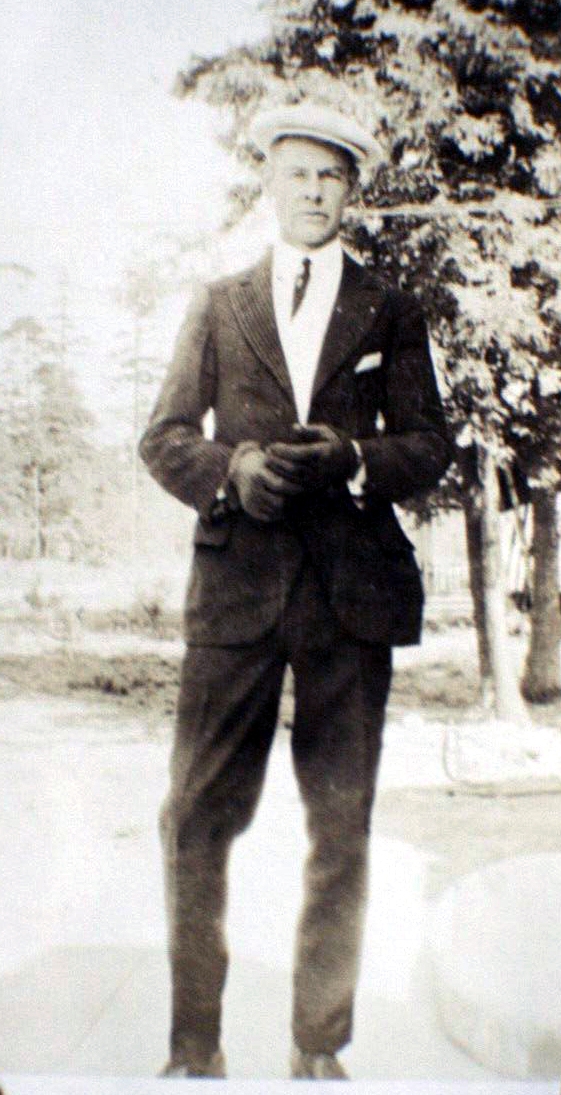
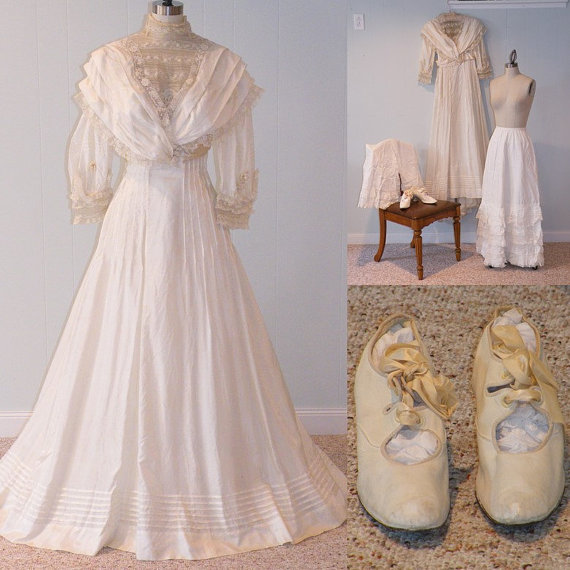
In November 1909, Mable married Illinois born William Earle Race at home in Vinton, Iowa. She was 21 years old, Earle 23. Her wedding dress was made out of brushed silk with detailed hand-embroidered lace. The collar style of Mable’s dress is called a high dog collar, which was popular for brides of the era.
William Earle Race, circa 1915
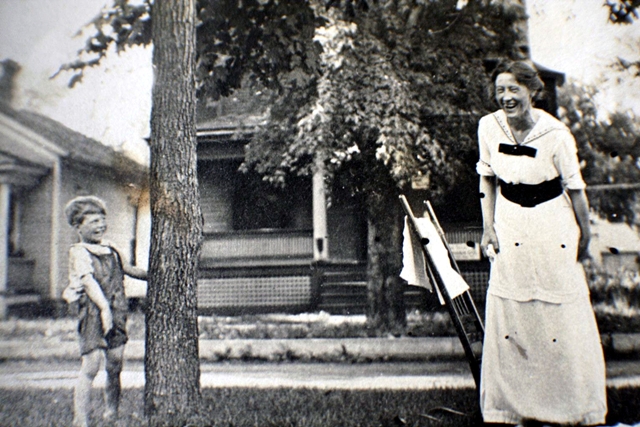
Mable and Earle had one little boy, Phillip Ardath…
Phillip Ardath Race with his neighbor circa 1915
Here, he’s entertaining their neighbor. So cute – both of them. Ms. Jeannie loves Phillip’s romper and the neighbor lady’s dress is gorgeous. Another Downton Abbey style! The look they are having so much fun!
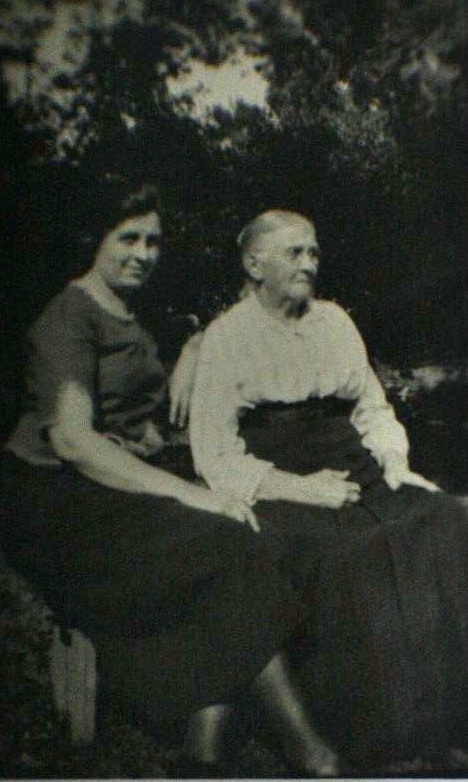
Mable Edwards Race with her mom, Martha Jane Brewer Edwards
This is Mable and her mom, Martha around the 1930’s. Ms. Jeannie loves the difference in clothing between these two genereations. Martha still favoring the long skirts and long sleeves of the Victorian era. Most likely, Martha was of the thrifty mind-set and wore her clothes until they wore out. Mable on the other hand as we have learned was always keeping up with the trends. Here Mable is showing much more skin then her mom yet is still conservatively dressed.
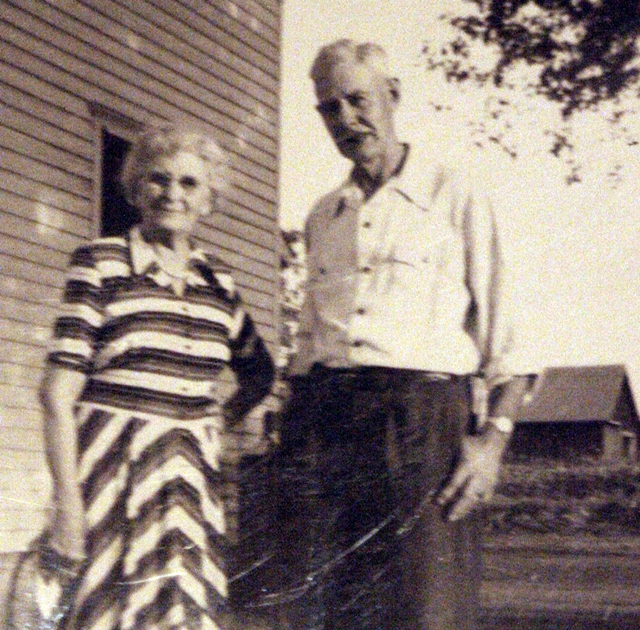
Mable & Earle Race – circa 1940’s
Here Mable and Earle are pictured on their farm in Washington State. Taken in the late 1940’s, Ms. Jeannie loves this candid shot. Mable smiling, her hand on her hip, Earle with his thumbs in his pockets. They look so comfortable around each other. As you can see, Earle was a whole head taller then Mable, almost an entire foot! By this point they have been married over 30 years.
Phillip always said that Mable and Earle were great loves. They traveled the ups and downs of life with the same level of fortitude, making the best they could of everything. Through the Depression, through countless jobs, through countless moves, from Iowa to Washington State and back again twice. Together they were. Mable was a grower, a writer and a bird lover. Earle a salesman, a logger, and a baker. To their grand-kids they were “Memo” and “Bumpy”.
Earle died in February 1975 and Mable followed six months after. Family lore said she died of a broken heart.
Ms. Jeannie understands. She has a great love too. Ms. Jeannie also has a feeling that if her and Mable were alive together at the same time – they just might have been good friends. Imagine that. Imagine if you could be friends with your ancestors. Who would you pick?
Thanks to the wonderful world of Etsy, you can now recreate Mabel’s fashionable looks from the late 1800’s to the 1950’s. Etsy’s vintage shop sellers have all the garments you will need! Take a look:
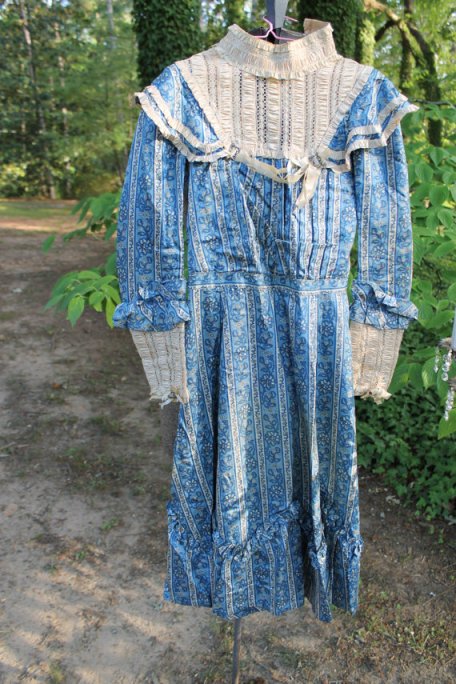
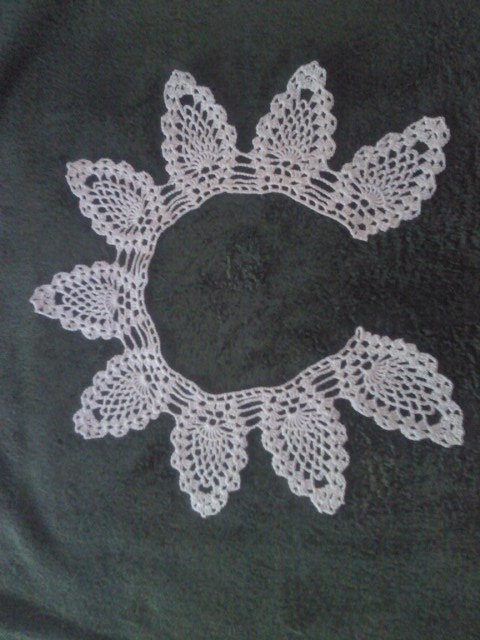
For young Mable as a Victorian girl:
Rare Antique Victorian Girl’s Dress from SouthernVintageGaCivil War Pineapple Crocheted Collar by MadeByHandThings
Mable’s Edwardian teenager look…
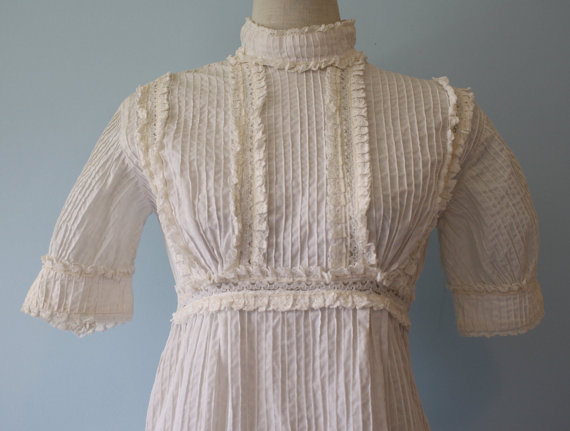
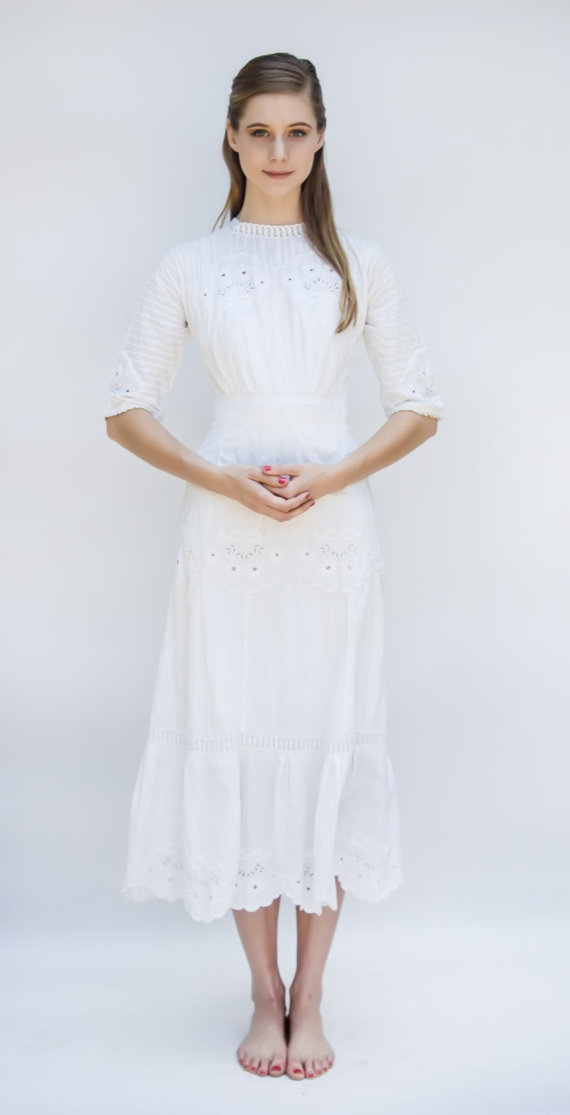
Ivory Pintucked Dress from FoxyBritVintageVintage 1909 Cotton Dress from WildHoneyPieVintage
Mable in school teacher attire…
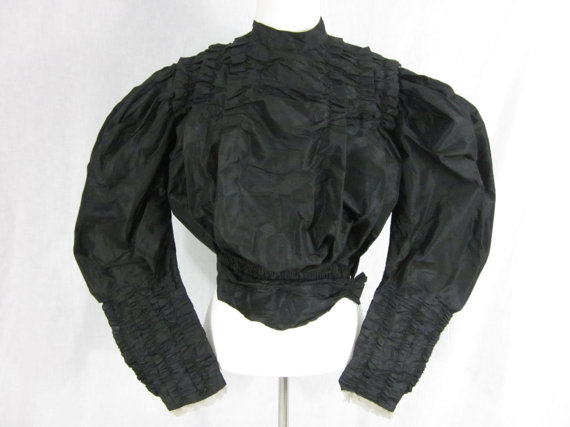
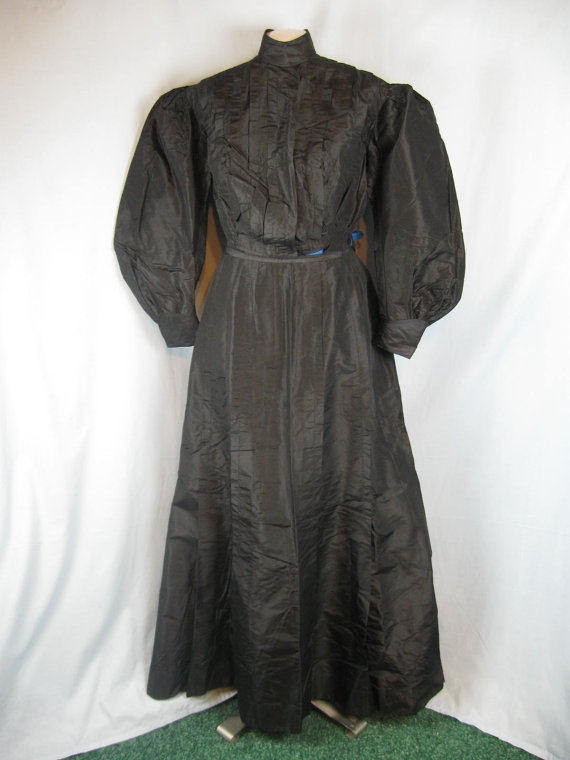
Victorian Black Taffeta Blouse – from BlacklistVintageMPLSVictorian Bodice Skirt Dress from JenniesJunqueAntique Victorian Millinery Supplies Feather from AntiquesofromanceAntique 1907 Pocket Watch from goldandgemsllc
Mable on her wedding day…
1900s Silk Wedding Trousseau from daisyandstella
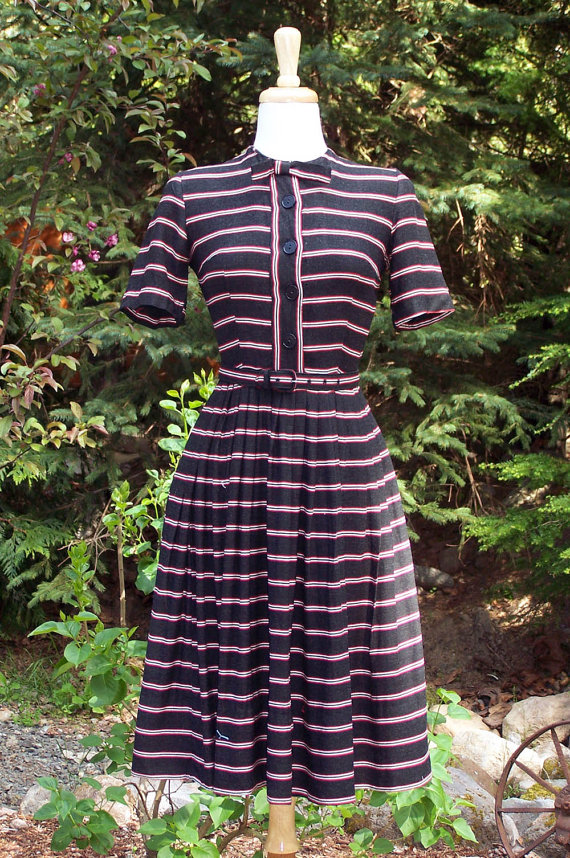
Mable in the 1950’s…
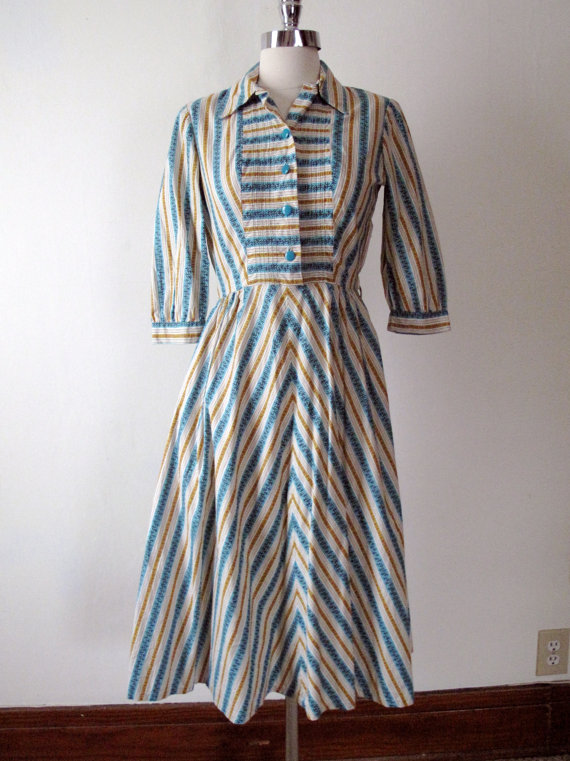
1940s Betty Barclay Striped Dress from LipStickWhiskey1940’s Striped Day Dress from MaeVintageInc
Would you like to see more? Click on any above picture to visit that Etsy sellers shop!
You know the saying…one thing always leads to another? Well ever since Ms. Jeannie wrote a blog post about the history of starlings she has been noticing the variety of birds that live in and around her garden. Not that she ever didn’t notice the birds before – but now she REALLY notices them. Their colors, their size, their nesting habits, their songs…fascinating! Her blog post also spawned similiar noticings and conversations among her friends, so much so that that they have sort of formed a little bird observation club of sorts. An occasional picture here, some observations there, a musing in-between.
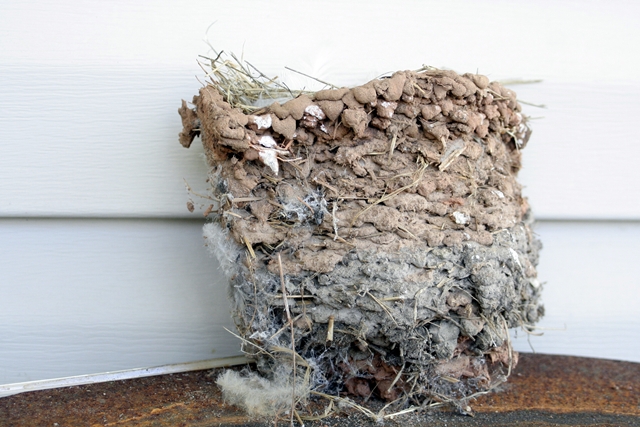
One such friend, just yesterday, brought a nest to Ms. Jeannie that needed to be removed from the underside of his portico. Here it is upon arrival at Ms. Jeannie’s…
Can you identify this nest?
After seeing a family of birds hatch, grow, and leave the nest, and seeing no further activity over the next 2 weeks, he figured the nest was empty and ready for demolition. But to his surprise, upon careful removal, he discovered…
Three eggs!
This bird’s nest belongs to the barn swallow, which like the starling, is one of the most common birds. So common in fact, that swallows can be found on every continent except for Antarctica.
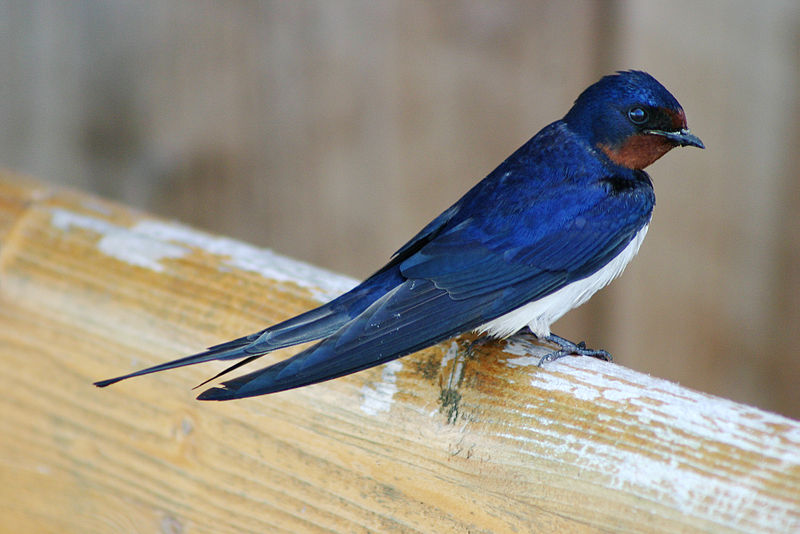
Barn Swallow
Lying somewhere between the shades of cobalt blue and windsor blue, barn swallows are made up of beautiful blue feathers along their back and wings with white to orange belly feathers and long pronged tail feathers (like those extra long meat forks!).
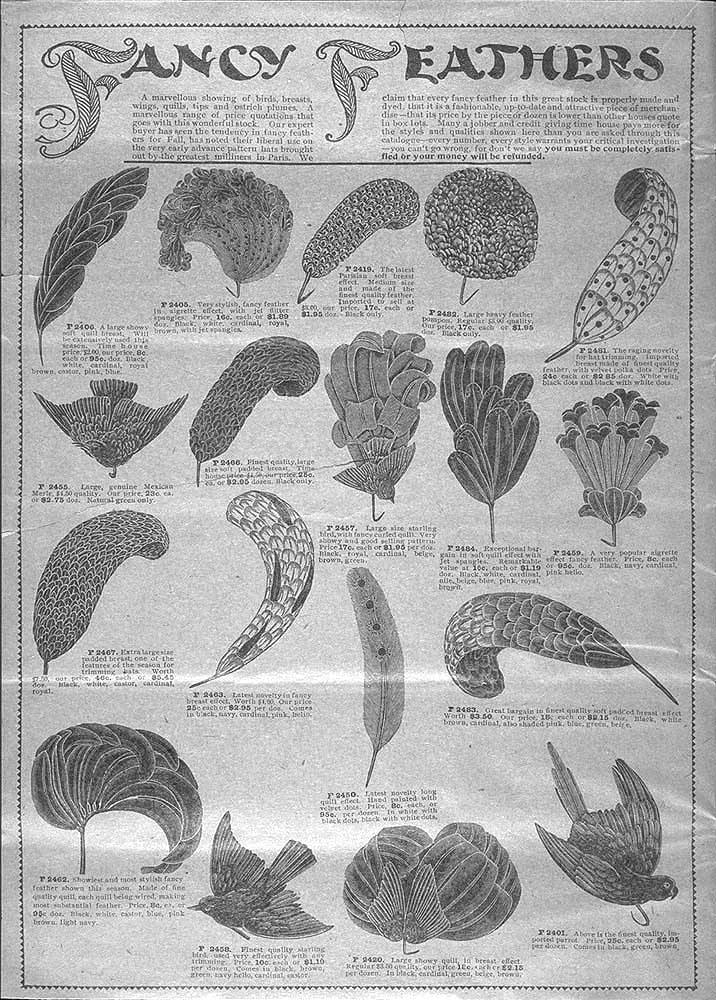
Back in the 1800’s, because of their bright colors, barn swallows were hunted exhaustively for use of their feathers in the millinary business. Ladies hats were big business back then, which led artisans to continuously try to one up each other in the creativity department. Seeking more and more exotic inspirations, birds proved just the ticket to create hats both remarkable in size and stature. Other common bird feathers besides the swallows included egrets, bobwhites, herons and terns.
Here’s a millinery supply catalog page from 1901. Note the starling (whole bird) offered for sale in the bottom left corner.
Millinery Supply Catalog. 1901. Photo courtesy of the Smithsonian Institute.
Understandably, hats were an important staple in every women’s wardrobe. In an era where women dressed in similar colors and clothes, hats were a creative outlet for self expression. Like the artists who created them, women continuously sought the most unusual arrangements. Dead animals included. By the 1870’s, whole birds were being perched on top of women’s heads with wings fanned out in all sorts of elaborate stylings. Here are several feathered hat examples…
Antique Cabinet Photo from VintageAntiqueLaneAntique Photo of the Hatcher Sisters from phunctumVictorian Lady Photograph from nancesnostalgia1800’s Cabinet Card from SusieQsVintageShop1870s Cabinet Card from HappySteiler
By the late 1890’s – early 1900’s, plume trading was a very lucrative business bringing at times $32.00 an ounce and esculating as high as $80.00 an ounce during peak trading. And it wasn’t just for women’s fashion, either. Men’s fedoras were also being embellished with feathers as status symbols of economic prosperity.
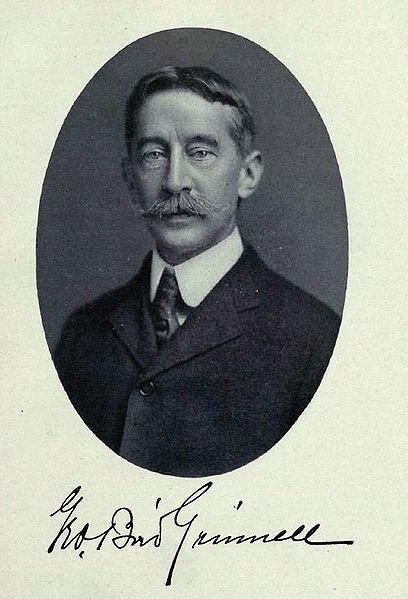
Fortunately, thanks to an 1886 editorial printed in Forest & Stream Magazine by naturalist, George Bird Grinell, the devasting effects plume trading was having on barn swallows and other birds was brought to light for the American public.
George Bird Grinell (1849-1938)
It seems women really hadn’t thought through this whole bird business. Being blinded simply by the sheer beauty of the fashion, they forgot to consider where these feathers came from, how the birds were treated and why they were winding up on their heads. Thanks to the editorial though, women all over New York City roused to the cause. Through boycotts and informational tea parties, word spread and awareness eventually led to the founding of the National Audubon Society in 1905. Today the Audubon Society is still dedicated to the conservation of birds, wildlife and healthy ecosystems. Fantastic!
Ms. Jeannie is thankful that people were watching out for the barn swallows a hundred years ago. Without their valiant efforts, she might not get to enjoy them in her neighborhood now. It’s lovely to see bright flashes of blue zip through the air before you and always so unexpected. Every time, she sees one – it is like the first time. A little extra thrill in her day!
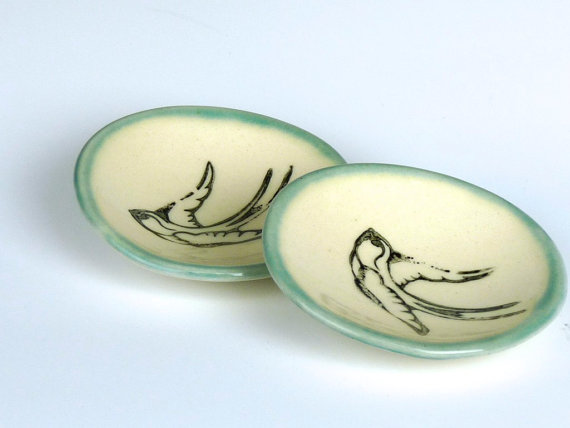
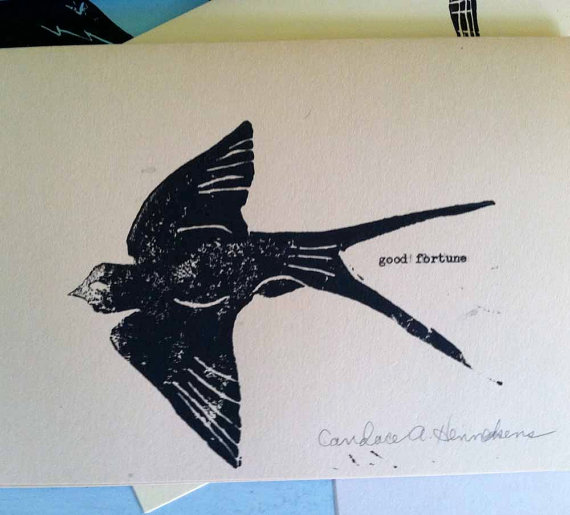
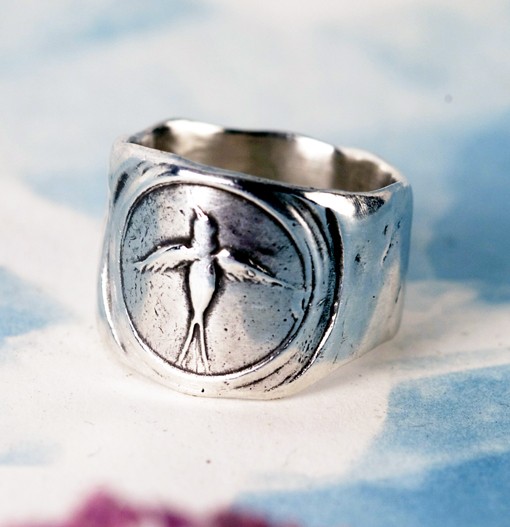
Barn swallows have been a source of inspiration for many areas of art, not just the hat industry. Check out the following swallow themed items, Ms. Jeannie found on Etsy. These are some of her favorites…
Painterly Barn Swallow by Claire HartmanBarn Swallows Cuff by UniqueArtPendantsSwallow Mini Bowls by AmandaMBarrBird Linocut Cards by SwallowNestArtStudioBird Stamp Ring by ardent1Lampworked Glass Barn Swallow Necklace by amnflameworkBe Still and Know Art Print by LisaMDSkinnerArt
If you notice barn swallows in your area, snap a photo and send it to Ms. Jeannie! Please include your location so she can share your sightings with everyone.
Have a birdy day!
BLOG UPDATE!
A reader from the Palm Beach Gardens area of Florida wrote in about this phenomena that occurs in his neck of the woods…
“Something confusing you would be interested in. About every so often, at lest once a month, A huge , I mean huge, flock of birds of all varieties gather on the lake and ring the shore. It consists of birds from pelicans to herons to cranes, etc. As if they are holding a convention. I’ve tried to research this phenomenon to no avail. Any ideas?
Ms. Jeannie is on the case to see what sort of gathering this might be. She’ll keep you updated on what she finds, but in the meantime, if you can help solve this mystery, please share!
As a child, Ms. Jeannie spent a lot of time in France, traveling about the country with her family. Home base was always The Crillon Hotel in Paris or the Loews Monte Carlo (now the Fairmont) on the French Riviera, but Ms. Jeannie’s parents insisted she and her sister know all of France including the waterways, so road trips (and boat trips!) were had.
Not having traveled back to France since she was about 15 years old, Ms. Jeannie retains a child-like wonder for all things French. Memories lean towards moments and feelings instead of specific places and experiences….rich hot chocolate, the sound of patent leather Mary Janes on marble floors, boat rides down the Seine, her first taste of risotto, lemony perfume, two cheek kisses, children’s books all in French, toothpick thin pommes frites and the secret “European language” Ms. Jeannie and her sister made up.
Ms. Jeannie’s France is all about terraced hillsides, Bastille Day fireworks, hours long luncheons. She recalls her mother’s bright orange Hermes shopping bags and a pair of fantastic red shoes Ms. Jeannie’s eight year old heart just had to have. There was a fretful play date with a French boy named Tomas, that ended in the throwing of toys and tears. There was the first time Ms. Jeannie saw the Mona Lisa at the Louvre, the first time she flirted with a boy on a mo-ped and the first time she played the game of petanque with a group of locals.
And then there was the last time she saw the Eiffel Tower.
It was a grey and rainy Paris afternoon. Ms. Jeannie didn’t want to leave. She tried wholeheartedly to convince her father to stay an extra day or two, but he was adamant about schedules and airplanes and life needing to be resumed back in the States. So home they went. Ms. Jeannie felt more than disappointed, not because she didn’t get her way, but because for the first time in her life she felt displaced. Caught between two worlds and two cultures at a tender age. That was the year that the feelings of wanderlust set in. And never quite let go.
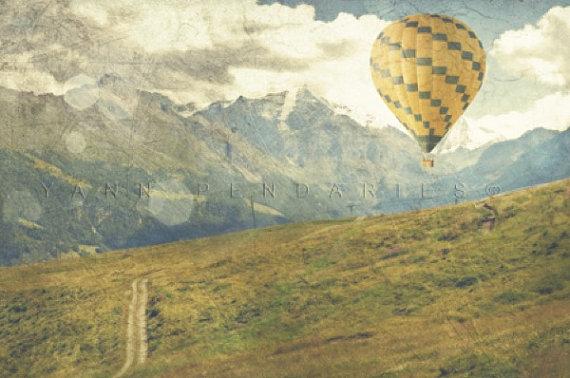
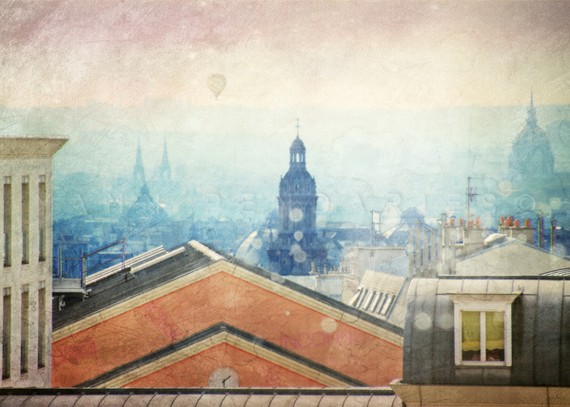
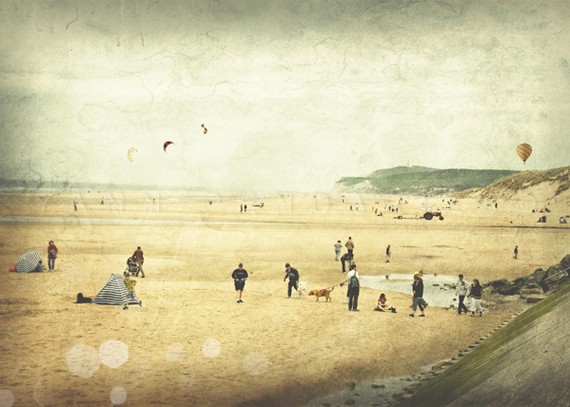
Difficult to put into words, this combination of desire and unease, Ms. Jeannie was delighted to happen upon the contemporary photography of Yann Pendaries, whose work, both magical and moody conveys images of France that are both dream-like and real. His hot air balloon series, in particular are some of Ms. Jeannie’s favorites.
80 Days in Europe by Yann Pendaries Day 2 – Montmartre
Those childhood days in France float around her mind just like that balloon floats around the photograph. Sometimes easy to spot, others times more difficult, but always there, always floating.
Below, read about the inspiration behind Yann’s work as he takes us on a little unexpected weekend getaway to his France, where we discuss all things cultural from art to wine to history.
Ms. Jeannie: So, you are a photographer based in Paris… is that where you grew up?
Yann Pendaries:I was born in the city of Orleans, where Joan of Arc played a part in the history of France … I spent part of my life there, and came to live in Paris in 2002.
Orleans is located about 80 miles outside of Paris. Did you know that New Orleans, Louisiana was named after this city? Photo courtesy of web.france.com
MJ: What inspires you about your city? What are the top 5 places that inspire your work?
YP: Paris is a magical city that has withstood the din of war, one can still feel the medieval atmosphere through the narrow streets of the historic center, when you walk in the streets you can still discover new buildings or new stories.
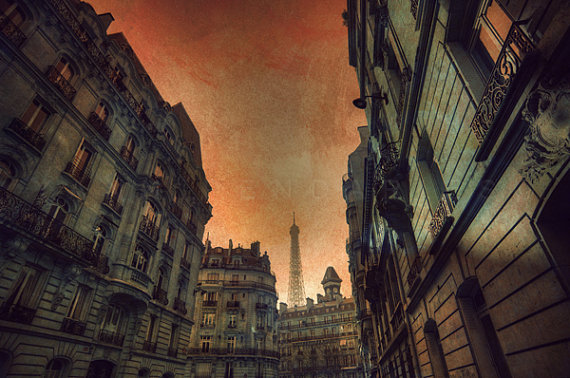
Sunset on the Eiffel Tower by Yann Pendaries
Paris is endless images, every time I stroll through the city, I always discover new things which inspires my eye. My inspiration usually comes by chance, but most of the time especially in Paris. I have three main inspirations, colorful characters that I capture with great discretion…
The Parisian Cafe by Yann Pendaries
…essential buildings like the Eiffel Tower (I try to magnify it with different angles)…
Sunset Eiffel Tower by Yann Pendaries
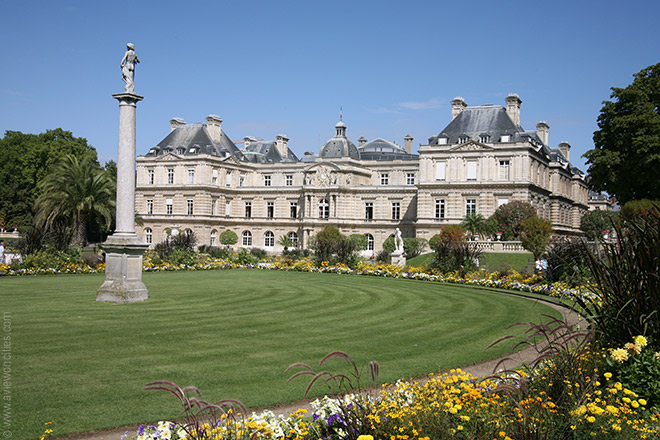
and last but not least, I love the gardens in Paris, my favorite being the Luxembourg Garden, in the center of Paris.
The Watchman by Yann Pendaries
Why specifically this garden? For me it is very representative of Paris from the 1950s, where you can still find toys rentals (small wooden boats that children push with sticks on the fountain, and which exists since the 1940s), in any season this garden is beautiful with fountains, thousands of trees, horses where children can also take a ride. Look in my shop for Paris pictures and you will discover the love I have for this garden.
Luxembourg Gardens. Photo courtesy of aViewOnCities.comLuxembourg Gardens – Fontaine de Medicis. Photo courtesy of aViewOn Cities.com
My last two inspirations have more to do with photographic creations, I try to make up magical worlds and I try to immerse the viewer in an idyllic world where dreams and poetry make you forget the worries of life.
Hot Air Balloon Photography by Yann Pendaries. This is one of Ms. Jeannie’s favorites!
I am currently working on two series, one is the hot balloon trip, to make you discover “my” Europe by scenery and lights I captured through my travels, and the other one is about the tiny trades self portraits; a little guy helps you understand for example how are created pretty things that you see all the time, I suppose that this way, you discover the beauty of simple things around you and afterwards you don’t look the same way at these small things in life.
Tiny Trades Series: The Strawberry Seed-Sticker by Yann Pendaries
MJ: How long have you called yourself a photographer? What drives your passion for it?
YP: I have officially been a professional photographer for 7 years, but have been keen on photography since the age of 9. In fact my father had an old film camera ; one day I decided to take it and make images for fun, and then I realized it was a way for me to express feelings I could not say otherwise. Thanks to photography I could also capture moments of sharing with friends and create memories of moments that lasted a second and which I would have surely forgotten now, but engraved on film for life the memories are everlasting.
Old Camera by Yann Pendaries
And then over time I began studying photography a little more to discover photographers, to see exhibitions and to improve my eye. I tried several styles of photography with a lot of failure trying to imitate others, but I realize now that I have found my style and my world and this motivates me even more now (and photography is like a music instrument, the more you practice the easier it is to write light, like a music sheet), and every day I want to go further into my world and share it with others.
The Music Heart by Yann Pendaries
MJ: Describe your studio space.
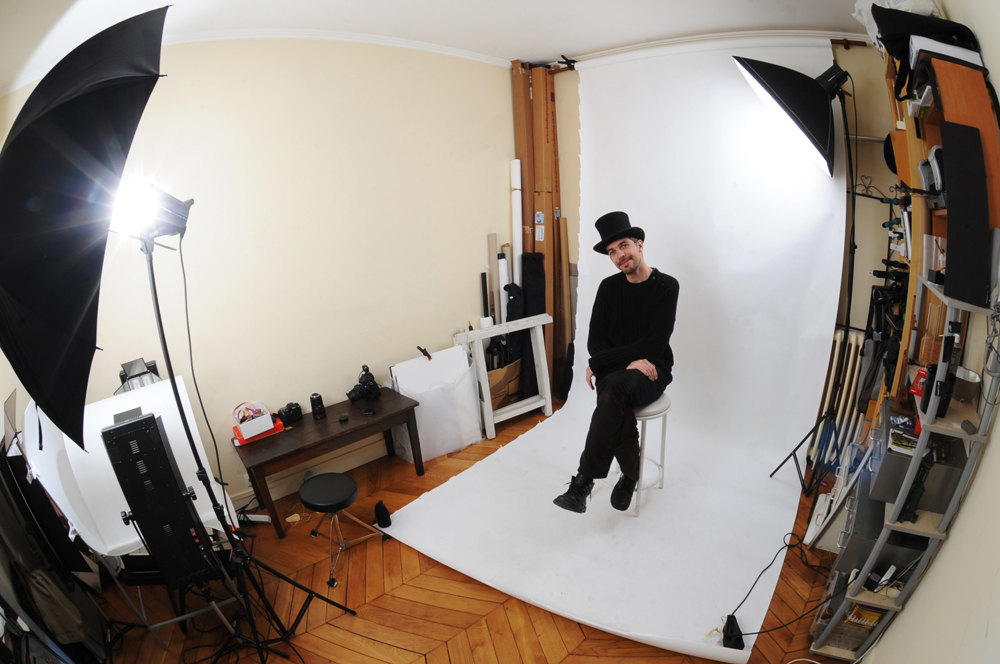
YP: My studio is small but big enough for me to make my pictures, look, here is a photo to give you an idea of my space. Now you know my secret when I produce my images 🙂
Yann in his studio.
MJ: Paris is full of magic – it’s people, it’s architecture, it’s culture. As a photographer, do you ever feel overwhelmed by it’s beauty? Are there things about living in Paris that you don’t like?
YP: No, Paris is a constant source of inspiration, because every street, every neighborhood, every building or cultural events are different and it always brings a new vision of things.
What I hate, as in all great cities of the world are the constant noise of cars, the people rushing to get from point A to point B without even looking around or looking up and discovering or re-discovering the beautiful neighborhoods. That’s why I like to isolate myself in the parks and gardens where it is so quiet and relaxing, or getting off the main streets and strolling along the tiny streets where there is virtually no-one.
Old Man and the Eiffel Tower by Yann Pendaries
This is also why I hate the Champs Elysees, where there only are expensive shops and which have no interest for me. Many tourists coming to Paris absolutely want to go on the Champs Elysees, but when foreign friends come to visit me I do not bring them there, I take them in the popular neighborhoods and make them discover the real Paris and usually they are thrilled to discover it.
View of the Champs Elysees at dawn. Photo by Benh Lieu Song
MJ: If you didn’t live in France, where would live?
YP: Without hesitation, it would be in Berlin, Germany, I discovered this city 2 years ago and it was a revelation! The city is not really beautiful because it was ravaged by war, and post-war communism did not help, but there is a true cultural spirit, so many events are held there throughout the year.
Berliners are really nice and open minded people, and moreover, life is really not expensive, and it’s very nice to have some fun without spending much money.
Berlin Photography “Steles” by Yann Pendaries
MJ: Recently, you worked on a hot air balloon photo assignment. Can you explain a little about the project and what you gained from the experience – besides gorgeous photographs;)
YP: This project is intended to uncover Europe for people who do not know it, and to share the extraordinary landscapes you can find there, as well as perhaps make them want to come here. There are so many things to discover and to do that I felt compelled to share with you my experience, the fact of adding a hot balloon and create a real story with a little poetry to the point that some people sent me messages to ask me if I really was inside the hot air balloon was so much fun.
80 Days in a Hot Air Balloon Day 66 – Suisse Alps
I also created a character, Aphiles, who tells through his diary his balloon adventures in each country. Why Aphiles, you can guess 🙂 I actually play with the name of the character Phileas Fogg in Jules Verne’s Around the World in 80 days, that’s it, my secret is out 🙂
80 Days n a Hot Air Balloon by Yann Pendaries Day 3 – The Church80 Days in A hot Air Balloon by Yann Pendaries Day 49 – The Czech Republic80 Days in A Hot Air Balloon by Yann Pendaries Day 17 – North – Cap Blanc Nez
MJ: Many of your photographs are romantic in nature, with dreamy settings, soft colors and love laced-themes. Does it take you a long time to set-up shots?
YP: The most of my outdoor photos are taken from live moments, without expecting that anything would happens. I’m here at time T and if something should happen it must be now, I will not wait 1h or 2 hours and cause the thing to happen, the best time is now and not tomorrow or in 1 hour.
Blizzard by Yann Pendaries
For me the best lights are evening lights, which only last 15 minutes, so for me it is not worth it to wait, with this parameter I have very little time, I am here and I’m not going to be running to another place, this is my definition of time and present.
For other pictures, like the Tiny trades series, it usually takes me a full day to make a picture, because I have to take different elements separately, then I take a picture of myself and then digitally edit everything.
The Leaf Cutter by Yann Pendaries
Sometimes the positions of objects do not fit to what I had in mind, and I have to start over. I really like doing this, and I have a lot of fun constructing the picture and adding personal effects that give a dreamy and poetic aspect to the image.
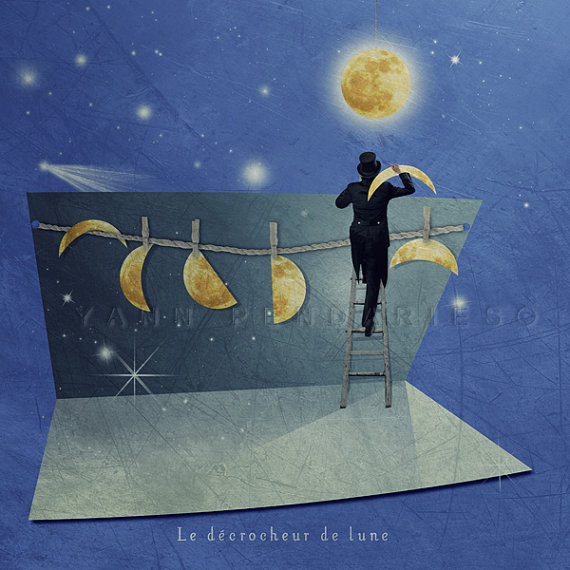
The Moon Changer by Yann Pendaries
MJ: As an artist do you ever get frustrated about not being to communicate an idea through the lens? If so, how do you combat that?
YP: Sometimes I wish I could express specific ideas, and if I can not do it I may be a little frustrated at the time, but it does not matter, because I remember the idea and another time may arise when I can finally realize it, I have the whole life before me and thousands of opportunities can happen, you just have to be patient.
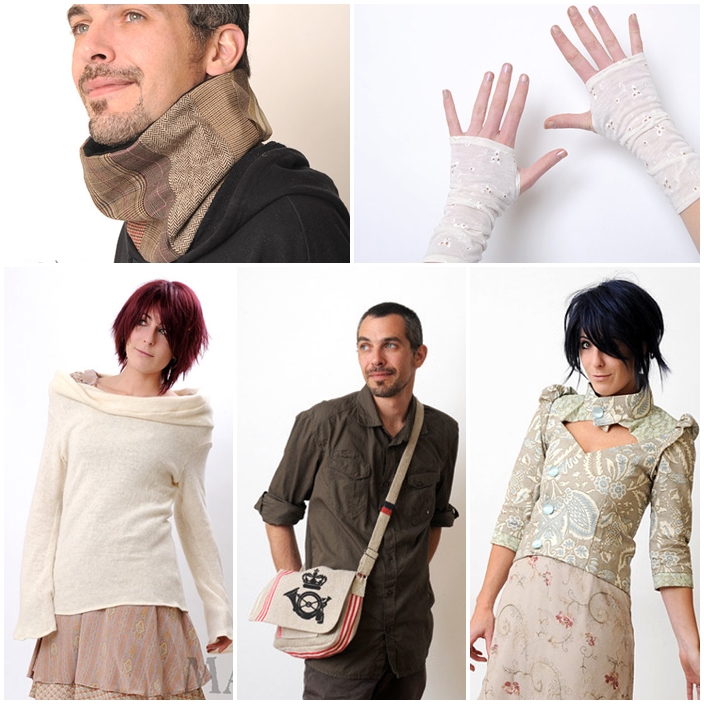
MJ: Your wife is an artist also, with a fashion-based Etsy shop, Malam. How is it being on the other side of the camera as her product model? Are you comfortable on both sides of the camera?
Selections from Malam – Handmade Designer Clothing & Accessories
YP:In fact, I am very shy and I hate being in front of the camera! For me it is horrible, I do not know how to behave, I feel ridiculous and I’m afraid to look into the lens. But I do it for her, because I’m glad to help nonetheless ! However behind the camera I am very comfortable, it is for me like a barrier between the subject and myself. Behind the lens I can be confronted with the other without any problem, because it is like a masked ball, I can watch and take the pictures that I want when I want to.
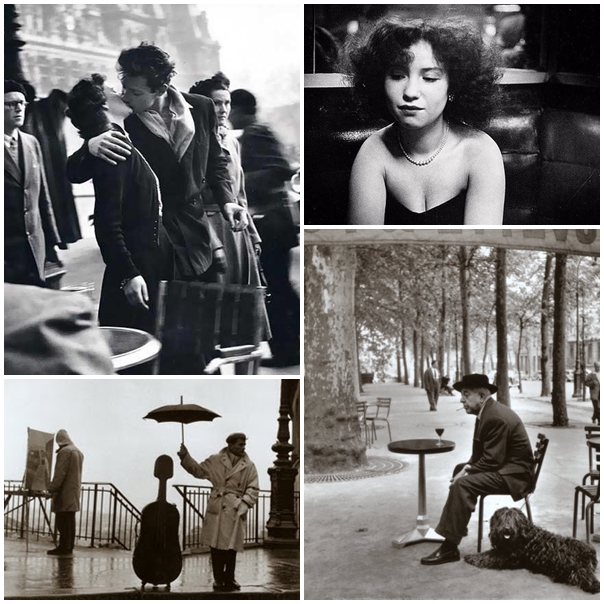
MJ: One of Ms. Jeannie’s most favorite photographers is Robert Doisneau.
Selections frm the work of Robert Doisneu. These are some of Ms. Jeannie’s favorites!
When asked about his recipe for success, he said “I put all my trust in intuition, which contributes so much more than rational thought. This is a commendable approach, because you need courage to be stupid – it’s so rare these days when there are so many intelligent people all over the place who’ve stopped looking because they’re so knowledgeable.” What are your thoughts on this as a fellow photographer? Do agree or disagree?
YP: I’m a real fan of Doisneau, I like how he took pictures of workers, he managed to capture from the 1940s to the 1980s the real world sometimes despised in historic and artistic work. (I am proud to tell you that it was her daughter who gave me my diploma in photography in 2005). In the same spirit, I suggest you look at the photographs of Willy Ronis that I really love too.
Willy Ronis (1910-2009), French Photographer most known for his post war Paris photographs and often compared to fellow photographer, Robert Doisneau.
I did some pictures in this style (below), where I tried to recreate this world of the 1950s with a nostalgia for a beautiful and poetic life.
Child with Umbrella by Yann Pendaries
On his recipe for success I totally agree, I did not know it, I think ridicule does not kill, and I think you should always look further to reach a new thought. My Tiny trades series are an example of this : I create new trades while everyone believes that things are made in such or such way , but no, we can believe there is something else that may seem unbelievable and surreal, but can actually exist even if it’s only in our imagination.
MJ: What is one message you hope to convey through your photographs?
YP: I want to bring each person a little piece of well-being in their homes, going home after a hard day of work and just quickly look at my photography and for a millisecond to forget the worries of their life. If I can bring this little happiness I am the happiest, because I would love everyone to be at peace, and it is not easy today with everything that is happening in the world.
All My Love by Yann Pendaries
MJ: If you could live in any other time period in history, which would you choose and why?
YP: I would have loved to live in the 1950s, although I think that life was not easier than today, there were different problems, but I feel that life was simpler and slower. It is precisely thanks to R. Doisneau that I love this period, that I dream to live and walk in the streets of Paris with the sound of mirror salesmen who would shout in the streets: “glazier glazier!!”, By the way I have a little story to tell on this subject: when I arrived in Paris I lived in a 11m2 flat in Montmartre, sharing it with two mice :), and once a week, a knife grinder passed in the street with a bell, shouting “grinder grinder!!” it was really wonderful and there’s only in Paris that you can still see this kind of scene, so out of step with modern and electronic life, and this does a lot of good.
From Irving Penn’s Small Trades series, photographed 1950-1951
MJ: If you could do a photo shoot with any famous person, living or dead who would you pick and why?
YP: For me it would be Gandhi, this good and simple man managed to give India its independence without any bloodshed and in total peace. If all the Big men in the World could react like him, able to solve problems without weapons, just that of speech, heart and non-violence I think the world would be healthier.
Mahatma Gandhi (1869-1948)
MJ: What other artists influence your work?
YP: There are many, but most in the same area: humanist photography. There are of course as I have said above R.Doisneau, but there are also other more contemporary photographers like Raymond Depardon, Edouard Boubat, Andre Kertesz, Sebastiao Salgado, Josef Koudelka and many others, they inspired me a lot with their black and white images, always close to humans and poverty, but without prejudice to the characters that they captured, they’re just the messengers of these worlds, which are too little known to the public, and they manage to touch us and let us know that sometimes we forget these worlds, hidden behind our smartphones, while we rub shoulders every day.
Clockwise (left to right): Edouard Boubat, Raymond Depardon, Andre Kertesz, Josef Kouldelka, Sebastio Salgado
MJ: If you could describe your work in three words, what would they be?
YP: Passion, dream, and sharing.
MJ: France has always been known throughout history, as an incubator for creative collaboration between writers and artists, whether it be in a simple cafe meeting or an evening salon. Do you think that is still true today? Do you have a similar support group that helps keep you inspired?
YP: I do not belong at all to a group other than the group of my friends over a glass of wine 🙂 There are probably many collectives still today, but I never never hear about them.
There is a real nostalgia of these famous groups where characters such as Louis Aragon, Picasso, Jean Paul Sartre, Simone de Beauvoir met up for example in the Café de Flore in the district of St-Germain, you can imagine sulphurous discussions about art, society, politics, but now only the tourists go there, and the charm of begone years belongs to the past, this is also what has happened in this neighborhood where jazz was really everywhere. Now only restaurants and fashion boutiques take place alongside the sidewalks of this neighborhood where a part of France’s history was written in the postwar years until the 1970s.
MJ: Since you mentioned wine, please tell us your favorite…
YP: Without hesitation the Beaujolais, it is unfortunately not very liked by French people in general, because every year in September we celebrate the Beaujolais Nouveau, when the wine is very young and not very good! but when you discover the Beaujolais region in Burgundy, there are many small producers who make an excellent wine, they are called Fleurie, St. Amour, Windmill, Julienas, actually they are all names of villages of Beaujolais, and yes there is a village called Saint Amour (Holy Love in English 🙂 )
MJ: If we were in Paris for just one night, what restaurant would recommend for dinner?
YP: Then I would advise this reader to go to one of the oldest breweries in Paris: Chartier (7 rue du Faubourg Montmartre, the 9th district), the restaurant has remained in the Art Nouveau style, it is really beautiful. Moreover, you can find legendary waiters with their legendary Parisian smile, which they have forgotten in the locker room :). Their menu offers traditional French cuisine and it’s not very expensive, but then you have to queue up a little to get a table. It is a real experience though, but I would not advise it for a lover’s evening, because you will never be quiet, between servers running around, the sounds of cooking, and the proximity of your neighbors, this may not be the most romantic evening ever. Go there though, you will not regret it.
MJ: Have you ever traveled to the U.S? If so, where did you go? If not, which state would you like to visit?
YP: Unfortunately, I’ve never been in the U.S.! However I sell a lot of my photographs in the U.S., they travel and discover the country for me :), As a result I know a little about the geography of the United States and especially about postcodes it’s funny 🙂
If there was one particular place I would like to visit, I think that it would be Arizona, with the desert, the mountains… I would feel like I am on another planet or immersed in an old western film… although I do not like westerns, but on a photographic point of view I’m sure I’d be living a daydream.
MJ: When you are not busy photographing (or modeling!), what other interests occupy your time? YP: I really have a sweet tooth so obviously something I love doing and which is always nice to my family and friends is cooking cakes and desserts! When I cook, I feel like I am taking a break, I always put in a background music of Django Reinhardt to give me rhythm .
This interview is part of an ongoing interview series, that Ms. Jeannie is orchestrating about artists, writers and musicians and their inspirations. To read other interviews in this series, simply click on the following links:
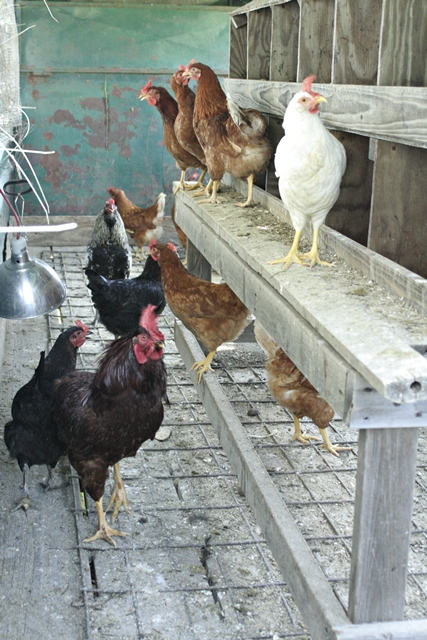
It has been a weekend of birds for Ms. Jeannie. While others may have been grilling or swimming or relaxing in a hammock , Ms. Jeannie was chicken sitting. Well actually, Ms. Jeannie managed to swim and grill and relax in a hammock too, as it turns out there really isn’t that much to chicken sitting, but responsibility is a responsibility so tethered to the feather she was. This was her flock of 18…
A curious bunch!
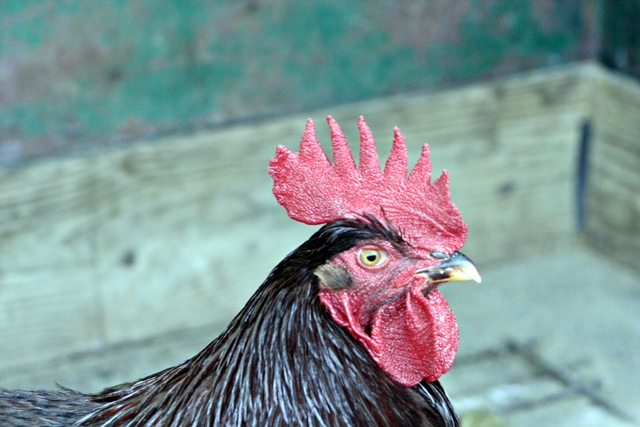
There were 16 hens and two roosters.
Rooster # 1Rooster #2
There is not really too much to watching chickens other than to make sure they have food and water every day and to collect their eggs. This group is temporarily housed in a vintage cow trailer that has been outfitted with chicken wire and nesting boxes.
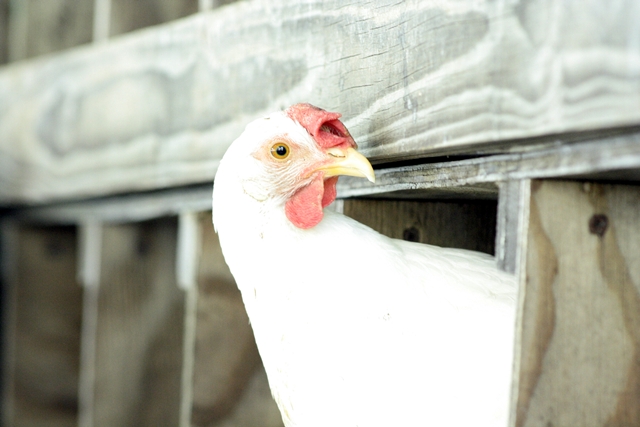
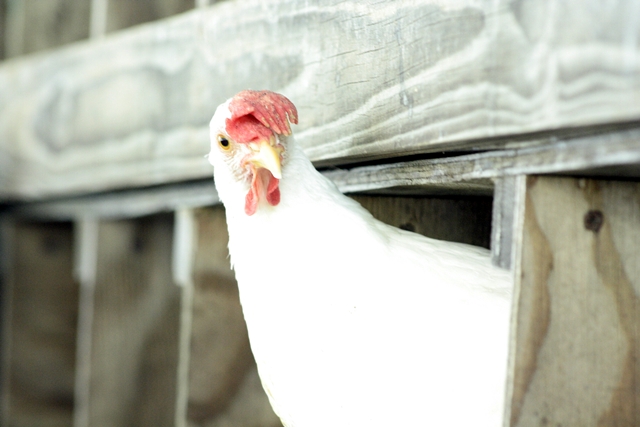
Ms. Jeannie kind of wanted to see a little guitar strapped around the white feathered one!
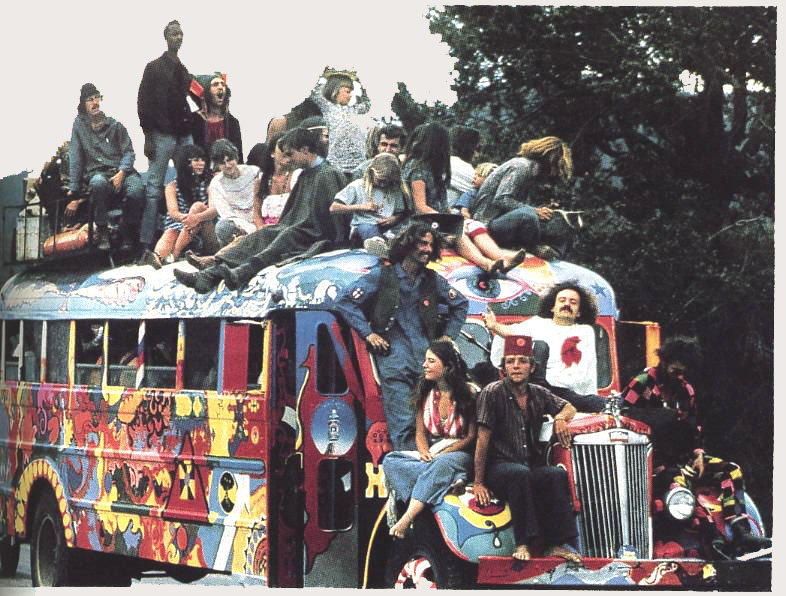
It has a lot of different levels in it so that the chickens can scamper about, look out the windows and catch the afternoon bugs. It sort of reminded Ms. Jeannie of those hippie buses from the ’70’s, with people poking in and out in all directions.
Hippie bus! Surely a chicken would feel at home with this bunch!
This housing arrangement is only temporary, as soon, the chickens will be grass-side and able to forage on their own. In the meantime though, they remained caged in. Ms. Jeannie’s friend had a dog named Tex who was a little too enthusiastic about having chickens around the farm. He wanted to herd them, he wanted to protect them, he wanted to eat them. As you can imagine, this was all most unsettling for the chickens.
Miraculously, like a cowboy drifter, Tex, moved on. To a new farm where he knew was needed to hered large animal livestock, many miles away from the chickens that tormented him.
Curious creatures..these chickens.
It was the talk of the chicken coop all weekend, with much nodding and bobbing for emphasis! The other big bit of gossip was the state of Flossie’s hairdo (or comb as it is officially called). Take a look…
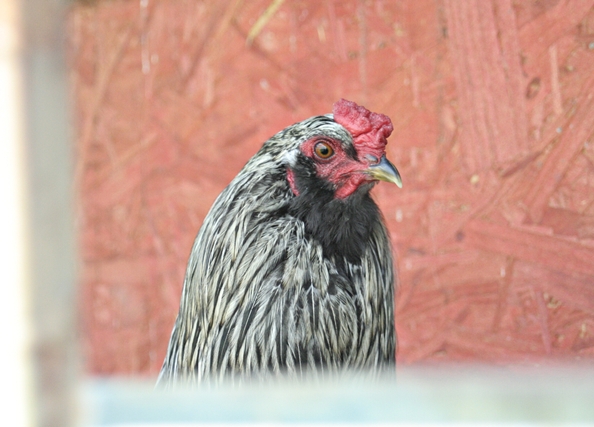
On one side she looks like all the others…But in this picture you can actually see it’s quite floppy and always in her eyes.
Ms. Jeannie thought this might be some sort of defect in the chicken as she’s the only one of the gang that’s floppy headed. But actually, it is quite normal in female chickens. Some combs stick straight in the air, some flop over, it is just the way it is. Ms. Jeannie learned that there are actually eight different types of combs, all varying in shape and size. Who knew?!
Incidently, Rooster #1 has a pea comb.
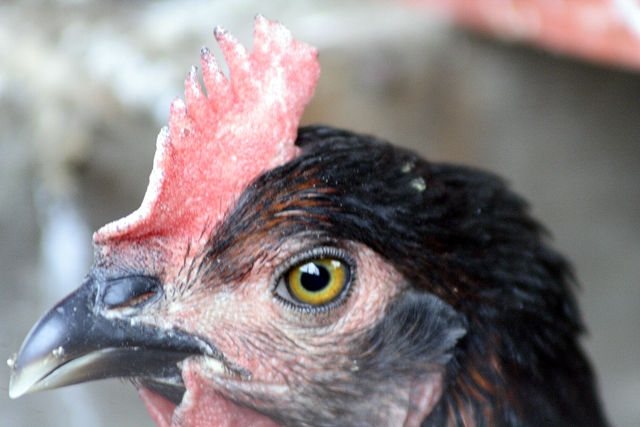
Another thing Ms. Jeannie didn’t realize about chickens, was how beautifully human-like their eyes are. Rooster #2 even looks like he has eye lashes…
Handsome looking eyelashes, even if he is a boy!Eyes the color of almonds.
Chickens eye color, like people, come in all shades from green to blue to gray to brown, yellow and even red (not so humanlike). They can also actually see more colors than people can, due to highly sophisticated retinas that allow them to see all colors at once from all parts of their eye.
Domesticated about 8,000 years ago from the wild Red Junglefowl, a breed that can still be found in Southeastern Asia, chickens now number 24 billion in population today. To Ms. Jeannie the male J looks a lot like an old english chicken. The female Junglefowls look very pre-historic, almost like buzzards.
Red Junglefowl: one male and two females.
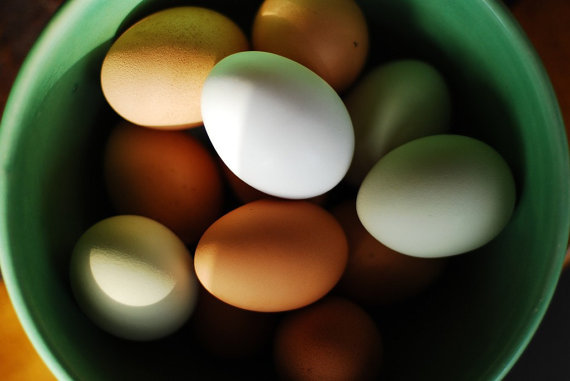
Ms. Jeannie did great with her brood on Days 1 and 2. She brought them kitchen scraps from the previous nights dinner preparation, which they seemed to like. Lettuce leaves, mango stones, banana peels, blackberries, garlic paper all seemed to be a big hit. On Day 1 she collected 13 eggs in a variety of shades from light brown to dark brown to white. On day 2, she collected 10 eggs. But on day 3, just as she went to fill her basket, one of the roosters (#2) attacked her.
Not quite sure what do about that, Ms. Jeannie left the bus and went home to research the situation. It seems that the rooster had mistaken Ms. Jeannie’s rubber boots for another rooster and was trying to show those boots just who exactly was boss.
Hmmm…
Is it a boot or a chicken?
These are Ms. Jeannie’s boots. They don’t look very chicken-like to her! But saddled with this new information, Ms. Jeannie went back to the chickie bus and plied that silly rooster with more blackberries which seemed to keep him happy while she collected the rest of the eggs in peace.
In the next few days, the chickens will move out to the grass. Ms. Jeannie’s friend is thinking about building a permanent chicken house before the winter sets in. That way, the chickens will stay nice and warm in the cool weather.
As it turns out you can pretty much design a chicken house anyway you like from grand to provincial. Tori Spelling’s coop is an elaborate affair…
Tori Spelling’s chicken coop. Photo courtesy of HookedonHouses.net
Mary sells her chicken eggs on Etsy. Check out her shop by clicking on the photo!
Ms. Jeannie has often entertained the idea of having a couple of chickens of her own. And now that she has a little experience under her boot buckle, she just might go ahead and take the plunge. One of the great things about watching the chickens over the weekend was that she got to keep all the eggs. Nothing taste better than a farm fresh egg!
Farm Fresh Egg Photograph by AmandaRaeK
Ms. Jeannie is currently reading a wonderful book called Tessie and Pearlie: A Granddaughter’s Story. It’s a memoir about the lives of author Joy Horowitz’ two grandmothers, Tessie and Pearlie, who were at publication time, both in their 90’s.
Tessie and Pearlie: A Granddaughter’s Story by Joy Horowitz
Tessie’s husband, Izzy Horowitz was an egg candler in Brooklyn in the 1920’s. Brooklyn and farm fresh eggs are two things you’d never think would go together. But alas, here there are in history! It was Izzy’s job to inspect the eggs by candlelight and discard any that were bloodshot. This is a picture of an electric egg candler from the 1930’s. Clearly a more sophisticated machine then an ordinary candle!
1930’s era egg candling machine. Photo courtesy of treatsforchickens.com
We have Christopher Columbus to thank for bringing chickens to the New World in the 15th century. At that time, chickens were more prized for their eggs then their meat.
Gaining mass popularity in the early 1800s as a valuable farm crop commodity, chickens were raised in larger and larger numbers on family farms for both their egg and their meat attributes. Following World War II, commercial egg production soared due to significant advances in breeding, feeding and housing chickens.
After seeing a disturbing documentary on PBS about modern-day chicken houses, Ms. Jeannie opposes the inhumane treatment of chickens in today’s commercial poultry industry. So she only buys organic, free range, humanely treated chickens and eggs. The eggs taste much better and the yolks are always a vibrant orange-yellow, instead of a pale butter color. Ms. Jeannie thinks it is because they are “sunnier” chickens – happy to be eating a natural diet and running around in a natural environment. Why not encourage as much happiness as you can!
























































 In the Vintage Kitchen: Where History Comes To Eat