
Highlights from the Summer Garden & A Big-Time Surprise Visitor

A visit from the deer we call Juna in June.

Before summer ends officially on September 23rd, I didn’t want the season to go by without a garden update on how the seedlings fared once they left the greenhouse in spring. Given the late date, this is sort of like a summer wrap-up post told mostly in images – a view of our New England garden from June to mid-September. Don’t miss the real garden surprise (visitor) all the way at the end!

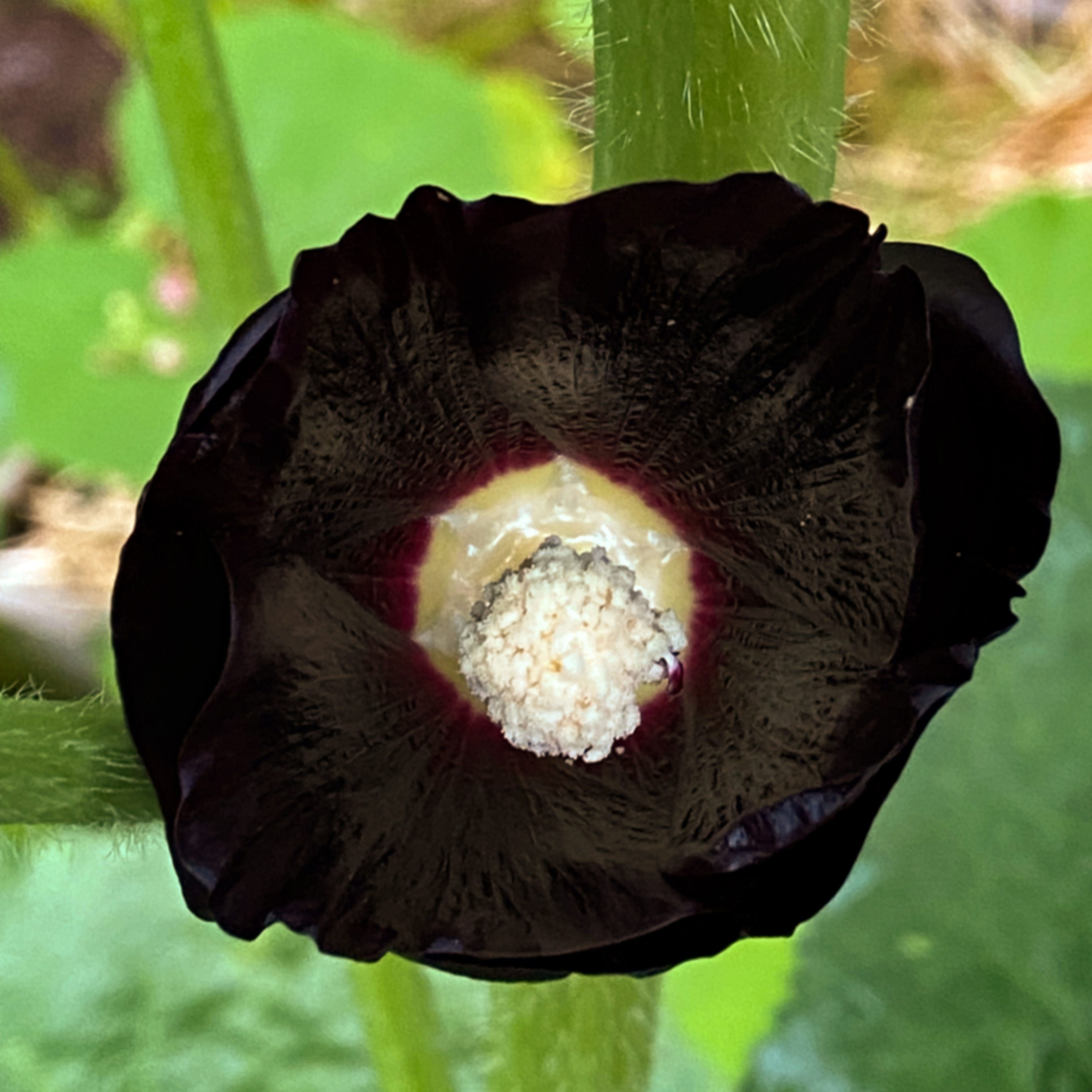
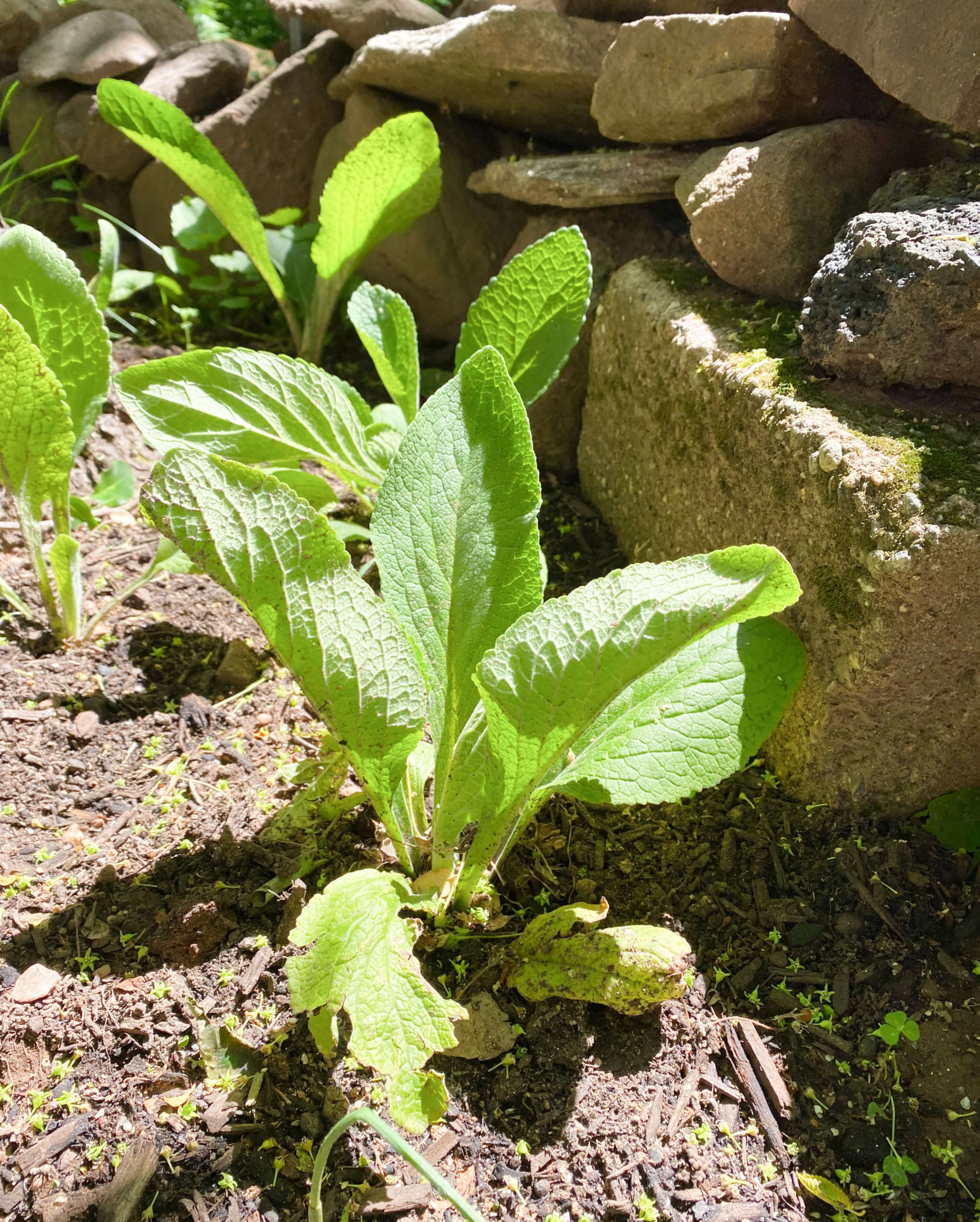
Heirloom Flower: The Watchman Hollyhock grown from seed started last year.

The Watchman Hollyhock starts out with a bloom as black as night but slowly turns a deep purple the longer it says on the stalk.
From black to eggplant to deep plums and bright purples – the hollyhock came to symbolize the enture garden as it grew and changed over the summer months.

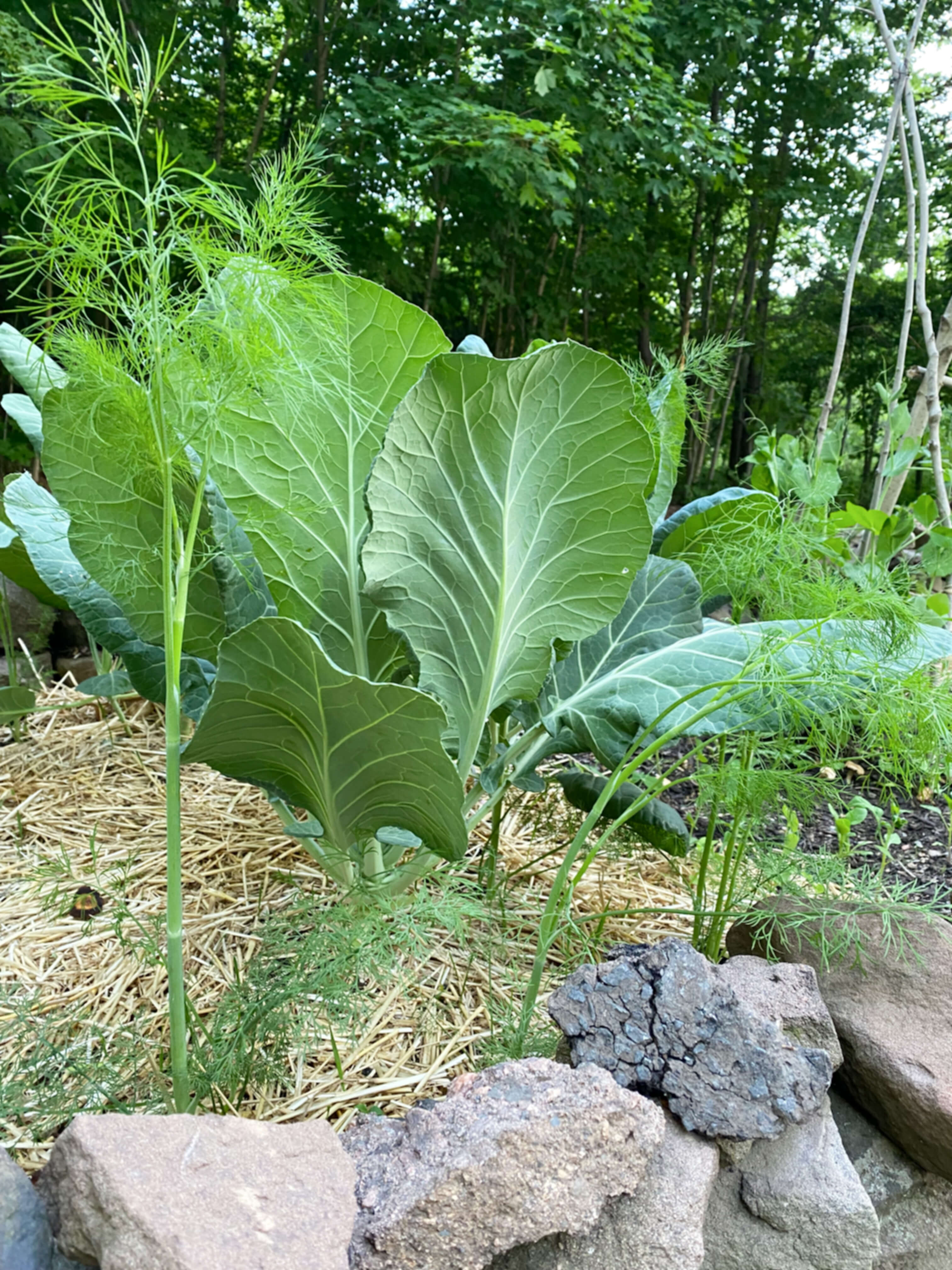
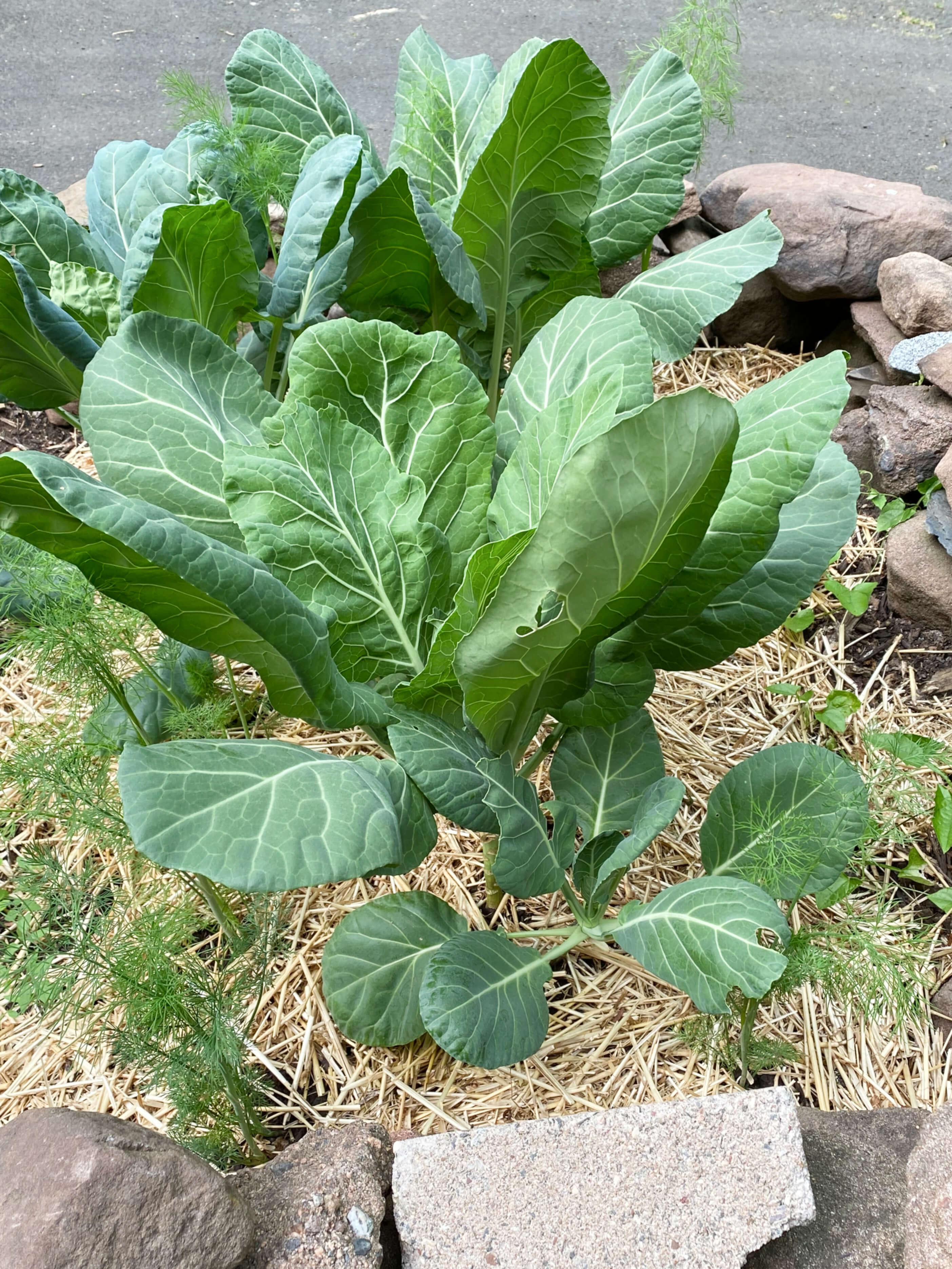
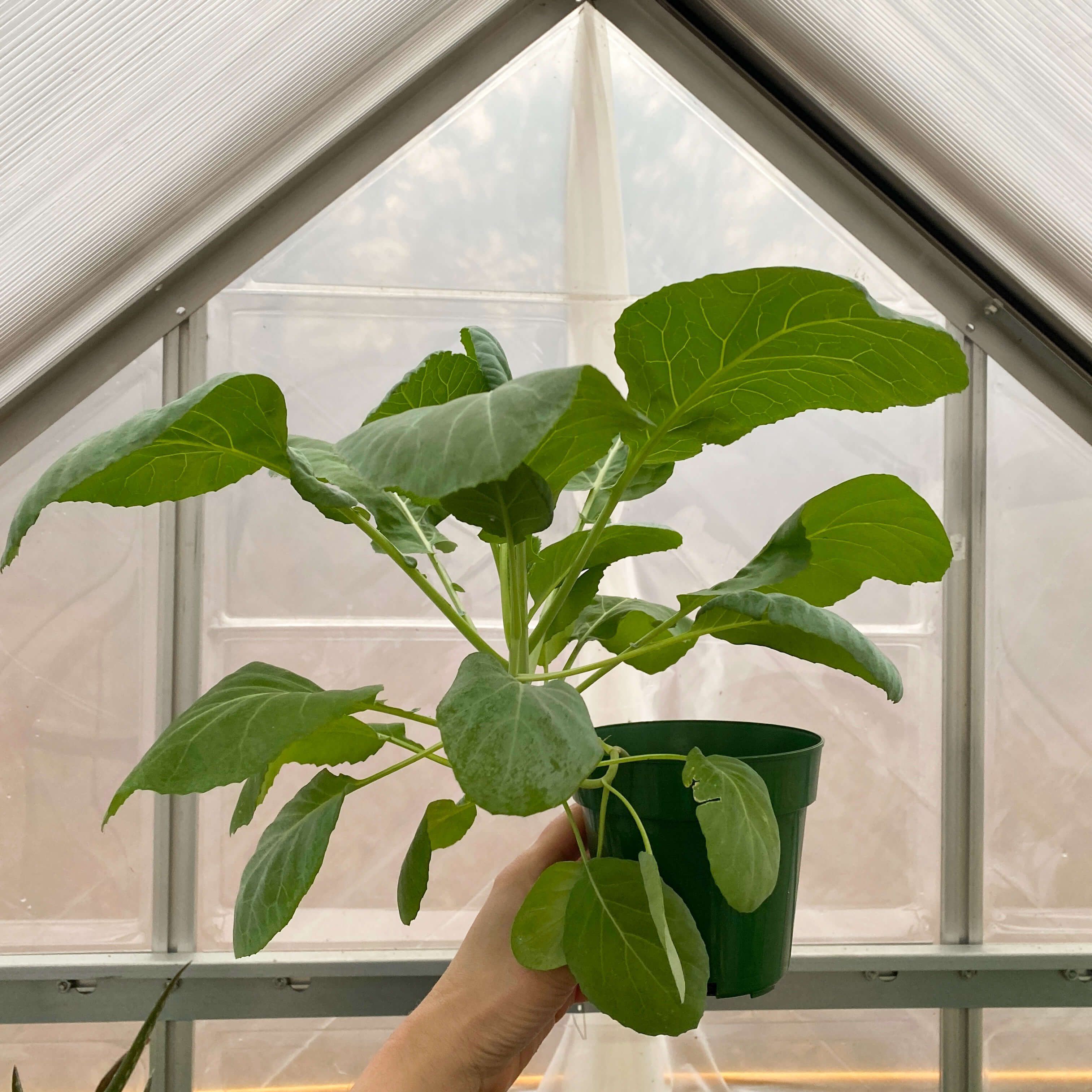
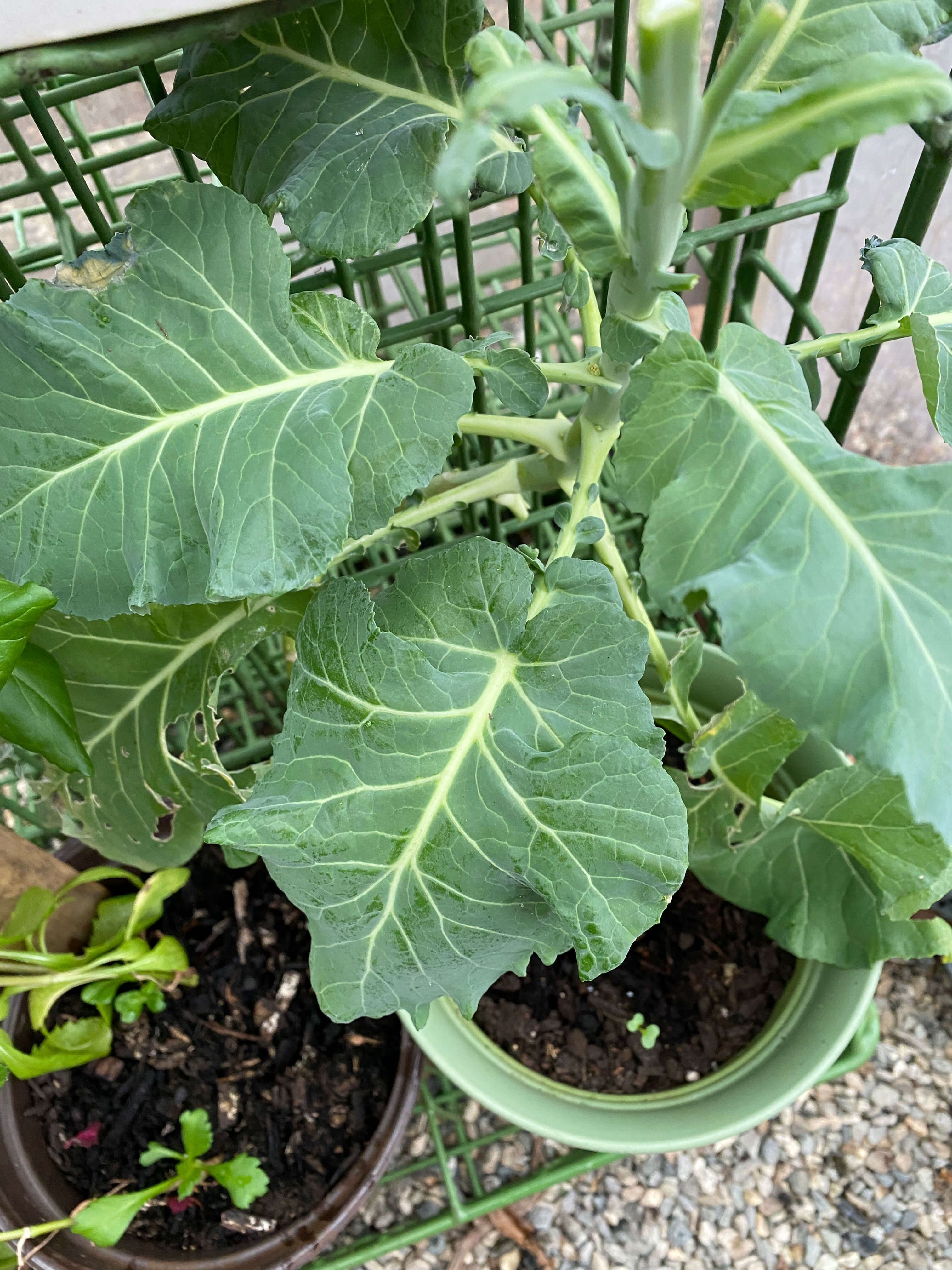
Collard greens at the start of summer.
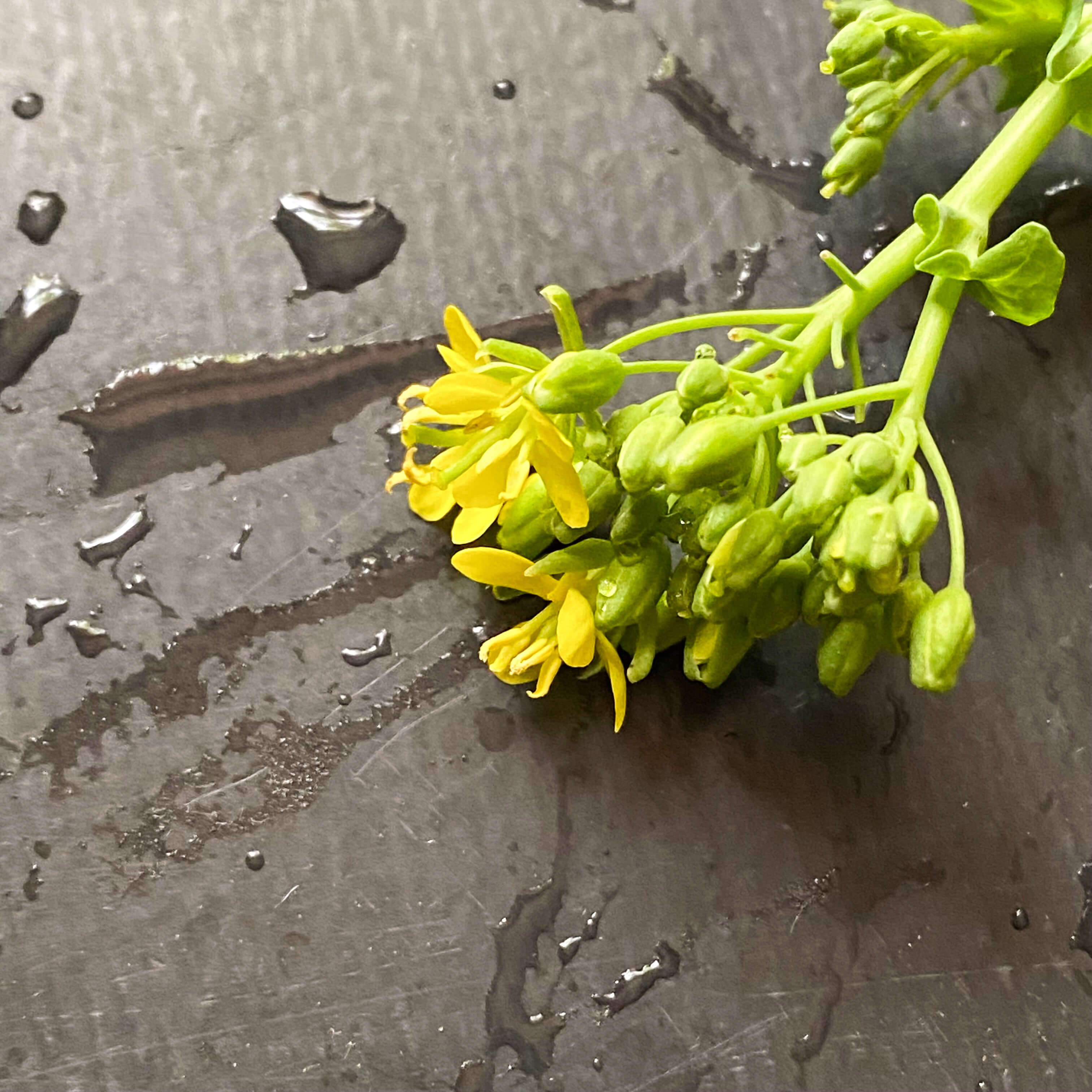
Broccoli raab
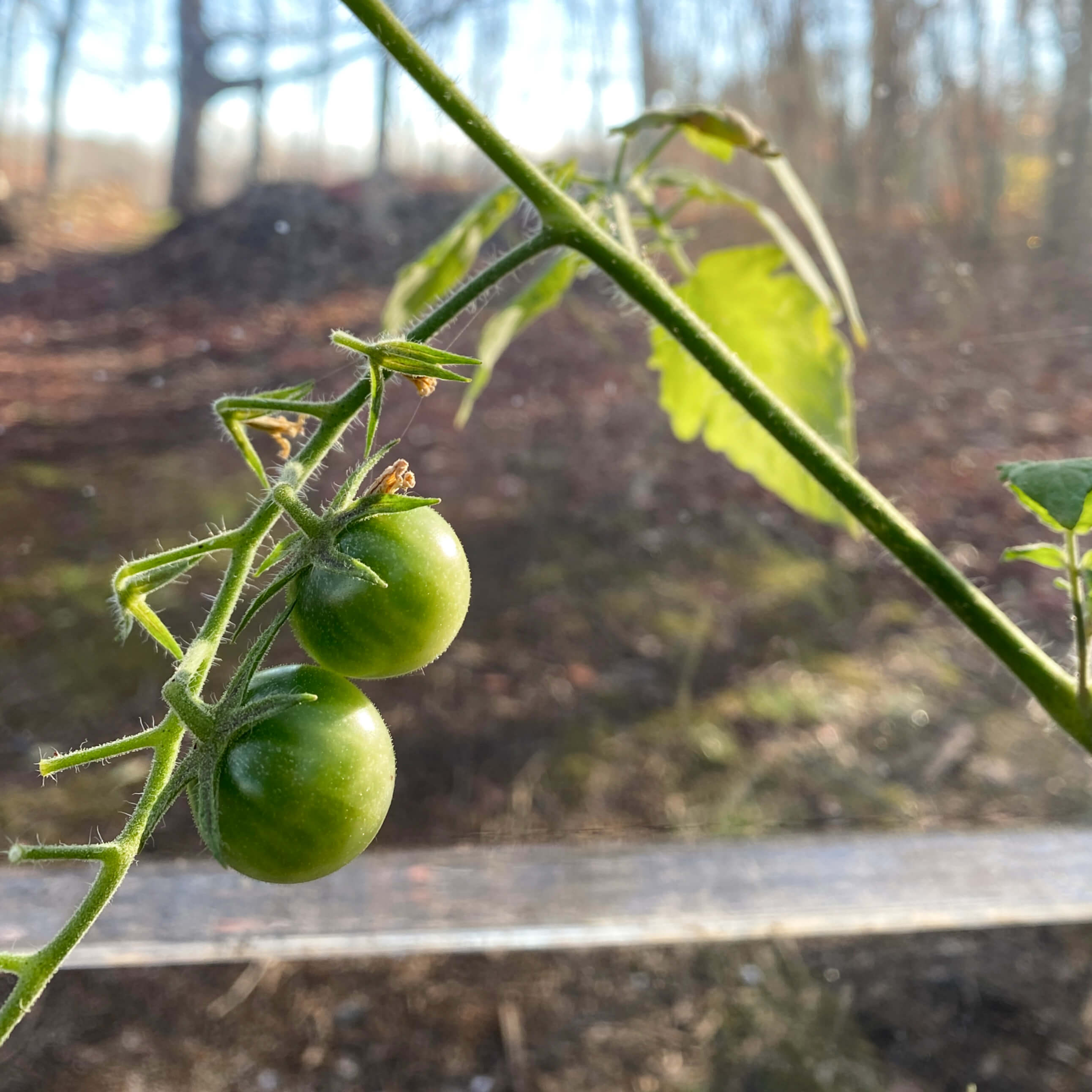
Brussels Sprouts with a companion planting of dill and volunteer tomatoes – stowaways from last year’s crop.

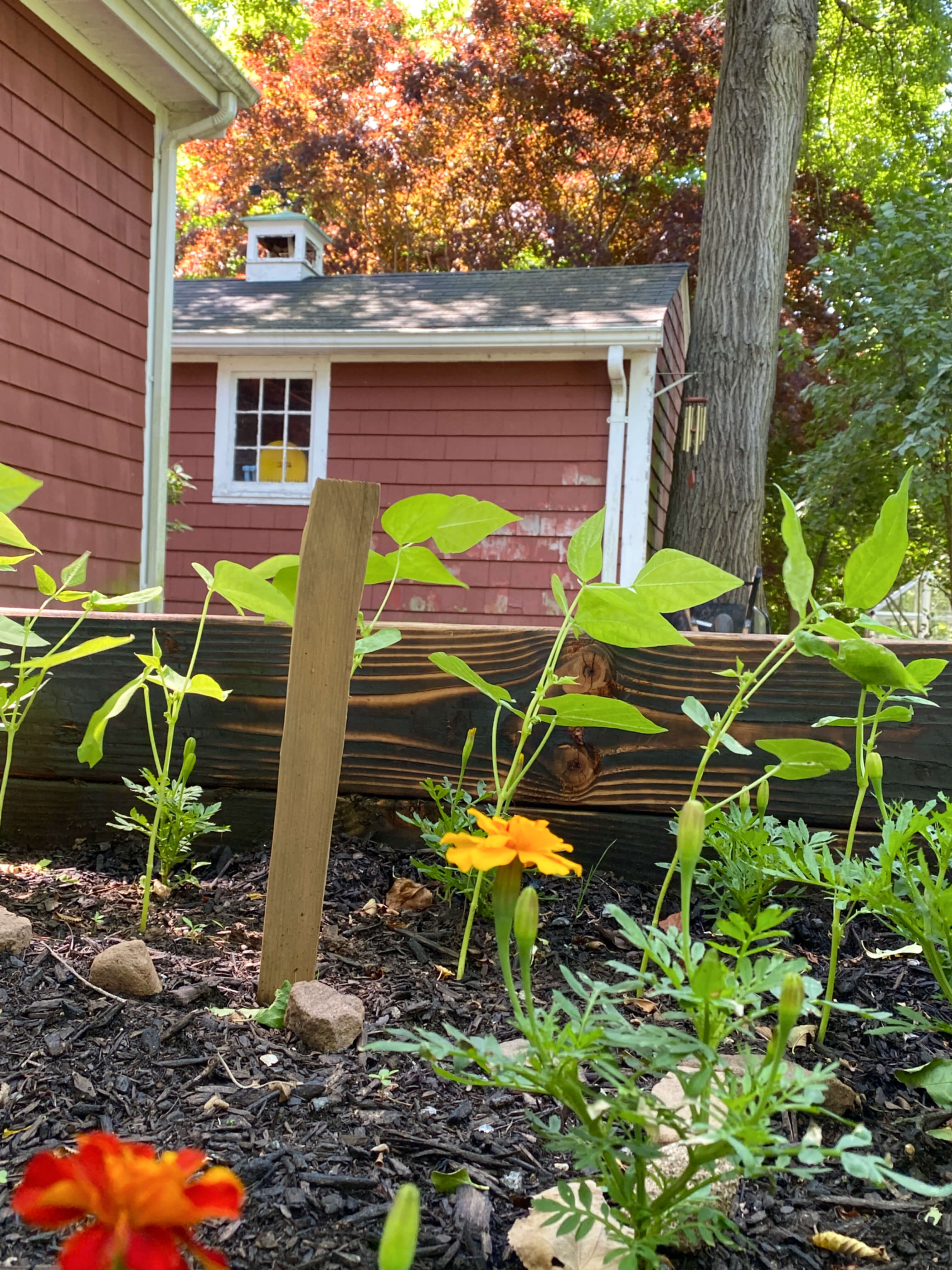
French Marigolds

First firefly!

OUR 2023 BEST GROWERS

This year, we were most successful in growing the following list from seed. Everything here but the pole beans, zucchini, and peas were started in the greenhouse in winter or early spring. The rest were started from seeds sown directly in the raised beds. Further down in the post, you’ll find the list of flowers and vegetables that we struggled with along with the various reasons. Hopefully, other New England gardeners will be able to share their insights as to why or what may have caused the challenges. But for now, here is our list of winners this year…

  • Tomatoes (Brandywine, Sungold Cherry, Sweetie Pole Cherry and Pineapple)
  • Cucumbers (Marketmore)
  • Collard Greens (Georgia Southern)
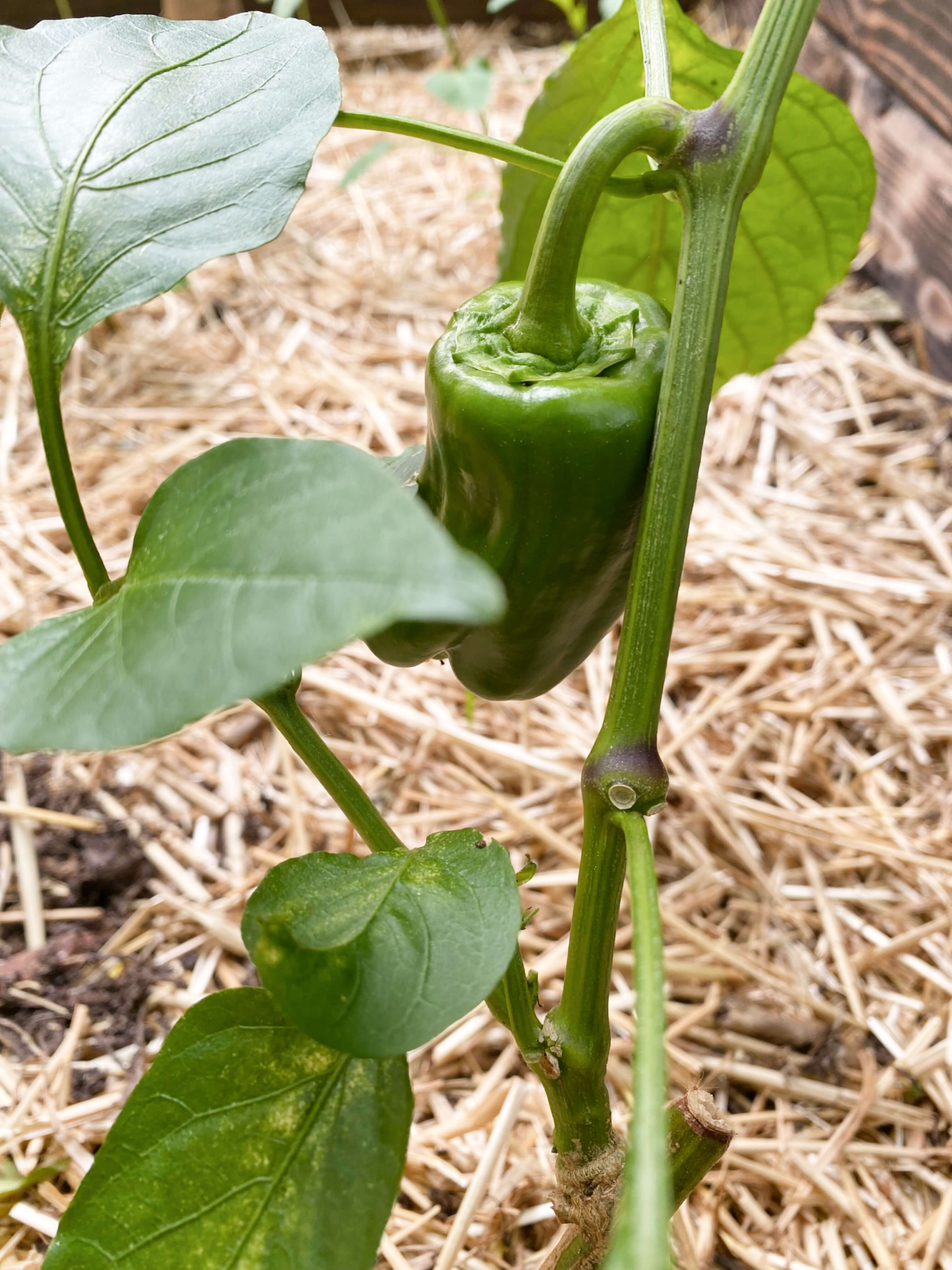
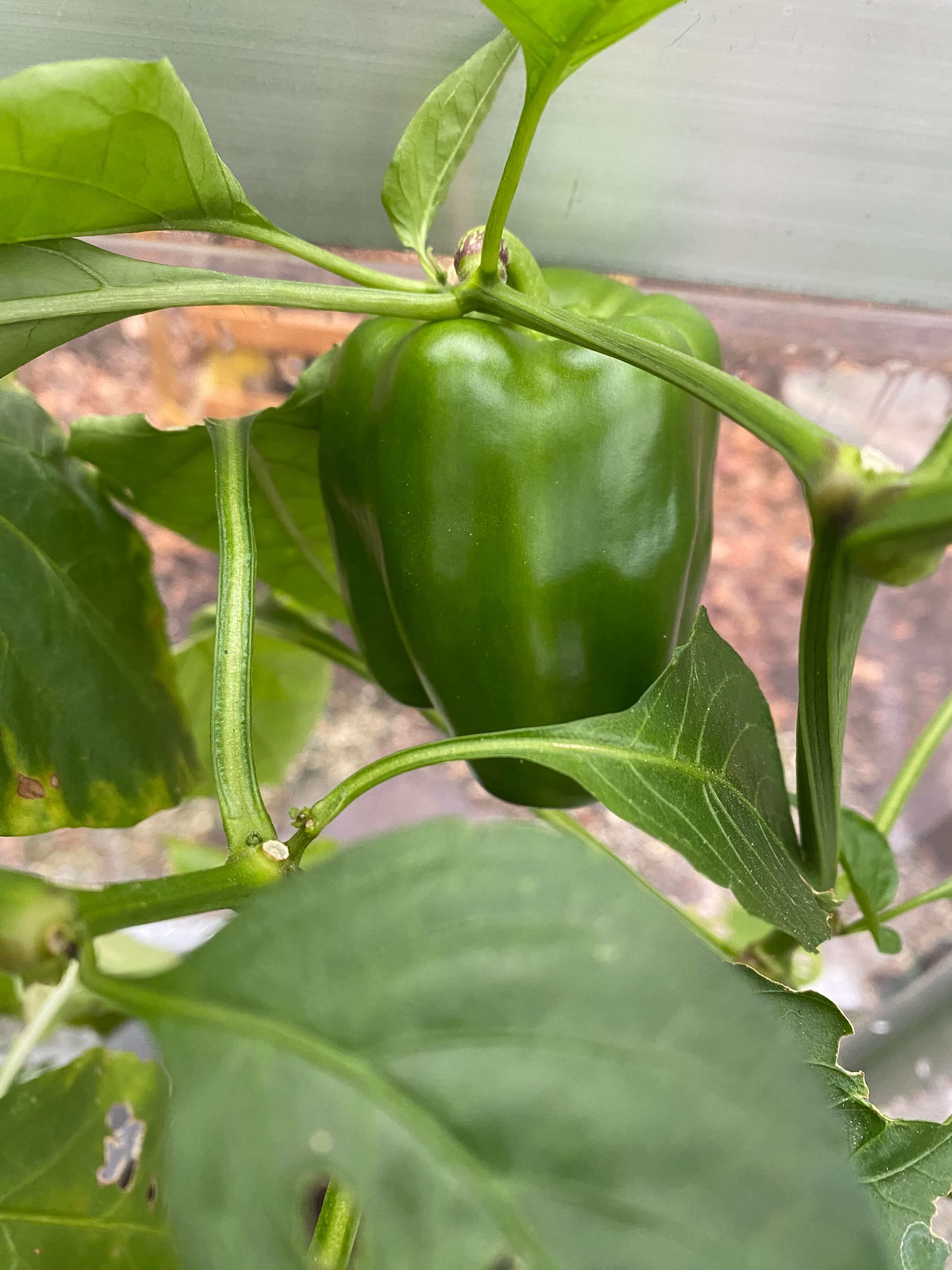
  • Hot Peppers: Lemon Jalapenos, Santaka Chile, and Padron Peppers
  • Rapini
  • Pole Beans (Blue Lake)
  • Flowers: Foxglove, Snapdragons, Hollyhocks, Mexican Sunflowers, French Marigolds, Zinnia, Geraniums
  • Mint
  • Lettuce (Rouge D’Hiver, Farmers Market Blend, Arugula, Salad Bowl Blend)
  • Cascadia Peas
  • Mexican Sunflowers
  • Jarrahdale Pumpkins
  • Black Beauty Zucchini (partially successful, more on that further on in the post).
  • Cucamelons

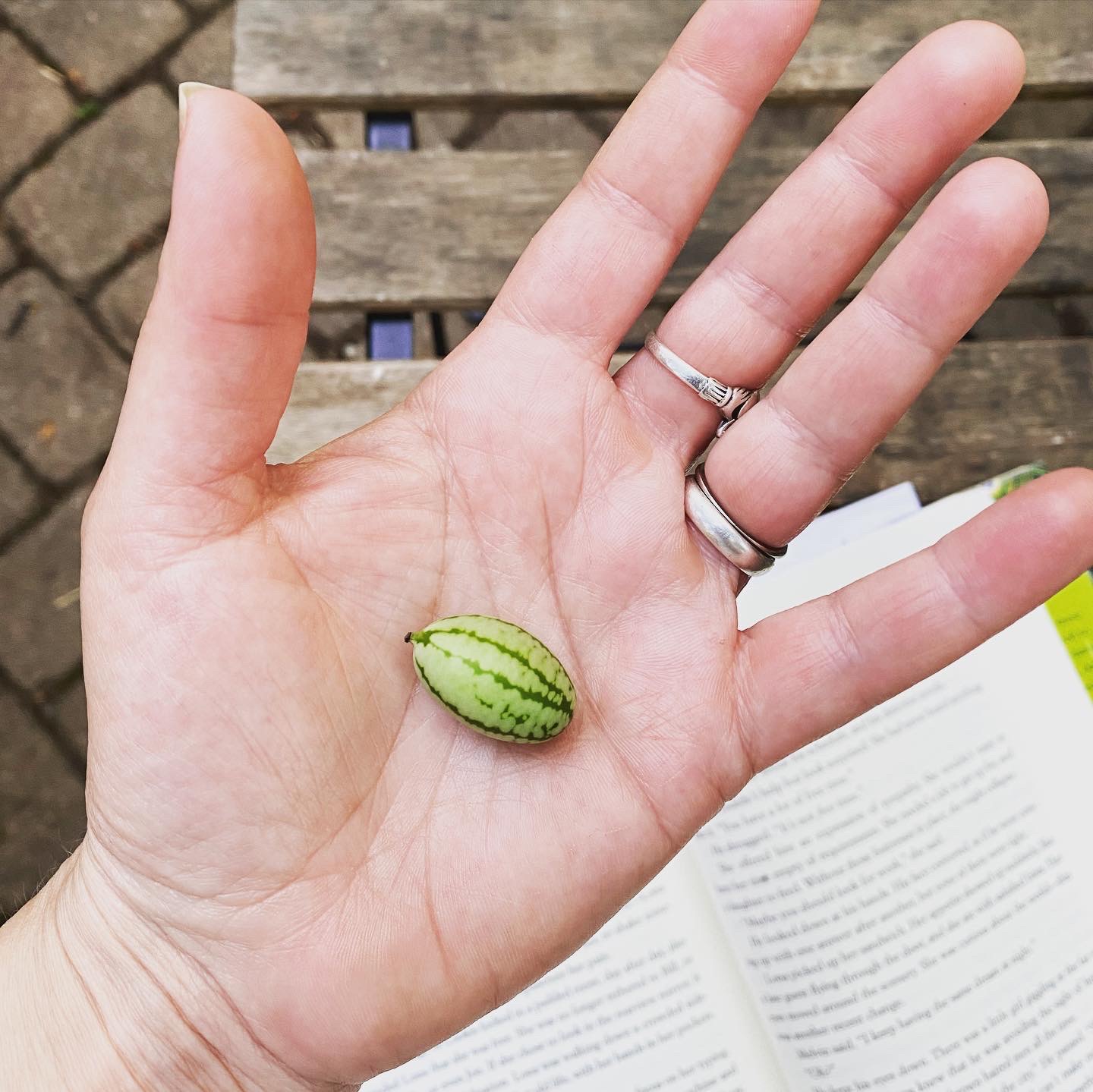
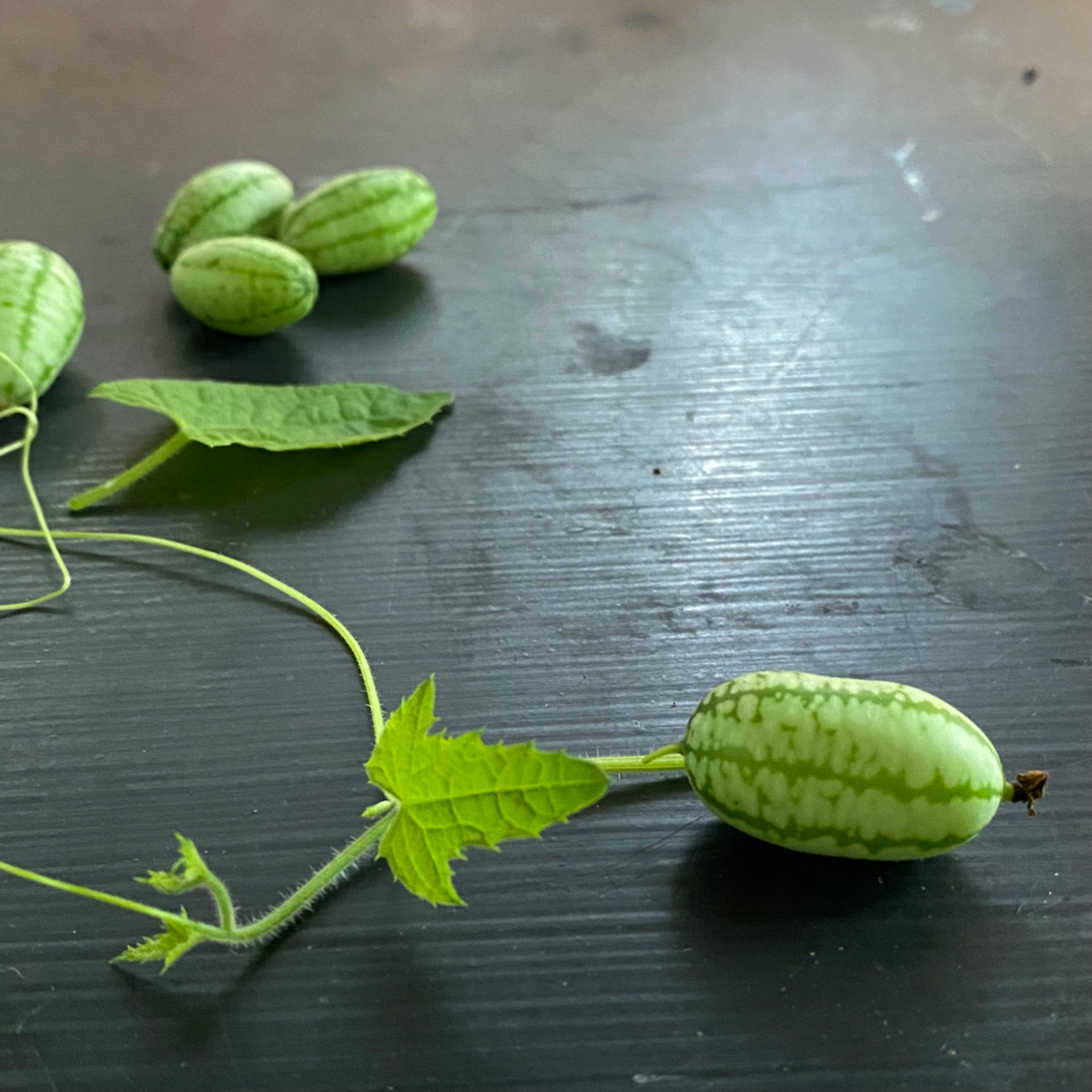
The cucamelons were one of our most enthusiastic growers this year. If you are unfamiliar with these little charmers, they are native to Mexico and look like miniature watermelons but taste like lemony cucumbers.

Our cucamelon plant literally vined its way to double in size in less than a month. At mid-September, it’s now over 9′ feet tall and still climbing. Its current destination is the upper echelons of the crab apple tree above it.

Cucamelon on the vine. They dangle like plump pearl earrings when they are ready to be picked.

Cucamelons are tiny (about 1 inch in length) but full of fresh summer flavor.

We loved the cucamelons so much that they inspired a new 1750 House summer cocktail – the Cucamelon Gin and Tonic.

So much new information has been learned about how to proceed this fall. What worked, what didn’t, what we can improve on and what we can forget, what we can nurture now and what we can save for another day or another year. A lot of surprises ensued. What worked great last year didn’t necessarily work as well this year. One thing that drastically improved though was the soil (thanks to a year of composting and leaf mold, and we didn’t overwater thanks to the miracle moisture meter reader. The garden was definitely much more lush and vibrant and full this year.
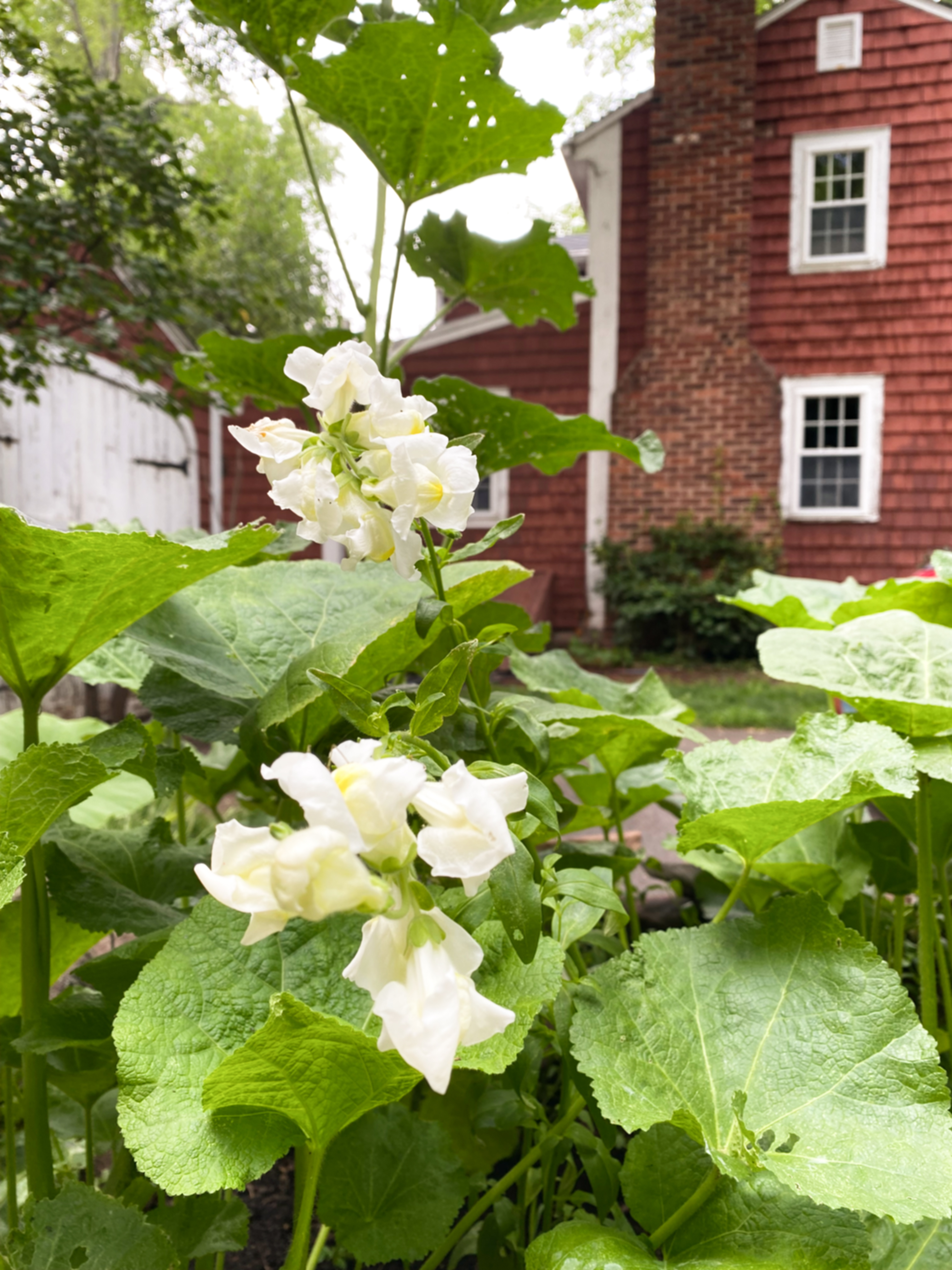
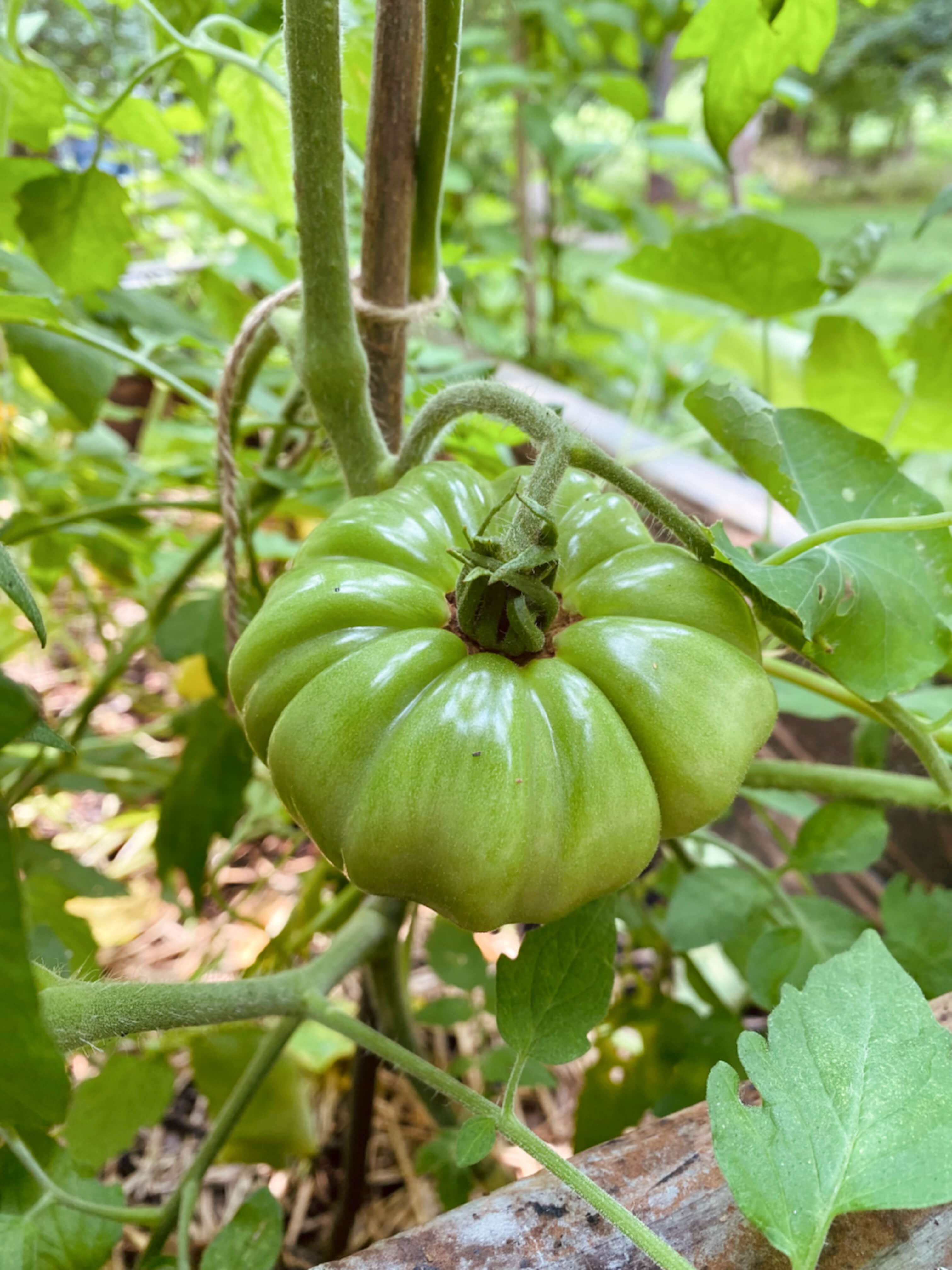
Snapdragons

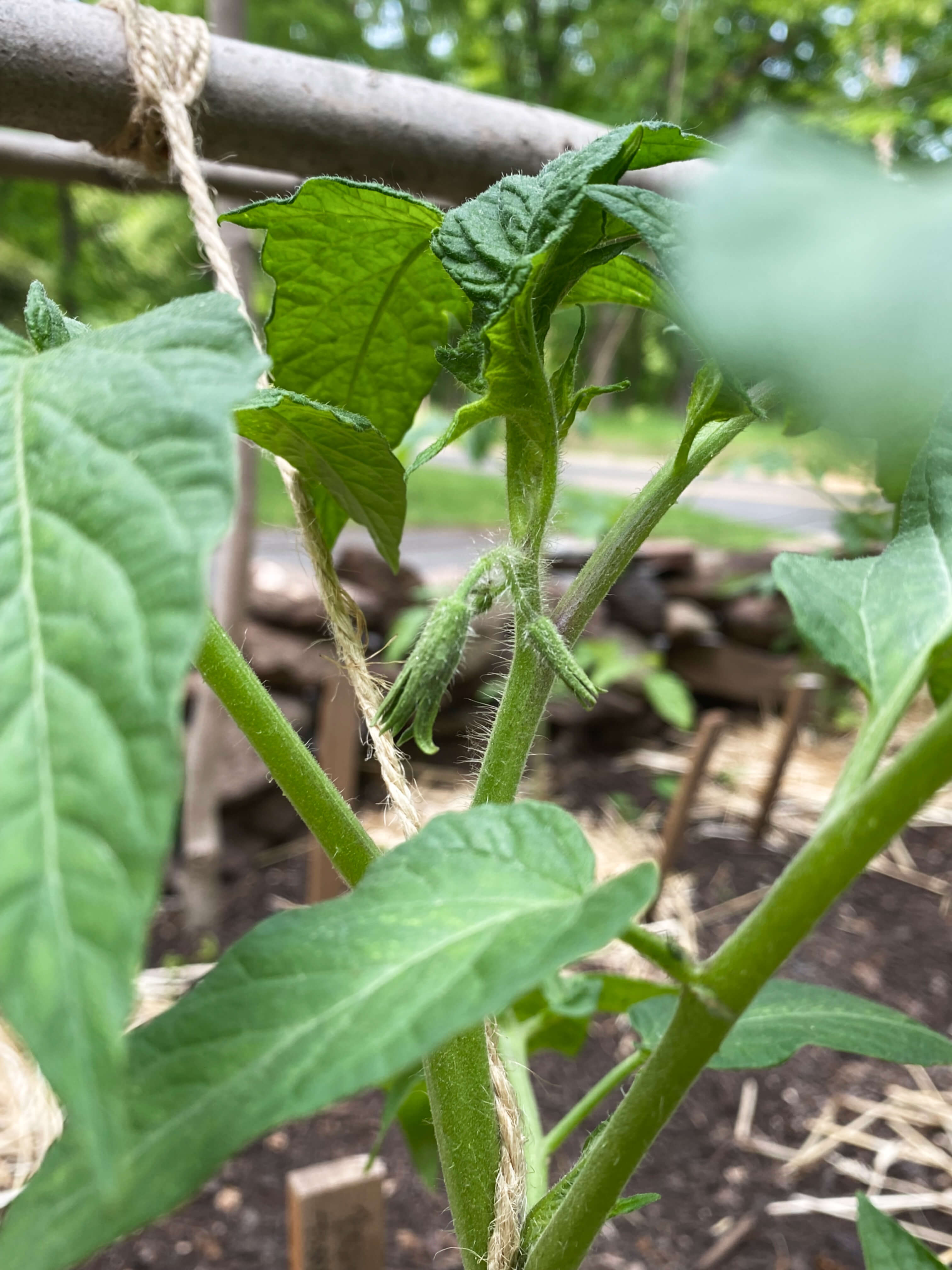
First Pineapple tomato!

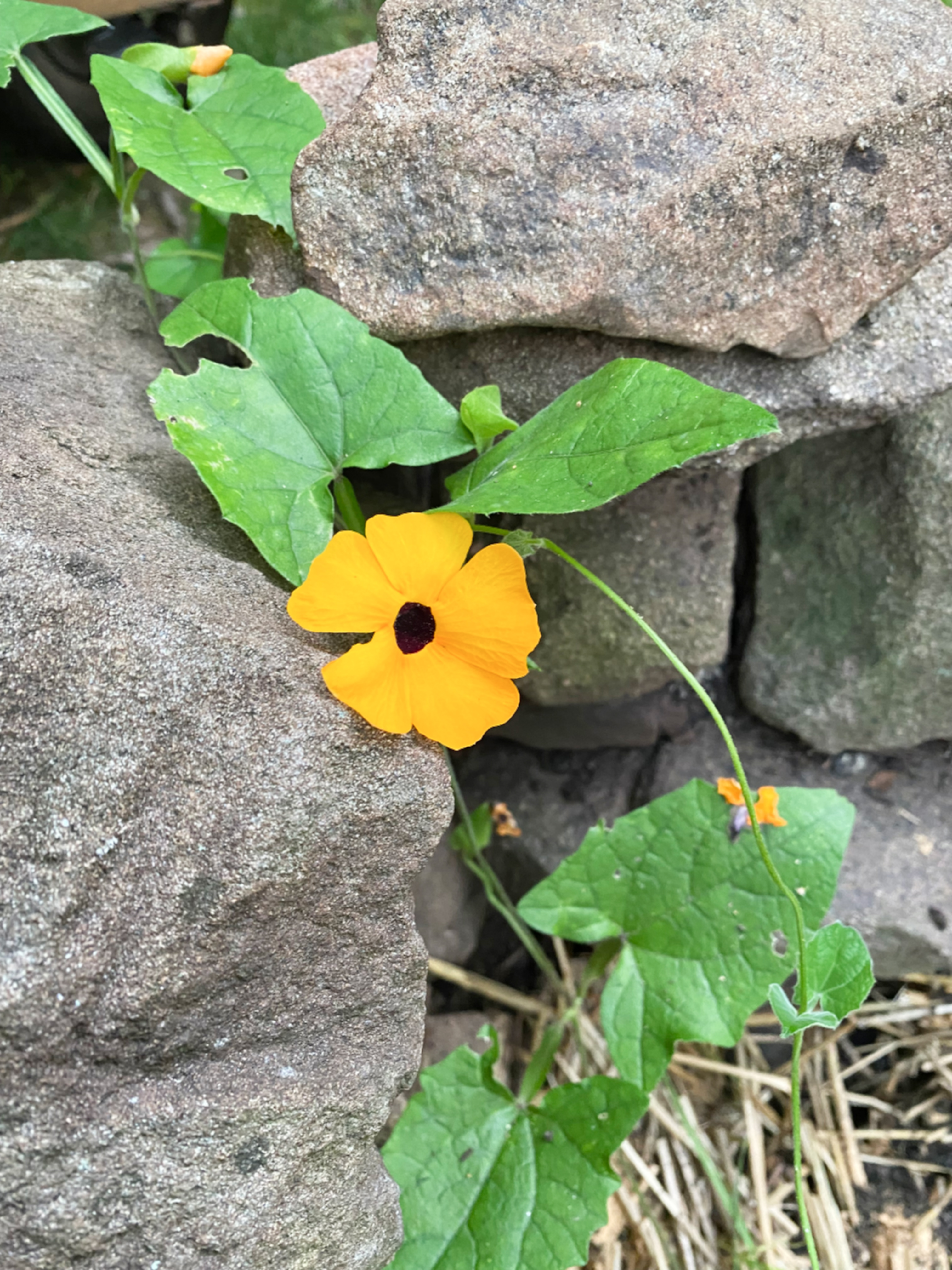
Black-Eyed Susan Vine.

One of the surprises of the season were the Black-Eyed Susan vines. We almost gave up on these guys completely since they grew so slowly for so long. We figured they weren’t happy in the bed or the inground mound where we planted them. It took five months from seed to first flower (and our forgetting about them), but once they got to the bloom stage they really took off and haven’t stopped since. Now they are happily climbing all over the sides of the rock-walled raised beds and are producing lots of pretty little flowers. I learned from our local nursery, that they have the best luck propagating these flowers from clippings, so we are going to try that method this fall.

A sparrow nest in our bird box

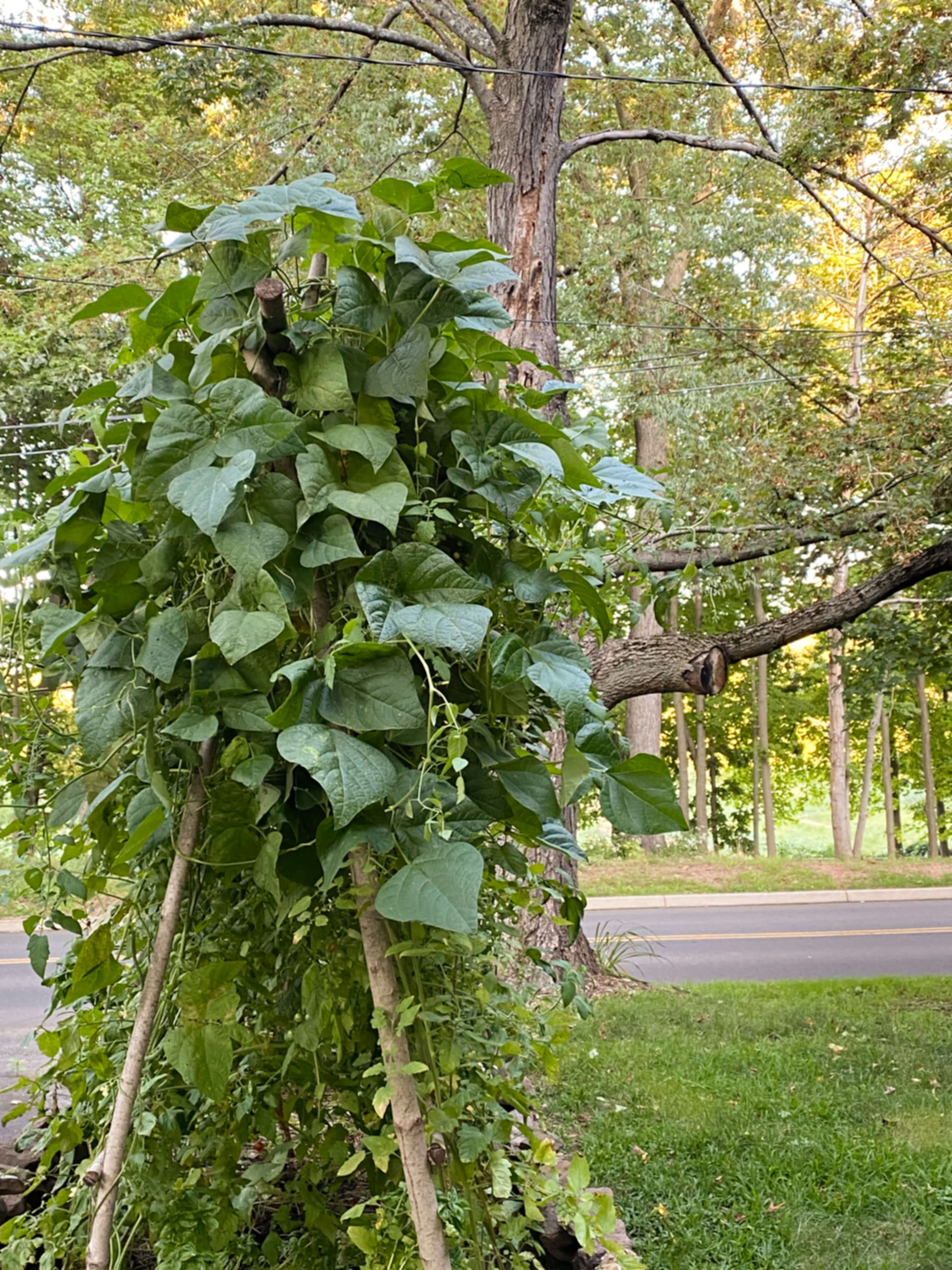
Tomatoes and pole beans climbing their way to the sky. This top rung of the trellis is 9″feet tall. We have to get on a ladder to pick the top tier!

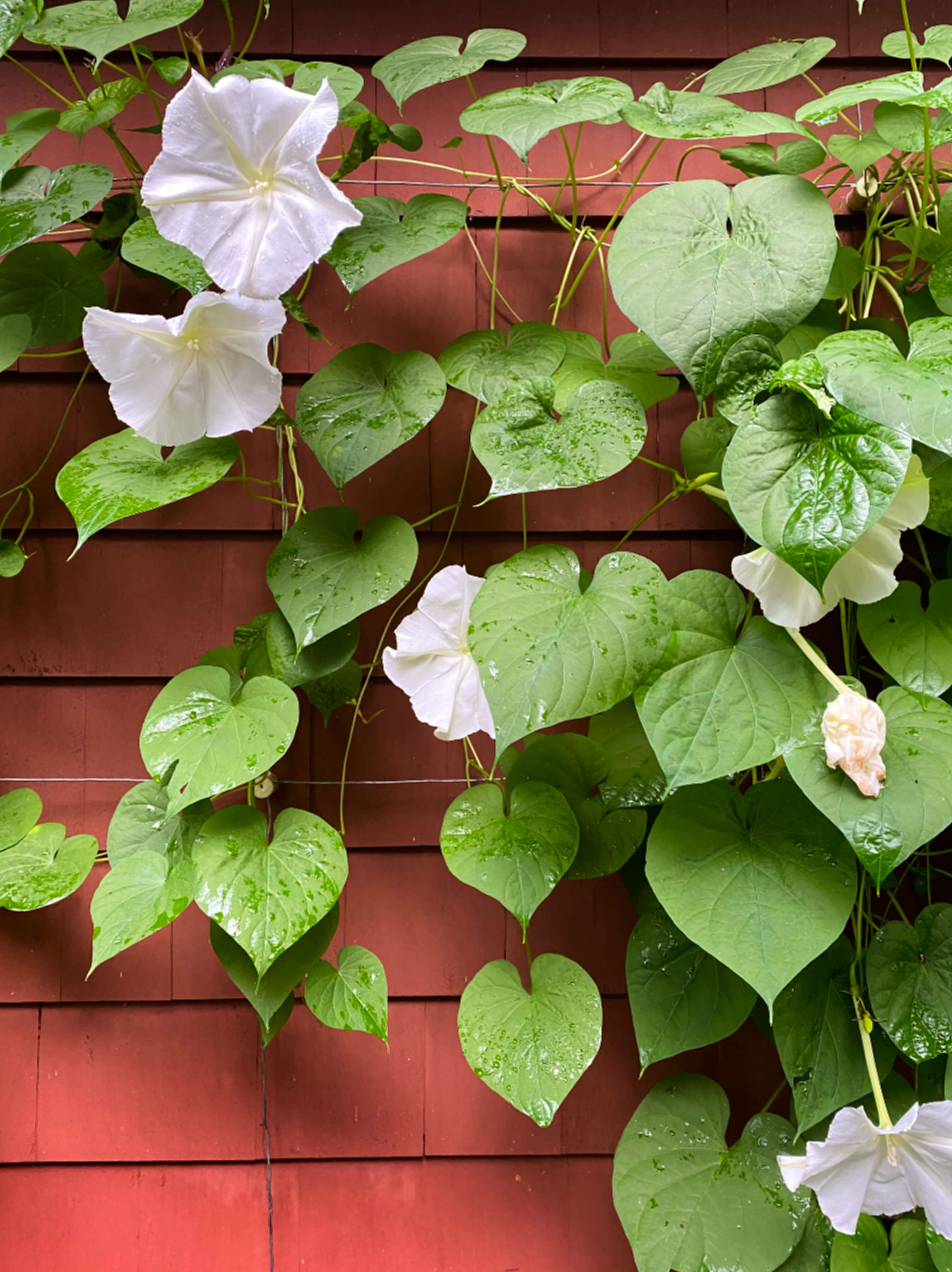
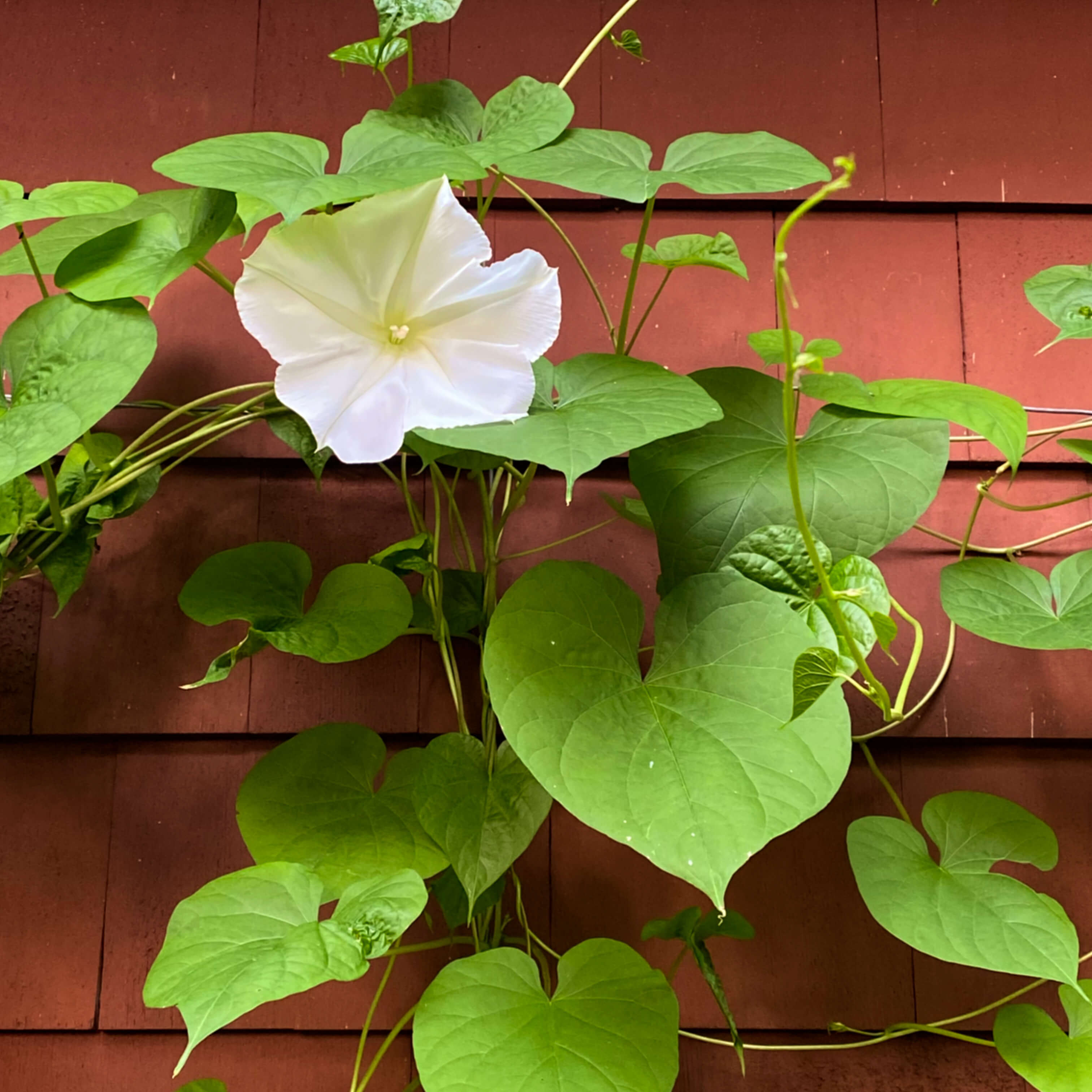
Moonflower vines.

The moonflower vines were a placeholder and an experiment to see if we liked a living wall on one part of the back of 1750 House. As it turns out we do! Next year, that wall will be covered in English ivy, which has already been planted at the base of the moonflowers. The moonflower seedlings were purchased from our local nursery, but we will definitely grow them again somewhere else in the garden next spring, this time from seed. They are fast growers and produce big beautiful white flowers, the size of your hand.
Our Biggest 2023 Garden Challenge: SLUGS

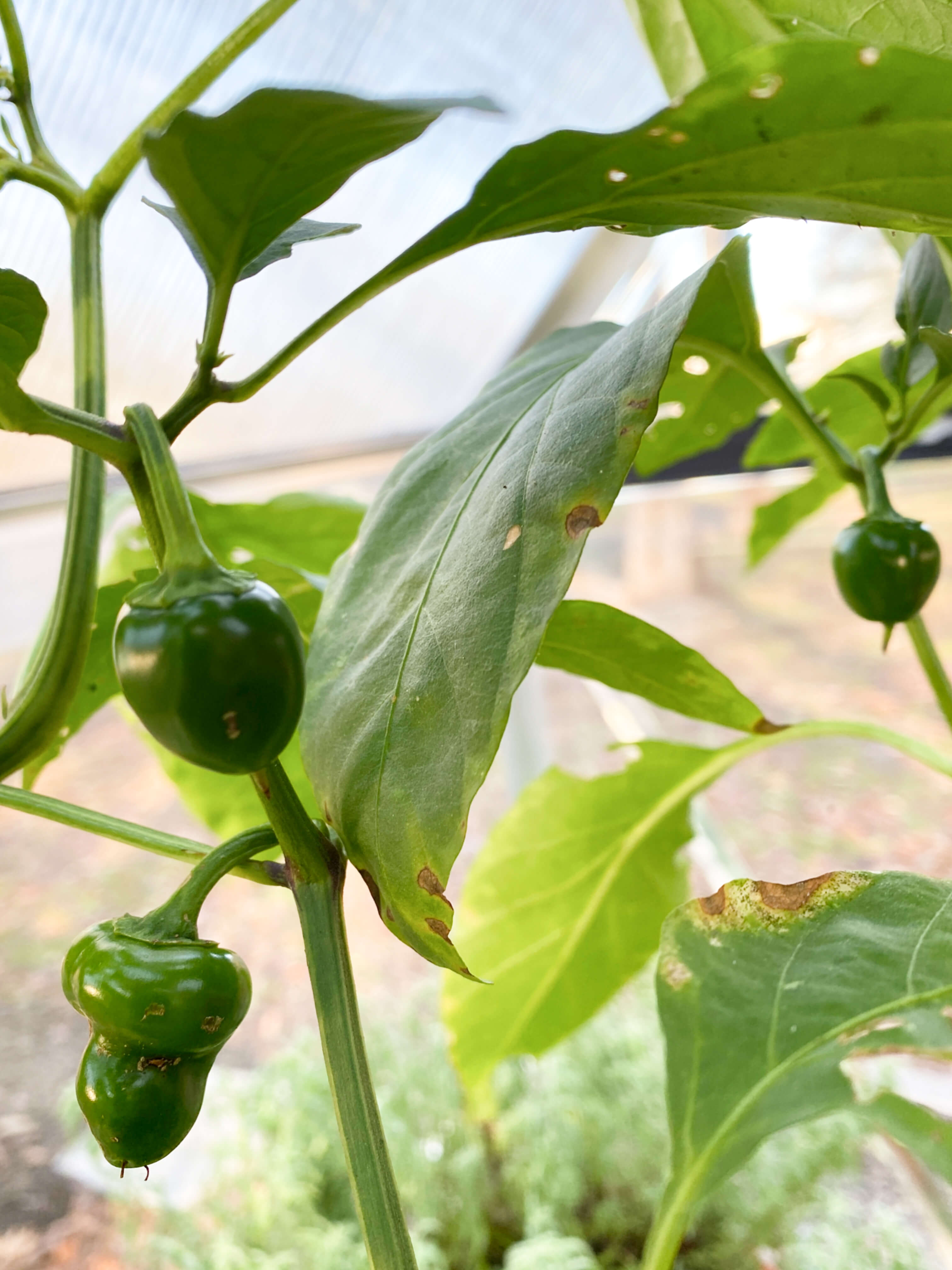
Oh the slugs. They slithered, they slimed, they feasted their way through the broccoli patch, the herb garden, the marigolds, the nasturtiums, the lettuce, the pepper plants (leaves only), the colleus and the cosmos. We tried all sorts of ways to deter them – sand barriers, chili powder sprinklings, tin foil, beer traps, nightly hand-picking.
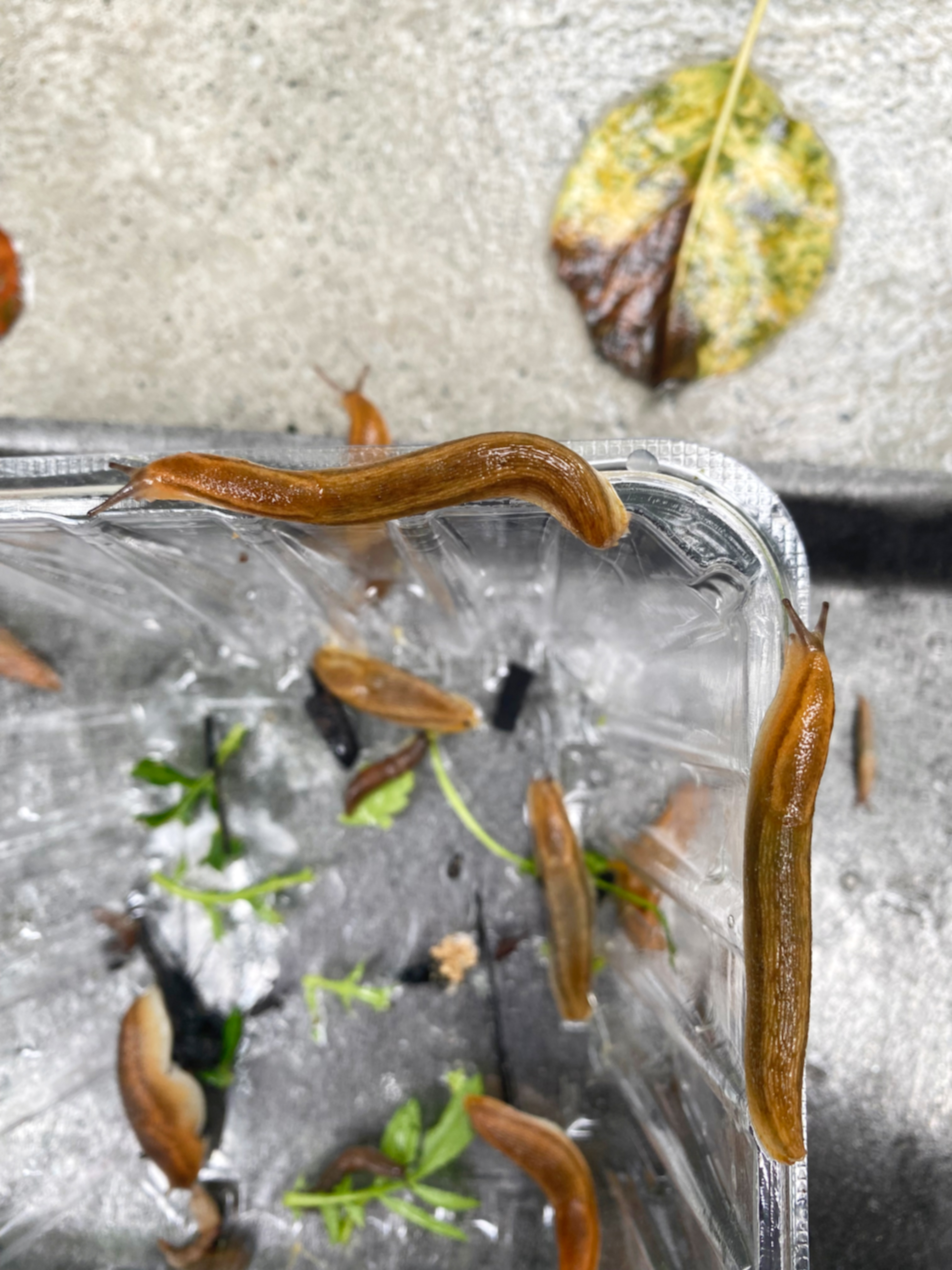
Slugs aplenty.

We were most successful with the beer traps – sinking a small container in the garden soil filled with about 1/4 cup of beer. The beer attracts them to take a swim and then they depart this life in one big vat of boozy revelry. The other thing that worked well was handpicking (we relocated all the slugs to the woods each evening to carry on life there), but this was a never-ending task – every single one we picked was replaced with a new slug the next night. Plus, this hand-picking was a pretty unappealing and slimy exercise. Our buckets each night were filled with at least 30-40 slugs. Interestingly, they left all other plants in the garden alone, which is why we had such great success with everything else. Next year, we are going to try growing all of these feast-worthy plants in the greenhouse over the summer to hopefully keep them slug-proof.

Impromptu bouquet – snapdragons and phlox

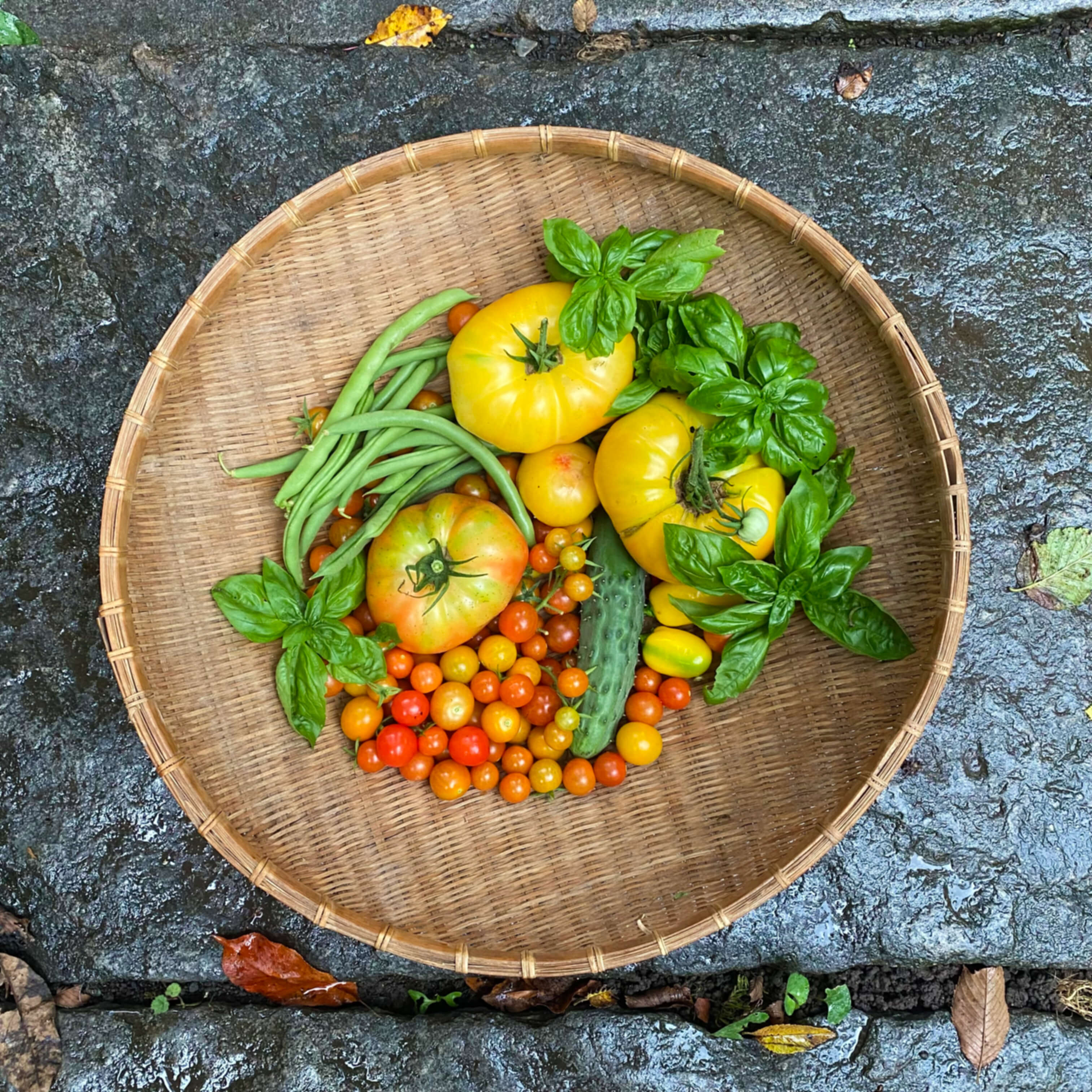
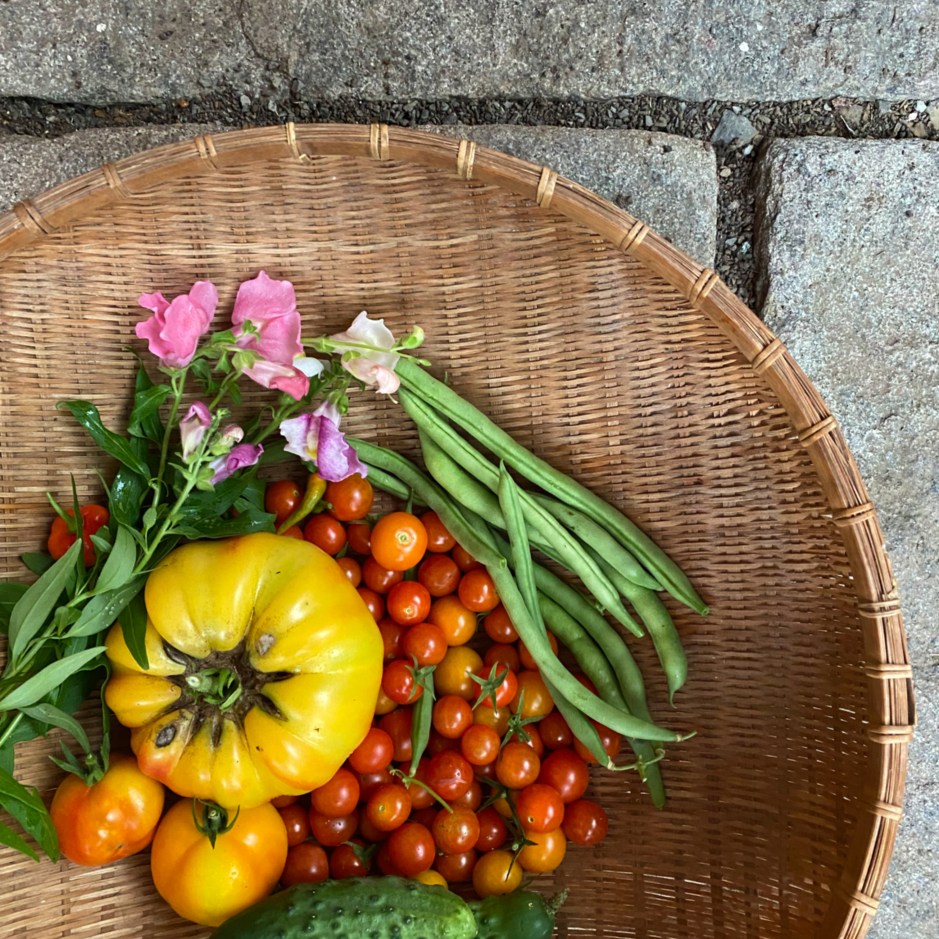
First summer gathering basket: nasturtiums, zucchini, cucamelons, mint, Mandeville flowers, cherry tomatoes, pineapple tomatoes, Santaka chile peppers

Things That Didn’t Grow Well in the Garden This Year…

  • Zucchini (Black Beauty) – while they did grow big and lovely and flowered every day pretty much throughout the summer, two plants only produced three zucchini. Three was a definite improvement from last year’s crop which was zero, so we are moving in the right direction but this was also the second year they eventually became overcome by powdery mildew, even though we tried two different treatments: baking soda and neem oil
  • French Melons (powdery mildew victim #2)
  • All the herbs – parsley, basil, chives, sage, and thyme (The work of the mighty slugs! The only herb they left alone was the rosemary).
  • Cosmos – our second year in a row trying to grow these. (They produce a few flowers but then the plants dry up and die off)
  • Bush Beans – we rotated them to a different bed this year underneath the tomato plants and they did not like it. Maybe it was not enough sun for them once the tomatoes really started growing.
  • Broccoli (DiCiceo) – we harvested one broccoli head harvest before the slugs arrived for the season
  • Straw mulch – The intention was to use this as mulch to help with the slug situation but, as you can see from the list above, it had no effect and turned out to look really messy in the garden. Aesthetically it wasn’t our favorite.
  • Sunflowers – also our second year trying to grow these. Starting them in the greenhouse this year helped but they were weak and spindly and mostly fell over before July started.

Back to happier stories…

Cucumbers growing like crazy!

Our first big pineapple tomato weighing in at 1.7lbs

The big goal for 2023 was to create a pollinator-friendly garden. Success!

Pole beans and cucumbers joined the weekly gathering basket in August.

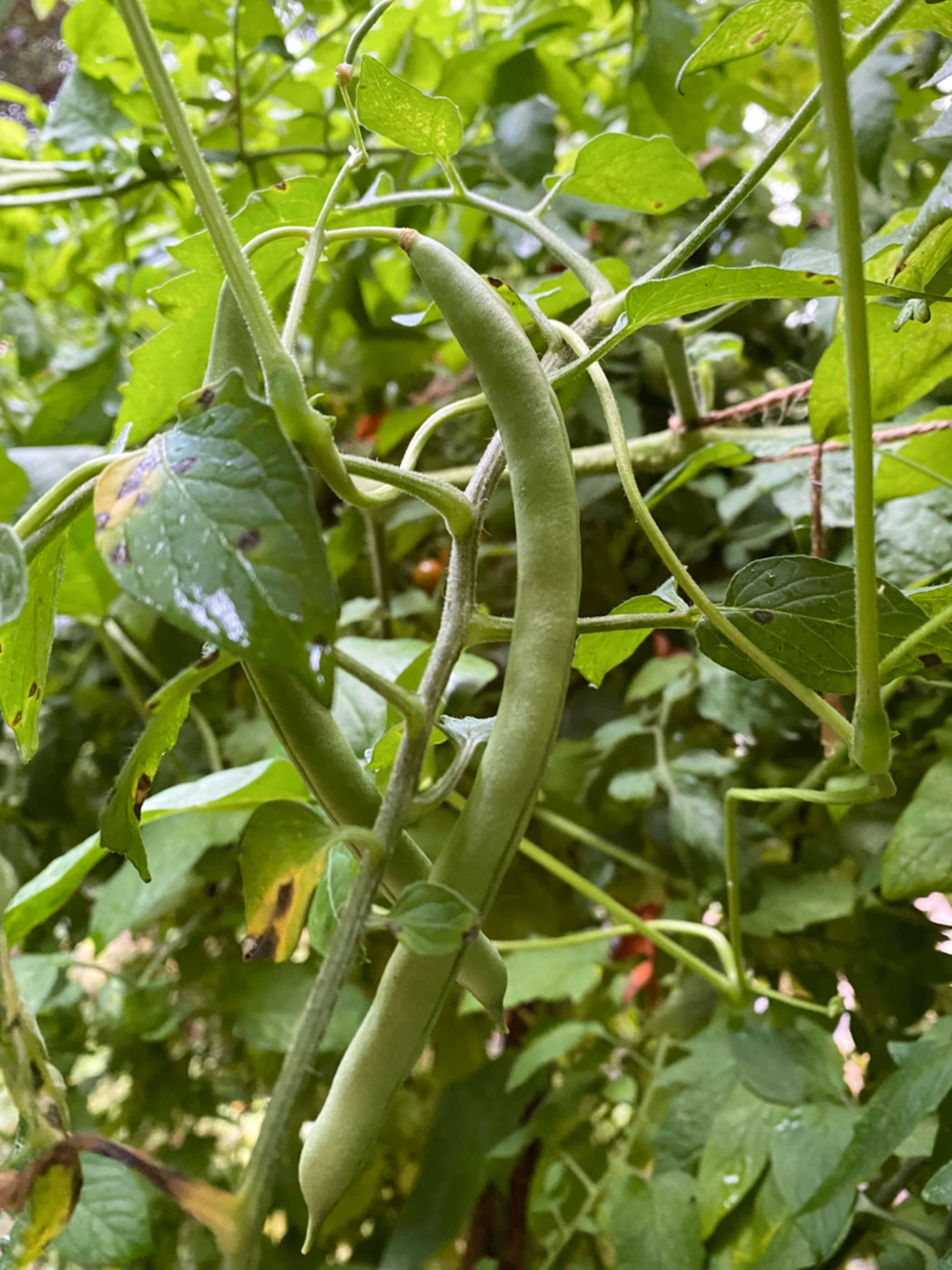
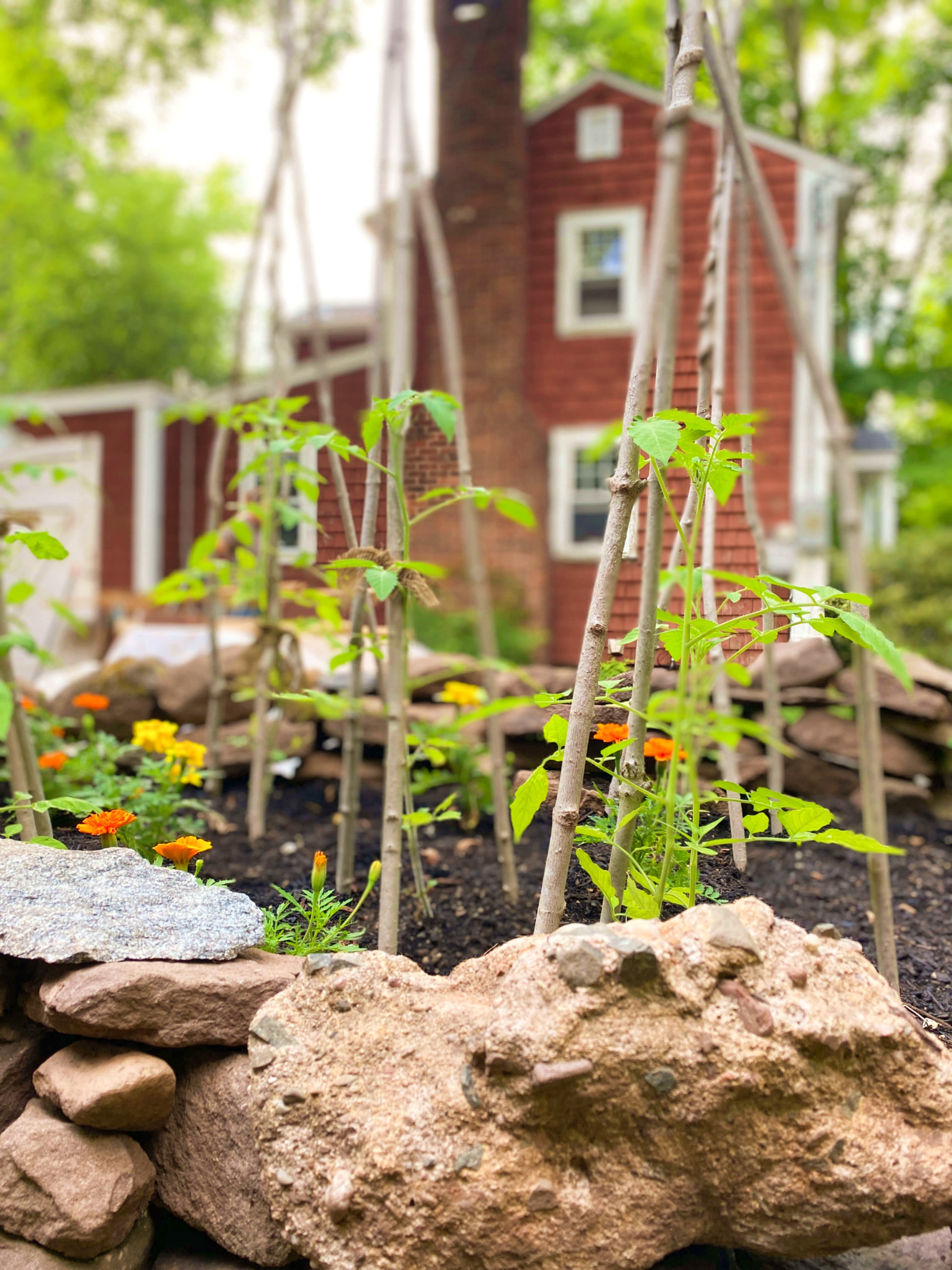
This year, the tomato’s best friend was the pole bean. Both still growing strong, they’ve become their own support system at the top tier keeping everything nice and tidy all on their own.

Pole beans!

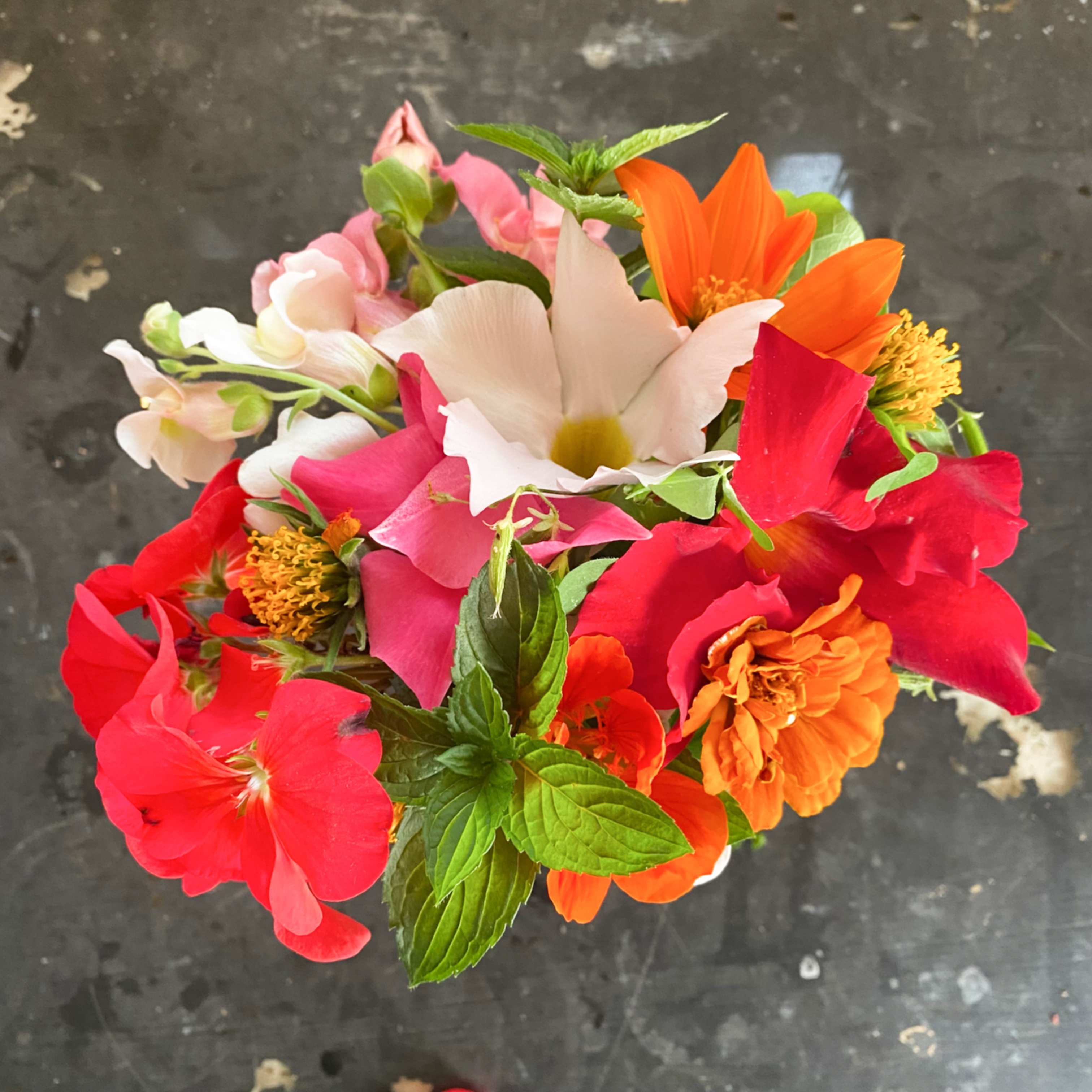
Impromptu bouquet: mint, Mandevilla, marigolds, Mexican sunflowers, snapdragons

The first time the gathering basket weighed over 4 lbs with all its produce was the first of September.

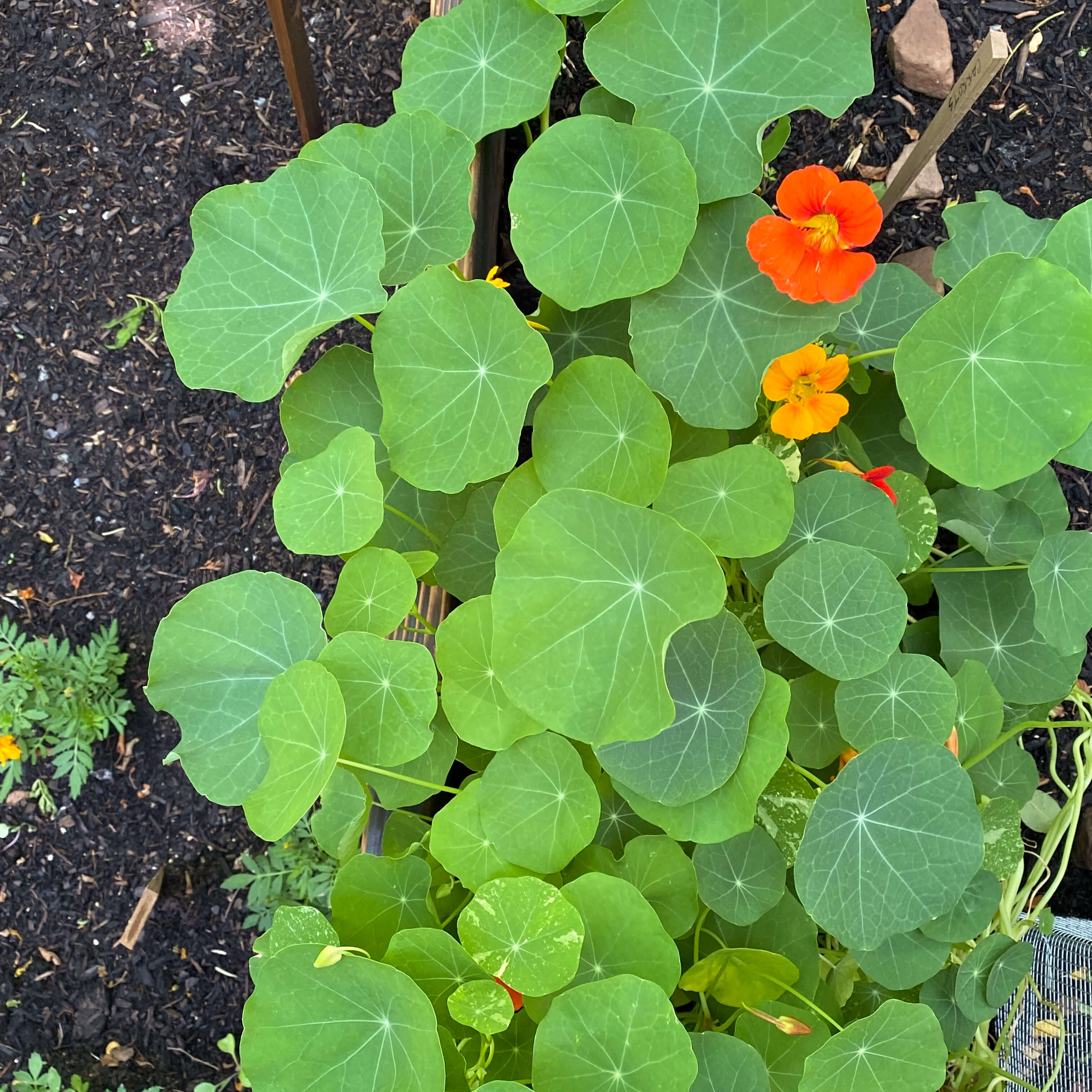
One nasturtium plant managed to outsmart the slugs. How? We aren’t exactly sure, but for some reason, they left this one alone.

All things considered, this year’s garden was definitely an improvement upon last year’s just as far as soil health, pollination count and bird and frog activity. Last year we had more voles and chipmunks but this year we had more slugs. Last year we had more heat but this year more humidity. Last year we had barely any flowers, and this year, we enjoyed ample bouquets all summer long. That’s the joy of gardening though I think. It’s always changing. Always engaging us.

Although the temperatures are still in the 80s, and there are still a couple weeks of summer left to go, Autumn is definitely beginning to cast her spell over the garden. Our first pumpkin just formed, the paradise apples are falling and our first sighting of a Spotted Orbweaver joined us overhead on the patio chandelier one night at dinner. Fall is coming.

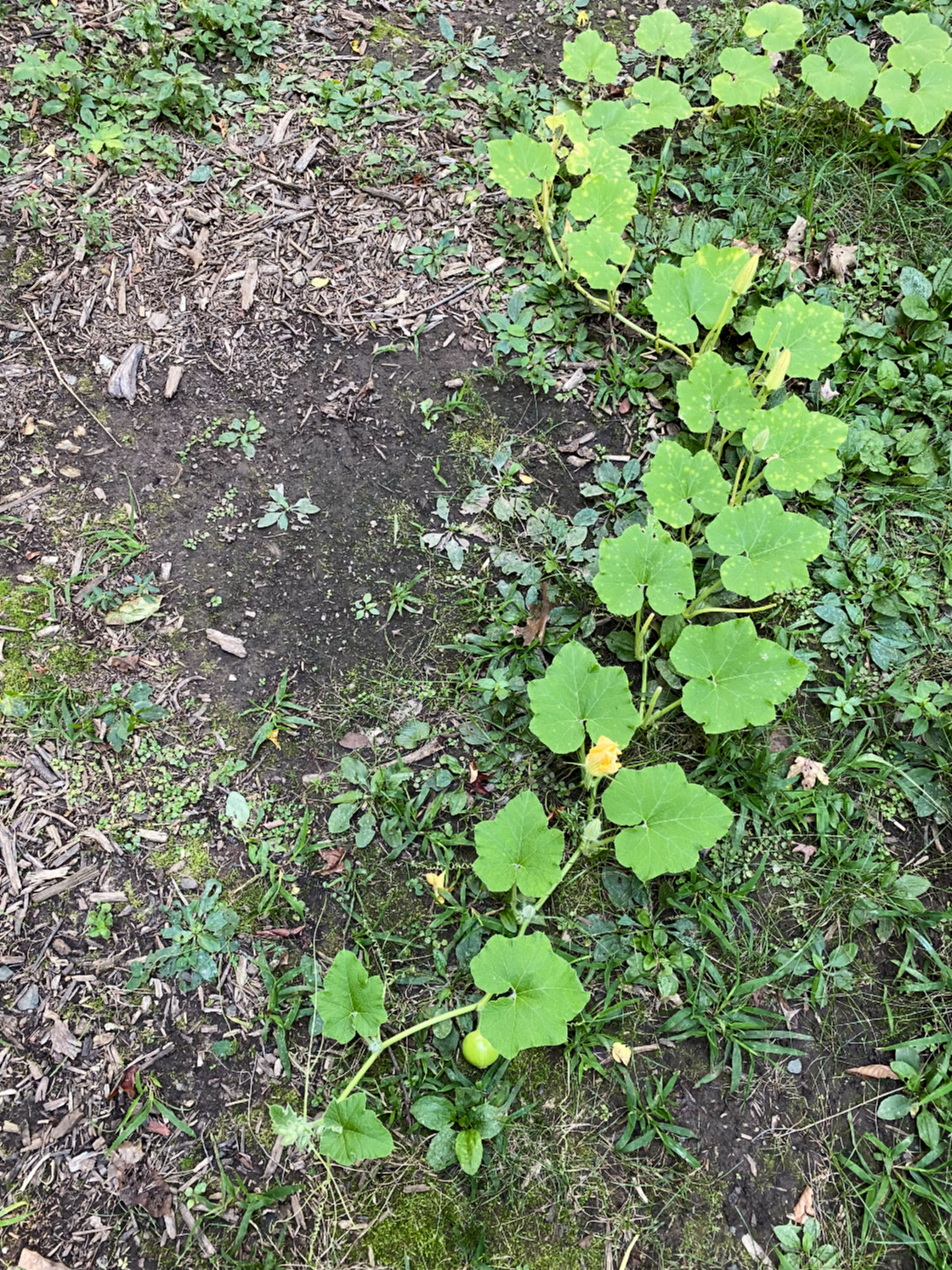
The pumpkin vines are making “S” curves all over the sideyard.

The first Jarrahdale pumpkin!

Paradise apple

Spiders, slugs, birds, bees, and Juna aren’t the only things that came to visit the garden this summer. Recently, we installed an outdoor trail camera to see what sort of wildlife came to visit in the night. Our most frequent sightings so far have been the wild rabbits (hop over to Instagram to see our favorite little bunnies zooming around the yard), along with the occasional raccoon, and opossum, two coyotes and a pine marten not to mention a bevy of early morning birds and squirrels. But our most dramatic guest so far is this guy…

A bobcat! He passed right through the yard with no incidents and thank goodness no bunnies. It’s pretty magical that such an extensive amount of wildlife lives while we sleep, carries on while we dream, travels about while we stay put for hours on end. We can’t wait to see what shows up this winter.

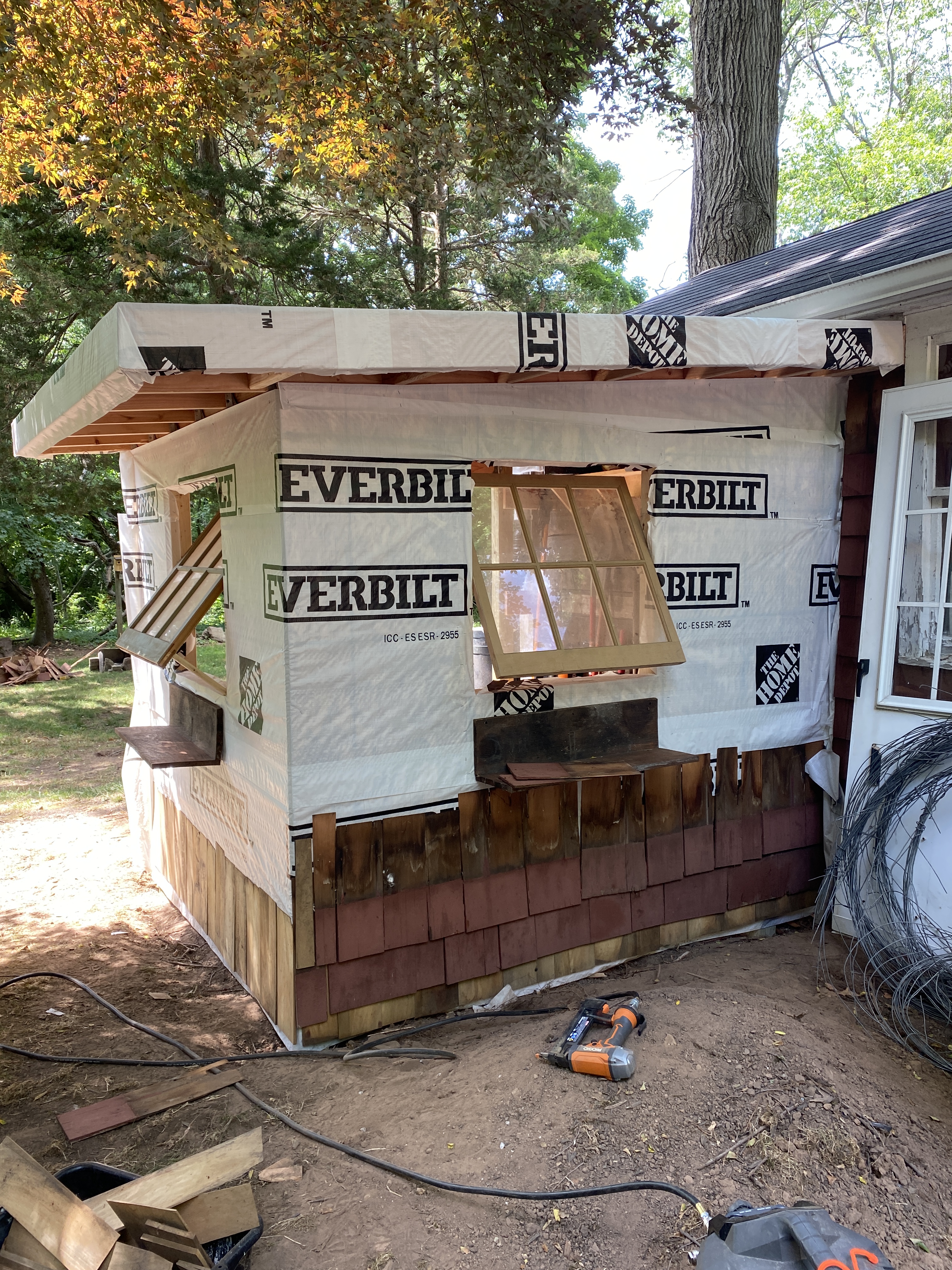
Last, but not least in this highlight of summer pos , we have two exciting sneak peeks of two very big 1750 House outdoor projects about to be unveiled soon…


Sneak peak #1

Sneak peek #2

We can’t wait to share them with you! Stay tuned!

In the meantime, cheers to summer 2023, to all we learned and all we reveled in, and to Lady Nature for continuing to be our biggest mentor and our guide. We’d love to hear how your gardening adventures fared this year. Please tell us all about it in the comments section. It’s so important to share the highs and lows, regardless of what part of the world we live in so that we can all learn together. The more gardening joy the better.

The Greenhouse Diaries Entry #8: The End of the Beginning

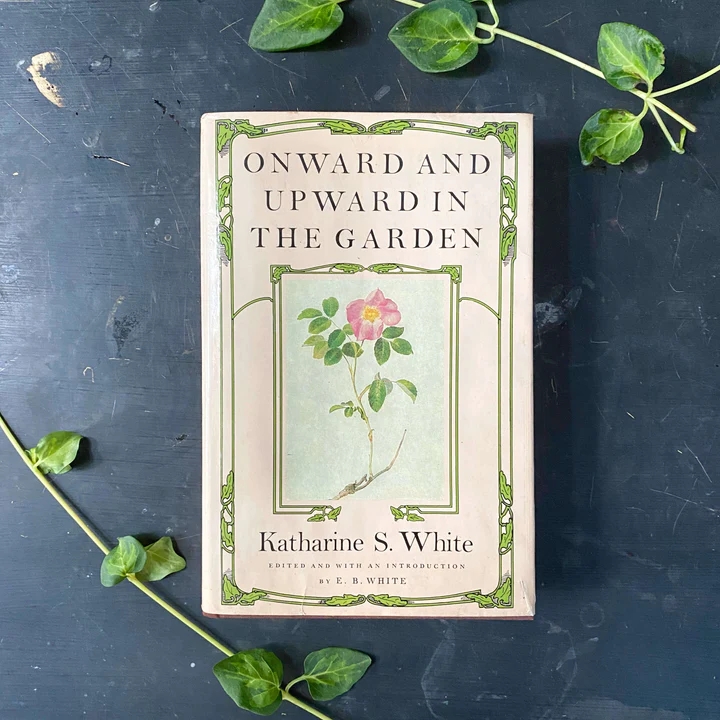
The final selection of writing in Katharine Sergeant Angell White’s Onward and Upward In The Garden is dated March 28th, 1970. “By March,” she writes, “for those of us that live in the Northeast, the summer seed and plant orders are in. From Washington north to the Canadian border and east to Maine, the tender seedlings and plants raised in hotbeds, cold frames or greenhouses now must wait for their final snowstorm before being put into the ground. The gardener has finished his midwinter reading of Christmas gift books and laid his plans for new enterprises for the coming summer. It is time for him and for me to get out of our armchairs and take stock.”

Katharine Sergeant Angell White (1892-1977)

With our unusually cool spring and our last dip of mid-30-degree weather occurring just last week, Katharine’s 1970s Maine March was very much our 2023 Connecticut May. But as Katharine was eager to point out then, the time had finally come to spring forward into action. And now our time has finally come too. The job of filling the garden beds with our wintertime inspirations has arrived. Even though there are 53 years and two months between then and now, between Katharine’s Maine and my Connecticut, this is exactly the sentiment and excitement that propelled the gardens at 1750 House these past two weeks. The last of our seedlings (the basil and the okra) said goodbye to the protective shelter of the greenhouse and are now tucked in between clusters of 3-foot-tall brandywine tomatoes and fast-growing, shiny-skinned lemon jalapenos. For the first time in seven months, our growing station is empty. The 2022-2023 greenhouse diary entries are complete. Year one is officially in the ground.

We pretty much sailed through our first year of greenhouse gardening on the coattails of Mother Nature and a learn-as-you-go approach. In doing so, we found our way to specific techniques and procedures that helped us understand the greenhouse way of gardening over the course of our first New England winter. Much of the information we shared in previous posts is relevant specifically to our area, our climate, our specific type of greenhouse, but we also learned about a few universal tips and tools that would help any gardener no matter where you live or what you grow. In this post today, we are sharing information about six of those universal helpers. We couldn’t have gotten through two seasons without them, so if you are new to greenhouse gardening I hope they will help you too. Please note, none of these recommendations are sponsor supported. We have no connection to these companies and are not representing them for any financial incentive. We purchased all of these products at full retail price and wholeheartedly recommend them for the helpful time-tested benefit they provided.

Let’s look…

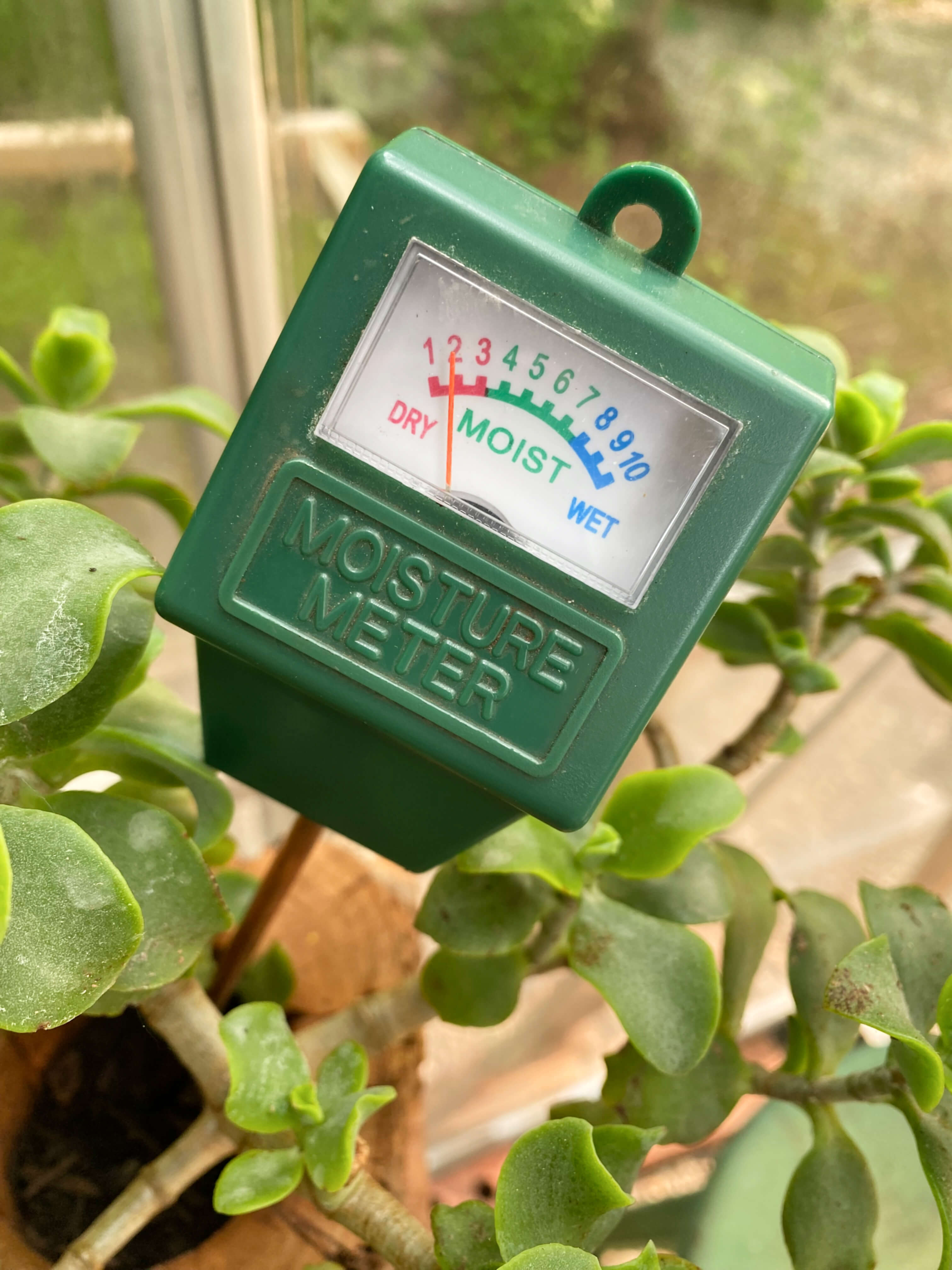
Moisture Meter

The number one cause of any failed garden generally tends to be overwatering. It can lead to pests, disease, root rot, slow growth, fungus, lethargy and soggy soil. I know for certain because I experienced much of this first-hand last year. After fifteen years of Southern gardening in a region where the ground usually remains hot and dry throughout much of the summer and almost daily watering is required, I was used to that rhythm of attention. When we moved north I completely underestimated the naturally moist conditions of New England soil. Although we did have a beautiful and vibrant garden in 2022, some areas lacked a lush, reassuring strength and a robust demeanor. I came to learn, that was in part due to bland soil and in part due to too much coddling. As it turned out, I overwatered by bucketfuls practically every day last summer.

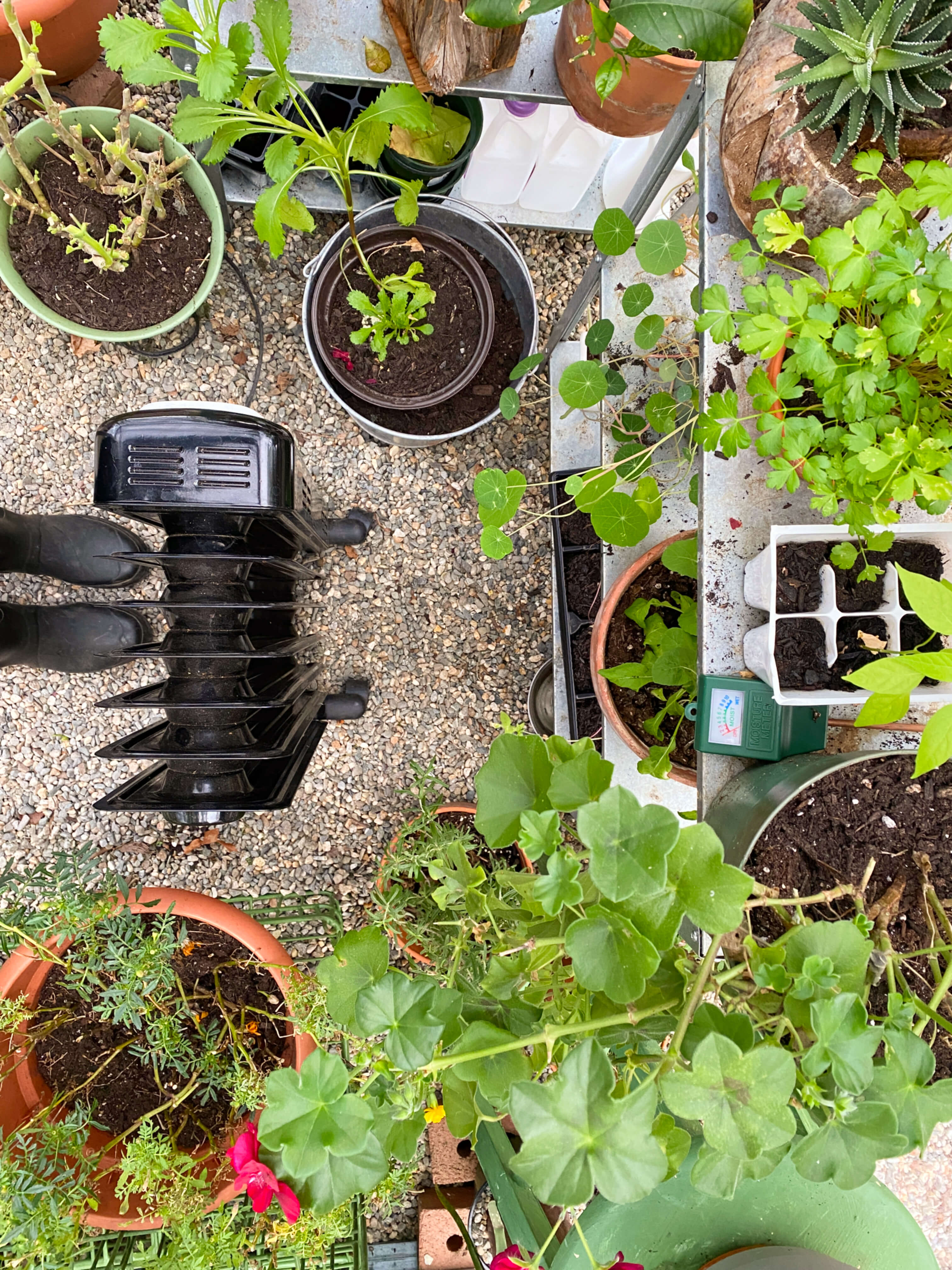
A new form of education began with the moisture meter in the Fall in the greenhouse. It really helped teach me the true amount of water that each plant actually needed as opposed to visually guessing the amount I thought it needed. This inexpensive water wizard (about $8 on Amazon) is hands-down one of the most important garden tools you could have, right up there with a shovel and a rake. By simply inserting the copper stem into any garden pot, it instantly tells you how much moisture is in the soil.

This information is especially great when it comes to caring for a variety of plants that have a variety of different watering needs, like the kind we were raising in the greenhouse. For example, succulents like dry soil with occasional watering. Parsley on the other hand likes moist soil with regular watering and black-eyed susan vines never, ever want to be on the dry side of the moisture meter. If the meter flops all the way over to the right – overwatering is most likely an issue. So helpful! Every day, throughout the fall and winter, I inserted the moisture meter into each pot in the greenhouse to make sure everything stayed appropriately hydrated. Now that we are on our way to summer, the moisture meter can be used to test the garden bed soil as well as indoor houseplants, so there’ll be no overwatering this year. I’m officially trained.

Magnifying Eyeglasses

This recommendation may seem a little kooky, but if you want to keep pests away from your greenhouse over winter you have to get close to the plants and inspect them regularly to make sure they are not harboring minute critters. These magnifying glasses are actually made for watch repairers, but they are really great for garden work too. I’m legally blind in my left eye, so getting any help up close for my good eye is always appreciated and these glasses offer lots of opportunities to look at things from all directions. Both of the lenses move up and down and side to side independently, allowing you to get inside the middle of a plant where many pests tend to hide. Each lens has its own LED light that operates independently too so you can really see what you are looking at no matter the time of day or night. Different magnifying lenses with different strengths adjust the field of vision and are easily interchangeable.

As you may recall from previous posts, in the winter we had a pretty significant outbreak of spider mites and aphids in the greenhouse, both of which are difficult to see with the naked eye. I would never have never been aware of these critters before irreparable damage set in, without the assistance of the glasses. Despite their very technical appearance, there’s a magical upside to these guys too. When you put them on you become an explorer of a micro-universe. Plants look so cool up close. Bugs too for that matter.

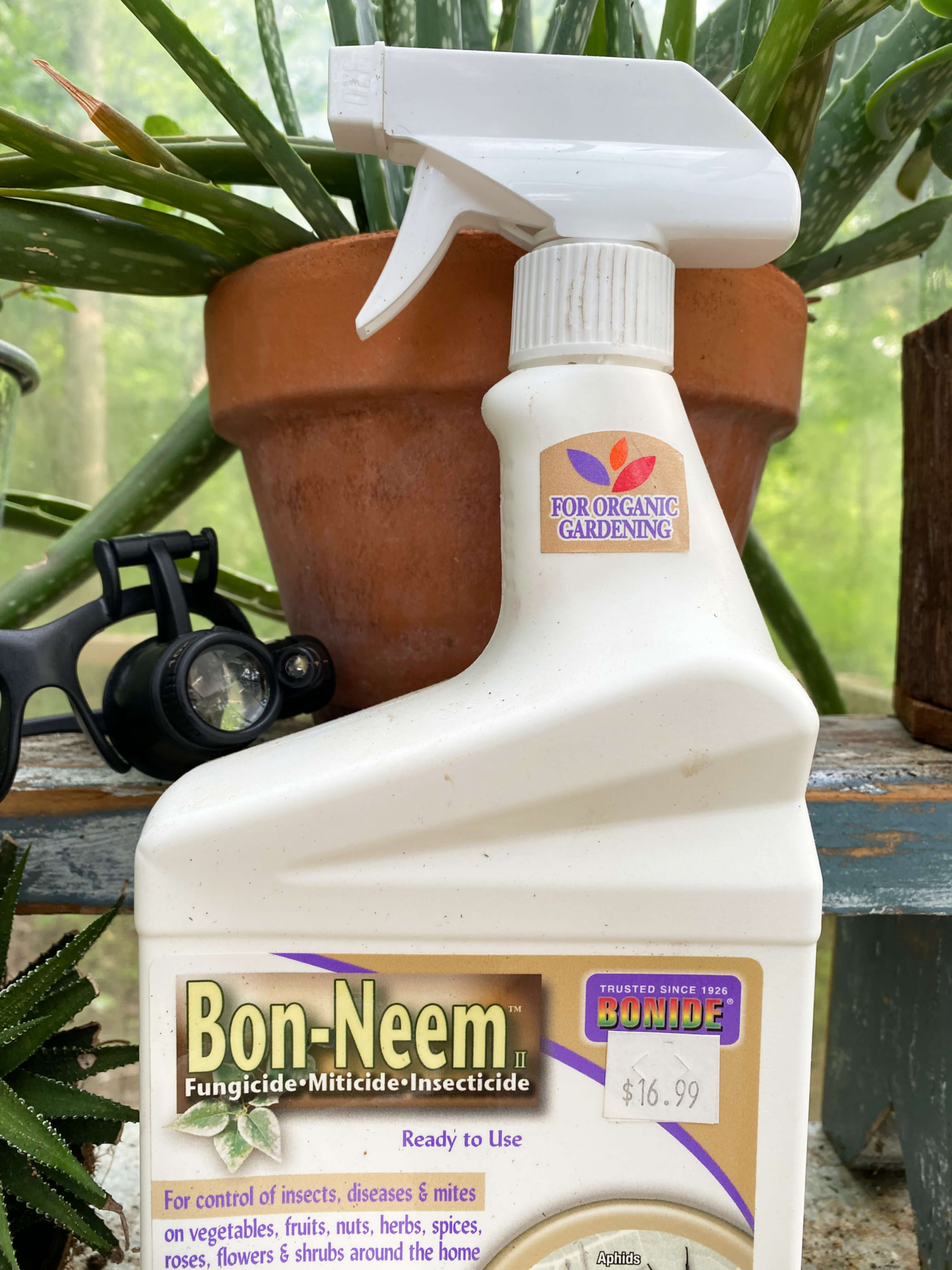
Bon-Neem

In lieu of the spider mite and aphids outbreak, this Bon-Neem spray, although on the more expensive side ($17 a bottle) is effective in quickly broadcasting a lethal dose of all-natural organic neem oil. Since spider mites adore hot dry air, they breed like crazy. The adults won’t survive Neem spray but the eggs are unaffected by it so it took six applications (three bottles total) over the course of a month to make a significant dent in our mite and aphid population. It didn’t eradicate them completely – our next recommendation piggybacked on this spray to get the job done – but the oil acts like a protective coating against future pest invasions, so it’s definitely worth it.

Please note, if you decide to use this spray, it has a strong odor. I found it best to get all greenhouse tasks done for the day first before spraying it on the affected plants. Once everything was drenched, the greenhouse was closed up, and left, undisturbed, for 24 hours, so the Neem oil could do its work. After that amount of time, the odor dissipates completely and the greenhouse is on its way to becoming pest-free.

Isopropyl Rubbing Alcohol

Isopropyl alcohol is a much less expensive ($4.50 for 32oz) but yet very effective method when it comes to getting rid of spider mites and aphids. It’s more tedious than Neem spray since you have to wipe down the entire leaf of each plant (front and back) but it’s instantly effective and definitely worth the time if you want to make 100% sure that the treatment is reaching the problem areas. Like the Neem spray, this won’t kill spider mite eggs, so you need to reapply it again 3-4 days later, but that second dose is a good opportunity to investigate each plant to make sure the first application worked.

I found that a soaked cotton ball was ideal to use on the larger leafed plants like the peppers and basil, while cotton swabs, with the plastic connector (as opposed to the cardboard ones) were better for smaller more densely foliaged plants. The swabs easily bend in half and get around thick stems, delicate flower petals and hard-to-reach spots. Also, if you choose to go this route in your pest management plan, make sure you stick within the 70-90% percent isopropyl range. Anything above 90% will harm the plant.

Creamer

Although I have tried watering cans, hoses and sprayers of all shapes and sizes, nothing beats a creamer when it comes to working in small spaces with fragile seedlings. This vintage 1960s restaurant ware creamer had a cracked handle that had been carefully repaired at some point in its long life. Aesthetically, it might not be destined anymore for the coffee table but it is wonderfully useful in the greenhouse. Holding about a half cup of water, its narrow spout provides a perfectly slow, steady and gentle steam of water, ideal for fragile, newly emerged seedlings. You can drip-drop water on plantings or dump the whole container at once, but the beauty of using a creamer over a traditional garden hose or a bulkier watering can is the finite control you have over the amount of water you are pouring. Plus the slim size makes a handy temporary vase for bud clippings as you prune flowering plants.

Worm Bucket

At the beginning of autumn, I filled a 10-gallon steel bucket with a bag of organic potting soil and added a few worms from the garden. I wasn’t sure if this was a good idea or not for the worms, but I wanted to have extra garden soil on hand, for repotting and replenishing throughout the cold months, and I thought the worms might help in their ability to enrich the soil through their castings. As it turns out, warmed by the heater and given a weekly light watering, the worms settled into life in the bucket and made a happy home there. As I scooped trowelfuls worth of soil into potted plants periodically throughout the season, worm eggs wound up randomly and unknowingly in several pots and seed-starting trays. Come early spring, I spotted some baby worms wriggling around with the snapdragon and foxglove seedlings. Did the worms help fertilize the soil in a significant way? I’m not sure, but in the least, they probably helped aerate it. Now fully planted along the edge of the woods, the foxgloves are growing with unrestrained zeal these days. Perhaps the worms helped give them a nutritious head start.

Foxglove

Gardening can be a tricky balancing act between what mother nature offers and what you desire. In the greenhouse, you not only create a biodome of possibility but also a unique environment controlled by instinct, device and determination. These recommendations combined with our winterization wrap and our little workhorse of a heater were methods that worked well for us and in turn, I hope they work well for you too. They really jumpstarted our summer garden the moment the seasons changed this year. Three weeks into May, we already have flowers on our tomatoes, beans on our climbing great northerns, baby fruit on the cucamelons, and two handfuls of spicy and sweet peppers.

Brandywine Tomato
Great Northern Beans
Cucamelon
Orange Sun Sweet Pepper

The lettuces are now the size of full heads with tightly packed leaves and crisp texture. The herbs are flourishing. The collard greens are sporting leaves as big as turkey platters. Yesterday morning we harvested our first batch of rapini, just as the zucchini seeds poked their heads out of the ground. None of this spring vigor would have been possible without the help of the greenhouse and the joy all this seed-starting and plant-tending brought over the winter months. Thanks to the greenhouse I think we are well on our way to one delicious summer.

Collard Greens
Rapini

The only things that struggled in their transition between greenhouse and garden were three Mexican sunflower plants and one okra plant. They didn’t like that surprise dip into 30-degree temperatures. Interesting to note, those are both Southern heat-loving plants and perhaps the most vulnerable things we are growing in our cooler New England climate. As we learned in the history of American gardens post, nostalgia has played a big factor in how we have laid out our U.S. gardens and with what since the days of the pilgrims. Last year, I was excited to grow two of my most favorite Southern plants here in New England based solely on great memories, but maybe this area is not the most appropriate place for them. Next year I might grow them, only in the greenhouse, where they can be bathed in heat and light from seed to bloom. Little lessons and ideas sprout each day around here.

Once so full of plants, it was pretty odd to see the greenhouse return to its empty shell state. It’s been over nine months since it has been this devoid of greenery and although it still is just 4’x6′ in size, it now feels as big and as cavernous as a palace sans plants. To add a little cheer over the summer, I brought the succulents back to the shelves, and am considering adding some shade-loving plants that would enjoy the dappled light and summer leaf coverage overhead. Over the course of these warm months, while the greenhouse rests, we’ll give it a bath inside and out, build additional shelving to maximize space, and add a fresh layer of pea gravel to the floor so that it will be all ready to greet Autumn and a new set of gardening goals.

Katharine and E.B’s home in Brooklin, Maine

In November 1975 at their farmhouse in Maine, Katharine’s husband, E.B. White, gave her a small greenhouse and a potting shed to commemorate their 46th wedding anniversary. Knowing the magical distraction a greenhouse could offer his wife as she bravely battled ill health, he was certain it was the most pleasurable gift he could ever give her. A year and a half later, Katharine passed away at the age of 84. She didn’t get a chance to enjoy her greenhouse for very long, but a gardener’s joy comes daily, in the moment-to-moment observations of tiny details and subtle nuances. A lift of a leaf. A burst of bloom. The sight of sun as it shoots a seedling sky-high. Katharine’s greenhouse may have offered her just eighteen months of comfort, but oh what bliss those day-to-day noticings must have provided. Should we all be so lucky. To know nature so intimately that it becomes an offering, a salve, a focus. To know it as something so reliable it becomes a resting place, an arresting place, despite all of our earthly distresses.

Katharine & E.B. White. Photo courtesy of bangormetro.com

This series was so fun and the greenhouse so encouraging over the winter months that we have plans to add a second, larger, more permanent greenhouse to our landscape which hopefully will be completed by next winter. Until then, I hope all you gardeners stay with us all summer long as we cook up a bevy of vintage recipes, highlight forgotten kitchen stories from history, and share updates from the 1750 House renovation project. For all you collectors out there, if you haven’t already, sign up for our weekly newsletter to see what new old heirlooms make their way to the shop this summer. And finally, if you are new to the blog, the first entry in this Greenhouse Diaries series began in December 2022. Begin at the beginning with that first entry here.

Cheers to our fellow greenhouse comrades who shared stories with us along the way of this six-month journey… to Katharine Sergeant Angell White, who inspired this series in the first place… and to our little joy of a greenhouse. We can’t wait to watch all these plants grow up over the summer and to see what the greenhouse might inspire next.

Rapini florets

The Greenhouse Diaries Entry #7: Celebrating Year One!

Fifty-six heirloom seed packets, five rock wall garden beds, thirty-three experimental plants, four seasons and one greenhouse. The end of April 2023 marks a significant milestone here in the land of 1750 House. It’s the celebration of our first full year of living in this beautiful state, in this lovely old house. It also marks the first birthday of our greenhouse and the first full year of gardening in New England.

Building the greenhouse with the help of Indie, master-gardener-in-training. April 2022
April 2023 – The greenhouse today. Now that we know we like this location we can commit to landscaping all around it. I can’t wait to hang string lights and add a border of pavers.

Are we experts now? Far from it! But at least we have a much better understanding of the potential and possibilities that await year two and year three and year four. I’m sure we’ll have plans for year nineteen too.
Like the house renovations, our big gardening projects are laid out in phases over the course of a few years. Our home inspector recommended that course of action a year ago. 1) To keep our sanity and 2) to get used to the space before making major decisions. It was really good advice. Even though taking that route doesn’t necessarily mean a lot of immediate satisfaction upfront as far as getting things done, we found that when you get a chance to take some time to truly experience how you live, move and interact in a space the more refined and appropriate your decisions become. That was the case here at 1750 House both when it came to the inside and the outside.

The first week we moved in – April 2022

At the start of this historic house adventure, we knew very little about greenhouse gardening and even less about New England gardening but heading into year two we are starting to get the hang of things. Last April, as far as the garden goes, it was all about establishing beds, building rock walls, and learning by experimentation when it came to growing flowers and vegetables. Not knowing what each season was going to look like, we worked in small steps. We decided not to make any major changes until we went through a full year’s growing cycle to see what we were working with. In that vein, we did a lot of maintenance work and watching work. Especially in the front of the house. We dethatched, reseeded and conditioned the grass in the front yard, fertilized, manicured and shaped the bushes, built the rock wall garden beds to the left of the front door and to the left of the driveway. We built the potting shed addition onto the back left corner of the garage, added the greenhouse to the left of the potting shed and trimmed many of the trees.

1750 House today – May 2023

Now that we are past the getting-to-know-you phase, we have some big plans for the front this year. They include a low wall or fence near the street, fencing at different angles added midway to both the left and right side of the house. Climbing roses added to the right side of the garage. A fig tree added to the side yard. Bushes added in front of the potting shed and a new more layered landscape design incorporating a collection of native plants directly in front of the house.

Next year, we make the big BIG decision on what color to paint the house. We can keep it red and white, which is very 18th-century traditional or we could choose another color palette altogether. We waffle back and forth every day on this subject. Two-tone yellow. Bright white. Dark Slate. So many choices. At the end of the day we want to honor the historic nature of both the house and the gardens, so history will ultimately be our decision-maker.

March 2nd, 2023

When we last left off on Greenhouse Diary #6, it was early March, there was snow on the ground and the greenhouse was sporting her plastic winter coat. There were seeds just about to be started (cucumbers, marigolds, squash, tomatoes, okra, sunflowers, cauliflower, brussels sprouts, peas, broccoli, and zinnia). There were collard greens that were practically bursting out of their containers and a troupe of traveling spider mites determined to put on a show for each and every plant.

Greenhouse-grown collard greens – March 2023

Now that we are rounding the corner to May, the greenhouse has flung off her winterwear, those seeds that were waiting to be planted are now big sprouts and the spider mites have (hopefully) just completed their tour.

The geraniums were the first to jump ship from indoors to out at the end of March. Even though they were taking over the greenhouse in a vast and magnificent way, it was pretty amazing to see how big they had actually gotten once they started the hardening-off process outside. If you’ve been following along since the first diary entry, you’ll recall that these three pots of geraniums were all severely frostbitten last Fall. It’s so encouraging to see that they’ve fully recovered in just four months time.

The collard greens made their way out of the greenhouse next. They headed out to their new garden bed in early April, where they took to their new warm weather residence with aplomb. Their companion plants – dill and brussels sprouts – moved in right next door just this past week…

Next came the lettuces… rouge d’hiver, farmers market, and salad bowl blend along with two different varieties of broccoli – Di Cicco and Rapini. They joined the snapdragons and garlic as companion plantings. Dotted with falling apple blossoms, these beds all look like they’ve been sprinkled with confetti. Mother Nature is ready to party!

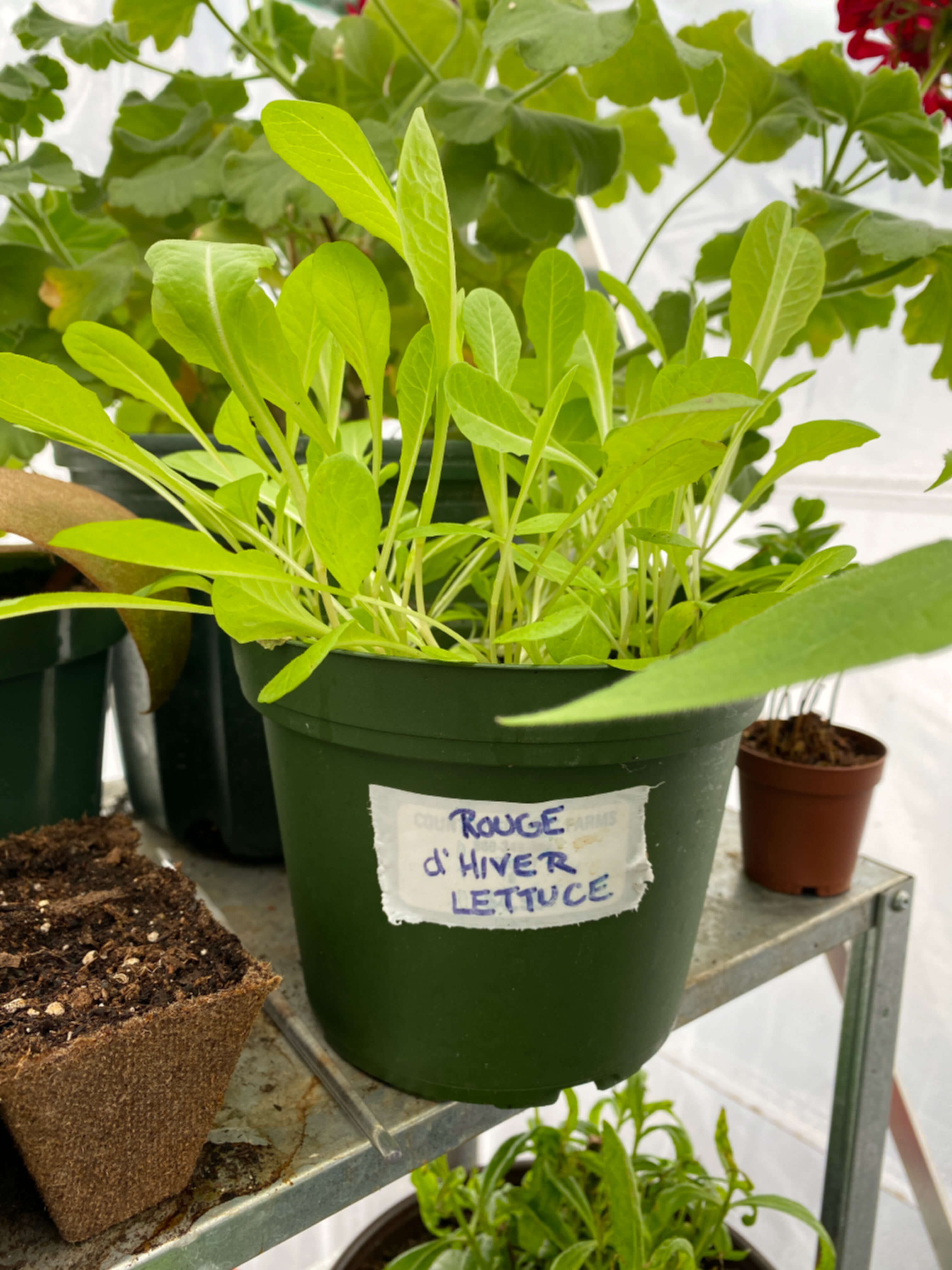
Rouge D’Hiver lettuce
Broccoli Di Cicco

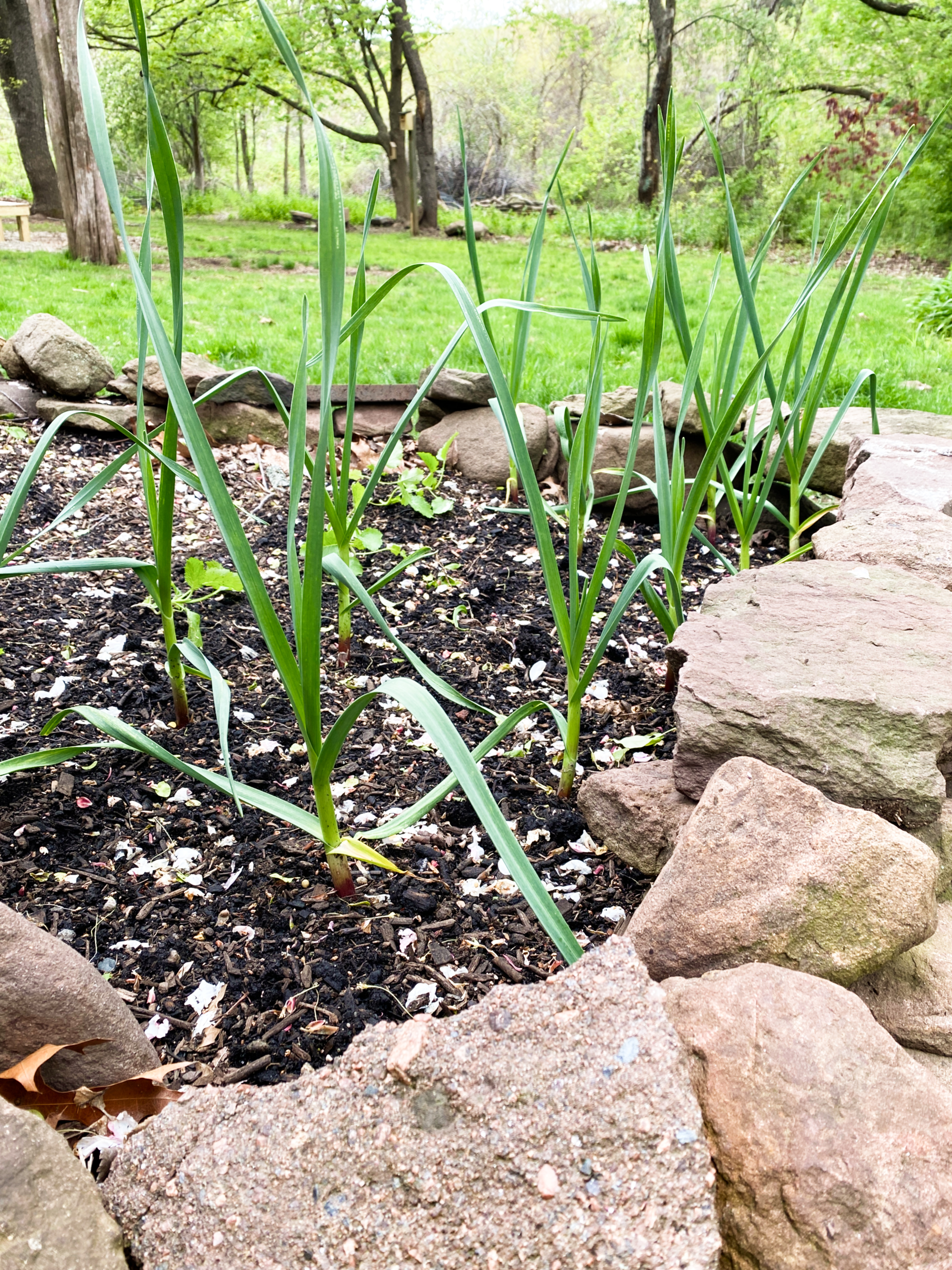
It’s so fun to see that last year’s garlic bulbs are now this year’s stalks…

Planting day last October!
Garlic stalks today!

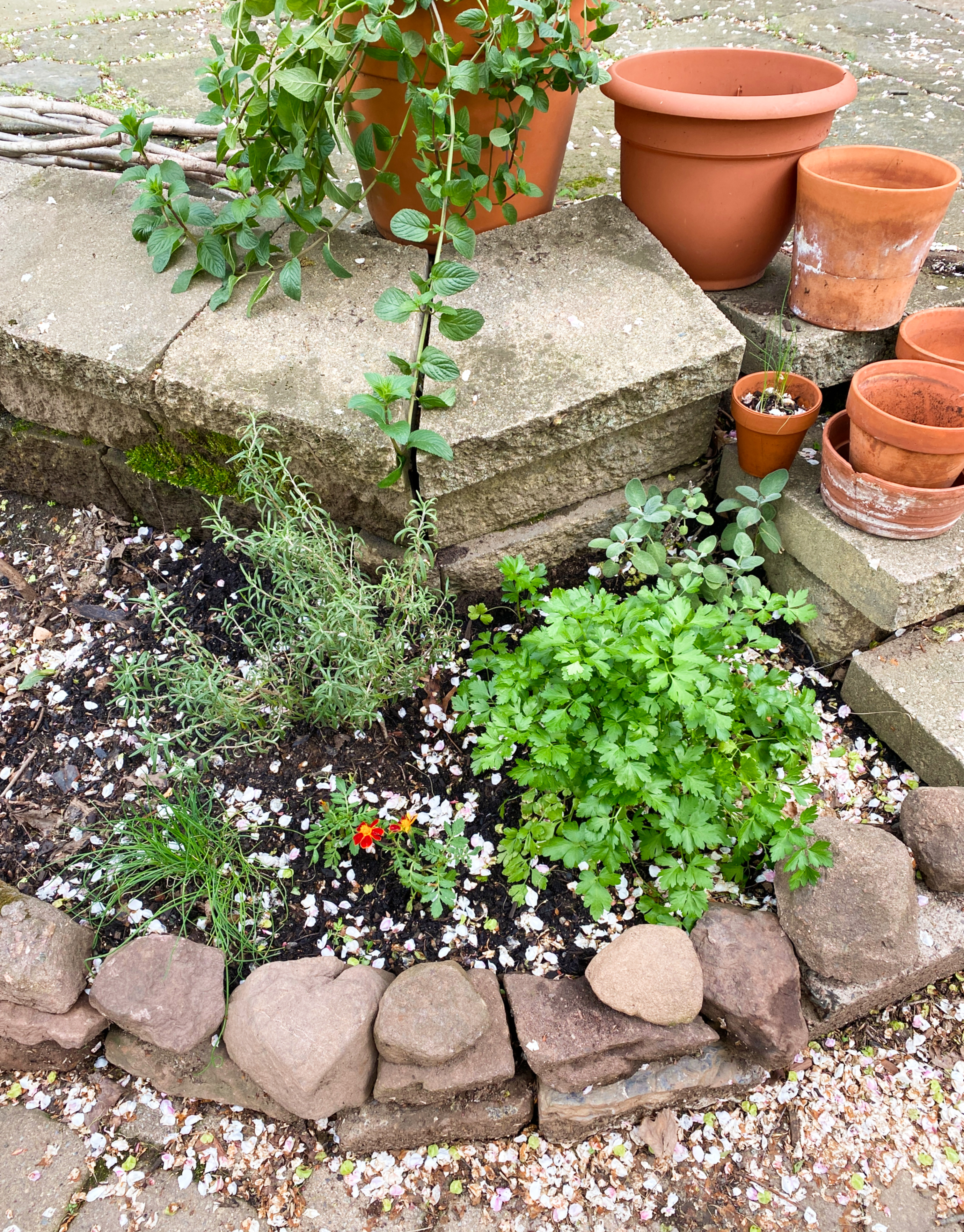
While it’s still been hovering in the low-to mid-40s at night, we’ve had to be patient about planting. Not everything that’s been grown in the greenhouse can tolerate this early spring chill. The start of the herb garden was our last little dalliance with transplanting from the greenhouse stash for at least the next 10 days. Once we hit a steady 50-55 degrees at night everything can head out safely to their designated outdoor spots.

The start of the herb garden… sage, rosemary, chives, mint, marigolds and parsley.

Meanwhile, inside the greenhouse, every plant seems ready to leave. As hard as it is to resist the urge to transplant them, especially when the daytime temps reach 60 or higher, it’s still too chilly at night yet for all of these tender heat-lovers to successfully make the transition. While the winter plastic has been removed from the exterior of the greenhouse, we’ve still been keeping the heater on at night to maintain a 60-70 degree range indoors. While everybody waits in the warmth for the big move, the flowers keep on blooming and the climbers keep on climbing…

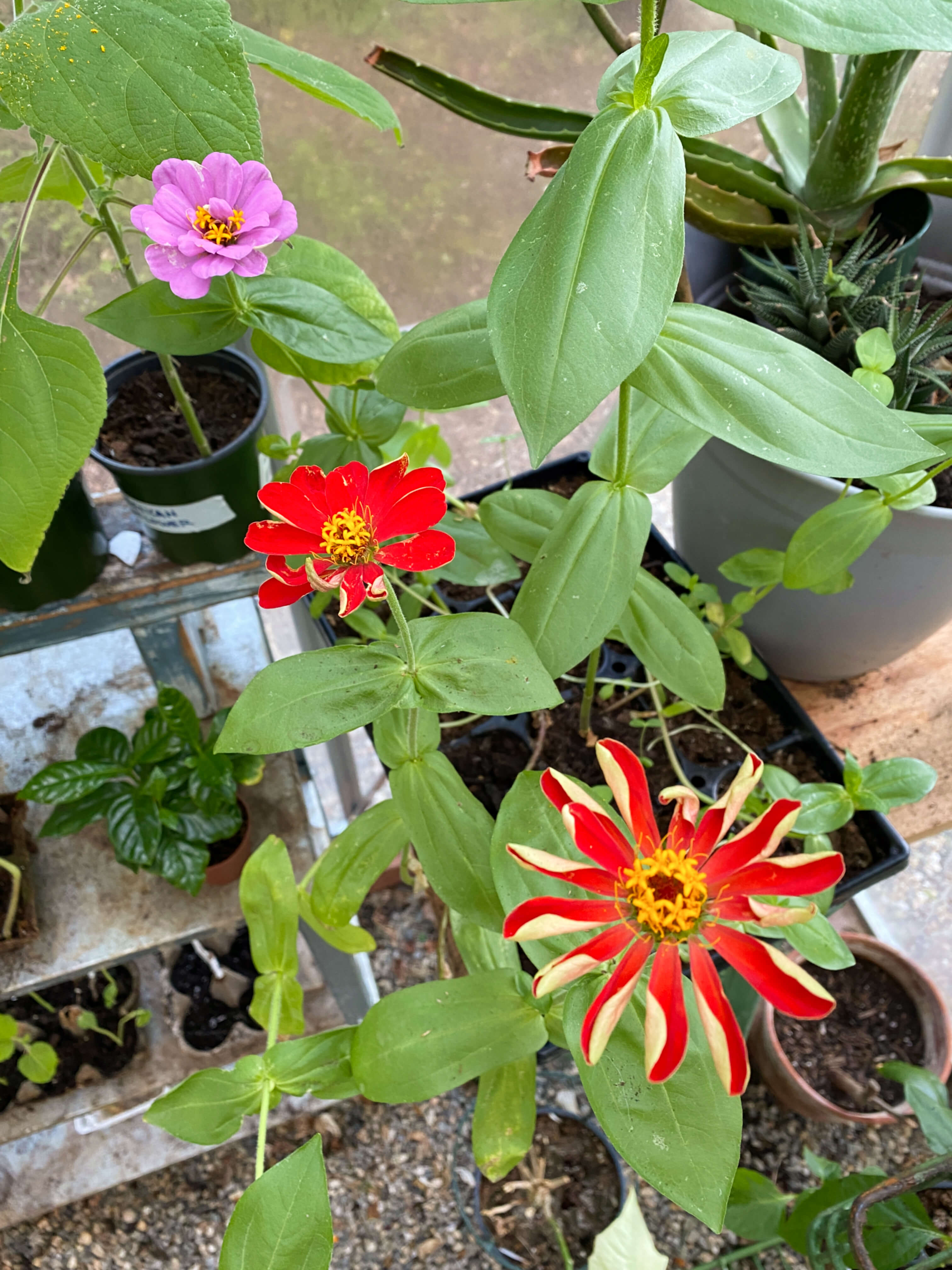
Zinnia!

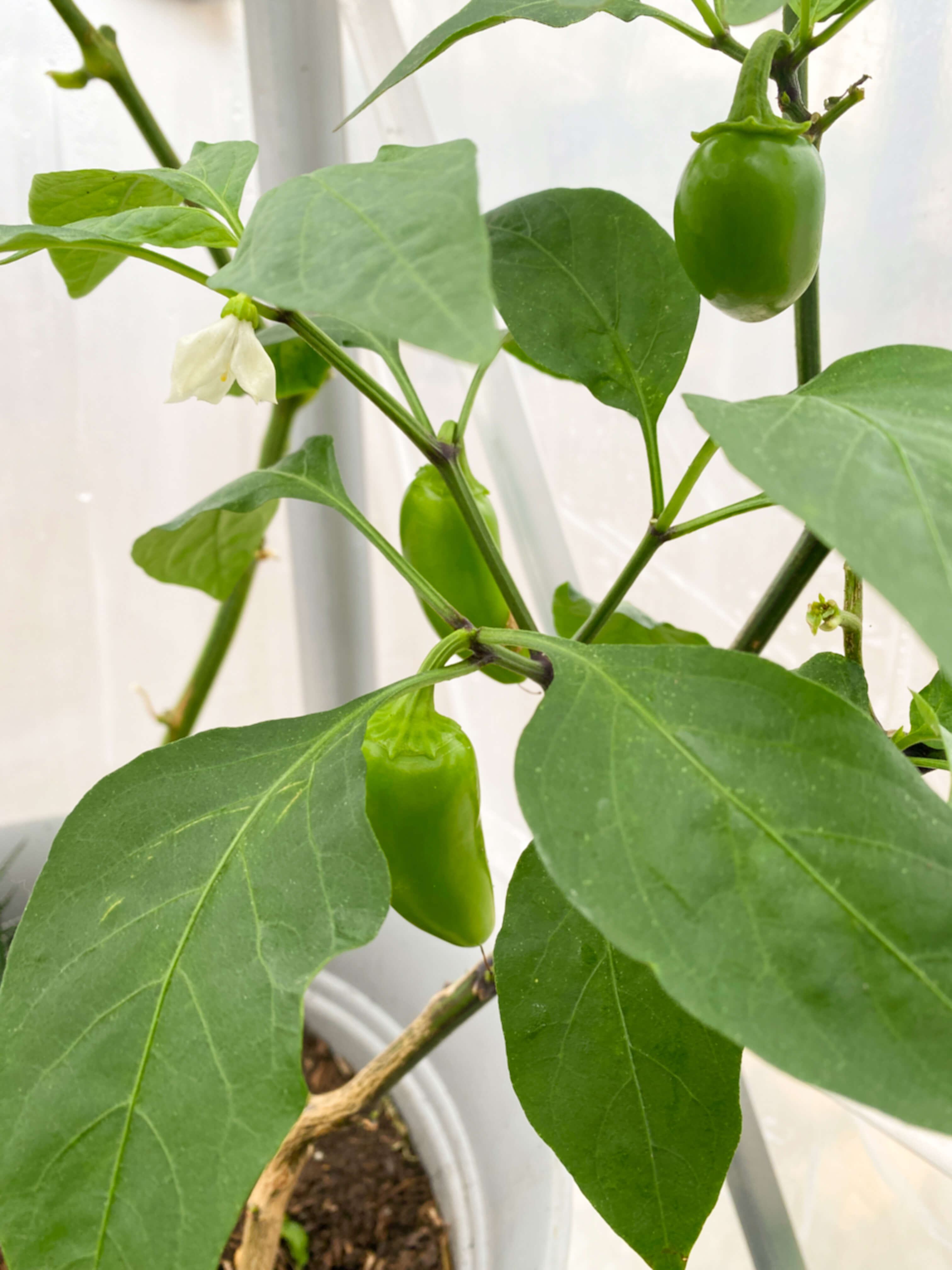
Jalapenos!
Cucamelon!
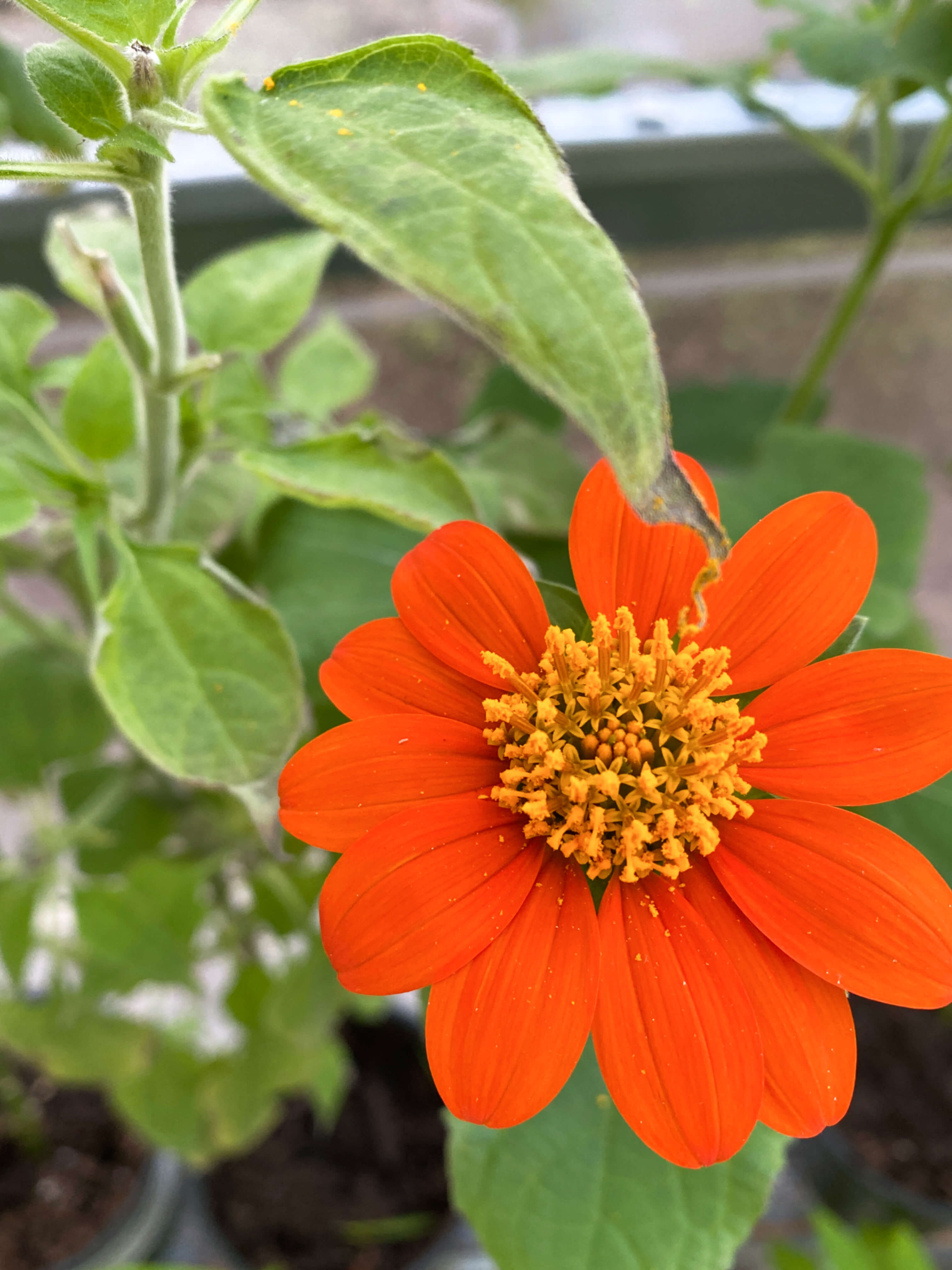
Mexican sunflowers!
Okra!
A glimpse of just a few of the many pepper and tomato plants.

The spider mite situation was quite a contender in the nuisance department this past month. As sap-sucking insects that reproduce quickly, they can easily take over a plant’s health in a matter of days and devastate a collection of seedlings before they’ve even had a chance to really get growing. I suspect our spider mite infestation began with the pepper plants (they seemed to have a lot of affinity for ours, anyway) and then spread practically everywhere – sunflowers, basil, peas, black-eyed-susan vines, mint. It took an entire month of daily diligent attention to eradicate them, but I think we are at the end of the outbreak now. On the next Greenhouse Diay update, I’ll feature the product I used to get rid of the mites along with some other gardening tools and devices that helped us navigate this first year as greenhouse gardeners.

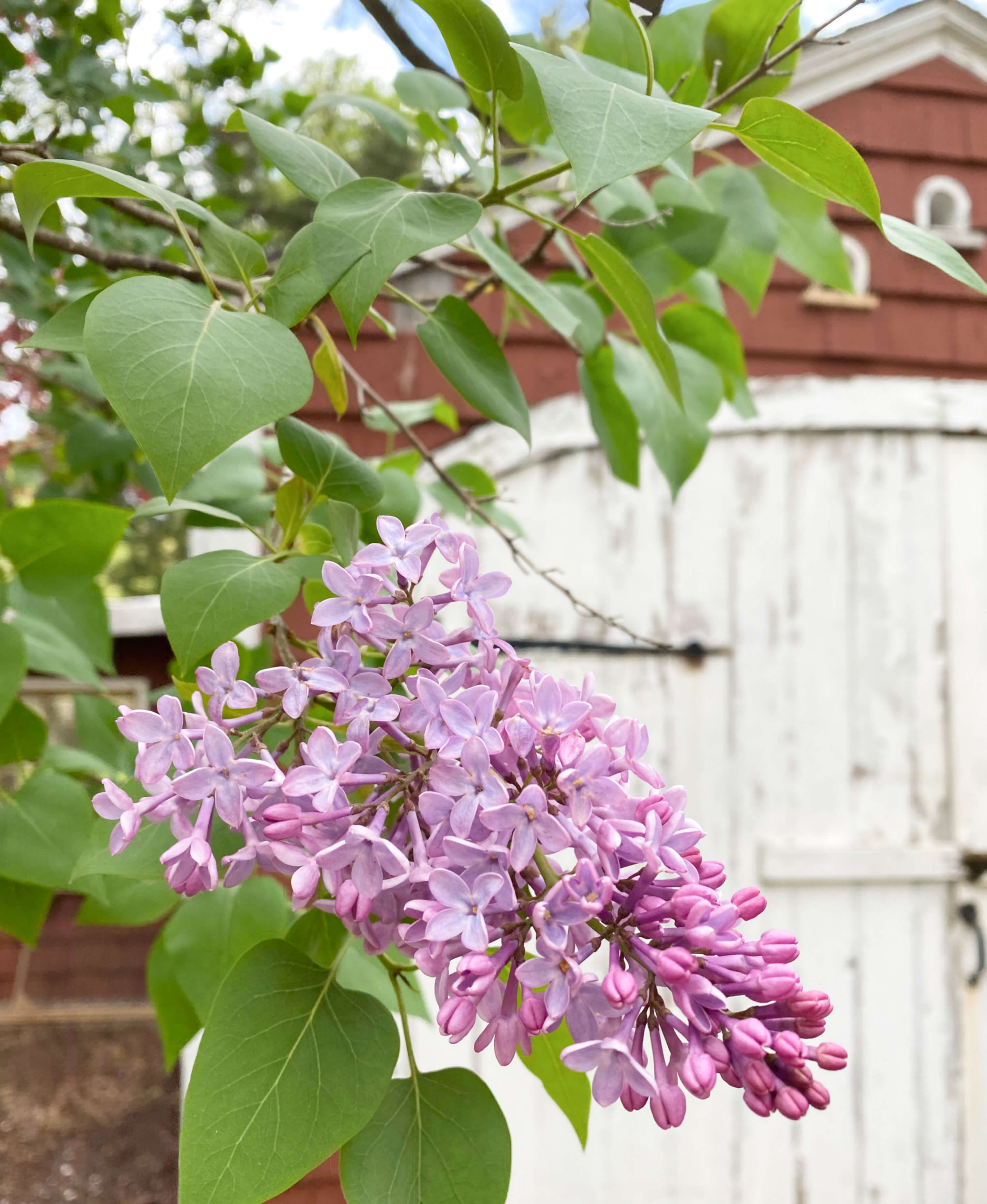
The first lilac bloom of the season! March 26th, 2023

Also, I wanted to say a big thank you and bear with us to everyone who is checking in on the kitchen renovation updates. We’ll be featuring more on that interior story once it is finished. As I’m learning, it takes a long time to not only renovate but also authentically decorate a house to the point where you can confidently say… here it is! In the meantime, the garden is a more humble muse. Cheers to year one!

The Greenhouse Diaries Entry #6: How to Keep a Greenhouse Warm in Winter, Spring Seedlings and a Whole Lot of February

Wrap it up like a big present. In plastic. That’s how to keep a greenhouse warm in winter. Luckily, our greenhouse is small so this gift wrapping is not a giant undertaking. And it might not be the right solution for any big greenhouse owners, but for us, and our 4’x6′ growing station, this method of winterization has proved itself most competent. Like a champion, it weathered our second blast of single-digit-polar vortex temperatures in early February, it withstood wind gusts of 35 mph, and it embraced this week’s big snowstorm of 6.5″ inches all while maintaining an even 70-80 degree temperature range indoors. We can officially say, with confidence, that this is an ideal solution for any small greenhouse gardeners who live in a cold weather climate and struggle to keep plants warm throughout the winter.

We got a little behind in our greenhouse diaries updates, but by no means was February an uneventful month around here. As we all know, nature waits for no one. What was exciting twenty days ago in the greenhouse has now been replaced by exciting things happening at this very moment, so this post is a catch-up, a recap, and a new surprise all rolled into one in an effort not to make it a million miles long.

The front side of the greenhouse with a roll-up curtain panel to gain entry.

Here’s a brief recap on the winterization efforts. Essentially, in less than half a day, we built a wooden exoskeleton around the shoulder and roofline of the greenhouse and then wrapped the greenhouse in one giant piece of plastic. The plastic was stapled to the wooden skeleton which was screwed together but not screwed into the greenhouse. Instead, the wood frame rests on top of the greenhouse, secured by gravity from the wooden connection at the peak of the roof.

The backside of the greenhouse.

A 5′ foot wide roll-up curtain panel was made for the door using a curtain rod at the base and more plastic sheeting. Four bungee cords hold the plastic in place along each wall and two butterfly clamps hold the rolled-up panel in place when going in and out of the greenhouse. All it took material-wise was one roll of the plastic sheeting, six pieces of lumber, a curtain rod, a handful of screws, four bungee cords, and two butterfly clamps. If anyone would like a detailed drawing on how to replicate this plastic wrap for your own greenhouse, please send us a message or comment below and we’ll be happy to lay out the steps and materials.

Most days we leave the door panel rolled up to let a little outside air seep in through the draft in the doorframe. Just before dusk, it all gets buttoned back up again. Once winter is over, we will be able to easily remove, wrap up and save this plastic/wood frame system for the cold months later in the year. Using this type of winterization method and our one electric heater has kept the greenhouse a full 50-60 degrees warmer inside than the outside temperature. So on a 25-degree night, it will stay a consistent 75 degrees in the greenhouse. Some days, when the sun is out, the plastic keeps everything so warm we can turn the heater off completely. Both the established plants and the seedlings have really thrived in this much more consistent environment.

The Mexican sunflowers!

The only downside to this method of winterizing is that all the ventilation holes, the roof window, and each side wall from the pea gravel floor to the peaked roof get completely covered with plastic so there isn’t as much free air flow or circulation happening, and the view is reduced to a gauzy, opaque landscape once inside. The trapped heat is great for keeping everything inside warm but also invites pests to come and enjoy the tropical heat.

Over the course of February, we did see an outbreak of aphids, whiteflies, and spider mites, but a simple spray of homemade garlic water and store-bought organic neem oil did the trick to clear those up quickly.

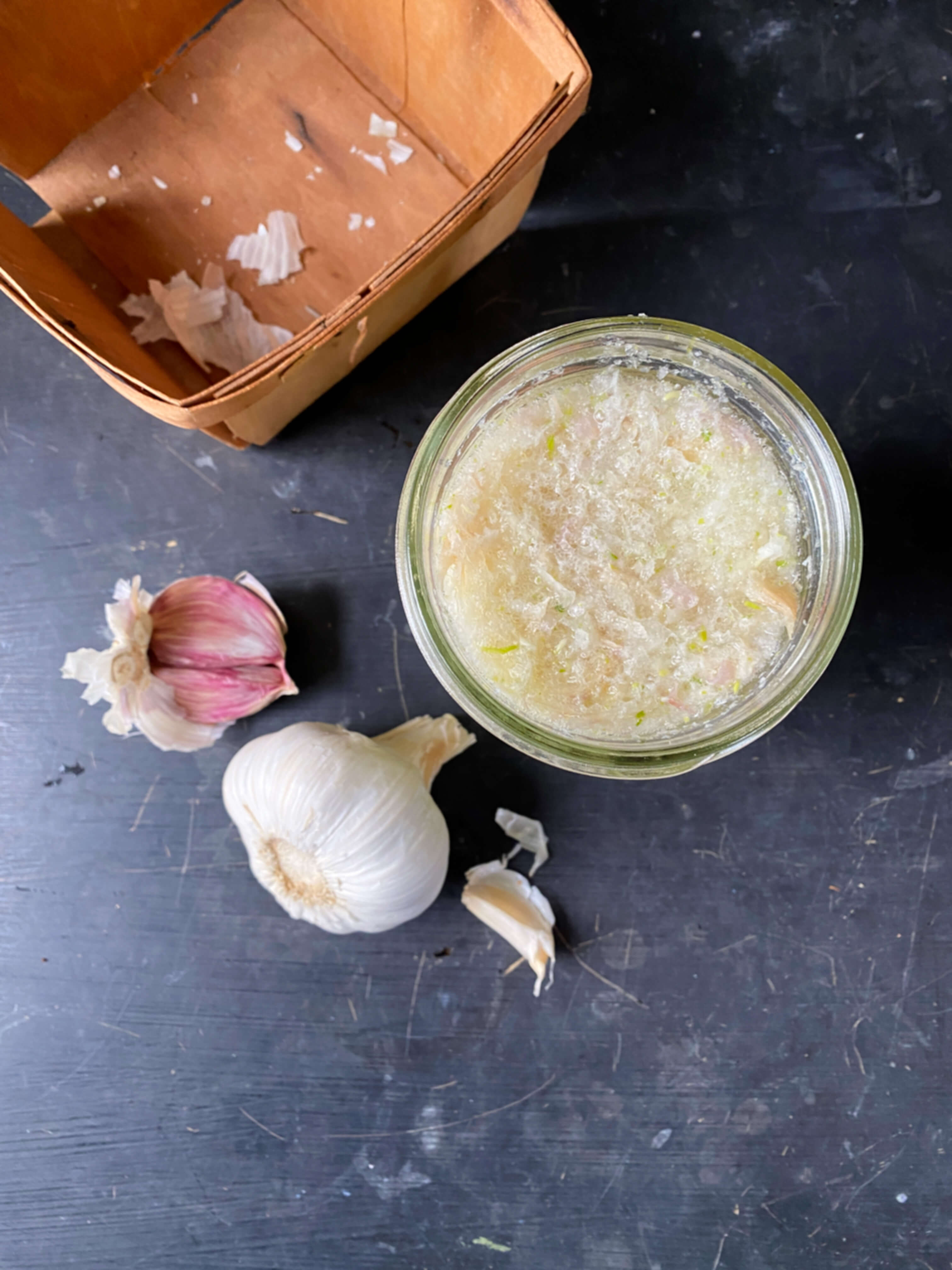
Pureed garlic steeped in water for 24 hours before straining and applying.

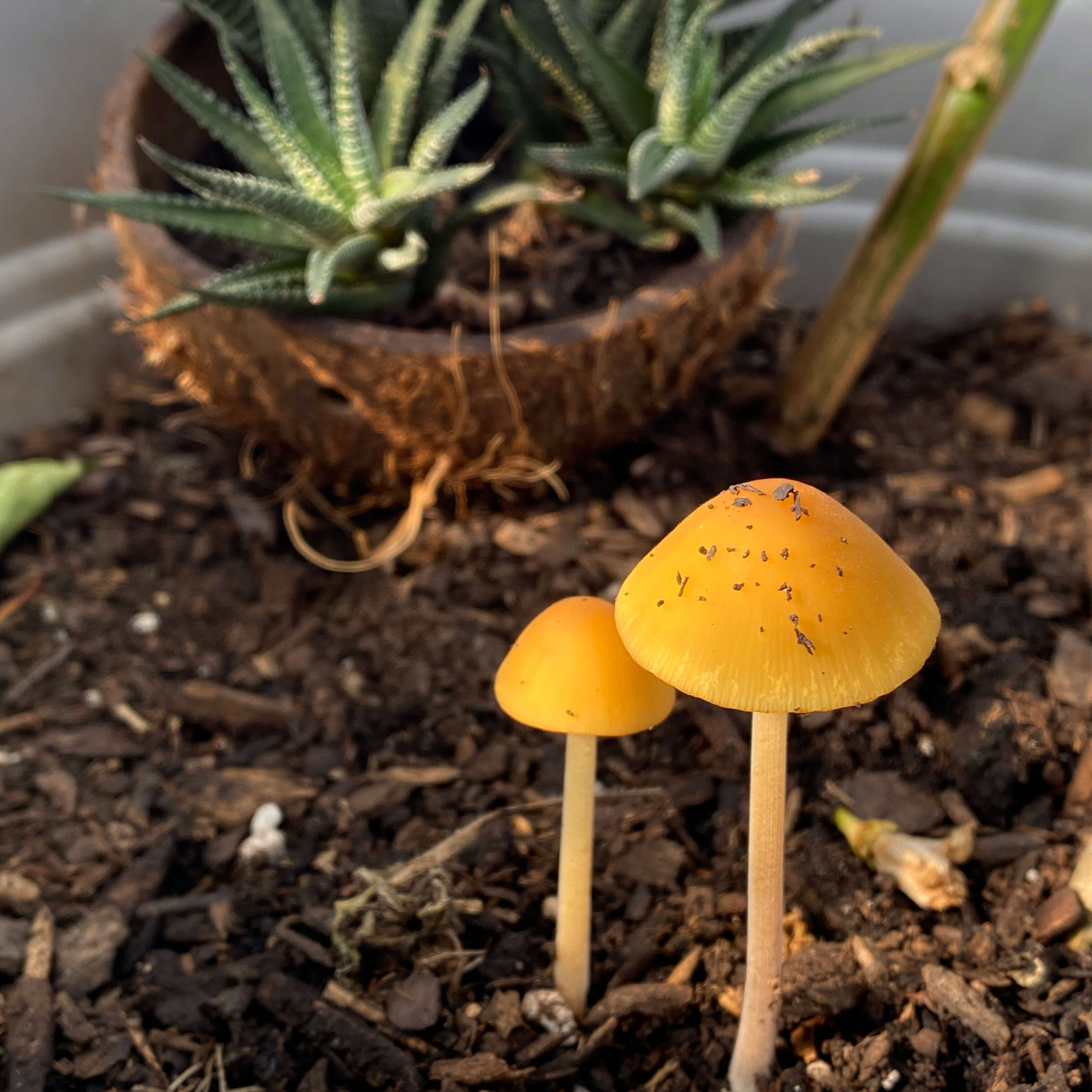
One note on the Neem oil though – it does get rid of everything. We had some mushrooms that popped up in the pepper plants in January and also two resident spiders who were helping reduce the unwanted bug population, but unfortunately, mushroom nor spider survived the neem spray. So keep that in mind if you have some critters that you’d like to keep around.

Over the course of the month, we said goodbye and hello to a few plants. The broccoli, the pincushions, and our beautiful nasturtiums all completed their natural life cycle. As much as I hated to see these three go, at least they were moving on to the compost pile for nutrient recycling. Like our sourdough starter recipe published last week, all these first-year greenhouse plants have been the best springboards – the ones that taught us so much about how to begin in the first place. Before their final send-off, I picked the last of the nasturtiums for a bouquet. It was a big colorful cheers and thank you to my most loved flower this season…

The last of the nasturtium flowers in a bouquet of geraniums and parsley.

On the hello side, we said welcome to a bevy of new seedlings as they sprouted up this month. Snapdragons, foxglove, basil, black-eyed Susan vine, cucamelons, bell peppers, spicy peppers, cosmos, dill…

We harvested the orange bell pepper for a stuffed pepper recipe, the first round of collard greens for a sausage, potato, and collard hash, and the arugula for more salads than we can count. The chives, lavender, and tarragon all got haircuts and the Santaka grew five finger-long peppers.

Collard greens!

Santakla Peppers!

The geraniums are filling out so much they have completely taken over one corner of the greenhouse. Their resilience from frost recovery is pretty remarkable. I can see now why these plants have a shelf-life of 50 years if paid just a little bit of attention. With the colorful nasturtiums gone, they have been such a vibrant choice for the wintertime greenhouse.

After the bell pepper was harvested and after the spider mites came to visit, I did some trimming of the older pepper plant leaves, and pretty much overnight three jalapenos grew. Now each of the three pepper plants are blooming again, Maybe we’ll be lucky and get two summer cycles out of each plant.

Jalapenos!

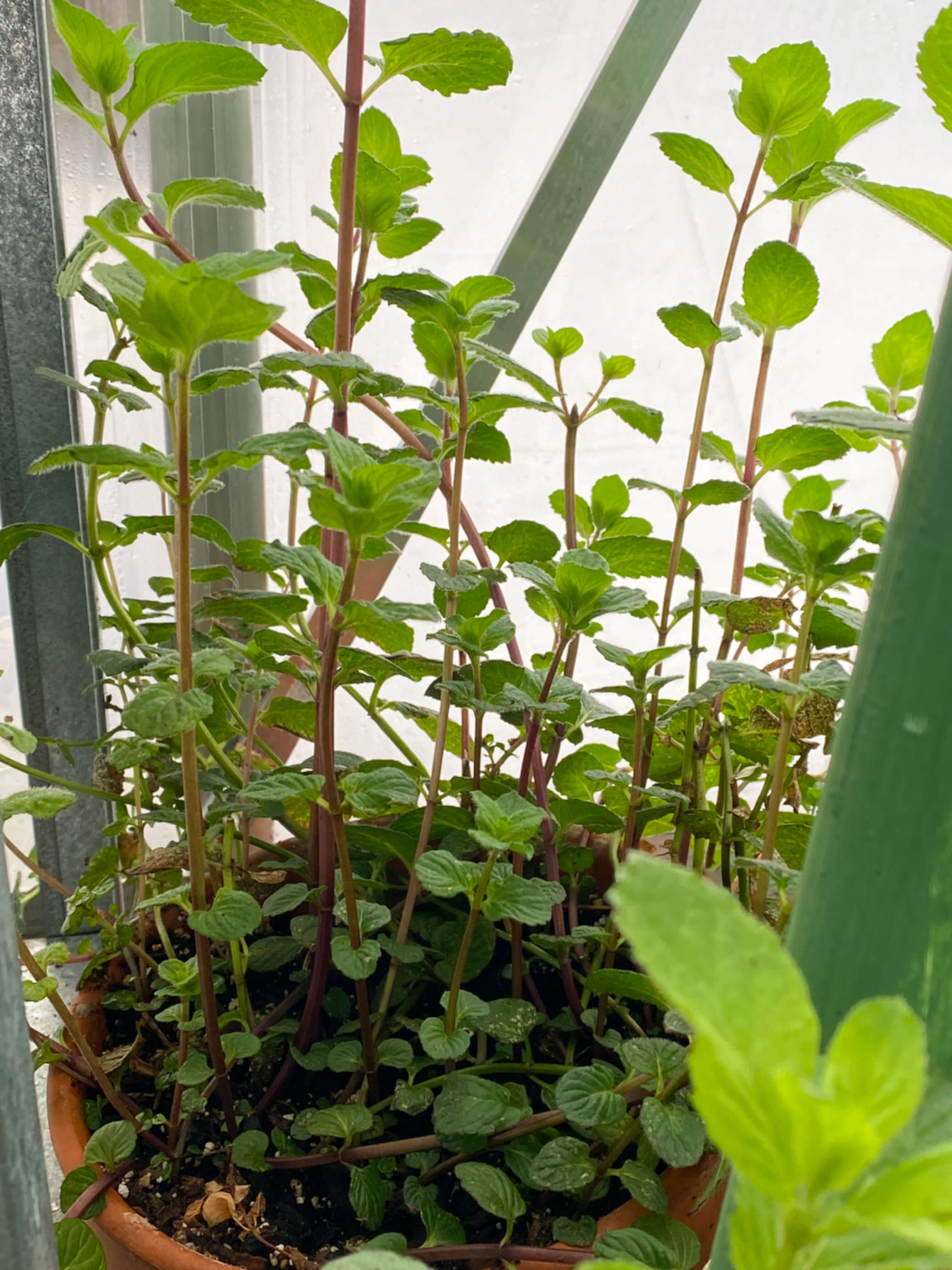
This week, the most exuberant grower in the greenhouse has been the mint. At 12″ inches in height now, it’s been the epitome of spring-is-right-around-the-corner joy.

Nineteen days to go. That’s how close the first day of spring is. In anticipation, another round of seed starting begins this week. On the list for March starts are cucumbers, marigolds, squash, tomatoes, okra, collards, sunflowers, cauliflower, brussels sprouts, peas, broccoli, and zinnia. To keep things interesting, Mother Nature also might be sending two to four more inches of snow our way this weekend, just as the daffodils are popping up in the garden beds. Like I said up top, nature waits for no one. And so we carry on. Snow showers and spring flowers aside, this is the perfect time to get the summer garden started.

Cheers to almost-Spring and to figuring out the greenhouse winterization plan just as a new season approaches! Have you been starting your seeds too? If so, what are you growing this year?

The Greenhouse Diaries Entry #5: Seed Starting, The Blushing Bell Pepper and What We Learned from a Veggie Burger

Valentine’s Day is still two weeks away, but in the greenhouse love and joy and lessons are in abundance these days. From the deep red petals of the geraniums to the blushing bell pepper to a big bowl of an aphrodisiac growing on the second-tier shelf, it seems like every plant is offering up a bit of romance and wisdom in one way or another. Is this what the winter harvest season looks like? Or does this mean spring might be coming early? I don’t know. Since it’s our first year, we can only take note and appreciate what’s happening right now in the greenhouse at this end-of-January date. Let’s look…

The sun gold cherry tomato branch produced another foursome…

The nasturtiums and geranium flowers are stretching their leaves and spreading so much cheer both in color and scent…

Nasturtiums
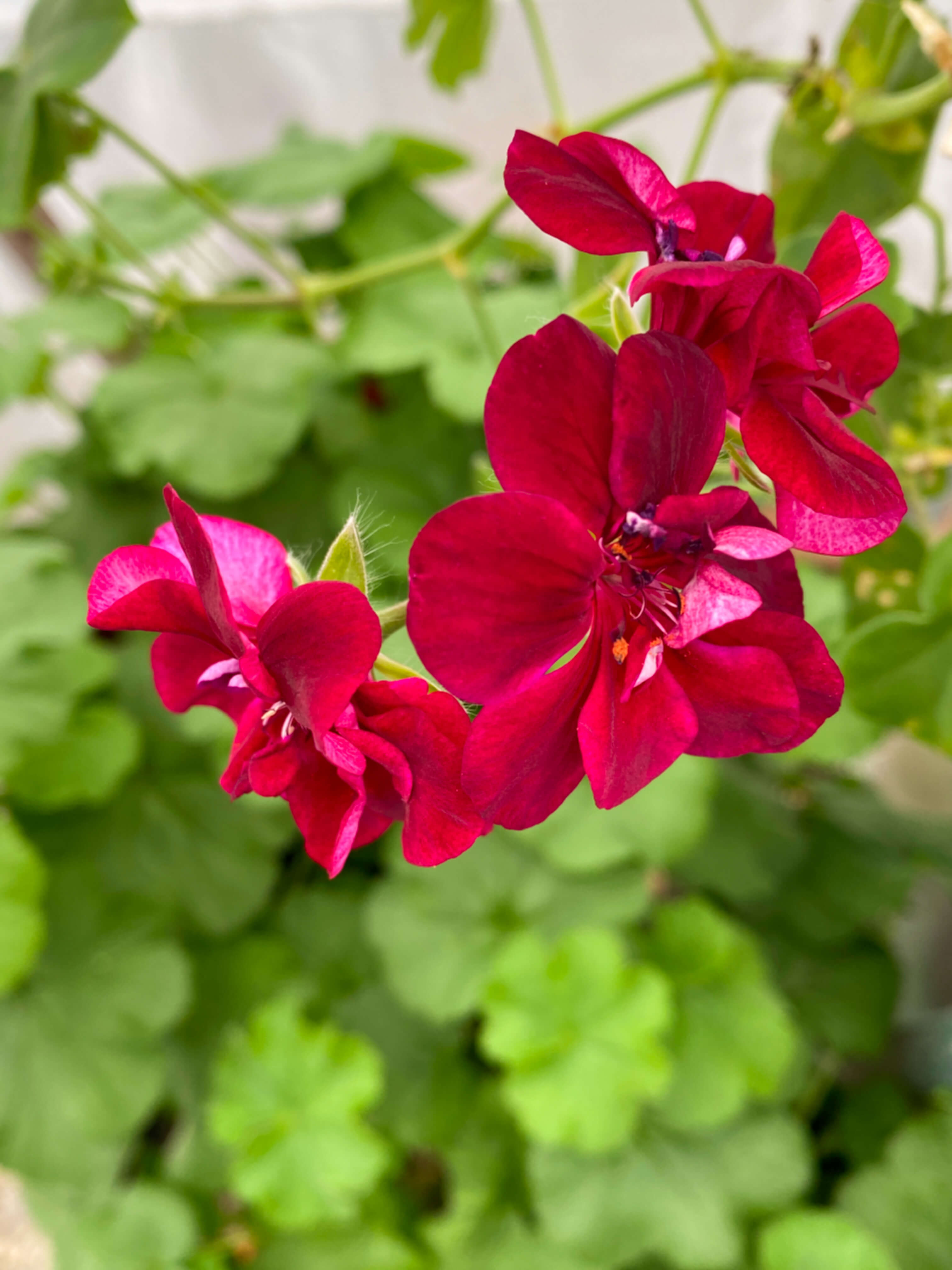
Geraniums

Growing like gangbusters, the chives and the collard greens, are each overflowing from their containers…

The arugula and the parsley are keeping pace with our daily kitchen needs by enthusiastically providing continuous greens for every meal…

Greenhouse-grown arugula and parsley

One of our favorite recipes we tried this week was this new veggie burger from Jenny Rosenstrach’s cookbook The Weekday Vegetarians. We modified it a bit by adding a fried egg on top and stuffing the buns with our own greenhouse-grown arugula and parsley but otherwise followed the recipe exactly.

These burgers don’t require any baking in the oven – just stovetop cooking (or hot plate, in our case) in a cast-iron pan, so it’s an especially great recipe for under-construction cooking, small space meal-making, or college dorm food. Soft and light, as opposed to many veggie burger recipes that can sometimes tend to become dry and dense, Jenny’s recipe has the consistency of crab cakes and a delicate flavor combination of mushrooms, brown rice and pinto beans. Jenny suggested sliced avocado and a spicy mayo mixture for a topper, but because of our greenhouse abundance, we substituted those two with our own version of similar flavors and textures via the creamy egg and peppery parsley and arugula. It was delicious.

Nowadays, arugula is such a common salad staple that it’s easy to forget that it was once considered a gourmet green and talked about in haughty tones. Although British and Italian immigrants are credited with bringing it to America in the 19th century, it wasn’t really until the 1980s, that it started making a more regular appearance in American cookbooks.

Paula Peck was one of the very few who mentioned it in her 1960s-era book, The Art of Good Cooking, grouping it together with “very expensive” bibb lettuce and James Beard, our favorite gourmand, described it with a sense of reverent curiosity in his 1970s American Cookery book. But none of our favorite 20th-century chefs featured it as an ingredient to create a meal around until many decades later.

Not the case across the pond though. There was nothing new about it in England, Europe and the Mediterranean. There, arugula has been enjoyed for centuries. Legend states that in Roman times it was considered an aphrodisiac and was even banned from some gardens for its love potion properties. So if you wanted to make a romantic Valentine’s dinner for your sweetheart this year, consider a big bowl of arugula along with your shellfish.

Santaka pepper

Back to the spicy atmosphere in the greenhouse, the Santaka Pepper – although pretty small in stature at just 8 inches – is getting ready to flower (above) and Liz Lemon is growing a baby (below)…

Liz Lemon’s baby lemon!

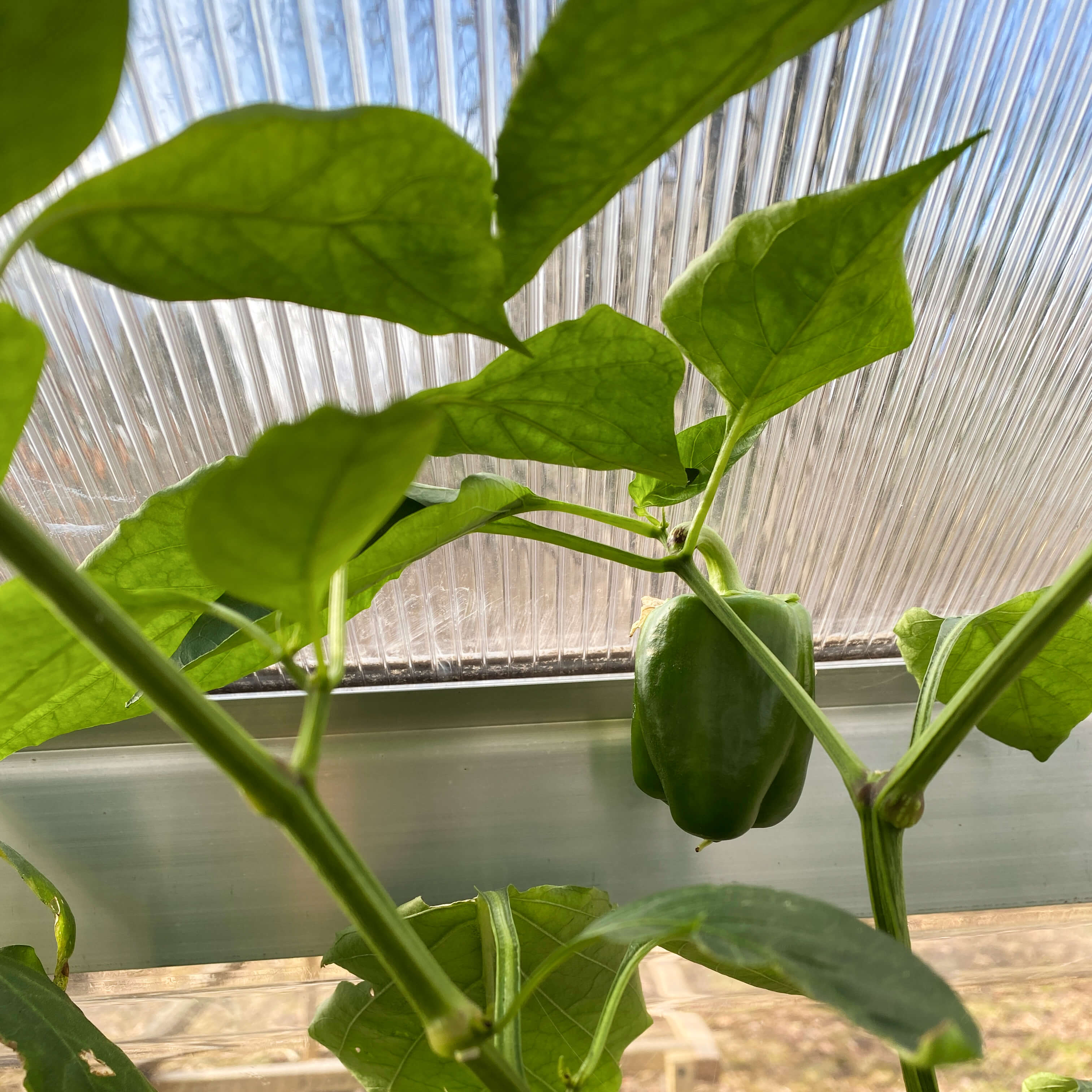
The loveliest surprise of all this week though was the bell pepper. If you have been following along with previous entries from The Greenhouse Diaries, you’ll recall that this was a mystery bell pepper plant that was either a California Wonder, producing peppers that would ripen to a deep red color, or it was the Orange Sun variety, which would turn, as it names suggests, to a warm shade of orange once mature. For weeks, we’ve been waiting to see which color it would turn.

Finally, last Wednesday, the pepper started to change. With great excitement, I’m so pleased to share for certainty now, both the color and the type of plant we’ve been growing all these months here in the greenhouse. The first blush gave it all away…

Wednesday

Orange Sun! Each day it gets brighter and brighter…

Thursday

Yesterday morning

If bell pepper had a theme song, it would be this one…

Through wind and rain, snow and sleet, sun and clouds, the greenhouse experienced all the different types of weather possible in these past 14 days. Outside it was a rollercoaster of highs and lows, but inside the temperature held steady between 70-80 degrees, the most even stretch of well-regulated temperature all winter so far. Thanks to our trusty heater, that cozy warmth is now making it possible to start our next endeavor…

Seed starting! After late sowing in the garden in 2022, this year the plan is to get a head start so that by the time the last frost date passes in our area (typically mid-to-late April), they’ll be a collection of hearty transplants ready to make their way out to the garden beds.

Excited to get to work on what is perhaps the most optimistic of gardening pursuits, the first set of seed trays were filled with flowers… snapdragons, Mexican sunflowers and foxglove. Four days in and the Mexican sunflowers have already started popping up. Another joy!

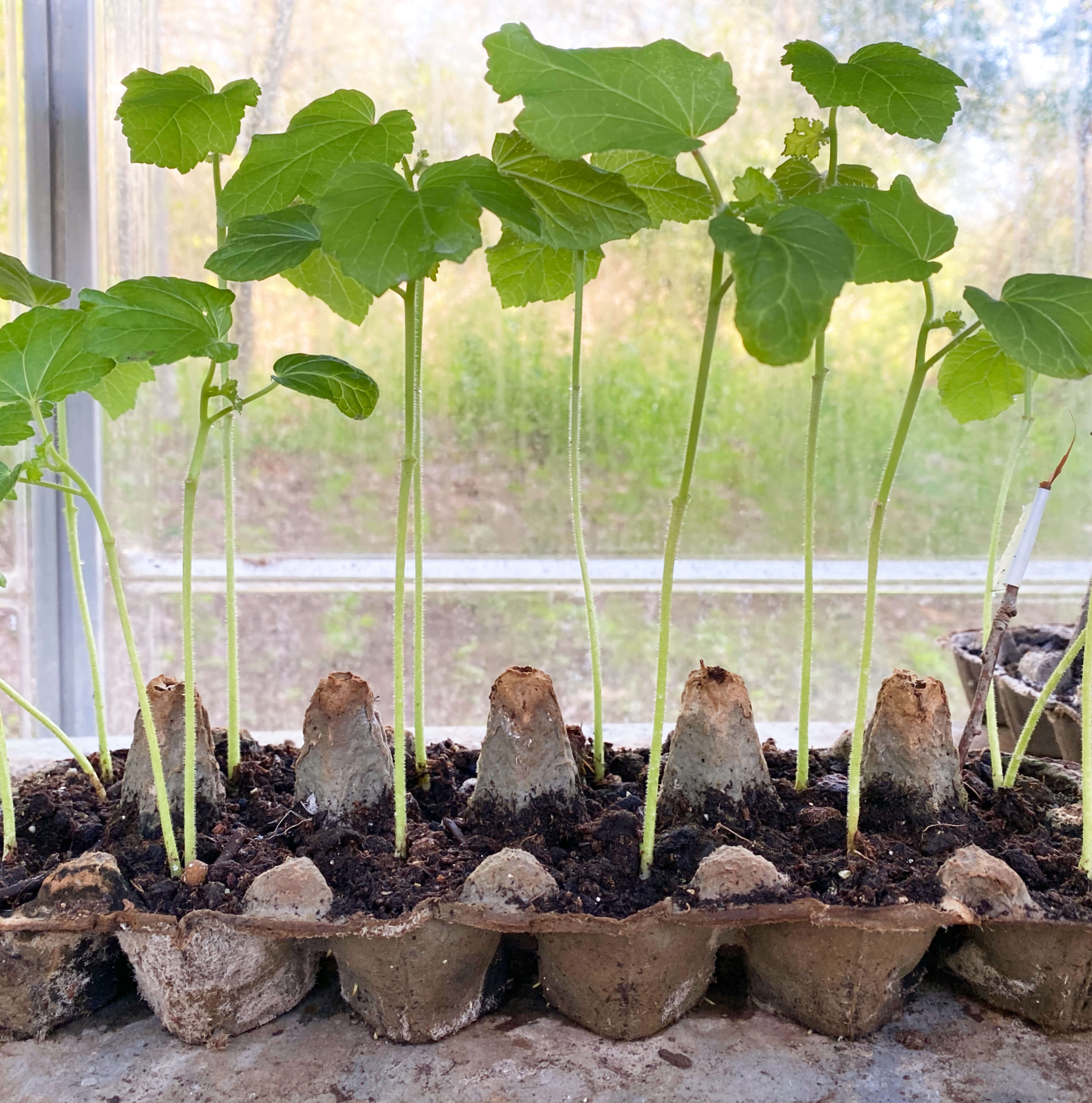
Mexican sunflower seedlings

The first time I ever grew Mexican sunflowers from seed was in 2012. I fell in love with their delicate, velvety soft stalks and their bright tangerine-colored petals. Blooming extensively throughout the season, they were a haven for bees and butterflies. That first year I was living in Georgia and they filled out into a 6′ foot by 5′ foot tall bush in a flash. That combination of heat, humidity, and full sun was a winning ticket. I haven’t had enough gardening space to try Mexican sunflowers again until this year, so I’m not sure if they will grow as large and as lush here in New England, but it will be an exciting experiment. This is how they turned out that first year (fingers crossed that we’ll get similar results and similar visitors)…

From the garden in 2012

Right on track, the snapdragons and the foxglove started sprouting yesterday. As biennials, we started some in the garden last year too, along with hollyhocks, but they didn’t grow very much. It’s my first attempt growing all three from seed, so we’ll see what happens this year. Between these greenhouse seedlings and those planted in the garden last year, we’ll have two sets hopefully coming up more productively this year.

Next up on the seed starting list for this coming week are a new batch of peppers and herbs, salad greens, hollyhocks, milkweed, and pincushion flowers, which will get us set up through the month of February before more seeds get started in March. By that stage, we’ll be rounding the corner towards Spring and our one-year anniversary at 1750 House. We aren’t as far along in our renovations as we thought we’d be, but I learned a valuable lesson this week from the veggie burgers.

At one point in Jenny’s instructions, when it comes to the step about forming the actual veggie burger patties, she writes “they will probably look mushy and unappetizing, but press on.” I love that she was so candid with this insight. And I love that she uses the encouraging words “press on.” As we continue to get to know the greenhouse, the 1750 House and the landscape in which they both lay, it is such a good reminder that all worthwhile endeavors require a healthy dose of blind faith and pressing on. Without that, we’d never make it to the flowering and flourishing days. I can’t wait to see what this spring holds in terms of a kitchen and a kitchen garden. We may be in the middle of the mushy parts now, but something deliciously wonderful awaits.

Cheers to love that sprouts, to the sun’s coming out party in the greenhouse, and to Jenny for sharing recipes and reminders.

Mexican sunflower seedling

{The Greenhouse Diaries is an ongoing series. if you are new to the blog, catch up here with Week #1Week #2, Week #3 and Week #4 here}

The Greenhouse Diaries Entry #4: Lessons in Highs and Lows, Triumphs and Tragedies

You might not suspect that a lot could occur in a greenhouse over a two-week period, but this time off for the Christmas break equaled quite a bit of unexpected change in our little house of wonder.

We had some pretty dramatic outdoor weather over the holiday with the lowest of lows being 6 degrees one night and the highest of highs being 58 during the day just this past Wednesday. It was a wide swing of weather for certain, but it provided a good fourteen days of observation to draw some enlightening information.

Frozen ground, ice streams and patchy snow covered our landscape during Christmas week.

First off, the few nights of single-digit weather created a bit of havoc. It also shed some new light on an ongoing topic. Do you remember the haybale conversation from The Greenhouse Diaries Entry #3?

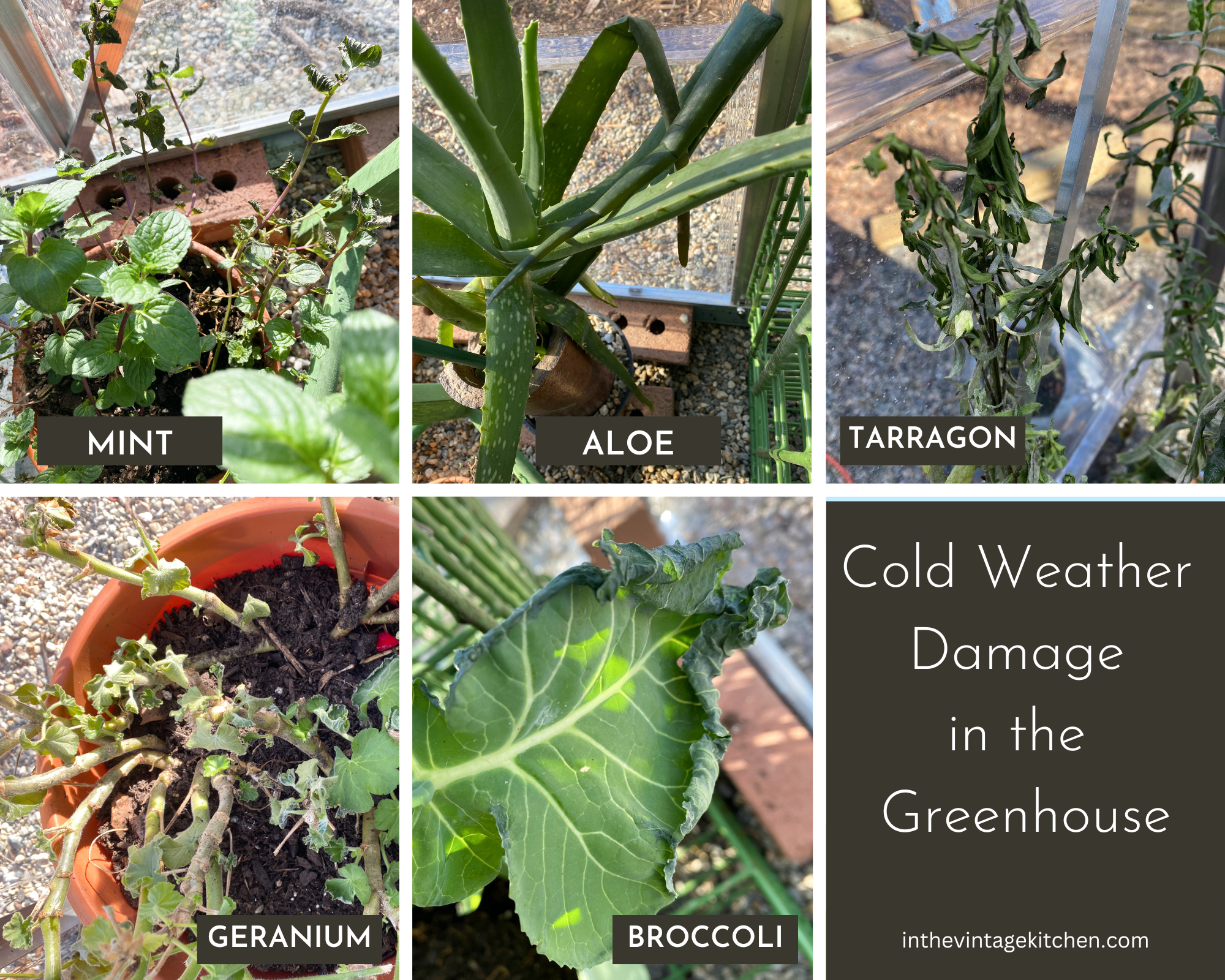
Well as it turns out, first-hand experience is an excellent advisor. I can see now how the haybales would have been helpful through the cold snap. Like everybody across the country during Christmas week, we experienced the freezing polar vortex temperatures with daily highs between 9-19 degrees and nightly lows between 6-12 degrees. The indoor temperatures in the greenhouse on these coldest nights, with the heater going full blast, hovered in the high 30s and low 40s, which was pretty good considering the chilly weather. The coldest area of the greenhouse was the pea gravel floor which is where the broccoli, marigolds, aloe, mint, thyme, tarragon, basil, rosemary and geranium pots sit.

Although the sun came out on most of these single-digit days, one night in particular the wind picked up and grabbed hold of a small section of the plastic covering the door frame. It was a strong enough wind to open up a small gap between the plastic and the poly carb door, so that cold air could seep in through the greenhouses’s most vulnerable area. That night the windchill forced the outdoor temperature to sway between 0 and 1 degree. Inside, the greenhouse the temperature fell to 34 degrees – the danger zone. Some problems arose.

While there was never actually any frost inside the greenhouse, there were signs of distress on the leaves of the zinnias, broccoli, mint, thyme, geraniums, aloe, basil, marigolds and tarragon. Withered plants one shelf up from the pea gravel included the tomato, the Santaka pepper seedlings, the rabbit ear cactus, the pincushion flowers, and most unfortunate of all, Liz Lemon, who had made such great strides just the week before. Everything else located the next shelf up (about 2 1/2 feet off the ground) and higher was completely unaffected. Thankfully, heat rises.

The unhappy tomato.

Had the haybales been placed around the outside of the greenhouse, they might have added just enough insulation to protect the plants sitting at ground level. The other thing we could have done was just to put all the ground plants up higher in the air so they would be protected by the rising warmth from the heater. So two lessons were learned…

  1. Add haybales around the exterior during extreme weather dips or…
  2. Move the plants up higher in the greenhouse to capture the rising warmth.

Luckily, the extreme weather only lasted for a few days.

The trickiest part of greenhouse management so far, is that there is so much conflicting information online and so much variation between agricultural zones and particular weather situations each year that there seems to be no definitive right or wrong way to care for your own greenhouse. Except by watching and waiting and recording how your greenhouse acts in your particular environment. What is expert advice on one site is a disaster on another and vice versa. It’s never my intention to “sacrifice ” a plant but this time spent learning is proving to be really valuable in understanding not only how things grow, but also what things grow in a New England greenhouse in the middle of the winter.

In continuation of our year of waiting and watching, the withered plants were left alone to see if they might perk back up again as the weather warmed throughout the week. The severely affected plants on the floor level received a trim, removing all damaged leaves in hopes that they might heal themselves.

On the good news front, most of the plants bounced right back including the withery, weepy, unhappy tomato branch clipping who is now getting ready to offer up more cherry sized tomatoes…

But on the bad news side, three never recovered. We lost the basil, the zinnias and the marigolds, all plants that really crave that warm summer sun. As discouraging as it was to see these carefully tended plants go, not all was completely lost on them. Their stems and stalks were added to the leaf mold piles (another garden experiment started last fall) and will contribute to the joy and beauty of the garden come spring, just in a slightly different, more composted way now.

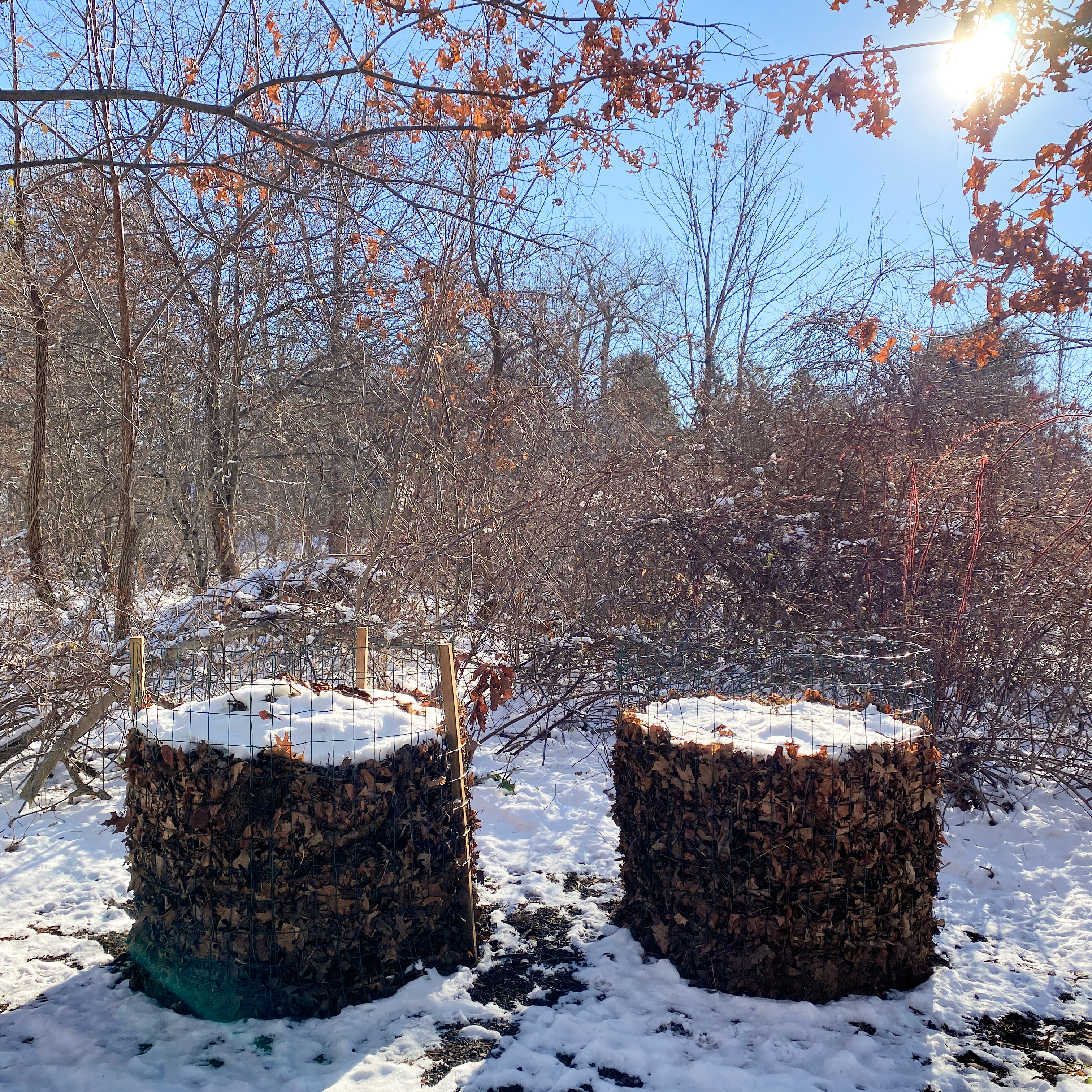
Layered leaf mold stacks – our soil amendment plan for the spring garden beds.

It was a good reminder that nothing lasts forever and that there is an ideal season for everything. Sometimes one just isn’t meant to meet the other. The great thing about nature though in times like this, is that it wastes no time moping. With the lost plants now removed from the greenhouse, there was more room for what was growing well to spread out in their vacant spots. As if to add some cheer to the atmosphere, everything that could send out a bloom between Christmas and New Year’s Day did…

Clockwise top to bottom: geranium, broccoli, nasturtium, lemon.

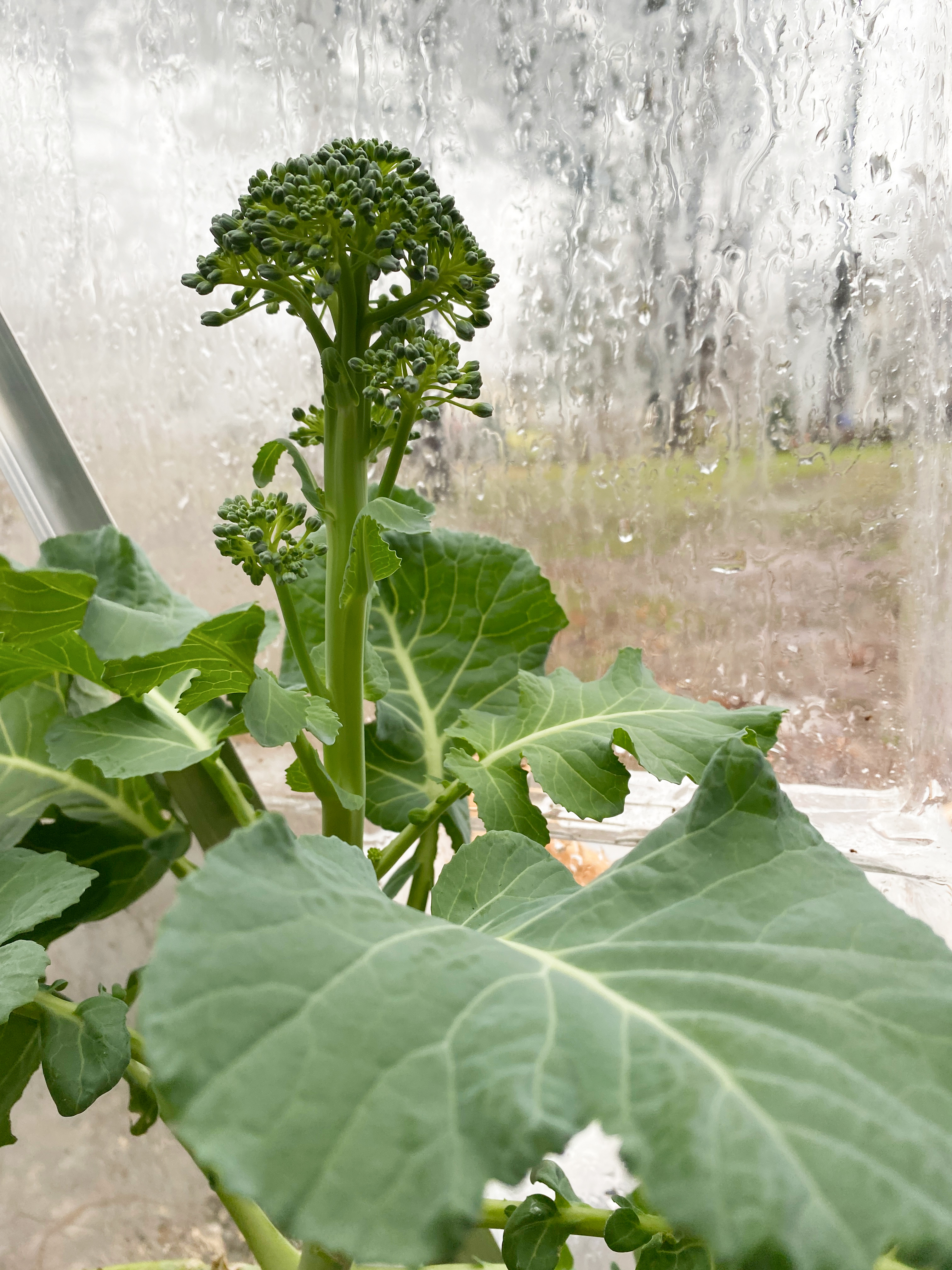
The broccoli infact was so quick to flower, it burst into bloom before I had a chance to harvest it for dinner one night. Exploding into a pom-pom of butter yellow flowers, it became a feast for the eyes instead of the belly. That’s fine by me. Broccoli produces one of the most beautiful, delicate flowers of all the garden vegetables, so it is a joy either way. The nice thing about broccoli also, is that its leaves are edible. We might not have enjoyed the spears but the leaves are next on the menu if the broccoli doesn’t send out any new shoots.

Broccoli leaves!

Also on the harvest list is the bell pepper. Currently, it’s measuring in at just under 4″ inches in length – close to mature size that makes it ready for picking soon. This pepper comes with an added dose of mystery included too. Last summer, we grew two varieties of bell peppers in the garden. Adored by slugs, bunnies and maybe a vole or two, the pepper beds were constantly being reseeded and defended all summer.

Out of time, but not yet fully grown, just before the fall frost I transplanted three of the strongest plants to see if they would continue growing in the greenhouse. Two of the three were hot pepper plants of the jalapeno and chile variety and then the third plant was a bell pepper. I thought I had transplanted an heirloom variety called California Wonder, which if not picked when green will ripen to a deep red shade. But based on its shape right now, it could be the other pepper plant we experimented with – Orange Sun – which will as its name suggests, turn a vibrant orange when ready for harvest. In both cases, the longer the pepper sits on the vine the sweeter it gets. So a surprise is in store as we wait to see what color it turns out to be…

The other green delight that really took off on a growing adventure these past two weeks was the parsley. With no extra help or amendments, it’s doubled in height since the last diary entry. The only way I can really rationalize this growth spurt is to say that we had a little help from the gods. The ancient Greeks believed that parsley was a sign of death and rebirth.

In mythology, it gets caught up in stories surrounding the baby, Archemorus, and the parsley that grew from his blood after he was killed. Later, the Romans believed that Persophone ( the Goddess of Spring, the Underworld, and of Vegetation) was in charge of guiding souls to their final resting place in the underworld. Parsley throughout Roman times adorned gravesites and funerary objects as a gift to Persephone so that she would take good care of those that perished.

Between the demise of the marigolds, zinnias, and basil and the growth of the parsley, the flowers, the bell pepper, and the broccoli, I can’t help but think that Archemorus and Persephone were at work, guiding the greenhouse through these past two weeks of dramatic winter weather. From death springs life. And parsley too.

Bottom right: Parsley full of joy!

Cheers to weather and what it teaches us, to plants that persevere in the face of difficulty, to Persophene and Archemorus, and to this brand new year full of possibilities. Hope your 2023 is off to a beautiful start!

{The Greenhouse Diaries is an ongoing series. if you are new to the blog, catch up here with Week #1, Week #2, and Week #3 here}

The Greenhouse Diaries Entry #3: Snow and Bell Peppers

current outside temperature: 33 degrees, greenhouse temp: 61.2 degrees

Last week, we left off with two cliffhangers… an impending snowstorm and an outbreak of powdery mildew. Did the greenhouse stay warm during our first storm? Have the sage and the tarragon recovered? Let’s see…

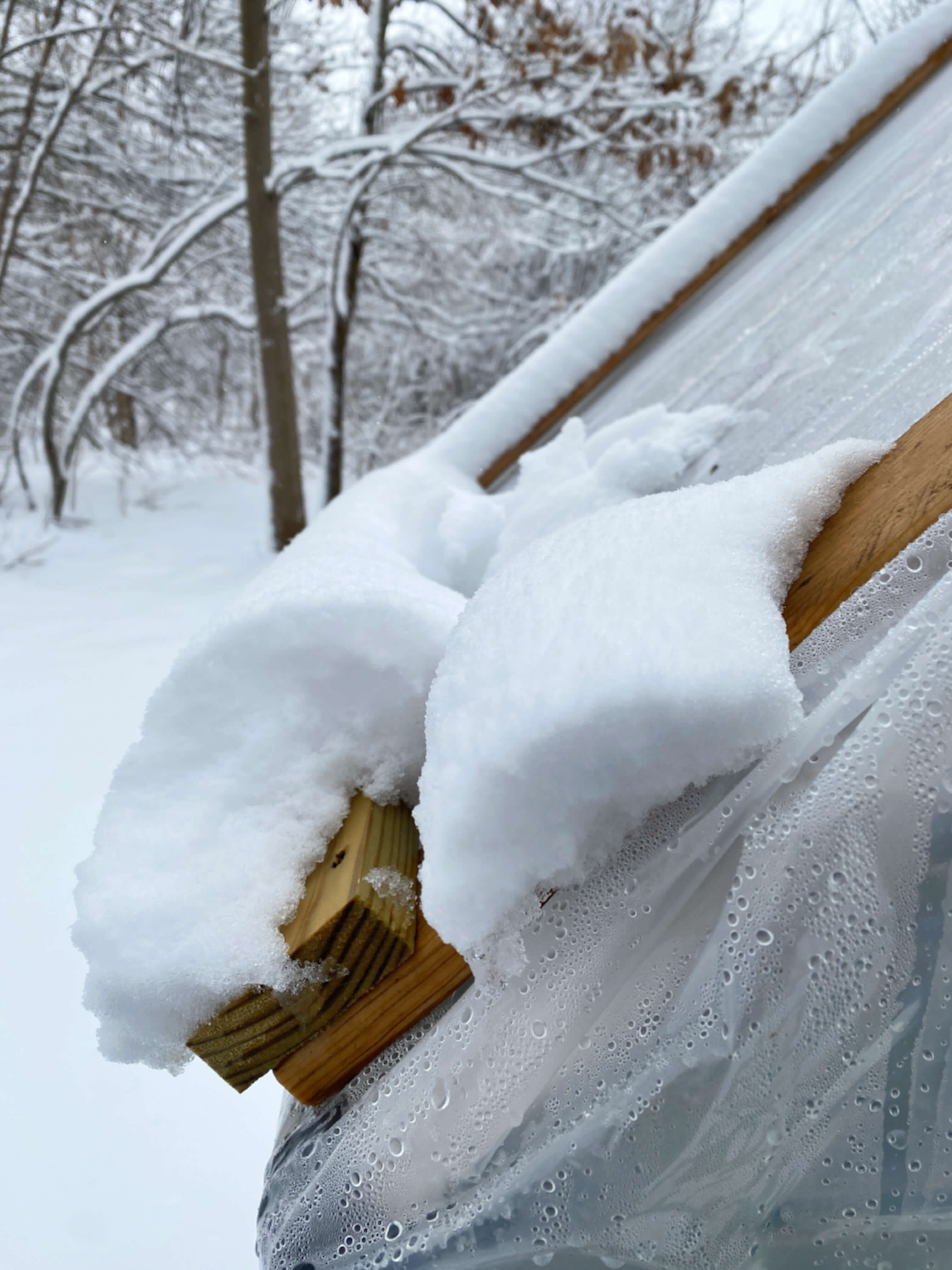
The total accumulation last Sunday night was 2.5″ inches. The greenhouse didn’t blow away or collapse (a victory!) and nothing was frost covered inside. We didn’t get the haybales purchased and placed before the storm for two reasons… 1) we wanted to see how the greenhouse would do on its own and 2) perhaps there might be a better alternative.

In theory, haybales placed around the outside base of the greenhouse act as insulation. They cover any vulnerable seams or crevices from drafts as well as act like a barrier against cold winter winds. Our greenhouse was never meant to be air-tight in its design. There are tiny exposed airways around some connector pieces and screws, which is good for ventilation. I hesitated about the bale method of winterization because there are about a dozen plants in our greenhouse that draw light from the bottom sidewalls and the hay bales once placed around the base would block their access to light from that direction. Of course, that would probably only encourage the plants to grow taller, to reach for the light above the bales and towards the roof but the idea of covering up this beautifully airy space with something heavy and dense didn’t seem quite right. In honor of light, we chose to wait and see.

So the snow came and the greenhouse experienced it sans haybales and everything was fine, except for the temperature. The coldest the greenhouse has ever been, even with the heater going at level 3 (the maximum setting) was that night. 43 degrees. Not cold enough for frost to appear but more than twenty degrees away from ideal interior temperatures. This first snowfall was such a good test. We definitely needed to protect it more.

My husband came up with the great idea of a plastic sheet covering the door frame from the peak all the way down to the base. The plastic at the roof was held down with two leftover 2 x 6 pieces of lumber, one on each side of the peak with the board ends resting in the gutters to help hold it all in place. Three treated 4x4s weighted down the plastic at the base. Essentially, he made a makeshift curtain panel for the front door that looked like this…

By covering the greenhouse in this way, it eliminated the draft that comes in around the door while still allowing lots of light to come through. Once this new plastic panel was added, the interior temp went right back up to 65 degrees within an hour. Success!

Until the next night.

Wind got a hold of the plastic and carried the curtain across the yard at some point in the middle of the night. The internal greenhouse temp plummeted straight back down to the low 40s.

Not entirely deterred, my husband set out for a second attempt. This time he stapled the plastic to the treated wood at the base, nailed two shorter boards together to form a wooden peak for the top that mimicked the pitch of the roofline, and then stapled the top end of the plastic to the wooden frame…

And that turned out to make all the difference. For the rest of the week, the plastic has stayed in place and the greenhouse is warm and draft free. To gain entry, we just take the wooden peak down and set the treated wood off to the side and then put it all back in place once we’re done inside. So simple.

Temperatures fluctuations and winter weather aside, luckily the greenhouse plants didn’t seem to be affected by all these up-and-down changes. The sage and tarragon were still flocked with powdery mildew so they got a second spray of the organic fungicide. The tarragon responded to this extra care and attention by slowly unraveling its first flower…

The marigolds have been thinning themselves out one by one since they arrived in the greenhouse, so they got repotted to a smaller container. If I had to peg any of the summer flowers that I thought would do best in the greenhouse it was the marigolds. They were such hardy growers in the garden from spring to fall, so I was surprised to see them losing leaves, drying out and getting long and leggy in the greenhouse. Hopefully, this new home will encourage them to fill out more around the middle.

On the growth spurt front, the geranium leaves tripled in size…

the broccoli grew by another inch…

the spicy Santaka pepper seedlings put out a whole new layer of leaves…

and our lone bell pepper seems to grow bigger by the minute…

Between seeing the greenhouse outlined in snow early in the week and then hearing the tinkling of raindrops on the roof at the end of the week, I can understand now why Philip Johnson built and loved his Glass House so much.

The Glass House in New Canaan, CT designed by Philip Johnson in 1945 and built in 1949.

While working on that and the neighboring Brick House, Philip mentioned being overtaken by waves of emotion for certain details during the design process. He was talking about archways and vantage points and shapes that felt like hugs, but I loved that he used the word overtaken to describe his attraction to the space and his ideas in it. That’s exactly what it feels like to stand in the greenhouse. To be overtaken by nature, by light, by warmth, by possibility, by protection. It’s no wonder plants thrive in such an environment.

Ivy-Leaf Geranium

As we work through renovations on the 1750 House during these fall and winter months, oftentimes the greenhouse is the warmest, quietest, calmest place to be. The polycarbonate walls muffle man-made sounds from the environment but oddly amplify the sounds of surrounding nature like birds singing in the trees or leaves whirling around on the ground. The bright light, even when the sky is cloudy and threatening with rain or snow, illuminates all the details on every leaf, on every petal. Possessed of an ever-evolving scent similar to warm tea the whole space changes aromatically day by day depending on what’s in bloom. And the heater – that warm little hug of a heater wraps everything up like a cozy sweater on the coldest of days. I used to think The Glass House was such a vulnerable piece of art, exposed, and unsettling in its lack of privacy. But now I see that what Philip created there was a love letter to the senses. This greenhouse is much the same. Plastic curtain panels and all.

The Greenhouse Diaries: Entry #1

Inspired by the writings of Katharine Sergeant Angell White, there’s a new series coming to the blog called The Greenhouse Diaries. A week-by-week account of growing flowers, food and ornamentals in a 4′ x 6′ greenhouse in New England, it’s a work-in-progress series that chronicles our adventures as we build the gardens of 1750 House and grow ingredients for our vintage recipe posts.

Katharine Sergeant Angell White (1892-1977)

If you are unfamiliar with Katharine, she was a longtime editor of The New Yorker magazine, working there from its infancy to the mid-20th century. She was also the wife of E.B. White, who wrote Charlotte’s Web, Stuart Little and other fantastic works that delighted the imaginations of both kids and adults.

Katharine and E.B.’s home in Brooklin, Maine. Image courtesy of maineaneducation.org

In the 1950s, when Katharine and E.B. left their New York City apartment to take up permanent residence in their vacation house in Maine, Katharine embarked on a writing career. After decades of working around some of the best literary talents of her generation including her own husband, you might suppose she would turn to writing things she was accustomed to reading at the magazine – fiction or poetry or short stories or perhaps some reminiscences about life in the publishing world that she had known so well for so long. Not so. Instead, Katharine was inspired by the thing that grew around her in Maine – her garden and all that it entailed. From planning and plotting to cultivating and researching, she fell in love with horticulture from all angles. On index cards, in diary pages, and in letters to friends, for two decades she enthusiastically documented her successes and failures, her insights and observations, the learned histories, and the passed-along advice relating to gardening as hobby, art, and food source.

Katharine’s expertise grew by trial and error, by curiosity, and by a passion that captured her attention year-round despite the cold winds that blew off the Atlantic, the snow that inevitably piled up in winter, and the wild, rugged landscape that made growing anything in Maine both a challenge and a reward. Her published pieces eventually led to a book of collected works on gardening compiled by E.B. after Katharine’s death in 1977. Lauded for her fresh perspective and interesting subject matters (like one essay that reviewed the writers of garden catalogs), she had a unique voice that resonated with other gardening enthusiasts around the country. Even E.B. was surprised at his wife’s candor and affection for her subject matter.

Katharine’s book of collected garden writing published in 1977.

As you might recall from previous posts, we have big plans for the heirloom gardens that will envelop 1750 House just like they would have done one hundred, two hundred or almost three hundred years earlier. Having spent most of the spring, summer and fall building and establishing garden beds and planning out landscaping details for the front and back yards, we will be ready for Phase Two of our landscape design by next spring, which means putting the greenhouse to full use this winter. Just like Katharine approached gardening in Maine with continual curiosity and enthusiasm, I thought it would be fun to share our progress of winter gardening as it unfolds. Since we are new to gardening in New England and also new to greenhouse gardening in general, this weekly diary will be an adventure in unknown outcomes. Nature is rarely predictable. Surprises can be encountered at every turn. It’s my hope that by discussing both challenges and successes, this series will help attract and connect fellow greenhouse gardeners so that we can all learn together by sharing tips and techniques discovered along the way.

So let’s get going and growing. The Greenhouse Diaries await…

First and foremost, a formal introduction to our workspace.

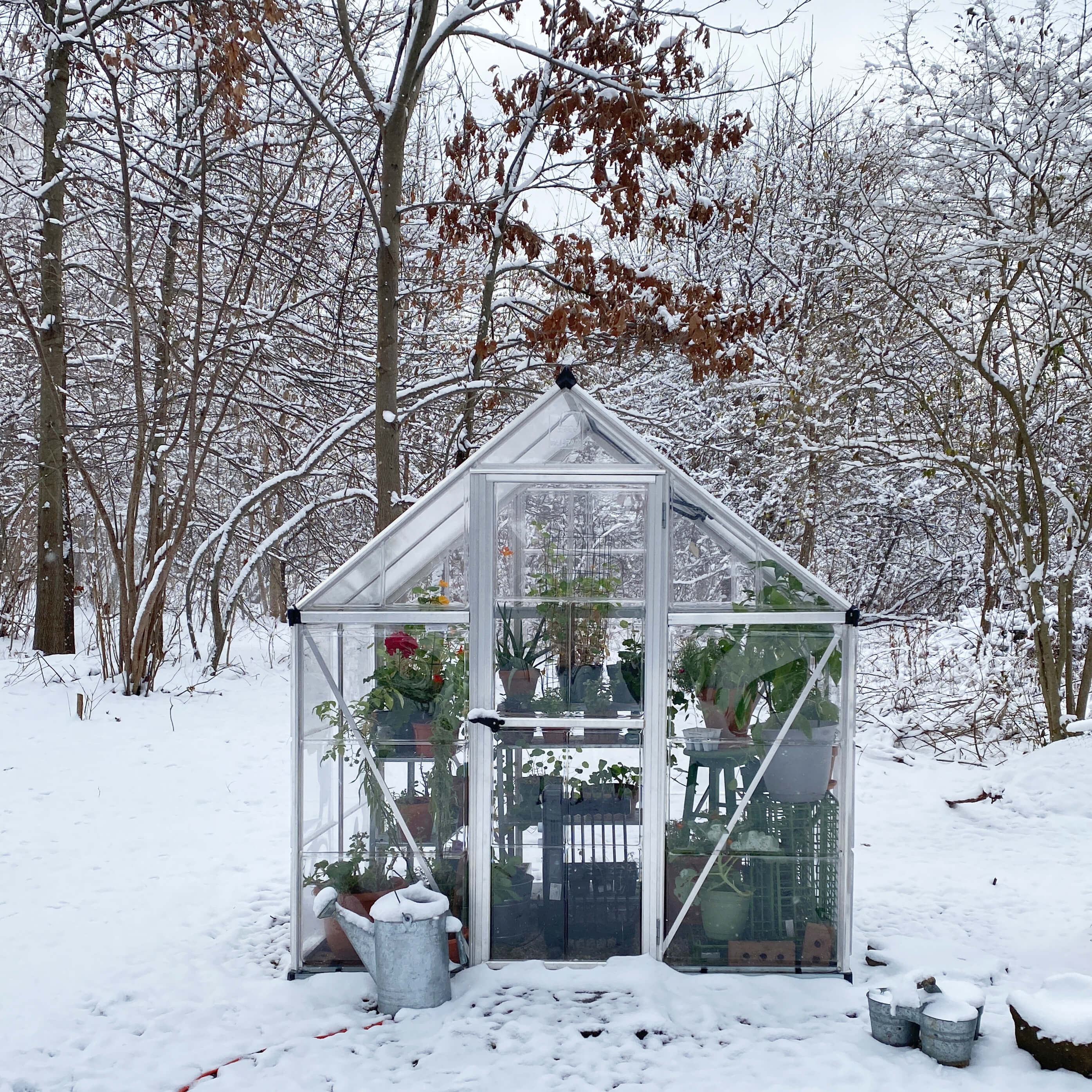
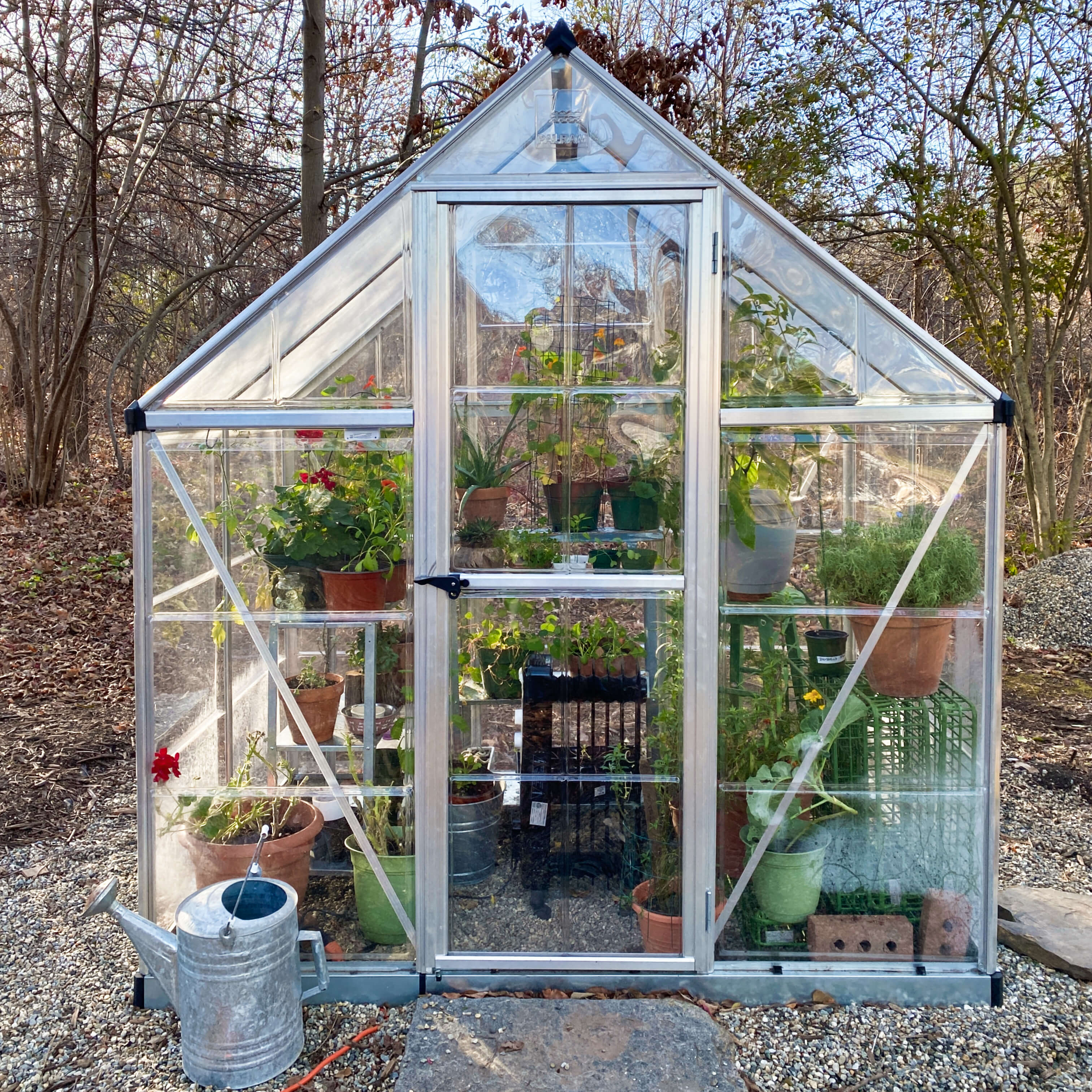
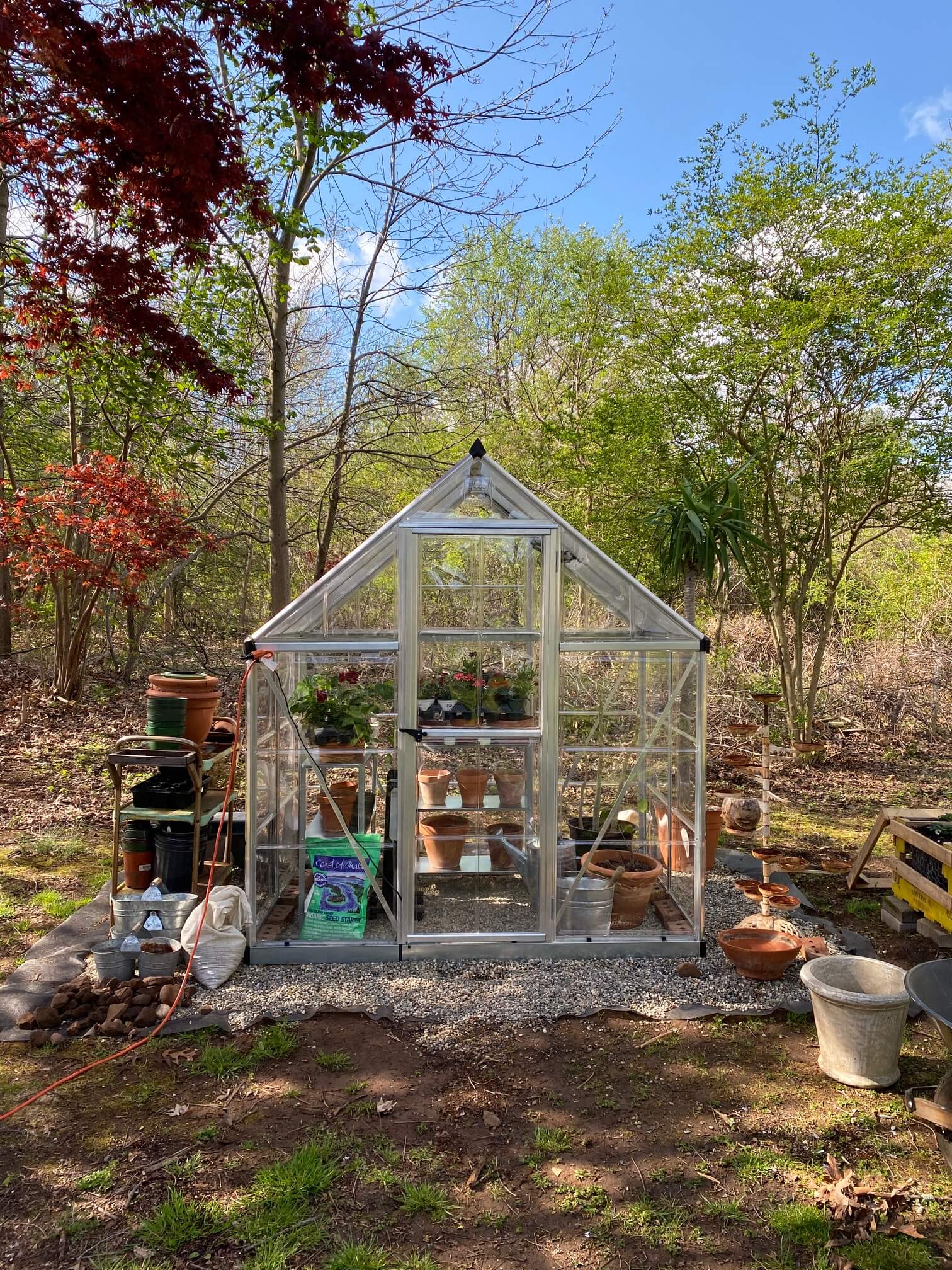
Our greenhouse measures 4’x6′. It has a steel base, aluminum framing, a pea gravel floor, a door with a secure handle, an adjustable roof vent, and clear polycarbonate walls. Inside, there is room enough for two metal shelving units, a wooden stool, 33 pots of varying sizes, one galvanized bucket, two water jugs, a hand soap station, and a portable heater. Tucked in between all that, is a little extra space for standing and potting.
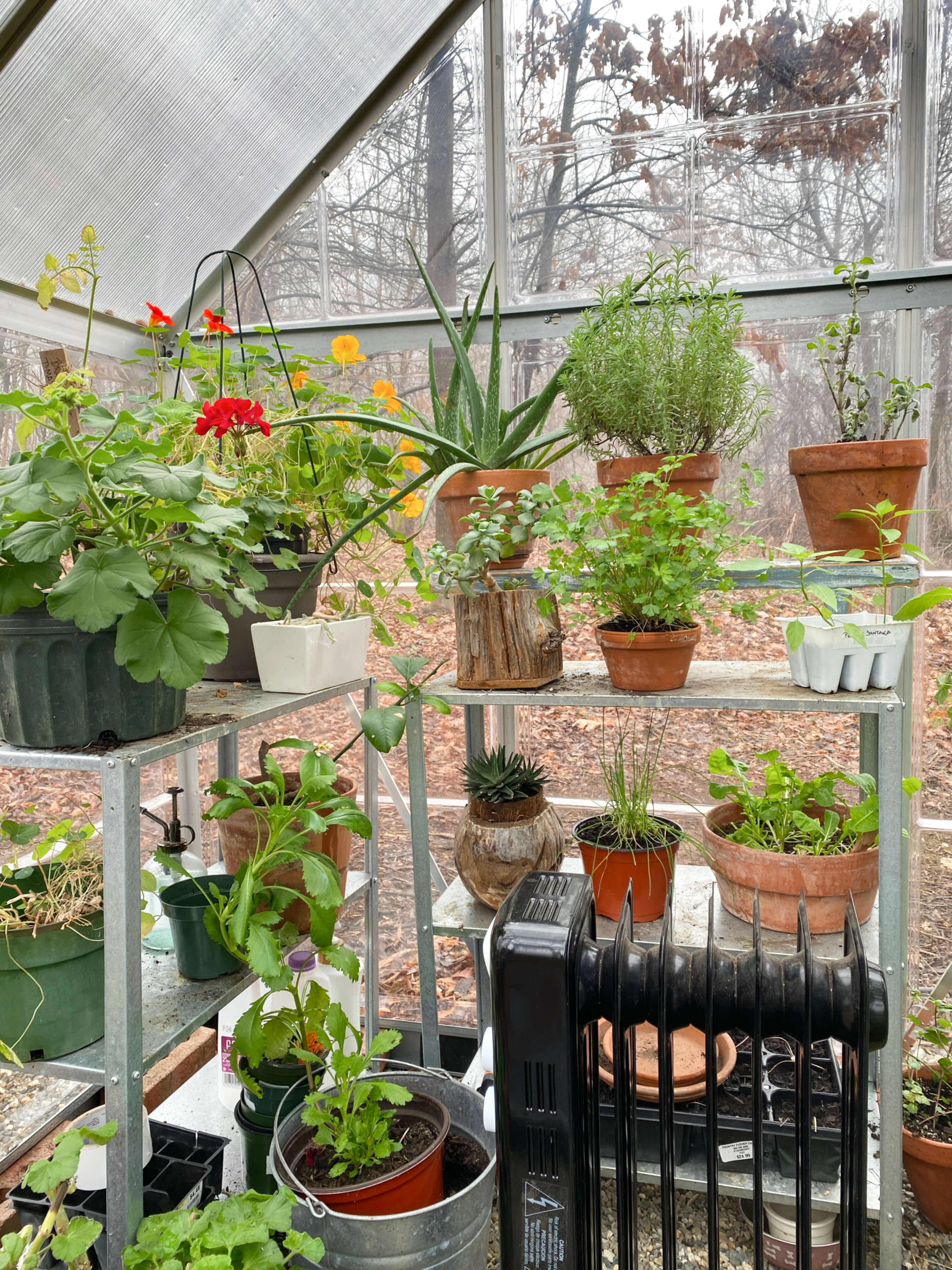
We assembled the greenhouse in the late spring in the sunniest spot in the backyard. During the warm months, it held trays of seed starts and some plants that preferred to be out of the direct path of slugs and cutworms. But once autumn came and the threat of the first frost hovered, we turned it into an experiment station. Curious to see what we could keep alive from the summer garden, we potted our most successful growers and crossed our fingers. So far so good. Everything but the oregano and one pot of marigolds have taken well to the location change.

The nasturtiums in particular really like their new spot. Blooming at a rate of three to four new flowers a day, they keep the greenhouse bright with color and the air sweetly scented like honeyed perfume.

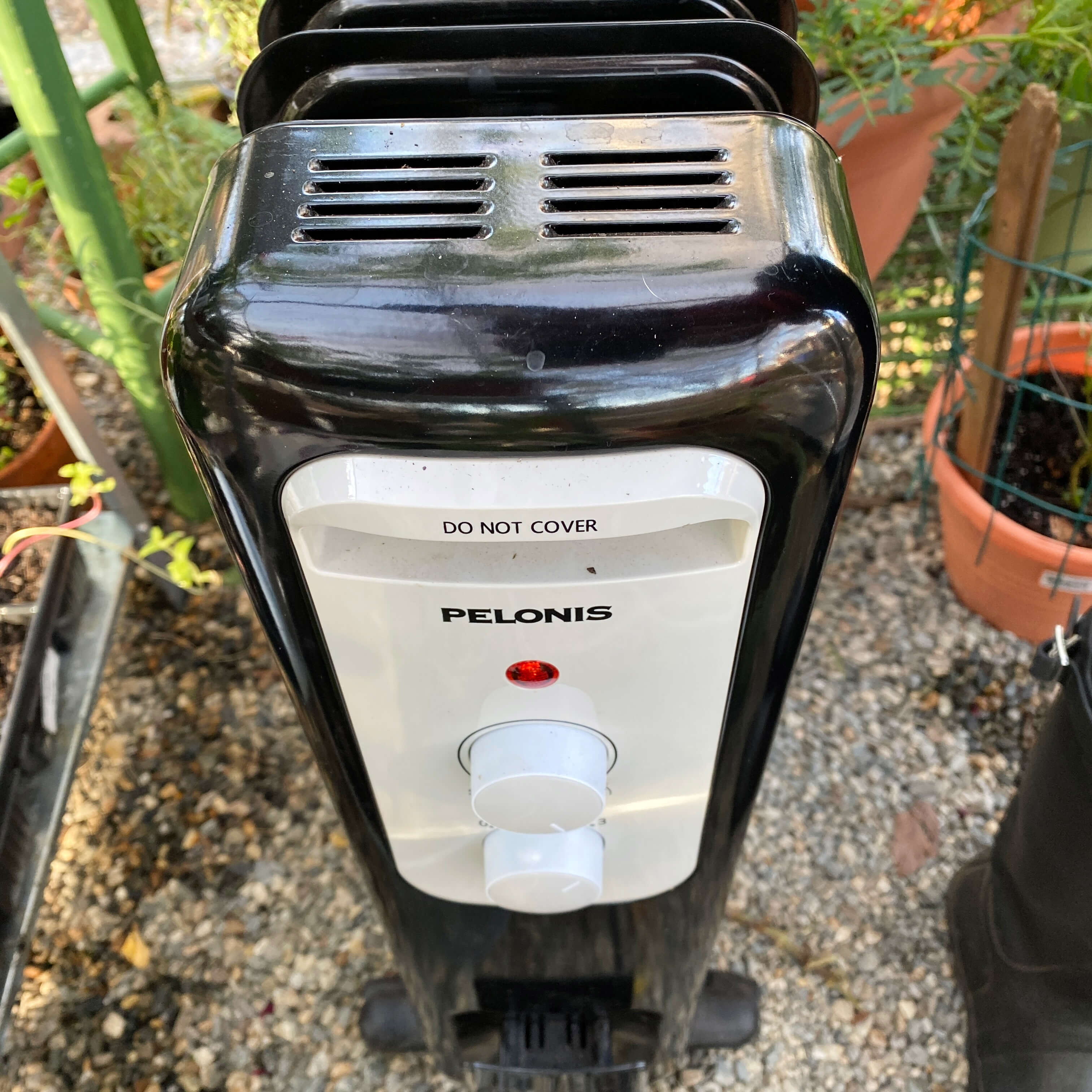
Currently, the greenhouse is uninsulated, an issue that will need to be addressed as the daytime temperatures fall into the 20s and 30s. But for now, we have found success in creating a summer climate using a portable electric heater that was put into service as soon as the outdoor temperatures began to repeatedly fall below 50 degrees.

With just the help of the heater and the sun, the greenhouse right now averages temperatures that are 20-35 degrees above the outdoor temperature. Once we get our insulation plan in place, it should become even warmer. For now though, all the plants seem happy with this cozy climate.
I read once that a single geranium plant can live up to 50 years if properly cared for season by season. That’s my goal for the four pots that are overwintering now.

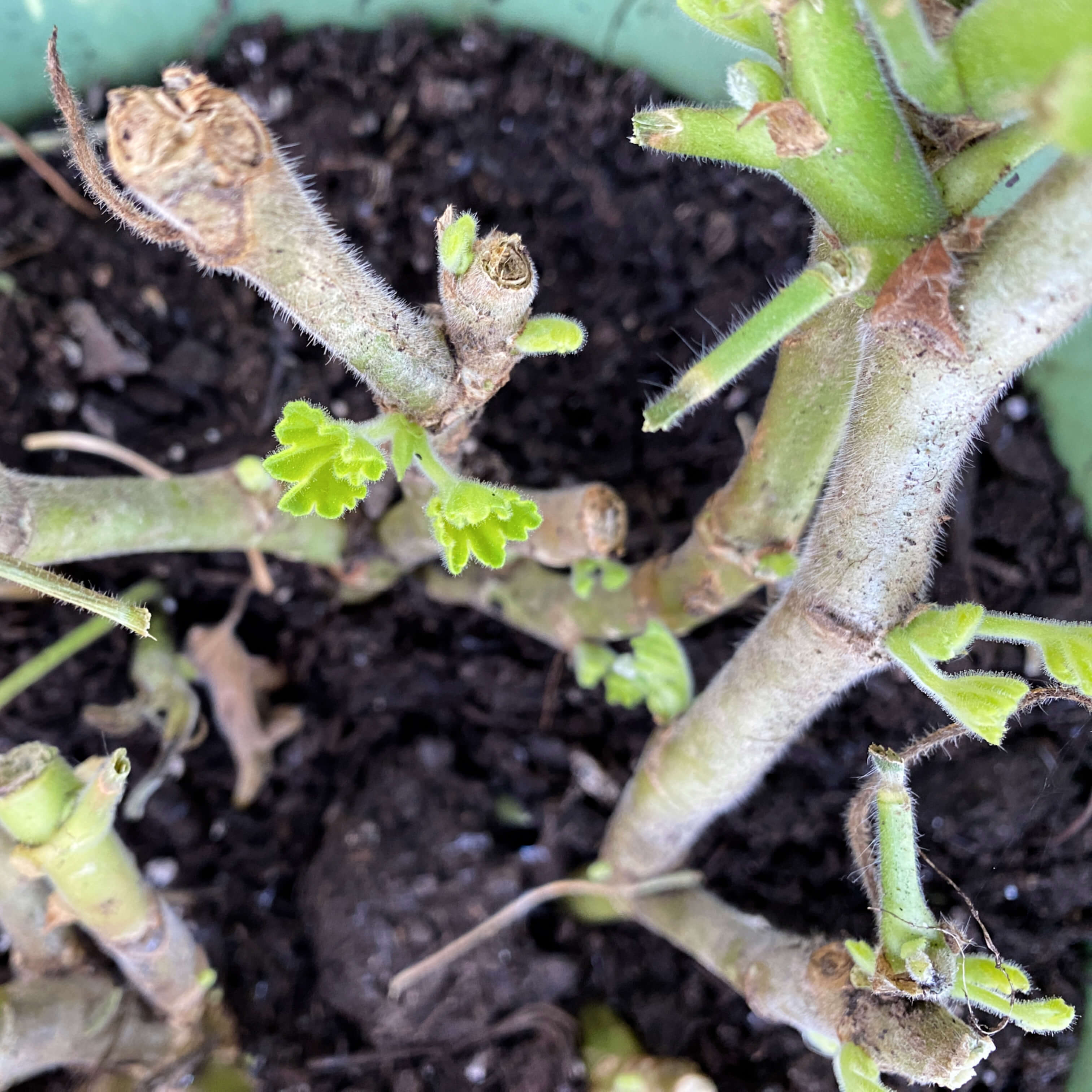
Accidently overlooked, two of the four geranium pots experienced the first frost in mid-November before they made it into the greenhouse. Wilted and weepy-looking, I cut off all the affected leaves and stalks and brought them into the greenhouse, hoping that the warmth might help them recover and encourage new growth. Yesterday, they started sprouting new leaves…

The other companions that make up this house full of green are…

  • lavender
  • tarragon
  • mint
  • parsley
  • rosemary
  • broccoli
  • basil
  • succulents
  • sage
  • tomato
  • peppers
  • thyme
  • arugula
  • zinnia
  • pincushions
  • lemon tree
  • collard greens
  • chives
  • aloe
  • bunny ear cactus
  • brussels sprouts
Lavender

The peppers, tomatoes, and broccoli are all sporting fruit these days. I’m not sure how long they will take to grow and ripen but if we could manage a small harvest in the dead of winter that would be exciting.

Lemon jalapenos
Cherry tomatoes
Broccoli

The winter crops that we are trying out this year – broccoli, arugula, collard greens and Brussels sprouts – hopefully, will reach maturity and harvest time by late February. We run the chance of running out of room if these guys get really big, but a full house is better than none at all, so we’ll take it one week at a time and see what happens.

Arugula

In one of her essays, Katharine wrote.. “from December through March, there are for many of us three gardens – the garden outdoors, the garden of pots and bowls in the house, and the garden of the mind’s eye.” Gardening in a greenhouse in winter gives us the ability to experience all three – to create, to grow, and to dream during a time of year that the outside world reserves for dormancy and hibernation. Our small structure set in pea gravel with a portable heater and a steel base, aluminum framing, and metal shelves shelters big, colorful dreams – ones both realized and yet to be imagined. We can’t wait to see what blooms.

Cheers to Katharine for inspiring this new series, to the greenhouse for holding all our hopes and to nature for feeding our brains and our bellies.

Update on the 1750 House: Old Siding, A New Shed and Artifacts Found in the Garden

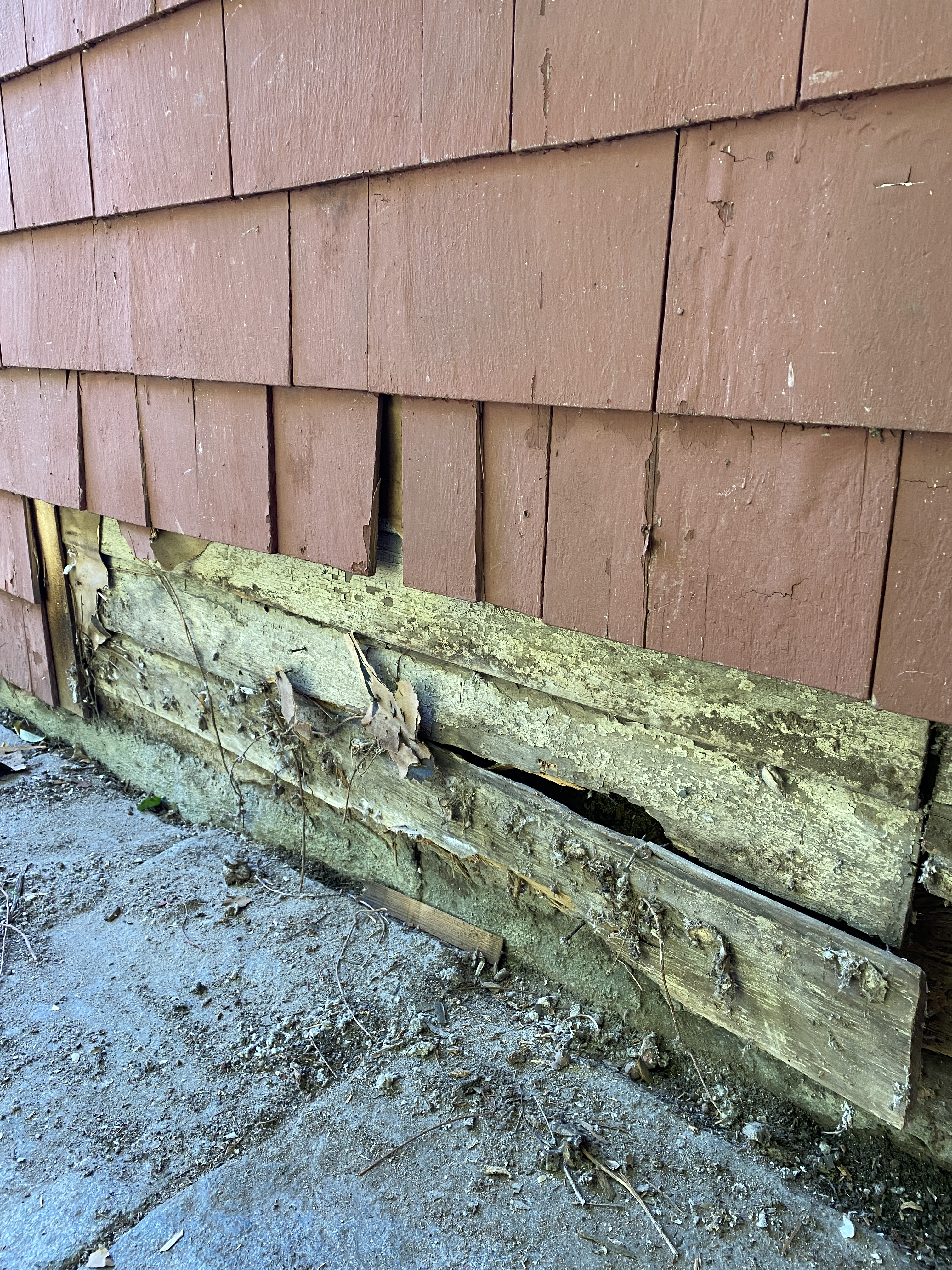
We are getting closer. Little by little, snippet by snippet, the history of the 1750 house is slowly unfolding. Between three trips to City Hall, one trip to the local historical society, one email to a state senator, and two emails to a special collections archivist, headway is being made in figuring out the timeline of previous owners and past events. So far we have learned that the 1750 House was once owned by a US Senator and also by a university. It once housed a woman-owned sewing business called The Cotton Company, and we’ve learned that the time period between the 1920s and the 1940s played a pivotal role in both the maintenance and the modernization of our Early American colonial.

At this point, tracing the history of the house has only led us back to the mid-20th century – a mere sliver of time in its 272-year-old life. Next week, I’m hoping an appointment with the university archivist will yield some new details and preferably get us over our current research roadblock so that we can dive into stories of life spent here in the 1800s and then the 1700s. Fingers crossed.

In the meantime, the house itself is still our most obliging storyteller.

This post features our latest batch of historical finds found in the backyard. It also features our first construction project and the story of how Canada plays a part, literally, in the longstanding history of both the house and the garage.

Let’s start with the found objects. Each of these pieces helps us date things that occurred on, in, or around the property a little more accurately and provides a better understanding of who might have lived here and when. Some of these objects have been found while digging up stones for our rock wall garden beds. Other times, they just magically appeared as we went about our daily activities. On rainy days especially, the earth, when it is soft and soggy has a tendency to reveal a token or two. Poking out of the dirt like presents, they are the ultimate gift of history from the ground up.

Half of an Antique Griswold Stove Damper (circa 1910)

When I pulled this out of the soon-to-be sunflower patch, I thought it was a fragment of some sort of religious garden art because of the cross. As it turns out, it’s half of an antique stove pipe damper that was made around 1910. Patented in 1889 by Matthew Griswold of the Griswold Manufacturing Company, it was used in regulating airflow for a wood-burning stove and was imperative in keeping coals hot and a room warm. Even though the house still retains its original, working fireplace, this damper might be a clue as to how it was heated in the winter months. Incidentally, Griswold manufactured many products for the domestic market, not just stoves. One of their most popular items were cast iron skillets for cooking. Imagine if we found one of those underground!

Vicks Drops Pharmaceutical Sample Bottle (circa 1930s)

This find was one of those that just appeared plain as day, the morning after a thunderstorm night. Measuring just 1.75″ inches tall, it’s a miniature glass bottle that once held sample sizes of Vicks medicine intended to relieve colds and congestion. Available at local pharmacies in the 1920s/1930s, this was like the travel-size version of toiletries that we are accustomed to today. On the bottle, it says Vicks on one side and Drops on the other.

This blue bottle joins another 1930s-era find from the yard – a metal bakery truck toy that we found in the dirt at the base of a tree just off the patio the day after we moved in.

Given the next youthful find below, I suspect that some kids made the backyard a playground paradise during the 1930s/1940s. When we lived in a very old, historic town in Georgia, half a decade ago, we learned all about treasures that can be found around the base of trees. Kids’ toys, teacups, jewelry, and other charms were sometimes forgotten about left-behinds after a leisurely day spent under the shade trees. Left untouched, these objects were overtaken by nature, eventually becoming buried deep in the ground. Decades or even a century or two later they can resurface due to soil erosion, flooding or heavy rains, bringing with them intimate glimpses of the past. So while it is not unusual to find old items near the base of a tree in a yard, what is discovered is very unique and personal to each location.

Marbles (exact age unknown)

Between two very tall cedar trees, these two marbles were found in the mud on two different days. Marbles were no stranger to kids’ play throughout the 20th century but they were most popular between the 1870s and the 1930s. The largest manufacturer of marbles in the world was Akro Agates founded in 1911 in Akron, Ohio.

In trying to date the two that we found, I never realized what an artistic world marble-making was and how varied the types and patterns actually are. Arko specialized in a wide range of beautiful designs, but research any type of marble and you’ll see they all have unique characteristics. Some have thin veins of color, others fat ribbons. They come in crystal clear and also milky opaque shades. Some catch the light like crystal, radiating a rainbow of colors while others are dense and made of solid hues.

The ones we found in the garden are of the variegated-stream variety with a milky base. These two showcase ribbons of one singular color (red and yellow in this case) around the entire marble.

It’s tricky to date these two since they are of a pretty classic design. They could have been made as early as the 1900s or as late as the 1960s. I’m hoping we will find some others to give us a better idea of when they may have been played with here in the yard.

Our next find was a breeze to date, as it belonged to one of the most popular items of the 20th century…

Ignition Key for a Ford Model T (circa 1918-1927)

We found this Ford Model T key, stuck in the dirt at the far edge of our property which borders 32 acres of wild woodlands. Made between 1908-1927, the Model T transformed transportation in the 20th century.

As America’s first car, over 15 million were made in its 19-year run and in that time period, only 18 different styles of Ford ignition keys emerged. The two styles of ignition keys that date from 1908-1918 look more like a cross between a skeleton key and a padlock key…

The first Model-T key. Image courtesy of the Henry Ford Museum

After 1918, Ford Model T keys were made of brass and each key contained a two-digit number on the backside ranging from #51-#74. The key we found is imprinted with the number 68…

Ford Model T key #68

That means it was made sometime between 1918-1927. If the key was fully intact instead of just partially it would have looked like this (minus the “b” underneath the Ford logo) …

In that same area at the edge of the woods, we also found a bumper jack stand and a big swatch of rusty metal seat spring webbing…

We aren’t quite sure if this is all connected to the Model-T key, but we plan on building a fire pit in that area so there will be more excavating to do over there later this summer. Perhaps one day we might discover a whole car!

Pottery Pieces (antique to modern)

Pottery pieces are pretty much an hourly find these days. I think we have pulled enough glass and ceramic shards out of the soil to practically make an entire kitchen full of dish and drinkware. They all range in age from antique patterns to brightly colored midcentury solids. One day we even found a dollhouse-sized mug with the name Sarah printed on it. Although the mug itself is not old (you can find them online here) it might offer a clue as to the name of a little girl who once lived here.

On the kitchen front, the building inspector was delayed by many weeks in getting all of his permit inspections done. So we had to wait patiently for him to catch up before he could come to look at our plans and issue our permits. Luckily, once on-site, he approved all of our already executed electrical work and gave us the green light to officially start framing in the kitchen. In starting that project, we found another architectural marvel – an original peg – from when the house was built in 1750.

This round peg is just one of many that have continued to hold up the framework of our house for over three centuries. It was only when the 1800s-era addition was added in back that nails were used anywhere in the house, otherwise, it was the peg plan from day one. If you remember from our last kitchen update, we saw a few of these during the insulation clean-up project poking through some of the beams in the kitchen. This one was a part of a section of wood that had to be removed so we got to see it up close and free from its wooden surrounds. Measuring in at 2.5″ inches long with a diameter of 1″ inch around, it is lightweight (only 0.5 oz), rough to the touch, contains absolutely no odor, and is super strong when pinched between two fingers.

While we waited for the permit appointment, a new project emerged. In need of more storage space, we added a small shed on the side of the garage to hold all the garden equipment. It is petite in size, but big enough to double as a potting place as well. It also adds some nice dimension to the yard.

In keeping with the house and the garage, we are siding it with the original leftover red cedar shakes and painting the trim a creamy white for now to match the color scheme already in place. Eventually, the whole house, garage and shed will get repainted (a different historical color) but that won’t be until sometime next year.

While framing up the new shed, we found another clue to the house’s history on the backside of one of the shingles…

Bloedel Stewart & Welch Cedar Shingles (circa 1931-1951)

There was just enough legible info on the paper label to do a little research on where these shingles came from. Based in Seattle, Bloedel Stewart & Welch owned and operated a handful of tree farms in Canada during the early to mid- 20th century. This is a photo of one of their mills in British Columbia…

Aerial view of the Bloedel Stewart & Welch mill on Vancouver Island circa 1933-1951. Photo courtesy of the University of Washington.

The shakes for their Red Band series were harvested from enormous cedar trees at their mill in Vancouver between 1933 and 1951. Below is a photograph from the Bloedel Stewart & Welch archives at the University of British Columbia featuring one of their photographers posing with a giant red cedar in 1942. Giant indeed.

Photo by F.A. Fraser. Courtesy of the University of British Columbia.

The company was active between 1911 and 1951, but the Red Band series was in circulation from the early 1930s to 1951. This is a photo of the label completely intact…

Photo courtesy of the University of Washington Special Collections.

From what we can tell, the shingles have far exceeded their lifetime expectation of 40 years, as the ones on the house are still so strong and sturdy. Product reviews aside, finding this hidden paper label was really exciting. Now it tells us that the house and garage were clad in shingles sometime between 1933-1951. We always suspected that shingles were not the original siding but until this discovery, we had no way of knowing when they were added. Right after we found the Bloedel Stewart & Welch label on the garage shingle we found another exciting surprise underneath a series of shingles on the house…

Clapboard siding! That means that back in the 1750s, this clapboard was most likely the original siding. And by the looks of it, the house was painted white. So now we know its original color. Not all houses were painted in the 1750s. Some were left natural. For the ones that were painted, there was only a handful of colors to choose from including (but not pictured here) white, red and burnt red (which is the color of our house).

Photo courtesy of Yankee magazine .https://newengland.com/yankee-magazine/living/homes/history-new-england-house-colors/

The garage on the other hand was originally sided in rough-cut timber underneath the shake shingles, which now makes us wonder if it was even a garage to begin with. Perhaps it was a small barn for animals or an outbuilding for storage or maybe it was where the Model-T was housed.

All this proposes new siding conversations for future deliberation. When we paint the house we may decide to go back to the original clapboard style to keep it as architecturally authentic as possible. And we’d like to keep it inside the historically accurate color palette. So there is a lot to think about between now and then.

Almost finished, the shed just needs the cedar siding attached, the trim along the vintage windows and a back door which will either be a sliding barn door or a set of antique french doors that open out into the yard. Whichever we can source, in that department will make the doorways fate.

More photos to come, once the shed is completely finished. Hopefully, by that point, we will have learned some new history about this old house during our special archives fact-finding appointment. Until next time, cheers to cooler weather, happy gardens and stories from the dirt.

The Colonial Kitchen Garden Then and Now

The gardens of Historic Williamsburg Virginia.

Time, nostalgia, and then necessity. In that order. Those were the key factors that determined how gardens in America were grown in the mid-1700s. By that point, the pilgrims had long landed, settlers were four generations into life in the New World, and creating an independent society was on everyone’s minds.

An 18th century painting of New Milford, CT.

Despite the idea of pastoral food plots, of self-sufficiency, of larders full of carefully tended, joyfully grown vegetables, the reality, surprisingly was that many working-class 18th-century families did not have time to waste cultivating the land into mounds of gorgeous gardens.

Even though garden pests were much fewer in those days than they are today, gardening was still a risky endeavor in the mid-18th century. One bug or one beetle or one dry spell could wipe out an entire season or two of manual labor. Time lost during a century when almost everything was handmade and hand-touched could result in cataclysmic results not only for individuals but also for families, communities, and even the burgeoning nation.

In the centuries before Miracle-Gro and sprinkler systems and lawn mowers, before electric clippers and garden hoses, soil amendments, and genetically modified seeds that were practically guaranteed to grow, gardening was a risky business. And not all were willing to gamble. Since the colonial mindset valued efficiencies and effectiveness, one’s time was much better spent building a building, or a family, or the constitution instead of raising food gardens that may or may not result in something edible. And that really wasn’t the point of gardening back then anyway.

Painting by Edward Hicks titled the Home of David Twining, 1787

The mid-18th century diet, most accurately studied by researchers at Colonial Williamsburg, was almost entirely made up of animal proteins. Surprisingly, just 10% of the foods they consumed came from vegetables. When colonists abandoned the idea of growing their own food because of time, space, or temerity, they turned to local farms to purchase what little plant roughage they consumed.

The vegetable gardens at Moniticello.
Photo of the gardens at Thomas Jefferson’s Monticello by Billy Hathorn

Those farms, with the ability, the space, the manpower, and the elite lifestyle to afford a garden in all its splendors and failures were generally ones of upper-class wealth. For this affluent sector, gardening was a matter of refinement and intellectual interest. They could absorb the costs of failed planting endeavors or reap the financial rewards of a fruitful season either way. They also had access to education for leisurely study and experimentation, something not often afforded to the working class.

One of the best examples of early American gardening on a large-scale level is Thomas Jefferson’s Virginian home, Monticello. With an avid interest in horticulture, 5,000 acres to play with and a net worth equal to $284 million dollars today, Jefferson was able to explore the world of gardening from all angles. He made copious amounts of notes and drawings regarding what, where, why and how his gardens were growing…

While it’s fascinating to go through Thomas Jefferson’s notes in order to understand his thought process, methodology, and relationship to innovations we take for granted today, one of the facts that I found most fascinating while researching colonial gardens is not something that can be linked to a specific concept or a system or even a person. It’s much more individualistic. What I learned is that stylistically, all gardens in America from the very beginning were driven by and inspired by nostalgia. And many people’s nostalgia at that.

Painting of forget-me-nots with goblet by Leon Bonvin, 1863

As new settlers immigrated from other countries and other continents throughout the 18th and 19th centuries, they brought with them memories of their parent’s garden, their grandparent’s garden, and perhaps even their own garden that they left behind. A desire to replicate this specific sense of familiarity meant that gardens were not created in America but in fact, recreated, from replicas of what these settlers once knew before in their home countries. Memories of ancestral orchards, ancient hedgerows, favorite flowers, fruiting vines, and heritage foods all acted as springboards for the first wave of garden preferences when it came to shapes, designs, content, color palettes, and layouts for gardeners in the New World. Those longings for other familiar places and spaces were what founded the very ideas of what a garden should and could look like here in America.

Since maintaining a garden was both a status symbol and a sign of wealth, gardens of the 18th century came in two basic styles… cottage gardens and farm gardens. Cottage gardens were small patches of land grown specifically for vegetables, herbs, and flowers with a purpose. Ornamental flowers were not often grown in these petite patches as they were considered frivolous time wasters.

Farm gardens, on the other hand, were the ones cultivated on bigger stretches of land adorned with numerous outbuildings, an ample number of workers, and dedicated areas for kitchen work, pleasure gardening, dairy operations, and large-scale croplands. Organized, efficient, and tidy, farm gardens leaned towards formal decorative designs inspired by European gardening techniques and aesthetics. Most often they were dotted with topiary tree, ornamental flowers, exotic plants, manicured bushes, and lined with brick or crushed sea shell pathways. Attractive garden structures in all shapes and sizes added the finishing touch to ensure picturesque vantage points. Even in the new days of the New World, history bloomed in the garden from other centuries, other places, other pasts. And from those two garden styles forward we never really varied in what we decided constituted an American garden.

The colonial garden that is beginning to emerge in the front and back yard of our 1750s-era house is one of both history and purpose. In an effort to be as self-sustainable as possible we are growing fruit, vegetables, and herbs for cooking, and flowers for fun. While we are not following the formality of hedged colonial gardens, but instead opting for a more cottage garden approach, I am intent on only growing heirloom varieties for an old-fashioned aesthetic and a pretty dose of historic storytelling from the ground up. Here are a few ways we are incorporating history from three centuries into the garden of our 272-year old house…

Heirloom Seeds

With the exception of one newly invented pepper plant developed by the Chile Pepper Institute in New Mexico, and two flats of marigolds and nasturtiums purchased from our local nursery, in this year’s garden, we are growing everything from seed, using only heirloom varietals of fruit, flowers, and vegetables.

Okra, brandywine tomatoes and bush beans growing up and out!

We were a bit late in seed starting since we didn’t move into our house until April, but so far we have tomatoes, zucchini, peas, beans, carrots, herbs, okra and lettuce growing up in the garden. As of today, the showiest plantings so far are the nasturtiums from the local nursery…

Nasturtiums made a regular appearance in American colonial gardens too by way of seeds carried from England and Holland. Prized then and still now, they were eaten like salad greens… leaves stalks, flowers, and all thanks to their sweet but peppery taste. If you like arugula mixed in with your lettuce, you’ll like nasturtiums too. They also happen to be fantastic pest repellants for squash bugs, aphids, beetles and our daily invader – the pesky slug.

Raised Beds

Colonial gardens in the 18th century were laid out in symmetrical grid styles using raised beds and walkways of crushed seashells in between. Based on the layout of our yard, the lush tree canopy, and the pattern of the sun throughout the day, we also are doing raised beds but not in the same traditional colonial grid format since we have fewer pockets of consistent, direct sunlight throughout the day. Instead, we have built one long raised garden bed that measures 25′ feet (length) x 5.5′ feet (width) x 2.5″ feet (height) in the front yard using rocks gathered from around the property. The rockery aesthetic matches the stone walkway and steps of the front porch.

Newly built and just before we filled it in with all the dirt and compost materials.
Flowers, seedlings and seeds get planted this week, but this is a little sneak peek as to where more nasturiums will be headed.
The tree canopy changes color throughout the day and makes the prettiest shadows in the yard. Two sugar maples live in the front yard. We cant wait to tap this fall for our own maple syrup.

In the backyard, just off the porch, we built a smaller raised bed out of wood that measures 10′ feet (length) x 5.5′ feet by 3′ feet (height). Instead of using just plain untreated boards, my husband experimented wth the Yakisugi method and charred the wood with a propane torch. Yakisugi is an ancient Japanese art form that naturally preserves the wood and gives it a pretty, dark walnut-hued finish.

To add a little softness to the rectangular shape, we built another curved rock wall garden bed on one end where the okra, zinnias, coreopsis, Brussels sprouts, and marigolds are happily growing away.

Rock walls have been a part of the natural historic landscape of New England since the 1800s, and were used as land dividers and fencing following the split rail style fencing that was popular during colonial days. In Connecticut in the 1700s, most of the landscape was covered in trees so everything in that century was made out of wood since it was the most abundant building material. We haven’t yet decided on what kind of fencing we will add to the front yard. It’s a big decision with many possibilities ranging between a picket fence, a rock wall, a split rail fence, or a series of decorative shrubs and grasses.

The greenhouse is only six weeks old but already it’s got quite the little personality.

The Greenhouse

The first greenhouses were built in Europe and the UK in the 1600s, so they’ve been an important garden feature for quite some time. Our greenhouse was found locally on craigslist, just a couple of weeks after we moved in. Still in its original box, it just needed one day of assembly and then it was ready to start growing things.

First day!

So far we are off to a good start. This has been the birthplace of our tomatoes, basil, broccoli, cauliflower, Brussels sprouts, cilantro, parsley, dill, lettuces, French marigolds, and okra.

It’s also the permanent new home of our three-year-old Southern papaya tree, Pappy, who did not love our move to the Northeast as much as we did and responded to the 9-degree temperatures experienced during our temporary stay in Pennsylvania this past winter by promptly losing all his leaves. Every day from November to April, no matter how much coddling I gave him, Pappy threatened to shrivel up and call it quits. Luckily, the warmth of the greenhouse has him happy once again and back on the road to recovery.

Pappy! Two new leaves grown, a million more to go!

It’s our plan to keep the greenhouse in constant use all year long. With the help of a heater and some neighboring cold frames, I look forward to growing kale, chard, cabbages, and other cool-weather vegetables there this winter.

Rain Barrel

To complete the start of our self-sufficiency model we added a colonial-style rainwater collection barrel to the side of the garage. So far we’ve pumped an entire barrel full of water into the garden as well as accidentally grown a vat of sulfur-smelling bacteria. As it turns out, there’s an art (and a science!) to storing rainwater in a barrel, and there is still so much for us to learn. In an upcoming post, I’ll share the system my husband custom-built to pump the water from the barrel to the garden, which I hope might be helpful for anyone else learning the ropes of the rain barrel watering system.

Future plans for the garden include bee boxes, landscaped garden beds, lighting, and a fire pit, but for now, this is the start of our new yet old colonial-inspired garden. More photos will come as the garden grows up!

In the meantime, while the kitchen is under renovation and we wait for the vegetables to flower and fruit, the grill has been a beehive of action and adventure as we discover and explore some vintage recipes meant for the barbecue days of summer. One of my favorites so far is this grilled potato recipe from 1955. Coming next to the blog, this recipe will add an extra delicious dose of fancy food to your summer soirees. Can’t wait to share it!

Cheers to summer foods, sentimental gardening, and horticultural history! Hope this season is your most beautiful one yet.