Two Stories, One Recipe and What’s on the Calendar in the Vintage Kitchen for 2025

Thousands of lives spend time in our kitchens. Every day, every week, every year. Even if your living situation is made up of just one or two people, dozens more move about your cooking space, unseen, whispering stories of history and heritage, of comfort and cooking secrets, of design and innovation, of hopes and dreams. I’m not talking about ghosts here, although maybe if you are an old home dweller you have a few of those too, but I am talking about the neverending inspiration brought forth by generations of cooks, inventors, gardeners, and artisans from years past that have made your kitchen and your cooking experience what it is today.

Hello and Happy New Year! There are so many exciting stories to share this year here on the blog, spanning centuries of history gathered from around the globe, that I can’t wait to get started. As the old adage goes, we have to look back in order to go forward, so despite challenging events occurring in the world on what feels like an overwhelming scale, this year, here in the Vintage Kitchen we are doubling down on sharing good stories about good cooks, making vintage recipes that provide comfort, connection and community, and highlighting moments from history that embrace the joyful celebration of food, friends, family and flowers. This inspiration to pack the year full of joy is thanks to an unlikely source who set the tone for the year on Day 1 of 2025.

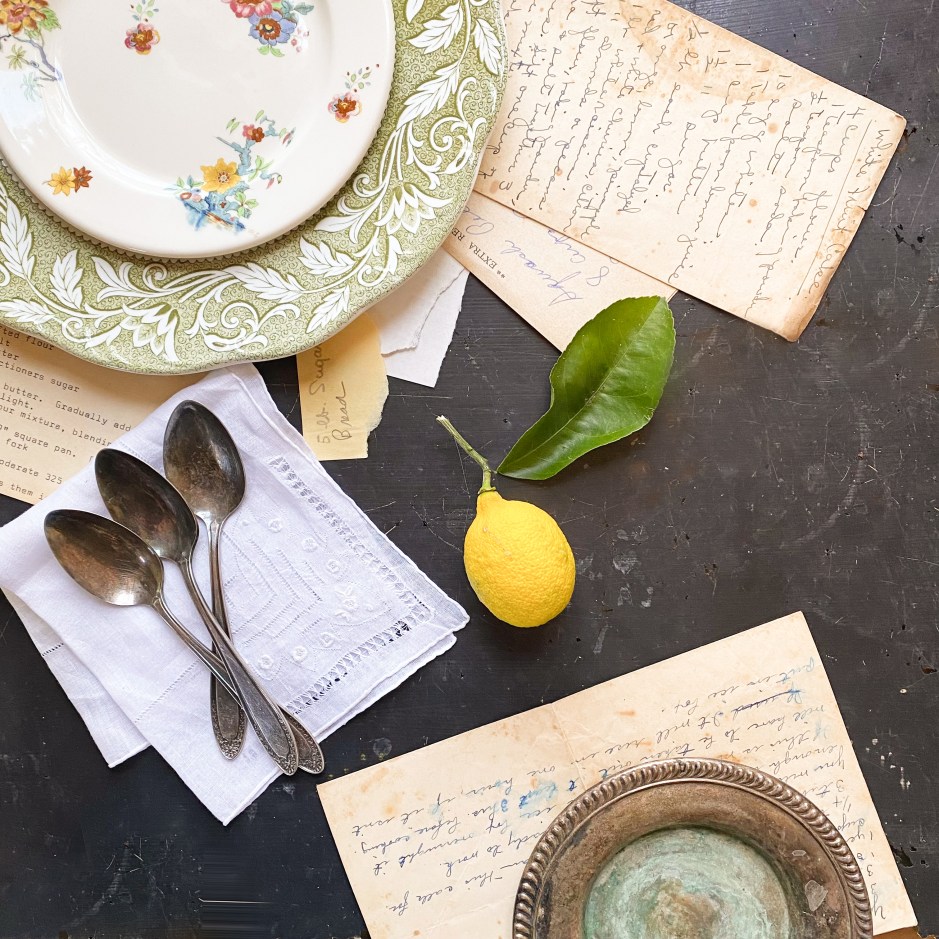
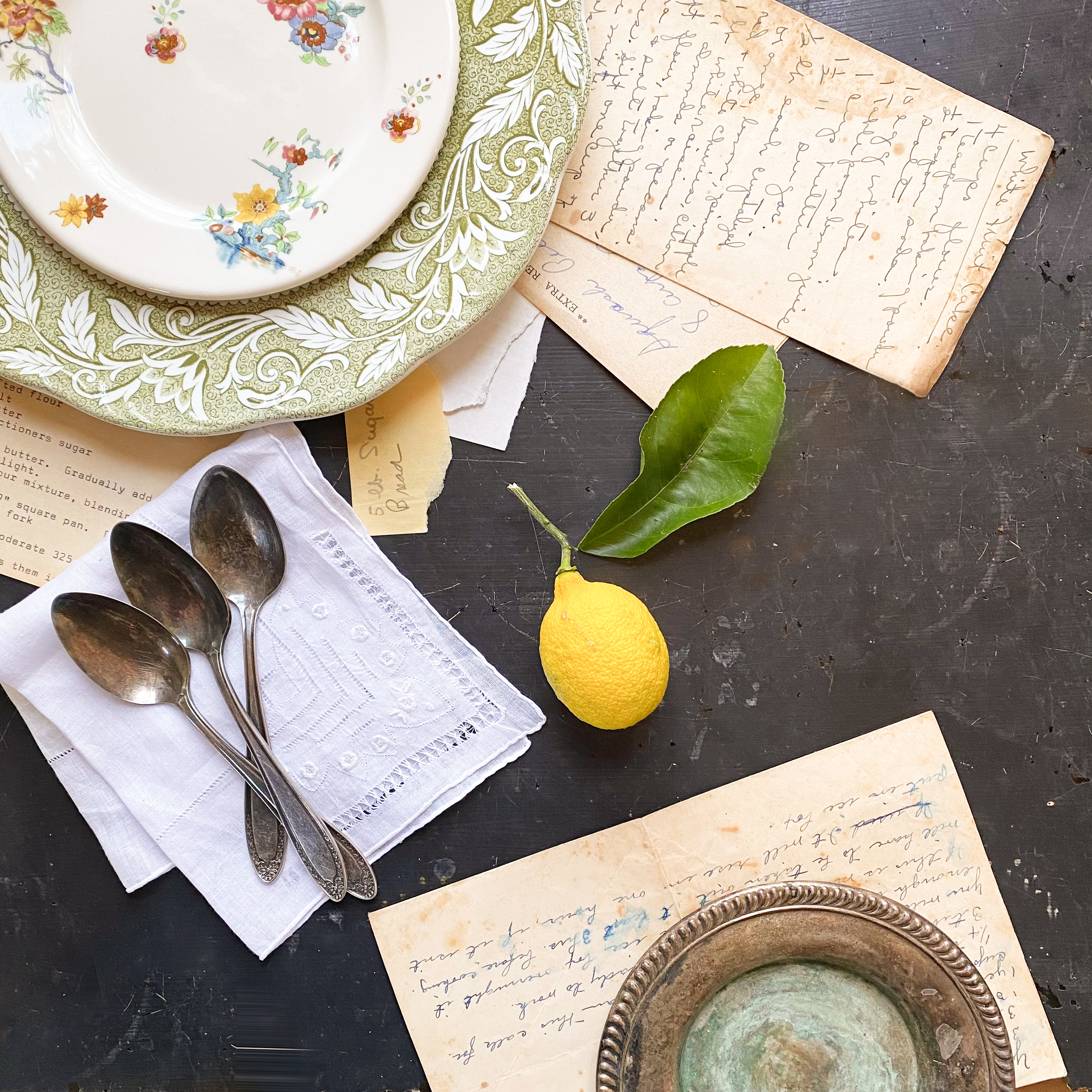
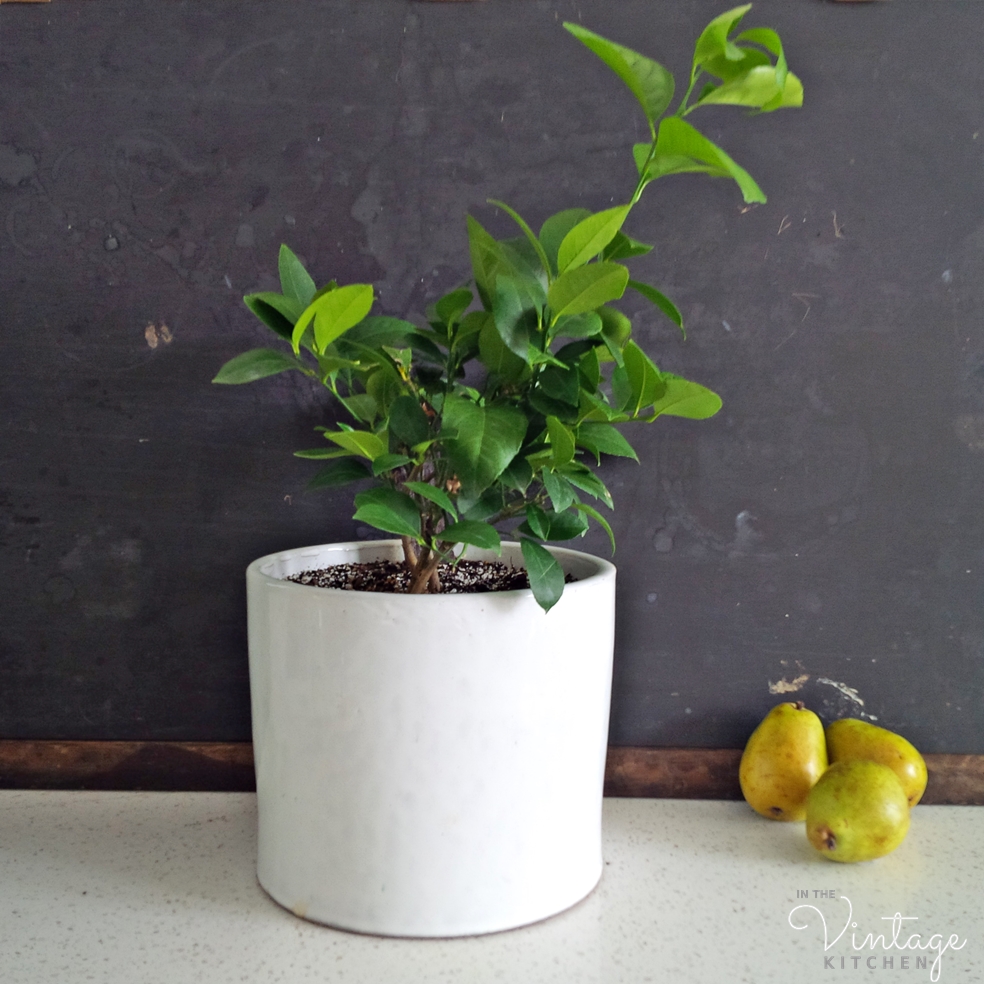
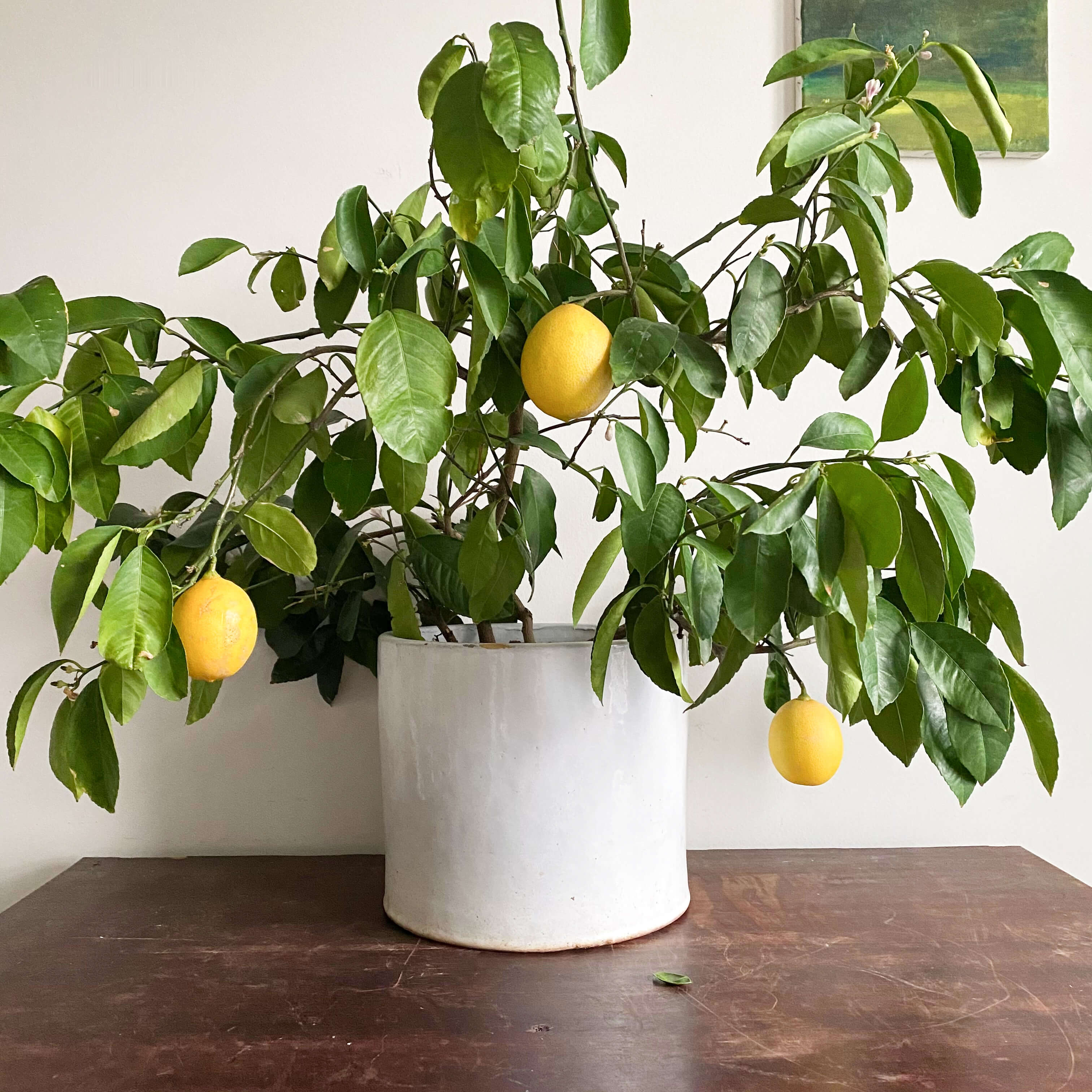
Just as the sun was rising over our cold and frosty New England landscape on New Year’s Day, Liz, our seven-year-old potted lemon tree, presented her first, fully formed, sunshine-yellow Meyer lemon in four years. A major feat considering the many trials Liz has faced during much of her life, this gift of a sizeable, perfectly formed, perfectly ripe lemon was just the kind of joyful symbolism needed to set the Vintage Kitchen on the path to positivity and optimism heading into the new year.

Since she first became part of our plant family, I’ve written quite a bit about the life of Liz and the problems she’s encountered, but if you are new to the blog, here’s a quick recap. In 2018, Liz was a young sprout new to the world…

Fast forward a year later and Liz was happily growing bigger and more beautiful by the month, living the metropolitan city life in a sunny window down South. Her first harvest produced not one lemon, but three.

A year later in the spring of 2020, Liz suffered major wind damage from a tornado that blew through town not only breaking apart dozens of buildings in our neighborhood but also breaking a portion of Liz’s main branch and ripping apart 2/3rds of her underground root structure. She survived the ordeal, but just barely…

Not long after, she had a scale outbreak and just after that, she embarked on a South to North move that introduced her to an entirely new climate. By the time she landed in New England in 2022, Liz was looking pretty beleaguered.

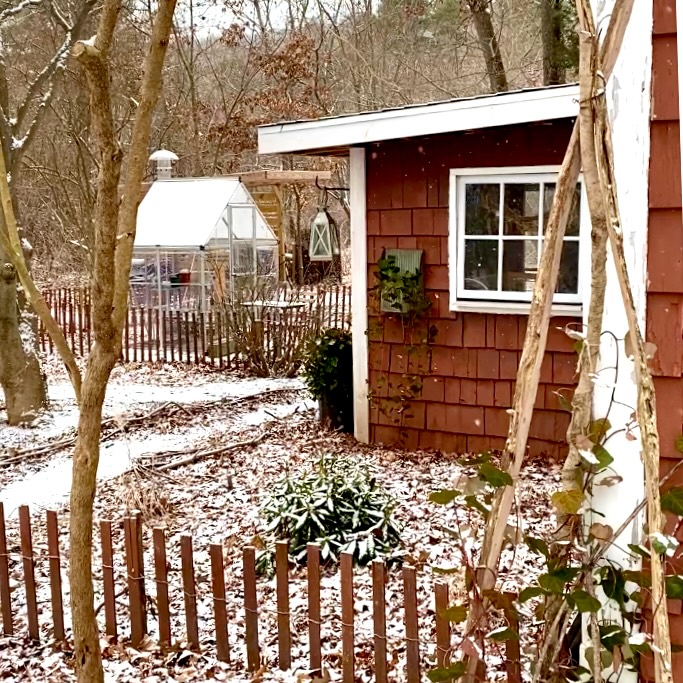
Once the greenhouse was constructed in April of that same year, Liz was the first resident to call it home. Even though she was just a mere whisper of a tree at that point, my fingers were crossed that the warmth and the sun and the bright light, plus additional food and fertilizer, would be just the combination of care that she needed.

It took two full years and staying put in the same spot in the same pot, but Liz finally found her footing again thanks to the security of the greenhouse. Now measuring in at over 32″ inches in height, she’s made a substantial comeback.

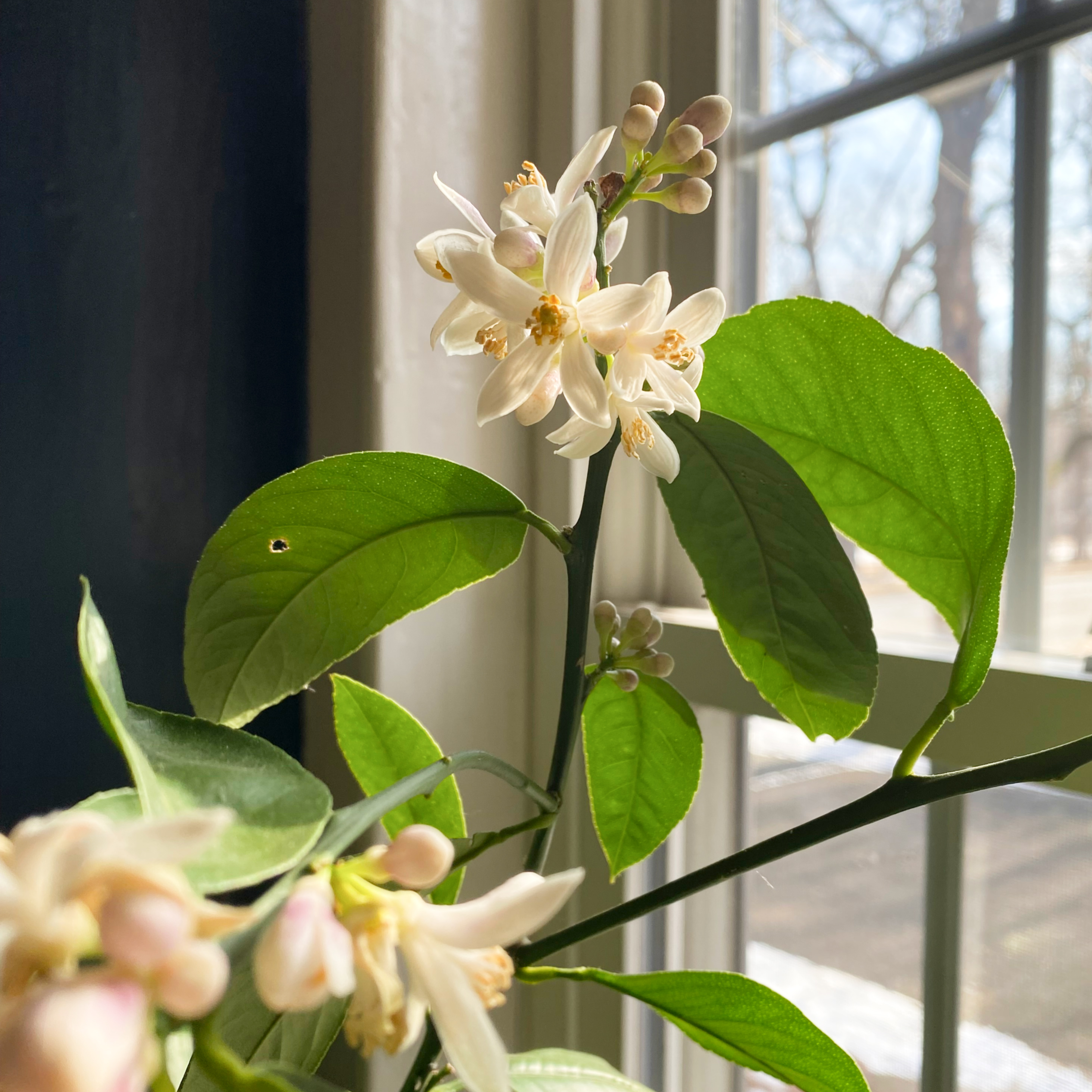
She might not be back up to 2019 shrub-like status yet, but as you can see, she’s on her way to a full recovery. Over the course of last year, she flowered and formed baby lemons but none stayed on the vine long enough to grow weight and promise. Except two. A raccoon grabbed one of the lemons for a late-night snack but the other we watched grow bigger all summer as Liz herself grew bigger with larger leaves and longer branches. When the winter frost warnings came in late October, I brought Liz inside for the extra warmth and over the Christmas holidays, she rewarded us with clusters of citrus-scented flowers and the slowly ripening lemon.

After watching it turn from lime green to chartreuse to citron and then yellow, last Sunday, in a moment of long-anticipated celebration, I clipped this lovely little fruit from its branch and said a big thank you to Liz.

It takes a long time for a lemon to ripen on the vine. Liz in her entire seven-year life span so far has only brought five lemons to maturity. But the fruit isn’t really the joy of her, nor the point of this story. In the beginning, when she was a young sprout, I may have imagined future lemons by the boxful, but over the course of Liz’s life so far, the thing that I have come to love most about her is her resilience. Her continual attempt to reach towards the light. To keep going, keep growing despite difficulties and disasters. Emily Dickinson wrote the lines… hope is the thing with feathers… but in our case, here in the Vintage Kitchen hope is the tree with lemons.

2025 has started off on a global scale with dramatic, traumatic events – more than we can comprehend these days given the quick succession in which they’ve been happening. While we witness and recognize all these upsetting situations and process them right alongside you, here in the Vintage Kitchen in this new year, we are determined to look beyond the day-to-day news cycles and stresses, and focus our attention on cultivating and creating a space that brings joy, insight and interest to cooks around the globe via culinary storytelling. Following Liz’s lead, I hope the blog this year provides comfort, encouragement and positivity for anyone who needs an extra boost of cheer in the face of challenging times.

Throughout 2025, you’ll find more frequent posts surrounding topics our kitchen community likes most – cooking, collecting, history and gardening. We’ll share recipes and links, highlight favorites of all kinds, recommend good books and new techniques and dive into stories about people and artifacts from the past that have influenced how we approach life in the present. Here are some of the regular subjects we’ll be sharing more of on the blog this year…

The Greenhouse Diaries

The Greenhouse Diaries return with a new vintage gardening book serving as inspiration and instruction for the next 12 months. Poor Leonie and Helen didn’t get as much attention last year in the Fragrant Year series as Katharine Sergeant Angell White did in the first year. I ran into all sorts of troubles with the practicalities of building a scented garden month-by-month, mostly on the ordering and acquisition sides. In the festivity of the series, we were working out a collaboration with a national grower, which in the end didn’t wind up working out at all. As we learned, most growers won’t ship any plants to our neck of the woods before late spring or after early autumn in order to ensure a successful growing experience. That left a very slim window of attempting to add in a year’s worth of plantings in just a few months. This year, we’ve changed direction, revised the garden map, and are working with more achievable goals. I can’t wait to share the new plans and the vintage book that helped inspire it.

Vintage Recipes

It’s setting up to be a delicious year here on the blog with a big batch of vintage recipes that will be rolling out in more seasonable fashion. Throughout the year, we’ll also continue with new posts in the ongoing International Vintage Recipe Tour (year six!) and the Quick Cooking Chronicles.

To ease into 2025, after the hustle and bustle of holiday cooking, we are kicking off the first culinary adventure today with an easy uncomplicated classic – a vintage British recipe for a simple banana bread. The recipe comes from the 1987 edition of The Afternoon Tea Book by Michael Smith. In addition to being one of England’s most well-known food historians and an experienced cook himself, Michael was referred to as “the doyen of English cookery” by the New York Times.

Michael Smith

The recipe, simply titled Banana Bread, is soft and sweet and manages to achieve that perfect balance between banana and spice. Ready within an hour, it comes out of the oven the color of chestnuts with a consistency that is smooth and springy in the cutting thanks to the addition of both cream and butter. Enjoyable any time of day, it makes a great breakfast treat or an afternoon snack. And of course, Michael recommends pairing it with a warm cup of tea.

Heirloom Kitchen Stories

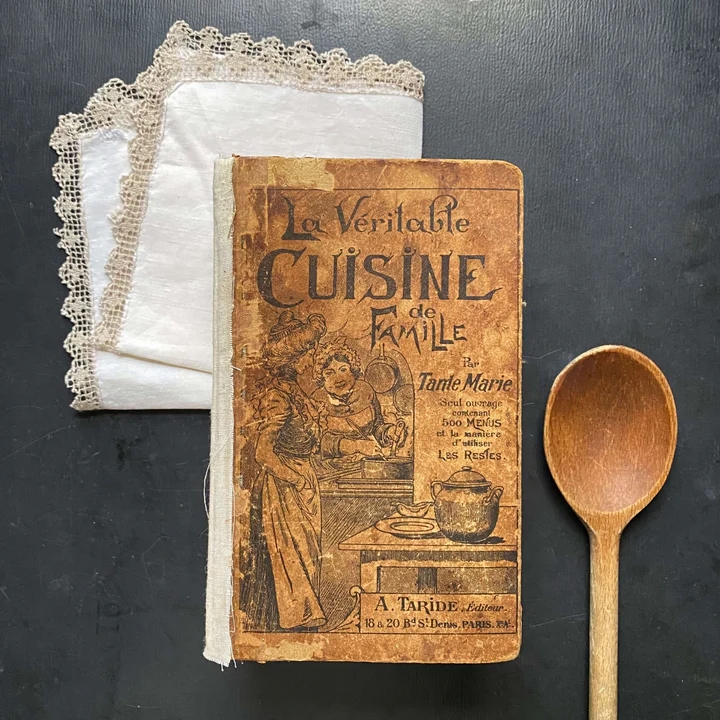
Since the blog and the shop work in tandem, you’ll find heirloom kitchen stories in both spots. But the shop tells shorter stories on a more frequent basis (daily) and the blog tells more long-form stories on an intermittent basis (weekly or bi-weekly) so whichever appeals to you, you’ll have one or both to enjoy. Some of our most favorite, most memorable stories turn out to be the humble, relatable ones about everyday home cooks and the recipes, books, and heirlooms that have been a part of their personal culinary journey. Thanks to information shared by a few families around the US in 2024, we have several new personal cooking stories to highlight this winter. One is an exotic love story wrapped around this book…

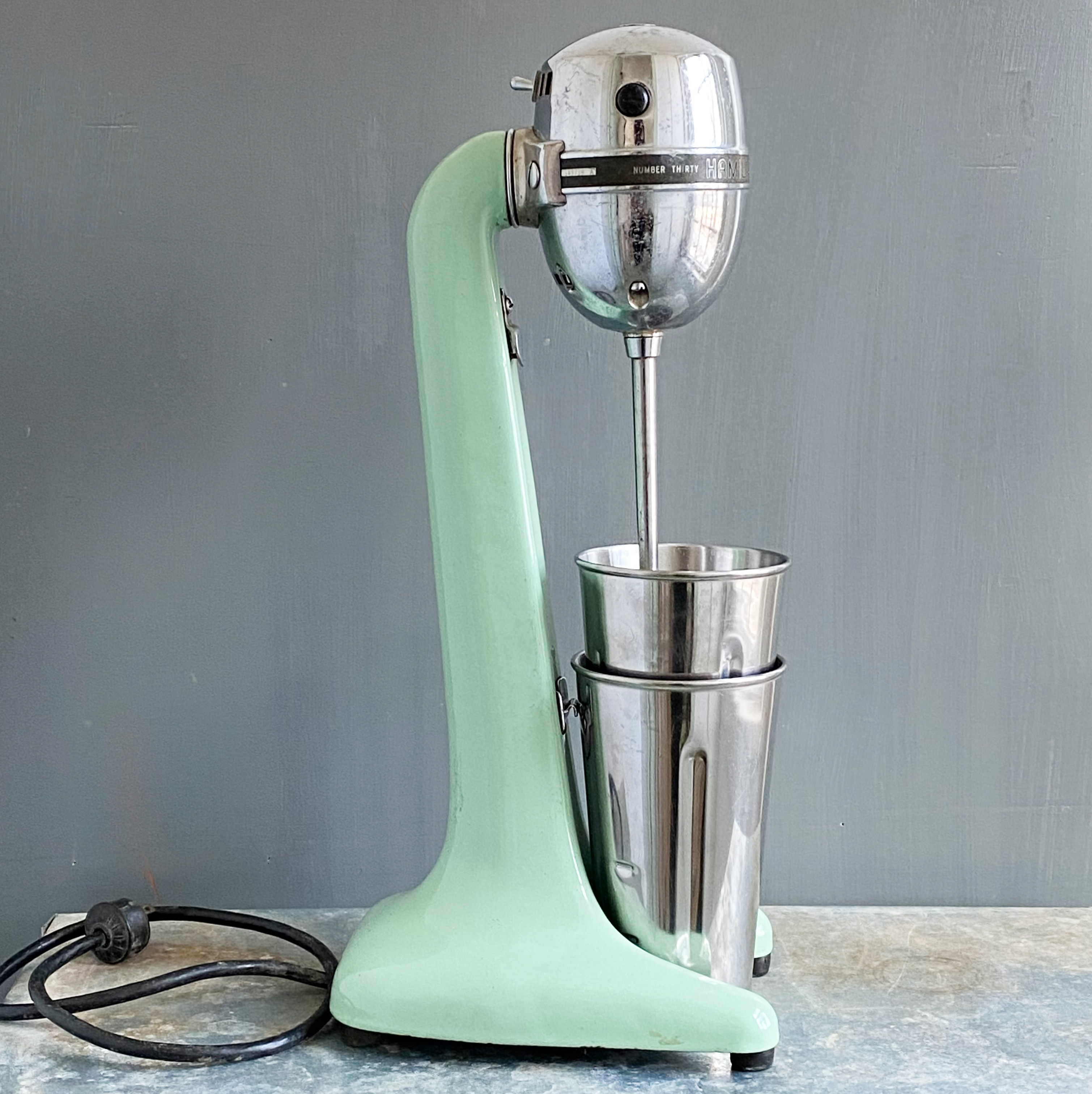
Another surrounds this 1940s Hamilton Beach milkshake machine…

1930s-woman-mixing-flour-in-bowl

and another introduces us to this mid-20th-century cook whose culinary journey took her from Kansas to California with a collection of recipes in tow…

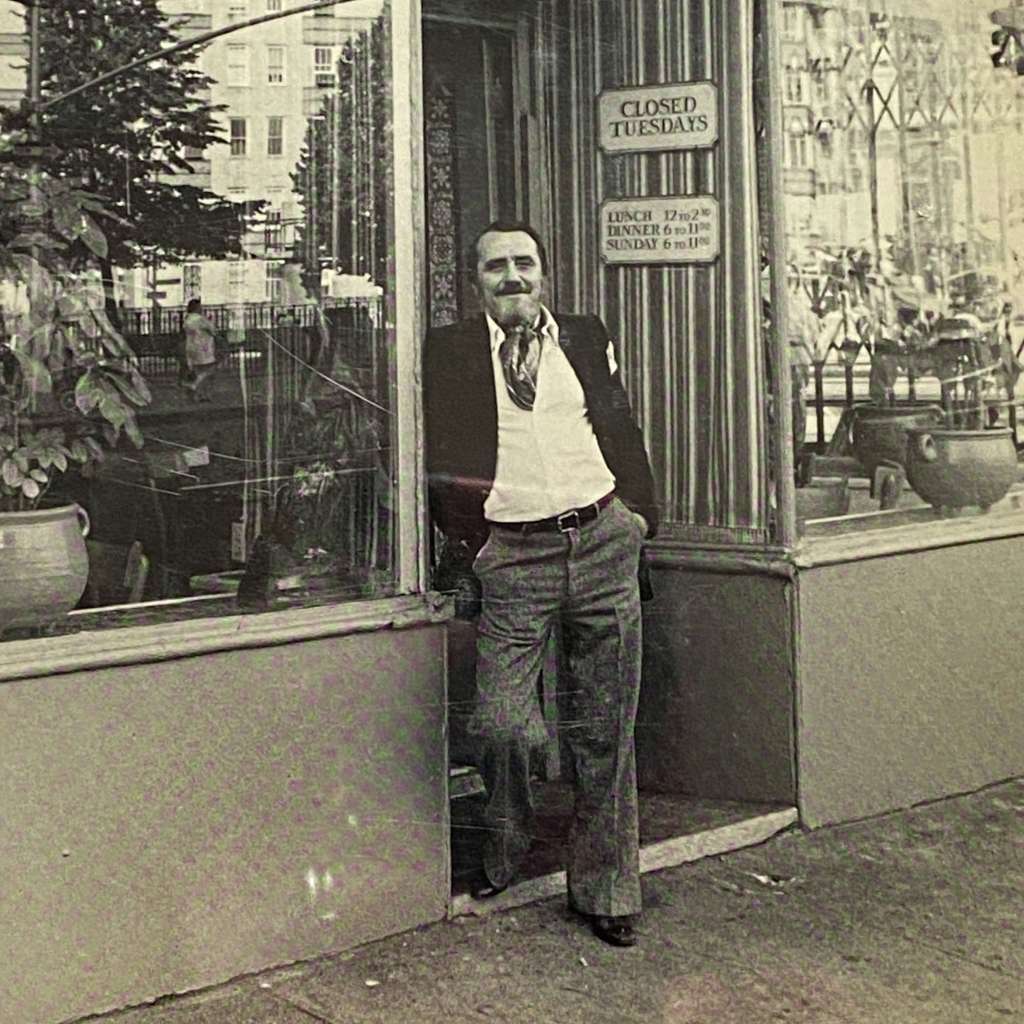
Other bits of fun culinary history floating around the shop this winter include stories about a beloved 1970s Greenwich Village restauranteur…

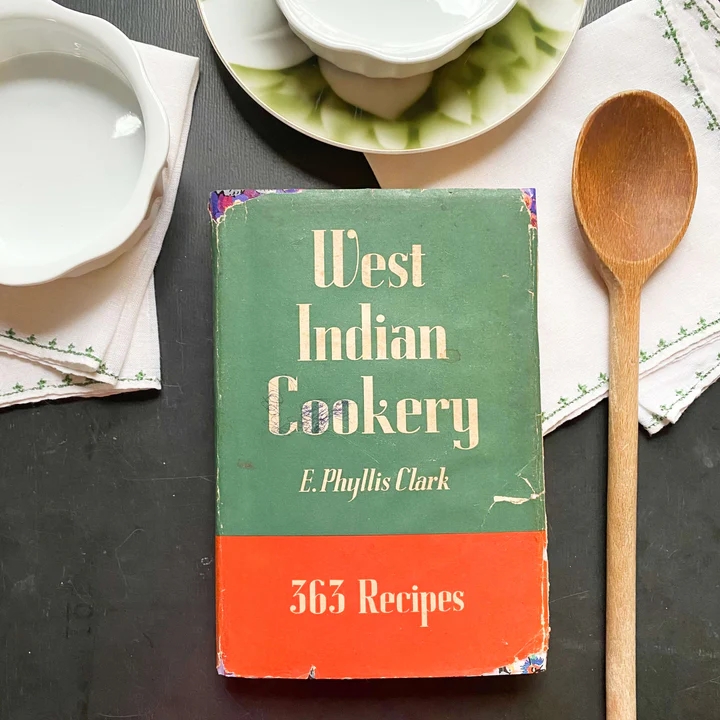
the ancestry of a 1950s West Indian cookbook…

and the life of a famous New York City celebrity hotspot that first opened in 1927…

That of course is just the start. There will literally be hundreds more stories to share in the shop and dozens more to share on the blog throughout the year all highlighting little-known or forgotten people, places, and foods from the past.

1750 House & Garden Updates

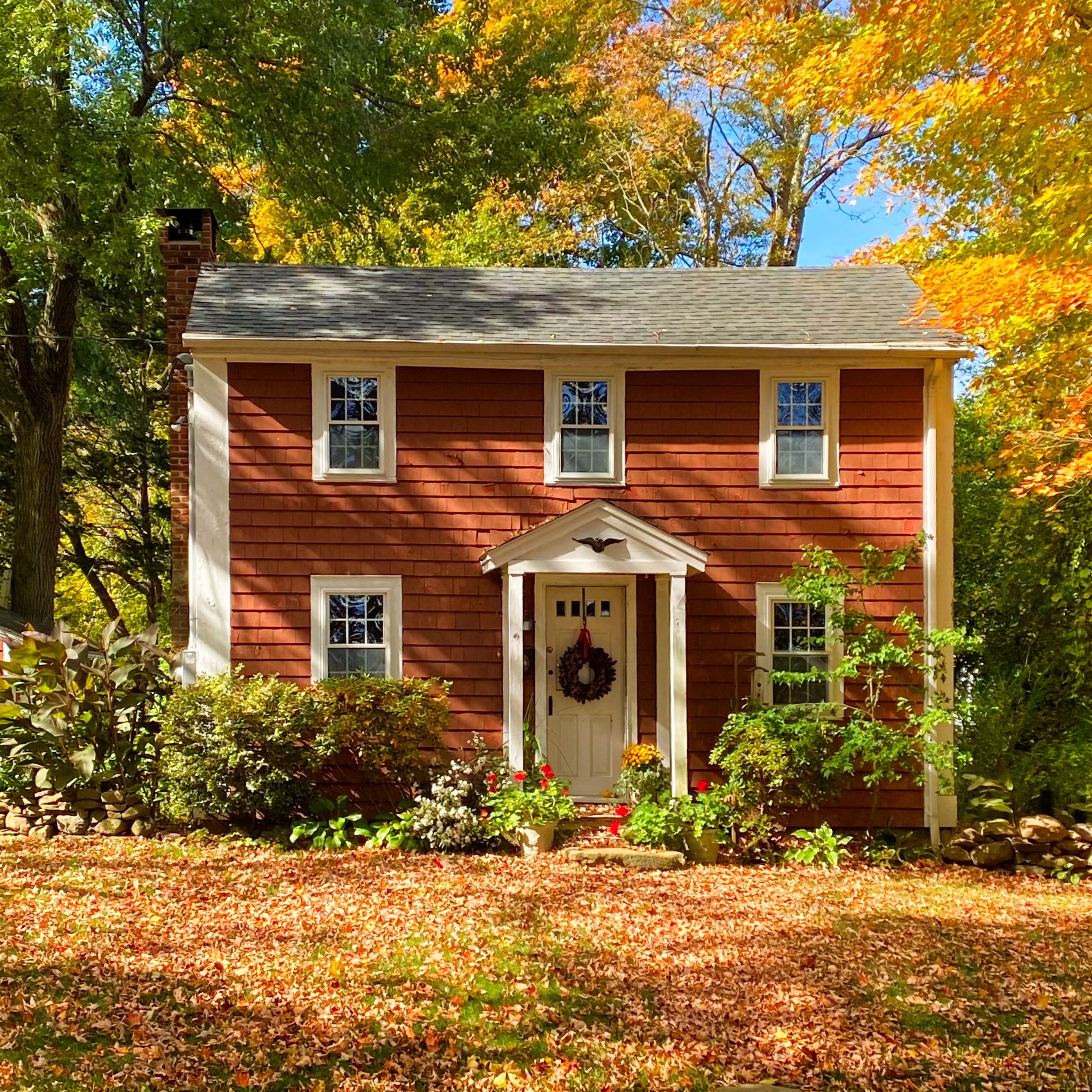
This year 1750 House turns 275 years old. We are doing our best to get all the renovations completed before the end of the year so that we can throw a big party to celebrate this big birthday. As projects get finalized over the year, I’ll share updates on the progress we’ve been making since we first arrived in 2022, including new information on the genealogy of the house dating all the way back to the 18th century.

It’s a big year with a lot on the agenda and most likely a few surprises tucked in between the topics listed above. We can’t predict how the world will change in 2025, but we can say that at least here in the Vintage Kitchen, these next twelve months will keep you well-fed and blissfully in touch with stories that focus on kindness, joy and positivity by way of the kitchen. Before, I sign off, I just wanted to note one more thing…

A Note on AI and Our Promise To You

In light of all the current discussion surrounding AI, while it might be influential and important in some areas of modern life, there is no room for it in our storytelling in the Vintage Kitchen shop or on the blog. Last year we had some personal experience with the darker sides of it. I hesitated sharing this information then simply because it was a disheartening situation and definitely did not do anything to improve our creative endeavors, but it ties into my promise to you now, so I’ll share a brief version of what happened for context and clarity going forward.

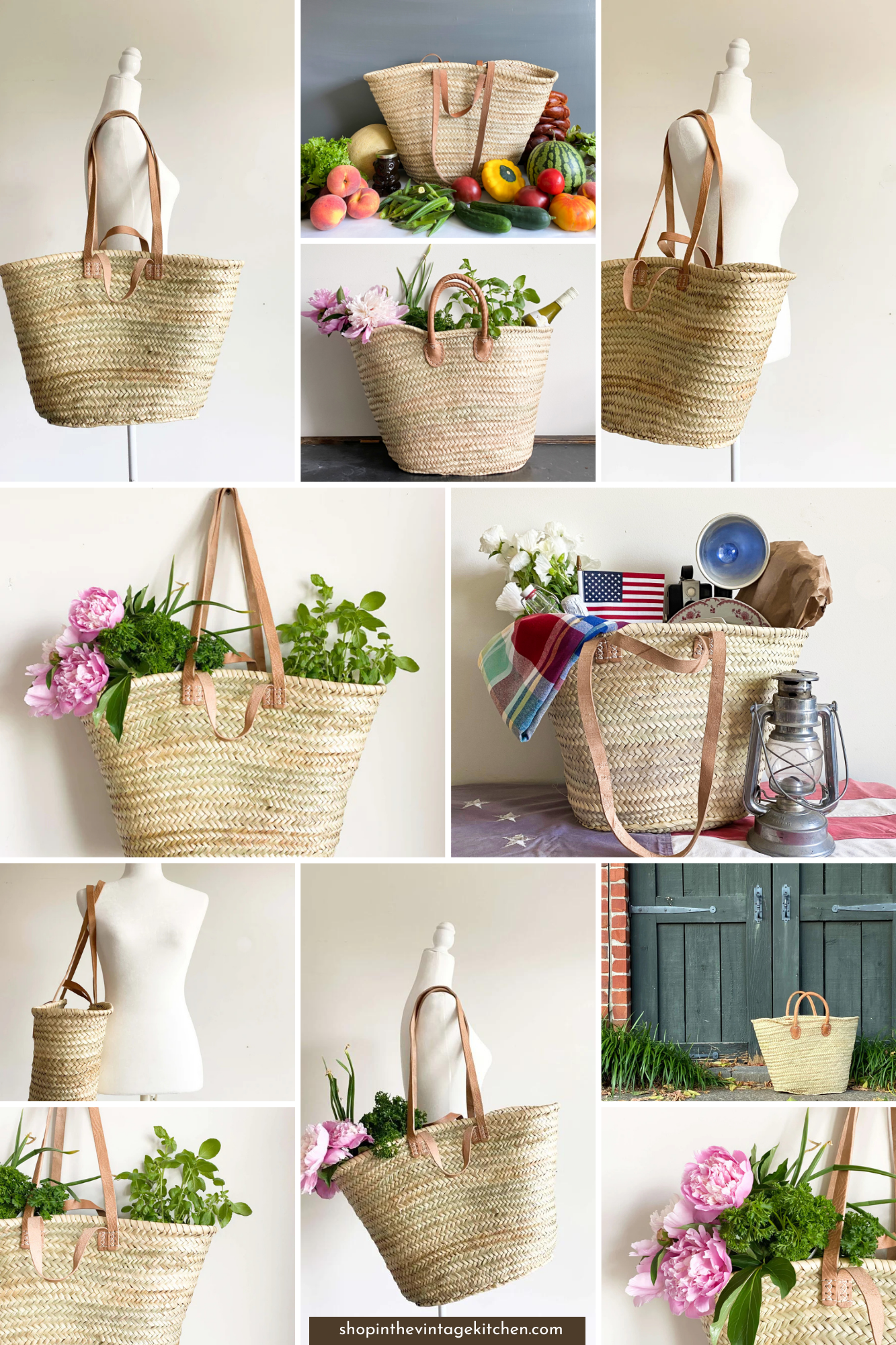
In April 2021, two big boxes arrived by mail from Europe carrying our first order of French market bags for the shop. I was so excited to include these bags in the shop, not only because I had personally used and adored the same exact bag for many years and could well attest for its competency, but also because I couldn’t wait for other people to experience the bag’s effortless ease and style. Once the bags were all unpacked, in preparation for the photoshoot, I shopped at the farmers market, selecting items that I typically purchased and carried in my own market bag during personal shopping trips in order to illustrate the capabilities of the tote.

Early spring herbs, vegetables, wine, and bread were all gathered from the market for the shoot. When it came to the flowers, initially, I had my heart set on grabbing a couple of bouquets from a vendor who sold locally grown ranunculus in this gorgeous color palette of pink, peach, and coral. But the ranunculus weren’t available at the market that day, so the next best choice was a bouquet of pale purple-pink peonies. With all the market foods and flowers set and styled in place, I photographed the bags from all angles, both empty and filled to the brim with the farmer’s market items so that shoppers could see it in all its various situations as market bag, beach tote, picnic basket and all around shoulder bag. Here’s a sampling from the shoot…

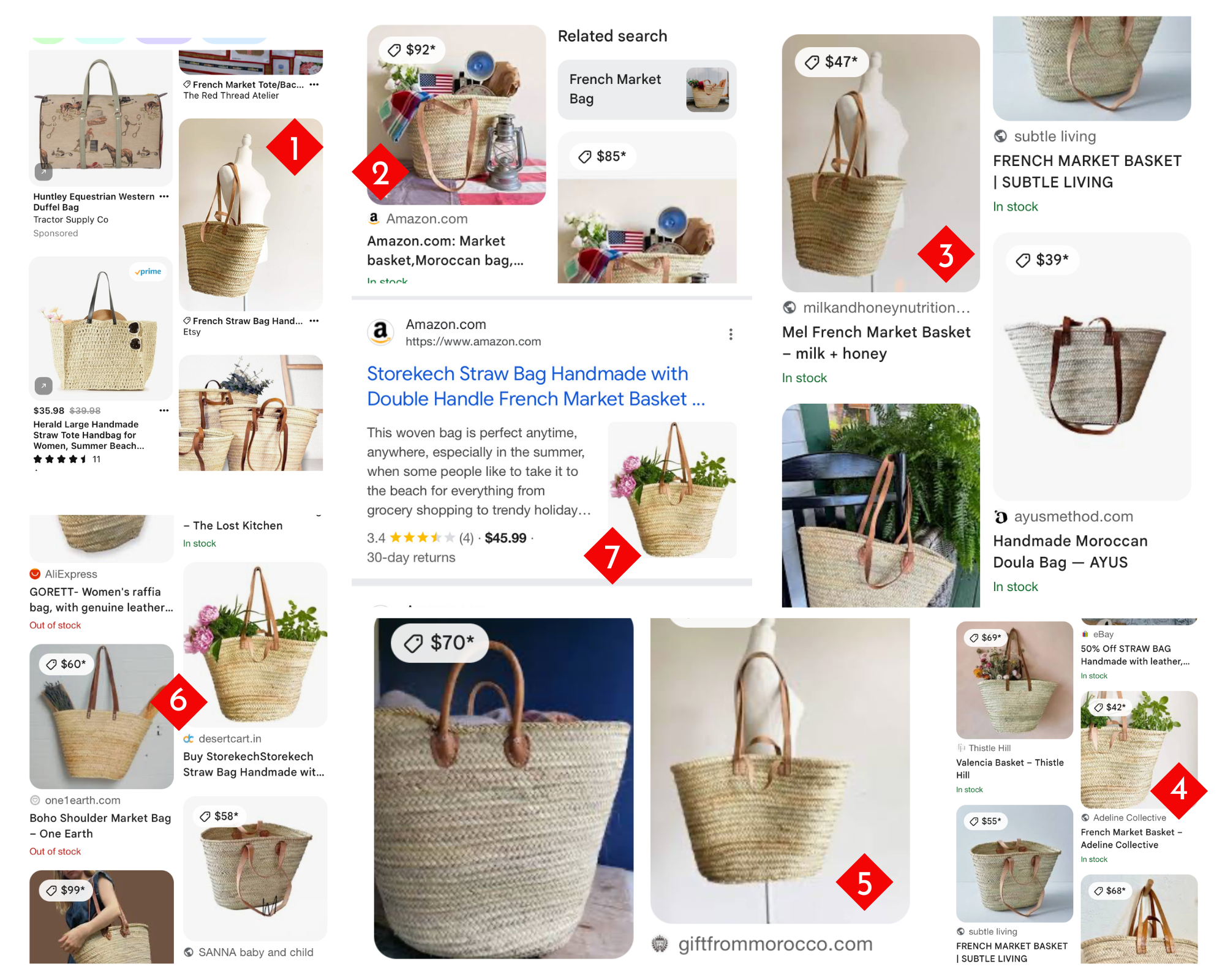
On May 2, 2021, the bags launched in the shop in an air of excitement and joie de vivre. I was so excited to see that our ITVK shoppers found the bags to be equally as useful and they became a lovely staple in the shop. Unfortunately, sometime in late 2023, I was alerted to the fact that my market bag photographs were showing up in other retail places online. The photos were copied from our website, without our permission, and used online to sell similar products by other retailers on other sites. Throughout 2024, my photos popped up on Etsy, Amazon, Faire, Pinterest and a slew of independent shops all selling the same style bag. These are some examples of where they are currently being used by other retailers as of January 2025…

We’ve tried our best to eradicate as many as possible, and many retailers did take them down from their sites at our request, but for all the ones that were removed more kept popping up. All this turned into a very time-consuming endeavor, which in and of itself is a whole other frustrating story for another day.

I wanted to share this information, not to highlight this disappointing act of copyright infringement but to highlight the Wild West atmosphere that AI generates in our current marketplace. This copying of our photographs was not the fault of AI, just lazy sellers and bad business practices, but someone recently mentioned to me that a food photograph I had taken just a few weeks ago was so nicely arranged that it looked fake. Like something AI would have generated.

In telling you all this I just wanted to let you know that we do not, nor will we ever in the future incorporate AI into the Vintage Kitchen when it comes to writing or photography. You can rest assured that everything from the photos we take, to the stories we tell, to the heirlooms we sell are all 100% authentic. They are real items, photographed and written about by real people, that reflect real history.

That’s our promise to you as a shop and my promise to you as a writer and a photographer. All of our heirloom origin stories and blog posts are highly researched – sometimes for days or weeks at a time, and we consult only trusted archives and institutions that have been collecting verified information for decades or even centuries. The kitchen is too full of unique stories, intimate details, and interesting perspectives to leave it up to bots to try to decipher personal human experiences in any meaningful way.

That means periodically you might see a typo, or a misused comma, or an impassioned thought that ran away with proper sentence structure. Even though those writing missteps might not be correct grammatically, we’ll sometimes leave them in the final edit. That’s how you’ll know these posts and our shop stories were written by humans for humans. Here in the Vintage Kitchen, we are not fearful of AI, we just love people and history too much to leave compelling real-life storytelling up to machines who have never fried an egg or baked a cake or curated a collection of favorite objects in the pursuit of personal passion and joy.

Now that that is out of the way, a whole new year of exciting discoveries await here in the Vintage Kitchen. I’m so glad you are here to join us in what I think is the best little community on the internet. Thank you so much for being a part of it.

Cheers to the new year, and to Liz Lemon for being the bright light that leads the way in 2025.

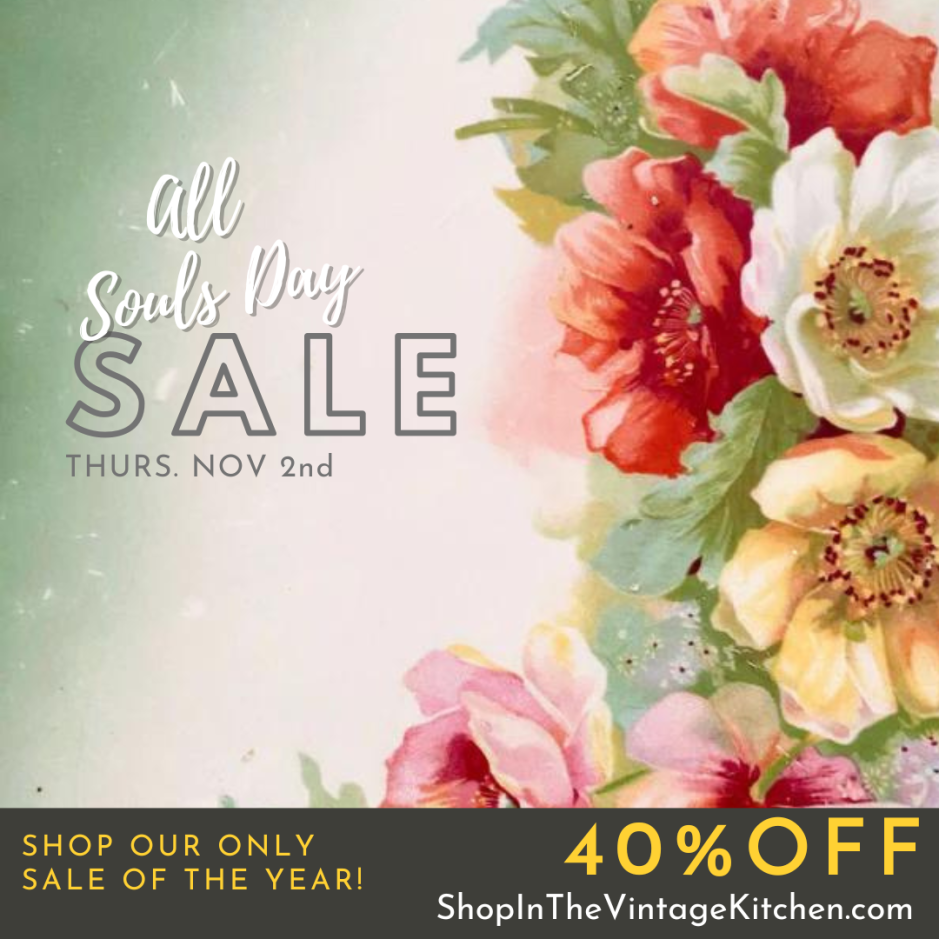
Mark Your Calendars: Our Annual 40% Off Shop Sale is November 2nd!

Outside the kitchen window, fall is here. It’s blown into New England this year slowly, on warm breezes scented with cider doughnuts and sunshine. Our prettiest one yet, milder-than-usual temperatures have prolonged the season, rolling it out like a colorful ribbon one yard at a time.

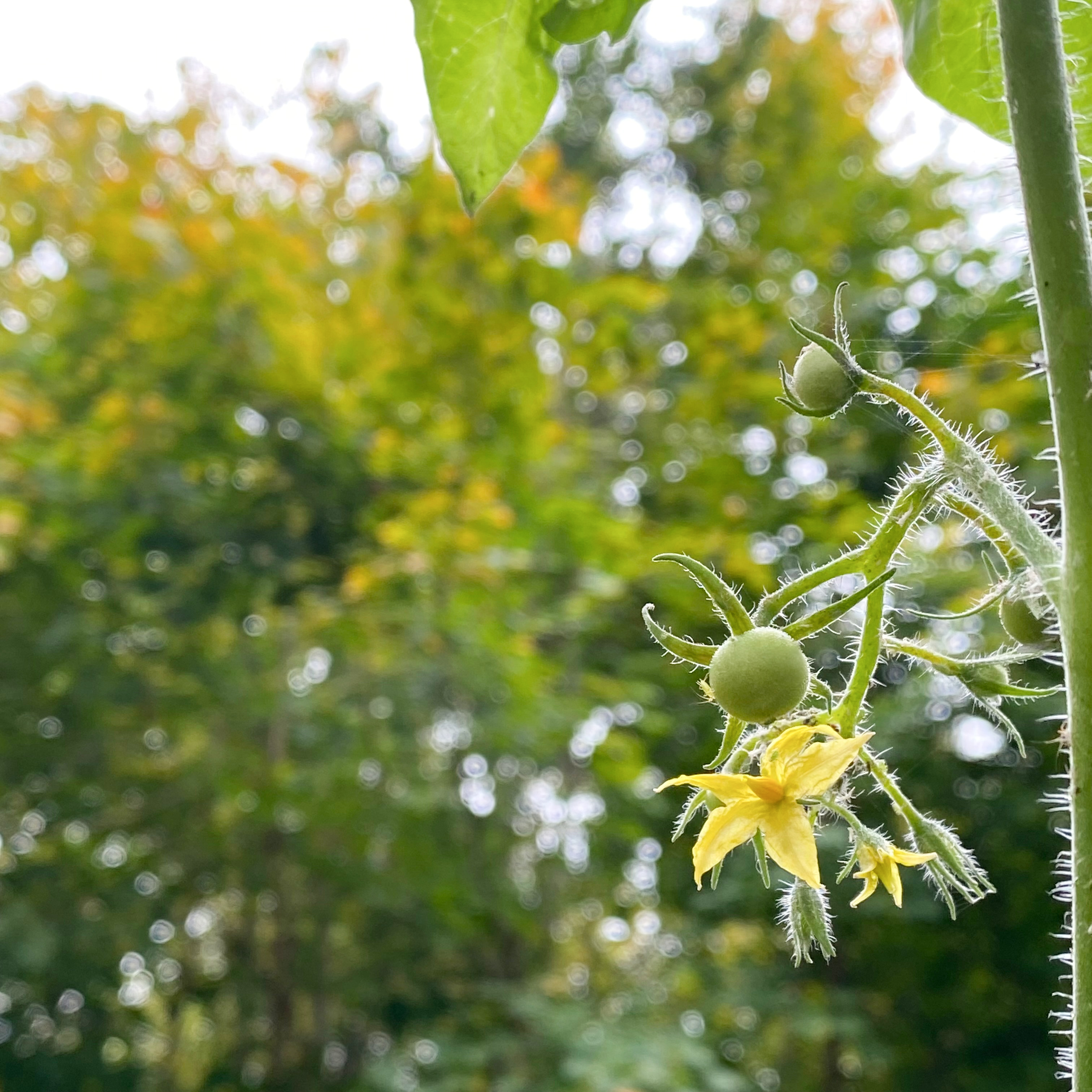
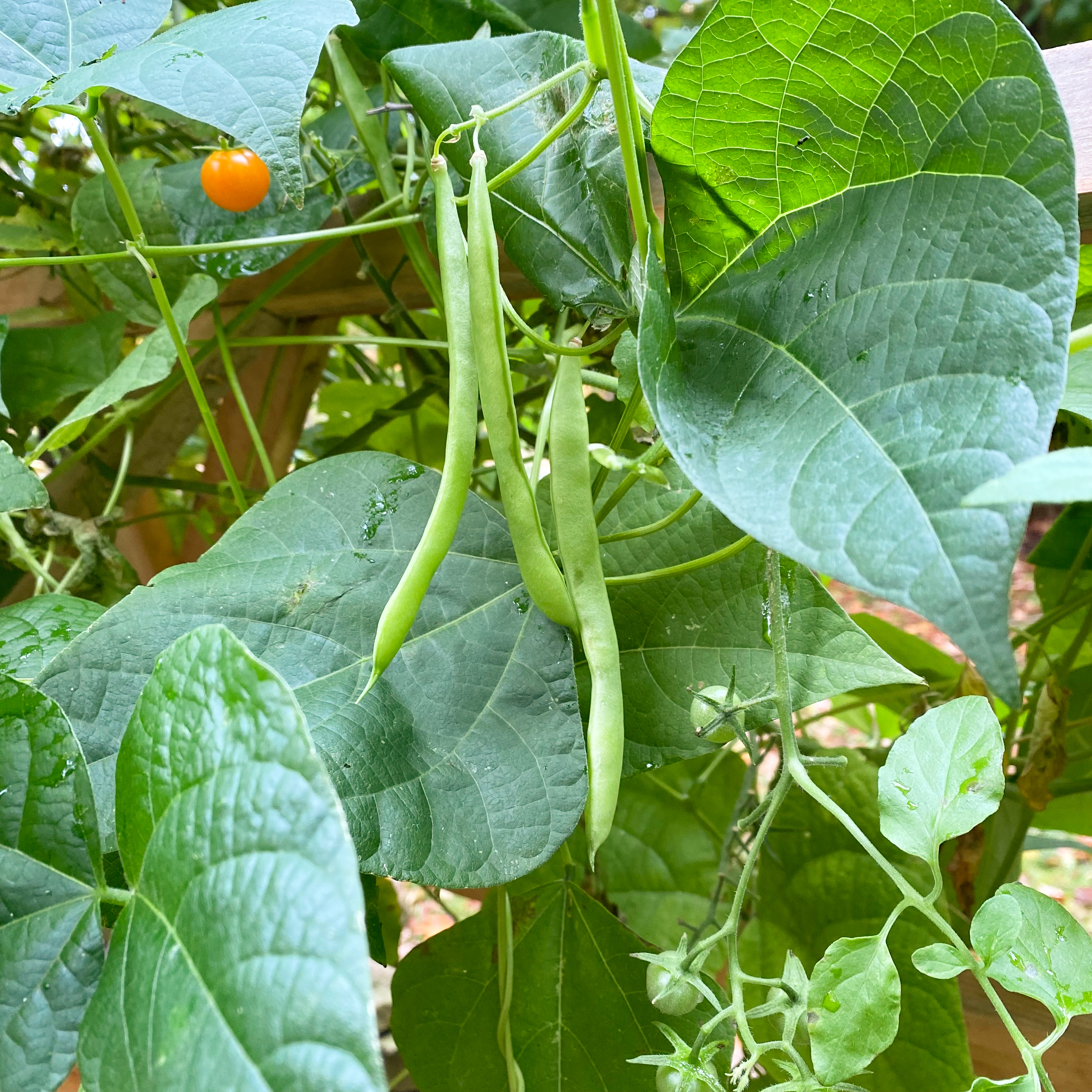
While the days may have lacked that traditional chill that signals a sincere change in seasons, there is something definitely delightful about a warm weather fall. Our string of 70-degree days and 50-degree nights means that much of the summer garden at 1750 House is still hanging on. There are clusters of tomatoes ripening on the vine, summer corn continuing to grow tall in the raised bed, and green beans still putting out at least a dozen pods a day. It may be mid-October, and leaves may be blanketing the garden beds, but the nasturtiums, zinnias, and geraniums are still flowering like it’s July. The novelist David James Duncan once called this Indian summer time of year “a state of serene confusion.” I can see why.

Since so many pollinators are still coming to the flowers, we’ve decided to leave all the summer vegetables up for as long as we can so that they can get all the nourishment they need.

Around the neighborhood though, tradition is not indulging this unusual weather that’s been caught between the beauty of two seasons. Despite the fact that many a summer flowerpot is still wholeheartedly blooming, pumpkins are on porches, dried corn stalks decorate lamp posts, twig wreaths hang on front doors, and the leaves… the magical leaves of a New England autumn… are floating and fluttering in shades of cinnamon, olive, mustard, and mahogany. There is color and flowers and fall foliage everywhere.

Autumn has come to the shop too…

And that means that our annual shop sale is right around the corner. If you are new to the blog, every year, November 2nd marks 40% off everything in the Vintage Kitchen shop for one day only. We call it the All Souls Day sale, not for the Catholic holiday that it shares the day with, but for the heirloom history that it encompasses.

All Souls Day is the only communal holiday in the calendar year that celebrates and remembers all deceased ancestors, and to us, that seems like the perfect time to celebrate vintage and antique heirlooms too. None of our shop items would be here today if they had not traveled through time, cherished and cared for in the hands of the people before us.

The Art of Chinese Cooking by the Benedictine Sisters of Peking – 1977 Edition 41st Printing

It’s up to us to curate the shop, but the heirlooms do all of the storytelling. Each year, they share new insights into the past that help shed light on things in the present. Since no two items in the shop are ever exactly alike, no sale from year to year is ever exactly the same either.

Stories float in and out of the shop every day offering glimpses into kitchen and garden life that occurred a few decades ago or a few centuries ago. Just like stories posted to the blog, every heirloom in the shop comes with its own unique tale marking its place in time. Hidden histories are everywhere. Here are some of the unique stories you’ll find in this year’s sale…

The 1940s Oxnard Lemon Crate

Highlighting Mexican-American history in California’s Port Of Hueneme, this 1940s-era lemon crate tells the story of how Sunkist lemons were brought in from local farms and sorted at an Oxnard packing house before being transported to retail storefronts around the world. Most of this packing was done by women who were skilled experts in sorting, grading and packaging the lemons for distribution. At the height of production, over four million crates were packed per year totaling half a billion lemons. Fruit and vegetable crates were never meant to withstand time and travel for longer than a few months, so it’s always exciting to discover one that has survived much longer than intended. The only part that is left of this original eighty-year-old packing crate is the front panel, now mounted like a piece of art to showcase its original label.

Beyond New England Thresholds

Focusing solely on the importance of the fireplace hearth in early American homes, this 1937 photography book by Samuel Chamberlain explores the country’s first “kitchens” in over two dozen New England homes that date back to the 17th and 18th centuries. The photos progress as the hearth progresses from primitive cook space to home heating source to decorative fixture, illustrating not only how far cooking has come since the early days, but how home interiors and design have evolved as well.

Perdita

Voted one of the best restaurants in the country by Holiday Magazine in the 1950s, Perdita’s of Charleston, SC and Macon, GA was known for its elegant French-inspired fare highlighting local seafood and steak.  The restaurant was named after actress Mary Robinson (1758-1800) whose most famous role was playing Perdita in Shakespeare’s A Winter’s Tale.

The real-life Mary Robinson (1758-1800) in a portrait painted by Thomas Gainsborough circa 1781

Mary had a reputation for being very enchanting and seductive, especially when it came to the amorous attention of men. On a trip to Charleston in the late 1700s, she was caught up in a local romantic scandal that forever made a mark on Charleston’s colorful history, and subsequently inspired the vibe and aesthetic of one of the city’s most famous restaurants.

The Neo-Classical Candleholders

Made for the Metropolitan Museum of Art gift shop, the design of these four petite candleholders is based on antique furniture mounts from a French secretary in the Museum’s collection. The secretary dates to 1787 and is believed to have belonged in the apartments of Marie Antoinette during her time at Versailles. This is the furniture that inspired the candlesticks including a detail shot of the mounts themselves…

Notice how the candlesticks are almost an exact replication of the mounts, fruit included.

The Peruvian Pottery Bowl

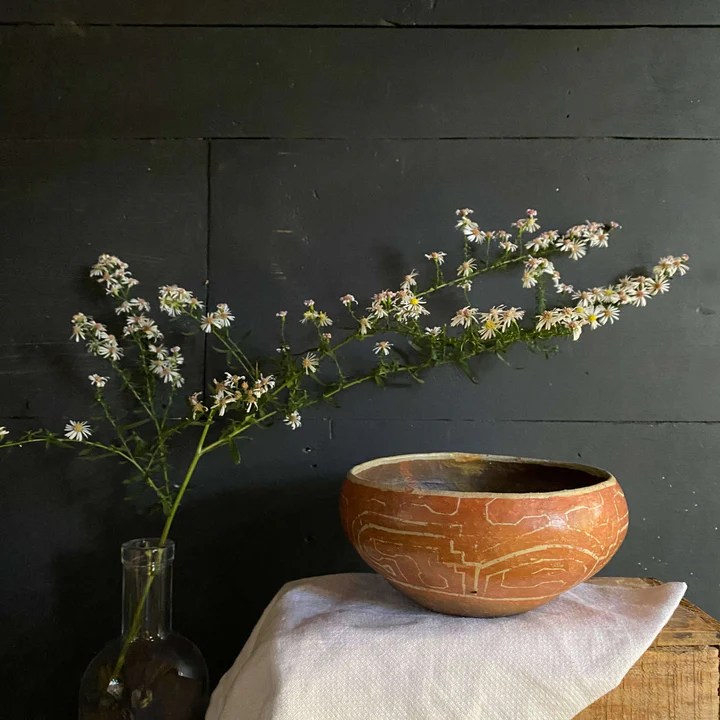
Handmade in the Amazonian jungle of Peru, this style of clay bowl has been made for centuries by local Indigenous women of the Shipibo-Conibo tribe using skills and techniques passed down from generation to generation. Highly personal and reflective of each specific woman who makes them, the bowls are entirely formed by hand and then painted with brushes fashioned from twigs and their own human hair. The markings, like the bowls themselves, are one-of-a-kind… trails of paint inspired by each woman’s dreams and visions combined with traditional cultural symbols celebrated by generations of women that came before her.

Photograph of four generations of Shipibo-Konibo women by David Diaz Gonzales

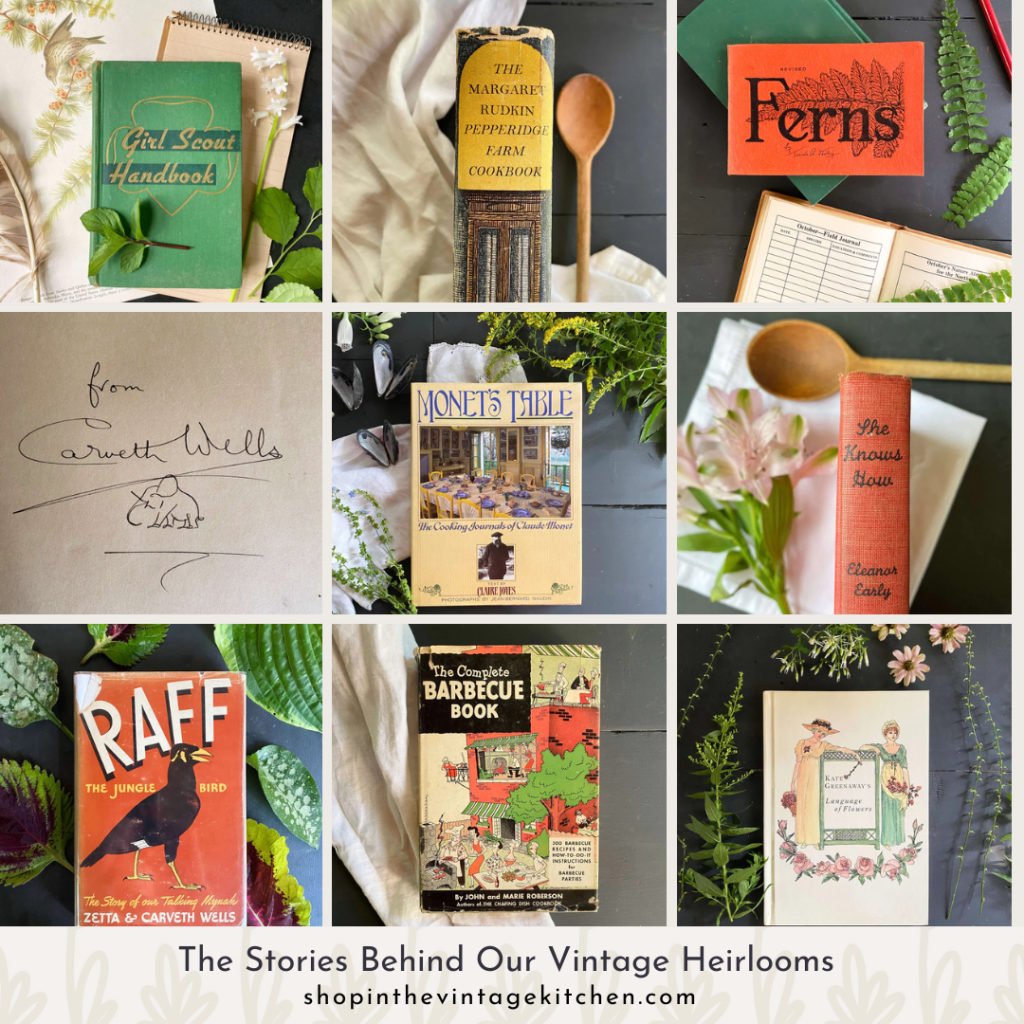
Every year, new faces from history emerge too. This year, we met Juliette, Margaret, Farida, Eleanor, Kate, John, Marie, Raffles, Zetta, Carveth and Claude…

Clockwise from top left: Julia Gordon Low, Margaret Rudkin, Farida Wiley, Eleanor Early, Kate Greenaway, John & Marie Roberson, Raffles, Zetta & Carveth Wells, Claude Monet

Each of them had interesting stories to tell. Juliette Gordon Low started the Girl Scouts in Savannah, GA in 1912. Kate Greenaway forever changed the way we felt about blooms and blossoms in her bestseller, The Language of Flowers. Farida Wiley taught nature classes at NYC’s Museum of Natural History for 60 years. And we all know Claude Monet from his famous impressionist paintings, but did you know that he was also a devout foodie too? There’s a cookbook full of his recipes to prove it. All of those faces above created all these pieces of history below…

Clockwise from top left: The Girl Scout Handbook (1948), The Margaret Rudkin Pepperidge Farm Cookbook (1965), Ferns of the Northeastern United States by Farida Wiley (1948), She Knows Best By Eleanor Early (1946), Kate Greenaway’s Language of Flowers (1978), The Complete Barbecue Book by John and Marie Roberson (1951), Raff: The Jungle Bird by Zetta and Carveth Wells (1941), Monet’s Table (1989)

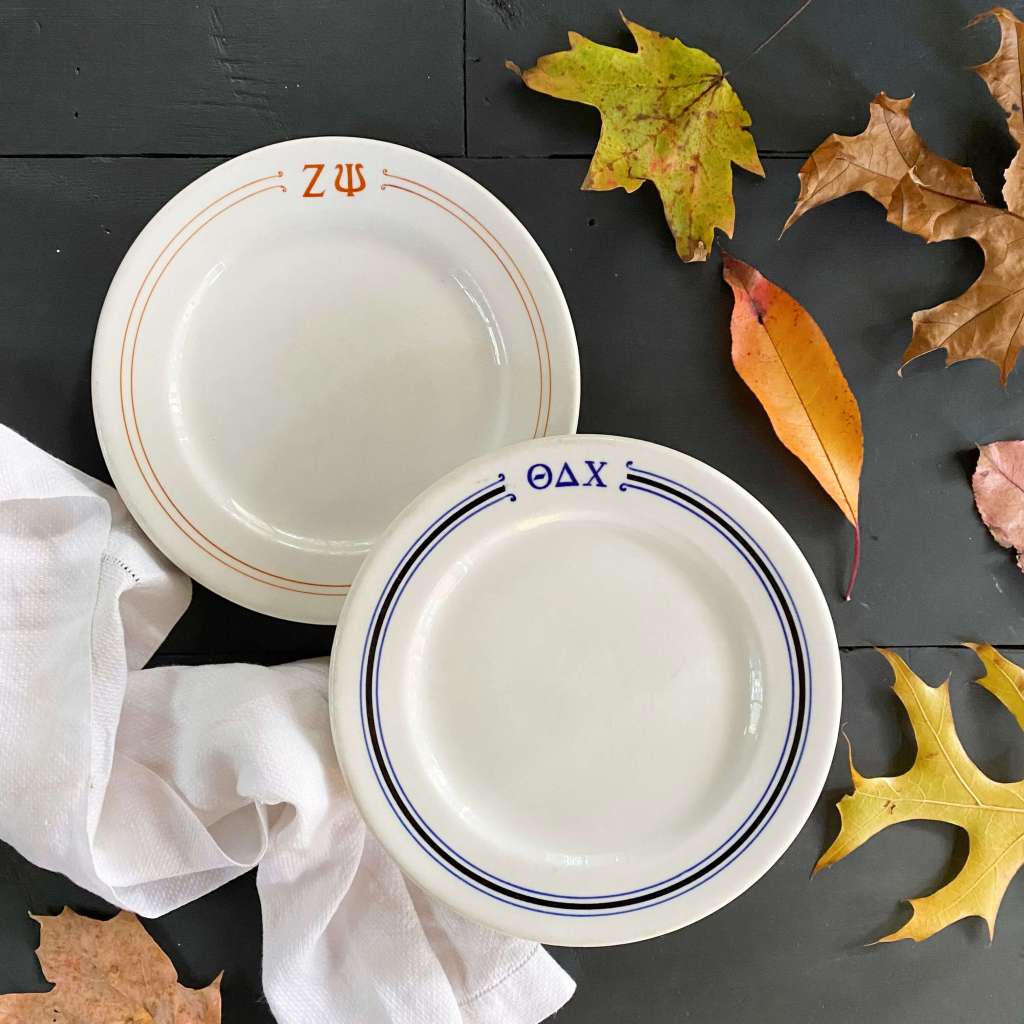
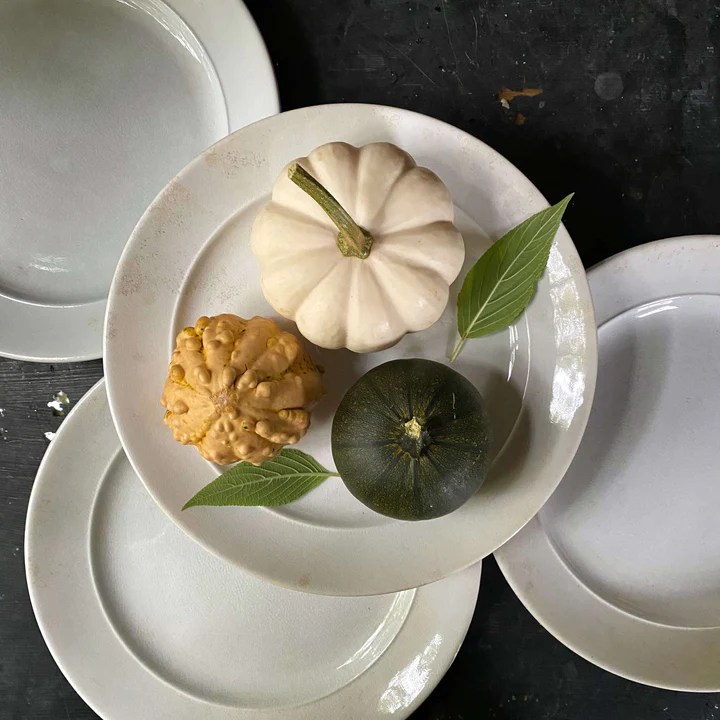
In the shop, a plate is never just a plate. It’s a rare glimpse into dining hall life at a 1930s fraternity house…

Rare Vintage 1930s Zeta Psi & Theta Delta Chi Fraternity Restaurant Ware Plates By Syracuse O.P.Co circa 1937

In the shop, a teapot is not just a teapot. It’s the oldest antique of the year. This one dates to 1838…

Antique Royal Vienna Tea Service Set – Gold and White Porcelain – circa 1838

In the shop, a cookbook is never just a collection of recipes. It’s stories about life and heritage and inspiration in a myriad of ways. It’s Canadian Leslie Forbes (1953-2016), who was not only a charismatic travel journalist, a fiction writer, and a cookbook author but an illustrator too…

A Taste of Provence by Leslie Forbes – 1987 First American Edition

It’s the talented way-ahead-of-her-time Paula Peck (1927-1972), who died at the age of 45, but not before leaving a handful of books that turned professional cooking and baking on its side in the mid-20th century, by bucking traditional techniques and inventing creative, approachable food…

The Art of Fine Baking by Paula Peck – 1961 Book Club Edition

The Art of Good Cooking by Paula Peck – 1966 Edition

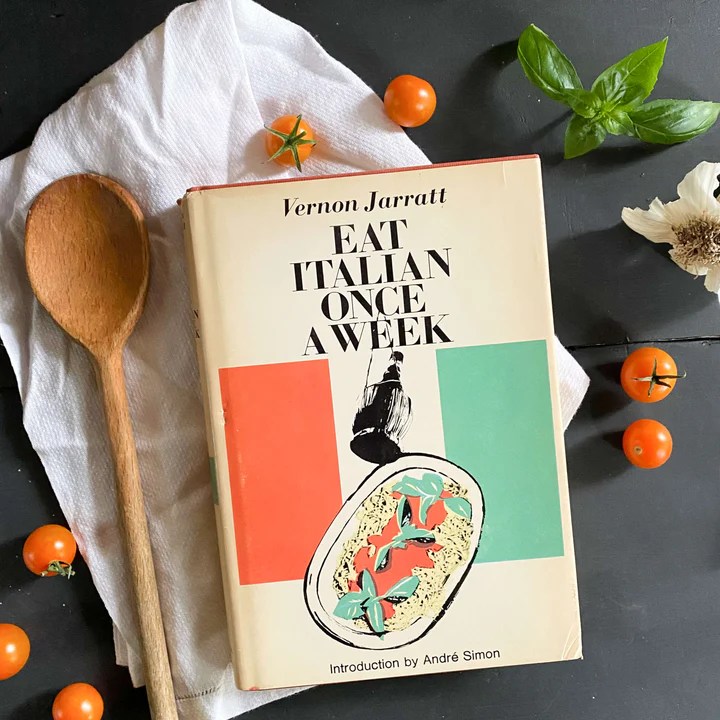
It’s British ex-pat Vernon Jarratt who married an Italian countess and went on to live a La Dolce Vita life in Italy as an intrepid gourmand and restauranteur…

Eat Italian Once A Week by Vernon Jarratt – 1967 Edition 

In the shop, a vintage coffee tin is not just a nostalgic vessel to store modern-day items. It’s the lifeblood of immigrant brothers from Scotland who sought fortune and flavor in America’s coffee trade in the late 1800s.

Vintage Yuban & Bliss Coffee Tins circa 1920s-1940s

And in the shop, coasters aren’t just little mats to set your drinks on. They are mini works of art by revered French botanical painters of the early 1800s…

Vintage French Botanical Coasters with Cork Backing – Set of Four

These are just a few examples of the people, places, and stories that find their way into the Vintage Kitchen shop on a daily basis. I hope at this year’s sale you discover an heirloom that captivates your attention, that steals your heart away to another time or another country, and that inspires new creativity from history’s forgotten muses.

Perhaps you’ll travel with engaging journalist and war correspondent, Betty Wason and her daughter, Ellen through the regional cuisines of Spain…

The Art of Spanish Cooking by Betty Wason – 1963 First Edition

or fall in love with the fish-out-of-water escapades of French Clementine as she navigates the ins and outs of cooking in an American kitchen in the 1940s…

Clementine in the Kitchen by Phineas Beck (aka Samuel Chamberlain) – 1943 First Edition with Illustrations

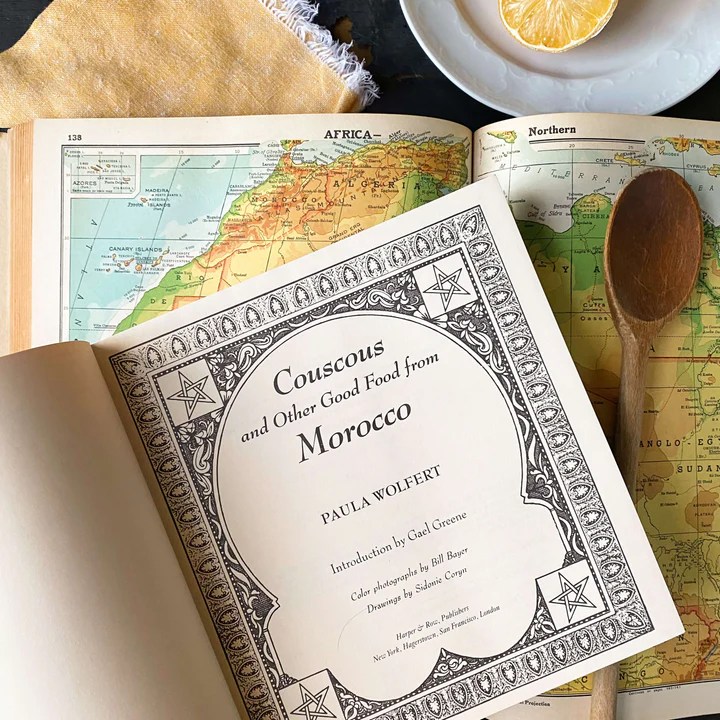
or maybe you’ll wind your way around the exotic Moroccan spice markets with Paula Wolfert as your educational guide.

Couscous and Other Good Food from Morocco by Paula Wolfert – 1973 Edition

At this year’s sale, you’ll notice that some cookbooks sport a festive yellow banner in the listing photos. Those banners signify a new donation program that we’ve just recently launched. Any cookbook that you see in the shop that says This Book Gives Back qualifies for a 20% donation to Feeding America, a nationwide non-profit network of food banks, food pantries and local meal programs dedicated to providing nutritious meals to food-insecure communities around the United States. Not all cookbooks qualify for this program, so be sure to look for the yellow banner if you would like to participate.

Joy of Cooking by Irma Rombauer and Marion Rombauer Becker – 1978 Edition 11th Printing

The sale begins at 12:00am (EST) on Saturday, November 2nd, 2024 and runs through 11:59pm that same night. Discounts are automatically tallied upon checkout, so there is no need to enter any coupon codes or discount phrases to receive 40% off.

New vintage and antique heirlooms continue to be added to the shop daily, so stop by for fresh finds leading all the way up to the sale. And, as always, if you are looking for something that we no longer have in stock, please send us a message. We’ll be happy to add your name and needs to our waitlist.

Vintage 1960s Webster-Wilcox Silverplate Wine Cooler Champagne Bucket

Whether you are interested in experimenting with a new cuisine, looking for a new favorite vintage dish pattern, or starting a collection that recalls memories of a happy time from your past, I hope you find something in the shop that calls to your heart and adds extra delight to your kitchen.

Haute Cuisine for Your Heart’s Delight by Carol Cutler – First Edition 1974 Fifth Printing

Cheers to all the old souls that inspire the shop each and every day. Cheers to all the heirlooms that they have been passed on to us to love and cherish just as much. And cheers to the kitchen for being the one spot in the house where everyone is always welcome.

Early 20th Century Embroidery Sampler circa 1930s

Happy shopping!

It’s Finally Here! Our Annual Shop Sale is Today

Happy All Souls Day! Just wanted to pop in with a quick reminder for all our intrepid culinary adventurers and history-fueled home decorators… our annual one-day-only 40% off shop sale is today!

There are a bevy of new (old) heirlooms that have arrived in the shop recently, so if it’s been a bit of time since you last visited hop on over to the shop to see our latest collections. Some of our favorites include these charmers…

A collection of Poland’s authentic heritage recipes compiled by the Polanie Club of Minneapolis, Minnesota.

Rare antique J.W. Pankhurst English ironstone dinner plates circa 1850.

A porcelain enamelware floral bowl set by Kobe circa 1980s

A 1930s-era packet of French postcards featuring the beautiful city of Marseilles

An antique crocheted tablecloth handmade at Ellis Island circa 1916. You might remember this one from our in-depth blog post about one woman’s Italian immigration story here.

A vintage Dutch cookie tin featuring maritime art.

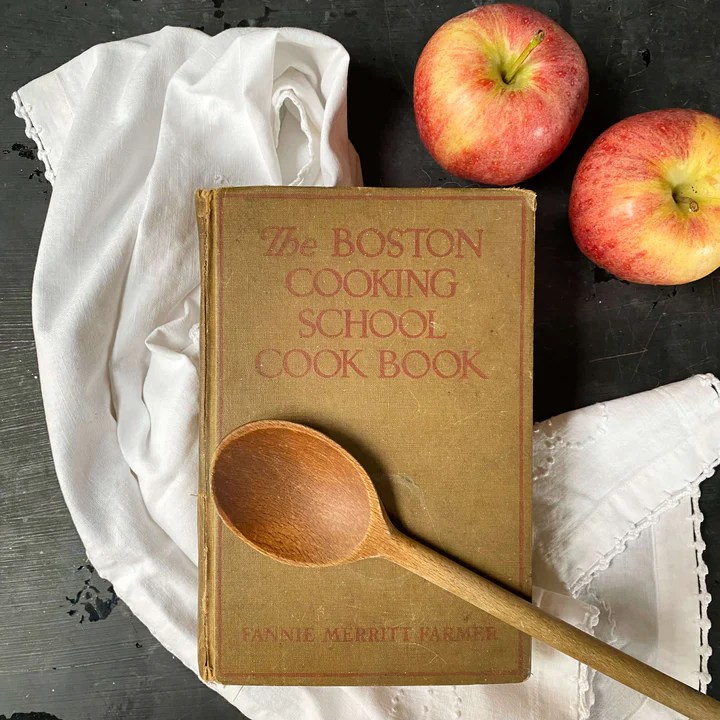
A 1930s edition of a classic kitchen cookbook courtesy of Fannie Farmer, the woman responsible for creating our modern cooking measurement system.

A vintage botanical art book featuring gorgeous illustrations of fruits, vegetables, and flowers.

An antique handmade gathering basket from the early 1900s

A vintage pair of cheerful yellow dinner napkins with embroidered dots fit for every season.

Interested in meeting some of the makers and collectors behind our shop’s beautiful heirlooms? Poke around each section and you’ll encounter these faces and the stories they tell about history and their place in it.

Hope you find a treasure that calls to your heart and adds an extra bit of joy to your home.

As always, the sale runs through midnight tonight and discounts are automatically applied at checkout. Thank you so much for traveling with us down these adventurous pathways of culinary history. Cheers to new inspiration and a day of happy shopping!

The Historic Side of Haiti in Houses and Dessert


Warm and bloomy. That’s been the theme of our September days around here. The nighttimes though, they are a different story. Cool, breezy, decidedly leaning towards Fall, change is definitely amiss once the sun goes down and the stars come out. Literally caught between two seasons, where it is hot during the day but chilly at night, eating during this time of year, when the temperatures are flip-flopping back and forth can tend to be a bit tricky for everybody no matter what part of the country you live in.

Since the start of this global culinary adventure back in January, not all of the foods on the Recipe Tour have matched up ideally with the time of year in which they were prepared. But I am excited to say that this stop in Haiti for Week 20 of the International Vintage Recipe Tour, has lined up perfectly with the current season. This week, we are making a dessert that is quick, and easy, and a bit out of the ordinary. It involves a handful of simple ingredients, the oven, some bravery and a taste for two seasons.  It has a lighter than air consistency like the best of summer eating yet also happens to be blanketed in layers of cozy Fall flavors.  And there is a special way to present it. That brings its own sense of magic too. In the form of a little flourish of fire at the end of the production, it both has the ability to dazzle your senses and delight your spirit. Like that familiar friend named nostalgia- just returned from last year, this sweet treat immediately welcomes the idea of logs and kindling and wood smoke and sweaters. It’s a dessert for the in-between times when your world isn’t quite what it used to be but also isn’t quite yet what it’s going to be. Yes indeed, this is the best time of year for this type of dessert.

On the menu today we are making Bananas Au Rhum, a Caribbean flambe that has influences in French, American and Haitian culture. But before we dive into the recipe and the making of it, I just wanted to acknowledge that this post has been on hold for most of the month due to the West Coast wildfires.  It didn’t seem like an appropriate time to feature a recipe that involved a voluntary fire in one kitchen while part of the country was battling involuntary fires in many numbers of neighborhoods. Having said that, for any readers who are sensitive to open flames at the moment, you may want to skip this post and join us again next week when we travel to a new (non-fire related) international destination that specializes in hearty foods for hungry appetites.

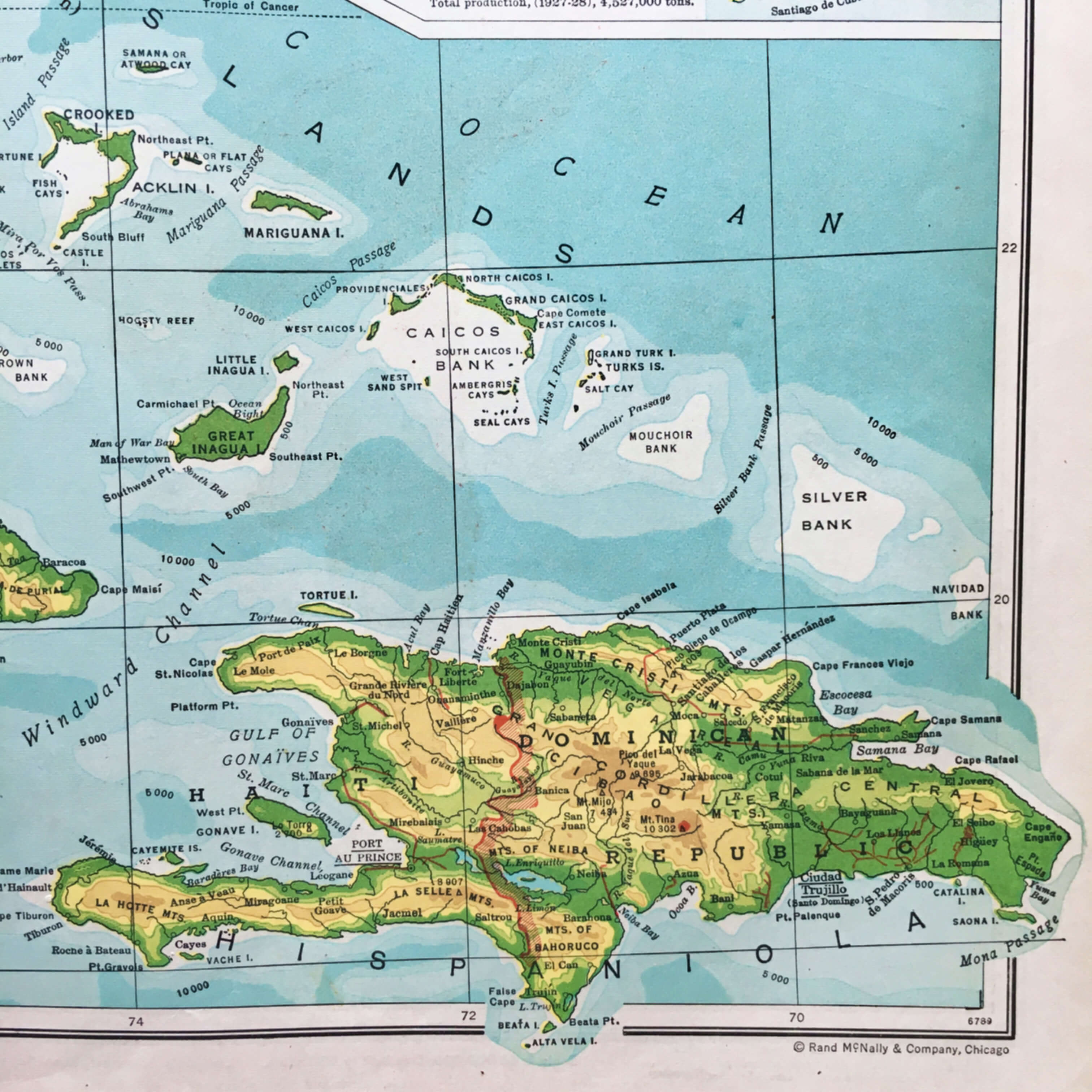
If you are sticking with us today, then hello, hello! Welcome to Haiti! Sharing the island of Hispaniola with its neighbor, the Dominican Republic, Haiti is a world all onto itself.

To learn about the history of this island nation means to learn about a country that has been battling ill-intentioned governments, poverty, corruption, slavery, and natural disasters pretty much since it was first discovered by Christopher Columbus in the 15th century.

As one of the poorest nations in the world, much of the news that gets relayed and recorded about this country, both in the past and the present, has mostly focused on Haiti’s challenges.  This, of course, is ideal when change needs to be made or special aid is required for situations like hurricane cleanup and economic assistance, but those types of immediate crises can tend to easily overshadow the elements that make Haiti unique, vibrant, and culturally important.  In today’s post, we are setting tragedies aside and drawing inspiration from the sweet side of Haiti’s history in the form of food, drink, architecture, and design aesthetics, all of which were shaped by French, Spanish, African, and indigenous influences. Like this vintage travel poster declares, there is plenty of joie de vivre to be found in Haiti. Today, we are here to highlight it!

Nicknamed the Pearl of the Antilles, Haiti’s most celebrated attribute is its natural beauty. There the sea shines clear and turquoise, beaches are powdery white like sugar, and palm trees, tall and regal, ruffle out the landscape.

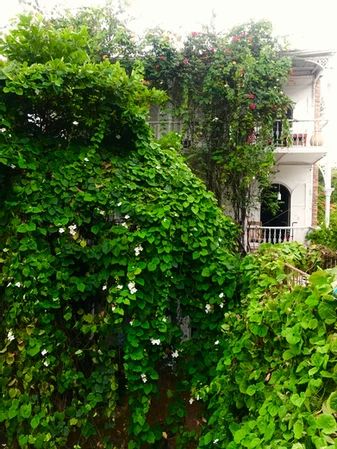
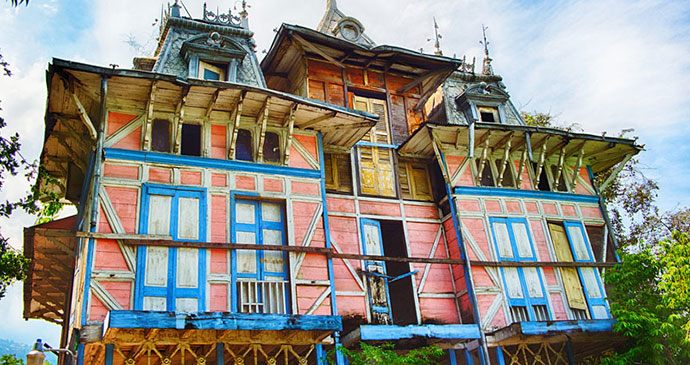
In the historic districts, Haiti is home to the Gingerbread house, a colorful style of architecture that has defined the island and defied almost every single weather event since inception. First introduced by three architects over a century ago, this specific style of colorful house with its exquisitely detailed trim work, tall windows, and airy interiors may look delicate among the more solid buildings of the Haitian landscape, but their strength and ability to withstand storm after storm has landed them on the preservation and conversation list of the World Monuments Fund where they are being renovated, rehabilitated, and appreciated for their craftsmanship and their historical significance.

Like the old cars and weathered residences of Havana, the gingerbread houses of Haiti create a cinematic aesthetic. With about 300,000 of them scattered throughout the island, they offer a peek inside the past to a time when Haiti’s wealthy built breezy beauties to defy island heat and humidity. Inspired by French architecture and New Orleans ornamentation, these houses were made primarily of wood, swathed in shutters, painted bright colors, and dotted with symbolism to reflect the mysteries and curiosities of a unique heritage not often discussed.

Outside, gingerbread houses feature gabled roofs, interesting angles, and strategically placed porches that offer picturesque views of the garden, the city or the sea. Inside, they are a menagerie of doorways and tile floors, louvres and alcoves,  with sky-high ceilings and arched doorframes all creatively arranged to encourage the heat to rise and the humidity to stay outside. Detailed interior trims and mouldings include ornamental designs of local patterns, emblems and shapes including voodoo symbols, all of which reflect the artistic creativity and spirituality of Haitian culture.

To capture this unique island aesthetic of the gingerbreads, which is at once, elegant, quirky, artistic and visually engaging, several unifying hallmarks help create a replicable effect…

  • Handmade Baskets: It is the ladies who do all do the selling at the market in Haiti. They tend to transport most of their offerings balanced on their head in large baskets, which have come to represent bounty and entrepreneurial spirit.
  • French Details: The French government ruled Haiti for 300 years, ending in 1803. Even though two hundred years have passed since then, French culture is still very much present around the country, particularly when it comes to design, language, food and antique style housewares.
  • Wood Shutters: A house in Haiti without air conditioning depends on wooden shutters to help cool interior spaces. Tall and elegant, these shutters take the place of drapes and bring a little bit of the outdoors in.
  • Folk Art: One of the most vibrant art forms on the island besides music, is folk art paintings which capture the passion, spirit and history of Haiti in vibrant colors. Some newly discovered favorite artists include Hector Hyppolite (1894-1948)  Andrew LaMar HopkinsJean Yvone Casenueve, and this one in the shop.
  • Unique Flooring: Many floors in the houses of Haiti’s historic districts are painted with patterns or contain geometric tiles that help keep the interior spaces cool and also looking beautiful.
  • Gingerbread Details: Gingerbread trim, victorian millwork and scroll saw designs are staples both indoors and out and can be seen all over Haiti, but most predominately in the historic districts. Unique architectural elements reflect the island vibe.
  • Tropical Plants: Haiti is home to over 25,00 different species of native flora and fauna. Nothing adds an instant dose of the exotic quite like growing a tropical plant indoors or out.
  • Voodoo Symbolism – With ties to the country’s African roots and the Roman Catholic religion, the practice of voodoo in Haiti offers a connection to the spirit world through many different manifestations including connections with patron saints and ancestral spirits . This symbol represents Papa Legba who acts as the mediator between the spirit world and the living world.
  • Vibrant Colors – The colors of the national flag of Haiti are blue, red and white but the country as a whole is awash in vibrant hues.  Inspiration can be found all over the country from the beautiful beaches to brightly painted buildings, textiles, handicrafts, art and even the famous tap tap buses. The gingerbread houses seem to reflect them all!

A gingerbread house in Port-au-Prince. Photo courtesy of Experience Haiti.

A few decades before the gingerbread bread houses started popping up around the island, a  man named Dupre came from France to Port-au-Prince in the 1860s. He started a rum distillery and gave it his family’s name – Barbancourt. One hundred and fifty years later, Barbancourt is recognized as one of the best rum brands in the world and is still operating as a family run business, now in its 5th generation.

The grounds of Barbencourt Distillery located in Port-Au Prince

By utilizing pure sugar cane juice instead of the more common molasses,  Barbancourt’s method of distilling rum has won awards around the world and is by far the best known and best-loved rum in Haiti. Ideally, we would have been using Barbancourt in our recipe today too, but after a lengthy discussion with a spirits expert at my local liquor store, it was decided that a 151 blend of rum would be the most appropriate in order to ensure that the bananas would catch fire and truly become a flambe. Several companies make a version of 151, which is essentially just rum with a really high alcohol content (75% by volume) but sadly, Barbancourt does not. Their highest alcohol content is 43%. So  I went with Goslings for this recipe. Goslings, like Barbancourt, has been around since the 1800s, and since it is made in Bermuda, it still lends an island vibe to this week’s cooking endeavor.

I should also note that the recipe never specified how high of an alcohol content was needed, but 151 is the standard go-to in the flambe world, so it’s a safe bet to rely upon, if this is your first time lighting foods on fire, like it was mine.

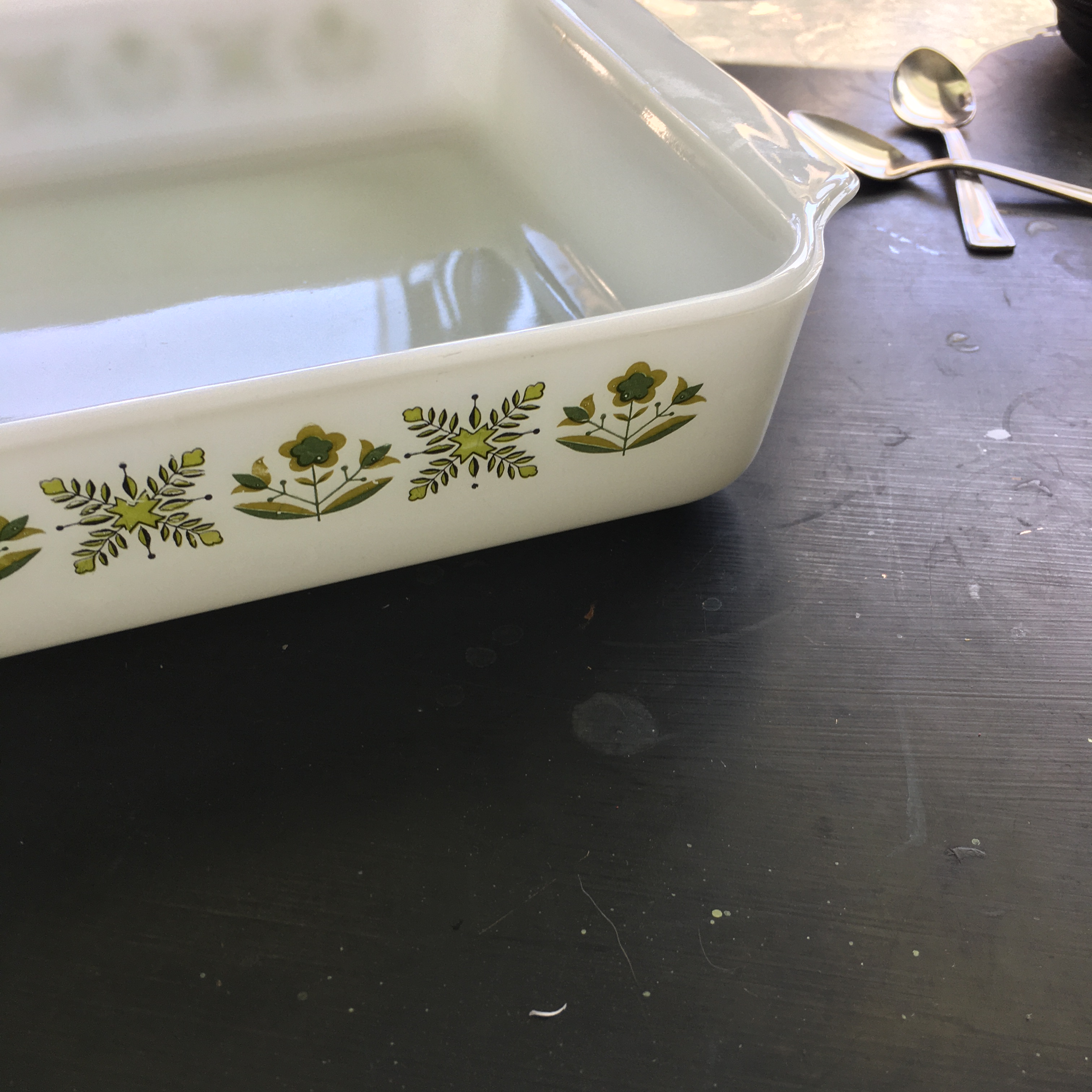
Grandpa Herbert’s 1960s Anchor Hocking casserole dish – protector of all fire-related cooking endeavors.

I’ll admit I was a little nervous about this step myself.  Before I bit the bullet and lit the match, I made sure to have our under-the-sink fire extinguisher out on the counter along with a dry towel for tamping, just in case the flames got a little too overzealous. I also used a special baking dish that has magical protective powers. My grandpa Herbert’s 1960s Anchor Hocking Fire King casserole dish. If you recall from previous posts, Herbert was a fireman in Chicago for forty years and I like to think that his baking dish holds special powers and would protect anyone who cooks with it from any unwanted fiery encounters.

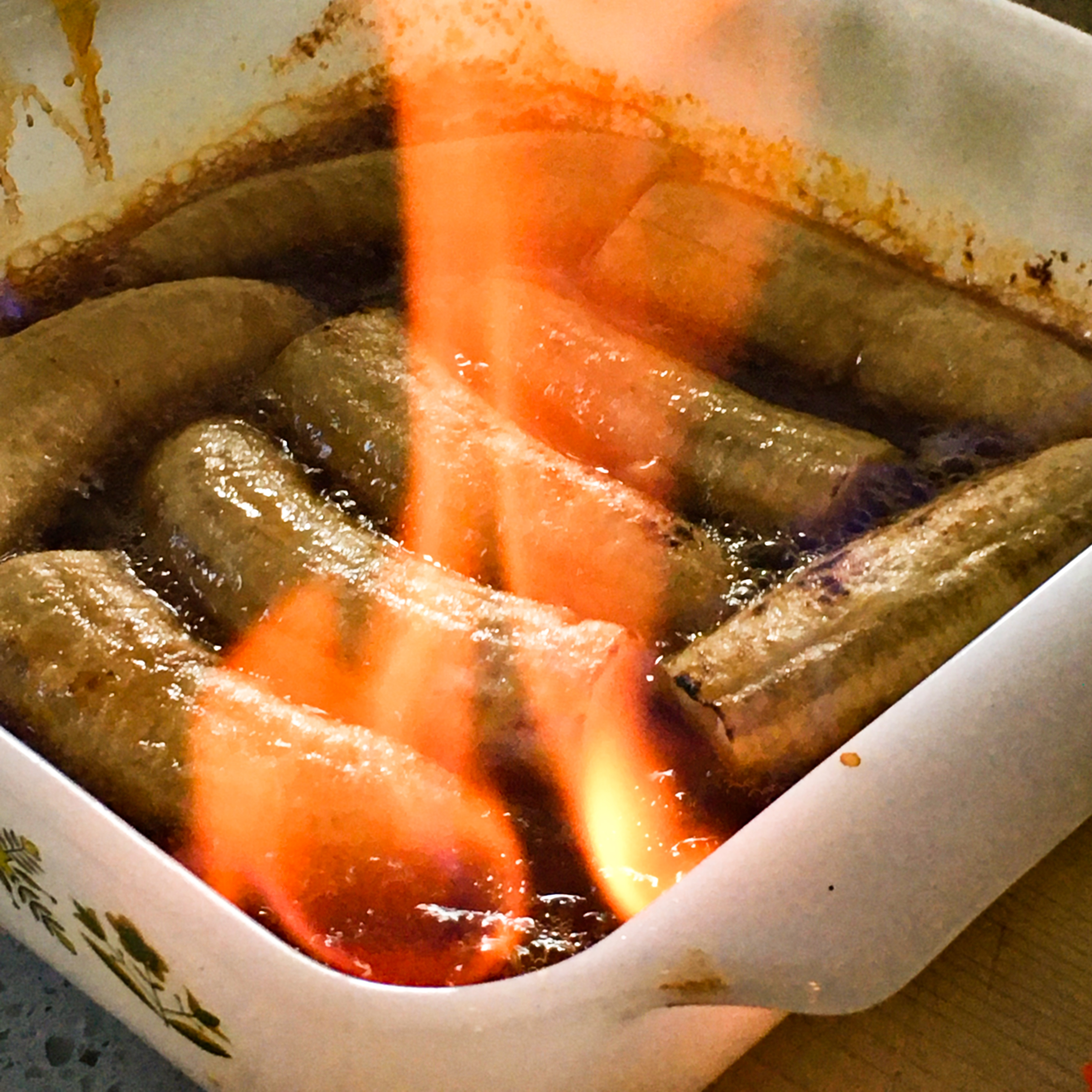
Thanks to Grandpa, the dish, and the careful precautions, I’m happy to say that the kitchen is still intact, no one suffered singed eyebrows or burnt hair and the counter didn’t catch on fire. The flames, about 5 inches in height, lasted for about a minute before dying out. It was fun to watch them dance around the dish in that same mesmerizing way as lighting sparklers on the Fourth of July, or staring at a bonfire on the beach.  All in all, this was a recipe that was exciting to make and delicious to taste.

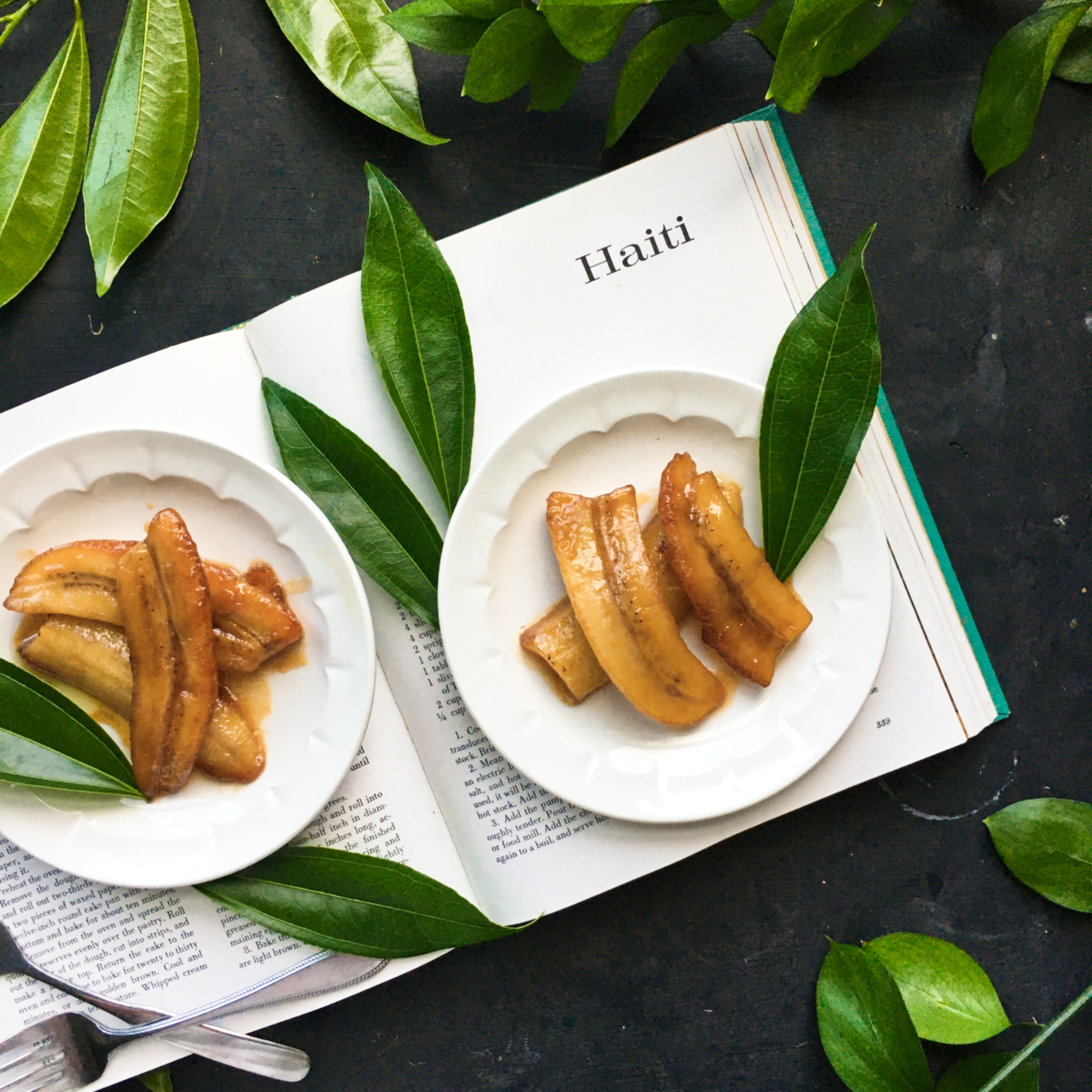
If you are new to the world of flambeed desserts, which have been around since the 1800s, than you are in for a treat. Lots of foods can be doused with alcohol and set aflame including crepes, oranges, pears, puddings, cakes, and cocktails but bananas are one of the most favorite.  In the oven, the bananas briefly swim in a sea of hot butter, sugar, and rum until the point where they all join together and start to turn brown and sticky. Once the caramelization begins to happen, then the dish gets doused in rum, the match gets lit and the rum catches fire creating a rich, warm flavor and an entertaining spectacle. Forget dinner and a show. With this recipe, we are going straight to dessert. And a show.

Bananas au Rhum

serves 4

4 firm ripe bananas

1/4 cup butter

1/4 cup brown sugar

lemon juice

1/2 cup rum

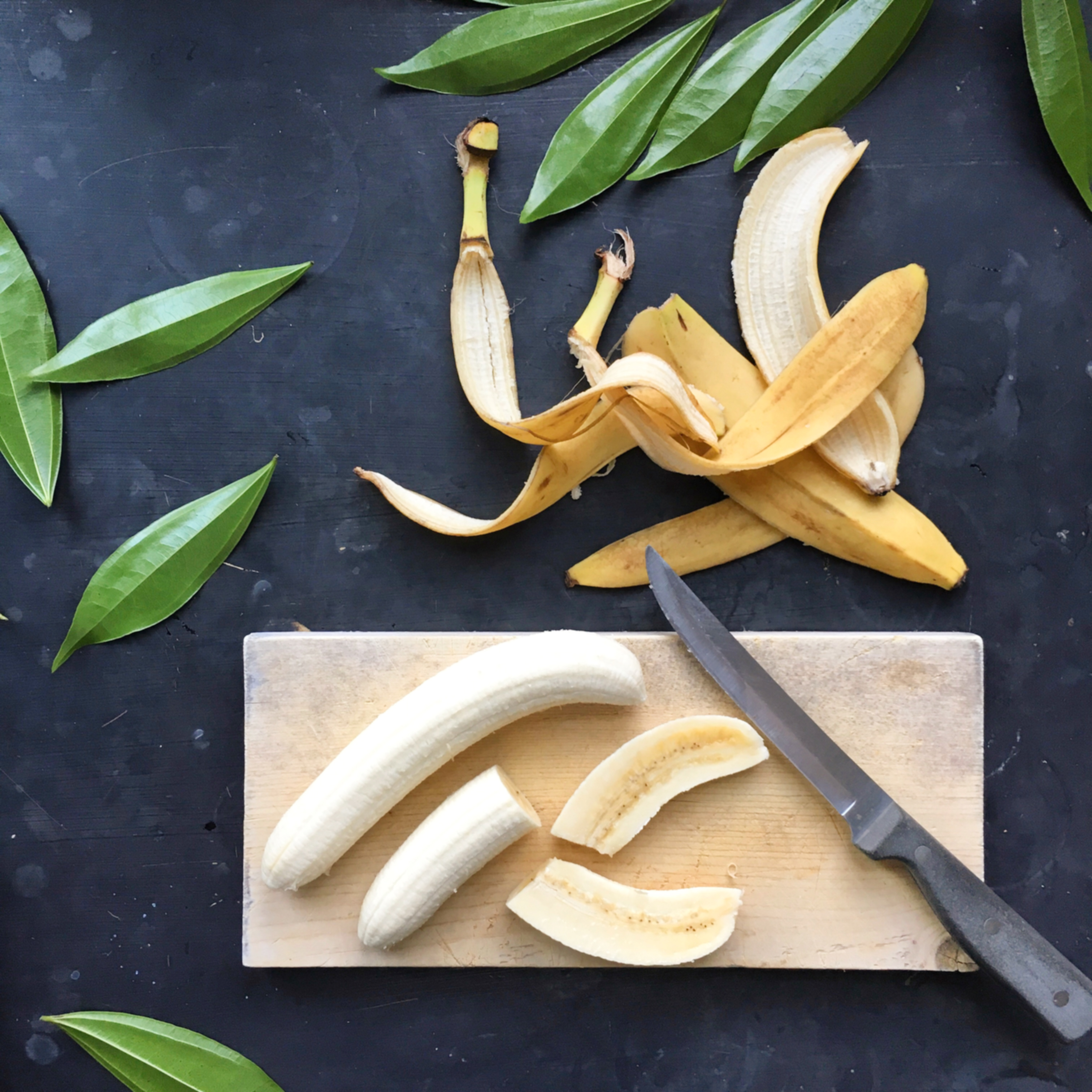
Preheat oven to 450 degrees. Peel the bananas and cut them in half lengthwise.

Melt the butter in an ovenproof baking dish and add the banana halves.

Sprinkle with sugar…

and bake for about 10 minutes or until the bananas are thoroughly hot and the sugar is melted. (Note: At this stage, they will look a little bit like half-cooked sausages.) Sprinkle with lemon juice and baste briefly. Return to the oven for two minutes.

Warm the rum ( I put mine in a cup in the microwave for 15 seconds) and pour it over the bananas. Ignite the rum…

and when the flame dies, serve immediately.

Besides the fire component, what makes this dessert especially interesting is that the bananas retain their shape. It sort of turns into a little game with your brain, because you’d think upon initial appearance – post oven – that the first bite would be relatively firm like a brownie or a soft-boiled egg but in actuality, the bananas have the consistency of something more like mousse or a marshmallow or even whipped cream. The first bite is an unexpected yet delightfully delicious surprise. In actuality, these cooked bananas are not unlike the gingerbread houses of Haiti – their looks are a little deceiving when it comes to the integrity of their composition.


Serve this dessert outdoors with a cup of coffee and you have the makings of a magical early Autumn night that is just right for this time of year. Since Bananas au Rhum is not one of those desserts that likes to hang around, go ahead and enjoy the whole dish right to the very last bite. You won’t regret it in the least!

Cheers to deliciously dramatic bananas, to the happy side of Haiti and their beautiful historic gingerbreads, and cheers to our brand new season. I hope you fall in love with each and all:)

Join us next time for Week 21 as we head to Hungary for colorful comfort food and officially mark the halfway point in the International Vintage Recipe Tour. Until then, happy cooking!

The Switch Up, Homemade Mustard and How Danish Modern Came to be a Household Name

Vintage Africa travel poster

If you stopped by today to visit the culinary world of Dahomey, you are in for a little switch. Due to the inability to source all of the African country’s recipe ingredients in time for this week’s post, Dahomey will be postponed until next week.

In its place, we will be traveling to Denmark today as Week 13 of the International Vintage Recipe Tour 2020 continues. This little obstacle in the schedule turned out to be nicely fortuitous – as it is Easter weekend and thanks to Denmark, we will be making a homemade condiment that often appears at the Easter dinner table – especially if you are serving ham for the holiday.

In today’s post, we will be making homemade mustard with nothing more than a handful of common pantry staples.  It takes five minutes to make, and after a quick rest in the fridge, it’s ready to enjoy. We will also be discussing the rise in popularity of the design aesthetic that made Denmark famous around the world – Danish Modern – and how one man’s ideology in the 1920’s turned it into a universal trend in the 1950’s.

Teak credenza by Ib Kofod Larsen

Most vintage aficionados will be familiar with the modular, natural wood look of classic mid-century furniture. It’s been a popular choice in kitchen and dining room decor for the past 20 years thanks to stylish modern yet retro television shows like MadMen, who glamorously showcased its minimalist appeal. But you may be surprised to learn that the Danish Modern aesthetic actually began long before the 1950’s.  Thirty years prior to that, it started taking root in the mind of this guy…

Kaare Klint (1888-1954), architect and furniture designer

… Kaare Klint. A Copenhagen born architect, Kaare was in search of something different than the Bauhaus style that dominated the trendy furniture marketplace in the 1920’s and 1930’s.

A Bauhaus desk

Bauhaus furniture, with its nod towards industrialization and the sleek style of steel and metal components, was pretty to look at it but it wasn’t very functional and it wasn’t very comfortable. Similar to avant garde clothing that makes it way down the runway at fashion shows, Bauhaus was eye catching, stylish, stimulating and conversation worthy but when it came to practicality in everyday real-life, it wasn’t very accommodating. Kaare, taking note of these Bauhaus shortcomings, approached furniture design in a different way.

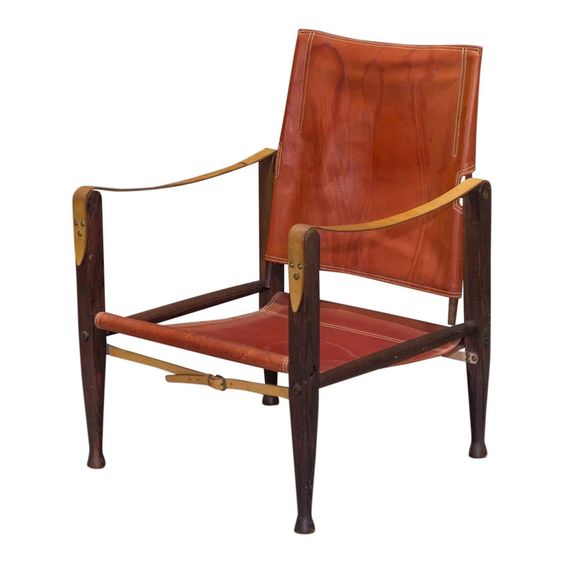
Kaare Klint Safari Chair

Using his architectural mindset, Kaare’s concept was to design pieces that had simple lines that were thoughtfully engineered for comfort first and form second. He threw the words honest and beautiful and democratic around, but ultimately, what he really wanted to do was to make furniture that had palpable integrity. This was a novel idea. Up until Bauhaus and Kaare Klint decided to change things up, furniture had been pretty traditional. Variations of the same style, fabrics, materials, and shapes had stayed relatively the same for centuries. A chair was a chair was a chair in regards to shape, size and comfort. But when Bauhaus and then Danish Modern came along, things changed.

Kaare Klint circle bed

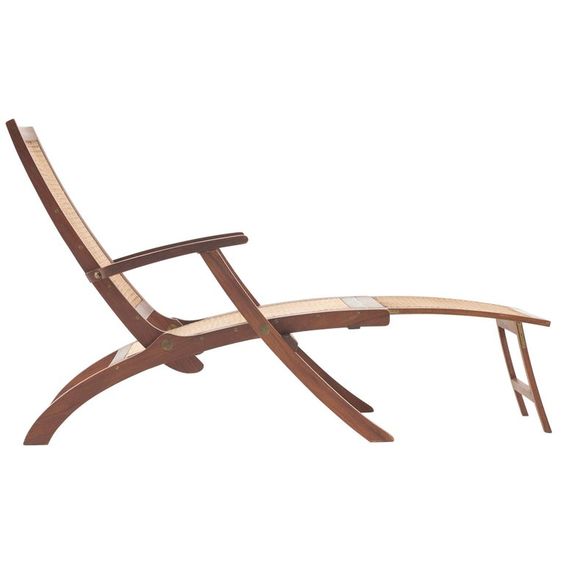
By studying the size, shape and form of the human body, Kaare came up with a series of furniture designs that turned out to be both remarkably beautiful and remarkably comfortable. Utilizing neutral colors, natural materials and warm shades of wood, Kaare designed the antithesis of the cold, metallic style of the Bauhaus movement. He made furniture that fit. Comfortably.

Kaare Klint deckchair

Embracing the skill and tradition of local Danish cabinetmakers, Kaare combined architectural sensibility with artisan craftsmanship. These cabinetmakers were trained in the centuries old techniques of traditional woodworking that had been passed down to them through generations. Highly skilled at their craft, they were true artisans who proudly and carefully produced pieces of furniture by hand, with the intention that their pieces would be built to last a lifetime. Kaare appreciated that level of detail and devotion and aspired to reproduce the same attributes in his furniture designs.

Kaare Klint table

As the collaboration between Kaare and his cabinetmakers took shape, this new style of design began to develop. Kaare, confident in the end result that was produced, taught his philosophies in design classes, inspiring students to think architecturally about functional furniture. Eventually a tribe of  architects, designers and cabinetmakers all worked in the same vein together utilizing Kaare’s concepts.  Before long, the art councils in Denmark began promoting this remarkable style of furniture, describing it as a Danish handicraft, something that celebrated the unique cultural landscape of Denmark.

Danish designer Hans Wegner (1914-2007) started out as a cabinetmaker’s apprentice before eventually becoming a world renowned furniture designer. This is set of his 1950’s era dining chairs, very much in keeping with the Danish Modern aesthetic inspire by Kaare Klint.

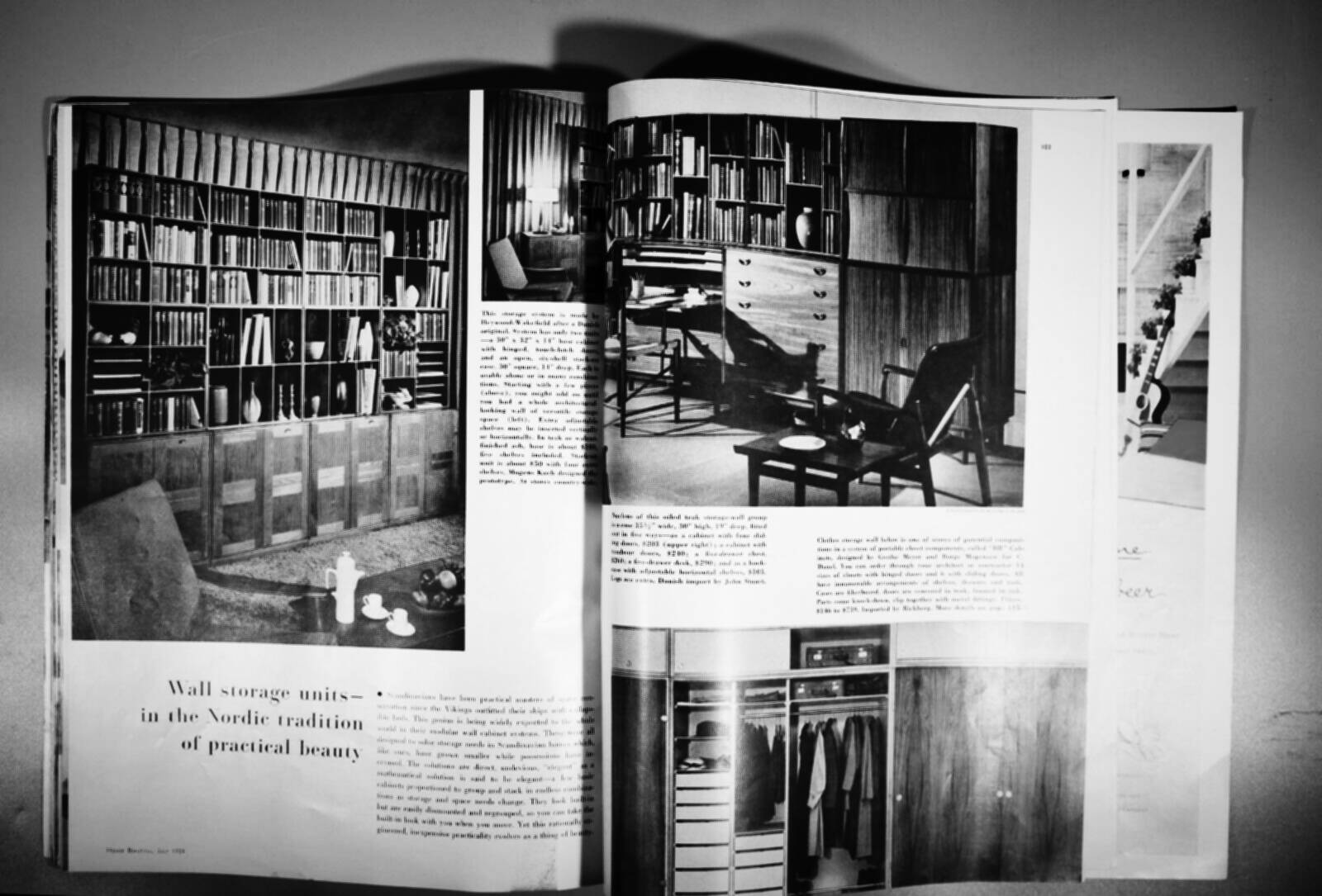
With a style defined by simplicity, comfort, quality, warmth, and beauty, it wasn’t long after the Danish art councils started promoting this aesthetic that interior design journals and magazines began taking notice. Coined Danish Modern, industry writers and promoters began exalting the attributes of this natural, symbiotic relationship between form and function.

This 1959 magazine article from House Beautiful extolled the “practical beauty” of Danish Modern design.

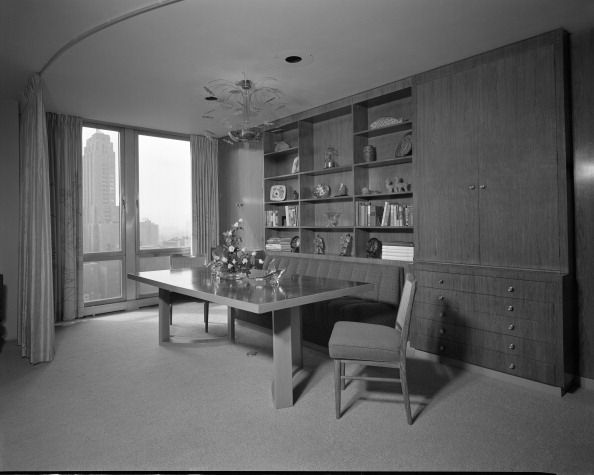
As awareness grew, Danish Modern began to attract a certain type of enthusiast from countries beyond Denmark. In particular in the United States, it became very popular in the 1940’s and 1950’s with young, urban intellectuals in the middle to upper class bracket.  These enthusiasts lived in the major market cities of New York, Los Angeles, Chicago and San Francisco. They appreciated a fresh perspective, admired unique artistry, and favored outside of the box thinking. As a culturally savvy group, they believed in the beauty of fine art and looked for ways to incorporate it in their daily lives in thought-provoking ways. They filled their spaces, not with factory mass produced furniture, but with one-off pieces that made a statement about their personal taste and their artistic temperament.

A Chicago city apartment photographed in 1953.

Danish Modern furniture offered more than a comfortable recline – it offered a lifestyle choice that showcased honesty, purity and naturalism, all qualities of the 1950’s culture that Americans aspired to.

During the 1960’s other furniture companies took note of the rise in popularity of Danish Modern and started reproducing their own versions. But these replica pieces were not of the same quality in construction as the originals. These were mass produced pieces designed to sell fast for the trendy buyer market. They were made by unskilled factory workers on assembly lines, not by mastered hands in Danish workshops.
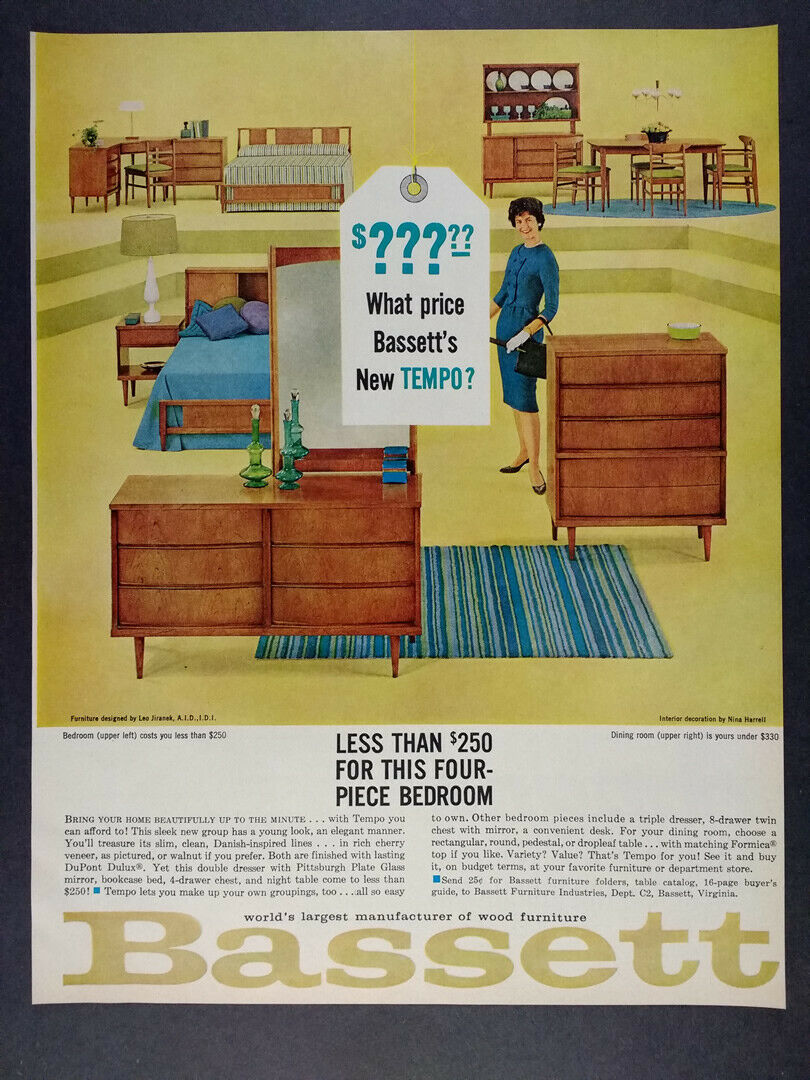
1962 Basset Furniture Danish Modern ad declaring that yes, you can afford it too!

Traditional Danish designers and cabinet makers acknowledged these knockoffs but were uncertain how to evolve past the competition. Even though the knock-offs were inferior products, they ultimately became the downfall of the original Danish Modern marketplace. The Danish cabinet makers knew only their skill. The Danish designers and the Danish architects knew only the style they had created. None could see what the future of Danish Modern looked like past what was already being designed in the same similar vein. There were no new concepts waiting in the wings of the Danish Modern style post 1960’s.

By the 1970’s, the market had become saturated with knock-offs, covering over the original handcrafted beauties that had been built in Denmark. These knockoffs became to too familiar, too commonplace and too accessible in the furniture market which muddied the playing field.  Value was placed in the fast selling of the pieces rather than the appreciation of the fine art form. As with most trends, consumer tastes changed in the modern furniture buyer of the 1970’s.  They were no longer interested in furniture that was meant to last a lifetime. They liked the freedom of being able to redecorate every few years, and of not being tied down to one type of design aesthetic. By then, the Danish Modern style was viewed as outdated. Consumers wanted color and bold shapes. They wanted eclectic designs and chaotic patterns.  They wanted glass and laminate and plastic and mirrors.  They wanted post-modern and pop culture and furniture that spoke of the disco era. Essentially, they wanted everything that Danish Modern was not.

A 1970’s era living room.

It wouldn’t be until the early 2000’s that Danish Modern and the original philosophies behind it would come to be appreciated again. Just like those early fans in the 1950’s, consumers in the 2000’s were searching for the well built, the hand crafted, the artistic. They were searching for the thoughtful story and the artisan eye. They were searching for designers like Kaare Klint and the school of artists that grew up around him. Suddenly Danish Modern bloomed again. And just like in the 1960’s and 1970’s so did the knock-offs.  Now the midcentury market is bubbling over again, saturating so many interiors we barely notice it anymore. These days there is definitely rumbling in the design world that midcentury is on its way out again and that something completely new is starting to take hold. Many say it is the return to the femininity and florals of the 1980’s but with a stronger, bolder, darker, more modern edge.  Consumers today are looking for something beyond the grey, marble, industrial minimalism that has dominated the interior design world for almost twenty years. Burgeoning trends point towards the use of color and eclectic collections once again. It’s the emergence of an aesthetic that has yet to be completely defined, but, if history tells us anything, it’s that somewhere there’s a Kaare Klint type designer just waiting to reveal something new and something remarkable.

While we wait to see what unfolds in the furniture design department in this new decade, we’ll make some mustard, Danish style. Like the furniture, this is a recipe that has integrity and simplicity. It involves seven ingredients and one bowl. It makes one cup and lasts in the fridge for weeks. It has spicy, sweet flavor and tons of possibilities when it comes to pairings. If a mustard recipe could be equated to a well built chair – it would be this one.

Danish Mustard

(Makes 1 Cup)

1/2 cup dry mustard

7 tablespoons granulated sugar

1/4 cup boiling water

3 tablespoons vegetable oil

2 teaspoons Worcestershire sauce

1/4 teaspoon salt

1/2 teaspoon cider vinegar

Combine the mustard and sugar in a bowl. Beat in the boiling water to make a paste. Beat in the remaining ingredients. Let cool and refrigerate.

Because this has a honey mustard type taste to it, it would be excellent served with ham, or dolloped on top of a soft mellow cheese like goat or brie, or slathered on sandwiches of chicken and lettuce. Really though you can enjoy it in any type of situation that calls for mustard. Like any homemade condiment, this is a wonderful and delicious and surprising alternative to store-bought mustard and contains only natural ingredients without any added preservatives. Just like a good horseradish, it packs a little punch in the back of your throat and tickles your nose.

Cheers to natural products, whether they be furniture or foods:) Hope this weekend that your feasts are full of flavor and your baskets plentiful. Happy Easter!

Join us next week, as we circle back around to Dahomey for week 14 of the International Vintage Recipe Tour 2020.


Discussing Rustic Home Decor, Beer & Movies with Designer Frick and Frack Scraps!

If you have read her blog bio, you will know one of the things that Ms. Jeannie loves most in life is havin’ a laugh.

She loves stumbling upon things that are unexpectedly funny, which is exactly what occurred, when she set out  to interview one of her favorite fellow Etsy shop owners, Frick and Frack Scraps.

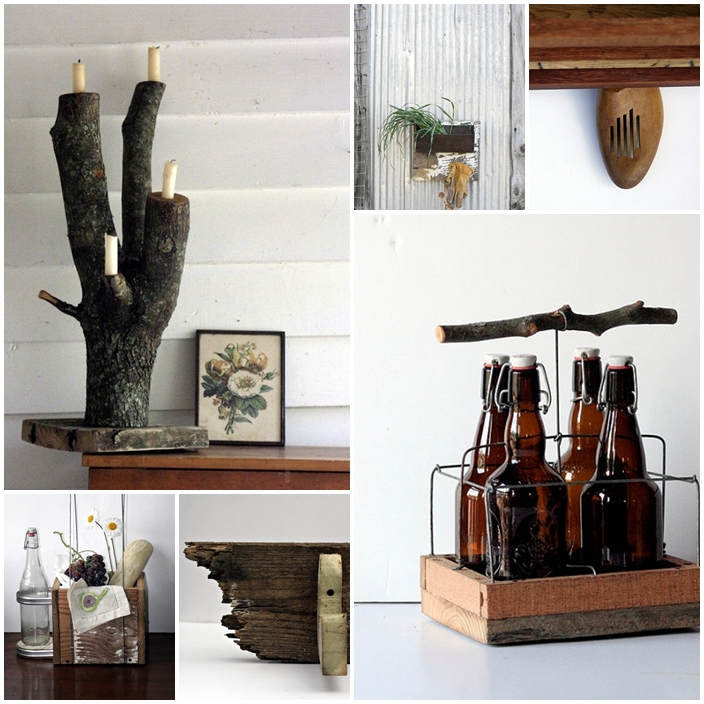
Frick and Frack Scraps builds some of the most wonderfully whimsical yet fully functional home decor items.  They are rustic, provincial, aged, weathered, repurposed, re-salvaged and entirely original in all aspects.  Here is a sampling of items from their shop…

Sampling of Items from Frick & Frack Scraps

Naturally she was thrilled to discover the funny designer behind the fun shop…

Ms Jeannie:  I love the rustically provincial/whimsically repurposed theme of your shop! Please explain a little about your design inspirations.
Frick & Frack Scraps: Well, thank you, firstly, for the compliment and the interview. Your blog is so unique. I get inspiration for my projects from leftover scrap laying around. My father was an architect and an armchair engineer. He used things differently and saw potential in lots of things that most people would not see. I think I got a little of that from him. And also from beer.
MJ: Do you think a lot of people are inspired by beer?
FFS: Two words, Ms. Jeannie.  Benjamin Franklin. Enough said.
 MJ: You have sold a lot of one of a kind items in your shop. Currently there are 11 items for sale.  Are you concepting new ideas now?
FFS: Well, don’t you do your homework?! I have been busy, in the non-Etsy world, with other work, so right now I am on sort of a break, but I always look for things to use for when I am back in the saddle on my saw horse.
MJ:  What designers inspire your work?
FFS: Well, I think of things in very straight terms. Not a big fan of curves, so I think that makes Mission and Prairie designers my gut inspiration. O.K. I will admit it. I have posters of Stickley and Wright on my bedroom walls.

An example of Mission style furniture. Photo courtesy of 4interior-design.com

An example of Usonian style furniture. Photo courtesy of inhabitat.com

Prairie Style Table Centerpiece from Frick & Frack Scraps

MJ:  What is your most favorite type of material to work with?
FFS: Wood and steel and beer cans.
MJ: Do you ever worry about running out of scraps to work with?
FFS: Not while I live in the United States. It is funny how some people see things as useless and others see a winerack. There is more than enough.
MJ: Explain a little about your design process. How do you get started on each piece?
FFS: Since it is all scraps to start with there is a bit of a limitation at the beginning. I can not go into something thinking “table” when I only have enough scrap for a box. Once I have stuff in front of me, it is a very simple, no holds barred process. The real upshot is if I make a “mistake” it just goes into a bin until it can be used on something else.
MJ: While you are working on each creation, do you ever think about where  they might end up?  What style of house it will go to? Or what sort of person would buy it?
FFS: Absolutley! There is a lady on Etsy, Jacksonofalltrades, that wanted some Frick & Frack for a birthday party at a dude ranch. I never thought of my pieces that way but I think it will look good. So I have that going for me,  which is nice.
MJ: At what point in life did you realize you were destined to build things?
FFS: I have always built things as far back as I can remember. “Destined” is such a big word. I think it should only be used when referring to superheros.
MJ: Speaking of superheros…who is yours?
FFS: My pal, Thom Zelenka. If he were a real superhero he would be Always OK Man. He never seems to get rattled, always has a nice or kind word and has always been the same guy – from the day I met him to decades later. Pretty damn cool.
 
 MJ:  What is it that lures people towards your items?
FFS: I am not sure. I made the four pack out of parts that were left over, after a six pack I had made that sold pretty quickly. I am sooo glad I am able to find similar materials for the four pack ’cause WOW have I had to make alot of them. But I digress, I think people like the price, the FUNctional part, and also I make alot of things that hold or incorporate alcoholic beverages so it could be that these buyers are all fun drunks. 

The Four Pack & The Six Pack from Frick & Frack Scraps

MJ: What is your most favorite item in your shop right now and why?
FFS: By far, the Fire Box Humidor. My pal, Tommy and I, made that and I am so proud of the re-use of that fire box. It is so outside the box. See what I did there?

1950’s Fire Box Humidor from Frick & Frack Scraps

MJ:  Is there one item that you are constantly striving towards building for your own personal collection?
FFS: I use my wife’s style as a guide to things I build for our house,  so  that there is no conflict. I once bought a table at an auction for like 200 bucks and she called it the “UGLIEST TABLE IN THE WORLD” two years later I sold the original Gustav Stickley drum top table for 1500 bucks. I still smile about that.  But I still do not get to pick out what I like. Ah love!
MJ: If you could build props for any tv or movie set, past or present, which would you choose?
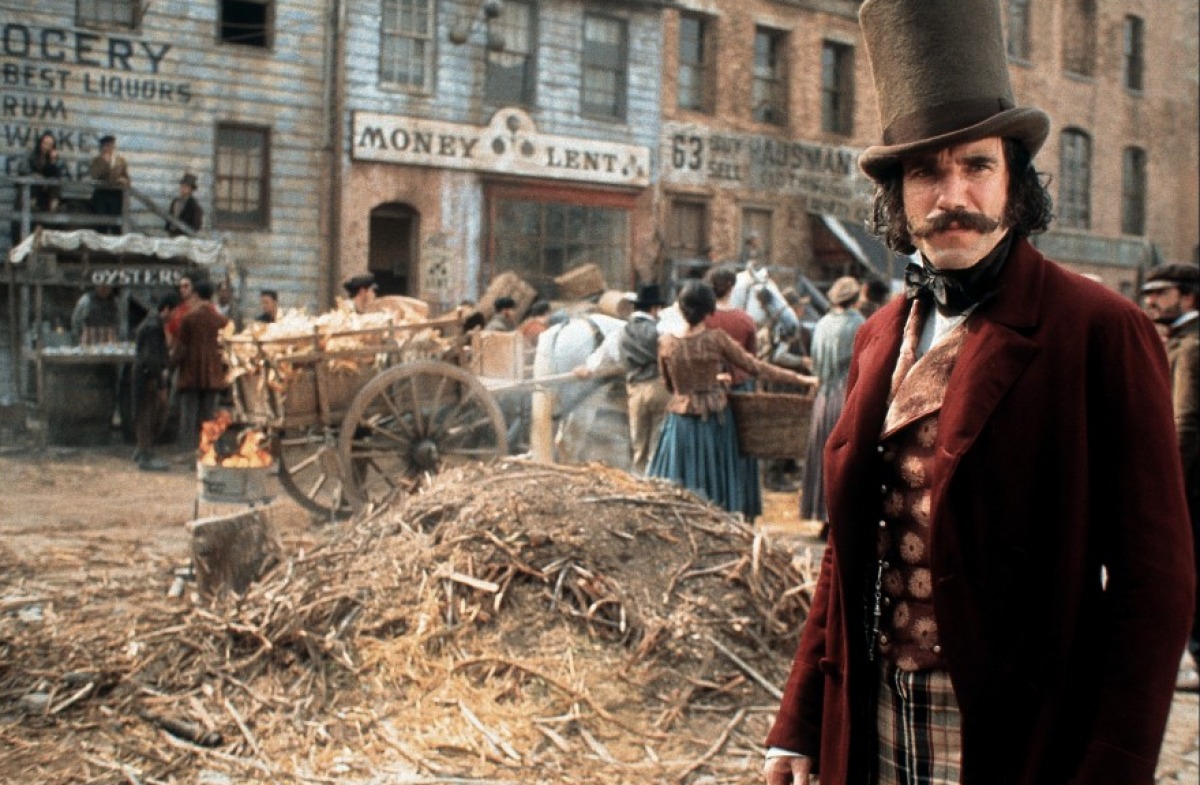
FFS: Gangs of New York, There Will be Blood and A Good Year in the movie department for sure. I think there would be no challenge for me to get it right the first time.

Gangs of New York set

There Will Be Blood movie set

A Good Year film set

MJ: Two of the three movies you mentioned, star Daniel Day Lewis. Do you think he would be a fan of Frick & Frack?
FFS: I think so. He is very unique himself and he lives in a castle pretty much so he’s certainly got the money to “drink my milkshake”.
Side note: If this reference confuses you, check out the “milkshake” scene from There Will Be Blood
MJ: Also, two of the three movies you mentioned are period dramas and the third is a contemporary drama set in provincial France. It is easy to picture Frick & Frack in both these worlds. What inspires you about the look of these films?
FFS: There is a utilitarian feel to everything old to me. Not much design just use in mind when they were made in the old days. That has beauty to me. I like that.
MJ:  What one type of item is a consistent seller in your shop? What seems to be the slowest to sell?
FFS: The Four Pack is a runaway success. The Fire Box Humidor and the Coat racks are the slugs but I looked at other Etsy shops that have coat racks and mine should be sold as firewood compared to others! There is such cool stuff on Etsy.

Large Coat Rack & Small Coat Rack from Frick & Frack Scraps

MJ:  What type of environment (besides the fireplace!) would your coat racks look best?

 FFS: I dont know. The ones with the wooden “sleigh” shaped hooks would be great in a rustic cabin in Montana. Like a River Runs Through It house that Ikea just re-decorated.
MJ: What are some of the challenges of being a handmade seller?
FFS: I think people’s expectations. I make things rustic. I am not a finish carpenter. I send items out that might give you splinters. Really. I have not had any problems but that is the part that makes it hard.You just never know how someone will react when they get an item in hand having based their purchase on three or four pictures and a description.
MJ: Do you think if you heard more feedback from buyers that you would build different items?
FFS: I am not sure. I listen to my head when I build. There is not much more room in there for other people.
MJ:  What’s your shop’s greatest success story?
FFS: Well, all of the coverage I have gotten for sure! I think when Urban Outfitters emailed me to be a vendor for their outdoor center in PA, that was pretty cool. Nothing ever came of it, in the end, but just think about how that one email could have really changed things. And the ONLY reason is due to Etsy and all of their hard work.
MJ: If you could spend one day, building Frick & Frack alongside anybody famous, living or dead, who would you choose?
FFS: Frankie Wright. (that’s what his friends call him)

Architect and designer, Frank Lloyd Wright (1867-1959), father of organic architecture and leader of the Prairie School Movement.

MJ:  What does your studio space look like? What would your ideal space look like?

FFS: I build most everything thus far at my pal, Tommy’s, old mill building. It is old, dusty, and full of great equipment. My ideal space would be a 1/2 indoor 1/2 outdoor space, maybe an old barn.
MJ:  What’s next on the Frick & Frack horizon?
FFS: I have no clue. Some days I think if I could just do this full time, life would be alot more simple and rewarding. I think I will try to get some wholesale clients that want lots of four packs. Maybe a cool brewery like Dog Fish Head or Victory Brewing Company could find my work and fall madly in love with it.  And then I will be the hero that made their beer sales skyrocket and there would be a movie made about my life and how I changed the corporate culture of beer packaging.  I would become a household name and then retire in Ireland to golf until I die. Who knows? It is amazing what a minute can do.
MJ: What would the title be to that movie be?
FFS: I think it would be: Luck. I have had alot of it in my life.
POST UPDATE (10/10/2012):  Frick and Frack Scraps has just entered the blogging world! If you are in need of a laugh (or 20!) stop by and visit their aptly named blog, Out of Hand.