

Who’s to know when a recipe is created or a cookbook is compiled, how far it will travel? Who’s to know how many decades it will resonate? How many generations it will engage? And how many people it will connect?
Not even the best book editors in the world or the most sophisticated algorithms could predict such specific trajectories at the time a cookbook makes its publishing debut. Sure, there are generalizations and speculations, assumptions, and averages of how many people might be reached and might be interested and might purchase, but no one can predict fate, especially when it comes to food. And certainly no one, human or machine, can accurately pinpoint the moment of magical alchemy when a cook connects with a recipe in such a way that they continue to make it for days and decades after.
Great recipes travel far. We all know that. But what happens when an old cookbook long forgotten by many but still lovingly remembered by one goes out of print? Does its ability to travel far and wide end? Do the recipes fade away into oblivion? Are the foods forgotten and the memories of them reduced to a murky and muddled sense of time remembered long ago?
In today’s blog post, we are discussing the trajectory of one regional American cookbook published in 1962, and how it was brought back to life in 2025 by a woman living on the opposite side of the world. You’ll learn the midcentury story behind the original cookbook, the type of food that made it a treasured cuisine in America, and the motivations that brought it back into the spotlight again today so that a new generation can experience and enjoy it.
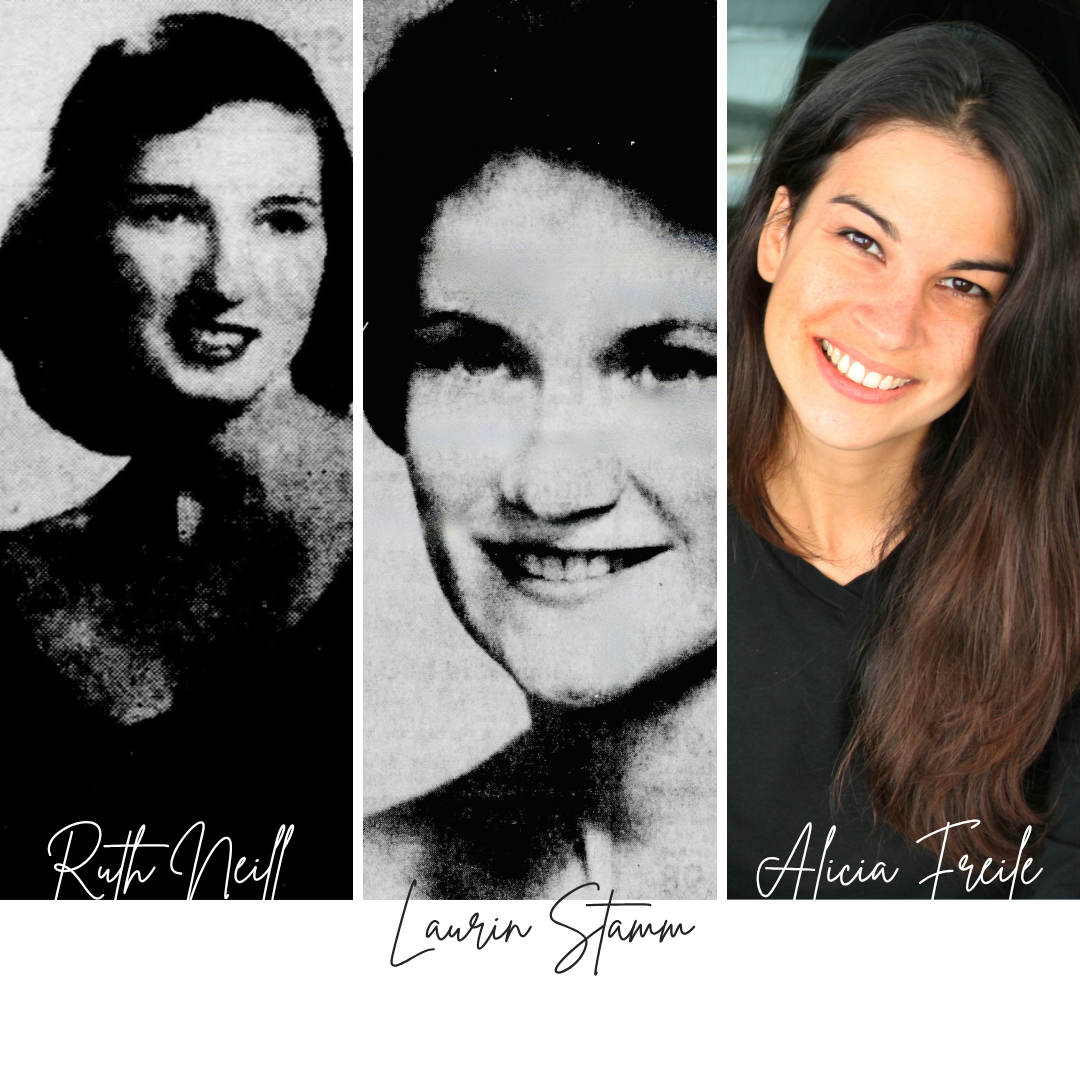
At the heart of this story, you’ll meet Ruth and Laurin and Alicia, three women separated by six states, three continents, and sixty years of life, but all equally responsible for the legacy of one long-ago book and the recipes in it.
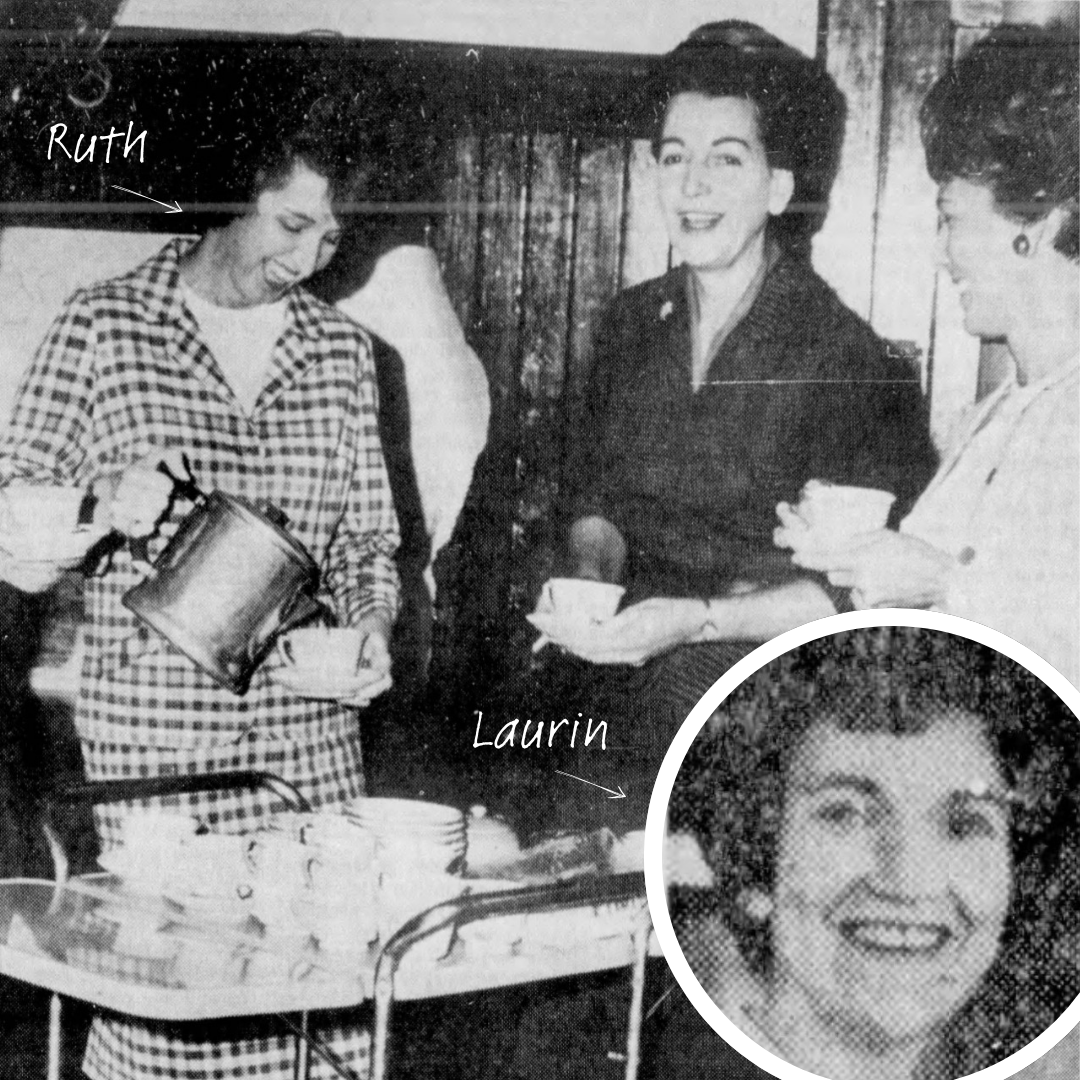
It all starts in the mid-20th century in the American South, when Ruth Neill and Laurin Stamm got together in Vicksburg, Mississippi, in 1962 to create a cookbook. The book was for a holiday bazaar fundraiser held at a local church the week after Thanksgiving. Close in age at the time, thirty-year-old Ruth and twenty-nine-year-old Laurin had a lot in common. They were both college-educated with creative majors in design (Ruth) and journalism (Laurin). Both had young families to care for. And both shared an enthusiastic love of food and their Vicksburg community.
No strangers to cookbook committees throughout their lives, when the theme for the 1962 Holy Trinity Episcopal Church Holiday Bazaar was selected as Pennsylvania Dutch, the two women joined forces to organize a fitting cookbook for the event. With recipes collected from Ruth’s Philadelphia friends and their respective families, along with three dozen recipes included from local Vicksburg kitchens, Ruth and Laurin’s cookbook, simply titled Pennsylvania Dutch Cooking, was ready for the festivities. With a limited print run of 100 copies, it contained all the traditional favorites that represented this regional style of cooking.
Both Laurin and Ruth were well-known socially in the Vicksburg community. Laurin was the food editor of the Vicksburg Post, a position she would hold for 58 years before finally retiring in 2011. Ruth was a celebrated hostess and interior decorator known for her gourmet flair, sociable personality, and active participation in community events. The recipes they collected for their book reflected their combined love for food and culture, and featured all the traditional old-world favorites popular in the Lancaster County and Lehigh Valley regions of Pennsylvania. Heritage recipes that were brought from Switzerland and Germany as immigrants settled the area, Pennsylvania Dutch food became inextricably connected with the local Amish and Mennonite communities who were faithful to the culinary roots of their homeland and made from-scratch desserts, breads, jams, jellies, and other sweets for the tourist trade in Lancaster.
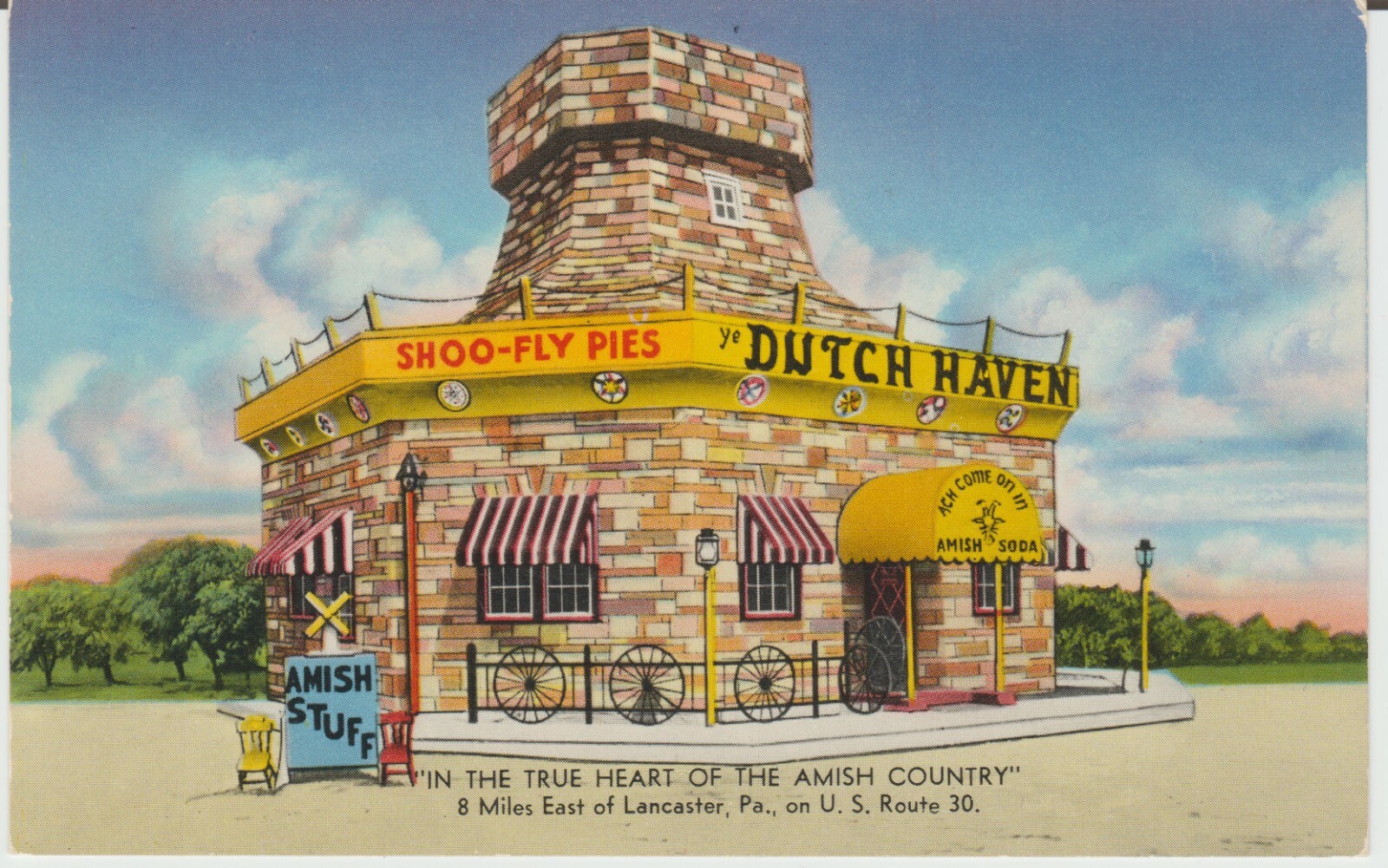
To fit with the Bazaar’s theme, Pennsylvania Dutch hex signs and traditionally costumed characters and sayings (kissen wears out… cookin’ don’t) decorated the cookbook’s cover and the interior pages. Classic Pennsylvania Dutch recipes included Shoo-fly Pie, Pepper Pot, Sauerbraten, all types of fritters, coffee cake, doughnuts, and an assortment of pickled vegetables and relishes. Exotic foods like Hog Maw, Liver Noodles, Scrapple, and Souse introduced Vicksburg locals at the Bazaar to the lesser-known delicacies of Pennsylvania Dutch cooking and illustrated the cuisine’s underlying waste-free thriftiness in using all parts of the animal. Just a few days before the Bazaar opened, an article in The Vicksburg Post encouraged locals to purchase the cookbooks early, due to limited supply.
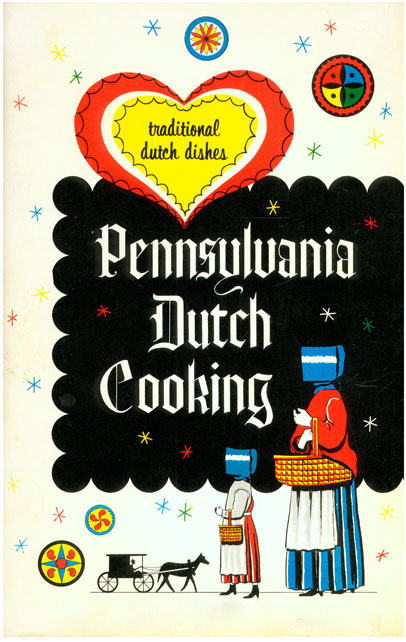
Published by Dutchcraft Company in Gettysburg, Pennsylvania, a printing house that specialized in local PA Dutch memorabilia and paper ephemera including postcards and recipe booklets, Ruth and Laurin’s cookbook exuded a humble, homemade sensibility. Made solely for sale at the 1962 bazaar, it didn’t include all the traditional publishing hallmarks that would easily identify its history in later decades. There were no author’s names or copyright dates. Laurin and Ruth’s names did not appear anywhere in the book, nor was credit given to Ruth’s friend, Carl Shaffer, who supplied some brief history on Pennsylvania Dutch culture and cooking for the introduction. There was no publication date listed nor any mention of the Holy Trinity Church or the holiday bazaar in Vicksburg, Mississippi. It was simply, as stated on the title page, a collection of “Proven Recipes for Traditional Pennsylvania Dutch Foods.” Accolades and recognition were not included.

Several decades later, several states away, in a second-hand book stall at a flea market in her hometown of Lancaster, Pennsylvania, teenager Alicia Freile spotted Laurin and Ruth’s 1962 cookbook. Not knowing then that this slim book would come to hold significant meaning for her decades later, it wasn’t until Alicia moved halfway around the world that Pennsylvania Dutch Cooking became synonymous in her mind with childhood memories and hometown nostalgia. So much so that in 2025, working as a design director at a publishing company in Australia, herself an enthusiastic baker, married, and the mother of a young son, she decided to reprint it.
Over the summer, I caught up with Alicia via interview to discuss the cookbook in detail and her reasons for introducing it back into the culinary landscape once again.
ITVK: Tell us a little bit about how you came to know the cookbook, Pennsylvania Dutch Cooking, and why you decided to reprint it?
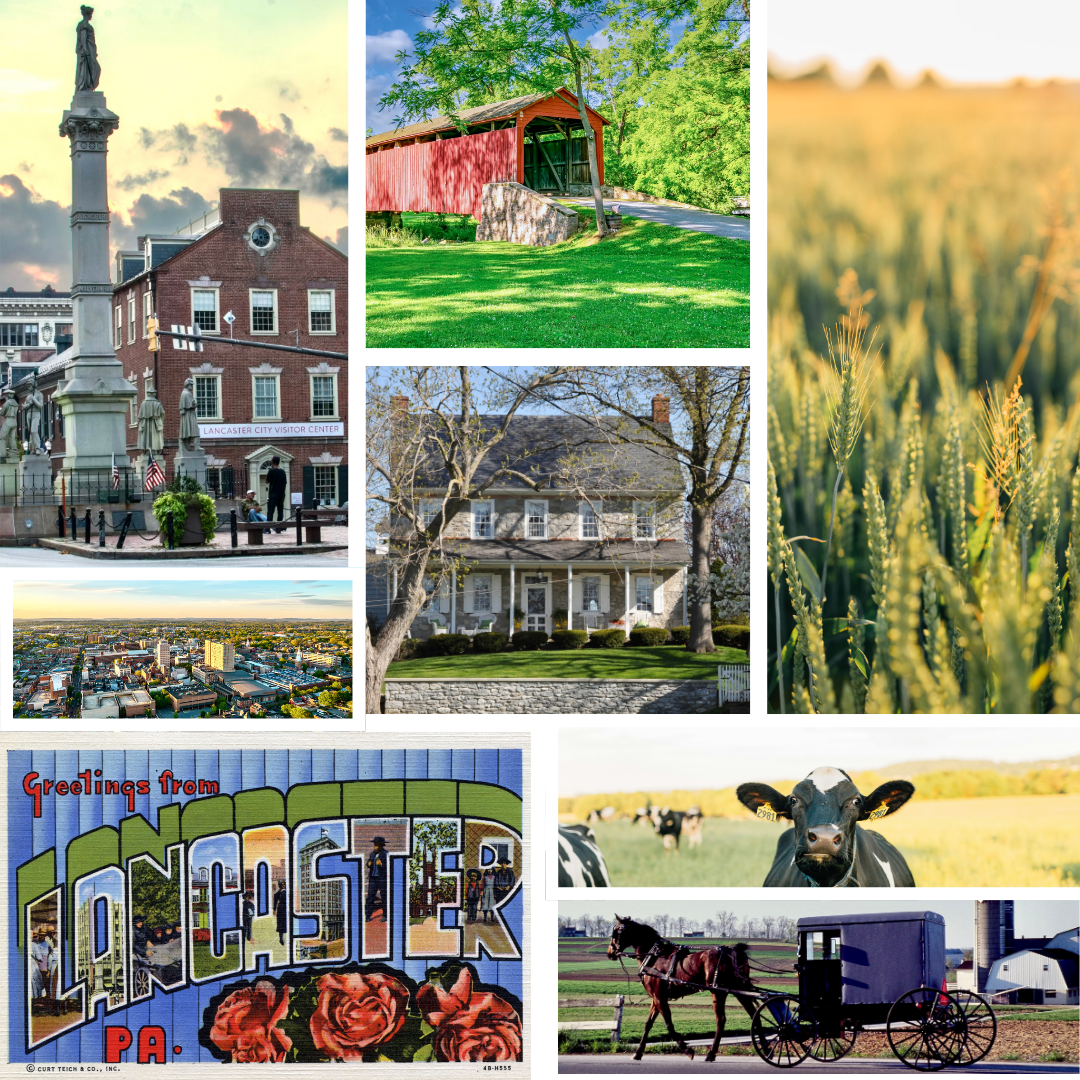
AF: When I was a teenager in Lancaster, PA, I worked at a touristy flea market right in the heart of the Amish Country. My job was basically selling junk to tourists! I got to know various stall holders… some were Amish and sold handmade brooms or baked goods. Some were retirees who wanted to fill their time, and they sold second-hand books about the Pennsylvania German region. I remember seeing this little book and loving the cover illustrations. (I have a big love for folk art!)
Fast forward to 2025, and I happened upon the book’s manuscript online, and it sparked that memory of my teen years. I searched the book and found a few copies on eBay, but it was clear the book was out of print. Out of curiosity, I looked up the book on Amazon and saw several copies for sale. I clicked on each one, and none of them were properly designed! Being a long-time book designer, I could tell they simply dumped the entire manuscript into the file and hit ‘publish’.
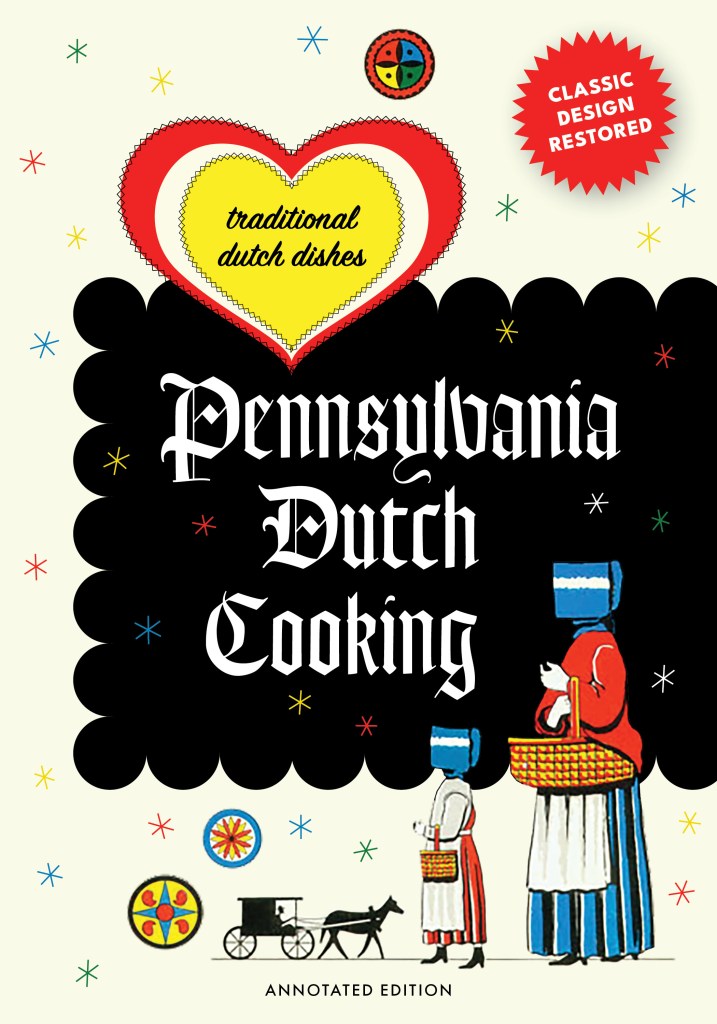
This sweet little book deserved better than that. So I decided to create a new, annotated version of this lovely cookbook. I replicated the original design (almost) exactly, retained the fun illustrations, and kept the original text as it was. But I added some things too! I added annotations that would be helpful to modern cooks, included tips about best options for ingredients, and I created measurement conversion tables and a glossary at the back of the book. All these things are intended to make using the cookbook easier.
ITVK; If you could describe Pennsylvania Dutch cooking in just three words, what would you say?
AF: Nostalgia. Comfort. Tradition.
ITVK: Why do you think Pennsylvania Dutch cooking has remained largely local to the mid-Atlantic region instead of spreading across the country in a more universal fashion like Tex-Mex or Southern food?
AF: Hmmm, that’s a good question. I think people, outside of Pennsylvania, often regard this type of cooking as tourist food. As in, what you eat when you tour the Pennsylvania German region. A few years ago, I lived in Tennessee and I was really happy to find Lebanon Bologna and Scrapple in the local supermarket. (Lebanon Bologna is not in the book. It’s a spiced, peppery lunch meat that is wonderful with cheese on toast. Scrapple is in the book, and quite popular across the Philadelphia area too.)
ITVK: What is your most favorite recipe in the cookbook and why?
AF: I love baking and anything apple-flavored so it’s got to be the Apple Dumplings. I love the recipe because it is simple, with few ingredients, easy enough to make, and is the ultimate comfort food.
ITVK: Are there any misconceptions about Pennsylvania Dutch cooking that you’d like to address?
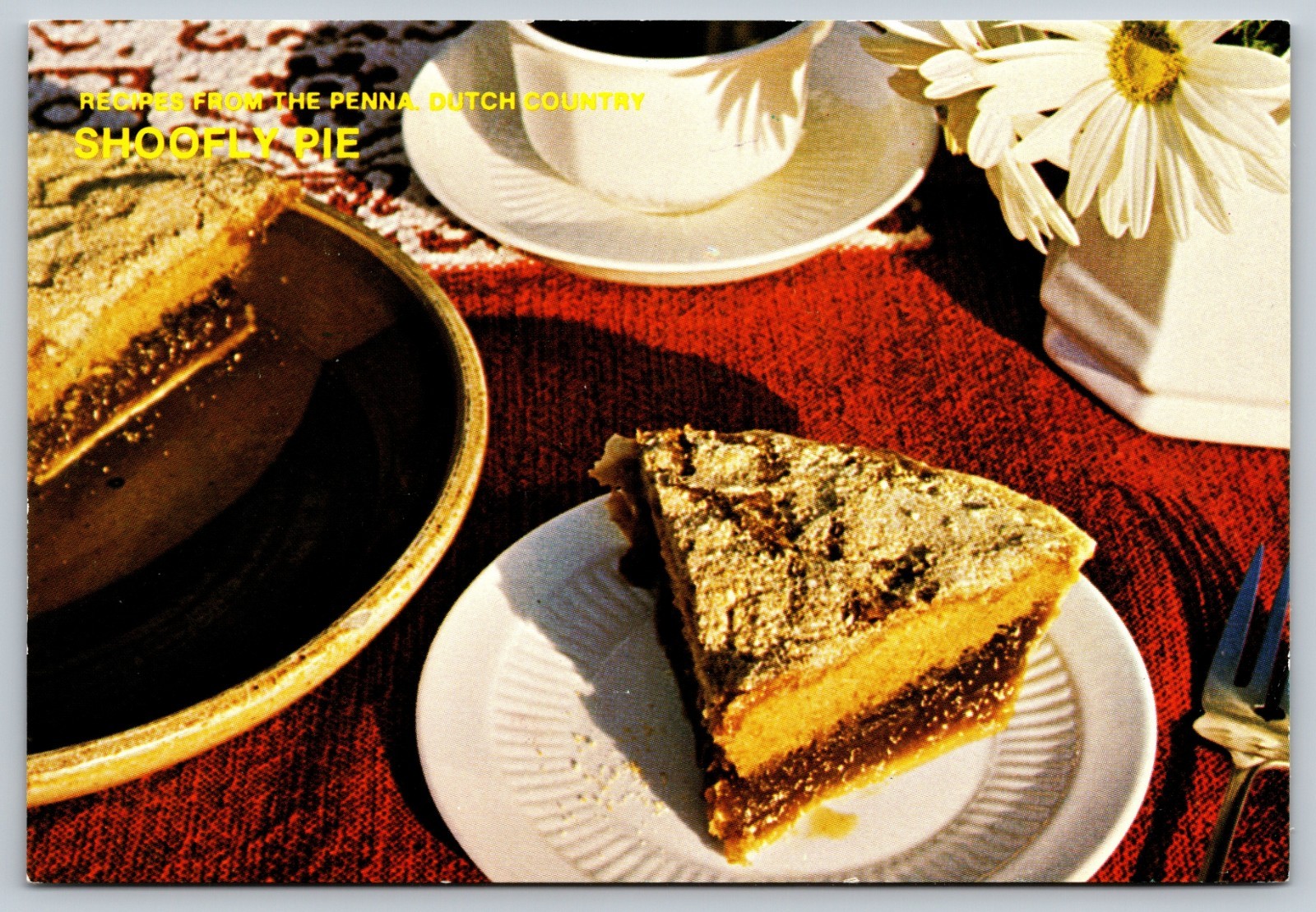
AF: Yes! That it’s way more than just Shoo-Fly Pie and Whoopie Pies. So many sweets and lovely baked goods, but some nice savories too.
ITVK: What recipe would you recommend trying first for a home cook new to this style of cooking?
AF: It’s a toss-up between the Corn Pudding and the Apple Butter. They are both easy and have minimal ingredients. Corn Pudding is so nice to have with Thanksgiving or Christmas dinner. We’re getting into Winter here in Australia, and I plan to make it for my family. A nice warmer when it’s chilly out!
The Apple Butter is also a winner. And sadly, that is the one I would struggle to make here because it calls for Apple Cider, which isn’t available here.
ITVK: Given that the cookbook is 65 years old, are there any recipes in the book that no longer seem to fit or relate to our modern palates?
AF: Hmmmm, maybe the Liver Noodles. Eating liver now just isn’t as popular as it was in the 1960s.
ITVK: Did you encounter any challenges or surprises while recreating the recipes from the book?
AF: In designing them, no. But in reading through the cookbook’s text, I quickly realized many recipe details really needed to be clarified for anyone using this book. For example, there is a recipe for Carrot Marmalade and it contains nuts. But the original recipe doesn’t say what kind of nuts. I wanted to keep the recipe text authentic to the original edition, so I added an annotation for that recipe advising the nuts traditionally used in this recipe are walnuts or almonds. There are lots of annotations in the book like this… little notes to help clarify an ingredient, a cooking time, etc. Oh, and I was really surprised that Shoo-Fly Pie was in the Doughnuts Chapter, when there is a whole Pies chapter that it could be in. But staying true to the book, I left it where it was and made sure I included an index for easy reference.
ITVK: How did you arrive at the decision not to include photos of the recipes in your cookbook?
AF: There were a couple factors that went into my decision not to add photos to the book. First, I really wanted to keep this book as authentic as possible. When I think of an intended reader, I’m envisioning someone who maybe came across this book earlier in life and remembers it. I wanted to ensure the book I make available to that person is as authentic as possible to the original book, which didn’t include photos.
Second, I wanted to keep this little book affordable for readers. Adding photographs would have required full-color printing and therefore would have increased the price point.
ITVK: Is this style of cooking part of your family heritage? If so, do you hope it will continue into future generations of your family?
AF: It is. And you know what, I didn’t really realize that so many of the dishes my mom made were actually Pennsylvania Dutch dishes. I guess I just thought they were standard American foods. My mom’s side of the family are German descent and they have been in Pennsylvania a very long time, so it makes sense these dishes would be on our table.
As for cooking these dishes into the future for my family, I will continue the tradition with some of them. Particularly the baked goods as my whole family has a sweet tooth. But I don’t see myself preparing something like Souse, which calls for pigs feet in this cookbook. And I definitely don’t see my kid eating it!
ITVK: Do you have a favorite family memory surrounding one of the recipes in the book?
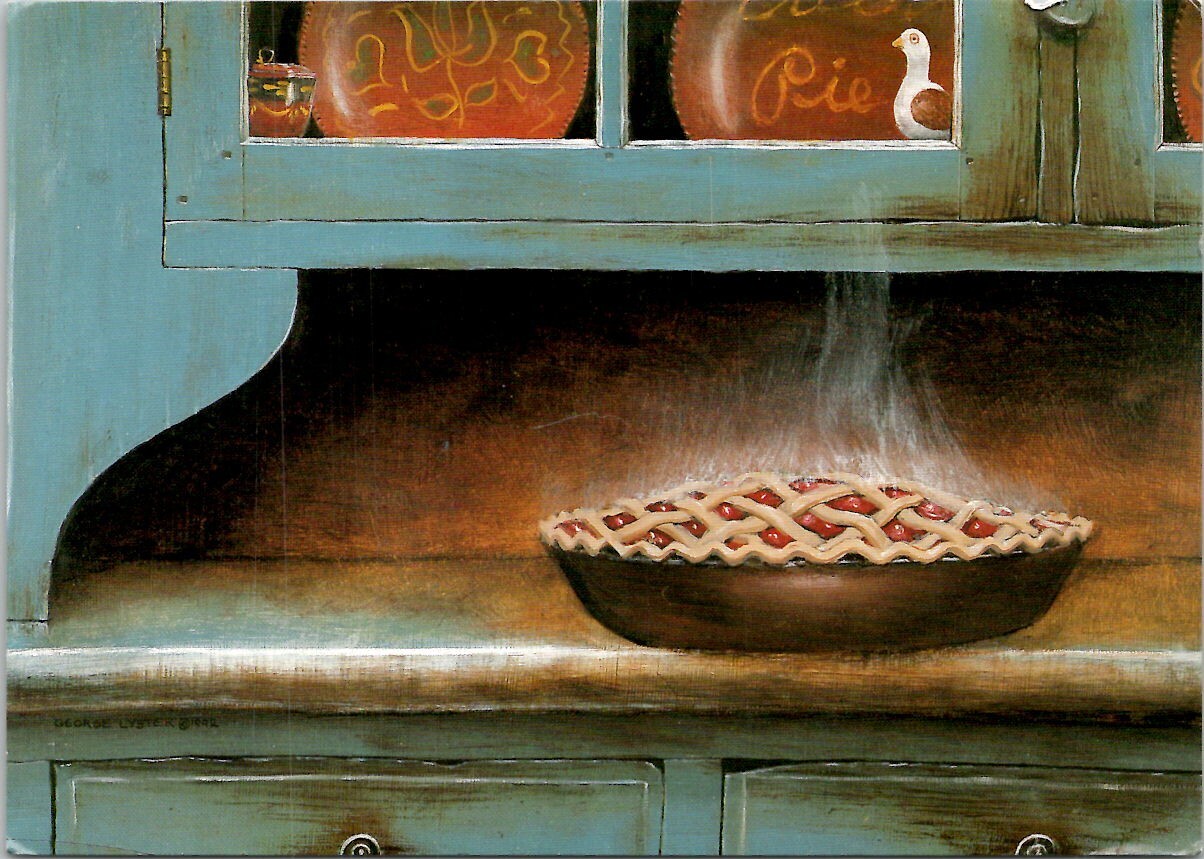
AF: Yes, the Pennsylvania Dutch Sour Cherry Pie. I remember going cherry picking in Lancaster County with my mom, sister and grandfather. It was especially exciting because I was allowed to climb the ladder to pick the cherries, and I loved climbing anything as a child. I recall eating one of the cherries off the tree and being surprised at how tart it was. But then they are baked into a lovely pie (thanks to quite a bit of sugar — and my mom added butter too), and it was delicious.
ITVK: Tell us a little bit about your cooking style/journey. Who taught you how to cook? Have Pennsylvania Dutch-style recipes influenced the meals you make or the way in which you like to cook today for your friends and family? And if so, how?
AF: I have to say that I’m more of a baker than I am a cook. There is something very relaxing about the process of baking a cake, cookies, pie, bread, etc. It’s sort of my Zen. And I learned how to bake from my mom, who made wonderful pies: apple, peach, sour cherry, and blueberry.
I think the Pennsylvania Dutch-style recipes have influenced my cooking a little bit, but not hugely. I love making some of the soup recipes on a cold winter day. Or the Apple Dumplings for a special treat for my family. To me, that is one of the iconic Lancaster County recipes.
ITVK: Tell us a little bit about growing up in Lancaster, what brought you to Australia, and how do food, life, and cooking differ between the US and Australia.
AF: Lancaster was a very special place when I was a child. It’s gotten more developed over the years and many of the family farms that existed when I was a child are now filled with new houses or shopping malls. Our house had a family farm right behind it, and the farmer grew feed corn. I remember watching the stalks grow over the months, from my bedroom window. That cornfield is now a large office complex… that was a sad change.

Being in Lancaster back then, we all were acquainted with the Amish. We would sometimes buy ears of corn from an Amish farm, and many of my mom’s friends had Amish cleaning ladies. Apparently they were cheaper than a non-Amish cleaning lady… you just had to drive them to and from your house.
Our local shopping center had hitching posts for any Amish customers who arrived in their horse and buggies. And today, Lancaster’s Costco has hitching posts too!
As for moving to Australia… it happened because I was in England first, actually. In college, I did a semester abroad in the UK and I loved it. I made it a mission to go back there and live, which wasn’t easy to organize. The best I could do was a sixth-month student visa after I graduated from college. So I did that and worked at a soccer-themed restaurant in London. And several Australians worked there too and I became friends with them. So then, I just had to see Australia!

I visited Australia for a 3-week vacation and loved it. So when it was time to apply to graduate schools, Australia was top of the list. I moved to Sydney almost 20 years ago to get my masters, and ended up meeting my (Australian) husband there. And in addition to Sydney, I’ve gotten to live in Canberra (the capitol) and Brisbane, where I am now.

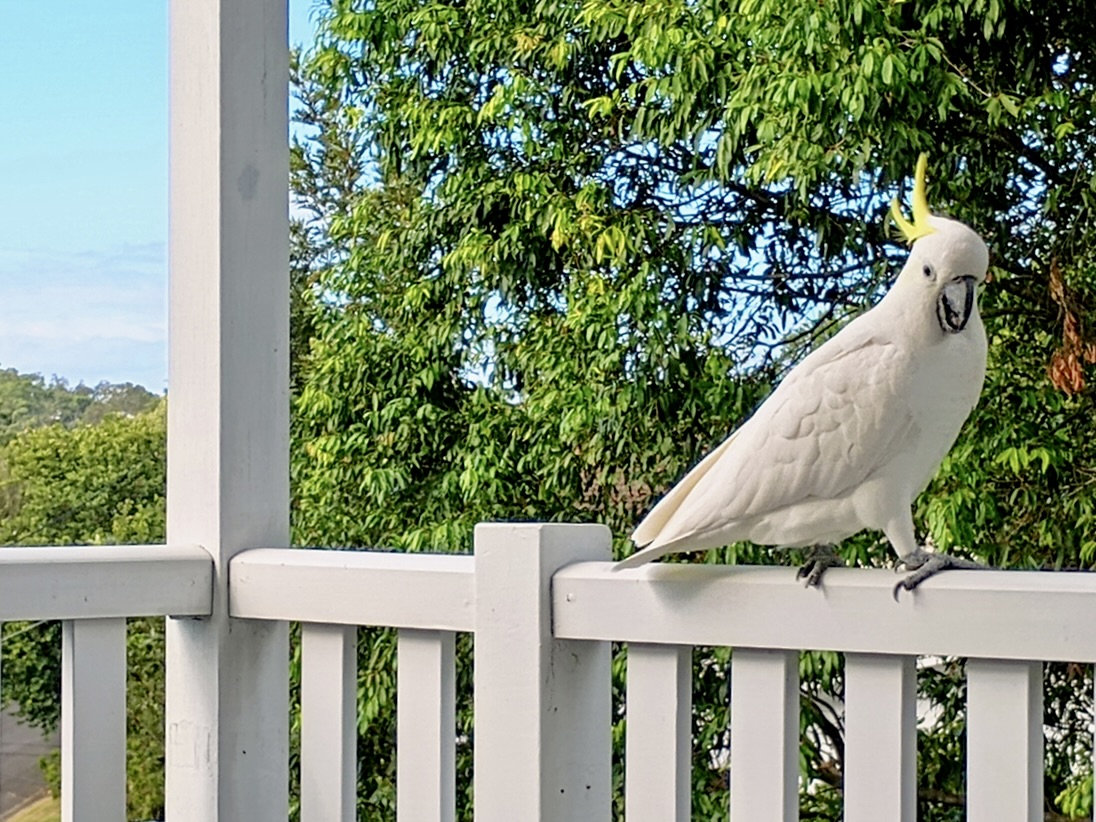
Life does differ a bit between the US and Australia. Most Australians live in the big cities, whereas Americans live in big cities and small towns. But much of Australia is desert and it wouldn’t be easy living there. It also means we have limited supply of space for homes, so house prices are quite high here. Australia has a bigger part-time working culture, and this is especially appreciated by parents. We also have 4 weeks of vacation time, if you work at a salaried job. The US doesn’t really align with this.
Life as a family is different too. The school year is broken up into 4 terms and there is a 2 week break between each term. Which means all the parents need to scramble to find something to keep their kids occupied in the 2 weeks. My son plays Cricket and Aussie Rules Football. If we were in the US, he would probably be playing baseball. For us, Friday Night Lights mean the Friday evening cricket match, surrounded by palm trees. Very different to Lancaster County, where I grew up!
Food! Well, the fruits and veggies are so fresh since they’re mainly grown here. Lots of crops are up in Queensland, where I live. However, if there is a cyclone that damages crops one season, it’s really expensive and difficult to buy that fruit or vegetable. This happened when I was first in Australia. Bananas cost a fortune due to a cyclone causing crop loss. I promised to make someone banana bread, and I followed through, but that was the most expensive banana bread I ever made!
Other differences: Australians put a slice of beetroot / beets on their burgers. Every suburb has a local butcher and a fruit and veg shop. And the butcher carries a wonderful selection of sausages, which are meant for lunch and dinner. Breakfast sausage isn’t really a thing here. Peanut butter isn’t very popular here, but lots of people like Vegemite on their bread or toast. (Vegemite is a thick, dark brown spread made from leftover brewer’s yeast. And it’s meant to be used VERY sparingly!)
ITVK: In Australia today, is there an avid interest in Pennsylvania Dutch recipes or in American recipes in general?
AF: Yes, definitely an interest in American recipes. I’ve designed cookbooks for the Australian market and have seen so many recipes that pay homage to American dishes. As for Pennsylvania Dutch cooking, I’d say that is less well-known here in Australia. Though I do recall a few years ago Whoopie Pies were all the rage here!
ITVK: Why was it important to you to reprint an old cookbook?
AF: I love old things. And I want other people to be able to enjoy them too. For this book in particular, I knew it was out of print so if someone wanted it, they had to look at a used bookstore, or eBay, maybe a local thrift store if they were lucky. But there aren’t a heap of copies around. I wanted anyone who wanted an authentic copy to be able to easily get one. This version is the closest one you’ll find to the original. And I’m proud of that.
ITVK: If you could travel back in time and meet the women who wrote the original cookbook, what would you like to know about them?
AF: Oh, what a treat that would be! I would ask them what other cookbooks and recipes are their favorites. The 1960s had some really wild recipes. (So many unexpected things molded into gelatin, for example!) I would love to know what other cookbooks they had on their shelves.
ITVK: Do you have any future plans to reprint other vintage or antique cookbooks?
AF: Yes, I have a few additional cookbooks I’m considering. The cookbooks I choose need to have plenty of recipes that will appeal to modern cooks. (And eaters!) And I’m always aiming for that nostalgia factor… a cookbook that brings back good childhood memories.
When it comes to the complete life story of a vintage cookbook, I think this one is remarkable. That it has traveled over 8600 miles in six decades is a feat in and of itself. That it has engaged at least three generations from then to now and connected three women across sixty-four years is noteworthy in the most delightful of ways. That Alicia didn’t veer from its original content and layout in order to keep its nostalgic aesthetic intact is admirable.
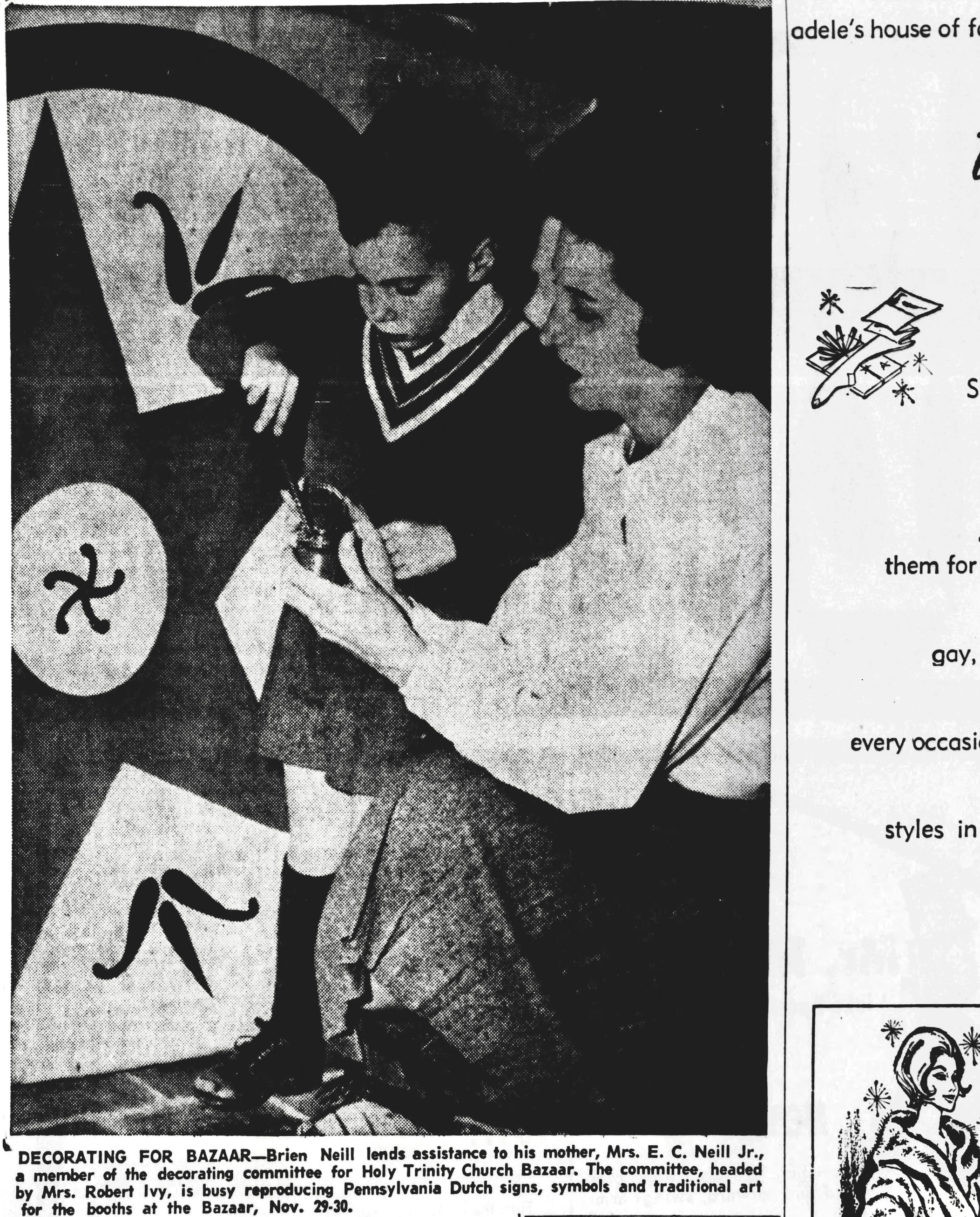
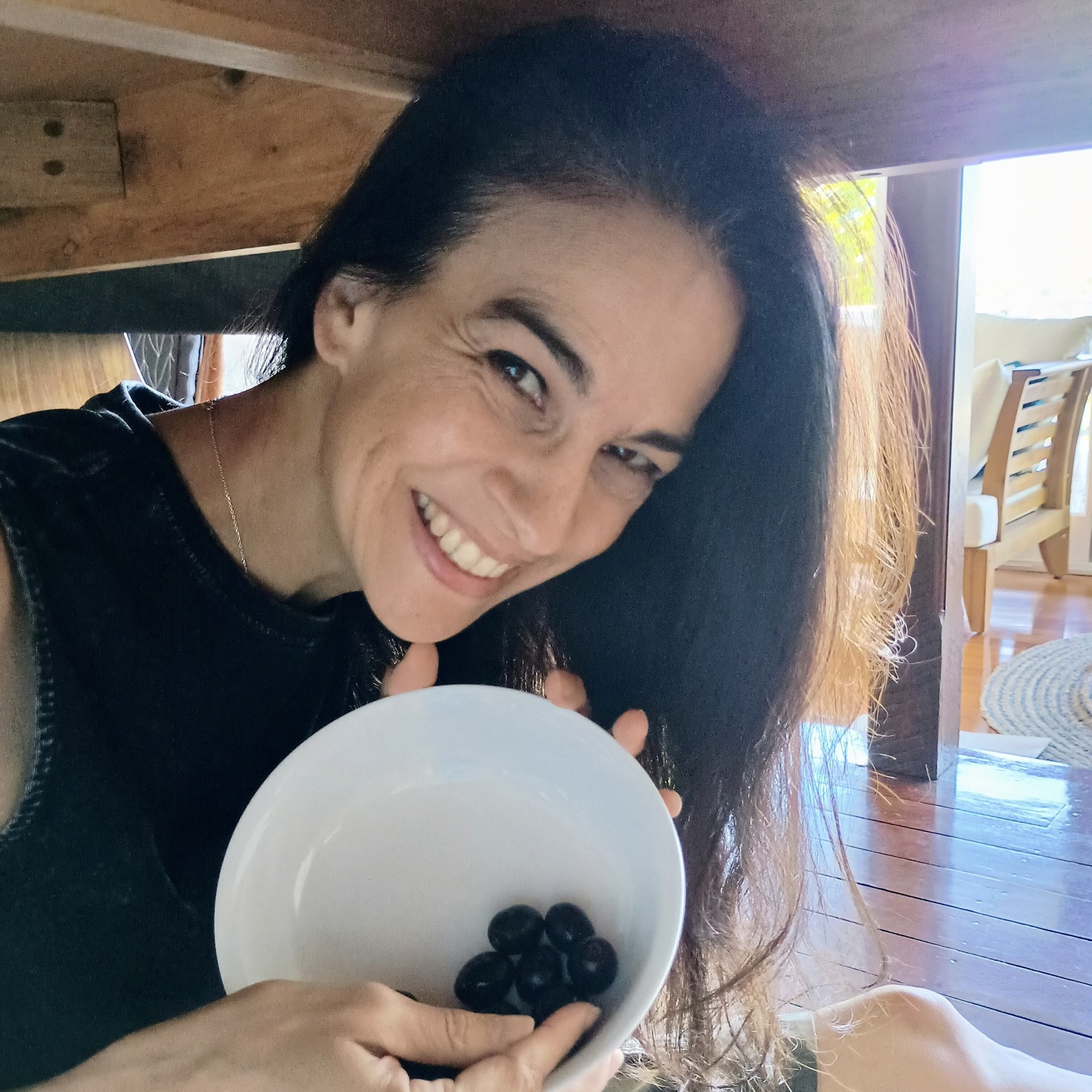
The parallels between all these women of the cookbook are magical too. Laurin and Alicia are both tied to jobs in the publishing industry. Ruth and Alicia share a combined study of art and design. Ruth was photographed in the local Vicksburg newspaper in 1962 alongside her young son as he helped decorate for the Holiday Bazaar. Alicia, not knowing anything about Ruth and her boy, sent a photo of herself pictured with her young son enjoying a cup of French fries.
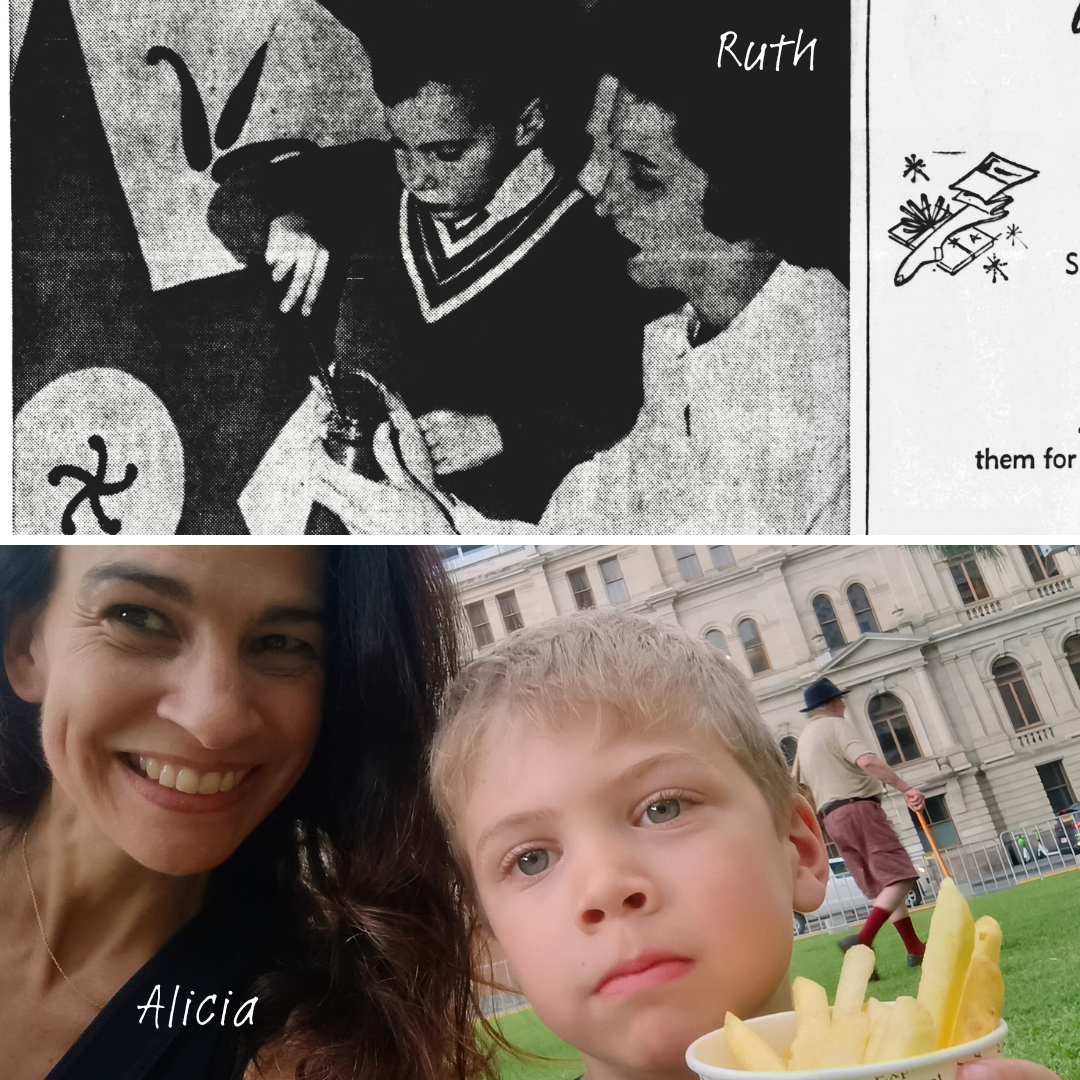
And the final cherry on this similarity cake of a cookbook… Ruth and Laurin published Pennsylvania Dutch Cooking just in time for the holiday bazaar held on November 29th, 1962. Alicia published her annotated reprint of the cookbook just before Christmas on December 23rd, 2025. Both books debuted during the holiday season, almost exactly 63 years apart. Alicia didn’t know all this backstory about the original authors of the cookbook. She didn’t know about Laurin or Ruth, Carl or Vicksburg, Mississippi. When she re-discovered the book in 2025, it was in the public domain, and all it said next to the copyright information was that the author and the publication date were unknown.
And yet here they all are. Ruth, Laurin, Alicia. All three, now knowingly connected in more ways than one.
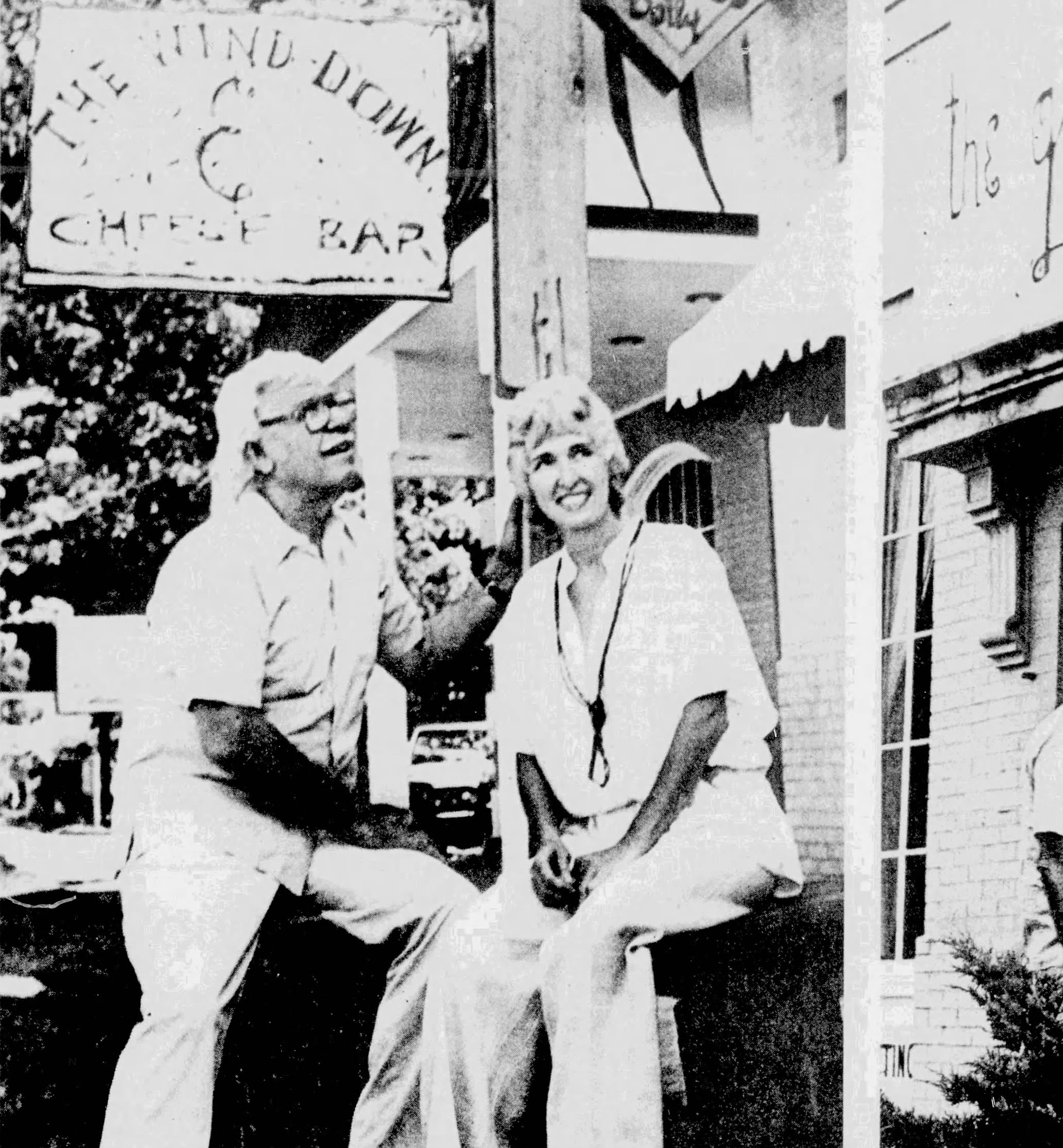
Ruth eventually left Vicksburg and opened a wine and cheese shop in Ocean Springs, Mississippi, while also pursuing an interior design career. The mother of two children, she later remarried and became a stepmom to four more kids before eventually moving to Washington State, where she lived for the rest of her life. She passed away in July 2021, at the age of 89.
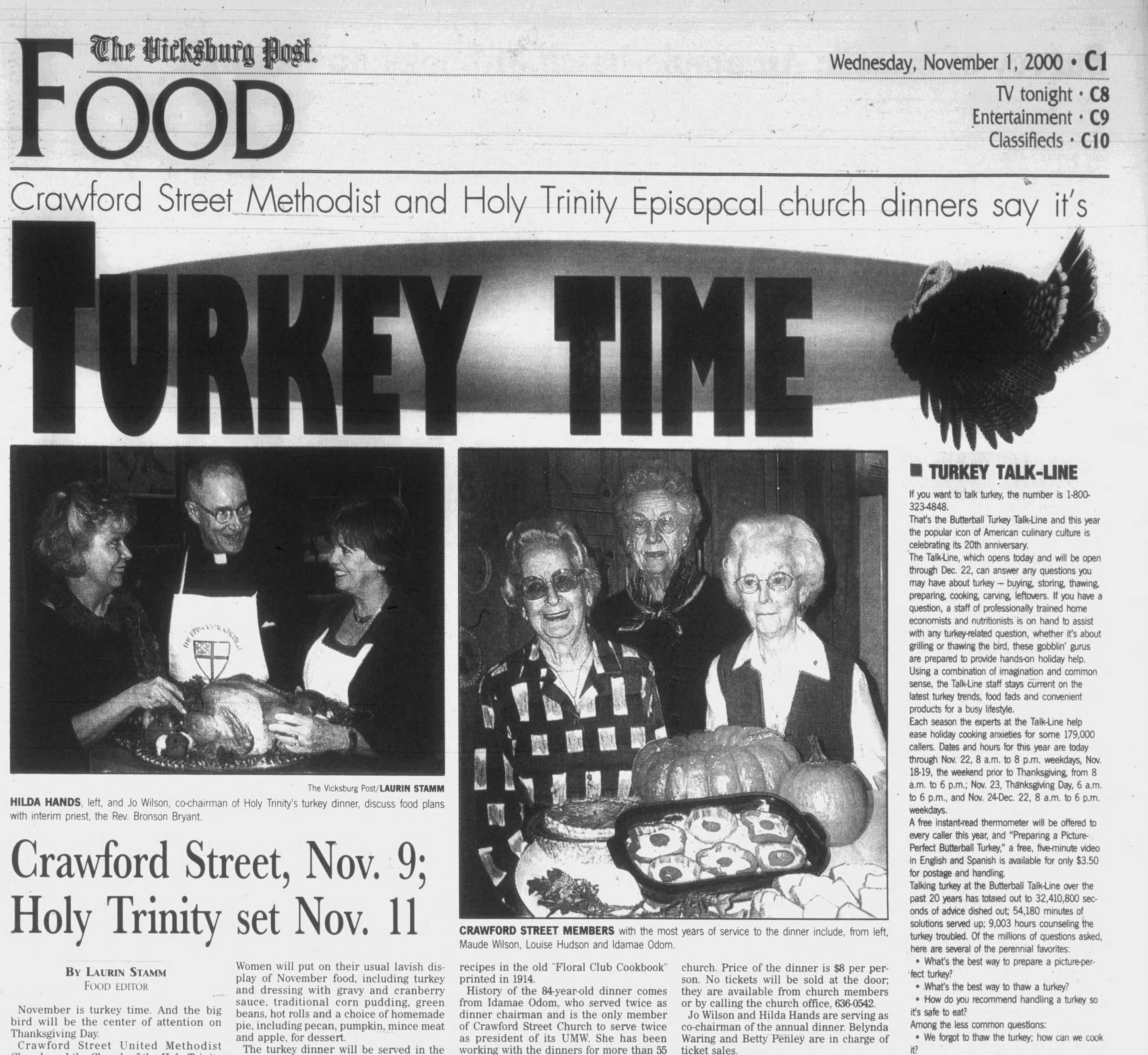
Laurin remained the food editor at the Vicksburg Post for 58 years, never once missing her weekly column despite raising five kids and remaining very active in her community. Upon leaving the Vicksburg Post, she published a cookbook of favorite recipes from her newspaper days. Just a few years after Laurin retired, she passed away from Alzheimer’s in 2016 at the age of 83.
So now we know.
When it comes to the questions… who’s to know when a recipe is created or a cookbook is compiled, how far it will travel? Who’s to know how many decades it will resonate? How many generations it will engage? And how many people it will connect? We can say, in this case, we have all the answers. It’s over 8,651 miles; it’s six decades; it’s three generations; and it’s at least four women.
When I discovered this Pennsylvania folk art image by chance in the archives of the National Gallery of Art while putting this post together, I was immediately struck by the similarity between the painting and the story of the Pennsylvania Dutch Cooking book. In the birds, I saw Ruth and Laurin in 1962 on the left and I saw Alicia in 2025 in the bird on the right. I noticed how the birds looked at one another, face to face, like equals with the shared heart between them. If Ruth and Laurin and Alicia could all meet together today, I bet they’d look at each other in exactly the same way. Eye to eye. Heart to heart. The only thing that separates the birds in the painting is the infinity symbol. But that’s not a separator at all. An infinity symbol is a continuous loop, and that’s what the cookbook and this whole story represent – a continuous loop of regional recipes that wind their way around history. A continuous loop that connects three women to one cookbook. That connects Lancaster, Pennsylvania to Vicksburg, Mississippi to Brisbane, Australia. That connects the past to the present.
All this is thanks to Alicia and her commitment to remain true to the book’s original contents. In doing so, she remained true to the tradition of Pennsylvania Dutch cooking, to the comfort of familiar family recipes passed down through generations, and to nostalgia itself, that wonderful feeling that never requires any modern-day alterations.
Cheers to Laurin and Ruth for creating a local cookbook that unintentionally grew international legs, to Alicia for printing her passion and keeping these regional Pennsylvania Dutch recipes afloat for a new generation to experience, and to the cooking community at large for sharing stories and traditional recipes that last a lifetime. And longer.
Learn more about Alicia on her website here. Find her cookbook available here. And sign up for our weekly In The Vintage Kitchen shop newsletter here to receive a complimentary recipe from Pennsylvania Dutch Cooking coming soon.


