A Monumental Story of Real-Life Serendipity Told Over Many Parts: Chapter 5 – The Lost Item is Revealed

{Spoiler Alert: This is the final installment in a series of blog posts detailing the real-life story of a 100-year-old item that was lost in 2008 and how it found its way home in 2024. Follow along from the beginning of this story at Chapter 1: It Arrives.}

There’s a quote by an unknown writer that states… “What’s meant for you will never miss you, and that which misses you was never meant for you.” This quote sits on the shop’s recently sold page, acting as a sort of hopeful reassurance to any shopper who winds up there only to discover that an item that had originally caught their eye has sold to someone else. It can be so disappointing to be confronted with the fact that some newly discovered treasure that immediately captured your heart is now in another’s hands. But I love the idea of fate and what it suggests in this quote. Should an item be destined to be in your life it will present itself again, some other day, some other time.

Over the past few years, I’ve thought a lot about this quote. The idea that something will return to you if it was meant to be is such a comfort. When I think about it in the context of the lost item, I see how truthful the quote really is and how incredible the spontaneity of the universe and fate’s voice in it really are. As discussed in Chapter 4 of A Monumental Story of Real-Life Serendipity Told Over Many Parts, this journey of the lost item is all about timing, and I can’t help but think that although it took sixteen years for a lost item to get back to the people it belonged to, it came home at the most appropriate time. Like it was waiting all those years for just the right moment to reconnect with family, and in turn to reconnect with history.

Everyone has waited long enough to hear what this mystery item is, so I won’t prolong it anymore, only to say that upon the reveal of the item, all the dots that were laid out in the first four chapters of this story will be connected here in this post. So keep reading if you want to learn how it all unfurled from start to finish.

Just to recap quickly from Chapter 4, where the lost item was journeying to its final destination, these are the things that we know so far about the lost item…

  1. The lost item is over 100 years old.
  2. The item was left behind at an office supply store in a suburb of Atlanta GA in 2008.
  3. A random stranger named Angela discovered the item and tried to track down it’s original owner. For thirteen years her search was unsuccessful.
  4. In 2021, with the help of a Facebook group, Angela was able to connect the lost item to the Vintage Kitchen via a blog post that was written in 2018.
  5. In July 2021, after confirming that the Vintage Kitchen was indeed connected to the lost item, it was mailed via UPS to ITVK in a cardboard envelope.
  6. Although the Vintage Kitchen is connected to the lost item, it does not belong here in the Vintage Kitchen.
  7. In January 2024, the lost item made its way home to its final destination via a journey that involved a plane, three cars, and one boat.
  8. The journey of the lost item took 16 years and 6,500 miles to complete.
  9. Time played a major role in the story of the lost item.

Without further ado, the mystery item that arrived in the Vintage Kitchen in July 2021 was packaged in this cardboard envelope of medium thickness….

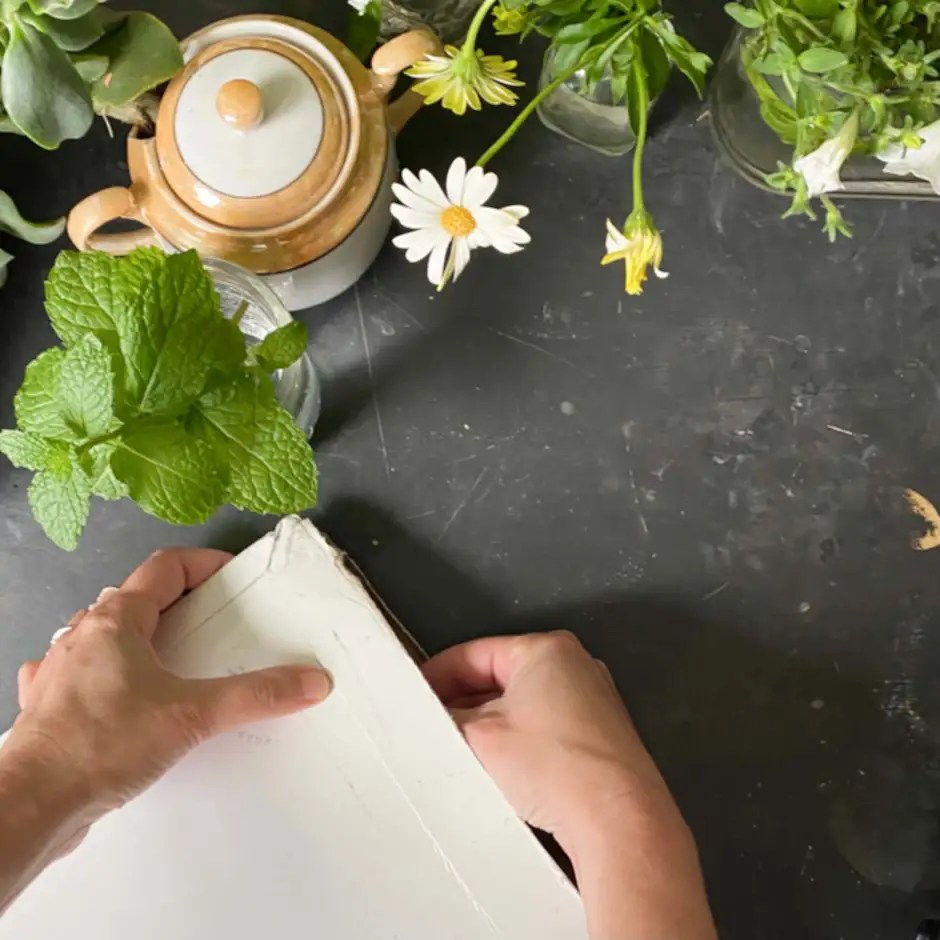
This is the cardboard envelope of medium thickness containing the mystery item when it first arrived in the Vintage Kitchen in July 2021. For privacy purposes, pink marks cover the addresses of the sender and recipient.

Still in its same envelope in January 2024, it is time to reveal the mystery item…

The mystery item envelope as photoed in January 2024

Tucked inside the cardboard envelope is a plastic, turquoise-colored binder. The binder itself is not the lost item, but what’s inside the binder is. A turn of the cover reveals history from 100 years ago…

The binder holds fifteen pages of 1920s-era black-and-white photographs containing various scenes of rural family life in a country setting. Consisting of forty-seven individual images in total, the photographs were taped, or in some cases pasted, onto standard white copy paper and then slipped into plastic sleeves and secured in a three-ring binder.
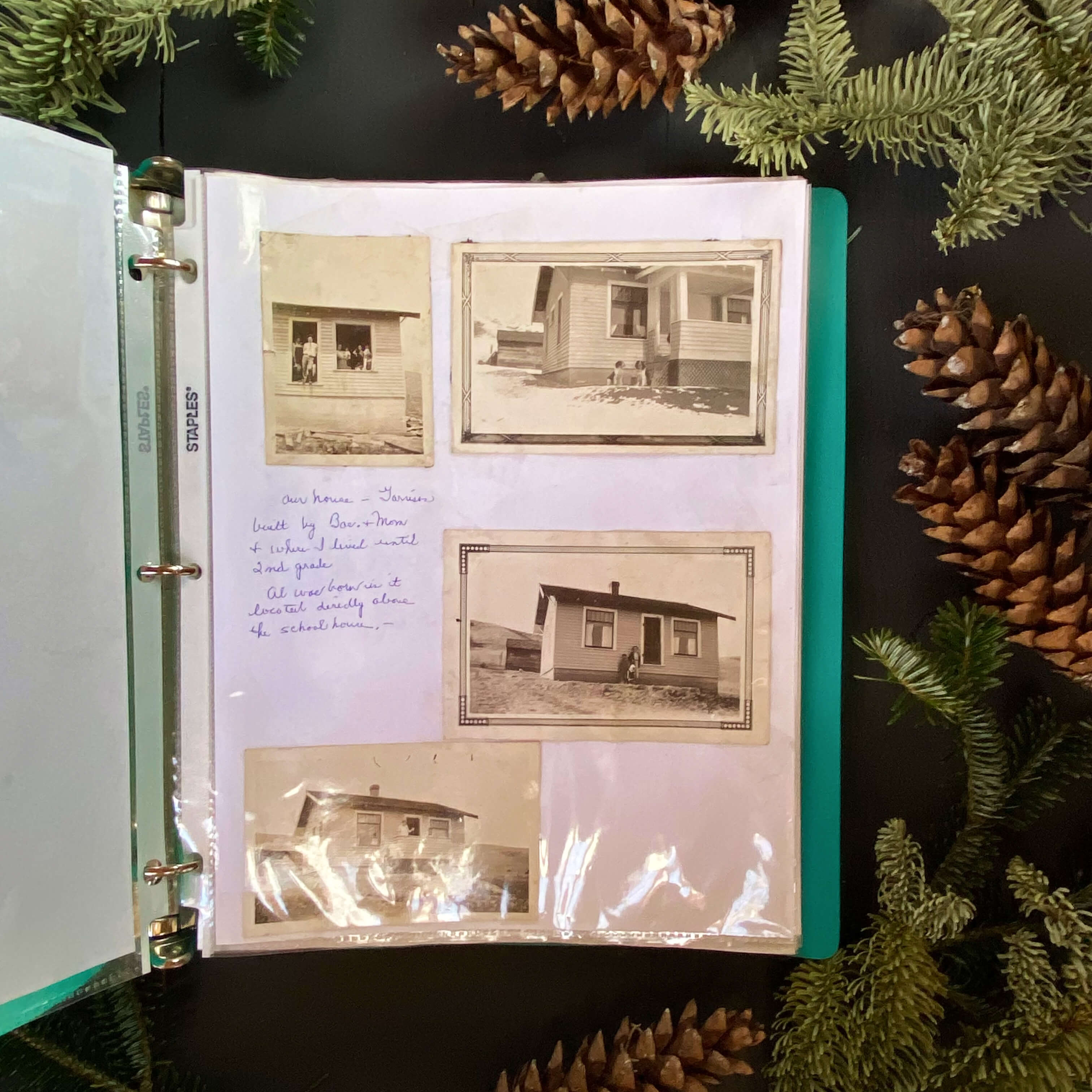
The turquoise binder was clearly a modern addition, but the photographs themselves are originals. It’s easy to see that the photos had been removed at one point in time from a more traditional photo album. Black pieces of paper are attached to some edges, old tape clings to corners and remnants of prior placement in a black-paged photo album are evident.
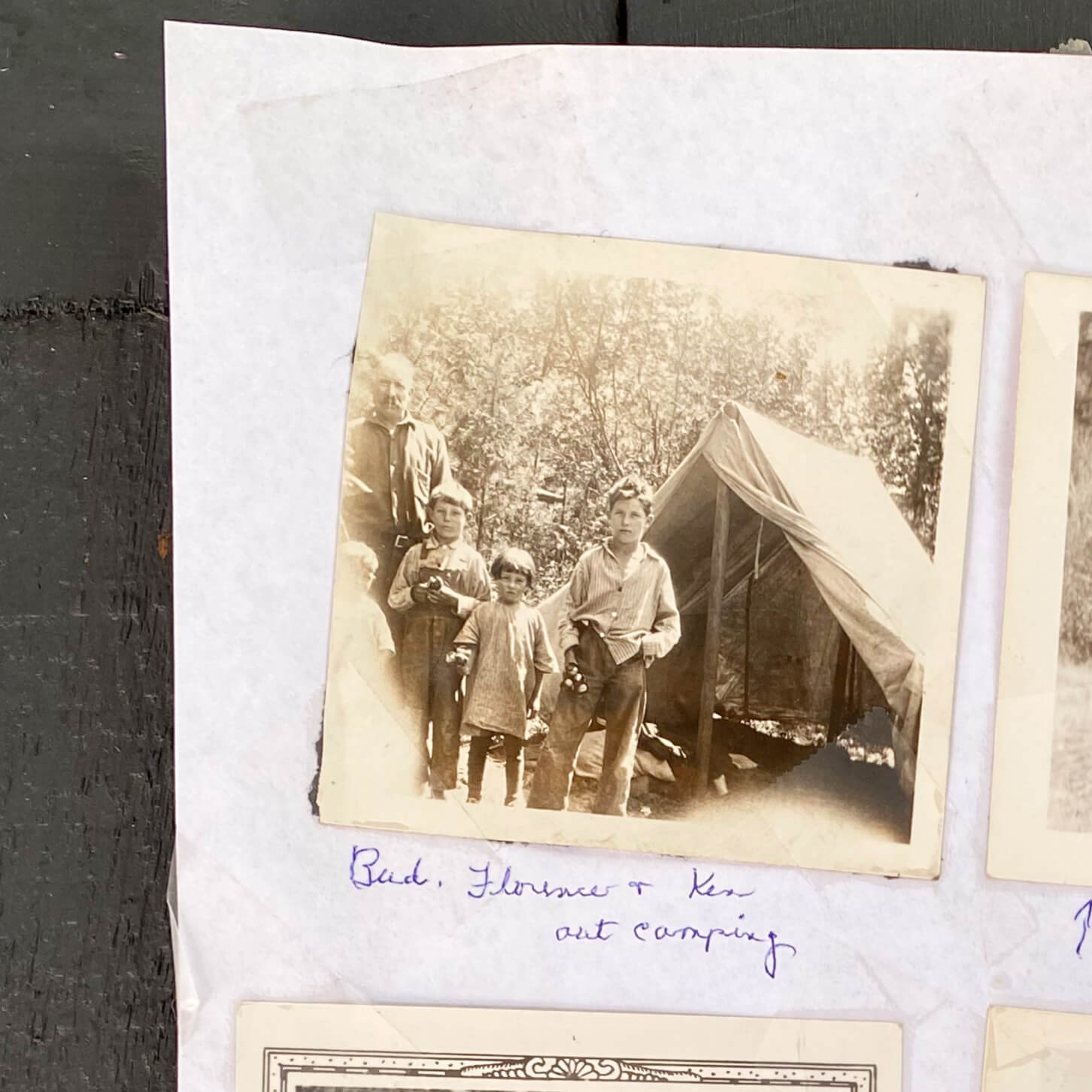
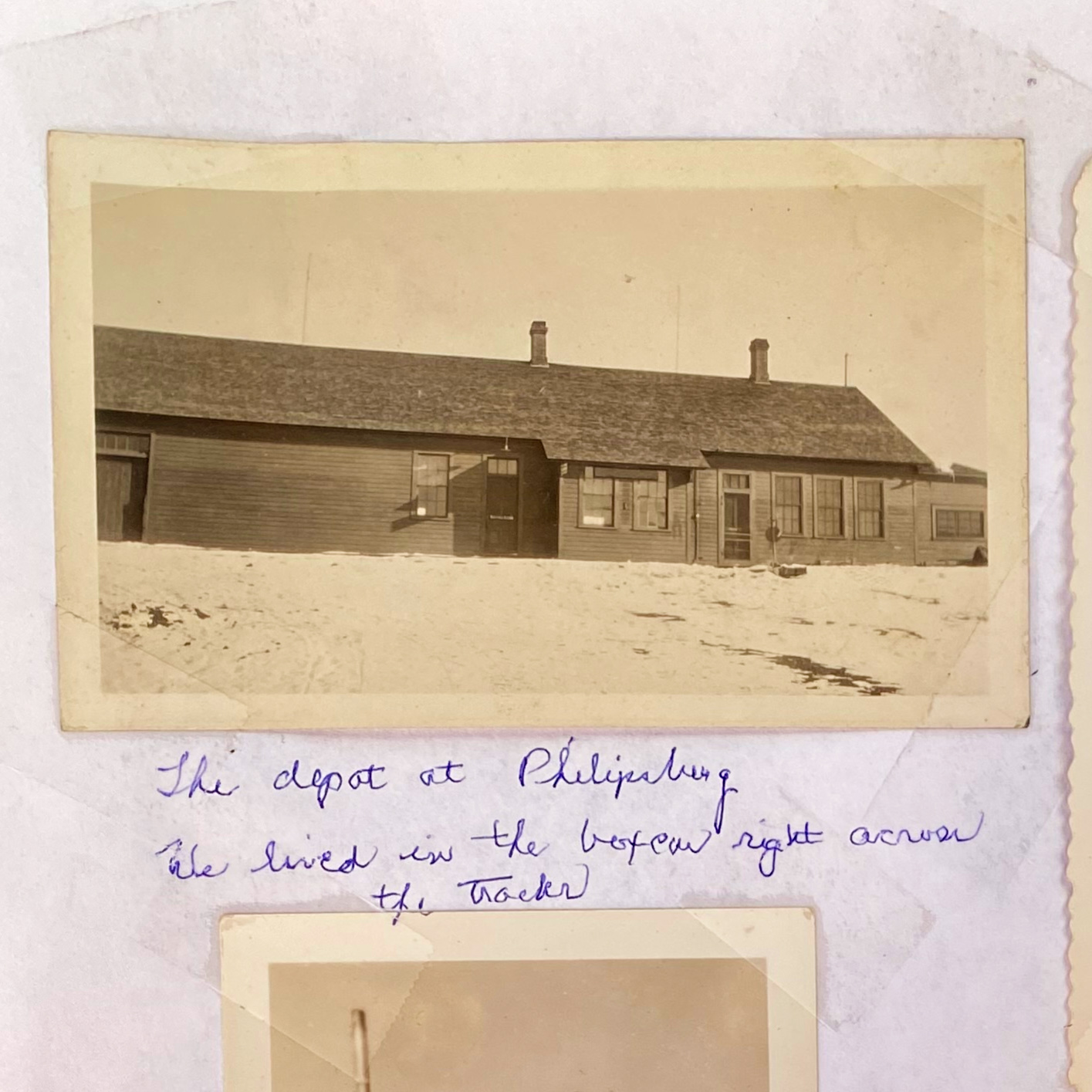
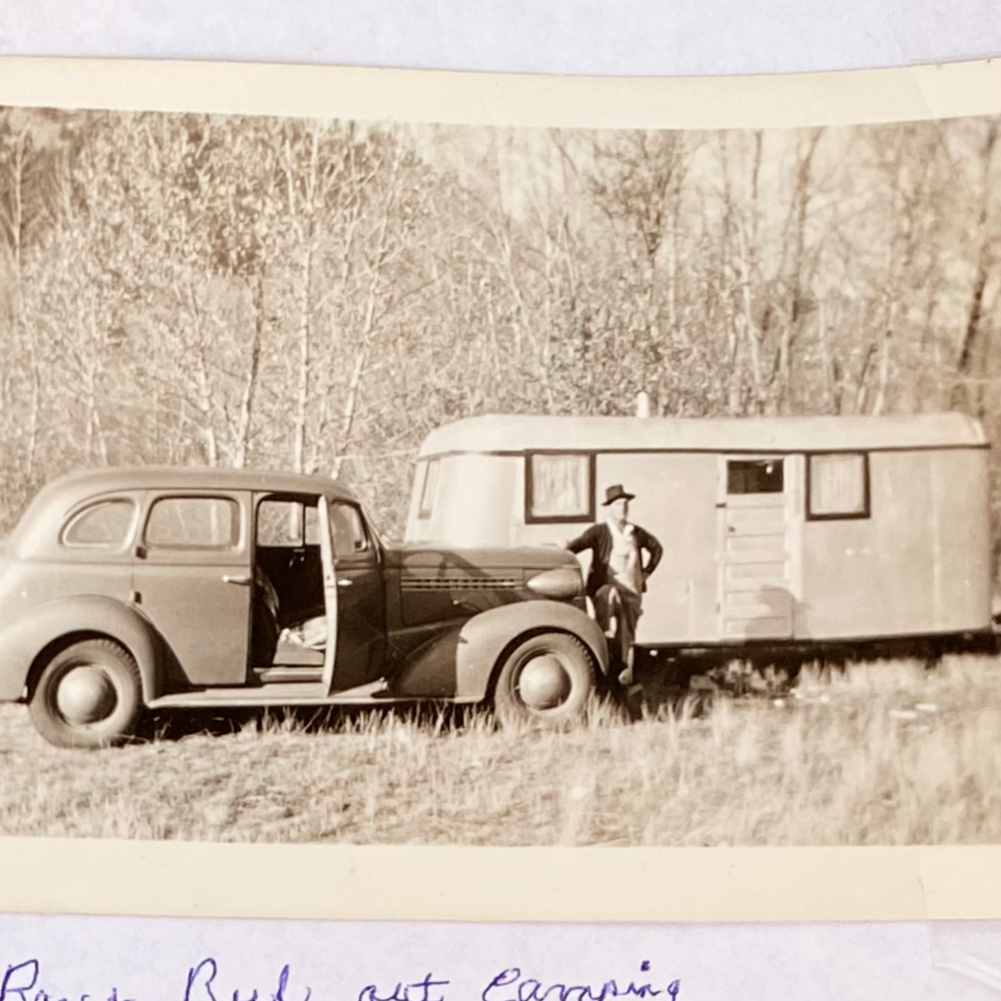
Handwritten notes are included next to most of the photographs identifying first names, town names, a date, or a general situation, like the one above that says Bud, Florence & Ken out camping. But none of the notes include references to a specific state, country, legible last name or any major scenic sites. Flipping through the pages reveal more photos of babies, dogs, cars, cats. There are houses and train tracks, rolling hills and weathered wood. There are women on horseback, men in overalls, girls in summer dresses, boys hunting in the snow.
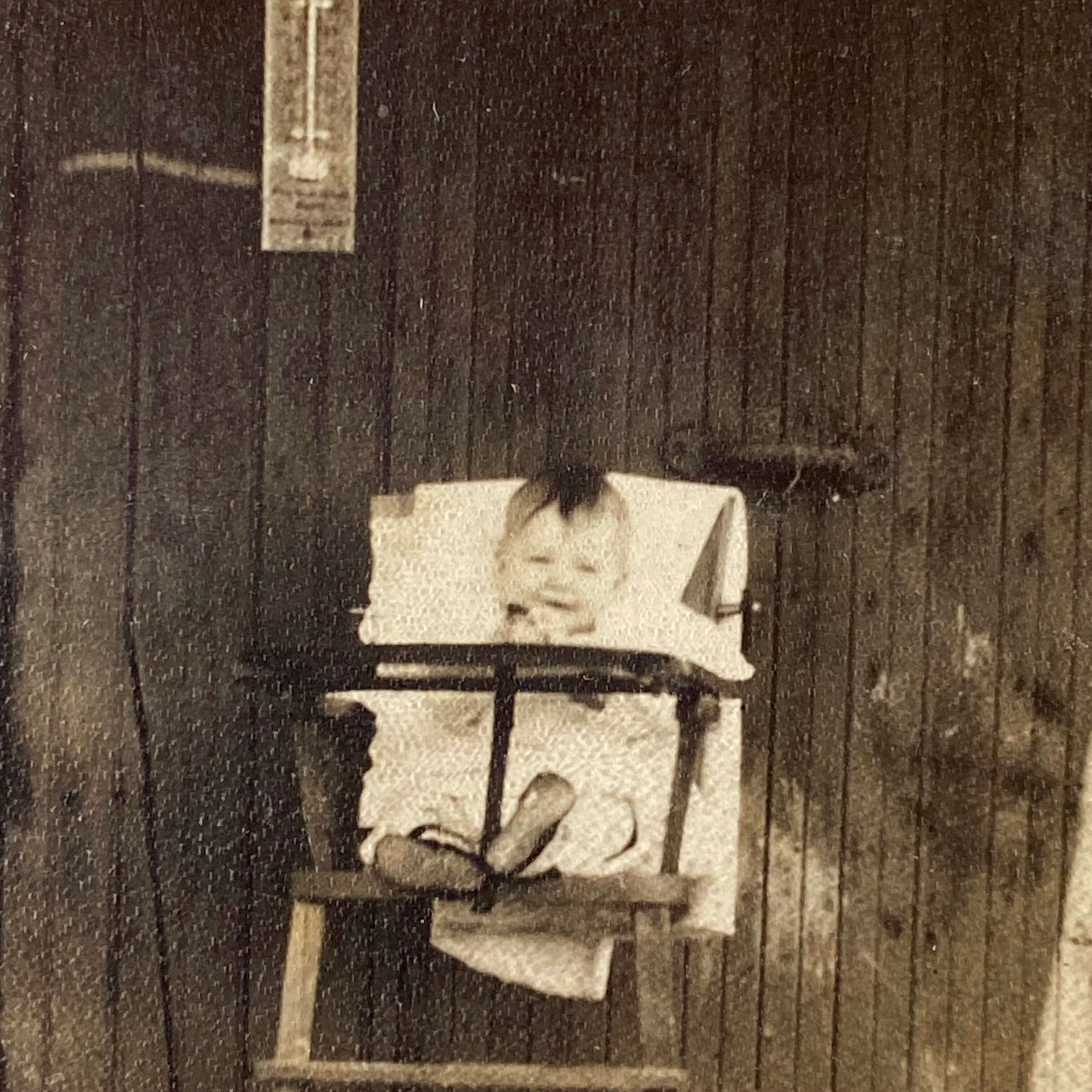
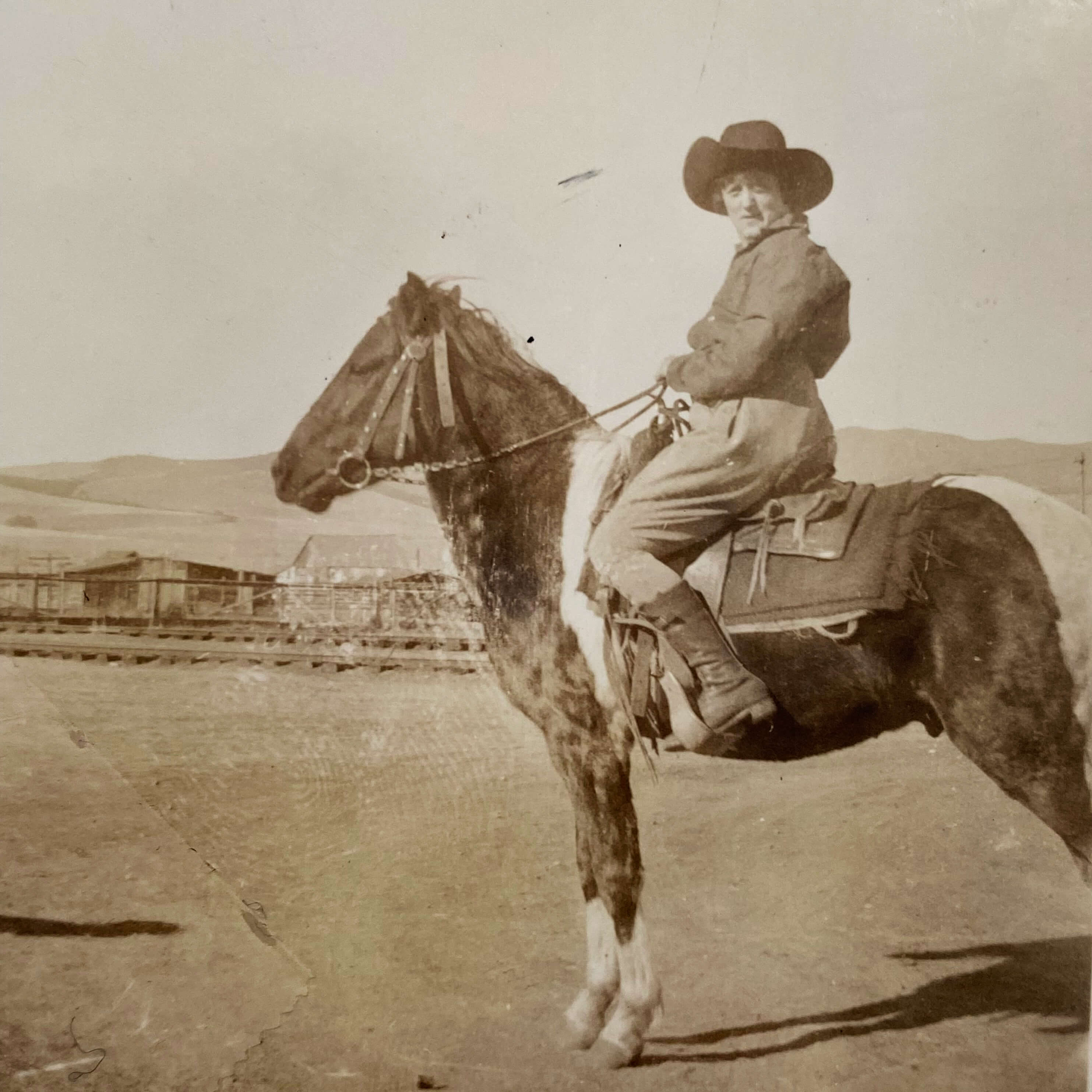
There are blurry candid shots and more formal, posed group shots. Several faces reappear in different settings. A building evolves in various stages of construction. There are men in fedora hats and women in fur coats. There’s a foal and a waterfall. A travel trailer. A canoe. A swing hanging from a laundry line. There’s a baby in a bath bucket and a woman sitting on the hood of a car.

All the photographs were taken outdoors and feature different seasons. Many photos feature one specific man in particular. A man in overalls. That’s him in the center of the photo below.
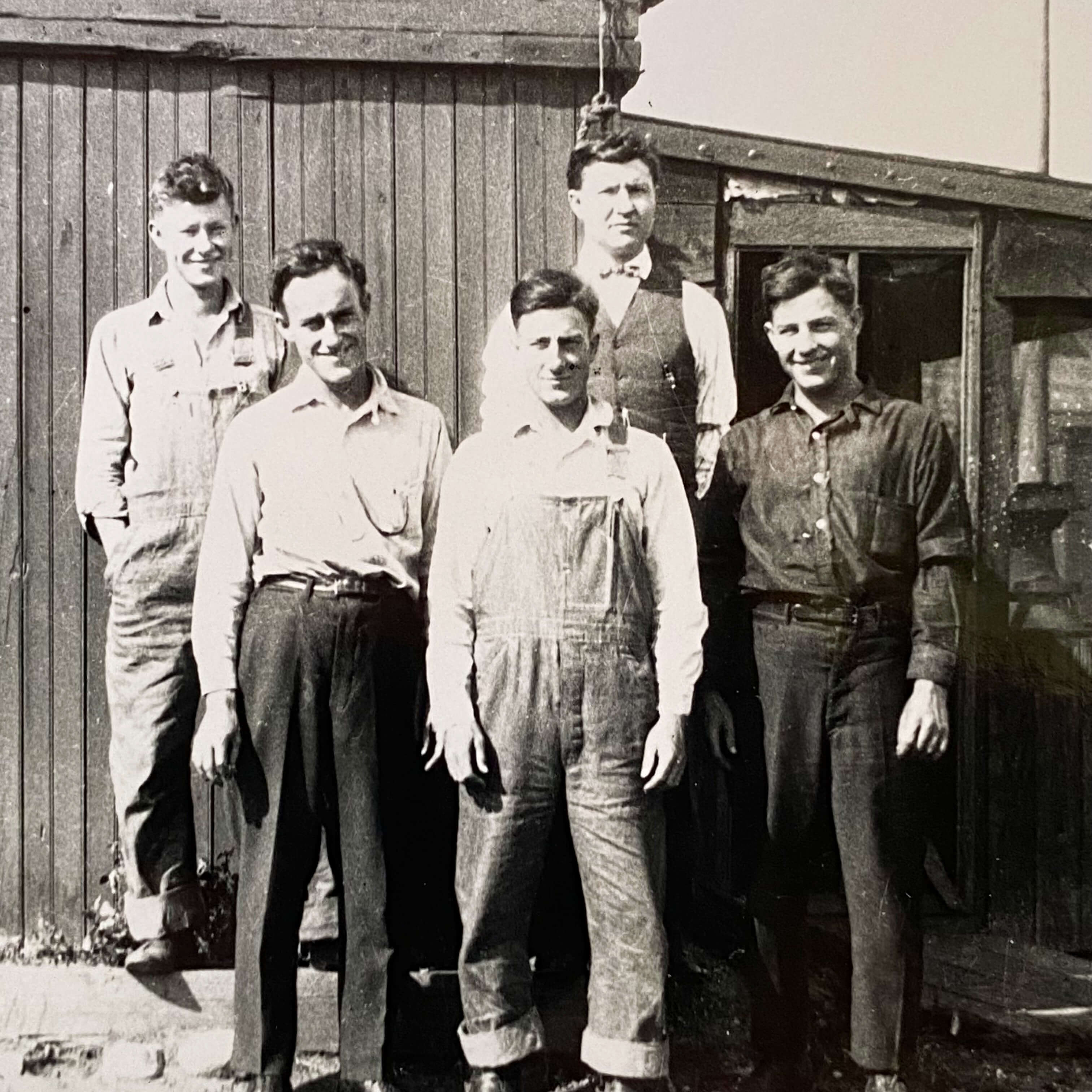
Page after page, faces unfold.

People are named Al… Bill… Bessie… Bud… Merwyn… Lou…Florence. Towns are labeled Garrison and Philipsburg. One photo refers to the “Minnesota Relatives.” A dog is named Laddie Boy.
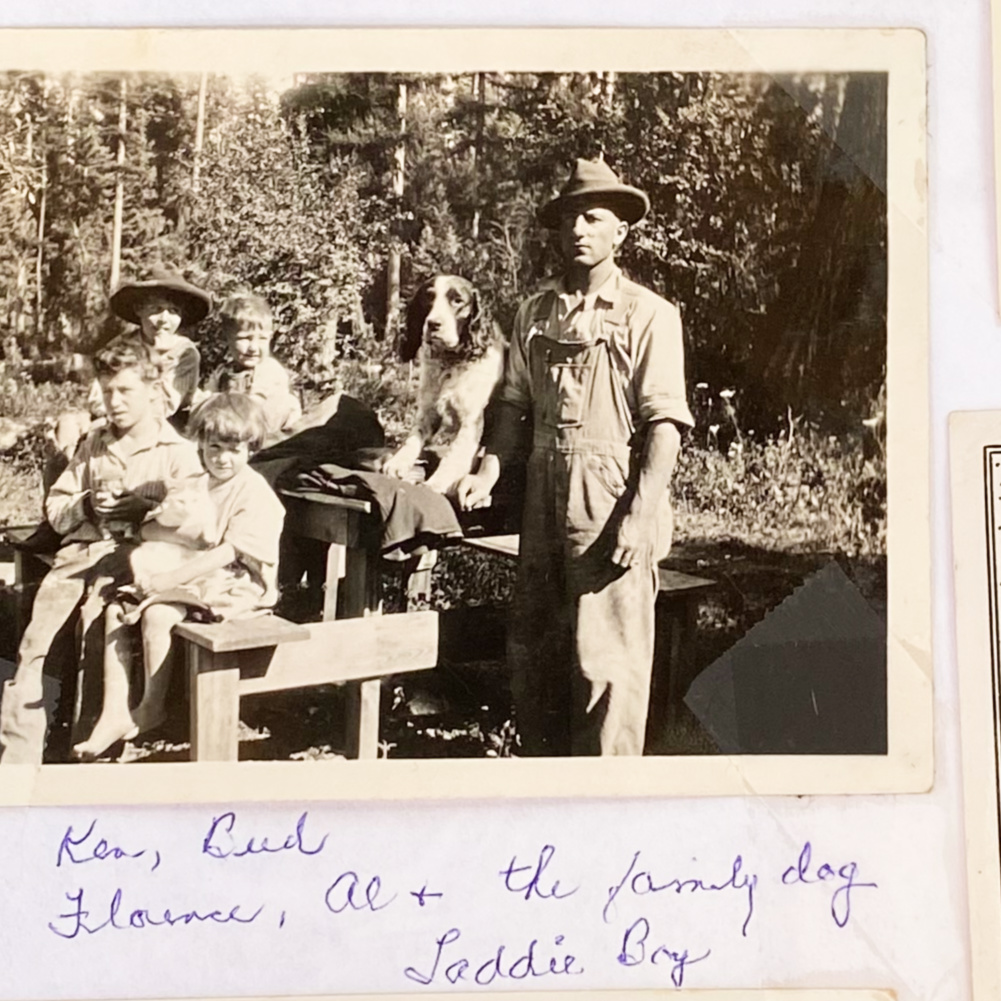
The lost item is a one-hundred-year-old photo collection of a mystery family in a mystery location. Who are these people and how are they are connected to the Vintage Kitchen? Keep reading for the whole story from start to finish.

Back in 2008, when Angela discovered this photo album that had been left behind at the Staples where she was working in suburban Atlanta, there was no way to track down who it belonged to. It had been left at the self-serve copy area and contained no other information as to where it came from or who brought it in. There was no in-store job ticket attached to it. No Staples order form. No receipt dangling from an interior page. There was just the binder – plastic, turquoise, holding onto fifteen pages of 100-year-old photographs.

Angela at Staples in 2008. Learn more about her in Chapter 2.

Knowing how sentimental old photographs can be, Angela kept the binder in the back room of Staples for safekeeping in hopes that someone would realize that they’d forgotten it and come right back for it. Days, weeks, months went by. The binder sat unclaimed on the shelf in the back room. Periodically during that first year, Angela would thumb through the photos and try to connect one of the handwritten first names to a customer list in the Staples database.

Bill, Florence, Bud, Al are pretty common names throughout the country, but particularly in the South. Searching by first name alone turned out to be a fruitless task. With no legible last names to search, no specific city and state location to pinpoint on a map, and no understanding of the context of the collection as a whole, Angela had no clear-cut way to track down the owner of the left-behind photographs using just the minimal information offered in the handwritten notes. Her only hope was that owner would return to the store to claim the binder. A year went by. A clean-up and reorganization of the back room was issued by Staples management. Angela, concerned that the binder might be misplaced or tossed into the trash during the reorganization took it home so that she could continue to search for its owner.

One year stretched into five years and then into ten and still Angela was no closer to finding out who might have left the photographs behind. Although the story of the turquoise binder didn’t change much in that decade, Angela’s life changed quite a bit. She got married and had a baby. And then she had another baby and another one after that. In that decade, she went from being a single girl working at Staples to a mom with a family of five to care for. By her side through all those life changes was the lost item. In close reach always, in case an important clue or a new lead might reveal itself, the binder became a part of Angela’s life, a puzzling research project that she returned to again and again.
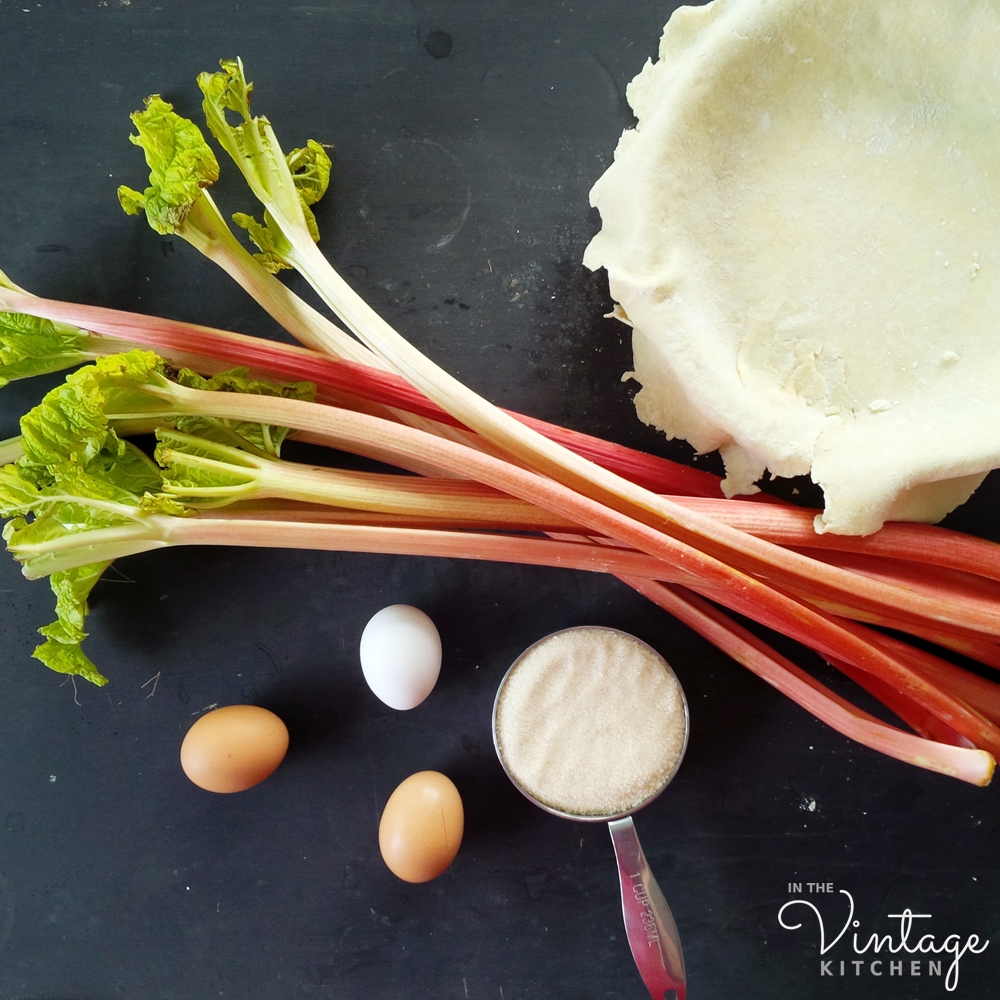
Meanwhile, in another southern state, while Angela was busy raising her family and trying to solve the mystery of the binder filled with photographs, I was busy writing about history, antiques, and vintage recipes. In March 2018, I wrote a blog post, sharing a recipe that had long been a part of springtime/Eastertime menus for generations of my family. The recipe was for Rhubarb Custard Pie – a seasonal dessert that combines Betty Crocker’s 1950s rhubarb custard filling recipe with my Great-Grandpa Bacon’s homemade pie crust recipe.

Rhubarb Custard Pie – a family tradition every spring.

In the post, in addition to the recipe, I shared the story of Great-Grandpa Bacon and his wife, Dolly, who lived in rural Montana during the early to late 20th century. Married in their early 20s, Bacon worked for the Northern Pacific Railroad, a job that took him and his new bride to two rural areas in Montana – Goldcreek and Philipsburg. It was a brave and adventurous new life for them, started at a time when Montana, still young and precarious itself, saw its most difficult years in history.

Montana Homestead Poster circa 1914. Read more about the challenges of Montana homesteading here.

Challenges stemming from WWI, the over-grazing of prairies during the homestead boom, and the subsequent agricultural decline coupled with the wild, unmanaged landscape, towns located few and far between, and the tricky navigation of the unfamiliar ins and outs of remote living, made Bacon and Dolly’s decision to build a life in rural Montana all the more courageous. Dolly was born and raised in Seattle, and Bacon was from St. Paul, MN, both sizeable cities with over hundreds of thousands of residents in the early 19th century. Their new Montana life would take them to communities with populations of less than 2000 people where they had to rely on their own wit and willpower to survive.

Dolly & Bacon’s wedding portrait, 1920

Along with the recipe, in the blog post, I detailed Dolly and Bacon’s unusual life in Big Sky Country. I didn’t have any photos of them depicting their early years in Montana, so to help visually tell their story I added a lot of research about what was happening in the state in the 1920s when Dolly and Bacon moved there. I also shared the family story about how Dolly and Bacon’s first house, after they were married, was two railcars gifted to them by Northern Pacific Railroad. A gesture offered by the company so that Dolly and Bacon could immediately set up homekeeping in their new surroundings.

A 1930s era Northern Pacific Railroad poster in Chapter 3 was a big clue about the location of the story.

Definitely an unusual start to their marriage, Bacon and Dolly thrived in Montana and embraced everything about their rural railroad life. Bacon worked as a train depot clerk in Goldcreek and then as a conductor on a transportation line for livestock and mining equipment in Philipsburg.
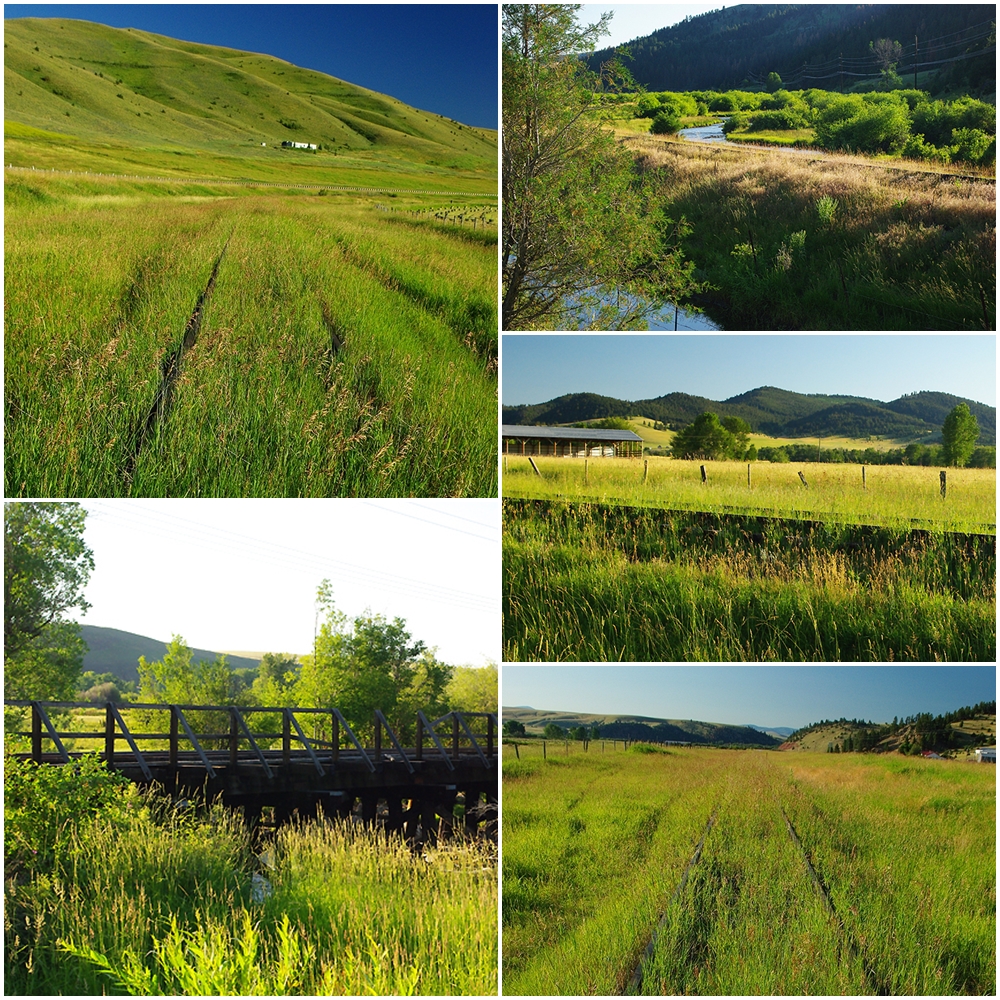
Now an abandoned track these are recent photos of the train line running through Philipsburg with views that Dolly and Bacon would have seen on a daily basis. Photos courtesy of D & D Travel.

Dolly set up house in the railcars, learned to bake bread, and wrote poetry. They had three babies, two girls and a boy. They built a house and a garden near the tracks where Bacon worked. They hiked in the hills, fished in the streams, and ate fresh-caught trout for breakfast, Dolly’s bread for lunch and Bacon’s homemade pies for dessert. They fell deeply in love with each other, with Montana, and with the life that they made. For fifty-five years, Dolly and Bacon called Montana home, never imagining living somewhere else than the paradise that surrounded them. In 1975, Bacon passed away from a heart attack at the age of 78. Dolly followed five years later in 1980 at the age of 82. They are buried next to each other in the local cemetery in Philipsburg. Even in death their hearts never left the place that they loved.
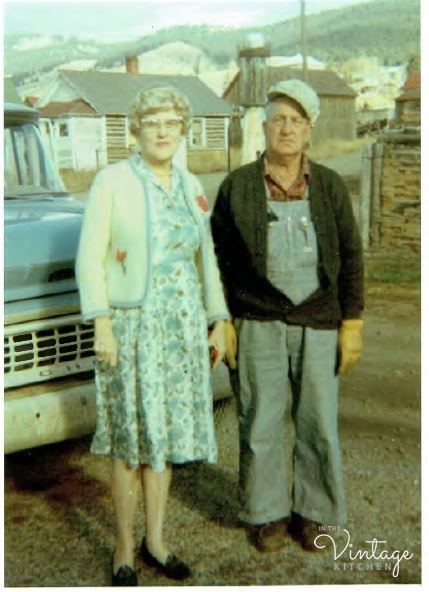
Bacon & Dolly Day in Montana circa 1950s/1960s

The rhubarb custard pie recipe received some interest from readers, but not nearly as much as the story of Bacon and Dolly. In 2018, their photo above became one of the most favorited of the year on our Vintage Kitchen social media accounts.

In 2021, Angela still searching for some helpful snippet of information that might lead her to the original owner of the binder, decided to contact a Facebook group that specialized in old-fashioned handwriting. She thought that they might be able to help decode some of the hard-to-read words that accompanied a few of the photos.

The Facebook group was more than happy to help. Within a quick amount of time, they connected words from the handwritten notes in the photo album to words and phrases found online in my blog post about rhubarb custard pie. Bac, Philipsburg, train depot, lived in boxcars, and finally the clincher… Dolly Day… lept out at the group. All threads strong enough to cause Angela to reach out to the Vintage Kitchen via the blog, she sent an email to see if the photos might be connected to the recipe and to the story of Bacon and Dolly. Along with her inquiry, she sent some photos from the binder, this one included…

When I opened Angela’s email, I was greeted by a photo of Bacon himself. In his younger years. In his beloved overalls. In his rural Montana. With Dolly by his side. And just like that, after 13 years of Angela’s diligence, time, and attention to finding the owner of the lost item, her inquiry was confirmed. Yes, indeed the photos were a part of the Vintage Kitchen – firmly rooted to the rhubarb custard pie recipe and to the Montana life of Bacon and Dolly Day.

A windfall for a genealogy lover like me, it was incredible to see personal photographs of someone I had heard about but never met, wrote about couldn’t completely visualize, and whose recipe was in constant use in my kitchen. When the turquoise binder arrived in the mail, Dolly, Bacon and their Montana life lept off the pages.
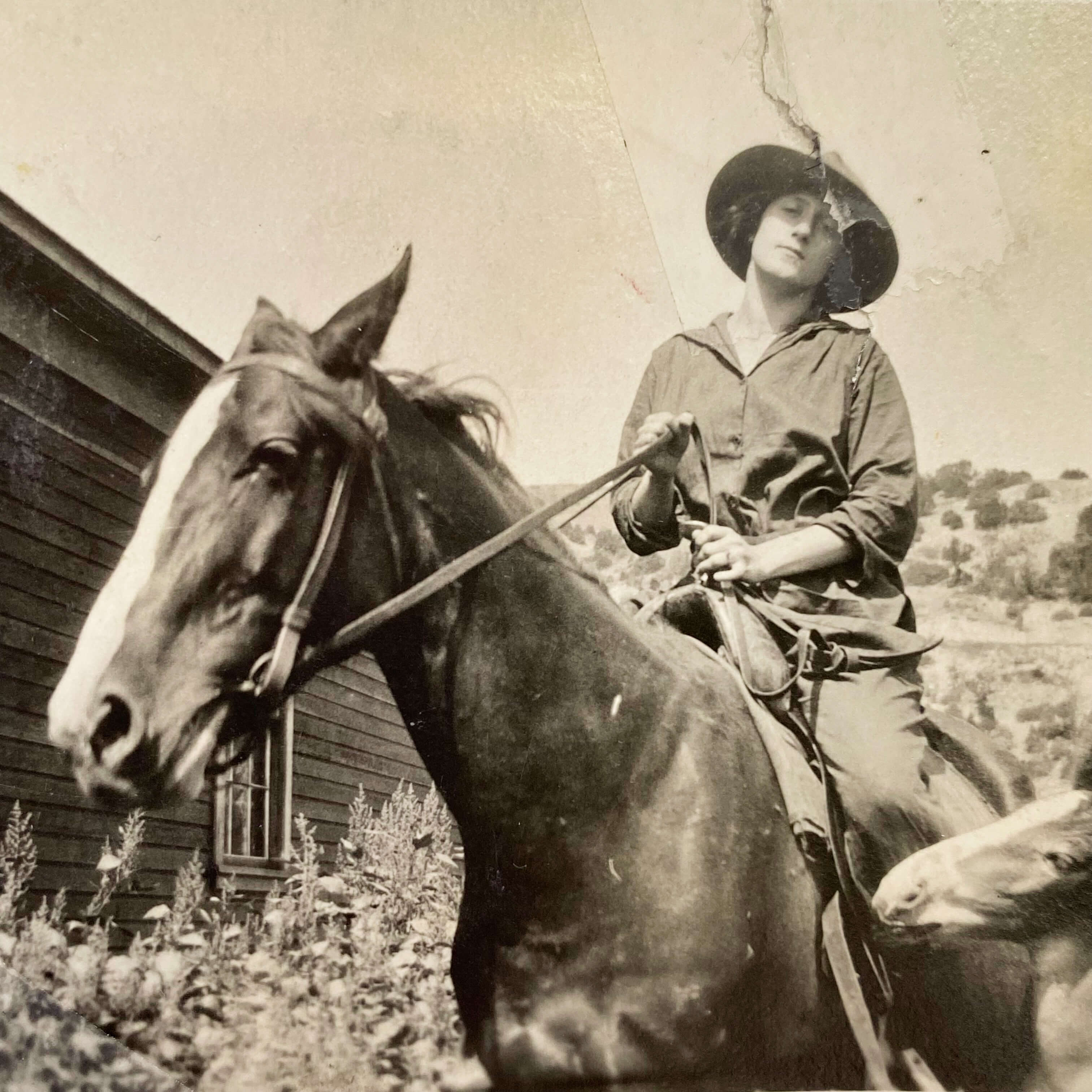
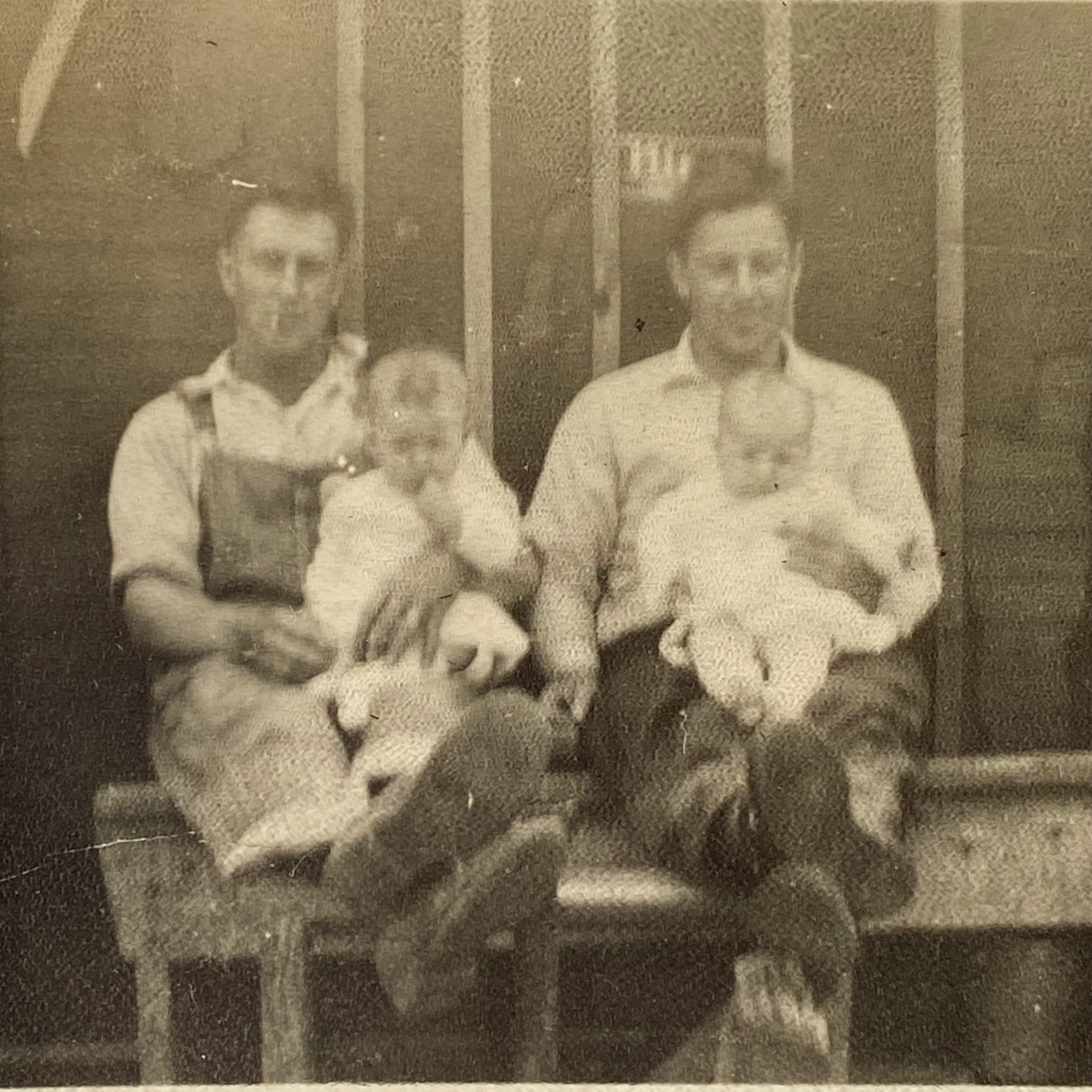
Suddenly the photo album made all sorts of sense. The woman on the horse? That was Dolly. The two men holding babies? That was Bacon and his twin brother Willis, who in turn, were holding their babies, Dolores and Willis Jr., both born in the same year (1922). The house with the long angle? That was the train depot in Philipsburg where Bacon worked.
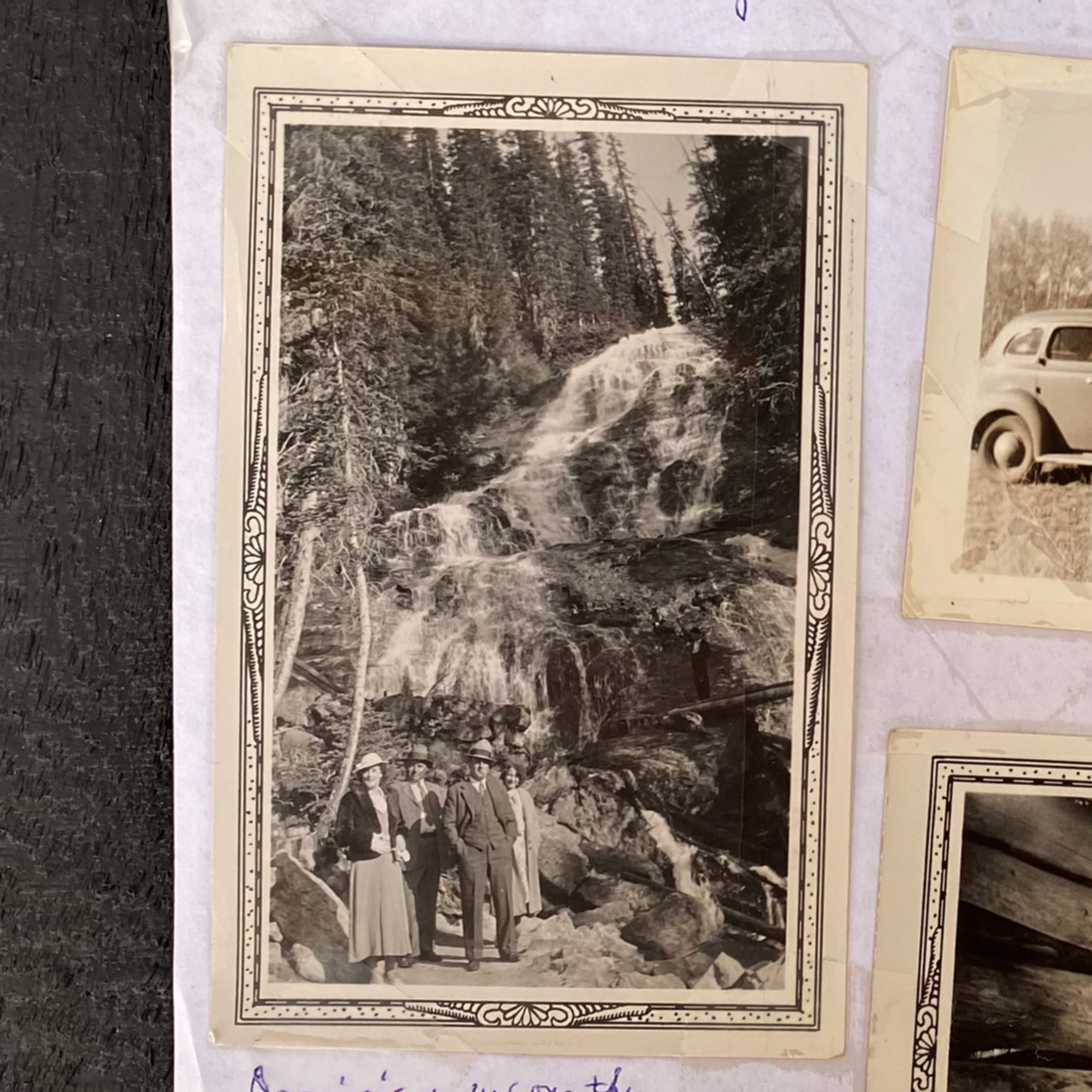
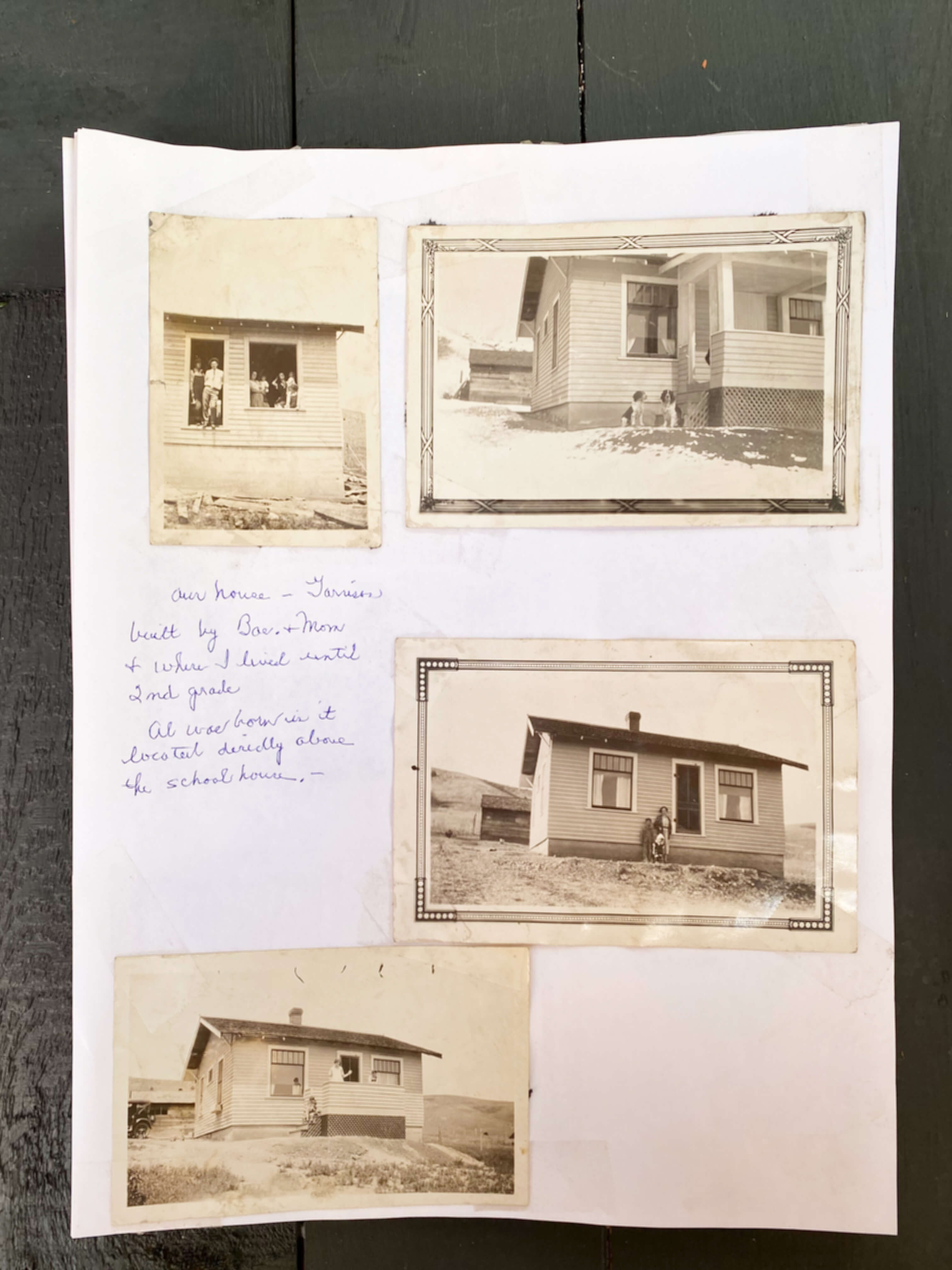
The waterfall is part of Skalkaho Pass, a point of interest In southwestern Montana that was mentioned in the photo album but misspelled. The building with everyone hanging out the window? That was the first house that Dolly and Bacon built from scratch with their own hands. The car with the motor home attached? That’s how Bacon and Dolly went camping. And the “Minnesota Relatives?” Those were Bacon’s brothers and sisters and their families visiting from Bacon’s home state.
Bacon and Dolly’s life unfolded in the photos page by page. Every family story known about them as a couple, their kids and their unique life in Montana was now here in visual format offering new insight into them and their experiences. In 2018 when I wrote the rhubarb pie post, I had only the one photograph of Dolly and Bacon in their senior years to share. Now, there are forty-seven more.

As I stated from the beginning of this story, the Vintage Kitchen is connected to the lost photos, but they don’t belong here. I wasn’t the one who pulled them from the pages of an old black photo album. I didn’t compile them in the turquoise binder. Nor was I the one to leave them in the suburban Atlanta Staples in 2008. Technically, Great-Grandpa Bacon and Great-Grandma Dolly aren’t even related to me.
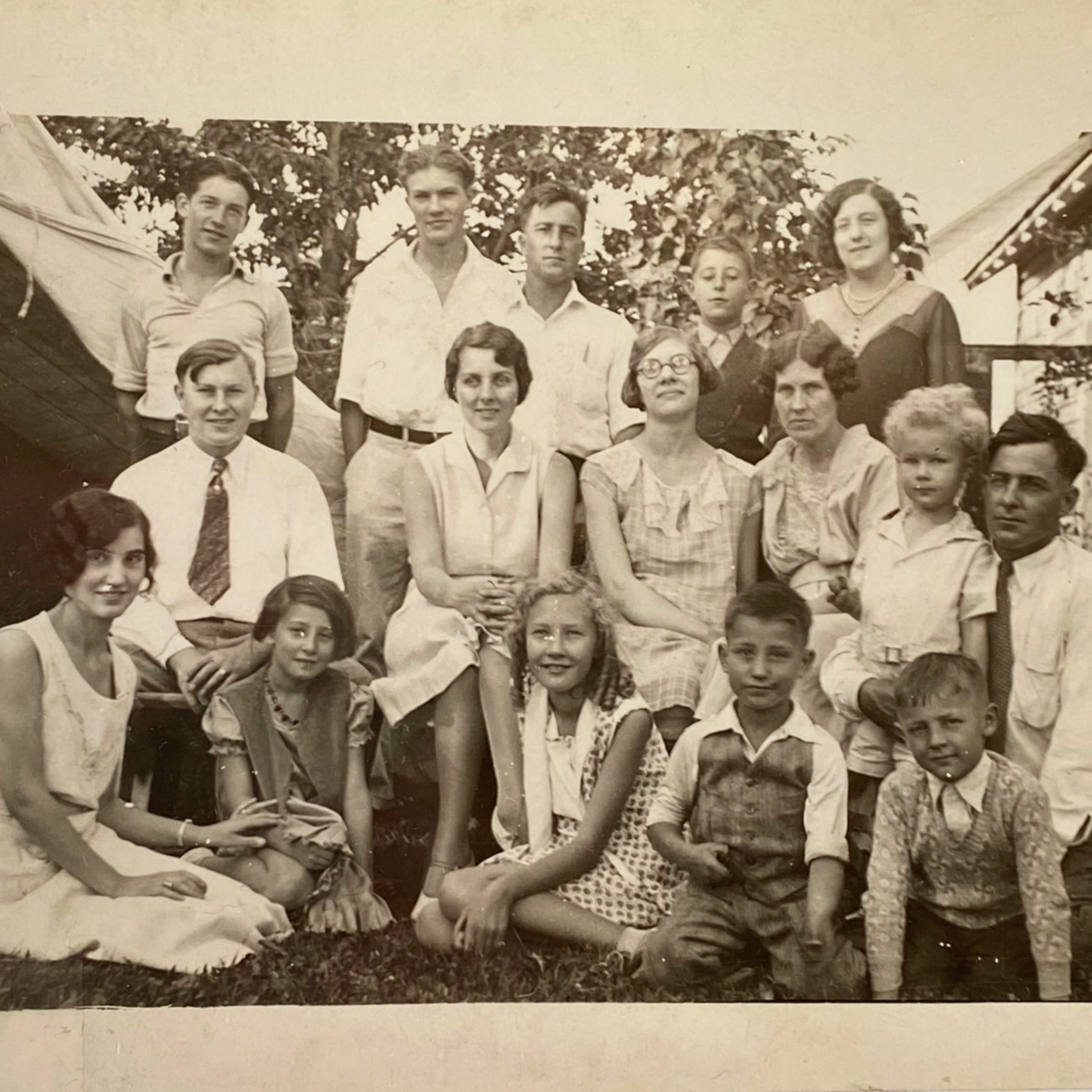
Bacon and Dolly are the grandparents of my mom’s first husband. My brother, sister and I have the same mom but different dads. Bacon and Dolly are part of my brother and sister’s paternal ancestry line which is made up of Midwest and Pacific Northwest roots.

Both my brother and sister have memories of Dolly and Bacon and they both share a special affinity for Montana. Knowing that they would be so excited to learn about these never-before-seen photographs of their beloved great-grandparents, I couldn’t wait to share the story with them. I also couldn’t wait to share this whole story here on the blog too. Especially since I had already written about Bacon’s pie crust recipe. Had the family rhubarb pie recipe never been published, the Facebook group would never have found the Vintage Kitchen and Angela would never have contacted me, so it was very exciting to be able to continue telling the story of Bacon and Dolly here as well.
In the summer of 2021, when the photos arrived from Angela, the pandemic was still wreaking havoc on socialization plans. Although the idea of flying out to Seattle to meet my brother and sister was definitely the way I wanted to deliver the photos to them, I didn’t want to tie up this lovely gift from history wrapped in a case of Covid. So while waiting for the virus to calm down a bit, I decided to start telling the story on the blog. Since both my brother and sister read the blog, and since I didn’t want to spoil the ultimate surprise, I never mentioned anything to them about the photos or Angela or Montana. Hints in Chapters 1-4 of A Monumental Story of Real-Life Serendipity Told Over Many Parts were all filtered through a veil of mystery so that my brother and sister wouldn’t be able to guess that the lost item had anything to do with them.

Fast forward through 2021, 2022, and 2023. The timing never lined up quite right to fly out and finish the story. A six-month house hunt, the South to North move, and 1750 House renovations wound up delaying the surprise far longer than I ever anticipated. But if we’ve learned anything so far in all these chapters about the lost item, it’s that timing is everything to this story and in its weird and wonky way has linked all these people in all these places together at the most appropriate moments.

In January 2024, the right time presented itself. My niece was getting married in Seattle. A family wedding was the perfect occasion to share the story of the lost item and to finally deliver the 100-year-old photographs bound together in their plastic, turquoise bnder.
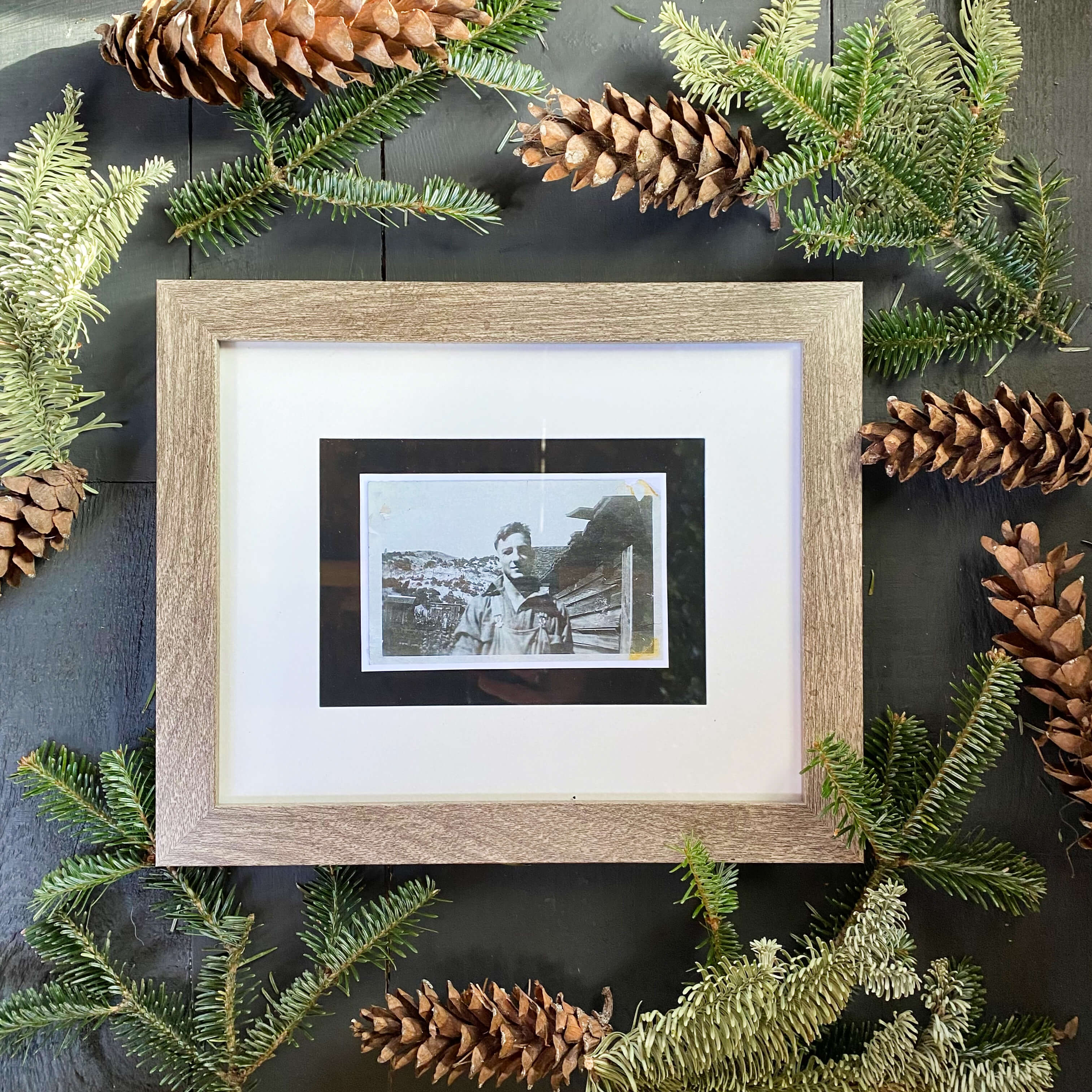
Before I left for Seattle, I had five copies made of one of the photos from the binder, so that I could frame them and give them to each of my nieces and my brother and sister. I chose a photograph of Bacon, newly married, age 24, where’s he looking straight at the camera. There are rolling hills in the background, part of a rustic building at his shoulder, a patch of corn growing next to a building behind him. He’s wearing his signature overalls. There’s a look of contentment on his face. A welcoming smile just about to bloom.

Lyle Bacon Day, Montana 1921

I had the photos reproduced at my local Staples, an homage to Angela and also to the lost item. While waiting in line to be helped, I glanced over at the self-serve copy area, at the bare tables next to each station, at the hard surfaces, sharp corners, and the utilitarian grey, beige, and black colors that covered that part of the store. I thought about the turquoise binder sitting by itself in such an environment. I thought about Dolly and Bacon tucked inside and how the environment of a modern-day Staples was so far removed from their wild Montana countryside, yet also had become such an integral part of this story.

Bacon and Dolly’s Montana circa 1920s

In 2018, going back and forth with Angela via text after the photos arrived in the Vintage Kitchen, I asked her what it felt like to put the binder in the mail after a 13-year journey with it. She admitted to tearing up a little. “I felt appreciated and blessed. To be able to provide so many people connected to this item with a sense of joy and happiness makes this such a special thing to be a part of.”

When it was my turn to be helped at the counter, the Staples employee was a bit flustered and explained that it had been a busy day and they were running behind with custom print jobs, so I’d have to leave my photo with them overnight and pick up the copies the next day. I hesitated. Bacon had come such a long way. His photograph was in my hand about to be given over. What if… I thought. What if something happens overnight at Staples. What if I never get the photo back. What if…

Clearly tired from her day, and sensing my hesitation, the Staples employee took the photo, popped it into an envelope, and attached it to a work order all in one quick motion while asking if she could help me with anything else. I wanted to tell her the story. The whole story. Starting all the way back at the beginning in 2008 with Angela in the Staples in Georgia. But the line behind me was long, and I got the sense I wasn’t speaking to someone like Angela who would care so wholeheartedly about old photos and lost items.

A detail had escaped my attention until the day before the wedding. It came in the form of my niece’s wedding ring. She designed it herself so that she could include a family heirloom in the setting that had been passed down on her side of the family for generations. The heirloom was a blue Montana sapphire. It had been mined from a local quarry near Philipsburg, Montana. The sapphire had been a gift from Bacon to his daughter, Florence on her 16th birthday in 1940..
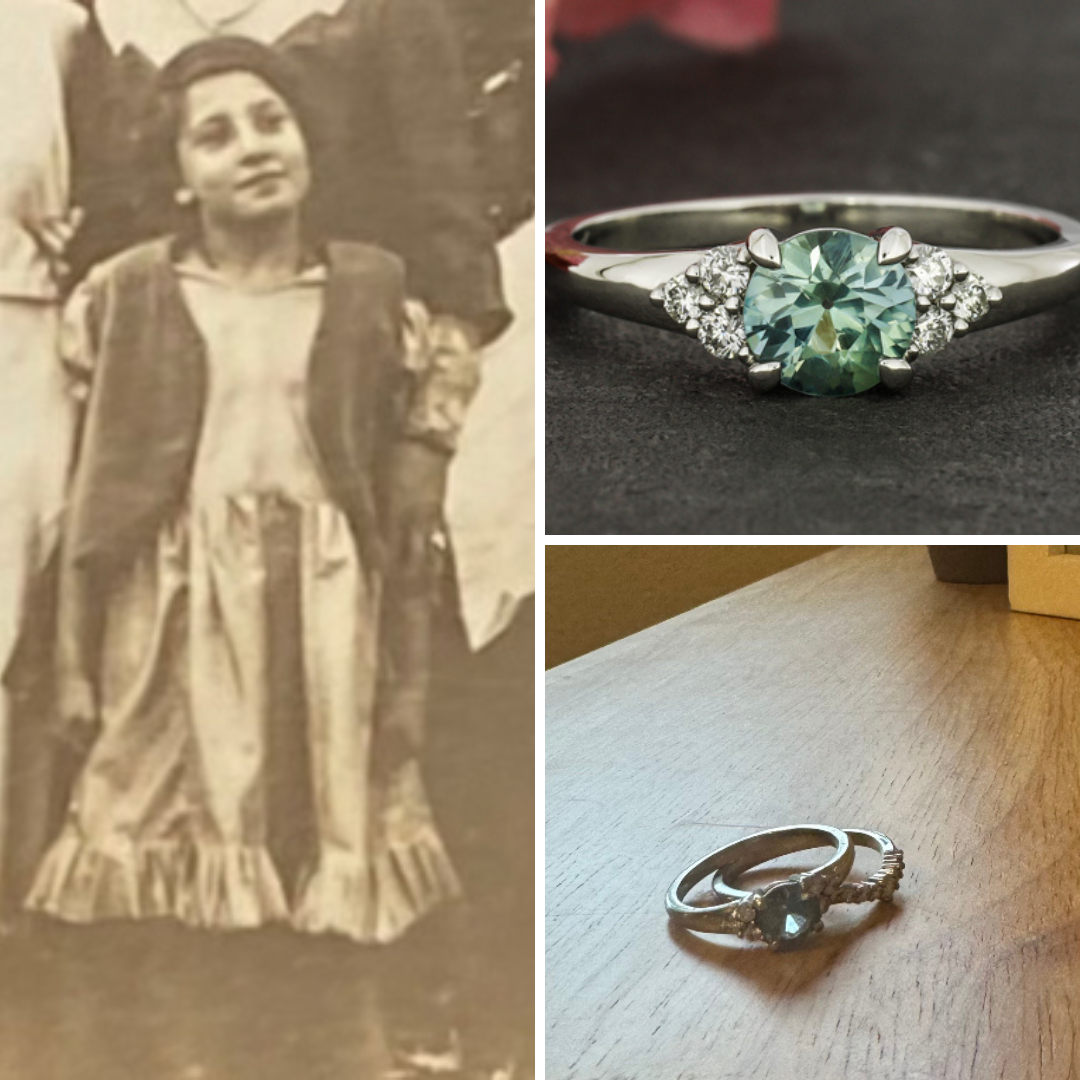
Photos clockwise from left to right: Florence in Montana, about 10 years old circa 1934. A professional photograph of my niece’s Montana sapphire wedding ring. And a photo of her ring and wedding band taken at home after the wedding.

The day after the wedding, over trays of homemade enchilada casserole at my brother’s house, I shared the story of the lost item with my sister, brother, and nieces. I presented the turquoise binder and gave everyone their framed photographs. It was one of the loveliest family dinners I’ve ever had. We all marveled at the tenacity of Angela, the scenes of Montana spread around the table, and the good fortune that these photographs were not just thrown out in a dumpster sixteen years ago. My brother told me about a railroad key of Bacon’s that he had in storage and my sister told me about a booklet that she has of poems and musings about Montana written by Dolly. New story snippets and memories popped up in conversation as the photos floated around the table. My brother immediately called an aunt from that side of the family who lived in Atlanta to see if she was the one who left the binder at Staples. She was as surprised to hear about the story as we were and said she had no idea who the binder might have belonged to and how it would have wound up at Staples.

If you think about how fragile a paper photograph is, it’s easy to get quickly overwhelmed with scenarios that could have gone wrong in this story. They could have been destroyed a million different times in Montana alone over the course of a century. Not to mention the fact that they somehow made it to Atlanta. Then got lost. And then potentially could have been thrown out in the trash had kind-hearted Angela not cared enough to rescue them.

Something could have happened to them or to Angela in her thirteen years of time spent with them. Or something could have happened to them in the airplane when they were mailed to the Vintage Kitchen from Georgia or to the UPS truck that delivered them. Once, I received them, they became part of a big move, a typical life experience that often sees items get misplaced, lost or forgotten. And then for three years after that, they sat on a shelf of a 274-year-old house undergoing construction, room by room.

The view from the boat on the way to my brother’s house.

After that, they crossed the country again via plane, traveled in three different cars, and then on a boat to reach their final destination. Anything could have happened to the photographs in that timeframe by any sort of man-made or natural event experienced by any one of us involved. But it didn’t. Fate was on their side. All along, time took care of them, nurtured them. So that eventually, their story about time long ago was able to tell another story about time today. One generation growing from another.

Bacon with mare and foal. Montana circa 1920s.

On the airplane, coming back from the wedding I had to time to think about the whole story of the lost item from start to finish. Now knowing more about Bacon and Dolly, seeing their young lives evolve through photographs, I could see glimmers of their spirit in my brother and sister. The rugged, wild island where my brother lives, and that he absolutely loves, is his modern-day version of paradise just like Bacon’s wild, rugged Montana. My sister, our family’s star baker, is an incredible talent in the kitchen just like Dolly was with her bread and Bacon with his pies.

There is a lot to love about this story… the kindness of strangers, a lost item found, a family reconnected to its past, an heirloom saved from the brink of obscurity, an intimate look at a unique aspect of history, a mystery solved. But I think the thing that I love most is that ultimately, it was a simple, humble vintage recipe that connected all these threads and all these people.

The 2018 Rhubarb Custard Pie

I return again to the quote… “What’s meant for you will never miss you, and that which misses you was never meant for you.” It’s impossible to try to rationalize or explain the sheer amount of good fortune that these one hundred-year-old family photographs were graced with over the past sixteen years and beyond. I can’t logically detail why or how certain people came into the story when they did or why timing stretched out this love story long enough to finally be added to a new generation’s love story on their wedding weekend. All I can do is say thank you, to the universe, to fate, to Angela for clearly demonstrating that these photos were indeed meant to never miss us.

Cheers to Angela, a modern-day angel, for not only saving these photographs, but also for taking such tender care of them, and persistently working for over a decade to find their home. Cheers to Bacon and Dolly for continuing to be a source of interest and inspiration in our family and in our kitchens. And cheers to all you patient Vintage Kitchen blog readers who stuck with me through the lengthy and sporadic telling of this very long story.

There are only two questions left that still linger. How did the 100-year-old photographs taken in Montana that belong to a family in the Pacific Northwest wind up in a suburb of Atlanta, GA? And who wrote the notes next to each photograph?

Maybe there is still more to this story yet to come…

Thoughts on Love, Dinner and New Discoveries Courtesy of Brazil

Happy Valentine’s week fellow kitcheners! Since love and romance are dominating the spotlight right now, it’s wonderfully fortuitous that the featured destination on our International Vintage Recipe Tour this week wound up being Brazil. It’s not good to generalize people or countries, but Brazil is known to be a passionate place.

Beautiful Brazil!

Consistently included in top ten lists as one of the world’s most romantic nationalities, it’s safe to say that Brazil is in love with love. And we are not just talking romantic relationships here. Brazilians are known to be equally passionate about their hometown  soccer team, their spouse, their favorite carnival and their kitchen.  Ah serendipity! On this week of hearts and roses and pink colored everything, a romantic holiday dinner awaits us here in the Vintage Kitchen.

Or so I imagined!

I was hoping that our vintage recipe was going to highlight a dinner food that matched the passionate place from which it came.  Surprisingly  that wasn’t quite the case. On today’s menu we are making Picadinho a Brasileira, a recipe that roughly translates to “Minced to the Brazilian” in Portuguese. A popular heritage dish especially in Southeastern Brazil, there are two main versions of picadinho – one a hearty beef stew with whole vegetables and the other a slow simmered light and fluffy ground beef cooked with wine and vegetables.

Picadinho a Brasileira

Our recipe this week involves the latter.  Not exactly one of the glamour foods usually touted on Valentine’s Day menus (steak, lobster, oysters, anything drenched in champagne or chocolate) ground beef always tends to get relegated to more humble, homey everyday recipes like meatloaf, burgers, tacos and casseroles. It’s never a dish you see people eating in romantic movies. It’s never the culinary centerpiece tucked in between candlelight and flower bouquets. And it’s definitely not the most tantalizing type of meat to photograph.

I don’t know exactly what I expected of Brazilian food at the start of Week 6, but I think I was hoping for something a little more exotic in the food spectrum, something that matched the passion of the people. A recipe that involved colorful fruit perhaps or a sea swimmer from the waters of the Atlantic. Picadinho a Brasileira is neither of those two things. But after making this recipe and thinking about it for a bit, I came to realize that it is in actuality, an absolutely wonderful and appropriate dish to share with your sweetheart or your gaggle of loved ones on Valentine’s Day. More reasons on that shortly.

Tonight we’ll dive right into the recipe so that we can talk about the unique aspects and attributes of it after all the steps are laid out. A super easy recipe to make (a nice reprieve after the confusing fondue affair of last week!) Picadinho a Brasileira is a one pot dish that slow simmers on the stove for almost two hours.  It includes half a bottle of wine, a satisfying amount of vegetable chopping and six eggs (something that originally sounded a bit unusual). It’s also low-maintenance thanks to the slow cooking so it conveniently allows time for you to do other stuff while its simmering away. Maybe that’s where you can fit some extra time for romance:)

Picadinho a Brasileira

Serves 6-8

1/2 cup olive oil

1 large onion, finely chopped

4 cloves garlic, coursely chopped

2 lbs ground beef (I used grass-fed)

6 eggs

2 ribs celery, including leaves, finely chopped

1 green pepper, cored, seeded and finely chopped

1 cup finely chopped parsley

2 cans (17 oz. each) Italian style tomatoes

Salt and freshly ground pepper to taste

1 1/2 cups dry red wine (I used Storyteller Red Blend)

Hot red pepper flakes to taste

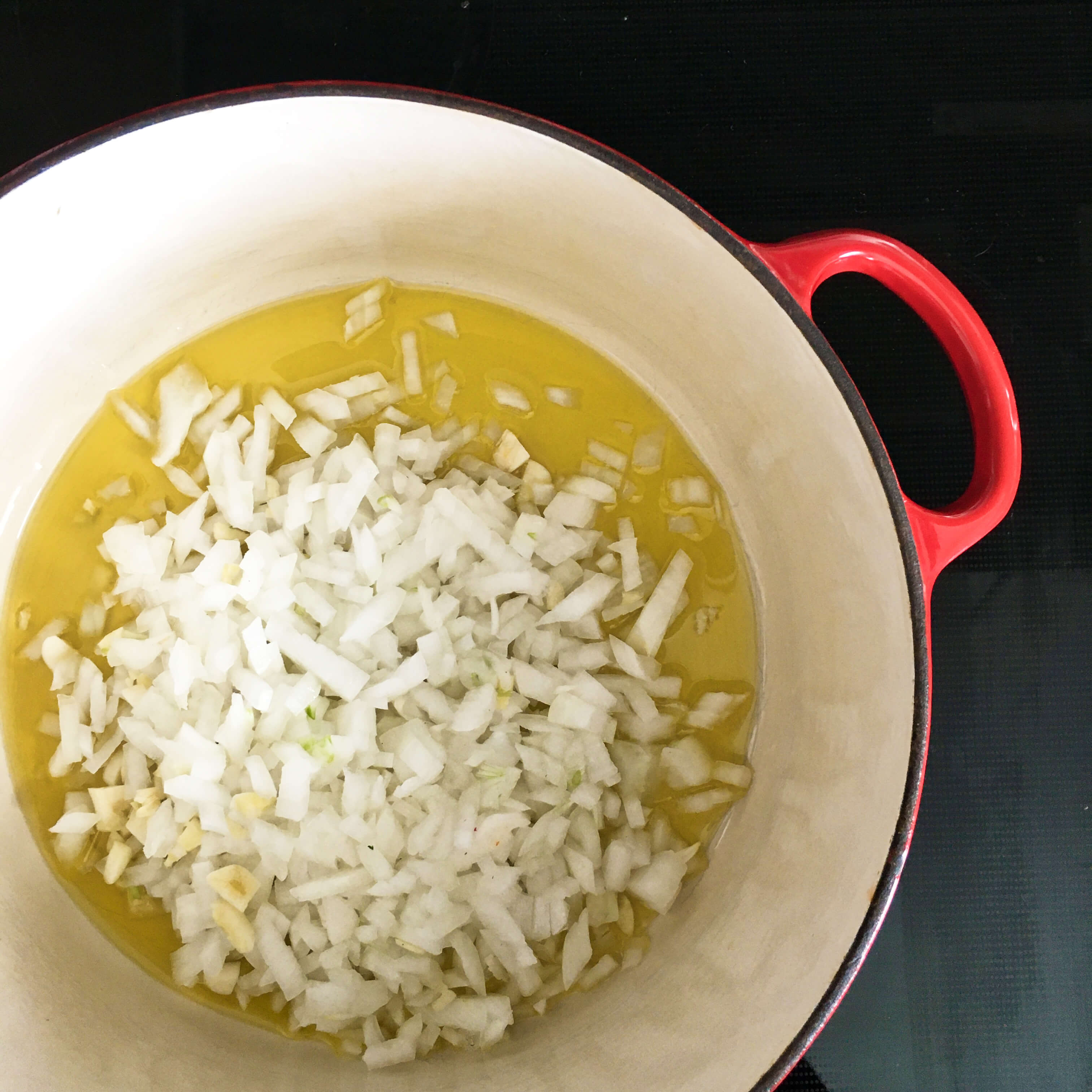
Heat the oil in a large, deep saucepan and add the onion and garlic. Cook until golden brown, stirring frequently.

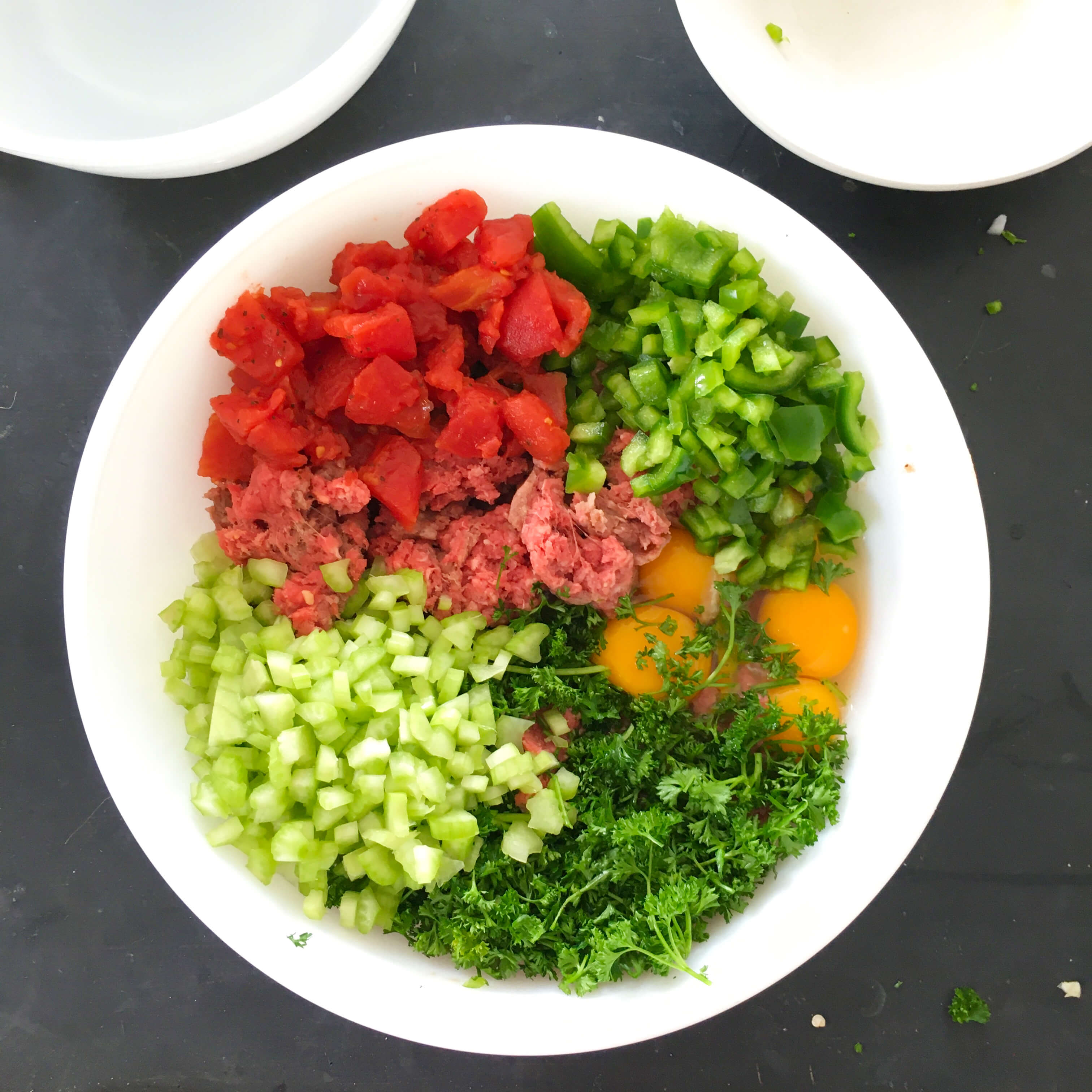
While the onions are cooking, place the meat in a large bowl. Add the eggs, celery, green pepper, parsley and tomatoes.

Combine everything together with your hands until it is thoroughly mixed. (Note: This step is a little soupy and a little sludgy not to mention both visually and tactile-wise pretty unappealing, but don’t worry, it gets better soon.)

Add the mixture to the onions in the pan and cook stirring until well blended and the meat loses its red color. Cook the mixture 15 minutes and then add the salt (I used about  1 1/2 teaspoons), pepper (I used about 1/2 teaspoon) and one cup of wine. Cover and cook 15 minutes longer.  (Side Note:  If you are following the Recipe Tour over on Instagram too, you can see a  little video of this step in the Highlights section. Every Sunday, I post a sneak peek video of the recipe coming up, so if you are big into previews come visit the Vintage Kitchen Instagram page on Sundays!)

Now back to the recipe!

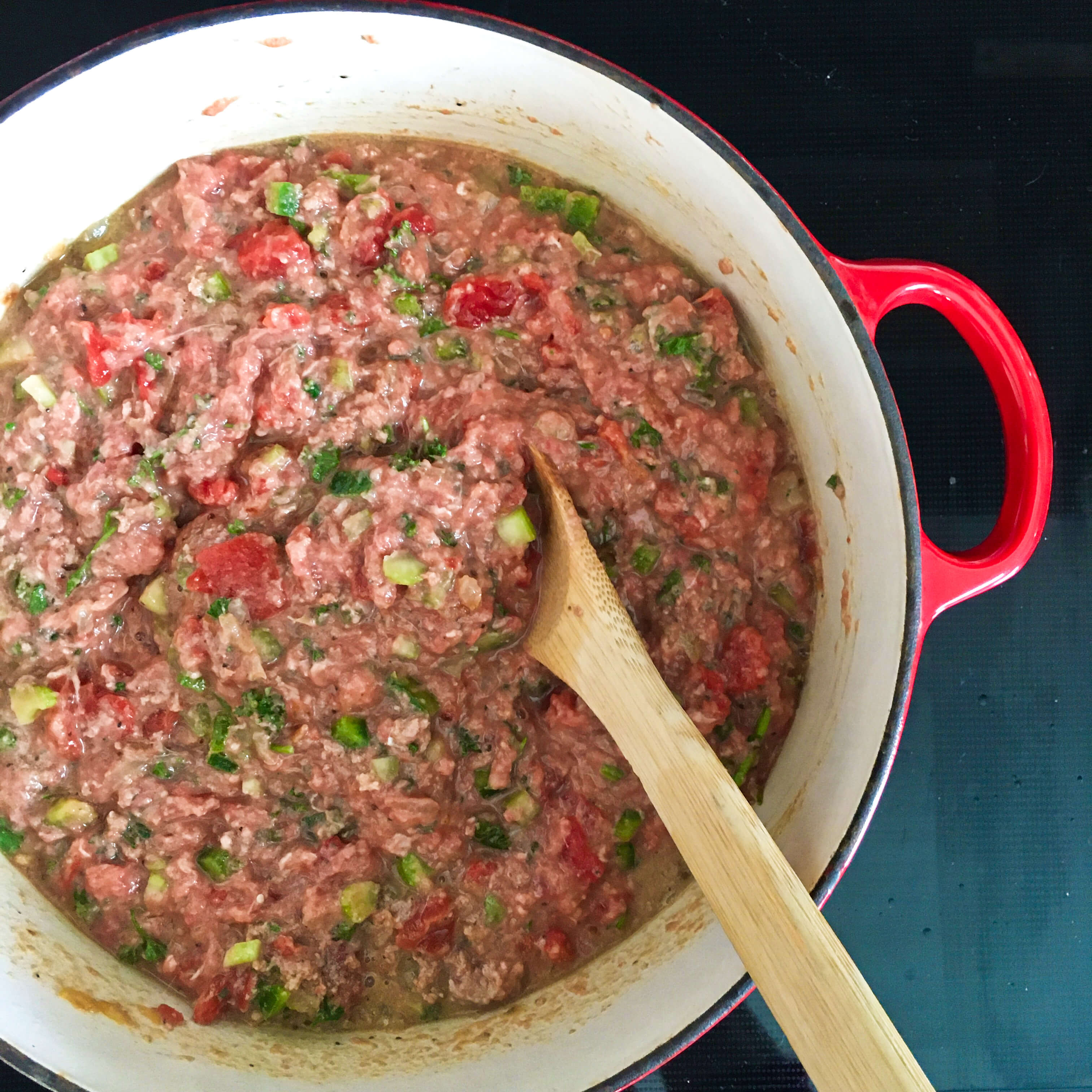
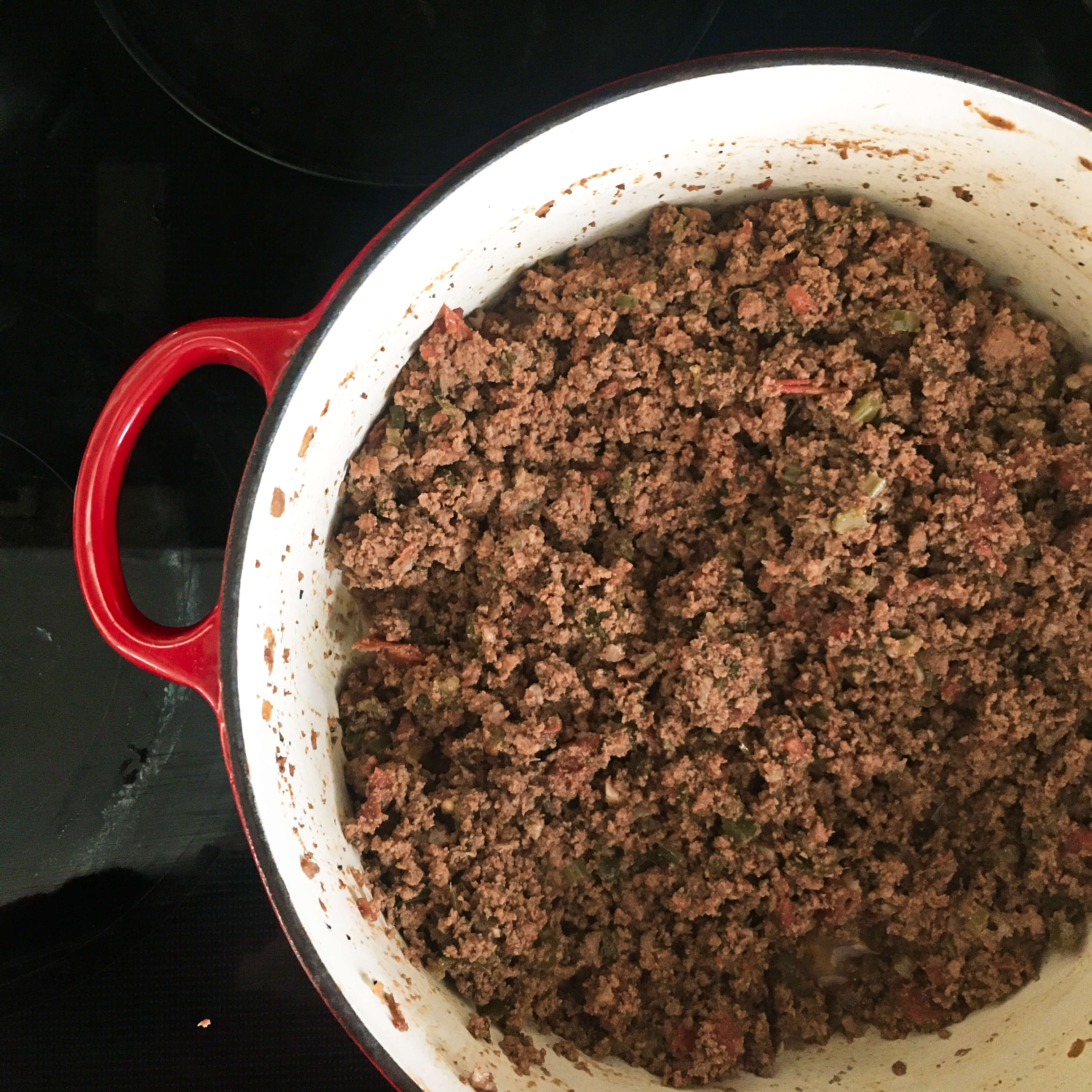
Add the remaining wine  and red pepper flakes (I used about two pinches), then partly cover and cook, stirring occasionally, one hour or longer. At the beginning of the one hour of cooking, the picadinho will be very liquidy, but as it cooks over the next 60 minutes, it will dry out and all of the moisture will evaporate. At that stage it will look like this…

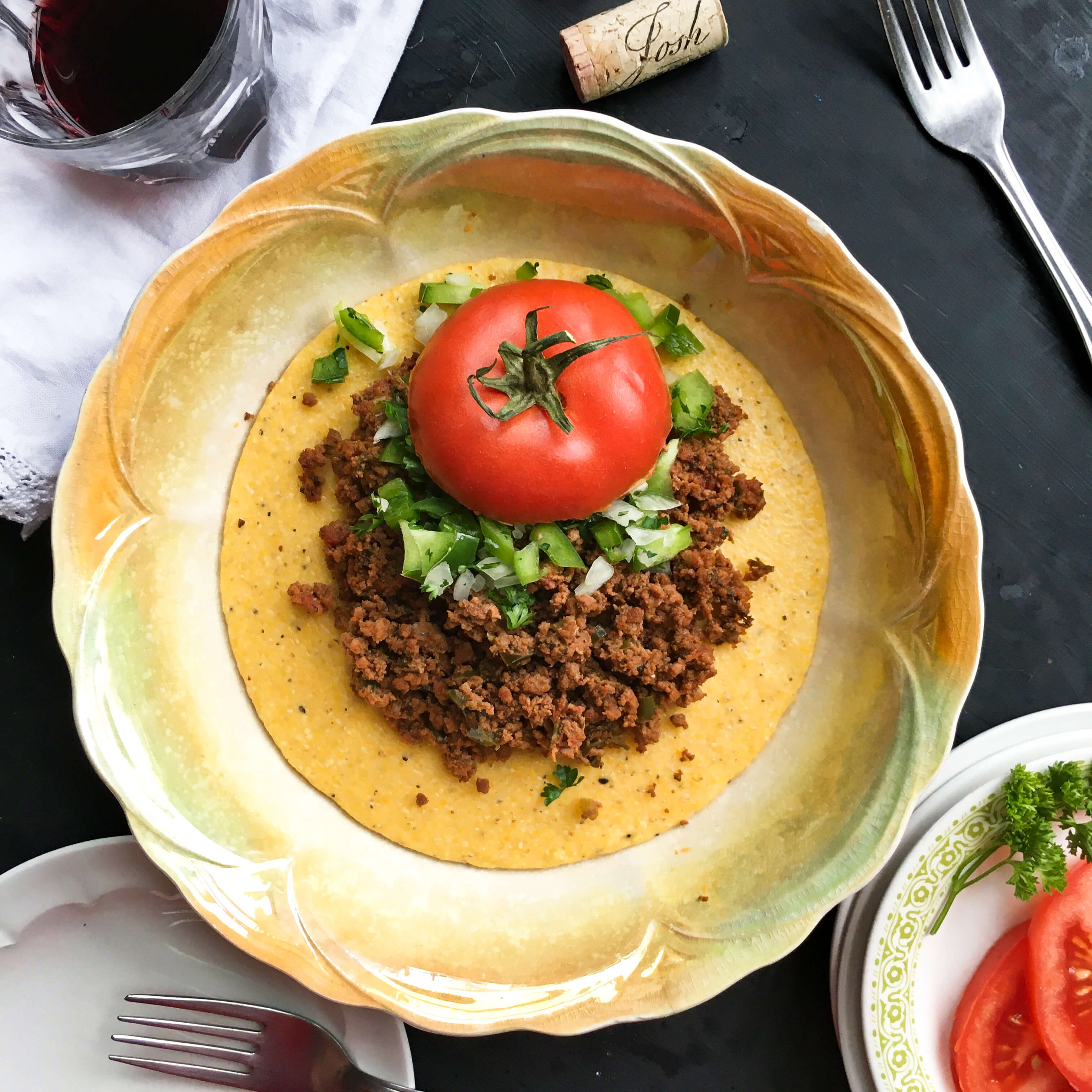
…a  mixture that mirrors taco meat but is much lighter and fluffier. Once all the liquid has evaporated the dish is done and is ready for serving.

Traditionally, you’d accompany Picadinho  a Brasileira with white rice or farofa (which is a Brazilian form of farina – something similar to cream of wheat). However, I wasn’t that excited about either option when it came to pretty plating,  visual appeal and a Valentine vibe. As you can see the picadihno has lost most of its vegetable color and is pretty much in the end just one shade of brown. It is not the most visually striking dish that we have made so far, but what it lacks in appearance it more than makes up for in delicious flavor.

Between the fruity notes of the wine, the citrus notes of the tomatoes and the sweetness of the onions, combined with the fact that it looks a lot like taco meat, my first impression upon tasting it was to pair it with something in the corn family. Something like tortillas. Although this dish would be fantastic with such a companion, corn tortillas are not widely consumed in Brazil, so to stick a little closer to a more authentic meal, I chose corn grits since they are more similar to the consistency of farofa. Made with milk, Parmesan cheese and butter, the grits add color, a creamy texture and a complimentary corn flavor that blends all the ingredients in the picadinho together so well. I also added some freshly chopped onion, parsley and green pepper for a burst of fresh crunch and more color.

All sorts of other garnishes like sour cream, cheddar cheese, olives, avocado, cilantro, basil (basically anything you enjoy on a taco)  would also be delicious here, albeit not very Brazilian. But that, I discovered, was really the fun of this recipe. It is open to creativity, to interpretation, to personal touch. Which brings us back to why this recipe is actually a very good choice for Valentine’s Day. Let’s look…

  1. It has the ability to showcase your own creative flair and your personal passion for cooking. Wrap it up in pastry dough like empanadas, stuff it into pasta shells, serve it over potatoes or transform it into a patty melt. It’s yours to experiment with, to make, to mold, to accent and to call your own. It’s a love letter to your culinary ingenuity!
  2. For all the lovebirds that like to eat together, it’s a shareable meal.
  3. It’s family friendly, thanks to its basic ingredients, making it inclusive for all the ones you share your life with.
  4. It feeds a crowd, so if you wanted to throw a galentine party this Valentine’s Day it’s a delicious option for both entrees or hors d’oeuvres.
  5. It’s a food that stimulates the art of conversation and encourages new ideas, which means it’s pretty much guaranteed to keep the attention of fellow diners for at least a little while.

Picadinho a Brasileira may not be chocolate covered strawberries or lobster thermidor or a fancy special occasion food brought out once a year, but any Brazilian would tell you that love deserves to be extended, extolled and celebrated every moment, every day, not just on February 14th. Romance doesn’t have to be elaborate in order to be understood or received. A simple meal served to someone special is such a sincere act of love. The enjoyment that follows – tasting something new, talking about the experience and exploring some culinary curiosities leads to unexpected discoveries. This one dish opened up a whole conversation between myself and my valentine of a husband about spices that had us chatting and speculating the day away. Also, while researching this blog post,  I discovered some new favorites courtesy of Brazil…

Two new vintage books to read by Brazilian authors Paulo Coelho and Jorge Amado

and a new art book to explore…

And it also led to the discovery of two new artists. I love this 1920’s era portrait, untitled, but referred to as Woman with Lemons by Brazilian artist Tarsila do Amaral (1886-1973)…
and the colorful botanical collage paintings of Brazilian-born artist Beatriz Milhazes…

So you just never quite know where your dinner will wind up taking you!  At the start of this particular cooking adventure, I thought this post was going to be all about a traditional romantic Valentine’s Day worthy dinner. An idea I understand now sort of bordered on the cliche side of things. But in reality, this seemingly unromantic Brazilian ground beef recipe turned out to be quite a little passionate catalyst that produced new loves in art, literature and conversation. That’s pretty romantic after all!

I hope this Valentine’s Day your hearts and bellies are full to the brim with thoughts and  foods that you make you feel happy, loved and inspired. Cheers to the holiday and cheers to foods that surprise and satiate us not only physically but mentally and emotionally!

Next week finds us making a sweet treat that hails from the land that Meghan and Harry now call home…Canada! Until then, happy cooking!


The Story on the Table and the Collections They Inspire

There are sibling rivalries, legendary love affairs, epic business successes and terrible company failures. There are cross-continent travelers, centenarians who never age and homebodies who would never think of leaving. There are the everlasting partiers,  the quiet dignifieds, and the rebel-rousers with battle scars to show. Forget all the drama that’s occurring on your tv screen or on your phone. Compelling, real-life adventures are happening right in front of you, right on your kitchen table. Welcome to the dramatics of the age-old dishes. They carry the stories of what we’ve eaten across our imaginations and over time.

Today we are highlighting some of the stories that make table settings more interesting and conversations more memorable. When we stock plates and curate collections in the shop we are looking for unusual designs and elegant patterns that can easily be incorporated into your everyday routine for a splashy bit of decadence in both the thought and feel department. We like old china to look old because that’s what ignites the imagination. To us, there is nothing more disappointing then standing in front of a dish trying to decide if it’s new-to-look-old or old but so brand-new looking that you just know it’s never ventured out of the china cabinet.  In the Vintage Kitchen, we like dishes that bring some story to the table with an extra added dose of depth and charisma to enhance the food that we prepare.

A few weeks ago on Instagram, we did a before and after photoshoot of a simple yogurt and coffee breakfast to demonstrate the difference and the impact of ordinary vs. extraordinary.  On the left is plain, modern, basic American-made dishware.  On the right is colorful vintage handpainted dishware that is more than 60 years old and comes from another country. Don’t you think the mood of the morning changes dramatically just with a hint of some old time interest?

The dishware on the left are all modern pieces in basic white. The dishware on the right features a 70-year-old handpainted saucer and a 60-year-old gold-rimmed monogrammed teacup.

A plate is a plate, you might say. But it’s really so much more than that too. It’s someone’s artwork. It’s a town’s business and a country’s export. It’s an owner’s style expression and a collector’s pride and joy. It’s a plate but it’s also a passion.

Take this one for example… a 9.25″ inch white ironstone plate with a 10- sided polygon shape. It’s hefty, weighing close to one pound, and its speckled with age spots that resemble the shadowy craters of the moon. There is a long delicate crack that measures almost 7″ inches right across the middle and I fear that any day now, it will split the plate in two. When it touches down on another surface, no matter how gently, it broadcasts a two beat thump like a hollow footstep.  I think that’s the history of the plate trying to talk. A spirit wanting to tell some secrets. This plate carries a lot of those. It’s 183 years old.

If it was used once a day, every day, for 183 years it would have served a total of more than 60,000 meals throughout its life so far. A remarkable feat for any piece of kitchen equipment, let alone one of a fragile, easy-to-break nature. How many times over the course of its life has this plate been set down and picked up? Whose hands touched it and where did they carry it?

Made in England by  C & WK Harvey between 1835-1853, it tells the story of the hustle-bustle days of English pottery making. The Harveys were a father/son team made up of the Charles’ (Sr. & Jr.) and William K.  Their pottery plant was located at the Stafford Street Works in the town of  Longton, Stoke-on Trent, England – a section of town that Charles Sr. built in 1799 to house factories for a number of different pottery makers.

Stafford Street Works then and now.

In the early 1800’s, Stoke-on- Trent was the hub of pottery manufacturing for the entire country of England and employed hundreds of thousands of workers.  Parts of the Works are still there today, although now it is a mixed-use commercial neighborhood, primarily consisting of retail storefronts. Almost all of the potteries once associated with it are now gone.

For things like salads, and cheese and crackers, fruit, scrambled eggs and dessert, the old Harvey plate gets used all the time.  It’s shiny and smooth and substantial under the touch of fingertips. It’s bright white and pale tea and watery grey in color. It’s got so much crazing, you barely even notice all those zillion fine lines running every which way. It’s simple and it’s extraordinary all in one. It appears often in the Vintage Kitchen photo shoots.

Photos clockwise from top-left: The prop behind the pineapple; serving Carrot Risotto, breakfast time with Jessie Hartland’s Crepes, holding onto the frozen figs and behind the stacks of sugar cookies.

Now so rare in availability pieces from this pottery maker are mostly seen only in museum collections.  It’s moved with me four times since I found it more than 10 years ago. With each move, it gets wrapped in a thick sweater and then an even thicker blanket and then transported in the clothes boxes (the best place to pack your most treasured dishes!) to ensure a safe arrival.  The crack hasn’t gotten the best of it yet.  Fingers crossed, that it never does.

Somewhere along the timeline of its long life, the Harvey plate crossed the ocean from England to America and eventually found its way into an antique shop in the rural South where I found it. Exactly how it got from the U.K. to the U.S.A. is where imagination takes off and the topic of conversation begins.  Perhaps it came by boat, packed in someone’s steamer trunk in the late 1800’s. Maybe along with a matching set of dishes destined for a new home in a new country. Or perhaps it embarked on a lengthy 1930’s journey through the mail and then via train where it chugged through cities and states, time zones and territories.  Maybe it sat on a festive dinner table celebrating the end of slavery or the rise of the civil rights movement.  Or maybe it arrived in America much later – in the 1980’s via  airplane – a treasured find from a jet-set vacationer who fell in love with the antique history of England.

We’ll never know the exact story but it is fun to speculate on all the possibilities. Many a dinner party have been enjoyed discussing this very plate’s past. Often times, the more wine poured the better the story gets. Since it is an active worker in the Vintage Kitchen you’ll never see it available in the shop but we do offer many others with equally interesting stories to tell.

Clarice Cliff and her pretty floral plates were designed in the 1930’s for Royal Staffordshire. Clarice was a legend in the English ceramics world from the 1920’s to the 1960’s, designing hundreds of eclectic pieces that were admired by collectors the world over.

Clarice Cliff (1899-1972)

Considered one of the most remarkable ceramic artists of the 20th century, Clarice is revered not only for her artistic merit but also her devotion to finding beauty in unusual shapes, colors and designs that were considered very unorthodox in relation to other kitchenwares produced during her lifetime. She was also a brilliant businesswoman – savvy not in an aggressive sales-driven sense, but intrinsically smart, using her own intuition and infectious love of her craft to guide her career, thus attracting a devoted fan base. Her Dimity pattern plates burst with the bright colors of spring. We paired them in two different mix and match collections combining similar colors and unique shapes to compliment the bright and fun-loving personality of Clarice herself.

The Springtime Bouquet collection on the left and the Gold Meadow Collection on the right.

There is the story of the Willow pattern that has been captivating romantics since the 1850’s. The tale is English in origin but it was based on the original Blue Willow porcelain pattern that was made in China during the 1700’s. The tale involves a wealthy girl who falls in love with her father’s accountant. Her father, who does not approve, forbids the romance and arranges his daughter’s marriage to another man more suited to the family’s prominent social standing. The night before her arranged marriage, as the Willow tree starts shedding its blossoms, romance wins and the accountant and the girl run away together living happily for many years. One day the other suitor finds out where the couple is living and kills them. After death, the young lovers are reunited in the form of birds flying high above the landscape.

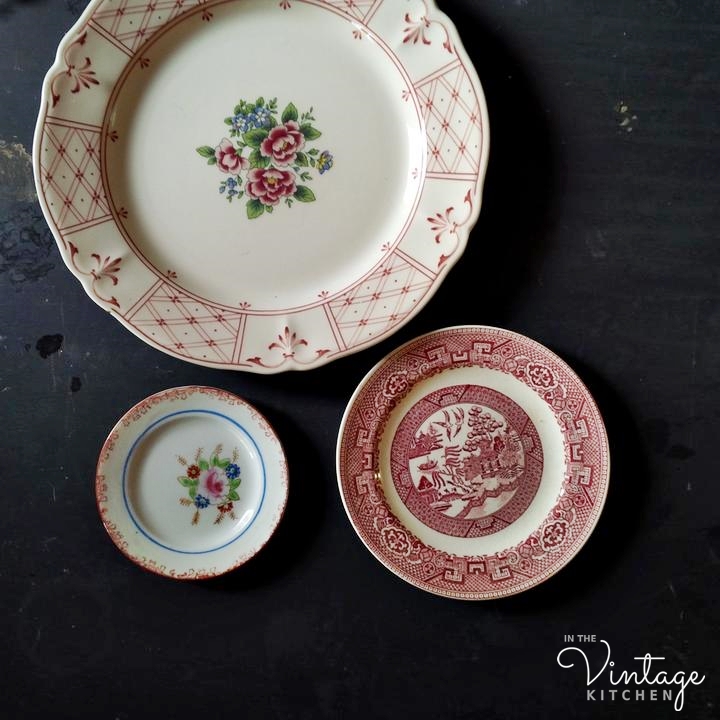
All the elements of the story are drawn out on the plate. You’ll notice the palace where the girl grew up, the bridge that takes her and her lover away, the island where they live happily together and the birds they eventually become overhead. Lots of china companies caught onto the fact that this was a popular pattern and an even more popular story and began producing their own versions in different colors. This red willow plate was made by famous American pottery company Homer Laughlin in the 1940’s.  We combined it with two other Asian inspired plates to create our own fabled love story collection…

A three-piece set containing Asian themed dinner plate, bread plate and mini dish.

Similiar to the story of the Harvey plate, the Meakin brothers, Alfred, George and James, ran several potteries in Stoke-on-Trent and Tunstall, England. Alfred,  produced this stunner, the Medway Blue under his own pottery label Alfred Meakin England in 1897. Exquisitely detailed, it’s hard to imagine that anyone could or would part with this beautiful plate, but like the Harvey, it somehow migrated over to America. Its journey wasn’t without fault or flaw – there’s a sign of adventure lurking in a small very old pencil point sized chip near one side of the rim.

Celebrating over 120 years of life, this plate holds all the dinnertime stories. 44,000 of them. When we look at it, we see the pretty pattern but we also see faces. People through history who stared down at its contents. Their hair-dos and their makeup, their tuxedoed bow-ties and their evening gowns, their earrings and their mustaches. We imagine the conversations while they ate their chicken and fish and game meats. Would we be discussing the same dramas of the day if we served a slice of pizza on top of the same plate?

Other patterns on other dishes ignite similar questions and thought process. When we look at this golden-edged Pope-Gosser plate made in Ohio in the 1920’s we see Jay Gatsby written all over it. Funny enough, it’s pottery founder I . Bentley Pope, an English transplant to America,  was a swashbuckler of a salesman and a charming wordsmith. Perhaps he had a bit of the Gatsby or the F. Scott in him too.

Last September, when we discussed the book A Taste of Paris, we learned from author David Downie that the original dinner plate was nothing more than a flattened loaf of bread on which food was piled high. Between that primitive time and now, it is amazing to think how far we have come since the days we ate our dishes. If you are interested in learning more about other plate histories, visit the shop and see which ones spark your heart. We’ve listed both collections and single plates in case you want to mix and match yourself. If you have a favorite from any featured above, share it in the comments section below. We’ll be excited to learn which ones appeal to you and why!

These are some of the other unique stories… feuding brothers, vanishing nature and celebratory statehood. Find them all in the shop here.

To celebrate all the ladies in your life that would appreciate a homemade dinner served on a lovely plate we are having a 20% off sale in the shop which runs now thru May 13th.  The discount is available for all items in the shop and will be applied to your entire order.  Use the coupon code MOTHERSDAY at checkout to receive the discount.

Cheers to all the adventurers out there who keep life interesting, both plates and people! May the stories continue and the memories bloom.

Lovers Who Can’t Quit: In Paris

Was all this so wonderful because it was brief and stolen?

Henry Miller wrote that line in a letter to Anais Nin on August 6th, 1932.  Janice MacLeod wrote that same line in her Paris journal on February 24th just a few years back. Eight decades ago Henry was talking about his love affair with a woman. More recently Janice was talking about her love affair with a city. Both refer to a passion that would and could never be quelled.

Janice!

Two years ago we had the pleasure of interviewing Janice here on the blog about her plans following the publication of her New York Times bestselling book Paris Letters.  When we left off with Janice back in March 2015, she was embarking on a new chapter in her life having just left Paris for Canada with her husband Christophe and a carefree sense of wild adventure in hand.  Calgary was clearly a whole different kettle of fish to tackle than France and Janice just wasn’t quite sure how it was all going to unfold now that she had left her dream city for a new frontier.

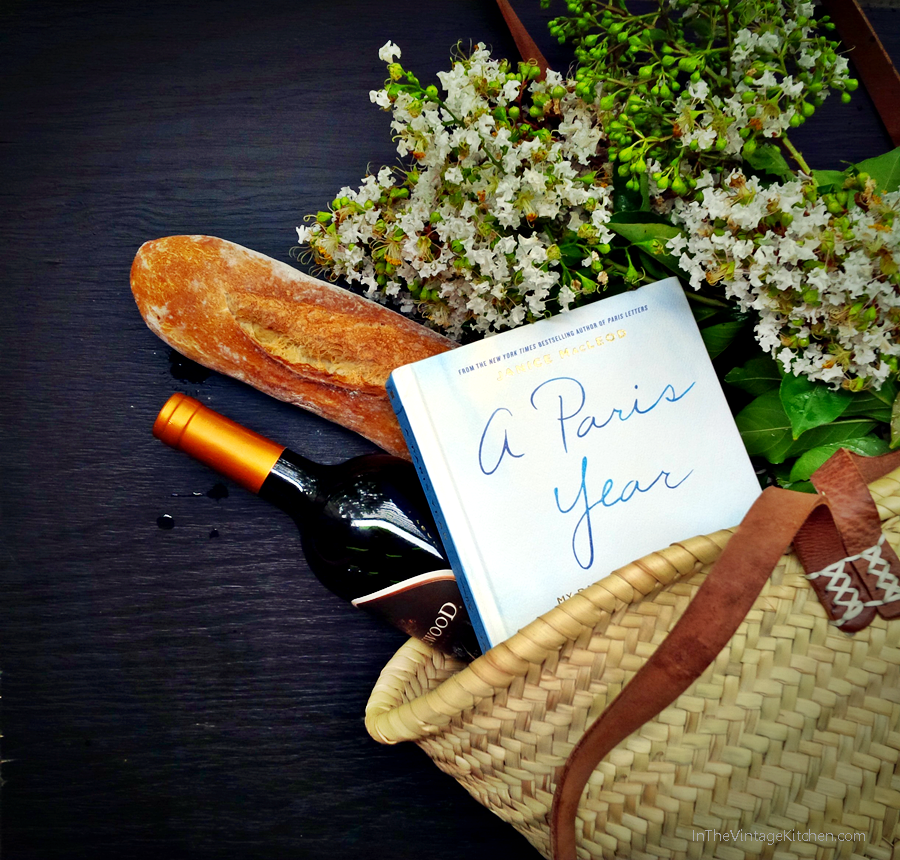
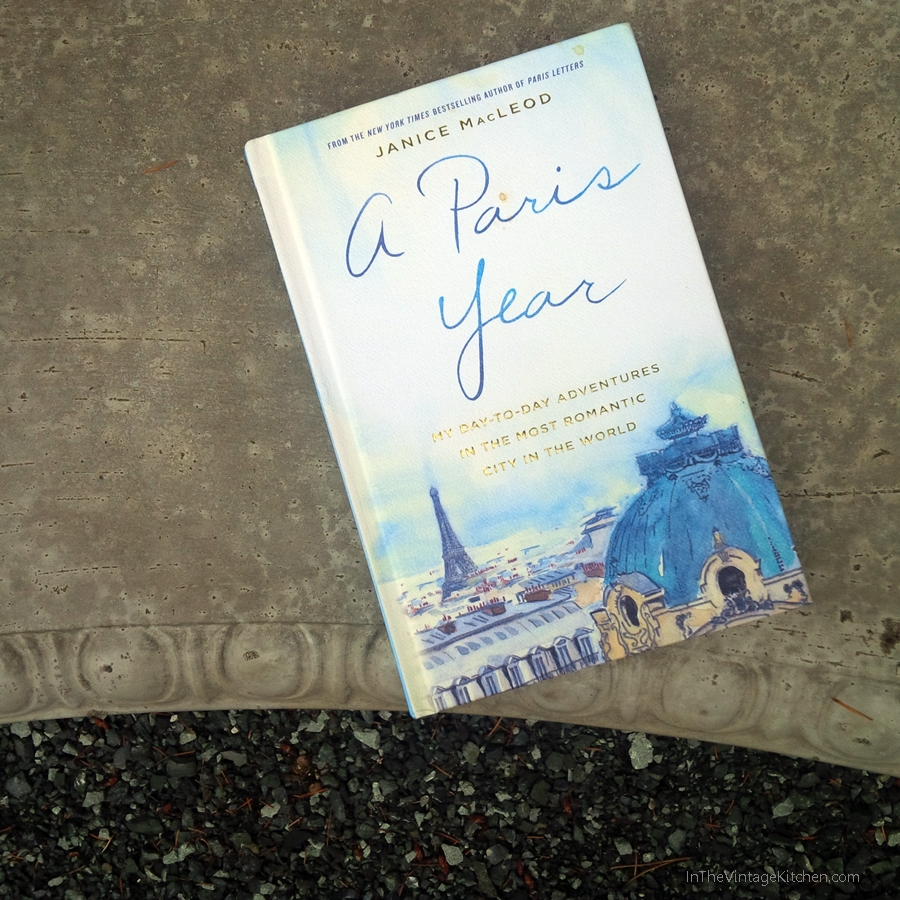
Newly arrived… A Paris Year

Fast forward two years and life in Canada for Janice produced a baby (Amelie!) and a new book (A Paris Year!).  Like a lover you can’t quit, Janice’s experiences in France ceased to be forgotten in her new surroundings.  The colors of the city, the  accordion lullabies, the memories of wine, cafes, neighborhood walks, market shopping and the speaking of a language she had almost mastered could never be set aside. Paris came to Canada in Janice’s suitcases, a secret house guest that absolutely refused to go home. Once an admirer always an admirer.

Paris Photography by Janice MacLeod

Lucky for us, Janice’s new book A Paris Year keeps the romance of her gorgeous adventure alive. Laid out like a day planner, A Paris Year tracks Janice’s whereabouts in the City of Light from January 1st to December 30th and includes her pretty paintings and feel-like-you-are-there photographs. Based on her actual journals kept while experiencing the city up-close and personal, Janice packs all sorts of interesting history, fun facts and traditions into the everyday observations that make up the charming lifestyle of French living.

Janice’s lively paintings of all things Parisian.

Part travel guide, part European history lesson, part art crawl and part early language primer, reading A Paris Year is as satisfying as hanging out with your best girl friend all afternoon. It’s interesting and vivacious and inspiring. There are funny moments like November 22nd when Janice truly thought she understood all the offerings on a French menu board only to realize it was written in English. There are sad moments (November 14th) which recognizes the anniversary of the 2015 Paris Attacks. And there are plenty of incredibly beautiful moments (February 2, March 4, May 11th, June 20th, practically the whole month of October, etc etc) that bring the heart of the city home to your doorstep.

There are new characters to meet like Antoine the Poet and Colin the ex-pat, both of whom offer intriguing little side stories that will leave you wondering and wanting.  And of course there all the famous French residents that you associate with the city – F.Scott & Zelda Fitzgerald, Madame Curie, Vincent Van Gogh, Colette, Edith Piaf, Gaston LeRoux, Sylvia Beach and the ever present star of the show, Ernest Hemingway. He weaves his way in and around Janice’s storytelling as she weaves her way in and around Paris, showing up every few pages in her thoughts and his haunts. The moveable feast still very much moving.

In Janice’s first book Paris Letters, she details step by step how she made the big leap from living an unfulfilling corporate life in California to living a creative life in Paris. That book was the story of an artist’s awakening to her true self. This book, A Paris Year is the full color party she threw to celebrate it. Paris Letters showed us how to make a big change. A Paris Year shows us how to enjoy it.

During some months in A Paris Year, Janice seeks out a specific color to photograph, as an hommage to Nichole Roberston’s book Paris in Color. During the month of May the shade in mind was green.

Janice’s story in both books has an interesting way of sticking around long after you read them. As a result of marinating in the visual artistry of A Paris Year I now walk around my own city looking at the sites before me with new eyes and a running dialogue on how I might best describe a building or a season, a person or a park.

Too pretty to end, the only thing I disliked about this book was that it actually had to end. I was super excited to receive an advance copy in the mail which I read just before leaving for Seattle and then re-read on the flight to Seattle and then once again when I returned back home. I loved it that much… three times over!  Like a daily devotional it offers the unique option of reading a page a day if you are looking for a quick shot of escapism, or you can read it cover to cover, as I did  or you can just pick up and read whatever page you want at random whenever the mood strikes. Janice made it so easy for us to experience her Paris.  Its a day planner and a day dream all wrapped up in one.

If you can’t afford the expense or the time to get to Paris personally this summer, don’t fret.  Spend a few hours with Janice in her book and you’ll feel like you’ve been there yourself. It may be a brief and stolen time, but as Henry Miller implies those are the most wonderful.

You can find Janice’s new book A Paris Year here. Her previous book, Paris Letters here and if you find yourself needing even more joie de vivre, subscribe to her Paris Letters mail service and receive a Parisian note from Janice via the postal service once a month.

The April 2016 edition of Paris Letters

Next time on the blog, we are tackling the city of Seattle and the search for Great-Grandma Mabel’s doughnut shop. Did we find it? Did we find it? Stay tuned!