Luther Burbank, The Reliable Russet and Everyone’s Favorite Way to Eat A French Fry {1970’s Style}

They come with names that sound like 1970s rock bands… Bodega Red, Arran Victory, British Queen, Golden Wonder, Bellarosa.  Or like types of prize-winning chickens… German Butterball, Champion, Adirondack Red, Tyson.  Some even sound like certain breeds of dairy cows… Shetland Black, Royal Jersey, Blue Bell, Annabelle, Cream of the Crop.

But today we are not talking about chickens or cows or headliner music. Instead,  today we are talking about potatoes. All those names previously discussed are specific types of one of the most consumed foods on the planet- the noble and nourishing potato.  With more than 5,000 varieties in the world, you might think that it would be hard for one lone potato type to stand out in his vast tuber family of brown, round, knobby-eyed dirt dwellers.  But there is actually one big-time celebrity in the batch – a spotlight stealer known around the world –  a superstar of the food and restaurant scene that represents the most frequently consumed potato on the planet.

It is my pleasure to present the story of the wondrously addictive potato variety known as the Burbank Russet. Haven’t heard of it, you say? Ah, but just you wait…you’ll know it. Maybe not by backstory but definitely by bite.

On Friday, it was National French Fry Day and we celebrated with a homemade batch of Russet potato french fries in honor of the guy who created them. Meet Luther Burbank, 19th-century American botanist extraordinaire…

Luther grew up in Massachusetts in the 1850s playing with seed balls in his mother’s garden instead of playing with sports balls in his farm neighborhood. His interest in botany from the time he was a youngster fueled his curiosity for plant cultivation, a field of study that would eventually turn into a lifelong career. Throughout his childhood and into early adulthood, Luther tinkered around with seed starting and plant breeding.  Although it was a laboriously slow process, most often times ending up in disappointment, Luther came by this area of study naturally. His mother also shared his interest in gardening and the two of them would happily spend hours working in the garden, talking about the life stages of various plants.

The plant world was a playground to Luther, something that represented creativity and freedom from set rules and rigid disciplines. He had aspirations to one day have his own farm in California where he would grow vegetables and flowers for the retail market and try his hand at growing new breeds of plant life. In his early 20’s, he started experimenting with potatoes.  But developing a new variety wasn’t as easy as you might think.  Potatoes are peculiar things. They can be regenerated in two ways – through seeds or eyes. Either method produces similar results or slightly different results in the form of mutations or spores each time offspring are generated.  It is difficult to determine at the onslaught of a growing project how the potatoes will turn out at the end of the project. More often than not the experimentation stage for Luther in trying to cultivate a new variety was long and finicky.

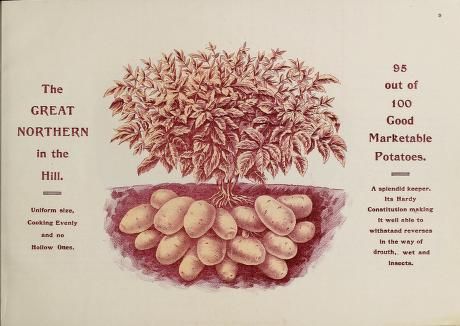
If you have never seen how a potato grows, this is a good illustration. Plant above the ground and lots of potatoes nestled together below ground. Image from the 1893 L.L.May & Company Seed Catalog featuring Northern Potatoes.

But in 1873 gratification came, finally, to Luther’s ruddy, soil-covered hands. One day in his 24th year, Luther went out into the field to dig his latest sample crop, half expecting to uncover the same old story of growing the exact same plant he started out trying not to grow. But this time, something was different.  Instead of digging up an ordinary round potato, Luther pulled a tuber out of the ground that was twice as big and twice as long. It was reddish-brown in color and hefty in weight. A totally different specimen than the parent potatoes he had started this most recent batch with.  Success at last! His first genuinely original new potato had emerged.

He christened this new masterpiece the Burbank Russet and immediately sold it for $125. Was that enough money for Luther to retire early to his California dream farmhouse and garden? Not quite yet, but that’s not important to this story.  Money never mattered to Luther, only the science that stood behind it. He had made a new potato and that was pretty motivating stuff to keep his heart in the game and his hands in the soil.

Luther’s Burbank Russet was an exciting and innovative new addition to the agricultural market for its time because of its size. Almost twice as large as typical potatoes of that era, it also boasted an adaptable consistency (good for baking, mashing and frying) and it was more disease resistant to common blights that affected many potato crops around the world. But after it was introduced in the late 1800s, it took some time for the Burbank Russet to catch on. The US government initially started farming it in Oregon and from there it slowly spread to neighboring states and then the region and then the rest of the country. Eventually, it became the best-loved potato cultivator in the United States.

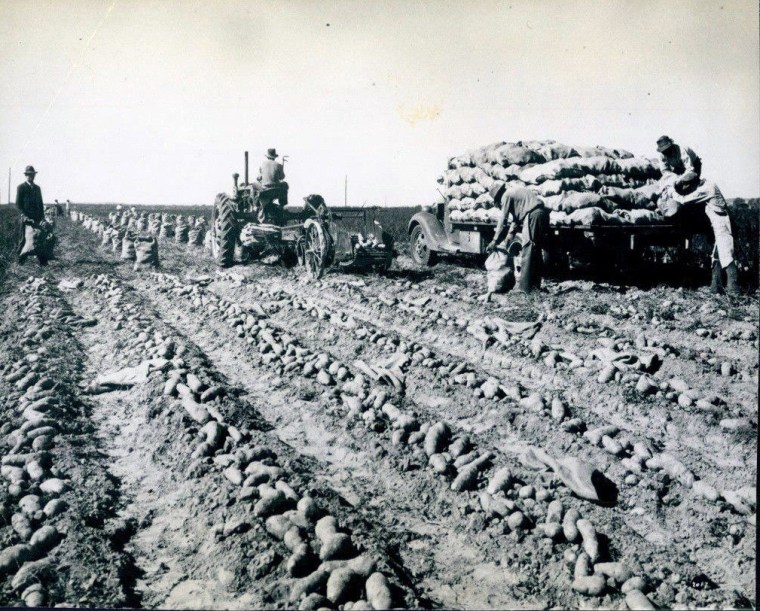
Russet potato farmers in 1940’s Idaho.

Farmers loved it because it was easy to grow and held up well in both shipping and storage. Once it became a successful and abundant crop, the food industry got on board. Its size, consistency and cooking adaptability made it an ideal food product for both general household consumers as well as commercial food companies and restaurants.

Although the actual cooking process of making French fries – cutting strips of potatoes and frying them in fat – had been around in France and Belgium since the 1700s, it wasn’t until a valuable American discovery was made in the 1930s that fries started to take hold as an American food staple. This important discovery was that french fries froze well and could be reheated easily while still maintaining the same shape, taste and texture.  In the early days of refrigeration, this was exciting!  This mere fact opened up opportunities for the retail, transportation and restaurant industries as french fries could now be shipped around the country in both frozen and fresh forms.

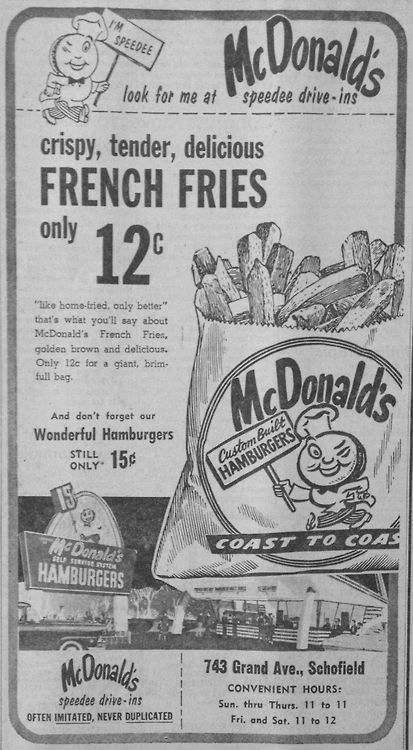
A midcentury newspaper ad for McDonald’s french fries.

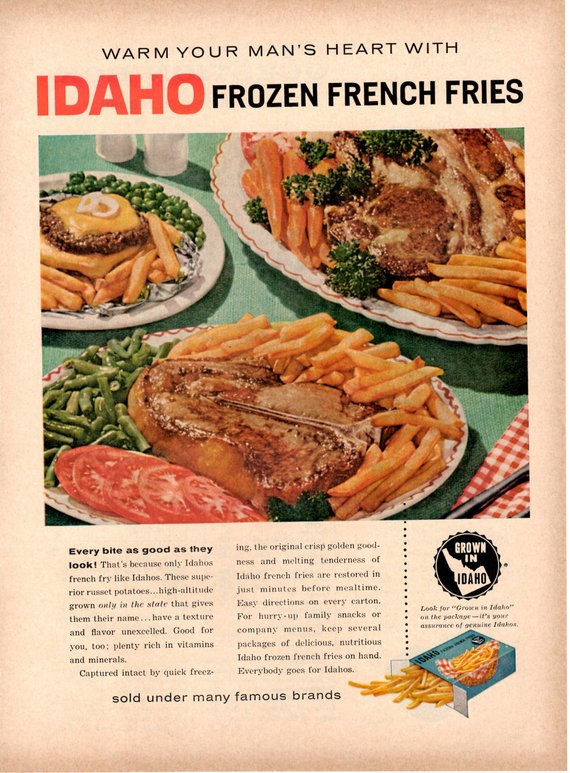
By the time hamburger stands started popping up in the 1950s and 1960s, french fries became a main attraction at the drive-in burger stand as well as the family dinner table.

A vintage frozen french fry ad from the 1960s. Photo courtesy of itsjustoldpaper on Etsy.

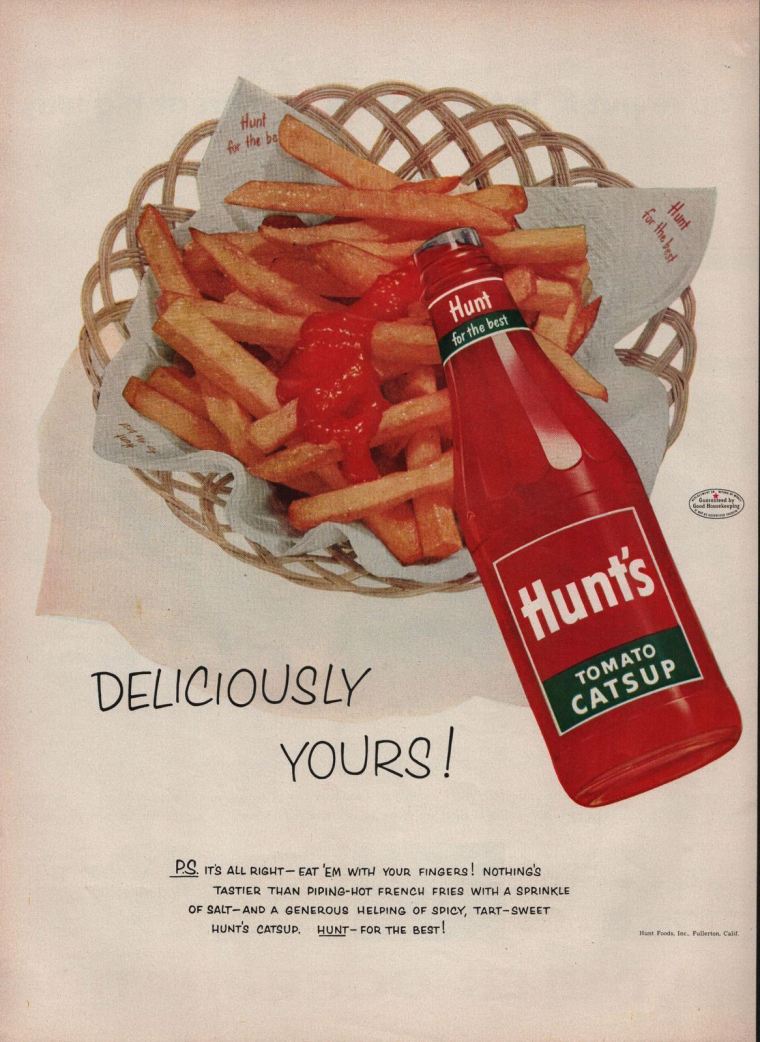
The novelty of enjoying french fries both at home and at restaurants offered plenty of potential in the form of culinary creativity.  In mid-century America, the common condiments for them were simple… ketchup (or catsup, however you prefer!) and salt.

A 1955 advertisement for French Fries featuring Hunt’s catsup.

But by the 1970s, these little potato favorites were garnering more international gourmet attention. Common toppings and condiment companions of the disco era included the following…

…paprika, cracked black pepper, parmesan cheese, malt vinegar, crushed herbs, ketchup, mayonnaise, mustard,  salt, and a special mayonnaise/mustard mixed combo variation. In addition to frying, it also became much more commonplace, especially in the latter decades of the 20th century, to oven-bake freshly cut fries. This method of cooking was believed to be a “healthier” version since it involved less oil and a tamer cooking experience (no vats of hot fat to contend with!) as opposed to traditional deep-fry methods.

Because a lot of people tend to think it is easier to go to a fast food restaurant and buy a serving or two of fries or grab a box of frozen ones from the grocery store, we made the oven-baked variation for this post to prove how simple, quick and easy it is to take a fresh potato and turn it into a delicious hot french fry in less than 30 minutes. This recipe comes from the vintage cookbook Joy of Cooking (1975 edition)  and was a breeze to make. Literally, it took 5 minutes to prepare and 20 minutes to bake,  which makes it a fast side dish for your summer burgers.

Oven “French-Fried” Potatoes (serves 1-2)

1 large russet potato (scrubbed)

1/8 cup olive oil

A generous sprinkling of sea salt

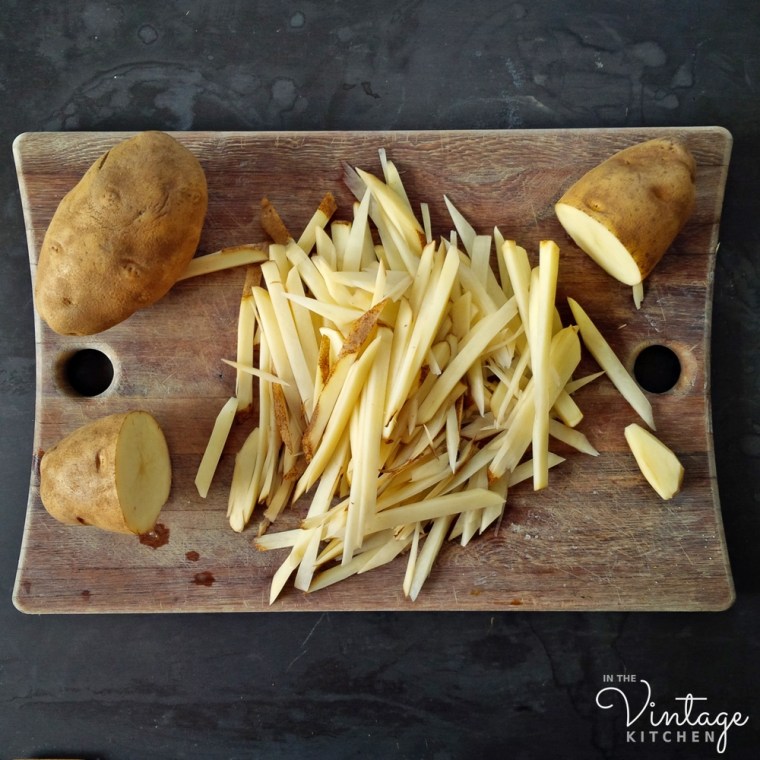
Preheat oven to 450 degrees. Slice potatoes lengthwise into long  1/4″ sticks (you can do this by hand or by using the julienne setting on your vegetable slicer. Either way try to keep each stick as uniform as possible to ensure even baking. Lay the freshly cut sticks between a couple layers of paper towels and pat dry to remove extra moisture, then spread sticks out on an ungreased baking sheet and drizzle with olive oil.

Using your hands, toss the potatoes and oil together so that all sticks are coated and spread them back out in the pan as flat as possible.

Bake in the oven for 10 minutes. Then remove from the oven and flip the fries over and  return back to the oven for an additional 8-10 minutes.  They should look something like this when they are ready…

Remove fries from the baking pan onto a paper towel-lined plate. Sprinkle with salt and pepper (or any of your favorite spices) and serve immediately.

Inspired by the 1970s list of approved condiments, I kept thinking while writing this post how fun it would be to have a french fry bar party where guests could pick and choose their own toppings from a wide assortment. So many flavors pair well with potatoes, so the possibilities would be endless as far as dips and dredges, sprinkles and submersibles. The one element of homemade french fries that should always remain constant though is the potato – always use russet potatoes. They are the variety of choice in almost every fast food french fry you’ll ever eat – including McDonald’s whose fries are legendary. And besides, you’ll make Luther happy using his version over any other!

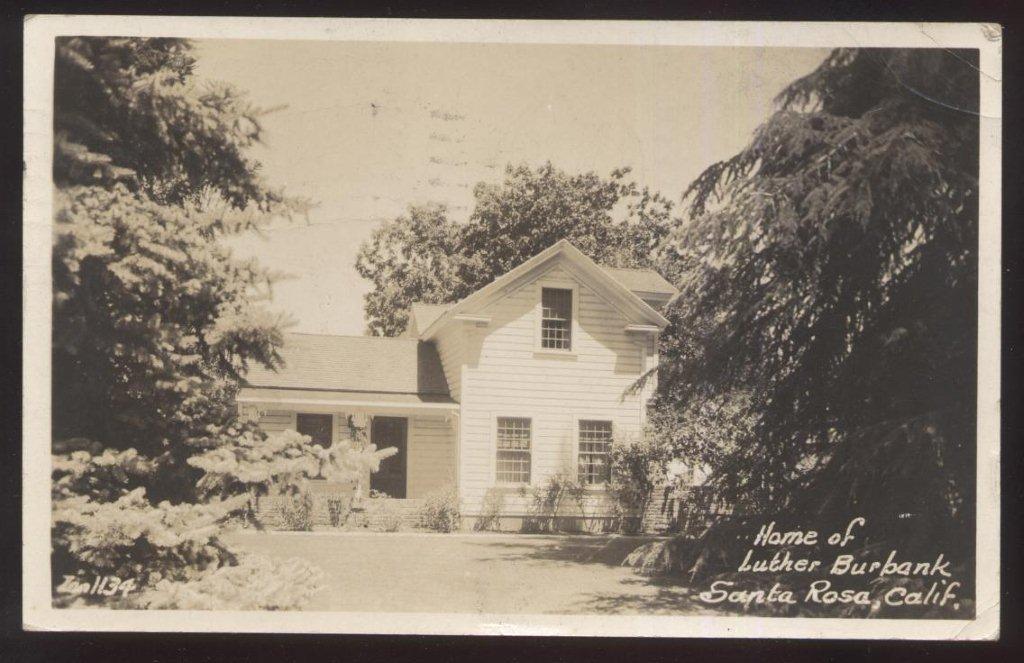
Luther never lived to see the ultimate french fry-loving success of his humble potato breed, although he did live a fulfilling gardening life up until the time of his death in the mid-1920s. And he did acquire that dream farm in California that he always wanted…

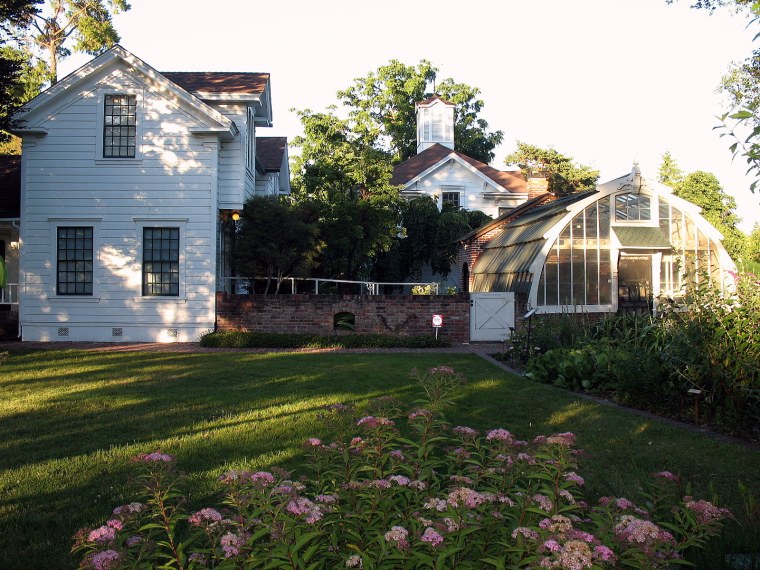
Luther Burbank’s house as it looked in the 1920s
Now in 2018, his house is a city park and garden that is open to the public.
Luther Burbank House and Garden, 200 Santa Rosa Ave., Santa Rosa, CA

And he built a garden where he invented new varieties of fruits and flowers and vegetables. We have Luther to thank for cultivating these beauties…

Clockwise from top left: The Plumcot – a mix between plums and apricots, the Fire Poppy, the July Elberta Peach, the Spineless Cactus and the Shasta Daisy

So while he never did see his potatoes bubbling up in oil at the Golden Arches, he did see his lifelong passion laid out in the garden as the golden hour light passed from day into night. Satisfaction was never going to be found in fame or fortune when it came to Luther Burbank. He didn’t care about either of those two things. His happiness lived deep within the dirt – a vast canvas of potential –  fueled by a creativity and curiosity that never ceased to inspire him.

Cheers to Luther for inventing one of the most delicious potatoes in the world. And cheers to all the farmers who keep growing the russets. May they continue to add a bit of indulgence to our diets and serve as a basis for inspiration in our culinary endeavors.

Find out more about Luther and his Santa Rosa, CA garden park here.  Find the vintage Joy of Cooking cookbook in the shop here. 

If you guys have any favorite toppings or condiments that you prefer on your french fries please post them in the comments section below. We’d love to hear from you!

Happy 4th of July! This Is What This Day Tasted Like in 1902…

Happy 4th of July! It has been super quiet around here on the blog since mid-May and I must say, I have missed you all terribly.  There was a family tragedy and a family illness that took me unexpectedly far away from the Vintage Kitchen for most of June. But I’m happy to write that I’m back and ready to dive into a plethora of new kitchen stories starting this week.

Exciting things coming up in July include an interview with a creative artist who will make you look at your refrigerator in an absolutely new and enchanting way; we will travel back in time to a hotel in 20th century Minnesota and share a few recipes that made them famous around the world; we’ll learn about a guy who invented one of the most addictive foods ever known to eaters; we’ll celebrate three national food recognition days and we’ll host a giveaway that is guaranteed to add a little sparkle to your life. So stay tuned on that front. July is full of fun!

In the meantime, since it’s a holiday today and you are out and about celebrating with friends and family, we’ll keep this post short – a litle dollap of history pertaining to patriotism and how Americans ate their way through Independence Day in 1902.

In that year, this guy was president…

Theodore Roosevelt – the 26th President of the United States.

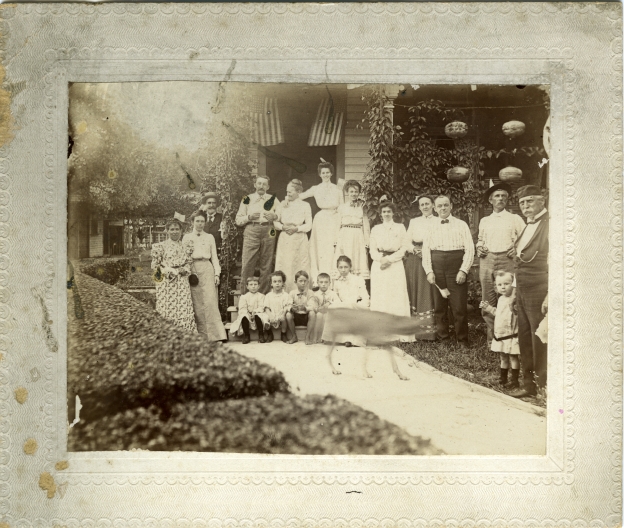
And patriotic family gatherings looked something like this…

A fourth of July family picnic in St. Augustine, Florida in 1902. Photo courtesy of FilsonHistorical.org

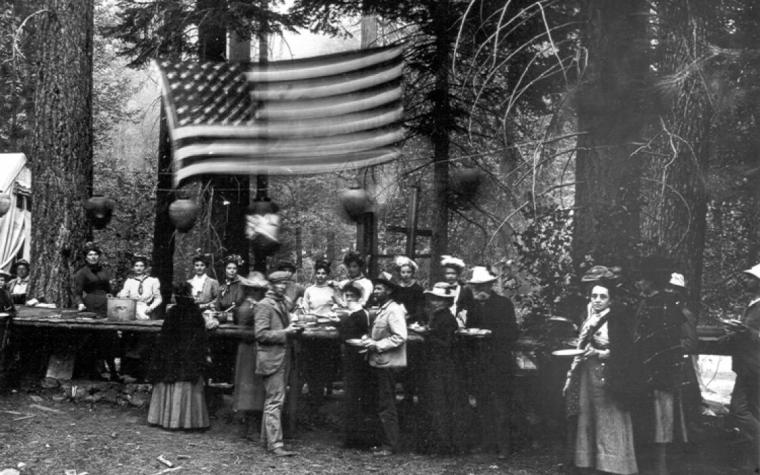
Decorations were simple…bunting, flags, flowers and the natural settings of the great outdoors. There were parades and town concerts and special events planned throughout the day.

July 4th, 1902 in King’s River, California. Photo courtesy of the Sierra Club.

Conversations were full of pride, in the general achievements of the country. Unlike today, where the political terrain is quite rocky and American morale is at an all-time low, in 1902, patriotism was a bit more revered. President Roosevelt prepared a speech saying nothing but thank you to the American military for continuing to extend and uphold the open arm ideals of the United States and pledged to continue to promote peace and tolerance throughout the world.

In American households during the early 20th century, the 4th of July was the one day where political affiliations were set aside. What was celebrated in conversation was not that someone was a Democrat or a Republican but instead an American. And topics led more towards incredible examples of what had been achieved in the past as a unified country as opposed to criticisms about the work that still needed to be accomplished individually.

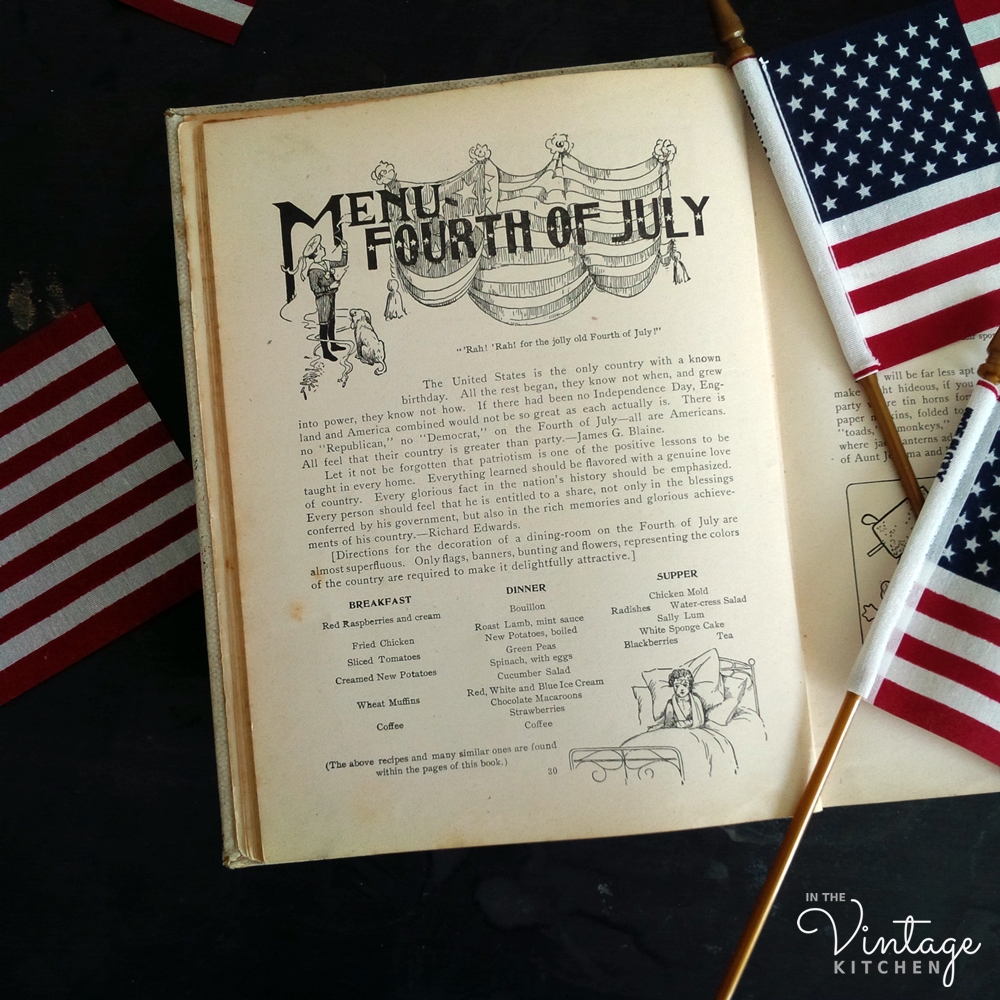
Eating occurred on a large all-day scale with a full breakfast, lunch and dinner… each incorporating the colors of the American flag. Here’s a suggested menu from Woman’s Favorite Cook Book published in 1902…

Woman’s Favorite Cook Book, 4th of July Menu, 1902

You’ll notice, even back then, the holiday has always been about cooking and spending time together. The kitchen would have been a hotbed of activity (just like it still is today) preparing all the staples we still enjoy eating on the Fourth – ice cream, salads, garden vegetables, fresh berries, cake. Our national pride might be much more diluted now than it was 116 years ago but our bellies are traditionally still enjoying the same types of food. That is a comfort at least.

Theodore Roosevelt once said…“Patriotism means to stand by the country. It does not mean to stand by the president or any other public official, save exactly to the degree in which he himself stands by the country. It is patriotic to support him insofar as he efficiently serves the country. It is unpatriotic not to oppose him to the exact extent that by inefficiency or otherwise he fails in his duty to stand by the country. In either event, it is unpatriotic not to tell the truth, whether about the president or anyone else.”

Teddy would have appreciated all the new voices coming forth this year (no pun intended!) in our fights for democracy and fairness and freedom for every person in America. He would have admired all the political bravery that exists today and marveled at all that we have accomplished so far.  Americans of the early 20th century would have lauded our collective efforts too, noting how far we have come on the food scene as far as innovations and improvements and equipment while still managing to keep the culinary traditions of our ancestors alive.

So it is with that in mind that we say cheers to the holiday, to the progress we have made, and to the traditions we still hold dear. However you choose to celebrate the 4th of July – whether you are partying it up at a fish fry, a barbeque, a picnic, a seafood boil or a campfire roast – I hope your holiday is filled with fun, family, and friends. May it be peaceful and light. And may all those fireworks be bright. Cheers to a happy holiday! We’ll see you back in the Kitchen shortly.

The Man Who Taught Newfoundland How To Can

It’s been known by names such as The Island of Cod, Vinland, Land of the Fish and Terre Neuve.  You’ll know it as Newfoundland.  Walter Winfred Chenoweth knew it as the island of the can. Or the canning jar to be specific.  That’s where he taught local inhabitants how to preserve harvests from the garden and the sea in glass jars for future consumption.

Walter Chenoweth (1872 -1945) was a professor and department head of Horticultural Manufactures at Massachusetts Agricultural College, now known as the University of Massachusetts at Amherst. Born in Grundy County, Missouri in 1872, Walter spent his entire professional career, researching, testing and educating others on agriculture and the science of growing fruit, mostly at MAC where he was a member of the staff from 1912-1941.

Walter hard at work in the lab. Photo courtesy of the Special Collections Library at the University of Massachusetts

Through years of trial and error, scientific study and hands-on testing, Walter became an expert in the area of food sciences, especially food preservation. In 1929, he went overseas to Newfoundland where he set up canning stations and taught classes to local inhabitants and British colonizers.

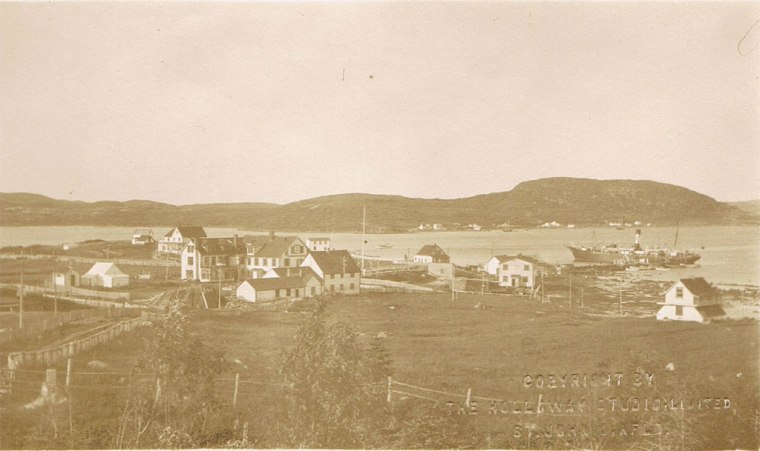
Newfoundland in the early 1900’s. Photo courtesy of the Town of St. Anthony

At the time of Walter’s trip, Newfoundland was in peril. Suffering drastically from results of the Great Depression and a financially crippled local government, the people of Newfoundland were in a state of crisis.  The train line that ran through the province ate up all the government’s resources. Vast holes were poked in the salt cod industry – Newfoundland’s main export- via trade halts due to the Depression and via competition from other countries like Iceland, who were developing more efficient fishing methods. These two factors meant that the local government couldn’t take care of its people financially and the sea couldn’t keep its villages afloat as far as income.

Early 20th-century travel photographs of Newfoundland. Photo Courtesy of the Town of St. Anthony.

Collaborating with British medical doctor Wilfred Grenfell (1865-1940) who was trying to stop the spread of contagious diseases and malnutrition in Newfoundland’s fishing villages, Walter Chenoweth lent aid in the best way he knew how. Through preservation. For a year, Walter worked to make local inhabitants and newcomers more self-sufficient through food storage. By setting up canning station facilities around the island he taught all who were willing to learn how to can fruits, vegetables, fish, meat and poultry so that no food would be wasted or left behind to spoil.

Farm family in Newfoundland

This was an important skill for islanders to master in their subarctic climate.  With a slim gardening window of just 2-3 months, planting, growing, harvesting and preserving had to be done quickly and correctly to ensure beneficial results. Handled inappropriately, jarred foods could cause serious illness and even death due to bacteria. Stressing proper sterilization methods and practices to ensure safe food preservation, Walter taught islanders every aspect of canning from equipment to techniques, precautions to recipes.

Vintage Wheaton canning jar available in the shop.

In addition to common jarred items like wild blueberry jam and pickled vegetables, Walter also taught the islanders how to can freshly caught fish, boiled chicken, and roasted meat. These teachings came at a fortuitous time.  Two years later, after Walter was back home in Massachusetts,  two-thirds of island workers would become unemployed due to the unstable trade markets and the local government’s lack of proper financial planning.  Food would become scarce, morale would plummet and families would resort to inventive measures in order to stay alive. Canning skills would become an important component of survival.

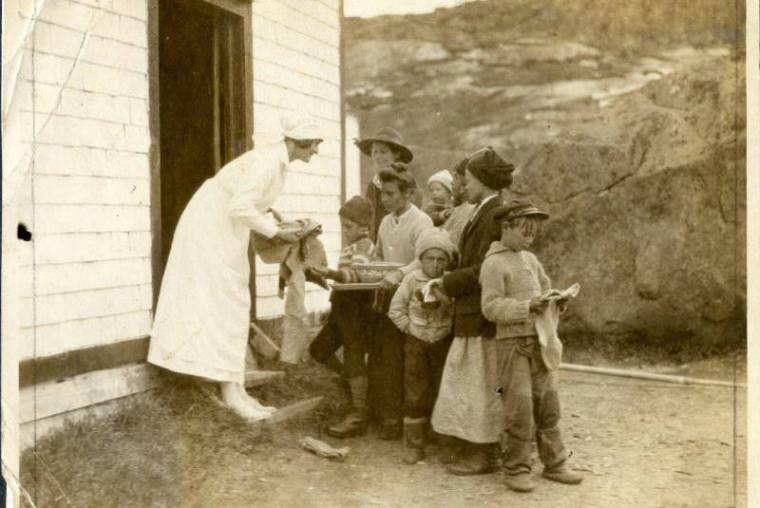
Trading became an active currency when money was scarce. Here, families trade household items for clothes from a Grenfell mission nurse. Photo courtesy of thetelegram.com

During that time of island-wide poverty and hunger,  the only formal aid that would be offered by the local government was a meager food dole consisting of molasses, flour, cornmeal, fatback, split peas, and cocoa.  This care package provided only half of a person’s daily caloric intake. Preserved food helped bridge the gap between the dole and starvation.  Eventually, through fortitude and endurance, the island got back on its feet and money started flowing again into communities thanks to jobs and resources needed for WWII.

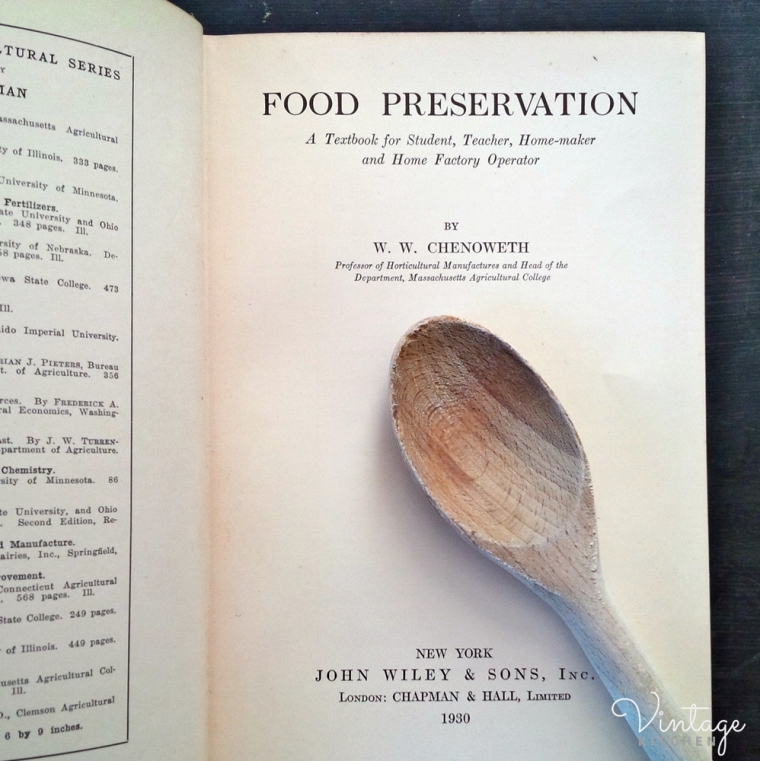
When Walter returned back home to Amherst, he compiled fifteen years of hands-on experience into a book called Food Preservation, which he published in 1930…

Part cookbook, part instructional guide and part natural science lesson it contained all aspects of the food canning process beginning with the understanding of how bacteria grew in 1765…

Lazzaro Spallanzani…an Italian priest, biologist and physiologist who discovered that air trapped in glass tubes caused the growth of bacteria. 

and how that led to the eventual creation of foods kept in sealed shelf-stable jars.  In between the anatomy of vegetables, lists of equipment, instructions on canning methods, and advice on troubleshooting, shelving considerations, and cleanliness factors, Walter included a host of recipes explaining how to preserve summer’s bounty for next winter’s nourishment. He explained how to build canning stations, storage rooms and simple farm factories to accommodate production. Everything from cider to syrup, carrots to kerosine, fruits to fermentation were tackled. At the time of publication, Food Preservation was the most concise book ever written on the topic of canning and was so thorough it became the go-to teaching tool in food science classrooms for decades.

Table of Contents for Food Preservation by W.W. Chenoweth

A once celebrated, but now forgotten pioneer in his field, Walter’s contributions to the people of Newfoundland has been long overshadowed by the lifetime efforts of Dr. Grenfell. It’s easy to understand how that happened – Grenfell made a HUGE impact on the island by building hospitals and schools and by bringing worldwide attention to the hardships of an isolated community.

Dr. Grenfell and his wife, Anne. photo courtesy of Grenfell Historic Properties.

Walter’s story in Newfoundland may not have been as lengthy nor as flashy as Grenfell’s but, like the products Walter represented, he gave the gift of long-term sustenance to a sea-island in need of a salve. What’s wonderful about a jar of pickled beets or canned tomatoes from last summer? It’s not just an example of previous effort spent,  it’s a symbol of security, an innate assurance that the past is vital to the future. That’s what Walter really gave the people of Newfoundland in their darkest hours – a promise that good things were coming soon.

Walter Winfred Chenoweth. Image courtesy of Credo Library at the the University of Massachusetts Amherst

Cheers to Walter for teaching us how to enjoy our harvests year round and to the people of Newfoundland for never giving up.

Find Walter’s Food Preservation book in the shop here. Find the vintage Wheaton canning jar featured in this post here.
A Mare-gerita Affair: Happy Derby de Mayo Day!

It’s twice the fun… Happy Cinco de Mayo and Happy Kentucky Derby Day! Our busy week of posts winds up today with the table decorations for our Derby De Mayo party. On Tuesday,  we got out our vintage cookbook and planned our menu…

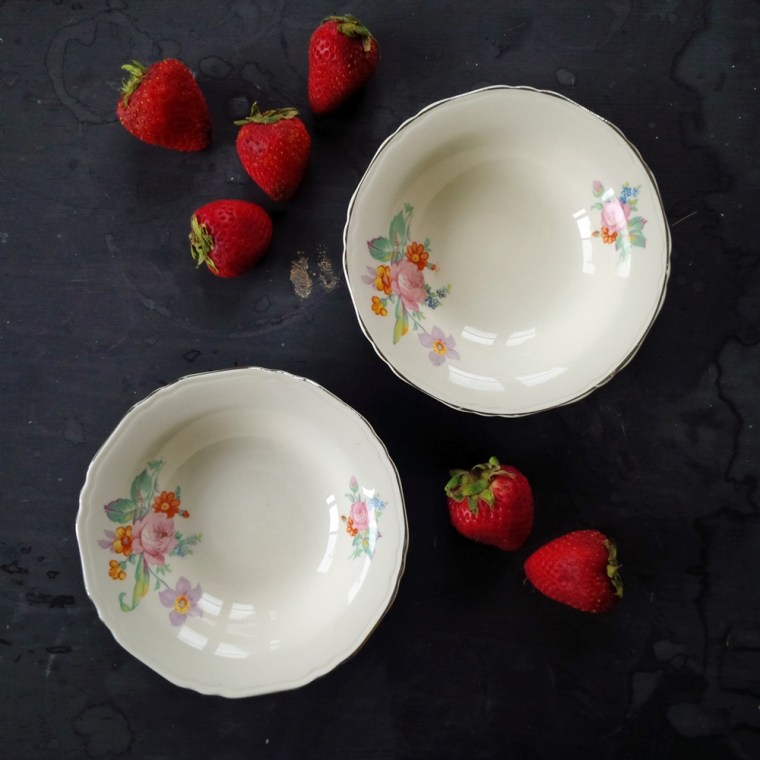
On Wednesday, we pulled out our dishes and planned our table settings…

On Thursday, we posted the story of Adelaida Cuellar, the inspiration (and the vintage recipe supplier!) behind this year’s party…

On Friday, we posted fun facts for this year’s Derby, picked our winners….

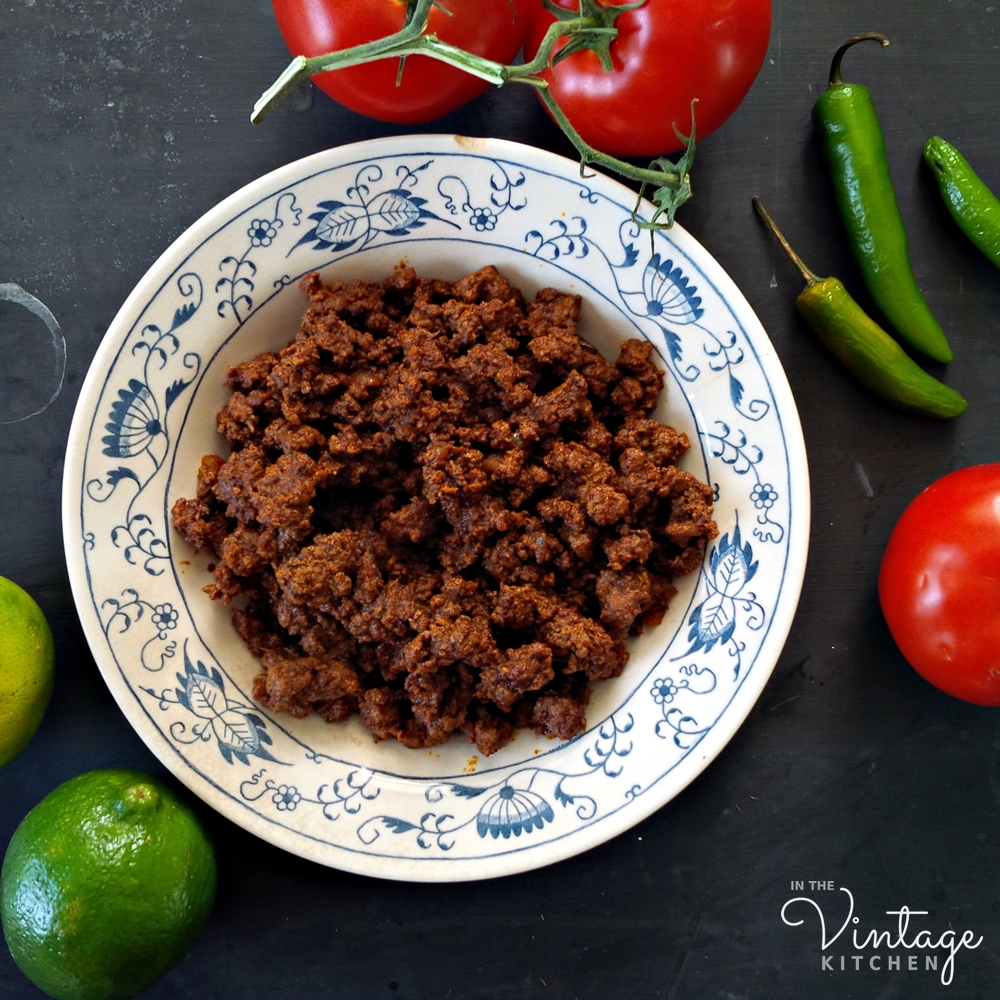
and made a second batch of Carne Mexicano and Ranchero Sauce for today’s party…

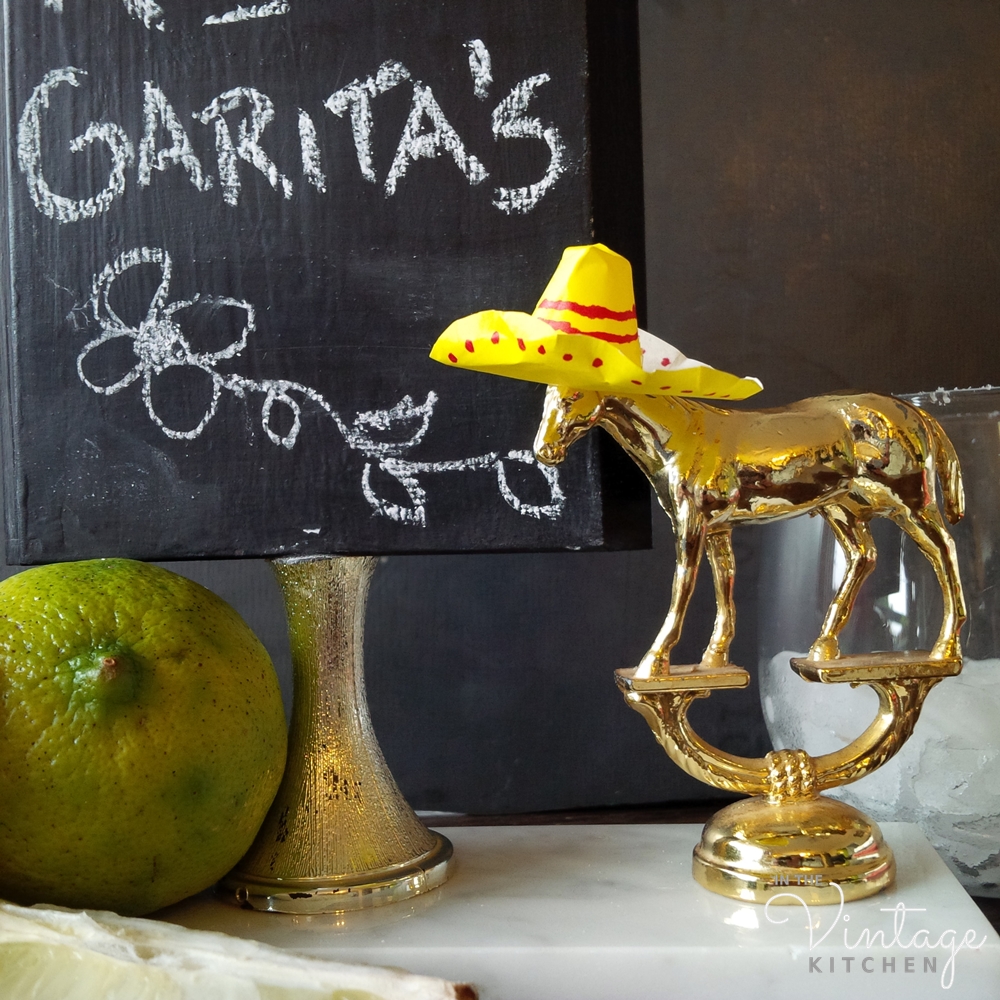
And for the final bit of merry-making, this morning we made our table decorations for our burrito stations and cocktail bar…


Our signature cocktail of the day is a traditional margarita with a touch of mint and a new name… the Mare-gerita complete with our sombrero-ed host…

Our final activity was making papel picado banners (traditional Mexican paper bunting) to adorn our make-your-own burrito station…

Mexican paper banner bunting, also known as Papel Picado

Needless to say it was a very fun and busy week. And now its time to celebrate. Thanks for following along all week. We hope your Derby parties and/or Cinco de Mayo celebrations are the best ones yet!

Cheers to a safe race and festive celebrations!

10 Fun Facts About This Year’s Kentucky Derby

Churchill Downs in 1901. Photo courtesy of kentuckyderby.com

Tomorrow it’s Kentucky Derby Day! Now that you already know what to cook for your party, thanks to a shared holiday with Cinco de Mayo, we can now focus on picking our winning horses.

Here are 10 fast fun facts about this year’s race if you are still trying to decide on a winner…

Fun Fact #1…

That’s Victor Espinoza on the left and Kent Desormeaux on the right.

Two jockeys, Victor Espinoza (riding Bolt D’ Oro) and Kent Desormeaux (riding My Boy Jack) are the only two jockeys out of the twenty participating that have won the Kentucky Derby three times before. Victor won in 2002, 2014 and 2015. Kent won in 1998, 2000 and 2008.

Fun Fact #2…

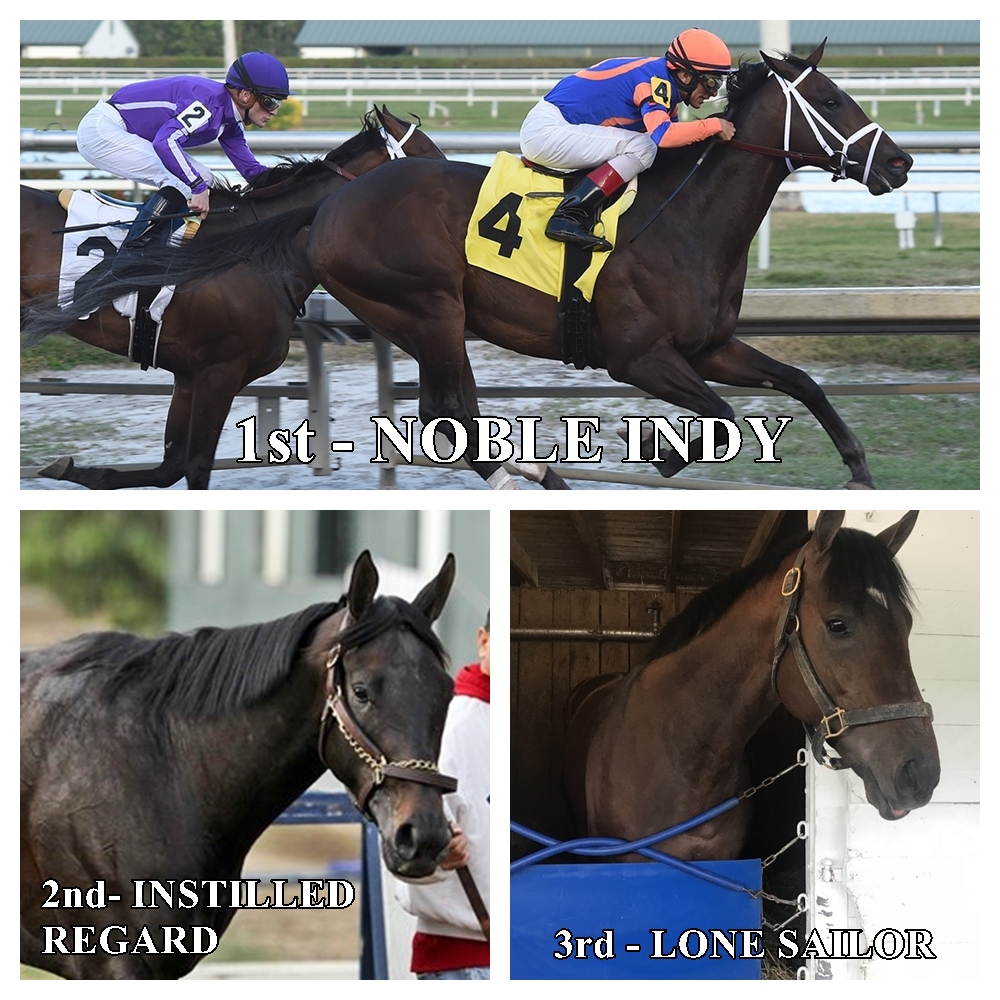
Instilled Regard

The kind-hearted gentleman of the race, Derby contender Instilled Regard was named in the spirit of good sportsmanship. His name reflects his owner’s desire to treat all fellow competitors with respect, kindness and sincerity. In today’s troubling world we can use all the kindness we can get, so we say cheers to Instilled Regard for keeping things convivial on the field this year.

Fun Fact #3…

Left to right: Kyle Frey, Paco Lopez and James Graham. The photo of Kyle Frey was taken by Ome Tochtli. See more of his beautiful Derby portraits here.

It’s the first time competing in the Kentucky Derby for all three of these jockeys. Kyle will be riding Blended Citizen, Paco on Firenze Fire and James on Lone Sailor.

Fun Fact #4…

That’s Firenze on the left and baby Bolt on the right.

Two entrants share the same birthday – March 17, 2015. Firenze Fire and Bolt D’Oro were both born on that day which also happened to be St. Patrick’s Day. Sounds pretty lucky, if you ask us!

Fun Fact #5…

As far as jockey breakdown by nationality goes, the United States leads with six jockeys hailing from American soil. Panama, Puerto Rico and Mexico tied with the next largest amount – each boasting three jockeys apiece. France and Venezula each have two. And the U.K. and Ireland each boast one. Jockeys and their birthplaces are broken down as follows…

UNITED STATES: Mike Smith, Kent Desormeaux, Cory Lanerie, Robby Albarado, Draydon Van Dyke, Kyle Frey.

PANAMA: Luis Saez, Jose Lezcano, Ricardo Santana Jr.

PUERTO RICO: Jose Ortiz, John Velazquez, Irad Ortiz Jr.

MEXICO: Victor Espinoza, Luis Contreras, Paco Lopez

VENEZUELA: Javier Castellano, Junior Alvarado

FRANCE: Florent Geroux, Flavien Prat

IRELAND: James Graham

U.K. : Ryan Moore

Fun Fact #6…

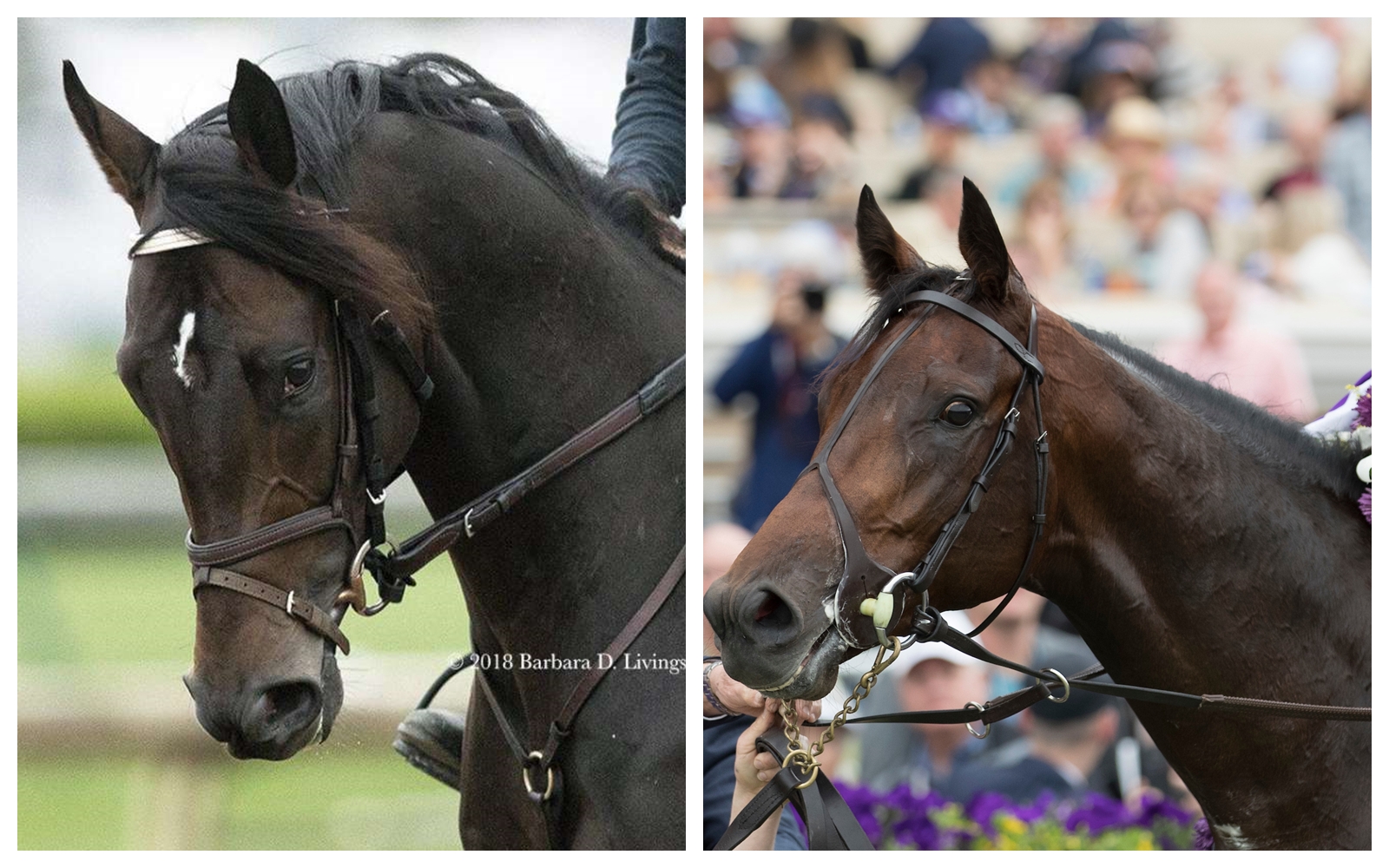
My Boy Jack on the left and Mendelssohn on the right

The oldest horse running in the Derby this year is My Boy Jack, born on January 26, 2015.  The youngest of the bunch is Mendelssohn who was born May 17, 2015.

Fun Fact #7…

This trio brought in the most prize money. Clockwise starting at top: Magnum Moon ($1.4 million), Mendelssohn ($1.9 million)  and Good Magic ($1.8 million)

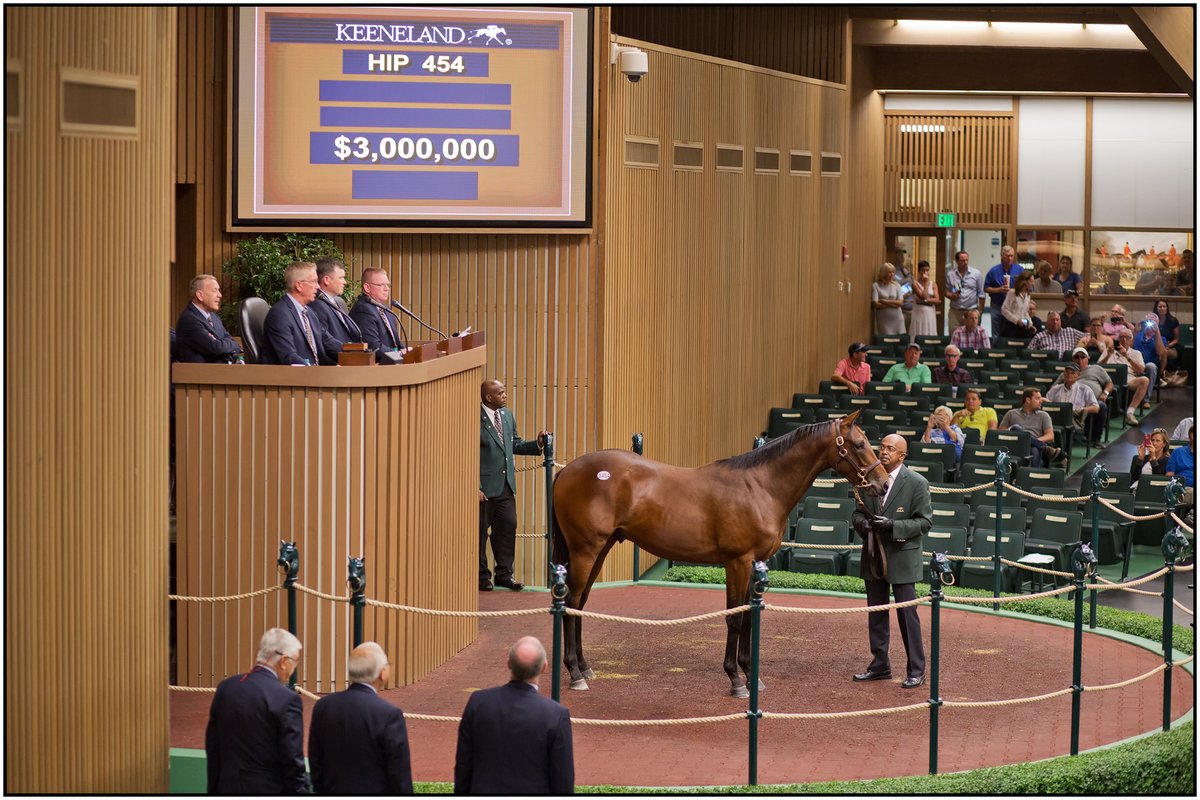
The most expensive horse in the race this year is Mendelssohn with a purchase price of $3 million. He was also one of the top three earners in the field.

Mendelssohn at the Keeneland Yearling Sale

Fun Fact #8

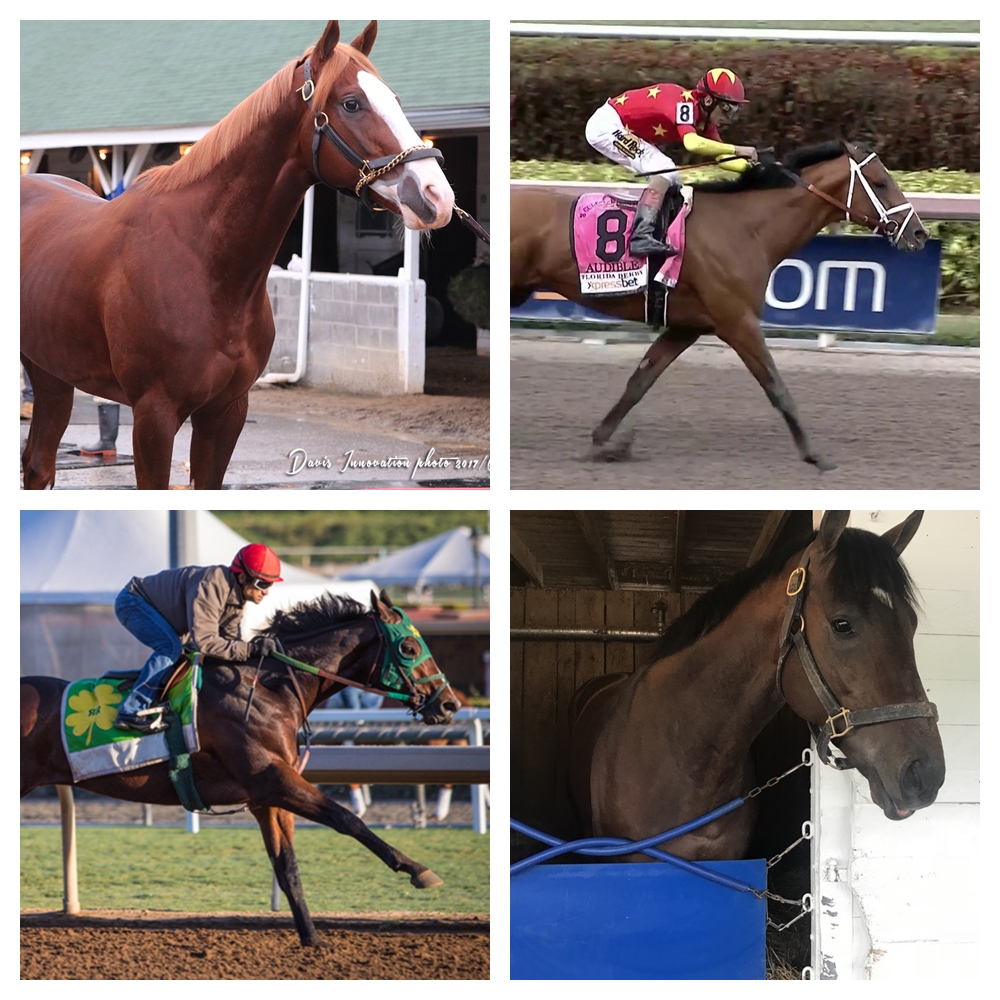
Clockwise from top left: Free Drop Willy, Audible, Lone Sailor and Bolt D’Oro

Four of the horses running in the race are associated with sports. Free Drop Billy was named after the golf term, free drop. Audible and Lone Sailor both have football connections. Lone Sailor was owned by the past owner of New Orleans Saints football team, Tom Benson who recently passed away. Audible refers to the football play call.  And Bolt D’Oro was named after famous sprinter Usain Bolt.

FUN FACT #9

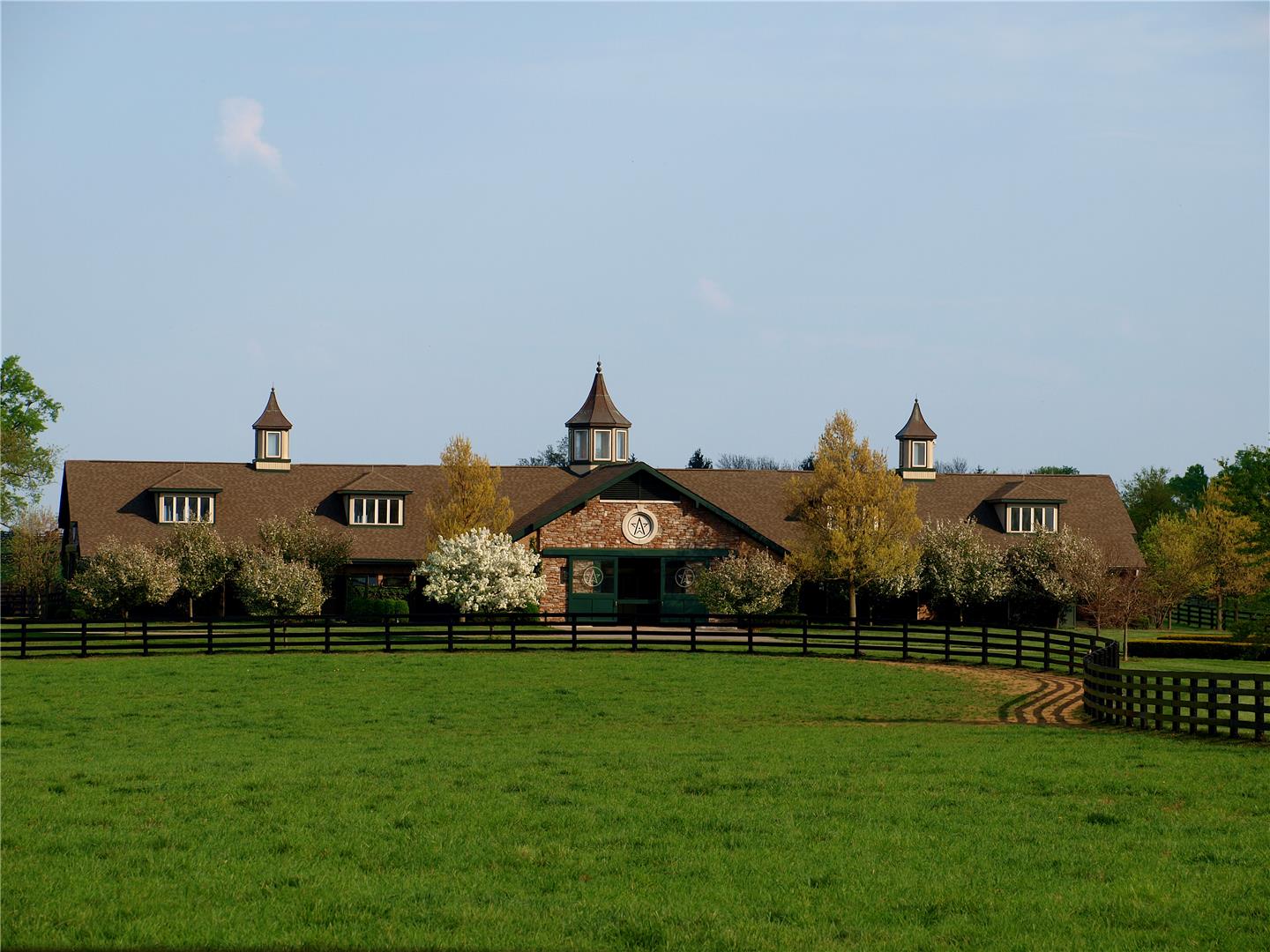
Winstar Farms

Winstar Farms in Versailles, KY has connections to four of the horses in the Derby this year. They are the owners of Audible, Noble Indy and Justify and were breeders of Bolt D’Oro and Noble Indy.

Fun Fact #10

As of this writing, Instilled Regard is the long shot at 99-1 odds.  There’s the terrible cliche that says nice guys finish last, but we have big hopes for this guy, which brings us to the Vintage Kitchen’s picks for this year’s Derby winner…

If you have your own favorites, share them in the comments below. It’s always more fun to watch the race when you have your own specific champions in mind.  Check out the complete list of contenders on the Derby’s official website here.

Cheers to daydreaming and Derby! The fun continues tomorrow with a post on our Derby party table decorations combining horseracing and Cinco de Mayo. Stay tuned!

Adelaida from Mexico & Her Lasting Impact on America {Plus Two of Her Recipes!}

Adelaida Cuellar photographed in 1901 with three of her children. photo courtesy of D Magazine.

In 1892, two young lovers crossed the border from Mexico into the United States and got married in Texas. They spoke no English but were very fluent in the language of love. They were dreamers yearning for better opportunities then their home country could provide, and they were determined to work hard to create a beautiful life that would bring them all  they desired.

The newlywed years of Macurio and Adelaida Cuellar led them through a myriad of jobs on ranches around the Texas countryside. For five years they moved about before they settled down in Kaufman, Texas, a suburb of Dallas, where Macurio started sharecropping and Adelaida started a family. As the seasons passed, their family grew, eventually producing twelve babies.

This is an unidentified farm photo from the Cuellar collection. It may have been the farm where Adelaida and Macurio raised their family. If not, it gives an interesting perspective on what farm life looks like in Texas during the time Adelaida and Macurio lived and worked there.  Image courtesy of the University of North Texas Digital library.

Ranch and farm work weren’t the most profitable of jobs, so Adelaida took a stall at the Kaufman County Fairgrounds in 1926 selling two things…  chili and tamales. It was her hope that her homemade recipes, so loved by her family, would bring in a little extra income to help support her children.  To her surprise, the food stand was an instant success.  The profits she made from her entrepreneurial endeavor were much larger than farm or ranch work earnings, so Adelaida kept at it, turning her stall into a tidy little family business.  Some of her children helped her cook while others formed a family band playing Mexican music to entertain the eaters.

During the 1920’s, Tex-Mex cuisine was a new style of cooking that combined traditional recipes from Mexico and Spain but with toned down spice factors which were more appealing to American palates. Adelaida’s chili and tamales debuted at just the right time – exotic enough for adventurous eaters and flavorful enough without being too spicy to dissuade repeat business. With every taste of tamale and every cup of chili, Adelaida’s reputation for preparing delicious Mexican food began growing.

Adelaida’s Cafe – simply called Cuellar Cafe – opened in  1928.  Image courtesy of the University of North Texas Digital library.

In her mid-fifties, Adelaida opened her own restaurant which did well until the Great Depression hit and she was forced to close due to the terrible economy.  Each of her grown boys inspired by their mother’s own entrepreneurial spirit opened their own independent Mexican restaurants in different cities throughout Texas, Oklahoma and Louisiana using the recipes that Adelaida made for them growing up.

Each of the sons, enamored with cooking just like their mom, quickly realized there was something missing from their independent ventures… family love and support. From the beginning, in the county fairground days, the Cuellar family was successful at the tamale and chili stand because they all worked together towards one common goal. But now the family was spread over many cities, and their restaurants couldn’t be as successful because they all weren’t working together.

This is one of the original porcelain neon signs from the first El Chico restaurant in Dallas. It’s now for sale on ebay here.

So in 1940, five of the brothers banded together to form one restaurant in Dallas, which they named El Chico. The entire family and extended family worked there together, each bringing their own unique talents.

Opening night of El Chico featured a Mariachi band to entertain the crowd. Image courtesy of the University of North Texas Digital library.

Everyone who worked at the restaurant was fluent in Adelaida’s style of perfection when it came to selecting quality ingredients and blending the spice mixtures in the correct way, so the food was authentic and consistent, which kept customers coming back. And the Cuellar family was proud of what they were accomplishing.  At the heart of their restaurant lay the heart of Adelaida and all that she stood for.  Her children wanted to extend that same level of love and devotion with all who dined at El Chico.

A popular dining place indeed! This photo was taken in 1945. Image courtesy of the University of North Texas Digital library.

Just like Adelaida’s chili and tamale stand, El Chico became phenomenally successful, making the Cuellar family and the El Chico brand one of the greatest American success stories. They went on to open more than 40 restaurants throughout the country, built a successful packaged food division for the retail market, and offered franchise opportunities for budding entrepreneurs. By the 1970s, they were the largest full-service Mexican food company in the world. They cooked for United States presidents at the White House, for princess Grace Kelly at her palace in Monaco and entertained movie stars like John Wayne in Dallas. The family stayed together through all these years and all this growth, never veering from what they knew – good food taught to them by Adelaida.

A Cuellar family portrait with Adelaida and Macurio in the front row center. Image courtesy of the University of North Texas Digital library.

Adelaida passed away in 1969 at the age of 97, not before experiencing the overwhelming success of her family and seeing how her humble tamale and chili stand at the Kaufman County fairgrounds grew into a multi-million dollar corporation over the course of forty years. The Cuellar children credit both their mom and their dad with teaching them about the value of working hard (and quickly) toward their goals and the importance of taking chances.

In 1970, El Chico published a small, spiral bound cookbook of some of the family recipes that they used in the restaurant, along with some others collected from their travels. Hailed as one of the most authentic Tex-Mex cookbooks ever published, it’s now a hard-to-find treasure.  It is in fact, so special and represents such an importantand  integral part of the ethnic American food landscape, that it’s held in special collection at the Smithsonian’s National Museum of American History. We are also very pleased to offer a copy in the kitchen shop. 

Since Cinco de Mayo is coming up this Saturday, on the same day as the Kentucky Derby, we thought it would fun to highlight two vintage recipes from the El Chico cookbook to ring in the festivities. A general crowdpleaser with a ton of creative toppings, these recipes are fun party foods so whether you are celebrating Mexico or Kentucky, or both this weekend, there will be something edible for everyone.

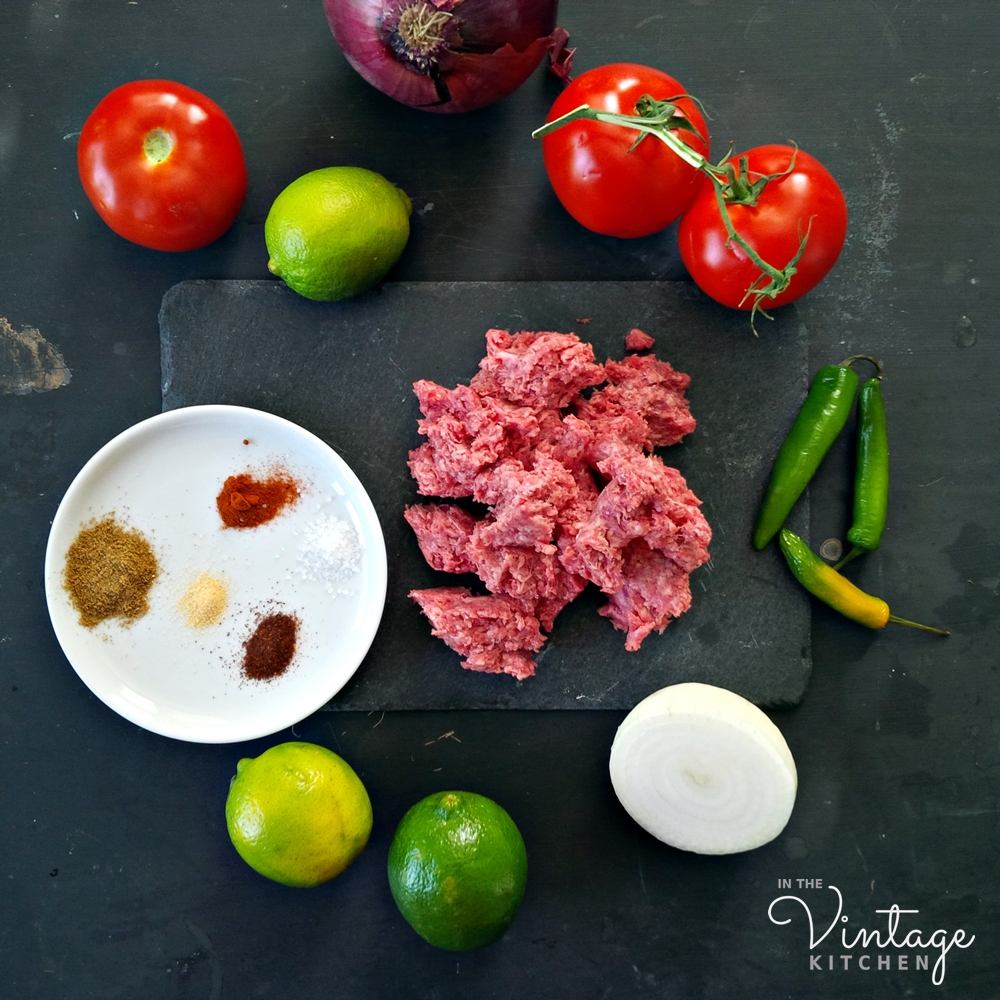
On the menu it’s El Chico’s Homemade Beef Burritos & Ranchera Sauce. Both are really easy to make. You’ll have the whole thing whipped up in under 30 minutes. Each recipe features fresh ingredients with generous amounts of spices, so you can skip buying the taco seasoning packages and the taco sauce at the grocery store. There’s plenty of flavor between the two recipes.  In addition to ground beef, you could also incorporate ground pork, turkey or chicken if you wanted to offer multiple variations.

What’s especially great about the Carne Mexicano recipe is that it includes vinegar which gives it a little bit of tang and de-greases the pan all at once so you don’t need a thickening agent like cornstarch or flour which is included in most commercial taco seasoning packets. As with many vintage recipes, we cut down the salt by 2/3rds, so we recommend starting with our measurement first and adding more to taste if you feel it needs it.

Carne Mexicano for Burritos

2 lbs. ground beef (we used grass-fed beef)

2 tablespoons chili powder

2 tablespoons paprika

2 tablespoons salt (we used only 2 teaspoons)

1 teaspoon garlic powder

1 teaspoon ground cumin

1/2 cup vinegar

1/4 cup chopped onion

In a cast-iron pan over medium-high heat brown the beef and onions until cooked through. Add the spices and cook for 1-2 more minutes. Add the vinegar, scraping the bottom of the pan to deglaze it. Remove from heat and serve immediately or store mixture in a covered dish and keep warm until ready to serve.

El Chico’s Ranchero Sauce (A La Caballero)

2 cups fresh chopped tomatoes

1/4 cup chopped onions

1/4 cup chopped hot green peppers (we used serrano peppers)

2 tablespoons shortening (we used olive oil)

Salt and Pepper to taste

Saute the onions and peppers in shortening (or olive oil). When the onions are translucent add the tomatoes and simmer over a low fire for five minutes.  Serve it immediately or at room temperature.

Obviously, the hotter your peppers, the spicer your sauce is going to be. This recipe makes about 1/2 cup of sauce so if you are cooking for a crowd you might want to double or triple the recipe. We used serrano peppers which were quite hot so a little bit spooned on top of your Carne Mexicano goes a long way!

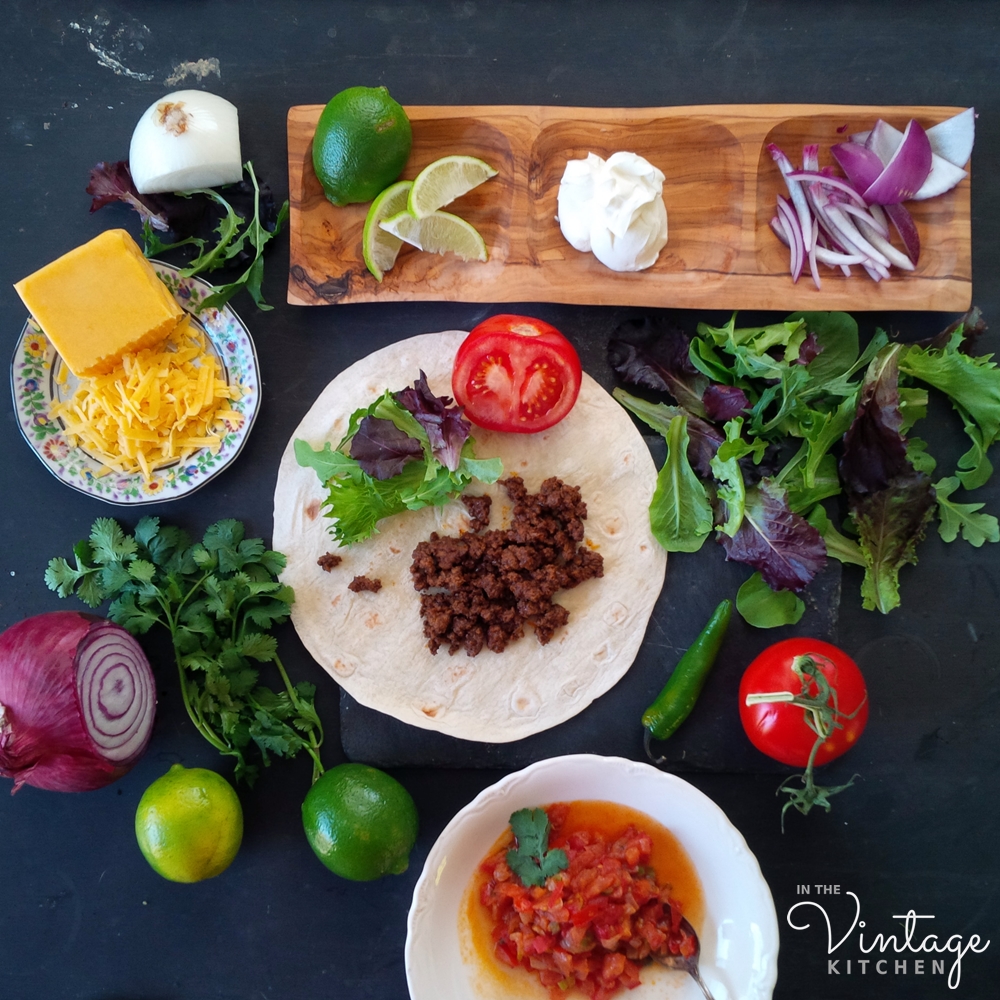
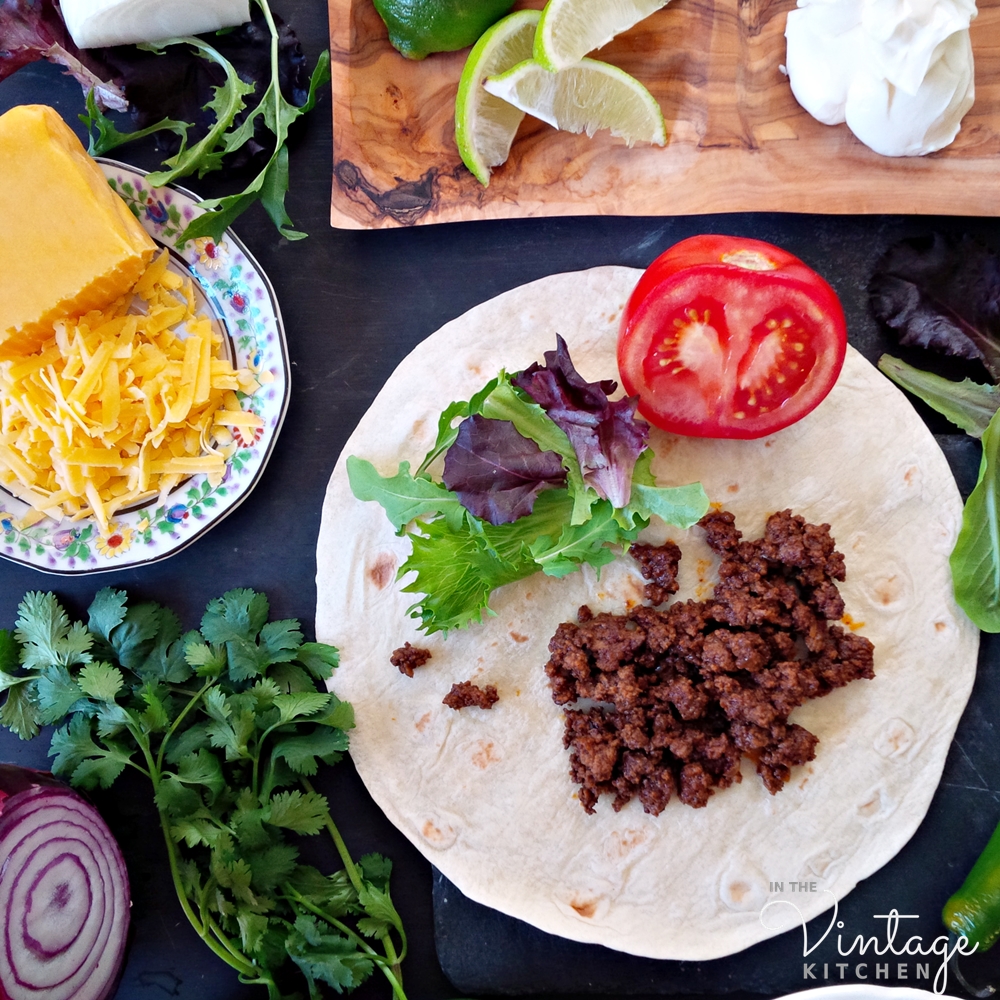
There are so many topping options when it comes to burritos, so your creativity can really shine here based on your preferences.  El Chico suggested that their burritos include only cheese, refried beans, Carne Mexicana and the Ranchero Sauce. But we added a bunch of our favorite toppings too which included sour cream, spring lettuce, red onion, mango, tomato, cilantro, avocado and lime juice.  Other possibilities re guacamole, green olives, rice, etc etc. The sky is the limit. Can your burrito ever really have too much stuff?

Coming up tomorrow on the blog, we’ll be sharing our picks for the Kentucky Derby winner, as well as our table decorations for the Derby Party, which tie together both the Mexican theme and the horse theme. If you are planning a party for either event, we’d love to hear how you are celebrating.

In the meantime, cheers to Adelaida and the Cuellar family for sharing their long-time favorite family recipes with all of us. We will definitely be sending a toast their way on Saturday!

Explore more information about the El Chico cookbook here. And learn more about the restaurant chain, still in operation, here. 

We Have A Winner!

Cheers, cheers and CHEERS! We have a WINNER in our Paris themed giveaway contest. Congratulations to RoseOfSharon for winning a signed copy of the new novel, Paris Ever After, by one of Amazon’s bestselling authors K.S.R. Burns. A winning notification has been sent via email so please respond in order to claim your prize.

A big thank you to everyone who participated in this giveaway. We will have more coming up this summer, incorporating some different themes, so stay tuned! The fun is just beginning…

Cheers!

The Possibilities of Paris and the Ever After: A Novel Approach (and a Giveaway!)

“I need to burn it all in my memory banks. I need to remember that no matter where I end up, Paris will always go on and on. It will be here even if I am not. Eternal Paris. Paris ever after.” – A quote from the book, Paris Ever After by K.S.R. Burns

In many romantic stories about Paris, a move to the City of Light winds up being the final destination – the reward for hard work or self-realization or love newly understood. The place where it all makes sense.  But what happens when you move there in a fog of confusion about life, escaping a perfectly acceptable marriage back home in the States (for reasons you don’t even understand yet) only to discover that the magic spell of the city doesn’t instantly decide your future? What happens when you get there and feel comfortable and safe but have no direction and no support and your carrying along the biggest bit of baggage from your old life imaginable, a baby in your belly?

That’s the situation in which we are introduced to Amy Brodie, a food blogger, wife and newly pregnant mom from Phoenix, Arizona in the novel Paris Ever After. In the opening pages, we find Amy at a crossroads in her life,  processing the fact that she can move in any direction – forward to a new independent start in France or backward to the familiarity of Phoenix with her baby’s father. Both are viable options and she spends the book deciding between the two with both her head and her heart.

Other characters emerge… William, her husband left behind in Arizona… Manu, the Frenchmen who offers her a job in Paris… Margaret, the British ex-pat who offers her friendship… and Herve who offers her the ultimate place to stay when all her decisions start unraveling.  At the beginning of the book, Amy prefers the lifestyle of France over Phoenix and feels more in tune with herself there.  But as William comes to Paris looking for her, we learn more about Amy’s complicated relationship with him, both the good and the bad and her feeling of ease in the city starts to dissolve. She juggles the natural desire to have a father for her baby’s life and a romantic partnership for herself while fighting feelings of dread and despondency when thinking of her home back in Phoenix.

William’s got his own reasons for going in search of Amy though, carrying a secret with him that he’s not exactly rushing to share.  As the story progresses we learn that life going forward with him in the future would never be the same as what Amy knew of it in the past. Margaret and Manu and Herve also have their own dramas to contribute, each turning out to be not quite what they seemed in the beginning. As their peculiar situations evolve, Amy’s decision becomes more weighted. With her ultimate goal of choosing a lifestyle that is suited for both her and her baby, taking up residence in France isn’t necessarily the fairytale incubator it once seemed.

K.S.R. Burns (aka Karen), the author of Paris Ever After, takes readers on a twisting journey full of surprises as each new chapter unfolds. A pure escapist read for anyone who wants a break from their own complicated realities, Karen’s novel will whisk you away quickly into Amy’s dramatic world, where big decisions have to be made in a small amount of time before baby arrives and before Amy loses her total sense of self. Readers will be able to relate to the pressure she puts on herself to get things right – to make the best possible decision that ensures a successful new beginning for her and her family.

Can such a momentous feat be conquered in a matter of months?  I won’t say any more to spoil the story, nor to interrupt the flow of dramatic twists and turns, other than to say surprises abound and just when you think Amy has it finally all figured out, new obstacles arise to alter her course of direction.  In addition to surprising plot points, there is also a surprise recipe in the back of the book for Madeleines  – a very French dessert that offers comfort and satisfaction to Amy in the story.  It is a fun addition that will enable you to truly taste a little bit of France while you also read about it.

As part of a collaboration between Karen Burns and the Vintage Kitchen, we are very excited to announce a giveaway of a signed copy of Paris Ever After for one lucky reader. Enter for your chance to win by subscribing to our kitchen shop newsletter here before Wednesday, May 2nd at 12 noon (CST). One winner will be selected at random and will receive notification via email as well as here on the blog and on Instagram.

While you wait to hear the results of the contest, stop by Karen’s website. She is one of Amazon’s bestselling authors and has lots of stories to share including the prequel to Paris Ever Afer. 

Paris Ever After is a thoroughly complete book on its own, but it also happens to be part two to her 2016 novel The Paris Effect, which dives into the life of Amy’s friendship with her best friend Kat and offers backstory on Amy’s life in Arizona. Although you don’t need to read The Paris Effect in order to understand the characters of Paris Ever After, it’s a great opportunity to learn more about Amy’s foodie past and the decisions that drive her to seek refuge in France. Find out more about The Paris Effect here. 
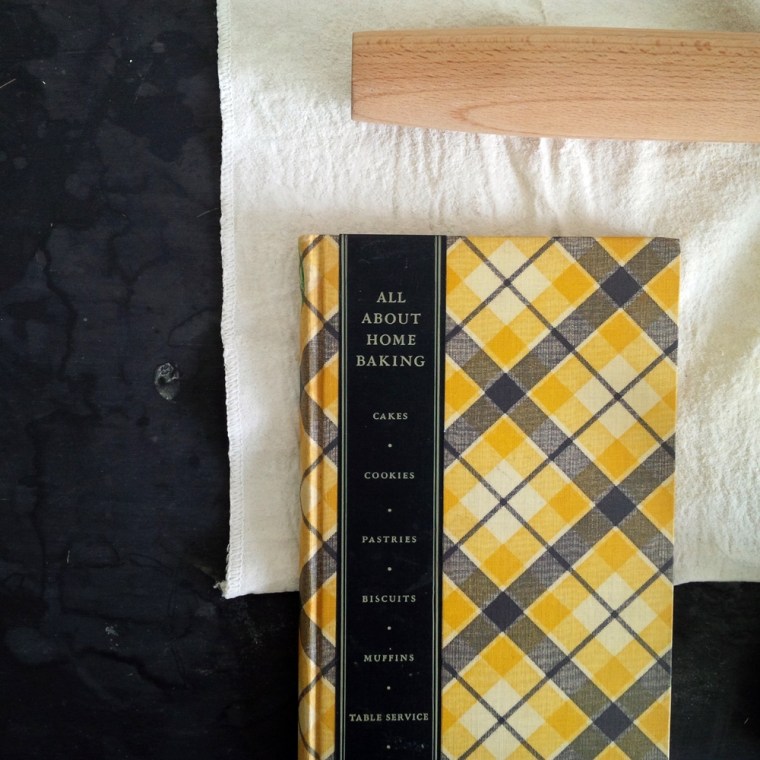
Cheers to Karen on her new book launch! And cheers, good luck and bonne chance to all you readers!

Announcing A Very Special Paris Themed Giveaway!


The first week in May is quite spectacular this year as we celebrate Kentucky Derby, Cinco de Mayo, James Beard’s birthday and a very special Paris themed giveaway all in one week. That means you’ll be hearing from the Vintage Kitchen every day for the next six days (an unprecedented amount of communication from us!) as we pay proper tribute to each event. Hope you will be as excited about the week ahead as we are!

The giveaway kicks off all the festivities with a special blog post tomorrow announcing the specifics of the prize and a feature that will transport you to life in the magical city of Paris. Enter for your chance to win between now and 12 noon CST on Wednesday, May 2nd by signing up for the Vintage Kitchen shop newsletter here. One winner will be selected at random on Wednesday afternoon and will be notified via email and announced here on the blog and on  Instagram. Stop by tomorrow and see what we have in-store for all you fans of France…

In the Kitchen with Indie: A Brief History of Dog Food and How to Make Your Own

There once was a border collie from the Scottish Highlands who ate nothing but turnip greens and lived to be over 20 years old. Dogs in the 14th century ate bones and bread, goat milk and bean broth, meat, and eggs. In the latter half of the 19th century, dogs ate wheat meal, beetroot, and beef blood. In the early 20th century, they ate horsemeat. Today, dogs eat a variety of assorted things ranging from buffalo to chicken, brown rice to broccoli, fruit to fish oil.

Ken-L was the first canned dog food debuting in 1920 and featured horse meat. They added beef in 1921. Still, a popular ingredient through the 1960s, both horse meat and ground horse bone can be seen in the ingredient list on the mid-century can at right.

Since dogs were first domesticated over 12,000 years ago their diets have varied depending on geographic location, activity, and ownership. As descendants of wolves who eat mostly birds, fish, deer, rabbits, and other hoofed animals, dogs’ appetites have evolved to include vegetables, herbs, protein, and grains making food options more than abundant and diverse today.

There has never before been a time in history when there has been so much choice available in the dog food industry.  From traditional shelf-stable canned and dried foods to fresh meat patties, freeze-dried jerky, frozen bones and a bouquet of vitamin supplements, feeding your dog today involves nothing more than practical understanding and common sense.

James Spratt, the father of food for dogs, commercially speaking. Photo courtesy of chestofbooks.com

We have this guy, James Spratt to thank for first coming up with the idea to commercialize dog food in the 1860s. He invented the world’s first dog biscuit after he observed England’s seaside dogs fighting over hardtack biscuits that were cast aside by sailors down at the docks. This ignited James’ interest in the idea of creating a whole canine meal that came in a compact shape, just like a biscuit – something that was easy to carry, easy to dispense, and easy to store. Spratt’s Meat Fiberine Dog Cakes were born shortly after.

An 1876 ad for Spratt’s Meat Fribrine Dog Cakes.

The cakes became so popular many companies started making their own versions, thus creating competition and a burgeoning marketplace. Now, pet food is a $31 billion a year industry just in the U.S. alone, and feeding your dog has gone from Spratt’s biscuits in the 19th century to basic canned meats in the 20th century to gourmet ready-to-eat dinners in the 21st century. That’s quite an evolution in less than 200 years.

With all this choice, it can be tricky to navigate all the options of what to feed your dog- especially if you walk down the pet food aisle at your local grocery store and see a bamboozlement of advertising with each brand declaring their food the best, the most nutritious, the most natural or organic or beneficial. You can feed your dog like a wild wolf or a pampered princess or a farm animal. You can spend $5.00 on a giant economy bag of dry dog food or $20.00 on a petite gourmet bag of artisan-crafted pellets. There’s canned food that comes in a solid lump with ingredients that you can’t pronounce and there are ready-to-eat meals in plastic tubs that resemble the beef stew you are making for your own dinner.

So which food does Indie, the enthusiastic taste-tester of the Vintage Kitchen eat? None of the above.

Instead, every day she gets a combination of fresh foods consisting of easy-to-gather ingredients that are readily available.  Indie is a sociable pup and meets a lot of people in her city travels on a day-to-day basis. If there is one comment that she receives most often it is how soft and shiny her coat feels.  It’s been described as everything from a plush blanket to a mink coat to a thick carpet. People think that she is completely pampered with lots of regular trips to the groomer but Indie is a tom-boy at heart and could care less about her pretty fur. She’s never been to the groomer, and she’s only had three baths ever, (each of which she totally hated). We attribute her great state – her glossy coat, her bright eyes, her abundant energy level and her eager appetite all to the good food she eats.

By making her own dog food, we have the opportunity to eliminate preservatives, fillers, by-products and known skin-allergy-causing ingredients like corn, wheat, and soy from her diet. We have better control over her overall health and can feed her the nutrition she needs based on weekly changes in her activity and lifestyle levels. That means on days she is more active, she gets more protein and more carbs to fuel all her running and jumping. On days she’s less active she gets more vegetables and less carbs so that she doesn’t put on sedentary weight and get lethargic. We have been feeding Indie this way for over five years now. Needless to say, she’s been an enthusiastic eater from her first bowl forward!

You might think that making your own dog food is labor-intensive, time-consuming, and expensive, but it is actually the complete opposite. As we learned above from dogs throughout history, their diet is pretty diverse just like ours.  All her dog food ingredients come from the same place where we shop for our food – the farmers market, the grocery store, etc.. It takes about one hour to prepare a week’s worth of food (up to 14 meals)  or 15 minutes a day if we decide to cook for her each night. Cost-wise on average, we spend about $10-$12 a week on the ingredients that make up her meals.

There are three main components to a healthy dog diet – protein, vegetables, and grains. Amounts of each vary depending on your dog’s size and activity level  (for example, the more active your pup is, the more protein they should eat), but every day, in every bowl Indie’s meal consists of at least one element from each of these three categories for balanced nutrition.

PROTEIN

Indie’s main source of protein is primarily salmon. Usually, it’s canned salmon that includes the skin and bones. Sometimes she eats fresh salmon or frozen as long as it’s wild-caught.  Occasional additions of chicken, eggs, beans and homemade broth also round out her main protein sources. Once every few months she’ll have a little bit of beef, pork, or lamb for variety.  There is a theory about serving your dog raw proteins but we always cook Indie’s (with the exception of the canned salmon) just to be on the safe side as far as bacteria. We cook her protein in one of three ways – sauteed in olive oil on the stove, poached in broth or baked in the oven.  Eggs are usually scrambled or hard-boiled. And beans are canned.

VEGETABLES

As a true gourmand, Indie loves most vegetables. Her regular rotation includes sweet potatoes, spinach, kale, apples, potatoes, carrots, peas, cucumbers, tomatoes, parsley, pineapple, beets, celery,  pumpkin, zucchini, butternut squash, acorn squash, bell peppers, broccoli, cauliflower, strawberries, avocado, pears, collard greens, cabbage and okra. Her vegetables either come from the farmer’s market or the grocery store. She mostly eats what’s in season, except for sweet potatoes and apples which she eats pretty much year-round. And while she eats all of these vegetables mentioned above, she doesn’t eat this whole list all at once. Generally, she eats 2-3 different types of vegetables in one meal.

GRAINS

Primarily her main grain is white rice but sometimes we’ll add in cooked oatmeal, barley, wild rice or quinoa for variety. White rice is better than brown rice because dogs have short digestive tracts (unlike people who have long digestive tracts) so rice passes through their system quite quickly. The main benefit of brown rice is that it acts like a scrub brush for the digestive system making it great for people but not necessary in dogs since it passes through too fast to benefit.

The part that takes the longest when in it comes to making homemade dog food is baking the potatoes (one hour in a 425-degree oven) and cooking the rice (15 minutes). While the potatoes are baking and the rice is cooking, we prepare the vegetables by chopping them into bite-sized pieces, and either sauteeing, boiling, or roasting them. We also use this time to boil the eggs, open the beans and/or cook the proteins as well.

By the time the potatoes are done – all the other dog food components are ready too. We let everything cool down to room temperature before adding all the ingredients together in one large mixing bowl and tossing it all to combine. When we make a big bach like this for the week, we divvy up the mixture into smaller, daily dose-sized containers and store them in the fridge.

Indie’s dinnertime bowl consisting of 1/3 cup canned salmon, 3/4 cup cooked white rice, one sauteed carrot, one half of a hard-boiled egg, two finger-sized sweet potatoes (with skin), a handful of sauteed spinach and one small new potato (with skin).

MEASUREMENTS

Indie eats usually 1 1/2 cups of cooked rice, 2/3 cup of protein and 2-3 cups of vegetables per day. She eats twice a day – breakfast and dinner. She weighs 55 lbs and is moderately active as far as exercise.  What we feed her reflects her lifestyle and activity level so if you want to start making your own homemade dog food too, use it as a guide only and not specific measurements.  Adjustments and modifications will need to be made for your own dog’s size and energy level as well as how often you feed your dog per day and their own individual appetite preferences. Large dogs obviously need more food, small dogs less.

When we were visiting our friend’s house for the weekend, Indie let everyone know her true thoughts on the raw kale we newly introduced to her diet. No thank you!

PERSONALITY QUIRKS

One of the things that will become immediately apparent when you start making your own dog food is how quirky your buddy can be. For instance, Indie will only eat her kale if it is sauteed in a little bit of olive oil. If it’s included in her bowl raw, she’ll pick out all the pieces and lay them next to her bowl. Her not-so-subtle hint that kale is only great when it’s cooked!  She also usually likes most of her vegetables cooked unless they are finely grated like we sometimes do with raw carrots, celery, zucchini or broccoli. Usually, we just chop and boil, sautee, or oven-roast all of her vegetables until soft, but not mushy.

If you start making your own pup’s food, there are a few simple things to keep in mind when determining what’s good and bad for canine consumption…

A FEW FOODS NOT TO ADD

  • Never add salt or pepper to your pup’s protein while cooking.  (If you are using boneless, skinless chicken breasts or fresh fish cook them in olive oil instead of butter.)
  • Onions
  • Chocolate
  • Rhubarb
  • Spices
  • Apple seeds and cores
  • Raisins, grapes or plums
  • Lemons or Limes
  • Bones of any kind (except the ones in canned salmon are fine)

ADDITIONAL FUN THINGS TO ADD ON OCCASION IN MODERATION

  • Greek Yogurt
  • Peanut Butter
  • Olive Oil
  • Cheese
  • Applesauce
  • Bread
  • Nuts (finely chopped)

Basically, when it comes to cooking for your dog think of it like cooking for yourself. If you are making scrambled eggs for yourself for breakfast, portion some out for your pet too. If you are making steamed broccoli for your dinner, steam some extra for your pup.  Or if you are making a traditional spinach salad for your lunch, chop up some extra spinach, bacon and egg for the dog bowl. You’ll discover how fun and creative cooking can be for both you and your pal.

If you are uncertain whether or not you want to switch your dog’s diet to a 100% homemade one – start small with baby steps and throw in a cooked egg or a few slices of apple with their food and see how they like it and then expand little by little.

The nice thing about feeding your pup the food you make is that you can see results or benefits within a few days. Depending on how much fresh food you introduce, their coats will be shinier, their energy levels more balanced and their attention more focused (especially at mealtime!).  You will also be able to monitor their health by what’s going in and what’s coming out.  We have to pick up after Indie, since we live in the city so it’s a good opportunity to tell if everything is in balance and processing well. If her waste is runny or mucousy-looking rather then firm and solid then we know an ingredient is upsetting her stomach lining and we can quickly recall and identify which ingredients we’ve recently fed her and can adjust her fresh foods from there.
All in all, we hope that making your own dog food will be fun and enjoyable for both you and your pup.  If you already make your own homemade dog food, please share your story in the comments section below so that we can continue to learn together and create delicious meals for our wonderful companions. Indie is ALWAYS ready to test out a new recipe!

Cheers to our canine pals and to all the fresh dinners they inspire. Happy cooking!