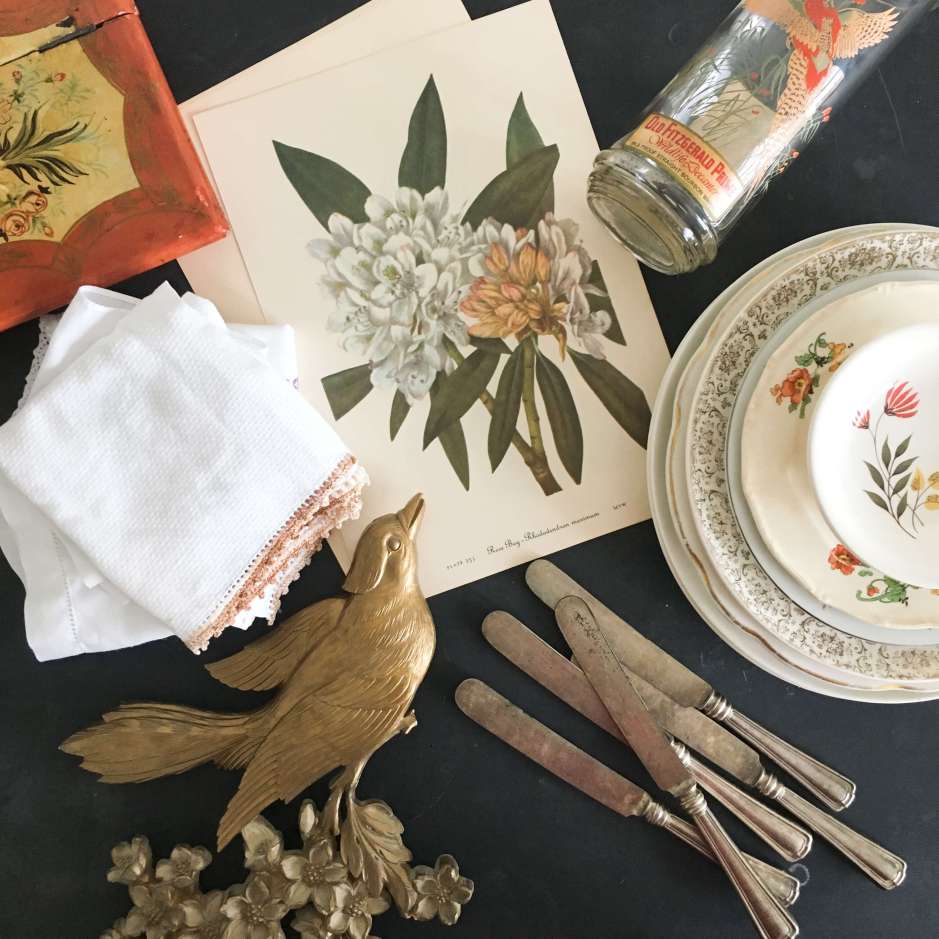
Hope you had a lovely and festive Thanksgiving holiday and are still enjoying lots of fun with friends and family. For all you post turkey shoppers, just a quick little note from the kitchen to let you know that there’s a 30% off sale in the shop starting today through Tuesday. If you’d like to get your gift gathering done early than this is the sale for you! It covers all categories and collections in the shop from linens to serving pieces, kitchenwares to cookbooks and everything in-between. And it is also the final sale of the year, so if you are looking for some unique gifts for yourself or others, now is the time to shop and save.
Whether you’ve been eyeing a set of antique French dishes from the 1800’s, a pretty little linen from the 1920’s or a cookbook filled with hundreds of recipes from the 1960’s, I hope the sale will inspire an extra dose of joy as we continue to party our way through the holiday season.
Please use coupon code HOLIDAYCHEER upon checkout to recieve 30% off your entire order.
Ladies and gentlemen, the results are in! Eighteen ingredients, nine hours, three loaf pans and one historic recipe later – we have a winner – in Election Cake. Yesterday, when I wrote about the history of this patriotic confection, there was uncertainty and speculation about what exactly it was (cake or bread?) and if it was going to be a palatable sweet treat that transitioned well across three centuries. Today, we discovered what this celebratory concoction was all about. Let’s look…
The recipe began yesterday, simple enough, with yeast and water and flour, and a dash of sugar and oil…
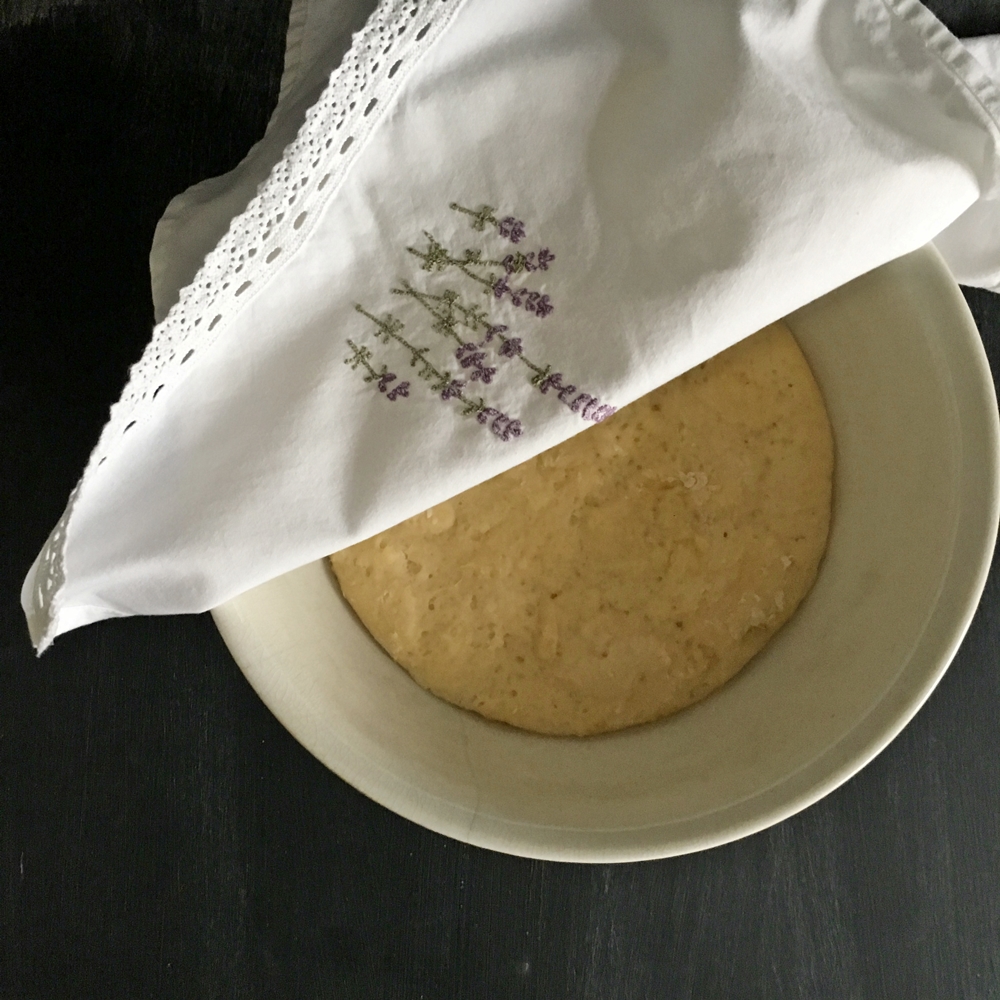
It was left to rise six hours on its own, which it did, like a good little cake…
Next, went in a handful of ingredients…
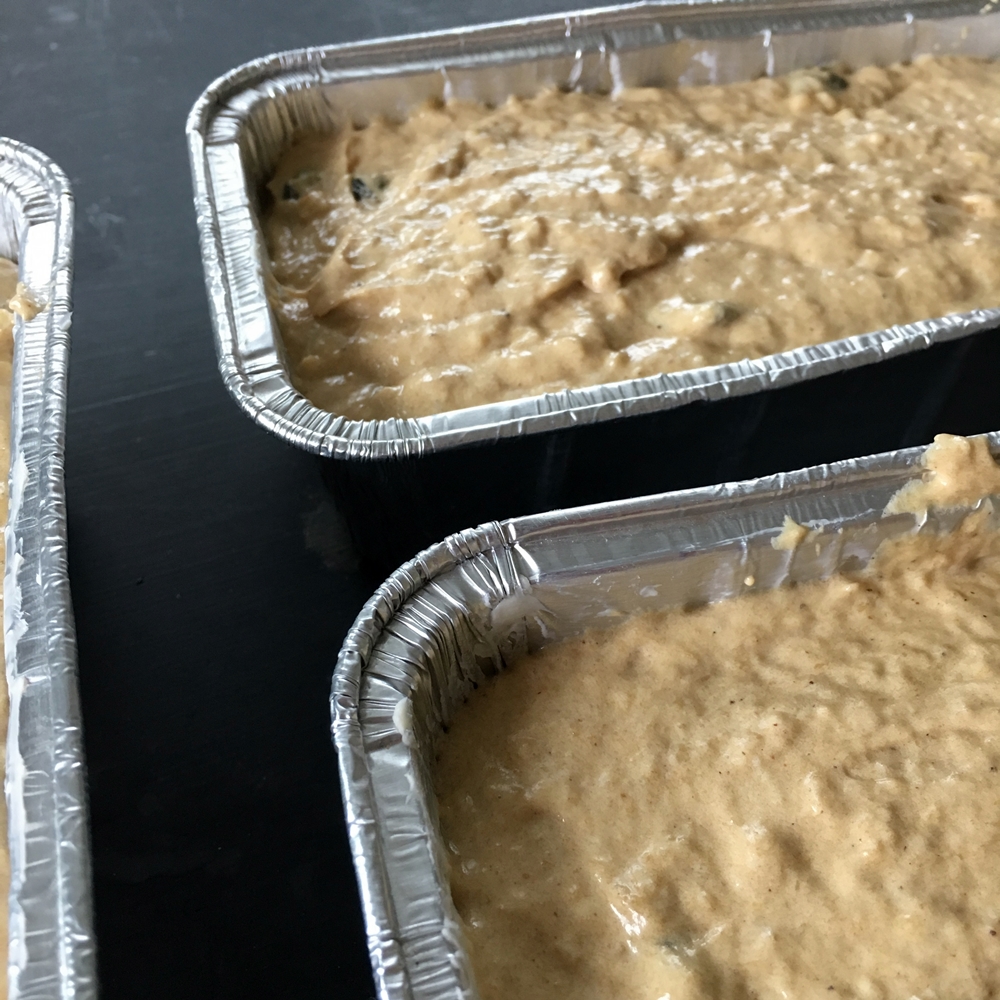
After they were all mixed together, the batter was ready to be parceled out into three loaf pans…
and were left to rise again, for another hour, which they really didn’t do at all. It would be generous to say that after the hour was up, each loaf was half an inch taller, but that would be an exaggeration. Maybe, indeed the batter did rise a little, but if so it was barely noticeable. I hesitated here at this stage, thinking maybe I should let them sit longer so that each loaf could get bigger. But then I remembered that the author of this recipe, Fannie Farmer, was a stickler for precision and instruction, so into the oven the three loaves went, without any extra rise time. Just follow the recipe. That’s what Fannie would have said.
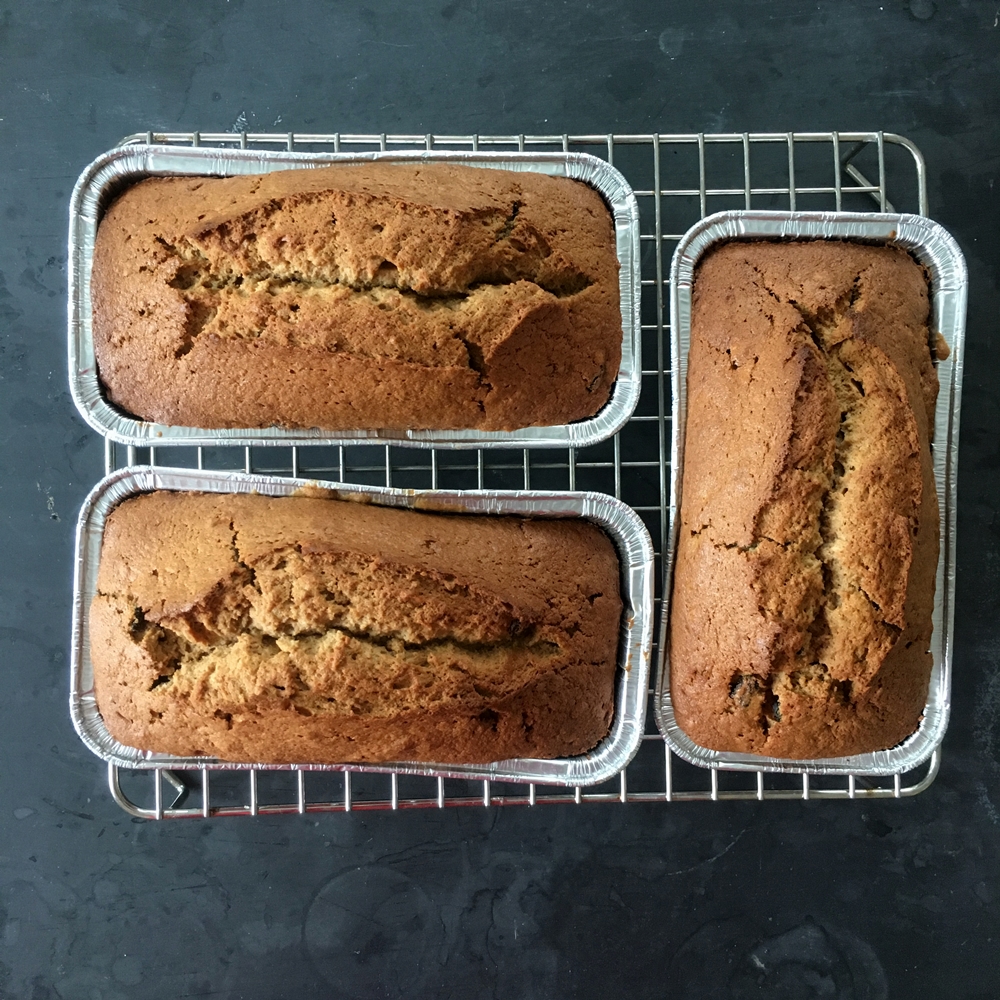
Exactly at the one-hour mark, no less and no more, the loaves came out sky-high and golden brown…
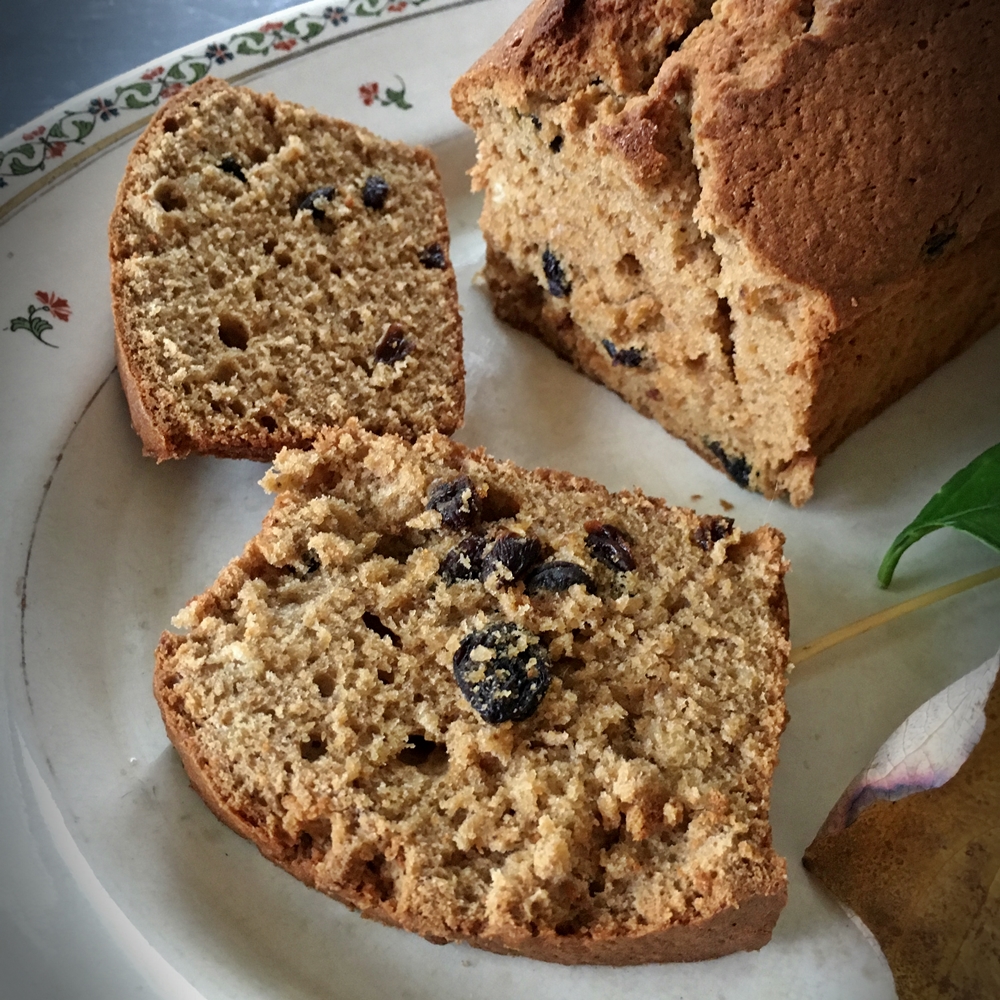
Fannie didn’t fail us after all! The tops even cracked open themselves and looked like little lips about to say yum. A good sign of things to come. After a short cooling-off period, the loaves were ready to cut and serve and taste…
And that is when I discovered that this very old Election Cake is in fact, very delicious. I understand how people could get confused about whether to call it a cake or a bread because really it is similar to both. It has a texture and consistency like banana bread or zucchini bread but also it has a light and fluffy body like cake. The combination of the whiskey, yeast, and nutmeg gives it a subtle hint of almost root beer-like tang that is lovely and warm. Although it already has a cup of butter in it, this little darling of a delectable is calling out to be sliced and toasted with an extra slather of butter.
While no one ingredient is powerfully overwhelming, all of them work well together to create a balanced flavor that hints at citrus and at spice, which leads me to understand how so many varieties of Election Cake came about between the 1700’s and now. It’s wonderful just as it is, but it’s also one of those recipes that might spark your creativity. After you have made it once or twice, it will make you feel brave – enough to confidently add your own little twist. Not an improvement, just a twist. Maybe you’ll want to add some nuts or orange peel or cinnamon or cranberries. Or maybe you’ll get creative on the serving side and want to pair it along with thinly sliced pieces of ham or brie or cream cheese for a savory little snack. I love recipes like this – ones that feed your brain as well as your belly.
Either way, you decide to approach this recipe, you’ll be most successful with it if you use good quality ingredients like local eggs, fresh nutmeg, European butter, etc. They might be a little more expensive to buy, but the more fresh and natural your ingredients, the more flavorful this cake, in particular, will be. And because it makes three loaves at once, you can freeze two for later, preferably when it’s cold and snowy, as this would be especially nice for winter breakfast alongside a cup of coffee, for lunch or tea-time, or even afternoon hors d’oeuvres. Sweet in a satisfying, robust way (not in an empty calorie way), it will give you renewed energy to carry on with your day, which was exactly the original intention way back on voting days in the 1700s.
Fannie Farmer’s Election Cake
(Makes 3 loaves. Recipe written exactly as it appeared in the 1965 edition of the Fannie Farmer Cookbook)
Put in a bowl… 1 cup warm water (not hot)
Sprinkle over it… 1 package yeast
Add… 1 tablespoon sugar, 1 tablespoon salad oil (I used olive oil), 2 1/2 cups flour
Beat thoroughly, cover, and let rise overnight or at least 6 hours.
Butter three loaf tins. Cream 1 cup butter. Cream in 2 cups dark brown sugar.
Add 4 eggs, well beaten.
Stir in 1 tablespoon grated lemon rind and 1 tablespoon lemon juice.
Sift together 1 1/2 cups flour, 1 1/2 teaspoons baking soda, 1/2 teaspoon powdered cloves, 1/2 teaspoon nutmeg, 1/2 teaspoon mace (if you can’t find this spice, substitute it for an additional 1/2 teaspoon nutmeg), 1/2 teaspoon salt.
Add to the butter mixture. Add 2 cups seeded raisins, 1 cup whiskey.
Stir into the yeast batter and beat to blend well. Divide the dough into the tins. cover and let rise for 1 hour. Bake about 1 hour at 350 degrees.
Interested in learning more about Fannie Farmer and her historic recipes? Find the 1965 edition of her original 1898 cookbook in the shop here.
And just a little reminder… there are just two days left to save 20% off all vintage and antique platters in the shop! Find your favorite here.
Once upon a time in history long, long ago there was a cake that fed the whole entire town on Election Day. Called simply, Election Cake, it was an active participant in the voting scene of early America. But while the recipe’s origins are as old as the United States itself, the exact history is a little bit varied depending on which source in which state is telling the tale.
The first American cookbook was written by Amelia Simmons and published in 1796. Her second edition of this cookbook, published two years later in 1798, features the first published recipe for Election Cake.
Essentially though, everyone pretty much agrees that it boils down to the early days of New England (some say Connecticut, some say Massachusetts) when Election Day was celebrated in the Spring and considered one of the biggest party days of the year. Enjoyed with the same amount of zeal as our modern St. Patrick’s Day festivities, Election Day in 1700s America was a boozy holiday full of ale and camaraderie, and community support. Only people weren’t celebrating one particular heritage like we do the Irish on St. Patrick’s Day. They were celebrating everyone’s heritage, as Americans, on Election Day. The fervor was for freedom. And the cake was needed to sop up everyone’s spirits (the ale especially). It also provided a little motivation to actively vote for the political candidates of the day, because even in 1700s America, people (and politicians!) were aware of the powerfully compelling nature of cake and its ability to attract favor.
Being such a big festivity in the lives of Colonial America, with people traveling from miles around to attend special gatherings, it made sense to local residents, at the time, to bake one enormous cake to serve all who showed up. So out of thirty quarts of flour and fourteen pounds of sugar and ten pounds of butter, Election Cake was born from the loving hands and hearts of local women who couldn’t vote themselves but could at the very least feed the men who were voting for them. Some historians say that this proves that women were important members of the political spectrum even back then when they had no vocal authority. I don’t know about that, they may have just looked at the voting day in a practical feed-the-masses way, but it is fun to think that while they were baking, they were also discussing political topics among themselves. Even if they were just hushed whispers while they were mixing batter and melting butter, I like to think they were formulating their own ideas about what should and could happen in the future shaping of America.
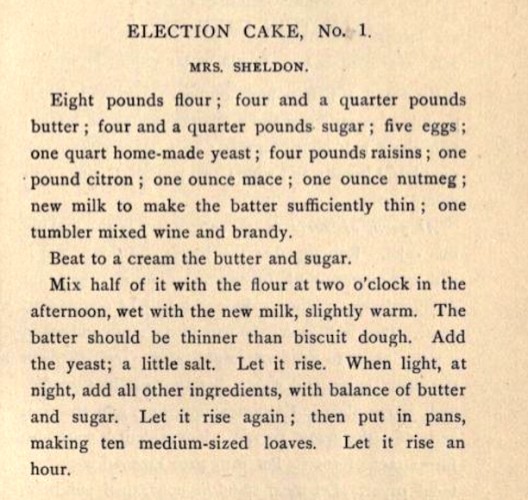
An election cake recipe from 1889 by Ellen Wadsworth Johnson. Photo courtesy of connecticuthistory.org
The interesting thing about Election Cake though is that it is not really cake. Since its inception, it has really been more of a fruit and spice-studded bread than a traditional cake. And in true American spirit, it has been revised and enhanced and reworked over the centuries into numerous different versions like breakfast buns, frosted bundt cakes, and drunken fruit cakes. The core of the recipe remains the same though – flour, butter, and sugar – but over the years different variations have been included and excluded that involve milk, eggs, raisins, currents, citrus fruits, whiskey, rum, brandy, wine, confectioner’s sugar, etc. Baking equipment differs too. Originally, back in the day when one giant cake was made, it was too big to fit into any bakeware so it just baked free-form on the oven floor. Next came bread loaf pans, a smart decision that produced numerous easy-to-handle loaves that could be made by numerous hands. Then there was the bundt cake method, the cast iron skillet method, the baking dish method, etc.
The 1965 edition of the Fannie Farmer Cookbook originally published in 1898.
For this post, I’m making the Fannie Farmer version from her 1965 Fannie Farmer Cookbook, which was first published in 1898. True to form, this recipe has changed a bit over the Fannie Farmer years too. The 1960s version involves raisins, whiskey, and loaf pans. Her original recipe from 1898 called for figs, sour milk, and bread dough starter.
The bulk of this project lies in waiting for the dough to rise (six hours!).
A nine hour baking project from start to finish, this is a kitchen adventure that will unfold over two days and two blog posts. Tonight, we discussed the history behind the recipe, and tomorrow we’ll discuss the actual recipe and how it all turned out. Will it indeed be more like a raisin bread rather than a fruit cake, as it is listed in Fannie’s cookbook? Will our modern palettes fall in love with this old-fashioned recipe enough to resurrect it and recommend it in the Vintage Kitchen? Will it become a repeat labor of love on future days of election or will it be a one-hit-not-so-wonderful? Only time will tell in this case. Tune in tomorrow for the 2018 Election Day results, vintage kitchen style… {read part two here}.
Happy November! Isn’t it exciting to think that Thanksgiving is just 20 days away? All summer long the shop has been filling up with vintage and antique platters in anticipation of the big turkey day soon to arrive.
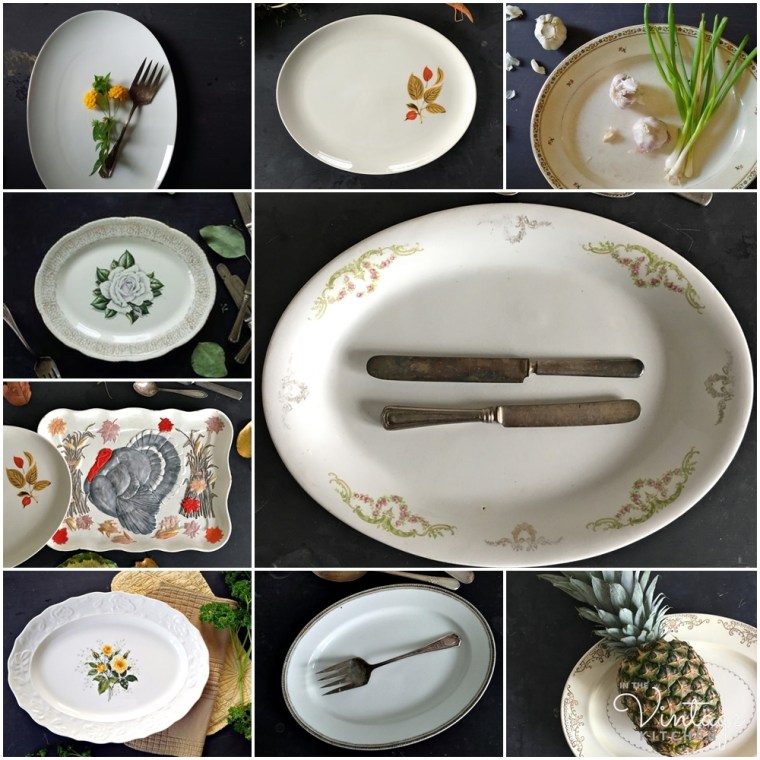
An array of antique and vintage platters available in the shop. They range in age from the early 1900s to the 1970s.
Unlike some other pieces of dishware in the kitchen, a large platter is pretty much essential when it comes to dealing with big food for a big crowd. Big plates are one of those items you can’t really skimp on or try to improvise with something else. I know because I’ve tried. Back in the day when I lived in several tiny apartments in New York City with either no room for a big dish or no extra room in the budget to buy a big dish, I tried all sorts of creative ways to present a turkey.
There was the year of the giant wood board, when the roasting juices ran all over the table. There was the year of serving it in a speckled enameled roasting pan, which I hoped was going to look wonderfully homey but instead looked wonderfully woebegone. There was the year we hoisted the turkey up on an elevated cooling rack, only to have it slip and slide around each time we attempted to carve it. That next year, the turkey was carved in the kitchen and separated out onto several dinner sized plates according to white meat and dark meat, but that lacked all the festive pomp and circumstance of bringing a big bird to the table. Then I found an antique platter on a weekend getaway trip in South Carolina and everything got a whole lot easier. Every Thanksgiving turkey since has come to rest on this two hundred year old dish that originally came from England…
It is my most prized treasure in the kitchen. The cracks and the crazing and the beautiful staining carry so many stories. It has a lovely decorative backstamp and a deep rim which is perfect for holding not only the turkey, but also all the herbs and the onions and the citrus fruit that go with it for presentation. I don’t have to worry about the juice running all over anymore or the bird slipping and sliding as we carve it.
I love this platter so much it gets used for non-holiday meals too like tacos, cheese and crackers, charcuterie, etc. Everytime I use it I think about how I’m adding another layer, another meal, to its 200 years of meals. And that feels exciting. I like to think about what the Victorian Englanders would say about their platter being used as a serving dish for 21st century tacos. I like to think about all the Thanksgiving turkeys that have been presented here on this very platter over the course of two centuries. And I like to imagine the people who used this dish and how they carried it and where they lived. I love that it is not only a platter but it’s also a piece of history from other people’s past lives.
More platters in the shop!
This summer I overheard a conversation between two women at an estate sale who were talking about tableware. One woman remarked on the fact that she had a different platter for every holiday. And that her collection, a mix of vintage pieces and contemporary pieces, acted as the anchor for her table decorating decisions every year. She went on to say how it made party planning easier because she knew what food looked good on which platter and what colors worked together and which didn’t. Her platters helped narrow down the choices of what to make and how to serve it.
Her friend responded by saying that she only owned three platters – all plain white and all in different sizes. She admitted that she used them but didn’t love them and certainly never thought of them as inspiration for her table decor.
The collector explained that it had taken over a decade to find just the right platters but now that her collection was complete and all the holidays were accounted for, she looked forward to celebrating each occasion, anticipating new memories while remembering old ones. The two friends went back and forth about holiday decorations, and other things not related, but the best part of this story comes when it circled back around to the platters and the collector who had one for each holiday. “Mine feel like old friends,” the collector said. “I look forward to seeing them every time I pull them from the cabinet.”
For four months that conversation has stuck in my head and I’ve thought of that woman, the collector, every time I’ve been out curating items for the shop. I think it is her, and all the like-minded dish lovers out that I have been shopping for all along. I love the fact that her platter collection is now a tradition and helps carry sentiment along with food and festivity.
I wanted to help bring that sense of nostalgia to your table too, in hopes that you would find a new friend and a new helper from history. One that would make your party planning and your table setting easier and more interesting at the same time. From now until November 9th, the kitchen shop is hosting a 20% off sale on all platters, antique and vintage. They run the gamut as far as styles and patterns from traditional to boho, plain to fancy, and small to large. A little something for everyone.
As with all the items in the kitchen shop, my greatest desire is to pair old pieces up with new people so that the stories of food and family and history can continue to thrive long into this century and many more beyond. Hope you find a platter that’s suited just for you!
To see a list of all the platters available in the shop click here or visit the serving pieces section here and hunt around yourself. All eligible pieces have already been marked down so you don’t need to worry about entering coupon codes or any additional sales info upon checkout.
Irma with her children circa 1914. Photo courtesy of Stand Facing the Stove by Anne Mendelson.
Long before Irma Rombauer became a household name, she was an everywoman of the early 1900’s living in St. Louis, Missouri with her husband and two children. As the wife of an attorney who had political aspirations, Irma was actively involved in the social scene of St. Louis, a well-connected member of various clubs and organizations and a fun hostess of house parties and local events.
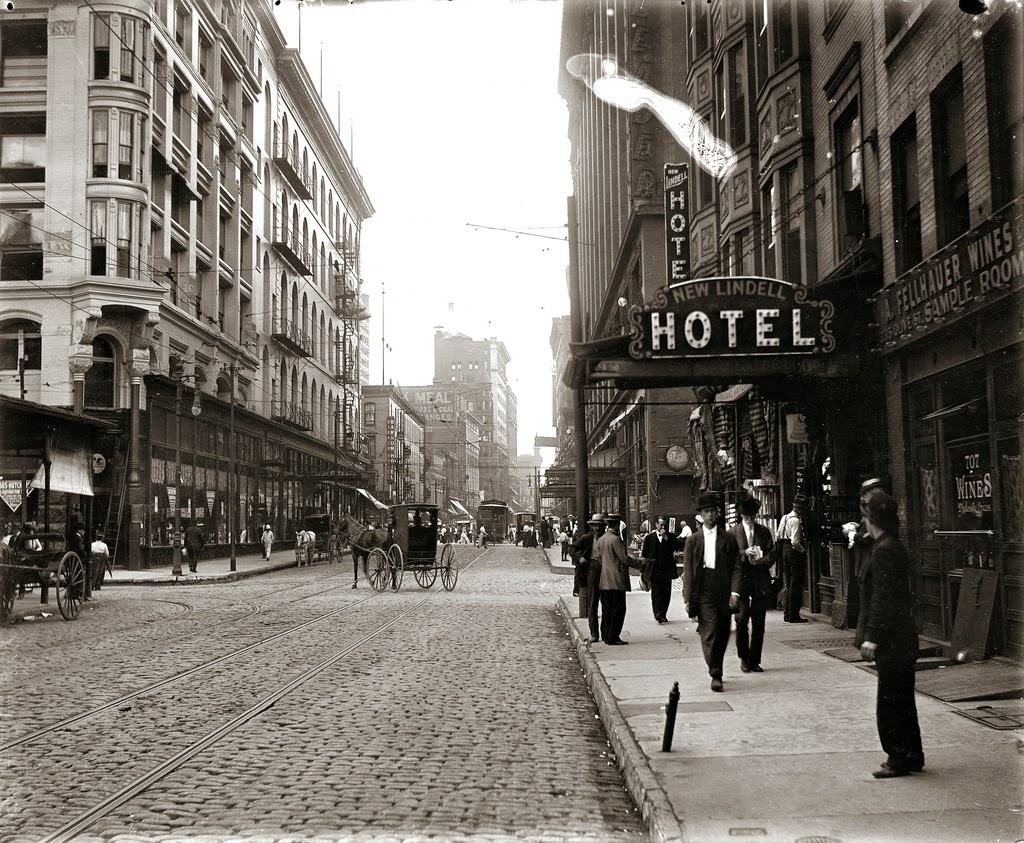
St Louis in 1906, seven years after Irma married. Photo courtesy of Vintage Everyday
When the stock market crashed and her husband tragically committed suicide as a result, the rosy colors of Irma’s St. Louis lifestyle suddenly took on a whole new shade. Without much money in savings, Irma, now in her early 50’s, had to quickly figure out what to do. Most importantly, she had to figure out how to survive on her own and care for her family, as a single woman, after thirty years of marriage.
While the Great Depression was a very hard time financially for families around the country, it was also a very creative period in home cooking. As everyone struggled to survive and to feed their families, barriers started breaking down as far as people’s pre-conceived notions of kitchen work and culinary skills. The wealthy could no longer afford kitchen staff and therefore had to start cooking for themselves. The middle class no longer had the same budget for groceries and had to learn how to cook more frugally. And the lower class had to stretch their meager food supplies even further. That meant a whole wave of new cooks were beginning to emerge. Cooks who needed answers on how to do new things whether it was learning basic skills, innovative recipes or new techniques.
Irma saw an opportunity here in this great depression of both her own and the country’s. Americans needed a practical, instructive cookbook that offered good nutritional food for all budgets and all skill levels. Assume nothing, teach everything and most importantly find the joy, those were the thoughts ruminating in Irma’s mind. This cookbook idea seemed especially relevant after a fellow St Louisan published a cookbook in 1929 featuring all sorts of expensive ingredients and decadent dishes – a notion that seemed totally inappropriate to Irma for both the time and the town.
The funny thing about Irma though at this point in her life, was that she wasn’t exactly known for her cooking. Her parties with her husband in the past had been memorable – not for the food but for the atmosphere. While Irma herself was a dynamic hostess and an interesting, intelligent conversationalist, what she served was overshadowed by her charming personality. People didn’t come away from Irma’s kitchen raving about her food but instead raving about Irma. So the very idea that Irma would embark, could embark, on writing a cookbook, as just a sort-of-okay meal maker, was a great surprise to everyone who knew her. But none of that mattered. Irma had a plan in mind that was going to turn her kitchen from dull to delicious.
One of the groups Irma belonged to was The Wednesday Club where women gathered to discuss intellectually stimulating topics. Photo courtesy of wednesdayclubstlouis.org
Because she was so well connected and knew a lot of people in her community, Irma started collecting recipes from her friends and their families. Recipes that were proven hand-me-downs, time-honored and beloved. Once gathered, she went home and tested each recipe herself… adapting, tweaking, altering and omitting along the way if needed. When a satisfactory bundle of approved recipes emerged that suited her taste, she organized them into book form, named it The Joy of Cooking: A Compilation of Reliable Recipes with a Casual Culinary Chat and had 3,000 copies printed up by a local print shop. Tah-dah, the Joy of Cooking was born.
Irma mailed out copies of the cookbook from home and handled publicity and sales campaigns herself, enthusiastically spreading the joy of Joy. The rest is cooking history. Bobbs-Merrill picked up professional publishing of the book in 1936 with the debut of the second edition. Irma became a trusted authority known for her reliable recipes and engaging writing style. And the book went on to sell 18 million copies across eight updated editions. Covering everything from how to skin a squirrel to how to make a souffle, Joy of Cooking raised a nation of home cooks (18 million of them!) by assuming nothing, teaching everything and finding the joy.
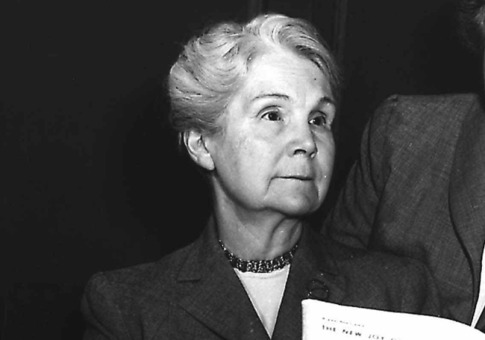
All the editions of Joy of Cooking through the years and a photo of Irma and her daughter Marion, who worked on many of the cookbooks.
That is a wonderful contribution to the American food scene. At a time when women could have felt marginalized by their roles as domestic cooks, Irma made cooking exciting and delicious and easily attainable. Her cookbooks turned into confidence and that confidence radiated into all other aspects of life. Rumor has it that a new addition is scheduled for publication in 2019, edited and updated by the Rombauer family, who have faithfully handled the cookbook and its revisions since Irma’s death in 1962. Thanks to Irma’s children and her grandchildren, they have made the Joy of Cooking a record holder as the oldest cookbook in history that is still maintained by one family. A legacy that hopefully will keep Irma in our kitchens for another 80 years.
Cheers to the Rombauer family and to Irma, in particular, who would have celebrated her 141st birthday today, and cheers to always finding the joy in both good times and bad.
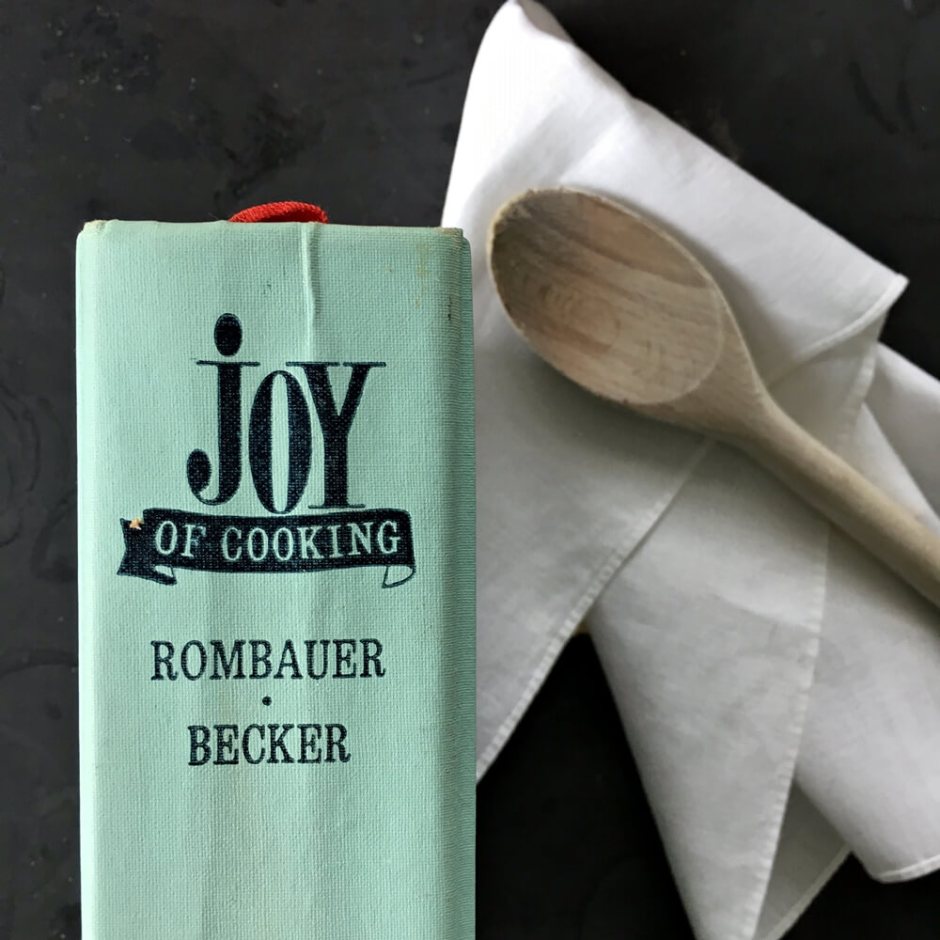
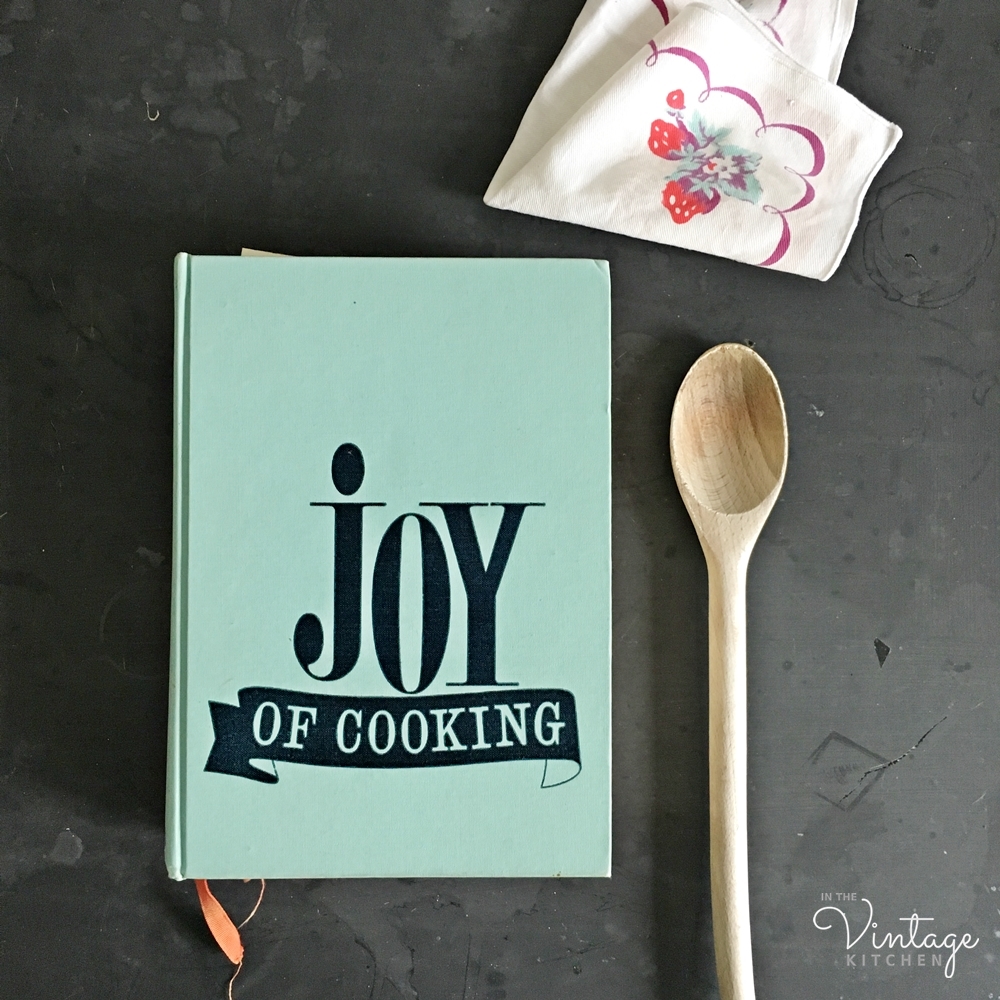
Looking for your own vintage edition of Joy Of Cooking? Find two ediions currently available in the shop – one from 1967 here and one from 1975 here. And if you missed the previous blog post, catch up with a recipe for Irma’s Plum Cake Cockaigne here.
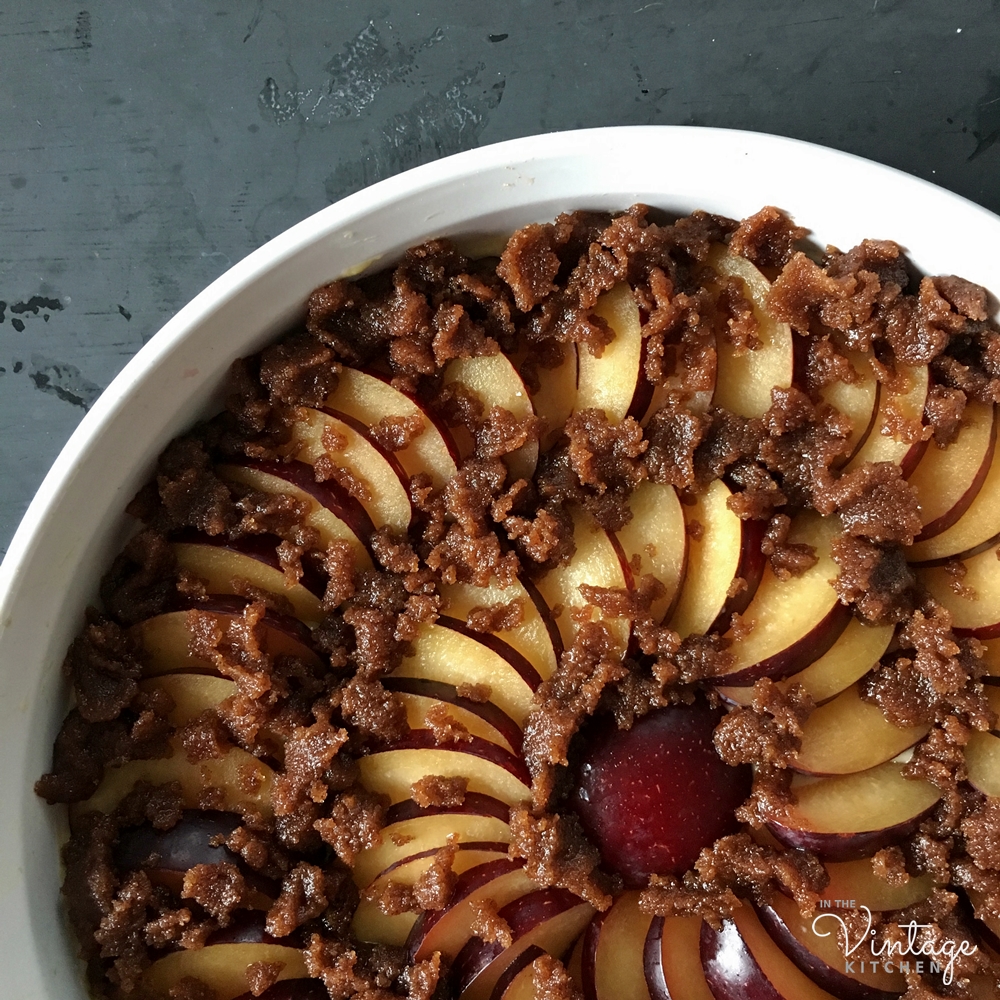
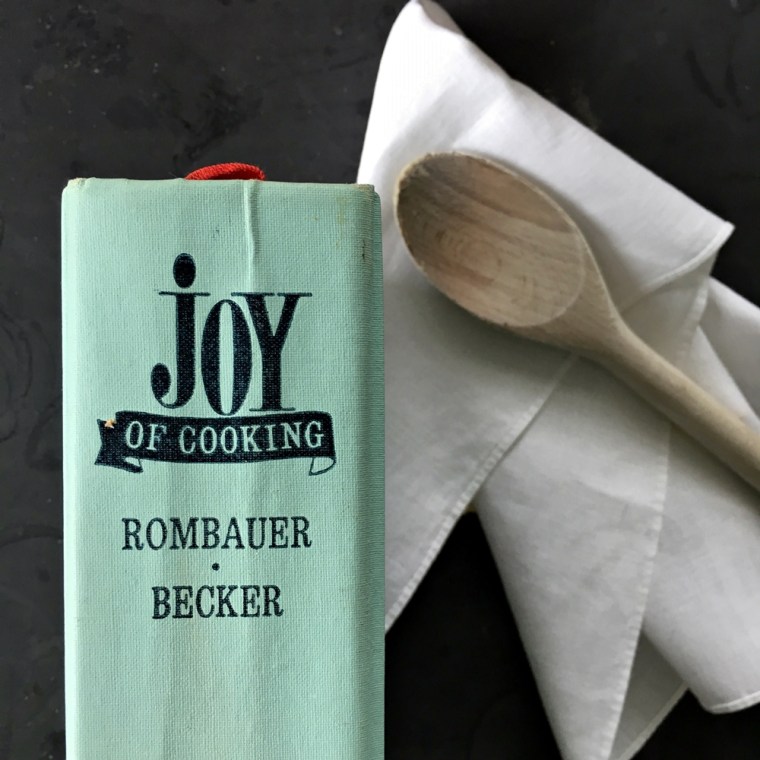
Over on Instagram the other day, I posted this photo above of the first Fall-themed dessert to come out of the Vintage Kitchen oven. It’s called Plum Cake Cockaigne and is from the 1964 edition of one of the most popular cookbooks in American history – Joy of Cooking by Irma Rombauer.
Also over on Instagram, I learned something new recently about cooking blogs and recipe finders. It seems not everyone wants to scroll through a whole entire story in order to get a recipe, so I’m trying something new with this post – recipe at the top, story at the bottom. You guys let me know how you prefer this new layout. Time always seems to be so short during these last few months of the year, so if this makes your life (and your cooking experience!) easier please let me know by comment or message and I’ll adjust as you prefer.
In a large mixing bowl, sift the flour. Add the baking powder, salt, and sugar to the flour and re-sift.
Add the butter (Note: The juicer your plums, the less butter you need to add. My plums weren’t excessively juicy so I used the full 3 tablespoons of butter), mashing it up in the flour mixture with a fork, until the entire mixture looks crumb-like.
In a measuring cup, add the egg, vanilla, and enough milk to equal a 1/2 cup of liquid (this was about 1/4 cup milk in my case). Whisk together until these three ingredients are combined.
Add the egg mixture to the flour mixture and stir until a stiff dough forms. Spread the dough mixture evenly on the bottom of your pan or baking dish and then set aside. (Note: Irma recommended a 9×9 x 2 1/2 inch pan but I used a round 10″ inch x 2″ inch baking dish and that worked great as well).
Next, thinly slice your plums so that you will have enough to overlap each one in your pan – tart style and then arrange them on top of the dough. This is the fun, creative part! You can make many different types of designs with your plums if you like.
In a small bowl, combine the sugar, cinnamon and melted butter and then sprinkle the mixture on top of the plums.
Bake in the oven for about 25 minutes until the top is bubbly and brown.
Our plum cake was so bubbly I couldn’t help but take a little video of it as it was coming out of the oven!
I recommend letting the whole thing cool before slicing and serving it if you prefer to plate it in wedge-shaped slices. Since the top layer carmelizes it is easier to slice when it is in a cooler, more solidified state. If you’d rather eat it warm, right out of the oven, simply scoop it into a bowl and enjoy. Serve it on its own, with a dollop of whip cream or a bit of vanilla ice cream and taste the season unfold in all its cinnamon sugar splendor.
What is really fun about this dessert is that it is like two sweet treats combined into one – half tart and half cake. Because there is only one cup of flour and one egg, the cake part is very thin and the fruit arrangement on top is very much like a tart, so this turns out to be a light and less filling alternative to two traditional desserts yet retains all the lovely flavor of both. Plums don’t get as much attention in the Fall as apples and pumpkins in the baking department, but they are still in season until the end of October, so they make a lovely unexpected seasonal dessert.
That’s Irma on the left and her daughter, Marion on the right.
Plum Cake Cockaigne (pronounced caw-cane) was a favorite recipe in the Rombauer household. The word cockaigne was a term of endearment in the cookbook and was tacked onto various recipes throughout the Joy of Cooking as a way to signify the absolute personal favorite recipes of the Rombauer clan. Derived from old French, cockaigne literally refers to a mythical land of plentiful luxury, comfort, and peace. Such a dreamy notion of an ideal paradise was so charming to the Rombauers it was also the name they chose for their country estate. How fun!
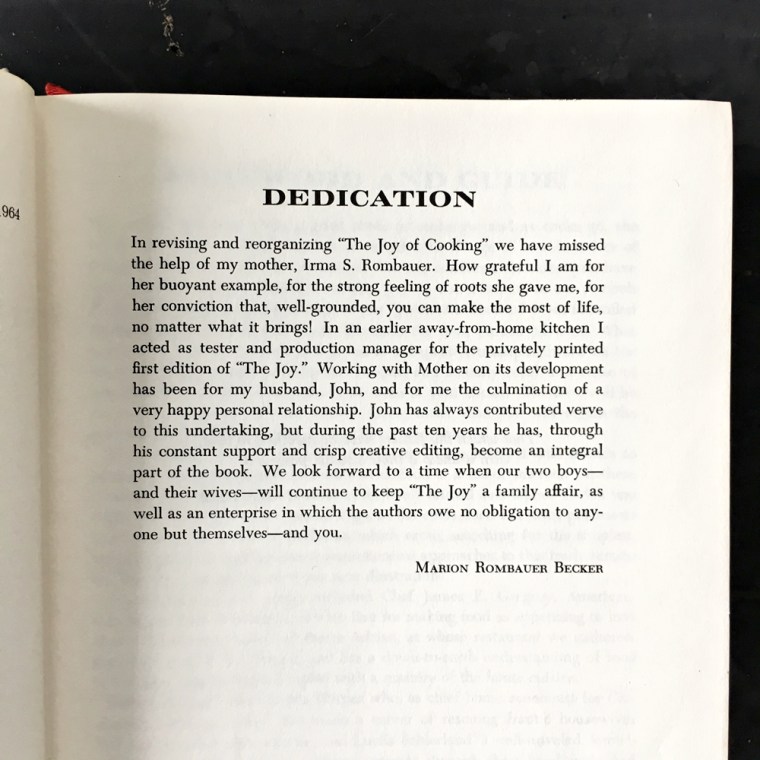
The 1964 edition of the Joy of Cooking came out two years after Irma died, the first edition to be edited, revised and enhanced by Irma’s daughter, Marion and Marion’s husband, John. Not without its own dramas, this edition needed all the cockaigne it could get. The first printing of the 1964 edition was published without Marion’s final approval, which meant that various inconsistencies and typos were present. This drove Marion crazy, as she wanted to really honor her mother’s work and keep up with the trusted reputation that the Joy brand had accumulated over 30 years since its debut in 1931. So the 1964 edition went through several reprints in order to right all the wrongs that Marion doggedly corrected herself. You get a sense of the enormous responsibility and weight of the legacy that Marion felt surrounding the whole Joy endeavor from her dedication at the beginning of the book…
The edition that is available in the shop is the 1967 printing of the 1964 edition, the one that Marion was finally satisfied with. All of this devising and revising is a real testament to the dedication of the Rombauer family. One that started with Irma way back in the 1930’s and still continues through present family generations today.
Irma’s launch into cooking stardom is a fabulous story, one that we’ll discuss later on in the month as we celebrate her birthday on October 30th. For a woman who wasn’t known for cooking skills when she first started writing a cookbook, she certainly has proven her abilities time and again over the past 80 years. Stay tuned on that front.
In the meantime, there are a couple of weeks left to enjoy plum season. Hope you “fall” in love with this recipe as much we did!
Find the cookbook in the shop here and a link to our Instagram account here if you’d like to keep up with daily doses from the Vintage Kitchen.
Happy September, happy October and happy Autumn everyone! That’s three cheers, two months and one season that has happened since the last post. Oh my. The majority of September around the Vintage Kitchen was spent curating and collecting items for the shop and went by in such a hurry I officially coined it the hi/bye month because that’s exactly what it felt like. Here one minute, gone the next.
October started in the same way, with the same humid temperatures and the same busy schedule. Hot summer weather has hung around with gusto until just a few days ago, making this new season and curating for it, a bit of a challenge. My heart was wrapped up in the idea of Fall – all those colorful leaves and pumpkins and baking projects – but my head couldn’t quite get over the fact that it was still 90 degrees outside during the day and looked very much like August instead of October. New arrivals in the shop over the past 30 days reflect those dueling situations. Fall that feels like Summer.
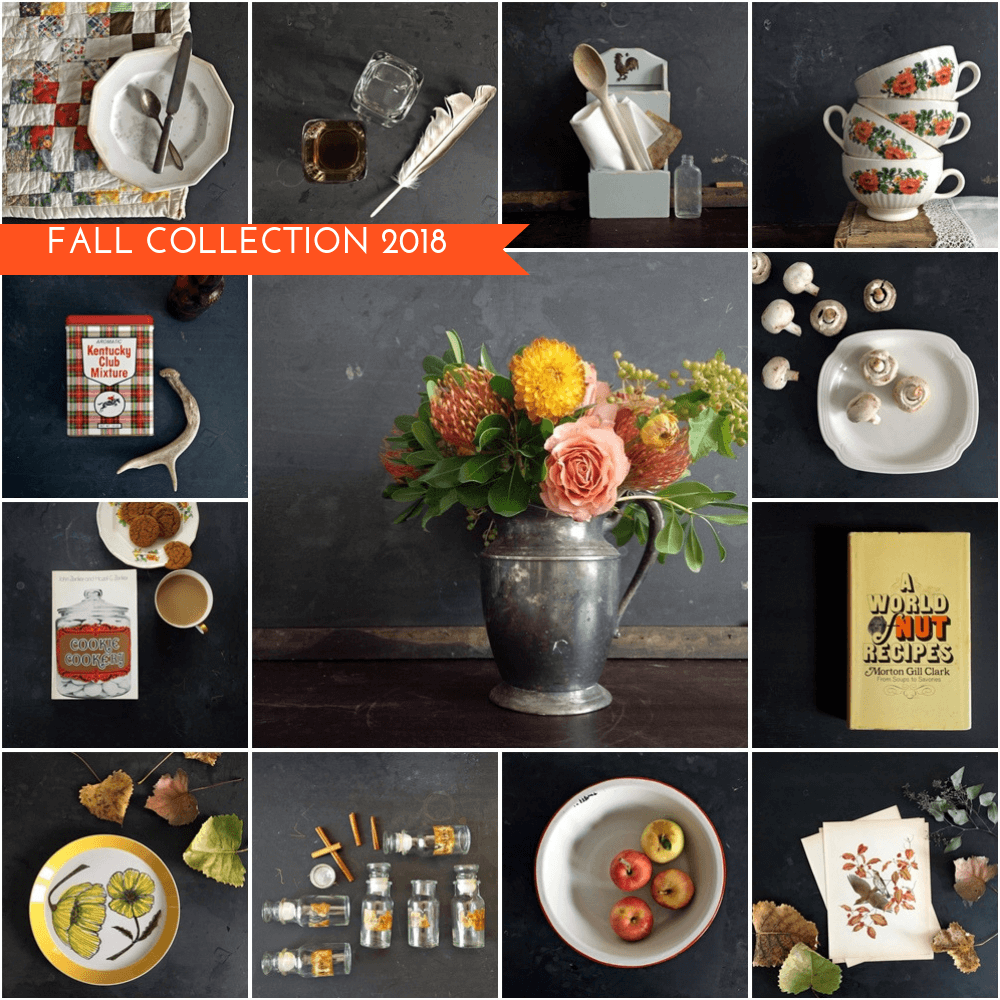
New (old) items that fit into the Fall 2018 Collection are wrapped up in all the traditional touchpoints that ignite sentimental feelings of nostalgia and embrace the cozy, crisp months to come…
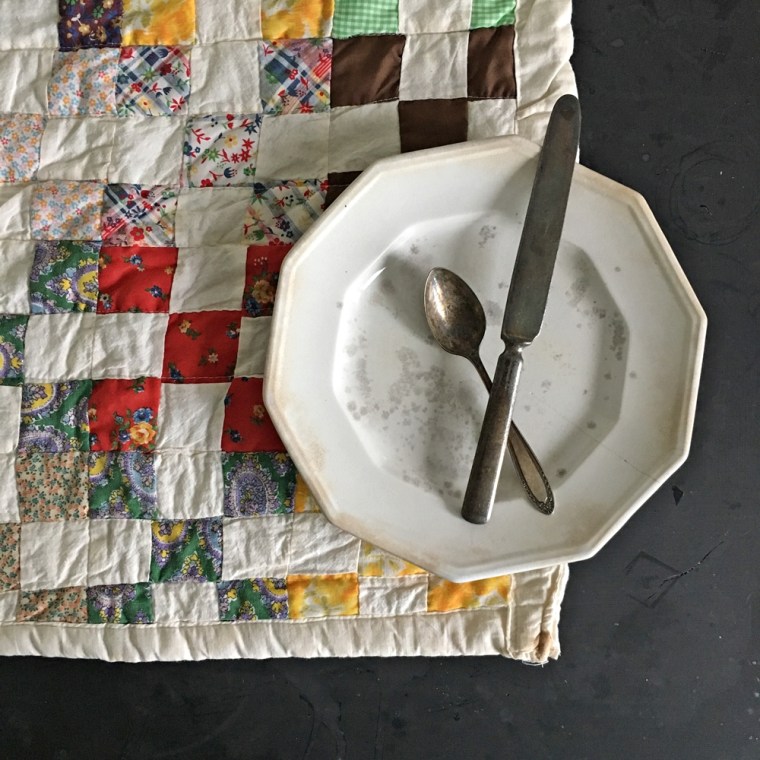
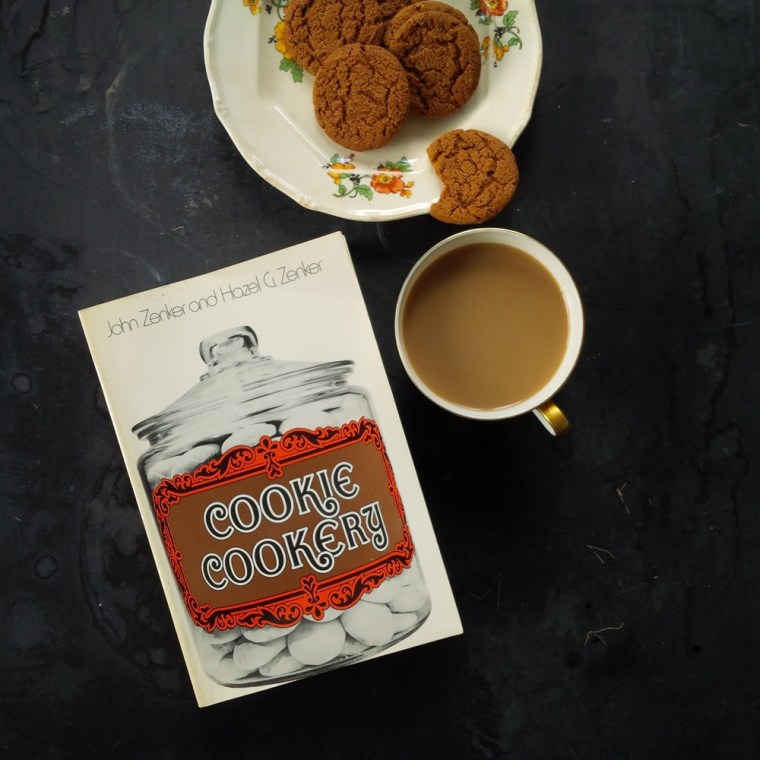
Cozy is the name of the game around here. New Autumn inspired vintage (from top left): 1930’s feedsack quilt square; 1970’s Jack Daniels whiskey glasses; vintage wood pocket shelf; 1920’s National Ivory teacups; vintage restaurantware plate, 1960’s World of Nut Recipes cookbook; 1950’s botanical prints; vintage enamelware bowl; 1970’s glass spice jars; 1970’s Mikasa Duet pattern plate; 1960’s Cookie Cookery cookbook; 1960’s red plaid tin.
Vintage spice jars, whiskey glasses, quilt squares, mixing bowls, teacups and fall foliage art prints help set the mood for the season in your kitchen, while homemade cookie recipes, holiday menu guides, and nut-themed delicacies help satisfy the seasonal cravings in your belly.
Some highlights from this collection include this 1960’s whiskey decanter made by the Van Winkle family in Louisville, Kentucky – one of the few distillers legally able to operate during Prohibition…
This 1960’s dinner plate – one of the very last patterns made by Salem American Ironstone in 1967 just before their pottery closed its doors forever…
This vintage quilt square table topper made in the 1930’s from recycled feedsack materials…
These National Ivory teacups made in the 1920’s during a similiar point in time when women’s roles, rights and liberties were also being redefined…
This 1970’s cookbook – the delicious work of internationally recognized pastry chefs/ husband and wife team, John and Hazel Zenker, who shared over 300 cookie recipes containing old-world charm and European heritage…
New arrivals in the shop that fell under the still-feels-like-summer category include this batch which I call September Skies…
…named for the matching colors found in the pretty sunsets that blushed over the city throughout September and October. They include floral serving pieces, ceramic planters, travel cookbooks and embroidered linens that bloom in thread. It is somewhat ironic how each piece in this collection speaks of all the pretty elements of this past summer but also really reflects the colors in the September/October sunsets…
Perhaps this was Lady Nature’s way of reminding me to be patient – that Autumn would come eventually because it always does one way or the other.
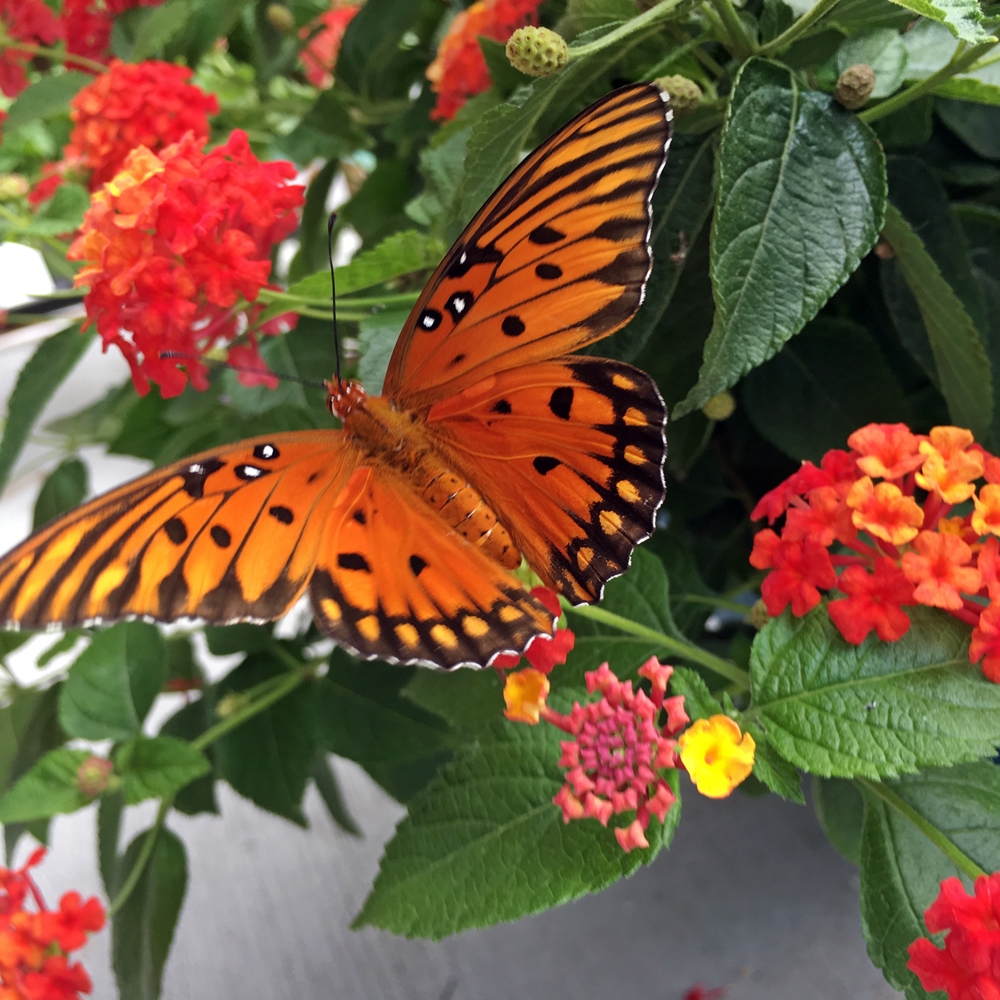
A new pal to the patio this week – butterfly dressed in Halloween colors but feasting on summer flowers!
Whatever weather you are experiencing in your neck of the woods this Autumn – hot, cold, crisp or humid, I hope you are having the happiest of Octobers. And that you are finding beauty in the season and celebrating it in style.
Fall in love with history and its many assorted faces in the shop here. Up next on the blog is a sweet treat recipe for Plum Cake circa 1963, from one of the most famous American cookbooks of all time. It’s a lovely Fall dessert that combines spices, baked fruit and a thin layer of cake that is light in constitution yet heavy in flavor. Stay tuned!
We are very excited to announce that we have a winner for the floral fridge magnet giveaway! Congratulations to…
theZoebird who submitted a guess over on Instagram. Our winner thought they might be pieces from a crystal chandelier, which was close, since these magnets certainly are sparkly!
If you are sad that you didn’t win this pretty giveaway, don’t fret, visit Jane Dean Gems and shop for a set yourself. Heather’s got lots of lovely handmade magnets in her shop, the hardest part will be deciding on your most favorite ones. If you missed her interview yesterday, catch up here and read all about the special lady who inspired all this fridge art in the first place.
Thanks again to everyone who participated in the guesswork of this giveaway. Your enthusiasm was infectious!
If you had to look one kitchen appliance in the eye and consider it most human which would you pick? Your coffee contraption that wakes you up each morning? Your mixer because it sings as the beaters whirl and whip? Or maybe it is your dependable dishwasher who is always so eager to clean a mountain of dirty pots and pans.
If I had to choose one such appliance, I would pick the fridge. It’s human height, its doors open like arms and even though you stock it yourself, there always seems to be something unexpected going on in there. Whether it’s restaurant leftovers you forgot about, a surprise treat added by a family member or a curious case of bacteria sprouting on last week’s loaf of bread, the fridge is the one appliance that consistently brings a little personality to each new day.
It’s also the one that gets the most use. Every day, you open the doors and close the doors so much so that you don’t even think about the physical action of that process anymore – the pulling and the pushing – but at the same time you are also careful with it. You reorganize it. Sometimes more than once a day. You jockey things around from shelf to shelf to make sure everything fits. You clean it and you care for it. You worry about it. If the power goes out, then what? You think about it in the middle of the night. Will the Thanksgiving turkey fit? Will the watermelon suck up too much cold air? Will the icebox pie set firmly?
If you are like my mom, you also outfit it. You buy lots of clear glass storage dishes and a label maker and you get to work making the inside of that fridge look like a beacon of efficiency and organization with this there and that here. Or you take the opposite approach and just stuff things in as they come with less rigidity and more relaxed effort.
And that’s just the inside.
The outside of a fridge is an equal blank canvas. It seems this school of thought has two camps – the people who decorate and the people who don’t. Do you prefer a plain, sleek front to your fridge or a personalized collection of life’s pieces in papers? Here in the Vintage Kitchen, we like the outside of our fridge decorated. Right now, ours contains a family photo, a calendar, three business cards, one Chinese takeout fortune cookie message (which proclaims that this is the year that ingenuity stands high on the list!), two stickers from a recent comedy show, two love notes, one watercolor painting, one recipe and one autograph. All these are held together by a collection of magnets that my niece, Olivia, made for me when she was 11…
That was eight years ago. Now she is off at college, and these magnets were and will always be prized possessions. A lovely gift and a pretty memory all wrapped up in one, they also were the start of my love affair with magnets. Thanks to Olivia’s gift, I re-discovered that magnets were an invaluable tool providing the ability to help hang on to the little bits of life that I didn’t want to forget about (like that fortune cookie message!). This leads to the topic of today’s post. Yesterday I promised to reveal the contents of this mystery box that one lucky winner in our giveaway will receive…
Are you ready to see what’s inside?
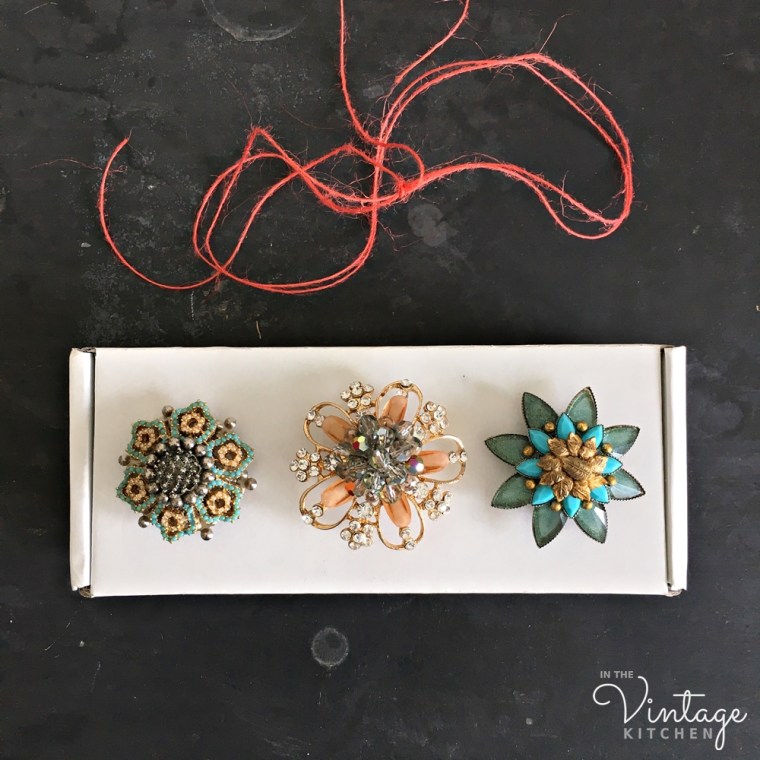
Ta-dah! It is a trio of floral fridge magnets handmade from vintage costume jewelry. These beauties are the work of Heather Dean, the Los Angeles based artist behind Jane Dean Gems, an online jewelry and home decor shop that specializes in pieces made from vintage items and found objects.
As one of the original pioneering artists of Etsy, Heather has been around the handmade marketplace since 2005 but her designs and ultimate inspiration go way back to her grandmother Jane Dean, whose name Heather not only borrowed for her shop but whose collector’s spirit Heather tries to instill in all her pieces. What I love about Heather’s work is that she is a storyteller in sparkles and shimmer, offering a new way of looking at familiar objects from a finder’s point of view. A brooch becomes a magnet, a bauble becomes a bracelet, an arrow becomes a compass in the same way that your commonplace, everyday, utilitarian refrigerator suddenly becomes the canvas for a glamorous work of art.
In today’s post, we catch up with Heather, interview style to learn more about the muse behind the magnets, how her grandmother helped lead her down the handmade road and where to find the best places for artistic inspiration in all of L.A.
In the Vintage Kitchen: First of all, let’s talk about the name of your shop. I understand it is named after your grandmother, Jane. Please share a little bit about her with us.
Heather: My grandmother’s name was Jane but I called her “Mimi.” When I was a little girl I was enchanted by her large collection of costume jewelry. She had drawers full of colorful brooches, sparkly rhinestone earrings and long beaded necklaces. I loved opening her jewelry boxes, examining the pieces and trying them on. My grandmother was a working woman who didn’t have a lot of money, but she knew how to put herself together on a budget. She shopped at the Garment District in downtown LA (now known as the Fashion District) to find good deals on clothes, and she accessorized her outfits with jewelry and beautiful silk scarves. It just seemed fitting to name my business after her since I use vintage pieces in my own designs. I also love the simplicity and traditional character of the name, Jane. It goes well with vintage style.
Jane as a young girl with one of the necklaces she acquired later on.
Did Jane teach you a lot about jewelry or did you learn through your own natural fascination? What attracts you to it?
I was certainly inspired by my grandmother’s love of jewelry and flair for accessorizing, but I definitely had my own fascination with vintage items. I started collecting vintage jewelry as a teenager in the 1980s, when more was more. I would go to garage sales and second-hand shops looking for interesting pieces at great deals. I loved old rhinestone choker necklaces, sterling silver bracelets and rings (I wore one on every finger, including mid-knuckles). Back then, pre-internet, I would go to the library to learn about the vintage treasures I had found. Researching vintage is sooo much easier these days, thanks to the internet!
These fridge magnets are desert themed! Everybody needs a little cactus, don’t you think? Find this trio in her shop here.
How did you happen upon the idea of refurbishing vintage jewelry into fridge magnets? Such a cool idea!
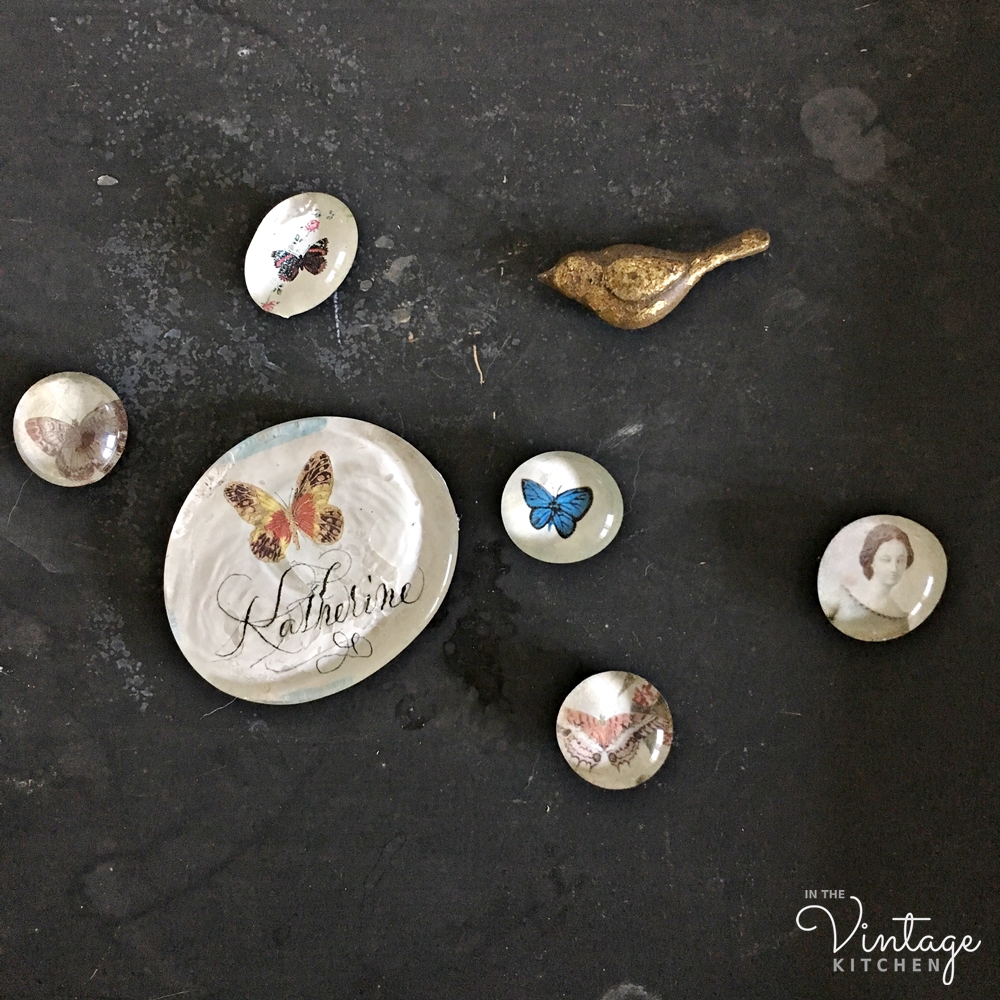
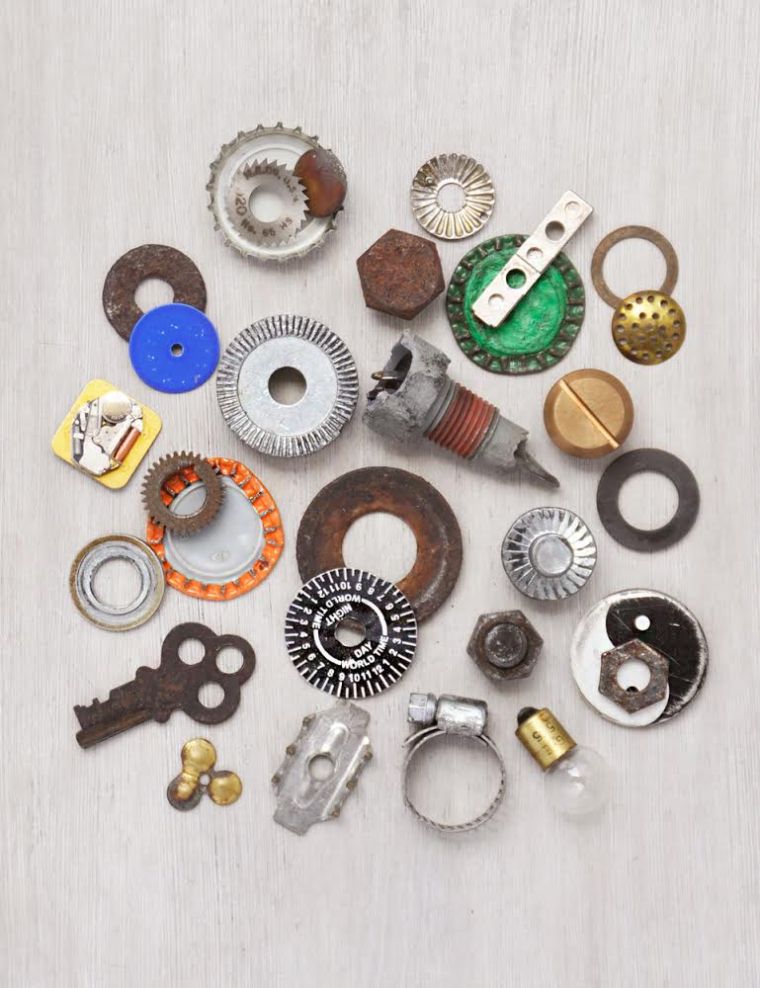
I had been buying box lots of old jewelry so I could use the components in my own designs. I was mostly looking for pieces that could be used in necklaces and charm bracelets, but I ended up with a surplus of broken bits and bobs, orphan earrings, etc. that didn’t really work for my jewelry making. One day, I decided to glue magnets on the back of a few old pieces and they turned out really cool! They sold well and soon became my favorite things to make. My first magnet sets were fairly simple but over the years they have become much more complex, with several pieces stacked on top of each other and often embellished with paint, rhinestones and charms. I also love using rustic found objects like old bottle caps, rusty washers and miscellaneous thingamabobs. I’m always finding things on the ground and putting them in my pocket to be used later in a creative project. When I do my laundry I usually find some kind of nut, bolt or pebble in the lint trap, because I always forget about the little treasures in my pockets!
Small treasures lying in wait for Heather’s unique designs.
Please explain a little bit about the process of making magnets – does one piece set the wheels in motion for a particular collection or does a set evolve as each magnet is made, or do you figure out a color palette and then go from there?
I create magnet sets based on one fabulous piece, or a color combination that I love, or using one of several themes that I work with over and over again. Some of my most popular themes are beachy seashell mixes, Southwestern, Day of the Dead, Victorian and robot (made out of junk and google eyes). I have also made many custom magnet sets to coordinate with people’s kitchen colors and for wedding message boards. I’ve even had customers send me their own vintage jewelry to turn into magnetic keepsakes.
It’s easy for me to pull sets together because I keep my huge collection of jewelry bits very organized. I have a large vintage letterpress cabinet, several craft drawers, boxes and glass jars full of stuff. Everything is sorted by type; hearts, flowers, animals, celestial, bead clusters, rhinestones… that way I can find what I need quickly!
Heather’s wonderfully organized cabinet!
Are there jewelry magnets on your own fridge?! And if so, what are they like?
I do have magnets on my own refrigerator. My favorite one is made out of a big rhinestone flower brooch that belonged to my grandmother… I was never going to wear it so I turned it into a functional object that I get to see every day in my kitchen!
Find this set of 8 Southwestern mini fridge magnets available in her shop here.
Is there a holy grail of costume jewelry that you are forever on the hunt for? Do you have a favorite vintage designer or type that you like to collect?
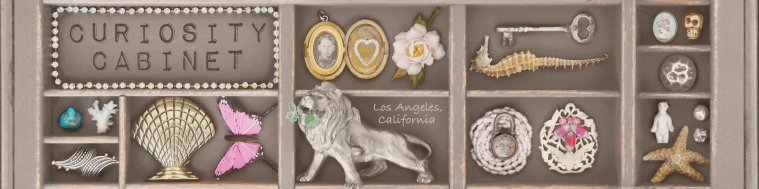
Because I sell vintage in my other shop, CuriosityCabinet, I’m always on the hunt for sterling silver. I love unique handmade jewelry….Southwestern, Native American, Mexican, and mid-century artisan pieces. But for my handmade work, I honestly look for junk! I love the challenge of turning something broken or damaged into something new and fabulous. A lot of my supplies are things many people would throw away. I don’t use anything collectible or valuable.
Who are your top three most favorite artists and why?
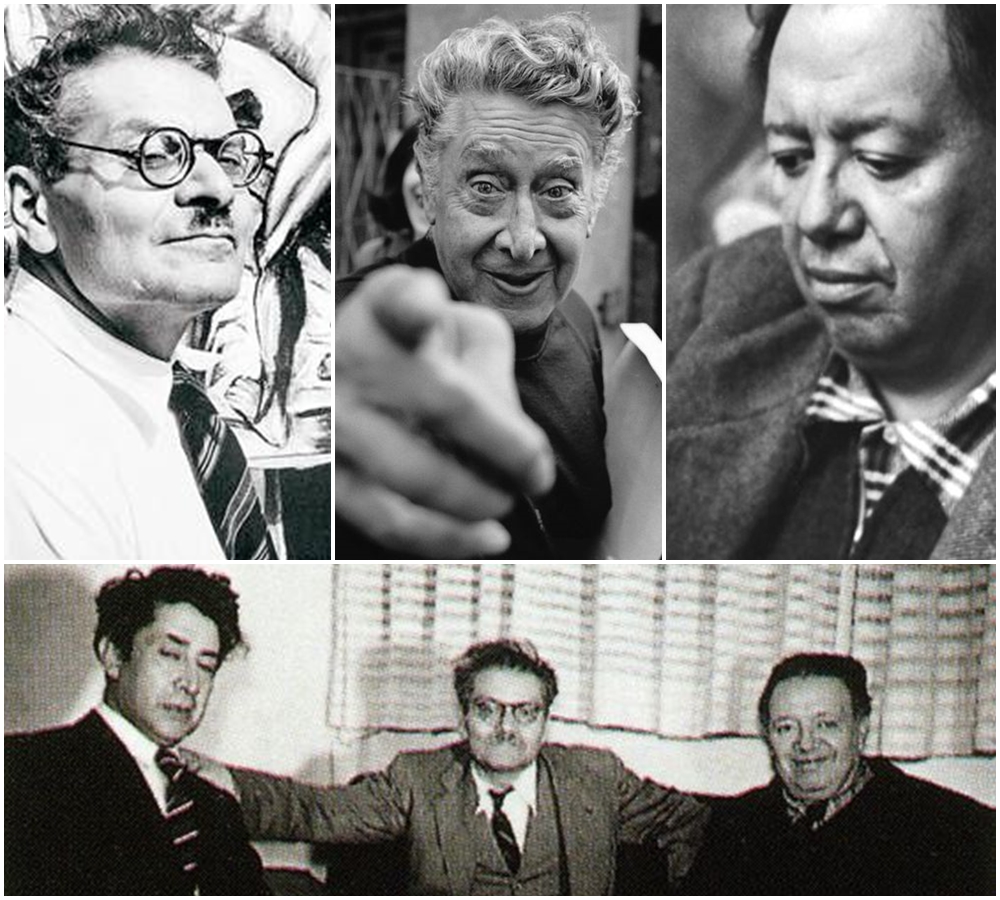
It’s difficult for me to pick favorites because I appreciate so many artists and creative mediums, but having recently returned from Mexico, I’m still thinking about the magnificent murals I saw painted by “Los Tres Grandes” the leaders of the Mexican muralism movement; Diego Rivera, David Alfaro Siqueiros and José Clemente Orozco. The enormous size of the works, with their bold colors and emotional subject matter really made an impression on me. It’s nothing like studying them in books and on slides! One piece by Sequeiros actually brought me to tears when I saw it.
From top left: Jose, David, Diego and the trio as pictured in the 1940s.
Because I’m an avid recycler of junk, one my favorite contemporary artists is El Anatsui, a Ghanaian sculptor who creates enormous, flexible tapestries made out of salvaged bottle caps and metal pieces from liquor bottles. They have the fluidity of fabric and can be bent and formed into different positions. They are truly magnificent and are created entirely out of recycled materials!
The art of El Anatsui
Back when you were studying art in college, did you always plan on opening your shops, Janedean Gems and Curiosity Cabinet, or did they just evolve naturally over time?
I never ever thought I would be able to do what I’m doing now! I definitely didn’t plan it. After working various retail jobs for many years, I went back to school in 2000 to study art history at UCLA, thinking I wanted to work in a museum or gallery. I bought my very first computer to use for school and discovered Ebay at the same time. For fun, I puta few pieces of my handmade jewelry up for auction to see if I could sell them. I was so excited when they sold, that I made more pieces and sold those too! Soon I’d created a nice little side business. That’s when I first starting selling my jewelry magnets.
In 2005, I read an article in the Los Angeles Times about a new selling site specifically for handmade products called Etsy.com. I signed up that same day and have been selling in my janedean shop ever since! In 2007, I opened a second Etsy store, CuriosityCabinet to sell some extra supplies but it soon turned into a vintage shop when I realized how much I love finding, researching and selling unique vintage and antique pieces. Now I balance 2 shops on etsy and 2 accounts on ebay.
So it is technology that allows me to do what I do. Computers and digital photography have changed my life, allowing me to offer my handmade items and curated vintage collections to people all over the world, from the comfort of my own home. Nothing could have suited my personality better! I’m an independent loner who likes to make my own schedule (and work in my pjs) and I’m now able to use my years of retail and life experience to benefit my own business. I’m maker, buyer, merchandiser, photographer, advertiser, packer, shipper and I love it!
A fun sampling of items that you’ll find in the Curiosity Cabinet… from top left: Vintage Southwestern Brass Cuff, Portrait of Robert Browning, Vintage Carved Horn Bird Brooch, Antique Brass Hand Paperweight, Vintage Brass Elephant Figurine.
Name 5 things that inspire you.
1. Creativity- other people’s creative works inspire me constantly… from designers, crafters, artists, film makers… when I see what fellow human’s brains and hands are making, it inspires me to come up with new ideas of my own.
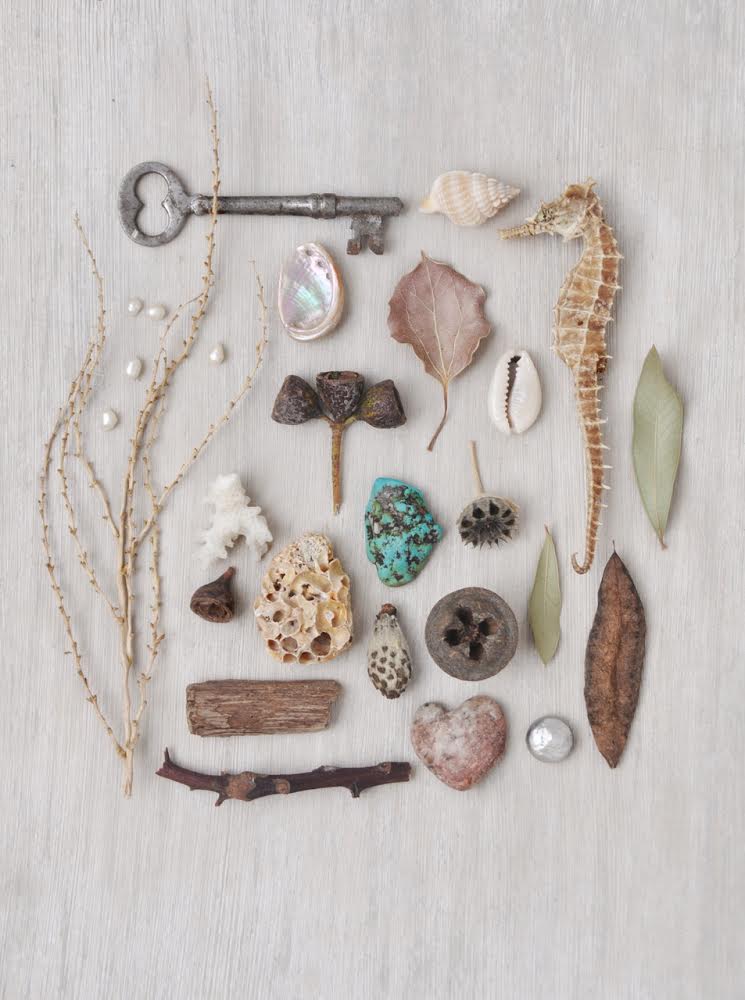
2. Walking- from beach walks to nature hikes to urban exploring, I always get inspired by things I see when I’m on a walk! When I’m out and about I like to take lots of pictures with my phone and gather small objects that intrigue me, which can end up being sources of inspiration later on.
Collecting in Heather’s hands looks like this!
3. Nature- I just love the natural world, in all its perfection and/or rustic beauty. From gardens to beaches to mountains, I love being surrounded by plants, flowers, trees, rocks, water and wildlife. I love the sights, smells and sounds of being out in nature.
4. Animals- I love animals of all kinds, domestic and wild. They fill me with happiness and joy. I’m a cat lady for sure, but I love dogs, little critters, watching wild birds and I am continually inspired by the biodiversity on this earth.
5. Music- Finding just the right mix of music to suit my mood really helps inspire me when I work. I have eclectic taste so it may be anything from jazz to old country to punk music, depending upon how I feel that day.
What top five places would recommend to visitors in L.A. (based solely on what you think is great – not necessarily what is typical to tourists).
I’m not into hot spots or the latest trendy restaurants and if I’m going to brave the nightmare of LA traffic I want to see art, culture or nature!
From top left: The Los Angeles County Museum of Art (LACMA); the Museum of Contemporary Art (MOCA); The Getty Villa; The Broad; The Fowler Museum at UCLA; the Bergamot Art Center; The Natural History Museum; La Brea Tar Pits
I love museums so that’s what I’d recommend the most! The major art museums, LACMA, MOCA, The Getty and The Broad are must-sees, of course. The Getty Villa on Pacific Coast Highway has a fascinating collection of ancient art, housed in a Roman villa overlooking the gorgeous Pacific Ocean. The Fowler Museum at UCLA has some fantastic exhibits of African, Asian, and arts of the Americas. One of my very favorite places to visit is Bergamot Arts Center (previously Bergamot Station) in Santa Monica. It is a collection of art galleries located in an old railroad station that showcases local and contemporary artists. I also love the Natural History Museum and La Brea Tar Pits because I love science and I’m fascinated with prehistoric animals.
The beach bike path weaving its way along the California coast. Photo via pinterest.
My favorite outdoor place is the beach. I love walking along the water, watching the shore birds and gathering seaside specimens. There is a beach bike path where I live that winds for about 25 miles from Pacific Palisades to Santa Monica to Venice, then Marina del Rey to Manhattan, Hermosa and Redondo beaches. My favorite time to go is early in the morning, or in late afternoon/early evening during the long days of summer.
If you could have dinner and drinks with five famous people (living or dead) who would you choose and why?
I’d love to have dinner with David Attenborough, the naturalist and documentary film writer, producer and presenter. I would enjoy talking to him about animals great and small, evolution, and what we can do to protect our environment and the future of this planet.
Heather’s dinner guests(from top left)… David Attenborough, Mike Leigh, Paul Thomas Anderson, Akira Kurosawa and Ingmar Bergman.
I would also love to talk with a few of my favorite film directors about their processes; Ingmar Bergman and Akira Kurosawa, who have passed, Mike Leigh and Paul Thomas Anderson who are still working. These directors have made some of my favorite films of all time and I have lots of questions.
Having been a part of the Etsy community since 2005, you are a true pioneer. Share with us how your journey has changed over 13 years. Is it a continuous process of refinement in what you offer and what you design and what buyers want? If Etsy did not exist, would you still have wound up in the same place you are today?
I can’t even believe I’ve been on Etsy for 13 years! Where did the time go? If Etsy never existed I might have just stayed on at Ebay full-time or started selling through my own website. Etsy is a very different site than it was in the early years but I try to roll with the changes the best I can, and make them work for my business. If it ever stops feeling like a good fit for me I’ll probably sell through my own website and maybe do more craft fairs (which I don’t do now… too much work!)
I actually still make many of the same things that I have since the early 2000’s, but for a while I got worried that magnets were becoming obsolete when stainless steel refrigerators starting taking over the market, but recently they have started making them magnetic again (yay). I guess some people were sad when they discovered they couldn’t stick their favorite magnets or kid’s pictures on the fridge.
Jandean has become more of a side business the past couple of years, since selling vintage has taken over my life! I don’t have the energy to run them both at full throttle so I tend to make jewelry and magnets when the creative bug strikes. It’s nice because I can just make what I want when I want to, and don’t feel that I have to turn out as many pieces as I did in the past, which can cause burn out.
I do plan to devote more energy to the handmade side of my business this year. I’ve been feeling very inspired lately and have started lots of new projects. I’m hoping to fill up my janedean shop with lots of new one of a kind, recycled goodies very soon!
—
We can’t wait to see what Heather has in store, for her stores, in the coming months. Will there be more sparkly magnets in our future? I sure hope so! Keep up with Jane Dean Gems here and with Curiosity Cabinet here.
In the meantime thank you to everyone who popped in with guesses for the giveaway. Possibilities ran the gamut from handmade candles to antique salt cellars to wooden kitchen utensils, showcasing what a creative bunch all you readers are. The winner of the giveaway will be announced on the blog tomorrow night from the random pool of guesses submitted yesterday here on the blog and via Instagram.
Cheers to Heather for finding beauty in found objects, for turning fridges into glamour girls and for providing all the gorgeous pictures throughout this post of her shop and workspace.
Hello dear readers! The Vintage Kitchen is very excited to announce a gorgeous gift giveaway from an incredible artist inside the white box pictured above! What could it be? What could it be? Here are a few hints…
It will last forever.
It’s made from history.
There is more than one inside.
It is meant for a specific item in your kitchen.
Back in the day, they were referred to as statement pieces – now they add sparkle to any space.
We will keep you stumped until tomorrow when we reveal the contents of the giveaway, which is tied into a lovely interview with the artist that will be up on the blog this week. Submit a guess today as to what’s in the box in the comments section below, and you’ll be automatically entered for your chance to win this magical prize. And please note, you do not have to correctly guess the contents in order to win. A winner will be selected at random from the pool of comments provided. The winner will be announced on Wednesday!
Good luck and happy guessing!
P.S. If you are new to the blog, giveaways in the past are all kitchen themed in one way or another. See what fun items we have given away in the past here and here.