
Winners Announced for the Sparta Souvenir Giveaway!

Spartan Table giveaway names announced!

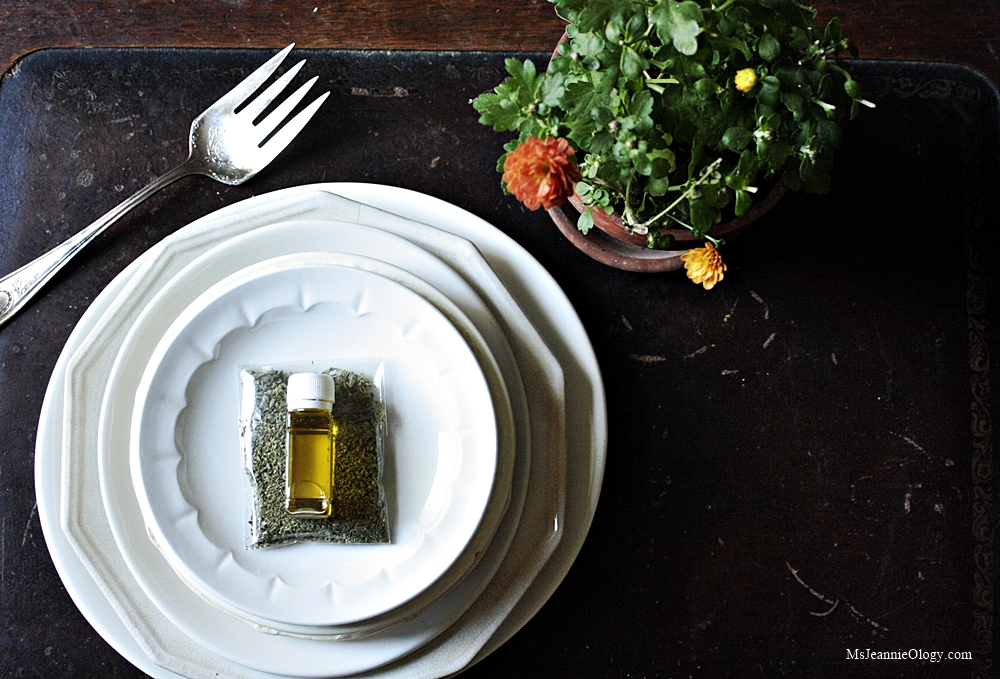
Ladies and gentlemen we have a winner! Well three actually since the Spartan Souvenir giveaway includes three gift packs. Technicalities aside, cheery congratulations goes out to Jessica W., Michael B. and Kari T. on winning olive oil and oregano samples from the gorgeous Greek city of Sparta courtesy of The Spartan Table. Winners, please check your emails for contest notifications and respond with your postal address for receipt of your prize via mail.

spartantable_gifts

A big thank you to everyone who entered the giveaway! Look for more exciting chances to win  souvenirs from around the world as we head into 2017. The Vintage Kitchen would also like to extend a special thank you to everyone who sent private messages about this post in particular and the magical world of Jehny and George. Comments are like stars in the night sky – always delightfully unexpected and always very rewarding for the spirit – so keep them coming! We love (LOVE!) to hear what’s going on in that brain of yours.

The Spartan Table holiday gift giving ideas

While you head into the holiday stretch, please keep The Spartan Table in mind for both holiday cooking and gift giving. Jehny and George ship so fast from Greece, you’ll have barely placed your order before you see your international package sitting pretty in your post box.  Unlike mail from Italy that can sometimes take up to a month for delivery, Greece is definitely on top of their postal practices and procedures with usual delivery time-frames hovering between 5-10 days. (The souvenirs for this post took just 5 days!) That, combined with the accommodating, kind and friendly attitudes of Jehny and George, your Christmas shopping experience with The Spartan Table is guaranteed to be not only easy breezy but also thoroughly enjoyable. And so very delicious!

Cheers to Jessica, Michael and  Kari and to the ancient city of Sparta for bringing history home.

Stories & Souvenirs from Ancient Sparta: Enter to Win Olive Oil & Oregano from Greece!

Hello from Sparta, Greece!

There’s a passage from Homer’s The Iliad that reads:

“Like the generations of leaves, the lives of mortal men. Now the wind scatters the old leaves across the earth, now the living timber bursts with the new buds and spring comes round again. And so with men: as one generation comes to life, another dies away.”

This is not only a great quote for Autumn, as the leaves color and float and fall to the ground reminding us all that change is natural and seasonality vital, but it is also a great introduction to the guiding principles behind our next interview.

In today’s post we are traveling 5,000 miles away crossing over Homer’s “roaring seas and many a dark mountain range” to the country of Greece to the historic city of Sparta where we are chatting for a bit underneath the olive trees with Jehny and George from The Spartan Table. Purveyors and producers of an assortment of agricultural delights in this Mediterranean section of the world, Jehny and George come from a small town that is very BIG on  ancient history.

jehny7

First having discovered these two by way of Etsy, I fell in love with the sights and sounds of Sparta on a field walk with Jehny and her family as they described picking herbs in the Taygetus Mountains via their newsletter…

“The talk stops and for the next couple of hours, we ‘re “lost” in a green and white sea” of wild oregano together with thousands of bees and relative insects. We ‘re all busy to get as much as we can from this amazing plant. We stop for few minutes from time to time just to lay our eyes on the surrounding mountainsides while the sun has starting to set. There  are so much peace and beauty and even some sounds of some sheep somewhere around echoing like an old song from the distance…”

It was a combination of their descriptive writing, their enthusiasm for the job at hand, their accented words, the beauty of their landscape and their deep-rooted love for their country that caught my heart.  As part of the American culture’s ideals of constantly being on the move, always next-best-thinging our way through life, it was refreshing to read about people who were so settled into their sense of place and so appreciative of their natural surroundings. And then there was their national pride. Read further to understand this.

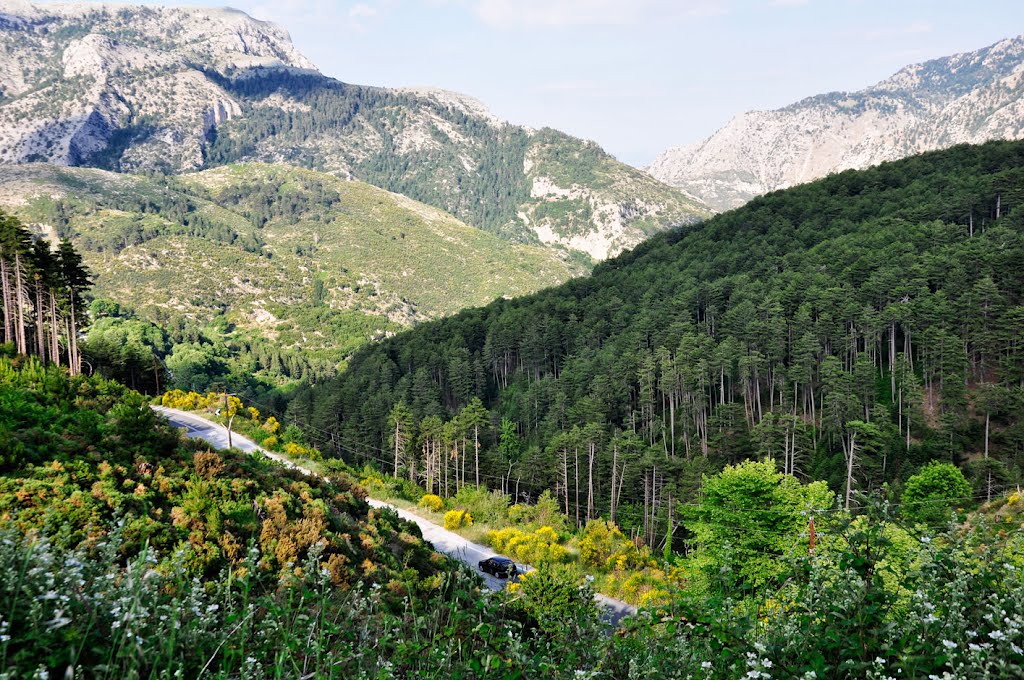
View of the Taygetus Mountains

We all know that Greece has had their hardships, most recently with the economy – but as you learn through Jehny’s newsletters the detailed account of her family’s history over the last one hundred years and that of the olive grove that she now cultivates, we begin to understand this extraordinary set of determined people passionate about seeking and seeing the positive, progressive side of life. “To plant an olive tree is to proclaim a faith in the future, for it will be the following generations that will benefit, will reap no matter drought or storm, dictator or revolution, once the olive has made its home,” said Jehny in her February 1st, 2016 newsletter.

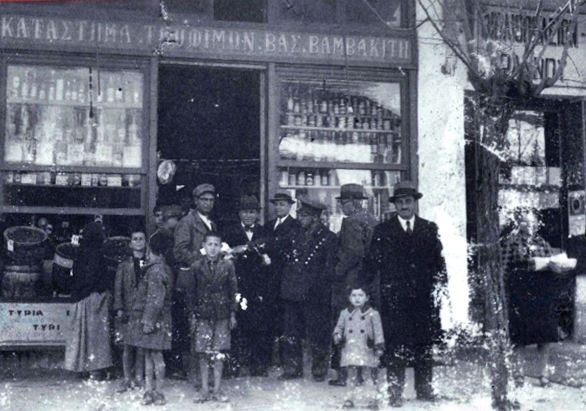
Jehny's family photographed in the 1930's
Jehny’s family photographed in the 1930’s

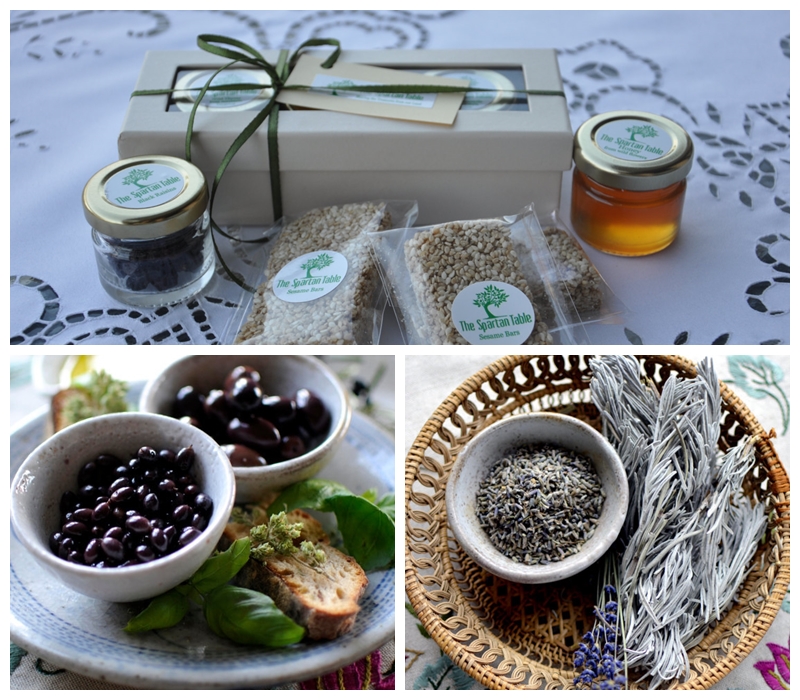
The Spartan Table was born in 2013 after Jehny left behind an unfulfilling corporate job and discovered by way of a small series of realizations that her passions leaned more towards olives than offices. In the early days of shop-keeping, she first offered a selection of local wild herbs cultivated from the mountains around her.  Quickly her shop grew to include olives, olive oil and olive paste from her family’s olive trees. Each year added a new series of local products and a new level of ancient history to back it up. Today you can find an increasingly interesting array of Greek products in her shop including sea salt dried on the sun soaked rocks of Mani, traditional sweet treats baked in Jehny’s kitchen, honey from beekeeper Bill, handmade soap and cutting boards (from the olive trees!) all made and/or procured by Jehny, her family and her friends in their local environment.

spartanshop_collage
A sampling of treasures from The Spartan Table!

How does she do it all you wonder? Can one woman’s love of her country and culture sustain a life worth living? You bet! Get to know more about Jehny and George and their storybook landscape in their interview here and then sign up below for a chance to win a complimentary souvenir from Sparta courtesy of Jehny and The Spartan Table.

Experience the flavor of Greece for yourself with these two special treats from The Spartan Table.

Your location in Sparta is gorgeous! In your bio, you mention that it is your family’s region and that you have lived there a long time. In the United States families move around A LOT. So I am intrigued by your permanent sense of place in Sparta. What keeps (or has kept) your family there for all these generations?

Sparta is our homeland. It’s a mythical land with – perhaps – the most know Greek Ancient city (With Athens) The landscape is just beautiful. If you could see, even for a moment what we see every morning, the magnificent mountain Taygetus and the Spartan valley, you’d fell immediately in love with the place. Living in a place which great people once lived in, makes us feel truly blessed.

Sparti, Peloponnese, Greece. Photo courtesy of scout.com
Sparti, Peloponnese, Greece.

Tell us little bit about daily life in Sparta. Do you live in a farmhouse in the country or do you live in the city center in a more urban type dwelling?

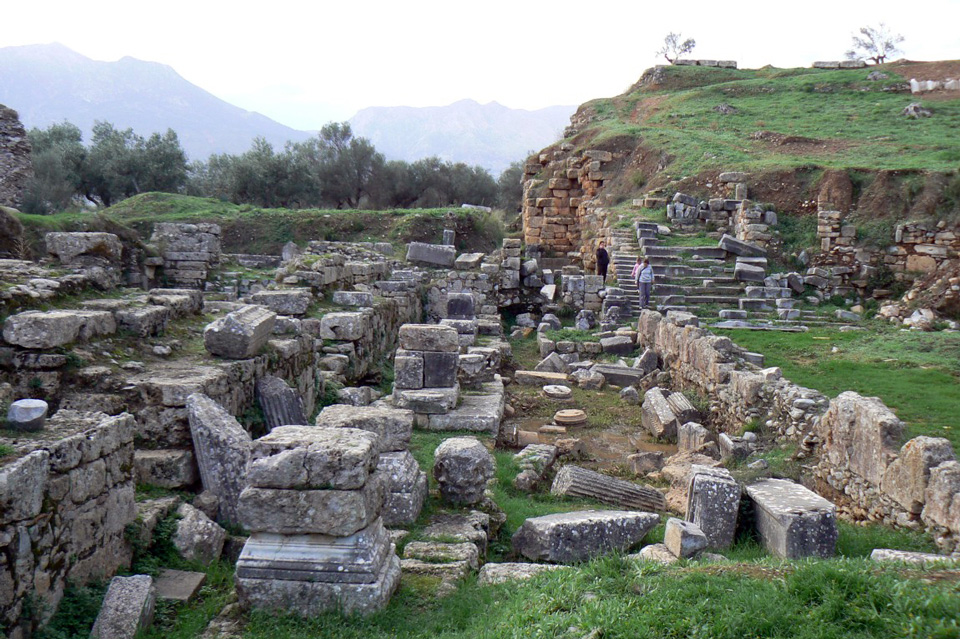
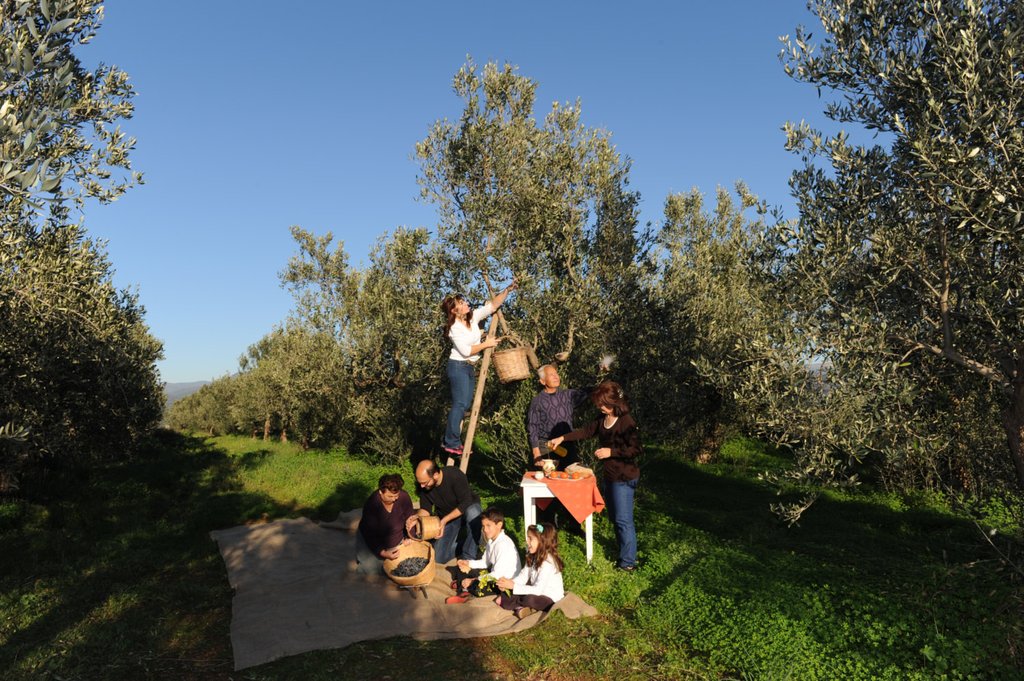
Today the “modern Sparta” which has built in 1836, is a small town with near 20.000 inhabitants. We live just few blocks from the center and beside the Ancient Acropolis & Theater. Just 100 meters from our home, there are hundreds of very old olive trees amongst the Ancient ruins.

The ancient acroplis
The Acropolis in Ancient Sparta.

If we were to visit you in Sparta where are the first three places you would take us?

The Acropolis and the Ancient Theater. The Mystras Byzantine castle city, where the last emperor left to save the Konstantinople. (Like King Leonidas, the last emperor went to fight into a war, knowing in advance that everything had being lost). And the museum of the Olive Oil, which is unique in Greece.

sparta_collage
Clockwise from left to right: The Museum of Olive Oil, the Mystras Byzantine Castle City and the Ancient Theater.

So many people in life don’t appreciate the environment around them which is what makes The Spartan Table and all your lovely newsletters so refreshing. Your national pride is wonderful. What keeps you excited about your culture on an everyday basis?

As we mentioned before, living in a land of heroes, it’s impossible not to feel the “vibes” of their acts despite that hundreds of years have passed. We feel that we have to make something for the next generations and keep the spirit of dignity, pride and freedom alive.

King Leonides, Byzantine Church, Mystras
King Leonidas, the gorgeous indoor and outdoor architecture of Byzantine Church and Mystras.

From harvesting olives to farming sea salt to collecting herbs and honey and making soap – are you involved in all these endeavors personally or do you have a big team that helps you gather items for your shop?

Since we started from the scratch – after a stressed corporate life- we tried to make everything with our hands and our small team (our Family). Getting some big inquiries and interest about our humble treasures, we decided to add some more People in our small team. These are people with great passion and love about what they do and we are honored and proud having them with us!

In the olives!
In the olives!

Of all the items in your shop right now, which is your most favorite?

Jehny: wild walnuts with honey from wild flowers and herbs.

George: Sheperd’s tea with honey from wild flowers and herbs.

favorites_collage
Jehny’s favorite on the left, George’s on the right.

What are the differences between Greek olive oil and Italian olive oil? Do they contain different olive varieties or are they harvested in a different way? Does the different geographic landscape/environment affect the taste of olive oil?

First of all, remember that Greece is the 3rd biggest olive oil producer in the world with an average of 350.000tn annually. Italy is at 600.000 tons (when their internal consumption is 800.000tn – think about it) And Spain is more than 1.200.000tn. Greece produces mostly extra virgin olive oil (which Italy and Spain does not) Laconia, our regions produces ONLY extra virgin olive oil and it’s one of the 3 biggest producer regions in Greece. “Koroneiki” is one of the best and most well know varieties of Greece but we have one more unique one: “Athinoelia” (the tree of Goddess Athena). This is an exquisite EVOO and it’s the “first extra virgin olive oil” in Greece every year. This EVOO has a strong and spicy taste and almost all of the yearly production is going to abroad every year. It’ s the EVOO that everyone must try even for once in life!

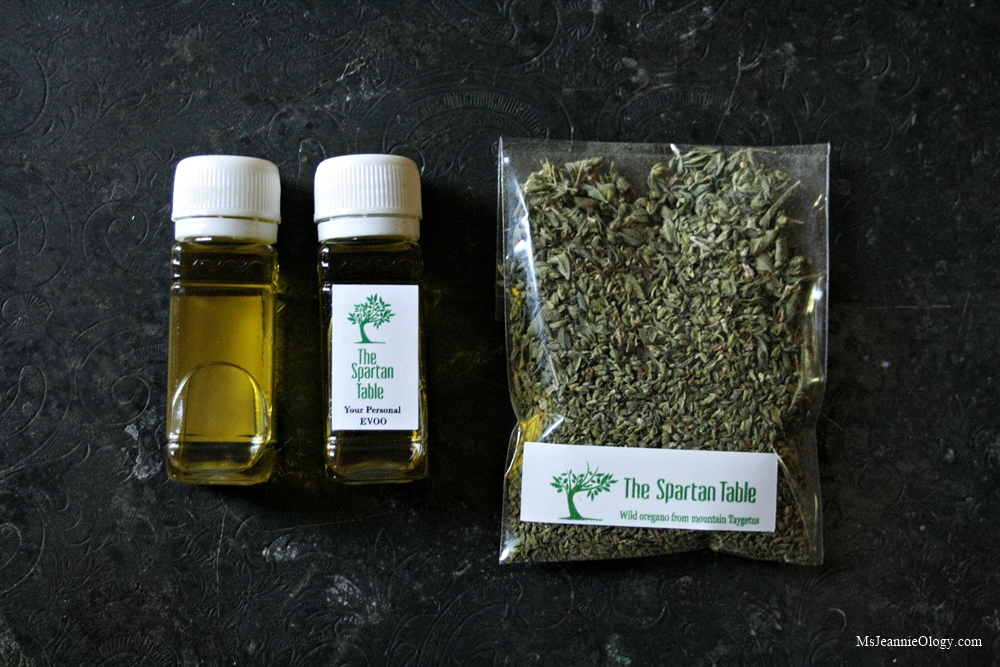
oliveoil1
Extra virgin olive oil from The Spartan Table .

Which country do you ship your products to the most?

Mostly to U.S and secondly to Canada. We’ve met wonderful people in these first 3 years and we hope that one day we’ll have the honor and pleasure to welcome them in our home.

Soap handmade by Jehny's mom!
Soap handmade by Jehny’s mom!

You mention in your olive oil listings that you can also use the oil as part of your beauty regiment. How would you recommend using it?

Simply by putting on the skin (massage). Or make “oil with herbs”.

Handmade Olive Paste

What is one thing that has really surprised you this past year in regards to your business?

As we said before, through these 3 years since we started, we met wonderful people which not only supported us as with all their hearts but also shared few lines and messages with their beloved ones. This led to warm feedback and to a genuine interest from a company from Netherlands which asked for a big project for Christmas. Upon our first contact and we asked how they found us , they simply answered : “We read your story and every feedback about you”. Then we understood that the love and support of our Friends in the States (mostly), “drove” them to our door!

If you could invite five famous people (dead or alive) to dinner at your house whom would you choose and why?

Well, we can’t really choose. There are a lot of people which we’d love to invite. So instead of this option, we want to invite as many people as we can to share our table. You know, “common people” like us.

Coasters
A recent addition to the Jehny’s shop – Olive Wood Drink Coasters!

What is your most favorite meal to make in your kitchen?

Greek Salad (and many another kind of salads) and Meat (pork, chicken in the oven with EVOO, herbs, and different vegetables).

When you are not cooking or harvesting or collecting for business what hobbies do you enjoy? Reading and sharing moments with family and friends (and sometimes trying to get some decent sleep – cause we miss it often!)

On George's bookshelf...
On George’s bookshelf…

What book are you currently reading? What music are you currently listening to? Jehny : Reading books and articles about decorations (special events and weddings). Greek pop music. George: “I contain Multitudes” & “The secret life of plants”. Old Rock and classical music.

Do you ever dream about living somewhere else in the world? If so, where would you choose and why?

No, but we love to travel and meet new friends. Unfortunately due to the heavy crisis in Greece, we can’t afford to any trips but we hope that one day we ‘ll start traveling again.

What inspires you about your business?

The superb landscape. You can’t be “unaffected” when You see the mountains and the valley every morning!

View from the olive groves!

Understandably so, with a  view like that! Throughout history, the olive branch has been a symbol of peace the world over.  Although they lead busy lives as blooming entrepreneurs, you can see how the olive trees have brought peace and fulfillment to the lives of Jehny and George. And you can taste it too. In the aromatic flavor of their olive oil, which is fresh and raw like newly cut grass. In the sweet, earthy smell of their wild mountain oregano. To breathe these two cooking staples in, is to breathe all the myths and legends and stories of a thousand centuries. It is to breathe in the sun and the sky and the windswept air of Sparta, where great men and women have dared to accomplish great feats.  But maybe most importantly you are breathing in generations of a country’s faith in itself and in it’s future.

giveaway from The Spartan Table

Jehny and I are so excited to offer three lucky readers the opportunity to sample the wild oregano cultivated from the Taygetus Mountains and the extra virgin olive oil from the family groves of The Spartan Table. Three winners will each receive one complimentary packet of oregano and two mini bottles of olive oil to test and to try, to experiment and to explore.

All you need to do is fill in the comment box below with your name and email address (so we can let you know who won!) and then answer the question: Who is your favorite author? in the comment box, so we can avoid spam messages. Winners will be picked at random and will be announced both here on the blog, on Instagram and via email on Monday morning, November 21st, so please enter for your chance to win by midnight (11:59pm) on Sunday (11/20). Enter as many times as you like and please spread the word to fellow culinary lovers.

← Back

Thank you for your response. ✨

Please note, the Vintage Kitchen totally respects your privacy. Your contact information will not be sold or shared and is simply used here for contest purposes only. If you are reading this post on your phone you may have trouble seeing the actual contact form box. Please visit inthevintagekitchen.com to access the private and secure form which will send your entry directly to a private email account. Any troubles beyond this, please comment on the blog post and we will help you ASAP!

While you wait to find out if you are the lucky recipient of a Sparta souvenir peruse the lovely offerings of  The Spartan Table here .

{After a long nap in the question and answer department, the interview series is back in full swing, bringing you face to face with real-life creatives from around the globe. If you missed last week’s interview with museum director  Louise Van Tartwijk, from Washington, Connecticut’s Gunn Historical Museum find it here. If you are new to this series, catch up on a bevy of previous interviews here.}

Until Monday, cheers and good luck!

Photo credits: The Spartan Table, maranghuset.se

The Woman That Changed History for Voters

annedallasdudley1

Elizabeth Cady Stanton. Susan B. Anthony. Those are the two names you most often hear when discussing the historical dawn of women’s rights and the fight for equality. But did you know there was actually a third person that was just as remarkable when it came to changing the course of women’s lives in the United States?

annedallasdudley2

Meet Anne Dallas Dudley (1876-1955) – Nashville native, political activist, historical linchpin. She’s the woman whose final insistence led to the ratification of the 19th amendment giving all women the right to vote. The year was 1920.  The month was August. The city was Nashville.

At the time, the support of 36 states were needed in order to adopt the amendment that stated all citizens would not be denied the right to vote on the account of gender. Washington (state #35)  had signed on in mid-March 1920 but six long months had past and the last state needed had not officially come forth. Anne, 43 years old and already ten years into her fight for female equality, was working tirelessly, campaigning hard for the suffragist movement.

Anne Dallas Dudley organized one of many Nashville parades i order to help gain support for the fight for freedom
Anne Dallas Dudley organized one of many Nashville parades in order to help gain support for the fight for women’s right.

Coming from a politically-minded family (her grand-uncle, George Dallas was the 11th Vice President of the United States) Anne was very active in her community through various charities and organizations. Early on in her volunteerism, she witnessed on a daily basis what little attention was paid to problems surrounding domestic issues that affected the lives of women and children. Year after year these problems piled up with no solutions in sight. Needs were not being recognized and little regard was being given to the singular female voice.

Anne was determined to change all that. She felt that if women had the right to vote, just as men did, than many of the problems facing the day to day operations of the country could be erased and  a more copacetic environment between the sexes encouraged.  This was a long tedious battle not only waged against the mind-sets of most men but also against the mind-sets of some women.  Anti-suffragists were some of Anne’s biggest troublemakers. Believing that men would be “feminized” if they succumbed to the power of women voters, anti-suffragists accused equality supporters of being un-ladylike, un-American and at its most dramatic times, downright hedonistic.

National headquarters for both the suffragist movement and the anti-suffragist movement were located in Nashville's Hermitage Hotel on 6th Avenue.
National headquarters for both the suffragist movement and the anti-suffragist movement were located here in Nashville’s Hermitage Hotel on 6th Avenue.

Between 1911 and 1920 Anne lived her beliefs, day in and day out, educating, encouraging and emulating the spirit of the modern-minded woman.  Through her non-stop service and participation organizing rallies and parades, hosting conventions and meetings and serving as president on the boards of the Nashville Equal Suffrage League, the Tennessee Equal Suffrage League and the National American Woman Suffrage Association Anne kept hammering her ideas of political freedom home.

suff2

Her relentless and dedicated efforts attracted a mass of supporters that eventually turned her state of Tennessee into the collective voice needed to twist the fate of voting history.   If Anne had not climbed the political mountain and shouted from the highest peaks the importance of equality for all, women would not have been able to vote in the 1920’s. Her crusade, along with the valiant efforts of many kindred spirits and supporters of the cause made the ability for all women’s opinions to be heard.

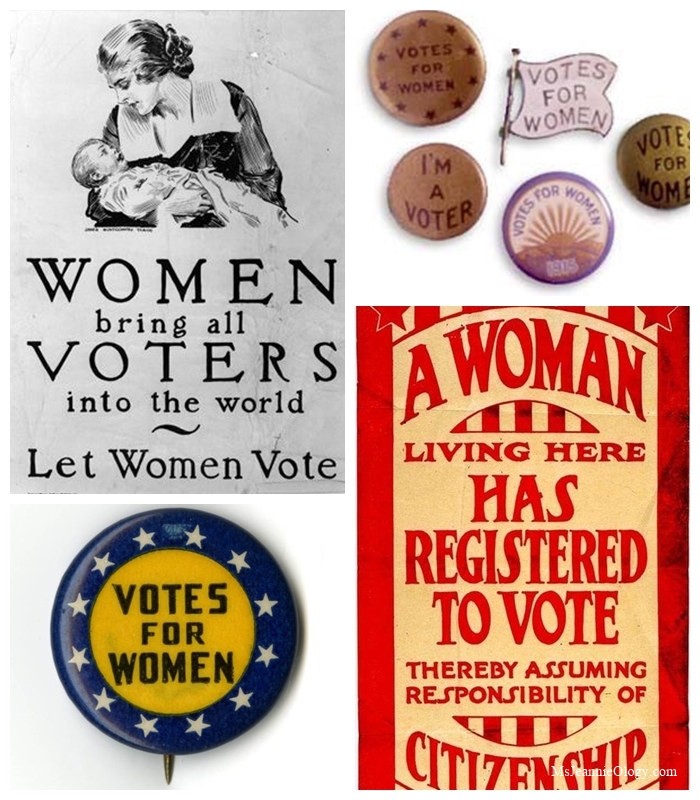
Various national campaign materials from around the United States.

This 2016 election year might just go down in history as one of the most controversial and complicated presidential campaigns ever presented. Of course, politics always yield mixed emotions and passionate beliefs, but this year in particular it seems there are more people torn apart by indecision rather than fervor. If you find yourself falling into the murky waters of who to vote for and why, Ms. Jeannie wants to remind you of one luxurious little fact:

Today we can vote. Today we have the opportunity to vote.

Anne took care of that for all of us. So we owe it to her to go out and exercise our very rights that she fought so hard to realize. Go out and vote. If you don’t want to advertise your decision with a political party campaign button on your lapel than in its place, pin a yellow rose. That was the symbol the suffragists used to express their support for women voters. That’s the symbol you can use to express your gratitude to Anne and all that she has enabled us to do and say both publicly and politically.

The moment
The moment the votes were counted on the Senate floor declaring to approve the 19th amendment – August 29, 1920.

Happy election day dear readers and cheers to Anne for giving all women a voting voice.

The Real History that Inspired Stars Hollow: An Interview and a Getaway, Gilmore Girls Style

View of Town Hall from Hickory HIll Washington, CT

If you are a serious fan of the show Gilmore Girls you already know that the fictional town of Stars Hollow was inspired by the real town of Washington, Connecticut.  That’s the spot where show creator Amy Sherman-Palladino spent a magical weekend dreaming up the culture, characters and community of all things Gilmore.

At the time of her visit in the late 1990’s, Amy was in a little bit of a tricky spot. She had just pitched five television show concepts to a major tv network all during one meeting. The network passed on the first four – but in a last ditch effort to end the meeting on some sort of satisfactory and productive note, Amy threw out a vague concept about a show she was still muddling about in her mind. “There is this single mother and her daughter who act more like best friends than parent and child.”

gilmore_girls2

“Okay great. That’s interesting. We’ll take that one, ” said the network (in a simplified nutshell). And then Amy panicked. She had no formal flushed out material for this snippet of a show idea. She didn’t know where it took place and at what time period. She didn’t know who the supporting characters were or the dynamics of these two feminine lifestyles. All she had was this mother and daughter jumping up and down in her head. The script was needed by the network ASAP. So she fled to Washington, CT  – a place she had never been – for a quiet weekend of major thinking.

gilmore1

In a stunning stroke of serendipity, Amy saw Washington and then she saw her setting. Thanks to this 237 year old town with its historic villages, convivial atmosphere and captivating residents, this think-tank weekend laid the foundation for the show’s central cast of characters and the community in which they all circulated. Luke’s Diner, The Dragonfly Inn, Doosie’s Market,  Chilton, the Town Square along with a host of other well-loved landmarks in and around Stars Hollow were all inspired in part on the equally charming real life landscape of rural Litchfield County, Connecticut.

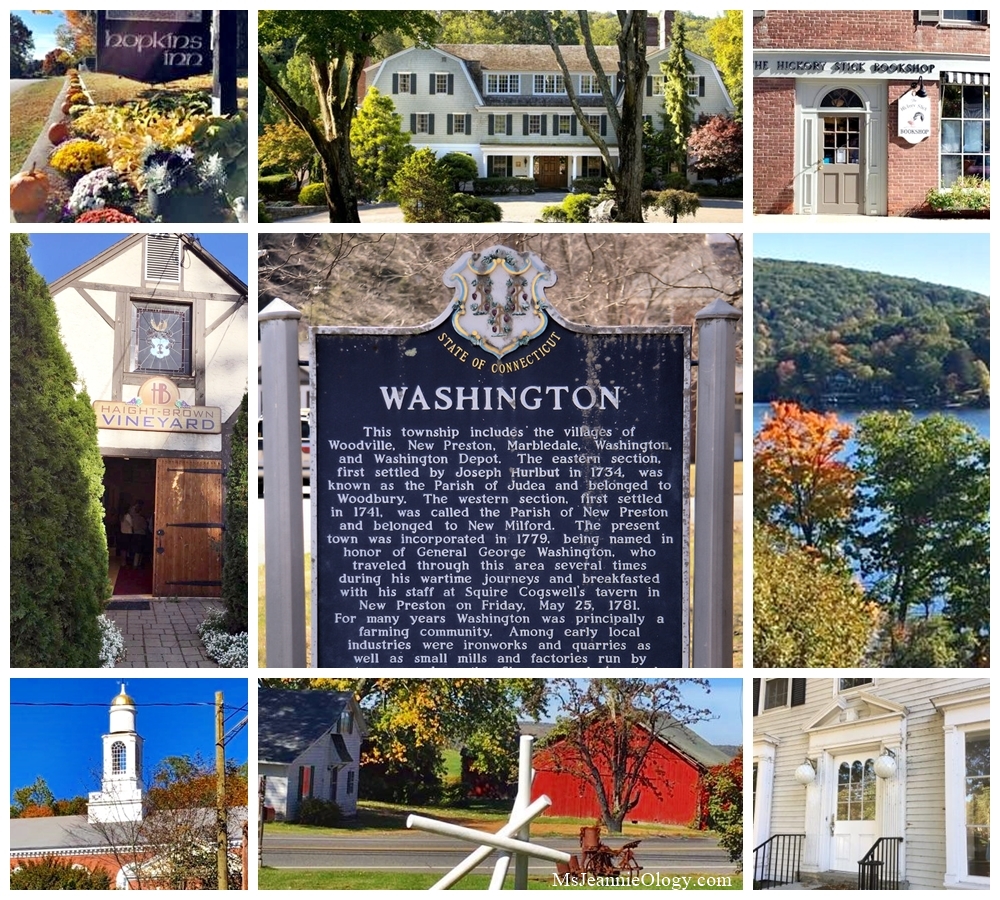
washingtonct_collage2

Throughout all seven seasons of Gilmore Girls, town history has played an active role in the show with storylines that ran the gamut from quirky to sentimental.  In today’s post we are chatting with Louise Van Tartwijk,  museum director at the Gunn Historical Museum in Washington, Connecticut to learn more about the real history of her enchanting small town,  the Gilmore Girls impact upon it and what it means to work as a modern day gatekeeper to the past.

Meet Louise - along with Gunn Historical Museum curator Stephen Bartkus (on her left) and Museum Council member Nicholas Solley (on her right)
Meet Louise , pictured here along with Gunn Historical Museum curator Stephen Bartkus (on her left) and Museum Council member Nicholas Solley (on her right)

Tell us a little bit about yourself.  Are you from Washington, CT? If not, what brought you there? How long have you worked at the museum? 

My husband and I moved to Washington, CT, in 2010, from the Netherlands in order to give our four daughters an American prep-school education. I am American-born, but married a Dutchman, and we lived together in the Netherlands for 25 years where our children were born and spent their earliest years. Subsequently, our girls have attended the Westover School in Middlebury, CT and The Gunnery School here in Washington.

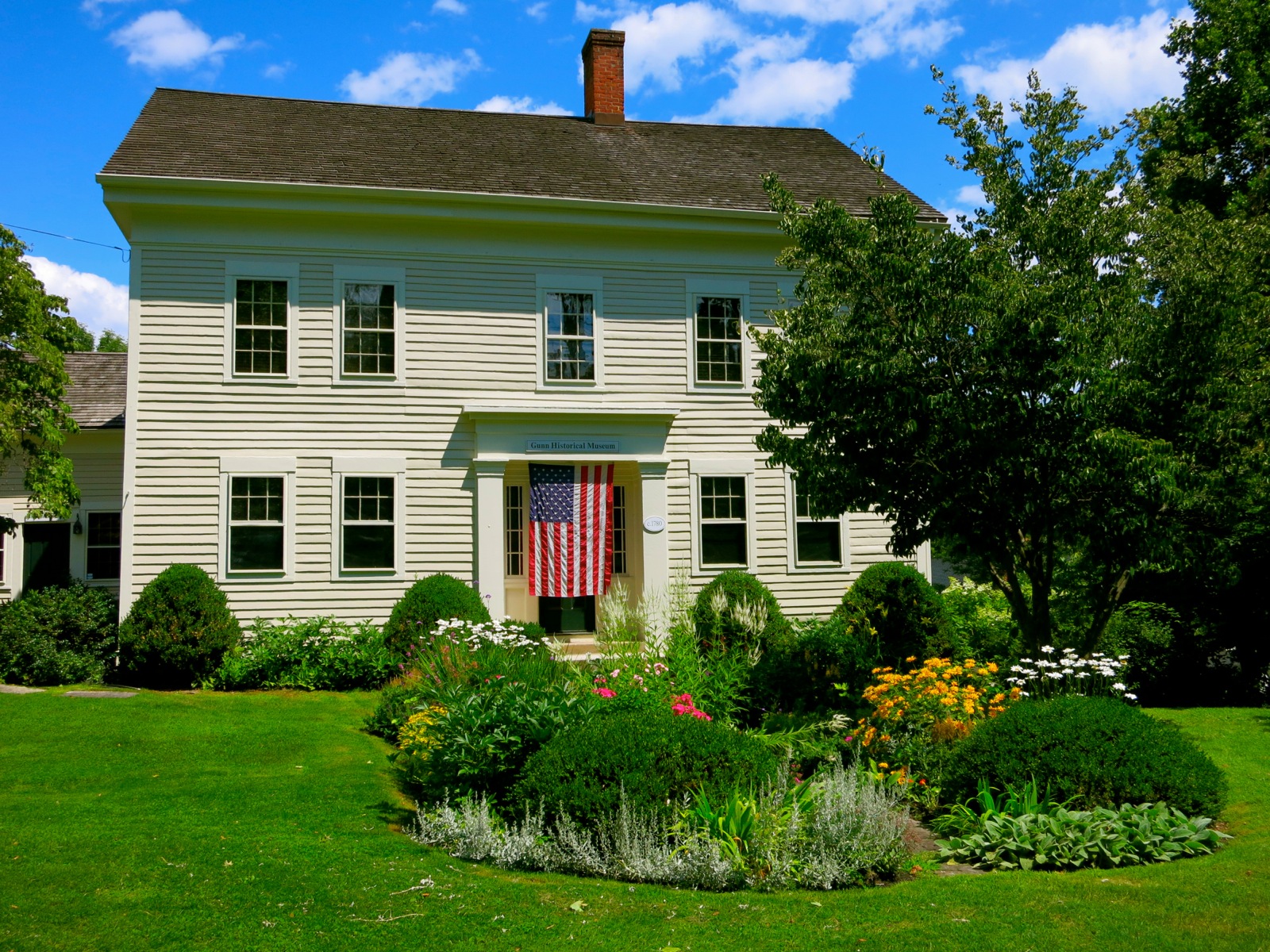
gunnhistoricalmuseum
The Gunn Historical Museum, Washington CT

Tell us a little bit about the history of your town and the museum’s role in it.

Washington has a rich and multi-layered history. There is archaeological proof that Native Americans lived in the area along the banks of the Shepaug River, over 10,000 years ago. The first Europeans settled in the region in the early 1700’s and named the town Judea. Early Washington was largely a family-farming community, small mills developed along its streams and rivers, small businesses populated the center of town that was known at that time as “Factory Hollow.” The Congregational Church, the institution that founded the town, sat prominently up on the top of the hill, on the Green, together with The Gunnery, a school begun by Frederick Gunn in the mid 1850’s.

washingtongreenlg1

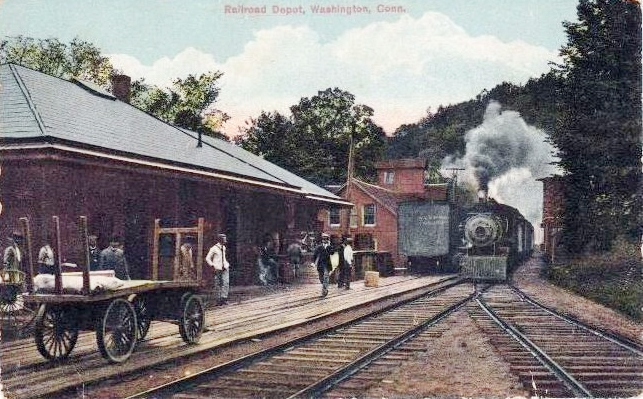
When the Shepaug Rail Road brought the train to Washington in the 1870’s, Factory Hollow became Washington Depot. The arrival of the train suddenly connected Washington with New York and other regions, and with this came the arrival of wealthy, artistic and community-minded summer residents from Brooklyn; and the rise of a local dairy farming industry.

Railroad Depot, Washington CT

The flood of 1955 devastated the town and as a result of the subsequent rebuilding, Washington Depot has the more modern yet quaint look that it has today.

Flood of 1955, Washington CT

While the train has not run in Washington since the 1940’s, New Yorkers are still drawn to Washington as a popular “hidden” weekend and summer retreat; and Frederick Gunn’s school still sits on the Washington Green together with the Congregational Church.  Today, education is the main “industry” of Washington.

At the Gunn Historical Museum we see ourselves as the custodians of this rich history; keepers of the town’s past, responsible for the preservation of its archives, artifacts, photos and personal stories. This is a responsibility that we take very seriously because we know that understanding Washington’s past is the only way to truly understand what makes our town so unique today.

We know from the stories behind Gilmore Girls that Amy Sherman-Palladino modeled Stars Hollow after Washington and the experience she had there while writing the script. Do you feel the spirit of Washington translated to the TV show? 

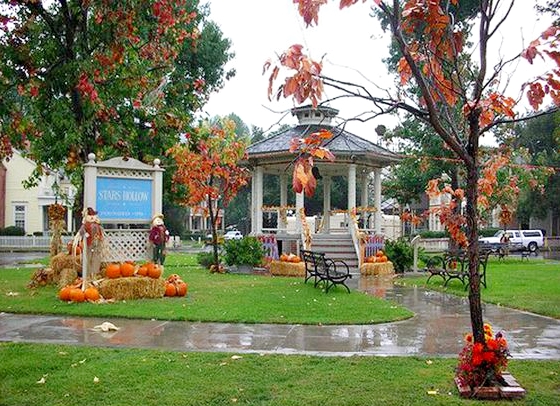
On the set with Gilmore Girls - the Stars Hollow town green
On the set with Gilmore Girls – the Stars Hollow town green

I don’t feel qualified to speak about how Washington was an inspiration for the Gilmore Girls, as I haven’t seen enough of the show. But, I do know, that this is a very unique town, as anyone will tell you who lives here. Washington is a very eclectic, talented and interesting community of friendly and very civic-minded people.  The town has a very special subtle magic that draws people to it and makes them feel at home in a way rarely found anywhere else.

We all know each other in town, and to give you an example, there have been times when I am going into the Washington Food Market accompanied by my youngest daughter who in all seriousness instructs me outside the store to,”Not talk to anyone.” This is because she knows I will know nearly everyone in the store and suddenly a 4-minute grocery run will turn into an an-hour-long social event.

washingtonfoodmarket2

To give you another example of what it is like to live in Washington, my husband and I recently found a letter in our mailbox simply addressed to us as “Hans and Louise, Washington, CT 06793” (no last name and no street address). It made it easily to our mailbox!

There are some people who refer to Washington as “The secret center of the Universe” and others who refer to it as “Brigadoon.”

Are you, yourself a fan of the show? If so, who’s your favorite character?

To be honest, I have maybe only seen one or two episodes. So I can’t claim a favorite character yet. But what I do like about the show is its quirky humor.

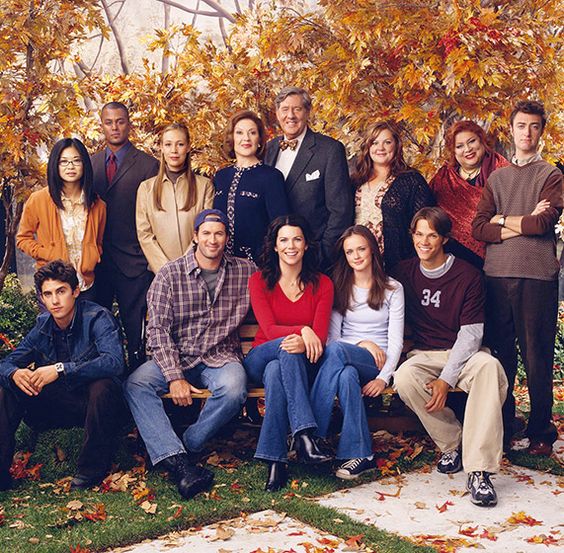
The complete cast of Gilmore Girls
The cast of Gilmore Girls

Have you ever met Amy Sherman-Palladino or any of the gang from Gilmore Girls?

No. But I would love to.

Has Gilmore Girls impacted tourism to your neck of the woods and, if so, how? Has the museum benefited from such attention?

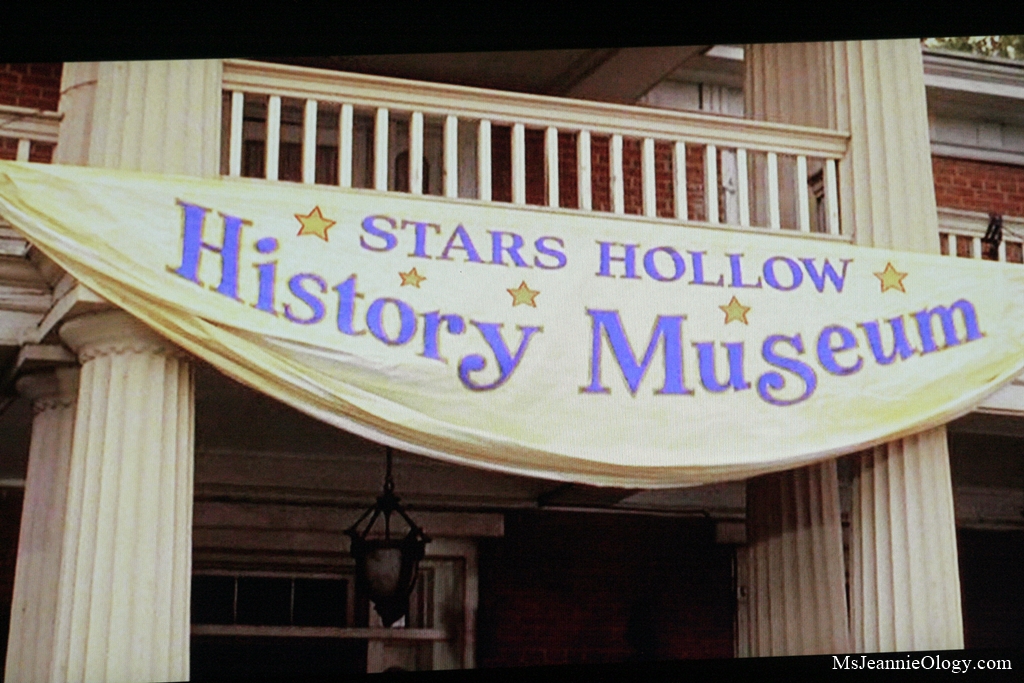
The Gilmore Girl impact has not happened yet, although we are anticipating substantial impact on the town for that weekend. {Note: Louise is referring to the Gilmore Girls Fan Festival which was just held in Washington, CT Oct 21st-23rd, 2016} The Museum was not included in the main GG tour. However, we do resemble the Stars Hollow Museum in the episode “Live or Let Diorama.” We are just the kind of small New England museum that people associate with the show and idyllic concepts of the American small town.

starshollow1
A screen capture from the Gilmore Girls episode Live or Let Diorama.

For the Gilmore Girls weekend, we will have a preview of our upcoming exhibit, “Washington Speaks,” a history of Washington. There will be guides and docents on hand to walk people through the exhibit on that weekend.

We received a $100,000 grant from the State of Connecticut last year to create this exhibit. We are very excited about this preview of the exhibit and will use the Gilmore Girls weekend to show off what we are doing.

History states that George Washington traveled through Washington on several trips. Do you have any artifacts or items in your museum collection from his journeys? 

No we don’t. But he did actually pass through the town and stayed a night at the Cogswell Tavern here in New Preston, one of Washington’s five “villages.” The General recorded this visit in his diary.

N.C. Wyeth painting of George Washington from the February 1946 edition of the Saturday Evening Post

What is your most favorite piece in the museum today and why?

We have any number of very interesting artifacts that become even more interesting when you get to know the town and the stories of the people who have helped shaped Washington over the centuries. At the present, my favorite artifact is the Jonathan Farrand Revolutionary War musket that was donated last year by his descendants. Farrand was an early Washington resident, back when the town was named Judea. He was a farmer, soldier, businessman and town official. He had seven slaves. I find that interesting. People do not know that the North had slaves. One of Farrand’s slaves, Jeff Liberty, fought in the Revolutionary War and became a free man. The Farrand musket is a beautiful artifact, full of symbolic significance. It will feature in the “Washington Speaks” preview at the Museum on Gilmore Girls’ weekend, as will the stories of Jonathan Farrand and Jeff Liberty.

What is one part of Washington, CT’s history that has most surprised you? 

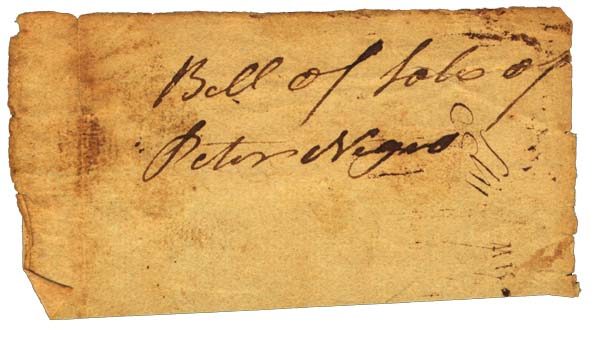
Probably the slavery issue. No one ever thinks of New Englanders having slaves.  Several families who were among the town’s first settlers in the 1700’s had slaves, as did people in other Connecticut towns. And even in the 1840’s, while slavery no longer existed in Connecticut, abolitionism was not popular.

Frederick Gunn, who founded The Gunnery school here in town, on the town Green, was an abolitionist and as a result was forced out of the Congregational Church and even had to flee town for a while because of his abolitionist opinions.

Bill of Sale of a man named Peter in 1762 in Woodbury, CT. Image courtesy of the Mattatuck Museum. For a detailed timeline of slavery in Connecticut from the 1600's - 1800's click here.
Bill of sale for a slave named Peter in 1762 from Woodbury, CT. Image courtesy of the Mattatuck Museum. For a detailed timeline of slavery in Connecticut from the 1600’s – 1800’s click here.

Tell us about a typical day in your life as the museum director.

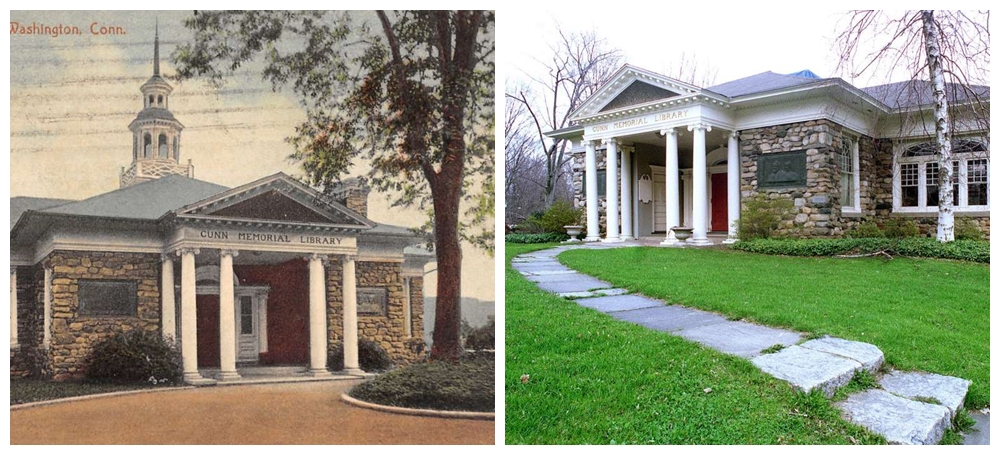
For over 100 years The Gunn Historical Museum has been a part of the Gunn Memorial Library. In 2015, the board of the Gunn Memorial Library and Museum decided to transition the Museum into financial and managerial independence, so as to allow it to become an independent 501(c) 3.

Gunn Memorial Library in the early 1900's (left) and pictured today.
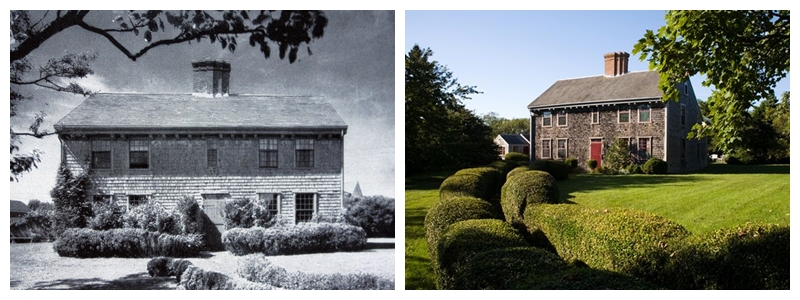
Impressive in its sameness. On the left, The Gunn Memorial Library pictured in the early 1900’s and on the right, as it stands today.

This past year has consequently been a very busy one for me as we are moving into unchartered territory. A typical day for me involves, working with our curator and volunteers to oversea the work on our collections inventory, and work on our new permanent history of Washington exhibit. At the same time, I find time to do things such as writing for our Museum publication, heading up our Friends of the Gunn Museum membership drive and working on fundraising initiatives, which have become rather important given our push for independence from the Library.

A sampling of items in the museum's collection including a drum owned by revered local New England architect (and local Washington resident!) Ehrick Rossiter,, an old-fashioned seed spreader, antique photographs of local residents and buildings. Pop-up exhibits around town help keep history in the spotlight.
A sampling of items in the museum’s collection including a drum owned by revered local New England architect (and local Washington resident!) Ehrick Rossiter, an old-fashioned seed spreader, antique photographs of local residents, buildings and events. Pop-up exhibits around town help keep local history in the spotlight.

What are some of the challenges you face as a museum director in today’s world?

The expectations of sophistication and modernization. We want to move forward and yet, we want to keep our authenticity to the town and its inhabitants who’s world we preserve and reflect. The challenge is to find a good medium between keeping small-town charm, informality and coziness while accommodating the possibilities that keep unfolding before us in the fast-paced technological modern world.

If you could acquire one artifact from history (with expense not being a factor) what would you acquire for the museum and why?

Cogswell Tavern, New Preston CT

Well, we can only acquire artifacts that have a tie to the town of Washington; so, I would follow-up on the rumor that the chair that George Washington sat in when he visited the Cogswell Tavern during the Revolutionary War, is still in the possession of a descendant of the Cogswell family. That would be great to acquire!

What museum events do you have coming up in the next year that will appeal to history lovers? Does Washington have any celebratory plans for the November release of Gilmore Girls: A Year in the Life? 

At the Museum we are anticipating the opening of our permanent history of Washington exhibit. We have no opening date as of yet however. In the meantime we will continue to have smaller pop-up exhibits in town and museum programs dedicated to different aspects of the town’s history.

Gosh, I don’t know about the town’s plans for the November release.

If our readers visited Washington – what are the first three things they should do (other than visiting the museum of course!). 

Hike in Steep Rock, our beautiful land trust. Have a coffee at Marty’s Cafe, a true town ritual. There are people in town who even have their “claimed” morning spots at Marty’s Café, and everyone knows this and will leave those spots open.  Attend a Gunnery school ice hockey game at the Linen Rink on campus and share in the excitement at Mr. Gunn’s School.

gunn_collage3
Clockwise from top right: Marty’s Cafe, the Gunn Historical Museum, Steep Rock and Gunnery School ice hockey.

One last question… if George Washington rode into town today do you think he’d recognize it?! 

Yes, I do.  Probably the biggest difference besides telephone poles, cars, paved roads, and a few more homes, is that we have more trees and less open farmland.

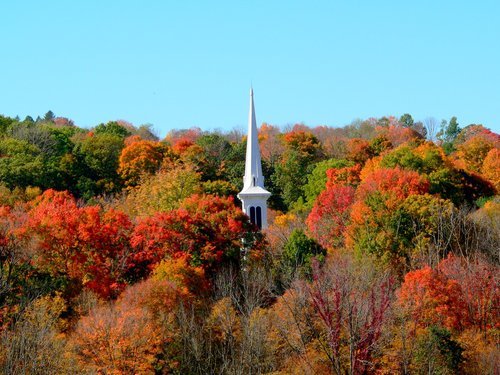
Washington, CT tucked among the trees.

And there you have it, dear readers.  A small town in rural Connecticut that has been inspiring both locals and out-of-towners for centuries from the Native Americans who first settled there, to U.S. Presidents who journeyed through, to Emmy Award-winning writers who captured its colorful spirit and to Louise who protects its significance and integrity every day.

Get caught up in the magic of this small town yourself by following Louise’s lead and visit: Steep Rock (a 2700 acre preserve made for hiking and camping in the bucolic Shepaug River Valley); Marty’s Cafe (where you can channel your inner Luke Danes) and the gorgeous Gunnery School campus where you can pretend you and Rory are heading off for a day at Chilton.

Pictured clockwise from top left: Hopkins Vineyard, Arethusa Al Tovolo; The Mayflower Grace;
Pictured clockwise from top left: Hopkins Vineyard, Arethusa Al Tovolo; The Mayflower Grace; White Silo Winery and Haight-Brown Vineyards.

Additional area suggestions from two of our blog readers who just road-tripped to Washington in early October include: wine tours and tastings at these three local spots- Hopkins Vineyard, White Silo Winery and Haight-Brown Vineyards (raise a glass to Richard and Emily Gilmore while you are there!);  dinner at  Arthusa Al Tovolo  farm-to-table restaurant (Sookie would totally recommend this place and Jackson would be happy that you supported local farmers) and indulge in an overnight stay at The Mayflower Grace (we know how a few nights  there turned out for Amy Sherman-Palladino – just imagine what it could do for you!).

And of course please stop in at the Gunn Historical Museum and say hello to Louise!

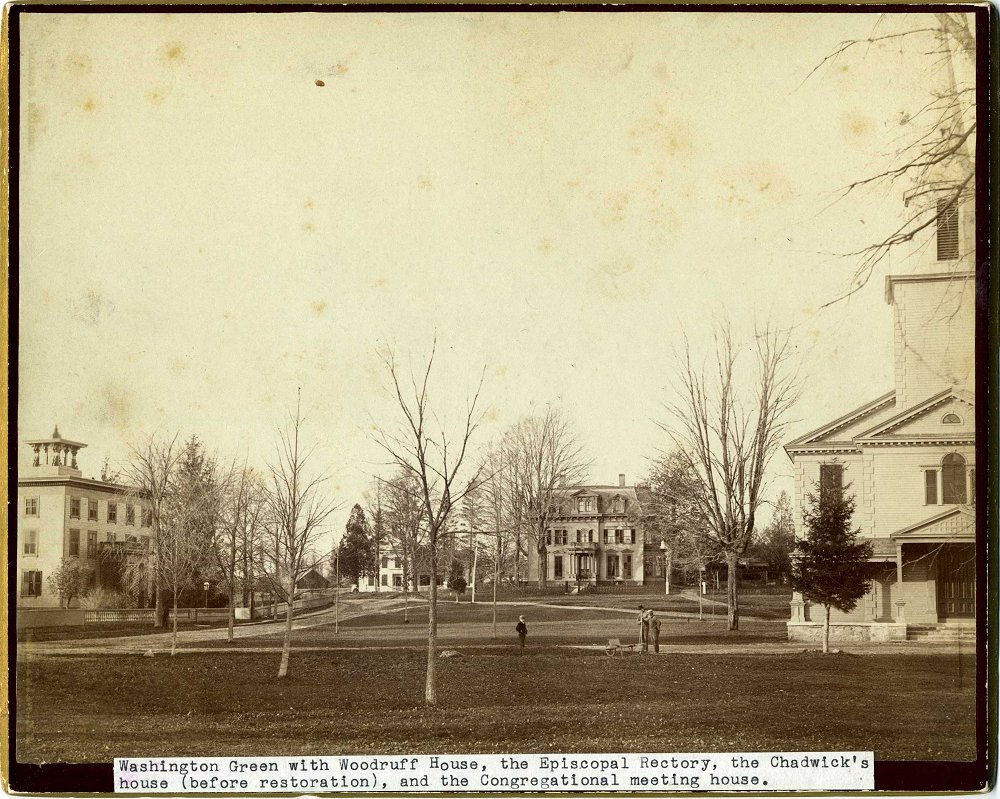
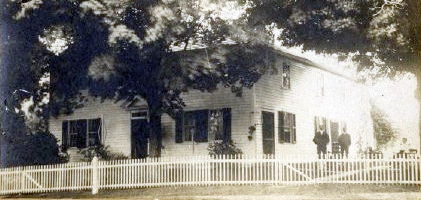
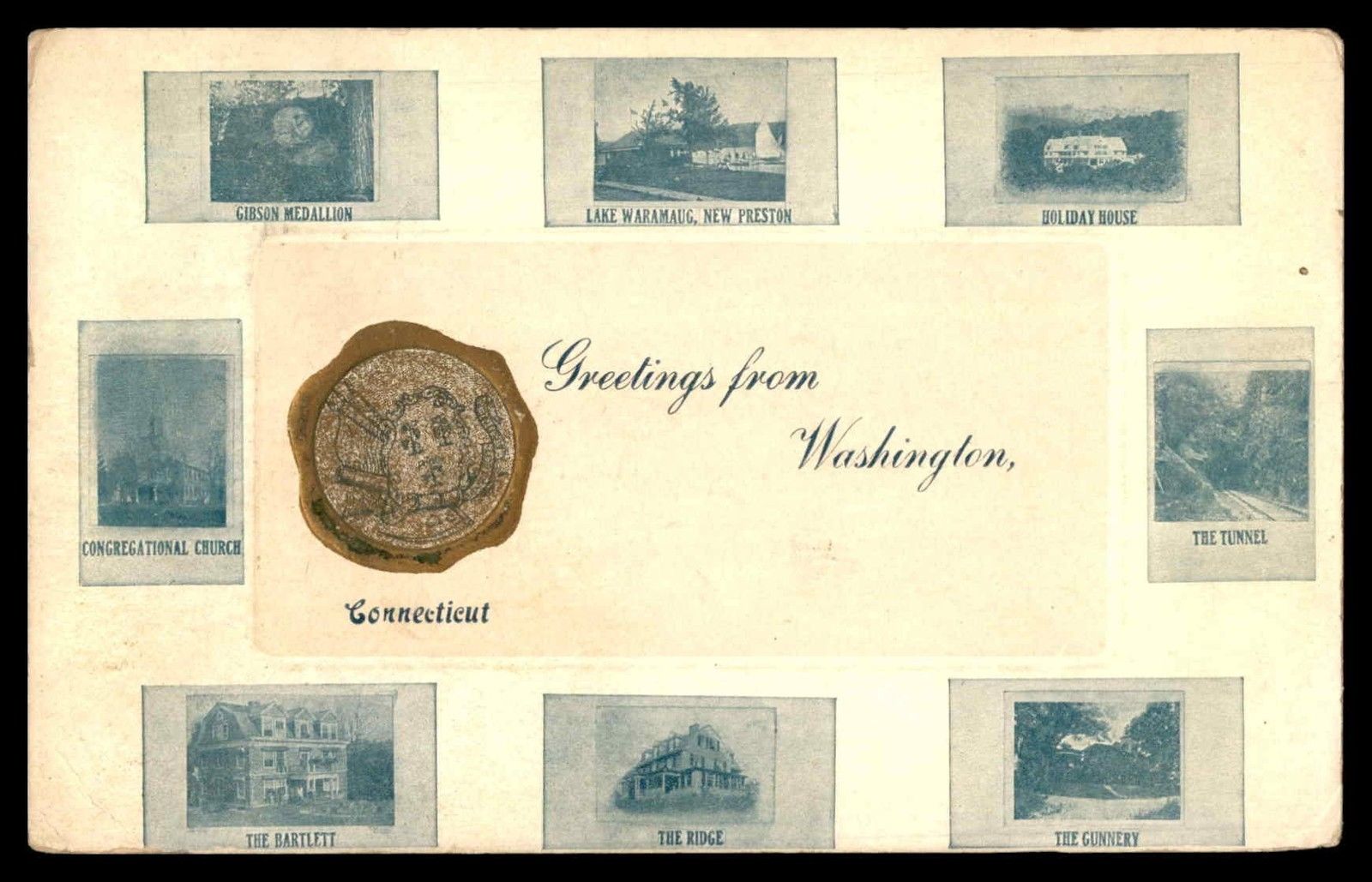
Early 1900's postcard of Washington, CT
Early 1900’s postcard of Washington, CT

Additional photo credits: R. Burns, Gunn Historical Museum, Gunn Library, Mattatuck Museum. 


New England Style: Three Vintage Bread Recipes You’ll FALL in Love With

bread2

Now that Autumn is here and the temperatures are cooling and the holidays are coming in close, there is nothing that trumpets the start of the cozy Fall season more than baking homemade bread. This week in the Vintage Kitchen we are exploring three different types of bread – one quick bread, one muffin recipe and one sandwich bread, all tackled the old-fashioned way. Meaning without a bread machine or any fancy paddling mixers.

Inspiration begins back in the late 1960s when food writer and cookbook author, June Platt was living here…

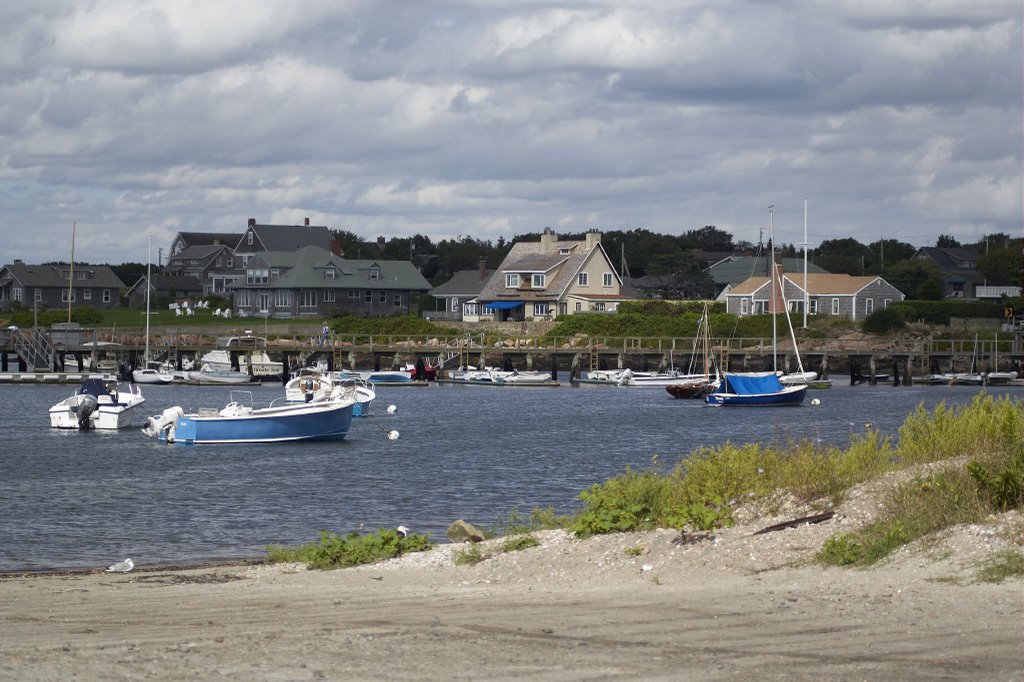
littlecompton-ri

in the picturesque seaside town of Little Compton, Rhode Island. Tasked with writing a regional cookbook made up wholly of New England fare, June compiled a list of over 250 recipes that represented the belly and bounty of diverse Northern appetites.

Her recipes were published in 1971 under the title June Platt’s New England Cook Book…

June Platt's New England Cook Book

and contained recipes both historic and modern for all meals of the day including cocktail hour, appetizers, party fare, preserves, homemade wine and the infamous bread featured here in this post. Let’s look at what’s in the oven…

BREAD No. 1

If you are anything like us, you’ll find sandwich breadmaking a bit of a challenge. Usually when I attempt such creations my bread comes out weighing 18 pounds and has both the texture and composition of packed clay. Right when the oven door opens and the weighty wonder gets hoisted onto the cooling rack, I know instantly that she’ll need not a bread knife but a handsaw to cut into such a terrible beauty of an endeavor.

Thankfully though, things have changed dear readers. We can no longer say that baking is precariously difficult and that light, fluffy sandwich bread eludes us. Thanks to June Platt the perfect sandwich bread has been found. Easy to make, simple to bake.  Success at last!

Although it is yeast bread, and therefore, takes some hours to fully prepare from start to slice, it is WELL worth it and very simple. You’ll never want to eat any other bread again.

Brown Bread

Like New Englanders themselves, this bread is humble, hardy and versatile. According to June Platt, legend has it that this recipe stemmed from a farmer who was so fed up with his wife’s terrible cooking that he took to the kitchen himself, keen on preparing something (anything!) edible. As  fellow New Englander, Louisa May Alcott once said, necessity is the mother of all invention, and so Farmer made his bread and named it after his wife Ana and her (damnable) cooking talents…

Anadama Bread

(makes 2 loaves)

1/2 cup white stone ground cornmeal

2 cups boiling water

3 tablespoons butter

1/2 cup dark molasses

1 rounded teaspoon salt

1 yeast cake dissolved in 1/2 cup warm water

4 cups flour* (see note)

  1. Stir cornmeal very slowly into boiling water, using a wooden spoon.
  2. When thoroughly mixed add the butter, molasses and salt. Try to work out any lumps by flattening them out with the back of the wooden spoon against the side of the bowl or pan.
  3. Cool to lukewarm.
  4. Add the yeast dissolved in the warm water.
  5. Add the flour, one cup at a time, stirring with the wooden spoon, to make smooth dough.
  6. Place on a lightly floured board or canvas and knead well.
  7. Place dough in a well-buttered bowl and cover with a cloth wrung out in hot water.
  8. Allow to rise in a warm place, free from drafts, until more than double its original bulk (or for about 2.5 hours).
  9. Preheat oven to 400 degrees , and butter two 9″inch bread pans.
  10. Turn the dough out onto a lightly floured board again, knead lightly and shape into two loaves.
  11. Place dough in the buttered pans , cover with a towel wrung out in hot water , and allow to rise again until doubled in bulk (about one hour).
  12. Place the loaves in the pre-heated oven and bake until they are a deep golden brown (about 45-50 minutes).
  13. Place on a wire rake to cool before removing loaves from pans.

This a fun recipe to work on while you have a whole home day planned. Because it does take some time you may want to double up on the recipe and make four loaves of bread so you can stick some in the freezer for later use.

*We followed this recipe and the steps exactly with the exception of the flour. We subsitituted two cups all purpose flour and two cups of cake flour which is little bit lighter in texture.  This combo may have aided in a slightly fluffier loaf.

Moist, flavorful, easily sliced (no handsaw required!) this sandwich bread is perfect for everyday use in the versatile sandwich department. Hopefully it will become a household staple in your kitchen too.

*** Update 10/26/2016***

Another batch of bread was made this time using all-purpose flour (in place of cake flour) and olive oil (in place of butter) and it came out equally as wonderful and delicious. The all-purpose flour makes it the tiniest bit more dense but other than that there are no noticeable differences in either taste or texture, which leads us to believe that this just might be the most versatile and easily experimental bread recipe ever. Next time, we’ll try it with a sprinkling of nuts, seeds and/or whole grains to see what happens.

BREAD No. 2

Fruit and nut breads are always an instant favorite and an easy go-to for busy morning breakfasts. Around the the Vintage Kitchen, we never pass on homemade banana or berry breads. And the field of play that awaits when it comes to adding your own bits and bits of flair when it comes to enhancing quick breads is a great source of creativity when it comes to cooking. Since we are in the middle of nut season, June Platt’s vintage recipe for Cranberry-Orange-Walnut Bread sounded wonderfully delicious and in-season. Only there was one slight problem. Cranberries.

For some reason, this year,  even though we scoured high and low, store to market to store again – there were no cranberries to be found anywhere in our fair city – fresh, frozen or otherwise. A bit too early for Thanksgiving relish season, perhaps, New Englanders must have made this bread in the colder mornings of November instead of October.  Out of season, but not out of spirit we substituted. And then substituted again. Dried sour cherries replaced fresh cranberries and almonds replaced walnuts.

Cherries seemed fitting on the historic side – George Washington was a fan after all. On the flavor side, they are sweet yet tart like a cranberry and the dried version seemed like the next best thing. Just be sure when preparing this recipe you look for pitted sour cherries. We found our cherries at the international market inside our local farmers market and they were not pitted. De-pitting added an extra sticky 30 minutes to this project when it came to the prep department.

cherry1

Sour Cherry – Orange – Almond Bread

(makes 1 loaf)

2 cups sifted flour

1 1/2 teaspoons baking powder

1 teaspoon salt

1/2 teaspoon baking soda

1 egg ( well beaten)

Juice of 1 orange (about 1/3 cup)

Freshly grated rind of 1 orange (about 1 heaping teaspoon)

1/4 cup cold water

1 cup granulated cane sugar

1/4 cup melted butter

1 cup dried sour cherries, roughly chopped

1/2 cup whole almonds,  roughly chopped

  1. Preheat the oven to 350 degrees. Butter a 9″ inch bread pan.
  2. Combine the flour, baking powder, salt and baking soda.
  3. In a separate bowl, combine the beaten egg, orange juice, grated rind, water and sugar.
  4. Add the sifted ingredients and stir just long enough to mix. Stir in the melted butter. Fold in the sour cherries and almonds.
  5. Spoon mixture into the loaf pan and bake for 1 hour (or until inserted toothpick comes out clean). Oven temperatures really vary the timing on this one so keep your eye on it.
  6. Let cool on wire rack.

Because the almonds add a little hearty protein and the cherries mingle tartly with the sweet orange and cane sugars, this bread is almost like a soft protein bar. Two slices are very satisfying especially when served warm with a little butter. A lovely alternative to oatmeal on those frosty winter mornings, and a great bread for holiday house guests with its fast, festive and easy to freeze attitude, this bread will make holiday entertaining a breeze in the brunch/breakfast department.

Cherry orange almond bread

Bread No. 3

Our final bread comes to us by way of Vermont. June Platt had a special soft spot for the state and especially loved the maple syrup that sweetened all matter of meals in fall and winter. Her recipe for Vermont Johnnycake Muffins is ideally suited as a companion for a warm bowl of chili with its dense composition and hint of maple sweetness. Essentially, it is a cornbread muffin with a cute name.

Living in the South, there are two VERY different camps on the subject of cornbread. Northerners like their cornbread sweet, Southerners like their cornbread sour (or non-sweetened if you will). Here in the Vintage Kitchen, we prefer ours a little on the sweet side, but not so sugary that it tastes like cake. This Johnnycake is a hospitable meet-you-in-the-middle between North and South. A cornbread for everyone.

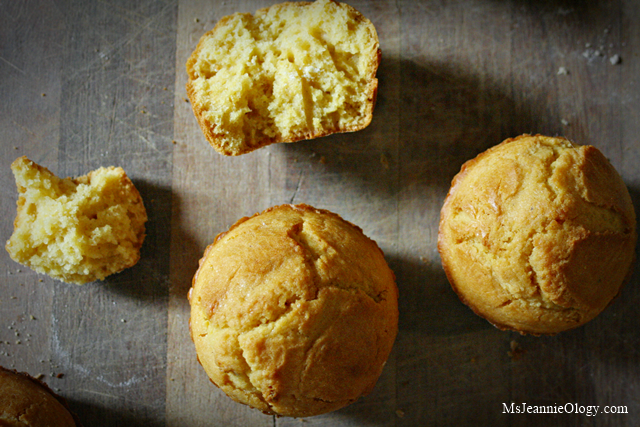
muffins1

Vermont Johnnycake Muffins

(makes 8 muffins)

1 cup sifted all-purpose flour

2 1/4 teaspoons baking powder

1/4 teaspoon salt

1/2 cup cornmeal

2 eggs, well beaten

1/3 cup milk

1/4 cup maple syrup

6 tablespoons melted butter

  1. Preheat oven to 400 degrees.
  2. Sift the flour, baking powder and salt together , add the cornmeal and sift again.
  3. Combine the remaining ingredients and add to the dry ingredients, stirring only enough to dampen all the flour.
  4. Pour into well-buttered muffin tins and bake in a hot oven for about 30 minutes or until golden brown.

June suggests serving these handsome guys with maple cream or maple butter. We suggest a little bit of jalapeno jelly, a dollop of goat cheese and a drizzle of honey.  Like the other breads above, these muffins freeze well and can fill up a hearty appetite in a half second. It’s just the kind of fortitude you need when shoveling snow or battling that freezing wind rolling in off the coast.

Vermont Johnnycake Muffins

Released to great critical acclaim, all the recipes in this cook book re-introduced regional delights that were overlooked and underrated in mid-20th century America.  June helped bring them out of hiding 45 years ago and in turn four decades later, the Vintage Kitchen is shining a spotlight on them again today. So whether you are looking for something new to bake-up this season or you are like us and just trying to bolster up your bread baking abilities, look no further than New England, dear readers!

To explore more vintage recipes from June Platt’s New England cookbook, including the wonderfully named Beach-Plum Jelly, Rinktum Ditty, Cranberry Troll Cream, Red Flannel Hash and the classics –  Lobster Rolls, New England Clam Chowder, Boston Baked Beans, etc etc etc… visit this link here.

Cheers and happy baking from June an the Vintage Kitchen and all of New England!

Meet the Model: Hedy Hatstand

heady1

There’s a new face in town! Meet professional model Hedy Hatstand. She comes to  the land of Ms. Jeannie from a traveling trunk show that toured the country for years and years. Now anxious to be rooted for awhile, Hedy’s happy to be in long-term employ in the bookshop of Ms. Jeannie Ology as the official face of all things vintage head and neck-wear.

Named after Old Hollywood siren turned brilliant inventor Hedy Lamarr (1914-2000),  who is still considered to be one of the most beautiful women to EVER hit the big screen…

hedylamarr1
Hedy Lamarr was the stage name of Hedwig Eva Maria Kiesler who was born in Vienna in 1914.

our Hedy Hatstand comes with her own dramatic beauty face. From afar she sports a milk-tone complexion…

heady2

but up close she’s cleverly tattooed in music and lyrics…

headyclose1

from her favorite 1920’s jazz song Nobody’s Sweetheart.

Like Hedy Lamarr’s tumultuous six marriage love life, and like the you-don’t-fit-in-anywhere song lyrics of Nobody’s Sweetheart, Hedy Hatstand’s had her own tragedies in the romance department.

You’d never believe how much frolicking goes on behind the scenes in the hat industry. Between the fedora salesmen and the stocking cap sewers it’s a veritable web of heart strings passing from one head to another. Hedy doesn’t like to talk about it too much but, as is true with any tattoo, the story is all there permanently written on her face…

heady4

…wedding bells and vices, dreams and changes, kisses and catastrophes…

heady3

Luckily all of that amorous experience, all that life of long-living and layered love has built up quite a beautiful face that makes our dear Hedy just perfect for expressive, one of a kind style. She can model both men’s….

hat1_collage

and women’s hats…

hat2_collage

with equal aplomb and can even manage a striking bowtie…

bowtie1

The song lyrics for Nobody’s sweetheart include passages like this:

You’re nobody, nobody’s sweetheart now,
There’s no place for you somehow,
With all of your fancy clothes, silken gowns,
You’ll be out of place in the middle of your own hometown,
When you walk down the avenue,
All the folks just can’t believe that it’s you.

With all those painted lips and painted eyes,
Wearing a bird of paradise,
It all seems wrong somehow,
It seems so funny,
You’re nobody’s sweetheart now!

Hedy’s daring neck tattoo may read Nobody’s Sweetheart, but she definitely has one champion in her corner – Ms. Jeannie and she definitely has a place forever to stay if she likes in the bookshop. Of course, life is always  changing and there’s no telling how long Hedy will stick around (she could very well follow in the footsteps of Christmas Pig)  but for the time being, for this Fall anyway, she’s holding down the hat fort in the shop of books. Because she’s definitely somebody’s sweetheart now.

Look for more images of Hedy and her vintage hats coming to the bookshop this Fall and Winter. In the meantime, you can find her in the bow-tie aisle here right now.

Cheers to sweet(hat)hearts:)


History Hitting Home: Franklin and the Four Faces

fourfaces_collage
Clockwise from top left: Fountain Branch Carter, his wife Polly Carter, Albert Thornton Edwards, Albert’s wife Martha Jane Brewer

In late November of 1864 bullet holes riddled the house of Fountain Branch Carter and his wife Polly. The shots were fired by thousands of men in a little known but significantly bloody battle that took place in Franklin, Tennessee during one of the final fights of the American Civil War.

One of the men on the firing side was Albert Thornton Edwards, Ms. Jeannie’s great great grandfather. At the time of this battle he was a young Union soldier of 24, serving in the Ohio cavalry.

The Confederate army was on their way to Nashville to recapture their state capitol. The Union Army was coming up from Atlanta to stop them from capturing the city. The small rural town of Franklin, and the plantation of Fountain Branch and Polly Carter happened to be on the way and consequently in the way.

Photo courtesy of franklintrust.org
The Carter House – home of Fountain Branch and Mary Armistead Atkinson “Polly” Carter. Photo courtesy of franklintrust.org

It was early morning on November 30th, 1864 when Union General Jacob Cox  knocked on the front door of Fountain Branch’s house, walked in and declared his intentions to set up headquarters. He told Fountain Branch that he and his family were free to go about the house as they liked and continue their usual activities of the day. He then laid down to take a nap in the front parlour while his aides shuffled in setting up field camp materials in the two front rooms of the house.

Union General John Jacob Cox

No one expected that a battle would take place that day in the backyard of this pretty plantation. Not General Jacob Cox, not Fountain Branch Carter and certainly not any of the residents of the peaceful town of Franklin. But of course, war has a way of surprising everyone.

By nightfall, Union soldiers would attack the Confederate soldiers and the Confederates would fight back. Within a five hour time time span from mid-day to sundown over 10,000 casualties would be sustained and 3,000 soldiers, both Union and Confederate, would lose their lives right there in the yard including one son of Fountain Branch and Polly.

Backyard of the Carter House where most of the fighting took place. Photo via pinterest.

When bullets were blazing fast and furious Fountain Branch took his family, house servants and some neighbors down to the basement where they waited out the warring in a dark, cold room made of brick and stone. On the outside, in the yard, Albert fought his battles for the Union cause on horseback, a select skill that took so much training the military almost deemed it pointless for the amount of  time it consumed and experience it required. As night crept across the sky it became harder and harder for  the soldiers to see who and what they were shooting at. Mayhem set in and men fell on both sides. Some piled two or three bodies high all around the plantation.

carterhouse5

Ms. Jeannie toured the Carter House last week unaware of the fact at the time that Albert had participated in the fighting there. Her sympathies that day definitely lay with the Carter family and the horrific hours they had to endure as the war raged all around their home. She was especially struck by the haphazard splattering of bullet holes still evident in the clapboard on the back porch.

Bullets holes in the walls of the back porch. Photo via pinterest.

It wasn’t until Ms. Jeannie was back at home herself going through the service records of Albert (one of her only ancestors to fight in the Civil War) that she discovered his involvement there at the Carter House. One of those back porch bullet holes could have come from Albert.

It is startling to know that an ancestor witnessed such a tragic day but even more so knowing that he actually played a hand in making it tragic.  Of course Albert was just doing his job – trying to be a  good soldier two years into fighting a war he believed in. But there he was nonetheless, shooting at a house with innocent people inside.  In looking back on that event and these two men of history who faced each other on opposites sides, Ms. Jeannie couldn’t help but think how similar they really were.

Fountain Branch and Polly were long-time loves, married for almost 30 years and had 10 children between them. Albert following the Battle of Franklin would muster out of the military 8 months later and head home to Ohio so he could marry his bride Martha and move west via covered wagon to Iowa. Albert and Martha would go on to have 11 kids and celebrate 56 years of marriage. Neither spouse in either family remarried after their significant other passed away. Both families knew the loss of young children, both were farmers, both revered citizens in their communities and both of course survived the horrors of the Battle of Franklin. Albert sustained eye injuries somewhere between Franklin and Nashville which he carried with him for the rest of his life. Fountain Branch lost his 24 year old son Tod in Franklin who had insisted on joining the fight that day to defend both his family’s land and the ideals of the Confederacy.

The one main difference of these two men living in 19th century America was their philosophies on equality for all people. While Ms. Jeannie isn’t excited that Albert could have potentially destroyed someone’s home and family she is proud that her great great grandfather was fighting for the very freedoms that she enjoys today, 150 years later. She’s also thankful that the Carter House has survived all these years so that she can see first-hand her family’s impression on history and walk in the footsteps of a man who lived four generations before her.

Read more stories about Albert and Martha here, here and here including pictures of Albert’s civil war inkwell and Martha’s honeymoon quilt handmade on her wagon trip west just after she was married. Read more about the Carter House and the Battle of Franklin here.

If you have any surprising stories in your family history, please share them in the comments section. You just never know what we might discover!


Dinner and a Date: Grecian Style!

gree1

This week, Ms. Jeannie is taking you on a little dinner date! From the look of things above you may think that her adventures have taken her abroad on an exotic travel vacation steeped in ancient history. If you guessed the destination to be time-traveled Greece, then you are correct! Sort of.

While the view looks like this…

gree2

and the menu looks like this…

gree3

Ms. Jeannie is excited to inform you that she has never actually left the U.S.. In fact she never left her city. That’s right dear readers, Ms. Jeannie is visiting Greece while never leaving Nashville. Let’s see how…

During other day explorations of her new city, Ms. Jeannie delightfully happened upon the United States’ only full scale replica of the Parthenon that famous historic ruin in Greece that was built in the 430’s B.C.  In case you need an art history refresher, this is what the original looks like …

The original Parthenon as it stands in Greece among all its ruined glory.

And this is the American version…

greek13

Standing elegantly (and so massively) in the city limits of Nashville’s Centennial Park, this American Parthenon is incredible in size, scope and detail.

gree4

greekpart9

While it is not quite as old as the original (this one dates to 1897) it is a true work of art from all angles with the stories of Greek heroes and gods running all around the facade…

gree8

gree5

gree9

gree10

Built in 1897 to celebrate the 100th anniversary of the state becoming part of the union, Nashville’s Parthenon was built by Southern architect and Civil War veteran William Crawford Smith for a special event exposition that included several other copies of ancient ruins.

parthenon_original
This original photograph of the Nashville Parthenon was taken in 1909. Photo courtesy of the Library of Congress.

With no intention of making a permanent structure, the Parthenon was built as a whimsical folly, fully expecting to be dismantled shortly after the celebrations ceased. But as an instant favorite among locals and visitors the Parthenon became a part of the permanent Nashville landscape in the 1920’s when it was completely rebuilt in more solid form. What was once the original wood and plaster model became much more weather resistant concrete. Now it is hard to imagine anything getting in its way.

gree6

gree11

There is nothing petite, frail or breakable about this beauty. It is difficult to get a sense of size or scale from photographs but this father and son pictured below hint at the sheer size of both the steps and the columns…

greekpart8

As the sun travels across the sky, the colors, shapes and shadows morph from sand shades to cinnamon to sweet potato to gold. And then the night sky darkens. The spotlights come on. And the Parthenon lights up in the most spectacular of ways…

greekpart18

It is no wonder that the park stays open until 11:00pm. With wide sweeping lawns, a small meandering lake complete with floating geese and ducks and plenty of shade trees, the Parthenon makes an ideal romantic backdrop for a late summer/early fall picnic. Ms. Jeannie spotted lots of hand holders among all those columns!

greekpart19

greekpart17

In celebration of the beauty and timeless appeal of the Greek culture Ms. Jeannie is including a recipe here for a Mediterranean meal that works great for brunch, lunch or dinner. Or perhaps that romantic picnic in the park! Pulling a traditional Greek recipe from a 2010 cookbook, Greek Revival by Patricia Moore-Pastides, Ms. Jeannie put her own spin on a classic recipe that could be served in a number of situations – hot out of the oven at home, room temperature straight from the picnic basket or cold out of the fridge for instant next day left-over gratification.

While the recipe is classified technically as a tart, it is more on the fluffy side like a crust-less quiche then a dense whole ingredient tart. Traditionally it is served as side dish but it can be easily adjusted serving size wise to accommodate hungrier appetites. Serve it with some toasted crusty bread drizzled with olive oil and garlic, or a simple side salad and a glass of a wine or honey smothered fresh fruit and you have some magical combinations of savory flavor pairings that could take you from morning to night.

greektart7

Sweet Potato, Zucchini and Feta Tart

1.5 tablespoons olive oil

1 large sweet potato

2 medium zucchini

8 oz. feta cheese

1 tablespoon + 1 teaspoon pesto (you can make your own or buy a small jar already prepared)

2 eggs

2 cups milk

2 tablespoons flour

1/4  teaspoon pepper

  1. Preheat oven to 375.
  2. Oil the bottom of a 9 x 11 inch baking dish. Grate the sweet potato and zucchini on the large hole section of a traditional box grater – this  should yield about 3 cups of each.  Toss both vegetables in a large bowl together…

greektart3

3. Spread in the bottom of the prepared baking dish.

4. In a medium size bowl mix the feta and pesto and then sprinkle over the sweet potato and zucchini mixture.

greektart4

5. In a blender mix together the eggs, milk, flour and pepper. Pour over the the top of the cheese/vegetable mixture and bake in the oven for 1 hour or until well set and golden brown on top.

greektart5

The original Parthenon was built in Greece as a temple to honor Athena – the goddess of reason, intelligence, inspiration, art and literature. The American Parthenon was built to honor and represent the intelligent and cultured community of Nashville.. And this blog post was designed to honor you, dear dedicated readers of this blog for so many years now. Food and history go hand-in-hand, Ms. Jeannie sends a big cheers your way for encouraging and supporting both!

For more Greek recipes please visit this previous post here.

The Briefly Extensive History of a Creative Couch

couch1

Sometime between the 1960’s and the early 1970’s, a couch was born in Forsyth, Georgia. In a pretty shade of green – a hue laying somewhere between celery and olive – this tufted beauty began her early life as a sales piece in Cawthorn Store for Homes, one of Forsyth’s local midcentury furniture stores.

couch4

She sat on the showroom floor with a bevy of other age- appropriate furniture that was meant to awe and inspire the home decorator just like the goal of this vintage 1970s Levitz ad…

1970sad

But her destiny was not to be bought, enjoyed and then eventually discarded. There was no rubble heap in store for our green girl. This couch had vagabond stories to tell deep within her bones which is why at some point in her maturing life, our fair couch left the confines of her small city and headed out on the open road, eventually migrating five counties north to Athens, GA where she took up residence in a vintage clothing shop giving rest to weary tryer-on-ers. The clothing shop was above a grocery, The Daily Co-Op…

dailyco-op

in a historic building owned and renovated by R.E.M.’s lead singer Michael Stipe. There she stayed for quite some time until this past June, when the vintage clothing shop was packing up to move locations. In a wonderful moment of serendipity, Ms. Jeannie happened upon this couch for free just days before moving to Nashville.

While loading all 7′ feet of her into the moving truck, a piece of paper fell out from underneath the tufted section…

couch5

It was a 1930’s paper postcard from Nurnberg, Germany.  While the card was never mailed there was a detailed message hand-written in fountain pen ink on the back. It read…

couch6

“As you look at this card the house to the left on the corner was bilt in the 18th century. And on the rite is the first wall that was bilt around the city. At the time, it had not many houses. Later they bilt more on the outside of the wall and then they bilt another wall around it. All of this is broken down now.”

The house that our postcard writer is referring to…

couc7

is that of 15th century German artist Albrecht Durer (1471-1528)

durer9
Albrecht’s self portrait completed in 1500 at the age of 28.

who was an influential German renaissance painter and a prolific artist of landscapes, portraits and religious iconography throughout his career. These are some of Ms. Jeannie’s favorite Durer paintings…

durer_collage

The postcard was not signed so there is no telling who it belonged to or how it wound up in the couch but it does add a fun little piece of story that strings together a collection of creative spirits across quite an extensive number of years. From the initial mid-19th century furniture maker to the 1990’s famous musician to the contemporary vintage shop keeper to the 16th century German renaissance painter to the 1930’s postcard writer to the present day antique lover that is Ms. Jeannie, this one couch has managed to connect six artistic people across four centuries.  Not often are such associations all wrapped up in one piece of furniture!

couch4

As with all vintage items, the beauty of this couch lies deep in the fact that she’s lived a mysterious life, well-worn and adventurous. Her interior stuffing is made from hog hair, and her wood frame shows a few knicks and scratches. Spots of threadbare fabric on one seat cushion match some shabby fray on both of the arm rests, but these imperfections add more dignity than distraction.  Eventually when the fabric can hold up to time no more, she’ll be reupholstered in smooth black leather, but until that day occurs she’ll reside as-is in the land of Ms. Jeannie.  Adorned with some handmade boho pillows (a new sewing project!) and a pup who thinks she is heaven, this vintage couch seems happy to build up a new layer of history here in Music City. Time has only yet to tell what other kindred-creatives will leave their impressions upon her!

Cheers to making new friends for your furniture!


Hello From The Other Side!

waterfront

Honk! Honk! Ms. Jeannie has arrived! The move from rural country to big city has been made at last! From her new vantage point in her new city she sends you the very biggest of the cheeriest hellos. Can you guess from the following photos what city and state she now calls home?

hello_welcome2

To give you some hints… there are guitars everywhere, a river that runs the length of downtown, and a marvelous marquis heralding the history of the early newspaper industry.

_MG_0082

The architecture is a mix between very old and very brand new.

_MG_0140

The overall aesthetic could best be described as reclaimed rustic meets greek revival meets industrial modern. And centuries of creative arts can be seen, felt and heard around every street corner…

hello_collage5

It’s a city of riverboats and romance…

_MG_0010

statues and songs…

Hello_statues

flowers and fountains…

hello_flowers

It’s world-famous, most famous and always will be notoriously famous for its music scene. On the food front it is most known for a curious array of culinary creations including… hot chicken, peddle bars, whiskey slushies, and the first combination candy bar in the country.  If you drove from Chicago it would take you about 7 hours, from New York 13, and from Los Angeles a whole entire day plus five more hours. If you biked your way in the peddle bar it would take forever.

_MG_0093
It’s a bike and a bar! Peddle you and your pals around town on the hop on/hop off peddle bar!

There’s a beautiful waterfront lined with brick warehouses and lots of shops, restaurants, galleries and museums to explore.

_MG_0014

On the national history front, it’s officially been a city since 1779 and is home to one of the oldest working capitol buildings in the country. It was also home to three U.S. Presidents and one Vice President.

_MG_0054
The Capitol Building!

Last put not least, even though this is an urban environment there is still plenty of the wild and wooly to enjoy. Groundhogs run around the riverbank, rabbits live at the baseball stadium, and the open year-round farmers market provides all the farm freshness a city girl could ever crave!


hello_collage9

So there we have your clues: hot chicken, music, groundhogs, riverway, history, green space, peddlers and whiskey. Could you guess it dear readers? Could you guess where exactly this beauty of a metropolis is?

If you said Nashville, Tennessee you are correct!

In the month that Ms. Jeannie has been here she knows this city for its friendly faces, creative energy and gorgeously diverse architecture. She looks forward to exploring and sharing all the little nooks and crannies that make up this marvel of a place. There are many adventures to be had, so please stay tuned!
_MG_0151

In the meantime, Ms. Jeannie is hoisting her glass to stars newly aligned in what feels like a most important and influential chapter about to unfold. Cheers, cheers and cheers to new beginnings! And thanks to Adele for loan of the blog title:)