It’s twice the fun… Happy Cinco de Mayo and Happy Kentucky Derby Day! Our busy week of posts winds up today with the table decorations for our Derby De Mayo party. On Tuesday, we got out our vintage cookbook and planned our menu…
On Wednesday, we pulled out our dishes and planned our table settings…
On Thursday, we posted the story of Adelaida Cuellar, the inspiration (and the vintage recipe supplier!) behind this year’s party…
On Friday, we posted fun facts for this year’s Derby, picked our winners….
And for the final bit of merry-making, this morning we made our table decorations for our burrito stations and cocktail bar…
Our signature cocktail of the day is a traditional margarita with a touch of mint and a new name… the Mare-gerita complete with our sombrero-ed host…
Our final activity was making papel picado banners (traditional Mexican paper bunting) to adorn our make-your-own burrito station…
Mexican paper banner bunting, also known as Papel Picado
Needless to say it was a very fun and busy week. And now its time to celebrate. Thanks for following along all week. We hope your Derby parties and/or Cinco de Mayo celebrations are the best ones yet!
Churchill Downs in 1901. Photo courtesy of kentuckyderby.com
Tomorrow it’s Kentucky Derby Day! Now that you already know what to cook for your party, thanks to a shared holiday with Cinco de Mayo, we can now focus on picking our winning horses.
Here are 10 fast fun facts about this year’s race if you are still trying to decide on a winner…
Fun Fact #1…
That’s Victor Espinoza on the left and Kent Desormeaux on the right.
Two jockeys, Victor Espinoza (riding Bolt D’ Oro) and Kent Desormeaux (riding My Boy Jack) are the only two jockeys out of the twenty participating that have won the Kentucky Derby three times before. Victor won in 2002, 2014 and 2015. Kent won in 1998, 2000 and 2008.
Fun Fact #2…
Instilled Regard
The kind-hearted gentleman of the race, Derby contender Instilled Regard was named in the spirit of good sportsmanship. His name reflects his owner’s desire to treat all fellow competitors with respect, kindness and sincerity. In today’s troubling world we can use all the kindness we can get, so we say cheers to Instilled Regard for keeping things convivial on the field this year.
Fun Fact #3…
Left to right: Kyle Frey, Paco Lopez and James Graham. The photo of Kyle Frey was taken by Ome Tochtli. See more of his beautiful Derby portraits here.
It’s the first time competing in the Kentucky Derby for all three of these jockeys. Kyle will be riding Blended Citizen, Paco on Firenze Fire and James on Lone Sailor.
Fun Fact #4…
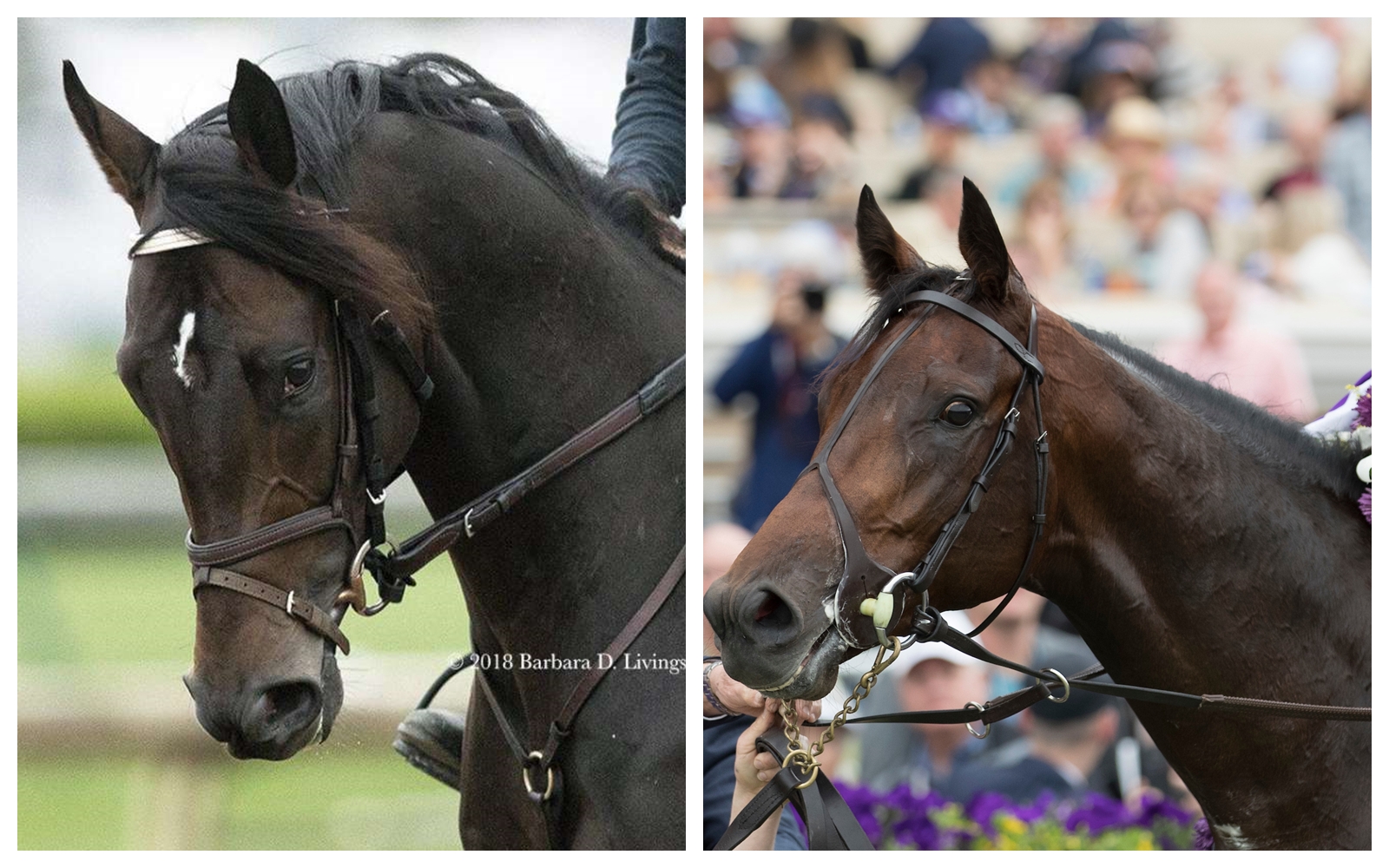
That’s Firenze on the left and baby Bolt on the right.
Two entrants share the same birthday – March 17, 2015. Firenze Fire and Bolt D’Oro were both born on that day which also happened to be St. Patrick’s Day. Sounds pretty lucky, if you ask us!
Fun Fact #5…
As far as jockey breakdown by nationality goes, the United States leads with six jockeys hailing from American soil. Panama, Puerto Rico and Mexico tied with the next largest amount – each boasting three jockeys apiece. France and Venezula each have two. And the U.K. and Ireland each boast one. Jockeys and their birthplaces are broken down as follows…
UNITED STATES: Mike Smith, Kent Desormeaux, Cory Lanerie, Robby Albarado, Draydon Van Dyke, Kyle Frey.
PANAMA: Luis Saez, Jose Lezcano, Ricardo Santana Jr.
PUERTO RICO: Jose Ortiz, John Velazquez, Irad Ortiz Jr.
MEXICO: Victor Espinoza, Luis Contreras, Paco Lopez
VENEZUELA: Javier Castellano, Junior Alvarado
FRANCE: Florent Geroux, Flavien Prat
IRELAND: James Graham
U.K. : Ryan Moore
Fun Fact #6…
My Boy Jack on the left and Mendelssohn on the right
The oldest horse running in the Derby this year is My Boy Jack, born on January 26, 2015. The youngest of the bunch is Mendelssohn who was born May 17, 2015.
Fun Fact #7…
This trio brought in the most prize money. Clockwise starting at top: Magnum Moon ($1.4 million), Mendelssohn ($1.9 million) and Good Magic ($1.8 million)
The most expensive horse in the race this year is Mendelssohn with a purchase price of $3 million. He was also one of the top three earners in the field.
Mendelssohn at the Keeneland Yearling Sale
Fun Fact #8
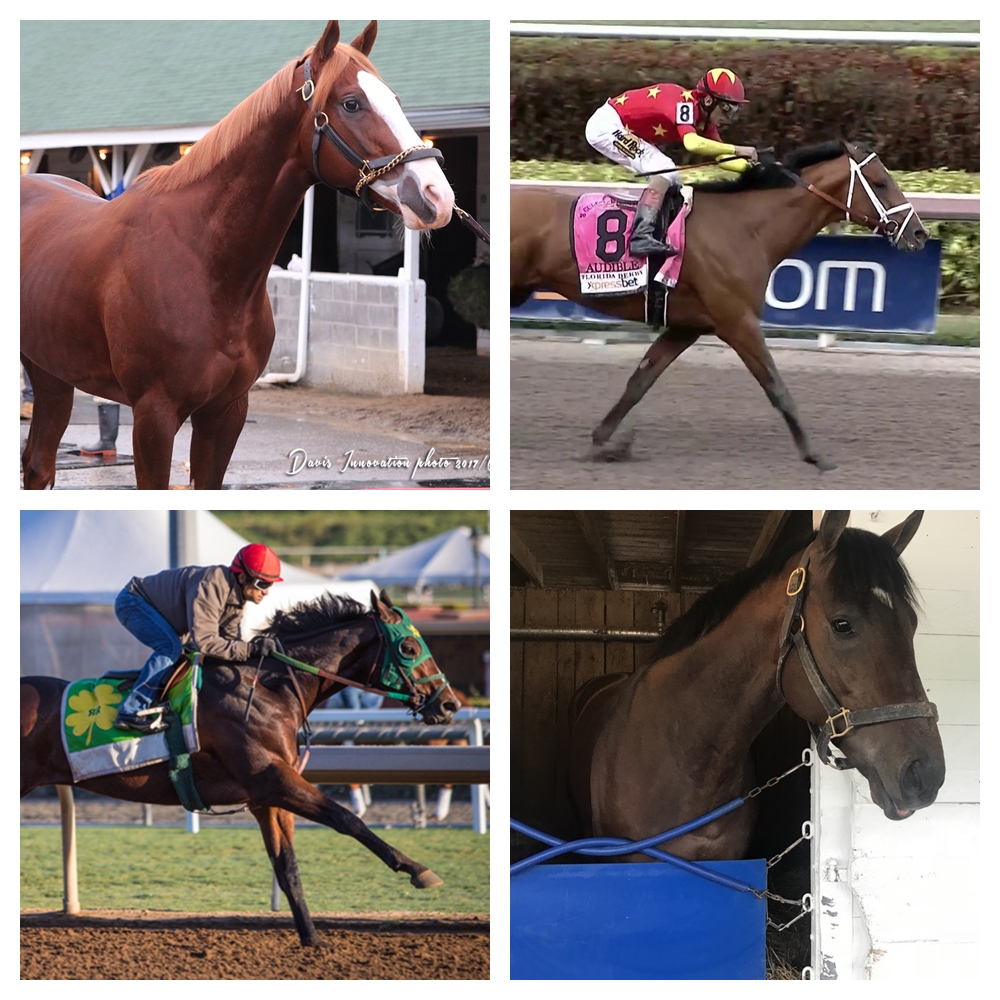
Clockwise from top left: Free Drop Willy, Audible, Lone Sailor and Bolt D’Oro
Four of the horses running in the race are associated with sports. Free Drop Billy was named after the golf term, free drop. Audible and Lone Sailor both have football connections. Lone Sailor was owned by the past owner of New Orleans Saints football team, Tom Benson who recently passed away. Audible refers to the football play call. And Bolt D’Oro was named after famous sprinter Usain Bolt.
FUN FACT #9
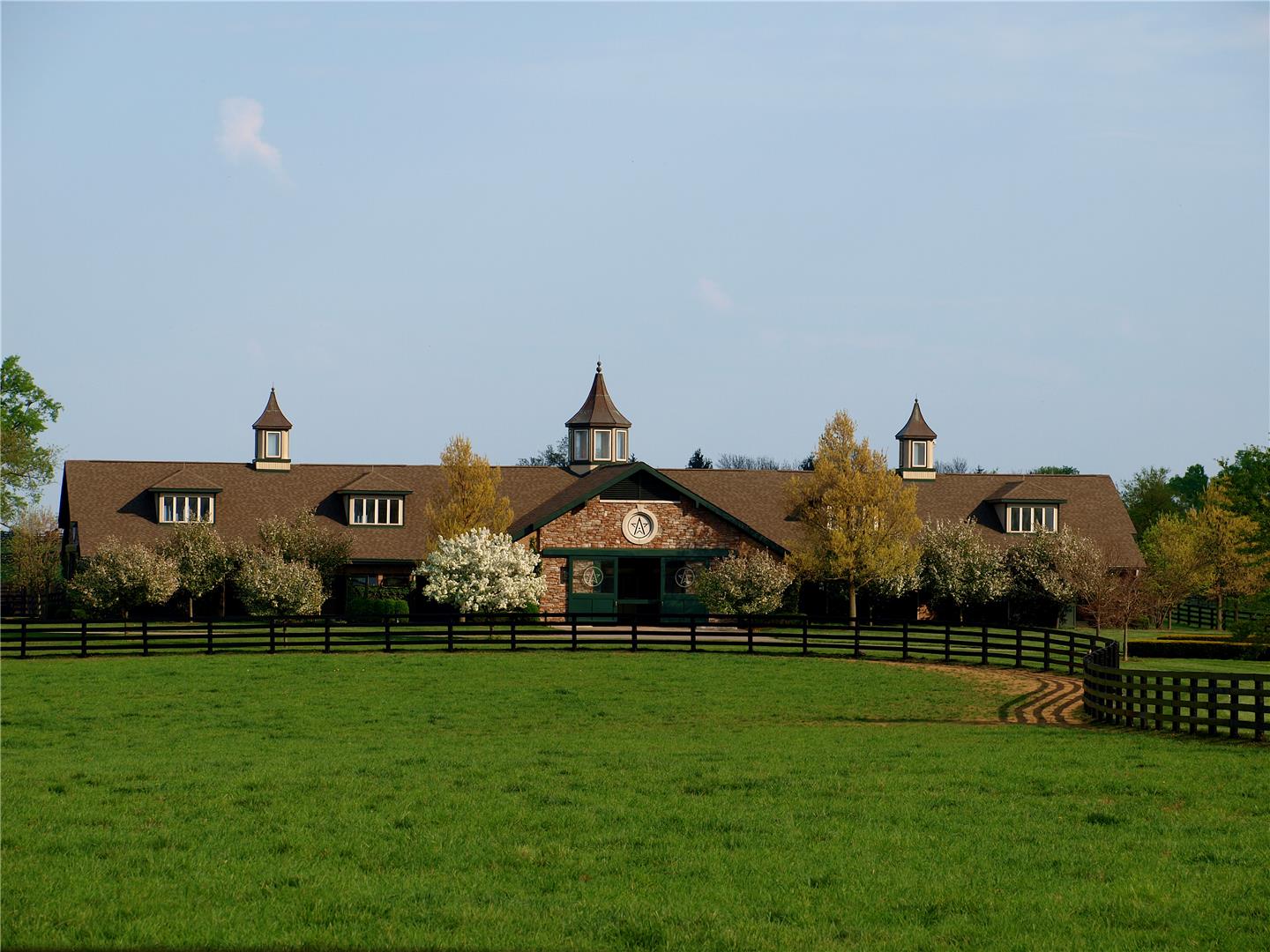
Winstar Farms
Winstar Farms in Versailles, KY has connections to four of the horses in the Derby this year. They are the owners of Audible, Noble Indy and Justify and were breeders of Bolt D’Oro and Noble Indy.
Fun Fact #10
As of this writing, Instilled Regard is the long shot at 99-1 odds. There’s the terrible cliche that says nice guys finish last, but we have big hopes for this guy, which brings us to the Vintage Kitchen’s picks for this year’s Derby winner…
If you have your own favorites, share them in the comments below. It’s always more fun to watch the race when you have your own specific champions in mind. Check out the complete list of contenders on the Derby’s official website here.
Cheers to daydreaming and Derby! The fun continues tomorrow with a post on our Derby party table decorations combining horseracing and Cinco de Mayo. Stay tuned!
Adelaida Cuellar photographed in 1901 with three of her children. photo courtesy of D Magazine.
In 1892, two young lovers crossed the border from Mexico into the United States and got married in Texas. They spoke no English but were very fluent in the language of love. They were dreamers yearning for better opportunities then their home country could provide, and they were determined to work hard to create a beautiful life that would bring them all they desired.
The newlywed years of Macurio and Adelaida Cuellar led them through a myriad of jobs on ranches around the Texas countryside. For five years they moved about before they settled down in Kaufman, Texas, a suburb of Dallas, where Macurio started sharecropping and Adelaida started a family. As the seasons passed, their family grew, eventually producing twelve babies.
This is an unidentified farm photo from the Cuellar collection. It may have been the farm where Adelaida and Macurio raised their family. If not, it gives an interesting perspective on what farm life looks like in Texas during the time Adelaida and Macurio lived and worked there. Image courtesy of the University of North Texas Digital library.
Ranch and farm work weren’t the most profitable of jobs, so Adelaida took a stall at the Kaufman County Fairgrounds in 1926 selling two things… chili and tamales. It was her hope that her homemade recipes, so loved by her family, would bring in a little extra income to help support her children. To her surprise, the food stand was an instant success. The profits she made from her entrepreneurial endeavor were much larger than farm or ranch work earnings, so Adelaida kept at it, turning her stall into a tidy little family business. Some of her children helped her cook while others formed a family band playing Mexican music to entertain the eaters.
During the 1920’s, Tex-Mex cuisine was a new style of cooking that combined traditional recipes from Mexico and Spain but with toned down spice factors which were more appealing to American palates. Adelaida’s chili and tamales debuted at just the right time – exotic enough for adventurous eaters and flavorful enough without being too spicy to dissuade repeat business. With every taste of tamale and every cup of chili, Adelaida’s reputation for preparing delicious Mexican food began growing.
Adelaida’s Cafe – simply called Cuellar Cafe – opened in 1928. Image courtesy of the University of North Texas Digital library.
In her mid-fifties, Adelaida opened her own restaurant which did well until the Great Depression hit and she was forced to close due to the terrible economy. Each of her grown boys inspired by their mother’s own entrepreneurial spirit opened their own independent Mexican restaurants in different cities throughout Texas, Oklahoma and Louisiana using the recipes that Adelaida made for them growing up.
Each of the sons, enamored with cooking just like their mom, quickly realized there was something missing from their independent ventures… family love and support. From the beginning, in the county fairground days, the Cuellar family was successful at the tamale and chili stand because they all worked together towards one common goal. But now the family was spread over many cities, and their restaurants couldn’t be as successful because they all weren’t working together.
This is one of the original porcelain neon signs from the first El Chico restaurant in Dallas. It’s now for sale on ebay here.
So in 1940, five of the brothers banded together to form one restaurant in Dallas, which they named El Chico. The entire family and extended family worked there together, each bringing their own unique talents.
Opening night of El Chico featured a Mariachi band to entertain the crowd. Image courtesy of the University of North Texas Digital library.
Everyone who worked at the restaurant was fluent in Adelaida’s style of perfection when it came to selecting quality ingredients and blending the spice mixtures in the correct way, so the food was authentic and consistent, which kept customers coming back. And the Cuellar family was proud of what they were accomplishing. At the heart of their restaurant lay the heart of Adelaida and all that she stood for. Her children wanted to extend that same level of love and devotion with all who dined at El Chico.
A popular dining place indeed! This photo was taken in 1945. Image courtesy of the University of North Texas Digital library.
Just like Adelaida’s chili and tamale stand, El Chico became phenomenally successful, making the Cuellar family and the El Chico brand one of the greatest American success stories. They went on to open more than 40 restaurants throughout the country, built a successful packaged food division for the retail market, and offered franchise opportunities for budding entrepreneurs. By the 1970s, they were the largest full-service Mexican food company in the world. They cooked for United States presidents at the White House, for princess Grace Kelly at her palace in Monaco and entertained movie stars like John Wayne in Dallas. The family stayed together through all these years and all this growth, never veering from what they knew – good food taught to them by Adelaida.
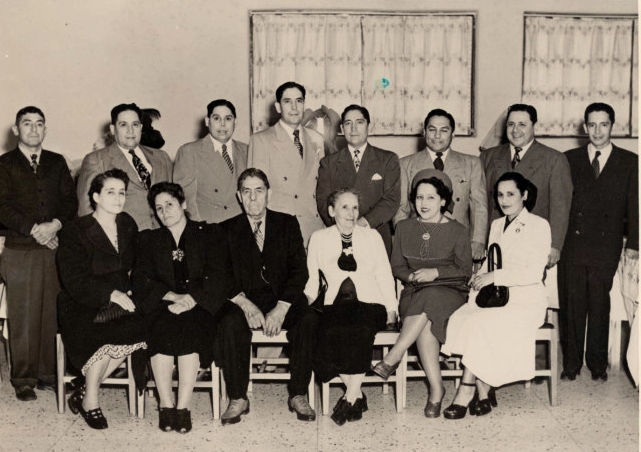
A Cuellar family portrait with Adelaida and Macurio in the front row center. Image courtesy of the University of North Texas Digital library.
Adelaida passed away in 1969 at the age of 97, not before experiencing the overwhelming success of her family and seeing how her humble tamale and chili stand at the Kaufman County fairgrounds grew into a multi-million dollar corporation over the course of forty years. The Cuellar children credit both their mom and their dad with teaching them about the value of working hard (and quickly) toward their goals and the importance of taking chances.
In 1970, El Chico published a small, spiral bound cookbook of some of the family recipes that they used in the restaurant, along with some others collected from their travels. Hailed as one of the most authentic Tex-Mex cookbooks ever published, it’s now a hard-to-find treasure. It is in fact, so special and represents such an importantand integral part of the ethnic American food landscape, that it’s held in special collection at the Smithsonian’s National Museum of American History. We are also very pleased to offer a copy in the kitchen shop.
Since Cinco de Mayo is coming up this Saturday, on the same day as the Kentucky Derby, we thought it would fun to highlight two vintage recipes from the El Chico cookbook to ring in the festivities. A general crowdpleaser with a ton of creative toppings, these recipes are fun party foods so whether you are celebrating Mexico or Kentucky, or both this weekend, there will be something edible for everyone.
On the menu it’s El Chico’s Homemade Beef Burritos & Ranchera Sauce. Both are really easy to make. You’ll have the whole thing whipped up in under 30 minutes. Each recipe features fresh ingredients with generous amounts of spices, so you can skip buying the taco seasoning packages and the taco sauce at the grocery store. There’s plenty of flavor between the two recipes. In addition to ground beef, you could also incorporate ground pork, turkey or chicken if you wanted to offer multiple variations.
What’s especially great about the Carne Mexicano recipe is that it includes vinegar which gives it a little bit of tang and de-greases the pan all at once so you don’t need a thickening agent like cornstarch or flour which is included in most commercial taco seasoning packets. As with many vintage recipes, we cut down the salt by 2/3rds, so we recommend starting with our measurement first and adding more to taste if you feel it needs it.
Carne Mexicano for Burritos
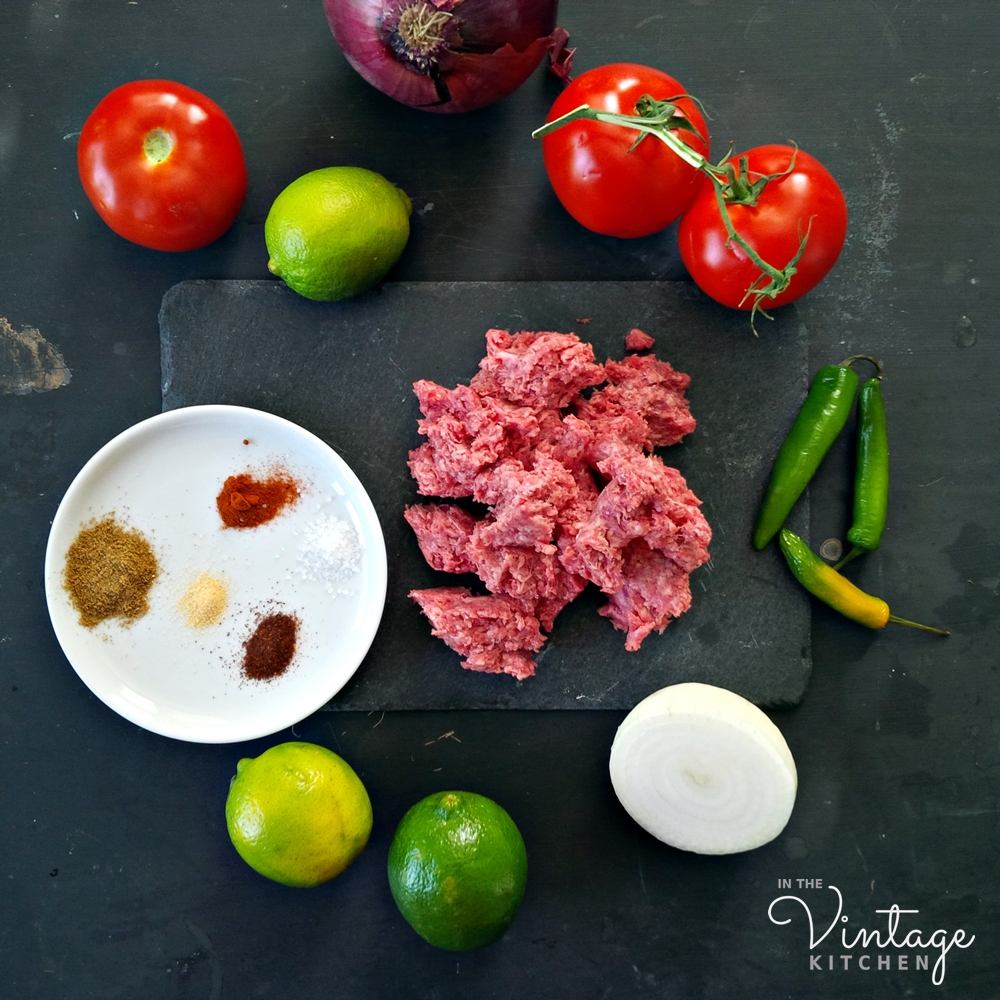
2 lbs. ground beef (we used grass-fed beef)
2 tablespoons chili powder
2 tablespoons paprika
2 tablespoons salt (we used only 2 teaspoons)
1 teaspoon garlic powder
1 teaspoon ground cumin
1/2 cup vinegar
1/4 cup chopped onion
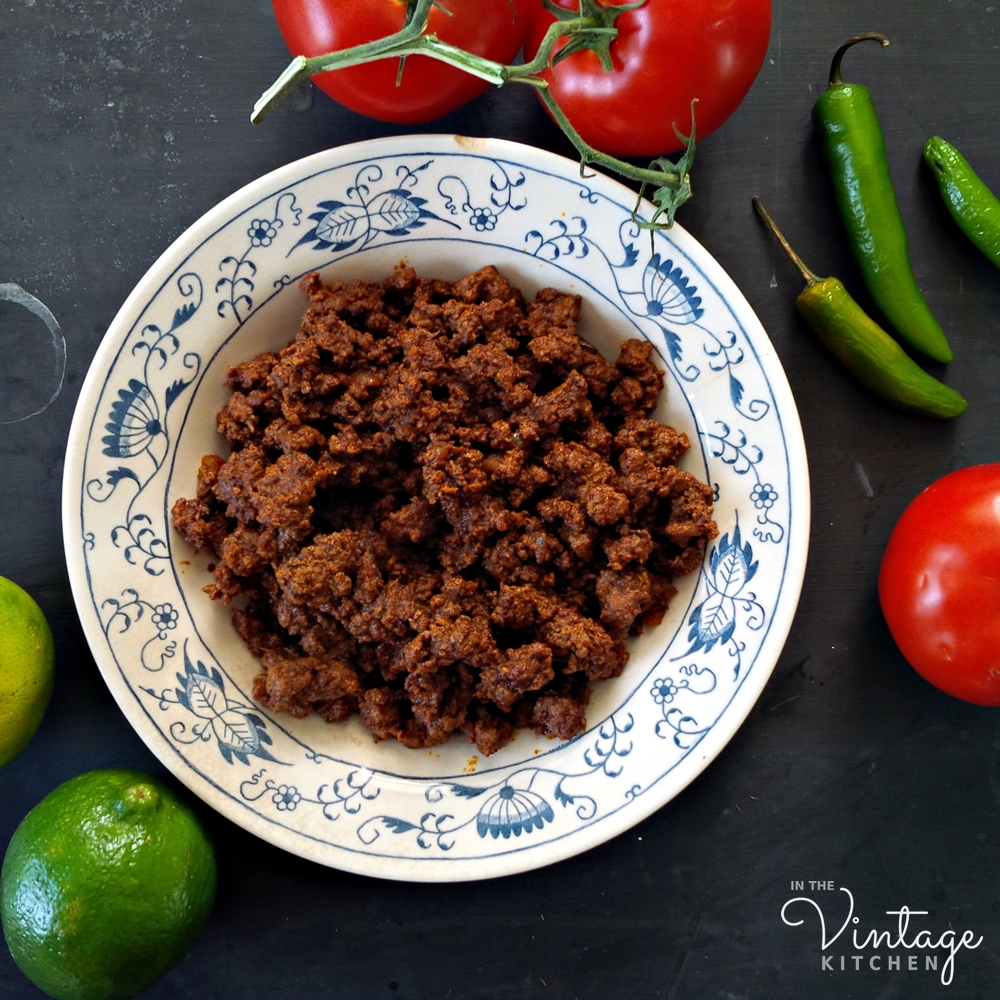
In a cast-iron pan over medium-high heat brown the beef and onions until cooked through. Add the spices and cook for 1-2 more minutes. Add the vinegar, scraping the bottom of the pan to deglaze it. Remove from heat and serve immediately or store mixture in a covered dish and keep warm until ready to serve.
El Chico’s Ranchero Sauce (A La Caballero)
2 cups fresh chopped tomatoes
1/4 cup chopped onions
1/4 cup chopped hot green peppers (we used serrano peppers)
2 tablespoons shortening (we used olive oil)
Salt and Pepper to taste
Saute the onions and peppers in shortening (or olive oil). When the onions are translucent add the tomatoes and simmer over a low fire for five minutes. Serve it immediately or at room temperature.
Obviously, the hotter your peppers, the spicer your sauce is going to be. This recipe makes about 1/2 cup of sauce so if you are cooking for a crowd you might want to double or triple the recipe. We used serrano peppers which were quite hot so a little bit spooned on top of your Carne Mexicano goes a long way!
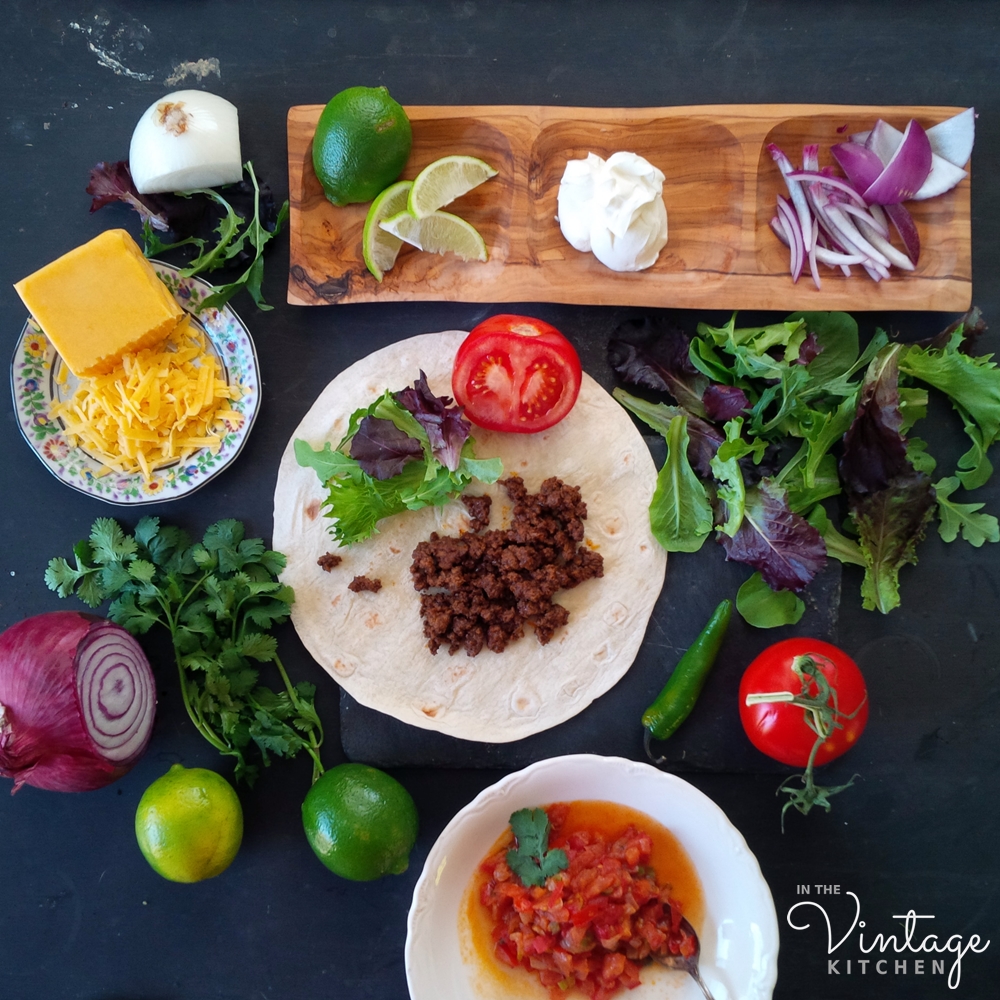
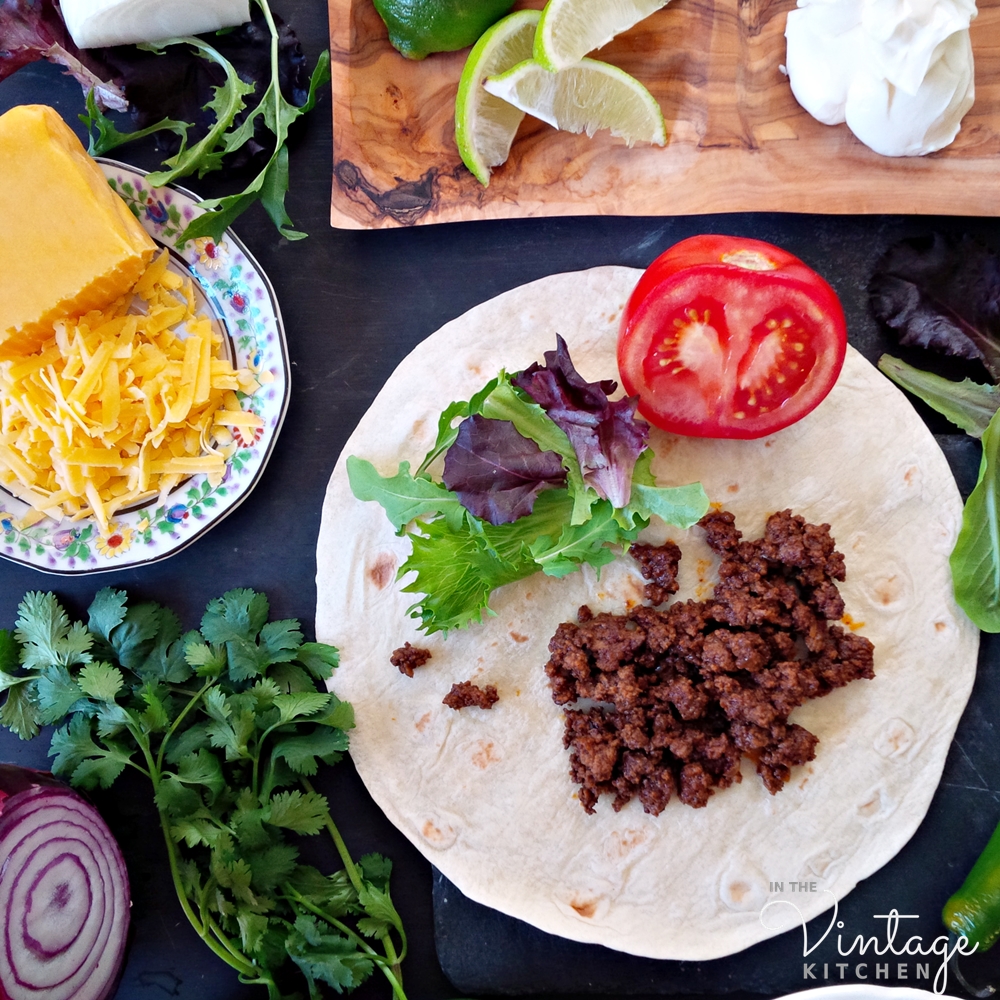
There are so many topping options when it comes to burritos, so your creativity can really shine here based on your preferences. El Chico suggested that their burritos include only cheese, refried beans, Carne Mexicana and the Ranchero Sauce. But we added a bunch of our favorite toppings too which included sour cream, spring lettuce, red onion, mango, tomato, cilantro, avocado and lime juice. Other possibilities re guacamole, green olives, rice, etc etc. The sky is the limit. Can your burrito ever really have too much stuff?
Coming up tomorrow on the blog, we’ll be sharing our picks for the Kentucky Derby winner, as well as our table decorations for the Derby Party, which tie together both the Mexican theme and the horse theme. If you are planning a party for either event, we’d love to hear how you are celebrating.
In the meantime, cheers to Adelaida and the Cuellar family for sharing their long-time favorite family recipes with all of us. We will definitely be sending a toast their way on Saturday!
Explore more information about the El Chico cookbook here. And learn more about the restaurant chain, still in operation, here.
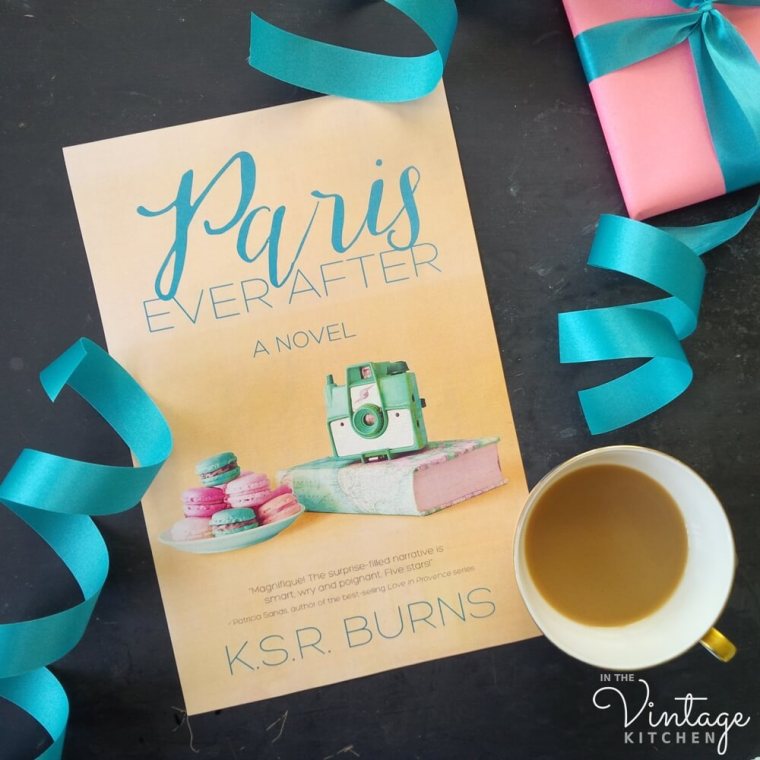
Cheers, cheers and CHEERS! We have a WINNER in our Paris themed giveaway contest. Congratulations to RoseOfSharon for winning a signed copy of the new novel, Paris Ever After,by one of Amazon’s bestselling authors K.S.R. Burns. A winning notification has been sent via email so please respond in order to claim your prize.
A big thank you to everyone who participated in this giveaway. We will have more coming up this summer, incorporating some different themes, so stay tuned! The fun is just beginning…
“I need to burn it all in my memory banks. I need to remember that no matter where I end up, Paris will always go on and on. It will be here even if I am not. Eternal Paris. Paris ever after.” – A quote from the book, Paris Ever After by K.S.R. Burns
In many romantic stories about Paris, a move to the City of Light winds up being the final destination – the reward for hard work or self-realization or love newly understood. The place where it all makes sense. But what happens when you move there in a fog of confusion about life, escaping a perfectly acceptable marriage back home in the States (for reasons you don’t even understand yet) only to discover that the magic spell of the city doesn’t instantly decide your future? What happens when you get there and feel comfortable and safe but have no direction and no support and your carrying along the biggest bit of baggage from your old life imaginable, a baby in your belly?
That’s the situation in which we are introduced to Amy Brodie, a food blogger, wife and newly pregnant mom from Phoenix, Arizona in the novel Paris Ever After. In the opening pages, we find Amy at a crossroads in her life, processing the fact that she can move in any direction – forward to a new independent start in France or backward to the familiarity of Phoenix with her baby’s father. Both are viable options and she spends the book deciding between the two with both her head and her heart.
Other characters emerge… William, her husband left behind in Arizona… Manu, the Frenchmen who offers her a job in Paris… Margaret, the British ex-pat who offers her friendship… and Herve who offers her the ultimate place to stay when all her decisions start unraveling. At the beginning of the book, Amy prefers the lifestyle of France over Phoenix and feels more in tune with herself there. But as William comes to Paris looking for her, we learn more about Amy’s complicated relationship with him, both the good and the bad and her feeling of ease in the city starts to dissolve. She juggles the natural desire to have a father for her baby’s life and a romantic partnership for herself while fighting feelings of dread and despondency when thinking of her home back in Phoenix.
William’s got his own reasons for going in search of Amy though, carrying a secret with him that he’s not exactly rushing to share. As the story progresses we learn that life going forward with him in the future would never be the same as what Amy knew of it in the past. Margaret and Manu and Herve also have their own dramas to contribute, each turning out to be not quite what they seemed in the beginning. As their peculiar situations evolve, Amy’s decision becomes more weighted. With her ultimate goal of choosing a lifestyle that is suited for both her and her baby, taking up residence in France isn’t necessarily the fairytale incubator it once seemed.
K.S.R. Burns (aka Karen), the author of Paris Ever After, takes readers on a twisting journey full of surprises as each new chapter unfolds. A pure escapist read for anyone who wants a break from their own complicated realities, Karen’s novel will whisk you away quickly into Amy’s dramatic world, where big decisions have to be made in a small amount of time before baby arrives and before Amy loses her total sense of self. Readers will be able to relate to the pressure she puts on herself to get things right – to make the best possible decision that ensures a successful new beginning for her and her family.
Can such a momentous feat be conquered in a matter of months? I won’t say any more to spoil the story, nor to interrupt the flow of dramatic twists and turns, other than to say surprises abound and just when you think Amy has it finally all figured out, new obstacles arise to alter her course of direction. In addition to surprising plot points, there is also a surprise recipe in the back of the book for Madeleines – a very French dessert that offers comfort and satisfaction to Amy in the story. It is a fun addition that will enable you to truly taste a little bit of France while you also read about it.
As part of a collaboration between Karen Burns and the Vintage Kitchen, we are very excited to announce a giveaway of a signed copy of Paris Ever After for one lucky reader. Enter for your chance to win by subscribing to our kitchen shop newsletter here before Wednesday, May 2nd at 12 noon (CST). One winner will be selected at random and will receive notification via email as well as here on the blog and on Instagram.
While you wait to hear the results of the contest, stop by Karen’s website. She is one of Amazon’s bestselling authors and has lots of stories to share including the prequel to Paris Ever Afer.
Paris Ever After is a thoroughly complete book on its own, but it also happens to be part two to her 2016 novel The Paris Effect, which dives into the life of Amy’s friendship with her best friend Kat and offers backstory on Amy’s life in Arizona. Although you don’t need to read The Paris Effect in order to understand the characters of Paris Ever After, it’s a great opportunity to learn more about Amy’s foodie past and the decisions that drive her to seek refuge in France. Find out more about The Paris Effect here.
Cheers to Karen on her new book launch! And cheers, good luck and bonne chance to all you readers!
The first week in May is quite spectacular this year as we celebrate Kentucky Derby, Cinco de Mayo, James Beard’s birthday and a very special Paris themed giveaway all in one week. That means you’ll be hearing from the Vintage Kitchen every day for the next six days (an unprecedented amount of communication from us!) as we pay proper tribute to each event. Hope you will be as excited about the week ahead as we are!
The giveaway kicks off all the festivities with a special blog post tomorrow announcing the specifics of the prize and a feature that will transport you to life in the magical city of Paris. Enter for your chance to win between now and 12 noon CST on Wednesday, May 2nd by signing up for the Vintage Kitchen shop newsletter here. One winner will be selected at random on Wednesday afternoon and will be notified via email and announced here on the blog and on Instagram. Stop by tomorrow and see what we have in-store for all you fans of France…
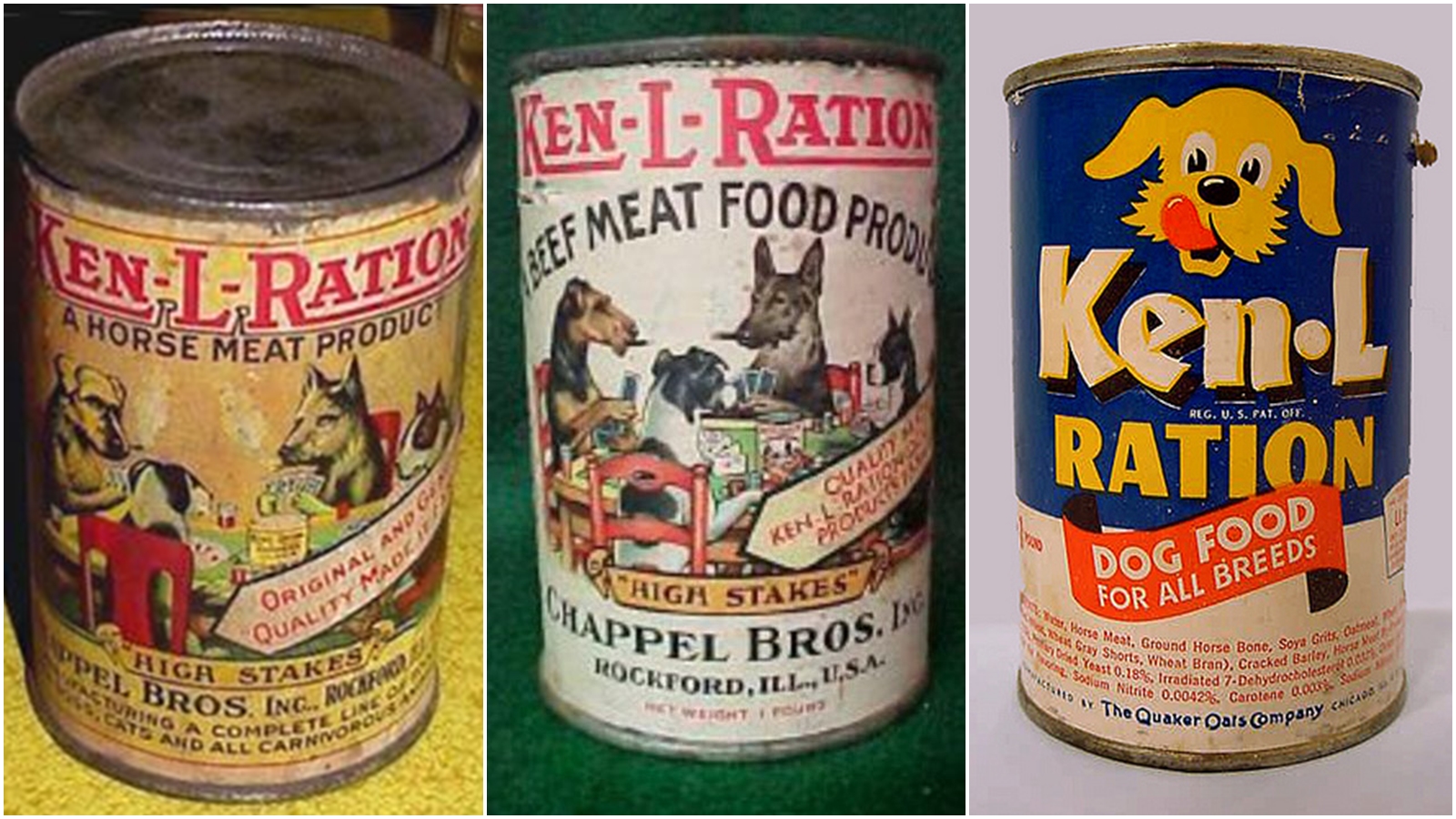
There once was a border collie from the Scottish Highlands who ate nothing but turnip greens and lived to be over 20 years old. Dogs in the 14th century ate bones and bread, goat milk and bean broth, meat, and eggs. In the latter half of the 19th century, dogs ate wheat meal, beetroot, and beef blood. In the early 20th century, they ate horsemeat. Today, dogs eat a variety of assorted things ranging from buffalo to chicken, brown rice to broccoli, fruit to fish oil.
Ken-L was the first canned dog food debuting in 1920 and featured horse meat. They added beef in 1921. Still, a popular ingredient through the 1960s, both horse meat and ground horse bone can be seen in the ingredient list on the mid-century can at right.
Since dogs were first domesticated over 12,000 years ago their diets have varied depending on geographic location, activity, and ownership. As descendants of wolves who eat mostly birds, fish, deer, rabbits, and other hoofed animals, dogs’ appetites have evolved to include vegetables, herbs, protein, and grains making food options more than abundant and diverse today.
There has never before been a time in history when there has been so much choice available in the dog food industry. From traditional shelf-stable canned and dried foods to fresh meat patties, freeze-dried jerky, frozen bones and a bouquet of vitamin supplements, feeding your dog today involves nothing more than practical understanding and common sense.
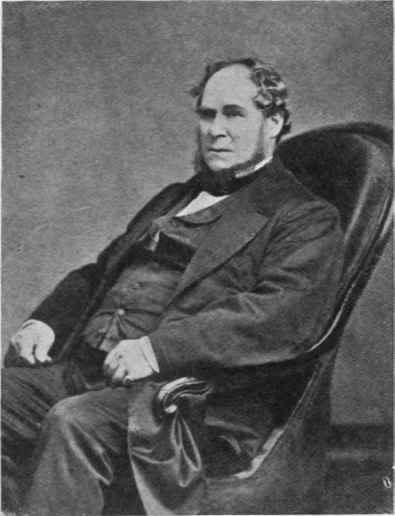
James Spratt, the father of food for dogs, commercially speaking. Photo courtesy of chestofbooks.com
We have this guy, James Spratt to thank for first coming up with the idea to commercialize dog food in the 1860s. He invented the world’s first dog biscuit after he observed England’s seaside dogs fighting over hardtack biscuits that were cast aside by sailors down at the docks. This ignited James’ interest in the idea of creating a whole canine meal that came in a compact shape, just like a biscuit – something that was easy to carry, easy to dispense, and easy to store. Spratt’s Meat Fiberine Dog Cakes were born shortly after.
An 1876 ad for Spratt’s Meat Fribrine Dog Cakes.
The cakes became so popular many companies started making their own versions, thus creating competition and a burgeoning marketplace. Now, pet food is a $31 billion a year industry just in the U.S. alone, and feeding your dog has gone from Spratt’s biscuits in the 19th century to basic canned meats in the 20th century to gourmet ready-to-eat dinners in the 21st century. That’s quite an evolution in less than 200 years.
With all this choice, it can be tricky to navigate all the options of what to feed your dog- especially if you walk down the pet food aisle at your local grocery store and see a bamboozlement of advertising with each brand declaring their food the best, the most nutritious, the most natural or organic or beneficial. You can feed your dog like a wild wolf or a pampered princess or a farm animal. You can spend $5.00 on a giant economy bag of dry dog food or $20.00 on a petite gourmet bag of artisan-crafted pellets. There’s canned food that comes in a solid lump with ingredients that you can’t pronounce and there are ready-to-eat meals in plastic tubs that resemble the beef stew you are making for your own dinner.
So which food does Indie, the enthusiastic taste-tester of the Vintage Kitchen eat? None of the above.
Instead, every day she gets a combination of fresh foods consisting of easy-to-gather ingredients that are readily available. Indie is a sociable pup and meets a lot of people in her city travels on a day-to-day basis. If there is one comment that she receives most often it is how soft and shiny her coat feels. It’s been described as everything from a plush blanket to a mink coat to a thick carpet. People think that she is completely pampered with lots of regular trips to the groomer but Indie is a tom-boy at heart and could care less about her pretty fur. She’s never been to the groomer, and she’s only had three baths ever, (each of which she totally hated). We attribute her great state – her glossy coat, her bright eyes, her abundant energy level and her eager appetite all to the good food she eats.
By making her own dog food, we have the opportunity to eliminate preservatives, fillers, by-products and known skin-allergy-causing ingredients like corn, wheat, and soy from her diet. We have better control over her overall health and can feed her the nutrition she needs based on weekly changes in her activity and lifestyle levels. That means on days she is more active, she gets more protein and more carbs to fuel all her running and jumping. On days she’s less active she gets more vegetables and less carbs so that she doesn’t put on sedentary weight and get lethargic. We have been feeding Indie this way for over five years now. Needless to say, she’s been an enthusiastic eater from her first bowl forward!
You might think that making your own dog food is labor-intensive, time-consuming, and expensive, but it is actually the complete opposite. As we learned above from dogs throughout history, their diet is pretty diverse just like ours. All her dog food ingredients come from the same place where we shop for our food – the farmers market, the grocery store, etc.. It takes about one hour to prepare a week’s worth of food (up to 14 meals) or 15 minutes a day if we decide to cook for her each night. Cost-wise on average, we spend about $10-$12 a week on the ingredients that make up her meals.
There are three main components to a healthy dog diet – protein, vegetables, and grains. Amounts of each vary depending on your dog’s size and activity level (for example, the more active your pup is, the more protein they should eat), but every day, in every bowl Indie’s meal consists of at least one element from each of these three categories for balanced nutrition.
PROTEIN
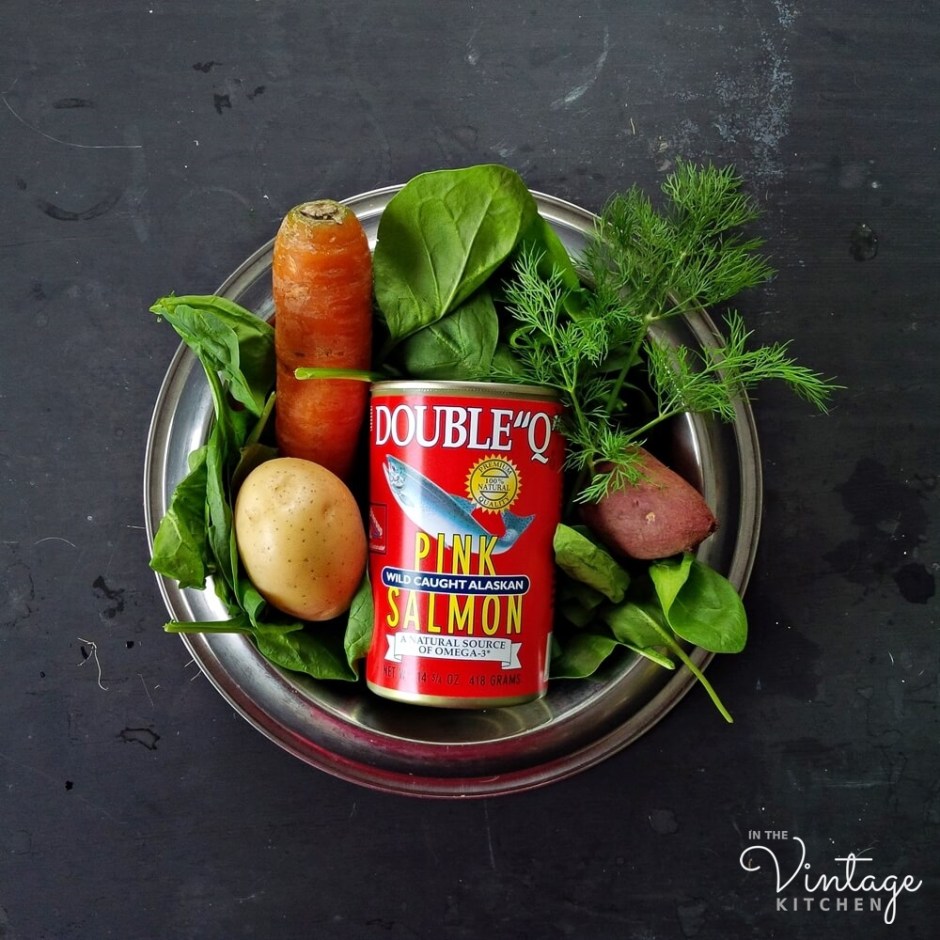
Indie’s main source of protein is primarily salmon. Usually, it’s canned salmon that includes the skin and bones. Sometimes she eats fresh salmon or frozen as long as it’s wild-caught. Occasional additions of chicken, eggs, beans and homemade broth also round out her main protein sources. Once every few months she’ll have a little bit of beef, pork, or lamb for variety. There is a theory about serving your dog raw proteins but we always cook Indie’s (with the exception of the canned salmon) just to be on the safe side as far as bacteria. We cook her protein in one of three ways – sauteed in olive oil on the stove, poached in broth or baked in the oven. Eggs are usually scrambled or hard-boiled. And beans are canned.
VEGETABLES
As a true gourmand, Indie loves most vegetables. Her regular rotation includes sweet potatoes, spinach, kale, apples, potatoes, carrots, peas, cucumbers, tomatoes, parsley, pineapple, beets, celery, pumpkin, zucchini, butternut squash, acorn squash, bell peppers, broccoli, cauliflower, strawberries, avocado, pears, collard greens, cabbage and okra. Her vegetables either come from the farmer’s market or the grocery store. She mostly eats what’s in season, except for sweet potatoes and apples which she eats pretty much year-round. And while she eats all of these vegetables mentioned above, she doesn’t eat this whole list all at once. Generally, she eats 2-3 different types of vegetables in one meal.
GRAINS
Primarily her main grain is white rice but sometimes we’ll add in cooked oatmeal, barley, wild rice or quinoa for variety. White rice is better than brown rice because dogs have short digestive tracts (unlike people who have long digestive tracts) so rice passes through their system quite quickly. The main benefit of brown rice is that it acts like a scrub brush for the digestive system making it great for people but not necessary in dogs since it passes through too fast to benefit.
The part that takes the longest when in it comes to making homemade dog food is baking the potatoes (one hour in a 425-degree oven) and cooking the rice (15 minutes). While the potatoes are baking and the rice is cooking, we prepare the vegetables by chopping them into bite-sized pieces, and either sauteeing, boiling, or roasting them. We also use this time to boil the eggs, open the beans and/or cook the proteins as well.
By the time the potatoes are done – all the other dog food components are ready too. We let everything cool down to room temperature before adding all the ingredients together in one large mixing bowl and tossing it all to combine. When we make a big bach like this for the week, we divvy up the mixture into smaller, daily dose-sized containers and store them in the fridge.
Indie’s dinnertime bowl consisting of 1/3 cup canned salmon, 3/4 cup cooked white rice, one sauteed carrot, one half of a hard-boiled egg, two finger-sized sweet potatoes (with skin), a handful of sauteed spinach and one small new potato (with skin).
MEASUREMENTS
Indie eats usually 1 1/2 cups of cooked rice, 2/3 cup of protein and 2-3 cups of vegetables per day. She eats twice a day – breakfast and dinner. She weighs 55 lbs and is moderately active as far as exercise. What we feed her reflects her lifestyle and activity level so if you want to start making your own homemade dog food too, use it as a guide only and not specific measurements. Adjustments and modifications will need to be made for your own dog’s size and energy level as well as how often you feed your dog per day and their own individual appetite preferences. Large dogs obviously need more food, small dogs less.
When we were visiting our friend’s house for the weekend, Indie let everyone know her true thoughts on the raw kale we newly introduced to her diet. No thank you!
PERSONALITY QUIRKS
One of the things that will become immediately apparent when you start making your own dog food is how quirky your buddy can be. For instance, Indie will only eat her kale if it is sauteed in a little bit of olive oil. If it’s included in her bowl raw, she’ll pick out all the pieces and lay them next to her bowl. Her not-so-subtle hint that kale is only great when it’s cooked! She also usually likes most of her vegetables cooked unless they are finely grated like we sometimes do with raw carrots, celery, zucchini or broccoli. Usually, we just chop and boil, sautee, or oven-roast all of her vegetables until soft, but not mushy.
If you start making your own pup’s food, there are a few simple things to keep in mind when determining what’s good and bad for canine consumption…
A FEW FOODS NOT TO ADD
Never add salt or pepper to your pup’s protein while cooking. (If you are using boneless, skinless chicken breasts or fresh fish cook them in olive oil instead of butter.)
Onions
Chocolate
Rhubarb
Spices
Apple seeds and cores
Raisins, grapes or plums
Lemons or Limes
Bones of any kind (except the ones in canned salmon are fine)
ADDITIONAL FUN THINGS TO ADD ON OCCASION IN MODERATION
Greek Yogurt
Peanut Butter
Olive Oil
Cheese
Applesauce
Bread
Nuts (finely chopped)
Basically, when it comes to cooking for your dog think of it like cooking for yourself. If you are making scrambled eggs for yourself for breakfast, portion some out for your pet too. If you are making steamed broccoli for your dinner, steam some extra for your pup. Or if you are making a traditional spinach salad for your lunch, chop up some extra spinach, bacon and egg for the dog bowl. You’ll discover how fun and creative cooking can be for both you and your pal.
If you are uncertain whether or not you want to switch your dog’s diet to a 100% homemade one – start small with baby steps and throw in a cooked egg or a few slices of apple with their food and see how they like it and then expand little by little.
The nice thing about feeding your pup the food you make is that you can see results or benefits within a few days. Depending on how much fresh food you introduce, their coats will be shinier, their energy levels more balanced and their attention more focused (especially at mealtime!). You will also be able to monitor their health by what’s going in and what’s coming out. We have to pick up after Indie, since we live in the city so it’s a good opportunity to tell if everything is in balance and processing well. If her waste is runny or mucousy-looking rather then firm and solid then we know an ingredient is upsetting her stomach lining and we can quickly recall and identify which ingredients we’ve recently fed her and can adjust her fresh foods from there.
All in all, we hope that making your own dog food will be fun and enjoyable for both you and your pup. If you already make your own homemade dog food, please share your story in the comments section below so that we can continue to learn together and create delicious meals for our wonderful companions. Indie is ALWAYS ready to test out a new recipe!
Cheers to our canine pals and to all the fresh dinners they inspire. Happy cooking!
There are sibling rivalries, legendary love affairs, epic business successes and terrible company failures. There are cross-continent travelers, centenarians who never age and homebodies who would never think of leaving. There are the everlasting partiers, the quiet dignifieds, and the rebel-rousers with battle scars to show. Forget all the drama that’s occurring on your tv screen or on your phone. Compelling, real-life adventures are happening right in front of you, right on your kitchen table. Welcome to the dramatics of the age-old dishes. They carry the stories of what we’ve eaten across our imaginations and over time.
Today we are highlighting some of the stories that make table settings more interesting and conversations more memorable. When we stock plates and curate collections in the shop we are looking for unusual designs and elegant patterns that can easily be incorporated into your everyday routine for a splashy bit of decadence in both the thought and feel department. We like old china to look old because that’s what ignites the imagination. To us, there is nothing more disappointing then standing in front of a dish trying to decide if it’s new-to-look-old or old but so brand-new looking that you just know it’s never ventured out of the china cabinet. In the Vintage Kitchen, we like dishes that bring some story to the table with an extra added dose of depth and charisma to enhance the food that we prepare.
A few weeks ago on Instagram, we did a before and after photoshoot of a simple yogurt and coffee breakfast to demonstrate the difference and the impact of ordinary vs. extraordinary. On the left is plain, modern, basic American-made dishware. On the right is colorful vintage handpainted dishware that is more than 60 years old and comes from another country. Don’t you think the mood of the morning changes dramatically just with a hint of some old time interest?
The dishware on the left are all modern pieces in basic white. The dishware on the right features a 70-year-old handpainted saucer and a 60-year-old gold-rimmed monogrammed teacup.
A plate is a plate, you might say. But it’s really so much more than that too. It’s someone’s artwork. It’s a town’s business and a country’s export. It’s an owner’s style expression and a collector’s pride and joy. It’s a plate but it’s also a passion.
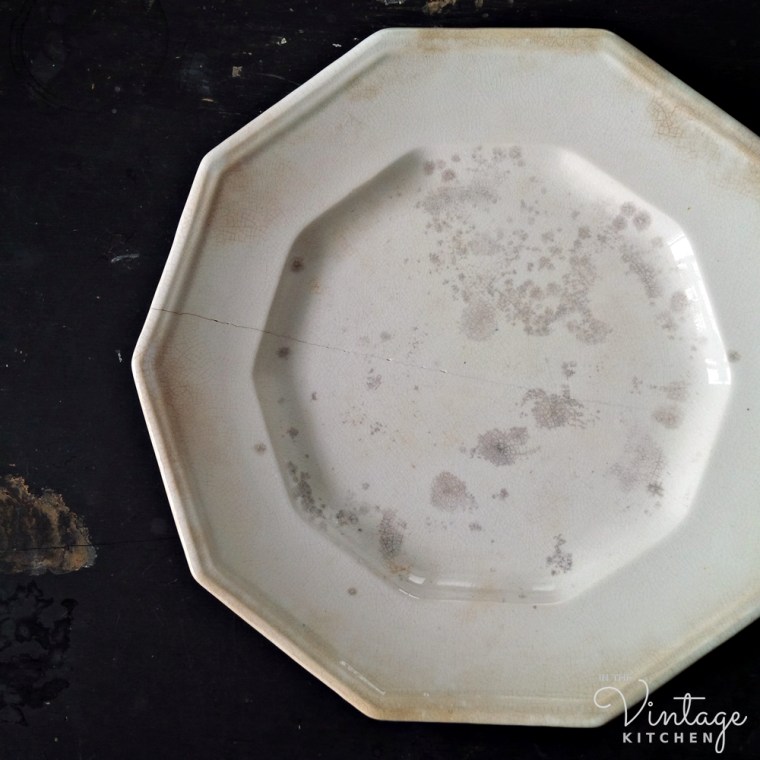
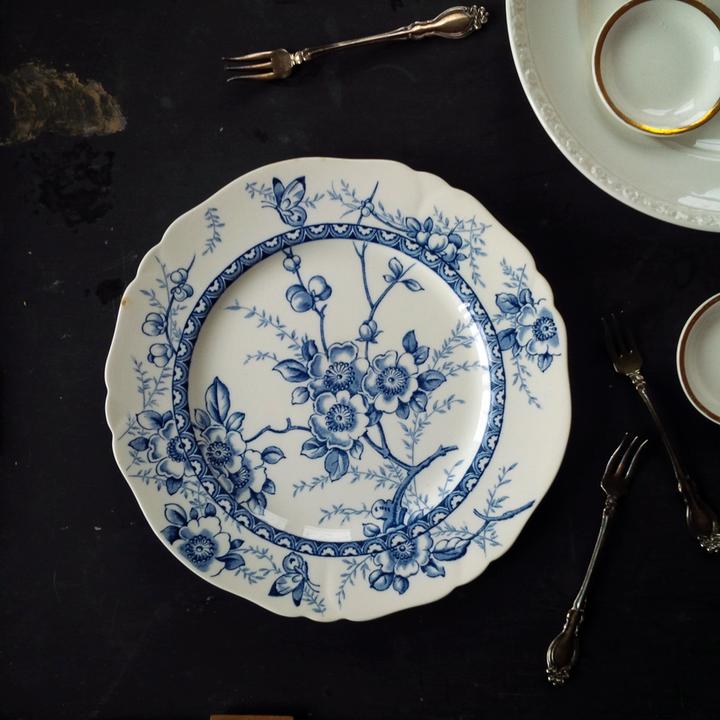
Take this one for example… a 9.25″ inch white ironstone plate with a 10- sided polygon shape. It’s hefty, weighing close to one pound, and its speckled with age spots that resemble the shadowy craters of the moon. There is a long delicate crack that measures almost 7″ inches right across the middle and I fear that any day now, it will split the plate in two. When it touches down on another surface, no matter how gently, it broadcasts a two beat thump like a hollow footstep. I think that’s the history of the plate trying to talk. A spirit wanting to tell some secrets. This plate carries a lot of those. It’s 183 years old.
If it was used once a day, every day, for 183 years it would have served a total of more than 60,000 meals throughout its life so far. A remarkable feat for any piece of kitchen equipment, let alone one of a fragile, easy-to-break nature. How many times over the course of its life has this plate been set down and picked up? Whose hands touched it and where did they carry it?
Made in England by C & WK Harvey between 1835-1853, it tells the story of the hustle-bustle days of English pottery making. The Harveys were a father/son team made up of the Charles’ (Sr. & Jr.) and William K. Their pottery plant was located at the Stafford Street Works in the town of Longton, Stoke-on Trent, England – a section of town that Charles Sr. built in 1799 to house factories for a number of different pottery makers.
Stafford Street Works then and now.
In the early 1800’s, Stoke-on- Trent was the hub of pottery manufacturing for the entire country of England and employed hundreds of thousands of workers. Parts of the Works are still there today, although now it is a mixed-use commercial neighborhood, primarily consisting of retail storefronts. Almost all of the potteries once associated with it are now gone.
For things like salads, and cheese and crackers, fruit, scrambled eggs and dessert, the old Harvey plate gets used all the time. It’s shiny and smooth and substantial under the touch of fingertips. It’s bright white and pale tea and watery grey in color. It’s got so much crazing, you barely even notice all those zillion fine lines running every which way. It’s simple and it’s extraordinary all in one. It appears often in the Vintage Kitchen photo shoots.
Photos clockwise from top-left: The prop behind the pineapple; serving Carrot Risotto, breakfast time with Jessie Hartland’s Crepes, holding onto the frozen figs and behind the stacks of sugar cookies.
Now so rare in availability pieces from this pottery maker are mostly seen only in museum collections. It’s moved with me four times since I found it more than 10 years ago. With each move, it gets wrapped in a thick sweater and then an even thicker blanket and then transported in the clothes boxes (the best place to pack your most treasured dishes!) to ensure a safe arrival. The crack hasn’t gotten the best of it yet. Fingers crossed, that it never does.
Somewhere along the timeline of its long life, the Harvey plate crossed the ocean from England to America and eventually found its way into an antique shop in the rural South where I found it. Exactly how it got from the U.K. to the U.S.A. is where imagination takes off and the topic of conversation begins. Perhaps it came by boat, packed in someone’s steamer trunk in the late 1800’s. Maybe along with a matching set of dishes destined for a new home in a new country. Or perhaps it embarked on a lengthy 1930’s journey through the mail and then via train where it chugged through cities and states, time zones and territories. Maybe it sat on a festive dinner table celebrating the end of slavery or the rise of the civil rights movement. Or maybe it arrived in America much later – in the 1980’s via airplane – a treasured find from a jet-set vacationer who fell in love with the antique history of England.
We’ll never know the exact story but it is fun to speculate on all the possibilities. Many a dinner party have been enjoyed discussing this very plate’s past. Often times, the more wine poured the better the story gets. Since it is an active worker in the Vintage Kitchen you’ll never see it available in the shop but we do offer many others with equally interesting stories to tell.
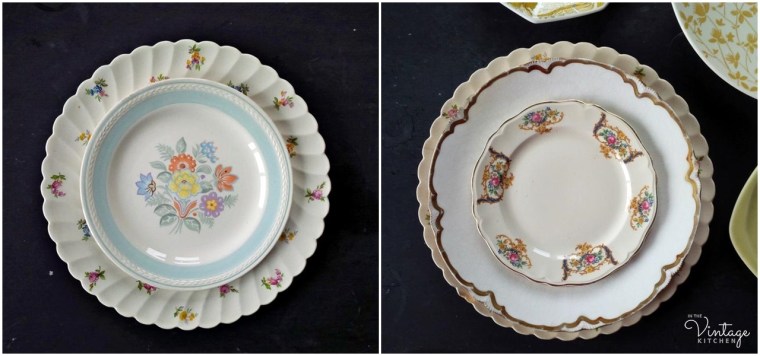
Clarice Cliff and her pretty floral plates were designed in the 1930’s for Royal Staffordshire. Clarice was a legend in the English ceramics world from the 1920’s to the 1960’s, designing hundreds of eclectic pieces that were admired by collectors the world over.
Clarice Cliff (1899-1972)
Considered one of the most remarkable ceramic artists of the 20th century, Clarice is revered not only for her artistic merit but also her devotion to finding beauty in unusual shapes, colors and designs that were considered very unorthodox in relation to other kitchenwares produced during her lifetime. She was also a brilliant businesswoman – savvy not in an aggressive sales-driven sense, but intrinsically smart, using her own intuition and infectious love of her craft to guide her career, thus attracting a devoted fan base. Her Dimity pattern plates burst with the bright colors of spring. We paired them in two different mix and match collections combining similar colors and unique shapes to compliment the bright and fun-loving personality of Clarice herself.
There is the story of the Willow pattern that has been captivating romantics since the 1850’s. The tale is English in origin but it was based on the original Blue Willow porcelain pattern that was made in China during the 1700’s. The tale involves a wealthy girl who falls in love with her father’s accountant. Her father, who does not approve, forbids the romance and arranges his daughter’s marriage to another man more suited to the family’s prominent social standing. The night before her arranged marriage, as the Willow tree starts shedding its blossoms, romance wins and the accountant and the girl run away together living happily for many years. One day the other suitor finds out where the couple is living and kills them. After death, the young lovers are reunited in the form of birds flying high above the landscape.
All the elements of the story are drawn out on the plate. You’ll notice the palace where the girl grew up, the bridge that takes her and her lover away, the island where they live happily together and the birds they eventually become overhead. Lots of china companies caught onto the fact that this was a popular pattern and an even more popular story and began producing their own versions in different colors. This red willow plate was made by famous American pottery company Homer Laughlin in the 1940’s. We combined it with two other Asian inspired plates to create our own fabled love story collection…
A three-piece set containing Asian themed dinner plate, bread plate and mini dish.
Similiar to the story of the Harvey plate, the Meakin brothers, Alfred, George and James, ran several potteries in Stoke-on-Trent and Tunstall, England. Alfred, produced this stunner, the Medway Blue under his own pottery label Alfred Meakin England in 1897. Exquisitely detailed, it’s hard to imagine that anyone could or would part with this beautiful plate, but like the Harvey, it somehow migrated over to America. Its journey wasn’t without fault or flaw – there’s a sign of adventure lurking in a small very old pencil point sized chip near one side of the rim.
Celebrating over 120 years of life, this plate holds all the dinnertime stories. 44,000 of them. When we look at it, we see the pretty pattern but we also see faces. People through history who stared down at its contents. Their hair-dos and their makeup, their tuxedoed bow-ties and their evening gowns, their earrings and their mustaches. We imagine the conversations while they ate their chicken and fish and game meats. Would we be discussing the same dramas of the day if we served a slice of pizza on top of the same plate?
Other patterns on other dishes ignite similar questions and thought process. When we look at this golden-edged Pope-Gosser plate made in Ohio in the 1920’s we see Jay Gatsby written all over it. Funny enough, it’s pottery founder I . Bentley Pope, an English transplant to America, was a swashbuckler of a salesman and a charming wordsmith. Perhaps he had a bit of the Gatsby or the F. Scott in him too.
Last September, when we discussed the book A Taste of Paris, we learned from author David Downie that the original dinner plate was nothing more than a flattened loaf of bread on which food was piled high. Between that primitive time and now, it is amazing to think how far we have come since the days we ate our dishes. If you are interested in learning more about other plate histories, visit the shop and see which ones spark your heart. We’ve listed both collections and single plates in case you want to mix and match yourself. If you have a favorite from any featured above, share it in the comments section below. We’ll be excited to learn which ones appeal to you and why!
These are some of the other unique stories… feuding brothers, vanishing nature and celebratory statehood. Find them all in the shop here.
To celebrate all the ladies in your life that would appreciate a homemade dinner served on a lovely plate we are having a 20% off sale in the shop which runs now thru May 13th. The discount is available for all items in the shop and will be applied to your entire order. Use the coupon code MOTHERSDAY at checkout to receive the discount.
Cheers to all the adventurers out there who keep life interesting, both plates and people! May the stories continue and the memories bloom.
You could assume a lot of things about Bette Davis. Perhaps you’ve watched her movies (all 100+ of them) and you know her characters… smart, complicated, dramatic… and you think, personally, she must have been like that too. Or maybe you’ve read her books and know that her life hasn’t always been charming or easy, and you might think she bravely dealt with a lot of disappointment. Or perhaps you’ve seen her past interviews on television or youtube and witnessed how funny and polished and magnetic she was even in the off hours of her professional life.
All those instances might lead you to assume things about Bette, making you define her as one thing more than another – brassy, smart, privileged, funny, vulnerable, demanding, narcissistic, intense, wise, melodramatic, sincere, even terrifying. Thanks to Kathryn Sermak’s new book, Miss D & Me, we can put our assumptions aside and know first-hand that Bette was a little bit of all those things. And so much more.
It is always fascinating to me to read about the behind-the-scenes lives of people in the public eye. Especially those stories shared by people who worked closely with a celebrity on a daily, detailed basis. Mostly because it breaks down the perception barrier of thinking that famous lives are so much more different than our own. That somehow fame and notoriety have morphed them into other-worldly figures washed clean from weakness and frailties. We generally only get to see one side of a famous person’s life depending on which part the media chooses to focus on, but with behind-the-scenes stories, you are offered a glimpse into a much more diverse landscape than any two-minute news clip or ten-minute interview could provide.
Ordinary people that work alongside extraordinary people are witness to the three-dimensional side of stardom – all the good and all the bad wrapped up in one experience. Like the relationship between Katharine Hepburn and her cook Norah, or Frank Sinatra and his valet George Jacobs or Madonna and her brother Christopher we are offered the chance to understand that the lives of these seemingly mythical creatures are really just fellow human beings, both flawed and fabulous.
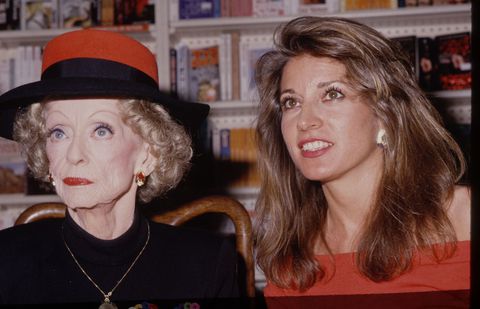
When Kathryn Sermak first came to work as Bette’s assistant in 1979, Kathryn was a young, carefree Californian who spelled her name the classic way – Catherine – and had just newly spelled out a dream of one day living in France. Bette was in her 70’s, still working and very much set in her ways. Kathryn thought she was taking a simple summer job that would enable her to fund her way to France – not even really aware of who Bette Davis actually was. In turn, Bette thought she was getting a competent, sophisticated assistant in Kathryn whom would be both professional and perfunctory. Both were in for a very big surprise.
In the early, uncertain days, Kathryn didn’t expect to eventually count Bette as one of her best friends and Bette absolutely never entertained the idea that Kathryn would become like a daughter to her. At first, everything was wrong for both women. On Bette’s side, Kathryn was not enough – she wasn’t cultured, she wasn’t able to anticipate needs, she wasn’t sophisticated, nor groomed for the level of lifestyle that Bette had grown into. On Kathryn’s side Bette was too much… too demanding, too overbearing and too controlling. Both thought they would never last the first week together.
The turn in their relationship from bad to better came down to one simple little thing – an egg. Bette’s breakfast most always consisted of a three-minute egg. The proper cooking of it was her litmus test as to the value of any good assistant’s worth. There’s not much to cooking a three-minute egg. It involves a pan of boiling water, an egg still in its shell and three minutes of simmering. But Bette added a twist to this simple test. How do you cook a three-minute egg in a hotel room with no stove, no pots and pans and no kitchen? Perplexed, Kathryn had no idea until Bette motioned to the in-room coffee pot. Then hot water was brewed. The egg was placed in the glass coffee carafe and the time was monitored on a wristwatch for 3 minutes exactly. In this small test of skill, it wasn’t that Kathryn failed to quickly and cleverly assess the options of impromptu cooking in a kitchenless room, but instead, it was the trainability of her actions that caught Bette’s attention.
That was the beauty of their relationship and the bud that ultimately bonded them together. The fact that Kathryn was young, fresh and naive while Bette was experienced, opinionated and worldly proved a combination of character traits that formed a tight friendship that lasted the rest of Bette’s life. It wasn’t always easy for these two women learning about life and each other day by day, but by the end the experience was invaluable.
There were outlandish moments, like when Bette insisted Kathryn change the spelling of her name from Catherine to Kathryn so that she would be more memorable (which she did!). There were all the lessons Kathryn had to endure… etiquette, elocution, table manners, how to walk properly, how to dress effectively, how to eat with decorum and how to hold court at a table full of strangers.
There were awkward moments, when Bette’s insistence on how to appropriately handle certain social situations was so outdated, that Kathryn would bear the brunt of the embarrassment. This was especially apparent when Bette insisted on dressing Kathryn for a formal dance in Washington DC complete with fur coat, gloves, a designer dress, expensive jewelry and dance lessons only for Kathryn to encounter a room full of denim-clad twenty-somethings casually hanging out in a dance hall.
There were the vulnerable moments when Bette crumpled up in the face of public humiliation as her daughter wrote an unflattering tell-all book, or when Bette threw off her wig in the car one day and embarked on a temper tantrum that was heartbreakingly child-like. There was oodles of advice about men and relationships and sticking up for oneself in the face of adversity. And there were the laughs and the conversations and the sweet letters that Bette would write to Kathryn expressing all the appreciation she felt for her darling assistant and her close friend. There were silent treatments and long work days, elegant cocktail hours and thoughtful gifts, tears and tenacity, laughter and luxury. There was life, with all its good and all its bad.
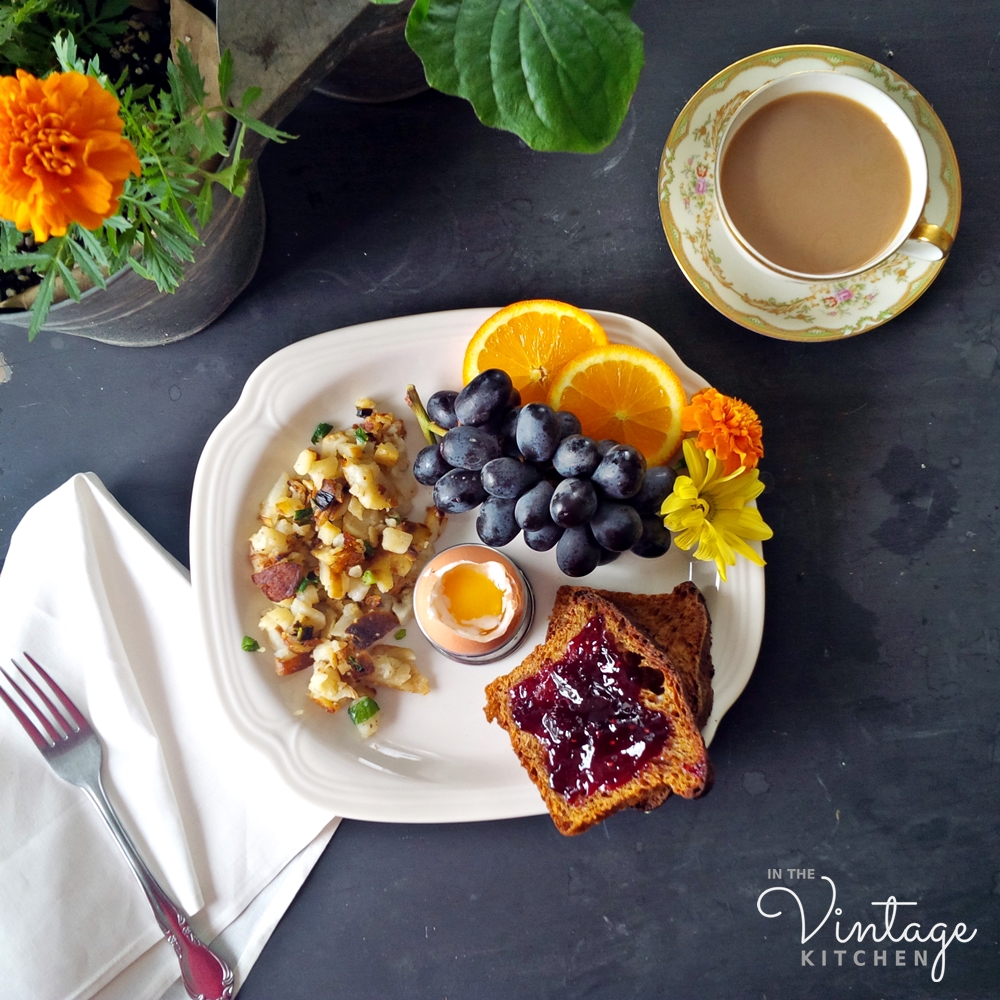
And there were eggs – lots of eggs. Bette and Kathryn traveled the world together and ate at many fine restaurants, but the food Bette would choose to make for herself or her family on days off was simple fare that harkened back to her New England roots. Homemade burgers, cucumber salad, cornish game hen, wine spritzers, clam bakes, fresh berries with cold cream… those are the foods that she liked to make. For this post, our breakfast menu inspired by Bette Davis includes the following:
It’s a simple menu symbolizing all that was Bette Davis – sweet, salty, fresh, traditional, colorful, warm, cool and classic. It takes just a few minutes to make and is so easy it doesn’t even require detailed instruction. Simply boil an egg for 3 minutes. Slice some homemade bread and slather it with jam. Bake a potato in the oven for an hour and then finely chop it up with some scallions and salt and pepper and add the mix to a pan with some olive oil and let it cook until it turns brown and crusty. Adorn the plate with fresh fruit. Tah-dah! Breakfast, Bette Davis style, is ready!
Kathryn would be the first person to tell you that life with Bette was extraordinary for her last ten years. That the talented movie star was never far from the actual woman. That there was a glamorous side to her, a practical side, a petulant side and a vulnerable side that made her interesting and unique and ultimately endearing. That she was far from perfect but perfectly real.
“That’s me: an old kazoo with some sparklers, ” Bette once said.
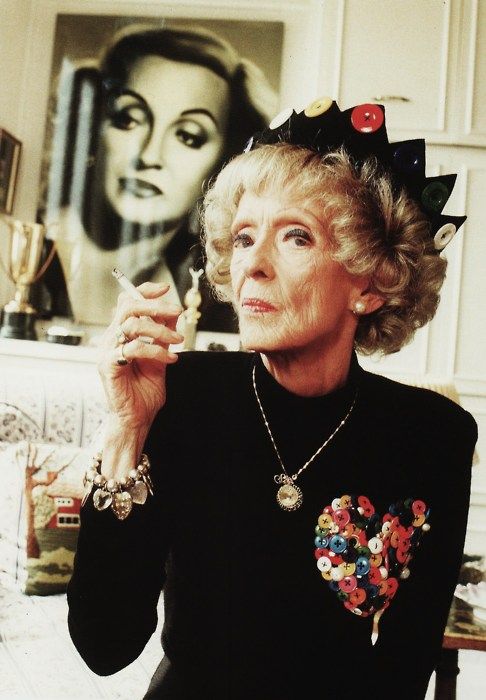
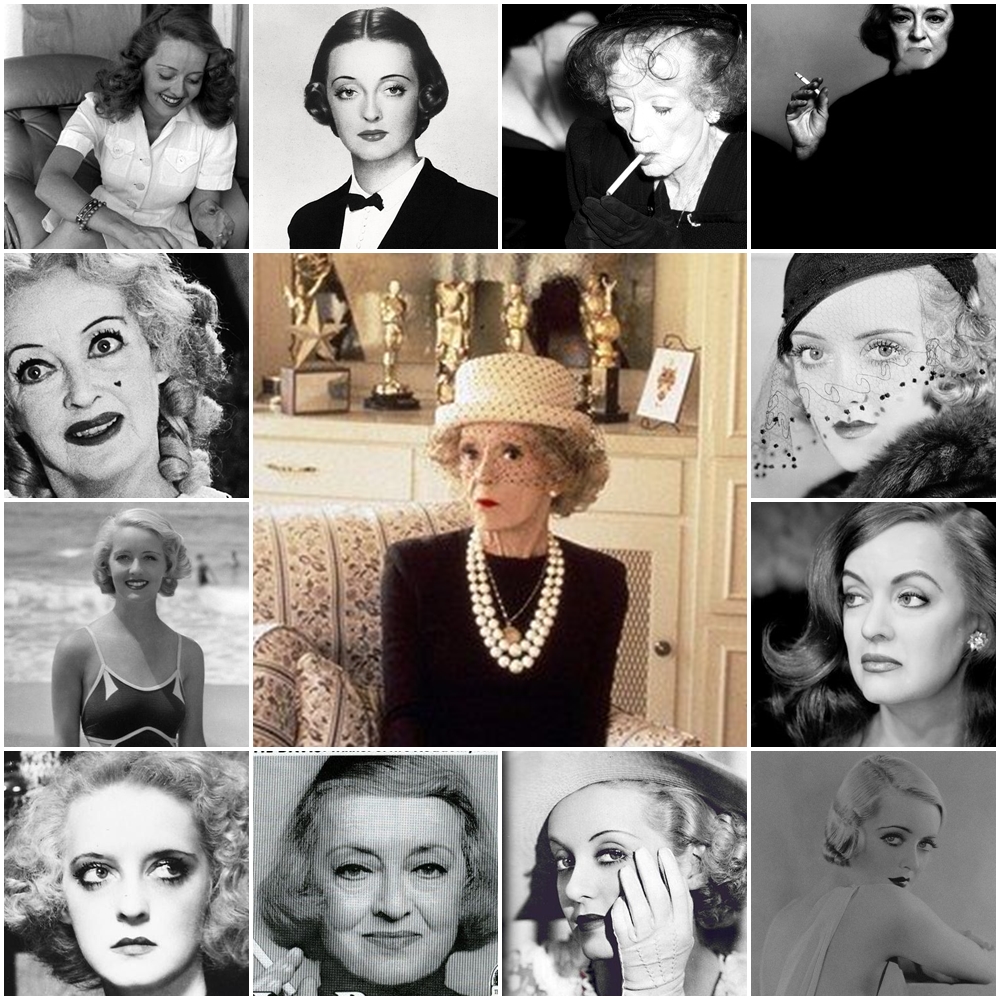
The many faces of Bette Davis throughout her 55-year career.
Cheers to Bette for tackling life head-on, with grace and style and fortitude and being 100% unique about the whole affair until the very end. Cheers to Kathryn to giving us a very real look into the life of real woman and cheers to three-minute eggs – a new breakfast favorite here in the Vintage Kitchen!
This post is part of a blogathon hosted by In the Good Old Days of Classic Hollywood featuring the life and film Career of Bette Davis. Read more about this incredible woman and her work in a variety of posts contributed by a dozen different film bloggers here.
Find the vintage cookbooks that contributed recipes to this post in the shop here.
Find the recipe for homemade brown bread from a previous post here.
Find out more about Kathryn Sermak and her book, Miss D & Me here.
Happy Easter! Hope everyone is enjoying a lovely day filled with little whimsies and delicious treats. Our table centerpiece this holiday was inspired by the 1939 children’s book, The Country Bunny and the Little Gold Shoes. If you aren’t familiar with the book it’s a story about a mama bunny who wants to become one of the five Easter bunnies that deliver eggs to children all over the world.
The Country Bunny and Little Gold Shoes by Dubose Heyward
Traditionally, the five Easter bunnies have always been boys. They chide Mama Bunny for wanting to become one of them, not only because she is a girl but also because she is from the country and not as sophisticated as their city selves.
The boy bunnies – handsome in appearance but antiquated in their thinking.
Mama doesn’t let those boy bunnies stop her. And they don’t. Following her dreams isn’t easy but with the help of some golden shoes she proves everyone wrong and delivers the last, most beautiful egg of the season to a brave little boy who has battled a sickness for a long, long time.
Even though this book was written 79 years ago, the story seems especially fitting this year with the rise of women and the empowerment that we are all feeling. To stand strong, t0 be ourselves and to realize our dreams are all the same things the country bunny wanted for herself. It is such a hopeful story. And this, a hopeful time of year when nature is blossoming and new ideas are being born.
The handpainted golden eggs of our holiday table are a small homage to the Country Bunny and her perseverance to never give up on what she decided was important, no matter what anyone else said. The eggs are fragile, but dreams are strong, and the meanings behind them powerful. On this hopeful holiday, we are raising a glass to all the ladies out there going after their dreams. Mama Bunny would be so proud of you and we are too.
Happy holiday all you adventurers. May you achieve all that you desire.