Big, Bold and Blandings: The Dreamiest House of 1948

Last week I went in search of Mr. Blandings. More specifically I went in search of Mr. Blandings’ dream house. A challenging feat on both fronts since Mr. Blandings is a fictional character and his real-life dream house no longer exists. This adventure of the seemingly impossible was all sparked by a little snippet of information about a clever marketing campaign produced by Hollywood in 1948. The movie company was promoting this film…

a romantic comedy starring Cary Grant, one of the most beloved actors of the twentieth century. But before we get into the story of searching for a nonexistent man in modern day,  we must first travel back in time to the 1940s,  an era when creativity flourished, outside-of-the-box thinking was encouraged and unusual situations were captivating the country. The first half of the decade was spent in World War II. On the home front that meant conservation, frugality, victory gardens, rations, fundraisers, and bond drives. It was a test in patience, positivity, confidence, and emotional endurance as people lived day to day waiting to hear the fates of their loved ones away at war.  In those first five years of the 40’s people got used to making do, going without, and utilizing every last bit of everything. Thankfully, in 1945 the war ended and Americans adjusted once again to a new normal as they recovered from years of uncertainty. By 1948, two and half years after World War II ended, America was ready for some fresh air and some new perspectives. A glance at that year’s pop culture highlights speaks volumes about the country’s enthusiastic push for progress and for ideas that were new, and stimulating, and fun.  Post-war, post-trauma, post post-sacrifice, 1948 embraced some big ideas that were remarkably different, refreshingly new and spectacularly exciting. Let’s look…

It was the year that Land Rover debuted, bucking tradition with their new all-terrain vehicles, complete with a steering wheel that was located in an unusual spot – the middle of the front console. Tailfins showed up on Cadillacs, a nod towards sleek aviation design and a feeling that your car could take you anywhere. Monkeys were welcomed into NASA’s elite as they became astronauts bravely rocketing into space in order to test conditions so that men could make it there themselves a few years later. America’s affable laughable cartoon bird, Woody Woodpecker had a top 40 hit song on the radio, sharing the same spotlight with singing legends Doris Day, Perry Como, and Ella Fitzgerald. Brand new air ferries started shuttling around the sky, transporting people and their cars from one city to the next. And most exciting of all, on the kitchen front at least, was a man named Blandings who built his dream house.  And then he built 73 more.

While all of these interesting pop-culture tidbits of 1948 are worthy of their own individual blog feature, it is Mr. Blandings who is the topic of our post and our road trip through history today. He created a sensation that took up the last four years of the 1940s, filling people’s heads with dreams of possibility on the home front. It all starts in 1946, when he was the subject of the runaway bestseller called Mr. Blandings Builds His Dream House, a fictional account of a real-life adventure experienced by the author Eric Hodgins. In the book, Mr. Blandings embarks on the ultimate quest  – the American dream of the 20th century – buying a house for his wife and family.

To Mr. Blandings of 1946, a dream home meant extra closets, a private bath in each bedroom,  a game room for him, a sewing room for her, and plenty of outdoor space for the kids. It meant everything that his cramped Upper East Side New York City apartment lacked – peace, security, space, and a good dose of nature.  One day, when he just can’t stand the close city quarters a minute longer, he adventures out to the country to have a look around. One thing leads to another and a new domestic life comes into sight. In the book, it looks something like this, thanks to illustrator William Steig…

The Blandings choose the Connecticut countryside as their ideal homestead, and a historic house that was loved for both its shabby, need-of-repair appearance and its supposed storied place in American history. What develops as the family starts planning their move from NYC to Connecticut (just a train ride away!) involves a series of new house woes that they never expected including demolition and reconstruction.

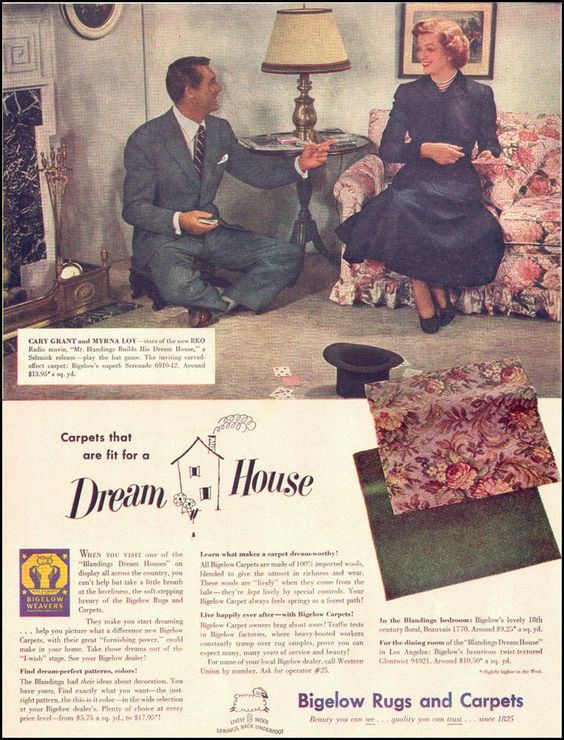
Throughout the story, mishaps and unanticipated scenarios test the metal of all that makes up Mr. Blandings, the man and the mission. At every corner, he and his wife are met with a new challenge. Nothing goes quite according to plan. There are time delays, contractor issues, escalating costs, tricky neighbors, and all sorts of digging, drilling, and hammering surprises.  An everyman story, a timeless tale, an homage to hope, optimism, and the struggle to succeed, Mr. Blandings Builds His Dream House resonated strongly with the heads and hearts of the American public of the mid-20th century. Many of whom were experiencing their own construction trials and tribulations, as the building industry boomed during the post-war years. The book was such a hit that two years after its debut, Hollywood made a movie out of it starring Cary Grant and Myrna Loy.

Just as entertaining as Eric Hodgin’s story, the movie was also an incredible success. Practically all of America fell in love (again!) with the Blandings and the predicaments they encountered. In addition to dealing with the baffling world of home construction, Mr. Blandings also frets over a questionable relationship between his wife and a long-time family friend while simultaneously juggling a deadline for an advertising campaign at work. The trailer doesn’t really do the film much justice, but it does give you a glimpse of the humor that peppers both the book and the movie…

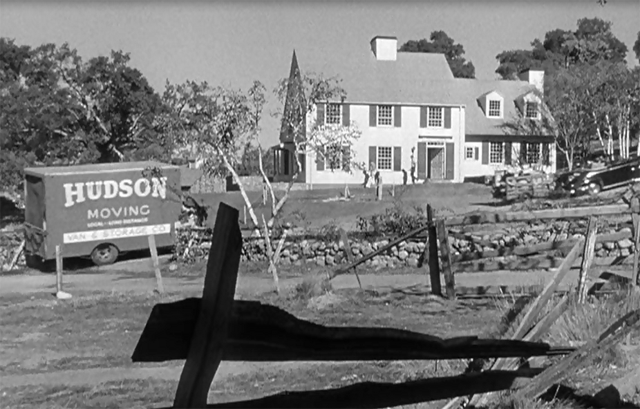
We never really get a good sense of the house the Blandings wind up building until the very end of the movie when the finished product is revealed. It turns out to be a beautiful colonial-style farmhouse set on a few dozen acres of rolling countryside…

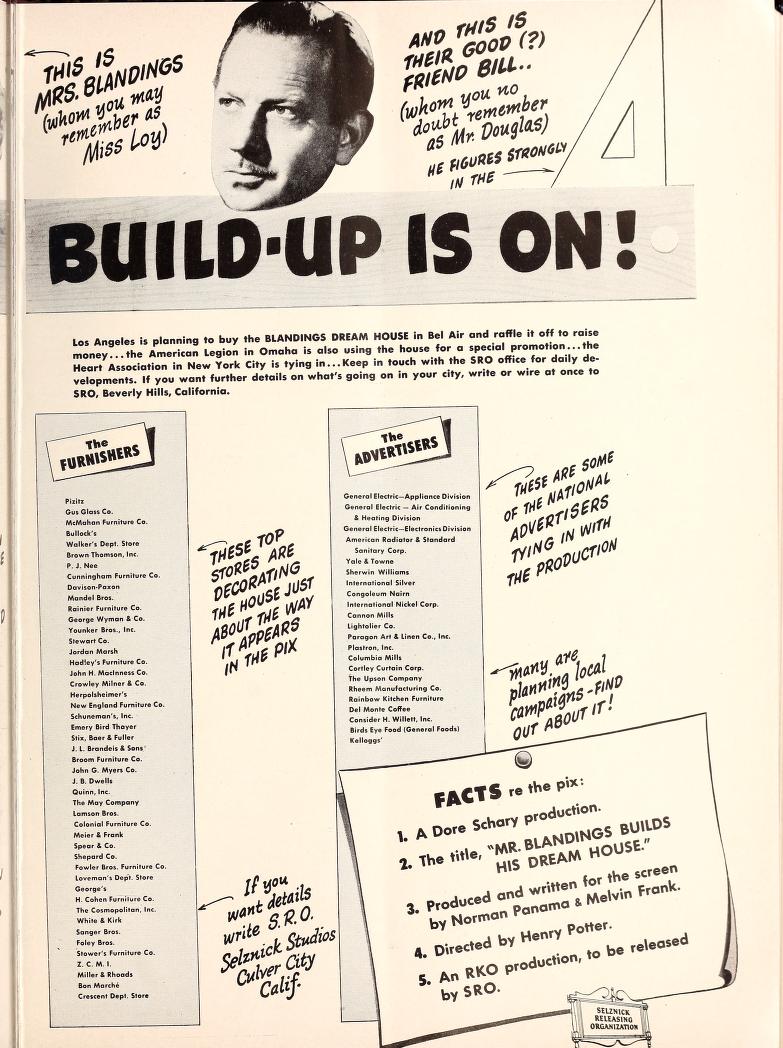
The real-life house that Eric Hodgin’s book was based on was built in Connecticut in the late 1930s. The real-life house featured in the movie was built on pastoral studio-owned property in Malibu, CA in 1947. That makes two real-life houses built for the telling of one story. But by 1948, an astounding 73 more houses were added to that real-life list.  These houses were built in 60 different cities across the country thanks to a very clever and very generous marketing campaign put together to promote the film.  RKO Pictures and SRO Distribution Company teamed up with contractors, construction crews, designers, utility conglomerates, and furniture companies all over the U.S. to build not one… not two… not three… but seventy-three (73!) Blandings Dream Houses that were then raffled off in local contests. Not only was it epic promotion for the movie and the time period, but it was also an exciting opportunity for advertisers to showcase new products and cutting-edge technology for the modern home.

General Electric was a big national sponsor advertising all their latest products including wiring, appliances, air conditioning,  and even electric blankets. Many of their innovations greatly affected the kitchen and laundry areas, turning those rooms into two of the most technologically advanced places in the entire house.

Imagine how exciting and inspiring this campaign must have been back in post-WWII days when everyone was trying to get back on their feet and recreate their own semblance of home and shelter. The average house price in 1940 was about $3,000.00  (equivalent to $32,000.00 today).  The median household income was $956.00 a year (equivalent to about $17,000.00 today). Not totally unaffordable by modern comparisons.  Today, the national median income is $59,000 and the average U.S. home price is $230,000. But the Blandings dream houses in 1948 all came equipped with the most modern features, stylish interiors, and the latest innovations which greatly extended their value.

For people who loved to cook, the idea of winning such a modern home would have been fantastically exciting, as the Blandings Dream Kitchen was one of the most modern and efficient rooms in the house.

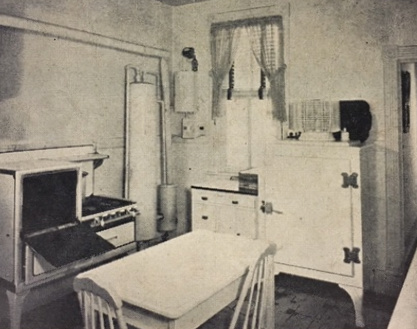
In the 1930s and early 1940s, most American kitchens looked something like this…

… a collection of precariously placed appliances and furniture of all styles that mingled with exposed heating, cooling, electrical, and plumbing fixtures.  While these 1930s kitchens were perfectly functional they weren’t necessarily set up for ideal ease, comfort, or organization.  By the time the Blandings declared their dreams in the 1940s, kitchens were becoming much more aesthetically pleasing and helpful. Built-in cabinets, long countertops, hidden utilities, ventilation hoods, picturesque windows, bright colors, and designated dining nooks made cooking more efficient, enjoyable, and aesthetically pleasing. You’ll notice that these 1940s kitchens below also utilized corners, shelving, and seating to maximize floor space.

When the movie first premiered in New York in March of 1948, ad campaigns began rolling out across the country announcing the Dream House Build-Up, so that by June when the Blandings were in theaters nationwide, the excitement and anticipation was at a fever pitch.

The Skokie. Illinois Dream House. As of 2025, this house is still standing, beautifully maintained, and looks very much the same.

Each of the cities that participated in the big build invited the local public in to view their custom version of a modern dream house.  What was especially intriguing about this promotional campaign is that not all of the houses built in each city were an exact replica of the Blandings dream house or its colonial style. Some cities chose to build houses that were more suited to their own local climate or aesthetic. The one built in Knoxville, TN was a one-story rambler…

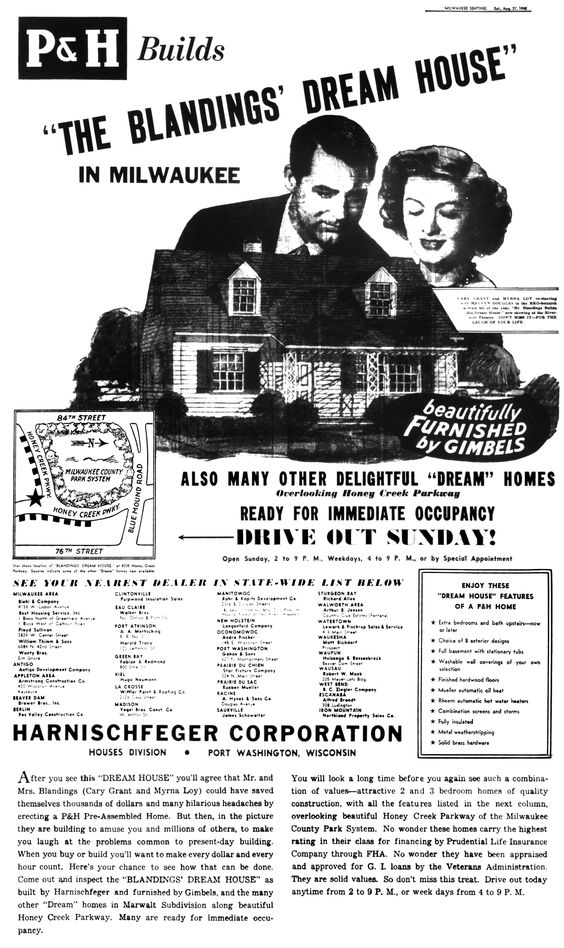
This one in Milwaukee was a smaller cape-style cottage…

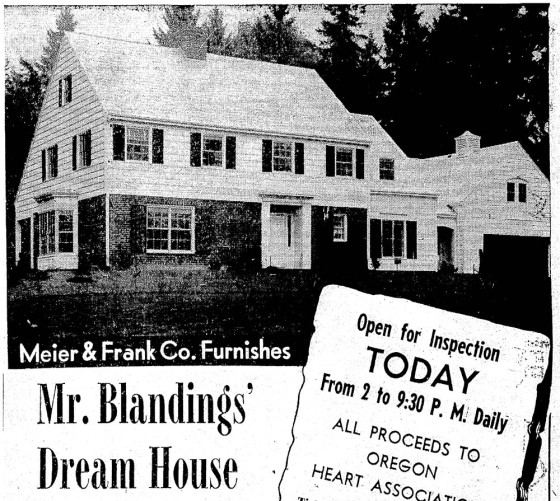
In Oregon, the dream house contained elements of brick and siding…

Read more about the Portland version of Mr. Blandings’ Dream House here.

Most of the Blandings promotional houses were built in suburbs  – the big city shadows where land, space, and freedom offered opportunities for the American dream to grow and spread. From Jacksonville, Florida to Seattle, Washington; from the Eastern Shore of Maryland to the Pacific Coast of California; from the top of Minnesota to the bottom of Texas fictional dreams were determining real-life destinies. That brings us back to the modern-day road trip that I embarked on last week.

This is the complete list of all the cities that participated. Is there one in your town?

Excited to see that Nashville was listed as one of the “Dream” cities, I went in search of Blandings in my own neck of the woods. This is what the Nashville dream house looked like in 1948…

Unlike the one built in Knoxville, the Nashville house was built in the exact same style as the one in the movie. Located in a very pretty section of town, noted for its gorgeous old-growth landscaping and stately historic homes, I was excited to see what the Blandings dream house would look like now. As I drove there, I pictured the house as it had appeared in the newspaper in 1948… the graduated rooflines, the shuttered windows, the dormers, the picket fence sectioning off a garden area highlighting the shrubs and the flowers and the trees newly planted. All those freshly landscaped 1940s plantings surely have grown into stately trees and mature gardens by now.

Here is what I found…

Pretty! But not exactly the same house as the one pictured in the newspaper advertisement…

As it turns out, unfortunately, the original Blandings house was torn down in the 1970s. This new house occupying the spot now was built in 2016 and then promptly sold for $1.6 million. Quite a price difference from the 1940s cost of a Blandings colonial.  Although this new house is not of historical design, it is fun to see that the roof line, dormer window, and landscaping are quite similar and complimentary to the original Blandings style. Perhaps this house designer was a 1940s fan too.

As I was about to drive away, an elderly man came out from the garage of the house located directly across the street.  Emerging from a much more modest home in size and scope, this old gentleman was shuffling down his driveway with the help of his cane, wearing a wool cardigan, pajamas, bedroom slippers, and a determined look.  I suspected he was headed towards his mailbox, perhaps a daily jaunt taken for exercise and fresh air. Immediately, I thought of Mr. Blandings and of Cary Grant and of Eric Hodgins and I waved to the man shuffling down his driveway in an act of good cheer and neighborliness.

I was hoping he’d respond, perhaps with a knowing glance or a nod of understanding that said yes, he did live across the street from a famous film industry-inspired house. But the elderly gentleman didn’t wave back. Obviously, he wasn’t our hero of book and screen. But in that moment I imagined that this stooped-over grey-haired guy, trembly and slow with age, was once an invigorated young man bent on building a dream house of his own for his wife and children. I imagined that he once lived in a small, cramped apartment in a big city and that one particular day he too got fed up with the close quarters and set out to become master of his own domain. I imagined that his idea of domestic bliss was indeed the very house, the sprawling brick ranch, that he had just emerged from. Obviously, he wasn’t Mr. Blandings. But then again… maybe he was.

Cheers to dreamers and to real-life houses that inspire books that then inspire movies that then inspire more dreamers and more houses. And cheers to Mr. Blandings, who is not real, but feels very much so.

If you are interested in reading the book that sparked this nationwide love affair seventy years ago, find it in the shop here. If you live in one of the dream cities that built a Blandings house please comment below and tell us all about your famous local icon. We’d love to hear more about it!

Blackberry Baking with the Legendary Sally or Solange or Whatever She Once Was Called

In the historic baking world, there’s a legend that springs from a yeast bread.  Depending on the sources and the provenance of specific recipes, facts about this legend vary widely and wildly. In some tales, she’s a 17th-century girl, in others an 18th-century woman.  She was French. She was English. She was colonial American. She was an ordinary teenager, she was a famous baker, she was a lowly domestic servant. She had a name that was either Sally or Solange or Madame or Marie. She was a real human being but she then again she was a fake and then yet again someone else’s flight of fancy. For three centuries, this baking icon has tumbled through time on the flimsiest of resumes. This is the story of Sally Lunn and a cake (or it might have been a bread) that made her famous.

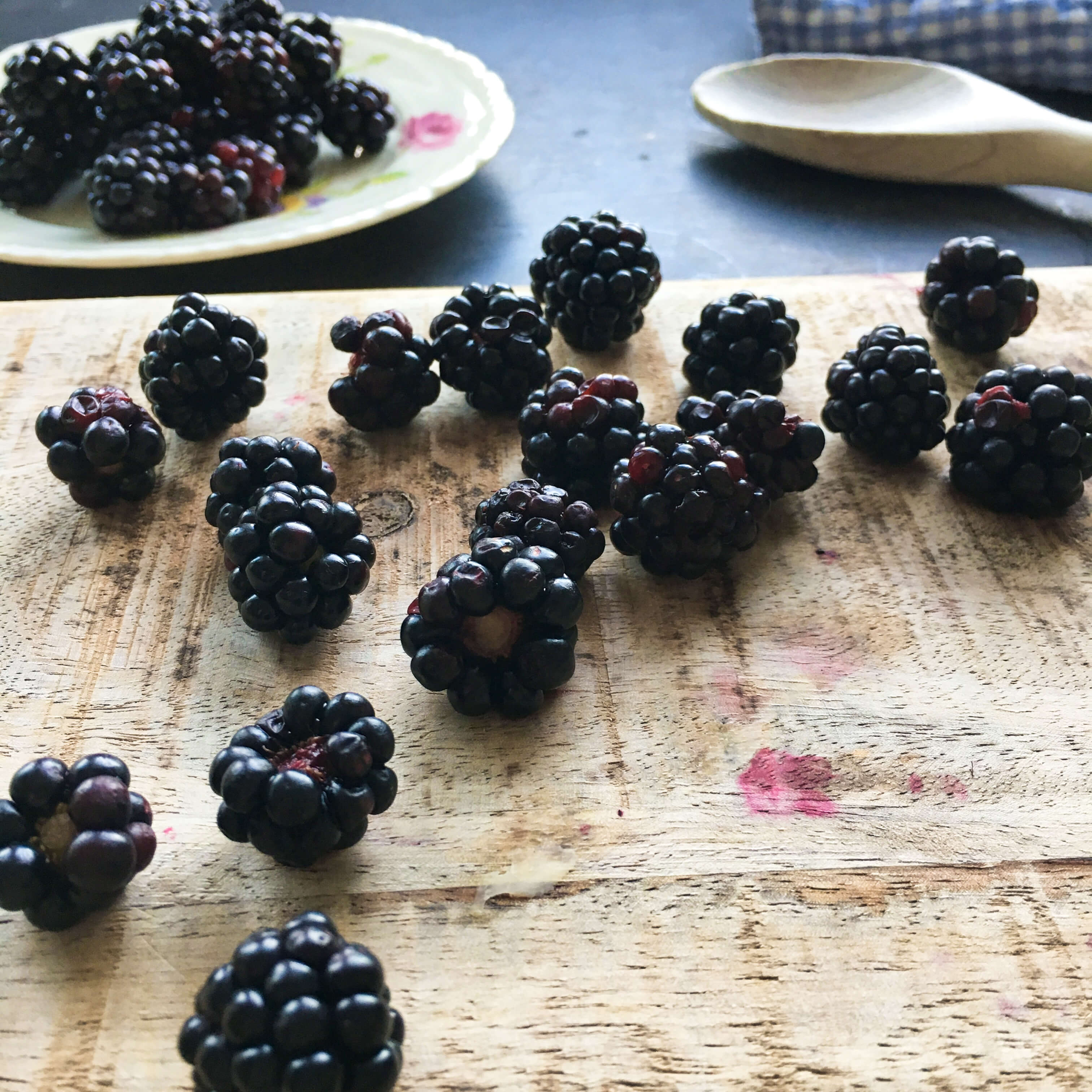
This weekend, after coming home from the market with a batch of blackberries that were so deliciously ripe they smelled like wine, I discovered a vintage recipe that is as difficult to describe as the lady it was named after. Called Fresh Blackberry Sally Lunn, it came from Meta Given’s 1957 Encyclopedia of Modern Cooking.  Surprisingly, out of a stack of forty different vintage cookbooks spanning the early 1900s to the early 1980s, Meta’s book was one of just a few that contained any recipes for fresh blackberries at all. Homemade jam and blackberry pie unified the books that did include the fruit, but Meta’s was the only cookbook that combined blackberries with a cake in the name of Sally Lunn. I love any recipe that is unique and stands out. The name Sally Lunn sounded curious and since I’d never heard of her before I had a feeling this might be fun to share with you too.

Like the age-old conundrum of who came first – the chicken or the egg – there are two different variations of a baked good that purportedly made Sally Lunn famous. One was a yeasted savory bread that looks like a cross between a bundt cake and a hamburger bun…

The yeasted bread version from the Williamsburg Cookbook, 1981 edition
Another version – not quite as bun-like on the bottom. Photo also from the Williamsburg Cookbook, 1981 edition.

and the other is a sweetened tea cake that looks like something between a blueberry pancake and a cobbler…

You wouldn’t be wrong to call either variation a Sally Lunn, even though they are two completely different types of food. Because of that, her name has popped up in recipe titles in a myriad of ways. There’s the Sally Lunn Bun, Virginia Sally Lunn, Sally Lunn Bread, Sally Lunn Cake, Sweet Sally Lunn, and just plain old Sally Lunn among others.  Likewise, in indexes, you’ll find her popping up under L for Lunn, S for Sally, or more specifically under category sections that include Cakes, Breads, Desserts, Baked Goods, Tea Cakes, Yeast Breads, Coffee Cakes, Coffee Breads, etc. So how could one possibly mythical person be identified with two types of very different yet specific baked goods over the course of hundreds of years?

As it turns out no one knows. And thus far it has been impossible to authentically identify any true source that leads to Sally and the bread and cake that share her name. Lots of ideas about her float around.  She was a teenage maidservant named Sally Lunn who delivered a newly invented bread to her master of the house, who in turn delightfully named it for her. She was a talented French baker named Solange, who escaped to a bakery in England where she began to make a popular brioche-style confection that looked like the rising of the sun. She was a working-class woman in 18th century England crying out her name in the streets as a sales tool for the bread that became her trademark. There’s even a historic eating house in England that speculates they might have been the site of Sally’s original bakery in the late 1600s.

Sally Lunn’s Historic Eating House in Bath, England

I like to believe the theory that Sally Lunn was an actual baker living in 1700s England. The story details how she invented a sweet yeast bread that became very popular at first locally, then regionally, then across the sea. With this theory, it makes sense then that references to Sally Lunn would have shown up in early American cookbooks, a favored recipe brought over by the English as they colonized America. Possibly, at some point in history, when yeast either became too expensive, or there was a shortage, a non-yeast cake version was invented by some other creative and clever baker in the 1800s who used all the same ingredients of Sally Lunn bread minus the yeast. Thereby keeping the name Sally Lunn in the recipe title. By the time, the 1950s rolled around perhaps Meta made her own creative choice by marrying blackberries into the non-yeast version of Sally Lunn cake. Whether this is an accurate assumption or not, no one will ever know for certain unless some of Sally’s baking notes happen to show up. But with all this mysteriousness that surrounds Sally and her two contributions to the baking industry, I think she’d be happy knowing that at least her name stayed attached even though the origin story didn’t. It is, after all, the ultimate branding success story, 1700’s style!

Meta Given’s two-volume Modern Encyclopedia of Cooking from the 1950s

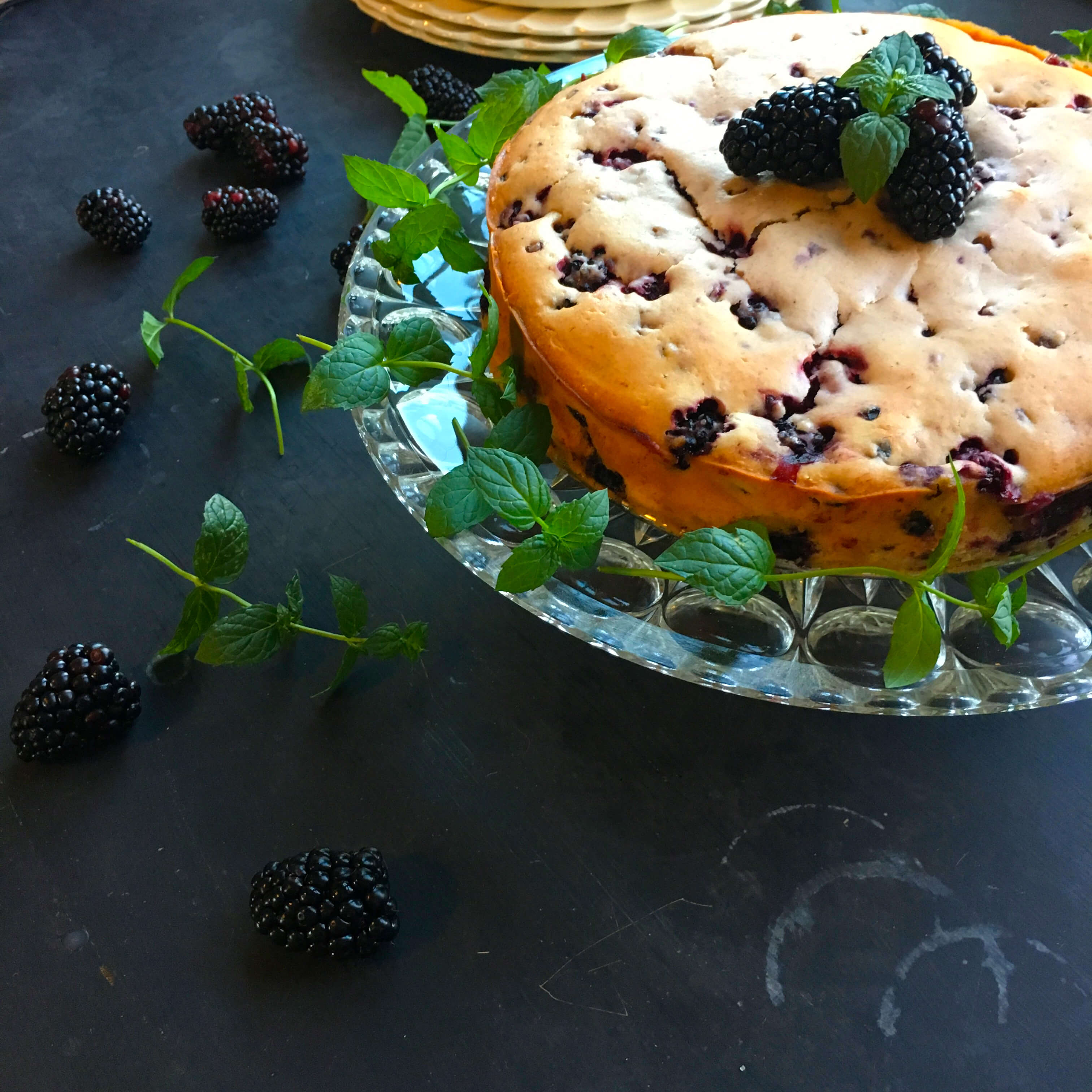
Meta Given was a legend in the culinary world in her own right. A nutritionist at heart, she set out to write some of the most comprehensive cookbooks of the 1950s that included recipes for people across the entire economic spectrum. Her books featured everything from thrifty staples like squirrel stew to elegant French dishes with layered sauces and nuanced flavors. Her mission was to make cooking fun, enjoyable, and accessible for everyone while also making it nutritious and creative.  I’m so pleased to present her lovely sweet treat of a dessert that highlights the juicy, sun-ripened flavors of blackberries nearing summer’s end. What I love about this cake in particular is that it is pretty healthy – using small amounts of sugar, butter, and flour. The blackberries really keep the cake moist and add a familiar sweet-tart flavor similar to cobbler but with a velvety more dense consistency like a blueberry pancake.  If you wanted to add an extra dash of sweetness you could drizzle the whole cake with honey or follow Meta’s suggestion of adding a lemon sugar glaze once the cake is out of the oven, but I loved it just as it was… simple and summery.

Meta Given’s Fresh Blackberry Sally Lunn Cake

1-pint box of freshly picked blackberries (enough for 2 1/2 cups)

1 tablespoon sugar

1 1/2 cups all-purpose flour

2 teaspoons baking powder

1/4 teaspoon salt

3 tablespoons salted butter, softened

2/3rd cup sugar ( I used raw cane sugar)

1 large egg

1 1/2 tablespoons lemon juice

1/2 cup sour cream*

1/2 cup whole milk*

(*Note – The milk measurement was left out of the original recipe, but was included in a revised edition in 1959. I used the sour cream/milk combination but you can also substitute those two ingredients for 1 cup of buttermilk).

Preheat oven to 375 degrees. Butter well an 8 1/2″ inch springform cake pan.

Drop berries into a bowl of cold water to rinse and remove any stems or leaf debris. Swish berries gently and then by hand remove them to a colander to drain. Once the berries have drained in the colander transfer them to a medium size bowl and gently toss them with 1 tablespoon of sugar. Set aside.

In a separate bowl, sift the flour, baking soda, and salt together. Set aside.

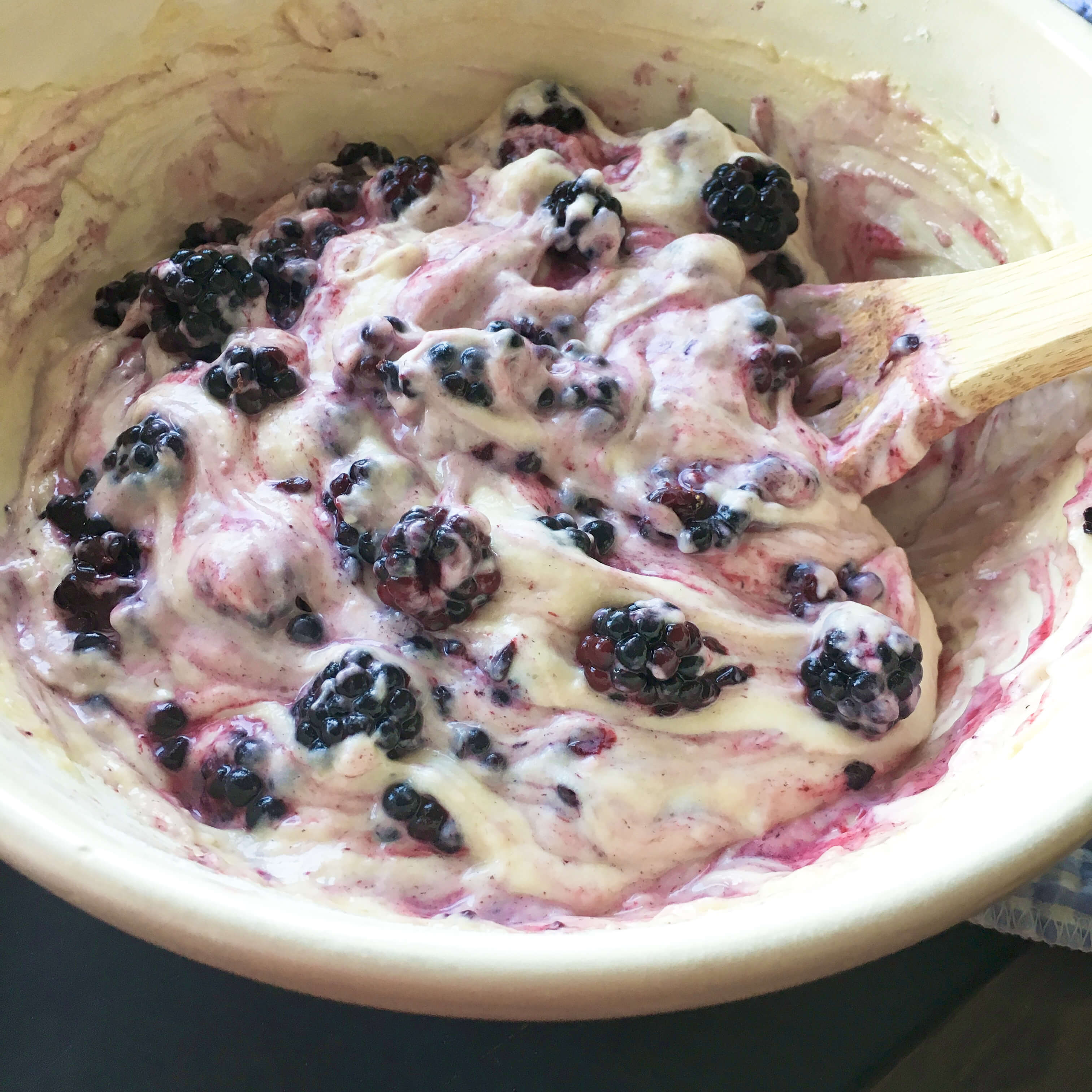
In another bowl, whip the butter, sugar, and egg together until creamy. Stir in lemon juice using a wooden spoon and then add the flour, sour cream, and milk, blending until smooth.

Gently fold in the blackberries until just well distributed. Turn batter into prepared pan.

Bake until golden brown (about 40-55 minutes) or until a toothpick inserted in the center comes out clean. Once ready to remove from oven, let cake cool slightly in pan on a cooling rack before serving either lukewarm or at room temperature.

In addition to enjoying the end-of-season fruit harvest this month, Fresh Blackberry Sally Lunn cake also freezes well. So if you choose that storage method you’ll still be able to taste the warm days of summer even on the coldest winter nights. And because it does have a pancake-esque quality to it, it wouldn’t be terrible to serve it for breakfast or even alongside a summer salad for brunch or lunch. This Fall, I’ll share the other version of Sally Lunn as we dive into bread-baking season to see how these two, and if these two compare in any way other than by name.

In the meantime, cheers to Sally and to Meta for baking delicious food that withstands not only multiple decades but multiple centuries too!  If you are interested in learning more about Meta and her cookbooks, find a few in the shop here. The Williamsburg Cookbook will also be heading to the shop shortly as well, in case you want to catch up on your colonial fare before heading into the holiday season. Find that one coming to the cookbook section shortly. And finally, this cake was styled using the lovely vintage 1960s Italian cut glass cake stand which you can find in the shop here.

Annie’s Wine Baked Brisket & How a St. Patrick’s Day Staple Came to America

Cows are sacred, salt is expensive, cross the sea trading is prohibited and immigrants had to get to New York. In a nutshell, those are the four substantial situations that had to occur in order to bring brisket to your dining tables today. Happy St. Patrick’s Day dear readers!   Today’s post is all about a traditional Irish food that actually is, in reality, a multi-cultural collaboration between three countries.  While it is certain that many a crock-pot will be simmering away today in honor of the holiday, and the famous corned beef and cabbage that has become associated with it, you might be surprised to learn that the propulsion for this traditional heritage food actually has more to do with New York City than Ireland.

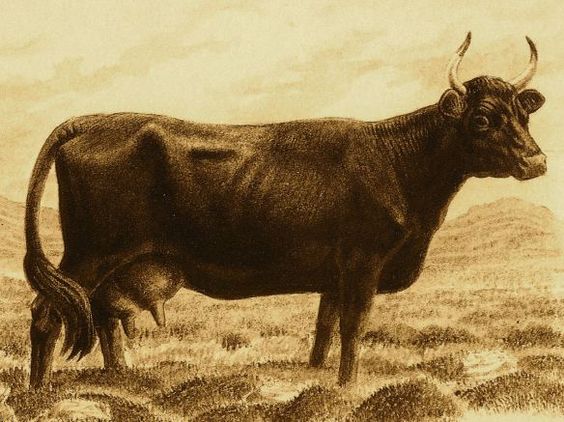
The Kerry cow is considered to be the oldest breed of cattle in Ireland.

It all started back in Ireland’s ancient times when cows were considered sacred animals. Valued for their milk and their strength over anything else, Irish cows were essential components to a working farm and were never considered a viable meat source. But England adored beef, particularly roasts, so much so that by the 1600s, England couldn’t keep up with their own country’s supply and demand.  So they went to Ireland to see about some cows.

A good revenue stream for the Emerald Isle and a can’t-live-without-it commodity for England, this cow commerce between countries was mutually beneficial for all.  That is until the Cattle Acts of the 1660s. In an instant, thanks to the Act, the sale of live cows to England was no longer allowed.  The sudden halt in commerce left Ireland scrambling for a solution and left England grumbly with hungry bellies.  This all came about at a time when salt was also an extremely expensive ingredient in England. Ireland, on the other hand, was not only flush with cattle but also abundant with coastal salt pans. The combination of these two riches formed a clever way for Ireland to package meat for export that skirted around the law. They created a new method of food preservation called corned beef – a salted meat product that could withstand time and travel to England without spoiling.

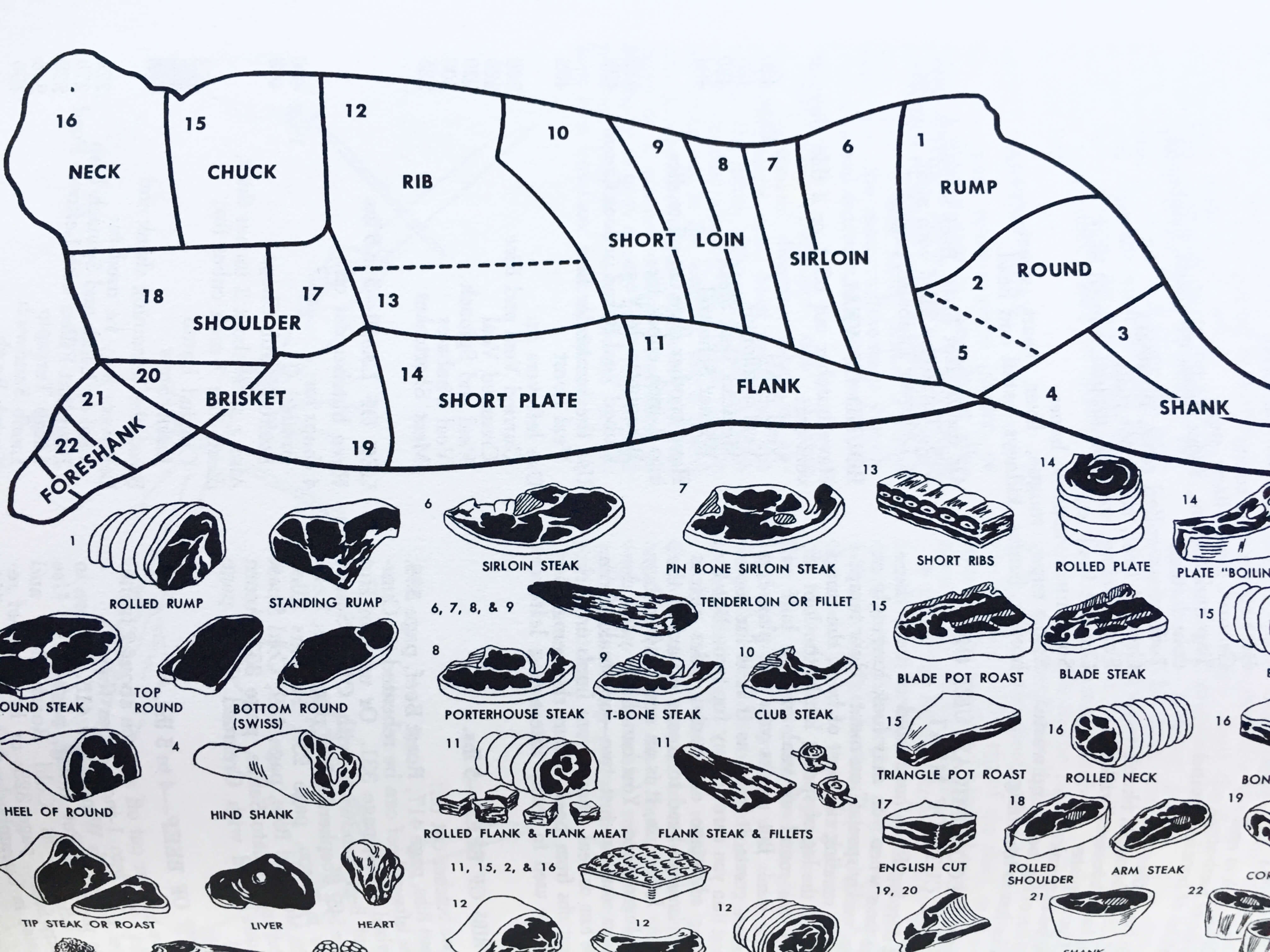
Coming from the brisket cut of the cow (located between the front knees and the shoulder area) this salt-infused food was named corned beef because of the corn kernel-sized salt crystals used in preserving it.  Generally known as a tougher piece of meat since that area of a cow’s body gets quite a lot of exercise, early corned beef was essentially just a slab of meat that was rumored to taste more like salt than beef.

Commercial Cuts of Beef chart from the Joy of Cooking by Irma S. Rombauer, 1967 edition

Because it was shelf stable, easy to prepare, and came in bigger portions, corned beef became a popular staple in the diets of 18th-century Englanders as well as sailors away at sea for long stretches of time. It even made its way into the diets of Early American colonists who were struggling to produce food for their new country. The only people who were not enjoying this salty slice of protein were the Irish, who, in a terrible twist of irony, couldn’t afford to buy the very product they were exporting.

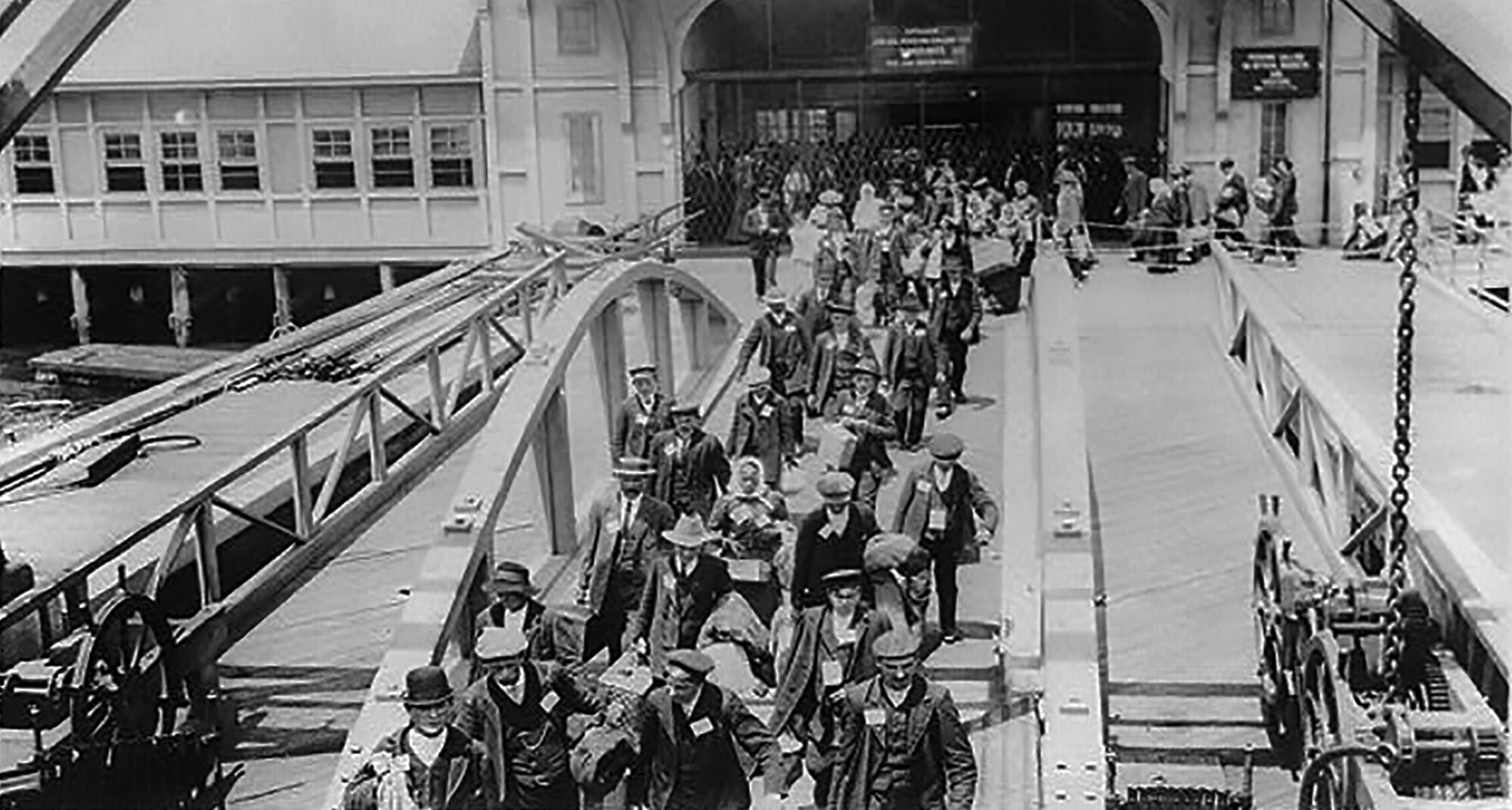
Newly arrived immigrants at Ellis Island. Photo courtesy of the Library of Congress.

It would take one more century and a move to America before Irish immigrants were able to afford and enjoy the corned beef that made their home country famous. In the mid-late 1800s, a majority of the butcher shops within the New York metropolitan area were owned and operated by Jewish immigrants.

The Lustgarten family owned a Jewish butcher shop in NYC in the late 1880s. Photo courtesy of tenement.org

Living in close-knit communities, both Irish and Jewish transplants bonded over feelings of displacement and discrimination experienced in their new world. Financial resources were a challenge for most city dwellers, but especially for these two ethnic groups in particular, as they faced prejudices in work and social environments. Luckily, food brought them together via thrift and necessity, and novelty.

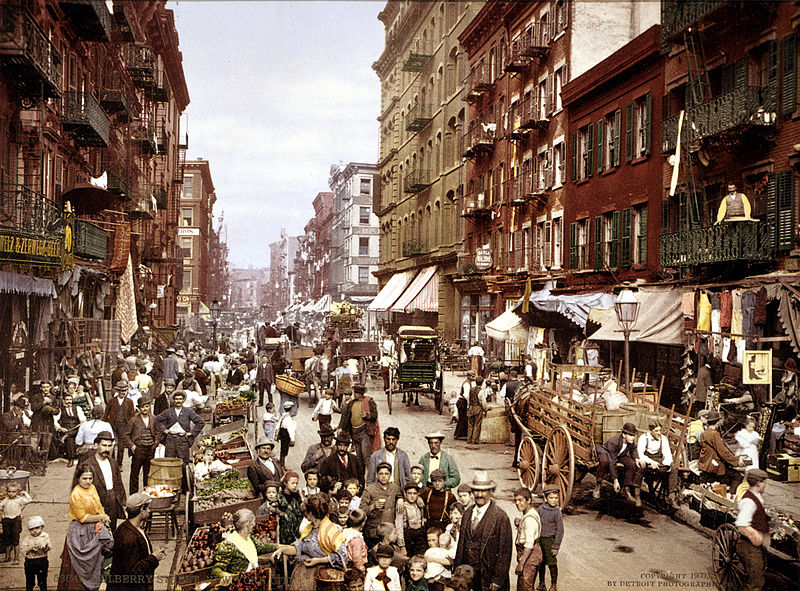
Market shopping along NYC’s Mulberry Street in 1900

Upon arriving in America, Irish immigrants were delighted to discover that corned beef was much less expensive in New York then it was back home in Ireland. Likewise,  Jewish immigrants liked brisket because it was one of the least expensive cuts in the butcher shop and could feed a crowd.  Through experimentation in their New York City kitchens,  Jewish and Irish newcomers developed the low, slow cooking methods that eventually evolved brisket from a salty slab of preserved meat into a rich and flavorful meal.  Cabbage was often paired with it since it was the least expensive vegetable. Both cultures developed their own trademark dishes – slow simmered corned beef and cabbage for the Irish and smoked pastrami and sauerkraut for the Jewish community. Each specialty stemmed from the humble brisket cut.

Beef Chart from the Culinary Arts Encyclopedic Cookbook circa 1948

Today’s recipe focuses on the Jewish side of cooking, with a brisket that quickly browns in butter on the stovetop before heading into the oven for a slow simmer in red wine. If you are not a fan of the saltiness of traditional corned beef or are wary of the seasoning packet that comes in most store-bought brisket kits, this recipe is a great alternative, since you can control your own level of spices. It comes from Annie, an avid cook, and a world traveler who lived in New York for most of her life. A dear friend to my father, she’s proud of her Jewish heritage and is famous for many signature dishes including homemade horseradish (more on that in a future post).

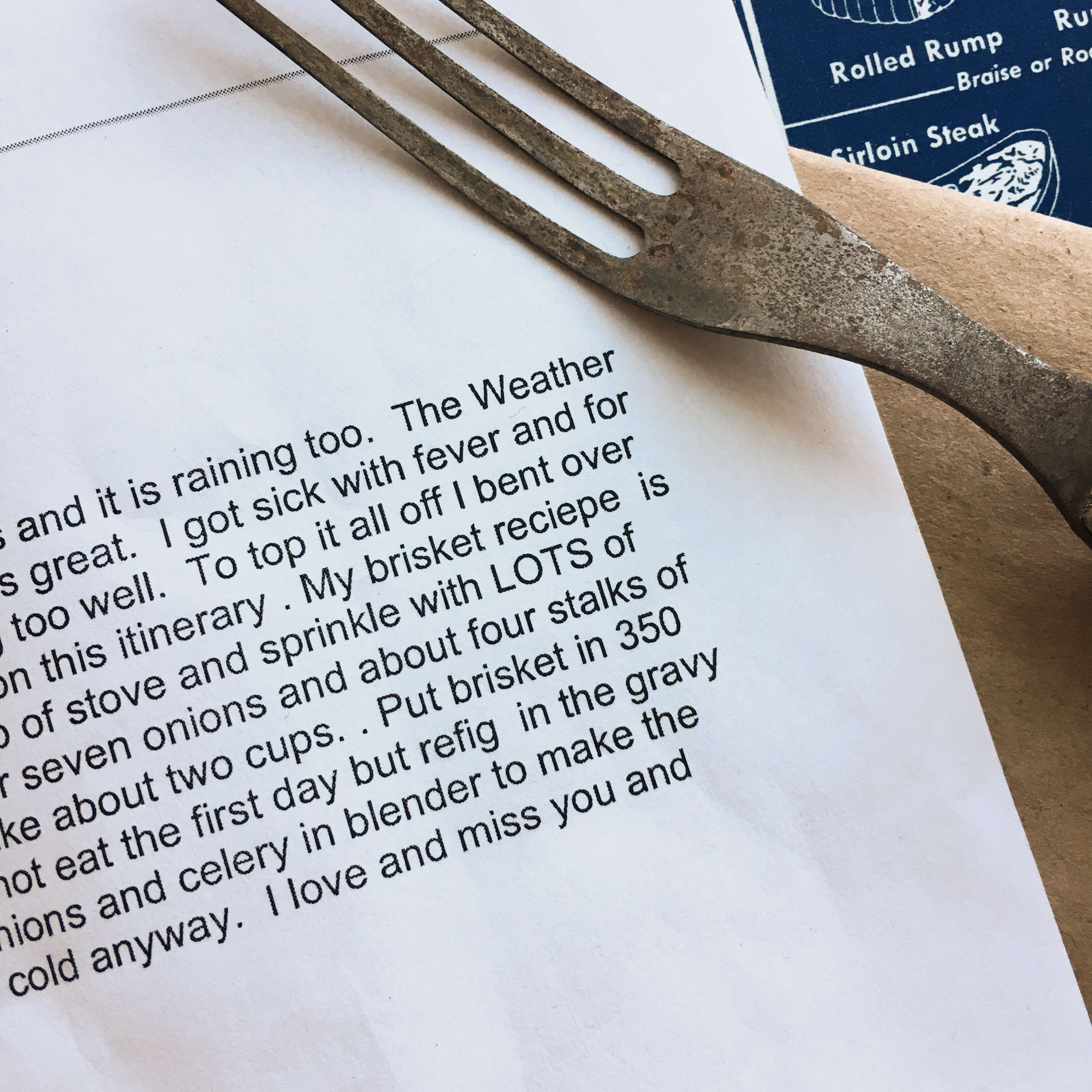
Annie sent this recipe to my dad over email 15 years ago while she was at sea traveling between Buenos Aires and Santiago.  The trip was rough with wild waves and cold temperatures but Annie was more than happy to take a few moments to share her way of making brisket. In our modern age, email letters aren’t quite as pretty as handwritten ones – but the sentiment is there nonetheless. My dad has hung onto her correspondence for over a decade and a half. I discovered it recently, tucked inside one of his favorite cookbooks.

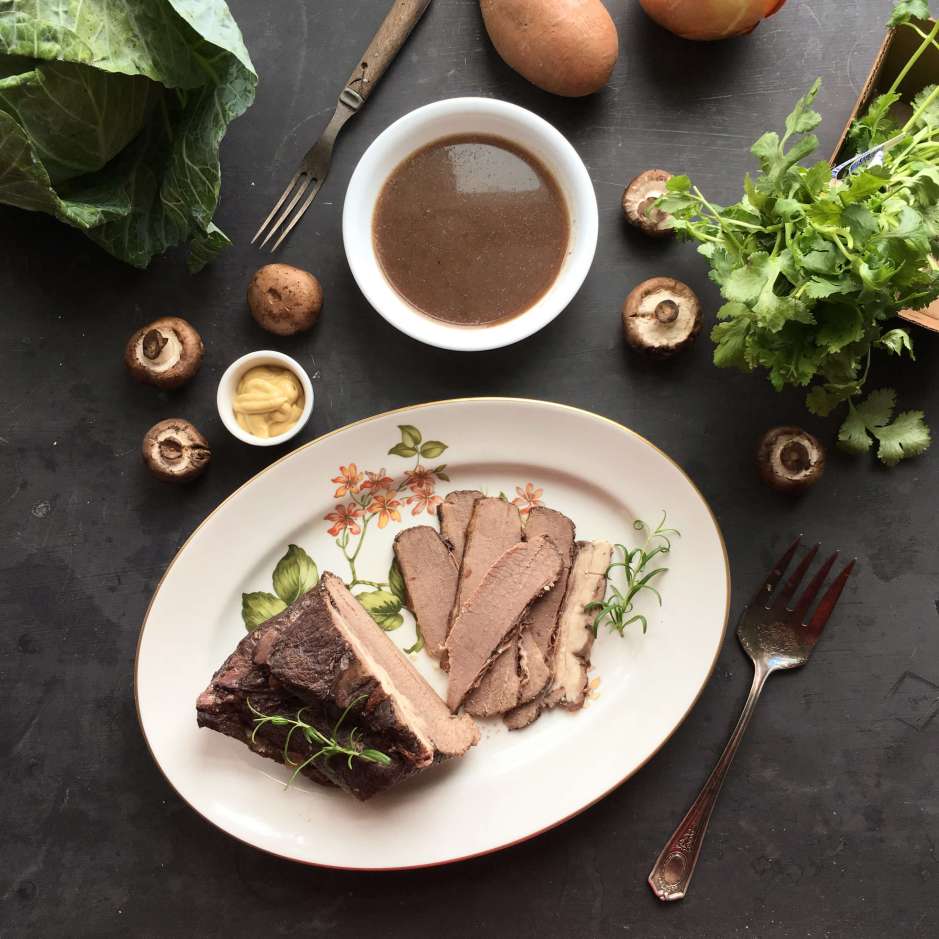
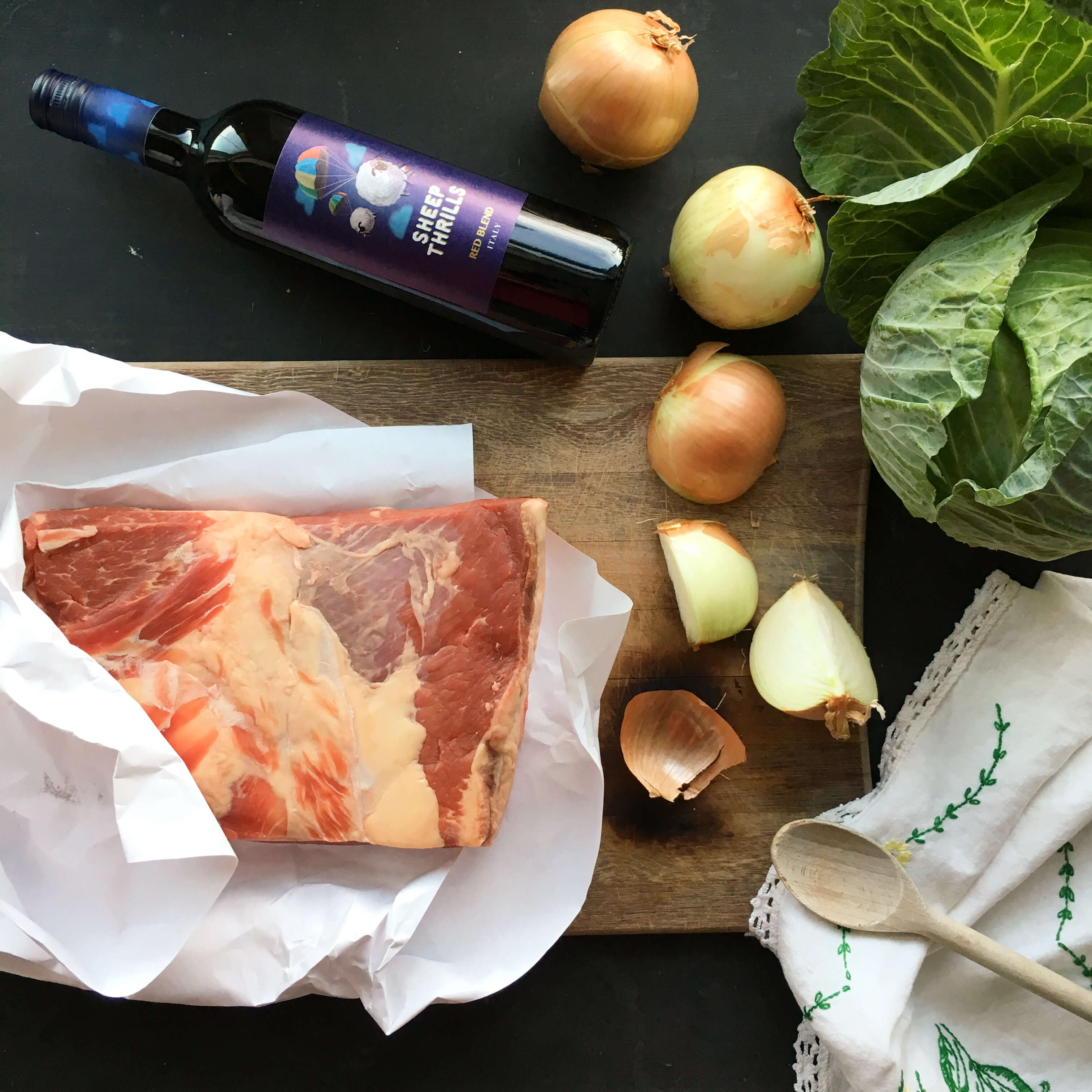
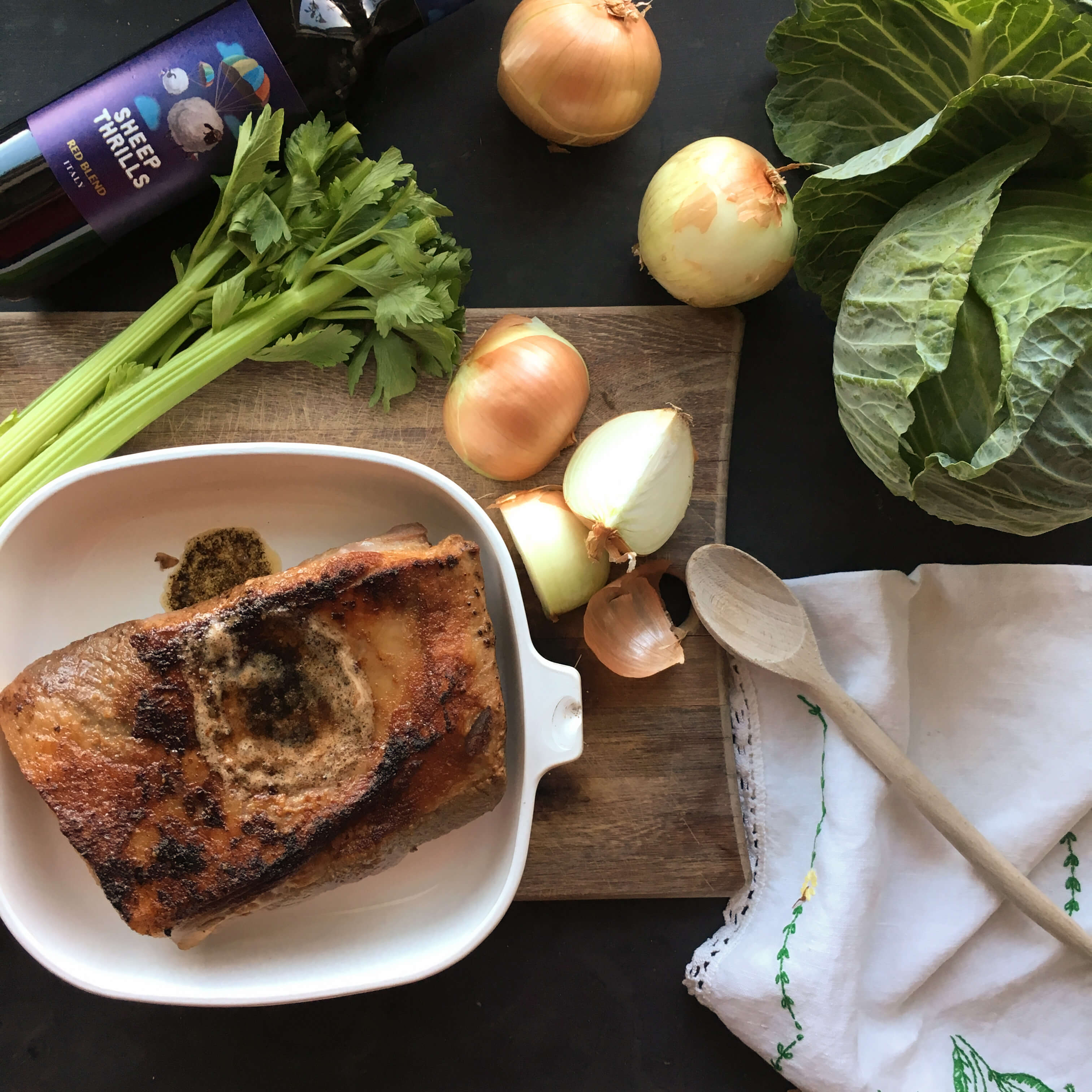
Although it requires two days to make, it is very simple and involves just a few ingredients. I used grass-fed beef from the farmers market and a red wine blend called Sheep Thrills for the fun pun. Also, Annie cooks like James Beard recommends – with your intuition – so she doesn’t specify in her recipe exactly how much seasoning to use. In the directions, I share my method, but you may want to add more or less depending on your preference.

Annie’s Wine Baked Brisket

4-5lb beef brisket ( I used a 3.5 lb grass-fed beef brisket)

4 tablespoons butter (only necessary if using grass-fed beef)

6-7 onions

4 stalks celery

2 bay leaves

2 cups red wine

Onion Powder

Garlic Powder

Celery Salt

Preheat the oven to 350 degrees.

Remove the brisket from the packaging and let rest on the counter for 45 minutes to 1 hour. If you are using frozen grass-fed beef make sure that it has completely thawed in the fridge before beginning this recipe. Do not trim the fat from the brisket.

Seasonings with dots of butter on top before the flip to brown the other side.

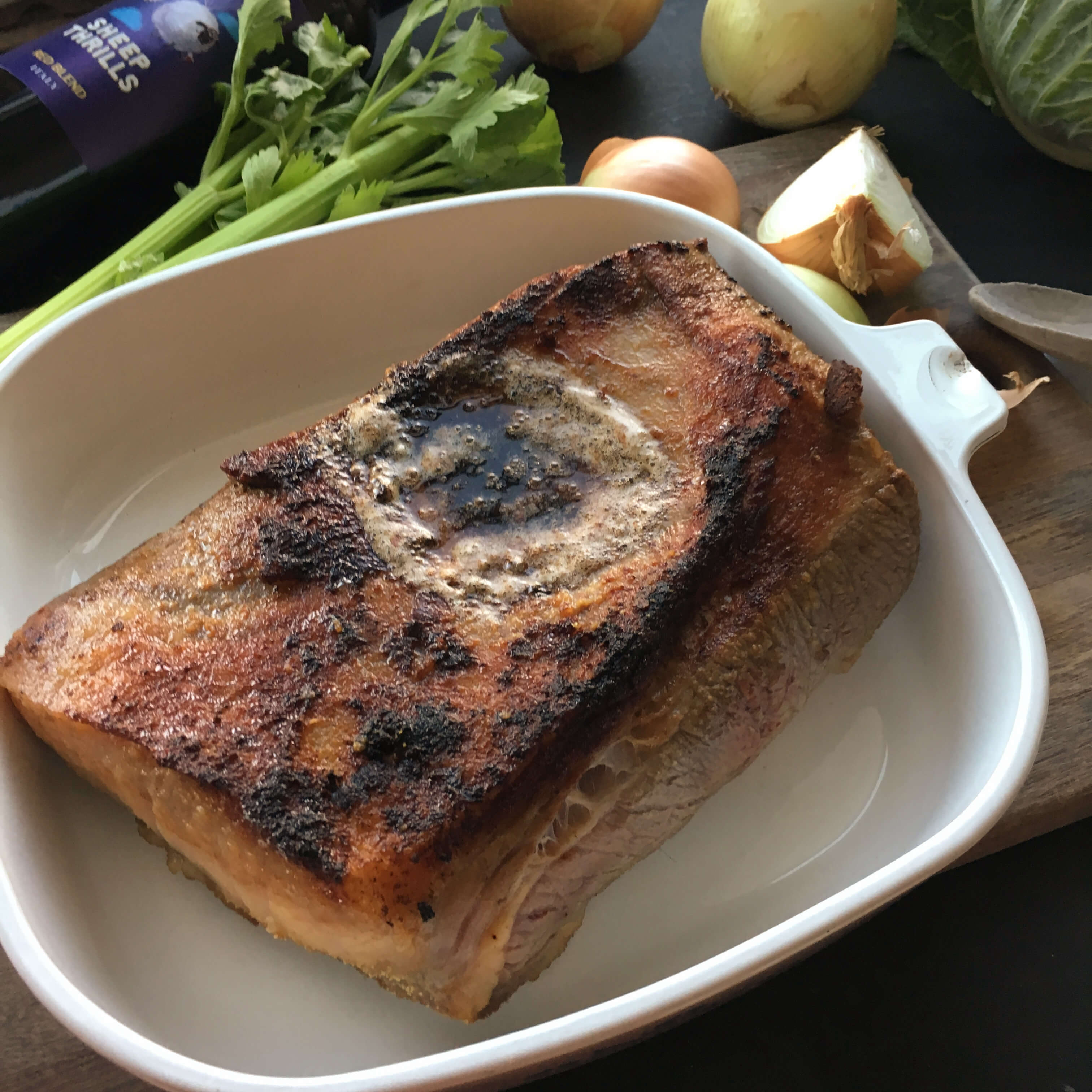
In an ovenproof pan (preferably one that has a lid) over medium high heat, add the butter (but only if using grass-fed beef, otherwise omit the butter). Generously sprinkle each side of the meat with the onion and garlic powders and the celery salt (I did about five passes on each side with each of these seasonings). Brown the brisket, fat-side down, for 5 minutes on each side.

Roughly chop the onions and the celery and add them to the brisket pan.

Pour in the red wine and add the bay leaves. Cover and bake in the oven for 2 to 3 hours or until the brisket reaches an internal temperature of 170 degrees. (Note: Grass-fed beef cooks faster than grain-fed beef, so watch the temperature and time closely.  My 3.5 lb brisket came out exactly at the 2-hour mark.)

Let the brisket cool to room temperature and then refrigerate overnight it in the same pan that you cooked it in so that all the juices can soak back up into the meat.

The next day, remove the pan from the fridge and scoop off the top layer of fat.

Remove the onions and celery to a blender and mix until well combined. This will form a thin au jus style gravy which is delicious for dipping.

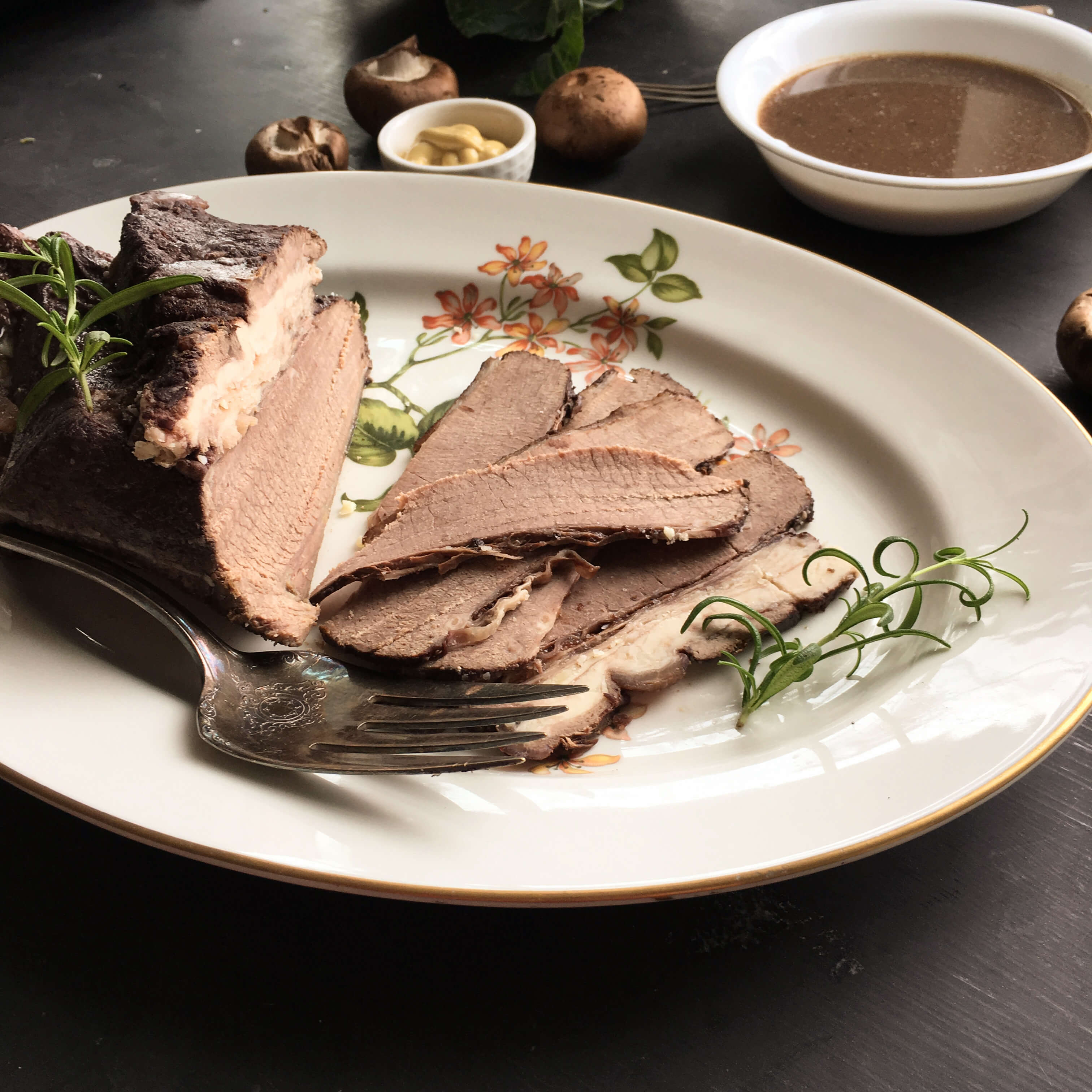
Transfer the au jus to a small saucepan and warm over medium heat. Next, thinly slice the brisket and serve cold or at room temperature alongside the au jus and/or with your favorite condiments like mustard, mayo, or horseradish.

This style of brisket is perfect for French Dip style sandwiches served on crusty rolls. It also travels well for springtime picnics and outdoor family gatherings. In Annie’s house, it is a staple for many Jewish holiday celebrations.  Simple fare with a collaborative past, that’s the brisket in all its wonderful ways.

There is something lovely about Annie’s recipe that ties all the historical elements of the holiday into one tidy package. With its Irish and Jewish heritage,  its international transmittance, and Annie’s New York roots, it feels like this recipe really embraces the spirit of the holiday. The parallels are endless. The recipe was written on a boat in the 2000s featuring a food that was once eaten by sailors in the 1700s. Annie lived in New York during the 20th century. The immigrants who helped perfect this style of cooking lived in New York in the 19th century. Annie is Jewish. The butchers who sold brisket cuts to the Irish in NYC were Jewish. Annie uses brisket to feed her family on Jewish holidays. The Irish-American community uses brisket to celebrate their national Catholic holiday.

St. Patrick’s Day isn’t only for the Irish – it’s for everyone in America who hand a hand in building a country where people and food worked together to create new things and new traditions in a new land. Cheers to foods that continue to bring people together in surprising ways. And cheers to Annie for sharing her delicious brisket recipe.  Hope this St. Patrick’s Day is your most festive one yet!

The Take-Out Ladies: Welcome to July 1967 and the Brand New Mystery

Lots of notable things were happening in July of 1967. At the beginning of the month, this song by the Beatles debuted in London and then 2 weeks later in the U.S….

This woman successfully flew around the world following the same flight plan as Amelia Earhart…

Ann Pellegreno completed the 28,000 mile flight on July 7th, 1967

And this funny man was born on a sunny July day in Irvine, California…

Actor, writer and comedian Will Farrell born July 16, 1967

An ancient city dating back to 1628 BC was discovered in Greece. Race riots broke out in New Jersey, Minnesota, Michigan and Wisconsin and  a sink hole swallowed two houses in Oklahoma.

The world also said their final goodbye to Scarlett O’Hara…

Vivian Leigh November 5, 1913- July 7, 1967

and tourists took the tram for the first time up to the top of the St. Louis Arch.  Other events included a new gemstone discovered in Tanzania…

Tanzanite’s beautiful blue color can only be found in one place in the entire world – in the immediate area of Mt. Kilimanjaro.

and the famous ocean liner, the Queen Mary, was sold to the highest bidder for transformation into a luxury hotel.

On her final voyage – 1967

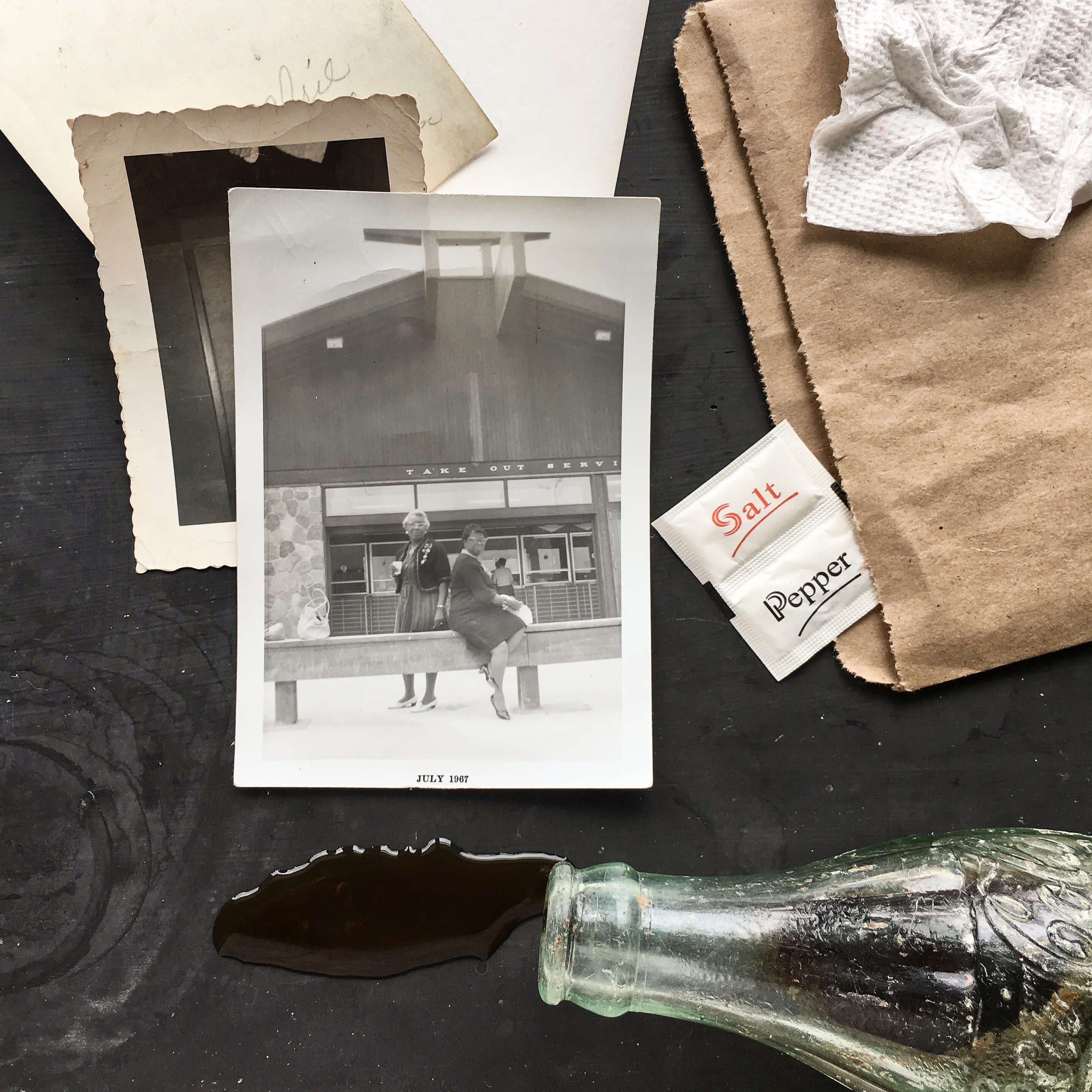
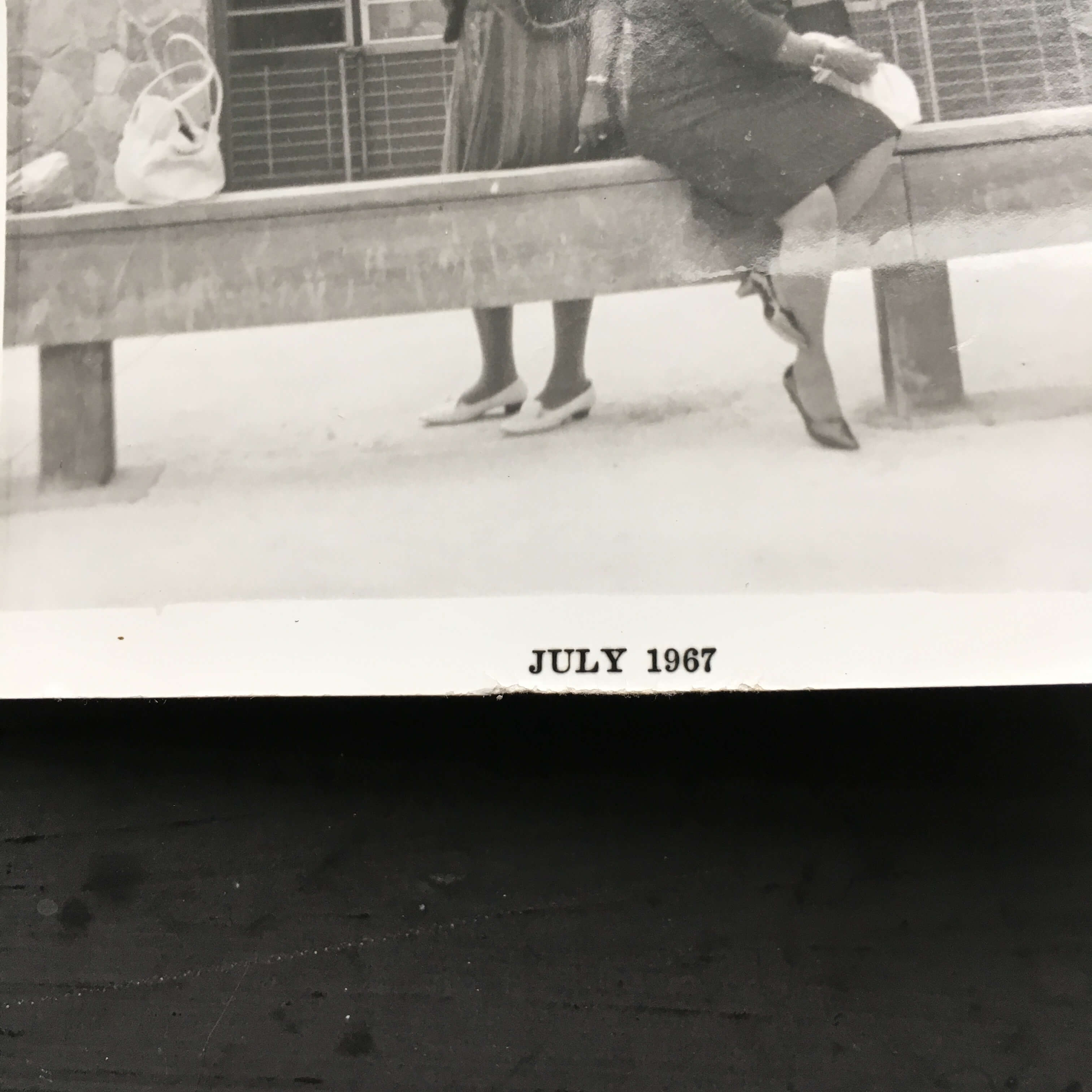
This was also the same month in the same year that these two ladies stopped for a bite at a take out service counter…

Photographed during a decade when lunchtime sit-ins symbolized a fight for equal rights and Americans were inspired by the impactful words of Martin Luther King’s “I Have a Dream” speech, eating out was not only a sociable activity but also a powerful statement.  These two fantastic and fascinating women posed in front of a take out service window in July 1967…

…which brings us to our mystery. If you are a regular reader of the blog, you know that we always love to explore a good vintage puzzle around here.  Whether we are trying to translate the characters on a vintage Chinese mug or figure out the author and era of an old note scrawled on White House letterhead, it is these these types of curious mysteries from history that always inspire us.

Today’s puzzle focuses on questions about this 1967 photograph, specifically the restaurant in the background. We’d like to find out the name of it, its location and the significance of the glass panel partitions between customer and employee, which was a somewhat unusual feature for takeout restaurants of the time period.

Was it part of the segregated South or just a style of architecture? Were these two women, in their pretty cat eye glasses and high-heeled shoes, simply stopping for a bite to eat or were they making a statement similar to the lunch counter sit-in crew at Woolworth’s? Are the answers in their faces as to how they were treated or were they just hungry and a tiny bit exasperated by a photographer friend insistent on capturing the moment?

These are the questions swirling around this mighty but mini photograph from fifty years ago. It was found last week  at an antique store in Nashville buried in a box full of random photographs that included a wide assortment of people, places and nationalities from around the world.  There are no notes on the back. The only true identifying mark on the front is the date stamp of July 1967.

First speculations brought to mind were that this was possibly a scene from a drive-up motor lodge (something along the lines of a Howard Johnson’s) or a  bus station depot (with the option of eating inside or outside). So we will start down those avenues first and see where our theories lead us.  As the puzzle begins to unravel clue by clue – we’ll keep you posted as to what we discover. In the meantime,  please feel free to weigh in with your theories below in the comments section too. Especially if you happen to recognize the style of building, the sign font or perhaps even the ladies themselves.

Cheers to a good mystery! And cheers  to these two ladies, for providing us with a glimpse into the world of 1960’s take out.

The Cake That Fed An Entire Town: {Part Two} On Election Day in 1700’s America

Ladies and gentlemen, the results are in!  Eighteen ingredients, nine hours, three loaf pans and one historic recipe later  – we have a winner – in Election Cake. Yesterday, when I wrote about the history of this patriotic confection, there was uncertainty and speculation about what exactly it was (cake or bread?) and if it was going to be a palatable sweet treat that transitioned well across three centuries. Today, we discovered what this celebratory concoction was all about. Let’s look…

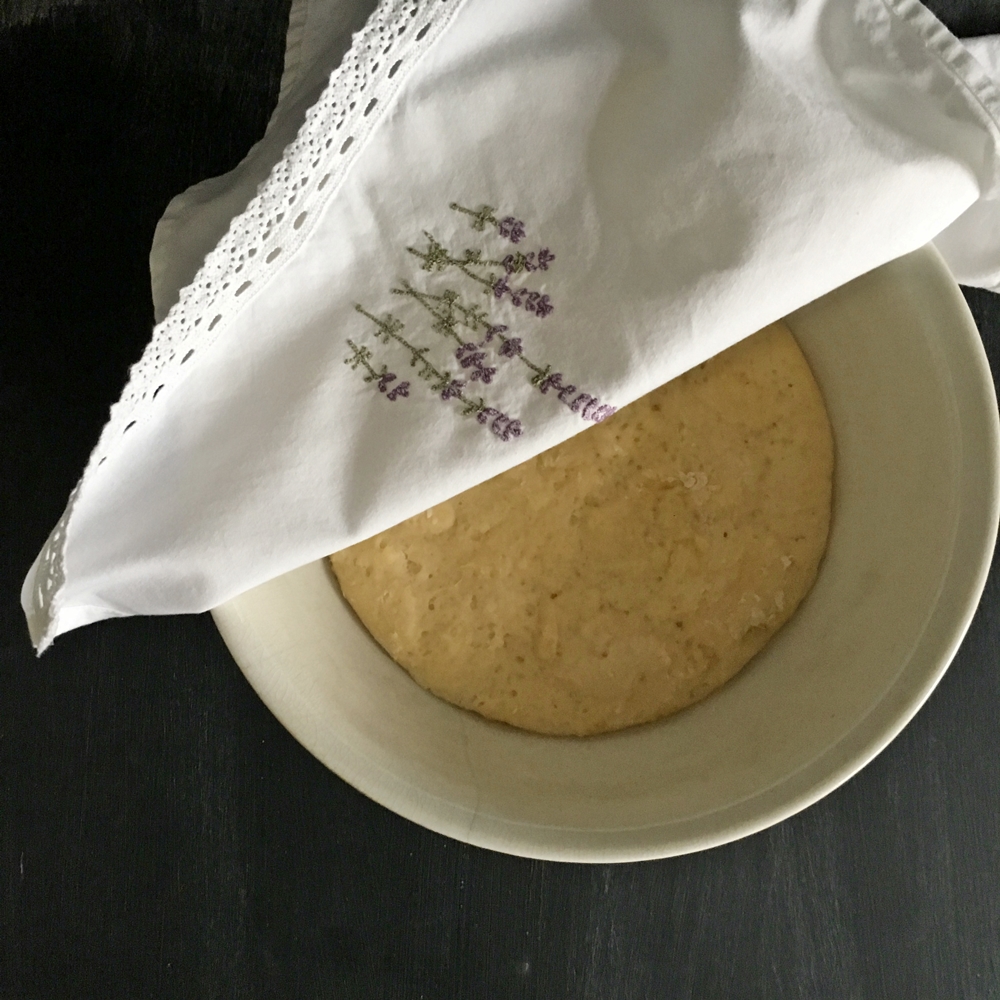
The recipe began yesterday, simple enough, with yeast and water and flour, and a dash of sugar and oil…

It was left to rise six hours on its own, which it did, like a good little cake…

Next, went in a handful of ingredients…

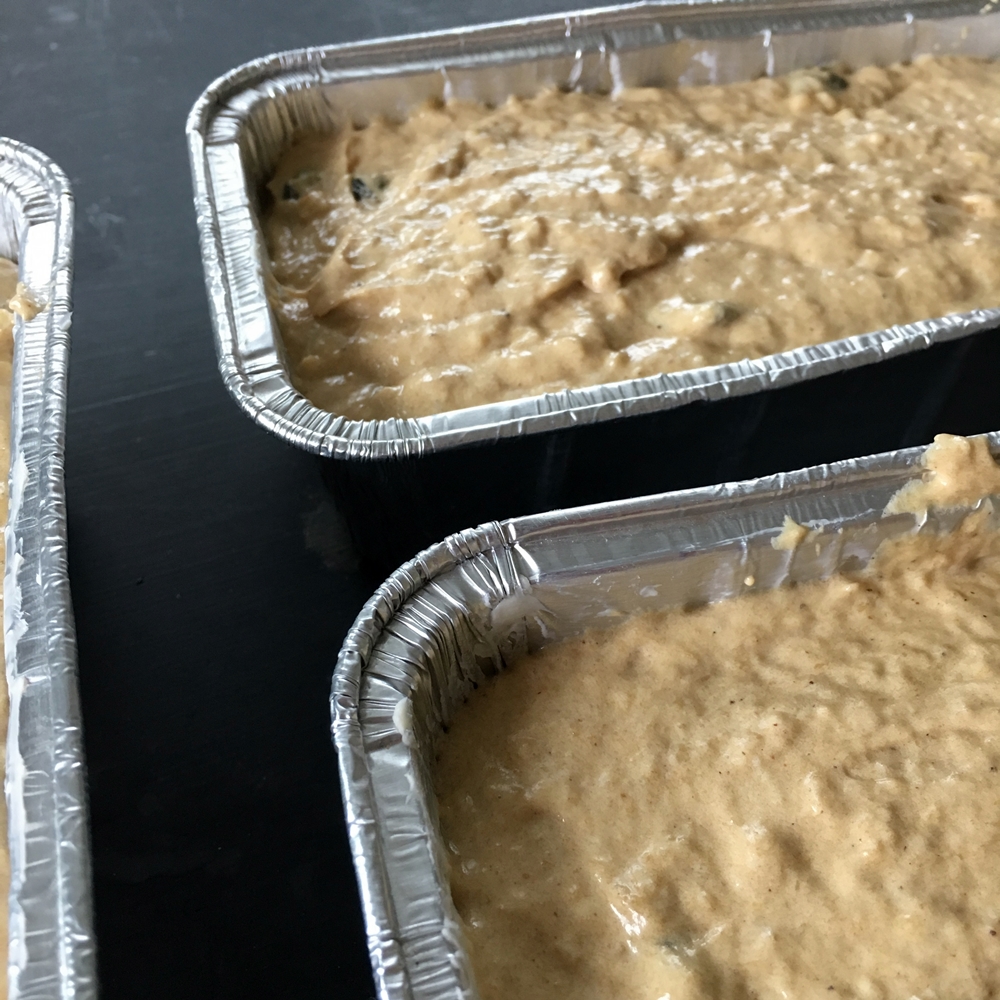
After they were all mixed together, the batter was ready to be parceled out into three loaf pans…

and were left to rise again, for another hour, which they really didn’t do at all. It would be generous to say that after the hour was up, each loaf was half an inch taller, but that would be an exaggeration. Maybe, indeed the batter did rise a little, but if so it was barely noticeable. I hesitated here at this stage, thinking maybe I should let them sit longer so that each loaf could get bigger. But then I remembered that the author of this recipe, Fannie Farmer, was a stickler for precision and instruction, so into the oven the three loaves went, without any extra rise time. Just follow the recipe. That’s what Fannie would have said.

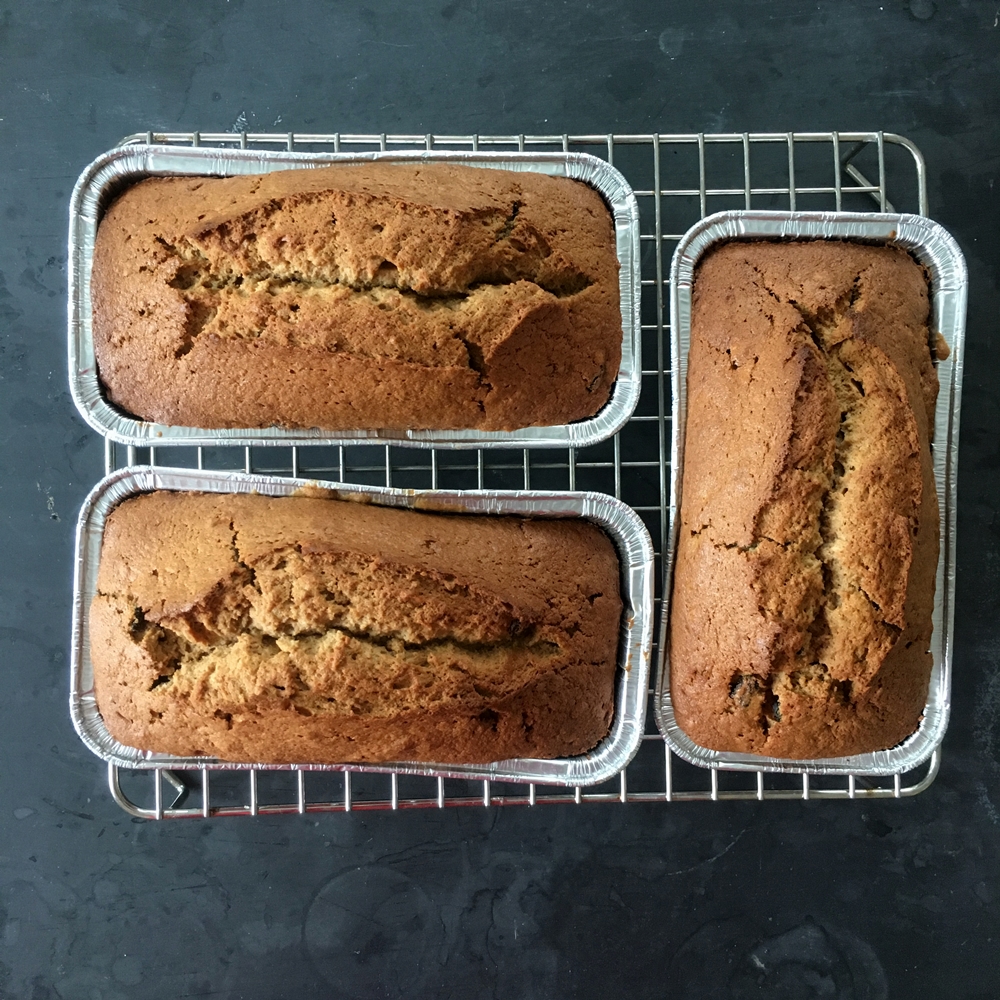
Exactly at the one-hour mark, no less and no more,  the loaves came out sky-high and golden brown…

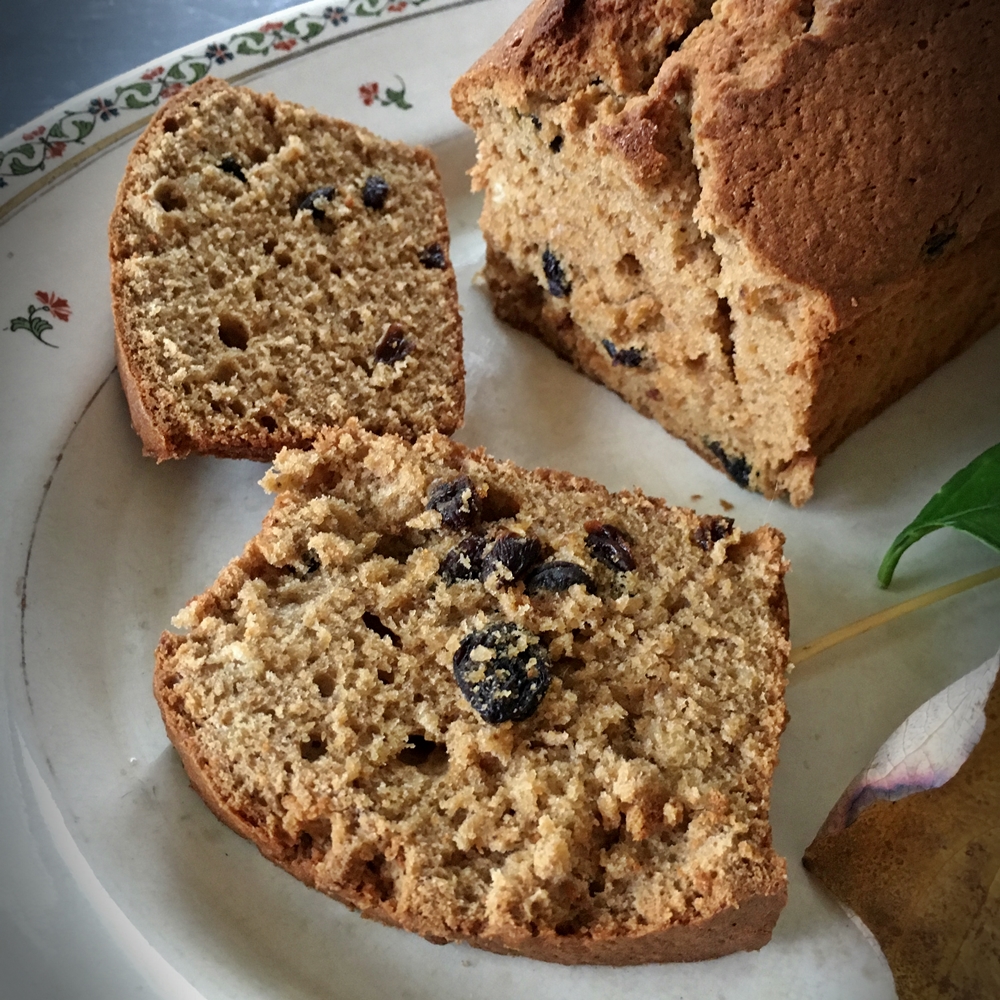
Fannie didn’t fail us after all! The tops even cracked open themselves and looked like little lips about to say yum. A good sign of things to come.  After a short cooling-off period, the loaves were ready to cut and serve and taste…

And that is when I discovered that this very old Election Cake is in fact, very delicious. I understand how people could get confused about whether to call it a cake or a bread because really it is similar to both.  It has a texture and consistency like banana bread or zucchini bread but also it has a light and fluffy body like cake. The combination of the whiskey, yeast, and nutmeg gives it a subtle hint of almost root beer-like tang that is lovely and warm. Although it already has a cup of butter in it, this little darling of a delectable is calling out to be sliced and toasted with an extra slather of butter.

While no one ingredient is powerfully overwhelming, all of them work well together to create a balanced flavor that hints at citrus and at spice, which leads me to understand how so many varieties of Election Cake came about between the 1700’s and now. It’s wonderful just as it is, but it’s also one of those recipes that might spark your creativity. After you have made it once or twice, it will make you feel brave – enough to confidently add your own little twist. Not an improvement, just a twist.  Maybe you’ll want to add some nuts or orange peel or cinnamon or cranberries. Or maybe you’ll get creative on the serving side and want to pair it along with thinly sliced pieces of ham or brie or cream cheese for a savory little snack. I love recipes like this – ones that feed your brain as well as your belly.

Either way, you decide to approach this recipe,  you’ll be most successful with it if you use good quality ingredients like local eggs, fresh nutmeg, European butter, etc. They might be a little more expensive to buy, but the more fresh and natural your ingredients, the more flavorful this cake, in particular, will be. And because it makes three loaves at once, you can freeze two for later, preferably when it’s cold and snowy, as this would be especially nice for winter breakfast alongside a cup of coffee, for lunch or tea-time, or even afternoon hors d’oeuvres. Sweet in a satisfying, robust way (not in an empty calorie way), it will give you renewed energy to carry on with your day, which was exactly the original intention way back on voting days in the 1700s.

Fannie Farmer’s Election Cake

(Makes 3 loaves. Recipe written exactly as it appeared in the 1965 edition of the Fannie Farmer Cookbook)

Put in a bowl… 1 cup warm water (not hot)

Sprinkle over it… 1 package yeast

Add… 1 tablespoon sugar, 1 tablespoon salad oil (I used olive oil), 2 1/2 cups flour

Beat thoroughly, cover, and let rise overnight or at least 6 hours.

Butter three loaf tins. Cream 1 cup butter. Cream in 2 cups dark brown sugar.

Add 4 eggs, well beaten.

Stir in 1 tablespoon grated lemon rind and 1 tablespoon lemon juice.

Sift together 1 1/2 cups flour, 1 1/2 teaspoons baking soda, 1/2 teaspoon powdered cloves, 1/2 teaspoon nutmeg, 1/2 teaspoon mace (if you can’t find this spice, substitute it for an additional 1/2 teaspoon nutmeg), 1/2 teaspoon salt.

Add to the butter mixture. Add 2 cups seeded raisins, 1 cup whiskey.

Stir into the yeast batter and beat to blend well. Divide the dough into the tins. cover and let rise for 1 hour. Bake about 1 hour at 350 degrees.

Interested in learning more about Fannie Farmer and her historic recipes? Find the 1965 edition of her original 1898 cookbook in the shop here.

And just a little reminder… there are just two days left to save 20% off all vintage and antique platters in the shop! Find your favorite here. 

The Cake That Fed An Entire Town: {Part One} On Election Day in 1700’s America

Once upon a time in history long, long ago there was a cake that fed the whole entire town on Election Day. Called simply, Election Cake, it was an active participant in the voting scene of early America. But while the recipe’s origins are as old as the United States itself, the exact history is a little bit varied depending on which source in which state is telling the tale.

The first American cookbook was written by Amelia Simmons and published in 1796. Her second edition of this cookbook, published two years later in 1798, features the first published recipe for Election Cake.

Essentially though, everyone pretty much agrees that it boils down to the early days of New England (some say Connecticut, some say Massachusetts) when Election Day was celebrated in the Spring and considered one of the biggest party days of the year. Enjoyed with the same amount of zeal as our modern St. Patrick’s Day festivities, Election Day in 1700s America was a boozy holiday full of ale and camaraderie, and community support. Only people weren’t celebrating one particular heritage like we do the Irish on St. Patrick’s Day. They were celebrating everyone’s heritage, as Americans, on Election Day. The fervor was for freedom. And the cake was needed to sop up everyone’s spirits (the ale especially).  It also provided a little motivation to actively vote for the political candidates of the day, because even in 1700s America, people (and politicians!) were aware of the powerfully compelling nature of cake and its ability to attract favor.

Being such a big festivity in the lives of Colonial America, with people traveling from miles around to attend special gatherings,  it made sense to local residents, at the time, to bake one enormous cake to serve all who showed up. So out of thirty quarts of flour and fourteen pounds of sugar and ten pounds of butter, Election Cake was born from the loving hands and hearts of local women who couldn’t vote themselves but could at the very least feed the men who were voting for them. Some historians say that this proves that women were important members of the political spectrum even back then when they had no vocal authority.  I don’t know about that, they may have just looked at the voting day in a practical feed-the-masses way,  but it is fun to think that while they were baking, they were also discussing political topics among themselves. Even if they were just hushed whispers while they were mixing batter and melting butter, I like to think they were formulating their own ideas about what should and could happen in the future shaping of America.

An election cake recipe from 1889 by Ellen Wadsworth Johnson. Photo courtesy of connecticuthistory.org

The interesting thing about Election Cake though is that it is not really cake. Since its inception, it has really been more of a fruit and spice-studded bread than a traditional cake. And in true American spirit, it has been revised and enhanced and reworked over the centuries into numerous different versions like breakfast buns, frosted bundt cakes, and drunken fruit cakes. The core of the recipe remains the same though – flour, butter, and sugar – but over the years different variations have been included and excluded that involve milk, eggs, raisins, currents, citrus fruits, whiskey, rum, brandy, wine, confectioner’s sugar, etc. Baking equipment differs too. Originally, back in the day when one giant cake was made, it was too big to fit into any bakeware so it just baked free-form on the oven floor. Next came bread loaf pans, a smart decision that produced numerous easy-to-handle loaves that could be made by numerous hands. Then there was the bundt cake method, the cast iron skillet method, the baking dish method, etc.

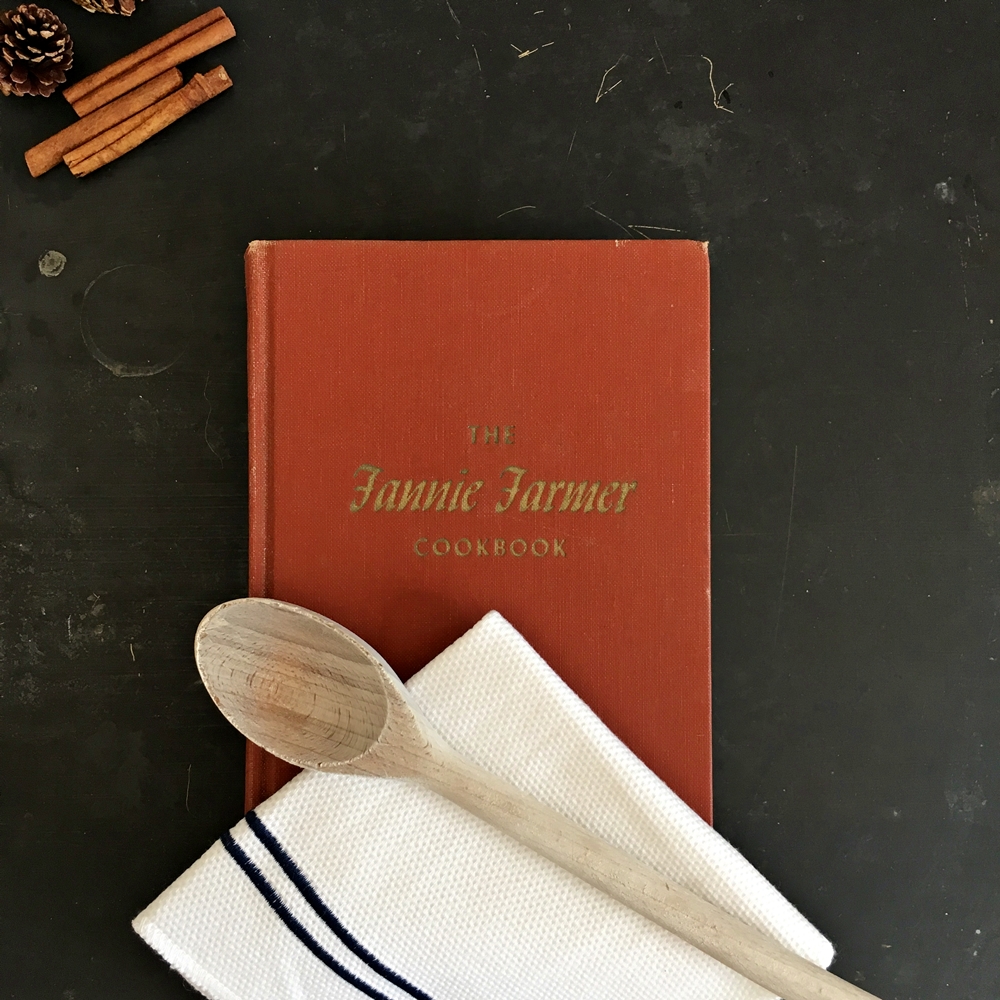
The 1965 edition of the Fannie Farmer Cookbook originally published in 1898.

For this post, I’m making the Fannie Farmer version from her 1965 Fannie Farmer Cookbook, which was first published in 1898. True to form, this recipe has changed a bit over the Fannie Farmer years too. The 1960s version involves raisins, whiskey, and loaf pans. Her original recipe from 1898 called for figs, sour milk, and bread dough starter.

The bulk of this project lies in waiting for the dough to rise (six hours!).

A nine hour baking project from start to finish, this is a kitchen adventure that will unfold over two days and two blog posts. Tonight, we discussed the history behind the recipe, and tomorrow we’ll discuss the actual recipe and how it all turned out. Will it indeed be more like a raisin bread rather than a fruit cake, as it is listed in Fannie’s cookbook? Will our modern palettes fall in love with this old-fashioned recipe enough to resurrect it and recommend it in the Vintage Kitchen?  Will it become a repeat labor of love on future days of election or will it be a one-hit-not-so-wonderful? Only time will tell in this case. Tune in tomorrow for the 2018 Election Day results, vintage kitchen style… {read part two here}.

From Tragedy to Triumph: The Monumental Mid-Life of Irma S. Rombauer

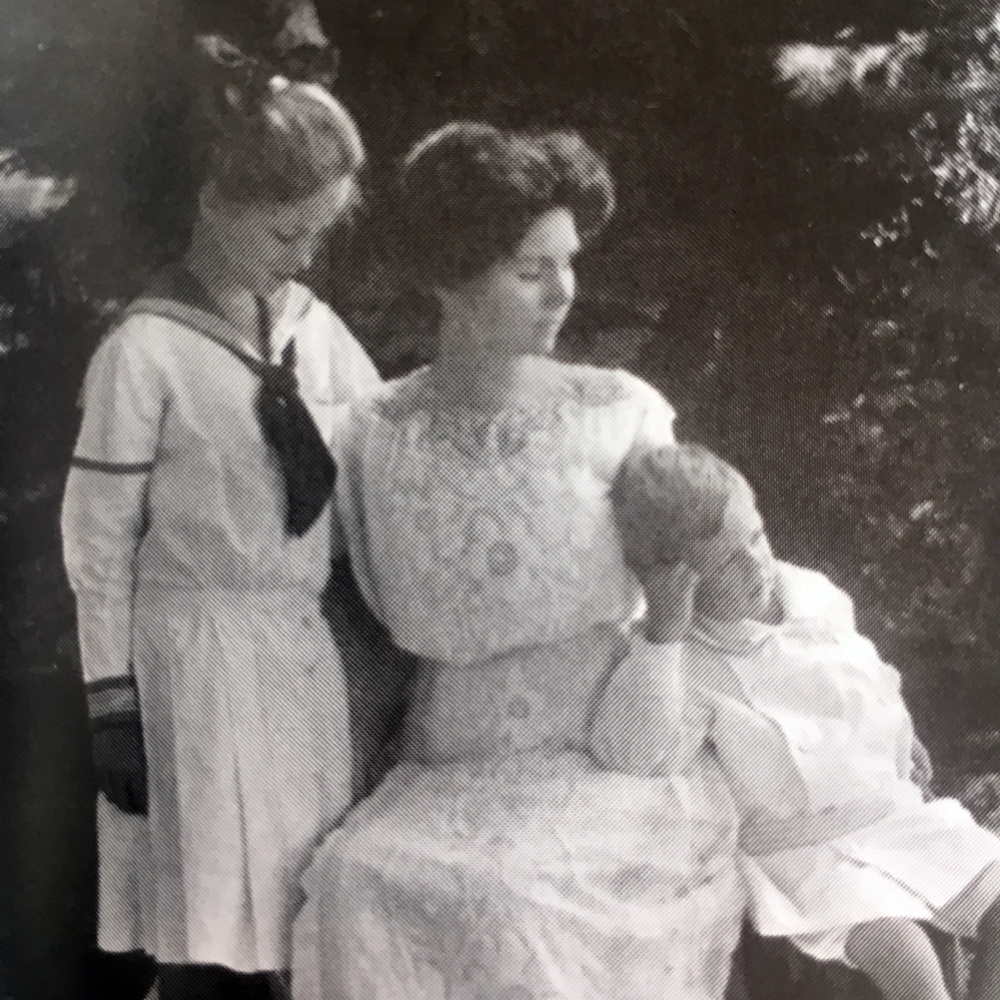
Irma with her children circa 1914. Photo courtesy of Stand Facing the Stove by Anne Mendelson.

Long before Irma Rombauer became a household name, she was an everywoman of the early 1900’s living in St. Louis, Missouri with her husband and two children. As the wife of an attorney who had political aspirations, Irma was actively involved in the social scene of St. Louis, a well-connected member of various clubs and organizations and a fun hostess of house parties and local events.

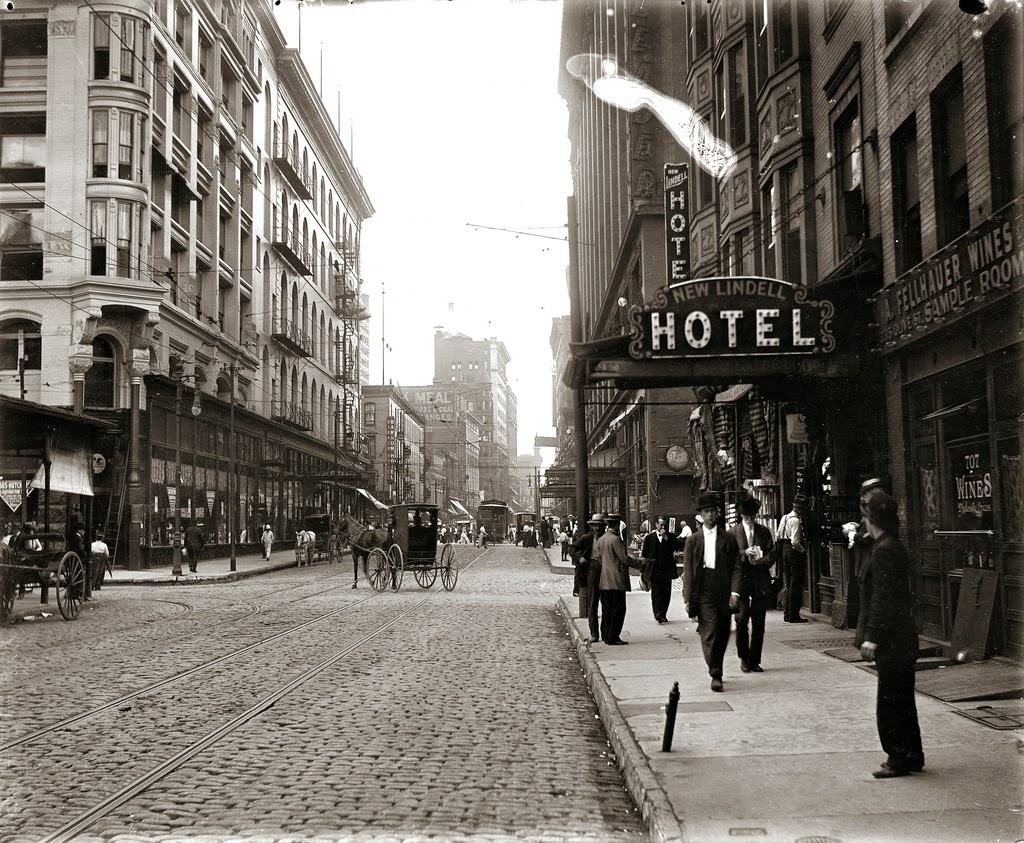
St Louis in 1906, seven years after Irma married. Photo courtesy of Vintage Everyday

When the stock market crashed and her husband tragically committed suicide as a result, the rosy colors of Irma’s St. Louis lifestyle suddenly took on a whole new shade. Without much money in savings, Irma, now in her early 50’s, had to quickly figure out what to do. Most importantly, she had to figure out how to survive on her own and care for her family, as a single woman, after thirty years of marriage.

While the Great Depression was a very hard time financially for families around the country, it was also a very creative period in home cooking. As everyone struggled to survive and to feed their families, barriers started breaking down as far as people’s pre-conceived notions of kitchen work and culinary skills. The wealthy could no longer afford kitchen staff and therefore had to start cooking for themselves. The middle class no longer had the same budget for groceries and had to learn how to cook more frugally.  And the lower class had to stretch their meager food supplies even further. That meant a whole wave of new cooks were beginning to emerge. Cooks who needed answers on how to do new things whether it was learning basic skills, innovative recipes or new techniques.

Irma saw an opportunity here in this great depression of both her own and the country’s. Americans needed a practical, instructive cookbook that offered good nutritional food for all budgets and all skill levels. Assume nothing, teach everything and most importantly find the joy, those were the thoughts ruminating in Irma’s mind.  This cookbook idea seemed especially relevant after a fellow St Louisan published a cookbook in 1929  featuring all sorts of expensive ingredients and decadent dishes – a notion that seemed totally inappropriate to Irma for both the time and the town.

The funny thing about Irma though at this point in her life, was that she wasn’t exactly known for her cooking. Her parties with her husband in the past had been memorable – not for the food but for the atmosphere. While Irma herself was a dynamic hostess and an interesting, intelligent conversationalist, what she served was overshadowed by her charming personality. People didn’t come away from Irma’s kitchen raving about her food but instead raving about Irma.  So the very idea that Irma would embark, could embark, on writing a cookbook, as just a sort-of-okay meal maker, was a great surprise to everyone who knew her. But none of that mattered. Irma had a plan in mind that was going to turn her kitchen from dull to delicious.

One of the groups Irma belonged to was The Wednesday Club where women gathered to discuss intellectually stimulating topics. Photo courtesy of wednesdayclubstlouis.org

Because she was so well connected and knew a lot of people in her community, Irma started collecting recipes from her friends and their families. Recipes that were proven hand-me-downs, time-honored and beloved. Once gathered, she went home and tested each recipe herself… adapting, tweaking, altering and omitting along the way if needed. When a satisfactory bundle of approved recipes emerged that suited her taste, she organized them into book form, named it The Joy of Cooking: A Compilation of Reliable Recipes with a Casual Culinary Chat and had 3,000 copies printed up by a local print shop. Tah-dah, the Joy of Cooking was born.

Irma mailed out copies of the cookbook from home and handled publicity and sales campaigns herself, enthusiastically spreading the joy of Joy.  The rest is cooking history. Bobbs-Merrill picked up professional publishing of the book in 1936 with the debut of the second edition. Irma became a trusted authority known for her reliable recipes and engaging writing style.  And the book went on to sell 18 million copies across eight updated editions. Covering everything from how to skin a squirrel to how to make a souffle, Joy of Cooking raised a nation of home cooks (18 million of them!) by assuming nothing, teaching everything and finding the joy.

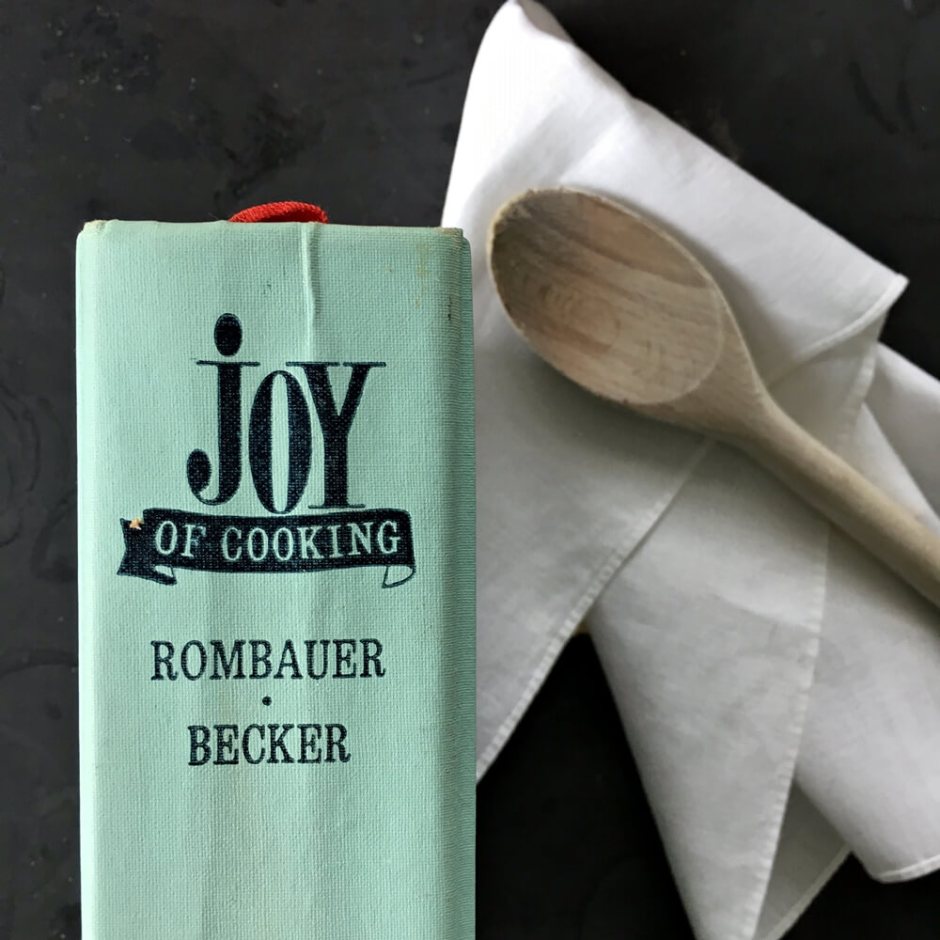
All the editions of Joy of Cooking through the years and a photo of Irma and her daughter Marion, who worked on many of the cookbooks.

That is a wonderful contribution to the American food scene. At a time when women could have felt marginalized by their roles as domestic cooks, Irma made cooking exciting and delicious and easily attainable. Her cookbooks turned into confidence and that confidence radiated into all other aspects of life.  Rumor has it that a new addition is scheduled for publication in 2019, edited and updated by the  Rombauer family, who have faithfully handled the cookbook and its revisions since Irma’s death in 1962.  Thanks to Irma’s children and her grandchildren, they have made the Joy of Cooking a record holder as the oldest cookbook in history that is still maintained by one family.  A legacy that hopefully will keep Irma in our kitchens for another 80 years.

Cheers to the Rombauer family and to Irma, in particular, who would have celebrated her 141st birthday today, and cheers to always finding the joy in both good times and bad.

Looking for your own vintage edition of Joy Of Cooking? Find two ediions currently available in the shop – one from 1967 here and one from 1975 here. And if you missed the previous blog post, catch up with a recipe for Irma’s Plum Cake Cockaigne here.

The Hi/Bye Month and the New {Old} Collections

Photograph by George Marks – Getty Images

Happy September, happy October and happy Autumn everyone! That’s three cheers, two months and one season that has happened since the last post. Oh my. The majority of September around the Vintage Kitchen was spent curating and collecting items for the shop and went by in such a hurry I officially coined it the hi/bye month because that’s exactly what it felt like. Here one minute, gone the next.

October started in the same way, with the same humid temperatures and the same busy schedule. Hot summer weather has hung around with gusto until just a few days ago, making this new season and curating for it, a bit of a challenge. My heart was wrapped up in the idea of Fall – all those colorful leaves and pumpkins and baking projects – but my head couldn’t quite get over the fact that it was still 90 degrees outside during the day and looked very much like August instead of October. New arrivals in the shop over the past 30 days reflect those dueling situations. Fall that feels like Summer.

New (old) items that fit into the Fall 2018 Collection are wrapped up in all the traditional touchpoints that ignite sentimental feelings of nostalgia and embrace the cozy, crisp months to come…

Cozy is the name of the game around here. New Autumn inspired vintage (from top left): 1930’s feedsack quilt square; 1970’s Jack Daniels whiskey glasses; vintage wood pocket shelf; 1920’s National Ivory teacups; vintage restaurantware plate, 1960’s World of Nut Recipes cookbook; 1950’s botanical prints; vintage enamelware bowl; 1970’s glass spice jars; 1970’s Mikasa Duet pattern plate; 1960’s Cookie Cookery cookbook; 1960’s red plaid tin.

Vintage spice jars, whiskey glasses, quilt squares, mixing bowls, teacups and fall foliage art prints help set the mood for the season in your kitchen, while homemade cookie recipes, holiday menu guides, and nut-themed delicacies help satisfy the seasonal cravings in your belly.

Some highlights from this collection include this 1960’s whiskey decanter made by the Van Winkle family in Louisville, Kentucky – one of the few distillers legally able to operate during Prohibition…

This 1960’s dinner plate –  one of the very last patterns made by Salem American Ironstone in 1967 just before their pottery closed its doors forever…

This vintage quilt square table topper made in the 1930’s from recycled feedsack materials…

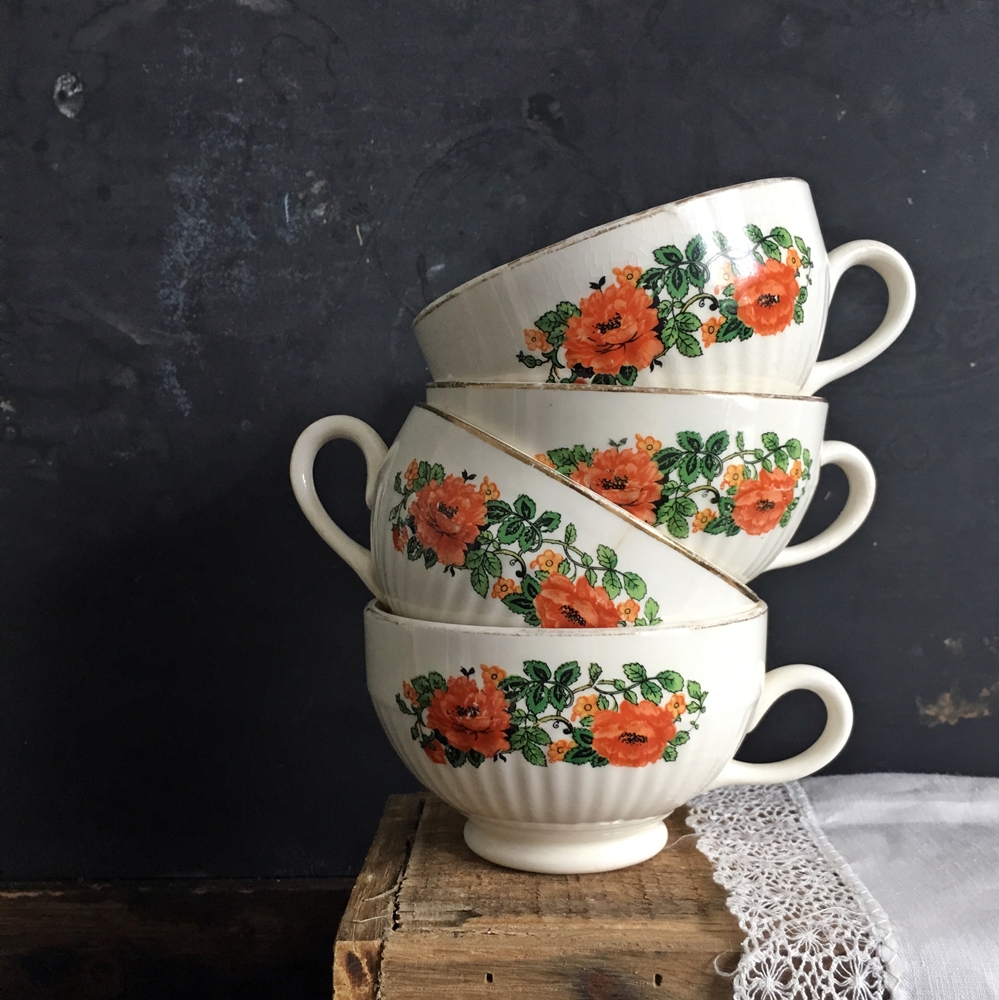
These National Ivory teacups made in the 1920’s during a similiar point in time when women’s roles, rights and liberties were also being redefined…

This 1970’s cookbook – the delicious work of internationally recognized pastry chefs/ husband and wife team, John and Hazel Zenker, who shared over 300 cookie recipes containing old-world charm and European heritage…

New arrivals in the shop that fell under the still-feels-like-summer category include this batch which I call September Skies…

…named for the matching colors found in the pretty sunsets that blushed over the city throughout September and October. They include floral serving pieces, ceramic planters, travel cookbooks and embroidered linens that bloom in thread. It is somewhat ironic how each piece in this collection speaks of all the pretty elements of this past summer but also really reflects the colors in the September/October sunsets…

Perhaps this was Lady Nature’s way of reminding me to be patient – that Autumn would come eventually because it always does one way or the other.

A new pal to the patio this week – butterfly dressed in Halloween colors but feasting on summer flowers!

Whatever weather you are experiencing in your neck of the woods this Autumn – hot, cold, crisp or humid, I hope you are having the happiest of Octobers.  And that you are finding beauty in the season and celebrating it in style.

Fall in love with history and its many assorted faces in the shop here.  Up next on the blog is a sweet treat recipe for Plum Cake circa 1963, from one of the most famous American cookbooks of all time. It’s a lovely Fall dessert that combines spices, baked fruit and a thin layer of cake that is light in constitution yet heavy in flavor. Stay tuned!

Luther Burbank, The Reliable Russet and Everyone’s Favorite Way to Eat A French Fry {1970’s Style}

They come with names that sound like 1970s rock bands… Bodega Red, Arran Victory, British Queen, Golden Wonder, Bellarosa.  Or like types of prize-winning chickens… German Butterball, Champion, Adirondack Red, Tyson.  Some even sound like certain breeds of dairy cows… Shetland Black, Royal Jersey, Blue Bell, Annabelle, Cream of the Crop.

But today we are not talking about chickens or cows or headliner music. Instead,  today we are talking about potatoes. All those names previously discussed are specific types of one of the most consumed foods on the planet- the noble and nourishing potato.  With more than 5,000 varieties in the world, you might think that it would be hard for one lone potato type to stand out in his vast tuber family of brown, round, knobby-eyed dirt dwellers.  But there is actually one big-time celebrity in the batch – a spotlight stealer known around the world –  a superstar of the food and restaurant scene that represents the most frequently consumed potato on the planet.

It is my pleasure to present the story of the wondrously addictive potato variety known as the Burbank Russet. Haven’t heard of it, you say? Ah, but just you wait…you’ll know it. Maybe not by backstory but definitely by bite.

On Friday, it was National French Fry Day and we celebrated with a homemade batch of Russet potato french fries in honor of the guy who created them. Meet Luther Burbank, 19th-century American botanist extraordinaire…

Luther grew up in Massachusetts in the 1850s playing with seed balls in his mother’s garden instead of playing with sports balls in his farm neighborhood. His interest in botany from the time he was a youngster fueled his curiosity for plant cultivation, a field of study that would eventually turn into a lifelong career. Throughout his childhood and into early adulthood, Luther tinkered around with seed starting and plant breeding.  Although it was a laboriously slow process, most often times ending up in disappointment, Luther came by this area of study naturally. His mother also shared his interest in gardening and the two of them would happily spend hours working in the garden, talking about the life stages of various plants.

The plant world was a playground to Luther, something that represented creativity and freedom from set rules and rigid disciplines. He had aspirations to one day have his own farm in California where he would grow vegetables and flowers for the retail market and try his hand at growing new breeds of plant life. In his early 20’s, he started experimenting with potatoes.  But developing a new variety wasn’t as easy as you might think.  Potatoes are peculiar things. They can be regenerated in two ways – through seeds or eyes. Either method produces similar results or slightly different results in the form of mutations or spores each time offspring are generated.  It is difficult to determine at the onslaught of a growing project how the potatoes will turn out at the end of the project. More often than not the experimentation stage for Luther in trying to cultivate a new variety was long and finicky.

If you have never seen how a potato grows, this is a good illustration. Plant above the ground and lots of potatoes nestled together below ground. Image from the 1893 L.L.May & Company Seed Catalog featuring Northern Potatoes.

But in 1873 gratification came, finally, to Luther’s ruddy, soil-covered hands. One day in his 24th year, Luther went out into the field to dig his latest sample crop, half expecting to uncover the same old story of growing the exact same plant he started out trying not to grow. But this time, something was different.  Instead of digging up an ordinary round potato, Luther pulled a tuber out of the ground that was twice as big and twice as long. It was reddish-brown in color and hefty in weight. A totally different specimen than the parent potatoes he had started this most recent batch with.  Success at last! His first genuinely original new potato had emerged.
He christened this new masterpiece the Burbank Russet and immediately sold it for $125. Was that enough money for Luther to retire early to his California dream farmhouse and garden? Not quite yet, but that’s not important to this story.  Money never mattered to Luther, only the science that stood behind it. He had made a new potato and that was pretty motivating stuff to keep his heart in the game and his hands in the soil.

Luther’s Burbank Russet was an exciting and innovative new addition to the agricultural market for its time because of its size. Almost twice as large as typical potatoes of that era, it also boasted an adaptable consistency (good for baking, mashing and frying) and it was more disease resistant to common blights that affected many potato crops around the world. But after it was introduced in the late 1800s, it took some time for the Burbank Russet to catch on. The US government initially started farming it in Oregon and from there it slowly spread to neighboring states and then the region and then the rest of the country. Eventually, it became the best-loved potato cultivator in the United States.

Russet potato farmers in 1940’s Idaho.

Farmers loved it because it was easy to grow and held up well in both shipping and storage. Once it became a successful and abundant crop, the food industry got on board. Its size, consistency and cooking adaptability made it an ideal food product for both general household consumers as well as commercial food companies and restaurants.

Although the actual cooking process of making French fries – cutting strips of potatoes and frying them in fat – had been around in France and Belgium since the 1700s, it wasn’t until a valuable American discovery was made in the 1930s that fries started to take hold as an American food staple. This important discovery was that french fries froze well and could be reheated easily while still maintaining the same shape, taste and texture.  In the early days of refrigeration, this was exciting!  This mere fact opened up opportunities for the retail, transportation and restaurant industries as french fries could now be shipped around the country in both frozen and fresh forms.
A midcentury newspaper ad for McDonald’s french fries.

By the time hamburger stands started popping up in the 1950s and 1960s, french fries became a main attraction at the drive-in burger stand as well as the family dinner table.

A vintage frozen french fry ad from the 1960s. Photo courtesy of itsjustoldpaper on Etsy.

The novelty of enjoying french fries both at home and at restaurants offered plenty of potential in the form of culinary creativity.  In mid-century America, the common condiments for them were simple… ketchup (or catsup, however you prefer!) and salt.

A 1955 advertisement for French Fries featuring Hunt’s catsup.

But by the 1970s, these little potato favorites were garnering more international gourmet attention. Common toppings and condiment companions of the disco era included the following…

…paprika, cracked black pepper, parmesan cheese, malt vinegar, crushed herbs, ketchup, mayonnaise, mustard,  salt, and a special mayonnaise/mustard mixed combo variation. In addition to frying, it also became much more commonplace, especially in the latter decades of the 20th century, to oven-bake freshly cut fries. This method of cooking was believed to be a “healthier” version since it involved less oil and a tamer cooking experience (no vats of hot fat to contend with!) as opposed to traditional deep-fry methods.

Because a lot of people tend to think it is easier to go to a fast food restaurant and buy a serving or two of fries or grab a box of frozen ones from the grocery store, we made the oven-baked variation for this post to prove how simple, quick and easy it is to take a fresh potato and turn it into a delicious hot french fry in less than 30 minutes. This recipe comes from the vintage cookbook Joy of Cooking (1975 edition)  and was a breeze to make. Literally, it took 5 minutes to prepare and 20 minutes to bake,  which makes it a fast side dish for your summer burgers.

Oven “French-Fried” Potatoes (serves 1-2)

1 large russet potato (scrubbed)

1/8 cup olive oil

A generous sprinkling of sea salt

Preheat oven to 450 degrees. Slice potatoes lengthwise into long  1/4″ sticks (you can do this by hand or by using the julienne setting on your vegetable slicer. Either way try to keep each stick as uniform as possible to ensure even baking. Lay the freshly cut sticks between a couple layers of paper towels and pat dry to remove extra moisture, then spread sticks out on an ungreased baking sheet and drizzle with olive oil.

Using your hands, toss the potatoes and oil together so that all sticks are coated and spread them back out in the pan as flat as possible.

Bake in the oven for 10 minutes. Then remove from the oven and flip the fries over and  return back to the oven for an additional 8-10 minutes.  They should look something like this when they are ready…

Remove fries from the baking pan onto a paper towel-lined plate. Sprinkle with salt and pepper (or any of your favorite spices) and serve immediately.

Inspired by the 1970s list of approved condiments, I kept thinking while writing this post how fun it would be to have a french fry bar party where guests could pick and choose their own toppings from a wide assortment. So many flavors pair well with potatoes, so the possibilities would be endless as far as dips and dredges, sprinkles and submersibles. The one element of homemade french fries that should always remain constant though is the potato – always use russet potatoes. They are the variety of choice in almost every fast food french fry you’ll ever eat – including McDonald’s whose fries are legendary. And besides, you’ll make Luther happy using his version over any other!

Luther never lived to see the ultimate french fry-loving success of his humble potato breed, although he did live a fulfilling gardening life up until the time of his death in the mid-1920s. And he did acquire that dream farm in California that he always wanted…

Luther Burbank’s house as it looked in the 1920s
Now in 2018, his house is a city park and garden that is open to the public.
Luther Burbank House and Garden, 200 Santa Rosa Ave., Santa Rosa, CA

And he built a garden where he invented new varieties of fruits and flowers and vegetables. We have Luther to thank for cultivating these beauties…

Clockwise from top left: The Plumcot – a mix between plums and apricots, the Fire Poppy, the July Elberta Peach, the Spineless Cactus and the Shasta Daisy

So while he never did see his potatoes bubbling up in oil at the Golden Arches, he did see his lifelong passion laid out in the garden as the golden hour light passed from day into night. Satisfaction was never going to be found in fame or fortune when it came to Luther Burbank. He didn’t care about either of those two things. His happiness lived deep within the dirt – a vast canvas of potential –  fueled by a creativity and curiosity that never ceased to inspire him.

Cheers to Luther for inventing one of the most delicious potatoes in the world. And cheers to all the farmers who keep growing the russets. May they continue to add a bit of indulgence to our diets and serve as a basis for inspiration in our culinary endeavors.

Find out more about Luther and his Santa Rosa, CA garden park here.  Find the vintage Joy of Cooking cookbook in the shop here. 

If you guys have any favorite toppings or condiments that you prefer on your french fries please post them in the comments section below. We’d love to hear from you!

Happy 4th of July! This Is What This Day Tasted Like in 1902…

Happy 4th of July! It has been super quiet around here on the blog since mid-May and I must say, I have missed you all terribly.  There was a family tragedy and a family illness that took me unexpectedly far away from the Vintage Kitchen for most of June. But I’m happy to write that I’m back and ready to dive into a plethora of new kitchen stories starting this week.

Exciting things coming up in July include an interview with a creative artist who will make you look at your refrigerator in an absolutely new and enchanting way; we will travel back in time to a hotel in 20th century Minnesota and share a few recipes that made them famous around the world; we’ll learn about a guy who invented one of the most addictive foods ever known to eaters; we’ll celebrate three national food recognition days and we’ll host a giveaway that is guaranteed to add a little sparkle to your life. So stay tuned on that front. July is full of fun!

In the meantime, since it’s a holiday today and you are out and about celebrating with friends and family, we’ll keep this post short – a litle dollap of history pertaining to patriotism and how Americans ate their way through Independence Day in 1902.

In that year, this guy was president…

Theodore Roosevelt – the 26th President of the United States.

And patriotic family gatherings looked something like this…

A fourth of July family picnic in St. Augustine, Florida in 1902. Photo courtesy of FilsonHistorical.org

Decorations were simple…bunting, flags, flowers and the natural settings of the great outdoors. There were parades and town concerts and special events planned throughout the day.

July 4th, 1902 in King’s River, California. Photo courtesy of the Sierra Club.

Conversations were full of pride, in the general achievements of the country. Unlike today, where the political terrain is quite rocky and American morale is at an all-time low, in 1902, patriotism was a bit more revered. President Roosevelt prepared a speech saying nothing but thank you to the American military for continuing to extend and uphold the open arm ideals of the United States and pledged to continue to promote peace and tolerance throughout the world.

In American households during the early 20th century, the 4th of July was the one day where political affiliations were set aside. What was celebrated in conversation was not that someone was a Democrat or a Republican but instead an American. And topics led more towards incredible examples of what had been achieved in the past as a unified country as opposed to criticisms about the work that still needed to be accomplished individually.

Eating occurred on a large all-day scale with a full breakfast, lunch and dinner… each incorporating the colors of the American flag. Here’s a suggested menu from Woman’s Favorite Cook Book published in 1902…

Woman’s Favorite Cook Book, 4th of July Menu, 1902

You’ll notice, even back then, the holiday has always been about cooking and spending time together. The kitchen would have been a hotbed of activity (just like it still is today) preparing all the staples we still enjoy eating on the Fourth – ice cream, salads, garden vegetables, fresh berries, cake. Our national pride might be much more diluted now than it was 116 years ago but our bellies are traditionally still enjoying the same types of food. That is a comfort at least.

Theodore Roosevelt once said…“Patriotism means to stand by the country. It does not mean to stand by the president or any other public official, save exactly to the degree in which he himself stands by the country. It is patriotic to support him insofar as he efficiently serves the country. It is unpatriotic not to oppose him to the exact extent that by inefficiency or otherwise he fails in his duty to stand by the country. In either event, it is unpatriotic not to tell the truth, whether about the president or anyone else.”

Teddy would have appreciated all the new voices coming forth this year (no pun intended!) in our fights for democracy and fairness and freedom for every person in America. He would have admired all the political bravery that exists today and marveled at all that we have accomplished so far.  Americans of the early 20th century would have lauded our collective efforts too, noting how far we have come on the food scene as far as innovations and improvements and equipment while still managing to keep the culinary traditions of our ancestors alive.

So it is with that in mind that we say cheers to the holiday, to the progress we have made, and to the traditions we still hold dear. However you choose to celebrate the 4th of July – whether you are partying it up at a fish fry, a barbeque, a picnic, a seafood boil or a campfire roast – I hope your holiday is filled with fun, family, and friends. May it be peaceful and light. And may all those fireworks be bright. Cheers to a happy holiday! We’ll see you back in the Kitchen shortly.