Mark Your Calendars: Our Annual 40% Off Sale is Sunday, November 2nd!

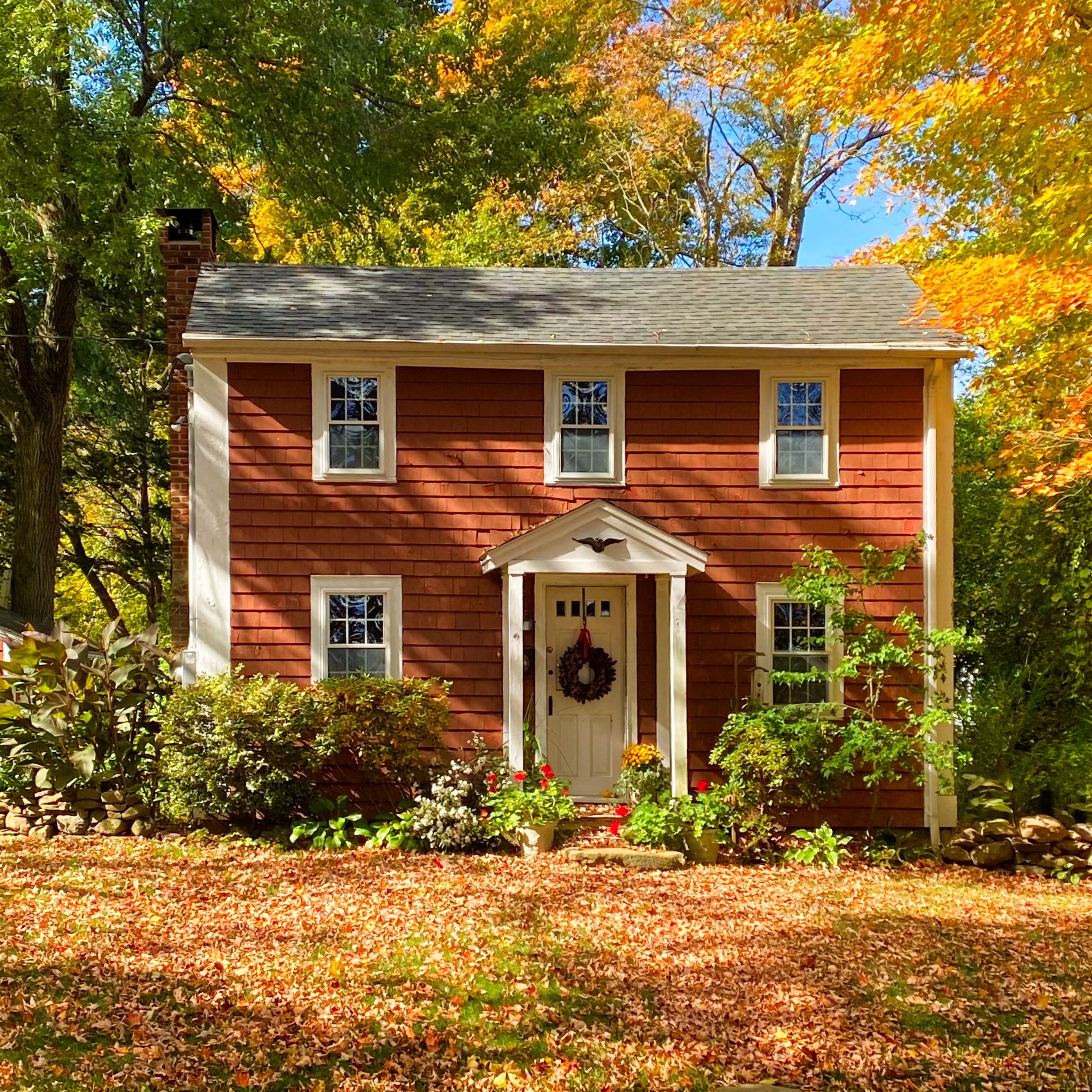
Autumn 2025 comes to 1750 House in a blanket of color.

It’s hard to believe that our annual once-a-year shop sale is just two weeks away, especially since our last blog post left off with baking bread in the middle of a summer heatwave. And yet, now here are, firmly swaddled in a blanket of autumn leaves with the woodpeckers performing their yearly tap tap tapping on the shingles of 1750 House reminding us that seasonal celebrations are close at hand. Lots has happened between now and that day in July when the kind bread was rising as high as the humidity and the garden was growing right along with the shop stories.

The lemon balm… one of our star growers in the herb garden this year.

I’m very excited to catch up, especially when it comes to hashing out the happenings of the herb garden and the triumphs and tragedies it endured over our experimental summer. But before we get to all that, I wanted to give everyone a quick calendar reminder in this post about the shop sale since it’s coming up right around the bend.
Two very exciting things are happening this year in regards to the sale. 2025 marks our 5th year of the sale, and it also happens to occur this year on the same day as daylight savings time, so you’ll be able to fall back and enjoy an extra hour of shopping should you so choose.

If you are a regular visitor to the shop, you’ll know that we adore a good floral and that the shop is forever covered in blooms no matter what the time of year. But when it comes to the change of seasons from summer to fall, the shop starts filling with heirlooms that embrace this cozy time of year by reflecting the colors in the landscape that help create autumn vibes in the kitchen and a beautiful feast for the Thanksgiving table. Whether its cookbooks, dishware, or decorative pieces, this year you’ll find some unique heirlooms that not only speak of history but of harvest time too…

If you are new to the All Souls Day sale, every year, November 2nd marks 40% off everything in the Vintage Kitchen shop for one day only. We call it the All Souls Day sale, not for the Catholic holiday that it shares the day with, but for the heirloom history that it encompasses.

All Souls Day is the only communal holiday in the calendar year that celebrates and remembers all deceased ancestors, and to us, that seems like the perfect time to celebrate vintage and antique heirlooms too. None of our shop items would be here today if they had not traveled through time, cherished and cared for in the hands of the people before us.

It’s up to the ITVK team to curate the shop, but the heirlooms do all of the storytelling. Each year, these heirlooms share new insights into the past that help shed light on things in the present. Since no two items in the shop are ever exactly alike, no sale from year to year is ever exactly the same either.

Just like the majority of one-of-a-kind heirlooms that can be found In The Vintage Kitchen, unique stories offer glimpses into culinary history and garden life that occurred decades ago or even centuries earlier. Hidden histories are everywhere and they tend to show up in ways that consistently surprise and delight. Just when you think a napkin is a napkin, a plate is a plate, a book is a book, a detail will jump out from in its history and take us on a marvelous trip through time to understand and explore other places and faces. These are some of the unique heirlooms you’ll find in this year’s sale…

A Rare Chesapeake & Ohio Railroad Luncheon Plate c. 1923
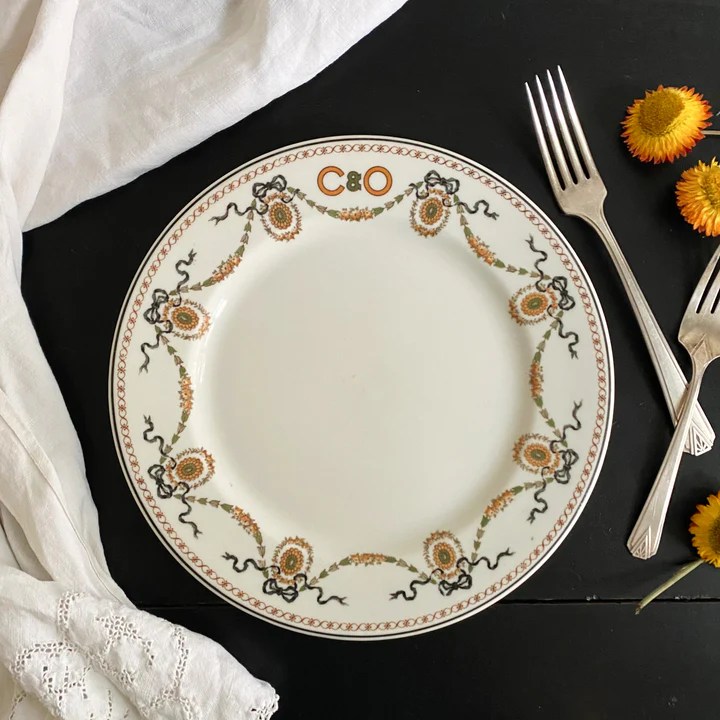
With its roots extending all the way back to canal transportation in the 1790s, the C&O Railroad has a long and winding history through the American landscape. Throughout most of its life, C&O trains hauled coal, agriculture, retail products, and travelers between Virginia, the Midwest, the Northeast, and parts of Canada up until the 1980s. In the 1920s, the decade in which this luncheon plate was made, the C & O trains looked like this…

Dining service aboard C&O started in 1899 and was only offered on their luxury lines. Signature menu items included shirred eggs, Saratoga chips, broiled sea fish, baked apples and cream, Spring lamb chops, and French toast with marmalade. 

A Signed First Edition of Alice’s Restaurant Cookbook circa 1969

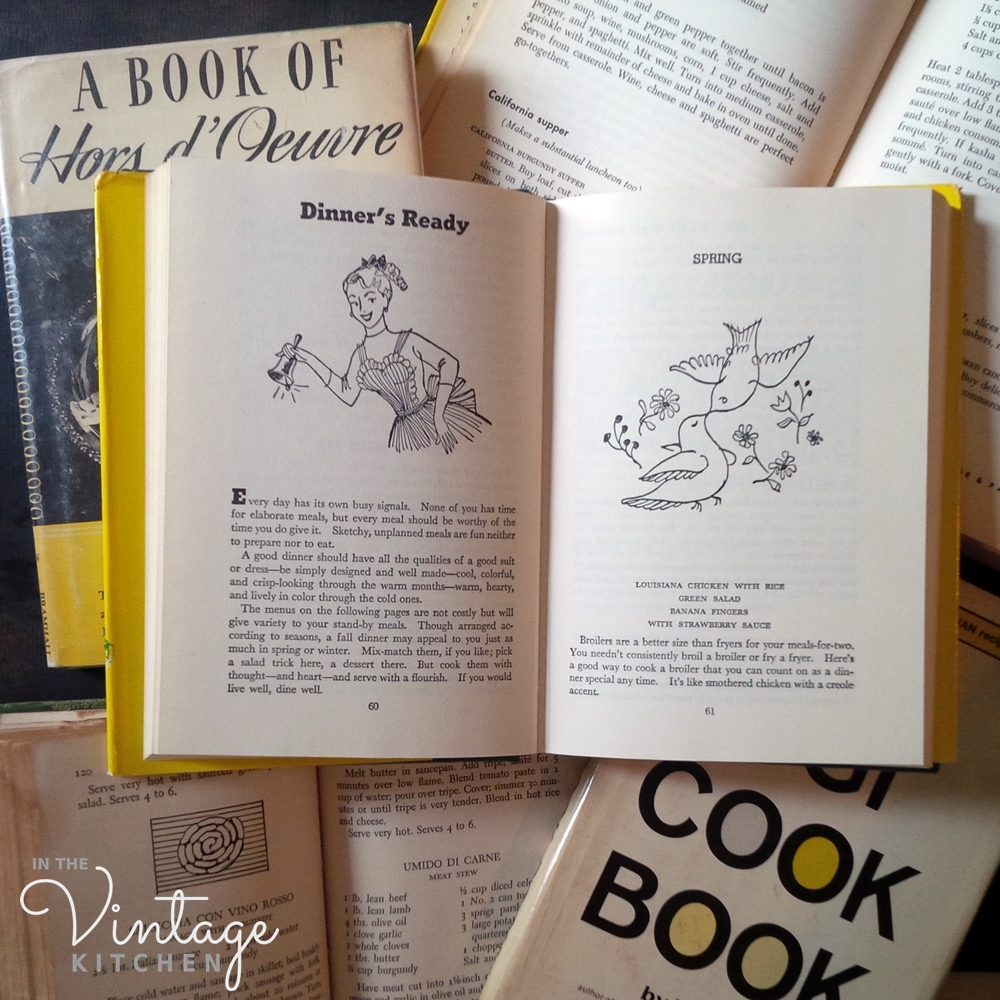
Not every cookbook comes with it’s own theme song, but when Alice May Brock (1941-2024) befriended a young Arlo Guthrie, the whimsical world Alice lived in was all the inspiration Arlo needed to write a hit song called Alice’s Restaurant Massacree, which in turn inspired a cult classic film of the same title. The cookbook came after the song and the movie, but shares the recipes that made Alice a local legend in New England as the proprietor of three restaurants and a catering company. A free-spirit, an artist, and a lover of food and friends, this cookbook features some of the favorites served in her restaurants and at her famous home-hosted dinner parties. It also includes still photos from the movie, Alice’s illustrations, and photos of Arlo and their friends who made a good time out of every meal. Adding an extra layer of the joie-de-vivre she embodied, this particular book is also signed by Alice.

A Collection of Original Floral Feed & Flour Sacks circa 1930s-1940s

You can’t really get any closer to touching real-life history than these floral feed and flour sacks. Stitched into traditional sack shape, similar to a pillowcase, these bound together fabrics were once the commercial packaging that held a variety of pantry staples, including flour, sugar and grain. Made by the manufacturing industry in response to the financial burdens placed upon American families during the Great Depression, this cotton sack packaging was made solely for the purpose of recycling.
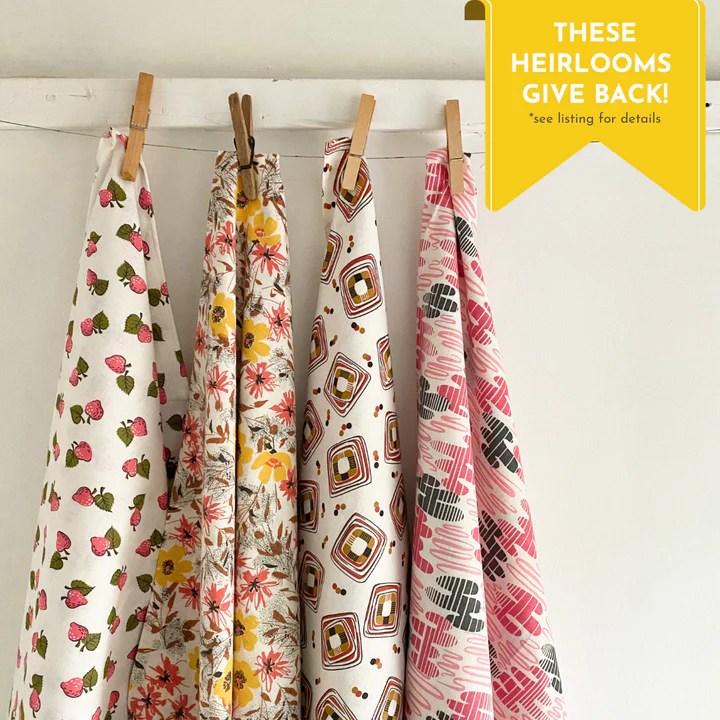
Knowing how thrifty and creative the American seamstress was, and knowing how tight household budgets were during the Great Depression and World War II years, grain and food manufacturers packaged their products in these floral cloths specifically so that women could repurpose them by turning the fabric into clothing, household linens, toys, rugs, curtains etc. It was a winning collaboration that not only responded to and eased economic stress, but also showed unwavering care, support and appreciation for customers during one of the most challenging times in American history. This batch in the shop came from a private collector and was so well-cared for across ninety years that each piece of fabric looks practically brand-new. Two of the sacks even retained traces of grain remnants hinting at the original products contained within.
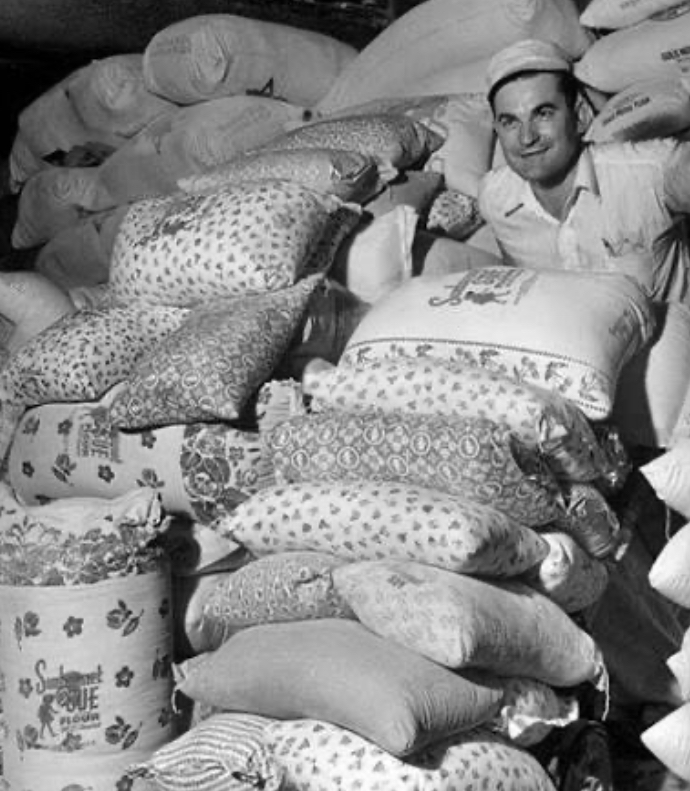
Cotton flour sacks full of flour featured in a 1940s photograph published in LIFE magazine

An Antique Basin Bowl & Wash Pitcher That Changed the American Plumbing Industry

It’s hard to imagine life without modern conveniences like indoor plumbing and bathrooms, but back in the 18th and 19th centuries, this wash basin and pitcher was your gateway to cleanliness, both literally and figurately. Made by Maddock’s Lamberton Works in Trenton, New Jersey, between 1888-1902, the British-born Maddock family were the first immigrants to realize that America needed their own sanitaryware pottery manufacturer. Up until they opened up shop, all basin bowls, wash pitchers, slop jars, chamber pots and grooming sets were imported from England. The Maddocks changed that by producing American chamber sets using local clays, and in doing so, revolutionized the plumbing industry in the process. Recognized as pioneers in the world of sanitary toiletry products, the Maddock family patented several plumbing innovations before they eventually sold the pottery in 1929 to American Radiator & Sanitary Corporation, who would go on to create our country’s indoor heating and plumbing infrastructure including radiators, sinks, bathtubs, and toilets for households across the country.  

An Intimate Glimpse into the Life of a Literary Hostess
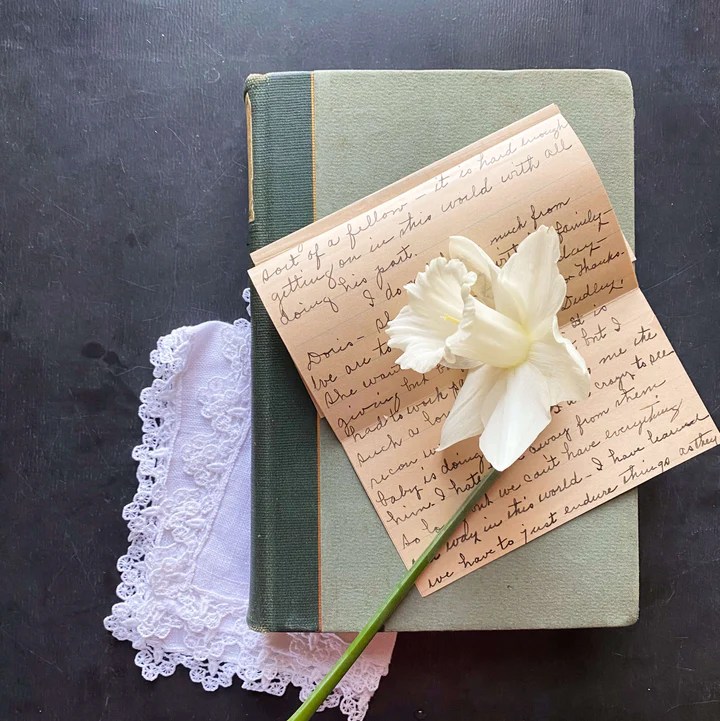
Guests at the Boston literary salon of Mr. James & Annie Fields were a veritable who’s who of prominent 19th-century writers. Mark Twain, Charles Dickens, Sarah Orne Jewett, Ralph Waldo Emerson, Henry Wadsworth Longfellow, Bret Harte, Henry James, Bronson Alcott, Nathaniel Hawthorne and Harriet Beecher Stowe, to name a few among were just some of the visitors that spent time in their home along with other notable painters, actors, musicians, and political activists. 

In addition to being a writer, activist and philanthropist herself, as well as the wife of distinguished Boston publisher James Fields, Annie Adams Fields (1834-1915) was also a charming, kind-hearted hostess and keen observer of conversation amongst her literary friends. Never interested in self-promotion, scandal or gossip, she regularly recorded bits and pieces of conversations among her friends in diaries that she kept throughout her life. Sketches of dialogue, character traits, pressing matters of the day, viewpoints on life and literature all freshly detailed the lives of extraordinary figures, painting them as humble, human, fallible beings tackling life, their passions and their creativity as anyone might. 

Before Annie passed away in 1915, she granted noted biographer Mark Antony DeWolfe Howe Jr. access to all her diaries in his pursuit to record the friendships enjoyed between the Fields and their artistic community. She had one caveat, though, in sharing her books. That Mark’s book not be about her but about the extraordinary friends whom she knew and loved so well. What resulted is this book, Memories of A Hostess: A Chronicle of Eminent Friendships, published in 1922.

Highlighting correspondence, diary entries, cultural events, and touchpoints from history for context, Mark Antony DeWolfe Howe pieced together an intimate glimpse into the lives of the 20th century’s greatest thinkers and artistic minds, courtesy of Annie and James’ record-keeping collection.

Annie’s husband, James Fields

Uncovering a portrait to attach to each heirloom’s story is one of our ultimate joys. In this year’s sale, you’ll also meet many new faces. This year, we shared stories of Attia, Alfredo, Pamela, Freddie, Doris, John, Judy, Miroslav, and Marjorie along with her daughters, Kate and Susan…
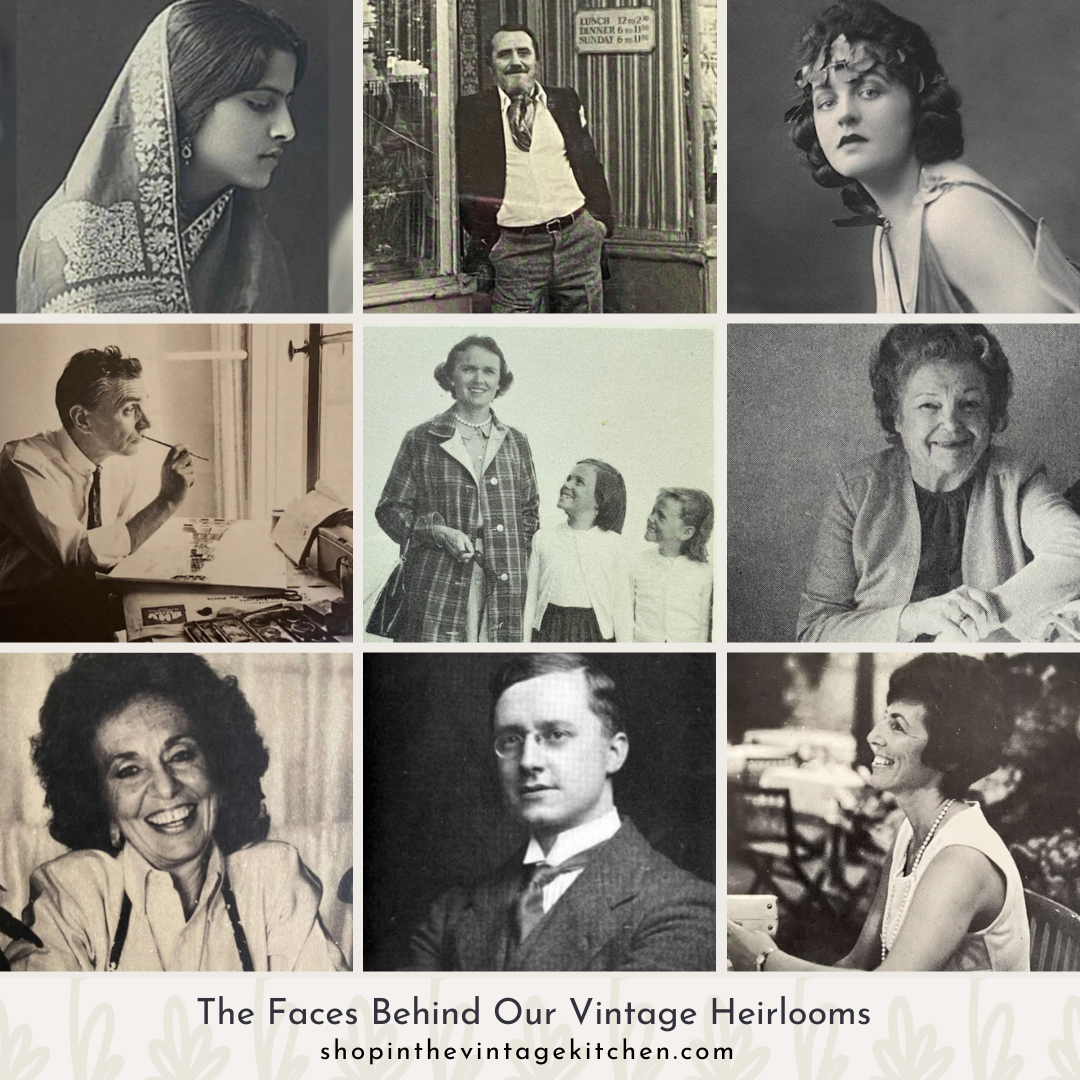
Clockwise from top left: Attia Hosain, Alfredo Viazzi, Pamela Lyndon Travers, Freddie Bailey, Doris Muscatine, John Ramsbottom, Judy Gethers, Miroslavo Sasek, Marjorie Winslow and daughters.

Each brought many new perspectives of history to life. Attia Hosain (1913-1998) was a writer, actor, cook, broadcast journalist and intellectual focusing on stories of India and British post-colonialism. Freddie Bailey (1904-1992) was famous in Mississippi for her hot pepper jelly along with other regional favorites that made her kitchen the epicenter of Southern food, flavor and hospitality. In the 1930s, Pamela Lyndon Travers (1899-1996) introduced the world to Mary Poppins, who still remains 90 years later, the globe’s most well-known and most beloved nanny. Alfredo Viazzi (1921-1987) was the proud owner of a popular Greenwich Village restaurant known for its convivial atmosphere, great food and reasonable prices. Judy, Doris, Marjorie and Miroslav shared their artistic talents via saucepan and sketchbook. British mycologist John Ramsbottom (1885-1974) taught gardening enthusiasts all about the fascinating world of fungi.

This year also introduced personal stories shared by readers and their families. One of our favorites is that of Beverly, whose collection of handwritten recipes is not just a set of random cards in a box. They are the story of her. Of one woman’s culinary journey as she grew from a young, inexperienced midwestern bride, who barely knew how to boil an egg, into a confident, seasoned California cook and recipe collector over the course of her entire adult life.

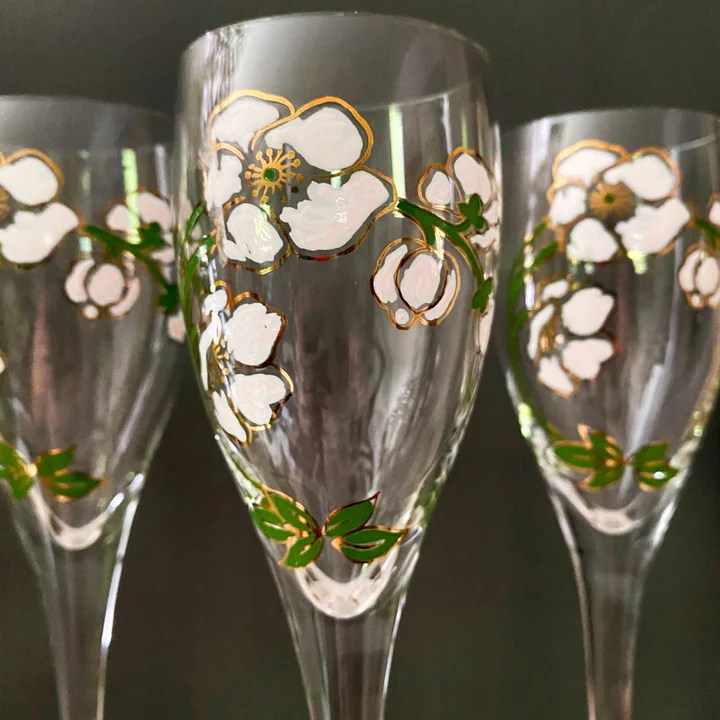
Familiar favorites can be spotted in the shop sale too, bringing with them their marvelous heritage stories that are worth retelling again and again. This stemware is the story of champagne, of “drinking the stars,” of a husband and wife couple, Pierre Perrier and Rose Jouet, who created the first true champagne made from the Chardonnay grapes in the Champagne region of France in the early 1800s. Together, with Rose in the vineyard and Pierre in the sales office, they launched Perrier-Jouet Champagne in 1814, a brand that still continues to enchant wine enthusiasts around the world today.
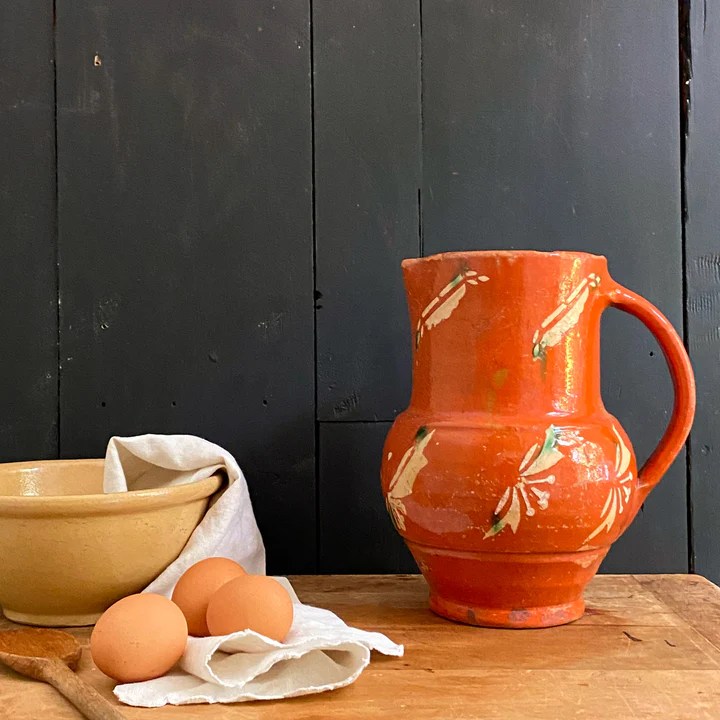
Every year we also like to spotlight the oldest antique in the sale. In this year’s case, it’s this French pottery water pitcher that dates to the 1850s…
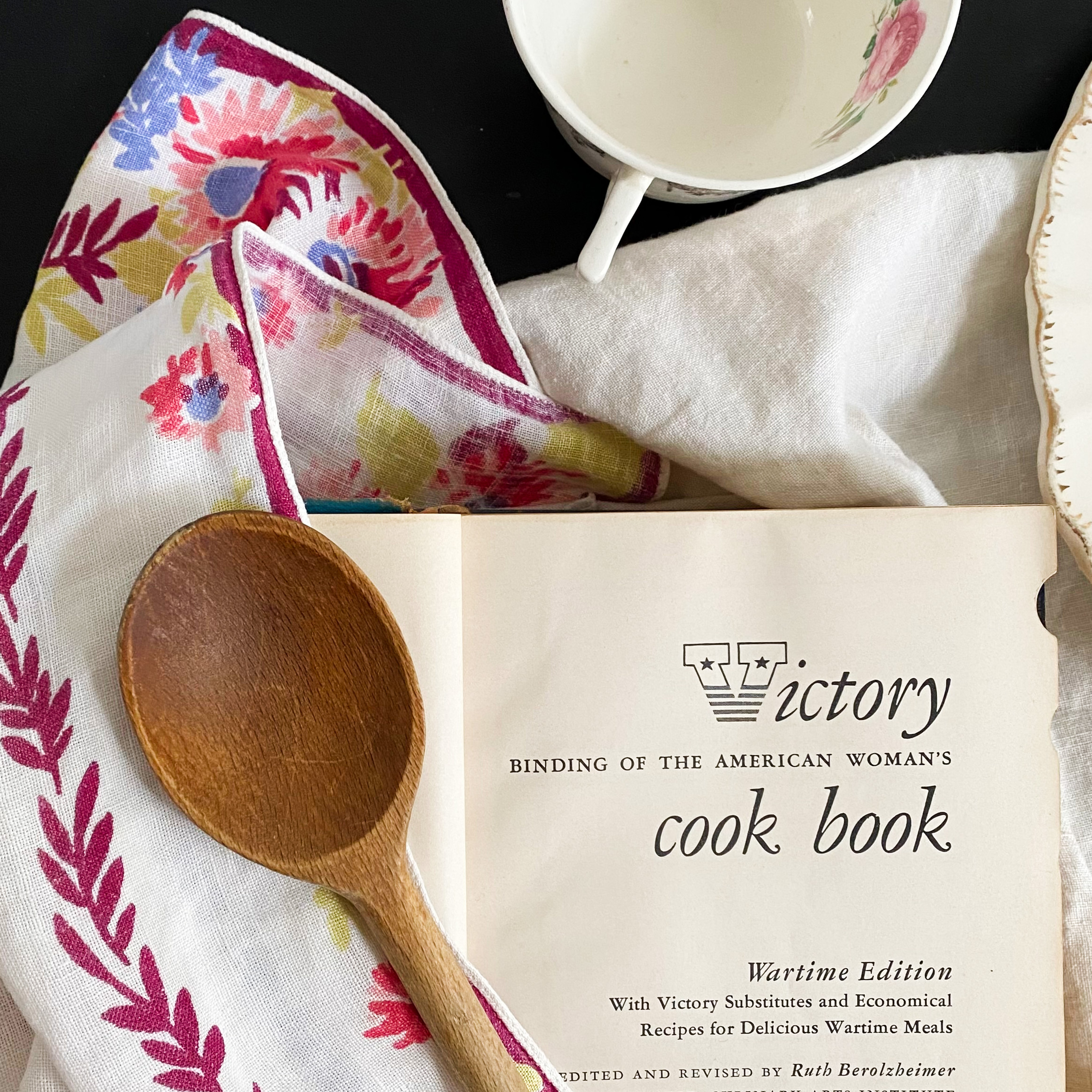
More history floats. More stories emerge. In the shop, a cookbook is never just a cookbook. It’s a tactile understanding of what WWII cooking really looked like for women in the 1940s. Its a story of how they had to portray strength, creativity, courage, ingenuity and optimism at every meal, every day while creating delicious, nutritious and interesting meals on limited war rations, tight budgets, and victory garden harvests.
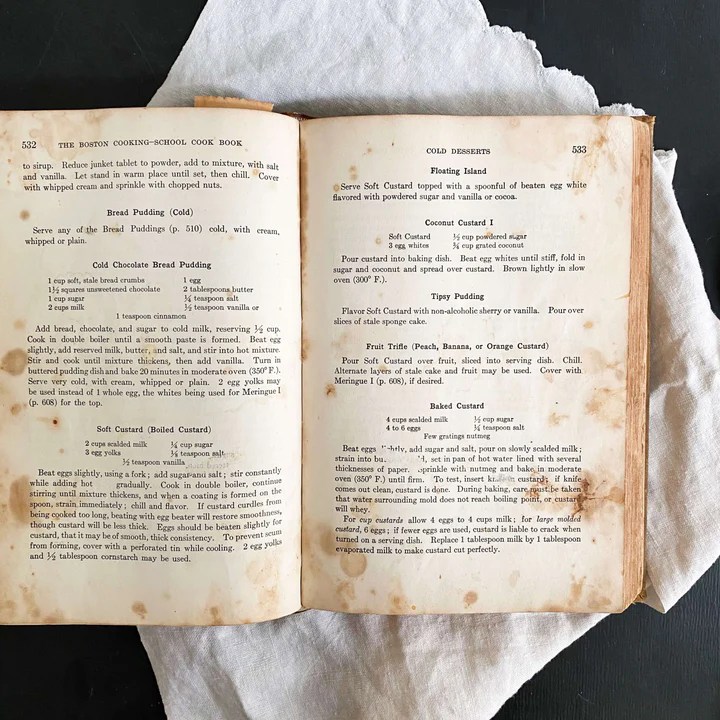
Cookbooks in the shop tell intimate stories not only of their authors but also their owners too. This 1931 edition of the Boston Cooking School Cook Book showcases the enduring legacy of Fannie Farmer (1857-1915), who not only raised generations of home cooks but shared recipes that still inform regional New England cuisine today. It also highlights, through a myriad of cooking splatters and stains, the adventures of a previous cook (or cooks) who cherished the recipes so much their culinary endeavors have turned into an artful aesthetic.
Also every year, there’s one stand out cook, who warrants days or sometimes even weeks of research thanks to a fascinating life lived. This year, it was Lois Burpee (1912-1984)…

who married into the Burpee Seed Company family in the 1930s and managed to carve out an incredible cooking, gardening, and philanthropic career that lasted her entire lifetime.

Other equally interesting cookbooks in the shop sale this year include two rare compendiums of culinary curiosity that offer suggestions on what to make and what to bake every day for a year…

Decorative pieces in this year’s sale highlight the handmade arts. An antique tole tray, a vintage hand-carved wooden swan, a vintage print of a tulip painting dating all the way back to 1827, a hand-embroidered linen…

These are just a few examples of the people, places, and stories that have found their way into the Vintage Kitchen shop in 2025. I hope at this year’s sale you discover an heirloom that captivates your attention, that steals your heart away to another time or another country, and that inspires new creativity from history’s forgotten muses.
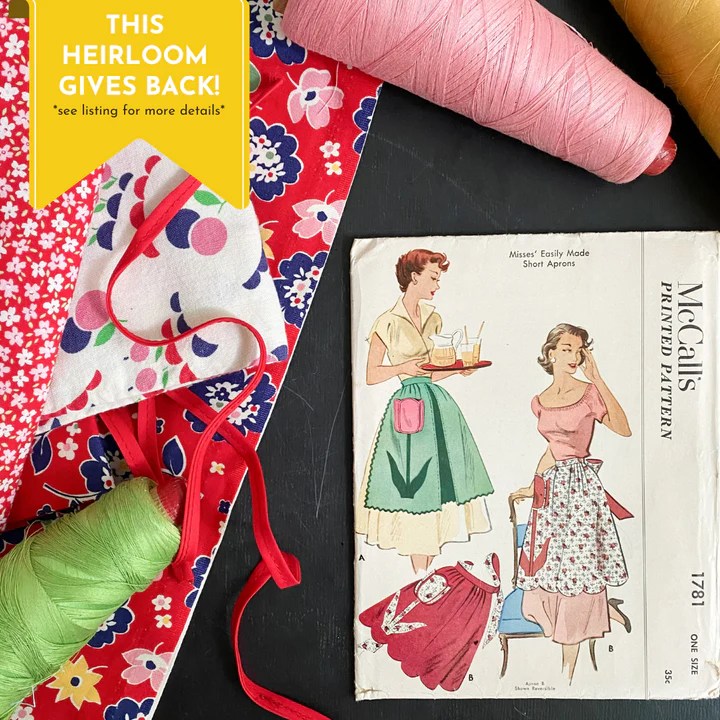
At this year’s sale, just like last year’s, you’ll notice that some heirlooms sport a festive yellow banner in their listing photos. Those banners signify a donation program that we launched in 2024. Any heirloom that you see in the shop that says This Heirloom Gives Back qualifies for a 20% donation to Feeding America, a nationwide non-profit network of food banks, food pantries and local meal programs dedicated to providing nutritious meals to food-insecure communities around the United States. Not all heirlooms in the shop qualify for this program, so be sure to look for the yellow banners if you would like to participate.

The sale begins at 12:00am (EST) on Sunday, November 2nd, 2025 and runs through 11:59pm that same night. Discounts are automatically tallied upon checkout, so there is no need to enter any coupon codes or discount phrases to receive 40% off.

New heirlooms continue to be added to the shop daily, so stop by for fresh vintage and antique finds leading all the way up to the sale. And, as always, if you are looking for something that we no longer have in stock, please send us a message. We’ll be happy to add your name and needs to our waitlist.

Whether you are interested in experimenting with a new cuisine, looking for a new favorite vintage dish pattern, or starting a collection that recalls memories of a happy time from your past, I hope you find something in the shop that calls to your heart and adds extra delight to your kitchen.

Cheers to all the old souls that inspire the shop each and every day. Cheers to all the heirlooms that they have been passed on to us to love and cherish just as much. And cheers to the kitchen for being the one spot in the house where everyone is always welcome.

Mark Your Calendars: Our Annual 40% Off Shop Sale is November 2nd!

Outside the kitchen window, fall is here. It’s blown into New England this year slowly, on warm breezes scented with cider doughnuts and sunshine. Our prettiest one yet, milder-than-usual temperatures have prolonged the season, rolling it out like a colorful ribbon one yard at a time.

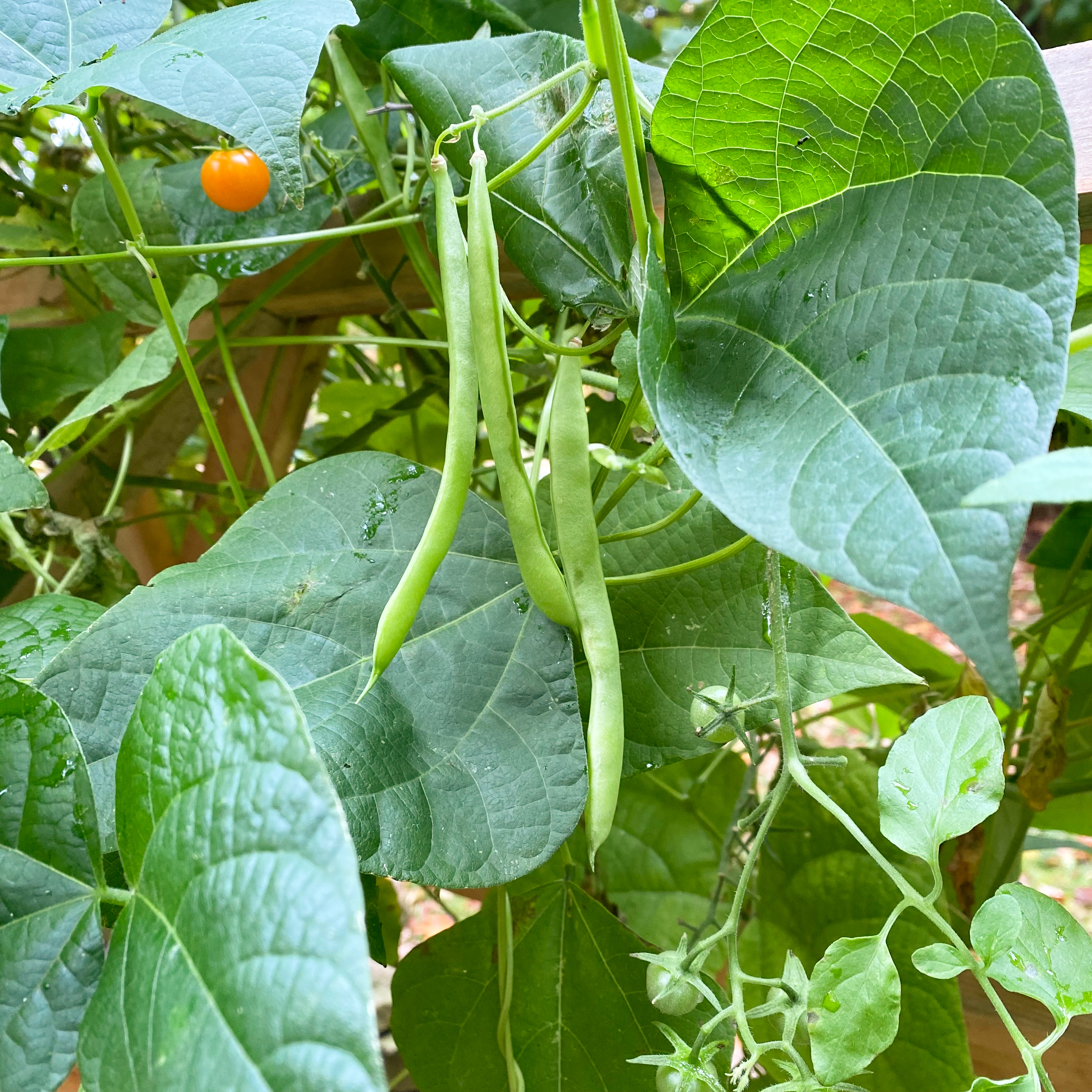
While the days may have lacked that traditional chill that signals a sincere change in seasons, there is something definitely delightful about a warm weather fall. Our string of 70-degree days and 50-degree nights means that much of the summer garden at 1750 House is still hanging on. There are clusters of tomatoes ripening on the vine, summer corn continuing to grow tall in the raised bed, and green beans still putting out at least a dozen pods a day. It may be mid-October, and leaves may be blanketing the garden beds, but the nasturtiums, zinnias, and geraniums are still flowering like it’s July. The novelist David James Duncan once called this Indian summer time of year “a state of serene confusion.” I can see why.

Since so many pollinators are still coming to the flowers, we’ve decided to leave all the summer vegetables up for as long as we can so that they can get all the nourishment they need.

Around the neighborhood though, tradition is not indulging this unusual weather that’s been caught between the beauty of two seasons. Despite the fact that many a summer flowerpot is still wholeheartedly blooming, pumpkins are on porches, dried corn stalks decorate lamp posts, twig wreaths hang on front doors, and the leaves… the magical leaves of a New England autumn… are floating and fluttering in shades of cinnamon, olive, mustard, and mahogany. There is color and flowers and fall foliage everywhere.

Autumn has come to the shop too…

And that means that our annual shop sale is right around the corner. If you are new to the blog, every year, November 2nd marks 40% off everything in the Vintage Kitchen shop for one day only. We call it the All Souls Day sale, not for the Catholic holiday that it shares the day with, but for the heirloom history that it encompasses.

All Souls Day is the only communal holiday in the calendar year that celebrates and remembers all deceased ancestors, and to us, that seems like the perfect time to celebrate vintage and antique heirlooms too. None of our shop items would be here today if they had not traveled through time, cherished and cared for in the hands of the people before us.

The Art of Chinese Cooking by the Benedictine Sisters of Peking – 1977 Edition 41st Printing

It’s up to us to curate the shop, but the heirlooms do all of the storytelling. Each year, they share new insights into the past that help shed light on things in the present. Since no two items in the shop are ever exactly alike, no sale from year to year is ever exactly the same either.

Stories float in and out of the shop every day offering glimpses into kitchen and garden life that occurred a few decades ago or a few centuries ago. Just like stories posted to the blog, every heirloom in the shop comes with its own unique tale marking its place in time. Hidden histories are everywhere. Here are some of the unique stories you’ll find in this year’s sale…

The 1940s Oxnard Lemon Crate

Highlighting Mexican-American history in California’s Port Of Hueneme, this 1940s-era lemon crate tells the story of how Sunkist lemons were brought in from local farms and sorted at an Oxnard packing house before being transported to retail storefronts around the world. Most of this packing was done by women who were skilled experts in sorting, grading and packaging the lemons for distribution. At the height of production, over four million crates were packed per year totaling half a billion lemons. Fruit and vegetable crates were never meant to withstand time and travel for longer than a few months, so it’s always exciting to discover one that has survived much longer than intended. The only part that is left of this original eighty-year-old packing crate is the front panel, now mounted like a piece of art to showcase its original label.

Beyond New England Thresholds

Focusing solely on the importance of the fireplace hearth in early American homes, this 1937 photography book by Samuel Chamberlain explores the country’s first “kitchens” in over two dozen New England homes that date back to the 17th and 18th centuries. The photos progress as the hearth progresses from primitive cook space to home heating source to decorative fixture, illustrating not only how far cooking has come since the early days, but how home interiors and design have evolved as well.

Perdita

Voted one of the best restaurants in the country by Holiday Magazine in the 1950s, Perdita’s of Charleston, SC and Macon, GA was known for its elegant French-inspired fare highlighting local seafood and steak.  The restaurant was named after actress Mary Robinson (1758-1800) whose most famous role was playing Perdita in Shakespeare’s A Winter’s Tale.

The real-life Mary Robinson (1758-1800) in a portrait painted by Thomas Gainsborough circa 1781

Mary had a reputation for being very enchanting and seductive, especially when it came to the amorous attention of men. On a trip to Charleston in the late 1700s, she was caught up in a local romantic scandal that forever made a mark on Charleston’s colorful history, and subsequently inspired the vibe and aesthetic of one of the city’s most famous restaurants.

The Neo-Classical Candleholders

Made for the Metropolitan Museum of Art gift shop, the design of these four petite candleholders is based on antique furniture mounts from a French secretary in the Museum’s collection. The secretary dates to 1787 and is believed to have belonged in the apartments of Marie Antoinette during her time at Versailles. This is the furniture that inspired the candlesticks including a detail shot of the mounts themselves…

Notice how the candlesticks are almost an exact replication of the mounts, fruit included.

The Peruvian Pottery Bowl

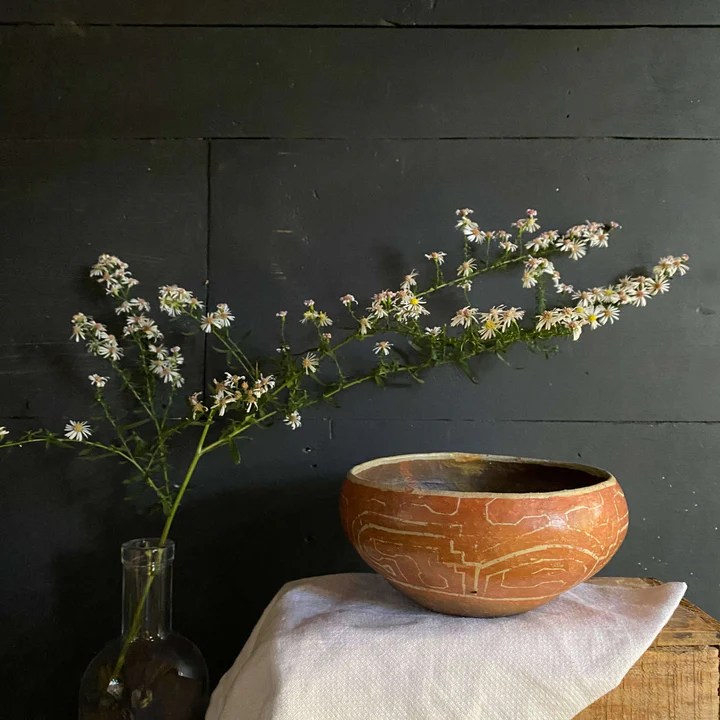
Handmade in the Amazonian jungle of Peru, this style of clay bowl has been made for centuries by local Indigenous women of the Shipibo-Conibo tribe using skills and techniques passed down from generation to generation. Highly personal and reflective of each specific woman who makes them, the bowls are entirely formed by hand and then painted with brushes fashioned from twigs and their own human hair. The markings, like the bowls themselves, are one-of-a-kind… trails of paint inspired by each woman’s dreams and visions combined with traditional cultural symbols celebrated by generations of women that came before her.

Photograph of four generations of Shipibo-Konibo women by David Diaz Gonzales

Every year, new faces from history emerge too. This year, we met Juliette, Margaret, Farida, Eleanor, Kate, John, Marie, Raffles, Zetta, Carveth and Claude…

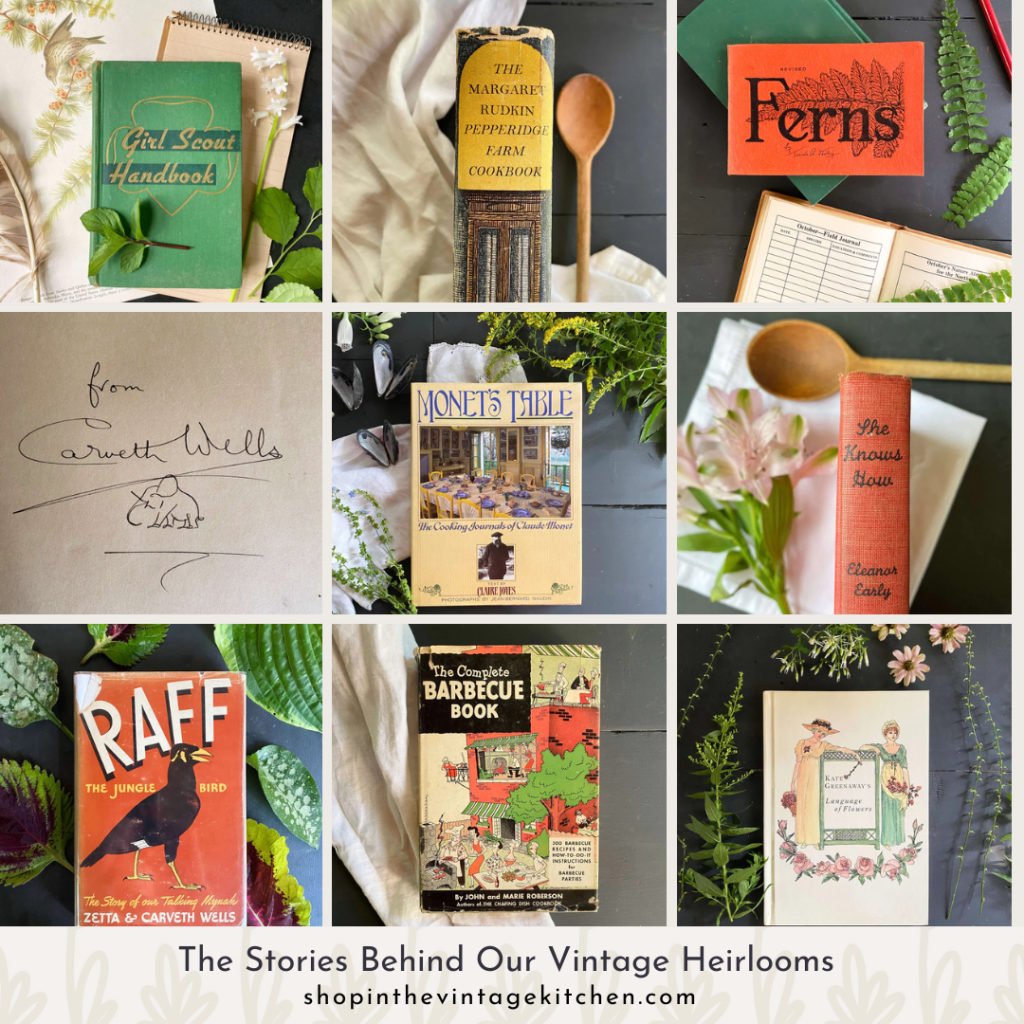
Clockwise from top left: Julia Gordon Low, Margaret Rudkin, Farida Wiley, Eleanor Early, Kate Greenaway, John & Marie Roberson, Raffles, Zetta & Carveth Wells, Claude Monet

Each of them had interesting stories to tell. Juliette Gordon Low started the Girl Scouts in Savannah, GA in 1912. Kate Greenaway forever changed the way we felt about blooms and blossoms in her bestseller, The Language of Flowers. Farida Wiley taught nature classes at NYC’s Museum of Natural History for 60 years. And we all know Claude Monet from his famous impressionist paintings, but did you know that he was also a devout foodie too? There’s a cookbook full of his recipes to prove it. All of those faces above created all these pieces of history below…

Clockwise from top left: The Girl Scout Handbook (1948), The Margaret Rudkin Pepperidge Farm Cookbook (1965), Ferns of the Northeastern United States by Farida Wiley (1948), She Knows Best By Eleanor Early (1946), Kate Greenaway’s Language of Flowers (1978), The Complete Barbecue Book by John and Marie Roberson (1951), Raff: The Jungle Bird by Zetta and Carveth Wells (1941), Monet’s Table (1989)

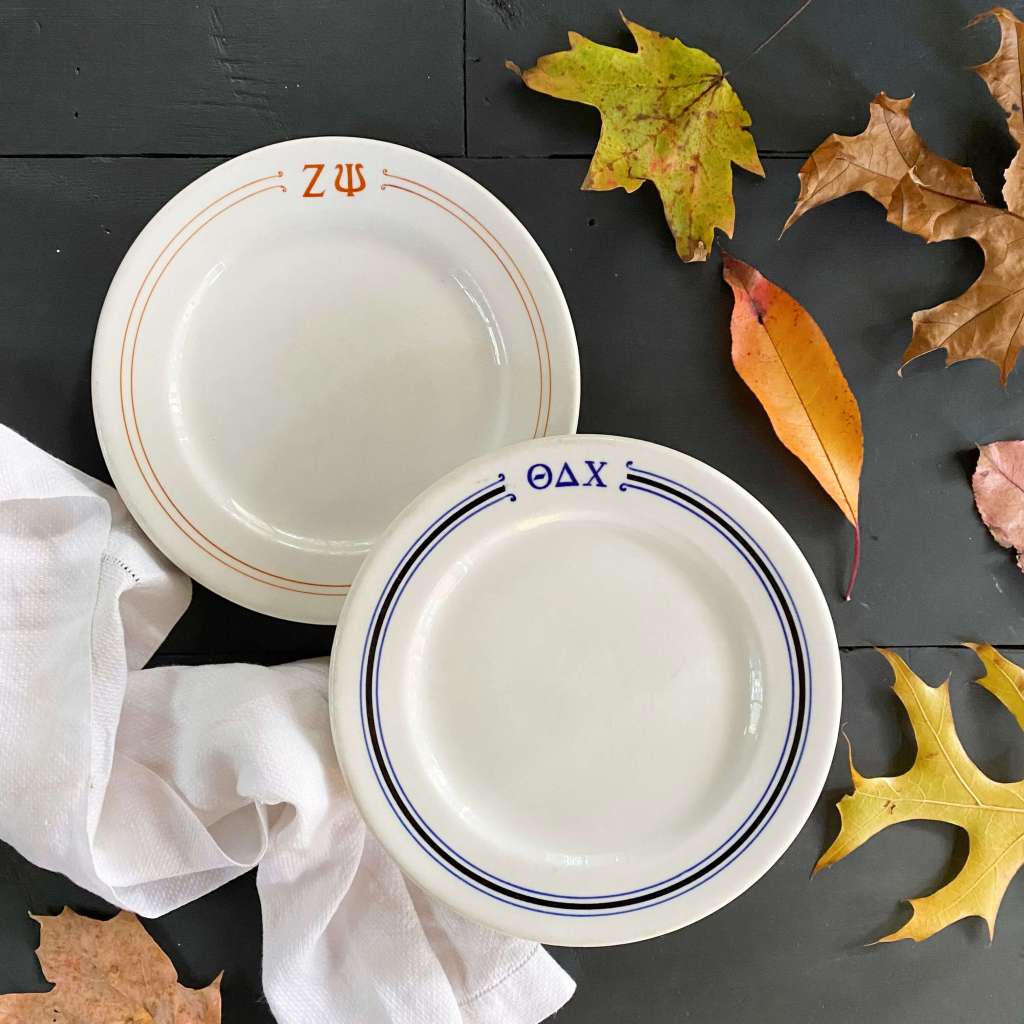
In the shop, a plate is never just a plate. It’s a rare glimpse into dining hall life at a 1930s fraternity house…

Rare Vintage 1930s Zeta Psi & Theta Delta Chi Fraternity Restaurant Ware Plates By Syracuse O.P.Co circa 1937

In the shop, a teapot is not just a teapot. It’s the oldest antique of the year. This one dates to 1838…

Antique Royal Vienna Tea Service Set – Gold and White Porcelain – circa 1838

In the shop, a cookbook is never just a collection of recipes. It’s stories about life and heritage and inspiration in a myriad of ways. It’s Canadian Leslie Forbes (1953-2016), who was not only a charismatic travel journalist, a fiction writer, and a cookbook author but an illustrator too…

A Taste of Provence by Leslie Forbes – 1987 First American Edition

It’s the talented way-ahead-of-her-time Paula Peck (1927-1972), who died at the age of 45, but not before leaving a handful of books that turned professional cooking and baking on its side in the mid-20th century, by bucking traditional techniques and inventing creative, approachable food…

The Art of Fine Baking by Paula Peck – 1961 Book Club Edition

The Art of Good Cooking by Paula Peck – 1966 Edition

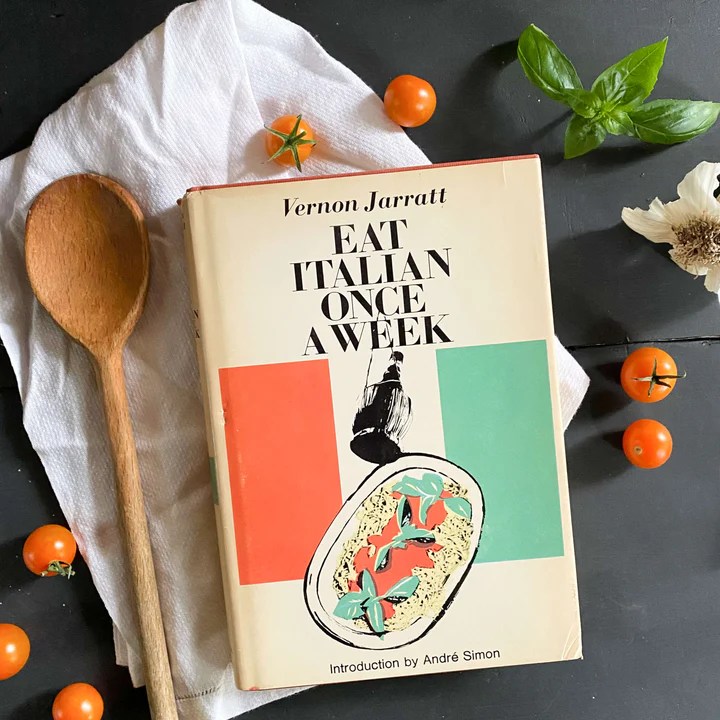
It’s British ex-pat Vernon Jarratt who married an Italian countess and went on to live a La Dolce Vita life in Italy as an intrepid gourmand and restauranteur…

Eat Italian Once A Week by Vernon Jarratt – 1967 Edition 

In the shop, a vintage coffee tin is not just a nostalgic vessel to store modern-day items. It’s the lifeblood of immigrant brothers from Scotland who sought fortune and flavor in America’s coffee trade in the late 1800s.

Vintage Yuban & Bliss Coffee Tins circa 1920s-1940s

And in the shop, coasters aren’t just little mats to set your drinks on. They are mini works of art by revered French botanical painters of the early 1800s…

Vintage French Botanical Coasters with Cork Backing – Set of Four

These are just a few examples of the people, places, and stories that find their way into the Vintage Kitchen shop on a daily basis. I hope at this year’s sale you discover an heirloom that captivates your attention, that steals your heart away to another time or another country, and that inspires new creativity from history’s forgotten muses.

Perhaps you’ll travel with engaging journalist and war correspondent, Betty Wason and her daughter, Ellen through the regional cuisines of Spain…

The Art of Spanish Cooking by Betty Wason – 1963 First Edition

or fall in love with the fish-out-of-water escapades of French Clementine as she navigates the ins and outs of cooking in an American kitchen in the 1940s…

Clementine in the Kitchen by Phineas Beck (aka Samuel Chamberlain) – 1943 First Edition with Illustrations

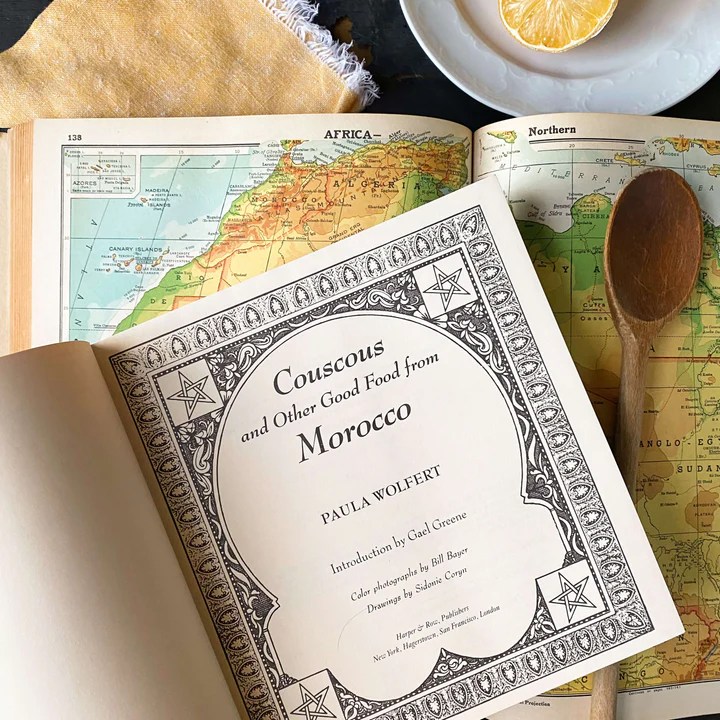
or maybe you’ll wind your way around the exotic Moroccan spice markets with Paula Wolfert as your educational guide.

Couscous and Other Good Food from Morocco by Paula Wolfert – 1973 Edition

At this year’s sale, you’ll notice that some cookbooks sport a festive yellow banner in the listing photos. Those banners signify a new donation program that we’ve just recently launched. Any cookbook that you see in the shop that says This Book Gives Back qualifies for a 20% donation to Feeding America, a nationwide non-profit network of food banks, food pantries and local meal programs dedicated to providing nutritious meals to food-insecure communities around the United States. Not all cookbooks qualify for this program, so be sure to look for the yellow banner if you would like to participate.

Joy of Cooking by Irma Rombauer and Marion Rombauer Becker – 1978 Edition 11th Printing

The sale begins at 12:00am (EST) on Saturday, November 2nd, 2024 and runs through 11:59pm that same night. Discounts are automatically tallied upon checkout, so there is no need to enter any coupon codes or discount phrases to receive 40% off.

New vintage and antique heirlooms continue to be added to the shop daily, so stop by for fresh finds leading all the way up to the sale. And, as always, if you are looking for something that we no longer have in stock, please send us a message. We’ll be happy to add your name and needs to our waitlist.

Vintage 1960s Webster-Wilcox Silverplate Wine Cooler Champagne Bucket

Whether you are interested in experimenting with a new cuisine, looking for a new favorite vintage dish pattern, or starting a collection that recalls memories of a happy time from your past, I hope you find something in the shop that calls to your heart and adds extra delight to your kitchen.

Haute Cuisine for Your Heart’s Delight by Carol Cutler – First Edition 1974 Fifth Printing

Cheers to all the old souls that inspire the shop each and every day. Cheers to all the heirlooms that they have been passed on to us to love and cherish just as much. And cheers to the kitchen for being the one spot in the house where everyone is always welcome.

Early 20th Century Embroidery Sampler circa 1930s

Happy shopping!

What, Where and Why: The Sociable Side of The Vintage Kitchen

With the launch of the shop finally underway last week, we are doing a little update on all the places where you’ll find the Vintage Kitchen on social media, so that whichever platform is your preference, we’ll stay connected and never miss any of each other’s stories.

Facebook

A few years ago, our Facebook account got hacked into by some unknown source and we were reticent of ever joining again. But since so many people have asked lately if they can find the Vintage Kitchen there, we’ve dipped our toes back into the water with a new account, and hopefully, this time, a more secure experience (fingers crossed!).  On our Facebook page, you’ll find all our blog posts, Instagram pictures, sale announcements and special event info. Join the fun here.

Instagram

Instagram is the place for our mini stories – petite versions of blog posts, featured items from the shop, photographs from our daily ramblings around the city, special features from our interviews and vintage recipes that are cooking or cocktailing their way around the vintage kitchen.

To give you an example of what we post… here are our three latest instagrams (posted this past Saturday, Sunday and Monday) where we shared our morning view of the Cumberland River (Sunday), the exciting realization that a spoon we have been using regularly was actually a family heirloom belonging to great, great, great grandmother Clarinda Clellan Brewer (Monday), and a quick backstory of an antique 1890’s serving platter that was recently listed in the shop (Monday). Three days. Three examples. That’s our instagram.

Find us on Instagram here.

Pinterest

Pinterest is the place where we pin everything that inspires us as well as new items added to the shop and photos from our blog posts. At the moment you’ll find 67 boards ranging on all subjects from food to interior design to travel, pets, fashion and gardening. We cover the gamut of a life loved with vintage and then some! Plus you’ll also find some modern day emotional boards like The Sea Will Set You Free, Hand Holders and The Art House.  Some of our latest recently created boards include these…

Clockwise from top left: Urban Revival, Vintage Hair Styles, Balcony Garden, In The Vintage Kitchen, Vintage Summertime, Wrapped Up, Grey Gray and Greyer, Dress Rehearsal, Bound for Britain and Never Enough Ironstone.

Find us on Pinterest here.

Tumblr

We just recently opened our Tumblr account, so we are still learning our way around there, but this is the spot for artistic shots that don’t make the blog post or instagram feed. They also contain funny little moments that occur behind-the-scenes in the Kitchen – like this one taken the morning that Indie (the Vintage Kitchen pup) ate everything in her breakfast bowl but refused the kale. Oh the insolence!

Find us on Tumblr here.

Twitter

Twitter is where we mark the day with fast, fun stuff… celebrity birthdays, interesting quotes, quirky facts, favorite music, book recommendations, vintage movie trailers and reposts from other history related blogs like this recent Amelia Earhart bombshell of a theory…

Find us on Twitter here.

Seasonal Newsletter

On the home page of the shop, you’ll find an email sign-up button for a seasonal newsletter which will go out via email quarterly. The newsletter acts as a stylish seasonal salutation to let you know what’s going on over the course of that particular chunk of time in the Vintage Kitchen.  It will also focus on special features, style tips and upcoming holidays. Exclusive discounts and promotions will be offered only to newsletter subscribers, so if you love a good sale be sure to sign up. Our first newsletter will be going out in September just in time to kick off Autumn! Subscribe to the newsletter here.

Spotify

Stop by and sing a tune with us over on Spotify.  Here you’ll find playlists curated by the Vintage Kitchen featuring different eras and genres spanning the 1920’s through the 1960’s.

Each playlist is curated for different moods of the day as well as for festive occasions like cocktail hour, dinner party music, holiday cheer, etc. Right now we have one list available called Sunny Side Up, which is a peppy, eclectic mix of music from the 20’s-60’s that will get you dancing around the kitchen. Many more lists will be debuting shortly so stay tuned!

Sing your heart right along with us right here.

Shop

Our newest excitement in the Vintage Kitchen… the long-awaited shop! If you haven’t had a chance to visit yet, stop by to discover vintage and antique kitchenware items for purchase along with custom art and handmade vintage-inspired decorating pieces for your home. Each item comes with its own unique story and inventory evolves on a weekly basis so visit often for new additions. We just added a bunch of very cool vintage cookbooks to the shop, perhaps your favorite one is already waiting for you.

New cookbooks include: June Platt’s New England Cook (1971) ; the very rare YWCA Bangkok Cookbook written in both English and Thai (1961) and the very rare Rx For Slimming (1940)

See what’s new in the shop here.

Blog

And last, but not least, we of course, have our happy little gem of a history blog. Since you are reading this announcement on our blog we will assume you are already familiar with all we talk about here, but if you are new – we’ll recap quickly. On the blog, you’ll find a plethora of culinary curiosity which includes recipes, interviews and all types of media centering around the vintage side of the kitchen.  The blog acts like a giant watermelon holding together all the seeds of our social media, so think of it like the mother of all treats.

If you want to just keep abreast with the Vintage Kitchen in one spot, choose the blog because it covers all bases and leads (via links) to all the other above-mentioned forms of social media, except for exclusive sales in the newsletter and behind the scenes photos on Tumblr.

Life moves fast these days. And we know you have your favorites.  The places where you like to hang out, catch up, peruse, ponder. We totally understand that, and we realize there are a lot of choices out there about how to stay informed and not a lot of extra time to stay focused, so we just want to say how much we appreciate your support and camaraderie. Every follow, and every favorite, and every comment, marks a big deal in our lives. We hope to somehow make a big deal in yours as well.  So however you choose to keep in touch with the Vintage Kitchen, whether it be through Twitter or Tumblr or Pinterest, Facebook or the blog, Instagram or the shop, we look forward to spending time with you.

Cheers to all you social butterflies and the communities you build!

On This Day in 1930: A Behemoth Was Born

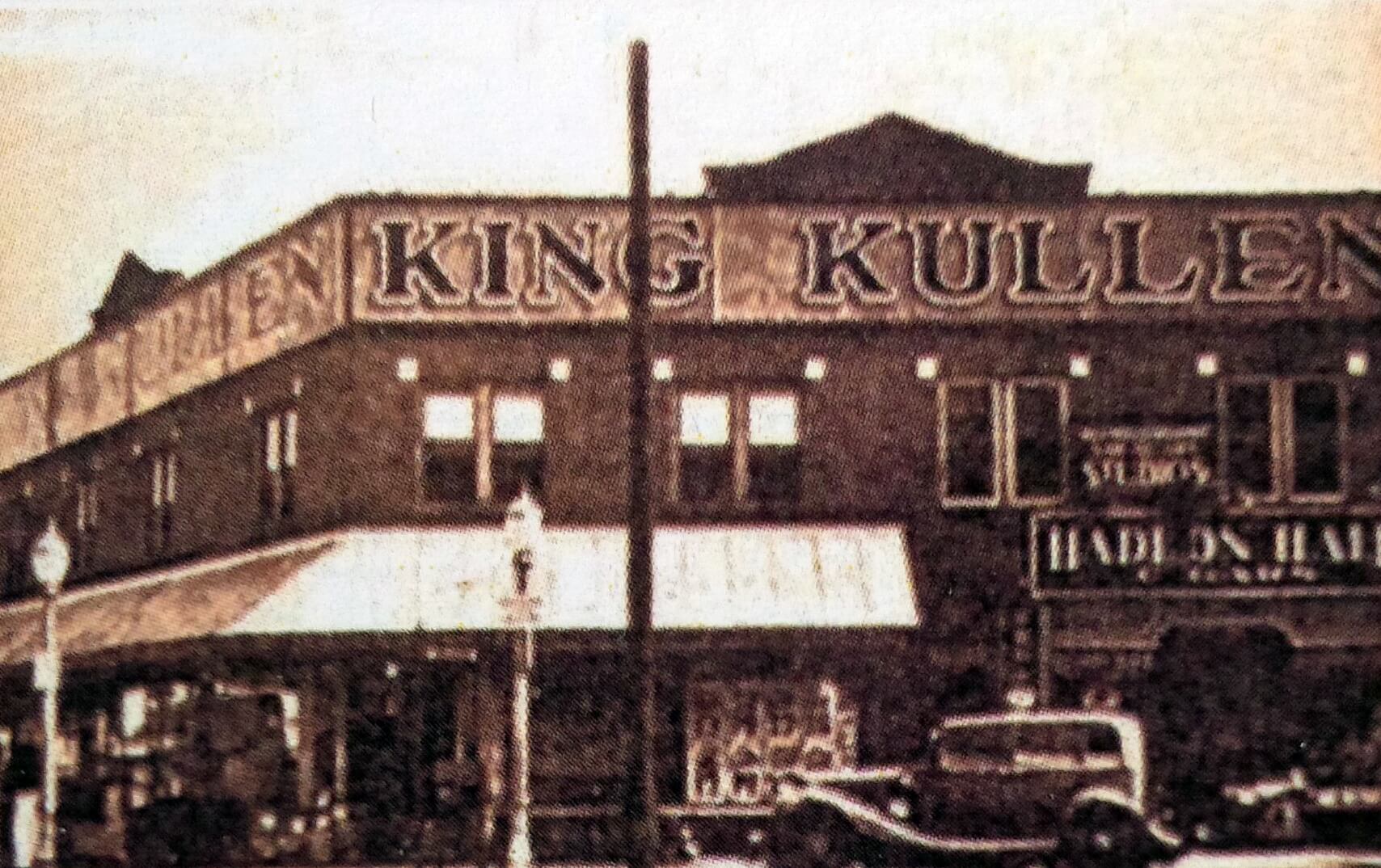
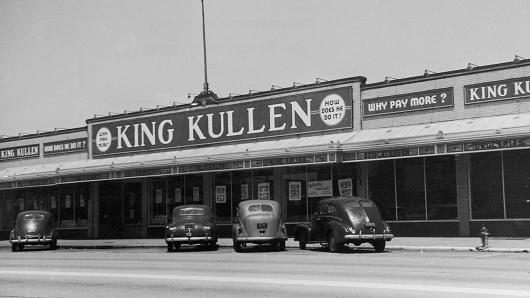
On this day – August 4th, 1930 –  a giant marvel of a masterpiece was unveiled on Jamaica Avenue in Queens, New York. It involved a big building, a big parking lot and a plethora of products that extended far beyond what anyone could have imagined before. Aptly named King Kullen, it was King Kong-ish in size and scope and quickly took over an industry in a way only a behemoth of a good idea could.  It was the birth of the super market – the very first large space grocery store that contained not only food items but also hardware, paint, automotive, cosmetics, shoe shine, kitchenware, confectionery and drug departments all under one roof.

Michael J. Cullen (1884-1936)

The brainchild of grocery store employee, Michael Cullen (who spent half of his adult career working at The Great Atlantic & Pacific Tea Company and then grocery retailer, Kroger) imagined a better, larger, less expensive shopping experience that would cut grocery prices in half for the customer and allow more space for the store to sell bulk items in mass quantity. Essentially it is the same concept that our modern American grocery stores still follow to this day.

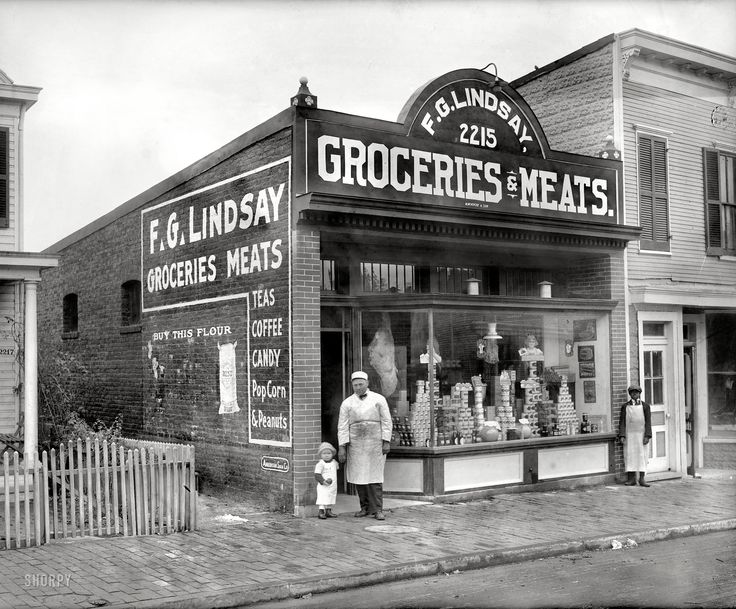
Before Michael and his big-brained idea came along, people grocery shopped in small pocket stores like this one photographed in the 1920s…

These independent stores definitely filled a need and were vital businesses to the community but they were also very limiting and not very private. Space was an issue for the store owners which meant that many items had to be special ordered for customers on a need-by-need basis,  extending the shopping transaction by days or sometimes even weeks.  Service was also an issue as items were frequently stored up high or behind counters making it necessary for grocery employees to gather specifically what was needed.

This one-on-one buying model may have helped develop customer relationships but it also created lengthy wait times for other shoppers while each order was filled.  Speculation and gossip seeped into the buying process too as the whole store could see (and hear!) what everyone was buying. Combined with the fact that meat was purchased from the butcher, bread from the baker, fish from the fish monger and specialty cans and shelf stable items from the grocery, meant that the whole shopping experience could take hours out of the day.

Refrigerators of the late 1920’s provided enough storage to stock foods for up to a week.

Michael took note of all these clunky patterns, accessed the growing rise of refrigerators popping up in American homes and started jotting down ideas for something easier and faster involving less commotion and less expense. While he flushed out his thoughts he was still working at Kroger. He brought up his ideas to his boss who didn’t give Michael’s thoughts any merit. So Michael left Kroger and opened King Kullen Grocery Company independently months later. Michael knew he had a great idea – the right concept at the right time. He had worked in the grocery business for 28 years at that point, long enough to see where the consumer experience needed improvement and how profits could be made.
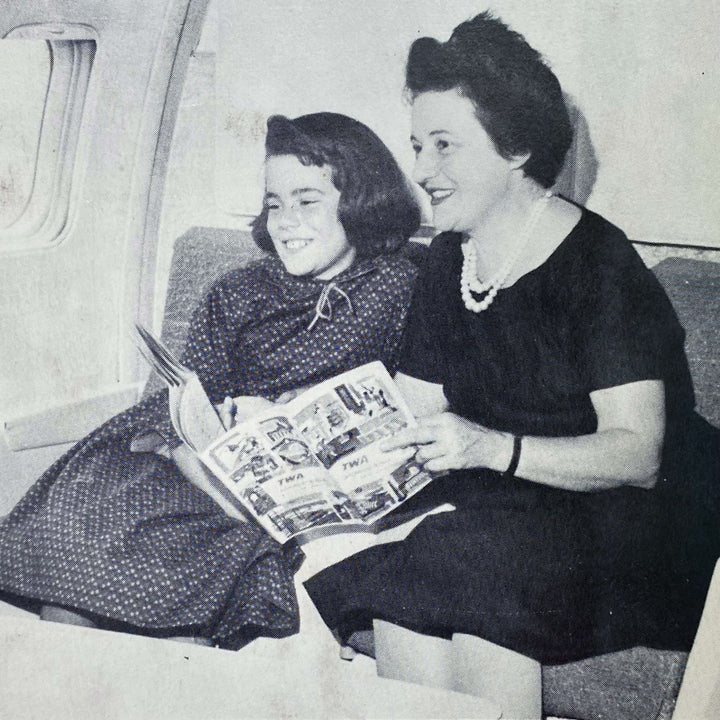
By building a bigger store in a bigger space, King Kullen initiated the self-serve shopping concept where all products were in easy reach of the customer with a large quantity of the same item available. So you could zip in and out of the store much more quickly. No more waiting, no more special ordering, no more gossip.
King Kullen also eliminated the idea of credit registry systems, another time sucker, by only dealing with cash transactions. And they axed the local delivery system which for small, independent grocers meant additional employees and additional expense. Combining all these elements – bigger store, easy to reach items, large selection of product and a faster payment system was much more efficient and empowering to shoppers.  Independent groceries were old-fashioned and pokey where King Kullen, in 1930,  was up to the minute modern.

And then there was the significant pricing system. Upon opening, King Kullen boasted that they could reduce your average grocery bill by 10-50% which during the Great Depression years was a major attraction for struggling wage-earners. By offering everything from house paint to ham (the “super” market concept)  under one roof, King Kullen became a one-stop shop. You can see the price difference between Kroger in the 1920’s and King Kullen in the 1930’s in these advertisements…

Late 1920’s Kroger grocery advertisement on the left, 1933 King Kullen Advertisement on the right

Some of the significant savings included:

  • Tea –   $0.29 per 1/2lb at Kroger vs. $0.39/per 1lb at King Kullen
  • Boiled Ham – $0.33/lb at Kroger vs. $0.21/lb at King Kullen
  • Catsup – $0.15/bottle at Kroger vs. $0.10/bottle at King Kullen
  • Whole Chicken – $0.33/lb vs. $0.19/lb at King Kullen
  • Beans – 4 cans for $0.23 at Kroger vs. 6 cans for $0.25 at King Kullen

Finally, by providing a large parking lot able to accommodate a vast amount of cars, King Cullen changed how people shopped. Families went together, some traveling up to 100 miles away from home so they could fill their car with foodstuffs and stock their shelves for a lengthier period of time. The super market also hosted all sorts of product events and giveaways making each shopping trip to King Kullen unexpected and engaging. It was a seamless, adventuresome outing, easy to navigate and fun to participate in.

King Kullen caught like wildfire in the hearts of the American public. Thousands flocked to the new Jamaica Avenue store on opening day, leading a trend that other grocery stores (like Michael’s previous employer, Kroger) noted and then soon replicated. Throughout the 1930’s store after store opened under the King Kullen brand. Unfortunately in 1936 tragedy struck when Michael died just six years after debuting his first Jamaica Avenue store from complications following an appendectomy.

With the help of his wife and his sons, Michael’s legacy and the King Kullen brand continued to thrive. Today there are 32 King Kullen grocery stores still in operation, proving that Michael was a true visionary. The motto of the brand from the beginning was “We are here to stay and to please the public.”  Eighty-seven years later and still going strong, they have definitely accomplished their mission and in doing so affected change across the entire grocery industry.

Just listed in the shop this week is a cookbook published in 1955 celebrating the 25th anniversary of the supermarket. Titled the Silver Jubilee, it contains over 500 pages of recipes utilizing ingredients easily found at King Kullen-sized stores.

It is hard to imagine this being a novelty cookbook now but if you think about having to stop at 5-7 different food stores to pick up ingredients for one recipe you can understand how enormous this concept really was between the 1930’s – 1950’s. We take so much for granted now in the form of food buying and what we expect from the process. The Silver Jubilee really helps us understand the marvel behind the modern just like Michael helped us experience the efficiency behind the industry.

Cheers to Michael and his revolutionary idea and a happy birthday to King Kullen!

Later this month we will be featuring a few recipes from the Silver Jubilee cookbook in our first ever cross country cook-a-thon. Stay tuned for that!  In the meantime, find the celebratory Super Market Cook Book in the shop here.

Three Cheers: The Vintage Kitchen Shop is Here!

It’s a very exciting day here in the Vintage Kitchen! We are happy to announce that the kitchen shop is now up and running! As an ever-evolving retail site, with new items added weekly, there will always be interesting things to see whenever you stop by and visit.

We are just getting started on this big adventure, so there is still lots more to add in terms of items and some quirks that still need to be sorted out but it’s really exciting to see this long-term goal come to fruition. We are also super happy to bring you a site full of history and interesting kitchen stories told through the time weathered patina of carefully curated vintage and antique items.

In the shop, you’ll find pieces that have gracefully withstood the test of time, classic beauties that never go out of style and rare, one-of-a-kind pieces that will give your cooking space unique personality. Tackling all the varied elements that make up the complete vintage kitchen you’ll find a wide assortment from cookbooks to cutlery, glasses to gadgets, pots to plates and everything in-between.

Besides a fun shopping experience, there is also a spot to sign up for our seasonal newsletter, a page to connect with us in regards to procurement for those hard to find items or bulk needs and a page to connect with us privately for any questions.

Access to the shop is offered in a few different places here on the blog – by clicking on the ad in the right-hand column, by clicking on the shop tab in the header, or by typing shopinthevintagekitchen.com into your web browser. The same goes for the shop side of things – there’s a blog tab on the storefront that sends you directly back here so you’ll never get lost between these two places!

Now that we have this major design project launched and underway we will be back to our weekly blogging schedule which, from time to time, will feature shop items with especially fascinating stories. Up next is a vintage Summer recipe that serves a crowd up to 18. Hope you are hungry!

Cheers to a wonderful weekend ahead and to new beginnings.

Happy shopping!


The Colorful World of Collecting: A Vintage Tea Towel Interview

Martex Textile Champagne Tea Towel, 1950’s

Chances are you probably haven’t given much thought to your kitchen linens. You’ve got them tucked away in a drawer somewhere that you access only when you have a party, a holiday or a big giant spill to clean up. They sit in those drawers in an assortment of sizes from small to large. Place mats, tablecloths, towels, drink coasters, napkins, tray coverings either plain and functional or decorative and delicate. They are hand-me-downs your grandmother made back in 1920 or they are ones you bought last week on sale at Target. They are in pristine condition because you barely use them or they are spotted and shabby because that one celebration that one time was the wildest party of the year.

Kitchen Towel featuring Household Staples, 1940s

You haven’t thought about them much because they are always there – new and old and reliable. You use them to impress and inspire and make an impact on a bread basket or a tea tray or the handle of your oven. They sit under drinks and dessert plates,  line the cocktail cart and add some color to the picnic basket. You gift them and grab them in a last minute flurry of preparations and like any good coat of paint, they instantly brighten up the atmosphere, and you think to yourself… why don’t I use these more?

Main Street Table Cloth 1950s

Designed to sit pretty and decorate and then clean up afterwards,  kitchen cloths are the unsung heroes of cook spaces around the globe.  In today’s post we discuss the colorful world of mid-century kitchen linens with Cindy from Neatokeen, the internet’s best-kept vintage linen shop and discover her passion for mid-century tea towels. This is a bright and whimsical slice of the vintage kitchen that showcases the creative, quirky styles of the 1950’s and 1960’s that have evolved with charm and individuality to fit modern day appeal.

Iconic American chair designer Charles Eames  once said…”The details are not the details. They make the design.” This is particularly true of the bold graphics and jaunty sentiments of mid-century fabrics. Today, Cindy explains her favorites, what she looks for when stocking her shop and why these vintage kitchen helpers are still so compelling to our modern sense of style.

What are some common misconceptions about vintage linens? 

Linens were mass-produced in the mid-century and there is an assumption that they are plentiful and easy to find. If you look on Etsy and Ebay, that appears to be the case; however, it is extremely difficult to find them in excellent or mint condition. Most of them that saw heavy kitchen duty were relegated to the rag pile. Many linens that you see today are flawed with spots and holes. The real trick is to find those that were unused and stored away in a drawer or cupboard for 50 years. I am super picky about the linens I buy and probably pass by 99.9% of those I see. 

Do you have a favorite designer? 

It’s difficult to choose one! I will name my top three:


George Wright


Milvia


Tammis Keefe

I also have to give a shout-out to all of the uncredited artists and in-house designers who created amazing designs but were not able to sign their work.

Is there a type of linen or a specific company that you prize most and, if so, which and why? 

I began collecting all types of vintage linens: tablecloths, tea towels, napkins, handkerchiefs and table runners. Storage space for my collection was at a premium, so I had to make a difficult decision. I decided to hang onto my tea towels. I love the compact printed designs. I am particularly fond of the cheeky designs from the Dunmoy Linen Company and the detailed designs of the Ulster Company.


Dunmoy Linen Company, Flower Truck Delivery, 1960’s


Ulster Linen Company – Medieval Renaissance, 1960s


Tell us a little bit about caring for vintage linens. Do you have to store them differently or use special washing procedures? 


I learned early on that I was rubbish at removing spots in spite of the copious amount of stain removal advice and tips on the internet. This is what lead me to collect linens in near mint or perfect condition. I typically do not wash my linens and simply press them gently, if needed. I store them in a closet with open shelving covered by white cotton cloths. I know a lot of people store them in plastic bins, but I’m a bit skeptical of contact with plastic over time.


Which are the top three favorite items in your shop right now?

I love the London People towel – the characterization of 55 people and animals is charming. Another favorite is the “Wine & Spirits” towel by George Wright for the interesting composition and bold color choice. I really enjoy Hilary Knight’s angel towel. He was the illustrator of Eloise and I believe it’s the only towel he ever designed.


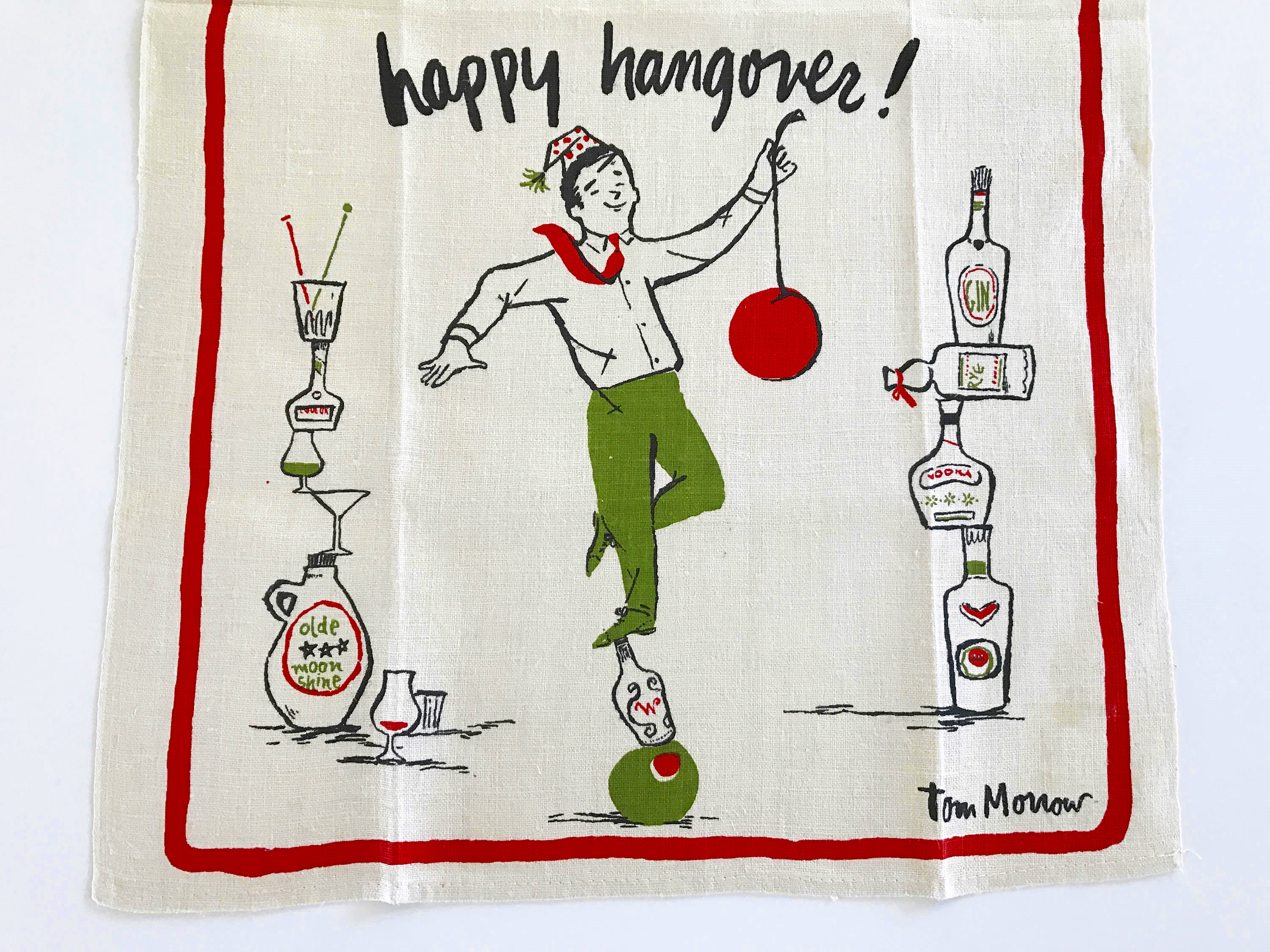
Wine & Spirits Series by George Wright, 1950s


Hilary Knight Christmas Angels, 1950

Why are vintage linens so appealing to people?

 They evoke a feeling of nostalgia and the printed designs can be gorgeous, whimsical, striking or even comical.


In your shop bio you mention that you sell to a wide variety of customers from gift-givers to celebrities to collectors. What is a fun buyer story that you can share?


I’m fiercely protective of my customer’s privacy, but I’ve sold linens to several movie and theater companies. They always need the items “yesterday” and have requested express shipping every time. In fact, the shipping has been a lot more expensive than the items themselves!


Dinner Party Scene Tea Towel, 1950s

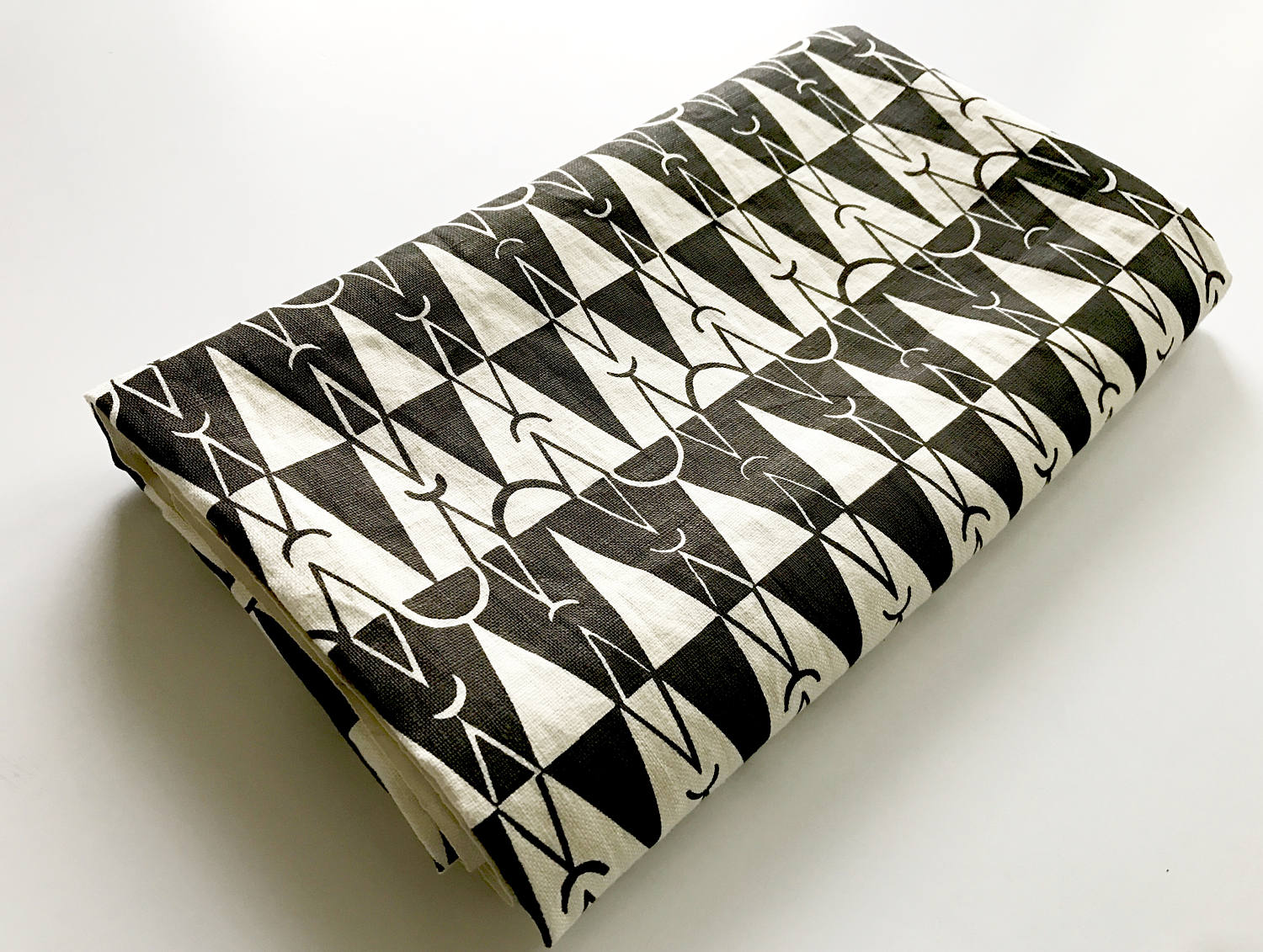
Rare 1950’s Mid-Century Modern Tablecloth

If you could invite any person to luncheon (living or dead) and serve them on one of the tea towels currently offered in your shop which would you choose and why?

I would invite my late father and serve him dinner on the amazing Calder-esque mobile tablecloth that is in my shop. We would talk about the abstract design and then we’d discuss the act of collecting. My dad was an inveterate collector of many things and I never collected anything while he was alive. I’m fairly certain the collecting gene was transferred to me when he passed away. I now completely understand his compulsion to find the next best thing, the perpetual upgrading of a collection and the quest for a holy grail. He would get a big kick out of my passion for linens.

Cindy with her dad in 1964

Were linens a prized possession in your family growing up?

 My mother sets a beautiful table and has some lovely lace tablecloths, but printed linens were something I discovered much later in life.


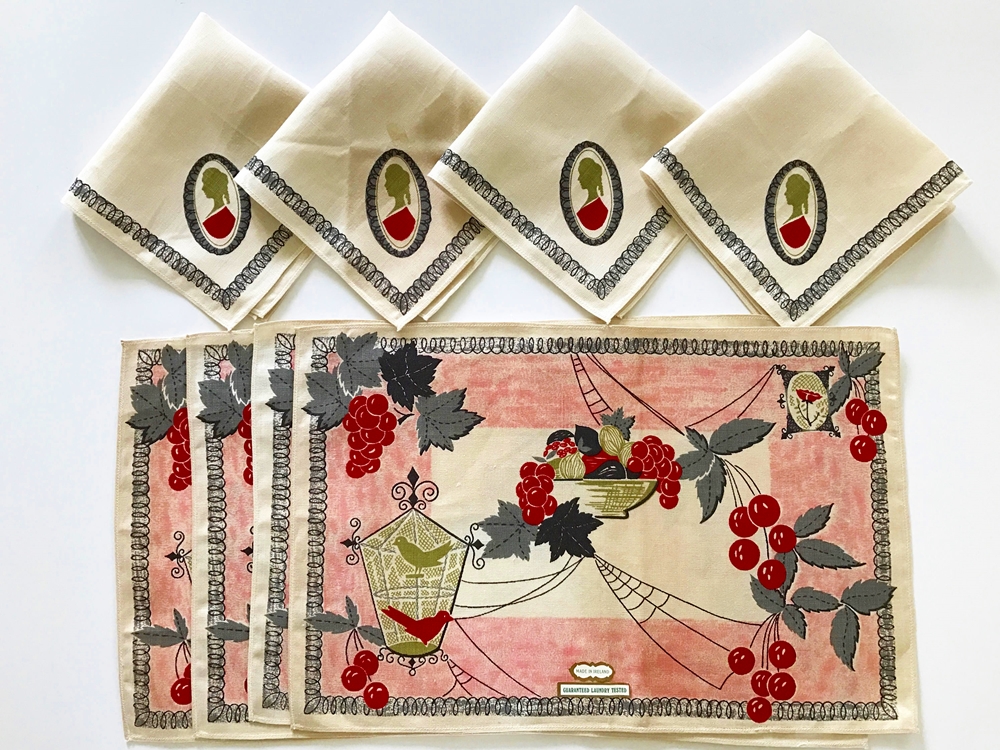
Matching Linen Placemat/Napkin Set – Red Cherry Design, 1950s

Would you prefer to see one of your vintage tea towels in active daily use or framed behind glass?


When I started selling my linens on Etsy, I was taken aback at what people did with perfectly good linens; however, I have really mellowed and now enjoy learning about the creative ways my linens are used. I’ve seen pillows, children’s clothing, tote bags, quilts and even copies printed on canvas. Most people buy them to collect or use and I’m happy they are being enjoyed and not languishing in a forgotten drawer. Framed behind glass is good too!


Which types of linens are your bestsellers? And what makes them a bestseller – is it fabric, color, graphic appeal, size, age etc.?


I’ve sold 99% of my tablecloths and hankies and steer away from buying more because there are so many sellers that carry them. I specialize in vintage tea towels which is a more unusual category. Tea towels are my bestsellers. I think the colors and graphic appeal of the designs are what attract people initially.


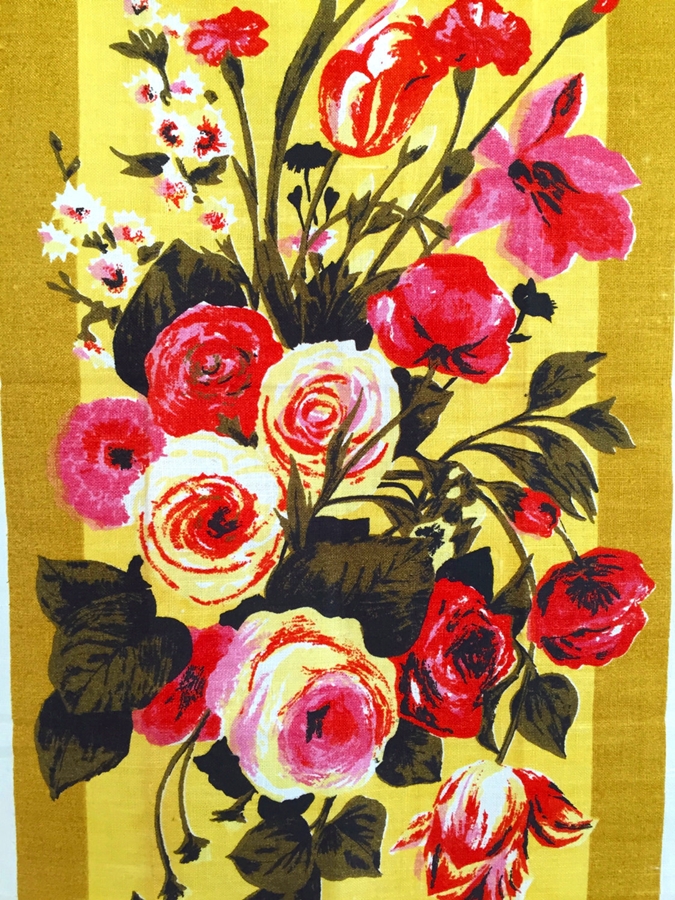
Floral Linen Tea Towel, 1950’s

Other than traditional serving/entertaining purposes, framing and gift wrapping have you come across any non-traditional ways in which we could use vintage linens in our modern-day lives?


I mentioned a few above, but the most inventive use of linens I’ve seen is a winged armchair upholstered with vintage souvenir tea towels from London. The effect is a feast for the eyes.


Alternate ways to use vintage tea towels (clockwise from top left): as an apron, windows curtains, framed wall art, market bag/tote, footstool cushions.

When you are sourcing your materials for your shop do you generally find them one at a time or do you uncover treasure troves of personal collections?


I usually find them one at a time or occasionally in pairs. I’ve actually never found a big collection of linens which is the stuff of my dreams; hence, the hunt continues. I look high and low from estate sales to flea markets, near and far from coast to coast and I will continue to seek linens as long as it remains fun!


Tammis Keefe Angel Tea Towel, 1950’s

One of the things I like about vintage linens is that each and every one seems so unique. I don’t think I’ve ever come across the same design twice (matching sets not included of course!).  Have you seen a lot of repeat patterns come through your shop?

 I primarily sell duplicates of towels that I have in my own collection. Some designs are relatively easy to source e.g. the Tammis Keefe angel towel is common, but there are several designs that I’ve run across exactly one time in my 12 years of collecting. Since I’ve been collecting a relatively long time, it’s become easy for me to tell if the design is rare or fairly commonplace.


Are there any types of vintage linens that don’t appeal to you and if so, why?


I like all types of linen, but I’m partial to printed linens. I steer clear of damask, lace and embroidered linens. There are plenty of experts in those categories. Also, I think floral linens are lovely, but my eye tends toward unusual or quirky designs. Thankfully, they are often the ones left behind.


Mother’s Apple Pie Ingredients, 1950’s

According to the school of thought that one thing always leads to another – have you discovered any new interests or passions (or collections!) that have stemmed as a direct result from your pursuit of seeking out vintage linens? 


Yes! I really like the kitschy mid-century graphics found on vintage wrapping paper and novelty fabrics. I felt myself slipping down the collecting rabbit hole again but was literally saved by Pinterest. I started “pinning” items to designated boards. Pinterest feels like having an organized collection but without spending a dime…brilliant!


Modernist Textile Fabric, 1960s

I don’t know about you dear readers, but I’d be fine following Cindy along on her trail of discovering vintage wrapping paper and more vintage fabrics. She has a wonderful eye for the lighthearted unusual – the fun side – of finding old artistic illustrations that still seem so relevant today. Perhaps in the future we’ll be lucky to see more along those avenues. In the meantime I hope this post encourages you to take a look at your own kitchen linen drawer and march all those retro patterns out into everyday use regardless of their age. Don’t save them for a special occasion or a holiday, give your kitchen space a happy exclamation point by incorporating your tea towels and tablecloths, napkins and tray liners into everyday life.  If you have yet to own any vintage kitchen linens, I hope this post inspires a new collection.


Vintage Bridge Score Pads from the 1920’s

In addition to decorating your own space, vintage kitchen linens also make great gifts. As we roll through the month of May with Mother’s Day and Memorial Day just around the corner, Cindy is offering readers of the blog an additional 20% off all orders using the coupon code VINTAGEKITCHEN.  In her shop you’ll also find delightfully interesting mid-century (and earlier!) collectibles and paper ephemera with fantastic retro graphic appeal like the art deco bridge score pad above.  Keep up with Cindy on Pinterest, Instagram and in her shop. You won’t regret any moment spent learning more about vintage linens.
 If you have any additional questions or comments for Cindy or thoughts on vintage linens themselves please post a message below.


This was the set design for Julia Child’s kitchen for the movie Julie and Julia. Notice the proud display of kitchen linens!