It’s been two years and five months since this story began unfolding on the blog. Back then, the blog series with the impossibly long title – A Monumental Story of Real-Life Serendipity Told Over Many Parts detailed, in installments, the story of a mysterious package that was sent by a random stranger to the Vintage Kitchen in the summer of 2021.
Inside the package was a valuable 100-year-old item that had been found in a Southern city suburb by the random stranger in 2008. The item was connected to the Vintage Kitchen but did not belong to the Vintage Kitchen.
In 2021, the story had been rolling out at a nice clip. There was one blog post a month – one chapter a month – dropping hints and clues as to what the package’s contents could be and how it came to be connected to the Vintage Kitchen. In addition to the hints, Chapter One, Chapter Two, and Chapter Three also included historical information surrounding the lost item’s importance.
Chapter 4 was next on the horizon with details of how the lost item would be transported to its final destination. Then the lingering pandemic stalled the publication of that post. Our move to New England prolonged it even further. But now the timing has lined back up again and we are back on track to finish this story and reveal the contents of the package in Chapters 4 & 5 coming to the blog this month. These last two chapters will officially wrap up the whole remarkable story of how a lost 100-year-old item finally found its way home after traveling through 13 years, four states and one century.
I realize that if you are a new reader to the blog this information is absolutely confusing. And perhaps, if you are a regular reader you might need a recap to remember what exactly this story was all about in the first place. Two and half years is a long time to keep a good mystery going so I’m including links to the first three blog posts below so that everyone can catch up before we continue on to Chapter 4, which I promise is coming in a few days (not years).
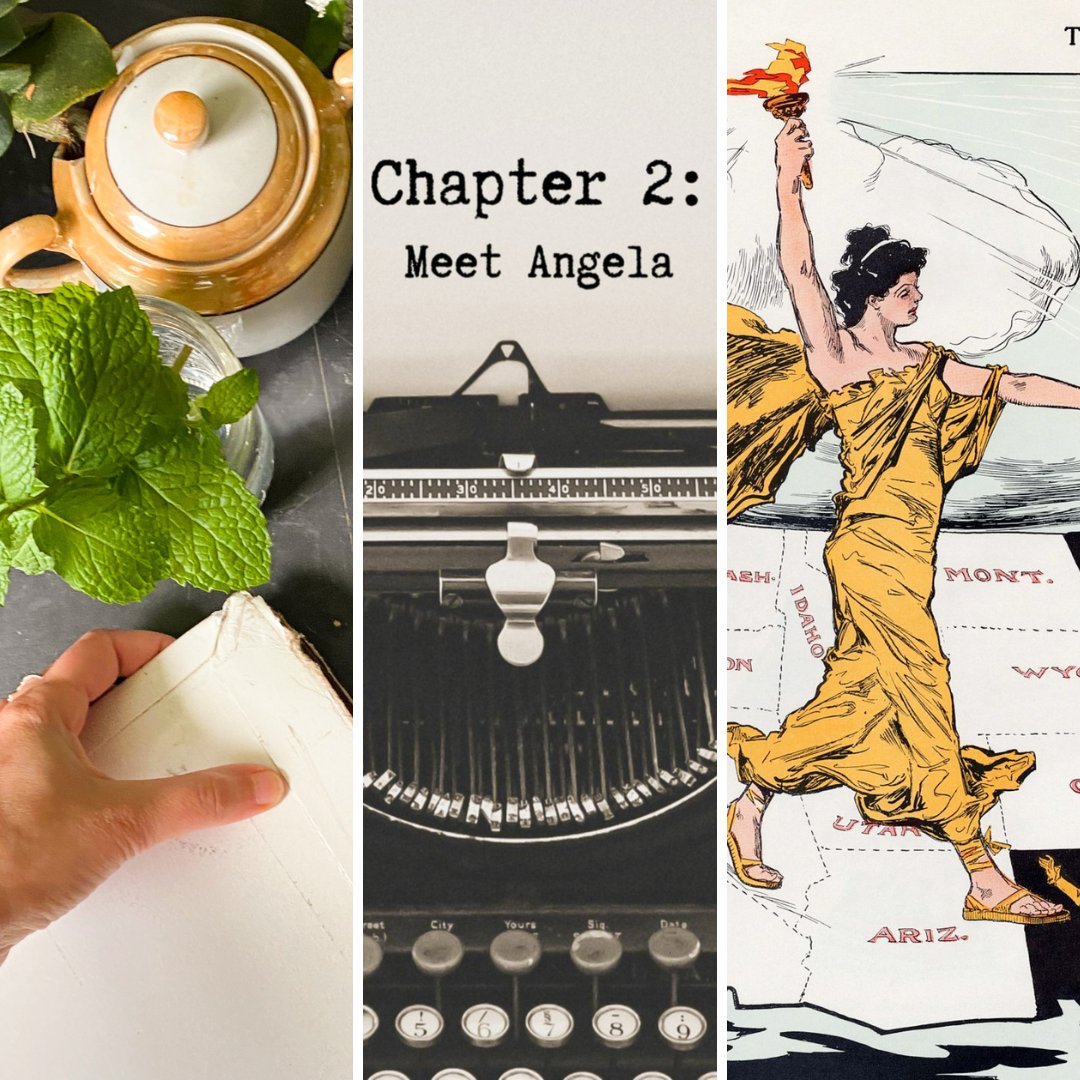
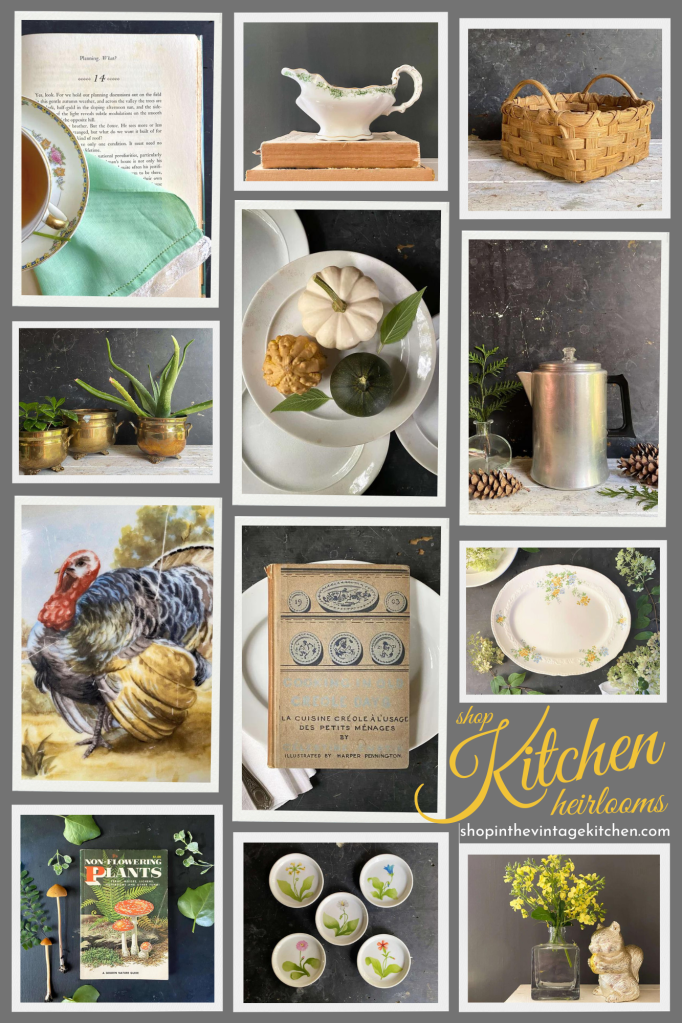
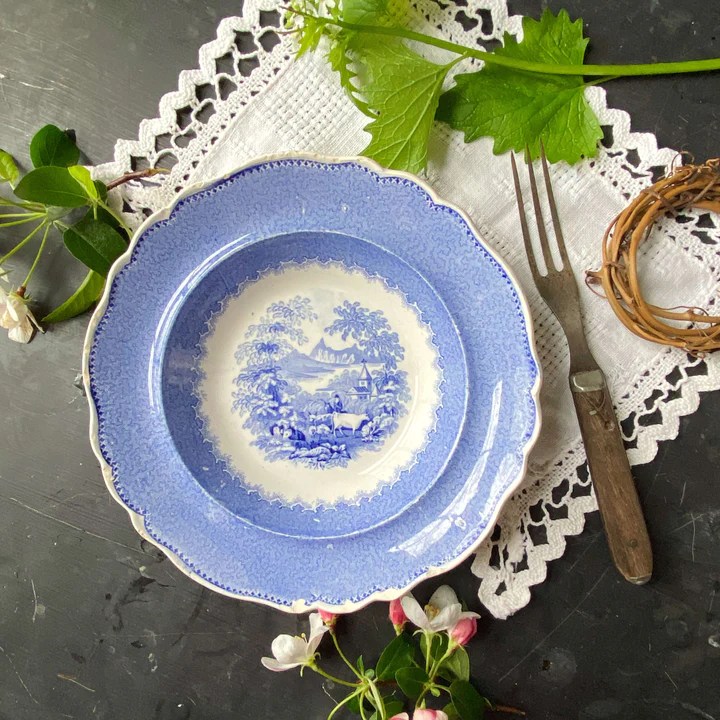
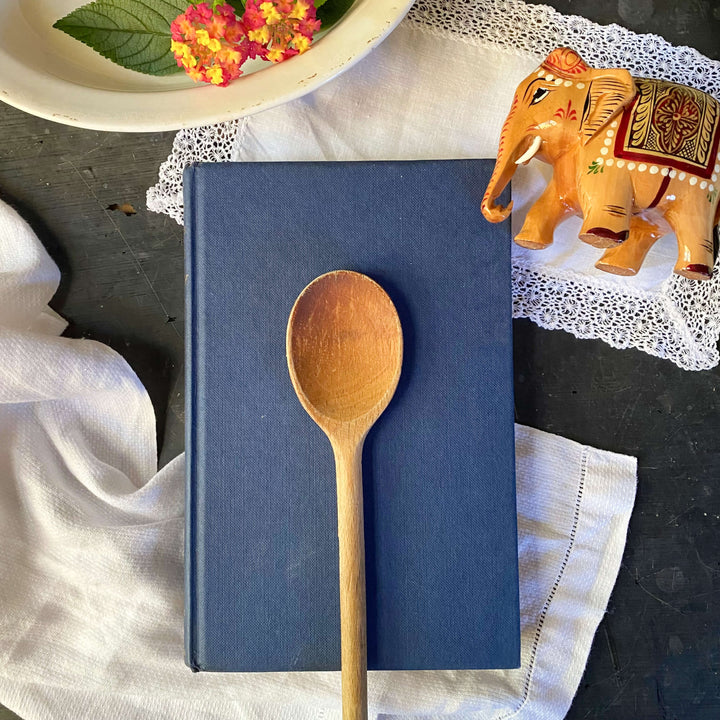
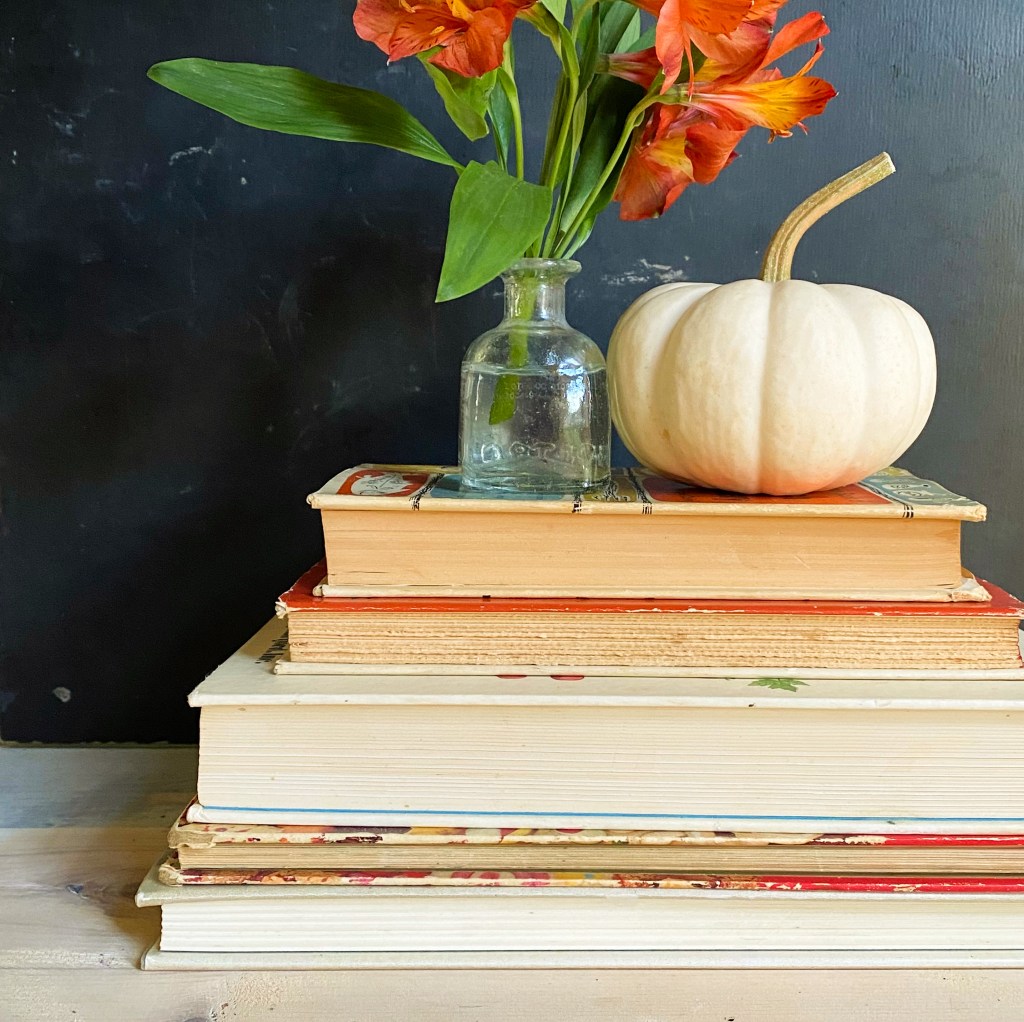
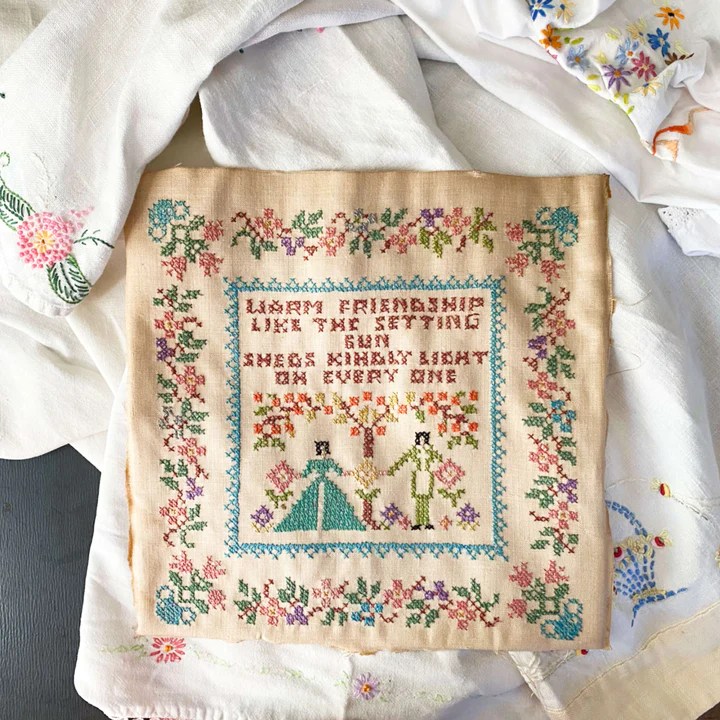
So here we are… links to each. Click on the photos or the highlighted chapter title links below and they will take you to the original posts laid out chapter by chapter.
Chapter One, titled It Arrives highlights the arrival of the mystery package and introduces some key information about the contents of the package.
Chapter Two, Meet Angela introduces the random stranger who sent the package to the Vintage Kitchen. It also highlights her research journey of how she wound up connecting the item to the Vintage Kitchen.
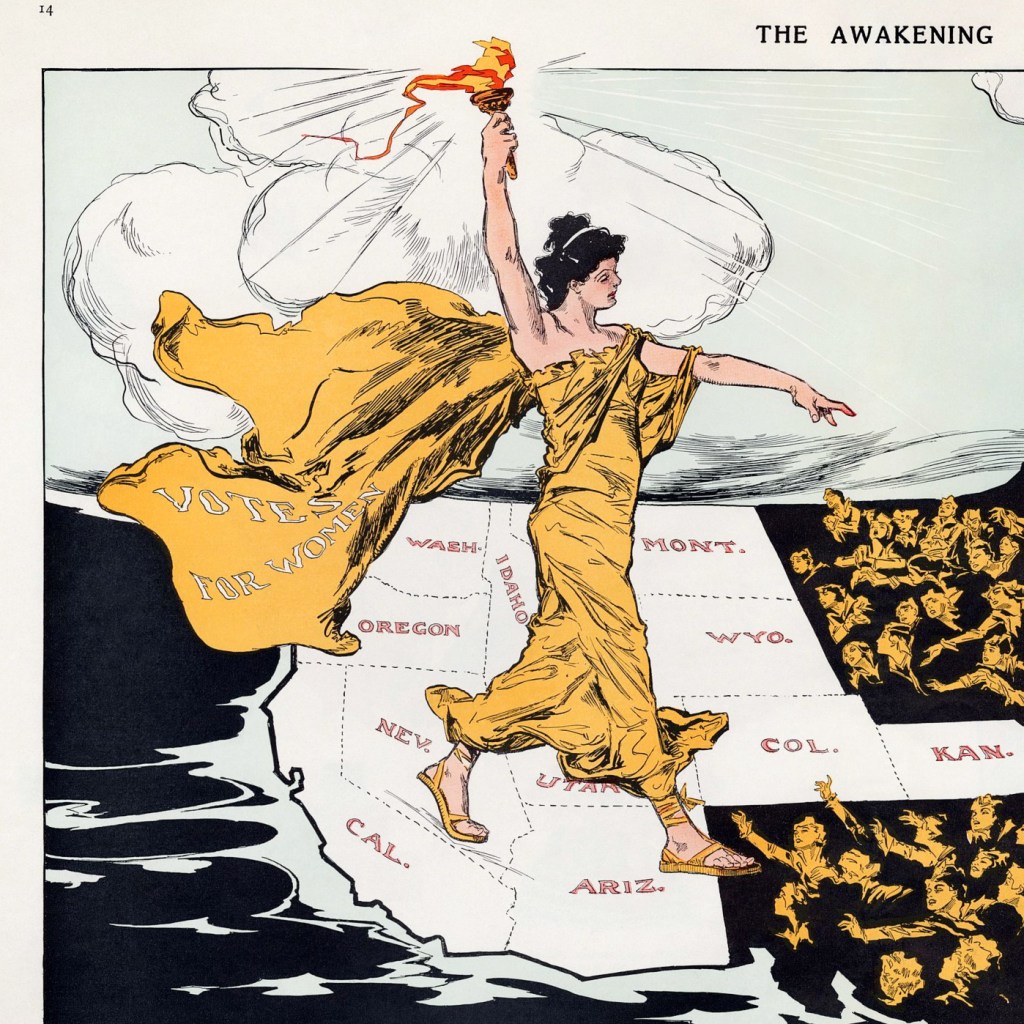
Chapter Three, The Time Period, highlights the era that surrounds the package’s contents – the 1920s and features several hidden clues as to what the mystery item might be.
Coming up next, it’s Chapter Four – One Last Journey – where transportation of the mystery item will be discussed as the item embarks on its final adventure to the place where it belongs.
While the story continues to unfold, there is still time to take a guess as to what the mystery item might be. Feel free to post your speculations in the comments section below. I can’t wait to share the rest of the story with you, so stay tuned for Chapter Four coming soon!
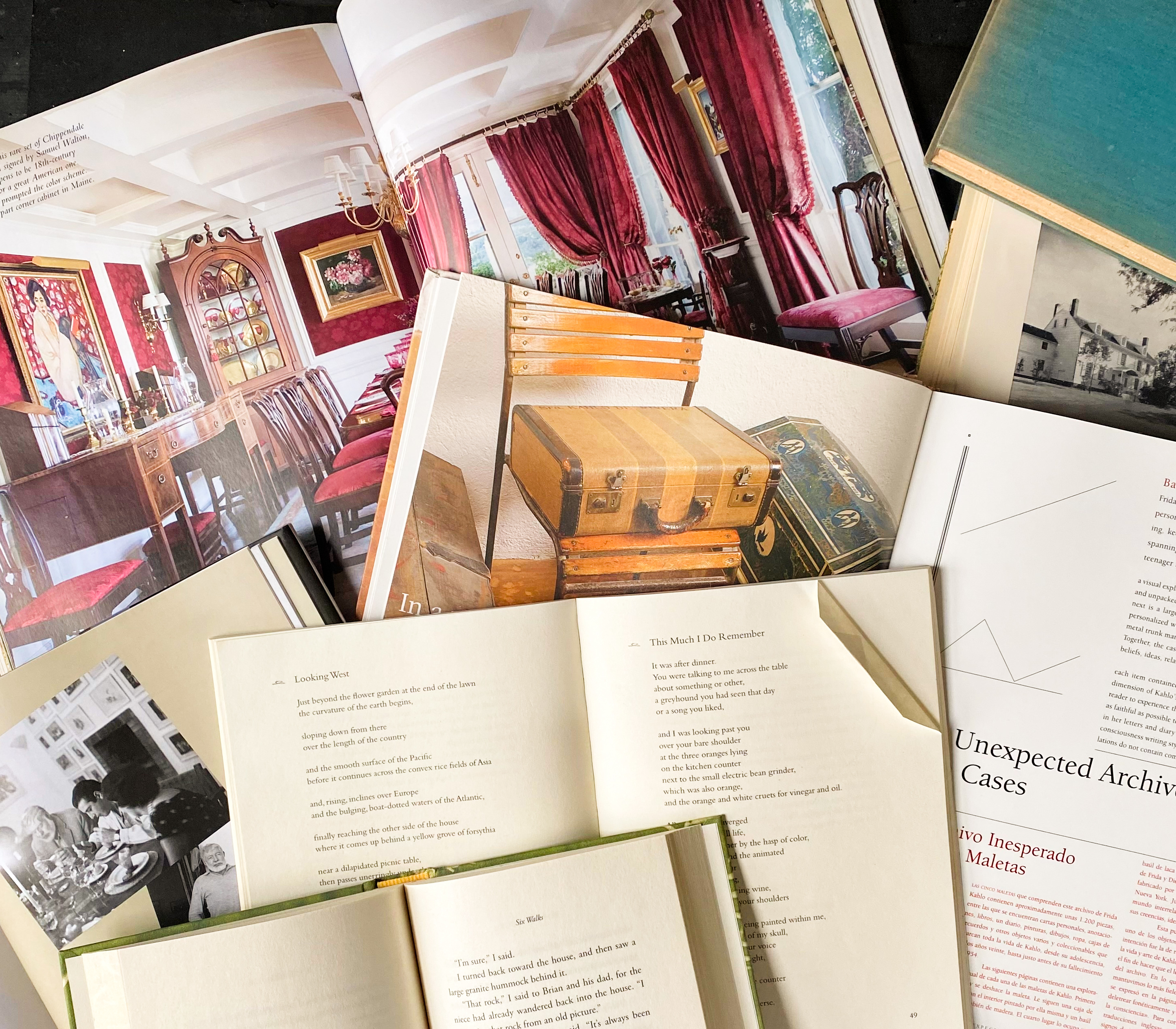
Just in time, before we say goodbye to 2023, I didn’t want the year to leave without posting the annual recommended book list that has become a favorite here on the blog. This year’s selections center around nature, literary figures, artists, the art of collecting, and the curation of home in all the ways that make it personal and unique.
As is the way every year, these books were randomly discovered while doing research for other projects. They popped up while uncovering origin stories for shop heirlooms, researching story snippets for the blog, or understanding context surrounding a vintage recipe.
Serendipitous in their arrival on the bookshelf, yet ironically all connected via some common themes, these books were new to me this year but not newly published this year. The oldest one in this batch hails from 1979 and the newest one debuted just last year in 2022. All deal with historical subjects in one way or the other, but each one brings a very unique and fresh perspective to its subject matter. They take us on adventures from the wild beaches of coastal Massachusetts to an out-of-the-way antique shop in Mexico. We are introduced to a famous performer’s real-life home in California and a fictional version of a real-life literary figure’s farm in Georgia. They feature one Ernest, two Barbaras and three oranges. There’s eccentricity and domesticity, color and craft. But above all, there is captivating storytelling right from the first page. Let’s look…
Six Walks by Ben Shattuck (2022)
What is it like to walk in the footsteps of Henry David Thoreau? Do you see the same trees, smell the same air, touch the same ground, feel the same breeze? Henry lived and wrote and walked around the woods in Massachusetts over one hundred years ago and the impact it made on his life made his life. During the pandemic, trying to process a breakup and a general malaise that hovered over his thoughts like unsettled storm clouds, Ben Shattuck rediscovered Henry’s journals. Henry’s words so inspired Ben that he set out to see the world through “someone else’s eyes for a change,” hoping that he might gain some new perspective to help him past his grey days.
Henry David Thoreau (1817-1862)
Following six of the same walks that Thoreau once took in the early to mid-1800s, Ben was searching for a new perspective, and a new understanding on life, love, and his place in it. For Henry, the walks were about looking at nature, about describing his surroundings, and about drawing comparisons between the natural world, human evolution and the emotional and spiritual impact on both. For Ben, walking was a form of therapy to help him move past some darker days, all the while submerging himself in the comfort of a favorite writer’s words and viewpoint. What results is this incredibly gorgeous book about nature writing, about escapism, about processing emotional trauma, and about seeing the real beauty that surrounds us every day.
On the walks, Ben meets an interesting array of characters. He goes in search of his ancestral homeplace, canoes down rivers that feel wild and untamed, and walks down long stretches of the beach until his feet are bloody and blistered. Funny, tender, thought-provoking and beautifully written, Ben’s perspective and lovely turns of phrase are just as illuminating as Henry’s. Part travel memoir, part therapy session, part sketchbook, Six Walks is one of the most beautifully written books about journeying that I’ve read in a really long time.
Finding Frida Kahlo – Barbara Levine (2009)
Written in both English and Spanish, this book is a fascinating portrait on the act of collecting and the art of curating. Finding Frida Kahlo is the true story of discovering a set of trunks belonging to Frida Kahlo in a Mexican antique shop. The woman who discovered these historical heirlooms was Barbara Levine, a former exhibitions director at the San Francisco Museum of Modern Art who had recently moved to Mexico and was trying to assimilate into the culture. A trip with a few friends to an out-of-the-way antique shop led to the discovery of several trunks belonging to Frida Kahlo each filled with all sorts of her treasures – clothing, paintings, recipes, letters and personal heirlooms.
Image of the trunks from Finding Frida Kaho by Barbera Levine.
This discovery started a storytelling chain that is movie-like in scope and plot, unfolding all the unusual circumstances that led to the ultimate understanding of how trunks from one of the world’s most revered, most studied, and most collected artists could possibly have wound up quietly sitting on the floor of an antique shop practically unnoticed. Throughout the story, there is Barbara’s commentary on the processing of the collection, interviews with the antique shop owners, the detailed history of communication with the collector who held the suitcases originally, and consultations with the Fridos (the last remaining group of artists and writers who personally knew Frida Kahlo). I won’t share any more of those details here so as not to spoil the pacing of the story, but only to say you’ll be engaged right from Barbara’s first sentence… “I have long been a collector.”
Non-spoilers aside, Barbara tackles her discovery with a museum curator’s mindset, methodically documenting and photographing each item in each trunk with an unbiased approach. Frida’s objects come to life on the page. And in turn, Frida herself comes to life. You can see her handwriting, her diary entries, her sketches. You can see her clothing, her scrapbooks, her trinkets. You can see the weathered wood of the trunks in exquisite detail. There’s fabric and masks and stuffed taxidermy. There are recipes for Chicken Fried with Garlic in Peanut Sauce and another one for Spicy Salsa (more to come on that front in 2024). There are graphic, grotesque medical drawings of bloody amputations and beautiful brightly-colored paintings of birds and flowers. All along, these heirlooms are accompanied by Frida’s handwriting and you come to understand how all these objects formed her heart and her art.
The Mansions of Long Island’s Gold Coast – Monica Randall (1979)
Built by wealthy business tycoons as getaway “cottages,” trophy houses, entertainment venues, weekend retreats and flamboyant examples of architectural artistry, the opulent mansions that dotted the Gold Coast of Long Island reveal fascinating insights into American culture, wealth and folly.
Beautiful and haunting, The Mansions of Long Island’s Gold Coast spotlight incredible stories about the architects, owners, domestic staff, and modern mid-century families who all spent time in these grand estates. A book of architectural history could easily become boring if you stick with just the well-known, well-documented facts but Monica’s meticulously researched biographies, interviews with local residents, and first-hand experiences growing up in the area have brought forth only the most interesting details of each property.
Told in brief snippets, there are romantic love stories, untimely deaths, bizarre occurrences, ghostly apparitions, lavish design details and tragic degradation. House after house exposes the highs and lows of the ultra-wealthy during the 19th and 20th centuries and all that they celebrated but also all that they destroyed. Some of these estates still stand today, carefully maintained as examples of grand domesticity but many featured in this book were torn down, broken down, burned down, or fell down due to neglect and the lack of capital to maintain them. Monica captures each one in the state that she finds it in the 1970s, focusing on what they once were and what they now have become.
A Good Hard Look – Ann Napolitano (2011)
A fiction novel based in the real town of Milledgeville, Georgia, A Good Hard Look centers around an imagined recounting of the real-life writer Flannery O’Connor (1925-1964). It opens with a wedding in town of a doted daughter of the community, Cookie, and her fiance, Melvin – a wealthy New Yorker who is not used to Southern culture or the tight-knit atmosphere of small-town life. Like Nick Carraway in The Great Gatsby, we see this town, these characters, and Flannery herself through Melvin’s eyes who fully wants to commit to his new wife and his new life, but finds the peculiarities and the general mood of the town unsettling.
Flannery O’Connor’s farm, Andalusia, where she wrote her best-known books. Photo courtesy of exploregeorgia.org
The plot twists and turns, so I won’t say more so as not to spoil the story, but one of the things I loved most was all the detail about Flannery’s peacocks. As central characters in the book, you learn so much about these big, beautiful, boisterous, unruly birds who played not only a big part in the story but a big part in Flannery’s life too.
Flannery O’Connor at home with her beloved peacocks. Photo courtesy of the Atlanta Journal-Constitution, Joe McTyre
This book reminded me a little bit of Midnight In The Garden of Good and Evil mixed with the storytelling styles of William Faulkner, John Updike, and Anne Tyler. Once finished, it also prompted its own further research into Flannery’s life. Especially regarding the peacocks. Beautiful, territorial, protective and also very loud, the peacocks act as both a soundtrack and a symbol. Ann shares details on their personalities, their temperaments, and their physical presence on the farm offering such interesting descriptions of them it will leave you considering whether you should invite a peacock as a pet into your own life.
My Passion for Design – Barbra Streisand (2010)
All the buzz around Barbra Streisand this holiday season concerns her newly released memoir, My Name Is Barbra, but I’d like to shine a light on another book of hers published in 2010, My Passion for Design about building her dream house in California. It’s a memoir in and of itself, but it’s also a design book showing you (not telling you) how to build and fill a space with things you love. Barbra’s not following trends here. She’s following her heart and what results is a home packed with intimate stories of how it came to be. Included at each step are a bevy of sketches and before and after photos, many of which Barbra took and drew herself.
Barbra’s front entrance to the main house.
A lifelong antique collector, a lover of old houses, and a creative outside-of-the-box thinker, Barbra’s step-by-step building project is a captivating look at her creative journey towards fashioning the ideal homeplace. Even though she references films and performances along the way, you forget that Barbra is a world-famous singer, actor and director. Here in this book, she’s simply a woman on a mission to create a space she loves. Her vision for what she wants is mostly clear, but she does stumble and change directions sometimes too, and occasionally she has to compromise when the ideas in her head can’t feasibly match a comparable reality. It’s all very relatable.
Located right on the cliffs above the ocean, with views of the water from the backyard, Barbra’s compound is a conglomeration of buildings that includes two barns, a mill house, a 1950s ranch house, and a big main house. She thoughtfully designed and decorated each space from the ground up, but she’ll be the first to say that she’s the “idea” person only not the actual contractor, and never had any inclination to swing a hammer or erect a wall herself. Instead, she left all that up to her team of contractors and specialists – the talented individuals who had the tenacity to deal with her perfectionism, a trait she fully recognizes can be a bit difficult to work with.
What I really loved about this book was how Barbra talked about the idea of home and the creative touches that give a space meaning. She’s really thoughtful about every detail and wasn’t willing to compromise on something if she felt it wasn’t right. Intuitive and observant, she discusses her design inspirations (a certain painting, a detail from a movie set, the color of the sky at sunset) to the extent that you get the sense that she’s always on the lookout for objects, colors, textures, and patterns that stir a personal emotion. Even though her design style is not exactly my design style, it is refreshing to read an interior design book about someone who wholeheartedly embraces what she loves unapologetically. Instead of following trends or typically accepted interior design layouts, she follows her heart and her interests. What results is a home that is entirely her own.
Decorated endpapers feature a few of Barbra’s notes and sketches.
Even the exterior gets her thoughtful attention as she color coordinates all the flowers and landscaping to each building so that complimentary shades float freely in and out of doors. To accommodate changing moods and seasons, to find surprise and joy year by year, to delight the senses, to calm and also energize the spirit all while maintaining a sense of unique charm and character – those were what Barbra was reaching for in building her perfect place. By books end you can see that she accomplished all that, and maybe even a little bit more.
Ernest Hemingway: Artifacts From A Life Edited by Michael Katakis (2018)
I haven’t completely finished this book yet, but I knew it was going to be on the Best Of list just for the introduction by Michael Katakis alone. His perspective on memories and how they can be shaped or reshaped, defined or redefined, based on the truths and the fictions you want or are led to believe is compelling. He shares an incredible story that links the death of his mother to the assassination of John F Kennedy to the discovery that Ernest Hemingway lived in the same neighborhood as his relatives – all events that occurred within a few days of each other. Of course, all these big events affected him deeply, but it was Ernest’s writing that brought emotional comfort and mental escapism during that difficult time. A lifelong interest in the author and his work bloomed and would eventually make him the manager of the Ernest Hemingway Estate, and the editor of this book.
There’s so much that has already been written and recycled about Ernest Hemingway, that it’s difficult to separate the man from the myth. And you might suspect it would be difficult to present any sort of new factual information about him. But in Artifacts From A Life, there is an assortment of little-known or at least lesser-known details that paint Ernest in a new light.
Famous for writing short, succinct sentences – his hallmark style – I always thought that was something Ernest developed over time, but actually it was a writing tip received during his first newspaper job. He was advised to stick with short sentences and to leave out the adjectives. Ernest adapted that way of writing and stuck with it for the rest of his career. Had the newspaper dictated that he write long, flowery sentences we might of had a completely different Ernest Hemingway experience altogether.
Packed with never-before-seen photographs, paper ephemera, letters and objects from his personal estate, there’s much to learn about Ernest and his strengths, weaknesses and vulnerabilities. One of things of particular interest is Michael’s commentary as he manages Hemingway’s estate and discovers the wealth of information that it contains. He brings a unique perspective to the task and a wistful reverence for how things used to be that is so fresh and compelling.
“There are over eleven thousand photographs, bullfighting tickets and scraps of paper with lists of what books a struggling writer should read,” Michael writes. “There are airline, train and steamship tickets that are so lovely they seem a page from an illuminated manuscript and demonstrate how much beauty there once was in the artifacts of daily commercial exchanges. As I went through his things I realized how much tactile aesthetic has been sacrificed and replaced with a severe digital practicality.”
Opposite Michaels’ words on that topic are images of a beautiful 1930s receipt from a Paris bookstore with its stylish logo and sales clerk handwriting itemizing the books that Ernest had purchased that day. It’s that kind of thoughtful attention to history and to Ernest’s life that make this book a page-turner, and a truth, from the very beginning.
Picnic, Lightning – Billy Collins (1998)
Speaking of truth, I’ve never read Billy Collins’ work before, even though he’s considered to be America’s favorite poet and was the actual Poet Laureate of the United States in the early 2000s. But just this past fall, I discovered his 1998 book of poems Picnic, Lightening and fell absolutely in love with the one on page 49. It’s titled This Much I Do Remember…
It was after dinner. You were talking to me across the table about something or other, a greyhound you had seen that day or a song you liked,
and I was looking past you over your bare shoulder at the three oranges lying on the kitchen counter next to the small electric bean grinder, which was also orange, and the orange and white cruets for vinegar and oil.
All of which converged into a random still life, so fastened together by the hasp of color, and so fixed behind the animated foreground of your talking and smiling, gesturing and pouring wine, and the camber of your shoulders
that I could feel it being painted within me, brushed on the wall of my skull, while the tone of your voice lifted and fell in its flight, and the three oranges remained fixed on the counter the way stars are said to be fixed in the universe.
Then all the moments of the past began to line up behind that moment and all the moments to come assembled in front of it in a long row, giving me reason to believe that this was a moment I had rescued from the millions that rush out of sight into a darkness behind the eyes.
Even after I have forgotten what year it is, my middle name, and the meaning of money, I will still carry in my pocket the small coin of that moment, minted in the kingdom that we pace through every day.
“This Much I Do Remember” by Billy Collins. Picnic, Lightning (University of Pittsburgh Press, 1998).
Oranges have been a real theme in the kitchen in these past three months. We made a vintage Parisian orange cocktail for the blog this month, shared a vintage recipe for orange sugarplum cookies in last week’s email newsletter and now there is this vintage poem about oranges sitting on a kitchen counter. It’s funny how things come together like that.
Bar Hemingway’s Ritz 75 cocktail.
The whole sensory experience that Billy sets up in this snippet of life with the camber of shoulders, the tone of voice lifting and falling in flight, the hasp of color, the painting within is just gorgeous. I love the way he likens the oranges fixed on the counter to the way the stars are said to be fixed in the universe. So beautiful.
Billy Collins (b. 1941) served as Poet Laureate of the United States from 2001-2003. Photo by Marcelo Noah.
So far Billy has published 18 books of poetry, starting with Pokerface in 1977 and just recently Musical Tables which came out in 2022. Picnic, Lightning was book number six debuting in the late 1990s. If you are new to Billy’s work, there is lots to choose from but I recommend starting with page 49 of Picnic, Lightening and working your way around his words from there.
Reading This Much I Do Remember was such a nice way to wrap up this past year – another one that was so full of tumultuous world events, political upheavals, and powerful weather occurrences. I love how in the poem, a natural peace was found in the kitchen. I love that time stopped. That the moment was recognized and appreciated before being committed to memory. I love that this poem is about a confluence of small, unassuming details that turn out to make a big lasting impression. Cheers to more of that in 2024.
And cheers to Ben, Henry, Frida, Ann, Flannery, Ernest, Billy, Michael, Monica, Barbra S. and Barbara L. for sharing such wonderful insight into the passions that move the world forward through art and storytelling. Hope your new year overflows with equal joy. And I hope you find a book or two to fall in love with from this list. Thank you so much for being a part of our wonderful community. We can’t wait to share more favorites in 2024. Happy New Year!
The history behind Bar Hemingway’s Ritz 75 runs long. If a cocktail could talk this one would tell many stories. Included in its 100-year lifespan are snippets about several greats – Ernest Hemingway, a New York nightclub, a French hotel and the best bartender in the world. And those are just tips of the ice cube. Even more stories lay below the gin line.
This cocktail’s core combination of ingredients – champagne, lemon juice, sugar and ice date back to the early 1900s when it was known as a French 75. Named after WWI field artillery, the drink was likened on first sip, to the quick jolt of a particular French canon’s blast. That immediate burst of flavor was the combination of champagne and lemon juice – the signature components that gave this cocktail a powerful little pucker.
The Stock Club in New York City circa 1944. Photographed here are filmmaker Orson Welles (bottom left corner smoking a cigar), talk-show host Morton Downey (bottom right corner), club owner Sherman Billingsley at center table, actress Margaret Sullivan (at table just above Orson Welles cigar) and Broadway producer, Leland Hayward to the right of Orson Welles’ shoulder.
In the 1920s, it took on a new sense of depth, flavor and revelry when gin was added to the sugary juice mix. That mixture was then tossed with ice in a cocktail shaker and finished in a glass topped off with champagne just before serving. Sparkly and citrusy, that was how the popular French 75 was prepared at New York City’s most famous nightspot, The Stork Club. From 1929-1960s, you could pretty much see every sort of movie star, politician, society maven, sports figure and writer all enjoying the cocktails provided by the club’s owner, Sherman Billingsley, a former bootlegger turned Manhattan business maverick. There, the French 75 made its fans.
The Hotel Ritz Paris on Place Vendome. Photo by Frederic de Villamil.
In Paris, in the late 20th century, the cocktail took on a new persona and a new name thanks to the elegant Ritz hotel and its beloved bartender, Colin Peter Field. Colin presided over Bar Hemingway, the snug drinking nook located inside the Ritz for thirty years up until this past summer 2023.
Bar Hemingway at Hotel Ritz, Paris. Photo by Pablo Sanchez.
Named after Ernest Hemingway, who frequented the hotel and drank many a martini there from the 1920s-1950s, when it was called Le Petite Bar, Bar Hemingway is filled with memorabilia featuring the writer’s life and literary works, many of which were curated by Colin himself. Model Kate Moss even added some vintage typewriters to the decor to compliment the aesthetic.
Under Colin’s hand, Bar Hemingway became a popular spot in the hotel and also the city, frequented by Hemingway lovers who wanted to walk in the footsteps of the literary giant. Ultimately though it was Colin who really stole the show each night. With his attentive presence, discreet mannerisms, head for literature and eye for art, Colin mixed up passion, dynamic conversation, and elegant drinks at Bar Hemingway night after night for three decades. He was so successful at his job, so devoted to his trade, that he was deemed the Best Bartender in the World by several leading travel magazines and won numerous awards throughout France for his bartending skills.
In 2001, Colin wrote a cocktail book containing recipes that he served at the bar along with interesting stories that surrounded them. Delightfully illustrated by Japanese artist, Yoko Ueta, this book is both a primer on how to be a thoughtful, intuitive mixer of drinks and a historical story guide detailing the origin stories of many classic cocktails.
Colin Peter Field as illustrated by Yoko Ueta.
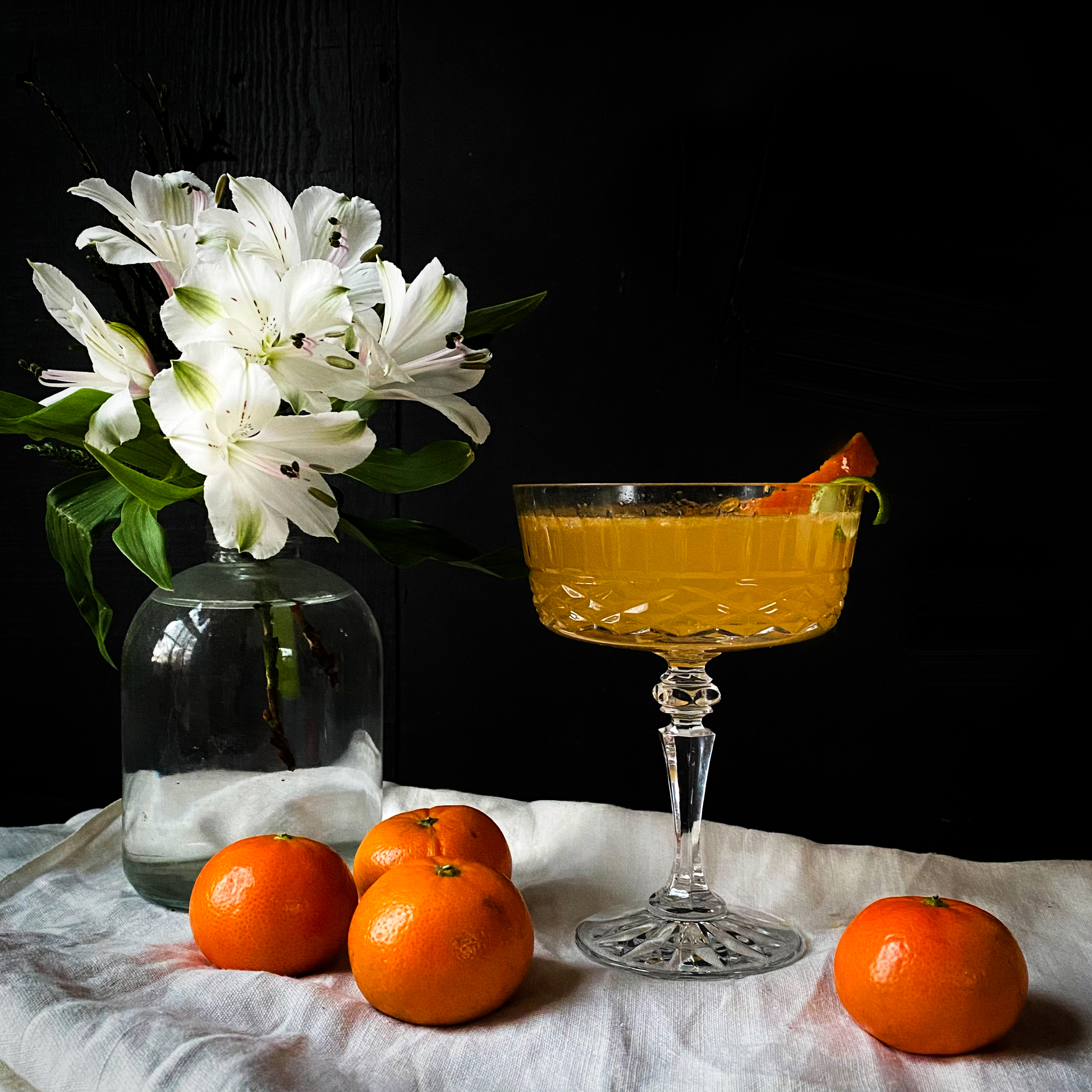
Included in the book is Colin’s version of the French 75. It features freshly squeezed mandarin orange juice in addition to the already called for lemon juice, sugar, gin and champagne. The mandarin brightens the color of the cocktail from a hazy lemon yellow to a pale orange, similar to the flickering flame of candlelight. A garnish of both lime and mandarin rind at the edge of the glass adds a little extra flair. Renamed, this version is now known as the Ritz 75.
With a taste similar to Orangina, Ritz 75 is a refreshingly crisp and clean cocktail. The champagne adds an extra bit of sparkle and a festive air to the season. Without being syrupy sweet, and given its light citrus notes, it’s lovely as an aperitif for cocktail parties or for pre-dinner welcome drinks. It is also an excellent partner to hors d’oeuvres that lean towards the rich and buttery side of the palate like cheese trays, charcuterie boards and anything tucked inside a puff pastry. Just like its cousin, the Mimosa, the Ritz 75 is easily adaptable to all sorts of occasions beyond the holiday season too. It could be served at brunch, or perhaps your next book club meeting when Hemingway is on the list, or when the weather turns warm, it easily transitions out of doors for picnics and garden parties.
Illustration by Yoko Ueta
I don’t think Colin would mind what time of year you served the Ritz 75, just as long as it accompanied a good story and a pleasant environment. Ernest would definitely second the story part. Together, the two I’m sure would be happy to clink glasses and call it a festive night, so we’ll do the same. Cheers to the holiday season and to Colin and to Ernest whose books continue to capture our attention. Here’s to hoping your December is full of flavor, merriment, and a little something sparkly.
Ritz 75
From Cocktails of the Ritz Paris by Colin Peter Field circa 2001. Serves two.
1 1/2 oz lemon juice
1 1/2 oz mandarin juice, freshly squeezed
1 teaspoon of sugar
1 1/2 oz gin
Champagne to finish
Mandarin and lime rinds to garnish
Mix the lemon juice, mandarin juice, and sugar in a cocktail shaker. Fill with ice, and then add the gin. Shake a few times. Pour the mixture evenly into two glasses, then fill the rest of the glass with champagne. Garnish with slices of lime and mandarin. Add a cherry (optional) for additional color.
Undoubtedly the most well-known food to come out of Mystic, Connecticut is pizza, thanks to the 1988 movie Mystic Pizza starring Julia Roberts…
The real-life pizza shop that inspired the film is still serving up hot pies every day in this beautiful, bustling, historic port city, but there’s a long-standing tradition of other delicious New England fare that has made Mystic, CT a go-to source for memorable cuisine too. The recipe featured here today might not be the star of a feature film but it definitely will be a star on your holiday table. Today’s post comes from The Mystic Seaport Cookbook, a collection of historic New England recipes first published in 1970 by Lilian Langseth-Christensen…
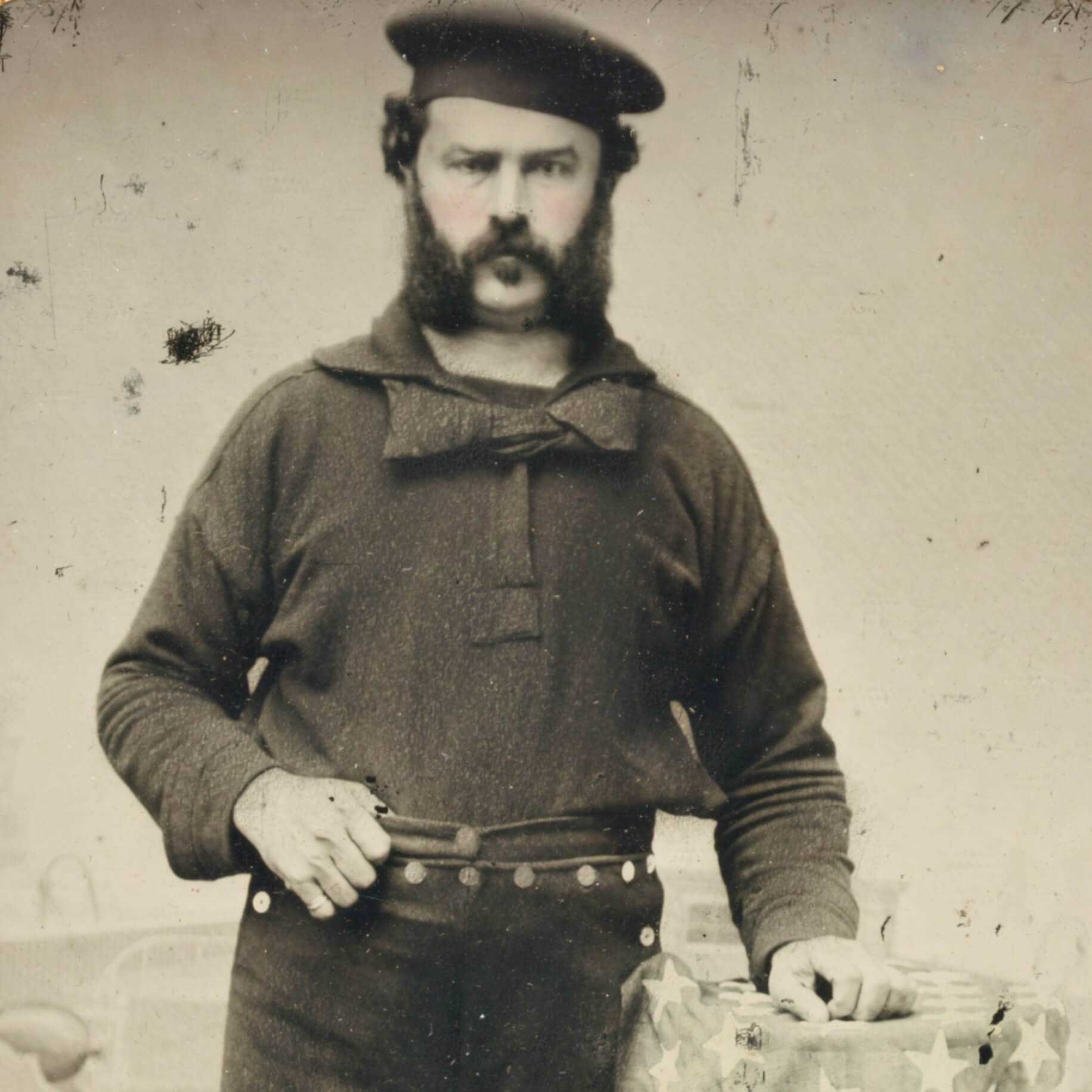
You might remember this cookbook from last Spring when we featured a hot rum toddy and a story about sailors and life on the high seas.
This guy was the star of our hot toddy post.Hot Grog – Mystic Seaport style
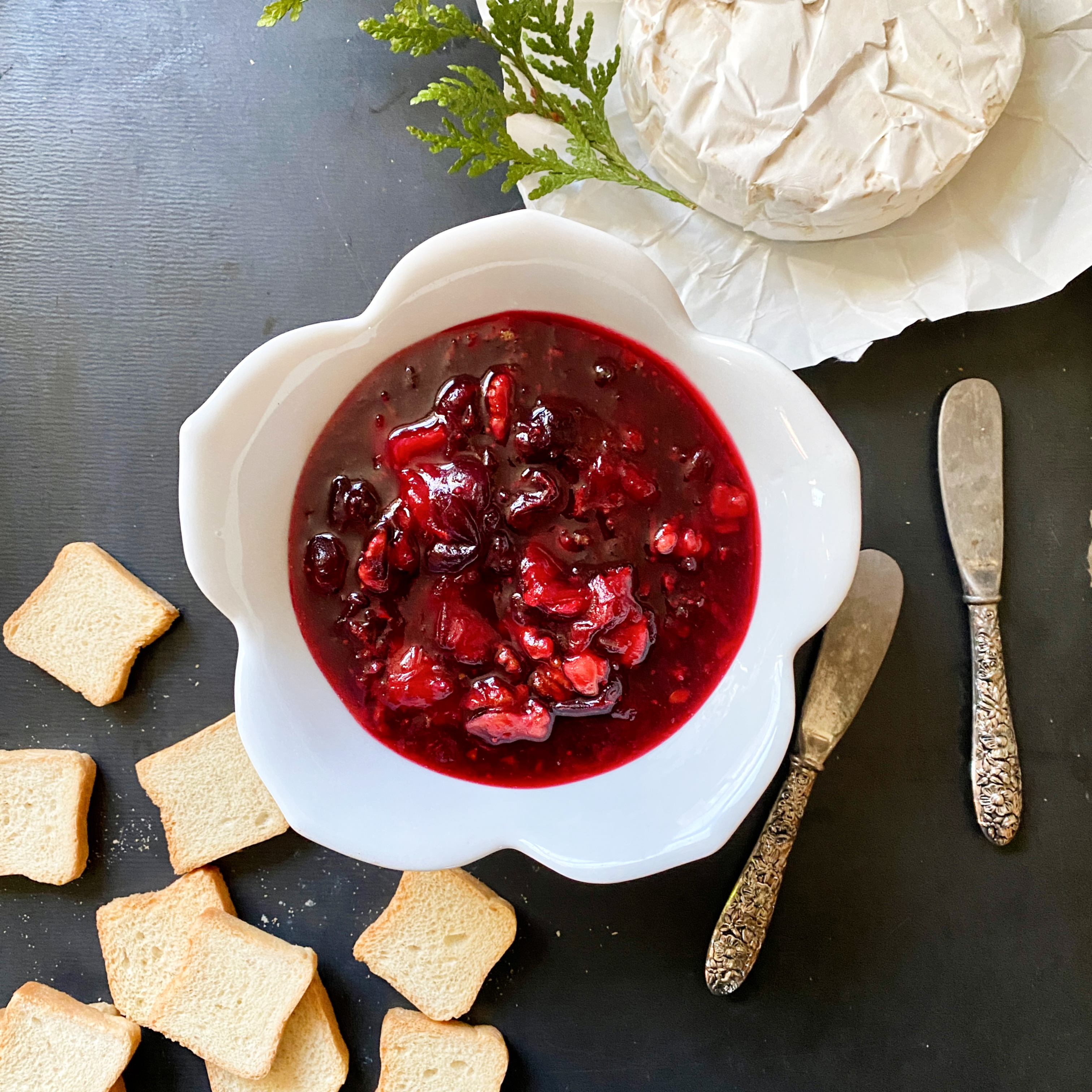
The recipe we are featuring here today isn’t quite as dramatic as that one, but it is equally delicious. Simply called Cranberry Relish, it’s an ideal alternative to canned cranberry sauce at Thanksgiving and travels the rest of the holiday season with tantalizing appeal. Post-Turkey Day, this simple New England cranberry relish becomes a crimson-colored companion to all sorts of festive Christmas party hors d’oeuvres, holiday-themed sandwiches, and cozy winter snacks.
A 19th-century cranberry farm located in Mansfield CT. Image courtesy of the Mansfield Historical Museum and Library.
Back in the 19th century, Connecticut was home to a number of cranberry farms, but it isn’t known for its commercial cranberry bogs anymore. In New England, that’s left up to the neighboring state of Massachusetts now, where they harvest over two million pounds of cranberries per year. Some farms in the Bay State have been run by generations of families that stretch back over 150 years. Thanks to modern machinery, cranberry farming is an easier endeavor but back then it was considered one of the hardest crops to farm and was done entirely by hand with wooden scoops combed through the cranberry bushes. No one was spared the arduous task of collecting cranberries, not even kids.
Cranberry harvesters on Cape Cod circa 1909.Cranberry Farm – Pemberton, NJ circa 1910. Photo by Lewis Wickes Hine.A wooden cranberry scoop, also sometimes referred to as a cranberry rake. Image courtesy of a 1940s-era American Cranberry Exchange recipe booklet.
In Connecticut, there is just one remaining cranberry farm in the state left, but cranberry relish has been a part of the New England diet and therefore, the Connecticut diet, since colonial days when indigenous tribes taught early settlers how to pound them into pastes and sauces.
Harvested during the autumn months of September and October, by the time they make an appearance on the Thanksgiving table in the form of relishes, jellies, jams, compotes, sauces, and innumerable baked goods, cranberries add bright color, dimension, and acidic flavor to a holiday meal mostly recognized by its earthy brown and beige shades.
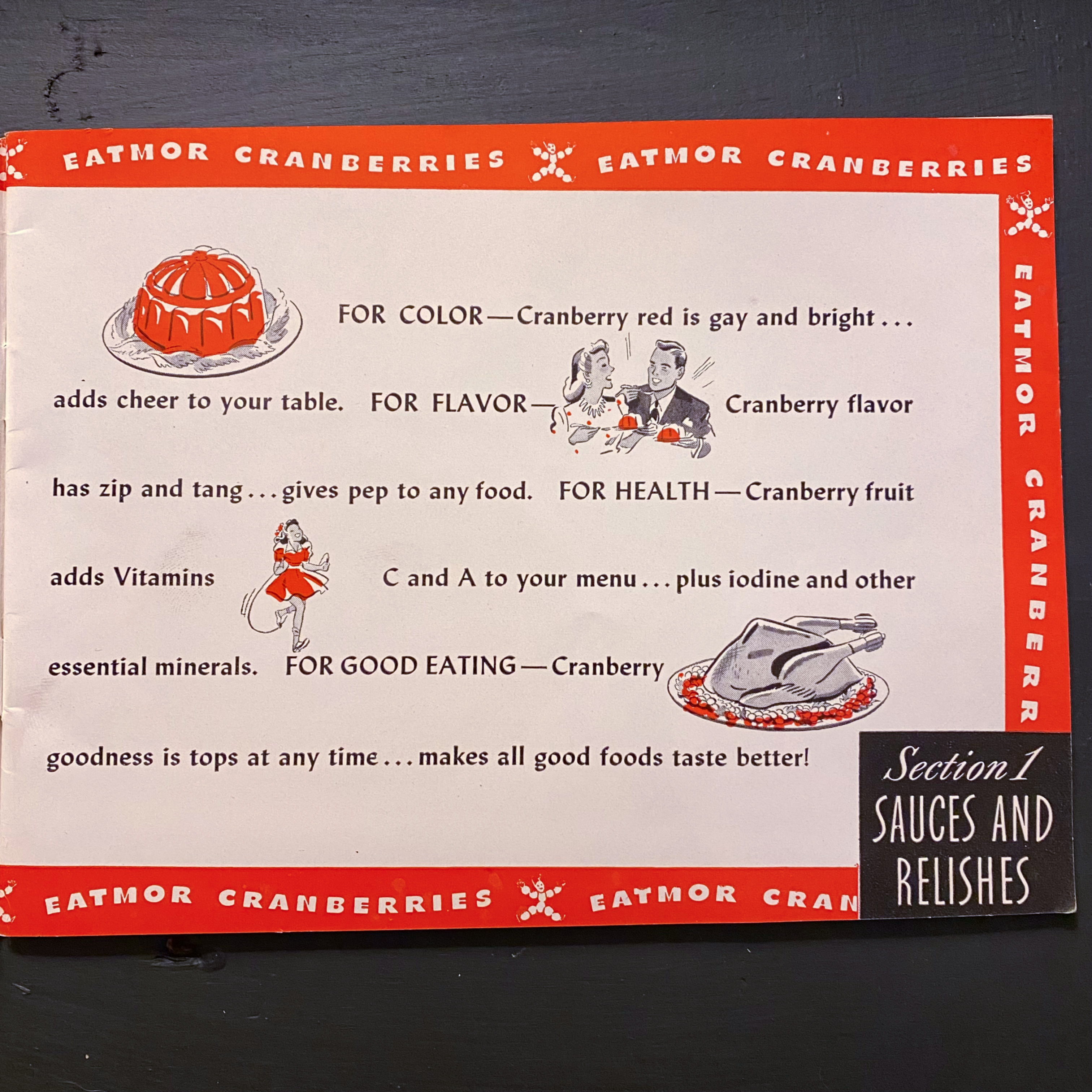
A cranberry recipe cooking booklet courtesy of the American Cranberry Exchange, headquartered at 90 West Broadway, New York, NY. The A.C.E. was a cranberry cooperative that operated between 1907 and 1957 among several US states including Massachusetts, Wisconsin, Oregon, Washington, and New Jersey.
Pick up any New England cookbook, and the author will have their own preferred method of making this holiday side dish, but there will always be some ingredients that everyone agrees on. Technically, what differentiates cranberry sauce from cranberry relish is the cooking process. Cranberry sauce generally tends to be cooked on the stovetop – boiled down with sugar to a sweetened consistency that is thin and syrupy or thick and gelatinous depending on the amount of cooking time. Relish, on the other hand, more often than not, is mixed together in a blender and served chunky and raw with the addition of just a bit of sugar and some other aromatics including spices and citrus. The recipe featured here today is a cross between both. It’s cooked on the stove and includes citrus, raisins, and nuts for a more chutney-like consistency. The chunky texture and quick cooking method, make this Mystic recipe easy and versatile – ideal for all sorts of applications long after the Thanksgiving meal has been enjoyed.
First, we will look at the cooking method and then we’ll dive into the number of different ways to serve this version of cranberry relish. You’ll notice at the end, that this recipe offers a canning suggestion for storage but we just made one big batch and stored it in the fridge where it lasted for over a week and a half.
Cranberry Relish
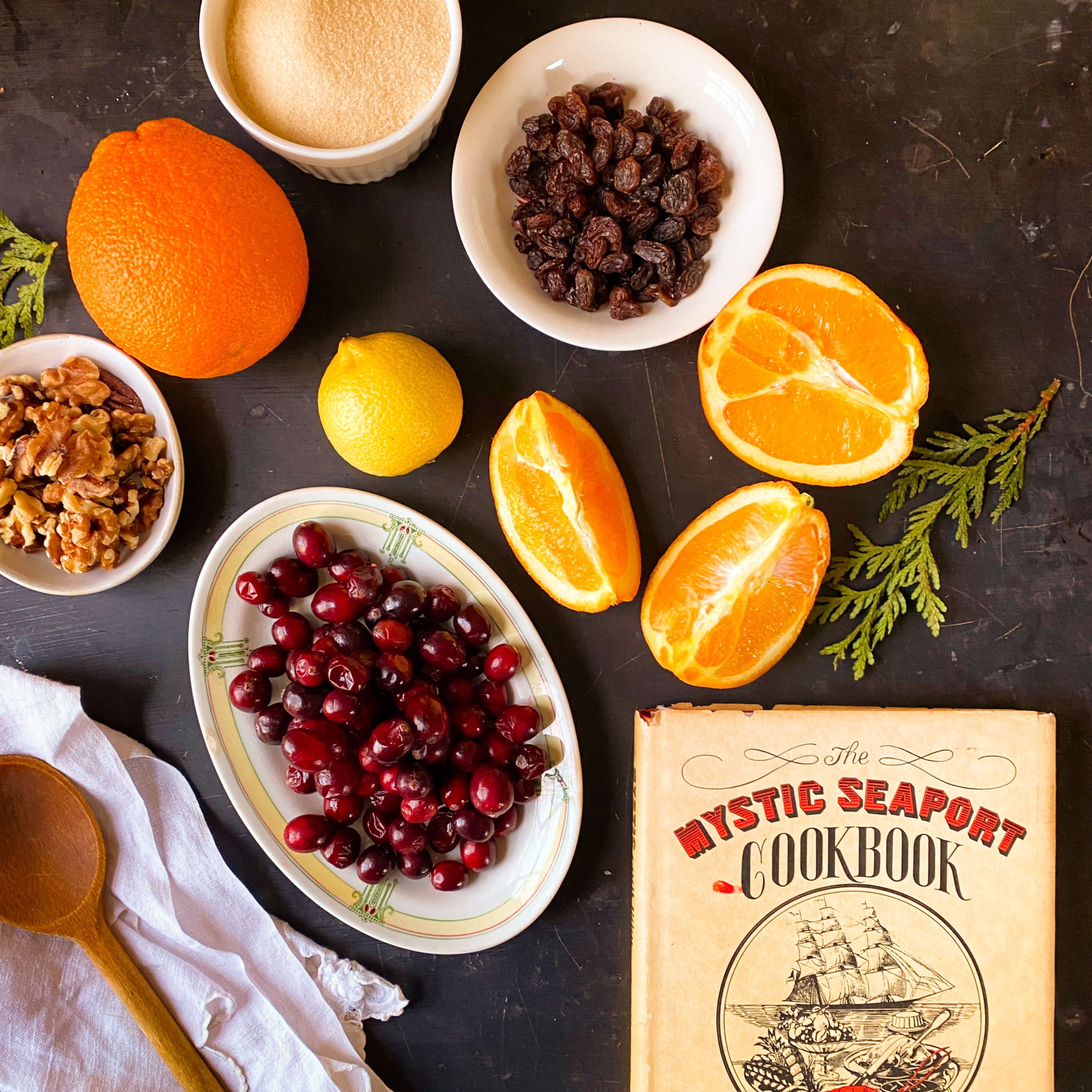
From the Mystic Seaport Cookbook circa 1970
Makes 6 pints
6 cups fresh cranberries
1 cup cold water
1 cup boiling water
1 1/2 cup raisins
1 1/2 cups chopped walnuts
2 large oranges
4 cups sugar
Grated rind of 1 lemon
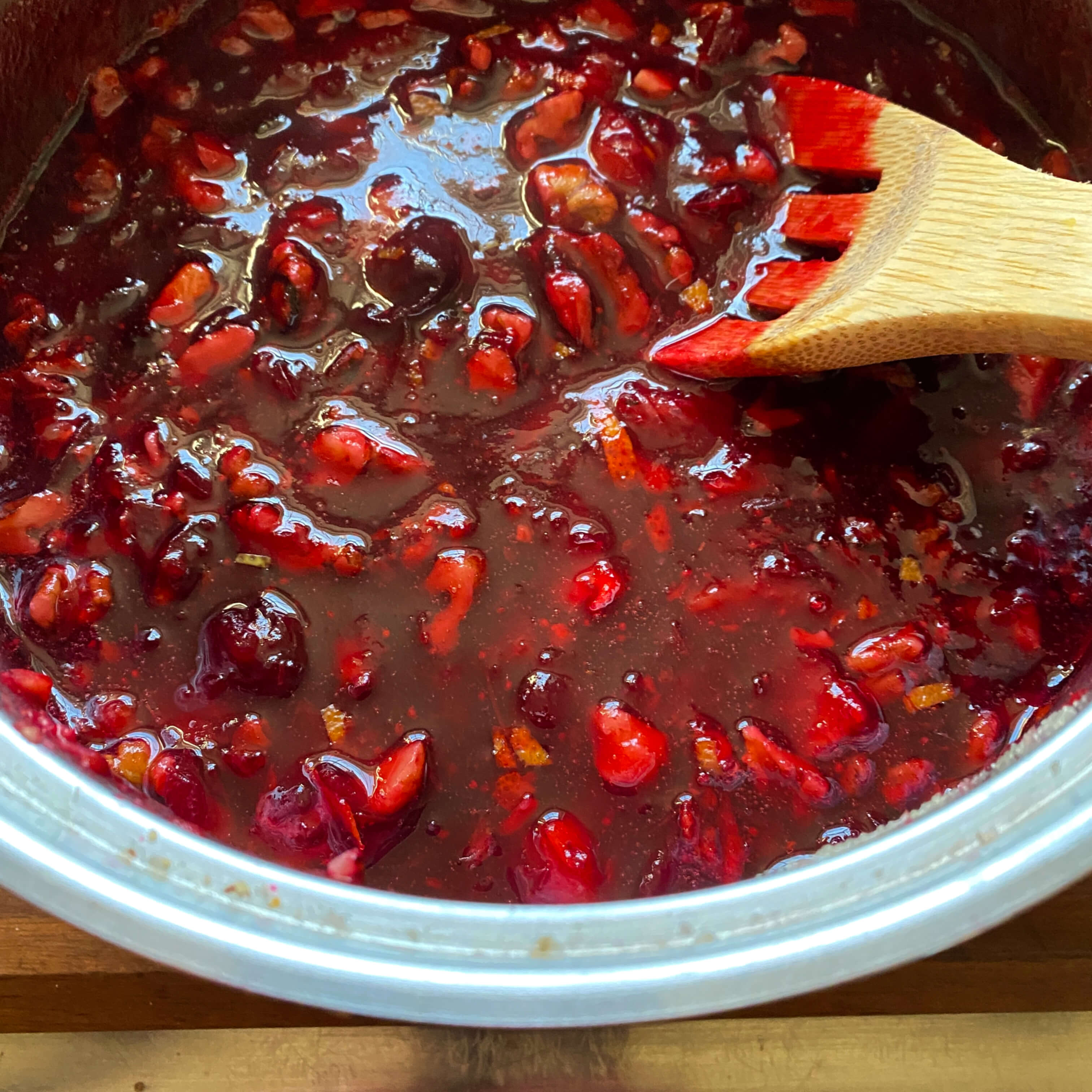
Wash the cranberries and pick out any remaining debris (stems, leaves, etc). Boil them in a cup of cold water until the skins pop and the berries become soft.
Blend them into a puree using a hand-held immersion blender…
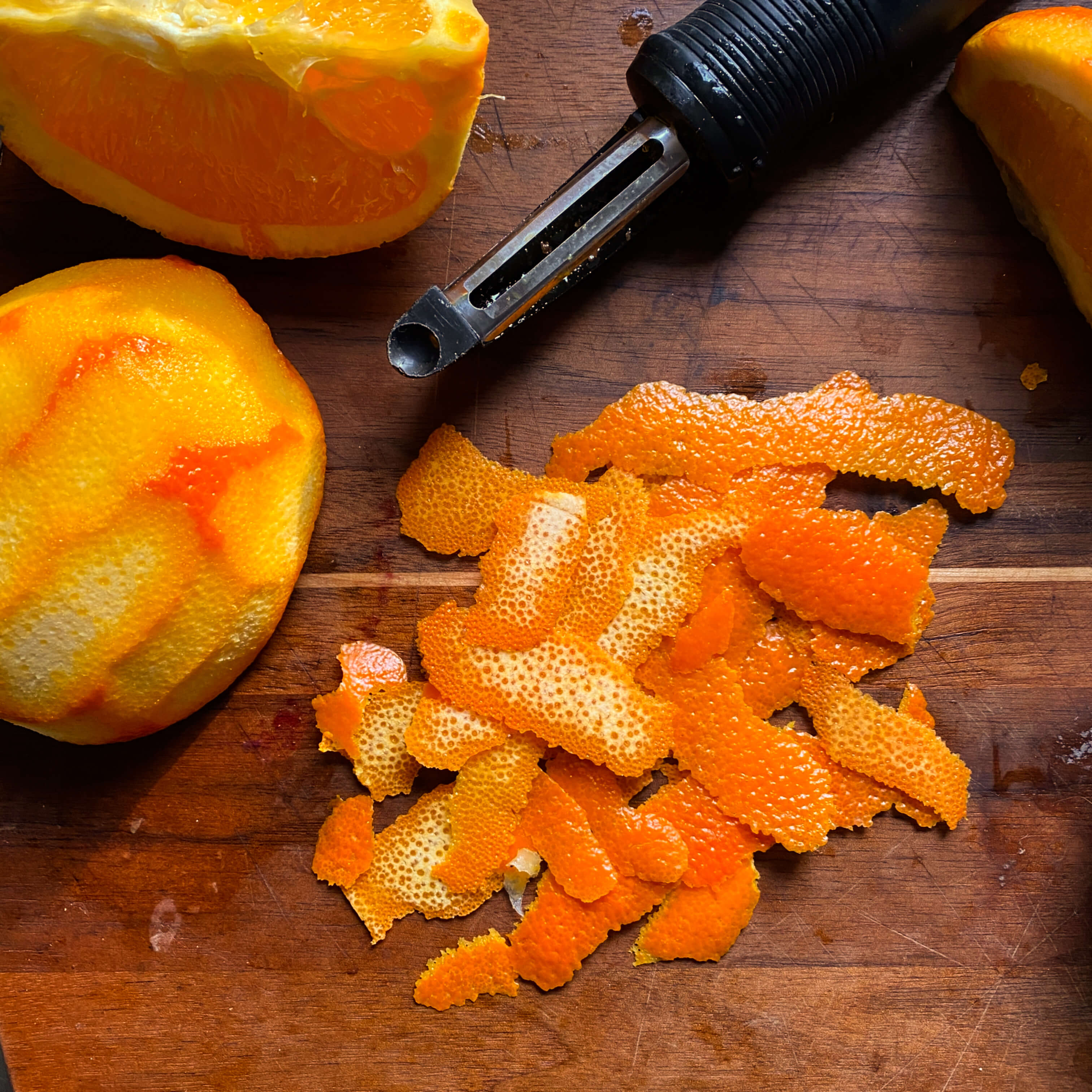
and then add the boiling water, raisins, walnuts, and sugar. Peel the oranges and dice the pulp. Scrap any white pith off the orange rinds, discard the pith, and dice the orange rinds. Add the rind to the mixture.
Next, stir in the grated lemon rind, and cool the relish.
Transfer relish to a bowl and serve or store in an airtight container in the fridge or pour into jars. If storing in jars, seal the jars with melted paraffin wax and shelve for a later date.
A lovely addition to the holiday table, this cranberry recipe contains the best of both worlds when it comes to sauce and relish. It’s syrupy but also chunky. It’s sweet but also tangy. The walnuts give it a satisfying dose of substance and protein. The citrus adds a burst of flavor that keeps the palate notes fresh and bright.
One of our favorite ways to serve Cranberry Relish is poured over a wedge of Brie cheese.
Naturally, it pairs well with turkey, mashed potatoes and gravy but we also love it when it is heated up and spread piping hot over Brie cheese and served alongside an assortment of crackers. Post-Thanksgiving, we like to spread this relish on bread just like mayonnaise for turkey sandwiches. Add it to the filling of turkey pot pie and the dish becomes more savory in an instant. Spread it on leftover Thanksgiving dinner rolls and serve it alongside eggs for breakfast or add it as a topper to oatmeal or yogurt. It’s also great on grilled burgers – beef, chicken, turkey or vegetarian. Basically, any place where you might like a little dollop of a sweet condiment, this one works wonders.
There’s no end to the zillion ways you can incorporate Thanksgiving leftovers into new and creative foods. That’s really the beauty of the holiday after all, isn’t it? All that cooking done days ahead of time allows a rest post-holiday with minimal meal-making effort required, except for quick reheats of the feast that keeps on giving. That leaves plenty of time to relax, read a book, enjoy your friends and family, play games, go for a walk, watch a movie. Perhaps after reading this post, Mystic Pizza will be on the viewing schedule. And maybe, depending on how adventurous you are in the kitchen, this cranberry relish might just inspire a new type of pizza topping too – Mystic style.
If you are looking for more vintage recipes to augment your Thanksgiving menu, we also recommend colonial-style Corn Pudding from the Williamsburg Cookbook and Homemade Citrus Cider from the 1989 Southern cookbook, Wild About Texas.
Hope you find this recipe just as delicious as we did. If you have any favorite cranberry sauce recipes, please feel free to include yours in the comments section. Cheers to the cranberries and all the cooking creativity they inspire.
A 1930s advertisement for Eatmor Cranberries from the American Cranberry Exchange.
Happy All Souls Day! Just wanted to pop in with a quick reminder for all our intrepid culinary adventurers and history-fueled home decorators… our annual one-day-only 40% off shop sale is today!
There are a bevy of new (old) heirlooms that have arrived in the shop recently, so if it’s been a bit of time since you last visited hop on over to the shop to see our latest collections. Some of our favorites include these charmers…
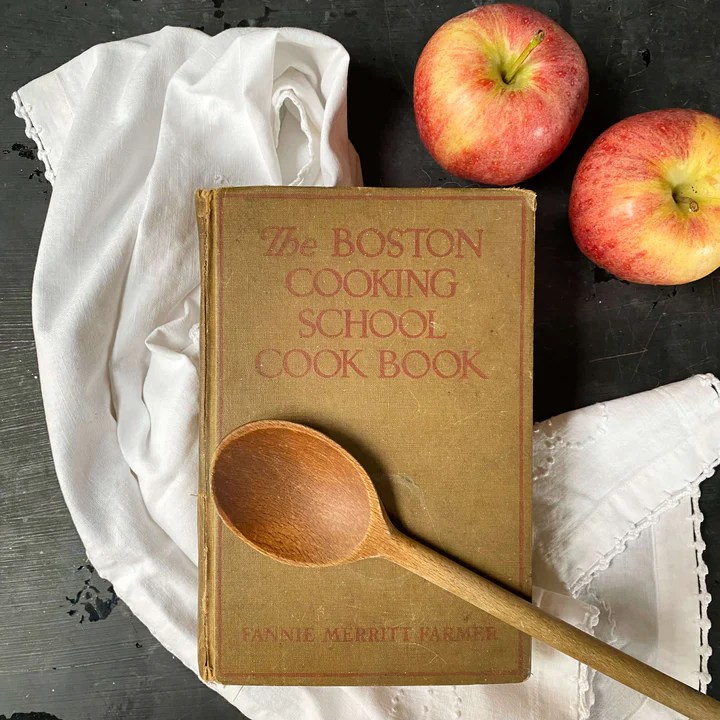
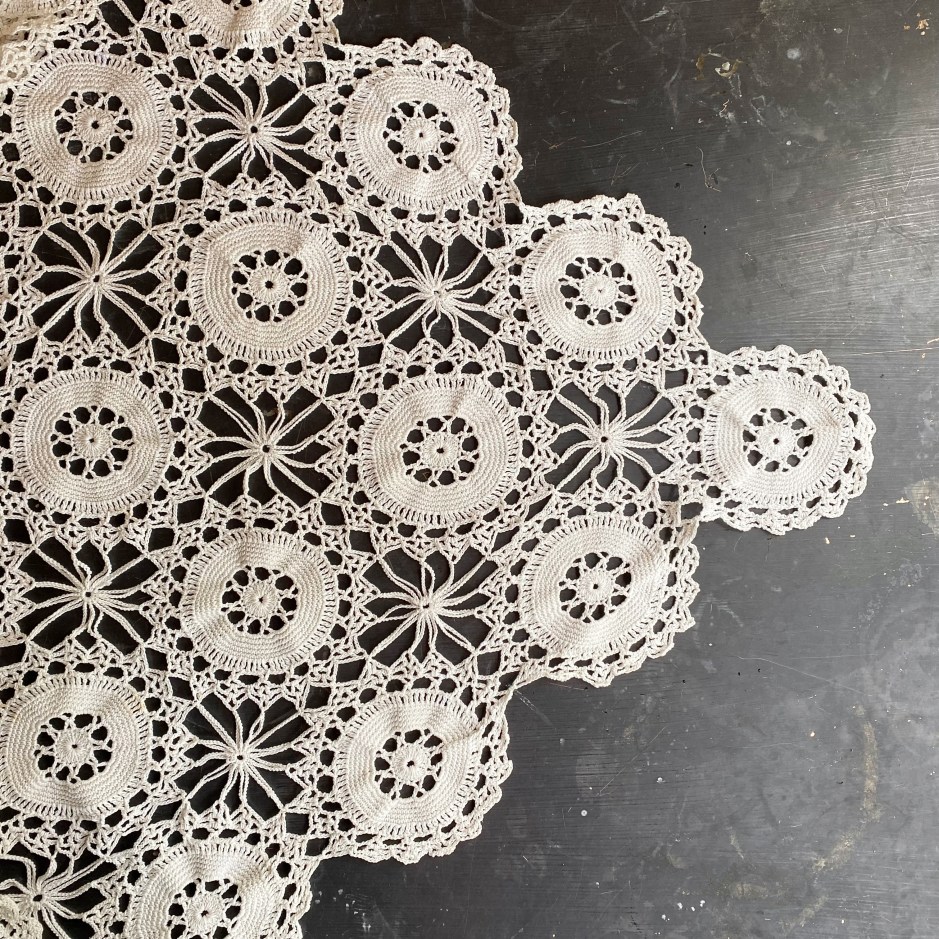
A collection of Poland’s authentic heritage recipes compiled by the Polanie Club of Minneapolis, Minnesota.Rare antique J.W. Pankhurst English ironstone dinner plates circa 1850.A porcelain enamelware floral bowl set by Kobe circa 1980sA 1930s-era packet of French postcards featuring the beautiful city of MarseillesAn antique crocheted tablecloth handmade at Ellis Island circa 1916. You might remember this one from our in-depth blog post about one woman’s Italian immigration story here.A vintage Dutch cookie tin featuring maritime art.A 1930s edition of a classic kitchen cookbook courtesy of Fannie Farmer, the woman responsible for creating our modern cooking measurement system. A vintage botanical art book featuring gorgeous illustrations of fruits, vegetables, and flowers.An antique handmade gathering basket from the early 1900sA vintage pair of cheerful yellow dinner napkins with embroidered dots fit for every season.
Interested in meeting some of the makers and collectors behind our shop’s beautiful heirlooms? Poke around each section and you’ll encounter these faces and the stories they tell about history and their place in it.
Hope you find a treasure that calls to your heart and adds an extra bit of joy to your home.
As always, the sale runs through midnight tonight and discounts are automatically applied at checkout. Thank you so much for traveling with us down these adventurous pathways of culinary history. Cheers to new inspiration and a day of happy shopping!
As soon as the pumpkins make their debut on the front porch, and the leaves shower down from the sky, and the extra-large soup pot makes its first appearance on the stovetop since early spring we know that the time is near. Our annual Vintage Kitchen shop sale is just ten days away! Mark your calendars for November 2nd, and on that day you’ll discover an extra treat – a deep discount – 40% off all items in the shop for 24 hours only.
If you are new to the blog or the shop, you might not know that we always host this sale on All Souls Day, which happens to fall on November 2nd every year. Technically a Catholic holiday, we selected All Souls Day not for its religious connection, nor its aura of spookiness given its close proximity to Halloween, but for the sheer fact that it is one of the few holidays in the calendar year that pays tribute to deceased ancestors. We wouldn’t have a shop full of wonderful heirlooms had they not traveled through other people’s lives, other people’s hands, for generations, collecting stories and memories along the way. To us, All Souls Day seems like the perfect day to celebrate vintage style.
This is our only sale of the year, so we love to make it count for shoppers looking to get a head start on holiday gifting, for decorators looking to add a bit of history to their tablescapes, and for home cooks looking for nostalgic recipes and new inspiration.
Hnadwritten notes from a rare 1920s-era cookbook.
Since no two items in the shop are ever exactly alike, no sale from year to year is ever exactly the same either. Stories float in and out of the shop every day offering glimpses into kitchen and garden life that occurred a few decades ago or a few centuries ago. Just like stories posted to the blog, every heirloom in the shop comes with its own unique tale marking its place in history.
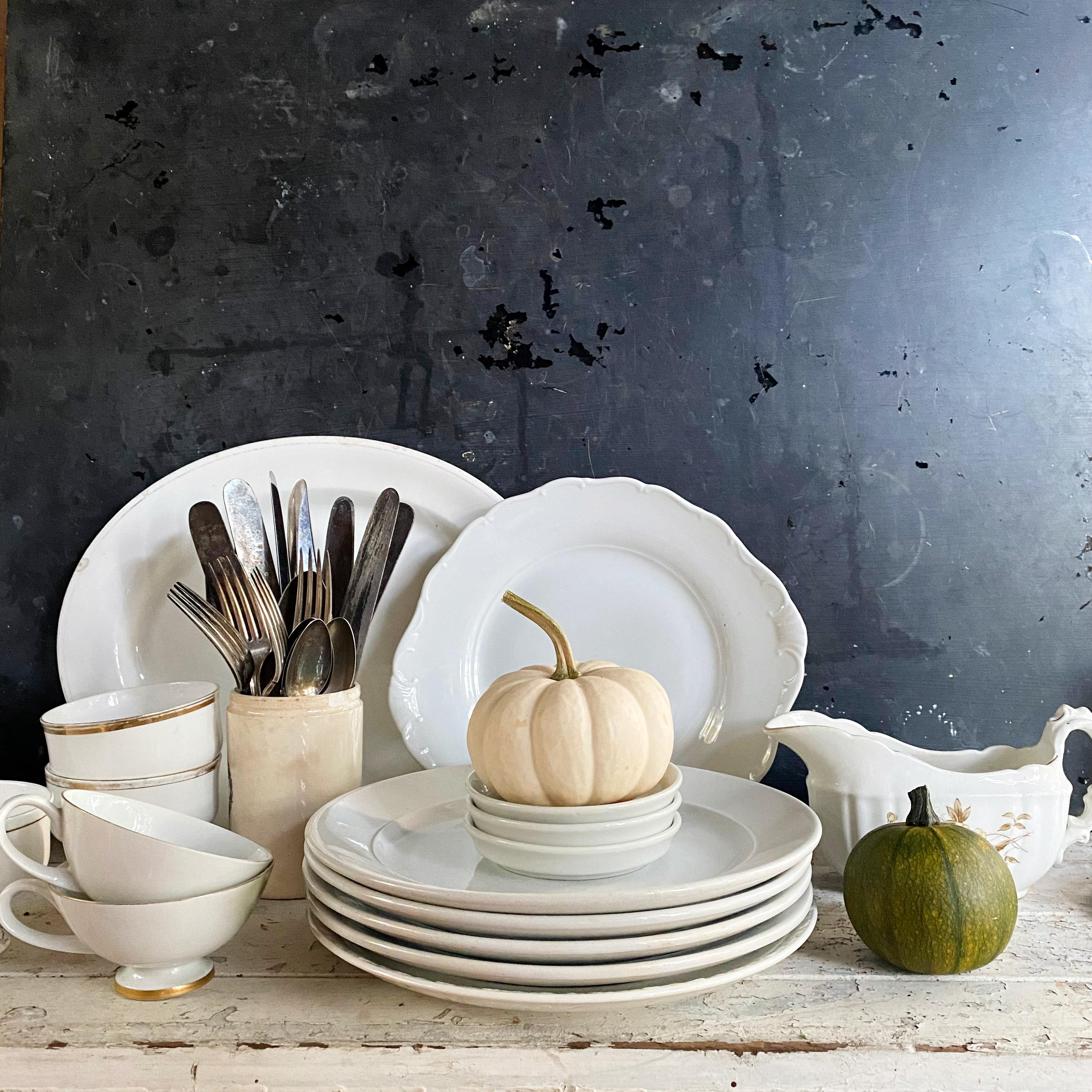
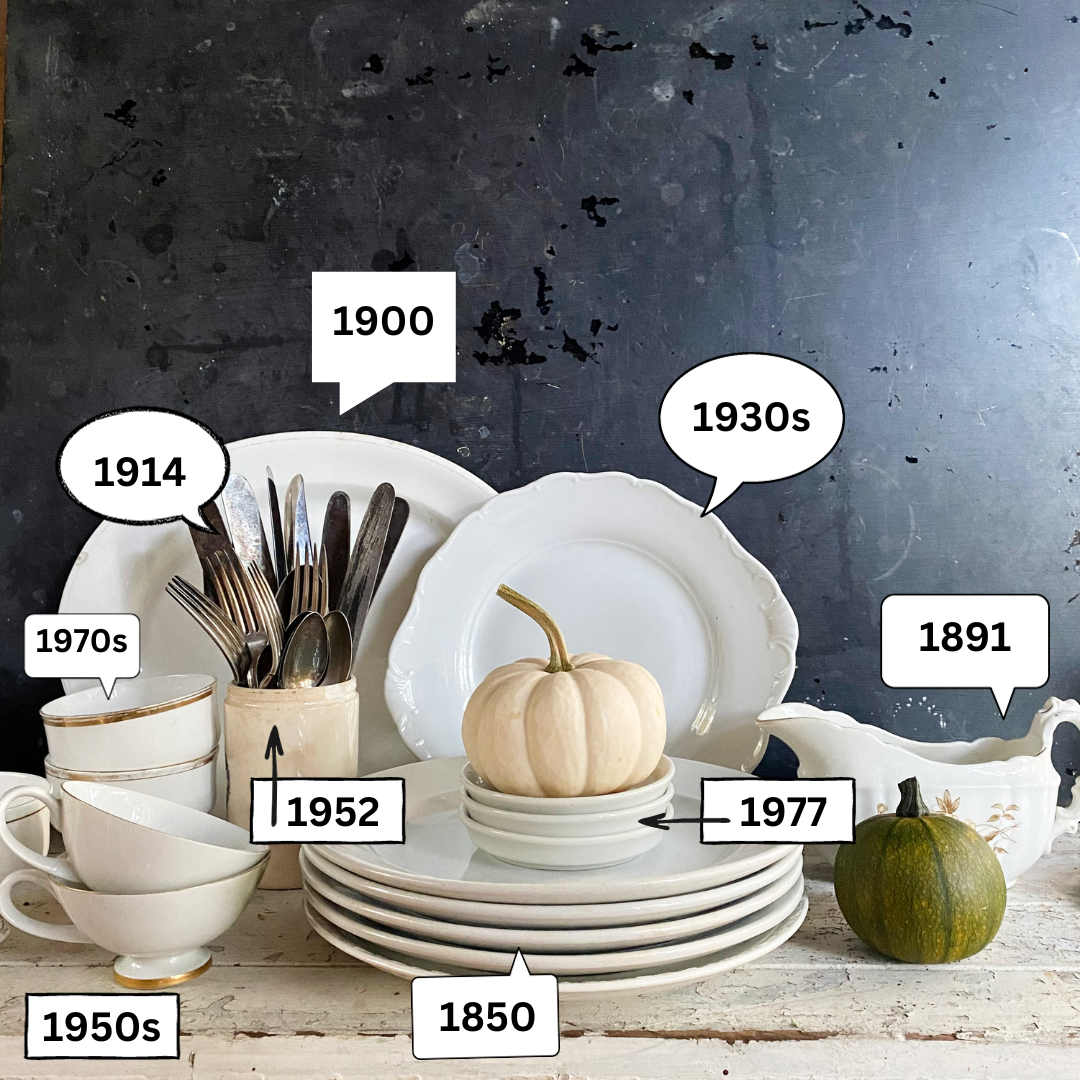
A collection of whiteware may at first look like just a bunch of plain white dishes, but each one is actually a gateway to a bit of history. Take this photo for example…
… all these pieces represent a specific time period from kitchens that span more than two centuries…
The platter made in 1900 is antique hotelware. The botanical designs on the 1977 ceramic coasters were inspired by the Tuileries gardens in Paris. The 1891 gravy boat was made in England and features handpainted flowers. The 1850 dinner plates are a rare set of English ironstone from the pottery of James William Pankhurst, which was in operation for only thirty-three years, a mere blip in England’s long-standing tradition of high-quality dishware manufacture.
Inspiration for the 1977 ceramic coasters by Toscany came from here, Jardin de Tuileries, located near the Louvre in Paris.
As the shop continuously evolves from year to year, new faces from history emerge too. You’ll always find favorite standbys in the shop – Julia Child, John James Audubon,James Beard, Emily Post, the New York Times cookbooks, and of course all the best-loved Betty Crocker books, but each year we discover new faces from history too. This year, Carol, Daphne, Wadeeha, Agnes, Alice, Milt, Joyce, Andre and Dorothea came to the shop…
Clockwise from top left: Carol Cutler, Daphne Du Maurier, Wadeeha Atiyeh, Milt Jackson, Dorothea Barlowe, Andre Simon, Joyce Chan, Agnes Baldwin Alexander, Alice Y.
They told stories of art, literature, cooking, collecting, music, hospitality, immigration and gardening. Andre was a French wine expert. Alice was a Texas baker, a professional cake decorator, and an enthusiastic collector of cookie cutters. Dorothea was one of the most prolific nature illustrators of the 20th century, and Milt was an influential musician of the 1950s jazz scene.
Listen to the midcentury musicians featured in this book over on our playlist here.
That’s the joy of collecting vintage and antique kitchenware, isn’t it? Objects and stories intertwined together, forever making and creating memories old and new. I hope at this year’s sale you’ll find something that captures your heart. Maybe you’ll be the next caretaker of this antique 1830s-era Staffordshire bowl – the oldest antique that has come to the shop so far…
Or maybe you’ll find some inspiration among the handwritten notes tucked inside this vintage 1960s gardening book.…
Perhaps the traditional recipes of Mrs. Balbir Singh, also known as the Julia Child of India, will pique your interest…
Or maybe you’ll relate to the story of the Moses Hirsch family, creators of the 20th-century American Family Scale brand, who experienced the tricky rollercoaster ride of running a business among fierce competition, dramatic world events and kitchen modernization…
Or perhaps these two 1950s saddle tan Samsonite cases will call to your traveling spirit. Maybe they will become your dependable companions on jaunts to find the best croissants in Paris, the most delicious Spanakopita in Greece, or the most beautiful luau in Hawaii. Adventures big and small await with these two.
The sale begins at 12:01am (EST) on Thursday, November 2nd, 2023 and runs until 11:59pm (EST) that same day. All items in the shop will automatically receive the 40% discount at checkout, so there is no need to fuss with coupon codes or discount names.
Vintage cookbooks in the shop span the 19th and 20th centuries.
While you wait for sale day to arrive, we encourage you to use the wishlist feature on our site if you have multiple items that have caught your eye. Just click on the heart underneath each listing title and it will automatically add the item to your favorites list where you can then add them directly to your cart when you are ready to checkout.
New vintage and antique heirlooms continue to be added to the shop daily, so stop by for fresh finds leading all the way up to the sale. And, as always, if you are looking for something that we no longer have in stock, please send us a message. We’ll be happy to add your name and needs to our waitlist.
Having said that, I hope on this year’s sale day you will find something truly magical that makes your heart sing with joy and your space sparkle with delight.
Cheers to all the old souls who inspired our sale. And to all the cherished items that our ancestors have left for us to enjoy. Happy shopping!
Before summer ends officially on September 23rd, I didn’t want the season to go by without a garden update on how the seedlings fared once they left the greenhouse in spring. Given the late date, this is sort of like a summer wrap-up post told mostly in images – a view of our New England garden from June to mid-September. Don’t miss the real garden surprise (visitor) all the way at the end!
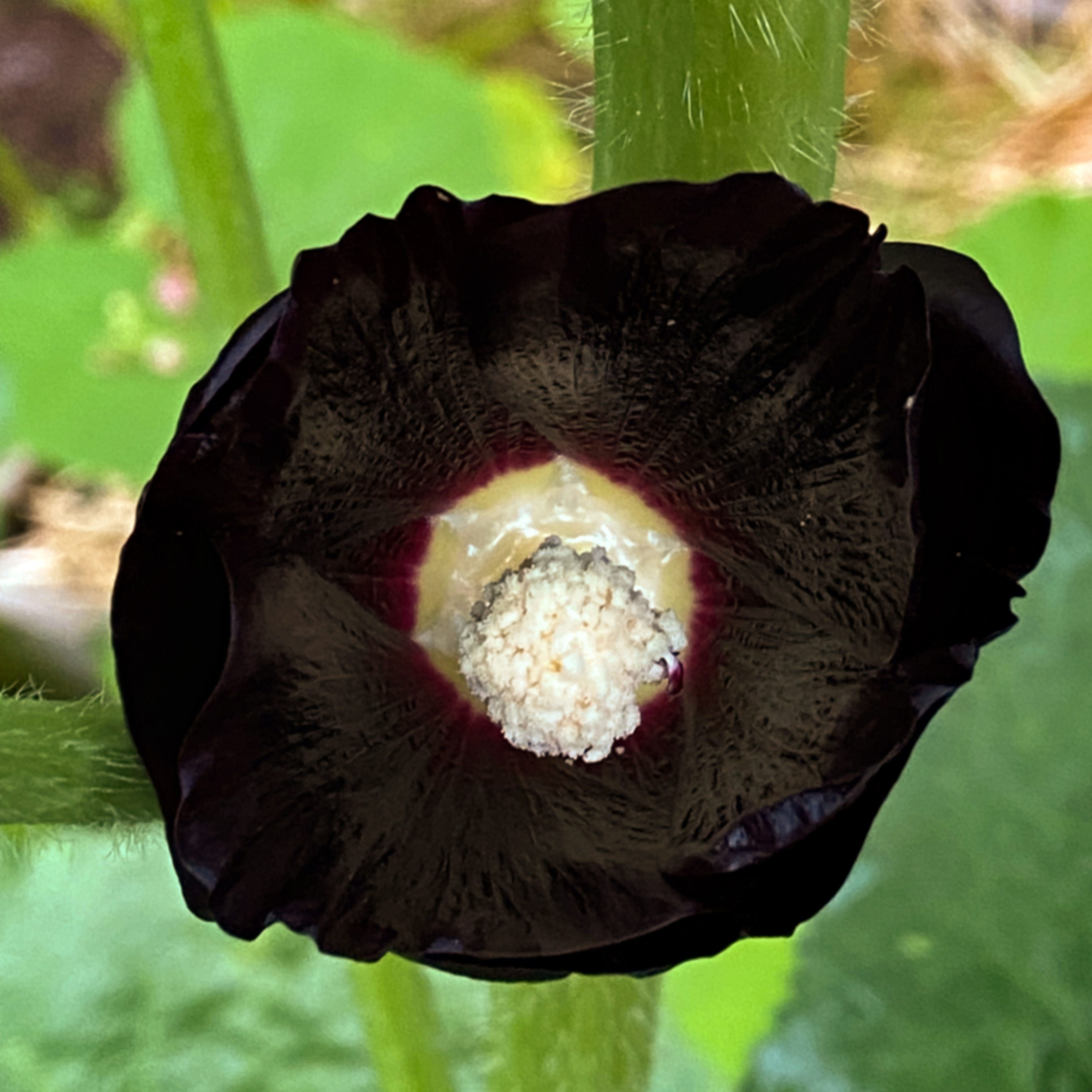
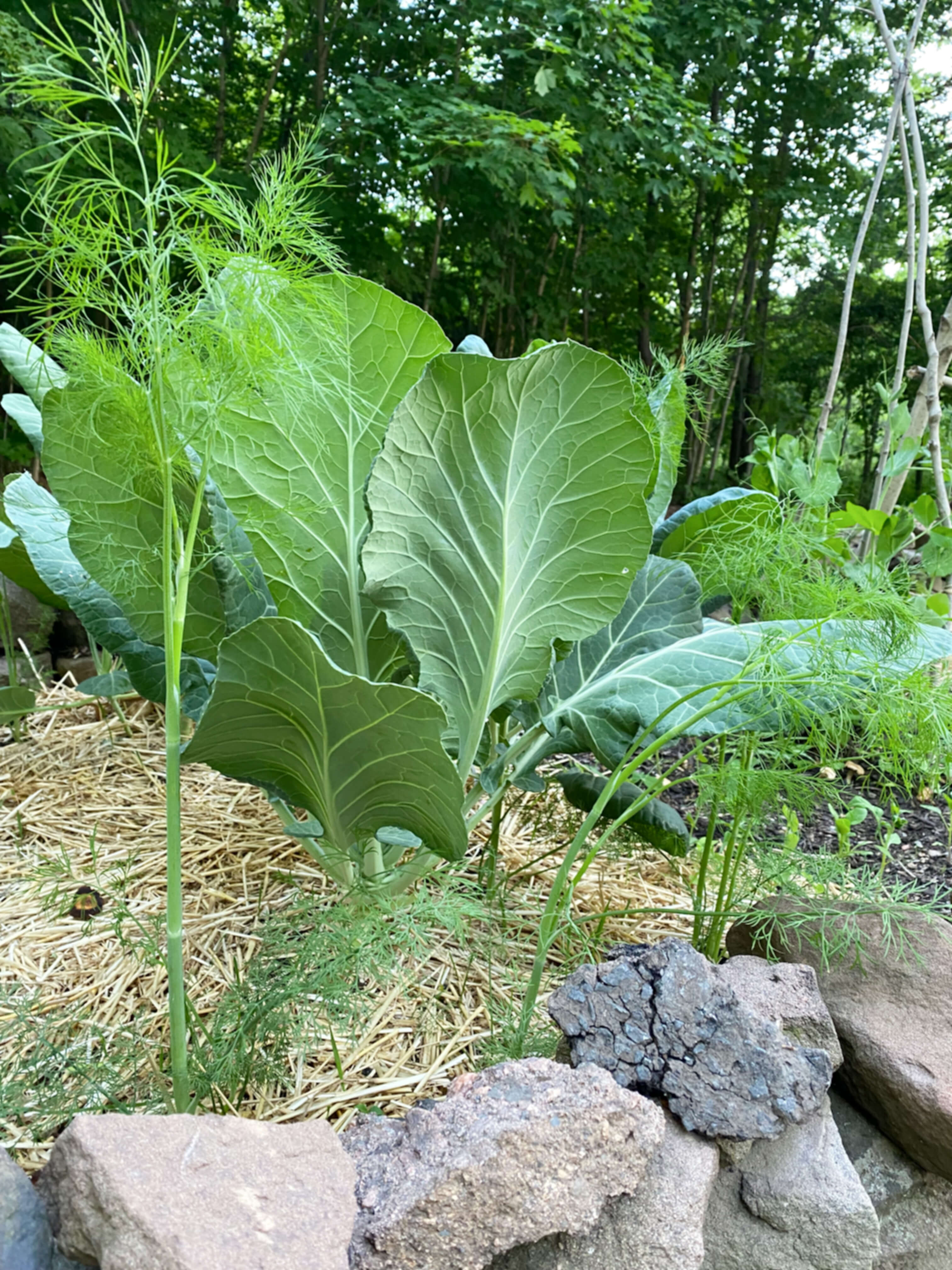
Heirloom Flower: The Watchman Hollyhock grown from seed started last year.The Watchman Hollyhock starts out with a bloom as black as night but slowly turns a deep purple the longer it says on the stalk.From black to eggplant to deep plums and bright purples – the hollyhock came to symbolize the enture garden as it grew and changed over the summer months. Collard greens at the start of summer.Broccoli raab Brussels Sprouts with a companion planting of dill and volunteer tomatoes – stowaways from last year’s crop. French MarigoldsFirst firefly!
OUR 2023 BEST GROWERS
This year, we were most successful in growing the following list from seed. Everything here but the pole beans, zucchini, and peas were started in the greenhouse in winter or early spring. The rest were started from seeds sown directly in the raised beds. Further down in the post, you’ll find the list of flowers and vegetables that we struggled with along with the various reasons. Hopefully, other New England gardeners will be able to share their insights as to why or what may have caused the challenges. But for now, here is our list of winners this year…
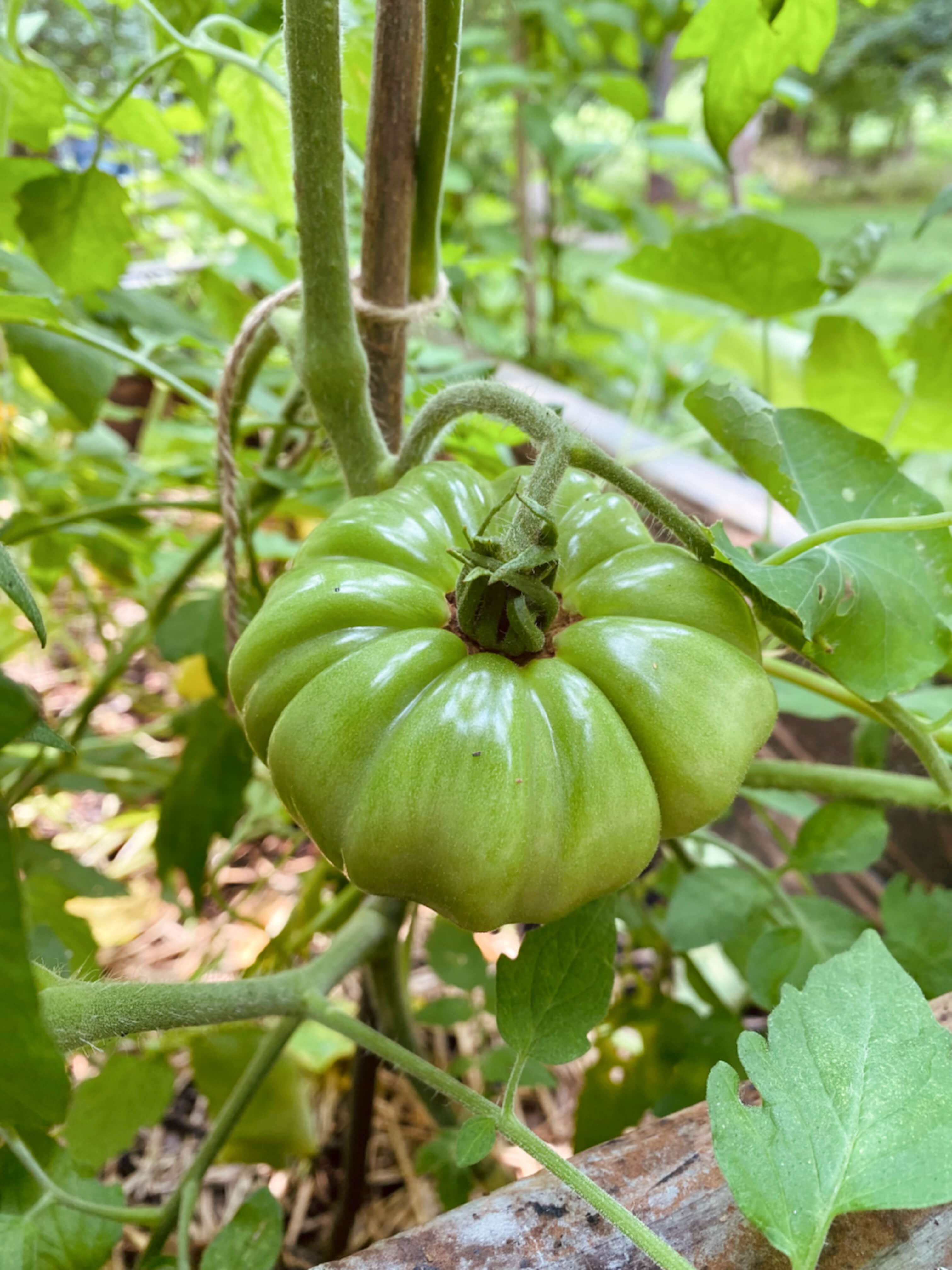
Tomatoes (Brandywine, Sungold Cherry, Sweetie Pole Cherry and Pineapple)
Cucumbers (Marketmore)
Collard Greens (Georgia Southern)
Hot Peppers: Lemon Jalapenos, Santaka Chile, and Padron Peppers
Rapini
Pole Beans (Blue Lake)
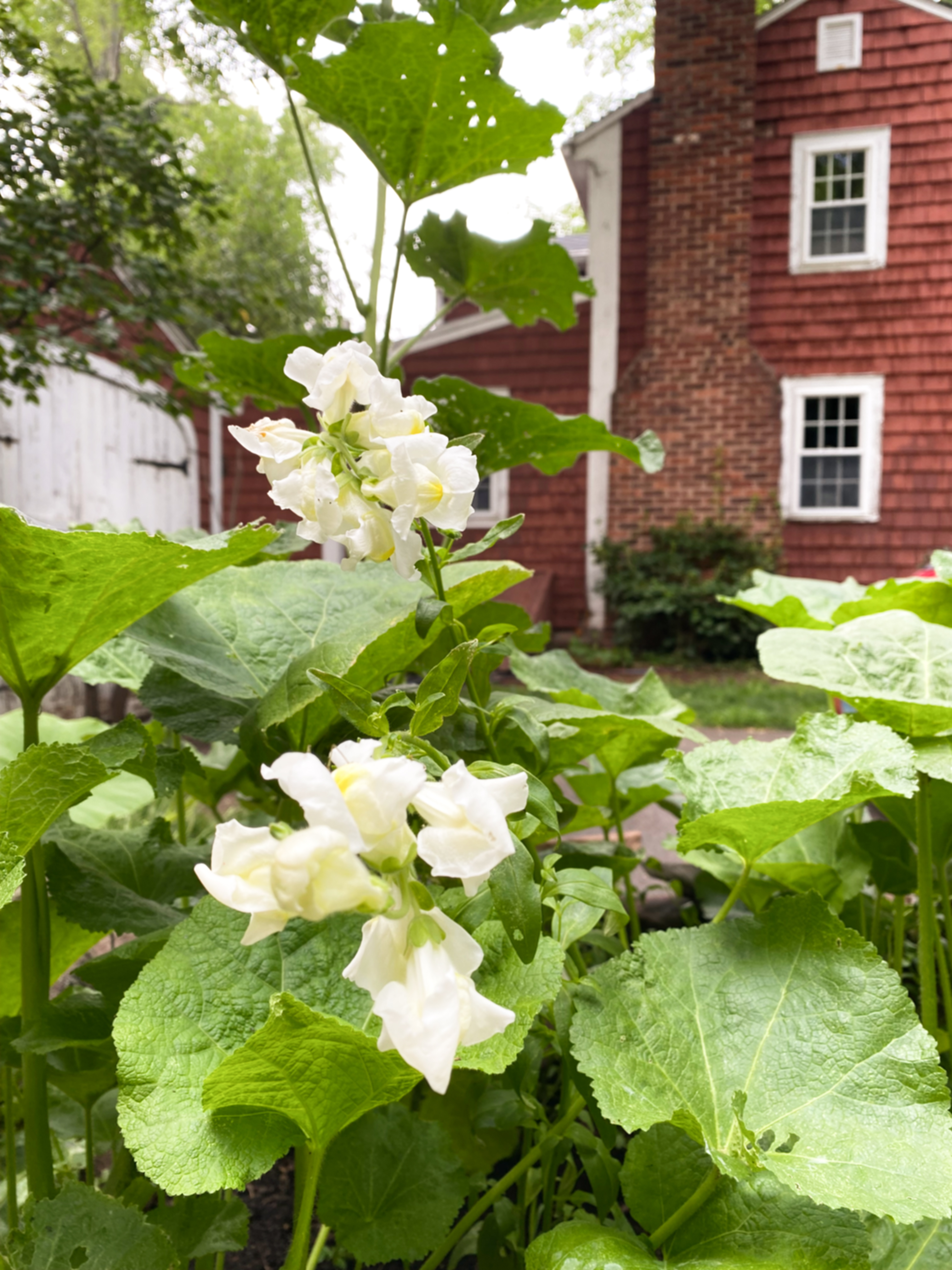
Flowers: Foxglove, Snapdragons, Hollyhocks, Mexican Sunflowers, French Marigolds, Zinnia, Geraniums
Black Beauty Zucchini (partially successful, more on that further on in the post).
Cucamelons
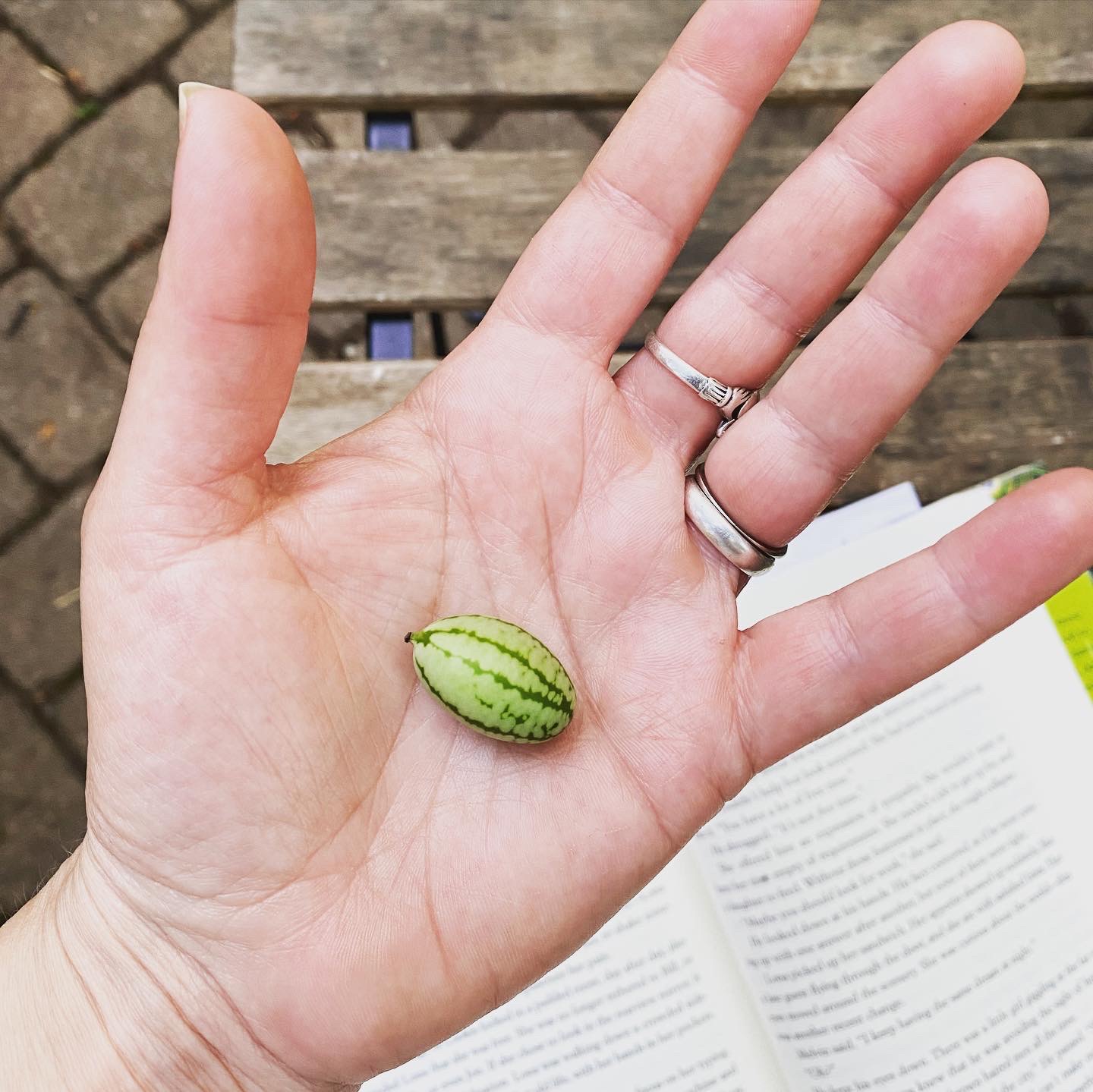
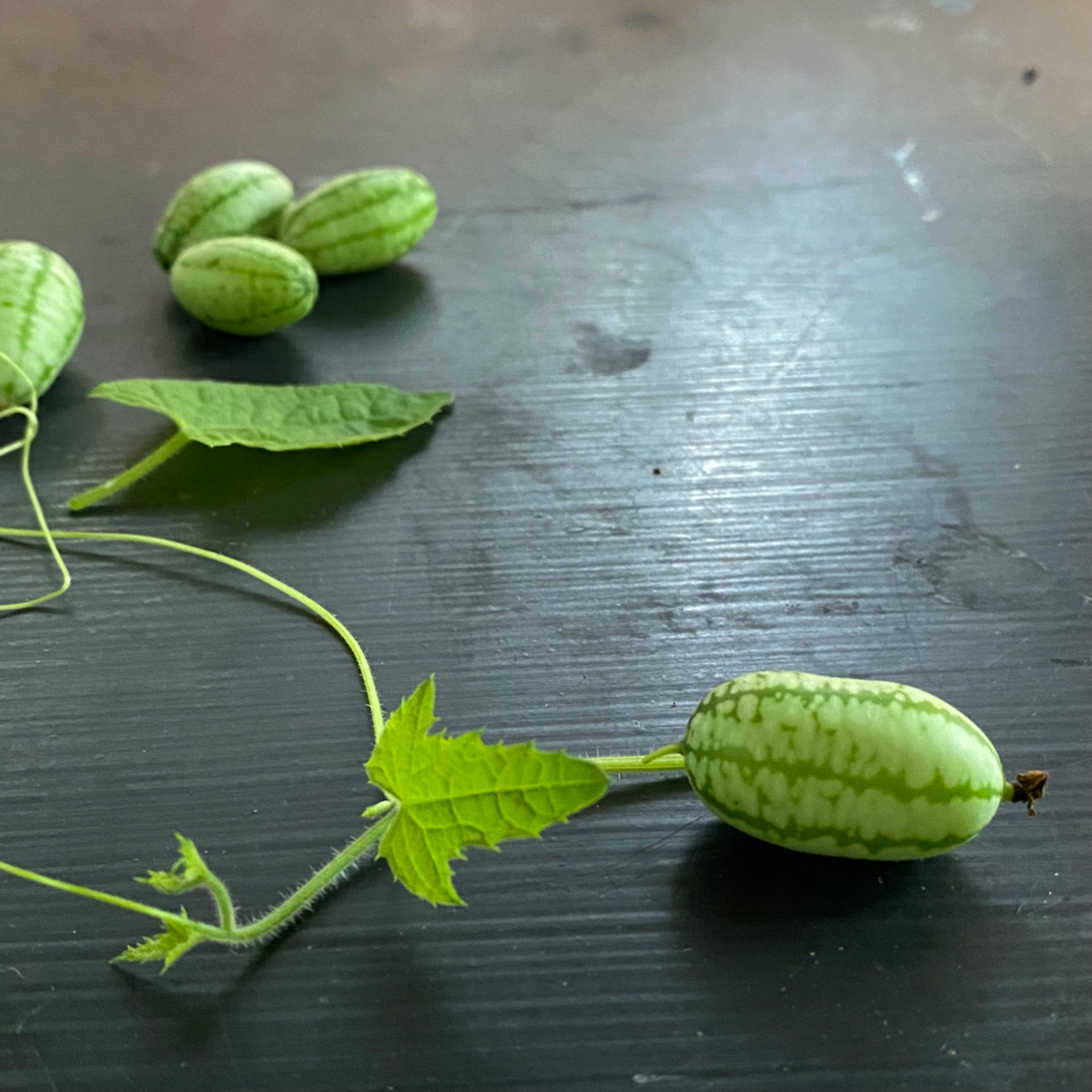
The cucamelons were one of our most enthusiastic growers this year. If you are unfamiliar with these little charmers, they are native to Mexico and look like miniature watermelons but taste like lemony cucumbers.
Our cucamelon plant literally vined its way to double in size in less than a month. At mid-September, it’s now over 9′ feet tall and still climbing. Its current destination is the upper echelons of the crab apple tree above it.Cucamelon on the vine. They dangle like plump pearl earrings when they are ready to be picked.Cucamelons are tiny (about 1 inch in length) but full of fresh summer flavor. We loved the cucamelons so much that they inspired a new 1750 House summer cocktail – the Cucamelon Gin and Tonic.
So much new information has been learned about how to proceed this fall. What worked, what didn’t, what we can improve on and what we can forget, what we can nurture now and what we can save for another day or another year. A lot of surprises ensued. What worked great last year didn’t necessarily work as well this year. One thing that drastically improved though was the soil (thanks to a year of composting and leaf mold, and we didn’t overwater thanks to the miracle moisture meter reader. The garden was definitely much more lush and vibrant and full this year.
SnapdragonsFirst Pineapple tomato!Black-Eyed Susan Vine.
One of the surprises of the season were the Black-Eyed Susan vines. We almost gave up on these guys completely since they grew so slowly for so long. We figured they weren’t happy in the bed or the inground mound where we planted them. It took five months from seed to first flower (and our forgetting about them), but once they got to the bloom stage they really took off and haven’t stopped since. Now they are happily climbing all over the sides of the rock-walled raised beds and are producing lots of pretty little flowers. I learned from our local nursery, that they have the best luck propagating these flowers from clippings, so we are going to try that method this fall.
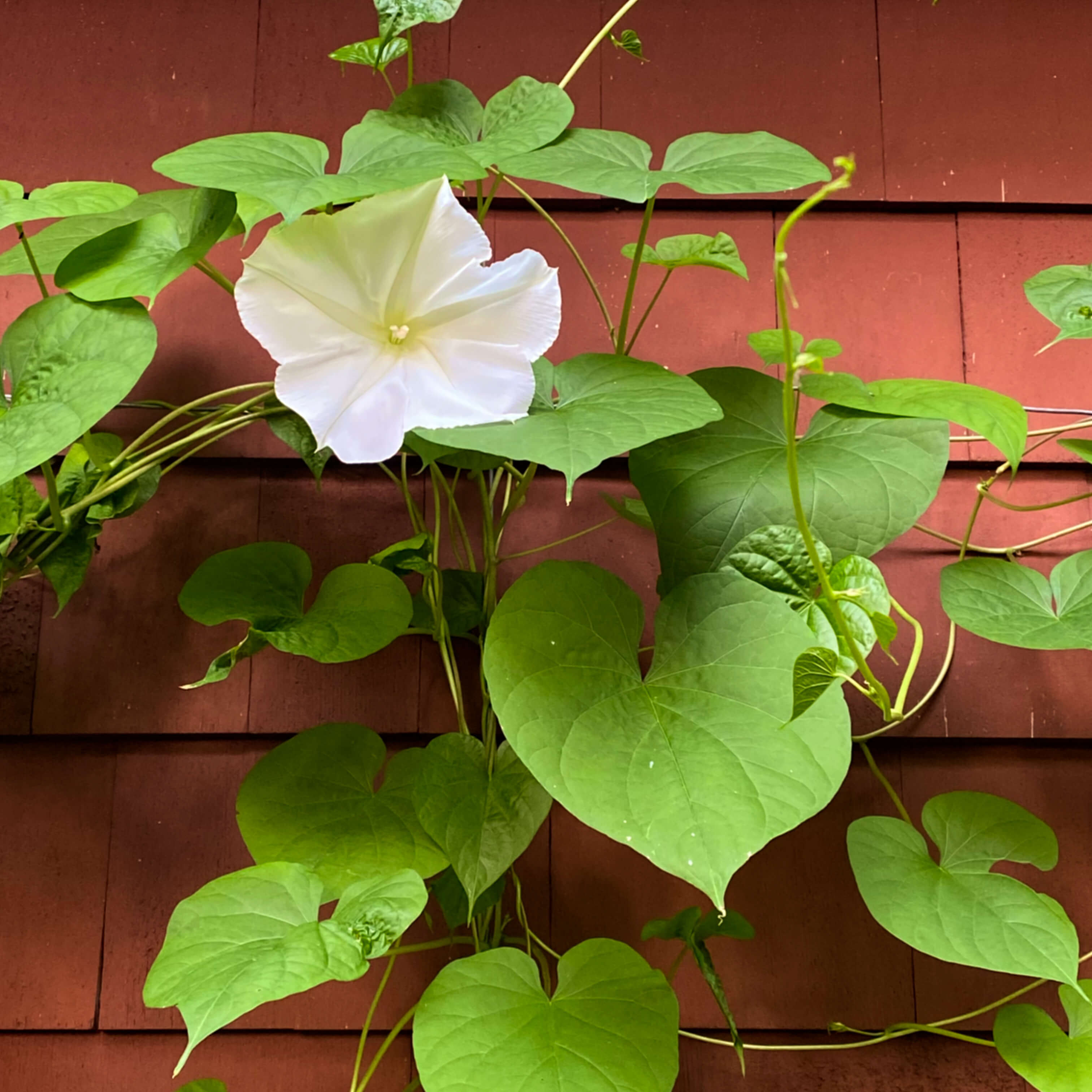
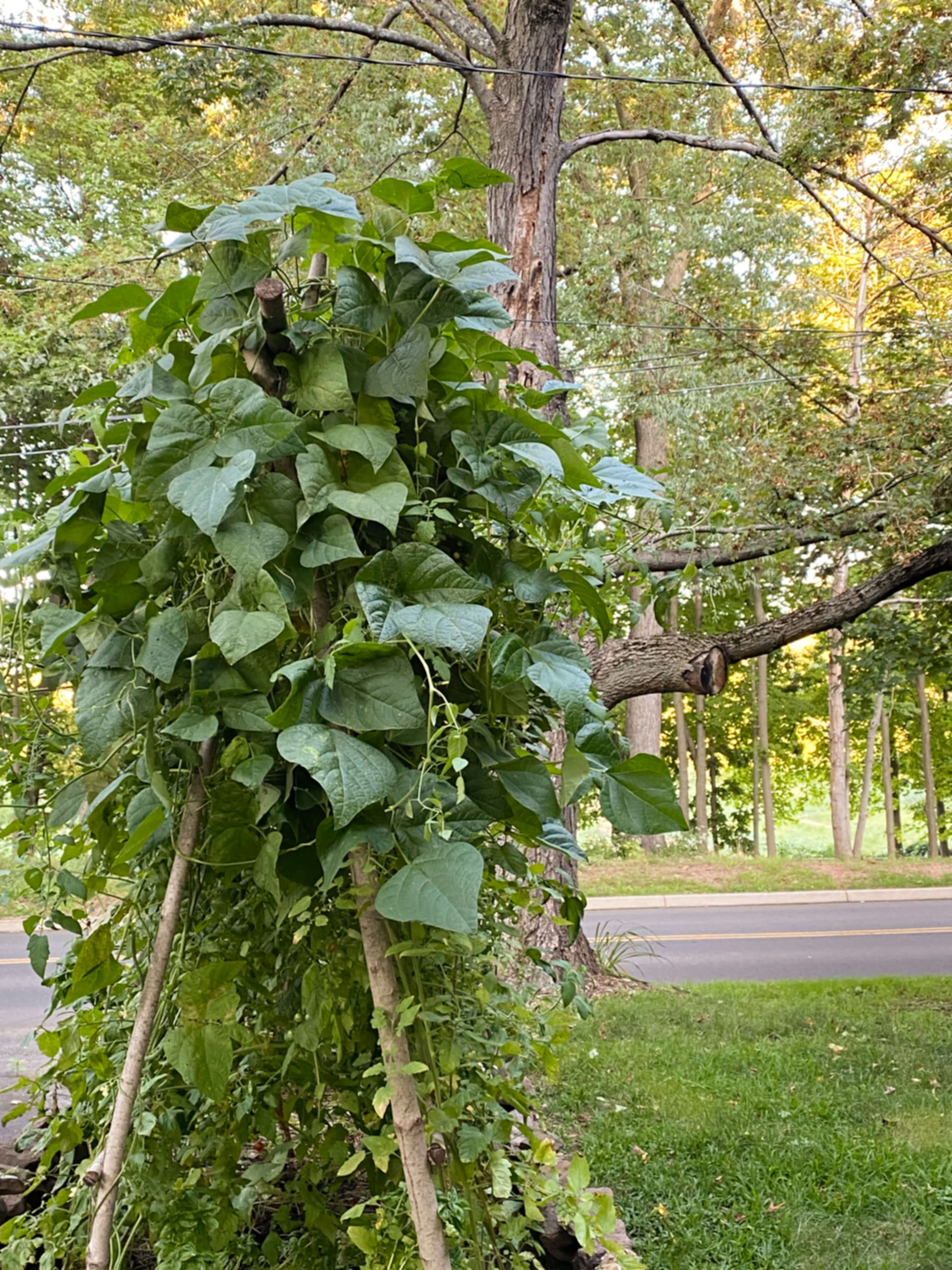
A sparrow nest in our bird boxTomatoes and pole beans climbing their way to the sky. This top rung of the trellis is 9″feet tall. We have to get on a ladder to pick the top tier!Moonflower vines.
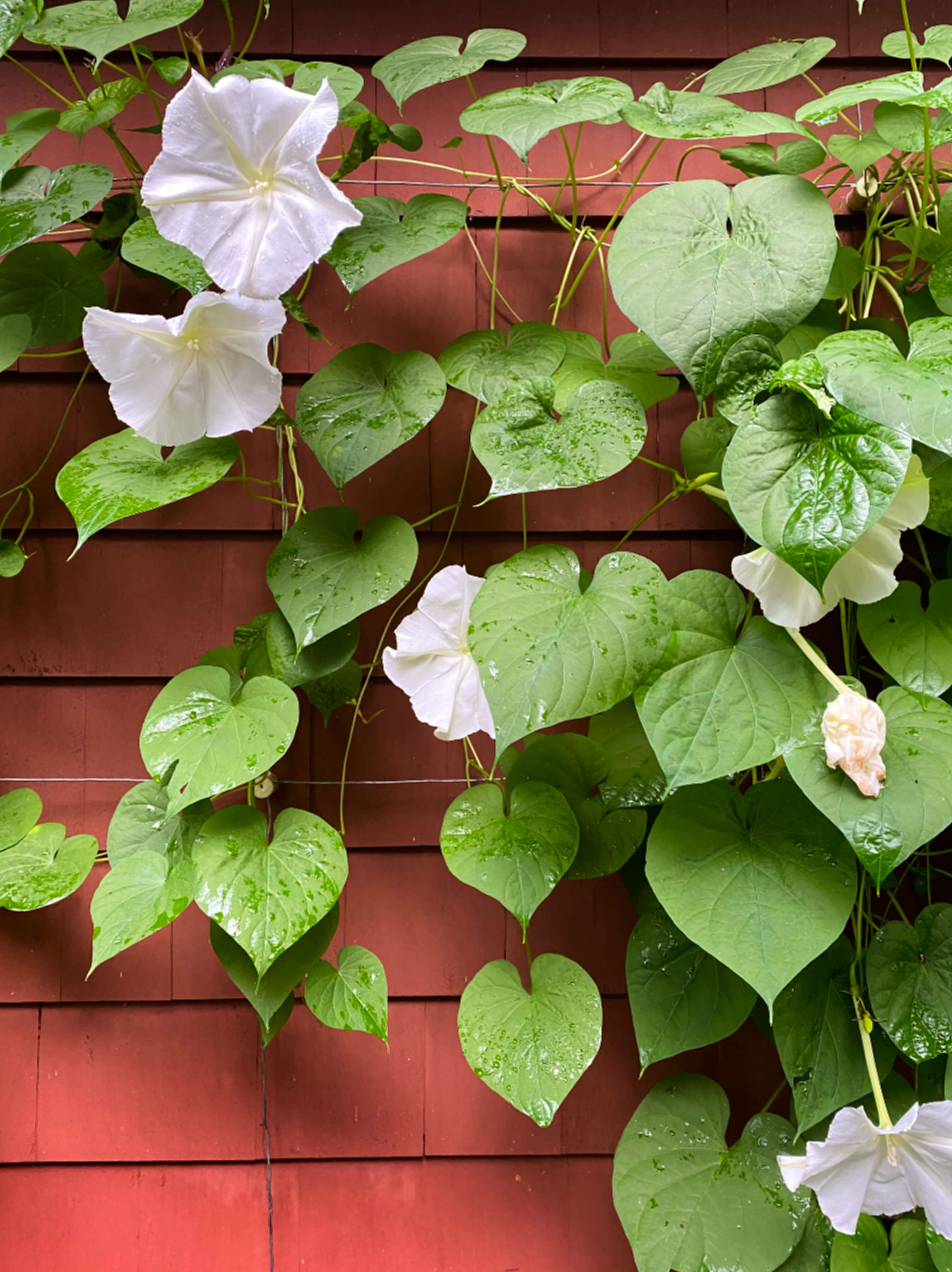
The moonflower vines were a placeholder and an experiment to see if we liked a living wall on one part of the back of 1750 House. As it turns out we do! Next year, that wall will be covered in English ivy, which has already been planted at the base of the moonflowers. The moonflower seedlings were purchased from our local nursery, but we will definitely grow them again somewhere else in the garden next spring, this time from seed. They are fast growers and produce big beautiful white flowers, the size of your hand.
Our Biggest 2023 Garden Challenge: SLUGS
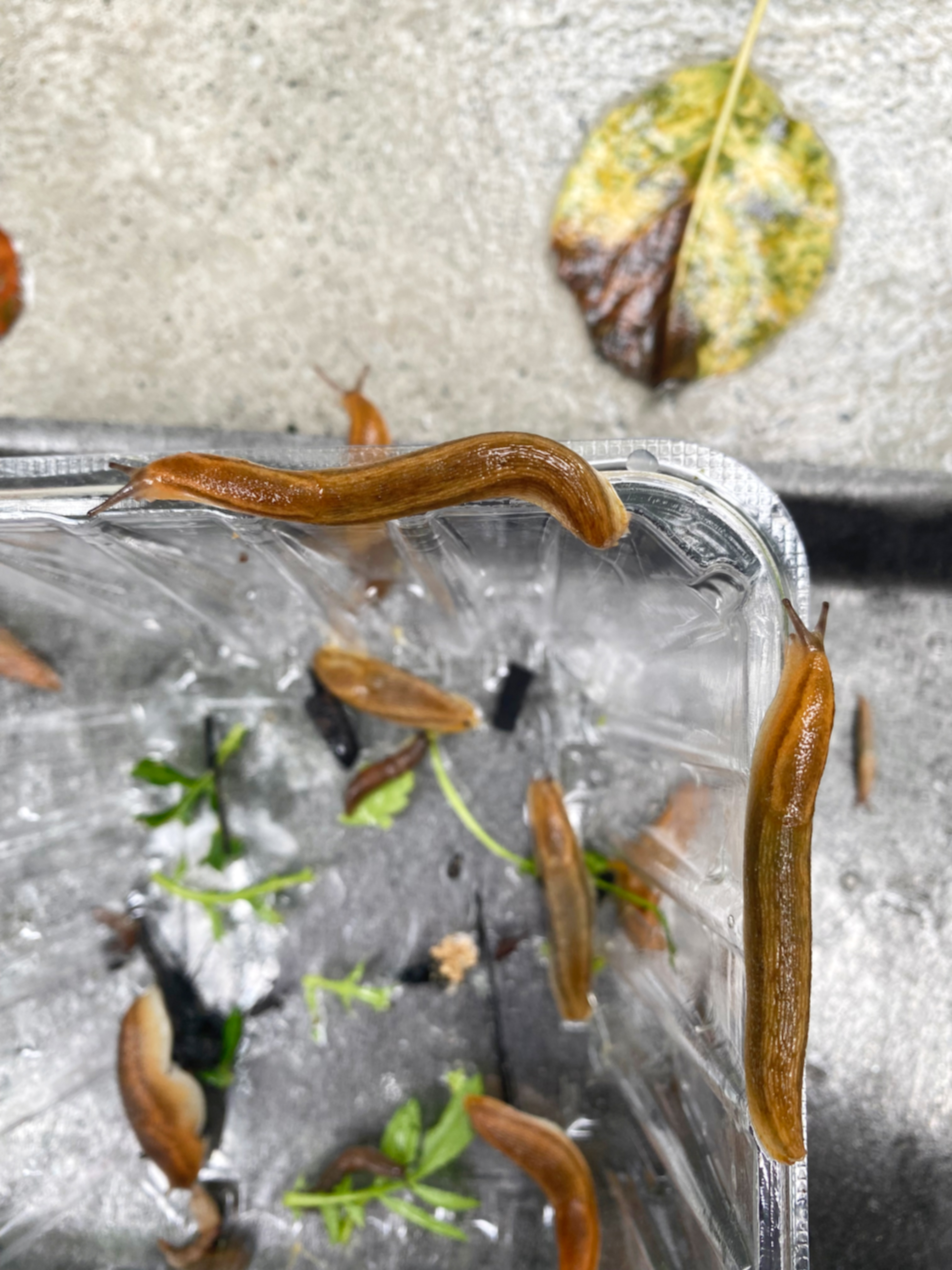
Oh the slugs. They slithered, they slimed, they feasted their way through the broccoli patch, the herb garden, the marigolds, the nasturtiums, the lettuce, the pepper plants (leaves only), the colleus and the cosmos. We tried all sorts of ways to deter them – sand barriers, chili powder sprinklings, tin foil, beer traps, nightly hand-picking.
Slugs aplenty.
We were most successful with the beer traps – sinking a small container in the garden soil filled with about 1/4 cup of beer. The beer attracts them to take a swim and then they depart this life in one big vat of boozy revelry. The other thing that worked well was handpicking (we relocated all the slugs to the woods each evening to carry on life there), but this was a never-ending task – every single one we picked was replaced with a new slug the next night. Plus, this hand-picking was a pretty unappealing and slimy exercise. Our buckets each night were filled with at least 30-40 slugs. Interestingly, they left all other plants in the garden alone, which is why we had such great success with everything else. Next year, we are going to try growing all of these feast-worthy plants in the greenhouse over the summer to hopefully keep them slug-proof.
Things That Didn’t Grow Well in the Garden This Year…
Zucchini (Black Beauty) – while they did grow big and lovely and flowered every day pretty much throughout the summer, two plants only produced three zucchini. Three was a definite improvement from last year’s crop which was zero, so we are moving in the right direction but this was also the second year they eventually became overcome by powdery mildew, even though we tried two different treatments: baking soda and neem oil
French Melons (powdery mildew victim #2)
All the herbs – parsley, basil, chives, sage, and thyme (The work of the mighty slugs! The only herb they left alone was the rosemary).
Cosmos – our second year in a row trying to grow these. (They produce a few flowers but then the plants dry up and die off)
Bush Beans – we rotated them to a different bed this year underneath the tomato plants and they did not like it. Maybe it was not enough sun for them once the tomatoes really started growing.
Broccoli (DiCiceo) – we harvested one broccoli head harvest before the slugs arrived for the season
Straw mulch – The intention was to use this as mulch to help with the slug situation but, as you can see from the list above, it had no effect and turned out to look really messy in the garden. Aesthetically it wasn’t our favorite.
Sunflowers – also our second year trying to grow these. Starting them in the greenhouse this year helped but they were weak and spindly and mostly fell over before July started.
Back to happier stories…
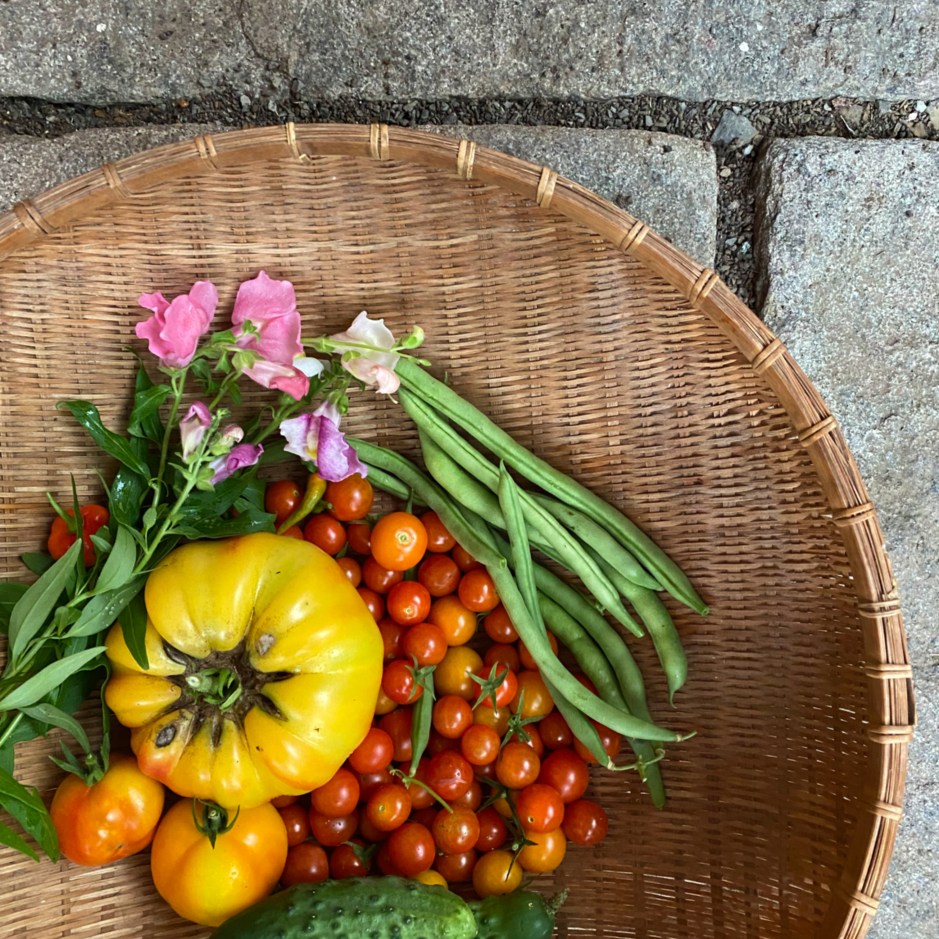
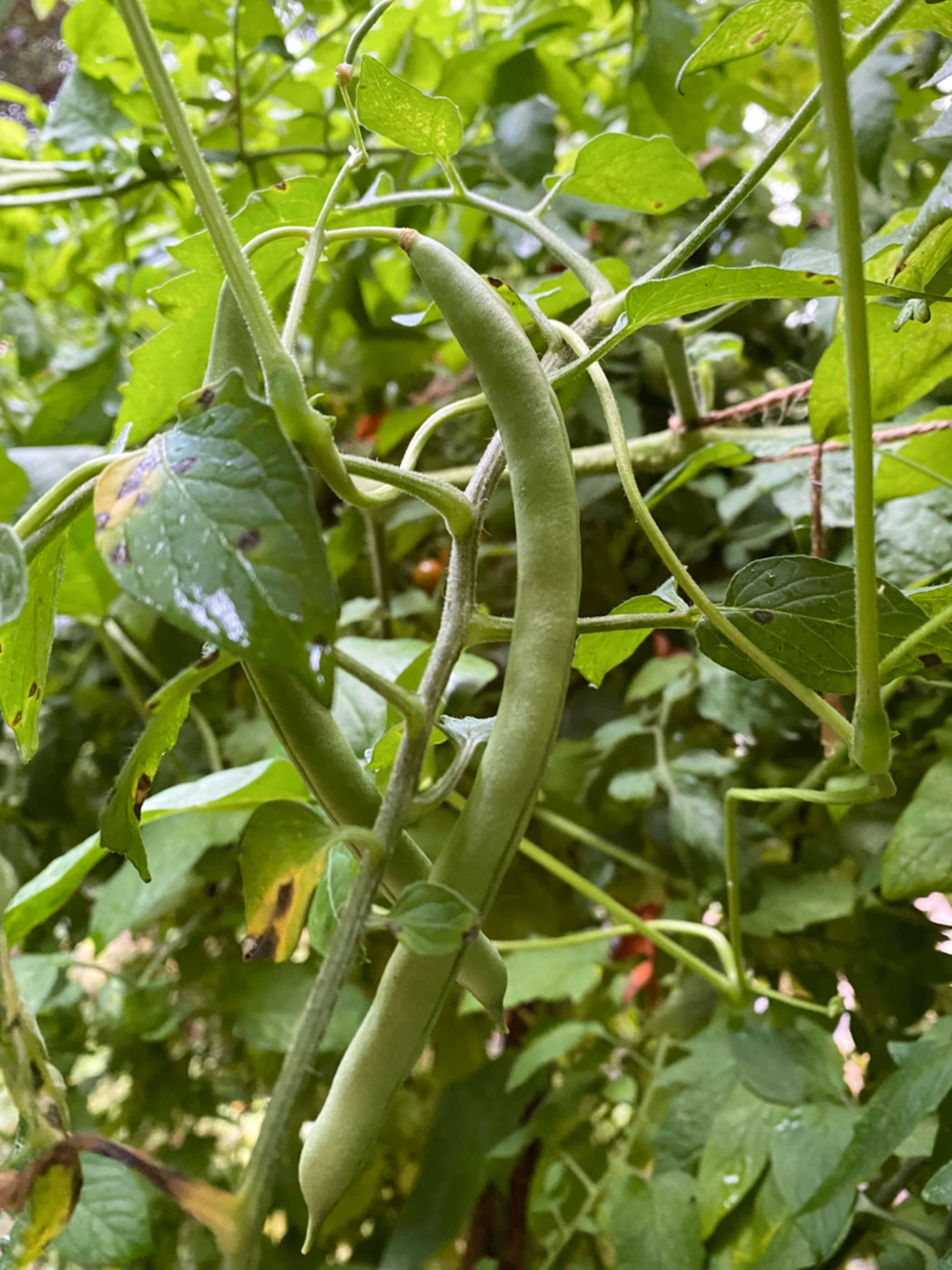
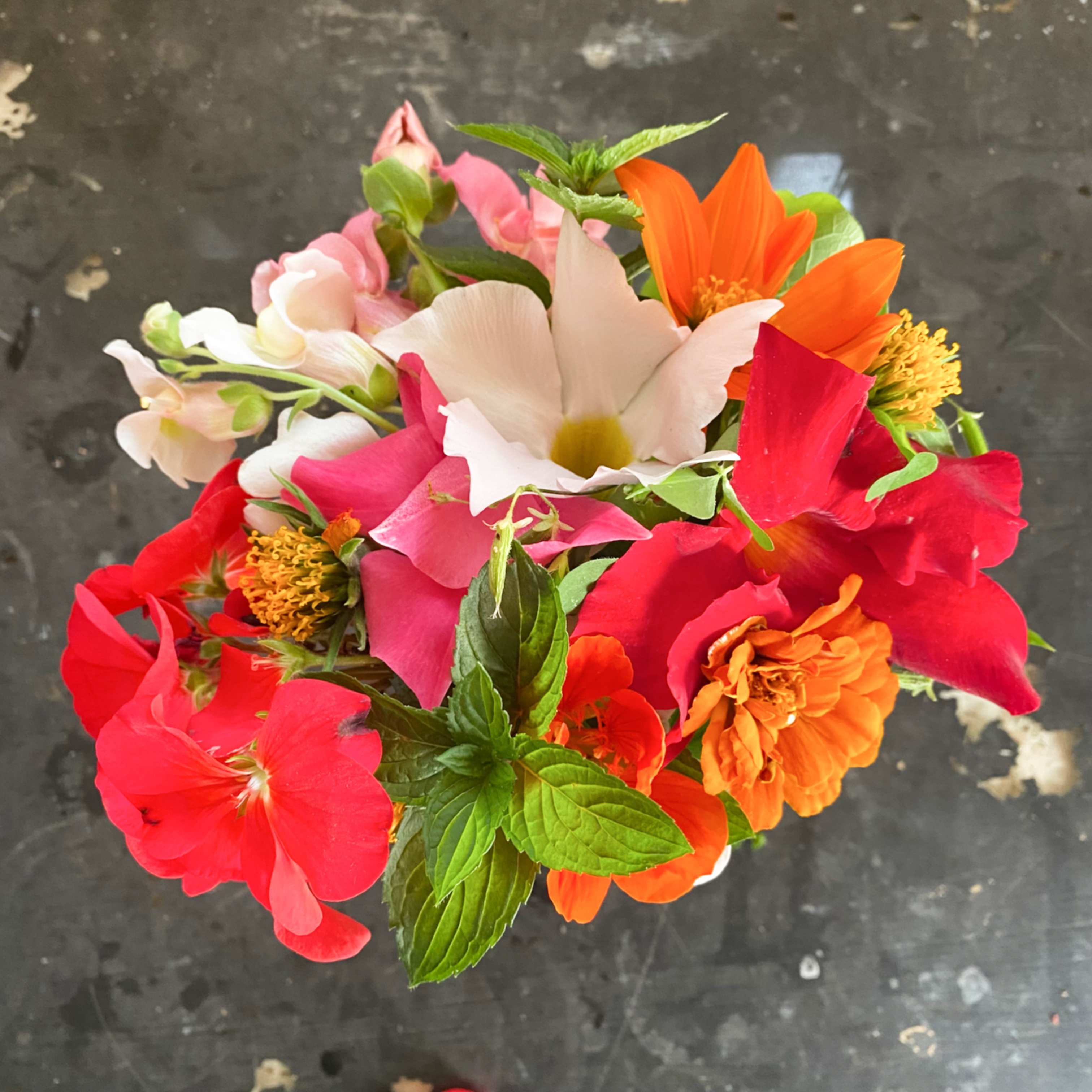
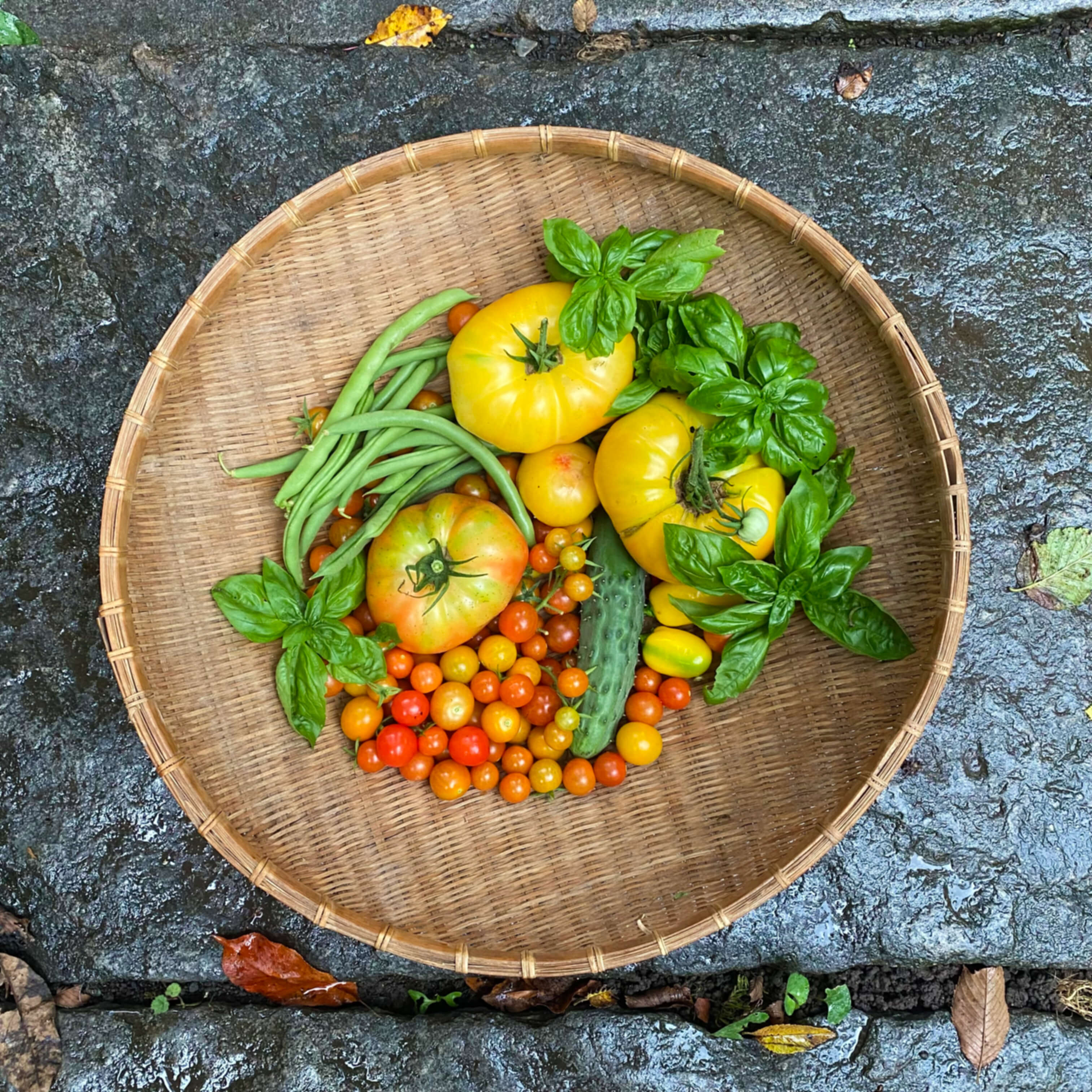
Cucumbers growing like crazy!Our first big pineapple tomato weighing in at 1.7lbsThe big goal for 2023 was to create a pollinator-friendly garden. Success! Pole beans and cucumbers joined the weekly gathering basket in August.This year, the tomato’s best friend was the pole bean. Both still growing strong, they’ve become their own support system at the top tier keeping everything nice and tidy all on their own. Pole beans!Impromptu bouquet: mint, Mandevilla, marigolds, Mexican sunflowers, snapdragonsThe first time the gathering basket weighed over 4 lbs with all its produce was the first of September.One nasturtium plant managed to outsmart the slugs. How? We aren’t exactly sure, but for some reason, they left this one alone.
All things considered, this year’s garden was definitely an improvement upon last year’s just as far as soil health, pollination count and bird and frog activity. Last year we had more voles and chipmunks but this year we had more slugs. Last year we had more heat but this year more humidity. Last year we had barely any flowers, and this year, we enjoyed ample bouquets all summer long. That’s the joy of gardening though I think. It’s always changing. Always engaging us.
Although the temperatures are still in the 80s, and there are still a couple weeks of summer left to go, Autumn is definitely beginning to cast her spell over the garden. Our first pumpkin just formed, the paradise apples are falling and our first sighting of a Spotted Orbweaver joined us overhead on the patio chandelier one night at dinner. Fall is coming.
The pumpkin vines are making “S” curves all over the sideyard.The first Jarrahdale pumpkin! Paradise apple
Spiders, slugs, birds, bees, and Juna aren’t the only things that came to visit the garden this summer. Recently, we installed an outdoor trail camera to see what sort of wildlife came to visit in the night. Our most frequent sightings so far have been the wild rabbits (hop over to Instagram to see our favorite little bunnies zooming around the yard), along with the occasional raccoon, and opossum, two coyotes and a pine marten not to mention a bevy of early morning birds and squirrels. But our most dramatic guest so far is this guy…
A bobcat! He passed right through the yard with no incidents and thank goodness no bunnies. It’s pretty magical that such an extensive amount of wildlife lives while we sleep, carries on while we dream, travels about while we stay put for hours on end. We can’t wait to see what shows up this winter.
Last, but not least in this highlight of summer pos , we have two exciting sneak peeks of two very big 1750 House outdoor projects about to be unveiled soon…
Sneak peak #1Sneak peek #2
We can’t wait to share them with you! Stay tuned!
In the meantime, cheers to summer 2023, to all we learned and all we reveled in, and to Lady Nature for continuing to be our biggest mentor and our guide. We’d love to hear how your gardening adventures fared this year. Please tell us all about it in the comments section. It’s so important to share the highs and lows, regardless of what part of the world we live in so that we can all learn together. The more gardening joy the better.
When Samuel Gottscho began his professional photography career at the age of 50, it was a leap of faith and a vast change from the garment industry salesman job he had known all his adult life. By this point, as he entered into his fifth decade, he was a husband and a father with a young daughter to raise and a long-time reputation in the industry that provided a steady paycheck and reliable consistency. But after twenty-five years of a job that both he and his father did before him, Samuel’s heart was no longer wrapped up in the lace and the fabric and the embroidery that he peddled around the city. Instead, it was his camera – his weekend hobby since the age of 20, his faithful muse, his constant companion – that began nudging him to move in another direction away from the professional life he had always known.
The Rochester Optical Camera with Tripod – Samuel’s first camera circa 1900. Photo courtesy of the Missouri History Museum.
The year Samuel turned 50, it was 1925. New York was thriving. Museums were opening. New buildings and storefronts were being constructed. Model T’s were zipping around the city just like Babe Ruth was zipping around the bases.
Babe Ruth safe at third base in a game against the Senators on June 23, 1925.
In the 1920s. the average life expectancy for American men hovered between 53-60 years old. Realizing Samuel was just a few years away from possibly the end of his life, he questioned how he wanted to finish things up… by lugging around a fabric sample case or by adventuring out in the world with his camera? There was a lot to weigh between practicality and passion. Between case and camera. Between settling and jumping.
Ultimately, Samuel had the support of his encouraging wife, Rosalind, and an optimistic attitude. That, as it turns out, was all he needed.
Samuel Gottscho. The Financial District in the 1930s.
Starting in New York City among the skyscrapers and the night lights, it didn’t take long for people to notice that Samuel had talent. His photographs captured the epitome of 1930s architectural elegance and that beguiling sense of power and opportunity that New York City stood for. Every day a story unfolded in the dramas of the big city skyline. Samuel captured them one by one in the morning mist rolling in off the East River and in the twinkling lights that turned the city into a glowing lacework of lanterns…
Samuel Gottscho. New York City Views from the St. George Hotel. 1933. Samuel Gottscho. 52nd Street & the East River, New York City. 1931Samuel Gottscho. New York City. 1933Samuel Gottscho. Rockefeller Center. December 1933. Library of Congress.Samuel Gottscho. Chrysler Building and Midtown Manhattan, 1932.
Exterior photoshoots commissioned by local architects led to interior photoshoots commissioned by designers, builders, and business owners…
Samuel Gottscho. Roxy Theater at 49th Street circa 1932. Photo courtesy of the Library of Congress.Samuel Gottscho. 33 Beekman Place, New York City. 1928.Samuel Gottscho. Huntington, Long Island, NY. 1933
Those led to house and garden portraits for landscape designers and homeowners…
and then to wildflower portraits pursued at first for his own interests…
Samuel Gottscho. Common Evening Primrose from The Pocket Guide to the Wildflowers. 1951
but then later for clients, book publishers, and magazine editors.
Samuel Gottscho. The Pocket Guide To The Wildflowers. 1951.
At first, Samuel’s introduction to the wildflowers were daily hikes around the upstate New York hotel where he and his wife and daughter summered every year in the Adirondacks. When the gas rations were in effect in the 1940s, it wasn’t feasible to explore the countryside with the car and driver Samuel previously employed in the city. Foot travel replaced the car, his young daughter, Doris replaced the driver and the two would tottle off together to explore the woods any chance they got.
Samuel’s daughter, Doris. Photo courtesy of the Library of Congress via Familysearch.org
Noting the curious array of flowers that dotted the roadsides and the woodlands and how they all fit together into the broader landscape made Samuel appreciate the composition of each and every flower in a new, more visual, more vital way. As he learned, Queen Anne’s Lace or feathery petaled Bergamot or the large craggy, canopied trees found in these upstate New York hideaways were just as stately, just as visually spectacular, just as unique, as the Chrysler Building towering above Manhattan.
Enchanted with the light, the subject matter, the shape and the composition of the flower fields, Samuel found them to be little cities in their own way. Tall, short, fluffy, sparse. Each one added pops of color, variety, and form to the overall canvas that was the natural wilderness. Eventually, Samuel’s Adirondack wildflower summers were replaced with Sound-side summers spent on Long Island, New York’s North Fork.
The North Flork is located at the far right of the island in the green section. The Hamptons lies in the bottom right corner in the blue section. Queens and New York City are at the far left of the map.
Known as its own agricultural wonderland bordered on one side by the Long Island Sound and the other side by the Atlantic Ocean, this island surrounded by lighthouses and studded with sailboats was first inhabited by the Corchaug, Algonquin and Montauk tribes. Boasting its own never-ending supply of native wildflowers, it delighted the eye with all sorts of natural splendors highlighted by backdrops of the water, beaches, pine groves, pasturelands and marshes. Samuel photographed every bit of it.
Photo of Samuel Gottscho by Edward Dart courtesy of Newsday. April 1970
No stranger to wild things and naturally picturesque vistas, the North Fork was home to New York State’s first farms and first English and European families. Dating all the way back to the 17th century, Southold, the town where Samuel spent his Sound-side summers was settled in 1640 by farmers, tradespeople and clergymen from England and Europe by way of Connecticut.
Barnabus was a baker and the town overseer of Southold. Photo courtesy of the Art & Architecture Quarterly
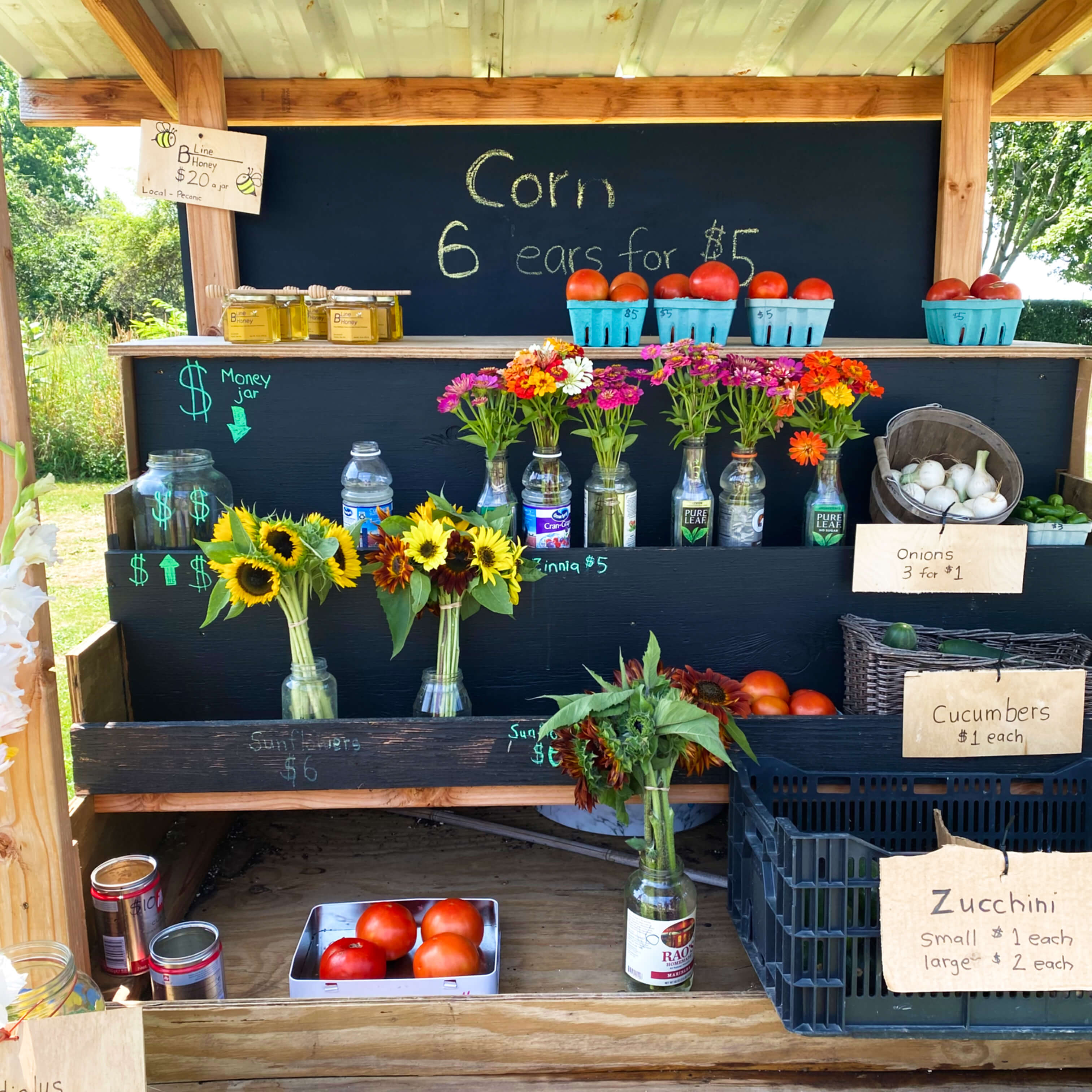
A fishing and farming community long before the Island ever became a residential extension of New York City, this stretch of Long Island from the tip of Orient Point to the mid-section of the island never lost its agricultural roots. Full of sprawling vineyards, seaside homes, stretches of pebble-studded beaches, open meadows and working farms that produce every sort of market delight you could ever want, it’s a food lover’s paradise from flowers to honey to wine to grass-fed beef.
Croteaux Vineyards is the only winery in the US to focus solely on making rose wine. Fresh farm stands are everywhere around the North Fork.Open pasture lands with views of the Sound.Wildflower settings just like this inspired Samuel throughout the 20th century.
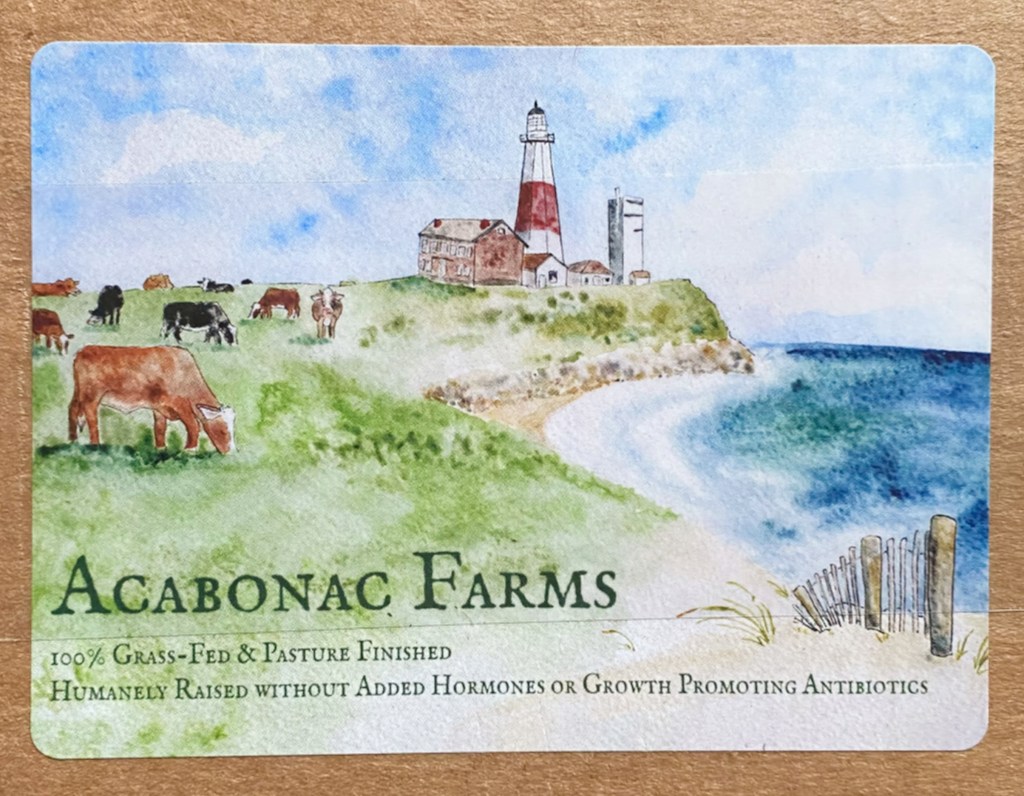
Celebrating this area’s centuries-old agricultural history, in today’s post, we are featuring a recipe made using grass-fed beef from cows raised and pastured on Long Island’s Acabonac Farms. Just a short drive down the coast from where Samuel summered in Southold, Acabonac Farms works in tandem with the natural landscape just like Long Island’s first settlers did back in the 1600s.
See how Acabonac Farms’ watercolor illustration was made here.
By embracing the unique nutrient-dense soil that makes it one of the best terrains in the state, combined with the salty sea air, the continuously circulating breezes blowing in off the water, and the well-draining composition of the soil, it’s a trifecta of a location historically known for growing good grass which in turn grows good grass-fed cows.
Throughout his second career, Samuel’s photographs appeared in publications all over the country, but none may have been more proud of Samuel’s work than his hometown newspaper, The New York Times, where he was regularly featured. In keeping that joyful relationship intact, our featured recipe for this post comes from the 1961 New York Times Cookbook and combines Acabonac Farms grass-fed sirloin steak with an unusual 24-hour marinade to create picnic-toting steak sandwiches fit to fuel any wildflower photographer’s wanderings.
Named after the patron saint of hunting, this recipe called Steak St. Hubert, can be made with venison or beef using round or sirloin cuts depending on your preference. Originally, it was meant to be enjoyed as a single cut of meat – a steak dinner complete with a red current jelly reduction sauce – but I decided to turn the steak into sandwiches so we could pack it along with potato salad and refrigerator pickles for a summer picnic getaway to see the land that so inspired Samuel.
Consisting of a unique menagerie of ingredients, this marinade contains no cane sugar and no salt but does include carrots, wine, and apple cider vinegar, which I found to be a pretty intriguing mix. A bit like Annie’s Wine Baked Brisket and Santiago Pork Roast, this is a two-day, three-part recipe to prepare but well worth the time.
Although this is a local post featuring Long Island, Acabonac Farms beef is available to any home cook no matter where you live. If you haven’t had the experience of ordering meat via mail before, the process couldn’t be easier. You simply place your order online and it shows up at your door two days later in a box packed with dry ice and the individually frozen, vacuum-packed cuts you requested.
From the farm in Long Island to the front door of 1750 House.
Beef that arrives by mail can be thawed in the fridge overnight (in its original packaging) or stored in the freezer for use at a later date. For this recipe, the three packages of steaks we ordered went into the fridge for 12 hours before they were added (completely thawed) to the marinade and then returned to the fridge for another 24 hours.
The marinade is easy to put together. The original 1961 recipe called for a big bowl as the marinade vessel but I found that a two-gallon Ziploc bag worked just as great and made it easier to store in the fridge. Other than that note, the marinade recipe comes together just like this…
Steak St. Hubert Sandwiches (serves 10-12)
For the marinade:
3 16 oz .sirloin steaks cut 1/2-3/4″ inch thick
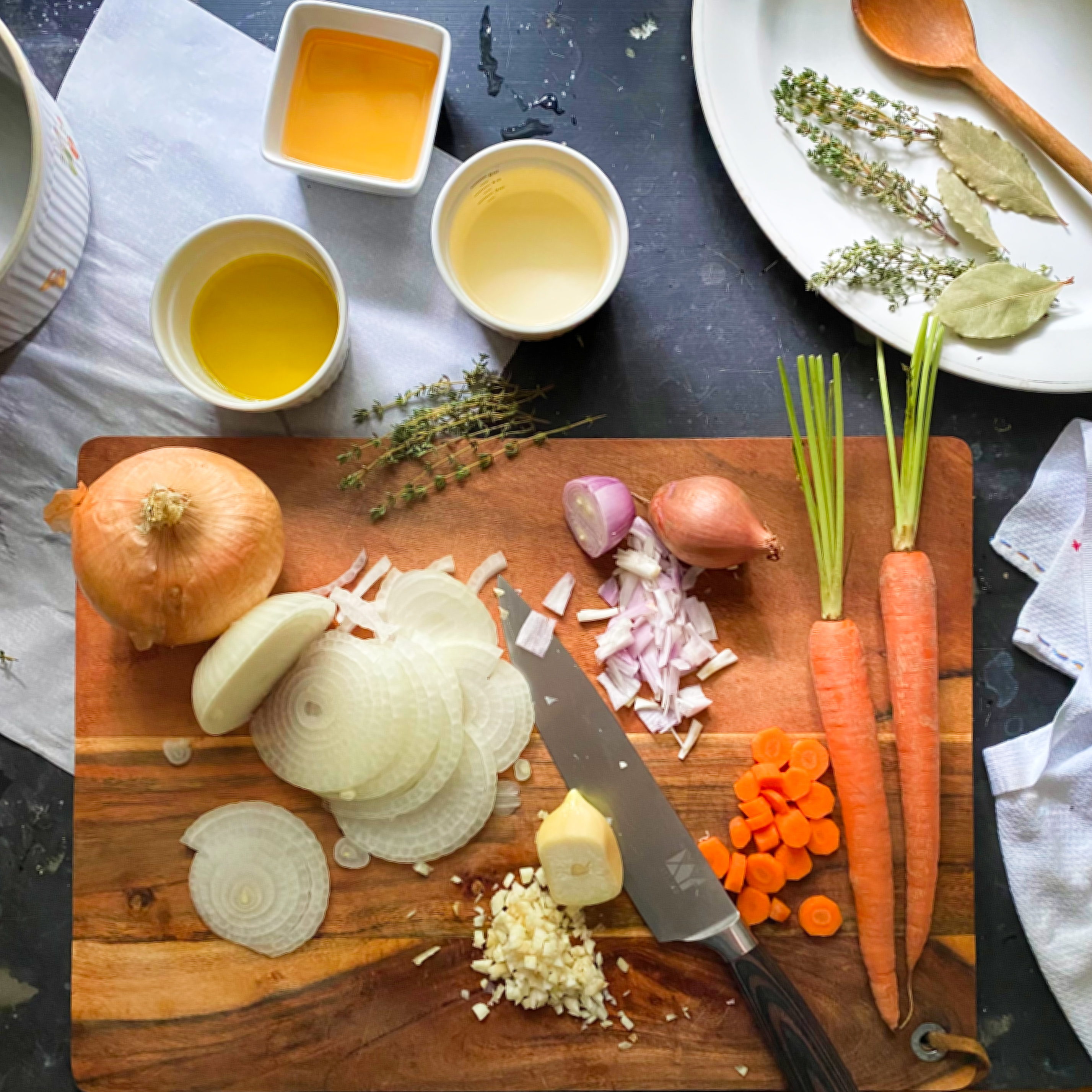
2 shallots, chopped
2 carrots, sliced
2 onions, sliced
1 clove garlic, chopped
2 sprigs of fresh thyme
2 bay leaves
1/3 teaspoon freshly ground black pepper
1 small pinch of ground cloves
2 cups dry white wine
3/4 cup apple cider vinegar + 1/4 cup water, mixed together
1/2 cup olive oil
For the pan:
Salt
Pepper
6 tablespoons butter
For the sandwiches:
Portuguese rolls (or any soft and pillowy sandwich roll that has a crusty exterior and an airy interior)
lettuce
red onion, sliced in thin rings
Condiments (cherry jam, horseradish, mayonnaise, dijon mustard or any others you might prefer)
In a large bowl, mix all the ingredients together minus the steaks. Add the steaks and toss the mixture again.
Remove the steaks to a large (2-gallon size) Ziploc bag. Pour the marinade mixture from the bowl into the bag, covering the steaks completely. Seal the bag and store it in the fridge for 24 hours.
After 24 hours have passed, remove the steaks from the marinade bag to a large plate or casserole dish and let them warm up to room temperature while you prepare your cooking pan (about 15-20 minutes.
Salt and pepper both sides of each steak. In a large cast iron or heavy-bottomed pan, working individually, melt two tablespoons of butter over medium-high heat, cooking each steak one at a time for 7-10 minutes per side to achieve a medium rare center. Repeat with the following two steaks.
Transfer each steak as it comes off the heat to a parchment-lined piece of foil. Wrap each steak in the foil and let them rest until completely cool (about 30-45 minutes).
If you are planning to take these sandwiches on the road, the whole steaks can be refrigerated before slicing for up to 12 hours once cooled. When you are ready to prepare your sandwiches, slice each steak into thin ribbons.
Tuck the thin slices of beef between two slices of bread and call it divine or you could adventure even further and stretch your palate to include a train of condiment flavor pairings. Mustard, horseradish, mayonnaise. Maple syrup, cherry jam or hot sauce. Top the beef with a layer of blue cheese or fresh pineapple or a ring of red onions and you have a custom sandwich built just for you. Originally, the recipe called for a red current reduction sauce (an element that might not travel well), so I toted along a jar of French cherry jam in addition to the other above-mentioned condiments. A dollop of jam on top of the steak and between the layers of onion and lettuce was a magical combination of the sweet, savory kind that I would highly recommend.
A complete delight of a recipe from start to finish, the sirloin was full of flavor but not in a way that you could easily detect by the marinade ingredients alone. Most steak marinades I’ve ever tried in the past make the meat taste like the ingredients it was marinated in. Teriyaki steak for example tastes like soy sauce. A honey mustard marinade makes everything taste like honey and mustard. But this marinade was different. There was not one ingredient that overpowered the other. Instead, it combined a symphony of subtleties that left room to taste the flavor of the grass-fed beef. It made such a tender, succulent sandwich, it can best be described as pure, at every step, and every bite. Perhaps that is the magic of the salt, sea and sun of Acabonac Farms’ location. A delicious alternative to burgers and a great travel food for tailgate parties, fall leaf-peeping adventures and family football games, St Hubert steak sandwiches offer the best of New York’s local food that also happens to be accessible to everyone around the country no matter where you live.
Samuel Gottscho in 1956. Photo courtesy of the Museum of the City of New York.
As for Samuel and his Long Island escapades among the wildflowers, he had no worry about that average life expectancy marker in the 1920s. Samuel may have been fifty years old when he left his salesman job and professionally embarked on his new career, but it kept him engaged and enthralled for the next forty-five years of his life. When Samuel passed away in January 1971, he was 95 years old. Up until a week before his death, he was out in the field capturing the wild winter landscape, fulfilling client commissions, and working on his own personal archive that exceeded 40,000 images. What was Samuel’s secret to such a fulfilling life?
“It’s never losing the inquiring and enthusiastic spirit of the amateur,” he once told a reporter.
By the time, Samuel passed away, he was the recipient of numerous distinguished awards and accolades in the fields of architecture, horticulture, and landscape design. He was published in architectural digests, home design magazines, photography manuals, and newspapers around the country. Occasionally he would give a lecture or a presentation to a garden club or a photography circle. He was an expert for sure but he never had the bravado of one. Those accomplishments were nice, but that’s not what drove Samuel. His heart fired up at the sight of light, of composition, of shape. His heart fired up at photography and anything leading to it.
Just like the accessibility to Acabonac Farm’s grass-fed beef, you don’t have to live in the vicinity of New York City or Long Island to view more of Samuel’s work. Upon his death, he donated his entire photographic collection to the Museum of the City of New York and the Avery Architectural and Fine Arts Library at Columbia University. Over 2/3rds of his collection has also been digitally archived at the Library of Congress. More of Samuel’s work has been published in a gorgeous 2005 coffee-table book, The Mythic City,focusing on his New York architecture portraits spanning the 1920s-1940s. And last but not least, there are his wildflower photos published in the petite 1951 Pocket Guide to the Wildflowers, which is how I came to be introduced to Samuel’s life and work.
See more examples of Samuel’s wildflower work from this book in the shop here.
Just like the camera was Samuel’s gateway to an entirely new life, Samuel’s life became my gateway to an entirely new area of the world and an entirely new vintage recipe. I’m so happy to share his story with you here on the blog in hopes that it inspires something new in you too.
View from the Cross Sound Ferry at Orient Point, NY
Cheers to Samuel for not letting age be a factor in following his passion and for the incredible volume of work that he left for everyone to enjoy. Cheers to Acabonac Farms for sponsoring this post and for contributing the delicious grass-fed beef for this recipe. And finally cheers to the farmers of Long Island who work day in and day out to keep the agricultural history of the region alive and thriving.
To view the full 30-Days graphic that includes all 30 bowls, click here.
This past January, we shared a post highlighting thirty days of homemade dog food that we made for our pup, Indie, during the month of December 2022.
As much a photo collage as a visual guide on the types of food that Indie has been eating throughout her life here with us, I wanted to dispel the myth that cooking for your pup is difficult, time-consuming and complicated. It was a piece that worked in tandem with a 2018 post about the history of dog food where we also introduced how to make your own balanced meals for your dog regardless of size, age or breed.
The history of dog food and how to make your own.
Both posts shared details about a large majority of the types of food Indie (and all dogs) can eat but neither contained a specific recipe. So in today’s post, as requested recently by our canine-loving readers, I’m sharing one of Indie’s most favorite meals complete with an ingredient list, step-by-step instructions and notes on scaling proportions depending on the size of your dog.
On the menu today it’s Steamed Chicken, Carrots & Sweet Potatoes – a one-pot stovetop meal that takes five minutes to prepare and one hour to cook. You can amend the recipe to make a large batch that will make up to eight meals or you can make a small batch that will provide a fresh homecooked meal for one to two days worth of dinners and breakfasts. Fridge-friendly, freezer-friendly and on-the-go-approved, if packed in an air-tight container and kept cold, this recipe can tag along on your all summer outings including picnicking, hiking, and overnight vacations. It can be reheated in the microwave or the oven if your dog likes warm food, or it can be enjoyed cold right from the fridge. You can toss in additional grains or vegetables if your pal has a big appetite, or serve it as is – a simple meat and two.
This is also a good starter recipe if you are new to the world of making homemade dog food or are introducing your pup to this new way of eating. It’s simple to make, requires just a handful of ingredients, and is easily digestible for all dogs. And just like all of Indie’s other meals, it’s 100% human friendly too. That’s the key to homemade dog food. There is not one ingredient in this recipe that you wouldn’t want to eat yourself. Let’s look…
Steamed Chicken with Carrots & Sweet Potatoes served here over a bed of green lentils.
Homemade Dog Food: Steamed Chicken with Carrots & Sweet Potatoes
This recipe makes 4-5 servings for a medium-sized dog weighing 45-50 lbs. Please see note regarding portion sizes following the recipe.
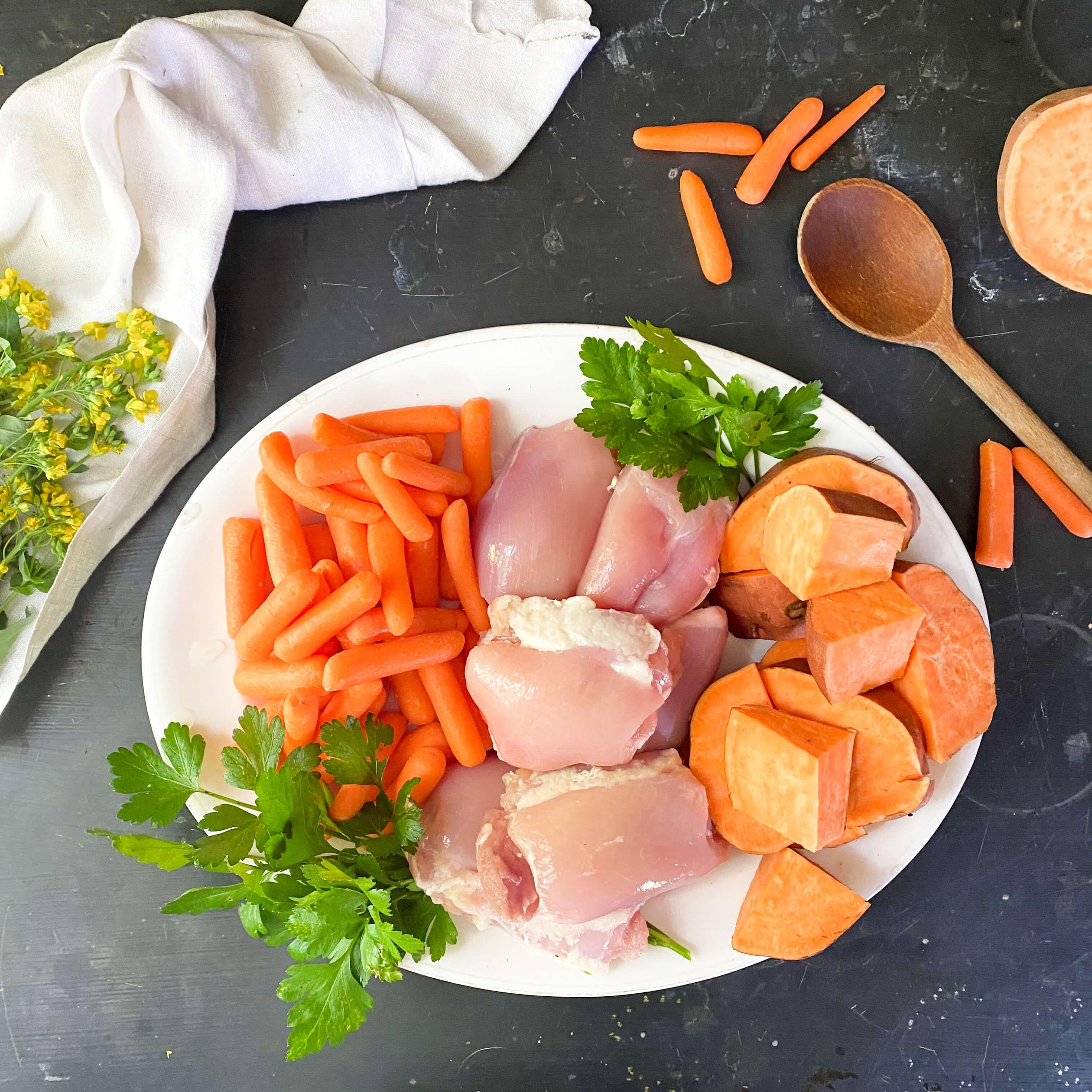
One 2-3lb package of chicken thighs, containing 4-6 thighs (Bone-in and skin-on preferred, but you can also use skinless/boneless thighs, chicken breasts or chicken tenders. We do not recommend bone-in-chicken breasts or wings though as these contain too many small bones. Please see note below.)
3 tablespoons olive oil
1 lb baby carrots
3 large sweet potatoes, skin-on and roughly chopped into large 3″ inch cubes
1 healthy pinch of sea salt
Optional: a handful of roughly chopped fresh parsley
Rinse chicken and pat dry with paper towels. Set aside. In a large stock pot, over medium-high heat, add the olive oil, making sure it coats the entire bottom of the pot. Let the oil warm up for about one minute. Add the carrots in a flat layer.
Next, add the chicken (skin side down if using bone-in thighs) …
Sprinkle the chicken with a generous pinch of sea salt. Then add the chopped sweet potatoes on top of the chicken and the fresh parsley on top of the potatoes.
Turn the heat down to medium. Cover the pot and cook for 60 minutes. Remove the pot from the heat and let it rest for 15 minutes on a cooling rack. Dinner is done!
With stew-like consistency, this dog-friendly recipe is full of comfort food flavors all bathed in a natural broth that forms when the water in the carrots and sweet potatoes mixes with the olive oil and the chicken fat. The hour-long steam makes the chicken fall off the bone and makes the vegetables so tender you can slice them with a butter knife.
If you use skin-on chicken thighs with bones you’ll get a richer-looking broth.
After the chicken has rested, remove one thigh, one cup of sweet potatoes, 1/2 cup of carrots, and 1/3 cup of broth to your dog’s bowl. Pull the chicken from the bone with a fork and then discard the bone. Because they splinter easily and can cause internal damage to organs, you never want to feed your pup any chicken bones. This is why we don’t recommend using bone-in chicken breasts which usually come with the ribs attached. The same goes for chicken wings which are made up of many small bones that can be easily missed when cutting the chicken up after it cooks.
Once you have transferred the chicken and vegetables to your pup’s bowl, slice everything into bite-sized pieces, mix it all together and let it cool to room temperature before serving.
Hands down one of Indie’s most favorite meals, Steamed Chicken with Carrots & Sweet Potatoes is a year-round pup-pleaser of a recipe and contains all sorts of nutritious vitamins and minerals. Collagen (chicken skin), beta-carotene (sweet potatoes, carrots), magnesium (sea salt), healthy fat and vitamins E & K (olive oil), and lean protein (chicken) are just a few of the beneficial vitamins and minerals wrapped up in this recipe that will help keep your dog happy and healthy.
Over the 4th of July weekend, Indie celebrated her 10th birthday. Of course, we surprised her with her favorite chicken dinner. This time, in addition to the sweet potatoes and carrots we added in some chopped-up cucumbers, another summer love of hers.
For the love of homemade food and cucumbers.
That is just a little example of how carefree this chicken recipe can be. The carrots, olive oil, and the chicken itself are mainstays, but the sweet potatoes can be swapped out for butternut squash, red potatoes, broccoli, cauliflower, cabbage, pumpkin, celery, beets. Just avoid adding any onions, garlic, or citrus fruits – three types of food that also seem like they might be natural companions to this meal, but are actually toxic to dogs. If you are interested in more possibilities to add in or swap out be sure to check the lists of other approved dog-friendly foods in the previous two posts here and here.
Leftovers can be stored in an air-tight container in the fridge for up to four days. When the broth cools it transforms into a jelly-like consistency similar to aspic. Don’t be put off by its wiggly jiggly nature. It’s just the coagulation of the olive oil, broth, vegetable juices and chicken fat. Your dog will love it, so be sure to include a little bit of it with each additional serving. If you decide to make some rice or lentils to augment the chicken and vegetables that jelly will add extra flavor to the new additions.
Day Two – the wiggly jigglys!
And two final notes on year-round enjoyment of this recipe and portion sizes …
In the summer, Indie tends to eat a little less food if it’s particularly hot, so when it comes to this recipe, she’s happy most of the warm-weather months with just the chicken, sweet potato and carrot combo. But in fall, winter and spring when she is at her most active, we usually add in a few other foods too for both variety and an extra dose of go-power. Other accompaniments you might like to include are the following…
3/4 cup of cooked rice, 1/2 cup of cooked lentils or 1/4 cup oatmeal
1 cup of additional cooked and chopped green vegetables (broccoli, collard greens, kale, spinach, zucchini, celery, green beans or peas)
All the proportions discussed so far are based on Indie’s medium 55lb. frame. If you are making this recipe for a small breed dog like a chihuahua or a bichon, you can certainly swap out the thighs for smaller cuts like chicken tenders or thin-cut chicken breasts. If you decide to use either of those, simply adjust the cooking process by starting with the layer of carrots first after you add the olive oil, then add the chicken, salt and sweet potato layers. That way the chicken won’t get stuck to the bottom of the pot.
And on the opposite spectrum, if you have a large breed dog over 60 lbs. I’d recommend doubling the portion size of the recipe above. The nice thing about using a big stock pot is that you can fit quite a bit of food in it. I’ve made this recipe using all types of chicken cuts, and all types of quantities from 4 to 8 thighs with 2lbs of carrots and six sweet potatoes, and it still comes out great every time.
Recently I discovered the 1910 story of Bum, a stray dog in St. Joseph, Missouri who frequented the back door of several restaurants in town each day. He was such a polite and enthusiastic eater, the kitchen cooks and wait staff couldn’t help but spoil him with the finest menu selections of the day. After Bum enjoyed a delicious meal at his favorite luncheonettes, he’d trot down the street and wait patiently for his next favorite set of restaurants to open up for dinner service. Bum so charmed all the restaurant workers that he became the most beloved (and well-fed) fixture in the neighborhood.
This story reminds of Indie, who was also a stray who trotted into our backyard during our Fourth of July barbecue in 2014. Once she had her first bite of grilled chicken, she never left. And so began a now nine-year adventure of cooking for Indie, our most enthusiastic taste-tester here in the Vintage Kitchen. Julia Child was famous for saying ” People who love to eat are always the best people.” Around here, we could say the same about dogs too.
Bum in 1910. Indie in 2023. Photo of Bum courtesy of the St. Joseph News-Press (Dec. 16, 1910).
I hope this post is helpful to the readers who requested it. We are always here to answer any questions you might have so feel free to ask away should you run into any troubles. In the meantime, happy eating to your pups. I hope they love this recipe as much as Indie does!
Cheers to all the dogs out there who inspire a wealth of joy and creativity in the kitchen. And to Indie, our delight of a dinner eater from day one.
Every family has some tales when it comes to history and the lineage that connects us to ancestors who lived a long time ago. If we are lucky, they are long-winded stories full of color and detail and a relatable sentimentality that can carry our imaginations far across cities and centuries connecting us to relatives we never met.
Other times, there are family histories that are just one-liners. Snippets of stories punctuated with the sparest amount of context and detail. Enough to give you some ideas about who this or that ancestor might have been, or where they came from, or how they experienced life, but beyond that no other information is known. I’m always most intrigued by these slim snippets of genealogical detail. The ones that aren’t flushed out yet enough to form a complete story with a defined beginning, middle, and end. The ones that could have been recited so many times they are now legend tumbled and tossed through generations yet never gaining new insight or understanding. We have quite a few in my family – a great aunt who was a Rockette, a lost family fortune buried somewhere on the island of 18th century Manhattan, a doughnut shop in the Pacific Northwest still waiting to be found. Those quick glimpses into all types of family biography are ripe for more storytelling and a deeper understanding of the experiences that makes up the unique histories of American lives.
In today’s post, we are sharing a 100 year-old-family story brought to the Vintage Kitchen in the form of an heirloom. It did not come with one of the long-winded stories like we mentioned above, the ones full of color and life and detail. Instead, it falls into the latter category. The opposite one. This heirloom came with just a few facts. Vague yet weighty snippets of a story that lightly scratched the surface of a much larger experience.
It starts with an antique tablecloth. Folded up it weighs just over a pound and a half. It’s delicate but also strong, with a heft to its weight like rope. Featuring a hand-crocheted pattern of circular medallions and spider-like stars, it’s executed in thread that is the color of bones. In appearance, it’s not unlike a lot of similar tablecloths that were popular during the 20th century, but this one tells a very specific American story that is very fitting for the 4th of July holiday.
Sent by a woman named Linda, who is a vintage collector in New Mexico, this tablecloth was a family heirloom belonging to Ann, her ex-mother-in-law. When passing down items from her life, Ann requested that this particular linen be handled with respect and appreciation. Although Linda admired the beauty of this tablecloth and the story it represented, she contacted the Vintage Kitchen to see if we might be able to give it a new home.
Arriving in the mail shortly after, the cloth came with a note detailing a few facts surrounding its history.
It belonged to Linda’s ex-husband’s mother, Ann who had recently passed at the age of 87
It was passed down through Ann’s family with the understanding that it came to America by way of an Italian ancestor named Catherine who had traveled by boat from Sicily to Ellis Island in the early 1900s and then went on to Chicago to settle.
According to family lore, the tablecloth was handmade while on the boat waiting to dock in the US
Even though I had a dozen more questions for Linda upon receipt of the cloth, and had requested a photo of it’s maker, unfortunately, Linda and I lost touch shortly after the package arrived. So here it was, this pretty antique tablecloth wrapped up in a handful of intriguing little story snippets just waiting for something more to be told about it.
After a bit of genealogy work and a hunt through Ellis Island immigration records, Linda’s ex-grandmother-in-law’s story burst into colorful life just like a 4th of July firework. It begins here on Ellis Island in March 1916…
Ferry boats carrying immigrants from transatlantic steamer ships that initially docked in lower Manhattan arrive here at Ellis Island’s Immigration Station where their paperwork was completed. Photo courtesy of the New York Public Library.
Even though it was the very first day of Spring, it was a chilly 34-degree March day when the Caserta arrived in New York Harbor. Carrying immigrants from Naples, Italy, the steamer ship coasted into the harbor on choppy waters passing the welcoming sight of the Statue of Liberty. Her torch was not yet electrified, it would be another nine months before that happened, but to the arriving immigrants, she signaled a bright future ahead regardless. Aboard the ship was 20-year-old rosy-cheeked, chestnut-haired Caterina from the seaside town of Bagheria, Sicily.
Caterina’s ship manifest.
Most Italian immigrants during the 1910s were fleeing to America to escape economic depravity in their home country. Depending on weather, war, quarantine, detainments, and ship reroutings, the voyage from Naples to New York could last anywhere from twenty-one days to three months. When Caterina came over it was the middle of WWI, and Italy was involved in the battle of Austria-Hungary. Traveling with her older sister Maddalena, we don’t know specifically why these two girls left Italy, but we do know that Caterina paid her own passage and carried $25.00 extra in her pocket along with a crochet needle and a bundle of thread.
Of medium height and good health, Caterina would have no trouble passing through the medical checkpoint before she was allowed access to her new country. Her $25 dollars in savings would not be an issue either as she brought an amount deemed substantial enough by the US government to successfully start afresh in the New World. With intentions to stay with her cousin, Filippo, in the Midwest, Caterina’s final destination was the bustling city of Chicago.
A 1916 map of Chicago IL courtesy of the Library of Congress
According to Linda’s family story, while waiting to dock in New York Harbor, Caterina took her crochet needle from her pocket and put her hands to work. She soothed her anxious nerves by crocheting this 82″ x 52″ inch delicately threaded tablecloth featuring a series of interlocking circles and stars.
I loved this part of Linda’s story for two reasons… 1) I didn’t realize that immigrants had to wait for any extended period of time to gain entry into the US. I assumed that most were docked and processed in the same day. So it was interesting to think that Caterina’s boat could have been detained for a significant amount of time – one in which an entire tablecloth could have been made by hand. 2) The other reason I loved Linda’s story was for the amount of comfort that this tablecloth must have brought. The calming effect of repetitive motion and the focus and attention to detail required to make a circle then a star, a circle then a star intertwining each until there was a cloth over 4′ feet long and 3″ feet wide.
I loved this artistic glimpse into one woman’s life and that I could hold in my hands a tangible item that combined thread with all the emotions of a new adventure – excitement, uncertainty, nervousness, fear, and awe experienced over 100 years ago. I wondered about Caterina, there on the boat, stuffed full with people from her home country all experiencing a cacophony of feelings while she sat calmly making this piece. Was she dreaming of the future table in which she would display her needlework? Did she think about it becoming not only a practical household item for her new home but also a tangible reminder of the journey that she chose to take? Did she know then, that it would eventually become an artifact proving that she, Caterina of Bagheria, Sicily and now of the United States had lived?
The closing of other U.S. ports, the rerouting of ships during WWI, and the threat of communicable diseases could have been some of several reasons why Caterina got hung up in New York Harbor long enough to hand-stitch a linen for her new life. After much research, I couldn’t find anything that would attribute to the delay around that date, but I did learn that four days later, the ship she arrived on, the Caserta, was on its way back to Italy loaded with war-time ammunition for the Italian government.
That led me to wonder if the details of Linda’s family story had gotten a little muddled over the past 100 years. Maybe, Caterina made the tablecloth on the voyage over and finished the last pieces of it while she was waiting to dock. Or maybe in fact, she was on a quarantined boat, arriving in New York days or weeks before the immigration officer officially stamped her papers with the date March 20, 1916. Or maybe she just happened to be a master, faster crocheter that indeed had plenty of ample hours in an ample amount of days to complete such a creative undertaking.
I can imagine that this waiting period at Ellis Island whether brief or lengthy, spent while you are between your old life and your new life, would be a pretty intense time. There is something incredibly marvelous and moving about Caterina documenting her stay in these New York waters under the reassuring gaze of Lady Liberty with her crochet needle and some Italian thread. A simple household item made during a magnificent moment with skill enough to make it last a lifetime. And then some.
Linda’s initial recount of the situation began and ended at Ellis Island, but a bit more research uncovered Caterina’s complete life story. She did make it to Chicago. There she became known as Catherine, the Anglicized version of Caterina, and a little over a year later she met and married Alberto, a fellow Sicilian who had immigrated to America just a few years before her.
Alberto was in the grocery business, successful enough to own three delis in the Chicago area during the early to mid-1900s. Catherine and Alberto had two boys – Anthony and Joseph. Joseph served in the US Air Force during WWII and Anthony in the US Navy. The deli trade was never far from Anthony’s heart and upon return from the war, Anthony followed in his dad’s footsteps and worked in the grocery industry for the rest of his life – first in Chicago and then in California where he opened a deli shop specializing strictly in Italian fare. After Anthony married Ann, a former customer of his dad’s shop back in Chicago, they also had two children – Albert and Diane. Albert a young groom in the 1960s, married Linda, the vintage collector who sent us the tablecloth.
Clockwise from top left: Linda, Albert, Anthony, and Ann. Photo courtesy of Pleasant Family Shopping blog
As for Caterina, she passed away in Los Angeles in 1987, at the age of 92. Living a majority of her life in the US made her geographically much more American than Italian, but she never ventured far from her Italian roots nor the chance to pass on her cultural pride to her boys who then passed it on to their families. A part of all that was this tablecloth. The heirloom made en route from old Italy to new America. The cloth that wove together two parts of one woman’s life. A woman who chose to settle in the United States, to become a citizen, to raise a family of boys who then fought for the US during WWII and then saw her children’s children grow the branches of their family trees in America all the while contributing to the vibrancy of our country’s dynamic landscape. Caterina’s story is a small leaf on the big tree of immigration, but I felt so honored to be able to tell her story and attach it to the tablecloth, her tablecloth, that still lives bright and beautiful in the world today.
I couldn’t ever find a photo of Caterina, so I wrapped her tablecloth around a mannequin and photographed the two together. It’s the closest I could get to visually communicating that the cloth was made by an actual person. Hopefully one day, I’ll come across a photograph of Caterina so that we can know her face. Until then, this portrait will have to do.
Cheers to celebrating all the immigration stories that make our country culturally vibrant this Independence Day. To slim snippets, that form big stories. And most importantly, cheers to Linda and to Ann and to Caterina for sharing their family’s American experience. Important stories lie in everyday objects.
However you choose to commemorate the 4th of July, we hope it’s a memorable one!
Special note: While researching this post, I came across two pieces of media that were especially insightful when it came to understanding the very human and very humbling experience of immigrating to America.
An oral history interview with Italian immigrant Filomena Latta…