Found Underground: Artifacts Unearthed at 1750 House {Part Two}

When I pulled up a bone with teeth, the Pit project shut down for a few days.

Between the last post about finds in the Pit and this post, I’ve learned a lot more about trash pits vs. privy pits and the meaning of each in the local landscape as it relates to 1750 House. One surprising fact was that municipal city trash pick-up did not begin in my town until 1972, which means burying household trash in the backyard was still one of the most utilized ways to get rid of waste in the mid-to-late 20th century here in Connecticut. Learning as much, I’m fairly confident now that what I’ve unearthed in the lily bed is a trash pit, also known as a midden, that seems to date, based on objects found so far, to somewhere around the early 19th century, if not before.
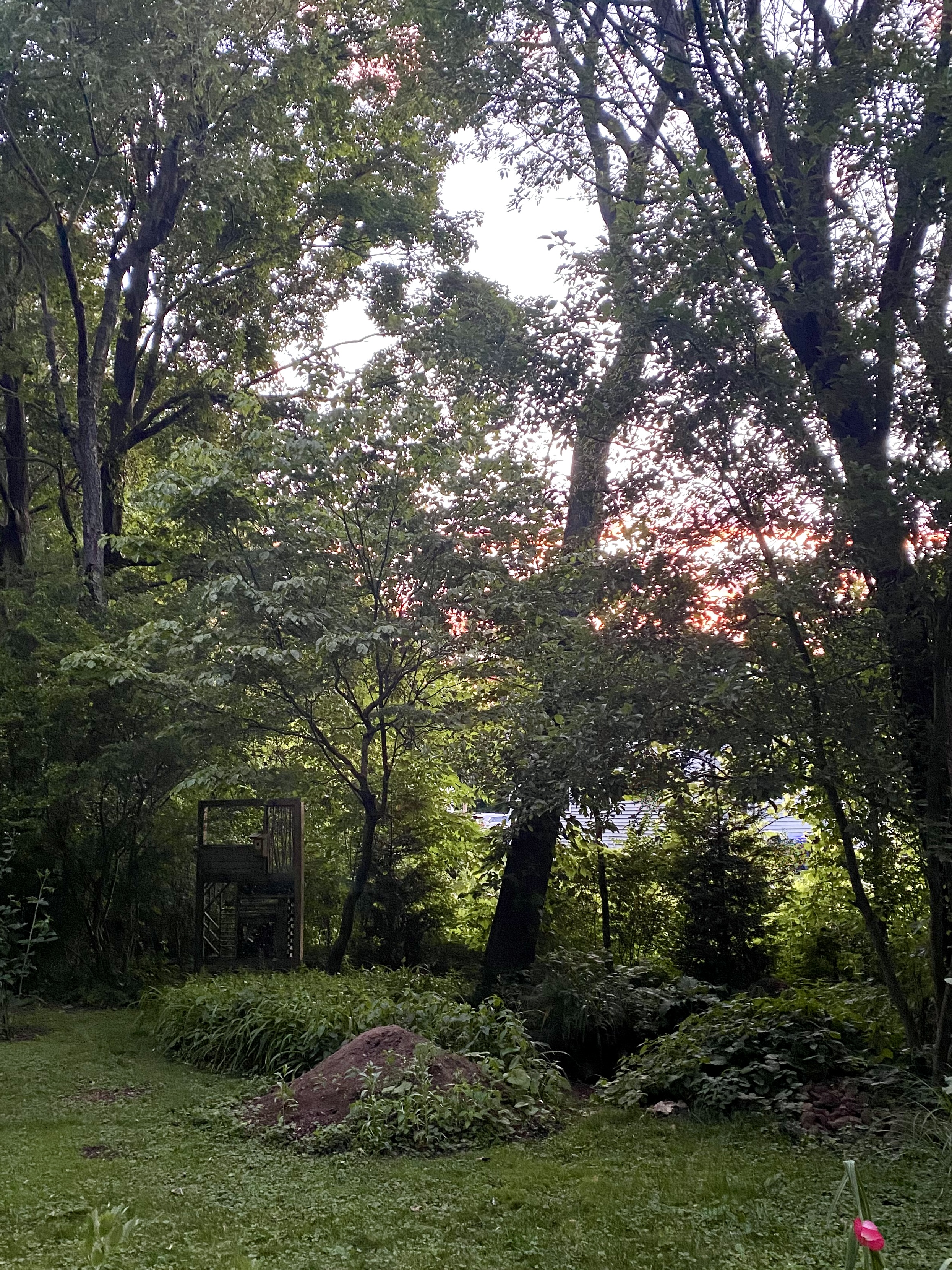
The Pit – still easily hidden by so many lilies.

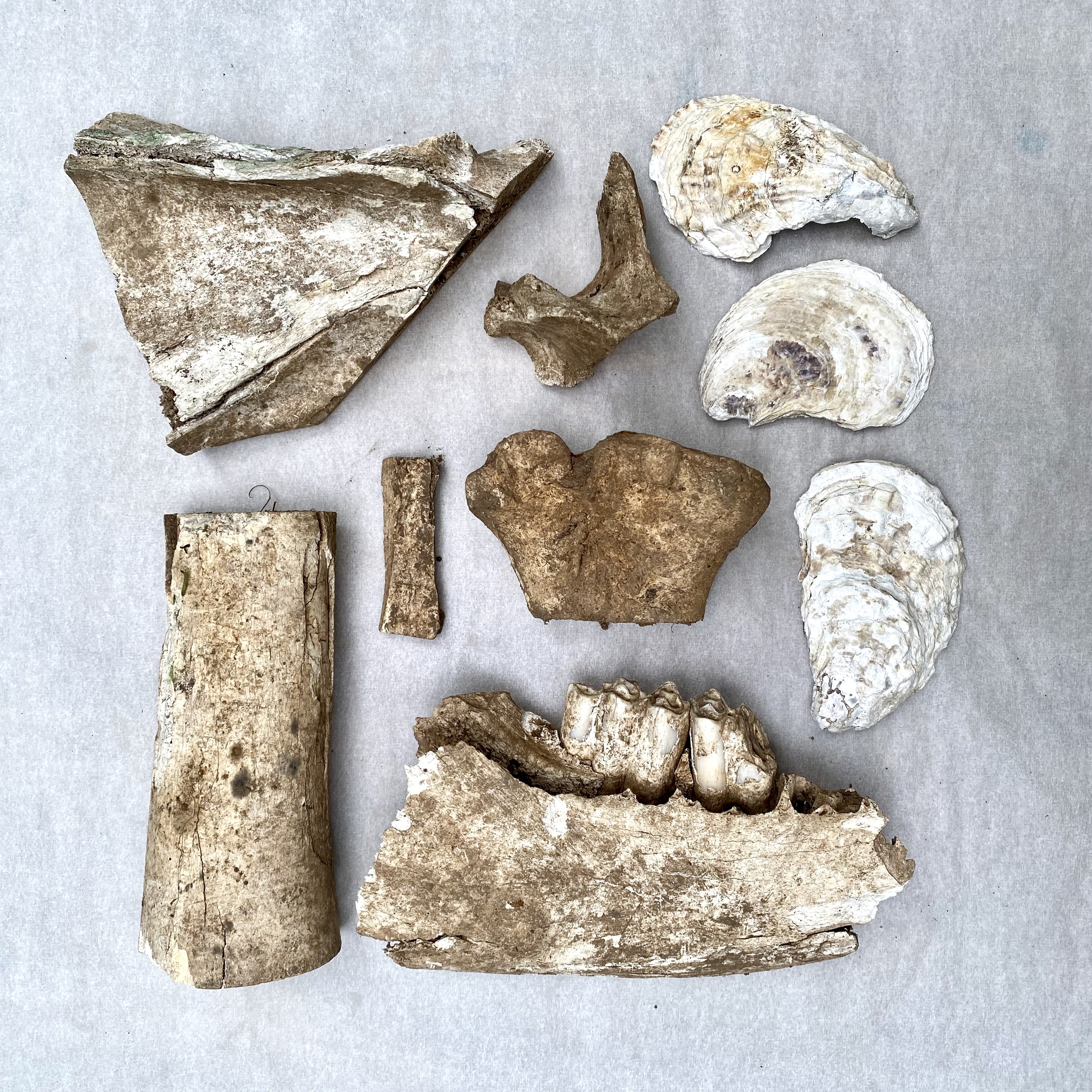
Picking up where I left off at the end of May, the Pit in June, continues to offer up interesting items in all shapes and forms, but pulling up a bone with teeth was one of the more startling finds. Discovered one day after finding three horseshoes, the moment the teeth slipped from a sidewall of dirt, I immediately connected the shoes and the bone. And then I began analyzing the situation. If I found a horseshoe over here, and a horseshoe over there, and a set of teeth across the way on this side, would that then potentially form the shape and size of a horse? It was an unnerving series of calculations. Had I unknowingly uncovered the burial site of someone’s beloved pet or stalwart farm animal?

Anything is plausible when it comes to life lived at an 18th-century house and the grounds that surround it. With a property of this age, one that has been mostly untouched by modern redevelopment, an assumption that love and death must surely have embraced each other across centuries prevails in more ways than one. When my husband and I first moved into 1750 House and were still getting used to the property, we discovered a large stone near a giant elm tree at the edge of the woods. The name Aslan was etched into one side, and the name Hilda was etched into the other side. Both were etched in the same primitive style writing and both were etched near similar spots in the rock, just on opposite sides. There were no dates or any other indication of who (or what) Aslan or Hilda might be, but it was our first introduction into the reality that lives long before us lived and breathed and were remembered here. And that tradition continues. In the four years since, we moved in, my husband and I have buried two poisoned wild crows who spiraled down from the sky one summer afternoon. We buried a wild baby rabbit that had perished after a fight with another animal. We buried an old squirrel that fell from a tree limb and an owl that fell into our chimney only to be discovered a year later. And most sentimentally, we buried our very dearly loved dog and cat in the garden a year apart over Labor Day weekend. How many other cherished creatures were laid to rest here in flower-lined pockets across two hundred and seventy-six years?
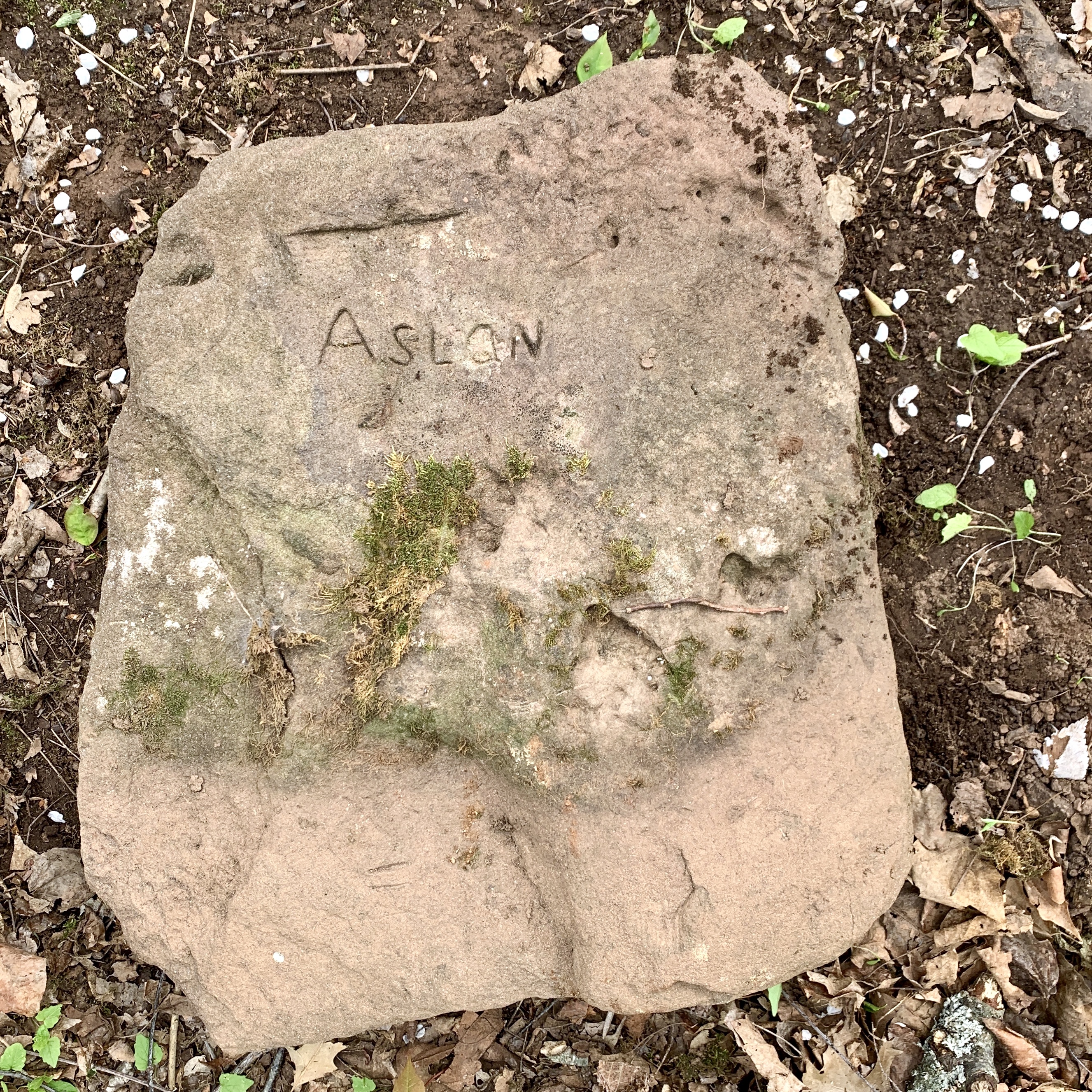
Out of respect for whatever the situation was, the Aslan and Hilda rock remains in the same place we found it, but I still always wonder about the story behind them. The bone with teeth was found far from where their rock lays, so it’s probably safe to assume it’s not associated with one of them. But then who else?

After carefully setting the bone aside in a temporary resting spot in the garden, and after consulting many animal anatomy diagrams and charts, I’ve come to the conclusion that these teeth most likely belonged to the jaw of a cow, not a horse, and were most likely the remnants of food waste tossed into the trash pit. For centuries, head cheese has been a delicacy throughout Europe and England. And traditional leather tanning involves utilizing certain parts of an animal to dress the fibers. So it’s relatively easy to understand how a jawbone and teeth could wind up in the Pit along with other evidence of food consumption – mainly oyster shells and other professionally clean-cut animal bones that have been found also. Having said that, this grisly side of farm and rural food life helps illustrate the vast variety of refuse added to the earth long before a city garbage truck rumbled down the lane. There in the Pit, among the cast-asides… the broken dishes, the flatware, the glass lamps, the iron farm equipment, the shoes, the car parts, the buttons, and the kids’ toys would naturally be leftovers from meals prepared and foods consumed. Today, if we had to record all the chicken bones, the fish skins, the beef ribs, the lobster claws, and the shellfish shells consumed over a month or a season or a year, we might be surprised to see what our modern-day garbage pit would look like, too.

Having decided that the teeth situation was one of sustenance or utility and not a burial site, recording of the dig resumed, and a new round of interesting objects came forth from the ground. This past week, I’m excited to share two of the oldest finds so far. Both are pastel-shaded glass jar tops and both were used for canning fruits and vegetables…
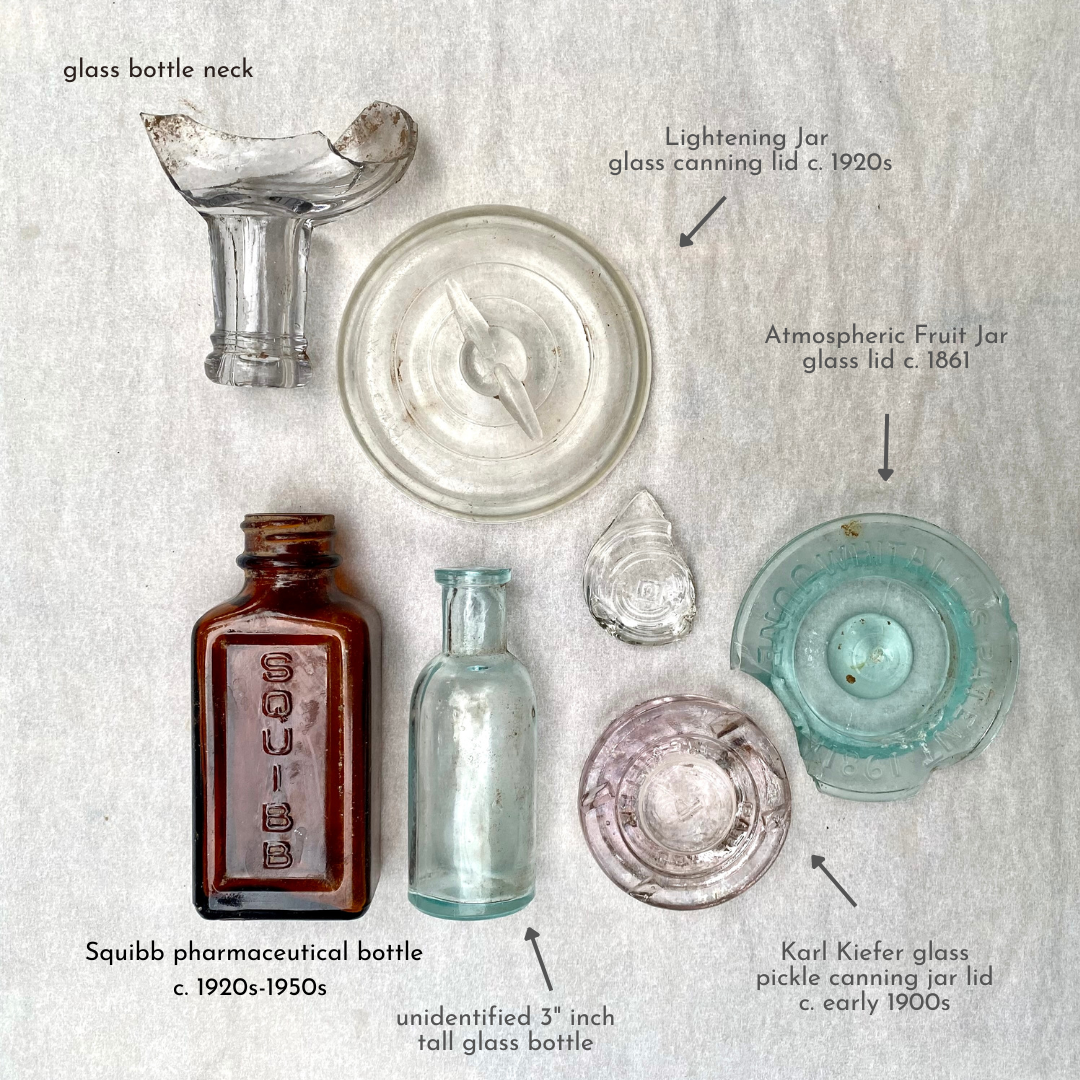
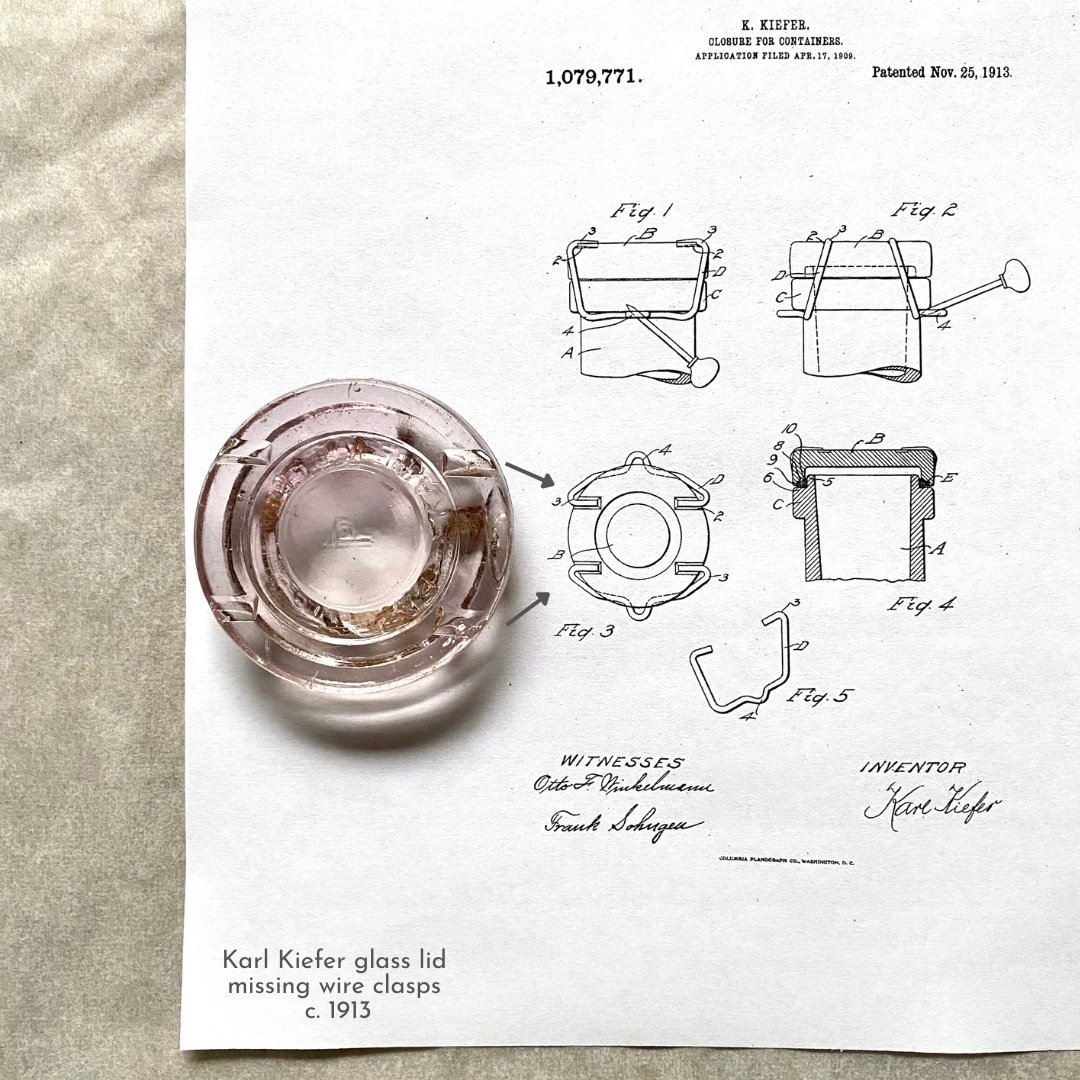
The amethyst glass lid might have been part of a pickle canning jar. It dates to the early 20th century. The lid was made by Karl Kiefer Machine Co. in Cincinnati, Ohio, sometime around 1913. It contains a unique design with an embossed circular center and four impressed notches. Included on the glass top are the words Karl Kiefer Patented with a letter P in the center. Karl Kiefer immigrated to Ohio from Worms, Germany, in the 1890s and set up his machine, glass, and equipment manufacturing company in Cincinnati in 1908.
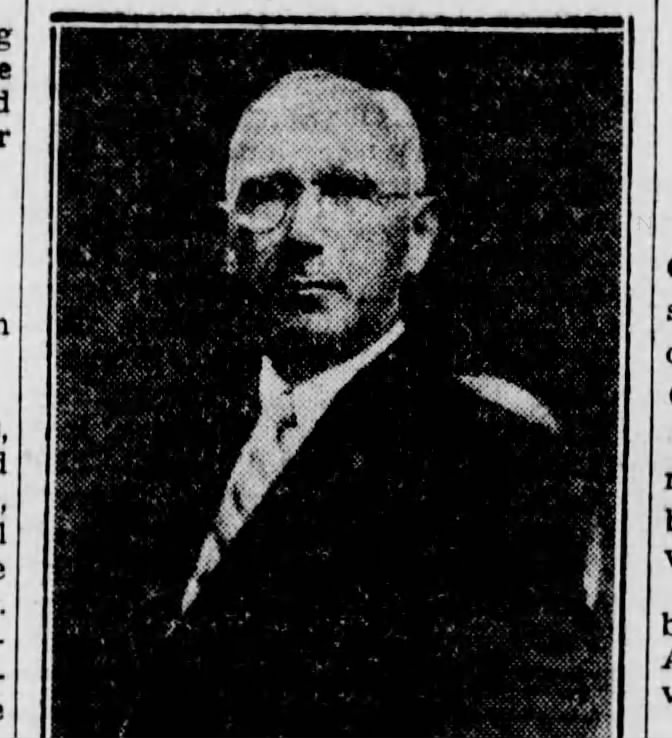
Karl Kiefer

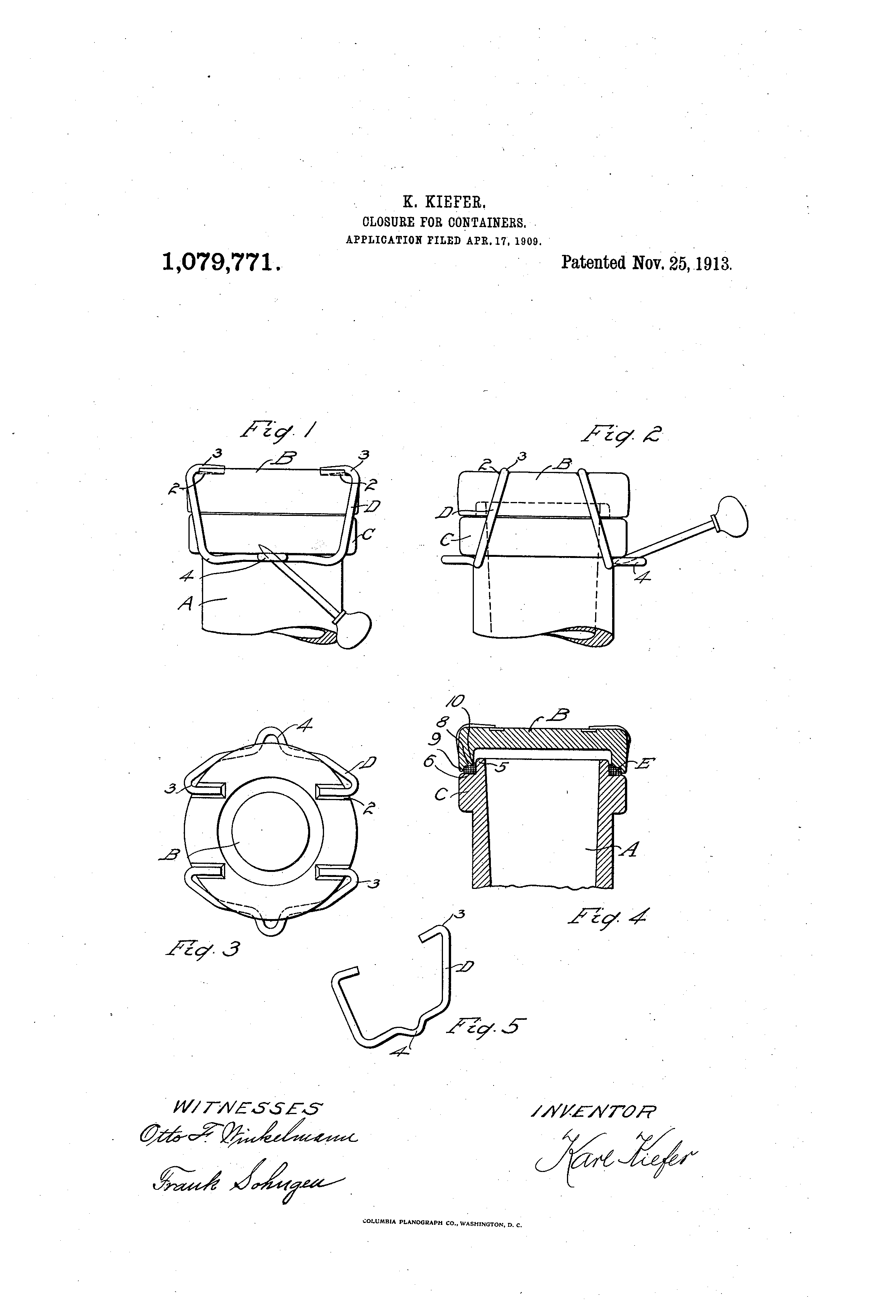
A noted inventor, Karl held over 127 patents throughout his life, all revolving around industries and inventions related to food, mechanical equipment, and chemicals. The style of lid that I found in the Pit was made to fit a unique two-clasp style wire and bale closure system, which he patented in 1913. Below is his original patent drawings for the lid and clasp closure. Although I have yet to find the metal clasps in the dirt, in the second photo, you can see how the glass lid found in the Pit matches the drawing exactly.
The second glas lid I found is a really pretty shade of aqua. It was part of a Millville Atmospheric Fruit jar and is marked with the patent date June 1861. This is the oldest object in the Pit that I have found so far. It was made by Whitall, Tatum & Company in Millville, New Jersey, during the Civil War years. Attached with a thumbscrew metal clamp, once sealed, the jar had a very primitive aesthetic and closely resembles an antique ice hook.
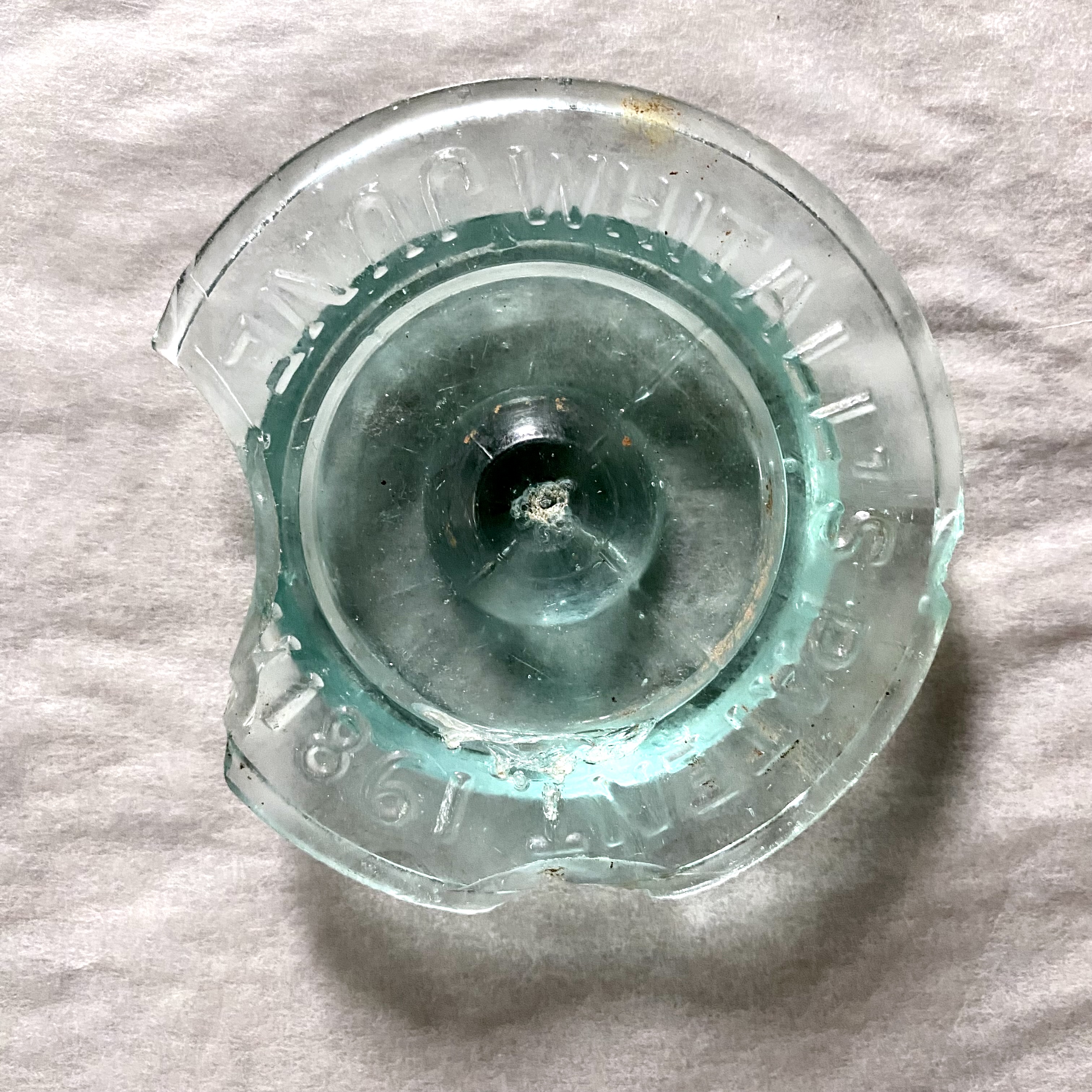
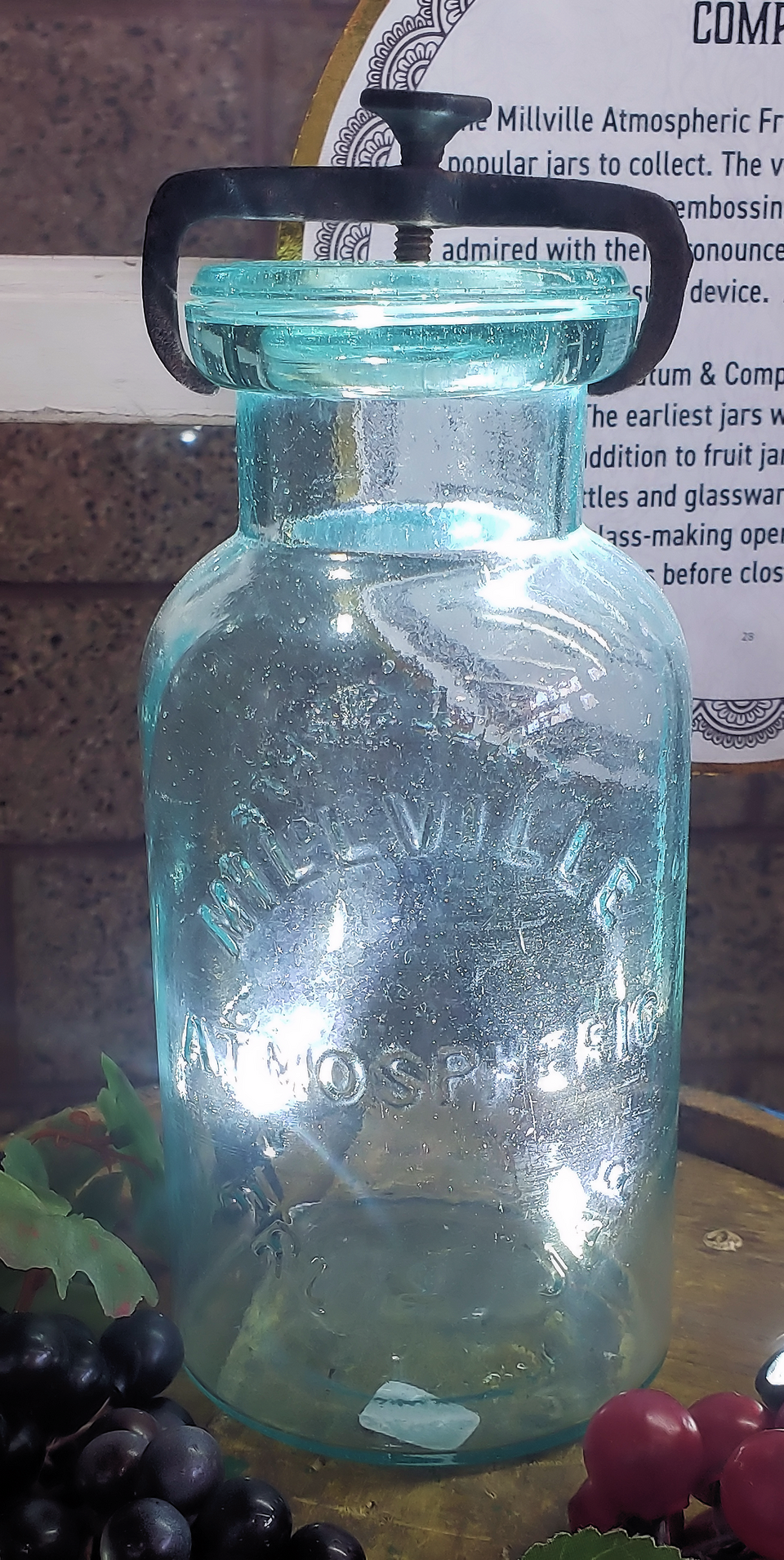
Image Credit: Eric Polk, Orange County Fair, Costa Mesa, CA 2022

I haven’t found the clamp or the jar portion in the Pit yet, but maybe I’ll be lucky and find both. I did, however, find this fun midcentury newspaper article from the Journal Gazette and Times-Courier in Mattoon, Illinois, about a woman in 1951 who still had her mother’s Millville Atmospheric Fruit Jar full of cherries that was originally canned in 1880.

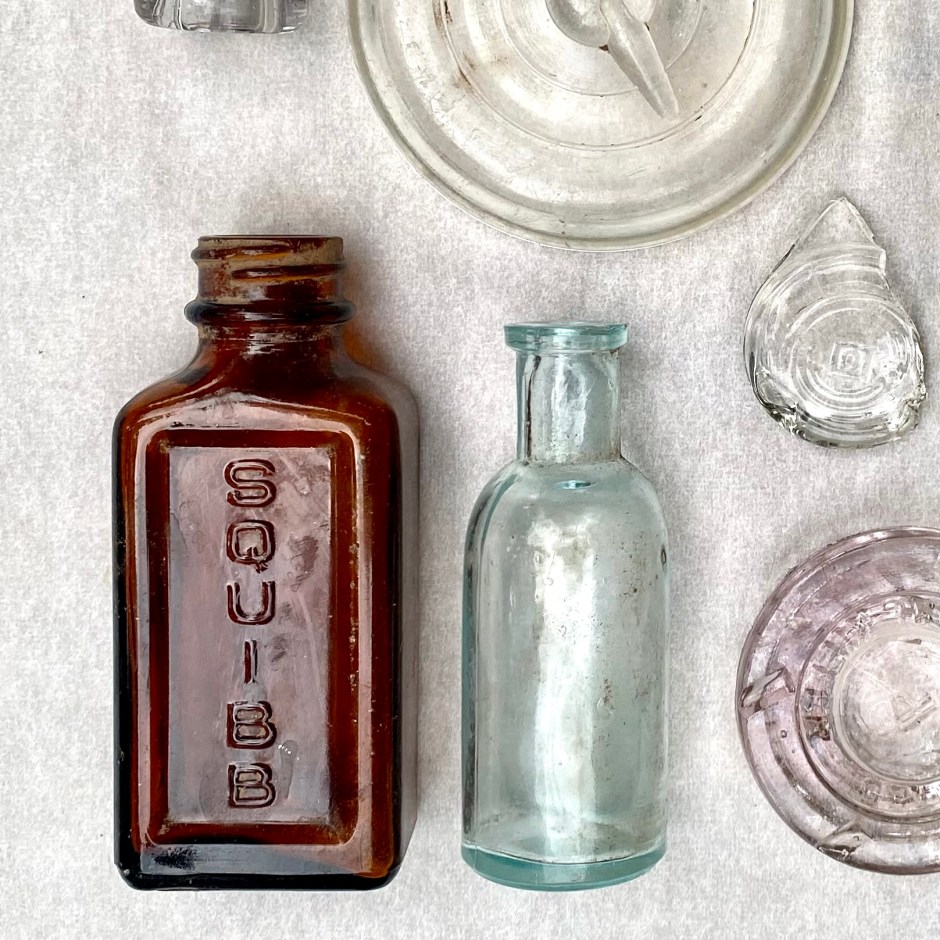
A testament to durability in more ways than one, vintage and antique glass holds up really well over time in the dirt, especially if left in whole pieces. Other finds this week included a clear glass lightning jar top from the 1920s, a whole, fully intact amber Squibb pharmaceutical bottle, and a small 3.25-inch unidentified turquoise bottle.
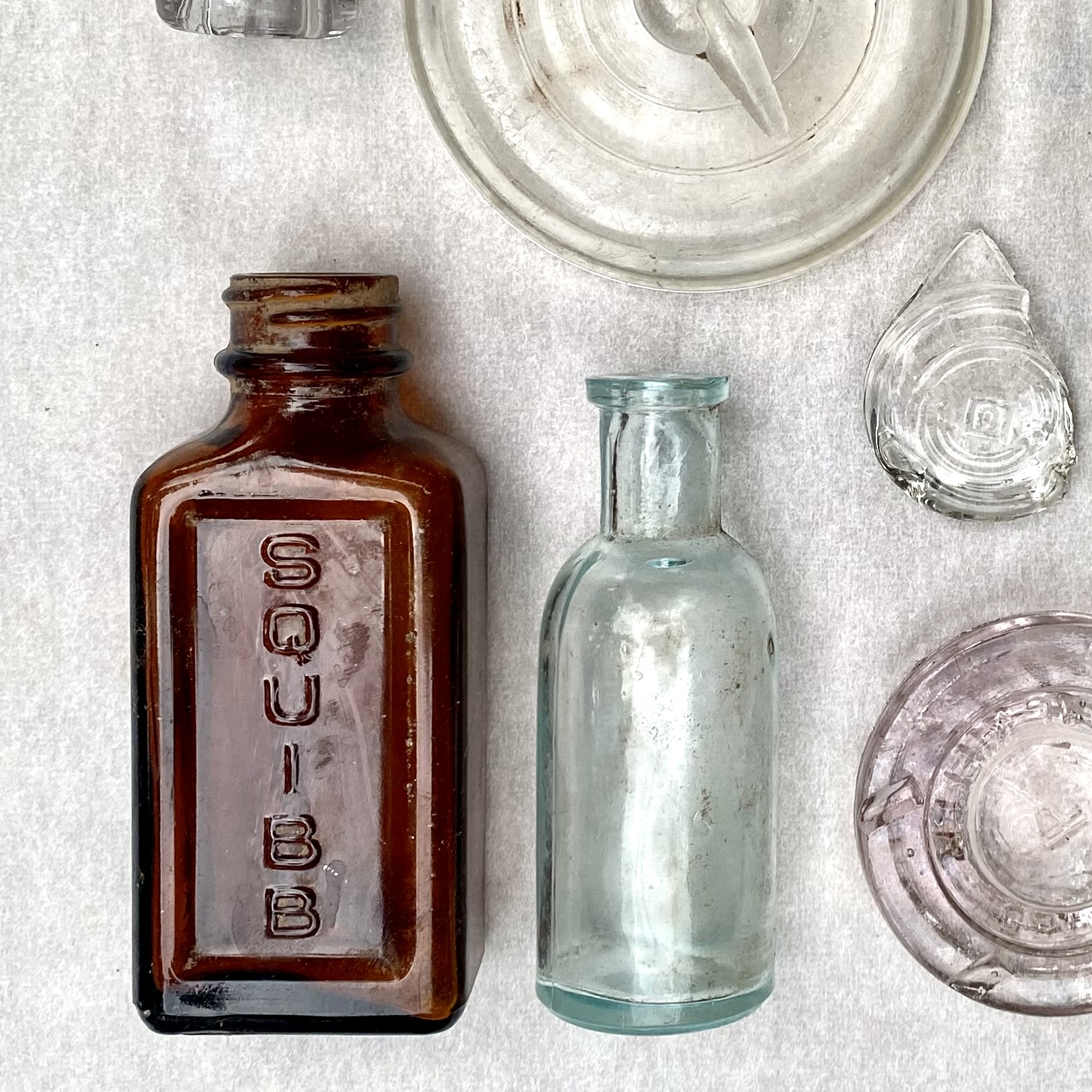
The Squibb bottle dates to the 1930s-1950s era, and tells the story of the birth of the modern pharmaceutical industry in America. What we now know as Bristol-Myers Squibb Pharmaceuticals was first E.R. Squibb & Sons, founded by Edward Robinson Squibb (1819-1900) in Brooklyn, New York.
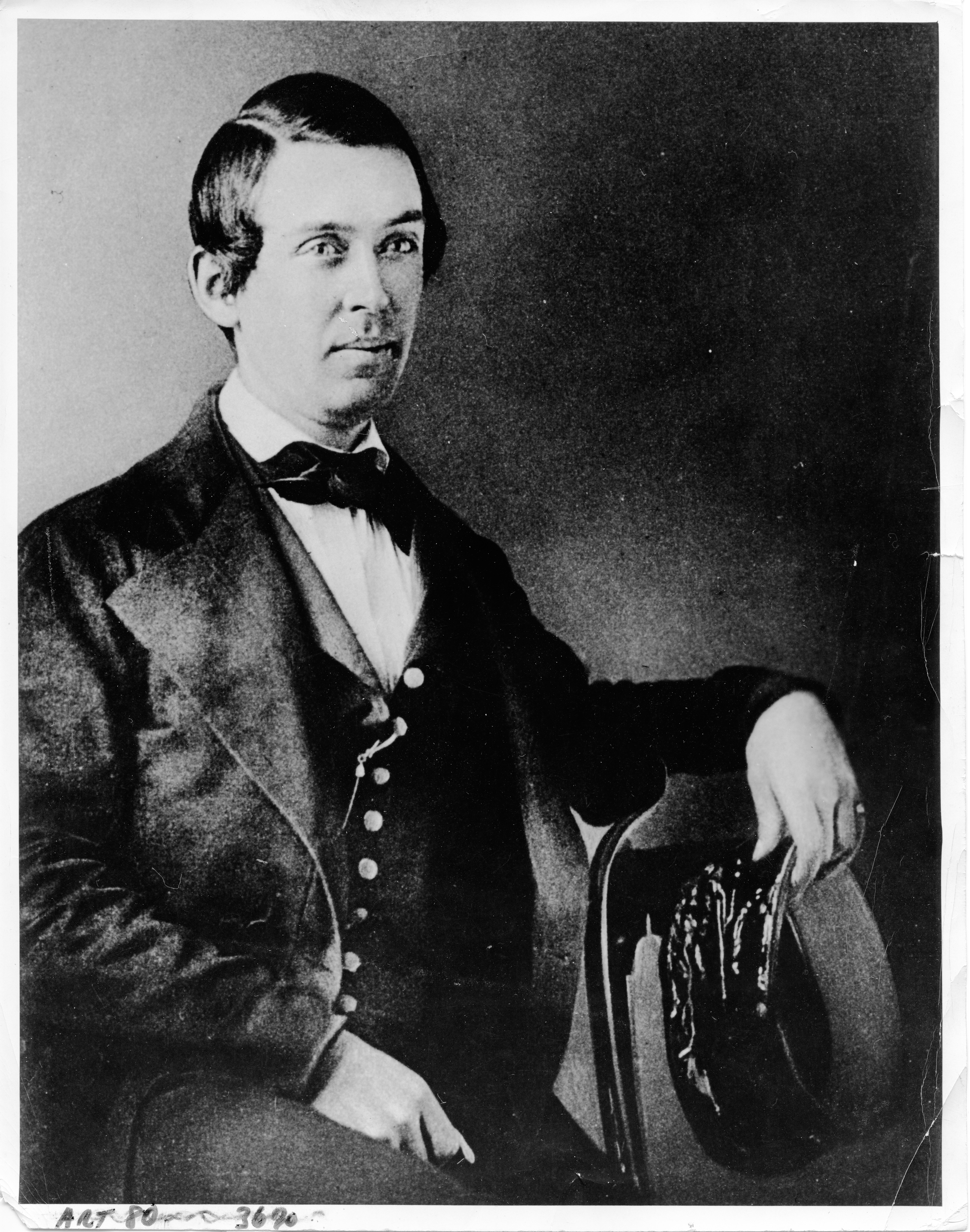
Edward Robinson Squibb

After seeing 4/5ths of his immediate family pass away before he was 12 years old, Edward set his sights on a medical career. As a surgeon with the US Navy during the Mexican-American War, he was witness to the ineffective, low-quality, and not-quite-appropriate medications being used to treat patients. Following the war, he set up a lab in Brooklyn in the 1850s to experiment with making pure, highly effective medications for pain relief and anesthesia in order to improve the health of soldiers and citizens. Starting with ether and progressing from there, Edward’s medically sound, highly effective remedies turned out to be lifesavers for the Union Army during the Civil War and made Squibb a household name known around the world. By the 1920s, when the brown bottle that I found in the Pit was made, Squibb was a staple in household medicine cabinets around the country and was producing over 30 different types of remedies and wellness products for retail and medical industries.

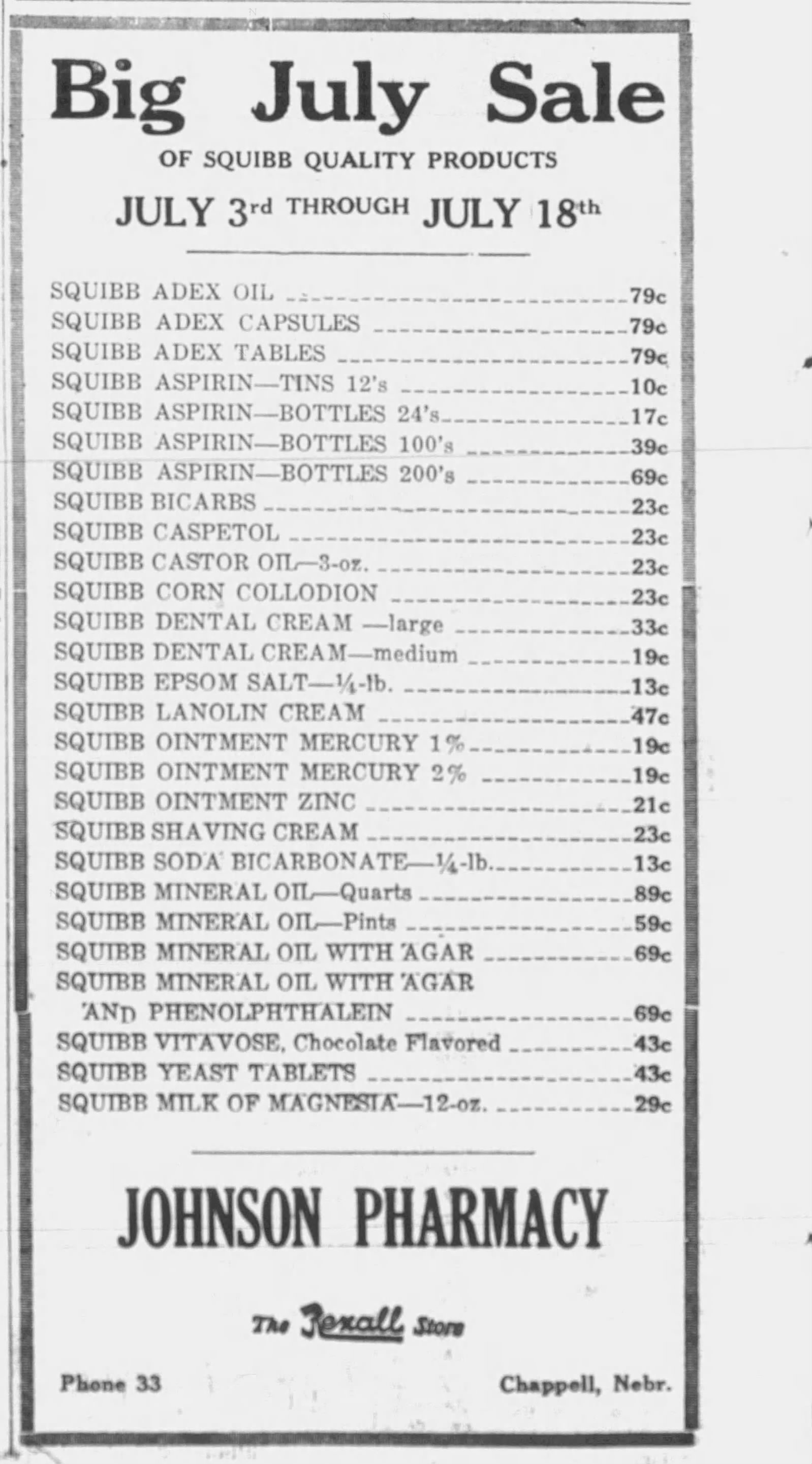
Below are two advertisements from the 1930s that highlight Squibb’s vast catalogue of products. It’s interesting to note that Edward gave away his patents for free and was more interested in solving problems and healing the sick than making money from his medicines. The brown bottle I found in the Pit most likely held mineral oil or aspirin.
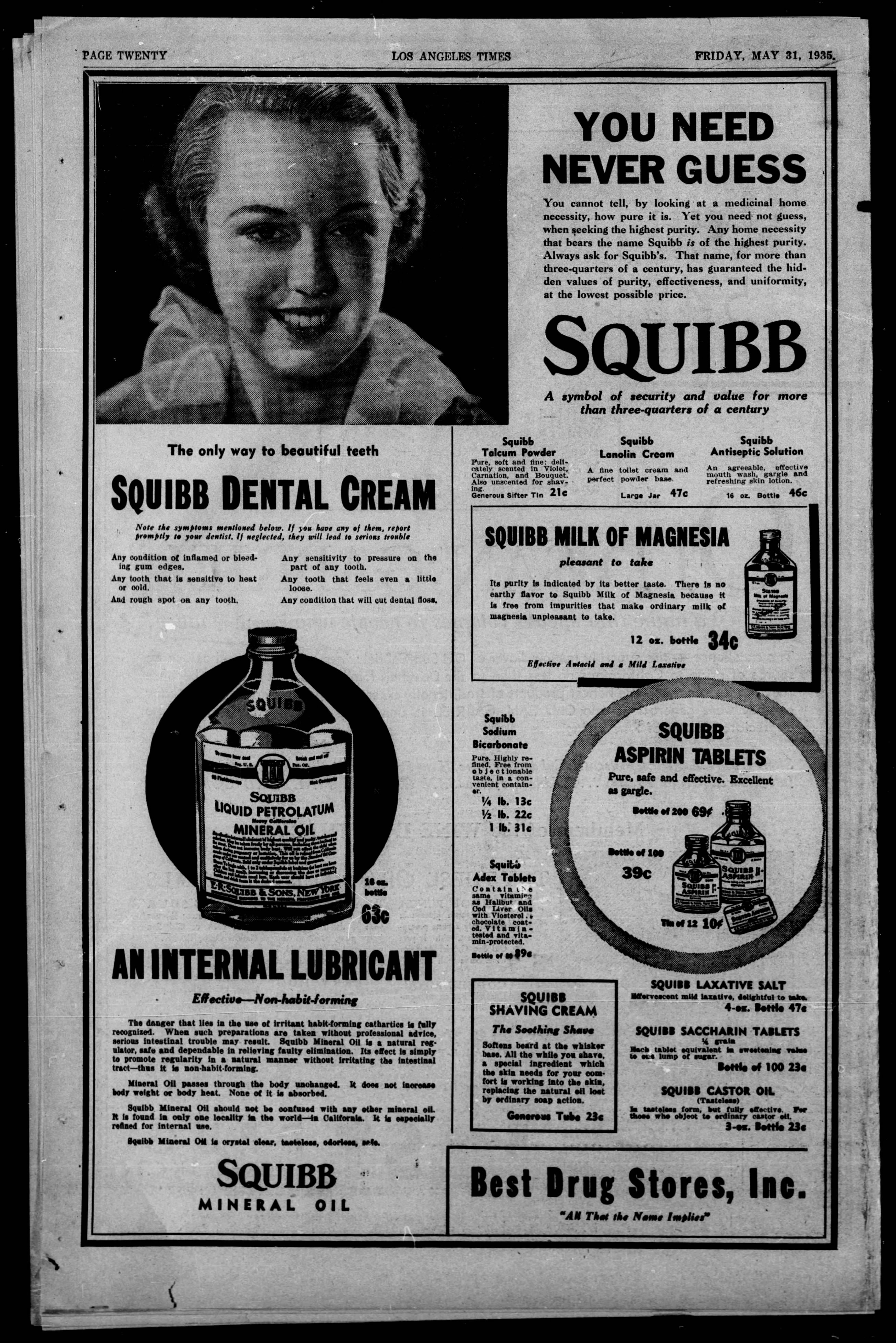
The Los Angeles Times, May 31st, 1935

Chappell Register, July 2nd, 1936

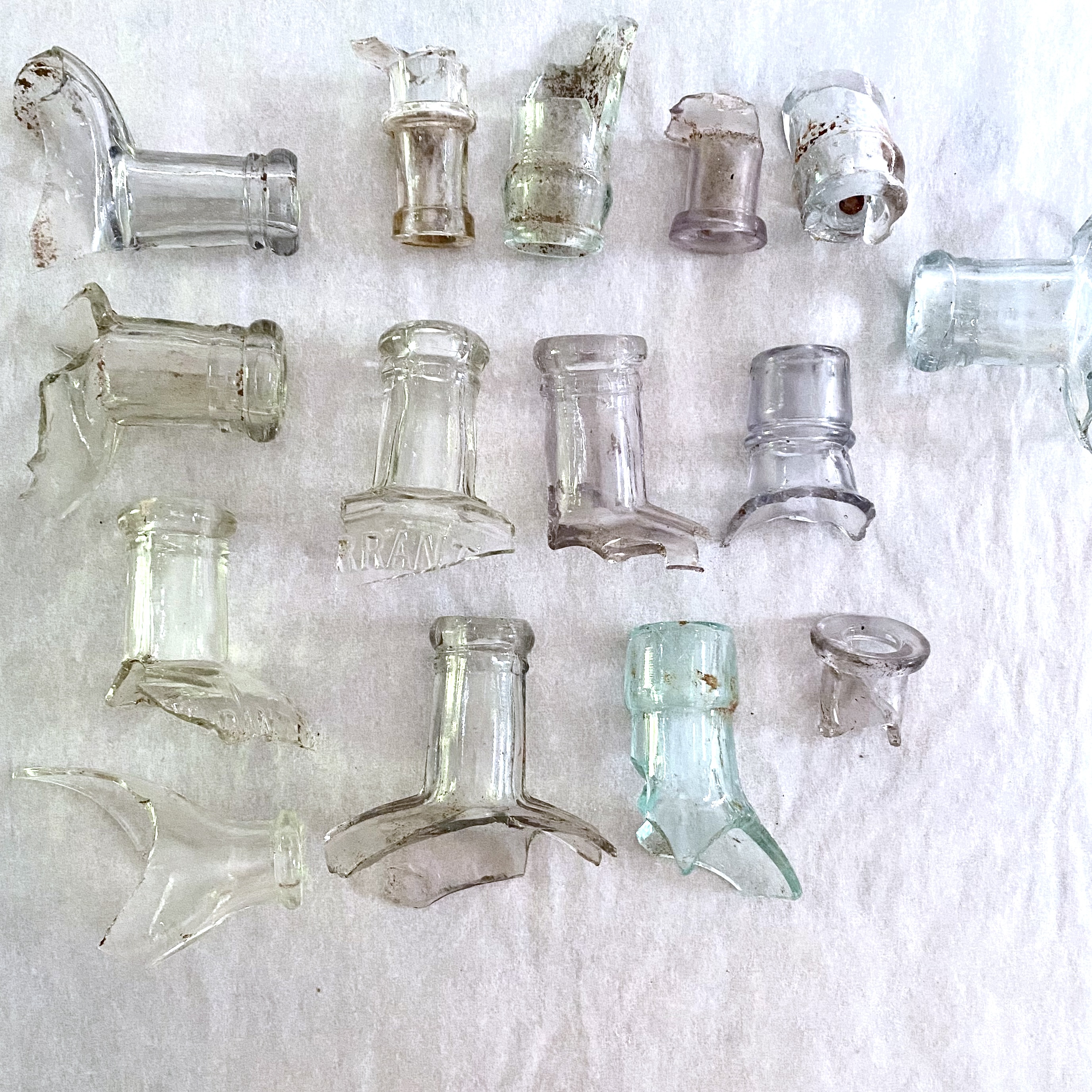
Glass in all shapes, forms, and colors has a constant presence in the Pit, and along with all white ceramic pieces is the most common and prolific thing unearthed. Aside from the exciting finds of whole bottles and glass lids, about 90 percent of the glass found in the Pit is broken into small slivers and shards, so these pieces are not saved unless it is a fully intact glass bottle neck. I have an idea for these for a future project that involves filing down the jagged parts to a smooth edge in order to make a peg-style knob rack for hanging kitchen linens. I’ not sure if what I’m imagining is going to turn out well in reality, but it would be a fun and functional way to display this colorful collection. So far, fifteen have been found…
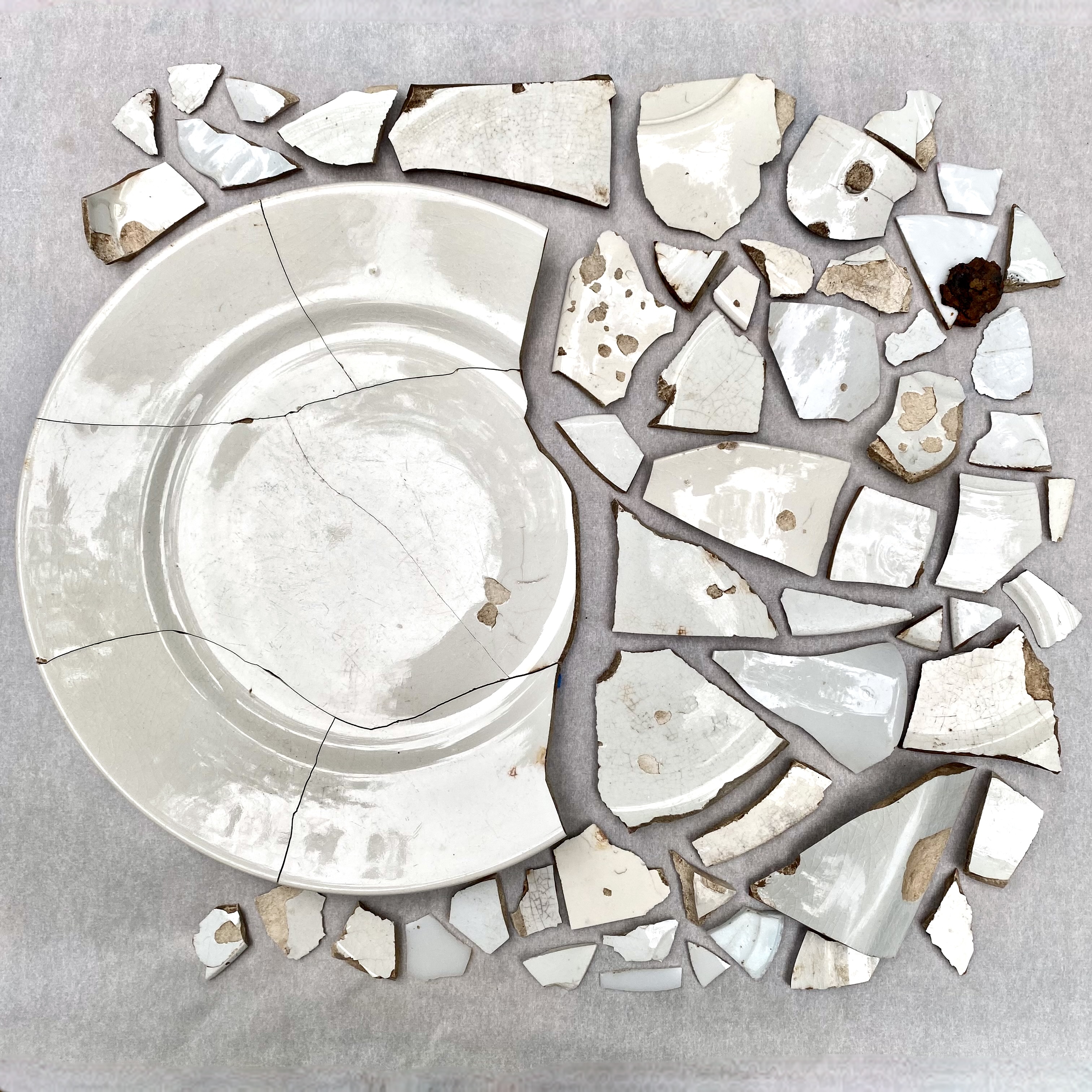
Also newly pulled from the Pit this week: more all-white ceramic pieces, including six big chunks of a Homer Laughlin salad plate, complete with a backstamp dating to 1936. Finding it in big segments made it easy to fit it back together again…
More ceramic pieces for the brown and white floral collection were found this past week too. These latest additions yielded the opportunity to start fitting some of the pieces together in order to form a whole object. This one will most likey turn out to be a sugar bowl, a creamer, or a teacup.
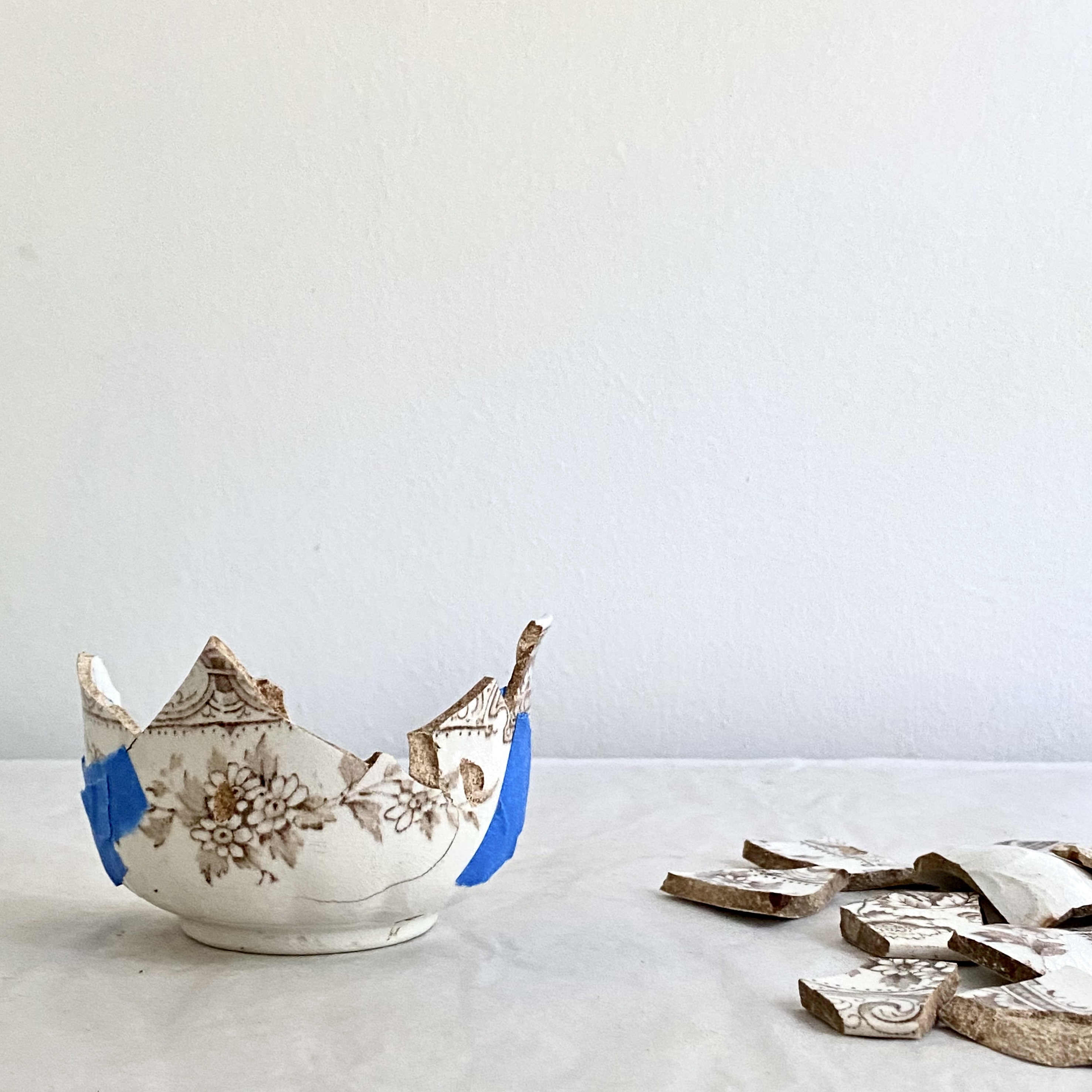
Possibly a teacup or a sugar bowl.

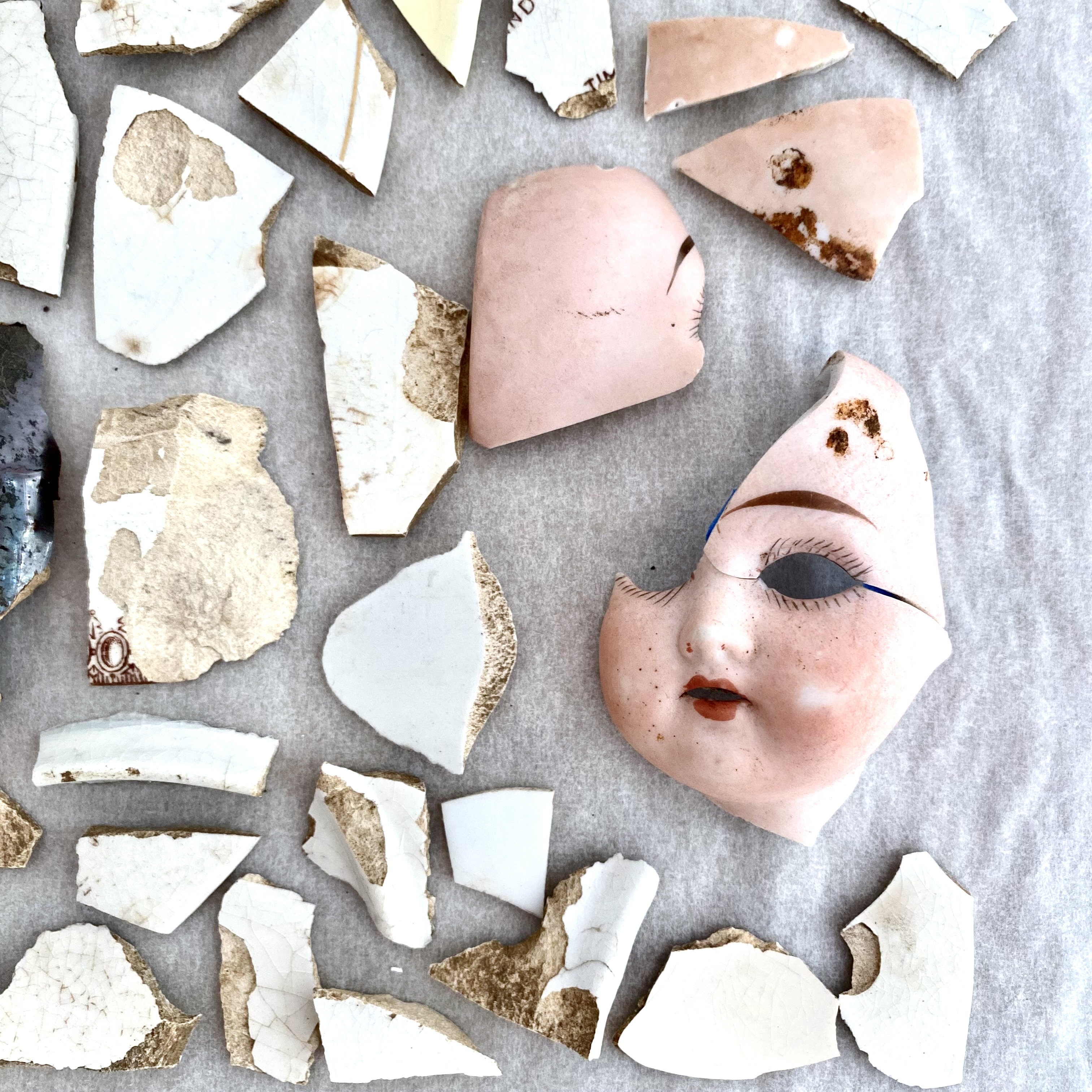
It was also a great week for finding more patterned ceramic shards and two more pieces of the porcelain doll head. Now I can start to reassemble her face…
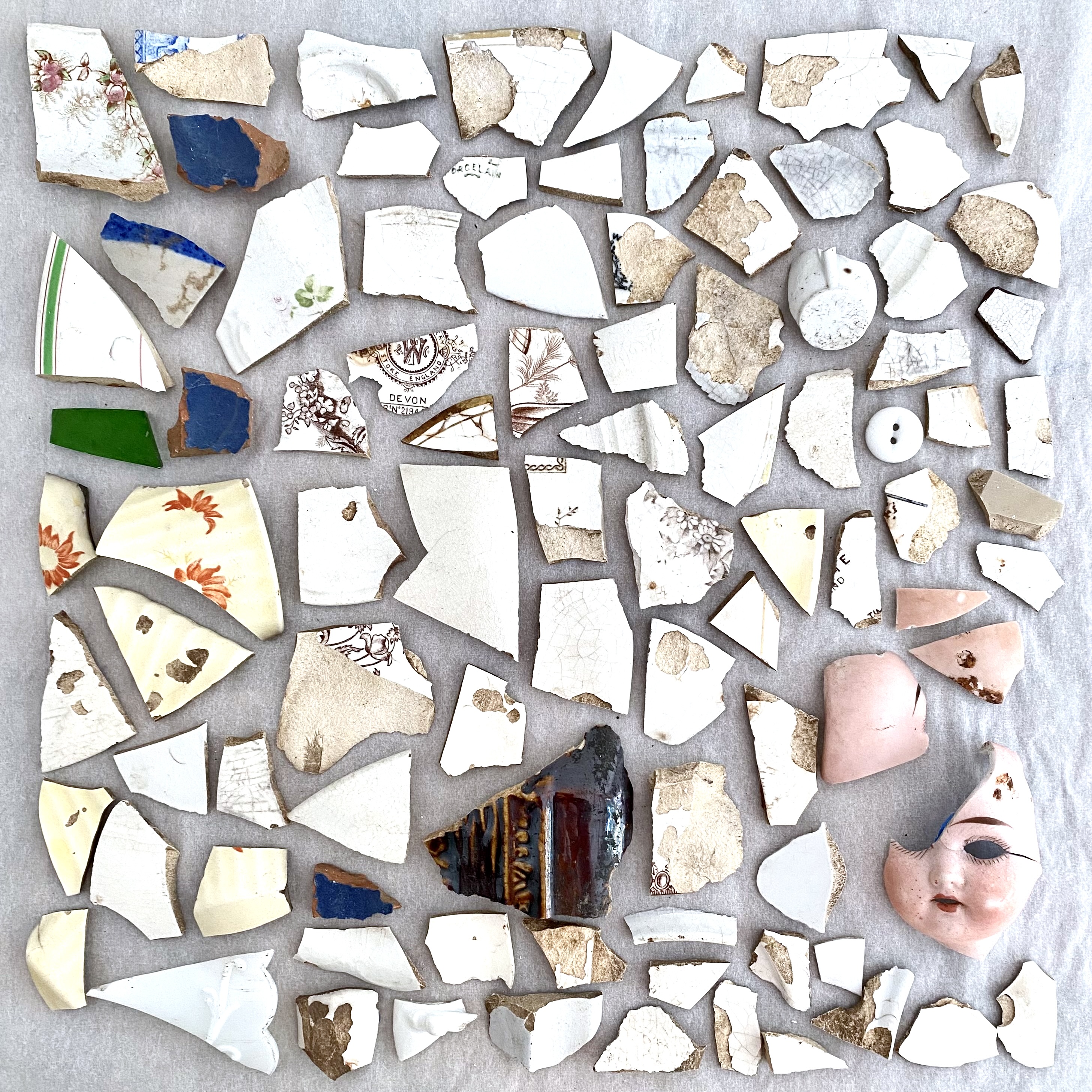
A few big chunks of stoneware pulled from the dirt last Thursday proved to be exciting finds, too. Especially for the crock. In the last post, the stoneware crock (on the left) looked like this…
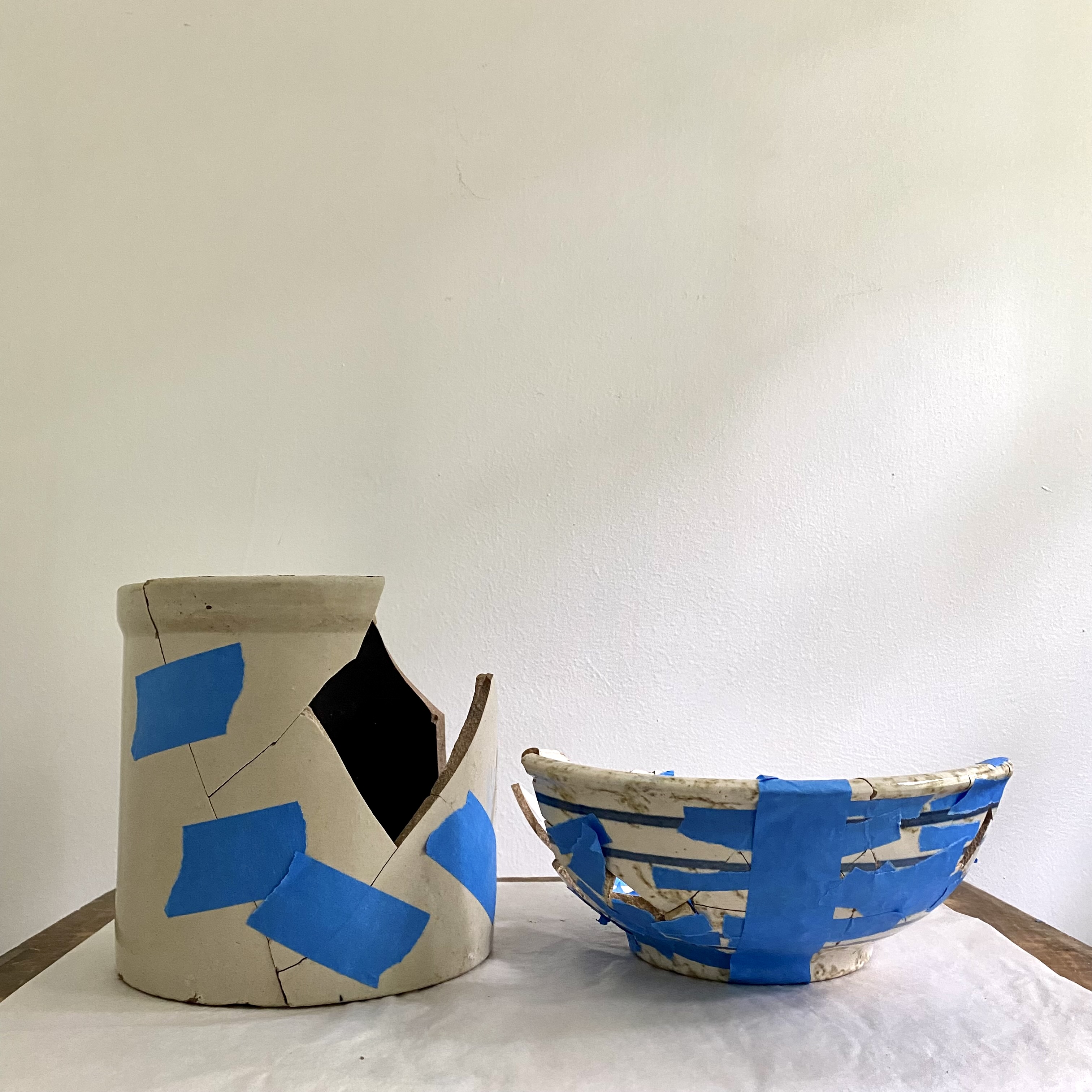
With the inclusion of the new pieces found this past week, today, it looks like this…
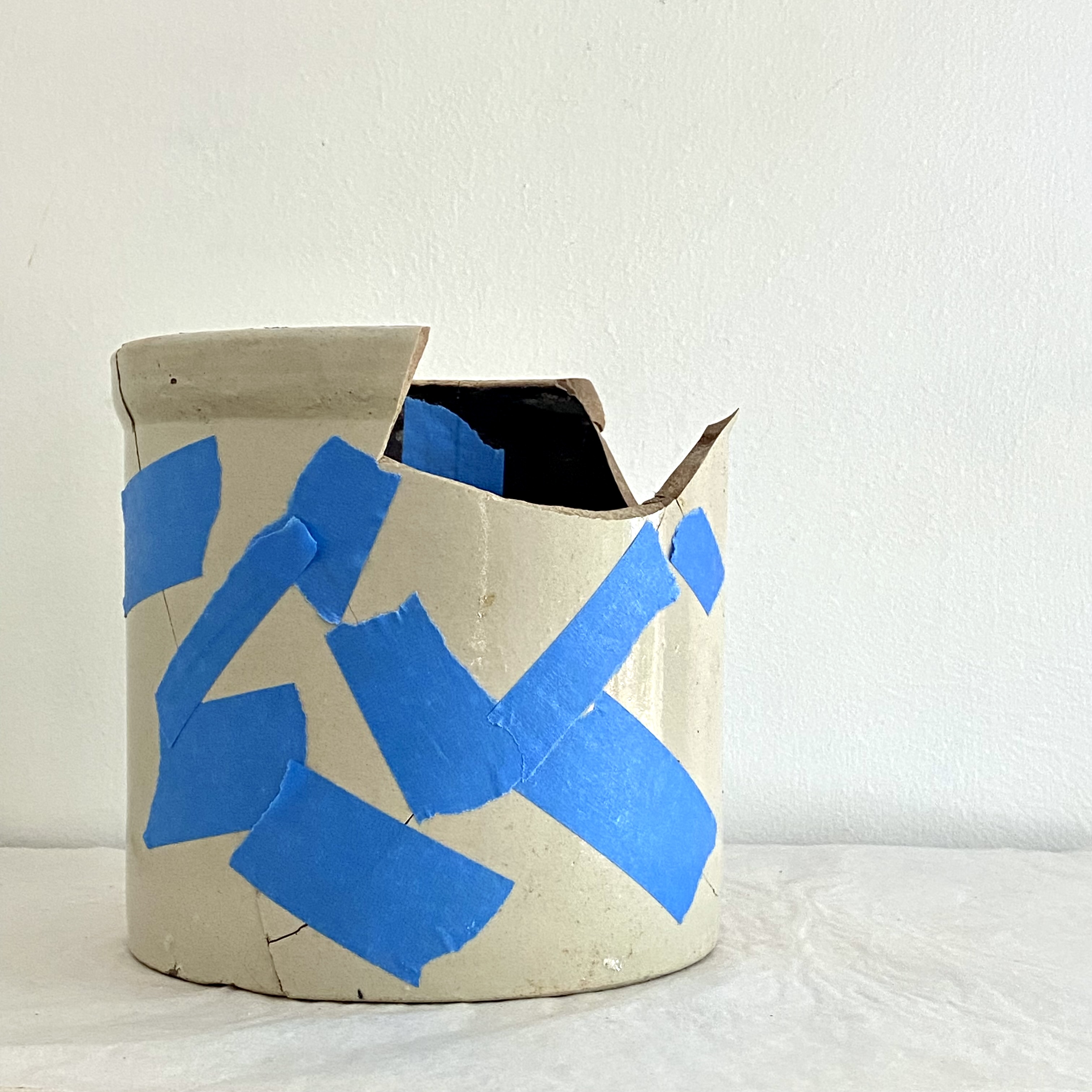
Just a few more shards to go!

When it comes to ceramics, I never assume that I’ll be able to find all the shards in the Pit to create an entire piece again, but it is exciting and also gratifying to be able to fit these old items back together again in order to see how they originally appeared. This is sort of like piecing history back together, too. The past is so full of broken bits of information and sporadic experiences. Stories from history just don’t generally tend to unfold in complete detail and understanding as from start to finish. It takes a lot of effort and insight (and oodles of research) to get the full story right. I find it very interesting that things found here in the Pit contain manufacturing dates from the 1860s all the way to the 1940s. I also find it interesting that remnants of shoe leather can be found nestled next to cow teeth that can be found nestled next to a delicate porcelain doll head that can be found nestled next to a five pound utiltarian stoneware crock that can be nestled next to a rusty nail or a mattress spring or a horseshoe.

We don’t often tend to walk away from events of the past with a clean break or a universal understanding of what once occurred. But piecing back together these tossed-away fragments of items found in the Pit, in some way, does offer up a greater understanding of history experienced not via reading about it in a book or seeing a setting recreated in a movie, but learning about it in real life under real circumstances via real objects. It’s a tangible way to understand that, at one point in time, it was not unusual to see teeth in your trash.

As for the lilies, the original muses of the Pit project, they are still growing strong and still being transplanted. As of this writing, I’m about 2/3rds of the way through the bed, and am happy to say that all the ones that have been transplanted thus far have taken up residence in their new garden spots in the most enthusiastic of ways. Some are even forming flower buds.
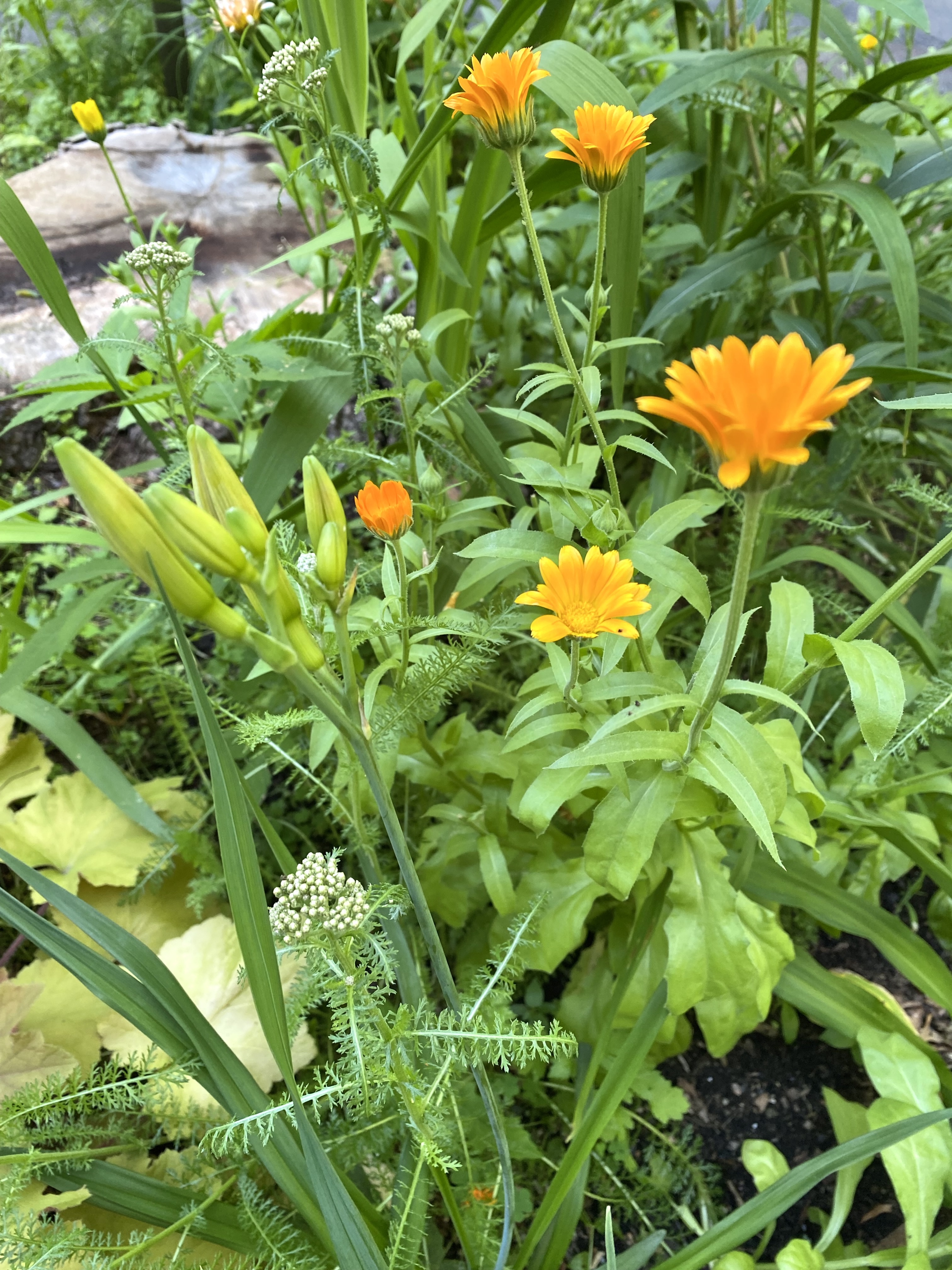
Transplanted daylilies share a bed here with yarrow, coral bells, and calendula.

Although the sidewalls have been expanded, the deepest part of the Pit still stands at 27 inches. This would be a mere top-layer sliver if it were a traditional privy, which can reach depths of 20 feet below ground. It is also still a high-line layer for a more modest trash pit, which generally tends to be anywhere from 3-6 feet in depth, so there is lots of digging and discovering left to do. In the meantime, I’ve figured out our plans to turn the Pit into a water feature once the archeological dig is complete. This is the inspiration for the finished project…

More discoveries from the Pit are coming soon. In the meantime, thank you so much for all the enthusiastic comments and emails regarding this project. I think it’s pretty exciting to be learning all about the house, the property, and the previous occupants at 1750 House in this new way, and I’m so glad that you are enjoying it too.

Until next time, cheers to the Pit and to the past residents of 1750 House for showing us more about daily life (and culinary adventures) than they probably ever actually intended.

{Note: This is an ongoing series detailing all the items found so far in a recently discovered early 19th-century trash pit located at 1750 House. If you’re new to this story, find Part One here.}

A Monumental Story of Real-Life Serendipity Told Over Many Parts: Chapter 4 – One Last Journey

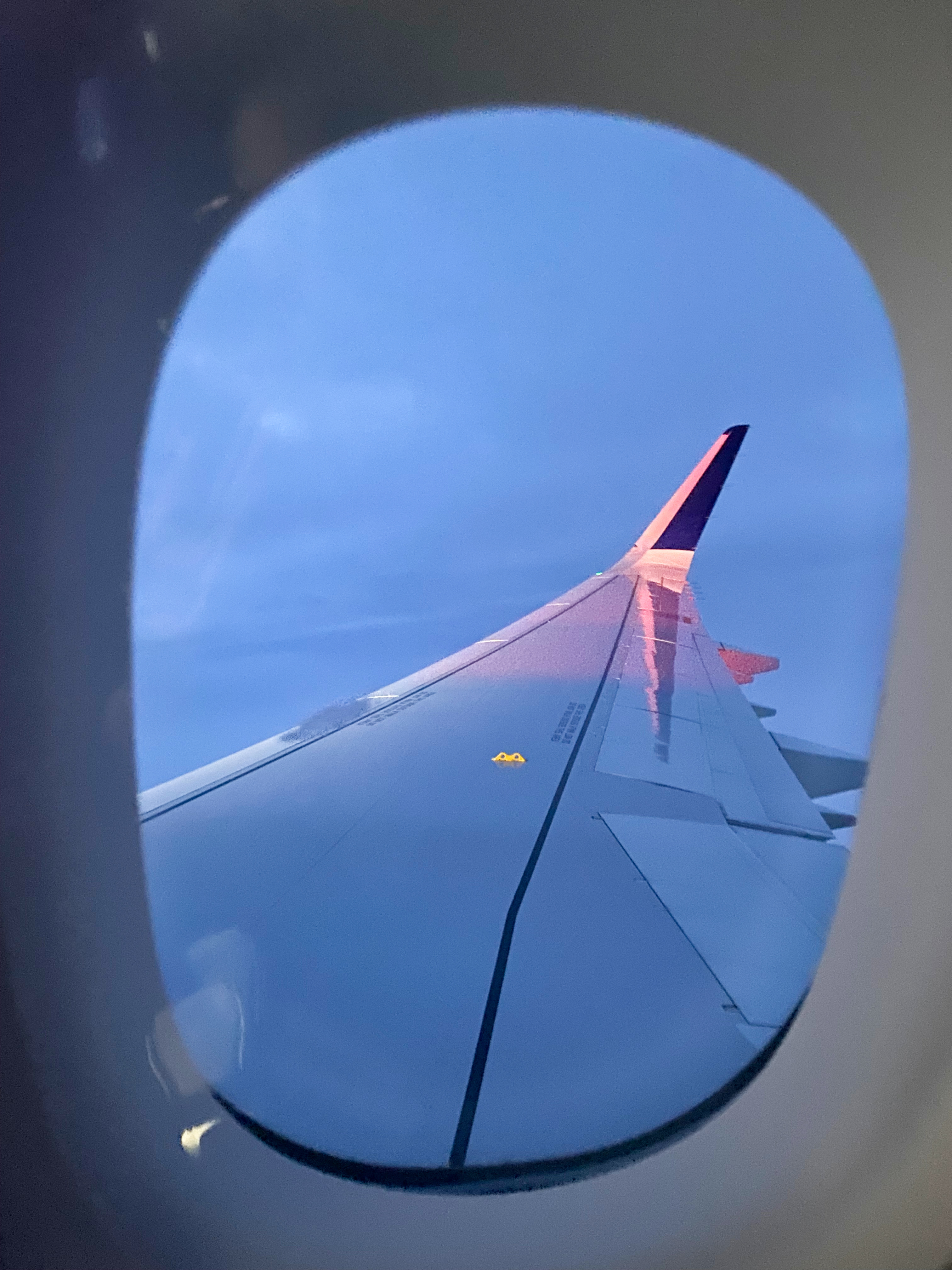
The view from seat 21A

{Spoiler Alert: This is a series of blog posts detailing the real-life story of a 100-year-old item that was lost over a decade ago and how it found its way home in 2024. Follow along from the beginning of this story at Chapter 1: It Arrives.}

This part of the lost item story is about numbers. Not numbers relating to complex math or phones or registry digits, but numbers that have to do with time and distance. So far, with the unfolding of each chapter of this Monumental Story of Real-Life Serendipity Told Over Many Parts, we have learned bits and pieces about the lost item and how it came to wind up in the hands of the Vintage Kitchen. We learned how it arrived, who sent it and what part of history it involves. But we haven’t yet discussed the numbers, and they are quite important to the overall timeline of this intriguing item. So let’s look…

  • 104 – that’s the age, in years, of the lost item
  • 6,544 is the number of miles the item has traveled
  • 7 is the number of states that the item has spent time in
  • 3 is the number of major life-altering world events that could have completely destroyed the item and any link to its history over the past 100 years (those being the Great Depression, World War II and the Covid pandemic)
  • 25 – that’s the number of people that are all connected to the item
  • 29 is the number of months it took for the Vintage Kitchen to arrange to get the item to the place where it belongs
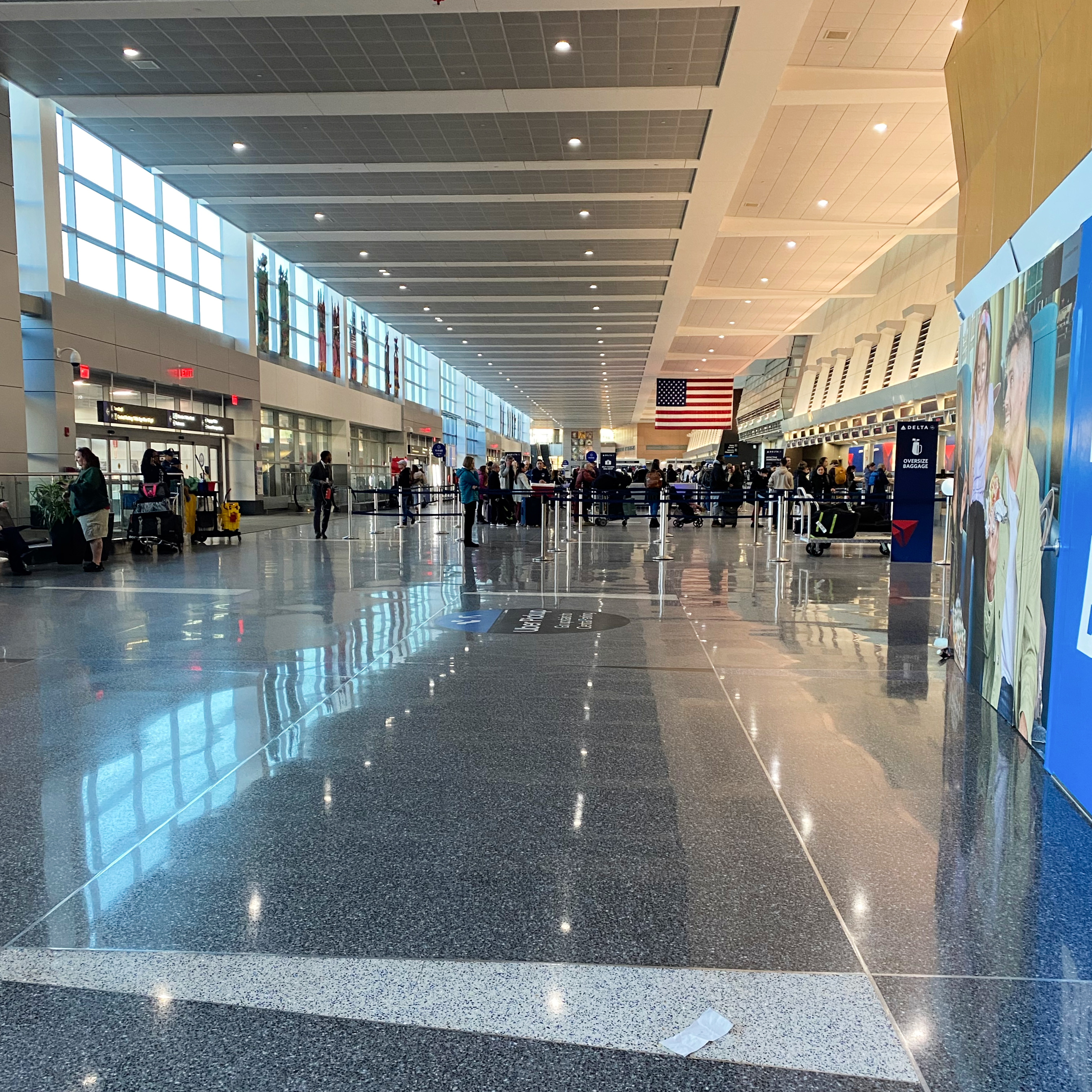
At the airport

Transportation to its final destination was another set of numbers. That involved 3 cars, 1 plane, 1 bus and 1 boat. In its original cardboard mailer of medium thickness tucked inside a cloth shoulder bag, the item traveled in seat 21A on the plane and Lane 1 on the boat. This last round of Vintage Kitchen transporting from here to there required 5 different types of travel tickets, 1 Airbnb, 3 highway tolls, 2 parking garages, 1 security checkpoint and 1 wild landscape. But the most important set of numbers in this whole post are 2008 when it was lost and 2024 when it finally made its way home.

On the boat

On 01-02-24, after 29 months spent in the hands of the Vintage Kitchen and 13 years spent in the care of kind-hearted Angela, the item embarked on its final journey via car, plane, bus and boat. Four days later it found the place where it belonged. It finally found its home.

Which city was the item headed to? For all you armchair detectives out there, our final destination is included in the Departure board.

Time is a weird and wonky master. It controls, records, rewards everything in our lives. Whether it’s minute with the tick, tick, ticking of seconds slowly passing by or an expansive stretch of milestones that cast long shadows over the course of a lifetime, time is always there to mark the moment. In this case of the lost item, timing, like the cliche suggests, is everything. It’s numbers on a clock, numbers on a calendar and numbers in a family. Without time, this story wouldn’t have been as meaningful. Without a significant sets of numbers all related to time and to fate, this situation from history wouldn’t have been remarkable. It’s the numbers, the time, the distance traveled that make this story of the item lost and finally found, notable.

This is your last chance to guess what the mystery item might be. Feel free to speculate in the comments section below or send us a private message with your ideas. Join us next time for Chapter 5, where we reveal the mystery item and connect all the dots that complete this story from start to finish. We cannot wait to share the ending with you. Stay tuned.

Update!

Chapter 5 is now available. Continue reading here.

First glimpse of the final destination leading towards home.

Reading While Eating: Seven Favorite Books Discovered in 2023

Just in time, before we say goodbye to 2023, I didn’t want the year to leave without posting the annual recommended book list that has become a favorite here on the blog. This year’s selections center around nature, literary figures, artists, the art of collecting, and the curation of home in all the ways that make it personal and unique.

As is the way every year, these books were randomly discovered while doing research for other projects. They popped up while uncovering origin stories for shop heirlooms, researching story snippets for the blog, or understanding context surrounding a vintage recipe.

Serendipitous in their arrival on the bookshelf, yet ironically all connected via some common themes, these books were new to me this year but not newly published this year. The oldest one in this batch hails from 1979 and the newest one debuted just last year in 2022. All deal with historical subjects in one way or the other, but each one brings a very unique and fresh perspective to its subject matter. They take us on adventures from the wild beaches of coastal Massachusetts to an out-of-the-way antique shop in Mexico. We are introduced to a famous performer’s real-life home in California and a fictional version of a real-life literary figure’s farm in Georgia. They feature one Ernest, two Barbaras and three oranges. There’s eccentricity and domesticity, color and craft. But above all, there is captivating storytelling right from the first page. Let’s look…

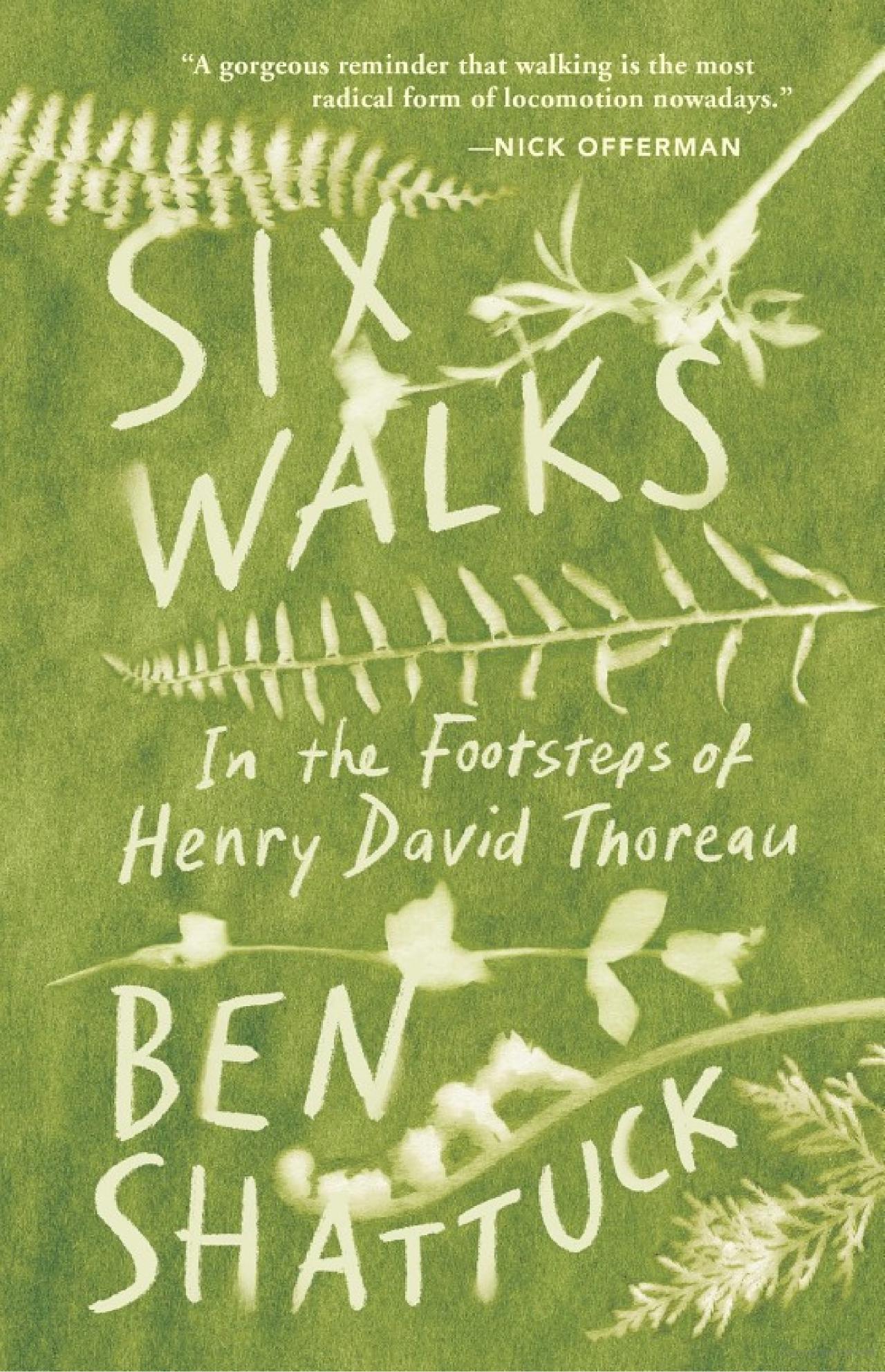
Six Walks by Ben Shattuck (2022)

What is it like to walk in the footsteps of Henry David Thoreau? Do you see the same trees, smell the same air, touch the same ground, feel the same breeze? Henry lived and wrote and walked around the woods in Massachusetts over one hundred years ago and the impact it made on his life made his life. During the pandemic, trying to process a breakup and a general malaise that hovered over his thoughts like unsettled storm clouds, Ben Shattuck rediscovered Henry’s journals. Henry’s words so inspired Ben that he set out to see the world through “someone else’s eyes for a change,” hoping that he might gain some new perspective to help him past his grey days.

Henry David Thoreau (1817-1862)

Following six of the same walks that Thoreau once took in the early to mid-1800s, Ben was searching for a new perspective, and a new understanding on life, love, and his place in it. For Henry, the walks were about looking at nature, about describing his surroundings, and about drawing comparisons between the natural world, human evolution and the emotional and spiritual impact on both. For Ben, walking was a form of therapy to help him move past some darker days, all the while submerging himself in the comfort of a favorite writer’s words and viewpoint. What results is this incredibly gorgeous book about nature writing, about escapism, about processing emotional trauma, and about seeing the real beauty that surrounds us every day.

On the walks, Ben meets an interesting array of characters. He goes in search of his ancestral homeplace, canoes down rivers that feel wild and untamed, and walks down long stretches of the beach until his feet are bloody and blistered. Funny, tender, thought-provoking and beautifully written, Ben’s perspective and lovely turns of phrase are just as illuminating as Henry’s. Part travel memoir, part therapy session, part sketchbook, Six Walks is one of the most beautifully written books about journeying that I’ve read in a really long time.

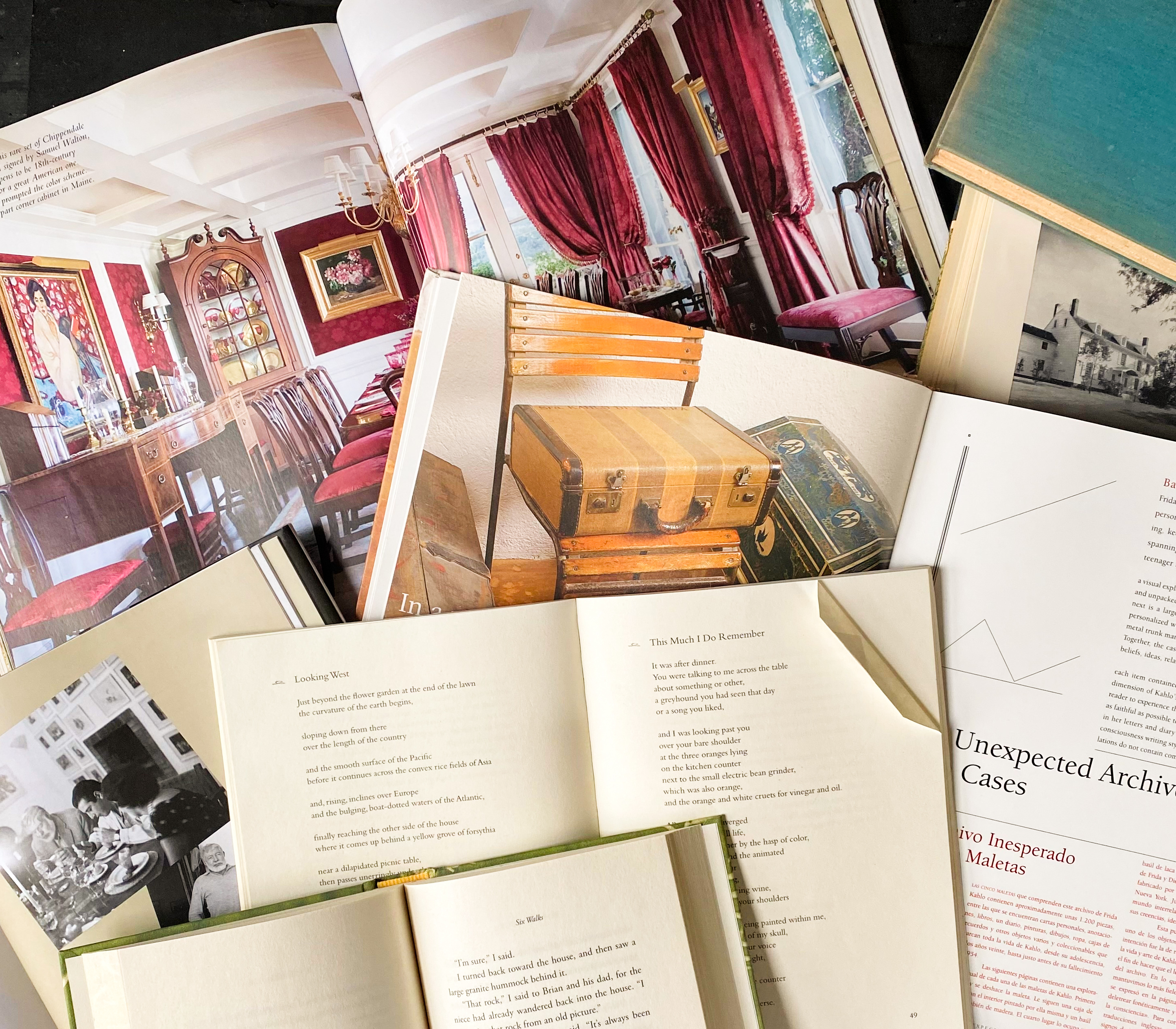
Finding Frida Kahlo – Barbara Levine (2009)

Written in both English and Spanish, this book is a fascinating portrait on the act of collecting and the art of curating. Finding Frida Kahlo is the true story of discovering a set of trunks belonging to Frida Kahlo in a Mexican antique shop. The woman who discovered these historical heirlooms was Barbara Levine, a former exhibitions director at the San Francisco Museum of Modern Art who had recently moved to Mexico and was trying to assimilate into the culture. A trip with a few friends to an out-of-the-way antique shop led to the discovery of several trunks belonging to Frida Kahlo each filled with all sorts of her treasures – clothing, paintings, recipes, letters and personal heirlooms.

Image of the trunks from Finding Frida Kaho by Barbera Levine.

This discovery started a storytelling chain that is movie-like in scope and plot, unfolding all the unusual circumstances that led to the ultimate understanding of how trunks from one of the world’s most revered, most studied, and most collected artists could possibly have wound up quietly sitting on the floor of an antique shop practically unnoticed. Throughout the story, there is Barbara’s commentary on the processing of the collection, interviews with the antique shop owners, the detailed history of communication with the collector who held the suitcases originally, and consultations with the Fridos (the last remaining group of artists and writers who personally knew Frida Kahlo). I won’t share any more of those details here so as not to spoil the pacing of the story, but only to say you’ll be engaged right from Barbara’s first sentence… “I have long been a collector.”

Non-spoilers aside, Barbara tackles her discovery with a museum curator’s mindset, methodically documenting and photographing each item in each trunk with an unbiased approach. Frida’s objects come to life on the page. And in turn, Frida herself comes to life. You can see her handwriting, her diary entries, her sketches. You can see her clothing, her scrapbooks, her trinkets. You can see the weathered wood of the trunks in exquisite detail. There’s fabric and masks and stuffed taxidermy. There are recipes for Chicken Fried with Garlic in Peanut Sauce and another one for Spicy Salsa (more to come on that front in 2024). There are graphic, grotesque medical drawings of bloody amputations and beautiful brightly-colored paintings of birds and flowers. All along, these heirlooms are accompanied by Frida’s handwriting and you come to understand how all these objects formed her heart and her art.

The Mansions of Long Island’s Gold Coast – Monica Randall (1979)

Built by wealthy business tycoons as getaway “cottages,” trophy houses, entertainment venues, weekend retreats and flamboyant examples of architectural artistry, the opulent mansions that dotted the Gold Coast of Long Island reveal fascinating insights into American culture, wealth and folly.

Beautiful and haunting, The Mansions of Long Island’s Gold Coast spotlight incredible stories about the architects, owners, domestic staff, and modern mid-century families who all spent time in these grand estates. A book of architectural history could easily become boring if you stick with just the well-known, well-documented facts but Monica’s meticulously researched biographies, interviews with local residents, and first-hand experiences growing up in the area have brought forth only the most interesting details of each property.

Told in brief snippets, there are romantic love stories, untimely deaths, bizarre occurrences, ghostly apparitions, lavish design details and tragic degradation. House after house exposes the highs and lows of the ultra-wealthy during the 19th and 20th centuries and all that they celebrated but also all that they destroyed. Some of these estates still stand today, carefully maintained as examples of grand domesticity but many featured in this book were torn down, broken down, burned down, or fell down due to neglect and the lack of capital to maintain them. Monica captures each one in the state that she finds it in the 1970s, focusing on what they once were and what they now have become.

A Good Hard Look – Ann Napolitano (2011)

A fiction novel based in the real town of Milledgeville, Georgia, A Good Hard Look centers around an imagined recounting of the real-life writer Flannery O’Connor (1925-1964). It opens with a wedding in town of a doted daughter of the community, Cookie, and her fiance, Melvin – a wealthy New Yorker who is not used to Southern culture or the tight-knit atmosphere of small-town life. Like Nick Carraway in The Great Gatsby, we see this town, these characters, and Flannery herself through Melvin’s eyes who fully wants to commit to his new wife and his new life, but finds the peculiarities and the general mood of the town unsettling.

Flannery O’Connor’s farm, Andalusia, where she wrote her best-known books. Photo courtesy of exploregeorgia.org

The plot twists and turns, so I won’t say more so as not to spoil the story, but one of the things I loved most was all the detail about Flannery’s peacocks. As central characters in the book, you learn so much about these big, beautiful, boisterous, unruly birds who played not only a big part in the story but a big part in Flannery’s life too.

Flannery O’Connor at home with her beloved peacocks. Photo courtesy of the Atlanta Journal-Constitution, Joe McTyre

This book reminded me a little bit of Midnight In The Garden of Good and Evil mixed with the storytelling styles of William Faulkner, John Updike, and Anne Tyler. Once finished, it also prompted its own further research into Flannery’s life. Especially regarding the peacocks. Beautiful, territorial, protective and also very loud, the peacocks act as both a soundtrack and a symbol. Ann shares details on their personalities, their temperaments, and their physical presence on the farm offering such interesting descriptions of them it will leave you considering whether you should invite a peacock as a pet into your own life.

My Passion for Design – Barbra Streisand (2010)

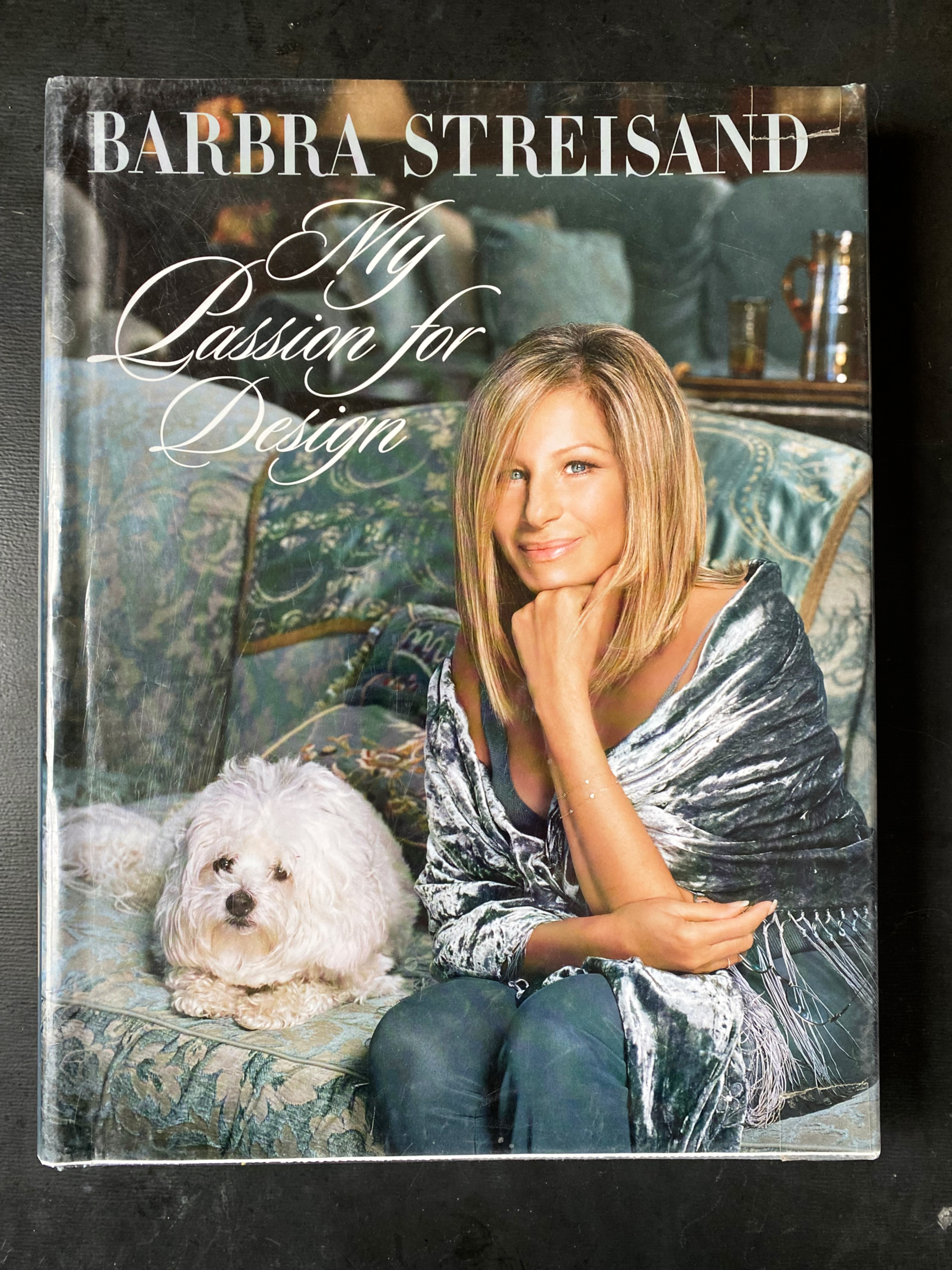
All the buzz around Barbra Streisand this holiday season concerns her newly released memoir, My Name Is Barbra, but I’d like to shine a light on another book of hers published in 2010, My Passion for Design about building her dream house in California. It’s a memoir in and of itself, but it’s also a design book showing you (not telling you) how to build and fill a space with things you love. Barbra’s not following trends here. She’s following her heart and what results is a home packed with intimate stories of how it came to be. Included at each step are a bevy of sketches and before and after photos, many of which Barbra took and drew herself.

Barbra’s front entrance to the main house.

A lifelong antique collector, a lover of old houses, and a creative outside-of-the-box thinker, Barbra’s step-by-step building project is a captivating look at her creative journey towards fashioning the ideal homeplace. Even though she references films and performances along the way, you forget that Barbra is a world-famous singer, actor and director. Here in this book, she’s simply a woman on a mission to create a space she loves. Her vision for what she wants is mostly clear, but she does stumble and change directions sometimes too, and occasionally she has to compromise when the ideas in her head can’t feasibly match a comparable reality. It’s all very relatable.

Located right on the cliffs above the ocean, with views of the water from the backyard, Barbra’s compound is a conglomeration of buildings that includes two barns, a mill house, a 1950s ranch house, and a big main house. She thoughtfully designed and decorated each space from the ground up, but she’ll be the first to say that she’s the “idea” person only not the actual contractor, and never had any inclination to swing a hammer or erect a wall herself. Instead, she left all that up to her team of contractors and specialists – the talented individuals who had the tenacity to deal with her perfectionism, a trait she fully recognizes can be a bit difficult to work with.

What I really loved about this book was how Barbra talked about the idea of home and the creative touches that give a space meaning. She’s really thoughtful about every detail and wasn’t willing to compromise on something if she felt it wasn’t right. Intuitive and observant, she discusses her design inspirations (a certain painting, a detail from a movie set, the color of the sky at sunset) to the extent that you get the sense that she’s always on the lookout for objects, colors, textures, and patterns that stir a personal emotion. Even though her design style is not exactly my design style, it is refreshing to read an interior design book about someone who wholeheartedly embraces what she loves unapologetically. Instead of following trends or typically accepted interior design layouts, she follows her heart and her interests. What results is a home that is entirely her own.

Decorated endpapers feature a few of Barbra’s notes and sketches.

Even the exterior gets her thoughtful attention as she color coordinates all the flowers and landscaping to each building so that complimentary shades float freely in and out of doors. To accommodate changing moods and seasons, to find surprise and joy year by year, to delight the senses, to calm and also energize the spirit all while maintaining a sense of unique charm and character – those were what Barbra was reaching for in building her perfect place. By books end you can see that she accomplished all that, and maybe even a little bit more.

Ernest Hemingway: Artifacts From A Life Edited by Michael Katakis (2018)

I haven’t completely finished this book yet, but I knew it was going to be on the Best Of list just for the introduction by Michael Katakis alone. His perspective on memories and how they can be shaped or reshaped, defined or redefined, based on the truths and the fictions you want or are led to believe is compelling. He shares an incredible story that links the death of his mother to the assassination of John F Kennedy to the discovery that Ernest Hemingway lived in the same neighborhood as his relatives – all events that occurred within a few days of each other. Of course, all these big events affected him deeply, but it was Ernest’s writing that brought emotional comfort and mental escapism during that difficult time. A lifelong interest in the author and his work bloomed and would eventually make him the manager of the Ernest Hemingway Estate, and the editor of this book.

There’s so much that has already been written and recycled about Ernest Hemingway, that it’s difficult to separate the man from the myth. And you might suspect it would be difficult to present any sort of new factual information about him. But in Artifacts From A Life, there is an assortment of little-known or at least lesser-known details that paint Ernest in a new light.

Famous for writing short, succinct sentences – his hallmark style – I always thought that was something Ernest developed over time, but actually it was a writing tip received during his first newspaper job. He was advised to stick with short sentences and to leave out the adjectives. Ernest adapted that way of writing and stuck with it for the rest of his career. Had the newspaper dictated that he write long, flowery sentences we might of had a completely different Ernest Hemingway experience altogether.

Packed with never-before-seen photographs, paper ephemera, letters and objects from his personal estate, there’s much to learn about Ernest and his strengths, weaknesses and vulnerabilities. One of things of particular interest is Michael’s commentary as he manages Hemingway’s estate and discovers the wealth of information that it contains. He brings a unique perspective to the task and a wistful reverence for how things used to be that is so fresh and compelling.

“There are over eleven thousand photographs, bullfighting tickets and scraps of paper with lists of what books a struggling writer should read,” Michael writes. “There are airline, train and steamship tickets that are so lovely they seem a page from an illuminated manuscript and demonstrate how much beauty there once was in the artifacts of daily commercial exchanges. As I went through his things I realized how much tactile aesthetic has been sacrificed and replaced with a severe digital practicality.”

Opposite Michaels’ words on that topic are images of a beautiful 1930s receipt from a Paris bookstore with its stylish logo and sales clerk handwriting itemizing the books that Ernest had purchased that day. It’s that kind of thoughtful attention to history and to Ernest’s life that make this book a page-turner, and a truth, from the very beginning.

Picnic, Lightning – Billy Collins (1998)

Speaking of truth, I’ve never read Billy Collins’ work before, even though he’s considered to be America’s favorite poet and was the actual Poet Laureate of the United States in the early 2000s. But just this past fall, I discovered his 1998 book of poems Picnic, Lightening and fell absolutely in love with the one on page 49. It’s titled This Much I Do Remember

It was after dinner.
You were talking to me across the table
about something or other,
a greyhound you had seen that day
or a song you liked,

and I was looking past you
over your bare shoulder
at the three oranges lying
on the kitchen counter
next to the small electric bean grinder,
which was also orange,
and the orange and white cruets for vinegar and oil.

All of which converged
into a random still life,
so fastened together by the hasp of color,
and so fixed behind the animated
foreground of your
talking and smiling,
gesturing and pouring wine,
and the camber of your shoulders

that I could feel it being painted within me,
brushed on the wall of my skull,
while the tone of your voice
lifted and fell in its flight,
and the three oranges
remained fixed on the counter
the way stars are said
to be fixed in the universe.

Then all the moments of the past
began to line up behind that moment
and all the moments to come
assembled in front of it in a long row,
giving me reason to believe
that this was a moment I had rescued
from the millions that rush out of sight
into a darkness behind the eyes.

Even after I have forgotten what year it is,
my middle name,
and the meaning of money,
I will still carry in my pocket
the small coin of that moment,
minted in the kingdom
that we pace through every day.

“This Much I Do Remember” by Billy Collins.  Picnic, Lightning (University of Pittsburgh Press, 1998).

Oranges have been a real theme in the kitchen in these past three months. We made a vintage Parisian orange cocktail for the blog this month, shared a vintage recipe for orange sugarplum cookies in last week’s email newsletter and now there is this vintage poem about oranges sitting on a kitchen counter. It’s funny how things come together like that.

Bar Hemingway’s Ritz 75 cocktail.

The whole sensory experience that Billy sets up in this snippet of life with the camber of shoulders, the tone of voice lifting and falling in flight, the hasp of color, the painting within is just gorgeous. I love the way he likens the oranges fixed on the counter to the way the stars are said to be fixed in the universe. So beautiful. 

Billy Collins (b. 1941) served as Poet Laureate of the United States from 2001-2003. Photo by Marcelo Noah.

So far Billy has published 18 books of poetry, starting with Pokerface in 1977 and just recently Musical Tables which came out in 2022. Picnic, Lightning was book number six debuting in the late 1990s. If you are new to Billy’s work, there is lots to choose from but I recommend starting with page 49 of Picnic, Lightening and working your way around his words from there.

Reading This Much I Do Remember was such a nice way to wrap up this past year – another one that was so full of tumultuous world events, political upheavals, and powerful weather occurrences. I love how in the poem, a natural peace was found in the kitchen. I love that time stopped. That the moment was recognized and appreciated before being committed to memory. I love that this poem is about a confluence of small, unassuming details that turn out to make a big lasting impression. Cheers to more of that in 2024.

And cheers to Ben, Henry, Frida, Ann, Flannery, Ernest, Billy, Michael, Monica, Barbra S. and Barbara L. for sharing such wonderful insight into the passions that move the world forward through art and storytelling. Hope your new year overflows with equal joy. And I hope you find a book or two to fall in love with from this list. Thank you so much for being a part of our wonderful community. We can’t wait to share more favorites in 2024. Happy New Year!

Hello World! The Blog Turns 10 Today

Today we are celebrating a milestone. It’s February 27th, 2022 and that means… (cue the drumrolls and kazoo horns, please)… the blog turns 10 today!

There was lots of discussion about how to celebrate. A cake? Champagne? A bouquet of balloons? And also lots of discussion about how to photograph the big day. How do you sum up ten years of writing, cooking, research, field trips, interviews, and daydreaming in one image or one post?

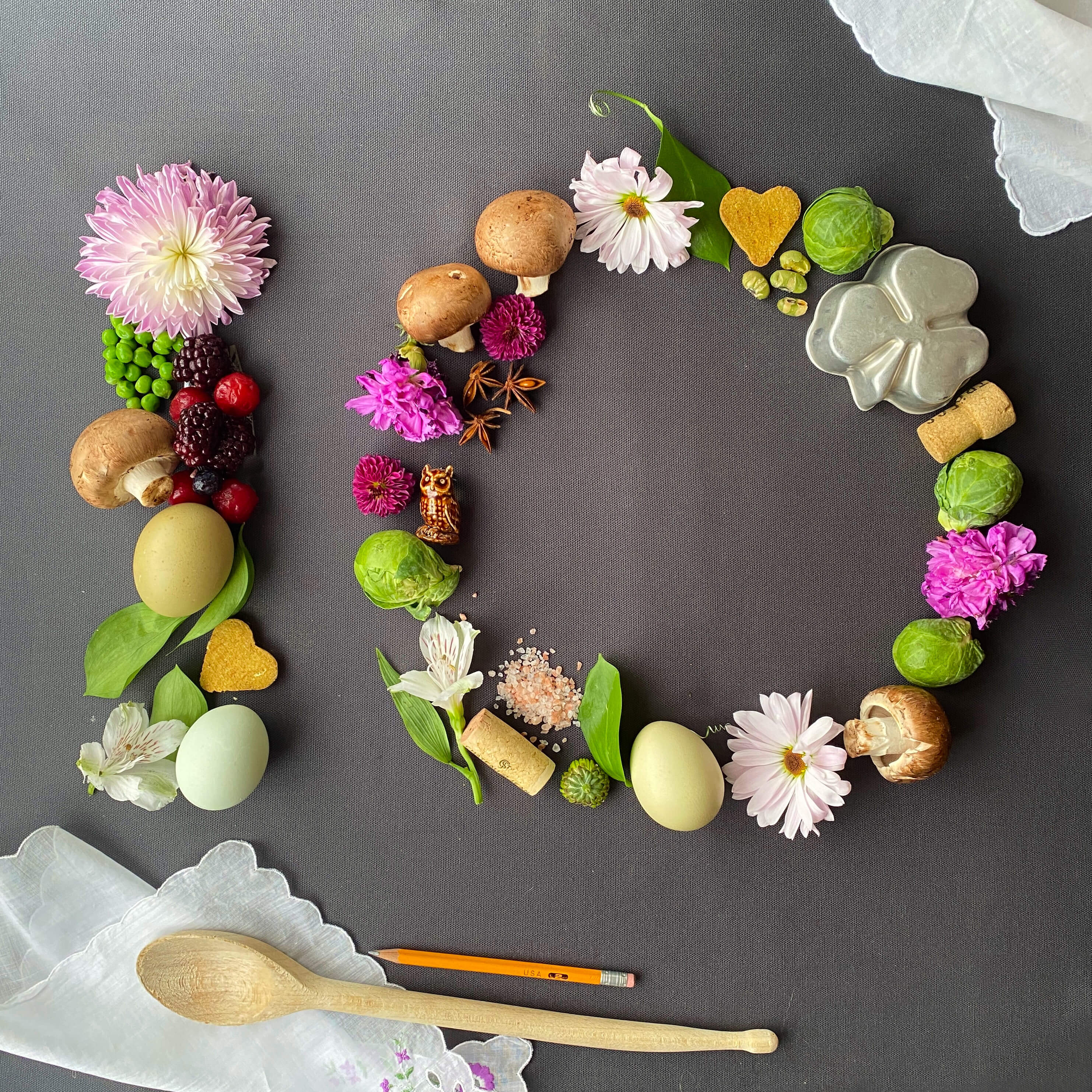
For the entire month of February, I thought about these questions. Yesterday, I decided on a compilation of items that would form the number we were celebrating today. If this ten-year chunk of time has taught me anything, it’s that creativity is a faithful partner and will always show up when and where you need it.

Each small element laid out to form the shape of the number 10 in the photo above offers a bit of symbolic significance of how things have played a part in this writing life from 2012 to 2022. There is a shamrock for luck, an owl for knowledge, spices for surprise. Mushrooms represent organic growth both during light and dark days. Brussels sprouts signify compact clusters of thought that grow on a single stem. Flowers call attention to the beautiful parts of history. And peas and beans represent the power of food. Berries are there for sweetness, wine and champagne corks for good cheer, eggs because they represent stories inside stories. And finally, there are hearts which represent love. It was love that started the blog and love that will continue to see it through another 10 years.

Atlanta,GA skyline. Photo: Mariana Smiley

The very first blog post was written in a hotel room in Atlanta on February 27th, 2012 during the first vacation getaway I had had in more than a handful of years. I had just opened an Etsy shop the month before, selling vintage homewares for all rooms of the house and I thought a blog would be a fun way to talk about history via the items I was selling in my shop. You might not think that blogging and vacation are two words that go together but the purpose of that long weekend in Atlanta during a frenzied start to the year, was to take some time to recognize the things I loved. And writing was one of those things.

When you first start a blog, WordPress automatically suggests the title – Hello World – for the first post as a way to not only introduce yourself to the blogging community but also as a way to launch yourself easily into a familiar and personal style of writing. The title isn’t mandatory, you can choose to keep it or change it. As I wrote my first post in February of 2012, I had intentions of keeping it. I loved the enthusiasm and the optimism of those two words – hello world. But just before I pressed the publish button on completed blog post #1, I changed the title to reflect the subject matter I was writing about.

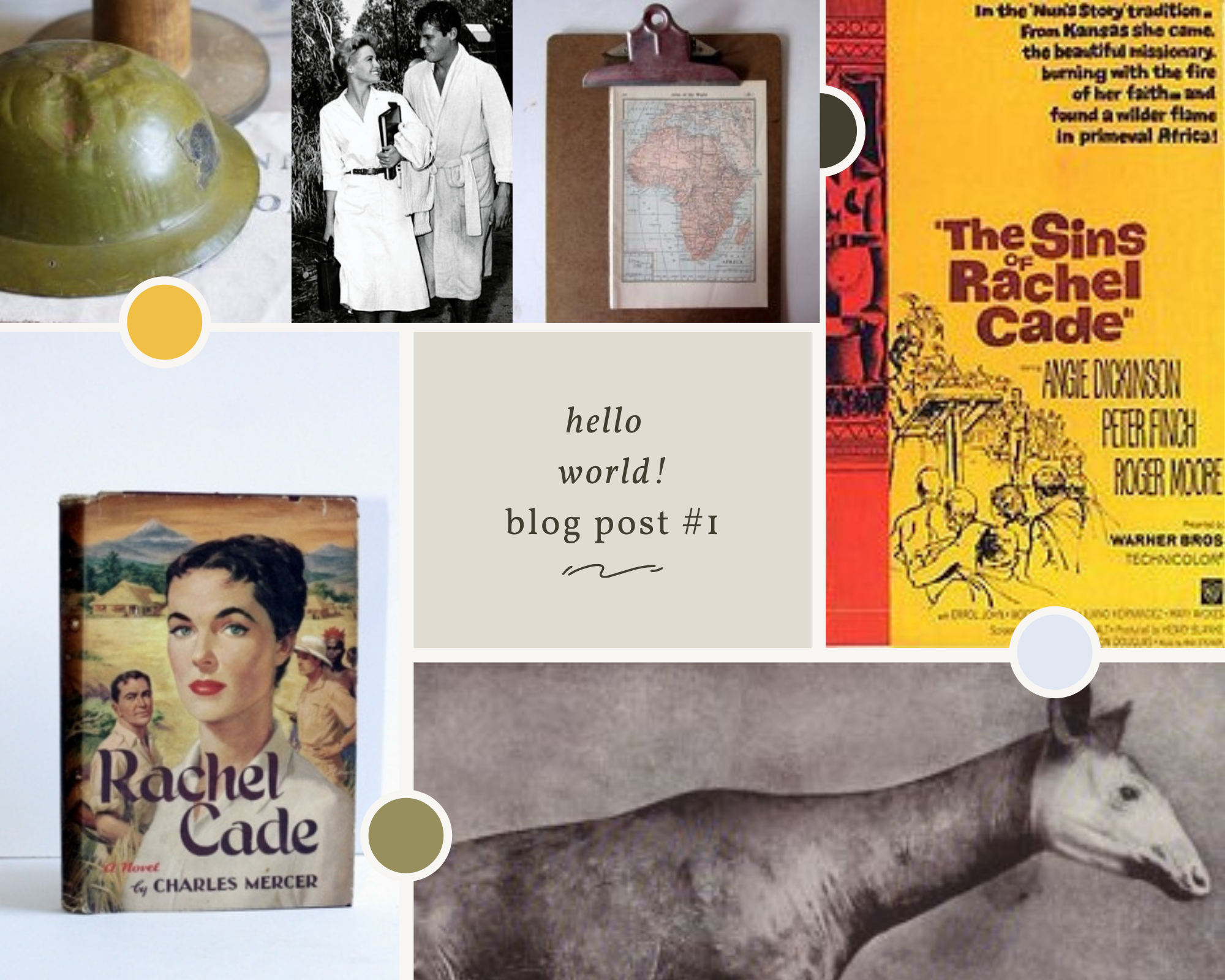
That post was about a 1950s fiction book called Rachel Cade. In it, I shared information about the storyline of the book and the Hollywood movie that followed. Hello World got replaced with Featured Shop Item: Rachel Cade – A Glimpse into Vintage Africa and I included vintage items from other Etsy shops to paint a visual story of Africa in the 1930s, the decade in which the story was set. Even though I changed the title at the last minute on that very first blog post, my mind has not strayed far in these past ten years from that initial sense of excitement and enthusiasm at the prospect of those two suggested words – hello world. Although I wound up not using them, they set the tone unknowingly for what was about to unfold over the next decade. In the 364 posts that have been written since, each time I click publish on a finished piece there is still a wave of excitement and energy, a flutter of joy, a silent shout that sends out a big hello to the world.

Initially, I thought it would be fun in this milestone post to feature a “best of” list along the lines of most-read post, most cooked recipe, most commented story, etc. But that would break the blog down into analytical data. And there is nothing more unromantic than a series of performance metrics. This blog isn’t about numbers. It’s about love and adventure and passion all discovered and coddled and curated over the course of a decade. From day one it never set out to break records or be the best or become a job. Since 2012, it’s been a playground to learn more about life, past and present. And what a playground it has turned out to be.

Over the course of ten years, the blog has twisted and turned, narrowed and bulged, refined itself and redefined itself. It’s stayed with me through moves, deaths, excitement, bordeom, joys and tragedies. And in a world that is constantly changing it has been a reliable throughline that has kept me connected to things I love.

Originally it started with a different name, Ms.Jeannie Ology and I wrote in the voice of a muse named Ms. Jeannie who was a history detective bent on uncovering forgotten stories of the past. Five years in, Ms. Jeannie set sail on a faraway sleuthing adventure and the blog re-launched with a definitive passion. Instead of focusing on stories surrounding all rooms in the house, one was picked, the favorite one, the heart of the home where meals and love and conversation are served up each and every day. The blog was renamed In The Vintage Kitchen in 2017 and from that day forward, an inherent love of all things culinary have come to take center stage. A shop component was added shortly after – not one that was connected with Etsy like back in 2012, this shop is its own completely independent entity, but that same symbiotic relationship first explored in the early years between blog and shop and the inspiration they both offer each other continues today.

In 2012, the blog was like a wiggly puppy full of excitement, energy and a wild desire to gain a sense of solid footing in the world. There was a lot to learn about writing, photography, storytelling. It’s humbling now to look back and see how the blog has grown naturally, at its own pace and improved with each passing of a February. It would be easy to run away from those early years, to delete them and never look back, but then the entire point of stretching and trying and playing and growing would be missed completely. A blog gives you room to grow.

It is often said that writers live lonely or solitary lives. While it is true that most, myself included, need peace and quiet to gather and produce a string of sensible words and coherent thoughts, I have found in these past ten years that blogging has not singled me out or separated me from others, it has only done the opposite. It has connected me with more people, more places, more ideas and more understanding than I ever thought possible. In 2012, I said hello to the world and miraculously over the course of ten years, the world has continued to say hello right back.

What follows are links to some of my favorite posts from the past decade. In no particular order, they are ones that continue to stand out most in my mind or hold a sentimental place in my heart. Whether they were written in the voice of my original muse, Ms. Jeannie Ology or my own, they are representative of the vibrant type of content I have endeavored to share about the people, places and objects that have inspired this corner of the world thus far.

It is with big heart-felt cheers and an enormous amount of gratitude that I say thank you to each and every person who has read, engaged, encouraged, participated, promoted, cooked, commented and/or been a part of the blog in one way or the other over the past 10 years. It has been such a journey of discovery and I hope the next ten years is just as exhilerating.

Cheers to ten and to another ten more! And cheers to Emily Dickinson who said… That it will never come again is what makes life so sweet.

Authentically Artisan: A Fun New Food Collaboration

One of the highlights of the summer so far has been the start of a new collaboration with a fellow history-centric company. I’m so pleased to introduce you all to Artisan’s List, a nationwide directory geared towards the historic home improvement enthusiast or anyone interested in defining their space with handmade touches and artistic refinements.

Just a few of the talented vendors I discovered at Artisan’s List! Clockwise from top left: Natural orchard and landscape design by Janice Parker ; handmade copper cookware by House Copper & Cookware; beautiful backyard chicken coup designs by The Chicken Coop Company

As a go-to resource for niche projects, Artisans List is a dream come true for people who just want to get stuff done. If you have a vintage sofa to reupholster (me!), a backyard fruit orchard to plan, an addition to add onto your house or are trying to hunt down a blacksmith for hand-forged drawer pulls, you’ll find just the right expert to work with at Artisans List.

There, in the dynamic world of creative pursuits, you’ll discover makers of handmade pots and pans, landscape architects, historic home renovation consultants, furniture makers, blacksmiths, stone masons, roofers… basically all the people that can help turn your home project ideas into realities – from the roof line all the way down to the basement floor and everything in between.

Skilled tradesmen include examples like these (clockwise from top left) Historically accurate reproductions of architectural millwork by Architectural Components Inc.; antique and vintage stove restoration by The Antique Stove Hospital ; hand-forged decorative metal work made by traditional blacksmiths

As a resource guide made up of traditional craftsmen and skilled tradesmen AL is a beehive of interesting information, ideas and inspiration that continues to grow more dynamic each day. The whole concept of the directory was born out of the lack of an online community that catered specifically to the local home restoration marketplace state by state. So the founders of Artisans List are very intent on making the site an informative, educational, and useful tool for people all over the country. Each of the AL vendors are vetted to make sure that their business and/or skill is authentically produced and professionally handled. Most of the companies have been around for decades, and even generations which means vast portfolios, passionate voices, and trusted relationships. Exactly the kind of care and expertise you need when it comes to planning and executing a project for your treasured space.

Amidst this talented pool of professionals, you’ll also encounter an active and interesting community of do-it-yourselfers who are looking for ways to build a more thoughtful and storied lifestyle. That’s where the Vintage Kitchen comes in. Every other month, I’ll be writing a piece for the magazine portion of the Artisan List  site that features a vintage recipe and the history behind it.

The first piece came out at the end of  June and is all about picnicking. If you missed the mention of it on social media a couple of weeks ago, no worries, I’ll be re-posting the entire article here on the blog in the next few days. But before that happens, I just wanted to share the news with you and to say surprise! the Vintage Kitchen is popping up in a new place.

I think this collaboration is especially fun since we have so many old house lovers and owners (and readers!) that participate in the world of the Vintage Kitchen. It’s with you in particular that I share this information, in case you are looking for some expert help with your own home projects this year. I hope this recommendation helps! If you wind up connecting with one of the Artisan List vendors or find a particular piece of home restoration information useful, please share your story in the comments section, so we can all learn together. In the meantime, stay tuned for a bevy of Artisan food articles coming out soon!

Cheers to new friends, expert helpers, and a wonderful weekend ahead!


MFK: The Street Artists and the Food Writer

There is a group of graffiti artists in our city called the Metal Fingers Krew. They make these spectacular giant wall murals of their initials all over town on the sides of industrial buildings. Every time I pass one I think of the food writer MFK Fisher who shared the same initials.

Mary Frances Kennedy Fisher (1908-1992)

The work of the Metal Fingers Krew is elaborately designed and really beautiful. They make their mark mostly on warehouses that are nondescript or in a state of shabbiness, so they add a bit of pizazz to the landscape with their color and their big 4-5 foot tall font faces.

MFK Fisher (1908-1992) made her mark on the 20th-century literary scene writing about food and how it looks and tastes and feels over the course of 30 books. Considered one of the most beautiful prose writers still to this day, she wrote her way through her own experiences… of men and marriages, of cross-continent moves, of motherhood and memories and of making food to eat.

The Metal Fingers Krew works like traditional graffiti artists – under the cover of night. One day you pass a blank brick building and the next day it is magically decorated. In a city that has a lot of murals but not a lot of graffiti, street art really stands out. The thing I notice most is not that this talented batch of artists defaced a building (which may or may not be exciting to the property owner) but that they’ve added a layer of creative flourish to what is otherwise a very linear and industrial part of town.

MFK Fisher also added her own flourish. Writing about food and life with such poetic, descriptive detail you can practically taste her words, she was famous for saying that she just wrote the facts of things.  But in doing so she also wrote the feelings of everything. Even the unglamorous sides of cooking… the dirt, the dishes, the heat, the nonsense, the dueling perspectives, the disasters.  Like when you are canning fruit in the summertime without air conditioning you get hot and sweaty. Or like when you pull butter and lettuce out of water from the spring house storage you get cold and shivery. That was all just part of the process of eating and experiencing, not an indelicate act or sensation that should go overlooked or unnoted because it was unattractive to talk about. Every bit was important.

The Metal Fingers Krew talks the same language in their own way too. They point your gaze at a typically unattractive building and make you look at the detailed beauty of it simply by adding a swatch of color. They call attention to the plain-Janes of a shed row, or the slow decay of a factory, or the burnout of a building left vacant in the same way that MFK Fisher draws attention to eating the everyday foods that we mostly take for granted.

I think MFK Fisher would have loved the passion behind the Metal Fingers Krew graffiti art just as much she liked describing her passion with food. They were two artists working in two different mediums but had the same initials and the same sole purpose of expressing oneself.

“One of the pleasantest of all emotions is to know that I, I with my brain and my hands, have nourished my beloved few, that I have concocted a stew or a story, a rarity or a plain dish, to sustain them truly against the hungers of the world.”  MFK Fisher

What do you think? Do you see other stories or other artists in the face of graffiti? If so, please share your comments below!

In the meantime, cheers to painters and food preparers and the perspectives they bring!

Passion Flower: Discovering the 20th Century’s Most Popular Female Writer

As you know from Ms. Jeannie’s previous posts – she’s got gardening on her mind. So she thought this would be an appropriate time to do a little further sleuthing on one of the flower themed items in her Etsy shop…

The 1930’s era women’s fiction book, Passion Flower.

Passion Flower book from msjeannieology

Written by Kathleen Thompson Norris, one of the highest paid literary writers of her time, her books mostly told stories of the women of upper-class society. Passion Flower in keeping with that theme, details the story of an elite women who falls in love with her chauffeur.

Kathleen Norris in 1925

Kathleen was born July 16th, 1880 in San Francisco, married fellow writer Charles Norris (1881-1945) and published over  80 novels in her lifetime. She also wrote four collections of short stories, one play and 10 non-fiction books. Goodness gracious, she was one busy lady!

Author Ann Douglas, in her book Terrible Honesty: Mongrel Manhatten in  the 1920’s described Kathleen’s work …

“Kathleen Norris was the most interesting novelist of feminine and matriarchal sentimentalist essentialism in the 1910s and 1920s; vastly popular, with a curious literary style that seems to owe a good deal to Henry  James, she developed the themes that would dominate the soaps of early radio, aroused the ire (and perhaps envy) of Dorothy Parker, was adored by Alexander Wollcott (always a fan of the matriarch), and took acre of Elinor Wylie’s stepchildren (they were related by marriage; forgotten today, she is well worth in-depth study. “

In addition to being a writer, she was also a strong feminist, promoter of women’s rights, joined Charles Lindbergh in the 1930’s to oppose US ships carrying supplies to the British, called for capital punishment and campaigned for the outlaw of nuclear rights.

Kathleen Thomson Norris – photo courtesy of Garver Graver

Kathleen spoke sensibly about following dreams and achieving goals. Clearly this philosphy was working for her!

 “Before you begin a thing, remind yourself that difficulties and delays quite impossible to foresee are ahead. If you could see them clearly, naturally you could do a great deal to get rid of them but you can’t. You can only see one thing clearly and that is your goal. Form a mental vision of that and cling to it through thick and thin.” – Kathleen Norris

Charles Gilman Norris – photo courtesy of Garver Graver 

Kathleen’s husband, Charles Norris was a prolific writer as well. Possibly best known for his book, Salt, in which F. Scott Fitzgerald claimed:

“I know Gatsby better than I know my own child.  My first instinct after your letter was to let him go & have Tom Buchanan dominate the book (I suppose he’s the best character I’ve ever done–I think he and the brother in “Salt” & Hurstwood in “Sister Carrie” are the three best characters in American fiction in the last twenty years, perhaps and perhaps not) but Gatsby sticks in my heart.”

Side Note: Ms. Jeannie’s absolute most favorite book in the world is The Great Gatsby, so she is always on the look out for any F. Scott Fitzgerald references!

Kathleen and Charles owned a 200 acre ranch in Santa Clara County, California where, as Kathleen’s novels rose in popularity, they entertained many a celebrity and Hollywood A-lister.   This is a photo of their home, located in Palo Alto.

Kathleen & Charles’ Spanish Colonial style home. Palo Alto, CA.

The house is still there today and  is listed on the National Register of Historic Places. You can read more about the property here, as well as see more photos and design plans.

In 1930, Passion Flower was made into a movie starring the beautiful Kay Francis, one of the most popular actresses of  Hollywood’s Golden Era.  Interestingly enough, she had something in common with Kathleen.  Kay was  one of the  highest paid actresses of the 1930’s. Her estimated annual salary was $115,000. As a comparison, Bette Davis’ annual salary at the same time, was $8,000.

Kay Francis

Here’s a photo from the movie featuring Kay and her leading man costar Charles Bickford…

By the end of Kathleen’s career, her books had sold over 10 million copies.  She died in San Francisco in 1966. Her collection of works and papers are stored at the Special Collections Departments of the University of California, Los Angeles, and Stanford University.

She was quoted as saying:

“Life is easier than you’d think; all that is necessary is to accept the impossible, do without the indispensable, and bear the intolerable.”

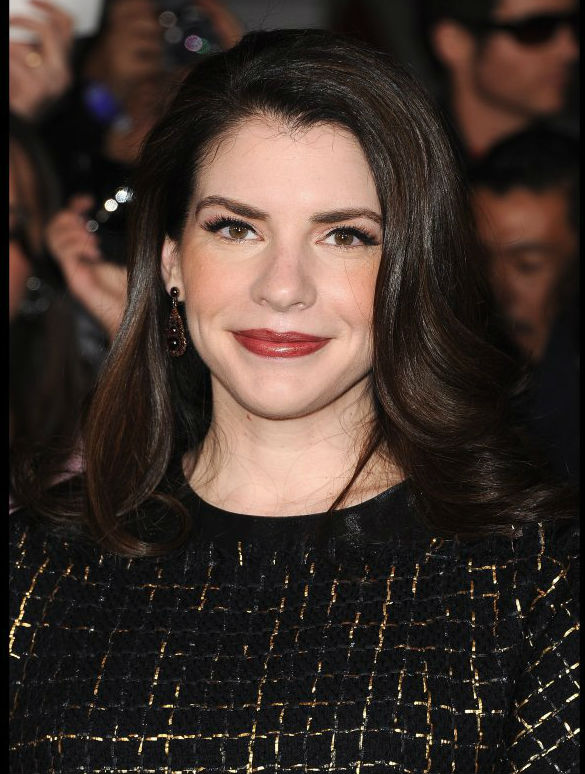
Interested in who the highest paid author is in our 21st century,  Ms Jeannie was surprised (sort of) to learn that it was Stephenie Meyer, author of the Twilight series, who in 2010 alone earned $40 million. Her series, comprised of four books, has sold over 100 million copies to date.

Stephenie Meyer

In one of those, if you could have lunch with anybody, living or dead scenarios, Ms. Jeannie thinks it would be interesting to sit down with Kathleen Norris and Stephenie Meyer.

Both women, highly successful in their writing careers, both having the luxury of seeing their own success, and both having the ability to connect with their readers on passionate emotional levels, would provide for some thought provoking conversation.

Kathleen prided herself on diligently focusing on goals to achieve success while Stephenie attributes her success to having the confidence to explore her dream state, which was how the plot for Twilight started.  Ms. Jeannie loves that both women achieved successful writing careers using two totally different motivations.

It is always great to have little reminders of our motivations in life. Ms. Jeannie found these two Kathleen/Stephenie approved ones on Etsy…

The Future Belongs To Our Dreams Art Poster by misterio

Goal Without A Plan Plaque from Crestfield

Ms. Jeannie thought it would be fun to imagine the writing spaces of these two very different women with the almost 100 year gap between them.  Using Etsy, as her design shopping center, Ms. Jeannie put together these two worlds… based on the information she just learned about them…

Kathleen Norris’ 1930’s inspired writing niche…

1937 Royal KHM Typewriter from MidMd

Antique 1920’s Secretary Desk from SecondRevival

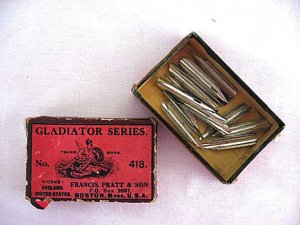
1930’s Vintage Box of Gladiator Pen Nibs from kelleystreetvintage

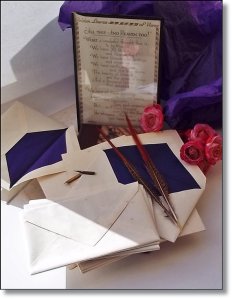
1930’s French Writing Paper from the vintagearcade

Art Deco Brass Lamp from VintageLancaster

Vintage 1920s Blotting Papers from LuncheonetteVintage

Antique Oak Captain’s Chair from dajaxsurbanattic

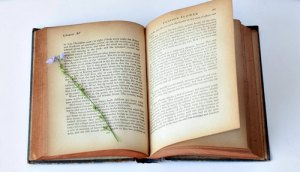
1930s Dictionary Word Bundles from VintageScraps

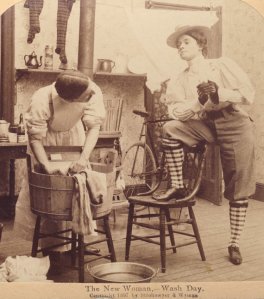
The New Woman – 1897 Stereoview Photo from NiepceGallery

Stephenie Meyer’s contemporary Twilight inspired office…

Vinyl Decal Kit for Laptops from SkinKits

Ebony Writing Desk by JiriKalina

Twig Pencils by braggingbags

Woodgrain Writing Set by AshleyPahl

Forest Table Lamp from tansyandco

Journal with Eleanor Roosevelt Quote by watermarkbindery

Computer Keyboard Wrist Cushions by HomeGrownPillows

Mod Shimmer Chair by AryCollection

Wall Decal Twilight Quote by InspirationsbyAmelia

Wolf Dog Photograph by EmeraldTownRaven