Summer Dinner with Sunset: Cold Roast Beef with Whipped Horseradish circa 1962

In 2018, a sunset celebrates its 120th birthday. No, it’s not the anniversary of the blushing pastel sky that shadows overhead just before night (that’s as old as time).  And it is not the commemoration of Billy Wilder’s movie Sunset Blvd (that was 1950) nor the anniversary of the actual naming of the boulevard known as Sunset (that was the early 1900’s).  Instead, we are talking about the kind of sunset that stacks up on your coffee table – Sunset Magazine – one of the oldest, longest running magazines in American publishing history.

For over a century, this West Coast-centric lifestyle publication has been entertaining readers with outdoor recreation, travel, home design, gardening and food-focused articles steeped in the natural beauty of the United States’ Pacific side. Originally produced in 1898 to dispel myths about wild, wooly California, Sunset magazine was created as a marketing and promotional piece for Southern Pacific Railways. Its goal was to encourage tourists to buy land in California so the railway could profit in transportation, tourism, and land ownership sales.  By highlighting the natural beauty of the scenic coastline, the agreeable climate and the sophisticated resort towns of Southern California, in particular, early readers were introduced to the artistic side of the state through nature photography, regional literature, and poetic musings.

Sunset Magazine then, in 1898 (first issue!) and now (the current issue July, 2017)

The up and down decades of the 20th century brought many changes to the magazine’s content, format, and layout but throughout its long life,  Sunset has always inspired readers to get outside and enjoy the natural landscape. The recipe we are featuring today involves just that – a nod towards a relaxed dinner geared for outdoor ease and feast enough for a dozen family members and friends.   It is a perfect packer for the picnic basket or a set-it-and-leave-it sort of arrangement that yields plenty of time for firefly watching or sprinkler swimming or whatever your favorite summer pastimes include.  It is a cold roast beef, cooked early in the amiable hours of the day,  and then put away to chill in the fridge until hungry appetites demand to be fed.

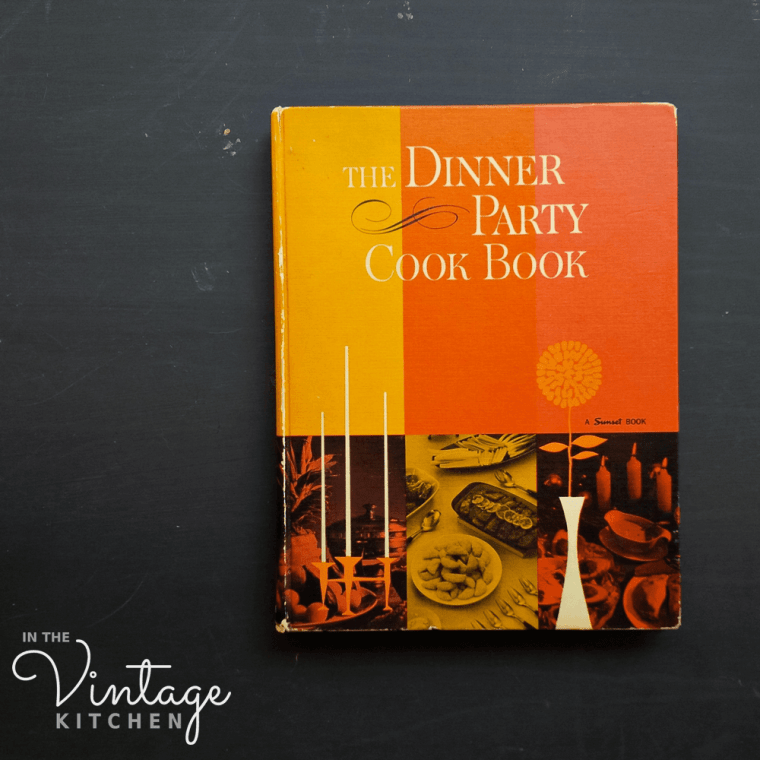
The recipe comes from the 1962 Dinner Party Cook Book compiled by the editorial staff of Sunset Magazine. This very cool collection features a wide assortment of party menu recipes that coincide with big and small occasions throughout the year. Birthday parties, graduations, theme night dinners, and holidays are all tackled with a wealth of ingenuity and imagination in the menu planning department. Our cold roast beef fell under the theme of an Easy Summer Dinner, combining a selection of dishes that were cool to the palate and required little heating (other than baking the roast).

Temperatures have been heat-wavish here in the South reaching 100 degrees for the past week with even higher heat index numbers.  This Easy Summer Dinner was just what we needed. The ease comes in a 24-hour red wine, onion and herb marinade and then a quick pop into the oven for 2-3 hours of cooking. Once it comes out of the oven it cools on the counter before heading to the fridge where it chills until dinner time.  The benefits of this dish are many because the roast is large – big enough to feed up to 18 people – which means you could have a lot of leftovers depending on your party size. Here in the Vintage Kitchen, that meant practically a week of additional dinners plus extra for the freezer. From just one roast we made fajitas, beef pot pie, steak salad, stuffed peppers plus two extra nights of the actual recipe. Easy summer dinner indeed!

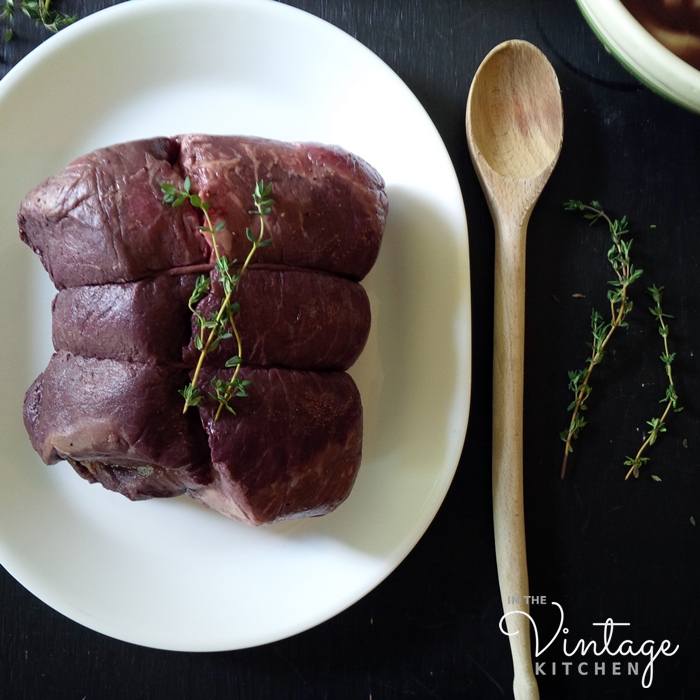
The recipe calls for a 5-6 lb rump roast which we substituted for a 4 lb. grass-fed beef rump roast.  We like grass-fed beef the best because it’s healthier for humans and because it is a better lifestyle for the cows who forage on open pastures eating only natural grasses instead of being lumped together on feedlots eating only grain. If you try this recipe and incorporate grass-fed beef too, there are a couple of factors that need to be altered. Grass-fed beef cooks faster since it is much leaner than grain-fed beef so it’s important to pay attention to the roasting time.  Instructions for both types of beef are included with the recipe here, depending on your own preferences. Other than that, this very easy dinner is as promised – very easy.  And the whipped horseradish is the perfect accompaniment so definitely don’t forget it.

Sunset’s Beef A La Mode

(serves 12-18)

5 – 6 lb. rump roast (or 5-6 lb. grass-fed beef rump roast)

2 cups dry red table wine

1 onion, sliced

1/2 teaspoon fresh thyme

1/4 teaspoon crushed whole black pepper

1 bay leaf

Flour seasoned with salt and pepper

1/4 cup beef fat, shortening or oil

1 cup tomato puree

1/2 cup sour cream

1/2 cup mayonnaise

1/4 cup grated horseradish

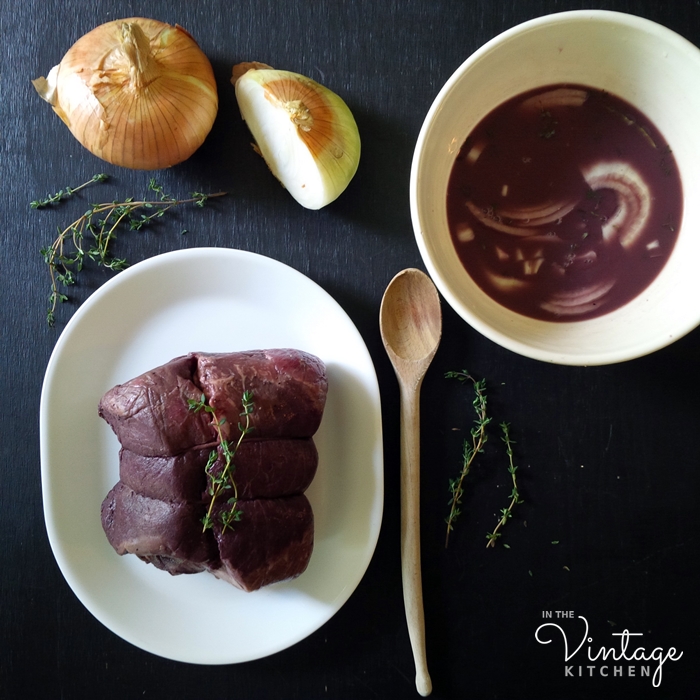
Place the roast in a large bowl and cover with the wine, onion, thyme, black pepper and bay leaf. Marinate for 24 hours in the fridge,  turning a few times throughout the marinade process.

After 24 hours, remove the meat from the marinade, setting the marinade aside for future use.  Let the beef warm up to room temperature before patting it dry and dusting it all over with the flour/salt/pepper mixture.

In a Dutch Oven brown meat on all sides in the beef fat, shortening or oil. If you are using grass-fed beef do this step in a hot skillet with 3 tablespoons of olive oil. Sear meat about a minute per side on all sides.

Seared on all sides and ready for the oven.

Pour the marinade and the tomato puree in the Dutch oven, cover and bake at 350 degrees for 3-4 hours or until fork-tender. If you are using grass-fed beef, after searing, place in Dutch oven or a large casserole dish, add the marinade and tomato puree and top the roast with three pats of butter. Cover and bake at 425 for 20 minutes then turn the oven off and keep the roast in there for two hours, being careful to not open the oven door for the entire time.

You want the internal temperature of your roast to be about 135 degrees when finished. Once your roast is done, remove it from the oven and let it rest at room temperature until it is cool. Refrigerate until ready to serve.

While your roast is cooling, in a small bowl, whip together the sour cream, mayonnaise, and horseradish in a bowl. Refrigerate until ready to serve.

Once dinner time arrives, thinly slice the roast beef, arrange on plates and drizzle with the horseradish mixture.

The original 1962 recipe included side dishes of hominy, watercress salad and sesame seed crusted toast points. While those sound lovely we skipped those dishes and served our grass fed roast beef with a simple side salad of mixed greens tossed in a homemade lime vinaigrette. It was simple and complimentary and easy. The words of the day!

If you time your dinner and your day right, you’ll be able to experience two sunsets at once. One a feast for your eyes, the other a feast for your belly. Hope you find this vintage recipe as effortless as we did.

Explore 61 other 1960’s themed menus in The Dinner Party Cook Book available in the Vintage Kitchen Shop here.

New to grass-fed beef cooking? Visit the website of our favorite grass-fed beef vendor at the Nashville Farmers Market and learn more.

Cheers to easy summer nights and to the good friends that fill them.

Mabel In the Market: The Search for the 1920’s Doughnut Shop {Part 2}

I’ve never played hide and seek with a city or a ghost before. But that’s exactly what I did with Mabel in Seattle. I was on a mission to find my great-grandmother’s doughnut shop, which according to family lore, was located in Pike Place Market sometime between the years of 1922 and 1940.

Mabel in 1907; Pike Place Market sign in 2017

If this were a movie, I’d find her by doughnut crumb trail.  I’d hop off the plane with weeks of research in hand, pop over to the market and seek out the very spot where Mabel,  my school teacher-trained, Iowa native, Seattle transplant great-grandmother would have rolled out daily stacks of doughnuts during the early 20th century.

I’d scurry through market hallways and stallways…

Pike Place Market Stairs

passing sign after sign…

until I reached my moment of satisfaction. The final destination…

… actual proof, at long-last,  that my Mabel’s place of productivity was here and that her baking legacy survived in these doughnuts still being prepared and displayed in the same way she would have made them 100 years ago…

But this is not a movie and the trail of this baking mystery did not roll out so smoothly. I did go to Seattle and I did go to the market. And I did discover Mabel. Just not exactly the way I thought I would.

As it turns out Mabel just might be the biggest fan of hide and seek I’ve ever known.  She popped in and out of this whole adventure playing her game of come find me in the most superlative of ways.

Before I left for Seattle I had trouble locating any supporting documents that would pin Mabel down in the market. I searched for weeks, trying all sorts of different avenues leading from Seattle to Iowa and back to Seattle again, hoping for a picture, a newspaper article, a copy of a market receipt, a letter home to her family… any small detail that would mention a doughnut or a day stall.   I came up empty handed on all fronts except for a picture I found of her sister Katie with whom Mabel was close…

Hello to Katie!

Taken around 1900, this was a great new addition to the family photo collection. We don’t have any pictures of Mabel’s seven sisters taken while they were young. Katie has no connection to Seattle or to the market that I know of yet but it was encouraging, a good luck sign, perhaps to see the sisterly face of someone who was so important and so close to Mabel.

Back to the market mission,  I was hoping that research helpers at pikeplacemarket.org would be more successful combing their city directories and market archives. They too tried all possible avenues on their end. Had there been a shop name or a specific date things would have been, could have been easier.  Working on it up until the eleventh hour we were communicating back and forth about potential scenarios and information but valid, concrete documentation would elude us both in the end. Mentions of Mabel in the market were nowhere to be found.

It wasn’t all disappointment at this stage though. Mabel came through in another way. A better way actually then documents and even doughnuts. She came to me in the form of dishes…

Dating to early 1900, this is Mabel’s antique flow blue china made by W.H. Grindley in the Portman pattern which had been stacked away, unbeknownst to me, in my sister’s house for years.  How exciting! Dishes that Mabel actually touched in her daily life and that survived her 1,800 mile journey from Iowa to Washington. I could just imagine one of her lovely little doughnuts sitting on this plate. Like her sister’s portrait this was a more delicate and intimate side of Mabel then I ever hoped for. A tangible piece of history and a part of her that I could carry with me back home.

Even though there was no factual info to be had about Mabel’s market days my sisters and I  headed to Pike Place anyway to see if some visual clues might strike us.

We saw fish and flowers, pigs and produce, wall murals and a great busker band. We even saw a real-life Hobart, an invention we blogged about back in May. ( I think I was the only one standing in line at this vendor that was more excited about seeing the mixer then the menu offerings).

But there were no signs of Mabel.  We commiserated over grilled cheese sandwiches and doughnuts on the wharf and talked over the possibility that perhaps Mabel just worked at a doughnut shop instead of owned one. Maybe the family story got muddled and misdirected over time. Maybe Mabel was a cog in the wheel instead of the actual wheel.

We left the farmers market feeling satisfied with food but not with family history. The search continued. Questions were still unanswered.

Further investigations led us out to the suburbs where Mabel popped up again. This time in the form of a house with a big garden yard – the place where she lived for a time in the 1950’s.  And we saw her again in two churches that were built by her only child Philip, just outside of Seattle…

Those three places didn’t provide any new clues but they did suggest a new possibility. What if Mabel made so many doughnuts at the market and on such a large scale that she never wanted to look or think or talk about another doughnut again? What if, when she moved out to the suburbs in 1940, she was done with doughnuts completely? What if that is the reason the family stories never stretched farther than the market mention?

On the last day of my trip, after I made peace with the fact that I would not discover any new information about this family story for the immediate time being,  Mabel sent out a consolation prize.  While doing a little antique shopping, my sister found an old cookbook from 1902 with a woman who looked a little like Mabel on the cover…

Flipping through it look what recipe I found on page 256…

Iowa doughnuts! A recipe from Mabel’s home state nestled in with a whopping 13 other recipes for the willing doughnut maker.  What are the chances of finding such a time appropriate cookbook with such a specific and applicable recipe?  To make this find even more Mabel-fied the inside cover of the cookbook was stamped with the name and address of the previous owner. And guess, dear readers, where that previous owner lived?

The small town where Mabel had her big garden yard and where her son built two churches!

What, really, are the chances of that? Seattle is a big city and the suburbs are dense and bubbling places. The antique shop where we found the cookbook was far from the town where Mabel lived and where her son built the churches. Not every state in the cookbook got its own doughnut recipe (only Iowa and Nebraska). And after almost fifteen years of antique collecting I’ve never come across this specific cookbook before. All signs pointed to Mabel and the magically meant to be.

So even though I didn’t exactly find out all the information I was looking for heading into this trip, I feel like I got to know Mabel so much more than just being able to reiterate some facts and dates. I touched (and took home!) dishes that she herself touched.  I saw the first-time face of her sister.  I saw the house of her senior years and I stood before two big buildings that her son built. And the icing on the doughnut is the found cookbook; owned by a person who lived in the same town as her; and that contains an obscure recipe from her home state for a sweet treat that eventually bore her business. That’s a tidy little package.

The hunt for her market days info is far from over and this story doesn’t yet come full circle but it does come full-spirit. When we eventually solve this mystery of Mabel in the market there might just be a movie style ending. Stay tuned for new updates as the research continues. In the meantime if you missed Part One of this post catch up here.

Cheers to all the “spirited” storytellers out there.

British Occupied, India Fed: 1930’s Dinner and a Binge Watch {Summer Style}


There’s something to be said about dramas that unfold slowly. Whether it be of the kitchen cooking kind or the visual arts kind,  storytelling that marinates in its surroundings for awhile always proves worth the wait.  In today’s post, we are kicking off the start of lazy summer weekends with a masterpiece of both food and television… the two season BBC drama Indian Summers and the two-days-to-prepare recipe, Tandoori Chicken. Both are steeped in the colorful, cultural land of India in the 1930’s and both do a big number on your senses.

Just like the beautiful bouquet that was Downton Abbey, Indian Summers is stunning in cinematography, costumes and casting.  Taking place over several 1930’s summers in the Himalayan Mountains of British occupied India, the story centers around a brother and sister trying to navigate the political and polite terrains of affluent society.

Alice and Ralph

Alice comes with baggage to the exotic land she left long ago, escaping an unhappy marriage and an uncertain future.  Her brother, Ralph sets up house in a gorgeous mountain-side estate while pursuing a career in the British government that is vying for ultimate control over India.  Romance, mystery, intrigue, murder and scandal surround both characters as their stories intertwine with local residents and visitors.

The premise sounds simple enough, but the story gets more complicated with each new episode. A murder occurs right at the very beginning but it takes more than half a season to even begin to understand how the characters are connected to the crime and why it is significant to the broader story. It is such a subtle, sophisticated form of writing that by episode four I thought I missed something completely and had to go back to episode three to find an explanation. But as it turns I didn’t miss anything. Explanations unfold gradually as all the characters try to figure out for themselves the details and the reasonings behind the mysterious death. This leaves plenty of time for your own theories about what happened and why which makes the whole show really engaging. Plus there are plot turns and twists that you’d never see coming.

Here’s the trailer from Season 1…

Unfortunately, Indian Summers only had a 2 season run before being canceled so there are just 20 episodes in total. But this actually turns out to be the perfect amount of viewing time if you find yourself in need of a break over a long weekend. No seven season stretches that require months (or more!) here. Indian Summers is one tidy, compact easily digested show that will hook you from the opening scene and have you sailing your way straight through to the end.

To complement this marathon of mini-series viewing is the perfect, low-maintenance Indian dinner that takes two days to make and results in a  feast enough for six. Which means that you can binge-watch with friends AND feed them a fun dinner. Two days of cooking anything may not sound like it is low-maintenance to you at all, but even easier than a crock-pot recipe, all this chicken dish requires is ten minutes of preparation.

Tandoori Chicken, 1960’s style!

Introducing effortlessly easy Tandoori Chicken… the exotic entree that captured the appetites of mid-century eaters world-wide. Straight from Craig Claiborne’s 1963 Herb and Spice Cook Book, this recipe features simple ingredients, a slow marinade and a slow bake. As you fill your head with the dramatic experience of Indian Summers you’ll fill your space with an aromatic blanket of Indian spices. It’s a well-rounded sensory experience of a most magnificent kind!

The origins of this style of slow roasted chicken have their beginnings with Kundan Lal Gujral  who experimented with tandoori (a method of clay oven cooking) in a restaurant in Peshawar, British India during the 1920’s and 1930’s.

Kundan Lal Gujral

By 1947 he perfected his methods and started serving it in his own restaurant in Delhi where it turned into a favorite signature dish. By the 1960’s it was all the rage being offered everywhere from humble houses to luxury hotels, restaurants and even on-board airplanes.  Craig Claiborne loved it for its feature of the spice coriander, which symbolizes hidden worth.

There are many variations of Tandoori chicken featuring different spice combinations – some turning the chicken a bright fiery red, others turning it a deep orangey brown. This recipe lies somewhere in the middle. Dark upon exit from the oven and infused with a tangy warmth encouraged by the citrus and vinegar, it practically falls off the bone once it is out of the  oven.  Ideally you’d have your own tandoori to cook it in, but if not, then a regular roasting dish works just fine.

Tandoori Chicken, 1960’s style!

Tandoori Chicken

Serves 6

1 5-6lb. chicken

2 cups yogurt

1 clove garlic, minced

2 teaspoons coriander

1/2 teaspoon crushed red pepper

1/2 teaspoon freshly ground black pepper

1/2 teaspoon dry mustard

1/2 teaspoon cardamom

1/2 teaspoon ginger

1/2 teaspoon cumin

1/3 cup cider vinegar

2 table spoons fresh lime or lemon juice

2 teaspoons salt

  1. Wash the chicken and place in a close fitting bowl. In a seperate bowl, combine the yogurt, garlic, spices, vinegar, lime juice and salt. Mix well and pour over the chicken. Turn to coat well with the marinade. Place in the refrigerator and marinate at least 12 hours or overnight.
  2. Preheat the oven to 325 degrees.
Just about to go in the oven.

3. Remove the chicken from the mixture and place it on a rack in a shallow baking dish or roaster. Save aside the marinade mixture for future basting.

4. Bake until tender, about 3 and a half hours. During the first hour and a half baste the chicken once with the yogurt marinade (at about the 45 minute mark). At the hour and a half mark  baste again with olive oil. And then repeat the olive oil paste two more times within the remaining baking period (about every 45 minutes).  You might need to tent the chicken for the last 45 minutes with aluminum foil to keep from over browning.

Tandoori Chicken, 1960’s style!

You’ll see in the photo above that the chicken does turn out quite dark – it was not burnt, as it sort of looks here – just very brown (similiar to the color of espresso) from the spices.

Once you remove the chicken from the oven let it rest for 20-30 minutes before carving. Serve it platter-style alongside warm naan bread and a simple salad of mixed greens and you have authentic Indian cuisine to pair with your Indian entertainment.

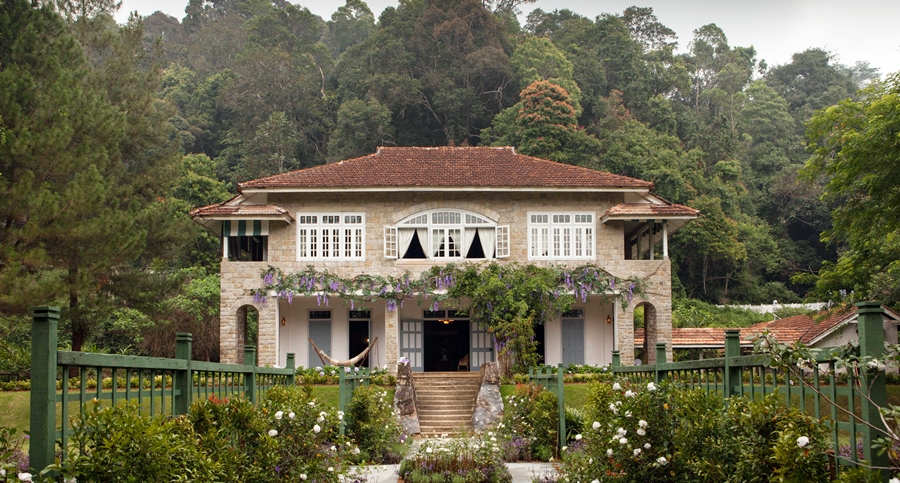
The house where Alice and Ralph live.

I hope the flavors and the film production transport you back to another era. If you have your own way of making Tandoori Chicken please share your recipe below. It would be fun to experiment with different herb and spice combinations!

Cooking While Under Construction: This Old House {Part Two}

It’s been two months since we last checked in with Renee and Michael on their 1940’s colonial house kitchen renovation.  According to the original plan laid out in February, by this point in the game, they should be more than halfway through the construction project. Their eyes should be twinkling with the excitement of a foreseeable finish line. Their bellies should be full of the creative, outside-of-the-box meals they’ve been making with limited equipment. And the countdown to the end of all that ham-ham-hammering should be coming to a close.

Is it? Are they well on their way to a brand new kitchen? Are they feeling happy and healthy and homely? Let’s find out with this update in Renee and Michael’s own words…

Hi again!  

Remember how last time we talked about how excited we were to finally begin our renovation project after 4 months of delays?  And that we were supposed to start on February 15th?  Well, that didn’t happen.  Now, we’re looking at breaking ground sometime in April (if we are lucky).  Why, you might ask?  Well, let me tell you a story about the worst thing to ever happen to mankind – LOCAL GOVERNMENT!  I won’t go into details, but essentially our local Zoning Board had a bone to pick with our contractor, and took it out on us by finding a measurement error of 3 inches on our plans, and is making us hire a surveyor, re-measure everything and potentially reapply for the very simple variance that we need.  

The bright spot is that it looks like a lot of our kitchen-less time will now occur during the summer months.  That means that we’ll be able to grill outside a fair amount instead of having to make due with “cooking” on a hot plate or getting takeout.  

We’re also using this extra time to work on perfecting some of our food-preservation techniques.  Today, we spent a cold and rainy Sunday in our vintage kitchen making a whole ton of chicken stock and some really awesome granola, the recipe for which we share below with you, the readers of In The Vintage Kitchen.  

We were going to post the chicken stock recipe too, but we thought “put chicken in a pot with some veggies and simmer it for 5 hours” was a bit of a cop-out.  

The granola is Renee’s own recipe and has gone through a whole bunch of iterations over the years from chewy and sweet to crunchy and a bit savory.  This batch is particularly good, and despite its ability to last a long while on the shelf I have a feeling it will be gone pretty darn quickly.  It’s got a nice cinnamon warmth, and an almost brittle-like bark that contrasts amazingly with the chewy oats.  Sprinkled on top of some good yogurt (like our favorite from SOHHA: www.sohhayogurt.net) with a nice drizzle of local honey it makes the perfect breakfast, snack or dessert. We hope you enjoy it just as much.

Renee’s Homemade Shelf Stable Granola

3 tablespoons of oil (for this batch, we used one tablespoon each of olive, walnut and coconut oil, but use whatever you like or have on hand)

2 tablespoons of honey

2 tablespoons of maple syrup

2 tablespoons of nut or seed butter (we used almond, but you can use peanut or sunflower butter – whatever you like)

½ teaspoon of vanilla extract

½ teaspoon cinnamon

1 tablespoon of chia seeds

1 tablespoon of hemp seeds

1 tablespoon of flax seeds

1 tablespoon of sunflower seeds

1 tablespoon of shelled pumpkin seeds

¼ teaspoon flaky sea salt

2 tablespoons of unsweetened shredded coconut

¾ cup of nuts of your choice, roughly chopped (we used ¼ cup of almonds, ¼ cup of hazelnuts and ¼ cup of pecans)

1 ½ cups of old fashioned rolled oats

Preheat your oven to 250 degrees F.

In a large bowl, mix the first five ingredients until well combined.  Add the cinnamon, all of the seeds, salt and coconut and mix well.  Add in the chopped nuts, followed by the oats and mix until all the ingredients are incorporated.

Line a large baking sheet with a sheet of parchment paper (cool trick we learned to keep the parchment paper from shifting – crumple up into a ball first, then unravel and place on sheet).  Spread the granola mixture on the sheet, distributing as evenly as you can.  Bake for 45 – 50 minutes, checking and turning sheet pan every 15 minutes.  When the granola is slightly browned, remove from the oven and let it cool completely in the pan.  Break up into pieces and store in a glass container.  Enjoy!

It is so poetic how Renee and Michael’s messy pre-construction situation yielded a messy recipe. There must have been some serious satisfaction in getting the big knife out and chopping away at all those nuts and seeds. It must have felt rewarding to tame a mass of unruly ingredients into an any-time sweet treat. In a followup conversation with Renee, I  learned that their new zoning meeting has now been scheduled for the end of April, which hopefully will grant and greenlight the whole start of their construction project. That means they will be looking at an end date closer to August than the originally anticipated month of May. In the interim, as far as the healthy cooking challenge has gone Renee and Michael are still for the most part on track despite having this major lull in their plans.  Renee explains further here…

♦ InTheVintage Kitchen:  Since the project was delayed but essentially you had already packed up all your equipment in anticipation of the February start date, did you wind up unpacking any of the boxes so you could do more cooking?

Renee:  Yes – we did unpack a few things that we needed in order to continue cooking at home.  We didn’t pack up the entire kitchen (we were waiting until the very last day) so most of the essentials  were still there for us to use in the interim.

♦ ITVK: How has it been going using a pared-down amount of dishes and pots and pans and such? Has it changed your eating habits in any way so far?
Renee: Surprisingly, it’s been OK – or maybe we’ve adjusted?!?!  We already pared down (threw away/gave away/donated) many of our old and duplicate kitchen items and kept only the essentials in the kitchen to keep the packing and unpacking light.  We’ve been preparing for a kitchen reno in the back of our minds for quite some time now, so we’ve been really good about what we really need and don’t need!  As far as new habits – we’ve started adapting to our new electric hot water kettle to boil water (to make coffee/tea. etc.) and have been prepping food items that will keep without refrigeration in our spare time over the weekends.
ITVK: Has the delay impaired any other cooking situations other than not having your boxed up items readily available and your patience tested?
Renee: Mostly the ability to throw a dinner party or have guests over to the house – we love entertaining, and it’s been really difficult to do at this point between the empty walls and piles of boxes… and lack of serving platters, etc… ugh!
♦ ITVK:  On a 100 percent scale, at this stage in the game, how would you break down where you are eating?
Renee:  80% at home
              10% at friends/family’s houses
              10% out and about (restaurants, coffee shops, etc)
               0% order-in/delivery
We are still trying to cook at home as much as we can – we know that any day now we won’t be able to – so we are taking advantage of the extra time that we have.
♦ ITVK: Did having the kitchen in a semi-state of upheaval for this delay time give you any new insight into how the next three months might go once the construction begins?
Renee: In a way – yes!  It’s made us realize what we really need/don’t need for day-to-day cooking to create healthy meals.  But, since it’s now dragging out the 3-month timeline, it’s definitely been a downer.  Perhaps that will just make the new kitchen all that more loved and appreciated:)  I’m sure when we are actually in the thick of it – nothing can really prepare us for what it’s  going to be like, especially given how many surprises we’ve already had… who know’s what’s to come! 
Michael admitted that this post was off to a sour start but wound up being sweet in the end. Next time they pop-in for an update these two hope to share actual pictures of actual construction occurring in their old/new kitchen. Fingers crossed that those days are right around the corner.  If only local government ran on granola…
Did you miss Part One of Cooking Under Construction? If so catch up here.

Photo Credit: Granola photos provided by Renee and Michael. 

Cooking While Under Construction: This Old House {Part One)

An artistic rendering of Michael and Renee's vintage house!
An artistic rendering of Michael and Renee’s vintage house on the outskirts of New York City.

Today we are announcing a very exciting multiple part series here on the blog based on real-life history-making circumstances that are facing two of our readers. You’ll remember these familiar faces, Michael and Renee as winners from our Sparta giveaway last November.  In communicating during their prize winnings and exchange of recipes they shared exciting but daunting news that they would soon be undergoing a kitchen renovation in their 1940’s New York colonial. Not new to the reconstruction game (these two have been updating their house for the past several years) this kitchen project in particular kept getting put off because it was going to take three months. Three long months for two people who are crazy about cooking.

The thought of 90 days of food preparation among tarps and tape and sawdust and drills and hammers and workbenches during cold, wet winter sounded anything but appealing. But alas with a firm “Let’s begin,” from their contractor, the project could be put off no longer. The time had come for Michael and Renee to embrace the chaos that is a historic house kitchen renovation.

In submitting finally to this process a challenge has been posed.  Can these two epicureans figure out what and how to cook when a fully functional kitchen will not be accessible for the next 270 meals? Can their sanity keep up with their ideal determination not to eat out or order in during the entire phase of construction? What will these two gourmet cooks and farmers market foodies make during this three month stretch that will keep their hearts happy and their stomachs satisfied? Can they stay true to themselves and approach food in their normal, healthy, excited-to-cook-for-you kind of way? Or will they succumb to the frustrations and inabilities of not having continuous access to the proper prep space, cooking equipment, storage facilities or clean-up stations?

Will they slip out to Starbucks for breakfast on the go? Will they develop reasons for in-city lunch meetings or after work “networking” cocktails?  Will friends and family take pity on them and invite them over to enjoy someone else’s home cooked meal? How will their enthusiasm towards healthy eating be affected? How will their culinary creativity be tested?  And most importantly, of all the challenge questions, what happens if the construction plans take longer than 12 weeks?

Over the next several months, Michael and Renee, will share in their own words how things are going. They’ll report on what they are making and how they are feeling. They’ll talk about how the construction is evolving and about how their initial hopes and aspirations have been received by the physical parameters of the construction process itself. And if everything goes south (no pun intended!) and they find themselves without the ability or the desire or the space to properly cook they’ll share those thoughts as well. It’s a food lover’s journey trekking across a bumpy pumpernickel road that stretches out over a quarter of a year. Will it sprout new innovations or will it turn their minds into toast for a dozen weeks? Let’s jump right in and see!

We begin this series with an introduction from Michael and Renee and a special, sentimental send-off  recipe from their soon-to-be-old kitchen marking the start of their culinary construction adventure…

When we moved out of the West Village and bought our house in our “micro-urban” town in southern Westchester County, NY we did so with a firm and well-defined 5-year plan.  Nine years later, we are about to embark on what should’ve been our year two project.  To quote the sage Mike Tyson, “everybody has a plan until you get punched in the face.”  Thanks, life.  

Joking aside, we really like living here and we really love our home.  We have a better commute than most people that live in the confines of the Five Boroughs, and we get all the perks of the ‘burbs…the car, the trees, the backyard, the nosy neighbors…well, maybe not everything is a perk.  So, when we recently decided that it was time to either trade-up or up-grade we came to a fairly quick decision that we would do some serious renovating and stay put.  When we say “serious renovating” we’re not kidding – we’re talking new kitchen, extension off the back of the house, new siding, new family room, and a new deck.  We got the ball rolling back in October and quickly found a contractor, got the plans in order and started looking for appliances and materials.  We figured that by late February we’d be done.  As of today, the anticipated start date on the project is February 15, with a 12-week estimated duration.  Given that we started out 7 years behind schedule, that’s not so bad.

One of the key sacrifices we’re going to have to make is being without a kitchen for a few months.  We are the type of people that have almost every single meal we eat come from our kitchen.  Breakfast at home every day.  We take lunch to work every day.  We cook dinner at home almost every night (gone are the days of restaurant hopping in the West Village, but we still get out sometimes).   

We are honored that our good and great friend Ms. Jeannie has asked us to chronicle this process for you, Dear Reader, on her amazing blog.  We hope that we can do justice to her gracious request, and we hope that we don’t scare too many of you away from the joys of home improvement.

For this first blog post, we are paying homage to the first meal we cooked in our home almost nine years ago – Roast Chicken and Risotto.  Our palates and our influences (and, for one of us, our cholesterol levels) have changed considerably since those bygone days, so our “updated” chicken dish is a little Israeli, a little Moroccan, a little Spanish, and a little local Farmer’s Market.  

In subsequent blog posts, I expect that our recipes will reflect the state of (or complete lack of) our kitchen, but for now happy cooking!  We encourage comments, requests, suggestions and commiserations from other renovation survivors.  

israeli
Israeli Inspired Chicken

Based on Israeli Inspired Chicken from Frankie Cooks

Ingredients:

3 – 3 ½ lb. organic free-range chicken (preferably from a farmer you know)

2 tbsp. each of za-atar, paprika and turmeric

¼ tsp. saffron

1 cinnamon stick

Salt and black pepper

2 Tbs. Olive Oil

1 cup of jasmati rice

½ bulb of fennel, sliced thin

4 cloves of garlic, smashed

1 leek, thinly sliced

2 cups of chicken stock (homemade is best)

1 small orange, sliced

Zest from one lemon (reserve the juice for serving)

Pomegranate arils (optional – we did not use, but felt that it would have added a freshness and zing at the end to the dish) and fresh chopped parsley or cilantro, for serving

mr1

For the brine:

1/3 cup kosher salt

1/3 cup apple cider vinegar

1/3 raw cane or coconut sugar

4 cups of filtered water

Up to two days before, spatchcock your chicken.  Combine the first three ingredients of the brine in a large bowl and whisk well.  Add the 4 cups of water and whisk until fully combined.  Add the chicken to the bowl, cover and refrigerate overnight.

mr2

The next morning, remove the chicken from the brine and pat dry.  Discard the brine.  Transfer the chicken to a rack breast side up.  Season the skin with kosher salt and black pepper and return the refrigerator, uncovered for 8 – 24 hours.

Remove the chicken from the refrigerator and sprinkle both sides with the za-atar, paprika and turmeric.  Set aside.

Place a rack in the center of your oven and preheat to 325 degrees.

Heat a wide dutch oven or large sauté pan with a tightly fitting top on medium-high heat.  Heat the olive oil and add the chicken, skin side down, and brown for about 4-5 minutes without moving.

Meanwhile, warm the chicken stock in a saucepan on low, or in a microwave, and add the saffron and cinnamon stick to bloom.

Remove the chicken and reduce heat to medium low.  Add the fennel, garlic and leek and sauté until soft and translucent, about 5-8 minutes.

Add the rice and toast until fragrant, about 3-5 minutes.

Add the chicken stock and saffron mixture and citrus to the pan. Increase heat to high, and bring to a boil.  Then reduce to a simmer, add the chicken and cover.

mr7

Move the pan to the oven and cook for approximately 35 – 40 minutes, or until the rice is cooked and a thermometer inserted into the thickest part of the breast reads 165 degrees.

Remove chicken from the pan to rest.  Fluff the rice and plate, garnishing with pomegranate arils, herbs and a fresh lemon juice.

mr4

Carve the chicken and plate on top of the rice.  

mr5

Such a fitting farewell meal to all the fun times Michael and Renee have enjoyed in their vintage kitchen. Cheers to another 70 years of good times to come when all the renovations are complete!

Next time we catch up with these two bravehearts we’ll learn about the specifics of their construction project and see how this whole fresh food situation is faring. In the meantime, if you missed Renee and Michael’s other recipes featuring Greek olive oil and oregano find them here. And if you have any words of advice or helpful suggestions as these two get-going, please post a comment below!

Photo credit: All photos for this post are courtesy of Michael and Renee.

Culinary Creativity: Recipes From Our Prize Winner!

By day they are executives in New York City but by night (and most weekends too) they are culinary wizards adventuring their way around the inventive kitchen. Meet blog reader Michael, one of the winners in last month’s Spartan Souvenir giveaway and his lovely wife Renee.

reneemichael

As soon as their prize of Greek olive oil and wild mountain oregano hit their mailbox they started daydreaming about what they could make. Possibilities abounded of course, but it didn’t take very long before they settled on two Mediterranean-style dishes that highlighted their new winnings and captured the simple fresh flavors of their farmer’s market palates.  In a lovely spirit of community, these two home chefs not only sent back a follow-up note on their gift receipt but also included recipes and photos of everything they made with their Sparta samplings. Fantastic! Here is what they made…

greekdishes2
“The olive oil has such a nice fruitiness and the oregano is slightly floral and delicate,” shared Renee. “We love it!”

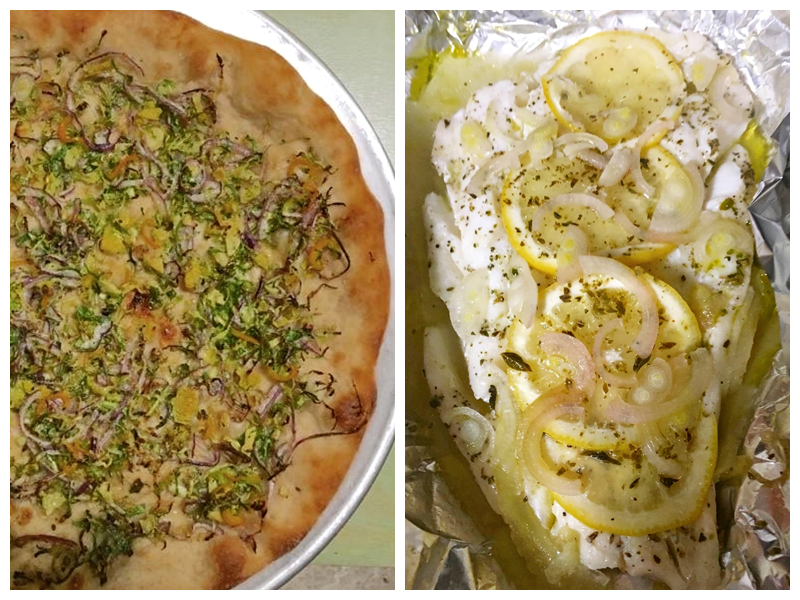
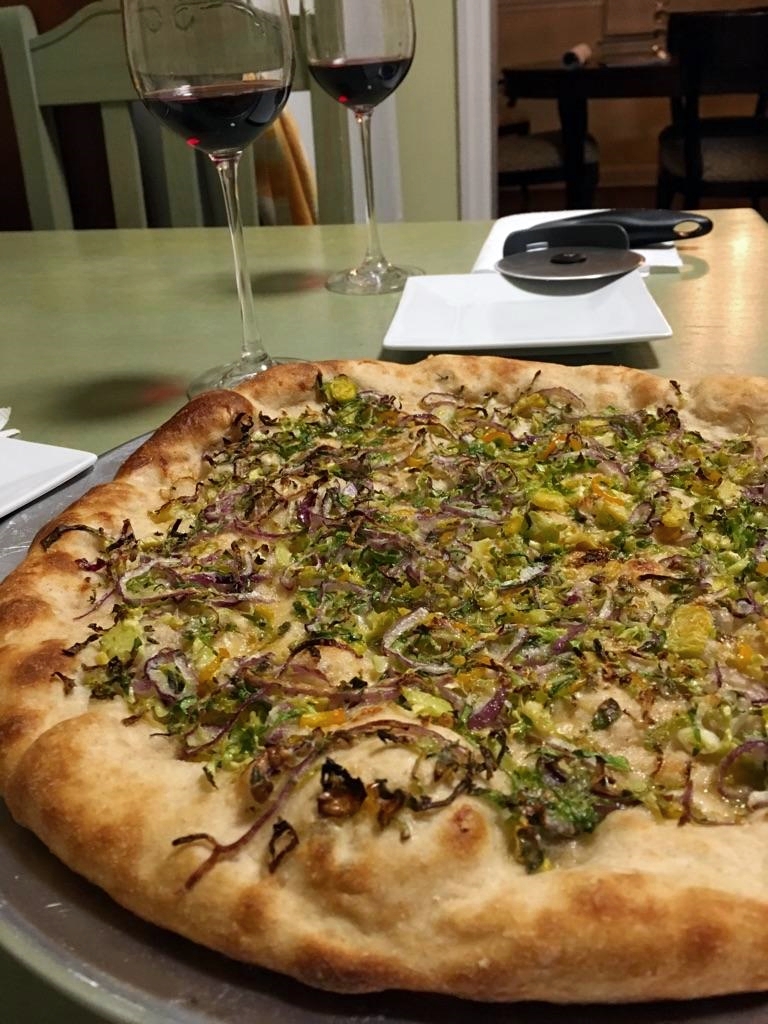
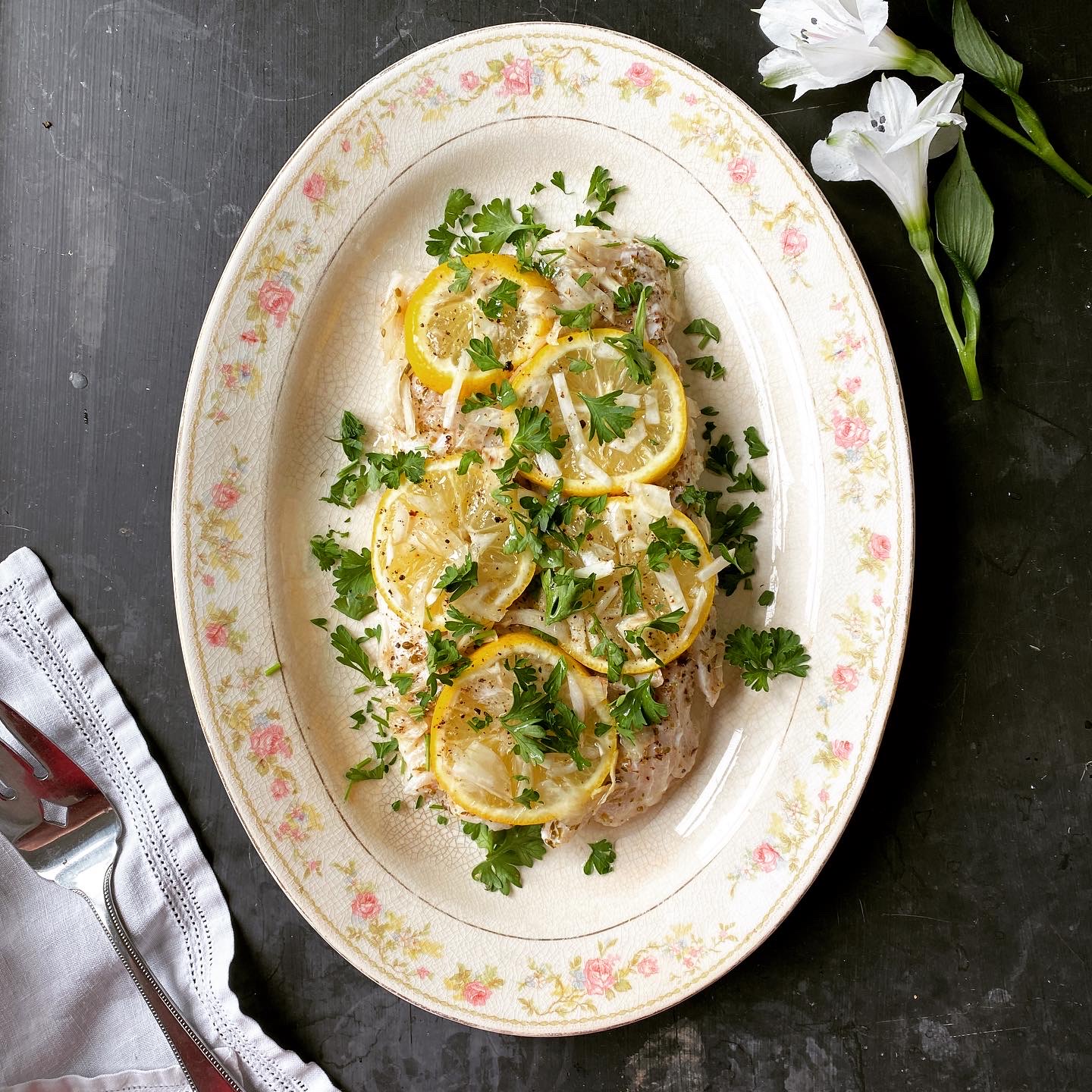
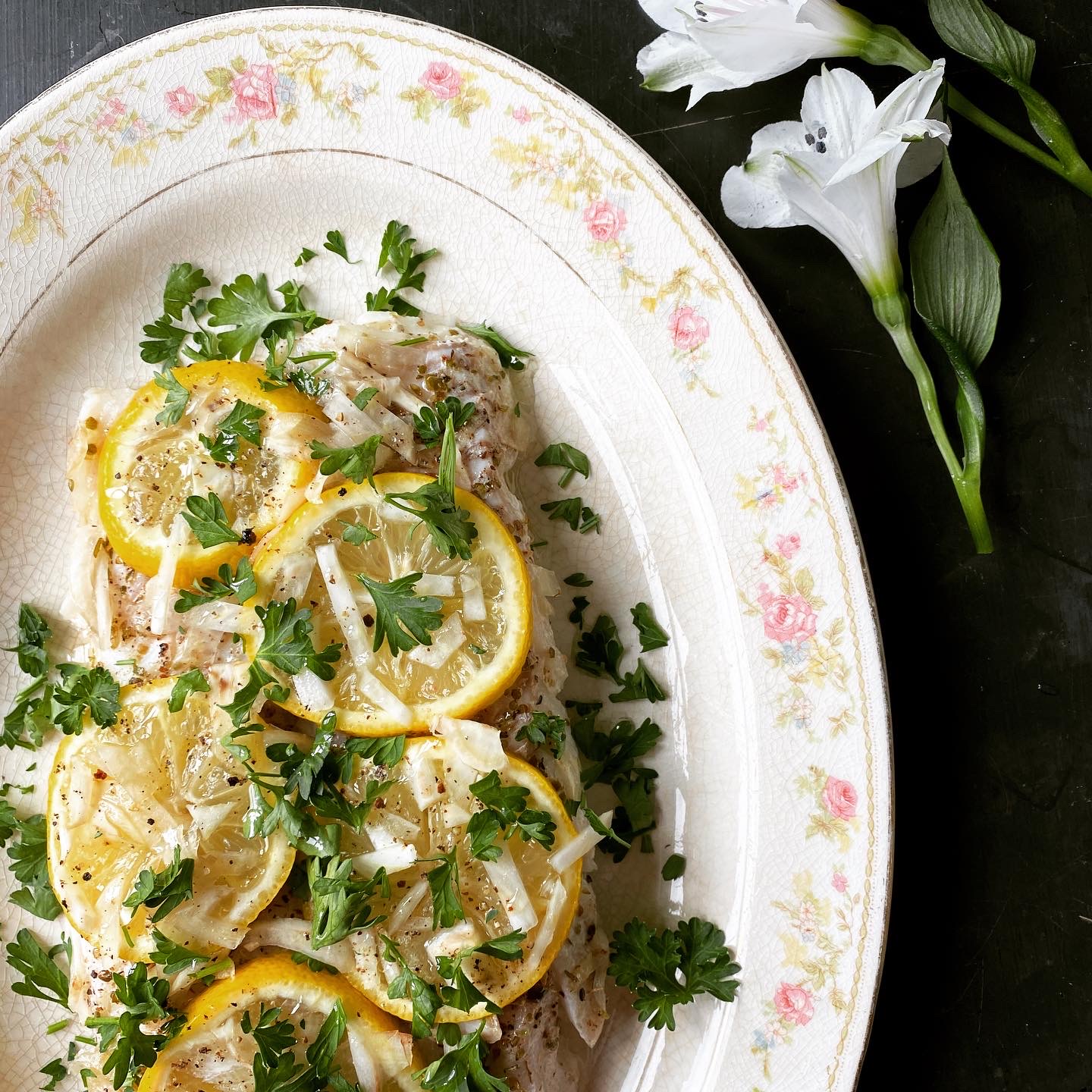
Long-time connoisseurs of make-it-yourself pizza they first prepared a Mediterranean style Greek pizza with homemade dough and an inventive brussels sprout topping. Next, (just in time for Fish Friday) they made a simple Greek-style baked cod using local fish and an array of herbs.

Michael and Renee’s recipes couldn’t have come at a better time in our calendar year. If you are still entertaining holiday house guests the Greek Pizza makes for a fun party pleaser and can be doubled or tripled in size to fit all appetites.  Or if you find yourself ready to put the heavy plates of the holiday season behind you then the Greek Baked Cod would be just the ticket for a light and refreshing meal. Both recipes highlight the unique flavor of the olive oil and oregano from Sparta, Greece which you can find at thespartantable.com All other ingredients can be locally sourced from your grocery or market.

pizza3

Greek Pizza

Note: Michael and Renee followed Jim Lahey’s lead on the pizza dough preparation. You can find a step-by-step guide here which includes a casual video on the making of it all. If you have never made homemade pizza dough before don’t feel intimidated, it’s very easy and this is a no-knead recipe which makes it even easier. If you can’t sacrifice the time for the dough, start out simple with a pre-raised dough ball from Trader Joe’s or the fresh bakery department at most supermarkets.

(for the dough)

3.5 cups all-purpose flour ( M&R veered slightly from the dough recipe and incorporated some whole wheat flour as well. This recipe reflects their version.)

1/2 cup whole wheat flour

1/4 teaspoon active dry yeast

2 teaspoons fine sea salt

1 1/2 cups water

(for the topping)

1/2 red onion, thinly sliced and placed in a bowl, covered with water for at least 30 minutes, then drained and dried

1 Serrano chili pepper, thinly sliced (remove the seeds and veins if you are averse to heat or if your chili is super strong)

8-10 raw brussels sprouts, shaved

1/4- 1/3 cup (plus more for topping) Parmesan cheese, freshly grated

1/2 teaspoon Spartan Table wild mountain Greek Oregano

5 ounces Spartan Table Extra Virgin Greek olive oil

Salt and Pepper to taste

Prepare dough as directed. Preheat oven to 475 degrees. Add pizza stone about one hour prior to baking. Mold the dough into a circle on a pizza peel lined with semolina flour to prevent sticking and for easy sliding.

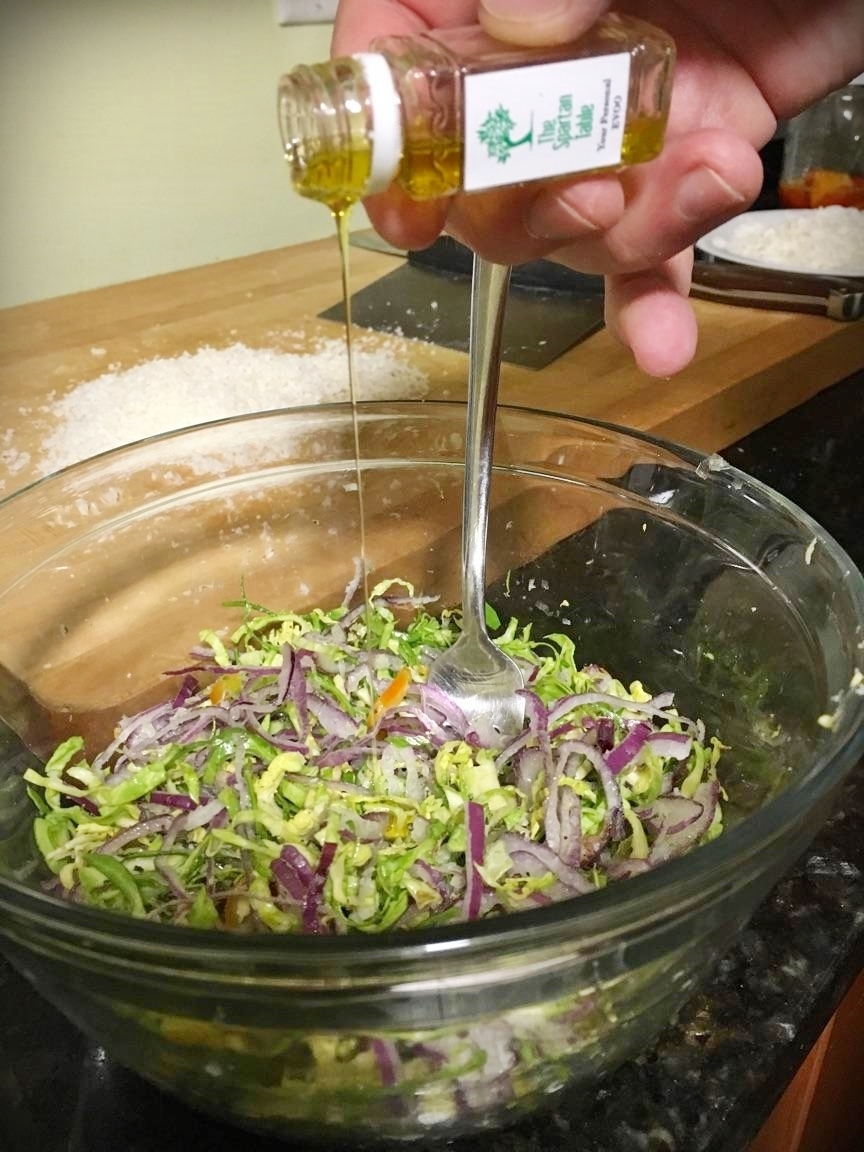
Place all topping ingredients together in a bowl and mix in olive oil and salt and pepper to coat.

pizza2

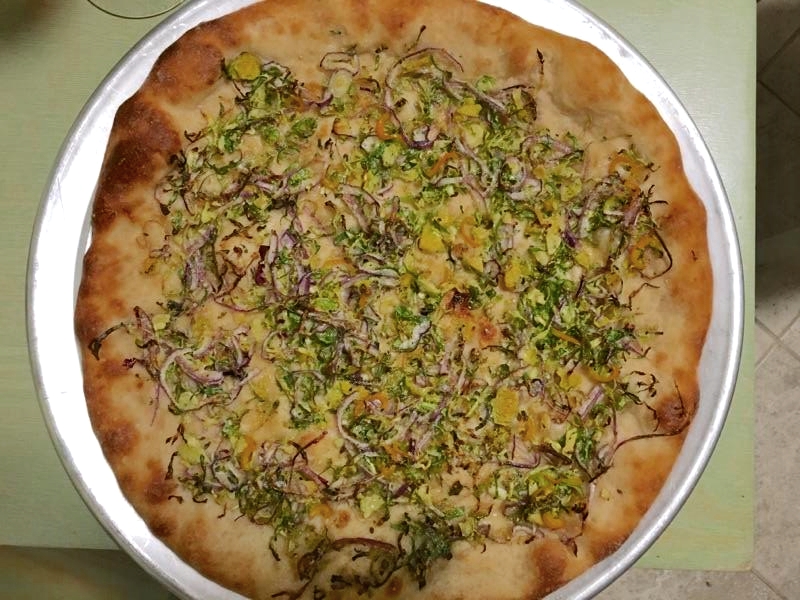
Scatter your toppings evenly on top of the dough. Bake until bubbly and slightly browned about 10-12 minutes. Depending on your oven, this could take more or less time. Finish with olive oil,  sea salt, and extra Parmesan cheese.

pizza1

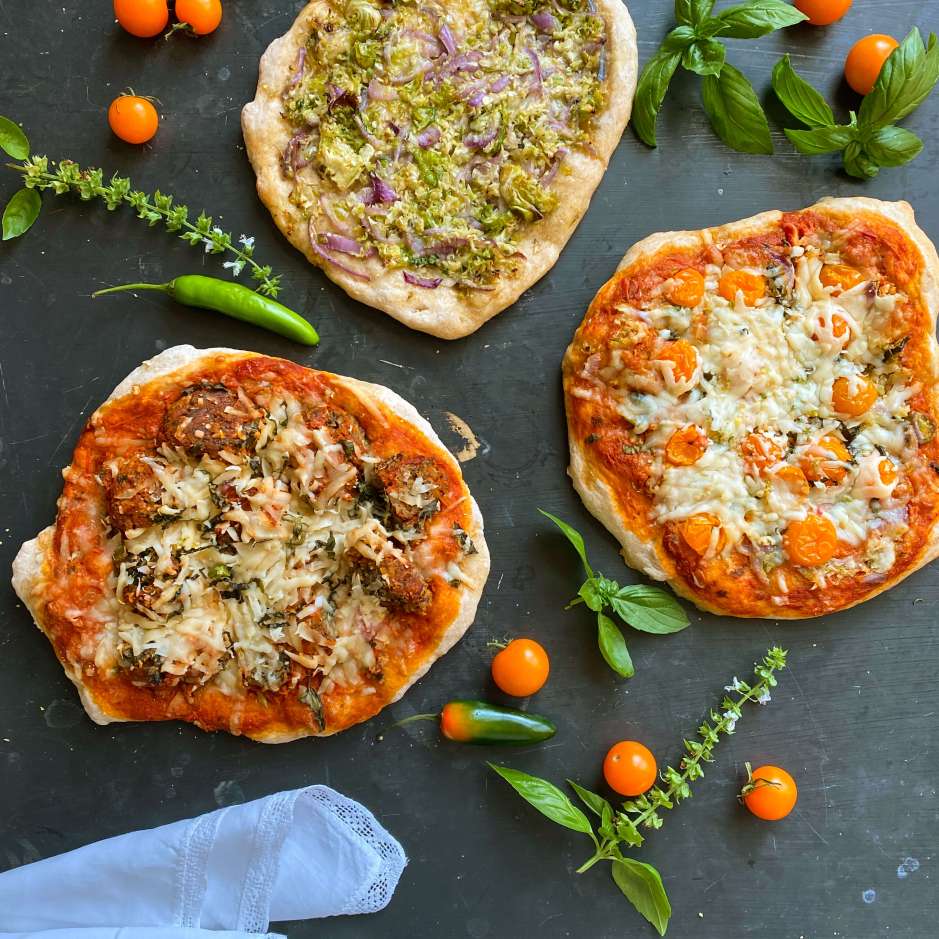
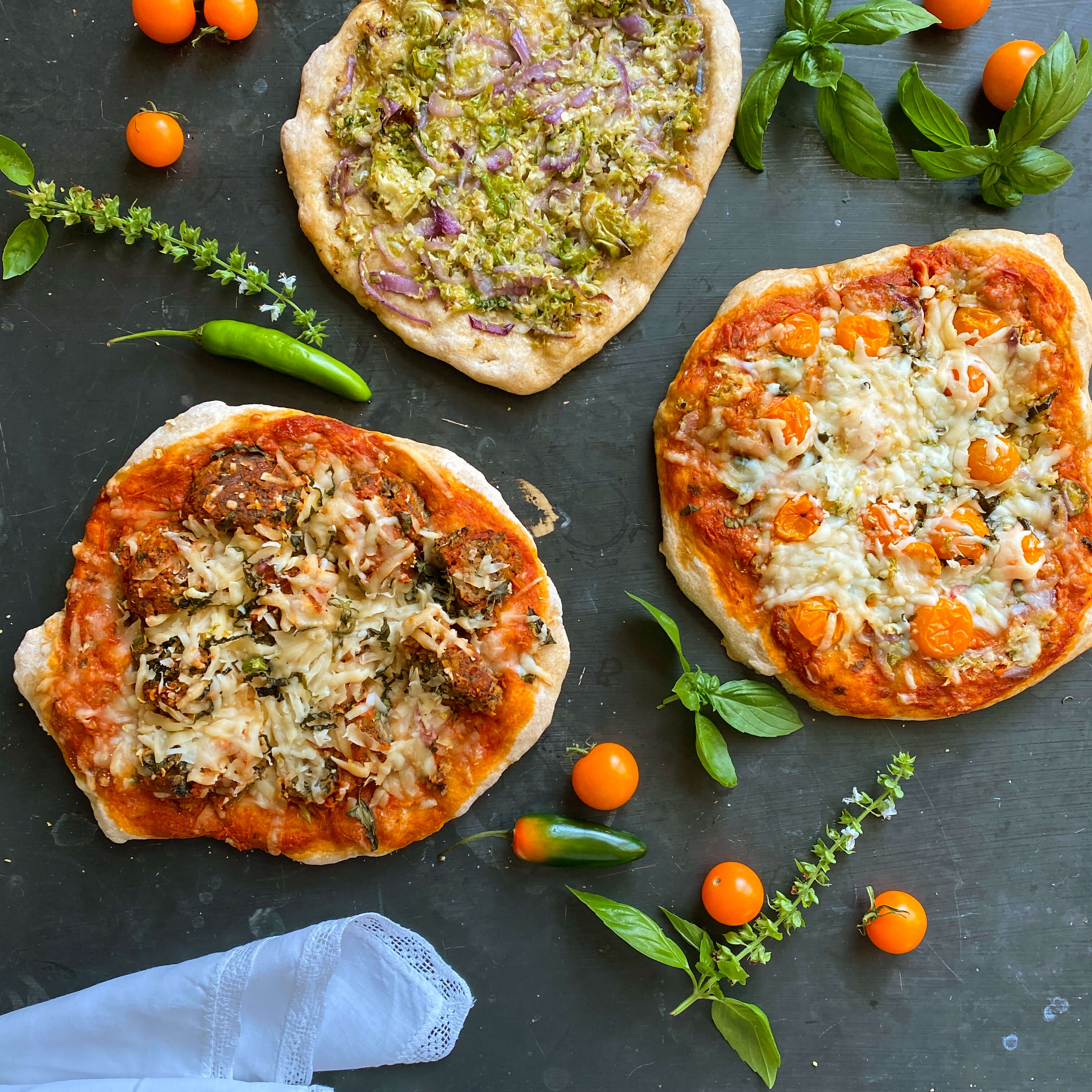
In The Vintage Kitchen UPDATE! August 2021 – The sky is the limit when it comes to experimenting with this homemade pizza recipe.  Greek olive oil and wild mountain oregano pair beautifully with an array of toppings… 

including mushroom meatballs, fresh basil, cherry tomatoes and this heirloom Italian sauce recipe.  Featured here are (clockwise from top) Greek Pizza; Italian Cherry Tomato; and Meatless Mushroom Meatball.

Greek Baked Cod (serves 2)

Fresh, local cod  (enough for two portions)

1/2 teaspoon Spartan Table Greek oregano

5 ounces Spartan Table Greek olive oil for drizzling and finishing

1  quarter of a large organic lemon, thinly sliced

1 half of a medium shallot, thinly sliced

1/4 quarter cup of thinly sliced fresh fennel (from the bulb)
 
Salt and pepper to taste
 
1/2 tablespoon fresh parsley, finely minced, for finishing

Preheat oven to 425 degrees.

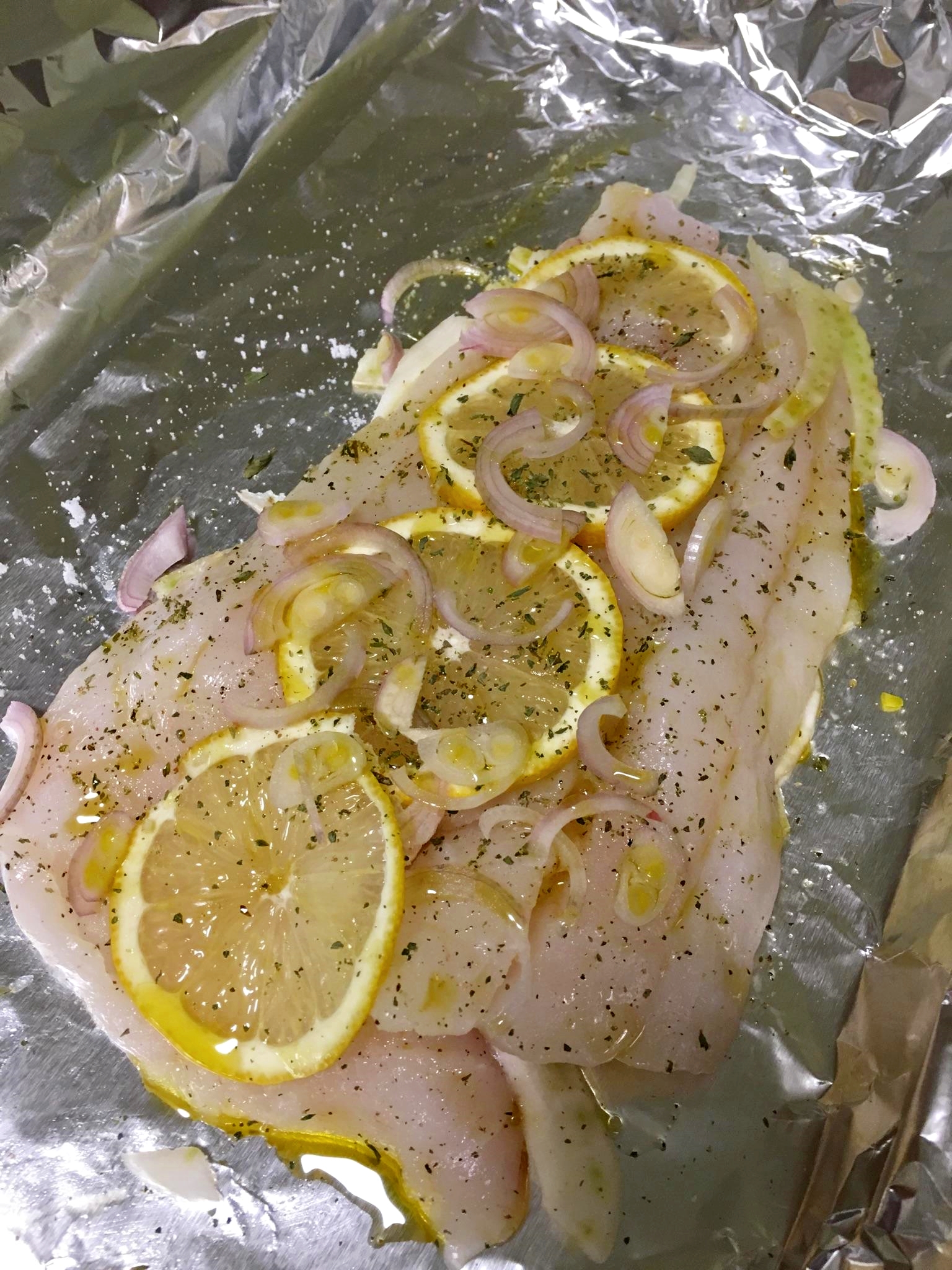
Add cod to two pieces of foil paper (doubled so that it doesn’t leak) placed on a baking sheet. Drizzle fish with the olive oil, oregano, and salt and pepper. Arrange the shallot slices on the bottom of the foil, place the cod filet on top with the fennel and lemon slices.

fish1
 
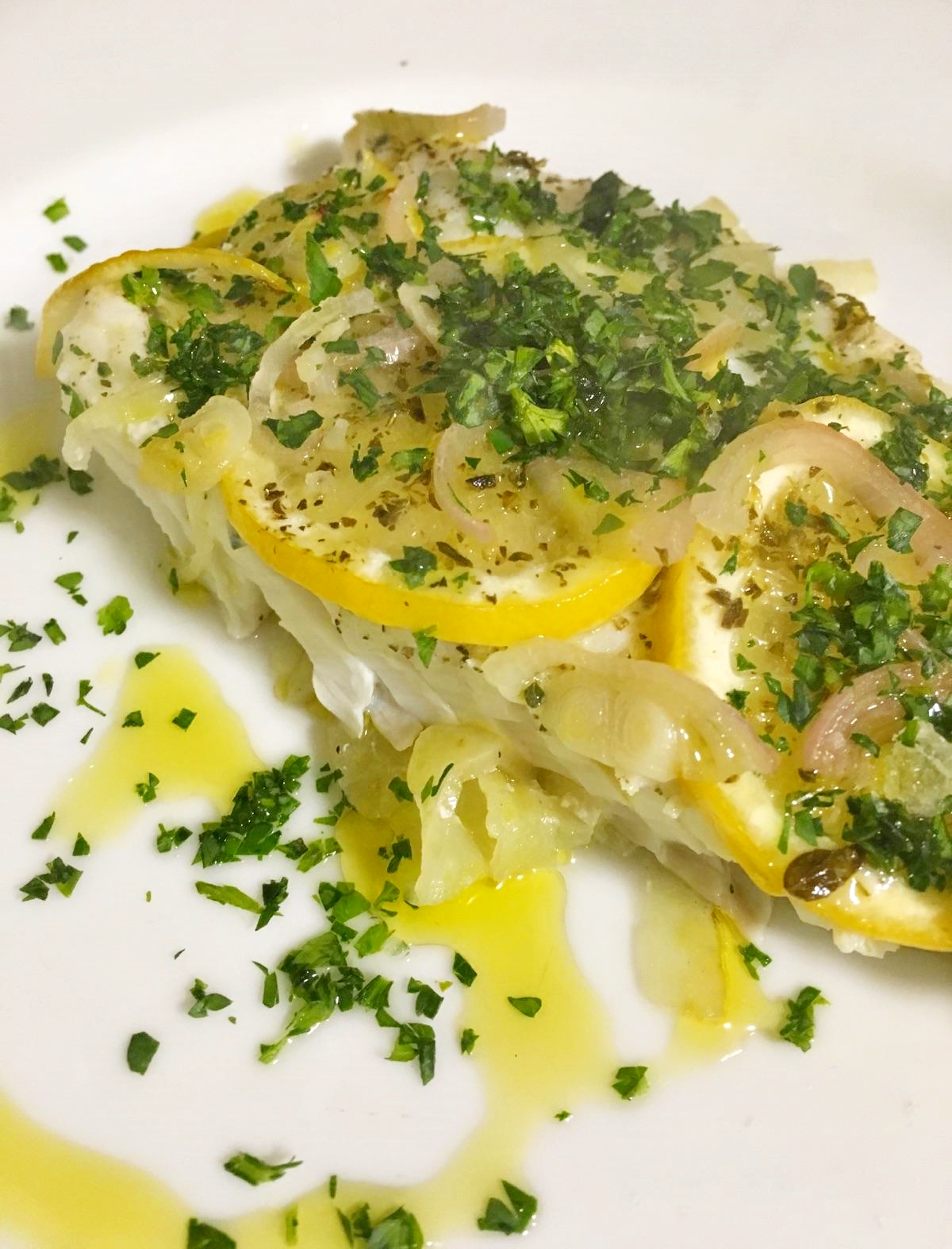
Close the foil (like a packet) and bake for about 20-25 minutes, depending on your oven and size of the cod. Ours took about 20 minutes to cook. Finish with an extra drizzle of the oil, sea salt and parsley.
 
fish3
 

In the land of the Vintage Kitchen, it is very exciting to have such an enthusiastic (and delicious!) response to a blog post. Hopefully, Michael and Renee’s recipes will help pave the way for more culinary adventures discovered by our readers. Having come full circle with an interview that originated months ago in the faraway, mystical olive groves of Greece and ended up finally on the kitchen table of two New York foodies, this post feels a bit like magic. Even though a zillion miles separates us from Sparta and  Nashville and New York we now share a commonality in the history of a food. And our cross-culture community feels a bit more close-knit.  As Homer said, “the journey is the thing.”

Again, a big thank you to Jehny and George for carrying on the family tradition of olive-growing in Greece and to Michael and Renee in New York for inspiring us with two new recipes fit for a feast.

 
If you missed the interview with Jehny and George from The Spartan Table find it here.  If you have any questions regarding Michael and Renee’s recipes post them in the comment box and we’ll get them answered ASAP.
 

Cheers or opa, as they say in Greece, to the final days of 2016. May they be both merry and bright.


kitchen prep

Happy Hour: The Vintage Holiday Cocktail Guide of What to Drink When

holidaycocktail4

Nothing is more festive than whipping up a round of cocktails to toast the season and spread holiday cheer. Whether you prefer your happy hour hot or cold, sweet or staunch, straight or slushy chances are there is at least one vintage drink that you could enjoy any time any where no questions asked. But did you  know that there is actually an appropriate time and place for some very specific cocktails? Not all are meant to be enjoyed as a prequel to dinner, a post work wind-down or an eleventh hour night cap.  Today we are setting the bar straight and suggesting the most appropriate time and circumstance to enjoy your favorite vintage libation as approved by Amy Vanderbilt, mid-century America’s go-to etiquette adviser.

Eggnog – Only in the Afternoon

Try a Jamie Oliver version here.
Eggnog, the traditional centuries old cream filled concoction that has more recently filled Tom & Jerry bowls for over  five decades is meant to be consumed only  in the afternoon, in cold climates and ideally alongside a holiday treat like fruit cake or sweet biscuits. Even though it is now consumed anywhere between Thanksgiving and Christmas, New Year’s Day is actually the most appropriate holiday for this beverage harking back to the British custom of raising a glass to toast good health and prosperity in the coming year. Never serve eggnog just before dinner. Its high fat content, rich flavor and thick consistency make it too heavy for hors d’oeuvres hour.

Hot Buttered Rum, Glogg and Spiced Wine – Only After Exercise

glogg
Make your own Swedish Glogg with this recipe here.

These are the spirits you want to enjoy after a heavy dose of physical activity in frigid, frosty climates.  Any outdoor activity that has you moving around a bit (shoveling snow, ice skating, skiing, chopping firewood, hanging holiday lights, building a snowman, etc)  is the perfect precursor to a warm cup of spice that will balance your blood sugar and warm your belly. Plus that extra bit of butter in your cup of rum doesn’t seem nearly as devastating if you just shoveled your way out of your latest snowstorm. Like eggnog these contain a rich and colorful mixture of scent and flavor, so you should avoid serving this trio right before a big meal too.  Give yourself at least a three hour spacer between these drinks and dinner.

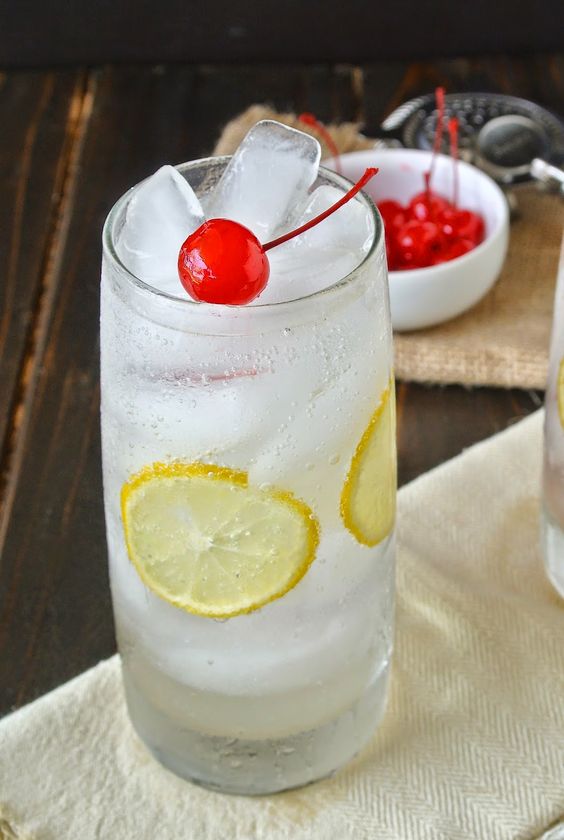
Tom Collins, Mint Juleps, Rum & Colas, Punch – Only When You Are Not Eating

Find a traditional recipe for a classic Tom Collin here
Find a traditional recipe for a classic Tom Collins here

This assortment of spirits is meant for more sociable affairs where large amounts of food or a dedicated meal are not going to be served. Traditionally in the mid-century days of Amy Vanderbilt’s time such activities included club meetings, card games, dances, open houses, fundraisers and sporting events typically attended sometime between noon and 5:00 pm. They generally followed brunch but preceded cocktail hour. Their light, sweet consistencies were meant more as a refresher  – a spirit to perk your spirits – and keep you feeling lively and engaged in an activity that didn’t revolve around eating.

Brandy, Stingers, Vegetable and Herb Liqueurs – Only After Dinner

The easiest of cocktails. Find the two ingredient Stinger cocktail recipe here
The easiest of cocktails. Find the two ingredient Stinger cocktail recipe here.

All of these drinks fall under the digestif category and should be enjoyed only after dinner. By this time of  night you undoubtedly would welcome a little peaceful calm down. These types of cocktails are like your very own batch of internal elves helping your body in digesting both the day’s events and the day’s food intake. On the body front they help enzymes and organs break down food and on your brain front they help relax your thoughts and settle your spirit for a night-time’s worth of relaxation. There’s a reason why people “retired” to another room for post-dinner brandy back in the days of elegant entertaining. It was the ideal end-cap to the evening for both body and mind.

Find a classic Manhattan cocktail recipe here.

So now that we have discussed some drinks that shouldn’t be hanging out at happy hour, let’s look at the little darlings that deserve a  seat at the bar between that much anticipated 5:00pm-7:00pm stretch…

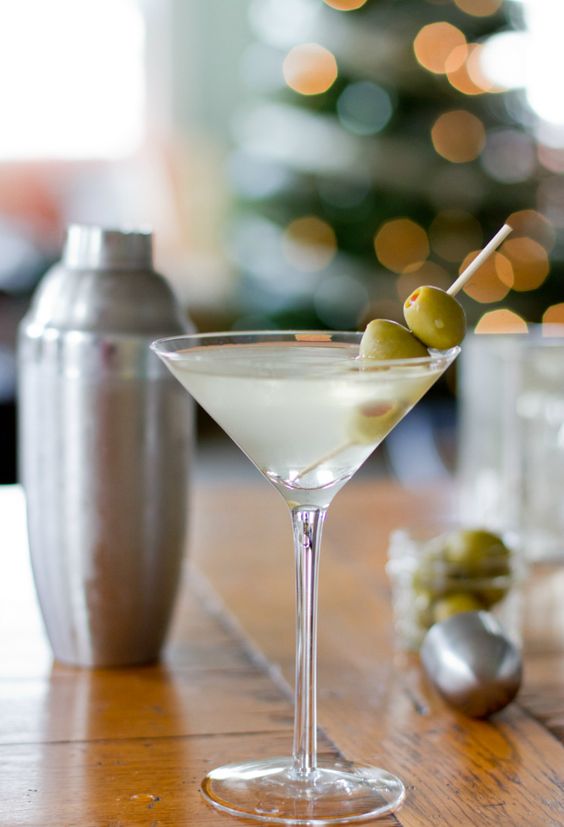
One of our favorites in the land of Ms. Jeannie - find a classic martini recipe here.
One of our favorites in the land of Ms. Jeannie – find a classic martini recipe here.

Martinis, Manhattans, Old-Fashioneds, Daiquiris, Bacardis and Whiskey Sours –

These are the gang you want to spend your time with if a feast awaits in the near future. While they pack punch in the flavor department they don’t overpower your palate, so dinner will taste marvelous. All these drinks contain a mixture of pretty little garnishes like olives or cherries but proper decorum dictates that you should only eat those offered on toothpick or skewer. Amy Vanderbilt frowns on anyone fishing around inside their cocktail glasses with their fingers. No matter how hungry you get before dinner.

Finally, if all else fails and you can’t recall what you are supposed to be enjoying when remember this easy guide… brights and lights for warm weather, dark and moody for cold weather. That means…

top to bottom: Gin and Tonic, Vodka Tonic and
top to bottom: Gin and Tonic, Vodka Tonic and Coconut Rum.

if you are looking at palm trees, pools, heat, humidity, bathing suits and beaches on your Christmas holiday stick to gin and tonics, vodka gingers, coconut rums or anything light in color and topped with citrus. But if your holiday plans take you in the exact opposite direction and your vantage point involves twig trees, frozen ponds, wind chill temperatures, gloves and scarves and snow covered hills then warm up from the inside out with bourbon, scotch, rum, brandy and all the variations that produce colors in the brown, black, red and amber shades.

winter_collage
Clockwise from top right: Scotch on the rocks, Black Russian, Sidecar

Common sense and natural instinct prevail here in the vintage drink guide. But sometimes we can get so caught up in the novelty of the holiday or the fun of party planning that we forget about proper pairings. We want to try everything. But just like wine and beer every cocktail has its ideal place on the food and activity spectrum.  So this year, follow this guide and you will sail through Christmas and New Year’s feeling snappy instead of sick.

cheers1

Cheers to partying like a professional!

Stories & Souvenirs from Ancient Sparta: Enter to Win Olive Oil & Oregano from Greece!

Hello from Sparta, Greece!

There’s a passage from Homer’s The Iliad that reads:

“Like the generations of leaves, the lives of mortal men. Now the wind scatters the old leaves across the earth, now the living timber bursts with the new buds and spring comes round again. And so with men: as one generation comes to life, another dies away.”

This is not only a great quote for Autumn, as the leaves color and float and fall to the ground reminding us all that change is natural and seasonality vital, but it is also a great introduction to the guiding principles behind our next interview.

In today’s post we are traveling 5,000 miles away crossing over Homer’s “roaring seas and many a dark mountain range” to the country of Greece to the historic city of Sparta where we are chatting for a bit underneath the olive trees with Jehny and George from The Spartan Table. Purveyors and producers of an assortment of agricultural delights in this Mediterranean section of the world, Jehny and George come from a small town that is very BIG on  ancient history.

jehny7

First having discovered these two by way of Etsy, I fell in love with the sights and sounds of Sparta on a field walk with Jehny and her family as they described picking herbs in the Taygetus Mountains via their newsletter…

“The talk stops and for the next couple of hours, we ‘re “lost” in a green and white sea” of wild oregano together with thousands of bees and relative insects. We ‘re all busy to get as much as we can from this amazing plant. We stop for few minutes from time to time just to lay our eyes on the surrounding mountainsides while the sun has starting to set. There  are so much peace and beauty and even some sounds of some sheep somewhere around echoing like an old song from the distance…”

It was a combination of their descriptive writing, their enthusiasm for the job at hand, their accented words, the beauty of their landscape and their deep-rooted love for their country that caught my heart.  As part of the American culture’s ideals of constantly being on the move, always next-best-thinging our way through life, it was refreshing to read about people who were so settled into their sense of place and so appreciative of their natural surroundings. And then there was their national pride. Read further to understand this.

View of the Taygetus Mountains

We all know that Greece has had their hardships, most recently with the economy – but as you learn through Jehny’s newsletters the detailed account of her family’s history over the last one hundred years and that of the olive grove that she now cultivates, we begin to understand this extraordinary set of determined people passionate about seeking and seeing the positive, progressive side of life. “To plant an olive tree is to proclaim a faith in the future, for it will be the following generations that will benefit, will reap no matter drought or storm, dictator or revolution, once the olive has made its home,” said Jehny in her February 1st, 2016 newsletter.

Jehny's family photographed in the 1930's
Jehny’s family photographed in the 1930’s

The Spartan Table was born in 2013 after Jehny left behind an unfulfilling corporate job and discovered by way of a small series of realizations that her passions leaned more towards olives than offices. In the early days of shop-keeping, she first offered a selection of local wild herbs cultivated from the mountains around her.  Quickly her shop grew to include olives, olive oil and olive paste from her family’s olive trees. Each year added a new series of local products and a new level of ancient history to back it up. Today you can find an increasingly interesting array of Greek products in her shop including sea salt dried on the sun soaked rocks of Mani, traditional sweet treats baked in Jehny’s kitchen, honey from beekeeper Bill, handmade soap and cutting boards (from the olive trees!) all made and/or procured by Jehny, her family and her friends in their local environment.

spartanshop_collage
A sampling of treasures from The Spartan Table!

How does she do it all you wonder? Can one woman’s love of her country and culture sustain a life worth living? You bet! Get to know more about Jehny and George and their storybook landscape in their interview here and then sign up below for a chance to win a complimentary souvenir from Sparta courtesy of Jehny and The Spartan Table.

Experience the flavor of Greece for yourself with these two special treats from The Spartan Table.

Your location in Sparta is gorgeous! In your bio, you mention that it is your family’s region and that you have lived there a long time. In the United States families move around A LOT. So I am intrigued by your permanent sense of place in Sparta. What keeps (or has kept) your family there for all these generations?

Sparta is our homeland. It’s a mythical land with – perhaps – the most know Greek Ancient city (With Athens) The landscape is just beautiful. If you could see, even for a moment what we see every morning, the magnificent mountain Taygetus and the Spartan valley, you’d fell immediately in love with the place. Living in a place which great people once lived in, makes us feel truly blessed.

Sparti, Peloponnese, Greece. Photo courtesy of scout.com
Sparti, Peloponnese, Greece.

Tell us little bit about daily life in Sparta. Do you live in a farmhouse in the country or do you live in the city center in a more urban type dwelling?

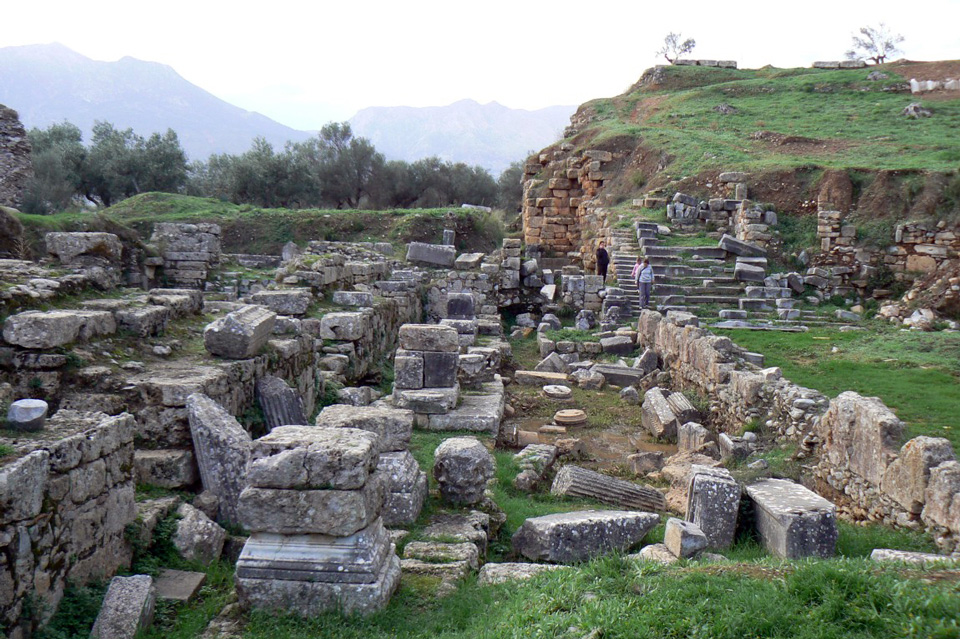
Today the “modern Sparta” which has built in 1836, is a small town with near 20.000 inhabitants. We live just few blocks from the center and beside the Ancient Acropolis & Theater. Just 100 meters from our home, there are hundreds of very old olive trees amongst the Ancient ruins.

The ancient acroplis
The Acropolis in Ancient Sparta.

If we were to visit you in Sparta where are the first three places you would take us?

The Acropolis and the Ancient Theater. The Mystras Byzantine castle city, where the last emperor left to save the Konstantinople. (Like King Leonidas, the last emperor went to fight into a war, knowing in advance that everything had being lost). And the museum of the Olive Oil, which is unique in Greece.

sparta_collage
Clockwise from left to right: The Museum of Olive Oil, the Mystras Byzantine Castle City and the Ancient Theater.

So many people in life don’t appreciate the environment around them which is what makes The Spartan Table and all your lovely newsletters so refreshing. Your national pride is wonderful. What keeps you excited about your culture on an everyday basis?

As we mentioned before, living in a land of heroes, it’s impossible not to feel the “vibes” of their acts despite that hundreds of years have passed. We feel that we have to make something for the next generations and keep the spirit of dignity, pride and freedom alive.

King Leonides, Byzantine Church, Mystras
King Leonidas, the gorgeous indoor and outdoor architecture of Byzantine Church and Mystras.

From harvesting olives to farming sea salt to collecting herbs and honey and making soap – are you involved in all these endeavors personally or do you have a big team that helps you gather items for your shop?

Since we started from the scratch – after a stressed corporate life- we tried to make everything with our hands and our small team (our Family). Getting some big inquiries and interest about our humble treasures, we decided to add some more People in our small team. These are people with great passion and love about what they do and we are honored and proud having them with us!

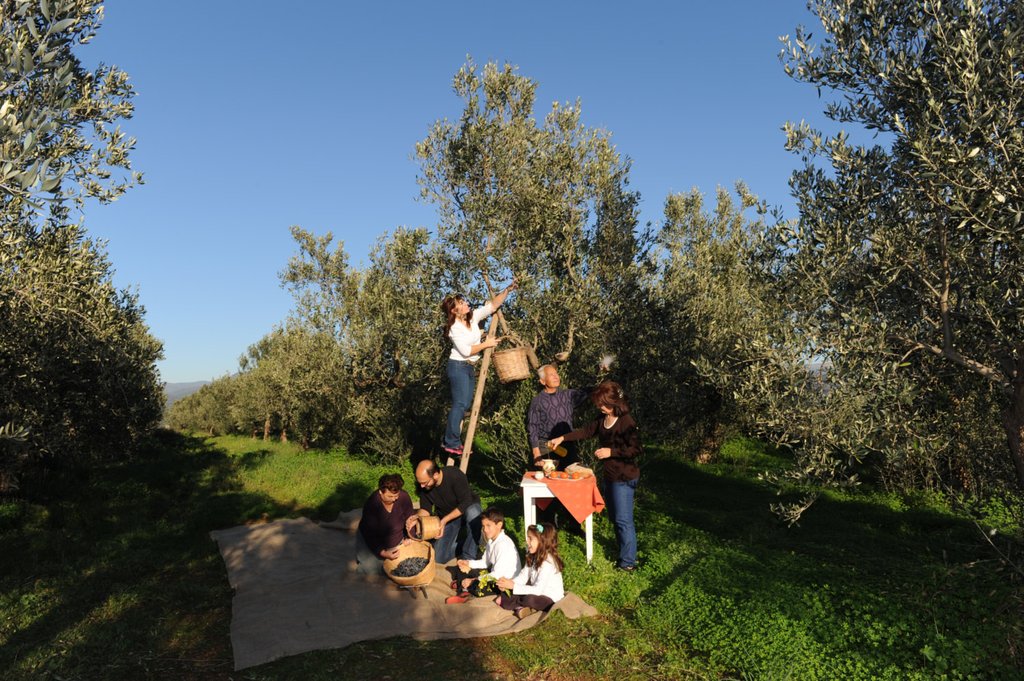
In the olives!
In the olives!

Of all the items in your shop right now, which is your most favorite?

Jehny: wild walnuts with honey from wild flowers and herbs.

George: Sheperd’s tea with honey from wild flowers and herbs.

favorites_collage
Jehny’s favorite on the left, George’s on the right.

What are the differences between Greek olive oil and Italian olive oil? Do they contain different olive varieties or are they harvested in a different way? Does the different geographic landscape/environment affect the taste of olive oil?

First of all, remember that Greece is the 3rd biggest olive oil producer in the world with an average of 350.000tn annually. Italy is at 600.000 tons (when their internal consumption is 800.000tn – think about it) And Spain is more than 1.200.000tn. Greece produces mostly extra virgin olive oil (which Italy and Spain does not) Laconia, our regions produces ONLY extra virgin olive oil and it’s one of the 3 biggest producer regions in Greece. “Koroneiki” is one of the best and most well know varieties of Greece but we have one more unique one: “Athinoelia” (the tree of Goddess Athena). This is an exquisite EVOO and it’s the “first extra virgin olive oil” in Greece every year. This EVOO has a strong and spicy taste and almost all of the yearly production is going to abroad every year. It’ s the EVOO that everyone must try even for once in life!

oliveoil1
Extra virgin olive oil from The Spartan Table .

Which country do you ship your products to the most?

Mostly to U.S and secondly to Canada. We’ve met wonderful people in these first 3 years and we hope that one day we’ll have the honor and pleasure to welcome them in our home.

Soap handmade by Jehny's mom!
Soap handmade by Jehny’s mom!

You mention in your olive oil listings that you can also use the oil as part of your beauty regiment. How would you recommend using it?

Simply by putting on the skin (massage). Or make “oil with herbs”.

Handmade Olive Paste

What is one thing that has really surprised you this past year in regards to your business?

As we said before, through these 3 years since we started, we met wonderful people which not only supported us as with all their hearts but also shared few lines and messages with their beloved ones. This led to warm feedback and to a genuine interest from a company from Netherlands which asked for a big project for Christmas. Upon our first contact and we asked how they found us , they simply answered : “We read your story and every feedback about you”. Then we understood that the love and support of our Friends in the States (mostly), “drove” them to our door!

If you could invite five famous people (dead or alive) to dinner at your house whom would you choose and why?

Well, we can’t really choose. There are a lot of people which we’d love to invite. So instead of this option, we want to invite as many people as we can to share our table. You know, “common people” like us.

Coasters
A recent addition to the Jehny’s shop – Olive Wood Drink Coasters!

What is your most favorite meal to make in your kitchen?

Greek Salad (and many another kind of salads) and Meat (pork, chicken in the oven with EVOO, herbs, and different vegetables).

When you are not cooking or harvesting or collecting for business what hobbies do you enjoy? Reading and sharing moments with family and friends (and sometimes trying to get some decent sleep – cause we miss it often!)

On George's bookshelf...
On George’s bookshelf…

What book are you currently reading? What music are you currently listening to? Jehny : Reading books and articles about decorations (special events and weddings). Greek pop music. George: “I contain Multitudes” & “The secret life of plants”. Old Rock and classical music.

Do you ever dream about living somewhere else in the world? If so, where would you choose and why?

No, but we love to travel and meet new friends. Unfortunately due to the heavy crisis in Greece, we can’t afford to any trips but we hope that one day we ‘ll start traveling again.

What inspires you about your business?

The superb landscape. You can’t be “unaffected” when You see the mountains and the valley every morning!

View from the olive groves!

Understandably so, with a  view like that! Throughout history, the olive branch has been a symbol of peace the world over.  Although they lead busy lives as blooming entrepreneurs, you can see how the olive trees have brought peace and fulfillment to the lives of Jehny and George. And you can taste it too. In the aromatic flavor of their olive oil, which is fresh and raw like newly cut grass. In the sweet, earthy smell of their wild mountain oregano. To breathe these two cooking staples in, is to breathe all the myths and legends and stories of a thousand centuries. It is to breathe in the sun and the sky and the windswept air of Sparta, where great men and women have dared to accomplish great feats.  But maybe most importantly you are breathing in generations of a country’s faith in itself and in it’s future.

giveaway from The Spartan Table

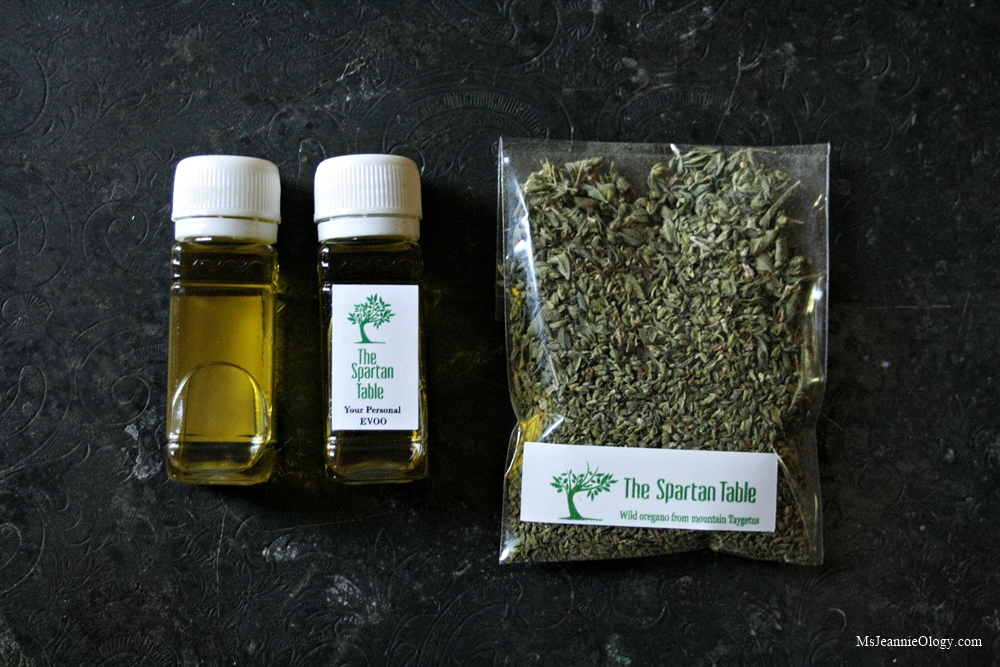
Jehny and I are so excited to offer three lucky readers the opportunity to sample the wild oregano cultivated from the Taygetus Mountains and the extra virgin olive oil from the family groves of The Spartan Table. Three winners will each receive one complimentary packet of oregano and two mini bottles of olive oil to test and to try, to experiment and to explore.

All you need to do is fill in the comment box below with your name and email address (so we can let you know who won!) and then answer the question: Who is your favorite author? in the comment box, so we can avoid spam messages. Winners will be picked at random and will be announced both here on the blog, on Instagram and via email on Monday morning, November 21st, so please enter for your chance to win by midnight (11:59pm) on Sunday (11/20). Enter as many times as you like and please spread the word to fellow culinary lovers.

← Back

Thank you for your response. ✨

Please note, the Vintage Kitchen totally respects your privacy. Your contact information will not be sold or shared and is simply used here for contest purposes only. If you are reading this post on your phone you may have trouble seeing the actual contact form box. Please visit inthevintagekitchen.com to access the private and secure form which will send your entry directly to a private email account. Any troubles beyond this, please comment on the blog post and we will help you ASAP!

While you wait to find out if you are the lucky recipient of a Sparta souvenir peruse the lovely offerings of  The Spartan Table here .

{After a long nap in the question and answer department, the interview series is back in full swing, bringing you face to face with real-life creatives from around the globe. If you missed last week’s interview with museum director  Louise Van Tartwijk, from Washington, Connecticut’s Gunn Historical Museum find it here. If you are new to this series, catch up on a bevy of previous interviews here.}

Until Monday, cheers and good luck!

Photo credits: The Spartan Table, maranghuset.se

New England Style: Three Vintage Bread Recipes You’ll FALL in Love With

bread2

Now that Autumn is here and the temperatures are cooling and the holidays are coming in close, there is nothing that trumpets the start of the cozy Fall season more than baking homemade bread. This week in the Vintage Kitchen we are exploring three different types of bread – one quick bread, one muffin recipe and one sandwich bread, all tackled the old-fashioned way. Meaning without a bread machine or any fancy paddling mixers.

Inspiration begins back in the late 1960s when food writer and cookbook author, June Platt was living here…

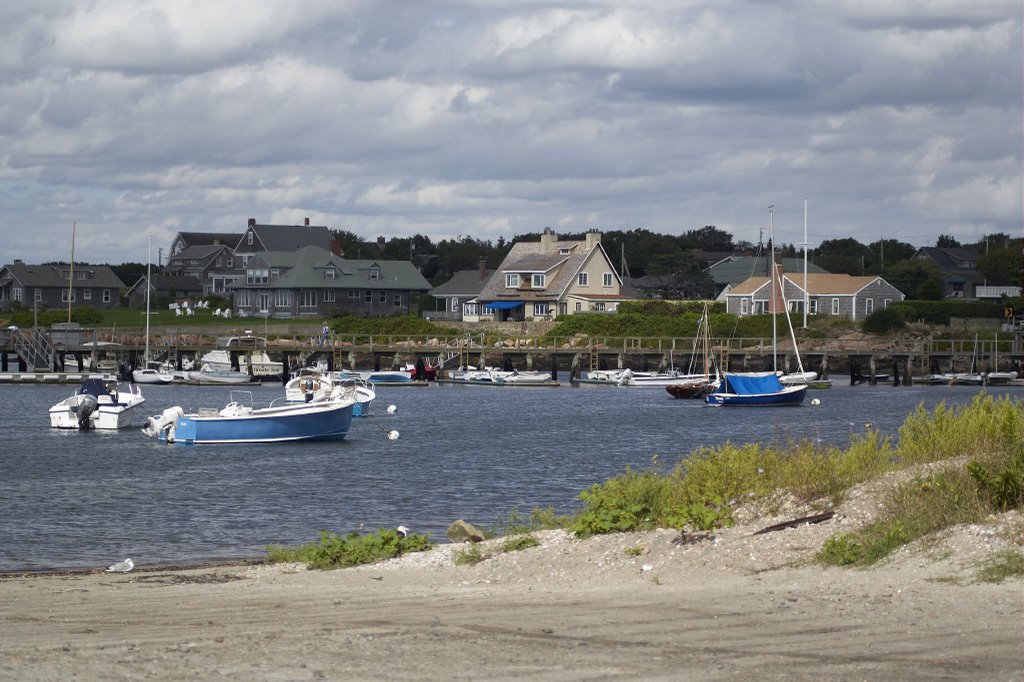
littlecompton-ri

in the picturesque seaside town of Little Compton, Rhode Island. Tasked with writing a regional cookbook made up wholly of New England fare, June compiled a list of over 250 recipes that represented the belly and bounty of diverse Northern appetites.

Her recipes were published in 1971 under the title June Platt’s New England Cook Book…

June Platt's New England Cook Book

and contained recipes both historic and modern for all meals of the day including cocktail hour, appetizers, party fare, preserves, homemade wine and the infamous bread featured here in this post. Let’s look at what’s in the oven…

BREAD No. 1

If you are anything like us, you’ll find sandwich breadmaking a bit of a challenge. Usually when I attempt such creations my bread comes out weighing 18 pounds and has both the texture and composition of packed clay. Right when the oven door opens and the weighty wonder gets hoisted onto the cooling rack, I know instantly that she’ll need not a bread knife but a handsaw to cut into such a terrible beauty of an endeavor.

Thankfully though, things have changed dear readers. We can no longer say that baking is precariously difficult and that light, fluffy sandwich bread eludes us. Thanks to June Platt the perfect sandwich bread has been found. Easy to make, simple to bake.  Success at last!

Although it is yeast bread, and therefore, takes some hours to fully prepare from start to slice, it is WELL worth it and very simple. You’ll never want to eat any other bread again.

Brown Bread

Like New Englanders themselves, this bread is humble, hardy and versatile. According to June Platt, legend has it that this recipe stemmed from a farmer who was so fed up with his wife’s terrible cooking that he took to the kitchen himself, keen on preparing something (anything!) edible. As  fellow New Englander, Louisa May Alcott once said, necessity is the mother of all invention, and so Farmer made his bread and named it after his wife Ana and her (damnable) cooking talents…

Anadama Bread

(makes 2 loaves)

1/2 cup white stone ground cornmeal

2 cups boiling water

3 tablespoons butter

1/2 cup dark molasses

1 rounded teaspoon salt

1 yeast cake dissolved in 1/2 cup warm water

4 cups flour* (see note)

  1. Stir cornmeal very slowly into boiling water, using a wooden spoon.
  2. When thoroughly mixed add the butter, molasses and salt. Try to work out any lumps by flattening them out with the back of the wooden spoon against the side of the bowl or pan.
  3. Cool to lukewarm.
  4. Add the yeast dissolved in the warm water.
  5. Add the flour, one cup at a time, stirring with the wooden spoon, to make smooth dough.
  6. Place on a lightly floured board or canvas and knead well.
  7. Place dough in a well-buttered bowl and cover with a cloth wrung out in hot water.
  8. Allow to rise in a warm place, free from drafts, until more than double its original bulk (or for about 2.5 hours).
  9. Preheat oven to 400 degrees , and butter two 9″inch bread pans.
  10. Turn the dough out onto a lightly floured board again, knead lightly and shape into two loaves.
  11. Place dough in the buttered pans , cover with a towel wrung out in hot water , and allow to rise again until doubled in bulk (about one hour).
  12. Place the loaves in the pre-heated oven and bake until they are a deep golden brown (about 45-50 minutes).
  13. Place on a wire rake to cool before removing loaves from pans.

This a fun recipe to work on while you have a whole home day planned. Because it does take some time you may want to double up on the recipe and make four loaves of bread so you can stick some in the freezer for later use.

*We followed this recipe and the steps exactly with the exception of the flour. We subsitituted two cups all purpose flour and two cups of cake flour which is little bit lighter in texture.  This combo may have aided in a slightly fluffier loaf.

Moist, flavorful, easily sliced (no handsaw required!) this sandwich bread is perfect for everyday use in the versatile sandwich department. Hopefully it will become a household staple in your kitchen too.

*** Update 10/26/2016***

Another batch of bread was made this time using all-purpose flour (in place of cake flour) and olive oil (in place of butter) and it came out equally as wonderful and delicious. The all-purpose flour makes it the tiniest bit more dense but other than that there are no noticeable differences in either taste or texture, which leads us to believe that this just might be the most versatile and easily experimental bread recipe ever. Next time, we’ll try it with a sprinkling of nuts, seeds and/or whole grains to see what happens.

BREAD No. 2

Fruit and nut breads are always an instant favorite and an easy go-to for busy morning breakfasts. Around the the Vintage Kitchen, we never pass on homemade banana or berry breads. And the field of play that awaits when it comes to adding your own bits and bits of flair when it comes to enhancing quick breads is a great source of creativity when it comes to cooking. Since we are in the middle of nut season, June Platt’s vintage recipe for Cranberry-Orange-Walnut Bread sounded wonderfully delicious and in-season. Only there was one slight problem. Cranberries.

For some reason, this year,  even though we scoured high and low, store to market to store again – there were no cranberries to be found anywhere in our fair city – fresh, frozen or otherwise. A bit too early for Thanksgiving relish season, perhaps, New Englanders must have made this bread in the colder mornings of November instead of October.  Out of season, but not out of spirit we substituted. And then substituted again. Dried sour cherries replaced fresh cranberries and almonds replaced walnuts.

Cherries seemed fitting on the historic side – George Washington was a fan after all. On the flavor side, they are sweet yet tart like a cranberry and the dried version seemed like the next best thing. Just be sure when preparing this recipe you look for pitted sour cherries. We found our cherries at the international market inside our local farmers market and they were not pitted. De-pitting added an extra sticky 30 minutes to this project when it came to the prep department.

cherry1

Sour Cherry – Orange – Almond Bread

(makes 1 loaf)

2 cups sifted flour

1 1/2 teaspoons baking powder

1 teaspoon salt

1/2 teaspoon baking soda

1 egg ( well beaten)

Juice of 1 orange (about 1/3 cup)

Freshly grated rind of 1 orange (about 1 heaping teaspoon)

1/4 cup cold water

1 cup granulated cane sugar

1/4 cup melted butter

1 cup dried sour cherries, roughly chopped

1/2 cup whole almonds,  roughly chopped

  1. Preheat the oven to 350 degrees. Butter a 9″ inch bread pan.
  2. Combine the flour, baking powder, salt and baking soda.
  3. In a separate bowl, combine the beaten egg, orange juice, grated rind, water and sugar.
  4. Add the sifted ingredients and stir just long enough to mix. Stir in the melted butter. Fold in the sour cherries and almonds.
  5. Spoon mixture into the loaf pan and bake for 1 hour (or until inserted toothpick comes out clean). Oven temperatures really vary the timing on this one so keep your eye on it.
  6. Let cool on wire rack.

Because the almonds add a little hearty protein and the cherries mingle tartly with the sweet orange and cane sugars, this bread is almost like a soft protein bar. Two slices are very satisfying especially when served warm with a little butter. A lovely alternative to oatmeal on those frosty winter mornings, and a great bread for holiday house guests with its fast, festive and easy to freeze attitude, this bread will make holiday entertaining a breeze in the brunch/breakfast department.

Cherry orange almond bread

Bread No. 3

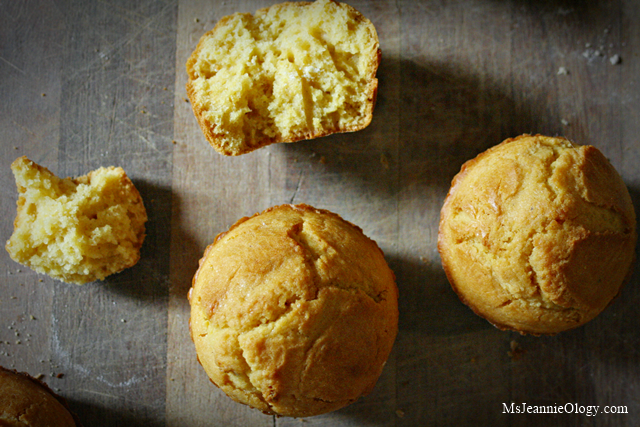
Our final bread comes to us by way of Vermont. June Platt had a special soft spot for the state and especially loved the maple syrup that sweetened all matter of meals in fall and winter. Her recipe for Vermont Johnnycake Muffins is ideally suited as a companion for a warm bowl of chili with its dense composition and hint of maple sweetness. Essentially, it is a cornbread muffin with a cute name.

Living in the South, there are two VERY different camps on the subject of cornbread. Northerners like their cornbread sweet, Southerners like their cornbread sour (or non-sweetened if you will). Here in the Vintage Kitchen, we prefer ours a little on the sweet side, but not so sugary that it tastes like cake. This Johnnycake is a hospitable meet-you-in-the-middle between North and South. A cornbread for everyone.

muffins1

Vermont Johnnycake Muffins

(makes 8 muffins)

1 cup sifted all-purpose flour

2 1/4 teaspoons baking powder

1/4 teaspoon salt

1/2 cup cornmeal

2 eggs, well beaten

1/3 cup milk

1/4 cup maple syrup

6 tablespoons melted butter

  1. Preheat oven to 400 degrees.
  2. Sift the flour, baking powder and salt together , add the cornmeal and sift again.
  3. Combine the remaining ingredients and add to the dry ingredients, stirring only enough to dampen all the flour.
  4. Pour into well-buttered muffin tins and bake in a hot oven for about 30 minutes or until golden brown.

June suggests serving these handsome guys with maple cream or maple butter. We suggest a little bit of jalapeno jelly, a dollop of goat cheese and a drizzle of honey.  Like the other breads above, these muffins freeze well and can fill up a hearty appetite in a half second. It’s just the kind of fortitude you need when shoveling snow or battling that freezing wind rolling in off the coast.

Vermont Johnnycake Muffins

Released to great critical acclaim, all the recipes in this cook book re-introduced regional delights that were overlooked and underrated in mid-20th century America.  June helped bring them out of hiding 45 years ago and in turn four decades later, the Vintage Kitchen is shining a spotlight on them again today. So whether you are looking for something new to bake-up this season or you are like us and just trying to bolster up your bread baking abilities, look no further than New England, dear readers!

To explore more vintage recipes from June Platt’s New England cookbook, including the wonderfully named Beach-Plum Jelly, Rinktum Ditty, Cranberry Troll Cream, Red Flannel Hash and the classics –  Lobster Rolls, New England Clam Chowder, Boston Baked Beans, etc etc etc… visit this link here.

Cheers and happy baking from June an the Vintage Kitchen and all of New England!

Dinner and a Date: Grecian Style!

gree1

This week, Ms. Jeannie is taking you on a little dinner date! From the look of things above you may think that her adventures have taken her abroad on an exotic travel vacation steeped in ancient history. If you guessed the destination to be time-traveled Greece, then you are correct! Sort of.

While the view looks like this…

gree2

and the menu looks like this…

gree3

Ms. Jeannie is excited to inform you that she has never actually left the U.S.. In fact she never left her city. That’s right dear readers, Ms. Jeannie is visiting Greece while never leaving Nashville. Let’s see how…

During other day explorations of her new city, Ms. Jeannie delightfully happened upon the United States’ only full scale replica of the Parthenon that famous historic ruin in Greece that was built in the 430’s B.C.  In case you need an art history refresher, this is what the original looks like …

The original Parthenon as it stands in Greece among all its ruined glory.

And this is the American version…

greek13

Standing elegantly (and so massively) in the city limits of Nashville’s Centennial Park, this American Parthenon is incredible in size, scope and detail.

gree4

greekpart9

While it is not quite as old as the original (this one dates to 1897) it is a true work of art from all angles with the stories of Greek heroes and gods running all around the facade…

gree8

gree5

gree9

gree10

Built in 1897 to celebrate the 100th anniversary of the state becoming part of the union, Nashville’s Parthenon was built by Southern architect and Civil War veteran William Crawford Smith for a special event exposition that included several other copies of ancient ruins.

parthenon_original
This original photograph of the Nashville Parthenon was taken in 1909. Photo courtesy of the Library of Congress.

With no intention of making a permanent structure, the Parthenon was built as a whimsical folly, fully expecting to be dismantled shortly after the celebrations ceased. But as an instant favorite among locals and visitors the Parthenon became a part of the permanent Nashville landscape in the 1920’s when it was completely rebuilt in more solid form. What was once the original wood and plaster model became much more weather resistant concrete. Now it is hard to imagine anything getting in its way.

gree6

gree11

There is nothing petite, frail or breakable about this beauty. It is difficult to get a sense of size or scale from photographs but this father and son pictured below hint at the sheer size of both the steps and the columns…

greekpart8

As the sun travels across the sky, the colors, shapes and shadows morph from sand shades to cinnamon to sweet potato to gold. And then the night sky darkens. The spotlights come on. And the Parthenon lights up in the most spectacular of ways…

greekpart18

It is no wonder that the park stays open until 11:00pm. With wide sweeping lawns, a small meandering lake complete with floating geese and ducks and plenty of shade trees, the Parthenon makes an ideal romantic backdrop for a late summer/early fall picnic. Ms. Jeannie spotted lots of hand holders among all those columns!

greekpart19

greekpart17

In celebration of the beauty and timeless appeal of the Greek culture Ms. Jeannie is including a recipe here for a Mediterranean meal that works great for brunch, lunch or dinner. Or perhaps that romantic picnic in the park! Pulling a traditional Greek recipe from a 2010 cookbook, Greek Revival by Patricia Moore-Pastides, Ms. Jeannie put her own spin on a classic recipe that could be served in a number of situations – hot out of the oven at home, room temperature straight from the picnic basket or cold out of the fridge for instant next day left-over gratification.

While the recipe is classified technically as a tart, it is more on the fluffy side like a crust-less quiche then a dense whole ingredient tart. Traditionally it is served as side dish but it can be easily adjusted serving size wise to accommodate hungrier appetites. Serve it with some toasted crusty bread drizzled with olive oil and garlic, or a simple side salad and a glass of a wine or honey smothered fresh fruit and you have some magical combinations of savory flavor pairings that could take you from morning to night.

greektart7

Sweet Potato, Zucchini and Feta Tart

1.5 tablespoons olive oil

1 large sweet potato

2 medium zucchini

8 oz. feta cheese

1 tablespoon + 1 teaspoon pesto (you can make your own or buy a small jar already prepared)

2 eggs

2 cups milk

2 tablespoons flour

1/4  teaspoon pepper

  1. Preheat oven to 375.
  2. Oil the bottom of a 9 x 11 inch baking dish. Grate the sweet potato and zucchini on the large hole section of a traditional box grater – this  should yield about 3 cups of each.  Toss both vegetables in a large bowl together…

greektart3

3. Spread in the bottom of the prepared baking dish.

4. In a medium size bowl mix the feta and pesto and then sprinkle over the sweet potato and zucchini mixture.

greektart4

5. In a blender mix together the eggs, milk, flour and pepper. Pour over the the top of the cheese/vegetable mixture and bake in the oven for 1 hour or until well set and golden brown on top.

greektart5

The original Parthenon was built in Greece as a temple to honor Athena – the goddess of reason, intelligence, inspiration, art and literature. The American Parthenon was built to honor and represent the intelligent and cultured community of Nashville.. And this blog post was designed to honor you, dear dedicated readers of this blog for so many years now. Food and history go hand-in-hand, Ms. Jeannie sends a big cheers your way for encouraging and supporting both!

For more Greek recipes please visit this previous post here.