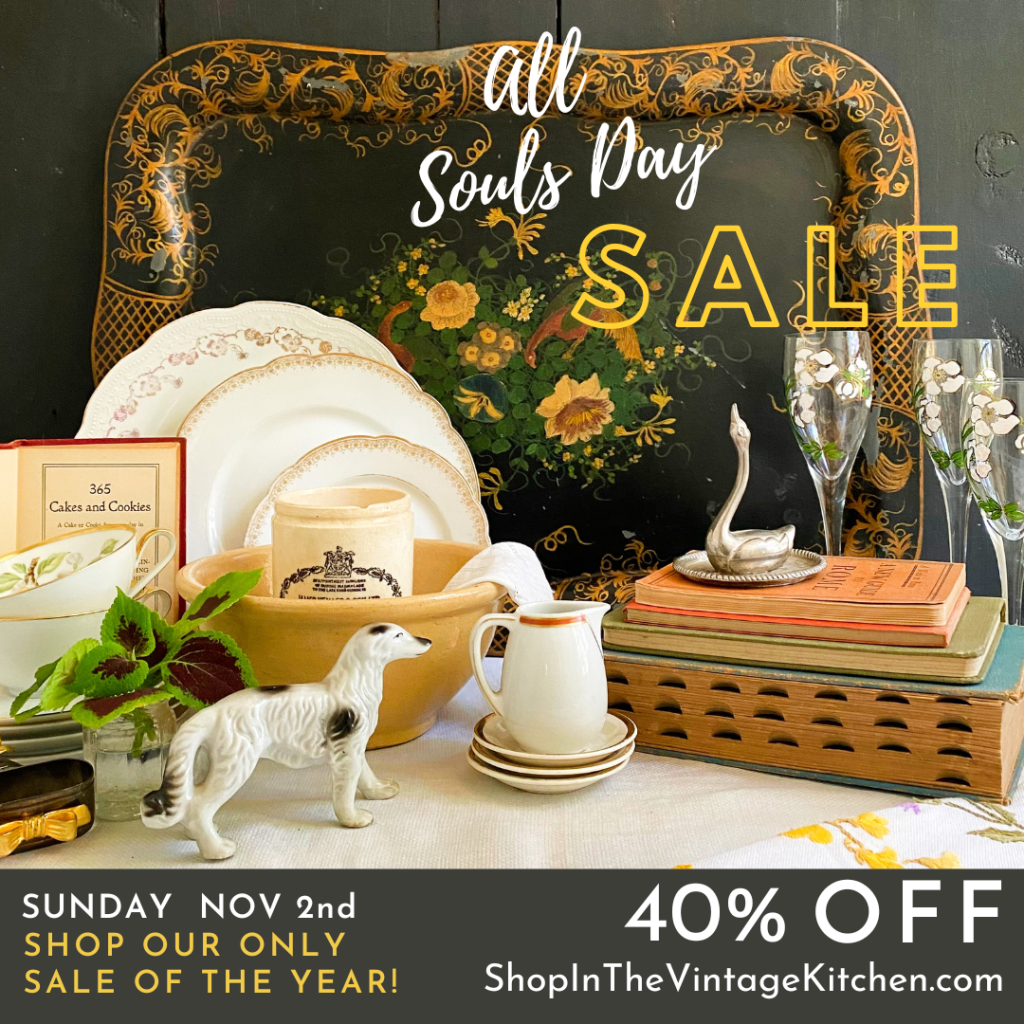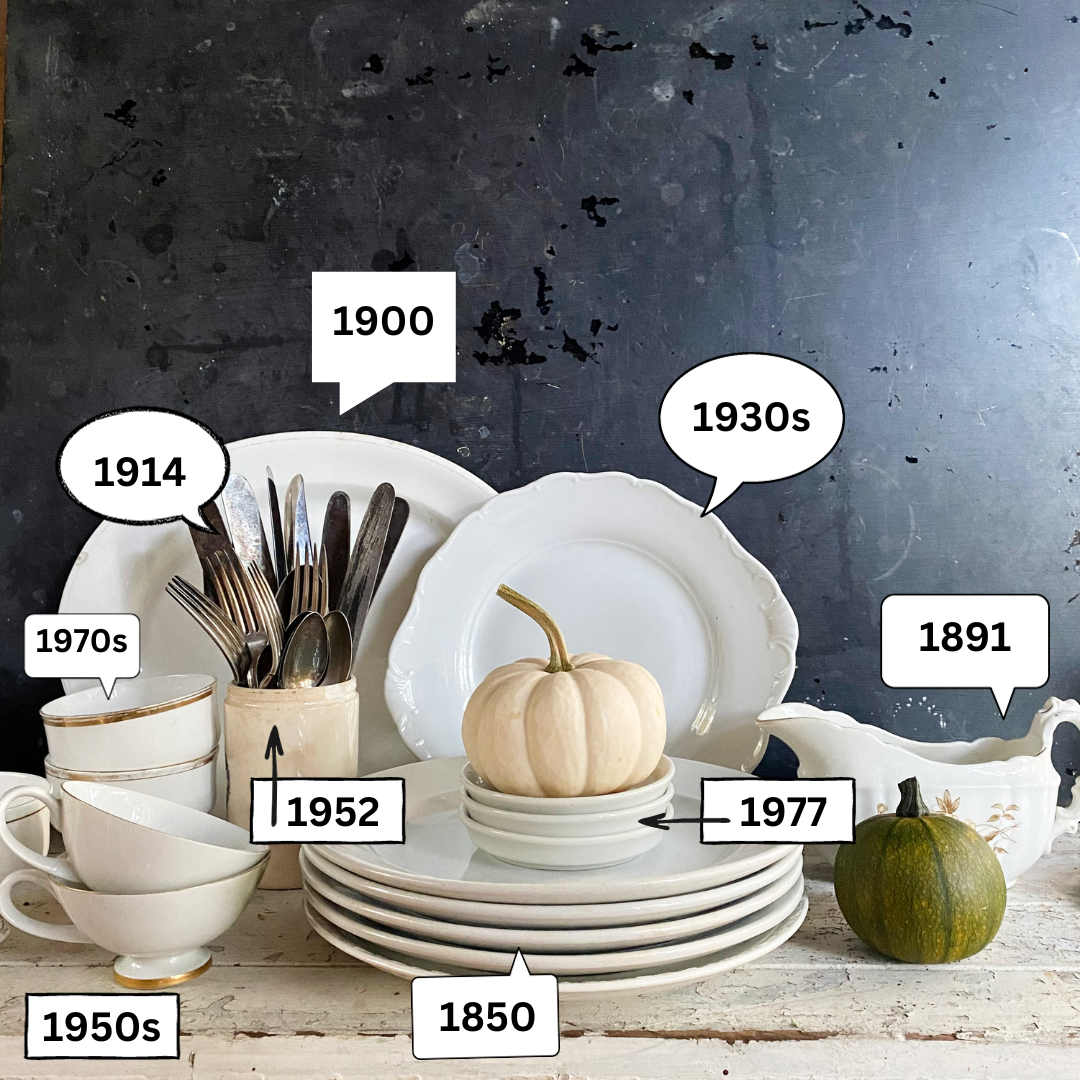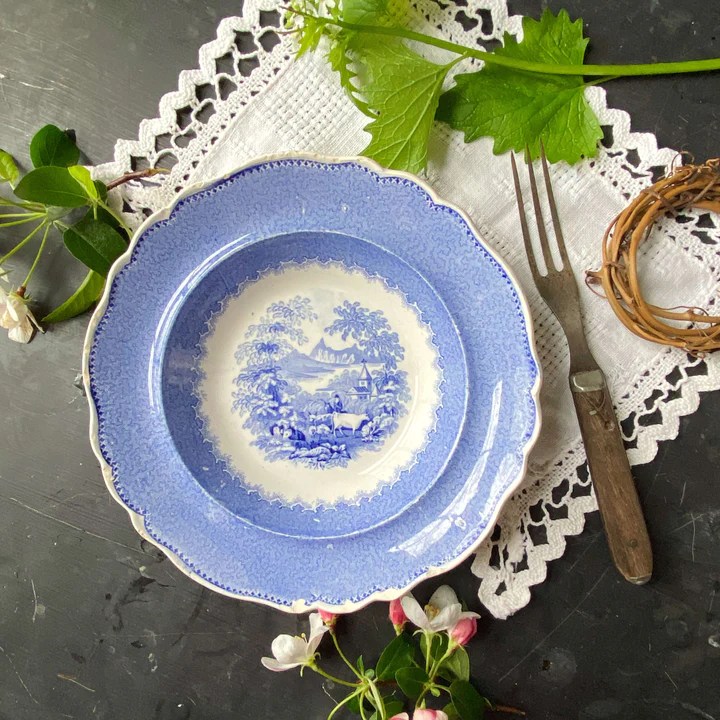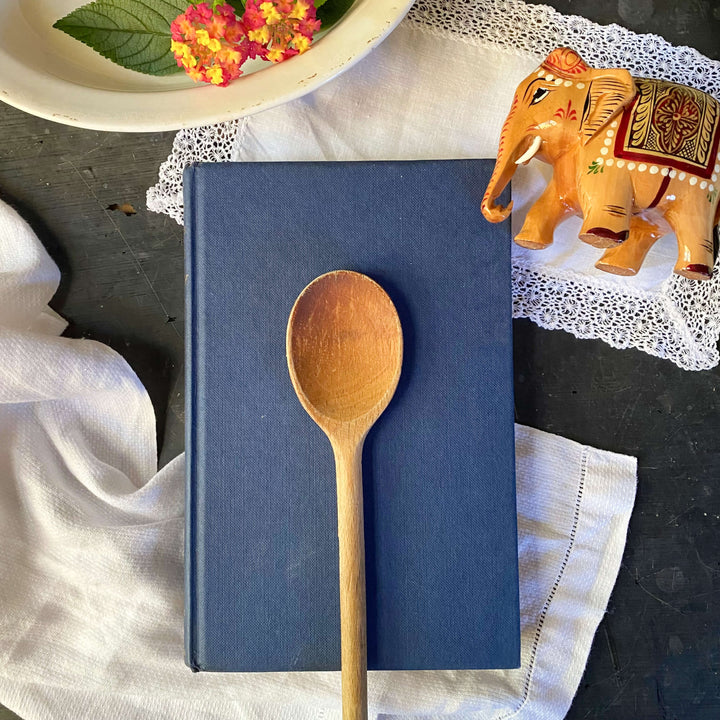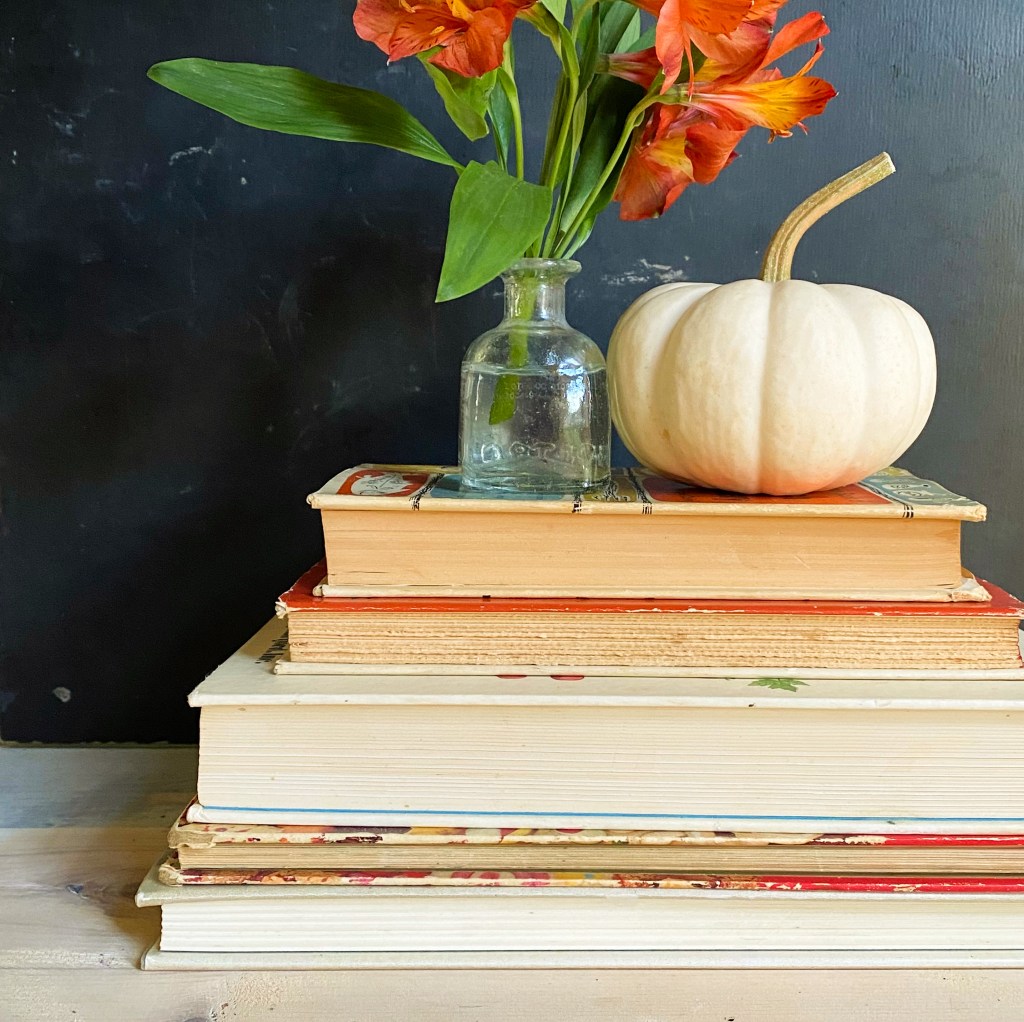
Mark Your Calendars: Our Annual 40% Off Sale is Sunday, November 2nd!

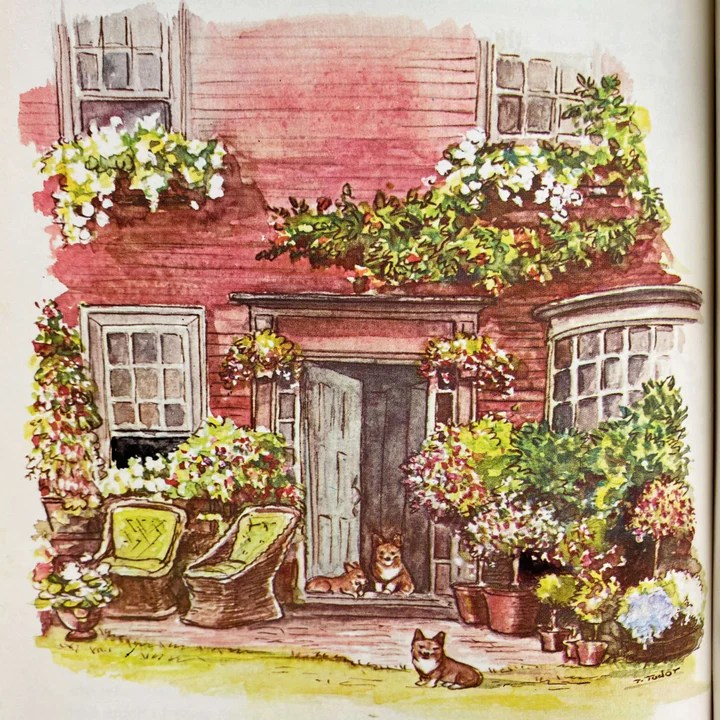
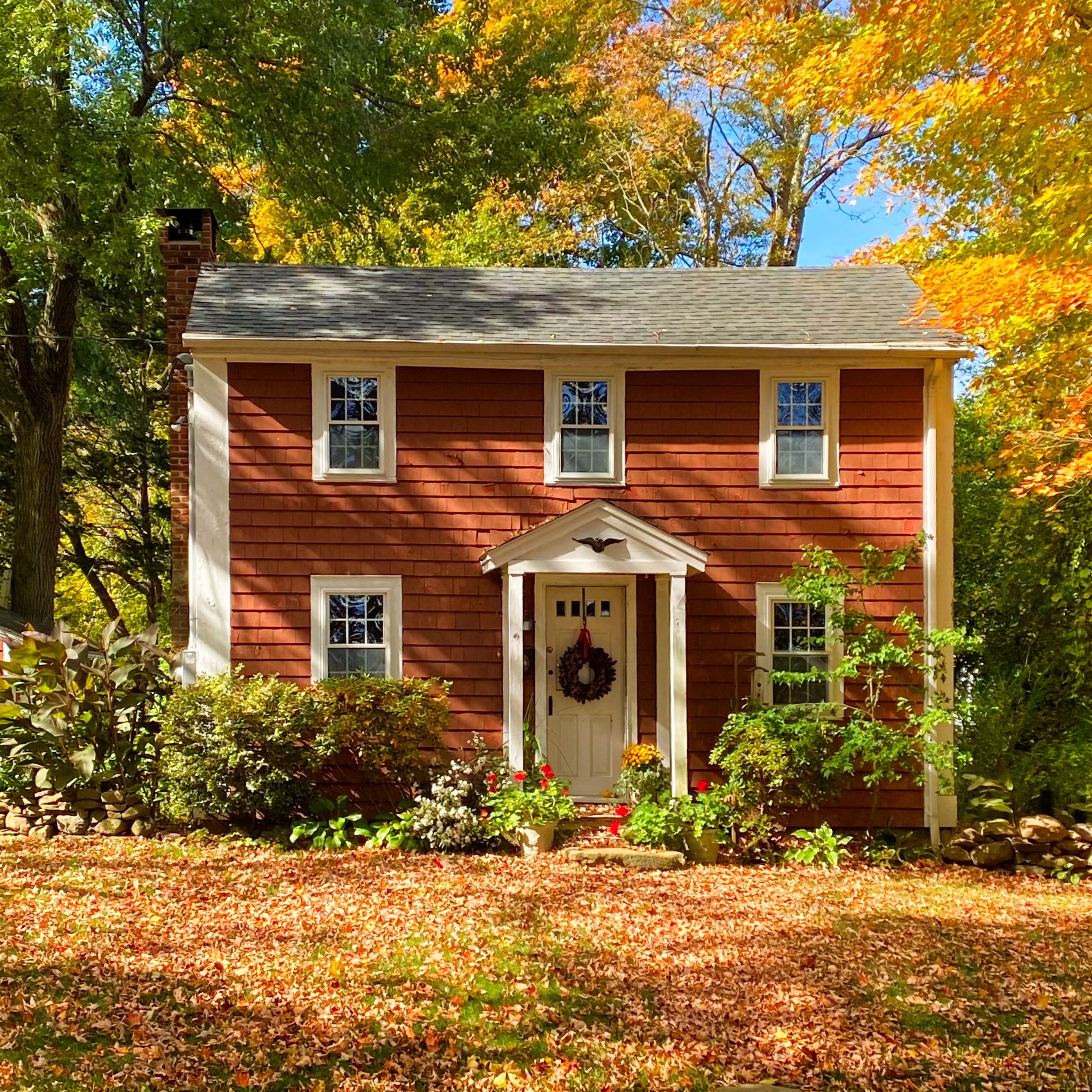
Autumn 2025 comes to 1750 House in a blanket of color.

It’s hard to believe that our annual once-a-year shop sale is just two weeks away, especially since our last blog post left off with baking bread in the middle of a summer heatwave. And yet, now here are, firmly swaddled in a blanket of autumn leaves with the woodpeckers performing their yearly tap tap tapping on the shingles of 1750 House reminding us that seasonal celebrations are close at hand. Lots has happened between now and that day in July when the kind bread was rising as high as the humidity and the garden was growing right along with the shop stories.

The lemon balm… one of our star growers in the herb garden this year.

I’m very excited to catch up, especially when it comes to hashing out the happenings of the herb garden and the triumphs and tragedies it endured over our experimental summer. But before we get to all that, I wanted to give everyone a quick calendar reminder in this post about the shop sale since it’s coming up right around the bend.

Two very exciting things are happening this year in regards to the sale. 2025 marks our 5th year of the sale, and it also happens to occur this year on the same day as daylight savings time, so you’ll be able to fall back and enjoy an extra hour of shopping should you so choose.

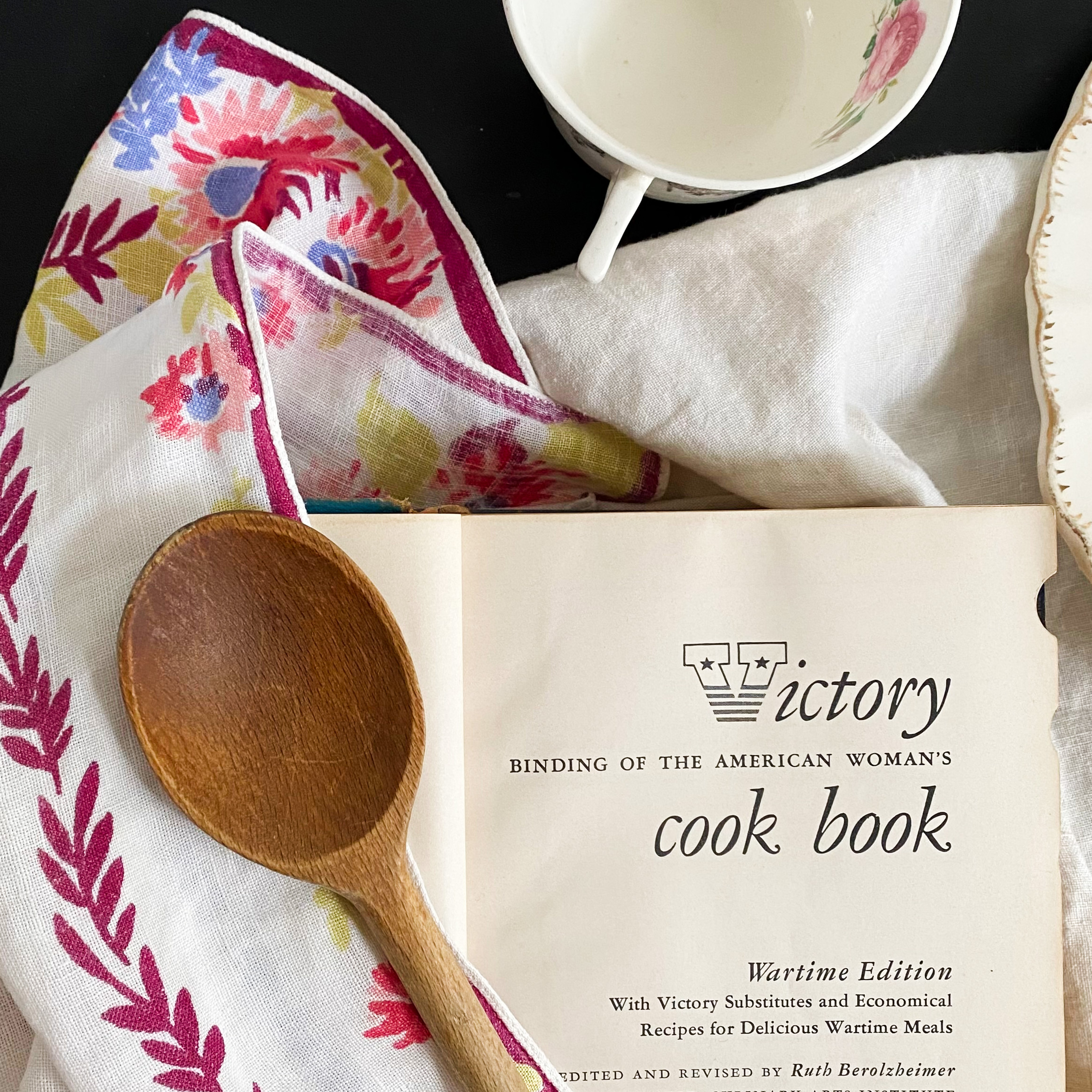
If you are a regular visitor to the shop, you’ll know that we adore a good floral and that the shop is forever covered in blooms no matter what the time of year. But when it comes to the change of seasons from summer to fall, the shop starts filling with heirlooms that embrace this cozy time of year by reflecting the colors in the landscape that help create autumn vibes in the kitchen and a beautiful feast for the Thanksgiving table. Whether its cookbooks, dishware, or decorative pieces, this year you’ll find some unique heirlooms that not only speak of history but of harvest time too…

If you are new to the All Souls Day sale, every year, November 2nd marks 40% off everything in the Vintage Kitchen shop for one day only. We call it the All Souls Day sale, not for the Catholic holiday that it shares the day with, but for the heirloom history that it encompasses.

All Souls Day is the only communal holiday in the calendar year that celebrates and remembers all deceased ancestors, and to us, that seems like the perfect time to celebrate vintage and antique heirlooms too. None of our shop items would be here today if they had not traveled through time, cherished and cared for in the hands of the people before us.
It’s up to the ITVK team to curate the shop, but the heirlooms do all of the storytelling. Each year, these heirlooms share new insights into the past that help shed light on things in the present. Since no two items in the shop are ever exactly alike, no sale from year to year is ever exactly the same either.

Just like the majority of one-of-a-kind heirlooms that can be found In The Vintage Kitchen, unique stories offer glimpses into culinary history and garden life that occurred decades ago or even centuries earlier. Hidden histories are everywhere and they tend to show up in ways that consistently surprise and delight. Just when you think a napkin is a napkin, a plate is a plate, a book is a book, a detail will jump out from in its history and take us on a marvelous trip through time to understand and explore other places and faces. These are some of the unique heirlooms you’ll find in this year’s sale…

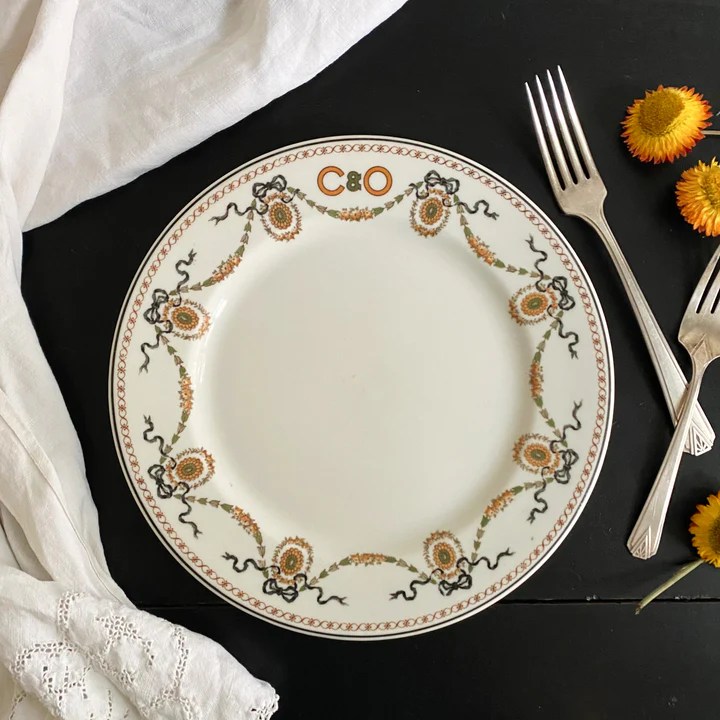
A Rare Chesapeake & Ohio Railroad Luncheon Plate c. 1923

With its roots extending all the way back to canal transportation in the 1790s, the C&O Railroad has a long and winding history through the American landscape. Throughout most of its life, C&O trains hauled coal, agriculture, retail products, and travelers between Virginia, the Midwest, the Northeast, and parts of Canada up until the 1980s. In the 1920s, the decade in which this luncheon plate was made, the C & O trains looked like this…

Dining service aboard C&O started in 1899 and was only offered on their luxury lines. Signature menu items included shirred eggs, Saratoga chips, broiled sea fish, baked apples and cream, Spring lamb chops, and French toast with marmalade. 

A Signed First Edition of Alice’s Restaurant Cookbook circa 1969

Not every cookbook comes with it’s own theme song, but when Alice May Brock (1941-2024) befriended a young Arlo Guthrie, the whimsical world Alice lived in was all the inspiration Arlo needed to write a hit song called Alice’s Restaurant Massacree, which in turn inspired a cult classic film of the same title. The cookbook came after the song and the movie, but shares the recipes that made Alice a local legend in New England as the proprietor of three restaurants and a catering company. A free-spirit, an artist, and a lover of food and friends, this cookbook features some of the favorites served in her restaurants and at her famous home-hosted dinner parties. It also includes still photos from the movie, Alice’s illustrations, and photos of Arlo and their friends who made a good time out of every meal. Adding an extra layer of the joie-de-vivre she embodied, this particular book is also signed by Alice.

A Collection of Original Floral Feed & Flour Sacks circa 1930s-1940s

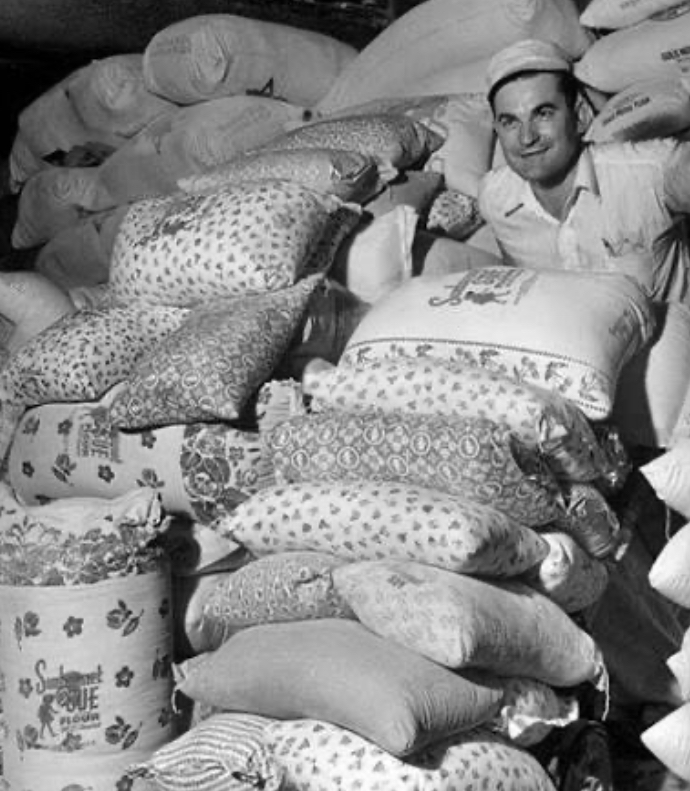
You can’t really get any closer to touching real-life history than these floral feed and flour sacks. Stitched into traditional sack shape, similar to a pillowcase, these bound together fabrics were once the commercial packaging that held a variety of pantry staples, including flour, sugar and grain. Made by the manufacturing industry in response to the financial burdens placed upon American families during the Great Depression, this cotton sack packaging was made solely for the purpose of recycling.

Knowing how thrifty and creative the American seamstress was, and knowing how tight household budgets were during the Great Depression and World War II years, grain and food manufacturers packaged their products in these floral cloths specifically so that women could repurpose them by turning the fabric into clothing, household linens, toys, rugs, curtains etc. It was a winning collaboration that not only responded to and eased economic stress, but also showed unwavering care, support and appreciation for customers during one of the most challenging times in American history. This batch in the shop came from a private collector and was so well-cared for across ninety years that each piece of fabric looks practically brand-new. Two of the sacks even retained traces of grain remnants hinting at the original products contained within.

Cotton flour sacks full of flour featured in a 1940s photograph published in LIFE magazine

An Antique Basin Bowl & Wash Pitcher That Changed the American Plumbing Industry

It’s hard to imagine life without modern conveniences like indoor plumbing and bathrooms, but back in the 18th and 19th centuries, this wash basin and pitcher was your gateway to cleanliness, both literally and figurately. Made by Maddock’s Lamberton Works in Trenton, New Jersey, between 1888-1902, the British-born Maddock family were the first immigrants to realize that America needed their own sanitaryware pottery manufacturer. Up until they opened up shop, all basin bowls, wash pitchers, slop jars, chamber pots and grooming sets were imported from England. The Maddocks changed that by producing American chamber sets using local clays, and in doing so, revolutionized the plumbing industry in the process. Recognized as pioneers in the world of sanitary toiletry products, the Maddock family patented several plumbing innovations before they eventually sold the pottery in 1929 to American Radiator & Sanitary Corporation, who would go on to create our country’s indoor heating and plumbing infrastructure including radiators, sinks, bathtubs, and toilets for households across the country.  

An Intimate Glimpse into the Life of a Literary Hostess

Guests at the Boston literary salon of Mr. James & Annie Fields were a veritable who’s who of prominent 19th-century writers. Mark Twain, Charles Dickens, Sarah Orne Jewett, Ralph Waldo Emerson, Henry Wadsworth Longfellow, Bret Harte, Henry James, Bronson Alcott, Nathaniel Hawthorne and Harriet Beecher Stowe, to name a few among were just some of the visitors that spent time in their home along with other notable painters, actors, musicians, and political activists. 

In addition to being a writer, activist and philanthropist herself, as well as the wife of distinguished Boston publisher James Fields, Annie Adams Fields (1834-1915) was also a charming, kind-hearted hostess and keen observer of conversation amongst her literary friends. Never interested in self-promotion, scandal or gossip, she regularly recorded bits and pieces of conversations among her friends in diaries that she kept throughout her life. Sketches of dialogue, character traits, pressing matters of the day, viewpoints on life and literature all freshly detailed the lives of extraordinary figures, painting them as humble, human, fallible beings tackling life, their passions and their creativity as anyone might. 

Before Annie passed away in 1915, she granted noted biographer Mark Antony DeWolfe Howe Jr. access to all her diaries in his pursuit to record the friendships enjoyed between the Fields and their artistic community. She had one caveat, though, in sharing her books. That Mark’s book not be about her but about the extraordinary friends whom she knew and loved so well. What resulted is this book, Memories of A Hostess: A Chronicle of Eminent Friendships, published in 1922.

Highlighting correspondence, diary entries, cultural events, and touchpoints from history for context, Mark Antony DeWolfe Howe pieced together an intimate glimpse into the lives of the 20th century’s greatest thinkers and artistic minds, courtesy of Annie and James’ record-keeping collection.

Annie’s husband, James Fields

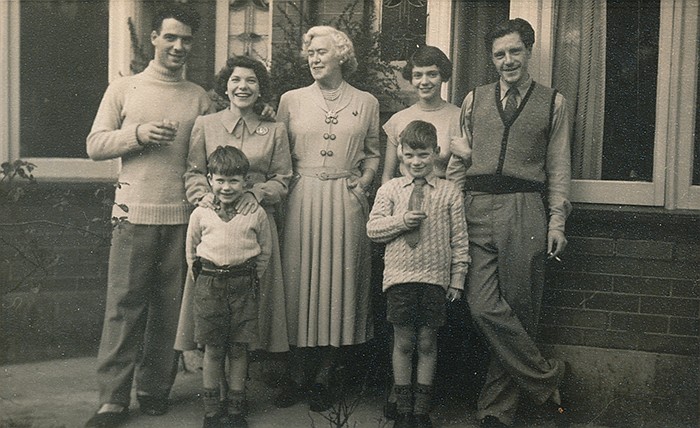
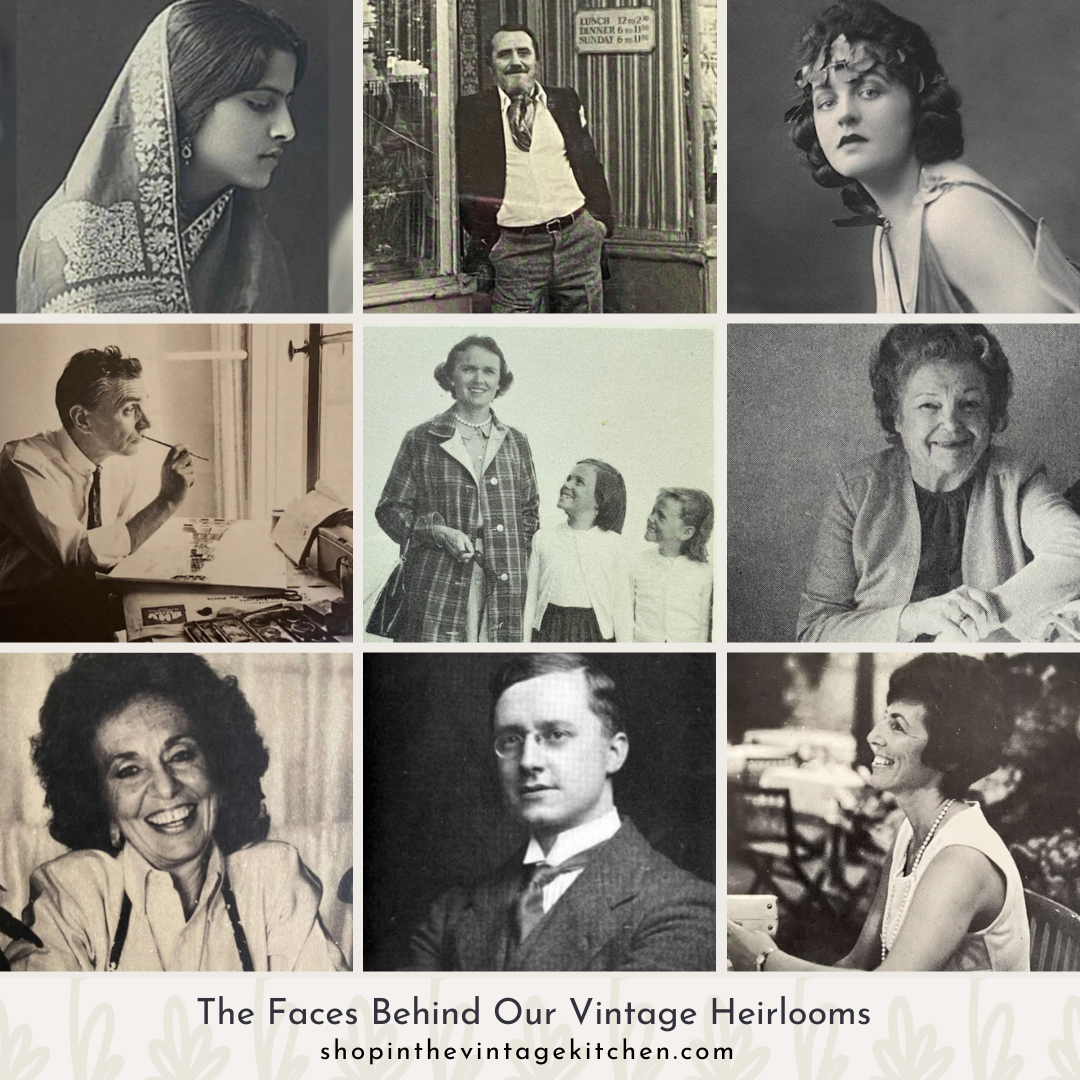
Uncovering a portrait to attach to each heirloom’s story is one of our ultimate joys. In this year’s sale, you’ll also meet many new faces. This year, we shared stories of Attia, Alfredo, Pamela, Freddie, Doris, John, Judy, Miroslav, and Marjorie along with her daughters, Kate and Susan…

Clockwise from top left: Attia Hosain, Alfredo Viazzi, Pamela Lyndon Travers, Freddie Bailey, Doris Muscatine, John Ramsbottom, Judy Gethers, Miroslavo Sasek, Marjorie Winslow and daughters.

Each brought many new perspectives of history to life. Attia Hosain (1913-1998) was a writer, actor, cook, broadcast journalist and intellectual focusing on stories of India and British post-colonialism. Freddie Bailey (1904-1992) was famous in Mississippi for her hot pepper jelly along with other regional favorites that made her kitchen the epicenter of Southern food, flavor and hospitality. In the 1930s, Pamela Lyndon Travers (1899-1996) introduced the world to Mary Poppins, who still remains 90 years later, the globe’s most well-known and most beloved nanny. Alfredo Viazzi (1921-1987) was the proud owner of a popular Greenwich Village restaurant known for its convivial atmosphere, great food and reasonable prices. Judy, Doris, Marjorie and Miroslav shared their artistic talents via saucepan and sketchbook. British mycologist John Ramsbottom (1885-1974) taught gardening enthusiasts all about the fascinating world of fungi.

This year also introduced personal stories shared by readers and their families. One of our favorites is that of Beverly, whose collection of handwritten recipes is not just a set of random cards in a box. They are the story of her. Of one woman’s culinary journey as she grew from a young, inexperienced midwestern bride, who barely knew how to boil an egg, into a confident, seasoned California cook and recipe collector over the course of her entire adult life.

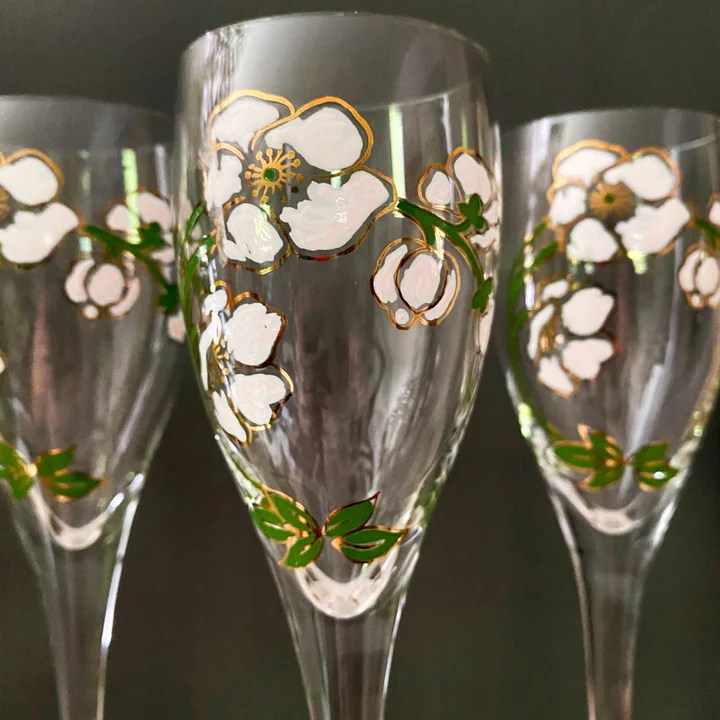
Familiar favorites can be spotted in the shop sale too, bringing with them their marvelous heritage stories that are worth retelling again and again. This stemware is the story of champagne, of “drinking the stars,” of a husband and wife couple, Pierre Perrier and Rose Jouet, who created the first true champagne made from the Chardonnay grapes in the Champagne region of France in the early 1800s. Together, with Rose in the vineyard and Pierre in the sales office, they launched Perrier-Jouet Champagne in 1814, a brand that still continues to enchant wine enthusiasts around the world today.

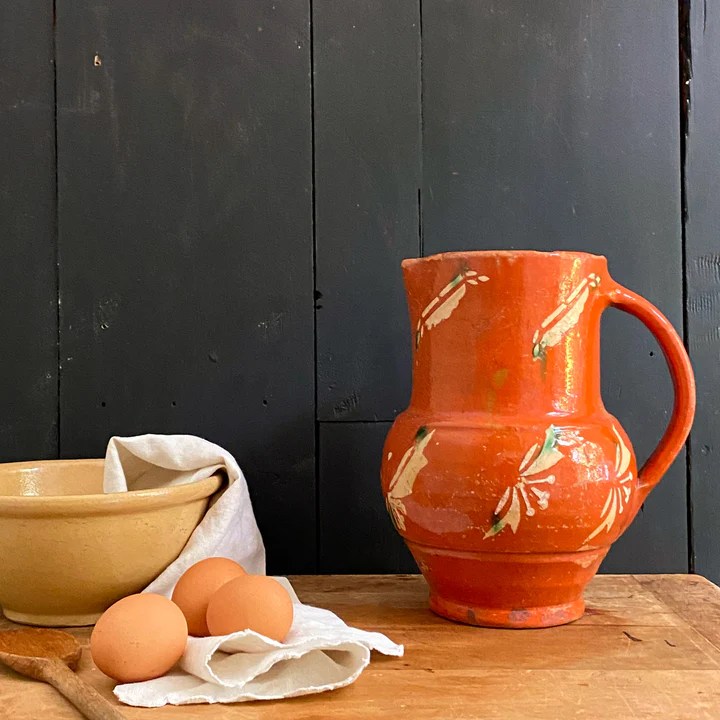
Every year we also like to spotlight the oldest antique in the sale. In this year’s case, it’s this French pottery water pitcher that dates to the 1850s…

More history floats. More stories emerge. In the shop, a cookbook is never just a cookbook. It’s a tactile understanding of what WWII cooking really looked like for women in the 1940s. Its a story of how they had to portray strength, creativity, courage, ingenuity and optimism at every meal, every day while creating delicious, nutritious and interesting meals on limited war rations, tight budgets, and victory garden harvests.

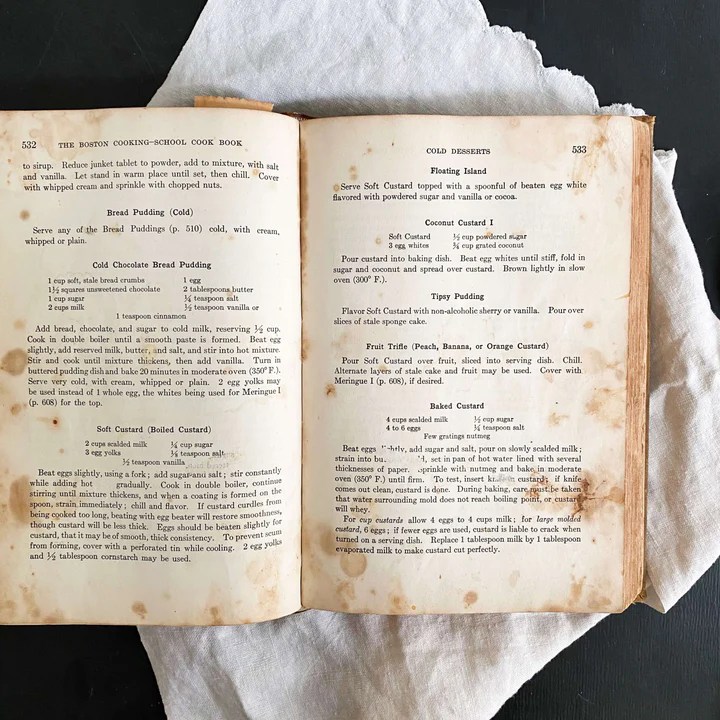
Cookbooks in the shop tell intimate stories not only of their authors but also their owners too. This 1931 edition of the Boston Cooking School Cook Book showcases the enduring legacy of Fannie Farmer (1857-1915), who not only raised generations of home cooks but shared recipes that still inform regional New England cuisine today. It also highlights, through a myriad of cooking splatters and stains, the adventures of a previous cook (or cooks) who cherished the recipes so much their culinary endeavors have turned into an artful aesthetic.

Also every year, there’s one stand out cook, who warrants days or sometimes even weeks of research thanks to a fascinating life lived. This year, it was Lois Burpee (1912-1984)…

who married into the Burpee Seed Company family in the 1930s and managed to carve out an incredible cooking, gardening, and philanthropic career that lasted her entire lifetime.

Other equally interesting cookbooks in the shop sale this year include two rare compendiums of culinary curiosity that offer suggestions on what to make and what to bake every day for a year…

Decorative pieces in this year’s sale highlight the handmade arts. An antique tole tray, a vintage hand-carved wooden swan, a vintage print of a tulip painting dating all the way back to 1827, a hand-embroidered linen…

These are just a few examples of the people, places, and stories that have found their way into the Vintage Kitchen shop in 2025. I hope at this year’s sale you discover an heirloom that captivates your attention, that steals your heart away to another time or another country, and that inspires new creativity from history’s forgotten muses.

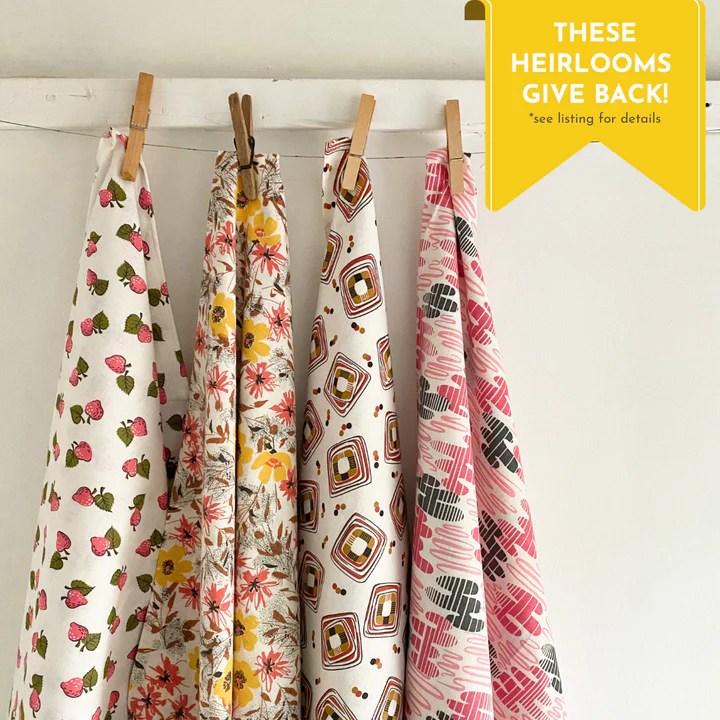
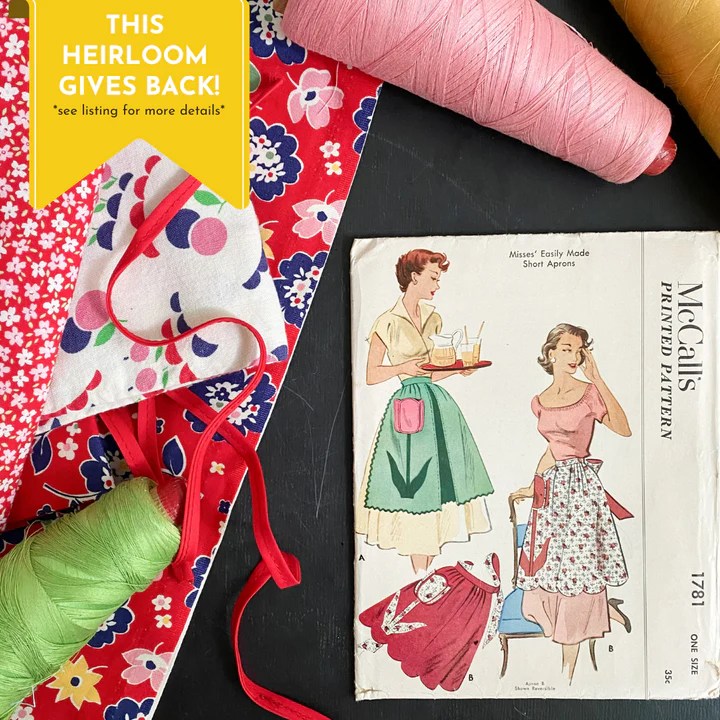
At this year’s sale, just like last year’s, you’ll notice that some heirlooms sport a festive yellow banner in their listing photos. Those banners signify a donation program that we launched in 2024. Any heirloom that you see in the shop that says This Heirloom Gives Back qualifies for a 20% donation to Feeding America, a nationwide non-profit network of food banks, food pantries and local meal programs dedicated to providing nutritious meals to food-insecure communities around the United States. Not all heirlooms in the shop qualify for this program, so be sure to look for the yellow banners if you would like to participate.

The sale begins at 12:00am (EST) on Sunday, November 2nd, 2025 and runs through 11:59pm that same night. Discounts are automatically tallied upon checkout, so there is no need to enter any coupon codes or discount phrases to receive 40% off.

New heirlooms continue to be added to the shop daily, so stop by for fresh vintage and antique finds leading all the way up to the sale. And, as always, if you are looking for something that we no longer have in stock, please send us a message. We’ll be happy to add your name and needs to our waitlist.

Whether you are interested in experimenting with a new cuisine, looking for a new favorite vintage dish pattern, or starting a collection that recalls memories of a happy time from your past, I hope you find something in the shop that calls to your heart and adds extra delight to your kitchen.

Cheers to all the old souls that inspire the shop each and every day. Cheers to all the heirlooms that they have been passed on to us to love and cherish just as much. And cheers to the kitchen for being the one spot in the house where everyone is always welcome.

Explore The Shop: Our 40% Off Sale is Today!

It only happens once a year and today it’s here! Our annual 40% off sale runs now through midnight (EST). Some highlights from the shop this year include these faces and features…

Feminist, cookbook author, and magazine editor, Sarah Field Splint (1883-1959) published The Art of Cooking and Serving in 1931.

The oldest bowl in the shop is this one that dates to the 1830s.

Over one hundred years ago, this is how you dried your wet laundry linens and clothing.

The design of this 1940s vase was inspired by museum relics from the Chinese Imperial dynasty.

These first-generation Greek immigrant women turned a collection of recipes for a humble church fundraiser into a bestselling cookbook in the 1950s.

This is a very rare set of midcentury restaurant ware dessert plates.

Henri Toulose-Lautrec was not only a talented French artist but a talented cook and a true gourmand in the kitchen too. This is a collection of his recipes and the colorful art that adorned his hand-drawn menus, which were given to all guests who came to dine at his table.

A trip to North Carolina in the 1930s introduced Katharine Beecher to her first homemade butter mint. She fell so in love with them that she started making them herself. Less than a decade later she was the proud owner of a multi-million dollar candy company.

This is a very rare 1920s children’s coloring and painting book by American artist Florence Notter (1884-1960). She was quiet and unassuming in personality but her art was bright, full of character and color and immensely beloved by children around the country.

These are just a few examples of the unique stories behind some of our heirlooms in the shop. Find many more as you explore our vintage and antique cookbooks, dishes, linens, decorative pieces and kitchenware.

Hope this year’s sale sparks something new and inspirational for you. Cheers, and happy shopping!

Mark Your Calendars: Our Annual 40% Off Shop Sale is November 2nd!

Outside the kitchen window, fall is here. It’s blown into New England this year slowly, on warm breezes scented with cider doughnuts and sunshine. Our prettiest one yet, milder-than-usual temperatures have prolonged the season, rolling it out like a colorful ribbon one yard at a time.

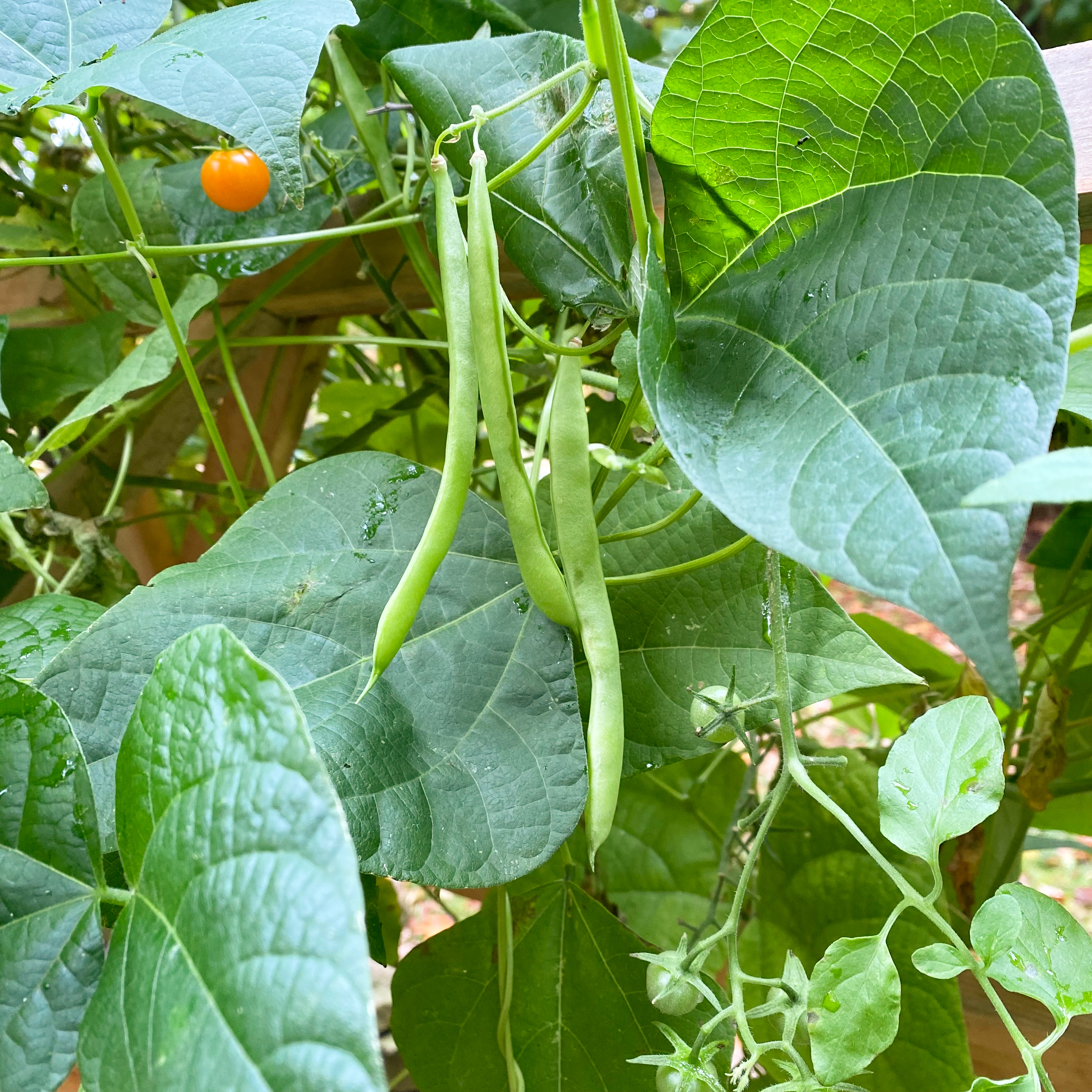
While the days may have lacked that traditional chill that signals a sincere change in seasons, there is something definitely delightful about a warm weather fall. Our string of 70-degree days and 50-degree nights means that much of the summer garden at 1750 House is still hanging on. There are clusters of tomatoes ripening on the vine, summer corn continuing to grow tall in the raised bed, and green beans still putting out at least a dozen pods a day. It may be mid-October, and leaves may be blanketing the garden beds, but the nasturtiums, zinnias, and geraniums are still flowering like it’s July. The novelist David James Duncan once called this Indian summer time of year “a state of serene confusion.” I can see why.

Since so many pollinators are still coming to the flowers, we’ve decided to leave all the summer vegetables up for as long as we can so that they can get all the nourishment they need.

Around the neighborhood though, tradition is not indulging this unusual weather that’s been caught between the beauty of two seasons. Despite the fact that many a summer flowerpot is still wholeheartedly blooming, pumpkins are on porches, dried corn stalks decorate lamp posts, twig wreaths hang on front doors, and the leaves… the magical leaves of a New England autumn… are floating and fluttering in shades of cinnamon, olive, mustard, and mahogany. There is color and flowers and fall foliage everywhere.

Autumn has come to the shop too…

And that means that our annual shop sale is right around the corner. If you are new to the blog, every year, November 2nd marks 40% off everything in the Vintage Kitchen shop for one day only. We call it the All Souls Day sale, not for the Catholic holiday that it shares the day with, but for the heirloom history that it encompasses.

All Souls Day is the only communal holiday in the calendar year that celebrates and remembers all deceased ancestors, and to us, that seems like the perfect time to celebrate vintage and antique heirlooms too. None of our shop items would be here today if they had not traveled through time, cherished and cared for in the hands of the people before us.

The Art of Chinese Cooking by the Benedictine Sisters of Peking – 1977 Edition 41st Printing

It’s up to us to curate the shop, but the heirlooms do all of the storytelling. Each year, they share new insights into the past that help shed light on things in the present. Since no two items in the shop are ever exactly alike, no sale from year to year is ever exactly the same either.

Stories float in and out of the shop every day offering glimpses into kitchen and garden life that occurred a few decades ago or a few centuries ago. Just like stories posted to the blog, every heirloom in the shop comes with its own unique tale marking its place in time. Hidden histories are everywhere. Here are some of the unique stories you’ll find in this year’s sale…
The 1940s Oxnard Lemon Crate

Highlighting Mexican-American history in California’s Port Of Hueneme, this 1940s-era lemon crate tells the story of how Sunkist lemons were brought in from local farms and sorted at an Oxnard packing house before being transported to retail storefronts around the world. Most of this packing was done by women who were skilled experts in sorting, grading and packaging the lemons for distribution. At the height of production, over four million crates were packed per year totaling half a billion lemons. Fruit and vegetable crates were never meant to withstand time and travel for longer than a few months, so it’s always exciting to discover one that has survived much longer than intended. The only part that is left of this original eighty-year-old packing crate is the front panel, now mounted like a piece of art to showcase its original label.

Beyond New England Thresholds

Focusing solely on the importance of the fireplace hearth in early American homes, this 1937 photography book by Samuel Chamberlain explores the country’s first “kitchens” in over two dozen New England homes that date back to the 17th and 18th centuries. The photos progress as the hearth progresses from primitive cook space to home heating source to decorative fixture, illustrating not only how far cooking has come since the early days, but how home interiors and design have evolved as well.

Perdita

Voted one of the best restaurants in the country by Holiday Magazine in the 1950s, Perdita’s of Charleston, SC and Macon, GA was known for its elegant French-inspired fare highlighting local seafood and steak.  The restaurant was named after actress Mary Robinson (1758-1800) whose most famous role was playing Perdita in Shakespeare’s A Winter’s Tale.

The real-life Mary Robinson (1758-1800) in a portrait painted by Thomas Gainsborough circa 1781

Mary had a reputation for being very enchanting and seductive, especially when it came to the amorous attention of men. On a trip to Charleston in the late 1700s, she was caught up in a local romantic scandal that forever made a mark on Charleston’s colorful history, and subsequently inspired the vibe and aesthetic of one of the city’s most famous restaurants.

The Neo-Classical Candleholders

Made for the Metropolitan Museum of Art gift shop, the design of these four petite candleholders is based on antique furniture mounts from a French secretary in the Museum’s collection. The secretary dates to 1787 and is believed to have belonged in the apartments of Marie Antoinette during her time at Versailles. This is the furniture that inspired the candlesticks including a detail shot of the mounts themselves…

Notice how the candlesticks are almost an exact replication of the mounts, fruit included.

The Peruvian Pottery Bowl

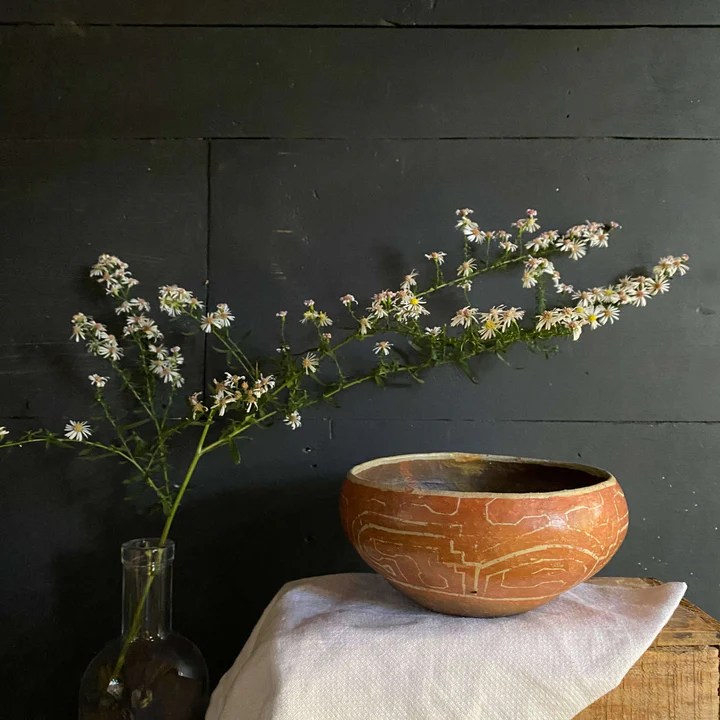
Handmade in the Amazonian jungle of Peru, this style of clay bowl has been made for centuries by local Indigenous women of the Shipibo-Conibo tribe using skills and techniques passed down from generation to generation. Highly personal and reflective of each specific woman who makes them, the bowls are entirely formed by hand and then painted with brushes fashioned from twigs and their own human hair. The markings, like the bowls themselves, are one-of-a-kind… trails of paint inspired by each woman’s dreams and visions combined with traditional cultural symbols celebrated by generations of women that came before her.

Photograph of four generations of Shipibo-Konibo women by David Diaz Gonzales

Every year, new faces from history emerge too. This year, we met Juliette, Margaret, Farida, Eleanor, Kate, John, Marie, Raffles, Zetta, Carveth and Claude…

Clockwise from top left: Julia Gordon Low, Margaret Rudkin, Farida Wiley, Eleanor Early, Kate Greenaway, John & Marie Roberson, Raffles, Zetta & Carveth Wells, Claude Monet

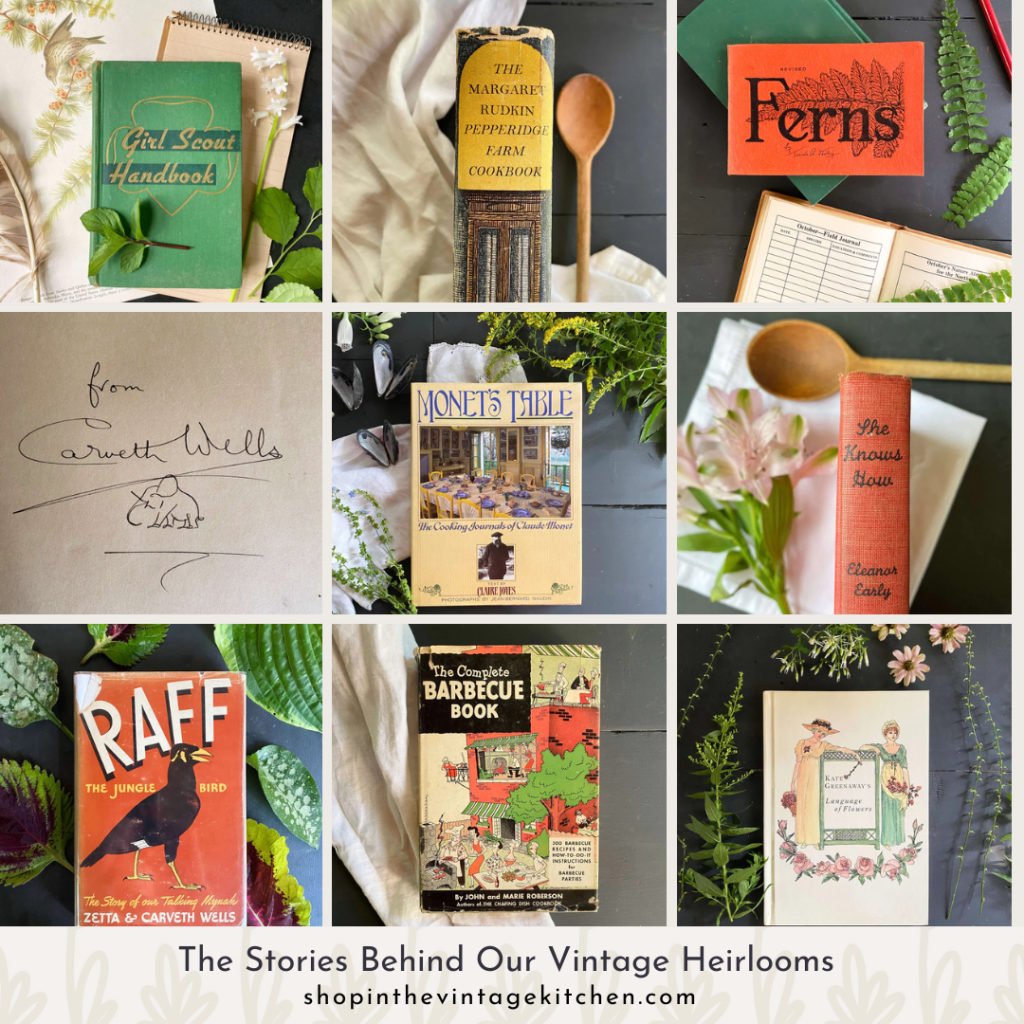
Each of them had interesting stories to tell. Juliette Gordon Low started the Girl Scouts in Savannah, GA in 1912. Kate Greenaway forever changed the way we felt about blooms and blossoms in her bestseller, The Language of Flowers. Farida Wiley taught nature classes at NYC’s Museum of Natural History for 60 years. And we all know Claude Monet from his famous impressionist paintings, but did you know that he was also a devout foodie too? There’s a cookbook full of his recipes to prove it. All of those faces above created all these pieces of history below…

Clockwise from top left: The Girl Scout Handbook (1948), The Margaret Rudkin Pepperidge Farm Cookbook (1965), Ferns of the Northeastern United States by Farida Wiley (1948), She Knows Best By Eleanor Early (1946), Kate Greenaway’s Language of Flowers (1978), The Complete Barbecue Book by John and Marie Roberson (1951), Raff: The Jungle Bird by Zetta and Carveth Wells (1941), Monet’s Table (1989)

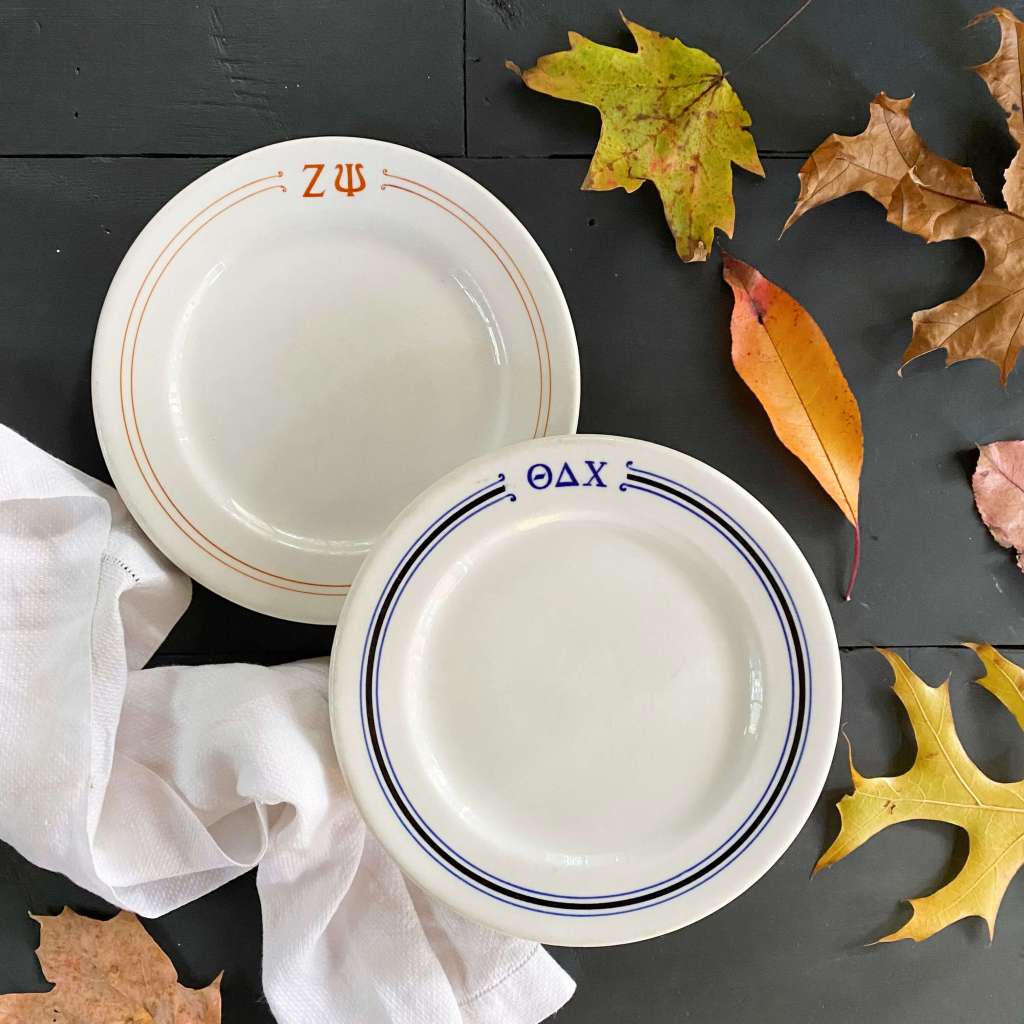
In the shop, a plate is never just a plate. It’s a rare glimpse into dining hall life at a 1930s fraternity house…

Rare Vintage 1930s Zeta Psi & Theta Delta Chi Fraternity Restaurant Ware Plates By Syracuse O.P.Co circa 1937

In the shop, a teapot is not just a teapot. It’s the oldest antique of the year. This one dates to 1838…

Antique Royal Vienna Tea Service Set – Gold and White Porcelain – circa 1838

In the shop, a cookbook is never just a collection of recipes. It’s stories about life and heritage and inspiration in a myriad of ways. It’s Canadian Leslie Forbes (1953-2016), who was not only a charismatic travel journalist, a fiction writer, and a cookbook author but an illustrator too…

A Taste of Provence by Leslie Forbes – 1987 First American Edition

It’s the talented way-ahead-of-her-time Paula Peck (1927-1972), who died at the age of 45, but not before leaving a handful of books that turned professional cooking and baking on its side in the mid-20th century, by bucking traditional techniques and inventing creative, approachable food…

The Art of Fine Baking by Paula Peck – 1961 Book Club Edition

The Art of Good Cooking by Paula Peck – 1966 Edition

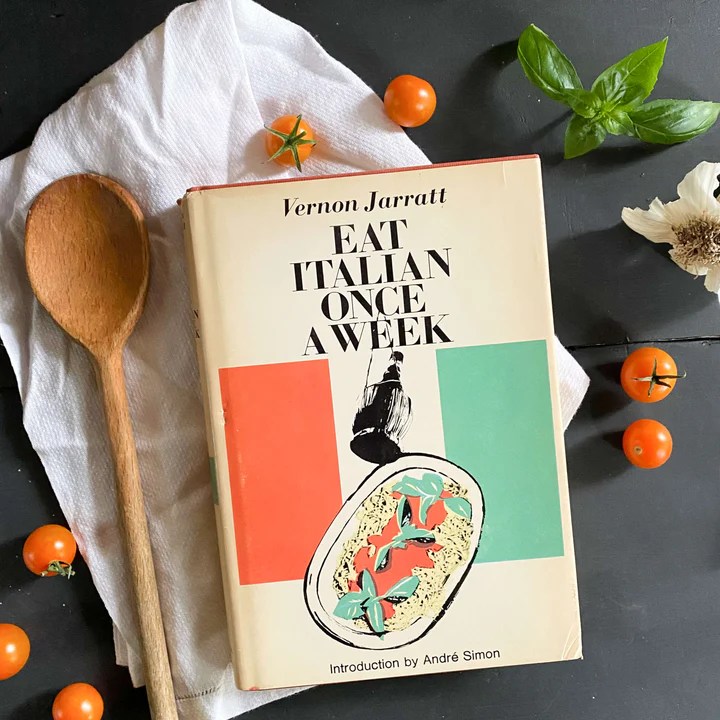
It’s British ex-pat Vernon Jarratt who married an Italian countess and went on to live a La Dolce Vita life in Italy as an intrepid gourmand and restauranteur…

Eat Italian Once A Week by Vernon Jarratt – 1967 Edition 

In the shop, a vintage coffee tin is not just a nostalgic vessel to store modern-day items. It’s the lifeblood of immigrant brothers from Scotland who sought fortune and flavor in America’s coffee trade in the late 1800s.

Vintage Yuban & Bliss Coffee Tins circa 1920s-1940s

And in the shop, coasters aren’t just little mats to set your drinks on. They are mini works of art by revered French botanical painters of the early 1800s…

Vintage French Botanical Coasters with Cork Backing – Set of Four

These are just a few examples of the people, places, and stories that find their way into the Vintage Kitchen shop on a daily basis. I hope at this year’s sale you discover an heirloom that captivates your attention, that steals your heart away to another time or another country, and that inspires new creativity from history’s forgotten muses.

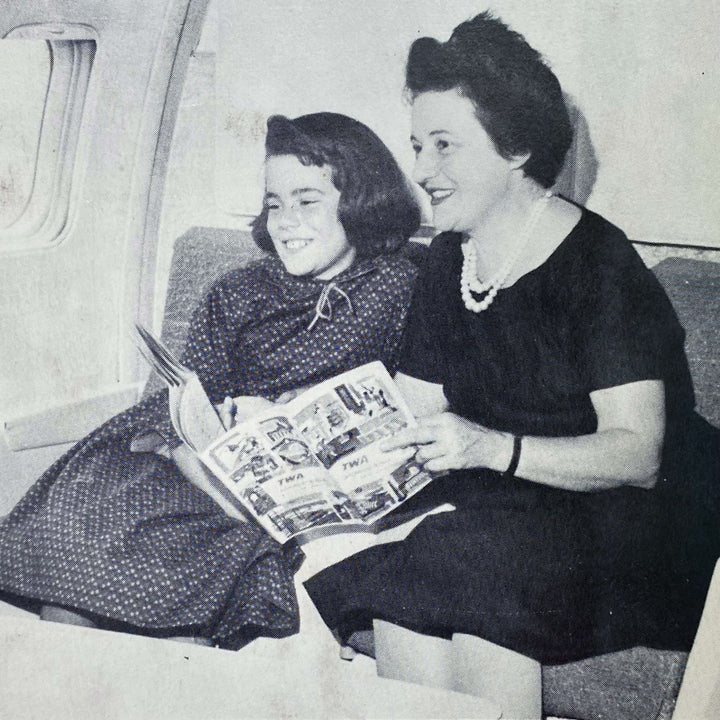
Perhaps you’ll travel with engaging journalist and war correspondent, Betty Wason and her daughter, Ellen through the regional cuisines of Spain…

The Art of Spanish Cooking by Betty Wason – 1963 First Edition

or fall in love with the fish-out-of-water escapades of French Clementine as she navigates the ins and outs of cooking in an American kitchen in the 1940s…

Clementine in the Kitchen by Phineas Beck (aka Samuel Chamberlain) – 1943 First Edition with Illustrations

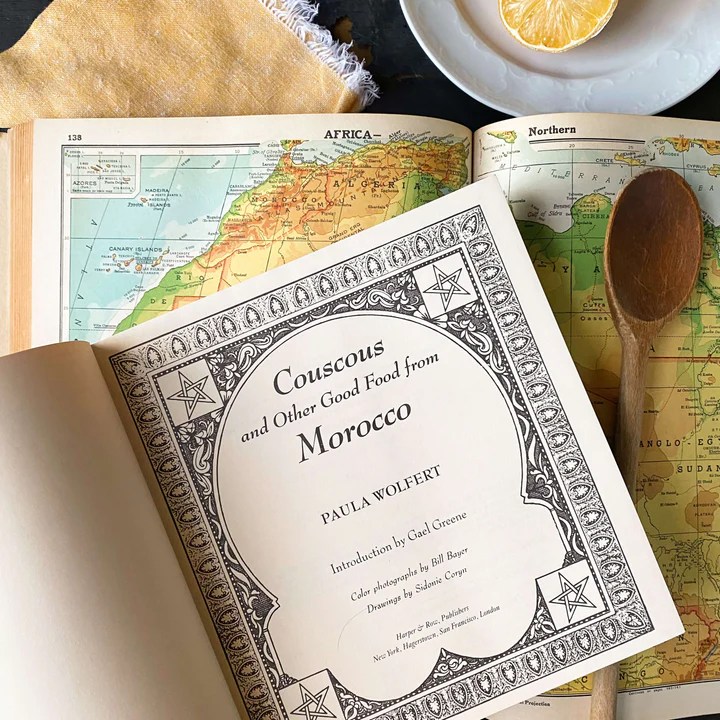
or maybe you’ll wind your way around the exotic Moroccan spice markets with Paula Wolfert as your educational guide.

Couscous and Other Good Food from Morocco by Paula Wolfert – 1973 Edition

At this year’s sale, you’ll notice that some cookbooks sport a festive yellow banner in the listing photos. Those banners signify a new donation program that we’ve just recently launched. Any cookbook that you see in the shop that says This Book Gives Back qualifies for a 20% donation to Feeding America, a nationwide non-profit network of food banks, food pantries and local meal programs dedicated to providing nutritious meals to food-insecure communities around the United States. Not all cookbooks qualify for this program, so be sure to look for the yellow banner if you would like to participate.

Joy of Cooking by Irma Rombauer and Marion Rombauer Becker – 1978 Edition 11th Printing

The sale begins at 12:00am (EST) on Saturday, November 2nd, 2024 and runs through 11:59pm that same night. Discounts are automatically tallied upon checkout, so there is no need to enter any coupon codes or discount phrases to receive 40% off.

New vintage and antique heirlooms continue to be added to the shop daily, so stop by for fresh finds leading all the way up to the sale. And, as always, if you are looking for something that we no longer have in stock, please send us a message. We’ll be happy to add your name and needs to our waitlist.

Vintage 1960s Webster-Wilcox Silverplate Wine Cooler Champagne Bucket

Whether you are interested in experimenting with a new cuisine, looking for a new favorite vintage dish pattern, or starting a collection that recalls memories of a happy time from your past, I hope you find something in the shop that calls to your heart and adds extra delight to your kitchen.

Haute Cuisine for Your Heart’s Delight by Carol Cutler – First Edition 1974 Fifth Printing

Cheers to all the old souls that inspire the shop each and every day. Cheers to all the heirlooms that they have been passed on to us to love and cherish just as much. And cheers to the kitchen for being the one spot in the house where everyone is always welcome.

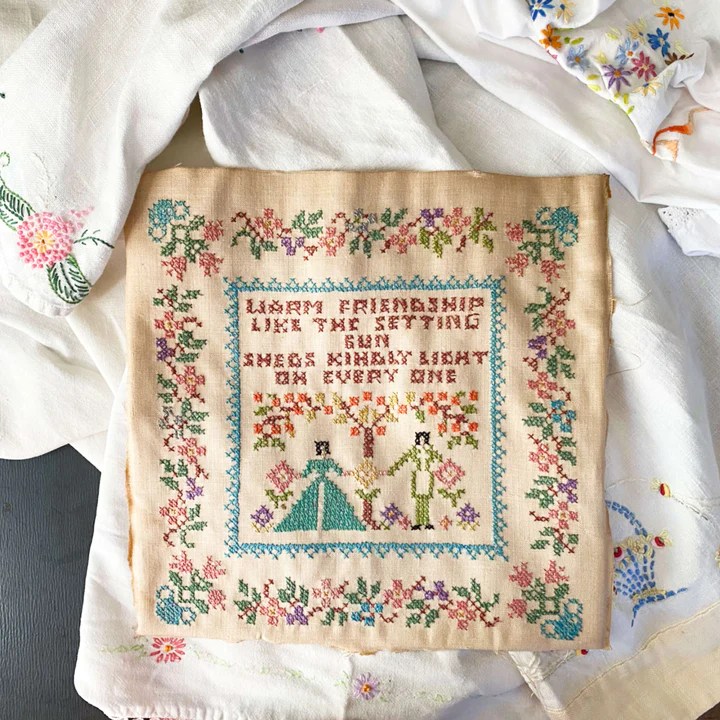
Early 20th Century Embroidery Sampler circa 1930s

Happy shopping!

A Monumental Story of Real-Life Serendipity Told Over Many Parts: Chapter 5 – The Lost Item is Revealed

{Spoiler Alert: This is the final installment in a series of blog posts detailing the real-life story of a 100-year-old item that was lost in 2008 and how it found its way home in 2024. Follow along from the beginning of this story at Chapter 1: It Arrives.}

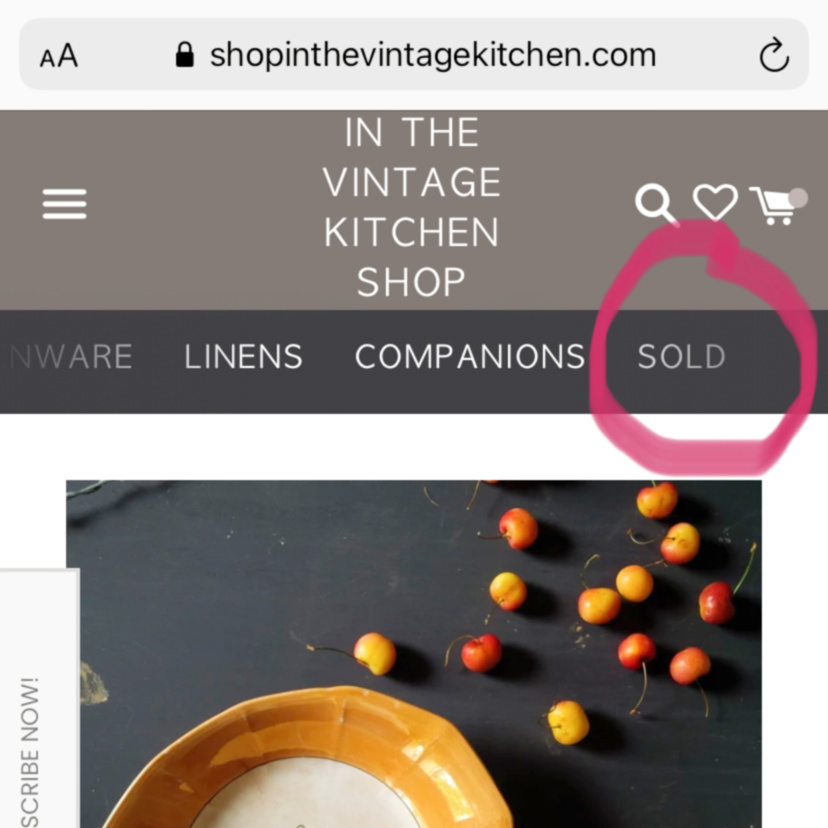
There’s a quote by an unknown writer that states… “What’s meant for you will never miss you, and that which misses you was never meant for you.” This quote sits on the shop’s recently sold page, acting as a sort of hopeful reassurance to any shopper who winds up there only to discover that an item that had originally caught their eye has sold to someone else. It can be so disappointing to be confronted with the fact that some newly discovered treasure that immediately captured your heart is now in another’s hands. But I love the idea of fate and what it suggests in this quote. Should an item be destined to be in your life it will present itself again, some other day, some other time.

Over the past few years, I’ve thought a lot about this quote. The idea that something will return to you if it was meant to be is such a comfort. When I think about it in the context of the lost item, I see how truthful the quote really is and how incredible the spontaneity of the universe and fate’s voice in it really are. As discussed in Chapter 4 of A Monumental Story of Real-Life Serendipity Told Over Many Parts, this journey of the lost item is all about timing, and I can’t help but think that although it took sixteen years for a lost item to get back to the people it belonged to, it came home at the most appropriate time. Like it was waiting all those years for just the right moment to reconnect with family, and in turn to reconnect with history.

Everyone has waited long enough to hear what this mystery item is, so I won’t prolong it anymore, only to say that upon the reveal of the item, all the dots that were laid out in the first four chapters of this story will be connected here in this post. So keep reading if you want to learn how it all unfurled from start to finish.

Just to recap quickly from Chapter 4, where the lost item was journeying to its final destination, these are the things that we know so far about the lost item…

  1. The lost item is over 100 years old.
  2. The item was left behind at an office supply store in a suburb of Atlanta GA in 2008.
  3. A random stranger named Angela discovered the item and tried to track down it’s original owner. For thirteen years her search was unsuccessful.
  4. In 2021, with the help of a Facebook group, Angela was able to connect the lost item to the Vintage Kitchen via a blog post that was written in 2018.
  5. In July 2021, after confirming that the Vintage Kitchen was indeed connected to the lost item, it was mailed via UPS to ITVK in a cardboard envelope.
  6. Although the Vintage Kitchen is connected to the lost item, it does not belong here in the Vintage Kitchen.
  7. In January 2024, the lost item made its way home to its final destination via a journey that involved a plane, three cars, and one boat.
  8. The journey of the lost item took 16 years and 6,500 miles to complete.
  9. Time played a major role in the story of the lost item.

Without further ado, the mystery item that arrived in the Vintage Kitchen in July 2021 was packaged in this cardboard envelope of medium thickness….

This is the cardboard envelope of medium thickness containing the mystery item when it first arrived in the Vintage Kitchen in July 2021. For privacy purposes, pink marks cover the addresses of the sender and recipient.

Still in its same envelope in January 2024, it is time to reveal the mystery item…

The mystery item envelope as photoed in January 2024

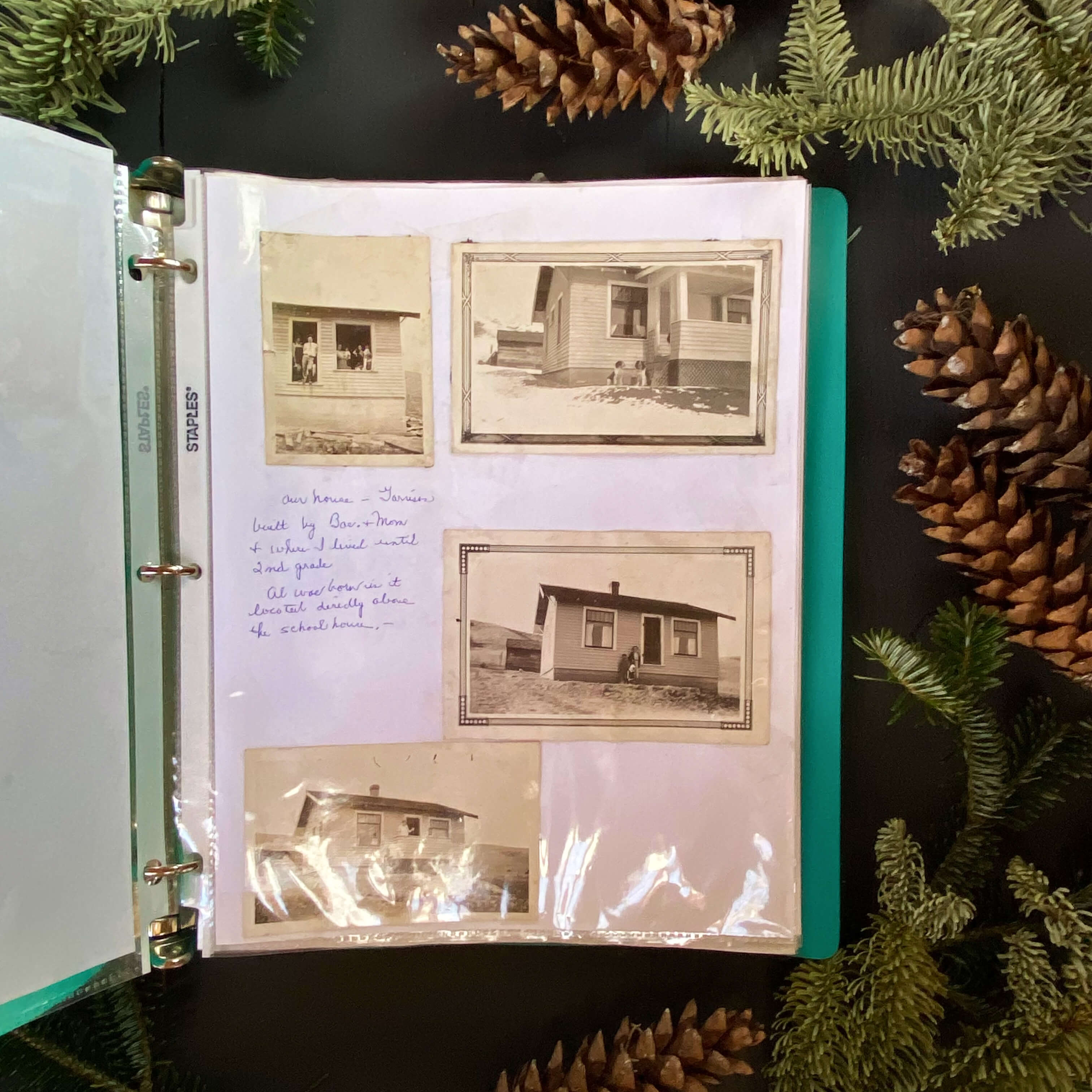
Tucked inside the cardboard envelope is a plastic, turquoise-colored binder. The binder itself is not the lost item, but what’s inside the binder is. A turn of the cover reveals history from 100 years ago…

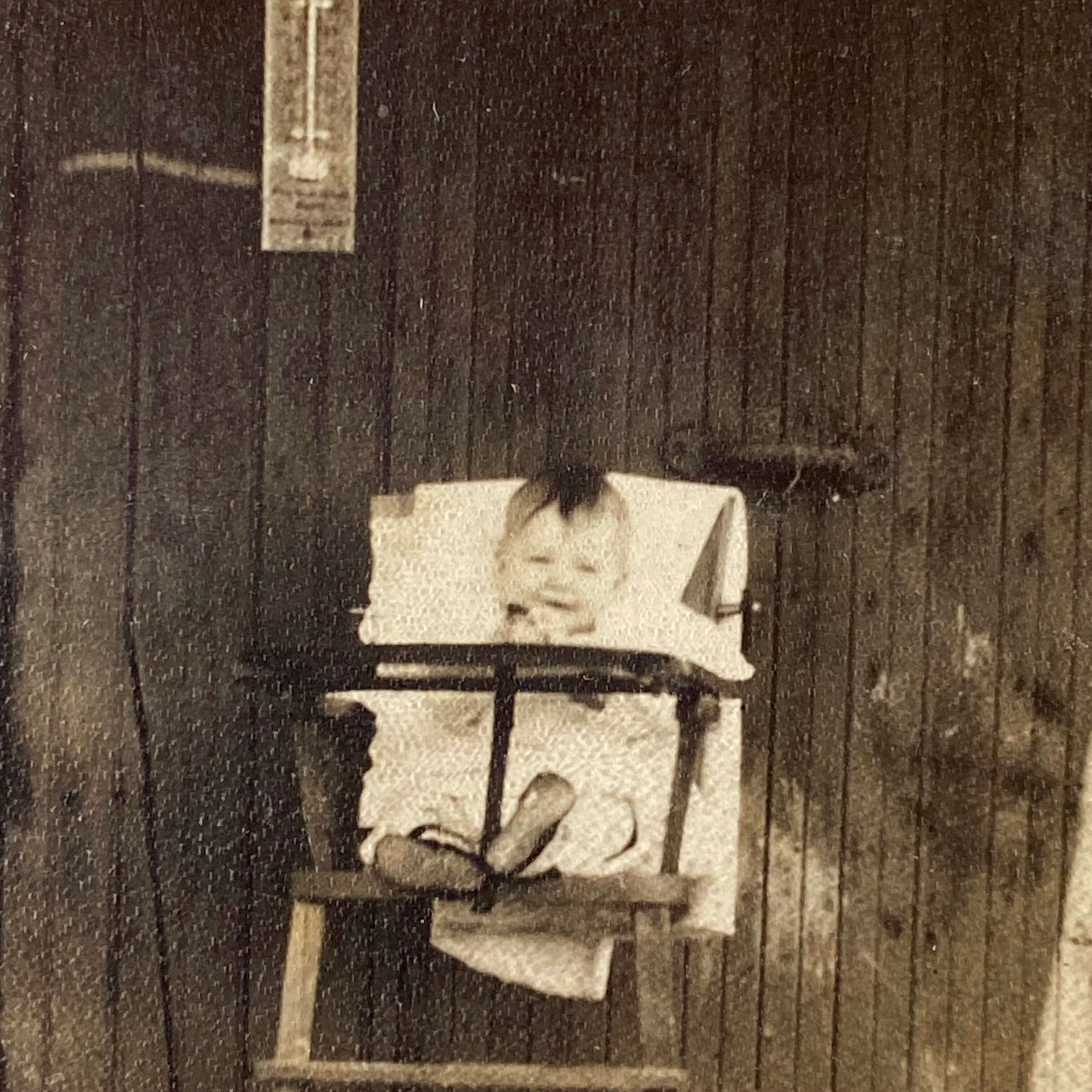
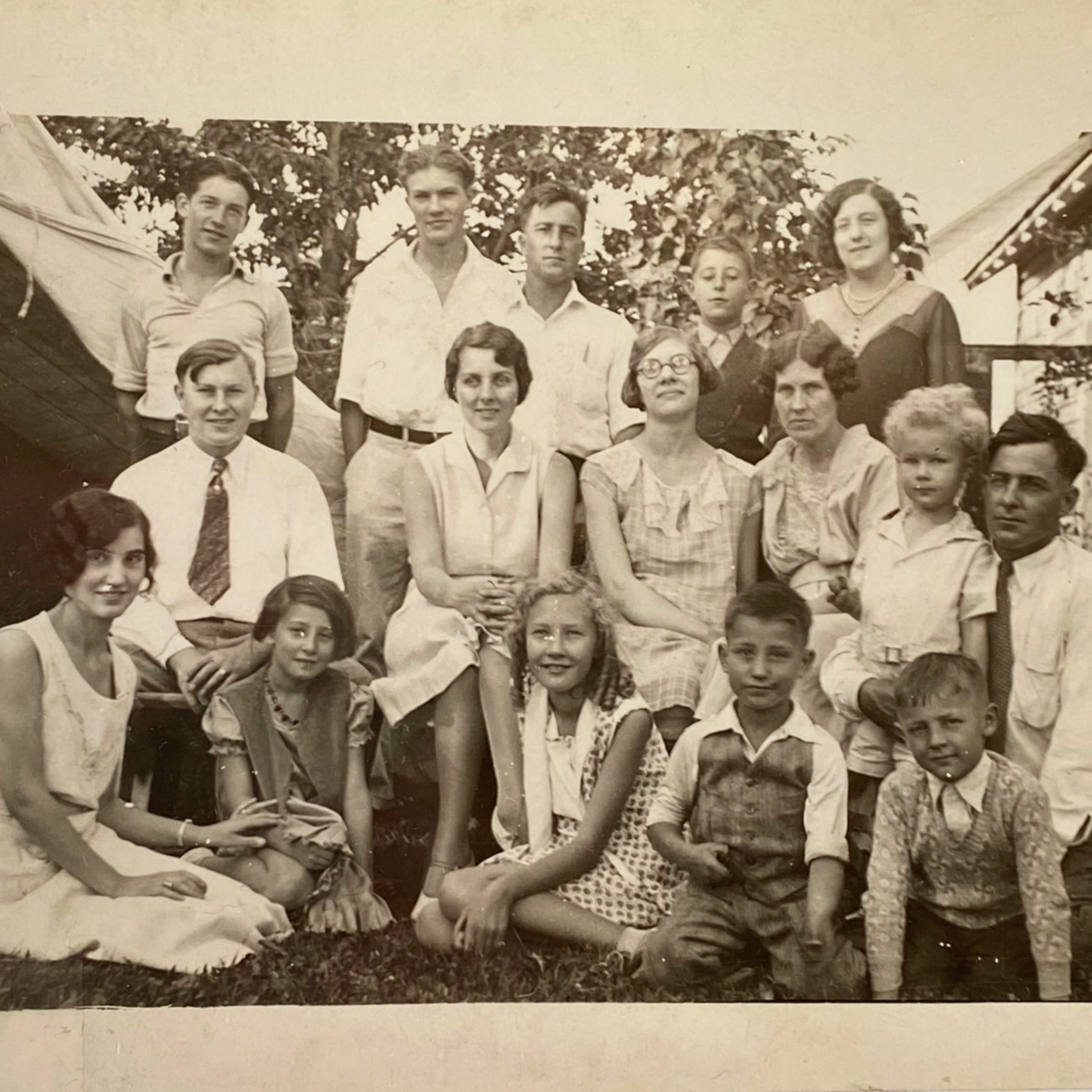
The binder holds fifteen pages of 1920s-era black-and-white photographs containing various scenes of rural family life in a country setting. Consisting of forty-seven individual images in total, the photographs were taped, or in some cases pasted, onto standard white copy paper and then slipped into plastic sleeves and secured in a three-ring binder.

The turquoise binder was clearly a modern addition, but the photographs themselves are originals. It’s easy to see that the photos had been removed at one point in time from a more traditional photo album. Black pieces of paper are attached to some edges, old tape clings to corners and remnants of prior placement in a black-paged photo album are evident.

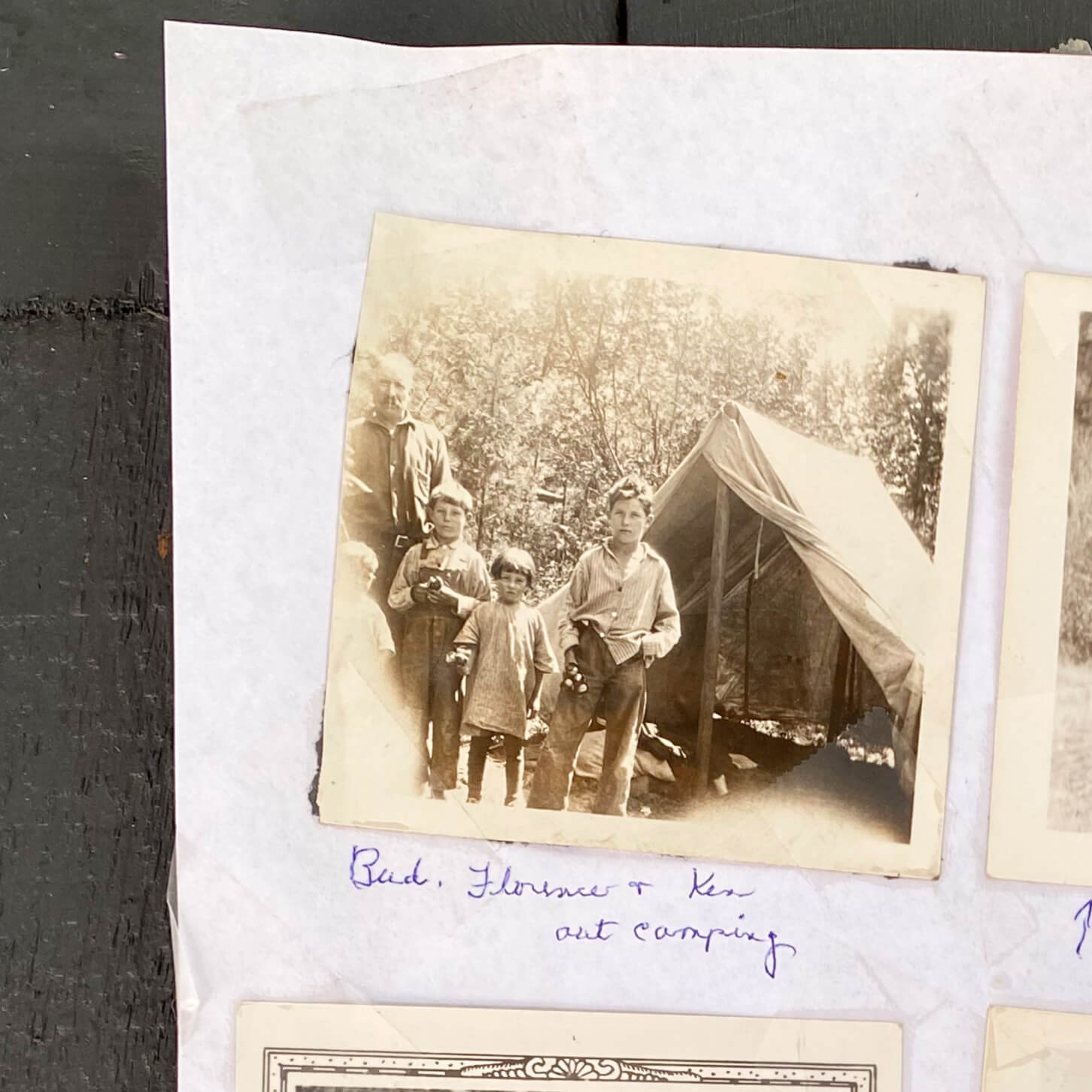
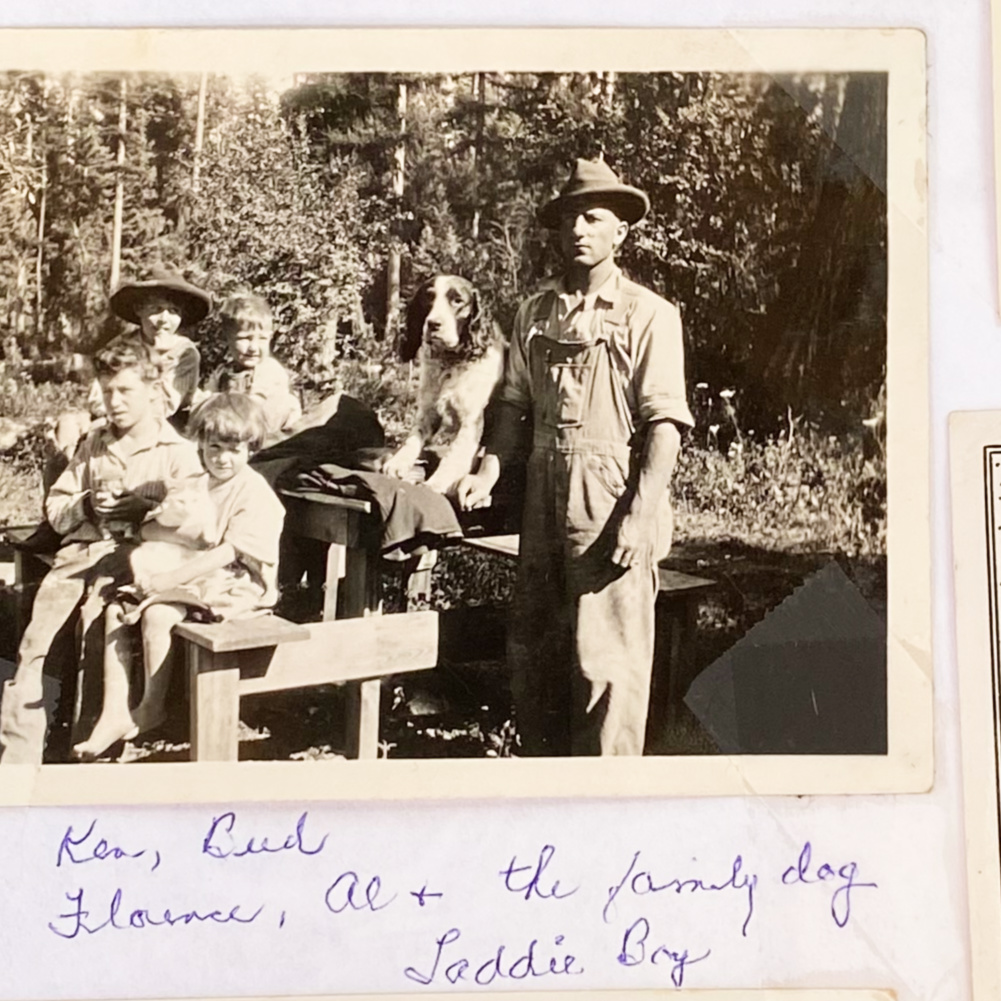
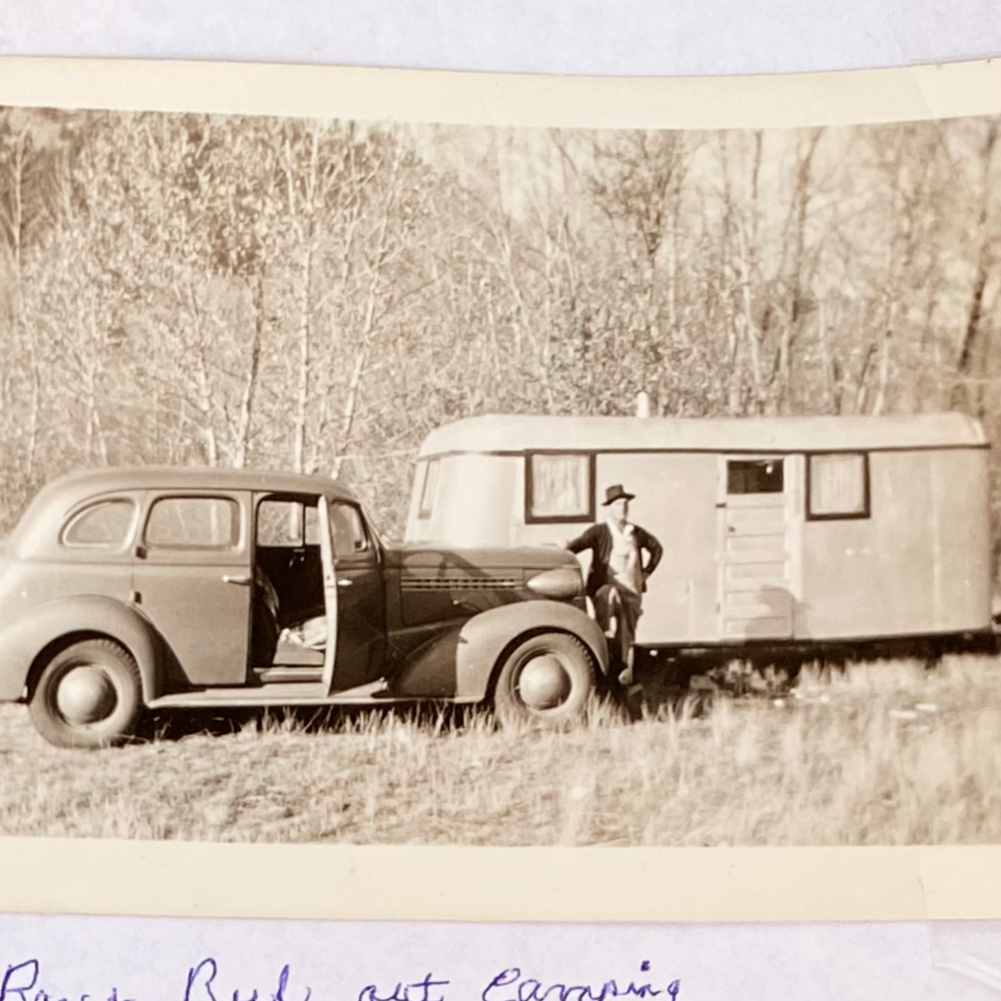
Handwritten notes are included next to most of the photographs identifying first names, town names, a date, or a general situation, like the one above that says Bud, Florence & Ken out camping. But none of the notes include references to a specific state, country, legible last name or any major scenic sites. Flipping through the pages reveal more photos of babies, dogs, cars, cats. There are houses and train tracks, rolling hills and weathered wood. There are women on horseback, men in overalls, girls in summer dresses, boys hunting in the snow.

There are blurry candid shots and more formal, posed group shots. Several faces reappear in different settings. A building evolves in various stages of construction. There are men in fedora hats and women in fur coats. There’s a foal and a waterfall. A travel trailer. A canoe. A swing hanging from a laundry line. There’s a baby in a bath bucket and a woman sitting on the hood of a car.

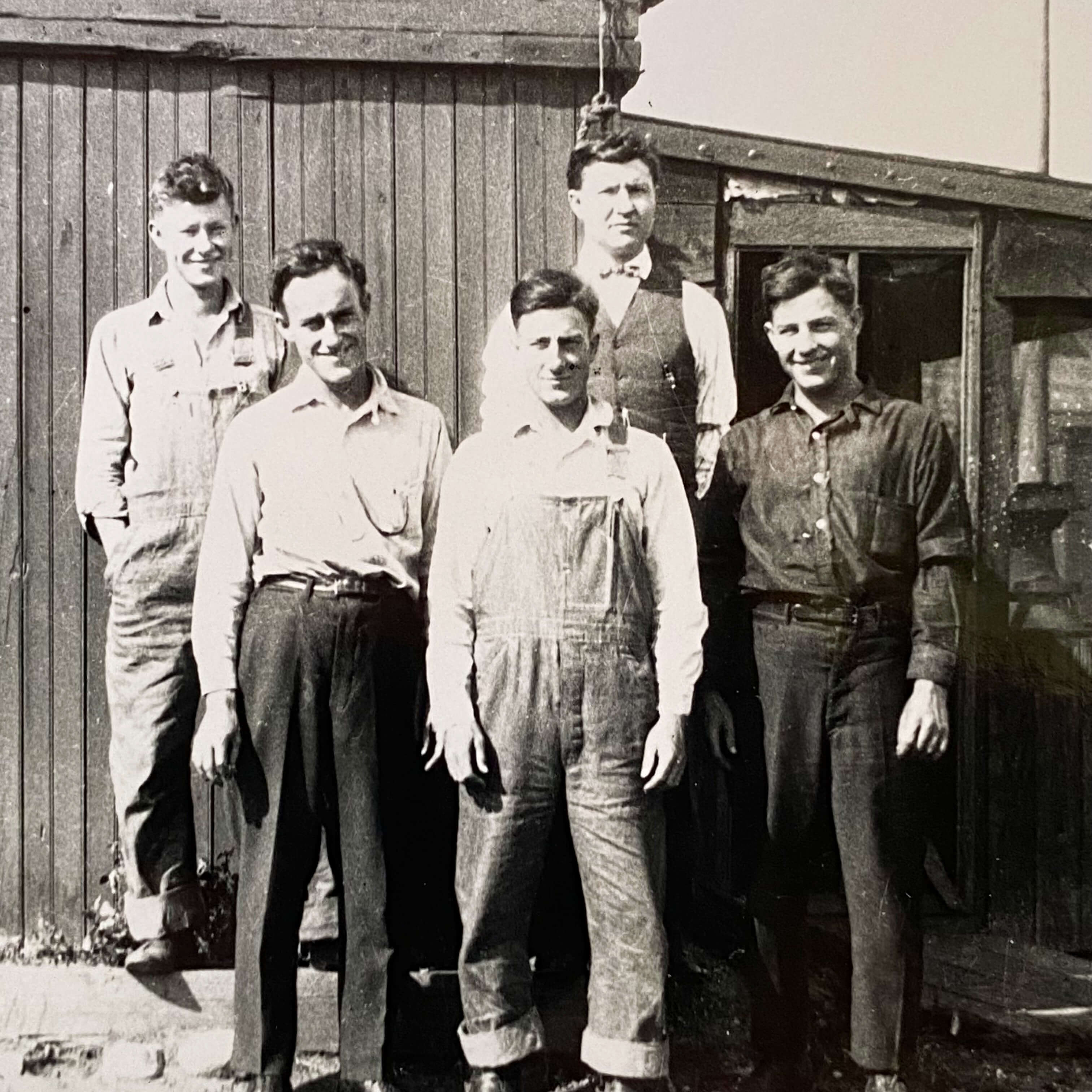
All the photographs were taken outdoors and feature different seasons. Many photos feature one specific man in particular. A man in overalls. That’s him in the center of the photo below.

Page after page, faces unfold.

People are named Al… Bill… Bessie… Bud… Merwyn… Lou…Florence. Towns are labeled Garrison and Philipsburg. One photo refers to the “Minnesota Relatives.” A dog is named Laddie Boy.

The lost item is a one-hundred-year-old photo collection of a mystery family in a mystery location. Who are these people and how are they are connected to the Vintage Kitchen? Keep reading for the whole story from start to finish.

Back in 2008, when Angela discovered this photo album that had been left behind at the Staples where she was working in suburban Atlanta, there was no way to track down who it belonged to. It had been left at the self-serve copy area and contained no other information as to where it came from or who brought it in. There was no in-store job ticket attached to it. No Staples order form. No receipt dangling from an interior page. There was just the binder – plastic, turquoise, holding onto fifteen pages of 100-year-old photographs.

Angela at Staples in 2008. Learn more about her in Chapter 2.

Knowing how sentimental old photographs can be, Angela kept the binder in the back room of Staples for safekeeping in hopes that someone would realize that they’d forgotten it and come right back for it. Days, weeks, months went by. The binder sat unclaimed on the shelf in the back room. Periodically during that first year, Angela would thumb through the photos and try to connect one of the handwritten first names to a customer list in the Staples database.

Bill, Florence, Bud, Al are pretty common names throughout the country, but particularly in the South. Searching by first name alone turned out to be a fruitless task. With no legible last names to search, no specific city and state location to pinpoint on a map, and no understanding of the context of the collection as a whole, Angela had no clear-cut way to track down the owner of the left-behind photographs using just the minimal information offered in the handwritten notes. Her only hope was that owner would return to the store to claim the binder. A year went by. A clean-up and reorganization of the back room was issued by Staples management. Angela, concerned that the binder might be misplaced or tossed into the trash during the reorganization took it home so that she could continue to search for its owner.

One year stretched into five years and then into ten and still Angela was no closer to finding out who might have left the photographs behind. Although the story of the turquoise binder didn’t change much in that decade, Angela’s life changed quite a bit. She got married and had a baby. And then she had another baby and another one after that. In that decade, she went from being a single girl working at Staples to a mom with a family of five to care for. By her side through all those life changes was the lost item. In close reach always, in case an important clue or a new lead might reveal itself, the binder became a part of Angela’s life, a puzzling research project that she returned to again and again.

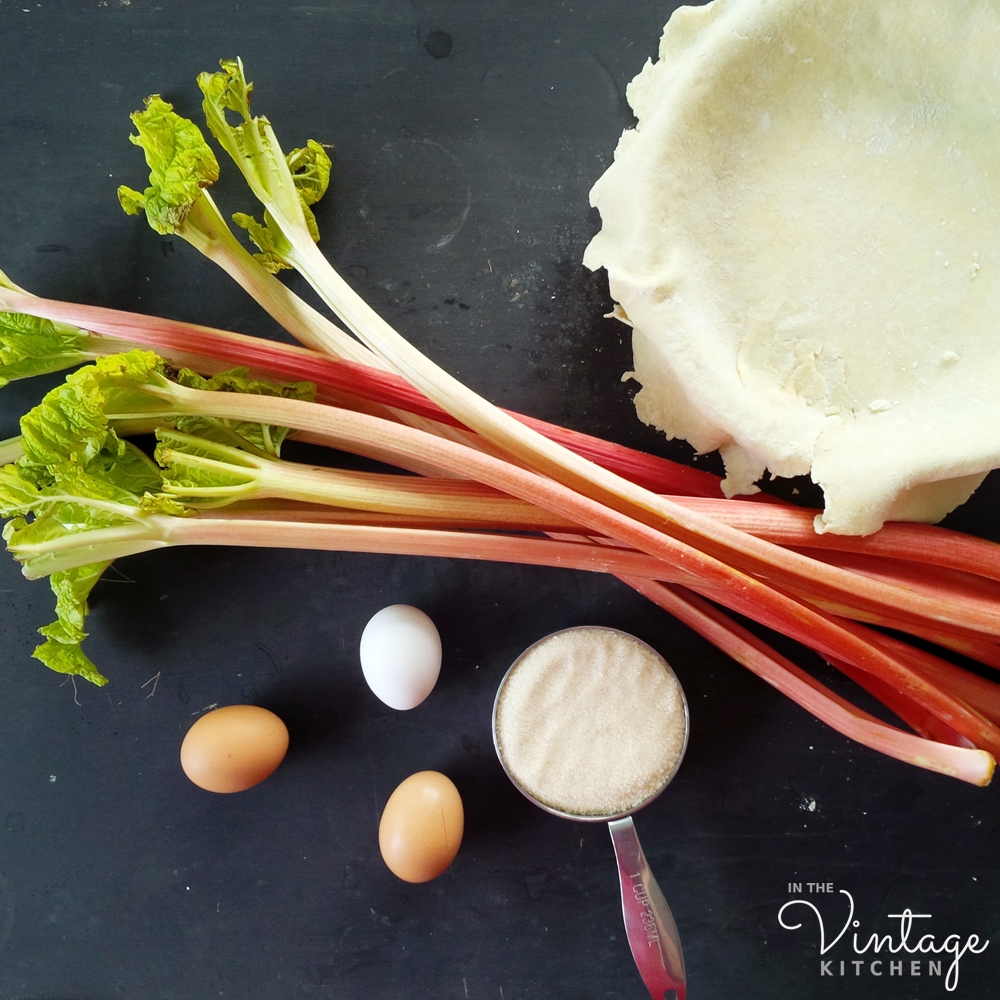
Meanwhile, in another southern state, while Angela was busy raising her family and trying to solve the mystery of the binder filled with photographs, I was busy writing about history, antiques, and vintage recipes. In March 2018, I wrote a blog post, sharing a recipe that had long been a part of springtime/Eastertime menus for generations of my family. The recipe was for Rhubarb Custard Pie – a seasonal dessert that combines Betty Crocker’s 1950s rhubarb custard filling recipe with my Great-Grandpa Bacon’s homemade pie crust recipe.

Rhubarb Custard Pie – a family tradition every spring.

In the post, in addition to the recipe, I shared the story of Great-Grandpa Bacon and his wife, Dolly, who lived in rural Montana during the early to late 20th century. Married in their early 20s, Bacon worked for the Northern Pacific Railroad, a job that took him and his new bride to two rural areas in Montana – Goldcreek and Philipsburg. It was a brave and adventurous new life for them, started at a time when Montana, still young and precarious itself, saw its most difficult years in history.

Montana Homestead Poster circa 1914. Read more about the challenges of Montana homesteading here.

Challenges stemming from WWI, the over-grazing of prairies during the homestead boom, and the subsequent agricultural decline coupled with the wild, unmanaged landscape, towns located few and far between, and the tricky navigation of the unfamiliar ins and outs of remote living, made Bacon and Dolly’s decision to build a life in rural Montana all the more courageous. Dolly was born and raised in Seattle, and Bacon was from St. Paul, MN, both sizeable cities with over hundreds of thousands of residents in the early 19th century. Their new Montana life would take them to communities with populations of less than 2000 people where they had to rely on their own wit and willpower to survive.

Dolly & Bacon’s wedding portrait, 1920

Along with the recipe, in the blog post, I detailed Dolly and Bacon’s unusual life in Big Sky Country. I didn’t have any photos of them depicting their early years in Montana, so to help visually tell their story I added a lot of research about what was happening in the state in the 1920s when Dolly and Bacon moved there. I also shared the family story about how Dolly and Bacon’s first house, after they were married, was two railcars gifted to them by Northern Pacific Railroad. A gesture offered by the company so that Dolly and Bacon could immediately set up homekeeping in their new surroundings.

A 1930s era Northern Pacific Railroad poster in Chapter 3 was a big clue about the location of the story.

Definitely an unusual start to their marriage, Bacon and Dolly thrived in Montana and embraced everything about their rural railroad life. Bacon worked as a train depot clerk in Goldcreek and then as a conductor on a transportation line for livestock and mining equipment in Philipsburg.

Now an abandoned track these are recent photos of the train line running through Philipsburg with views that Dolly and Bacon would have seen on a daily basis. Photos courtesy of D & D Travel.

Dolly set up house in the railcars, learned to bake bread, and wrote poetry. They had three babies, two girls and a boy. They built a house and a garden near the tracks where Bacon worked. They hiked in the hills, fished in the streams, and ate fresh-caught trout for breakfast, Dolly’s bread for lunch and Bacon’s homemade pies for dessert. They fell deeply in love with each other, with Montana, and with the life that they made. For fifty-five years, Dolly and Bacon called Montana home, never imagining living somewhere else than the paradise that surrounded them. In 1975, Bacon passed away from a heart attack at the age of 78. Dolly followed five years later in 1980 at the age of 82. They are buried next to each other in the local cemetery in Philipsburg. Even in death their hearts never left the place that they loved.

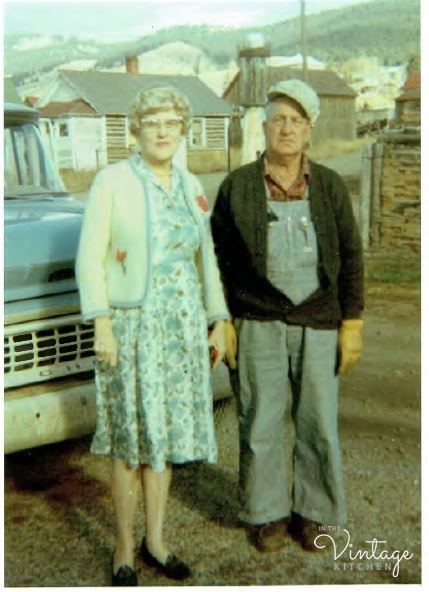
Bacon & Dolly Day in Montana circa 1950s/1960s

The rhubarb custard pie recipe received some interest from readers, but not nearly as much as the story of Bacon and Dolly. In 2018, their photo above became one of the most favorited of the year on our Vintage Kitchen social media accounts.

In 2021, Angela still searching for some helpful snippet of information that might lead her to the original owner of the binder, decided to contact a Facebook group that specialized in old-fashioned handwriting. She thought that they might be able to help decode some of the hard-to-read words that accompanied a few of the photos.

The Facebook group was more than happy to help. Within a quick amount of time, they connected words from the handwritten notes in the photo album to words and phrases found online in my blog post about rhubarb custard pie. Bac, Philipsburg, train depot, lived in boxcars, and finally the clincher… Dolly Day… lept out at the group. All threads strong enough to cause Angela to reach out to the Vintage Kitchen via the blog, she sent an email to see if the photos might be connected to the recipe and to the story of Bacon and Dolly. Along with her inquiry, she sent some photos from the binder, this one included…

When I opened Angela’s email, I was greeted by a photo of Bacon himself. In his younger years. In his beloved overalls. In his rural Montana. With Dolly by his side. And just like that, after 13 years of Angela’s diligence, time, and attention to finding the owner of the lost item, her inquiry was confirmed. Yes, indeed the photos were a part of the Vintage Kitchen – firmly rooted to the rhubarb custard pie recipe and to the Montana life of Bacon and Dolly Day.

A windfall for a genealogy lover like me, it was incredible to see personal photographs of someone I had heard about but never met, wrote about couldn’t completely visualize, and whose recipe was in constant use in my kitchen. When the turquoise binder arrived in the mail, Dolly, Bacon and their Montana life lept off the pages.

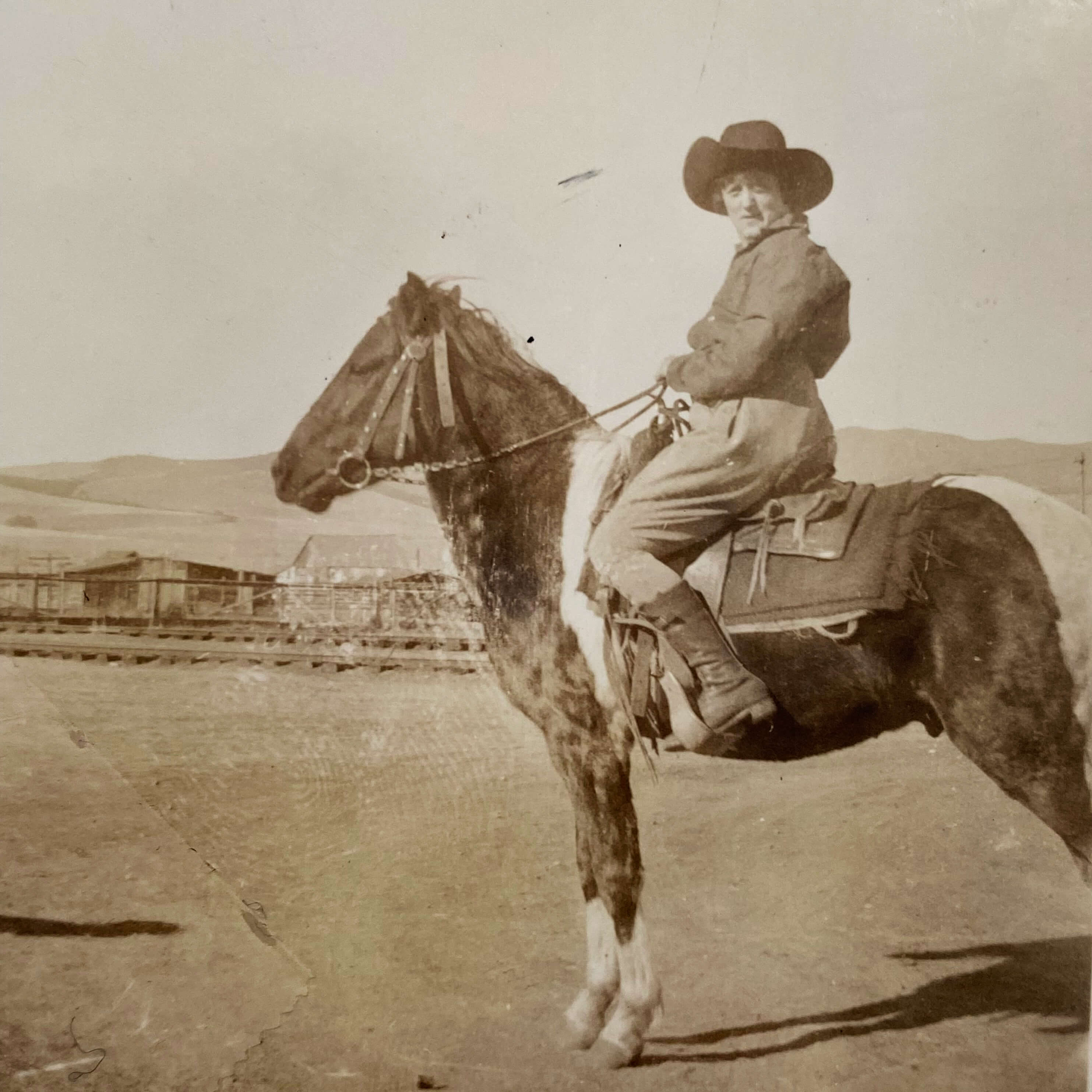
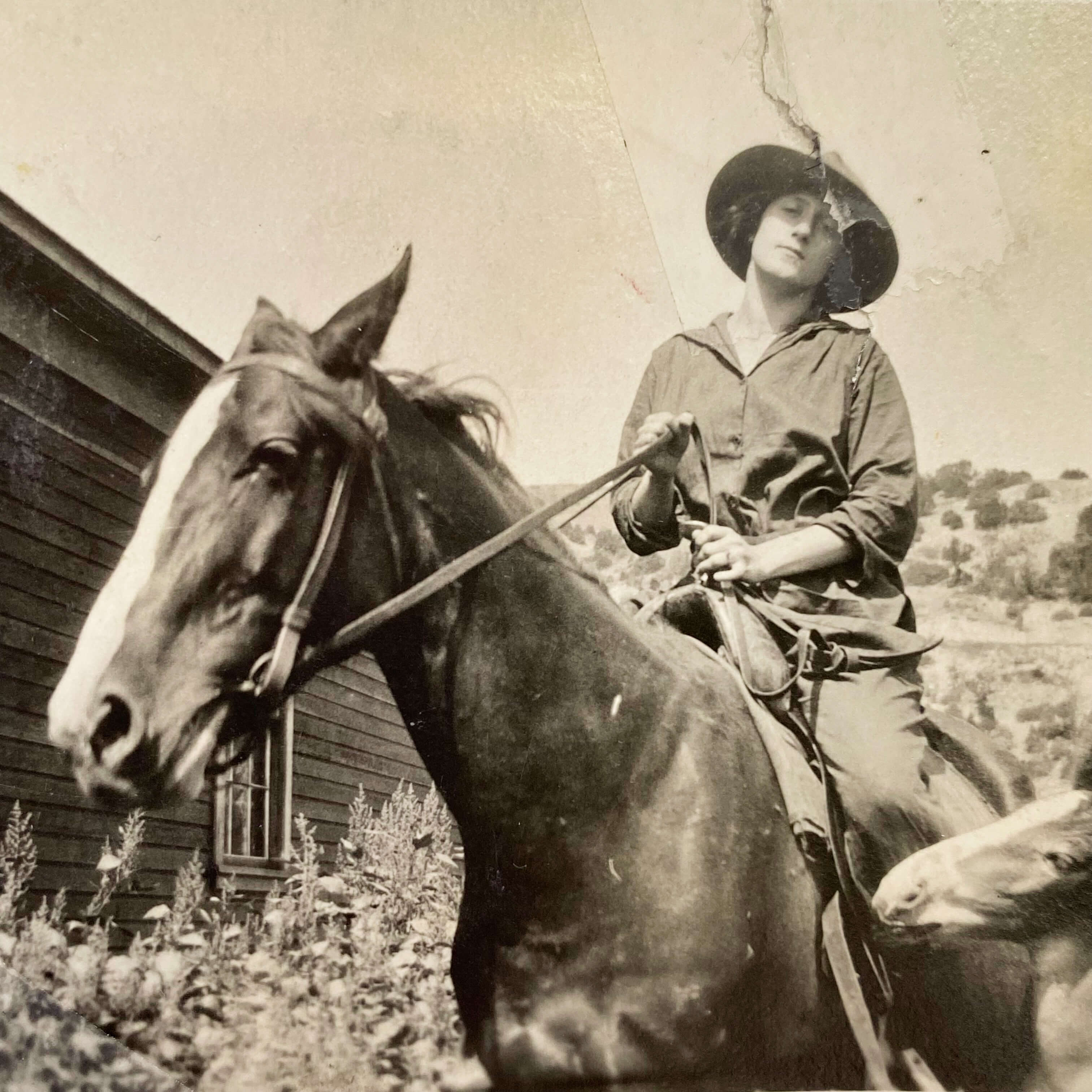
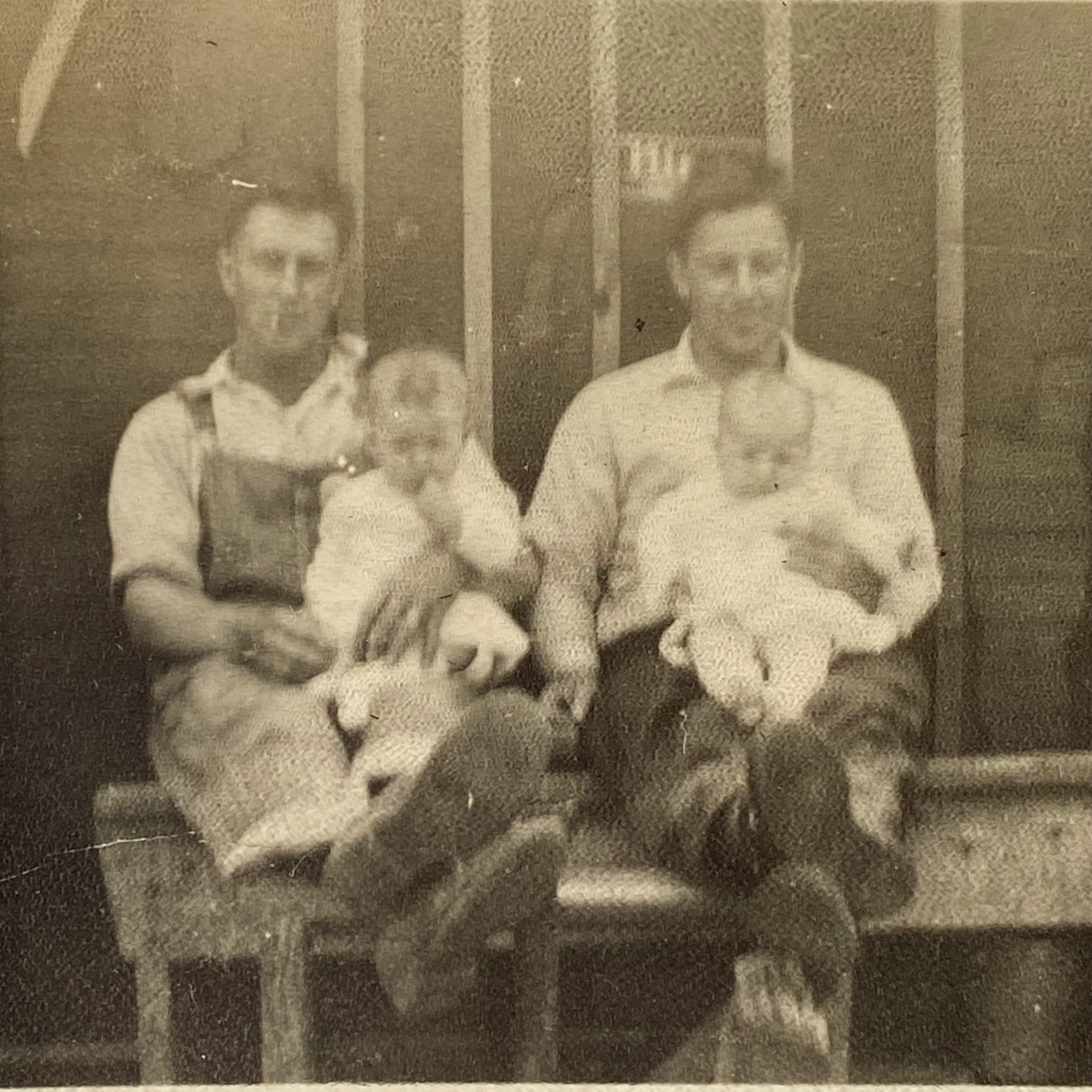
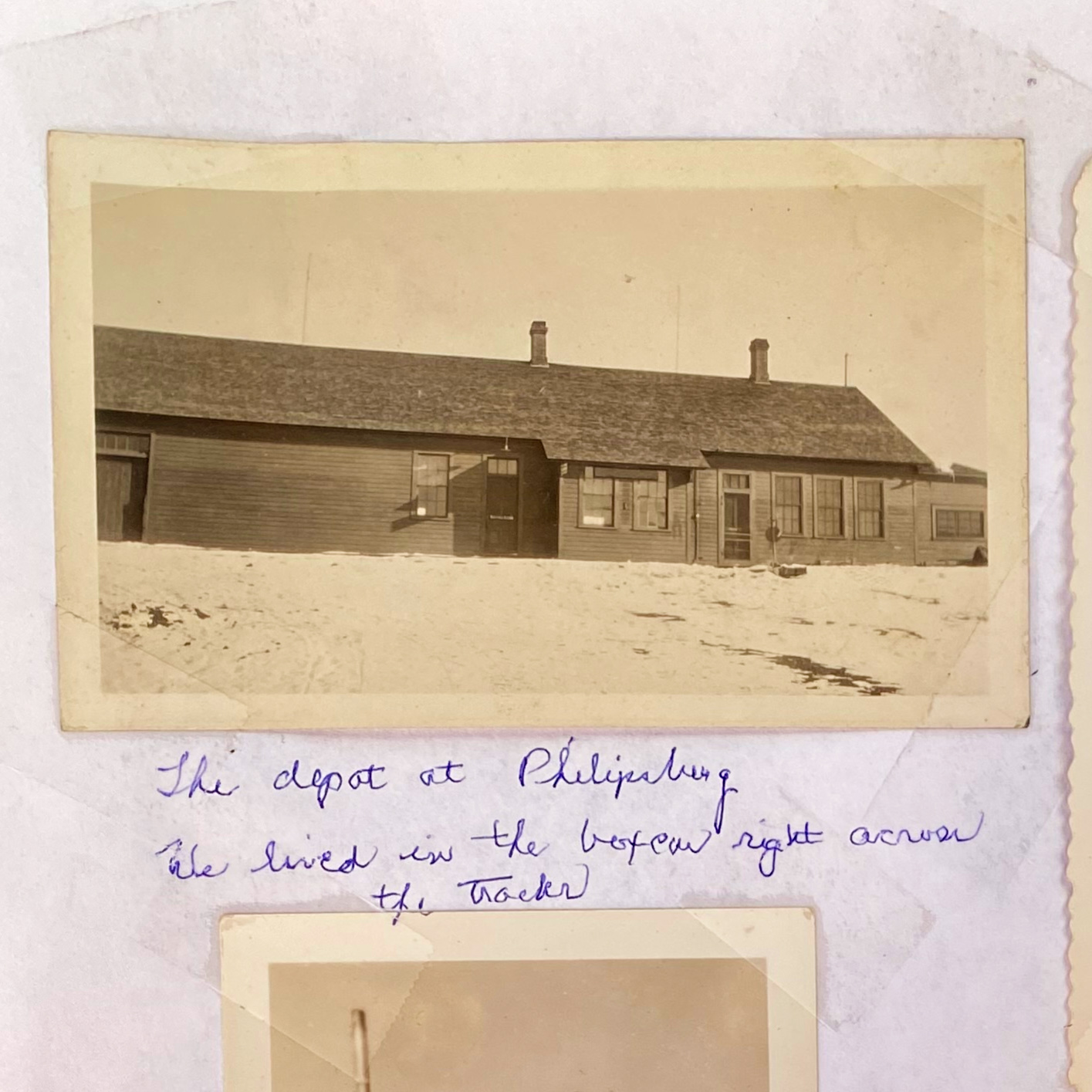
Suddenly the photo album made all sorts of sense. The woman on the horse? That was Dolly. The two men holding babies? That was Bacon and his twin brother Willis, who in turn, were holding their babies, Dolores and Willis Jr., both born in the same year (1922). The house with the long angle? That was the train depot in Philipsburg where Bacon worked.

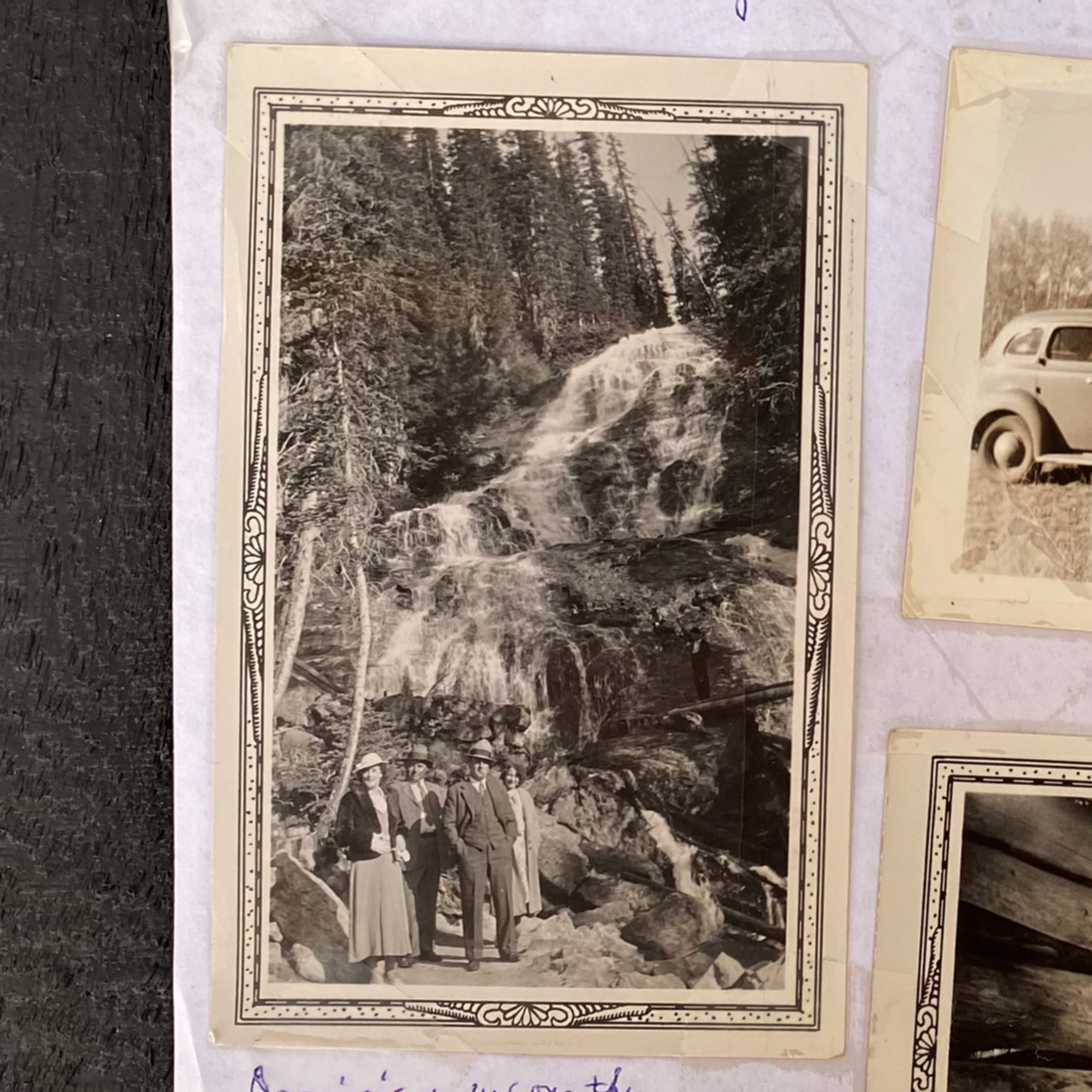
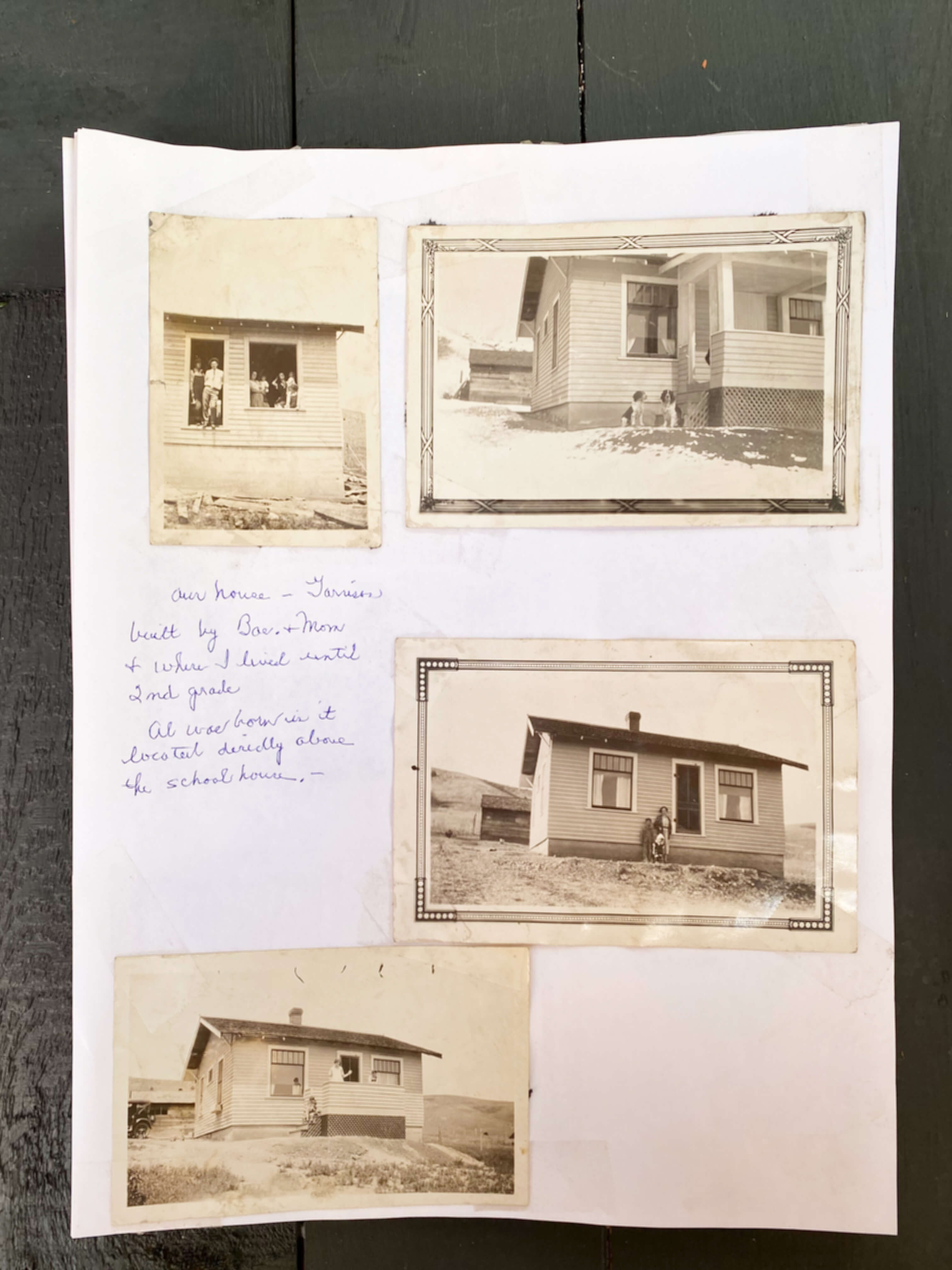
The waterfall is part of Skalkaho Pass, a point of interest In southwestern Montana that was mentioned in the photo album but misspelled. The building with everyone hanging out the window? That was the first house that Dolly and Bacon built from scratch with their own hands. The car with the motor home attached? That’s how Bacon and Dolly went camping. And the “Minnesota Relatives?” Those were Bacon’s brothers and sisters and their families visiting from Bacon’s home state.

Bacon and Dolly’s life unfolded in the photos page by page. Every family story known about them as a couple, their kids and their unique life in Montana was now here in visual format offering new insight into them and their experiences. In 2018 when I wrote the rhubarb pie post, I had only the one photograph of Dolly and Bacon in their senior years to share. Now, there are forty-seven more.

As I stated from the beginning of this story, the Vintage Kitchen is connected to the lost photos, but they don’t belong here. I wasn’t the one who pulled them from the pages of an old black photo album. I didn’t compile them in the turquoise binder. Nor was I the one to leave them in the suburban Atlanta Staples in 2008. Technically, Great-Grandpa Bacon and Great-Grandma Dolly aren’t even related to me.

Bacon and Dolly are the grandparents of my mom’s first husband. My brother, sister and I have the same mom but different dads. Bacon and Dolly are part of my brother and sister’s paternal ancestry line which is made up of Midwest and Pacific Northwest roots.

Both my brother and sister have memories of Dolly and Bacon and they both share a special affinity for Montana. Knowing that they would be so excited to learn about these never-before-seen photographs of their beloved great-grandparents, I couldn’t wait to share the story with them. I also couldn’t wait to share this whole story here on the blog too. Especially since I had already written about Bacon’s pie crust recipe. Had the family rhubarb pie recipe never been published, the Facebook group would never have found the Vintage Kitchen and Angela would never have contacted me, so it was very exciting to be able to continue telling the story of Bacon and Dolly here as well.

In the summer of 2021, when the photos arrived from Angela, the pandemic was still wreaking havoc on socialization plans. Although the idea of flying out to Seattle to meet my brother and sister was definitely the way I wanted to deliver the photos to them, I didn’t want to tie up this lovely gift from history wrapped in a case of Covid. So while waiting for the virus to calm down a bit, I decided to start telling the story on the blog. Since both my brother and sister read the blog, and since I didn’t want to spoil the ultimate surprise, I never mentioned anything to them about the photos or Angela or Montana. Hints in Chapters 1-4 of A Monumental Story of Real-Life Serendipity Told Over Many Parts were all filtered through a veil of mystery so that my brother and sister wouldn’t be able to guess that the lost item had anything to do with them.

Fast forward through 2021, 2022, and 2023. The timing never lined up quite right to fly out and finish the story. A six-month house hunt, the South to North move, and 1750 House renovations wound up delaying the surprise far longer than I ever anticipated. But if we’ve learned anything so far in all these chapters about the lost item, it’s that timing is everything to this story and in its weird and wonky way has linked all these people in all these places together at the most appropriate moments.

In January 2024, the right time presented itself. My niece was getting married in Seattle. A family wedding was the perfect occasion to share the story of the lost item and to finally deliver the 100-year-old photographs bound together in their plastic, turquoise bnder.

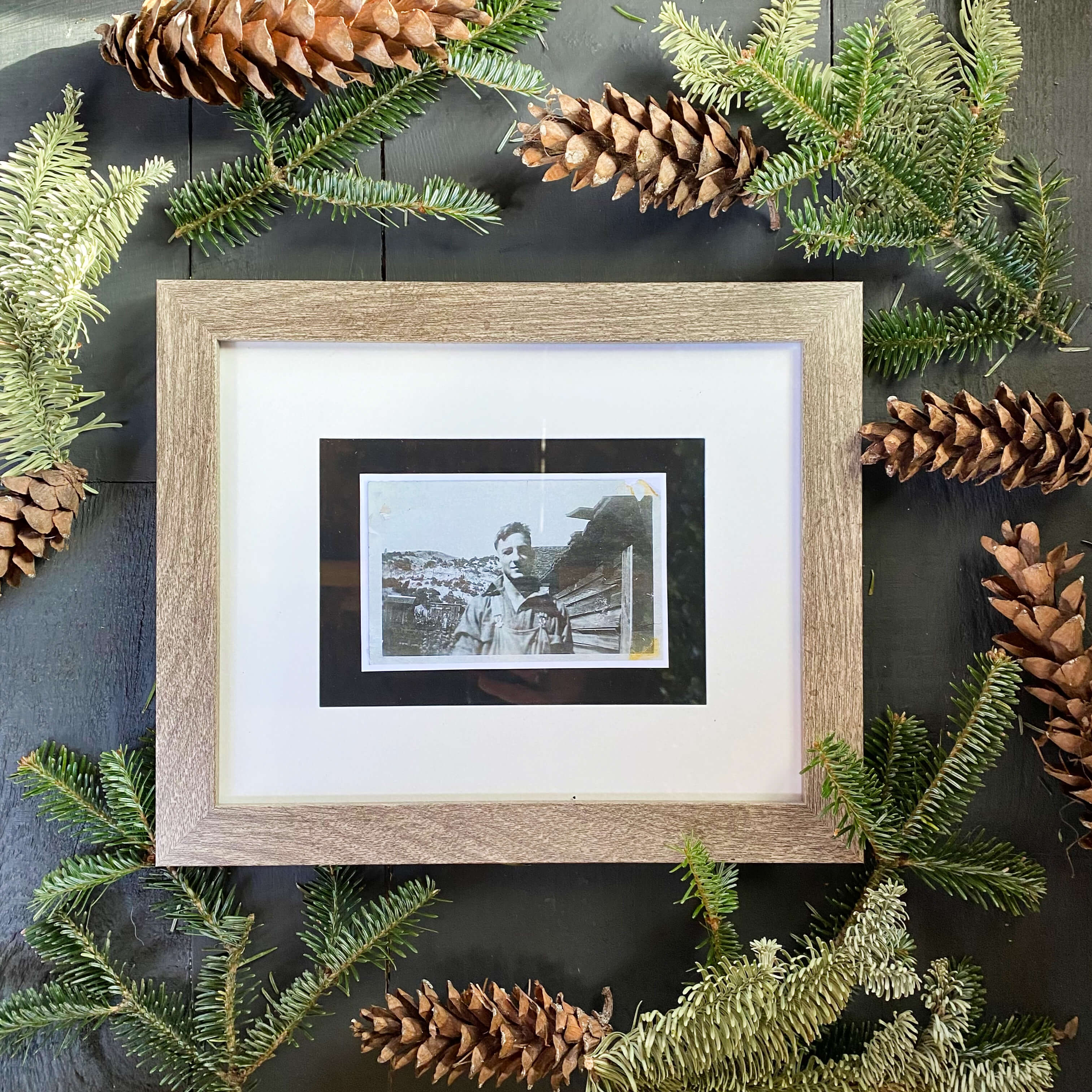
Before I left for Seattle, I had five copies made of one of the photos from the binder, so that I could frame them and give them to each of my nieces and my brother and sister. I chose a photograph of Bacon, newly married, age 24, where’s he looking straight at the camera. There are rolling hills in the background, part of a rustic building at his shoulder, a patch of corn growing next to a building behind him. He’s wearing his signature overalls. There’s a look of contentment on his face. A welcoming smile just about to bloom.

Lyle Bacon Day, Montana 1921

I had the photos reproduced at my local Staples, an homage to Angela and also to the lost item. While waiting in line to be helped, I glanced over at the self-serve copy area, at the bare tables next to each station, at the hard surfaces, sharp corners, and the utilitarian grey, beige, and black colors that covered that part of the store. I thought about the turquoise binder sitting by itself in such an environment. I thought about Dolly and Bacon tucked inside and how the environment of a modern-day Staples was so far removed from their wild Montana countryside, yet also had become such an integral part of this story.

Bacon and Dolly’s Montana circa 1920s

In 2018, going back and forth with Angela via text after the photos arrived in the Vintage Kitchen, I asked her what it felt like to put the binder in the mail after a 13-year journey with it. She admitted to tearing up a little. “I felt appreciated and blessed. To be able to provide so many people connected to this item with a sense of joy and happiness makes this such a special thing to be a part of.”

When it was my turn to be helped at the counter, the Staples employee was a bit flustered and explained that it had been a busy day and they were running behind with custom print jobs, so I’d have to leave my photo with them overnight and pick up the copies the next day. I hesitated. Bacon had come such a long way. His photograph was in my hand about to be given over. What if… I thought. What if something happens overnight at Staples. What if I never get the photo back. What if…

Clearly tired from her day, and sensing my hesitation, the Staples employee took the photo, popped it into an envelope, and attached it to a work order all in one quick motion while asking if she could help me with anything else. I wanted to tell her the story. The whole story. Starting all the way back at the beginning in 2008 with Angela in the Staples in Georgia. But the line behind me was long, and I got the sense I wasn’t speaking to someone like Angela who would care so wholeheartedly about old photos and lost items.

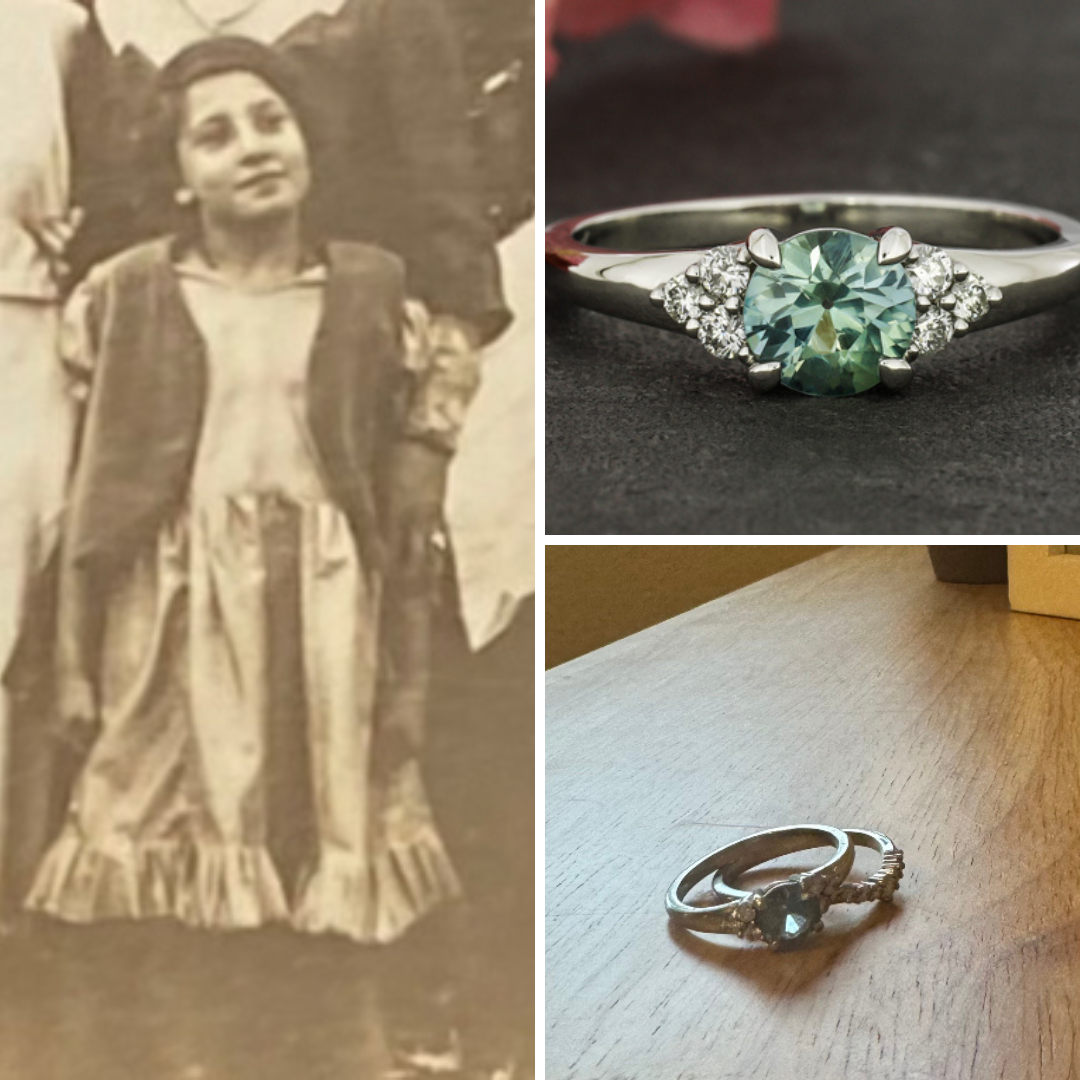
A detail had escaped my attention until the day before the wedding. It came in the form of my niece’s wedding ring. She designed it herself so that she could include a family heirloom in the setting that had been passed down on her side of the family for generations. The heirloom was a blue Montana sapphire. It had been mined from a local quarry near Philipsburg, Montana. The sapphire had been a gift from Bacon to his daughter, Florence on her 16th birthday in 1940..

Photos clockwise from left to right: Florence in Montana, about 10 years old circa 1934. A professional photograph of my niece’s Montana sapphire wedding ring. And a photo of her ring and wedding band taken at home after the wedding.

The day after the wedding, over trays of homemade enchilada casserole at my brother’s house, I shared the story of the lost item with my sister, brother, and nieces. I presented the turquoise binder and gave everyone their framed photographs. It was one of the loveliest family dinners I’ve ever had. We all marveled at the tenacity of Angela, the scenes of Montana spread around the table, and the good fortune that these photographs were not just thrown out in a dumpster sixteen years ago. My brother told me about a railroad key of Bacon’s that he had in storage and my sister told me about a booklet that she has of poems and musings about Montana written by Dolly. New story snippets and memories popped up in conversation as the photos floated around the table. My brother immediately called an aunt from that side of the family who lived in Atlanta to see if she was the one who left the binder at Staples. She was as surprised to hear about the story as we were and said she had no idea who the binder might have belonged to and how it would have wound up at Staples.

If you think about how fragile a paper photograph is, it’s easy to get quickly overwhelmed with scenarios that could have gone wrong in this story. They could have been destroyed a million different times in Montana alone over the course of a century. Not to mention the fact that they somehow made it to Atlanta. Then got lost. And then potentially could have been thrown out in the trash had kind-hearted Angela not cared enough to rescue them.

Something could have happened to them or to Angela in her thirteen years of time spent with them. Or something could have happened to them in the airplane when they were mailed to the Vintage Kitchen from Georgia or to the UPS truck that delivered them. Once, I received them, they became part of a big move, a typical life experience that often sees items get misplaced, lost or forgotten. And then for three years after that, they sat on a shelf of a 274-year-old house undergoing construction, room by room.

The view from the boat on the way to my brother’s house.

After that, they crossed the country again via plane, traveled in three different cars, and then on a boat to reach their final destination. Anything could have happened to the photographs in that timeframe by any sort of man-made or natural event experienced by any one of us involved. But it didn’t. Fate was on their side. All along, time took care of them, nurtured them. So that eventually, their story about time long ago was able to tell another story about time today. One generation growing from another.

Bacon with mare and foal. Montana circa 1920s.

On the airplane, coming back from the wedding I had to time to think about the whole story of the lost item from start to finish. Now knowing more about Bacon and Dolly, seeing their young lives evolve through photographs, I could see glimmers of their spirit in my brother and sister. The rugged, wild island where my brother lives, and that he absolutely loves, is his modern-day version of paradise just like Bacon’s wild, rugged Montana. My sister, our family’s star baker, is an incredible talent in the kitchen just like Dolly was with her bread and Bacon with his pies.

There is a lot to love about this story… the kindness of strangers, a lost item found, a family reconnected to its past, an heirloom saved from the brink of obscurity, an intimate look at a unique aspect of history, a mystery solved. But I think the thing that I love most is that ultimately, it was a simple, humble vintage recipe that connected all these threads and all these people.

The 2018 Rhubarb Custard Pie

I return again to the quote… “What’s meant for you will never miss you, and that which misses you was never meant for you.” It’s impossible to try to rationalize or explain the sheer amount of good fortune that these one hundred-year-old family photographs were graced with over the past sixteen years and beyond. I can’t logically detail why or how certain people came into the story when they did or why timing stretched out this love story long enough to finally be added to a new generation’s love story on their wedding weekend. All I can do is say thank you, to the universe, to fate, to Angela for clearly demonstrating that these photos were indeed meant to never miss us.

Cheers to Angela, a modern-day angel, for not only saving these photographs, but also for taking such tender care of them, and persistently working for over a decade to find their home. Cheers to Bacon and Dolly for continuing to be a source of interest and inspiration in our family and in our kitchens. And cheers to all you patient Vintage Kitchen blog readers who stuck with me through the lengthy and sporadic telling of this very long story.

There are only two questions left that still linger. How did the 100-year-old photographs taken in Montana that belong to a family in the Pacific Northwest wind up in a suburb of Atlanta, GA? And who wrote the notes next to each photograph?

Maybe there is still more to this story yet to come…

Calling All Souls: Our Annual 40% off Sale is Almost Here!

As soon as the pumpkins make their debut on the front porch, and the leaves shower down from the sky, and the extra-large soup pot makes its first appearance on the stovetop since early spring we know that the time is near. Our annual Vintage Kitchen shop sale is just ten days away! Mark your calendars for November 2nd, and on that day you’ll discover an extra treat – a deep discount – 40% off all items in the shop for 24 hours only.

If you are new to the blog or the shop, you might not know that we always host this sale on All Souls Day, which happens to fall on November 2nd every year. Technically a Catholic holiday, we selected All Souls Day not for its religious connection, nor its aura of spookiness given its close proximity to Halloween, but for the sheer fact that it is one of the few holidays in the calendar year that pays tribute to deceased ancestors. We wouldn’t have a shop full of wonderful heirlooms had they not traveled through other people’s lives, other people’s hands, for generations, collecting stories and memories along the way. To us, All Souls Day seems like the perfect day to celebrate vintage style.

This is our only sale of the year, so we love to make it count for shoppers looking to get a head start on holiday gifting, for decorators looking to add a bit of history to their tablescapes, and for home cooks looking for nostalgic recipes and new inspiration.

Hnadwritten notes from a rare 1920s-era cookbook.

Since no two items in the shop are ever exactly alike, no sale from year to year is ever exactly the same either. Stories float in and out of the shop every day offering glimpses into kitchen and garden life that occurred a few decades ago or a few centuries ago. Just like stories posted to the blog, every heirloom in the shop comes with its own unique tale marking its place in history.

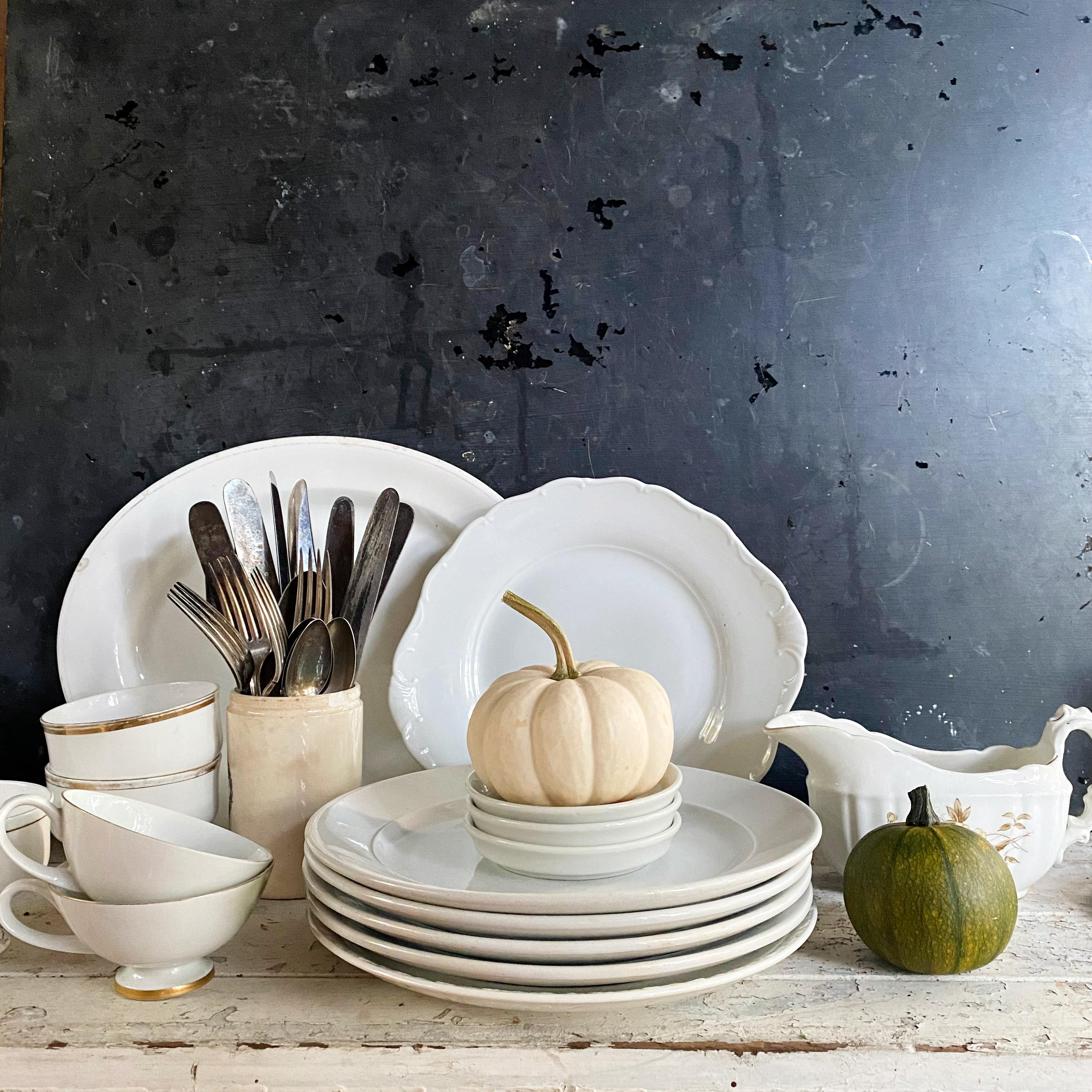
A collection of whiteware may at first look like just a bunch of plain white dishes, but each one is actually a gateway to a bit of history. Take this photo for example…

… all these pieces represent a specific time period from kitchens that span more than two centuries…

The platter made in 1900 is antique hotelware. The botanical designs on the 1977 ceramic coasters were inspired by the Tuileries gardens in Paris. The 1891 gravy boat was made in England and features handpainted flowers. The 1850 dinner plates are a rare set of English ironstone from the pottery of James William Pankhurst, which was in operation for only thirty-three years, a mere blip in England’s long-standing tradition of high-quality dishware manufacture.

Inspiration for the 1977 ceramic coasters by Toscany came from here, Jardin de Tuileries, located near the Louvre in Paris.

As the shop continuously evolves from year to year, new faces from history emerge too. You’ll always find favorite standbys in the shop – Julia Child, John James Audubon, James Beard, Emily Post, the New York Times cookbooks, and of course all the best-loved Betty Crocker books, but each year we discover new faces from history too. This year, Carol, Daphne, Wadeeha, Agnes, Alice, Milt, Joyce, Andre and Dorothea came to the shop…

Clockwise from top left: Carol Cutler, Daphne Du Maurier, Wadeeha Atiyeh, Milt Jackson, Dorothea Barlowe, Andre Simon, Joyce Chan, Agnes Baldwin Alexander, Alice Y.

They told stories of art, literature, cooking, collecting, music, hospitality, immigration and gardening. Andre was a French wine expert. Alice was a Texas baker, a professional cake decorator, and an enthusiastic collector of cookie cutters. Dorothea was one of the most prolific nature illustrators of the 20th century, and Milt was an influential musician of the 1950s jazz scene.

Listen to the midcentury musicians featured in this book over on our playlist here.

That’s the joy of collecting vintage and antique kitchenware, isn’t it? Objects and stories intertwined together, forever making and creating memories old and new. I hope at this year’s sale you’ll find something that captures your heart. Maybe you’ll be the next caretaker of this antique 1830s-era Staffordshire bowl – the oldest antique that has come to the shop so far…

Or maybe you’ll find some inspiration among the handwritten notes tucked inside this vintage 1960s gardening book.

Perhaps the traditional recipes of Mrs. Balbir Singh, also known as the Julia Child of India, will pique your interest…

Or maybe you’ll relate to the story of the Moses Hirsch family, creators of the 20th-century American Family Scale brand, who experienced the tricky rollercoaster ride of running a business among fierce competition, dramatic world events and kitchen modernization…

Or perhaps these two 1950s saddle tan Samsonite cases will call to your traveling spirit. Maybe they will become your dependable companions on jaunts to find the best croissants in Paris, the most delicious Spanakopita in Greece, or the most beautiful luau in Hawaii. Adventures big and small await with these two.

The sale begins at 12:01am (EST) on Thursday, November 2nd, 2023 and runs until 11:59pm (EST) that same day. All items in the shop will automatically receive the 40% discount at checkout, so there is no need to fuss with coupon codes or discount names.

Vintage cookbooks in the shop span the 19th and 20th centuries.

While you wait for sale day to arrive, we encourage you to use the wishlist feature on our site if you have multiple items that have caught your eye. Just click on the heart underneath each listing title and it will automatically add the item to your favorites list where you can then add them directly to your cart when you are ready to checkout.

New vintage and antique heirlooms continue to be added to the shop daily, so stop by for fresh finds leading all the way up to the sale. And, as always, if you are looking for something that we no longer have in stock, please send us a message. We’ll be happy to add your name and needs to our waitlist.

Having said that, I hope on this year’s sale day you will find something truly magical that makes your heart sing with joy and your space sparkle with delight.

Cheers to all the old souls who inspired our sale. And to all the cherished items that our ancestors have left for us to enjoy. Happy shopping!

Market Bags, Mother’s Day & Some Newsy Bits

Happy May! Hope everyone’s new month is off to a lovely start. Around here, all the trees are proudly sporting their leafy greens and the city flowers are unfurling so many colorful shades each day brings a new sight of delight in the neighborhood. These long waited pops of color remind me of Janice in her book, A Paris Year, when she walked around the City of Light scouting out items of a specific color to photograph. Starting out at the onset of each journey, Janice would pick a particular color, say red or yellow or turquoise, and then look for things to photograph that were made up primarily of that hue during her walk. This past weekend, I did the same thing when I walked to the farmers market. Before I started out I decided on the color peach. This is what I saw along the way…

It’s too early for peaches at the market so there were no color-themed fruits to photograph in that department quite yet, but while we wait for summer crops and our next blog post coming out this week (a special Mother’s Day themed story and interview!) I wanted to share, in the meantime, some new changes that are occuring in the Vintage Kitchen, so that you can be kept abreast of all the latest news.

New Products

Most excitedly, the Vintage Kitchen is growing! Over the next few months, we’ll be expanding our vintage product range in the shop to include some newly made yet very classic kitchen essentials all based on historic designs or nostalgic stories that have been personally tried and tested for years. This is in an effort to introduce fun and unique finds to your space that will not only augment your love of the vintage aesthetic, but will also be of very helpful assistence in the kitchen. The first of these new products arrived in the shop this past week…

Introducing the French market bag! Imported from Europe, this is the best way I have found to tote vegetables home from the farmers market.

The bags, made of handwoven palm leaves, are light-weight yet very durable. The long leather straps rest comfortably on your shoulder and the funnel shaped design (wider at the top than it is at the base) allows for longer and more fragile items to be stowed away securely without being crushed or tossed about. No more broken baguettes or decapitated flowers with this beauty!

There are two different styles of the market bag available in the shop. One has long leather shoulder straps (pictured above) and the other has hand-held rolled leather handles (pictured below). Both are convenient for grabbing and going and they are both the same size as far as bag capacity. The preference, of course, is totally up to you, but I recommend the shoulder strap version if you generally tend to walk to your market or live in a more urban environment where you gather your groceries primarily on foot. It’s such a comfortable way to tote your items around town. The hand-held bag…

… I would recommend for shoppers who drive to their market since the bag sits up right on its own and stows away really well in the car. Tucked into the back seat or the trunk it does not topple over easily, and will keep all your market finds secure while you drive home.

In addition to being helpful, these market bags also bring a bit of Parisian style and joie de vivre to your shopping experience. Each bag holds quite a bit of items, so if you get carried away at the market, your bag will be able to handle all your whims. For example all this fits in one bag with plenty of room to spare…

I have used my market bag (the very same one with the long straps) for over 4 years now. It has become so indispensable, it adventures with me on a daily basis. At this point, it feels not only like a bag but also like a true and cherished companion! I can’t say enough wonderful things about it. I hope you will love the bags just as much too. There are limited supplies of each style and they are selling quickly, so if they strike your fancy don’t hesitate. You can find them in the shop here and here.

Email Newsletters

If you would like to be made aware of new items listed in the shop each week, along with special promotions and added seasonal content, then please sign up for our new email newsletter which will be going out once a week (starting next Friday). Unlike many of these blog posts, this newsletter is designed to be a quick read, featuring mainly photographs and a few links to some fun content. In response to many shoppers asking how they can be kept aware of new items coming to the Vintage Kitchen, and after testing out many avenues over the past few weeks, I’m excited to finally have a good solution that will help collectors find what they love quickly. Sign up for the email newsletter by clicking the subscribe now button on the left-hand side of the shop’s home page here. It looks like this…

Sold Items in the Shop

Another improvement for the shop this past week came in the form of relocating sold items to a new category all their own. This transfer, which removed all listings that were sold out from the general inventory of available items, came at the request of a few shoppers who were frustrated in not being able to easily navigate around the site to see what was actually available to purchase. But with many historians and researchers accessing the shop for informational purposes (due to all the history we include with each item’s listing) I didn’t want these sold items to be completely removed from the shop all together. In an effort to make it a pleasant experience for everyone spending time in the shop, I hope this new solution will help. From here on out, see all the sold items in this category (found in the header section) here…

Mother’s Day

I hope you’ll come back to the blog this week to read our upcoming Mother’s day inspired post about a talented seamstress in Minnesota who led a really an interesting and dynamic life. Through an interview with her daughter, who generously shared family photographs, their family linen collection, and many stories about her mom (including a recipe!) we’ll learn how one spirited woman lived a passion fueled life and defied many stereotypes that tend to be attached to women of the mid-20th century.

Until then, of you are looking for any last-minute Mother’s Day gifts, there’s still time left to find something just as unique and treasured as Mom is. From the shop, I recommend these items…

From top left: Vintage 1950s Maurice Urtillo Art Print, Antique 19th Century Steamship Chairs, Embroidered 1950s Pillowcases, Vintage Peacock Wall Pocket Planter, French Market Basket

What makes these particular items so wonderful for mom? All of the mothers in our lives deserve to spoiled on their special day. These carefully selected items will add a little dose of symbolic beauty to her every day, while also presenting her with a unique bit of history. French artist Maurice Utrillo (1883-1955) learned to appreciate the beauty of flowers from his mother, Suzanne Valadon who was also a painter. The his & hers set of antique steamship chairs signifed luxury and comfort aboard cruise liners of the late 1800s. Breakfast in bed never looked prettier in the 1950s than with a pair of embroidered pillowcases, which were often gifted as wedding presents. Peacocks throughout history have been considered the most beautiful bird in the avian kingdom and signifies power, protection and elegance. And finally, the market bag will add chic Parisian style and a little extra joie de vivre to each and every one of her days.

Find each one in the shop here print, chairs, embroidery, peacock, market bag. Hope they offer a little extra inspiration should you need it.

Until the next post… cheers to celebrating May, new growth and vintage-inspired joy! Hope you have a great rest of the weekend!

40% Off Shop Sale Ends Tonight!

Hello vintage kitcheners! Just wanted to pop in to remind you that the 40% off shop sale is underway and ends at midnight tonight. 

 There are lots of fun ways to poke around the land of vintage kitchenwares, so if you haven’t already, I hope you get a chance to go exploring. The newest items listed in the shop appear first in each category, but by using the search bar you can also find heirloom pieces in more precise and creative ways. For example, you can search by aesthetic…

by color…

by holiday…

by country… 

by subject…

by specific flower…

 by decade…

Those are just a few suggestions and some examples of what you’ll find if you are new to the kitchen shop. Whether you are looking for something very specific or just want to meander about, I hope you find the perfect item that speaks to your spirit. Happy shopping! And cheers – it’s All Souls Day!


The Story on the Table and the Collections They Inspire

There are sibling rivalries, legendary love affairs, epic business successes and terrible company failures. There are cross-continent travelers, centenarians who never age and homebodies who would never think of leaving. There are the everlasting partiers,  the quiet dignifieds, and the rebel-rousers with battle scars to show. Forget all the drama that’s occurring on your tv screen or on your phone. Compelling, real-life adventures are happening right in front of you, right on your kitchen table. Welcome to the dramatics of the age-old dishes. They carry the stories of what we’ve eaten across our imaginations and over time.

Today we are highlighting some of the stories that make table settings more interesting and conversations more memorable. When we stock plates and curate collections in the shop we are looking for unusual designs and elegant patterns that can easily be incorporated into your everyday routine for a splashy bit of decadence in both the thought and feel department. We like old china to look old because that’s what ignites the imagination. To us, there is nothing more disappointing then standing in front of a dish trying to decide if it’s new-to-look-old or old but so brand-new looking that you just know it’s never ventured out of the china cabinet.  In the Vintage Kitchen, we like dishes that bring some story to the table with an extra added dose of depth and charisma to enhance the food that we prepare.

A few weeks ago on Instagram, we did a before and after photoshoot of a simple yogurt and coffee breakfast to demonstrate the difference and the impact of ordinary vs. extraordinary.  On the left is plain, modern, basic American-made dishware.  On the right is colorful vintage handpainted dishware that is more than 60 years old and comes from another country. Don’t you think the mood of the morning changes dramatically just with a hint of some old time interest?

The dishware on the left are all modern pieces in basic white. The dishware on the right features a 70-year-old handpainted saucer and a 60-year-old gold-rimmed monogrammed teacup.

A plate is a plate, you might say. But it’s really so much more than that too. It’s someone’s artwork. It’s a town’s business and a country’s export. It’s an owner’s style expression and a collector’s pride and joy. It’s a plate but it’s also a passion.

Take this one for example… a 9.25″ inch white ironstone plate with a 10- sided polygon shape. It’s hefty, weighing close to one pound, and its speckled with age spots that resemble the shadowy craters of the moon. There is a long delicate crack that measures almost 7″ inches right across the middle and I fear that any day now, it will split the plate in two. When it touches down on another surface, no matter how gently, it broadcasts a two beat thump like a hollow footstep.  I think that’s the history of the plate trying to talk. A spirit wanting to tell some secrets. This plate carries a lot of those. It’s 183 years old.

If it was used once a day, every day, for 183 years it would have served a total of more than 60,000 meals throughout its life so far. A remarkable feat for any piece of kitchen equipment, let alone one of a fragile, easy-to-break nature. How many times over the course of its life has this plate been set down and picked up? Whose hands touched it and where did they carry it?

Made in England by  C & WK Harvey between 1835-1853, it tells the story of the hustle-bustle days of English pottery making. The Harveys were a father/son team made up of the Charles’ (Sr. & Jr.) and William K.  Their pottery plant was located at the Stafford Street Works in the town of  Longton, Stoke-on Trent, England – a section of town that Charles Sr. built in 1799 to house factories for a number of different pottery makers.

Stafford Street Works then and now.

In the early 1800’s, Stoke-on- Trent was the hub of pottery manufacturing for the entire country of England and employed hundreds of thousands of workers.  Parts of the Works are still there today, although now it is a mixed-use commercial neighborhood, primarily consisting of retail storefronts. Almost all of the potteries once associated with it are now gone.

For things like salads, and cheese and crackers, fruit, scrambled eggs and dessert, the old Harvey plate gets used all the time.  It’s shiny and smooth and substantial under the touch of fingertips. It’s bright white and pale tea and watery grey in color. It’s got so much crazing, you barely even notice all those zillion fine lines running every which way. It’s simple and it’s extraordinary all in one. It appears often in the Vintage Kitchen photo shoots.

Photos clockwise from top-left: The prop behind the pineapple; serving Carrot Risotto, breakfast time with Jessie Hartland’s Crepes, holding onto the frozen figs and behind the stacks of sugar cookies.

Now so rare in availability pieces from this pottery maker are mostly seen only in museum collections.  It’s moved with me four times since I found it more than 10 years ago. With each move, it gets wrapped in a thick sweater and then an even thicker blanket and then transported in the clothes boxes (the best place to pack your most treasured dishes!) to ensure a safe arrival.  The crack hasn’t gotten the best of it yet.  Fingers crossed, that it never does.

Somewhere along the timeline of its long life, the Harvey plate crossed the ocean from England to America and eventually found its way into an antique shop in the rural South where I found it. Exactly how it got from the U.K. to the U.S.A. is where imagination takes off and the topic of conversation begins.  Perhaps it came by boat, packed in someone’s steamer trunk in the late 1800’s. Maybe along with a matching set of dishes destined for a new home in a new country. Or perhaps it embarked on a lengthy 1930’s journey through the mail and then via train where it chugged through cities and states, time zones and territories.  Maybe it sat on a festive dinner table celebrating the end of slavery or the rise of the civil rights movement.  Or maybe it arrived in America much later – in the 1980’s via  airplane – a treasured find from a jet-set vacationer who fell in love with the antique history of England.

We’ll never know the exact story but it is fun to speculate on all the possibilities. Many a dinner party have been enjoyed discussing this very plate’s past. Often times, the more wine poured the better the story gets. Since it is an active worker in the Vintage Kitchen you’ll never see it available in the shop but we do offer many others with equally interesting stories to tell.

Clarice Cliff and her pretty floral plates were designed in the 1930’s for Royal Staffordshire. Clarice was a legend in the English ceramics world from the 1920’s to the 1960’s, designing hundreds of eclectic pieces that were admired by collectors the world over.

Clarice Cliff (1899-1972)

Considered one of the most remarkable ceramic artists of the 20th century, Clarice is revered not only for her artistic merit but also her devotion to finding beauty in unusual shapes, colors and designs that were considered very unorthodox in relation to other kitchenwares produced during her lifetime. She was also a brilliant businesswoman – savvy not in an aggressive sales-driven sense, but intrinsically smart, using her own intuition and infectious love of her craft to guide her career, thus attracting a devoted fan base. Her Dimity pattern plates burst with the bright colors of spring. We paired them in two different mix and match collections combining similar colors and unique shapes to compliment the bright and fun-loving personality of Clarice herself.

The Springtime Bouquet collection on the left and the Gold Meadow Collection on the right.

There is the story of the Willow pattern that has been captivating romantics since the 1850’s. The tale is English in origin but it was based on the original Blue Willow porcelain pattern that was made in China during the 1700’s. The tale involves a wealthy girl who falls in love with her father’s accountant. Her father, who does not approve, forbids the romance and arranges his daughter’s marriage to another man more suited to the family’s prominent social standing. The night before her arranged marriage, as the Willow tree starts shedding its blossoms, romance wins and the accountant and the girl run away together living happily for many years. One day the other suitor finds out where the couple is living and kills them. After death, the young lovers are reunited in the form of birds flying high above the landscape.

All the elements of the story are drawn out on the plate. You’ll notice the palace where the girl grew up, the bridge that takes her and her lover away, the island where they live happily together and the birds they eventually become overhead. Lots of china companies caught onto the fact that this was a popular pattern and an even more popular story and began producing their own versions in different colors. This red willow plate was made by famous American pottery company Homer Laughlin in the 1940’s.  We combined it with two other Asian inspired plates to create our own fabled love story collection…

A three-piece set containing Asian themed dinner plate, bread plate and mini dish.

Similiar to the story of the Harvey plate, the Meakin brothers, Alfred, George and James, ran several potteries in Stoke-on-Trent and Tunstall, England. Alfred,  produced this stunner, the Medway Blue under his own pottery label Alfred Meakin England in 1897. Exquisitely detailed, it’s hard to imagine that anyone could or would part with this beautiful plate, but like the Harvey, it somehow migrated over to America. Its journey wasn’t without fault or flaw – there’s a sign of adventure lurking in a small very old pencil point sized chip near one side of the rim.

Celebrating over 120 years of life, this plate holds all the dinnertime stories. 44,000 of them. When we look at it, we see the pretty pattern but we also see faces. People through history who stared down at its contents. Their hair-dos and their makeup, their tuxedoed bow-ties and their evening gowns, their earrings and their mustaches. We imagine the conversations while they ate their chicken and fish and game meats. Would we be discussing the same dramas of the day if we served a slice of pizza on top of the same plate?

Other patterns on other dishes ignite similar questions and thought process. When we look at this golden-edged Pope-Gosser plate made in Ohio in the 1920’s we see Jay Gatsby written all over it. Funny enough, it’s pottery founder I . Bentley Pope, an English transplant to America,  was a swashbuckler of a salesman and a charming wordsmith. Perhaps he had a bit of the Gatsby or the F. Scott in him too.

Last September, when we discussed the book A Taste of Paris, we learned from author David Downie that the original dinner plate was nothing more than a flattened loaf of bread on which food was piled high. Between that primitive time and now, it is amazing to think how far we have come since the days we ate our dishes. If you are interested in learning more about other plate histories, visit the shop and see which ones spark your heart. We’ve listed both collections and single plates in case you want to mix and match yourself. If you have a favorite from any featured above, share it in the comments section below. We’ll be excited to learn which ones appeal to you and why!

These are some of the other unique stories… feuding brothers, vanishing nature and celebratory statehood. Find them all in the shop here.

To celebrate all the ladies in your life that would appreciate a homemade dinner served on a lovely plate we are having a 20% off sale in the shop which runs now thru May 13th.  The discount is available for all items in the shop and will be applied to your entire order.  Use the coupon code MOTHERSDAY at checkout to receive the discount.

Cheers to all the adventurers out there who keep life interesting, both plates and people! May the stories continue and the memories bloom.

Katharine Hepburn’s Lace Cookies

Red meat, big salads, tea, butterscotch pudding, ice cream, meatloaf, homemade cookies… those were some of Katharine Hepburn’s most favorite foods. Whether she was staying at her Turtle Bay residence in mid-town Manhattan or at her family’s compound in Old Saybrook,  Connecticut, Katharine liked most entertaining people at home with a homecooked meal.

Kate in her natural element… cleaning up the kitchen of her Connecticut waterfront home, Fenwick,  and dining outdoors in the courtyard of her Manhattan townhouse.

If you were lucky enough to be invited to dinner at either of Katharine Hepburn’s houses, you’d arrive promptly at 6:00pm and leave by 8:00pm so that she could be in bed by 8:15pm. A notorious early riser, Katharine lived by her own clock, bustling through the hours of her day with an admirable endurance that lasted her entire life.

But needless to say, even the most energetic of crusaders experiences a point in each day when blood sugar runs low and a brief rest is welcomed. For Lady Kate that small break in her schedule came at tea-time, her most favorite part of the afternoon, which she’d serve in antique teacups collected from her travels around the world. The saucers hardly ever matched the cups, the handles were sometimes repaired in one or two spots and there might be a chip in the rim, but none of that mattered. They were perfectly lovely serving pieces for a perfectly lovely time of day.

These are some of Katharine Hepburn’s serving pieces that she collected throughout her ninety-six years of life. In 2010 they were up for auction at Sotheby’s.

“Nice things are meant to be used,” said Kate when it came to living with antiques. The older the item the better it seemed. And because she was sentimental and somewhat thrifty she saw no harm in repairing a broken dish so that it could return to its previously useful state.

Along with a strong batch of freshly brewed tea, she would also always serve a homemade sweet treat believing that dessert tasted better in the afternoon than it did at night after a full meal. One of the dessert recipes she was most well-known for was her Lace Cookies which take their name from their paper-thin constitution and delicate web-like appearance.

This past week, the Vintage Kitchen moved to a new space and like Kate our energy was running on high as we packed and unpacked in a dizzy array of busyness. But now finally that we are settled and the moving boxes have been emptied, our own tea-time has come calling. We don’t get the luxury of having Katharine Hepburn come join us, but at least we have her recipe and a good imagination to make up the rest.  Tracy Lord (The Philadelphia Story), Ethel Thayer (On Golden Pond), Tess Harding (Woman of the Year) … if we could somehow magically invite these Hepburn characters along with Kate this surely would be a tea-time of legend. If you are unfamiliar with Kate’s movies here is a little clip from our most favorite, The Philadelphia Story, where she plays a bride-to-be whose dealing with cold feet and a complicated heart.

When Katharine was on set or on stage she was known to give helpful training and technique suggestions to less-experienced cast members who were struggling with a scene or a role. She was careful never to tell them exactly step-by-step how to get from point A to point B because she thought that would just yield a copycat performance. What she did offer instead was advice and recommendations that would help shape the parameters of a character or the foundations of a scene so that actors could confidently put their own personality into the performance. In essence, she offered helpful broad strokes and left the details up to the individual to interpret. The same can be said for her recipe sharing.

The first thing you’ll notice about her cookie recipe is how simple it is.  But we all know simple things can sometimes turn out to be most complicated. Kate’s approach to acting was often described as enigmatic, precise, contagious, controlling, all-consuming, accommodating and effortless. Her lace cookies share all those same attributes. They were absolutely delicious but they can be a little finicky, so before you whip up your own batch please note the following bits of advice from the Vintage Kitchen.

  •  Do not use anything bigger than a teaspoon to drop your dough onto the cookie sheet. (We first made tablespoon sized cookies, thinking the bigger the better,  and once heated up in the oven each separate cookie  spread out to meet up with the others and form one giant cookie that covered the entire baking sheet and never fully cooked.)
  • A disposable foil cookie sheet works better than a metal non-stick cookie sheet because of the raised perforations in the disposable sheet design.
  • Don”t forget to grease your cookie sheet in-between each batch or the cookies will stick like glue to the pan.
  • It’s best to serve these within 30 minutes after they’ve come out of the oven.  That’s when they are crispy like a potato chip. Over an extended amount of time, they relax to a more limp and chewy state (although still delicious!)

Also, Kate made her cookies with finely chopped walnuts, but we used roughly chopped peanuts because we thought the cookies would stack in a more whimsical way for the photograph. We were right – rough chopping adds a little more volume to the stack. So depending on your preference, nuts and chopping style these cookies call for a little of your own creativity as well, just like Kate would have encouraged.

Katharine Hepburn’s Lace Cookies

1/4 cup butter, softened

1 egg, room temperature

1/2 teaspoon vanilla

1/3 cup raw sugar

2/3 cup firmly packed brown sugar

1 1/3 tablespoons all-purpose flour

1 cup finely chopped walnuts (or roughly chopped peanuts or any nut of your preference)

Beat butter, egg, and vanilla together until smooth. Add sugars and flour to egg mixture, mix thoroughly. Stir in nuts. Drop dough by teaspoonfuls on greased baking sheet. Bake at 350 degrees for 7-8 minutes. Cool on baking sheet. Makes about 30 cookies.

With a consistency like very thin peanut brittle and a taste like toffee, these cookies are delicate coasters of caramelized sweetness. And because they contain so little flour, they are a crisp and light dessert alternative to something dense and gooey. Keep in mind, they don’t travel well because of their fragile nature, so these treats are best enjoyed at home with friends and family and a late afternoon pot of tea just like Kate would’ve have done.

Cheers to Kate for her delicious recipe and to finding a little sweet respite in your busy schedule!

* This post was originally intended to appear as part of the Spencer Tracy & Katharine Hepburn blogathon hosted by In The Good Old Days of Classic Hollywood. Unfortunately, our move interrupted our ability to participate, but you can still catch up on all the fun posts featuring the great Kate here.

Three Cheers: The Vintage Kitchen Shop is Here!

It’s a very exciting day here in the Vintage Kitchen! We are happy to announce that the kitchen shop is now up and running! As an ever-evolving retail site, with new items added weekly, there will always be interesting things to see whenever you stop by and visit.

We are just getting started on this big adventure, so there is still lots more to add in terms of items and some quirks that still need to be sorted out but it’s really exciting to see this long-term goal come to fruition. We are also super happy to bring you a site full of history and interesting kitchen stories told through the time weathered patina of carefully curated vintage and antique items.

In the shop, you’ll find pieces that have gracefully withstood the test of time, classic beauties that never go out of style and rare, one-of-a-kind pieces that will give your cooking space unique personality. Tackling all the varied elements that make up the complete vintage kitchen you’ll find a wide assortment from cookbooks to cutlery, glasses to gadgets, pots to plates and everything in-between.

Besides a fun shopping experience, there is also a spot to sign up for our seasonal newsletter, a page to connect with us in regards to procurement for those hard to find items or bulk needs and a page to connect with us privately for any questions.

Access to the shop is offered in a few different places here on the blog – by clicking on the ad in the right-hand column, by clicking on the shop tab in the header, or by typing shopinthevintagekitchen.com into your web browser. The same goes for the shop side of things – there’s a blog tab on the storefront that sends you directly back here so you’ll never get lost between these two places!

Now that we have this major design project launched and underway we will be back to our weekly blogging schedule which, from time to time, will feature shop items with especially fascinating stories. Up next is a vintage Summer recipe that serves a crowd up to 18. Hope you are hungry!

Cheers to a wonderful weekend ahead and to new beginnings.

Happy shopping!