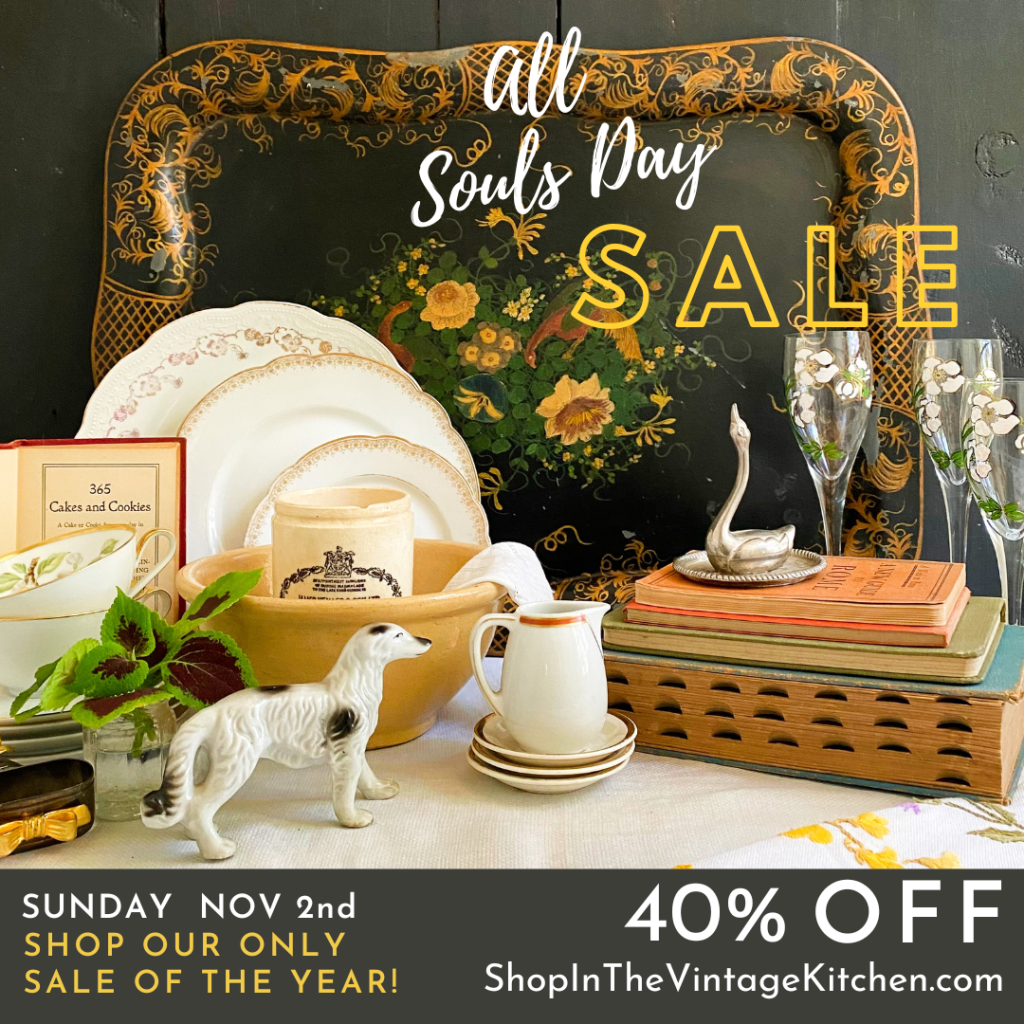
Mark Your Calendars: Our Annual 40% Off Sale is Sunday, November 2nd!

Autumn 2025 comes to 1750 House in a blanket of color.

It’s hard to believe that our annual once-a-year shop sale is just two weeks away, especially since our last blog post left off with baking bread in the middle of a summer heatwave. And yet, now here are, firmly swaddled in a blanket of autumn leaves with the woodpeckers performing their yearly tap tap tapping on the shingles of 1750 House reminding us that seasonal celebrations are close at hand. Lots has happened between now and that day in July when the kind bread was rising as high as the humidity and the garden was growing right along with the shop stories.

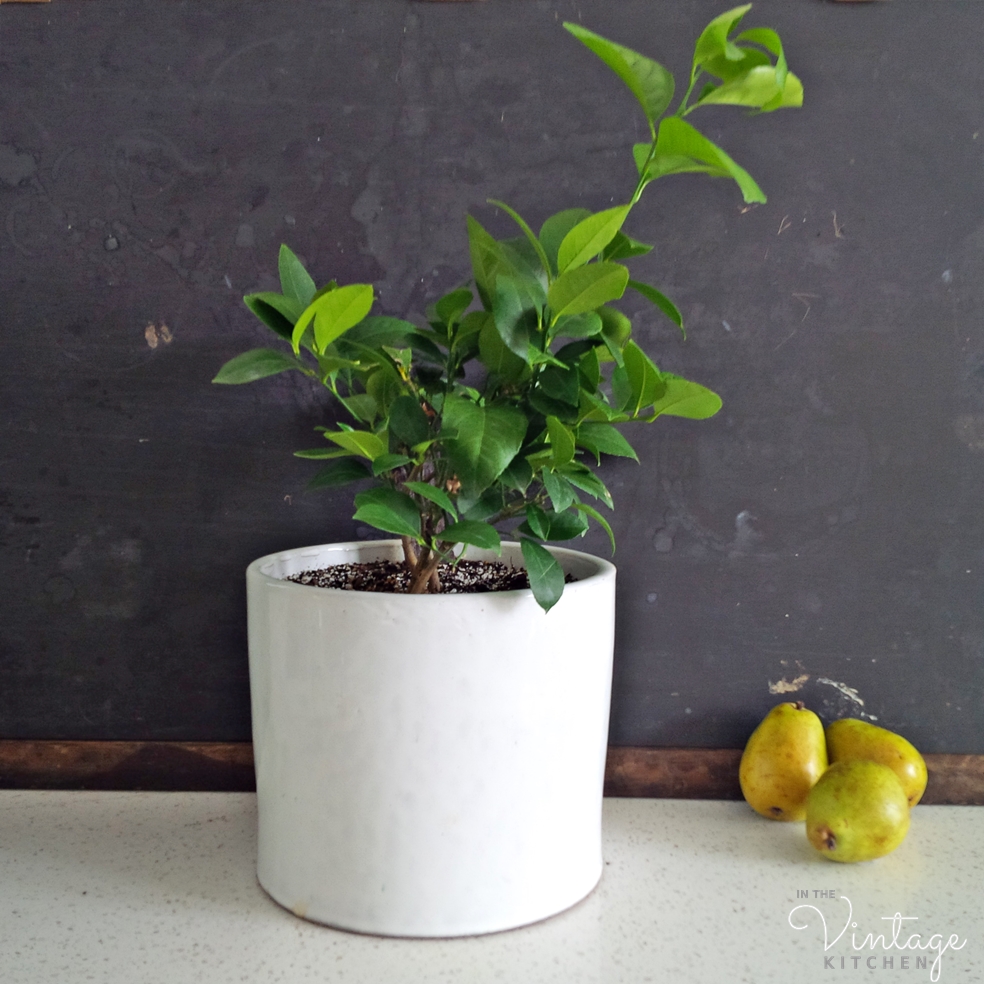
The lemon balm… one of our star growers in the herb garden this year.

I’m very excited to catch up, especially when it comes to hashing out the happenings of the herb garden and the triumphs and tragedies it endured over our experimental summer. But before we get to all that, I wanted to give everyone a quick calendar reminder in this post about the shop sale since it’s coming up right around the bend.

Two very exciting things are happening this year in regards to the sale. 2025 marks our 5th year of the sale, and it also happens to occur this year on the same day as daylight savings time, so you’ll be able to fall back and enjoy an extra hour of shopping should you so choose.

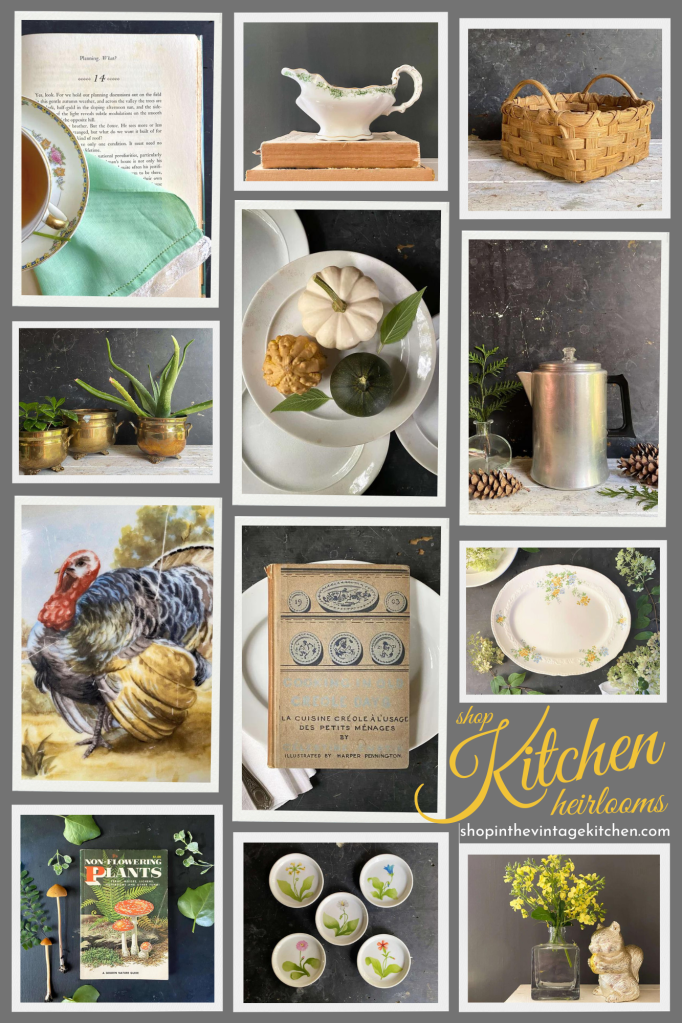
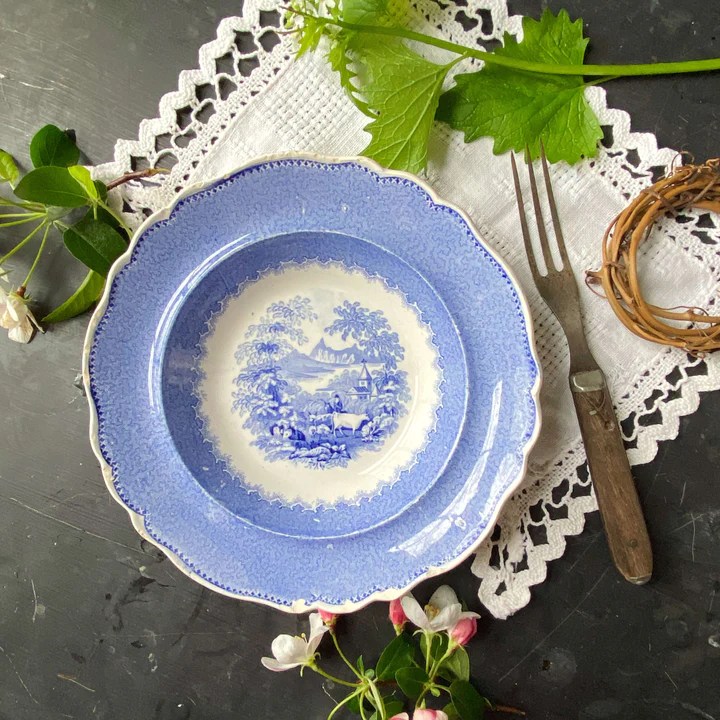
If you are a regular visitor to the shop, you’ll know that we adore a good floral and that the shop is forever covered in blooms no matter what the time of year. But when it comes to the change of seasons from summer to fall, the shop starts filling with heirlooms that embrace this cozy time of year by reflecting the colors in the landscape that help create autumn vibes in the kitchen and a beautiful feast for the Thanksgiving table. Whether its cookbooks, dishware, or decorative pieces, this year you’ll find some unique heirlooms that not only speak of history but of harvest time too…

If you are new to the All Souls Day sale, every year, November 2nd marks 40% off everything in the Vintage Kitchen shop for one day only. We call it the All Souls Day sale, not for the Catholic holiday that it shares the day with, but for the heirloom history that it encompasses.

All Souls Day is the only communal holiday in the calendar year that celebrates and remembers all deceased ancestors, and to us, that seems like the perfect time to celebrate vintage and antique heirlooms too. None of our shop items would be here today if they had not traveled through time, cherished and cared for in the hands of the people before us.
It’s up to the ITVK team to curate the shop, but the heirlooms do all of the storytelling. Each year, these heirlooms share new insights into the past that help shed light on things in the present. Since no two items in the shop are ever exactly alike, no sale from year to year is ever exactly the same either.

Just like the majority of one-of-a-kind heirlooms that can be found In The Vintage Kitchen, unique stories offer glimpses into culinary history and garden life that occurred decades ago or even centuries earlier. Hidden histories are everywhere and they tend to show up in ways that consistently surprise and delight. Just when you think a napkin is a napkin, a plate is a plate, a book is a book, a detail will jump out from in its history and take us on a marvelous trip through time to understand and explore other places and faces. These are some of the unique heirlooms you’ll find in this year’s sale…

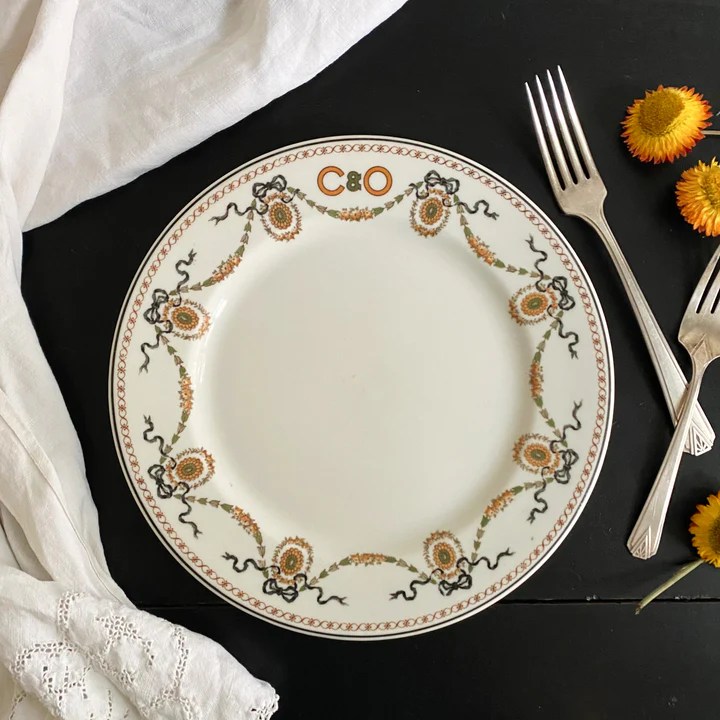
A Rare Chesapeake & Ohio Railroad Luncheon Plate c. 1923

With its roots extending all the way back to canal transportation in the 1790s, the C&O Railroad has a long and winding history through the American landscape. Throughout most of its life, C&O trains hauled coal, agriculture, retail products, and travelers between Virginia, the Midwest, the Northeast, and parts of Canada up until the 1980s. In the 1920s, the decade in which this luncheon plate was made, the C & O trains looked like this…

Dining service aboard C&O started in 1899 and was only offered on their luxury lines. Signature menu items included shirred eggs, Saratoga chips, broiled sea fish, baked apples and cream, Spring lamb chops, and French toast with marmalade. 

A Signed First Edition of Alice’s Restaurant Cookbook circa 1969

Not every cookbook comes with it’s own theme song, but when Alice May Brock (1941-2024) befriended a young Arlo Guthrie, the whimsical world Alice lived in was all the inspiration Arlo needed to write a hit song called Alice’s Restaurant Massacree, which in turn inspired a cult classic film of the same title. The cookbook came after the song and the movie, but shares the recipes that made Alice a local legend in New England as the proprietor of three restaurants and a catering company. A free-spirit, an artist, and a lover of food and friends, this cookbook features some of the favorites served in her restaurants and at her famous home-hosted dinner parties. It also includes still photos from the movie, Alice’s illustrations, and photos of Arlo and their friends who made a good time out of every meal. Adding an extra layer of the joie-de-vivre she embodied, this particular book is also signed by Alice.

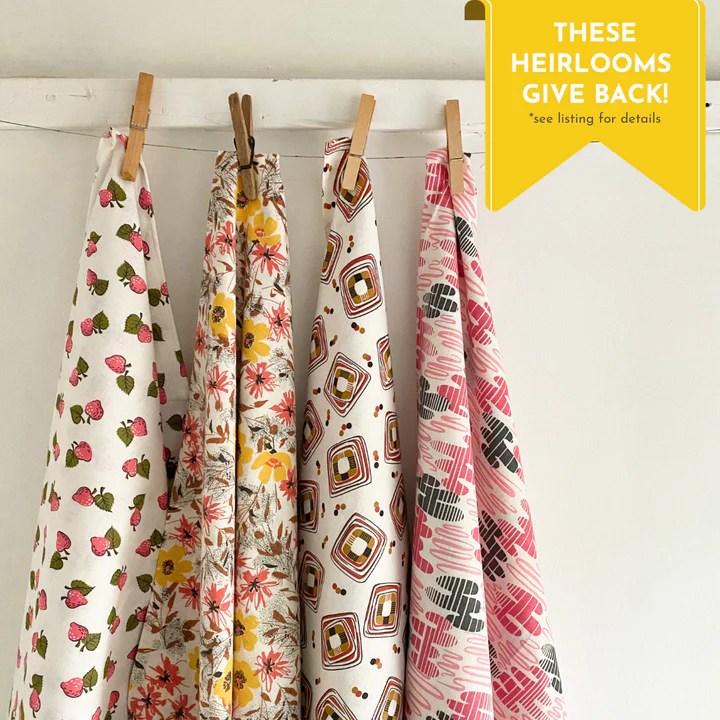
A Collection of Original Floral Feed & Flour Sacks circa 1930s-1940s

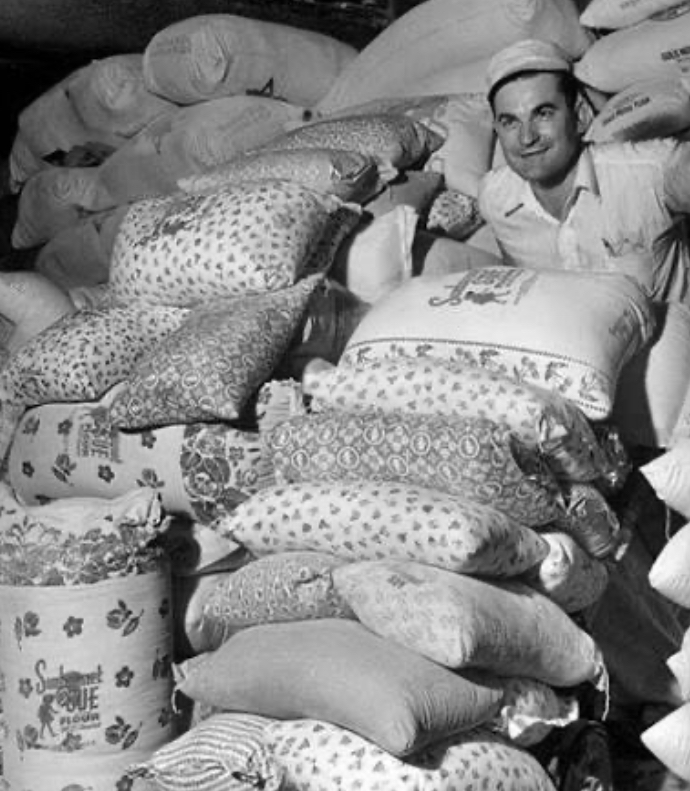
You can’t really get any closer to touching real-life history than these floral feed and flour sacks. Stitched into traditional sack shape, similar to a pillowcase, these bound together fabrics were once the commercial packaging that held a variety of pantry staples, including flour, sugar and grain. Made by the manufacturing industry in response to the financial burdens placed upon American families during the Great Depression, this cotton sack packaging was made solely for the purpose of recycling.

Knowing how thrifty and creative the American seamstress was, and knowing how tight household budgets were during the Great Depression and World War II years, grain and food manufacturers packaged their products in these floral cloths specifically so that women could repurpose them by turning the fabric into clothing, household linens, toys, rugs, curtains etc. It was a winning collaboration that not only responded to and eased economic stress, but also showed unwavering care, support and appreciation for customers during one of the most challenging times in American history. This batch in the shop came from a private collector and was so well-cared for across ninety years that each piece of fabric looks practically brand-new. Two of the sacks even retained traces of grain remnants hinting at the original products contained within.

Cotton flour sacks full of flour featured in a 1940s photograph published in LIFE magazine

An Antique Basin Bowl & Wash Pitcher That Changed the American Plumbing Industry

It’s hard to imagine life without modern conveniences like indoor plumbing and bathrooms, but back in the 18th and 19th centuries, this wash basin and pitcher was your gateway to cleanliness, both literally and figurately. Made by Maddock’s Lamberton Works in Trenton, New Jersey, between 1888-1902, the British-born Maddock family were the first immigrants to realize that America needed their own sanitaryware pottery manufacturer. Up until they opened up shop, all basin bowls, wash pitchers, slop jars, chamber pots and grooming sets were imported from England. The Maddocks changed that by producing American chamber sets using local clays, and in doing so, revolutionized the plumbing industry in the process. Recognized as pioneers in the world of sanitary toiletry products, the Maddock family patented several plumbing innovations before they eventually sold the pottery in 1929 to American Radiator & Sanitary Corporation, who would go on to create our country’s indoor heating and plumbing infrastructure including radiators, sinks, bathtubs, and toilets for households across the country.  

An Intimate Glimpse into the Life of a Literary Hostess

Guests at the Boston literary salon of Mr. James & Annie Fields were a veritable who’s who of prominent 19th-century writers. Mark Twain, Charles Dickens, Sarah Orne Jewett, Ralph Waldo Emerson, Henry Wadsworth Longfellow, Bret Harte, Henry James, Bronson Alcott, Nathaniel Hawthorne and Harriet Beecher Stowe, to name a few among were just some of the visitors that spent time in their home along with other notable painters, actors, musicians, and political activists. 

In addition to being a writer, activist and philanthropist herself, as well as the wife of distinguished Boston publisher James Fields, Annie Adams Fields (1834-1915) was also a charming, kind-hearted hostess and keen observer of conversation amongst her literary friends. Never interested in self-promotion, scandal or gossip, she regularly recorded bits and pieces of conversations among her friends in diaries that she kept throughout her life. Sketches of dialogue, character traits, pressing matters of the day, viewpoints on life and literature all freshly detailed the lives of extraordinary figures, painting them as humble, human, fallible beings tackling life, their passions and their creativity as anyone might. 

Before Annie passed away in 1915, she granted noted biographer Mark Antony DeWolfe Howe Jr. access to all her diaries in his pursuit to record the friendships enjoyed between the Fields and their artistic community. She had one caveat, though, in sharing her books. That Mark’s book not be about her but about the extraordinary friends whom she knew and loved so well. What resulted is this book, Memories of A Hostess: A Chronicle of Eminent Friendships, published in 1922.

Highlighting correspondence, diary entries, cultural events, and touchpoints from history for context, Mark Antony DeWolfe Howe pieced together an intimate glimpse into the lives of the 20th century’s greatest thinkers and artistic minds, courtesy of Annie and James’ record-keeping collection.

Annie’s husband, James Fields

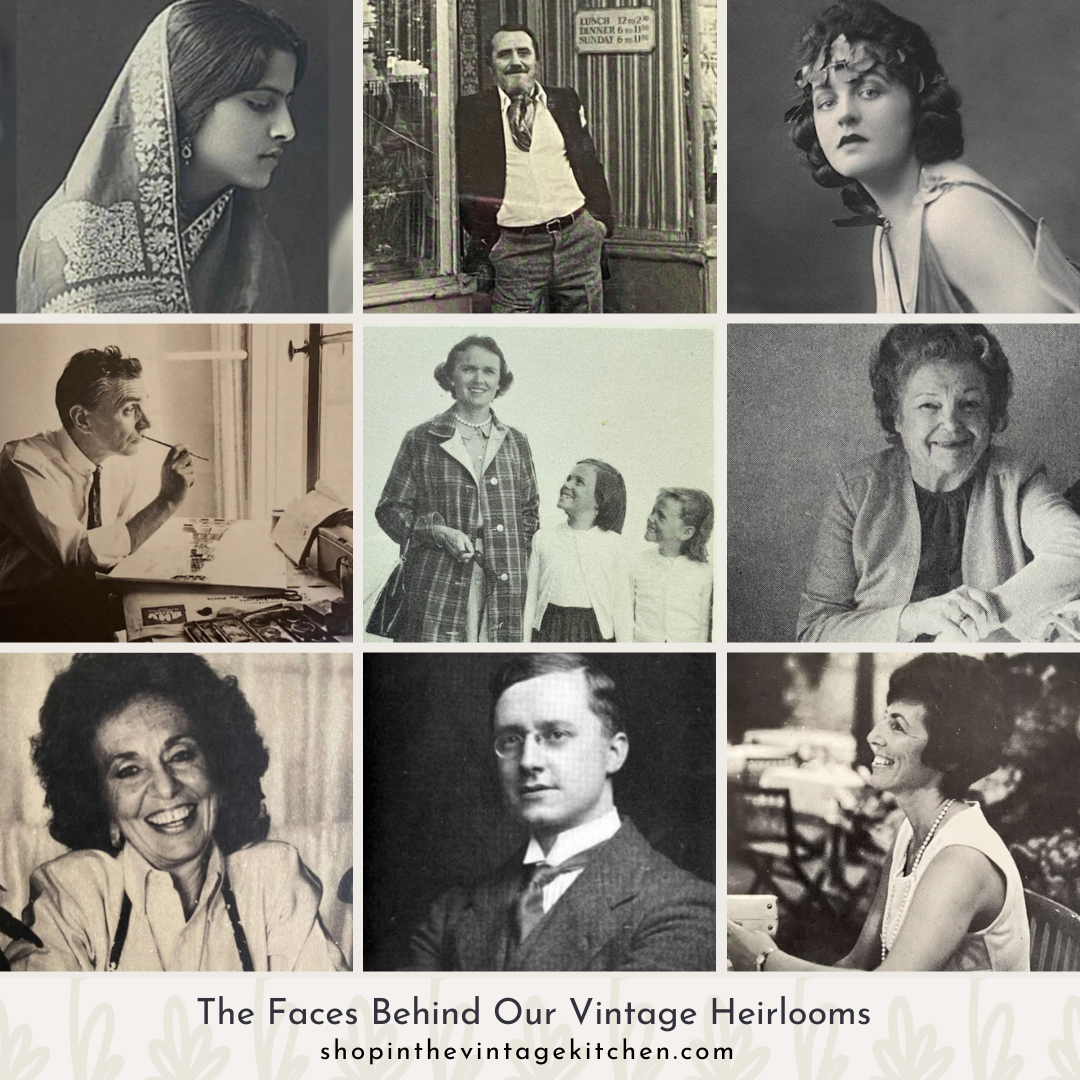
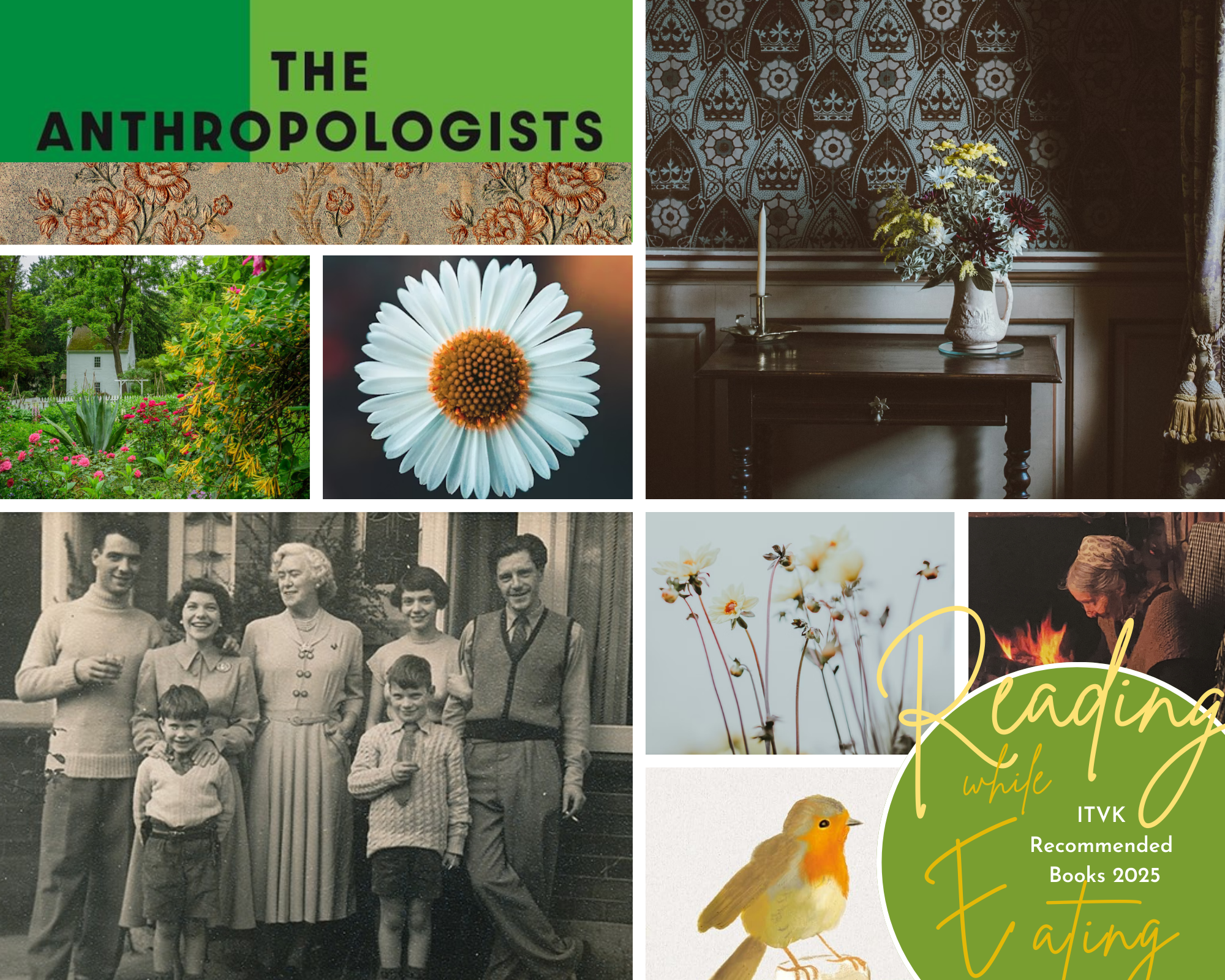
Uncovering a portrait to attach to each heirloom’s story is one of our ultimate joys. In this year’s sale, you’ll also meet many new faces. This year, we shared stories of Attia, Alfredo, Pamela, Freddie, Doris, John, Judy, Miroslav, and Marjorie along with her daughters, Kate and Susan…

Clockwise from top left: Attia Hosain, Alfredo Viazzi, Pamela Lyndon Travers, Freddie Bailey, Doris Muscatine, John Ramsbottom, Judy Gethers, Miroslavo Sasek, Marjorie Winslow and daughters.

Each brought many new perspectives of history to life. Attia Hosain (1913-1998) was a writer, actor, cook, broadcast journalist and intellectual focusing on stories of India and British post-colonialism. Freddie Bailey (1904-1992) was famous in Mississippi for her hot pepper jelly along with other regional favorites that made her kitchen the epicenter of Southern food, flavor and hospitality. In the 1930s, Pamela Lyndon Travers (1899-1996) introduced the world to Mary Poppins, who still remains 90 years later, the globe’s most well-known and most beloved nanny. Alfredo Viazzi (1921-1987) was the proud owner of a popular Greenwich Village restaurant known for its convivial atmosphere, great food and reasonable prices. Judy, Doris, Marjorie and Miroslav shared their artistic talents via saucepan and sketchbook. British mycologist John Ramsbottom (1885-1974) taught gardening enthusiasts all about the fascinating world of fungi.

This year also introduced personal stories shared by readers and their families. One of our favorites is that of Beverly, whose collection of handwritten recipes is not just a set of random cards in a box. They are the story of her. Of one woman’s culinary journey as she grew from a young, inexperienced midwestern bride, who barely knew how to boil an egg, into a confident, seasoned California cook and recipe collector over the course of her entire adult life.

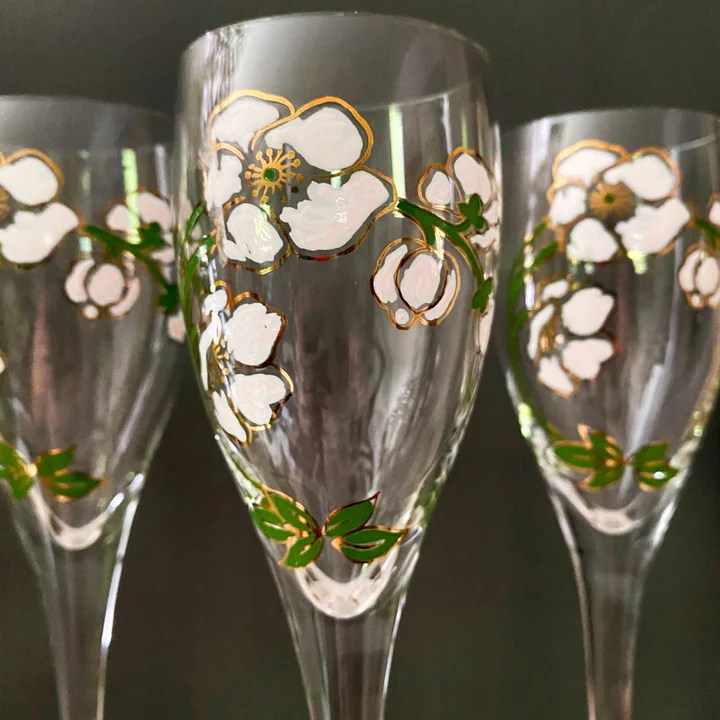
Familiar favorites can be spotted in the shop sale too, bringing with them their marvelous heritage stories that are worth retelling again and again. This stemware is the story of champagne, of “drinking the stars,” of a husband and wife couple, Pierre Perrier and Rose Jouet, who created the first true champagne made from the Chardonnay grapes in the Champagne region of France in the early 1800s. Together, with Rose in the vineyard and Pierre in the sales office, they launched Perrier-Jouet Champagne in 1814, a brand that still continues to enchant wine enthusiasts around the world today.

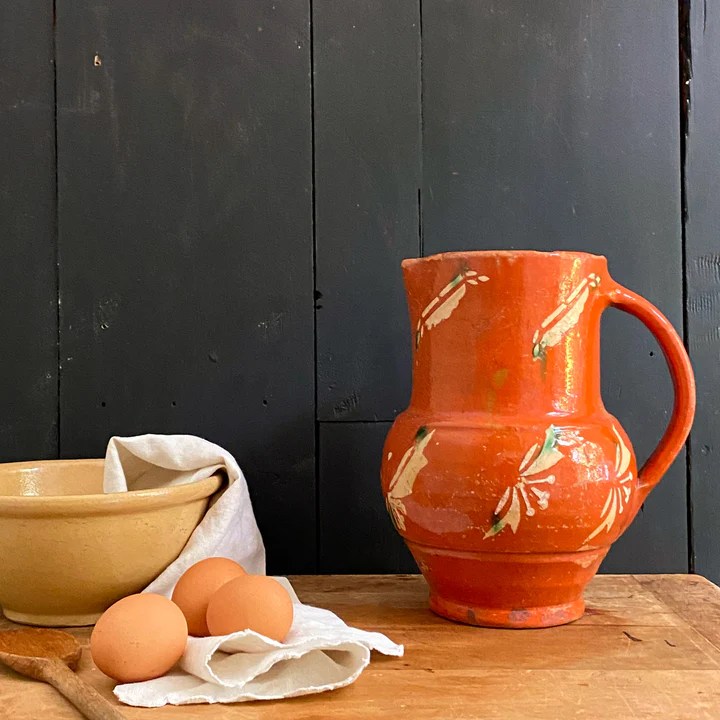
Every year we also like to spotlight the oldest antique in the sale. In this year’s case, it’s this French pottery water pitcher that dates to the 1850s…

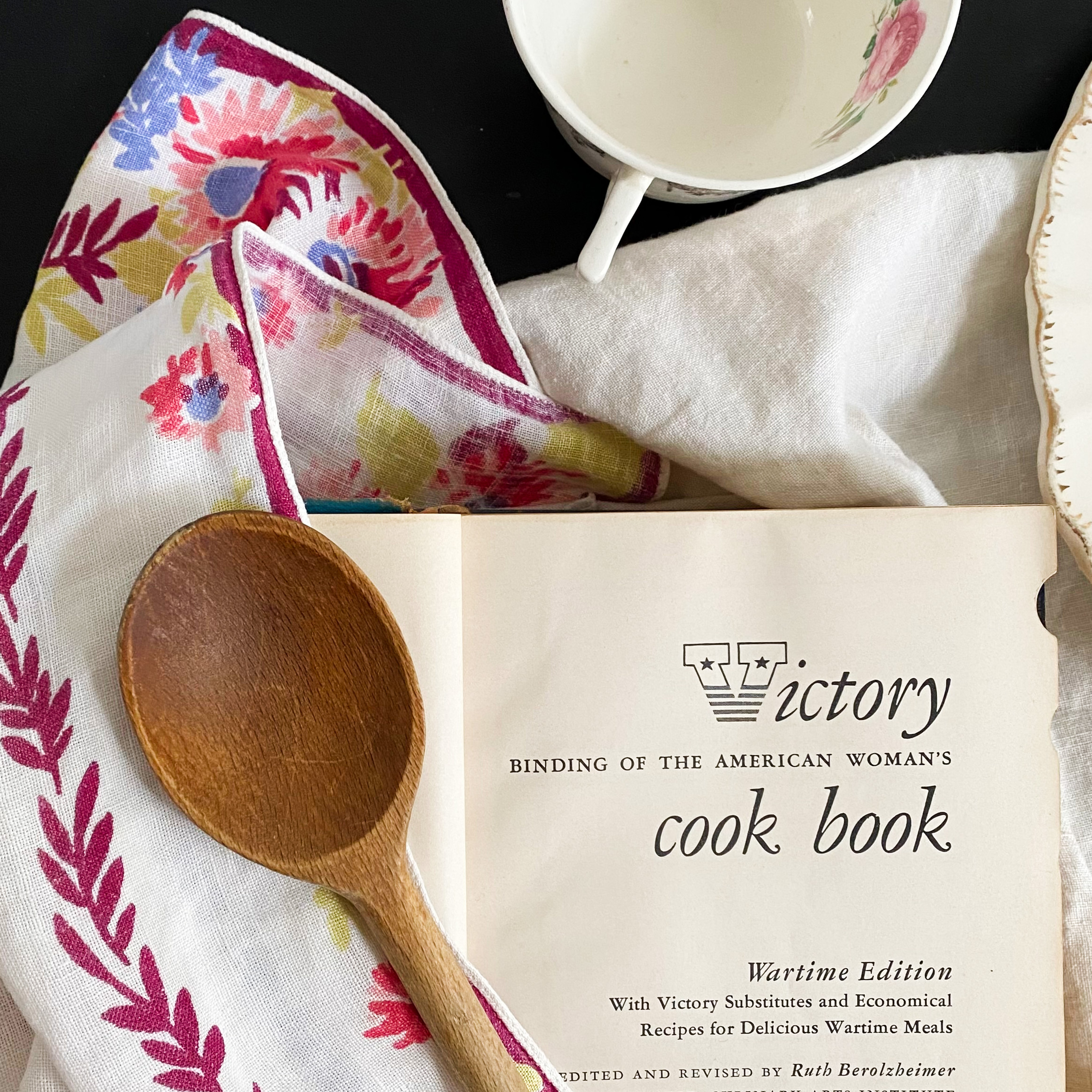
More history floats. More stories emerge. In the shop, a cookbook is never just a cookbook. It’s a tactile understanding of what WWII cooking really looked like for women in the 1940s. Its a story of how they had to portray strength, creativity, courage, ingenuity and optimism at every meal, every day while creating delicious, nutritious and interesting meals on limited war rations, tight budgets, and victory garden harvests.

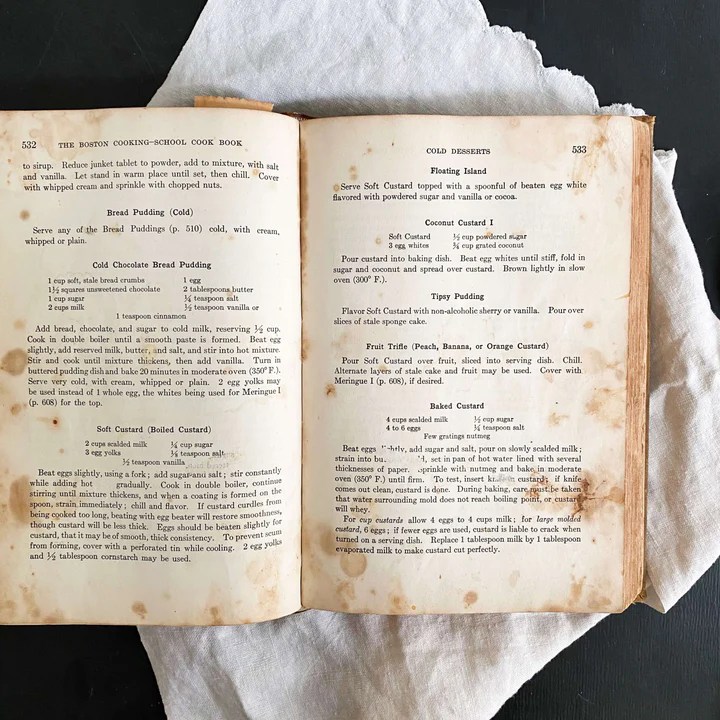
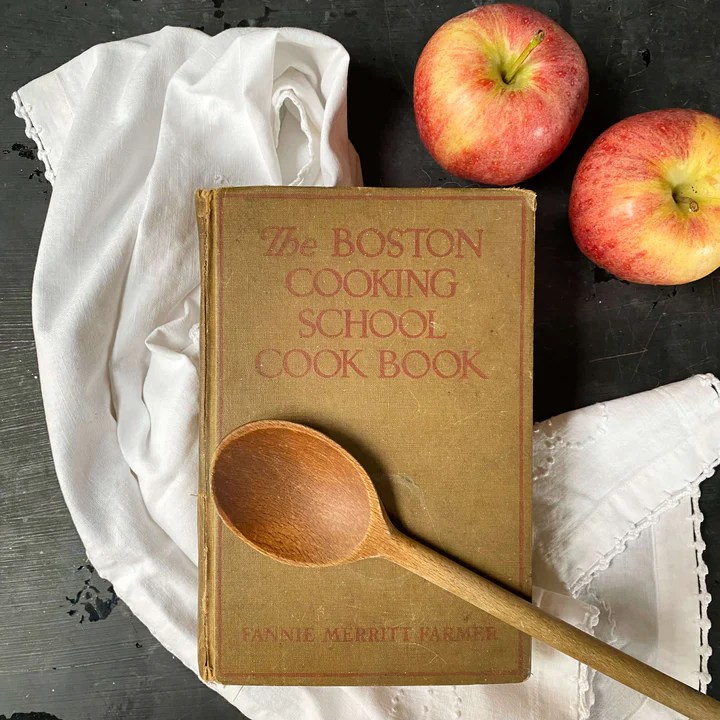
Cookbooks in the shop tell intimate stories not only of their authors but also their owners too. This 1931 edition of the Boston Cooking School Cook Book showcases the enduring legacy of Fannie Farmer (1857-1915), who not only raised generations of home cooks but shared recipes that still inform regional New England cuisine today. It also highlights, through a myriad of cooking splatters and stains, the adventures of a previous cook (or cooks) who cherished the recipes so much their culinary endeavors have turned into an artful aesthetic.

Also every year, there’s one stand out cook, who warrants days or sometimes even weeks of research thanks to a fascinating life lived. This year, it was Lois Burpee (1912-1984)…

who married into the Burpee Seed Company family in the 1930s and managed to carve out an incredible cooking, gardening, and philanthropic career that lasted her entire lifetime.

Other equally interesting cookbooks in the shop sale this year include two rare compendiums of culinary curiosity that offer suggestions on what to make and what to bake every day for a year…

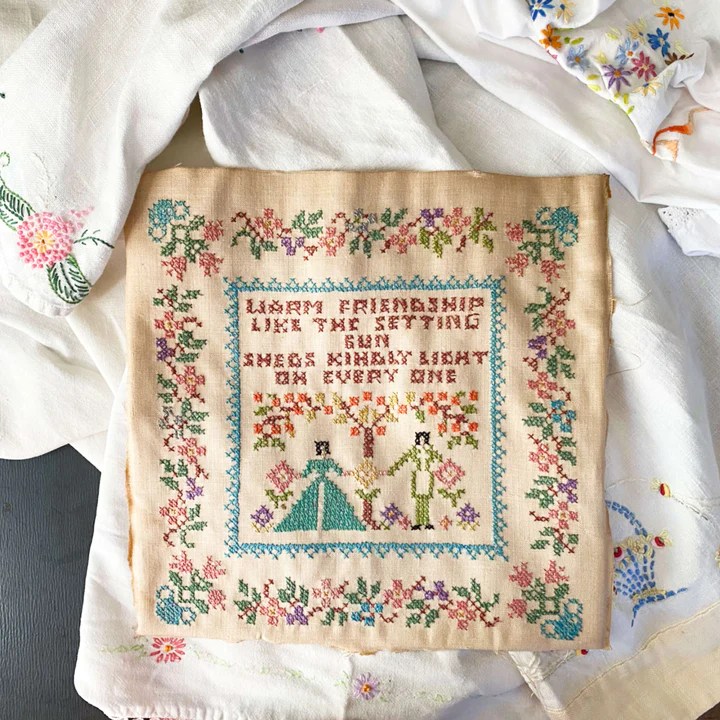
Decorative pieces in this year’s sale highlight the handmade arts. An antique tole tray, a vintage hand-carved wooden swan, a vintage print of a tulip painting dating all the way back to 1827, a hand-embroidered linen…

These are just a few examples of the people, places, and stories that have found their way into the Vintage Kitchen shop in 2025. I hope at this year’s sale you discover an heirloom that captivates your attention, that steals your heart away to another time or another country, and that inspires new creativity from history’s forgotten muses.

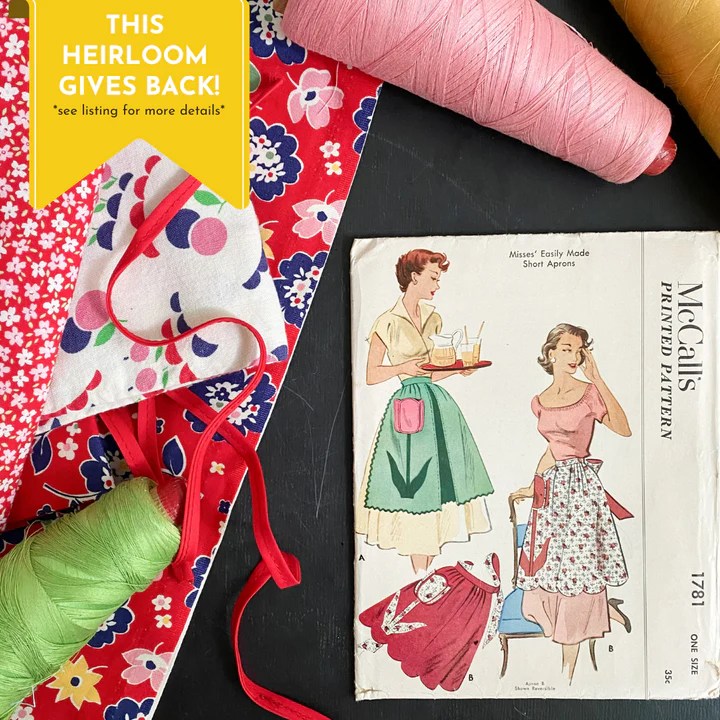
At this year’s sale, just like last year’s, you’ll notice that some heirlooms sport a festive yellow banner in their listing photos. Those banners signify a donation program that we launched in 2024. Any heirloom that you see in the shop that says This Heirloom Gives Back qualifies for a 20% donation to Feeding America, a nationwide non-profit network of food banks, food pantries and local meal programs dedicated to providing nutritious meals to food-insecure communities around the United States. Not all heirlooms in the shop qualify for this program, so be sure to look for the yellow banners if you would like to participate.

The sale begins at 12:00am (EST) on Sunday, November 2nd, 2025 and runs through 11:59pm that same night. Discounts are automatically tallied upon checkout, so there is no need to enter any coupon codes or discount phrases to receive 40% off.

New heirlooms continue to be added to the shop daily, so stop by for fresh vintage and antique finds leading all the way up to the sale. And, as always, if you are looking for something that we no longer have in stock, please send us a message. We’ll be happy to add your name and needs to our waitlist.

Whether you are interested in experimenting with a new cuisine, looking for a new favorite vintage dish pattern, or starting a collection that recalls memories of a happy time from your past, I hope you find something in the shop that calls to your heart and adds extra delight to your kitchen.

Cheers to all the old souls that inspire the shop each and every day. Cheers to all the heirlooms that they have been passed on to us to love and cherish just as much. And cheers to the kitchen for being the one spot in the house where everyone is always welcome.

Two Stories, One Recipe and What’s on the Calendar in the Vintage Kitchen for 2025

Thousands of lives spend time in our kitchens. Every day, every week, every year. Even if your living situation is made up of just one or two people, dozens more move about your cooking space, unseen, whispering stories of history and heritage, of comfort and cooking secrets, of design and innovation, of hopes and dreams. I’m not talking about ghosts here, although maybe if you are an old home dweller you have a few of those too, but I am talking about the neverending inspiration brought forth by generations of cooks, inventors, gardeners, and artisans from years past that have made your kitchen and your cooking experience what it is today.

Hello and Happy New Year! There are so many exciting stories to share this year here on the blog, spanning centuries of history gathered from around the globe, that I can’t wait to get started. As the old adage goes, we have to look back in order to go forward, so despite challenging events occurring in the world on what feels like an overwhelming scale, this year, here in the Vintage Kitchen we are doubling down on sharing good stories about good cooks, making vintage recipes that provide comfort, connection and community, and highlighting moments from history that embrace the joyful celebration of food, friends, family and flowers. This inspiration to pack the year full of joy is thanks to an unlikely source who set the tone for the year on Day 1 of 2025.

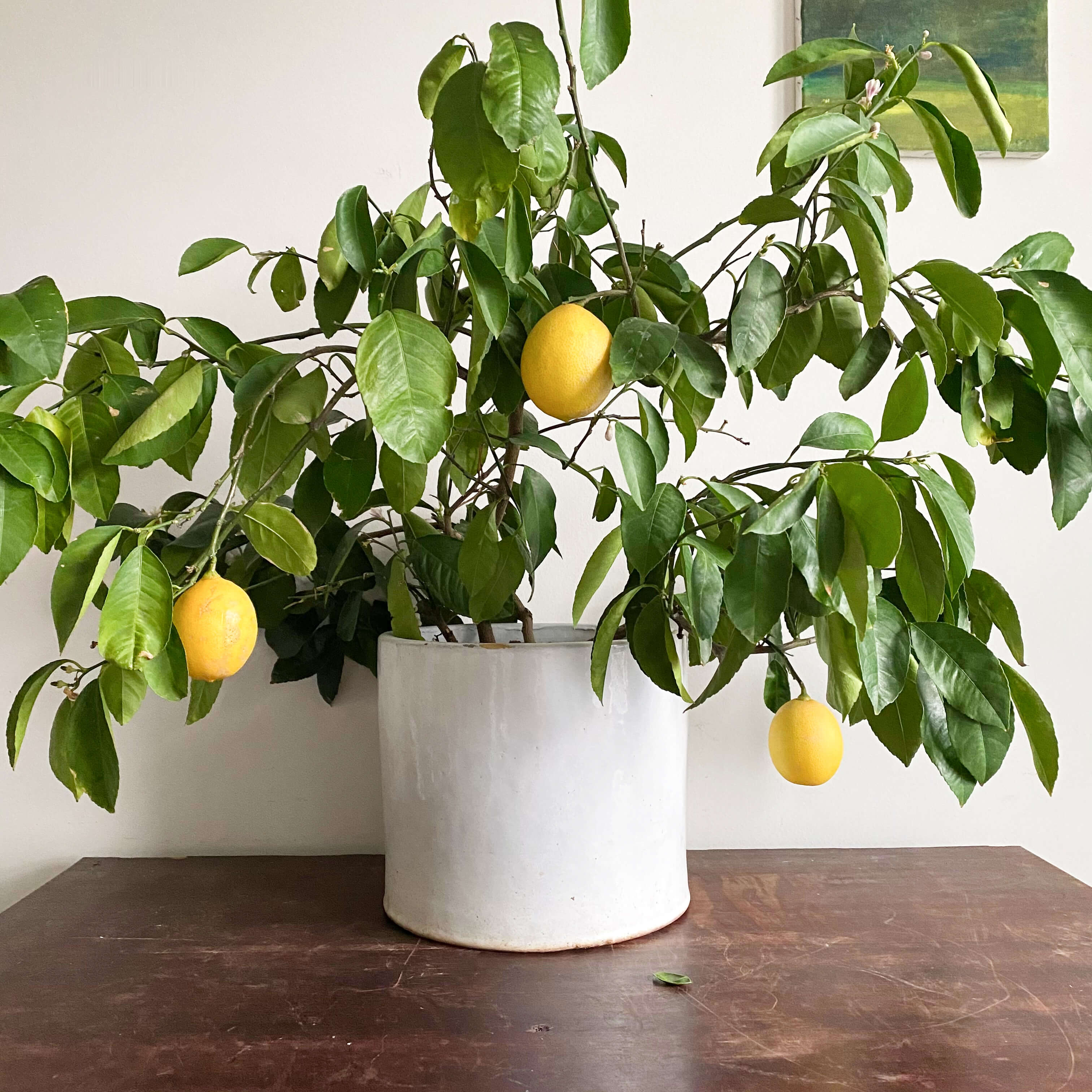
Just as the sun was rising over our cold and frosty New England landscape on New Year’s Day, Liz, our seven-year-old potted lemon tree, presented her first, fully formed, sunshine-yellow Meyer lemon in four years. A major feat considering the many trials Liz has faced during much of her life, this gift of a sizeable, perfectly formed, perfectly ripe lemon was just the kind of joyful symbolism needed to set the Vintage Kitchen on the path to positivity and optimism heading into the new year.

Since she first became part of our plant family, I’ve written quite a bit about the life of Liz and the problems she’s encountered, but if you are new to the blog, here’s a quick recap. In 2018, Liz was a young sprout new to the world…

Fast forward a year later and Liz was happily growing bigger and more beautiful by the month, living the metropolitan city life in a sunny window down South. Her first harvest produced not one lemon, but three.

A year later in the spring of 2020, Liz suffered major wind damage from a tornado that blew through town not only breaking apart dozens of buildings in our neighborhood but also breaking a portion of Liz’s main branch and ripping apart 2/3rds of her underground root structure. She survived the ordeal, but just barely…

Not long after, she had a scale outbreak and just after that, she embarked on a South to North move that introduced her to an entirely new climate. By the time she landed in New England in 2022, Liz was looking pretty beleaguered.

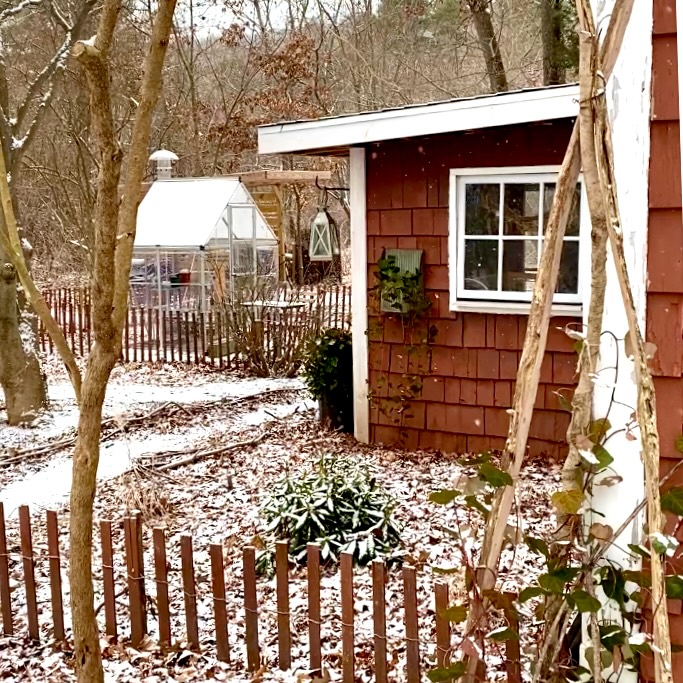
Once the greenhouse was constructed in April of that same year, Liz was the first resident to call it home. Even though she was just a mere whisper of a tree at that point, my fingers were crossed that the warmth and the sun and the bright light, plus additional food and fertilizer, would be just the combination of care that she needed.

It took two full years and staying put in the same spot in the same pot, but Liz finally found her footing again thanks to the security of the greenhouse. Now measuring in at over 32″ inches in height, she’s made a substantial comeback.

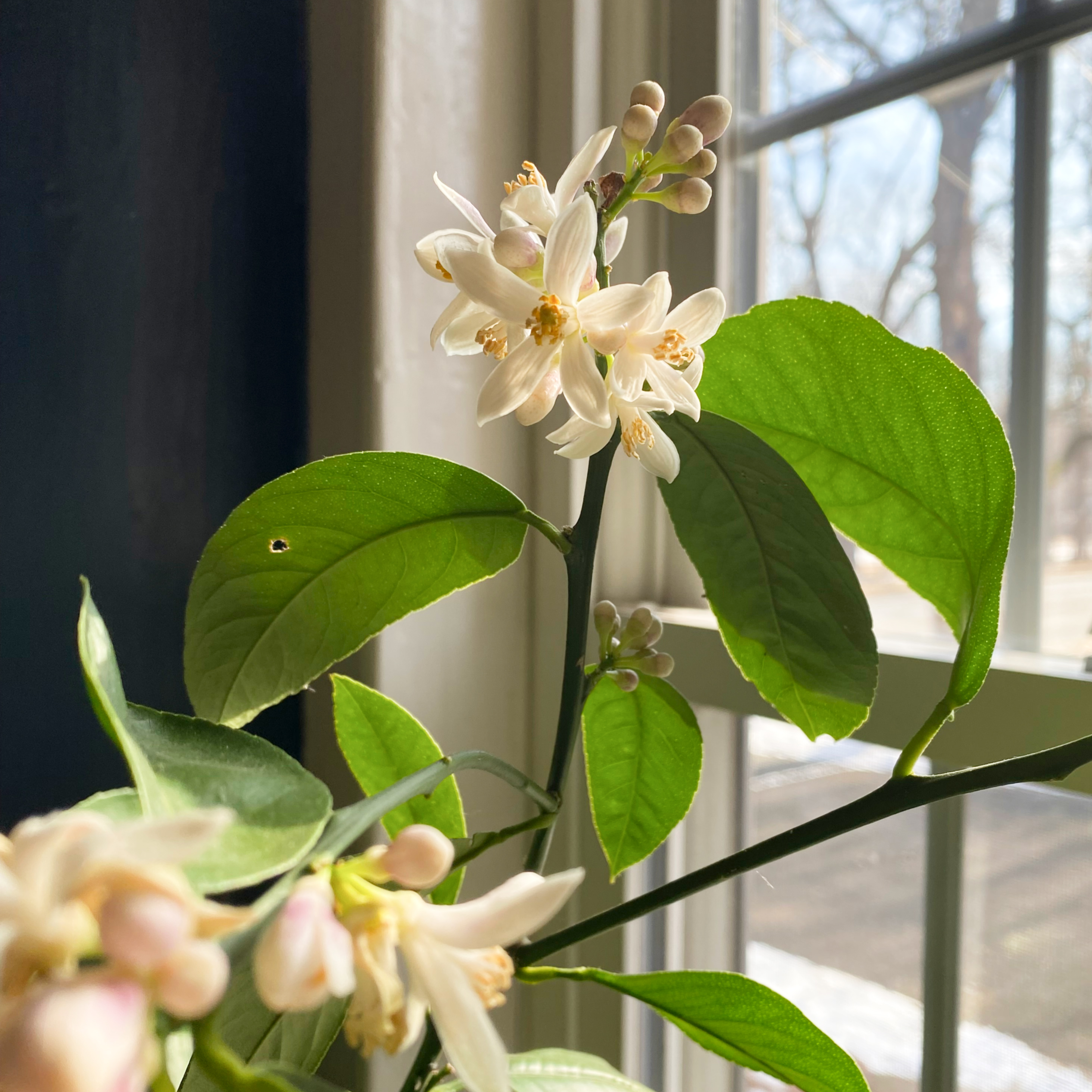
She might not be back up to 2019 shrub-like status yet, but as you can see, she’s on her way to a full recovery. Over the course of last year, she flowered and formed baby lemons but none stayed on the vine long enough to grow weight and promise. Except two. A raccoon grabbed one of the lemons for a late-night snack but the other we watched grow bigger all summer as Liz herself grew bigger with larger leaves and longer branches. When the winter frost warnings came in late October, I brought Liz inside for the extra warmth and over the Christmas holidays, she rewarded us with clusters of citrus-scented flowers and the slowly ripening lemon.

After watching it turn from lime green to chartreuse to citron and then yellow, last Sunday, in a moment of long-anticipated celebration, I clipped this lovely little fruit from its branch and said a big thank you to Liz.

It takes a long time for a lemon to ripen on the vine. Liz in her entire seven-year life span so far has only brought five lemons to maturity. But the fruit isn’t really the joy of her, nor the point of this story. In the beginning, when she was a young sprout, I may have imagined future lemons by the boxful, but over the course of Liz’s life so far, the thing that I have come to love most about her is her resilience. Her continual attempt to reach towards the light. To keep going, keep growing despite difficulties and disasters. Emily Dickinson wrote the lines… hope is the thing with feathers… but in our case, here in the Vintage Kitchen hope is the tree with lemons.

2025 has started off on a global scale with dramatic, traumatic events – more than we can comprehend these days given the quick succession in which they’ve been happening. While we witness and recognize all these upsetting situations and process them right alongside you, here in the Vintage Kitchen in this new year, we are determined to look beyond the day-to-day news cycles and stresses, and focus our attention on cultivating and creating a space that brings joy, insight and interest to cooks around the globe via culinary storytelling. Following Liz’s lead, I hope the blog this year provides comfort, encouragement and positivity for anyone who needs an extra boost of cheer in the face of challenging times.

Throughout 2025, you’ll find more frequent posts surrounding topics our kitchen community likes most – cooking, collecting, history and gardening. We’ll share recipes and links, highlight favorites of all kinds, recommend good books and new techniques and dive into stories about people and artifacts from the past that have influenced how we approach life in the present. Here are some of the regular subjects we’ll be sharing more of on the blog this year…

The Greenhouse Diaries

The Greenhouse Diaries return with a new vintage gardening book serving as inspiration and instruction for the next 12 months. Poor Leonie and Helen didn’t get as much attention last year in the Fragrant Year series as Katharine Sergeant Angell White did in the first year. I ran into all sorts of troubles with the practicalities of building a scented garden month-by-month, mostly on the ordering and acquisition sides. In the festivity of the series, we were working out a collaboration with a national grower, which in the end didn’t wind up working out at all. As we learned, most growers won’t ship any plants to our neck of the woods before late spring or after early autumn in order to ensure a successful growing experience. That left a very slim window of attempting to add in a year’s worth of plantings in just a few months. This year, we’ve changed direction, revised the garden map, and are working with more achievable goals. I can’t wait to share the new plans and the vintage book that helped inspire it.

Vintage Recipes

It’s setting up to be a delicious year here on the blog with a big batch of vintage recipes that will be rolling out in more seasonable fashion. Throughout the year, we’ll also continue with new posts in the ongoing International Vintage Recipe Tour (year six!) and the Quick Cooking Chronicles.

To ease into 2025, after the hustle and bustle of holiday cooking, we are kicking off the first culinary adventure today with an easy uncomplicated classic – a vintage British recipe for a simple banana bread. The recipe comes from the 1987 edition of The Afternoon Tea Book by Michael Smith. In addition to being one of England’s most well-known food historians and an experienced cook himself, Michael was referred to as “the doyen of English cookery” by the New York Times.

Michael Smith

The recipe, simply titled Banana Bread, is soft and sweet and manages to achieve that perfect balance between banana and spice. Ready within an hour, it comes out of the oven the color of chestnuts with a consistency that is smooth and springy in the cutting thanks to the addition of both cream and butter. Enjoyable any time of day, it makes a great breakfast treat or an afternoon snack. And of course, Michael recommends pairing it with a warm cup of tea.

Heirloom Kitchen Stories

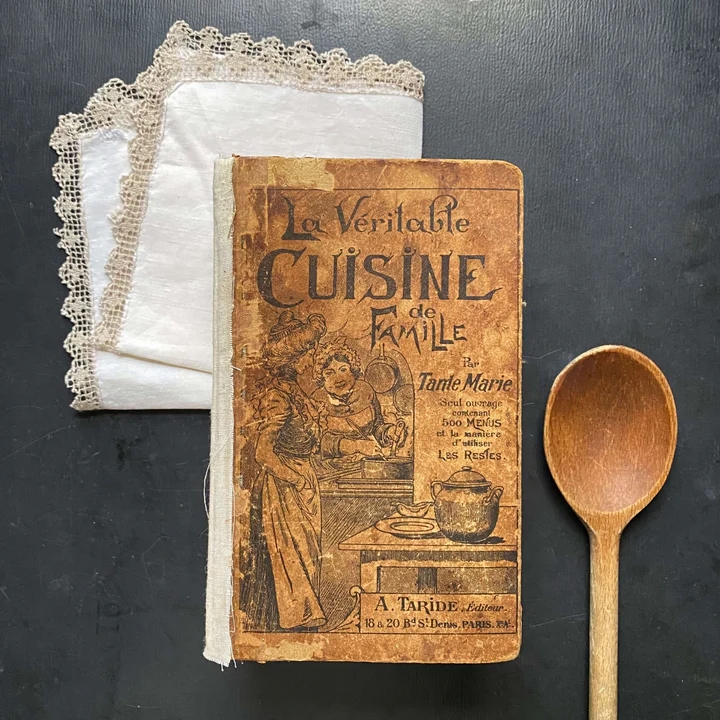
Since the blog and the shop work in tandem, you’ll find heirloom kitchen stories in both spots. But the shop tells shorter stories on a more frequent basis (daily) and the blog tells more long-form stories on an intermittent basis (weekly or bi-weekly) so whichever appeals to you, you’ll have one or both to enjoy. Some of our most favorite, most memorable stories turn out to be the humble, relatable ones about everyday home cooks and the recipes, books, and heirlooms that have been a part of their personal culinary journey. Thanks to information shared by a few families around the US in 2024, we have several new personal cooking stories to highlight this winter. One is an exotic love story wrapped around this book…

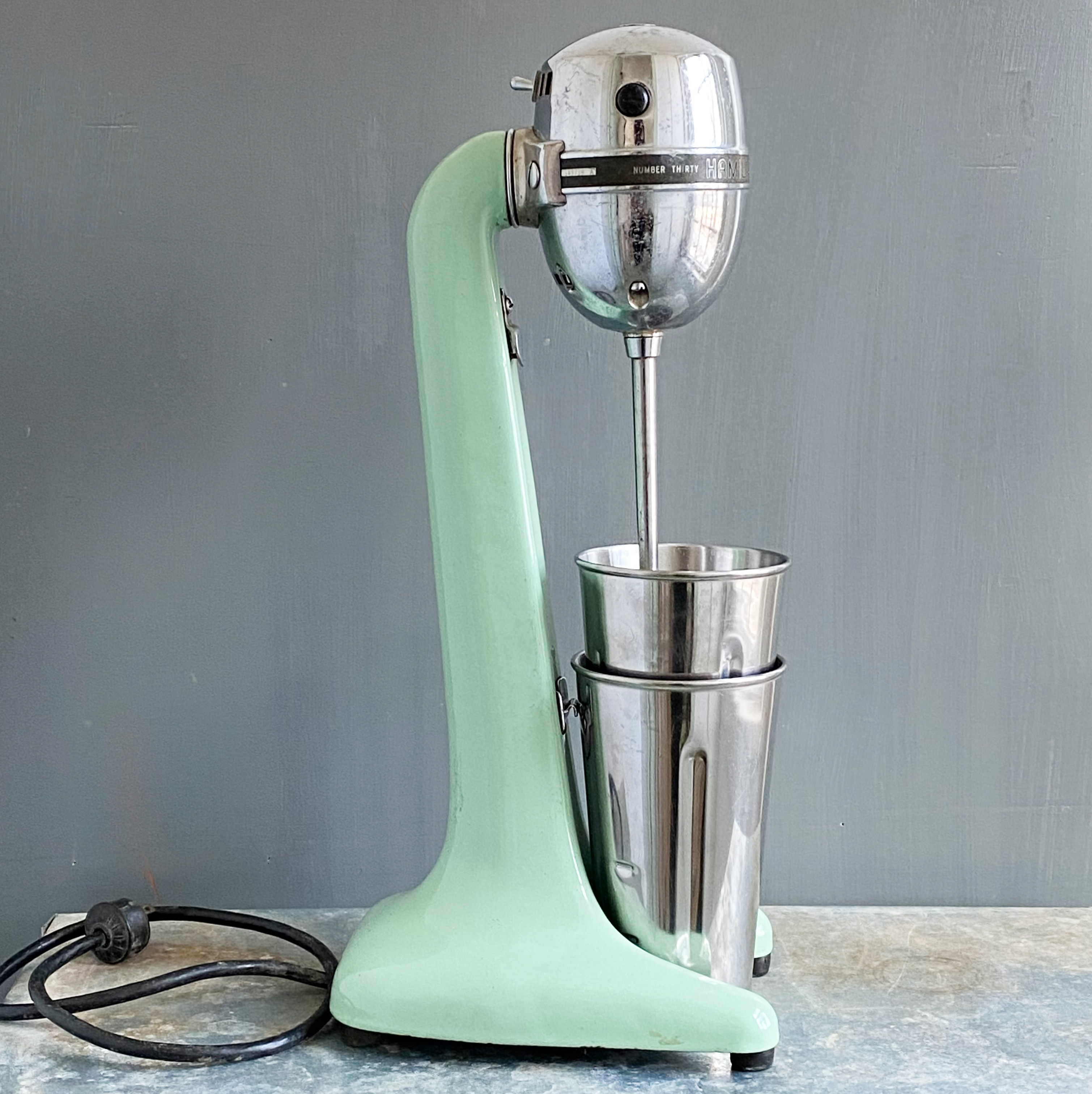
Another surrounds this 1940s Hamilton Beach milkshake machine…

1930s-woman-mixing-flour-in-bowl

and another introduces us to this mid-20th-century cook whose culinary journey took her from Kansas to California with a collection of recipes in tow…

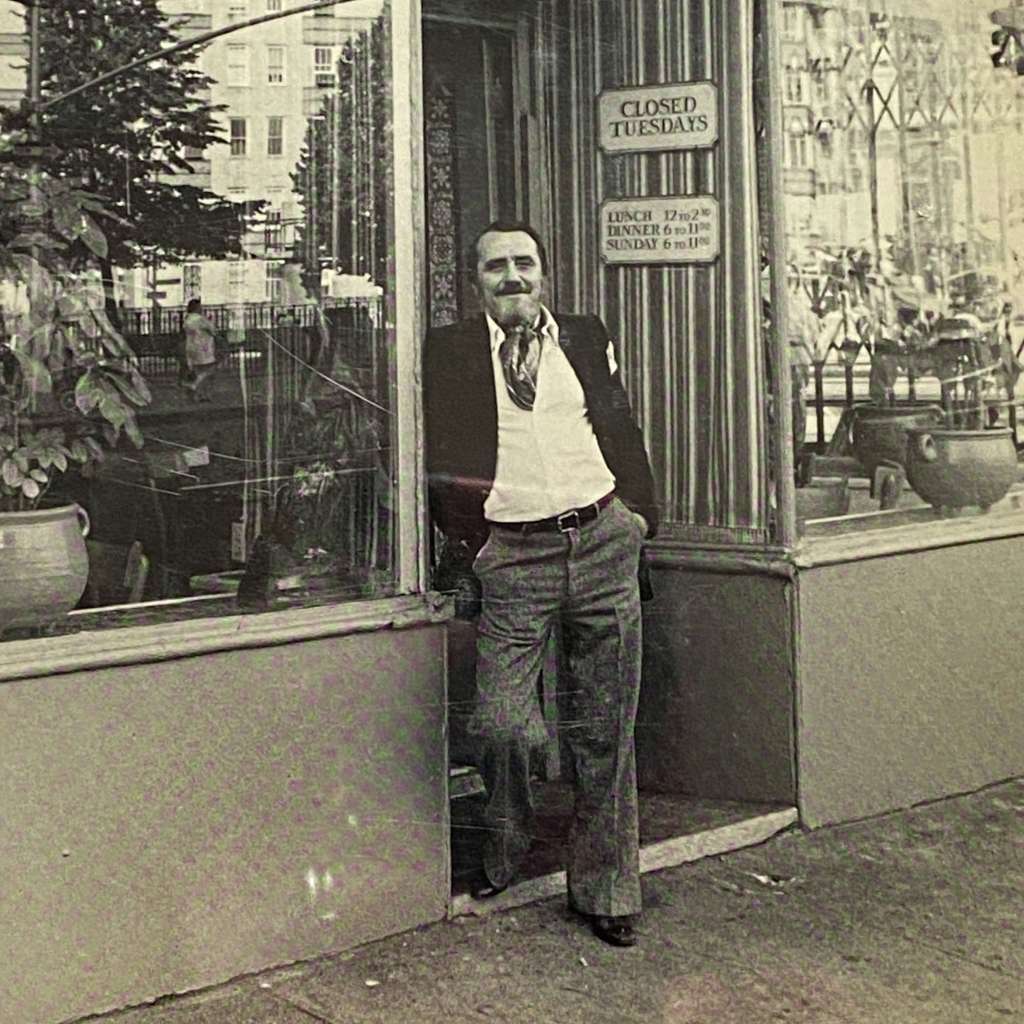
Other bits of fun culinary history floating around the shop this winter include stories about a beloved 1970s Greenwich Village restauranteur…

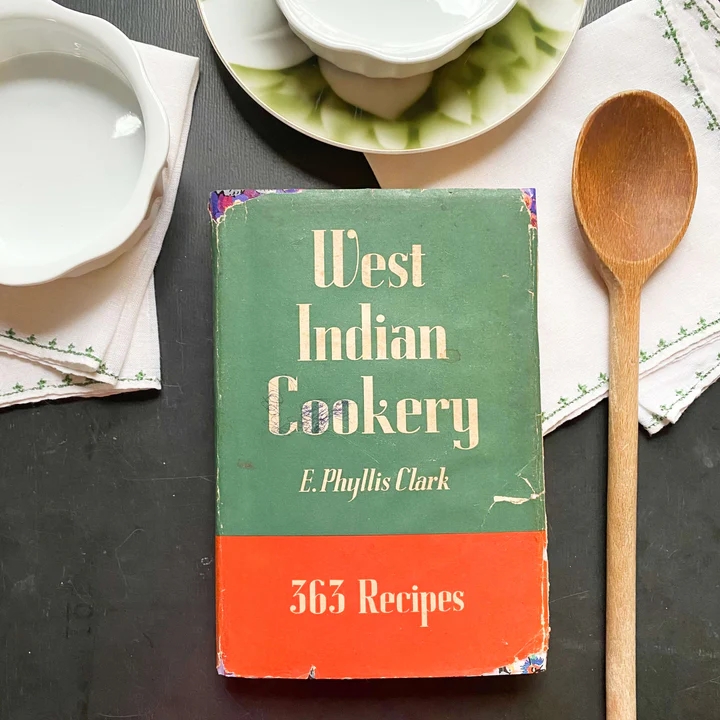
the ancestry of a 1950s West Indian cookbook…

and the life of a famous New York City celebrity hotspot that first opened in 1927…

That of course is just the start. There will literally be hundreds more stories to share in the shop and dozens more to share on the blog throughout the year all highlighting little-known or forgotten people, places, and foods from the past.

1750 House & Garden Updates

This year 1750 House turns 275 years old. We are doing our best to get all the renovations completed before the end of the year so that we can throw a big party to celebrate this big birthday. As projects get finalized over the year, I’ll share updates on the progress we’ve been making since we first arrived in 2022, including new information on the genealogy of the house dating all the way back to the 18th century.

It’s a big year with a lot on the agenda and most likely a few surprises tucked in between the topics listed above. We can’t predict how the world will change in 2025, but we can say that at least here in the Vintage Kitchen, these next twelve months will keep you well-fed and blissfully in touch with stories that focus on kindness, joy and positivity by way of the kitchen. Before, I sign off, I just wanted to note one more thing…

A Note on AI and Our Promise To You

In light of all the current discussion surrounding AI, while it might be influential and important in some areas of modern life, there is no room for it in our storytelling in the Vintage Kitchen shop or on the blog. Last year we had some personal experience with the darker sides of it. I hesitated sharing this information then simply because it was a disheartening situation and definitely did not do anything to improve our creative endeavors, but it ties into my promise to you now, so I’ll share a brief version of what happened for context and clarity going forward.

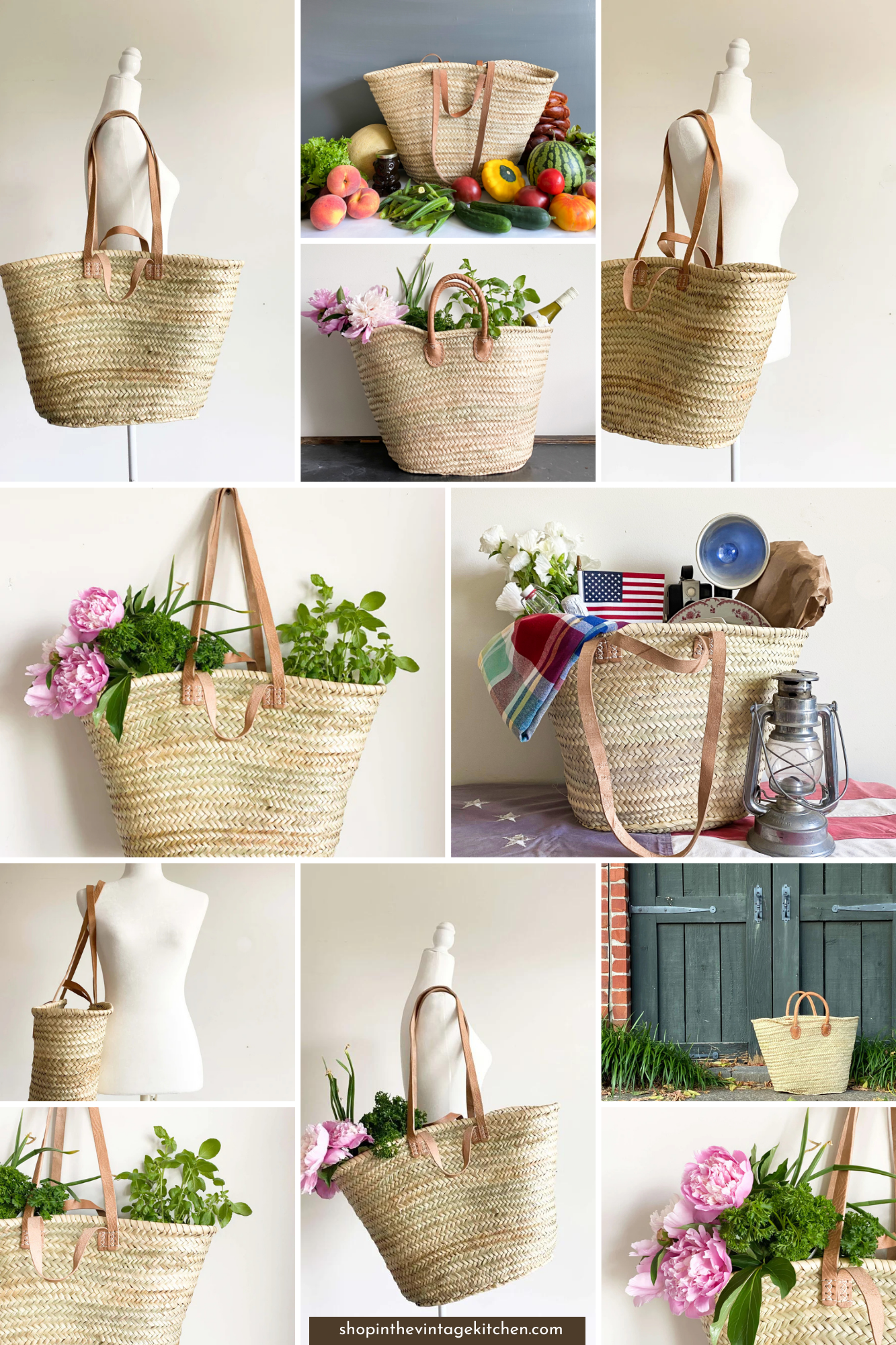
In April 2021, two big boxes arrived by mail from Europe carrying our first order of French market bags for the shop. I was so excited to include these bags in the shop, not only because I had personally used and adored the same exact bag for many years and could well attest for its competency, but also because I couldn’t wait for other people to experience the bag’s effortless ease and style. Once the bags were all unpacked, in preparation for the photoshoot, I shopped at the farmers market, selecting items that I typically purchased and carried in my own market bag during personal shopping trips in order to illustrate the capabilities of the tote.

Early spring herbs, vegetables, wine, and bread were all gathered from the market for the shoot. When it came to the flowers, initially, I had my heart set on grabbing a couple of bouquets from a vendor who sold locally grown ranunculus in this gorgeous color palette of pink, peach, and coral. But the ranunculus weren’t available at the market that day, so the next best choice was a bouquet of pale purple-pink peonies. With all the market foods and flowers set and styled in place, I photographed the bags from all angles, both empty and filled to the brim with the farmer’s market items so that shoppers could see it in all its various situations as market bag, beach tote, picnic basket and all around shoulder bag. Here’s a sampling from the shoot…

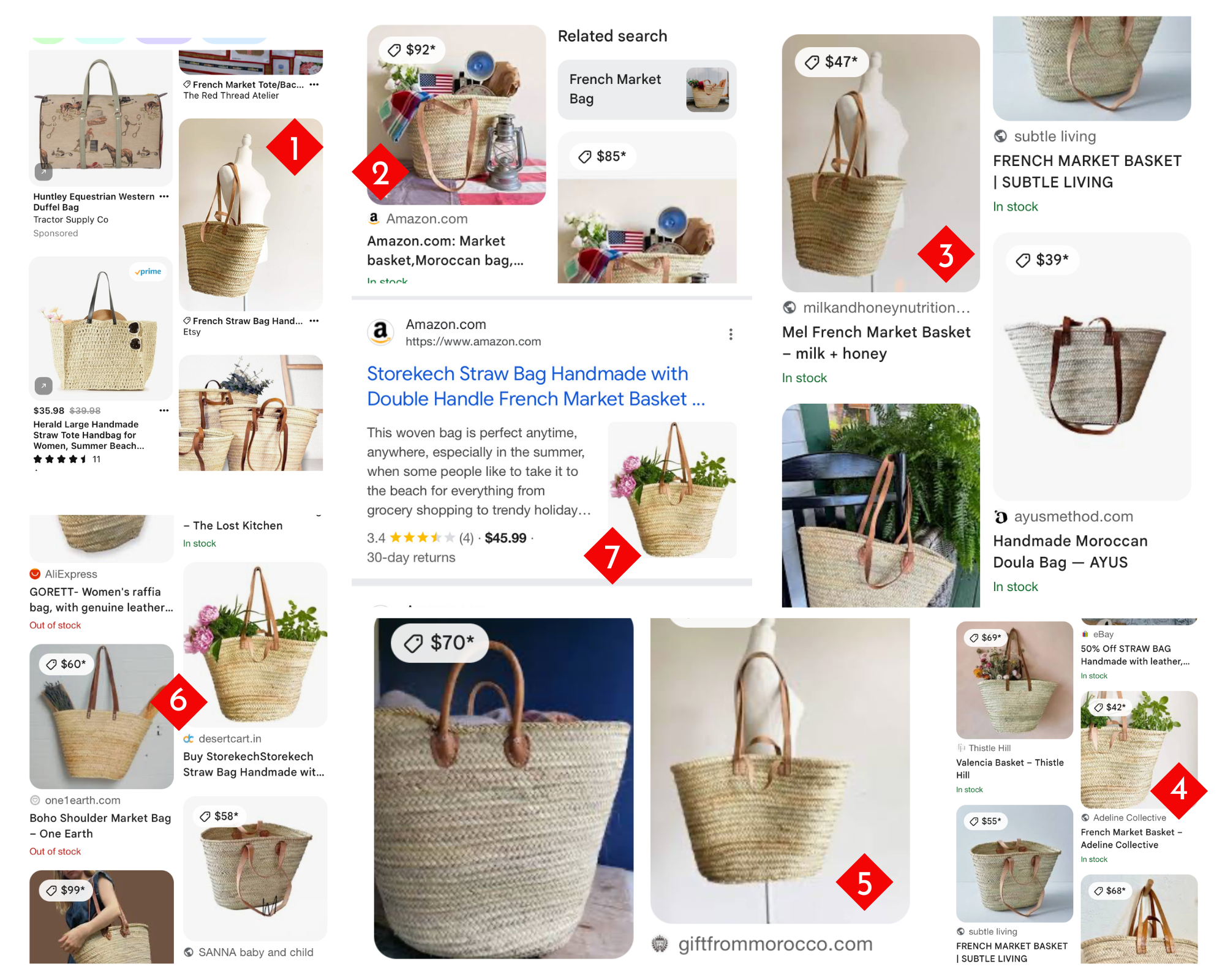
On May 2, 2021, the bags launched in the shop in an air of excitement and joie de vivre. I was so excited to see that our ITVK shoppers found the bags to be equally as useful and they became a lovely staple in the shop. Unfortunately, sometime in late 2023, I was alerted to the fact that my market bag photographs were showing up in other retail places online. The photos were copied from our website, without our permission, and used online to sell similar products by other retailers on other sites. Throughout 2024, my photos popped up on Etsy, Amazon, Faire, Pinterest and a slew of independent shops all selling the same style bag. These are some examples of where they are currently being used by other retailers as of January 2025…

We’ve tried our best to eradicate as many as possible, and many retailers did take them down from their sites at our request, but for all the ones that were removed more kept popping up. All this turned into a very time-consuming endeavor, which in and of itself is a whole other frustrating story for another day.

I wanted to share this information, not to highlight this disappointing act of copyright infringement but to highlight the Wild West atmosphere that AI generates in our current marketplace. This copying of our photographs was not the fault of AI, just lazy sellers and bad business practices, but someone recently mentioned to me that a food photograph I had taken just a few weeks ago was so nicely arranged that it looked fake. Like something AI would have generated.

In telling you all this I just wanted to let you know that we do not, nor will we ever in the future incorporate AI into the Vintage Kitchen when it comes to writing or photography. You can rest assured that everything from the photos we take, to the stories we tell, to the heirlooms we sell are all 100% authentic. They are real items, photographed and written about by real people, that reflect real history.

That’s our promise to you as a shop and my promise to you as a writer and a photographer. All of our heirloom origin stories and blog posts are highly researched – sometimes for days or weeks at a time, and we consult only trusted archives and institutions that have been collecting verified information for decades or even centuries. The kitchen is too full of unique stories, intimate details, and interesting perspectives to leave it up to bots to try to decipher personal human experiences in any meaningful way.

That means periodically you might see a typo, or a misused comma, or an impassioned thought that ran away with proper sentence structure. Even though those writing missteps might not be correct grammatically, we’ll sometimes leave them in the final edit. That’s how you’ll know these posts and our shop stories were written by humans for humans. Here in the Vintage Kitchen, we are not fearful of AI, we just love people and history too much to leave compelling real-life storytelling up to machines who have never fried an egg or baked a cake or curated a collection of favorite objects in the pursuit of personal passion and joy.

Now that that is out of the way, a whole new year of exciting discoveries await here in the Vintage Kitchen. I’m so glad you are here to join us in what I think is the best little community on the internet. Thank you so much for being a part of it.

Cheers to the new year, and to Liz Lemon for being the bright light that leads the way in 2025.

It’s Finally Here! Our Annual Shop Sale is Today

Happy All Souls Day! Just wanted to pop in with a quick reminder for all our intrepid culinary adventurers and history-fueled home decorators… our annual one-day-only 40% off shop sale is today!

There are a bevy of new (old) heirlooms that have arrived in the shop recently, so if it’s been a bit of time since you last visited hop on over to the shop to see our latest collections. Some of our favorites include these charmers…

A collection of Poland’s authentic heritage recipes compiled by the Polanie Club of Minneapolis, Minnesota.

Rare antique J.W. Pankhurst English ironstone dinner plates circa 1850.

A porcelain enamelware floral bowl set by Kobe circa 1980s

A 1930s-era packet of French postcards featuring the beautiful city of Marseilles

An antique crocheted tablecloth handmade at Ellis Island circa 1916. You might remember this one from our in-depth blog post about one woman’s Italian immigration story here.

A vintage Dutch cookie tin featuring maritime art.

A 1930s edition of a classic kitchen cookbook courtesy of Fannie Farmer, the woman responsible for creating our modern cooking measurement system.

A vintage botanical art book featuring gorgeous illustrations of fruits, vegetables, and flowers.

An antique handmade gathering basket from the early 1900s

A vintage pair of cheerful yellow dinner napkins with embroidered dots fit for every season.

Interested in meeting some of the makers and collectors behind our shop’s beautiful heirlooms? Poke around each section and you’ll encounter these faces and the stories they tell about history and their place in it.

Hope you find a treasure that calls to your heart and adds an extra bit of joy to your home.

As always, the sale runs through midnight tonight and discounts are automatically applied at checkout. Thank you so much for traveling with us down these adventurous pathways of culinary history. Cheers to new inspiration and a day of happy shopping!

Calling All Souls: Our Annual 40% off Sale is Almost Here!

As soon as the pumpkins make their debut on the front porch, and the leaves shower down from the sky, and the extra-large soup pot makes its first appearance on the stovetop since early spring we know that the time is near. Our annual Vintage Kitchen shop sale is just ten days away! Mark your calendars for November 2nd, and on that day you’ll discover an extra treat – a deep discount – 40% off all items in the shop for 24 hours only.

If you are new to the blog or the shop, you might not know that we always host this sale on All Souls Day, which happens to fall on November 2nd every year. Technically a Catholic holiday, we selected All Souls Day not for its religious connection, nor its aura of spookiness given its close proximity to Halloween, but for the sheer fact that it is one of the few holidays in the calendar year that pays tribute to deceased ancestors. We wouldn’t have a shop full of wonderful heirlooms had they not traveled through other people’s lives, other people’s hands, for generations, collecting stories and memories along the way. To us, All Souls Day seems like the perfect day to celebrate vintage style.

This is our only sale of the year, so we love to make it count for shoppers looking to get a head start on holiday gifting, for decorators looking to add a bit of history to their tablescapes, and for home cooks looking for nostalgic recipes and new inspiration.

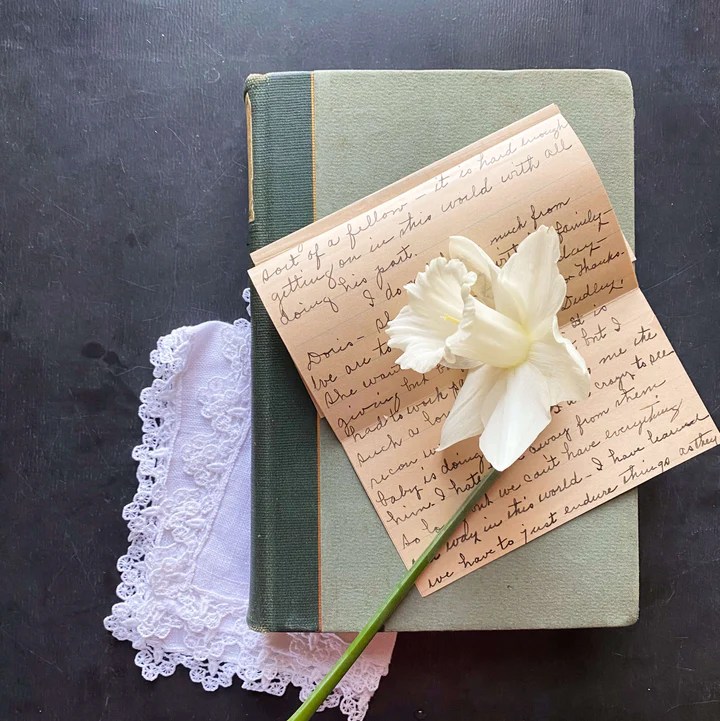
Hnadwritten notes from a rare 1920s-era cookbook.

Since no two items in the shop are ever exactly alike, no sale from year to year is ever exactly the same either. Stories float in and out of the shop every day offering glimpses into kitchen and garden life that occurred a few decades ago or a few centuries ago. Just like stories posted to the blog, every heirloom in the shop comes with its own unique tale marking its place in history.

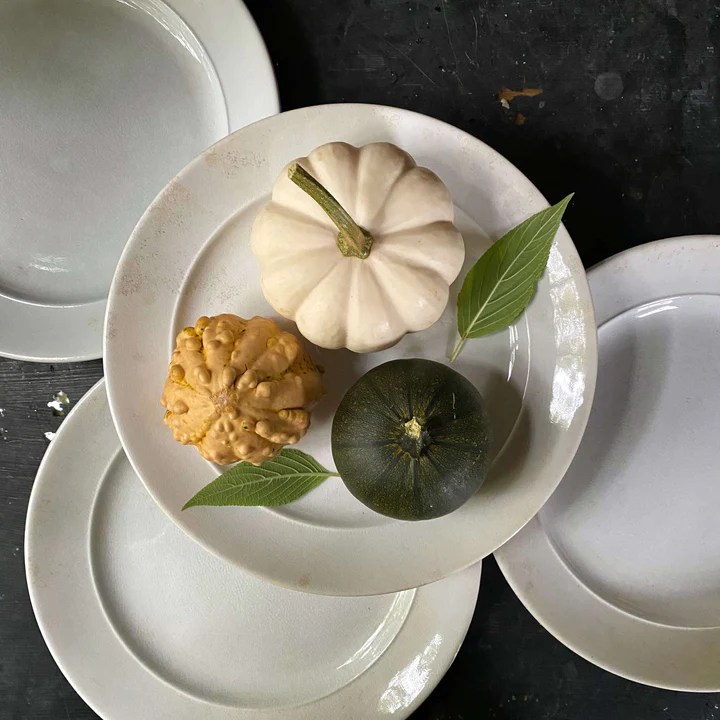
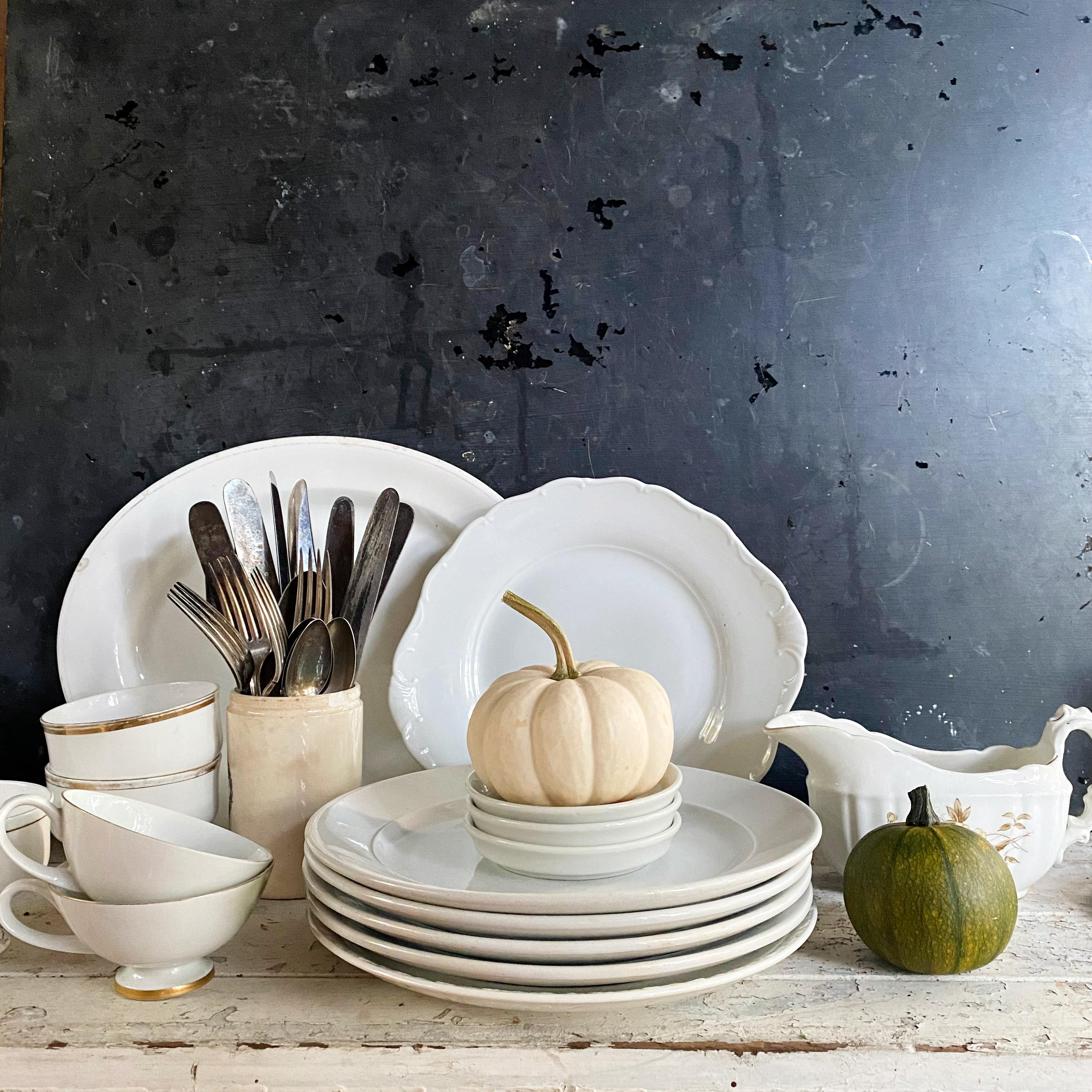
A collection of whiteware may at first look like just a bunch of plain white dishes, but each one is actually a gateway to a bit of history. Take this photo for example…

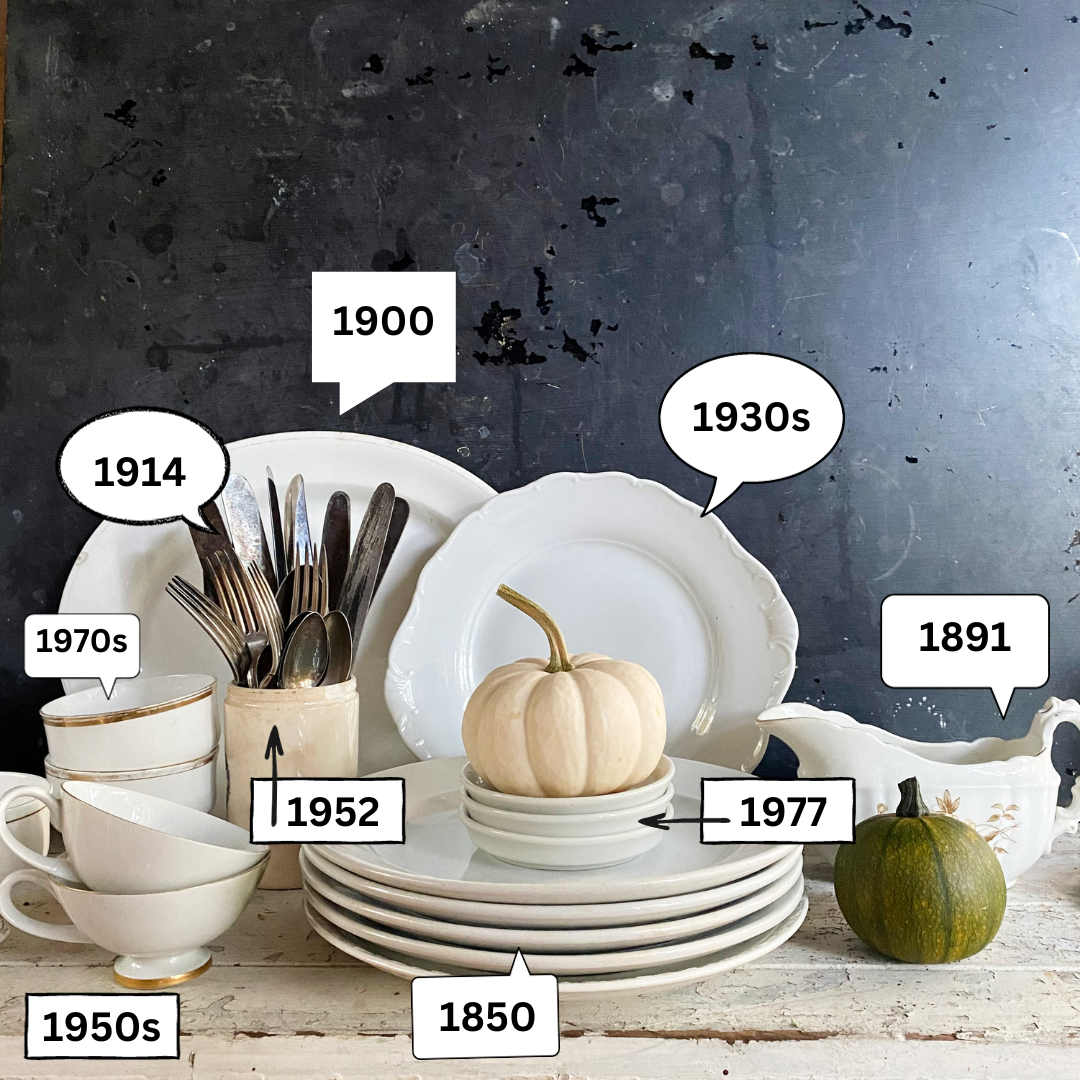
… all these pieces represent a specific time period from kitchens that span more than two centuries…

The platter made in 1900 is antique hotelware. The botanical designs on the 1977 ceramic coasters were inspired by the Tuileries gardens in Paris. The 1891 gravy boat was made in England and features handpainted flowers. The 1850 dinner plates are a rare set of English ironstone from the pottery of James William Pankhurst, which was in operation for only thirty-three years, a mere blip in England’s long-standing tradition of high-quality dishware manufacture.

Inspiration for the 1977 ceramic coasters by Toscany came from here, Jardin de Tuileries, located near the Louvre in Paris.

As the shop continuously evolves from year to year, new faces from history emerge too. You’ll always find favorite standbys in the shop – Julia Child, John James Audubon, James Beard, Emily Post, the New York Times cookbooks, and of course all the best-loved Betty Crocker books, but each year we discover new faces from history too. This year, Carol, Daphne, Wadeeha, Agnes, Alice, Milt, Joyce, Andre and Dorothea came to the shop…

Clockwise from top left: Carol Cutler, Daphne Du Maurier, Wadeeha Atiyeh, Milt Jackson, Dorothea Barlowe, Andre Simon, Joyce Chan, Agnes Baldwin Alexander, Alice Y.

They told stories of art, literature, cooking, collecting, music, hospitality, immigration and gardening. Andre was a French wine expert. Alice was a Texas baker, a professional cake decorator, and an enthusiastic collector of cookie cutters. Dorothea was one of the most prolific nature illustrators of the 20th century, and Milt was an influential musician of the 1950s jazz scene.

Listen to the midcentury musicians featured in this book over on our playlist here.

That’s the joy of collecting vintage and antique kitchenware, isn’t it? Objects and stories intertwined together, forever making and creating memories old and new. I hope at this year’s sale you’ll find something that captures your heart. Maybe you’ll be the next caretaker of this antique 1830s-era Staffordshire bowl – the oldest antique that has come to the shop so far…

Or maybe you’ll find some inspiration among the handwritten notes tucked inside this vintage 1960s gardening book.

Perhaps the traditional recipes of Mrs. Balbir Singh, also known as the Julia Child of India, will pique your interest…

Or maybe you’ll relate to the story of the Moses Hirsch family, creators of the 20th-century American Family Scale brand, who experienced the tricky rollercoaster ride of running a business among fierce competition, dramatic world events and kitchen modernization…

Or perhaps these two 1950s saddle tan Samsonite cases will call to your traveling spirit. Maybe they will become your dependable companions on jaunts to find the best croissants in Paris, the most delicious Spanakopita in Greece, or the most beautiful luau in Hawaii. Adventures big and small await with these two.
The sale begins at 12:01am (EST) on Thursday, November 2nd, 2023 and runs until 11:59pm (EST) that same day. All items in the shop will automatically receive the 40% discount at checkout, so there is no need to fuss with coupon codes or discount names.
Vintage cookbooks in the shop span the 19th and 20th centuries.

While you wait for sale day to arrive, we encourage you to use the wishlist feature on our site if you have multiple items that have caught your eye. Just click on the heart underneath each listing title and it will automatically add the item to your favorites list where you can then add them directly to your cart when you are ready to checkout.

New vintage and antique heirlooms continue to be added to the shop daily, so stop by for fresh finds leading all the way up to the sale. And, as always, if you are looking for something that we no longer have in stock, please send us a message. We’ll be happy to add your name and needs to our waitlist.

Having said that, I hope on this year’s sale day you will find something truly magical that makes your heart sing with joy and your space sparkle with delight.

Cheers to all the old souls who inspired our sale. And to all the cherished items that our ancestors have left for us to enjoy. Happy shopping!

Turning Servers into Succulents: A Vintage Re-Invention


Eight. That’s how many days there are to go. It’s almost here! Then one thing turns into another. We end and we begin. We change and we grow.  This year, the day falls on a Monday. The exact date – September 23rd.  Then it’s official. The first day of Autumn arrives. How exciting! To celebrate the season, I have a fun new gardening project for all you do-it-yourself-ers out there who like to keep your hands busy in the dirt in the off-season when summer turns to fall and fall turns to winter and the outdoor garden is at rest. It doesn’t require much effort, time or expense but it does call for a little imagination. It will last forever if you want it to and it will make you look at things in your cupboards in a whole new way. Most importantly, it gives new purpose to old items that sometimes get left behind on a shelf or forgotten about in storage.

I’m so excited to introduce the succulent set…

vintage-serving-dish-succulent-planters

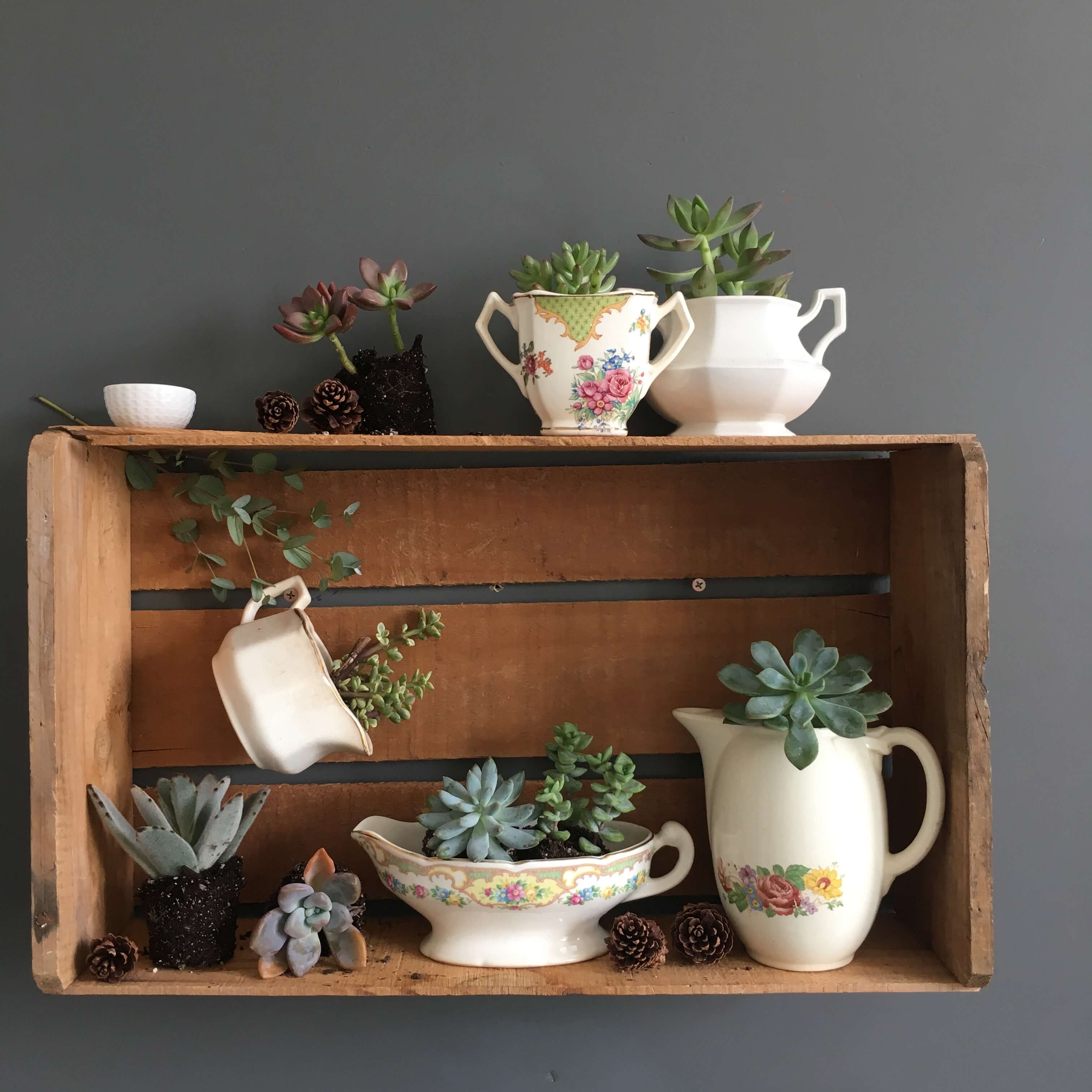
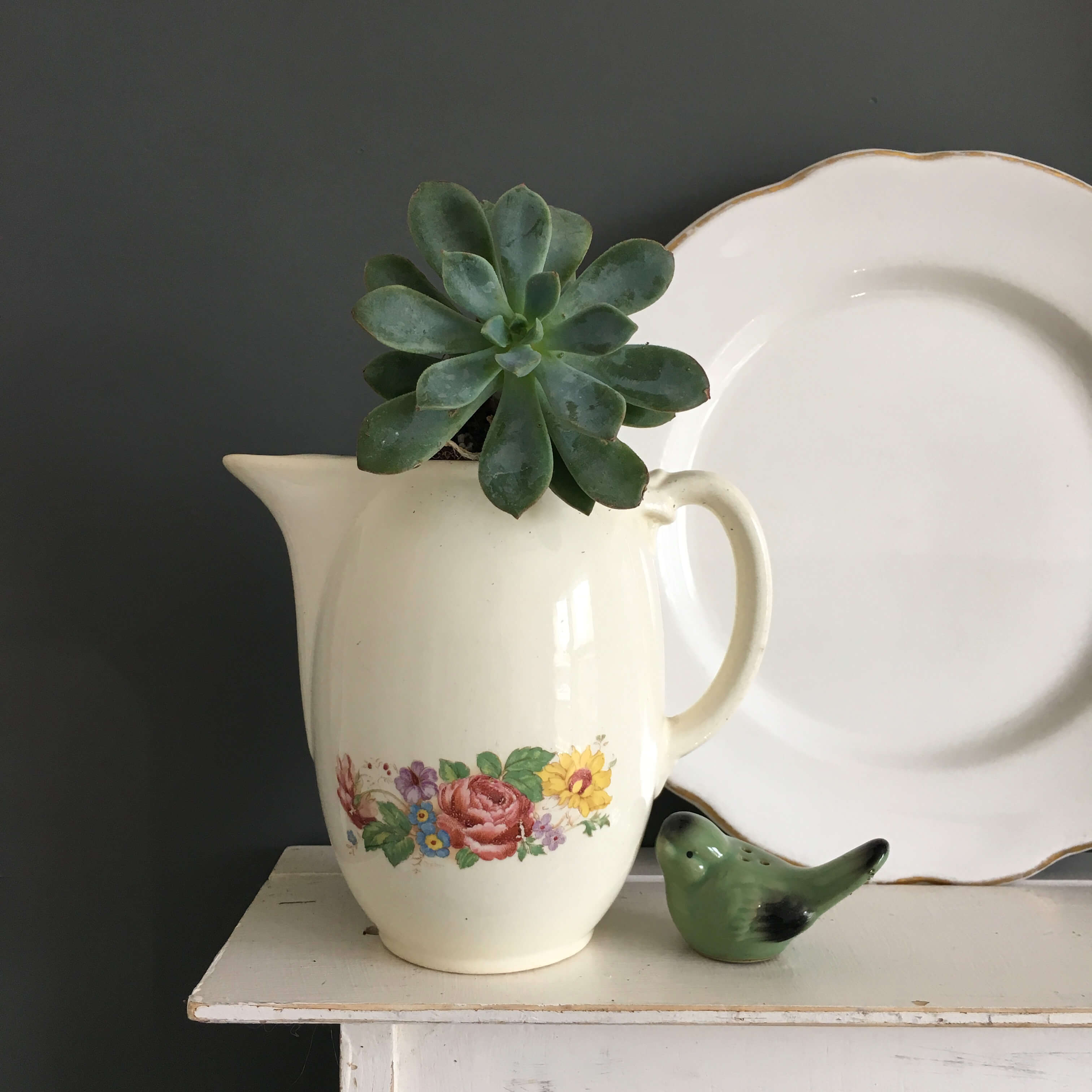
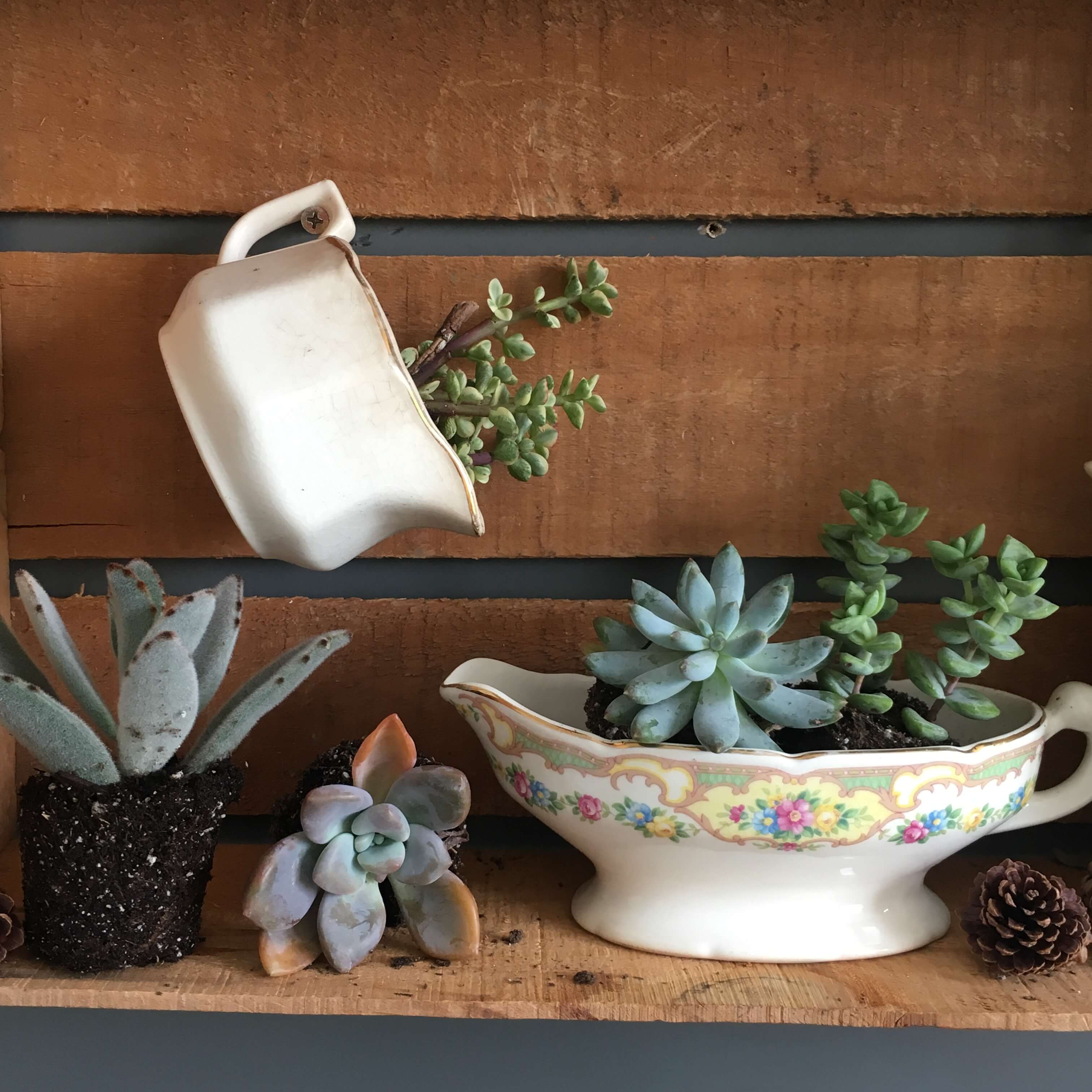
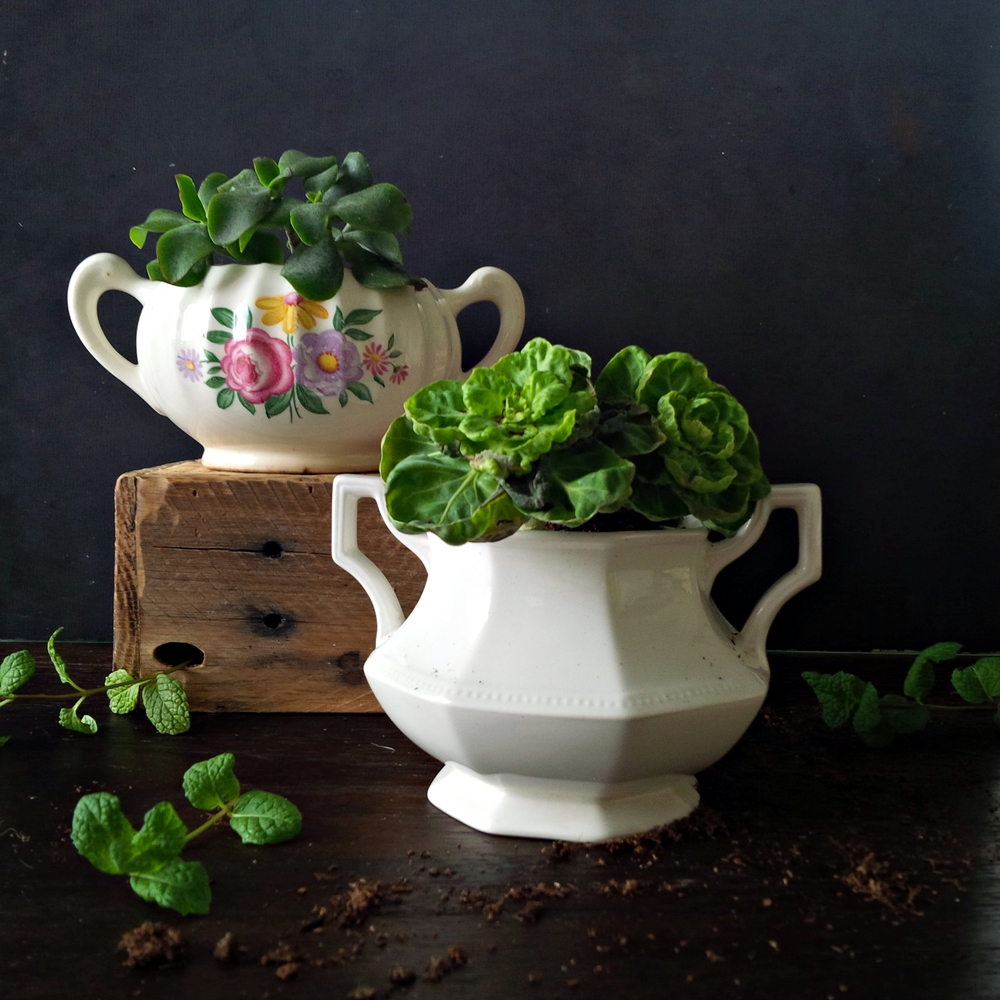
…real plants growing out of old china serving pieces. If you’ve inherited pieces of your family’s china and are not quite sure what to do with them or how to incorporate them into your daily life, or if you just want a planter with a little bit of one-of a-kind personality then designating a vintage sugar bowl or a creamer or a serving dish as your new garden vessel is a fun way to go. Let’s look…

This Japanese Majolica creamer is from the 1940’s. Due to some cracks on the bottom it no longer holds water (or cream!) so it makes an ideal container for varieties of succulents that prefer well draining soil. All it needs is a little water once a week and it’s ready to grow. Keep it in the sink for a few minutes and the water drips out through the cracks, then it is good to go until its next watering seven days later.

Vintage sugar bowls like this one above, made in England, fit perfectly into shelves or small spaces. Your very own unexpected mini garden greenspace place!

This vintage coffeepot from the 1940s lost its lid somewhere along its 75 years of travels. That makes it no longer the most suitable vessel for hot coffee but it certainly makes a pretty container for eye-catching flower power in the form of a petal shaped succulent.

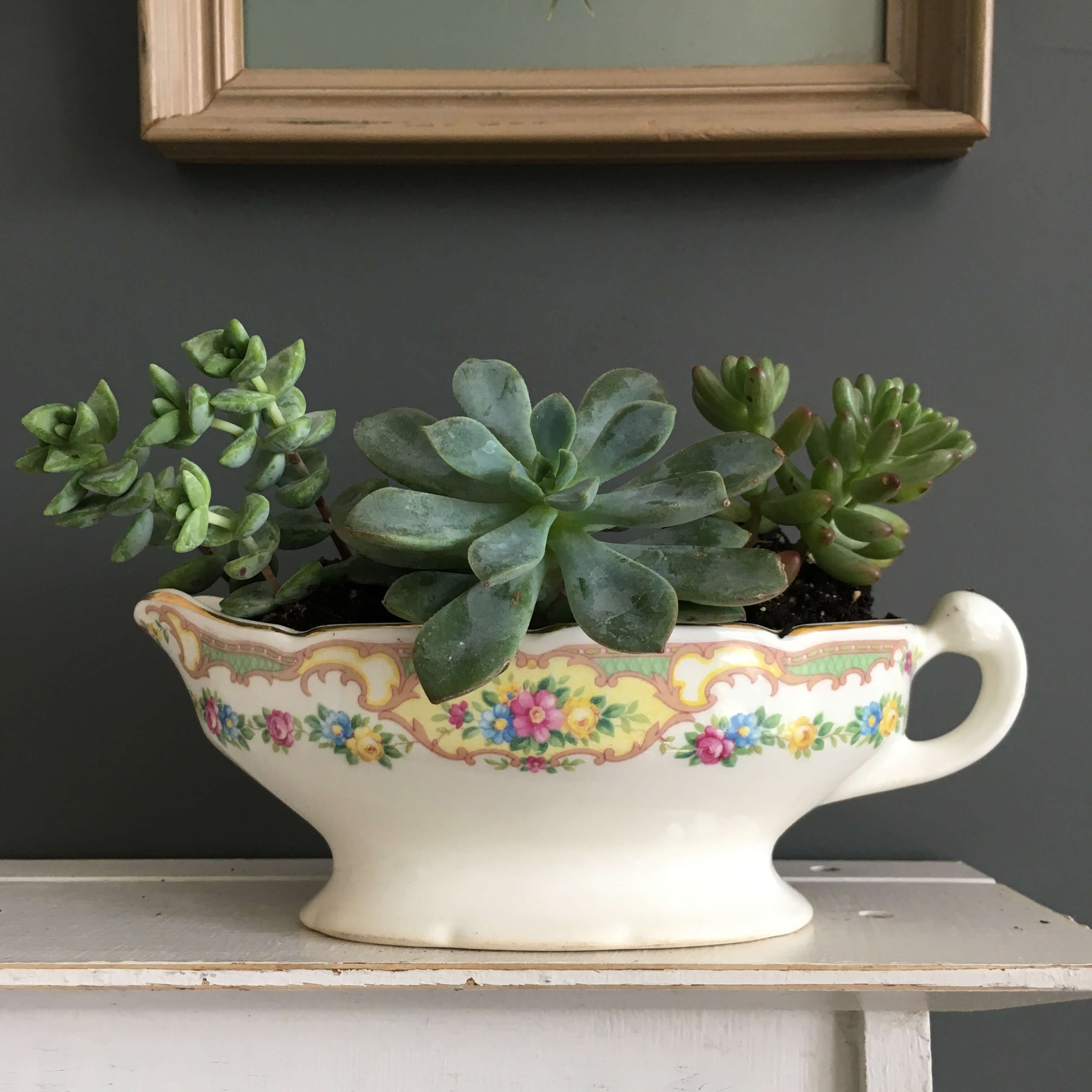
With their long shape and roomy width, gravy boats make great table centerpieces. They can usually accommodate more than a couple of mini plants depending on size. For wedding reception decorations, they offer the symbolism and sentimentality of “something old, something new, something borrowed, something blue.”

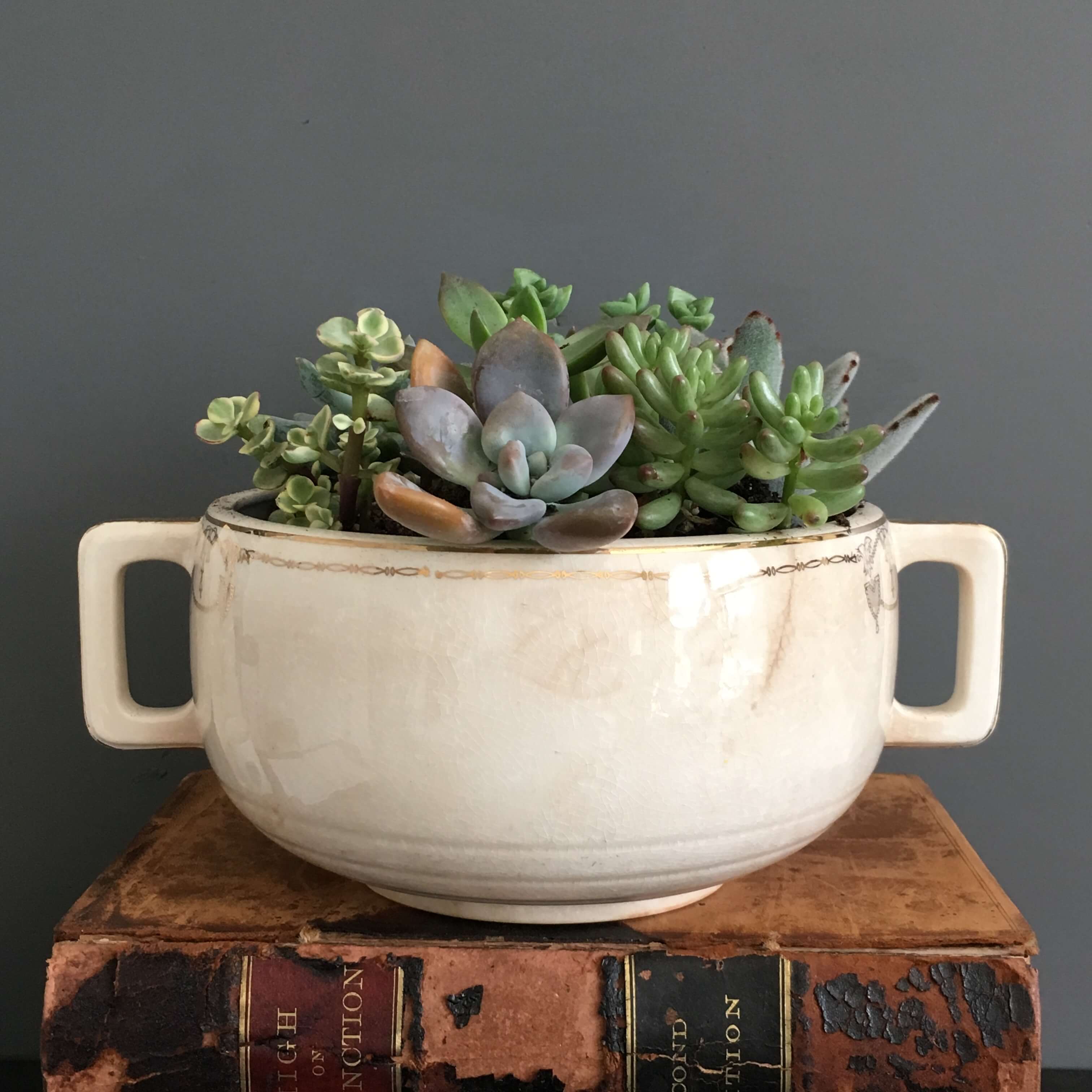
Ideal plants for this type of pairing project, many succulents don’t require a lot of watering and come in a variety of sizes, colors and shapes. As they grow, the plants can be transferred to larger and larger containers like this one – a two-handled vegetable dish from Salem Pottery’s Commodore pattern which debuted in the 1940’s. Because of its larger size it can accommodate up to seven 2.5″ inch succulents or just a few bigger individuals that have outgrown their smaller holders…

vintage-mini-succulent-garden

Authentic crazing, staining and chippy details add interesting, quirky personality to your space that you can’t find in modern day planters. They also easily fit on window sills, ledges, mantles and counter top nooks. Choose one that matches your interior aesthetic, or the colors of your kitchen, or reminds you of a good memory and you’ll instantly add a bit of happy energy to your space. Old dishes love to remain useful helpers. Matching the old with the new creates balance and harmony and reminds us that imperfections are the stuff of life. Beautiful! This antique gravy boat below is over 100 years old but still looks as fresh and pretty as ever thanks to its classic shape.

The trio below have no cracks to worry about so they are ideal holders for succulents and cactus that prefer to be spritzed with water, rather than doused, every now and again. Add some some pea gravel to the bottom of each vessel before adding dirt and certain succulents will be happy with just a tiny bit of water every now and again.

Another possibility is to gather them all up and make a hanging wall display with the help of a crate…

vintage-serving-dish-succulent-planters

That makes an instant collection and an engaging garden that you can cultivate and tend to all year round. Usually all that is required for succulents is bright natural light, a sunny alcove or close proximity to a window.

With all their color choices which range from light gray to soft pink, bright green to dusty blue there is great fun in matching plant to planter and then watching them grow and sprout new additions.

If you need a vintage serving piece to start your garden you can find the ones above in the garden section of the shop. Succulents are available at most garden centers, nurseries, farmers markets or sometimes even the floral section of the grocery store. I recommend getting your planter first, then your succulent second, so that you can determine the appropriate drainage condition, color and shape for plant and planter.

Hope this brings a little fun your way on our second to last Sunday of summer. Cheers to new gardens, old dishes and the joy they both provide:)


Authentically Artisan: A Fun New Food Collaboration

One of the highlights of the summer so far has been the start of a new collaboration with a fellow history-centric company. I’m so pleased to introduce you all to Artisan’s List, a nationwide directory geared towards the historic home improvement enthusiast or anyone interested in defining their space with handmade touches and artistic refinements.

Just a few of the talented vendors I discovered at Artisan’s List! Clockwise from top left: Natural orchard and landscape design by Janice Parker ; handmade copper cookware by House Copper & Cookware; beautiful backyard chicken coup designs by The Chicken Coop Company

As a go-to resource for niche projects, Artisans List is a dream come true for people who just want to get stuff done. If you have a vintage sofa to reupholster (me!), a backyard fruit orchard to plan, an addition to add onto your house or are trying to hunt down a blacksmith for hand-forged drawer pulls, you’ll find just the right expert to work with at Artisans List.

There, in the dynamic world of creative pursuits, you’ll discover makers of handmade pots and pans, landscape architects, historic home renovation consultants, furniture makers, blacksmiths, stone masons, roofers… basically all the people that can help turn your home project ideas into realities – from the roof line all the way down to the basement floor and everything in between.

Skilled tradesmen include examples like these (clockwise from top left) Historically accurate reproductions of architectural millwork by Architectural Components Inc.; antique and vintage stove restoration by The Antique Stove Hospital ; hand-forged decorative metal work made by traditional blacksmiths

As a resource guide made up of traditional craftsmen and skilled tradesmen AL is a beehive of interesting information, ideas and inspiration that continues to grow more dynamic each day. The whole concept of the directory was born out of the lack of an online community that catered specifically to the local home restoration marketplace state by state. So the founders of Artisans List are very intent on making the site an informative, educational, and useful tool for people all over the country. Each of the AL vendors are vetted to make sure that their business and/or skill is authentically produced and professionally handled. Most of the companies have been around for decades, and even generations which means vast portfolios, passionate voices, and trusted relationships. Exactly the kind of care and expertise you need when it comes to planning and executing a project for your treasured space.

Amidst this talented pool of professionals, you’ll also encounter an active and interesting community of do-it-yourselfers who are looking for ways to build a more thoughtful and storied lifestyle. That’s where the Vintage Kitchen comes in. Every other month, I’ll be writing a piece for the magazine portion of the Artisan List  site that features a vintage recipe and the history behind it.

The first piece came out at the end of  June and is all about picnicking. If you missed the mention of it on social media a couple of weeks ago, no worries, I’ll be re-posting the entire article here on the blog in the next few days. But before that happens, I just wanted to share the news with you and to say surprise! the Vintage Kitchen is popping up in a new place.

I think this collaboration is especially fun since we have so many old house lovers and owners (and readers!) that participate in the world of the Vintage Kitchen. It’s with you in particular that I share this information, in case you are looking for some expert help with your own home projects this year. I hope this recommendation helps! If you wind up connecting with one of the Artisan List vendors or find a particular piece of home restoration information useful, please share your story in the comments section, so we can all learn together. In the meantime, stay tuned for a bevy of Artisan food articles coming out soon!

Cheers to new friends, expert helpers, and a wonderful weekend ahead!


The Hi/Bye Month and the New {Old} Collections

Photograph by George Marks – Getty Images

Happy September, happy October and happy Autumn everyone! That’s three cheers, two months and one season that has happened since the last post. Oh my. The majority of September around the Vintage Kitchen was spent curating and collecting items for the shop and went by in such a hurry I officially coined it the hi/bye month because that’s exactly what it felt like. Here one minute, gone the next.

October started in the same way, with the same humid temperatures and the same busy schedule. Hot summer weather has hung around with gusto until just a few days ago, making this new season and curating for it, a bit of a challenge. My heart was wrapped up in the idea of Fall – all those colorful leaves and pumpkins and baking projects – but my head couldn’t quite get over the fact that it was still 90 degrees outside during the day and looked very much like August instead of October. New arrivals in the shop over the past 30 days reflect those dueling situations. Fall that feels like Summer.

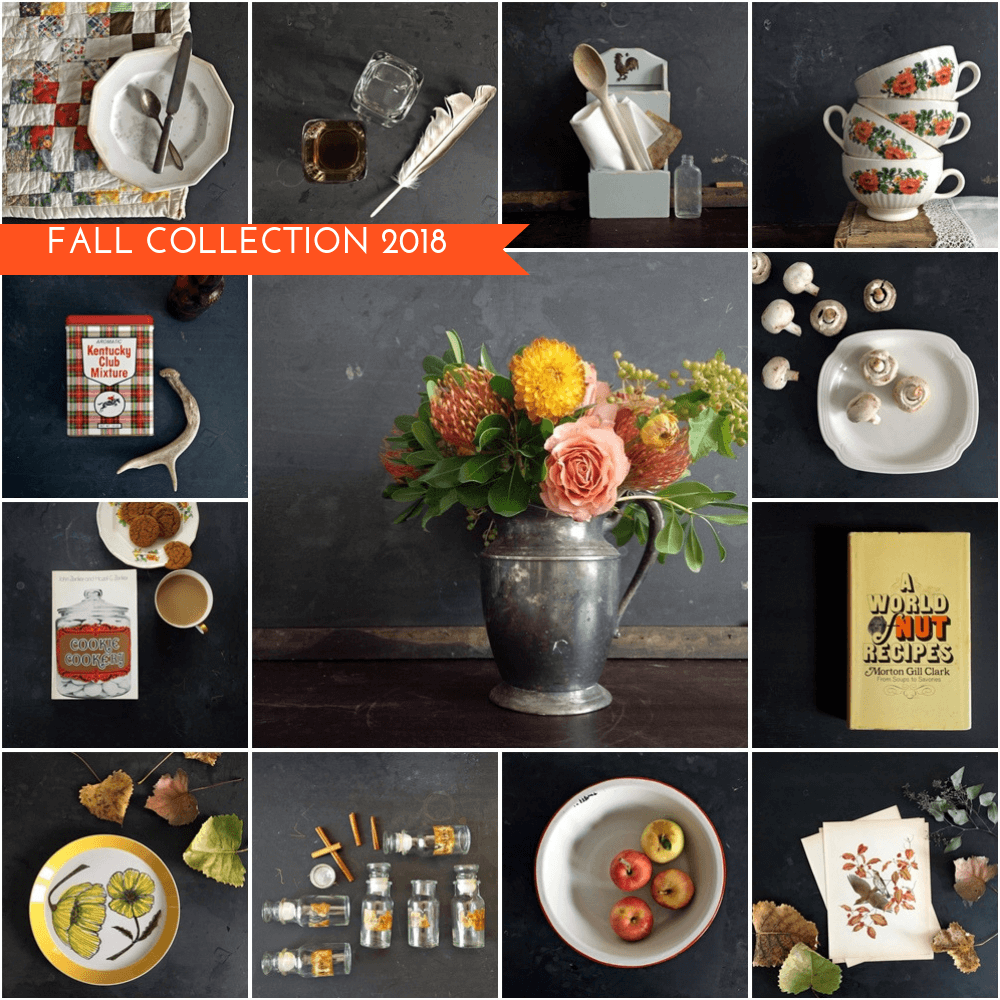
New (old) items that fit into the Fall 2018 Collection are wrapped up in all the traditional touchpoints that ignite sentimental feelings of nostalgia and embrace the cozy, crisp months to come…

Cozy is the name of the game around here. New Autumn inspired vintage (from top left): 1930’s feedsack quilt square; 1970’s Jack Daniels whiskey glasses; vintage wood pocket shelf; 1920’s National Ivory teacups; vintage restaurantware plate, 1960’s World of Nut Recipes cookbook; 1950’s botanical prints; vintage enamelware bowl; 1970’s glass spice jars; 1970’s Mikasa Duet pattern plate; 1960’s Cookie Cookery cookbook; 1960’s red plaid tin.

Vintage spice jars, whiskey glasses, quilt squares, mixing bowls, teacups and fall foliage art prints help set the mood for the season in your kitchen, while homemade cookie recipes, holiday menu guides, and nut-themed delicacies help satisfy the seasonal cravings in your belly.

Some highlights from this collection include this 1960’s whiskey decanter made by the Van Winkle family in Louisville, Kentucky – one of the few distillers legally able to operate during Prohibition…

This 1960’s dinner plate –  one of the very last patterns made by Salem American Ironstone in 1967 just before their pottery closed its doors forever…

This vintage quilt square table topper made in the 1930’s from recycled feedsack materials…

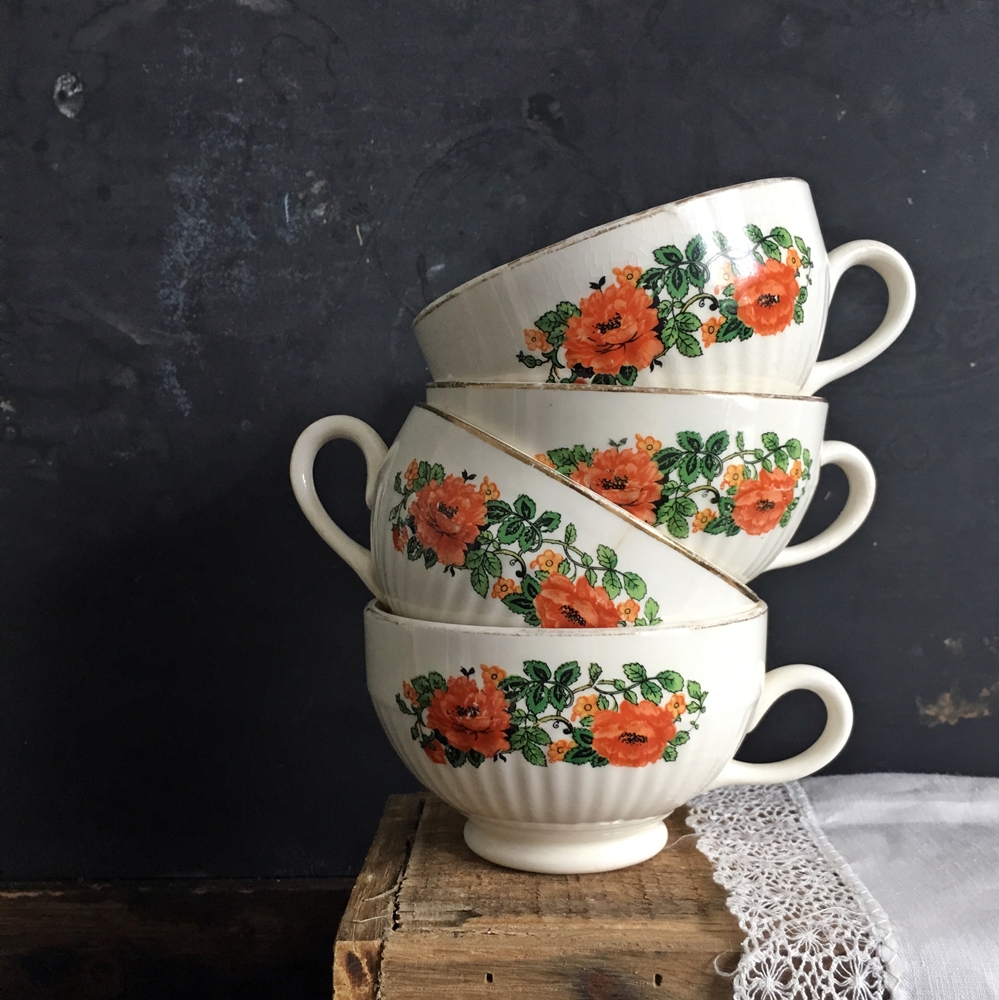
These National Ivory teacups made in the 1920’s during a similiar point in time when women’s roles, rights and liberties were also being redefined…

This 1970’s cookbook – the delicious work of internationally recognized pastry chefs/ husband and wife team, John and Hazel Zenker, who shared over 300 cookie recipes containing old-world charm and European heritage…

New arrivals in the shop that fell under the still-feels-like-summer category include this batch which I call September Skies…

…named for the matching colors found in the pretty sunsets that blushed over the city throughout September and October. They include floral serving pieces, ceramic planters, travel cookbooks and embroidered linens that bloom in thread. It is somewhat ironic how each piece in this collection speaks of all the pretty elements of this past summer but also really reflects the colors in the September/October sunsets…

Perhaps this was Lady Nature’s way of reminding me to be patient – that Autumn would come eventually because it always does one way or the other.

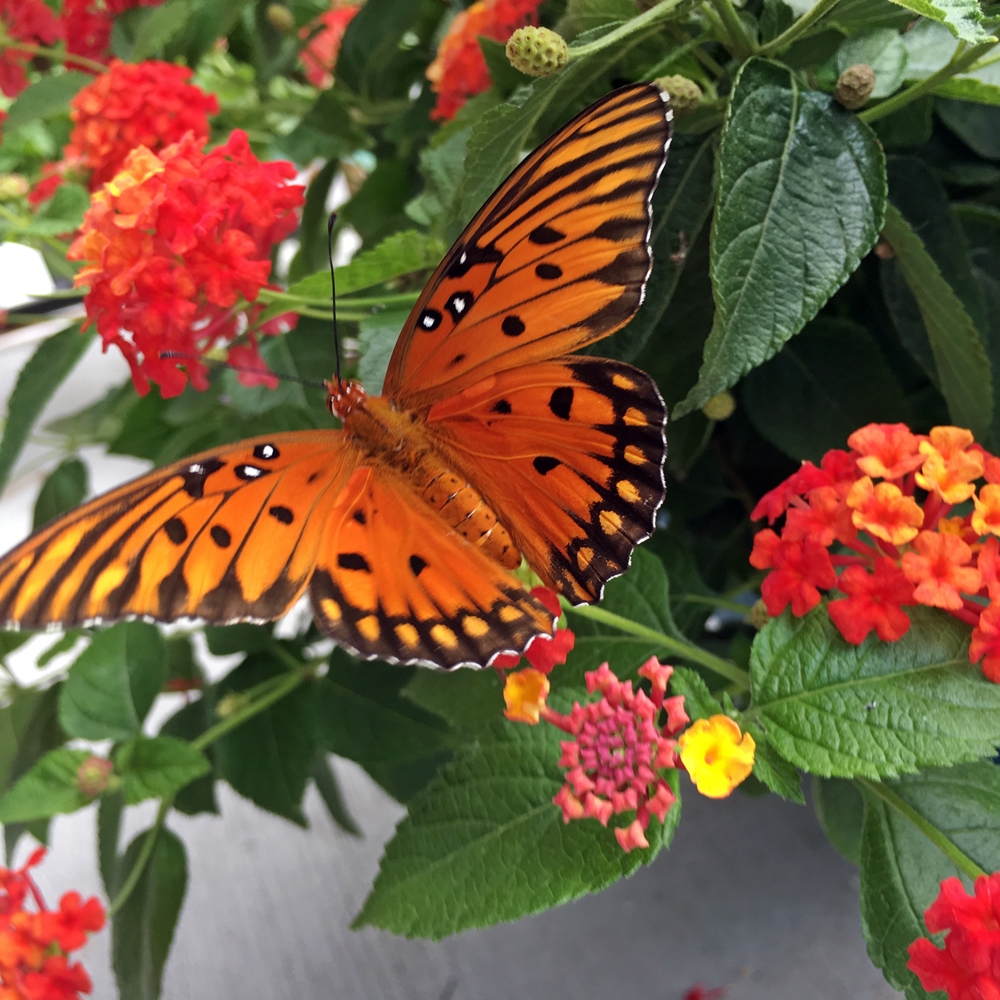
A new pal to the patio this week – butterfly dressed in Halloween colors but feasting on summer flowers!

Whatever weather you are experiencing in your neck of the woods this Autumn – hot, cold, crisp or humid, I hope you are having the happiest of Octobers.  And that you are finding beauty in the season and celebrating it in style.

Fall in love with history and its many assorted faces in the shop here.  Up next on the blog is a sweet treat recipe for Plum Cake circa 1963, from one of the most famous American cookbooks of all time. It’s a lovely Fall dessert that combines spices, baked fruit and a thin layer of cake that is light in constitution yet heavy in flavor. Stay tuned!

Summer Shop Sale!

This weekend, there’s a big 35% off summer whites sale going on in the shop. Any item that contains the color white is automatically eligible for the discount, which means almost everything is on sale! From linens…

Vintage Children’s Apron made from a re-purposed cotton tea towel. Regular price $10 Sale: $7.50

to dishes…

Set of Two 1940’s Crown Pottery Floral Berry Bowls Regular Price $8.00 Sale Price $5.20

to cookbooks…

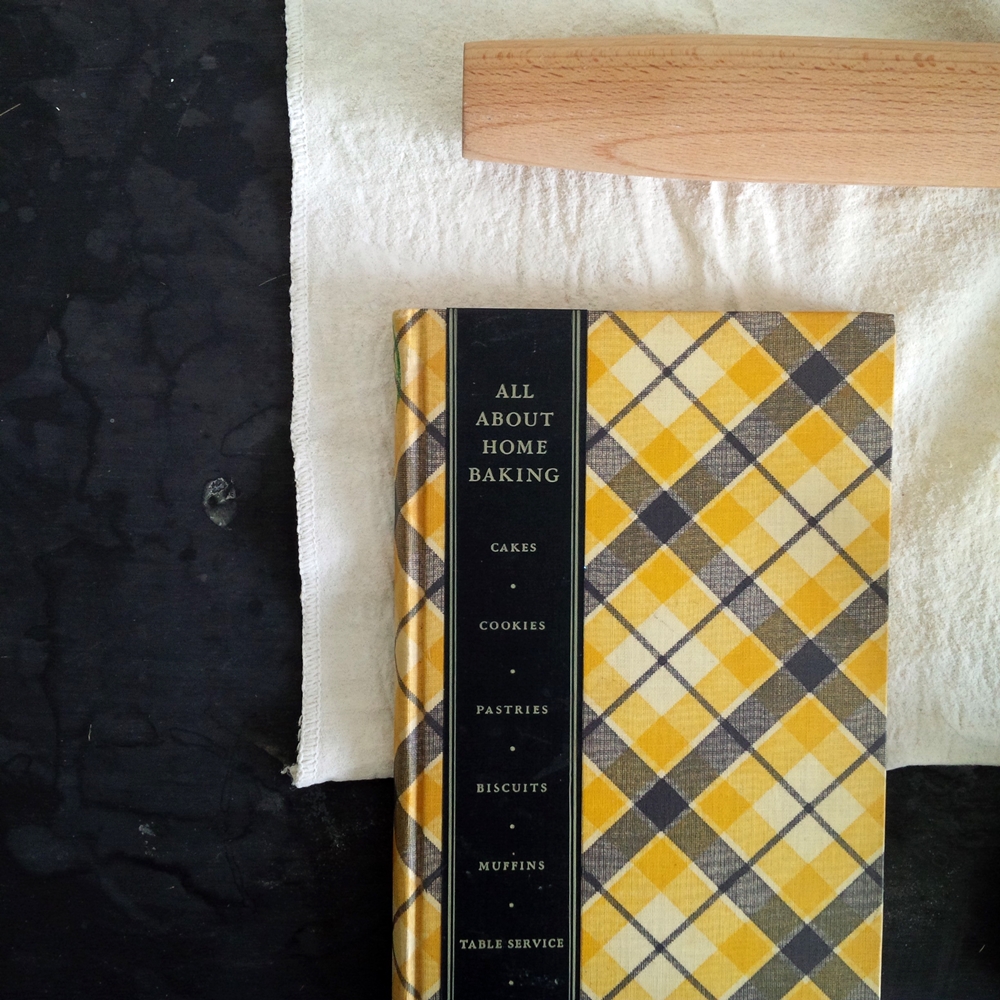
General Food’s All About Home Baking Cookbook published in 1937. Regular price $17 Sale price $11.05

to wall art…

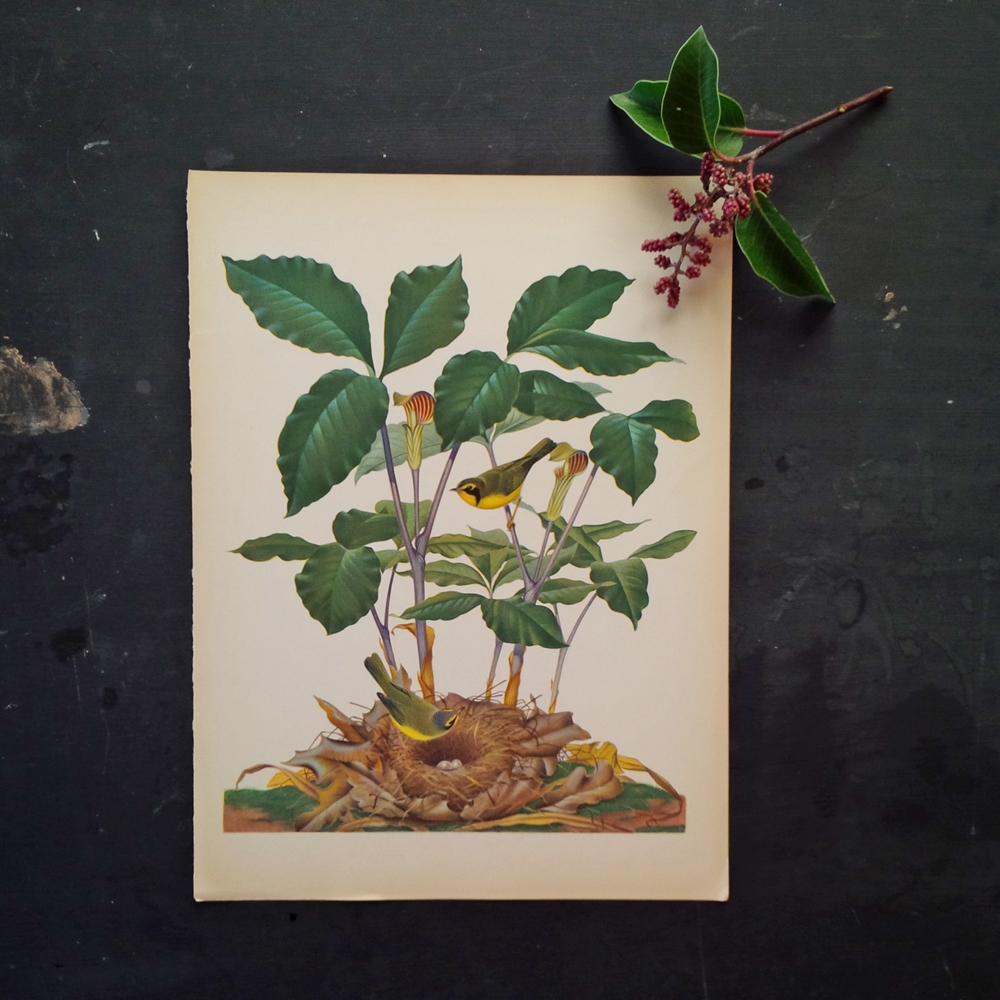
Vintage 1950’s Kentucky Warbler Bird Print Regular price $8 Sale Price: $5.20

and everything in between, including these…

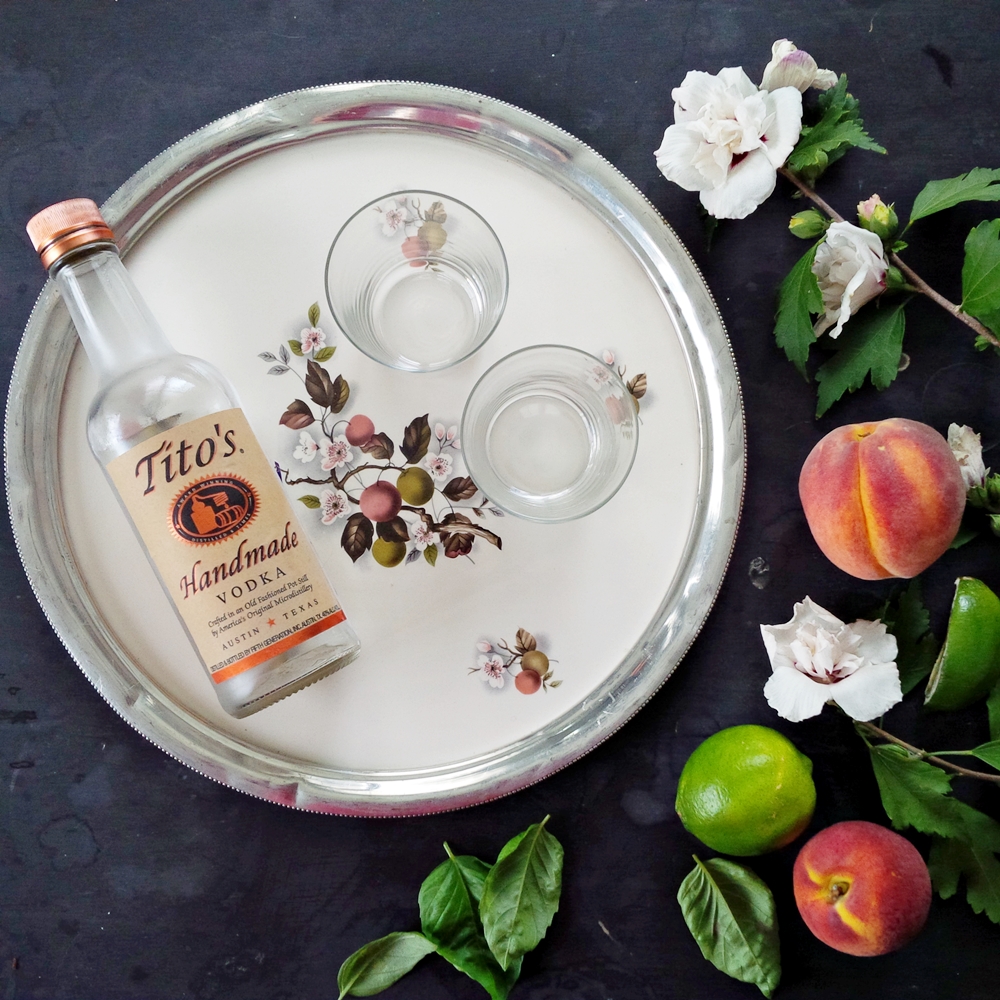
Vintage 1940’s Revere Cherry Blossom Petwer and Porcelain Serving Tray Reg. $32 Sale Price: $20.80

Vintage sugar bowls turned into planters. Each regularly $12-$14. Sale price: $7.80-$9.10

1940’s Interior Design book. Regular Price $13 Sale price: $8.45

Ceramic Italian Fish Mold – Regular Price $24 Sale Price: $15.60

Vintage Ceramic Quiche, Tart, Pie Dish Made in England. Regular price: $25 Sale Price: $16.25

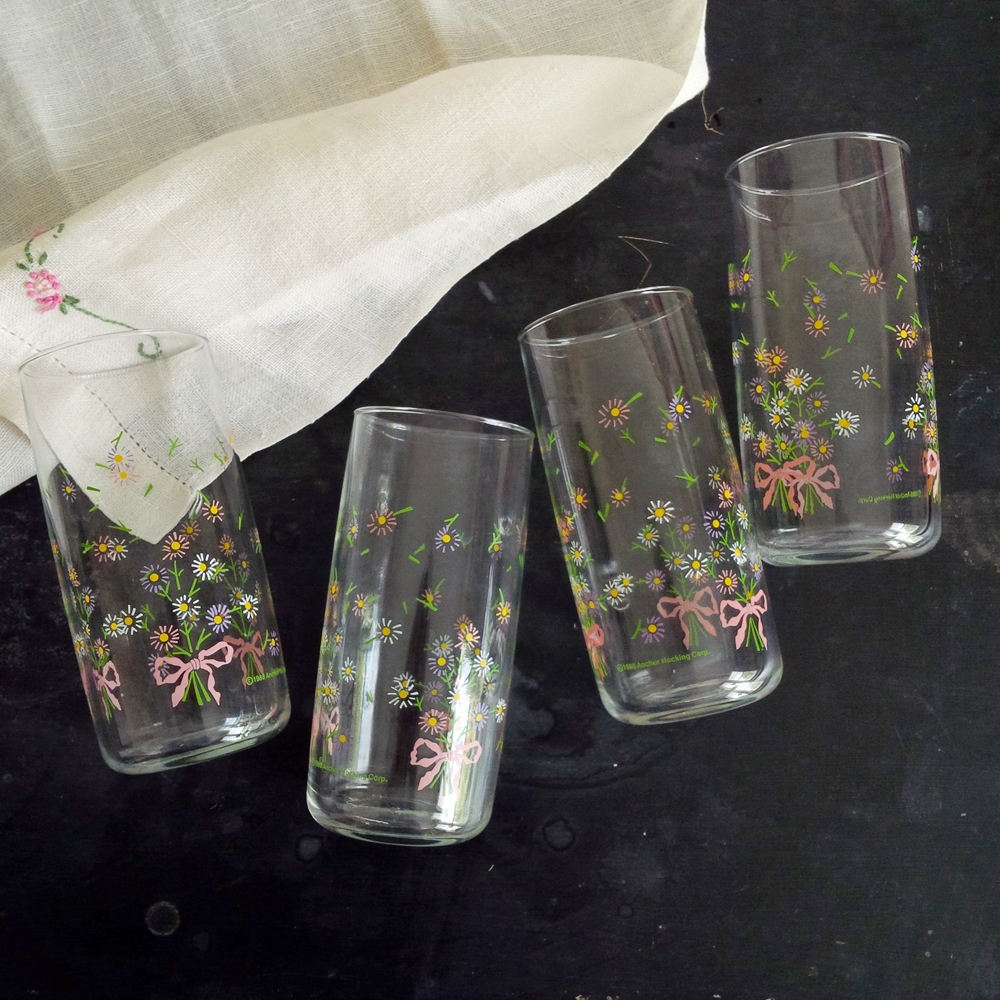
Vintage Set of 4 Anchor Hocking 16oz Lemonade Glasses Regular Price: $16 Sale Price: $10.40

Vintage Midcentury Myott Staffordshire Dinner Plates Regular Price$24 Sale Price: $15.60

Vintage Embroidered Linen Tablecloth 48×48 Regular price $45 Sale Price $29.25

and much more! There will only be two big shop sales like this a year, so if you have a treasure you’ve been eyeing now’s your chance to treat yourself to a little piece of history.  The sale runs through tomorrow night (Sunday, July 29th).  Use coupon code: SUMMERSALE18 upon checkout to receive 35% off your order.

Happy shopping!

Bringing Zest to the Viands: Dinner Giving Advice & Etiquette from 1902

The Victorians had their love of family and chivalry and formal presentation. The Edwardians had their love of nature and get-togethers and burgeoning athleticism. Combine the best elements of those two eras for a dinner party and you get a cacophony of advice on how to throw (and attend) the most enjoyable evening of the year as deemed perfect in 1902.

It’s Thanksgiving week and kitchens are busy across the country as we cook and eat and celebrate the holiday with friends and family. Here in the Vintage Kitchen, we thought it would be fun to pull out the do’s and dont’s list of what was considered proper partying in the first few years of the 20th century to see just how many elements we have retained over the course of 115 years. It’s cliche to say that good manners never go out of style, but do they evolve to fit our modern lives or are we still putting our best Victorian/Edwardian foot forward when it comes to entertaining? In this post, we’ll discover how our ancestors prepared to feed a crowd, how they decorated their tables to reflect a festive atmosphere and how etiquette guided eaters through the event. Is it all that different from what we do today? You might be surprised by the list below. Let’s dive in and see…

Preparing turkey in a kitchen from long ago…

How to Throw A Successful Dinner Party circa 1902…

  1. Send your dinner party invitations by mail or personal messenger at least 10 days in advance. Sending via messenger is more ideal in order to ensure accurate delivery.
  2. Study your guest list. Seat opposites together…  talkers with listeners, strong opinionators with yielding dispositions, etc.
  3. Select a color scheme and harmonize everything on the table within that palette.
  4. Dishes with a background of white appeal to the eyes of all.
  5. Never starch your napkins.
  6. Each table setting requires four forks (placed on the left) and three knives (placed on the right) between each plate. Oyster forks begin the fork parade on the outside. Among the grouping of the three knives, steel knives for meat rest closest to the plate.  Napkins are placed directly in front of each guest and soup spoons lie next to each napkin.
  7. Individual salt, pepper and butter dishes should accompany each place setting.
  8. Ideal flower centerpieces include roses, lilies, carnations, lilacs, ferns and smilax which should be arranged in a low, flat edged cut glass bowl. If you are using roses in your bouquet scatter petals artistically around the table.
  9. Battenburg lace table clothes are the most ideal cloth covering but if you cant afford one- a simple doily style is recommended.
  10. Hang satin ribbons, bows and smilax from your chandelier for a visual effect of fresh, dainty beauty.
  11. Autumn leaves threaded on a string make an eye-catching border when tacked around the perimeter of the entire table.
  12. Any natural bit of vine found in season produces a wonderful opportunity to make a crown for every single guest. Autumn offers the chance to incorporate pumpkin vines in such a manner.
  13. Lighting should be kept to subdued shades. Use of colorful gas lamps and transparent globes produce a dreamland in the dining room.
  14. For a snowy table scene, dip evergreen fir branches in a weak solution of glue and roll in coarsely crushed alum to create an enchanting winter wonderland.
  15. If your dining room is not carpeted, use large rugs to deaden the sound of footsteps.
  16. Dinnertime is most commonly observed at 7:00pm.
  17. Dinner is announced just after the last guest arrives.
  18. It is recommended to have at least one servant available to attend to the needs of every six guests.
  19. Sideboards should be neatly stacked with all the pieces (dishes, cups, glasses, and flatware) needed for the entire meal so that when the servant staff (or hosts) are clearing dishes from a finished course they can easily access the appropriate dishes for the next course without causing undue chaos and uneccsary noise.
  20. Menu guidelines for a  traditional 11-course dinner party are as follows … FIRST COURSE: Contains oysters or littleneck clams. Oysters are only served in the months when the letter “R” occurs. SECOND COURSE: Contains soup along with crackers, bread or celery. Clear soups are most preferred. THIRD COURSE: Contains fish that is either boiled or fried and served alongside small boiled potatoes or radishes. FOURTH COURSE: Contains fancy main entrees that do not require carving. This course is served with bread and small garnishes like olives and nuts. FIFTH COURSE:  Features a roast of beef, veal, lamb, venison, turkey, goose or other wild game and is served alongside two vegetables. SIXTH COURSE: Contains punch or sherbert. SEVENTH COURSE: Features poultry such as chicken or pigeon. EIGHTH COURSE: Contains salad and cheese wafers. NINTH COURSE: Features dessert served either hot or cold like ice cream, pudding, cake etc. TENTH COURSE: Features fresh fruit and bonbons. ELEVENTH COURSE: Wraps the entire dinner up with coffee.

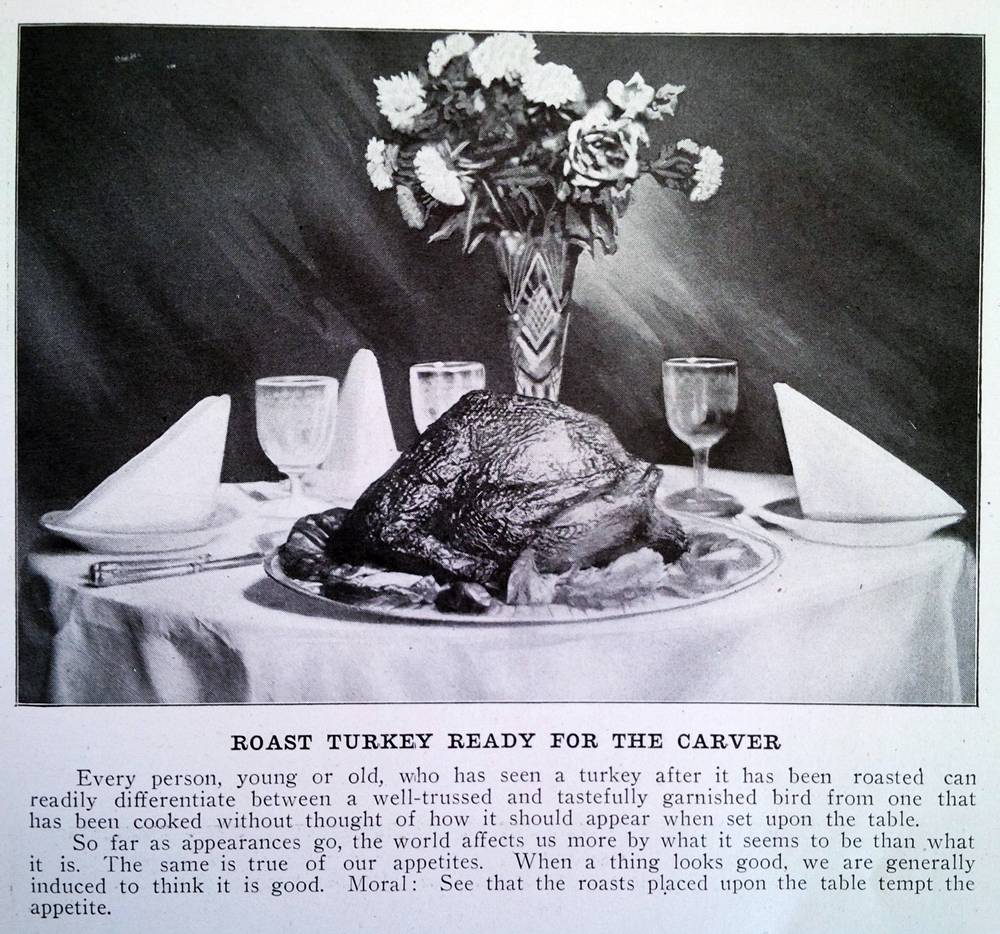
Roast Turkey from Woman’s Favorite Cook Book published in 1902

How to Master Good Manners at Table circa 1902 –

(As A Guest)

  1. Ladies always take their seats first.
  2. Do not overload your dinner plate.
  3. Never rise from your chair to reach anything, request what you need and then wait for it to be passed.
  4. Never eat anything with a spoon that can be eaten with a fork.
  5. Do not hesitate to take the last piece.
  6. Never overload your fork or spoon.
  7. In the case of restaurant or hotel dining, a lady always rises to greet another lady who has stopped to visit at the table, even though the visitor will not be eating with them.
  8. At the start of the meal, napkins should always be unfolded below the table.
  9. A gentleman folds his napkin in half and places it on his left knee.
  10. Never touch any part of your face with your napkin except your lips.
  11. If food is being carved at the table do not wait to begin eating until all the food is served.
  12. Spread soft cheese on a cracker with a knife. Eat hard cheese with your fingers.
  13. Do not break crackers or bread into your bowl of soup.
  14. If strawberries are served with stems intact, eat them with your fingers.
  15. Never touch potatoes with a knife except to butter them. Forks should be the only utensil involved when eating potatoes of any kind.
  16. Immediately pass anything that is requested (salt, butter, cream, etc) to your fellow tablemates.
  17. Do not refold your dinner napkin when you are through eating.
  18. Never talk with your mouth full and never leave the table with food in your mouth.
  19. Do not spread your elbows when cutting meat, keep them securely tucked at your side.
  20. Do not reach after a knife, fork or spoon that has dropped, instead, ask for another.
  21. When asked what cut of meat you would like answer promptly and confidently. Never leave it up to the host to consider your preference for you.
  22. Do not continue eating after passing a plate for a tablemate until that plate has been filled and returned back to the guest.
  23. Do not twist your feet around the legs of your chair.
  24. Never touch your face or head at the table.
  25. Never take a larger mouthful than will permit you to speak with ease.
  26. Never loll back in your chair or press forward against the table but sit upright to aid digestion and present yourself with controlled decorum.
  27. Never lift a glass by the rim. Goblets should be held by the stem and tumblers near the base.
  28. When addressing anyone at the table or asking for anything to be passed, mention the guest’s name to whom you speak.
  29. Do not leave the table until everyone has finished eating.
  30. When invited to a formal dinner party in which you have worn an evening dress and gloves, do not take your gloves off until you have been seated at the table.
  31. Guests who bring simple, homemade, monogrammed gifts are far more admired by hosts and hostesses than gifts that are expensive, elaborate or store-bought.

This is an Edwardian dinner party photograph from the early 1900s. Even though this is a Halloween photo you can see that they carried the theme in their decorations with a witch hanging from the chandelier, a hanging garland of fall leaves and a low floral centerpiece on the table.

(As a Host)

  1. First and foremost, as host, it is your job to ensure that every guest is well cared for and attended to at all points of the evening.
  2. After dinner has been announced at the start of the evening, the host leads the way to the table with the lady guest he wishes to honor. The hostess comes last with the gentleman guest she wishes to honor.
  3. Dinner plates should be arranged attractively. Any part of the meal that includes vinegar should be placed in its own separate bowl or plate. Bread should also be served on its own separate plate but beware of having too many plates on the table. Then it becomes cluttered and takes on the appearance of a boarding house-style meal.
  4.  The task of carving meat at the table is always conducted by the host. If no male host is present, then the hostess may carve the meat herself or select a gentleman guest to do so on her behalf.
  5. Ladies are always served before men.
  6. Do not ask anyone at the table whether they would like “more roast or more salad (or more of anything).”  Instead, ask them if they would like “some roast or some salad, etc” so as not to imply that they are eating too much or that excess effort is being put forth to serve them.
  7.  Never make introductions after the guests are seated. This should have already been done as each guest arrived for the evening before everyone proceeded to the dining room.
  8. Gentlemen who are remaining at the table for cigars following the meal should stand when the ladies rise and stay standing until they have all left the room.
  9. If all dinner guests are leaving the table at once, then ladies should group together and exit the dining room first.

We were surprised to see that so many commonsense manners from the list are still very much in play in regards to today’s table etiquette (is there even such a universal thing as this these days?!),  like serving women before men, not talking with your mouth full, and sitting up straight at the table. But some things seemed foreign like keeping your elbows tucked in when cutting meat, never using knives to cut a potato, tucking into your meal while food was still being carved and not being hesitant to take the last piece. And then there were the more curious bits like selecting guests to honor and escort into dinner and the situation with the ladies and their gloves.  Where did the gloves go once they were removed them at the table? In your lap? Under your chair? In your evening bag? Perhaps we need to re-watch a few episodes of Downton Abbey to see where Mary stored hers!

On the table decorating front it was also interesting to see how white-centered dishes are still popular as well as the notion of incorporating elements from nature into table centerpiece displays. But head garlands and chandelier decorating and extensive place settings are a less common sight these days. So many houses don’t even have dining rooms or chandeliers anymore. Head garlands are fun though – I could imagine that a table full of guests wearing beautiful wreaths of autumn leaves or pumpkin vines would lend a wonderfully theatrical sense of whimsy to the party.

I think having good manners is lovely. I also think in our busy modern lifestyle with so much interrupting us while we eat, it is easier to forget or fall out of the habit of eating deliberating with the company we are keeping. Good table manner etiquette hasn’t really changed all that much in one hundred years but our awareness of it has.

Sometimes, now it seems we pull out our best manners only on the holidays or when eating at a super expensive restaurant or a wedding reception or only when we are trying to impress someone. This is not to say that the majority of Americans now eat like animals at home, but its the fact that there is not as many people looking over our shoulders reminding us to tuck our elbows in or keep our napkins in our lap or to serve the ladies first.  In the Victorian and Edwardian days they had hours to enjoy a meal and socializing was treated like a cultural event that could be extended for days. Now we are not as indulgent with our time and focus more on quick preparations and easy recipes so that we can eat fast in order to get onto the next event or activity filling up our busy schedules.

In 2018 one of our goals in the Vintage Kitchen is to slow down dinner time (at least a few nights a week), so that we can sit down and have a conversation with our dinner mates free of phones and screens and television and outside distractions. Perhaps that will help us practice and keep good manners so that mealtime will feel a bit more decadent in the leisure department and more fulfilling on the socialization front. What do you think dear readers about this topic of manners? Do you employ them at home? Were you surprised by this list? Do you think there is still a place for them in our modern landscape? Please share your thoughts in the comments section below!

In the meantime, hope your kitchen is full of good food and good friends in the days leading up to Thanksgiving! Cheers to all you, ladies and gentlemen!