Bringing Zest to the Viands: Dinner Giving Advice & Etiquette from 1902

The Victorians had their love of family and chivalry and formal presentation. The Edwardians had their love of nature and get-togethers and burgeoning athleticism. Combine the best elements of those two eras for a dinner party and you get a cacophony of advice on how to throw (and attend) the most enjoyable evening of the year as deemed perfect in 1902.

It’s Thanksgiving week and kitchens are busy across the country as we cook and eat and celebrate the holiday with friends and family. Here in the Vintage Kitchen, we thought it would be fun to pull out the do’s and dont’s list of what was considered proper partying in the first few years of the 20th century to see just how many elements we have retained over the course of 115 years. It’s cliche to say that good manners never go out of style, but do they evolve to fit our modern lives or are we still putting our best Victorian/Edwardian foot forward when it comes to entertaining? In this post, we’ll discover how our ancestors prepared to feed a crowd, how they decorated their tables to reflect a festive atmosphere and how etiquette guided eaters through the event. Is it all that different from what we do today? You might be surprised by the list below. Let’s dive in and see…

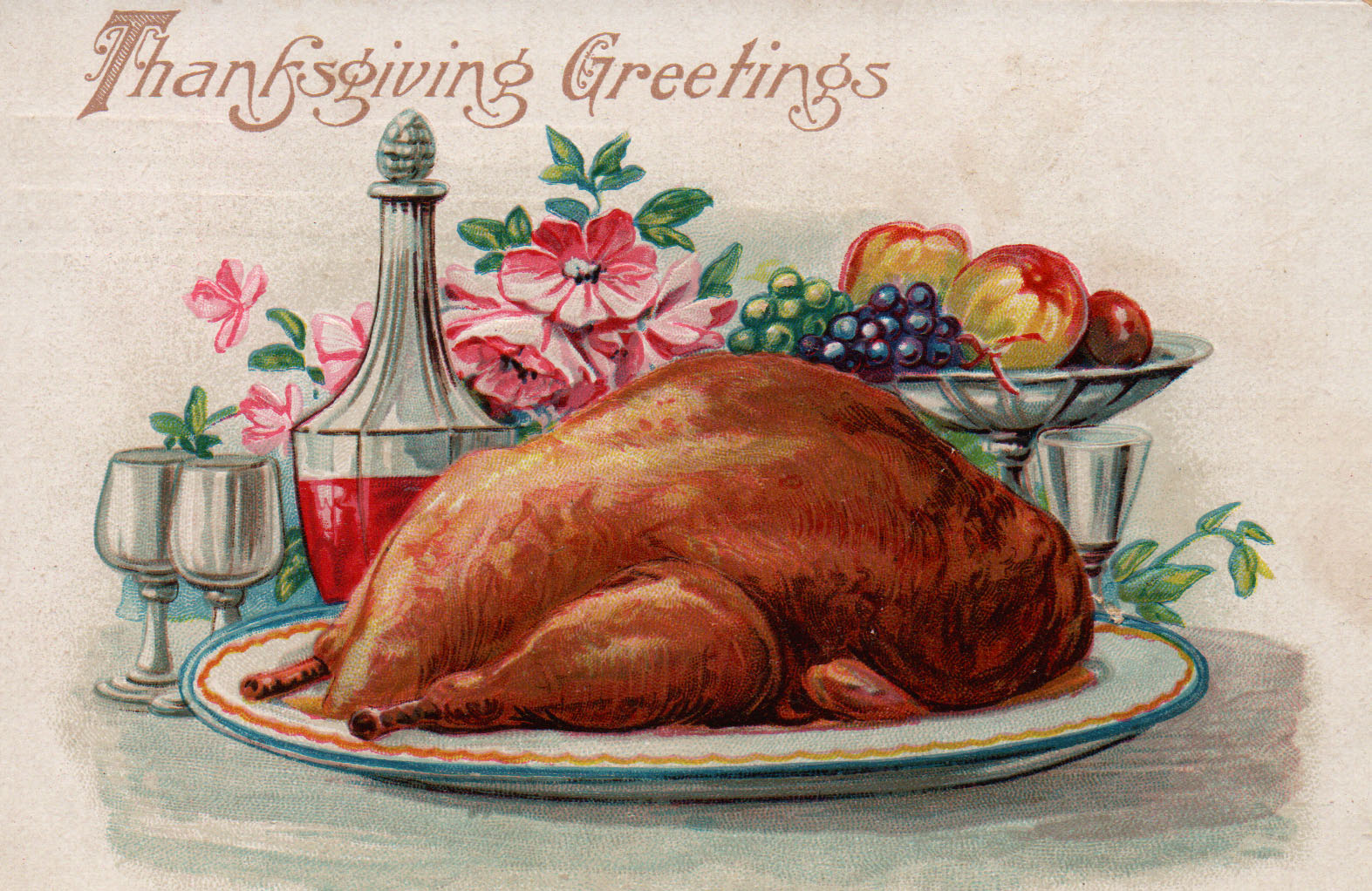
Preparing turkey in a kitchen from long ago…

How to Throw A Successful Dinner Party circa 1902…

  1. Send your dinner party invitations by mail or personal messenger at least 10 days in advance. Sending via messenger is more ideal in order to ensure accurate delivery.
  2. Study your guest list. Seat opposites together…  talkers with listeners, strong opinionators with yielding dispositions, etc.
  3. Select a color scheme and harmonize everything on the table within that palette.
  4. Dishes with a background of white appeal to the eyes of all.
  5. Never starch your napkins.
  6. Each table setting requires four forks (placed on the left) and three knives (placed on the right) between each plate. Oyster forks begin the fork parade on the outside. Among the grouping of the three knives, steel knives for meat rest closest to the plate.  Napkins are placed directly in front of each guest and soup spoons lie next to each napkin.
  7. Individual salt, pepper and butter dishes should accompany each place setting.
  8. Ideal flower centerpieces include roses, lilies, carnations, lilacs, ferns and smilax which should be arranged in a low, flat edged cut glass bowl. If you are using roses in your bouquet scatter petals artistically around the table.
  9. Battenburg lace table clothes are the most ideal cloth covering but if you cant afford one- a simple doily style is recommended.
  10. Hang satin ribbons, bows and smilax from your chandelier for a visual effect of fresh, dainty beauty.
  11. Autumn leaves threaded on a string make an eye-catching border when tacked around the perimeter of the entire table.
  12. Any natural bit of vine found in season produces a wonderful opportunity to make a crown for every single guest. Autumn offers the chance to incorporate pumpkin vines in such a manner.
  13. Lighting should be kept to subdued shades. Use of colorful gas lamps and transparent globes produce a dreamland in the dining room.
  14. For a snowy table scene, dip evergreen fir branches in a weak solution of glue and roll in coarsely crushed alum to create an enchanting winter wonderland.
  15. If your dining room is not carpeted, use large rugs to deaden the sound of footsteps.
  16. Dinnertime is most commonly observed at 7:00pm.
  17. Dinner is announced just after the last guest arrives.
  18. It is recommended to have at least one servant available to attend to the needs of every six guests.
  19. Sideboards should be neatly stacked with all the pieces (dishes, cups, glasses, and flatware) needed for the entire meal so that when the servant staff (or hosts) are clearing dishes from a finished course they can easily access the appropriate dishes for the next course without causing undue chaos and uneccsary noise.
  20. Menu guidelines for a  traditional 11-course dinner party are as follows … FIRST COURSE: Contains oysters or littleneck clams. Oysters are only served in the months when the letter “R” occurs. SECOND COURSE: Contains soup along with crackers, bread or celery. Clear soups are most preferred. THIRD COURSE: Contains fish that is either boiled or fried and served alongside small boiled potatoes or radishes. FOURTH COURSE: Contains fancy main entrees that do not require carving. This course is served with bread and small garnishes like olives and nuts. FIFTH COURSE:  Features a roast of beef, veal, lamb, venison, turkey, goose or other wild game and is served alongside two vegetables. SIXTH COURSE: Contains punch or sherbert. SEVENTH COURSE: Features poultry such as chicken or pigeon. EIGHTH COURSE: Contains salad and cheese wafers. NINTH COURSE: Features dessert served either hot or cold like ice cream, pudding, cake etc. TENTH COURSE: Features fresh fruit and bonbons. ELEVENTH COURSE: Wraps the entire dinner up with coffee.
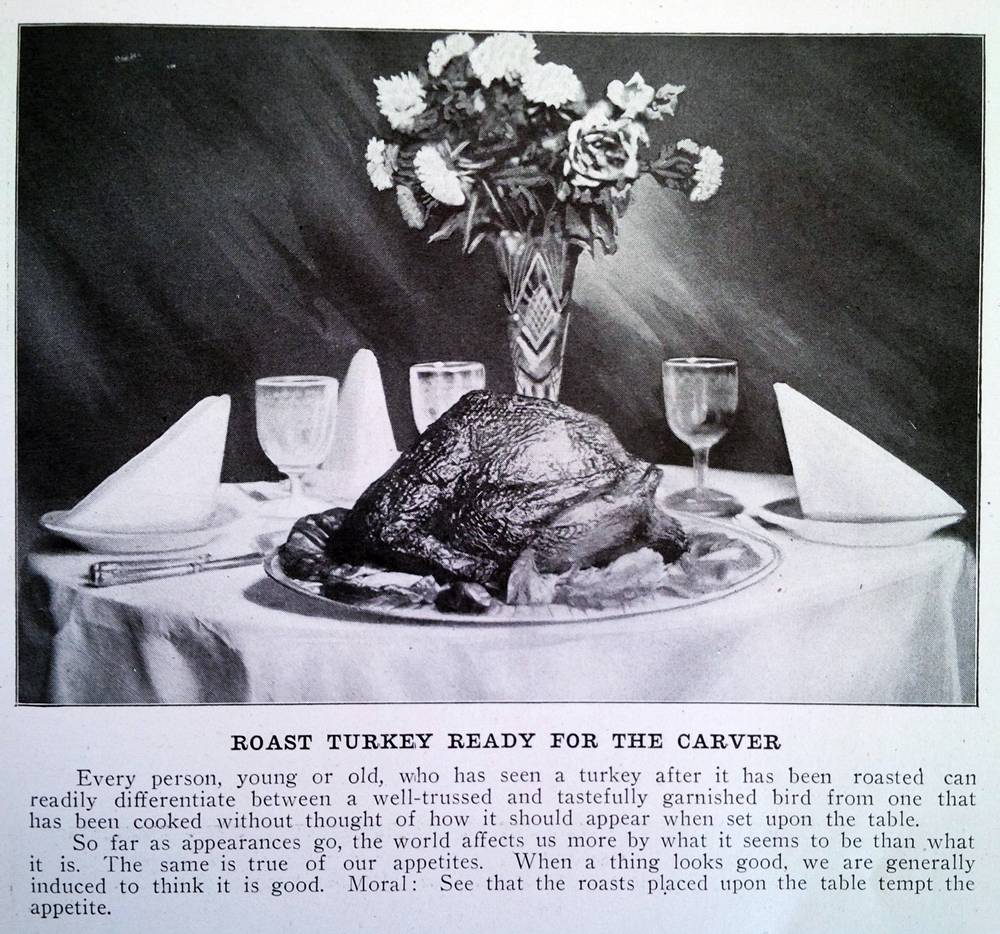
Roast Turkey from Woman’s Favorite Cook Book published in 1902

How to Master Good Manners at Table circa 1902 –

(As A Guest)

  1. Ladies always take their seats first.
  2. Do not overload your dinner plate.
  3. Never rise from your chair to reach anything, request what you need and then wait for it to be passed.
  4. Never eat anything with a spoon that can be eaten with a fork.
  5. Do not hesitate to take the last piece.
  6. Never overload your fork or spoon.
  7. In the case of restaurant or hotel dining, a lady always rises to greet another lady who has stopped to visit at the table, even though the visitor will not be eating with them.
  8. At the start of the meal, napkins should always be unfolded below the table.
  9. A gentleman folds his napkin in half and places it on his left knee.
  10. Never touch any part of your face with your napkin except your lips.
  11. If food is being carved at the table do not wait to begin eating until all the food is served.
  12. Spread soft cheese on a cracker with a knife. Eat hard cheese with your fingers.
  13. Do not break crackers or bread into your bowl of soup.
  14. If strawberries are served with stems intact, eat them with your fingers.
  15. Never touch potatoes with a knife except to butter them. Forks should be the only utensil involved when eating potatoes of any kind.
  16. Immediately pass anything that is requested (salt, butter, cream, etc) to your fellow tablemates.
  17. Do not refold your dinner napkin when you are through eating.
  18. Never talk with your mouth full and never leave the table with food in your mouth.
  19. Do not spread your elbows when cutting meat, keep them securely tucked at your side.
  20. Do not reach after a knife, fork or spoon that has dropped, instead, ask for another.
  21. When asked what cut of meat you would like answer promptly and confidently. Never leave it up to the host to consider your preference for you.
  22. Do not continue eating after passing a plate for a tablemate until that plate has been filled and returned back to the guest.
  23. Do not twist your feet around the legs of your chair.
  24. Never touch your face or head at the table.
  25. Never take a larger mouthful than will permit you to speak with ease.
  26. Never loll back in your chair or press forward against the table but sit upright to aid digestion and present yourself with controlled decorum.
  27. Never lift a glass by the rim. Goblets should be held by the stem and tumblers near the base.
  28. When addressing anyone at the table or asking for anything to be passed, mention the guest’s name to whom you speak.
  29. Do not leave the table until everyone has finished eating.
  30. When invited to a formal dinner party in which you have worn an evening dress and gloves, do not take your gloves off until you have been seated at the table.
  31. Guests who bring simple, homemade, monogrammed gifts are far more admired by hosts and hostesses than gifts that are expensive, elaborate or store-bought.
This is an Edwardian dinner party photograph from the early 1900s. Even though this is a Halloween photo you can see that they carried the theme in their decorations with a witch hanging from the chandelier, a hanging garland of fall leaves and a low floral centerpiece on the table.

(As a Host)

  1. First and foremost, as host, it is your job to ensure that every guest is well cared for and attended to at all points of the evening.
  2. After dinner has been announced at the start of the evening, the host leads the way to the table with the lady guest he wishes to honor. The hostess comes last with the gentleman guest she wishes to honor.
  3. Dinner plates should be arranged attractively. Any part of the meal that includes vinegar should be placed in its own separate bowl or plate. Bread should also be served on its own separate plate but beware of having too many plates on the table. Then it becomes cluttered and takes on the appearance of a boarding house-style meal.
  4.  The task of carving meat at the table is always conducted by the host. If no male host is present, then the hostess may carve the meat herself or select a gentleman guest to do so on her behalf.
  5. Ladies are always served before men.
  6. Do not ask anyone at the table whether they would like “more roast or more salad (or more of anything).”  Instead, ask them if they would like “some roast or some salad, etc” so as not to imply that they are eating too much or that excess effort is being put forth to serve them.
  7.  Never make introductions after the guests are seated. This should have already been done as each guest arrived for the evening before everyone proceeded to the dining room.
  8. Gentlemen who are remaining at the table for cigars following the meal should stand when the ladies rise and stay standing until they have all left the room.
  9. If all dinner guests are leaving the table at once, then ladies should group together and exit the dining room first.

We were surprised to see that so many commonsense manners from the list are still very much in play in regards to today’s table etiquette (is there even such a universal thing as this these days?!),  like serving women before men, not talking with your mouth full, and sitting up straight at the table. But some things seemed foreign like keeping your elbows tucked in when cutting meat, never using knives to cut a potato, tucking into your meal while food was still being carved and not being hesitant to take the last piece. And then there were the more curious bits like selecting guests to honor and escort into dinner and the situation with the ladies and their gloves.  Where did the gloves go once they were removed them at the table? In your lap? Under your chair? In your evening bag? Perhaps we need to re-watch a few episodes of Downton Abbey to see where Mary stored hers!

On the table decorating front it was also interesting to see how white-centered dishes are still popular as well as the notion of incorporating elements from nature into table centerpiece displays. But head garlands and chandelier decorating and extensive place settings are a less common sight these days. So many houses don’t even have dining rooms or chandeliers anymore. Head garlands are fun though – I could imagine that a table full of guests wearing beautiful wreaths of autumn leaves or pumpkin vines would lend a wonderfully theatrical sense of whimsy to the party.

I think having good manners is lovely. I also think in our busy modern lifestyle with so much interrupting us while we eat, it is easier to forget or fall out of the habit of eating deliberating with the company we are keeping. Good table manner etiquette hasn’t really changed all that much in one hundred years but our awareness of it has.

Sometimes, now it seems we pull out our best manners only on the holidays or when eating at a super expensive restaurant or a wedding reception or only when we are trying to impress someone. This is not to say that the majority of Americans now eat like animals at home, but its the fact that there is not as many people looking over our shoulders reminding us to tuck our elbows in or keep our napkins in our lap or to serve the ladies first.  In the Victorian and Edwardian days they had hours to enjoy a meal and socializing was treated like a cultural event that could be extended for days. Now we are not as indulgent with our time and focus more on quick preparations and easy recipes so that we can eat fast in order to get onto the next event or activity filling up our busy schedules.
In 2018 one of our goals in the Vintage Kitchen is to slow down dinner time (at least a few nights a week), so that we can sit down and have a conversation with our dinner mates free of phones and screens and television and outside distractions. Perhaps that will help us practice and keep good manners so that mealtime will feel a bit more decadent in the leisure department and more fulfilling on the socialization front. What do you think dear readers about this topic of manners? Do you employ them at home? Were you surprised by this list? Do you think there is still a place for them in our modern landscape? Please share your thoughts in the comments section below!

In the meantime, hope your kitchen is full of good food and good friends in the days leading up to Thanksgiving! Cheers to all you, ladies and gentlemen!


The City of Lighters and Other Paris Fun Facts

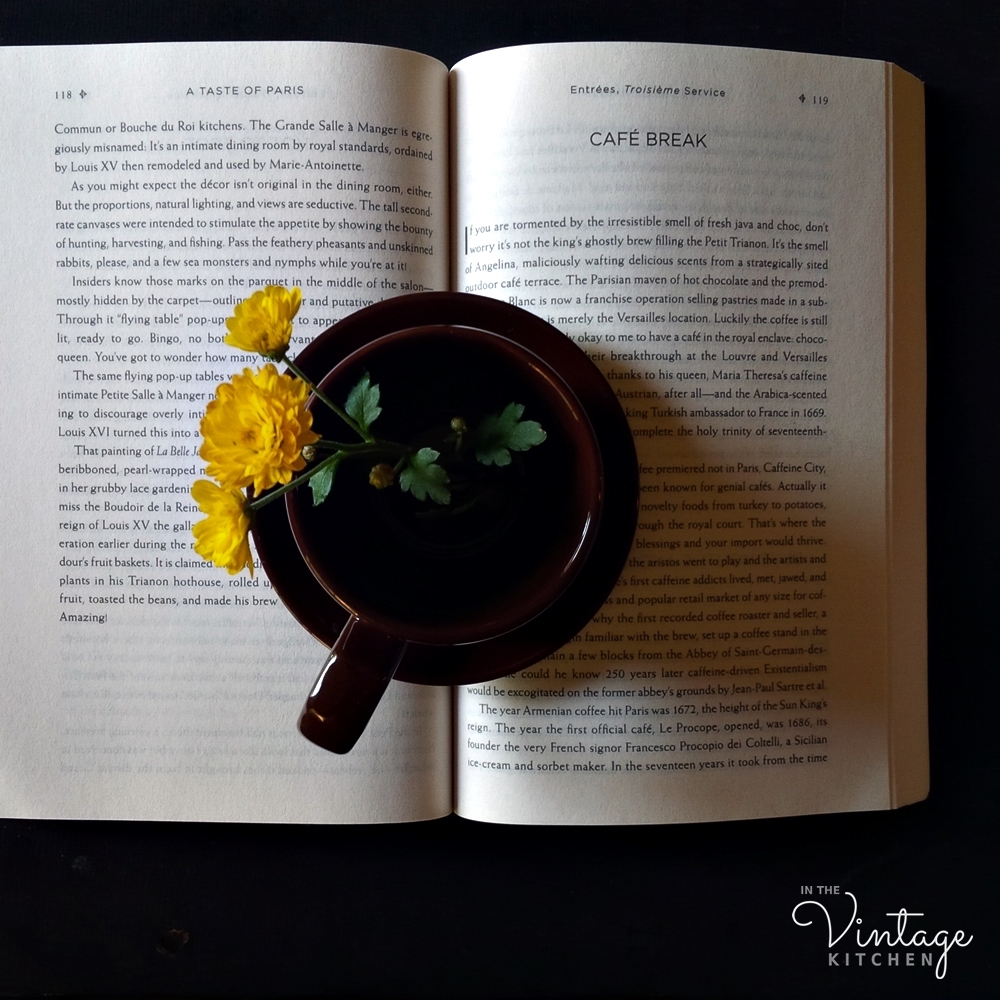
Everyone knows that French food is one of the most well-crafted and esteemed cuisines in the world, but not many people know why or how it came to be. In David Downie’s new book, A Taste of Paris, he dives into the history behind the food with a researcher’s wild abandon for discovery and a humourist’s eye for fun.

Last time we were reading about the City of Light here on the blog, we were exploring it through the paintings and photographs of writer Janice MacLeod in her book, A Paris Year.

Janice and her Paris Year!

This time around, we are deep in the archive vaults of Parisian history alongside author David Downie as he takes us on an epicurean tour of the food that made France famous. Magically, in just 280 pages, David manages to condense centuries worth of feasting into a tidy timeline that begins in 53 B.C. and ends in present day.

“What is thrilling at least to me,” David declares in the starter portion of the book, “is to speculate on how in modified and sometimes-hard-to-recognize forms many foods and food-related habits have survived the ravages of time, the invasions and massacres and floods and fires, the plagues and changes in religion or political and economic systems, and live on in Paris today.”

It is with that keen interest that David dissects how, when, where and why the French have cooked, created, dined and dallied their way to the top of the menu board. Along the way, we learn about colorful characters like…

Queen Caterina de Medici – wife of King Henry II (1519-1589)

Queen Caterina, wife of King Henri II who chewed tobacco leaves to relieve her headaches which started French women’s universal love affair with nicotine.

We also learn about the histories behind an assortment of interesting neighborhoods, buildings, and restaurants that all contributed to the food scene both ancient and modern…

Clockwise from top left: Le Marais historic district, Palace de Versailles, Hotel de Cluny dating to the 1300’s, Verjus restaurant

…and we learn fun facts galore on a myriad of kitchen topics like these…

  1. Butter knives were invented so that people couldn’t pick their teeth at table.
  2. During the Middle Ages, long before the invention of plates,  bread was baked in cutting board shapes and used to hold piles of food for individual eaters. Once the food on top of the bread was consumed, the bread was given to peasants or animals to eat.
  3. Artichokes are considered an aphrodisiac, especially in Italy.
  4. One in three French people smoke (hence the city of lighters!)
  5. In-home cooking spaces in most French houses didn’t exist until the late 18th century.
  6. Below is one of President Obama’s favorite restaurants near the Eiffel Tower…
La Fontaine De Mars

Paris is a city continuously simmering in centuries of tradition. A delightfully unique aspect of David’s book is that he shifts back and forth between present day and the past, so you absorb plenty of history along the way but you also directly understand the correlation between what’s changed and what hasn’t.

While you don’t need to be a European history scholar or a devout foodie in order to tuck into this culinary aspect of the city, it helps if you have a special interest in old world events and a basic understanding of the fine-tuned culture of the Parisian lifestyle because David presents so much interesting, thoughtful information.  You’ll want to marinate in his chapters for a bit instead of rushing through them in one quick read. I was lucky enough to receive this advance copy of the book several months ago. One of the fun aspects of reading it over the summer was keeping Pinterest close-by so that I could look up the people and places of Paris while I was learning about them through David’s eyes.

With a wonderfully engaging voice and an ability to colorfully (and often times humorously) describe a building or a banquet, David treks you around town with insight and intimation. One of my favorite lines in the book came forty pages in when he writes about the 3rd-century Roman bath complex at Cluny as “a charming jumble that looks like a mouthful of broken molars repaired with elaborate fretwork crowns.” Admittedly, I had no idea what the Cluny bath house looked like, but thanks to David’s description I could get a pretty good impression of it.

Other intriguing sections in the book included the eating habits of Versailles’ residents, the symbolic imagery found in The Lady and the Unicorn tapestry,  and the gregarious life surrounding French food writer, Maurice Edmond Sailland a.k.a Curnonsky (1872-1956).

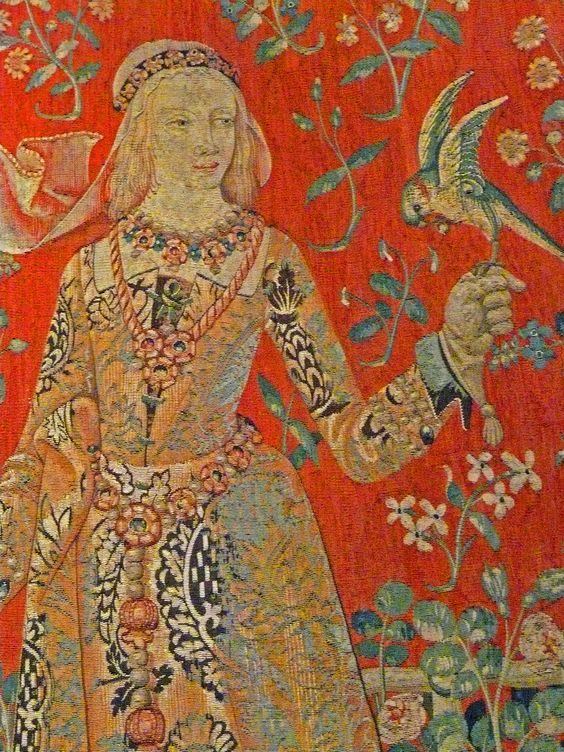
A snippet from the Taste panel of the Lady and the Unicorn tapestry created in 1500.

But not everything is champagne and caviar and easily expressed. Amidst all of these fascinating history lessons, David also dives into his own food experience which began in Paris in the 1970’s. With his modern eyes, he retraces his food steps taken four decades ago to see how, and if, the landscape he once personally adored still holds up to the memories he stored. He also talks about the future of French food among the booming explosion of other newly exalted food scenes in other cities. Can Paris hold up to the competition?

Described best as  part guidebook, part history class and part personal memoir, A Taste of Paris pushes you to make notes, take notes, look for more, explore more… which brought me to quickly wish for two things that the book did not have – detailed maps of the areas where David traveled and an index for quick reference.  Then I discovered, as I finished the last page that David does offer both maps and an index of sorts. He and his wife offer walking tours of Paris through his website where they take you on all sorts of off-the-beaten-path adventures. That’s ten times better than a paper map and a list of page numbers! You get the guy (and the guide) in person, all to your yourself!

While we often don’t even think about the fact that millions of people have experienced both good and terrible situations treading upon the very ground we also walk upon so nonchalantly every single day,  David reminds us that the veins of history are deeply wound up in the practices and procedures of our modern lives. That flaky croissant, that steaming cup of hot chocolate, that celebratory pop of champagne were all born a long time ago yet they continue to intrinsically impact us as we move towards the future. In detailing the anatomy of a cuisine, David dissected a city whose culture has influenced a collective conscious of eaters around the world and that is pretty remarkable.

Whether you get the chance to meet up with David in Paris and peruse the food scene together or you simply read about his city in your city, A Taste of Paris is as satisfying as falling in love with a new museum exhibit. It will broaden your point of view, make you think, ask questions, ponder your own country’s evolution of food practices and ultimately make you appreciate how far we have come, as a civilization, from the days of heaping breadboards and kitchen-less houses.

Cheers to David for peeling back the layers of French food culture in such an interesting way!

Find A Taste of Paris available here. Learn more about David and his other Paris based books here. And if you find yourself in the City of Light(ers) take David’s tour and watch the book unfold before your eyes.


Family Drama: The Havilands of America, France and Germany

In the 1800s, there was an American family named the Havilands who owned a china shop in New York City. The family was made up of four brothers David, Edmond, Daniel, and Robert all of who participated in the dishware business in one way or another whether it was through trading, importing, exporting, or physical operation of the William Street storefront.

A 19th-century view of William Street where the Havilands worked. Photo courtesy of the New York Public Library Digital Collection.

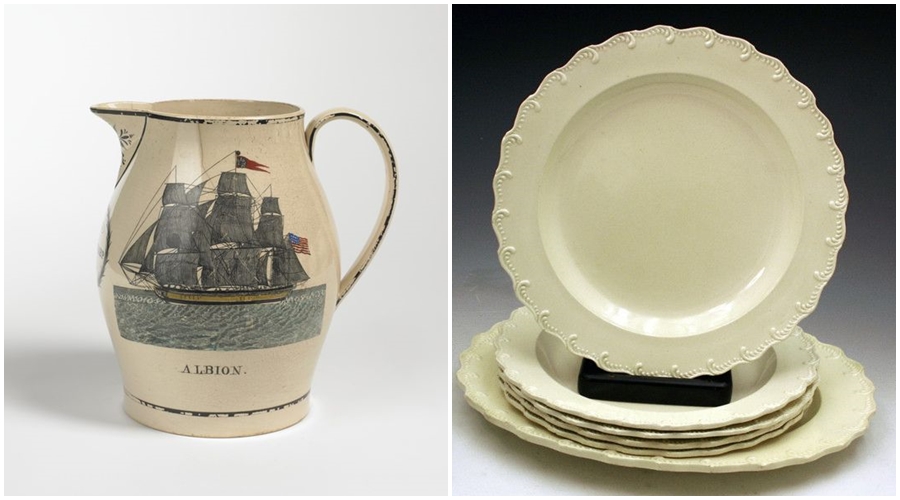
Selling dishes in New York City in the 19th century was a competitive business. China merchants were located all around town, utilizing the bustling harbor to import dishes from faraway countries. The Haviland inventory came from England and France in the form of creamware…

Early 1800’s English creamware

that came off the Pearl Street docks just a few blocks from the Haviland’s shop. Constantly trying to improve their offerings and find lucrative ways to stay afloat while supplying the city with serving pieces, the Haviland’s also offered china repair services. Legend states that a broken teacup made of a beautiful white clay brought in by a customer, led one brother, David, to hunt down the source of this stunning bright, light material.

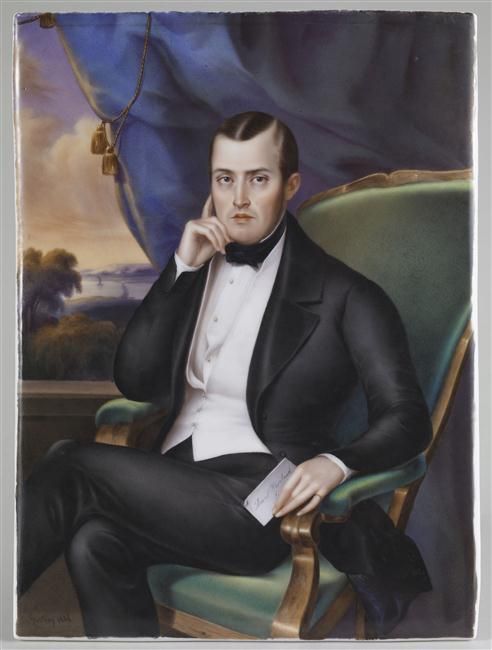
Portrait of David Haviland painted in 1848 by Fortin

The search for discovery led him all the way to Limoges, France where factories had been producing porcelain dishes made from local kaolin clay since the 1700s. Beholding the beauty of this delicate but strong material, the enterprising David picked up his wife and young son from America and moved to Limoges with plans of opening his own porcelain factory. From there, he would send all of its creations back to America for sale.

David’s wife, Mary Miller Haviland

In France in the 1800s, pottery manufacturing and pottery design were two separate businesses. First, the pottery was made in a factory, then it was shipped to artisans who painted or applied decorative imagery to the blank pieces. David Haviland saw a faster, more efficient process. When he opened his china manufacturing plant in Limoges, he hired local artists to hand-paint colorful designs on his porcelain pieces in-factory, thus eliminating the extra steps of sending china blanks out to be finished.

David’s European business venture quickly set him apart from other local French potters. His faster production time allowed more shipments and greater volumes to be exported. Plus, his new oval-shaped dishes, the artistic renderings of realistic-looking hand-painted flowers, and the bright white glow of the porcelain material delighted American buyers. Quickly word spread and a prestigious reputation of fine china manufacturing followed. Havilland Limoges became the must-have item. Even U.S. presidents were smitten. An elegant, artistic brand bearing the Haviland name was established.

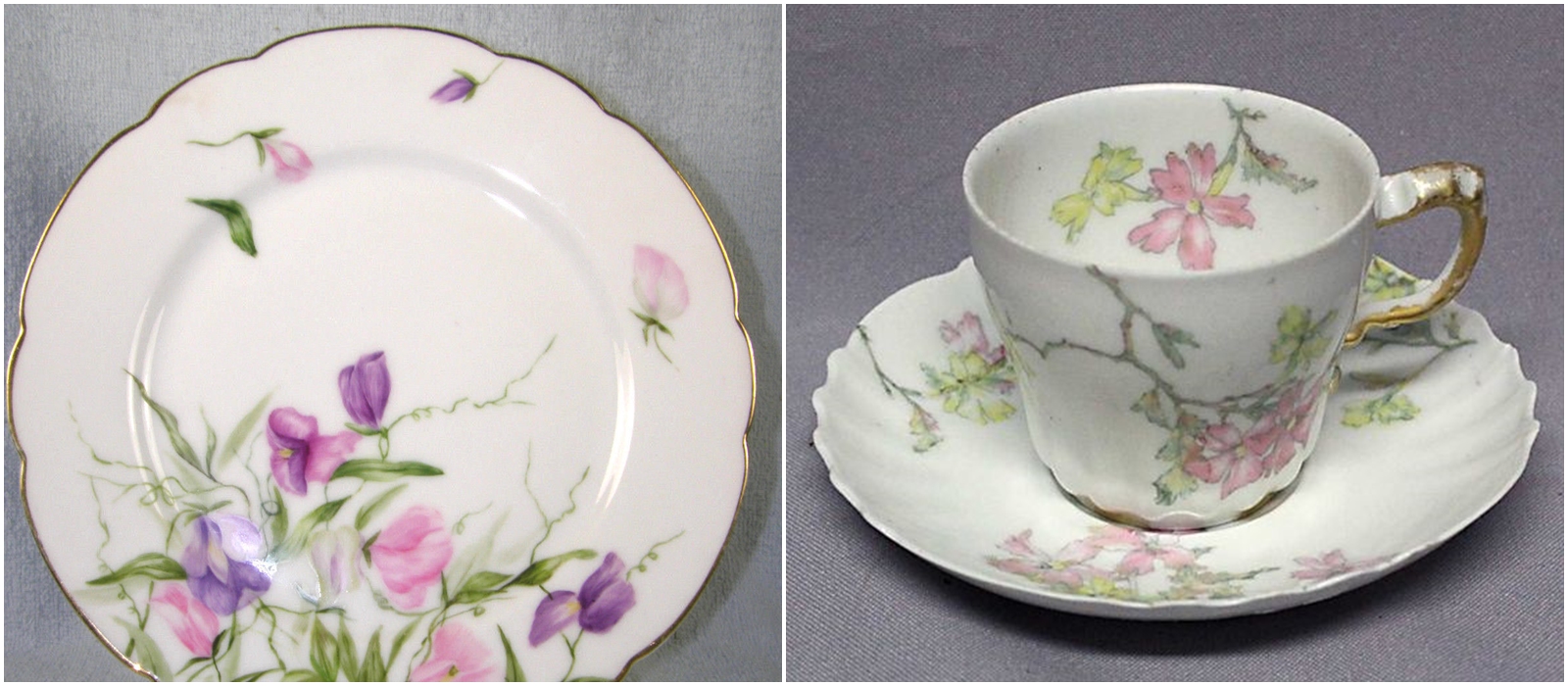
Haviland Limoges china circa 1870
Back in France, David’s two sons Charles and Theodore grew up in the family business. Both went on to make life-long careers of the industry, each adding their own unique style, design aesthetic, and innovation to the Haviland brand. But even though the company enjoyed worldwide notoriety, staying at the top of their game was still a constant balancing act. The competition was fierce both inside the industry and inside the family.

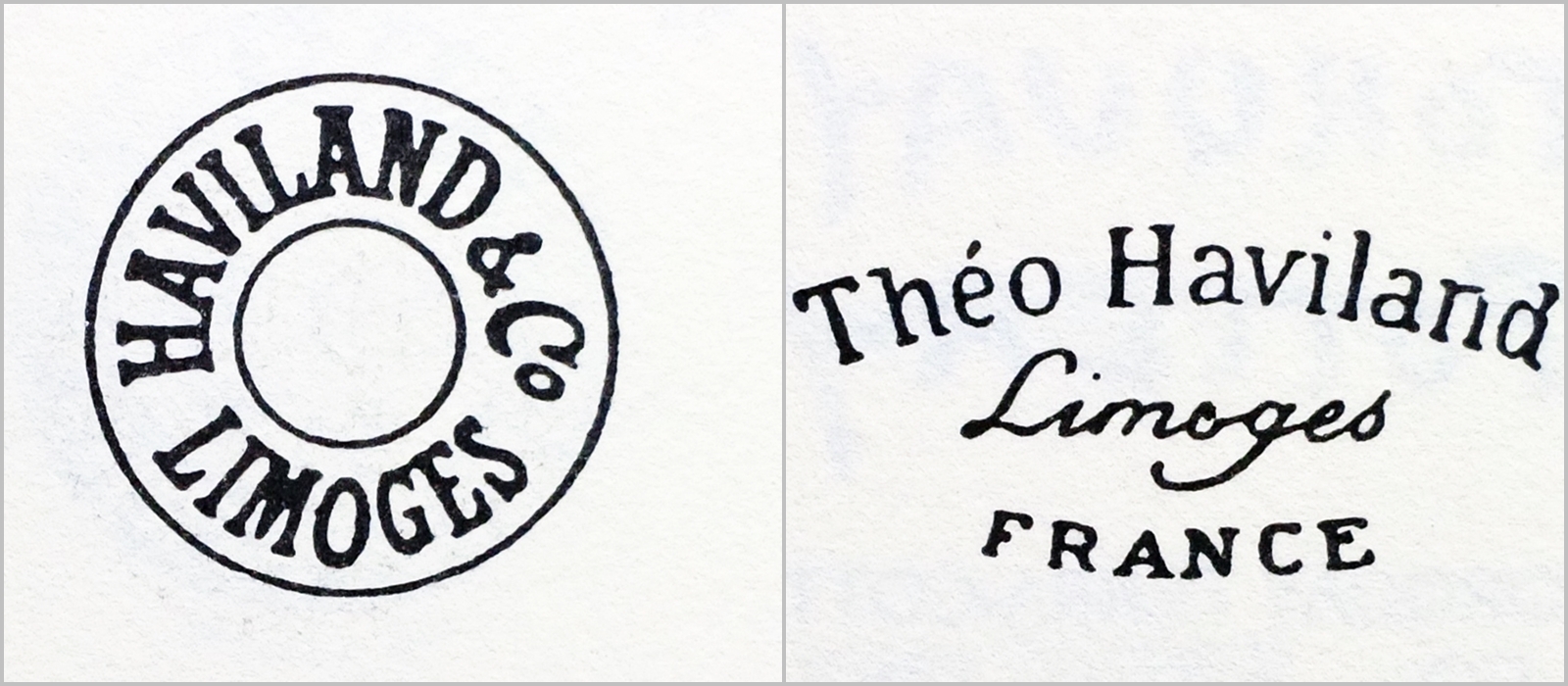
Upon their dad’s death in 1879, Charles and Theodore couldn’t agree on similar ways to move the company forward so they broke it in two.  Both brothers, now operating at the helm of their own separate companies, incorporated the family name and waged a war against each other for top spot in the market.

Charles’s pottery mark on the left, Theodore’s pottery mark on the right, circa 1880s/1890s. Marks courtesy of Kovels.

The stable of original in-house French artists that their dad, David, had gathered and that had turned the Haviland dishes into beautiful works of art became pawns between the two son’s companies. There was in-fighting and backstabbing. The brothers competed with each other on all levels from design to pricing. When a set of Theodore Haviland China went on sale, Charles would reduce a similar set of his own even more. If Charles offered a 15-piece set of china for a certain price, Theodore would offer a 25-piece set for the same price. And so it went back and forth between the two.

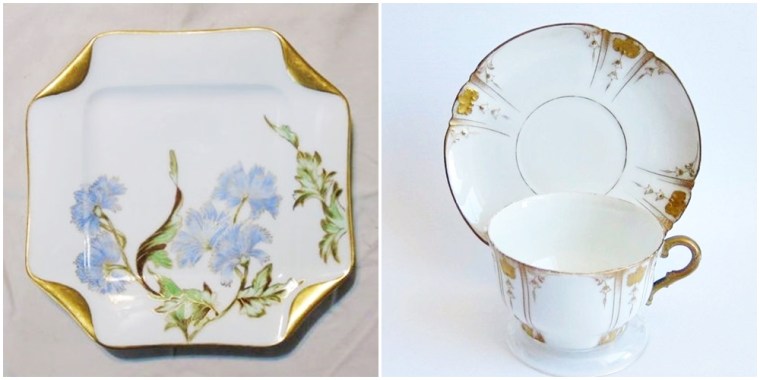
Charles Haviland china plate on the left,. Theodore Haviland cup and saucer on the right.

Charles had a son named Jean, who was born in France and like his dad grew up in the china business. But unlike Charles’s childhood,  Jean didn’t grow up in the hard-work-pays-off environment experienced by his smart, industrious grandfather, David. Instead, Jean saw his dad, Charles, bear the exhausting burden of constantly competing in a business that relentlessly beat back. Brother warred against brother for ultimate superiority and control of the prestigious Haviland name.

Young Jean loved dishes just like his father and his grandfather but he didn’t see a place for himself amidst the family feuding. When Jean became of age, he moved to Germany, changed his name to John, and opened up his own pottery factory in Bavaria under the name Johann Haviland.

Jean’s desire was to produce simple, affordable serving pieces and dish sets for everyday American households as well as strong, sturdy constant-use sets for hotels and restaurants. Even though his dishes bared the Haviland name, their simple designs and more economical price point were seen as somehow inferior to the exquisite detail and artistic merit associated with David Haviland’s original dynasty.  Jean stayed in business only a few years before his company was bought by another pottery company. From there, the Johann Haviland brand changed ownership again and again until it was finally discontinued in the 1970s.

Of the two warring brothers, Charles and Theodore,  and the fate of their warring companies, ultimate success was achieved by Theodore whose family line continued the Haviland tradition of fine quality craftsmanship and exquisite design that still continues today…

Jean Haviland’s pieces under the Johann Haviland brand might be snubbed today by serious Haviland collectors, but they still hold up in both form and function. The simple elegance of this Johann Haviland platter is effortless in design and ability. It matches everything, accommodates a plentiful array of food, and contains the history of a man who dared to do things without the drama.

Perhaps there was a bitter taste in Jean’s mouth when he witnessed his family’s ultimate fight for prestige over passion.  Even though Jean who became John and then traded under the name Johann, knew all the formulas for success in order to produce high-quality dishware he did not succumb to the mercilessly competitive nature of his father and uncle, which seems like a character trait that would have made his grandfather David proud. Jean might not have put his personal mark on the china industry for as long as other family members but he did manage to break away from the feudal family climate and follow his own more peaceful rhythm.

Find the smartly stylish Johann Haviland platter listed in the shop here. It looks outstanding with every other dish in the shop so if you are looking for a grouping of serving pieces then this is your easy-breezy match-all mate.

On This Day in 1930: A Behemoth Was Born

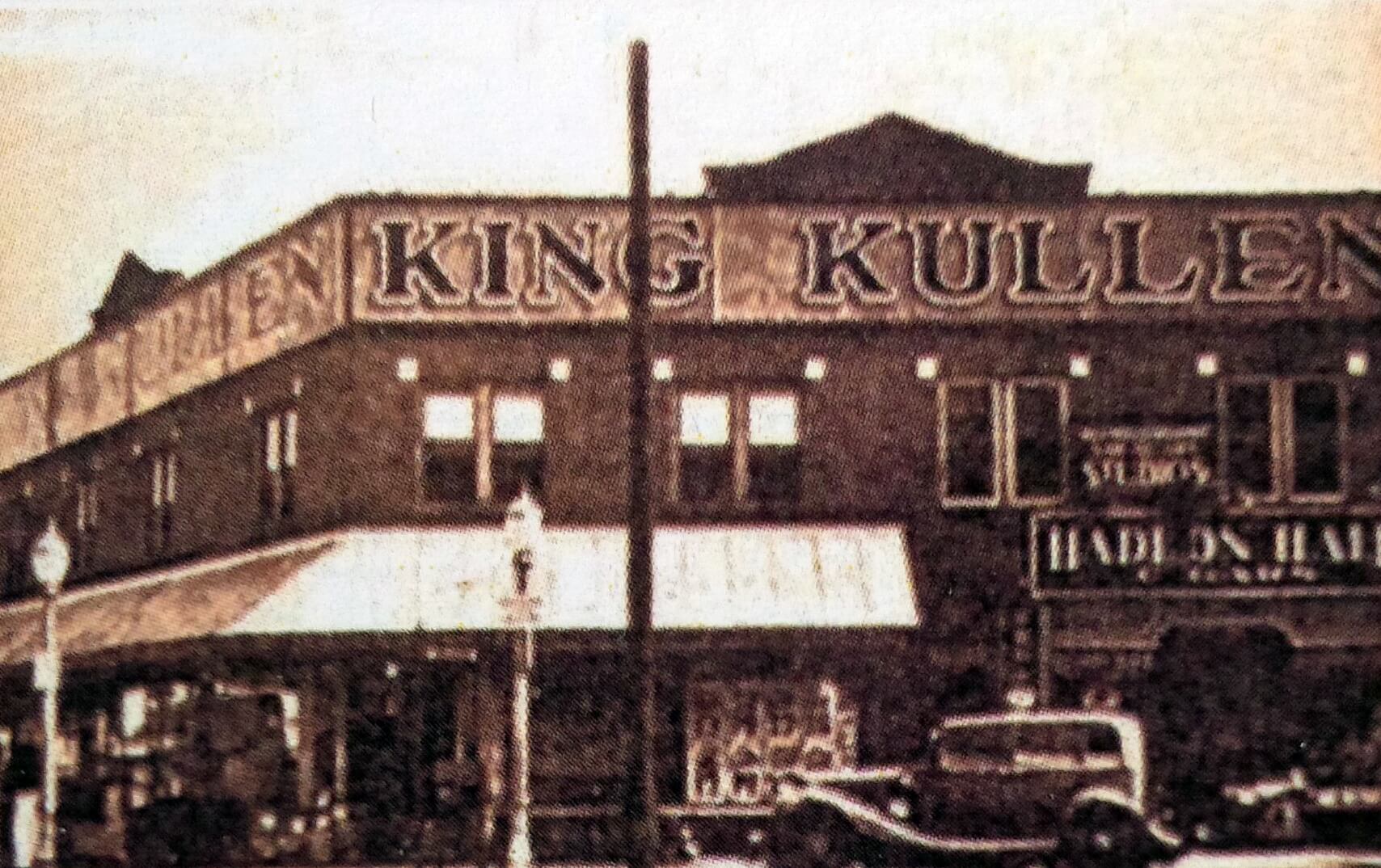
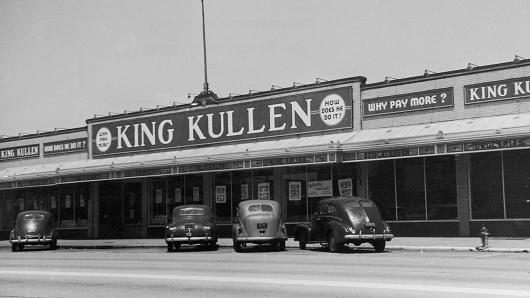
On this day – August 4th, 1930 –  a giant marvel of a masterpiece was unveiled on Jamaica Avenue in Queens, New York. It involved a big building, a big parking lot and a plethora of products that extended far beyond what anyone could have imagined before. Aptly named King Kullen, it was King Kong-ish in size and scope and quickly took over an industry in a way only a behemoth of a good idea could.  It was the birth of the super market – the very first large space grocery store that contained not only food items but also hardware, paint, automotive, cosmetics, shoe shine, kitchenware, confectionery and drug departments all under one roof.

Michael J. Cullen (1884-1936)

The brainchild of grocery store employee, Michael Cullen (who spent half of his adult career working at The Great Atlantic & Pacific Tea Company and then grocery retailer, Kroger) imagined a better, larger, less expensive shopping experience that would cut grocery prices in half for the customer and allow more space for the store to sell bulk items in mass quantity. Essentially it is the same concept that our modern American grocery stores still follow to this day.

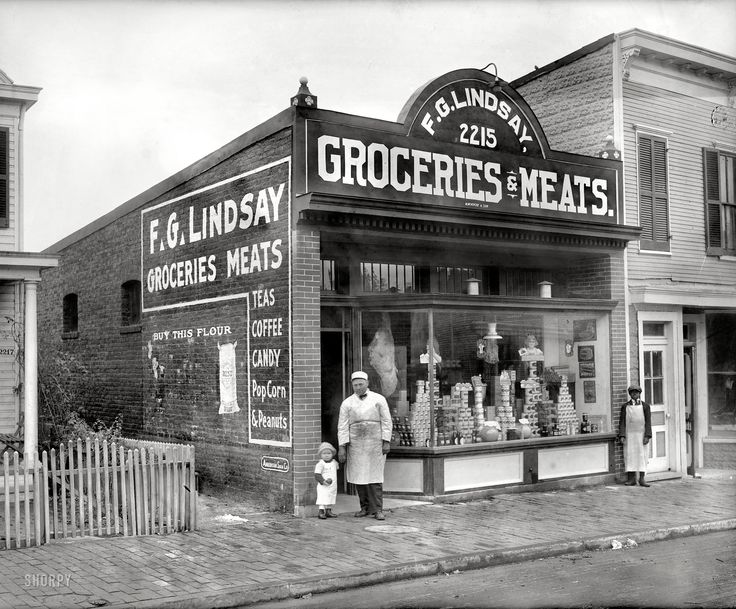
Before Michael and his big-brained idea came along, people grocery shopped in small pocket stores like this one photographed in the 1920s…

These independent stores definitely filled a need and were vital businesses to the community but they were also very limiting and not very private. Space was an issue for the store owners which meant that many items had to be special ordered for customers on a need-by-need basis,  extending the shopping transaction by days or sometimes even weeks.  Service was also an issue as items were frequently stored up high or behind counters making it necessary for grocery employees to gather specifically what was needed.

This one-on-one buying model may have helped develop customer relationships but it also created lengthy wait times for other shoppers while each order was filled.  Speculation and gossip seeped into the buying process too as the whole store could see (and hear!) what everyone was buying. Combined with the fact that meat was purchased from the butcher, bread from the baker, fish from the fish monger and specialty cans and shelf stable items from the grocery, meant that the whole shopping experience could take hours out of the day.

Refrigerators of the late 1920’s provided enough storage to stock foods for up to a week.

Michael took note of all these clunky patterns, accessed the growing rise of refrigerators popping up in American homes and started jotting down ideas for something easier and faster involving less commotion and less expense. While he flushed out his thoughts he was still working at Kroger. He brought up his ideas to his boss who didn’t give Michael’s thoughts any merit. So Michael left Kroger and opened King Kullen Grocery Company independently months later. Michael knew he had a great idea – the right concept at the right time. He had worked in the grocery business for 28 years at that point, long enough to see where the consumer experience needed improvement and how profits could be made.

By building a bigger store in a bigger space, King Kullen initiated the self-serve shopping concept where all products were in easy reach of the customer with a large quantity of the same item available. So you could zip in and out of the store much more quickly. No more waiting, no more special ordering, no more gossip.

King Kullen also eliminated the idea of credit registry systems, another time sucker, by only dealing with cash transactions. And they axed the local delivery system which for small, independent grocers meant additional employees and additional expense. Combining all these elements – bigger store, easy to reach items, large selection of product and a faster payment system was much more efficient and empowering to shoppers.  Independent groceries were old-fashioned and pokey where King Kullen, in 1930,  was up to the minute modern.

And then there was the significant pricing system. Upon opening, King Kullen boasted that they could reduce your average grocery bill by 10-50% which during the Great Depression years was a major attraction for struggling wage-earners. By offering everything from house paint to ham (the “super” market concept)  under one roof, King Kullen became a one-stop shop. You can see the price difference between Kroger in the 1920’s and King Kullen in the 1930’s in these advertisements…

Late 1920’s Kroger grocery advertisement on the left, 1933 King Kullen Advertisement on the right

Some of the significant savings included:

  • Tea –   $0.29 per 1/2lb at Kroger vs. $0.39/per 1lb at King Kullen
  • Boiled Ham – $0.33/lb at Kroger vs. $0.21/lb at King Kullen
  • Catsup – $0.15/bottle at Kroger vs. $0.10/bottle at King Kullen
  • Whole Chicken – $0.33/lb vs. $0.19/lb at King Kullen
  • Beans – 4 cans for $0.23 at Kroger vs. 6 cans for $0.25 at King Kullen

Finally, by providing a large parking lot able to accommodate a vast amount of cars, King Cullen changed how people shopped. Families went together, some traveling up to 100 miles away from home so they could fill their car with foodstuffs and stock their shelves for a lengthier period of time. The super market also hosted all sorts of product events and giveaways making each shopping trip to King Kullen unexpected and engaging. It was a seamless, adventuresome outing, easy to navigate and fun to participate in.

King Kullen caught like wildfire in the hearts of the American public. Thousands flocked to the new Jamaica Avenue store on opening day, leading a trend that other grocery stores (like Michael’s previous employer, Kroger) noted and then soon replicated. Throughout the 1930’s store after store opened under the King Kullen brand. Unfortunately in 1936 tragedy struck when Michael died just six years after debuting his first Jamaica Avenue store from complications following an appendectomy.

With the help of his wife and his sons, Michael’s legacy and the King Kullen brand continued to thrive. Today there are 32 King Kullen grocery stores still in operation, proving that Michael was a true visionary. The motto of the brand from the beginning was “We are here to stay and to please the public.”  Eighty-seven years later and still going strong, they have definitely accomplished their mission and in doing so affected change across the entire grocery industry.

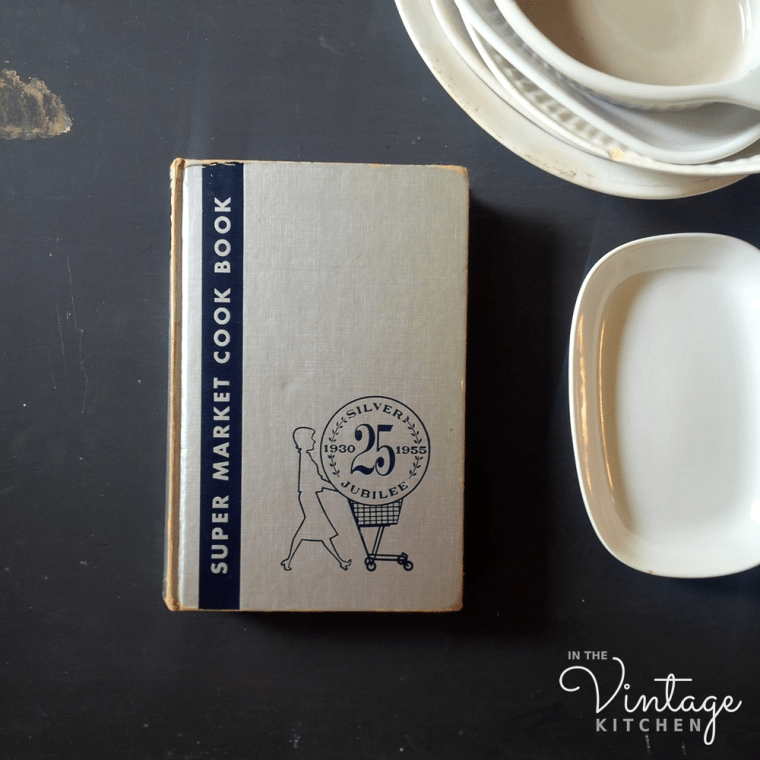
Just listed in the shop this week is a cookbook published in 1955 celebrating the 25th anniversary of the supermarket. Titled the Silver Jubilee, it contains over 500 pages of recipes utilizing ingredients easily found at King Kullen-sized stores.

It is hard to imagine this being a novelty cookbook now but if you think about having to stop at 5-7 different food stores to pick up ingredients for one recipe you can understand how enormous this concept really was between the 1930’s – 1950’s. We take so much for granted now in the form of food buying and what we expect from the process. The Silver Jubilee really helps us understand the marvel behind the modern just like Michael helped us experience the efficiency behind the industry.

Cheers to Michael and his revolutionary idea and a happy birthday to King Kullen!
Later this month we will be featuring a few recipes from the Silver Jubilee cookbook in our first ever cross country cook-a-thon. Stay tuned for that!  In the meantime, find the celebratory Super Market Cook Book in the shop here.

Lost In Translation No More: An Update on the Chinese Mug!

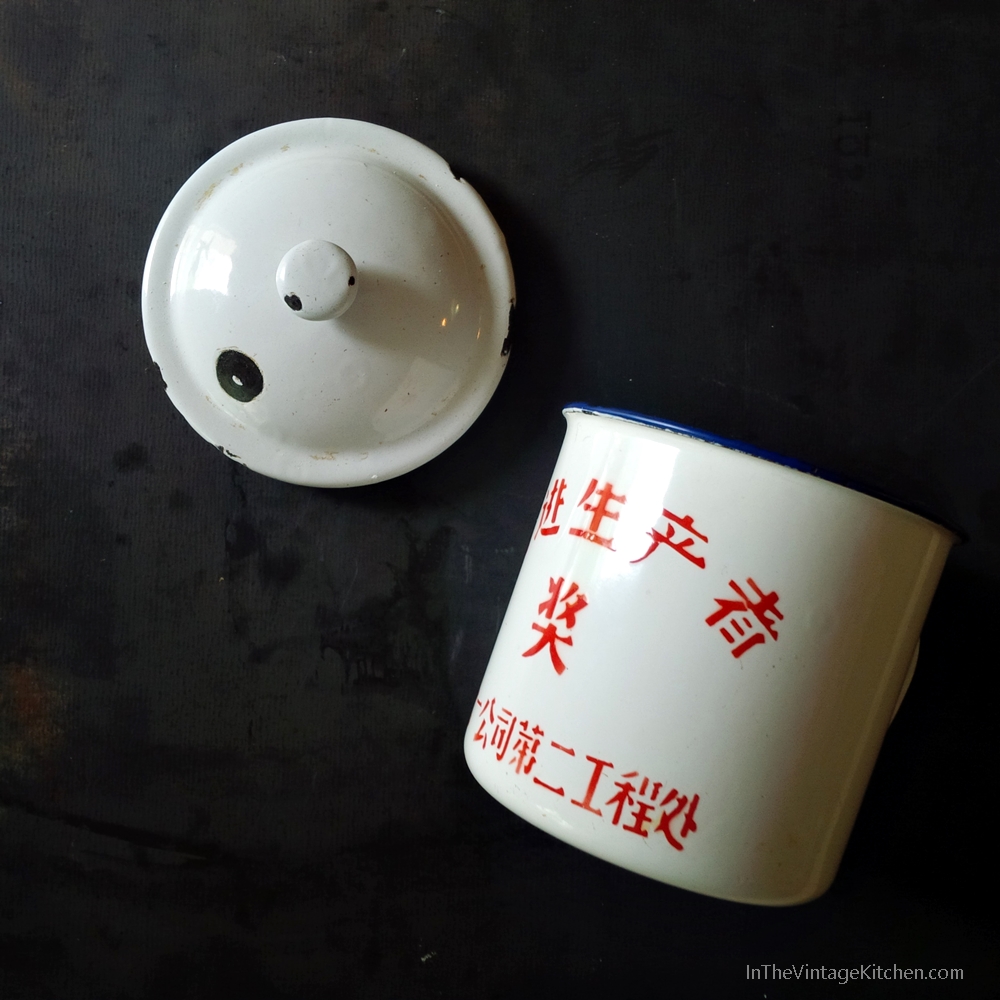
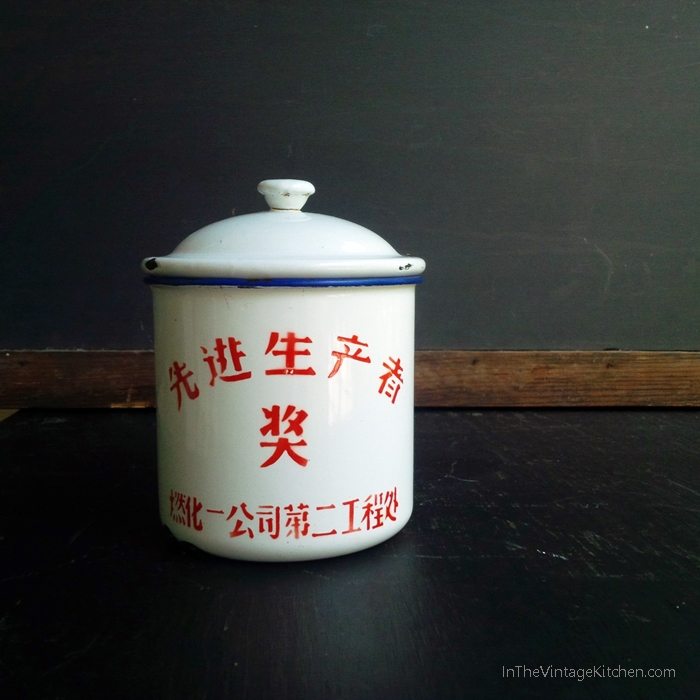
In April, we posed the question…how many people does it take to translate a mug? We were up to four at that point with two more possibilities waiting in the wings of email communication. The mug in question was a vintage 1950s enamelware-covered cup made by the Peacock Enamelware Factory in Tianjin, China.

Due to its rarity and the fact that the message written on it was in Chinese (possibly Mandarin), deciphering the Chinese characters enough to associate them with English words and meanings was dauntingly slow. But with a little luck and a lot of perseverance connecting with online translation sites, friends of friends, and Chinese language books we got to the following stage of interpretation… (the blank dashes represent words we had yet to figure out)

First ____  Makes ____       {related words/themes from this line include: living, livelihood, give rise too, birth, life}

Prize  {reward, given for victory}

Burning Culture 1st ____ ____ 2nd ____ _____  {collectivization, work, worker, skill, profession, individual}

Theories surrounding the literal translation of the mug ran the gamut from Communist propaganda to marketing slogans (Eat at Al’s!) to an award of some sort (mainly because everyone agreed that the middle line definitely referenced a prize or award of some kind).

Two weeks ago, when Google translator sputtered out two words, pride and factory, before shutting down completely, I thought for sure we were on the right track of this mug bearing some sort of political campaign message for an impassioned Chinese factory worker.  I could see him in my mind, eating his lunch, drinking his tea all along silently communicating his political ideology through the slogan on his mug.

Wonderfully, a breakthrough came from the Nashville Chinese School when a last-ditch effort was made to reach out to yet another language school (the fourth during this search!) just after the July 4th holiday. In two days, Irene from NCS had the whole mystery solved.  And to think this jewel of school was sitting right under my nose all these months.

Irene provided the following translation…

Progressive Manufacture
Award
Blaze Company – #2 engendering department

As it turns out our little covered mug was an award! Not exactly as sensational as a piece of communist history, this mug announced a prize for a job well done by an innovative manufacturing department. It was someone’s proud acknowledgment of accomplishment. A midcentury metal (pun intended!) of achievement.  A smile and a handshake, which is by far a happier association than communism.

Looking back on my original ideas of the translation, I see that we weren’t really that far off. First and Makes easily falls in line with Progressive and Manufacture. Prize and Award are the same. Burning Culture coordinates with Blaze Company.  We even had the number 2 figured out. The only part that drew blanks was the engendering department (which means the idea department or innovation department or possibly where sales and marketing resides!).

Aha. In solving this mystery of history we’ve also been able to answer the question of the day. How many people does it take to translate a vintage mug?

NINE!

Nine people and three months and lots of imagination to solve the slogan on a 64-year-old mug.  I learned so many things on this fun little journey – but most importantly I was reminded to check my neighborhood first. Had I contacted Irene at the Nashville Chinese School in the beginning, this would have been the tiniest of mysteries solved so fast. But on the other hand, I would have never jumped in feet first to the deep end of the Chinese language pool. Knowledge is power(fully) exciting. And for that I’m grateful.

Cheers or 干杯  ganBei (as I now know they say in Chinese!) to Irene and to Sing and the host of other helpers involved along the way. And most importantly cheers to our vintage mug, which now has a spirit and a story.

If you ever need any translation help yourself or want to embark on a fascinating new language journey contact Irene here.

As for our little trophy of a Chinese mug – find her in the Vintage Kitchen shop here. Her exotic appeal and around-the-world scavenger hunt of a story make for a happy little storage system for tea or spices or kitchen items of all sorts.

Mabel In the Market: The Search for the 1920’s Doughnut Shop {Part 2}

I’ve never played hide and seek with a city or a ghost before. But that’s exactly what I did with Mabel in Seattle. I was on a mission to find my great-grandmother’s doughnut shop, which according to family lore, was located in Pike Place Market sometime between the years of 1922 and 1940.

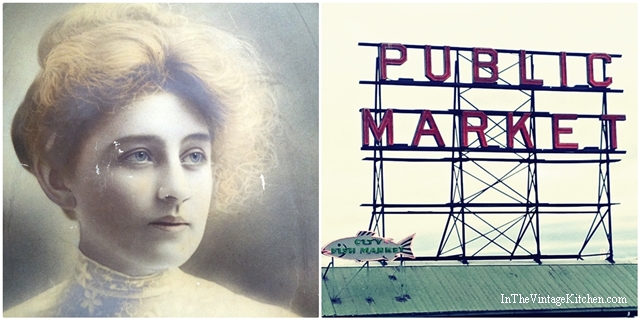
Mabel in 1907; Pike Place Market sign in 2017

If this were a movie, I’d find her by doughnut crumb trail.  I’d hop off the plane with weeks of research in hand, pop over to the market and seek out the very spot where Mabel,  my school teacher-trained, Iowa native, Seattle transplant great-grandmother would have rolled out daily stacks of doughnuts during the early 20th century.

I’d scurry through market hallways and stallways…

Pike Place Market Stairs

passing sign after sign…

until I reached my moment of satisfaction. The final destination…

… actual proof, at long-last,  that my Mabel’s place of productivity was here and that her baking legacy survived in these doughnuts still being prepared and displayed in the same way she would have made them 100 years ago…

But this is not a movie and the trail of this baking mystery did not roll out so smoothly. I did go to Seattle and I did go to the market. And I did discover Mabel. Just not exactly the way I thought I would.

As it turns out Mabel just might be the biggest fan of hide and seek I’ve ever known.  She popped in and out of this whole adventure playing her game of come find me in the most superlative of ways.

Before I left for Seattle I had trouble locating any supporting documents that would pin Mabel down in the market. I searched for weeks, trying all sorts of different avenues leading from Seattle to Iowa and back to Seattle again, hoping for a picture, a newspaper article, a copy of a market receipt, a letter home to her family… any small detail that would mention a doughnut or a day stall.   I came up empty handed on all fronts except for a picture I found of her sister Katie with whom Mabel was close…

Hello to Katie!

Taken around 1900, this was a great new addition to the family photo collection. We don’t have any pictures of Mabel’s seven sisters taken while they were young. Katie has no connection to Seattle or to the market that I know of yet but it was encouraging, a good luck sign, perhaps to see the sisterly face of someone who was so important and so close to Mabel.

Back to the market mission,  I was hoping that research helpers at pikeplacemarket.org would be more successful combing their city directories and market archives. They too tried all possible avenues on their end. Had there been a shop name or a specific date things would have been, could have been easier.  Working on it up until the eleventh hour we were communicating back and forth about potential scenarios and information but valid, concrete documentation would elude us both in the end. Mentions of Mabel in the market were nowhere to be found.

It wasn’t all disappointment at this stage though. Mabel came through in another way. A better way actually then documents and even doughnuts. She came to me in the form of dishes…

Dating to early 1900, this is Mabel’s antique flow blue china made by W.H. Grindley in the Portman pattern which had been stacked away, unbeknownst to me, in my sister’s house for years.  How exciting! Dishes that Mabel actually touched in her daily life and that survived her 1,800 mile journey from Iowa to Washington. I could just imagine one of her lovely little doughnuts sitting on this plate. Like her sister’s portrait this was a more delicate and intimate side of Mabel then I ever hoped for. A tangible piece of history and a part of her that I could carry with me back home.

Even though there was no factual info to be had about Mabel’s market days my sisters and I  headed to Pike Place anyway to see if some visual clues might strike us.

We saw fish and flowers, pigs and produce, wall murals and a great busker band. We even saw a real-life Hobart, an invention we blogged about back in May. ( I think I was the only one standing in line at this vendor that was more excited about seeing the mixer then the menu offerings).

But there were no signs of Mabel.  We commiserated over grilled cheese sandwiches and doughnuts on the wharf and talked over the possibility that perhaps Mabel just worked at a doughnut shop instead of owned one. Maybe the family story got muddled and misdirected over time. Maybe Mabel was a cog in the wheel instead of the actual wheel.

We left the farmers market feeling satisfied with food but not with family history. The search continued. Questions were still unanswered.

Further investigations led us out to the suburbs where Mabel popped up again. This time in the form of a house with a big garden yard – the place where she lived for a time in the 1950’s.  And we saw her again in two churches that were built by her only child Philip, just outside of Seattle…

Those three places didn’t provide any new clues but they did suggest a new possibility. What if Mabel made so many doughnuts at the market and on such a large scale that she never wanted to look or think or talk about another doughnut again? What if, when she moved out to the suburbs in 1940, she was done with doughnuts completely? What if that is the reason the family stories never stretched farther than the market mention?

On the last day of my trip, after I made peace with the fact that I would not discover any new information about this family story for the immediate time being,  Mabel sent out a consolation prize.  While doing a little antique shopping, my sister found an old cookbook from 1902 with a woman who looked a little like Mabel on the cover…

Flipping through it look what recipe I found on page 256…

Iowa doughnuts! A recipe from Mabel’s home state nestled in with a whopping 13 other recipes for the willing doughnut maker.  What are the chances of finding such a time appropriate cookbook with such a specific and applicable recipe?  To make this find even more Mabel-fied the inside cover of the cookbook was stamped with the name and address of the previous owner. And guess, dear readers, where that previous owner lived?

The small town where Mabel had her big garden yard and where her son built two churches!

What, really, are the chances of that? Seattle is a big city and the suburbs are dense and bubbling places. The antique shop where we found the cookbook was far from the town where Mabel lived and where her son built the churches. Not every state in the cookbook got its own doughnut recipe (only Iowa and Nebraska). And after almost fifteen years of antique collecting I’ve never come across this specific cookbook before. All signs pointed to Mabel and the magically meant to be.

So even though I didn’t exactly find out all the information I was looking for heading into this trip, I feel like I got to know Mabel so much more than just being able to reiterate some facts and dates. I touched (and took home!) dishes that she herself touched.  I saw the first-time face of her sister.  I saw the house of her senior years and I stood before two big buildings that her son built. And the icing on the doughnut is the found cookbook; owned by a person who lived in the same town as her; and that contains an obscure recipe from her home state for a sweet treat that eventually bore her business. That’s a tidy little package.

The hunt for her market days info is far from over and this story doesn’t yet come full circle but it does come full-spirit. When we eventually solve this mystery of Mabel in the market there might just be a movie style ending. Stay tuned for new updates as the research continues. In the meantime if you missed Part One of this post catch up here.

Cheers to all the “spirited” storytellers out there.

Evolution of a Restaurant: From Livestock to Luxury Living

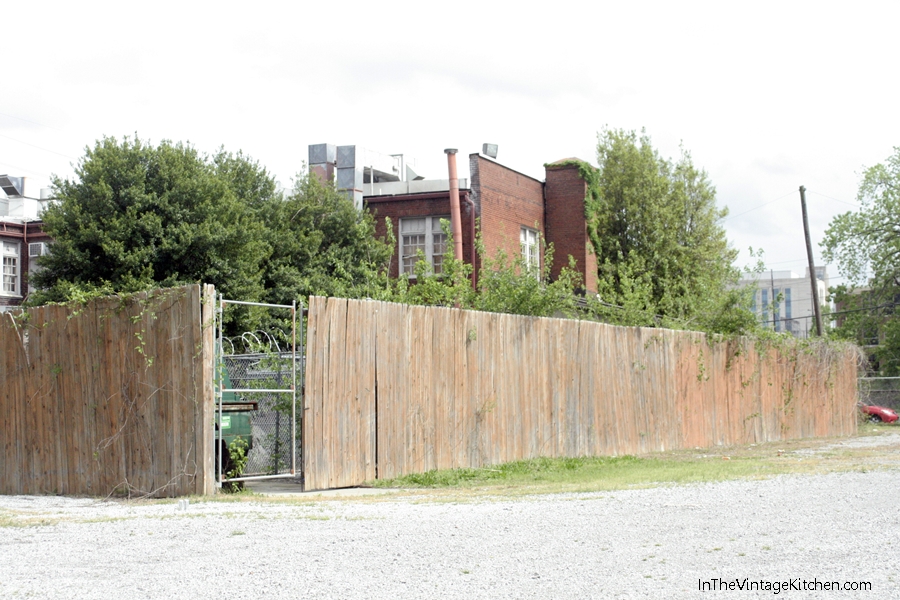
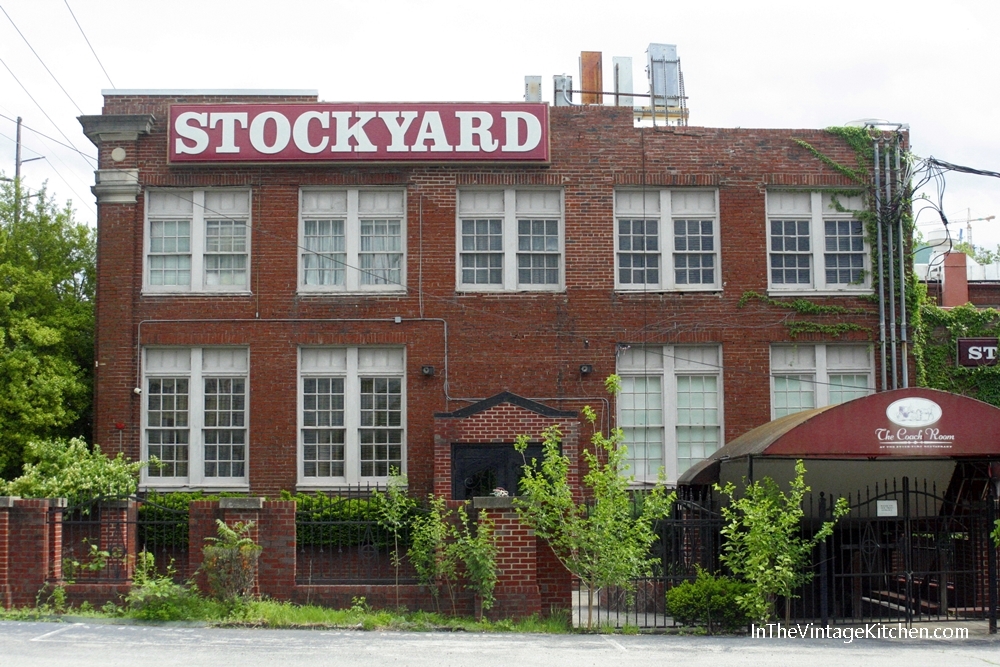
There’s a neglected building downtown on 2nd Avenue that F. Scott Fitzgerald would have loved. It takes up most of one city block with a rounded corner front entrance, large paned glass windows and eyes that look out onto the street below not unlike Dr. T. J. Eckleburg’s in The Great Gatsby.  

These all knowing eyes of 2nd Avenue belong to a cow, a pig and a curly horned sheep. Animals now so out of place in an urban industrial neighborhood that they appear to be up to something unusual – something marvelous and clandestine.  The building they live on, itself, is peculiar with steep steps that spill out onto the sidewalk and armies of tall trees that hug the front facade like protective bodyguards.

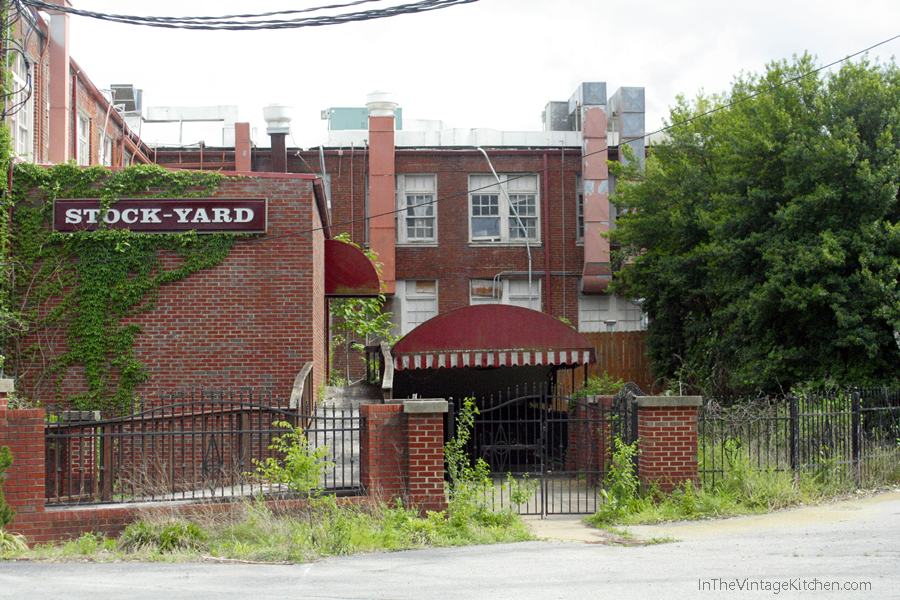
It is a city block full of inherent curiosities. Stories that F. Scott would have rushed to translate as they tumbled out of the curtained glass windows, broken in places, or tangled themselves in the ivy running all over the backside of the building. You never see any activity come or go from the glass front door. Cars park alongside it carrying people to other places in the neighborhood. Exercisers walk or run down its sidewalks. Occasionally a homeless person will take a rest underneath the faded, flapping awning or dogs will stop to sniff around the bushes. But lights are never on inside and the doors are never open.

F. Scott would have imagined a grand but tortured story here. He would have hunted around in the grass grown parking lot, creating characters out of chipped fencing and rusted gates. He would have penned something poetic about the runaway garbage and the shattered beer bottles and the Parisian lamp posts missing their white light domes. Its a little more Valley of the Ashes then it is East Egg or West Egg but there’s a romance about this place that is intriguing.

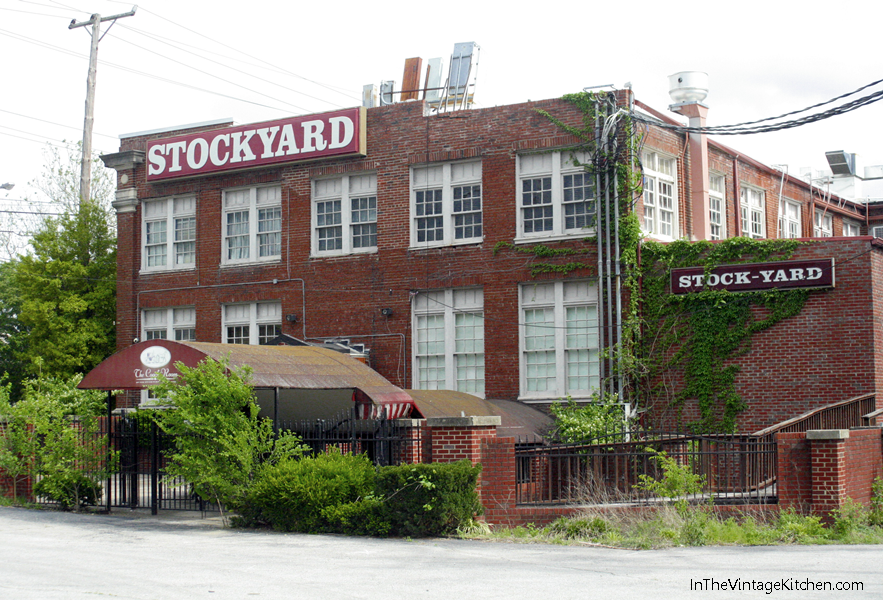
If I described this building to someone out-of-town the first thing I’d mention was that it used to be a famous restaurant called The Stockyard in the 1980’s and 90’s.  When restaurateur Buddy Killen bought the building in 1985 he imagined it as the place where you could get the best steak in town along with Las Vegas style entertainment.  “The place where the stars are seen,” that was what he was aiming for.

In the restaurant days – awnings, menu offerings and the front entrance foyer. Photos via pinterest.
He pulled the property out of bankruptcy, added $400,000 worth of improvements and made it possible to seat 475 people in the 27,000 sqf building. His plans were very successful and for 30 years local residents, tourists and celebrities alike climbed the front steps, passed under the concrete eyes and stepped into a lively atmosphere serving the quality of steaks Buddy had hoped for.

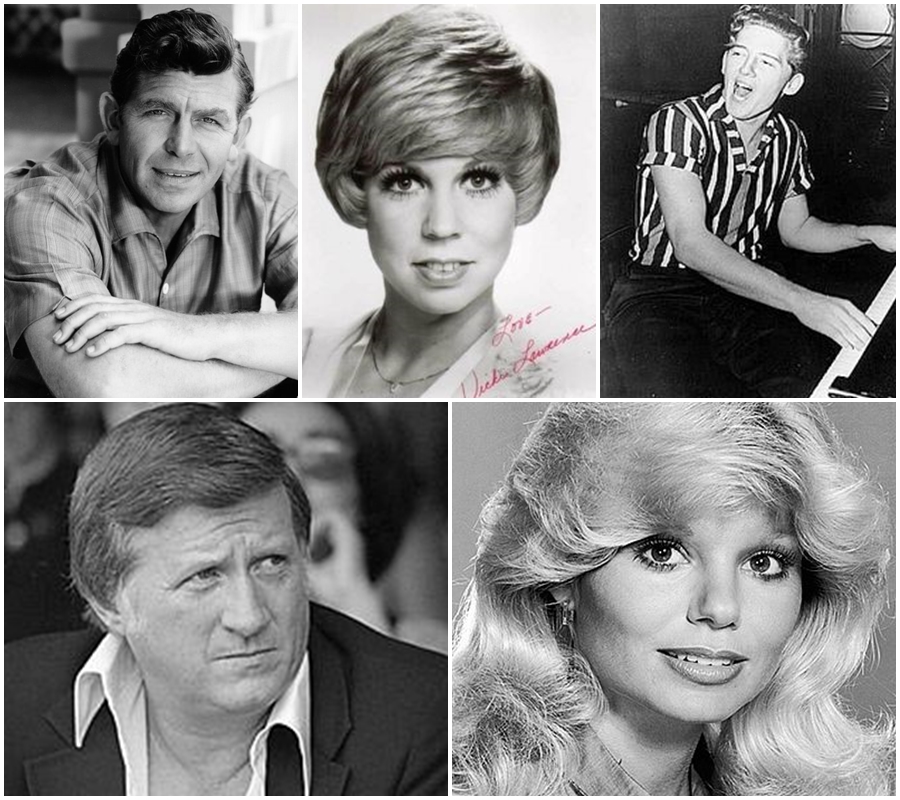
Some of the famous clientele of the Stockyard (clockwise from top left): Andy Griffith, Vicki Lawrence, Jerry Lee Lewis, Loni Anderson and George Steinbrenner

But before the Stockyard ever became a famous restaurant it lived another life serving an entirely different purpose. The name of the restaurant and its signature menu items weren’t fly by night marketing ploys developed to envoke a theme and inspire an atmosphere.  Buddy brought things full-circle when he served steak and called his restaurant The Stockyard.

Originally, over a century ago this section of Nashville was called Butchertown for its concentration of numerous butcher shops and fresh meat availability. Long before Buddy ever set eyes on the building it served as a touchstone for an actual working stockyard – one that would become the most prominent and important livestock trading site in the Southeast.

In the mid-1910’s  there were several small trading yards around Nashville but local businessman James E. Caldwell wanted to create one central spot where all the animals, farmers, buyers and sellers could meet under one roof and get their business done fast and efficiently in a convivial atmosphere.

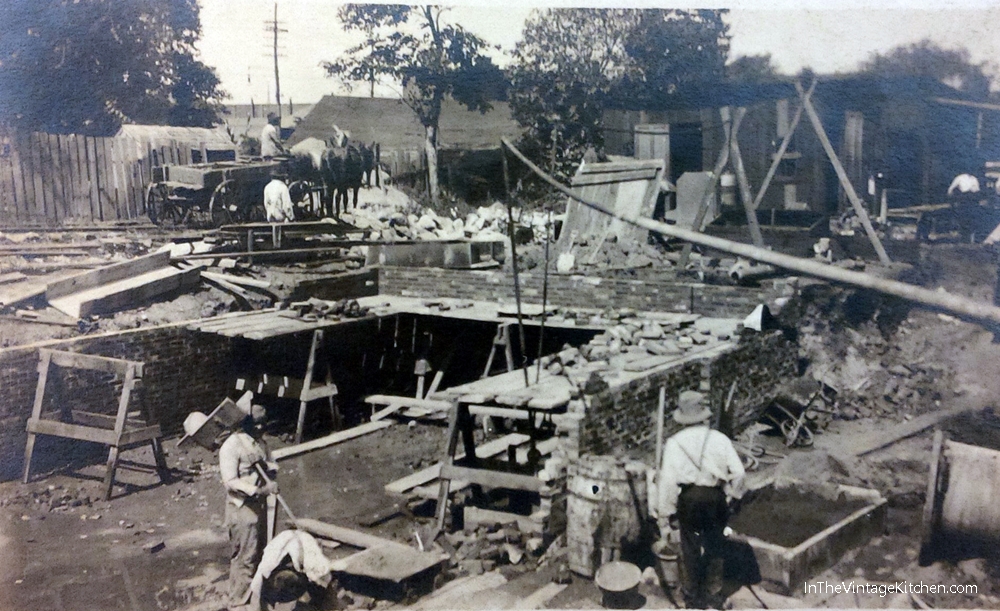
Caldwell found the perfect area for such an endeavor in open farmland just two blocks from the riverfront and four blocks east of the downtown business quadrant. In 1919, he hired contractors Foster & Creighton to begin working on a 10 acre mega-complex of sheds, barns and paddocks.

Nashville – Union Stockyards under construction – July 1919
Nashville-Union Stock Yard construction photographs, 1919

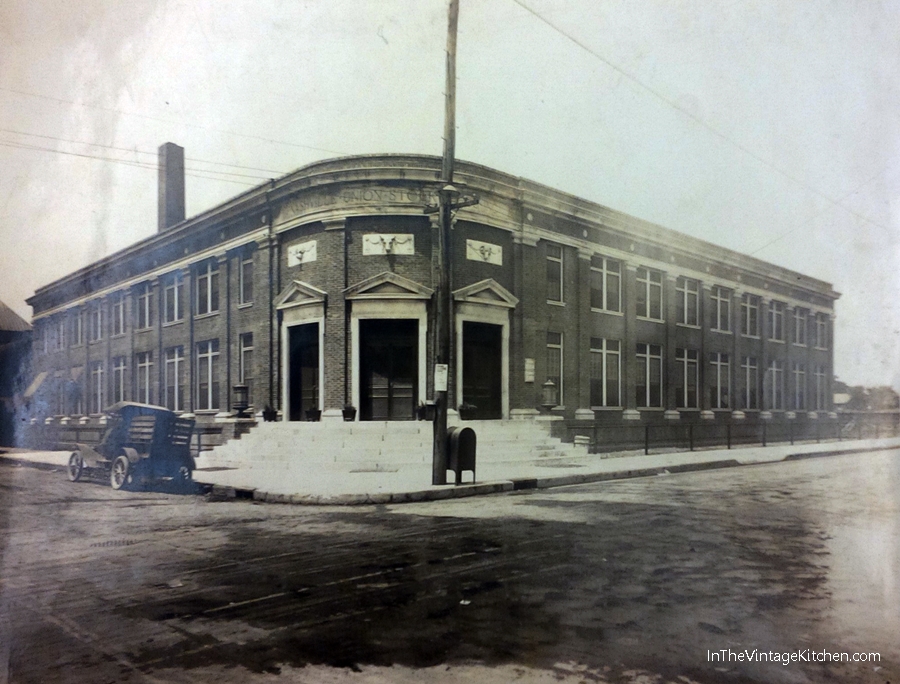
Local Nashville architect, Henry Closson Hibbs was selected to design an all weather building where business could be conducted year round and where stockyard management could set up offices.  H.C. came up with this rounded corner front entrance – a new trend in building design in the 1920’s – that would welcome visitors with open arms.

Nashville-Union Stock Yard building designed by H.C. (Henry Closson) Hibbs 1919-1920

These pictures below detail the lot assignment for the building and the construction as it occurred in 1919 and 1920.

The street corner allocated for the future site of the stockyard building.

Eventually all those pits and sticks and bricks formed this beautiful building, fully completed in 1920…

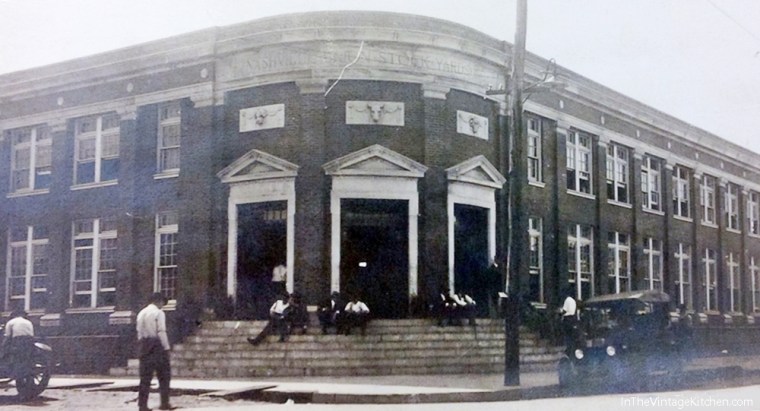
And you can see from this 1921 photograph how quickly the building became a popular meeting place. It even housed neighborhood amenities in the form of small retail businesses like a post office and a barber shop.

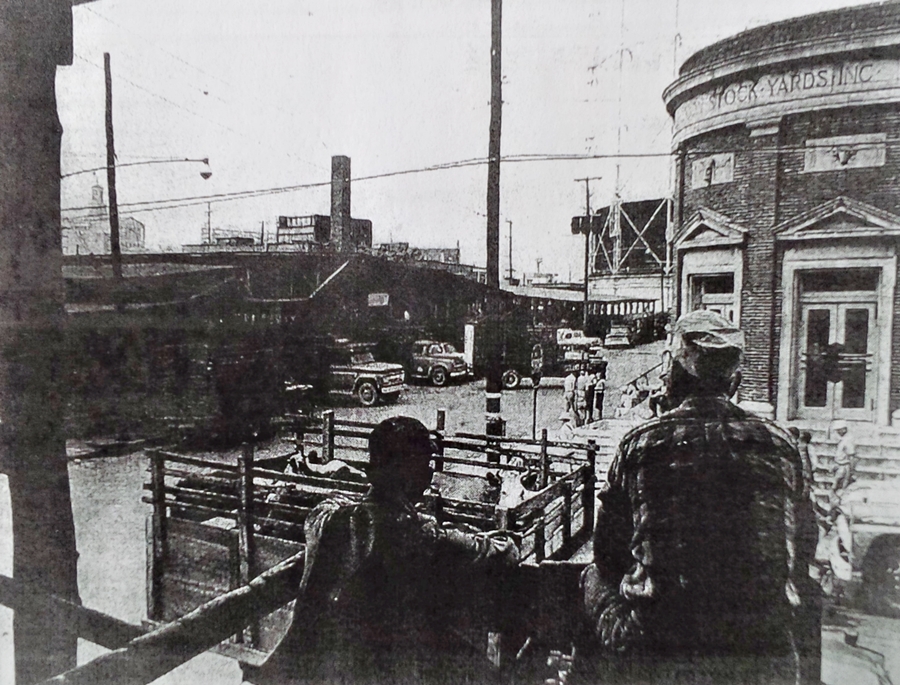
From 1921 to 1974 the Nashville-Union Stock Yards served as one of the busiest livestock markets in the region attracting farmers from Tennessee, Georgia, Kentucky, Alabama and Mississippi. Over 6,000 animals arrived daily for trade coming in via boat, rail car and farm truck. A long time bookkeeper for the Stock Yards said that it was not unusual to see cows walking down 2nd Avenue or an escaped hog loose from a pen.

A view of the stockyards circa 1965. Photograph by Gerald Holly.

That scene is hard to imagine now as the Stockyard sits in between government buildings and modern apartment hi-rises in what is currently one of the fastest growing neighborhoods in Nashville. Remarkably, even though 95 years have passed the building still looks almost exactly the same…

The neighborhood however no longer looks like livestock. Downtown skyscrapers are just a few blocks away and the only animals in site are of the avian kind.

Parking lots and empty brick warehouses dominate the immediate areas surrounding the Stockyard now.

The Nashville Union Stock Yards closed down in 1974 due to high property taxes. Sheds and barns were torn down, shoots dismantled and paddocks turned into parking lots. But the building remained, making way for Buddy Killen’s initial restauranteering interest in 1979.  Buddy’s restaurant, The Stockyard closed in 2015 after 36 years in business. The building and surrounding property were sold to out-of-town developers who now have plans to turn it into a 300 unit apartment complex.

Learning this recent information, I worried for the fate of the building and for the eyes of Second Avenue. Would the building be torn down and a piece of history cast aside? Would the pig and cow and sheep that have watched over the neighborhood for nine decades be replaced with something new and artistically of-the-moment? Would H.C. Hibbs turn over in his grave as his beautifully designed building gets turned over in the dirt?

As a lover of historic architecture, I am happy to say that this story stays bright.  The developers plan to incorporate the century old building into their design plans, keeping the history and heritage of both agriculture and aesthetic alive. The eyes of Second Avenue will be given a whole new century’s worth of sites to watch over. I know it is cliche to say that I wish these figureheads could talk – but I really wish they could. They’ve been witness to major history since they were set among the bricks… the Great Depression, civil rights, the rise of the automobile, the demise of farming, the destruction of their neighborhood and now the revitalization of their neighborhood. Not to mention all those famous people that walked in and out.

Construction begins soon for the apartment project. Materials and work trailers are already being assembled in a neighboring lot. We are going to be following along on the progress of the construction to see how this local landmark of stock yard turned restaurant turned apartment complex evolves.  And of course to see what the eyes of 2nd avenue will now be staring down upon. I hope it turns out to be something incredible.  Stay tuned for periodic updates!

***A special thank you…this post would not have been possible without the help of the wonderful staff at the Tennessee State Archives and the Metro Archives at the Main Branch of the Nashville Public Library. If you are keen on learning more history about Nashville and the state of Tennessee, I strongly recommend a visit to both places. They are fascinating and full of so much information, you’ll want to move-in and stay for a week researching your heart out.  

The 20th century construction photos of the Nashville Union Stockyards  included in this post are courtesy of the Metro Archives. 


Mabel in the Market: The Search for a 1920s Doughnut Shop

Somewhere between the 1920’s and the 1930’s my great-grandmother Mabel had a doughnut shop in Seattle’s Pike Place Market. This has been family lore for generations but like other interesting tidbits that lurk around the ancestry closet… a New York City Rockette, an indentured servant, a lost family fortune… there isn’t a lot of information or validation to support this entrepreneurial endeavor. But in a couple of weeks I hope to change all that.

Mabel grew up in Iowa, the youngest child of an 11 member family.  She trained to be a teacher in the rural country schools surrounding her hometown…

Mabel, aged 18 pictured in her teacher’s attire about 1905

But once she met and eventually married William Earle she gave up the teaching profession all together.

Mabel’s Wedding Portrait taken in November 1907, and a photograph of William Earle, unknown date

Earle, as she called him, was a salesman for the National Biscuit Company but he suffered from some sort of health issue that was bothered by the heat of the Iowa summers. So a few years following the birth of their only child, Phillip, they packed up and headed west in a 1917 Model T Ford towards the cool climate of Seattle.

All three of them – Mabel, Earle and Phillip, plus their belongings traveled half the width of the U.S. (over 1800 miles) in this car – the  1917 Model T Ford.

This was 1922 and my grandfather Phillip remembers sitting in the back of the Model T on top of bed rolls and tents, squished between pots and pans and spare tires. It took them 8 weeks to get to Seattle where they eventually settled into the Capitol Hill neighborhood overlooking downtown.

Earle, went to work as a foreman at a biscuit cookie factory.  Presumably this would be the time period that Mabel also went to work – in her doughnut shop in the bustling big city market. By 1940 Mabel and Earle would say goodbye to the city sweet treat businesses of factory and farm market to take on country life once again in a move out to the far suburbs to pursue dairy farming. That put an end to the doughnuts at least in the professional sense.

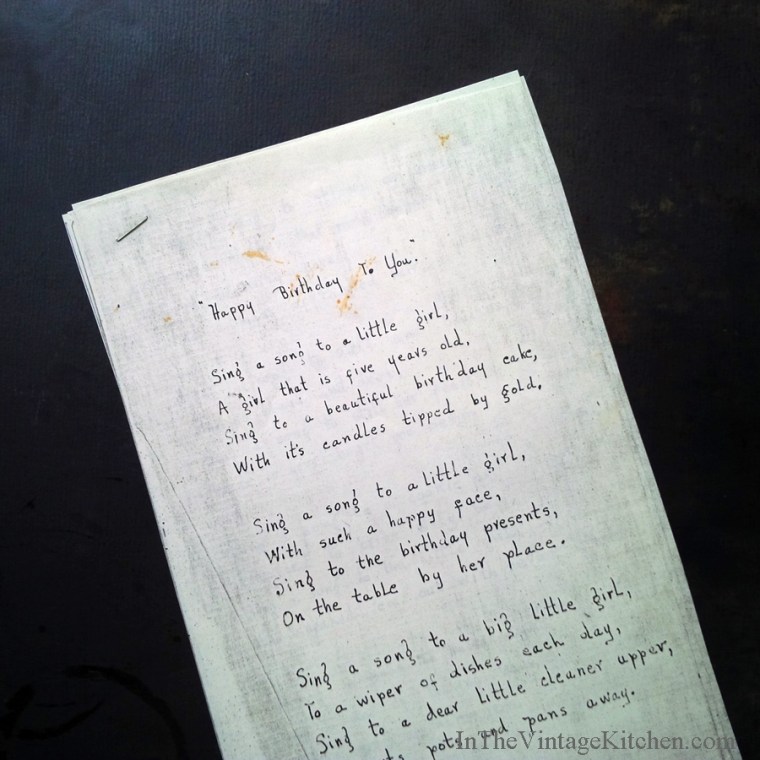
Mabel’s poem to her granddaughter on her 5th birthday written in 1947.

Mabel was a very creative lady – a clever writer, a sketch artist and a baker. We have a few of her recipes in the family cookbooks but no mention of any prized doughnuts and no mention of any experiences running a business at Pike Place Market, which makes for an interesting little mystery.

Depression era photo of Pike Place Market chicken vendors. Photo courtesy of pauldorpat.com and the Seattle Public Library.

What must have it been like to be a  female entrepreneur in the early decades of the 20th century? Especially as a newcomer in a much bigger, more metropolitan city and with no professional experience to bolster her confidence? How did a country school teacher become a city doughnut maker? What made her start and ultimately what made her stop? Did she do it by herself or have a partner? How big was her space? What did it look like? What were her hours and how many doughnuts did she make in a day? And maybe most importantly, why doughnuts?!

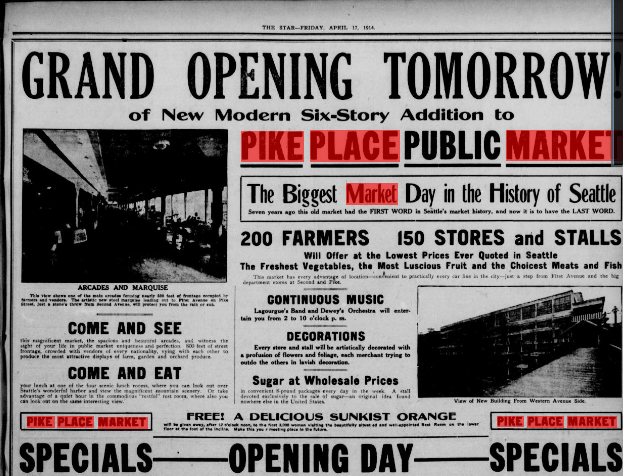
Pike Place Market first opened in 1907 and quickly became a cross-cultural beehive of people and products offering everything from fresh fish to flowers, art to textiles and practically everything inbetween.  You can feel the excitement in this 1914 ad from the Seattle Star as the market gained momentum…

Advertisement from The Seattle Star April 17, 1914. Photo courtesy of

By the 1930’s, when Mabel was making doughnuts, the market was bursting and bustling with success and sales. There was a sizzle in the air of possibility and potential that must have felt catching and all-consuming. When I head out to Seattle in the middle of June I hope to answer all the questions raised about Mabel and her doughnut endeavor. I hope to be able to walk in her shoes for a time and learn more about what must have been one of the most interesting and intriguing periods of her life. Perhaps a doughnut recipe or two will even be discovered!

Stay tuned for more on this front as I report directly from the Market mid-month. In the meantime, cheers to mysterious Mabel and her doughnuts. Happy National Doughnut Day!

Cooking Up A Compost Container: A Mini Bin for A Mini Balcony

Nasturtiums, basil, parsley, succulents, impatiens, rosemary, mint, aloe, avocado – that’s the start to the summer balcony garden. It is a petite space so there is not much room for tall dramas or extravagant experiments which means this summer should be pretty tame in the greenspace department. Since I live so close to the farmers market, the vegetable growing is going to be left up to the farmers this year giving me the opportunity to grow herbs to augment summer cooking and flowers to add a little fancy.

I have my heart set on three things in particular this season- a citrus tree, a trail of climbing roses and pots bubbling over with greenery. The first two will be available shortly at our market garden store and the third will be accomplished with a homemade compost container, mighty but mini.

Sir Albert Howard (1873-1947)

We have Sir Albert Howard to thank for our modern day love of organic gardening and make-no-waste composting methods. Of course people have been using compost since the dawn of time but in the early part of the 20th century when chemical fertilizers became all the interest,  Albert was the guy to remind everyone of the common-sense simplicity of nature.

A British botanist born during the last quarter of the 19th century, Albert was a forever student of agricultural science. During a 30 year stay in India, he studied soil effects on garden outcomes and determined that natural compost was the ideal and most beneficial way to create healthy, happy plants in a supportive environment. Healthy people, healthy animals and healthy food all benefited from the effects of recycling earth based materials.

Documenting his research and his observations Albert wrote several books published between the 1920’s and 1940’s helping to draw attention away from manufactured soil amendments and back to the logical evolution of the land. A big fan of the forest floor, Albert marveled at how forests were like one giant compost heap in and of themselves. Materials fell from the trees, layered themselves in seasons and decomposed through the aid of bugs, worms and microorganisms in the dirt. Essentially when we build our modern day compost bins we do the same thing. We act as the trees providing material and shelter and the natural decomposition process contained in our incubated environment breaks down as it normally would.

Compost bins to me have always been a little intimidating. When I lived in the country they meant snakes and red ants, weird bugs and an occasional long-tailed critter.  The  always giant, always garbage can style bin either got too much water or not enough water. Half the time I’d forget to turn it with any sort of regular routine. This year though I’m on a different trajectory.  I’m starting small with kitchen scraps, traditional yard waste and a 3lb container. This snack- size bin will give the balcony plants a little extra nutrition boost mid-season and hopefully, if all goes well,  will be in continual use throughout the fall and winter.

Making a mini compost bin is easy. The trick is finding something that is a good size for your space, so creativity is king here. I used a  leftover  plastic container that once held 3lbs of trail mix and the lid of a plastic takeout soup container.

After poking 4 holes in the bottom for drainage and about 8 holes in the lid for air, I gathered all the compost materials needed for a 50/50 mix between kitchen scraps and yard waste.

Materials on the yard side included: sticks, dead leaves, a paper egg carton, pine straw, a brown paper bag, dead-headed flowers and pine cones. On the kitchen scrap side I used limp spinach, garlic skins, coffee grounds, a month’s worth of crushed up egg shells, lime rind,  some old blueberries and a small bag of pistachio shells. Because my bin is petite, I chopped everything up pretty fine with kitchen scissors so that it would not only fit more easily in the container but also break down faster.

To make sure I had enough of a balance of both sets of materials I filled the same bowl twice with each mixture. I added each bowl to the bin and mixed it up using an old camping spoon (no shovel needed for this little project!). Once it was all stirred the last element to go in was a little bit of water so that the overall consistency was moist but not drippy.

At last, the mighty, mini compost bin was ready and done! With a weekly turn of the ingredients and a little extra water now and then, this compost batch should be ready in about one month.

This size bin will produce a few cupfuls of compost. Just the right amount to replenish soil in the tops of all my pots. Unlike compost bins of the past, this one fits neat and tidy on my mid-century rolling cart and will wait out the month among it’s potted pals.

I’m happy to say that I do not have to worry about snake sightings with this bin. That might just be the very best thing about balcony gardening, no surprise sightings of the slithering kind! Cheers to that! And cheers to Albert, his simple solutions and the important reminder that mother nature knows how to best take care of herself!

More to come on the gardening front all summer long. Interested in learning more about other gardening crusaders like Albert? Read about Hilda Leyel here and Edgar T. Wherry here.

Bright B(old) Things: 9 Book and Movie Suggestions for an Inspired Year Ahead


best of vintage 2016 list

“The object of a new year is not that we should have a new year. It is that we should have a new soul and a new nose; new feet, a new backbone, new ears and new eyes.” So said British author G. K. Chesterton.

Even though he spoke these words of wisdom in the first part of the 20th century, don’t you think they are still absolutely appropriate reminders for today? This new year is bursting at the seams with potential and possibility. And it is up to us to make the most of it – to get our dreams and aspirations from the inside to the outside.   In the land of Ms. Jeannie we are starting the year off with a list of fascinating books and movies that will give you those new ears and new eyes, that new backbone and new soul that Chesterton so smartly referred to. Today we are looking at the magical rewards of life from different perspectives as told by people who muddled their way through the long, wayward process of dream-building and came out the other side with wisdom and wonder to share.

Offering equal amounts of inspiration and entertainment, these books and movies were discovered in 2016 but cover a wide time period. On the older side there is a new documentary about a still-living fashion icon born in the 1920’s and an incredibly romantic 2015  movie based on a classic novel written in 1847. On the newer side, we tackle old thoughts on homekeeping in our modern 21st century environment with a book about interior decorating and we spend a year in the life of modern day archaeologist/historians as they recreate authentic farm life in rural Edwardian England.

It’s a fun, eclectic collection but you’ll notice a common thread running between them all – commitment, dedication, confidence. By drawing inspiration from this cast of characters, we can draw parallels to our own lives that will help motivate the dreams that swirl around our heads and hearts and hopefully get us thinking about what steps we can take today that will affect our desires tomorrow.  Let’s look…

In the reading department…

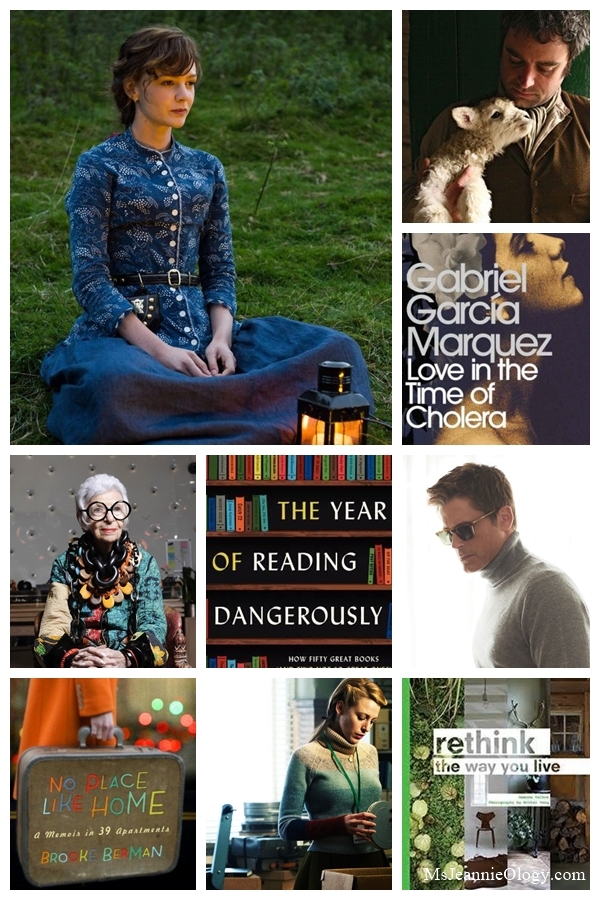
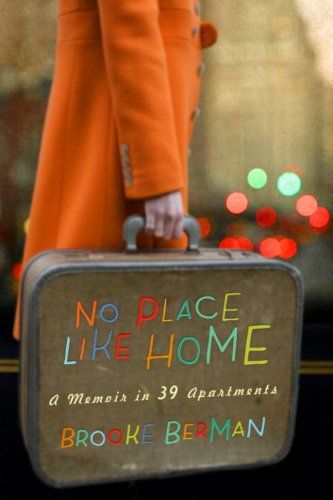
1.No Place Like Home – Brooke Berman (2010)

august1

Budding playwright Brooke Berman had a simple goal. To find a home that she could call her own. Not one that she purchased. A rental was just fine. Not a house. An apartment would suit. And not even necessarily one that excluded roommates. She just wanted to find a place where she could store her stuff and her self for a permanent amount of time. Longer than thirty days. In 1990’s New York City.

You’d think this would be an easy feat, but for Brooke it took 39 apartments and many years to finally figure out where and how she belonged. For anyone who has ever moved more than a few times in their lives you’ll understand the importance of Brooke’s desire to feel settled. But as much as this memoir is about finding a place of one’s own it is also a step-by-step account of one woman’s journey towards self-realization. Like Janice and her Paris Letters, Brooke tells the real story of what it is like to pursue lofty creative work while fighting through the muck-ridden minutiae of basic daily life. Friendships bloom and wither, romances come and go, jobs begin and end, family members die and tragedy strikes. Despite it all Brooke keeps moving (literally!) towards her dream of a permanent address and a professional career.

Her level of determination is inspiring. Her stay-the-course focus impressive. And if you ever wanted to know what it’s really like to live in New York City, on an artist’s salary, then this is the no-holes barred book for you:)

2. Rethink – Amanda Talbot (2015)

rethink

This book had Ms. Jeannie thinking for weeks and weeks about home design after she finished it. Part history book, part design journal, part holistic living primer, Rethink tackles a lot of issues between it’s pretty covers.  Illustrating how we have become a society of store-ers (owners of so much stuff that storage units are called into action to house the overflow) and accept-ers (of cheaply made, cheaply massed produced short-term furniture), Australian decorator and home style maven Amanda Talbot challenges us to rethink how we use our homes in today’s 21st century world.

Drawing on the nostalgic ideas of home from centuries past when big family, large-scale houses dominated  our landscape, Amanda explains how the history of interior design has affected our mental and physical state for hundreds of years.  Needless to say, times have changed significantly. Big houses are being traded in for micro ones. Traditional function rooms designed for single purposes (dining room, kitchen, bedroom, etc) have now morphed into convertible spaces where we eat, sleep, work and entertain all in the same area. But strangely our thought processes in how we approach these new room layouts has been slow to catch-up.

We require more out of our personal space than ever before in history, yet we fail more often than not to make our rooms fit our lifestyle. Amanda encourages us to break free of the nostalgic past. Beds are now workspaces, mediation zones and offices.   Kitchens are now shipping centers and compost bins and charging stations. Balconies are now vegetable patches, reading rooms and communication hubs. You get the idea!

rethink2

In touch with both the practical and spiritual sense of home, Amanda illustrates how certain textures, light sources, and furniture arrangement appeal to our modern minds and moods. She hails the use of soft warm wood and vintage furniture for its steadfast constitution and inherent ability to withstand time – something that is assuring to our psyche in the constantly changing and emotionally abrasive world of the 2010 years.  She proposes new more efficient and intuitive ways to decorate now that we are a world of citizens constantly on the go. She tackles harmony and peacefulness, blended family relationships and plugged in environments, lighting, trash disposal and greenspace with a thoughtfulness that is provoking. By the time you finish the last page, you’ll look at your home environment and understand more about it and yourself. Rethink will make you want to question and refine your style to the infinite degree so that you are paired down and using only what is necessary, what is essential and what is meaningful in order to balance your being.

3. The Year of Reading Dangerously – Andy Miller (2014)

andymiller2

In The Year of Reading Dangerously, Andy Miller had one goal: to read the books on his bookshelf that he thought were important. The ones that he eluded to loving at cocktail parties (Jane Austen? Yes of course! I love all her books!)  or at dinner tables (Tolstoy”s work is amazing!) but secretly had never actually read before.

Andy’s book collection was quite diverse and spanned a multitude of genres and time periods.  Some were classic literature, some popular fiction, some the mark of an intellectual mind and some just complete whimsies of a fun-time book lover. He narrowed his list down to 50 books to be read in 365 days. And he stuck to it, whether he liked or not.

Throughout his year, he juggles his reading list and his job, alongside his enthusiasm, his family, his friends and his small son. He battles his pre-conceived notions, and his fortitude, his sanity and his propensity to weasel out of the ones he doesn’t like (which are a few!). He evens battles the point of the whole project. Who would care what a middle-aged British man read or not read? The truth is, you will. You’ll fall in love with Andy and his funny, honest, highly relate-able book-loving life. As Andy steamrolls his way through the shelf, you’ll begin to think about your own bookshelf, your own sheepish list of good reads you claim to love but have never cracked open. And he’ll inspire you to get started.

4. Love In The Time of Cholera – Gabriel Garcia Marquez (1988)

august7

Like Hemingway’s A Moveable Feast which was set in 1930’s Paris, Love in the Time of Cholera transports you to another era. This time, you are in exotic 19th century Columbia – a landscape filled with colorful birds, fragrant flowers and one of the biggest romantics in all of literature.  The goal of the novel’s flawed hero,  Florentino Ariza is to win the heart of  Fermina Daza, a girl he is instantly drawn to in an unexpected moment.

The story winds through 53 years of these two characters lives despite other lovers, other passions and other pursuits, while also dealing with conflicting temperaments and grim possibilities.  Readers fly high on a captivating whirlwind of passion as Florentino boldly and consistently declares his love for Fermina with no assured possibility that it will ever be equally reciprocated. He can’t help himself. Once he sets eyes on the love of his life (literally!) there is no going back. So he marches forward day after day, year after year, on a road that wraps in circles around Fermina’s landscape. It’s a delirious concept. Delicious in its intensity and honorable in its day after day dedication.  “There is no greater glory than to die for love,” pronounces Florentino early on. With that mindset firmly established, nothing can stop Florentino from fighting for his heart’s desire.

5. Stories I Only Tell My Friends – Rob Lowe (2011)

august10

If you ever wanted to learn the inside story on how an actor makes it in Hollywood, this is the book. From his childhood in Ohio to his first movie (The Outsiders, 1983) to the established and extensive career he enjoys now in California, Rob Lowe like Brook Berman is the ultimate soldier in the battle field of staying true to your chosen calling. Sure he’s handsome, and he’s talented, and he’s a major A-List actor but it wasn’t always that way and Rob had to learn about his strengths and weaknesses, one micro-experience at a time, just like everybody else.

In Stories I Only Tell My Friends, Rob candidly talks about the long-road to fulfillment: how he struggled to find friends, find self-worth and find balance in an industry that doesn’t authentically nurture any of these. He talks about his 20+ year marriage, the raising of his two sons and the hopes and dreams he still aspires to in this middle section of his life. And he talks about Hollywood. The interesting stories of celebrity friends, behind-the-scenes movie making and project collaborations on super successful pop-culture productions like The West Wing, Parks and Rec and St. Elmo’s Fire. Alongside all that achievement are stories about embarrassing missteps, awkward associations and risky gambles.  There are setbacks and uncertainties, self-doubt and insecurity, but through it all there is Rob.  For over 40 years holding tight to his acting profession and  thoughtfully digesting all the successes and failures that a creative life consumes. He never gives up on acting. He never gives up on himself.

In the watching department…

6. Edwardian Farm (2010)

Edwardian Farm was a BBC television series which first aired in 2010 in the U.K. It is a fascinating look at the modern viability of living a handmade, handspun life void of 21st century technology as experienced by three history loving professionals – one historian and two archaeologists. For one complete calendar year, this trio set up farm in England’s beautiful Devon countryside and experienced what rural life would have been like in the early 1900’s. Their mission was to answer questions about the efficiencies and possibilities and practicalities of our modern mindsets. Knowing what we know now in 2017, could we successfully return to 1900 and survive?

The trio was tasked with not only daily living activities but also business ventures as well. So moneymaking crops had to be planted, chickens had to be raised and cows had to be milked in order to keep the farm and themselves afloat physically and financially through four seasons.  What was really interesting about this reality experience is that it was thankfully short on relationship drama and heavy on information. You don’t watch people complaining, bickering or tearing each other down. You watch instead about people utilizing their strengths and their ideas to propel the farm and each other forward.

In the 365 days of the project a lot of interesting endeavors were tackled including making their own cheese, chicken houses and lime ash. They plow fields with horses and attempt to spawn fish in a nearby creek. They smoke meat, make their own ice cream and bake traditional food all without the use of electricity. They wash and mend and reuse and recycle and re-purpose so much so that you’ll be inspired by how little equipment one really needs in order to get a good job done. And you’ll be inspired to try out some of their projects like smoking your own meat or planting your own market flower garden. It is fun entertainment that also happens to be highly informative. And like Amanda Talbot’s book, it will make you rethink the purpose of all that stuff in your life. Is it necessary? Is it needed? Is it functional?

7. Iris (2015)

Color, confidence and a little dose of charisma (okay a big dose) are what make 96 year old design maven and style icon, Iris Apfel one of the most shining examples of how to live life on your own terms.  By courageously and unapologetically letting her natural instincts and interests guide her throughout nine decades of her artistic life Iris has followed her heart all around the creative industry.  From fashion publishing to textile design, antique collecting, to clothing scout, interior designer to museum exhibit stylist Iris circumnavigated the globe while exploring everything and anything that appealed to her.

Inspiration came calling in all forms from tiny details like the quality of a certain type of thread, or the line of an unusual sculpture or the buoyancy of a puffed sleeve. Wherever she went, Iris found the unusual, and then packed it up, and shipped it home only for it to trigger a new opportunity later down the road.  An antique turns into an accessories line, a satin fabric spawns a textile company, a thrift store outfit propels a show at the Metropolitan Museum of Art. This is how Iris’s life has gone. By sticking to her gut instincts on everything and always saying yes to opportunities that presented themselves Iris was able to enjoy a diverse and fulfilling life that consistently kept her engaged and excited. It is hard to argue with reason when it comes to things you inherently love. Iris never argued in that department. She just listened. And if this documentary teaches you anything, if Iris teaches you anything,  it is just to travel through life as yourself. Just be yourself. Listen to your gut. And above all else, cherish your individuality.

8. Far From the Madding Crowd (2015)

Thomas Hardy wrote this book in 1847 which seems incredible now because his main heroine Bathsheba Everdene is as thoroughly modern as any woman today. In the 1960’s Hardy’s book was made into a movie starring Julie Christie but this recent version starring Carey Mulligan is by far better.  If you are unfamiliar with the story-line, Carey Mulligan plays Bathsheba –  a headstrong, independent woman who inherits a farm of her own in rural England. Determined to run the farm and her life, in her own way, Bathsheba struggles with the balance between independence and vulnerability.  She doesn’t want to be governed by anyone yet she doesn’t want to be alone either. Love in Bathsheba’s eyes is balanced yet also wild, mutual yet individualistic, and supportive without being smothering.  Three very different  men converge on her life and a relationship with each unfolds. Without giving away the ending if you have not yet seen it, Ms. Jeannie will just say that Bathsheba’s choices throughout her life are as bohemian as any 1920’s flapper or any 1980’s career woman or any 2017 independent spirit. Which makes this 150 year old character quite remarkable. She’ll inspire you to forge your own way, to mold a life dependent on personal viewpoint and to reject the notions of other people’s ideas for your happiness.

9. The Age of Adaline (2015)

Ms.Jeannie was so in love with this movie she watched it twice back to back. Stunning in its cinematography, wardrobe and set design it is also posses interesting questions about mortality, relationships and familiar connections. Adaline has a secret and because of her elusiveness few people know how to understand her which leads to a loneliness that seems inescapable. Again, without giving away too much of the story for those of you who have not yet seen it, you follow Adaline’s life through decades of history and important milestones. Like Iris and Bathsheba she forges her own life, and in doing so discovers later on the impact she had on other people.  It is an interesting viewpoint on how one person can affect many without ever knowing it.

On a technical side, this movie is flawless. The acting is marvelous and the attention to detail incredible.  The camera follows Adaline through all the changing style trends of 20th century America which makes the visual appearance of this film fascinating in a time capsule sort of way. Years of pre-production added an authenticity to the layers of storytelling that added multiple layers of depth to every scene and set.  An added bonus not to be missed is a fascinating step-by-step behind the scenes documentary on how the cast and crew accomplished such visually impactful storytelling.  So this selection is two fold when it comes to inspiration. The script is one magical piece of writing and the mesmerizing production value is another. No bit of scene or set was thrown together, no character half-realized, no string of dialogue awkwardly phrased. All aspects of this movie-making process were thoughtfully executed making the end result seamless in regards to complete storytelling.

As you can see from this list a little inspiration goes a long, long way. In the land of Ms. Jeannie we are challenging ourselves  to find a moment of new inspiration in each and every day. Some days this a tricky feat. Looking for small pockets of wonder requires an open mindset and eyes that are constantly aware of the environment around us.  The fun is in the search for the small details like a falling leaf or a patch of graffiti or an almond crusted cookie.  And it’s in the big obvious things too like fireworks or flower beds or snow fields.  It’s in music we hear, food we eat and conversation we start. Sometimes it is in an interesting article, or a pesky problem and sometimes it is even in the frustrations that fog up up our brains. The trick in this tricky project is to be able to take the time to notice and then process what it is that we are seeing, hearing and thinking.  Life moves fast. In an instant a moment of magic is upon us. Our imaginations quickly carry us away. If it captures our attention long enough a dream or a desire begins to form. Then we have to make choices. Do we sit on that dream or do we we do something with that dream? Ms. Jeannie hopes this batch of books and movies will help you get going, get noticing and ultimately get started down that road to realization.

Cheers and good luck to a new year and to new eyes.  And to new ears and to new feet and to new souls and backbones and all those wonderful new (old) words by G.K. Chesterton!
For more book and movie suggestions see 2015’s best of list here.