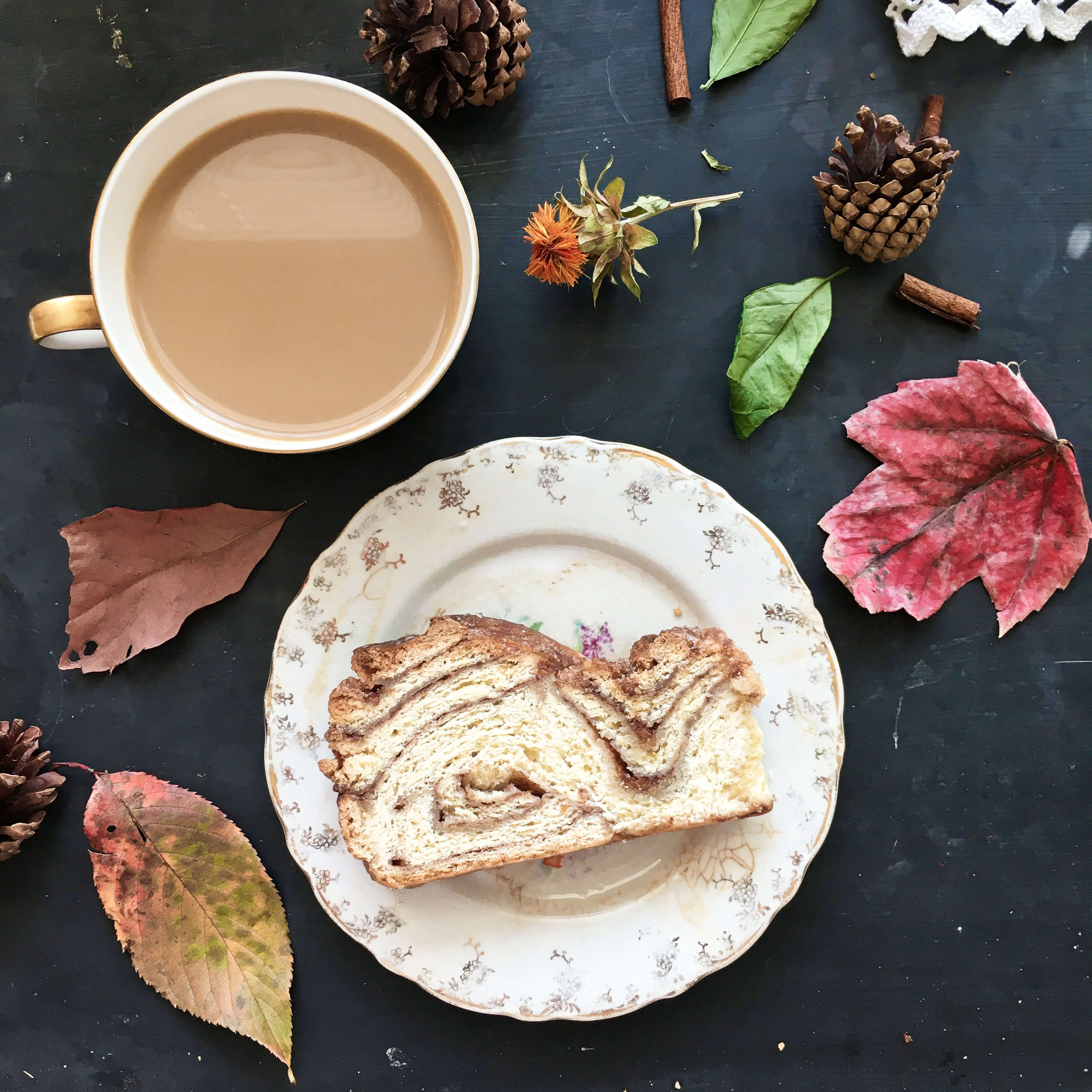
The International Vintage Recipe Tour: {Week 1} Armenian Stuffed Meat Balls

Welcome to Week 1 of the International Vintage Recipe Tour 2020! If you missed the previous blog post a few days ago, this is week #1 of a year-long culinary adventure as we cook our way through 45 countries in 12 months, courtesy of recipes from the 1971 edition of The New York Times International Cook Book. If you are all caught up and ready to explore, then cheers to our travels. Let’s get started…

COUNTRY #1: Armenia

In today’s post, we are headed to Armenia via the kitchen, to prepare a traditional heritage food packed with protein and whole grains, and to learn more about this exotic country’s history thanks to the publication of a modern day memoir.
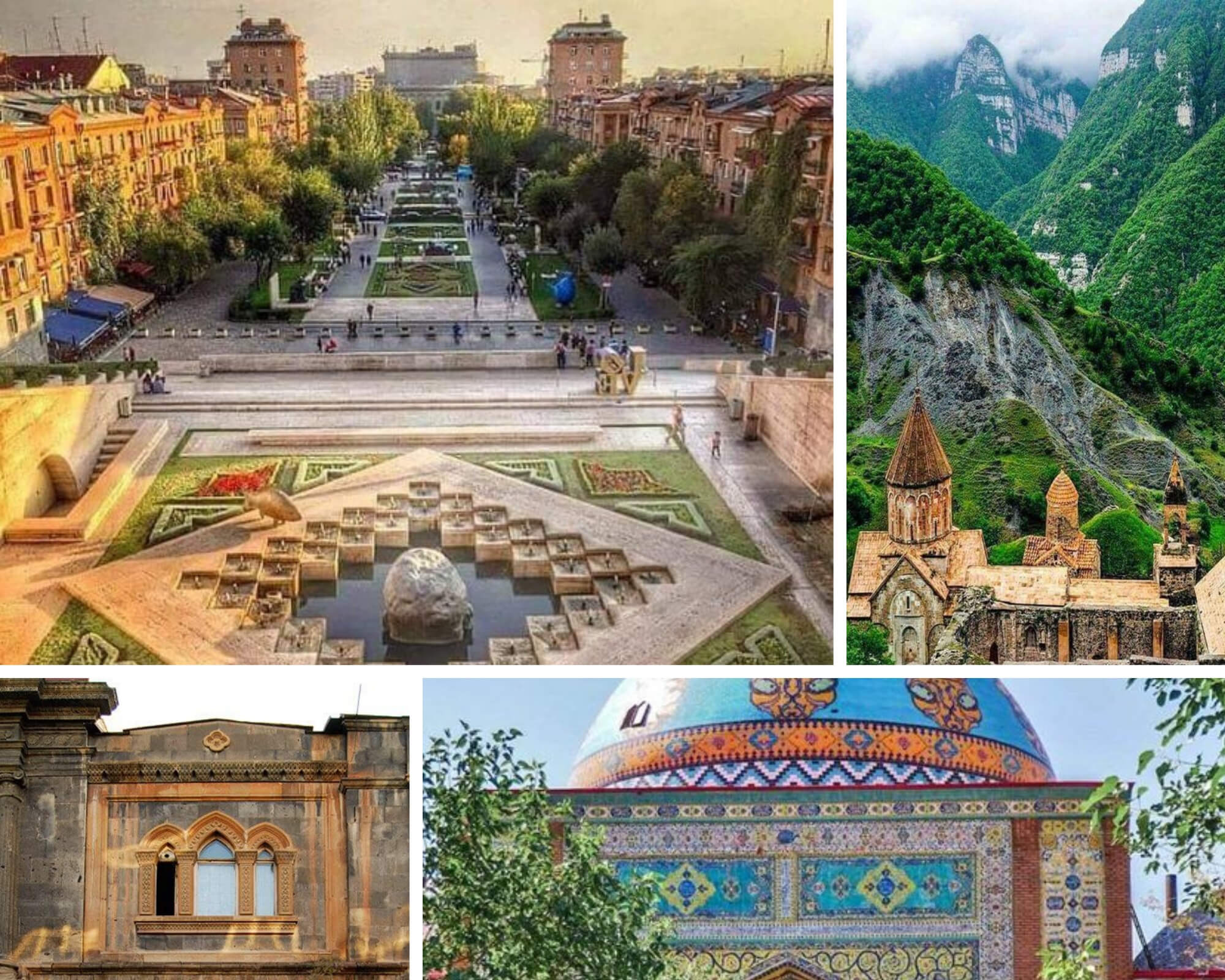
I must confess right off the bat, before I began this cooking project I knew absolutely nothing about Armenia, other than the fact that it is where the paternal side of the Kardashian clan hails from. Pronounced R-Me-Knee-A (not R-Min-E-A!), and  nestled between Turkey, Georgia and Iran, Armenia is a small country that could easily be missed, depending on the age of the map you are consulting…

Located in Western Asia, a section of the world which also includes Middle Eastern countries,  Armenians consider themselves neither Middle Eastern nor Asian but distinctly European. Armenia is the birthplace of the apricot and home to the oldest winery in the world (which dates back 6000 years). The capital city of Yerevan predates Rome, and is considered one of the oldest inhabited capital cities in the world. On the food front, their traditional cuisine has been influenced and enhanced by the closeness of their surrounding neighbors, giving Armenian dishes a unique blend of Russian, Turkish, Georgian and Mediterranean flavors.
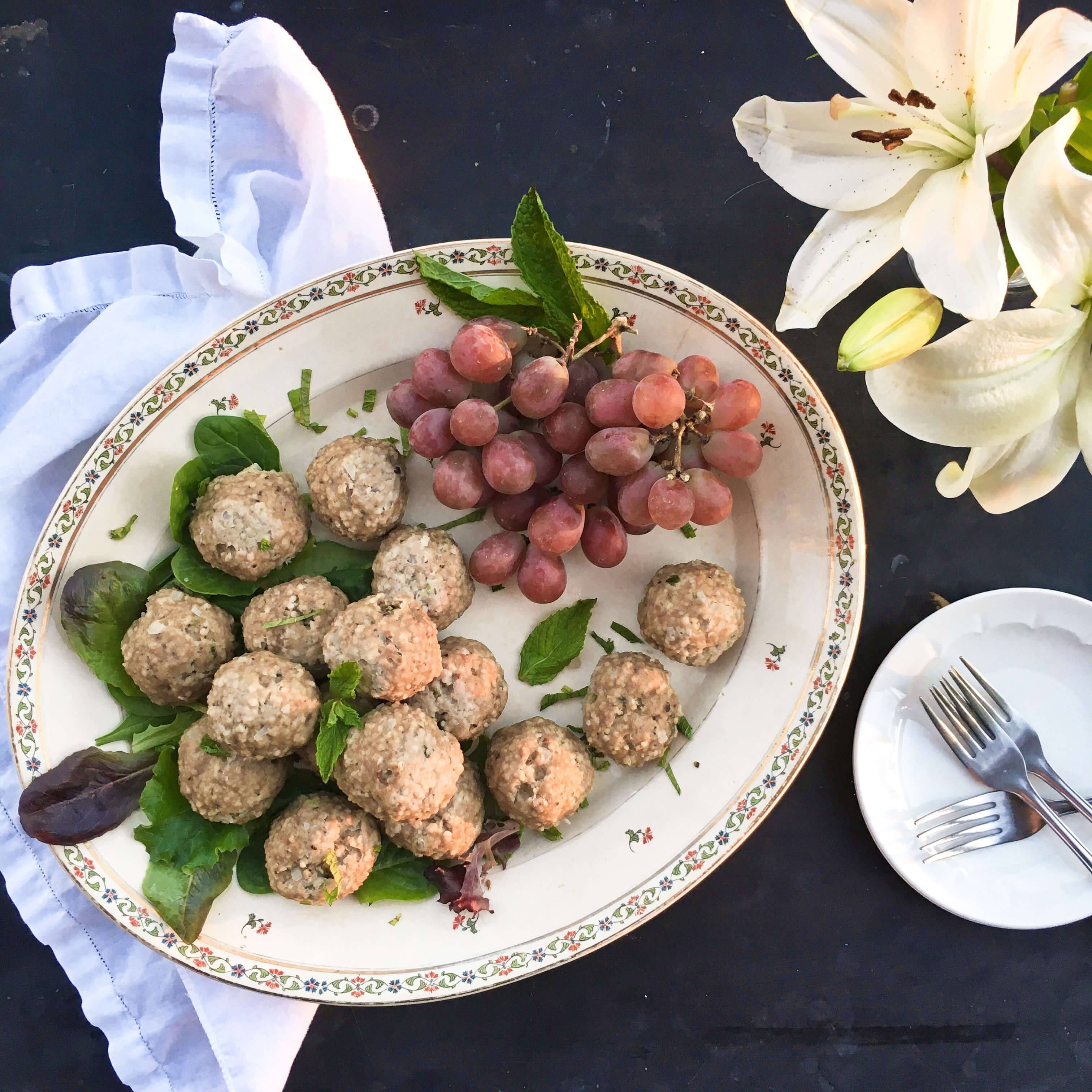
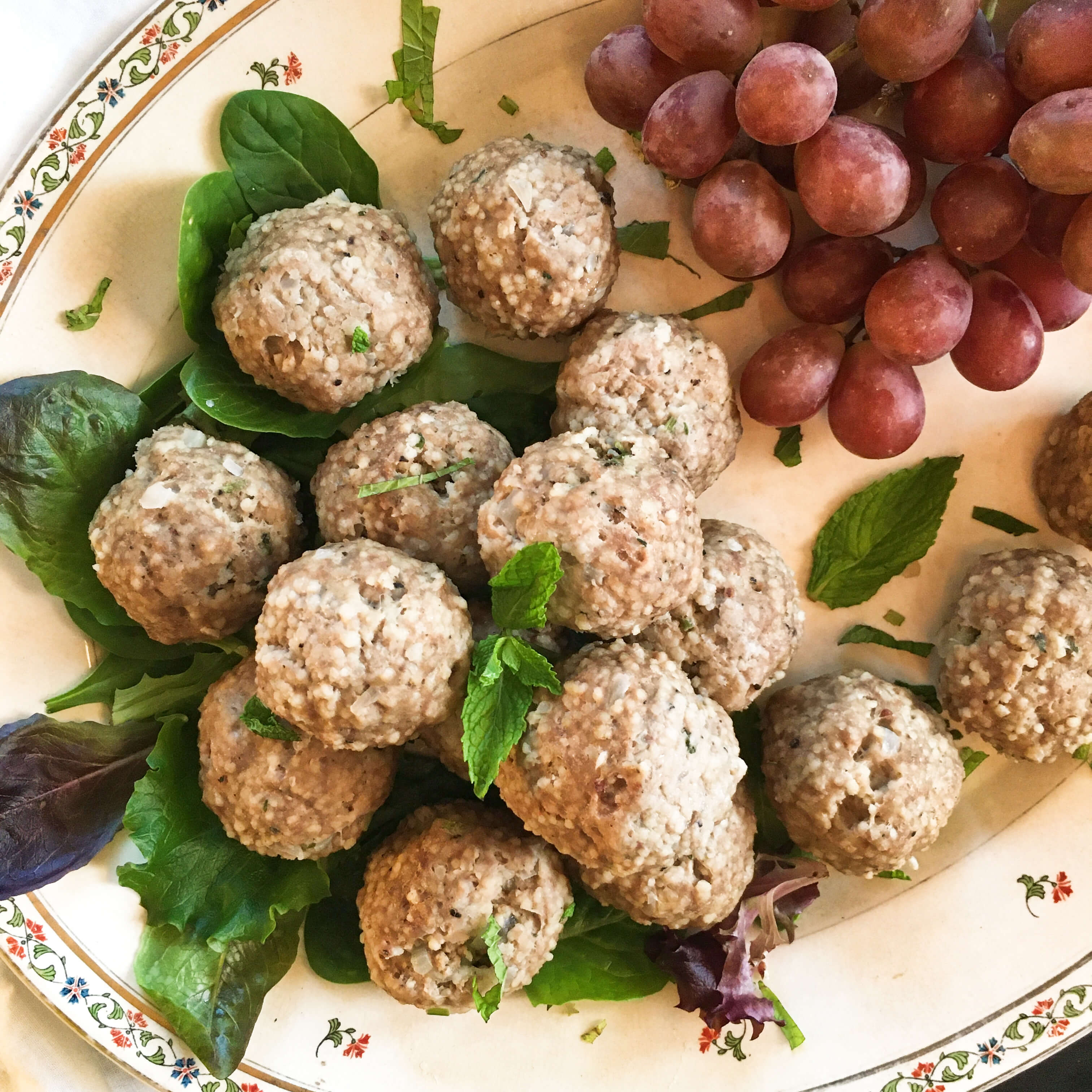
This week in the kitchen, we are making a regional favorite, Armenian Stuffed Meat Balls. Essentially, this recipe is a meatball made with lamb, which is then stuffed inside another meatball, also made of lamb, and then cooked in beef broth. Each batch of meatballs is made with a different blend of ingredients – one vegetable laden, the other grain laden. Once tucked inside each other, they are quickly cooked in a boiling homemade broth and served immediately from the pot, plump and steamy.  Although stuffing meatballs sounds a little bit complicated, it’s actually a very easy and fun recipe to make.

Over the course of the last few decades I have made countless numbers of meatballs, but I never considered, before this recipe, that they could be 1) be stuffed or 2) be cooked in other ways besides pan frying or baking in the oven. Always a fan of innovative cooking methods and creative food compositions, I thought these stuffed and boiled meatballs would be a really interesting and exciting challenge. And boy was this the case!  A combination of  artistry, hand massage and play dough, these magical meatballs rolled their way into formation in the kitchen with nothing but joy and fun.
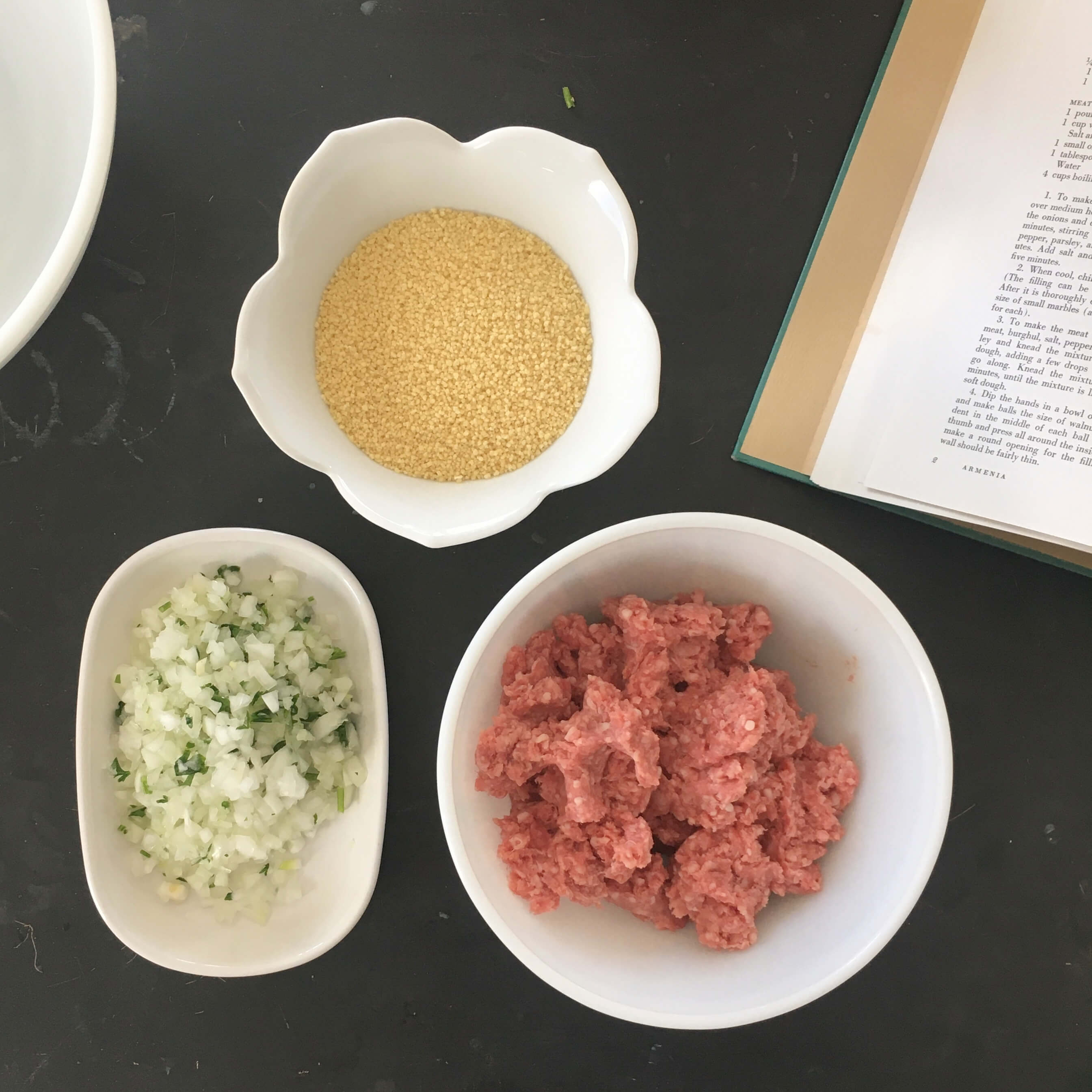
The only tricky situation I encountered with this recipe was sourcing bulgur, a cracked wheat that is a staple in the Armenian diet. Usually I can find this easily in the organic section of my local grocery store, but the day I went to shop for all the recipe ingredients, the store had sold out of what I needed. Two additional stops at other grocery stores also yielded an empty cart. Because the International Vintage Recipe Tour happens at a quick clip with shopping, cooking, photographing and writing all occurring within a week’s time frame, I had to come up with a substitution for this now elusive ingredient.  My first challenge of the project!

As it turns out, thanks to some quick research online, it was a simple remedy. Two similar alternatives for bulgur are couscous and quinoa, both standard finds in most grocery stores, both traditional heritage foods of Armenia and surrounding countries, and both substituted with the same 1-1 ratio. Perfect!
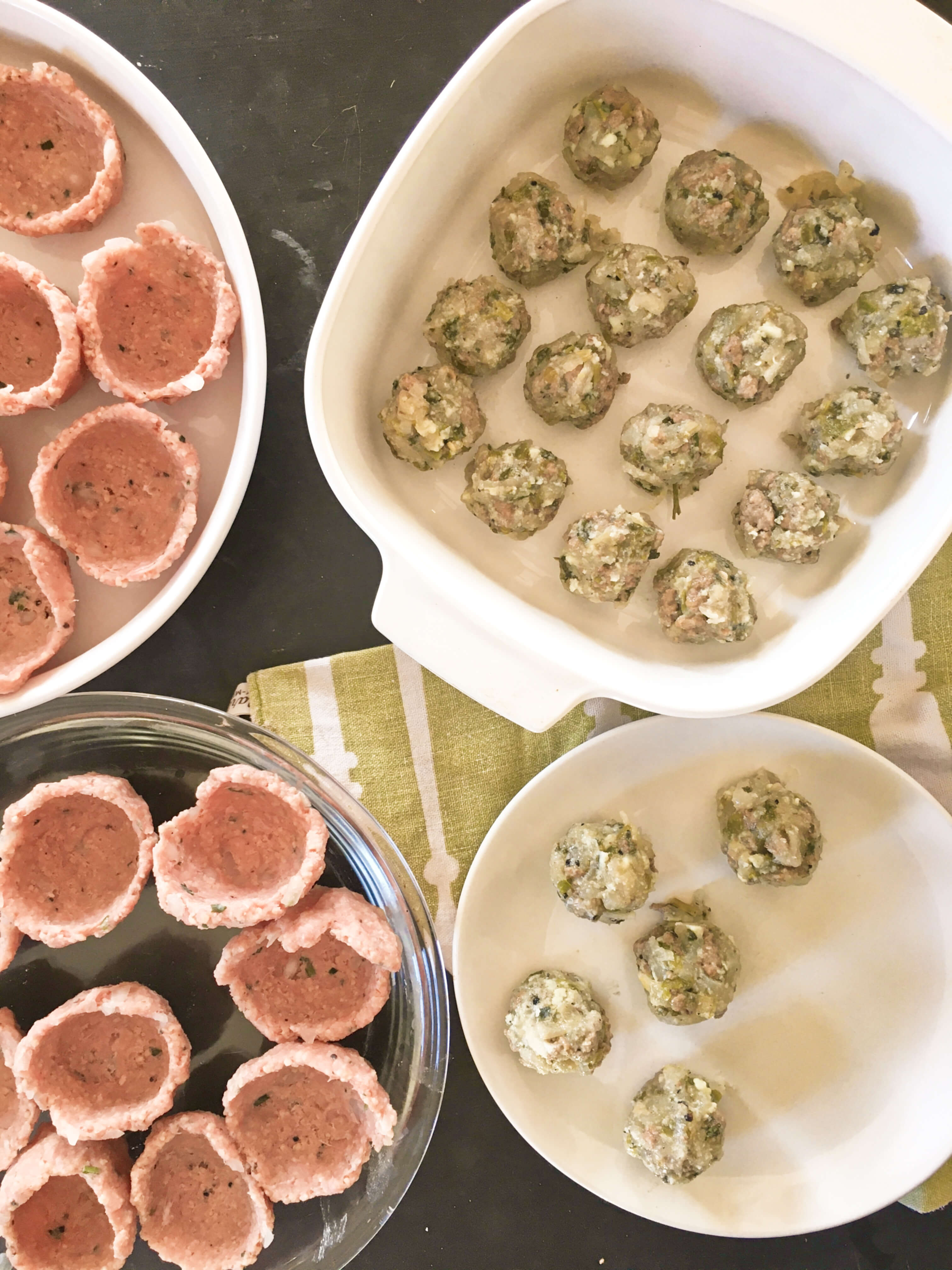
While the meatballs are easy to make, and they cook within ten minutes,  they do require about 6 hours of preparation time. Most of the time is eaten up by broth making (3 hours), chilling time in the fridge (2 hours), and hand kneading (20 minutes) but simultaneously, while each of these tasks are occurring, other components of the recipe can be readied, making it feel like the hours and the tasks just fly by. Both the interior meatball filling and the beef broth can be made a day or two ahead of time, but I recommend doing it all at once just for the sheer delight of completely immersing yourself in the making of this unique food.  The recipe itself feeds a crowd, making on average between 22-24 meatballs in total, so this would be a fun weekend cooking project when you don’t have the pressure of the busy work week to battle and you can relax with a glass of wine or an Armenian cognac as you cook the day away.

THE RECIPES: Homemade Beef Stock and Armenian Stuffed Meat Balls 

(Note: All  recipes prepared throughout the International Vintage Recipe Tour are executed exactly 100% as written in the New York Times International Cook Book, unless noted).

Homemade Beef Stock

4-5 lbs. beef short ribs or beef soup bones

2 leeks, trimmed split and washed well

2 carrots, trimmed and scraped

2 ribs celery, cut in half

1 onion stuck with two cloves

2 sprigs fresh thyme or 1/2 teaspoon dried thyme

Salt to taste

1 teaspoon peppercorns

Place the beef in a kettle and cover with cold water. Bring to a boil and blanch about 5 minutes, then drain and run under cold water. Return the bones to the kettle and add the remaining ingredients. Add more cold water to cover and simmer, uncovered, about three hours. Skim the surface as the stock cooks to remove fat and scum. Strain.
Armenian Stuffed Meat Balls

For the stuffing:

1 lb. lamb, ground

4 medium onions, sliced

1/4 cup finely chopped green pepper

2 tablespoons chopped parsley

1/4 teaspoon chopped mint

1 teaspoon salt

1 teaspoon freshly ground pepper

For the Meatballs:

1 lb. very lean ground lamb

1 cup very fine burghul (cracked wheat) or 1 cup quinoa or 1 cup couscous

Salt and freshly ground pepper to taste

1 small onion, finely chopped

1 tablespoon finely chopped parsley

water

4 cups boiling beef stock

To make the stuffing, saute the lamb over medium heat, stirring occasionally. Add the onions and cook over low heat  for thirty minutes, stirring occasionally. Add the green pepper, parsley and mint and cook 10 minutes. Add salt and pepper and simmer for five minutes.

When cool, chill stuffing for at least 2 hours. After it is filled shape into the size of marbles (about one teaspoonful for each)

To make the meat balls, combine the meat burghal, salt, pepper, onion and parsley and knead the mixture as you would dough , adding a few drops of water as you go along. Knead the mixture for twenty minutes until the mixture is like a medium soft dough.

Dip your hands in a bowl of cold water and make balls the size of walnuts. Make a dent in the middle of each ball with your thumb and press all around the inside wall to amke a round opening for the filling. The wall should be fairly thin. (Watch a video on how to do this on my Instastory here).

Place the marble-sized filling in each shell and bring the edges together to close. Smooth the surface with wet fingers  and flatten slightly by gently pressing between the palms.

Drop the meat balls into the boiling stock and cook for ten minutes  or until the meat balls come to the surface. Remove with a slotted spoon without puncturing. Serve immediately.

THE RESULT…

Delicious! Like a hearty little bundle of meatloaf, these meatballs contain all the components of a balanced dish with subtle, nuanced flavors. Filling, comforting and satisfying, the only thing I would have wished, was that they were a bit more aromatic in the spice department. They weren’t bland in the least, but I think I might have been spoiled years ago by my lovely Bulgarian friend’s specialty of Turkish meatballs, which are laden with cumin. That aside, these Armenian meat balls were delicious and delicate in their own unique way. I bet also, had I prepared this dish in the Springtime when the onions and the mint are at their peak of freshness, the sweetness of the mint and the tangy-ness of the onion would have been stronger, sharper and more distinct.

Next time, I’ll experiment with this recipe again in March or April, and add a triple dose of mint to the stuffing to see how that adds to the overall taste. If you try this recipe now, during the winter months, I would suggest serving them with a dollop of mint jelly or a spicy habanero jelly to add another dynamic layer of flavor. Traditionally, this food would be served alongside a heaping pile of rice pilaf or in a shallow basin of broth, like a soup, but because we are featuring just one recipe from each country on this Tour (although this week had two because of the broth) I served these meatballs with a simple side salad and some fresh grapes in lieu of the suggested Armenian Rice Pilaf recipe that followed in the cookbook.

HISTORICAL COMPANION: The Hundred Year Walk

Just like you would pair a fine wine with a fine meal to bring out the food’s flavor,  I thought it would be fun to connect each recipe we make with a unique cultural story from history to add interest to the dish and spark additional conversation. Throughout the tour, this historical nod will come in various forms – interviews, book recommendations, movie suggestions, music playlists, art discussions and artifact discoveries. This week’s cultural tie-in comes in the form of a book, The Hundred Year Walk, which details the history of Armenia and its people in a highly relatable way.
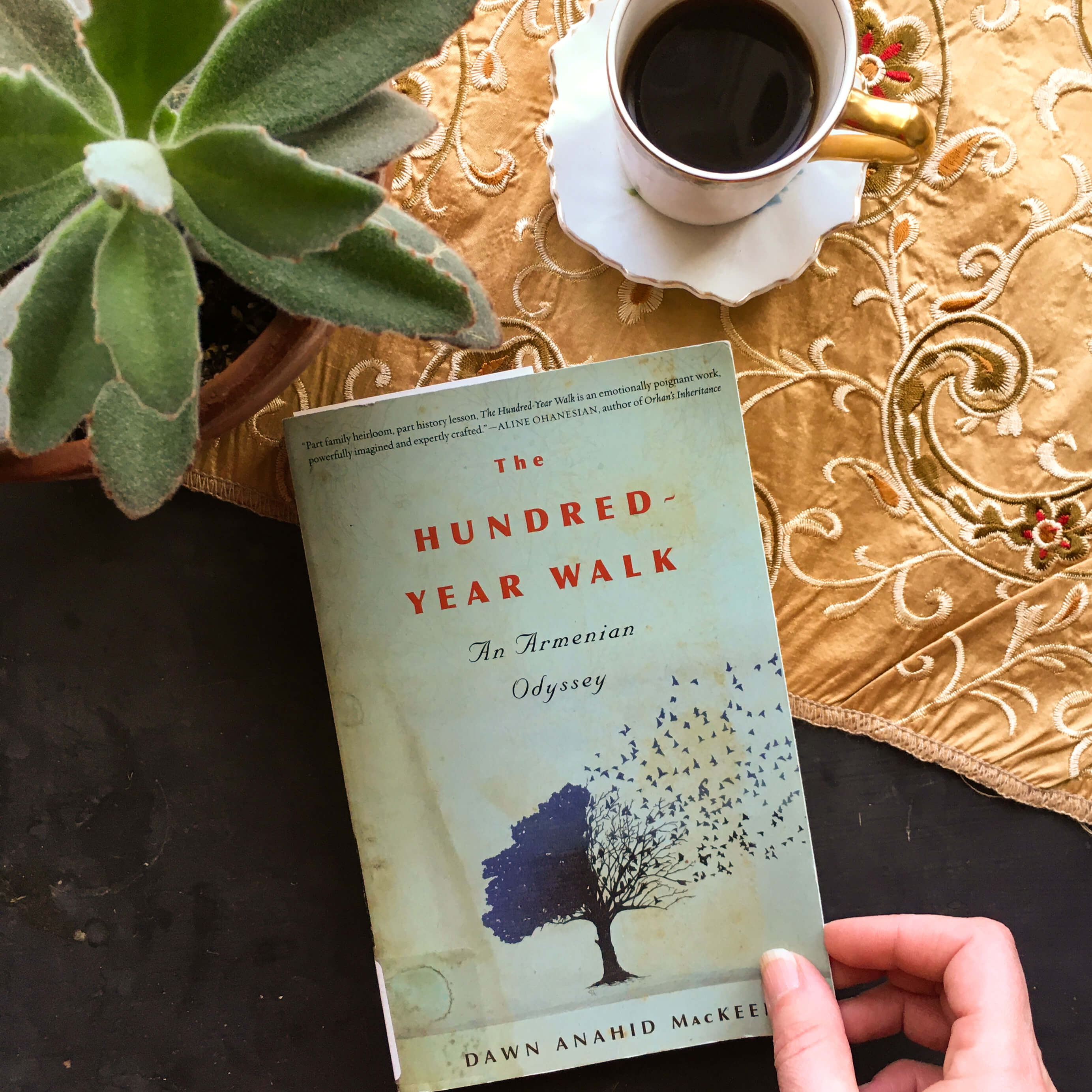
Written  by Dawn Anahid MacKeen, a thirty-something California native who is half American and half Armenian, The Hundred Year Walk,  published in 2016, tells the true story of her Armenian grandfather who survived Turkish military capture in the early part of the 20th century. It’s almost impossible to research anything about Armenia without reference to the tragic Armenian genocide of 1915 – an event that killed over 1 million people – about half of the country’s population. While this is a heavy topic for our recipe tour, this event is as important to the country’s history as their staple foods, and has come to define the Armenian culture throughout the past 100 years.

Dawn’s grandfather Stepan, a survivor of the Armenian genocide of 1915, recorded details of this life-altering experience and his escape to freedom in journals which he kept throughout his life.  Those journals were passed down to Dawn’s mother who tucked them away, out of sight for decades. But in the early 2000’s, on a trip home to California to visit her parents, Dawn finds the handwritten books and suddenly becomes consumed by stories surrounding her grandfather’s unusual and heroic escape.  Filled with a desire to understand her own family history and the struggles Stepan faced, Dawn begins piecing together  his cataclysmic journey as he walked through cities, over mountains and eventually across the desert in order to escape death. Retelling Stepan’s story as events unfolded in 1915, Dawn also parallels this ancient history with her own modern day journey of exploration in the early 2000’s, as she follows in his own footsteps retracing his route through modern day Turkey and Syria – a young woman traveling alone amid post 9/11 tension and unease.

What I loved most about Dawn’s book was her ability to paint a thoroughly engrossing portrait of the Armenian way of life known by her grandfather’s generation, and then balance that against her own unique perspective and experiences as a modern day American woman. Her book is a crash course in all things Armenia, while also offering a compassionate viewpoint of the effects of war and displacement upon multiple generations.

On a side note, one of the random things I learned in preparation for this post is that the library will buy books for you.  I wanted to read The Hundred Year Walk over the Christmas holiday but none of the books available online would be delivered in the timeframe that I needed, and my local bookstore didn’t carry this title. Dawn’s book was also not included in my local library system, which meant that they didn’t have any copies in any of their branches. On their website, I noticed a feature called “suggest a book ” where you can suggest a book for the library to buy which will then become part of  their permanent circulating collection. Not sure, how all this worked nor how quickly, I submitted a request for the library to purchase a copy of The Hundred Year Walk. The very next day I received an email that the book request had been approved, and that they were ordering several copies for several branches. Four days later, I received another email. The book was at the library ready for pickup. How marvelous! I’m not sure if all libraries offer this service, but it’s worth an inquiry if you find yourself in a particular predicament.

A 1940’s map of West Asia

History can feel very far removed and intimidating when you have no reference point or fundamental understanding of a country or a culture that is thousands of miles away and vastly different from your own.  But cooking this batch of Stuffed Meat Balls and reading The Hundred Year Walk was such a captivating experience.   Riveting from page one, I won’t spoil the book and its trajectory of events, only to say that it starts with a scene in the kitchen – a conversation between Dawn and her mother while they wash dishes. It’s a mundane task, so commonplace and ordinary, yet ultimately becomes life-changing for both women as there in the swirl of the dish water, Stepan’s story begins to form.

I hope Week One of the International Vintage Recipe Tour sets up in your kitchen in just the same way.  That conversations spark between between friends and family as meatballs get made and interest about Armenia grows.  I look forward to exploring and sharing more recipes from this fascinating country with you in future posts.  In the meantime, if you have any related food stories or experiences to share about Armenia or the Stuffed Meat Ball recipe,  please share them in the comments section below. I’d love to hear your thoughts.

To learn more about Dawn Anahid Mackeen , visit her website here.

Join us next week, as we embark on Week Two of our epicurean adventure… Australia, where we’ll feature a good news recipe for a country that needs all the good news it can get right now.

FEATURED!

This recipe was featured in The Armenian-Mirror Spectator on November 19th, 2020! Stop by to read about it here! 

Announcing the International Vintage Recipe Tour 2020!

Happy New Year! Hope your holidays were festive and that your new year is off to a great start. Here in the Vintage Kitchen, there are lots of fun things in the works for 2020 – ones that incorporate both cooking and collecting. After the emotional events of last year, I’m ready to pour a giant amount of joy into this new decade starting right now, with January, and the announcement of a big year-long project…

international-vintage-recipe-tour

Pack your market bags dear readers, we are going on an adventure. Welcome to the International Vintage Recipe Tour of 2020. Each week throughout the year, I’ll be cooking an authentic heritage recipe from a different country that was featured in the 1971 edition of the New York Times International Cook Book. Sharing both the experience (and the recipe) here on the blog every Wednesday, I hope you’ll join me in exploring together the cuisine of 45 countries over the course of 12 months. It’s going to be an epic year of discovery, one in which I hope will shine a spotlight on some old, wonderful, possibly forgotten dishes that may have gotten covered up over time.

the-new-york-times-international-cook-book

Throughout this project, we’ll cover all the food groups and prepare unique dishes for all meals of the day including breakfast, lunch, dinner, cocktail hour and dessert. Organized alphabetically by country, we’ll circumnavigate the globe, exploring an eclectic range of landscapes and cuisines together. One week, we’ll be making island fare fit for a summer beach party and the next we’ll be deep in another hemisphere’s mountain range cooking up cuisine much more suited for skiing and snow. Some recipes will be quick to make like mixing up a tropical cocktail or making homemade mustard, while others will involve more time and detailed technique like making a layer cake or pickling vegetables. We’ll visit all the continents (except Antarctica) and we’ll touch upon interesting aspects of each country’s history through interviews, books, movies, music, art and artifacts.

james-spanfeller-illustration

A year-long cooking project is quite a commitment. It’s the biggest endeavor I’ve ever attempted here on the blog and I’m not quite sure how smoothly it’s all going to run.  But exploring foreign foods has been a favorite source of joy and curiosity for me since my college days, when my sister and I used to throw International Dinner Night parties in our Brooklyn apartment. By traveling around the globe via the kitchen this year, I hope this project will spark some unexpected fun in your cook space too.

Since I haven’t previously tested or tried any of these recipes listed in the cookbook before, there’s a good chance we’ll encounter some mishaps along the way and uncover some unusual cooking situations. There are foods from many countries included in this adventure that I have never even tried before, and there are some countries listed in the cookbook that don’t even exist anymore thanks to changes in world history. But through this project I hope to start some conversations with you about the validity of vintage recipes, the ways in which we prepare foreign food and the effect these recipes have upon our modern palettes.

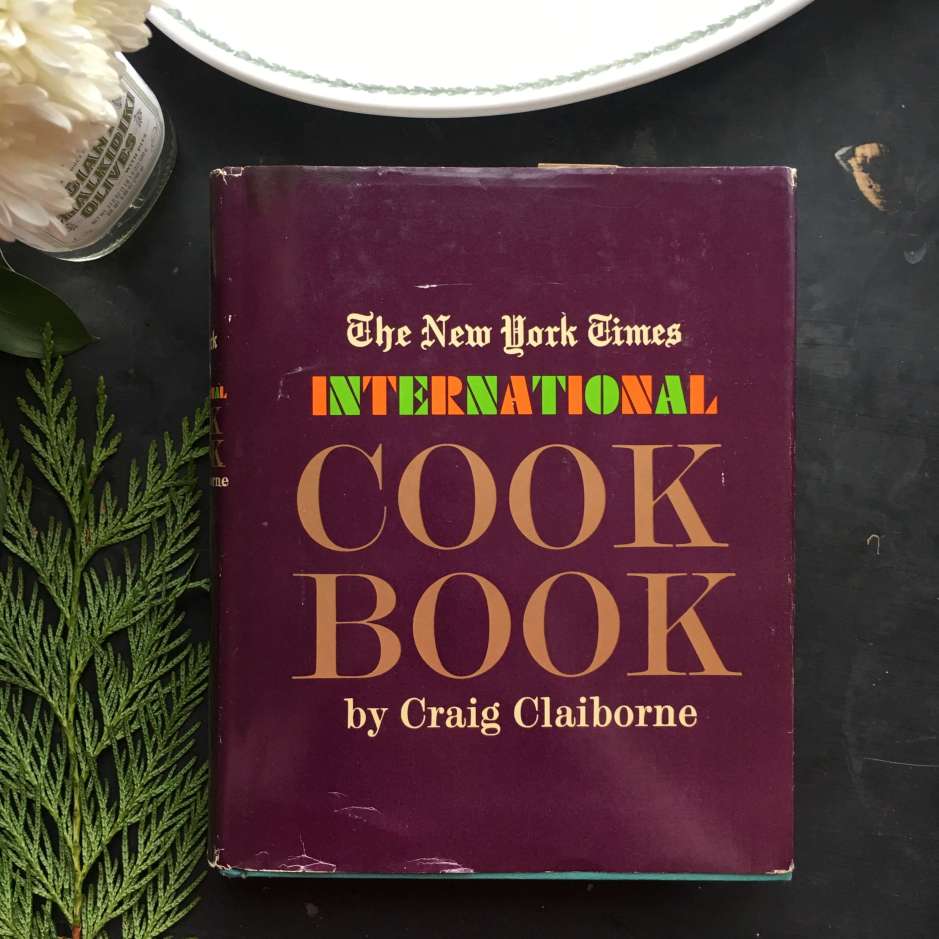
There are lots of books that could have been referenced once this idea of a vintage recipe tour started swirling around, but The New York Times International Cook Book is an ideal fit for this type of world-wide exploration for two main reasons. First, Craig Claiborne…

The recipes in the International Cook Book were collected and tested by Craig Claiborne (1920-2000), a long-time editor at the New York Times and a treasured favorite cook here in the Vintage Kitchen. Throughout his career, Craig came in contact with all sorts of foodies from all sorts of places around the world – famous chefs, restaurateurs, caterers, food critics, industry professionals, home cooks and “those who wanted to communicate their culture via their kitchen.” He was also a talented wonder in the kitchen himself and the author of over twenty cookbooks. There is not a recipe that I’ve tried of his that I haven’t absolutely loved. Needless to say, he knew a good recipe when he saw one and he knew the good sources from which to get them. When he was preparing The New York Times International Cook Book he consulted hundreds of people and traveled thousands of miles to collect the most highly prized recipes he could find. Although he hasn’t been as widely recognized or remembered as some other famous culinary icons of the past, I’m excited to re-introduce him here on the blog. With his name attached to this cookbook, I have a feeling we are in good gourmand hands.

Ingredients for spaghetti and anchovy and clam sauce from the Italy chapter of the The New York Times International Cook Book

The second reason why the International Cook Book is an ideal vintage recipe springboard is because of the decade in which it was produced…the 1970’s. The first edition came out in 1971,  a decade of heightened curiosity and savvy in both the international travel department and the cooking department. While the 1960’s made air travel to foreign countries appear glamorous and exotic, by the beginning of the 1970’s international escapades were more widely accessible to Americans. This interest in other cultures reflected in the food scene of the 1970’s too – by exposing American palates to more diverse cuisine and broadening their culinary horizons.

1970’s travel poster for Qantas Airlines

The disco era ushered in a decade of cosmopolitan dining and entertaining that was backed by newly found confidence, curiosity and skill in the kitchen. Swiss fondue parties were all the rage, Spanish paella became a fashionable dinner food, and homemade Italian tomato sauce consisted of garden-raised ingredients instead of the 1960’s version that often combined conveniences like ketchup and canned tomato soup. Cooking in the 1970’s revolved around excitement, a desire for authenticity and an interest in cultural awareness that is similar to the way we approach food today. Over the course of the year, it will be interesting to see how these vintage recipes compare to our modern palates and standards of both cooking and eating. It is often said that history repeats itself, I’m curious to see if that cliche applies to food as well.

I hope you join me each week in this around the world journey and discover some new favorite recipes yourself. We kick off the big adventure next Wednesday, January 8th, with our first country…

What’s on the menu for Armenia? You’ll just have to wait and see:) Until next week… cheers to the new year!

Hot Chocolate at the Hotel de Crillon: A Parisian Retrospective and A Recipe

Two days ago I woke up to a surprise. Snow flakes.  Floating and falling and flying just outside the kitchen window, finally, it felt like winter at last.  For the first time all season the outside weather matched the inside holiday spirit.

We don’t get snow very often in Nashville but when we do it’s a call for extra special cooking adventures. The last time, we had a good dose of white winter weather, I prepared a Ruth Reichl recipe – slow simmered Chicken Fricassee from her 2015 cookbook, My Kitchen Year. That cookbook centered around Ruth’s rejuvenation of herself and her spirit via her kitchen in upstate New York. This year, inspired by the snow day, we are taking a little trip too, but not to New York. In this post we are headed to Paris to highlight a winter recipe that is famous throughout the city.

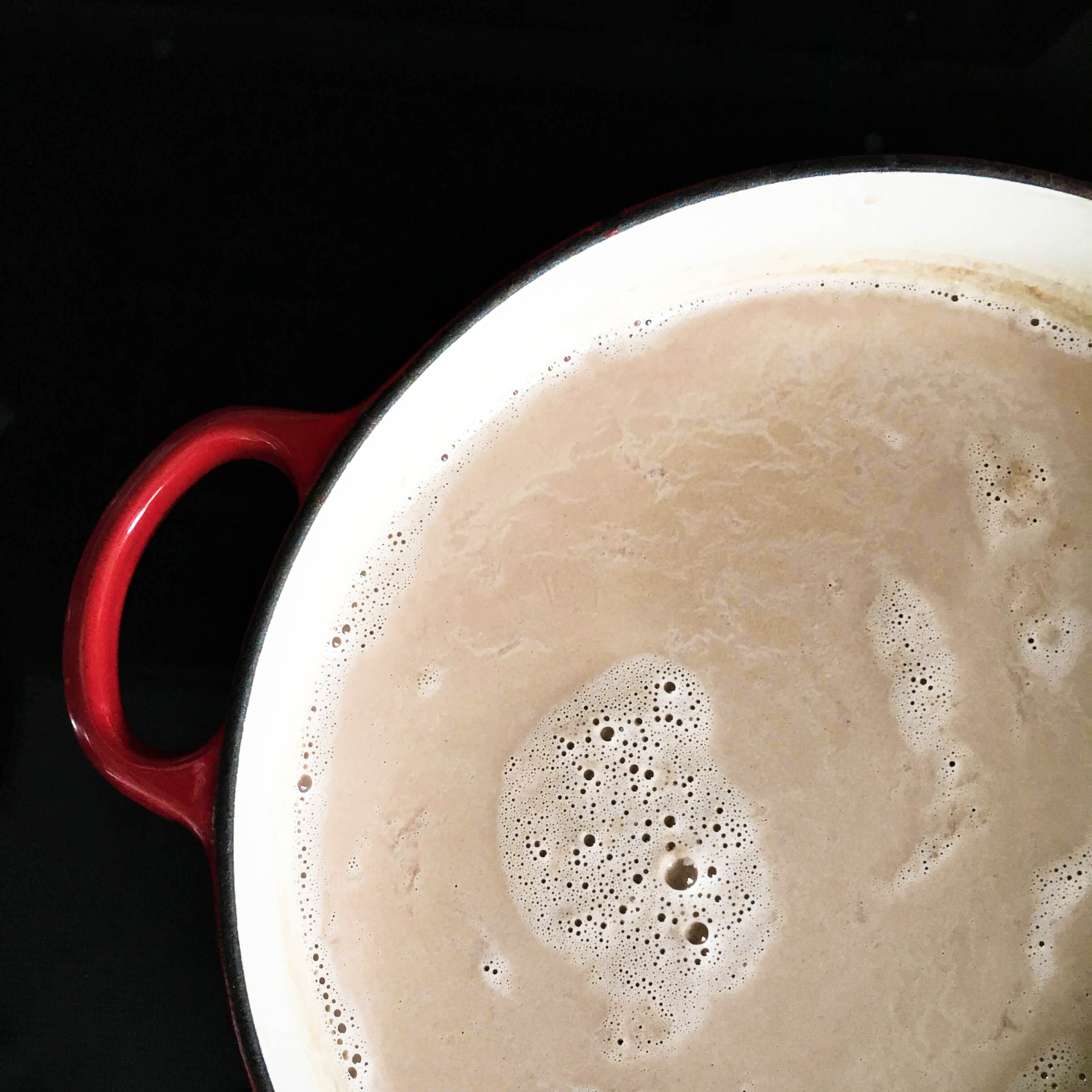
On the stove there’s a warm, rich pot of homemade hot chocolate derived from a recipe that was originally born in the kitchen of a beautiful historic hotel located at 10 Place de la Concorde, just steps away from the Champs Elysee.  This isn’t your everyday, ordinary hotel and this isn’t your everyday, ordinary batch of hot chocolate. This cup of cocoa doesn’t involve powdered substances, paper envelopes, or hot water. It doesn’t include high fructose corn syrup, artificial sweeteners, or a long list of ingredients. You can’t go buy it prepackaged in a store and pour it into a cup at home for convenience.  This recipe is unique, prized, and unavailable online. It tastes like magic. And for me, it tastes like memories. I am very pleased to introduce you to the Hotel de Crillon and the most esteemed cup of hot chocolate in all of Paris.

In my growing up years, the Crillon was our home away from home anytime my family and I visited the City of Light. From the time I was 6 months old to the time I was 16, stays at the hotel were part of the fabric of my childhood. We had a very good family friend with a beautiful sing-songy name – Michele de la Clergerie – who was the VP of Public Relations at the Crillon. Because of that friendship and all the business my dad’s company did with her company, the Crillon turned into a natural home base for us whenever we visited Paris. Sometimes we were just there for a few days as a stopover on the way to the South of France or to Switzerland or to Africa or some other destination, but oftentimes we stayed for a week or more, taking up two suites in this dazzling building.

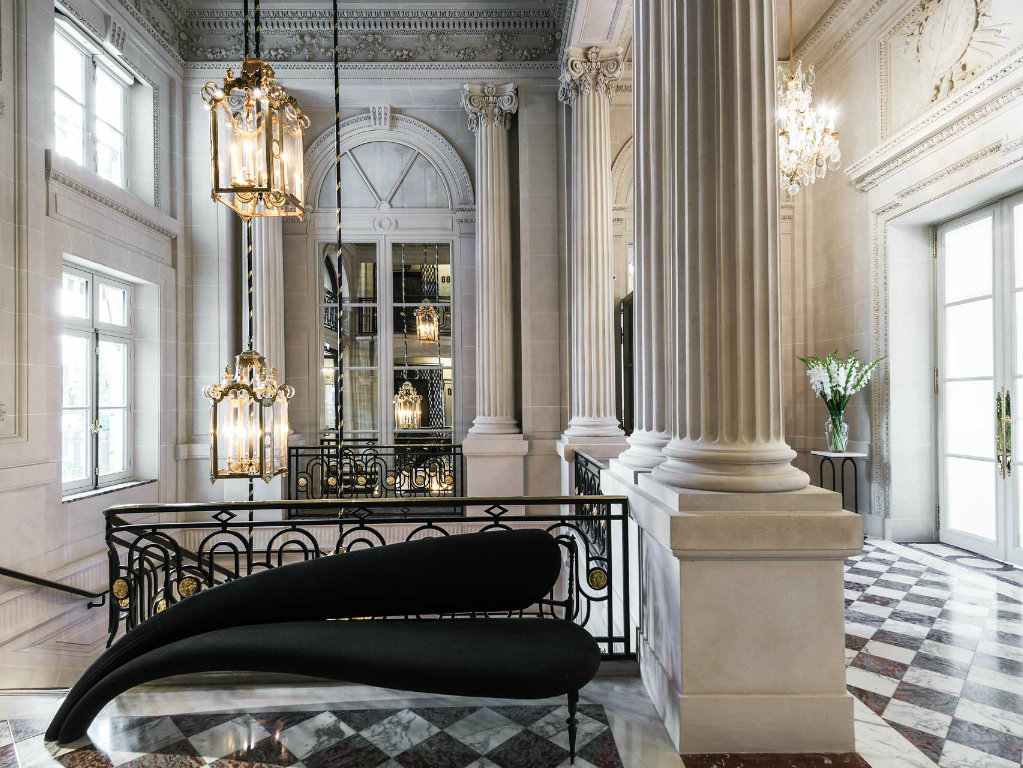
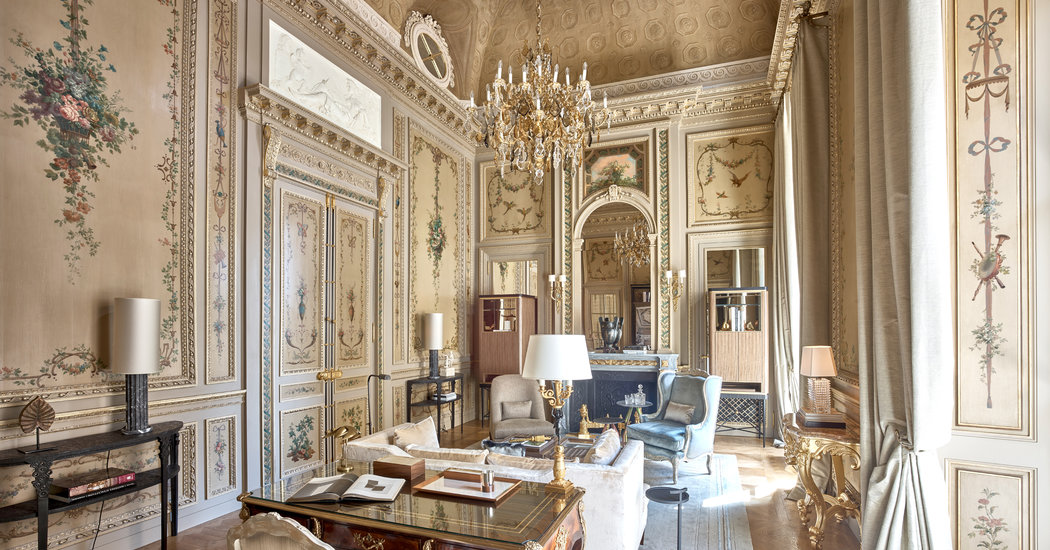
Photo courtesy of jetsetter.com

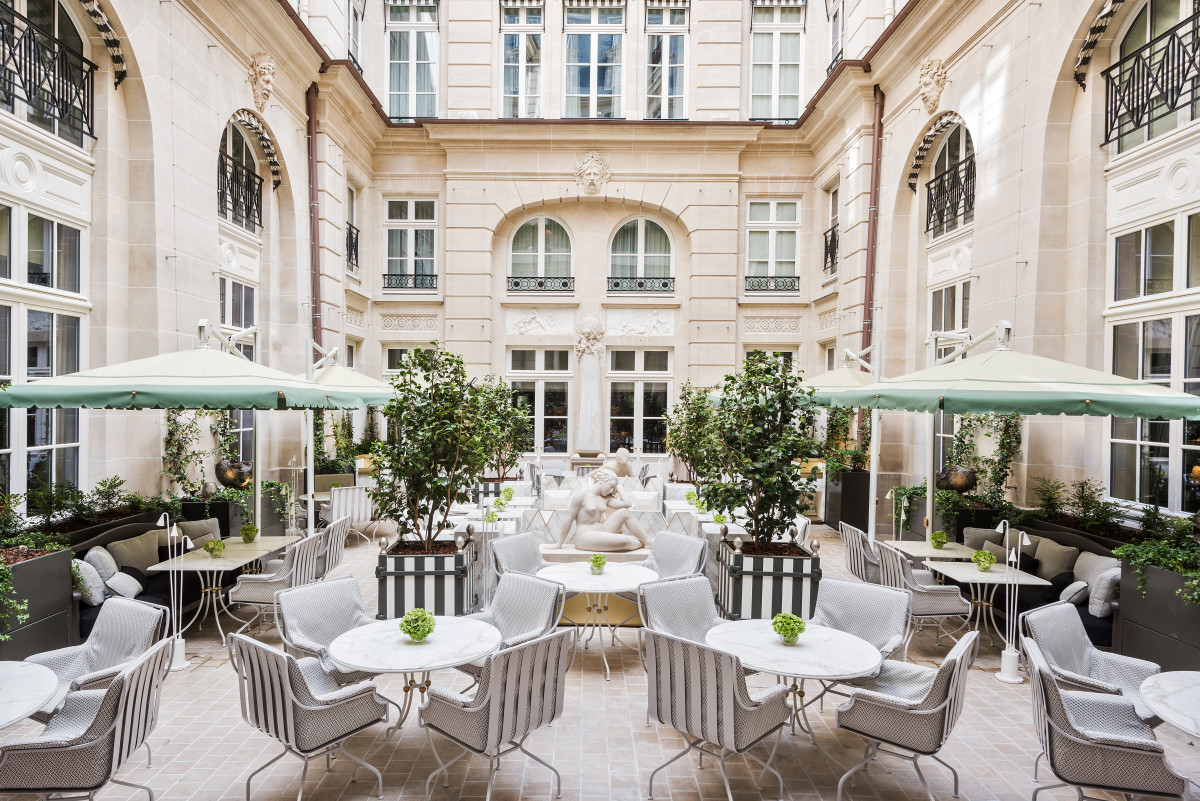
Photo courtesy of crillon.com

The hotel has recently gone through a renovation which has included a more modern update of the furniture and decor, so it doesn’t look exactly like it did when we stayed there in the 1980s and 90s – but many of the hallmarks (the black and white checkered marble floors, the gold detailing, the big, sashed curtains, the outdoor dining patio, the lavish breakfast room, the en-suite balconies and baths, the beautiful French doors and of course the exterior of the building itself) all remain exactly as I remember.

When I look at pictures of this beautiful hotel now, as an adult, and then recall the experiences my family and I had there while I was growing up, it all seems like a fairy tale. Some sort of far-off, fanciful, other life escapade… gauzy, romantic, and lush… with a level of luxury fit for make-believe or movie sets or circumstances beyond reality.

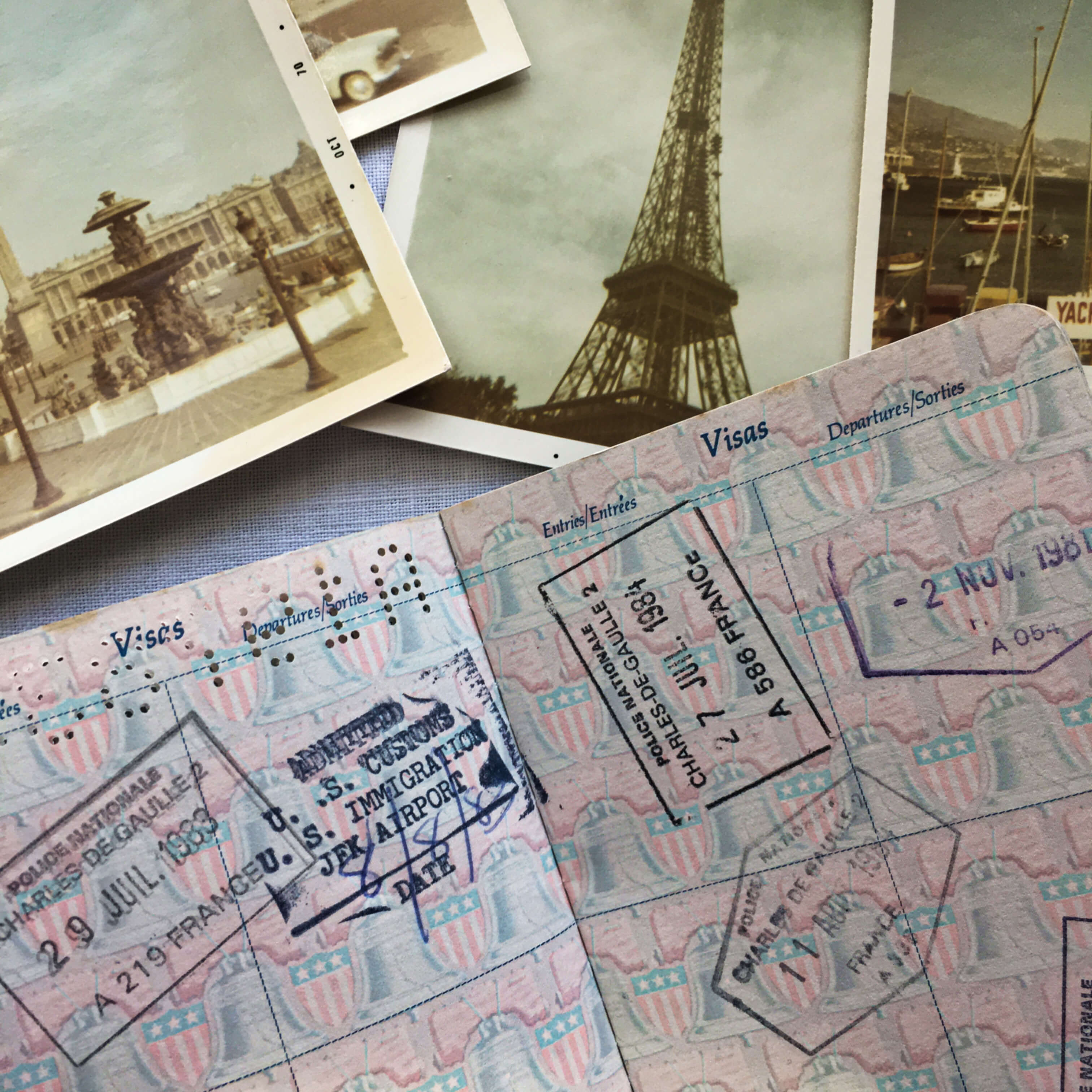
My passport photo – age 3:)

But real it all actually was. Thanks to my dad’s career with a French airline, by the time I was three, I was an experienced international traveler, already well on my way to filling up stamps in my second government-issued passport…

During those first years of life, I traveled with my own luggage, my doll, my favorite book of the moment, and my best friend, my sister, who was only a year and a half older than me.

Growing up with my sister and traveling all around the world felt a lot of the time like riding a lion… exciting, unusual and wild. That’s me on the right (age 2), my sister on the left (age 3 1/2).

Our permanent home address was  New York, but really it felt like we lived all over the globe due to the amount of traveling we did as a family. My mom kept our suitcases in the bottom of our closet, standing ready to fill at a moment’s notice. My sister and I had two wardrobes – a regular kid wardrobe and then a traveling wardrobe. The latter, our traveling wardrobe, was mostly made up of dresses and cardigan sweaters  and shiny shoes. These were clothes that were light in weight, packed well, were suitable for most occasions, and ultimately subscribed to my dad’s fashion philosophy of “it’s better to be overdressed than underdressed.”

A family photo on the Mediterranean Sea circa 1983. My parents are on the left. Family friends are standing behind my sister and I. That’s me on the left and my sister on the right.

It wasn’t unusual for my mom to wake us up from an afternoon nap with a greeting that ran along the lines of  “Surprise, we are going to Hawaii – we leave in an hour,” or for my dad to come home from a day at the office and announce a family trip to Switzerland or the Bahamas or London with just a few day’s notice.

In the 1980s the tourism industry was riddled with perks and freebies and gifts and complimentary tickets and special passes and personal invitations. For the most part, the industry overall was gregarious, charming, hospitable, convivial, and fun. Mainly everyone who was lucky enough to be a part of it was just out for a good time and an interesting story. Because of my dad and his job connections, we always flew first class, stayed in luxury hotels, and dined in celebrated restaurants. This made us witnesses, as a family, to a pretty glamorous side of travel. One that allowed us to experience all the thrills of a high-end lifestyle without having to worry so much about how to pay for it all.

This is a photo from the family albums which captures the chaotic color and life and excitement of traveling when I was small. Lots going on, always and never in a language that I could easily read:)

Growing up as kids in this high-flying airline industry afforded my sister and I lots of special experiences and taught us so many life lessons it would take a year to write them all down. But the most important thing it taught us from the very beginning was how to be nimble. My dad always loved to tell a story about how discombobulated I could become as a kid when we traveled. Especially after waking up from a nap, opening my eyes for the first time in a new city or a new country where I didn’t know the language or understand the culture. We’d be in Hawaii and I’d wake up at the age of 3 or 4 asking if we were in Monte Carlo or Germany or was it the beach in Bermuda?

This whirlwind collage of first cities and first countries, and travel via cars and planes and boats and trains, in such frequent rotation quickly led my sister and I to associate certain small details with certain cities. Lake Geneva became known as the hotel with the herd of wild deer in back. Monte Carlo had the balconies that hung over the sea. The hotel in Abidjan had floor-to-ceiling green wallpaper. Hawaii had birds in the lobby.  Morocco had a walled garden and clay squash courts. And Paris had the beautiful, welcoming Hotel de Crillon.  But my sister and I didn’t call it that. We called it the hotel with the great hot chocolate and also the place without the pool. Oh my.

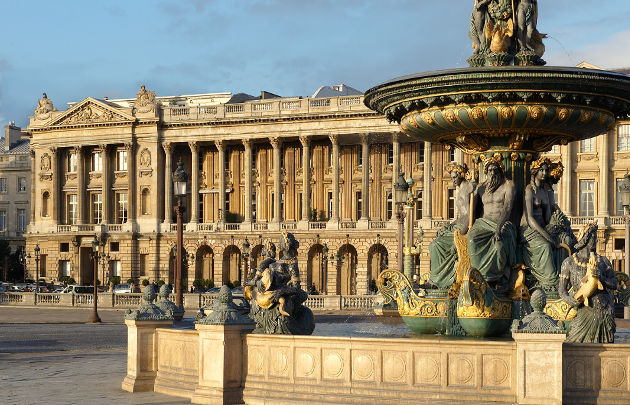
The Hotel de Crillon pictured with the Fountain of River Commerce and Navigation. Photo by Eric-Cuvillier. Courtesy of the Paris Tourist Office.

The Hotel de Crillon was originally a palace built in the late 1700s for King Louis XV – who was nicknamed the Beloved King. It was originally built to be an office building but throughout its existence seemed to beckon more like a siren than a bureaucrat, attracting a menagerie of artistic, colorful, and creative inhabitants during the  18th, 19th, and 20th centuries. Visitors and residents included Benjamin Franklin, Marie Antoinette, King Louis XVI, Theodore Roosevelt, Winston Churchill, and countless celebrities. One of its owners, the eventual hotel’s namesake, was the Crillon family. They were descendants of an 18th-century duke revered in the French Army for not only his courageous spirit but also his chivalrous demeanor. The Crillon family lived in the palace during the entire 1800s until it was sold in 1909 and turned into a hotel.  By the time I came to know it in the latter half of the 20th century, as a little blond baby barely walking, the building contained so many exquisite historical attributes it was easy to imagine life as a real princess.

Photo courtesy of Artelia Group.

Embarrassing to admit now, I didn’t fully appreciate the spectacular beauty of the hotel then nor understand its cultural and architectural significance even during my teenage years.  Marie Antoinette was beheaded right out front. The building itself was caught up in the middle of the French Revolution. Dignitaries, heads of state, presidents, kings, queens, and movie stars from all eras of history have stayed in the very rooms that we’d stayed in and walked the very floors (that oh so beautiful black and white marble) that we walked. Fashion shows, photo shoots, film crews, and artists from last century to this one have crawled all over the hotel property documenting and decorating it for countless creative pursuits.

But for all the incredible circumstances, situations, and events that have happened in and around the Hotel de Crillon since its beginnings, the one element that I can never forget about this special place, has nothing to do with famous faces or elaborate decorating or stories from past centuries. It has to do with food. A simple cup of house hot chocolate. When we were little girls, it usually arrived via room service on a breakfast cart, served by an attendant, and poured from a silver pot.  As I got older and grew into my teenage years, my sister and I would take our hot chocolate at a table on the outdoor patio before heading out to explore the city.  Hearty, restorative, and decadent, it was practically a meal in itself. But my dad taught us a little foodie secret before we even learned how to talk.  The perfect accompaniment to a cup of hot chocolate is a croissant.  As we discovered, these two foods made up a perfect pairing of flavors and forged an unforgettably indulgent tradition that we looked forward to with each visit. To this day my family still agrees.  No other cup of hot chocolate, wherever we traveled in the world, or attempted to recreate at home, ever tasted as good as the hot chocolate served at the Crillon.

We weren’t alone in thinking this. The hotel’s flagship beverage has been revered in Paris by both tourists and locals for decades. Mentions on the internet still to this day deem it one of the best, if not the best hot chocolate in the entire city. It is so beloved, it is difficult to come across an article about the Crillon that does not mention a more enjoyable cup.

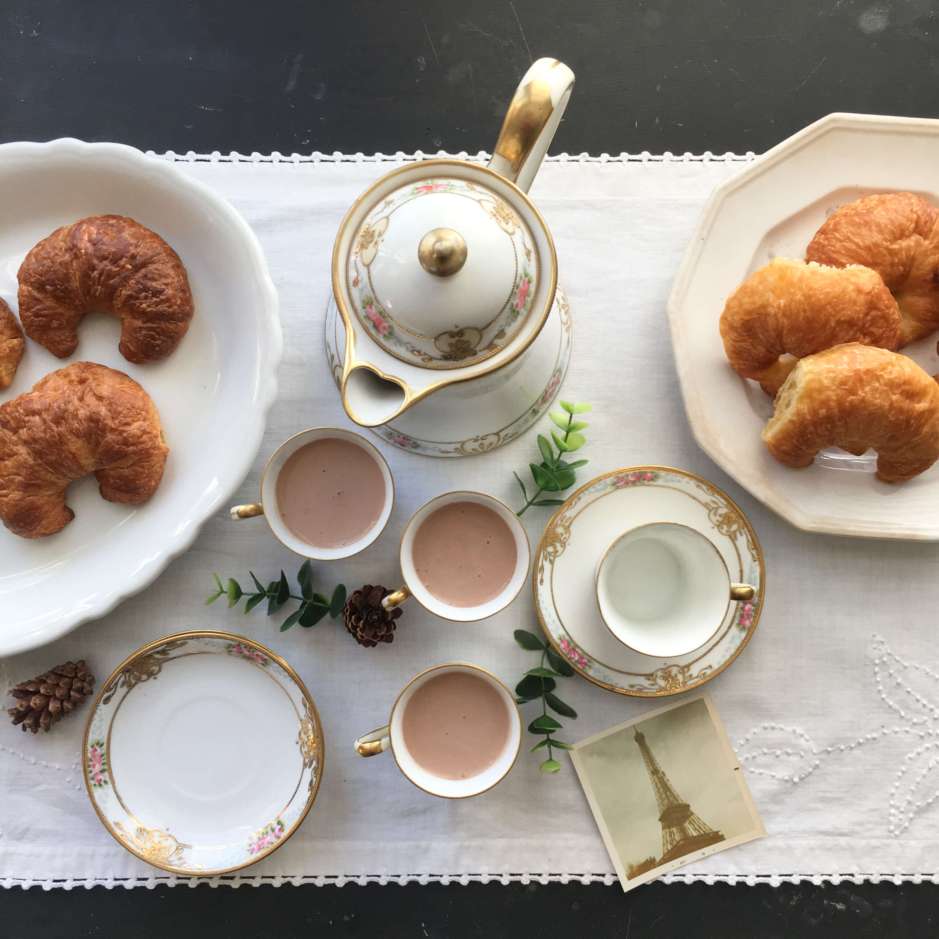
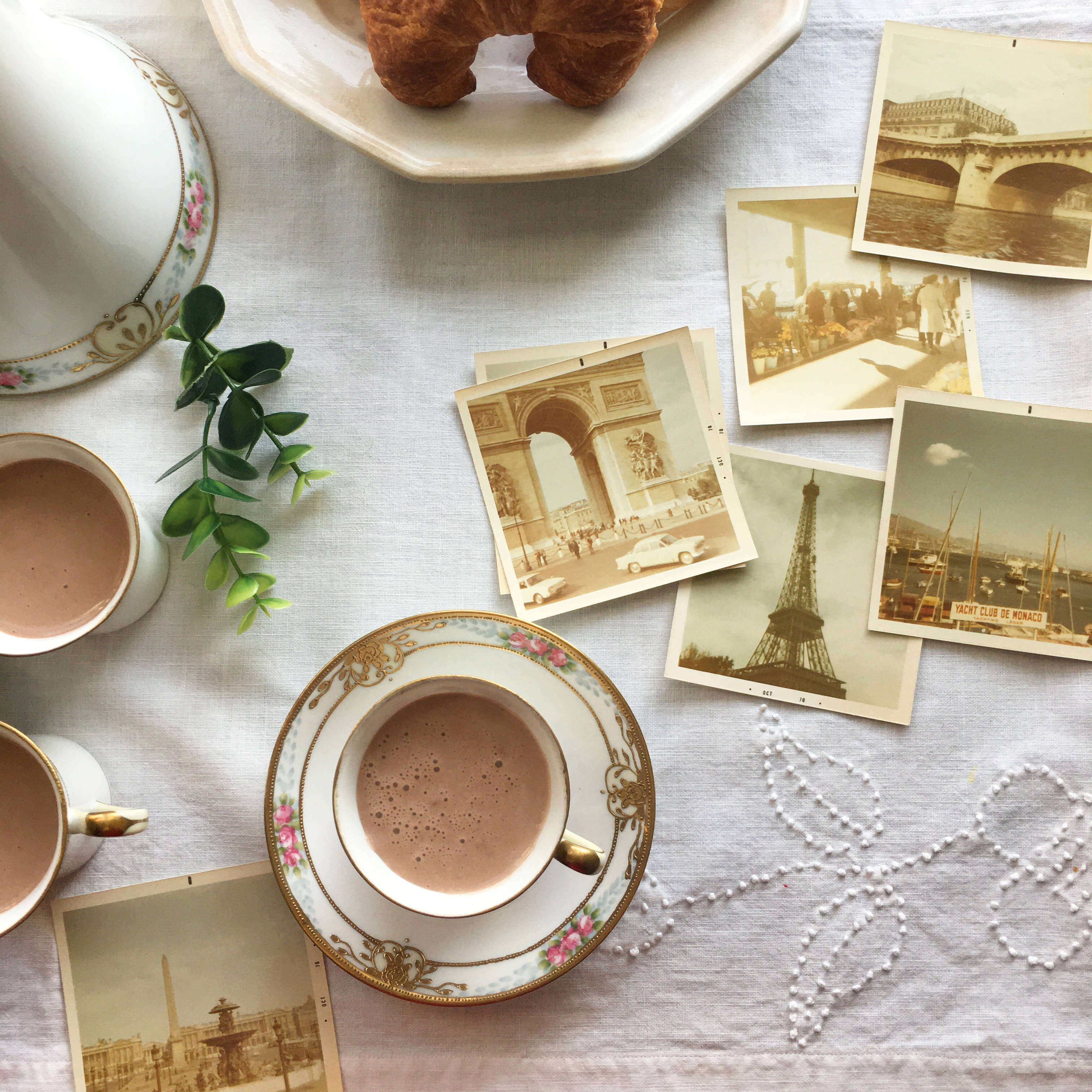
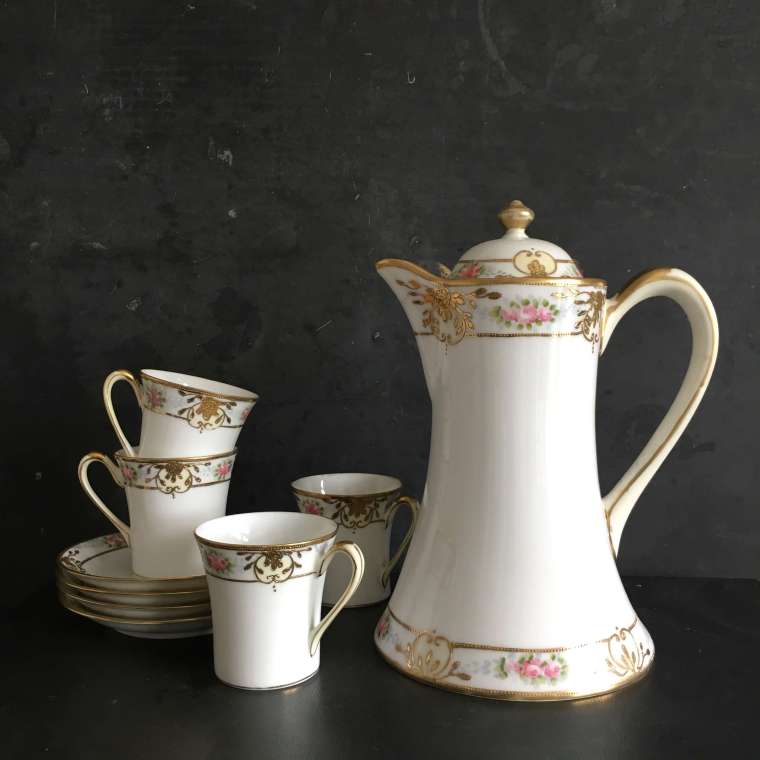
Last January, I came into possession of an antique Nippon porcelain chocolate pot and a set of four matching cups and saucers. When I saw it, I immediately thought of Paris and the Hotel de Crillon and the delicious hot chocolate from decades ago. The hand-painted set was made in Japan at the turn of the 1900s –  about the same time that the Crillon was turned into a hotel. As if fate had stepped in and lined up all the details, I knew that this chocolate set was the perfect match to pair a story and a recipe from the vintage family archives.

Just a few years ago, my sister mentioned that she had seen the Crillon hot chocolate recipe posted on their website. But when I went to look, it was no longer there. The website had changed to reflect the hotel’s new style and new renovations. I wasn’t disappointed though because surely I thought, in our modern age, with all sorts of travel writers and food makers covering all aspects of Paris, on the internet, there would be someone out there who would have shared the hotel’s hot chocolate recipe via an article or a cooking blog. Surprisingly, such was not the case.  So I contacted the hotel directly and explained the whole story about when I was young and my family’s experiences and the memorable hot chocolate. Right away, being the lovely and gracious hoteliers that they are, they promptly emailed the recipe over for use in the blog post. How wonderfully exciting.

I am so very happy to share this recipe with you. Nothing is more fun or festive, especially around the holidays, than making a big pot of hot chocolate fit for a crowd. This recipe is thick, rich, and not overly sugared. It’s filling and hearty and by the time you finish the last drop you’ll feel delightfully satisfied. And if you live in one of those states where it snows and snow and snows all winter long – this recipe will keep you fortified as you shovel and frolic your way through the season.

The recipe sent from the  Crillon is in hotel-size volume and contains French measurements, so I’m including the original French recipe (see photo), which makes 30 cups of hot chocolate, as well as the converted American measurements version (which also makes 30 cups) and then further breakdowns of the American recipe into smaller quantities (15 cups and 7-8 cups) if you are entertaining a more petite crowd.

And a final note, it was tricky to find 66% dark chocolate, at least in my neck of the woods. In order to keep this recipe user-friendly for all readers, I wanted to use chocolate that could be found easily in all grocery stores, so I combined two common percentages (56% and 100%) which are pretty standard here in the States when it comes to dark chocolate ratios. But for our European readers, you’ll probably be able to find, more easily, the percentages the Crillon uses, so I’d recommend that.

The Hotel de Crillon’s Hot Chocolate Recipe

(American conversion) Makes 30 cups

  • 15 cups heavy cream
  • 15 cups whole milk
  • 3 oz sugar
  • 8oz 56% semi-sweet chocolate (56% cacao)
  • 4 oz. 100% unsweetened chocolate (100% cacao)
  • 4 1/2 oz. milk chocolate (3/4 cup)

For 15 cups:

  • 7 1/2 cups heavy cream
  • 7 1/2 cups whole milk
  • 1.5 oz of sugar
  • 4 oz 56% semi-sweet chocolate (56% cacao)
  • 2 oz 100% unsweetened chocolate (100% cacao)
  • 2 1/4 oz milk chocolate

For 7-8 cups:

  • 3 3/4 cups heavy cream
  • 3 3/4 cups whole milk
  • .75 oz of sugar
  • 2 oz 56% semi-sweet chocolate (56% cacao)
  • 1 oz 100% unsweetened chocolate (100% cacao)
  • 1 1/8 oz milk chocolate

In a large pot, combine the cream and the milk over medium heat, stirring frequently until just beginning to boil. Remove from heat, cover with a tight fitting lid and set aside.

In a double boiler, melt all the chocolate together. And then add in the sugar and stir to combine.

Pour the melted chocolate into a medium-sized bowl. Add one cup of the hot milk/cream mixture to the chocolate and whisk to combine until the texture resembles soft whipped cream.

Gradually incorporate the chocolate mixture into the big pot of milk and cream, whisking until well combined.

Warm the hot chocolate over medium heat for 5-10 minutes until it reaches a temperature warm enough to your liking. It is best served right away. If you have any leftover (which will probably not be likely) you can refrigerate it and slowly reheat it the next day or simply enjoy it cold, like a glass of chocolate milk.

I love this hot chocolate just as it is without any adornment. But feel free to add some marshmallows or a peppermint stick, some flavored liqueur, or a dash of whiskey, if you want to jazz it up in your own way. And definitely serve it alongside a basket of fresh croissants. (Side note: for anyone who does not live near a French bakery, Trader Joe’s sells wonderful frozen croissants that you can heat up at home in the oven). 

After my dad retired in the mid-1990s, we rarely traveled to such glamorous locales or on such a glamorous scale as our childhood days. Instead, we explored our hometown more (the great city of New York) and traveled around the United States, of which we didn’t know nearly as well as Europe. My sister and I grew into our adult selves, got married, explored careers, and forged ahead into lives of our own making. The flutter of those early travel experiences, and the decadence with which we enjoyed them, became cherished parts of our past… wonderful memories to be tucked away in our hearts and our minds.

I grew up in the time before Instagram and iPhones and the modern desire to record every moment of every situation at a whim. There are no day-by-day, detail-by-detail photo streams of all my sister and I saw and did in the first half of our lives. Just a few handfuls of random pictures taken on the run from one place to another. But what we do have are our memories swirling around in our heads.  Even though some of those are now slightly hazy and somewhat dim due to time,  I’ll never forget the Hotel de Crillon and its majestic building and gorgeous hospitality. And now, thanks to their graciousness in sharing this treasured recipe, I’ll never forget the taste of their hot chocolate either.

The next time you are in Paris, I hope you get a chance to visit the Hotel de Crillon, if not to stay, then at least just to peek inside and treat yourself to a cup of their house hot chocolate.

It has been over 20 years since I last visited the Crillon, but if I could partake in some sort of magical time travel, my 2019 self would meet up with my 1980s self in the foyer of the hotel and whisper into that little girl’s ear… “Chin up, they have a pool now.”

A big cheers and a big thank you to Sofie, Elcie and Victoria at the Hotel de Crillon for sharing this memorable recipe. Cheers to my dad for all the adventures, big and small, to my mom for always letting us go, and to my sister, my forever travel pal, without whom these trips would not nearly have been as fun.

If you’d like to learn more about the antique chocolate pot, find it in the shop here. If you’d like to learn more about the hotel, please their website here. And finally, if you try this recipe, please let me know what you think in the comments below.  I hope it becomes a new wintertime favorite for you too. Cheers!

Thankfully Yours, This Happy Thanksgiving!

Hello lovely vintage kitcheners! I just wanted to pop in to wish you a happy Thanksgiving from the wee small hours post-celebration. Hope your day was filled to the brim with all the delicious components that make up this wonderful holiday. Not only the food, but the friends and the family and the intimate moments that make the day extra special.

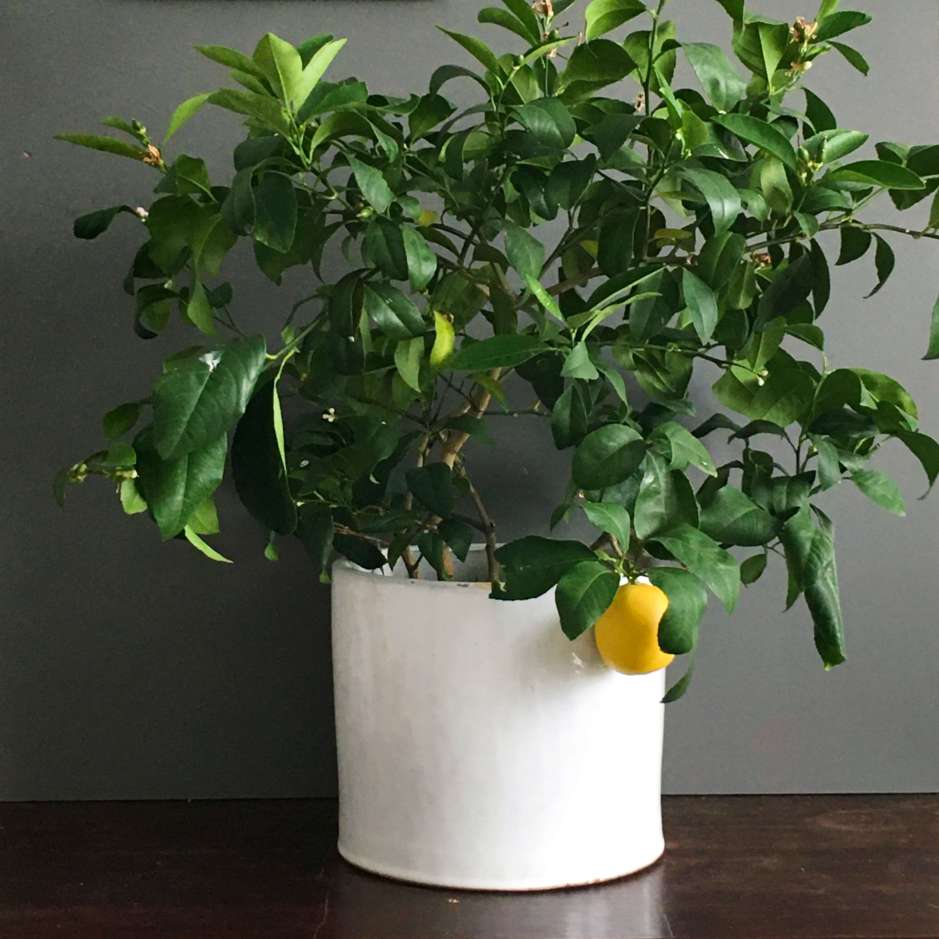
This year my turkey was decorated with a lemon. This wasn’t just any old lemon that was picked up at the grocery or plucked from a stall at the market. This lemon was made by Liz –  the indoor orchard tree that has been growing in the Kitchen for over three years now. As the one, the only lemon that Liz produced in the past 365 days, it was a celebratory event when it finally turned the color of the sun and ripened soft and plump just in time for turkey day.  As I clipped it from its limb, I realized what a symbol this lemon was for all the gratefulness I felt this year.

It takes a long time to grow a lemon from a fragrant flower to a final edible fruit (six months in this case!), just like it takes a long time to write a blog post (days!) and to build a community (years!). In both situations, there is fret and worry and planning and cultivating. There is trimming and feeding and caring and tending to. There is a chance that the lemon won’t grow. And there is a chance that that blog won’t resonate.

But then some little wonderfuls happen. The lemon gets bigger. It blushes from green to yellow. A kind comment comes in from a blog reader. A note of joyful glee is expressed by a shop customer. These are the marvelously sweet, rewarding moments of the Vintage Kitchen.  The signifiers that things are happening. The tree is growing, the blog is blooming, the shop is finding its way.

This year I’m most grateful for gifts that take time. I’m so thankful for each and every one of you who champion and participate in the world of the Vintage Kitchen. Your encouragement is a reward that fuels more work, more joy, more long-term commitment and contentment. Thank you for being prized lemons in my orchard of life.

Cheers to you and to time. Cheers to the delicious holiday and a delicious way of life. I can’t wait to grow into a whole new year with you!

A Happy Holidays Shop Sale – 25% Off Now Thru Dec. 25

So excited to announce a very merry holiday sale in the shop! From now thru December 25th, enjoy 25% off store-wide. For the first time ever, you don’t need a coupon code as the discount will be automatically applied at checkout. Cheers to uncomplicated shopping!

If you are new to the blog or haven’t visited the shop in awhile, you’ll discover a new batch of vintage and antique treasures that will add a little one of a kind personality to your holiday kitchen this year. Some of my most favorites include these…

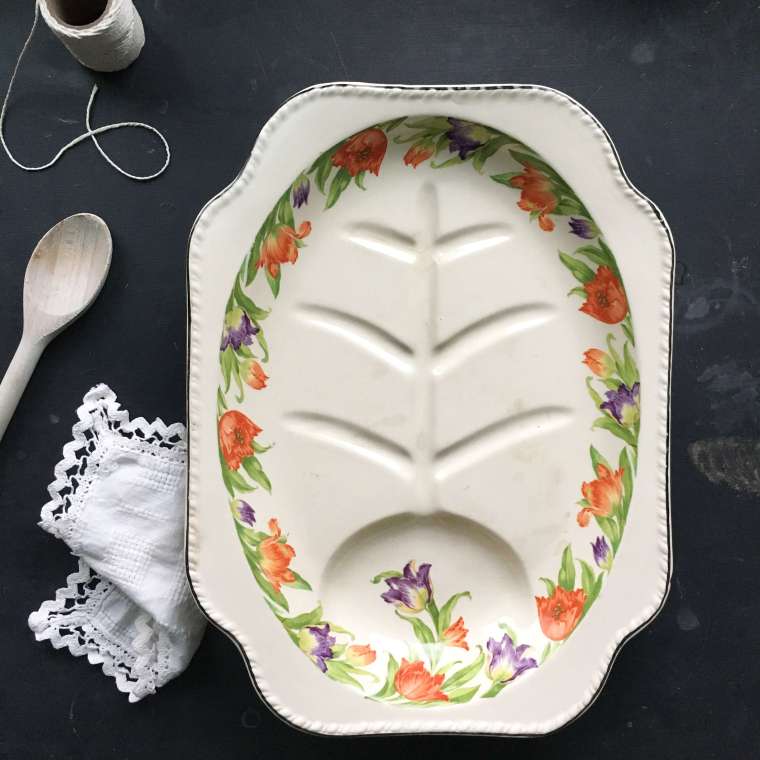
A very rare 1930’s carving platter made by Harker Pottery…

An antique 1800’s apothecary bottle that once held herbal remedies from the Aster family of flowers…

A rare antique vegetable cookbook published in 1892 by Burpee Seed Company and written by Sarah Tyson Rorer (1849-1937) of the Philadelphia Cooking School. Sarah was also known as America’s first dietitian…

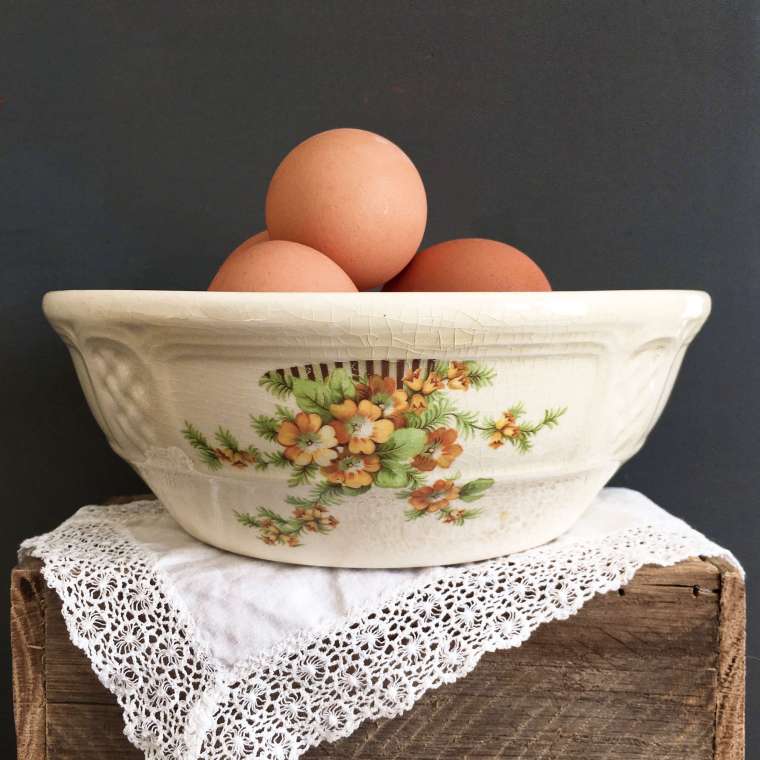
A 1936 floral kitchen bowl made by Paden City Pottery which was granted the seal of approval by the Good Housekeeping Institute…

A very rare 1920’s era Nippon porcelain Japanese sugar bowl featuring a black dragon pattern that also comes with a photograph and story of the original owner…

A vintage French pottery soup tureen in the prettiest shade of green…

A collection of various 1950’s state souvenir serving trays that add an extra dose of happy to happy hour…

{A little note:  The following states are available: Georgia, Maine, Utah, Wisconsin, West Virginia, Oregon, Nebraska, New Mexico, Vermont/New Hampshire and Louisiana. These trays are still being added to the shop so if you are smitten with a particular state but don’t see it listed in the shop, please send a message and I’ll be happy to reserve it for you.}

A 1950 first edition of the one of America’s most iconic and beloved cookbooks – Betty Crocker’s Picture Cookbook which includes a menagerie of scrapbook-style clipped recipes incorporated within its pages by a previous owner…

A set of four vintage embroidered grape applique linen cocktail napkins…

A beautifully detailed nickel plated vintage brass reindeer that handsomely sets the scene for snowy Christmas mantles, festive holiday tables and shiny holiday decor…

And a stunning antique hot chocolate pot set with matching cups. This set was made between 1911 and 1920…

That was just a little sampling of some of the items you’ll find in the shop. To explore more, please visit here.

Whether you are buying a little treat for yourself or gifting a piece of history to someone else, your package will arrive gift-wrapped in seasonal paper so that it can be removed from the mailing box upon receipt and head straight for a spot underneath the Christmas tree. Hope you find some treasures that make your heart sing with joy.

Happy weekend and happy shopping!

The Indoor Urban Orchard: What’s Growing Now?

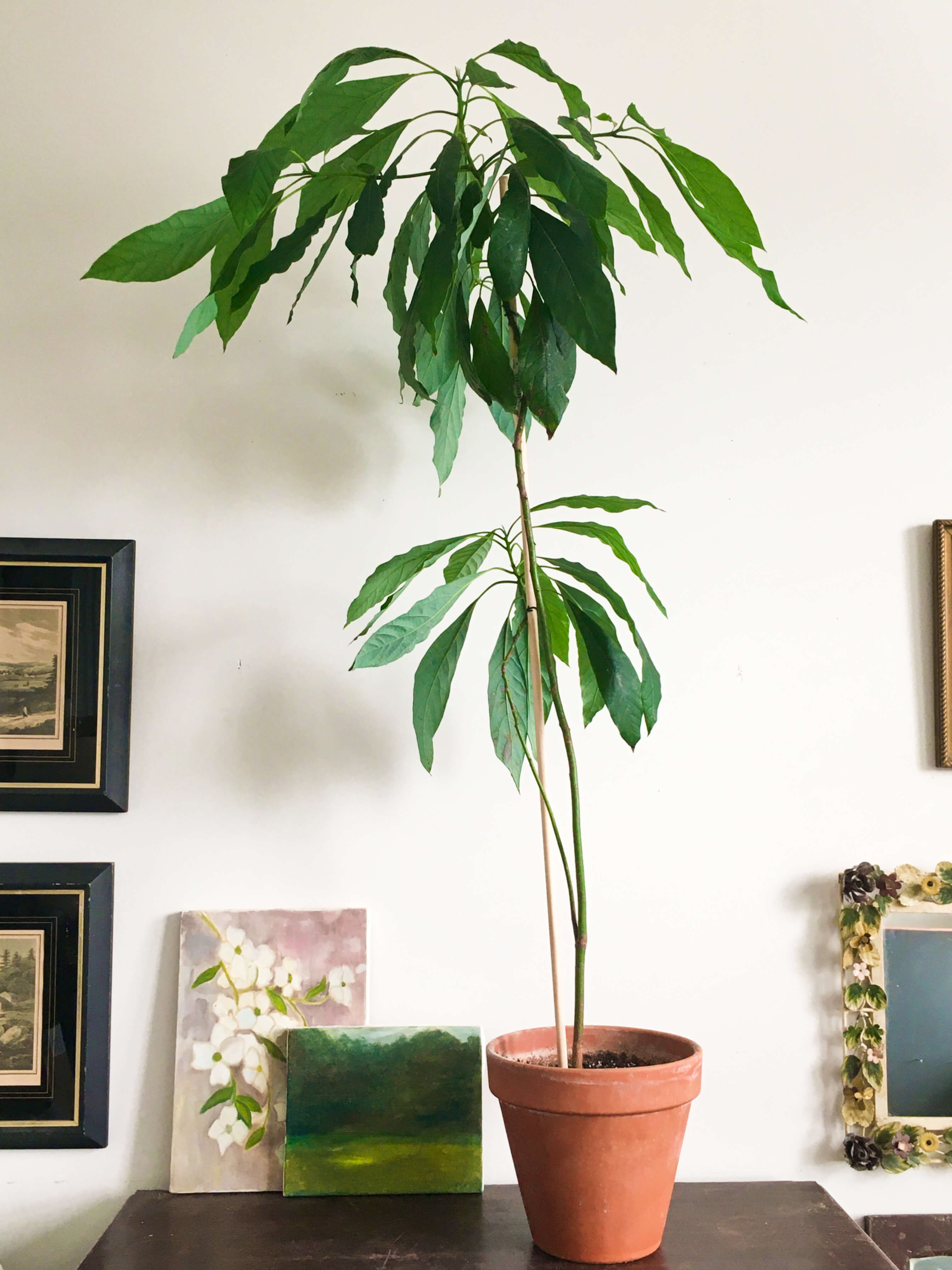
This time of year recipe ideas start floating around the kitchen and vegetables start piling up on the counters. Pie pumpkins and sweet potatoes, herb bouquets and onions, lemons, limes, mushrooms, pomegranates, garlic, apples, cranberries, carrots, celery and what seems like all the nuts in all the world spill out from bowls and plates and baskets as we get ready for Thanksgiving Day. Nestled among all that Autumn bounty is an avocado. Not exactly the first food you think of when talking turkey day fare, but around here the avocado is king of the Kitchen, especially in November, when it comes to a certain someone’s birthday. I’m not talking about the kind of avocado that is small, round and rumply skinned though. Here in the kitchen, the king I’m referring to looks like this…

indoor-avocado-plant-1-avi (1)

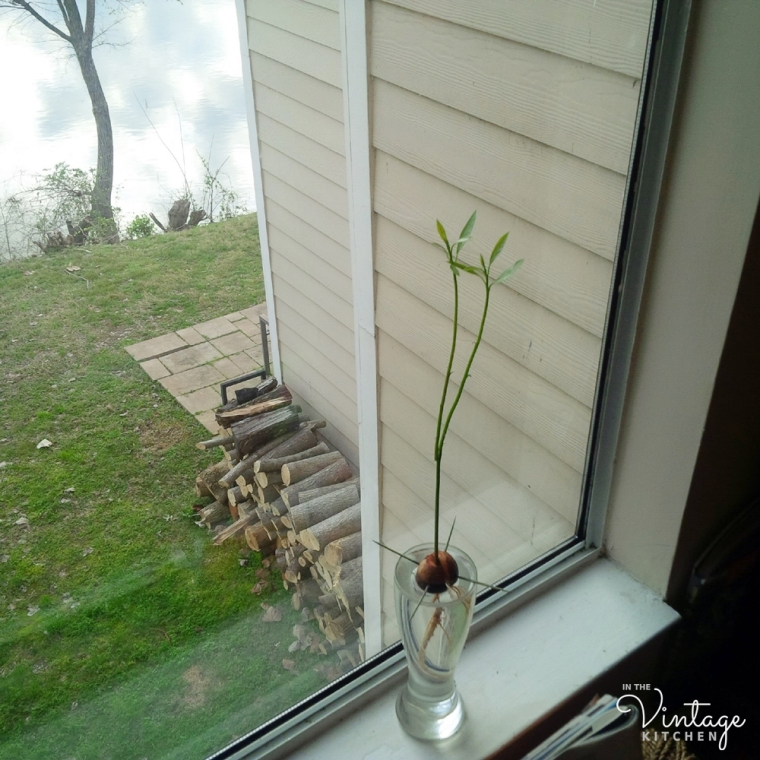
It’s Avi the Avocado! On November 22nd, he’ll celebrate his third birthday.  If you have been reading the blog for a few years, you’ll remember that Avi started out as a seed experiment in November 2016. The kind of experiment where you pierce a regular avocado seed with toothpicks and set it in a glass of water and then wait and watch for it to grow into something green like this…

…which he did with aplomb! Months into the experiment Avi sprouted, gained a name and grew taller as each day passed. Three years into life now, he’s survived a move, a very fretful, almost fatal batch of scale, a fall off the kitchen counter and numerous jockeys around the house as he grew, and then subsequently outgrew, each and every perch. In that time, he’s also developed quite the personality – clearly communicating his loathing for the city patio, the wet blanket heat that is a Southern summer, and the blustery winds off the river that perpetually zip and zoom around the city skyline. Instead, in a very unusual flight of fancy for his kind, Avi decided that he preferred the air conditioning, the bright yet indirect light of the indoors and the resting spots that always seem to be in closest proximity to the hustle and bustle of the kitchen. Perhaps he’s a gourmand at heart:)  Long story short, Avi began and became the inspiration for an indoor orchard of fruit plants all started from seed.

In today’s post we are checking up on the state of the garden and the four inhabitants that now comprise the indoor orchard. It’s been 15 months, since I last posted about their progress and because Avi turns 3 on November 22nd, this seemed like a perfect time to check-in and check up to see how this indoor garden experiment is faring. Let’s take a peek…

Avi the Avocado:

The last time we checked up on Avi’s growth here on the blog it was mid-summer 2018. Outside the temperatures were hot and humid, but indoors everything was as cool as a cucumber. At that point, Avi measured 3′ 5″ inches tall and had just turned a hopeful corner of recovery from the terrible scale outbreak. When this photo was taken, Avi was just returning to his more handsome, happy, healthy state…

July 31, 2018

Today, I’m happy to share that Avi is still at it. Growing by leaps and bounds, he now measures 4′ 7″ inches tall and his leaves are widening out into a broad canopy…

indoor-avocado-plant-1-avi (1)

In just 15 months he grew 1′ 3″ inches. That’s an impressive inch a month! You can see the dramatic difference in this side by side picture if you use the black framed wall art on the left as a reference point…

avocado-tree-growing-stages

If he keeps growing at this rate, by next Thanksgiving Avi will be as tall as me:) Most thankfully, the scale is almost all gone. Soon he’ll transfer to a bigger pot where he’ll stay for a couple of years while he fills out leaf -wise. One thing I learned recently about transplanting flowers and plants is that you should only go to a slightly bigger pot than what you are already using – otherwise the plant spends all its energy below expanding its roots instead of growing taller above the soil line. The next pot size for Avi will be 12″ inches in diameter which should give him enough room to grow up and out for at least the next year and a half. Like a little kid graduating from crib to bed, Avi will be a true floor plant at that point, not longer able to be carried from perch to perch, an exciting milestone!

Grace the Grapefruit:

Not be outdone by Avi, a little friendly competition ensued between fruit trees. In this past year, Grace also also hit a spectacular growth spurt. She went from this in March 2018…

Grace the grapefruit almost 1″ inch tall in March 2018

to this in July 2018…

Five months later ( July 30th, 2018)

to this in November 2019…

how-to-grow-a-grapefruit-tree-2019

Just over 3′ 2″ inches tall now, Grace grew so fast that she’s been re-potted four times already. I’d like to say that all this robust enthusiasm caused her to literally break out of her planter,  but her current abode was a cracked-then-repaired pot meant as a temporary holder for her. But she’s so happy in her blue space, there she’ll stay until she outgrows it. Meanwhile she’s very busy growing extra everything – skyscraper limbs, big green leaves and sharp thorns, especially on her trunk…

grapefruit-tree-thorns

This is lovely to see, because just like Avi, Grace also succumbed to scale when I was away for a month taking care of my sick dad last January. When I got home, she had lost 70% of her leaves and had so much scale that the local garden center (where I took her for emergency help) declared it the worst case of scale outbreak that they’d ever seen. They also gave her a doomed prognosis, saying she probably wouldn’t make it. If you’ve never experienced scale before, this is what it looks like…(on overdrive as in Grace’s case)…

A series of flesh or clear sticky, jelly-like insects, scale wind up sucking the life out of plants. They are pretty gross looking and can be difficult to both see and eradicate but determined, I loaded up on Neem oil and bottles of rubbing alcohol (a trick I learned at the garden center) and then got to work every few days wiping down each of the leaves and the trunk. The rubbing alcohol kills the scale, and the Neem oil protects the plant from re-infestation. As it turns out, that was exactly what she needed and thankfully, Grace made a full recovery in just a few weeks. Now she’s racing to catch up with Avi!

Liz Lemon – The Lemon Tree

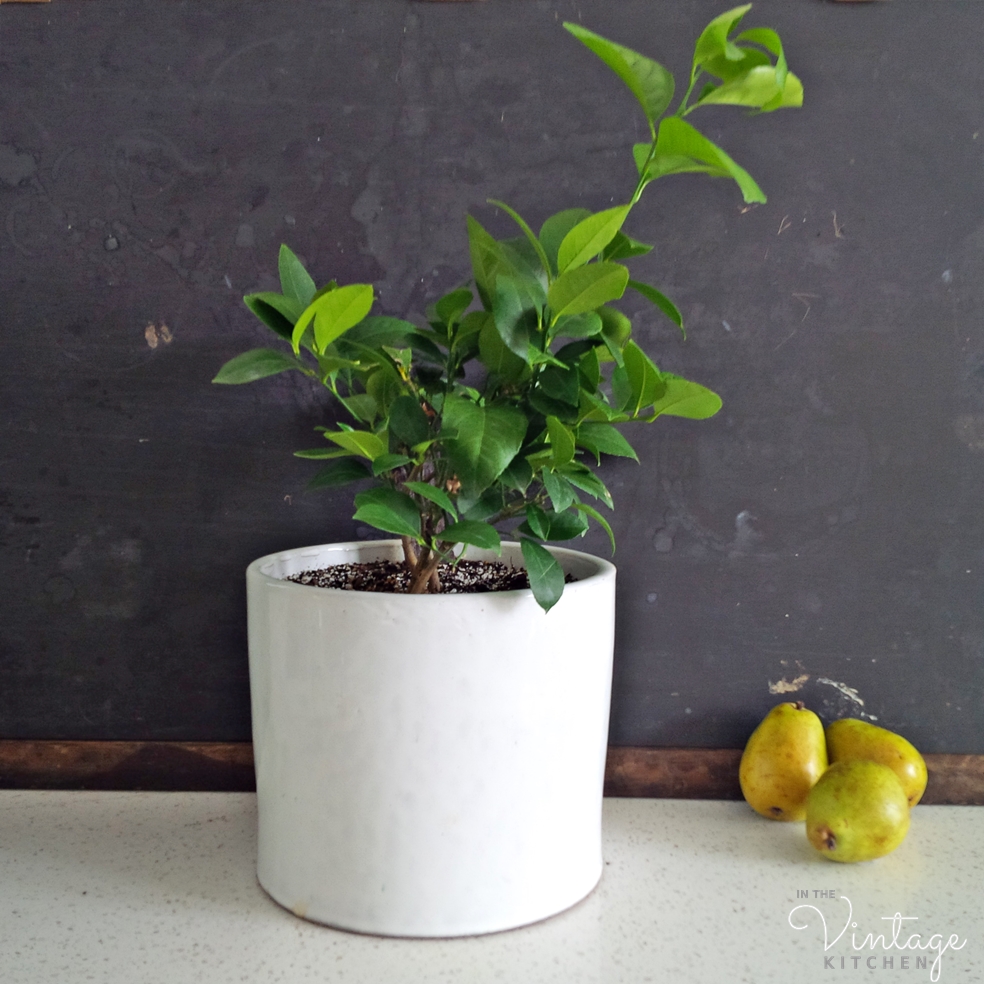
If we were giving out awards for the least amount of drama this year, the award would definitely go to Liz Lemon. By far the most low maintenance plant of the bunch, she just carried on over the past year the way all good lemon trees should – growing flowers, making lemons, filling out. Here she was in July 2018, a sprig of sharp angles…

Now she’s a more stately, shapely tree thanks to some careful pruning and lots of sunshine…

Not as fast a grower as Grace or Avi in the height department, Liz spent her past 15 months growing out instead of up. Coming in at 2′ 4″ inches tall she is the smallest of the household orchard trees but she supplied the most color of the bunch with her bright yellow lemons and her pretty perfume-scented flowers.

Just the other day, she started growing a new batch of tiny little lemons so I’m hoping our yield this year will be greater than last year’s, which produced a total of two lemons. Fingers crossed:)

Jools – The Medjool Date Palm

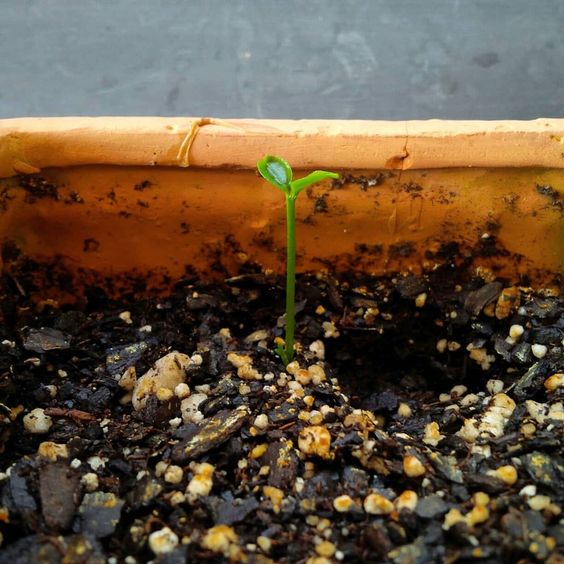
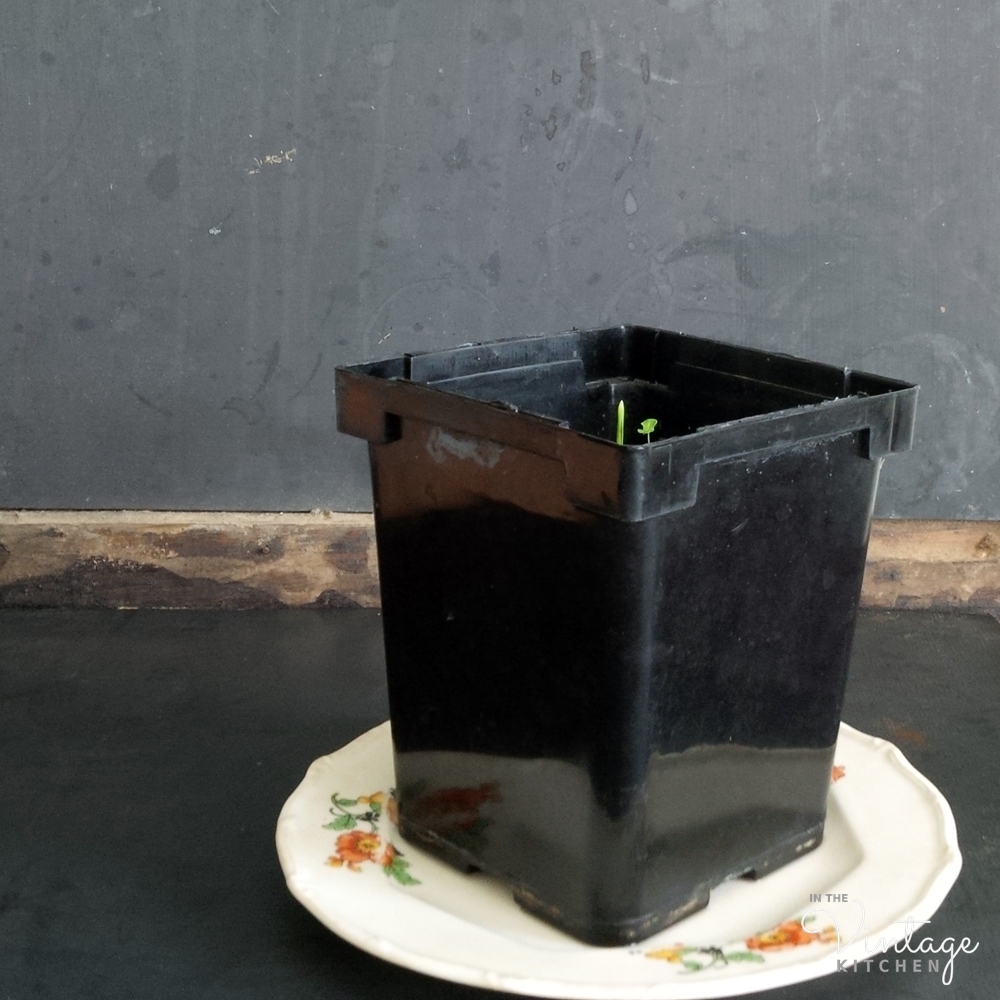
Finally, the baby of the group, born from seed in July 2018, was the Medjool date palm, who was so tiny it didn’t even have a name yet…

The spike is the date palm!

Four hundred and fifty six days later, the date palm looks like this. Meet Jools…

Standing at just over 16″ inches tall, Jools put forth a new leaf every few months last year. She lost a couple  of green shoots to wind damage over the summer, but apparently that’s not really fazing her, as she just grows another one in its place. Low maintenance like Liz, Jools just requires a sunny window sill and a good dose of water every few days.  When I look at her I can’t help but imagine those grand date palms that grow in India and Egypt – the ones that are big and lush and beautiful and radiate notions of exotic locales and foreign flavors. It will be exciting to see how big she grows over the winter now that she has taken up residence indoors and is out of the wind tunnel on the patio altogether.

Of all the orchard plants, Jools is the one I’ve researched least. There is an air of spontaneity in just watching her grow and imagining what might happen next. The container of dates that she came from was purchased at a fantastic international shop in the farmers market that unfortunately is no longer there. So not only is this date palm named Jools a fun growing experiment, but she’s also a good little memory of a place I loved, but can no longer visit. That’s the cool thing about plants isn’t it? How active they are in our lives… as decoration, as curious living creatures, and as memory holders. Each one is like a quirky little (or in some cases big!) character sharing our space, making it feel natural and welcoming, just like home.

Not every experiment I try turns out to be a successful one. This year I attempted apples (success up to month 5!) and papayas but neither lasted long enough to see the sprouts that start the story. Gardening is a game of chance after all. Somehow that makes the ones that do grow into a Grace or an Avi or a Jools all the more significant. While you are peeling and chopping and cutting stuff up this holiday season in your kitchen, keep your eye out for the seeds, and all the potential and possibility that is contained in those small packages tucked inside your favorite fruits and vegetables.  Worlds of adventure stir inside our kitchens everyday, none more dramatic or miraculous than the lives that feed our lives.

If anyone has started their indoor gardens from seed, please comment on this post and share with us what you are growing and how it is going. One of our blog readers, Gloria, recently shared photos of her avocado tree in Florida, which she started from seed around the same time as Avi began. She planted hers outside, a smart decision thanks to Florida’s ideal growing climate. Three years in, her avocado seed now looks like this…

Wow! An absolute beauty towering over the garden at a majestic 7″ feet tall! Well on its way to being a proper shade tree in her yard, Gloria is hoping that by next year, she’ll be able to eliminate avocados from her market shopping list and instead just pick them right off her own tree. What an exciting thought! Our fingers are crossed that she is flush with avocado by this time next year:)

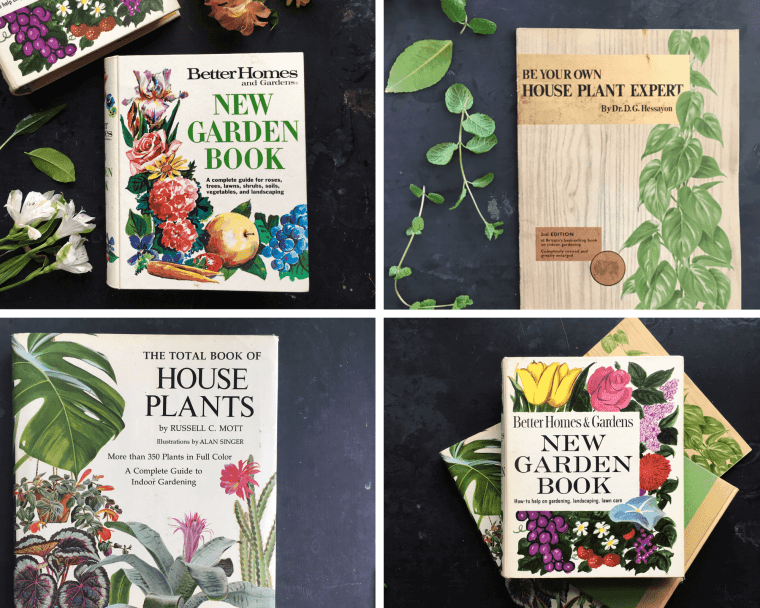
If you need a little more inspiration when it comes to building your own plant paradise, consider these colorful and beautifully illustrated  mid-century books in the shop. They are packed full of helpful advice regarding citrus trees, orchards, edible plantings and indoor gardening…

They make fun gifts for yourself or your fellow garden lover, and unlike the internet, lay everything out before you all at once, instead of hunting and pecking your way through endless garden sites plant by plant.

If you missed the previous posts about the start of the indoor orchard, catch up here.

In the meantime, cheers and happy birthday to Avi, to all the seedlings out there who grow big with just a little extra dose of love and attention, and to Gloria for sharing her own personal gardening adventure with us:)

Discovering the Legendary Family Babka

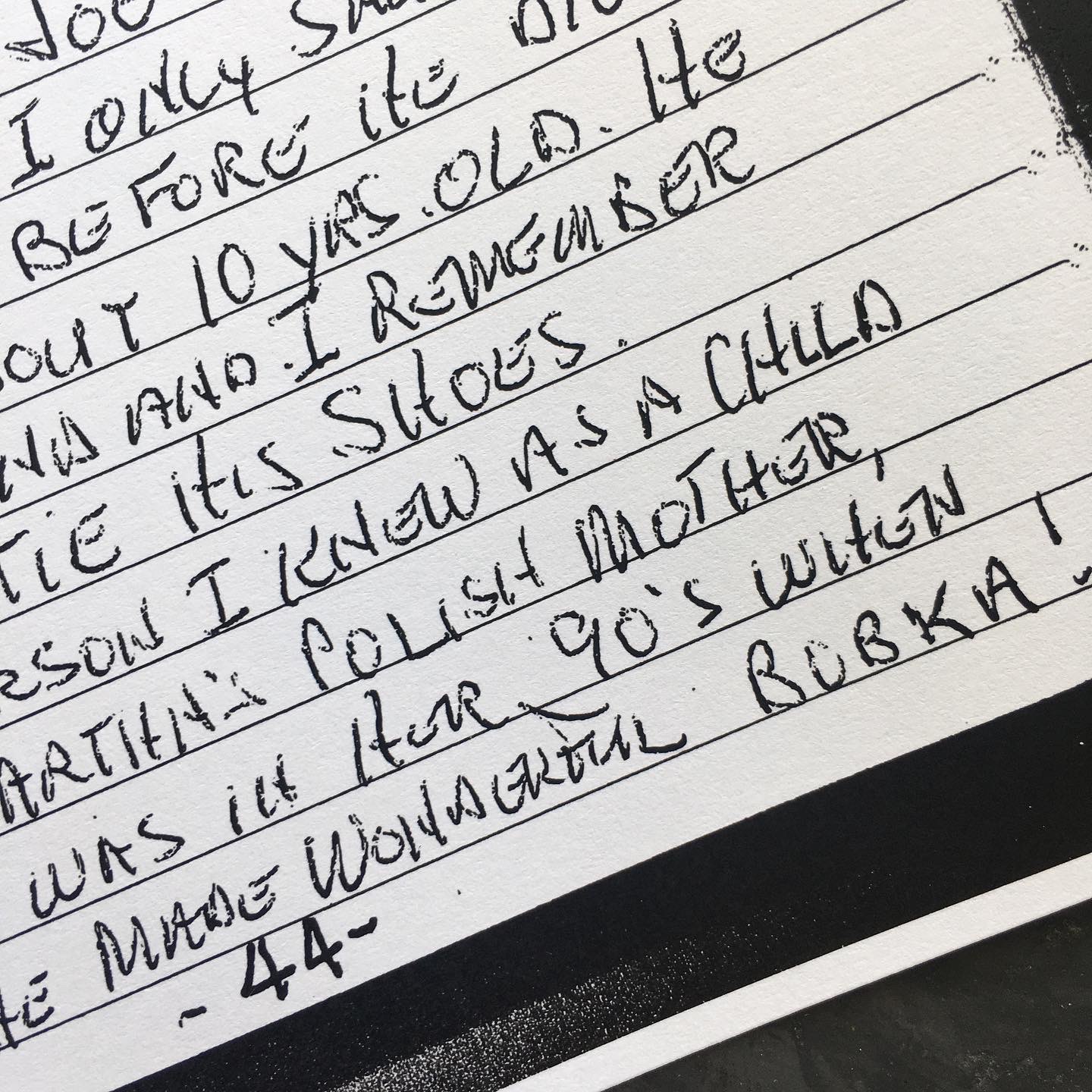
Once upon a time, there was a woman named Julianna. She was born in Poland in the mid-1800s but immigrated to upstate New York around 1900. There, she married a man named Marcin, and had a baby named Martha. Occasionally Julianna, Marcin and the baby would travel to Chicago to visit with relatives. It was there in the Windy City, in a busy house, that Julianna met a little boy named Allen.

The first time Allen met Julianna he was scared to death of her. To him, Julianna seemed very old and very gruff.  But Julianna, who was well-intentioned at heart, just settled in her old Polish ways, possessed a special skill. A skill so special that it could charm anyone, even a scared little boy named Allen.

Juliana’s special talent was baking and her most charming confection was a twisted bread called babka. Everyone in the busy house in the Windy City loved Julianna’s babka. The best in all the land, boasted her proud husband Marcin, who had a belly as round as Santa’s. Everyone agreed.  Even the little boy named Allen, for as soon as he took his first bite of the cinnamon-flavored treat he watched all his fears of this old woman fly right out of his head.  It tastes like Christmas, he proclaimed! From that point forward, Julianna no longer seemed quite so scary. She returned, again and again, to visit and quickly became little Allen’s most anticipated house guest. As long as she brought the babka, that is:)

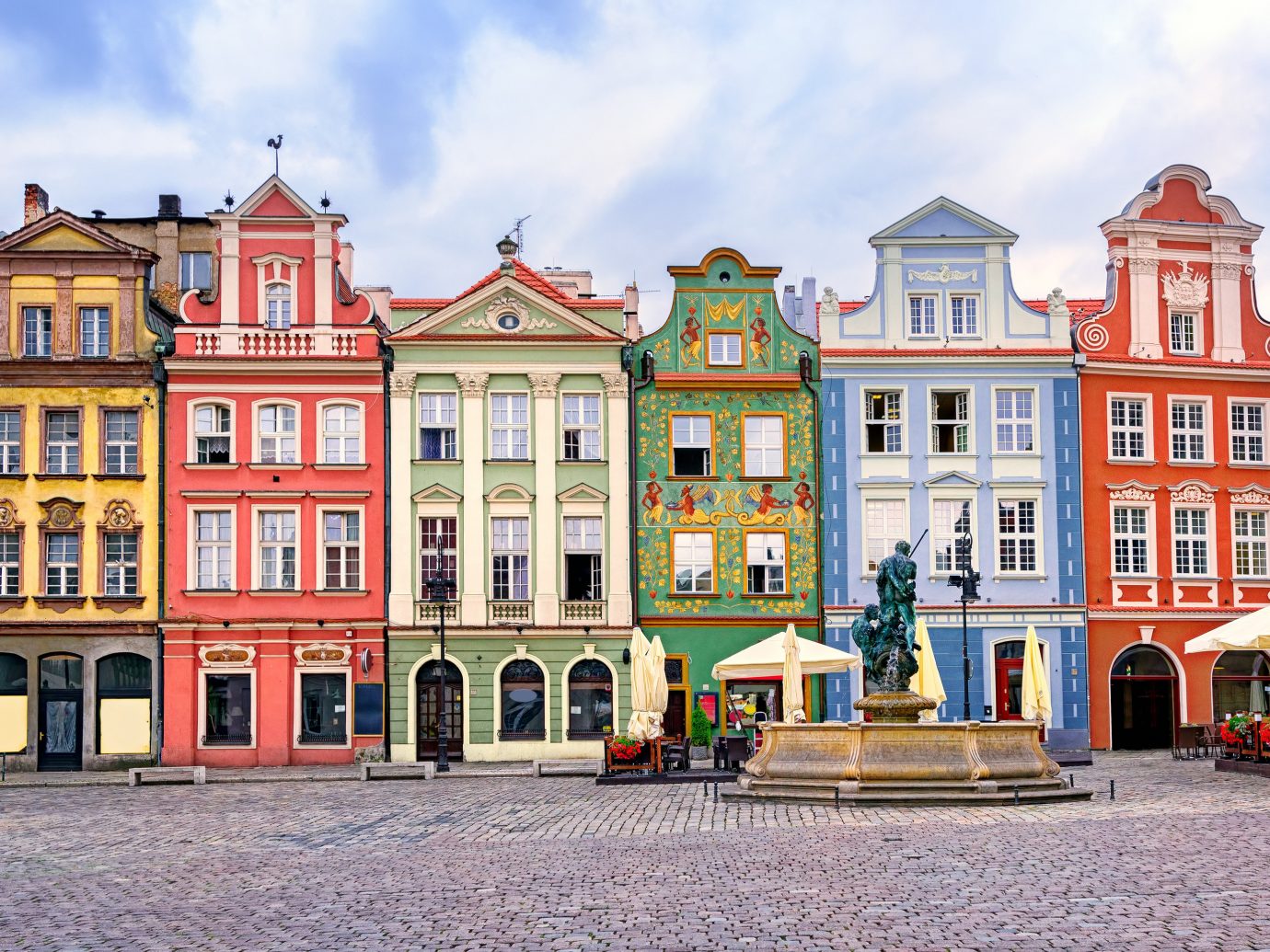
That’s a true story from the family archives. Julianna was the second wife of my great, great grandfather, Marcin who hailed from the pretty pastel city of Poznan, Poland in the 1800s. The little boy named Allen was my dad who was born in Chicago in the 1940s.

Dad playing with a batch of kittens circa 1946

This information all came courtesy of a notebook of memories my dad filled out about a decade ago. Somehow this information about the famous babka got overlooked in the curiosity department and I never got the chance to ask my dad more about Julianna, Marcin, and the famous yet mysterious family bread. A few days after my dad died, I came across the notebook of memories again and was reintroduced to the story of the babka.

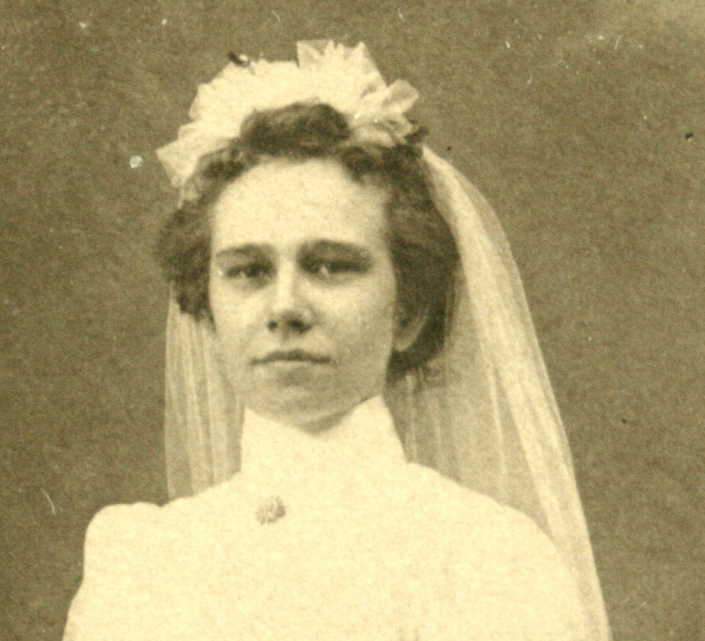
Even though Marcin and Julianna shared 10 kids between them, there is no known recipe that’s been passed down through the family. Marcin’s daughter Jozefa, (my great-grandmother) died from burns sustained in a kitchen fire when she was just 37, leaving eight children behind. That terrible family tragedy left little opportunity for conversation about lineage, ancestors, and recollections when it came to Marcin and Julianna.  No one wanted to dredge up the sad circumstances surrounding Jozefa’s death in order to understand the family that came before her. So a silence fell on that side of history. For a long, long time distant relatives became just a blur of hazy facts and faces. I’m on a mission now though to learn more about my great-great grandparents and about that beautiful pastel city where they came from…

Poznan, Poland

It will be a tricky endeavor since I’m dealing with foreign languages and far-off places, but they deserve the effort and it will be fun to see what gets discovered. In the meantime, this one little snippet of a food remembrance from my dad is a cherished link to knowing more about the lives of family members who lived over a century ago.

I don’t have any pictures of Julianna or Marcin yet but I do have a few photos of Jozefa, like this one taken on her wedding day in 1902. Sixteen years later she would die from the fire.

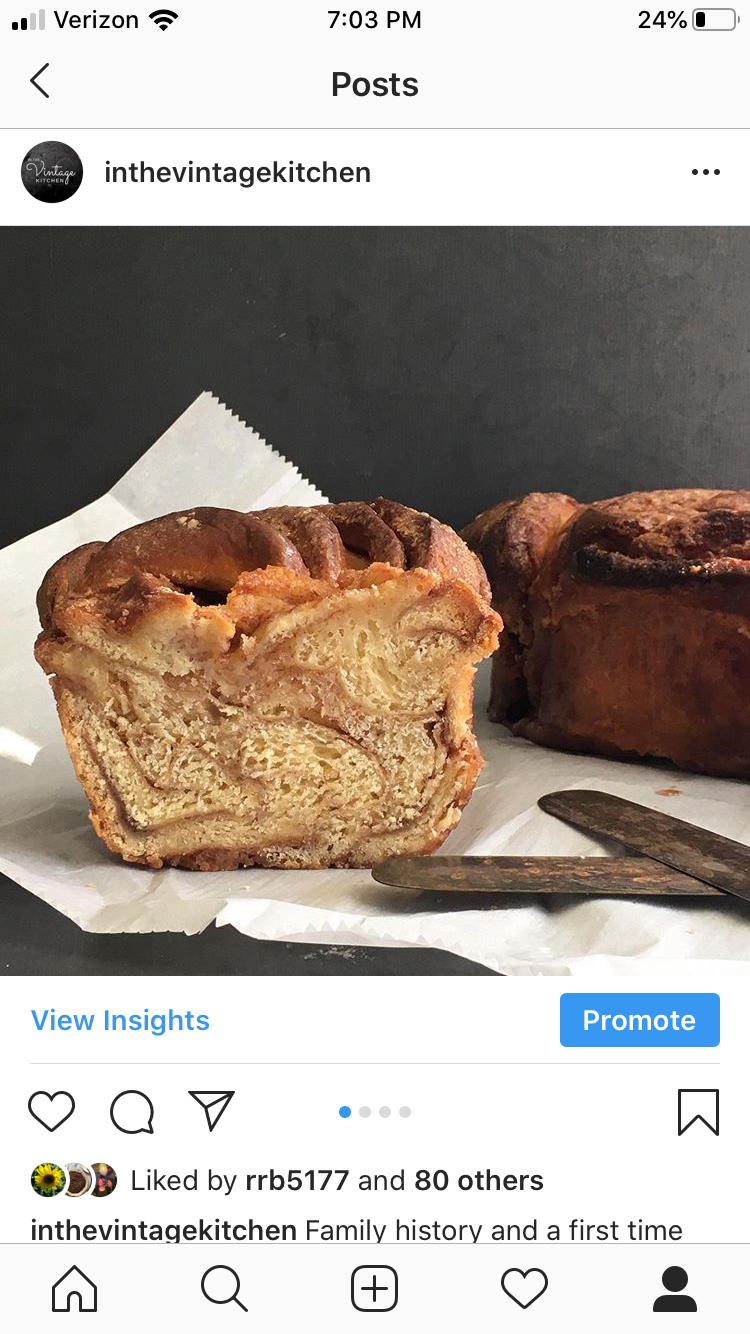
Because I’d never seen, or even heard about babka before it was referenced in the notebook, a new baking adventure was definitely in order. I scoured my vintage cookbooks but found absolutely no mention of it. Luckily, a great recipe was discovered online and the babka came into being in October. Two weeks ago, I posted it on Instagram and shared the story about Julianna.

It turned out to be a really fun and interesting baking project. If you are as unfamiliar with babka as I was, it is one of those cinnamon-based desserts that is like a little slice of heaven for the season. Buttery, warm and full of aromatic spice, it tastes like a cross between a cinnamon role and a coffee cake.  Fittingly, (for this story anyway!) the word babka means grandmother in Polish and is a traditional heritage food of both Poland and the Ukraine. Historians suspect that it may date all the way back to the 16th century.

Babka comes in two classic variations – chocolate and cinnamon – and can be augmented with a variety of toppings including streusel, nuts, raisins, spices, and dried fruit. Usually it comes in two shapes as well – either round or loaf style.  I chose to make the cinnamon version and baked it both ways – in loaves and rounds. The round version turned out to be a little fancier looking but the loaves are a bit easier to slice, so it comes down to your preference. Either way, it’s a winner of a recipe that tastes great at all times of the day, equally enjoyable at breakfast, during a mid-day snack or a late-night nibble.

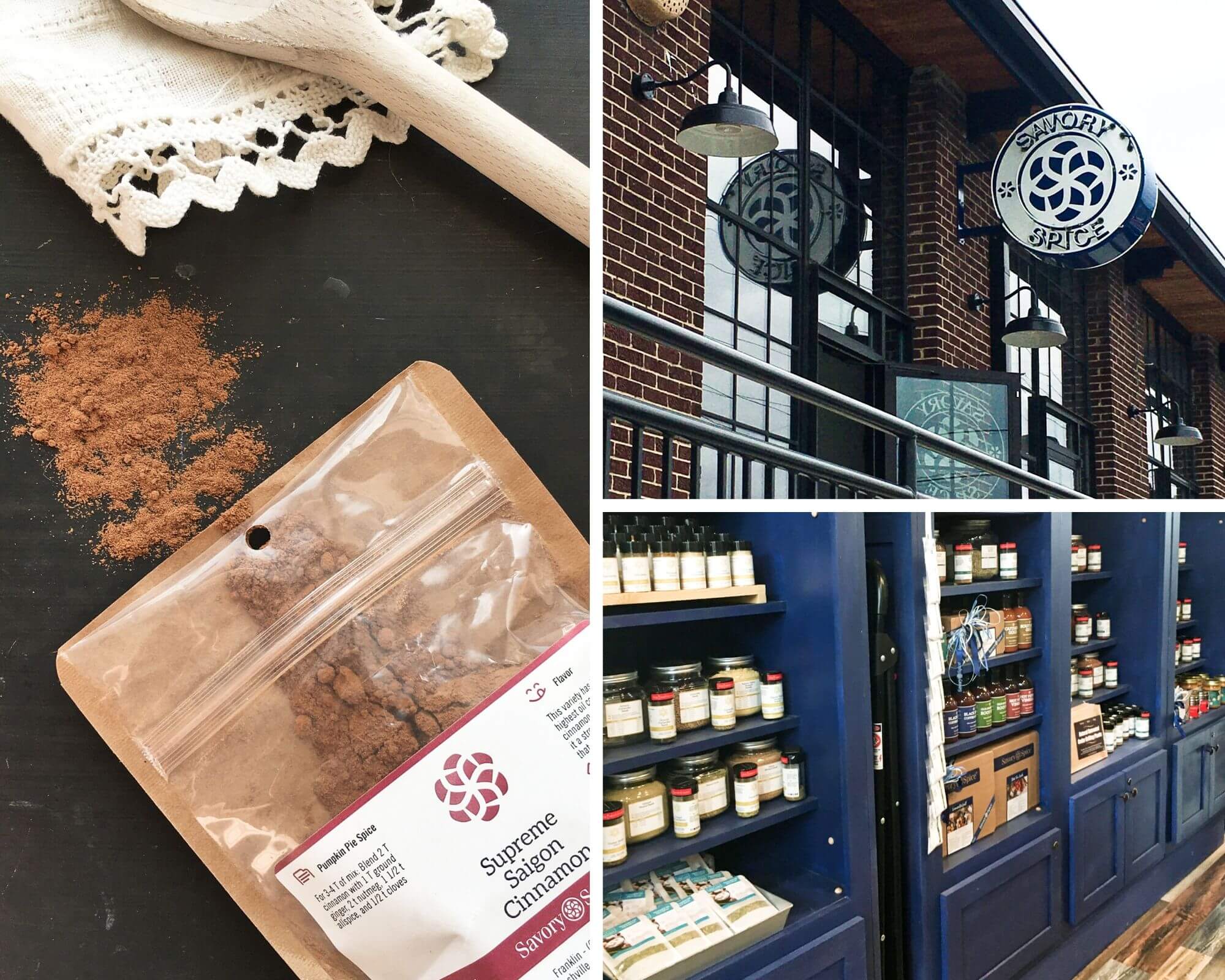
The key to an ultra-flavorful babka lies in the freshness of the cinnamon. So if you can, try to find a spice shop in your neck of the woods that offers it freshly ground which would be most ideal. Luckily, as if Julianna was supporting my endeavor, a lovely new spice shop just opened up in my city, so I used Supreme Saigon Cinnamon in my recipe. If you don’t have a good spice shop in your area, no worries, you can always order some online or buy a brand new container from your grocery so that you can experience the full bouquet of flavor.

New spice shop in the city!

Making babka from scratch is a three-step process, but don’t let that intimidate you, as this is a very easy dessert to make. The only downside to homemade babka is the amount of time (about six hours) it takes to make from start to finish.  That’s because it is a yeast bread and requires time to rise twice. It is well worth the wait though. It also freezes well, so if you were feeling extra ambitious you could double or triple the recipe and stack the babka up in the freezer for homemade goodness all winter long!

Cinnamon Babka

{This recipe was sourced from family-friends-food.com and the Modern Jewish Baker Cookbook by Shannon Sarna}

For the dough:

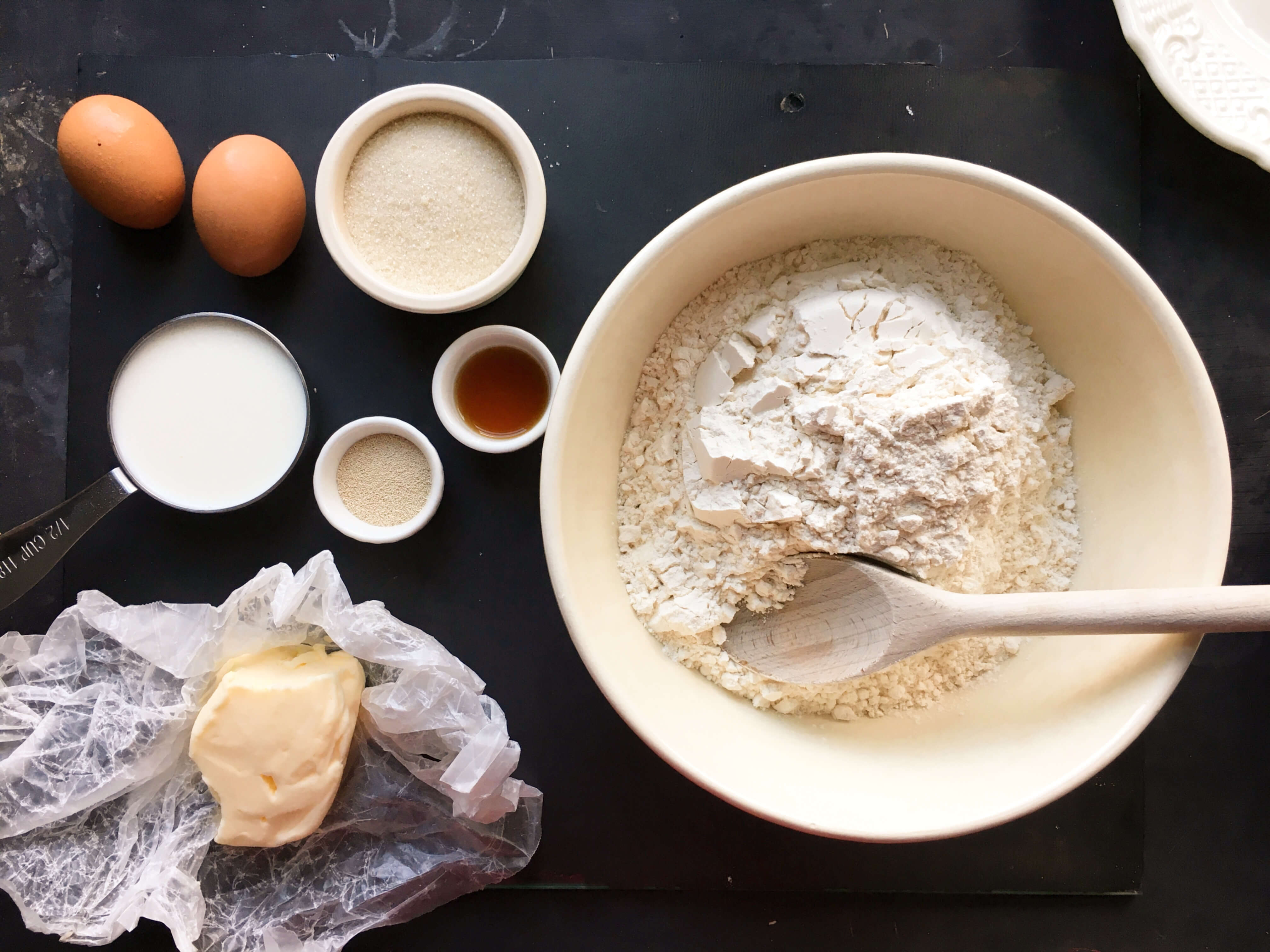
1 tablespoon active dry yeast

1/3 cup + 1/2 teaspoon cane sugar

1/2 cup lukewarm water

4 1/2 cups organic all purpose flour

2 teaspoons vanilla

1/2 cup whole milk

3/4 cup butter (melted)

2 eggs

For the Sugar Syrup:

2/3 cup water

1 cup cane sugar

1 tsp vanilla

For the Filling:

3/4 cup butter, melted

1/1/2 cups cane sugar

2 tablespoons cinnamon

pinch of salt

In a small bowl, combine the yeast, 1/2 tsp sugar and the lukewarm water. Stir to combine and then set aside for about 10 minutes so that the yeast can foam.
 
 
In a separate bowl, combine the flour, 1/3 cup sugar and vanilla, mixing until everything is blended together. Set aside.
 
 
In a medium saucepan, scald the milk and then remove the pan from the heat and let it rest for 1 minute.
 
 
Using a hand mixer, combine the water/yeast mixture, the milk, and the melted butter to the flour mixture and blend to incorporate. Then mix in the eggs, one at a time.
 
Continue mixing on a low to medium speed for 7 full minutes until the dough is shiny, elastic, and smooth.
 
Place dough in a greased bowl and cover with a warm damp towel. Allow to rise for 1 to 2 hours.
 
While the dough is rising make the simple syrup by combining the water, sugar, and vanilla in a small saucepan. Bring to a low boil until the sugar has dissolved. Remove from heat and set aside to cool.
 
Next, make the filling by combining all ingredients in a medium bowl and mixing thoroughly. Set aside.
 
 
When the dough has risen, cut it into two equal halves. Roll out one half on a lightly floured surface until it’s about 1/4″ inch thick. Try to roll the dough in as rectangular a shape as possible.
 
With a sharp knife trim the rounder edges of the dough so that they form straight lines, which makes the babka braids look more tidy down the road.
 
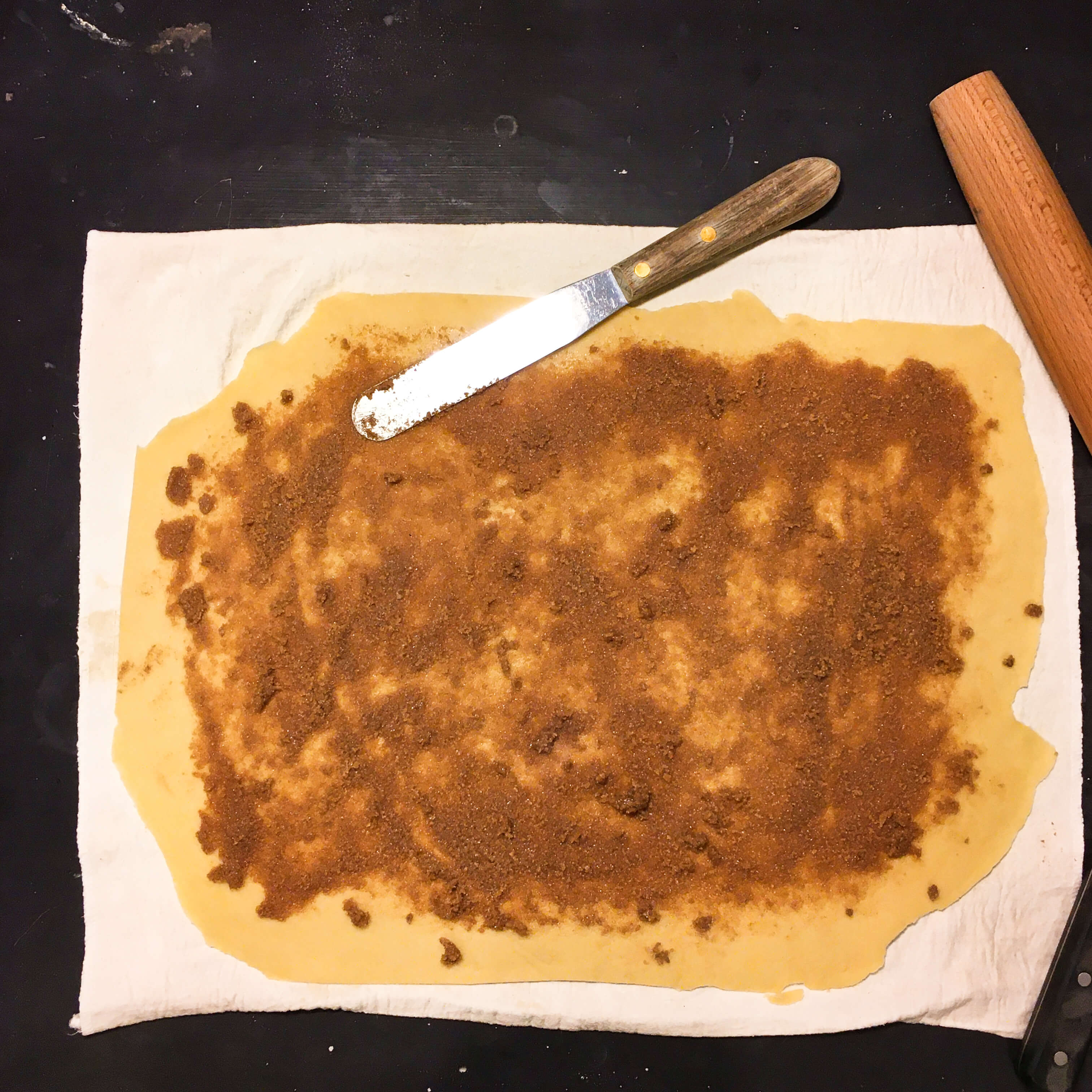
Next spread half of the filling evenly all over the dough, leaving a 1/2-inch rim around the edge.  Ideal tools for this are a frosting knife, a spatula, the back of a spoon or even your fingers.
 
 
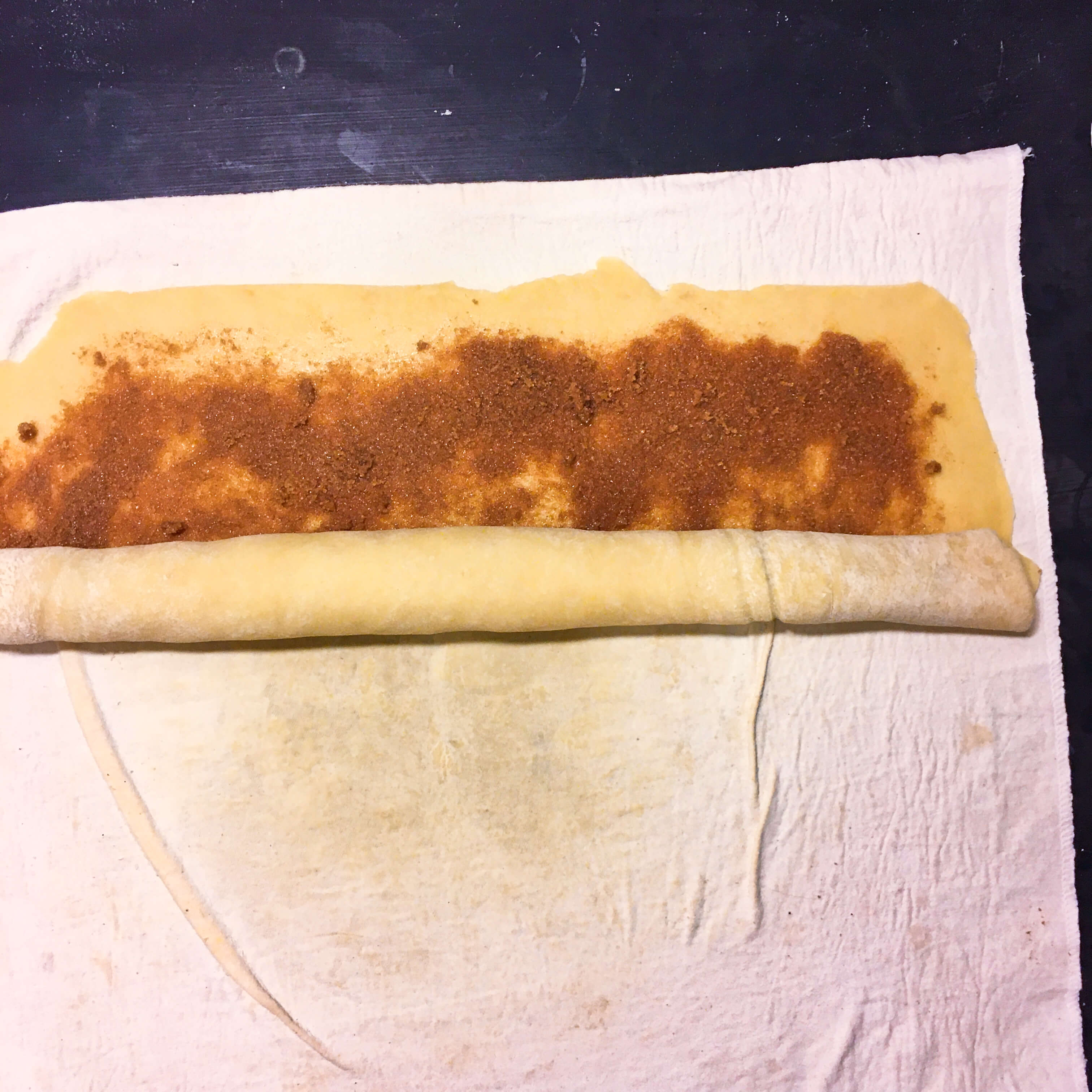
Then starting at the bottom edge, tightly roll up the dough (jelly roll style) to the very top edge.
 
 
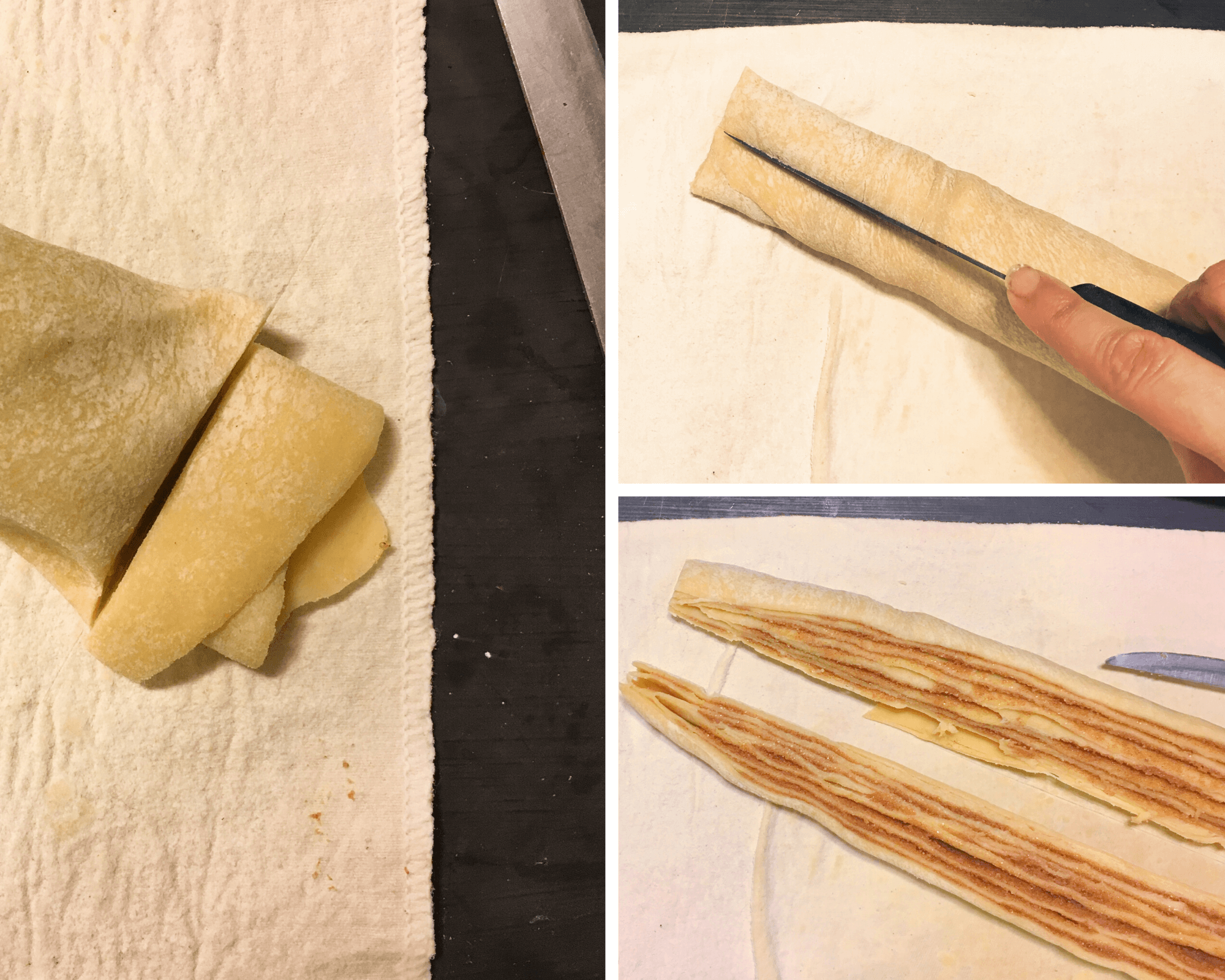
Once your dough is all rolled up and resembles a log shape, trim each end with a sharp knife and then cut the log length-wise down the middle to expose the filling inside.
 
 
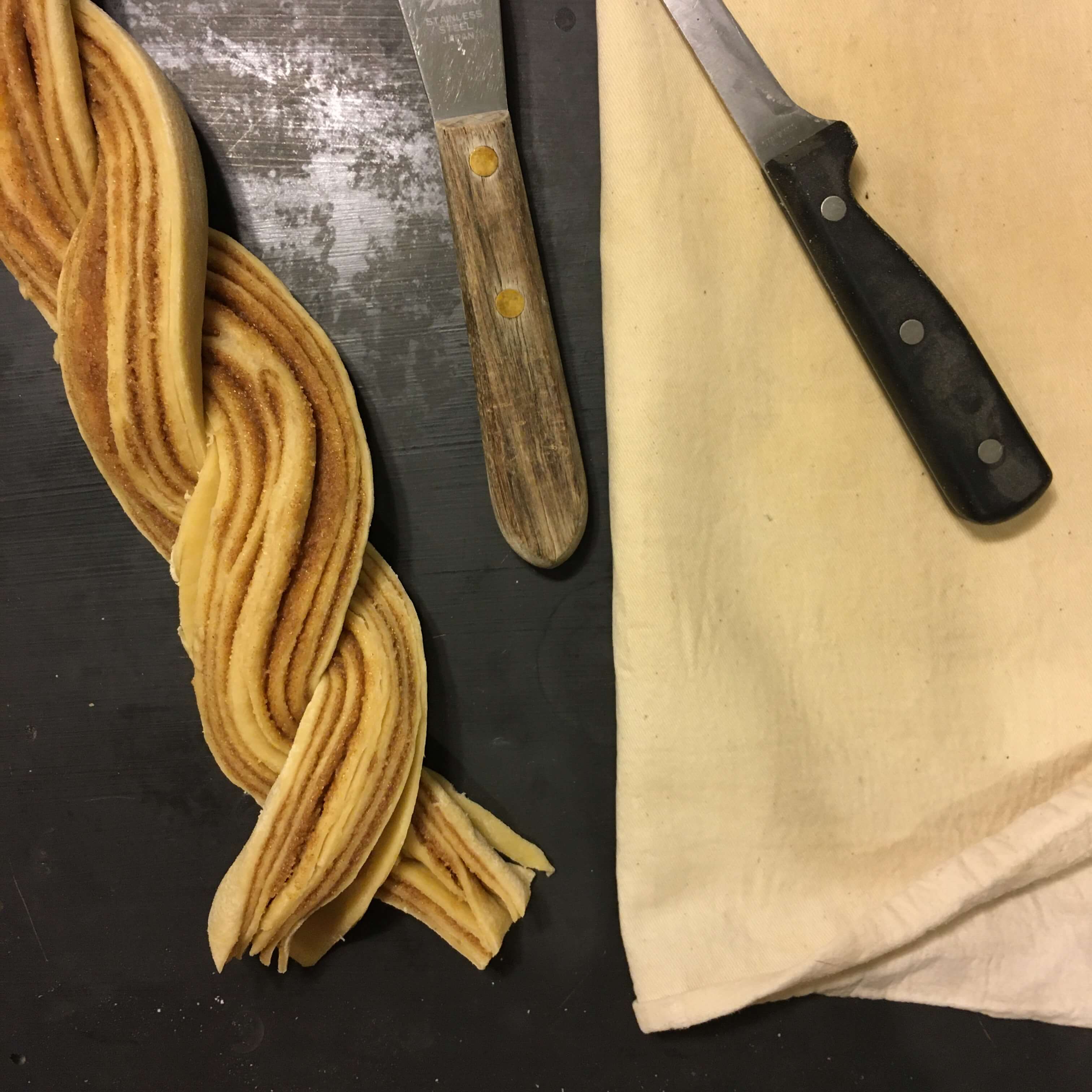
Now that you have two halves of one log, braid the two halves together, alternating one section on top of the other so that it looks like this…
 
 
Place the braid in a greased springform cake pan.
 
 
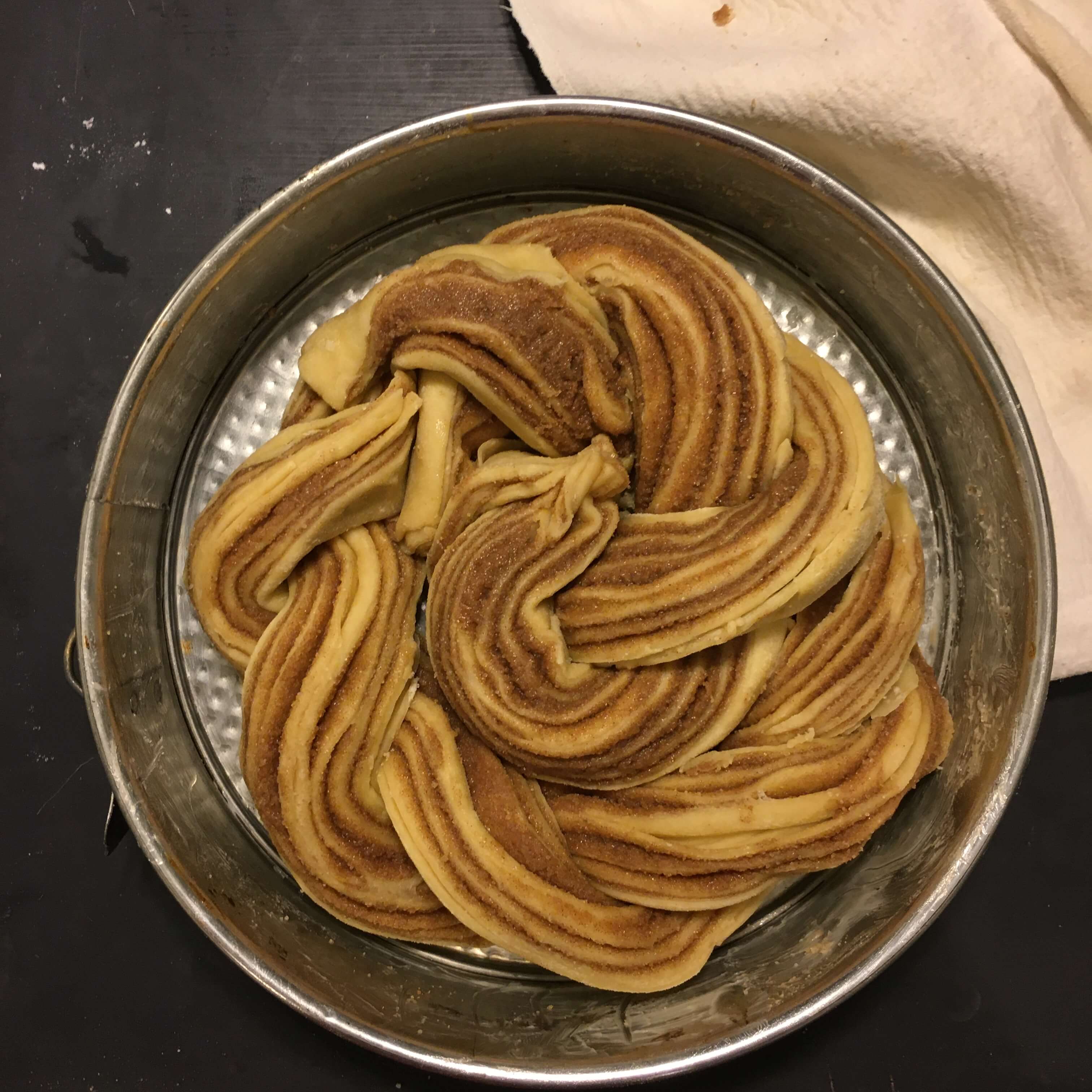
Repeat the above steps with the other half of the dough. And then curl the second braid inside the first braid and smoosh the two braids together lightly (like you are squeezing a basketball between your hands) so that it creates some space between the sides of the pan and the dough.
 
 
Finally, drape a moist kitchen towel over the pan and set aside to rise for 30 more minutes.
 
While the dough is rising again, preheat the oven to 350 degrees.
 
Bake the babka in the oven for 40 minutes, then take it out and brush the top of the bread with two light layers of the sugar syrup. Return it to the oven and bake for another 20 minutes.
 
 
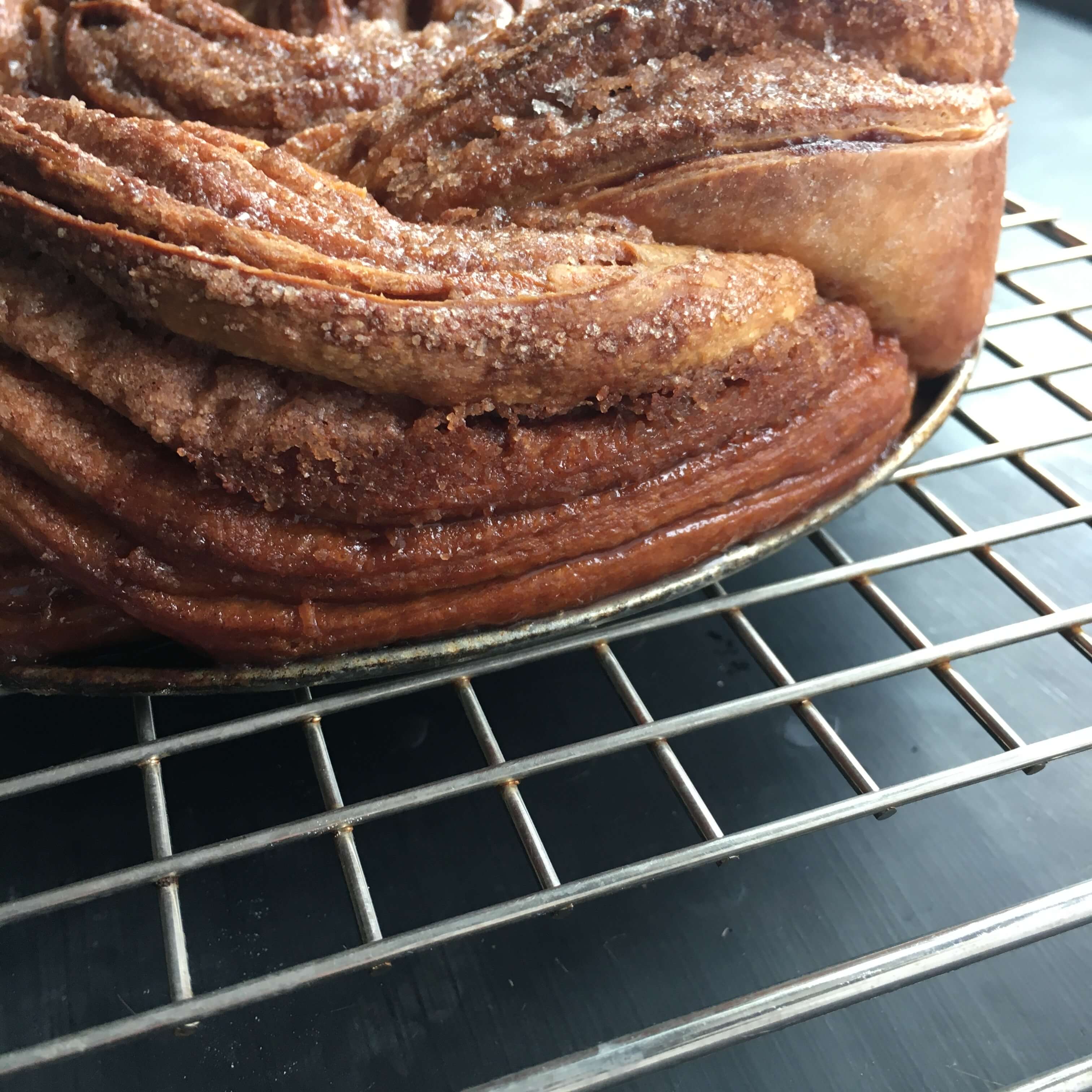
When it is ready, the babka will be golden brown on top and the internal temperature will be 185 degrees. Place the pan on a cooling rack and brush the top with three more light layers of the sugar syrup. Let it cool for 10-15 minutes before removing the babka from the pan. The sides will be rippled with ribbons of dough…
 
 
Slice and serve either warm or at room temperature. The babka pairs really well with a cup of strong coffee, tea or espresso.
 

Thanks to its bountiful size and rich texture, it makes an ideal holiday food since it can serve a lot of people, transports well and can be frozen for months ahead of time.
 
 
When I first posted the babka story on Instagram, several people sent messages requesting the recipe, so I’m pleased to be sharing it here on the blog today. I loved this bread so much that it is now going to be a new annual holiday baking tradition in my house. And I hope it becomes one of yours too. When my dad first met Julianna, she was in her 90s. I love that she was still baking for her family at that age and still possessed the ability and desire to convince a small little boy that sweetness can be found even behind a sometimes gruff exterior.
 
 
Cheers to Julianna, Jozefa and my dad for providing glimpses into past family lives, to Helen and Shannon for providing the recipe and to Savory Spice for opening up shop just in time for this cinnamon-scented baking adventure. Hope you guys will be just as smitten with babka as I am.
 

Update! December 2021…

 
If you don’t have a loaf pan or a springform pan on hand, but still want to make babka, have no fear. You can also use a cookie sheet and just twist and then smoosh the two twisted strands of babka dough together to form a compact loaf. When baking, the bread will take on a pretty free-form shape like this…


Big, Bold and Blandings: The Dreamiest House of 1948

Last week I went in search of Mr. Blandings. More specifically I went in search of Mr. Blandings’ dream house. A challenging feat on both fronts since Mr. Blandings is a fictional character and his real-life dream house no longer exists. This adventure of the seemingly impossible was all sparked by a little snippet of information about a clever marketing campaign produced by Hollywood in 1948. The movie company was promoting this film…

a romantic comedy starring Cary Grant, one of the most beloved actors of the twentieth century. But before we get into the story of searching for a nonexistent man in modern day,  we must first travel back in time to the 1940s,  an era when creativity flourished, outside-of-the-box thinking was encouraged and unusual situations were captivating the country. The first half of the decade was spent in World War II. On the home front that meant conservation, frugality, victory gardens, rations, fundraisers, and bond drives. It was a test in patience, positivity, confidence, and emotional endurance as people lived day to day waiting to hear the fates of their loved ones away at war.  In those first five years of the 40’s people got used to making do, going without, and utilizing every last bit of everything. Thankfully, in 1945 the war ended and Americans adjusted once again to a new normal as they recovered from years of uncertainty. By 1948, two and half years after World War II ended, America was ready for some fresh air and some new perspectives. A glance at that year’s pop culture highlights speaks volumes about the country’s enthusiastic push for progress and for ideas that were new, and stimulating, and fun.  Post-war, post-trauma, post post-sacrifice, 1948 embraced some big ideas that were remarkably different, refreshingly new and spectacularly exciting. Let’s look…

It was the year that Land Rover debuted, bucking tradition with their new all-terrain vehicles, complete with a steering wheel that was located in an unusual spot – the middle of the front console. Tailfins showed up on Cadillacs, a nod towards sleek aviation design and a feeling that your car could take you anywhere. Monkeys were welcomed into NASA’s elite as they became astronauts bravely rocketing into space in order to test conditions so that men could make it there themselves a few years later. America’s affable laughable cartoon bird, Woody Woodpecker had a top 40 hit song on the radio, sharing the same spotlight with singing legends Doris Day, Perry Como, and Ella Fitzgerald. Brand new air ferries started shuttling around the sky, transporting people and their cars from one city to the next. And most exciting of all, on the kitchen front at least, was a man named Blandings who built his dream house.  And then he built 73 more.

While all of these interesting pop-culture tidbits of 1948 are worthy of their own individual blog feature, it is Mr. Blandings who is the topic of our post and our road trip through history today. He created a sensation that took up the last four years of the 1940s, filling people’s heads with dreams of possibility on the home front. It all starts in 1946, when he was the subject of the runaway bestseller called Mr. Blandings Builds His Dream House, a fictional account of a real-life adventure experienced by the author Eric Hodgins. In the book, Mr. Blandings embarks on the ultimate quest  – the American dream of the 20th century – buying a house for his wife and family.

To Mr. Blandings of 1946, a dream home meant extra closets, a private bath in each bedroom,  a game room for him, a sewing room for her, and plenty of outdoor space for the kids. It meant everything that his cramped Upper East Side New York City apartment lacked – peace, security, space, and a good dose of nature.  One day, when he just can’t stand the close city quarters a minute longer, he adventures out to the country to have a look around. One thing leads to another and a new domestic life comes into sight. In the book, it looks something like this, thanks to illustrator William Steig…

The Blandings choose the Connecticut countryside as their ideal homestead, and a historic house that was loved for both its shabby, need-of-repair appearance and its supposed storied place in American history. What develops as the family starts planning their move from NYC to Connecticut (just a train ride away!) involves a series of new house woes that they never expected including demolition and reconstruction.

Throughout the story, mishaps and unanticipated scenarios test the metal of all that makes up Mr. Blandings, the man and the mission. At every corner, he and his wife are met with a new challenge. Nothing goes quite according to plan. There are time delays, contractor issues, escalating costs, tricky neighbors, and all sorts of digging, drilling, and hammering surprises.  An everyman story, a timeless tale, an homage to hope, optimism, and the struggle to succeed, Mr. Blandings Builds His Dream House resonated strongly with the heads and hearts of the American public of the mid-20th century. Many of whom were experiencing their own construction trials and tribulations, as the building industry boomed during the post-war years. The book was such a hit that two years after its debut, Hollywood made a movie out of it starring Cary Grant and Myrna Loy.

Just as entertaining as Eric Hodgin’s story, the movie was also an incredible success. Practically all of America fell in love (again!) with the Blandings and the predicaments they encountered. In addition to dealing with the baffling world of home construction, Mr. Blandings also frets over a questionable relationship between his wife and a long-time family friend while simultaneously juggling a deadline for an advertising campaign at work. The trailer doesn’t really do the film much justice, but it does give you a glimpse of the humor that peppers both the book and the movie…

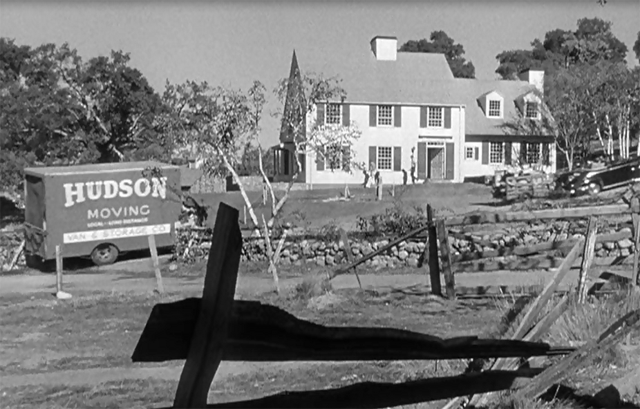
We never really get a good sense of the house the Blandings wind up building until the very end of the movie when the finished product is revealed. It turns out to be a beautiful colonial-style farmhouse set on a few dozen acres of rolling countryside…

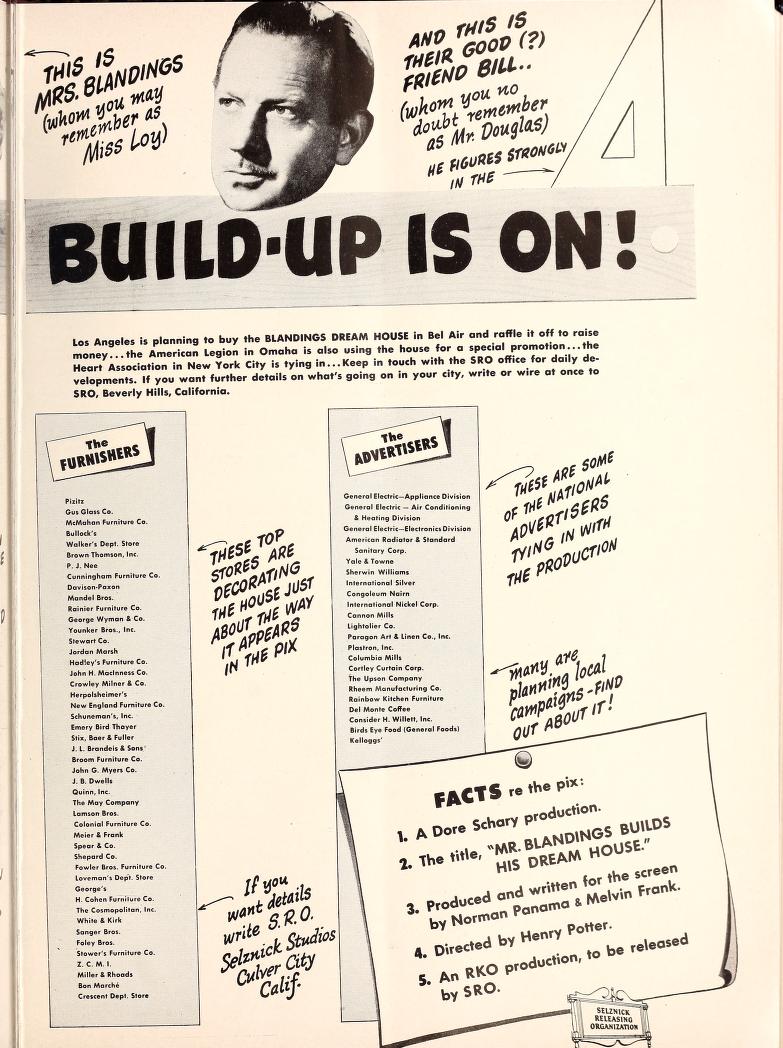
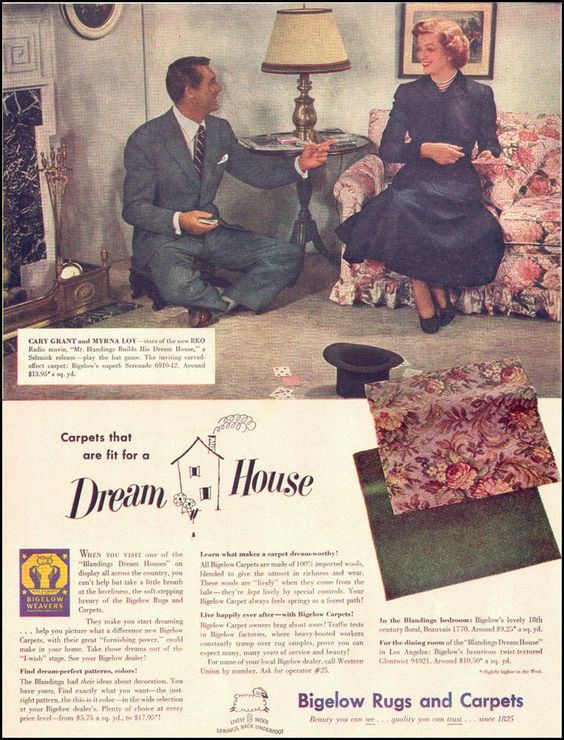
The real-life house that Eric Hodgin’s book was based on was built in Connecticut in the late 1930s. The real-life house featured in the movie was built on pastoral studio-owned property in Malibu, CA in 1947. That makes two real-life houses built for the telling of one story. But by 1948, an astounding 73 more houses were added to that real-life list.  These houses were built in 60 different cities across the country thanks to a very clever and very generous marketing campaign put together to promote the film.  RKO Pictures and SRO Distribution Company teamed up with contractors, construction crews, designers, utility conglomerates, and furniture companies all over the U.S. to build not one… not two… not three… but seventy-three (73!) Blandings Dream Houses that were then raffled off in local contests. Not only was it epic promotion for the movie and the time period, but it was also an exciting opportunity for advertisers to showcase new products and cutting-edge technology for the modern home.

General Electric was a big national sponsor advertising all their latest products including wiring, appliances, air conditioning,  and even electric blankets. Many of their innovations greatly affected the kitchen and laundry areas, turning those rooms into two of the most technologically advanced places in the entire house.

Imagine how exciting and inspiring this campaign must have been back in post-WWII days when everyone was trying to get back on their feet and recreate their own semblance of home and shelter. The average house price in 1940 was about $3,000.00  (equivalent to $32,000.00 today).  The median household income was $956.00 a year (equivalent to about $17,000.00 today). Not totally unaffordable by modern comparisons.  Today, the national median income is $59,000 and the average U.S. home price is $230,000. But the Blandings dream houses in 1948 all came equipped with the most modern features, stylish interiors, and the latest innovations which greatly extended their value.

For people who loved to cook, the idea of winning such a modern home would have been fantastically exciting, as the Blandings Dream Kitchen was one of the most modern and efficient rooms in the house.

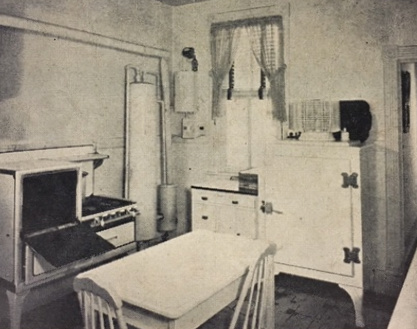
In the 1930s and early 1940s, most American kitchens looked something like this…

… a collection of precariously placed appliances and furniture of all styles that mingled with exposed heating, cooling, electrical, and plumbing fixtures.  While these 1930s kitchens were perfectly functional they weren’t necessarily set up for ideal ease, comfort, or organization.  By the time the Blandings declared their dreams in the 1940s, kitchens were becoming much more aesthetically pleasing and helpful. Built-in cabinets, long countertops, hidden utilities, ventilation hoods, picturesque windows, bright colors, and designated dining nooks made cooking more efficient, enjoyable, and aesthetically pleasing. You’ll notice that these 1940s kitchens below also utilized corners, shelving, and seating to maximize floor space.

When the movie first premiered in New York in March of 1948, ad campaigns began rolling out across the country announcing the Dream House Build-Up, so that by June when the Blandings were in theaters nationwide, the excitement and anticipation was at a fever pitch.

The Skokie. Illinois Dream House. As of 2025, this house is still standing, beautifully maintained, and looks very much the same.

Each of the cities that participated in the big build invited the local public in to view their custom version of a modern dream house.  What was especially intriguing about this promotional campaign is that not all of the houses built in each city were an exact replica of the Blandings dream house or its colonial style. Some cities chose to build houses that were more suited to their own local climate or aesthetic. The one built in Knoxville, TN was a one-story rambler…

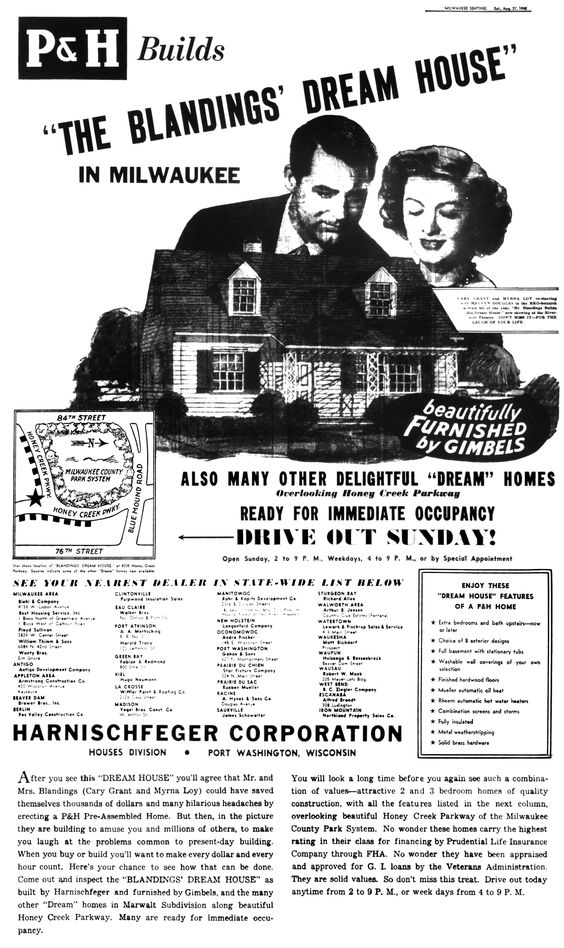
This one in Milwaukee was a smaller cape-style cottage…

In Oregon, the dream house contained elements of brick and siding…

Read more about the Portland version of Mr. Blandings’ Dream House here.

Most of the Blandings promotional houses were built in suburbs  – the big city shadows where land, space, and freedom offered opportunities for the American dream to grow and spread. From Jacksonville, Florida to Seattle, Washington; from the Eastern Shore of Maryland to the Pacific Coast of California; from the top of Minnesota to the bottom of Texas fictional dreams were determining real-life destinies. That brings us back to the modern-day road trip that I embarked on last week.

This is the complete list of all the cities that participated. Is there one in your town?

Excited to see that Nashville was listed as one of the “Dream” cities, I went in search of Blandings in my own neck of the woods. This is what the Nashville dream house looked like in 1948…

Unlike the one built in Knoxville, the Nashville house was built in the exact same style as the one in the movie. Located in a very pretty section of town, noted for its gorgeous old-growth landscaping and stately historic homes, I was excited to see what the Blandings dream house would look like now. As I drove there, I pictured the house as it had appeared in the newspaper in 1948… the graduated rooflines, the shuttered windows, the dormers, the picket fence sectioning off a garden area highlighting the shrubs and the flowers and the trees newly planted. All those freshly landscaped 1940s plantings surely have grown into stately trees and mature gardens by now.

Here is what I found…

Pretty! But not exactly the same house as the one pictured in the newspaper advertisement…

As it turns out, unfortunately, the original Blandings house was torn down in the 1970s. This new house occupying the spot now was built in 2016 and then promptly sold for $1.6 million. Quite a price difference from the 1940s cost of a Blandings colonial.  Although this new house is not of historical design, it is fun to see that the roof line, dormer window, and landscaping are quite similar and complimentary to the original Blandings style. Perhaps this house designer was a 1940s fan too.

As I was about to drive away, an elderly man came out from the garage of the house located directly across the street.  Emerging from a much more modest home in size and scope, this old gentleman was shuffling down his driveway with the help of his cane, wearing a wool cardigan, pajamas, bedroom slippers, and a determined look.  I suspected he was headed towards his mailbox, perhaps a daily jaunt taken for exercise and fresh air. Immediately, I thought of Mr. Blandings and of Cary Grant and of Eric Hodgins and I waved to the man shuffling down his driveway in an act of good cheer and neighborliness.

I was hoping he’d respond, perhaps with a knowing glance or a nod of understanding that said yes, he did live across the street from a famous film industry-inspired house. But the elderly gentleman didn’t wave back. Obviously, he wasn’t our hero of book and screen. But in that moment I imagined that this stooped-over grey-haired guy, trembly and slow with age, was once an invigorated young man bent on building a dream house of his own for his wife and children. I imagined that he once lived in a small, cramped apartment in a big city and that one particular day he too got fed up with the close quarters and set out to become master of his own domain. I imagined that his idea of domestic bliss was indeed the very house, the sprawling brick ranch, that he had just emerged from. Obviously, he wasn’t Mr. Blandings. But then again… maybe he was.

Cheers to dreamers and to real-life houses that inspire books that then inspire movies that then inspire more dreamers and more houses. And cheers to Mr. Blandings, who is not real, but feels very much so.

If you are interested in reading the book that sparked this nationwide love affair seventy years ago, find it in the shop here. If you live in one of the dream cities that built a Blandings house please comment below and tell us all about your famous local icon. We’d love to hear more about it!

Turning Servers into Succulents: A Vintage Re-Invention


Eight. That’s how many days there are to go. It’s almost here! Then one thing turns into another. We end and we begin. We change and we grow.  This year, the day falls on a Monday. The exact date – September 23rd.  Then it’s official. The first day of Autumn arrives. How exciting! To celebrate the season, I have a fun new gardening project for all you do-it-yourself-ers out there who like to keep your hands busy in the dirt in the off-season when summer turns to fall and fall turns to winter and the outdoor garden is at rest. It doesn’t require much effort, time or expense but it does call for a little imagination. It will last forever if you want it to and it will make you look at things in your cupboards in a whole new way. Most importantly, it gives new purpose to old items that sometimes get left behind on a shelf or forgotten about in storage.

I’m so excited to introduce the succulent set…

vintage-serving-dish-succulent-planters

…real plants growing out of old china serving pieces. If you’ve inherited pieces of your family’s china and are not quite sure what to do with them or how to incorporate them into your daily life, or if you just want a planter with a little bit of one-of a-kind personality then designating a vintage sugar bowl or a creamer or a serving dish as your new garden vessel is a fun way to go. Let’s look…

This Japanese Majolica creamer is from the 1940’s. Due to some cracks on the bottom it no longer holds water (or cream!) so it makes an ideal container for varieties of succulents that prefer well draining soil. All it needs is a little water once a week and it’s ready to grow. Keep it in the sink for a few minutes and the water drips out through the cracks, then it is good to go until its next watering seven days later.

Vintage sugar bowls like this one above, made in England, fit perfectly into shelves or small spaces. Your very own unexpected mini garden greenspace place!

This vintage coffeepot from the 1940s lost its lid somewhere along its 75 years of travels. That makes it no longer the most suitable vessel for hot coffee but it certainly makes a pretty container for eye-catching flower power in the form of a petal shaped succulent.

With their long shape and roomy width, gravy boats make great table centerpieces. They can usually accommodate more than a couple of mini plants depending on size. For wedding reception decorations, they offer the symbolism and sentimentality of “something old, something new, something borrowed, something blue.”

Ideal plants for this type of pairing project, many succulents don’t require a lot of watering and come in a variety of sizes, colors and shapes. As they grow, the plants can be transferred to larger and larger containers like this one – a two-handled vegetable dish from Salem Pottery’s Commodore pattern which debuted in the 1940’s. Because of its larger size it can accommodate up to seven 2.5″ inch succulents or just a few bigger individuals that have outgrown their smaller holders…

vintage-mini-succulent-garden

Authentic crazing, staining and chippy details add interesting, quirky personality to your space that you can’t find in modern day planters. They also easily fit on window sills, ledges, mantles and counter top nooks. Choose one that matches your interior aesthetic, or the colors of your kitchen, or reminds you of a good memory and you’ll instantly add a bit of happy energy to your space. Old dishes love to remain useful helpers. Matching the old with the new creates balance and harmony and reminds us that imperfections are the stuff of life. Beautiful! This antique gravy boat below is over 100 years old but still looks as fresh and pretty as ever thanks to its classic shape.
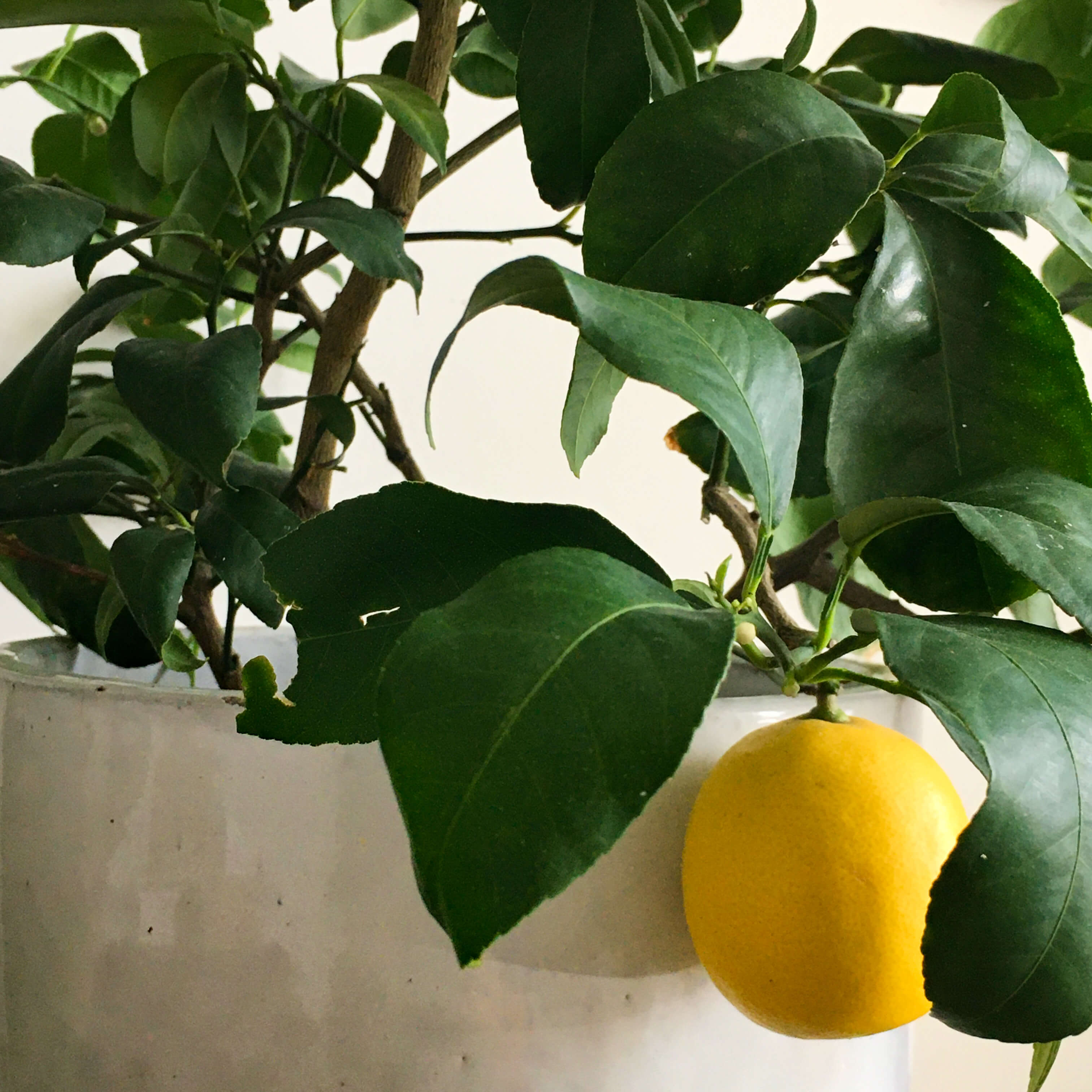
The trio below have no cracks to worry about so they are ideal holders for succulents and cactus that prefer to be spritzed with water, rather than doused, every now and again. Add some some pea gravel to the bottom of each vessel before adding dirt and certain succulents will be happy with just a tiny bit of water every now and again.

Another possibility is to gather them all up and make a hanging wall display with the help of a crate…

vintage-serving-dish-succulent-planters

That makes an instant collection and an engaging garden that you can cultivate and tend to all year round. Usually all that is required for succulents is bright natural light, a sunny alcove or close proximity to a window.

With all their color choices which range from light gray to soft pink, bright green to dusty blue there is great fun in matching plant to planter and then watching them grow and sprout new additions.

If you need a vintage serving piece to start your garden you can find the ones above in the garden section of the shop. Succulents are available at most garden centers, nurseries, farmers markets or sometimes even the floral section of the grocery store. I recommend getting your planter first, then your succulent second, so that you can determine the appropriate drainage condition, color and shape for plant and planter.

Hope this brings a little fun your way on our second to last Sunday of summer. Cheers to new gardens, old dishes and the joy they both provide:)


Blackberry Baking with the Legendary Sally or Solange or Whatever She Once Was Called

In the historic baking world, there’s a legend that springs from a yeast bread.  Depending on the sources and the provenance of specific recipes, facts about this legend vary widely and wildly. In some tales, she’s a 17th-century girl, in others an 18th-century woman.  She was French. She was English. She was colonial American. She was an ordinary teenager, she was a famous baker, she was a lowly domestic servant. She had a name that was either Sally or Solange or Madame or Marie. She was a real human being but she then again she was a fake and then yet again someone else’s flight of fancy. For three centuries, this baking icon has tumbled through time on the flimsiest of resumes. This is the story of Sally Lunn and a cake (or it might have been a bread) that made her famous.

This weekend, after coming home from the market with a batch of blackberries that were so deliciously ripe they smelled like wine, I discovered a vintage recipe that is as difficult to describe as the lady it was named after. Called Fresh Blackberry Sally Lunn, it came from Meta Given’s 1957 Encyclopedia of Modern Cooking.  Surprisingly, out of a stack of forty different vintage cookbooks spanning the early 1900s to the early 1980s, Meta’s book was one of just a few that contained any recipes for fresh blackberries at all. Homemade jam and blackberry pie unified the books that did include the fruit, but Meta’s was the only cookbook that combined blackberries with a cake in the name of Sally Lunn. I love any recipe that is unique and stands out. The name Sally Lunn sounded curious and since I’d never heard of her before I had a feeling this might be fun to share with you too.

Like the age-old conundrum of who came first – the chicken or the egg – there are two different variations of a baked good that purportedly made Sally Lunn famous. One was a yeasted savory bread that looks like a cross between a bundt cake and a hamburger bun…

The yeasted bread version from the Williamsburg Cookbook, 1981 edition

Another version – not quite as bun-like on the bottom. Photo also from the Williamsburg Cookbook, 1981 edition.

and the other is a sweetened tea cake that looks like something between a blueberry pancake and a cobbler…

You wouldn’t be wrong to call either variation a Sally Lunn, even though they are two completely different types of food. Because of that, her name has popped up in recipe titles in a myriad of ways. There’s the Sally Lunn Bun, Virginia Sally Lunn, Sally Lunn Bread, Sally Lunn Cake, Sweet Sally Lunn, and just plain old Sally Lunn among others.  Likewise, in indexes, you’ll find her popping up under L for Lunn, S for Sally, or more specifically under category sections that include Cakes, Breads, Desserts, Baked Goods, Tea Cakes, Yeast Breads, Coffee Cakes, Coffee Breads, etc. So how could one possibly mythical person be identified with two types of very different yet specific baked goods over the course of hundreds of years?

As it turns out no one knows. And thus far it has been impossible to authentically identify any true source that leads to Sally and the bread and cake that share her name. Lots of ideas about her float around.  She was a teenage maidservant named Sally Lunn who delivered a newly invented bread to her master of the house, who in turn delightfully named it for her. She was a talented French baker named Solange, who escaped to a bakery in England where she began to make a popular brioche-style confection that looked like the rising of the sun. She was a working-class woman in 18th century England crying out her name in the streets as a sales tool for the bread that became her trademark. There’s even a historic eating house in England that speculates they might have been the site of Sally’s original bakery in the late 1600s.

Sally Lunn’s Historic Eating House in Bath, England

I like to believe the theory that Sally Lunn was an actual baker living in 1700s England. The story details how she invented a sweet yeast bread that became very popular at first locally, then regionally, then across the sea. With this theory, it makes sense then that references to Sally Lunn would have shown up in early American cookbooks, a favored recipe brought over by the English as they colonized America. Possibly, at some point in history, when yeast either became too expensive, or there was a shortage, a non-yeast cake version was invented by some other creative and clever baker in the 1800s who used all the same ingredients of Sally Lunn bread minus the yeast. Thereby keeping the name Sally Lunn in the recipe title. By the time, the 1950s rolled around perhaps Meta made her own creative choice by marrying blackberries into the non-yeast version of Sally Lunn cake. Whether this is an accurate assumption or not, no one will ever know for certain unless some of Sally’s baking notes happen to show up. But with all this mysteriousness that surrounds Sally and her two contributions to the baking industry, I think she’d be happy knowing that at least her name stayed attached even though the origin story didn’t. It is, after all, the ultimate branding success story, 1700’s style!

Meta Given’s two-volume Modern Encyclopedia of Cooking from the 1950s

Meta Given was a legend in the culinary world in her own right. A nutritionist at heart, she set out to write some of the most comprehensive cookbooks of the 1950s that included recipes for people across the entire economic spectrum. Her books featured everything from thrifty staples like squirrel stew to elegant French dishes with layered sauces and nuanced flavors. Her mission was to make cooking fun, enjoyable, and accessible for everyone while also making it nutritious and creative.  I’m so pleased to present her lovely sweet treat of a dessert that highlights the juicy, sun-ripened flavors of blackberries nearing summer’s end. What I love about this cake in particular is that it is pretty healthy – using small amounts of sugar, butter, and flour. The blackberries really keep the cake moist and add a familiar sweet-tart flavor similar to cobbler but with a velvety more dense consistency like a blueberry pancake.  If you wanted to add an extra dash of sweetness you could drizzle the whole cake with honey or follow Meta’s suggestion of adding a lemon sugar glaze once the cake is out of the oven, but I loved it just as it was… simple and summery.

Meta Given’s Fresh Blackberry Sally Lunn Cake

1-pint box of freshly picked blackberries (enough for 2 1/2 cups)

1 tablespoon sugar

1 1/2 cups all-purpose flour

2 teaspoons baking powder

1/4 teaspoon salt

3 tablespoons salted butter, softened

2/3rd cup sugar ( I used raw cane sugar)

1 large egg

1 1/2 tablespoons lemon juice

1/2 cup sour cream*

1/2 cup whole milk*

(*Note – The milk measurement was left out of the original recipe, but was included in a revised edition in 1959. I used the sour cream/milk combination but you can also substitute those two ingredients for 1 cup of buttermilk).

Preheat oven to 375 degrees. Butter well an 8 1/2″ inch springform cake pan.

Drop berries into a bowl of cold water to rinse and remove any stems or leaf debris. Swish berries gently and then by hand remove them to a colander to drain. Once the berries have drained in the colander transfer them to a medium size bowl and gently toss them with 1 tablespoon of sugar. Set aside.

In a separate bowl, sift the flour, baking soda, and salt together. Set aside.

In another bowl, whip the butter, sugar, and egg together until creamy. Stir in lemon juice using a wooden spoon and then add the flour, sour cream, and milk, blending until smooth.

Gently fold in the blackberries until just well distributed. Turn batter into prepared pan.

Bake until golden brown (about 40-55 minutes) or until a toothpick inserted in the center comes out clean. Once ready to remove from oven, let cake cool slightly in pan on a cooling rack before serving either lukewarm or at room temperature.

In addition to enjoying the end-of-season fruit harvest this month, Fresh Blackberry Sally Lunn cake also freezes well. So if you choose that storage method you’ll still be able to taste the warm days of summer even on the coldest winter nights. And because it does have a pancake-esque quality to it, it wouldn’t be terrible to serve it for breakfast or even alongside a summer salad for brunch or lunch. This Fall, I’ll share the other version of Sally Lunn as we dive into bread-baking season to see how these two, and if these two compare in any way other than by name.

In the meantime, cheers to Sally and to Meta for baking delicious food that withstands not only multiple decades but multiple centuries too!  If you are interested in learning more about Meta and her cookbooks, find a few in the shop here. The Williamsburg Cookbook will also be heading to the shop shortly as well, in case you want to catch up on your colonial fare before heading into the holiday season. Find that one coming to the cookbook section shortly. And finally, this cake was styled using the lovely vintage 1960s Italian cut glass cake stand which you can find in the shop here.