Mark Your Calendars: Our Annual 40% Off Sale is Sunday, November 2nd!

Autumn 2025 comes to 1750 House in a blanket of color.

It’s hard to believe that our annual once-a-year shop sale is just two weeks away, especially since our last blog post left off with baking bread in the middle of a summer heatwave. And yet, now here are, firmly swaddled in a blanket of autumn leaves with the woodpeckers performing their yearly tap tap tapping on the shingles of 1750 House reminding us that seasonal celebrations are close at hand. Lots has happened between now and that day in July when the kind bread was rising as high as the humidity and the garden was growing right along with the shop stories.

The lemon balm… one of our star growers in the herb garden this year.

I’m very excited to catch up, especially when it comes to hashing out the happenings of the herb garden and the triumphs and tragedies it endured over our experimental summer. But before we get to all that, I wanted to give everyone a quick calendar reminder in this post about the shop sale since it’s coming up right around the bend.

Two very exciting things are happening this year in regards to the sale. 2025 marks our 5th year of the sale, and it also happens to occur this year on the same day as daylight savings time, so you’ll be able to fall back and enjoy an extra hour of shopping should you so choose.

If you are a regular visitor to the shop, you’ll know that we adore a good floral and that the shop is forever covered in blooms no matter what the time of year. But when it comes to the change of seasons from summer to fall, the shop starts filling with heirlooms that embrace this cozy time of year by reflecting the colors in the landscape that help create autumn vibes in the kitchen and a beautiful feast for the Thanksgiving table. Whether its cookbooks, dishware, or decorative pieces, this year you’ll find some unique heirlooms that not only speak of history but of harvest time too…

If you are new to the All Souls Day sale, every year, November 2nd marks 40% off everything in the Vintage Kitchen shop for one day only. We call it the All Souls Day sale, not for the Catholic holiday that it shares the day with, but for the heirloom history that it encompasses.

All Souls Day is the only communal holiday in the calendar year that celebrates and remembers all deceased ancestors, and to us, that seems like the perfect time to celebrate vintage and antique heirlooms too. None of our shop items would be here today if they had not traveled through time, cherished and cared for in the hands of the people before us.
It’s up to the ITVK team to curate the shop, but the heirlooms do all of the storytelling. Each year, these heirlooms share new insights into the past that help shed light on things in the present. Since no two items in the shop are ever exactly alike, no sale from year to year is ever exactly the same either.

Just like the majority of one-of-a-kind heirlooms that can be found In The Vintage Kitchen, unique stories offer glimpses into culinary history and garden life that occurred decades ago or even centuries earlier. Hidden histories are everywhere and they tend to show up in ways that consistently surprise and delight. Just when you think a napkin is a napkin, a plate is a plate, a book is a book, a detail will jump out from in its history and take us on a marvelous trip through time to understand and explore other places and faces. These are some of the unique heirlooms you’ll find in this year’s sale…

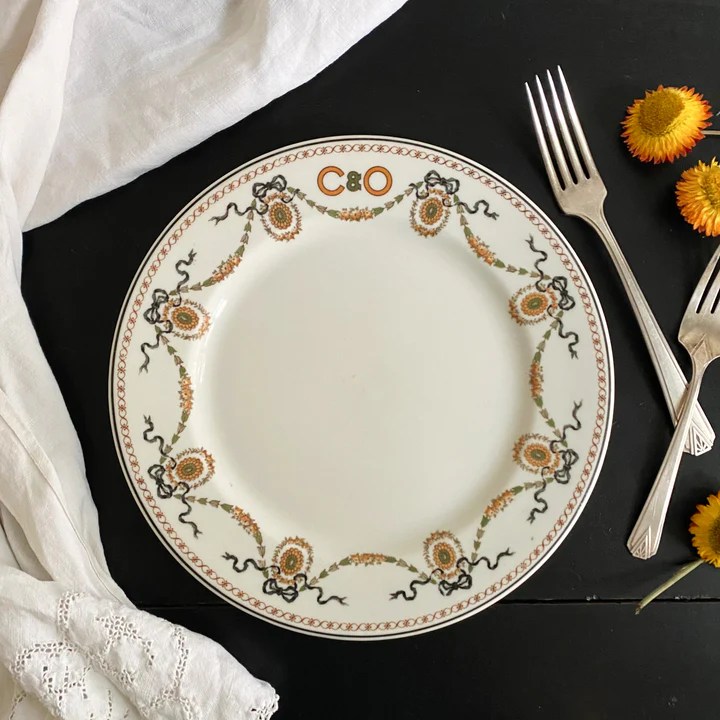
A Rare Chesapeake & Ohio Railroad Luncheon Plate c. 1923

With its roots extending all the way back to canal transportation in the 1790s, the C&O Railroad has a long and winding history through the American landscape. Throughout most of its life, C&O trains hauled coal, agriculture, retail products, and travelers between Virginia, the Midwest, the Northeast, and parts of Canada up until the 1980s. In the 1920s, the decade in which this luncheon plate was made, the C & O trains looked like this…

Dining service aboard C&O started in 1899 and was only offered on their luxury lines. Signature menu items included shirred eggs, Saratoga chips, broiled sea fish, baked apples and cream, Spring lamb chops, and French toast with marmalade. 

A Signed First Edition of Alice’s Restaurant Cookbook circa 1969

Not every cookbook comes with it’s own theme song, but when Alice May Brock (1941-2024) befriended a young Arlo Guthrie, the whimsical world Alice lived in was all the inspiration Arlo needed to write a hit song called Alice’s Restaurant Massacree, which in turn inspired a cult classic film of the same title. The cookbook came after the song and the movie, but shares the recipes that made Alice a local legend in New England as the proprietor of three restaurants and a catering company. A free-spirit, an artist, and a lover of food and friends, this cookbook features some of the favorites served in her restaurants and at her famous home-hosted dinner parties. It also includes still photos from the movie, Alice’s illustrations, and photos of Arlo and their friends who made a good time out of every meal. Adding an extra layer of the joie-de-vivre she embodied, this particular book is also signed by Alice.

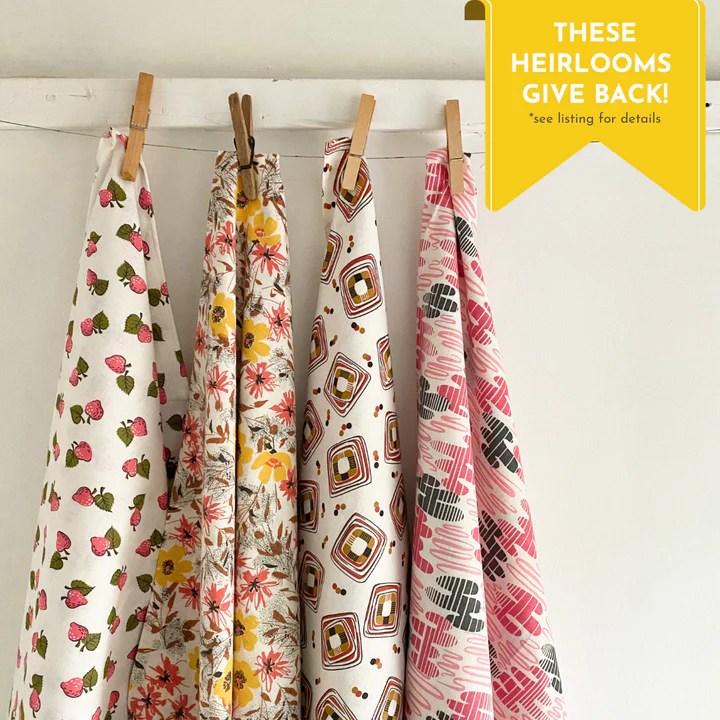
A Collection of Original Floral Feed & Flour Sacks circa 1930s-1940s

You can’t really get any closer to touching real-life history than these floral feed and flour sacks. Stitched into traditional sack shape, similar to a pillowcase, these bound together fabrics were once the commercial packaging that held a variety of pantry staples, including flour, sugar and grain. Made by the manufacturing industry in response to the financial burdens placed upon American families during the Great Depression, this cotton sack packaging was made solely for the purpose of recycling.

Knowing how thrifty and creative the American seamstress was, and knowing how tight household budgets were during the Great Depression and World War II years, grain and food manufacturers packaged their products in these floral cloths specifically so that women could repurpose them by turning the fabric into clothing, household linens, toys, rugs, curtains etc. It was a winning collaboration that not only responded to and eased economic stress, but also showed unwavering care, support and appreciation for customers during one of the most challenging times in American history. This batch in the shop came from a private collector and was so well-cared for across ninety years that each piece of fabric looks practically brand-new. Two of the sacks even retained traces of grain remnants hinting at the original products contained within.

Cotton flour sacks full of flour featured in a 1940s photograph published in LIFE magazine

An Antique Basin Bowl & Wash Pitcher That Changed the American Plumbing Industry

It’s hard to imagine life without modern conveniences like indoor plumbing and bathrooms, but back in the 18th and 19th centuries, this wash basin and pitcher was your gateway to cleanliness, both literally and figurately. Made by Maddock’s Lamberton Works in Trenton, New Jersey, between 1888-1902, the British-born Maddock family were the first immigrants to realize that America needed their own sanitaryware pottery manufacturer. Up until they opened up shop, all basin bowls, wash pitchers, slop jars, chamber pots and grooming sets were imported from England. The Maddocks changed that by producing American chamber sets using local clays, and in doing so, revolutionized the plumbing industry in the process. Recognized as pioneers in the world of sanitary toiletry products, the Maddock family patented several plumbing innovations before they eventually sold the pottery in 1929 to American Radiator & Sanitary Corporation, who would go on to create our country’s indoor heating and plumbing infrastructure including radiators, sinks, bathtubs, and toilets for households across the country.  

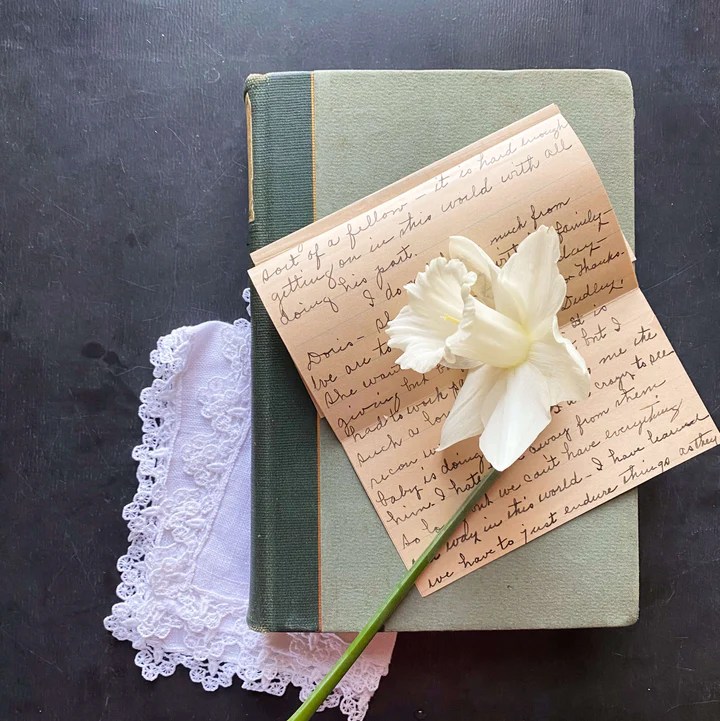
An Intimate Glimpse into the Life of a Literary Hostess

Guests at the Boston literary salon of Mr. James & Annie Fields were a veritable who’s who of prominent 19th-century writers. Mark Twain, Charles Dickens, Sarah Orne Jewett, Ralph Waldo Emerson, Henry Wadsworth Longfellow, Bret Harte, Henry James, Bronson Alcott, Nathaniel Hawthorne and Harriet Beecher Stowe, to name a few among were just some of the visitors that spent time in their home along with other notable painters, actors, musicians, and political activists. 

In addition to being a writer, activist and philanthropist herself, as well as the wife of distinguished Boston publisher James Fields, Annie Adams Fields (1834-1915) was also a charming, kind-hearted hostess and keen observer of conversation amongst her literary friends. Never interested in self-promotion, scandal or gossip, she regularly recorded bits and pieces of conversations among her friends in diaries that she kept throughout her life. Sketches of dialogue, character traits, pressing matters of the day, viewpoints on life and literature all freshly detailed the lives of extraordinary figures, painting them as humble, human, fallible beings tackling life, their passions and their creativity as anyone might. 

Before Annie passed away in 1915, she granted noted biographer Mark Antony DeWolfe Howe Jr. access to all her diaries in his pursuit to record the friendships enjoyed between the Fields and their artistic community. She had one caveat, though, in sharing her books. That Mark’s book not be about her but about the extraordinary friends whom she knew and loved so well. What resulted is this book, Memories of A Hostess: A Chronicle of Eminent Friendships, published in 1922.

Highlighting correspondence, diary entries, cultural events, and touchpoints from history for context, Mark Antony DeWolfe Howe pieced together an intimate glimpse into the lives of the 20th century’s greatest thinkers and artistic minds, courtesy of Annie and James’ record-keeping collection.

Annie’s husband, James Fields

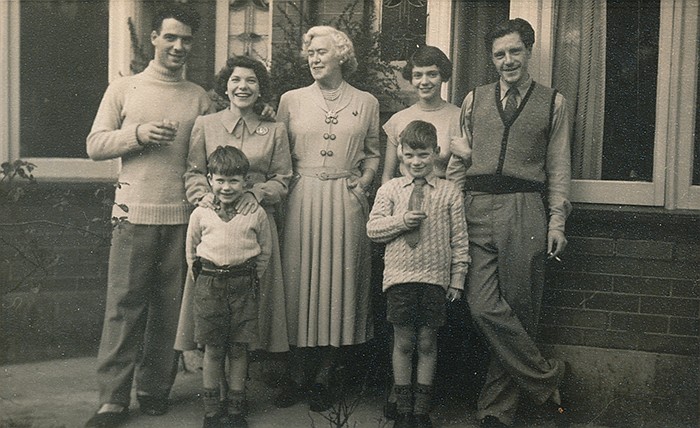
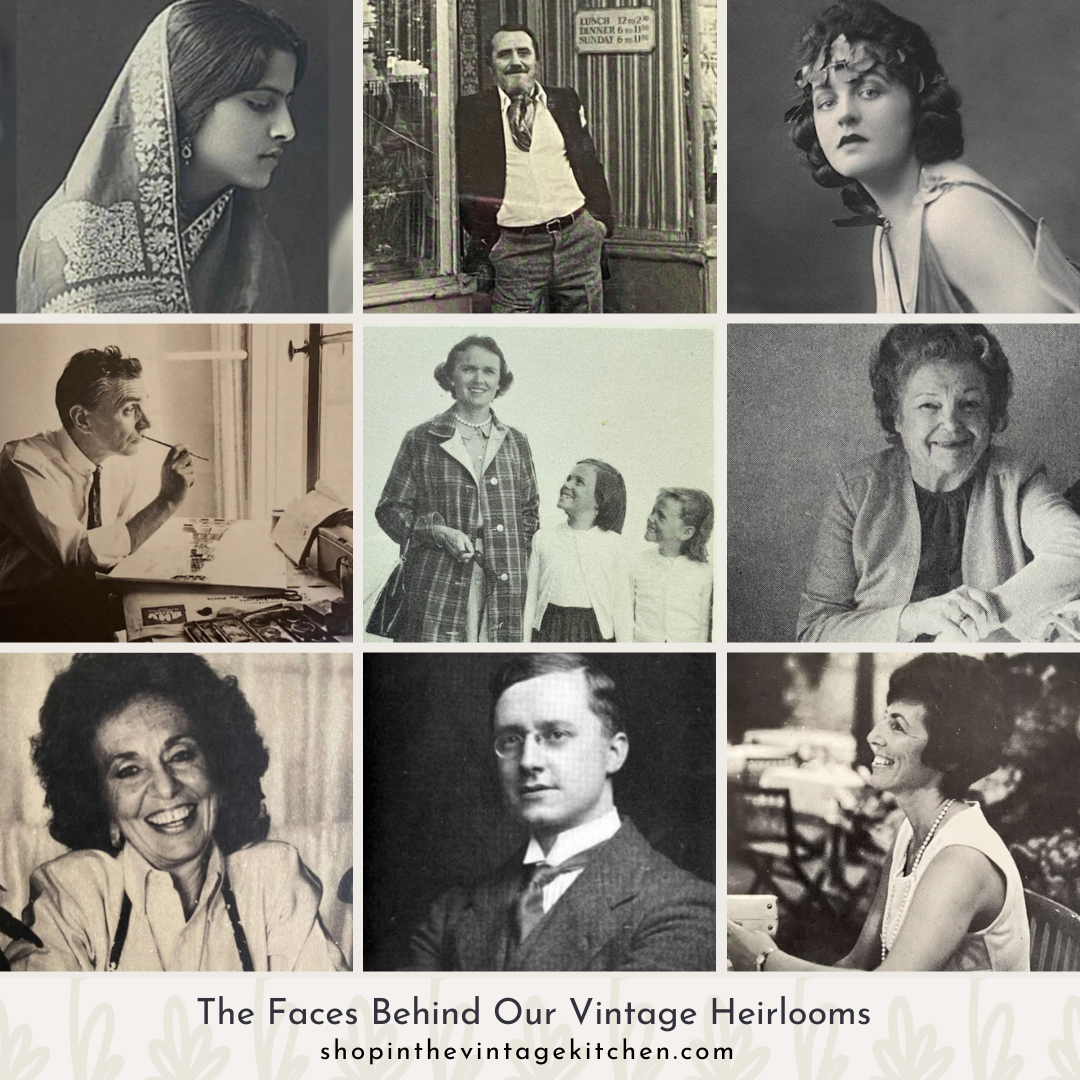
Uncovering a portrait to attach to each heirloom’s story is one of our ultimate joys. In this year’s sale, you’ll also meet many new faces. This year, we shared stories of Attia, Alfredo, Pamela, Freddie, Doris, John, Judy, Miroslav, and Marjorie along with her daughters, Kate and Susan…

Clockwise from top left: Attia Hosain, Alfredo Viazzi, Pamela Lyndon Travers, Freddie Bailey, Doris Muscatine, John Ramsbottom, Judy Gethers, Miroslavo Sasek, Marjorie Winslow and daughters.

Each brought many new perspectives of history to life. Attia Hosain (1913-1998) was a writer, actor, cook, broadcast journalist and intellectual focusing on stories of India and British post-colonialism. Freddie Bailey (1904-1992) was famous in Mississippi for her hot pepper jelly along with other regional favorites that made her kitchen the epicenter of Southern food, flavor and hospitality. In the 1930s, Pamela Lyndon Travers (1899-1996) introduced the world to Mary Poppins, who still remains 90 years later, the globe’s most well-known and most beloved nanny. Alfredo Viazzi (1921-1987) was the proud owner of a popular Greenwich Village restaurant known for its convivial atmosphere, great food and reasonable prices. Judy, Doris, Marjorie and Miroslav shared their artistic talents via saucepan and sketchbook. British mycologist John Ramsbottom (1885-1974) taught gardening enthusiasts all about the fascinating world of fungi.

This year also introduced personal stories shared by readers and their families. One of our favorites is that of Beverly, whose collection of handwritten recipes is not just a set of random cards in a box. They are the story of her. Of one woman’s culinary journey as she grew from a young, inexperienced midwestern bride, who barely knew how to boil an egg, into a confident, seasoned California cook and recipe collector over the course of her entire adult life.

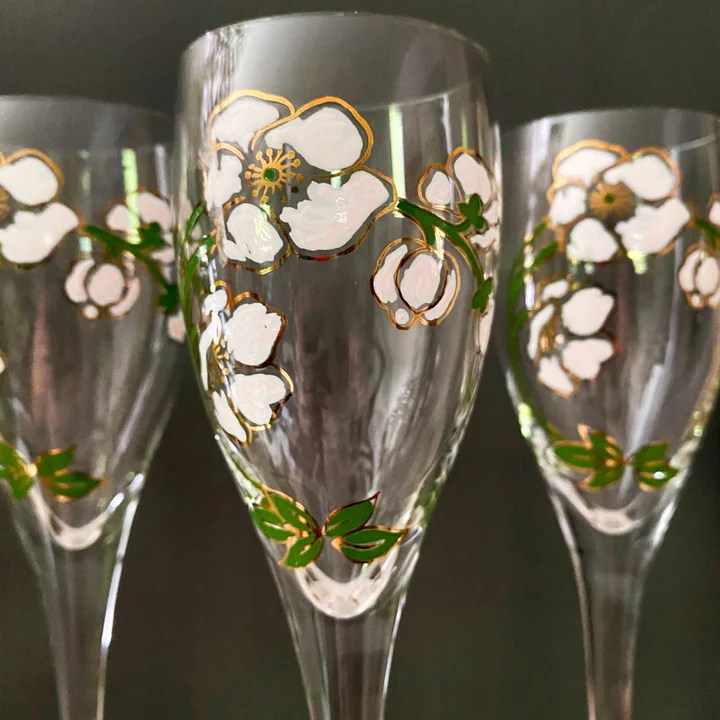
Familiar favorites can be spotted in the shop sale too, bringing with them their marvelous heritage stories that are worth retelling again and again. This stemware is the story of champagne, of “drinking the stars,” of a husband and wife couple, Pierre Perrier and Rose Jouet, who created the first true champagne made from the Chardonnay grapes in the Champagne region of France in the early 1800s. Together, with Rose in the vineyard and Pierre in the sales office, they launched Perrier-Jouet Champagne in 1814, a brand that still continues to enchant wine enthusiasts around the world today.

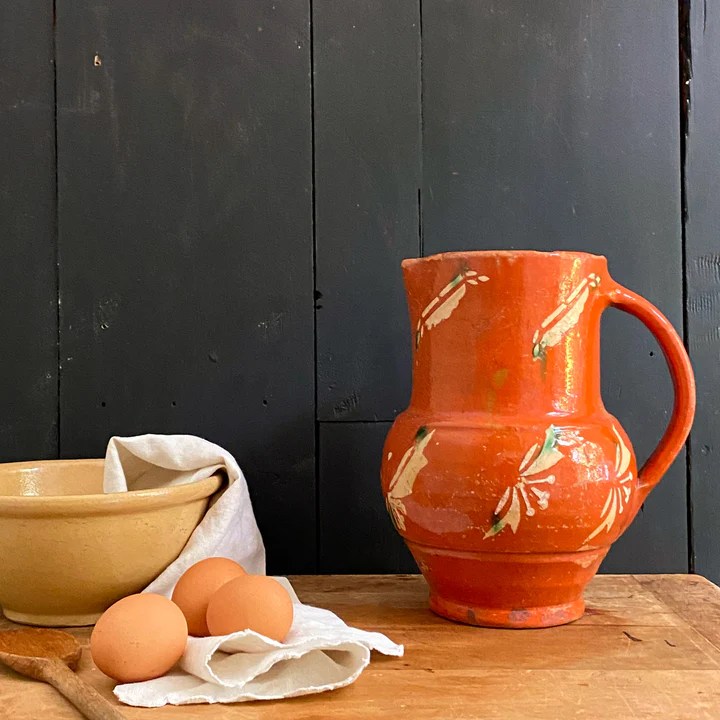
Every year we also like to spotlight the oldest antique in the sale. In this year’s case, it’s this French pottery water pitcher that dates to the 1850s…

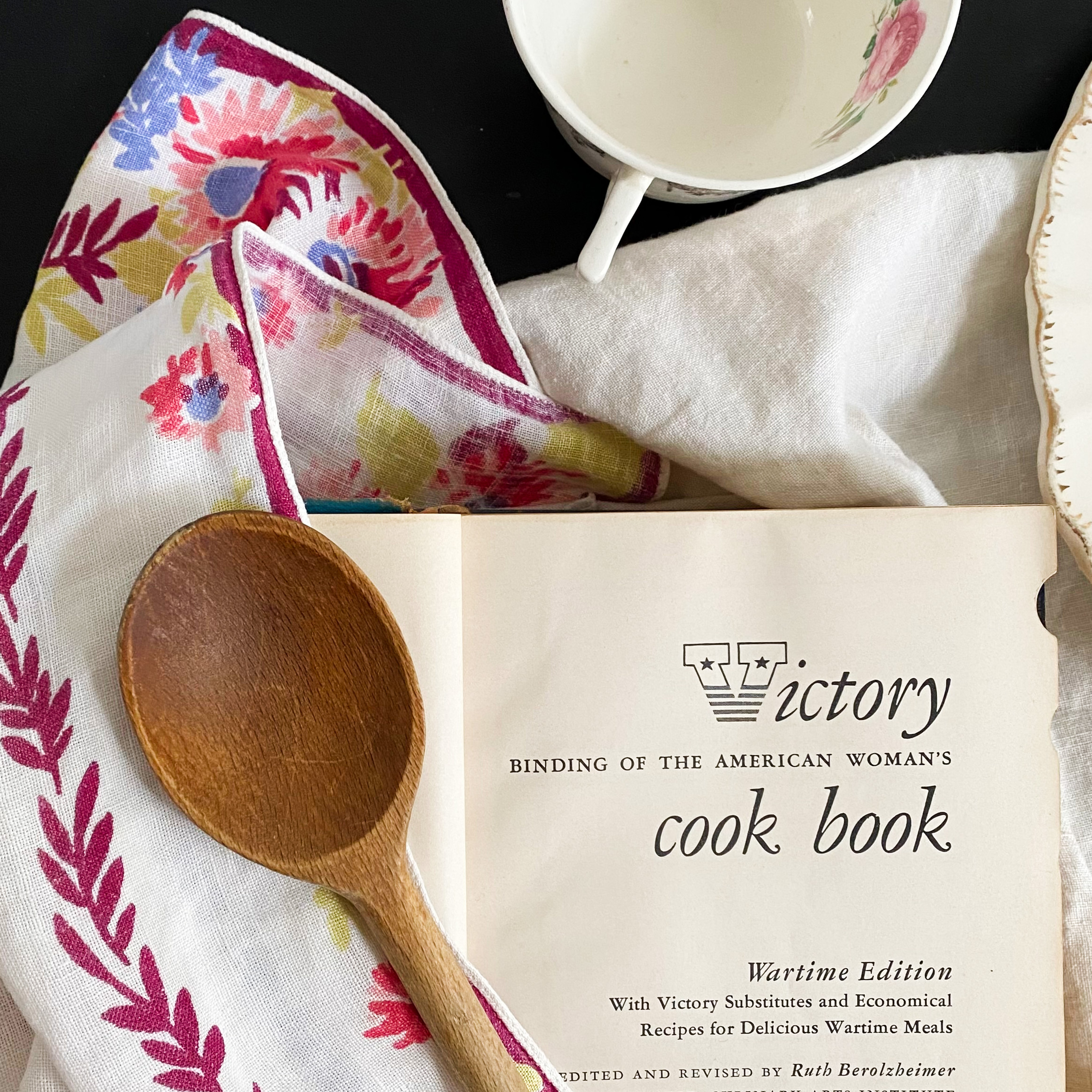
More history floats. More stories emerge. In the shop, a cookbook is never just a cookbook. It’s a tactile understanding of what WWII cooking really looked like for women in the 1940s. Its a story of how they had to portray strength, creativity, courage, ingenuity and optimism at every meal, every day while creating delicious, nutritious and interesting meals on limited war rations, tight budgets, and victory garden harvests.

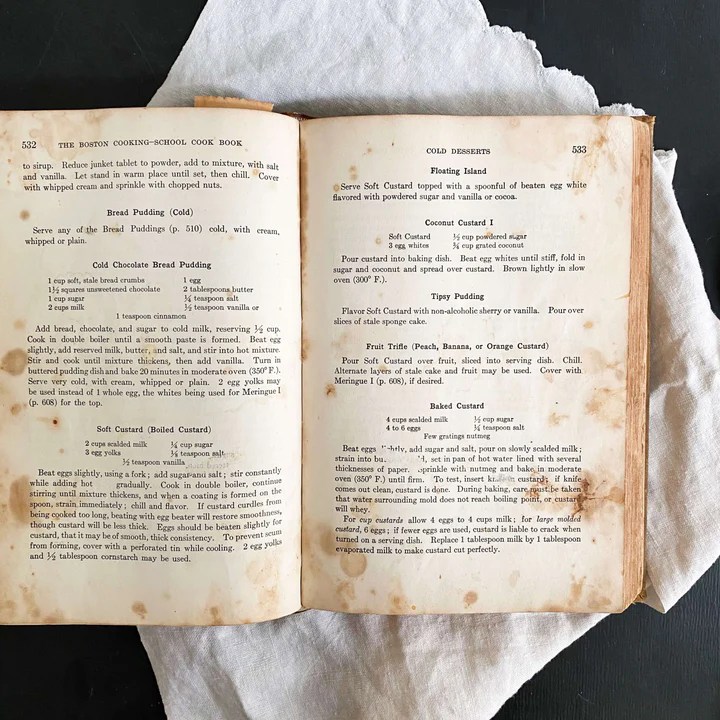
Cookbooks in the shop tell intimate stories not only of their authors but also their owners too. This 1931 edition of the Boston Cooking School Cook Book showcases the enduring legacy of Fannie Farmer (1857-1915), who not only raised generations of home cooks but shared recipes that still inform regional New England cuisine today. It also highlights, through a myriad of cooking splatters and stains, the adventures of a previous cook (or cooks) who cherished the recipes so much their culinary endeavors have turned into an artful aesthetic.

Also every year, there’s one stand out cook, who warrants days or sometimes even weeks of research thanks to a fascinating life lived. This year, it was Lois Burpee (1912-1984)…

who married into the Burpee Seed Company family in the 1930s and managed to carve out an incredible cooking, gardening, and philanthropic career that lasted her entire lifetime.

Other equally interesting cookbooks in the shop sale this year include two rare compendiums of culinary curiosity that offer suggestions on what to make and what to bake every day for a year…

Decorative pieces in this year’s sale highlight the handmade arts. An antique tole tray, a vintage hand-carved wooden swan, a vintage print of a tulip painting dating all the way back to 1827, a hand-embroidered linen…

These are just a few examples of the people, places, and stories that have found their way into the Vintage Kitchen shop in 2025. I hope at this year’s sale you discover an heirloom that captivates your attention, that steals your heart away to another time or another country, and that inspires new creativity from history’s forgotten muses.

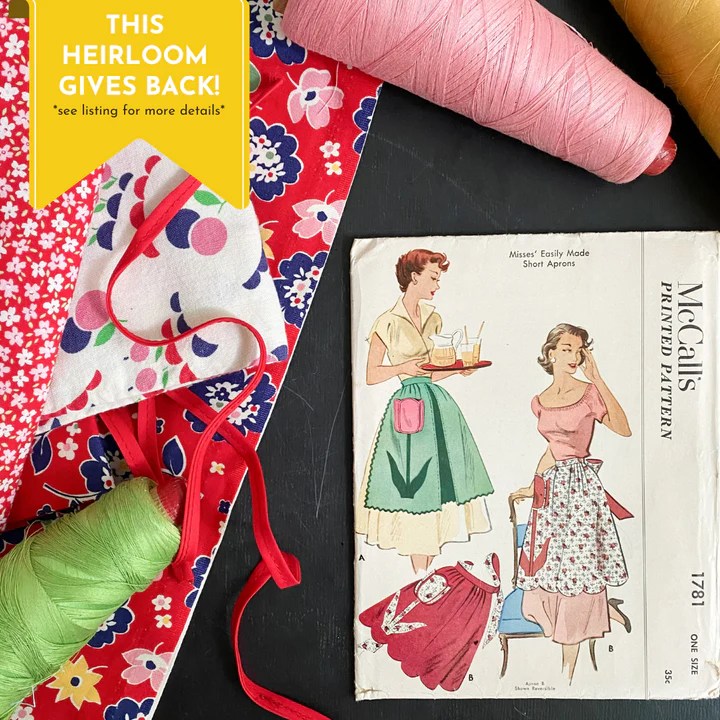
At this year’s sale, just like last year’s, you’ll notice that some heirlooms sport a festive yellow banner in their listing photos. Those banners signify a donation program that we launched in 2024. Any heirloom that you see in the shop that says This Heirloom Gives Back qualifies for a 20% donation to Feeding America, a nationwide non-profit network of food banks, food pantries and local meal programs dedicated to providing nutritious meals to food-insecure communities around the United States. Not all heirlooms in the shop qualify for this program, so be sure to look for the yellow banners if you would like to participate.

The sale begins at 12:00am (EST) on Sunday, November 2nd, 2025 and runs through 11:59pm that same night. Discounts are automatically tallied upon checkout, so there is no need to enter any coupon codes or discount phrases to receive 40% off.

New heirlooms continue to be added to the shop daily, so stop by for fresh vintage and antique finds leading all the way up to the sale. And, as always, if you are looking for something that we no longer have in stock, please send us a message. We’ll be happy to add your name and needs to our waitlist.

Whether you are interested in experimenting with a new cuisine, looking for a new favorite vintage dish pattern, or starting a collection that recalls memories of a happy time from your past, I hope you find something in the shop that calls to your heart and adds extra delight to your kitchen.

Cheers to all the old souls that inspire the shop each and every day. Cheers to all the heirlooms that they have been passed on to us to love and cherish just as much. And cheers to the kitchen for being the one spot in the house where everyone is always welcome.

Reading While Eating in 2024: Five Recommended Books About Food, Friendship and Appreciation

When December comes around every year, I always love compiling the book list. This month marks the end of 2024, and also the start of the wintertime reading season with the release of the annual Vintage Kitchen recommended book list. Blog stories were a bit sparse this year due to many unanticipated factors, but I’m happy to say that they haven’t hindered this annual tradition of posting a collection of favorite books discovered throughout the year.

If you are a long-time reader of the blog, you already know that these lists are made up of books that were serendipitously found over the course of the year while doing research for Vintage Kitchen blog posts, shop stories and recipes. Every year, they cover a range of subject matters and time periods, and span a range of publication dates from new releases to books written decades or even centuries ago. As an avid reader, averaging about 30 books a year, I save the most beloved ones for this list. The ones that left an indelible mark, or sparked some new inspiration, or offered a different perspective on a subject matter already familiar. These are the books I couldn’t put down. The ones that I still continue to think about long after the last page is read.

This year’s selection is varied in content but they do have an underlying connective theme of gratitude and appreciation. There’s a book about nature, a book about a summer vacation house, and a book about American life lived three hundred years ago. Three of the books this year are memoirs, one book contains recipes, and unlike last year’s list, all five of these books are non-fiction. They tell bittersweet stories of friendship, of being present in time and place, of establishing traditions, and of searching for meaning in everyday life. These five take us around the world from coastal Massachusetts to New Orleans to New York City to Paris, Stockholm, South America, and to our own backyards. One book even helped solve a mystery about the floorboards of 1750 House. Interesting adventures await on all fronts.

Let’s look…

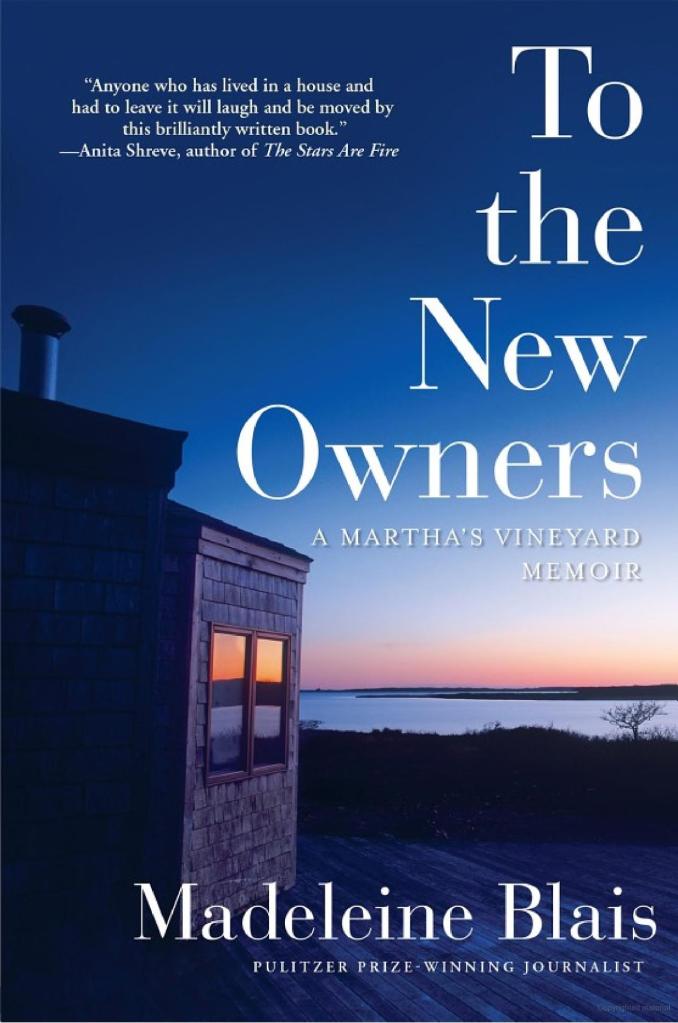
To The New Owners – Madeleine Blais (2017)

A love story to summer. To family. To a seasonal beach house on the shore of Martha’s Vineyard. To the New Owners is one long anticipated string of summer sequels highlighting vacation life spent in coastal Massachusetts. Written by Pulitzer prize-winning journalist Madeleine Blais, who married into the enigmatic and literary Katezenbach family, this memoir starts off with news that the beloved beach house, the family vacation compound for five decades, is going up for sale.

You might suspect with a topic like this that what could follow is a sappy cliche. A backward look at a family home where frivolity, relaxation, and low expectations were the driving force behind each summer. A book chock-full of events and experiences only interesting to the people who actually experienced it. That’s not the case here.

While there is certainly sentimentality and a true loyalty to the land and its residents, both seasonal and year-round, this memoir reads like an engaging conversation shared over a lengthy dinner party. It is full of quirky characters, funny stories, interesting history, and an undying love of the written word.

From record-keeping log books to island newspaper articles to Madeleine’s own accounts of house repairs, family dinners, environmental changes, historical events, and all the people and pups that marked their time on the island, this is a memoir of Martha’s Vineyard not from the glitzy, multi-million dollar mansion perspective, although there is mention of that too, but from a rowdy, vivacious, thrifty, unpretentious contemporary family viewpoint. The type of living that represents the true spirit of the island and its origins. And in the case of the Katezenbach family, a lifestyle that respected the power of words over the power of the pocketbook.

Gay Head Cliffs – Moshup Public Beach – Martha’s Vineyard – Boston – USA.

When she first shows up to the Vineyard, Madeleine doesn’t exactly know what to expect. She knows nothing of the island, or the people she’s going to stay with, or the type of lifestyle that requires a summer residence and a winter residence. But she does have an imagination. And what she pictures in her mind on the way to her first visit to the summer house is not the almost dilapidated shack that she encounters. Rustic is what her husband called it, a far cry from the multi-million dollar estates that dot much of the M.V. coastline. Intrigued by the island’s humble roots and the glamour it was later associated with, Madeleine explores the history of the island, her new family, and the literary-loving community that it reflected all through the lens of the summer house.

Martha’s Vineyard in the 1800s

Funny, wise, poetic, and relatable whether you’ve ever had the experience of summer beach house living or not, Madeleine’s memoir is about love, loyalty, nature, pride of place, and acceptance of what is, as it is. A look at an island that boasts extremes from all directions including wealth, prestige, celebrity, notoriety, and eccentricity, but also sandy kitchen floors, wet dogs, leaky roofs, fishless-fishing trips, thwarted dinner invitations, spectacular sunsets, faulty wiring, stunning beaches and the whole mess with the nearby pond that affected everybody.

At the heart of the story are the log books – the fortuitously started notebooks that hold random journal entries of all the small, everyday details that make up life at the beach house for fifty summers. Sporadic and eclectic, with contributions by family members and visiting guests, the log books were available to anyone staying at the house who wanted to note something, anything. The first log book started what would become a tradition and then ultimately a treasure trove of notes and musings on recipes, house improvements, weather, linguistic games, family health, poems, housecleaning tips, recommended book lists, pet antics, children’s drawings, island events, and conversational interactions with town locals. No one particularly thought that the first log book was going to turn into something special, but when it was full and there were no pages left to record anything else, another book was ordered and filled again, and over and over it went for five decades.

Having that kind of family detail available helped Madeleine paint such an intimate look at life on Martha’s Vineyard that by book’s end you’ll feel like a local yourself. What’s particularly lovely is how everyone truly appreciated the house, the parcel of land it sat on, and the exposure to nature that it provided them. Across all the fifty years, any one guest, family member or otherwise, who couldn’t appreciate this slice of paradise or didn’t see the charm of it all wasn’t invited back the following year. So the summer house became a club-like haven of love and joy and appreciation and fulfillment even on the leaky roof and the fishless fishing trip days. It chronicled the years of a couple’s marriage and embraced the outpouring of their offspring. It sheltered three generations, countless friends, family pets, and invited guests. And then the inevitable happened. Life changed. And with it, the bittersweet goodbye to fifty years of what once was.

Grief Is For People – Sloane Crosley (2024)

Just as there are many stages of grief there are many things in the world to grieve. In this book, Sloane Crosley grieves two real-life events simultaneously… the suicide of her best friend and the theft of family jewelry from her NYC apartment. Both incidences occurred within 30 days of each other. Both were a shock to the system. And both left Sloane at a loss confronting major thoughts and feelings about each situation.

You might suspect that the death of her dear friend would take precedence over the theft of jewelry she inherited from a grandmother that no one really liked, but Sloane is an incredible storyteller and manages to give equal emotional weight to both scenarios while also offering an interesting behind the scenes look at the publishing industry that she and her friend were very much a part of for over two decades.

Grief Is For People is, yes, a book about grieving but it’s also a memoir of a specific time period in Sloane’s publishing career, a portrait of a friendship, a writer’s coming-of-age in the big city of New York, and the emotional value of inherited objects. It’s humorous and insightful, smart and sincere. It’s full of grit and determination to right the wrong of burglary while also bravely sorting through what it means to love, rely on, appreciate, and remember someone who was here one minute and gone the next.

Sloane shares this story in a captivating timeline of events. So as not to spoil the pacing, I won’t say anymore other than that if you are new to Sloane Crosley and her work, I’d also highly recommend her 2008 book of essays I Was Told There’d Be Cake.

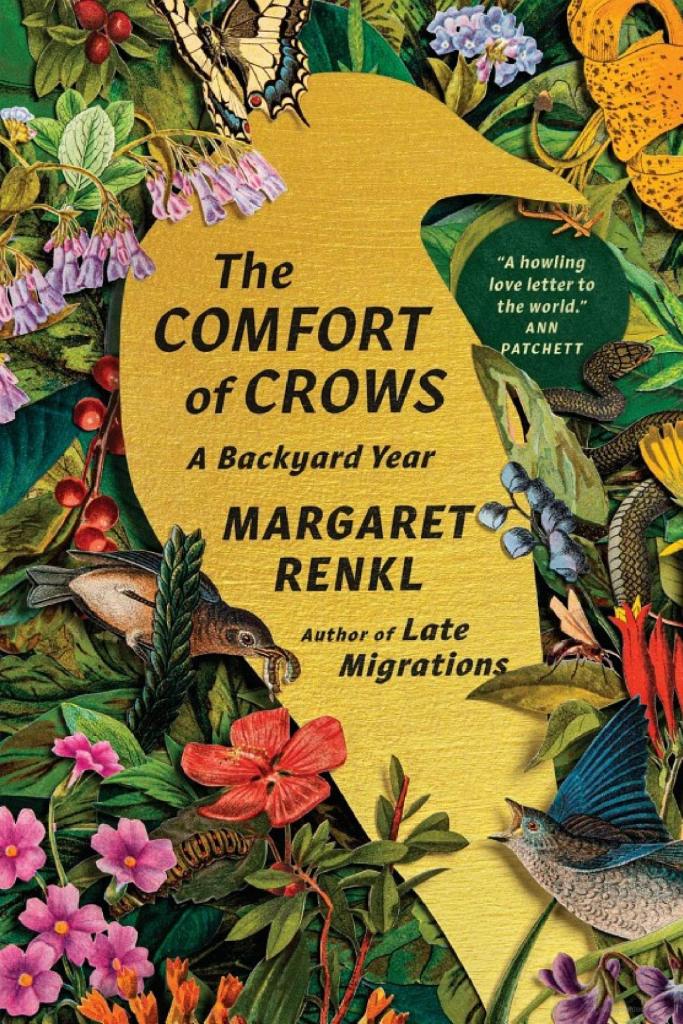
The Comfort of Crows – Margaret Renkl (2023)

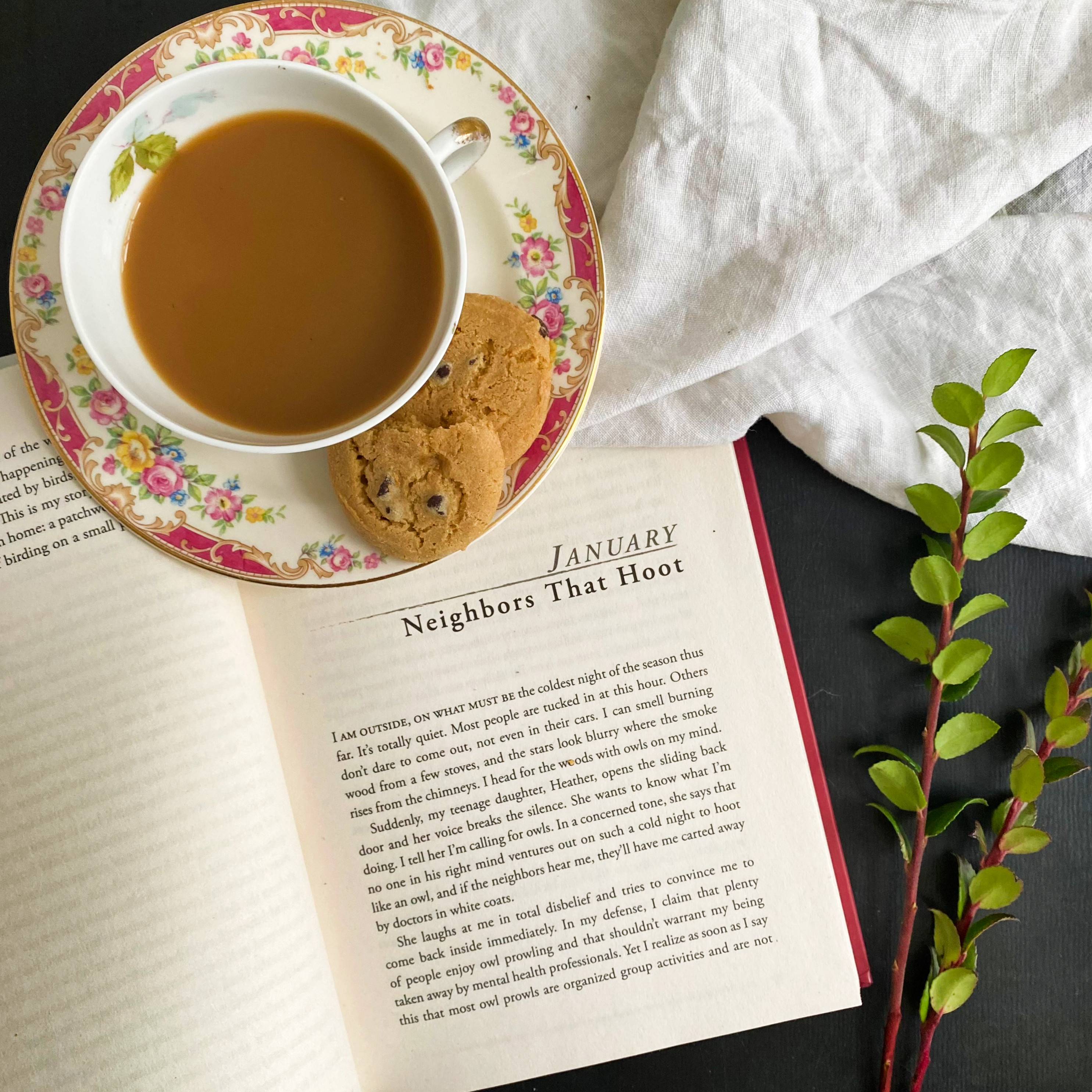
Stop and look. Those are the first three words of Margaret Renkl’s ruminations on nature and her year-long accounting of it in The Comfort of Crows. Written from the vantage point of her backyard in Nashville, TN and a friend’s nearby vacation cabin in the mountains, Margaret writes about the sights and sounds of nature witnessed firsthand over the course of a calendar year. In brief vignettes accompanied by her brother’s beautiful illustrations, Margaret draws attention to common occurrences happening with the birds and the squirrels, the trees and the bees, the plants and the pollinators, week by week, while also reflecting on her own life and the parallels these natural encounters draw.

Part nature study, part memoir, part call to action, I would recommend The Comfort of Crows to anyone who wants to unplug from the outside world for a weekend, a week, a month, a year. If you need a break from social media, the news, the what-ifs, and the how-to’s, this book is easy to fall into. Calming, thought-provoking, and comforting, it offers a gentle reminder that in nature there’s a plan, a purpose, and a resourcefulness that is indefatigable, adaptable, and inspiring.

Stop and look. Stop and listen. Stop. Look. Listen. See. Hear. These are simple words that yield powerful insight into the dramas, destinies, and determinations going on in everyday life around us. Whether it’s the backyard, the city park, the country meadow, the forest, the beach, or the planting strip in the parking lot of your local grocery store, there’s insight to be gained from the creatures that inhabit these parcels of place.

Starting on Week One, the first of January, Margaret shares in her lovely, poetic voice how nothing is actually dead even in the dead of winter. “Everything that waits is also preparing itself to move,” she notes. “The brown bud is waiting for its true self to unfold: a beginning that in sleep has already begun.”

I can’t really describe this book as anything other than an experience. It’s heartwarming and serene, playful and curious, sentimental and sad. It is fun facts and first-hand observations. It’s a love letter to what is and a longing to change what might become. It’s a book. It’s short stories. It’s prose and it’s poetry.

Conscious of global warming and human impact on the natural world, Margaret is hopeful that we can right the ship and learn how to cohabitate with plants and trees, insects, and animals in order to encourage a beneficial landscape for all instead of just some. In acknowledging that we have collective work to do in that regard, this book carries its own bittersweet narrative – an appreciation of what is here now but a realization that it might it not be here in the same way tomorrow. That viewpoint automatically sets the tone for awareness which is the overall theme of Margaret’s year. To be aware of one’s natural surroundings. To be aware of what is in one’s natural surroundings. To be aware of the wild in the world. It’s that recognition that Margaret hopes will propel you out into the greenspaces of your life. To look and to see. To hear and to help. All, so that we can continue to hope.

Trail of Crumbs – Kim Sunee (2008)

Abandoned in a Korean marketplace when she was three years old, Trail of Crumbs follows the real-life of Kim Sunee from toddlerhood through her late twenties via place, people, and passion. Adopted into a well-meaning American family and taken to live in New Orleans, Kim’s presence in the world from the beginning never quite clicks. Seesawing between feelings of gratitude and abandonment, she grows up out of place as an Asian American in the Deep South. Carrying the emotional baggage of a person who has been left behind, Kim is too young to put words to her lost person emotions.

As a child, the only place she finds real comfort is in her grandfather’s kitchen, watching him and helping him cook an array of Southern specialties. This early introduction to the internal power of food becomes Kim’s barometer, her measurement of what feels right and wrong in her life, of what is fitting and falling apart around her. Cooking becomes the bridge that connects her with a cast of characters that come in and out of her life, leading her around the globe over twenty years in search of the definition of home, both internal and external.

With every new person she meets, every new relationship she begins, her life pivots. She makes friends with artists and writers. She teaches English classes to foreign children. She writes poetry. She translates business brochures. She runs a bookshop. All the while searching for her true self.

In all these people, all these places, all these jobs, Kim tries to move on from being left behind. She tries to make peace with her past and the mother who left her on a bench in a market with just a fistful of crackers. She goes to Paris. To Sweden. To South America. She eats, drinks, and cooks in new kitchens of new friends, new lovers, new neighbors. In France, she meets and falls in love with a high-profile businessman who is determined to give her everything she ever wanted. For a time, this romance is ideal. A fairy tale in the making with affable rom-com pacing. She’s finally met someone who is ready to unclasp her fingers from the tight grip that carries her emotional suitcases. He wants to give her everything she never had. A fresh start. A new life. Her own making.

But as much as they love each other, and as passionate as their relationship is, it’s also fraught with complications. Kim questions this knight-in-shining-armor and her worthiness of him. She wears the invisible letter L for leaveable like a badge that defines her. And in believing that she’s leaveable she can’t ever truly stay anywhere. That creates a restlessness that no amount of kindness, no amount of money, no amount of love, or attention, or security can cure until she learns to love herself for herself.

Along with this search for peace and family, Kim’s memoir is dotted with recipes throughout, each one representing a different aspect of her physical and emotional journey from childhood to adulthood. There are recipes that reflect her Korean heritage, her Southern upbringing, and her love of French food. There are recipes for snacks, comfort foods, fancy dinner parties and elegant desserts. Each one, a place marker of her growth and development. They represent comfort in times of unease and joy in times of safety and security. There are so many truly lovely-sounding recipes in Kim’s book that I practically tagged each and every one. In the next blog post, we’ll be delving into one of her recipes from Trail of Crumbs – Chicken Thighs with Cinnamon and Dates – which appears about halfway through her story when she’s in the middle of her French love affair. Stay tuned for that post coming shortly.

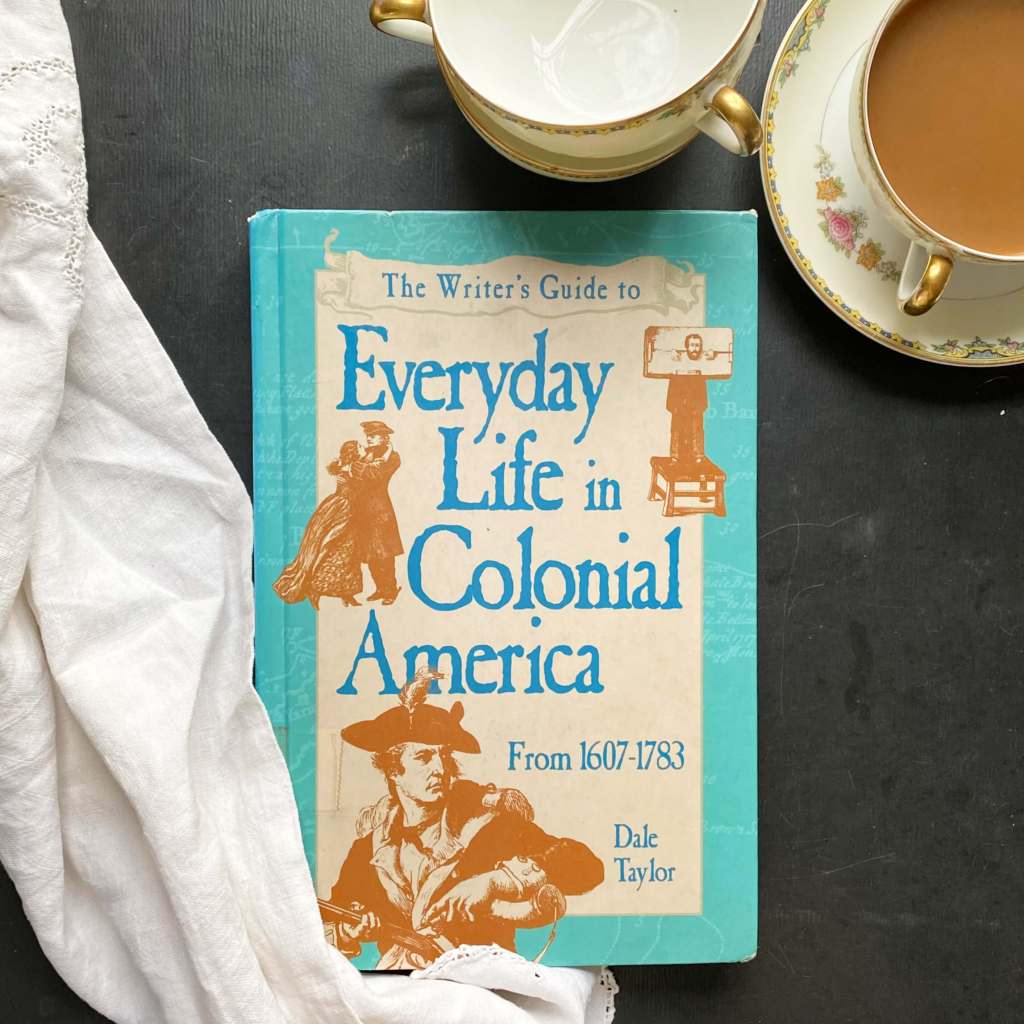
The Writer’s Guide to Everyday Life in Colonial America from 1607-1783 – Dale Taylor (1997)

This is pretty niche reading, and I realize not everyone may be as curious about colonial life as we are here at 1750 House, but this book provides so much interesting, little-known information on domesticity in the 17th and 18th centuries, it will appeal to history lovers of all sorts on all levels. Covering architecture, clothing, occupations, gender roles, homekeeping, agriculture, professions, education, religion, and government, I came to this book initially interested in reading the chapter on architecture in hopes of learning some new information about 1750 House, but the whole book turned out to be captivating and I flew right through it.

Brimming with all sorts of very fun fun facts, historical interpreter Dale Taylor wrote this book specifically for writers so that they would have an accurate understanding of the all details that made up real life in the colonial era. With that audience in mind, Dale includes an array of anecdotes that help bring history alive in a relatable way. It’s also a great resource when solving floorboard mysteries.

Wide plank floors upstairs

Upstairs in 1750 House, the original wide plank wood floorboards which are made of solid 3″ inch thick chestnut, measure between 9.5″-15″ inches in width per board. But downstairs, the wood floors are much narrower in width, about 3.5″ inches on average.

Narrow-width floorboards downstairs

This has always led to curious conversations about why the floorboards aren’t the same on each floor. We suspected that the downstairs floors were replaced at some point later in time, possibly in the mid-1800s when the kitchen room was added. But come to find out, according to Dale, in colonial days, wide plank boards were less expensive to mill, so they were often used for flooring in the more private rooms of the house, which tended to be on the second floor or at the back of the house on the first floor. The narrow-width floorboards were laid in the front of the house on the first floor in the parlor rooms. These narrow boards acted as a status symbol letting visitors know that the family who lived there could afford such luxury. In the case of 1750 House in particular, this newly learned information makes a lot of sense.

Not long after we moved in, we learned about the architectural significance of the front door, which is also original to the house. In the photo below, you’ll notice four small windows that are built in at the top of the door. During the colonial era, that was another bit of luxury – to be able to afford glass in your front door. The panes not only allowed extra light to illuminate the interior but there was also religious symbolism attached to them too. Religious colonists believed that by installing windows at the top of the door, it allowed God a peek down from the heavens to make sure there was nothing improper going on indoors. Just like the original H-Hinges found throughout, it’s another little bit of unique symbolism that lives here. And thanks to Dale’s book, it now gives us a better understanding of the economic status of the original owners of the house.

Windows on the original front door c. 1750

Architecture notes aside, other types of fun facts that can be found in Dale’s book include these little marvels…

  • Pets during the colonial era included dogs and cats, but not birds. Birds would not be kept animals until the Victorian era. However, squirrels and deer were also common pets in colonial days and the deer were allowed free reign both inside and outside the house.
  • Bearskin rugs were the first indoor fire alarms. In the 17th and 18th centuries, they were laid out in front of the fireplace in case an errant ember flew or a log rolled out into the room. At night, after the household had gone to bed, if an ember sparked or a log rolled out, the rug was the first point of contact. It would begin to smolder, emitting the smell of burnt hair. That smell would awaken people in the house and signal that there was a fire near the fireplace which could be easily and quickly be put out because of the rug.
  • 25% of women’s deaths in colonial days were due to life-threatening burns caused by cooking in an open fireplace. That led women to start hoisting up their skirts and tucking them into the waistband of their dresses in order to avoid catching the hems on fire. From that point forward, the kitchen was viewed as an indecent place to spend time and the staff that worked in them were viewed as having low repute.
  • Since cloth was one of the costliest items in colonial America dresses were made to last for 15 years which means that some women owned only about 2-3 dresses in their lifetime.
  • Wigs were commonplace for men and women in colonial times, but the super tall and lofty wigs were only worn by women in big cities like Philadelphia. These wigs were so elaborate in design, style, and augmentation that they were often worn even at night while sleeping. This full-time, overnight headress necessitated arrangement in such a way to accommodate mouse traps since they were made of natural nesting materials.
  • In 1752, the celebration of the new year was moved from March 25th to January 1st, which of course, has stayed the same ever since.

Reading is so subjective when it comes to personal preference. Everyone has their own favorite styles, writers, and genres, but I hope by sharing my list of favorites, you’ll discover some new favorite ones too. Stay tuned for a recipe I just made from Kim Sunee’s memoir coming up next on the blog. It’s an aromatic, cozy, wintertime dinner that is absolutely lovely for the holidays. Here’s a sneak peek…

Chicken Thighs with Cinnamon and Dates from A Trail of Crumbs by Kim Sunee

Until then, happy reading! And a big cheers to Madeleine, Sloane, Kim, Margaret, and Dale for making 2024 such an interesting one.

Growing A Fragrant Year: Violas For March and Part of April

{A Fragrant Year is an ongoing series shared throughout 2024 highlighting twelve fragrant plants, trees, flowers, shrubs and herbs added to the New England garden landscape, month by month, surrounding a house built in 1750. This series was inspired by the 1967 garden book, The Fragrant Year by Helen Van Pelt Wilson and Leonie Bell. If you are new to the blog, catch up with our first introductory post here.}

March blew into the kitchen in a flurry of raindrops, wind chills and the occasional threat of one more snowstorm. My favorite local nursery didn’t open for the season until mid-month, and as we are quickly learning, not much happens in New England on any sort of instant gardening level until the beginning of April. So this month, there will be two fragrant garden posts – one for March and then the other for April so that we can keep on track for a full year of fragrant gardening month by month.

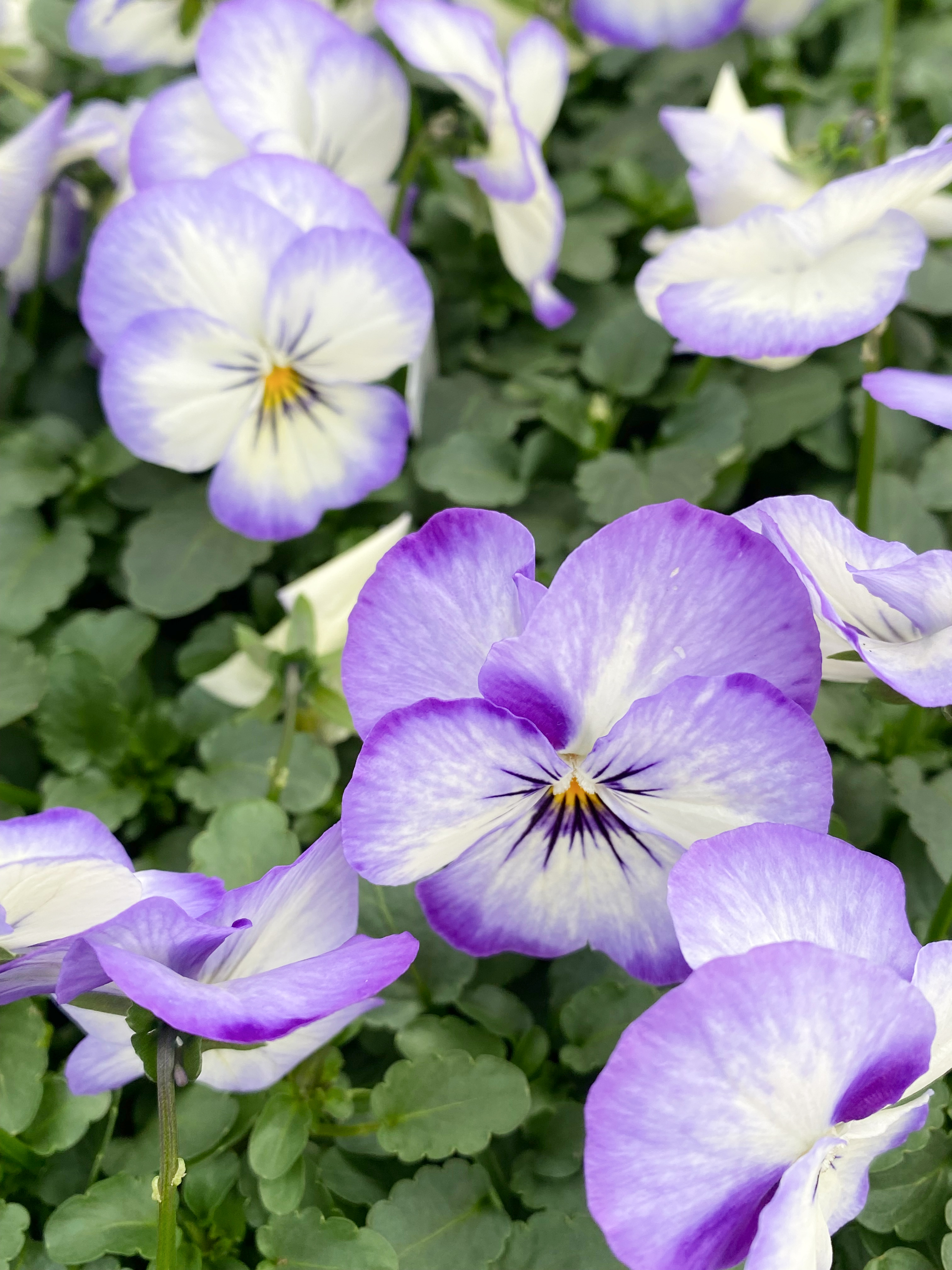
When our local garden nursery did open its doors for the season, a much-anticipated event in my world, a sea of pastel colors unfolded rack by rack, tray by tray, row by row. Aside from all that lovely Easter egg-shaded splendor, the thing that immediately greeted everyone at the door was the unexpected scent of warm honeycomb. This was not a fragrance brought on by bees zipping in and out of the flower pallets nor by close-by hives where they like to linger. This was the scent of violas, our featured fragrant flower for the month of March and part of April.

Dainty and delicate, a smaller but more robust version of their bigger blossomed offspring, the pansies, violas have always been a flower I passed by in previous years because of their size and what I thought was a sort of a hum-drum, everyday ordinariness. But when seeing them altogether, in masses of bright purples, oranges, lavender blues, crimson reds, lemon yellows and perfect whites they were a bright sight for winter-weary eyes. I also never realized what an incredible fragrance they carry, but after reading all about them in Helen and Leonie’s book, The Fragrant Year they were definitely worth a second look. “The fragrance reaches out to snare you into stopping, marveling, ” wrote Helen and Leonie back in 1967. Indeed.

Technically considered an herb, violas are the parent plant of pansies, and though while smaller in size, will put out more buds and blooms in the late winter/early spring months than pansies. They are also a heartier plant that is able to withstand freezing temperatures and snowy landscapes, an ideal match for our New England climate, but also for other areas around the country that experience cool weather temperatures during springtime too. Ideal temperatures for growing these ladies are 40 degrees at night and 60-70 degrees during the day.
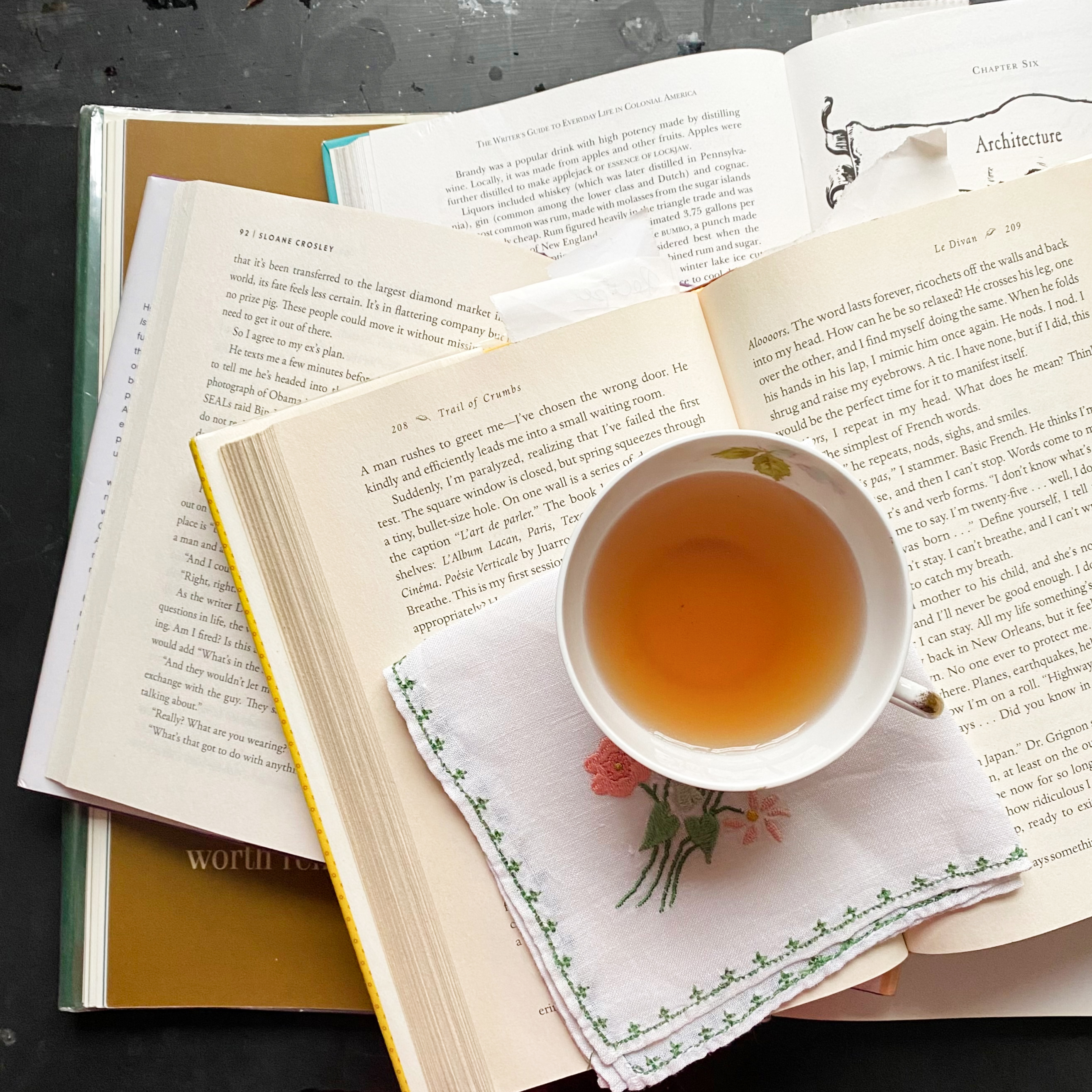
“The end of the growing season is the beginning for violas since short cool days are needed to trigger bud formation,” write Helen and Leonie. That means that when you plant violas, you actually encourage two growing seasons from them each year – one in fall and one in spring. And since they come in an array of colors beyond the most traditional (lavender), they can complement most garden palettes. Here are just a few color choices within the viola family…

First discovered in the Pyrenees, violas have been part of kitchen gardens for centuries. Used in making tea, wine, and liqueurs, they are also members of the edible flowers club. Not only do they add an interesting slightly sweet flavor to salads, cheese, butter and desserts but they also add beauty and color to the plate as well. And their contributions to everyday life just don’t stop at the kitchen either. Throughout history, violas have also been used in making perfume and medicinal salves since they contain both anti-inflammatory and anti-bacterial properties. These flowers might be mini in size but they certainly are mighty when it comes to usefulness.

Viola cornuta circa 1830

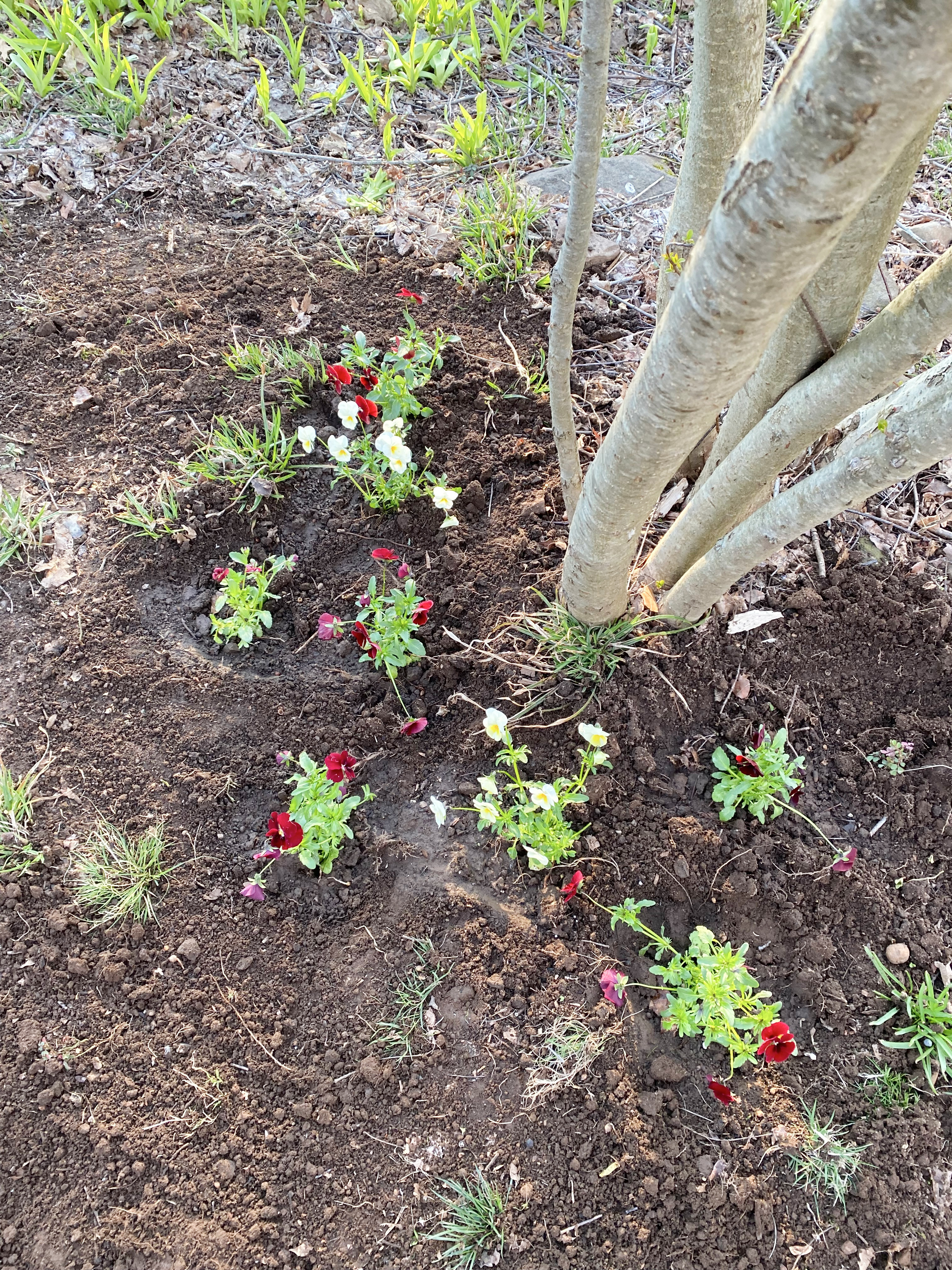
I came home with a variety called Penny Lane (a hybrid of the Viola cornuta family) which comes in a mix of shades ranging from deep red to white and yellow. The more you plant, the greater the scent of course, but it’s amazing to think that even one small plant can carry what seems like an entire perfume factory in just a few petals.

We have French botanist, Rene Louiche Desfontaines (1750-1833) to thank for describing and naming this variety of viola. He did this in the late 1700s, which makes them a very age-appropriate choice for 1750 House. That was an unexpected surprise learned after I brought the Penny Lanes home, but now that they are firmly nestled under a crab apple tree, tucked in between woodland border beds of daylilies and foxglove starts from last year (see more of those below) they seem quite fitting.

My eight plants might not be much of an exuberant site at the moment, but one of the fun things about violas is their ability to self-seed on their own. In theory, fingers crossed, in the next couple of years, we’ll see violas popping up all over the woodland areas surrounding this small bed that will add color, interest and most importantly, fragrance to the early spring and late autumn landscape. We’ll catch up with them again in fall to see how this set is doing and to see how much they’ve grown over the course of the next seven months.

Meanwhile, here are some other sights and updates from the greenhouse diaries of March and part of April 2024…

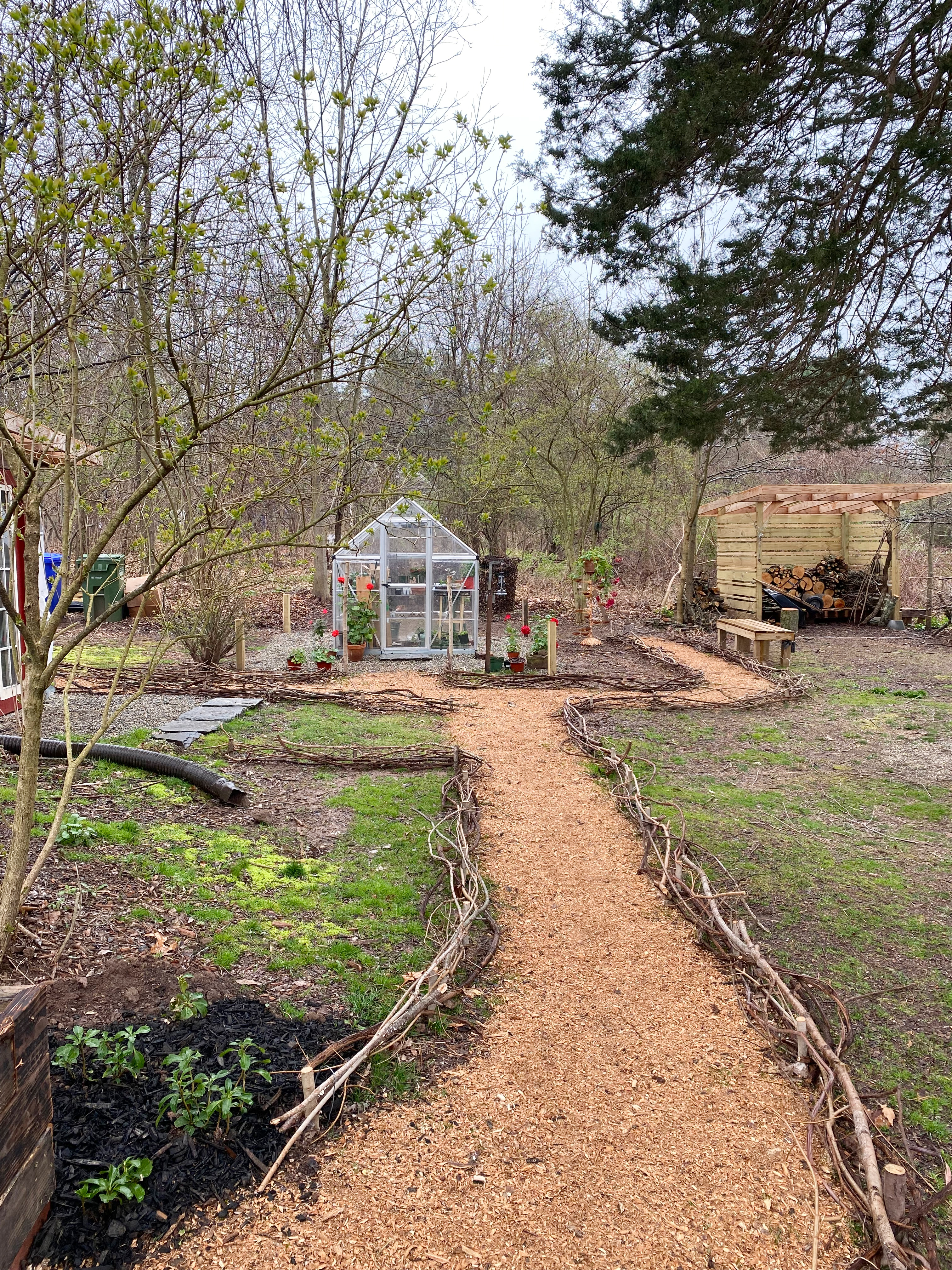
New pathways around the greenhouse and the yard are underway. We’ve lined each one with a wattle border using invasive vines cut down from the woodlands that were taking over some of the tree canopies. Landscaping bushes, a short fence around the greenhouse, and more planting beds are coming soon to that area.

Do you remember the first planting of the foxglove seedlings from last year? This is them now after being planted in the garden last May. The one thing that is difficult to find online these days is a visual example of what foxglove, started from seed, should look like year one just as a green plant before it flowers in year two. There are plenty of photographs that show foxglove fully flowered out in year two but none taht I could find at least of how the plants should look in their first year. I’m so happy to share these photos because hopefully it will become a helpful reference for other gardeners too. As I discovered, year one foxglove plants (leaves only) are beautiful.
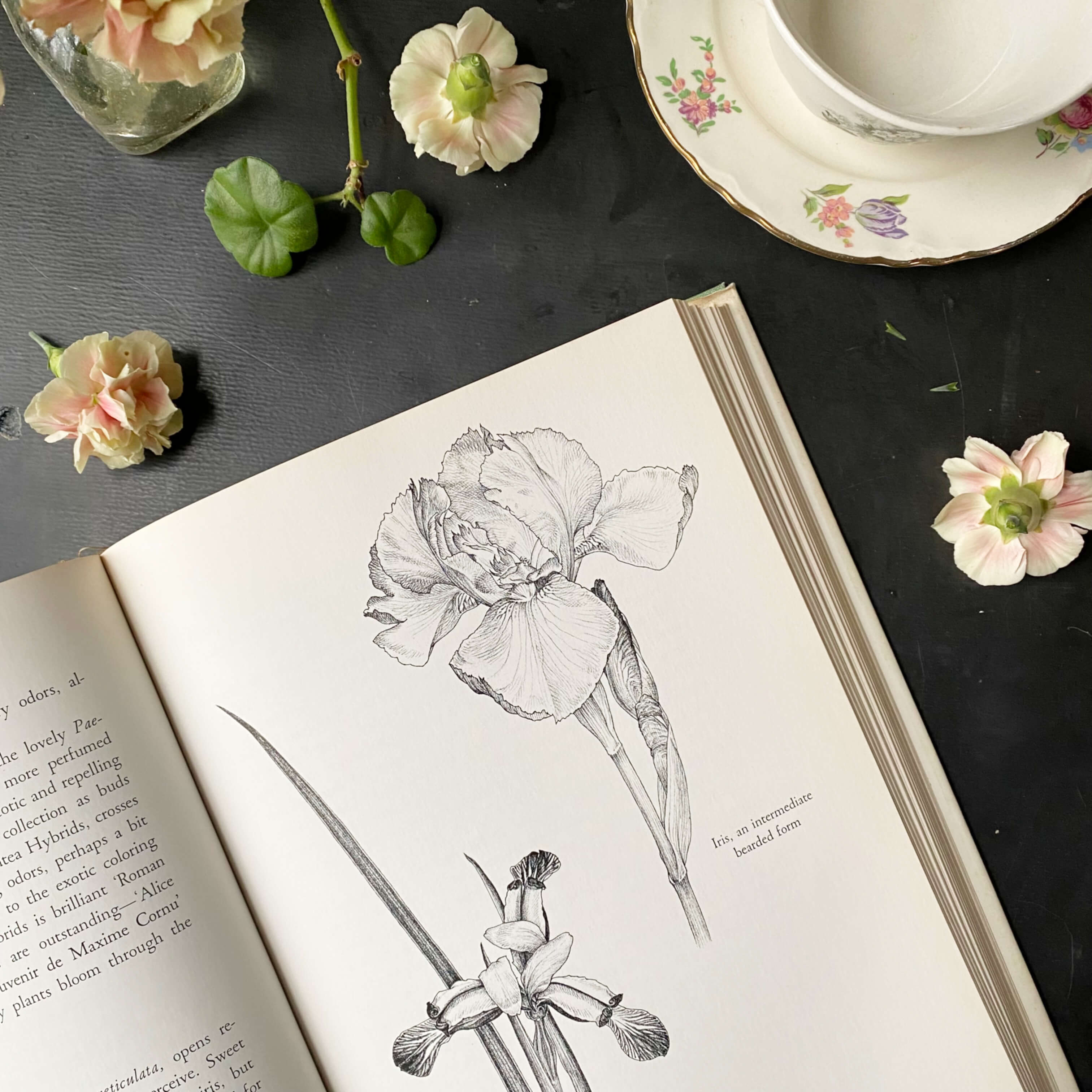
In the first year, they grow to about the size of a large head of lettuce and stay green year-round including during the winter – even in below-freezing temperatures and snow. We planted ours on the edge of the woods in an area that we will continue adding to year after year, so that eventually the woodlands bordering the edge of the yard will be lush and green and full of foxglove. Much prettier than looking at bare patches of dirt.

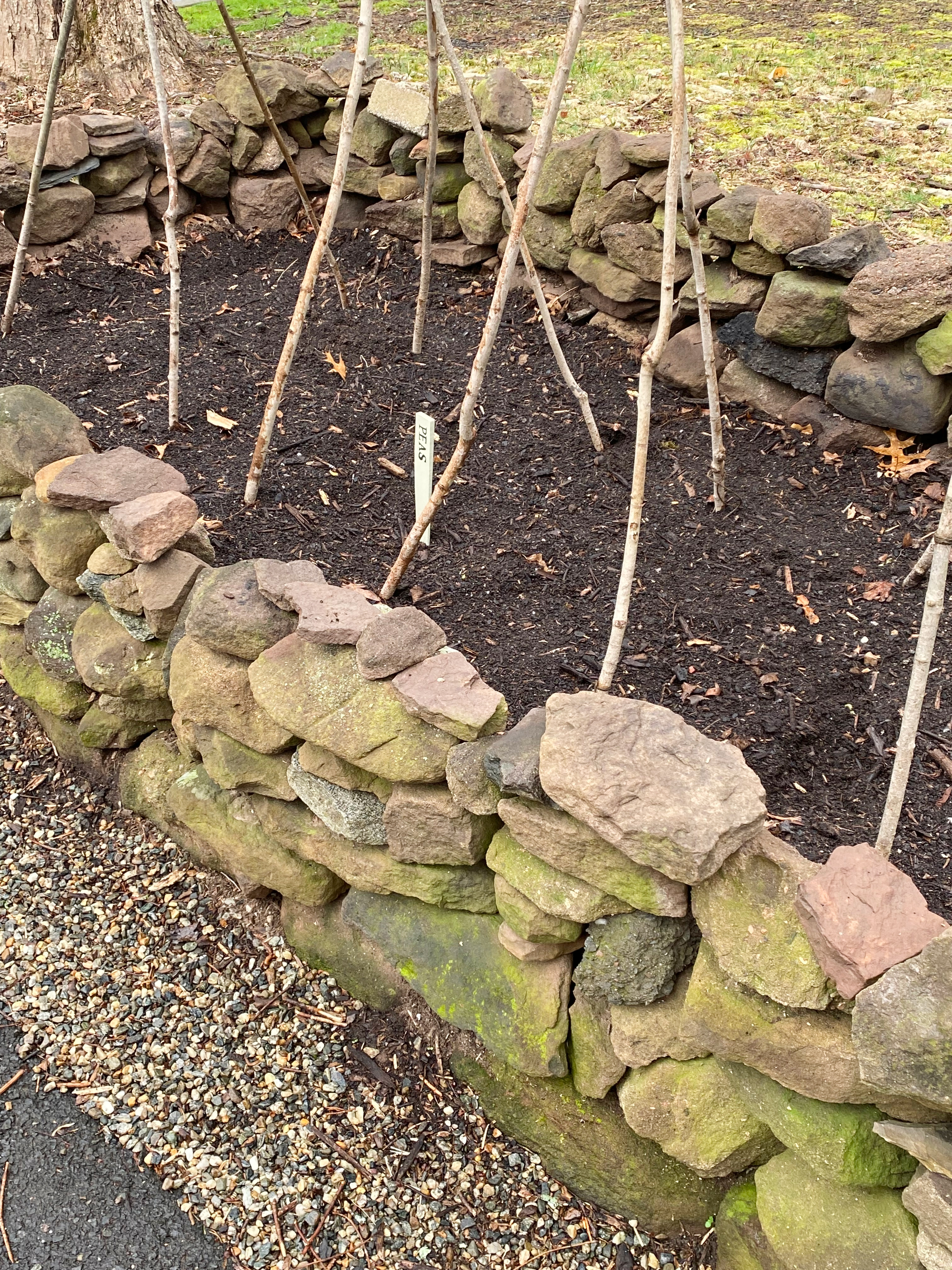
The collard greens and the peas have been planted in their springtime beds…

The pea patch also increased in size to three 8 foot rows. The more peas the better.

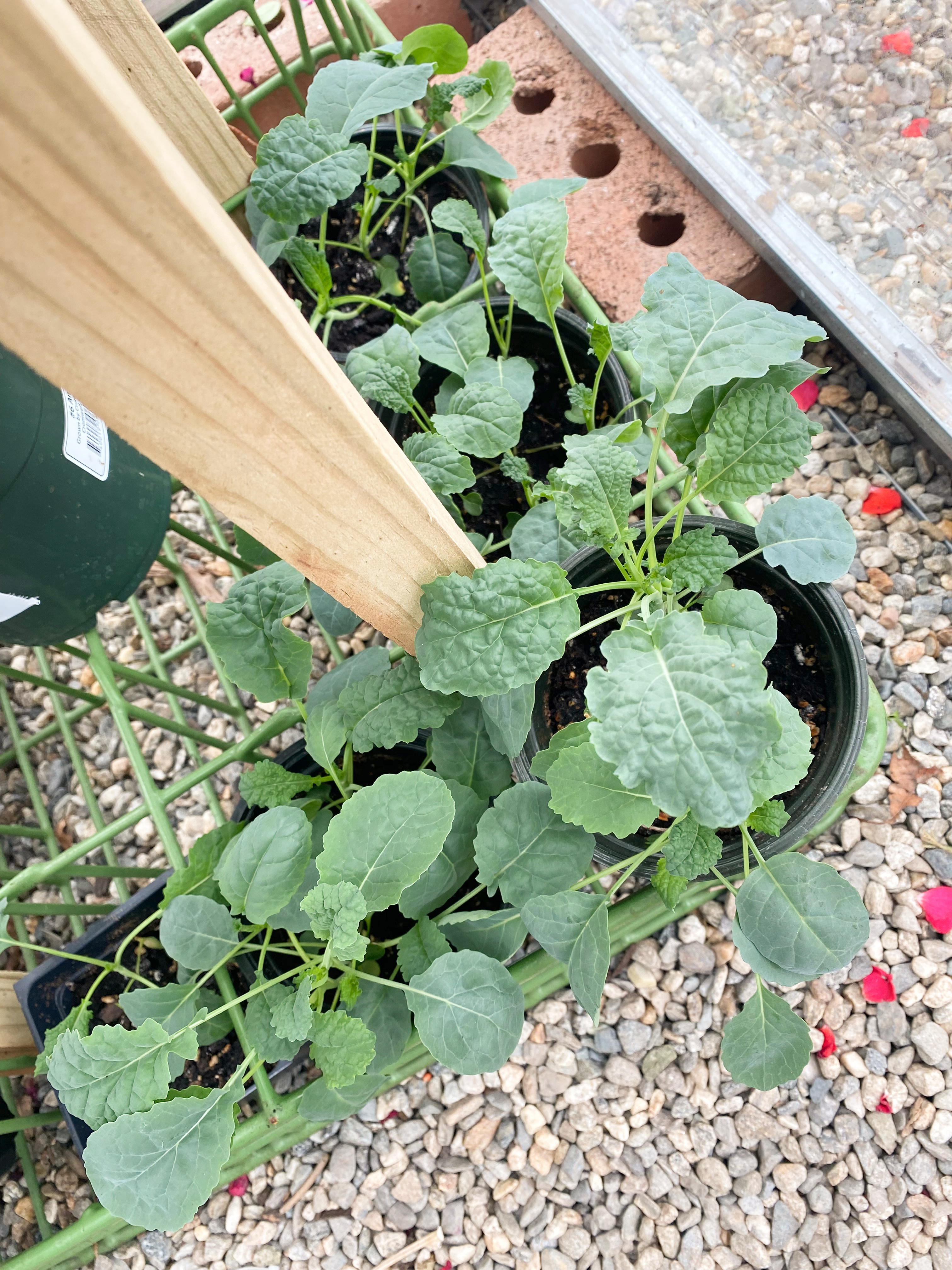
And the brocolli is now 12″ inches tall. The beets greens are growing.The kale is just right at 6″ inches now and Liz has a lemon with triplets on the way.

Broccoli!

Beets!

Kale

Liz Lemon!

An industrious pair of black-capped chickadees pecked their way through a post on the back porch of 1750 House. What’s particularly fascinating is that this post is not made of wood but of a plastic composite that holds up one corner of the 1990s addition. The post will eventually get replaced with real wood, but for now, the chickadees seem more than happy to call it home. And we are more than happy to have these cute little songbirds as neighbors. Not only do they sing their way through the day but they also feast on a host of insects that can be problematic in the garden including the dreaded scale bug, which we had troubles with last year.

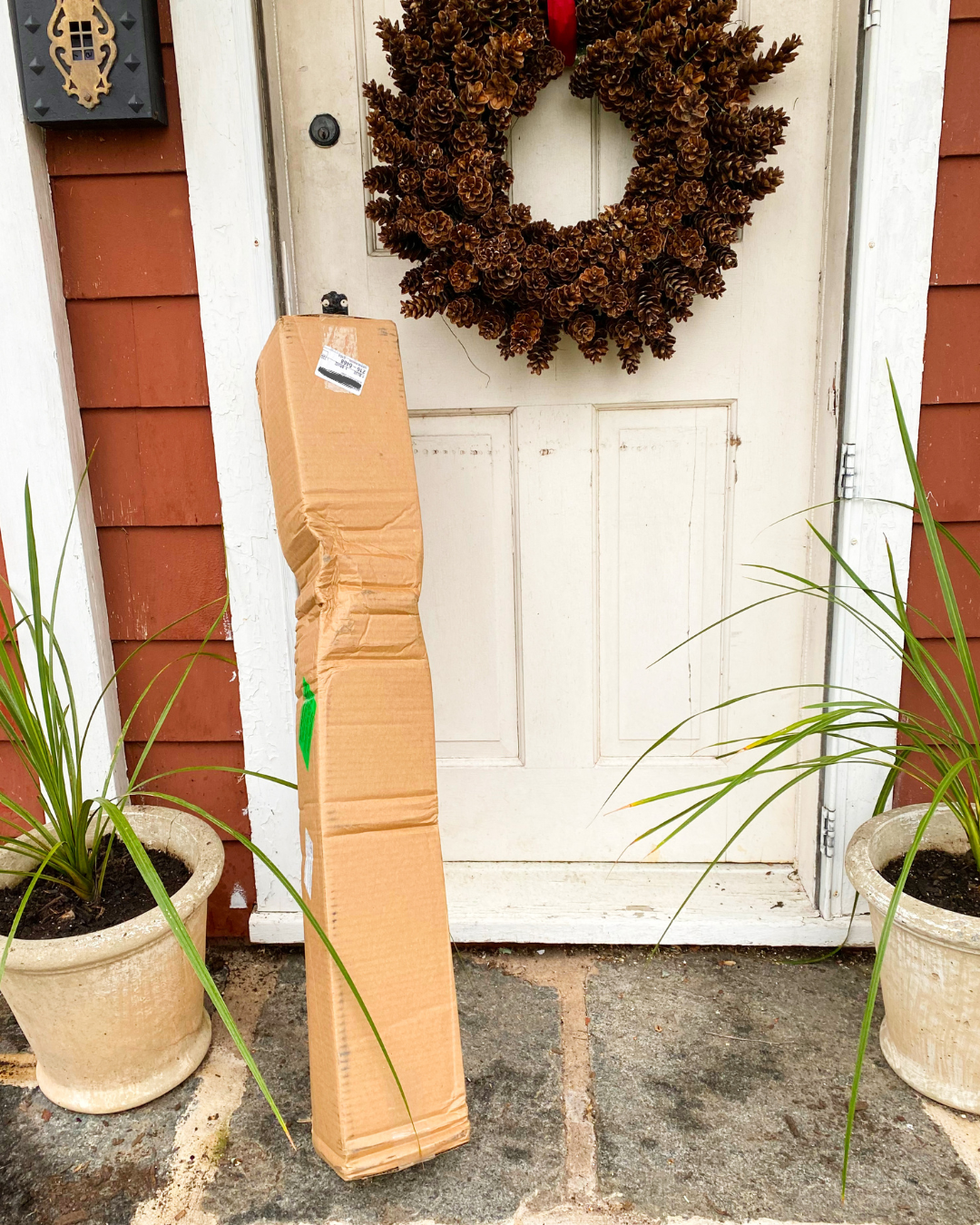
And just in time for publication of this post, something arrived in the mail…

Could it be the witch hazel from February’s Fragrant Garden post?! Stay tuned for the second half of April’s Fragrant Garden series coming soon. In the meantime, cheers to the cheerful viola. Happy Spring!

Welcome To A Fragrant Year: The Greenhouse Diaries Return for New Growing Adventures

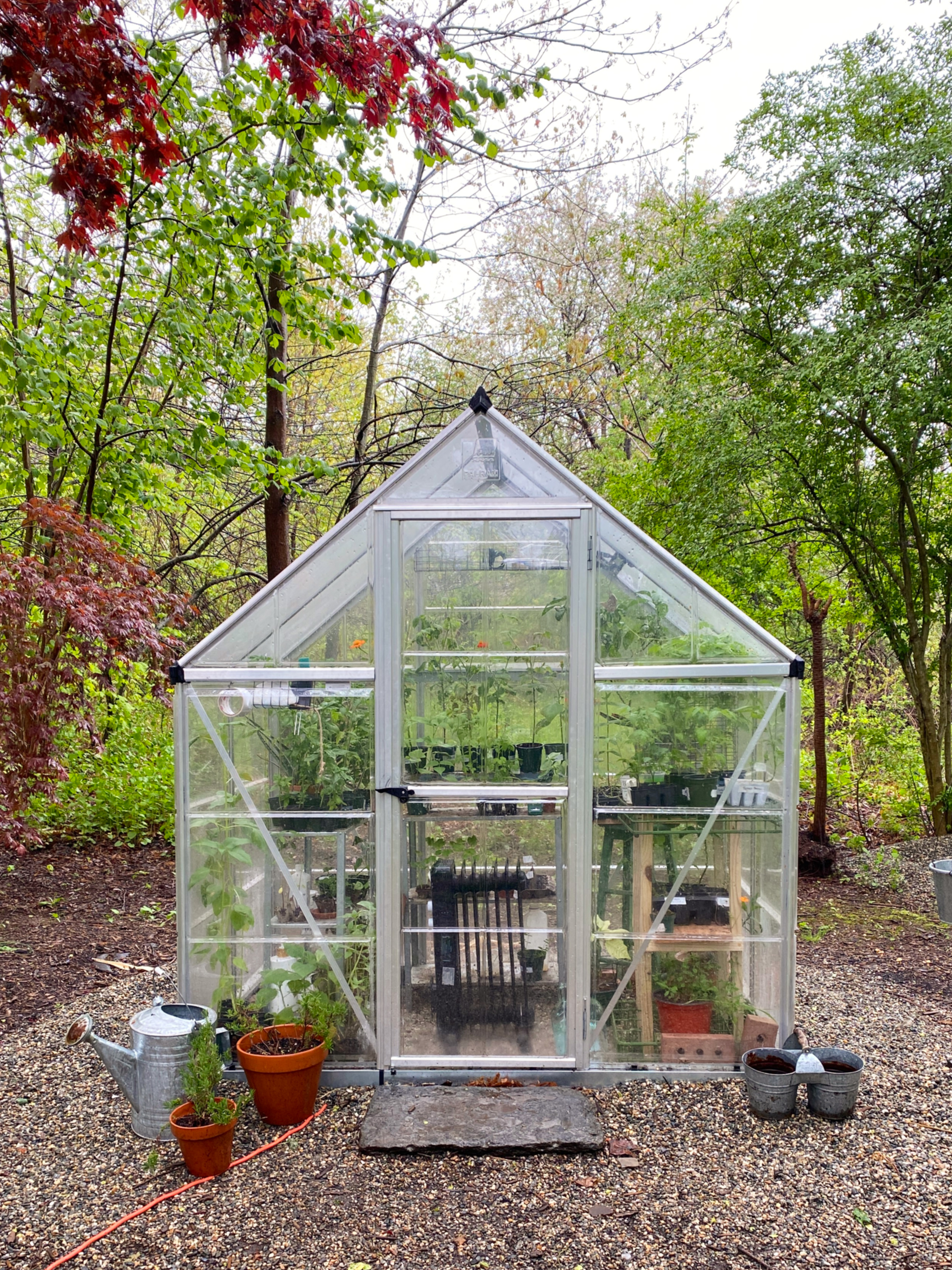
The Greenhouse Diaries are back with new inspirations and a whole new year of growing adventures to explore and discover. Like last year, these new diary entries center around what can be grown in a petite 4×6 greenhouse in our four-season New England climate, but starting this month there is a brand new theme, different from last year, that is guiding our gardening goals in 2024.

Our mighty, mini greenhouse in 2023

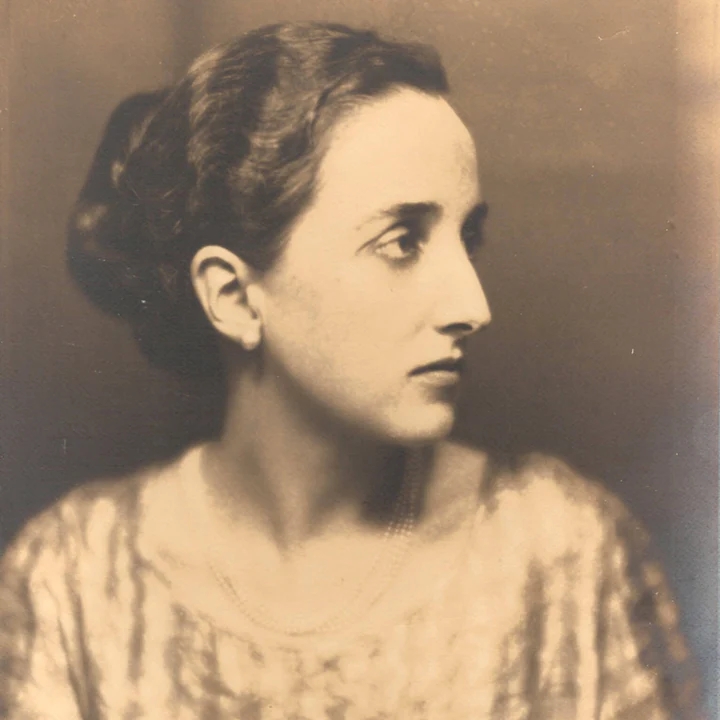
Last year, our first year as greenhouse owners and New England residents, we focused on winter gardening from December through May and all the possibilities that a warm greenhouse could offer in a cold landscape. We drew inspiration from Katharine Sergeant Angell White, a lifelong lover of the natural world who also happened to be a marvelous writer, a founding editor of the New Yorker magazine, and the beloved wife of E.B White.

Katharine Sergeant Angell White (1892-1977)

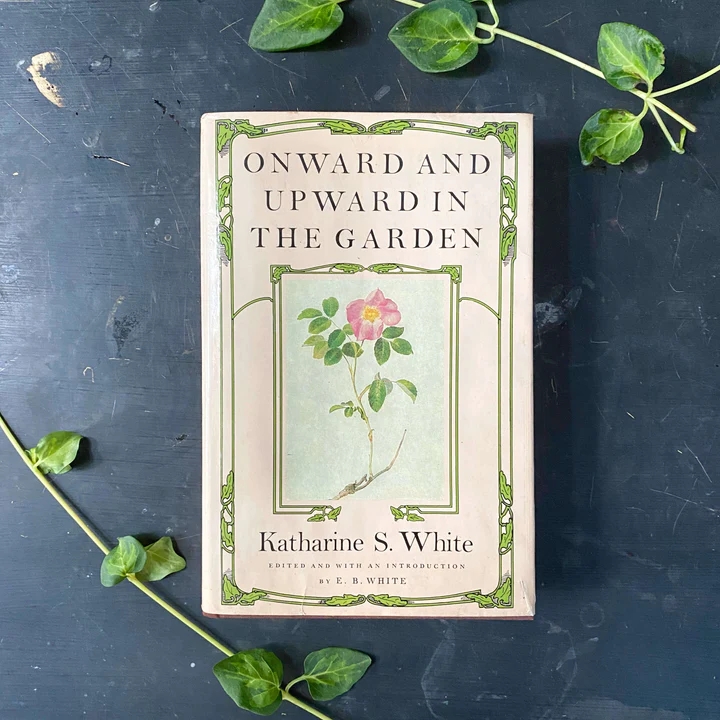
Her 1977 book Onward & Upward in the Garden, featured a collection of horticultural essays that highlighted her ability to embrace challenges by finding joy and solace in the certain uncertainties. Something that all gardeners must face when it comes to designing a pleasing landscape, in Katharine’s case, it was the long Maine winters that were a struggle for her spirit which yearned to be out in the garden digging and clipping, pruning, and propagating. She also had much to say about the confusing advice of garden experts and her own thoughtful attempts of trying to create the garden of her dreams. Her writing was full of spirit, humor and opinion when it came to detailing plans, recommending books and seed catalogs, and offering advice on growing plants and flowers both indoors and out. She was inspiration enough for us to start experimenting with our first winter growing season. Cold weather aside, we had Katharine on our side, lending a unique empathy and encouragement that fueled our desire to get out and grow things regardless of the weather, our experience level or the unseasonability of what we most wanted to achieve.

Our plan last year was to get a head start on establishing garden beds for 1750 House, so we focused mainly on forcing seeds and plants to sprout, bud and bloom early. Using 33 different plants, flowers and herbs as trial-run guinea pigs, we accomplished our goals with a fair amount of success and a few setbacks as we tested the physical capabilities of the greenhouse and grew our garden knowledge.

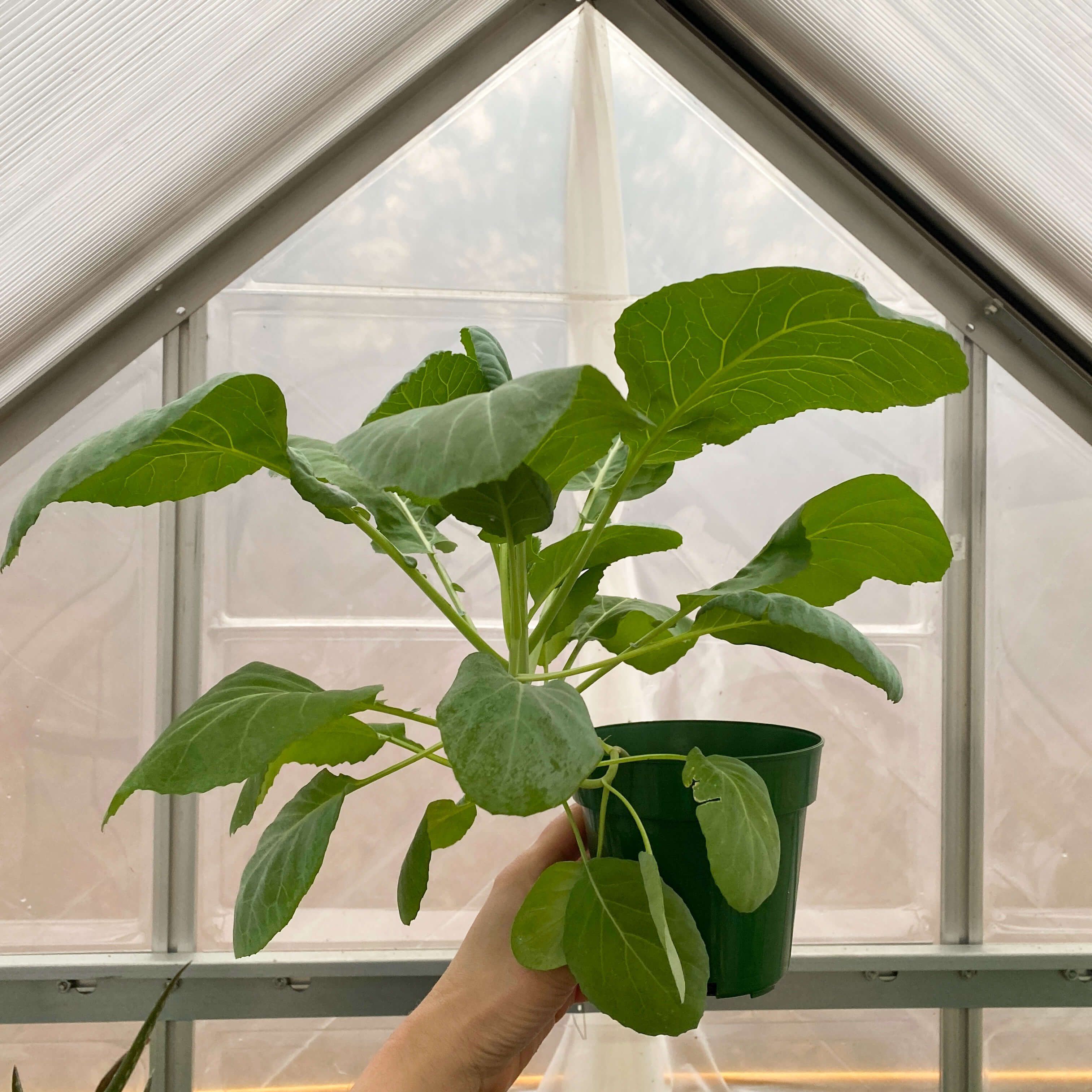
A greenhouse success – the joy of growing collard greens in 2023

This time, a year wiser, we are reducing the number of overall plants in the greenhouse to just focus on the proven winners that grew well both in the greenhouse and in the garden beds last spring, summer and fall. And to keep things interesting, we are launching a new experiment. This year, we are leaving extra room in the greenhouse to try our hand at growing a new type of perennial garden for year-round enjoyment… a landscape full of plants, flowers and trees that carry a scent.

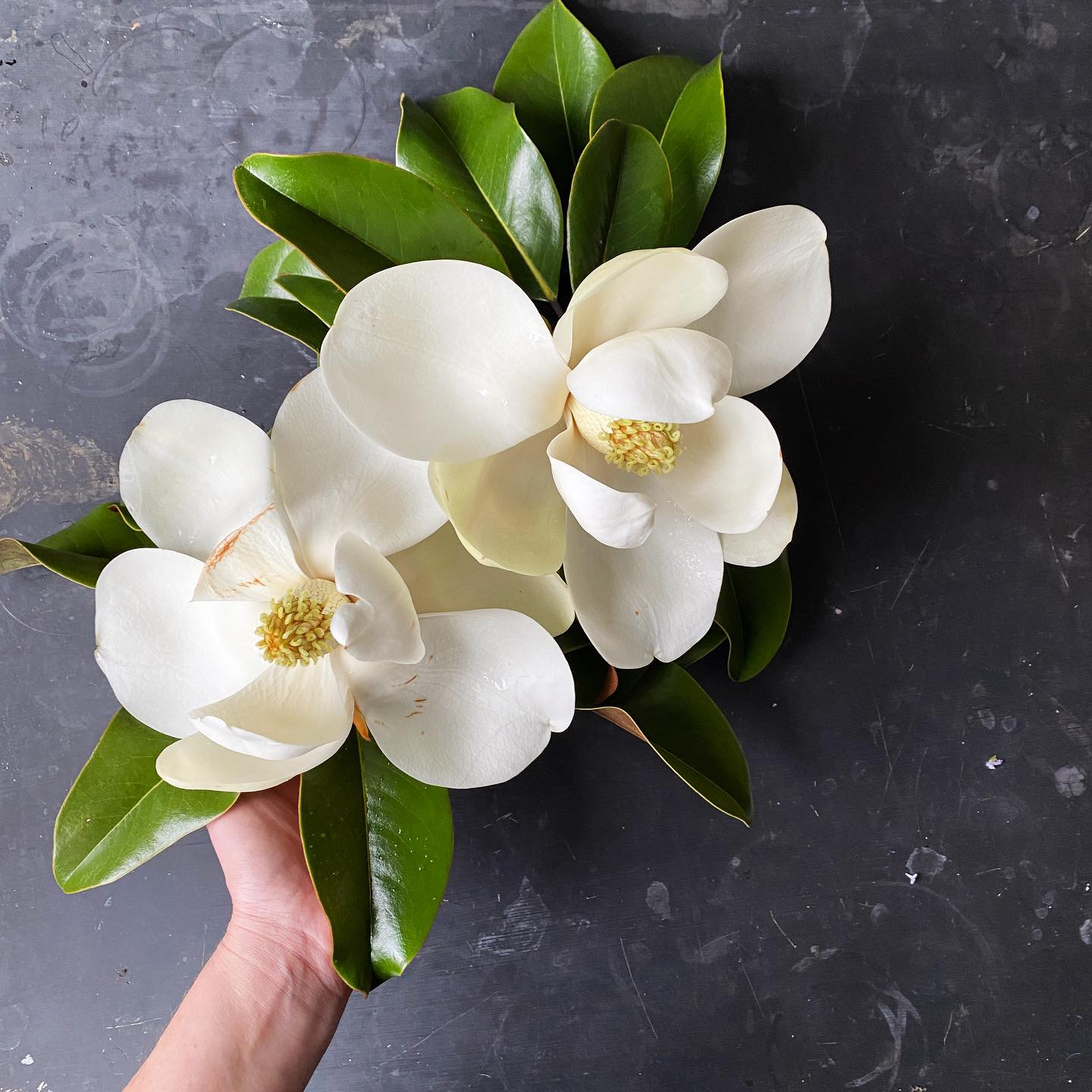
Marvelously scented magnolia blossoms dotted our landscape down South.

When we lived in the South, we were surrounded by a wide variety of aromatic flowers that made our time there all the more memorable because of the beautiful perfume that continuously lingered in the air. The scent of night-blooming gardenias and fragrant magnolias swirled around our dinner parties. The heat of summer brought heavy humidity but also the delicate, sweet aromas of climbing Carolina jessamine. Roses in every scent and shade toppled and tumbled over hedgerows and brick walls. It was a lovely layer of landscape design that I had never really thought about until we had experienced it firsthand. Of course, we won’t be able to recreate an exact aromatic Southern garden here in New England since it’s a very different climate from there to here, but there are plenty of other options in the Northeast to explore for similar effect thanks to our new inspiration.

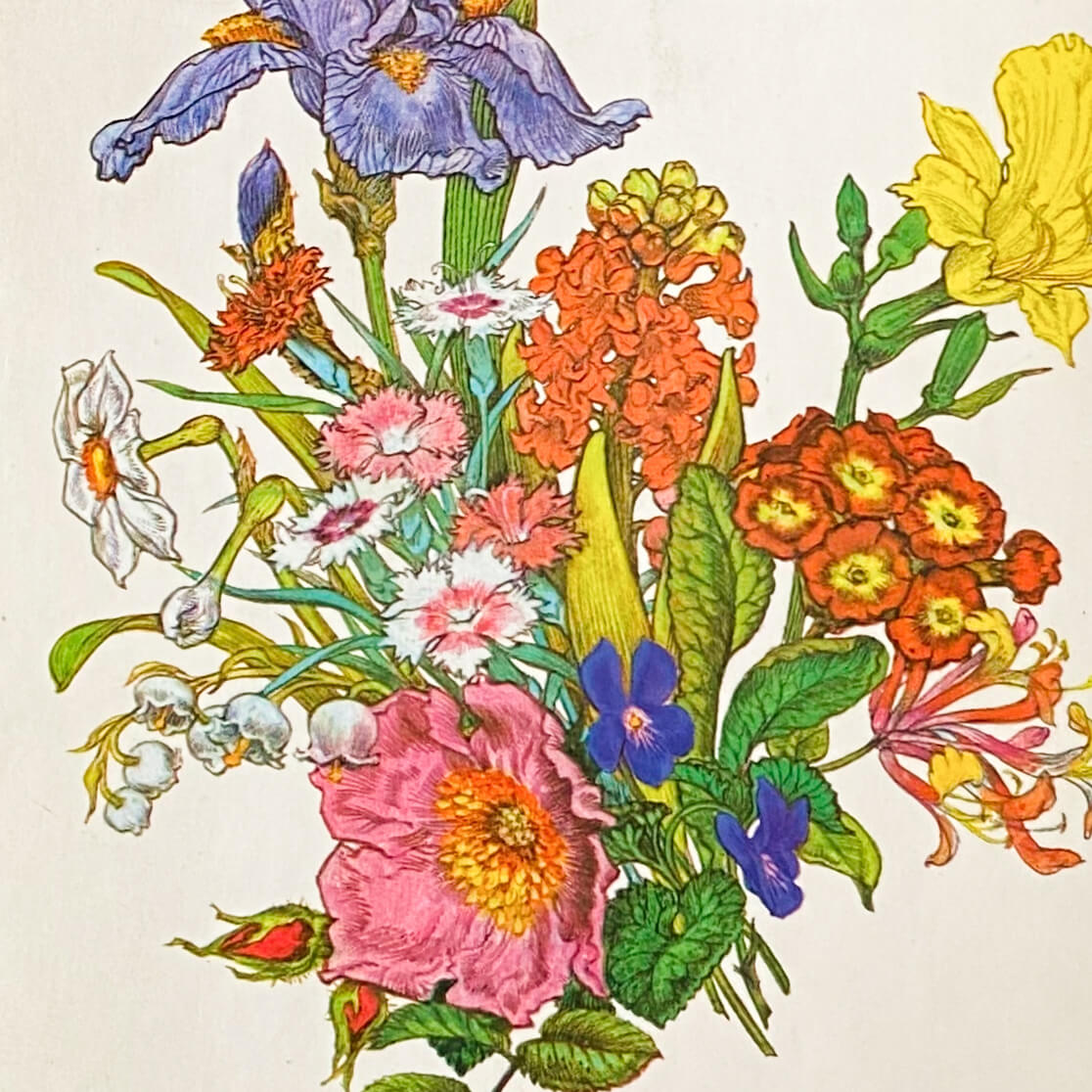
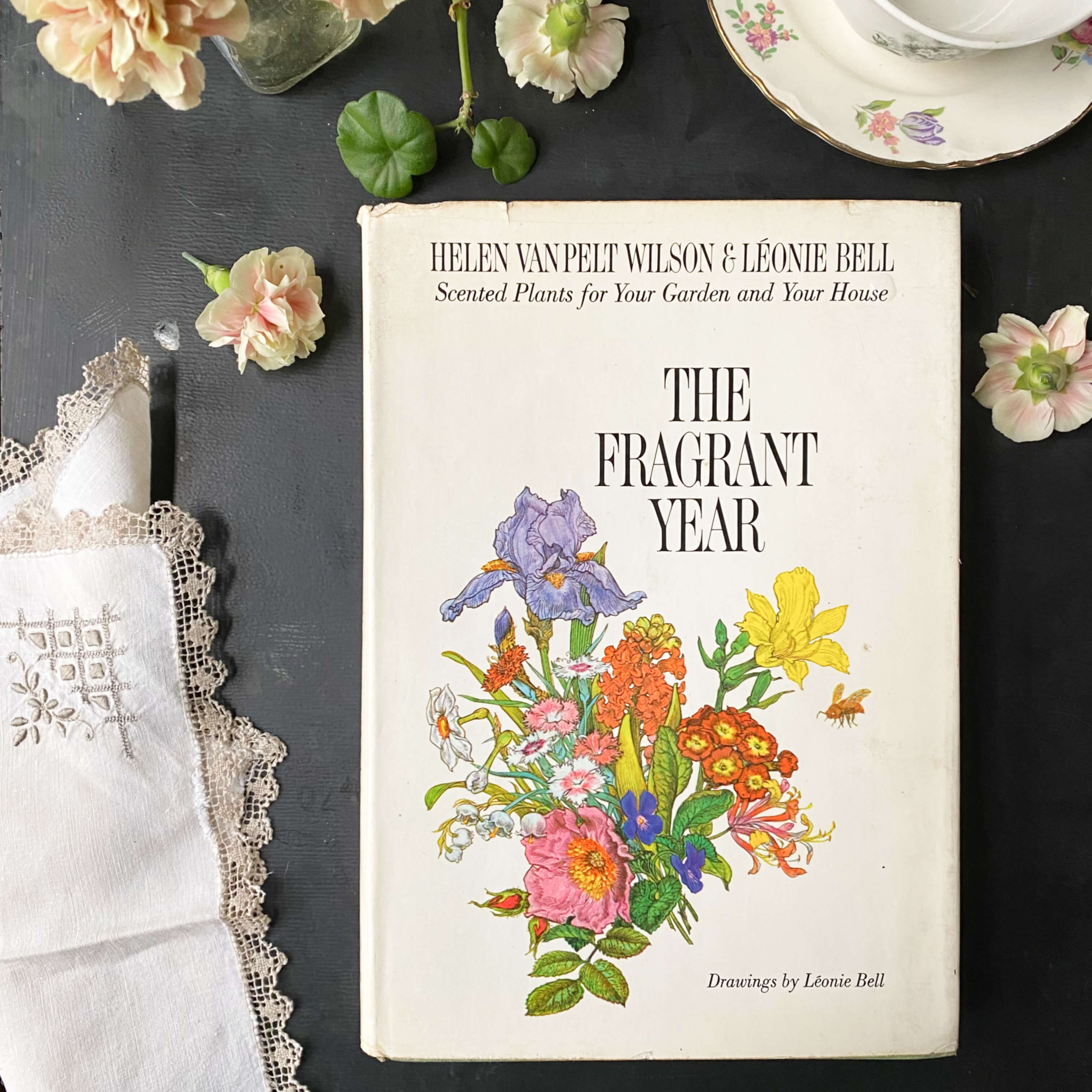
Here to guide the 2024 Greenhouse Diaries in our aromatic endeavors is the 1967 book, The Fragrant Year by Helen Van Pelt Wilson and Leonie Bell. Month by month, in words and drawings this book details how to grow specific types of plants and flowers that will continuously unfold new scents in the garden season by season, even in the winter months.

Praised for being the first of its modern kind, The Fragrant Year was lauded both for its scope and its practical application, as well as its healthful benefits. In the opening chapter Helen writes… “if our gardens today were more often planned as fragrant retreats and our rooms were frequently perfumed with bowls of spicy pinks, bunches of aromatic herbs, vases of fragrant roses, and jars of potpourri, perhaps we would not have to depend so much on tranquilizers to hold us together in this frantic, fast-paced world.”

Helen wrote that in 1967 but it is still so applicable today. The world is still frantic and fast-paced. People still look to medicine to calm their nerves. But we think Helen’s theory is pretty wise – there is something much more natural, more gentle, more joyful in tackling frantic nerves and fast paces with this sort of approach instead. It is lovely to think that by selecting a few handfuls of scented botanicals and thoughtfully adding them to the landscape we might not only help create a more calm environment for ourselves but also for the community around us. Who knows what sort of impact that small gesture could have on a greater world.

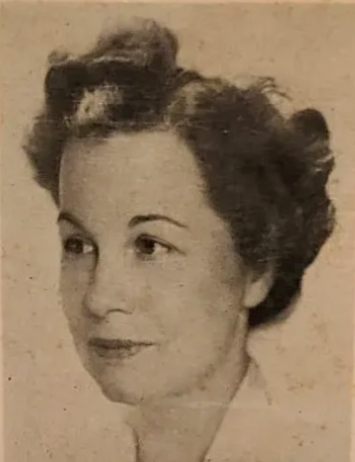
Helen Van Pelt Wilson (1901-2003)

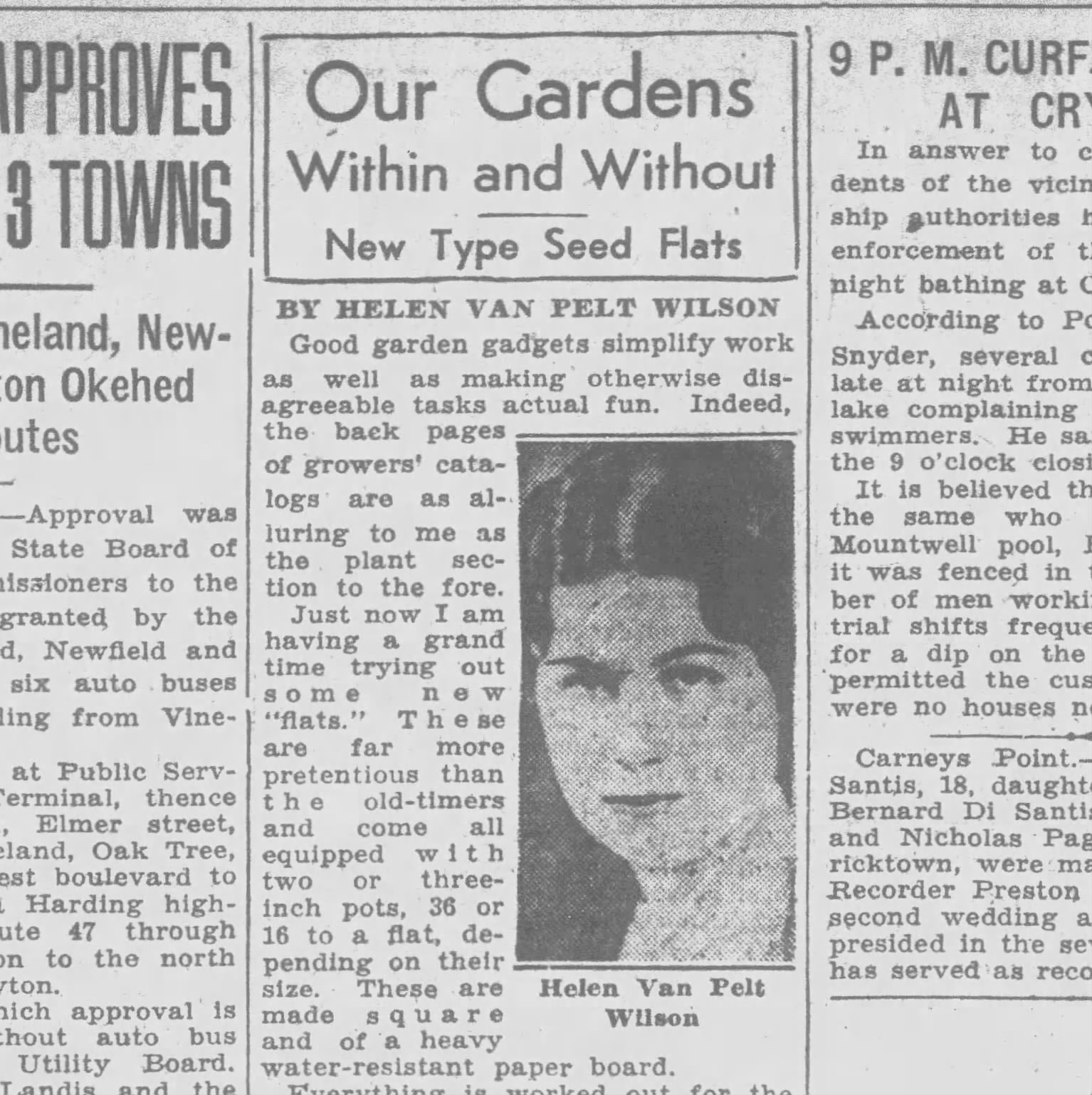
A prolific writer of gardening books throughout the 20th century, Helen was no stranger to the power of plants. Along with penning a newspaper column titled Our Gardens Within and Without during the 1920s and 1930s, she also wrote for all the well-known women’s magazines including House & Garden, Cosmopolitan, Better Homes & Gardens, and House Beautiful. In between all that she wrote/edited over fifty books on various gardening topics throughout her long and lengthy career.

The Courier Post – July 30th, 1935

Born in New Jersey, Helen spent the majority of her life in Philadelphia, PA and Westport, CT where she experimented with gardening projects of all sorts both indoors and out. Her most well-known book was one on caring for African violets published in the 1940s but she was a beloved and trusted authority on a variety of horticultural topics throughout her life. Working with Leonie on several different projects, it was in the 1950s that they learned they shared a mutual love of aromatic botanicals. Upon discovering this, the idea for The Fragrant Year was quick to spark but it took Helen and Leonie ten years of dedicated research and trial-and-error gardening experiments before their book was finally published.

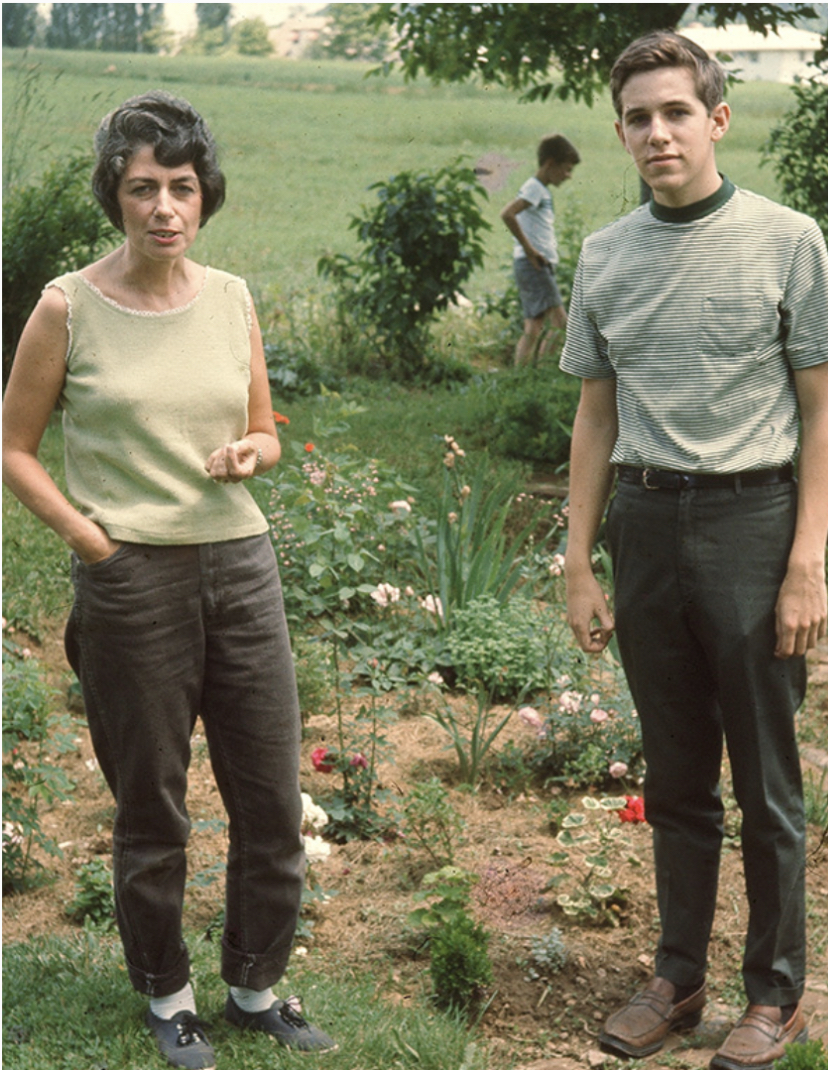
Leonie Bell in the garden. Photograph courtesy of monticello.org by way of Rev. Douglas T. Seidel

Like Helen, Leonie Bell (1924-1996) lived and gardened in suburban Philadelphia. In addition to being a well-respected botanical illustrator, she was also known as a rose expert. Contributing her expertise to several rose garden books published during the 20th century, Leonie was often referred to as a rose genealogist since she had a knack for discovering/uncovering heirloom roses from the past that had been misnamed or believed to be no longer in existence. At one point, her own personal garden contained over 200 different types of roses, most of them old-fashioned heirloom varieties.

If you are ever in Virginia, you can see the impact Leonie made at the Leonie Bell Rose Garden at Thomas Jeffferson’s Tufton Farm, which features a tribute to both Leonie’s legacy and the history of North American rose breeding.

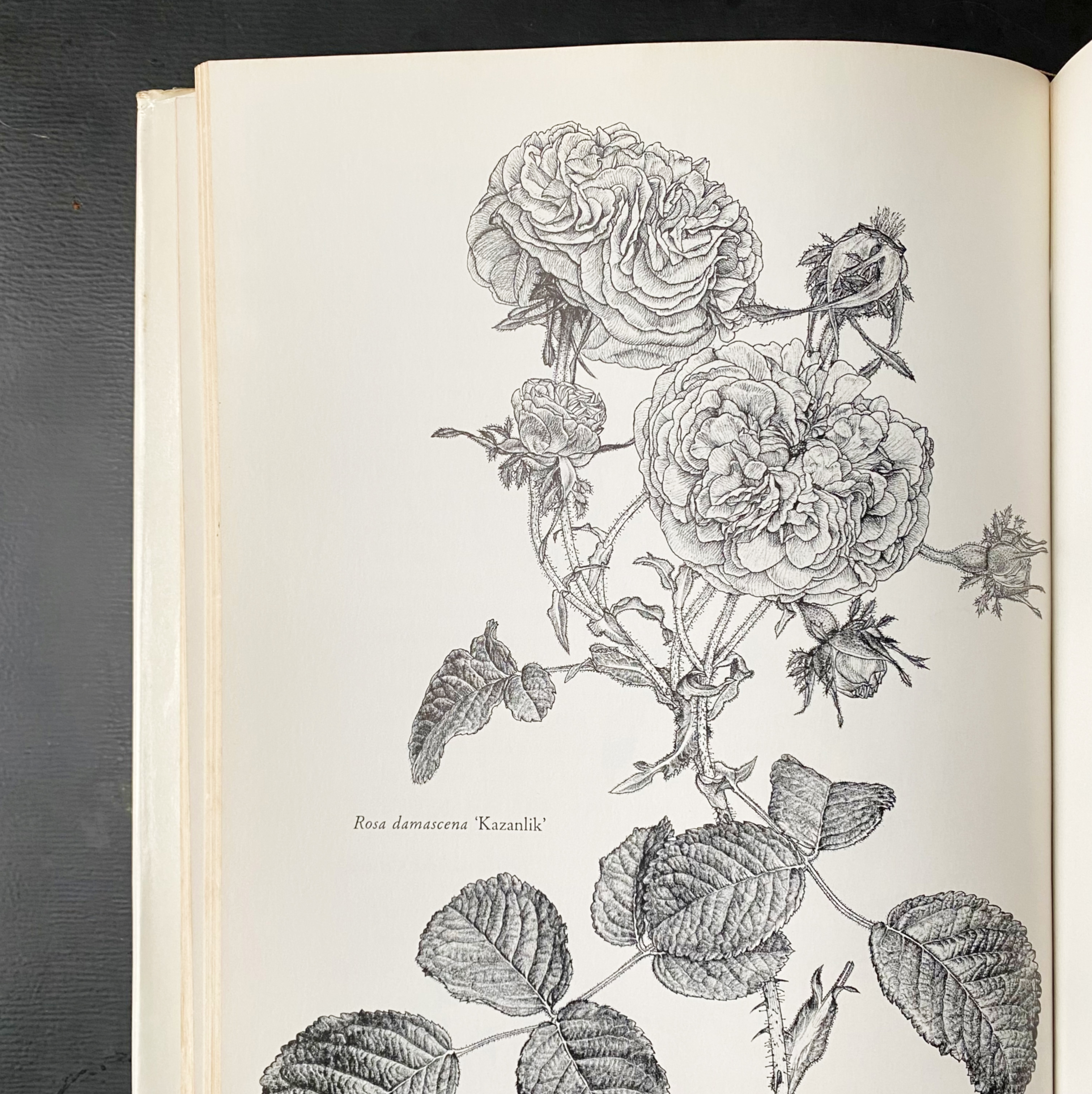
Much sought after in the world of botanical illustration, what’s interesting about Leonie’s art is that she was self-taught. Her intrinsic knowledge of the anatomy of plants combined with her studies at the School of Horticulture in Ambler, PA led her to closely look at botanical subjects from all angles. That well-rounded vantage point carried through to her drawings which shine with scientific detail but also personality.

Excited to share a year full of fragrance here on the blog, each month we’ll feature a new scented flower or plant recommended by Helen and Leonie and detail our gardening experiences as we incorporate twelve new aromatic additions into the landscape at 1750 House. Hopefully, you’ll find this information equally inspiring and insightful too. It would be lovely if we could all experience the calming nature of a scented garden together.
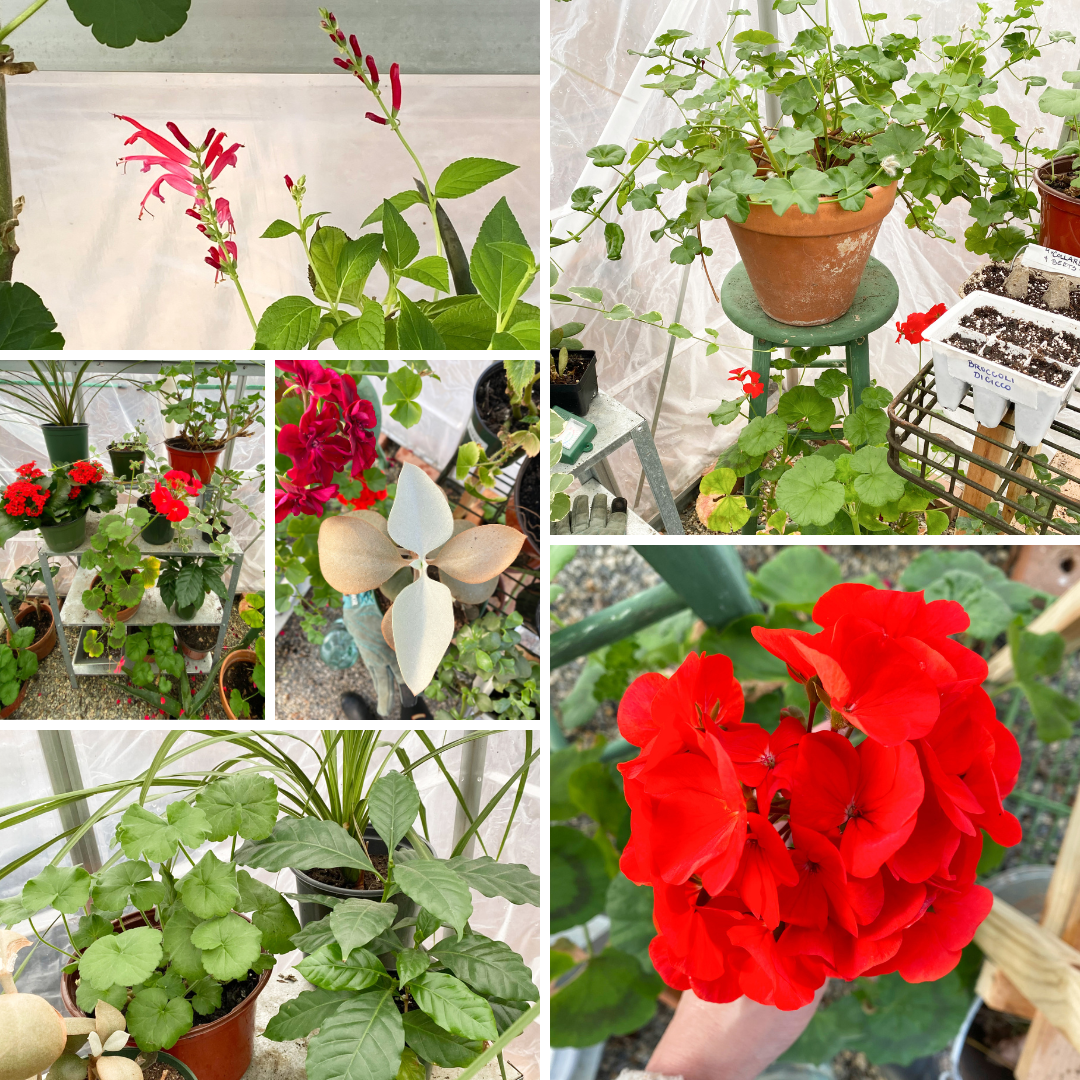
Our next Greenhouse Diaries post will introduce our first fragrant botanical, but in the meantime, here’s a quick update on improvements we made to the greenhouse over the summer and a current list of what’s growing in the greenhouse now…

January color in the greenhouse

Current Occupants

As of mid-January, the greenhouse is halfway full with overwintering geraniums, vinca vine, and dracaena spikes from the summer garden. Six different types of succulents, a coffee plant, a pineapple sage cutting from our summer plantings, and Liz Lemon (our six-year-old lemon tree) fill out the rest of the space alongside a batch of newly started seeds… collards, broccoli, beets and four different types of salad greens.

Winter Plastic Wrap

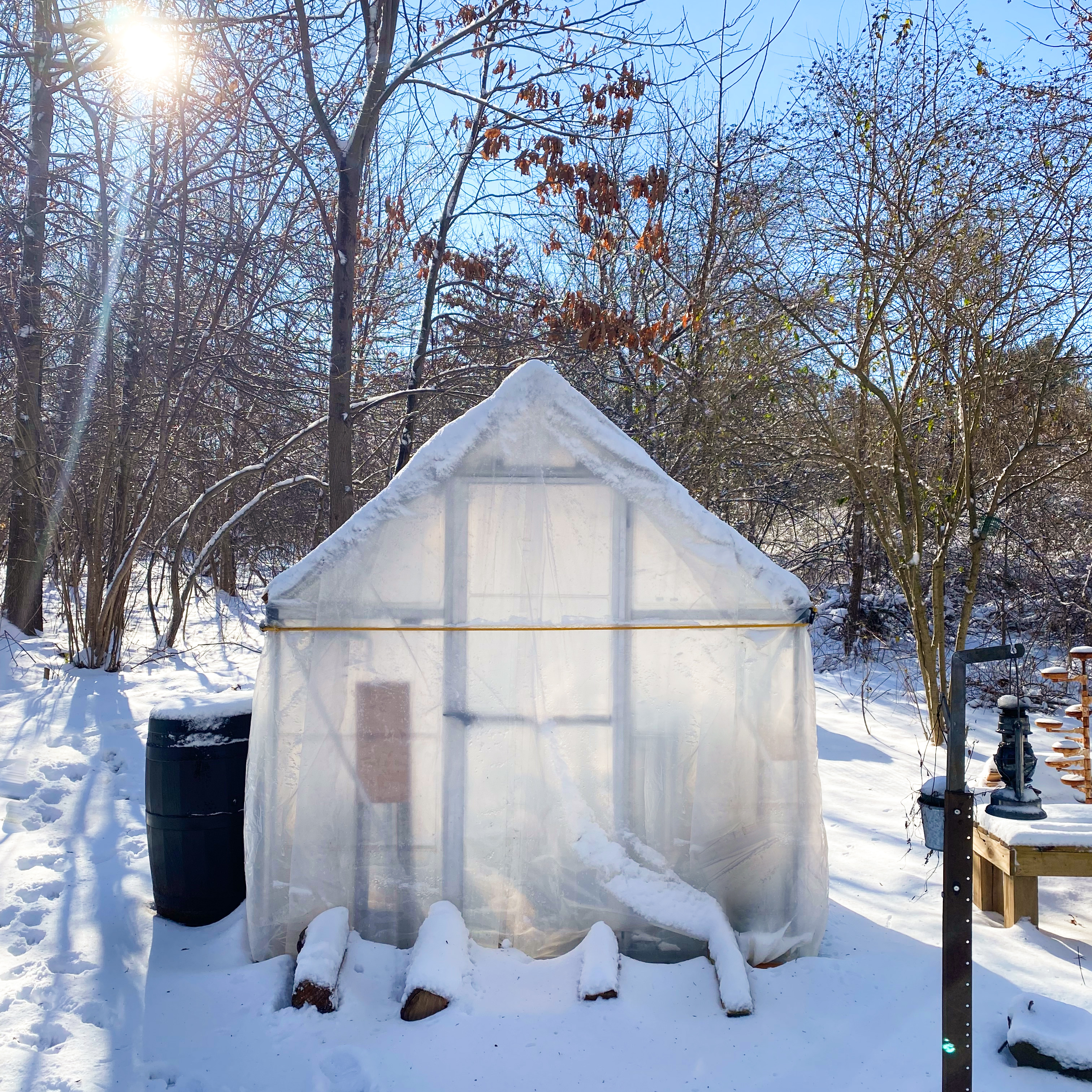
This isn’t a new improvement, but we are on Year No. 2 of dressing the greenhouse in a winter coat – aka wrapping it entirely in a layer of thick plastic – to keep the heat in and protect the plants from drafts during rain, sleet, and snowstorms. The plastic, a temporary solution for the coldest months gets removed in early spring, folded up, and stored in the basement. Once the temperatures drop below 45 in the fall, we put the plastic back on for the season. Aesthetically, it’s not the prettiest site but it gets the job done and keeps our overwintering plants and new seedlings happy and warm. We weren’t sure how the plastic was going to hold up from year to year, but so far it’s nice to see that it is still working just as well. To learn more about this winterization system, see last year’s post here.

Thanks to the plastic wrap, everything stayed warm and dry inside during our most recent January 2024 snowstorm.

New Electrical

Over the summer we added an electrical outlet inside the greenhouse and buried the wiring underground. This was a big (and much safer) improvement from running an extension cord across the yard between the greenhouse and the workshop, which is how we handled things last winter. This new addition is an outdoor-rated 110V 15 amp circuit box which is just what we need to power the heater and lights.

A New Heater

A new mini space heater replaced the tall radiator-style heater used last winter. This smaller size opens up more room to move around the greenhouse and fits nicely on a bottom shelf tucked out of the way when not in use. It has a safety feature that turns the heater off automatically if it tipples over or if any excess moisture drips inside. When the greenhouse reaches a certain temperature, it also automatically turns off to save energy and to keep the plants from overheating.

Normally the heater sits on the pea gravel floor of the greenhouse so that it efficiently heats all areas from bottom to top, but to photo it for this post I put it on one of the higher shelves for a better view. Please note: your greenhouse heater should never be this close to any plants as the proximity to the heat will cause the leaves to shrivel and could become a fire hazard. Any greenhouse heater should have a wide radius that is completely free and clear of other objects.

By using this smaller unit, we don’t have to run out and adjust the heat as the temperature changes over the course of the day, like we had to do last year. Also, we readjusted our required heat temperature in the greenhouse. Instead of keeping it in the mid-70s like last year, we lowered it to 55 degrees, in hopes that the cooler temp will keep spider mites at bay. We learned first-hand last winter how much they just adore a hot greenhouse. The new heater also blows warm air around the space instead of radiating it, so we have continual air movement swirling around inside this year, which I also hope will help with any pests. The final great benefit of this small little worker is that it has an additional fan option too, so in summer we’ll be able to grow our herbs inside the greenhouse without the temperature getting too hot or the air too stagnant.

New Lights

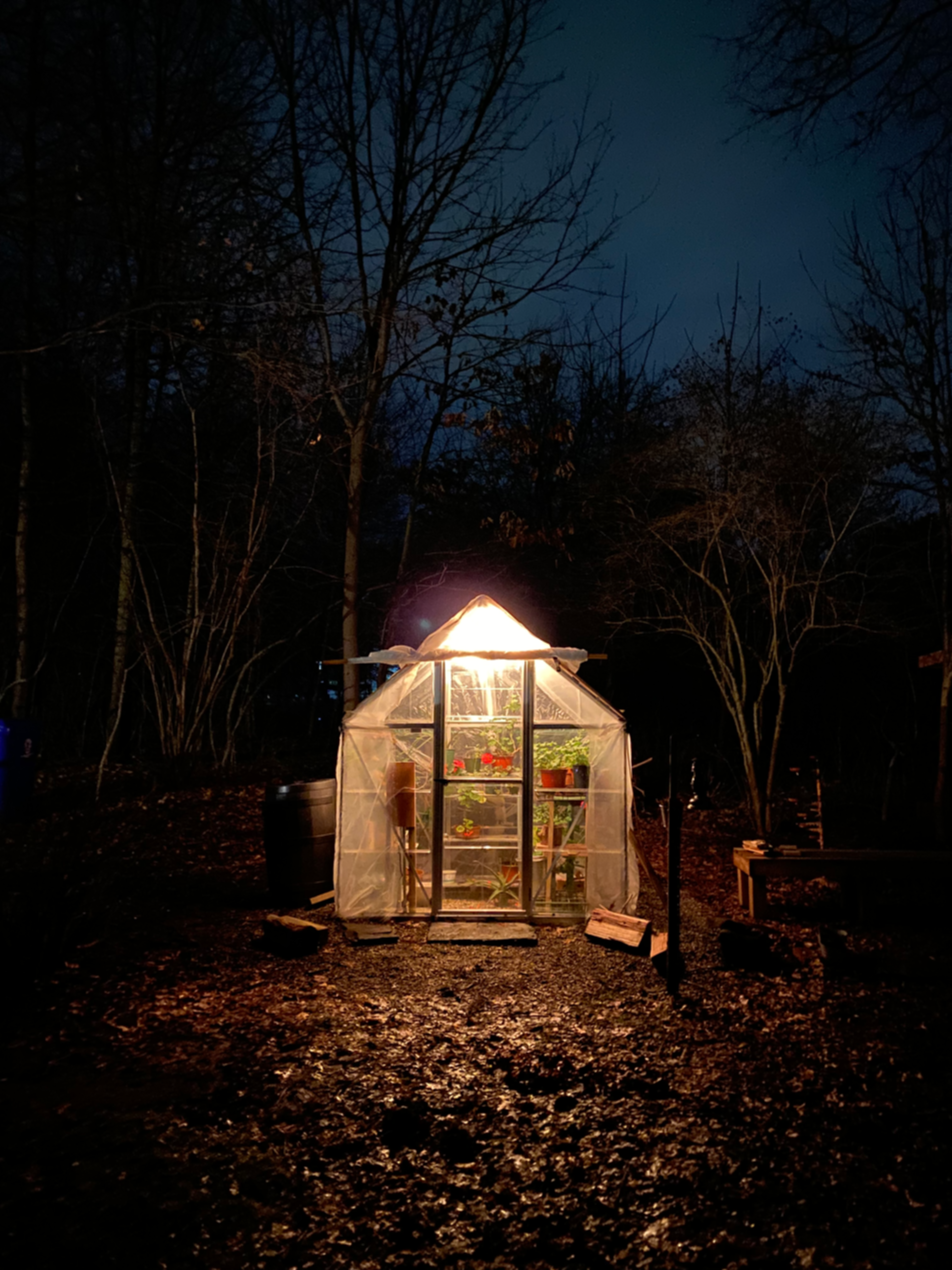
My most favorite new enhancement to the greenhouse came this fall when we added bulb lights to the interior roofline. The lights make it so much easier to work at night, especially in the winter when it can get dark as early as 3:30pm if we have an especially cloudy or rainy weather day. 

These bulb lights are a tad too big for the space, so they’ll be swapped out for something a bit more petite this spring, but we had these already on hand and wanted to make sure we liked the light idea before we committed to several sets. At night it looks especially festive. Once all the landscaping is in place around the greenhouse, it will provide a nice light source for outdoor dining during the warm weather days. By then we’ll be at least five months into the fragrant year and the garden will hopefully be on its way to becoming a perfumed paradise. Just dreaming about it now, I can see and smell the summer already.

If you’d like to catch up on the trials and tribulations of our first year of greenhouse gardening start at entry #1 here. Otherwise, it’s on to 2024 and all the delightful aromas that await each new season.

Cheers to ever-evolving garden adventures, to a scent-sational year ahead and to Helen and Leonie for inspiring this new set of diary entries centered around the life and times of one mighty but mini New England greenhouse.

Reading While Eating: Seven Favorite Books Discovered in 2023

Just in time, before we say goodbye to 2023, I didn’t want the year to leave without posting the annual recommended book list that has become a favorite here on the blog. This year’s selections center around nature, literary figures, artists, the art of collecting, and the curation of home in all the ways that make it personal and unique.

As is the way every year, these books were randomly discovered while doing research for other projects. They popped up while uncovering origin stories for shop heirlooms, researching story snippets for the blog, or understanding context surrounding a vintage recipe.

Serendipitous in their arrival on the bookshelf, yet ironically all connected via some common themes, these books were new to me this year but not newly published this year. The oldest one in this batch hails from 1979 and the newest one debuted just last year in 2022. All deal with historical subjects in one way or the other, but each one brings a very unique and fresh perspective to its subject matter. They take us on adventures from the wild beaches of coastal Massachusetts to an out-of-the-way antique shop in Mexico. We are introduced to a famous performer’s real-life home in California and a fictional version of a real-life literary figure’s farm in Georgia. They feature one Ernest, two Barbaras and three oranges. There’s eccentricity and domesticity, color and craft. But above all, there is captivating storytelling right from the first page. Let’s look…

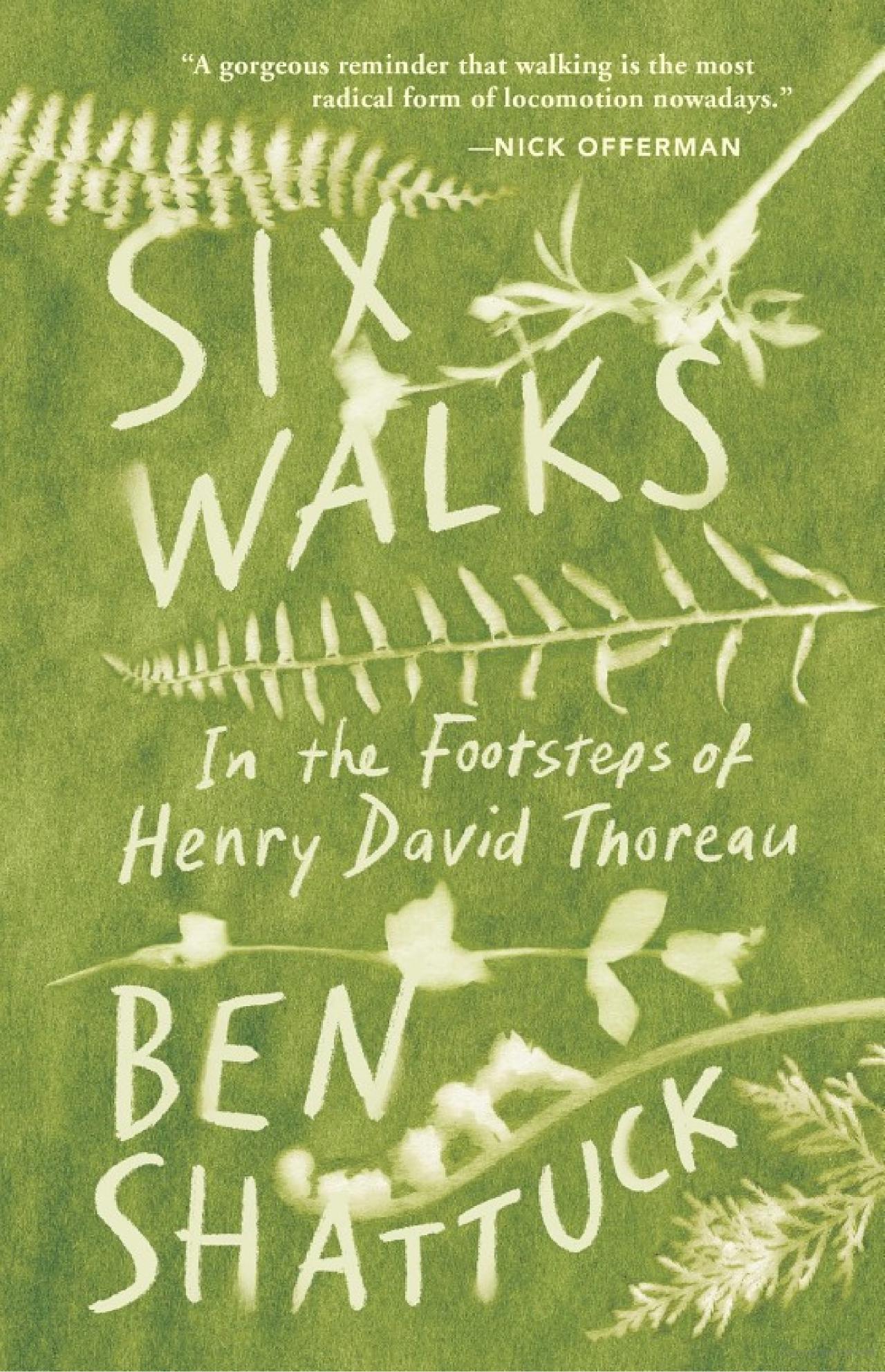
Six Walks by Ben Shattuck (2022)

What is it like to walk in the footsteps of Henry David Thoreau? Do you see the same trees, smell the same air, touch the same ground, feel the same breeze? Henry lived and wrote and walked around the woods in Massachusetts over one hundred years ago and the impact it made on his life made his life. During the pandemic, trying to process a breakup and a general malaise that hovered over his thoughts like unsettled storm clouds, Ben Shattuck rediscovered Henry’s journals. Henry’s words so inspired Ben that he set out to see the world through “someone else’s eyes for a change,” hoping that he might gain some new perspective to help him past his grey days.

Henry David Thoreau (1817-1862)

Following six of the same walks that Thoreau once took in the early to mid-1800s, Ben was searching for a new perspective, and a new understanding on life, love, and his place in it. For Henry, the walks were about looking at nature, about describing his surroundings, and about drawing comparisons between the natural world, human evolution and the emotional and spiritual impact on both. For Ben, walking was a form of therapy to help him move past some darker days, all the while submerging himself in the comfort of a favorite writer’s words and viewpoint. What results is this incredibly gorgeous book about nature writing, about escapism, about processing emotional trauma, and about seeing the real beauty that surrounds us every day.

On the walks, Ben meets an interesting array of characters. He goes in search of his ancestral homeplace, canoes down rivers that feel wild and untamed, and walks down long stretches of the beach until his feet are bloody and blistered. Funny, tender, thought-provoking and beautifully written, Ben’s perspective and lovely turns of phrase are just as illuminating as Henry’s. Part travel memoir, part therapy session, part sketchbook, Six Walks is one of the most beautifully written books about journeying that I’ve read in a really long time.

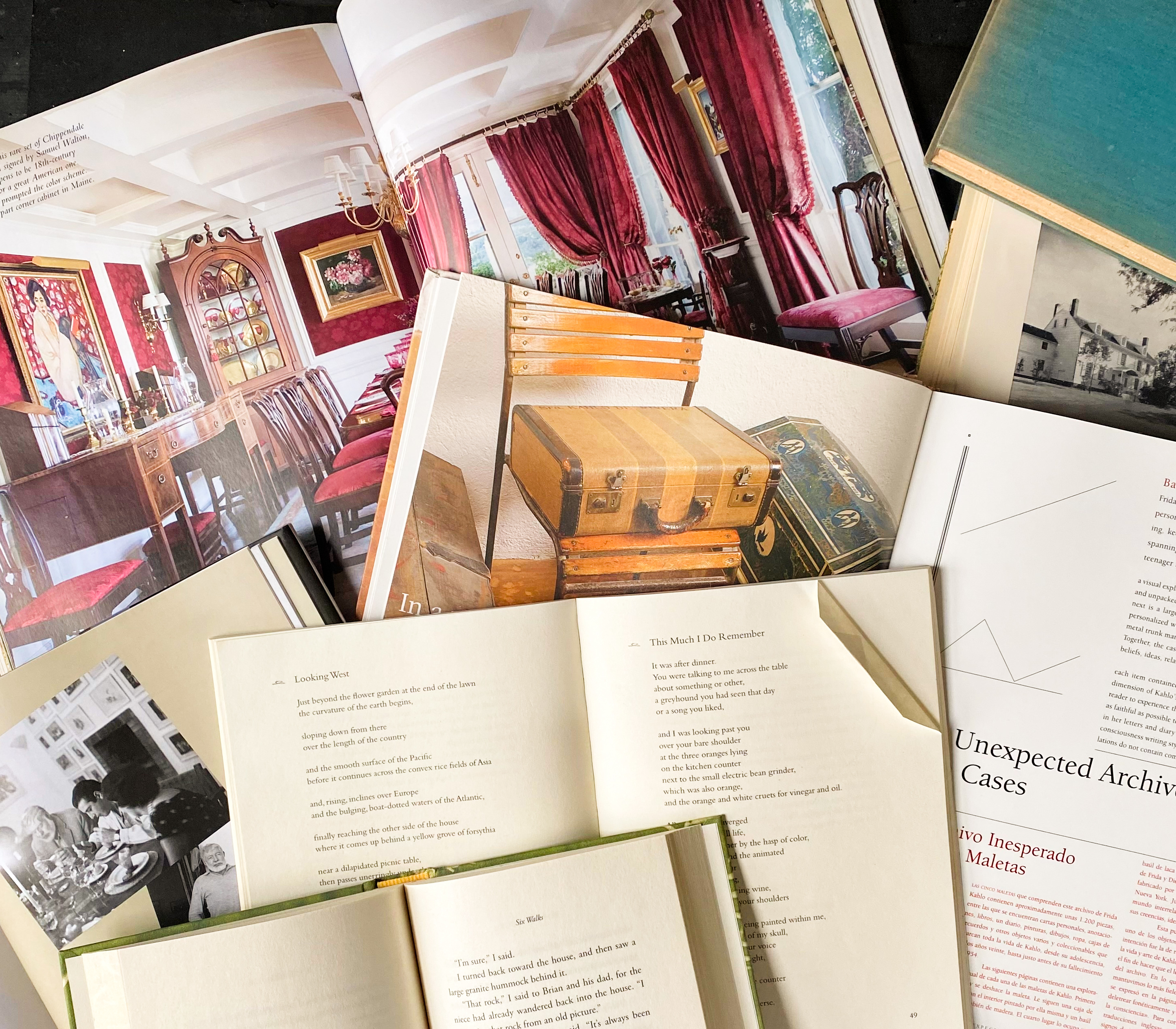
Finding Frida Kahlo – Barbara Levine (2009)

Written in both English and Spanish, this book is a fascinating portrait on the act of collecting and the art of curating. Finding Frida Kahlo is the true story of discovering a set of trunks belonging to Frida Kahlo in a Mexican antique shop. The woman who discovered these historical heirlooms was Barbara Levine, a former exhibitions director at the San Francisco Museum of Modern Art who had recently moved to Mexico and was trying to assimilate into the culture. A trip with a few friends to an out-of-the-way antique shop led to the discovery of several trunks belonging to Frida Kahlo each filled with all sorts of her treasures – clothing, paintings, recipes, letters and personal heirlooms.

Image of the trunks from Finding Frida Kaho by Barbera Levine.

This discovery started a storytelling chain that is movie-like in scope and plot, unfolding all the unusual circumstances that led to the ultimate understanding of how trunks from one of the world’s most revered, most studied, and most collected artists could possibly have wound up quietly sitting on the floor of an antique shop practically unnoticed. Throughout the story, there is Barbara’s commentary on the processing of the collection, interviews with the antique shop owners, the detailed history of communication with the collector who held the suitcases originally, and consultations with the Fridos (the last remaining group of artists and writers who personally knew Frida Kahlo). I won’t share any more of those details here so as not to spoil the pacing of the story, but only to say you’ll be engaged right from Barbara’s first sentence… “I have long been a collector.”

Non-spoilers aside, Barbara tackles her discovery with a museum curator’s mindset, methodically documenting and photographing each item in each trunk with an unbiased approach. Frida’s objects come to life on the page. And in turn, Frida herself comes to life. You can see her handwriting, her diary entries, her sketches. You can see her clothing, her scrapbooks, her trinkets. You can see the weathered wood of the trunks in exquisite detail. There’s fabric and masks and stuffed taxidermy. There are recipes for Chicken Fried with Garlic in Peanut Sauce and another one for Spicy Salsa (more to come on that front in 2024). There are graphic, grotesque medical drawings of bloody amputations and beautiful brightly-colored paintings of birds and flowers. All along, these heirlooms are accompanied by Frida’s handwriting and you come to understand how all these objects formed her heart and her art.

The Mansions of Long Island’s Gold Coast – Monica Randall (1979)

Built by wealthy business tycoons as getaway “cottages,” trophy houses, entertainment venues, weekend retreats and flamboyant examples of architectural artistry, the opulent mansions that dotted the Gold Coast of Long Island reveal fascinating insights into American culture, wealth and folly.

Beautiful and haunting, The Mansions of Long Island’s Gold Coast spotlight incredible stories about the architects, owners, domestic staff, and modern mid-century families who all spent time in these grand estates. A book of architectural history could easily become boring if you stick with just the well-known, well-documented facts but Monica’s meticulously researched biographies, interviews with local residents, and first-hand experiences growing up in the area have brought forth only the most interesting details of each property.

Told in brief snippets, there are romantic love stories, untimely deaths, bizarre occurrences, ghostly apparitions, lavish design details and tragic degradation. House after house exposes the highs and lows of the ultra-wealthy during the 19th and 20th centuries and all that they celebrated but also all that they destroyed. Some of these estates still stand today, carefully maintained as examples of grand domesticity but many featured in this book were torn down, broken down, burned down, or fell down due to neglect and the lack of capital to maintain them. Monica captures each one in the state that she finds it in the 1970s, focusing on what they once were and what they now have become.

A Good Hard Look – Ann Napolitano (2011)

A fiction novel based in the real town of Milledgeville, Georgia, A Good Hard Look centers around an imagined recounting of the real-life writer Flannery O’Connor (1925-1964). It opens with a wedding in town of a doted daughter of the community, Cookie, and her fiance, Melvin – a wealthy New Yorker who is not used to Southern culture or the tight-knit atmosphere of small-town life. Like Nick Carraway in The Great Gatsby, we see this town, these characters, and Flannery herself through Melvin’s eyes who fully wants to commit to his new wife and his new life, but finds the peculiarities and the general mood of the town unsettling.

Flannery O’Connor’s farm, Andalusia, where she wrote her best-known books. Photo courtesy of exploregeorgia.org

The plot twists and turns, so I won’t say more so as not to spoil the story, but one of the things I loved most was all the detail about Flannery’s peacocks. As central characters in the book, you learn so much about these big, beautiful, boisterous, unruly birds who played not only a big part in the story but a big part in Flannery’s life too.
Flannery O’Connor at home with her beloved peacocks. Photo courtesy of the Atlanta Journal-Constitution, Joe McTyre

This book reminded me a little bit of Midnight In The Garden of Good and Evil mixed with the storytelling styles of William Faulkner, John Updike, and Anne Tyler. Once finished, it also prompted its own further research into Flannery’s life. Especially regarding the peacocks. Beautiful, territorial, protective and also very loud, the peacocks act as both a soundtrack and a symbol. Ann shares details on their personalities, their temperaments, and their physical presence on the farm offering such interesting descriptions of them it will leave you considering whether you should invite a peacock as a pet into your own life.

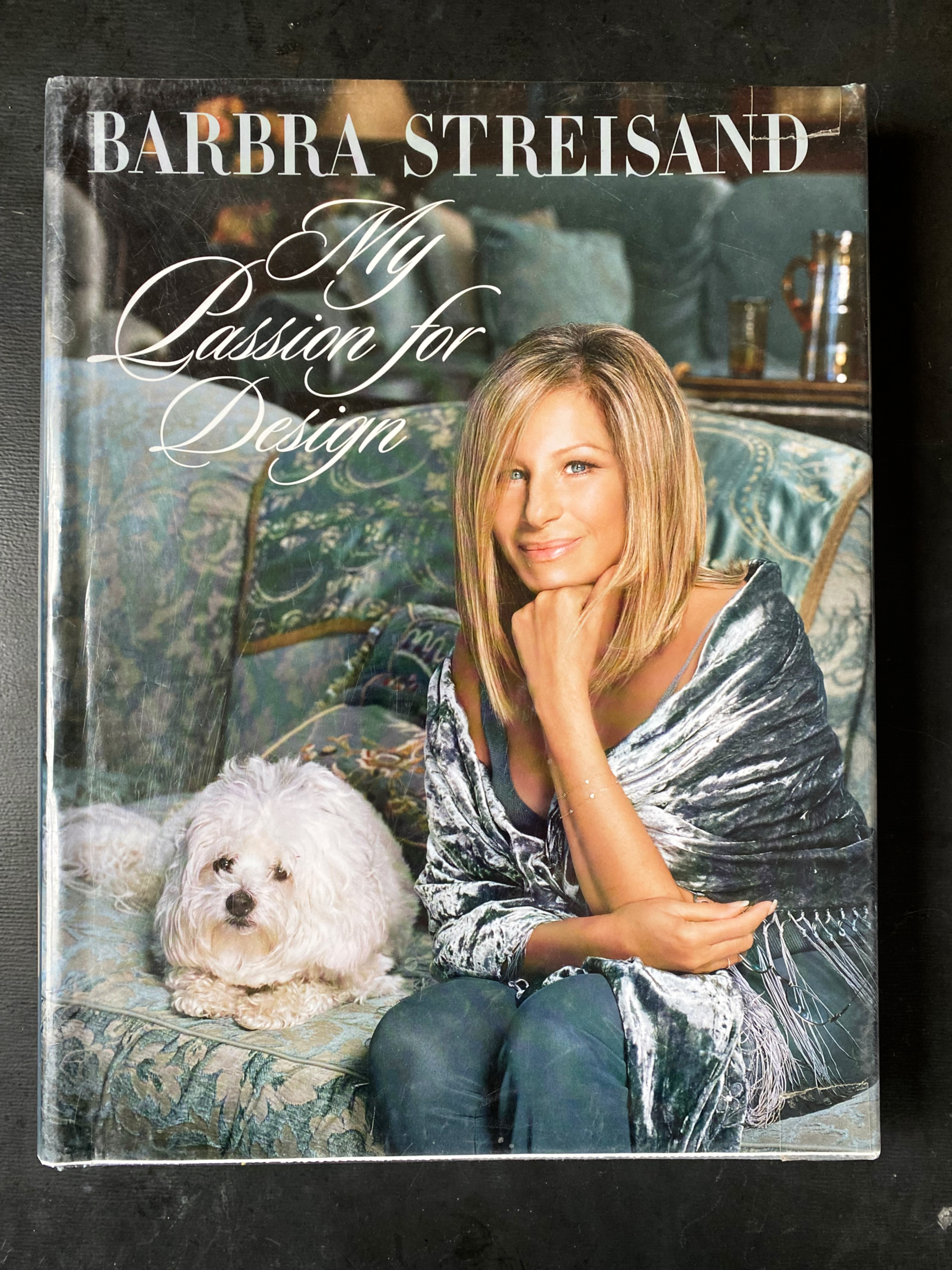
My Passion for Design – Barbra Streisand (2010)

All the buzz around Barbra Streisand this holiday season concerns her newly released memoir, My Name Is Barbra, but I’d like to shine a light on another book of hers published in 2010, My Passion for Design about building her dream house in California. It’s a memoir in and of itself, but it’s also a design book showing you (not telling you) how to build and fill a space with things you love. Barbra’s not following trends here. She’s following her heart and what results is a home packed with intimate stories of how it came to be. Included at each step are a bevy of sketches and before and after photos, many of which Barbra took and drew herself.

Barbra’s front entrance to the main house.

A lifelong antique collector, a lover of old houses, and a creative outside-of-the-box thinker, Barbra’s step-by-step building project is a captivating look at her creative journey towards fashioning the ideal homeplace. Even though she references films and performances along the way, you forget that Barbra is a world-famous singer, actor and director. Here in this book, she’s simply a woman on a mission to create a space she loves. Her vision for what she wants is mostly clear, but she does stumble and change directions sometimes too, and occasionally she has to compromise when the ideas in her head can’t feasibly match a comparable reality. It’s all very relatable.

Located right on the cliffs above the ocean, with views of the water from the backyard, Barbra’s compound is a conglomeration of buildings that includes two barns, a mill house, a 1950s ranch house, and a big main house. She thoughtfully designed and decorated each space from the ground up, but she’ll be the first to say that she’s the “idea” person only not the actual contractor, and never had any inclination to swing a hammer or erect a wall herself. Instead, she left all that up to her team of contractors and specialists – the talented individuals who had the tenacity to deal with her perfectionism, a trait she fully recognizes can be a bit difficult to work with.

What I really loved about this book was how Barbra talked about the idea of home and the creative touches that give a space meaning. She’s really thoughtful about every detail and wasn’t willing to compromise on something if she felt it wasn’t right. Intuitive and observant, she discusses her design inspirations (a certain painting, a detail from a movie set, the color of the sky at sunset) to the extent that you get the sense that she’s always on the lookout for objects, colors, textures, and patterns that stir a personal emotion. Even though her design style is not exactly my design style, it is refreshing to read an interior design book about someone who wholeheartedly embraces what she loves unapologetically. Instead of following trends or typically accepted interior design layouts, she follows her heart and her interests. What results is a home that is entirely her own.

Decorated endpapers feature a few of Barbra’s notes and sketches.

Even the exterior gets her thoughtful attention as she color coordinates all the flowers and landscaping to each building so that complimentary shades float freely in and out of doors. To accommodate changing moods and seasons, to find surprise and joy year by year, to delight the senses, to calm and also energize the spirit all while maintaining a sense of unique charm and character – those were what Barbra was reaching for in building her perfect place. By books end you can see that she accomplished all that, and maybe even a little bit more.

Ernest Hemingway: Artifacts From A Life Edited by Michael Katakis (2018)

I haven’t completely finished this book yet, but I knew it was going to be on the Best Of list just for the introduction by Michael Katakis alone. His perspective on memories and how they can be shaped or reshaped, defined or redefined, based on the truths and the fictions you want or are led to believe is compelling. He shares an incredible story that links the death of his mother to the assassination of John F Kennedy to the discovery that Ernest Hemingway lived in the same neighborhood as his relatives – all events that occurred within a few days of each other. Of course, all these big events affected him deeply, but it was Ernest’s writing that brought emotional comfort and mental escapism during that difficult time. A lifelong interest in the author and his work bloomed and would eventually make him the manager of the Ernest Hemingway Estate, and the editor of this book.

There’s so much that has already been written and recycled about Ernest Hemingway, that it’s difficult to separate the man from the myth. And you might suspect it would be difficult to present any sort of new factual information about him. But in Artifacts From A Life, there is an assortment of little-known or at least lesser-known details that paint Ernest in a new light.

Famous for writing short, succinct sentences – his hallmark style – I always thought that was something Ernest developed over time, but actually it was a writing tip received during his first newspaper job. He was advised to stick with short sentences and to leave out the adjectives. Ernest adapted that way of writing and stuck with it for the rest of his career. Had the newspaper dictated that he write long, flowery sentences we might of had a completely different Ernest Hemingway experience altogether.

Packed with never-before-seen photographs, paper ephemera, letters and objects from his personal estate, there’s much to learn about Ernest and his strengths, weaknesses and vulnerabilities. One of things of particular interest is Michael’s commentary as he manages Hemingway’s estate and discovers the wealth of information that it contains. He brings a unique perspective to the task and a wistful reverence for how things used to be that is so fresh and compelling.

“There are over eleven thousand photographs, bullfighting tickets and scraps of paper with lists of what books a struggling writer should read,” Michael writes. “There are airline, train and steamship tickets that are so lovely they seem a page from an illuminated manuscript and demonstrate how much beauty there once was in the artifacts of daily commercial exchanges. As I went through his things I realized how much tactile aesthetic has been sacrificed and replaced with a severe digital practicality.”

Opposite Michaels’ words on that topic are images of a beautiful 1930s receipt from a Paris bookstore with its stylish logo and sales clerk handwriting itemizing the books that Ernest had purchased that day. It’s that kind of thoughtful attention to history and to Ernest’s life that make this book a page-turner, and a truth, from the very beginning.

Picnic, Lightning – Billy Collins (1998)

Speaking of truth, I’ve never read Billy Collins’ work before, even though he’s considered to be America’s favorite poet and was the actual Poet Laureate of the United States in the early 2000s. But just this past fall, I discovered his 1998 book of poems Picnic, Lightening and fell absolutely in love with the one on page 49. It’s titled This Much I Do Remember

It was after dinner.
You were talking to me across the table
about something or other,
a greyhound you had seen that day
or a song you liked,

and I was looking past you
over your bare shoulder
at the three oranges lying
on the kitchen counter
next to the small electric bean grinder,
which was also orange,
and the orange and white cruets for vinegar and oil.

All of which converged
into a random still life,
so fastened together by the hasp of color,
and so fixed behind the animated
foreground of your
talking and smiling,
gesturing and pouring wine,
and the camber of your shoulders

that I could feel it being painted within me,
brushed on the wall of my skull,
while the tone of your voice
lifted and fell in its flight,
and the three oranges
remained fixed on the counter
the way stars are said
to be fixed in the universe.

Then all the moments of the past
began to line up behind that moment
and all the moments to come
assembled in front of it in a long row,
giving me reason to believe
that this was a moment I had rescued
from the millions that rush out of sight
into a darkness behind the eyes.

Even after I have forgotten what year it is,
my middle name,
and the meaning of money,
I will still carry in my pocket
the small coin of that moment,
minted in the kingdom
that we pace through every day.

“This Much I Do Remember” by Billy Collins.  Picnic, Lightning (University of Pittsburgh Press, 1998).

Oranges have been a real theme in the kitchen in these past three months. We made a vintage Parisian orange cocktail for the blog this month, shared a vintage recipe for orange sugarplum cookies in last week’s email newsletter and now there is this vintage poem about oranges sitting on a kitchen counter. It’s funny how things come together like that.

Bar Hemingway’s Ritz 75 cocktail.

The whole sensory experience that Billy sets up in this snippet of life with the camber of shoulders, the tone of voice lifting and falling in flight, the hasp of color, the painting within is just gorgeous. I love the way he likens the oranges fixed on the counter to the way the stars are said to be fixed in the universe. So beautiful. 

Billy Collins (b. 1941) served as Poet Laureate of the United States from 2001-2003. Photo by Marcelo Noah.

So far Billy has published 18 books of poetry, starting with Pokerface in 1977 and just recently Musical Tables which came out in 2022. Picnic, Lightning was book number six debuting in the late 1990s. If you are new to Billy’s work, there is lots to choose from but I recommend starting with page 49 of Picnic, Lightening and working your way around his words from there.

Reading This Much I Do Remember was such a nice way to wrap up this past year – another one that was so full of tumultuous world events, political upheavals, and powerful weather occurrences. I love how in the poem, a natural peace was found in the kitchen. I love that time stopped. That the moment was recognized and appreciated before being committed to memory. I love that this poem is about a confluence of small, unassuming details that turn out to make a big lasting impression. Cheers to more of that in 2024.

And cheers to Ben, Henry, Frida, Ann, Flannery, Ernest, Billy, Michael, Monica, Barbra S. and Barbara L. for sharing such wonderful insight into the passions that move the world forward through art and storytelling. Hope your new year overflows with equal joy. And I hope you find a book or two to fall in love with from this list. Thank you so much for being a part of our wonderful community. We can’t wait to share more favorites in 2024. Happy New Year!

Bar Hemingway’s Ritz 75: A Vintage Champagne Cocktail from Paris

The history behind Bar Hemingway’s Ritz 75 runs long. If a cocktail could talk this one would tell many stories. Included in its 100-year lifespan are snippets about several greats – Ernest Hemingway, a New York nightclub, a French hotel and the best bartender in the world. And those are just tips of the ice cube. Even more stories lay below the gin line.

This cocktail’s core combination of ingredients – champagne, lemon juice, sugar and ice date back to the early 1900s when it was known as a French 75. Named after WWI field artillery, the drink was likened on first sip, to the quick jolt of a particular French canon’s blast. That immediate burst of flavor was the combination of champagne and lemon juice – the signature components that gave this cocktail a powerful little pucker.

The Stock Club in New York City circa 1944. Photographed here are filmmaker Orson Welles (bottom left corner smoking a cigar), talk-show host Morton Downey (bottom right corner), club owner Sherman Billingsley at center table, actress Margaret Sullivan (at table just above Orson Welles cigar) and Broadway producer, Leland Hayward to the right of Orson Welles’ shoulder.

In the 1920s, it took on a new sense of depth, flavor and revelry when gin was added to the sugary juice mix. That mixture was then tossed with ice in a cocktail shaker and finished in a glass topped off with champagne just before serving. Sparkly and citrusy, that was how the popular French 75 was prepared at New York City’s most famous nightspot, The Stork Club. From 1929-1960s, you could pretty much see every sort of movie star, politician, society maven, sports figure and writer all enjoying the cocktails provided by the club’s owner, Sherman Billingsley, a former bootlegger turned Manhattan business maverick. There, the French 75 made its fans.

The Hotel Ritz Paris on Place Vendome. Photo by Frederic de Villamil.

In Paris, in the late 20th century, the cocktail took on a new persona and a new name thanks to the elegant Ritz hotel and its beloved bartender, Colin Peter Field. Colin presided over Bar Hemingway, the snug drinking nook located inside the Ritz for thirty years up until this past summer 2023.

Bar Hemingway at Hotel Ritz, Paris. Photo by Pablo Sanchez.

Named after Ernest Hemingway, who frequented the hotel and drank many a martini there from the 1920s-1950s, when it was called Le Petite Bar, Bar Hemingway is filled with memorabilia featuring the writer’s life and literary works, many of which were curated by Colin himself. Model Kate Moss even added some vintage typewriters to the decor to compliment the aesthetic.

Under Colin’s hand, Bar Hemingway became a popular spot in the hotel and also the city, frequented by Hemingway lovers who wanted to walk in the footsteps of the literary giant. Ultimately though it was Colin who really stole the show each night. With his attentive presence, discreet mannerisms, head for literature and eye for art, Colin mixed up passion, dynamic conversation, and elegant drinks at Bar Hemingway night after night for three decades. He was so successful at his job, so devoted to his trade, that he was deemed the Best Bartender in the World by several leading travel magazines and won numerous awards throughout France for his bartending skills.

In 2001, Colin wrote a cocktail book containing recipes that he served at the bar along with interesting stories that surrounded them. Delightfully illustrated by Japanese artist, Yoko Ueta, this book is both a primer on how to be a thoughtful, intuitive mixer of drinks and a historical story guide detailing the origin stories of many classic cocktails.

Colin Peter Field as illustrated by Yoko Ueta.

Included in the book is Colin’s version of the French 75. It features freshly squeezed mandarin orange juice in addition to the already called for lemon juice, sugar, gin and champagne. The mandarin brightens the color of the cocktail from a hazy lemon yellow to a pale orange, similar to the flickering flame of candlelight. A garnish of both lime and mandarin rind at the edge of the glass adds a little extra flair. Renamed, this version is now known as the Ritz 75.

With a taste similar to Orangina, Ritz 75 is a refreshingly crisp and clean cocktail. The champagne adds an extra bit of sparkle and a festive air to the season. Without being syrupy sweet, and given its light citrus notes, it’s lovely as an aperitif for cocktail parties or for pre-dinner welcome drinks. It is also an excellent partner to hors d’oeuvres that lean towards the rich and buttery side of the palate like cheese trays, charcuterie boards and anything tucked inside a puff pastry. Just like its cousin, the Mimosa, the Ritz 75 is easily adaptable to all sorts of occasions beyond the holiday season too. It could be served at brunch, or perhaps your next book club meeting when Hemingway is on the list, or when the weather turns warm, it easily transitions out of doors for picnics and garden parties.
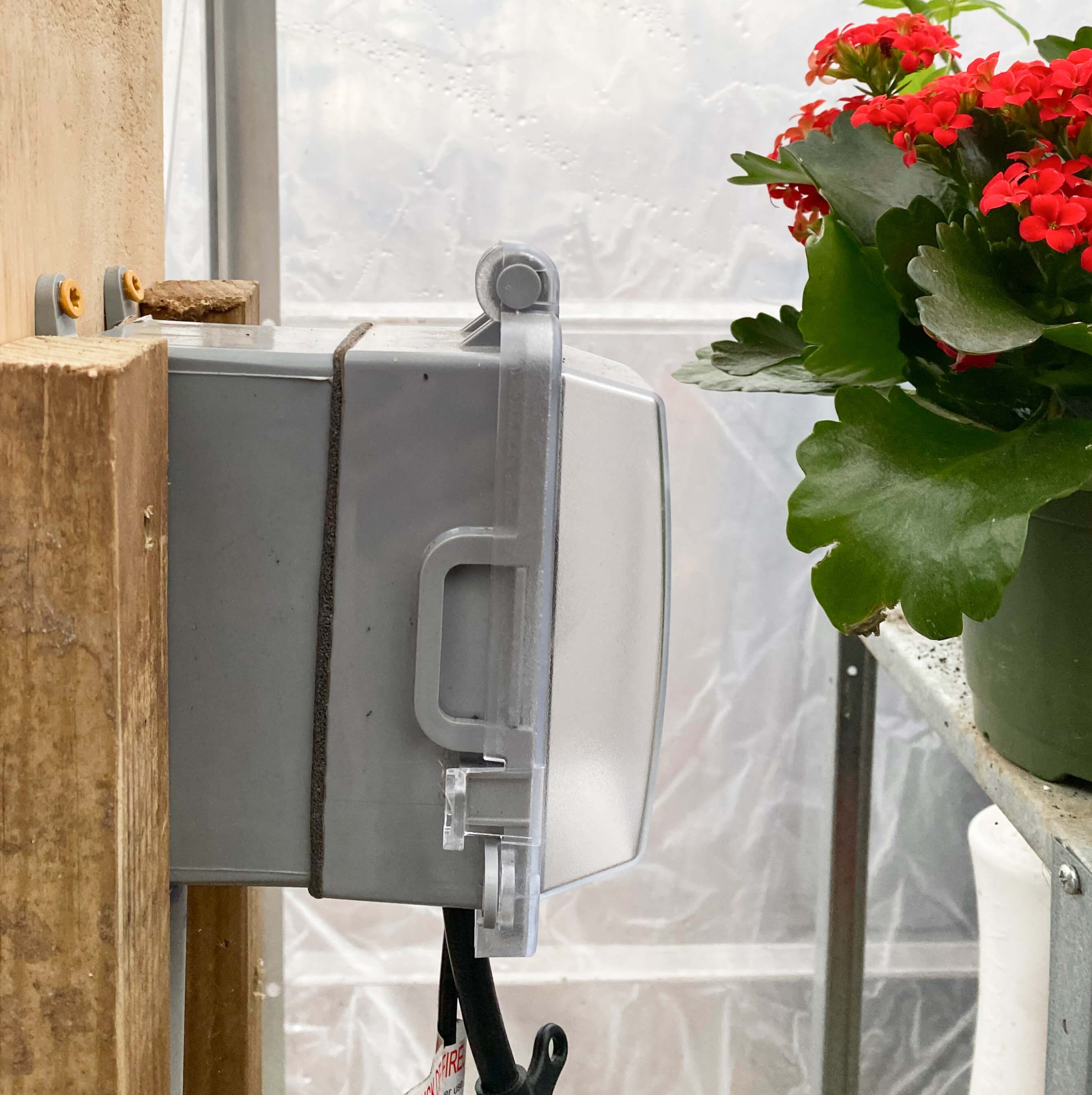
Illustration by Yoko Ueta

I don’t think Colin would mind what time of year you served the Ritz 75, just as long as it accompanied a good story and a pleasant environment. Ernest would definitely second the story part. Together, the two I’m sure would be happy to clink glasses and call it a festive night, so we’ll do the same. Cheers to the holiday season and to Colin and to Ernest whose books continue to capture our attention. Here’s to hoping your December is full of flavor, merriment, and a little something sparkly.

Ritz 75

From Cocktails of the Ritz Paris by Colin Peter Field circa 2001. Serves two.

1 1/2 oz lemon juice

1 1/2 oz mandarin juice, freshly squeezed

1 teaspoon of sugar

1 1/2 oz gin

Champagne to finish

Mandarin and lime rinds to garnish

Mix the lemon juice, mandarin juice, and sugar in a cocktail shaker. Fill with ice, and then add the gin. Shake a few times. Pour the mixture evenly into two glasses, then fill the rest of the glass with champagne. Garnish with slices of lime and mandarin. Add a cherry (optional) for additional color.
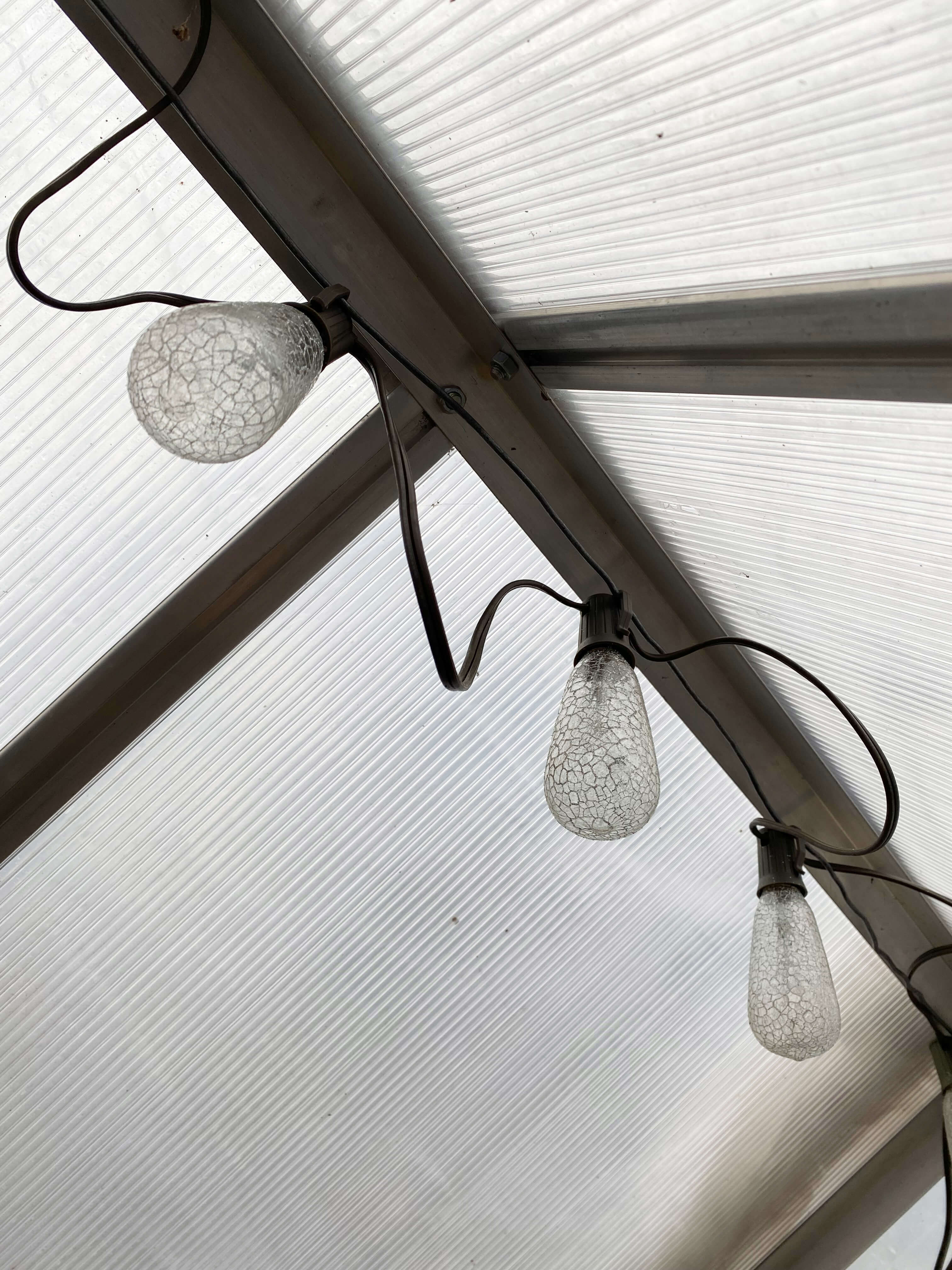
Cheers!

Reading While Eating: Five Recommended Books about Home and History Discovered in 2022

2022. It was the year of the continuing pandemic, the year of dramatic weather, the year of gratitude, of comfort food, of appreciating small details and big moments, and finally the year of being able to get back together with friends and family. It was also the year of the recommended book. It’s so wonderful to hear so much buzz about favorite book lists and recommended reads these days all from a variety of different outlets. They’ve popped up in the usual places – bookstore emails, cooking magazines and blogs but also in unsuspecting places this year too – podcasts, garden centers, even our grocery store had a section of books dedicated to staff picks. Here in the Vintage Kitchen, we have our own favorites to recommend too.

For a long-time on the blog every December, I shared a batch of books that I discovered during the year that helped fuel research for a recipe or give context to a blog story or a shop item. Then that list seeped out into other months with other recommendations, because the reading is always happening and so many books swimming on my desk, on my nightstand, on my dining table set their hooks. Sometimes it was a book about a specific person, a surprise, like Bette Davis. Sometimes it was atmospheric like the novel Lime Tree Can’t Bear Orange and sometimes it was a gathering of memories about a place that made the past come to life in the present like meeting the Durrells in My Family and Other Animals or the Chamberlains in Clementine in the Kitchen. Sometimes it was even books published so long ago that they came back as new-to-the-world anniversary editions like the 1959 novel Mrs. Bridge, about the midcentury suburban home life of everywoman, India Bridge.

It’s been three years since our last book recommendation list, but I’m excited to say that our end-of-the-year wrap-up includes this tradition now taken up again. So whether you are traveling this week, and need something to read on the train, on the plane, or in the car, or you are taking a few days off to relax and wind down your 2022 festivities, I hope this list will add some interest to your December days.

Not all these books are brand new to the publishing world this year. The oldest one debuted in 1992 and the most recent was published just this past April (2022), but they were new to me so perhaps they will be new to you as well. This year, they each happen to center around the idea of home and the occupants in it. There are grand palaces, a rustic second home, a 1600s-era house passed down through generations, and a new old house ready to be revived. There are famous names attached to a few, and a long lineage attached to another. There is one house that’s continuously under construction the whole way through and then there is another house that’s patched up here and there with thoughtful consideration drawn out over generations. Through these books, we travel. To England, to Italy, to Connecticut, to Massachusetts, and then back again to England. These are family stories, personal stories, and cultural stories, but above all, they are human stories that connect us to places and people we call home. I hope you find them as fascinating as I did. And I hope they spark a conversation or two once read over a meal shared. That’s always how we like to talk about books around here.

Let’s take a look at this year’s favorites…

Living in A Foreign Language (2008)

Fans of the tv show, L.A. Law will know Michael Tucker and his wife Jill Eikenberry. They were regulars on the show for eight years spanning the 1980s-1990s in career-defining roles that still get them noticed around town. Michael’s memoir, Living in a Foreign Language, is about his purchase of a centuries-old farmhouse called Il Rustico in Italy’s Umbrian countryside just outside of Spoleto. Flanked by olive groves and herb gardens, it was initially intended as a second home to supplement but also maybe swap Michael and Jill’s L.A. lifestyle. Only there is one hitch. Jill wasn’t looking to change much about their life in Los Angeles.

Michael and Jill (far left – bottom and top row) appeared in the cast of LA Law from 1986-1994

When Michael, an unapologetic house collector, sold his wife’s dream home in Big Sur, seemingly on a whim, he tried to convince her that Italy was the answer for the next chapter of their lives. Jill, not quite as swept up in this international escapade as her husband, eventually, warms to the idea of prosciutto for breakfast, of afternoons spent in Italian language classes, and of nightly dinner parties with new friends. Michael on the other hand is all in, right from the beginning. Not knowing the language, not knowing the real estate market, not knowing anything about maintaining ancient stone houses or the country they sit on, Michel jumps in feet first with enthusiasm and a wine glass in hand.

Traveling back and forth between Italy and the U.S., Michael spends much of his adjustment time by himself, getting to know his new house in Italy while Jill is back in California. He is confounded, disoriented and enchanted by everything. He feels the heat of the sun, the twinkling light as it shines through the olive trees, the step at the top of the stairs where centuries of dwellers have walked before him. He hears the melodious Italian accents but cannot fully understand them. He doesn’t know where to deposit his trash or service his car or handle the necessary day-to-day tasks that defy international boundaries. But that is of little consequence. He’s in Italy. Realizing a dream. And really that’s all that matters. In one lovely paragraph in particular, he states his desire for this new adventure in this new land. To immerse himself in the circadian rhythm of time and place. There at Il Rustico, he didn’t want to douse the house with his L.A. energy, his American expectations, and his forced agendas. He wanted instead to fall in step with the natural rhythm of his surroundings. To experience the house, the property, the country, as it was not as he wanted it to be. Isn’t that a lovely sentiment?

Funny and thoughtful and really well-written, I read this book over the summer during our New England heatwave, which means it’s great if you are looking to warm up this winter given Michael’s descriptions of the pastoral beauty that is Italy in all its warm and welcoming ways. While reading, be prepared to be hungry for all foods Italian. You’ll never crave prosciutto and pasta more after reading about all those Italian dinner parties. If you need a great recipe for authentic Italian tomato sauce, try this one.

Martha Stewart’s New Old House (1992)

Martha Stewart’s fourteenth book, New Old House, might have been published thirty years ago, but it’s still as fresh and captivating as the day it debuted back in 1992. It tells the story in words and photographs of how she renovated Turkey Hill, her most well-known home and where so much of her content, inspiration, homesteading and presentation skills were fine-tuned before she moved on to other places and other properties.

Turkey Hill post renovation. Photo courtesy pf marthastewart.com

Built in Connecticut in 1805, Martha takes readers month-by-month through the process of not only historically and accurately restoring Turkey Hill but also making it a place where she could live, work and dream into the future. In true Martha fashion, she’s meticulous in her every effort and her recording of it, sharing her processes for each detail from window reglazing all the way to landscaping. It’s fun to see how the house transforms under her care. This book is also a great guide for anyone who is fixing up an old house of their own, as she offers lots of expert tips and guidance on how to tackle specific issues relating to antique properties.

How To Be a Victorian (2015)

I first picked up this book because I thought I might learn more about antique dishware, serving practices, table settings, and kitchen life in general. What unfolded instead was a complete history lesson in all the details of day-to-day Victorian life.

Beginning at daybreak and taking readers through an entire twenty-four-hour period of life in Victorian England between the years 1837-1901, this is a nitty gritty, detailed account of the routines of men, women, and children. Sparing no detail, historian Ruth Goodman covers all aspects of the day starting first thing in the morning with feet on the floor. Addressing each person one by one – men getting out of bed, women getting out of bed, servants getting out of bed, children getting out of bed and the processes they each go through to begin their day based on different socio-economic levels, this book is fascinating from page one. Full of insights, fun facts, and history, Ruth shares an honest, accurate, unflinching and oftentimes unromantic look at what Victorian life was really like, from how they washed their faces to how they served their soup. From fashion to finances, bathing to beauty routines, leisure activities to work, religion to education, medicine to mechanic marvels, all gets covered here.

At times funny, insightful, thought-provoking, sad, disturbing, and always engrossing, there are fun facts galore lining every page. Some of my favorites include the topic of corsets and how women were so accustomed to wearing them from girlhood through all of their adult years that their spine relied on them completely for proper posture. Take a corset off of a Victorian woman who had worn one for most of her life and you’d see that her spine would have been like jelly, flopping around like a limp rubberband unable to keep her upright on its own. As it turns out, all those muscles surrounding her spinal column never had to put forth any effort to hold her up with a corset in place, so they weren’t strong like our backs are today.

More fun facts await. Women were the ones who bathed the least, children the most, and then men. Women thought it was too revealing, too improper to be naked in a tub even inside the privacy of their own homes amongst their own family. Up until the late 1800s, children were thought of as little adults, with no societal understanding of their developing brains, emerging personalities, growing bodies or the importance of playtime. Everyone drank beer every day, kids included because water was viewed as unsanitary. The more money a Victorian household brought in, the bigger the breakfast, with most households on average consuming just beer and bread or tea and toast in the morning. Eggs, sausages, pancakes, toast with butter and jam, were luxuries that were mostly afforded to the middle and upper classes, but even then breakfast was a lighter affair. As a result of the industrial age, the air from factories that hung around bigger cities like London was so fallow with fog, smog, and pollution that sight was limited to just a few feet ahead.

The hardest parts of the book to read were about the kids, sometimes sent to work as young as three or four but mostly between the ages of seven and twelve, to work in factories or in domestic service to help feed their families and support their parents. Since they were viewed as little adults, no one was much concerned with kids making friends, developing their imaginations or getting educated. Disease ran rampant. Children were the most vulnerable to illness and death. Many of the factories offered meals to their employees so they could work longer hours (usually 10-12 hours a day) which was attractive for parents since it was less mouths to feed at home and a guaranteed meal for the financially challenged.

During this era, there was no thought to nutrition until the early 1900s, so most Victorians subsisted on a diet of bread, tea, and beer. Vegetables weren’t even considered for their nutrient values in any way until dietitians, nutritionists and sanitary kitchens came into the conversation in the early 1900s. Food was on everyone’s mind all the time. A large majority of Victorians were hungry throughout much of their lives. Cleanliness played a factor in the success of a long life. Really I could go on and on about all the interesting details packed in here, but then I’d spoil the book for you. As Ruth stated, most of us in our modern world have a very glossy, romanticized version of what the Victorian era was all about thanks to movies and novels that pull from the glamour of the era but not always the grit.

The Palace Papers (2022)

We discussed this book in our weekly email newsletter for the shop (join us here) a few weeks ago, but it was so interesting I wanted to be sure to include it here as well. Between the debut of The Crown in 2016, the death of Queen Elizabeth, this past September, the handful of royal recipes we’ve made for the blog here, and here and the new documentary series just released by Meghan and Harry, I’ve been really fascinated by the Windsor family and their long-lasting dynasty.

Since so many books have been written about the royals over plenty of decades it can be tricky to find ones that aren’t gossipy or loaded down with hearsay and conjecture or so full of faraway historical information that they become unrelatable. The Palace Papers changes all that. Written by award-winning journalist Tina Brown, The Palace Papers offers an insightful look into the lives of the modern royal family by connecting relationships, behaviors, situations and circumstances together to create a complete portrait of how and why royal members act, live, love, and work the way they do. Beginning with the parents of Elizabeth and Philip, Tina traces the family’s lineage forward to wind up with Harry and Meghan at the end, weaving together critical moments in history that directly affected the family’s relationships with each other and the world. Conducting over 100 interviews and taking her over 10 years to write, Tina captivatingly connects all the details that string together these immense lives. There is the long-standing love affair with Camilla and Charles, the relationship with the press that Diana strategically maneuvered, the behind-the-scenes moments of Queen Elizabeth following 9/11, the genial acceptance of the Middleton clan into the royal fold, the rise of Meghan’s career, and Philip’s creative get-away-from-ita-all space where he spent much of his senior years. All these details make the royal family (from page glance at least) seem both relatable and normal given the circumstances that they have all grown up in.

It can be difficult to understand the complicated life that each member of the family leads or has led, particularly Queen Elizabeth, but Tina does a great job of humanizing their actions while also giving readers a peek behind the closed doors of an institution few will ever get to see. With a journalist’s eye for detail and a novelist’s ability to craft nuance, Tina paints a picture of the royal family that is honest, raw, fallible and human above all else. It’s a big book (592 pages) about a big story set against a big backdrop, but by the end, you can see that each person is just trying to navigate life the best way they know how just like the rest of us.

Red House (2005)

Last but definitely not least, as this was my most favorite book of the year, Red House tells the story of the longest inhabited house in New England. Built in 1647 in Massachusetts, the Red House has always been known as home to generations of the Hatch family for three centuries. Until one day it was not. Sold in the 1960s to the Messer family, this is the story of a house in both modern and historical times as told by Sarah Messer, whose parents purchased it away from the Hatch hold and gave it a second life.

The Red House – Marshfield, MA circa 1936

Weaving back and forth between modern day and the past genealogical lineage of facts and faces, history comes alive on each page. Poetic, lyrical and with a great talent for description, Sarah masterfully ties the past with the present to completely redefine the meaning of home, showing how that definition changes with each occupant century by century, generation by generation.

Through births, deaths, weddings, fires, famine, war, peace, prosperity and purpose, the Red House evolves, gathering stories, outliving owners, and making an everlasting impression on the landscape where it stands. Beautifully written and complete with photographs that help illustrate the stories, I want to tell you everything about this book and nothing about it so that you’ll be as equally surprised and delighted by the contents inside.

Having said that, Red House encompasses a lot of different interests for a lot of different types of readers. Themes run the gamut from history, romance, familial bonds, architecture, biography, preservation, women’s history, fish-out-of-water, and coming-of-age storylines. There are stories about antique handmade brides’ towels, about wills, documents and photographs, about letters detailing human joys and maladies. There are stories of the ten years the house was a flower farm, a disaster, a day camp. Stories of people who wanted the house, and stories of people who didn’t want it. There are stories of critters, of ghosts, of construction projects that have been a part of the house’s fabric since the 17th century. There are cocktails on the back lawn, faulty electrical lines, mosquito-riddled nights, papery walls and unnerving questions proposed by the historical society. There’s the history of Two Mile (the enclave where the house rests), the history of the white house next door, the history of Sarah and her siblings. There’s so much! But I’ll stop now so that I won’t give it all away other than to say it is definitely a must-read for any old house lover.

Anna Quindlen once wrote… “books are the plane, and the train, and the road. They are the destination and the journey. They are home.” I love that. How true, especially in this case. I hope you find some new and exciting material here in this list of home and history books. If you encountered any extra special books this year please share their titles in the comments section, and of course, if you read any of the recommended books above please share your thoughts.

May the rest of your 2022 be full of engaging stories. Cheers to great books and great writers!


Thoughts on Love, Dinner and New Discoveries Courtesy of Brazil

Happy Valentine’s week fellow kitcheners! Since love and romance are dominating the spotlight right now, it’s wonderfully fortuitous that the featured destination on our International Vintage Recipe Tour this week wound up being Brazil. It’s not good to generalize people or countries, but Brazil is known to be a passionate place.

Beautiful Brazil!

Consistently included in top ten lists as one of the world’s most romantic nationalities, it’s safe to say that Brazil is in love with love. And we are not just talking romantic relationships here. Brazilians are known to be equally passionate about their hometown  soccer team, their spouse, their favorite carnival and their kitchen.  Ah serendipity! On this week of hearts and roses and pink colored everything, a romantic holiday dinner awaits us here in the Vintage Kitchen.

Or so I imagined!

I was hoping that our vintage recipe was going to highlight a dinner food that matched the passionate place from which it came.  Surprisingly  that wasn’t quite the case. On today’s menu we are making Picadinho a Brasileira, a recipe that roughly translates to “Minced to the Brazilian” in Portuguese. A popular heritage dish especially in Southeastern Brazil, there are two main versions of picadinho – one a hearty beef stew with whole vegetables and the other a slow simmered light and fluffy ground beef cooked with wine and vegetables.

Picadinho a Brasileira

Our recipe this week involves the latter.  Not exactly one of the glamour foods usually touted on Valentine’s Day menus (steak, lobster, oysters, anything drenched in champagne or chocolate) ground beef always tends to get relegated to more humble, homey everyday recipes like meatloaf, burgers, tacos and casseroles. It’s never a dish you see people eating in romantic movies. It’s never the culinary centerpiece tucked in between candlelight and flower bouquets. And it’s definitely not the most tantalizing type of meat to photograph.

I don’t know exactly what I expected of Brazilian food at the start of Week 6, but I think I was hoping for something a little more exotic in the food spectrum, something that matched the passion of the people. A recipe that involved colorful fruit perhaps or a sea swimmer from the waters of the Atlantic. Picadinho a Brasileira is neither of those two things. But after making this recipe and thinking about it for a bit, I came to realize that it is in actuality, an absolutely wonderful and appropriate dish to share with your sweetheart or your gaggle of loved ones on Valentine’s Day. More reasons on that shortly.

Tonight we’ll dive right into the recipe so that we can talk about the unique aspects and attributes of it after all the steps are laid out. A super easy recipe to make (a nice reprieve after the confusing fondue affair of last week!) Picadinho a Brasileira is a one pot dish that slow simmers on the stove for almost two hours.  It includes half a bottle of wine, a satisfying amount of vegetable chopping and six eggs (something that originally sounded a bit unusual). It’s also low-maintenance thanks to the slow cooking so it conveniently allows time for you to do other stuff while its simmering away. Maybe that’s where you can fit some extra time for romance:)

Picadinho a Brasileira

Serves 6-8

1/2 cup olive oil

1 large onion, finely chopped

4 cloves garlic, coursely chopped

2 lbs ground beef (I used grass-fed)

6 eggs

2 ribs celery, including leaves, finely chopped

1 green pepper, cored, seeded and finely chopped

1 cup finely chopped parsley

2 cans (17 oz. each) Italian style tomatoes

Salt and freshly ground pepper to taste

1 1/2 cups dry red wine (I used Storyteller Red Blend)

Hot red pepper flakes to taste

Heat the oil in a large, deep saucepan and add the onion and garlic. Cook until golden brown, stirring frequently.

While the onions are cooking, place the meat in a large bowl. Add the eggs, celery, green pepper, parsley and tomatoes.

Combine everything together with your hands until it is thoroughly mixed. (Note: This step is a little soupy and a little sludgy not to mention both visually and tactile-wise pretty unappealing, but don’t worry, it gets better soon.)

Add the mixture to the onions in the pan and cook stirring until well blended and the meat loses its red color. Cook the mixture 15 minutes and then add the salt (I used about  1 1/2 teaspoons), pepper (I used about 1/2 teaspoon) and one cup of wine. Cover and cook 15 minutes longer.  (Side Note:  If you are following the Recipe Tour over on Instagram too, you can see a  little video of this step in the Highlights section. Every Sunday, I post a sneak peek video of the recipe coming up, so if you are big into previews come visit the Vintage Kitchen Instagram page on Sundays!)

Now back to the recipe!

Add the remaining wine  and red pepper flakes (I used about two pinches), then partly cover and cook, stirring occasionally, one hour or longer. At the beginning of the one hour of cooking, the picadinho will be very liquidy, but as it cooks over the next 60 minutes, it will dry out and all of the moisture will evaporate. At that stage it will look like this…

…a  mixture that mirrors taco meat but is much lighter and fluffier. Once all the liquid has evaporated the dish is done and is ready for serving.

Traditionally, you’d accompany Picadinho  a Brasileira with white rice or farofa (which is a Brazilian form of farina – something similar to cream of wheat). However, I wasn’t that excited about either option when it came to pretty plating,  visual appeal and a Valentine vibe. As you can see the picadihno has lost most of its vegetable color and is pretty much in the end just one shade of brown. It is not the most visually striking dish that we have made so far, but what it lacks in appearance it more than makes up for in delicious flavor.

Between the fruity notes of the wine, the citrus notes of the tomatoes and the sweetness of the onions, combined with the fact that it looks a lot like taco meat, my first impression upon tasting it was to pair it with something in the corn family. Something like tortillas. Although this dish would be fantastic with such a companion, corn tortillas are not widely consumed in Brazil, so to stick a little closer to a more authentic meal, I chose corn grits since they are more similar to the consistency of farofa. Made with milk, Parmesan cheese and butter, the grits add color, a creamy texture and a complimentary corn flavor that blends all the ingredients in the picadinho together so well. I also added some freshly chopped onion, parsley and green pepper for a burst of fresh crunch and more color.

All sorts of other garnishes like sour cream, cheddar cheese, olives, avocado, cilantro, basil (basically anything you enjoy on a taco)  would also be delicious here, albeit not very Brazilian. But that, I discovered, was really the fun of this recipe. It is open to creativity, to interpretation, to personal touch. Which brings us back to why this recipe is actually a very good choice for Valentine’s Day. Let’s look…

  1. It has the ability to showcase your own creative flair and your personal passion for cooking. Wrap it up in pastry dough like empanadas, stuff it into pasta shells, serve it over potatoes or transform it into a patty melt. It’s yours to experiment with, to make, to mold, to accent and to call your own. It’s a love letter to your culinary ingenuity!
  2. For all the lovebirds that like to eat together, it’s a shareable meal.
  3. It’s family friendly, thanks to its basic ingredients, making it inclusive for all the ones you share your life with.
  4. It feeds a crowd, so if you wanted to throw a galentine party this Valentine’s Day it’s a delicious option for both entrees or hors d’oeuvres.
  5. It’s a food that stimulates the art of conversation and encourages new ideas, which means it’s pretty much guaranteed to keep the attention of fellow diners for at least a little while.

Picadinho a Brasileira may not be chocolate covered strawberries or lobster thermidor or a fancy special occasion food brought out once a year, but any Brazilian would tell you that love deserves to be extended, extolled and celebrated every moment, every day, not just on February 14th. Romance doesn’t have to be elaborate in order to be understood or received. A simple meal served to someone special is such a sincere act of love. The enjoyment that follows – tasting something new, talking about the experience and exploring some culinary curiosities leads to unexpected discoveries. This one dish opened up a whole conversation between myself and my valentine of a husband about spices that had us chatting and speculating the day away. Also, while researching this blog post,  I discovered some new favorites courtesy of Brazil…

Two new vintage books to read by Brazilian authors Paulo Coelho and Jorge Amado

and a new art book to explore…

And it also led to the discovery of two new artists. I love this 1920’s era portrait, untitled, but referred to as Woman with Lemons by Brazilian artist Tarsila do Amaral (1886-1973)…

and the colorful botanical collage paintings of Brazilian-born artist Beatriz Milhazes…

So you just never quite know where your dinner will wind up taking you!  At the start of this particular cooking adventure, I thought this post was going to be all about a traditional romantic Valentine’s Day worthy dinner. An idea I understand now sort of bordered on the cliche side of things. But in reality, this seemingly unromantic Brazilian ground beef recipe turned out to be quite a little passionate catalyst that produced new loves in art, literature and conversation. That’s pretty romantic after all!

I hope this Valentine’s Day your hearts and bellies are full to the brim with thoughts and  foods that you make you feel happy, loved and inspired. Cheers to the holiday and cheers to foods that surprise and satiate us not only physically but mentally and emotionally!

Next week finds us making a sweet treat that hails from the land that Meghan and Harry now call home…Canada! Until then, happy cooking!


Big, Bold and Blandings: The Dreamiest House of 1948

Last week I went in search of Mr. Blandings. More specifically I went in search of Mr. Blandings’ dream house. A challenging feat on both fronts since Mr. Blandings is a fictional character and his real-life dream house no longer exists. This adventure of the seemingly impossible was all sparked by a little snippet of information about a clever marketing campaign produced by Hollywood in 1948. The movie company was promoting this film…

a romantic comedy starring Cary Grant, one of the most beloved actors of the twentieth century. But before we get into the story of searching for a nonexistent man in modern day,  we must first travel back in time to the 1940s,  an era when creativity flourished, outside-of-the-box thinking was encouraged and unusual situations were captivating the country. The first half of the decade was spent in World War II. On the home front that meant conservation, frugality, victory gardens, rations, fundraisers, and bond drives. It was a test in patience, positivity, confidence, and emotional endurance as people lived day to day waiting to hear the fates of their loved ones away at war.  In those first five years of the 40’s people got used to making do, going without, and utilizing every last bit of everything. Thankfully, in 1945 the war ended and Americans adjusted once again to a new normal as they recovered from years of uncertainty. By 1948, two and half years after World War II ended, America was ready for some fresh air and some new perspectives. A glance at that year’s pop culture highlights speaks volumes about the country’s enthusiastic push for progress and for ideas that were new, and stimulating, and fun.  Post-war, post-trauma, post post-sacrifice, 1948 embraced some big ideas that were remarkably different, refreshingly new and spectacularly exciting. Let’s look…

It was the year that Land Rover debuted, bucking tradition with their new all-terrain vehicles, complete with a steering wheel that was located in an unusual spot – the middle of the front console. Tailfins showed up on Cadillacs, a nod towards sleek aviation design and a feeling that your car could take you anywhere. Monkeys were welcomed into NASA’s elite as they became astronauts bravely rocketing into space in order to test conditions so that men could make it there themselves a few years later. America’s affable laughable cartoon bird, Woody Woodpecker had a top 40 hit song on the radio, sharing the same spotlight with singing legends Doris Day, Perry Como, and Ella Fitzgerald. Brand new air ferries started shuttling around the sky, transporting people and their cars from one city to the next. And most exciting of all, on the kitchen front at least, was a man named Blandings who built his dream house.  And then he built 73 more.

While all of these interesting pop-culture tidbits of 1948 are worthy of their own individual blog feature, it is Mr. Blandings who is the topic of our post and our road trip through history today. He created a sensation that took up the last four years of the 1940s, filling people’s heads with dreams of possibility on the home front. It all starts in 1946, when he was the subject of the runaway bestseller called Mr. Blandings Builds His Dream House, a fictional account of a real-life adventure experienced by the author Eric Hodgins. In the book, Mr. Blandings embarks on the ultimate quest  – the American dream of the 20th century – buying a house for his wife and family.

To Mr. Blandings of 1946, a dream home meant extra closets, a private bath in each bedroom,  a game room for him, a sewing room for her, and plenty of outdoor space for the kids. It meant everything that his cramped Upper East Side New York City apartment lacked – peace, security, space, and a good dose of nature.  One day, when he just can’t stand the close city quarters a minute longer, he adventures out to the country to have a look around. One thing leads to another and a new domestic life comes into sight. In the book, it looks something like this, thanks to illustrator William Steig…

The Blandings choose the Connecticut countryside as their ideal homestead, and a historic house that was loved for both its shabby, need-of-repair appearance and its supposed storied place in American history. What develops as the family starts planning their move from NYC to Connecticut (just a train ride away!) involves a series of new house woes that they never expected including demolition and reconstruction.

Throughout the story, mishaps and unanticipated scenarios test the metal of all that makes up Mr. Blandings, the man and the mission. At every corner, he and his wife are met with a new challenge. Nothing goes quite according to plan. There are time delays, contractor issues, escalating costs, tricky neighbors, and all sorts of digging, drilling, and hammering surprises.  An everyman story, a timeless tale, an homage to hope, optimism, and the struggle to succeed, Mr. Blandings Builds His Dream House resonated strongly with the heads and hearts of the American public of the mid-20th century. Many of whom were experiencing their own construction trials and tribulations, as the building industry boomed during the post-war years. The book was such a hit that two years after its debut, Hollywood made a movie out of it starring Cary Grant and Myrna Loy.

Just as entertaining as Eric Hodgin’s story, the movie was also an incredible success. Practically all of America fell in love (again!) with the Blandings and the predicaments they encountered. In addition to dealing with the baffling world of home construction, Mr. Blandings also frets over a questionable relationship between his wife and a long-time family friend while simultaneously juggling a deadline for an advertising campaign at work. The trailer doesn’t really do the film much justice, but it does give you a glimpse of the humor that peppers both the book and the movie…

We never really get a good sense of the house the Blandings wind up building until the very end of the movie when the finished product is revealed. It turns out to be a beautiful colonial-style farmhouse set on a few dozen acres of rolling countryside…

The real-life house that Eric Hodgin’s book was based on was built in Connecticut in the late 1930s. The real-life house featured in the movie was built on pastoral studio-owned property in Malibu, CA in 1947. That makes two real-life houses built for the telling of one story. But by 1948, an astounding 73 more houses were added to that real-life list.  These houses were built in 60 different cities across the country thanks to a very clever and very generous marketing campaign put together to promote the film.  RKO Pictures and SRO Distribution Company teamed up with contractors, construction crews, designers, utility conglomerates, and furniture companies all over the U.S. to build not one… not two… not three… but seventy-three (73!) Blandings Dream Houses that were then raffled off in local contests. Not only was it epic promotion for the movie and the time period, but it was also an exciting opportunity for advertisers to showcase new products and cutting-edge technology for the modern home.

General Electric was a big national sponsor advertising all their latest products including wiring, appliances, air conditioning,  and even electric blankets. Many of their innovations greatly affected the kitchen and laundry areas, turning those rooms into two of the most technologically advanced places in the entire house.

Imagine how exciting and inspiring this campaign must have been back in post-WWII days when everyone was trying to get back on their feet and recreate their own semblance of home and shelter. The average house price in 1940 was about $3,000.00  (equivalent to $32,000.00 today).  The median household income was $956.00 a year (equivalent to about $17,000.00 today). Not totally unaffordable by modern comparisons.  Today, the national median income is $59,000 and the average U.S. home price is $230,000. But the Blandings dream houses in 1948 all came equipped with the most modern features, stylish interiors, and the latest innovations which greatly extended their value.

For people who loved to cook, the idea of winning such a modern home would have been fantastically exciting, as the Blandings Dream Kitchen was one of the most modern and efficient rooms in the house.

In the 1930s and early 1940s, most American kitchens looked something like this…

… a collection of precariously placed appliances and furniture of all styles that mingled with exposed heating, cooling, electrical, and plumbing fixtures.  While these 1930s kitchens were perfectly functional they weren’t necessarily set up for ideal ease, comfort, or organization.  By the time the Blandings declared their dreams in the 1940s, kitchens were becoming much more aesthetically pleasing and helpful. Built-in cabinets, long countertops, hidden utilities, ventilation hoods, picturesque windows, bright colors, and designated dining nooks made cooking more efficient, enjoyable, and aesthetically pleasing. You’ll notice that these 1940s kitchens below also utilized corners, shelving, and seating to maximize floor space.

When the movie first premiered in New York in March of 1948, ad campaigns began rolling out across the country announcing the Dream House Build-Up, so that by June when the Blandings were in theaters nationwide, the excitement and anticipation was at a fever pitch.

The Skokie. Illinois Dream House. As of 2025, this house is still standing, beautifully maintained, and looks very much the same.

Each of the cities that participated in the big build invited the local public in to view their custom version of a modern dream house.  What was especially intriguing about this promotional campaign is that not all of the houses built in each city were an exact replica of the Blandings dream house or its colonial style. Some cities chose to build houses that were more suited to their own local climate or aesthetic. The one built in Knoxville, TN was a one-story rambler…

This one in Milwaukee was a smaller cape-style cottage…

In Oregon, the dream house contained elements of brick and siding…

Read more about the Portland version of Mr. Blandings’ Dream House here.

Most of the Blandings promotional houses were built in suburbs  – the big city shadows where land, space, and freedom offered opportunities for the American dream to grow and spread. From Jacksonville, Florida to Seattle, Washington; from the Eastern Shore of Maryland to the Pacific Coast of California; from the top of Minnesota to the bottom of Texas fictional dreams were determining real-life destinies. That brings us back to the modern-day road trip that I embarked on last week.

This is the complete list of all the cities that participated. Is there one in your town?

Excited to see that Nashville was listed as one of the “Dream” cities, I went in search of Blandings in my own neck of the woods. This is what the Nashville dream house looked like in 1948…

Unlike the one built in Knoxville, the Nashville house was built in the exact same style as the one in the movie. Located in a very pretty section of town, noted for its gorgeous old-growth landscaping and stately historic homes, I was excited to see what the Blandings dream house would look like now. As I drove there, I pictured the house as it had appeared in the newspaper in 1948… the graduated rooflines, the shuttered windows, the dormers, the picket fence sectioning off a garden area highlighting the shrubs and the flowers and the trees newly planted. All those freshly landscaped 1940s plantings surely have grown into stately trees and mature gardens by now.

Here is what I found…

Pretty! But not exactly the same house as the one pictured in the newspaper advertisement…

As it turns out, unfortunately, the original Blandings house was torn down in the 1970s. This new house occupying the spot now was built in 2016 and then promptly sold for $1.6 million. Quite a price difference from the 1940s cost of a Blandings colonial.  Although this new house is not of historical design, it is fun to see that the roof line, dormer window, and landscaping are quite similar and complimentary to the original Blandings style. Perhaps this house designer was a 1940s fan too.

As I was about to drive away, an elderly man came out from the garage of the house located directly across the street.  Emerging from a much more modest home in size and scope, this old gentleman was shuffling down his driveway with the help of his cane, wearing a wool cardigan, pajamas, bedroom slippers, and a determined look.  I suspected he was headed towards his mailbox, perhaps a daily jaunt taken for exercise and fresh air. Immediately, I thought of Mr. Blandings and of Cary Grant and of Eric Hodgins and I waved to the man shuffling down his driveway in an act of good cheer and neighborliness.

I was hoping he’d respond, perhaps with a knowing glance or a nod of understanding that said yes, he did live across the street from a famous film industry-inspired house. But the elderly gentleman didn’t wave back. Obviously, he wasn’t our hero of book and screen. But in that moment I imagined that this stooped-over grey-haired guy, trembly and slow with age, was once an invigorated young man bent on building a dream house of his own for his wife and children. I imagined that he once lived in a small, cramped apartment in a big city and that one particular day he too got fed up with the close quarters and set out to become master of his own domain. I imagined that his idea of domestic bliss was indeed the very house, the sprawling brick ranch, that he had just emerged from. Obviously, he wasn’t Mr. Blandings. But then again… maybe he was.

Cheers to dreamers and to real-life houses that inspire books that then inspire movies that then inspire more dreamers and more houses. And cheers to Mr. Blandings, who is not real, but feels very much so.

If you are interested in reading the book that sparked this nationwide love affair seventy years ago, find it in the shop here. If you live in one of the dream cities that built a Blandings house please comment below and tell us all about your famous local icon. We’d love to hear more about it!

The Possibilities of Paris and the Ever After: A Novel Approach (and a Giveaway!)

“I need to burn it all in my memory banks. I need to remember that no matter where I end up, Paris will always go on and on. It will be here even if I am not. Eternal Paris. Paris ever after.” – A quote from the book, Paris Ever After by K.S.R. Burns

In many romantic stories about Paris, a move to the City of Light winds up being the final destination – the reward for hard work or self-realization or love newly understood. The place where it all makes sense.  But what happens when you move there in a fog of confusion about life, escaping a perfectly acceptable marriage back home in the States (for reasons you don’t even understand yet) only to discover that the magic spell of the city doesn’t instantly decide your future? What happens when you get there and feel comfortable and safe but have no direction and no support and your carrying along the biggest bit of baggage from your old life imaginable, a baby in your belly?

That’s the situation in which we are introduced to Amy Brodie, a food blogger, wife and newly pregnant mom from Phoenix, Arizona in the novel Paris Ever After. In the opening pages, we find Amy at a crossroads in her life,  processing the fact that she can move in any direction – forward to a new independent start in France or backward to the familiarity of Phoenix with her baby’s father. Both are viable options and she spends the book deciding between the two with both her head and her heart.

Other characters emerge… William, her husband left behind in Arizona… Manu, the Frenchmen who offers her a job in Paris… Margaret, the British ex-pat who offers her friendship… and Herve who offers her the ultimate place to stay when all her decisions start unraveling.  At the beginning of the book, Amy prefers the lifestyle of France over Phoenix and feels more in tune with herself there.  But as William comes to Paris looking for her, we learn more about Amy’s complicated relationship with him, both the good and the bad and her feeling of ease in the city starts to dissolve. She juggles the natural desire to have a father for her baby’s life and a romantic partnership for herself while fighting feelings of dread and despondency when thinking of her home back in Phoenix.

William’s got his own reasons for going in search of Amy though, carrying a secret with him that he’s not exactly rushing to share.  As the story progresses we learn that life going forward with him in the future would never be the same as what Amy knew of it in the past. Margaret and Manu and Herve also have their own dramas to contribute, each turning out to be not quite what they seemed in the beginning. As their peculiar situations evolve, Amy’s decision becomes more weighted. With her ultimate goal of choosing a lifestyle that is suited for both her and her baby, taking up residence in France isn’t necessarily the fairytale incubator it once seemed.

K.S.R. Burns (aka Karen), the author of Paris Ever After, takes readers on a twisting journey full of surprises as each new chapter unfolds. A pure escapist read for anyone who wants a break from their own complicated realities, Karen’s novel will whisk you away quickly into Amy’s dramatic world, where big decisions have to be made in a small amount of time before baby arrives and before Amy loses her total sense of self. Readers will be able to relate to the pressure she puts on herself to get things right – to make the best possible decision that ensures a successful new beginning for her and her family.

Can such a momentous feat be conquered in a matter of months?  I won’t say any more to spoil the story, nor to interrupt the flow of dramatic twists and turns, other than to say surprises abound and just when you think Amy has it finally all figured out, new obstacles arise to alter her course of direction.  In addition to surprising plot points, there is also a surprise recipe in the back of the book for Madeleines  – a very French dessert that offers comfort and satisfaction to Amy in the story.  It is a fun addition that will enable you to truly taste a little bit of France while you also read about it.

As part of a collaboration between Karen Burns and the Vintage Kitchen, we are very excited to announce a giveaway of a signed copy of Paris Ever After for one lucky reader. Enter for your chance to win by subscribing to our kitchen shop newsletter here before Wednesday, May 2nd at 12 noon (CST). One winner will be selected at random and will receive notification via email as well as here on the blog and on Instagram.

While you wait to hear the results of the contest, stop by Karen’s website. She is one of Amazon’s bestselling authors and has lots of stories to share including the prequel to Paris Ever Afer. 

Paris Ever After is a thoroughly complete book on its own, but it also happens to be part two to her 2016 novel The Paris Effect, which dives into the life of Amy’s friendship with her best friend Kat and offers backstory on Amy’s life in Arizona. Although you don’t need to read The Paris Effect in order to understand the characters of Paris Ever After, it’s a great opportunity to learn more about Amy’s foodie past and the decisions that drive her to seek refuge in France. Find out more about The Paris Effect here. 

Cheers to Karen on her new book launch! And cheers, good luck and bonne chance to all you readers!