The Flavor of Catching Up and a Vintage Homemade Ketchup Recipe

One minute it was mid-April. The witch hazel had just arrived in the mail. A newly planted pot of Nemesia was fluffing out on the front porch, ready for its photo shoot and its spotlight feature in the Fragrant Year series. The collard greens, beets, peas, and kale were growing up in the garden. The second-year foxglove was throwing out layer after layer of leaves, mounding up like bushes. The shop was a flurry of activity – filling and emptying, filling and emptying with stories, heirlooms, and recipes, from kitchens, cooks, and history past.
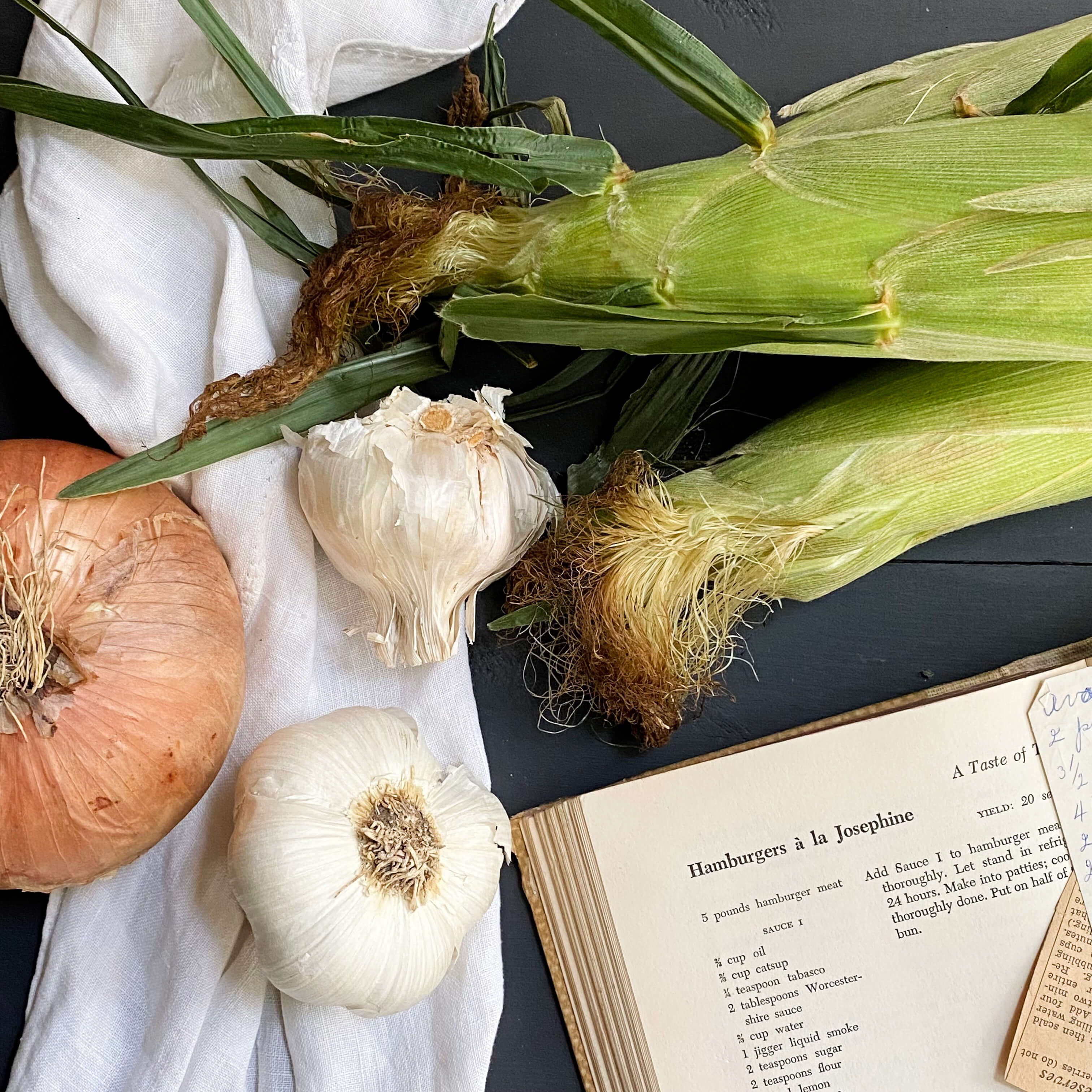
The next minute it’s the 4th of July. I’m making a vintage summer recipe for the blog. The humidity has set in and the slugs have returned. The witch hazel has grown 6″ inches. Tomatoes and corn have replaced the kale and collards in the garden. The Nemesia has outgrown its pot twice. The summer vegetable garden has been planted. The autumn pumpkin seedlings have started to flower. And the shop is filling and emptying, filling and emptying again with a season’s worth of new old stories.

How did three months pass so quickly? How did we go so fast from collards at the end of one season to corn at the beginning of another? How did all the trees leaf out, and the wildflowers bloom on the side of the road, and the strawberries appear and then disappear? How did Mother’s Day, Memorial Day, Father’s Day, and Fourth of July fireworks pass without a single reflective moment to stop and share here on the blog?

So many interesting stories, gardening adventures, and heirloom gatherings have filled up those past three months. So many things I wanted to share, slated to share, photographed to share. But somehow, the days whizzed by. One by one, ten by twenty, thirty by sixty. All to wind up here at ninety days with nothing new but last April’s post.

Long stretches of absence like this are rare here on the blog and it can be challenging to start back up again after such an extended time away. Fortunately, after much stewing about how to return and what to say, Eleanor Roosevelt breezed into the Vintage Kitchen last week and offered up a bit of wisdom.

“If life were predictable, it would cease to be life, and be without flavor.” – Eleanor Roosevelt

This quote is attributed to Eleanor’s 1937 autobiography, This is My Story, which is now included on my list of books to read. Somehow Eleanor’s wise words wound up describing the very circumstance that defined the last three months. It was unpredictable. It was full of flavor.
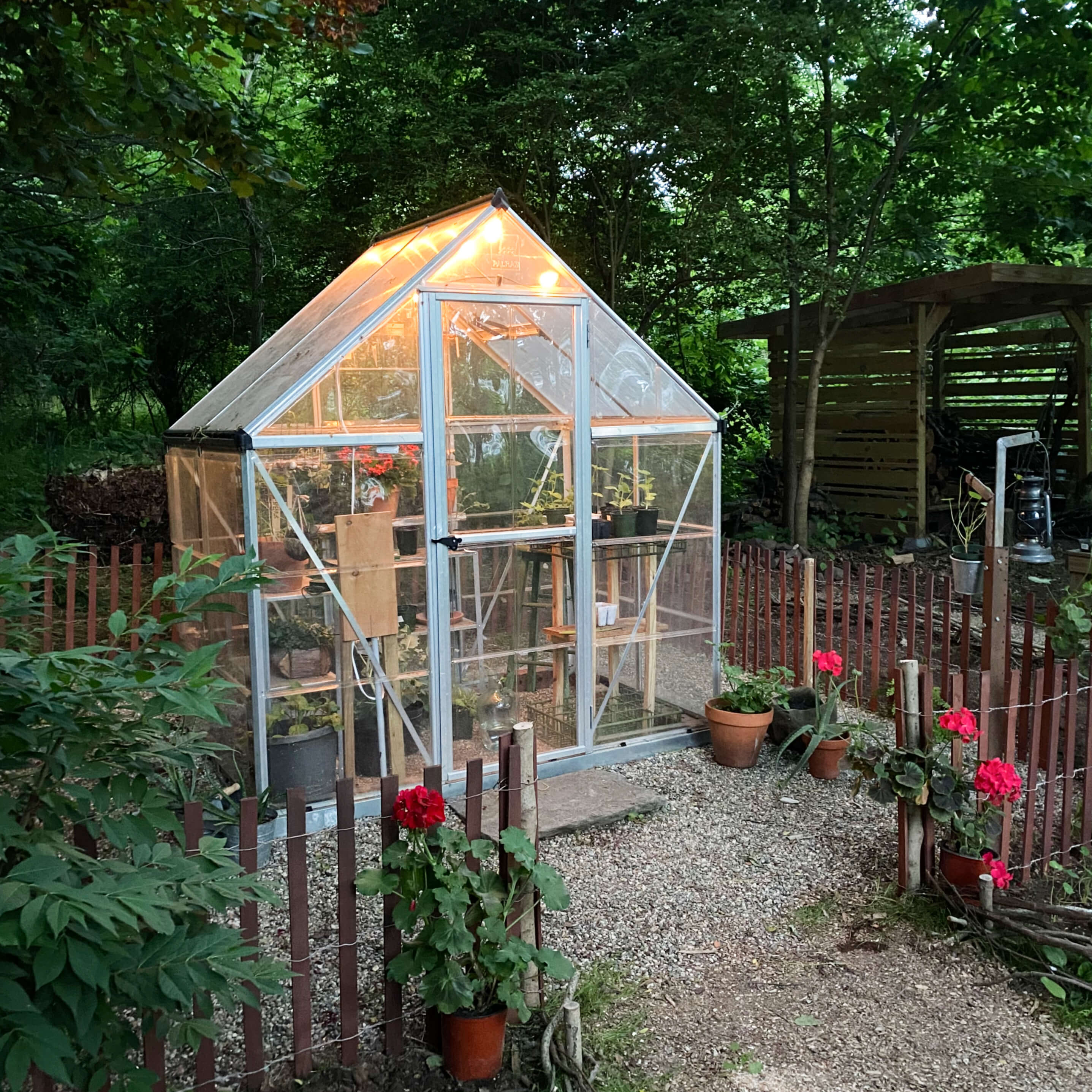
The greenhouse got a fence. The hollyhocks bloomed. The 1750 House cupola was rebuilt. The vegetable garden was harvested for spring. And then it was re-planted for summer. The holidays were celebrated. The tomatoes climbed. Tulip bulbs were ordered for fall. Vegetable seeds were exchanged. A wild pheasant stopped by to say hello. Friends and family came to visit. Recipes were cooked. Heirlooms were collected. And after a two year wait, the foxgloves flowered for the first time.


The activities were plentiful, and each day different in routine and rhythm. Just like Eleanor said… they were full. In that spirit of busy activity, I thought it would be fun to do a quick recap via photos of what’s been going on in the kitchen, the garden, and the shop over the past three months so that we could wind our way back towards the present to share a new vintage recipe so perfectly suited for the mood and the moment. This is a catch-up post of the past three months with a 1960s recipe for homemade ketchup attached at the end. Catching up with ketchup, if you will.

A Look Back…

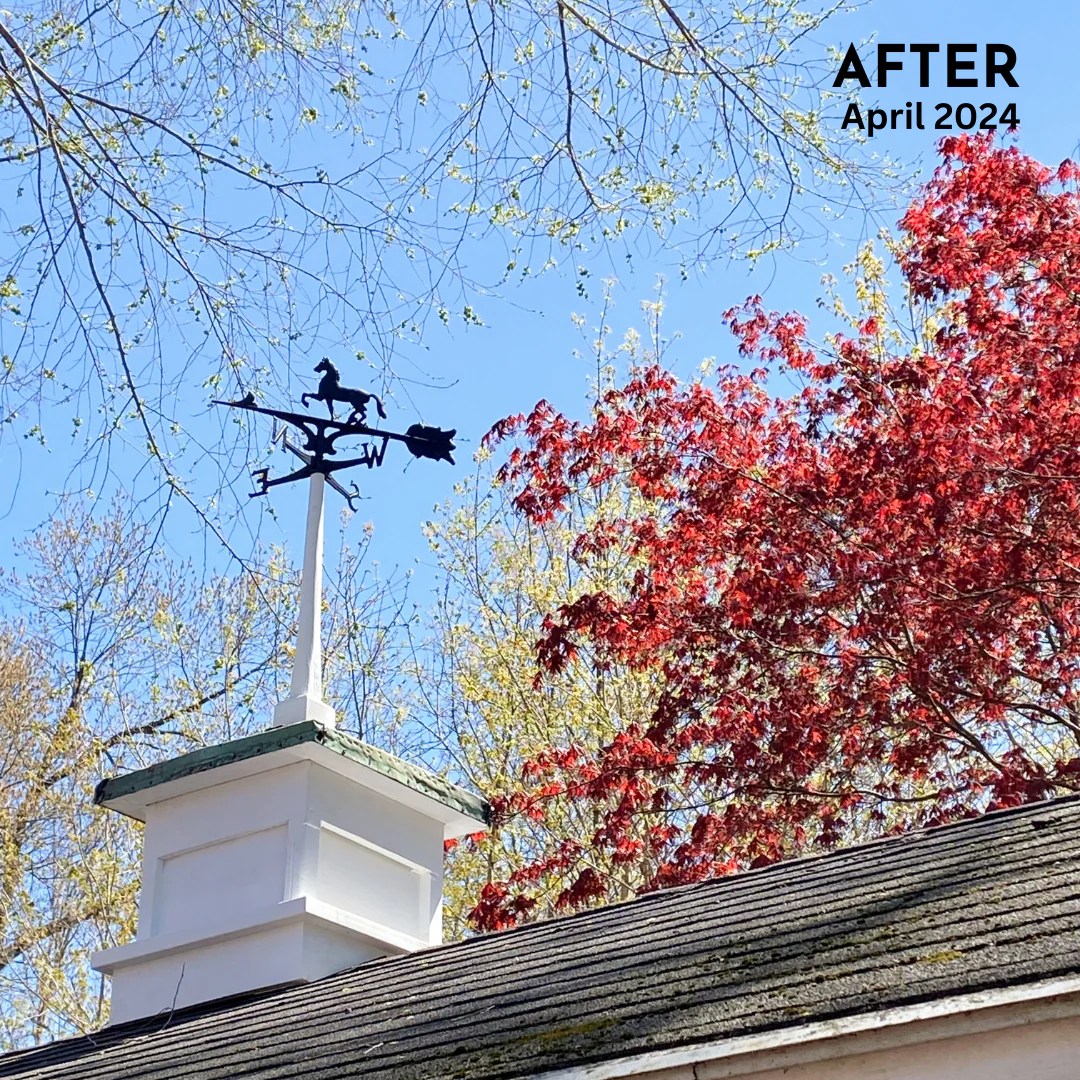
Two of the most exciting 1750 House renovation projects were the rebuilding of the 1930s cupola which had been chewed to pieces by squirrels long before we moved in, and the addition of a long-awaited fence around the greenhouse. The cupola was rebuilt using old tools and old techniques and squirrel-proofed so that the weathervane horse could freely run with the wind once again…

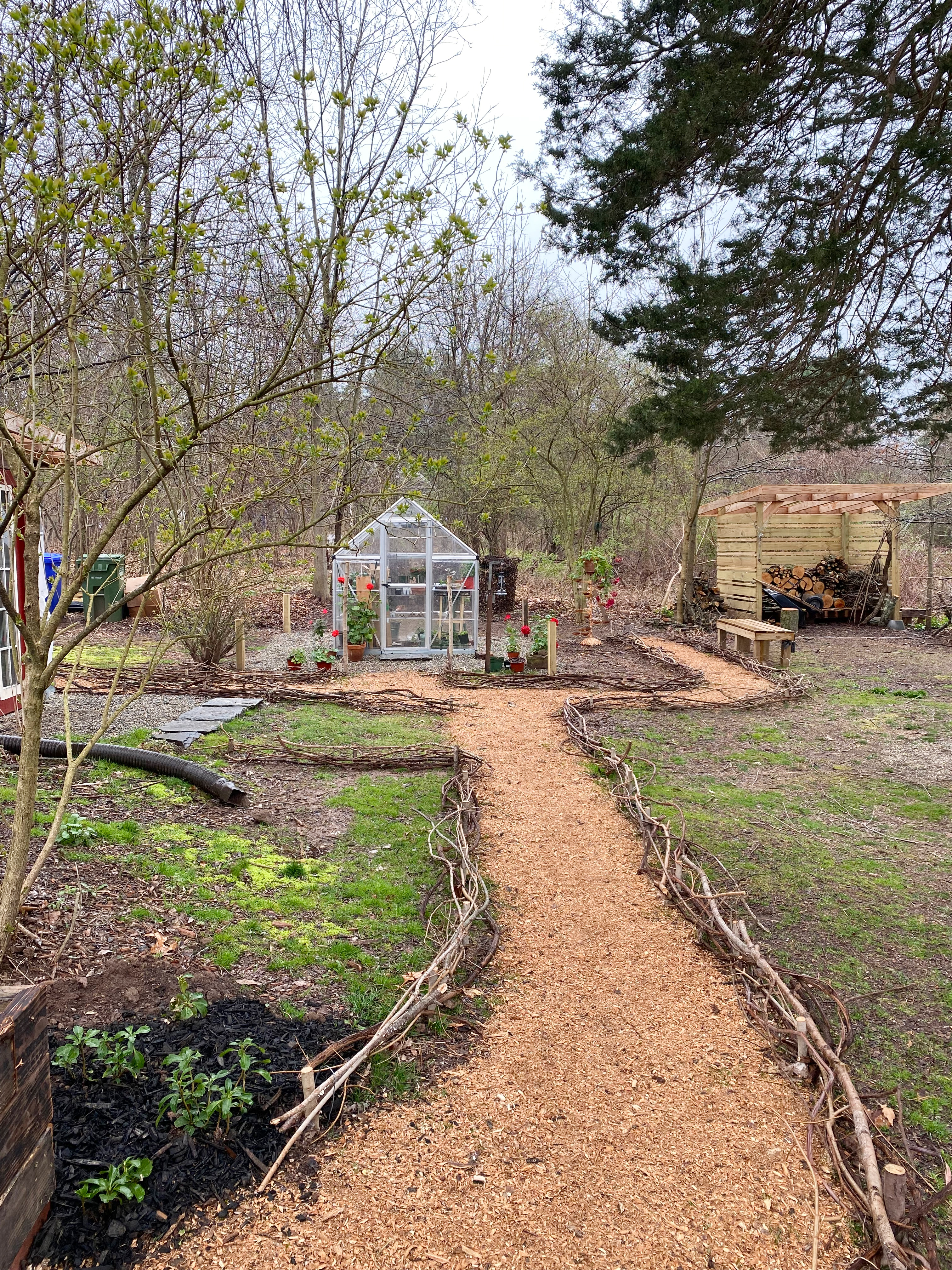
The greenhouse fence adds some dimension to the side yard and forms the backdrop for a cottage garden that will eventually include shrubs, perennials, climbing flowers, and a permanent herb garden.

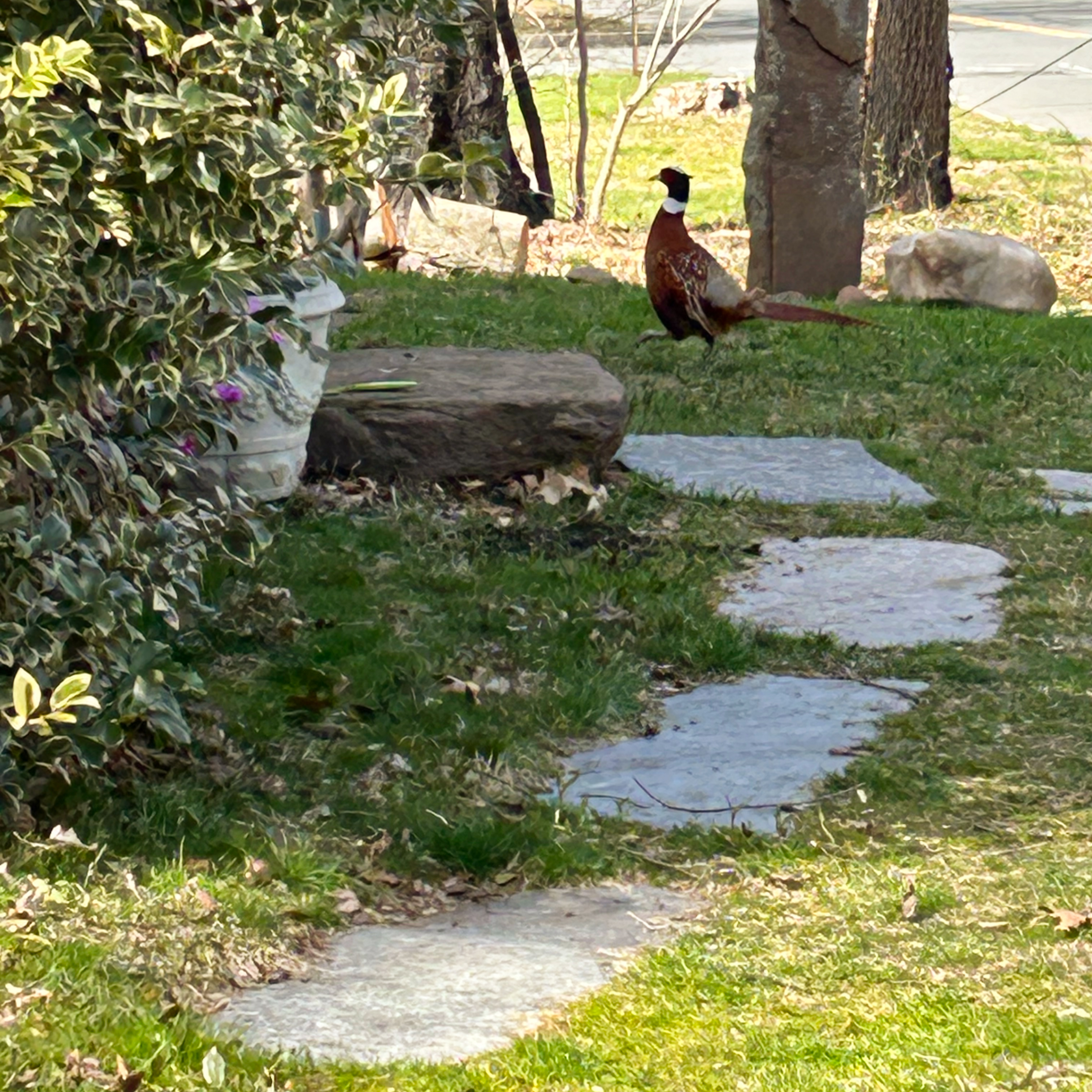
In early May, a wild pheasant came to visit…
In early June, a prehistoric-looking Dobson fly appeared one morning in the greenhouse…

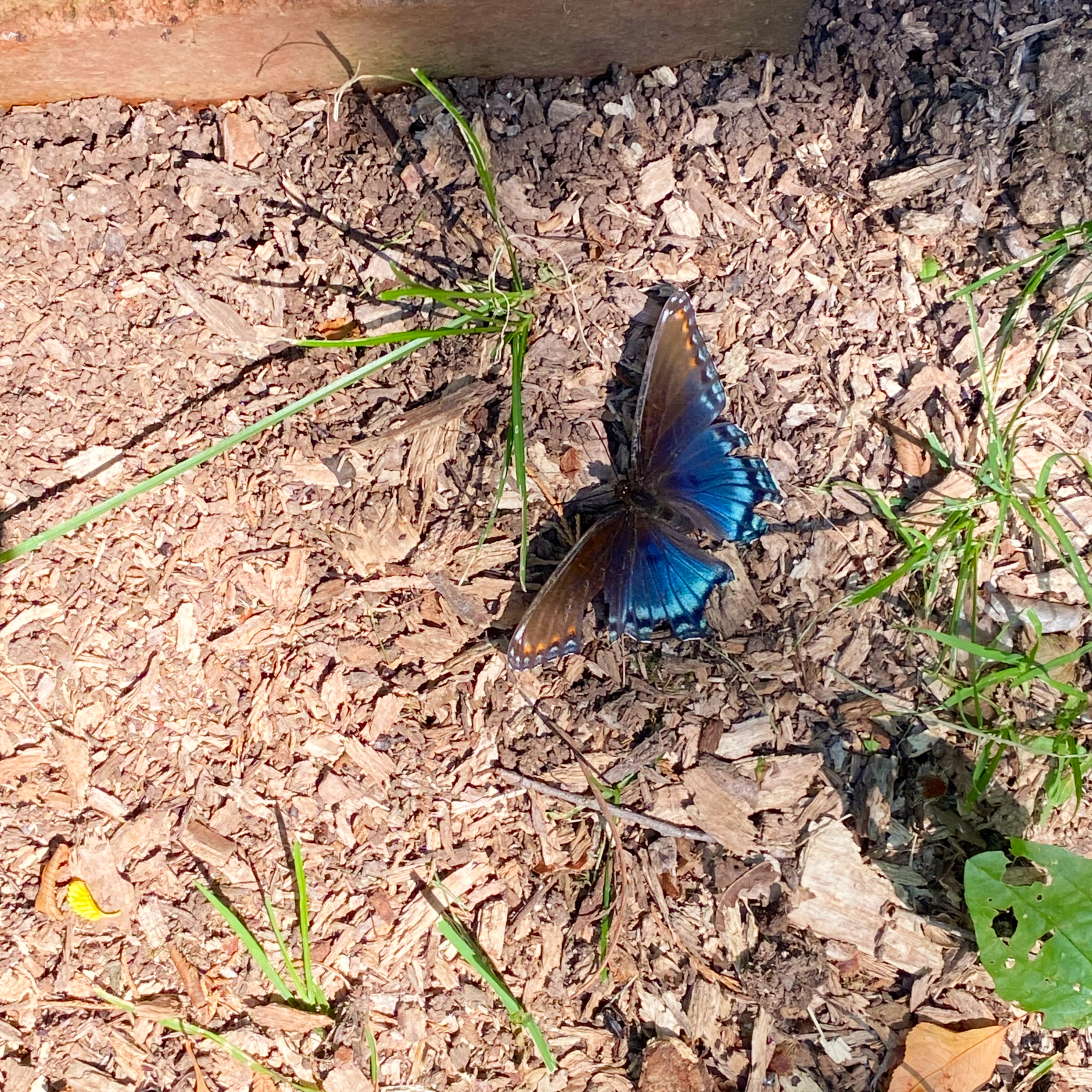
And at the end of June, we saw our first butterfly of the season, a Red-Spotted Purple dipping and diving around the garden path and raised beds.
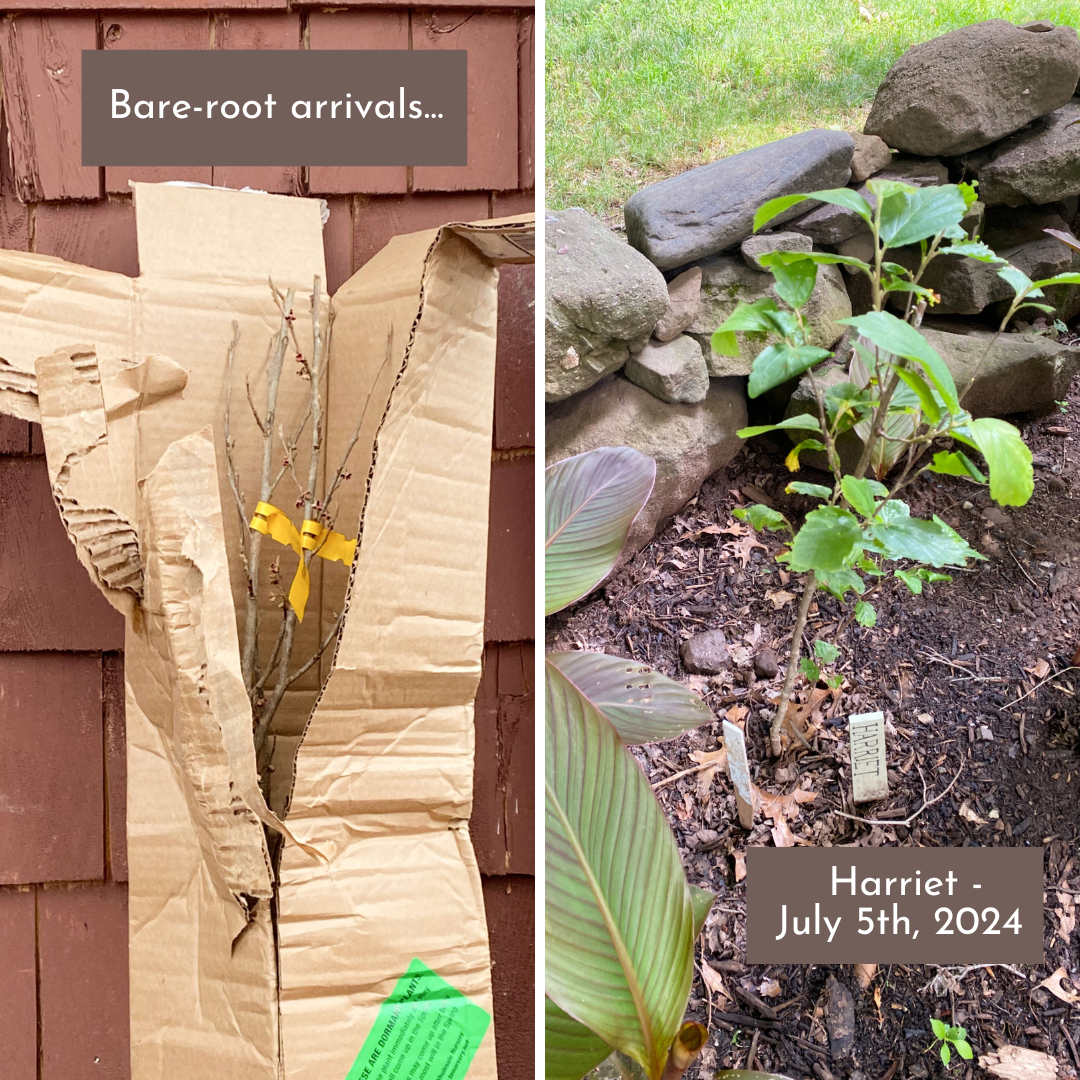
The witch hazel, from February’s Fragrant Year post, arrived in the mail in mid-April with not one bare root specimen but three, even though I just ordered one. All three trees were planted and named (Hazel, Harriet and Hilda – a nod to the original H-hinges inside 1750 House) so that I can track and record each one’s progress. All was well for a couple of months with each leafing out and growing taller, but sadly, Hazel got some sort of blight and lost all her leaves. I’ve left her in the ground in hopes that she recovers, so we’ll wait and see what happens over the next few months. In the meantime, Hilda and Harriet are doing great. In three months, they’ve each grown 6″ inches and have sprouted numerous sets of leaves. If they keep that growth rate up through the fall, by the end of 2024 they should be reaching about four feet in height.
Scenes From The Garden…
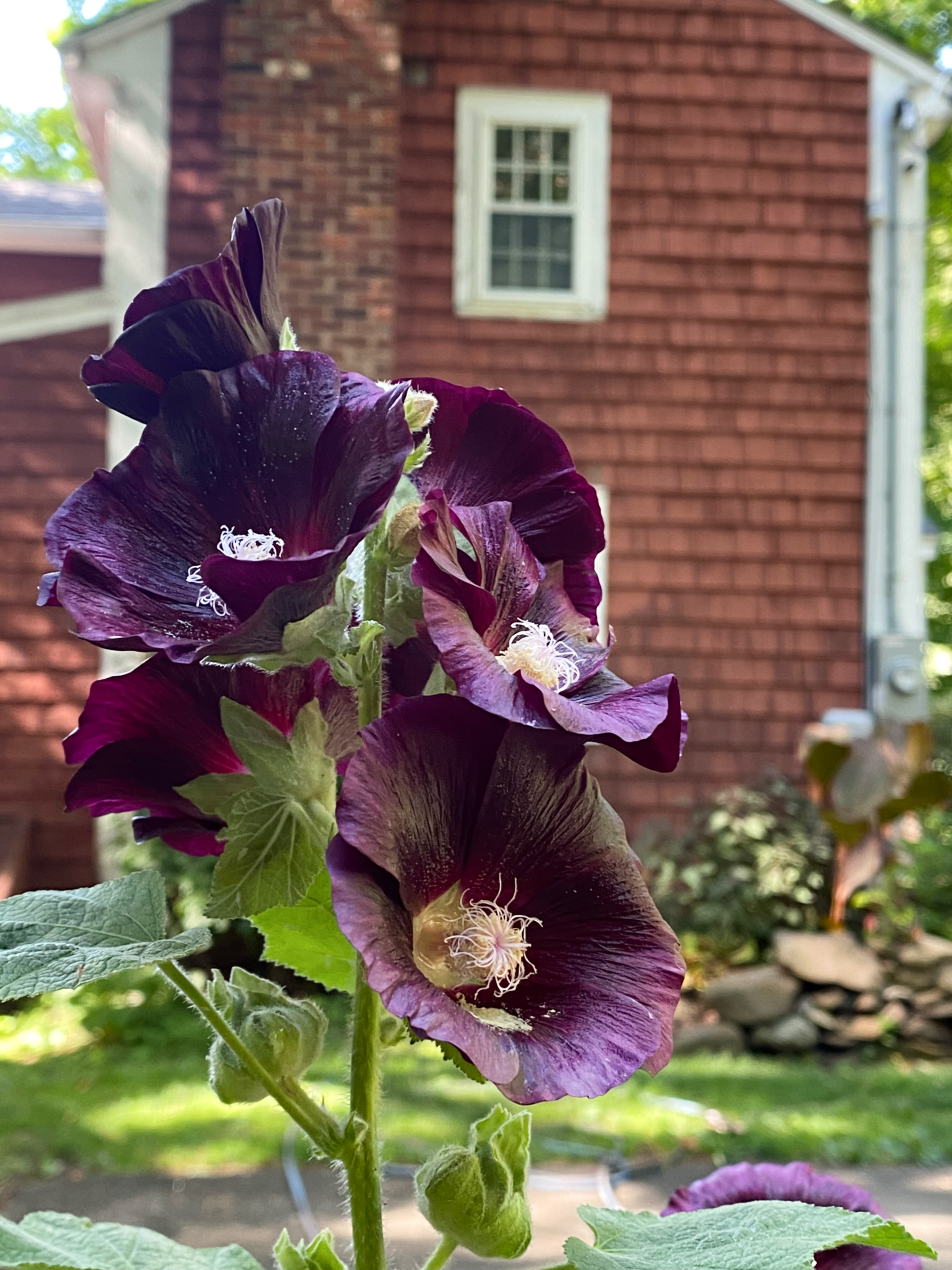
Hollyhocks (Variety: The Watchman)

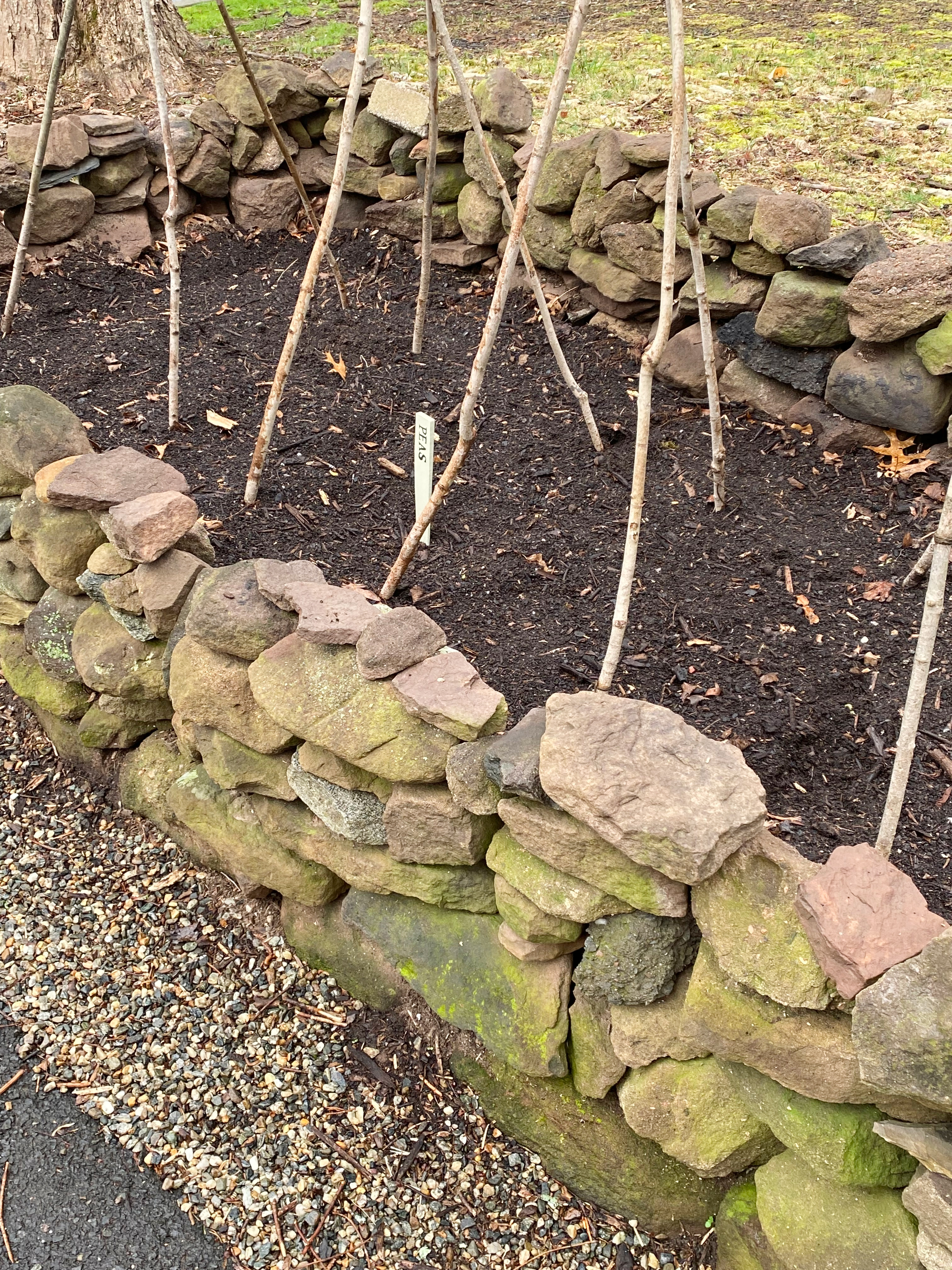
Peas (Variety: Cascadia)

First garden harvest – early June.

Nasturtiums (Variety: Jewel Blend)

Cucamelons on the arch

Cherry Tomatoes (Variety: Sun Gold Pole)

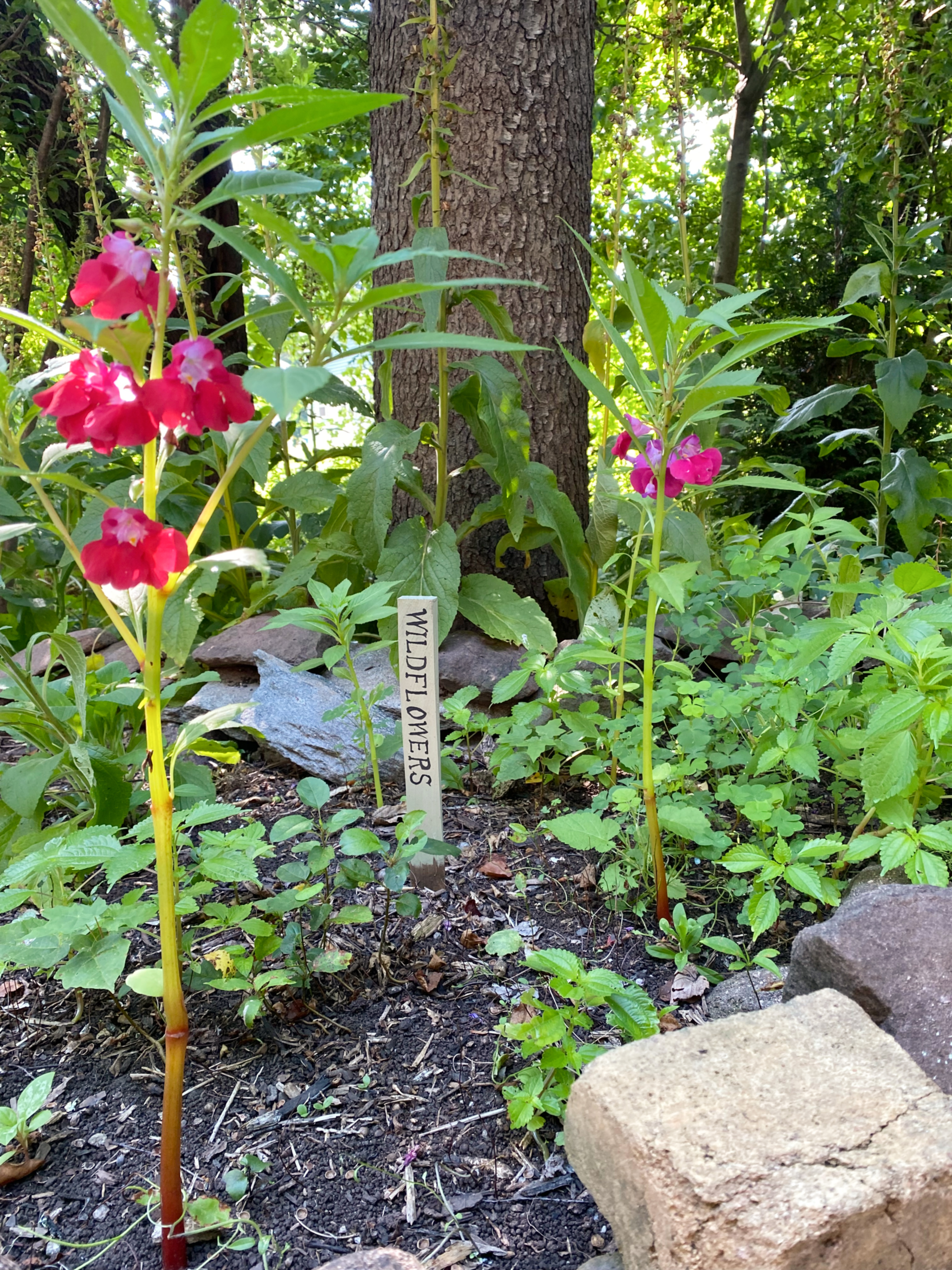
The start of the wildflower bed

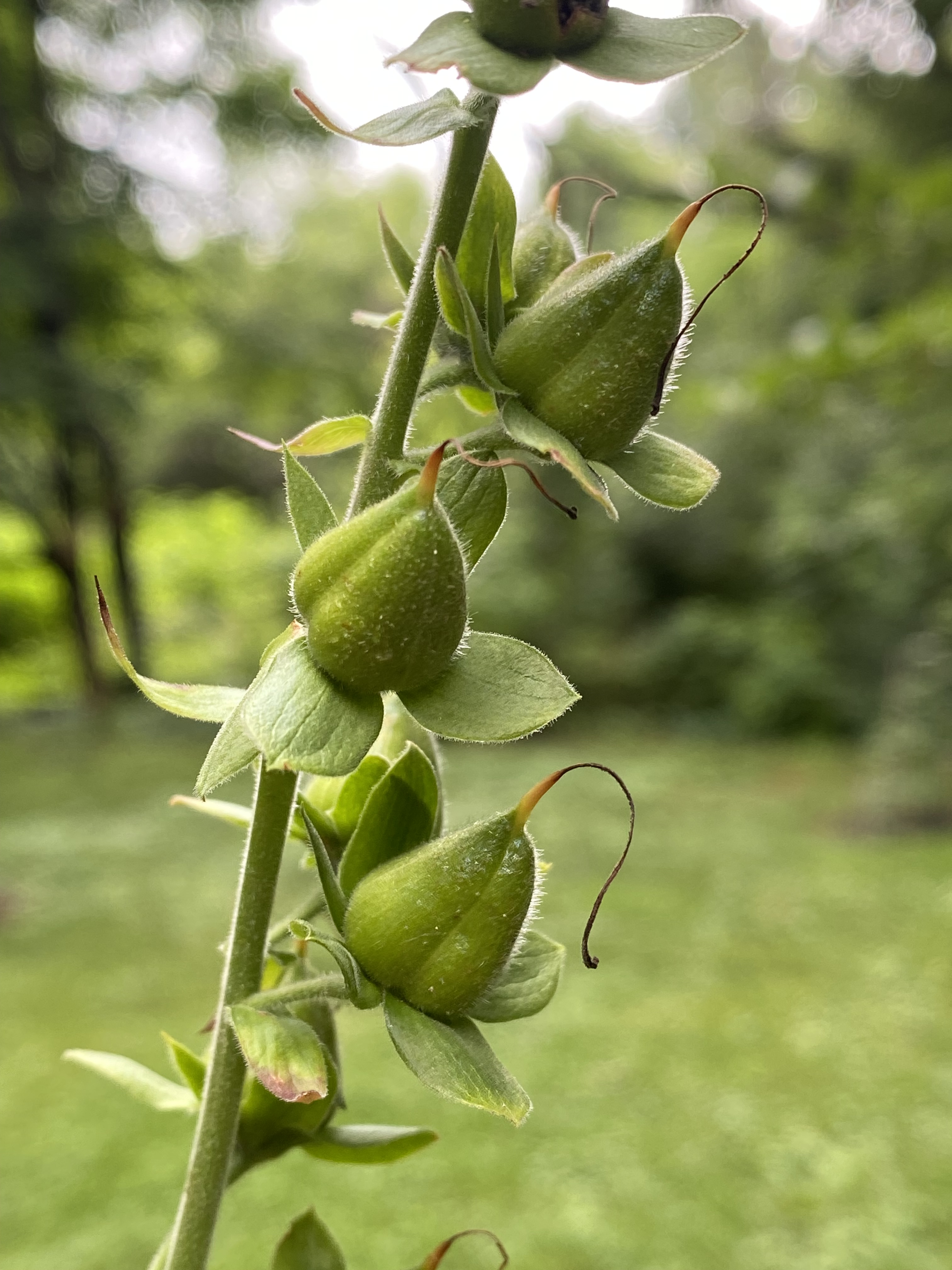
Foxglove seed pods

Summer Squash (Variety: Black Beauty)

Corn (Variety: Silver Queen White)

Stonecrop

Overwintered Pineapple Sage

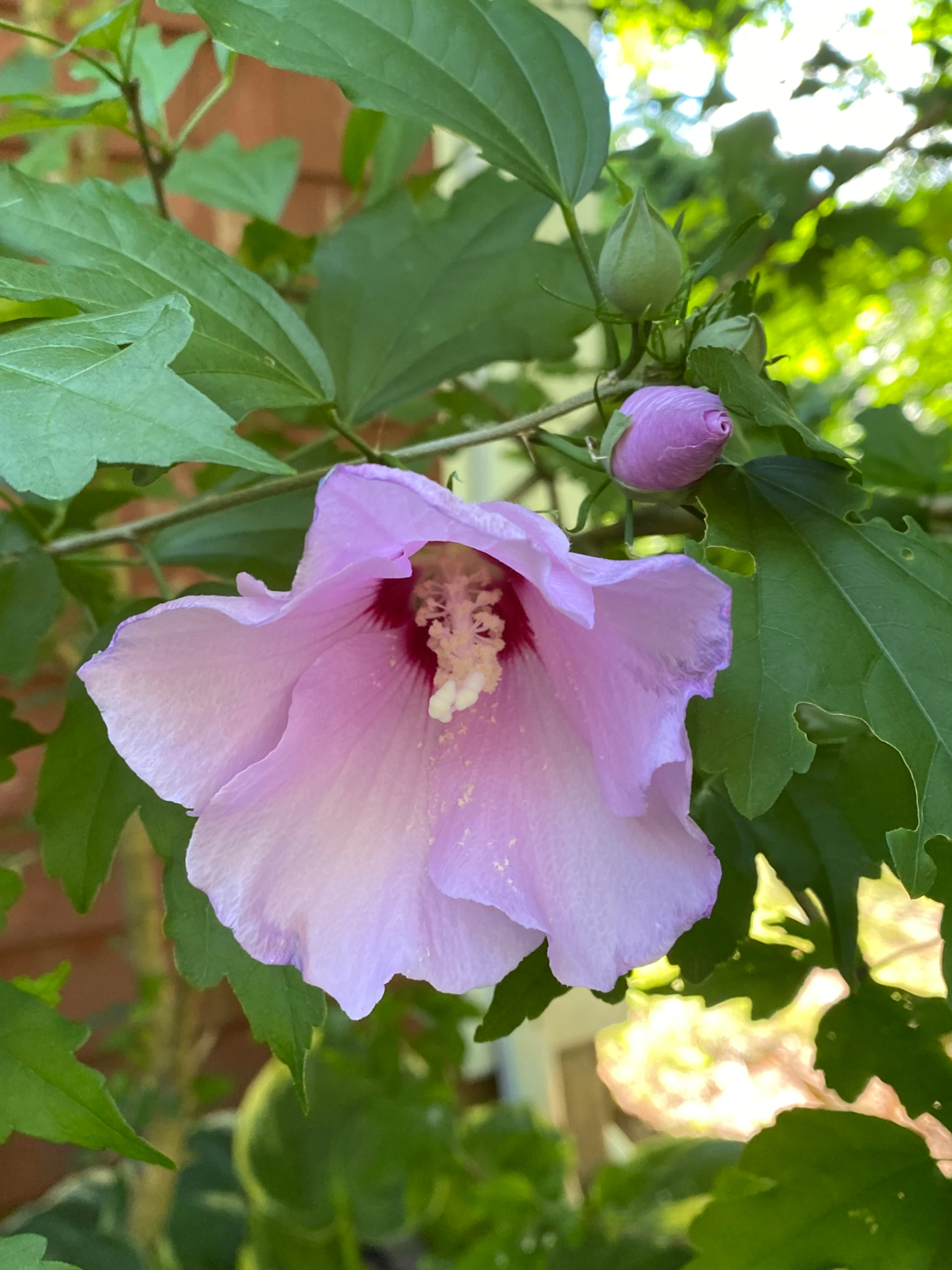
Rose of Sharon

Stories From The Shop…

Every bit of kitchen history is always interesting, but every season there are a few stand-out stories that capture quite a bit of attention. These are some of the latest encountered over the past three months. Clicking on the photos will take you directly to the shop item that inspired further storytelling…

The lives and adventures of early 20th-century husband and wife explorer team – Zetta and Carveth Wells

Long Island’s Roosevelt Raceway, a horse racing mecca from the 1940s-1980

.

The prize-winning pattern of a 1943 amateur design contest held by the Vogue Mercantile Institute in collaboration with Homer Laughlin.

The story of Perdita and the Charleston restaurant she inspired.

The 1930s baking invention of Cale Schneider.

Just last week, we debuted our own custom-designed ITVK gift wrap. The floral pattern was inspired by a vintage print that I found in a South Carolina antique shop in 2003. That print, along with an antique platter also found that day, launched a passion for collecting vintage and antique heirlooms and laid the groundwork for what would eventually become In The Vintage Kitchen.

This was a packaging project I first started dreaming about during the 2020 COVID lockdown. I picked the colors in the bouquet to represent the brand colors of the Vintage Kitchen long before I ever knew that a red house built in 1750 and surrounded by garden beds of orange lilies awaited in my future. The floral bouquet was resized, recolored, and brightened up to give it a more modern feel by a wonderfully talented graphic designer based in Austria. I think it’s the perfect blend of history, sentiment and fate. All purchases from the shop are wrapped, and complimentary, so if you find an heirloom you love, it will arrive packaged up in this…

That Was Then, This Is Now…

Now that we are all caught up, let’s ketchup. This recipe comes from the 1961 New York Times Cookbook, edited by one of our favorite Vintage Kitchen cooks, Craig Claiborne. Since it’s condiment season I thought this would be a fun one to feature for a couple of reasons.

Just like mayonnaise, I have always heard that a homemade version is much tastier than any store-bought variety. And since there aren’t really that many different types of ketchup available at the market, this recipe will add a little something unique and unexpected to your summer cookouts. Also, at some point in the summer when harvests are abundant and overwhelming, I always find it helpful to have a collection of recipes at the ready that require big batches of tomatoes so that nothing goes to waste. This recipe definitely calls for that.

This week we are making Spicy Tomato Ketchup from scratch using garden ingredients and a handful of pantry staples. The spice in the title comes from a small amount of cayenne pepper which can be omitted completely if you don’t like a little extra zip. But just to clarify this is a true ketchup, not a hot sauce, so if you are not a lover of hot and spicy foods, don’t worry, it won’t set your mouth on fire. Milder than Tabasco sauce, I’d rate the spice factor of this ketchup at about a 3 on a scale of 1 to 10 with 10 being the hot, hot, hot side.

The recipe calls for 12 pounds of tomatoes which yields about 6-8 pints of ketchup. When writing the cookbook, Craig Claiborne assumed that you would make a big batch, seal everything in sterile jars, and add it to your pantry collection for later consumption. Clearly, 8 pints is a lot of ketchup and not everyone is a home canner, myself included. I cut the recipe in half and then in half again and wound up with about 1 cup of ketchup after starting with 3 lbs of tomatoes. That size batch is shelf-stable in the fridge and is just the right amount for a few servings, and a few slatherings. Having said that, I’m posting the original recipe in case you are a ketchup lover and a canner too. This way, the measurements and portion sizes can be customized to your own needs. As for timing and difficulty, it takes a few hours to make this recipe, but it’s a very easy process. The bulk of the cooking time is hands-off while you wait for the tomato puree to reduce to a ketchup-like consistency.

Spicy Tomato Ketchup

Recipe from 1961 edition of The New York Times Cook Book. Makes 6-8 pints

12 pounds ripe tomatoes

1 cup chopped onion ( I used Vidalia onions)

1 tablespoon salt

1 cup sugar

1 teaspoon black pepper

1/2 teaspoon celery seed

1 teaspoon mustard seed

1 tablespoon whole cloves

1 stick cinnamon, broken

1 1/2 cups vinegar

1/4 teaspoon cayenne pepper

Remove the seeds before you cook the tomatoes.

Core and chop the tomatoes. Cook the tomatoes and onions together until soft (about 20-30 minutes) and then press the mixture through a fine sieve.

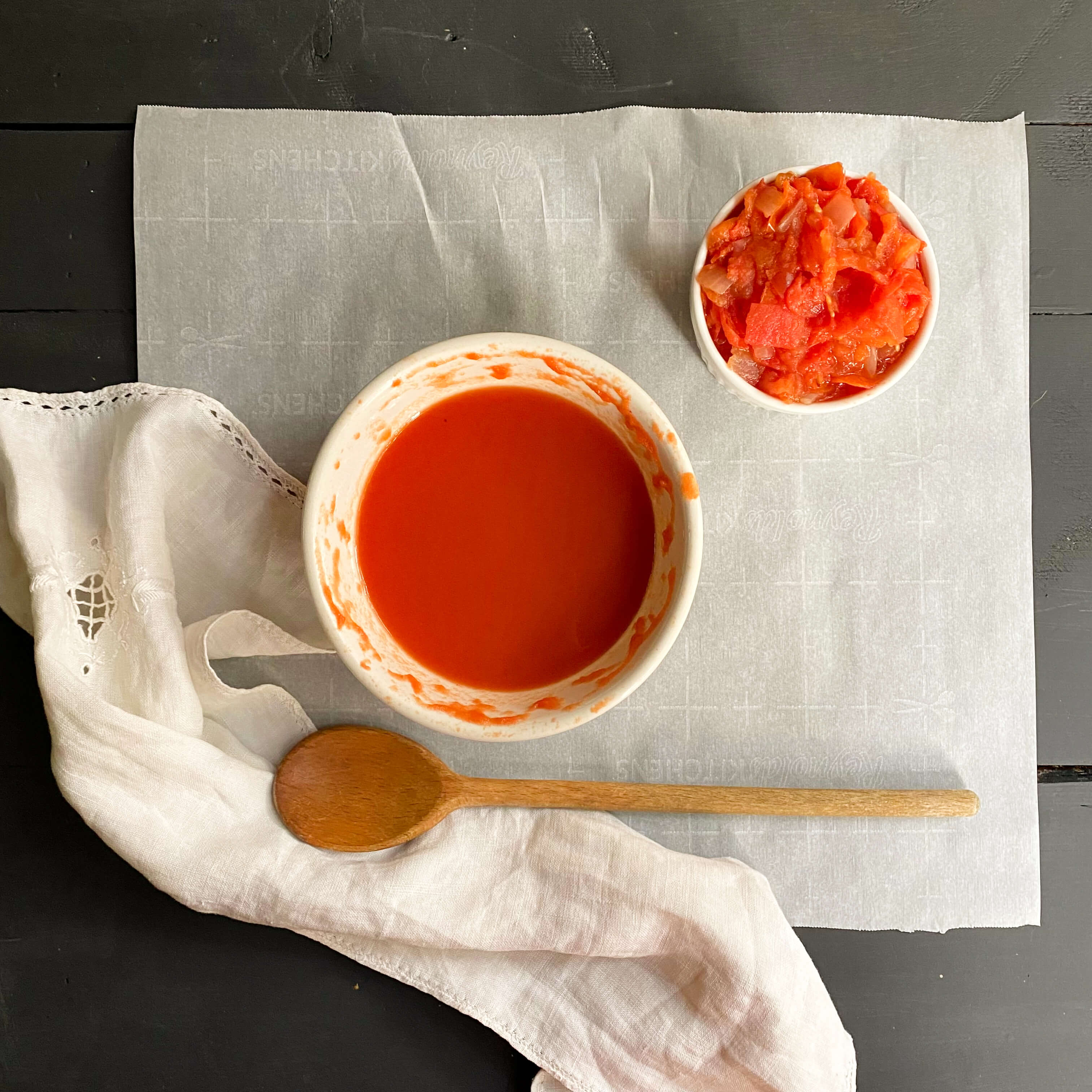
The cooked tomato and onion mixture before it is pressed through the sieve.

The tomato and onion mixture after it has been pressed through the sieve (large bowl).

Return puree to heat and cook until reduced by one-half, stirring occasionally. Combine spices in cheesecloth or a tea strainer and set in the puree. Add the rest of the ingredients and stir.

Continue cooking uncovered to desired consistency (about 2-4 hours depending on the amount of tomatoes used). Remove the spice bag. Seal ketchup in hot sterilized jars or refrigerate in an air-tight container if making a smaller batch.

With a thick consistency, a sweet taste and a peppery bite this homemade ketchup was full of delicious, tangy flavor. A little bit darker in color than our usual brand of store-bought ketchup, the best way to describe the difference between these versions is to compare them side by side.
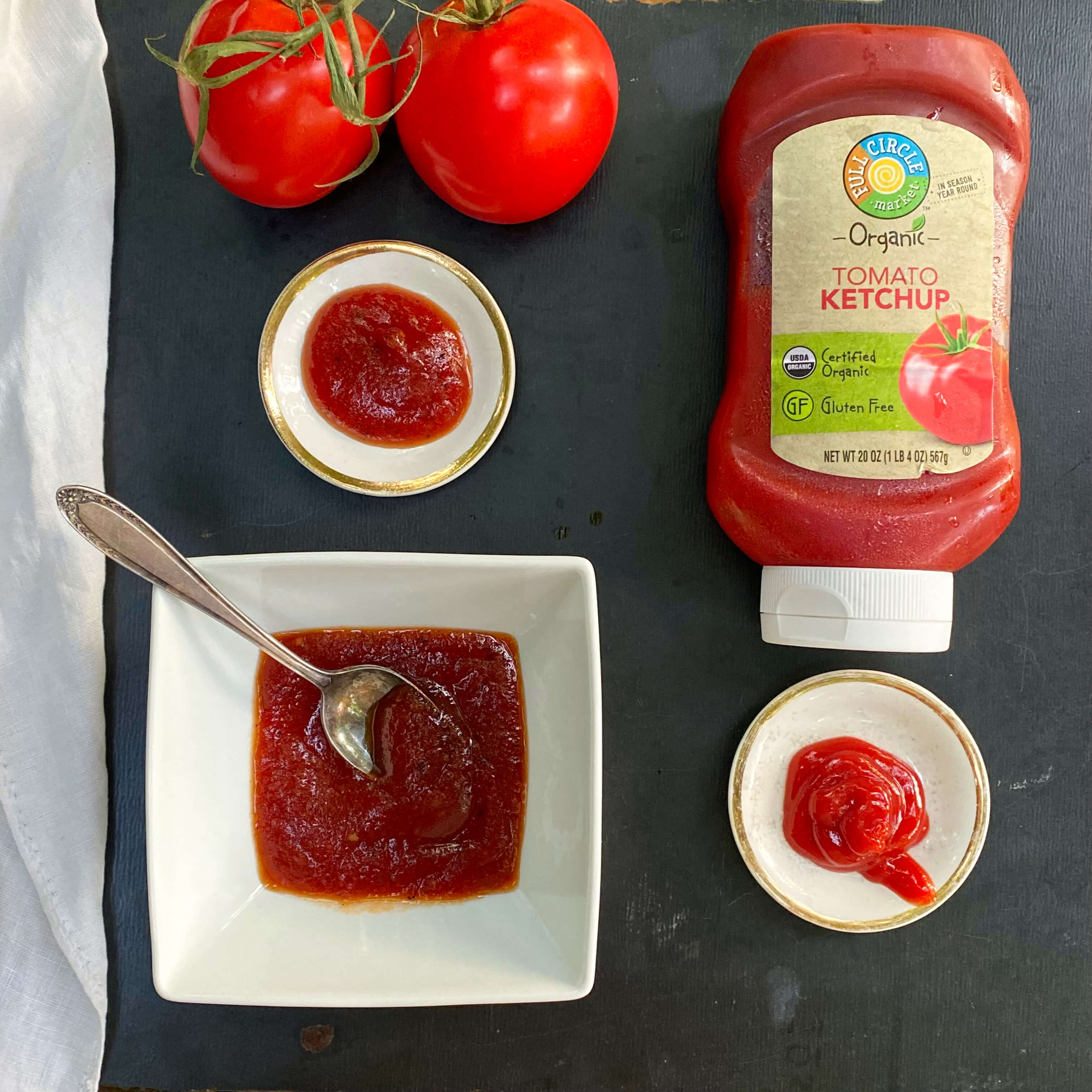
The store-bought ketchup was not as sweet and it tasted tinny like canned tomatoes with a mineral undertone. The homemade ketchup was sweeter, brighter, and more evenly balanced in flavor. The store-bought version was candy-apple red in color and smoother in consistency. The homemade version, although not thin, was more sauce-like in texture, similar to a steak sauce or a barbeque sauce, and slightly more opaque. The last defining difference between the two was the spice factor, which of course was the unique ingredient in the homemade version.

Interestingly, the store-bought ketchup contained very similar ingredients to the homemade version… organic tomato concentrate, organic sugar, organic vinegar, salt, organic spices, and organic onion powder – not too different from the ingredients we used. But like anything made from scratch in small batches, as opposed to something made en masse in a factory, you can’t beat fresh, homemade, whole-food flavor.

You might suspect that ketchup would have an origin story that begins in Italy, given the country’s love of homegrown tomatoes and homemade sauce. But actually, ketchup is steeped in centuries of Chinese food culture and dates all the way back to the 1700s when it was first used as a way to ferment and preserve fish. At that point in time, there were no tomatoes involved and it was not red in color. It was thin and watery and looked more like soy sauce. It wasn’t until the early 1800s in America that tomatoes in ketchup made their debut.
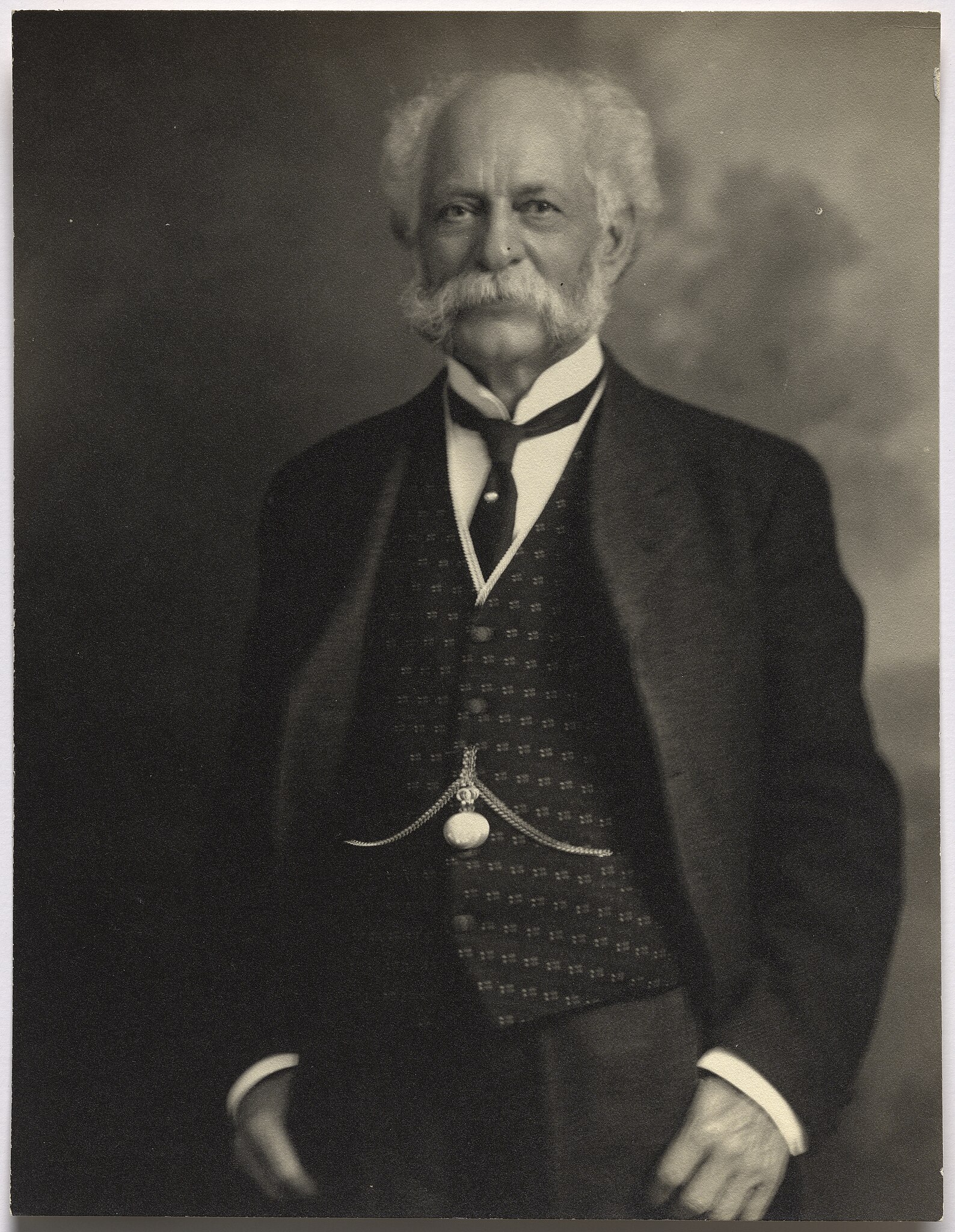
Henry John Heinz

Henry John Heinz (1844-1919) made ketchup a famous American condiment in the 1870s after years spent first experimenting with horseradish. By the 1960s, when this Spicy Tomato Ketchup recipe was published in The New York Times Cook Book, Heinz Ketchup was a worldwide favorite bringing in over $300 million dollars a year in global sales.

1960s advertisement for Heinz Ketchup

It’s interesting to think that in the dawn of convenience foods (aka the mid-20th century), when saving time in the kitchen was important to busy families, and the exciting novelty of pre-packaged foods was all the rage, that Craig Claiborne was still interested in adding a homemade ketchup recipe to his cookbook. When 1960s home cooks could have easily run out and purchased an already prepared bottle of trusted, reliable Heinz Ketchup and called the day done for a lot less time and expense, it’s interesting that the New York Times treated this ordinary, taken-for-granted, always-around condiment with a little more reverence.

In preparing this recipe, I now understand that ketchup is an elevated culinary sauce, perfected over centuries. It’s not just something you slather on your burger or your hot dog or dip your french fries into without thinking. It shouldn’t be something you buy in bulk at the grocery store with the same level of enthusiasm as buying a roll of paper towels. Homemade ketchup requires time and a unique blend of ingredients to bring out all the flavors. It’s a condiment worthy of attention and of appreciation. When it is homemade, it offers a gourmet flourish to your summer grill menu and adds a bit of zesty flavor to your palate and your plate. There is also something freeing about knowing that, should we ever run across The Great Tomato Ketchup Shortage of 2021 again, we could easily whip up a batch ourselves if we needed to. I guess this means that I need to learn how to can. So that I can go ahead and make those eight pints and have a reserve in my pantry. This homemade recipe will spoil you in that way. It will turn your attention away from all those other commercial ketchups. There is truth in the saying. Yes, homemade ketchup tastes better than a store-bought version.

I hope you love this ketchup recipe just as much. As always, if you make it please share your thoughts in the comment section below. And if you’d like to experiment with another homemade condiment, try this wonderful Danish mustard recipe here.

Cheers to Craig, Eleanor and tomato growers all over the globe for adding so much flavor to our summer days.

Growing A Fragrant Year: Violas For March and Part of April

{A Fragrant Year is an ongoing series shared throughout 2024 highlighting twelve fragrant plants, trees, flowers, shrubs and herbs added to the New England garden landscape, month by month, surrounding a house built in 1750. This series was inspired by the 1967 garden book, The Fragrant Year by Helen Van Pelt Wilson and Leonie Bell. If you are new to the blog, catch up with our first introductory post here.}

March blew into the kitchen in a flurry of raindrops, wind chills and the occasional threat of one more snowstorm. My favorite local nursery didn’t open for the season until mid-month, and as we are quickly learning, not much happens in New England on any sort of instant gardening level until the beginning of April. So this month, there will be two fragrant garden posts – one for March and then the other for April so that we can keep on track for a full year of fragrant gardening month by month.

When our local garden nursery did open its doors for the season, a much-anticipated event in my world, a sea of pastel colors unfolded rack by rack, tray by tray, row by row. Aside from all that lovely Easter egg-shaded splendor, the thing that immediately greeted everyone at the door was the unexpected scent of warm honeycomb. This was not a fragrance brought on by bees zipping in and out of the flower pallets nor by close-by hives where they like to linger. This was the scent of violas, our featured fragrant flower for the month of March and part of April.

Dainty and delicate, a smaller but more robust version of their bigger blossomed offspring, the pansies, violas have always been a flower I passed by in previous years because of their size and what I thought was a sort of a hum-drum, everyday ordinariness. But when seeing them altogether, in masses of bright purples, oranges, lavender blues, crimson reds, lemon yellows and perfect whites they were a bright sight for winter-weary eyes. I also never realized what an incredible fragrance they carry, but after reading all about them in Helen and Leonie’s book, The Fragrant Year they were definitely worth a second look. “The fragrance reaches out to snare you into stopping, marveling, ” wrote Helen and Leonie back in 1967. Indeed.

Technically considered an herb, violas are the parent plant of pansies, and though while smaller in size, will put out more buds and blooms in the late winter/early spring months than pansies. They are also a heartier plant that is able to withstand freezing temperatures and snowy landscapes, an ideal match for our New England climate, but also for other areas around the country that experience cool weather temperatures during springtime too. Ideal temperatures for growing these ladies are 40 degrees at night and 60-70 degrees during the day.

“The end of the growing season is the beginning for violas since short cool days are needed to trigger bud formation,” write Helen and Leonie. That means that when you plant violas, you actually encourage two growing seasons from them each year – one in fall and one in spring. And since they come in an array of colors beyond the most traditional (lavender), they can complement most garden palettes. Here are just a few color choices within the viola family…

First discovered in the Pyrenees, violas have been part of kitchen gardens for centuries. Used in making tea, wine, and liqueurs, they are also members of the edible flowers club. Not only do they add an interesting slightly sweet flavor to salads, cheese, butter and desserts but they also add beauty and color to the plate as well. And their contributions to everyday life just don’t stop at the kitchen either. Throughout history, violas have also been used in making perfume and medicinal salves since they contain both anti-inflammatory and anti-bacterial properties. These flowers might be mini in size but they certainly are mighty when it comes to usefulness.

Viola cornuta circa 1830

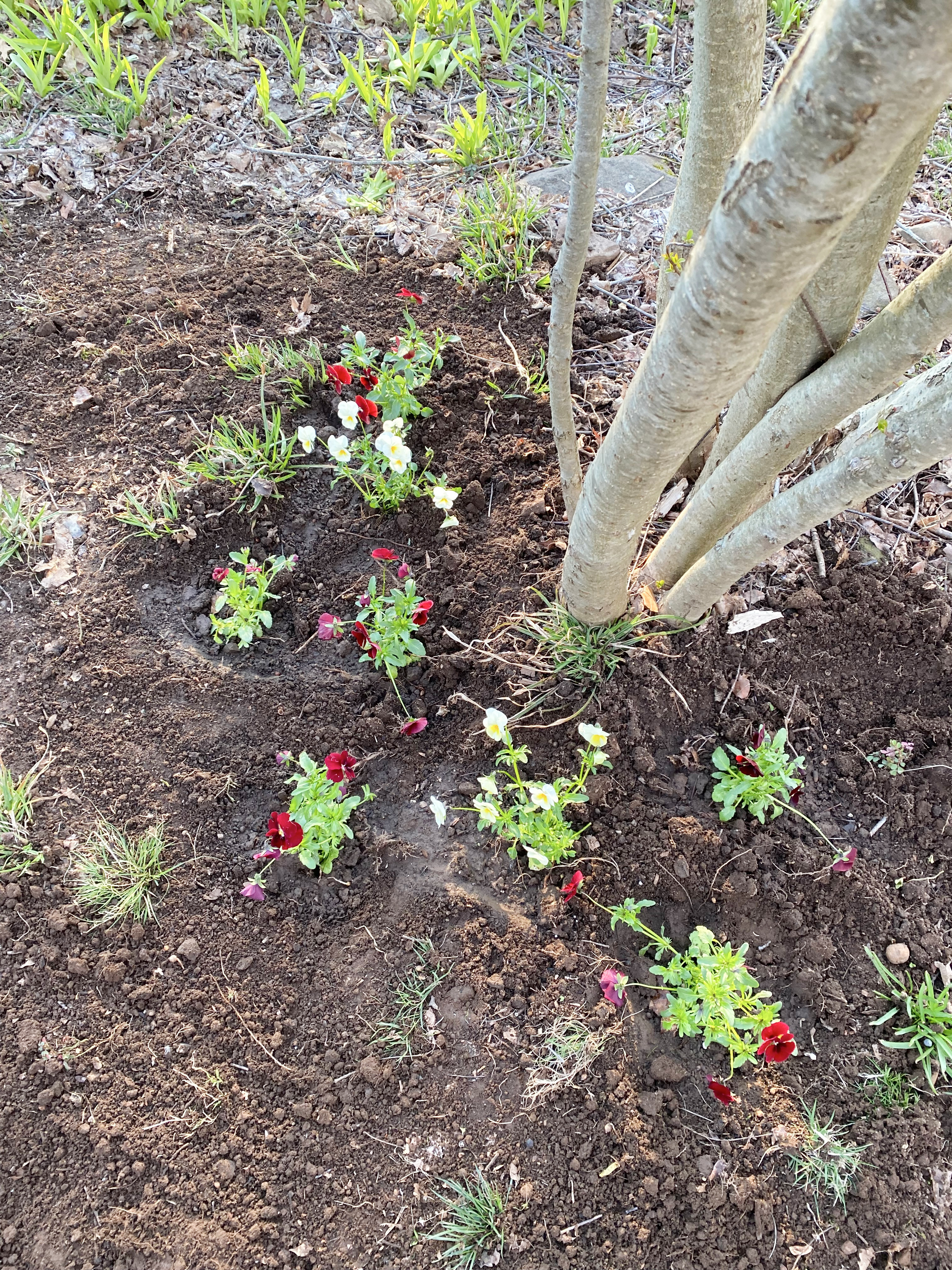
I came home with a variety called Penny Lane (a hybrid of the Viola cornuta family) which comes in a mix of shades ranging from deep red to white and yellow. The more you plant, the greater the scent of course, but it’s amazing to think that even one small plant can carry what seems like an entire perfume factory in just a few petals.

We have French botanist, Rene Louiche Desfontaines (1750-1833) to thank for describing and naming this variety of viola. He did this in the late 1700s, which makes them a very age-appropriate choice for 1750 House. That was an unexpected surprise learned after I brought the Penny Lanes home, but now that they are firmly nestled under a crab apple tree, tucked in between woodland border beds of daylilies and foxglove starts from last year (see more of those below) they seem quite fitting.

My eight plants might not be much of an exuberant site at the moment, but one of the fun things about violas is their ability to self-seed on their own. In theory, fingers crossed, in the next couple of years, we’ll see violas popping up all over the woodland areas surrounding this small bed that will add color, interest and most importantly, fragrance to the early spring and late autumn landscape. We’ll catch up with them again in fall to see how this set is doing and to see how much they’ve grown over the course of the next seven months.

Meanwhile, here are some other sights and updates from the greenhouse diaries of March and part of April 2024…

New pathways around the greenhouse and the yard are underway. We’ve lined each one with a wattle border using invasive vines cut down from the woodlands that were taking over some of the tree canopies. Landscaping bushes, a short fence around the greenhouse, and more planting beds are coming soon to that area.

Do you remember the first planting of the foxglove seedlings from last year? This is them now after being planted in the garden last May. The one thing that is difficult to find online these days is a visual example of what foxglove, started from seed, should look like year one just as a green plant before it flowers in year two. There are plenty of photographs that show foxglove fully flowered out in year two but none taht I could find at least of how the plants should look in their first year. I’m so happy to share these photos because hopefully it will become a helpful reference for other gardeners too. As I discovered, year one foxglove plants (leaves only) are beautiful.

In the first year, they grow to about the size of a large head of lettuce and stay green year-round including during the winter – even in below-freezing temperatures and snow. We planted ours on the edge of the woods in an area that we will continue adding to year after year, so that eventually the woodlands bordering the edge of the yard will be lush and green and full of foxglove. Much prettier than looking at bare patches of dirt.

The collard greens and the peas have been planted in their springtime beds…

The pea patch also increased in size to three 8 foot rows. The more peas the better.

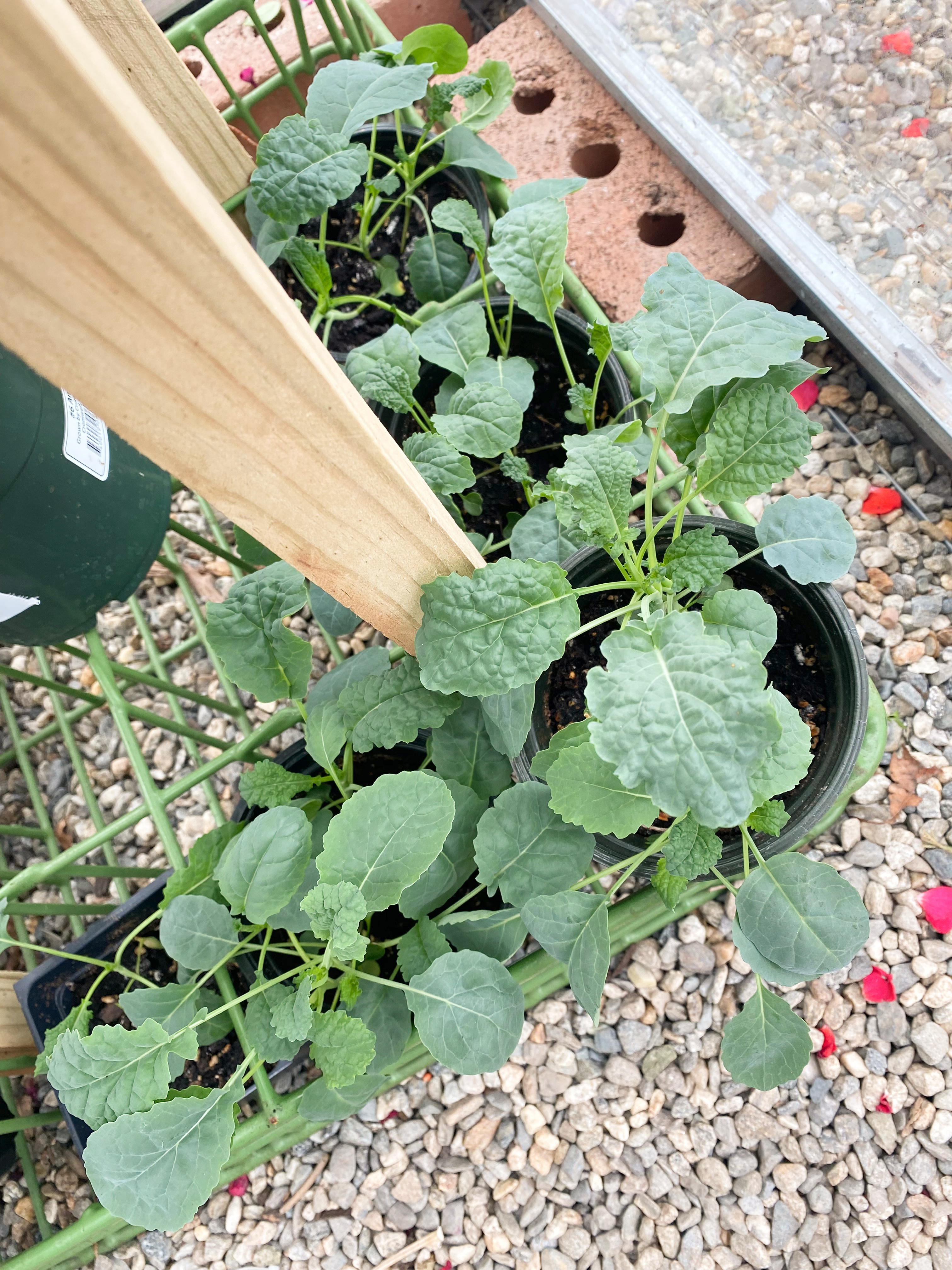
And the brocolli is now 12″ inches tall. The beets greens are growing.The kale is just right at 6″ inches now and Liz has a lemon with triplets on the way.

Broccoli!

Beets!

Kale

Liz Lemon!

An industrious pair of black-capped chickadees pecked their way through a post on the back porch of 1750 House. What’s particularly fascinating is that this post is not made of wood but of a plastic composite that holds up one corner of the 1990s addition. The post will eventually get replaced with real wood, but for now, the chickadees seem more than happy to call it home. And we are more than happy to have these cute little songbirds as neighbors. Not only do they sing their way through the day but they also feast on a host of insects that can be problematic in the garden including the dreaded scale bug, which we had troubles with last year.

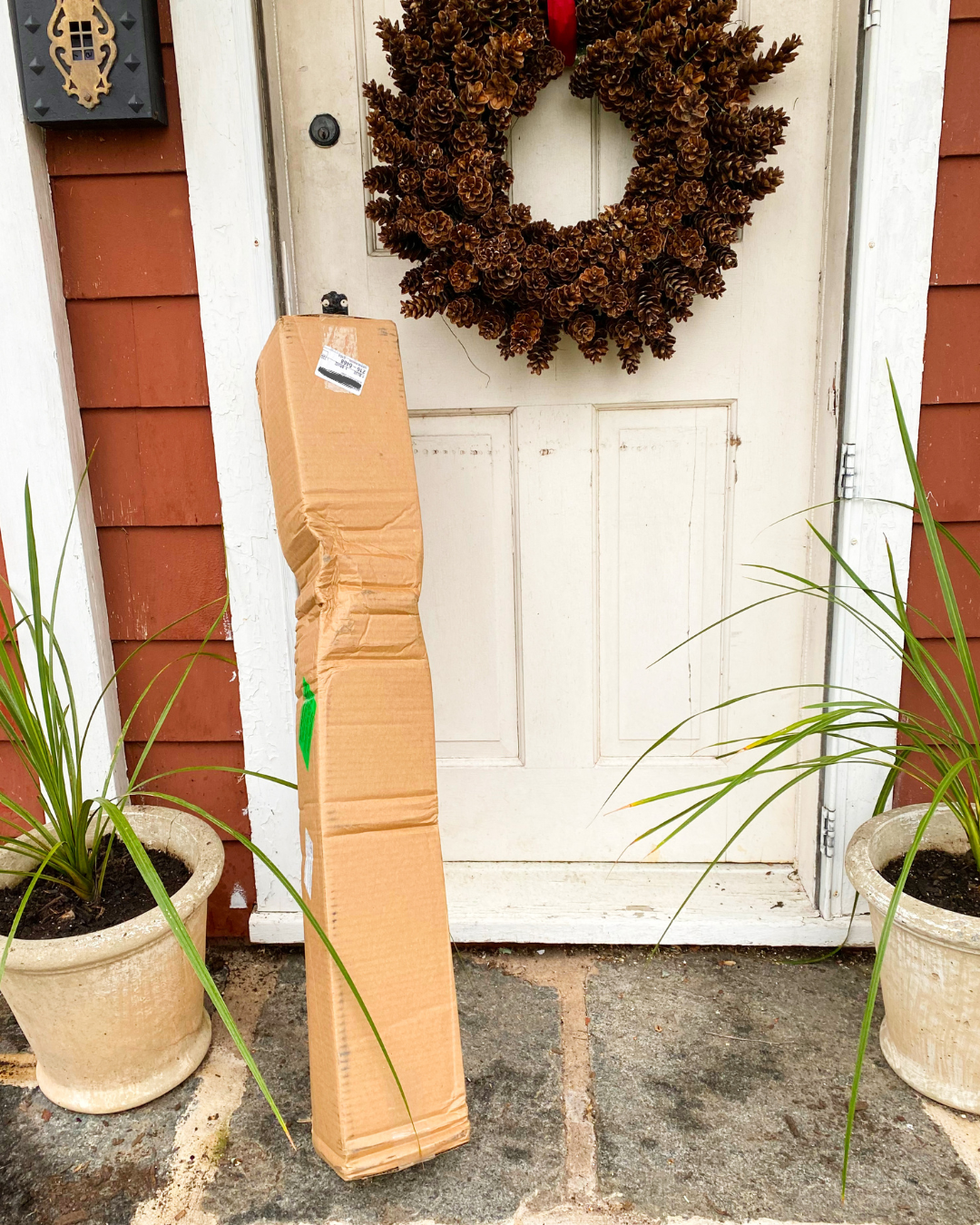
And just in time for publication of this post, something arrived in the mail…

Could it be the witch hazel from February’s Fragrant Garden post?! Stay tuned for the second half of April’s Fragrant Garden series coming soon. In the meantime, cheers to the cheerful viola. Happy Spring!

A Monumental Story of Real-Life Serendipity Told Over Many Parts: Chapter 5 – The Lost Item is Revealed

{Spoiler Alert: This is the final installment in a series of blog posts detailing the real-life story of a 100-year-old item that was lost in 2008 and how it found its way home in 2024. Follow along from the beginning of this story at Chapter 1: It Arrives.}

There’s a quote by an unknown writer that states… “What’s meant for you will never miss you, and that which misses you was never meant for you.” This quote sits on the shop’s recently sold page, acting as a sort of hopeful reassurance to any shopper who winds up there only to discover that an item that had originally caught their eye has sold to someone else. It can be so disappointing to be confronted with the fact that some newly discovered treasure that immediately captured your heart is now in another’s hands. But I love the idea of fate and what it suggests in this quote. Should an item be destined to be in your life it will present itself again, some other day, some other time.

Over the past few years, I’ve thought a lot about this quote. The idea that something will return to you if it was meant to be is such a comfort. When I think about it in the context of the lost item, I see how truthful the quote really is and how incredible the spontaneity of the universe and fate’s voice in it really are. As discussed in Chapter 4 of A Monumental Story of Real-Life Serendipity Told Over Many Parts, this journey of the lost item is all about timing, and I can’t help but think that although it took sixteen years for a lost item to get back to the people it belonged to, it came home at the most appropriate time. Like it was waiting all those years for just the right moment to reconnect with family, and in turn to reconnect with history.

Everyone has waited long enough to hear what this mystery item is, so I won’t prolong it anymore, only to say that upon the reveal of the item, all the dots that were laid out in the first four chapters of this story will be connected here in this post. So keep reading if you want to learn how it all unfurled from start to finish.

Just to recap quickly from Chapter 4, where the lost item was journeying to its final destination, these are the things that we know so far about the lost item…

  1. The lost item is over 100 years old.
  2. The item was left behind at an office supply store in a suburb of Atlanta GA in 2008.
  3. A random stranger named Angela discovered the item and tried to track down it’s original owner. For thirteen years her search was unsuccessful.
  4. In 2021, with the help of a Facebook group, Angela was able to connect the lost item to the Vintage Kitchen via a blog post that was written in 2018.
  5. In July 2021, after confirming that the Vintage Kitchen was indeed connected to the lost item, it was mailed via UPS to ITVK in a cardboard envelope.
  6. Although the Vintage Kitchen is connected to the lost item, it does not belong here in the Vintage Kitchen.
  7. In January 2024, the lost item made its way home to its final destination via a journey that involved a plane, three cars, and one boat.
  8. The journey of the lost item took 16 years and 6,500 miles to complete.
  9. Time played a major role in the story of the lost item.

Without further ado, the mystery item that arrived in the Vintage Kitchen in July 2021 was packaged in this cardboard envelope of medium thickness….

This is the cardboard envelope of medium thickness containing the mystery item when it first arrived in the Vintage Kitchen in July 2021. For privacy purposes, pink marks cover the addresses of the sender and recipient.

Still in its same envelope in January 2024, it is time to reveal the mystery item…

The mystery item envelope as photoed in January 2024

Tucked inside the cardboard envelope is a plastic, turquoise-colored binder. The binder itself is not the lost item, but what’s inside the binder is. A turn of the cover reveals history from 100 years ago…

The binder holds fifteen pages of 1920s-era black-and-white photographs containing various scenes of rural family life in a country setting. Consisting of forty-seven individual images in total, the photographs were taped, or in some cases pasted, onto standard white copy paper and then slipped into plastic sleeves and secured in a three-ring binder.

The turquoise binder was clearly a modern addition, but the photographs themselves are originals. It’s easy to see that the photos had been removed at one point in time from a more traditional photo album. Black pieces of paper are attached to some edges, old tape clings to corners and remnants of prior placement in a black-paged photo album are evident.

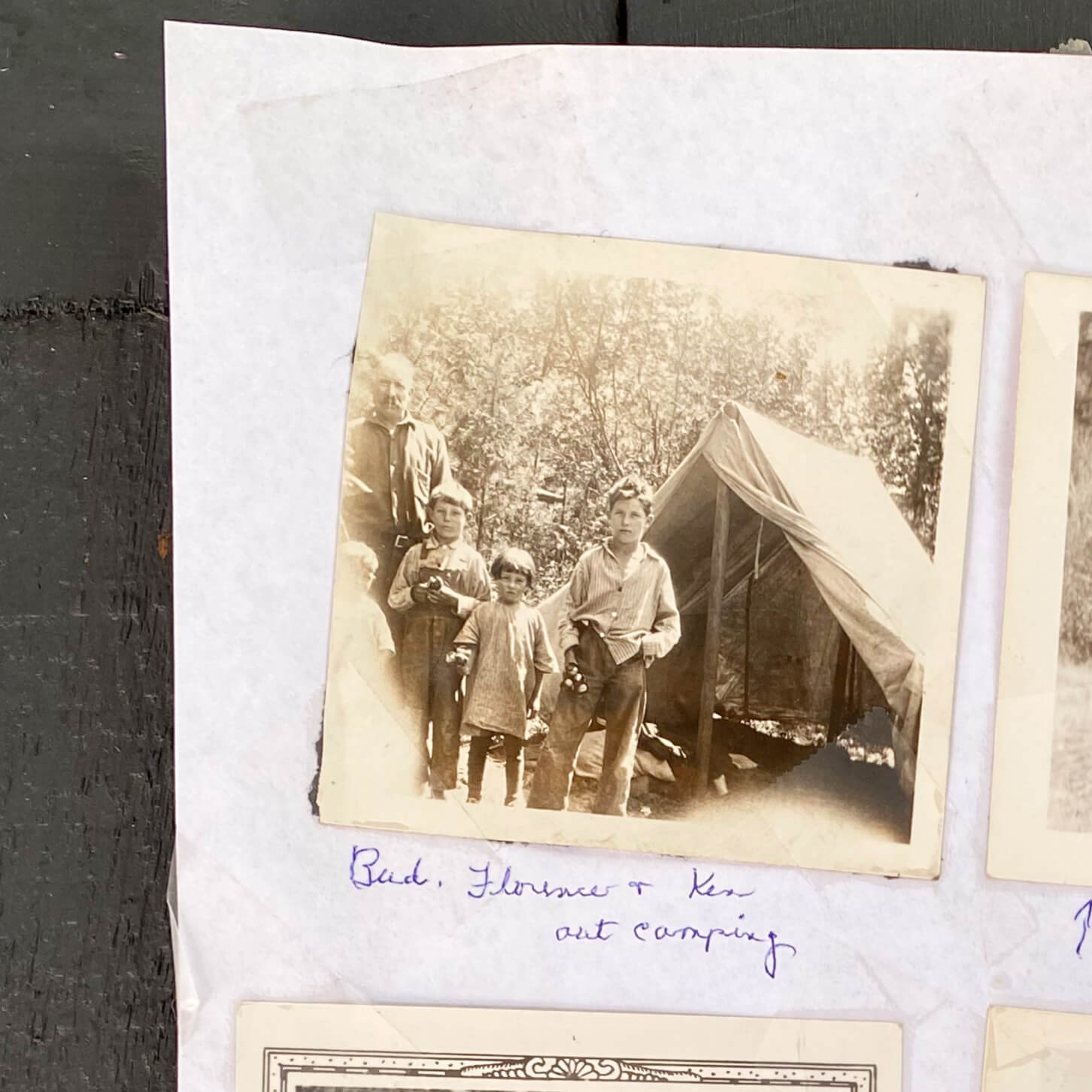
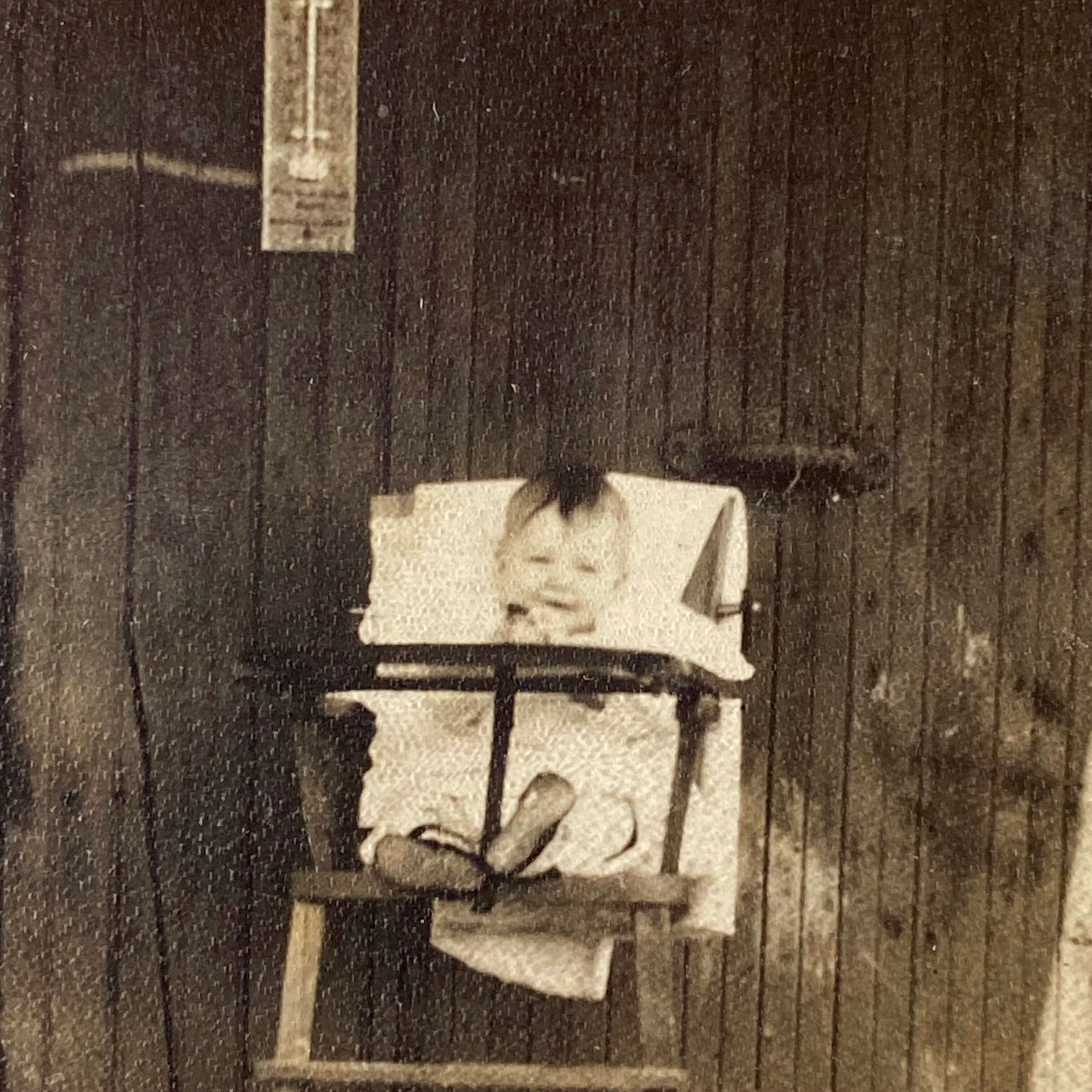
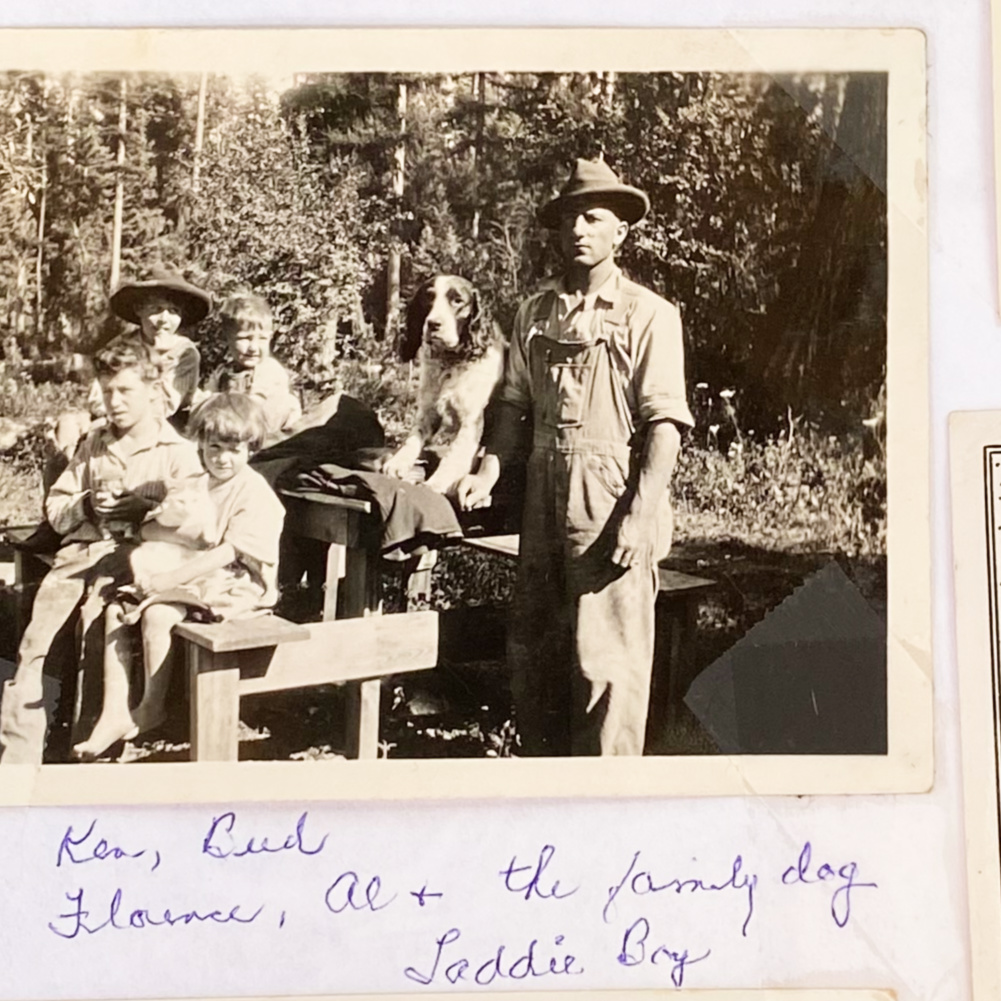
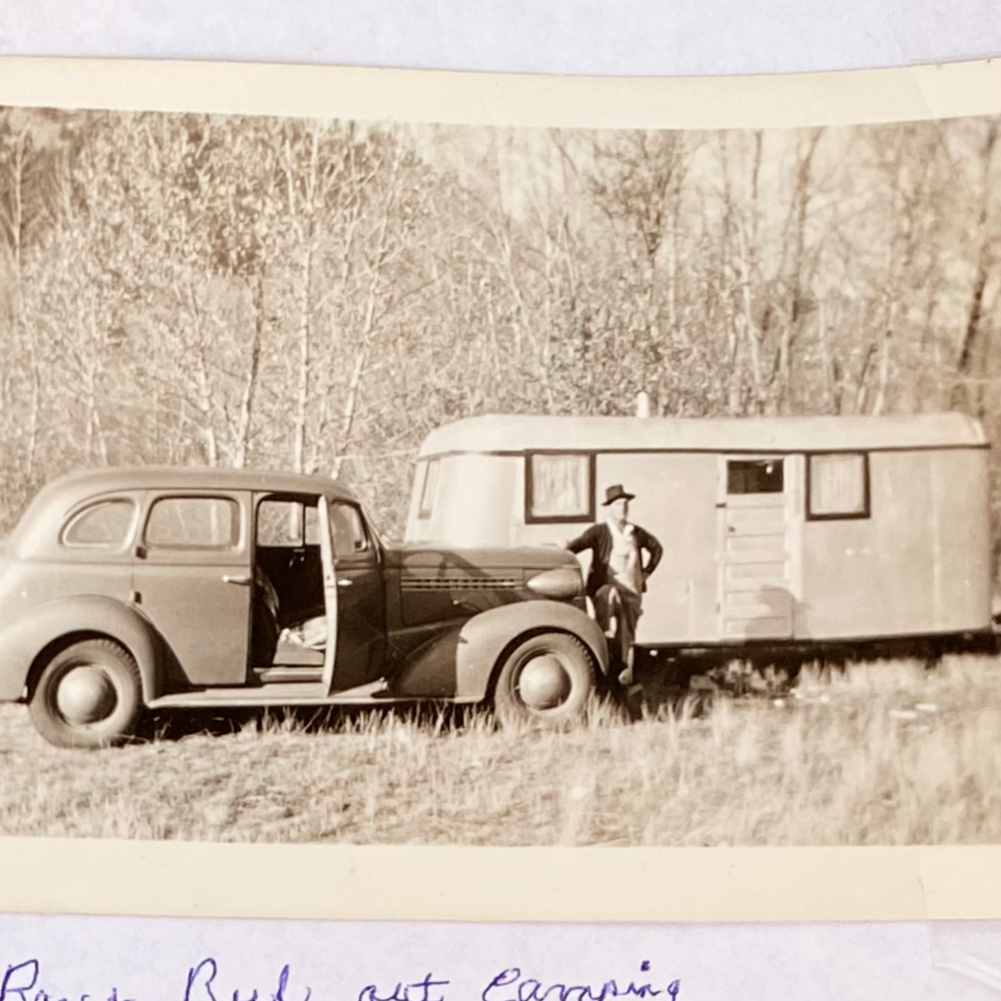
Handwritten notes are included next to most of the photographs identifying first names, town names, a date, or a general situation, like the one above that says Bud, Florence & Ken out camping. But none of the notes include references to a specific state, country, legible last name or any major scenic sites. Flipping through the pages reveal more photos of babies, dogs, cars, cats. There are houses and train tracks, rolling hills and weathered wood. There are women on horseback, men in overalls, girls in summer dresses, boys hunting in the snow.

There are blurry candid shots and more formal, posed group shots. Several faces reappear in different settings. A building evolves in various stages of construction. There are men in fedora hats and women in fur coats. There’s a foal and a waterfall. A travel trailer. A canoe. A swing hanging from a laundry line. There’s a baby in a bath bucket and a woman sitting on the hood of a car.

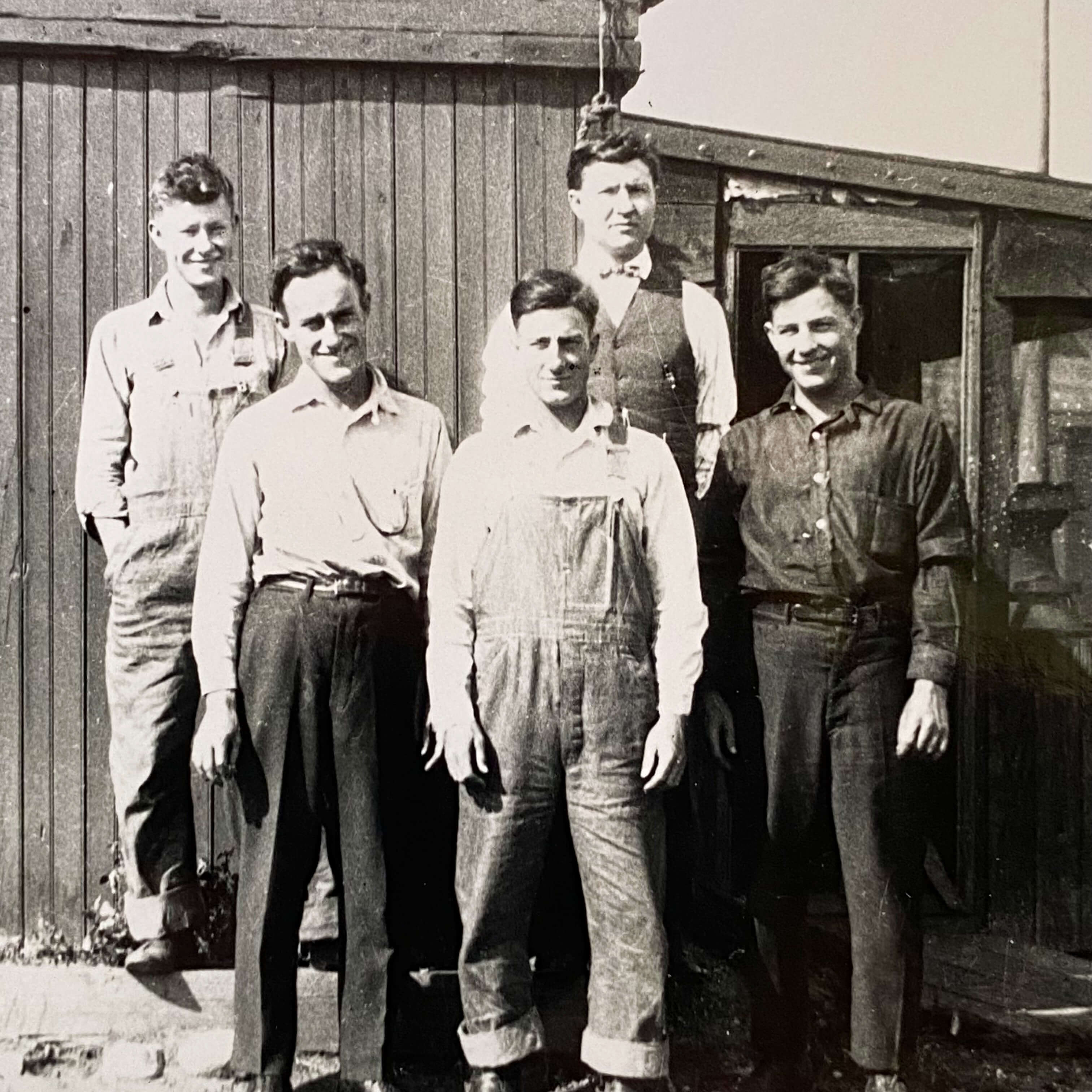
All the photographs were taken outdoors and feature different seasons. Many photos feature one specific man in particular. A man in overalls. That’s him in the center of the photo below.

Page after page, faces unfold.

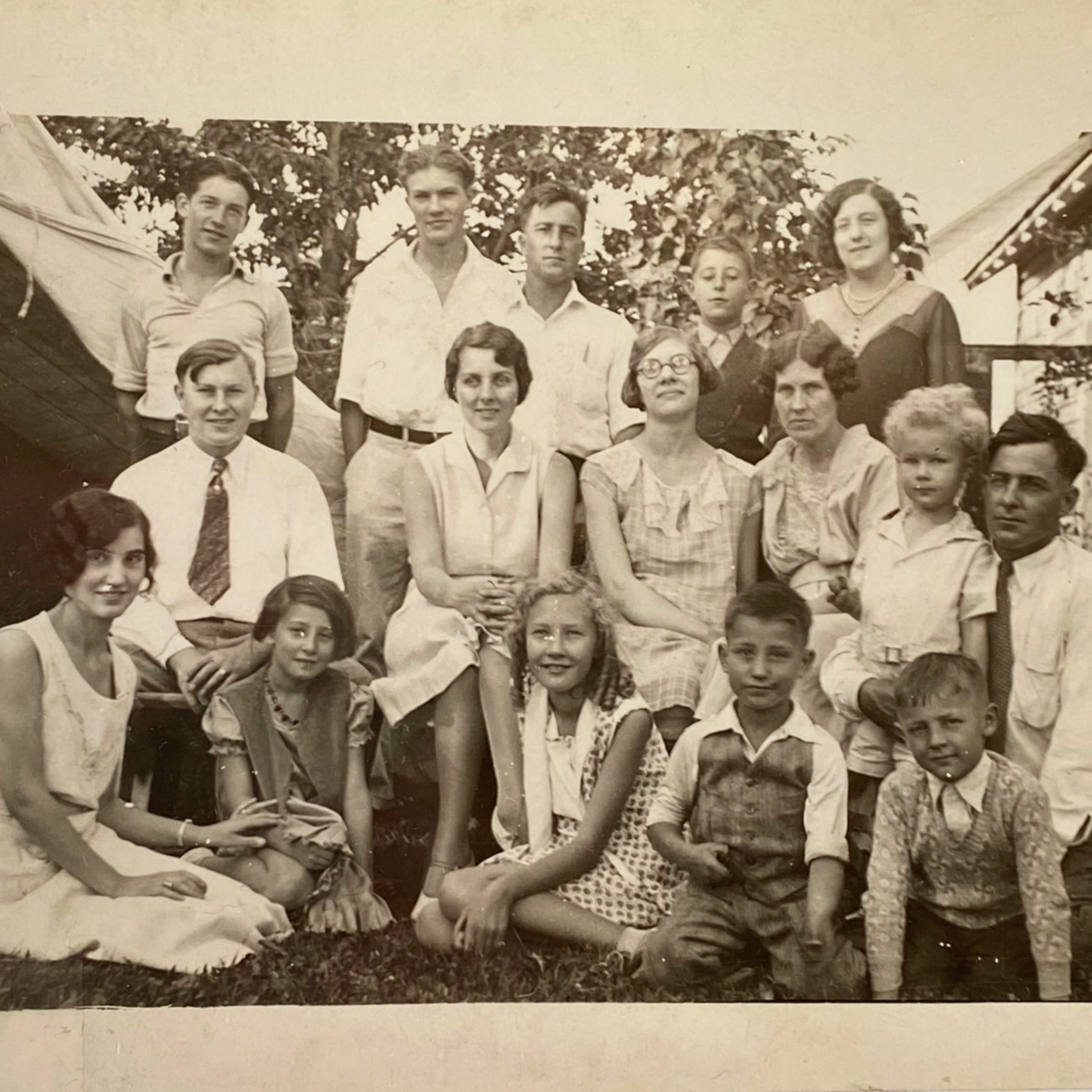
People are named Al… Bill… Bessie… Bud… Merwyn… Lou…Florence. Towns are labeled Garrison and Philipsburg. One photo refers to the “Minnesota Relatives.” A dog is named Laddie Boy.

The lost item is a one-hundred-year-old photo collection of a mystery family in a mystery location. Who are these people and how are they are connected to the Vintage Kitchen? Keep reading for the whole story from start to finish.

Back in 2008, when Angela discovered this photo album that had been left behind at the Staples where she was working in suburban Atlanta, there was no way to track down who it belonged to. It had been left at the self-serve copy area and contained no other information as to where it came from or who brought it in. There was no in-store job ticket attached to it. No Staples order form. No receipt dangling from an interior page. There was just the binder – plastic, turquoise, holding onto fifteen pages of 100-year-old photographs.

Angela at Staples in 2008. Learn more about her in Chapter 2.

Knowing how sentimental old photographs can be, Angela kept the binder in the back room of Staples for safekeeping in hopes that someone would realize that they’d forgotten it and come right back for it. Days, weeks, months went by. The binder sat unclaimed on the shelf in the back room. Periodically during that first year, Angela would thumb through the photos and try to connect one of the handwritten first names to a customer list in the Staples database.

Bill, Florence, Bud, Al are pretty common names throughout the country, but particularly in the South. Searching by first name alone turned out to be a fruitless task. With no legible last names to search, no specific city and state location to pinpoint on a map, and no understanding of the context of the collection as a whole, Angela had no clear-cut way to track down the owner of the left-behind photographs using just the minimal information offered in the handwritten notes. Her only hope was that owner would return to the store to claim the binder. A year went by. A clean-up and reorganization of the back room was issued by Staples management. Angela, concerned that the binder might be misplaced or tossed into the trash during the reorganization took it home so that she could continue to search for its owner.

One year stretched into five years and then into ten and still Angela was no closer to finding out who might have left the photographs behind. Although the story of the turquoise binder didn’t change much in that decade, Angela’s life changed quite a bit. She got married and had a baby. And then she had another baby and another one after that. In that decade, she went from being a single girl working at Staples to a mom with a family of five to care for. By her side through all those life changes was the lost item. In close reach always, in case an important clue or a new lead might reveal itself, the binder became a part of Angela’s life, a puzzling research project that she returned to again and again.

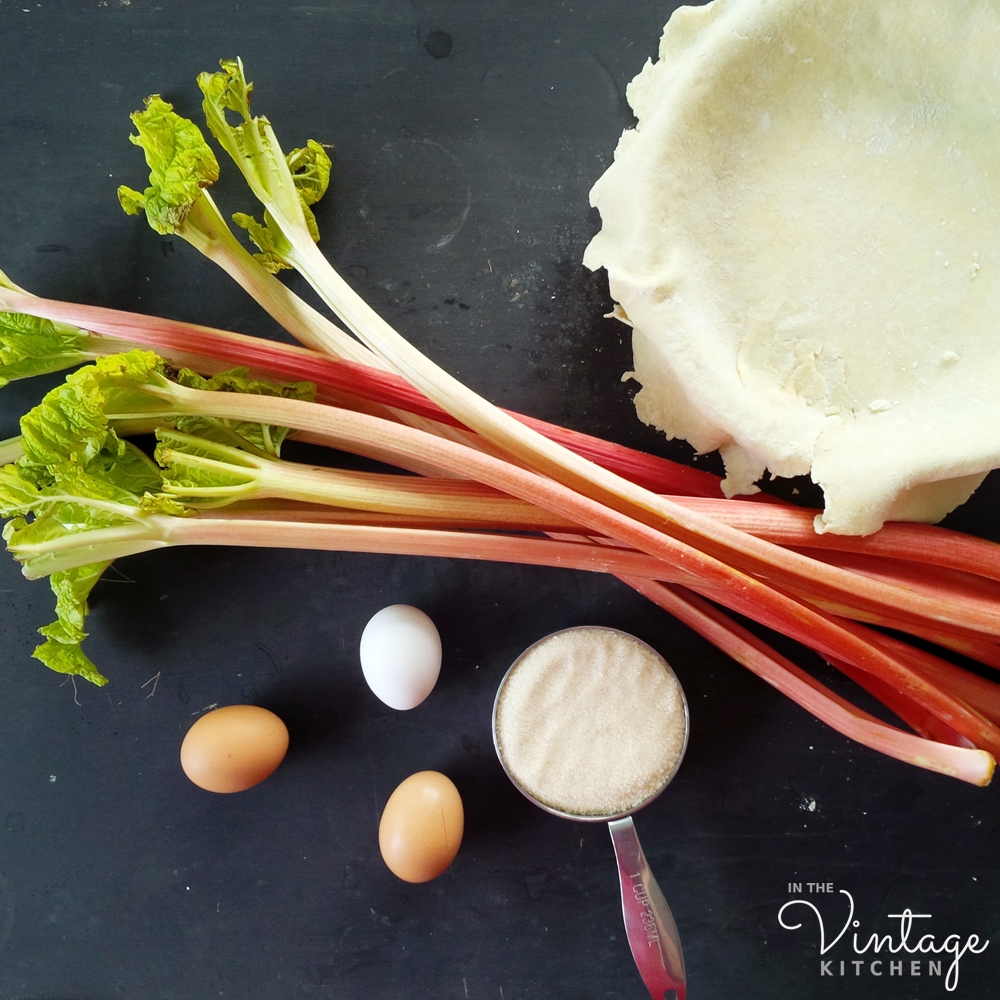
Meanwhile, in another southern state, while Angela was busy raising her family and trying to solve the mystery of the binder filled with photographs, I was busy writing about history, antiques, and vintage recipes. In March 2018, I wrote a blog post, sharing a recipe that had long been a part of springtime/Eastertime menus for generations of my family. The recipe was for Rhubarb Custard Pie – a seasonal dessert that combines Betty Crocker’s 1950s rhubarb custard filling recipe with my Great-Grandpa Bacon’s homemade pie crust recipe.

Rhubarb Custard Pie – a family tradition every spring.

In the post, in addition to the recipe, I shared the story of Great-Grandpa Bacon and his wife, Dolly, who lived in rural Montana during the early to late 20th century. Married in their early 20s, Bacon worked for the Northern Pacific Railroad, a job that took him and his new bride to two rural areas in Montana – Goldcreek and Philipsburg. It was a brave and adventurous new life for them, started at a time when Montana, still young and precarious itself, saw its most difficult years in history.

Montana Homestead Poster circa 1914. Read more about the challenges of Montana homesteading here.

Challenges stemming from WWI, the over-grazing of prairies during the homestead boom, and the subsequent agricultural decline coupled with the wild, unmanaged landscape, towns located few and far between, and the tricky navigation of the unfamiliar ins and outs of remote living, made Bacon and Dolly’s decision to build a life in rural Montana all the more courageous. Dolly was born and raised in Seattle, and Bacon was from St. Paul, MN, both sizeable cities with over hundreds of thousands of residents in the early 19th century. Their new Montana life would take them to communities with populations of less than 2000 people where they had to rely on their own wit and willpower to survive.

Dolly & Bacon’s wedding portrait, 1920

Along with the recipe, in the blog post, I detailed Dolly and Bacon’s unusual life in Big Sky Country. I didn’t have any photos of them depicting their early years in Montana, so to help visually tell their story I added a lot of research about what was happening in the state in the 1920s when Dolly and Bacon moved there. I also shared the family story about how Dolly and Bacon’s first house, after they were married, was two railcars gifted to them by Northern Pacific Railroad. A gesture offered by the company so that Dolly and Bacon could immediately set up homekeeping in their new surroundings.

A 1930s era Northern Pacific Railroad poster in Chapter 3 was a big clue about the location of the story.

Definitely an unusual start to their marriage, Bacon and Dolly thrived in Montana and embraced everything about their rural railroad life. Bacon worked as a train depot clerk in Goldcreek and then as a conductor on a transportation line for livestock and mining equipment in Philipsburg.

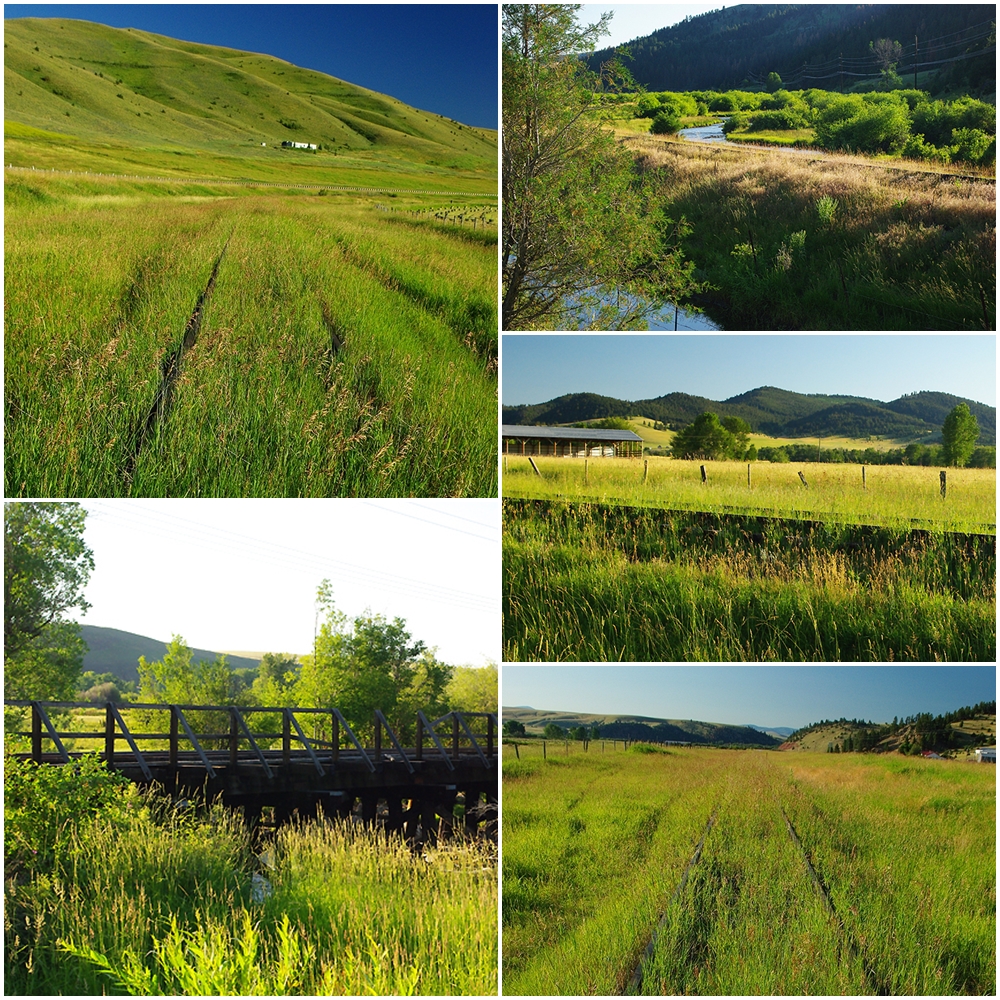
Now an abandoned track these are recent photos of the train line running through Philipsburg with views that Dolly and Bacon would have seen on a daily basis. Photos courtesy of D & D Travel.

Dolly set up house in the railcars, learned to bake bread, and wrote poetry. They had three babies, two girls and a boy. They built a house and a garden near the tracks where Bacon worked. They hiked in the hills, fished in the streams, and ate fresh-caught trout for breakfast, Dolly’s bread for lunch and Bacon’s homemade pies for dessert. They fell deeply in love with each other, with Montana, and with the life that they made. For fifty-five years, Dolly and Bacon called Montana home, never imagining living somewhere else than the paradise that surrounded them. In 1975, Bacon passed away from a heart attack at the age of 78. Dolly followed five years later in 1980 at the age of 82. They are buried next to each other in the local cemetery in Philipsburg. Even in death their hearts never left the place that they loved.

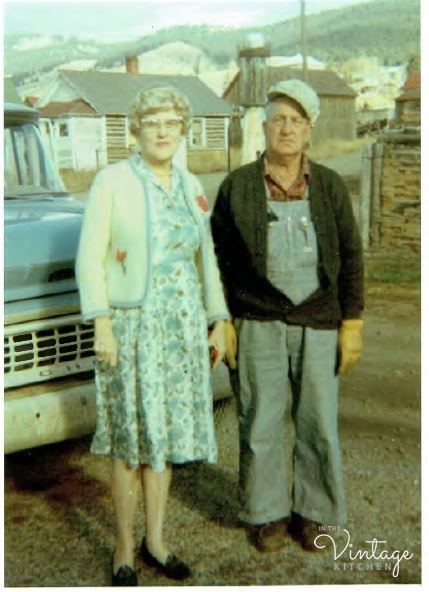
Bacon & Dolly Day in Montana circa 1950s/1960s

The rhubarb custard pie recipe received some interest from readers, but not nearly as much as the story of Bacon and Dolly. In 2018, their photo above became one of the most favorited of the year on our Vintage Kitchen social media accounts.

In 2021, Angela still searching for some helpful snippet of information that might lead her to the original owner of the binder, decided to contact a Facebook group that specialized in old-fashioned handwriting. She thought that they might be able to help decode some of the hard-to-read words that accompanied a few of the photos.

The Facebook group was more than happy to help. Within a quick amount of time, they connected words from the handwritten notes in the photo album to words and phrases found online in my blog post about rhubarb custard pie. Bac, Philipsburg, train depot, lived in boxcars, and finally the clincher… Dolly Day… lept out at the group. All threads strong enough to cause Angela to reach out to the Vintage Kitchen via the blog, she sent an email to see if the photos might be connected to the recipe and to the story of Bacon and Dolly. Along with her inquiry, she sent some photos from the binder, this one included…

When I opened Angela’s email, I was greeted by a photo of Bacon himself. In his younger years. In his beloved overalls. In his rural Montana. With Dolly by his side. And just like that, after 13 years of Angela’s diligence, time, and attention to finding the owner of the lost item, her inquiry was confirmed. Yes, indeed the photos were a part of the Vintage Kitchen – firmly rooted to the rhubarb custard pie recipe and to the Montana life of Bacon and Dolly Day.

A windfall for a genealogy lover like me, it was incredible to see personal photographs of someone I had heard about but never met, wrote about couldn’t completely visualize, and whose recipe was in constant use in my kitchen. When the turquoise binder arrived in the mail, Dolly, Bacon and their Montana life lept off the pages.

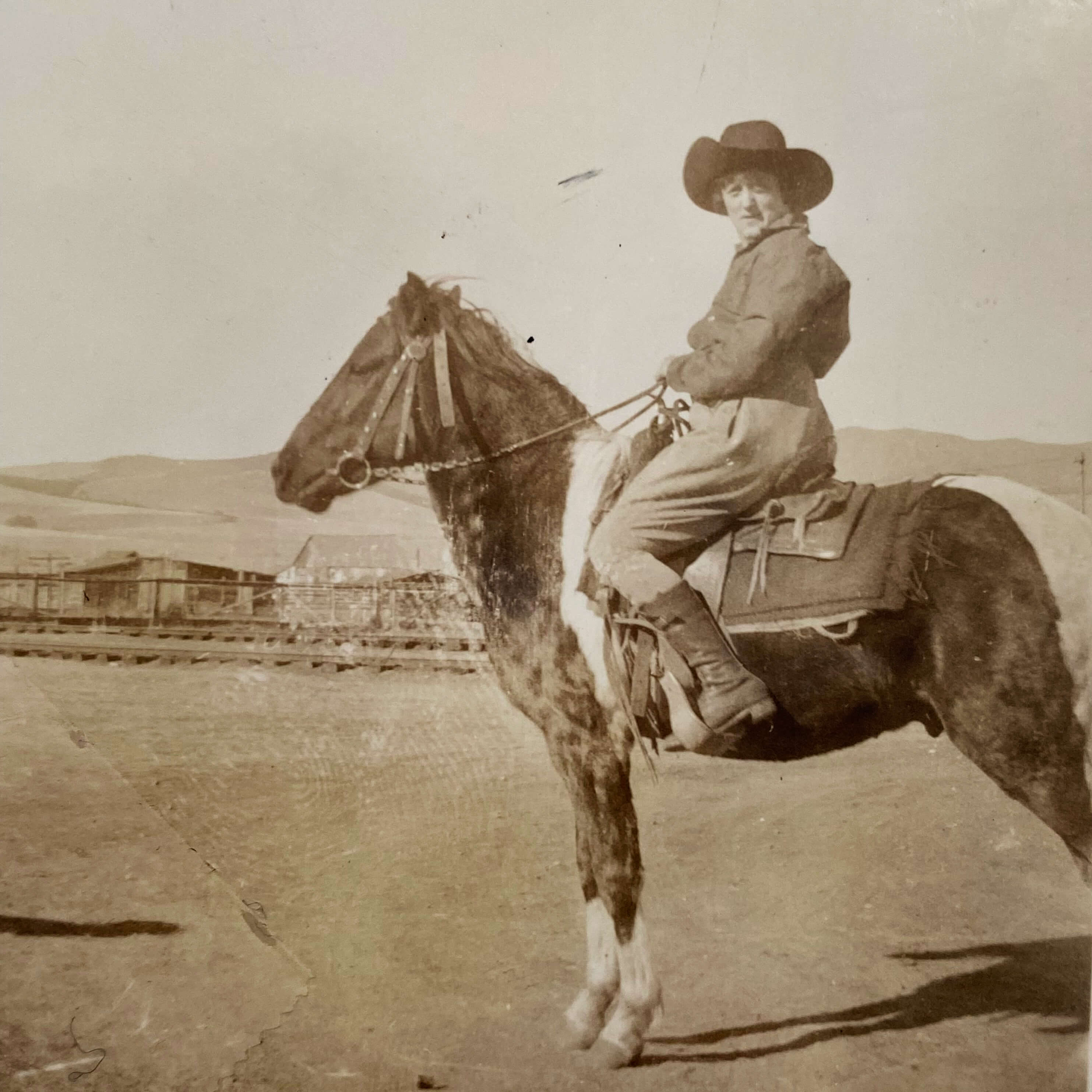
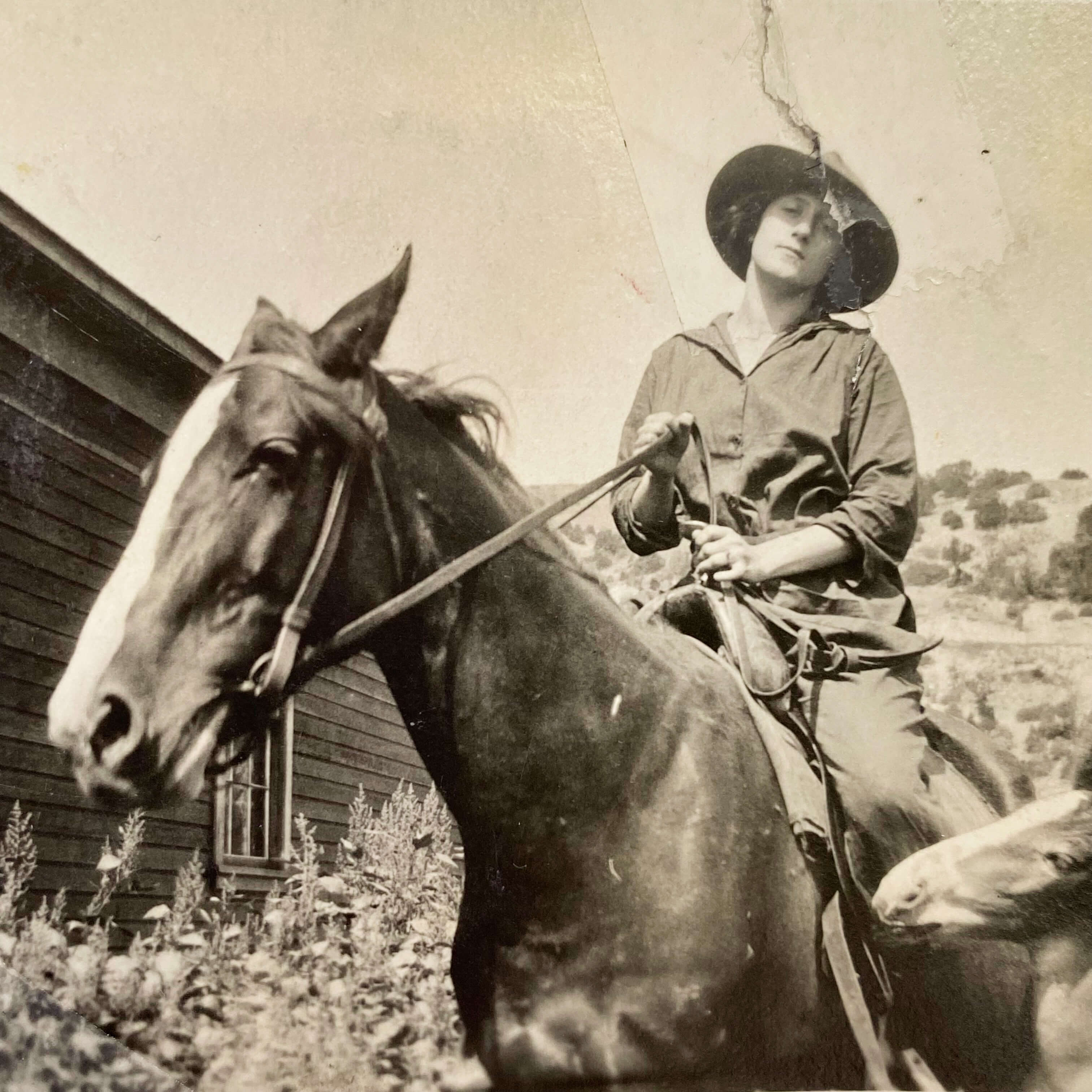
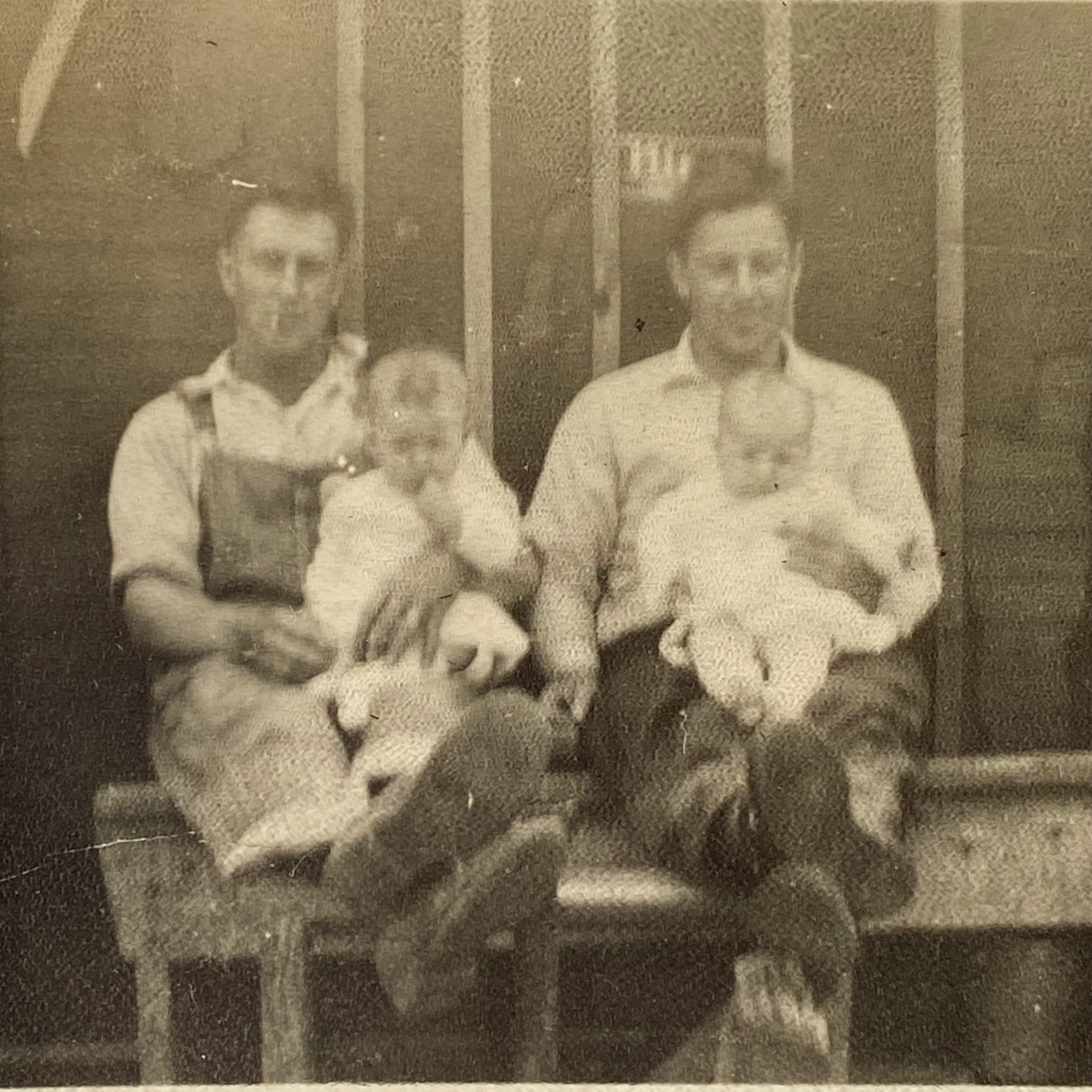
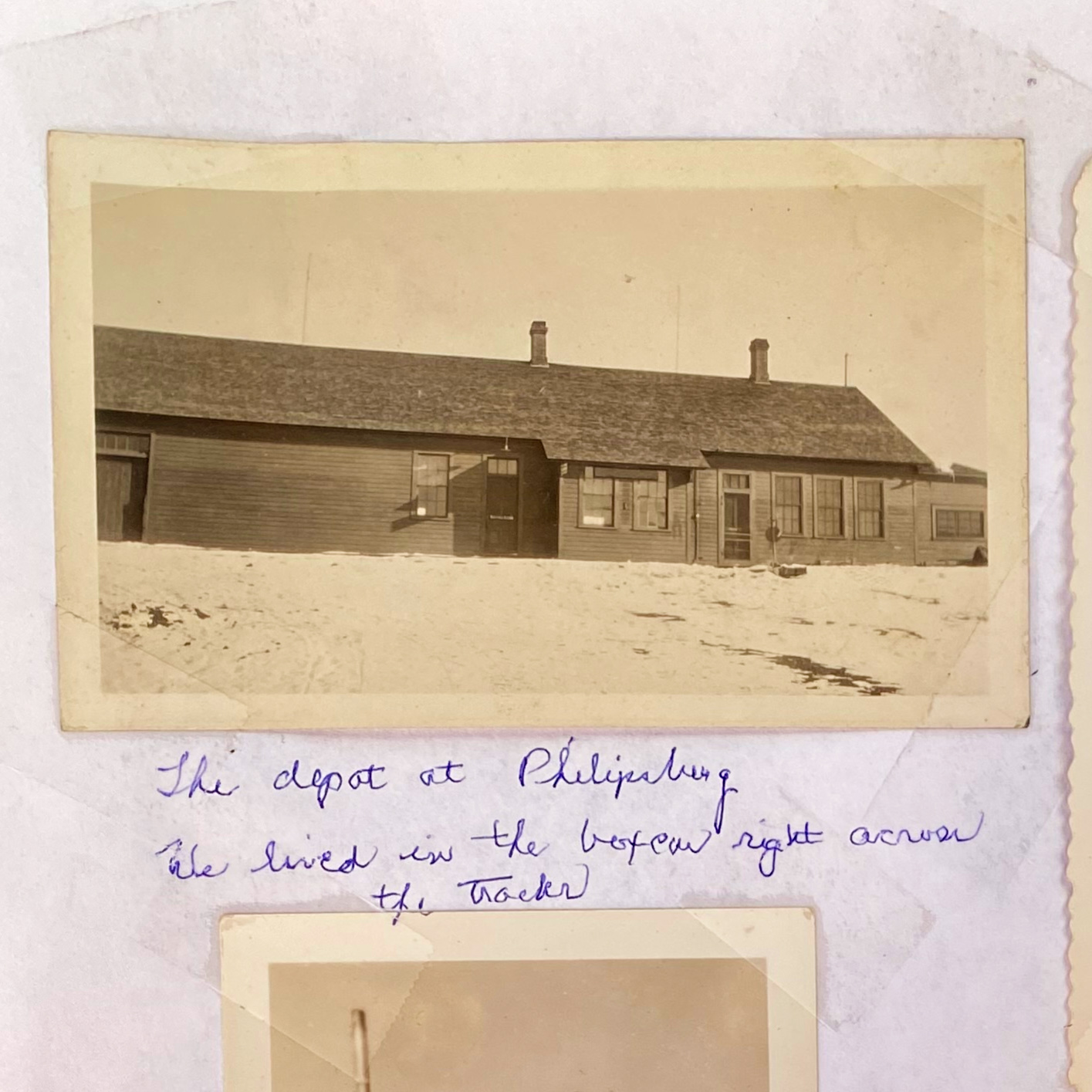
Suddenly the photo album made all sorts of sense. The woman on the horse? That was Dolly. The two men holding babies? That was Bacon and his twin brother Willis, who in turn, were holding their babies, Dolores and Willis Jr., both born in the same year (1922). The house with the long angle? That was the train depot in Philipsburg where Bacon worked.

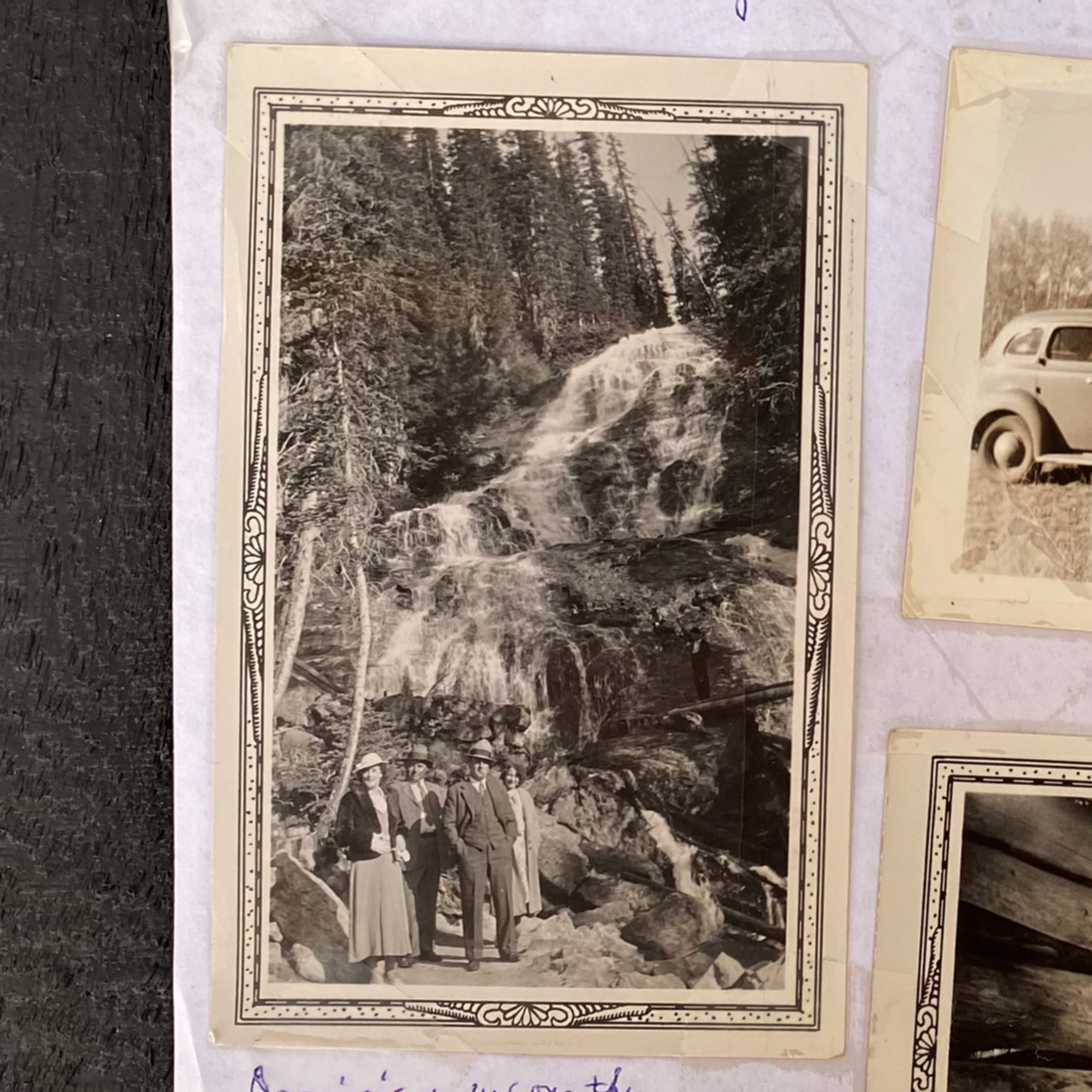
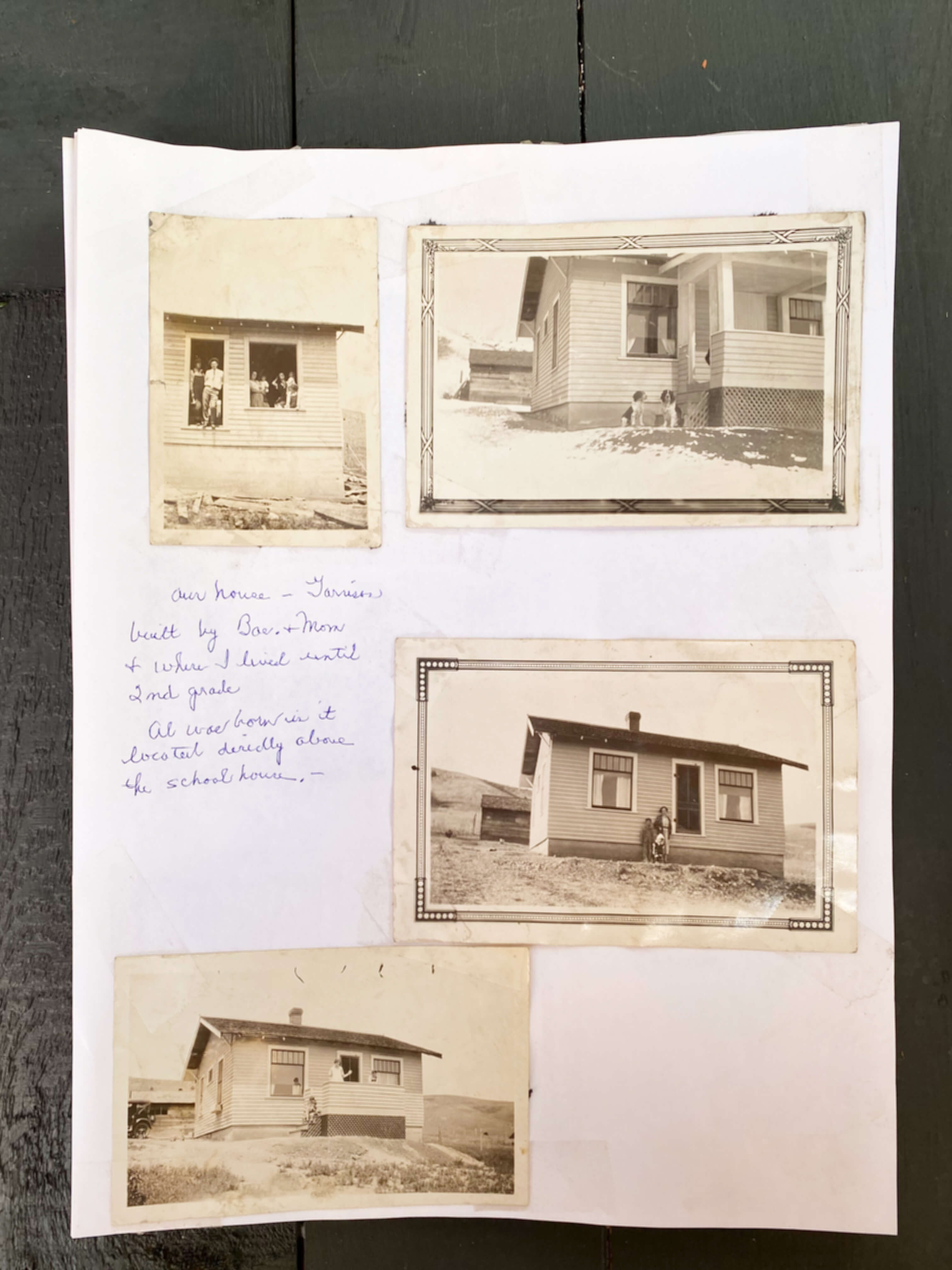
The waterfall is part of Skalkaho Pass, a point of interest In southwestern Montana that was mentioned in the photo album but misspelled. The building with everyone hanging out the window? That was the first house that Dolly and Bacon built from scratch with their own hands. The car with the motor home attached? That’s how Bacon and Dolly went camping. And the “Minnesota Relatives?” Those were Bacon’s brothers and sisters and their families visiting from Bacon’s home state.

Bacon and Dolly’s life unfolded in the photos page by page. Every family story known about them as a couple, their kids and their unique life in Montana was now here in visual format offering new insight into them and their experiences. In 2018 when I wrote the rhubarb pie post, I had only the one photograph of Dolly and Bacon in their senior years to share. Now, there are forty-seven more.

As I stated from the beginning of this story, the Vintage Kitchen is connected to the lost photos, but they don’t belong here. I wasn’t the one who pulled them from the pages of an old black photo album. I didn’t compile them in the turquoise binder. Nor was I the one to leave them in the suburban Atlanta Staples in 2008. Technically, Great-Grandpa Bacon and Great-Grandma Dolly aren’t even related to me.

Bacon and Dolly are the grandparents of my mom’s first husband. My brother, sister and I have the same mom but different dads. Bacon and Dolly are part of my brother and sister’s paternal ancestry line which is made up of Midwest and Pacific Northwest roots.

Both my brother and sister have memories of Dolly and Bacon and they both share a special affinity for Montana. Knowing that they would be so excited to learn about these never-before-seen photographs of their beloved great-grandparents, I couldn’t wait to share the story with them. I also couldn’t wait to share this whole story here on the blog too. Especially since I had already written about Bacon’s pie crust recipe. Had the family rhubarb pie recipe never been published, the Facebook group would never have found the Vintage Kitchen and Angela would never have contacted me, so it was very exciting to be able to continue telling the story of Bacon and Dolly here as well.

In the summer of 2021, when the photos arrived from Angela, the pandemic was still wreaking havoc on socialization plans. Although the idea of flying out to Seattle to meet my brother and sister was definitely the way I wanted to deliver the photos to them, I didn’t want to tie up this lovely gift from history wrapped in a case of Covid. So while waiting for the virus to calm down a bit, I decided to start telling the story on the blog. Since both my brother and sister read the blog, and since I didn’t want to spoil the ultimate surprise, I never mentioned anything to them about the photos or Angela or Montana. Hints in Chapters 1-4 of A Monumental Story of Real-Life Serendipity Told Over Many Parts were all filtered through a veil of mystery so that my brother and sister wouldn’t be able to guess that the lost item had anything to do with them.

Fast forward through 2021, 2022, and 2023. The timing never lined up quite right to fly out and finish the story. A six-month house hunt, the South to North move, and 1750 House renovations wound up delaying the surprise far longer than I ever anticipated. But if we’ve learned anything so far in all these chapters about the lost item, it’s that timing is everything to this story and in its weird and wonky way has linked all these people in all these places together at the most appropriate moments.

In January 2024, the right time presented itself. My niece was getting married in Seattle. A family wedding was the perfect occasion to share the story of the lost item and to finally deliver the 100-year-old photographs bound together in their plastic, turquoise bnder.

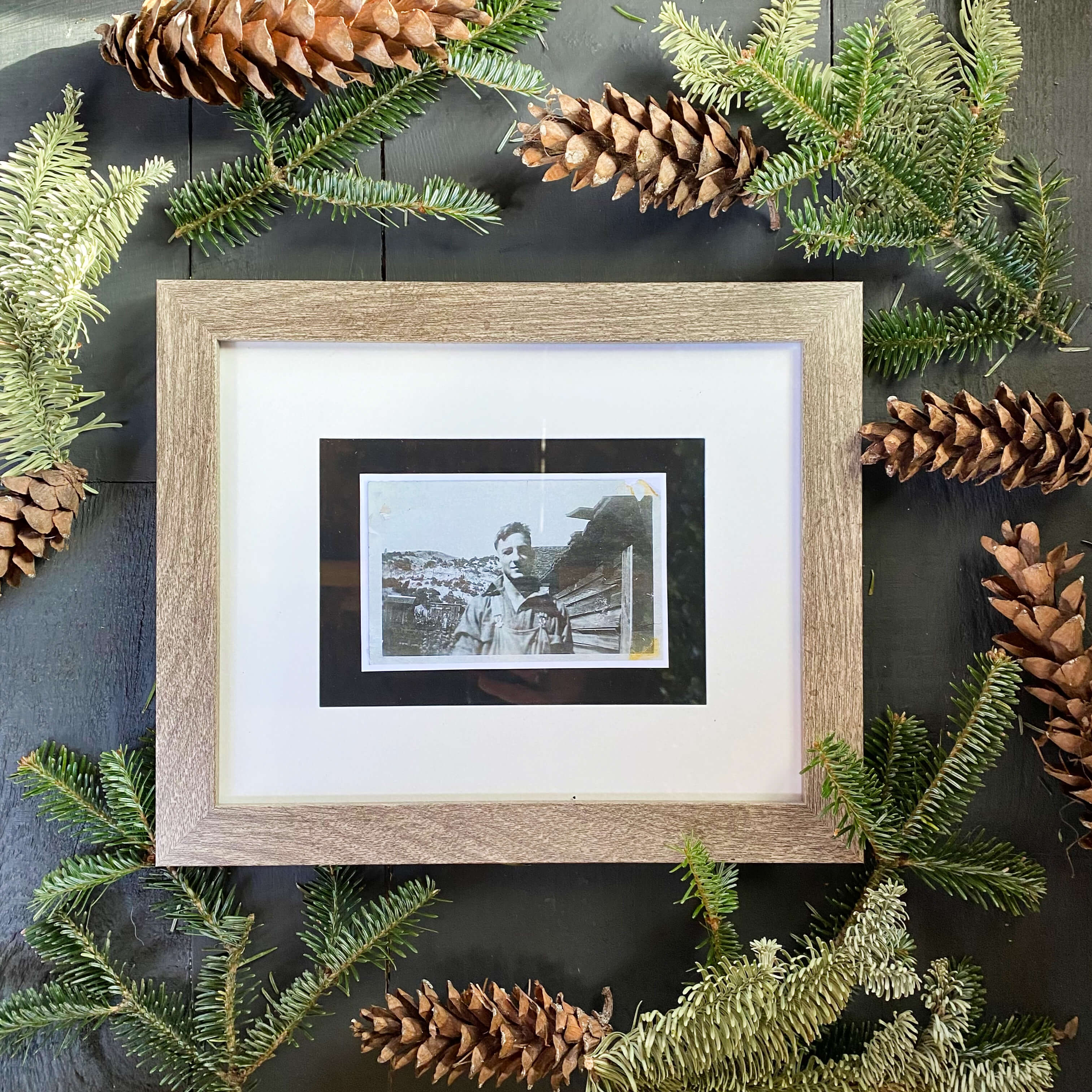
Before I left for Seattle, I had five copies made of one of the photos from the binder, so that I could frame them and give them to each of my nieces and my brother and sister. I chose a photograph of Bacon, newly married, age 24, where’s he looking straight at the camera. There are rolling hills in the background, part of a rustic building at his shoulder, a patch of corn growing next to a building behind him. He’s wearing his signature overalls. There’s a look of contentment on his face. A welcoming smile just about to bloom.

Lyle Bacon Day, Montana 1921

I had the photos reproduced at my local Staples, an homage to Angela and also to the lost item. While waiting in line to be helped, I glanced over at the self-serve copy area, at the bare tables next to each station, at the hard surfaces, sharp corners, and the utilitarian grey, beige, and black colors that covered that part of the store. I thought about the turquoise binder sitting by itself in such an environment. I thought about Dolly and Bacon tucked inside and how the environment of a modern-day Staples was so far removed from their wild Montana countryside, yet also had become such an integral part of this story.

Bacon and Dolly’s Montana circa 1920s

In 2018, going back and forth with Angela via text after the photos arrived in the Vintage Kitchen, I asked her what it felt like to put the binder in the mail after a 13-year journey with it. She admitted to tearing up a little. “I felt appreciated and blessed. To be able to provide so many people connected to this item with a sense of joy and happiness makes this such a special thing to be a part of.”

When it was my turn to be helped at the counter, the Staples employee was a bit flustered and explained that it had been a busy day and they were running behind with custom print jobs, so I’d have to leave my photo with them overnight and pick up the copies the next day. I hesitated. Bacon had come such a long way. His photograph was in my hand about to be given over. What if… I thought. What if something happens overnight at Staples. What if I never get the photo back. What if…

Clearly tired from her day, and sensing my hesitation, the Staples employee took the photo, popped it into an envelope, and attached it to a work order all in one quick motion while asking if she could help me with anything else. I wanted to tell her the story. The whole story. Starting all the way back at the beginning in 2008 with Angela in the Staples in Georgia. But the line behind me was long, and I got the sense I wasn’t speaking to someone like Angela who would care so wholeheartedly about old photos and lost items.

A detail had escaped my attention until the day before the wedding. It came in the form of my niece’s wedding ring. She designed it herself so that she could include a family heirloom in the setting that had been passed down on her side of the family for generations. The heirloom was a blue Montana sapphire. It had been mined from a local quarry near Philipsburg, Montana. The sapphire had been a gift from Bacon to his daughter, Florence on her 16th birthday in 1940..

Photos clockwise from left to right: Florence in Montana, about 10 years old circa 1934. A professional photograph of my niece’s Montana sapphire wedding ring. And a photo of her ring and wedding band taken at home after the wedding.

The day after the wedding, over trays of homemade enchilada casserole at my brother’s house, I shared the story of the lost item with my sister, brother, and nieces. I presented the turquoise binder and gave everyone their framed photographs. It was one of the loveliest family dinners I’ve ever had. We all marveled at the tenacity of Angela, the scenes of Montana spread around the table, and the good fortune that these photographs were not just thrown out in a dumpster sixteen years ago. My brother told me about a railroad key of Bacon’s that he had in storage and my sister told me about a booklet that she has of poems and musings about Montana written by Dolly. New story snippets and memories popped up in conversation as the photos floated around the table. My brother immediately called an aunt from that side of the family who lived in Atlanta to see if she was the one who left the binder at Staples. She was as surprised to hear about the story as we were and said she had no idea who the binder might have belonged to and how it would have wound up at Staples.

If you think about how fragile a paper photograph is, it’s easy to get quickly overwhelmed with scenarios that could have gone wrong in this story. They could have been destroyed a million different times in Montana alone over the course of a century. Not to mention the fact that they somehow made it to Atlanta. Then got lost. And then potentially could have been thrown out in the trash had kind-hearted Angela not cared enough to rescue them.

Something could have happened to them or to Angela in her thirteen years of time spent with them. Or something could have happened to them in the airplane when they were mailed to the Vintage Kitchen from Georgia or to the UPS truck that delivered them. Once, I received them, they became part of a big move, a typical life experience that often sees items get misplaced, lost or forgotten. And then for three years after that, they sat on a shelf of a 274-year-old house undergoing construction, room by room.

The view from the boat on the way to my brother’s house.

After that, they crossed the country again via plane, traveled in three different cars, and then on a boat to reach their final destination. Anything could have happened to the photographs in that timeframe by any sort of man-made or natural event experienced by any one of us involved. But it didn’t. Fate was on their side. All along, time took care of them, nurtured them. So that eventually, their story about time long ago was able to tell another story about time today. One generation growing from another.

Bacon with mare and foal. Montana circa 1920s.

On the airplane, coming back from the wedding I had to time to think about the whole story of the lost item from start to finish. Now knowing more about Bacon and Dolly, seeing their young lives evolve through photographs, I could see glimmers of their spirit in my brother and sister. The rugged, wild island where my brother lives, and that he absolutely loves, is his modern-day version of paradise just like Bacon’s wild, rugged Montana. My sister, our family’s star baker, is an incredible talent in the kitchen just like Dolly was with her bread and Bacon with his pies.

There is a lot to love about this story… the kindness of strangers, a lost item found, a family reconnected to its past, an heirloom saved from the brink of obscurity, an intimate look at a unique aspect of history, a mystery solved. But I think the thing that I love most is that ultimately, it was a simple, humble vintage recipe that connected all these threads and all these people.

The 2018 Rhubarb Custard Pie

I return again to the quote… “What’s meant for you will never miss you, and that which misses you was never meant for you.” It’s impossible to try to rationalize or explain the sheer amount of good fortune that these one hundred-year-old family photographs were graced with over the past sixteen years and beyond. I can’t logically detail why or how certain people came into the story when they did or why timing stretched out this love story long enough to finally be added to a new generation’s love story on their wedding weekend. All I can do is say thank you, to the universe, to fate, to Angela for clearly demonstrating that these photos were indeed meant to never miss us.

Cheers to Angela, a modern-day angel, for not only saving these photographs, but also for taking such tender care of them, and persistently working for over a decade to find their home. Cheers to Bacon and Dolly for continuing to be a source of interest and inspiration in our family and in our kitchens. And cheers to all you patient Vintage Kitchen blog readers who stuck with me through the lengthy and sporadic telling of this very long story.

There are only two questions left that still linger. How did the 100-year-old photographs taken in Montana that belong to a family in the Pacific Northwest wind up in a suburb of Atlanta, GA? And who wrote the notes next to each photograph?

Maybe there is still more to this story yet to come…

Holiday Classics: A Vintage Cranberry Relish Recipe from Historic Connecticut

Undoubtedly the most well-known food to come out of Mystic, Connecticut is pizza, thanks to the 1988 movie Mystic Pizza starring Julia Roberts…

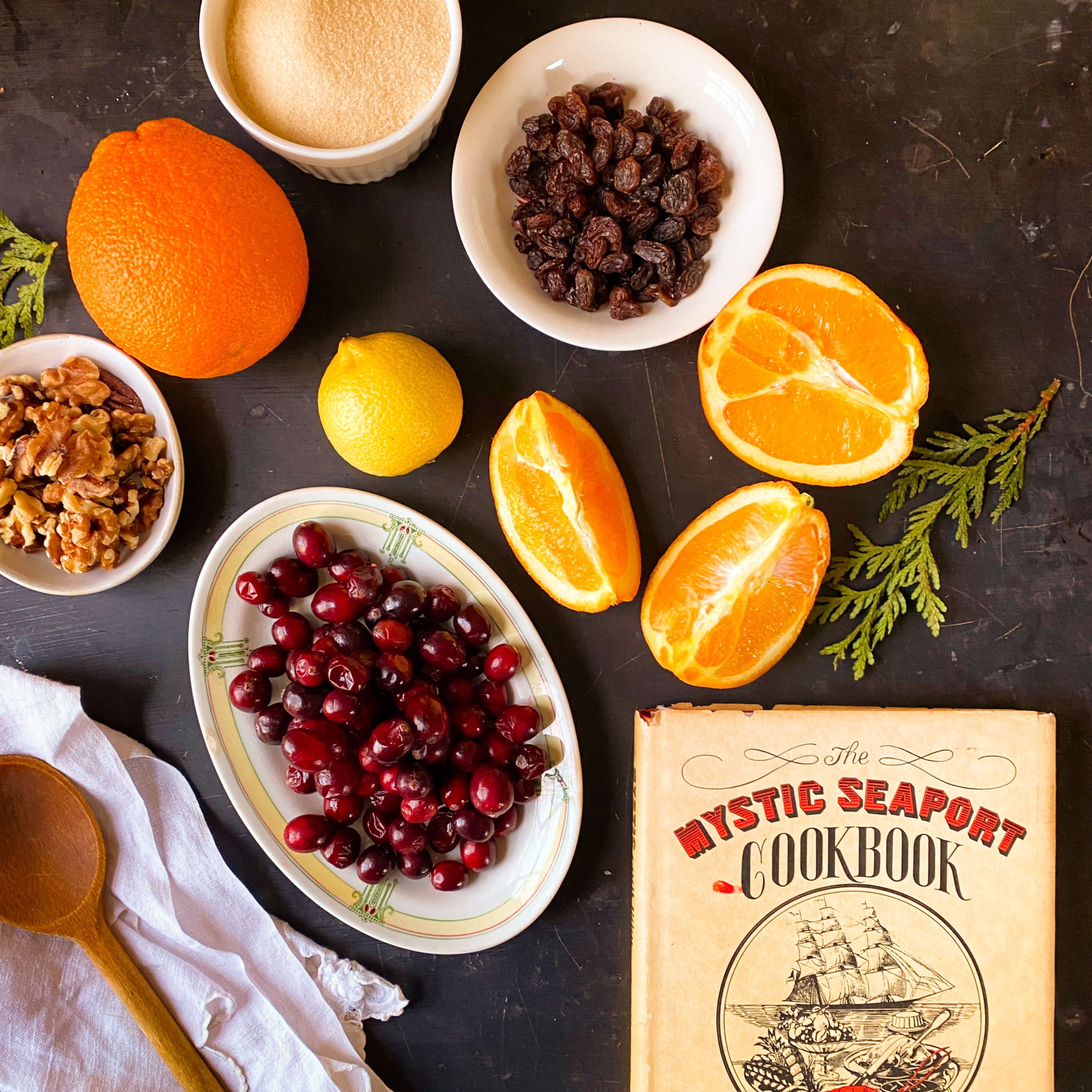
The real-life pizza shop that inspired the film is still serving up hot pies every day in this beautiful, bustling, historic port city, but there’s a long-standing tradition of other delicious New England fare that has made Mystic, CT a go-to source for memorable cuisine too. The recipe featured here today might not be the star of a feature film but it definitely will be a star on your holiday table. Today’s post comes from The Mystic Seaport Cookbook, a collection of historic New England recipes first published in 1970 by Lilian Langseth-Christensen…

You might remember this cookbook from last Spring when we featured a hot rum toddy and a story about sailors and life on the high seas.

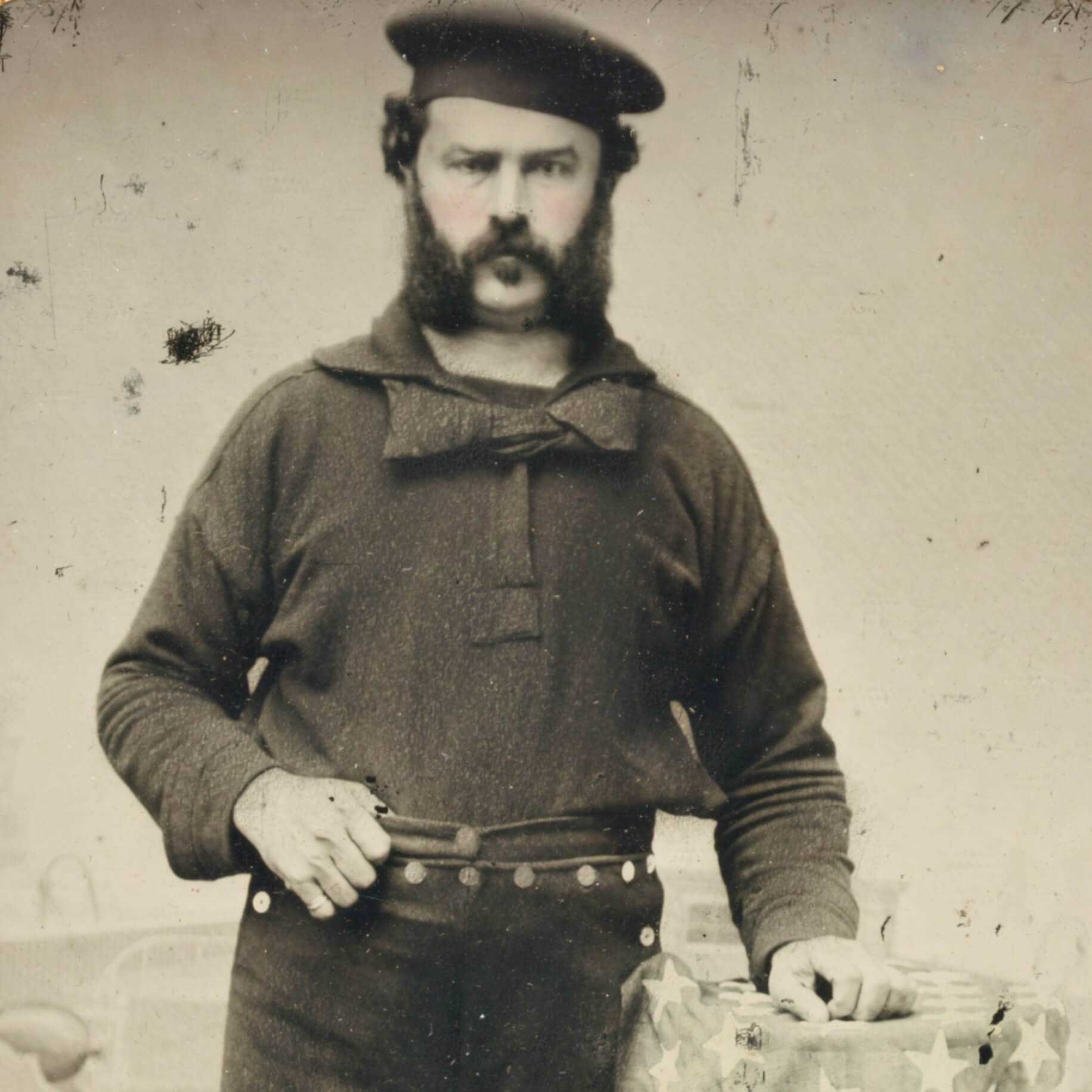
This guy was the star of our hot toddy post.

Hot Grog – Mystic Seaport style

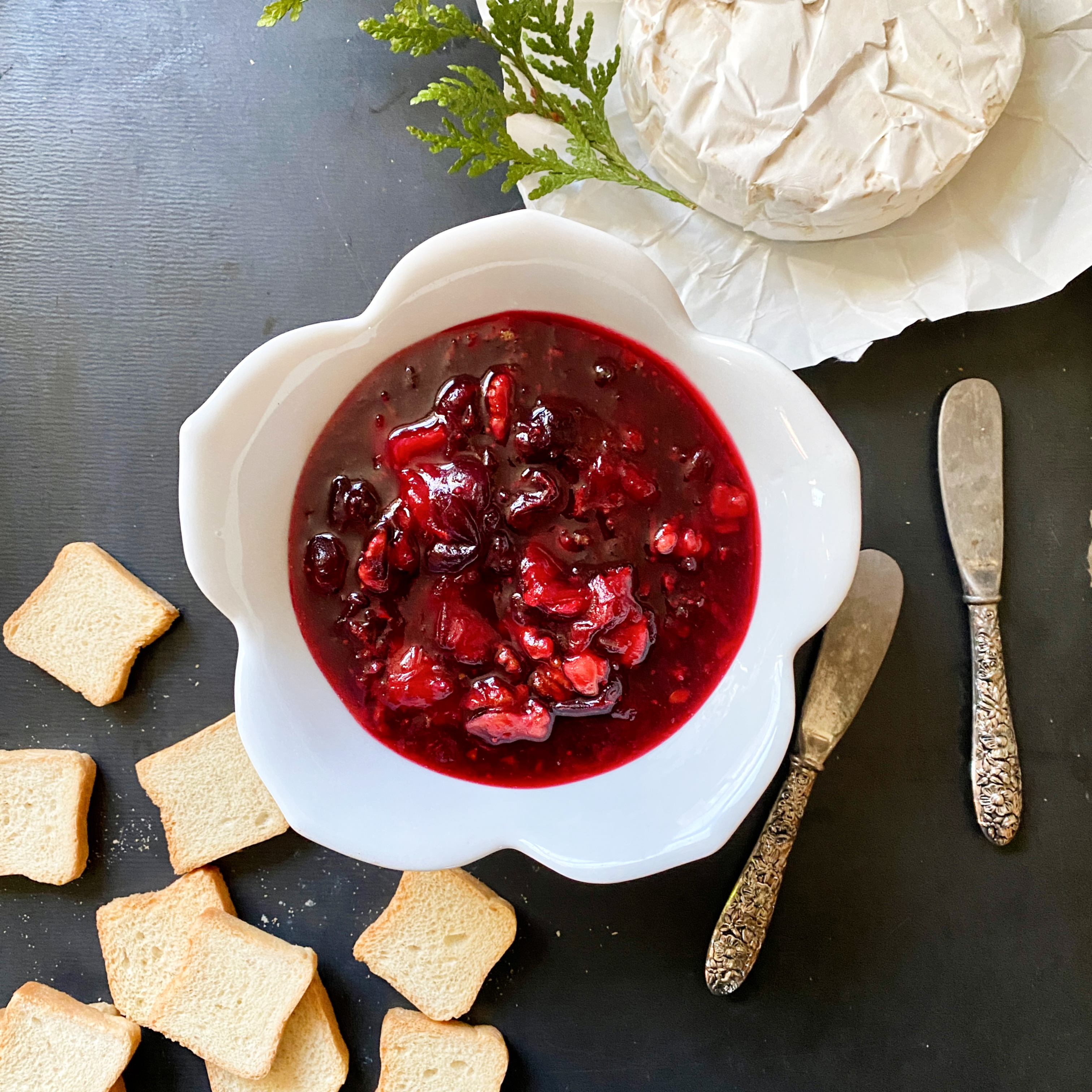
The recipe we are featuring here today isn’t quite as dramatic as that one, but it is equally delicious. Simply called Cranberry Relish, it’s an ideal alternative to canned cranberry sauce at Thanksgiving and travels the rest of the holiday season with tantalizing appeal. Post-Turkey Day, this simple New England cranberry relish becomes a crimson-colored companion to all sorts of festive Christmas party hors d’oeuvres, holiday-themed sandwiches, and cozy winter snacks.

A 19th-century cranberry farm located in Mansfield CT. Image courtesy of the Mansfield Historical Museum and Library.

Back in the 19th century, Connecticut was home to a number of cranberry farms, but it isn’t known for its commercial cranberry bogs anymore. In New England, that’s left up to the neighboring state of Massachusetts now, where they harvest over two million pounds of cranberries per year. Some farms in the Bay State have been run by generations of families that stretch back over 150 years. Thanks to modern machinery, cranberry farming is an easier endeavor but back then it was considered one of the hardest crops to farm and was done entirely by hand with wooden scoops combed through the cranberry bushes. No one was spared the arduous task of collecting cranberries, not even kids.

Cranberry harvesters on Cape Cod circa 1909.

Cranberry Farm – Pemberton, NJ circa 1910. Photo by Lewis Wickes Hine.

A wooden cranberry scoop, also sometimes referred to as a cranberry rake. Image courtesy of a 1940s-era American Cranberry Exchange recipe booklet.

In Connecticut, there is just one remaining cranberry farm in the state left, but cranberry relish has been a part of the New England diet and therefore, the Connecticut diet, since colonial days when indigenous tribes taught early settlers how to pound them into pastes and sauces.

Harvested during the autumn months of September and October, by the time they make an appearance on the Thanksgiving table in the form of relishes, jellies, jams, compotes, sauces, and innumerable baked goods, cranberries add bright color, dimension, and acidic flavor to a holiday meal mostly recognized by its earthy brown and beige shades.

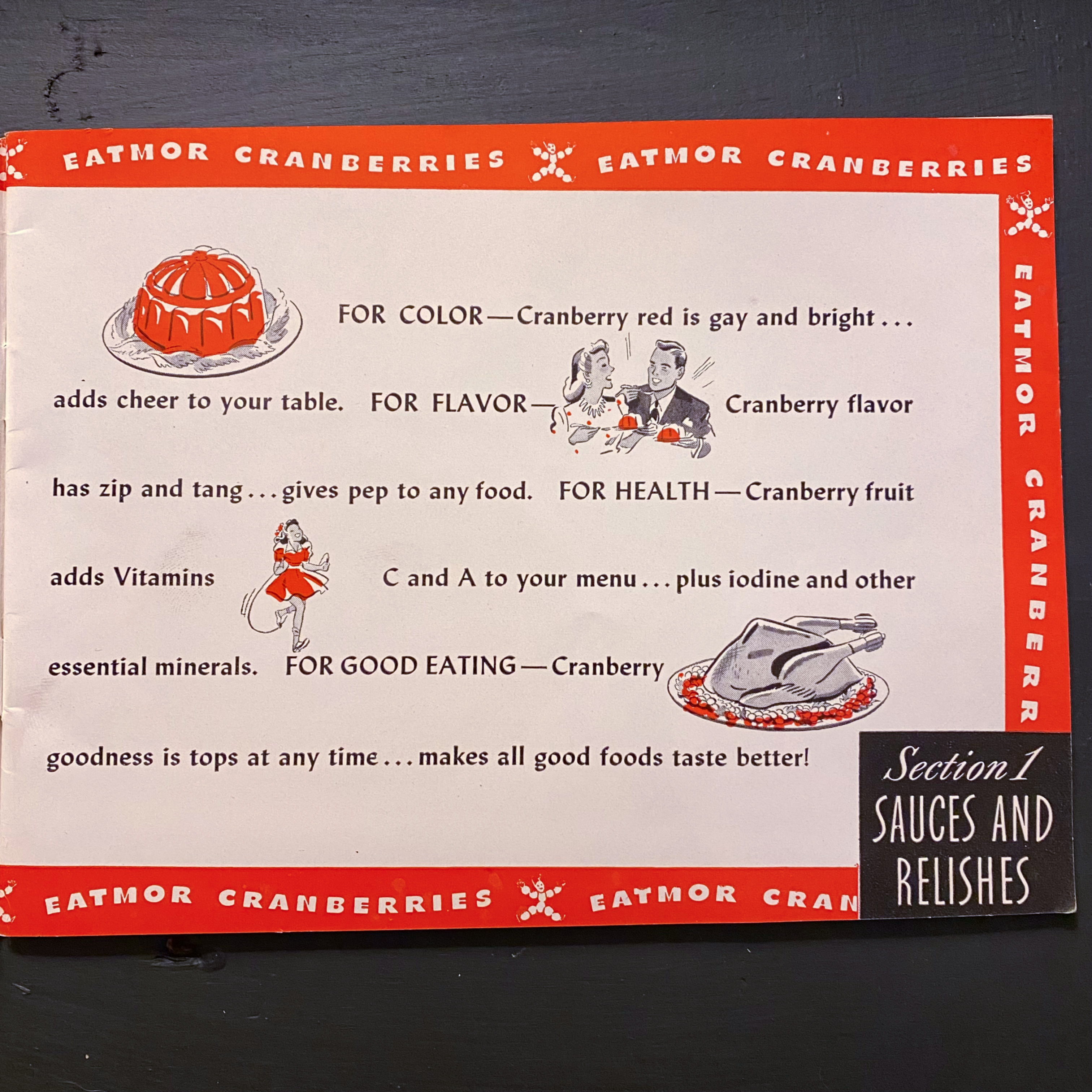
A cranberry recipe cooking booklet courtesy of the American Cranberry Exchange, headquartered at 90 West Broadway, New York, NY. The A.C.E. was a cranberry cooperative that operated between 1907 and 1957 among several US states including Massachusetts, Wisconsin, Oregon, Washington, and New Jersey.

Pick up any New England cookbook, and the author will have their own preferred method of making this holiday side dish, but there will always be some ingredients that everyone agrees on. Technically, what differentiates cranberry sauce from cranberry relish is the cooking process. Cranberry sauce generally tends to be cooked on the stovetop – boiled down with sugar to a sweetened consistency that is thin and syrupy or thick and gelatinous depending on the amount of cooking time. Relish, on the other hand, more often than not, is mixed together in a blender and served chunky and raw with the addition of just a bit of sugar and some other aromatics including spices and citrus. The recipe featured here today is a cross between both. It’s cooked on the stove and includes citrus, raisins, and nuts for a more chutney-like consistency. The chunky texture and quick cooking method, make this Mystic recipe easy and versatile – ideal for all sorts of applications long after the Thanksgiving meal has been enjoyed.

First, we will look at the cooking method and then we’ll dive into the number of different ways to serve this version of cranberry relish. You’ll notice at the end, that this recipe offers a canning suggestion for storage but we just made one big batch and stored it in the fridge where it lasted for over a week and a half.

Cranberry Relish

From the Mystic Seaport Cookbook circa 1970

Makes 6 pints

6 cups fresh cranberries

1 cup cold water

1 cup boiling water

1 1/2 cup raisins

1 1/2 cups chopped walnuts

2 large oranges

4 cups sugar

Grated rind of 1 lemon

Wash the cranberries and pick out any remaining debris (stems, leaves, etc). Boil them in a cup of cold water until the skins pop and the berries become soft.

Blend them into a puree using a hand-held immersion blender…

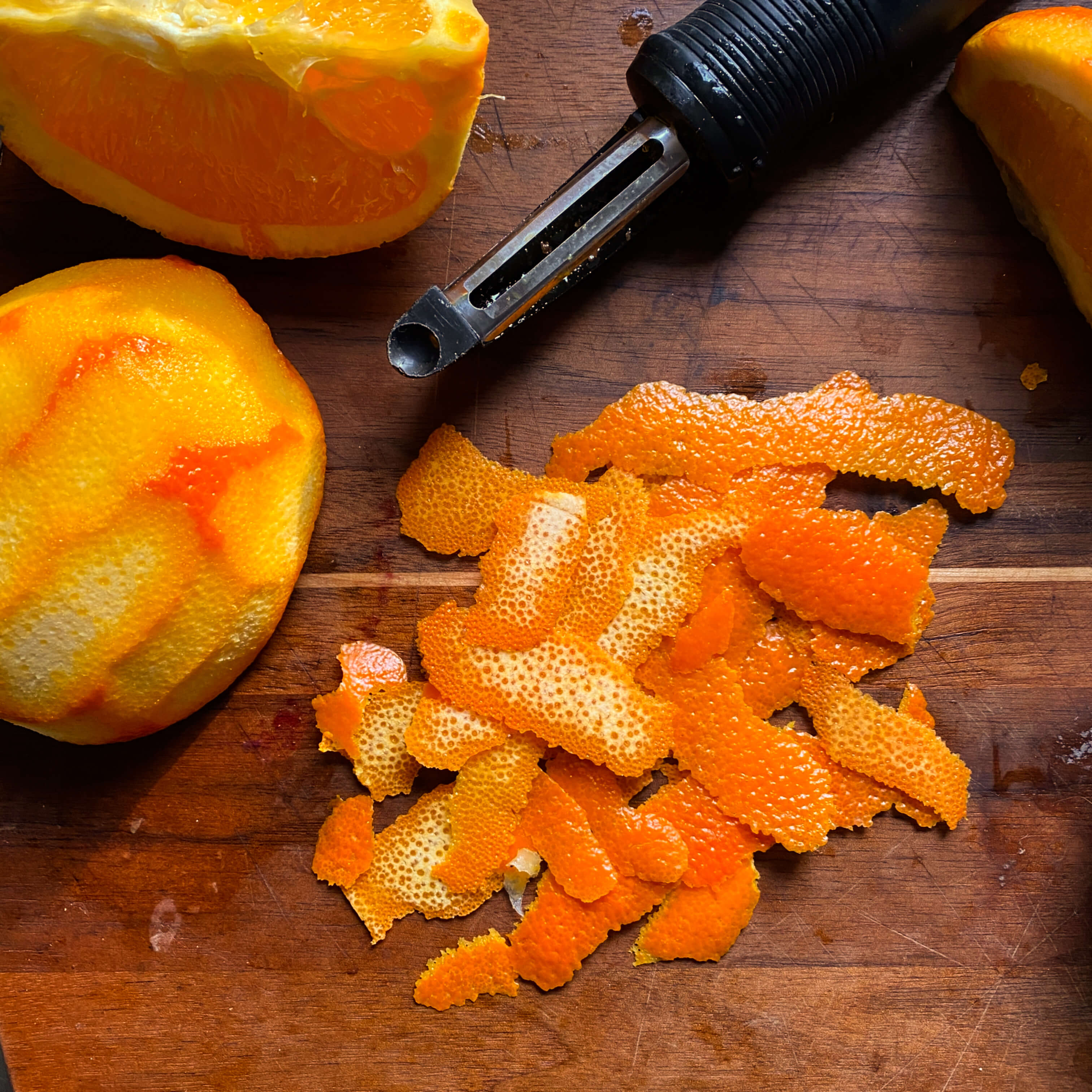
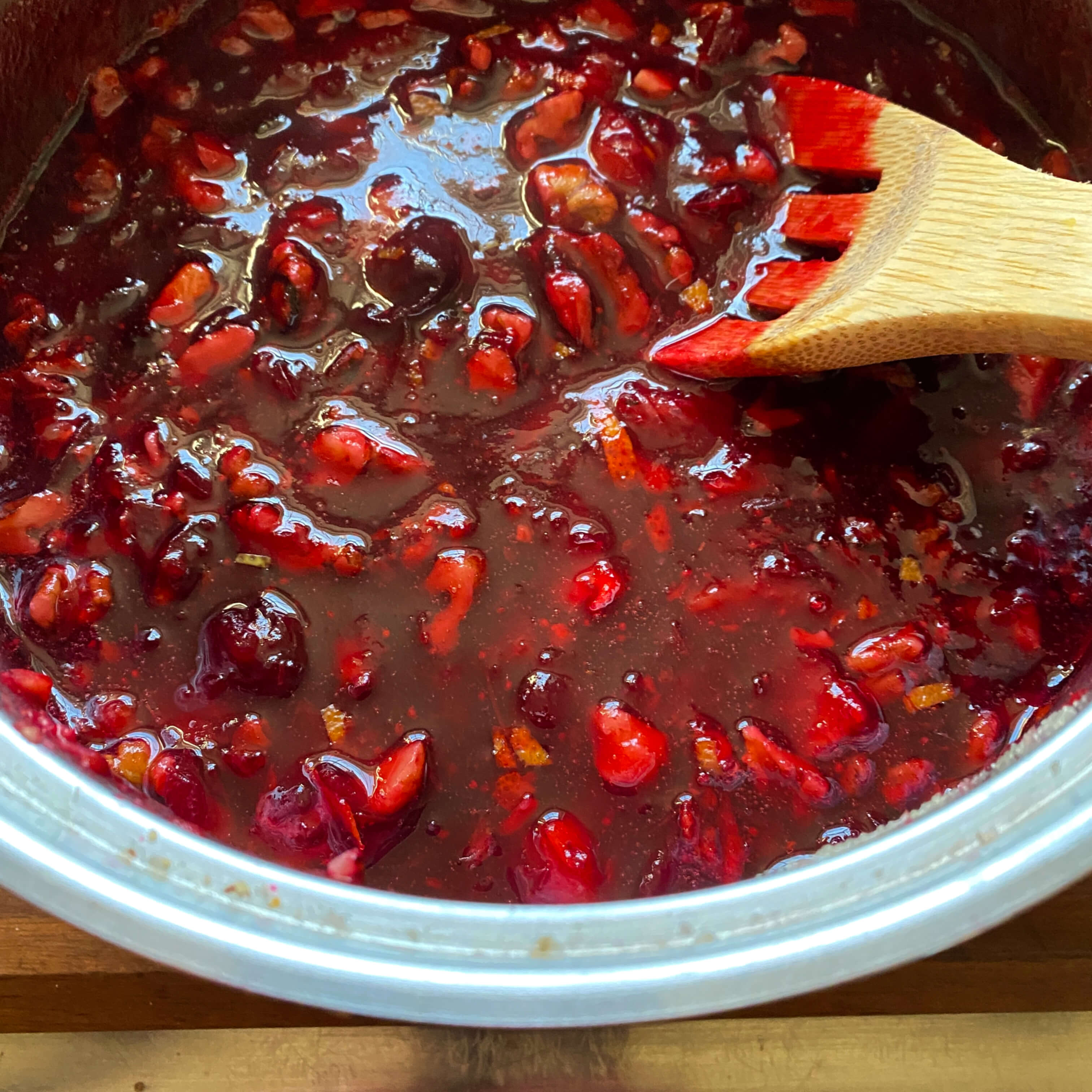
and then add the boiling water, raisins, walnuts, and sugar. Peel the oranges and dice the pulp. Scrap any white pith off the orange rinds, discard the pith, and dice the orange rinds. Add the rind to the mixture.

Next, stir in the grated lemon rind, and cool the relish.

Transfer relish to a bowl and serve or store in an airtight container in the fridge or pour into jars. If storing in jars, seal the jars with melted paraffin wax and shelve for a later date.

A lovely addition to the holiday table, this cranberry recipe contains the best of both worlds when it comes to sauce and relish. It’s syrupy but also chunky. It’s sweet but also tangy. The walnuts give it a satisfying dose of substance and protein. The citrus adds a burst of flavor that keeps the palate notes fresh and bright.

One of our favorite ways to serve Cranberry Relish is poured over a wedge of Brie cheese.

Naturally, it pairs well with turkey, mashed potatoes and gravy but we also love it when it is heated up and spread piping hot over Brie cheese and served alongside an assortment of crackers. Post-Thanksgiving, we like to spread this relish on bread just like mayonnaise for turkey sandwiches. Add it to the filling of turkey pot pie and the dish becomes more savory in an instant. Spread it on leftover Thanksgiving dinner rolls and serve it alongside eggs for breakfast or add it as a topper to oatmeal or yogurt. It’s also great on grilled burgers – beef, chicken, turkey or vegetarian. Basically, any place where you might like a little dollop of a sweet condiment, this one works wonders.

There’s no end to the zillion ways you can incorporate Thanksgiving leftovers into new and creative foods. That’s really the beauty of the holiday after all, isn’t it? All that cooking done days ahead of time allows a rest post-holiday with minimal meal-making effort required, except for quick reheats of the feast that keeps on giving. That leaves plenty of time to relax, read a book, enjoy your friends and family, play games, go for a walk, watch a movie. Perhaps after reading this post, Mystic Pizza will be on the viewing schedule. And maybe, depending on how adventurous you are in the kitchen, this cranberry relish might just inspire a new type of pizza topping too – Mystic style.

If you are looking for more vintage recipes to augment your Thanksgiving menu, we also recommend colonial-style Corn Pudding from the Williamsburg Cookbook and Homemade Citrus Cider from the 1989 Southern cookbook, Wild About Texas.

Hope you find this recipe just as delicious as we did. If you have any favorite cranberry sauce recipes, please feel free to include yours in the comments section. Cheers to the cranberries and all the cooking creativity they inspire.

A 1930s advertisement for Eatmor Cranberries from the American Cranberry Exchange.

It’s Finally Here! Our Annual Shop Sale is Today

Happy All Souls Day! Just wanted to pop in with a quick reminder for all our intrepid culinary adventurers and history-fueled home decorators… our annual one-day-only 40% off shop sale is today!

There are a bevy of new (old) heirlooms that have arrived in the shop recently, so if it’s been a bit of time since you last visited hop on over to the shop to see our latest collections. Some of our favorites include these charmers…

A collection of Poland’s authentic heritage recipes compiled by the Polanie Club of Minneapolis, Minnesota.

Rare antique J.W. Pankhurst English ironstone dinner plates circa 1850.

A porcelain enamelware floral bowl set by Kobe circa 1980s

A 1930s-era packet of French postcards featuring the beautiful city of Marseilles

An antique crocheted tablecloth handmade at Ellis Island circa 1916. You might remember this one from our in-depth blog post about one woman’s Italian immigration story here.

A vintage Dutch cookie tin featuring maritime art.

A 1930s edition of a classic kitchen cookbook courtesy of Fannie Farmer, the woman responsible for creating our modern cooking measurement system.

A vintage botanical art book featuring gorgeous illustrations of fruits, vegetables, and flowers.

An antique handmade gathering basket from the early 1900s

A vintage pair of cheerful yellow dinner napkins with embroidered dots fit for every season.

Interested in meeting some of the makers and collectors behind our shop’s beautiful heirlooms? Poke around each section and you’ll encounter these faces and the stories they tell about history and their place in it.

Hope you find a treasure that calls to your heart and adds an extra bit of joy to your home.

As always, the sale runs through midnight tonight and discounts are automatically applied at checkout. Thank you so much for traveling with us down these adventurous pathways of culinary history. Cheers to new inspiration and a day of happy shopping!

A One-Pot Recipe for Your Pup: Homemade Dog Food Back by Reader Request

To view the full 30-Days graphic that includes all 30 bowls, click here.

This past January, we shared a post highlighting thirty days of homemade dog food that we made for our pup, Indie, during the month of December 2022.

As much a photo collage as a visual guide on the types of food that Indie has been eating throughout her life here with us, I wanted to dispel the myth that cooking for your pup is difficult, time-consuming and complicated. It was a piece that worked in tandem with a 2018 post about the history of dog food where we also introduced how to make your own balanced meals for your dog regardless of size, age or breed.

The history of dog food and how to make your own.

Both posts shared details about a large majority of the types of food Indie (and all dogs) can eat but neither contained a specific recipe. So in today’s post, as requested recently by our canine-loving readers, I’m sharing one of Indie’s most favorite meals complete with an ingredient list, step-by-step instructions and notes on scaling proportions depending on the size of your dog.

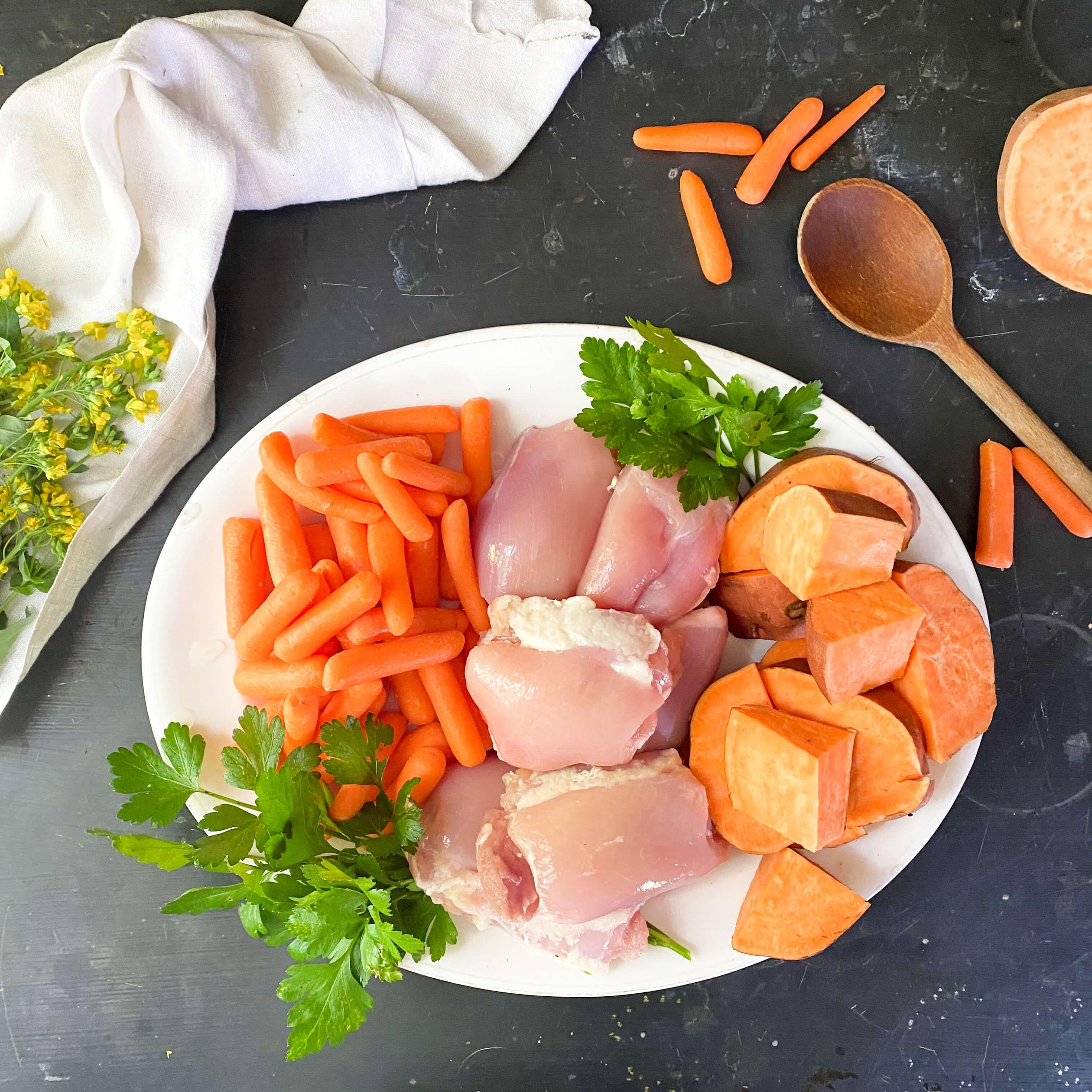
On the menu today it’s Steamed Chicken, Carrots & Sweet Potatoes – a one-pot stovetop meal that takes five minutes to prepare and one hour to cook. You can amend the recipe to make a large batch that will make up to eight meals or you can make a small batch that will provide a fresh homecooked meal for one to two days worth of dinners and breakfasts. Fridge-friendly, freezer-friendly and on-the-go-approved, if packed in an air-tight container and kept cold, this recipe can tag along on your all summer outings including picnicking, hiking, and overnight vacations. It can be reheated in the microwave or the oven if your dog likes warm food, or it can be enjoyed cold right from the fridge. You can toss in additional grains or vegetables if your pal has a big appetite, or serve it as is – a simple meat and two.

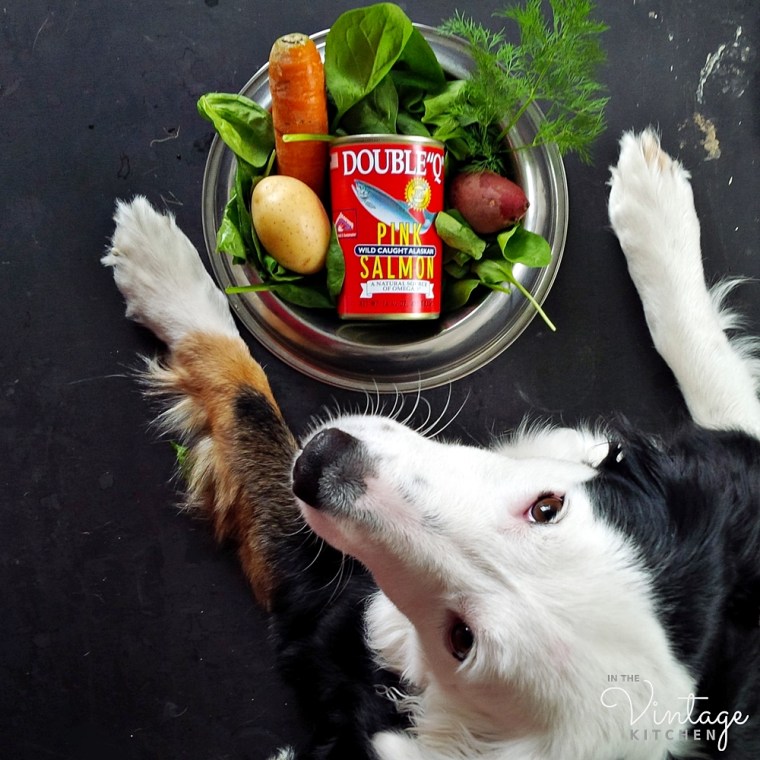
This is also a good starter recipe if you are new to the world of making homemade dog food or are introducing your pup to this new way of eating. It’s simple to make, requires just a handful of ingredients, and is easily digestible for all dogs. And just like all of Indie’s other meals, it’s 100% human friendly too. That’s the key to homemade dog food. There is not one ingredient in this recipe that you wouldn’t want to eat yourself. Let’s look…

Steamed Chicken with Carrots & Sweet Potatoes served here over a bed of green lentils.

Homemade Dog Food: Steamed Chicken with Carrots & Sweet Potatoes

This recipe makes 4-5 servings for a medium-sized dog weighing 45-50 lbs. Please see note regarding portion sizes following the recipe.

One 2-3lb package of chicken thighs, containing 4-6 thighs (Bone-in and skin-on preferred, but you can also use skinless/boneless thighs, chicken breasts or chicken tenders. We do not recommend bone-in-chicken breasts or wings though as these contain too many small bones. Please see note below.)

3 tablespoons olive oil

1 lb baby carrots

3 large sweet potatoes, skin-on and roughly chopped into large 3″ inch cubes

1 healthy pinch of sea salt

Optional: a handful of roughly chopped fresh parsley

Rinse chicken and pat dry with paper towels. Set aside. In a large stock pot, over medium-high heat, add the olive oil, making sure it coats the entire bottom of the pot. Let the oil warm up for about one minute. Add the carrots in a flat layer.

Next, add the chicken (skin side down if using bone-in thighs) …

Sprinkle the chicken with a generous pinch of sea salt. Then add the chopped sweet potatoes on top of the chicken and the fresh parsley on top of the potatoes.

Turn the heat down to medium. Cover the pot and cook for 60 minutes. Remove the pot from the heat and let it rest for 15 minutes on a cooling rack. Dinner is done!

With stew-like consistency, this dog-friendly recipe is full of comfort food flavors all bathed in a natural broth that forms when the water in the carrots and sweet potatoes mixes with the olive oil and the chicken fat. The hour-long steam makes the chicken fall off the bone and makes the vegetables so tender you can slice them with a butter knife.

If you use skin-on chicken thighs with bones you’ll get a richer-looking broth.

After the chicken has rested, remove one thigh, one cup of sweet potatoes, 1/2 cup of carrots, and 1/3 cup of broth to your dog’s bowl. Pull the chicken from the bone with a fork and then discard the bone. Because they splinter easily and can cause internal damage to organs, you never want to feed your pup any chicken bones. This is why we don’t recommend using bone-in chicken breasts which usually come with the ribs attached. The same goes for chicken wings which are made up of many small bones that can be easily missed when cutting the chicken up after it cooks.

Once you have transferred the chicken and vegetables to your pup’s bowl, slice everything into bite-sized pieces, mix it all together and let it cool to room temperature before serving.

Hands down one of Indie’s most favorite meals, Steamed Chicken with Carrots & Sweet Potatoes is a year-round pup-pleaser of a recipe and contains all sorts of nutritious vitamins and minerals. Collagen (chicken skin), beta-carotene (sweet potatoes, carrots), magnesium (sea salt), healthy fat and vitamins E & K (olive oil), and lean protein (chicken) are just a few of the beneficial vitamins and minerals wrapped up in this recipe that will help keep your dog happy and healthy.

Over the 4th of July weekend, Indie celebrated her 10th birthday. Of course, we surprised her with her favorite chicken dinner. This time, in addition to the sweet potatoes and carrots we added in some chopped-up cucumbers, another summer love of hers.

For the love of homemade food and cucumbers.

That is just a little example of how carefree this chicken recipe can be. The carrots, olive oil, and the chicken itself are mainstays, but the sweet potatoes can be swapped out for butternut squash, red potatoes, broccoli, cauliflower, cabbage, pumpkin, celery, beets. Just avoid adding any onions, garlic, or citrus fruits – three types of food that also seem like they might be natural companions to this meal, but are actually toxic to dogs. If you are interested in more possibilities to add in or swap out be sure to check the lists of other approved dog-friendly foods in the previous two posts here and here.

Leftovers can be stored in an air-tight container in the fridge for up to four days. When the broth cools it transforms into a jelly-like consistency similar to aspic. Don’t be put off by its wiggly jiggly nature. It’s just the coagulation of the olive oil, broth, vegetable juices and chicken fat. Your dog will love it, so be sure to include a little bit of it with each additional serving. If you decide to make some rice or lentils to augment the chicken and vegetables that jelly will add extra flavor to the new additions.

Day Two – the wiggly jigglys!

And two final notes on year-round enjoyment of this recipe and portion sizes …

In the summer, Indie tends to eat a little less food if it’s particularly hot, so when it comes to this recipe, she’s happy most of the warm-weather months with just the chicken, sweet potato and carrot combo. But in fall, winter and spring when she is at her most active, we usually add in a few other foods too for both variety and an extra dose of go-power. Other accompaniments you might like to include are the following…

  • 3/4 cup of cooked rice, 1/2 cup of cooked lentils or 1/4 cup oatmeal
  • 1 cup of additional cooked and chopped green vegetables (broccoli, collard greens, kale, spinach, zucchini, celery, green beans or peas)

All the proportions discussed so far are based on Indie’s medium 55lb. frame. If you are making this recipe for a small breed dog like a chihuahua or a bichon, you can certainly swap out the thighs for smaller cuts like chicken tenders or thin-cut chicken breasts. If you decide to use either of those, simply adjust the cooking process by starting with the layer of carrots first after you add the olive oil, then add the chicken, salt and sweet potato layers. That way the chicken won’t get stuck to the bottom of the pot.

And on the opposite spectrum, if you have a large breed dog over 60 lbs. I’d recommend doubling the portion size of the recipe above. The nice thing about using a big stock pot is that you can fit quite a bit of food in it. I’ve made this recipe using all types of chicken cuts, and all types of quantities from 4 to 8 thighs with 2lbs of carrots and six sweet potatoes, and it still comes out great every time.

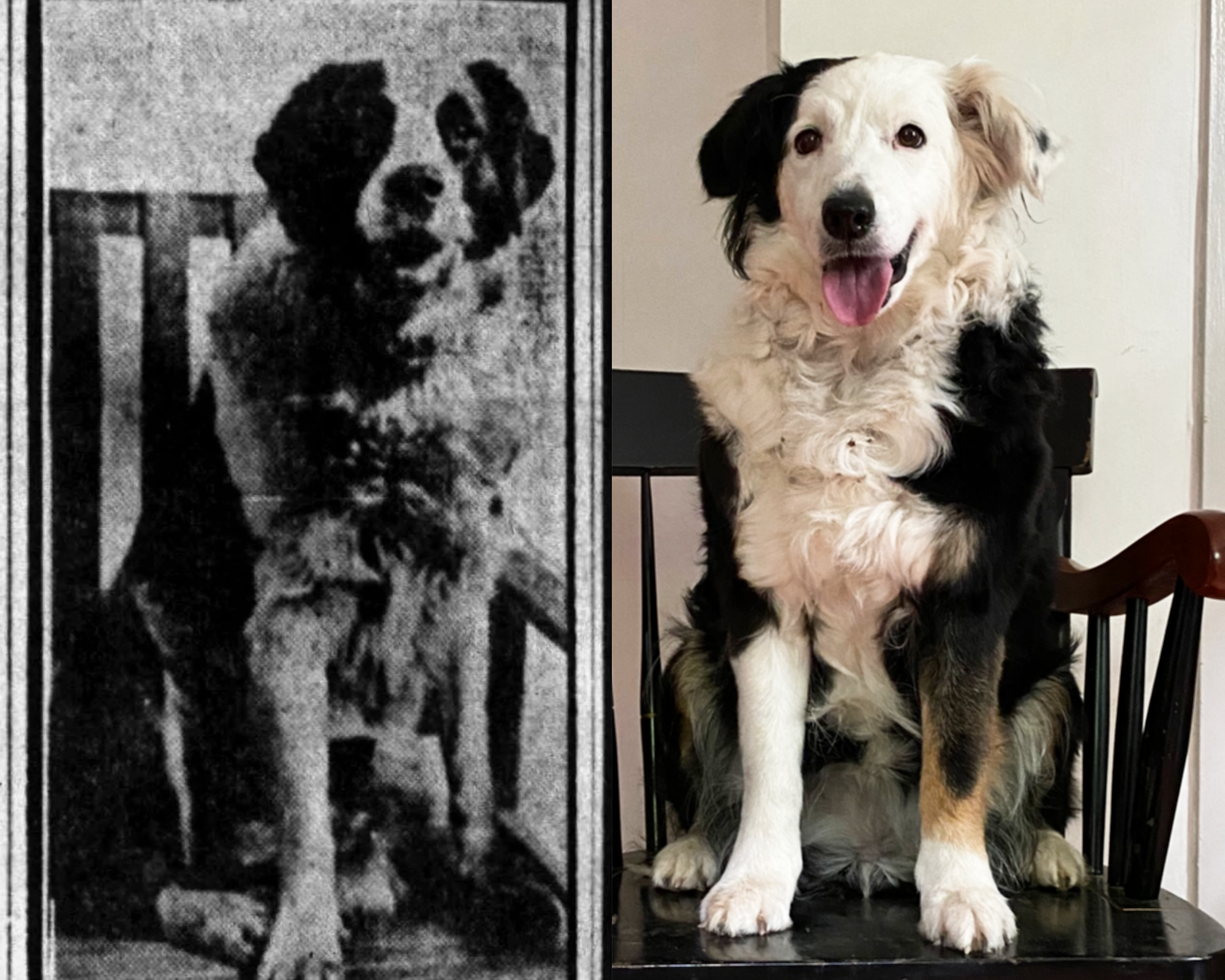
Recently I discovered the 1910 story of Bum, a stray dog in St. Joseph, Missouri who frequented the back door of several restaurants in town each day. He was such a polite and enthusiastic eater, the kitchen cooks and wait staff couldn’t help but spoil him with the finest menu selections of the day. After Bum enjoyed a delicious meal at his favorite luncheonettes, he’d trot down the street and wait patiently for his next favorite set of restaurants to open up for dinner service. Bum so charmed all the restaurant workers that he became the most beloved (and well-fed) fixture in the neighborhood.

This story reminds of Indie, who was also a stray who trotted into our backyard during our Fourth of July barbecue in 2014. Once she had her first bite of grilled chicken, she never left. And so began a now nine-year adventure of cooking for Indie, our most enthusiastic taste-tester here in the Vintage Kitchen. Julia Child was famous for saying ” People who love to eat are always the best people.” Around here, we could say the same about dogs too.

Bum in 1910. Indie in 2023. Photo of Bum courtesy of the St. Joseph News-Press (Dec. 16, 1910).

I hope this post is helpful to the readers who requested it. We are always here to answer any questions you might have so feel free to ask away should you run into any troubles. In the meantime, happy eating to your pups. I hope they love this recipe as much as Indie does!

Cheers to all the dogs out there who inspire a wealth of joy and creativity in the kitchen. And to Indie, our delight of a dinner eater from day one.

On This Day in 1861: Brooklyn Want Ads, Hot Grog and A Sailor’s Time-Honored Tradition

An unidentified sailor in Union Uniform circa 1861-1865. Photo: Library of Congress.

April 10th, 1861. On this day in history, if you were a sailor perusing the newspapers of Brooklyn, New York you’d find your next maritime adventure tucked in between advertisements for Shakespearean readings, housekeepers for hire, and rubber teeth dentistry services. There, in a want ad posted in the Brooklyn Evening Sun would be your future for the next several months or possibly years to come. The US Navy was looking for seamen. It would ensure a paycheck, food, medical attention, and a chance to see the world, or at least part of it, via ship. There would also be grog.

Brooklyn Evening Star – April 10th, 1861

Life aboard a 19th-century sailing vessel was not a gourmet affair. Unless you were the captain, sailors could expect to consume a diet heavy in hardtack (a tough, shelf-stable biscuit made of water, salt and flour) along with rations of salted meat, pork and fish, and possibly a vegetable or two like cabbage or turnips. Beverages available were typically three – water, beer and rum, consumed in that order as the length of time on the ship grew. Each stored in wooden barrels, water was a luxury that spoiled quickly and therefore was the first to go rancid due to inadequate refrigeration. Beer was next, oftentimes turning sludgy and sour, weeks into the journey. The only truly shelf-stable beverage was rum.

The USS Bienville, built in Brooklyn, NY served as a Union sail steamer from 1861-1867.

In today’s post, we are drinking like sailors and embracing a long-standing tradition that is still upheld by seamen around the world. The recipe is Hot Grog, a rum and water toddy of sorts that includes tea, fresh lemon juice and sugar. Back in the Navy during the 1800s, this drink in its simplest form of rum and water was commonplace – an expected part of everyday life aboard ship. Today it’s an ideal restorative for Spring. When temperatures can be cool at night and warm during the day it’s a comforting evening drink, a medicinal miracle worker for allergy season, and a celebratory cocktail served hot or cold depending on your weather and your whereabouts.

Rum and sailors have been companions for centuries. This recipe is definitely no new kid on the block. History states that the average sailor in the Navy during the 1700s -1800s consumed one-half to one pint of straight rum per day which could equal up to 27 gallons per year. A ration available to all men aboard, regardless of the type of sailing vessel, rum was both a highlight and a soothing salve for the spirit to get them through the hard work, the inclement weather, and the lonely atmosphere that surrounded life at sea. Food history also accounts for the fact that rancid water and spoiled beer left but one alternative for hydration. In that regard, rum was both a treat and a life-sustaining source of calories. But most importantly, it was a tradition.

Read more about this cookbook in the shop here.

Although there are a few different ways to make grog, today’s recipe featured here comes from The Mystic Seaport Cookbook. Published in 1970, this cookbook celebrates over 300 years of traditional New England fare offering a unique glimpse into maritime life. With a surprisingly extensive beverage section that includes several eggnog recipes, syllabubs, flavored brandy, punches and possets, Hot Grog is one the oldest of them all.

Portrait of Edward Vernon by Thomas Gainsborough

Dating to the 1730s, grog is attributed to British Navy Admiral, Edward Vernon (1684-1757). Nicknamed Old Grog, Edward celebrated a maritime victory over Spain with a round of rum for all the sailors on his ship. Although acknowledging that rum drinking was par for the course in the life of a sailor, Edward thought that more than two cups of rum a day was too much for any man, so he offered his seamen a drink of half water/half rum to toast their victory. This mixture became known as Grog, and as the decades and centuries progressed, the tradition of a daily drink of grog became a highlight of a sailor’s day aboard ship, marking an important place not only in maritime history but food history as well.

Our 1860s sailor up top at the beginning of the post, thumbing through the Brooklyn Evening Star, would have noted that the want ad included the mention of grog specifically. As that meant that this ship upheld tradition and would be more likely to follow through on its promises. In the 1700s and 1800s, many jobs for sailors aboard trading ships and cargo vessels were fraught with injustices that led to unfair working conditions. Partly because of unscrupulous captains, cramped quarters, disease, the danger of the work, and the uncertainty of long weeks or months spent out at sea, the life of a sailor was not an easy one. But certain dependable regularities could make the voyage more bearable – rum being one.

A delight in all ways that tea and rum can be on their own, this seafaring beverage is both visually enticing and physically appealing. Essentially like drinking a good, hot cup of tea, it’s a well-complemented combination of flavors, with no one ingredient overpowering the other. It’s preferable to select a strong type of black tea, but I suspect (although I haven’t tried it yet) that this drink might be equally interesting with an herbal tea like peppermint or ginger as well. I don’t think the sailors would mind if you experimented, just as long as you don’t forget the rum!

Hot Grog – Serves 6

3 large lemons

1/4 cup sugar

3/4 cup heavy rum

6 cups strong hot tea (lapsang souchong)

While water is boiling for tea, cut six long curls from the lemons using a vegetable peeler. Cut each lemon in half and juice them to make 1/2 cup.

Combine the sugar, lemon juice and rum in a mason jar or small bowl and stir. Divide the mixture among six warmed mugs. Prepare the tea and add it to each mug. Garnish each cup with a lemon rind swirl and serve immediately.

I’ve made this recipe a few times over the past couple of months. The first was at Christmastime when the polar vortex weather encouraged us to try all the ways to keep warm inside and out. I’ve also made it on a grey and rainy end-of-winter night when the air was so damp and heavy, it felt like Spring might never come. And then again just the other day, when the 60-degree day sun was setting and the temperatures started creeping back down into the low 50s. Each time, hot grog warmed the belly and refreshed the spirit.

A comfort in other ways too, grog made its way into sea shanty songs. Sung by sailors for hundreds of years, as they went about their life on the water, songs like Leave Her Johnny Leave Her , Drunken Sailor and the The Wellerman all touch on the challenges faced at sea and the important part that rum played. The Wellerman, in particular, features all three ingredients of hot grog – sugar and tea and rum. It was a popular song among the crews of New Zealand whaling boats in the early 1800s, and then again became a popular song on social media during the pandemic in 2020-2021. If you aren’t familiar with it, here’s the song in full… (with a little warning… it’s a bit of an earworm – you might be singing it for days!)…

It’s incredible to think what a far reach this magical combination of ingredients has had in the minds and hearts of sailors (and singers!) for centuries. From the New York waterfront all the way around the globe to the South Island of New Zealand and back again, for whatever occasion, at whatever temperature, and in whichever climate you chose to make a cup of grog, I hope you enjoy it just as much as we did here in the Vintage Kitchen.

Below are a few more want ads for sailors that add dimension and depth and color to this corner of nautical history. Cheers to all the sailors who’ve kept tradition alive via recipe and rum!

Bangor Daily Whig & Courier – November 5th, 1863

Bangor Daily Whig & Courier – November 11th, 1856

Bangor Daily Whig & Courier- Set. 8, 1864

The Greenhouse Diaries Entry #5: Seed Starting, The Blushing Bell Pepper and What We Learned from a Veggie Burger

Valentine’s Day is still two weeks away, but in the greenhouse love and joy and lessons are in abundance these days. From the deep red petals of the geraniums to the blushing bell pepper to a big bowl of an aphrodisiac growing on the second-tier shelf, it seems like every plant is offering up a bit of romance and wisdom in one way or another. Is this what the winter harvest season looks like? Or does this mean spring might be coming early? I don’t know. Since it’s our first year, we can only take note and appreciate what’s happening right now in the greenhouse at this end-of-January date. Let’s look…

The sun gold cherry tomato branch produced another foursome…

The nasturtiums and geranium flowers are stretching their leaves and spreading so much cheer both in color and scent…

Nasturtiums
Geraniums

Growing like gangbusters, the chives and the collard greens, are each overflowing from their containers…

The arugula and the parsley are keeping pace with our daily kitchen needs by enthusiastically providing continuous greens for every meal…

Greenhouse-grown arugula and parsley

One of our favorite recipes we tried this week was this new veggie burger from Jenny Rosenstrach’s cookbook The Weekday Vegetarians. We modified it a bit by adding a fried egg on top and stuffing the buns with our own greenhouse-grown arugula and parsley but otherwise followed the recipe exactly.

These burgers don’t require any baking in the oven – just stovetop cooking (or hot plate, in our case) in a cast-iron pan, so it’s an especially great recipe for under-construction cooking, small space meal-making, or college dorm food. Soft and light, as opposed to many veggie burger recipes that can sometimes tend to become dry and dense, Jenny’s recipe has the consistency of crab cakes and a delicate flavor combination of mushrooms, brown rice and pinto beans. Jenny suggested sliced avocado and a spicy mayo mixture for a topper, but because of our greenhouse abundance, we substituted those two with our own version of similar flavors and textures via the creamy egg and peppery parsley and arugula. It was delicious.

Nowadays, arugula is such a common salad staple that it’s easy to forget that it was once considered a gourmet green and talked about in haughty tones. Although British and Italian immigrants are credited with bringing it to America in the 19th century, it wasn’t really until the 1980s, that it started making a more regular appearance in American cookbooks.

Paula Peck was one of the very few who mentioned it in her 1960s-era book, The Art of Good Cooking, grouping it together with “very expensive” bibb lettuce and James Beard, our favorite gourmand, described it with a sense of reverent curiosity in his 1970s American Cookery book. But none of our favorite 20th-century chefs featured it as an ingredient to create a meal around until many decades later.

Not the case across the pond though. There was nothing new about it in England, Europe and the Mediterranean. There, arugula has been enjoyed for centuries. Legend states that in Roman times it was considered an aphrodisiac and was even banned from some gardens for its love potion properties. So if you wanted to make a romantic Valentine’s dinner for your sweetheart this year, consider a big bowl of arugula along with your shellfish.

Santaka pepper

Back to the spicy atmosphere in the greenhouse, the Santaka Pepper – although pretty small in stature at just 8 inches – is getting ready to flower (above) and Liz Lemon is growing a baby (below)…

Liz Lemon’s baby lemon!

The loveliest surprise of all this week though was the bell pepper. If you have been following along with previous entries from The Greenhouse Diaries, you’ll recall that this was a mystery bell pepper plant that was either a California Wonder, producing peppers that would ripen to a deep red color, or it was the Orange Sun variety, which would turn, as it names suggests, to a warm shade of orange once mature. For weeks, we’ve been waiting to see which color it would turn.

Finally, last Wednesday, the pepper started to change. With great excitement, I’m so pleased to share for certainty now, both the color and the type of plant we’ve been growing all these months here in the greenhouse. The first blush gave it all away…

Wednesday

Orange Sun! Each day it gets brighter and brighter…

Thursday

Yesterday morning

If bell pepper had a theme song, it would be this one…

Through wind and rain, snow and sleet, sun and clouds, the greenhouse experienced all the different types of weather possible in these past 14 days. Outside it was a rollercoaster of highs and lows, but inside the temperature held steady between 70-80 degrees, the most even stretch of well-regulated temperature all winter so far. Thanks to our trusty heater, that cozy warmth is now making it possible to start our next endeavor…

Seed starting! After late sowing in the garden in 2022, this year the plan is to get a head start so that by the time the last frost date passes in our area (typically mid-to-late April), they’ll be a collection of hearty transplants ready to make their way out to the garden beds.

Excited to get to work on what is perhaps the most optimistic of gardening pursuits, the first set of seed trays were filled with flowers… snapdragons, Mexican sunflowers and foxglove. Four days in and the Mexican sunflowers have already started popping up. Another joy!

Mexican sunflower seedlings

The first time I ever grew Mexican sunflowers from seed was in 2012. I fell in love with their delicate, velvety soft stalks and their bright tangerine-colored petals. Blooming extensively throughout the season, they were a haven for bees and butterflies. That first year I was living in Georgia and they filled out into a 6′ foot by 5′ foot tall bush in a flash. That combination of heat, humidity, and full sun was a winning ticket. I haven’t had enough gardening space to try Mexican sunflowers again until this year, so I’m not sure if they will grow as large and as lush here in New England, but it will be an exciting experiment. This is how they turned out that first year (fingers crossed that we’ll get similar results and similar visitors)…

From the garden in 2012

Right on track, the snapdragons and the foxglove started sprouting yesterday. As biennials, we started some in the garden last year too, along with hollyhocks, but they didn’t grow very much. It’s my first attempt growing all three from seed, so we’ll see what happens this year. Between these greenhouse seedlings and those planted in the garden last year, we’ll have two sets hopefully coming up more productively this year.

Next up on the seed starting list for this coming week are a new batch of peppers and herbs, salad greens, hollyhocks, milkweed, and pincushion flowers, which will get us set up through the month of February before more seeds get started in March. By that stage, we’ll be rounding the corner towards Spring and our one-year anniversary at 1750 House. We aren’t as far along in our renovations as we thought we’d be, but I learned a valuable lesson this week from the veggie burgers.

At one point in Jenny’s instructions, when it comes to the step about forming the actual veggie burger patties, she writes “they will probably look mushy and unappetizing, but press on.” I love that she was so candid with this insight. And I love that she uses the encouraging words “press on.” As we continue to get to know the greenhouse, the 1750 House and the landscape in which they both lay, it is such a good reminder that all worthwhile endeavors require a healthy dose of blind faith and pressing on. Without that, we’d never make it to the flowering and flourishing days. I can’t wait to see what this spring holds in terms of a kitchen and a kitchen garden. We may be in the middle of the mushy parts now, but something deliciously wonderful awaits.

Cheers to love that sprouts, to the sun’s coming out party in the greenhouse, and to Jenny for sharing recipes and reminders.
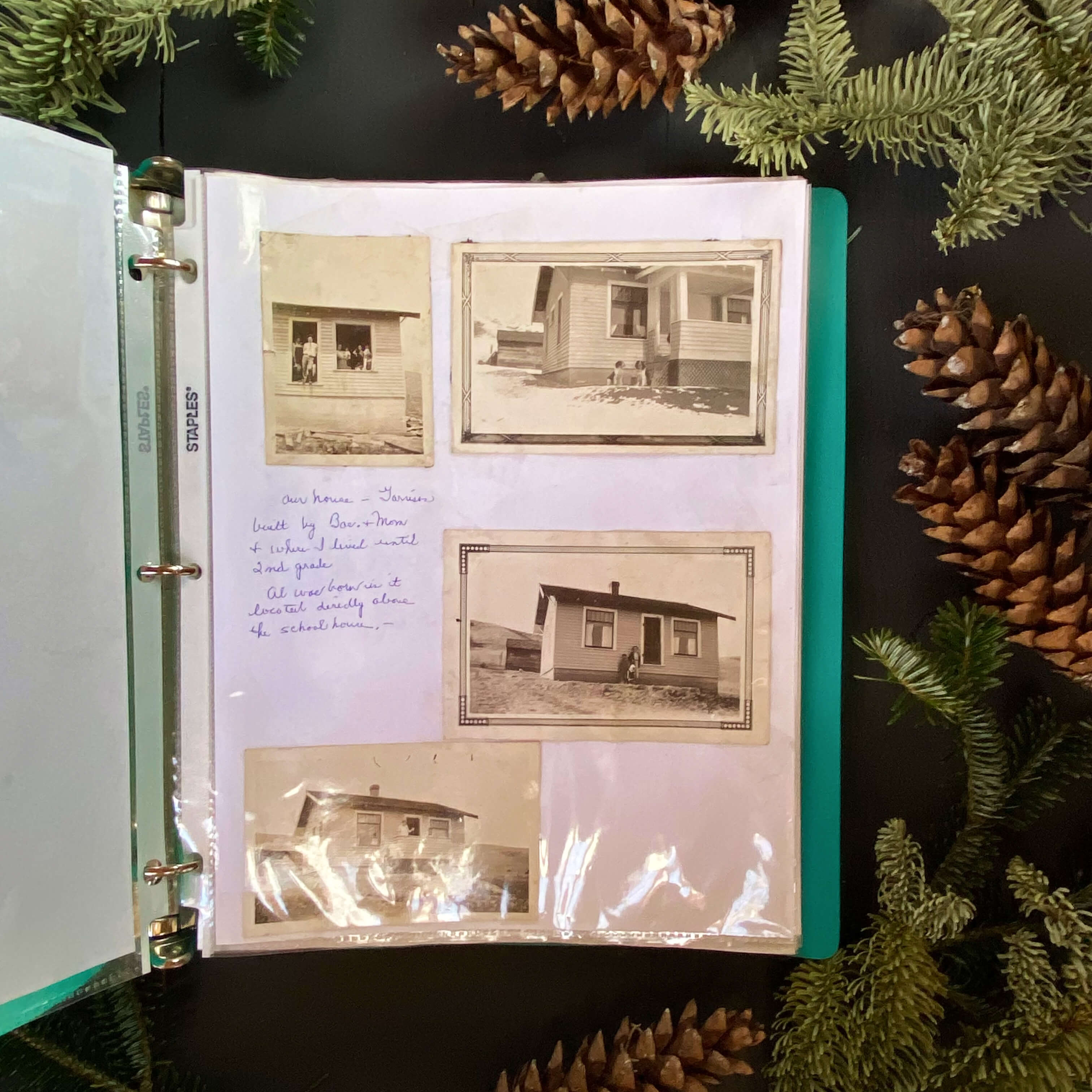
Mexican sunflower seedling

{The Greenhouse Diaries is an ongoing series. if you are new to the blog, catch up here with Week #1Week #2, Week #3 and Week #4 here}

Cheers to All Souls: Our Annual 40% off Sale Is Next Wednesday

The last bouquet of summer included the final flourish of zinnias, dill, okra, daisies, cosmos and nasturiums.

The leaves are falling, the pumpkins are picked, the last of the summer tomatoes have been plucked. The zinnias were clipped for a final garden bouquet. The okra stalks were added to the compost pile. The herbs moved from the garden to the greenhouse and the rockery raised beds are full of autumn leaves. October is waving goodbye. And that means something exciting is just around the corner… our annual one-day-only 40% off sale.

If you are new to the blog or the shop, you might not know that we always host this sale on All Souls Day, which falls on November 2nd every year. Technically a Catholic holiday, we selected All Souls Day not for its religious connection, nor its aura of spookiness (being so close to Halloween), but for the sheer fact that it is one of the few holidays in the calendar year that pays tribute to deceased ancestors. We wouldn’t have a shop full of wonderful heirlooms had they not traveled through other people’s lives, other people’s hands for generations, collecting stories and memories along the way. To us, all Souls Day seems like the perfect day to celebrate vintage style.

It’s also a lovely time of year to start preparing not only for the holiday season but also for the winter ahead where cooking adventures, gift-giving, and craft time await. Autumn doesn’t officially end this year until December 21st. If you’d like to hang onto the season as long as possible you’ll find many fall-favored pieces in the shop that will carry you all the way through…

If you are ready to start gathering ideas for Thanksgiving, you’ll find an assortment of items ideally suited for Turkey Day 2022 and beyond…

Christmas in the Vintage Kitchen always comes in little details. Red and white restaurant ware, a mini Christmas tree, an antique green striped serving plate or a shimmery candelabra that we are sure has seen some magnificent parties in its day. In the shop, you’ll discover a sampling of festive treasures waiting to add a little sparkle to your celebrations…

The sale begins at 12:00am on Wednesday, November 2nd, and ends at 11:59pm that same day. All items in the shop will automatically receive the 40% discount at checkout, so there is no need to fuss with coupon codes or discount names. We encourage you to use the wishlist feature on our site if you have multiple items that have caught your eye. Just click on the heart under each listing title and it will automatically add the item to your favorites list where you can then add them directly to your cart.

Since it is our only sale of the year, shoppers in the past have been known to set their alarms for the moment the sale starts at midnight. If you have fallen completely in love with something in particular, please keep that in mind. New (old) items continue to be added to the shop daily, so stop by for fresh finds leading all the way up to the sale. One of the items coming to the shop today is this set of six vintage Czechoslovakian luncheon plates full of pink, purple and cranberry-colored flowers.

.

As always, if you are looking for something that we no longer have in stock or you can’t find in the shop, please send us a message. We’ll be happy to add your name and needs to our waitlist. Having said that, I hope on this year’s sale day you will find something truly magical that makes your heart sing with joy. Cheers to all the old souls. And to all the cherished items that they have left for us to enjoy. Happy shopping!

On the Grill in Autumn: Julia Child’s Soup in a Pumpkin

Rumor has it that one time when Julia Child made this recipe for dinner guests, she overcooked the pumpkin and the whole entire bottom of it fell out onto the floor on its way to the table. I mention this right off the bat, not to illicit alarm as to the perils that might befall cooks who attempt this recipe but to demonstrate the joy of Julia in all her humanness. Isn’t that what was so endearing about her to begin with? As experienced as she became, as attentive a cook as she was, as precise she always endeavored to be, Julia was still fallible just like the rest of us.

Julia in her kitchen in Cambridge, MA circa 1980s. Photo credit: Jim Scherer

Cooking mishaps and all, Julia’s golden rule in the kitchen was to have fun and enjoy the pleasures of preparing food and feeding people. Pour a glass of wine, engage in a little chit-chat, chop some vegetables, create a convivial environment. That was Julia’s way. Cooking is fun. Whatever situations happen along the path to culinary creation is part of the adventure.

That being said, this vintage recipe is one of the most interesting we have made on the blog to date. In part, because it is very fitting with the season which makes it very fun for fall, but also in part because we added a little twist, a bit of experimentation, based on our current kitchen renovation constraints. The recipe that we are making today, the one that hopefully will not end up on your kitchen floor, is Julia’s Soup in A Pumpkin from her 1989 The Way to Cook book…

Julia published this cookbook twenty-eight years after Mastering the Art of French Cooking debuted – the book which set her on the path to international acclaim. By the time The Way to Cook came out, Julia was in her late 70s and was most interested in producing a cookbook that showcased creativity in the kitchen for a younger generation. One that might not have experienced some of her older work. Based on her signature time-honored techniques, Julia featured a looser, more casual style of cooking instead of precise by-the-book formalities. More aware of health-conscious choices, she slimmed down butter usage and altered heavier recipes turning them into lighter, leaner, but still equally delicious offerings. She encouraged independent variety by suggesting alternative ways to serve dishes and was cognisant of budget and time-saving methods that would appeal to busy cooks who didn’t want to sacrifice quality meals for lack of adequate funds or hectic schedules. At the turn of every chapter, she championed experimentation and creativity.

In true spirit of the cookbook and Julia’s encouragement to amend, invent, and explore new ways of approaching meal preparation, we took her lead and added our own twist to her recipe by grilling the pumpkin outdoors instead of baking it in the oven indoors as Julia did.

While we have the ceiling in, the pantry framed out, and the exterior walls sealed up for the winter ahead, we are still hard at work on our kitchen renovations in the 1750 House. Photos of our work will be coming soon! In the meantime, currently, our fridge is in the living room, our sink is in the basement and we are without a stove, so the choice to grill the pumpkin came out of necessity but also curiosity. Can you even grill a pumpkin? We weren’t sure but we had Julia’s confidence and joie de vivre on our side, so we were ready to experiment with our trusty grill that has yet to disappoint us.

Rest assured, despite our change in cooking method and Julia’s tipple, this is not a difficult recipe to make and you don’t need to be nervous about executing it. It actually is quite a fun cooking adventure.

Soup in a Pumpkin made on the grill.

Full of autumn color and flavor from start to finish, the seasonal joy of this vintage meal starts with picking out your pumpkin. We are very lucky here in Connecticut to have this really gorgeous nursery just a few minutes from the house that has a dazzling display of just about every plant and homegrown pumpkin you could ever want in a New England garden. Right now there are mums for miles…

And rows of squash and gourds and pumpkins in all different shapes and shades…

So many beautiful pumpkins to choose from!

Since Julia didn’t specify what type of pumpkin to use, we had our choice of over a dozen varieties to pick from at the nursery. While all pumpkins are edible, even the little minis, for this recipe, we chose the sugar variety which is the preferred pumpkin for baking.

Sugar pumpkins!

Also known as pie pumpkins, they come in smaller sizes – an ideal factor for this recipe since we had to make sure it would fit on the grill. When you are selecting your pumpkins, look for ones that are of equal size and shape and that sit flat and balanced on the counter.

It is important to note that sugar pumpkins have thicker skin, and less stringy fibers, making them a good choice for roasting whole. A part of the American diet since the 1800s, they are ideally suited for baking and pie-making thanks to their slightly sweeter flesh. Larger carving pumpkins, on the other hand, have thinner skin, which makes them best for Halloween carvings but less stable in the oven or on the grill due to their more fragile composition. Instead of one 7-pound pumpkin that would serve 8-10 people as Julia recommended, we picked two 2 lb. sugar pumpkins that would serve two to four people and then cut Julia’s recipe in half.

When Julia was preparing The Way To Cook, she was living in Cambridge, Massachusetts. She noted that this recipe was a delightful start to any fall dinner but also that it held its weight as a main course. “A real rib sticker,” she called it. I couldn’t agree more. It’s a meal just calling out for cold, blustery days and hearty appetites. Filling and full of flavor, while it is cooked in a pumpkin, this is not a typical pumpkin soup that has been pureed in a pot and accented with aromatic seasonal spices. This soup is chunky and layered. More like onion meets squash, it’s a veritable hot pot that contains all the delicate, deconstructed elements of French Onion soup with bites of pumpkin that you scrape from the inner walls while you eat. Swiss cheese and heavy cream add a bit of rich flavor. Toasted bread crumbs, garden herbs, and chicken broth add depth, and the pumpkin itself adds color and dimension when presented at table.

I love the fact that the pumpkin is an individual-sized serving bowl and that it really keeps the soup hot and insulated for quite a length of time. Since it cooks on the grill in a simmering bath of butter, broth, and the onion, cheese and herb mixture, the pumpkin soaks up all the savory flavor components making it taste bright and vibrant, instead of what sometimes can be a bland vegetable when eaten on its own. Grilling the soup outdoors made for a real sensory experience between the cool weather, the falling leaves, and the excitement of trying something new.

The recipe below is adapted for the grill but continue reading all the way to the end and you’ll also learn how to easily return the recipe to Julia’s original design.

Soup In A Pumpkin On A Grill

Serves 2-4

1 1/4 cups fresh country-style white bread, cubed for crouton-style bread crumbs

1 cup sweet Vidalia onion, minced

2 oz. butter (1/2 stick) plus 1 tbsp soft butter

2 two-pound sugar pumpkins

3/4 cup coarsely grated Swiss Cheese

2 cups chicken stock

Salt

Freshly ground pepper

8-10 fresh sage leaves, finely chopped

1/2 cup heavy cream (optional)

1/4 cup fresh parsley for garnish

Heat the grill to 400 degrees. Preheat a medium cast iron pan. Cut the bread into crouton-style cubes, about 1/2 inch in size. Spread crumbs in one single layer in the pan and toast for two minutes with the grill lid open. Remove from heat and set crumbs to cool in a single layer on a plate. Cover the grill to keep warm and maintain the 400-degree internal temperature.

Toasted bread crumbs.

In a pan on the stovetop (or in our case an electric hot plate!), melt the 1/2 stick of butter. Add the minced onion and cook over medium-low heat until the onions are translucent and tender (about 15 minutes). Add the toasted bread crumbs to the onion mixture, toss them completely, and cook for an additional three minutes. Remove from heat.

Rinse the outside of your pumpkins with warm water to remove dirt and dust and towel dry. Cut a lid out of the top of each pumpkin in the same way you would carve a hat for a jack-o-lantern. Remove all the seeds from the interior of each pumpkin and scrape the inner walls to remove the pumpkin strings. Rub the interior of each pumpkin with the remaining tablespoon of butter. Place the prepared pumpkins on a large flat cast iron pan or tray.

Add the onion/breadcrumb mixture to the inside of each pumpkin, making sure the mixture is evenly distributed between the pumpkins. Repeat with the grated cheese.

In a separate pan, bring the chicken broth to a boil. Once it is hot remove from heat and fill each pumpkin cavity with the broth. Make sure to leave at least two inches of space from the broth line to the top rim of the pumpkin so that the soup does not boil over onto the grill while cooking. Season each pumpkin with salt, pepper, and sage. I used about 1/2 teaspoon of freshly ground sea salt and about 1/4 teaspoon of freshly ground pepper per pumpkin. Depending on your taste and the saltiness of your broth you may want to add more or less according to your preference. Place the pumpkin top lids back on the pumpkins.

Making sure the grill is still holding an even 400-degree internal temperature, elevate the cooking pan or tray holding the pumpkins so that it is not sitting directly on the grill rack. We did this using a brick wrapped in tin foil and then placing the pumpkin pan on top of that, but whatever system you can manage to achieve indirect heat for the pumpkin pan is fine just as long as the pumpkin pan is not sitting directly on the grill rack.

Cover the grill and cook the pumpkins for 30 minutes. It is important not to overcook the pumpkins or you will wind up with weak bottoms and your soup might fall out like Julia’s did all over the floor. At the 30-minute mark, check the pumpkins to see if the outer skin has softened to the touch. Instinct will definitely guide you here. When you press the outer skin you want it to give but not collapse. You are looking for a similar firmness to a semi-deflated basketball or a just-about-ripe avocado. If the pumpkins are not quite soft enough, lower the grill lid and keep checking them every five minutes. As a reference guide, one of our pumpkins wound up taking 35 minutes to cook and the other 40 minutes.

If you are adding heavy cream, just before the pumpkins come off the grill, heat the cream in a smalll saucepan until it just begins to simmer. When the pumpkins are ready, remove them from the heat to small plates (bread and butter size), lift the lids, divide the cream equally amongst the pumpkins and give each a gentle stir to incorporate the cream. Serve immediately. If one of your pumpkins is ready before the other, you can remove it from the grill to a plate and cover it in tin foil until the other pumpkin is ready. But do not let the pumpkins sit on their own for an extended amount of time before serving. As they cool, the pumpkins will eventually start to sink into the plate. Rest assured though, there is plenty of time to enjoy your soup before the pumpkin begins slumping so if you are worried about table presentation, don’t fret, you should be able to get through all of your meal before the pumpkins start to droop.

Cheesy, warm, and brothy, all you need is a soup spoon in the flatware department for this meal. The inner walls of the pumpkins will be soft enough to scrape with just the edge of the spoon. No forks or knives required for this dish!

Since presentation is a big part of the fun of this recipe, it is best enjoyed on the day of, hot off the grill. If you have leftovers, the soup is still delicious the next day but the breadcrumbs will continue to soak up the broth, so you will need to add more broth and a dash of cream if you choose to reheat it. Also, the pumpkin bowl will not keep its shape well overnight, so it is recommended to scoop out any leftovers, discard the pumpkins and store the soup in a separate container in the fridge.

If you choose to make this recipe using Julia Child’s oven method. Follow the instructions exactly but set your oven to 350 degrees to toast the bread crumbs and then to 400 degrees to roast the pumpkins. And if you choose to use one big pumpkin like Julia’s below, then double the number of ingredients for a 6-7 lb pumpkin which will serve 8-10 people.

Julia Child’s Soup in a Pumpkin utilizing one 8lb pumpkin circa 1989. Photo courtesy of her book, The Way to Cook.

Either way you cook it… oven vs grill… big pumpkin vs. small pumpkins… I hope you love this recipe just as much as we did. As we enjoy the autumn weather, this pumpkin soup is lovely outdoor party food and also tailgate fare for all you sports enthusiasts who like to gather around a grill while cheering on your team. Celebrate beforehand with an autumn-themed cocktail or serve a glass of wine with your soup and you’ll be warm and full of autumn joy by meal’s end. This soup pairs especially well with red or white wine. I recommend Cabernet Sauvignon or Chardonnay depending on your preference. Add some fall leaves to your table for decoration and you’ll have an easily put-together autumnal feast accented by Mother Nature. Come winter, this soup will fuel you through the holidays and snow shoveling season with aplomb. It might even inspire you to plant a few pumpkin seeds next spring, so that you can continue this creative cooking endeavor year-round and grow your own serving bowls for next fall.

Cheers to a happy Autumn and to loveable Julia who always paves the way to wonderfully delicious dining experiences.

Autumn has officially arrived in our neighborhood! Keep up with us on Instagram to see how the sugar maples are changing day by day in the yard of 1750 House.