The Fondest Farewell

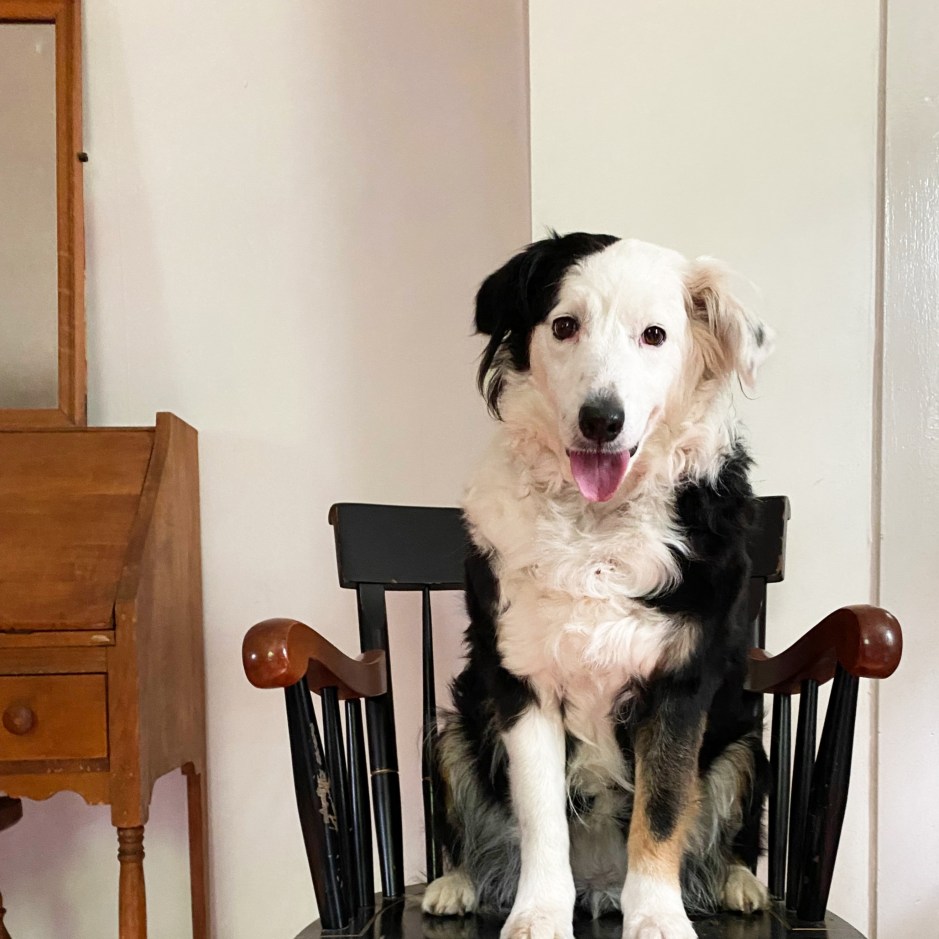
In the early fog-filled hours of Tuesday morning, we said a heartfelt goodbye to Indie, our most enthusiastic eater and taste-tester here in the Vintage Kitchen.

I wanted to share this news not to spread sorrow and grief out into the world, but to share the story of her last three months, most particularly with our readers who found her homemade dog food recipes so helpful. Through the blog, quite by surprise, Indie developed a large fanbase of pet parents and cooks excited to try their hand at making the homemade dog food recipes we wholeheartedly championed throughout her life.
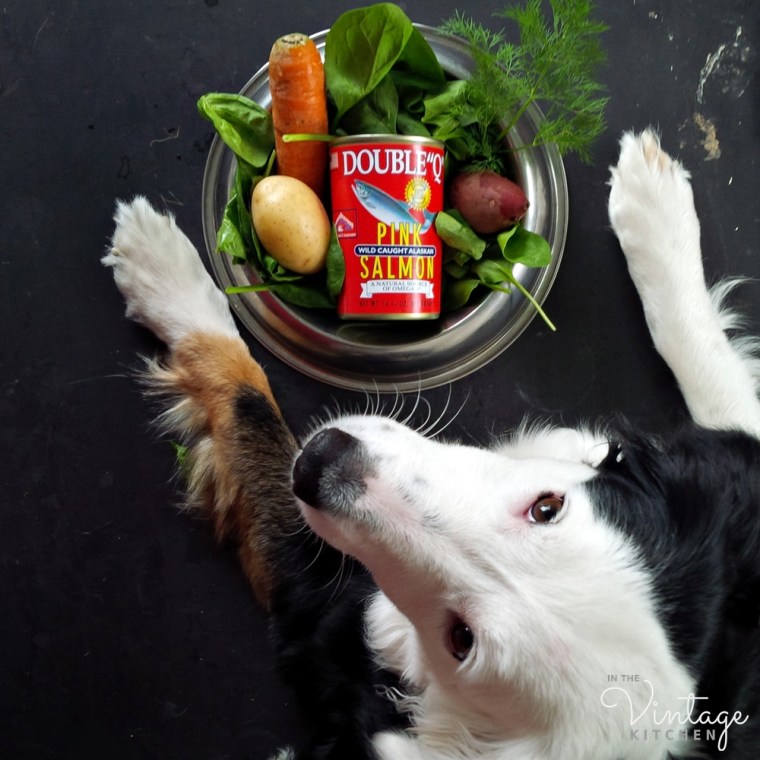
I wanted to say a special thank you to everyone for their enthusiasm in embracing our enthusiasm of this natural way of feeding pets. It’s such a comfort to know that her most favorite recipe, and now her most famous recipe – the chicken one-pot – has been shared tens of thousands of times and hopefully enjoyed by tens of thousands of dogs. From one gourmand to another, joy spreads joy. Especially when talking about food.

One Pot Steamed Chicken with Carrots and Sweet Potatoes for Pups

I also wanted to share this news to celebrate Indie, the remarkable dog that she was, and the enthusiasm she always had for life, a character trait that was especially compelling during these last few months. It was very inspirational. She was very inspirational. And I thought her infectious personality and her joyful zest despite challenging health issues might bring some encouragement to anyone else going through a difficult time. Life isn’t always easy but it’s much more palatable, and ultimately much more rewarding, as I learned from Indie, when approached first and foremost with appreciation and joy.

at the vet – June 2024

At the end of June, Indie was diagnosed with an enlarged heart. As you can see from the photo above she approached this news on that day at the vet’s office with nothing more than her typical enthusiasm and happy attitude. Yes! I have a big heart! I love big hearts!

My husband and I, on the other hand, were much more alarmed at this news. I immediately panicked and asked if the cause was her homemade diet. Did we feed her too much olive oil? Sprinkle too much cheese? Was this spurned on by that extra helping of grass-fed beef filet that she ate last Christmas? Our vet quickly put my fears to rest by saying absolutely not and reiterating time and again in our consultation how homemade food is always the best choice as far as meal plans go for any dog. There was nothing to worry about with Indie when it came to what she was eating.

Physically, nothing looked wrong with Indie, but we brought her into the vet that day because she had developed a persistent cough which was beginning to make her breathy and unsteady after she ran around the yard. We thought it might be allergies, or a summer cold or at worst that she somehow had contracted kennel cough. We thought the vet might be able to recommend a Chinese herb that would set her straight again. Cough aside, there was no other information to give to the vet that June day. She was all smiles. Her coat was soft and shiny. Her eyes were bright and animated. She was eating. She was exercising. She was living her normal life.

So to hear this new news of her big heart – one that was 1/3 the size larger than it should be – just didn’t make sense. How could this be? She looks so healthy. She looks so happy.

From the very beginning, when Indie first came into our lives, she was full of joy. She showed up randomly on a hot, humid holiday afternoon running into our yard in Georgia on July 4th, 2014. Carrying all the exuberance of a lively guest come late to a party, she had an excited, relieved, thank-god-I’m-finally-here energy that she carried straight into the welcoming arms of my nephew and I. Greeting us with such a profound intensity, like long-lost friends finally reunited, the moment I met her I knew something magical was amiss.

Two years earlier, our wonderful black and white border collie, Hanna, passed away. Smart, calm, loyal, and very sweet, we had adopted Hanna from a shelter in Newark, New Jersey shortly after my husband and I first began dating. With Hanna by our side, we got married, traveled the entire East Coast, developed and filmed a travel show, moved to the South, opened a farmers market, and launched what would eventually morph into the Vintage Kitchen. We spent fourteen incredible years with her through multiple moves, through her life-long seizures, through her canine mayor status, through New York City life, through rural Southern country life, and through more travels around the country than most dogs ever have the opportunity to explore. When she died from old age in 2012, it was the biggest grief I had known to date and I missed her presence in my life in a way that seemed forever ongoing.

Two years later and now living in a different area in Georgia, I not only still missed Hanna terribly but I also missed that wonderful feeling of having a dog in my life. I was ready to adopt a new one. My husband on the other hand, considered Hanna to be the very best (as she really was) and couldn’t conceive of ever having another dog in his life. For him, nothing else could possibly compare to her and he felt that it was unfair to ever hope for that same sort of love from another dog again. So here we were, my husband and I, at a crossroads. Me wanting a dog, he not. It was the first time we were ever at a major misalignment in our normally very compatible way of looking at the world. I understood where he was coming from. Hanna was extraordinary. But I couldn’t shake this feeling of wanting another dog. Occasionally I would broach the subject, hoping that his thoughts might change or his heart would come around, but each time I found him still holding fast to his original thoughts.

So when Indie showed up randomly in our yard in 2014 I couldn’t believe it. Literally. I could not believe it. Not only was she also a black and white dog with brown eyes that looked almost exactly like our beloved Hanna, but she had Hanna’s same friendly personality too. I just couldn’t believe that this thing that I missed, that I longed for quite a bit of time would just show up. I couldn’t believe that on a street with many different houses to choose from and many different lives to walk into that she picked ours. Was it destiny? Was it a sign from Hanna? Was she Hanna? Right from the beginning, Indie, to me, felt like this extraordinary gift.

Indie retained that magical ta-dah energy, that excitement, that visible sense of unbridled joy that she displayed on day one throughout her entire life. My husband and I called it her yes personality. Whatever situation was in front of her… good or bad, scary or uncomfortable, familiar or new she approached it with an enthusiastic YES! With the exception of thunderstorms and motorcycles and the automatic table lift at the vet, there was nothing that Indie wouldn’t embrace wholeheartedly with joyful enthusiasm. So to get this news that she had an enlarged heart, in a strange way seemed almost obvious. All that joy had to fit somewhere. So absolutely. A big heart. Of course.

From a medical standpoint, there were a few different possibilities that could have been the root cause of her situation. She could have been born with a big heart and it just never presented any problems until now. She could have been predisposed to this condition based on her genetic makeup. Or her heart simply could have just grown bigger as a result of her age, a malady that is not that uncommon in senior dogs.

Alarming as all this news was, there was hope that this big-hearted situation could be managed. The cough was caused by fluid buildup in her heart and in her lungs. Medication would remove the fluid and enable her heart to operate more efficiently so that she could live a normal life. With the meds, and a few lifestyle changes that included a calm home environment and little to no stress, she in theory could manage to live with this heart disease for years if everything could be kept under control.

While heart disease is a degenerative condition, there is no way to know how it will affect certain dogs or how long they can live with such an issue. Despite Indie’s happy attitude, the vet told us in a very sobering conversation, that dogs with heart disease like hers could live as little as weeks or as long as years. It just depended, dog by dog, breed by breed. Luckily in Indie’s case other than her big heart, she was as healthy as an ox. Thanks in large part to her homemade diet.

A portrait of an English Shepherd from the book Lessons Derived from the Animal World published in 1847. photo courtesy of OldTimeFarmShepherd.org

Indie is an English Shepherd, the most common breed found in America in the 1800s. Especially prized back then because they were reliable, smart, observant, quick learners, and adaptable to a wide range of situations, English Shepherds were ideal dogs for early American farm life. They were good working dogs, good guard dogs, good with kids, teachable, independent, loyal, respectful of other animals, and made of hearty stock. As a general all-around helper and family dog all wrapped up in one, they share many similar traits with Border Collies and Australian Shepherds and often get mixed up between the two. Typically given their medium size and medium weight, English Shepherds traditionally live between 12-15 years. When Indie was diagnosed in June she was just a few weeks away from her 11th birthday, so we were hopeful. Hopeful that she would be a long-hauler of this disease, easily able to adapt to this new situation for a few more years and live out her natural course of life.

Armed with optimism and five different medications to be taken daily, Indie was sent home with two instructions – no running and no stress for the entire summer. If she encountered either, she could potentially collapse and that would be that. The end. Right then and there. Her diet was to stay exactly as it was with no changes except to incorporate more carbs if possible. She was allowed to have 15 minutes of outdoor time each day for exercise and bathroom breaks, but that was it. This homebound summer-of-calm plan would give her heart a chance to rest and get used to the medication routine. Then we would reevaluate in the fall.
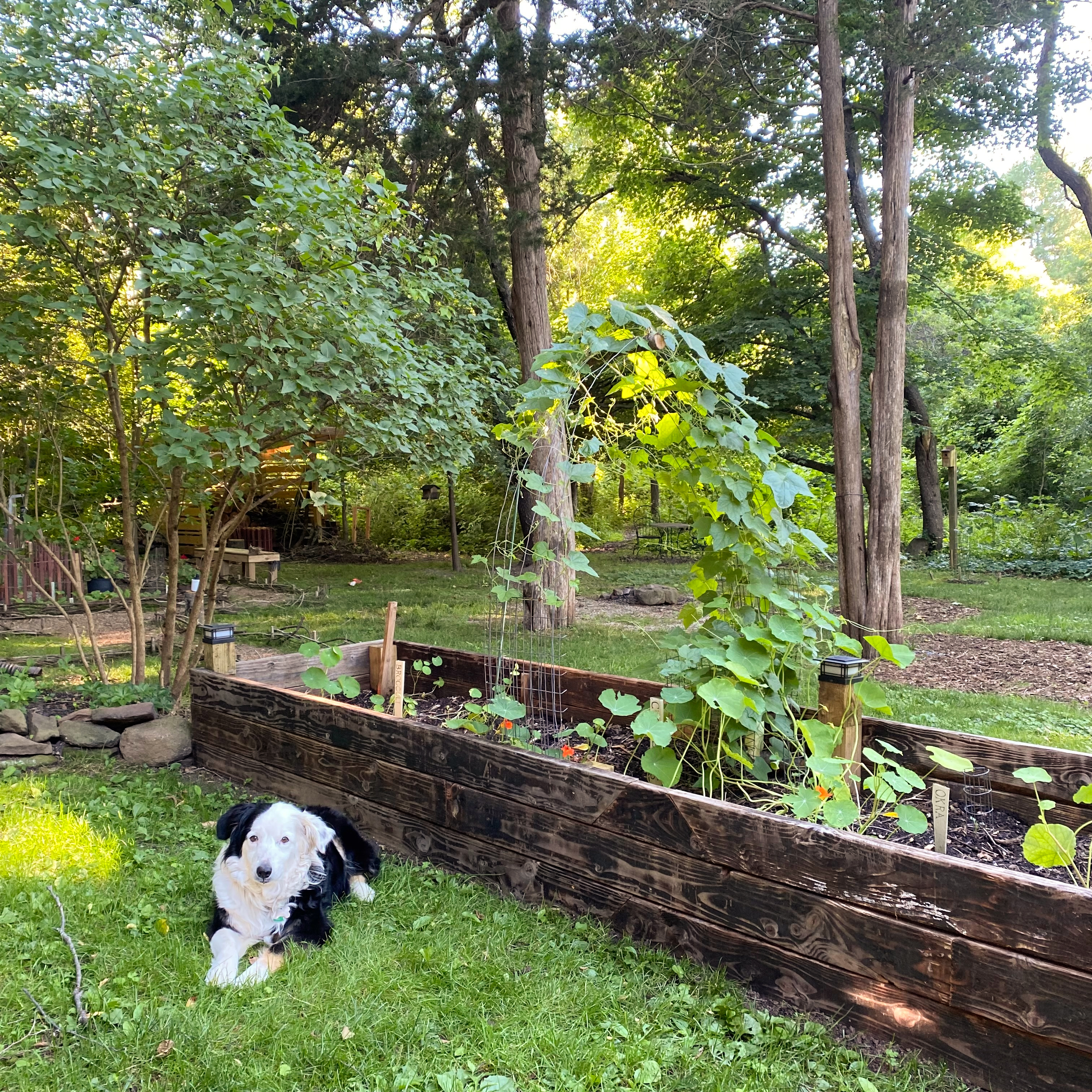
With her traditional good nature and easy adaptability to comply with whatever situation presented itself, Indie fell right in step with Slow Summer from week one. Apart from not being able to run after the squirrels she didn’t mind being walked on a leash for her 15 minutes each day and she didn’t mind spending time indoors away from the summer heat. To keep things interesting we made her a play area with lots of toys, kept her gourmand appetite engaged with daily culinary taste testings, and encouraged frequent napping so that she could rest her heart and get over her cough.

Knowing that we would need to cancel and rethink much of our summer plans including road trips, outdoor water activities, and any 1750 House renovations that required loud noises or unfamiliar tradesmen in the house, this was going to be a much quieter summer than anticipated. But quiet didn’t have to mean boring.

Thinking about her allotted 15 minutes of exercise time and how that could get pretty mundane if she was just limited to the backyard, a great opportunity for fun presented itself. In an effort to keep things interesting for her, I mapped out four parks in the neighborhood where she could spend her daily 15 minutes of outdoor time. By alternating between the parks each day, she would always have new sights and smells to take in during each walk. I thought this exercise plan would be good for her spirit and help keep her mind active while her body got used to her new rhythm of life. The parks I selected were not strenuous walks as far as exertion level and each one was entirely unique with different highlights to offer.

Pocket park

One was a small wooded pocket park that looked like something straight out of a Jane Austen movie with its clipped hedges and grass pathways that weaved and wandered around several acres of partially tended nature gardens. Another one was a mile-long recreation track frequented by an array of neighborhood pups that brought their own scents and smells to the park. Since she wasn’t allowed to play around with other dogs over the summer, I thought this level of scented interaction might make her feel like she was still part of the pack.

Track

The third park was the grounds of a historic 1920s-era estate complete with a Gatsby-style mansion and formal rose gardens to match.

Historic Estate

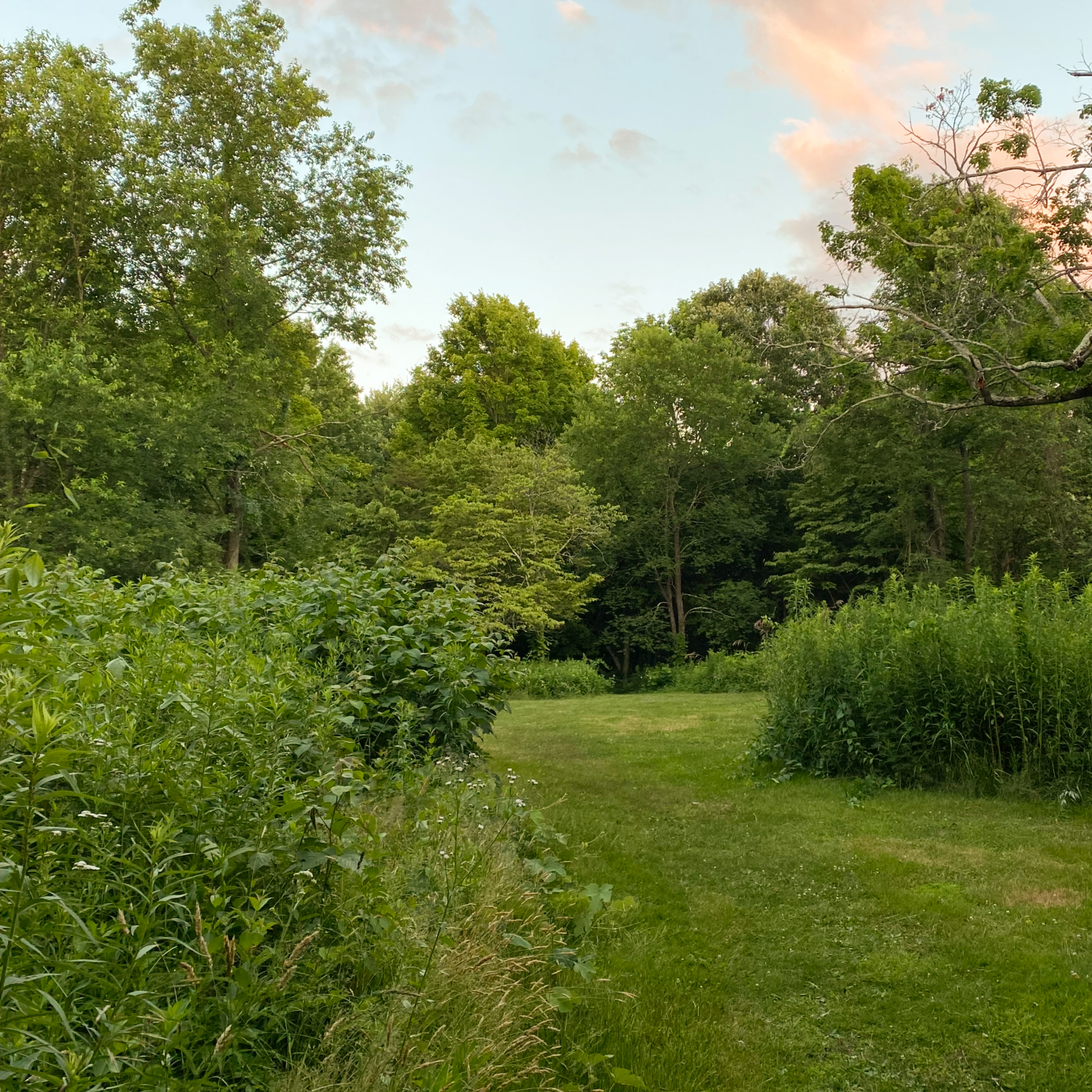
And finally, the fourth was a lush, grassy athletic field surrounded by walking paths, wildflowers, and an abundance of native plantings.

Every day, just before sunset, when the air started to cool and the bright light of day started to dim, Indie and I would get in the car and head to one of the four parks.

Always excited to embark on these adventures, the nightly walks turned out to be a star activity for both of us. We rarely encountered any other pups or people on these jaunts which was good because anything that got her barking or her heart racing in excitement was a no-no. In place of meeting other humans and dogs, we met nature instead, in all of her interesting and diverse forms.
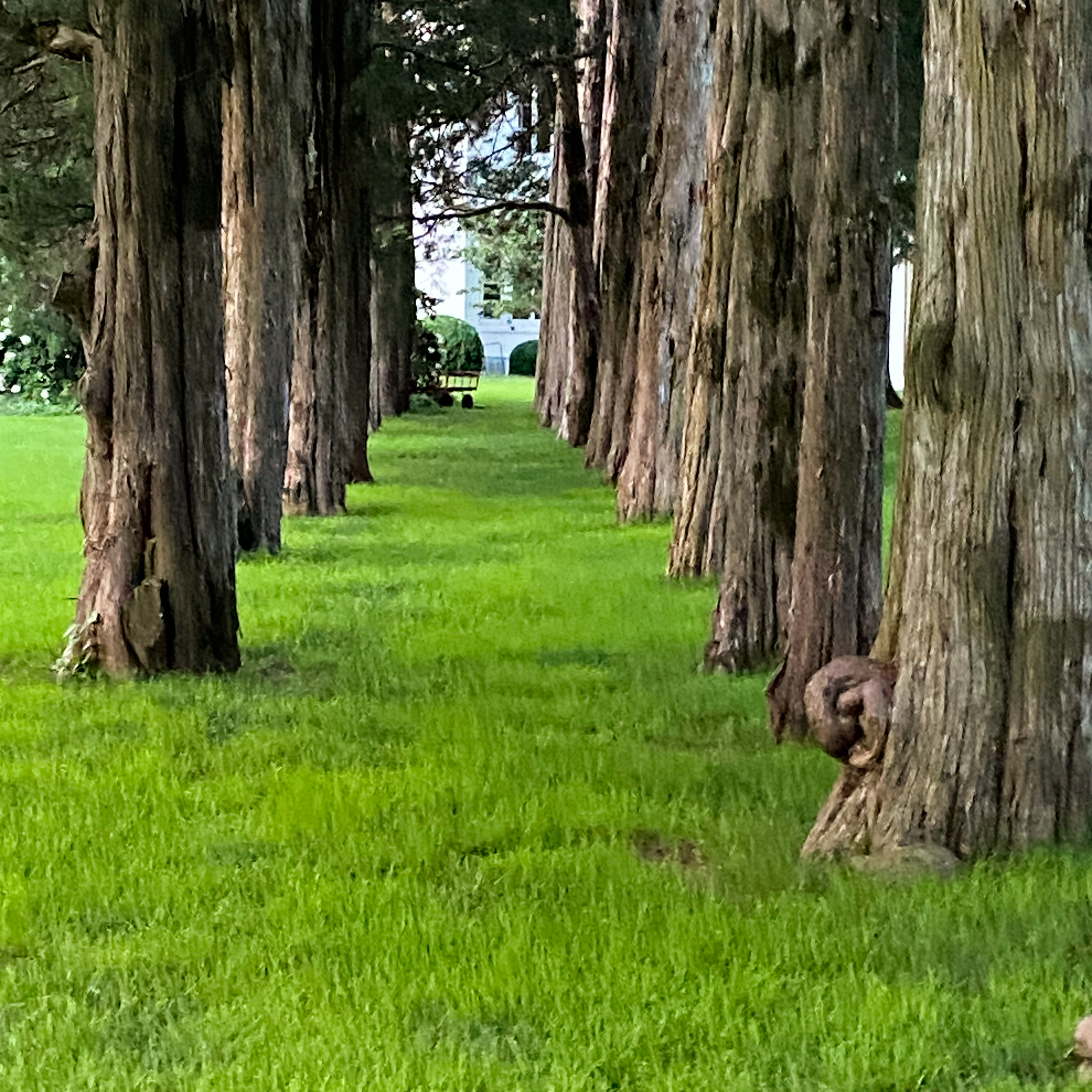
The slow pace was conducive to stopping and smelling everything and anything that brushed by Indie’s nose. On each outing, we took in the sights, the scents, and the sounds all around us. We noticed the birds, the rabbits, the trees, the bees. We looked up at the clouds and down at the grass. We smelled the air and listened to the breeze blow through the leaves. It was wonderfully relaxing. And even though it was just 15 minutes a day, each walk felt like its own quiet adventure.

Some days, I extended the 15-minute allotment. If the air was cool enough and if Indie was especially enjoying her time, we would find a spot to sit still for just a few minutes longer to marvel at the sight of a colorful sunset, or a herd of grazing deer, or the wildflowers dancing with the wind. In those moments, I liked seeing the pretty things around us, but what I really liked was watching Indie watching the world.

Even though my mind and my heart were always set on the long game of Indie living with this new normal for years to come, I was very conscious of the possibility that these days, these walks, could be the last times too. This turned out to be a very welcome understanding. Not knowing when our final time to say goodbye might come forced me to be present for each moment we had together. It forced me to really appreciate what life meant and felt like with her in it.

Bittersweet but very beautiful, these walks with Indie each night were full of hope, joy, love, and admiration because she was always so full of hope, joy, love and admiration. Big heart or not, nothing got in the way of a chance to say Yes! to whatever situation presented itself. She was such a wise and wonderful teacher that way.

On the 4th of July Indie celebrated her 11th birthday. Although we never knew her actual birth date we celebrated it on the holiday since that was the day she bounded into our yard in 2014. I named her Indie in honor of Independence Day and the independent spirit that tends to come naturally attached to all wanderers and travelers. When she arrived, so happy to be there, she was full-size and fully grown. The vet roughly estimated that she was about a year old based on her teeth and her paw pads.

For the next three months, we did our best to find out where she might have come from, so that we could send her back home to her owners. To my surprise and great delight, no one ever called or came for her. Just like these past three months of 2024, those three months in 2014 were spent understanding and appreciating her remarkable personality. Hanna had always been an old soul of a dog… calm, contemplative, and almost human-like in her ability to connect with other people. She didn’t care much for other dogs or dog-like activities, instead Hanna much preferred the total companionship of people. Indie, on the other hand, loved everybody and everything. She was fresh-faced, curious, jubilant, outgoing, spritely. A bright light, a shiny star. This was her first weekend with us…

Indie. 2014.

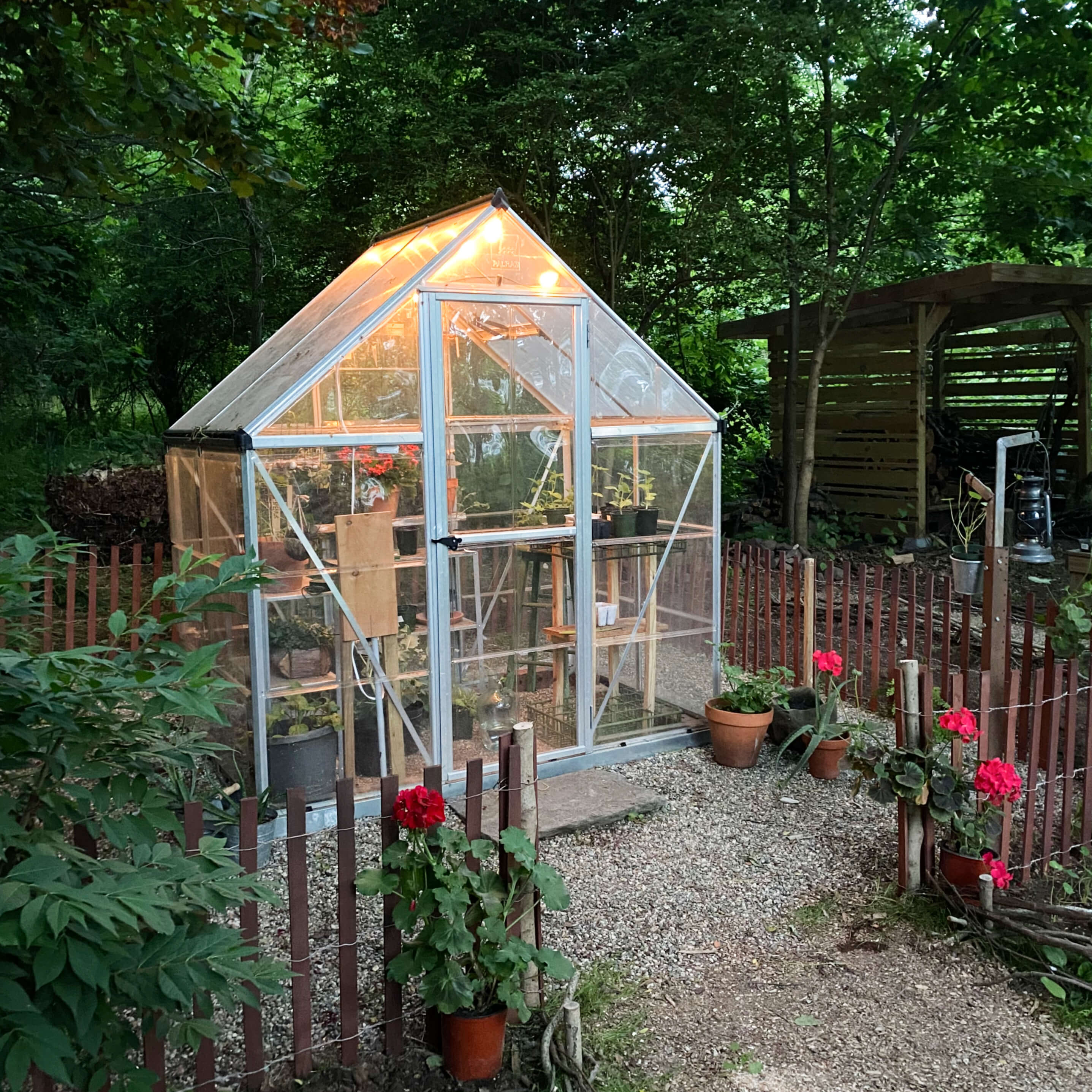
Flash forward 10 years later to this 4th of July, Indie was still just as happy to be spending time with us and our grill. We celebrated her 2024 birthday with grass-fed beef burgers, strawberry goat cheese bruschetta, and an outdoor dinner at the greenhouse.
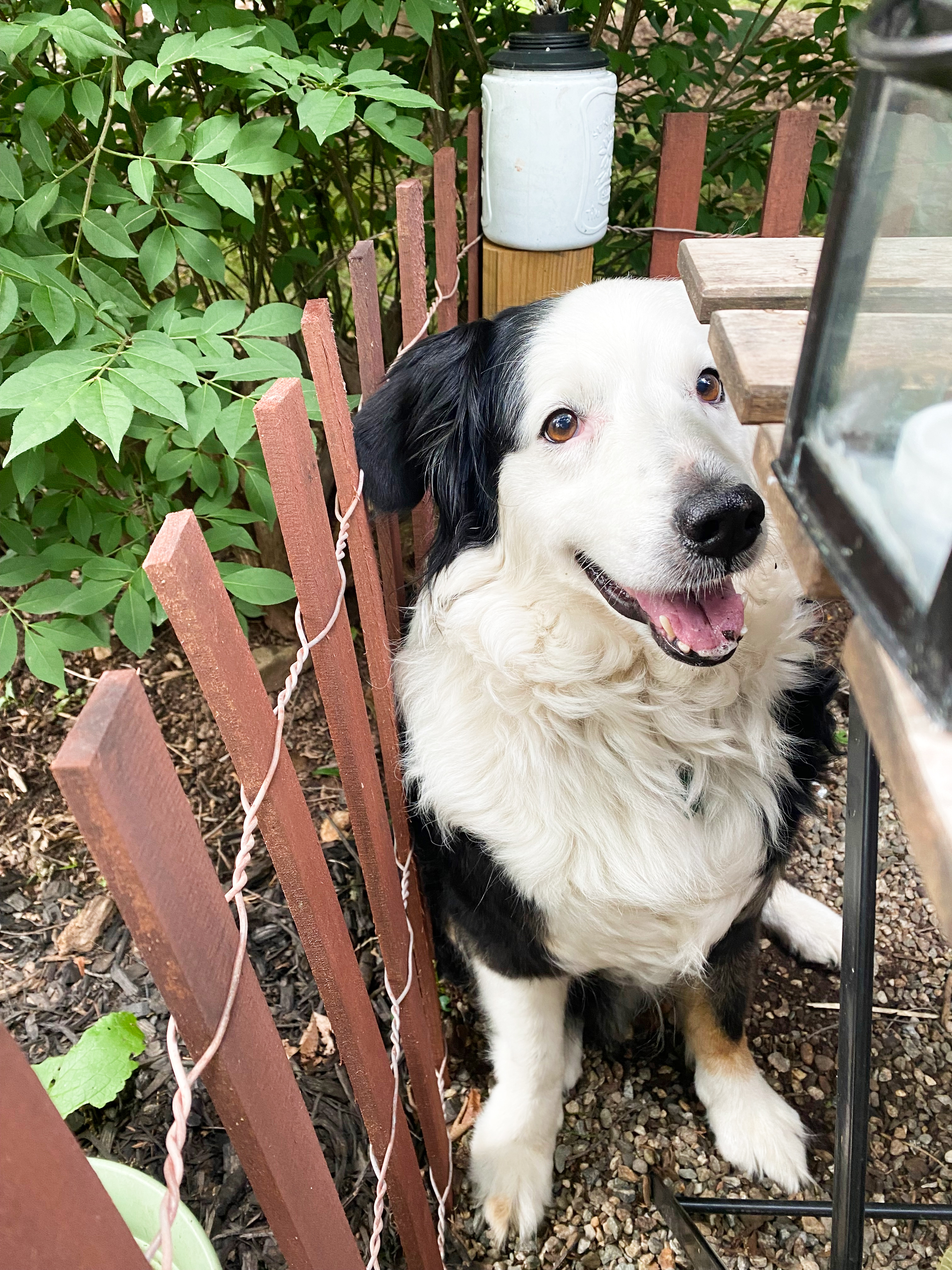
This is 11!

In addition to the walks and her birthday celebration, we did a variety of other things with her over the summer too. We included as many of her favorites as her big heart would allow. There were trips to our local Dairy Serv for vanilla ice cream. There were pup cup runs to Starbucks. There were endless bowls of ice-cold water at our favorite outdoor pizza spot. There were Sunday drives, picnics in the grass, naps in the hammock, and late-night grill dinners on the patio. She spent time with me in the garden, with my husband in the workshop, and with her favorite tree in the yard.

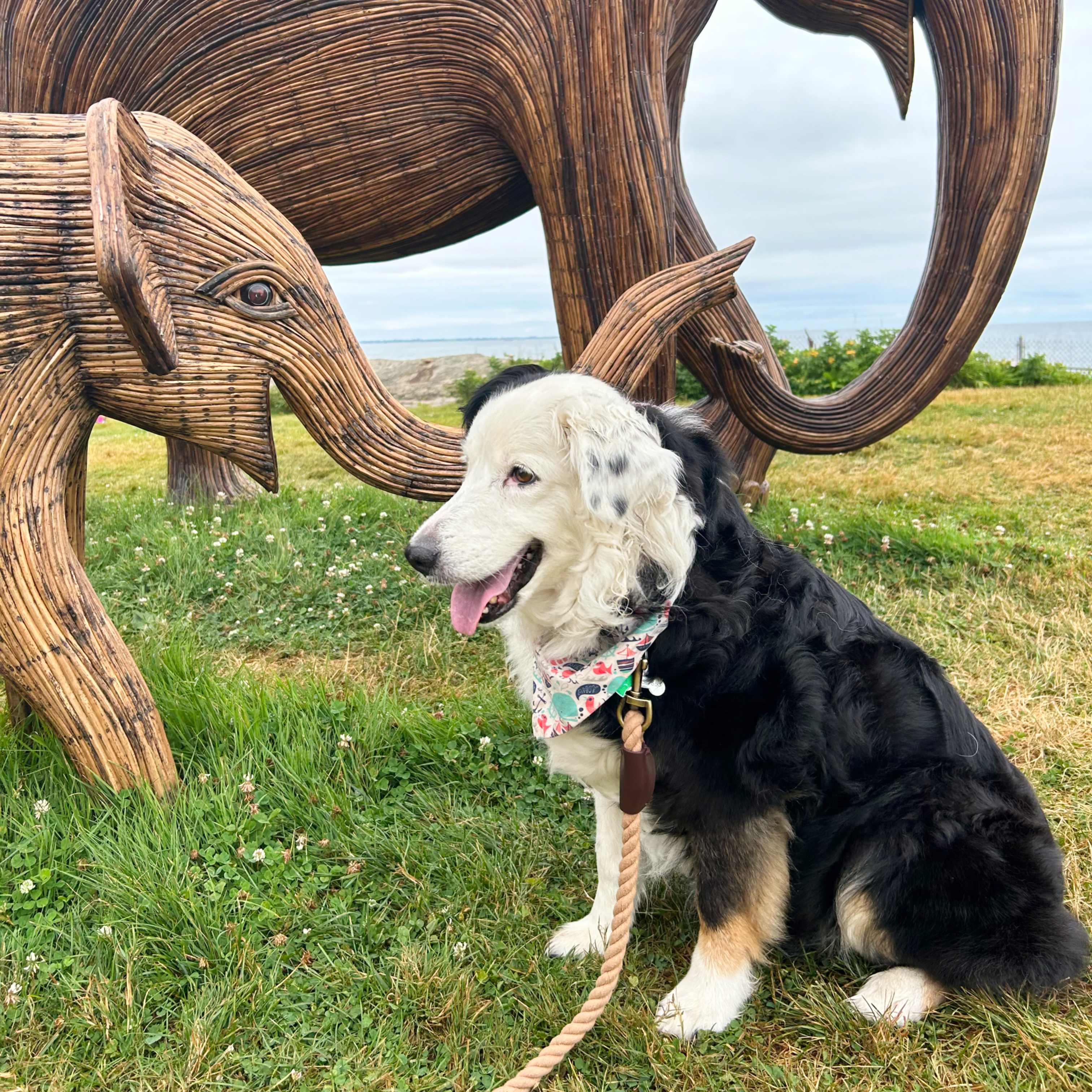
The end of July brought a road trip to a specialty vet hospital in Rhode Island where she had an echocardiogram to give us more insight into her condition and to make sure she was on the right track with her medications. We made a fun adventure out of it, stopping for lunch and to see the elephant migration sculptures in Newport. There, she settled down next to a baby elephant like it was her new best friend.


The results of the echocardiogram were what our vet expected – more specific details about her acute heart disease. We soldiered on with the medicine routine. The fluid finally moved out of her lungs and heart, she got rid of her cough and she lost 12 lbs. Although the vet wasn’t too concerned about the weight drop, I really was. I could feel her spine, as you do with many older dogs, and her sides were beginning to feel ribby – indicators that I had always relied on in the past to signal when I needed to feed her more or less food. Determined to bring back some of those lost pounds I got to work crafting all sorts of new meals for her.

Even though she still had plenty of energy, a good appetite and a shiny, happy personality during the entire summer, her eating habits were changing. We went from her usual regular-sized two-meal-a-day plan (breakfast and dinner) to three small meals (breakfast, lunch, and dinner). And while always a good vegetable eater in the past, in August, she began to develop a particular affinity for larger amounts of protein with smaller amounts of grain and vegetables on the side. Between her likes and my determination to find foods that would feed her body and her spirit, we waded our way through many trial-and-error recipes.

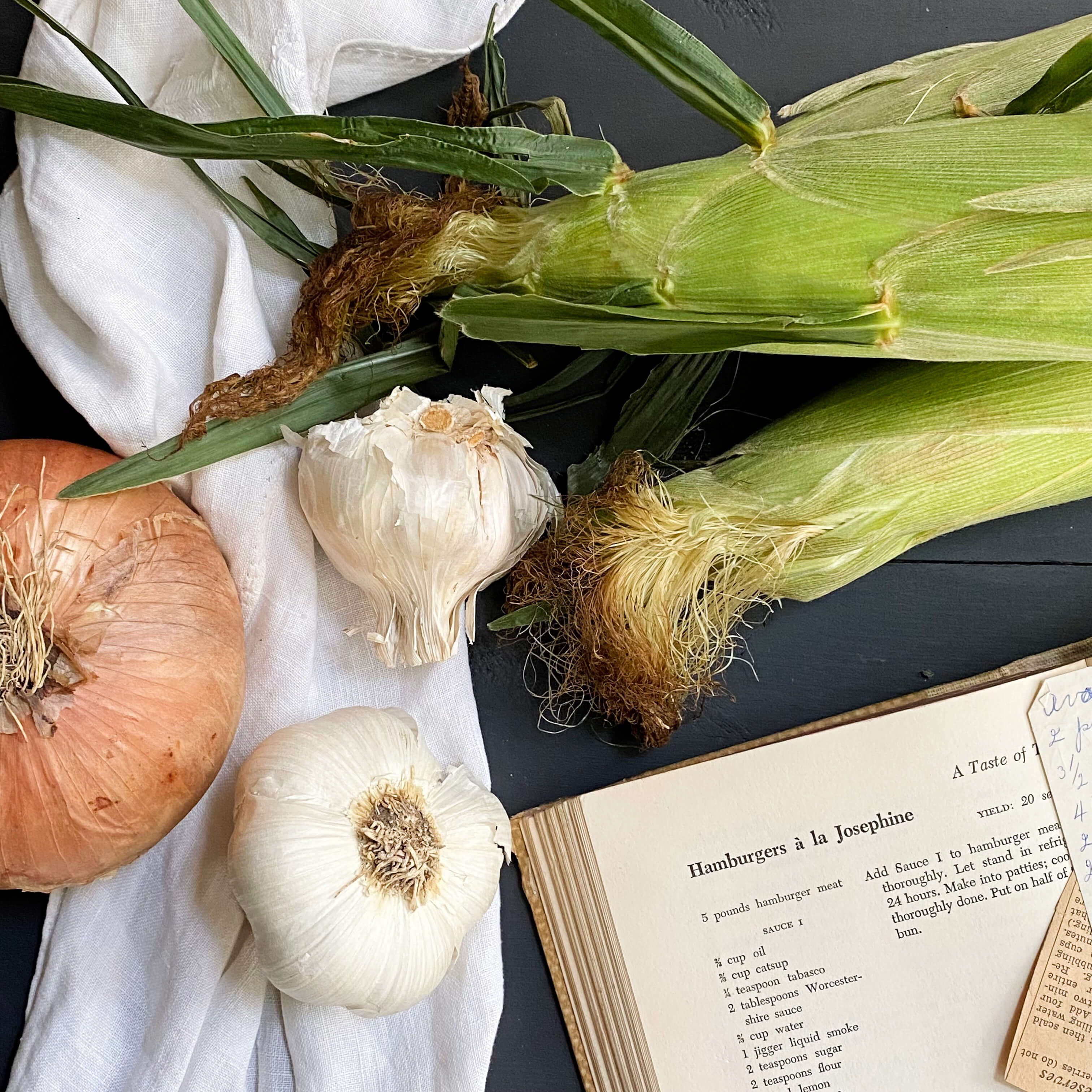
Canned mackerel good. Canned tuna better. Collards great. Black beans no thank you. Chicken okay. Fresh salmon best. Cherry tomatoes from the garden good. Green beans from the grocery store bad. Avocado good. Split peas great. Oatmeal bad. Quinoa yes! Finally, we arrived at a handful of reliable new recipes that left her bowl spotless after each meal just like in the before times. I was getting ready to share two of these new recipes here on the blog this month because she loved them so much. One was a grass-fed beef stew that swam in a puddle of unsweetened coconut milk and the other was a batch of chicken meatballs stuffed with quinoa, herbs, and sweet potatoes.
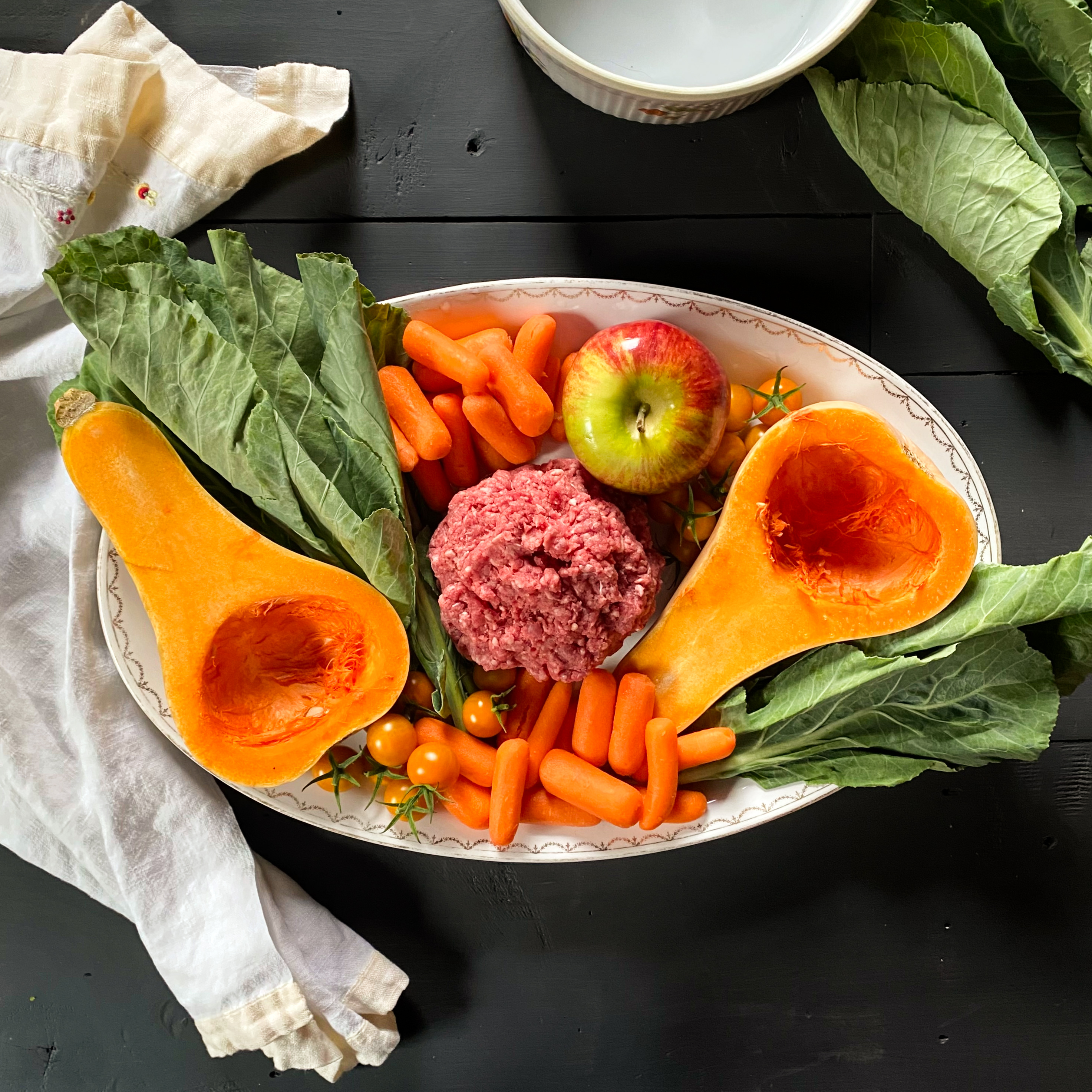
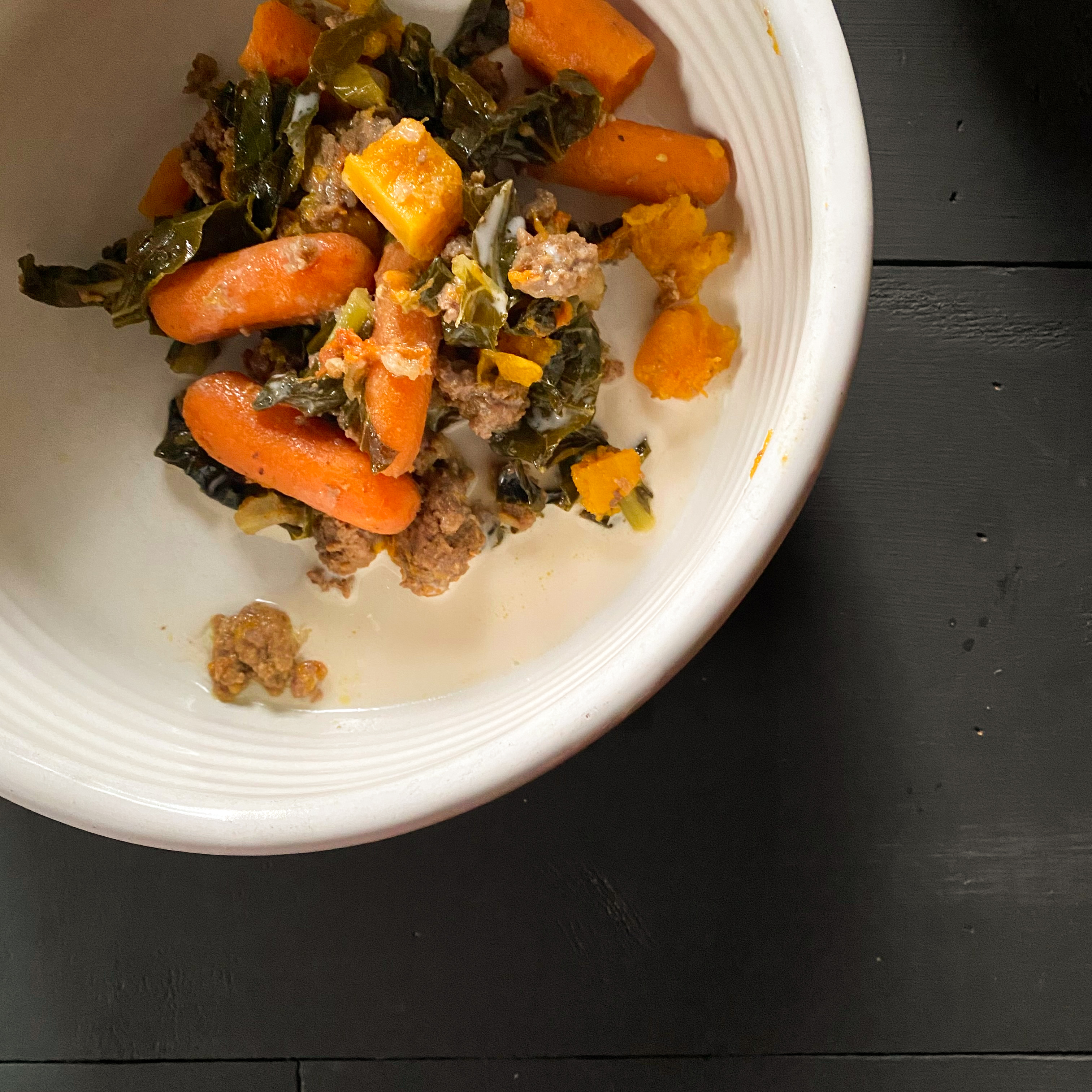
Grass-fed ground beef stew.

Grass-fed ground beef stew

Because we went down lots of culinary avenues this summer looking for new combinations of foods to nourish her, she stayed close by my side while I cooked. The ever-enthusiastic gourmand that she was had her taste testing with that indelible enthusiasm right up to the very end. Her last meal was the chicken meatball recipe finally perfected.

I’d like to say that Indie had a lot of bravery during these past few months, but that wouldn’t be true. She never showed any outward signs that she was struggling, or feeling weary, or slowly breaking down. She still smiled when she slept – an endearing thing that she did from day one. She still cuddled with us on the couch at any given opportunity, and she still wanted to go anywhere we wanted to go too. She didn’t mind taking twelve different pills throughout the day. She didn’t mind the slow-down summer or the fact that she was leash-bound for most it. She continued to wholeheartedly love car rides, love rolling around on her back in the grass, love napping in the sun, love keeping the squirrels in check, love being petted and fawned over by anyone, and love trying all the foods we offered her. Even when she coughed at the beginning, she’d go through the act for a few seconds and then move on to more interesting activities like it was no big deal. Like there was more fun stuff to encounter in life than that silly scenario. So a brave face wasn’t what she gave us over the summer. She gave us hope. In seeing her not feeling so bad about anything, we in turn didn’t feel so bad either, which is how we came to love and appreciate these last few months with her in the same way that we loved and appreciated her throughout her life. It was the unexpected gift that she always was. A happy spirit greeting each new day with an abundance of joy no matter what.

The end came swift and fast, and left us unprepared emotionally for the reality of a moment that I thought was far, far away in our future. I’ll spare you the details of her last few hours only to say that she left us quickly and peacefully cuddled in the arms of my husband and I, still very much in love with life, just sadly, out of breath.

The loss we feel by her absence is immense. To say we are heartbroken is an understatement. Indie was such a giant presence in our lives and in the Vintage Kitchen. All very fitting for a pup with a giant heart. Over these past three days, my husband and I have begun putting her things away. Washing and wrapping up her blankets and her toys, her bedding, and her scarves. The one thing I can’t put away yet is her Bone Apetit food bowl. To me, it is as much a part of Indie as her fuzzy ears and her cropped tail – that delightful nubbin – that waved back and forth at any excitement. Her food bowl is the ultimate symbol of her epicurean ways. So many good times are wrapped up in it that right now it feels like if I put it away, I put her away, along with all those memories and all that love and all that joy too. So for now, we are leaving her bowls in their usual spot, clean and empty but ready, should she ever magically reappear in the same way as when she first arrived.

Until then, cheers to sweet, loveable, affable, enthusiastic Indie, our wonderful friend, our joyful gourmand, our incredible gift. Cheers to the power of Yes! And cheers to all the pups and their parents who became homemade dog food supporters by way of Indie’s most favorite recipe. May it continue to bring joy for many years to come.

If anyone would like a copy of the homemade dog food recipes for Grass-Fed Beef Stew or Chicken Meatballs Stuffed with Herbs, Sweet Potatoes and Quinoa please send us a message. I’ll be most happy to forward them along.

Update – October 2024

Thank you so much to everyone who sent private messages of love and sympathy regarding Indie’s passing. Your kind words have been such a comfort in the weeks, and now months, following her death. We still find the days to be very foreign without her, and mealtime is definitely not the same without our enthusiastic gourmand, but we are so grateful to this little Vintage Kitchen community for showing us so much kindness and support.

Since we have received so many requests for the two new recipes Indie wholeheartedly adored during her last weeks, I wanted to include them here. If you have any questions about them, please do not hesitate to reach out. Thanks again for being bright lights during such a difficult time. Much love to you and your pups. Hope they enjoy these recipes, just as much as Indie.

The Flavor of Catching Up and a Vintage Homemade Ketchup Recipe

One minute it was mid-April. The witch hazel had just arrived in the mail. A newly planted pot of Nemesia was fluffing out on the front porch, ready for its photo shoot and its spotlight feature in the Fragrant Year series. The collard greens, beets, peas, and kale were growing up in the garden. The second-year foxglove was throwing out layer after layer of leaves, mounding up like bushes. The shop was a flurry of activity – filling and emptying, filling and emptying with stories, heirlooms, and recipes, from kitchens, cooks, and history past.

The next minute it’s the 4th of July. I’m making a vintage summer recipe for the blog. The humidity has set in and the slugs have returned. The witch hazel has grown 6″ inches. Tomatoes and corn have replaced the kale and collards in the garden. The Nemesia has outgrown its pot twice. The summer vegetable garden has been planted. The autumn pumpkin seedlings have started to flower. And the shop is filling and emptying, filling and emptying again with a season’s worth of new old stories.

How did three months pass so quickly? How did we go so fast from collards at the end of one season to corn at the beginning of another? How did all the trees leaf out, and the wildflowers bloom on the side of the road, and the strawberries appear and then disappear? How did Mother’s Day, Memorial Day, Father’s Day, and Fourth of July fireworks pass without a single reflective moment to stop and share here on the blog?

So many interesting stories, gardening adventures, and heirloom gatherings have filled up those past three months. So many things I wanted to share, slated to share, photographed to share. But somehow, the days whizzed by. One by one, ten by twenty, thirty by sixty. All to wind up here at ninety days with nothing new but last April’s post.

Long stretches of absence like this are rare here on the blog and it can be challenging to start back up again after such an extended time away. Fortunately, after much stewing about how to return and what to say, Eleanor Roosevelt breezed into the Vintage Kitchen last week and offered up a bit of wisdom.

“If life were predictable, it would cease to be life, and be without flavor.” – Eleanor Roosevelt

This quote is attributed to Eleanor’s 1937 autobiography, This is My Story, which is now included on my list of books to read. Somehow Eleanor’s wise words wound up describing the very circumstance that defined the last three months. It was unpredictable. It was full of flavor.

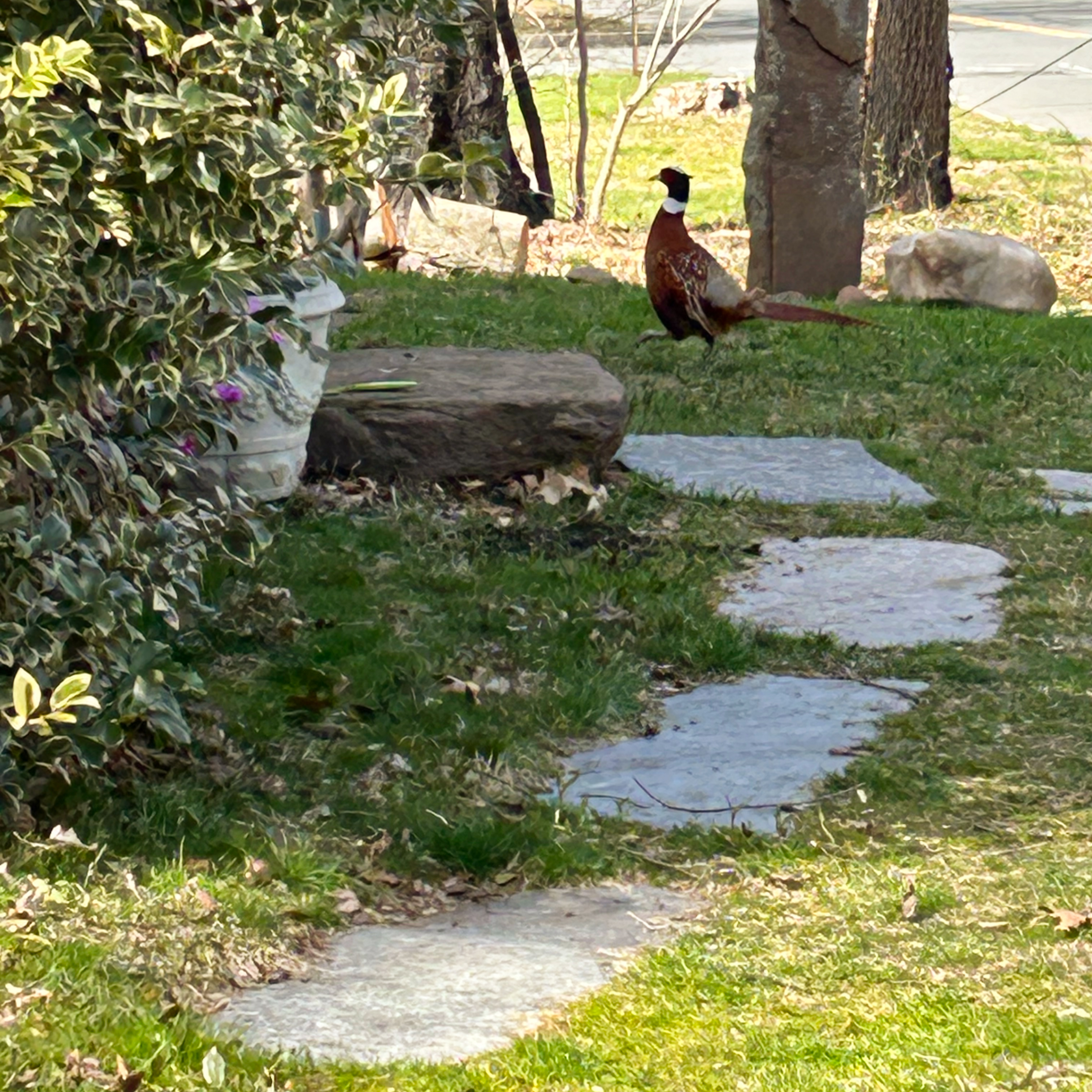
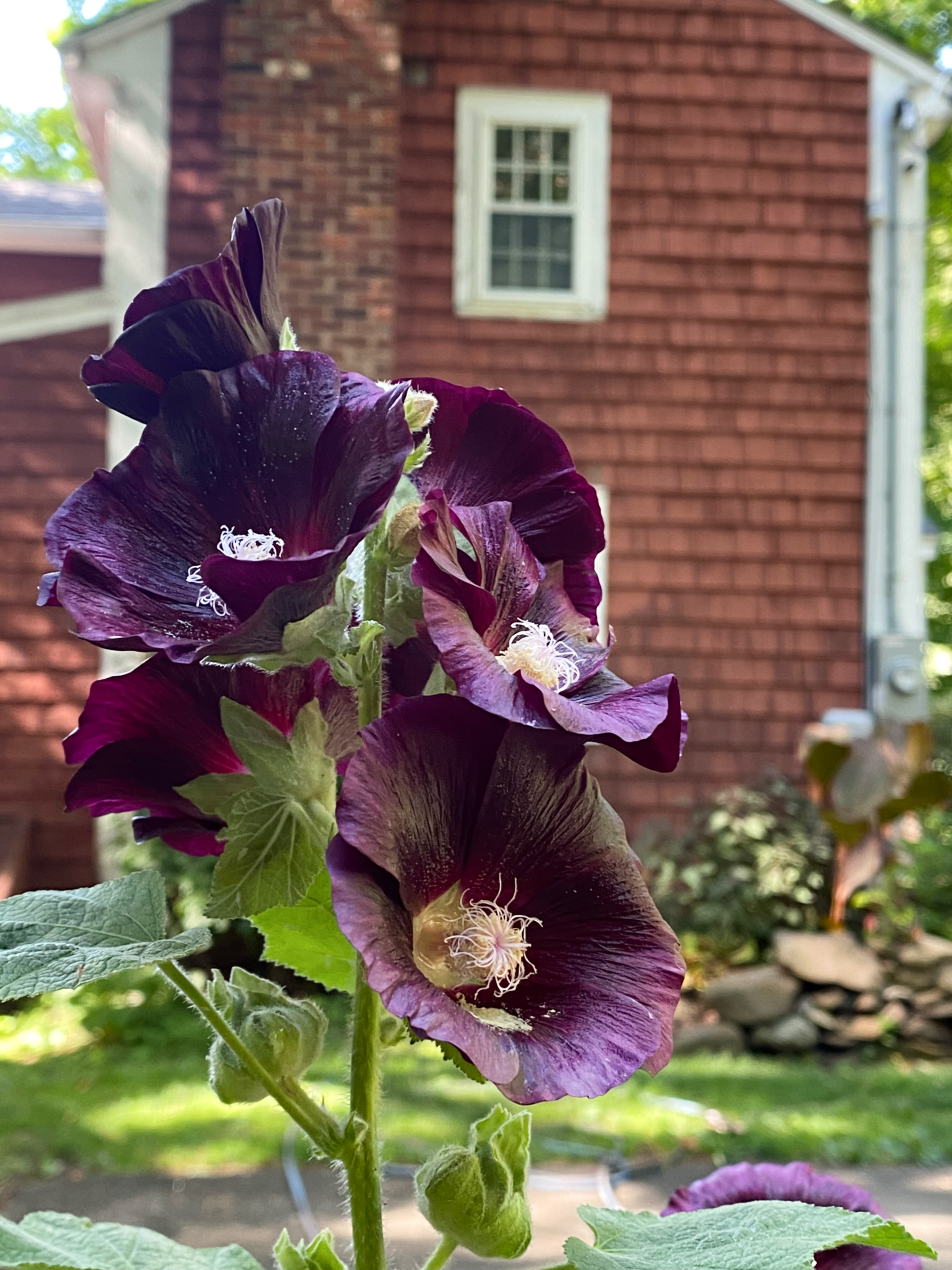
The greenhouse got a fence. The hollyhocks bloomed. The 1750 House cupola was rebuilt. The vegetable garden was harvested for spring. And then it was re-planted for summer. The holidays were celebrated. The tomatoes climbed. Tulip bulbs were ordered for fall. Vegetable seeds were exchanged. A wild pheasant stopped by to say hello. Friends and family came to visit. Recipes were cooked. Heirlooms were collected. And after a two year wait, the foxgloves flowered for the first time.

The activities were plentiful, and each day different in routine and rhythm. Just like Eleanor said… they were full. In that spirit of busy activity, I thought it would be fun to do a quick recap via photos of what’s been going on in the kitchen, the garden, and the shop over the past three months so that we could wind our way back towards the present to share a new vintage recipe so perfectly suited for the mood and the moment. This is a catch-up post of the past three months with a 1960s recipe for homemade ketchup attached at the end. Catching up with ketchup, if you will.

A Look Back…

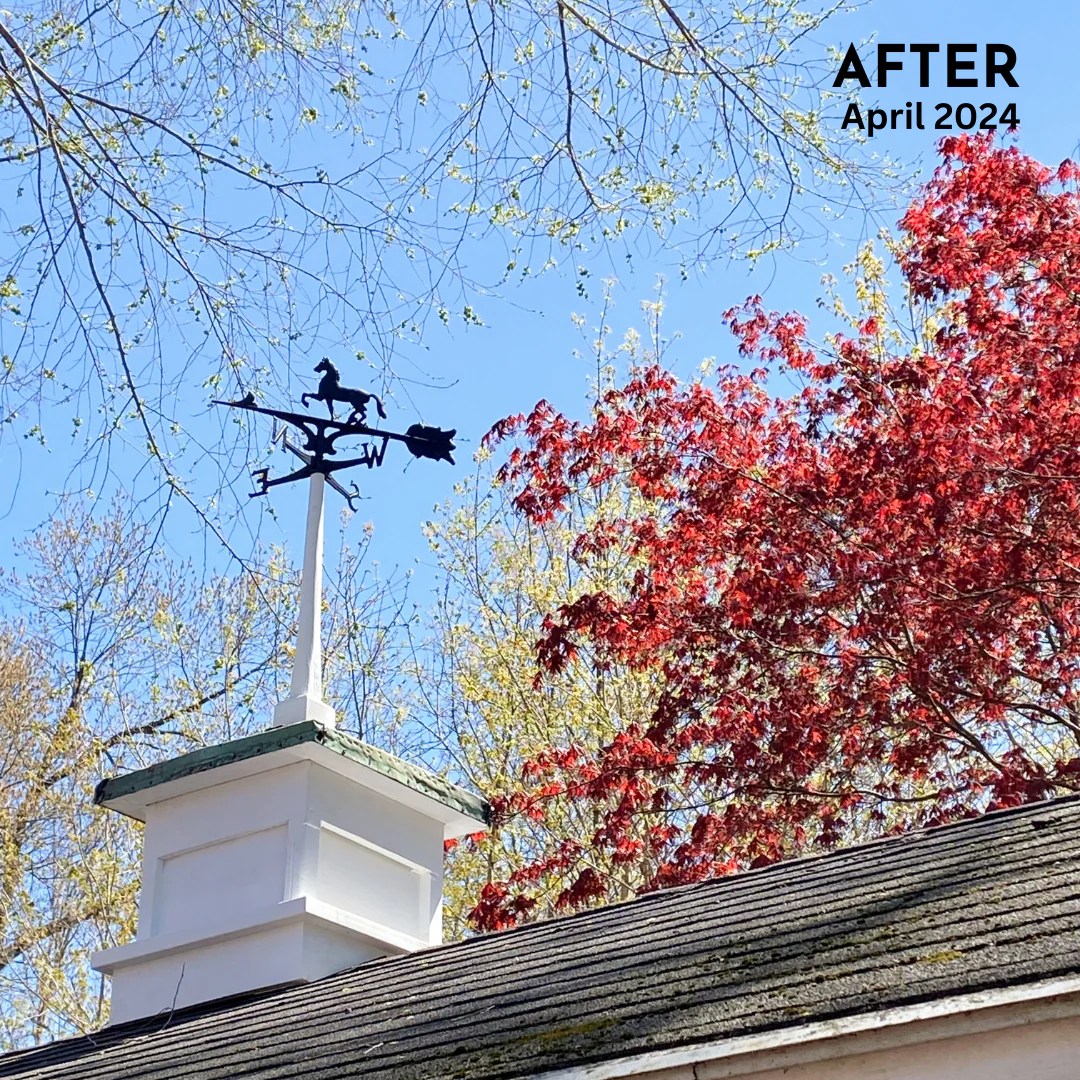
Two of the most exciting 1750 House renovation projects were the rebuilding of the 1930s cupola which had been chewed to pieces by squirrels long before we moved in, and the addition of a long-awaited fence around the greenhouse. The cupola was rebuilt using old tools and old techniques and squirrel-proofed so that the weathervane horse could freely run with the wind once again…

The greenhouse fence adds some dimension to the side yard and forms the backdrop for a cottage garden that will eventually include shrubs, perennials, climbing flowers, and a permanent herb garden.

In early May, a wild pheasant came to visit…

In early June, a prehistoric-looking Dobson fly appeared one morning in the greenhouse…

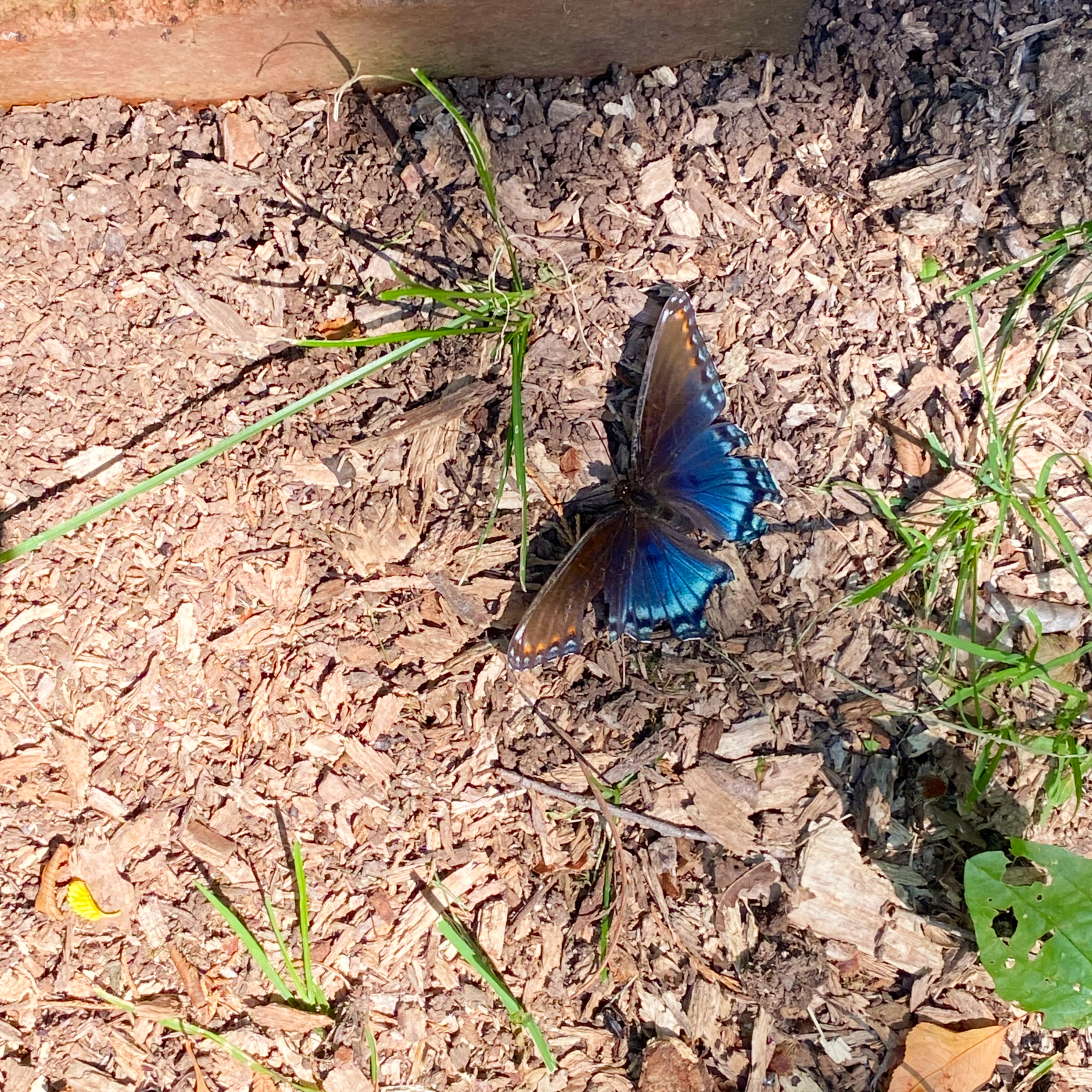
And at the end of June, we saw our first butterfly of the season, a Red-Spotted Purple dipping and diving around the garden path and raised beds.

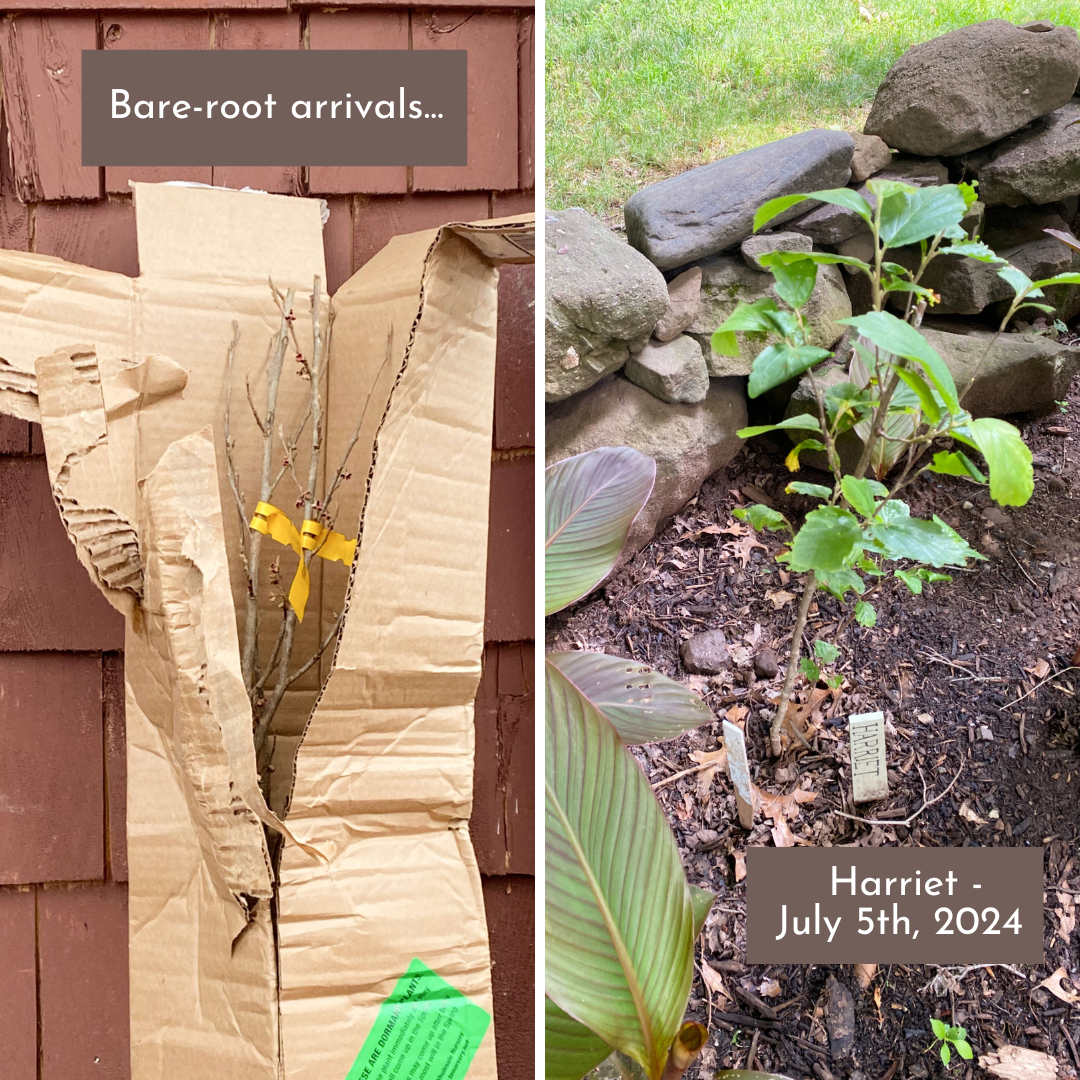
The witch hazel, from February’s Fragrant Year post, arrived in the mail in mid-April with not one bare root specimen but three, even though I just ordered one. All three trees were planted and named (Hazel, Harriet and Hilda – a nod to the original H-hinges inside 1750 House) so that I can track and record each one’s progress. All was well for a couple of months with each leafing out and growing taller, but sadly, Hazel got some sort of blight and lost all her leaves. I’ve left her in the ground in hopes that she recovers, so we’ll wait and see what happens over the next few months. In the meantime, Hilda and Harriet are doing great. In three months, they’ve each grown 6″ inches and have sprouted numerous sets of leaves. If they keep that growth rate up through the fall, by the end of 2024 they should be reaching about four feet in height.

Scenes From The Garden…

Hollyhocks (Variety: The Watchman)

Peas (Variety: Cascadia)

First garden harvest – early June.

Nasturtiums (Variety: Jewel Blend)

Cucamelons on the arch

Cherry Tomatoes (Variety: Sun Gold Pole)

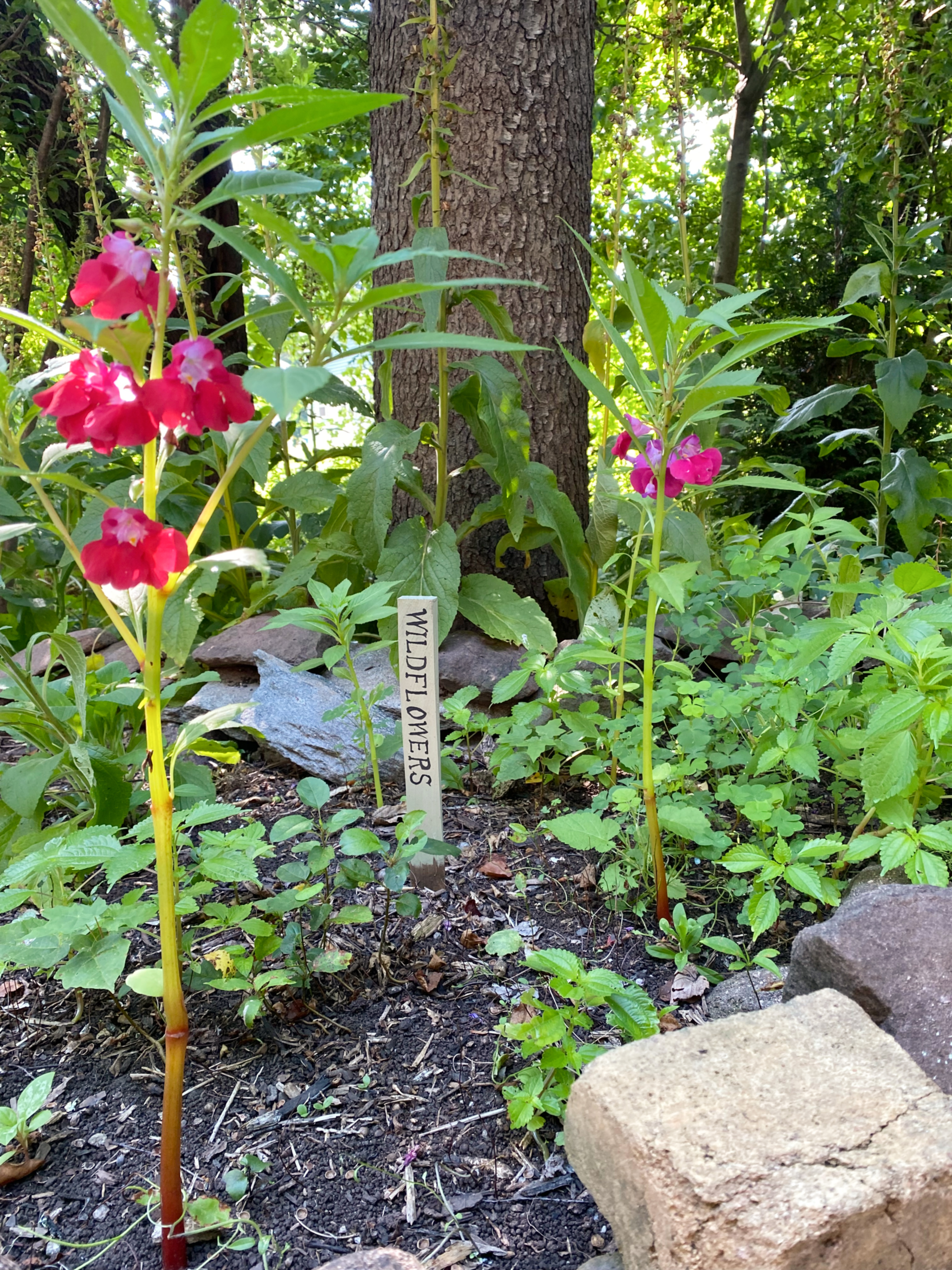
The start of the wildflower bed

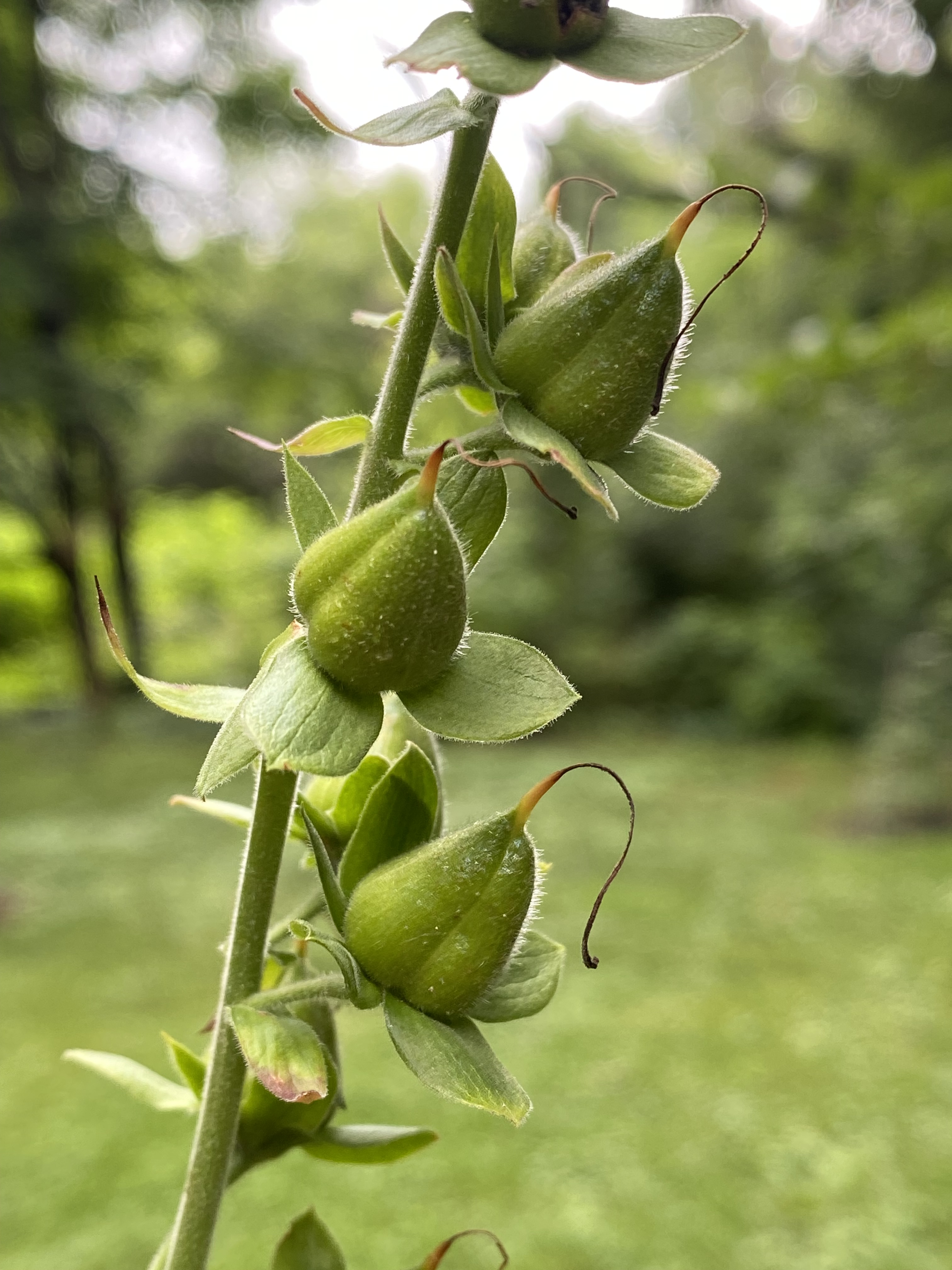
Foxglove seed pods

Summer Squash (Variety: Black Beauty)

Corn (Variety: Silver Queen White)

Stonecrop

Overwintered Pineapple Sage

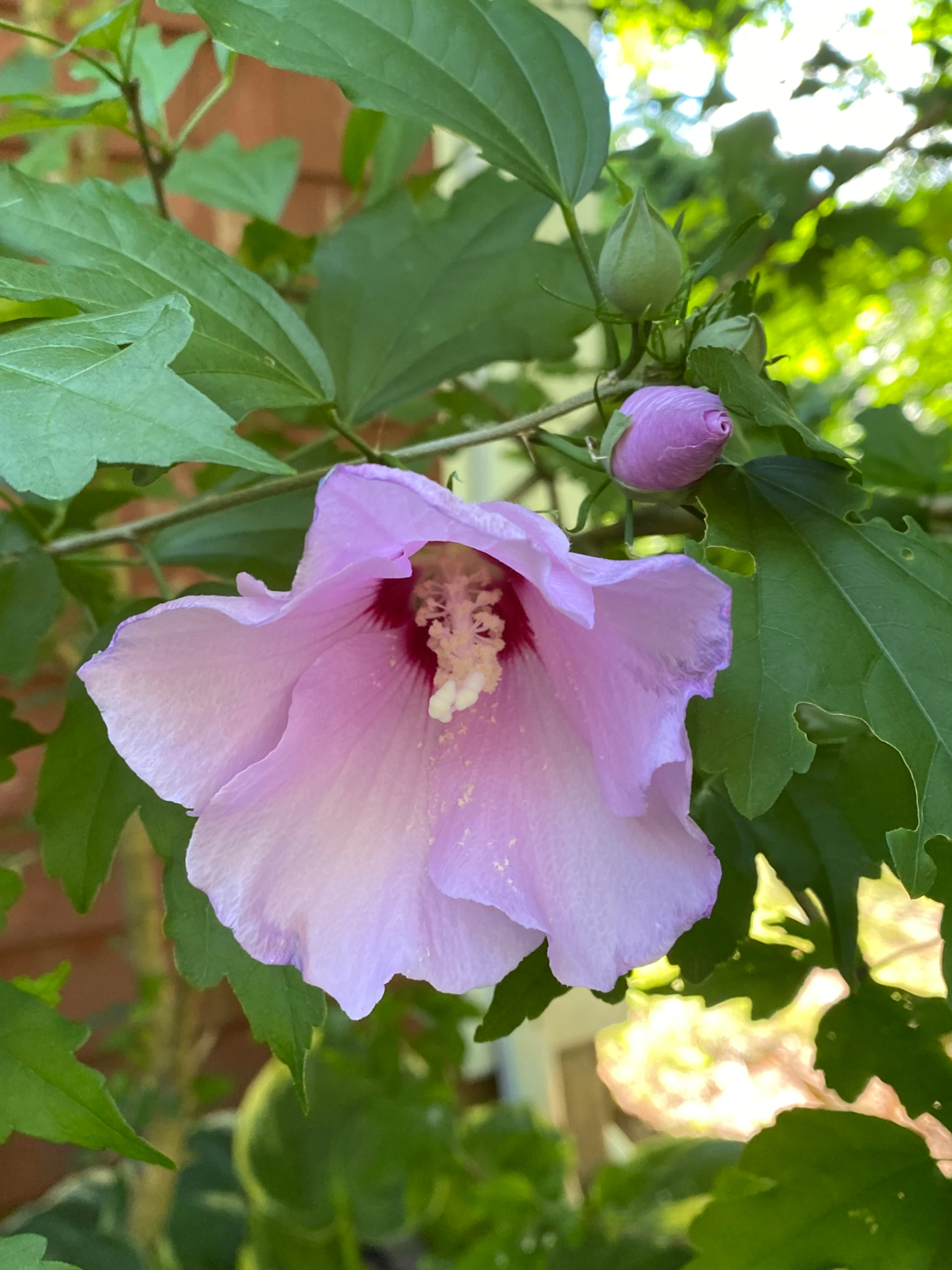
Rose of Sharon

Stories From The Shop…

Every bit of kitchen history is always interesting, but every season there are a few stand-out stories that capture quite a bit of attention. These are some of the latest encountered over the past three months. Clicking on the photos will take you directly to the shop item that inspired further storytelling…

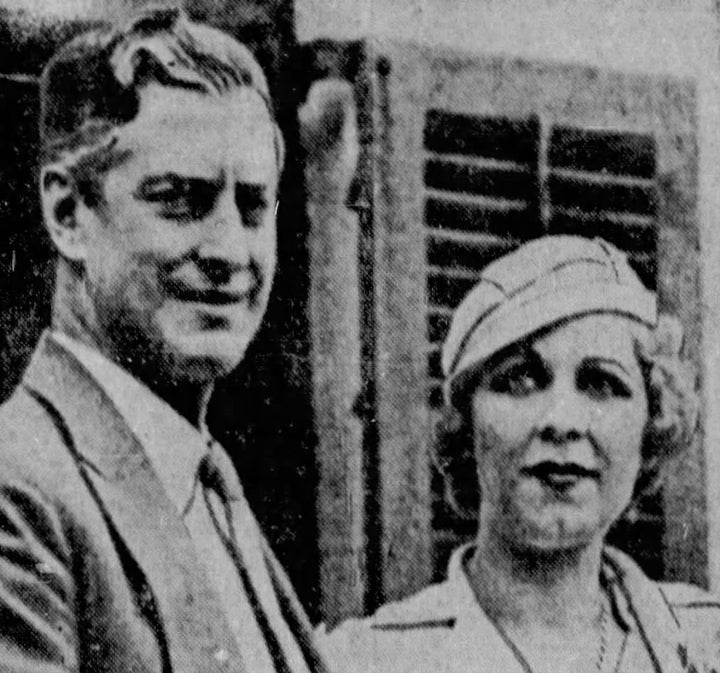
The lives and adventures of early 20th-century husband and wife explorer team – Zetta and Carveth Wells

Long Island’s Roosevelt Raceway, a horse racing mecca from the 1940s-1980

.

The prize-winning pattern of a 1943 amateur design contest held by the Vogue Mercantile Institute in collaboration with Homer Laughlin.

The story of Perdita and the Charleston restaurant she inspired.

The 1930s baking invention of Cale Schneider.

Just last week, we debuted our own custom-designed ITVK gift wrap. The floral pattern was inspired by a vintage print that I found in a South Carolina antique shop in 2003. That print, along with an antique platter also found that day, launched a passion for collecting vintage and antique heirlooms and laid the groundwork for what would eventually become In The Vintage Kitchen.

This was a packaging project I first started dreaming about during the 2020 COVID lockdown. I picked the colors in the bouquet to represent the brand colors of the Vintage Kitchen long before I ever knew that a red house built in 1750 and surrounded by garden beds of orange lilies awaited in my future. The floral bouquet was resized, recolored, and brightened up to give it a more modern feel by a wonderfully talented graphic designer based in Austria. I think it’s the perfect blend of history, sentiment and fate. All purchases from the shop are wrapped, and complimentary, so if you find an heirloom you love, it will arrive packaged up in this…

That Was Then, This Is Now…

Now that we are all caught up, let’s ketchup. This recipe comes from the 1961 New York Times Cookbook, edited by one of our favorite Vintage Kitchen cooks, Craig Claiborne. Since it’s condiment season I thought this would be a fun one to feature for a couple of reasons.

Just like mayonnaise, I have always heard that a homemade version is much tastier than any store-bought variety. And since there aren’t really that many different types of ketchup available at the market, this recipe will add a little something unique and unexpected to your summer cookouts. Also, at some point in the summer when harvests are abundant and overwhelming, I always find it helpful to have a collection of recipes at the ready that require big batches of tomatoes so that nothing goes to waste. This recipe definitely calls for that.

This week we are making Spicy Tomato Ketchup from scratch using garden ingredients and a handful of pantry staples. The spice in the title comes from a small amount of cayenne pepper which can be omitted completely if you don’t like a little extra zip. But just to clarify this is a true ketchup, not a hot sauce, so if you are not a lover of hot and spicy foods, don’t worry, it won’t set your mouth on fire. Milder than Tabasco sauce, I’d rate the spice factor of this ketchup at about a 3 on a scale of 1 to 10 with 10 being the hot, hot, hot side.

The recipe calls for 12 pounds of tomatoes which yields about 6-8 pints of ketchup. When writing the cookbook, Craig Claiborne assumed that you would make a big batch, seal everything in sterile jars, and add it to your pantry collection for later consumption. Clearly, 8 pints is a lot of ketchup and not everyone is a home canner, myself included. I cut the recipe in half and then in half again and wound up with about 1 cup of ketchup after starting with 3 lbs of tomatoes. That size batch is shelf-stable in the fridge and is just the right amount for a few servings, and a few slatherings. Having said that, I’m posting the original recipe in case you are a ketchup lover and a canner too. This way, the measurements and portion sizes can be customized to your own needs. As for timing and difficulty, it takes a few hours to make this recipe, but it’s a very easy process. The bulk of the cooking time is hands-off while you wait for the tomato puree to reduce to a ketchup-like consistency.

Spicy Tomato Ketchup

Recipe from 1961 edition of The New York Times Cook Book. Makes 6-8 pints

12 pounds ripe tomatoes

1 cup chopped onion ( I used Vidalia onions)

1 tablespoon salt

1 cup sugar

1 teaspoon black pepper

1/2 teaspoon celery seed

1 teaspoon mustard seed

1 tablespoon whole cloves

1 stick cinnamon, broken

1 1/2 cups vinegar

1/4 teaspoon cayenne pepper

Remove the seeds before you cook the tomatoes.

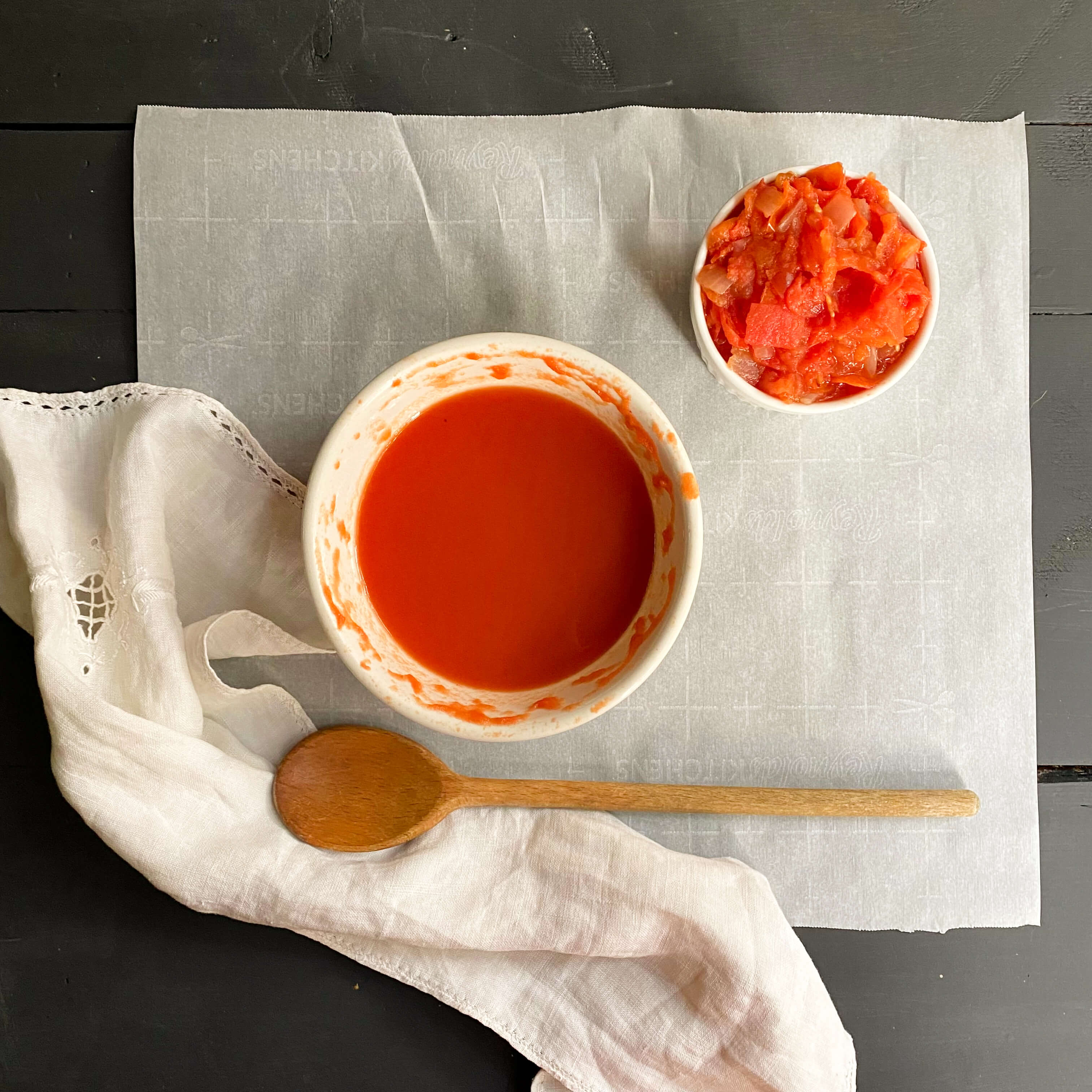
Core and chop the tomatoes. Cook the tomatoes and onions together until soft (about 20-30 minutes) and then press the mixture through a fine sieve.

The cooked tomato and onion mixture before it is pressed through the sieve.

The tomato and onion mixture after it has been pressed through the sieve (large bowl).

Return puree to heat and cook until reduced by one-half, stirring occasionally. Combine spices in cheesecloth or a tea strainer and set in the puree. Add the rest of the ingredients and stir.

Continue cooking uncovered to desired consistency (about 2-4 hours depending on the amount of tomatoes used). Remove the spice bag. Seal ketchup in hot sterilized jars or refrigerate in an air-tight container if making a smaller batch.

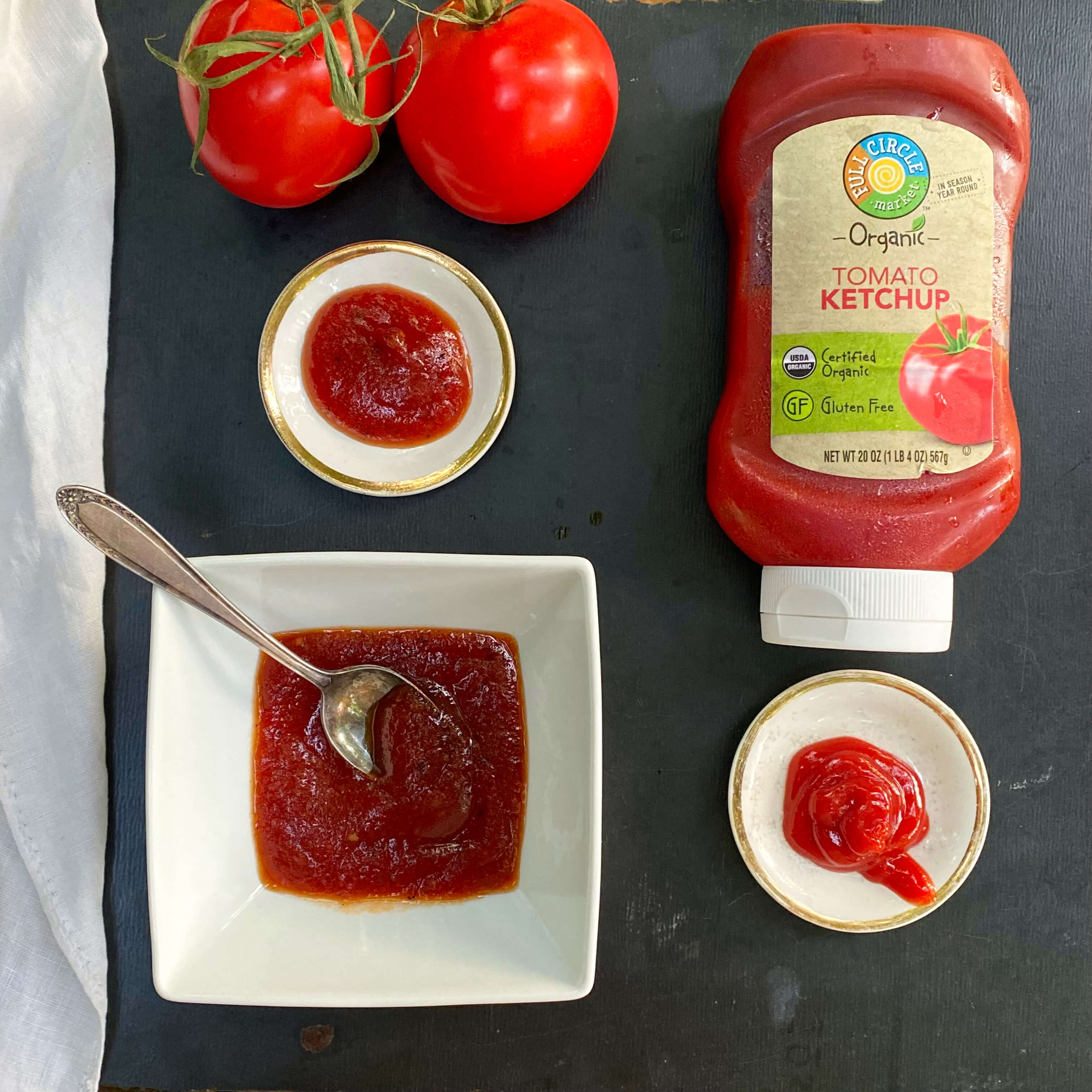
With a thick consistency, a sweet taste and a peppery bite this homemade ketchup was full of delicious, tangy flavor. A little bit darker in color than our usual brand of store-bought ketchup, the best way to describe the difference between these versions is to compare them side by side.

The store-bought ketchup was not as sweet and it tasted tinny like canned tomatoes with a mineral undertone. The homemade ketchup was sweeter, brighter, and more evenly balanced in flavor. The store-bought version was candy-apple red in color and smoother in consistency. The homemade version, although not thin, was more sauce-like in texture, similar to a steak sauce or a barbeque sauce, and slightly more opaque. The last defining difference between the two was the spice factor, which of course was the unique ingredient in the homemade version.

Interestingly, the store-bought ketchup contained very similar ingredients to the homemade version… organic tomato concentrate, organic sugar, organic vinegar, salt, organic spices, and organic onion powder – not too different from the ingredients we used. But like anything made from scratch in small batches, as opposed to something made en masse in a factory, you can’t beat fresh, homemade, whole-food flavor.

You might suspect that ketchup would have an origin story that begins in Italy, given the country’s love of homegrown tomatoes and homemade sauce. But actually, ketchup is steeped in centuries of Chinese food culture and dates all the way back to the 1700s when it was first used as a way to ferment and preserve fish. At that point in time, there were no tomatoes involved and it was not red in color. It was thin and watery and looked more like soy sauce. It wasn’t until the early 1800s in America that tomatoes in ketchup made their debut.

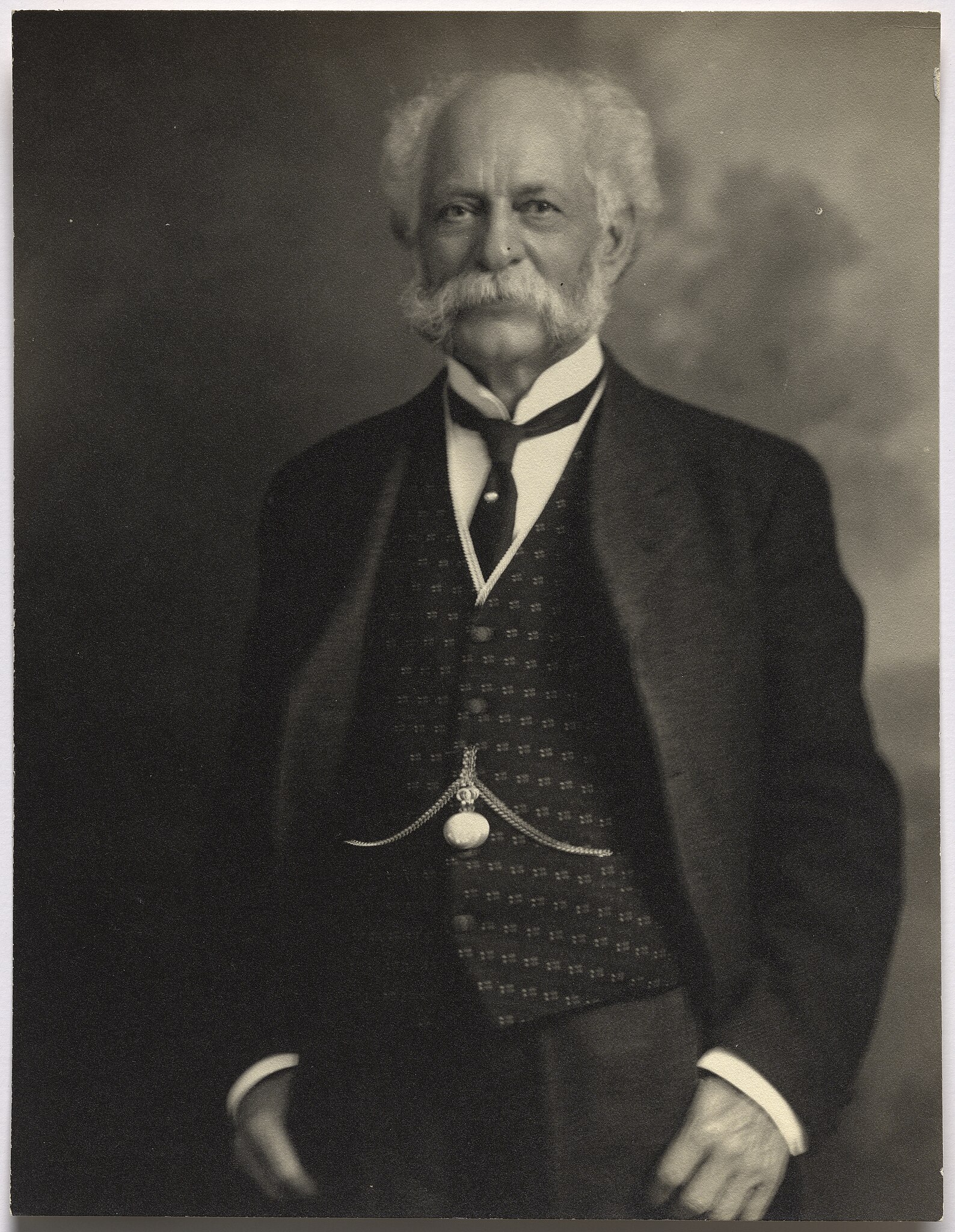
Henry John Heinz

Henry John Heinz (1844-1919) made ketchup a famous American condiment in the 1870s after years spent first experimenting with horseradish. By the 1960s, when this Spicy Tomato Ketchup recipe was published in The New York Times Cook Book, Heinz Ketchup was a worldwide favorite bringing in over $300 million dollars a year in global sales.

1960s advertisement for Heinz Ketchup

It’s interesting to think that in the dawn of convenience foods (aka the mid-20th century), when saving time in the kitchen was important to busy families, and the exciting novelty of pre-packaged foods was all the rage, that Craig Claiborne was still interested in adding a homemade ketchup recipe to his cookbook. When 1960s home cooks could have easily run out and purchased an already prepared bottle of trusted, reliable Heinz Ketchup and called the day done for a lot less time and expense, it’s interesting that the New York Times treated this ordinary, taken-for-granted, always-around condiment with a little more reverence.

In preparing this recipe, I now understand that ketchup is an elevated culinary sauce, perfected over centuries. It’s not just something you slather on your burger or your hot dog or dip your french fries into without thinking. It shouldn’t be something you buy in bulk at the grocery store with the same level of enthusiasm as buying a roll of paper towels. Homemade ketchup requires time and a unique blend of ingredients to bring out all the flavors. It’s a condiment worthy of attention and of appreciation. When it is homemade, it offers a gourmet flourish to your summer grill menu and adds a bit of zesty flavor to your palate and your plate. There is also something freeing about knowing that, should we ever run across The Great Tomato Ketchup Shortage of 2021 again, we could easily whip up a batch ourselves if we needed to. I guess this means that I need to learn how to can. So that I can go ahead and make those eight pints and have a reserve in my pantry. This homemade recipe will spoil you in that way. It will turn your attention away from all those other commercial ketchups. There is truth in the saying. Yes, homemade ketchup tastes better than a store-bought version.

I hope you love this ketchup recipe just as much. As always, if you make it please share your thoughts in the comment section below. And if you’d like to experiment with another homemade condiment, try this wonderful Danish mustard recipe here.

Cheers to Craig, Eleanor and tomato growers all over the globe for adding so much flavor to our summer days.

A Monumental Story of Real-Life Serendipity Told Over Many Parts: Chapter 5 – The Lost Item is Revealed

{Spoiler Alert: This is the final installment in a series of blog posts detailing the real-life story of a 100-year-old item that was lost in 2008 and how it found its way home in 2024. Follow along from the beginning of this story at Chapter 1: It Arrives.}

There’s a quote by an unknown writer that states… “What’s meant for you will never miss you, and that which misses you was never meant for you.” This quote sits on the shop’s recently sold page, acting as a sort of hopeful reassurance to any shopper who winds up there only to discover that an item that had originally caught their eye has sold to someone else. It can be so disappointing to be confronted with the fact that some newly discovered treasure that immediately captured your heart is now in another’s hands. But I love the idea of fate and what it suggests in this quote. Should an item be destined to be in your life it will present itself again, some other day, some other time.

Over the past few years, I’ve thought a lot about this quote. The idea that something will return to you if it was meant to be is such a comfort. When I think about it in the context of the lost item, I see how truthful the quote really is and how incredible the spontaneity of the universe and fate’s voice in it really are. As discussed in Chapter 4 of A Monumental Story of Real-Life Serendipity Told Over Many Parts, this journey of the lost item is all about timing, and I can’t help but think that although it took sixteen years for a lost item to get back to the people it belonged to, it came home at the most appropriate time. Like it was waiting all those years for just the right moment to reconnect with family, and in turn to reconnect with history.

Everyone has waited long enough to hear what this mystery item is, so I won’t prolong it anymore, only to say that upon the reveal of the item, all the dots that were laid out in the first four chapters of this story will be connected here in this post. So keep reading if you want to learn how it all unfurled from start to finish.

Just to recap quickly from Chapter 4, where the lost item was journeying to its final destination, these are the things that we know so far about the lost item…

  1. The lost item is over 100 years old.
  2. The item was left behind at an office supply store in a suburb of Atlanta GA in 2008.
  3. A random stranger named Angela discovered the item and tried to track down it’s original owner. For thirteen years her search was unsuccessful.
  4. In 2021, with the help of a Facebook group, Angela was able to connect the lost item to the Vintage Kitchen via a blog post that was written in 2018.
  5. In July 2021, after confirming that the Vintage Kitchen was indeed connected to the lost item, it was mailed via UPS to ITVK in a cardboard envelope.
  6. Although the Vintage Kitchen is connected to the lost item, it does not belong here in the Vintage Kitchen.
  7. In January 2024, the lost item made its way home to its final destination via a journey that involved a plane, three cars, and one boat.
  8. The journey of the lost item took 16 years and 6,500 miles to complete.
  9. Time played a major role in the story of the lost item.

Without further ado, the mystery item that arrived in the Vintage Kitchen in July 2021 was packaged in this cardboard envelope of medium thickness….

This is the cardboard envelope of medium thickness containing the mystery item when it first arrived in the Vintage Kitchen in July 2021. For privacy purposes, pink marks cover the addresses of the sender and recipient.

Still in its same envelope in January 2024, it is time to reveal the mystery item…

The mystery item envelope as photoed in January 2024

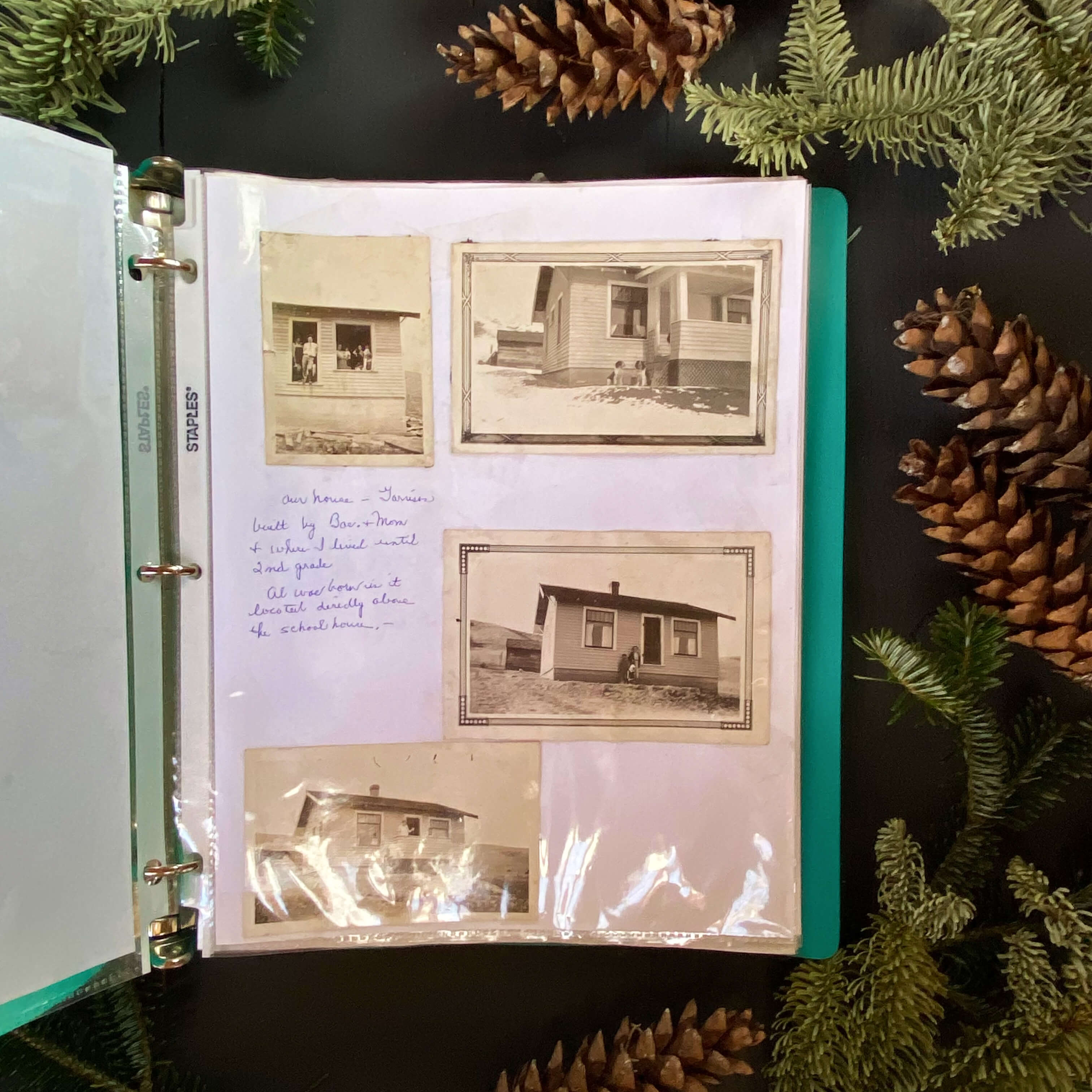
Tucked inside the cardboard envelope is a plastic, turquoise-colored binder. The binder itself is not the lost item, but what’s inside the binder is. A turn of the cover reveals history from 100 years ago…

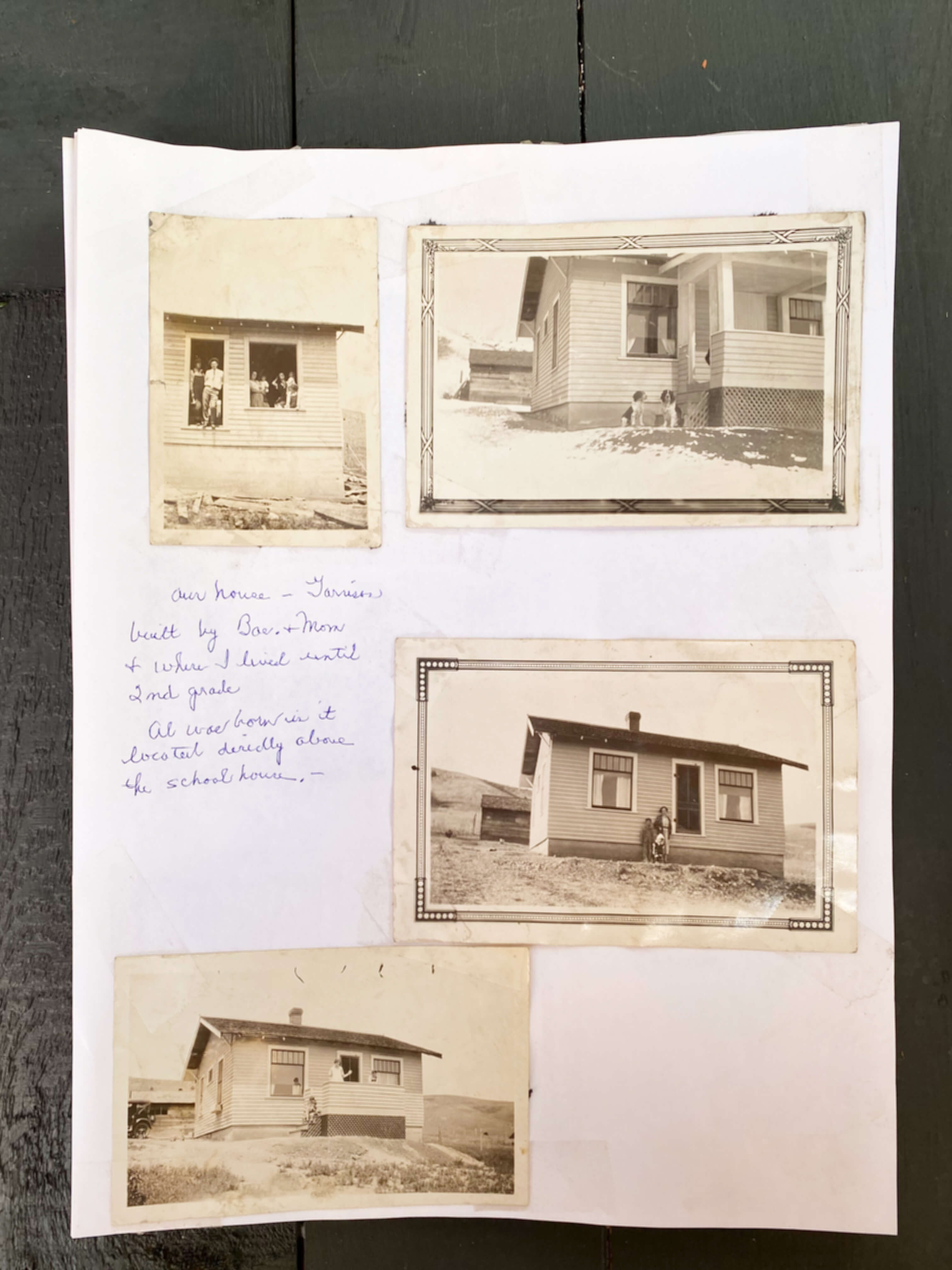
The binder holds fifteen pages of 1920s-era black-and-white photographs containing various scenes of rural family life in a country setting. Consisting of forty-seven individual images in total, the photographs were taped, or in some cases pasted, onto standard white copy paper and then slipped into plastic sleeves and secured in a three-ring binder.

The turquoise binder was clearly a modern addition, but the photographs themselves are originals. It’s easy to see that the photos had been removed at one point in time from a more traditional photo album. Black pieces of paper are attached to some edges, old tape clings to corners and remnants of prior placement in a black-paged photo album are evident.

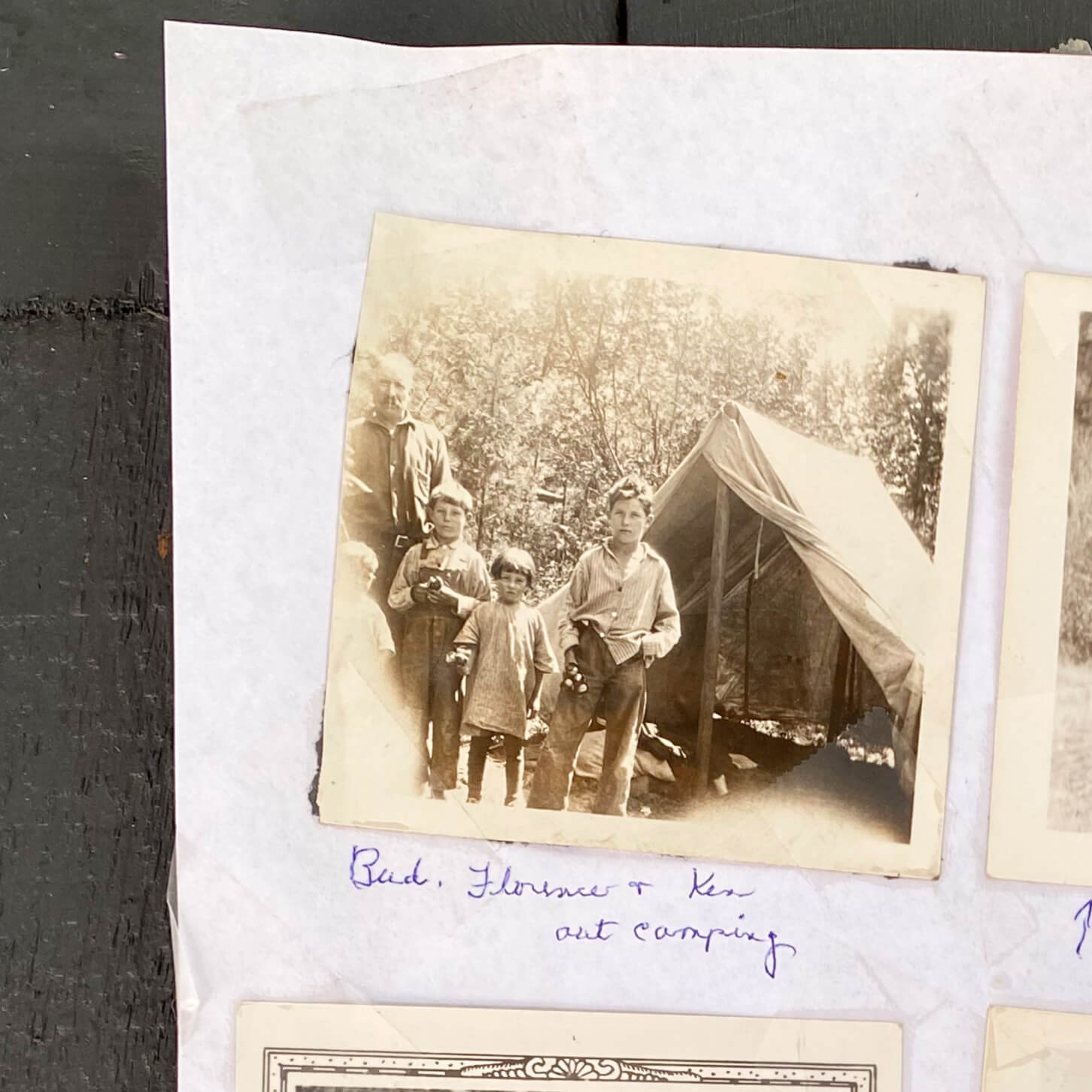
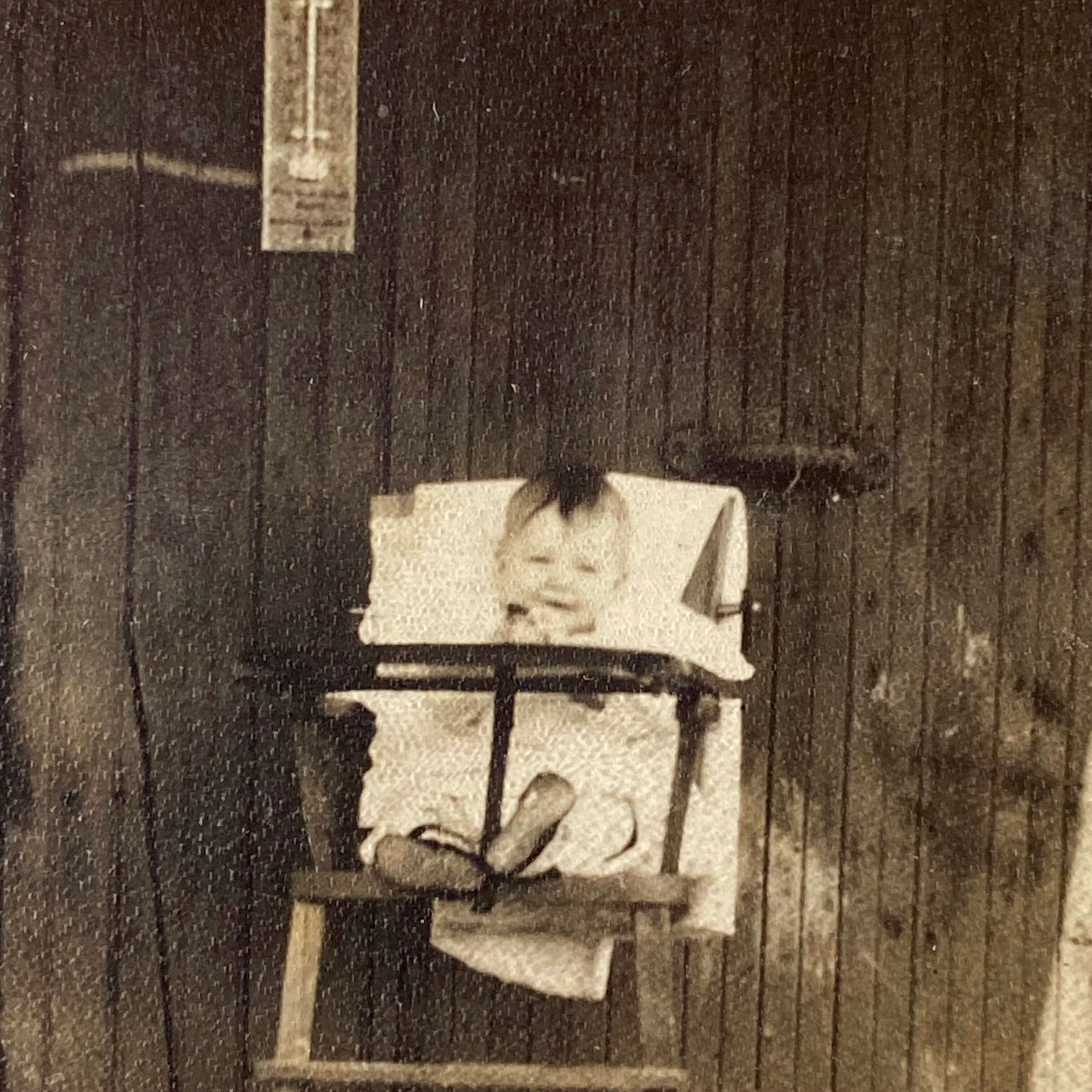
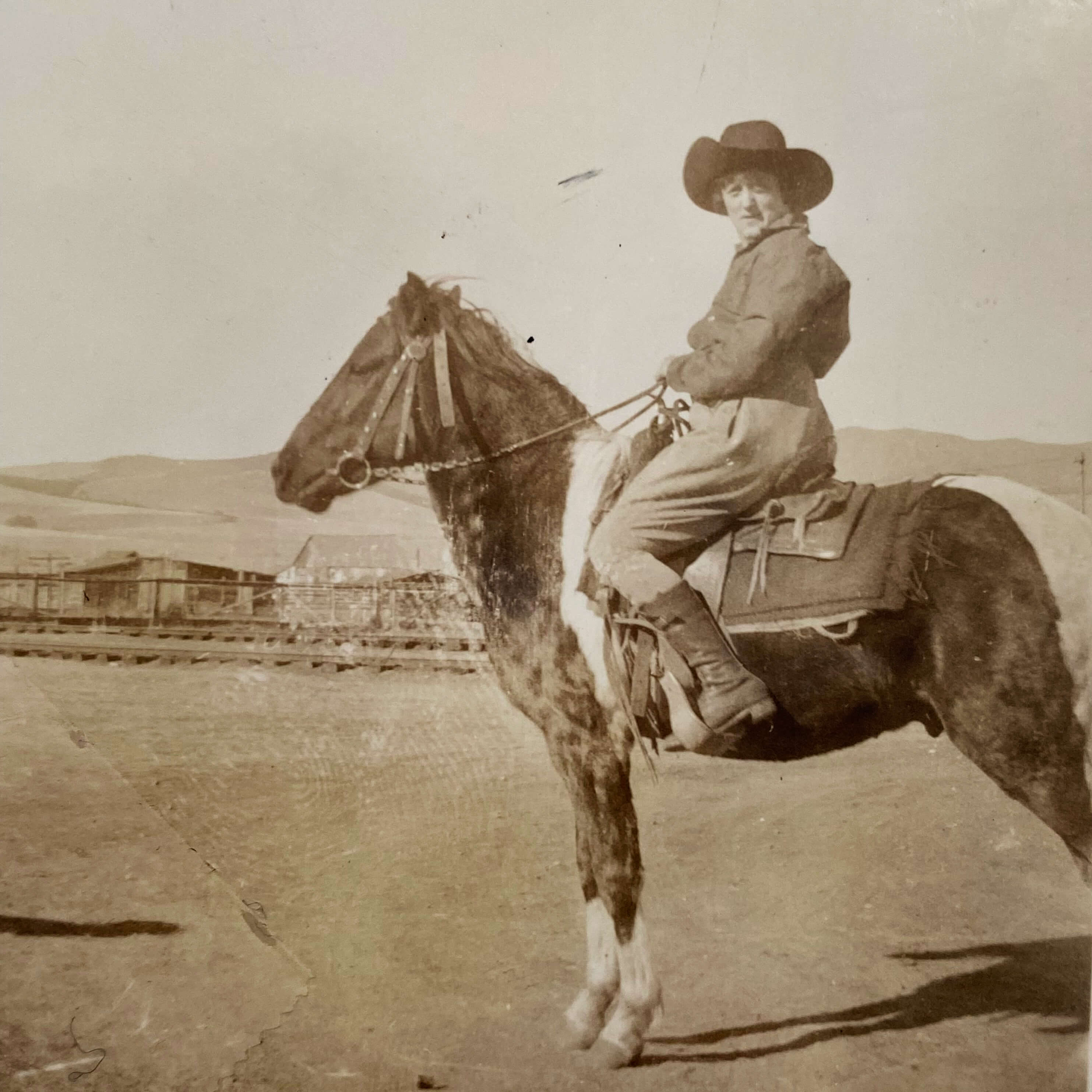
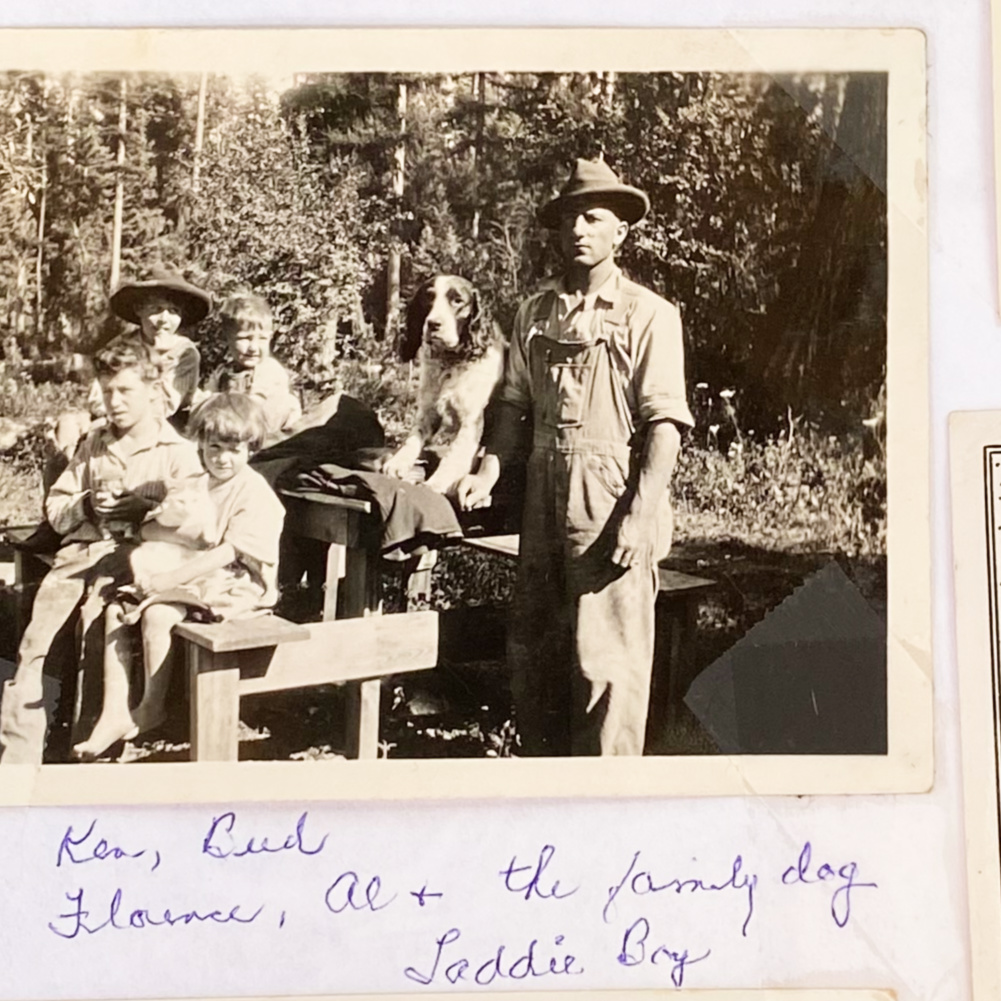
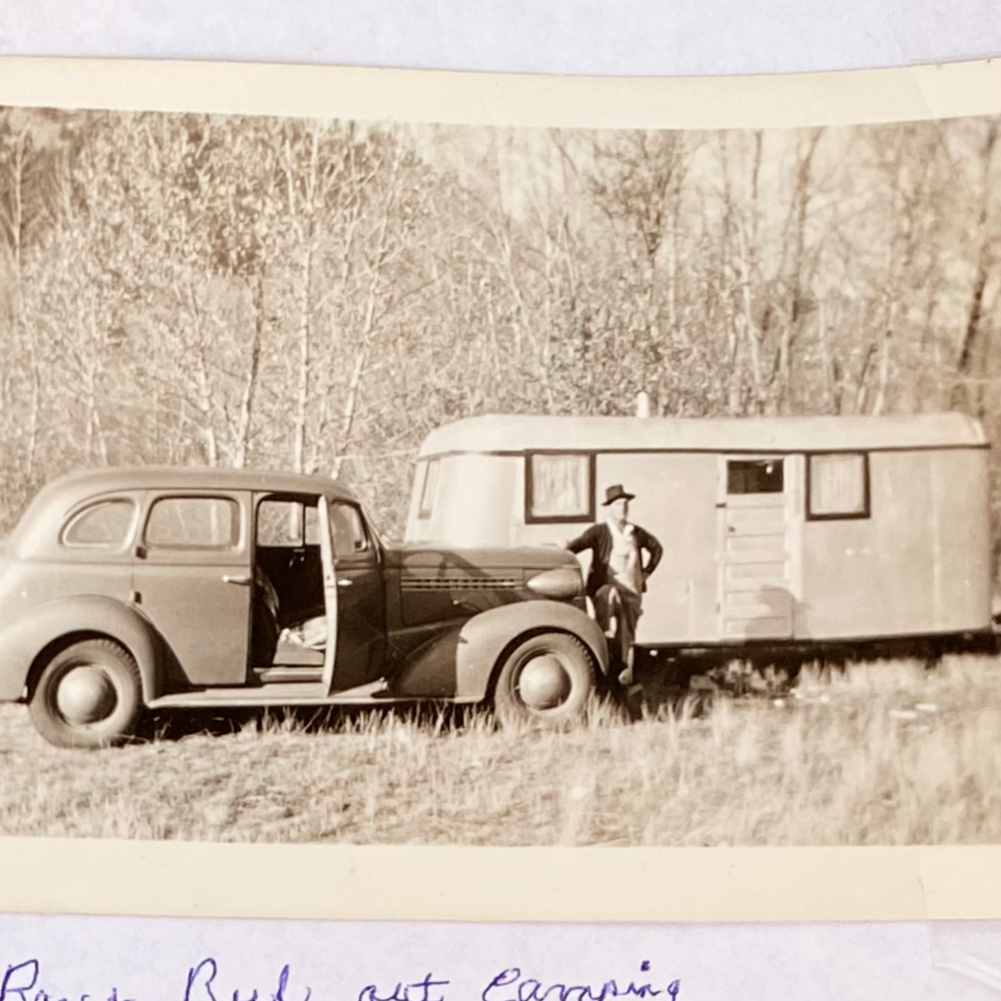
Handwritten notes are included next to most of the photographs identifying first names, town names, a date, or a general situation, like the one above that says Bud, Florence & Ken out camping. But none of the notes include references to a specific state, country, legible last name or any major scenic sites. Flipping through the pages reveal more photos of babies, dogs, cars, cats. There are houses and train tracks, rolling hills and weathered wood. There are women on horseback, men in overalls, girls in summer dresses, boys hunting in the snow.

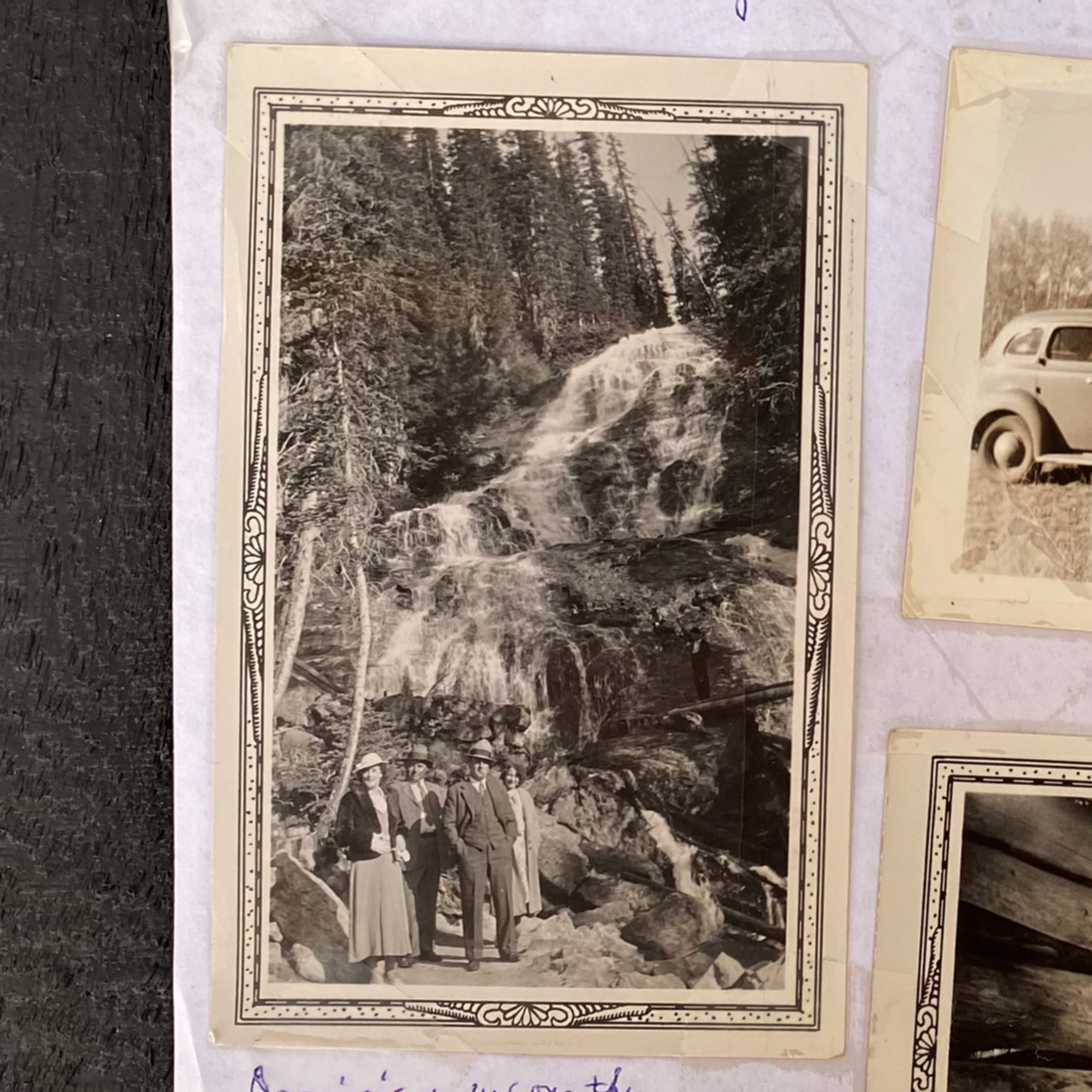
There are blurry candid shots and more formal, posed group shots. Several faces reappear in different settings. A building evolves in various stages of construction. There are men in fedora hats and women in fur coats. There’s a foal and a waterfall. A travel trailer. A canoe. A swing hanging from a laundry line. There’s a baby in a bath bucket and a woman sitting on the hood of a car.

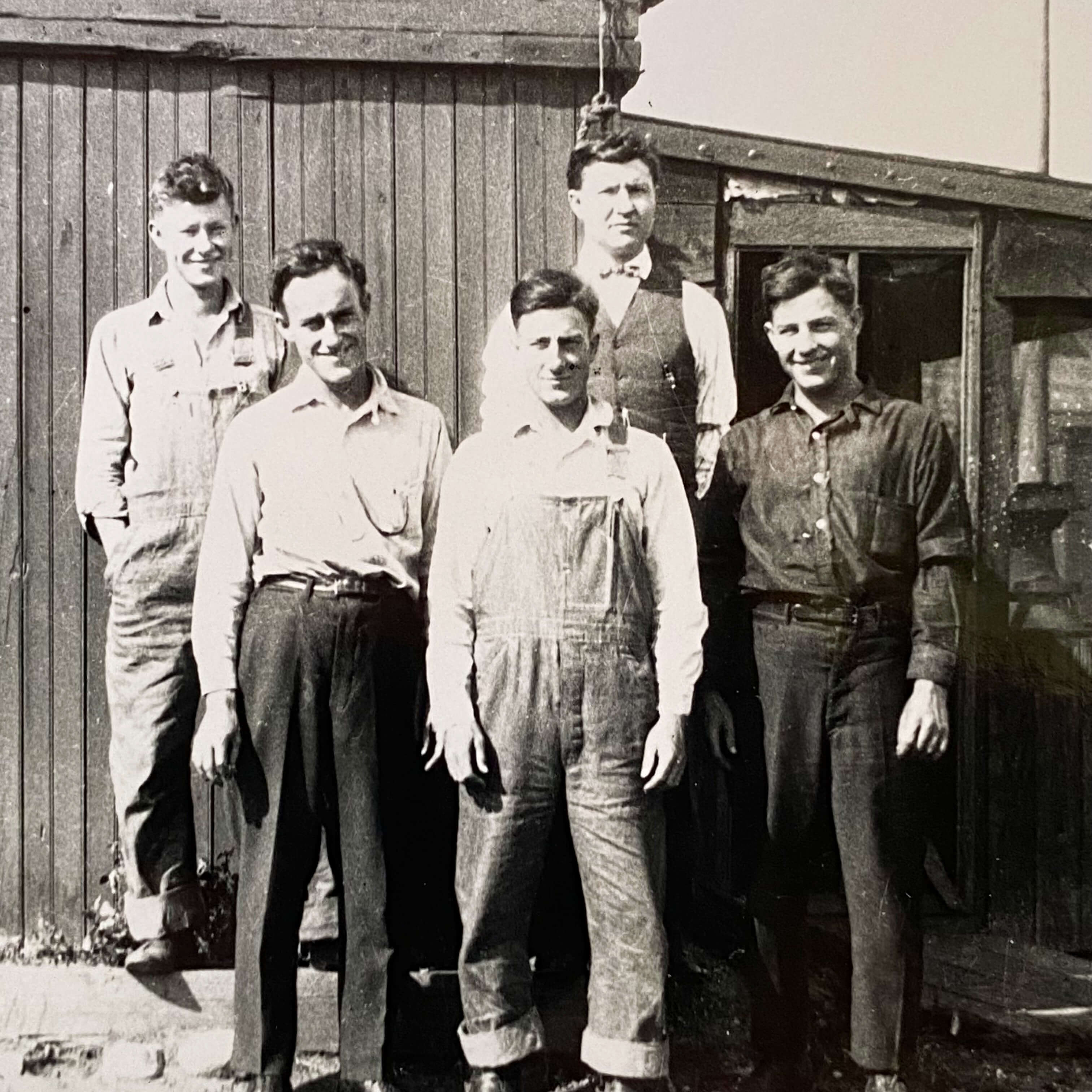
All the photographs were taken outdoors and feature different seasons. Many photos feature one specific man in particular. A man in overalls. That’s him in the center of the photo below.

Page after page, faces unfold.

People are named Al… Bill… Bessie… Bud… Merwyn… Lou…Florence. Towns are labeled Garrison and Philipsburg. One photo refers to the “Minnesota Relatives.” A dog is named Laddie Boy.

The lost item is a one-hundred-year-old photo collection of a mystery family in a mystery location. Who are these people and how are they are connected to the Vintage Kitchen? Keep reading for the whole story from start to finish.

Back in 2008, when Angela discovered this photo album that had been left behind at the Staples where she was working in suburban Atlanta, there was no way to track down who it belonged to. It had been left at the self-serve copy area and contained no other information as to where it came from or who brought it in. There was no in-store job ticket attached to it. No Staples order form. No receipt dangling from an interior page. There was just the binder – plastic, turquoise, holding onto fifteen pages of 100-year-old photographs.

Angela at Staples in 2008. Learn more about her in Chapter 2.

Knowing how sentimental old photographs can be, Angela kept the binder in the back room of Staples for safekeeping in hopes that someone would realize that they’d forgotten it and come right back for it. Days, weeks, months went by. The binder sat unclaimed on the shelf in the back room. Periodically during that first year, Angela would thumb through the photos and try to connect one of the handwritten first names to a customer list in the Staples database.

Bill, Florence, Bud, Al are pretty common names throughout the country, but particularly in the South. Searching by first name alone turned out to be a fruitless task. With no legible last names to search, no specific city and state location to pinpoint on a map, and no understanding of the context of the collection as a whole, Angela had no clear-cut way to track down the owner of the left-behind photographs using just the minimal information offered in the handwritten notes. Her only hope was that owner would return to the store to claim the binder. A year went by. A clean-up and reorganization of the back room was issued by Staples management. Angela, concerned that the binder might be misplaced or tossed into the trash during the reorganization took it home so that she could continue to search for its owner.

One year stretched into five years and then into ten and still Angela was no closer to finding out who might have left the photographs behind. Although the story of the turquoise binder didn’t change much in that decade, Angela’s life changed quite a bit. She got married and had a baby. And then she had another baby and another one after that. In that decade, she went from being a single girl working at Staples to a mom with a family of five to care for. By her side through all those life changes was the lost item. In close reach always, in case an important clue or a new lead might reveal itself, the binder became a part of Angela’s life, a puzzling research project that she returned to again and again.

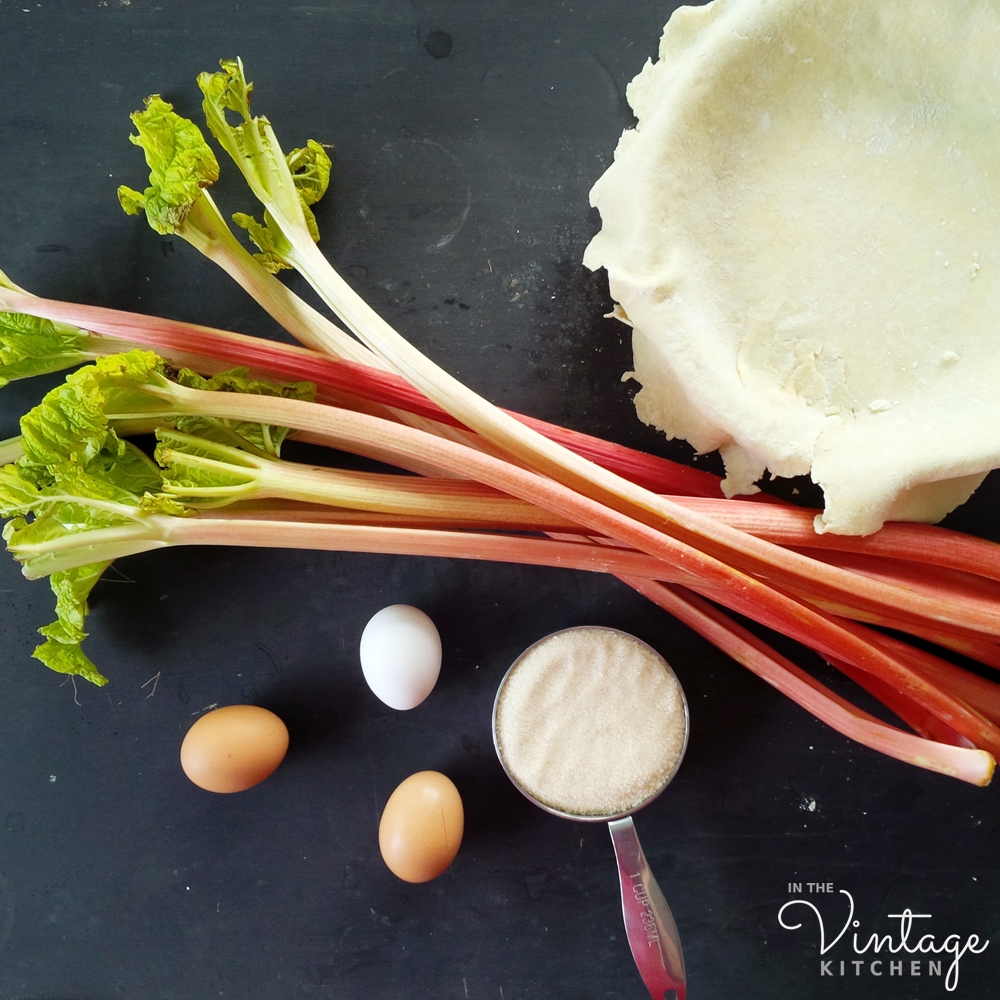
Meanwhile, in another southern state, while Angela was busy raising her family and trying to solve the mystery of the binder filled with photographs, I was busy writing about history, antiques, and vintage recipes. In March 2018, I wrote a blog post, sharing a recipe that had long been a part of springtime/Eastertime menus for generations of my family. The recipe was for Rhubarb Custard Pie – a seasonal dessert that combines Betty Crocker’s 1950s rhubarb custard filling recipe with my Great-Grandpa Bacon’s homemade pie crust recipe.

Rhubarb Custard Pie – a family tradition every spring.

In the post, in addition to the recipe, I shared the story of Great-Grandpa Bacon and his wife, Dolly, who lived in rural Montana during the early to late 20th century. Married in their early 20s, Bacon worked for the Northern Pacific Railroad, a job that took him and his new bride to two rural areas in Montana – Goldcreek and Philipsburg. It was a brave and adventurous new life for them, started at a time when Montana, still young and precarious itself, saw its most difficult years in history.

Montana Homestead Poster circa 1914. Read more about the challenges of Montana homesteading here.

Challenges stemming from WWI, the over-grazing of prairies during the homestead boom, and the subsequent agricultural decline coupled with the wild, unmanaged landscape, towns located few and far between, and the tricky navigation of the unfamiliar ins and outs of remote living, made Bacon and Dolly’s decision to build a life in rural Montana all the more courageous. Dolly was born and raised in Seattle, and Bacon was from St. Paul, MN, both sizeable cities with over hundreds of thousands of residents in the early 19th century. Their new Montana life would take them to communities with populations of less than 2000 people where they had to rely on their own wit and willpower to survive.

Dolly & Bacon’s wedding portrait, 1920

Along with the recipe, in the blog post, I detailed Dolly and Bacon’s unusual life in Big Sky Country. I didn’t have any photos of them depicting their early years in Montana, so to help visually tell their story I added a lot of research about what was happening in the state in the 1920s when Dolly and Bacon moved there. I also shared the family story about how Dolly and Bacon’s first house, after they were married, was two railcars gifted to them by Northern Pacific Railroad. A gesture offered by the company so that Dolly and Bacon could immediately set up homekeeping in their new surroundings.

A 1930s era Northern Pacific Railroad poster in Chapter 3 was a big clue about the location of the story.

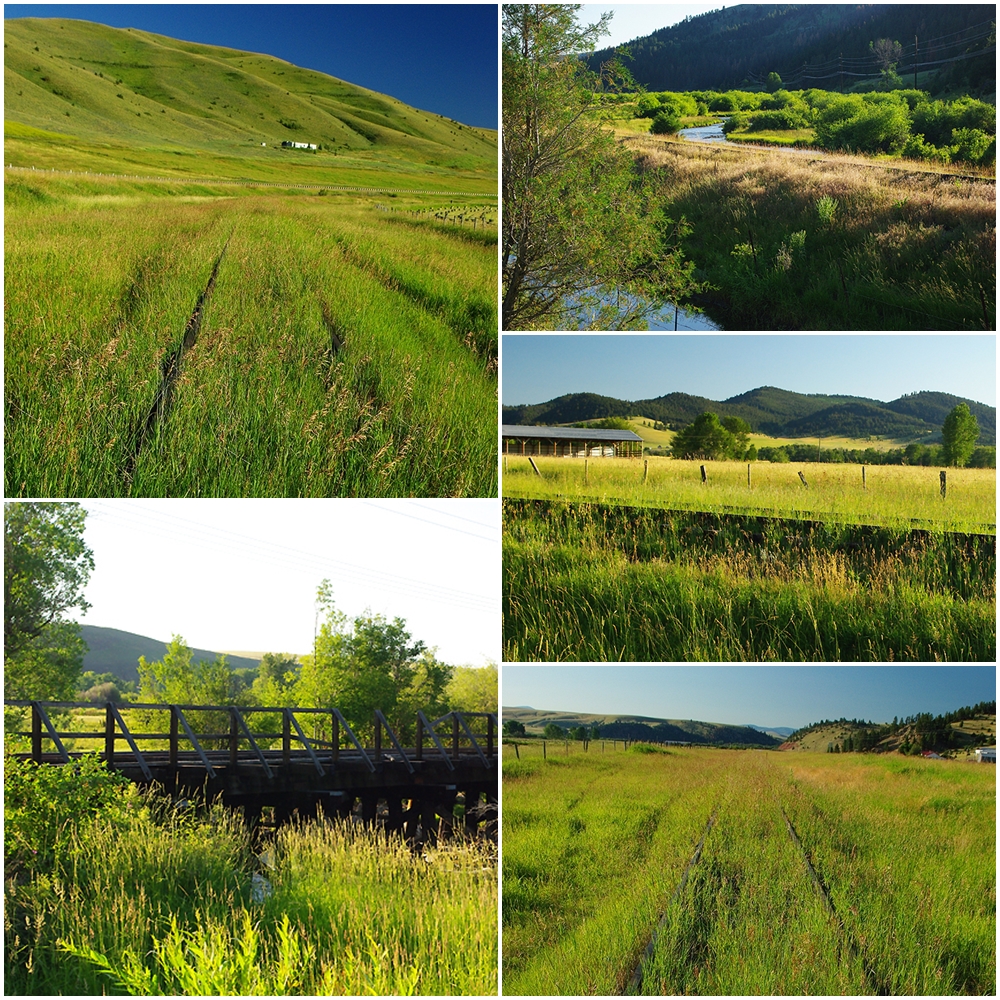
Definitely an unusual start to their marriage, Bacon and Dolly thrived in Montana and embraced everything about their rural railroad life. Bacon worked as a train depot clerk in Goldcreek and then as a conductor on a transportation line for livestock and mining equipment in Philipsburg.

Now an abandoned track these are recent photos of the train line running through Philipsburg with views that Dolly and Bacon would have seen on a daily basis. Photos courtesy of D & D Travel.

Dolly set up house in the railcars, learned to bake bread, and wrote poetry. They had three babies, two girls and a boy. They built a house and a garden near the tracks where Bacon worked. They hiked in the hills, fished in the streams, and ate fresh-caught trout for breakfast, Dolly’s bread for lunch and Bacon’s homemade pies for dessert. They fell deeply in love with each other, with Montana, and with the life that they made. For fifty-five years, Dolly and Bacon called Montana home, never imagining living somewhere else than the paradise that surrounded them. In 1975, Bacon passed away from a heart attack at the age of 78. Dolly followed five years later in 1980 at the age of 82. They are buried next to each other in the local cemetery in Philipsburg. Even in death their hearts never left the place that they loved.

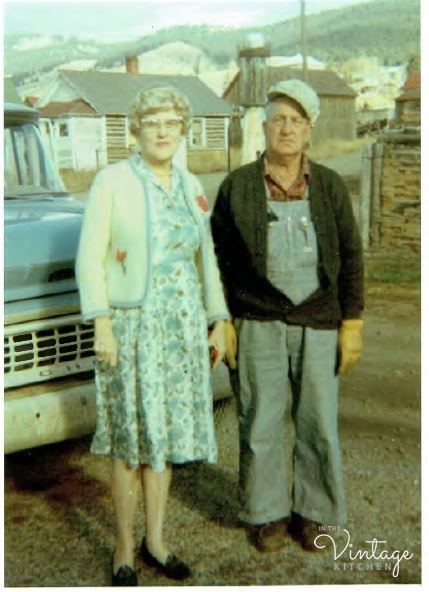
Bacon & Dolly Day in Montana circa 1950s/1960s

The rhubarb custard pie recipe received some interest from readers, but not nearly as much as the story of Bacon and Dolly. In 2018, their photo above became one of the most favorited of the year on our Vintage Kitchen social media accounts.

In 2021, Angela still searching for some helpful snippet of information that might lead her to the original owner of the binder, decided to contact a Facebook group that specialized in old-fashioned handwriting. She thought that they might be able to help decode some of the hard-to-read words that accompanied a few of the photos.

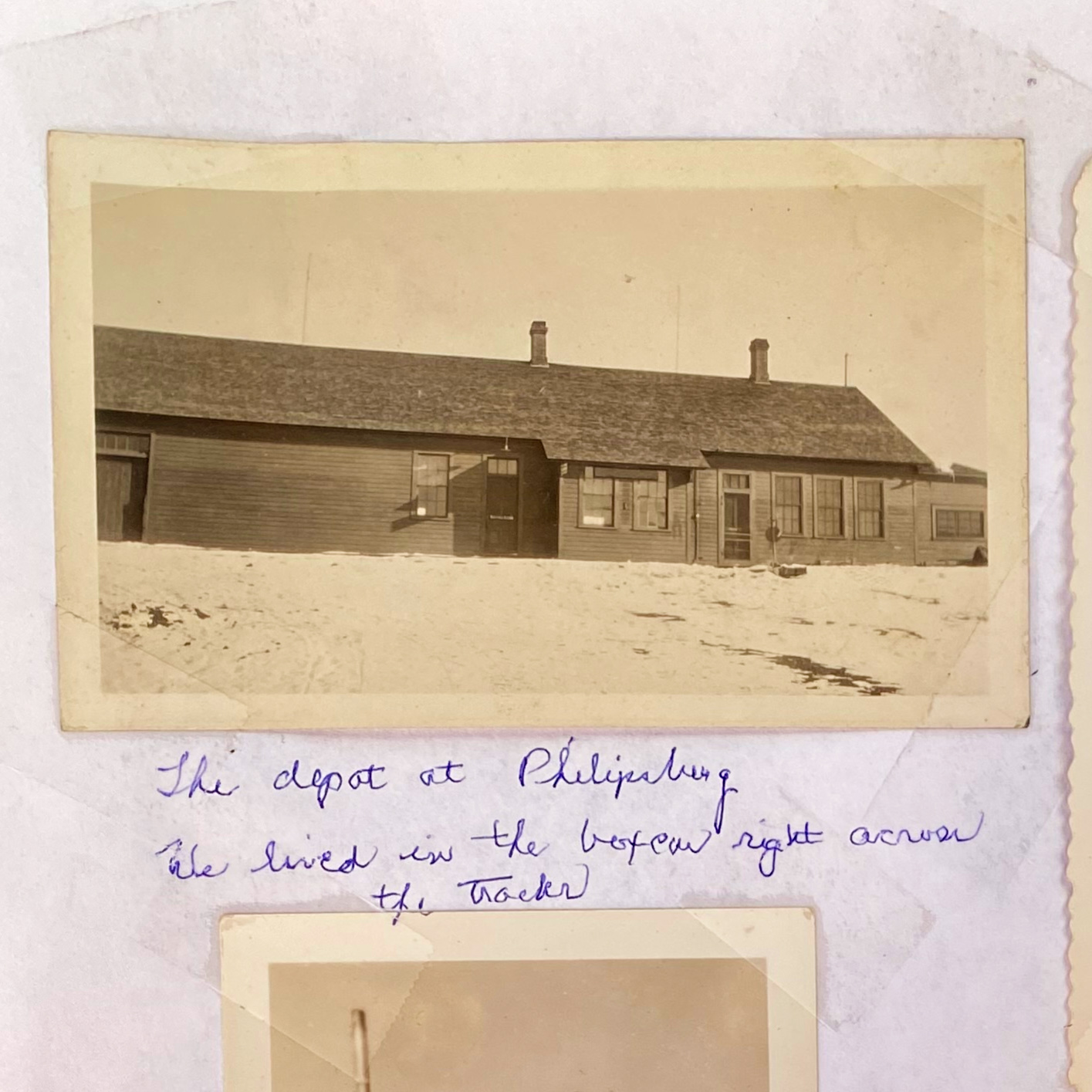
The Facebook group was more than happy to help. Within a quick amount of time, they connected words from the handwritten notes in the photo album to words and phrases found online in my blog post about rhubarb custard pie. Bac, Philipsburg, train depot, lived in boxcars, and finally the clincher… Dolly Day… lept out at the group. All threads strong enough to cause Angela to reach out to the Vintage Kitchen via the blog, she sent an email to see if the photos might be connected to the recipe and to the story of Bacon and Dolly. Along with her inquiry, she sent some photos from the binder, this one included…

When I opened Angela’s email, I was greeted by a photo of Bacon himself. In his younger years. In his beloved overalls. In his rural Montana. With Dolly by his side. And just like that, after 13 years of Angela’s diligence, time, and attention to finding the owner of the lost item, her inquiry was confirmed. Yes, indeed the photos were a part of the Vintage Kitchen – firmly rooted to the rhubarb custard pie recipe and to the Montana life of Bacon and Dolly Day.

A windfall for a genealogy lover like me, it was incredible to see personal photographs of someone I had heard about but never met, wrote about couldn’t completely visualize, and whose recipe was in constant use in my kitchen. When the turquoise binder arrived in the mail, Dolly, Bacon and their Montana life lept off the pages.

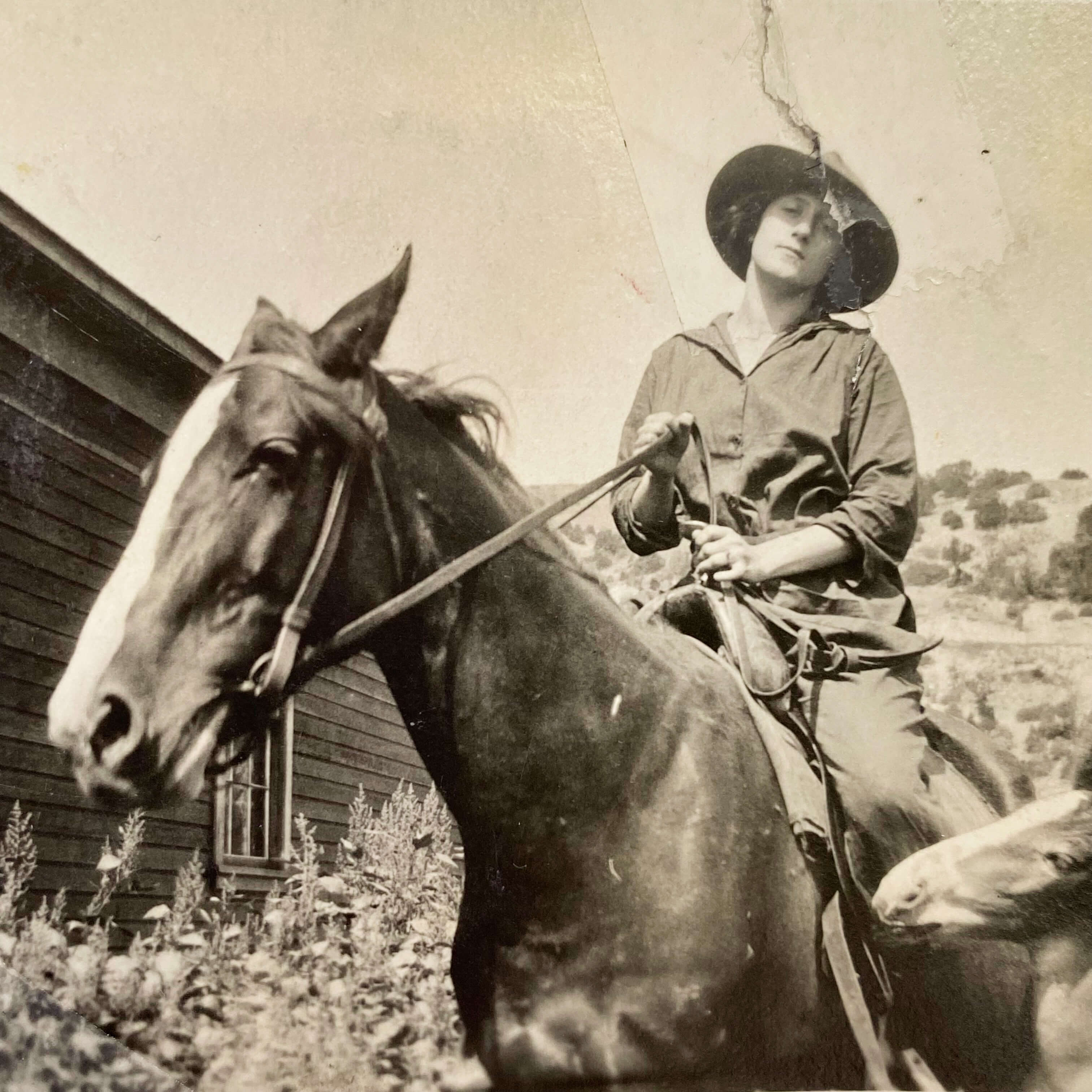
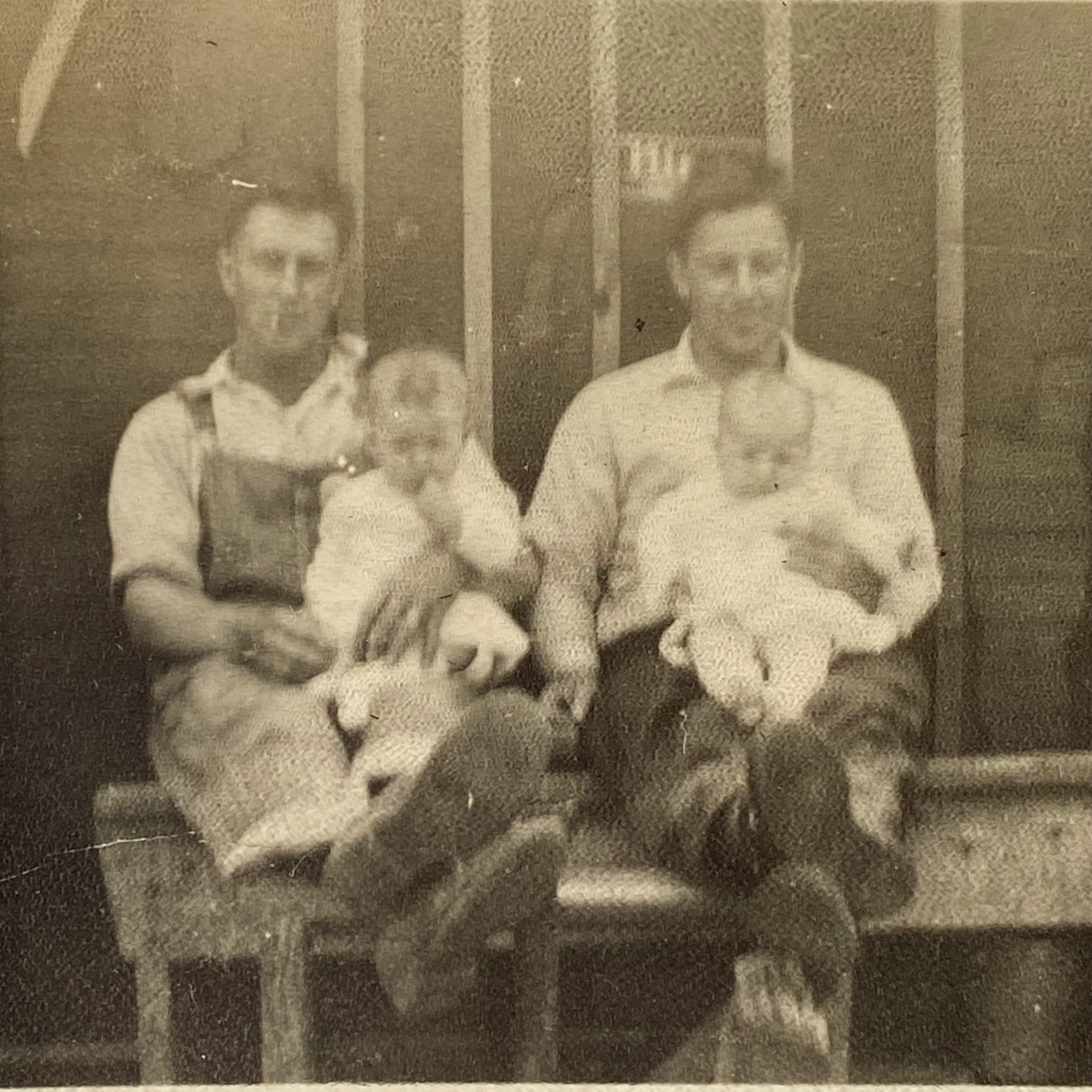
Suddenly the photo album made all sorts of sense. The woman on the horse? That was Dolly. The two men holding babies? That was Bacon and his twin brother Willis, who in turn, were holding their babies, Dolores and Willis Jr., both born in the same year (1922). The house with the long angle? That was the train depot in Philipsburg where Bacon worked.

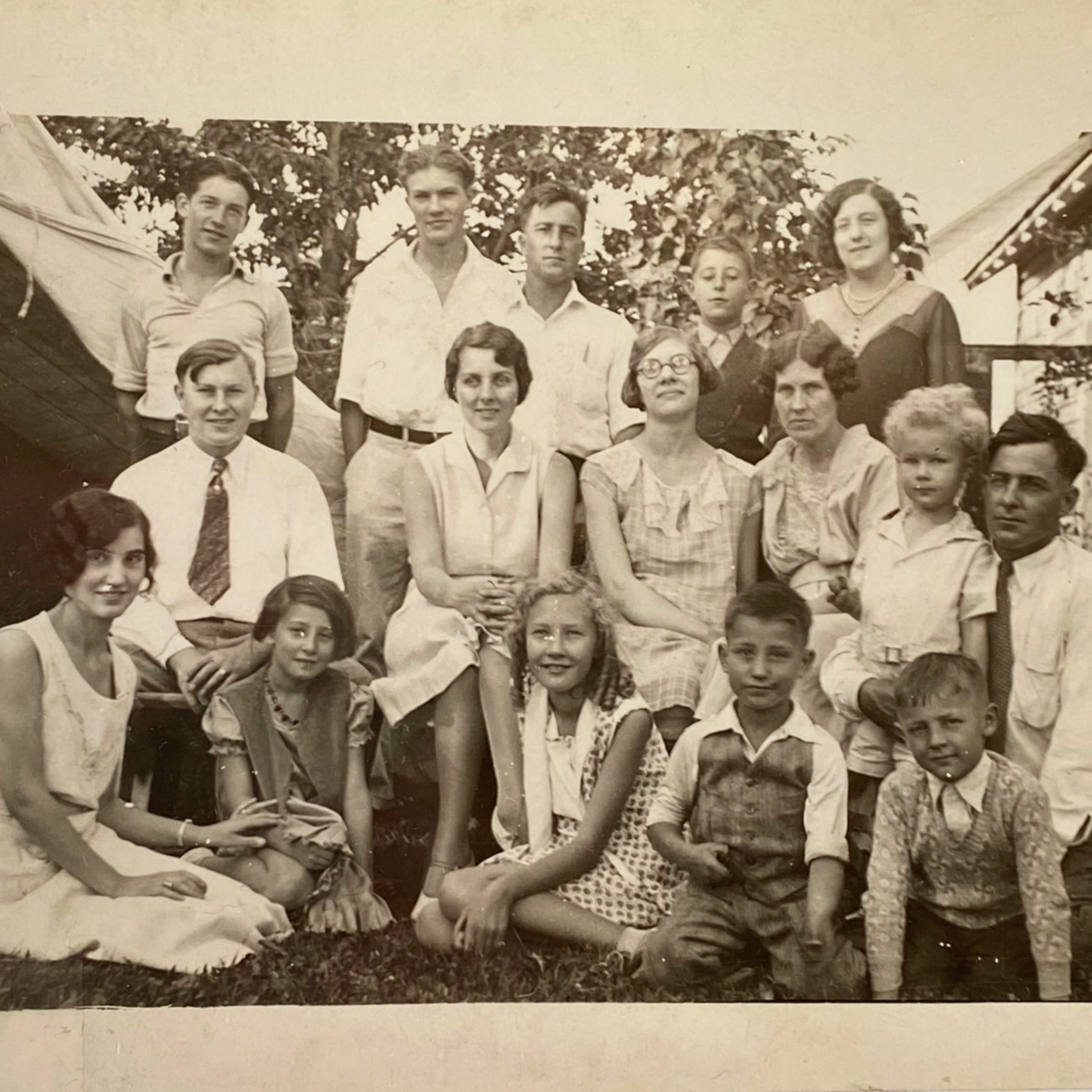
The waterfall is part of Skalkaho Pass, a point of interest In southwestern Montana that was mentioned in the photo album but misspelled. The building with everyone hanging out the window? That was the first house that Dolly and Bacon built from scratch with their own hands. The car with the motor home attached? That’s how Bacon and Dolly went camping. And the “Minnesota Relatives?” Those were Bacon’s brothers and sisters and their families visiting from Bacon’s home state.

Bacon and Dolly’s life unfolded in the photos page by page. Every family story known about them as a couple, their kids and their unique life in Montana was now here in visual format offering new insight into them and their experiences. In 2018 when I wrote the rhubarb pie post, I had only the one photograph of Dolly and Bacon in their senior years to share. Now, there are forty-seven more.

As I stated from the beginning of this story, the Vintage Kitchen is connected to the lost photos, but they don’t belong here. I wasn’t the one who pulled them from the pages of an old black photo album. I didn’t compile them in the turquoise binder. Nor was I the one to leave them in the suburban Atlanta Staples in 2008. Technically, Great-Grandpa Bacon and Great-Grandma Dolly aren’t even related to me.

Bacon and Dolly are the grandparents of my mom’s first husband. My brother, sister and I have the same mom but different dads. Bacon and Dolly are part of my brother and sister’s paternal ancestry line which is made up of Midwest and Pacific Northwest roots.

Both my brother and sister have memories of Dolly and Bacon and they both share a special affinity for Montana. Knowing that they would be so excited to learn about these never-before-seen photographs of their beloved great-grandparents, I couldn’t wait to share the story with them. I also couldn’t wait to share this whole story here on the blog too. Especially since I had already written about Bacon’s pie crust recipe. Had the family rhubarb pie recipe never been published, the Facebook group would never have found the Vintage Kitchen and Angela would never have contacted me, so it was very exciting to be able to continue telling the story of Bacon and Dolly here as well.

In the summer of 2021, when the photos arrived from Angela, the pandemic was still wreaking havoc on socialization plans. Although the idea of flying out to Seattle to meet my brother and sister was definitely the way I wanted to deliver the photos to them, I didn’t want to tie up this lovely gift from history wrapped in a case of Covid. So while waiting for the virus to calm down a bit, I decided to start telling the story on the blog. Since both my brother and sister read the blog, and since I didn’t want to spoil the ultimate surprise, I never mentioned anything to them about the photos or Angela or Montana. Hints in Chapters 1-4 of A Monumental Story of Real-Life Serendipity Told Over Many Parts were all filtered through a veil of mystery so that my brother and sister wouldn’t be able to guess that the lost item had anything to do with them.

Fast forward through 2021, 2022, and 2023. The timing never lined up quite right to fly out and finish the story. A six-month house hunt, the South to North move, and 1750 House renovations wound up delaying the surprise far longer than I ever anticipated. But if we’ve learned anything so far in all these chapters about the lost item, it’s that timing is everything to this story and in its weird and wonky way has linked all these people in all these places together at the most appropriate moments.

In January 2024, the right time presented itself. My niece was getting married in Seattle. A family wedding was the perfect occasion to share the story of the lost item and to finally deliver the 100-year-old photographs bound together in their plastic, turquoise bnder.

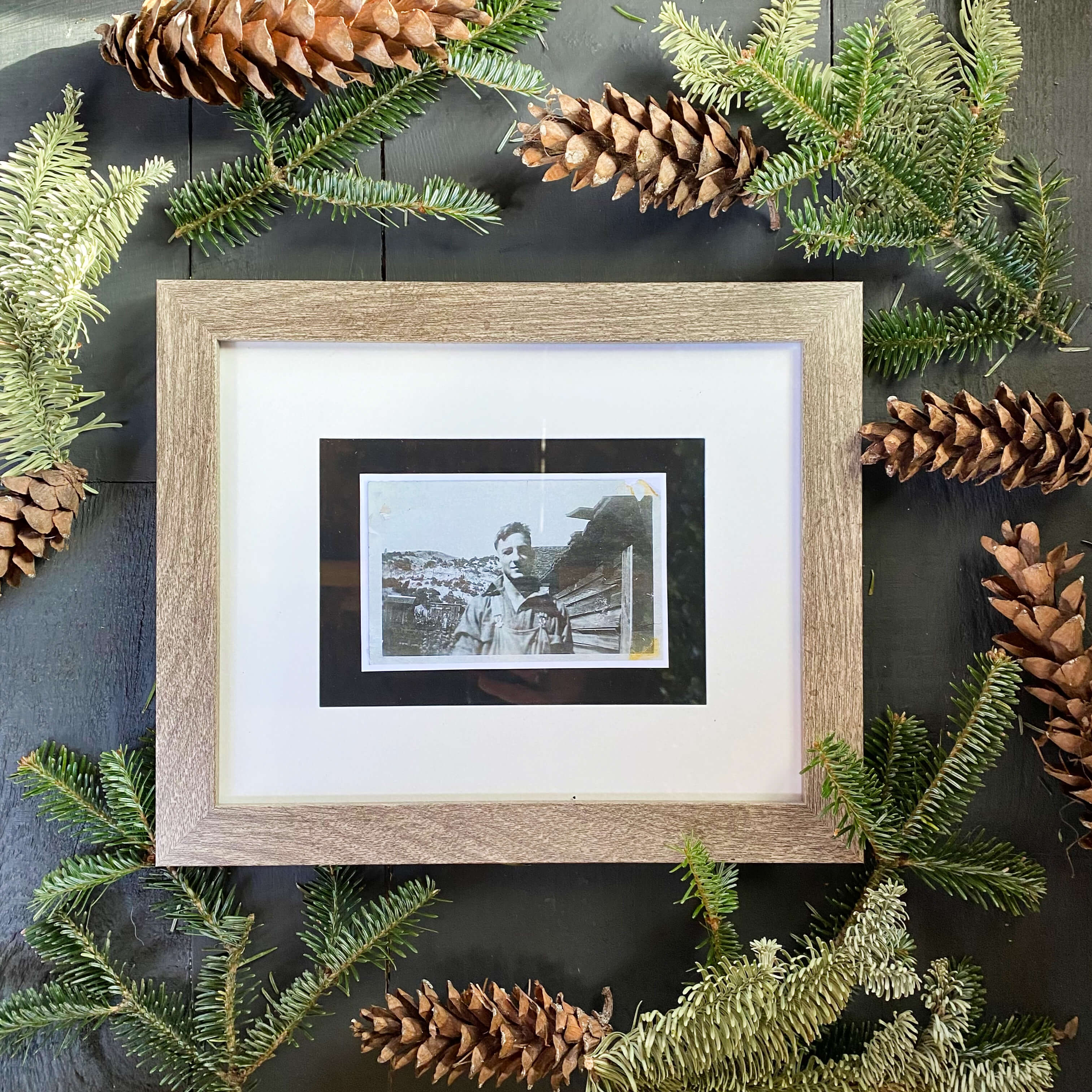
Before I left for Seattle, I had five copies made of one of the photos from the binder, so that I could frame them and give them to each of my nieces and my brother and sister. I chose a photograph of Bacon, newly married, age 24, where’s he looking straight at the camera. There are rolling hills in the background, part of a rustic building at his shoulder, a patch of corn growing next to a building behind him. He’s wearing his signature overalls. There’s a look of contentment on his face. A welcoming smile just about to bloom.

Lyle Bacon Day, Montana 1921

I had the photos reproduced at my local Staples, an homage to Angela and also to the lost item. While waiting in line to be helped, I glanced over at the self-serve copy area, at the bare tables next to each station, at the hard surfaces, sharp corners, and the utilitarian grey, beige, and black colors that covered that part of the store. I thought about the turquoise binder sitting by itself in such an environment. I thought about Dolly and Bacon tucked inside and how the environment of a modern-day Staples was so far removed from their wild Montana countryside, yet also had become such an integral part of this story.

Bacon and Dolly’s Montana circa 1920s

In 2018, going back and forth with Angela via text after the photos arrived in the Vintage Kitchen, I asked her what it felt like to put the binder in the mail after a 13-year journey with it. She admitted to tearing up a little. “I felt appreciated and blessed. To be able to provide so many people connected to this item with a sense of joy and happiness makes this such a special thing to be a part of.”

When it was my turn to be helped at the counter, the Staples employee was a bit flustered and explained that it had been a busy day and they were running behind with custom print jobs, so I’d have to leave my photo with them overnight and pick up the copies the next day. I hesitated. Bacon had come such a long way. His photograph was in my hand about to be given over. What if… I thought. What if something happens overnight at Staples. What if I never get the photo back. What if…

Clearly tired from her day, and sensing my hesitation, the Staples employee took the photo, popped it into an envelope, and attached it to a work order all in one quick motion while asking if she could help me with anything else. I wanted to tell her the story. The whole story. Starting all the way back at the beginning in 2008 with Angela in the Staples in Georgia. But the line behind me was long, and I got the sense I wasn’t speaking to someone like Angela who would care so wholeheartedly about old photos and lost items.

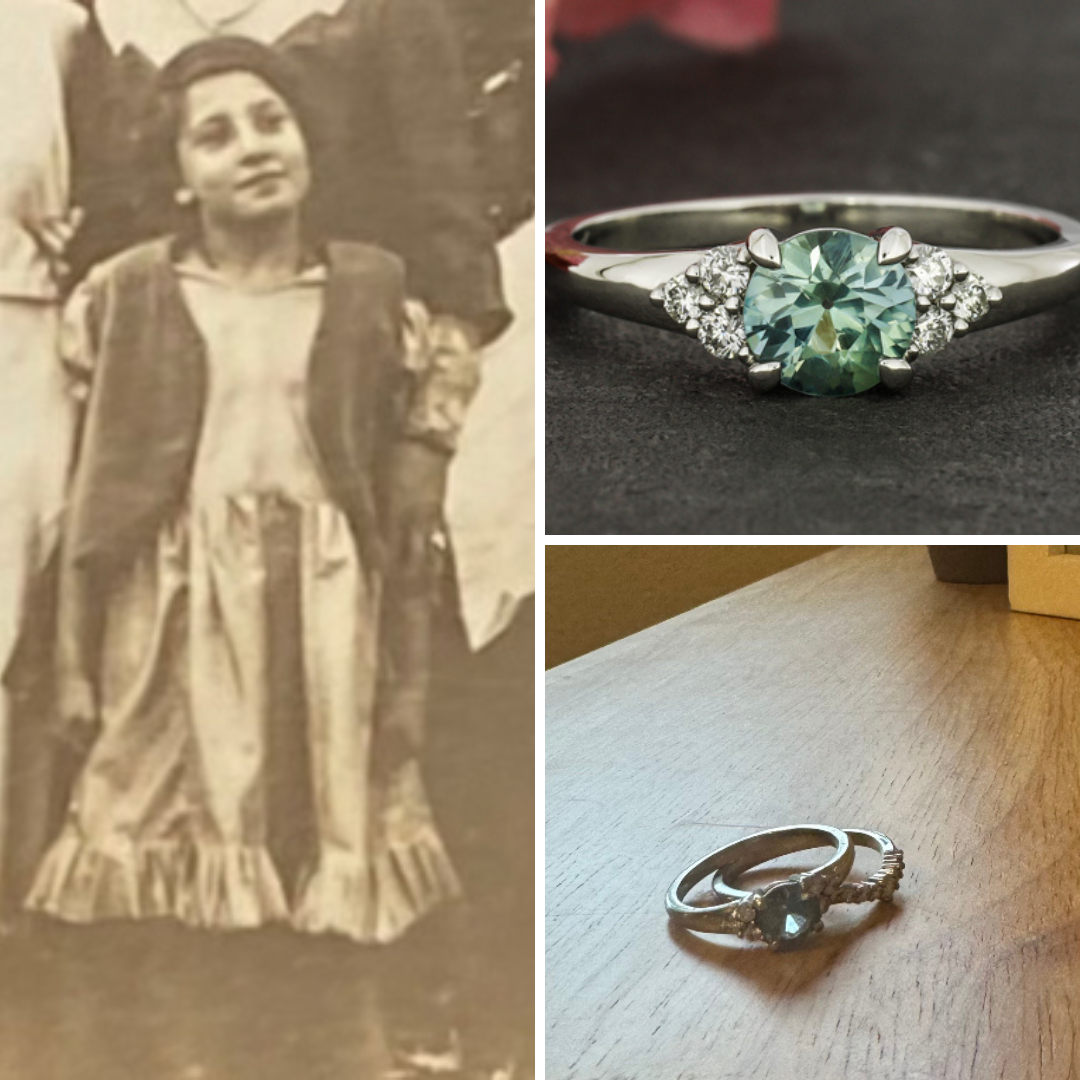
A detail had escaped my attention until the day before the wedding. It came in the form of my niece’s wedding ring. She designed it herself so that she could include a family heirloom in the setting that had been passed down on her side of the family for generations. The heirloom was a blue Montana sapphire. It had been mined from a local quarry near Philipsburg, Montana. The sapphire had been a gift from Bacon to his daughter, Florence on her 16th birthday in 1940..

Photos clockwise from left to right: Florence in Montana, about 10 years old circa 1934. A professional photograph of my niece’s Montana sapphire wedding ring. And a photo of her ring and wedding band taken at home after the wedding.

The day after the wedding, over trays of homemade enchilada casserole at my brother’s house, I shared the story of the lost item with my sister, brother, and nieces. I presented the turquoise binder and gave everyone their framed photographs. It was one of the loveliest family dinners I’ve ever had. We all marveled at the tenacity of Angela, the scenes of Montana spread around the table, and the good fortune that these photographs were not just thrown out in a dumpster sixteen years ago. My brother told me about a railroad key of Bacon’s that he had in storage and my sister told me about a booklet that she has of poems and musings about Montana written by Dolly. New story snippets and memories popped up in conversation as the photos floated around the table. My brother immediately called an aunt from that side of the family who lived in Atlanta to see if she was the one who left the binder at Staples. She was as surprised to hear about the story as we were and said she had no idea who the binder might have belonged to and how it would have wound up at Staples.

If you think about how fragile a paper photograph is, it’s easy to get quickly overwhelmed with scenarios that could have gone wrong in this story. They could have been destroyed a million different times in Montana alone over the course of a century. Not to mention the fact that they somehow made it to Atlanta. Then got lost. And then potentially could have been thrown out in the trash had kind-hearted Angela not cared enough to rescue them.

Something could have happened to them or to Angela in her thirteen years of time spent with them. Or something could have happened to them in the airplane when they were mailed to the Vintage Kitchen from Georgia or to the UPS truck that delivered them. Once, I received them, they became part of a big move, a typical life experience that often sees items get misplaced, lost or forgotten. And then for three years after that, they sat on a shelf of a 274-year-old house undergoing construction, room by room.

The view from the boat on the way to my brother’s house.

After that, they crossed the country again via plane, traveled in three different cars, and then on a boat to reach their final destination. Anything could have happened to the photographs in that timeframe by any sort of man-made or natural event experienced by any one of us involved. But it didn’t. Fate was on their side. All along, time took care of them, nurtured them. So that eventually, their story about time long ago was able to tell another story about time today. One generation growing from another.

Bacon with mare and foal. Montana circa 1920s.

On the airplane, coming back from the wedding I had to time to think about the whole story of the lost item from start to finish. Now knowing more about Bacon and Dolly, seeing their young lives evolve through photographs, I could see glimmers of their spirit in my brother and sister. The rugged, wild island where my brother lives, and that he absolutely loves, is his modern-day version of paradise just like Bacon’s wild, rugged Montana. My sister, our family’s star baker, is an incredible talent in the kitchen just like Dolly was with her bread and Bacon with his pies.

There is a lot to love about this story… the kindness of strangers, a lost item found, a family reconnected to its past, an heirloom saved from the brink of obscurity, an intimate look at a unique aspect of history, a mystery solved. But I think the thing that I love most is that ultimately, it was a simple, humble vintage recipe that connected all these threads and all these people.

The 2018 Rhubarb Custard Pie

I return again to the quote… “What’s meant for you will never miss you, and that which misses you was never meant for you.” It’s impossible to try to rationalize or explain the sheer amount of good fortune that these one hundred-year-old family photographs were graced with over the past sixteen years and beyond. I can’t logically detail why or how certain people came into the story when they did or why timing stretched out this love story long enough to finally be added to a new generation’s love story on their wedding weekend. All I can do is say thank you, to the universe, to fate, to Angela for clearly demonstrating that these photos were indeed meant to never miss us.

Cheers to Angela, a modern-day angel, for not only saving these photographs, but also for taking such tender care of them, and persistently working for over a decade to find their home. Cheers to Bacon and Dolly for continuing to be a source of interest and inspiration in our family and in our kitchens. And cheers to all you patient Vintage Kitchen blog readers who stuck with me through the lengthy and sporadic telling of this very long story.

There are only two questions left that still linger. How did the 100-year-old photographs taken in Montana that belong to a family in the Pacific Northwest wind up in a suburb of Atlanta, GA? And who wrote the notes next to each photograph?

Maybe there is still more to this story yet to come…

Corn Pudding and A Virtual Visit – Colonial Williamsburg Style!

The groaning board. It sounds like a little bit of a fairy tale word, doesn’t it? Like some sort of subject the Brothers Grimm would have written about? Or maybe something along the lines of an object come to life – Disney style – just like Lumiere, the candelabra, and Sultan, the footstool in Beauty and the Beast. Perhaps at one point in time, tucked inside a book of Mother Goose rhymes there was a sing-song story about a grumpy kid and a clever drawing to match titled simply The Groaning Board.

Illustration by Blanche Fisher Wright from The Real Mother Goose circa 1916

Fanciful speculation aside, the groaning board is no flight of fancy. It’s a real term dating back to the medieval ages that describes a table (or in some cases a board balanced between sawhorses) that was filled to capacity with foods about to be consumed. The groaning part is in reference to the table itself and the noise it might make under the weight of all that hefty pewter and ironstone dishware that was popular in the 1600s and 1700s. Today, we’d think of this type of food presentation more like a buffet, where diners are given an array of delectable options all at once and encouraged to help themselves.

The timeless appeal of a table full of food;) Photo by Luisa Brimble.

Even though centuries have passed, and the way we describe such a style of eating has changed, both situations would be accurate in defining overall sentiment. Whether it is modern-day, colonial times, or medieval traditions, a table full of a bevy of dishes has always represented abundance, decadence, and a carefree spirit of unbridled eating. Cheers to that!

Throughout colonial times, special groaning board dinners were a tradition enjoyed every year during the holiday season. After all the hard work of harvesting had been completed, a groaning board dinner satisfied hearty appetites and celebrated a much-needed break in the yearly schedule.

Acting as a blank slate and a muse, the essential component of preparing any groaning board dinner is a big, empty table.

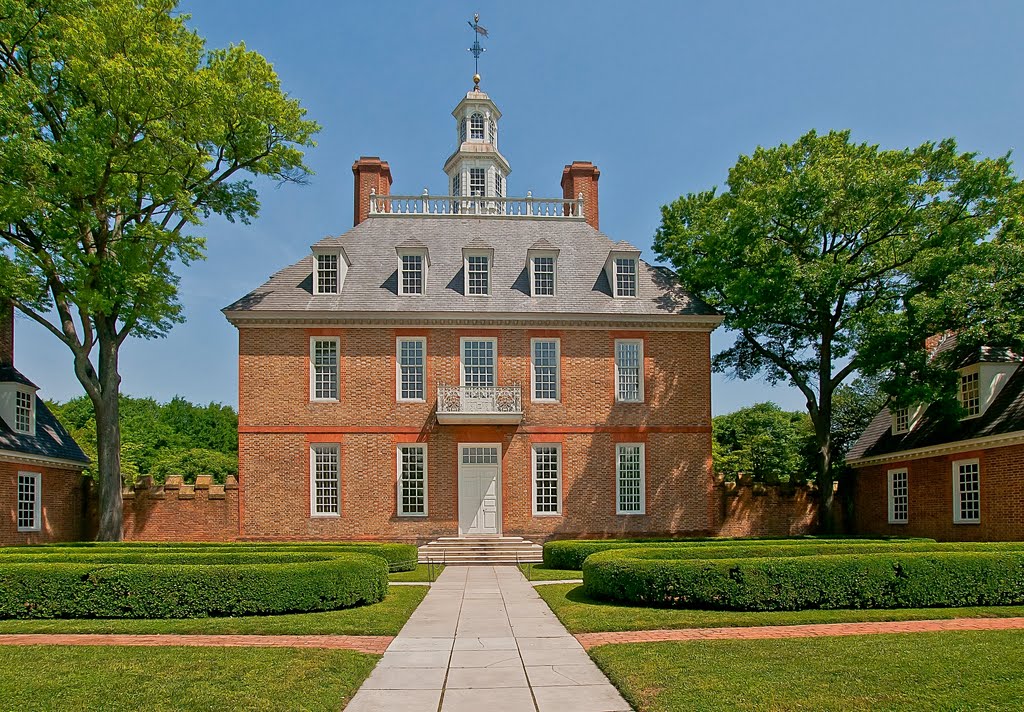
One of the few remaining places in America where groaning board dinners are still a part of the regular vernacular is in the historic Virginian city of Williamsburg. Each year a traditional groaning board dinner is still hosted in one of the hospitality venues within the historic district known as Colonial Williamsburg.

Giving visitors from all over the world a chance to experience a colonial feast of plentiful proportions just as their ancestors may have enjoyed centuries ago, is just one way the living history museum helps connect people to the past through food.

The start of a feast – groaning board style. Photo by Taylor Biggs Lewis Jr.

Fried chicken, prime rib, filet of fish, oyster soup, cherry trifle, Sally Lunn cake, and an assortment of vegetables, puddings, and casseroles were typical feasting fare when it came to groaning board menus. And Williamsburg never disappointed in that department. 

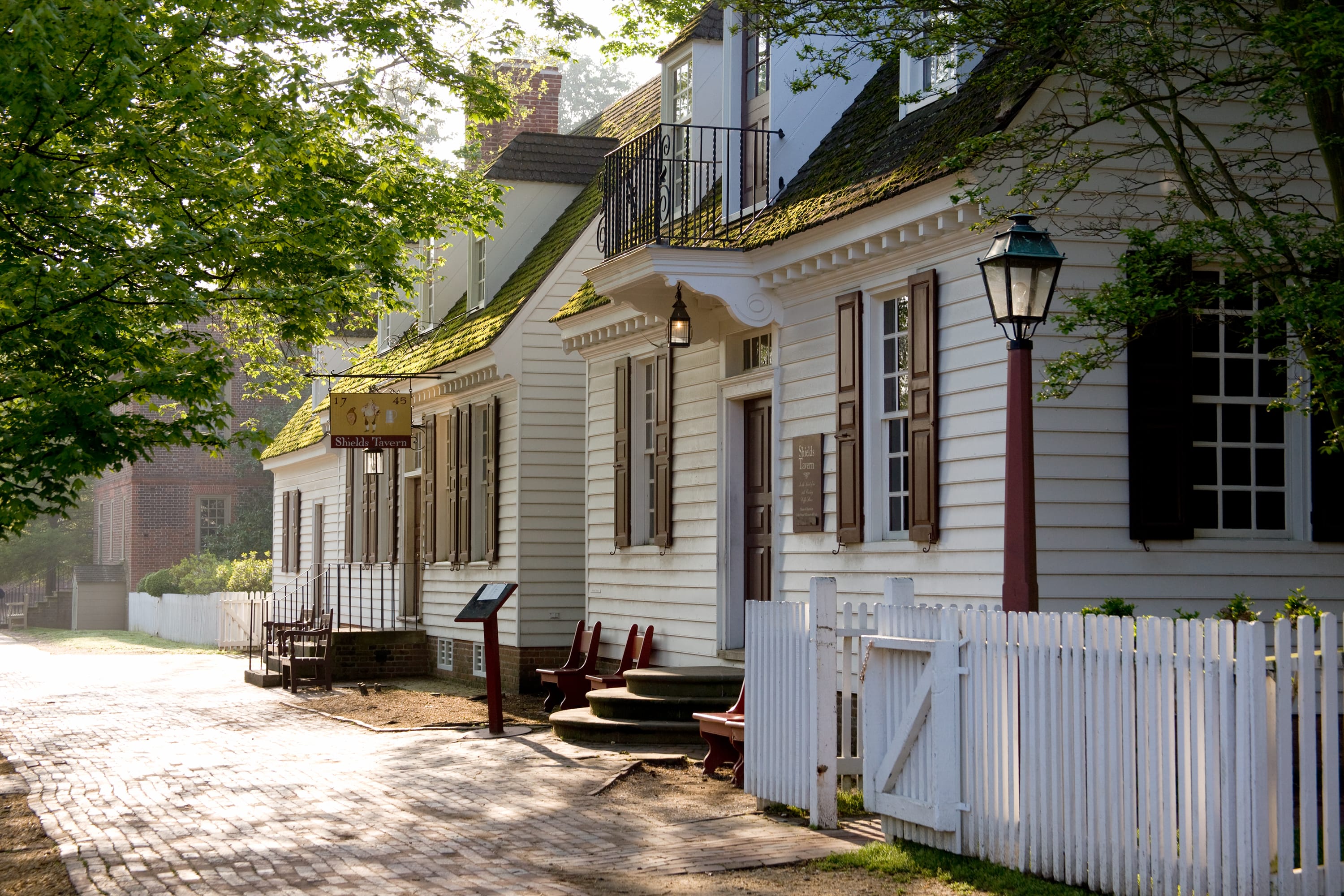
Shields Taven. Photo courtesy of colonialwilliamsburg.org

A foodie town from the start in 1699, hospitality has always been a big part of this small town’s spirit. Some would even say it is the birthplace. In 1705, an Act Concerning the Entertainment of Strangers was in effect throughout the colony that extended courtesy, kindness, and hospitality to all visitors and travelers. This act was created in order to discourage greed and malicious intent from growing within the colony and to protect the colonists themselves from being taken advantage of by outside entities.

Back then, there was no kinder way to offer a warm welcome than to spoil a stranger with a hot meal, a comfortable place to rest, or a restorative beverage. This obliging, open-door concept and willingness to trust the goodness of people before suspecting the worst created a playground for food enthusiasts determined to offer others a gracious dining experience.

As Williamsburg grew and became an elegant epi-center for politics and progressive ideas, the colonists were very proud of the city they created and were anxious to show it off. It was reported by the mid-1700s that visitors were fought over and fawned over by Virginians from all corners of the city. Pleasantries and invitations were extended around every bend, a continual sense of hospitality floated in the air, and a convivial atmosphere especially surrounding food and the act of eating was present at each and every meal. “And this is the constant life they lead and to this fare every comer is welcome,” wrote a visitor to Virginia in 1746.

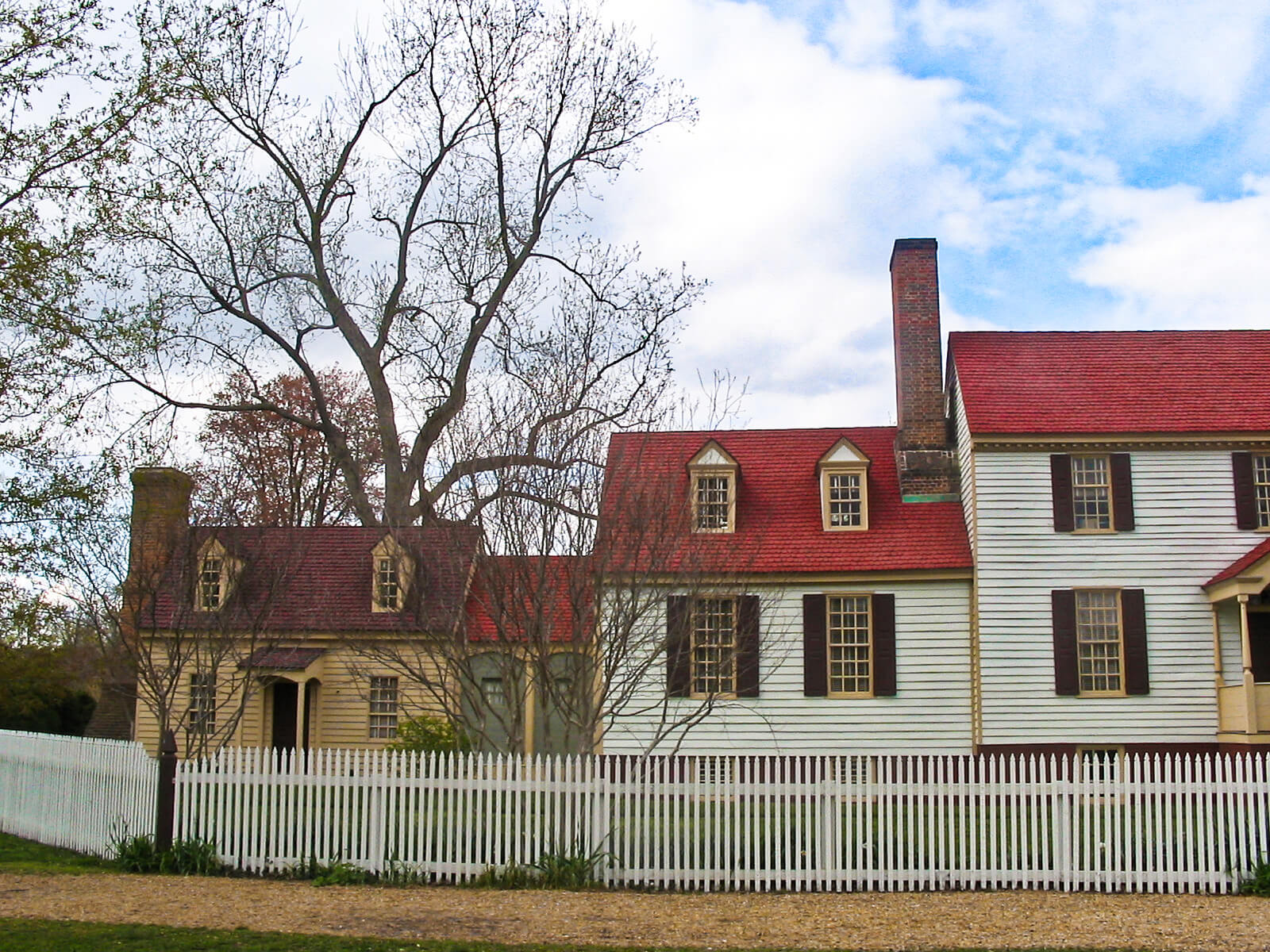
The St. George Tucker House circa 1718.

With an eye always focused on the spirit of those founding years, restaurant owners, tavern managers, and innkeepers throughout the past three centuries have strived to present and recreate a collection of authentic meals that represent America’s culinary roots.  The first cookbook surrounding the cuisine of Colonial Williamsburg was Helen Bullock’s The Art of Williamsburg Cookery, published in 1938.

Helen Bullock’s Williamsburg Art of Cookery, first published in 1938. It was reprinted many times over the course of the 20th century with a variety of covers from plain brown to colorful patterns like this one. The contents have always remained the same including Helen’s choice to write the entire book in Colonial vernacular.

Since then, the staff of Colonial Williamsburg has continued to encourage home cooks to try their hand at making conventional colonial fare with a variety of publications, tutorials and a growing online recipe archive.

The Williamsburg Cookbook – 1981 edition

Because many of the foods featured in the Williamsburg cookbooks are traditional staples, especially in the southern United States (recipes include pot roasts, pies, stews, gumbos, stuffings, puddings, bread, casseroles, and more) they have traveled time flawlessly. Appealing to generation after generation of cooks and eaters, these long-lived regional dishes have become beloved mainstays in the hearts and homes of food aficionados around the country.

Dishes like this roast duck with fruit stuffing still grace holiday menus today. This photo is from the 1981 edition of The Williamsburg Cookbook.

Such is the case with one of our blog readers, Roberta, who recently mentioned a favorite recipe from a 1970s era Williamsburg cookbook that her family has made (and loved!) for decades. ”The Williamsburg Cookbook belonged to my mother and then was passed on to my sister, who frequently makes the corn pudding recipe during the holidays and for parties. It was a hit, the first time my mom made it in the 1970s and continues to be a party-pleaser to this day,” Roberta shared. This is exactly the kind of heirloom recipe that we love to feature here in the Vintage Kitchen – one that is trusted, adored, and anticipated year after year after year. So it is my pleasure in this post to present Roberta’s family’s treasured corn pudding recipe from The Williamsburg Cookbook, first published in 1971. It is definitely groaning board approved not necessarily in weight but because you’ll want to make a big dish of it and then share it with all your friends and family.

There are many different ways to make corn pudding. Some recipes call for more sugar, less eggs, more milk, less cream, or the inclusion of flour or cornstarch as a thickening agent. Some recipes call for creamed corn instead of fresh, sour cream instead of milk, creamed cheese to make it extra velvety or baking soda to make it extra fluffy. But all recipes contain the same basic ingredients of corn, eggs, milk, butter and sugar. And all produce a similar custard-style pudding in the end.

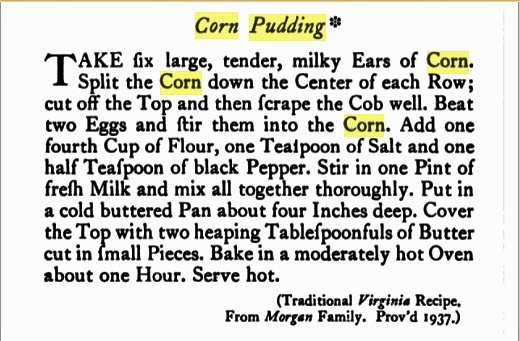
Helen’s 1937-1938 recipe!

This late 20th-century recipe is a slight modification from the original Virginia family recipe that was first printed in Helen’s cookbook circa 1938. The difference between the two is just an exchange of flour to bread crumbs but all the other ingredients remain the same.

So simple to make, it requires just a handful of pantry ingredients and is a little on the lighter side in comparison to other corn pudding recipes thanks to the use of light cream instead of heavy cream and just a smidge of sugar instead of several. Bake it in a casserole dish and easily tote it along to your next party, potluck, or buffet-style dinner, as Roberta’s family is apt to do, and we guarantee your dinner mates will love it too.

Corn Pudding (serves 6)

3 eggs

2 cups whole kernel corn (If using frozen corn, allow to thaw before incorporating with other ingredients)

1 1/2 tablespoons sugar

1/2 teaspoon salt

1 cup dry bread crumbs ( I used panko-style bread crumbs.)

2 tablespoons butter, melted

2 cups milk

1/2 cup light cream * (see note below)

Preheat oven to 350 degrees. Grease a 1 1/2 qt. casserole dish. Beat the eggs until they are light and fluffy. Stir in the corn, sugar, salt, bread crumbs and butter.

Add the milk and cream (*Note: If you can’t find light cream at your grocery store, you can make it yourself using whole milk and heavy cream in a 1/3 milk to 2/3 heavy cream ratio. Always use milk to substitute. Do not mix heavy cream with water, as it will break down the fats and make your pudding runny).

Pour corn mixture into the prepared casserole and place dish in a pan of boiling water.

Bake for 50-60 minutes or until custard is set. Serve hot.

With a flavor like sweet cornbread and a consistency like fluffy scrambled eggs, it is no wonder this pudding/custard/casserole is one of Roberta’s favorites. Savory and delicate, it is comforting like macaroni and cheese, light and airy in texture like a souffle, and thanks to the whole corn kernels satisfyingly substantial without being heavy.

(Special note: For all those efficient holiday cooks out there, it is not recommended that you make this dish hours or even a day ahead of time with the intention of popping it into the oven just an hour before serving. The bread crumbs will soak up most of the liquid in that case and the finished effect will be much more firm than pudding consistency. The beauty of this recipe is its soft, pillowy composition so we recommend that you make it fresh right before you bake it).

Intended as a side dish, it is a perfect accompaniment to Thanksgiving turkey, roast chicken, or baked ham making it a dependable holiday favorite. Or serve it alongside roasted vegetables, carrot fritters, or stuffed squash for a meatless meal that is full of fall color. Adventurous cooks might also try adding chopped jalapeno for a little spice, bacon for a bit of smokey flavor, or a sprinkle of fresh herbs like rosemary, thyme, or sage for a bit of color. But really, this historic dish needs no special enhancements to make it any more delicious than it already is. There is a reason why this pudding has been a Williamsburg favorite for almost a century. We bet it will be a favorite for centuries more to come too.

Cheers to Roberta for recommending this wonderful new favorite and cheers to Williamsburg for not only paving the road of hospitality but also continuing to cultivate the good and gracious and delicious traditions of our ancestors!

For further fun, and an engaging historical experience, visit Colonial Williamsburg without ever leaving your kitchen by taking one of their beautiful virtual house tours and discover an array of unique sights and stories that made the first colony in America a place called home.

The Governor’s Palace is one of the historic houses available to tour virtually. One of the unique aspects of this tour in particular is that visitors arrive by nightfall to the sounds of clip-cloppy horse hooves and torches illuminating the walkway. Don’t miss it – it’s quite spectacular!

Read more about the Williamsburg Cookbook in the shop here. Explore similar American historical villages and their recipes here. And bake the day away with two other 18th-century recipes featured on the blog… election cake and Sally Lunn cake.

If you have any favorite family recipes that you’d like to share please send us a message for a possible feature on the blog. We can’t wait to hear all about the dishes that make your holiday table groan with delight!

Photo courtesy of colonialwilliamsburg.org

The Search for the Date Accordion: We Need Your Help!

Between Thanksgiving and Christmas recipes shuttle around the Vintage Kitchen like a snowstorm. I know the holidays are approaching when I start receiving messages from home cooks on the search for something particular.  Most often, people are looking for recipes. For family favorites that have been lost or misplaced, recalled but not written down, remembered but also forgotten. Sometimes too, people write in because they are in the mood for an experiment and want to try to recreate something – a dish or a dessert that they knew from their past.  Or they are looking for a theme recommendation – a tropical cocktail for their tiki party or an authentic eggnog recipe for a holiday breakfast.  I love all these inquiries and the conversations that follow. Laced with stories and snapshots of family and of life and of love ignited in the heart of the house, for me here in the land of the Vintage Kitchen, communicating with all these culinary aficionados, is the joy of the season and the joy of cooking all rolled into one.

On more than one occasion these inquiries have led to stories about cookbooks misplaced, recipes accidentally thrown away or a list of ingredients and instructions just mysteriously disappeared like a sock that never returns from the dryer. They were there one holiday and gone the next.

Sometimes people write in with an urgency bordering on panic… I’ve headed home for the holidays and forgotten my cookbook. Or they contain stories of tragedy… my boat capsized and I lost my favorite recipes to the sea. Sometimes they contain stories of silly blunders… like the brother who accidentally ground up (in the garbage disposal) his sister’s prized bread recipe from the 1970s. And sometimes, they contain notes of longing. Of people wanting to rekindle a memory of a certain place or a person. But whatever prompts them to reach out to the Vintage Kitchen, everyone always signs off on their correspondence with these words… I hope you can help.

Most of the time I’m happy to say, we have been pretty lucky in finding just the right recipe that was needed. The holiday traveler who forgot her cookbook received a photo on Thanksgiving Day of the vintage chocolate pie recipe she needed. The capsized boater found a replacement cookbook in the shop. The brother who garbage disposal-ed his sister’s bread recipe was emailed a copy so that he’d have a permanent backup should he ever encounter another mishap in the future. These are small but big victories in the ultimate goal of the Vintage Kitchen, which is to build a community of modern-day cooks who have stories to share about heirloom kitchen items, traditional foods and special memories. That’s the stuff we like to celebrate around here. As Paul Child was fond of saying about his beloved Julia, that is the butter to our bread.

But the latest inquiry into the Kitchen has been more of a challenge. I’ve searched for a solution online for days. I’ve searched through all my cookbooks, all my recipes, all my options.  In non-pandemic times, I’d have a beautifully large and expansive library to visit and stacks of books to scour through in order to find what Laura seeks, but our library has been closed to researchers for most of the year, so I’m putting her request out here on the blog in hopes that you can help.

Laura writes…

Today I need help finding a recipe that my 83 year old mother said she saw in a magazine (late 1950’s – early 1960’s ?). Ladies Home Journal or one of them at that time. The recipe was for a type of date and nut bar, that had a liquid like consistency that you put into a 9 x 13 pan, then cut into small rectangular bars, roll in table sugar, frost with white frosting, then zig zag some green gel on top. They were called “Date Accordions.” I have searched everywhere and cannot find anything close. We have been making these for years and last year my brother accidentally thru out her copy of the recipe. She is heartbroken!

A challenge indeed! The closest recipe I could find to Laura’s request was this one…

Slice ‘N Serve Cookies, which appeared in Pillsbury’s Grand National Prize-Winning Recipes booklet published in 1954, contain a date and nut filling, a rectangular baking dish, a sprinkling of powdered sugar, and a frosted top.

Clearly, this isn’t the right one just based on its jelly roll presentation alone, but it was the only one in my vintage collection that made mention of frosting on top of a date bar filling.

slice-n-serve-cookie-recipe-1950s

Incidentally, date bar cookies are no stranger to home bakers. Thought to have originated in Canada, they have made a regular appearance in cookbooks since the 1930s. Almost all recipes I found in my search presented them in bar fashion – a testament to their delicious simplicity.  I can imagine that by the time the 1950s/1960s era rolled around, when home bakers were really experimenting with unique visual presentation,  that Laura’s mom’s recipe came into its heydey. The use of colored gels and a zig-zag design definitely speak of creative trends that bloomed during that era.

So here is where we need your help. If anyone knows of this particular date bar that Laura speaks of, it would be wonderful to surprise her mom, Betty, with the recipe for the holidays. If you have a vintage cookbook or recipe collection, I’d so appreciate it if you could take a minute and flip through your sources to see if a recipe for Date Accordions pops up. How wonderful would it be to bring some holiday cheer to Laura and her 83-year-old cookie loving mom this Christmas?!

I understand that some readers are hesitant about commenting publicly, so I’ve included a private and secure contact form below. If you do run across the recipe, please submit it to the Vintage Kitchen using this form, and don’t forget to include the source in which you found it. I’d also greatly appreciate it if you could forward this post to any other bakers you know who might be able to help us track down this vintage treat.

Thank you in advance for your help! Cheers to a successful recipe search. Hope your holiday season has been full of all things sweet and delicious.

Go back

Your message has been sent

Warning
Warning
Warning
Warning

Warning.


The Natural Disaster and the Postponement

Hello there dear and treasured kitcheners. As you know, Wednesday nights are usually the time when you can catch up on the latest installment of the International Vintage Recipe Tour. I regret to inform you that this week the post is delayed until Friday, due to an ongoing power outage. My lovely and beautiful and cherished city neighborhood was one of the places that was most hard- hit by the tornado that blew through Nashville just after midnight on Tuesday morning. The photo accompanying this post is of one of my favorite restaurants just two blocks away. Sadly, this is by far not the worst site in the neighborhood. It’s been difficult and devastating these past few days,  but luckily the Vintage Kitchen, the Tour, and the spirit behind both, keep the joy and the passion ignited and moving towards sunnier days ahead.

This week our featured country is China, another area of the world dealing with a troubling crisis. Thankfully, our focus this week is anything but bleak. The recipe stemming from this colorful Asian country is delicious and features a unique cooking technique and stylized presentation. I can’t wait to discuss it all with you. Coming up in Friday’s post, there is also special focus placed on a Chinese cultural tradition that is soothing, inspiring and illuminating. I didn’t realize at the time I was pulling all the threads together for this week’s Recipe Tour that it would feature a symbolic lifeline in the Chinese community that would also become a lifeline for me too. But the world is wonderful that way – making us feel unique and universal all at once.  Please come back and visit again on Friday where good recipes await and joy prevails. See you soon.

The Cake That Fed An Entire Town: {Part Two} On Election Day in 1700’s America

Ladies and gentlemen, the results are in!  Eighteen ingredients, nine hours, three loaf pans and one historic recipe later  – we have a winner – in Election Cake. Yesterday, when I wrote about the history of this patriotic confection, there was uncertainty and speculation about what exactly it was (cake or bread?) and if it was going to be a palatable sweet treat that transitioned well across three centuries. Today, we discovered what this celebratory concoction was all about. Let’s look…

The recipe began yesterday, simple enough, with yeast and water and flour, and a dash of sugar and oil…

It was left to rise six hours on its own, which it did, like a good little cake…

Next, went in a handful of ingredients…

After they were all mixed together, the batter was ready to be parceled out into three loaf pans…

and were left to rise again, for another hour, which they really didn’t do at all. It would be generous to say that after the hour was up, each loaf was half an inch taller, but that would be an exaggeration. Maybe, indeed the batter did rise a little, but if so it was barely noticeable. I hesitated here at this stage, thinking maybe I should let them sit longer so that each loaf could get bigger. But then I remembered that the author of this recipe, Fannie Farmer, was a stickler for precision and instruction, so into the oven the three loaves went, without any extra rise time. Just follow the recipe. That’s what Fannie would have said.

Exactly at the one-hour mark, no less and no more,  the loaves came out sky-high and golden brown…

Fannie didn’t fail us after all! The tops even cracked open themselves and looked like little lips about to say yum. A good sign of things to come.  After a short cooling-off period, the loaves were ready to cut and serve and taste…

And that is when I discovered that this very old Election Cake is in fact, very delicious. I understand how people could get confused about whether to call it a cake or a bread because really it is similar to both.  It has a texture and consistency like banana bread or zucchini bread but also it has a light and fluffy body like cake. The combination of the whiskey, yeast, and nutmeg gives it a subtle hint of almost root beer-like tang that is lovely and warm. Although it already has a cup of butter in it, this little darling of a delectable is calling out to be sliced and toasted with an extra slather of butter.

While no one ingredient is powerfully overwhelming, all of them work well together to create a balanced flavor that hints at citrus and at spice, which leads me to understand how so many varieties of Election Cake came about between the 1700’s and now. It’s wonderful just as it is, but it’s also one of those recipes that might spark your creativity. After you have made it once or twice, it will make you feel brave – enough to confidently add your own little twist. Not an improvement, just a twist.  Maybe you’ll want to add some nuts or orange peel or cinnamon or cranberries. Or maybe you’ll get creative on the serving side and want to pair it along with thinly sliced pieces of ham or brie or cream cheese for a savory little snack. I love recipes like this – ones that feed your brain as well as your belly.

Either way, you decide to approach this recipe,  you’ll be most successful with it if you use good quality ingredients like local eggs, fresh nutmeg, European butter, etc. They might be a little more expensive to buy, but the more fresh and natural your ingredients, the more flavorful this cake, in particular, will be. And because it makes three loaves at once, you can freeze two for later, preferably when it’s cold and snowy, as this would be especially nice for winter breakfast alongside a cup of coffee, for lunch or tea-time, or even afternoon hors d’oeuvres. Sweet in a satisfying, robust way (not in an empty calorie way), it will give you renewed energy to carry on with your day, which was exactly the original intention way back on voting days in the 1700s.

Fannie Farmer’s Election Cake

(Makes 3 loaves. Recipe written exactly as it appeared in the 1965 edition of the Fannie Farmer Cookbook)

Put in a bowl… 1 cup warm water (not hot)

Sprinkle over it… 1 package yeast

Add… 1 tablespoon sugar, 1 tablespoon salad oil (I used olive oil), 2 1/2 cups flour

Beat thoroughly, cover, and let rise overnight or at least 6 hours.

Butter three loaf tins. Cream 1 cup butter. Cream in 2 cups dark brown sugar.

Add 4 eggs, well beaten.

Stir in 1 tablespoon grated lemon rind and 1 tablespoon lemon juice.

Sift together 1 1/2 cups flour, 1 1/2 teaspoons baking soda, 1/2 teaspoon powdered cloves, 1/2 teaspoon nutmeg, 1/2 teaspoon mace (if you can’t find this spice, substitute it for an additional 1/2 teaspoon nutmeg), 1/2 teaspoon salt.

Add to the butter mixture. Add 2 cups seeded raisins, 1 cup whiskey.

Stir into the yeast batter and beat to blend well. Divide the dough into the tins. cover and let rise for 1 hour. Bake about 1 hour at 350 degrees.

Interested in learning more about Fannie Farmer and her historic recipes? Find the 1965 edition of her original 1898 cookbook in the shop here.

And just a little reminder… there are just two days left to save 20% off all vintage and antique platters in the shop! Find your favorite here. 

Luther Burbank, The Reliable Russet and Everyone’s Favorite Way to Eat A French Fry {1970’s Style}

They come with names that sound like 1970s rock bands… Bodega Red, Arran Victory, British Queen, Golden Wonder, Bellarosa.  Or like types of prize-winning chickens… German Butterball, Champion, Adirondack Red, Tyson.  Some even sound like certain breeds of dairy cows… Shetland Black, Royal Jersey, Blue Bell, Annabelle, Cream of the Crop.

But today we are not talking about chickens or cows or headliner music. Instead,  today we are talking about potatoes. All those names previously discussed are specific types of one of the most consumed foods on the planet- the noble and nourishing potato.  With more than 5,000 varieties in the world, you might think that it would be hard for one lone potato type to stand out in his vast tuber family of brown, round, knobby-eyed dirt dwellers.  But there is actually one big-time celebrity in the batch – a spotlight stealer known around the world –  a superstar of the food and restaurant scene that represents the most frequently consumed potato on the planet.

It is my pleasure to present the story of the wondrously addictive potato variety known as the Burbank Russet. Haven’t heard of it, you say? Ah, but just you wait…you’ll know it. Maybe not by backstory but definitely by bite.

On Friday, it was National French Fry Day and we celebrated with a homemade batch of Russet potato french fries in honor of the guy who created them. Meet Luther Burbank, 19th-century American botanist extraordinaire…

Luther grew up in Massachusetts in the 1850s playing with seed balls in his mother’s garden instead of playing with sports balls in his farm neighborhood. His interest in botany from the time he was a youngster fueled his curiosity for plant cultivation, a field of study that would eventually turn into a lifelong career. Throughout his childhood and into early adulthood, Luther tinkered around with seed starting and plant breeding.  Although it was a laboriously slow process, most often times ending up in disappointment, Luther came by this area of study naturally. His mother also shared his interest in gardening and the two of them would happily spend hours working in the garden, talking about the life stages of various plants.

The plant world was a playground to Luther, something that represented creativity and freedom from set rules and rigid disciplines. He had aspirations to one day have his own farm in California where he would grow vegetables and flowers for the retail market and try his hand at growing new breeds of plant life. In his early 20’s, he started experimenting with potatoes.  But developing a new variety wasn’t as easy as you might think.  Potatoes are peculiar things. They can be regenerated in two ways – through seeds or eyes. Either method produces similar results or slightly different results in the form of mutations or spores each time offspring are generated.  It is difficult to determine at the onslaught of a growing project how the potatoes will turn out at the end of the project. More often than not the experimentation stage for Luther in trying to cultivate a new variety was long and finicky.

If you have never seen how a potato grows, this is a good illustration. Plant above the ground and lots of potatoes nestled together below ground. Image from the 1893 L.L.May & Company Seed Catalog featuring Northern Potatoes.

But in 1873 gratification came, finally, to Luther’s ruddy, soil-covered hands. One day in his 24th year, Luther went out into the field to dig his latest sample crop, half expecting to uncover the same old story of growing the exact same plant he started out trying not to grow. But this time, something was different.  Instead of digging up an ordinary round potato, Luther pulled a tuber out of the ground that was twice as big and twice as long. It was reddish-brown in color and hefty in weight. A totally different specimen than the parent potatoes he had started this most recent batch with.  Success at last! His first genuinely original new potato had emerged.

He christened this new masterpiece the Burbank Russet and immediately sold it for $125. Was that enough money for Luther to retire early to his California dream farmhouse and garden? Not quite yet, but that’s not important to this story.  Money never mattered to Luther, only the science that stood behind it. He had made a new potato and that was pretty motivating stuff to keep his heart in the game and his hands in the soil.

Luther’s Burbank Russet was an exciting and innovative new addition to the agricultural market for its time because of its size. Almost twice as large as typical potatoes of that era, it also boasted an adaptable consistency (good for baking, mashing and frying) and it was more disease resistant to common blights that affected many potato crops around the world. But after it was introduced in the late 1800s, it took some time for the Burbank Russet to catch on. The US government initially started farming it in Oregon and from there it slowly spread to neighboring states and then the region and then the rest of the country. Eventually, it became the best-loved potato cultivator in the United States.

Russet potato farmers in 1940’s Idaho.

Farmers loved it because it was easy to grow and held up well in both shipping and storage. Once it became a successful and abundant crop, the food industry got on board. Its size, consistency and cooking adaptability made it an ideal food product for both general household consumers as well as commercial food companies and restaurants.

Although the actual cooking process of making French fries – cutting strips of potatoes and frying them in fat – had been around in France and Belgium since the 1700s, it wasn’t until a valuable American discovery was made in the 1930s that fries started to take hold as an American food staple. This important discovery was that french fries froze well and could be reheated easily while still maintaining the same shape, taste and texture.  In the early days of refrigeration, this was exciting!  This mere fact opened up opportunities for the retail, transportation and restaurant industries as french fries could now be shipped around the country in both frozen and fresh forms.

A midcentury newspaper ad for McDonald’s french fries.

By the time hamburger stands started popping up in the 1950s and 1960s, french fries became a main attraction at the drive-in burger stand as well as the family dinner table.

A vintage frozen french fry ad from the 1960s. Photo courtesy of itsjustoldpaper on Etsy.

The novelty of enjoying french fries both at home and at restaurants offered plenty of potential in the form of culinary creativity.  In mid-century America, the common condiments for them were simple… ketchup (or catsup, however you prefer!) and salt.

A 1955 advertisement for French Fries featuring Hunt’s catsup.

But by the 1970s, these little potato favorites were garnering more international gourmet attention. Common toppings and condiment companions of the disco era included the following…

…paprika, cracked black pepper, parmesan cheese, malt vinegar, crushed herbs, ketchup, mayonnaise, mustard,  salt, and a special mayonnaise/mustard mixed combo variation. In addition to frying, it also became much more commonplace, especially in the latter decades of the 20th century, to oven-bake freshly cut fries. This method of cooking was believed to be a “healthier” version since it involved less oil and a tamer cooking experience (no vats of hot fat to contend with!) as opposed to traditional deep-fry methods.

Because a lot of people tend to think it is easier to go to a fast food restaurant and buy a serving or two of fries or grab a box of frozen ones from the grocery store, we made the oven-baked variation for this post to prove how simple, quick and easy it is to take a fresh potato and turn it into a delicious hot french fry in less than 30 minutes. This recipe comes from the vintage cookbook Joy of Cooking (1975 edition)  and was a breeze to make. Literally, it took 5 minutes to prepare and 20 minutes to bake,  which makes it a fast side dish for your summer burgers.

Oven “French-Fried” Potatoes (serves 1-2)

1 large russet potato (scrubbed)

1/8 cup olive oil

A generous sprinkling of sea salt

Preheat oven to 450 degrees. Slice potatoes lengthwise into long  1/4″ sticks (you can do this by hand or by using the julienne setting on your vegetable slicer. Either way try to keep each stick as uniform as possible to ensure even baking. Lay the freshly cut sticks between a couple layers of paper towels and pat dry to remove extra moisture, then spread sticks out on an ungreased baking sheet and drizzle with olive oil.

Using your hands, toss the potatoes and oil together so that all sticks are coated and spread them back out in the pan as flat as possible.

Bake in the oven for 10 minutes. Then remove from the oven and flip the fries over and  return back to the oven for an additional 8-10 minutes.  They should look something like this when they are ready…

Remove fries from the baking pan onto a paper towel-lined plate. Sprinkle with salt and pepper (or any of your favorite spices) and serve immediately.

Inspired by the 1970s list of approved condiments, I kept thinking while writing this post how fun it would be to have a french fry bar party where guests could pick and choose their own toppings from a wide assortment. So many flavors pair well with potatoes, so the possibilities would be endless as far as dips and dredges, sprinkles and submersibles. The one element of homemade french fries that should always remain constant though is the potato – always use russet potatoes. They are the variety of choice in almost every fast food french fry you’ll ever eat – including McDonald’s whose fries are legendary. And besides, you’ll make Luther happy using his version over any other!

Luther never lived to see the ultimate french fry-loving success of his humble potato breed, although he did live a fulfilling gardening life up until the time of his death in the mid-1920s. And he did acquire that dream farm in California that he always wanted…

Luther Burbank’s house as it looked in the 1920s

Now in 2018, his house is a city park and garden that is open to the public.

Luther Burbank House and Garden, 200 Santa Rosa Ave., Santa Rosa, CA

And he built a garden where he invented new varieties of fruits and flowers and vegetables. We have Luther to thank for cultivating these beauties…

Clockwise from top left: The Plumcot – a mix between plums and apricots, the Fire Poppy, the July Elberta Peach, the Spineless Cactus and the Shasta Daisy

So while he never did see his potatoes bubbling up in oil at the Golden Arches, he did see his lifelong passion laid out in the garden as the golden hour light passed from day into night. Satisfaction was never going to be found in fame or fortune when it came to Luther Burbank. He didn’t care about either of those two things. His happiness lived deep within the dirt – a vast canvas of potential –  fueled by a creativity and curiosity that never ceased to inspire him.

Cheers to Luther for inventing one of the most delicious potatoes in the world. And cheers to all the farmers who keep growing the russets. May they continue to add a bit of indulgence to our diets and serve as a basis for inspiration in our culinary endeavors.

Find out more about Luther and his Santa Rosa, CA garden park here.  Find the vintage Joy of Cooking cookbook in the shop here. 

If you guys have any favorite toppings or condiments that you prefer on your french fries please post them in the comments section below. We’d love to hear from you!

Adelaida from Mexico & Her Lasting Impact on America {Plus Two of Her Recipes!}

Adelaida Cuellar photographed in 1901 with three of her children. photo courtesy of D Magazine.

In 1892, two young lovers crossed the border from Mexico into the United States and got married in Texas. They spoke no English but were very fluent in the language of love. They were dreamers yearning for better opportunities then their home country could provide, and they were determined to work hard to create a beautiful life that would bring them all  they desired.

The newlywed years of Macurio and Adelaida Cuellar led them through a myriad of jobs on ranches around the Texas countryside. For five years they moved about before they settled down in Kaufman, Texas, a suburb of Dallas, where Macurio started sharecropping and Adelaida started a family. As the seasons passed, their family grew, eventually producing twelve babies.

This is an unidentified farm photo from the Cuellar collection. It may have been the farm where Adelaida and Macurio raised their family. If not, it gives an interesting perspective on what farm life looks like in Texas during the time Adelaida and Macurio lived and worked there.  Image courtesy of the University of North Texas Digital library.

Ranch and farm work weren’t the most profitable of jobs, so Adelaida took a stall at the Kaufman County Fairgrounds in 1926 selling two things…  chili and tamales. It was her hope that her homemade recipes, so loved by her family, would bring in a little extra income to help support her children.  To her surprise, the food stand was an instant success.  The profits she made from her entrepreneurial endeavor were much larger than farm or ranch work earnings, so Adelaida kept at it, turning her stall into a tidy little family business.  Some of her children helped her cook while others formed a family band playing Mexican music to entertain the eaters.

During the 1920’s, Tex-Mex cuisine was a new style of cooking that combined traditional recipes from Mexico and Spain but with toned down spice factors which were more appealing to American palates. Adelaida’s chili and tamales debuted at just the right time – exotic enough for adventurous eaters and flavorful enough without being too spicy to dissuade repeat business. With every taste of tamale and every cup of chili, Adelaida’s reputation for preparing delicious Mexican food began growing.

Adelaida’s Cafe – simply called Cuellar Cafe – opened in  1928.  Image courtesy of the University of North Texas Digital library.

In her mid-fifties, Adelaida opened her own restaurant which did well until the Great Depression hit and she was forced to close due to the terrible economy.  Each of her grown boys inspired by their mother’s own entrepreneurial spirit opened their own independent Mexican restaurants in different cities throughout Texas, Oklahoma and Louisiana using the recipes that Adelaida made for them growing up.

Each of the sons, enamored with cooking just like their mom, quickly realized there was something missing from their independent ventures… family love and support. From the beginning, in the county fairground days, the Cuellar family was successful at the tamale and chili stand because they all worked together towards one common goal. But now the family was spread over many cities, and their restaurants couldn’t be as successful because they all weren’t working together.

This is one of the original porcelain neon signs from the first El Chico restaurant in Dallas. It’s now for sale on ebay here.

So in 1940, five of the brothers banded together to form one restaurant in Dallas, which they named El Chico. The entire family and extended family worked there together, each bringing their own unique talents.

Opening night of El Chico featured a Mariachi band to entertain the crowd. Image courtesy of the University of North Texas Digital library.

Everyone who worked at the restaurant was fluent in Adelaida’s style of perfection when it came to selecting quality ingredients and blending the spice mixtures in the correct way, so the food was authentic and consistent, which kept customers coming back. And the Cuellar family was proud of what they were accomplishing.  At the heart of their restaurant lay the heart of Adelaida and all that she stood for.  Her children wanted to extend that same level of love and devotion with all who dined at El Chico.

A popular dining place indeed! This photo was taken in 1945. Image courtesy of the University of North Texas Digital library.

Just like Adelaida’s chili and tamale stand, El Chico became phenomenally successful, making the Cuellar family and the El Chico brand one of the greatest American success stories. They went on to open more than 40 restaurants throughout the country, built a successful packaged food division for the retail market, and offered franchise opportunities for budding entrepreneurs. By the 1970s, they were the largest full-service Mexican food company in the world. They cooked for United States presidents at the White House, for princess Grace Kelly at her palace in Monaco and entertained movie stars like John Wayne in Dallas. The family stayed together through all these years and all this growth, never veering from what they knew – good food taught to them by Adelaida.

A Cuellar family portrait with Adelaida and Macurio in the front row center. Image courtesy of the University of North Texas Digital library.

Adelaida passed away in 1969 at the age of 97, not before experiencing the overwhelming success of her family and seeing how her humble tamale and chili stand at the Kaufman County fairgrounds grew into a multi-million dollar corporation over the course of forty years. The Cuellar children credit both their mom and their dad with teaching them about the value of working hard (and quickly) toward their goals and the importance of taking chances.

In 1970, El Chico published a small, spiral bound cookbook of some of the family recipes that they used in the restaurant, along with some others collected from their travels. Hailed as one of the most authentic Tex-Mex cookbooks ever published, it’s now a hard-to-find treasure.  It is in fact, so special and represents such an importantand  integral part of the ethnic American food landscape, that it’s held in special collection at the Smithsonian’s National Museum of American History. We are also very pleased to offer a copy in the kitchen shop. 

Since Cinco de Mayo is coming up this Saturday, on the same day as the Kentucky Derby, we thought it would fun to highlight two vintage recipes from the El Chico cookbook to ring in the festivities. A general crowdpleaser with a ton of creative toppings, these recipes are fun party foods so whether you are celebrating Mexico or Kentucky, or both this weekend, there will be something edible for everyone.

On the menu it’s El Chico’s Homemade Beef Burritos & Ranchera Sauce. Both are really easy to make. You’ll have the whole thing whipped up in under 30 minutes. Each recipe features fresh ingredients with generous amounts of spices, so you can skip buying the taco seasoning packages and the taco sauce at the grocery store. There’s plenty of flavor between the two recipes.  In addition to ground beef, you could also incorporate ground pork, turkey or chicken if you wanted to offer multiple variations.

What’s especially great about the Carne Mexicano recipe is that it includes vinegar which gives it a little bit of tang and de-greases the pan all at once so you don’t need a thickening agent like cornstarch or flour which is included in most commercial taco seasoning packets. As with many vintage recipes, we cut down the salt by 2/3rds, so we recommend starting with our measurement first and adding more to taste if you feel it needs it.

Carne Mexicano for Burritos

2 lbs. ground beef (we used grass-fed beef)

2 tablespoons chili powder

2 tablespoons paprika

2 tablespoons salt (we used only 2 teaspoons)

1 teaspoon garlic powder

1 teaspoon ground cumin

1/2 cup vinegar

1/4 cup chopped onion

In a cast-iron pan over medium-high heat brown the beef and onions until cooked through. Add the spices and cook for 1-2 more minutes. Add the vinegar, scraping the bottom of the pan to deglaze it. Remove from heat and serve immediately or store mixture in a covered dish and keep warm until ready to serve.

El Chico’s Ranchero Sauce (A La Caballero)

2 cups fresh chopped tomatoes

1/4 cup chopped onions

1/4 cup chopped hot green peppers (we used serrano peppers)

2 tablespoons shortening (we used olive oil)

Salt and Pepper to taste

Saute the onions and peppers in shortening (or olive oil). When the onions are translucent add the tomatoes and simmer over a low fire for five minutes.  Serve it immediately or at room temperature.

Obviously, the hotter your peppers, the spicer your sauce is going to be. This recipe makes about 1/2 cup of sauce so if you are cooking for a crowd you might want to double or triple the recipe. We used serrano peppers which were quite hot so a little bit spooned on top of your Carne Mexicano goes a long way!

There are so many topping options when it comes to burritos, so your creativity can really shine here based on your preferences.  El Chico suggested that their burritos include only cheese, refried beans, Carne Mexicana and the Ranchero Sauce. But we added a bunch of our favorite toppings too which included sour cream, spring lettuce, red onion, mango, tomato, cilantro, avocado and lime juice.  Other possibilities re guacamole, green olives, rice, etc etc. The sky is the limit. Can your burrito ever really have too much stuff?

Coming up tomorrow on the blog, we’ll be sharing our picks for the Kentucky Derby winner, as well as our table decorations for the Derby Party, which tie together both the Mexican theme and the horse theme. If you are planning a party for either event, we’d love to hear how you are celebrating.

In the meantime, cheers to Adelaida and the Cuellar family for sharing their long-time favorite family recipes with all of us. We will definitely be sending a toast their way on Saturday!

Explore more information about the El Chico cookbook here. And learn more about the restaurant chain, still in operation, here. 

Katharine’s Norah’s Cousin’s Irish Soda Bread: From the Kitchen of the Hepburn Household

If you’ve been a long-time reader of the blog, you’ll know what big fans we are of Katharine Hepburn.  Last Fall, we made her famous Lace Cookies. The ones that were in constant request at both her city house and her country house, so much so, that extra batches were kept on hand either freshly baked or on standby in the freezer. Was Katharine always the one baking away? Sometimes. But mostly it was Norah, Katharine’s longtime personal cook, domestic helper and treasured friend.

Norah Considine. Photo from the book At Home With Kate.

Norah Considine worked for Kate for 30 years, day in and day out, making the kind of food that Katharine loved best – simple, hearty and well-balanced. Sometimes though Norah would sneak-in her own recipes, a combination of food from her Irish heritage and dishes that she made up on the fly to feed her five kids. With guests continuously coming and going from the Turtle Bay city townhouse and from Fenwick, the Hepburn family compound in Connecticut, mealtimes were always eventful and Norah was always up to the task to make them as delicious as possble. Cooking for everyone with equal aplomb, making meals that were thoughtfully prepared and proven to please, Norah was accustomed to feeding an ever-evolving crowd that ranged from household staff to famous celebrities. In turn, she became a little bit famous herself, with returning guests regularly requesting her rum cake, or her beef stew, or her creamed chipped beef on toast.

Katharine Hepburn’s townhouse in the Turtle Bay neighborhood of NYC

Even though Kate liked to run a tight ship, she was generous with her friends and her staff. Every year on St. Patrick’s Day, Kate would leave New York City and head to Fenwick, so that Norah could have the townhouse to herself to entertain her friends and family for St. Patrick’s Day. This party was no small gathering, sometimes counting over 100 people or more.  But no matter what the attendance numbers were, large or small,  Kate always wanted Norah to be the star of the show for her special event, so she’d graciously leave in order to give Norah the run of the place.

For a change, Norah would cook for herself and her friends, and she would relax into the traditional celebrations of her heritage day.  At these parties, you didn’t always know who was going to be attending – friends and family flew in, drove in and walked over from all corners of the city, the country, and the world. There were homemade costumes and contests, musicians and dancers and tables full of traditional food and drinks. One of the edibles Norah always made for these parties was her cousin’s Irish Soda Bread, a recipe that traveled all the way from Ireland.

This was the soda bread recipe that was legendary in Norah’s family and in Katharine’s house. It has fed hundreds of people throughout hundreds of parties and like, Kate’s Lace Cookies, it represents wonderful memories and extraordinary experiences.  Not bad for a humble bread born out of lean economic times.  With a consistency somewhere between a fluffy cake and a crumbly cornbread, Norah’s cousin’s Irish Soda Bread is a decadent little treat both sweet and hearty in a satisfyingly nourishing way. One slice makes you understand how it fortified a country for two and half centuries.

Although technically, not really Irish in origin (the Native Americans were the first to come up with the general idea), Ireland has been proclaiming soda bread a national staple since the 1830’s. Because it contains no yeast, an expensive ingredient in times past, soda bread gets its bulk from baking soda which chemically raises the dough when combined with flour and any acidic property like sour milk, buttermilk, or in Norah’s case, sour cream.  Some people even add a touch of orange juice or lemon rind to their soda bread for an extra dose of certainty that the chemical reaction will yield a tall and fluffy loaf.

That are lots of variations on the traditional soda bread recipe, but Norah’s is interesting because it includes caraway seeds and sour cream and just a little bit more butter. Super fast and easy to put together, this recipe only takes about 15 minutes to prepare and bakes to a crunchy, golden brown within an hour. Norah recommended enjoying it warm, just minutes out of the oven, or if you want to wait a bit,  let it cool to room temperature and toast it with a little butter right before you are ready to serve it. The one drawback of Irish soda bread is that it dries out quickly – so if you are not going to serve it the day you make it, then it is best to freeze it and reheat it when the occasion arises.

Not as hard as biscotti and not as dense as cornbread, Irish soda bread lands somewhere in the middle as far as form. It pairs beautifully with any salty meat like ham, sausage or brisket for a savory-sweet combo, and would be marvelous with a soft creamy-textured cheese like Brie or goat cheese.  In an adventurous mood, we might even top a toasted slice with cream cheese and bacon and kale for an interesting brunch option or serve it alongside baked apples or a chopped salad of pear and fig.  In the next couple of months, we’ll be experimenting with Norah’s soda bread recipe, trying out some different food pairings. Once we’ve determined our favorites, we’ll post them here on the blog.

In the meantime, we encourage you to try this delicious holiday bread and look forward to hearing your thoughts on it.

Norah’s Cousin’s Irish Soda Bread

4 cups unbleached flour* plus more for dusting (*Norah liked King Arthur flour best

4 teaspoons baking powder

1 cup granulated sugar

2 cups raisins

4 teaspoons caraway seeds

4 eggs

1 pint sour cream (2 cups)

1 teaspoon baking soda

1 1/2 sticks, salted butter, plus more for pan

Preheat the oven to 375 degrees. In a large mixing bowl combine the flour, baking powder, sugar, raisins and caraway seeds.

Roughly chop the butter into the flour mixture and combine to the point that the mixture looks like coarse meal. You can do this with the tines of a fork, a wooden spoon or your own two hands. Set aside.

In a small bowl combine the sour cream, eggs and baking soda.

Mix well and then slowly add the liquid mixture to the dry ingredients…

Mix until combined and until the bread is no longer sticky. You might need to add as much as 1/4 cup extra flour to this process, but be careful not to overmix the dough.

Ideally, you want the dough to be just smooth enough so that you can pick up in your fingers and transfer it to a lightly floured cutting board without it sticking to your hands.

On the board, shape the dough and then transfer it to a greased 2-quart baking pan. Keep in mind – the dough expands to fit its baking container and then rises – so if are using something other than a 2-quart dish – just be aware that it will grow in size.

Bake for 1 hour. Cool on a wire rack for a few minutes before removing from the pan and slicing.

However you choose to spend St. Patrick’s Day, whether it be at a big house party like Norah’s, or at a simple celebratory supper for a few (much more Kate Hepburn style) we hope you have a wonderful holiday full of good food, good friends, and good spirits!

Cheers to Kate and to Norah and to Norah’s cousin, whose family recipe has traveled across countries and continents and kitchens and time. Happy St. Patrick’s Day with much love from In The Vintage Kitchen.

That’s Norah (wearing the polka dot blouse) in the midst of her St. Patrick’s Day merrymaking.