Mark Your Calendars: Our Annual 40% Off Sale is Sunday, November 2nd!

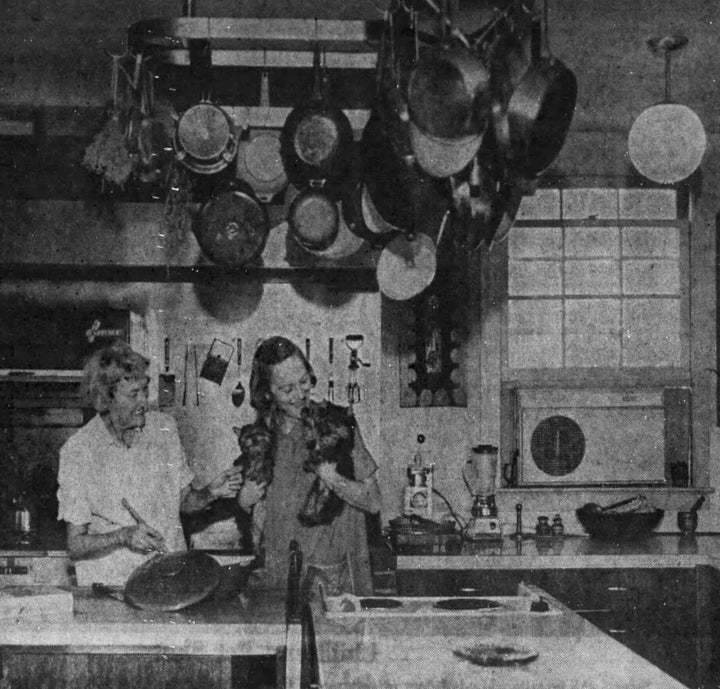
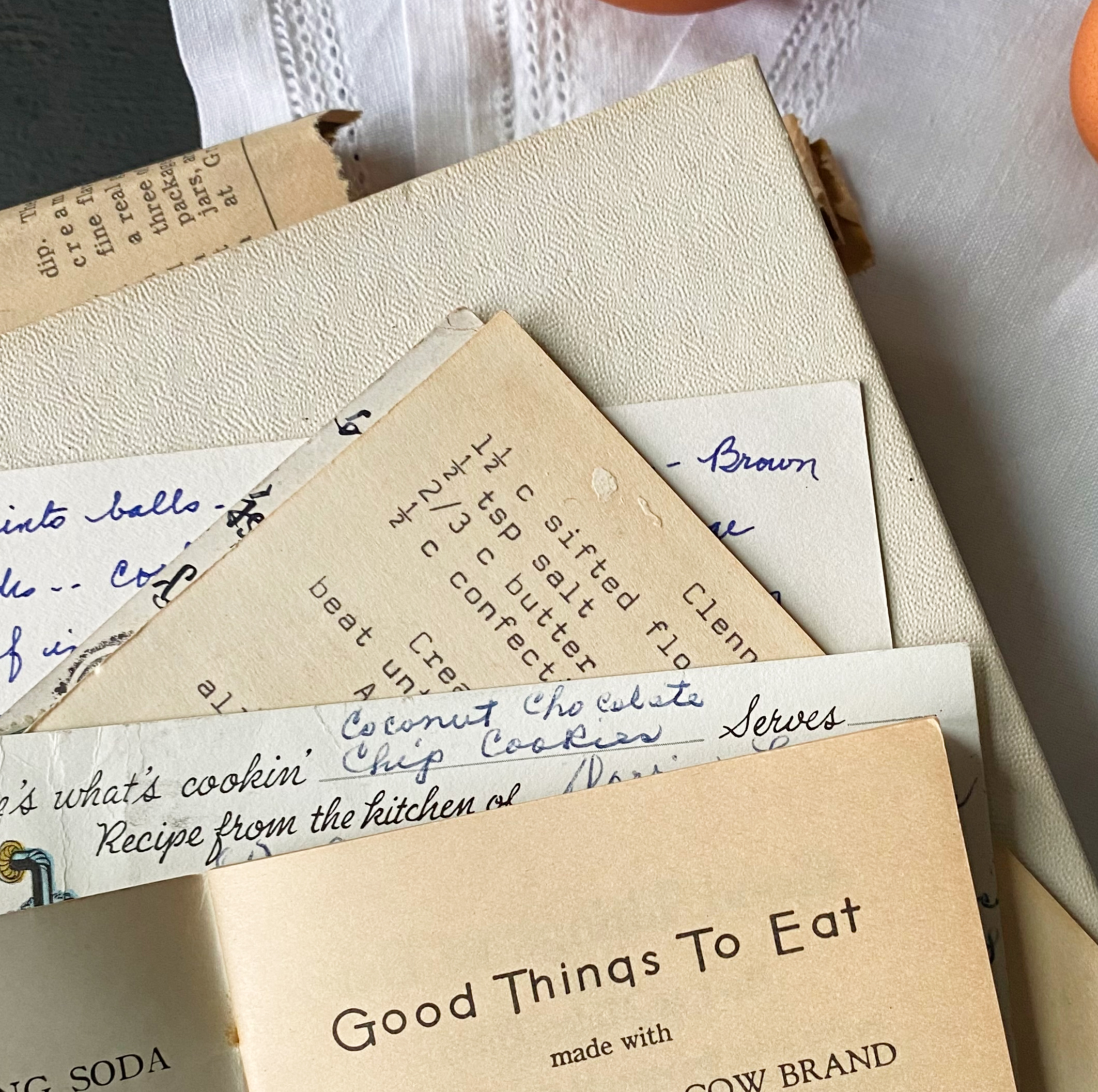
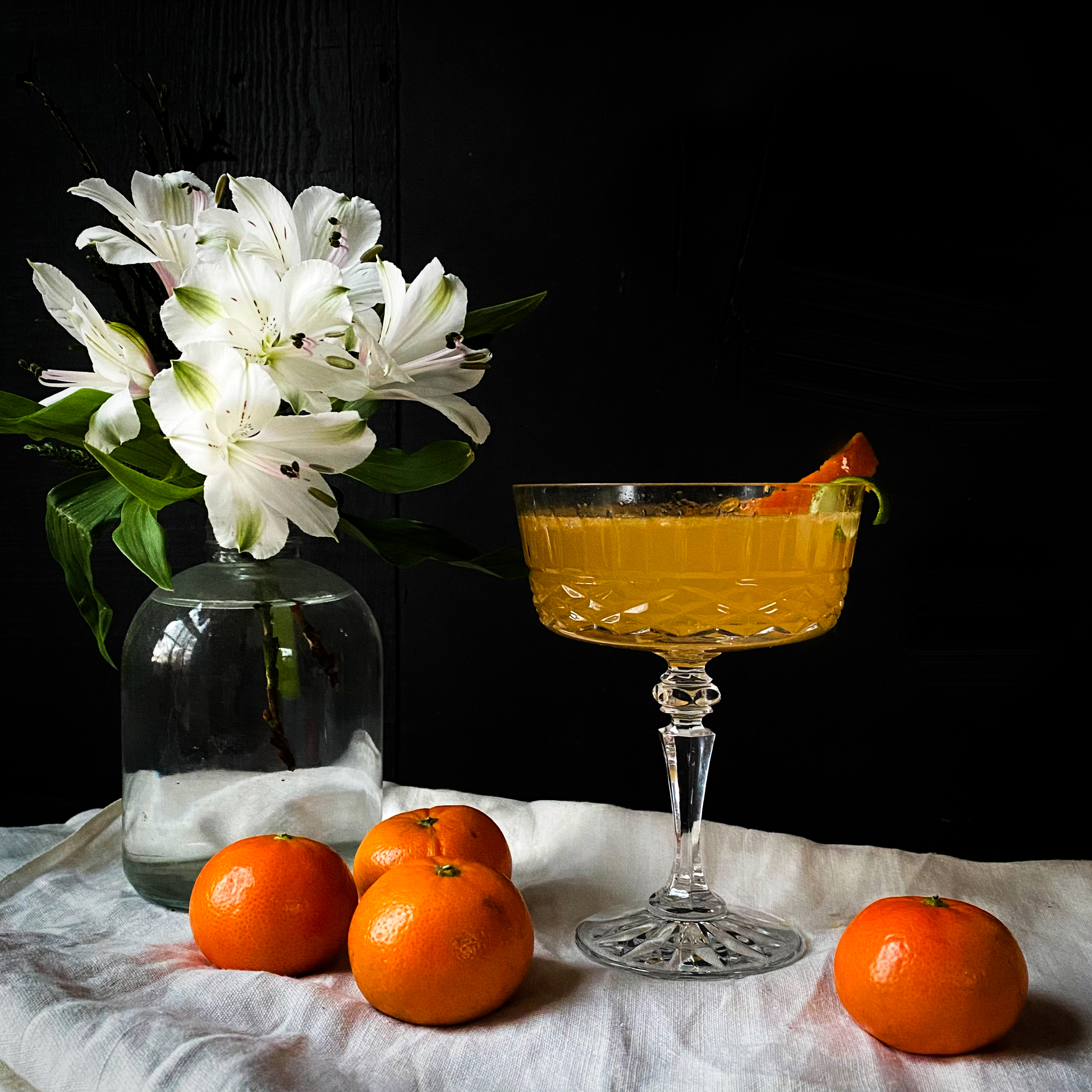
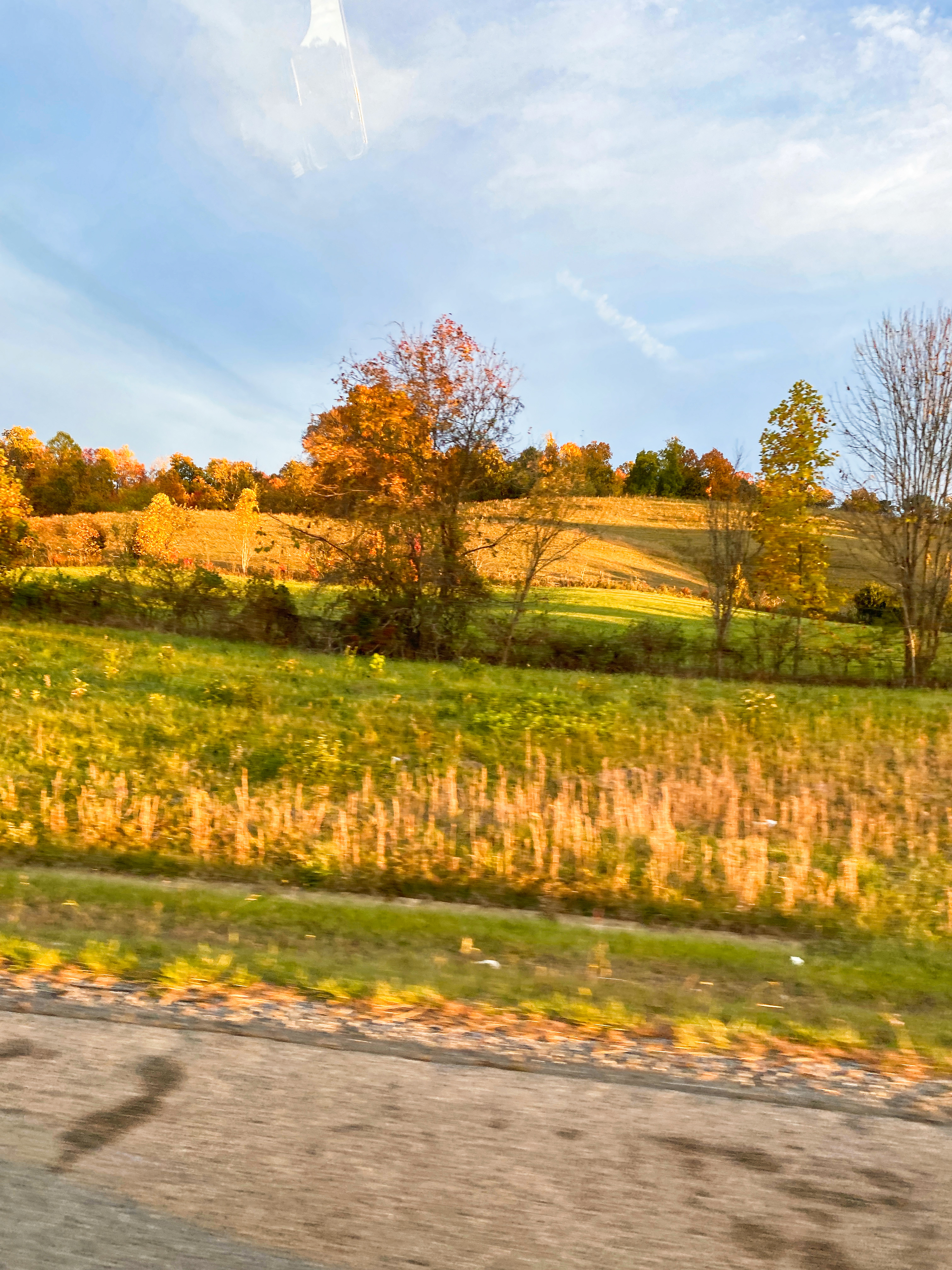
Autumn 2025 comes to 1750 House in a blanket of color.

It’s hard to believe that our annual once-a-year shop sale is just two weeks away, especially since our last blog post left off with baking bread in the middle of a summer heatwave. And yet, now here are, firmly swaddled in a blanket of autumn leaves with the woodpeckers performing their yearly tap tap tapping on the shingles of 1750 House reminding us that seasonal celebrations are close at hand. Lots has happened between now and that day in July when the kind bread was rising as high as the humidity and the garden was growing right along with the shop stories.

The lemon balm… one of our star growers in the herb garden this year.

I’m very excited to catch up, especially when it comes to hashing out the happenings of the herb garden and the triumphs and tragedies it endured over our experimental summer. But before we get to all that, I wanted to give everyone a quick calendar reminder in this post about the shop sale since it’s coming up right around the bend.
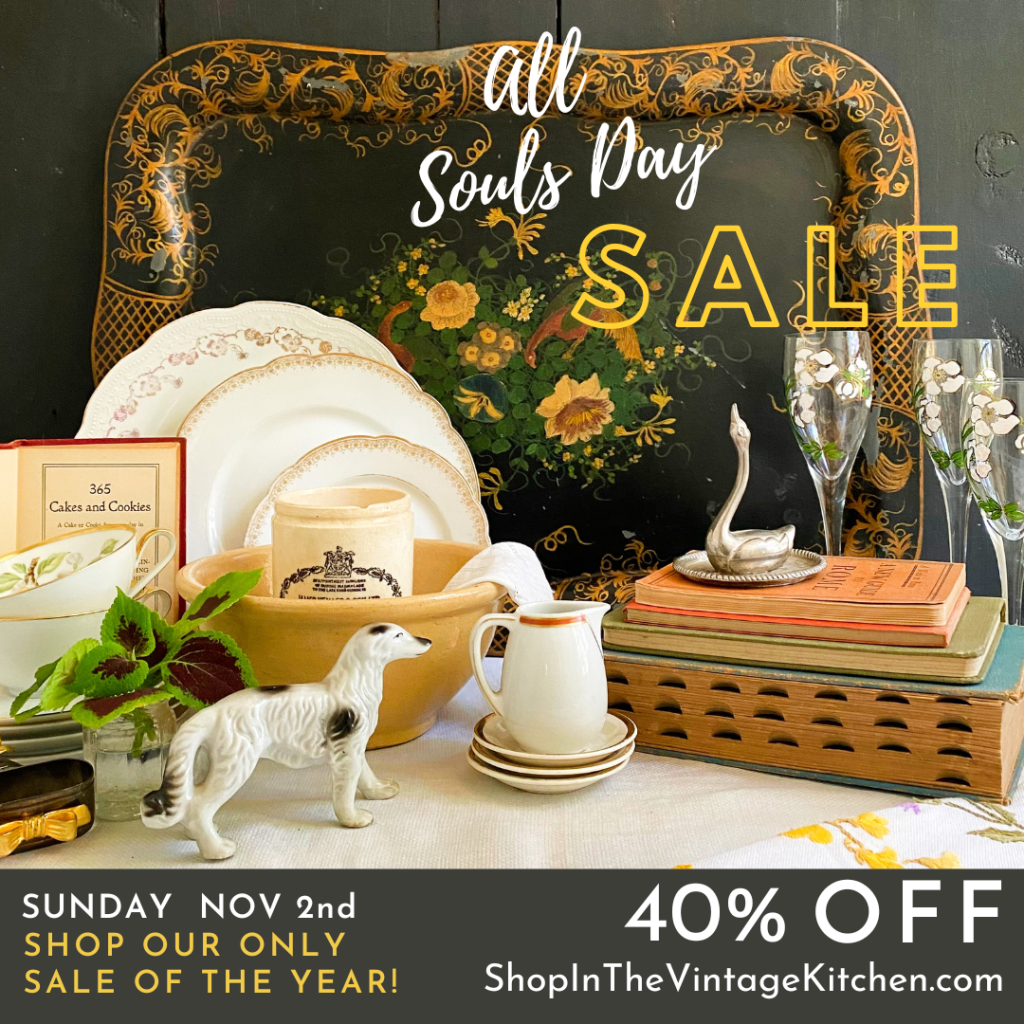
Two very exciting things are happening this year in regards to the sale. 2025 marks our 5th year of the sale, and it also happens to occur this year on the same day as daylight savings time, so you’ll be able to fall back and enjoy an extra hour of shopping should you so choose.

If you are a regular visitor to the shop, you’ll know that we adore a good floral and that the shop is forever covered in blooms no matter what the time of year. But when it comes to the change of seasons from summer to fall, the shop starts filling with heirlooms that embrace this cozy time of year by reflecting the colors in the landscape that help create autumn vibes in the kitchen and a beautiful feast for the Thanksgiving table. Whether its cookbooks, dishware, or decorative pieces, this year you’ll find some unique heirlooms that not only speak of history but of harvest time too…

If you are new to the All Souls Day sale, every year, November 2nd marks 40% off everything in the Vintage Kitchen shop for one day only. We call it the All Souls Day sale, not for the Catholic holiday that it shares the day with, but for the heirloom history that it encompasses.

All Souls Day is the only communal holiday in the calendar year that celebrates and remembers all deceased ancestors, and to us, that seems like the perfect time to celebrate vintage and antique heirlooms too. None of our shop items would be here today if they had not traveled through time, cherished and cared for in the hands of the people before us.

It’s up to the ITVK team to curate the shop, but the heirlooms do all of the storytelling. Each year, these heirlooms share new insights into the past that help shed light on things in the present. Since no two items in the shop are ever exactly alike, no sale from year to year is ever exactly the same either.

Just like the majority of one-of-a-kind heirlooms that can be found In The Vintage Kitchen, unique stories offer glimpses into culinary history and garden life that occurred decades ago or even centuries earlier. Hidden histories are everywhere and they tend to show up in ways that consistently surprise and delight. Just when you think a napkin is a napkin, a plate is a plate, a book is a book, a detail will jump out from in its history and take us on a marvelous trip through time to understand and explore other places and faces. These are some of the unique heirlooms you’ll find in this year’s sale…

A Rare Chesapeake & Ohio Railroad Luncheon Plate c. 1923
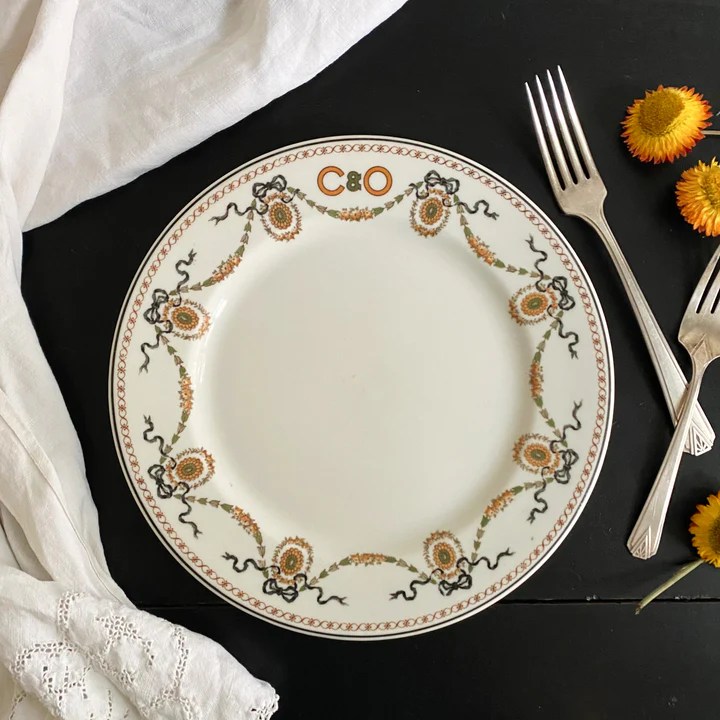
With its roots extending all the way back to canal transportation in the 1790s, the C&O Railroad has a long and winding history through the American landscape. Throughout most of its life, C&O trains hauled coal, agriculture, retail products, and travelers between Virginia, the Midwest, the Northeast, and parts of Canada up until the 1980s. In the 1920s, the decade in which this luncheon plate was made, the C & O trains looked like this…

Dining service aboard C&O started in 1899 and was only offered on their luxury lines. Signature menu items included shirred eggs, Saratoga chips, broiled sea fish, baked apples and cream, Spring lamb chops, and French toast with marmalade. 

A Signed First Edition of Alice’s Restaurant Cookbook circa 1969

Not every cookbook comes with it’s own theme song, but when Alice May Brock (1941-2024) befriended a young Arlo Guthrie, the whimsical world Alice lived in was all the inspiration Arlo needed to write a hit song called Alice’s Restaurant Massacree, which in turn inspired a cult classic film of the same title. The cookbook came after the song and the movie, but shares the recipes that made Alice a local legend in New England as the proprietor of three restaurants and a catering company. A free-spirit, an artist, and a lover of food and friends, this cookbook features some of the favorites served in her restaurants and at her famous home-hosted dinner parties. It also includes still photos from the movie, Alice’s illustrations, and photos of Arlo and their friends who made a good time out of every meal. Adding an extra layer of the joie-de-vivre she embodied, this particular book is also signed by Alice.

A Collection of Original Floral Feed & Flour Sacks circa 1930s-1940s

You can’t really get any closer to touching real-life history than these floral feed and flour sacks. Stitched into traditional sack shape, similar to a pillowcase, these bound together fabrics were once the commercial packaging that held a variety of pantry staples, including flour, sugar and grain. Made by the manufacturing industry in response to the financial burdens placed upon American families during the Great Depression, this cotton sack packaging was made solely for the purpose of recycling.
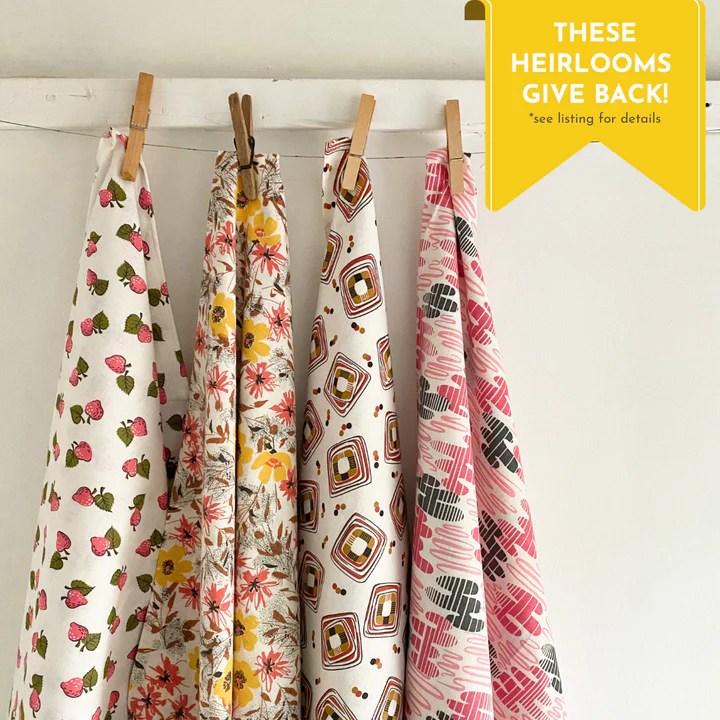
Knowing how thrifty and creative the American seamstress was, and knowing how tight household budgets were during the Great Depression and World War II years, grain and food manufacturers packaged their products in these floral cloths specifically so that women could repurpose them by turning the fabric into clothing, household linens, toys, rugs, curtains etc. It was a winning collaboration that not only responded to and eased economic stress, but also showed unwavering care, support and appreciation for customers during one of the most challenging times in American history. This batch in the shop came from a private collector and was so well-cared for across ninety years that each piece of fabric looks practically brand-new. Two of the sacks even retained traces of grain remnants hinting at the original products contained within.
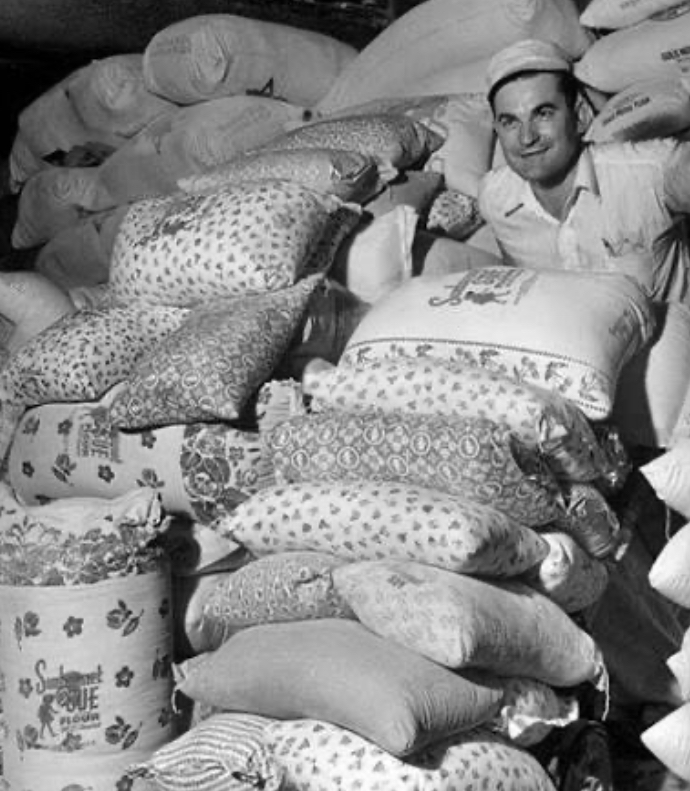
Cotton flour sacks full of flour featured in a 1940s photograph published in LIFE magazine

An Antique Basin Bowl & Wash Pitcher That Changed the American Plumbing Industry

It’s hard to imagine life without modern conveniences like indoor plumbing and bathrooms, but back in the 18th and 19th centuries, this wash basin and pitcher was your gateway to cleanliness, both literally and figurately. Made by Maddock’s Lamberton Works in Trenton, New Jersey, between 1888-1902, the British-born Maddock family were the first immigrants to realize that America needed their own sanitaryware pottery manufacturer. Up until they opened up shop, all basin bowls, wash pitchers, slop jars, chamber pots and grooming sets were imported from England. The Maddocks changed that by producing American chamber sets using local clays, and in doing so, revolutionized the plumbing industry in the process. Recognized as pioneers in the world of sanitary toiletry products, the Maddock family patented several plumbing innovations before they eventually sold the pottery in 1929 to American Radiator & Sanitary Corporation, who would go on to create our country’s indoor heating and plumbing infrastructure including radiators, sinks, bathtubs, and toilets for households across the country.  

An Intimate Glimpse into the Life of a Literary Hostess
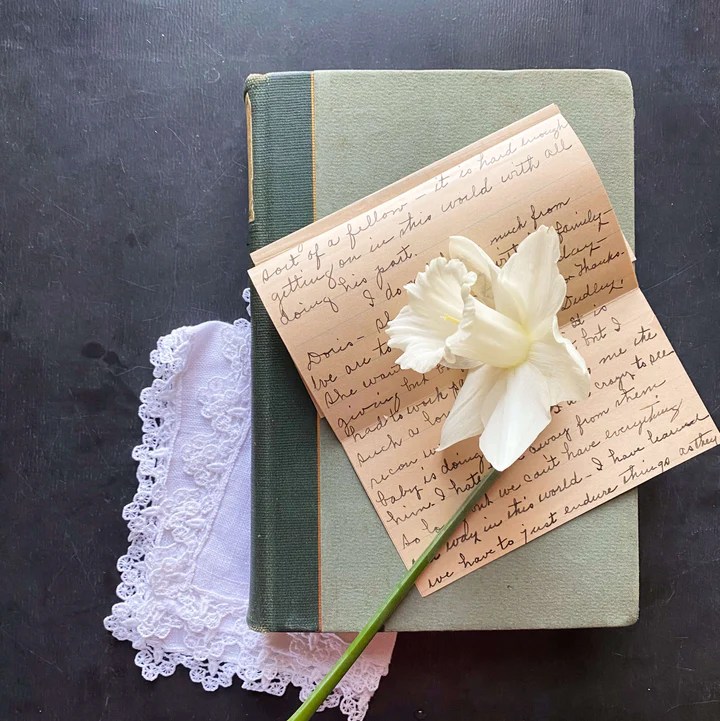
Guests at the Boston literary salon of Mr. James & Annie Fields were a veritable who’s who of prominent 19th-century writers. Mark Twain, Charles Dickens, Sarah Orne Jewett, Ralph Waldo Emerson, Henry Wadsworth Longfellow, Bret Harte, Henry James, Bronson Alcott, Nathaniel Hawthorne and Harriet Beecher Stowe, to name a few among were just some of the visitors that spent time in their home along with other notable painters, actors, musicians, and political activists. 

In addition to being a writer, activist and philanthropist herself, as well as the wife of distinguished Boston publisher James Fields, Annie Adams Fields (1834-1915) was also a charming, kind-hearted hostess and keen observer of conversation amongst her literary friends. Never interested in self-promotion, scandal or gossip, she regularly recorded bits and pieces of conversations among her friends in diaries that she kept throughout her life. Sketches of dialogue, character traits, pressing matters of the day, viewpoints on life and literature all freshly detailed the lives of extraordinary figures, painting them as humble, human, fallible beings tackling life, their passions and their creativity as anyone might. 

Before Annie passed away in 1915, she granted noted biographer Mark Antony DeWolfe Howe Jr. access to all her diaries in his pursuit to record the friendships enjoyed between the Fields and their artistic community. She had one caveat, though, in sharing her books. That Mark’s book not be about her but about the extraordinary friends whom she knew and loved so well. What resulted is this book, Memories of A Hostess: A Chronicle of Eminent Friendships, published in 1922.

Highlighting correspondence, diary entries, cultural events, and touchpoints from history for context, Mark Antony DeWolfe Howe pieced together an intimate glimpse into the lives of the 20th century’s greatest thinkers and artistic minds, courtesy of Annie and James’ record-keeping collection.

Annie’s husband, James Fields

Uncovering a portrait to attach to each heirloom’s story is one of our ultimate joys. In this year’s sale, you’ll also meet many new faces. This year, we shared stories of Attia, Alfredo, Pamela, Freddie, Doris, John, Judy, Miroslav, and Marjorie along with her daughters, Kate and Susan…
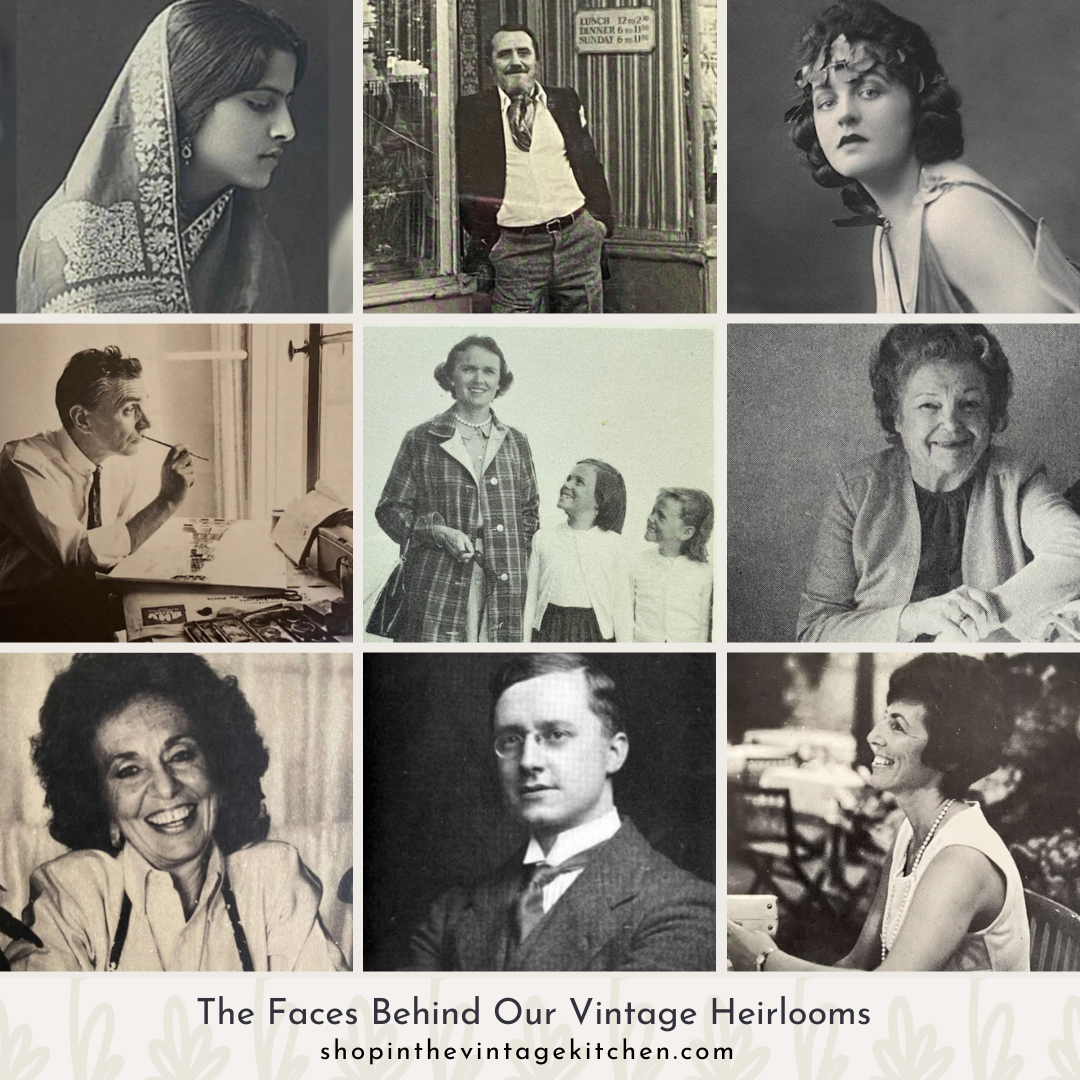
Clockwise from top left: Attia Hosain, Alfredo Viazzi, Pamela Lyndon Travers, Freddie Bailey, Doris Muscatine, John Ramsbottom, Judy Gethers, Miroslavo Sasek, Marjorie Winslow and daughters.

Each brought many new perspectives of history to life. Attia Hosain (1913-1998) was a writer, actor, cook, broadcast journalist and intellectual focusing on stories of India and British post-colonialism. Freddie Bailey (1904-1992) was famous in Mississippi for her hot pepper jelly along with other regional favorites that made her kitchen the epicenter of Southern food, flavor and hospitality. In the 1930s, Pamela Lyndon Travers (1899-1996) introduced the world to Mary Poppins, who still remains 90 years later, the globe’s most well-known and most beloved nanny. Alfredo Viazzi (1921-1987) was the proud owner of a popular Greenwich Village restaurant known for its convivial atmosphere, great food and reasonable prices. Judy, Doris, Marjorie and Miroslav shared their artistic talents via saucepan and sketchbook. British mycologist John Ramsbottom (1885-1974) taught gardening enthusiasts all about the fascinating world of fungi.

This year also introduced personal stories shared by readers and their families. One of our favorites is that of Beverly, whose collection of handwritten recipes is not just a set of random cards in a box. They are the story of her. Of one woman’s culinary journey as she grew from a young, inexperienced midwestern bride, who barely knew how to boil an egg, into a confident, seasoned California cook and recipe collector over the course of her entire adult life.

Familiar favorites can be spotted in the shop sale too, bringing with them their marvelous heritage stories that are worth retelling again and again. This stemware is the story of champagne, of “drinking the stars,” of a husband and wife couple, Pierre Perrier and Rose Jouet, who created the first true champagne made from the Chardonnay grapes in the Champagne region of France in the early 1800s. Together, with Rose in the vineyard and Pierre in the sales office, they launched Perrier-Jouet Champagne in 1814, a brand that still continues to enchant wine enthusiasts around the world today.
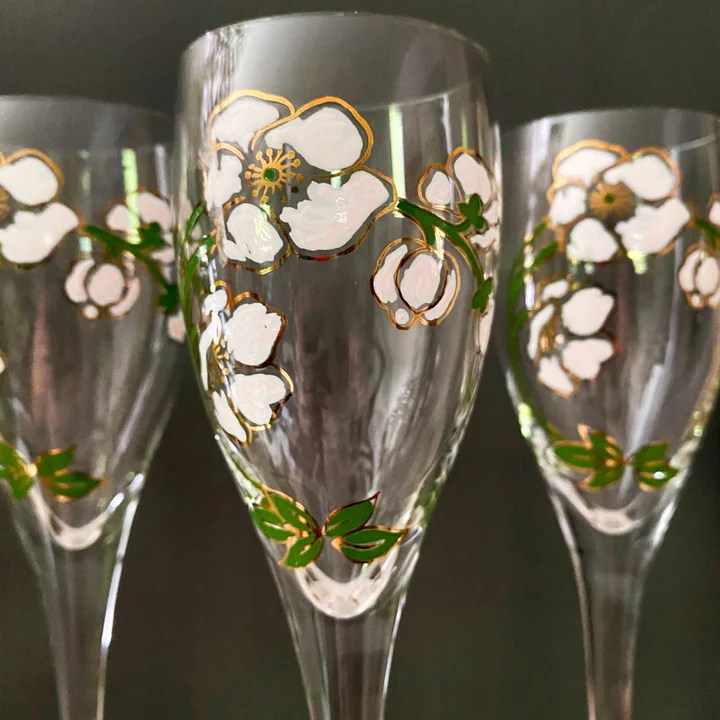
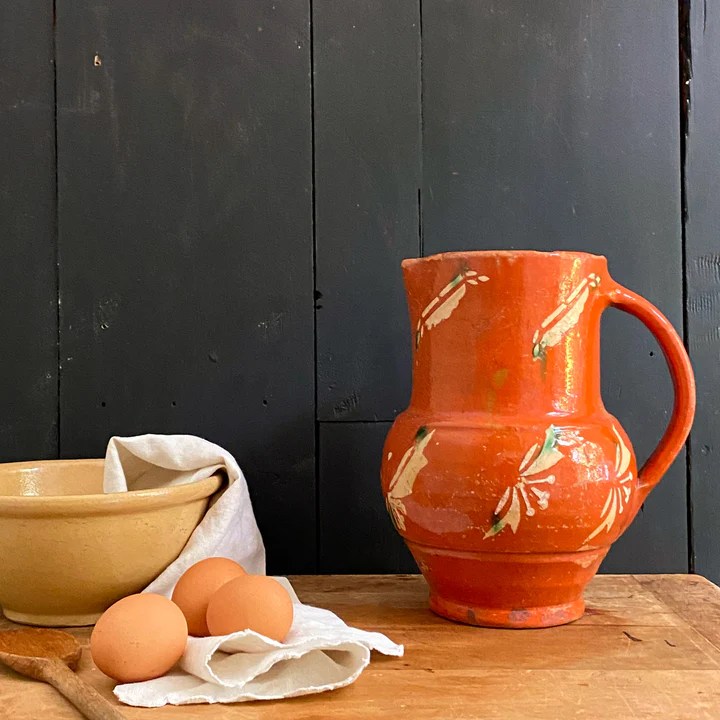
Every year we also like to spotlight the oldest antique in the sale. In this year’s case, it’s this French pottery water pitcher that dates to the 1850s…
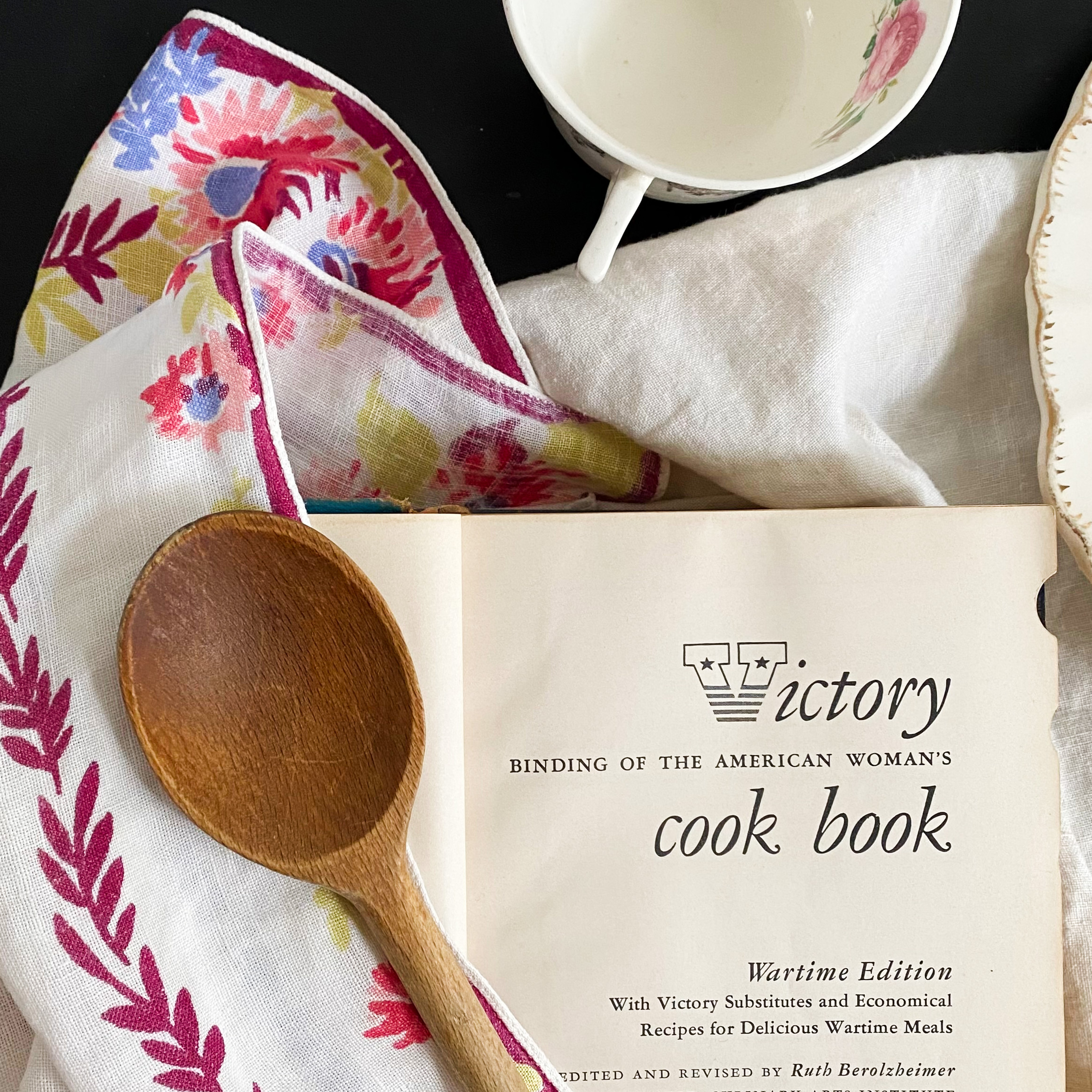
More history floats. More stories emerge. In the shop, a cookbook is never just a cookbook. It’s a tactile understanding of what WWII cooking really looked like for women in the 1940s. Its a story of how they had to portray strength, creativity, courage, ingenuity and optimism at every meal, every day while creating delicious, nutritious and interesting meals on limited war rations, tight budgets, and victory garden harvests.
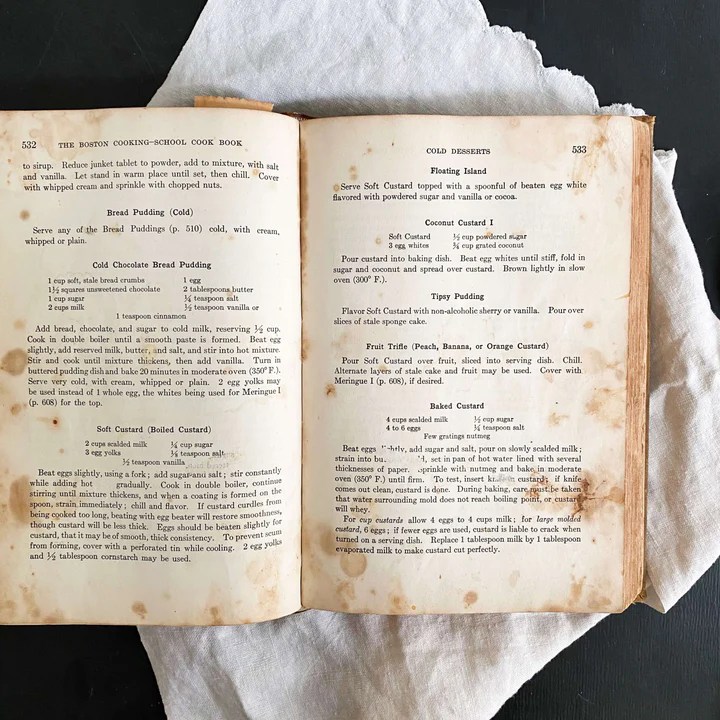
Cookbooks in the shop tell intimate stories not only of their authors but also their owners too. This 1931 edition of the Boston Cooking School Cook Book showcases the enduring legacy of Fannie Farmer (1857-1915), who not only raised generations of home cooks but shared recipes that still inform regional New England cuisine today. It also highlights, through a myriad of cooking splatters and stains, the adventures of a previous cook (or cooks) who cherished the recipes so much their culinary endeavors have turned into an artful aesthetic.
Also every year, there’s one stand out cook, who warrants days or sometimes even weeks of research thanks to a fascinating life lived. This year, it was Lois Burpee (1912-1984)…

who married into the Burpee Seed Company family in the 1930s and managed to carve out an incredible cooking, gardening, and philanthropic career that lasted her entire lifetime.

Other equally interesting cookbooks in the shop sale this year include two rare compendiums of culinary curiosity that offer suggestions on what to make and what to bake every day for a year…

Decorative pieces in this year’s sale highlight the handmade arts. An antique tole tray, a vintage hand-carved wooden swan, a vintage print of a tulip painting dating all the way back to 1827, a hand-embroidered linen…

These are just a few examples of the people, places, and stories that have found their way into the Vintage Kitchen shop in 2025. I hope at this year’s sale you discover an heirloom that captivates your attention, that steals your heart away to another time or another country, and that inspires new creativity from history’s forgotten muses.
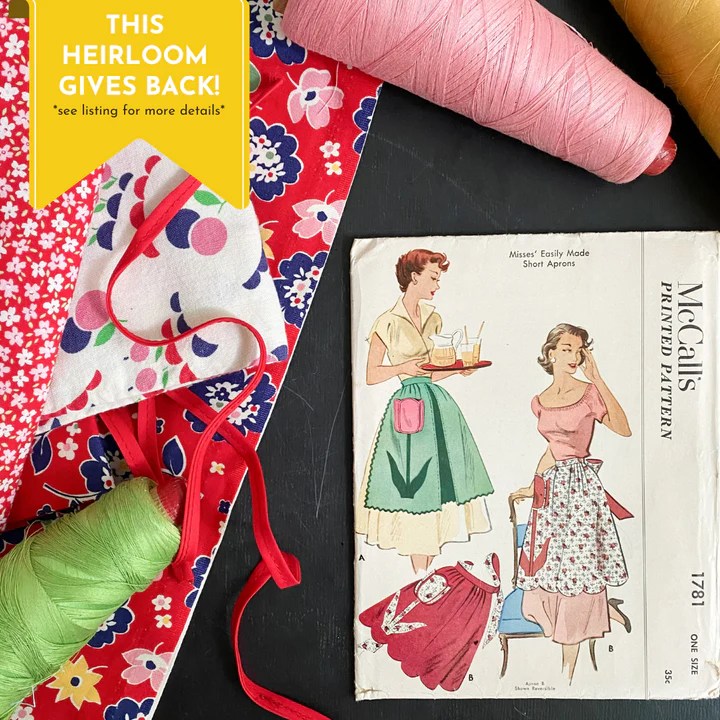
At this year’s sale, just like last year’s, you’ll notice that some heirlooms sport a festive yellow banner in their listing photos. Those banners signify a donation program that we launched in 2024. Any heirloom that you see in the shop that says This Heirloom Gives Back qualifies for a 20% donation to Feeding America, a nationwide non-profit network of food banks, food pantries and local meal programs dedicated to providing nutritious meals to food-insecure communities around the United States. Not all heirlooms in the shop qualify for this program, so be sure to look for the yellow banners if you would like to participate.

The sale begins at 12:00am (EST) on Sunday, November 2nd, 2025 and runs through 11:59pm that same night. Discounts are automatically tallied upon checkout, so there is no need to enter any coupon codes or discount phrases to receive 40% off.

New heirlooms continue to be added to the shop daily, so stop by for fresh vintage and antique finds leading all the way up to the sale. And, as always, if you are looking for something that we no longer have in stock, please send us a message. We’ll be happy to add your name and needs to our waitlist.

Whether you are interested in experimenting with a new cuisine, looking for a new favorite vintage dish pattern, or starting a collection that recalls memories of a happy time from your past, I hope you find something in the shop that calls to your heart and adds extra delight to your kitchen.

Cheers to all the old souls that inspire the shop each and every day. Cheers to all the heirlooms that they have been passed on to us to love and cherish just as much. And cheers to the kitchen for being the one spot in the house where everyone is always welcome.

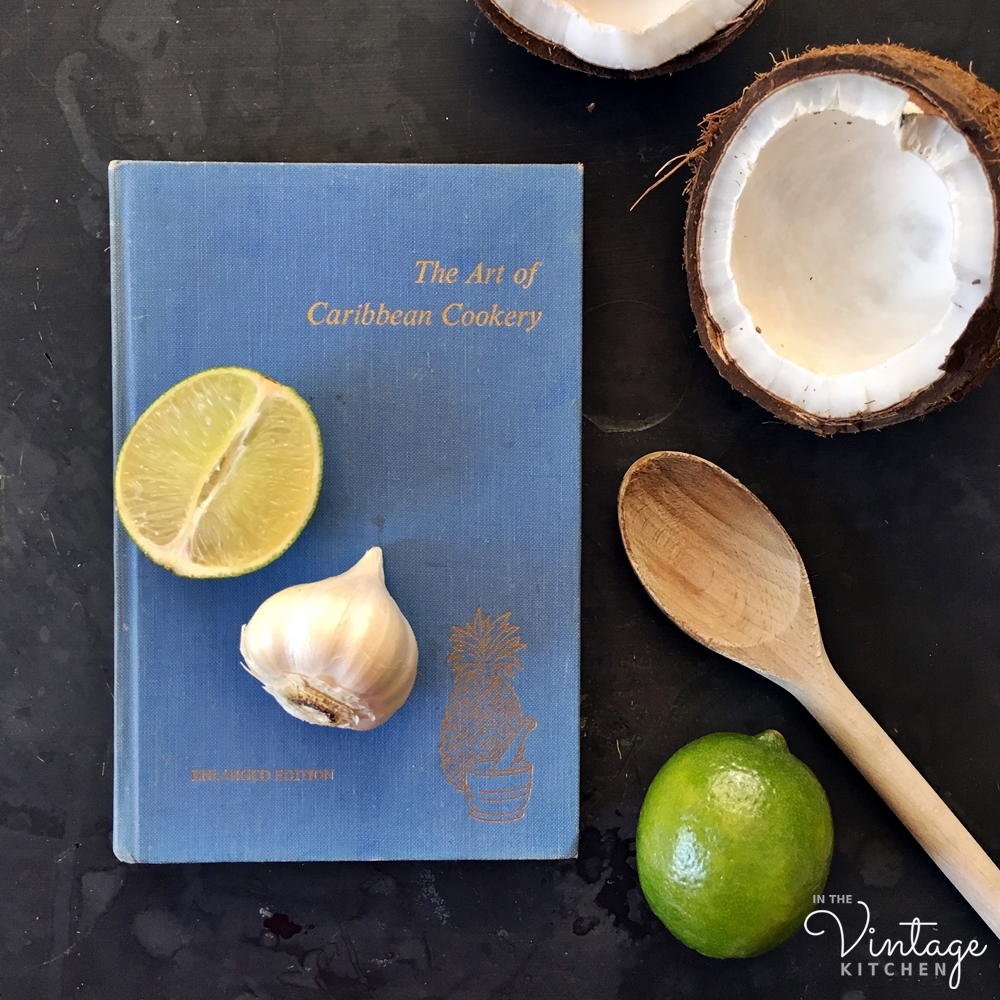
Jamaican Rice and Beans and a 1940s Trip to the Caribbean

Welcome back to the International Vintage Recipe Tour. When we last left off on our around-the-world culinary adventures, we were in Italy cooking up Chicken Canzanese and spotlighting the artistic and culinary career of Edward Giobbi and his talented family.

Chicken Canzanese

A painting by Edward Giobbi

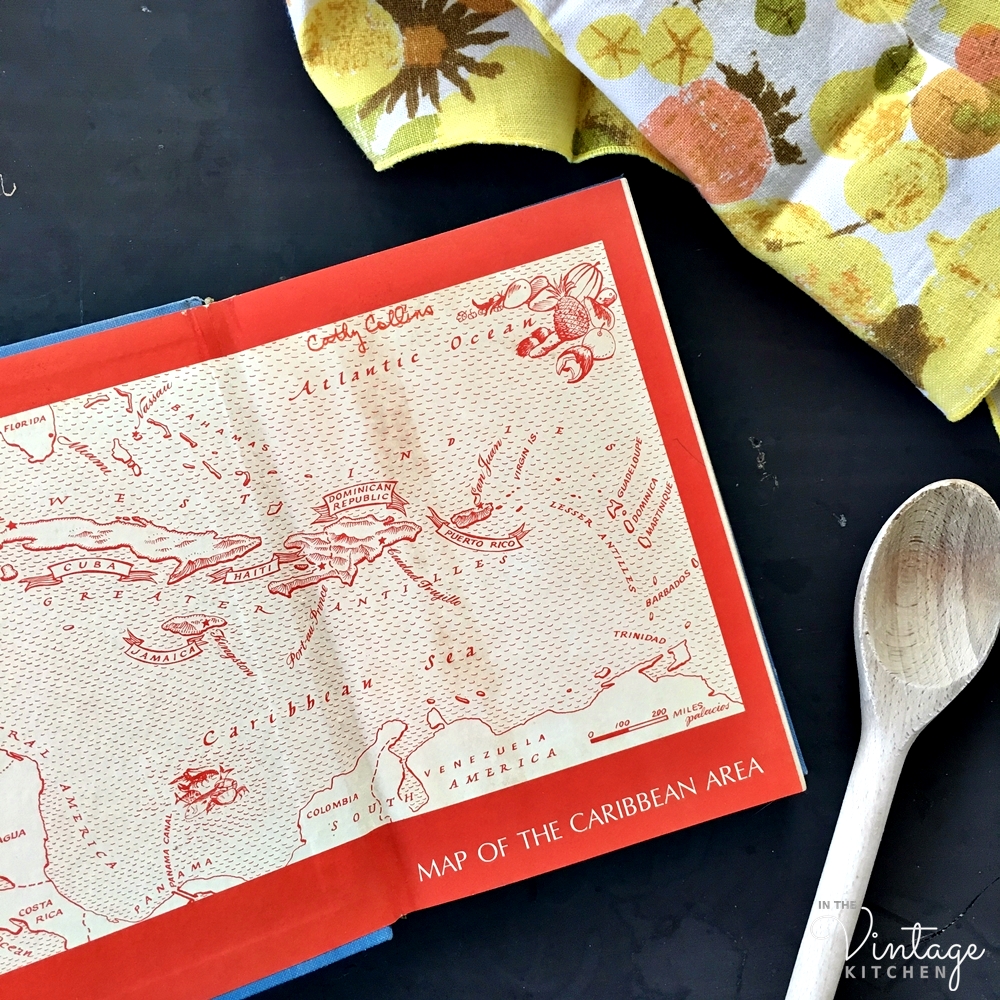
This time, our international itinerary takes us to Jamaica, where we are cooking a traditional heritage food, Jamaican Rice and Beans, making milk from a fresh coconut, and exploring the island 1940s-style via a 1948 Pan Am travel film and a selection of first-hand observations experienced by visitors to the island post-World War II.

A vintage recipe for Jamaican Rice & Beans

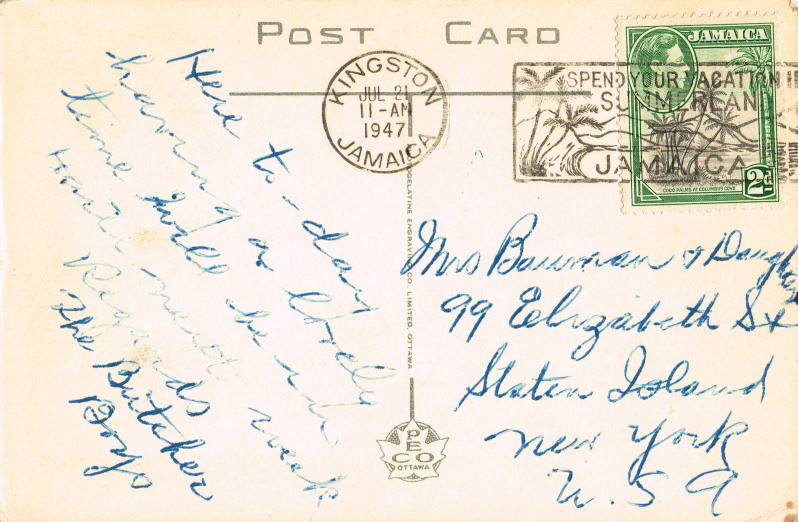
1940s Kingston Jamaica postcard

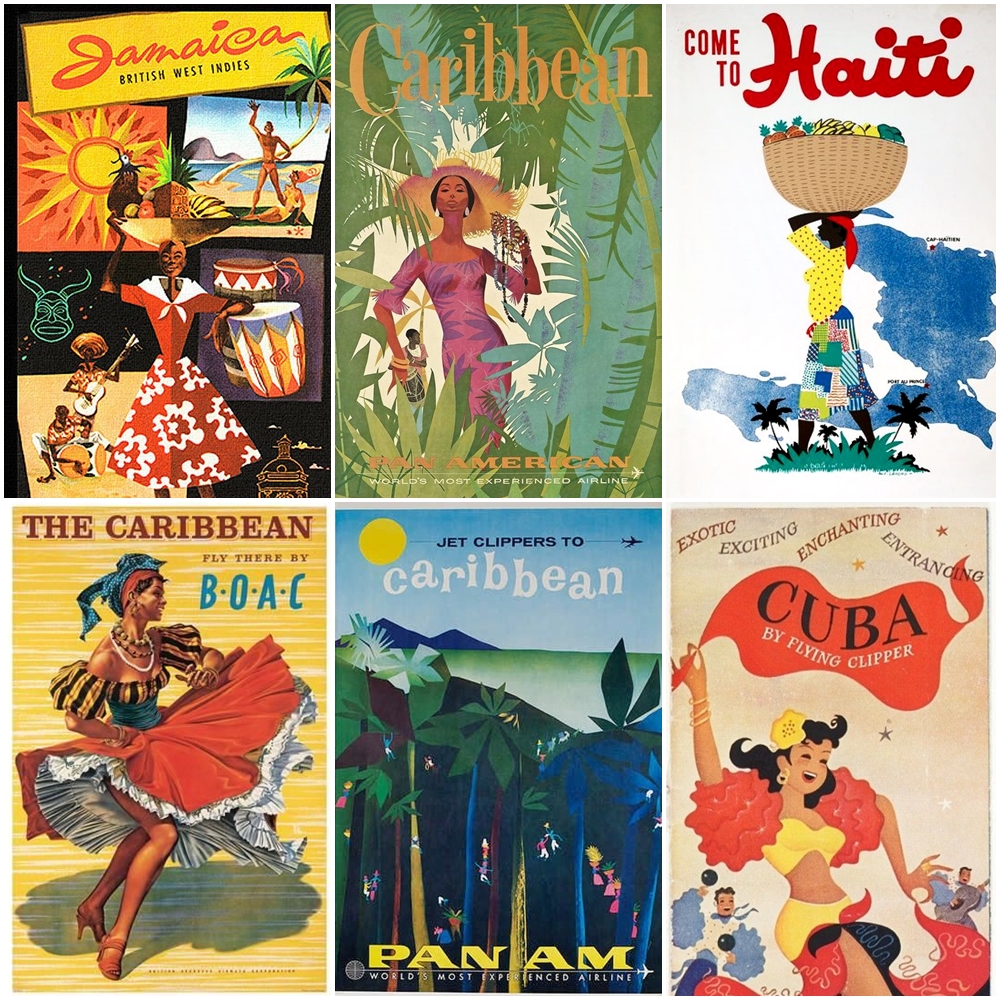
It’s easy enough nowadays to see what a modern-day Jamaican holiday could look like thanks to the internet, but can you imagine what it looked like 80 years ago? This throwback travel post draws attention to the excitement of a tropical holiday experience in the 1930s and 1940s during the golden age of travel, back when Jamaica was a newcomer to the tourism industry.

Jamaican Tourism Guide circa 1937. Image courtesy of jamaicahotelhistory.com

Back when hats, heels, suits, and dresses were staples of vacation wardrobes…

1940s Resortwear Fashion Trends

and when airplane travel looked like this…

Pan American Airways Caribbean Clipper postcard circa 1931

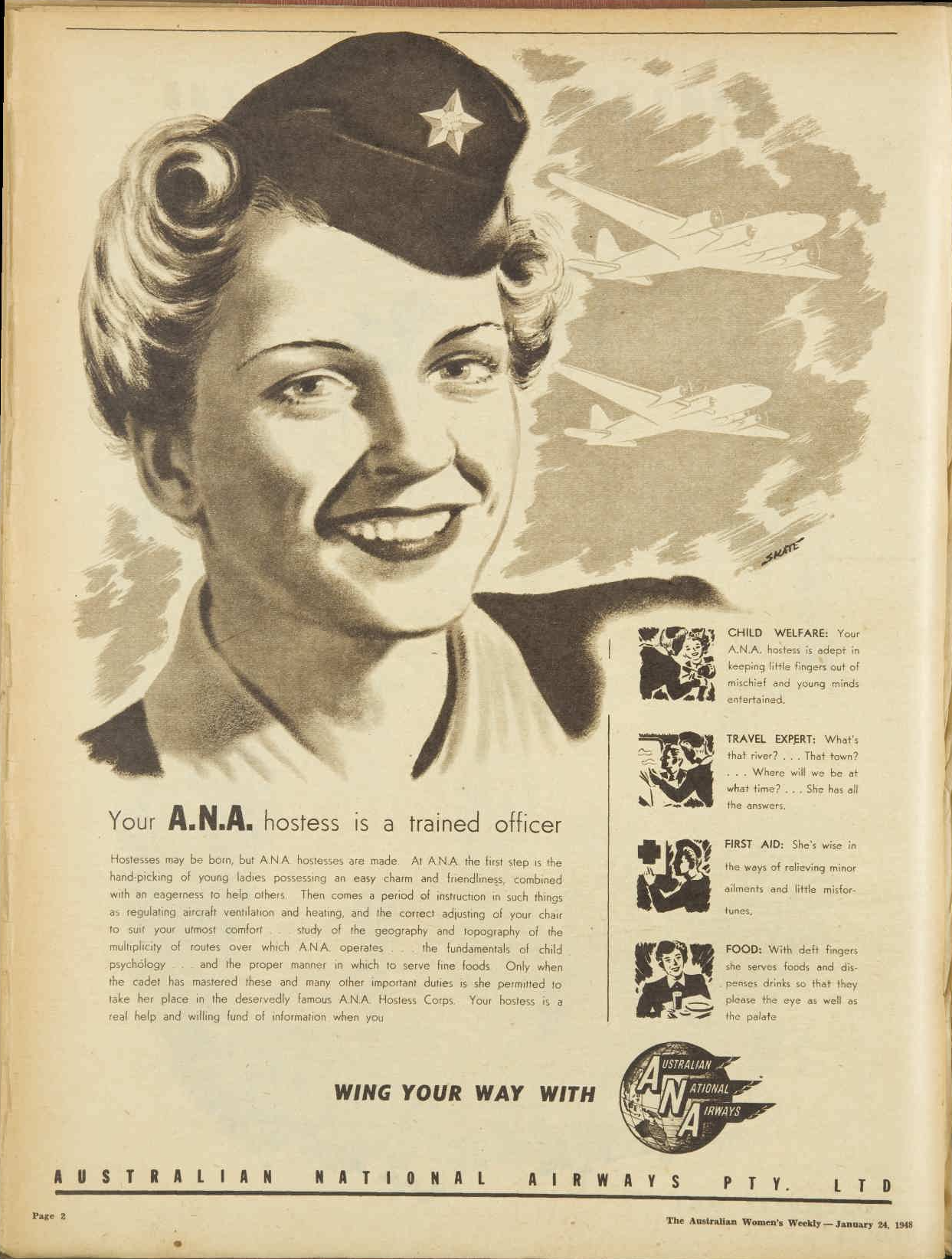
Back when flight attendants provided an array of services akin to that of a luxury hotel concierge…

The role of a flight attendant in the 1940s

and when a trip to an exotic Caribbean island was considered a dreamy, decadent, once-in-a-lifetime experience.

Vintage 1930s Jamaica travel guide to Montego Bay. Image courtesy of jamaicahotelhistory.com

It’s an escapist getaway for certain, to a time and a place so steeped in hospitality that its national tourism slogan is “Jamaica: The Heartbeat of the World.” Heartbeat indeed. This post is a swoonworthy one for all of our vintage travel aficionados complete with a delicious heritage recipe to match. Welcome to country number 26 on the International Vintage Recipe Tour. Welcome to Jamaica.

Prior to the 1930s, Jamaica’s tourism population was a small, subdued bunch made up mostly of elderly retirees, the medically infirm, and the ultra-wealthy. Travel to the island during the first part of the 20th century was difficult, expensive, and lacked a suitable infrastructure that could readily accommodate a large influx of guests. But by the mid-1930s, Jamaica was tourist-ready.

The hospitality industry as it started to bloom and blossom in the 1920s and 1930s in Jamaica

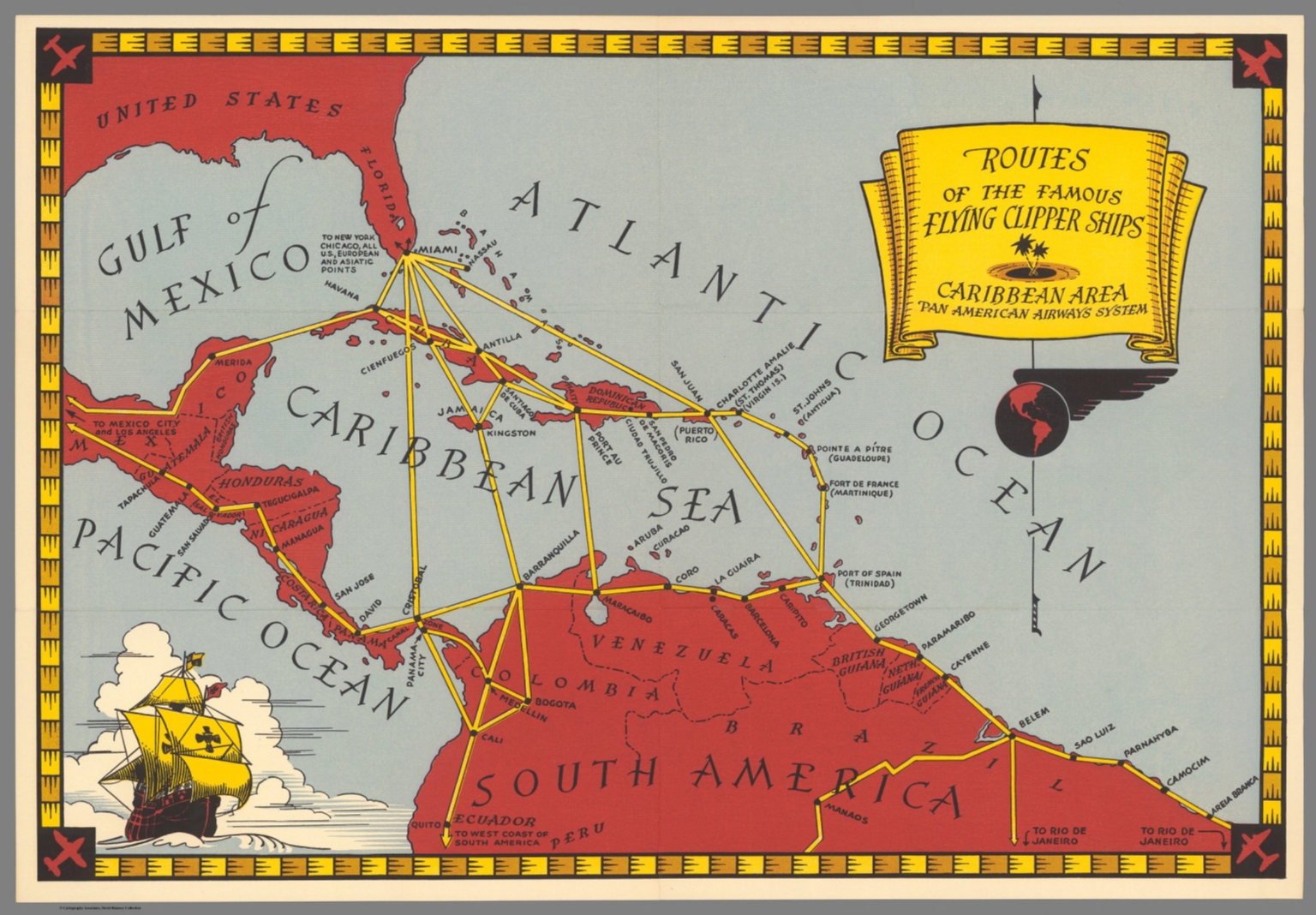
The hotels were built, the staffing was in place, and a slew of leisure activities awaited guests. Vacationers were ready too. They were more mobile, there were more flights to New York and Miami (the gateway cities to the Caribbean) and airlines were expanding service to the islands offering faster transportation than ship-to-shore travel.

Unfortunately, the excitement was short-lived. World War II put a pause on all travel to Jamaica. But following the end of the war, an exuberant sense of adventure and wanderlust, especially from the American market, caused Jamaica’s tourism numbers to rise from less than 5,000 per year in the 1920s to close to 100,000 visitors per year by the late 1940s. Today, Jamaica welcomes over 1.4 million visitors annually.

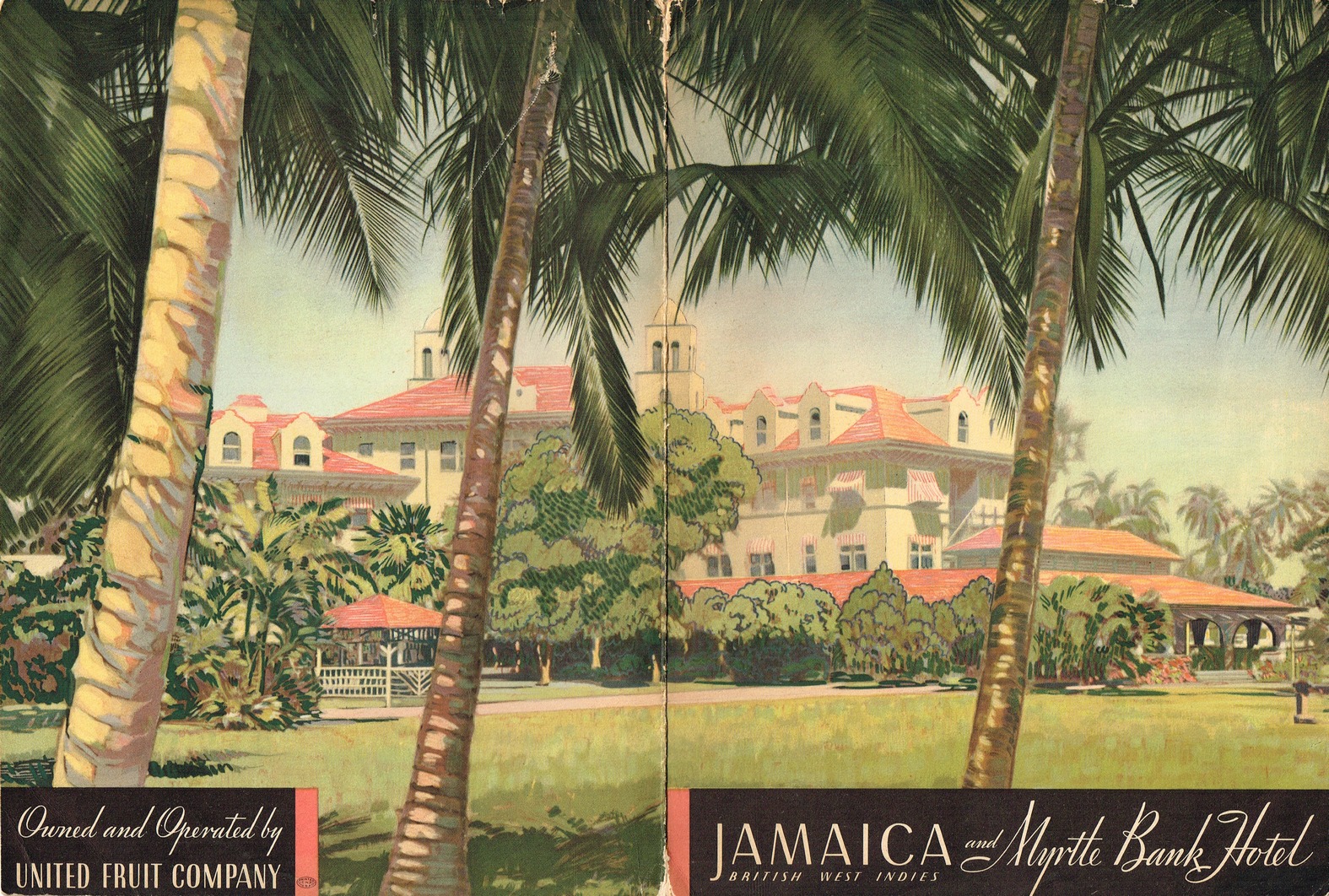
One of the most well-known hotels on the island was The Myrtle Bank Hotel in Kingston which operated from 1870-1964. It’s featured here in a 1940s brochure courtesy of jamaicahotelhistory.com

Credited with being the first country to actively promote tourism in the Caribbean, the post-WWII introduction of Jamaica was exciting on all fronts. Media campaigns began rolling out in creative ways that highlighted the island’s beautiful beaches, turquoise-colored water, engaging cities, tropical climate, jungle-rich flora and fauna, and friendly faces. Aside from those show-stoppers, the other attractive and important component to Jamaica’s successful promotion was its convenient location in the Caribbean Sea. Just a short 90 minute flight Miami, it offered almost instant gratification. Paradise was close.

I thought discussing Jamaica’s early rise in tourism would be a fun cultural touchpoint to pair with this international vintage recipe because it’s emergence as a true destination vacation occurred over 90 years ago and travel on all fronts today is so different than what it was then. Today, we slog through airports and plane travel to get our destinations as quickly as possible in the most comfortable clothes possible. We consult the internet for practically every detail of our vacation from lodging to sightseeing to restaurants. We read reviews online, we look at ratings. We take into account a stranger’s bad experience as well as their good ones. We juggle safety concerns, security threats, disease outbreaks and world events. And for most travelers today, it’s a comfort to be able to see and know exactly what we are getting into when we take a trip abroad.

In the 1940s, travel was different. It was more carefree, less planned. Travelers knew where they were going, but they didn’t necessarily always know what they were going to see. Curiosity and discovery led the adventure. To get a sense of what traveling to Jamaica was like in the 1940s, I’ve included this fun and insightful 24-minute travel short that was produced by Pan American Airlines in 1948. It whisks viewers along on the adventures of Ms. Dale, an American traveler who is exploring the Caribbean on a two-week vacation aboard Pan Am’s propellered clipper ship, courtesy of a custom itinerary prepared for her by a whimsical, animated character named Clip, the Spirit of Travel.

Meet Clip!

Meet Ms. Dale!

Presented as an enticing tourism piece to highlight Pan Am’s newly expanded routes to the West Indies, Central and South America, and Mexico, this travel film made its rounds, often accompanied by a representative from Pan Am, at libraries, museums, civic organizations, schools, and travel agencies around the United States beginning in January 1948. Showcasing the warm and sunny climate Jamaica offered during a time of year when almost all of America was wrapped up in a cold blanket of winter weather was alluring marketing at its best. The film received rave reviews around the country for its beauty, interest, and excitement in depicting the history and culture of this exotic string of islands floating in the Caribbean Sea.

To give you an example of the type of reception the film received… on October 11th, 1948 at the Lincoln School Auditorium in Kalamazoo, MI, nine hundred tickets were available for a nighttime showing of Wings to Cuba and the Caribbean. 900 tickets! This illustrates not only the level of interest in the subject matter but also the attraction of movies in the 1940s.

In the film, Ms. Dale island hops around the Caribbean beginning in Cuba. She arrives in Jamaica at the 13-minute mark. If you wanted to skip ahead, you’ll find her en route to the island at 13:27.

I found this travel short to be captivating in so many ways. Not only was it fun to see vintage film footage of the tropics but I loved how it combined flight, fashion, fun facts, music and history into a compact story that gave you an immediate sense not only of what life was like in the Caribbean but also what life was like in the 1940s too.

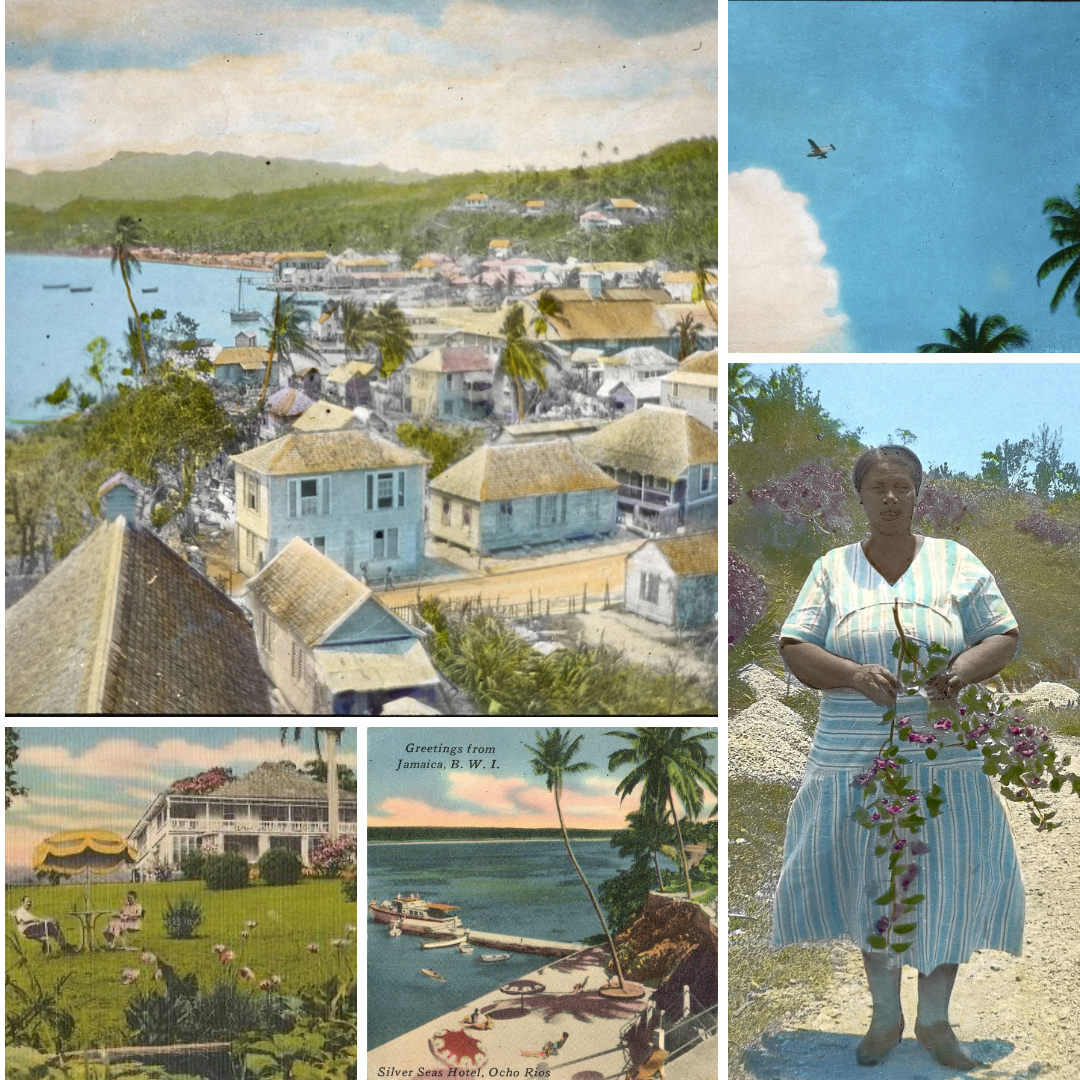
Watching Wings to Cuba and the Caribbean in 1948 provided many viewers with a first-time glimpse of the islands from a cinematic perspective. At the same time, equally enticing tourism promotion for the Caribbean began appearing more and more frequently in newspapers, and magazines too. I pulled some snippets from vintage archives and combined them with vintage postcards of the era to showcase exactly how, in mid-century America, you would have been introduced to this exotic island.

A vintage travel postcard circa 1930-1945, Greetings from Jamaica, B.W.I. A beautiful Jamaican peasant girl. Jamaica, B. W. I.: Photo by Cleary & Elliott

Vintage travel postcard of Kingston, the capital of Jamaica circa 1930-1945

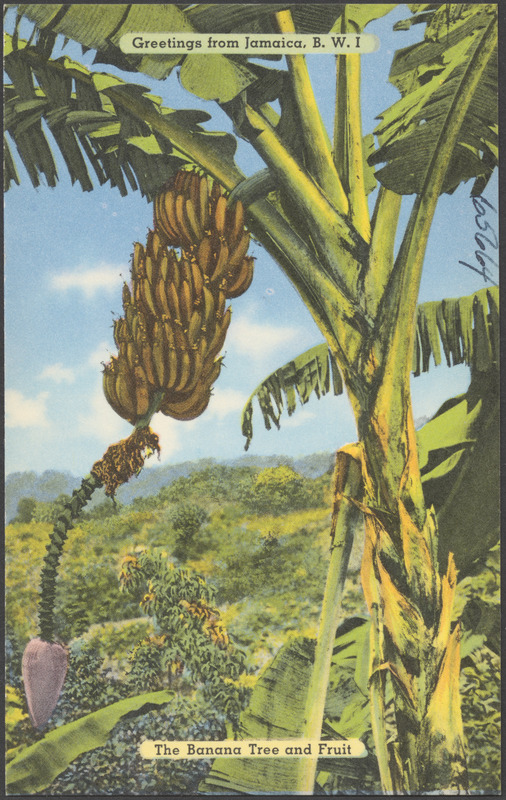
Vintage Jamaica travel postcard… The Banana Tree and Fruit circa 1930-1945

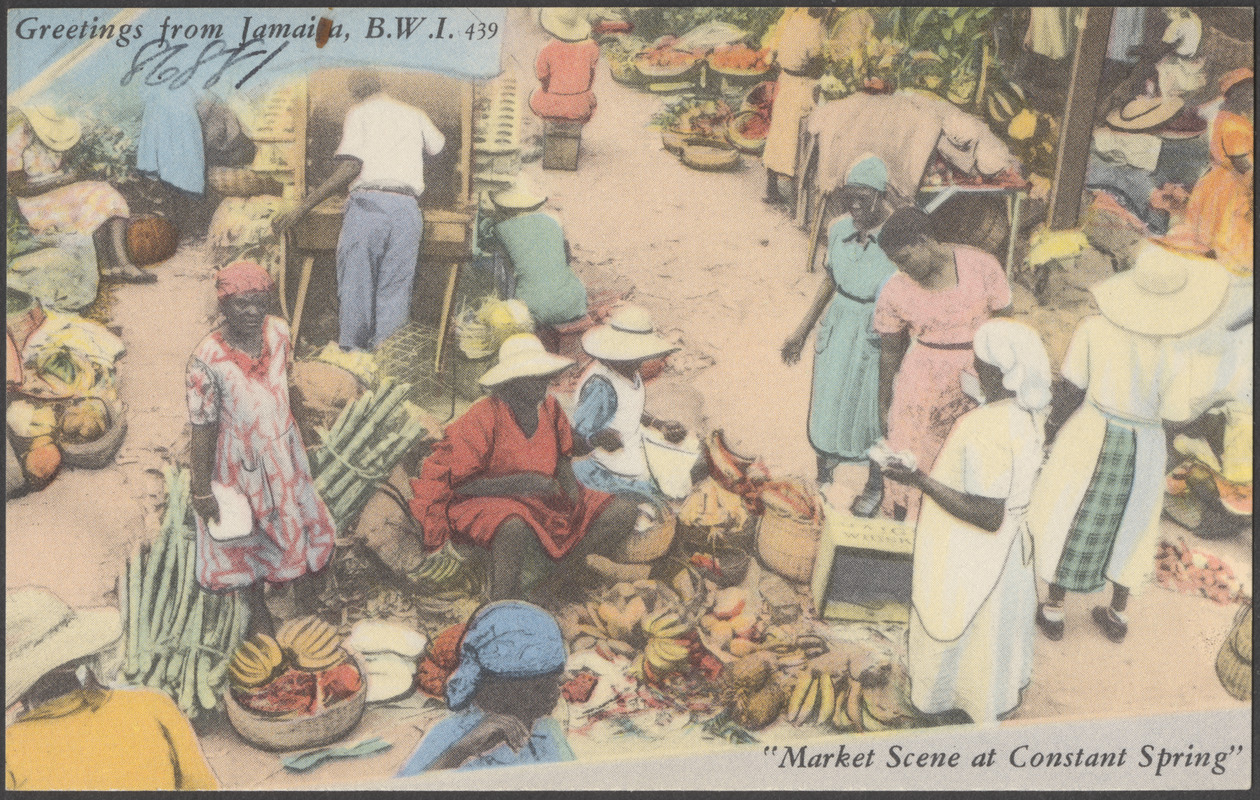
Vintage Jamaican travel postcard, Market Scene at Constant Spring circa 1930-1945

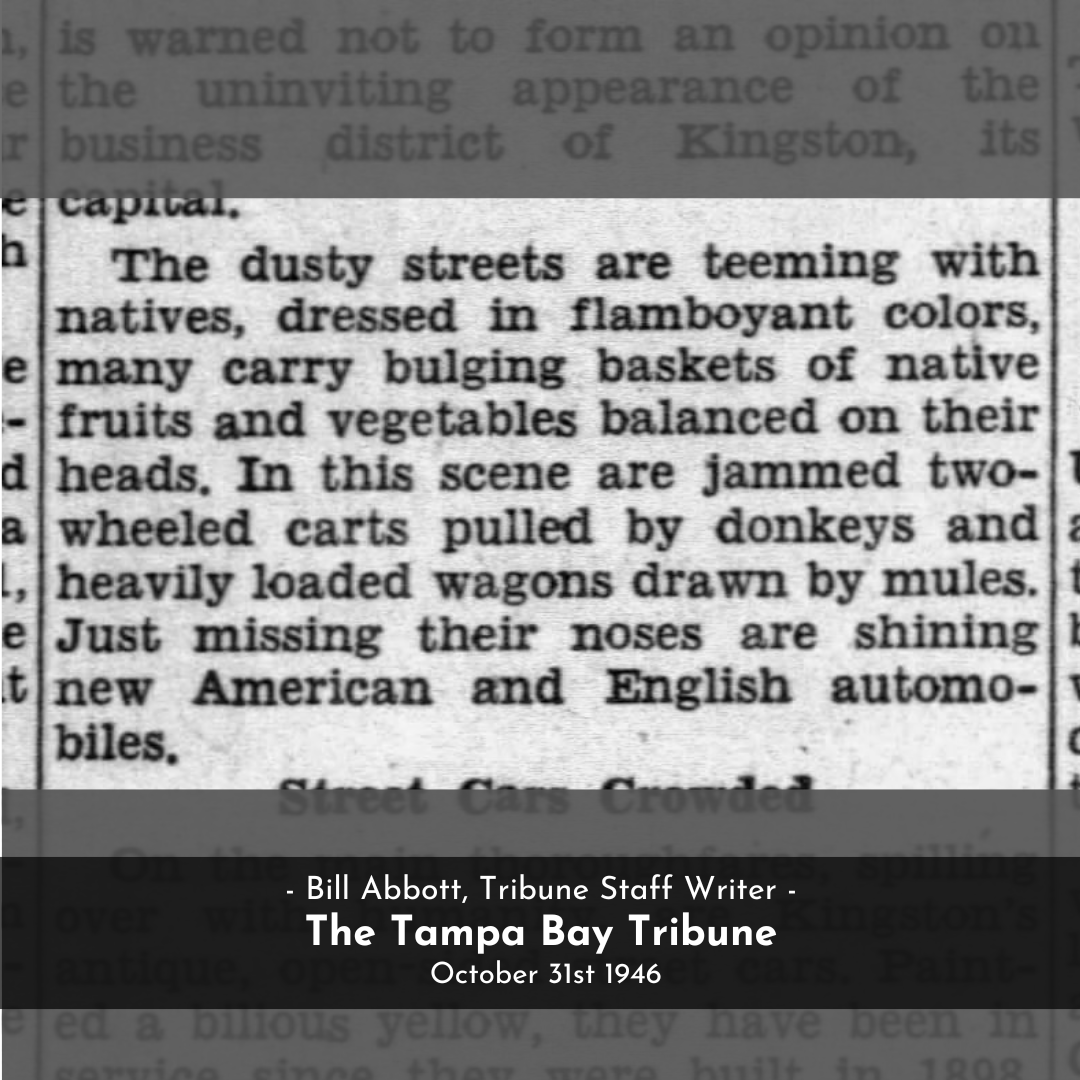
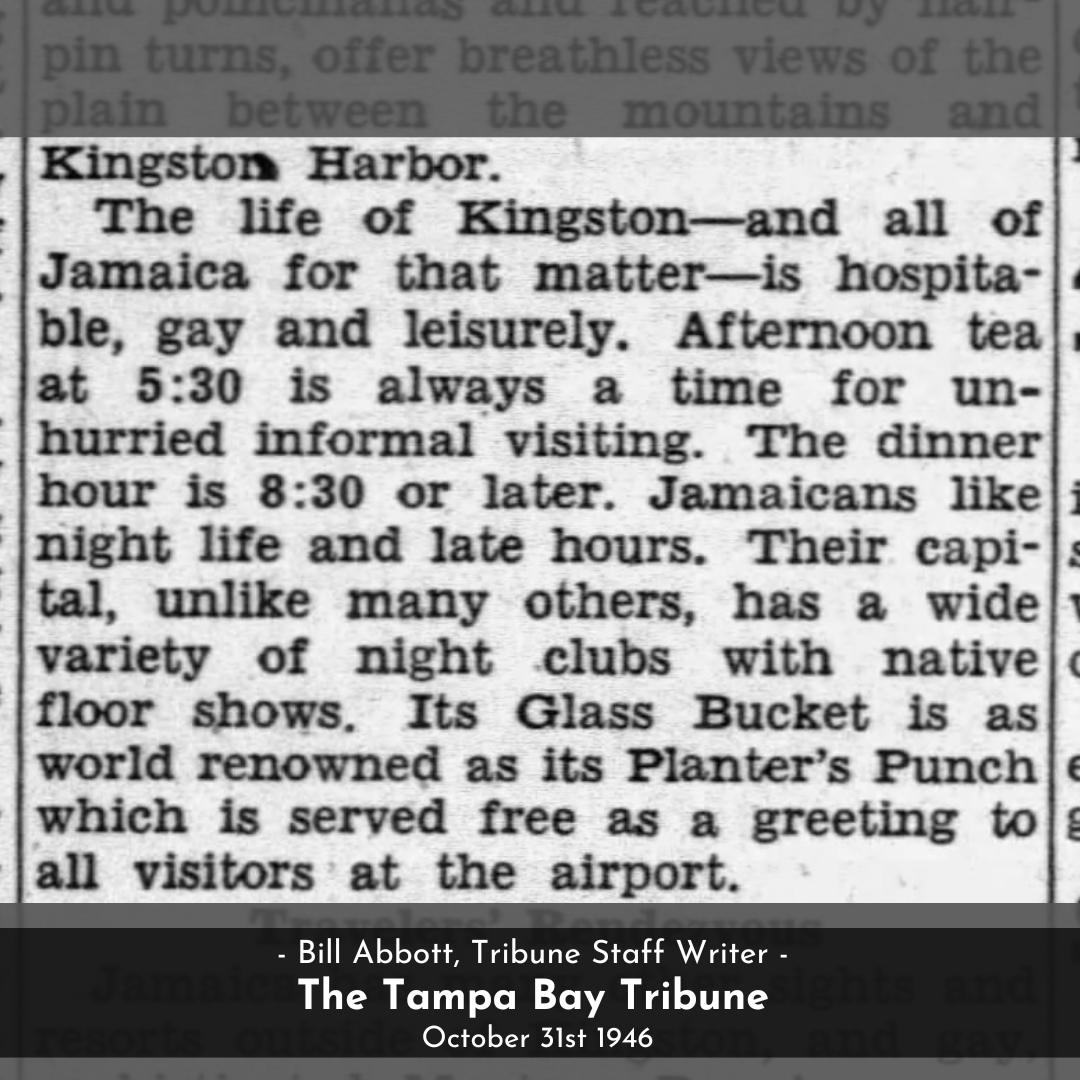
Since its emergence on the tourism scene in the 1930s and 40s, Jamaica has become a treasured and popular resort destination, winter getaway, and honeymoon haven for travelers around the world. Even if you have never visited yourself, you are still familiar with it. You’ve seen photos, watched a video, read a book, heard stories from someone else who has been there. We are all familiar with the beautiful, bright smiling faces of local residents. We know the palm studded beaches, the gorgeous blue water, the relaxed vibes, the music, the pretty hotels. But in the 1940s it must have been magical to experience the island for the first time as a brand-new destination. To experience the talcum-powder soft beaches, the two mule carts, the afternoon tea hour, the mountain of cotton trees, the gay and leisurely atmosphere. It must have been awe inspiring to see it in its pristine form overflowing with a proud, fresh-faced enthusiasm. Jubilant with a happy-you-are-here hospitality. It must have been magical to see the island barely touched by the trappings of tourism. Unaffected yet by repetitive foot traffic caused by the millions of travelers that would eventually come to it, mold it, define it, shape it into something influenced a little bit here and there by something else from somewhere else. In the 1940s, Jamaica felt new to the world to a new set of travelers unlike any other place in the world.

We are all spoiled these days with an overconsumption of information and an in-the depth understanding of the world on just about every topic under the sun. Sometimes, when everything is at our finger tips that leaves little room to ever discover something truly new. But imagine, for a moment that it’s the 1940s. You don’t own a television, but you do read the newspaper. There’s a movie theater in your town, a globe on your desk, and a stack of travel magazines on your bookshelf. You long for far-flung adventures and travel to exotic places but you’ve yet to ever leave your home city. A showing of Wings To Cuba and the Caribbean comes to your town. You fall in love with the islands. You begin to read more and more stories about Jamaica in the newspaper. You see tourism ads start to appear in the travel section. Your favorite magazine features it in a multi-page spread. You take Ms. Dale’s lead and you book a trip through a local travel agent. Finally, the day arrives and you board the propellered plane with the the Pam Am logo. It’s your first international adventure. Your first tropical vacation. Your first real-life glimpse of the world beyond anything you have ever known.

While it’s impossible to return to the excitement of Jamaica’s early tourism days of the 1930s and 1940s, we can at least return again and again to a vintage recipe from this beautiful country via the kitchen any time we want. It may not physically plunk you down on a sandy beach, but it will carry you away to a Caribbean state of mind. Nothing transports you to the tropics quite like a coconut.

This vintage recipe for Jamaican Rice and Beans calls for coconut milk made from a whole, fresh coconut. You could possibly substitute it for canned coconut milk as a shortcut, but I wouldn’t recommend it. Especially if you are longing for an escape of mind these days. I wholeheartedly recommend making this recipe as is, fresh coconut and all. It’s not only a fun meal to prepare but you’ll have a little bit of extra coconut water left over to make a rum cocktail while you cook, further embracing a vacation vibe.

If you have never cracked open a coconut before, rest assured, it is easier than you think. Look for a whole coconut in your local grocery store or market that is heavy in weight, pre-scoured, and sloshes with the sound of liquid inside when you shake it. This ensures that the coconut is fresh and easy to crack.

The West Indian Atlas circa 1775. Image courtesy of The New York Public Library Digital Collections.

The history of this rice and beans recipe is rooted in the slave trade which began in Jamaica in the 1500s by way of Africa and Spain. Over the course of the island’s history, the dish’s unique blend of grains and legumes morphed into different variations using different spices and came to be known by different names. The most traditional and widely accepted name is Jamaican Rice and Peas. But not peas of the round, green sort that we often think of as vegetables. It was originally made with small round red peas, also known as pigeon peas, also known as gungo peas.

Cajanus cajan aka pigeon peas aka gungo peas.

At some point, gungo peas became more expensive and harder to find in Jamaican markets and kidney beans were substituted in their place, which is how this dish also became known as Jamaican Rice and Beans. Technically a pea is a bean as they are both members of the legume family so both names are correct, but we all know green peas are not kidney beans, and kidney beans are not red peas. Each has its own unique flavor profile, color, consistency, and shape. Nonetheless, today in Jamaica when it comes to this recipe, gungo peas and kidney beans are both accepted ingredients and it’s left up to personal preference as to which is the better bean/pea.

Aside from the extra bit of attention given to the coconut preparation, this recipe is easy to make and very economical. It serves 10-12 as a side dish and costs less than $15.00 to make. Equally enjoyable as a full meal on its own, this dish also freezes well, reheats beautifully, and acts as both a comfort food and a vegan meal. Since it contains both carbs and protein, it’s especially lovely for this time of year as we start spending more hours and energy outdoors. But most importantly, this is a dish that will transport you to another era, a mental mini-break from the malaise and the momentous events of the modern world.

Jamaican Rice and Beans

(from the New York Times International Cook Book circa 1971)

Serves 10-12 as a side dish

1 cup dried red kidney beans

1 rib celery, cut in half

1 small wedge of green pepper (about 1/4 of a whole bell pepper)

1 large coconut

6 cups water

Salt to taste (I used 3 teaspoons)

1/2 teaspoon dried thyme

2 1/2 cups uncooked rice

Place the beans in a large kettle and add water to cover to a depth of one inch. Add the celery and green pepper, cover and bring to a boil.

As the beans cook, prepare the coconut. There are three eyes on the coconut. One of them is soft enough to pierce. I like to use a corkscrew for this job but you can also use a shape paring knife or a Phillips-head screwdriver. Pierce that one eye and drain the coconut water from the interior into a large glass or mason jar. Once drained, with a heavy mallet, hammer, or the back of a butcher knife crack the coconut shell in several places, and using a paring knife, remove the meat from the shell in large pieces.

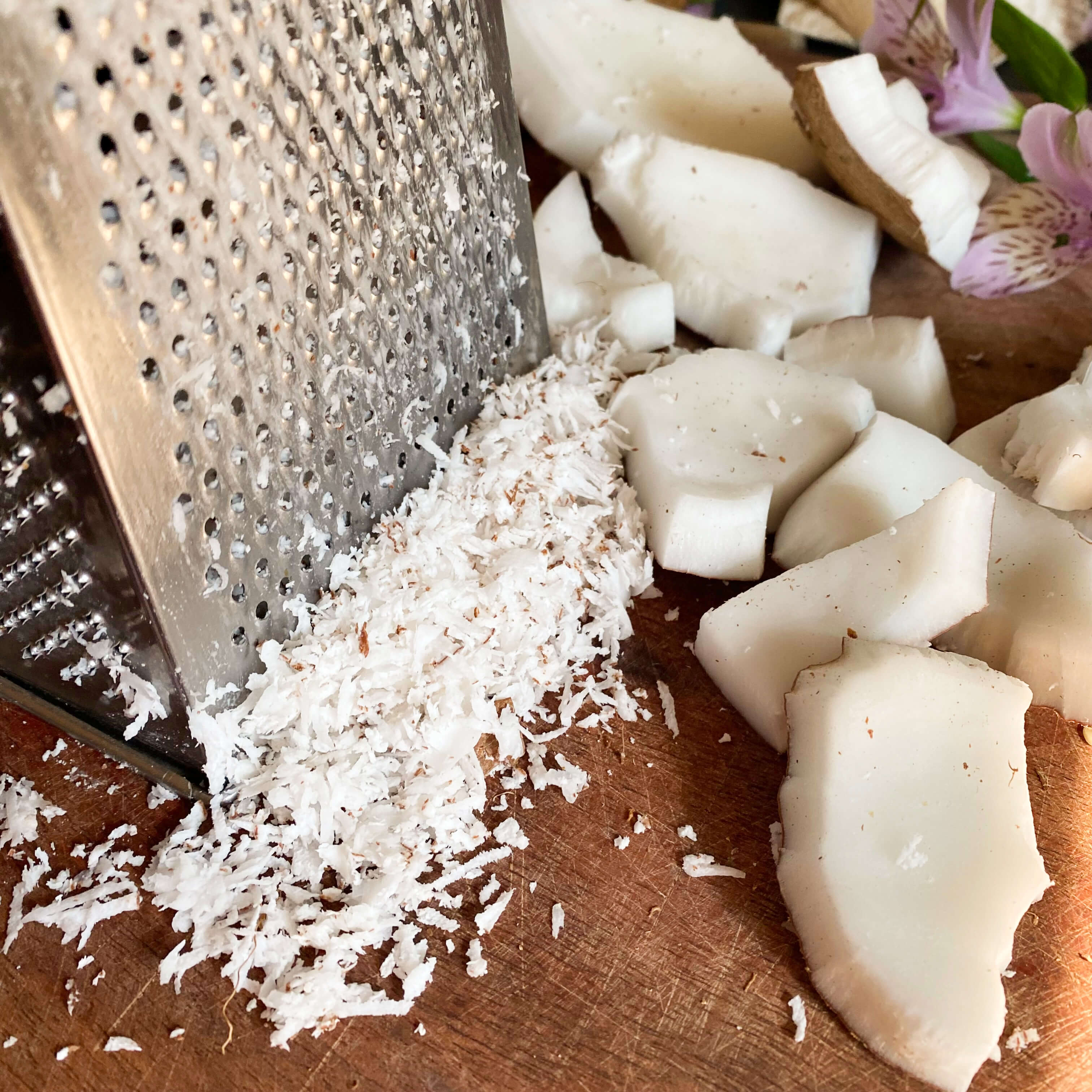
Once broken into pieces, do not bother to cut away the thin brown skin from the coconut flesh. Grate each piece of coconut using a fine grater.

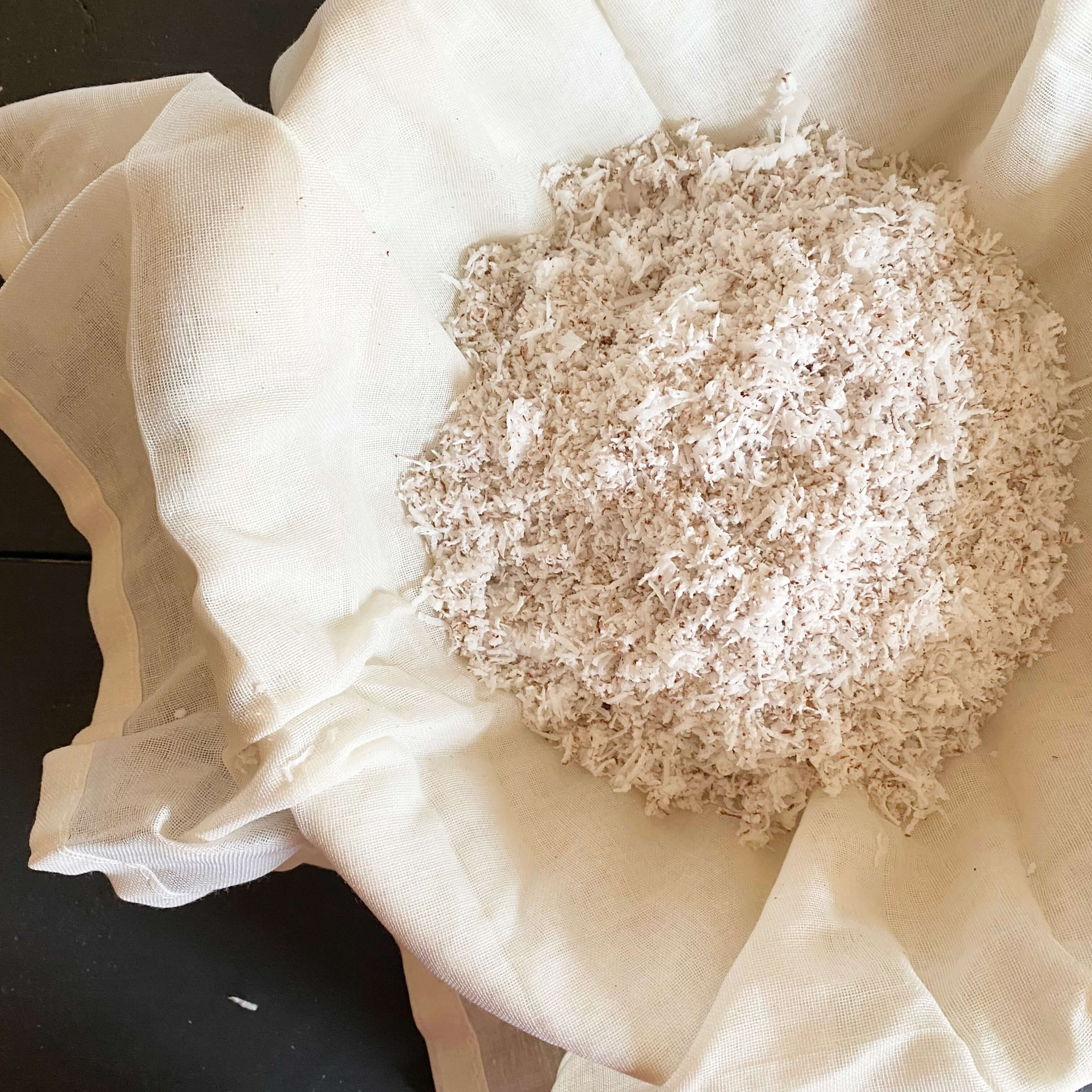
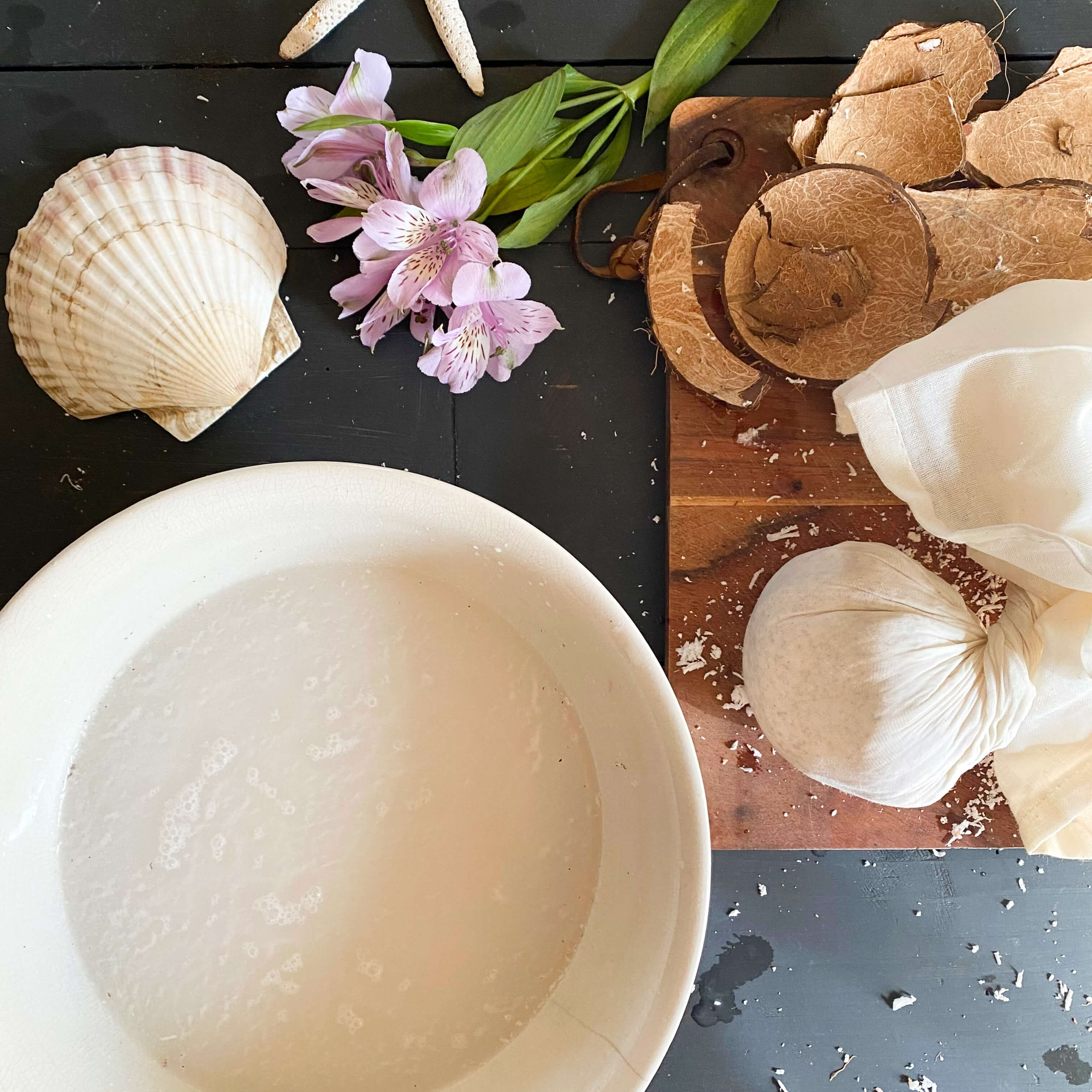
Line a mixing bowl with cheesecloth and add the grated coconut. Add two cups of cold water and squeeze to extract the white liquid. This is coconut milk. Add two more cups of water and squeeze, then add the last two cups of water and squeeze again. This should yield roughly six cups of coconut milk.

Add all six cups of coconut milk to the simmering beans. Cover and cook until the beans are tender, about 1 and 1/2 hours in all. Stir frequently to prevent the beans from burning.

Add salt to taste, thyme, and the rice. Stir once and cover. Continue to cook until the liquid is absorbed by the rice, about 20 – 30 minutes.

When done the rice should be tender and all the liquid absorbed. Remove the cooked celery and green pepper. Fluff the rice. Serve as a side dish or as a vegetarian meal.

I garnished the beans and rice with finely chopped fresh green pepper just before serving. The contrast between the crisp green pepper and the soft rice and beans was lovely, almost like serving a chopped salad on top. I thought the coconut flavor might be more pronounced than it was but to my surprise no one ingredient overpowered the other. Instead, they all blended together to create a warm, comforting combination of flavors that is easily compatible and very complimentary with so many other types of food.

If you were serving this as a side dish, other traditional Jamaican accompaniments would include Jerk Chicken, Salted Fish or Curried Goat. I wouldn’t hesitate putting it in a taco or topping it with grilled shrimp or steak either. Or simply enjoy this one as is – a simple meal of rice and beans with a hint of tropical flavor to warm your spirit on these chilly days of early Spring. I hope by the time you sit down to the table to enjoy this meal, you’ll feel like you’ve had a little adventure.

Cheers to Jamaica for extending so much hospitality out into the world in the form of a beautiful place and a beautiful recipe. Join us next time on the International Vintage Recipe Tour as we head to Japan, our 27th country via the kitchen. See you there!

To catch up on previous International Vintage Recipe Tour posts visit here.

Celebrating International Women’s Day: Ten Vintage Cooks & Their Books That Impacted Global Cuisine

Every year in the shop, while researching vintage and antique cookbooks, I discover an array of fascinating stories about 19th and 20th-century women who made an impact on the global culinary landscape. Sometimes these cookbooks are fueled by immigration stories. Women relocating to a new land only to realize a visceral homesickness for foods left behind in their old country. Other times they are written from travel adventures. Escapades to far-flung places that inspire a life-long interest in an exotic culture and a cuisine. And sometimes they are the scholarly pursuits of teachers, scientists, or home economists educated in food and nutrition intent on improving the overall health of men, women and children.

Today is International Women’s Day. To celebrate, I thought it would be fun to share a glimpse into the personal lives of some of the international cookbooks and their authors discovered within the past year that highlight a unique perspective on global food history and culture.

Some of these women are famous, long-lauded for their culinary achievements throughout the 20th century. But others in this list have almost all but been forgotten despite the impact they once made on the international food landscape. In an effort to collect unique food stories from around the globe and a cookbook from every country, it’s always inspiring to learn how the love of cooking experienced by one person can unite cultures, cross borders, and bring together many people all in the pursuit of a good meal.

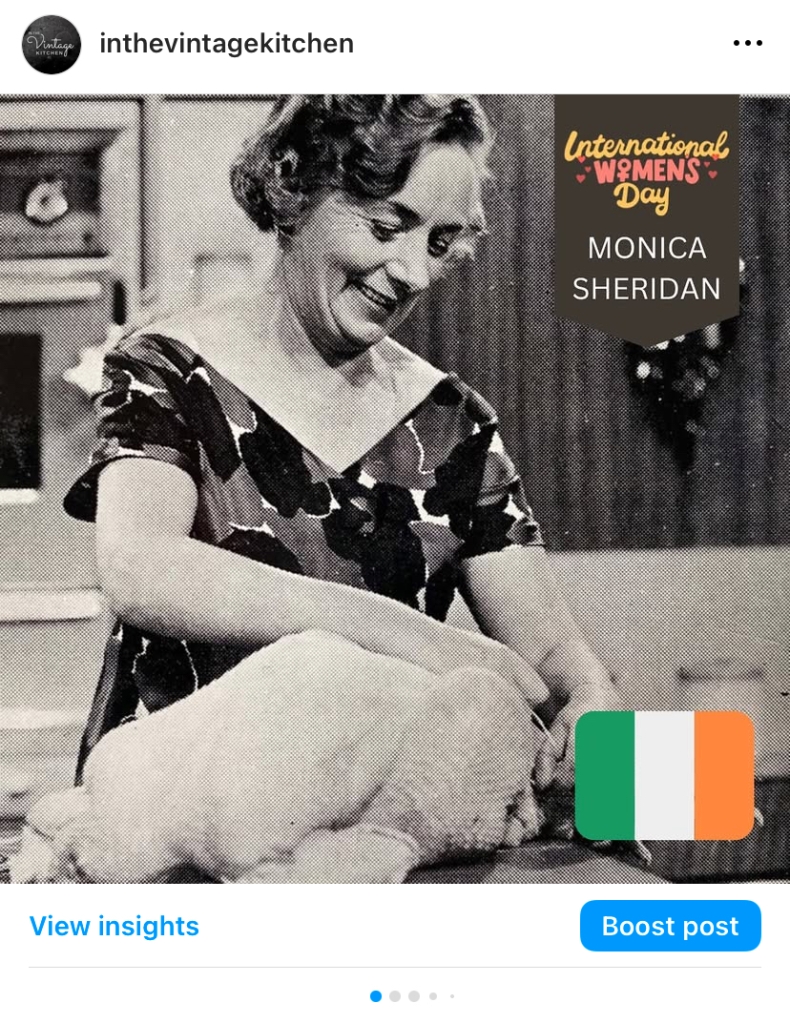
2024’s International Women’s Day Instagram post featured Monica Sheridan, Wadeeha Atiyehh, Perla Meyers, Madeleine Kamman, Mrs. Balbir Singh, Amy Vanderbilt, Claudia Roden, Ada Boni, Paula Wolfert, and Countess Corry Van Limburg Stirum

Each year on International Women’s Day over on Instagram, I compile the list of the international vintage cookbook authors that were newly discovered in the previous year via books curated for the shop. It’s one of my most favorite posts of the year since it highlights not only heritage recipes but also draws attention to the achievements of women that may have slipped from the spotlight.

For whatever reason, I’ve never thought about incorporating the International Women’s Day Instagram post into a blog post too, but this year, I’m starting a new tradition and celebrating the ladies here as well. These ten women represent a range of life stories that extend beyond recipes, beyond food. They come from India, Ireland, and the Ukraine. They write of France, the US, and the UK. They tell stories of entrepreneurship, of immigration, of cultural preservation, of censorship. They are not only writers and cooks but social activists, suffragists, school teachers, and television personalities. But most importantly, they are reporters and recorders of life lived via the kitchen. Let’s look…

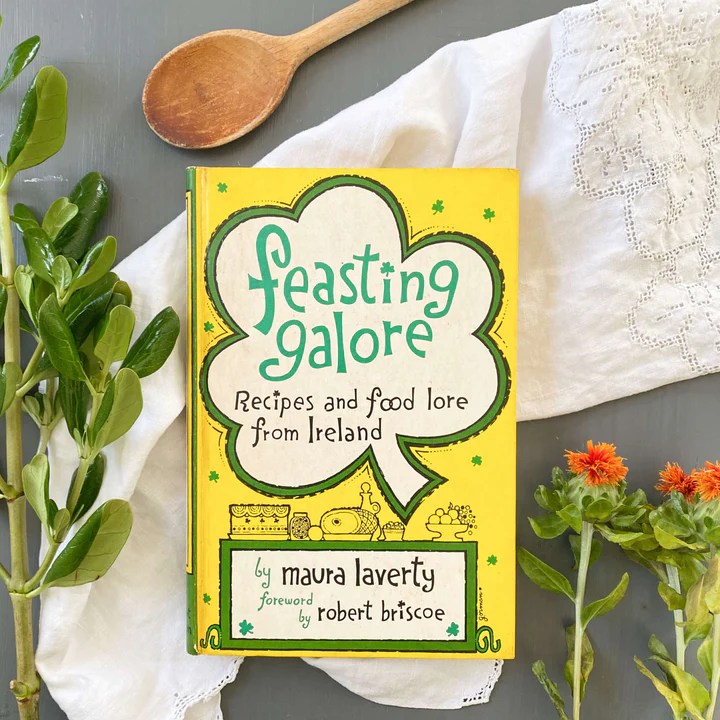
1. Maura Laverty – Feasting Galore (1961)

The first American edition of Feasting Galore: Recipes and Food Lore from Ireland was published in 1961. It was written by celebrated Irish novelist, playwright, journalist, and cooking authority, Maura Laverty (1907-1966) and debuted at a time in American culture when travel to Ireland and interest in Irish culture was newly on the rise.

Packed full of recipes, anecdotes, and folklore from the Emerald Isle, Maura’s cookbook featured 200 recipes interspersed between colorful stories about Irish culture and food. With an enchanting way of weaving storytelling into recipes that then transitioned back into stories again, Maura’s cookbook was unique in that it read like both a recipe book and a storybook all in one.

Growing up in County Kildare, Maura’s love of cooking began in childhood and was both encouraged and influenced by her maternal grandmother with whom she spent a lot of time. That relationship eventually formed the plot of a fiction book titled Never No More, published in 1942, which became a bestseller in Ireland and put Maura on the path to becoming a popular Irish writer. Despite the fact that her next three novels were banned by Ireland’s Censorship of Publication Board for obscenity (a stigma that has since been lifted) Maura pressed on writing plays, television shows, books on cooking, and children’s stories.

In and out of marriage to a fellow journalist, Maura supported herself and her children via her writing throughout her life. Known for her humor, captivating storytelling, and tenacity to continue working at her craft, despite falling victim to Ireland’s repressive book-banning policies, Maura’s perseverance, talent, and cooking expertise deemed her a national treasure. Introduced to America via several short stories she wrote for Women’s Day magazine in the 1950s, when Feasting Galore was published in New York by Holt, Rhinehart & Winston in 1961, it was to the delight of American book critics. “Looking into Maura Laverty’s book is like opening an old brown box and finding a real emerald,” noted food columnist Sylia Windle Humphrey of the Lexington Harold in 1961.

Interesting recipes from Feasting Galore include Fairy Rings, Potato Scones, Carrot Marmalade, Boxty on the Griddle, Elderflower Lemonade, Puddeny-Pie,  Emerald Sauce, Baked Limerick Ham, Wexford Sole in Cider Sauce, Bread and Cheese Panada, Dunmurray Rice, Crab Apple and Bramble Jelly, Pickled Gooseberries, Friday Manglam, Golden Vale Pudding, Nested Eggs, Whiskey Pie, Oat Cakes and Columcille Cookies. 

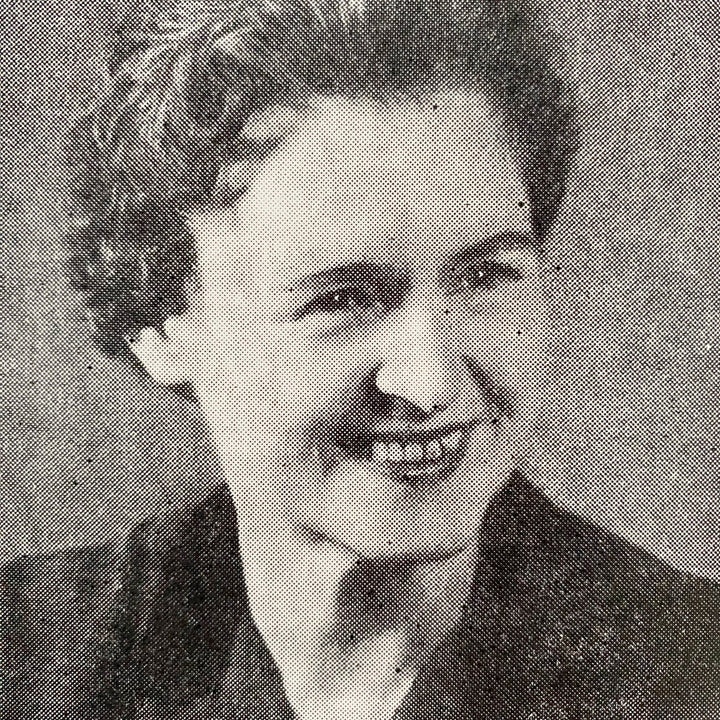
Photo of Maura Laverty courtesy of The Evening Star, March 16, 1947

2. Savella Stechishin – Traditional Ukrainian Cookery (1957)

When Ukrainian-Canadian home economist Savella Stechishin (1903-2002) first published her book, Traditional Ukrainian Cookery in 1957, there were about 450,000 Ukrainian immigrants living in Canada. That was a large increase from the 10,000 that initially immigrated to the Great White North in the early 1900s. Savella’s mission was to keep Ukrainian heritage alive by celebrating the traditional foods of her homeland and by teaching second and third-generation Ukrainian-Canadians the unique customs and culture of their Eastern European heritage. 

Ukrainian Immigrants in Canada circa early-mid 20th century. Images courtesy of the City of Vancouver Archives

An educational force, Savella’s pride in her heritage fueled her entire life in Canada. After immigrating from West Ukraine with her family as a young girl, Savella received a teaching degree in home economics from the University of Saskatchewan in the 1930s, went on to help establish the Ukrainian Women’s Association of Canada, taught cultural classes to students at the St. Petro Mohyla Institute, wrote a cultural column for the Ukrainian Voice for over two decades and was involved in work for the Ukrainian Museum of Canada. Perhaps most notable were her contributions on the culinary front with the publication of her cookbook in 1957. 

Published when Savella was 55 years old, it took her half a dozen years to complete the cookbook, which highlighted over 650 traditional recipes mostly gathered from pre-WWII Ukrainian recipe books. The challenge was not in finding wonderful Ukrainian recipes but in adapting them to modern-midcentury Canadian kitchens with proper measurements and ingredients equal in taste and flavor to that found naturally in the Ukraine. As Savella learned, foreign recipes don’t always translate easily in foreign lands and much testing had to be done. Luckily, chapters of the Ukrainian Women’s Association across Canada helped test and retest all the recipes to ensure they were true representatives of traditional Ukrainian cuisine. 

Upon debut, Traditional Ukrainian Cookery became the first Ukrainian cookbook ever published and was an instant bestseller. In addition to recipes, it featured notes on Ukrainian history, culture, holiday customs, and food presentation. In print through the 1990s, Savella’s cookbook sold over 80,000 copies worldwide making it not only a classic, go-to resource in both Canadian and Ukrainian kitchens but around the globe as well.

Interesting recipes include Stuffed Pork Tenderloin, Savory Roast Beef, Smetana Sauce with Green Onions, Lokshyna, Linyvi Holubtsi, Stuffed Onions, Potato and Cheese Casserole, Puffy Pampushky, Layered Sweet Nalysnyky, Sour Rye Bread, Babka with Pumpkin, Economical Perekladanets, Pyrih with Cabbage Filling, Uncooked Cheese Paska, Horikhivnyk, Caraway Krendi Pretzels, Crunchy Nut Rurky, Crackling Korzhyky Biscuits, Apple Pastila, and Dried fruit Candy plus so many more!

A hard-to-find cookbook these days, the sixth edition published in 1973 is available in the shop here.

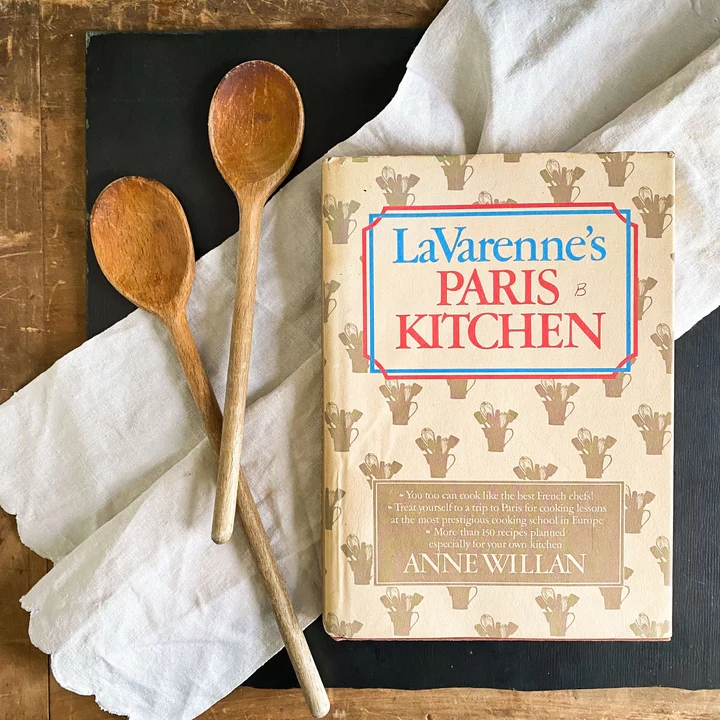
3. Anne Wilan – La Varenne’s Paris Kitchen (1981)

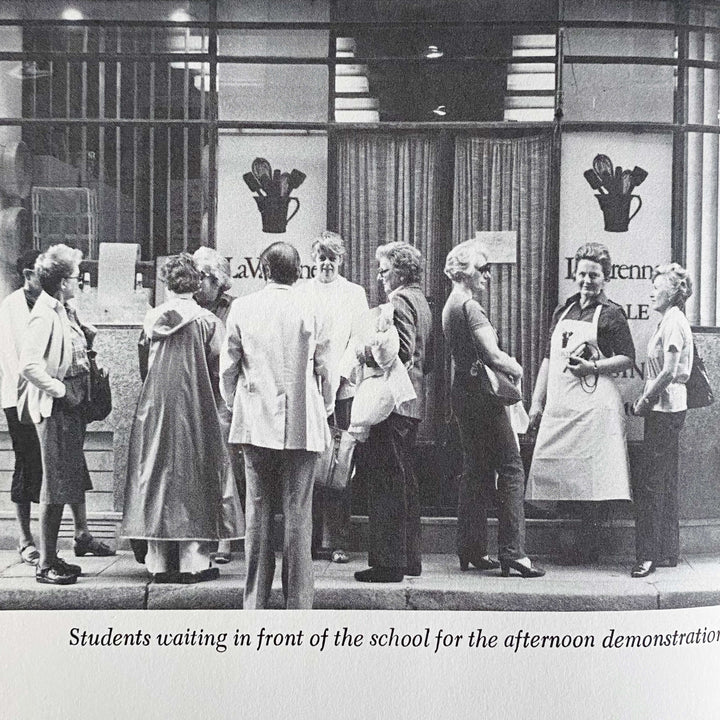
Founded by Anne Wilan in 1975 in an old Parisian building that once housed a neighborhood cafe, L’Ecole de Cuisine La Varenne quickly became a preeminent culinary school for anyone wanting to learn traditional French cooking. For the next 15 years, culinary students from around the world would flock to this Paris school to learn all the foundational techniques that made French cooking so esteemed. With instruction in both English and French, students graduated with professional culinary degrees, and many went on to pursue careers in the food industry in all its facets from catering to restaurant ownership, line cooks to food writers and everything in between.

The popularity of the school saw branch programs open in rural France; Venice, Italy; Santa Monica, California; and at the Greenbrier Hotel in White Sulpher Springs, West Virginia. Due to high food costs, the Paris location closed in 1990 and the last of the satellite programs closed in 2017 in California.

The experience of running such an acclaimed enterprise led Anne, a decorated and beloved cook herself, to publish several books about her La Varenne experiences that not only shared details about the operation of the school but also included recipes too.

Published in 1981, La Varenne’s Paris Kitchen offered a course of study for home cooks in America who didn’t have the opportunity to attend class in France. Laid out in syllabus fashion, each of the seven instructors at the school, including Anne, provided sample menus and recipes of varying difficulty which home cooks could tackle chapter by chapter. By the end of the book, the goal was to be skilled in the foundational principles of French cooking.

Interesting recipes from La Varenne’s Paris Kitchen include Asparagus in Puff Pastry, Bearnaise Sauce, Chicken Breasts with Port, Tangerine Tart, Volcano Salad, Coffee Bavarian Cream, Veal Paupiettes with Lemon Stuffing, Light Apple Tart, Orange Chanteclaire, Stuffed Tomatoes and Eggs Maintenon.

Find a 1981 First Edition Copy of this book in the shop here.

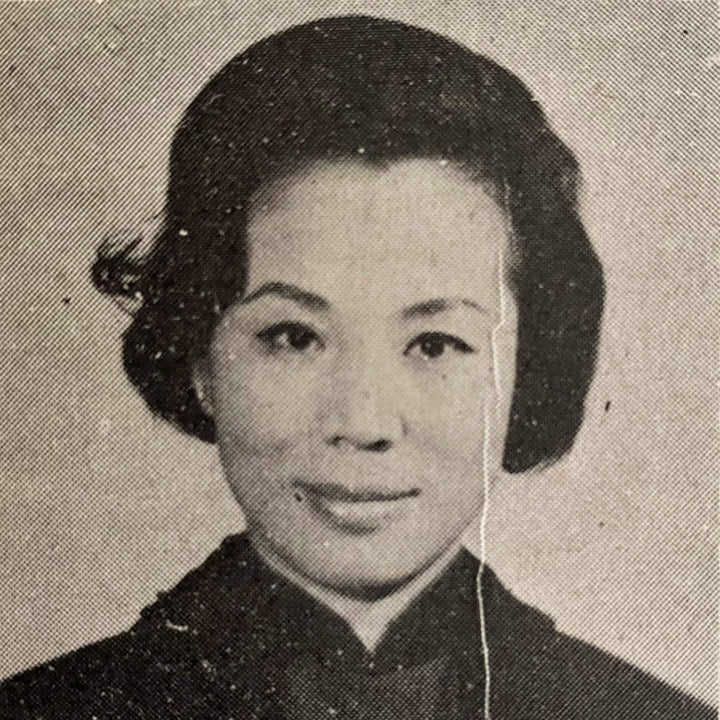
4. Fu Pei-Mei – Pei Mei’s Chinese Cook Book (1969)

Fu Pei-Mei (1931-2004), undoubtedly the most beloved and famous Chinese/Taiwanese cook of the 20th century, came to her culinary pursuits like many women of the 1950s. As a young wife who wanted to impress her husband with her cooking prowess and tempting dishes, Fu began married life in Taiwan with her heart set on being a wonderful cook for her family and friends. But desire alone doesn’t make an excellent chef and Fu struggled in that newlywed period through the preparation of each and every dish that she set on the table for her discerning husband.

Frustrated with her own lack of ability, Fu paid local professional chefs to teach her the skills of good Chinese cooking. Over a two-year period, she mastered all the classics of her Chinese homeland and its distinct regions. She dazzled her husband and children with delicious food, becoming so confident in her abilities that she started teaching Chinese cooking lessons to women living in Taiwan. Those lessons led to cooking classes offered to US military personnel stationed in Taiwan along with their spouses. From there, her teaching courses climbed from in-person to on-camera as she hosted her own cooking show for Taiwan television. The cooking show would become a staple program and continue for forty years turning Fu Pei-Mei into a household name and a trusted authority on Chinese and Tawainese cooking well beyond her Taipai community.  

The trajectory of Fu Pei-Mei’s career is often compared to that of Julia Child’s in that she came to cooking following marriage, lived in a country different than her homeland where she learned from experts how to cook, and then became an expert herself. Just like Julia, Fu had a charming personality that won the hearts of women who found her accessible and relatable – an un-intimidating and encouraging presence in the kitchen. 

In 1969, Fu published her first cookbook, Pei Mei’s Chinese Cook Book, a 265-page collection of traditional recipes written in both Chinese and English. Two other volumes would follow along with numerous reprintings. Eventually, Fu would publish over 30 cookbooks throughout her career. 

To say that her influence on Chinese cooking was immense is an understatement. In Chinese culture, her recipes are iconic and her cookbooks are proudly passed down between generations. Still to this day, she remains the most trusted authority on Chinese cooking and her books are considered classics in the kitchen. 

Interesting recipes from Pei-Mei’s Chinese Cook Book include Dry Cooked String Beans, Chicken and Cucumber Salad, Shark’s Fin in Brown Sauce, Mongolian B-B-Q, Meat Balls with Sour Sauce, Flowered Chicken Soup, Sweet and Sour Cabbage, Ma-Po’s Bean Curd, Camphor and Tea Smoked Duck, Egg Fu Yung, Sweet and Sour Pork, Steamed Chicken with Green Onion, Shrimp with Cashew Nuts, and Stewed Chicken with Pineapple Sauce.

Find a rare 1969 bi-lingual edition of her cookbook in the shop here.

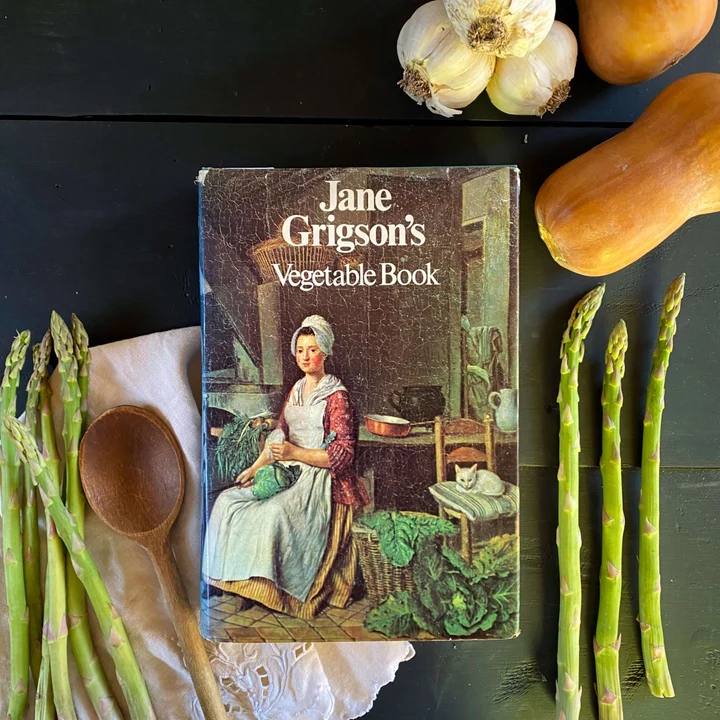
5. Jane Grigson – Jane Grigson’s Vegetable Book (1978)

Just like all the famous greats in the kitchen… Julia Child, Elizabeth David, Madhur Jaffrey, Claudia Rodin…  British cookbook author and food writer Jane Grigson (1928-1990) holds high court in the kitchens of the 20th and 21st centuries. 

An epicurean powerhouse who first found her way to cooking from art gallery and editorial translation work, when it came to writing about and preparing food Jane’s influence on the culinary landscape rounded the globe in her efforts to bring forth interesting recipes and interesting stories. Combining world history, farming practices, cultural identity, gardening, home cooking, and travel stories, Jane’s food writing has the ability to sweep you up on a culinary adventure and push you into the kitchen for an engaging, colorful, and delicious experience.

The author of ten much-lauded cookbooks throughout her career, Jane published Jane Grigson’s Vegetable Book in England in 1978. Covering 75 vegetables in alphabetical order across 600+ pages, Jane gathered recipes from history, from kitchens around the world, from other cooks and their books, and from her own kitchen to create this large-scale compendium chockful of veggies of all varieties.

When Jane Grigson’s Vegetable Book debuted, it won several awards including the Glenfiddich Food and Drink Writer of the Year and the Andre Simon Memorial Book Fund Award. It still remains one of the most favorite of all Jane’s cookbooks, inspiring professional chefs and home cooks of all ages and skill levels. 

Interesting recipes from Jane Grigson’s Vegetable Book include Gratin Savoyard, Chicken Gumbo, Palestine Soup, Pancakes with Carrot Filling, Sauerkraut Salad, Aubergine Slippers, Baked Avocado with Crab, Asparagus Fricassee, Letil and Pork Stew, and Sicilian Stuffed Peppers.

Find a 1979 First American edition in the shop here.

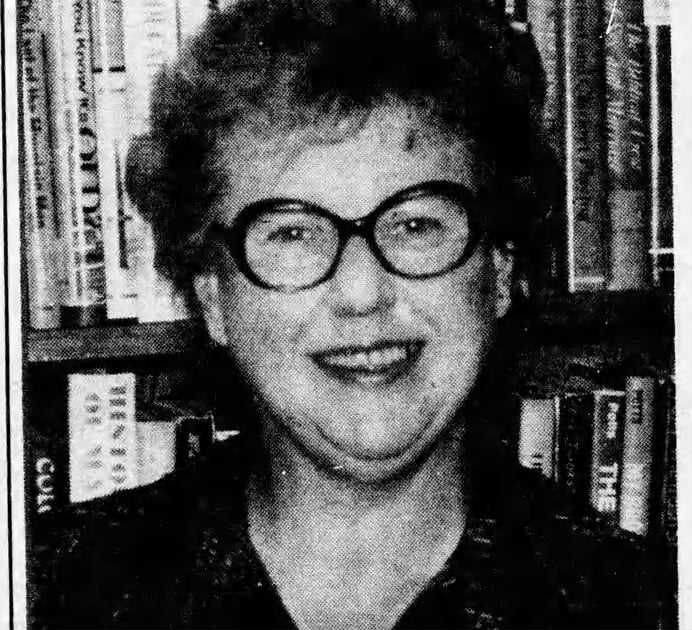
Photo of Jane Grigson courtesy of Tarrytown Daily News, Nov. 28 1992

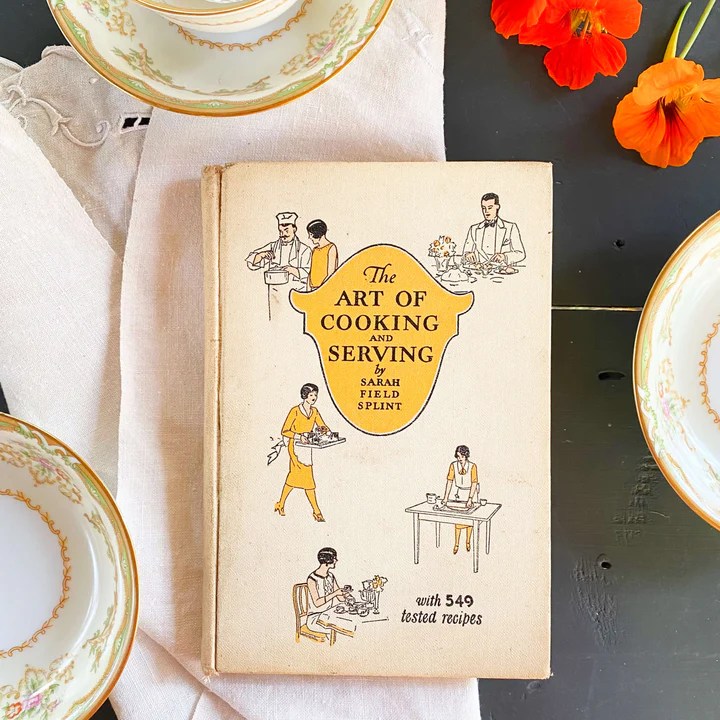
6. Sarah Field Splint – The Art of Cooking & Serving (1926)

First published in 1926, The Art of Cooking and Serving was a modern take on meal planning, nutrition, and cooking techniques for the modern 1920s woman who didn’t want to spend the entire day cooking in the kitchen.

Containing just under 200 recipes, it was written by American Sarah Field Splint (1883-1959), a popular women’s magazine editor, suffragette, and domestic science expert, and produced in partnership with Crisco – a vegetable shortening product that Sarah endorsed as an alternative to butter. 

First introduced in 1911, most home cooks relied on Crisco for cooking and frying but by the 1920s, it started to be marketed for baking as well. Sarah’s cookbook helped highlight the wide variety of recipes that could be achieved using Crisco. Everything from cakes to muffins, breads to breakfast foods, sauces to souffles could all be perfected with the help of this reliable vegetable shortening. By the time the 1931 edition of The Art of Cooking and Serving was published, over 540 recipes were included, which suggests not only the popularity of the book but the enthusiasm for Crisco as well.

Crisco aside, what’s especially interesting about this Depression-era cookbook, is the focus on getting the most value both physically and emotionally from each meal as possible.  Highlighting nourishing foods, the reuse of frying oil, and the repurposing of leftovers for additional meals signaled the sign of trying economic times. A chapter on servantless households details the changing roles of women when it came to food preparation. And emphasis was placed on good taste, both in food and presentation, with the mission to make both as hospitable and alluring as possible. As Sarah advised… a pretty china pattern added just as much fortitude for the spirit as did a steak dinner for the body. 

Interesting recipes include Orange Biscuits, Wedding Cake, Molasses Mint Taffy, Mexican Kisses, Hot Chocolate Sauce, Steamed Chocolate Pudding, Deep Dish Huckleberry Pie, Danish Pastry, Butterscotch Tarts, Ginger Cake, Mother’s Tea Cakes, Cheese Straws, Coffee Cake, Whole Wheat Griddle Cakes, Gree Corn Fritters, Potato Souffle, Sausage Turnovers, Jelly Omelet, Baked Spaghetti, Fried Hominey, Sweet Potato Croquettes, French Crullers, Raised Doughnuts, and Saratoga Chips 

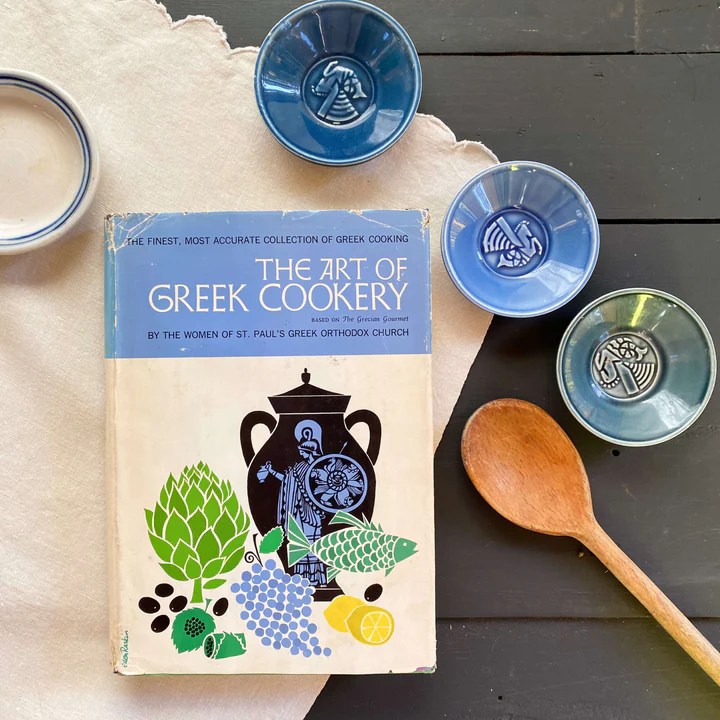
7. The Women of St. Paul’s Church – The Art of Greek Cookery (1963)

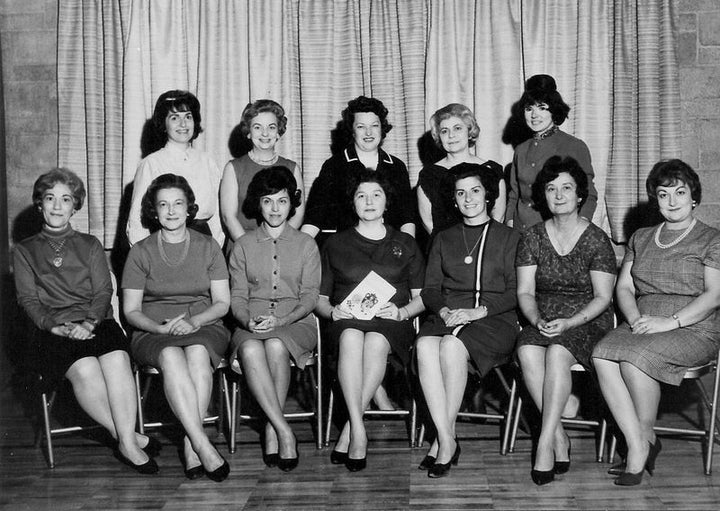
The recipes in The Art of Greek Cookery were compiled in 1958, by 16 first-generation Greek women who were part of the congregation of St. Paul’s Greek Orthodox Church in Hempstead, New York.

First formed in 1944, St Paul’s Church by the late 1950s was thriving. Needing to expand as its membership grew, the ladies of the congregation started a recipe committee as part of the Church’s social organization known as the Mr. & Mrs. Club. The goal of the committee was to gather traditional Greek heritage recipes and compile them into a book for American cooks as a fundraiser to help pay for construction on a new building. With true grit and determination, these ladies got to work gathering, testing and adapting hundreds of recipes representative of their Greek culture.  

After two and half years of laboring, they published a simple spiral-bound cookbook entitled, The Grecian Gourmet. Both The New York Times and the New York Tribune published articles about the women and their book project, which caught the attention of home cooks all across the country.  Book orders poured in. The recipe committee was humbled and amazed that their little cookbook had become such a sensation.

The cookbook also caught the attention of New York publishing giant Doubleday and Company, who wanted to republish it under their “Art of ” cookbook series. And so The Art of Greek Cookery was born in 1963.

Containing a wealth of recipes ranging from appetizers to desserts, this cookbook also contained information on Greek wines, traditional feast days, customs, suggested menus, and a lovely forward by the then pastor, Father George Papadeas. To say that he was not only proud but impressed by the hard work and determination of these women was an understatement.  Just by reading the forward, the preface, and the introduction of this cookbook, you can tell that so much love and good cheer was behind this project. 100% of the proceeds from the book sales went into the church construction fund, which provided the congregation with more than enough money to undertake the expansion project.  Both the Church and the recipe club are still going strong today. 

Interesting recipes include Stuffed Grapevine Leaves, Cocktail Meatballs, Yogurt Dip, Stuffed Mussels, Buttermilk Soup, Chicken with Dill Sauce, Codfish Stew, Chicken Stefado, Roast Lamb with Artichokes, Fresh Ham Macaronada, Moussaka ( 3 versions!), Pastichio (also 3 versions!), Stuffed Cabbage Leaves, Zucchini Souffle, Squash Fritters, Rum Cake a la Grecque, Ravani, Butter Cookies, Halvah, Caramel Custard, Eggplant Preserves and Quince Puree.

8. Madhur Jaffrey – A Taste of India (1986)

Long before Madhur Jaffrey (b. 1933) became a culinary icon, she was a wife, and a mom, and an actress living in New York City. A strong sense of nostalgia and a desire to share some of her heritage foods with her American friends led Madhur to communicate with her mother via letters about the recipes she missed most from her homeland of India. For 15 years, the two women corresponded back and forth. That communication via mail led to Madhur’s first cookbook, An Invitation to Indian Cooking published in 1973.

Next, Madhur was off on a seven-year East Asian culinary adventure visiting Japan. Thailand, Indonesia, the Philippines, Korea, and her own homeland of India to collect and record authentic vegetarian recipes from those cultures. The result of all that travel was a second cookbook published in 1981, Madhur Jaffrey’s World of the East Vegetarian Cooking.

By the time A Taste of India, her fifth cookbook was published in 1986, Madhur’s culinary reputation for outstanding authentic Indian cuisine was firmly established.  Exploring India’s diverse food customs and heritage, complete with a plethora of travel photographs, A Taste of India reads as much like a visitor’s guide as it does a recipe book, giving home cooks the chance to fully immerse themselves in the history and culture of fourteen distinct regions throughout India. 

Madhur was not a new face to the shop this year but A Taste Of India was, and it was so insightful regarding both the visual and practical art of food in India, that it’s included this year as a true heritage companion to Indian cooking.

A photo from A Taste of India

Interwoven with family stories, atmospheric memories from Madhur’s childhood and historical context surrounding each recipe, this cookbook was packed with fascinating information about what, how and why Indians eat the way they do and how home cooks could capture the essence of authentic Indian cuisine in their own American kitchens. 

Exploring a vast array of different culinary foods, each prepared according to the customs and traditions found in a myriad of diverse topographical locations around the country from mountains to deserts to tropical lowlands and coastal areas, A Taste of India highlighted recipes from Delhi, Punjab, Haryana, Uttar Pradesh, Rajasthan, Madhya Pradesh, Gujarat, Maharashtra, Kashmir, Bengal, Hyderabad, Tamil, Nadu, Karnataka and Kerala. 

Interesting recipes included Potatoes Cooked with Ginger, Chickpea Flour Stew with Dumplings, Steamed Savoury Cakes, Walnut Chutney, Kashmiri Spinach, Chicken with Fresh Green Coriander, Fish in Bengali Sauce, Shrimp Cooked with Coconut Milk, Vegetables Cooked with Split Peas, Eggplants with Apple, Rice with Tomatoes and Spinach, Punjabi Black-Eyed Peas and Rice Cooked in Aromatic Broth.

9. Elizabeth Kander – The Settlement Cook Book (1901)

First published in 1901, The Settlement Cook Book was created by Mrs. Simon Kander, aka Elizabeth Black Kander (1858-1940) to help give immigrant families, mostly of Jewish descent, a proper start in America as they relocated from Eastern Europe to Wisconsin. Lizzie, a college graduate and lifelong community activist taught cooking classes at a social service agency called The Settlement. Helping Milwaukee’s economically challenged immigrant communities, gain valuable skills in the kitchen, The Settlement helped acclimate its new residents to a more modern American way of life. 

Containing traditional foods from their homeland (included for comfort) as well as foods popular in America during the turn of the 20th century (included for practicality and social acceptance), Lizzie’s desire was to give all families a successful start in America from the inside out via good food, nutrition, information and sanitary kitchen care.

Part of Wisconsin’s assimilation movement in the early 1900s, Lizzie first published The Settlement Cook Book in 1901, prompted by a fund-raising effort for the Settlement House. A runaway success, it was in continuous print for the next 90 years and became one of the few cookbook brands that accurately tells the story of Jewish American food evolution, eating habits, and appetite preferences over the course of the entire 20th century. Even after Lizzie passed away in 1940, this cookbook continued to make a valuable mark on the culinary landscape.

Interesting recipes from The Settlement Cookbook include Sour Cream Kolatchen, Almond Pretzels, Iced Coffolate, Homemade Vinegar, Matzos Charlotte with Apples, Red Cabbage with Wine, Koenigsberger Klops, White Wine Soup, Eggs a la Tarcat, Apricot Nut Bread, Matzos Sponge Roll, Banana Cake, Potato Chocolate Torte, Cardamon Cookies and a host of fun cocktails.

10. Ann Seranne – The Complete Book of Home Preserving (1955)

A former food editor at Gourmet magazine, a food columnist at the New York Post, and a prolific author, Ann Seranne was the pen name of American cook and writer Margaret Ruth Smith (1913-1988). 

On an educational trajectory to become a medical doctor, Margaret instead turned to food science after she was expelled for setting lab cats free during her college years. Writing about food was more in line with her beliefs than animal testing, so when she started developing a keen interest in kitchen science and food chemistry in the 1930s, she adopted the name Ann Seranne as her nom de plume.  Twenty-five books later, Ann was a leading expert and trusted resource in the culinary industry. 

In 1955, she published The Complete Book of Home Preserving. Leaving no food preservation method untouched, from canning fruits and vegetables to freezing meat to drying herbs and smoking fish, this cookbook was a treasure trove of history, food prep, and recipes ideal for kitchen gardeners, off-grid lifestylers or anyone interested in a self-sustainable food system.

Incredibly thorough as far as information, with recipes included to guide home cooks along the way, Ann offered all sorts of helpful assistance when it came to preparing food now to eat later. From equipment to dos and don’ts to selecting the right packaging and the right containers, no stone was left unturned. Techniques for drying herbs, preserving fish (ie rackling – an ancient Nordic style of fish preservation) and smoking meats included tried and true methods that were utilized in other countries too.

Lauded by food critics, home cooks, and columnists alike, many cookbooks throughout the 20th century focused lightly on canning but Ann’s book became a kitchen bible for self-sustainability.

Interesting recipes from The Complete Book of Home Preserving include Green Tomato Pickles, Cherry Marmalade, Strawberry Rhubarb Jelly, Watermelon Plum Conserve, Carrot Butter, Cantaloupe Orange Jam, Preserved Coconut, French Brandied Fruits,  Ginger Root Preserve, White Grapes in Cognac, Canned Baked Beans, Pate, Meat0Vegetable Stew, Crab Soup and Gumbo,. Canned Spiced Salmon, Artichoke Relish, Hot Dog Relish, Apple Chutney, Pickled Blueberries, Apple Ketchup, Smoked Country Sausage, Corned Beef, Dried Apples, and Velva Fruit.

Photo of Ann Seranne (left) in her kitchen courtesy of The Hamilton Spectator Dec. 11, 1968

I hope you found this list of cooks and their books just as interesting as I did. And that it not only piques your interest in learning more about the women included here but also inspires your own cooking journey and all the possibilities that await. You never know where a good recipe might lead.

Cheers to Maura, Savella, Fu, Jane, Elizabeth, Sarah, the ladies of St. Paul’s Church, Madhur, Anne, and Ann for sharing their kitchen journeys via books and recipes. Our modern-day meals would not be as delicious without your contributions. And cheers to all the millions of women around the globe who continue to cook, feed, create, dream, innovate, and inspire the culinary landscape of history, day in and day out, year after year. Because of your too often under-appreciated and overlooked cooking endeavors, we thrive.

A Monumental Story of Real-Life Serendipity Told Over Many Parts: Chapter 4 – One Last Journey

The view from seat 21A

{Spoiler Alert: This is a series of blog posts detailing the real-life story of a 100-year-old item that was lost over a decade ago and how it found its way home in 2024. Follow along from the beginning of this story at Chapter 1: It Arrives.}

This part of the lost item story is about numbers. Not numbers relating to complex math or phones or registry digits, but numbers that have to do with time and distance. So far, with the unfolding of each chapter of this Monumental Story of Real-Life Serendipity Told Over Many Parts, we have learned bits and pieces about the lost item and how it came to wind up in the hands of the Vintage Kitchen. We learned how it arrived, who sent it and what part of history it involves. But we haven’t yet discussed the numbers, and they are quite important to the overall timeline of this intriguing item. So let’s look…

  • 104 – that’s the age, in years, of the lost item
  • 6,544 is the number of miles the item has traveled
  • 7 is the number of states that the item has spent time in
  • 3 is the number of major life-altering world events that could have completely destroyed the item and any link to its history over the past 100 years (those being the Great Depression, World War II and the Covid pandemic)
  • 25 – that’s the number of people that are all connected to the item
  • 29 is the number of months it took for the Vintage Kitchen to arrange to get the item to the place where it belongs
At the airport

Transportation to its final destination was another set of numbers. That involved 3 cars, 1 plane, 1 bus and 1 boat. In its original cardboard mailer of medium thickness tucked inside a cloth shoulder bag, the item traveled in seat 21A on the plane and Lane 1 on the boat. This last round of Vintage Kitchen transporting from here to there required 5 different types of travel tickets, 1 Airbnb, 3 highway tolls, 2 parking garages, 1 security checkpoint and 1 wild landscape. But the most important set of numbers in this whole post are 2008 when it was lost and 2024 when it finally made its way home.

On the boat

On 01-02-24, after 29 months spent in the hands of the Vintage Kitchen and 13 years spent in the care of kind-hearted Angela, the item embarked on its final journey via car, plane, bus and boat. Four days later it found the place where it belonged. It finally found its home.

Which city was the item headed to? For all you armchair detectives out there, our final destination is included in the Departure board.

Time is a weird and wonky master. It controls, records, rewards everything in our lives. Whether it’s minute with the tick, tick, ticking of seconds slowly passing by or an expansive stretch of milestones that cast long shadows over the course of a lifetime, time is always there to mark the moment. In this case of the lost item, timing, like the cliche suggests, is everything. It’s numbers on a clock, numbers on a calendar and numbers in a family. Without time, this story wouldn’t have been as meaningful. Without a significant sets of numbers all related to time and to fate, this situation from history wouldn’t have been remarkable. It’s the numbers, the time, the distance traveled that make this story of the item lost and finally found, notable.
This is your last chance to guess what the mystery item might be. Feel free to speculate in the comments section below or send us a private message with your ideas. Join us next time for Chapter 5, where we reveal the mystery item and connect all the dots that complete this story from start to finish. We cannot wait to share the ending with you. Stay tuned.

Update!

Chapter 5 is now available. Continue reading here.

First glimpse of the final destination leading towards home.

Bar Hemingway’s Ritz 75: A Vintage Champagne Cocktail from Paris

The history behind Bar Hemingway’s Ritz 75 runs long. If a cocktail could talk this one would tell many stories. Included in its 100-year lifespan are snippets about several greats – Ernest Hemingway, a New York nightclub, a French hotel and the best bartender in the world. And those are just tips of the ice cube. Even more stories lay below the gin line.

This cocktail’s core combination of ingredients – champagne, lemon juice, sugar and ice date back to the early 1900s when it was known as a French 75. Named after WWI field artillery, the drink was likened on first sip, to the quick jolt of a particular French canon’s blast. That immediate burst of flavor was the combination of champagne and lemon juice – the signature components that gave this cocktail a powerful little pucker.

The Stock Club in New York City circa 1944. Photographed here are filmmaker Orson Welles (bottom left corner smoking a cigar), talk-show host Morton Downey (bottom right corner), club owner Sherman Billingsley at center table, actress Margaret Sullivan (at table just above Orson Welles cigar) and Broadway producer, Leland Hayward to the right of Orson Welles’ shoulder.

In the 1920s, it took on a new sense of depth, flavor and revelry when gin was added to the sugary juice mix. That mixture was then tossed with ice in a cocktail shaker and finished in a glass topped off with champagne just before serving. Sparkly and citrusy, that was how the popular French 75 was prepared at New York City’s most famous nightspot, The Stork Club. From 1929-1960s, you could pretty much see every sort of movie star, politician, society maven, sports figure and writer all enjoying the cocktails provided by the club’s owner, Sherman Billingsley, a former bootlegger turned Manhattan business maverick. There, the French 75 made its fans.

The Hotel Ritz Paris on Place Vendome. Photo by Frederic de Villamil.

In Paris, in the late 20th century, the cocktail took on a new persona and a new name thanks to the elegant Ritz hotel and its beloved bartender, Colin Peter Field. Colin presided over Bar Hemingway, the snug drinking nook located inside the Ritz for thirty years up until this past summer 2023.

Bar Hemingway at Hotel Ritz, Paris. Photo by Pablo Sanchez.

Named after Ernest Hemingway, who frequented the hotel and drank many a martini there from the 1920s-1950s, when it was called Le Petite Bar, Bar Hemingway is filled with memorabilia featuring the writer’s life and literary works, many of which were curated by Colin himself. Model Kate Moss even added some vintage typewriters to the decor to compliment the aesthetic.

Under Colin’s hand, Bar Hemingway became a popular spot in the hotel and also the city, frequented by Hemingway lovers who wanted to walk in the footsteps of the literary giant. Ultimately though it was Colin who really stole the show each night. With his attentive presence, discreet mannerisms, head for literature and eye for art, Colin mixed up passion, dynamic conversation, and elegant drinks at Bar Hemingway night after night for three decades. He was so successful at his job, so devoted to his trade, that he was deemed the Best Bartender in the World by several leading travel magazines and won numerous awards throughout France for his bartending skills.

In 2001, Colin wrote a cocktail book containing recipes that he served at the bar along with interesting stories that surrounded them. Delightfully illustrated by Japanese artist, Yoko Ueta, this book is both a primer on how to be a thoughtful, intuitive mixer of drinks and a historical story guide detailing the origin stories of many classic cocktails.

Colin Peter Field as illustrated by Yoko Ueta.

Included in the book is Colin’s version of the French 75. It features freshly squeezed mandarin orange juice in addition to the already called for lemon juice, sugar, gin and champagne. The mandarin brightens the color of the cocktail from a hazy lemon yellow to a pale orange, similar to the flickering flame of candlelight. A garnish of both lime and mandarin rind at the edge of the glass adds a little extra flair. Renamed, this version is now known as the Ritz 75.

With a taste similar to Orangina, Ritz 75 is a refreshingly crisp and clean cocktail. The champagne adds an extra bit of sparkle and a festive air to the season. Without being syrupy sweet, and given its light citrus notes, it’s lovely as an aperitif for cocktail parties or for pre-dinner welcome drinks. It is also an excellent partner to hors d’oeuvres that lean towards the rich and buttery side of the palate like cheese trays, charcuterie boards and anything tucked inside a puff pastry. Just like its cousin, the Mimosa, the Ritz 75 is easily adaptable to all sorts of occasions beyond the holiday season too. It could be served at brunch, or perhaps your next book club meeting when Hemingway is on the list, or when the weather turns warm, it easily transitions out of doors for picnics and garden parties.

Illustration by Yoko Ueta

I don’t think Colin would mind what time of year you served the Ritz 75, just as long as it accompanied a good story and a pleasant environment. Ernest would definitely second the story part. Together, the two I’m sure would be happy to clink glasses and call it a festive night, so we’ll do the same. Cheers to the holiday season and to Colin and to Ernest whose books continue to capture our attention. Here’s to hoping your December is full of flavor, merriment, and a little something sparkly.

Ritz 75

From Cocktails of the Ritz Paris by Colin Peter Field circa 2001. Serves two.

1 1/2 oz lemon juice

1 1/2 oz mandarin juice, freshly squeezed

1 teaspoon of sugar

1 1/2 oz gin

Champagne to finish

Mandarin and lime rinds to garnish

Mix the lemon juice, mandarin juice, and sugar in a cocktail shaker. Fill with ice, and then add the gin. Shake a few times. Pour the mixture evenly into two glasses, then fill the rest of the glass with champagne. Garnish with slices of lime and mandarin. Add a cherry (optional) for additional color.

Cheers!

The Adventure Begins!

Last weekend, we packed up the Vintage Kitchen, said bon voyage to Nashville and headed north on a big, new adventure. Replacing the city skyscrapers that have been our tour guides around town for the past five years, the tall highway trees fat and billowy with autumn color, escorted us north as we ventured 885 miles towards an exciting new future.

Four states and 15 hours later, we arrived! The destination…camp country. Also known as Phase 1 of a two-part plan, our temporary resting spot for the next two months is a 1940s-era waterside cottage in Pennsylvania. Here, some big little details will get sorted out that will eventually carry us onto Phase 2 – our final destination where a big surprise that has been brewing over the past couple of years will finally be revealed.

In the meantime, the cottage and the lake it sits on, is packed full of interesting things. There are kayaks in the shed, a fire pit in the yard, and plenty of wildlife to keep the binoculars busy. The lake is home to deer, ducks, geese, turtles, herons and a wide variety of songbirds. So far I’ve spotted chickadees, blue jays, cardinals, tufted titmice, woodpeckers and an unidentified grey and black-hatted bird that I suspect might be a nuthatch fluttering amongst the trees. At night, we can see the stars, clear and bright, for the first time in half a decade. The cottage comes with a dock too, which is endlessly fascinating for Indie who hasn’t stopped smiling at the lake since we arrived.

Not alone in her unabashed joy, as it turns out, this area of Pennsylvania is best known for its plethora (literally dozens) of summer sleepaway camps that have been attracting kids from surrounding metropolitan areas like New York City, Philadelphia and Washington D.C. for the past one hundred years. These vintage postcards from the 1930s and 1940s hint at some of the fun that happens here…

I can totally understand the appeal. The rolling hills, the dense pockets of trees and the waterways that wind and weave their way practically around every corner are a paradise for nature lovers of all ages. Even in the off-season on a November day like yesterday, when it was 42 degrees and raining, there was a sense of refreshing exhilaration in the landscape. It might have been the exciting news that snow flurries were in the forecast for part of the day or the fact that its been half a dozen years since I’ve been surrounded by so much nature, but whatever the joy that has buoyed our spirits these days, this part of the state has turned out to be quite unexpectedly enchanting.

The cottage kitchen is a tiny one, but there is room enough to make and share a few vintage recipes while we are here in this pending place between past life and future dreams. So stayed tuned. Even though the shop is on a temporary break while we transition, the blog will be here sharing stories and snippets throughout the season.

Cheers to holiday cooking, cozy cottages and camp country!

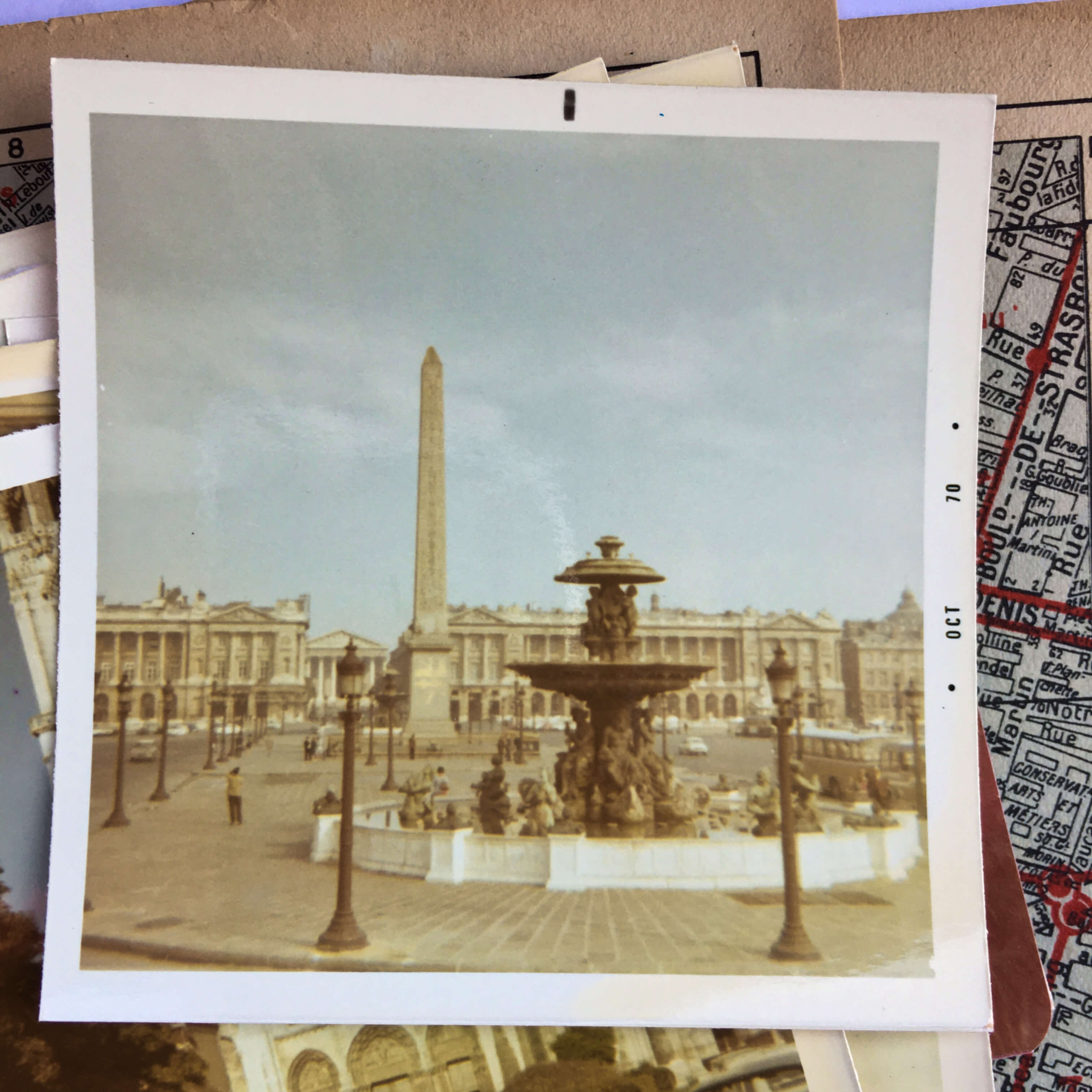
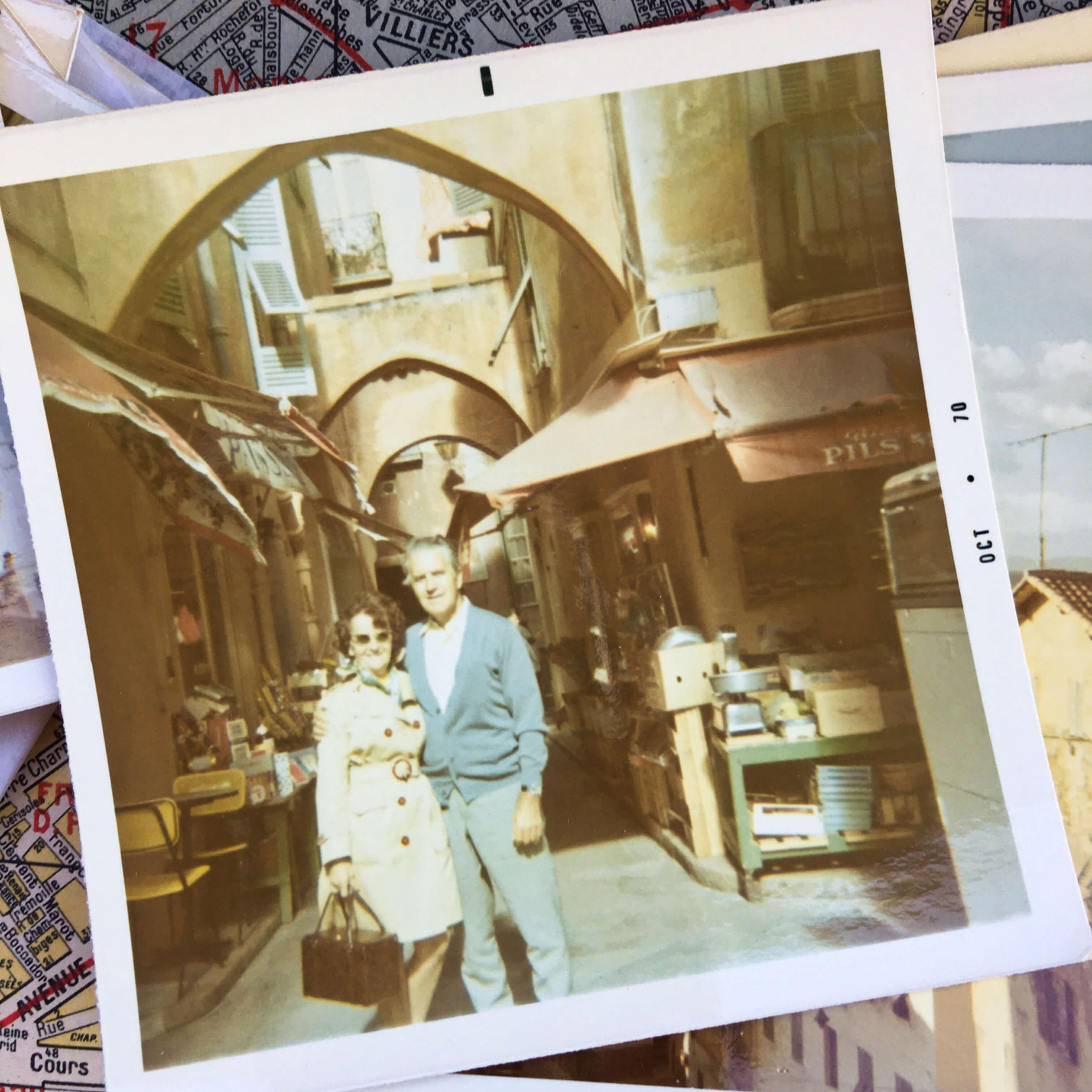
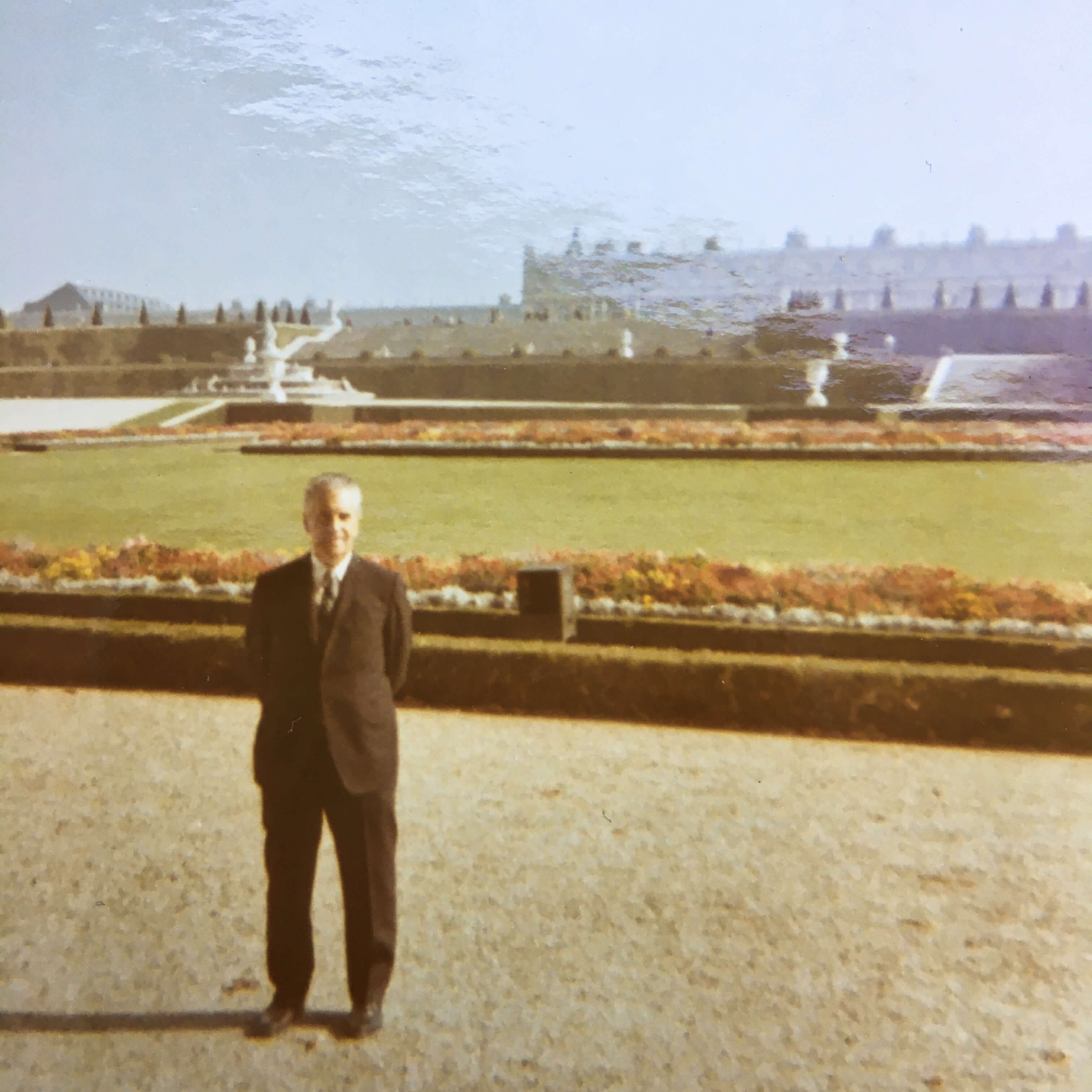
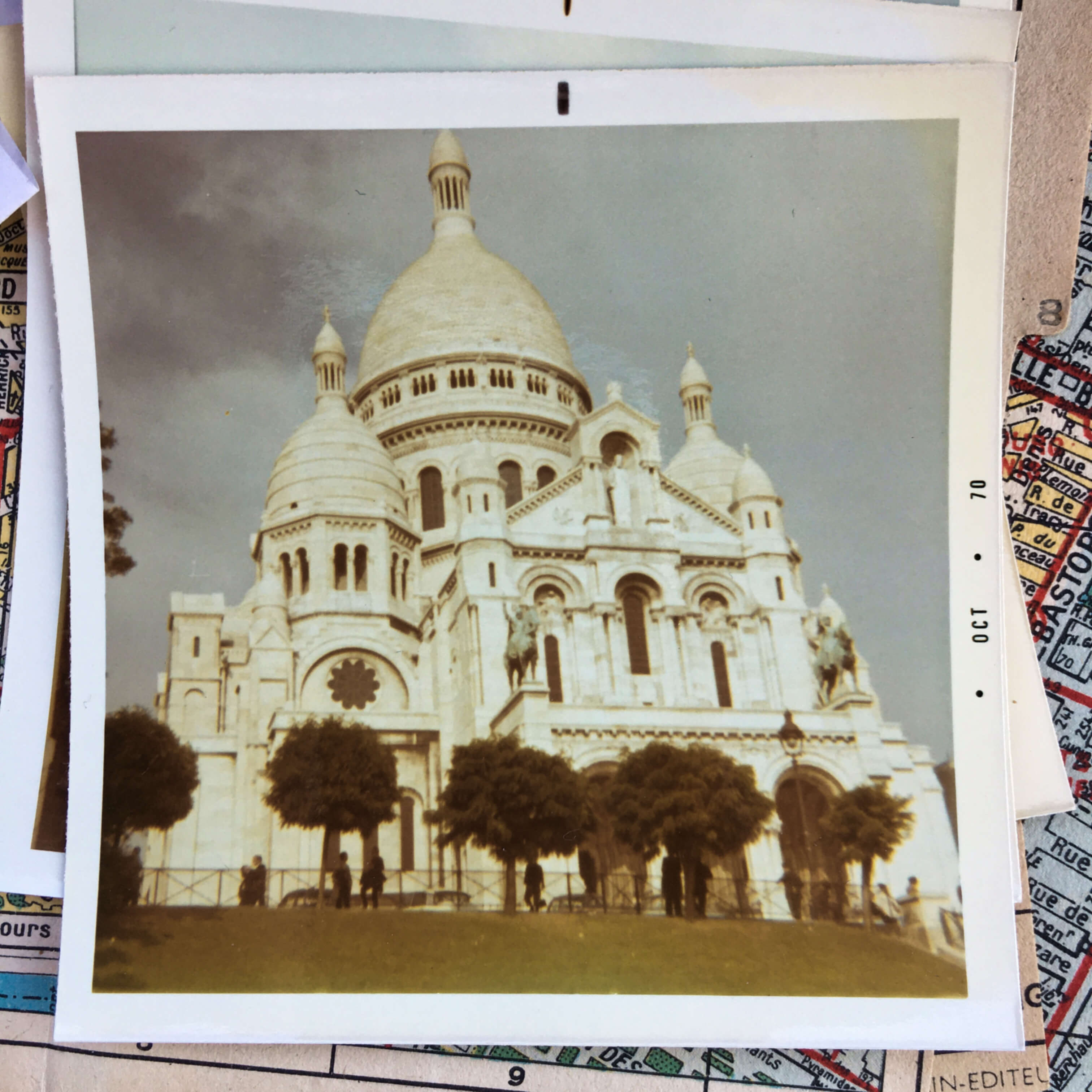
Lucy & Herbert Go to Paris: A 1970’s Travel Adventure and a Recipe

Bonjour and bon appetit dear kitcheners! This week the International Vintage Recipe Tour 2020 takes us to France via the kitchen.

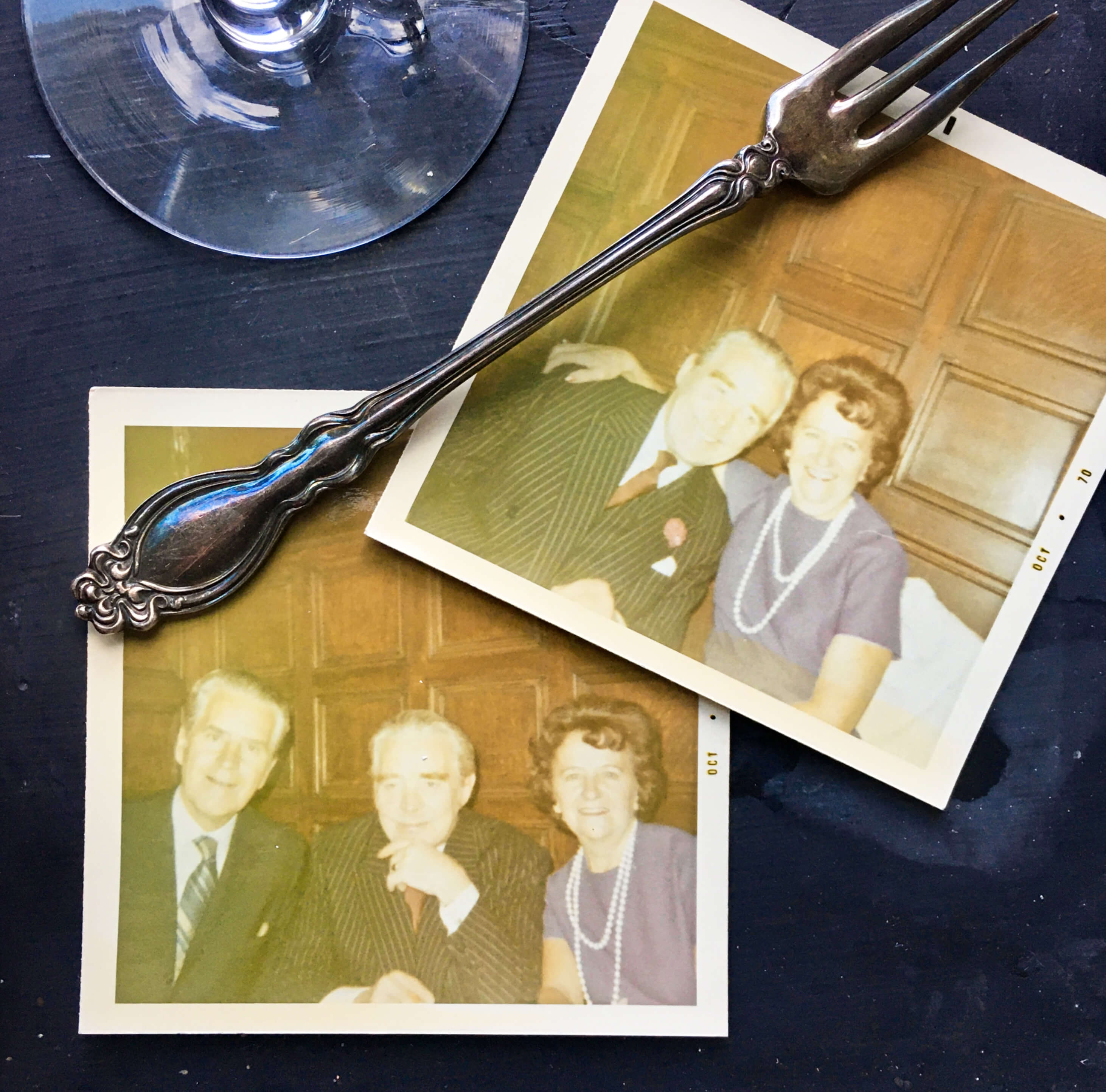
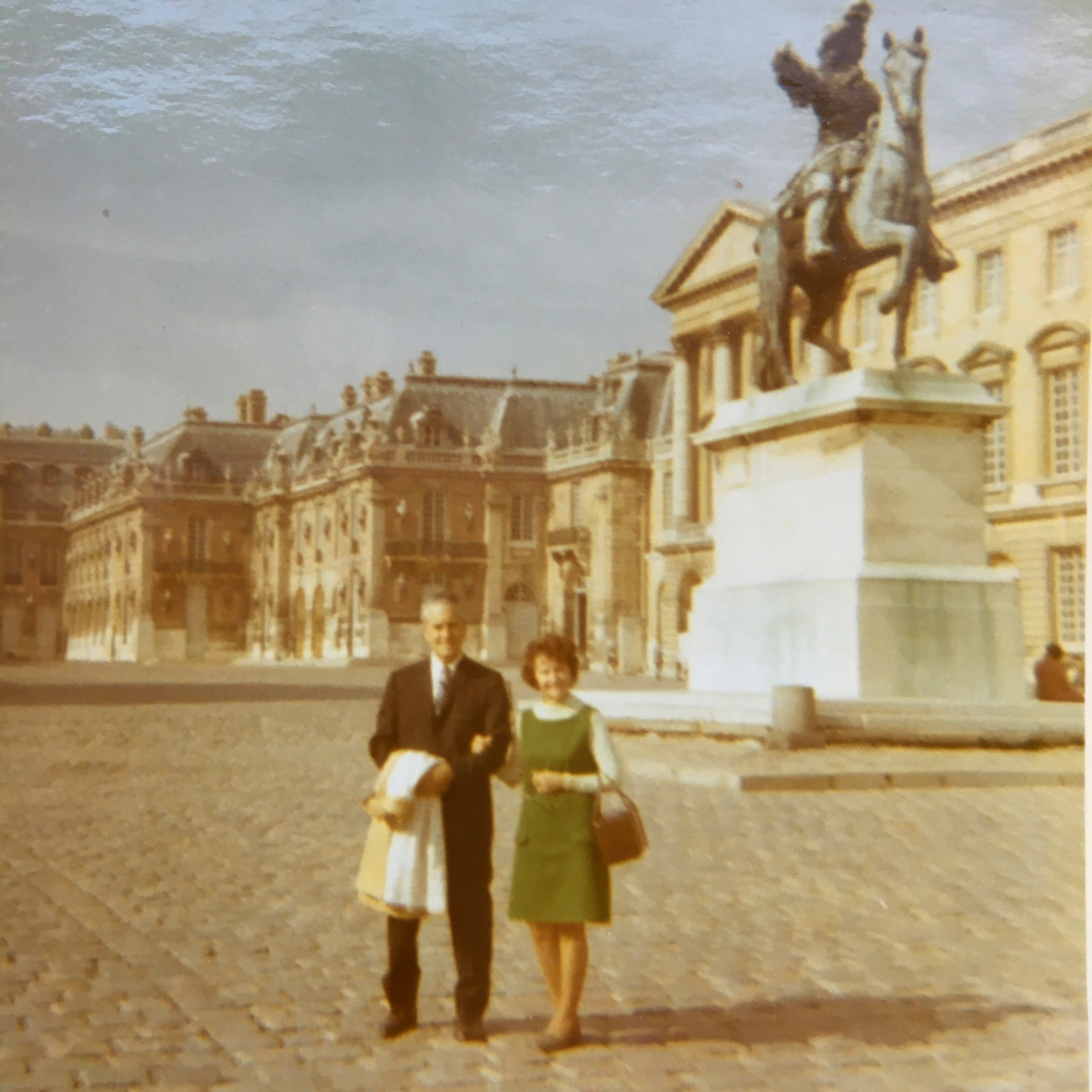
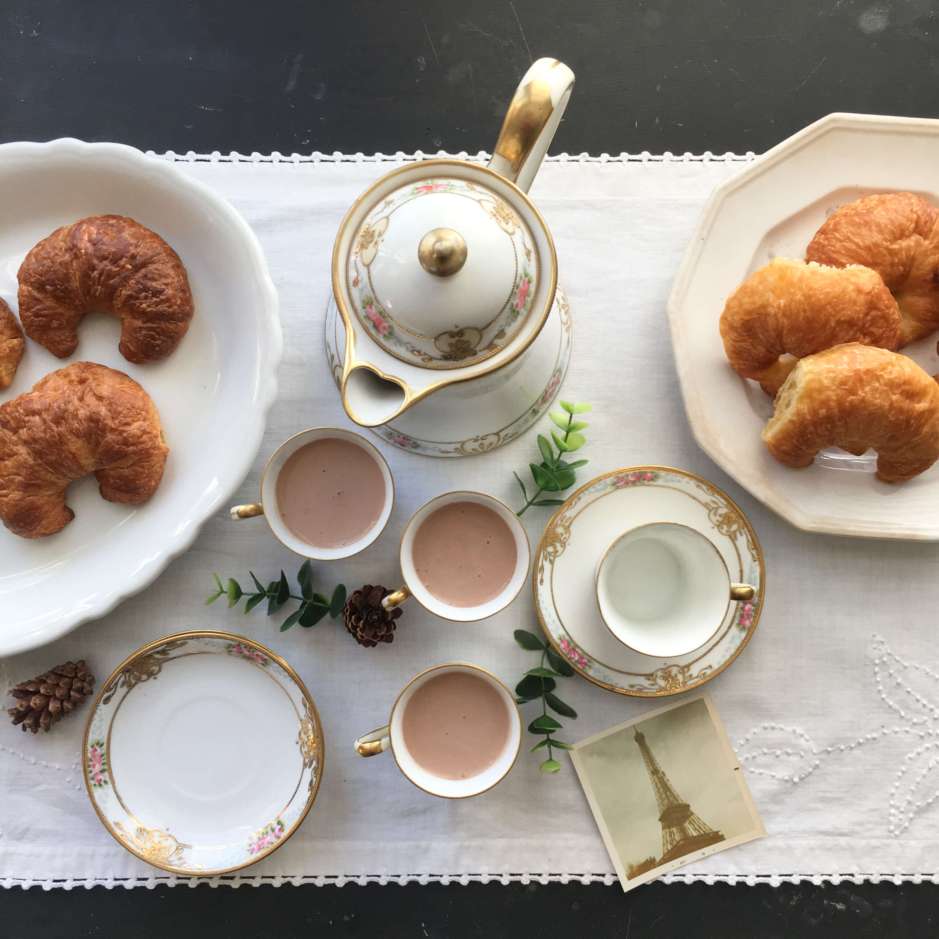
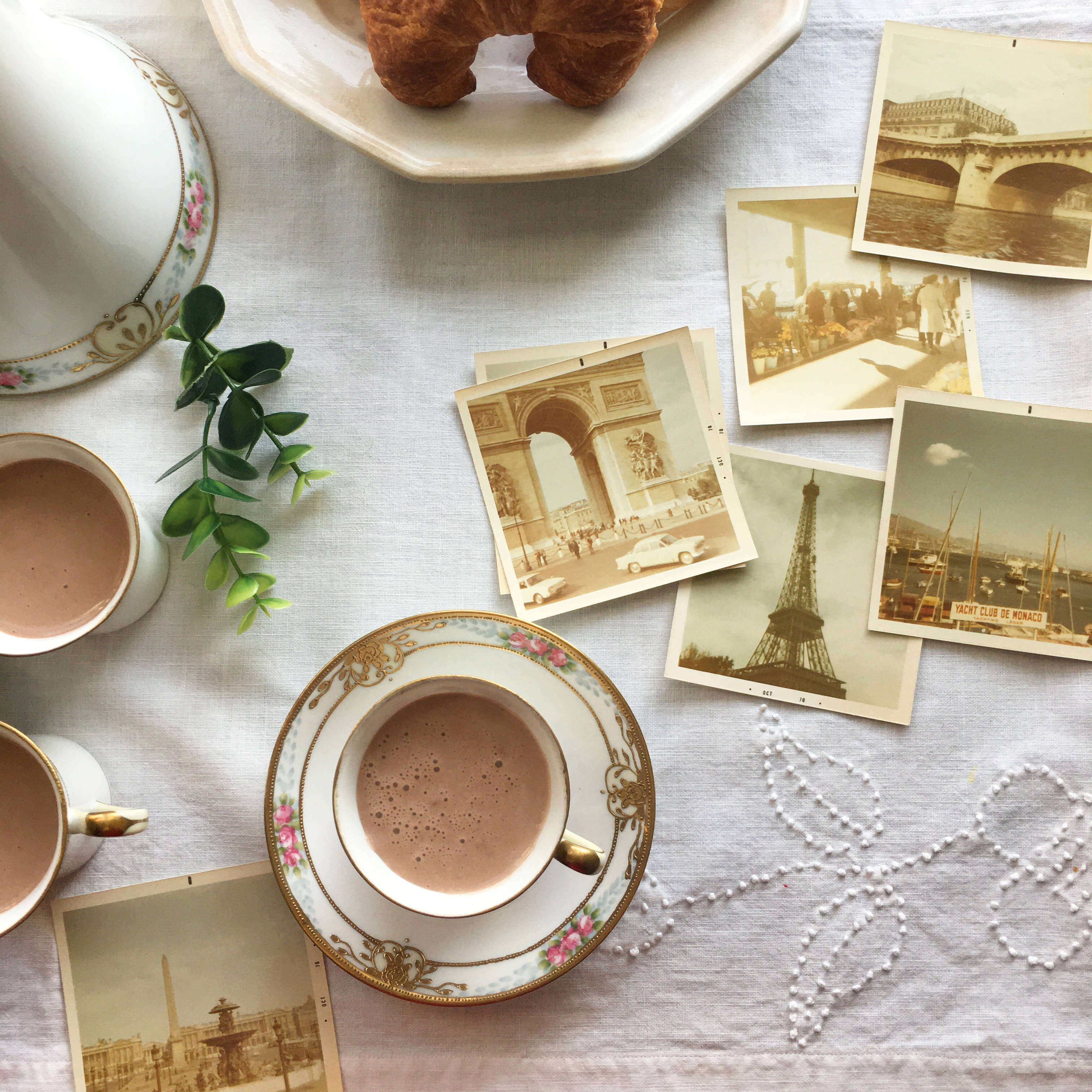
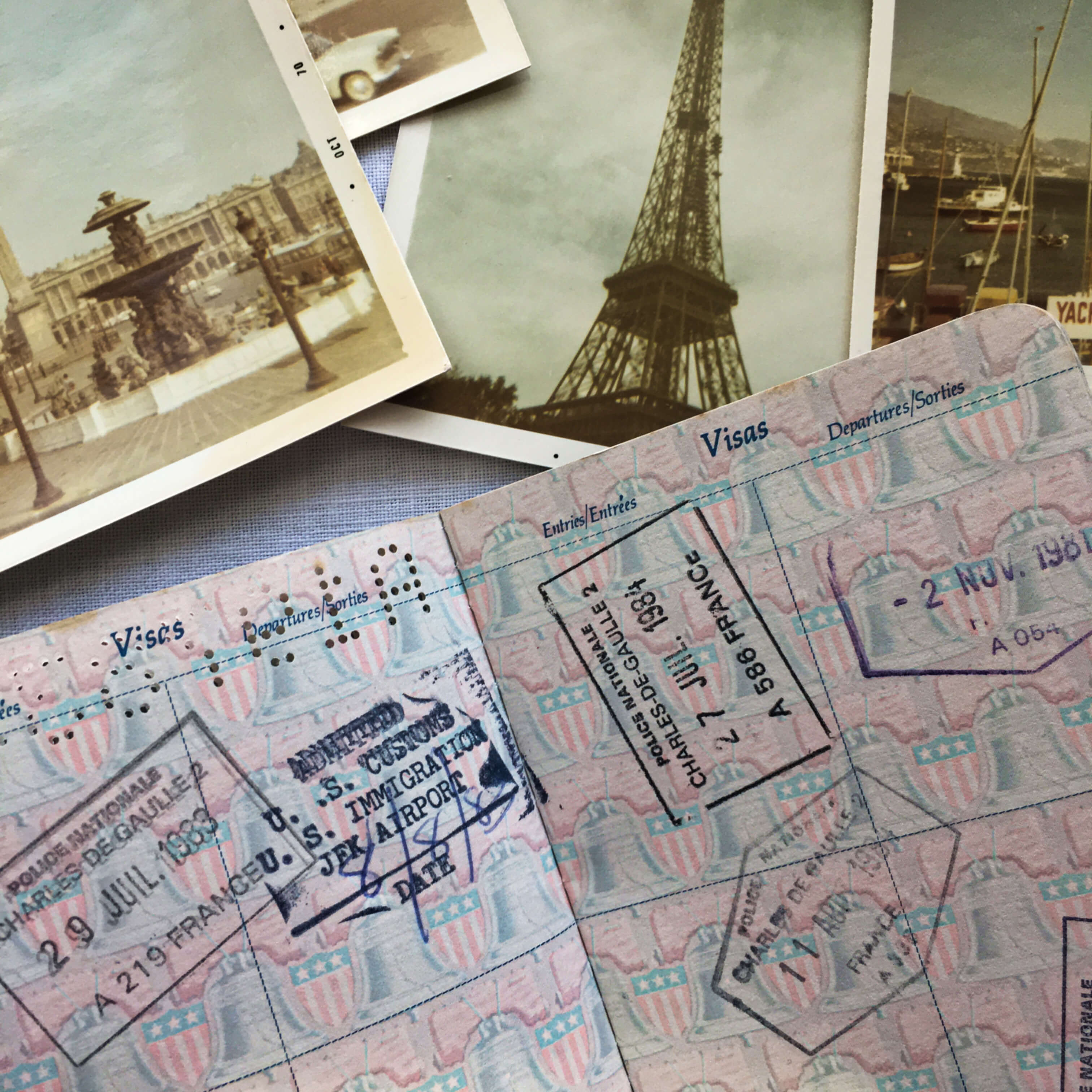
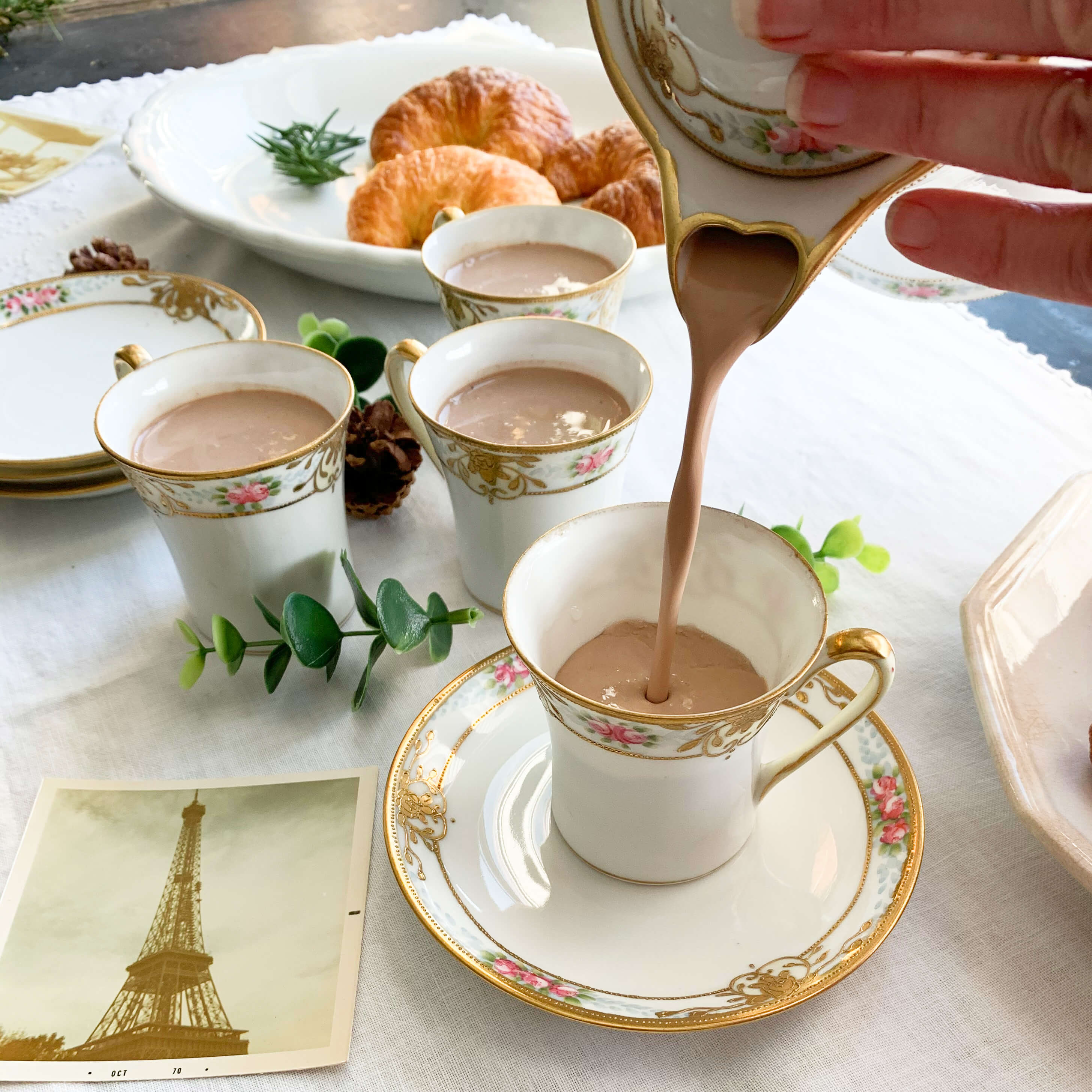
This is one of the countries I know best in the Recipe Tour since I spent so much time there as a little girl. Originally, for this post, I was going to write about a child’s perspective of Paris and fill it full of all the things my sister and I loved most about the city when we were small explorers.  But since a little bit of that was already touched on in the Parisian hot chocolate post last December, this time I thought it would be fun to introduce some new tour guides to the blog. I’m so pleased to present my grandparents and your travel escorts for the day, Lucy and Herbert…

Unlike me, who first visited Paris when I was six months old, Lucy and Herbert were in their 60’s when they first set sights on the City of Light. They were both born in the first decade of the 20th century and both had a hard start to life. Had you asked either one of them when they were young if they would ever be walking around the streets of Paris one day they wouldn’t have guessed it.

Lucy grew up in Buffalo, New York, the daughter of German immigrants who worked in the garment industry.  Her childhood was defined by a family tragedy. When she was 7, her mom burned to death in a house fire while cooking dinner in the kitchen. Lucy’s dad in a complete state of grief and guilt put Lucy and her seven brothers and sisters in a local city orphanage.

Immaculate Heart of Mary. Photo courtesy of poloniatrail.com

It was meant to be just a temporary course of action. The orphanage was run by Catholic nuns and her dad told everyone, nuns and kids included, that he would be right back for his family. That he just needed a little bit of time to figure things out. That was the Spring of 1918. The kids didn’t know exactly what temporary meant. A few days passed, a few weeks passed and then a  few months. They waited in the orphanage for their dad to return. Five months in, the Spanish Influenza blanketed the city in fear and death and anxiety. A pandemic ensued but her dad did not come to collect his kids. Thanksgiving and Christmas came. There was no big family meal and no Christmas gifts. There was no sign of dad. A year passed. A second year passed. Lucy remained in the care of the nuns.  The third, the fourth, the fifth, the sixth year passed. By that point, Lucy was 13. The orphanage only educated girls up until the 8th grade, so school was over for her. No dreams of high school. No college.  During year seven of life in the orphanage, her dad got remarried, yet he still didn’t come to collect his kids.

There are fuzzy family stories that the children were retrieved one by one in order of age, (the oldest ones first) and placed with various members of the family. The boys were taken out first because they could earn a living and contribute financially to whatever household they ended up in. Lucy was 5th in line, a girl, with limited education and an inability to earn an income in the same way as her brothers. Lucy remained in the orphanage until she was 16 years old. That’s when her aunt Martha in Chicago sent for her so that Lucy could help take care of Martha’s two kids. At last, after nine years, Lucy left the orphanage, taking her two younger sisters and brother with her to Illinois.

Herbert’s dad, Joseph, working in his teamster days delivery hay and coal. This photo was taken around 1905.

Herbert grew up in a working class family in the city of Chicago. His parents were both natives of the city  and his grandparents  were both immigrants from Germany. His dad was a teamster for hay and coal in the city when Herbert was born. Money was always tight and there were days when food was scarce or even non-existent. The family never had enough to eat. There were nights when Herbert went to bed with a rumbly belly and no idea when it would be filled again. When Herbert was 10, his  dad landed a job as a fireman for the City of Chicago. It was a much more dangerous line of work than being a teamster, but it offered a steady paycheck and a future pension upon retirement – both very attractive incentives for someone who struggled to feed their family.

Herbert’s parents, Joseph (in his fireman uniform!) and Mary Katharine.

Herbert had a younger brother, Charles, who died when he was a baby, a sad event in his family that that no one ever talked about. Herbert didn’t believe in rehashing stuff, especially the difficult, hardscrabble years of his growing up. Herbert liked to say that the important part of life began when he met Lucy.

Sparks flew for the two of them when they met at a party in Chicago, just a few years after Lucy had moved to the city. They were both in their late teens/early 20’s at that point. Herbert took one look at Lucy and was dazzled by her pretty smile. Lucy fell in love with Herbert’s kind eyes, a distinguishing feature that everyone responded to.

Before Herbert became a fireman  he worked at the Chicago Tribune in the circulation department. This was where he worked at the time he met Lucy.

On a summer Saturday in 1933, just before my grandfather’s 25th birthday, Lucy and Herbert were married in a Catholic church in Chicago.

Herbert left his newspaper job and became a fireman like his father.  This was during the Great Depression, and like his father experienced, the firehouse offered  a steady paycheck, and a pension for retirement.  Haunted by his hunger years as a child, all Herbert wanted was to provide a safe, satiated and comfortable life for his new bride, full to the brim with happiness and adoration that she deserved.

Because she grew up in the orphanage without any guidance or training in the domestic arts, Lucy was not a typical, traditional wife of the 1930’s. As an adult, she loved clothes and fashion and following the latest trends. She loved to socialize and play cards and spend time with her sisters.  No one taught her how to cook, care for a home or drive a car. But all this was okay with Herbert because he loved to cook, was fine with housecleaning and loved to drive.  All he wanted to do was to protect his family, make sure there was always enough food on the table  and enough money left over at the end of the day to afford a few small niceties. For eight years, Herbert and Lucy tried to have a baby. After several miscarriages, my dad was finally born alive and healthy just after they celebrated their 9th wedding anniversary. Finally their family felt complete.

When my dad was a few years into his airline executive career, he arranged a four week European tour for his parents that would take them to England, France, Italy  and Germany. This was the Autumn of 1970, and it was an extravagant trip to say the least. My grandparents had never traveled outside of the United States before, and Europe at that time was a cosmopolitan wonderland of glamour and sophistication.

My dad used all of his perks and called in all sorts of favors so that it would feel like a trip of lifetime for Herbert and Lucy. He wanted to give them all the bells and whistles he could manage – a taste of luxury and decadence that they had never known before. It was his way of spoiling them – a thank you  of sorts for all the wonderful love and affection they spoiled him with as a child.

The plan was to spend a week in each country with home base stays in London, Paris, Rome and Munich. In London, Herb and Lucy stayed at the Lancaster Hotel, had dinner with the royal tailor to Prince Phillip and went sightseeing all around town.

Meet family friend and royal tailor to Prince Phillip, Edward “Teddy” Watson, who charmed the socks off my grandmother:)

The French portion of their trip involved side excursions to Nice and Monte Carlo, but the bulk of their time was spent in Paris where Herbert fell in love with the food and the history and Lucy fell in love with the shopping and the culture. They both really enjoyed walking around the city too and did almost all sightseeing on foot,  even though my dad had arranged a car and driver for them each day.

Thanks to their collection of travel photographs we can head back in time and take a little sightseeing trip right along with them as we all discover what Paris looked like in 1970.

The view from the top of the Eiffel Tower.

The tour starts with a bird’s eye view of the city as seen from the top of the most iconic structure in all of France – the Eiffel Tower.  I’m not sure who the photographer was on this trip, Herb or Lucy, but some shots had a little Vivian Maier-esque quality to them. That’s the Tower’s shadow reaching towards the bridge there in the photo. Vivian style photography makes a return at the flower market one morning too…

In addition to first time sky views of the city, another great vantage point and an interesting perspective of Paris are the views from the River Seine. From there, Lucy and Herbert marveled at a whole host of  buildings steeped in history.

The Belle Jardiniere is the oldest clothing store in Paris, dating to 1824. They were the first to offer ready made clothes off the rack, ushering in a whole new way to conveniently build up your wardrobe.

Another historic gem on the river is the Palais Bourbon, designed in 1722 for the daughter of King Louis the XIV, who was the longest reigning monarch (72 years!) in all of French history. It was designed in country house fashion with gardens modeled from particular sections at Versailles. The site for the house was found by the lover of the King’s daughter who built his own palace next door (how convenient!). Like most of the old buildings of Paris, as it passed through time, many inhabitants and influencers including Napolean,  added their own enhancements or improvements to the building. In the late 1700’s, the exterior facade of Palais Bourbon was changed to reflect ancient Greek architecture. By the time the French Revolution occurred the residence left private hands and served as a government building, which it still remains to this day as you can see from this 2019 photo…

50 years later, and it still looks exactly the same!

Even though he lived centuries ago, there are nods to King Louis XIV all over town. At Versailles, he’s depicted in an equestrian statue which was completed in 1838, which also happened to be seventy years before Herbert was born.

Herbert especially loved admiring all the statues around Paris. The city boasts over 1000,  so he didn’t have to look far for something exciting to see. They turned out to be his gateway into learning more about French history, which in turn led to learning more about other country’s histories too.

The Luxor Obelisk statue (located in the Place de la Concorde) for example spurned a whole new curiosity for him in ancient Egypt, which is where this statue came from. It was an exchange of gifts between France and Egypt in the 1800’s. France gave Egypt a clock and Egypt gave France the Obelisk. In 1936, just three years after Lucy and Herbert were married, the Obelisk was given historic monument status in France. Herbert loved little fun facts like that.

Lucy liked the statues too and learning all about their history from Herbert, but when it came to street sights, what really turned her head were things more at eye – level (a.k.a. the shops). While in London, she purchased a classic trench coat, which looked very chic on the streets of Paris. In France, she purchased a batch of silk scarves. She wore the scarves and the trench continuously for the rest of her life back in the States, reminders of her fun glamour days spent in Europe.

Other iconic sights and sounds topped their best memories list too. There was the famed Paris Opera House which first opened in 1875…

The gardens at Versailles…

It was such an elegant place, Herbert wore a suit!

The domed roof of Sacre-Coeur (also known as the Basilica of the Sacred Heart), is the second most visited site in Paris. It was a must-see for Herbert and Lucy too, who were devoted to the Catholic faith their whole lives. It stands in the Montmarte section of Paris where all the famous artists and writers lived in the 19th and 20th century.

Likewise, the Cathedral of Notre Dame (or what I thought it was) held equal charm.

But upon closer inspection via window shapes and entry doors I think this is another church in Paris altogether. Can anyone identify it? Whether you are religious or not, everyone can appreciate a Parisian church for all their architectural details and built-in statues. Herbert and Lucy visited a new Catholic church every Sunday while they were in Europe, which was a true testament to their faith since most masses were said in Latin and lasted hours.

The beautiful angles and proportions of the Pantheon hover over part of the city and tell quite a story of architectural design. The dome, which fascinated Lucy in particular is actually three domes in one and made entirely of stone. Originally it was going to be topped with a statue of Saint Genevieve but a cross was selected instead. Genevieve was the patron saint of Paris,  and also happened to be Lucy’s middle name. Genevieve is also known as one of the patron saints of generosity, a characteristic Lucy herself contained, and is often depicted carrying a loaf of bread. Followers of Genevieve’s work created an institution in her name in the 1600’s  to care for the infirm and to educate young women. I wonder now if Lucy felt a special kinship to Genevieve because of all she went through at the orphanage.

When Herbert and Lucy passed by and under the Arc de Triomph they were viewing it in all it’s glory, as it had just been thoroughly cleaned and bleached five years before from a century’s worth of soot and grime. Herbert gave it a thumbs up in the cleaning department!

In between all those photos of grand buildings and popular sites I was hoping to find a cafe shot of Herbert and Lucy dining street-side with a glass of wine or a coffee. The only one I found among the mix though was this one very blurry photo of my dad (who met up with his parents at various points in the trip while on break from business meetings) and Lucy.

Even though it’s blurry, I still like the charm of this scene, with the cafe’s egg yolk yellow awning and shutters and the tomato red chairs.  I suspect this was taken in a little country town near Nice on their drive from Paris to Monte Carlo for Part Two of the French adventure.   I like to imagine that they ate something simple yet delicious that day at that cafe. Something not unlike the French recipe we are making to accompany this post today.

Like the cafe, this is a sunny, simple dish that is easy to make and requires little time to prepare. It is called Eggs in Sauce Gribiche.  Like some of the buildings in this post and even our tour guides themselves, this sauce aspect of this recipe dates all the way back to the early 1900’s when famous French chef Auguste Escoffier deemed it an important and versatile companion to hard-boiled eggs.  Age-old yet timeless, it is a new favorite in my kitchen and I hope it will be one in yours too.

The French section of the New York Times International Cook Book which we are following for this Recipe Tour, was one of the largest chapters in the book containing over 113 pages of traditional dishes from France. I chose this one because it is so representative of Herbert and Lucy. It’s simple and accessible, peppered with fresh goodness, and easily enjoyable in a bevy of dining situations. At their core, Lucy and Herbert were ideal characters. Ones who despite early hardships and traumatic events, chose to nourish relationships and radiate nothing but love and affection. At the same time, they also knew how to add a little splash to life to make it colorful and interesting. In the case of this recipe, they are both the comforting, reliable hard-boiled eggs and also the attractive and inventive sauce that is drizzled over.

So many French recipes combine rich, buttery flavors that simmer or saute for lengthy amounts of time. This one is lighter and brighter on the palate and works for several kinds of meals from brunch to lunch to appetizers, or even serves purpose as an afternoon snack or a light dinner.  When making it, I recommend sourcing the freshest ingredients possible, which might mean avoiding the grocery store altogether if you can help it. Home grown garden herbs, farmers market tomatoes, and local eggs will by far surpass anything you could find at the regular grocery store when it comes to bringing out the beautiful flavors of this dish.

Eggs with Sauce Gribiche

Serves 6

1 teaspoon finely chopped parsley

1 teaspoon finely chopped onion

1 teaspoon finely chopped fresh thyme

1 clove garlic

2 teaspoons Dijon mustard

1 egg yolk

Salt and freshly ground black pepper to taste

2 tablespoons wine vinegar

1 1/2 cups olive oil

3/4 cup seeded, peeled, diced tomatoes

6 hard boiled eggs, peeled and halved

2 tablespoons finely chopped chives or scallion greens

Chop the parsley, onion, thyme and garlic. Add the chopped mixture to a small mixing bowl along the mustard, vinegar , egg yolk, salt and pepper.

Begin beating all ingrediants together with a whisk and gradually start adding the oil. Add it a little at a time, beating rapidly until the sauce begins to thicken. When mixture is thickened and smooth it is ready.

Crack and peel the hard-boiled eggs and cut them length-wise in half.

When you are ready to serve, stir the tomatoes into the sauce and then spoon the sauce over the egg halves. Sprinkle with chives or finely sliced scallions.

Served at room temperature, this a great dish for a hot summer day or an impromptu picnic, as it can be whipped up in a matter of minutes. It is also a lovely alternative to deviled eggs, lemon vinaigrette dressing or its close cousin – Hollandaise Sauce.

My most favorite photo of my grandparents first time-time trip to France is this one taken on two park chairs with the Eiffel Tower in back. My grandmother reminds me of Julia Child here…  smiling, carefree, lighthearted. And I love my grandfather’s hand on her knee. They were married for 37 years when this photo was taken. It’s really nice to see that things hadn’t changed that much since the day they met. Lucy was still flashing that pretty smile and Herbert was still protecting her with kindness and affection.

Ten years and two months later, Lucy died unexpectedly in a hospital in Florida. Her cause of death was an enlarged heart. That seems pretty fitting.  Her and Herbert shared a big love.  For a life that started out with so much neglect and abandonment I’m glad that Lucy got to finish it with so much joy and comfort. And I’m glad she got to experience Paris and all the magic the city holds.

Cheers to love that lasts through thick and thin. And cheers to France for playing such a big, wonderful, important role in the life and love of my family. And cheers to Grandma Lucy and Grandpa Herbert. It’s been a tough week in the world these past few days. I hope we can carry forth, in the true spirit of Herbert and Lucy, with nothing but kindness and generosity for all.

Join me next time for Week 18 of the International Vintage Recipe Tour 2020 as we head to Germany to make the biggest meal of the Tour so far! It’s three days of preparation for this cooking adventure, so rest up! See you soon.


Hot Chocolate at the Hotel de Crillon: A Parisian Retrospective and A Recipe

Two days ago I woke up to a surprise. Snow flakes.  Floating and falling and flying just outside the kitchen window, finally, it felt like winter at last.  For the first time all season the outside weather matched the inside holiday spirit.

We don’t get snow very often in Nashville but when we do it’s a call for extra special cooking adventures. The last time, we had a good dose of white winter weather, I prepared a Ruth Reichl recipe – slow simmered Chicken Fricassee from her 2015 cookbook, My Kitchen Year. That cookbook centered around Ruth’s rejuvenation of herself and her spirit via her kitchen in upstate New York. This year, inspired by the snow day, we are taking a little trip too, but not to New York. In this post we are headed to Paris to highlight a winter recipe that is famous throughout the city.

On the stove there’s a warm, rich pot of homemade hot chocolate derived from a recipe that was originally born in the kitchen of a beautiful historic hotel located at 10 Place de la Concorde, just steps away from the Champs Elysee.  This isn’t your everyday, ordinary hotel and this isn’t your everyday, ordinary batch of hot chocolate. This cup of cocoa doesn’t involve powdered substances, paper envelopes, or hot water. It doesn’t include high fructose corn syrup, artificial sweeteners, or a long list of ingredients. You can’t go buy it prepackaged in a store and pour it into a cup at home for convenience.  This recipe is unique, prized, and unavailable online. It tastes like magic. And for me, it tastes like memories. I am very pleased to introduce you to the Hotel de Crillon and the most esteemed cup of hot chocolate in all of Paris.

In my growing up years, the Crillon was our home away from home anytime my family and I visited the City of Light. From the time I was 6 months old to the time I was 16, stays at the hotel were part of the fabric of my childhood. We had a very good family friend with a beautiful sing-songy name – Michele de la Clergerie – who was the VP of Public Relations at the Crillon. Because of that friendship and all the business my dad’s company did with her company, the Crillon turned into a natural home base for us whenever we visited Paris. Sometimes we were just there for a few days as a stopover on the way to the South of France or to Switzerland or to Africa or some other destination, but oftentimes we stayed for a week or more, taking up two suites in this dazzling building.

Photo courtesy of jetsetter.com

Photo courtesy of crillon.com

The hotel has recently gone through a renovation which has included a more modern update of the furniture and decor, so it doesn’t look exactly like it did when we stayed there in the 1980s and 90s – but many of the hallmarks (the black and white checkered marble floors, the gold detailing, the big, sashed curtains, the outdoor dining patio, the lavish breakfast room, the en-suite balconies and baths, the beautiful French doors and of course the exterior of the building itself) all remain exactly as I remember.

When I look at pictures of this beautiful hotel now, as an adult, and then recall the experiences my family and I had there while I was growing up, it all seems like a fairy tale. Some sort of far-off, fanciful, other life escapade… gauzy, romantic, and lush… with a level of luxury fit for make-believe or movie sets or circumstances beyond reality.

My passport photo – age 3:)

But real it all actually was. Thanks to my dad’s career with a French airline, by the time I was three, I was an experienced international traveler, already well on my way to filling up stamps in my second government-issued passport…

During those first years of life, I traveled with my own luggage, my doll, my favorite book of the moment, and my best friend, my sister, who was only a year and a half older than me.

Growing up with my sister and traveling all around the world felt a lot of the time like riding a lion… exciting, unusual and wild. That’s me on the right (age 2), my sister on the left (age 3 1/2).

Our permanent home address was  New York, but really it felt like we lived all over the globe due to the amount of traveling we did as a family. My mom kept our suitcases in the bottom of our closet, standing ready to fill at a moment’s notice. My sister and I had two wardrobes – a regular kid wardrobe and then a traveling wardrobe. The latter, our traveling wardrobe, was mostly made up of dresses and cardigan sweaters  and shiny shoes. These were clothes that were light in weight, packed well, were suitable for most occasions, and ultimately subscribed to my dad’s fashion philosophy of “it’s better to be overdressed than underdressed.”

A family photo on the Mediterranean Sea circa 1983. My parents are on the left. Family friends are standing behind my sister and I. That’s me on the left and my sister on the right.

It wasn’t unusual for my mom to wake us up from an afternoon nap with a greeting that ran along the lines of  “Surprise, we are going to Hawaii – we leave in an hour,” or for my dad to come home from a day at the office and announce a family trip to Switzerland or the Bahamas or London with just a few day’s notice.

In the 1980s the tourism industry was riddled with perks and freebies and gifts and complimentary tickets and special passes and personal invitations. For the most part, the industry overall was gregarious, charming, hospitable, convivial, and fun. Mainly everyone who was lucky enough to be a part of it was just out for a good time and an interesting story. Because of my dad and his job connections, we always flew first class, stayed in luxury hotels, and dined in celebrated restaurants. This made us witnesses, as a family, to a pretty glamorous side of travel. One that allowed us to experience all the thrills of a high-end lifestyle without having to worry so much about how to pay for it all.

This is a photo from the family albums which captures the chaotic color and life and excitement of traveling when I was small. Lots going on, always and never in a language that I could easily read:)

Growing up as kids in this high-flying airline industry afforded my sister and I lots of special experiences and taught us so many life lessons it would take a year to write them all down. But the most important thing it taught us from the very beginning was how to be nimble. My dad always loved to tell a story about how discombobulated I could become as a kid when we traveled. Especially after waking up from a nap, opening my eyes for the first time in a new city or a new country where I didn’t know the language or understand the culture. We’d be in Hawaii and I’d wake up at the age of 3 or 4 asking if we were in Monte Carlo or Germany or was it the beach in Bermuda?

This whirlwind collage of first cities and first countries, and travel via cars and planes and boats and trains, in such frequent rotation quickly led my sister and I to associate certain small details with certain cities. Lake Geneva became known as the hotel with the herd of wild deer in back. Monte Carlo had the balconies that hung over the sea. The hotel in Abidjan had floor-to-ceiling green wallpaper. Hawaii had birds in the lobby.  Morocco had a walled garden and clay squash courts. And Paris had the beautiful, welcoming Hotel de Crillon.  But my sister and I didn’t call it that. We called it the hotel with the great hot chocolate and also the place without the pool. Oh my.

The Hotel de Crillon pictured with the Fountain of River Commerce and Navigation. Photo by Eric-Cuvillier. Courtesy of the Paris Tourist Office.

The Hotel de Crillon was originally a palace built in the late 1700s for King Louis XV – who was nicknamed the Beloved King. It was originally built to be an office building but throughout its existence seemed to beckon more like a siren than a bureaucrat, attracting a menagerie of artistic, colorful, and creative inhabitants during the  18th, 19th, and 20th centuries. Visitors and residents included Benjamin Franklin, Marie Antoinette, King Louis XVI, Theodore Roosevelt, Winston Churchill, and countless celebrities. One of its owners, the eventual hotel’s namesake, was the Crillon family. They were descendants of an 18th-century duke revered in the French Army for not only his courageous spirit but also his chivalrous demeanor. The Crillon family lived in the palace during the entire 1800s until it was sold in 1909 and turned into a hotel.  By the time I came to know it in the latter half of the 20th century, as a little blond baby barely walking, the building contained so many exquisite historical attributes it was easy to imagine life as a real princess.

Photo courtesy of Artelia Group.

Embarrassing to admit now, I didn’t fully appreciate the spectacular beauty of the hotel then nor understand its cultural and architectural significance even during my teenage years.  Marie Antoinette was beheaded right out front. The building itself was caught up in the middle of the French Revolution. Dignitaries, heads of state, presidents, kings, queens, and movie stars from all eras of history have stayed in the very rooms that we’d stayed in and walked the very floors (that oh so beautiful black and white marble) that we walked. Fashion shows, photo shoots, film crews, and artists from last century to this one have crawled all over the hotel property documenting and decorating it for countless creative pursuits.

But for all the incredible circumstances, situations, and events that have happened in and around the Hotel de Crillon since its beginnings, the one element that I can never forget about this special place, has nothing to do with famous faces or elaborate decorating or stories from past centuries. It has to do with food. A simple cup of house hot chocolate. When we were little girls, it usually arrived via room service on a breakfast cart, served by an attendant, and poured from a silver pot.  As I got older and grew into my teenage years, my sister and I would take our hot chocolate at a table on the outdoor patio before heading out to explore the city.  Hearty, restorative, and decadent, it was practically a meal in itself. But my dad taught us a little foodie secret before we even learned how to talk.  The perfect accompaniment to a cup of hot chocolate is a croissant.  As we discovered, these two foods made up a perfect pairing of flavors and forged an unforgettably indulgent tradition that we looked forward to with each visit. To this day my family still agrees.  No other cup of hot chocolate, wherever we traveled in the world, or attempted to recreate at home, ever tasted as good as the hot chocolate served at the Crillon.

We weren’t alone in thinking this. The hotel’s flagship beverage has been revered in Paris by both tourists and locals for decades. Mentions on the internet still to this day deem it one of the best, if not the best hot chocolate in the entire city. It is so beloved, it is difficult to come across an article about the Crillon that does not mention a more enjoyable cup.

Last January, I came into possession of an antique Nippon porcelain chocolate pot and a set of four matching cups and saucers. When I saw it, I immediately thought of Paris and the Hotel de Crillon and the delicious hot chocolate from decades ago. The hand-painted set was made in Japan at the turn of the 1900s –  about the same time that the Crillon was turned into a hotel. As if fate had stepped in and lined up all the details, I knew that this chocolate set was the perfect match to pair a story and a recipe from the vintage family archives.

Just a few years ago, my sister mentioned that she had seen the Crillon hot chocolate recipe posted on their website. But when I went to look, it was no longer there. The website had changed to reflect the hotel’s new style and new renovations. I wasn’t disappointed though because surely I thought, in our modern age, with all sorts of travel writers and food makers covering all aspects of Paris, on the internet, there would be someone out there who would have shared the hotel’s hot chocolate recipe via an article or a cooking blog. Surprisingly, such was not the case.  So I contacted the hotel directly and explained the whole story about when I was young and my family’s experiences and the memorable hot chocolate. Right away, being the lovely and gracious hoteliers that they are, they promptly emailed the recipe over for use in the blog post. How wonderfully exciting.

I am so very happy to share this recipe with you. Nothing is more fun or festive, especially around the holidays, than making a big pot of hot chocolate fit for a crowd. This recipe is thick, rich, and not overly sugared. It’s filling and hearty and by the time you finish the last drop you’ll feel delightfully satisfied. And if you live in one of those states where it snows and snow and snows all winter long – this recipe will keep you fortified as you shovel and frolic your way through the season.

The recipe sent from the  Crillon is in hotel-size volume and contains French measurements, so I’m including the original French recipe (see photo), which makes 30 cups of hot chocolate, as well as the converted American measurements version (which also makes 30 cups) and then further breakdowns of the American recipe into smaller quantities (15 cups and 7-8 cups) if you are entertaining a more petite crowd.

And a final note, it was tricky to find 66% dark chocolate, at least in my neck of the woods. In order to keep this recipe user-friendly for all readers, I wanted to use chocolate that could be found easily in all grocery stores, so I combined two common percentages (56% and 100%) which are pretty standard here in the States when it comes to dark chocolate ratios. But for our European readers, you’ll probably be able to find, more easily, the percentages the Crillon uses, so I’d recommend that.

The Hotel de Crillon’s Hot Chocolate Recipe

(American conversion) Makes 30 cups

  • 15 cups heavy cream
  • 15 cups whole milk
  • 3 oz sugar
  • 8oz 56% semi-sweet chocolate (56% cacao)
  • 4 oz. 100% unsweetened chocolate (100% cacao)
  • 4 1/2 oz. milk chocolate (3/4 cup)

For 15 cups:

  • 7 1/2 cups heavy cream
  • 7 1/2 cups whole milk
  • 1.5 oz of sugar
  • 4 oz 56% semi-sweet chocolate (56% cacao)
  • 2 oz 100% unsweetened chocolate (100% cacao)
  • 2 1/4 oz milk chocolate

For 7-8 cups:

  • 3 3/4 cups heavy cream
  • 3 3/4 cups whole milk
  • .75 oz of sugar
  • 2 oz 56% semi-sweet chocolate (56% cacao)
  • 1 oz 100% unsweetened chocolate (100% cacao)
  • 1 1/8 oz milk chocolate

In a large pot, combine the cream and the milk over medium heat, stirring frequently until just beginning to boil. Remove from heat, cover with a tight fitting lid and set aside.

In a double boiler, melt all the chocolate together. And then add in the sugar and stir to combine.

Pour the melted chocolate into a medium-sized bowl. Add one cup of the hot milk/cream mixture to the chocolate and whisk to combine until the texture resembles soft whipped cream.

Gradually incorporate the chocolate mixture into the big pot of milk and cream, whisking until well combined.

Warm the hot chocolate over medium heat for 5-10 minutes until it reaches a temperature warm enough to your liking. It is best served right away. If you have any leftover (which will probably not be likely) you can refrigerate it and slowly reheat it the next day or simply enjoy it cold, like a glass of chocolate milk.

I love this hot chocolate just as it is without any adornment. But feel free to add some marshmallows or a peppermint stick, some flavored liqueur, or a dash of whiskey, if you want to jazz it up in your own way. And definitely serve it alongside a basket of fresh croissants. (Side note: for anyone who does not live near a French bakery, Trader Joe’s sells wonderful frozen croissants that you can heat up at home in the oven). 

After my dad retired in the mid-1990s, we rarely traveled to such glamorous locales or on such a glamorous scale as our childhood days. Instead, we explored our hometown more (the great city of New York) and traveled around the United States, of which we didn’t know nearly as well as Europe. My sister and I grew into our adult selves, got married, explored careers, and forged ahead into lives of our own making. The flutter of those early travel experiences, and the decadence with which we enjoyed them, became cherished parts of our past… wonderful memories to be tucked away in our hearts and our minds.

I grew up in the time before Instagram and iPhones and the modern desire to record every moment of every situation at a whim. There are no day-by-day, detail-by-detail photo streams of all my sister and I saw and did in the first half of our lives. Just a few handfuls of random pictures taken on the run from one place to another. But what we do have are our memories swirling around in our heads.  Even though some of those are now slightly hazy and somewhat dim due to time,  I’ll never forget the Hotel de Crillon and its majestic building and gorgeous hospitality. And now, thanks to their graciousness in sharing this treasured recipe, I’ll never forget the taste of their hot chocolate either.

The next time you are in Paris, I hope you get a chance to visit the Hotel de Crillon, if not to stay, then at least just to peek inside and treat yourself to a cup of their house hot chocolate.

It has been over 20 years since I last visited the Crillon, but if I could partake in some sort of magical time travel, my 2019 self would meet up with my 1980s self in the foyer of the hotel and whisper into that little girl’s ear… “Chin up, they have a pool now.”

A big cheers and a big thank you to Sofie, Elcie and Victoria at the Hotel de Crillon for sharing this memorable recipe. Cheers to my dad for all the adventures, big and small, to my mom for always letting us go, and to my sister, my forever travel pal, without whom these trips would not nearly have been as fun.

If you’d like to learn more about the antique chocolate pot, find it in the shop here. If you’d like to learn more about the hotel, please their website here. And finally, if you try this recipe, please let me know what you think in the comments below.  I hope it becomes a new wintertime favorite for you too. Cheers!

Can A Painting Inspire Dinner?

Can a painting inspire dinner? Absolutely! That’s exactly what happened when I found this tropical painting while out curating items for the shop. It’s a petite folk art landscape scene from Haiti with a handmade wooden frame and stretched cotton cloth instead of canvas. The colors are so vibrant…

and the brush strokes so full of energy.  The whole scene sings with the colorful island vibes that the Caribbean is known for.  Immediately it made me think of the 1960’s cookbook in the shop – The Art of Caribbean Cookery – another midcentury treasure that also sings songs of colorful island life.

The painting hails from Haiti, just one of the 28 islands that make up the Caribbean, but the cookbook, written by Carmen Aboy Valldejuli, includes all the cultural influences of all the islands… Puerto Rico, Cuba, the Dominican Republic, Haiti, Jamaica, etc.  Carmen is Puerto Rican herself and grew up in a traditional island household of the 1920’s, a world where servants cooked and children were not encouraged to help.

Old San Juan, Puerto Rico in the 1920s. Photography by Charles Martin courtesy of National Geographic

As Carmen explains in the introduction of her cookbook,  it was deemed improper for well-brought-up young ladies to perform menial household chores, cooking included. “Only occasionally was I ever allowed to enter the vast room where food was actually prepared, and how I regretted that.”

Carmen and her family’s house, Casa Aboy, in Puerto Rico,  including a photo of the dining room. These images were taken in the 1980’s by Felix Julian Delcampo

This is the house as it appears today, bright and pretty. Photo via pinterest.

But things changed once she met her husband, Luis, in the late 1930’s. Luis was an unashamed food zealot – an eater, a cooker, and a recipe collector.  He had a day job in engineering but on nights and weekends, he and Carmen crafted their time together around the glorious subject of food. Bolstered by one another’s support and enthusiasm,  the two indulged their culinary interests in a fun and curious way, which turned out to be the only encouragement Carmen needed to realize her life-long passion for cooking. What used to be forbidden was now a freedom.

carmen-aboy-valldejuli-and-luis-valldejuli
Carmen and Luis – the Carribean’s cooking dynamite team. Luis was always in charge of the cocktails.

Carmen took on this new interest with gusto. She and Luis dined their way through the islands, exploring offerings at family tables, fancy restaurants and everything in between. They traipsed around sugar plantations and farms and fruit groves. They listened and questioned and learned from everyone they encountered about cooking methods and techniques, about family stories and recipes passed down through generations. After each escapade, they’d return home to their own kitchen in Puerto Rico ready to dissect what they had discovered. As Carmen learned first hand, cooking in the Caribbean was a vast wonderland of food, flavor, and influence from other countries far from the tropics.

Vintage Caribbean travel posters from the 1950s and 1960s.

Floating between the Gulf Of Mexico and the Atlantic Ocean, with the United States, Mexico and South America acting as surrounding neighbors, the Caribbean is made up of an incredibly diverse population – an exotic tribe of people from Europe, Africa, Mexico, the Mediterranean coast, the United States and the U.K.

Vintage 1960s travel poster designed by Paul Loweree

Originally there were the first inhabitants, the Arawak Indians, but then came the British, French, Dutch, Danish, and Spanish settlers along with slaves from Africa who worked the sugar plantations and ex-pats from America looking for escapism. All these cultural influences grew diversity on the islands and greatly layered the cuisine of the Caribbean, making it not just one type of food, but a blend of many nationalities.

the-art-of-caribbean-cookery-carmen-aboy-valldejuli

In the painting, there is no sign of food, but its very essence pulls your imagination towards sandy beaches, tropical drinks, coconuts, rum, pineapple, papayas. Carmen is quick to explain that cooking in the Caribbean is not all “roast pig and ritual,” that food varies from island to island, built upon six centuries of history and the cohabitation of many cultures.  It was with that in mind that I chose, a recipe from Carmen’s cookbook that is an authentic Carribean dish marinated in generations of foreign influence. For today’s post, we are making a recipe that combines elements of Spain with two Caribbean staples – olives and capers. The dish is called Pescado Dorado or Golden Fish and it is a lovely meal to wrap up the end of summer with since it shines best with garden tomatoes fresh off the vine.

Carmen’s recipe recommended using a whole fish but I used cod filets instead since I couldn’t find a whole tropical-looking fish at our neighborhood market.  The recipe serves 8 but if you don’t want to make a big dinner out of it, simply cut all the ingredient measurements in half and you’ll wind up with a smaller serving for four.

PESCADO DORADO – GOLDEN FISH

(serves 8)

1 fish weighing 4 lbs, cleaned (or 4lbs of fish filets – I used cod)

2 large limes

2 tablespoons salt

1/2 teaspoon pepper

2 medium onions, peeled and sliced

2 bay leaves

12 green olives

1 tablespoon capers

1 tablespoon liquid from jar of capers

1/2 cup water

1/2 cup olive oil

2 cloves garlic, peeled and mashed

1 1/4 pounds tomatoes

2 canned pimientos

If using a whole fish, wash it inside and out. Ignore this step if using fish filets.  Cut 2 slight gashes on both sides of the fish or filets. Place the fish in a baking dish. Squeeze the juice of the limes over the fish and sprinkle with salt and pepper.

Arrange the rest of the ingredients from the onions to the tomatoes on top and around the sides of the fish.

Preheat oven temperature to 550 degrees.* Bake fish for 15 minutes. Lower temperature to 425 degrees and bake for 25 minutes longer, basting fish occasionally.

Heat pimientos and serve as a garnish on top of fish.

*A note on cooking time and temp – In 1963, Carmen’s oven reached 550 degrees. In 2018, the hottest my oven gets is 525 degrees. I cooked the fish at 525 degrees for the first 15 minutes and then reduced it to 425 degrees and cooked it for the remaining time with no problems.

Carmen Aboy Valldejuli’s Pescado Dorado

What emerged from the oven, after it was done baking, was a flaky cloud of codfish that was swimming in a salty citrus sea. To say that this dish was anything but delicious would be an understatement. Sometimes fish dishes are very light and leave you still feeling hungry, but this one is robust in flavor and is filling enough on its own.  I paired this fish dish with a handful of sauteed spinach and garlic but rice would also work or a side salad. Dessert was kept equally simple with a fresh fruit board that included pineapple, mango, papaya and fresh coconut.

We also had a little musical accompaniment during dinner from Harry Belafonte, one of the most iconic singers of Caribbean folk songs in the world. About a month ago, I heard the song Cocoanut Woman for the first time…

and instantly loved it. Further discovery led to his Calypso album, a bestseller full of Caribbean folk songs that was released in 1956. In its first year, this album sold a million copies landing Harry on top music charts and making him an international superstar. If you are unfamiliar with his work, you’ll find a big collection of his songs on here including the Jamician folk song Day-O about dock workers loading banana boats and the island love song, Jamaica Farewell.

Between the three – painting, music, and food – this dinner felt like a mini island vacation all in itself.  If you find that your summer has come and gone and left you without the chance to relax as much as you wished, try spending the evening with Carmen and Harry and Emmanuel (the painter) and see if your spirit can’t be soothed by a little slice of creative paradise. A glass of rum helps spread the cheer too.

Incidentally, I tried to find out more about my muse for this post, the artist named Emmanuel who painted the Haitian landscape that started all this to begin with. But he was elusive. As it turns out, there are LOTS of painters named Emmanuel in the Caribbean. That’s okay, though, it doesn’t matter that he can’t be tracked down further.  Muses aren’t exactly known for their easy accessibility.  Bob Dylan believed that the highest purpose of art was to inspire. In that case, Emmanuel certainly fulfilled his role, at least during dinner time in the Vintage Kitchen. As for Carmen, she went on to become an expert, the expert, of Caribbean cuisine, publishing several cookbooks throughout her life. Even though she died in 2005, she is still regarded as the classic authority on Caribbean island cuisine.

So as you can see, a painting can indeed inspire dinner and also a little more. Hope this post inspires you just as much. Cheers to soaking up the essence of the islands without ever leaving home.

Find the cookbook and the painting in the shop here and here. Find Harry Belafonte’s music on our Vintage Caribbean Vibes Spotify playlist here.

The Pineapple, The Sea Captain and How a Legend Began…

Sailors are known for their stories. You’d be hard-pressed to go to any ocean enthusiast’s house and not hear a tale of the extraordinary fish caught, or the summer storm turned sour, or the port city that lured like a siren song.  But did you ever hear the story about the pineapple? The one that tells how it became one of the most iconic symbols in the world? Today in the Vintage Kitchen, we’ve got a legend on the table.

There are a few versions surrounding the pineapple and how it became known as the universal symbol of hospitality. Some stories claim it was a gift of peace offered to foreign explorers by local Caribbean tribes.  Other stories state it was a sought-after souvenir traded around South America until it eventually was welcomed in Europe for experimental gardening. Another explains that it was a status symbol of the very rich and the very royal who used it as a party decoration to signify the extent of their wealth, visually reinforcing the fact that they could indeed offer the best of everything to their guests, no matter what the cost. But our favorite version in the Vintage Kitchen, of how the pineapple came to be a hospitality icon, is the one that dates to the 1700s in the time of the sea captains.

That legend states that merchant trading ships like this…

A Chesapeake Bay style sloop was a common merchant ship traveling between the West Indies and the Eastern Atlantic coast.

carried cargo (mainly sugar, tobacco, rum, and molasses) back from the Caribbean islands to various ports in New England. Included in their bounty was the exotic tropical pineapple, a fruit so unusual in its beauty, so incredible in its sweetness and so valuable in its price, it was treated delicately just like its most precious counterpart, sugar.

When the ship was back in port and safely unpacked, the captain would return home to his New England house with a pineapple in hand.  He would spear this fruit on the front garden gate to signify to friends and neighbors that he had returned from his ocean voyage and was ready to entertain visitors with good stories and good food.

The centuries-old houses of Kennebunkport, Maine where many a sea captain lived.

With just the right amount of whimsy and practicality, it is not hard to see how such a story and such an action could have spread throughout the village, and then the state, and then the coastline, so that within time, hundreds of garden gates across many states were bearing pineapples – a symbol of friendly invitation, warm welcome and kind generosity.

Pineapple gates in Odessa, DE

No one yet has accurately been able to authenticate the first-time connection between pineapples and hospitality, but this sea captain story may help explain why you’ll find pineapples incorporated into outdoor architectural details all over the East Coast from Maine to Florida.

Appearing in gardens both ancient and new…

Permanent pineapples in the garden.

…history tells of America’s long-standing love affair with this hospitable fruit.  You’ll see it on the front doors of old houses like this one…

The historic Hunter House in Newport, Rhode Island built in 1748.

There’s the pineapple above the door, welcoming all who enter.

and this one…

Virginia’s Shirley Plantation, completed in 1738, which boasts a three-foot tall pineapple in the middle of the roofline…

and in the decorative details of brand new, modern days houses…

Pineapple-themed door knockers, welcome signs, doorbells, and house number plaques announce an age-old symbol on brand-new exteriors.

You’ll also find them indoors…

Most often as finials on front entry staircases…

blending classic and traditional elements from past centuries to the present century…

Pineapples in all modern ways useful… ice bucket, lamp, bookends, flower vase.

Last week we added a new vintage pineapple to the shop…

This one was neither a finial nor an exterior facade detail but instead at one point in its life had adorned the top of a fountain.  The fountain wasn’t as big as Charleston’s famous Waterfront Park pineapple…

Waterfront Park, Charleston SC

but she is an ideal size for many design possibilities including lighting, decoration, and display.  And she carries forth the sea captain’s theme of good stories and good food in a most beautiful way.

Even though we might never be able to uncover where and how the pineapple became involved with the convivial idea of good hospitality, we still love the idea of one fruit bringing together three centuries worth of parties and people. Critics would say that the sea captain story is flawed because pineapples were expensive and traders wouldn’t put a small fortune out in plain view for anyone to steal. But hospitality is about extending and offering, not squandering and hiding, so clearly, the argument could go either way.

If you were a sailor in the 1700s, at sea for long stretches of time, with life and death equally close at hand, perhaps you needed a little frivolity upon returning home to family and friends and the pineapple provided just that. A simple yet beautiful billboard. One that symbolized rich with life lived instead of rich with monetary wealth.

Cheers to the legends that stick around and to the fruits that travel through time!

Channel your own inner sea captain and set the stage for your next night of entertainment. Find the vintage fountain topper pineapple piece in the shop here!